
November 1, 2025 - Humpback pairs on our 'doorstep'!
November is officially here, and with it, the start of our winter whale watching tours! Today’s group got comfy aboard our heated Semi-covered vessel, Kula, as we began our day’s adventure. After leaving the port, we turned northbound, travelling along Nanaimo’s shoreline. Very soon after, we found our first whales of the day - a pair of humpbacks was spotted travelling together near the Five Fingers Islands, situated just outside of Departure Bay!
Once here, our onboard Naturalist began working on identifying the individual whales. While they were fluking, they were fluking at angles that were tricky to work with. However, both of these two had very unique dorsal fins, which we were able to cross-reference to confirm their identities. These whales were Astroboy (BCX2152), a young whale who has been seen regularly in our area in the past few years, and Hale-Bopp (BCX1278), an older whale who usually resides further south in Victoria’s waters!
After confirming who we were with, we ended up departing these two soon after. That is because Astroboy made headlines last week when they were spotted heavily entangled in gear. Thankfully, thanks to coordination between a local whale watch operator and the Department of Fisheries and Oceans (DFO), Astroboy was disentangled - rescuers removed an astonishing 137 metres (450 feet) of Polysteel rope from Astroboy’s body. While Astroboy now appears to be in good health, we prefer to give any whales known to have been recently entangled extra space to help them continue to heal successfully, so we can continue to see them for years to come.
Entanglements are becoming more prevalent as the humpback population continues to increase year after year. If you ever encounter a whale that appears entangled, please get in touch with DFO to report the sighting!
While our time with the pair was short, Hale-Bopp was an exciting and unexpected ‘fin’ to see in our area. According to Happywhale, Hale-Bopp has no confirmed sightings this far north. That is incredible, especially when you factor in that their first sightings were in 2004, meaning they are at least 21 years old, returning to the Salish Sea year after year from their breeding grounds in Mexico. With this in mind, Hale-Bopp is likely male, as we would have expected to see them with a calf by their side by now if they were female. We are excited to see if Hale-Bopp returns to our area again next year, or if they decide to continue their trend of preferring the southern waters around Victoria.
We said our goodbyes to Astroboy and Hale-Bopp and continued onwards, eager to see what else the day had in store for us. It didn’t take long for us to find another pair of humpbacks travelling along near Entrance Island, a mere 15 minutes away from where our first pair was seen!
This pair was travelling along slowly and appeared to be resting while we observed them. Similar to our original pair, we were working with just dorsal fins to identify these two as well. Unfortunately, this was an extra tricky task with this pair, as it appeared to be a mother and calf travelling along together. This mother had a fairly generic dorsal fin, with a couple of faint white markings present. Current year calves do not have entries in catalogues yet, meaning we primarily rely on cross-referencing from our previous encounters to identify them. However, these dorsal fins do not match up with previous mother-calf pair interactions we have observed this year, meaning we likely have not seen them yet this year. Because of this, we have not confirmed who this sleepy pair was, but we will continue cross-referencing to hopefully obtain a confident identification of them in the future!
Update from the Future! This pair of whales has now been confirmed as Wolf Eel (BCY0940) and her 2025 calf!
Once our time with the mother and calf was over, we continued onward around Gabriola Island, heading south towards Valdez Island. Nearby, a small group of rocky islands was our next destination, an area bustling with pinniped activity. Here on Stinky Rocks, Harbour Seals and Steller Sea Lions haul out, or come ashore to rest and sleep out of the frigid depths of the ocean. Not all haul-outs are equal, though, as the tides rise and fall, more (or less) space becomes available for the pinnipeds to sit on. Today, several of the Harbour Seals were learning that the hard way, as they precariously balanced at the top of the rocks, a mere few inches out of the water. Whenever a wave would come up, it would brush against them, soaking them once more. The Steller Sea Lion side of Stinky Rocks rises higher out of the water, leading to less splashing activity from the water. Still, it is always bustling with activity as the Stellers jostle each other around, fighting for the best places to snooze the day away. With temperatures dropping, it is now quite common to see these massive mammals piled on top of each other, conserving their body heat as they lounge around.
After having our fill of pinniped antics at Stinky Rocks, we headed on out. We began cruising through the Southern Gulf Islands, heading north back towards Nanaimo. The day wasn’t quite over yet, as we approached the Harmac Pulp Mill for one last encounter of the day. Similar to Stinky Rocks nestled near Gabriola Pass, the log booms at Harmac are situated nice and close to Dodd Narrows, a tight waterway separating Vancouver Island and Mudge Island. These narrow passages funnel fish through them, leading to perfect fishing conditions for our pinnipeds. After grabbing a snack, they can head back to their haul-outs to rest and digest their meal. At Harmac, most of the pinnipeds we see are our other sea lion species - the California Sea Lion. The California Sea Lions are significantly smaller than their Steller counterparts, and tend to have a darker, more chocolate coloured pelt. Their most distinct feature is their foreheads, which, on the males, have a large bump called the sagittal crest. This bump is usually outlined by lighter, sandy coloured fur, giving male Californians a very defined ‘goose egg’-esque shape on their heads. Try and see if you can spot this crest visible in the photos below!
We wrapped up our encounter with the California Sea Lions and soon began heading back towards Nanaimo. We cruised down Northumberland Channel, back into Nanaimo’s harbour, concluding another adventure-filled day on the Salish Sea!
Please enjoy these photos by Marine Naturalist Val Watson!
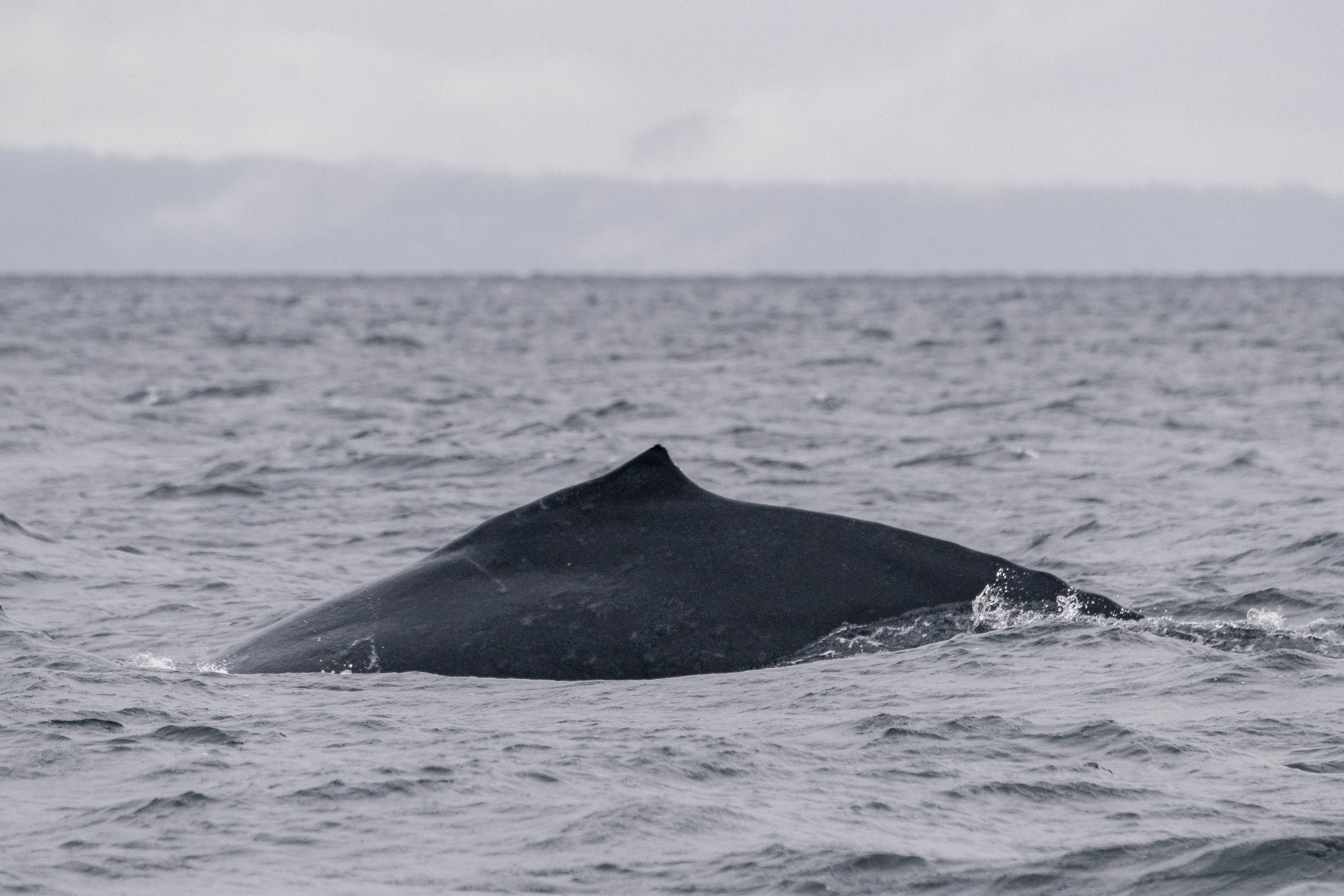
Astroboy’s dorsal fin.
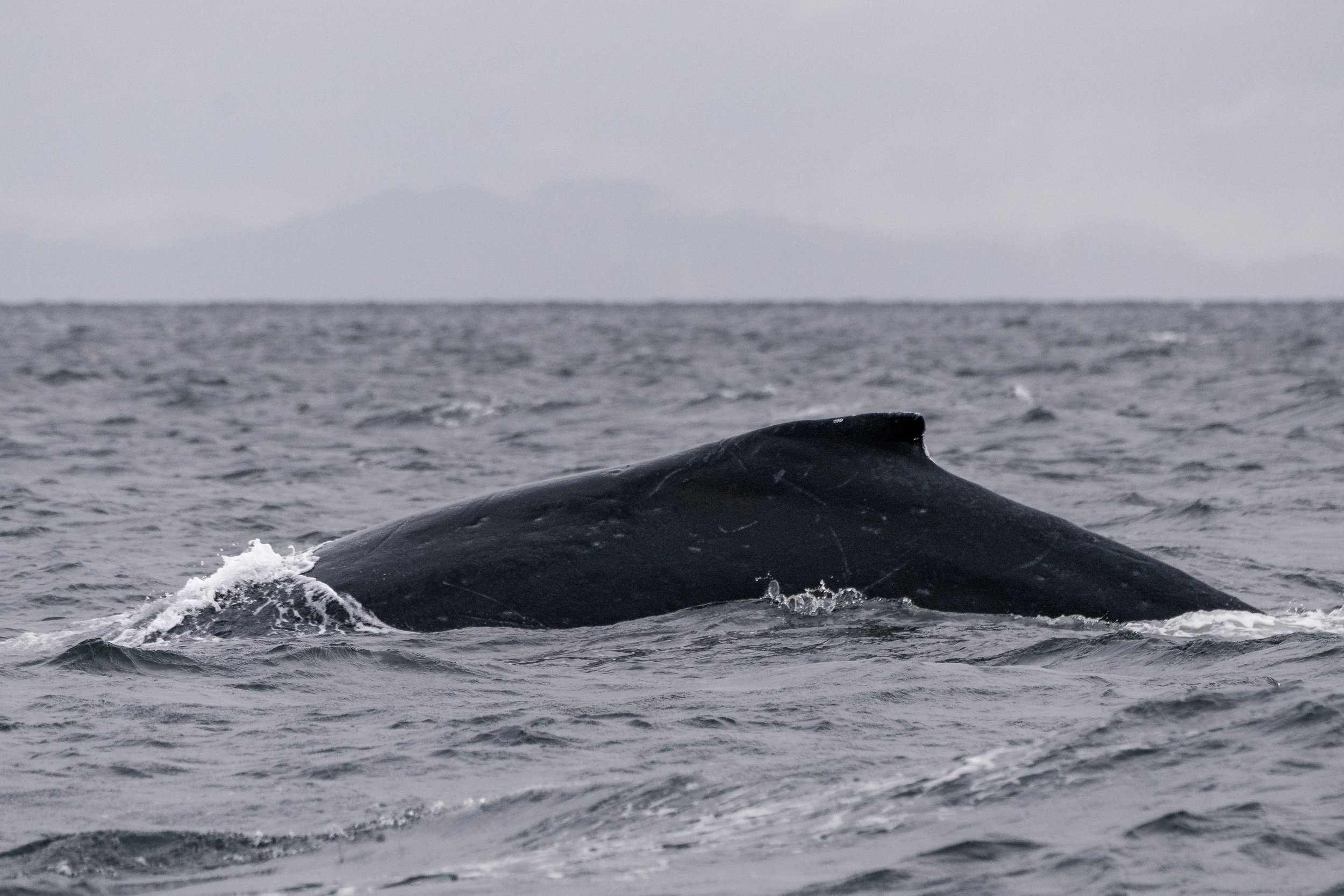
Hale-Bopp’s dorsal fin.
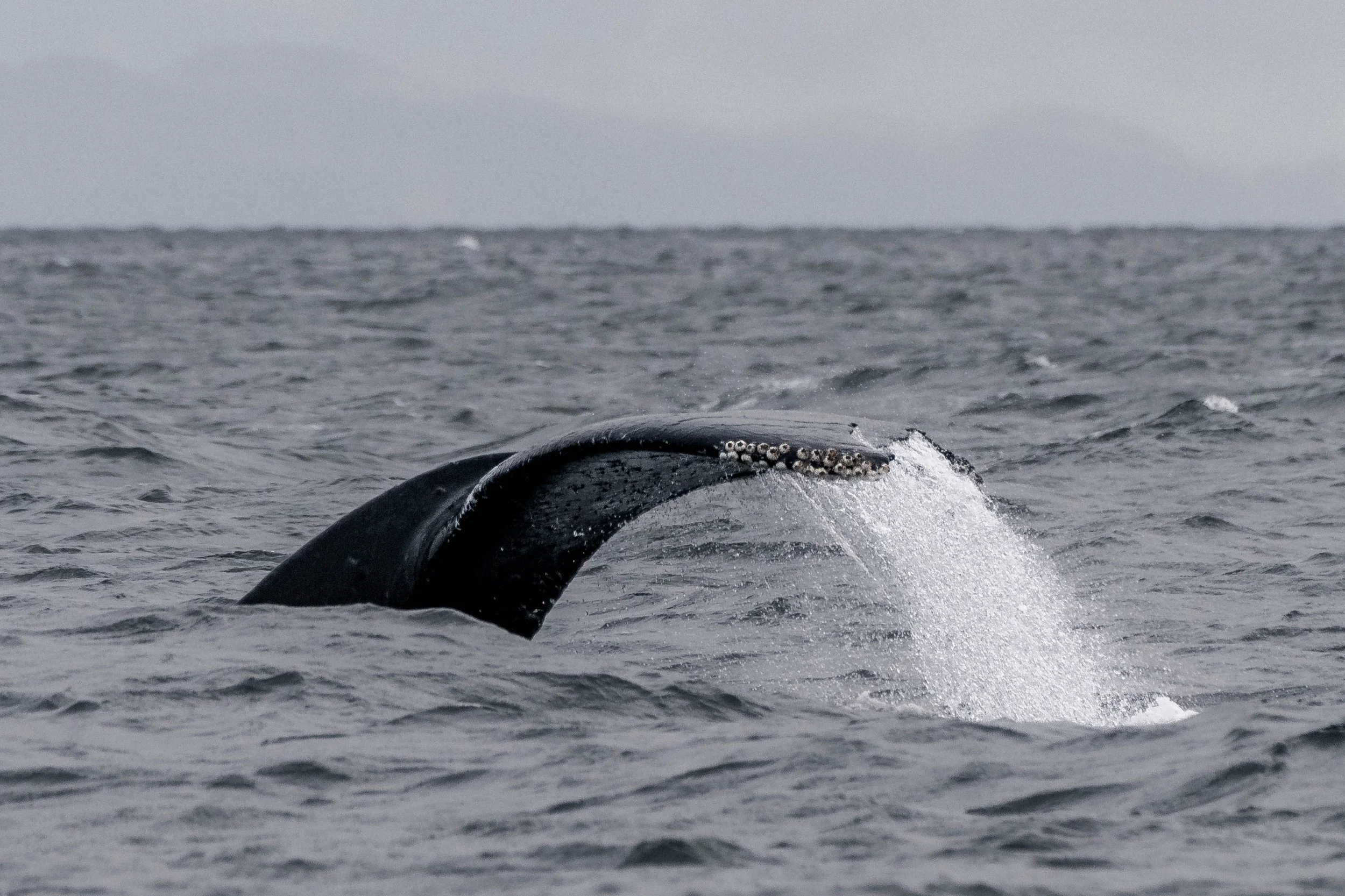
Hale-Bopp beginning to dive.
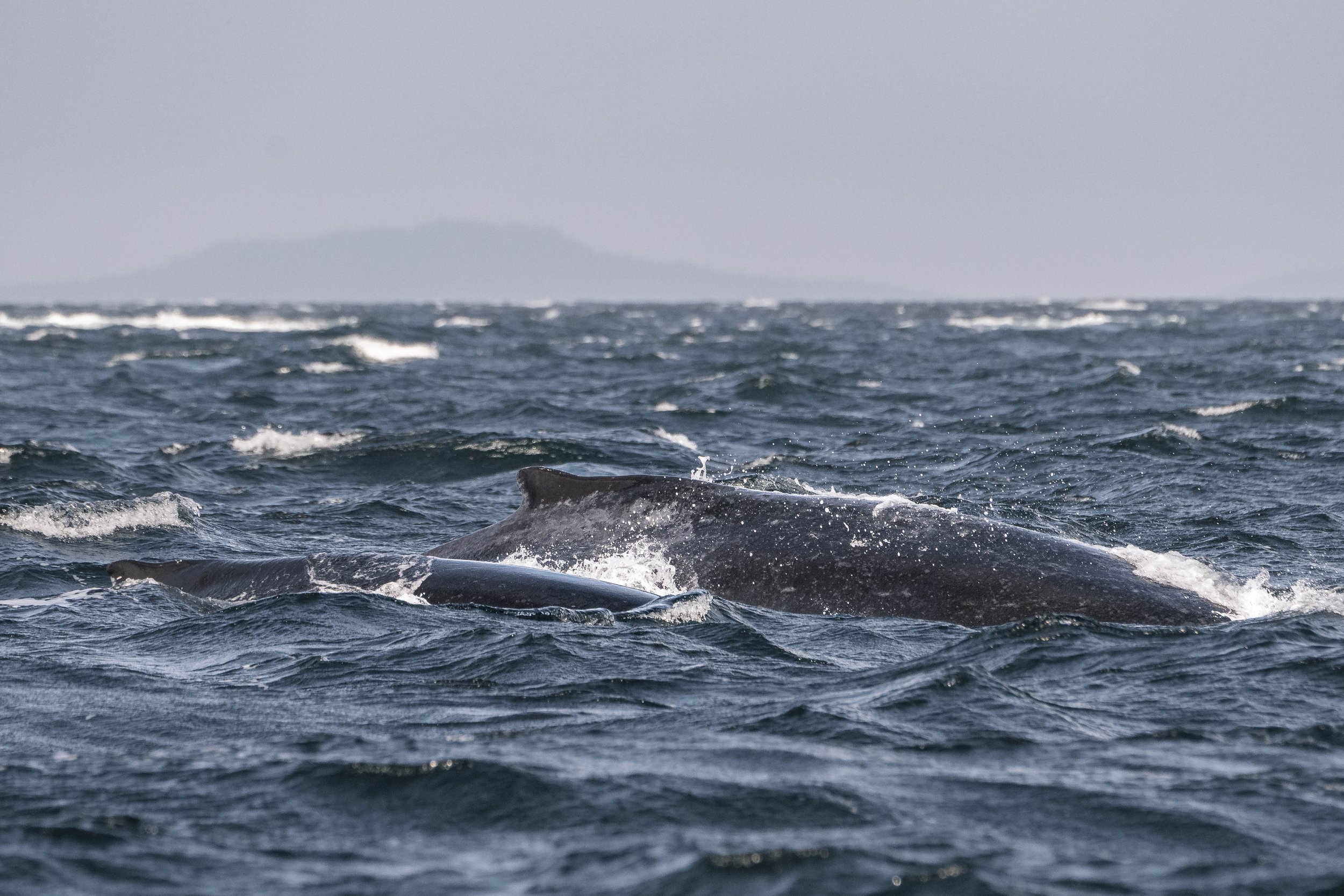
Unknown Mother and calf travelling through the waves.
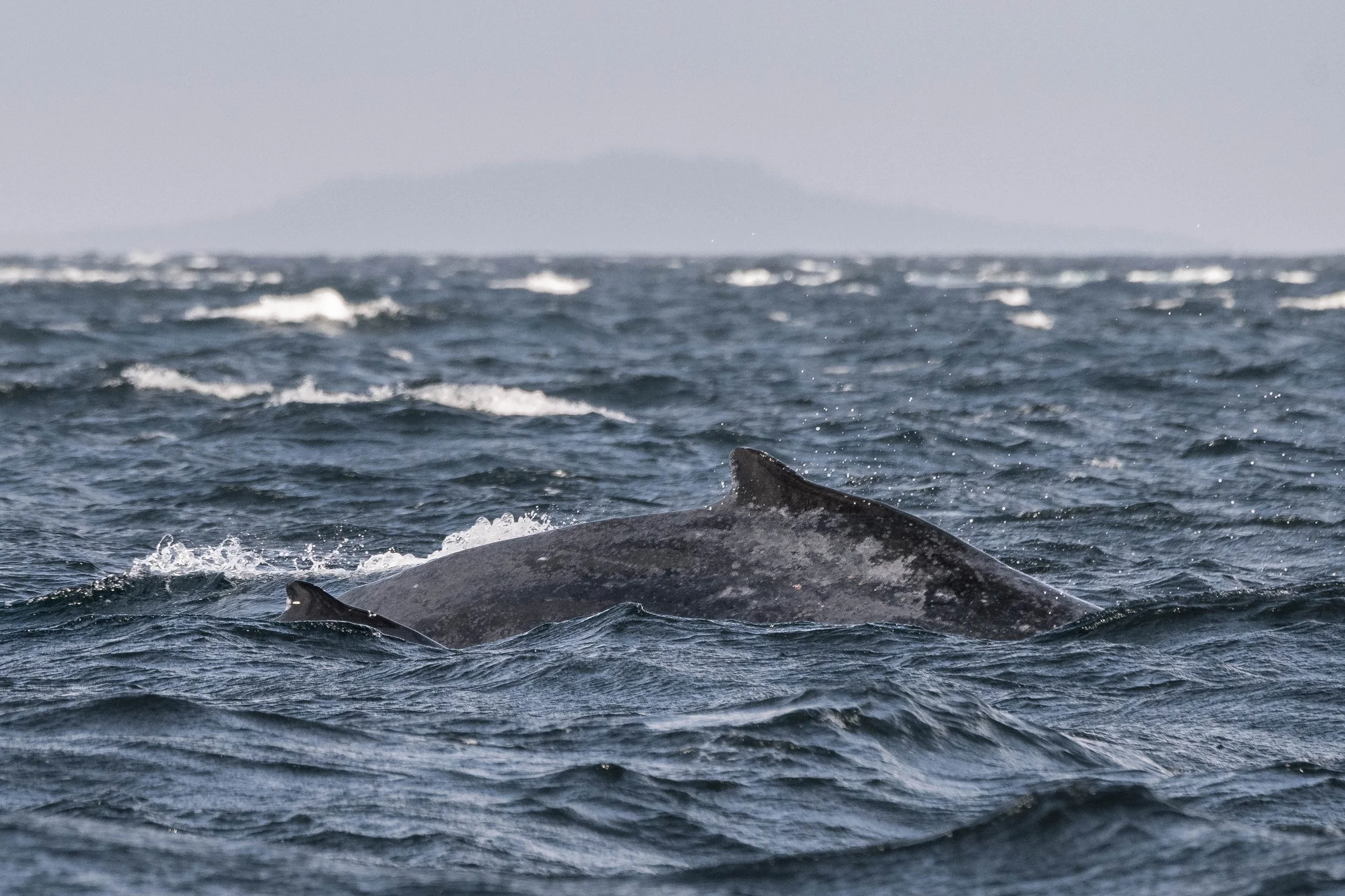
Unknown Mother with her calf right beside her.
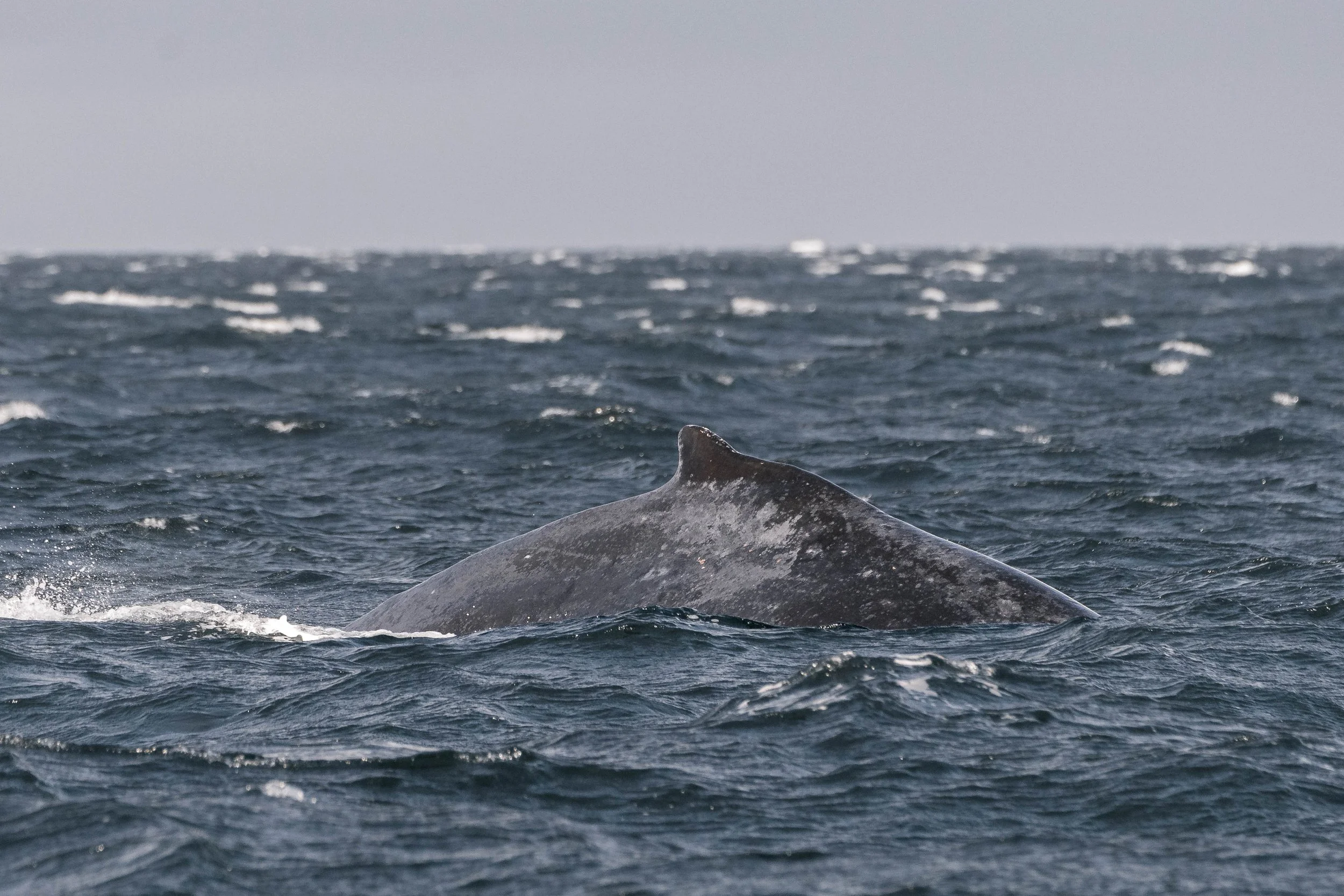
Unknown Mother’s dorsal fin.
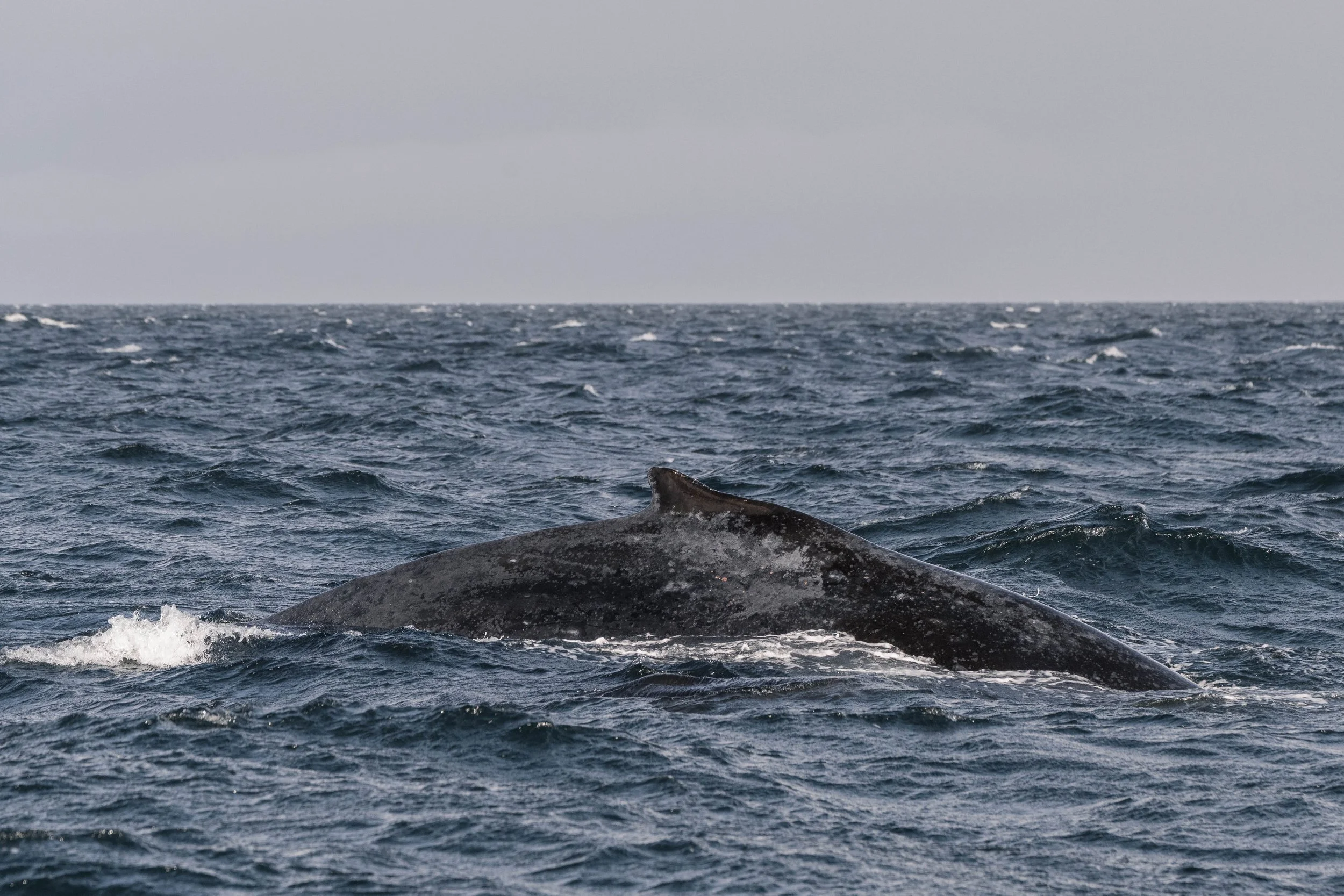
Travelling along.
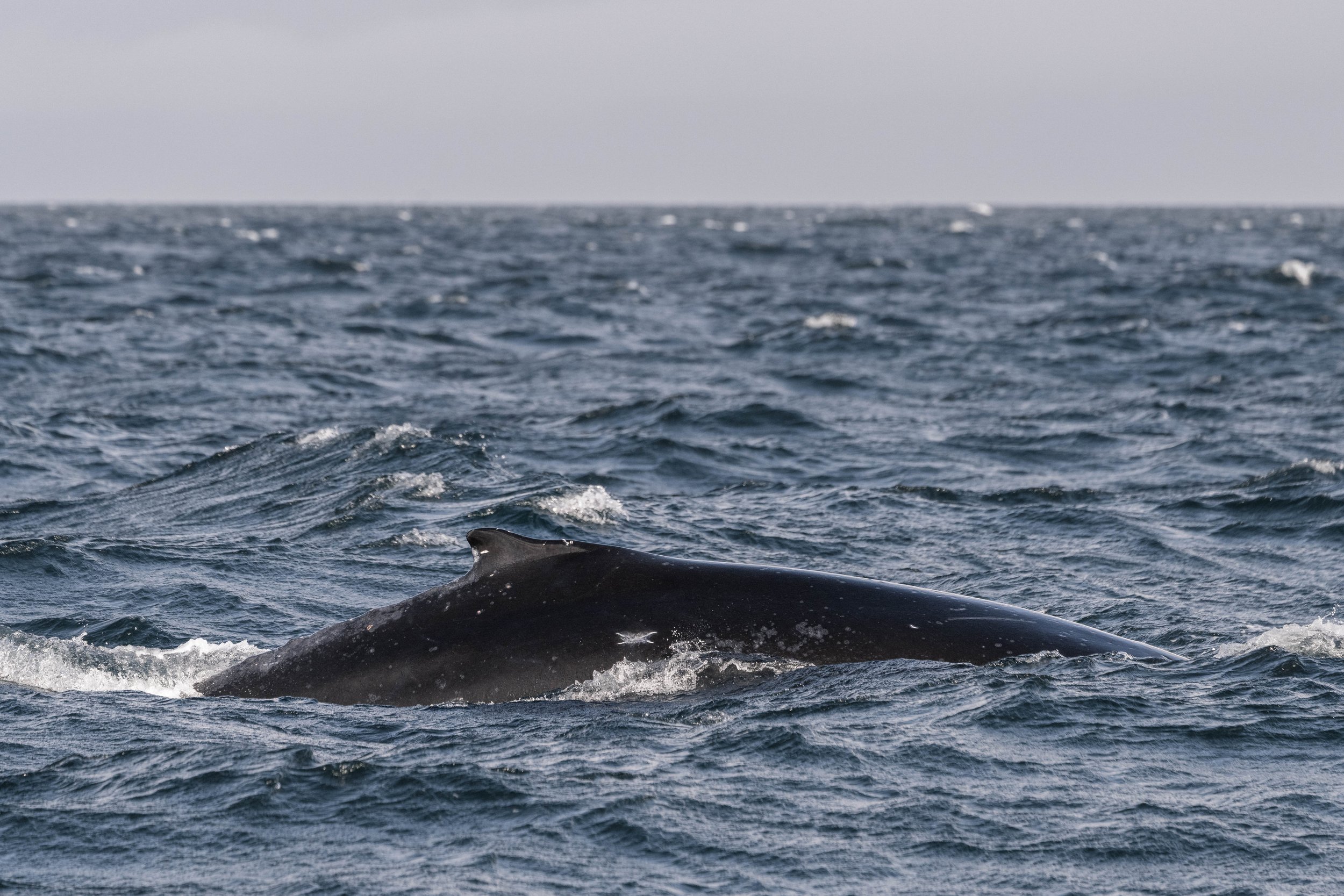
The calf keeping up.

Sun bathing on the rocks.
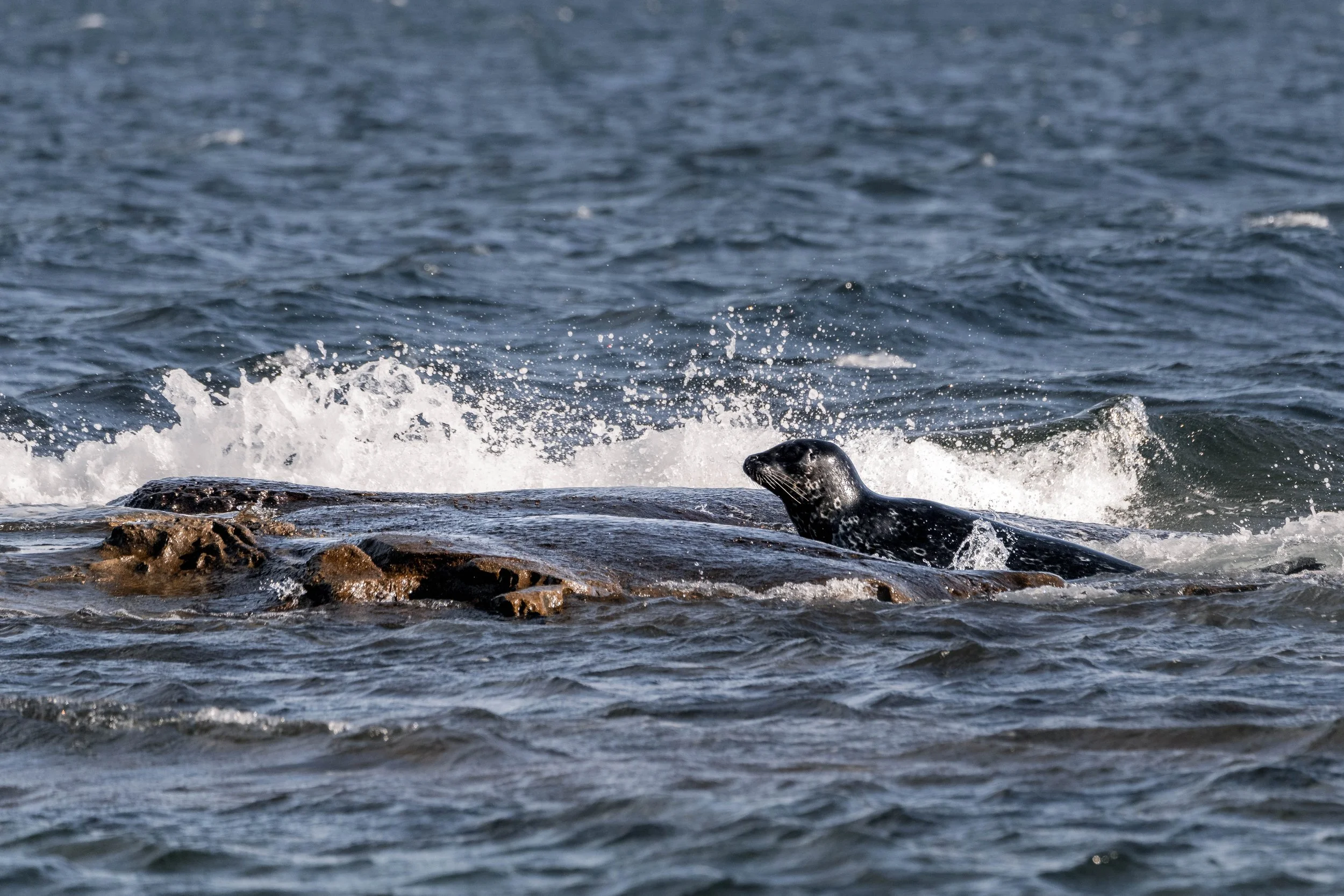
A Harbour Seal getting pummeled by the waves.
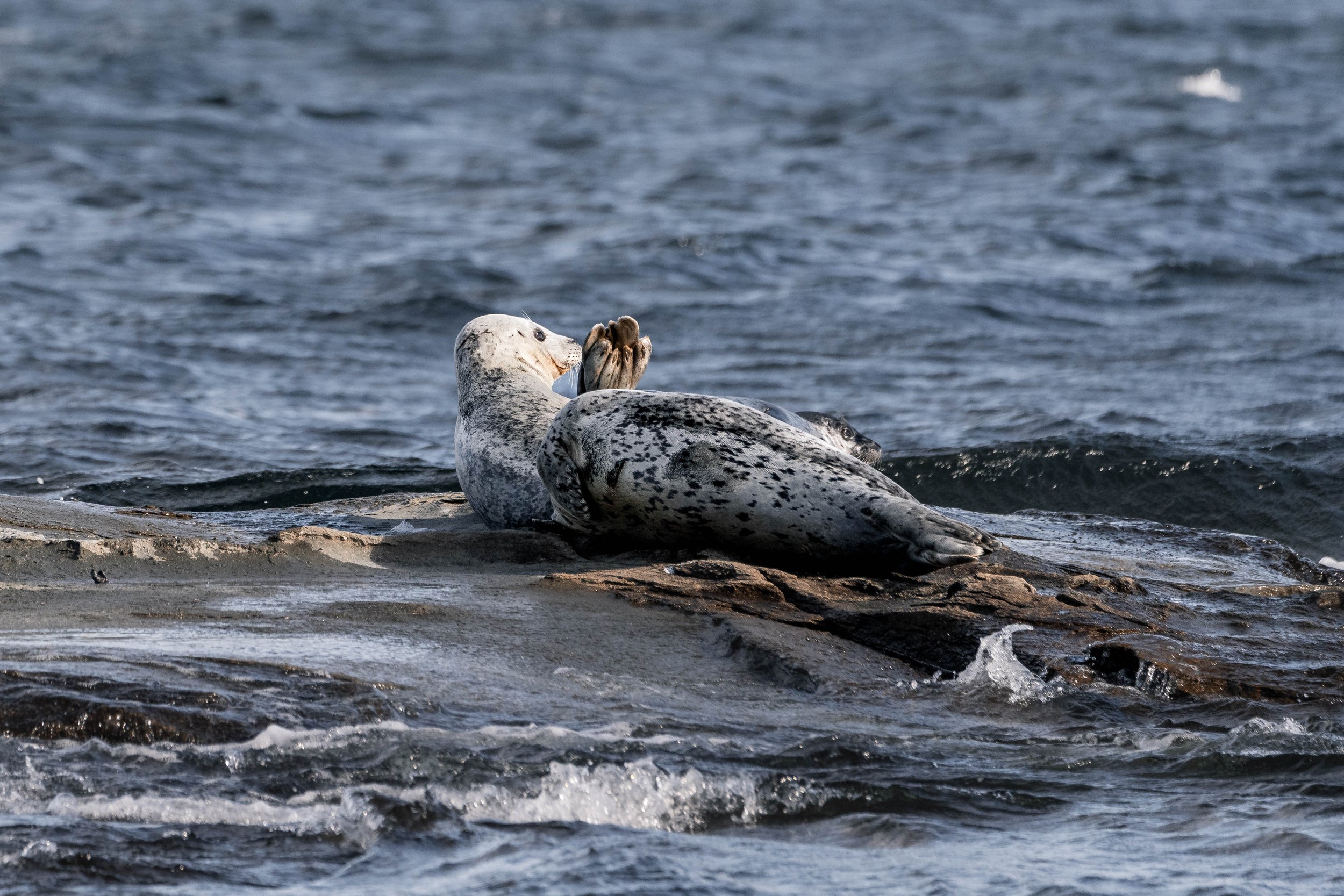
Biiiiiig stretch and snooze with the Harbour Seals.
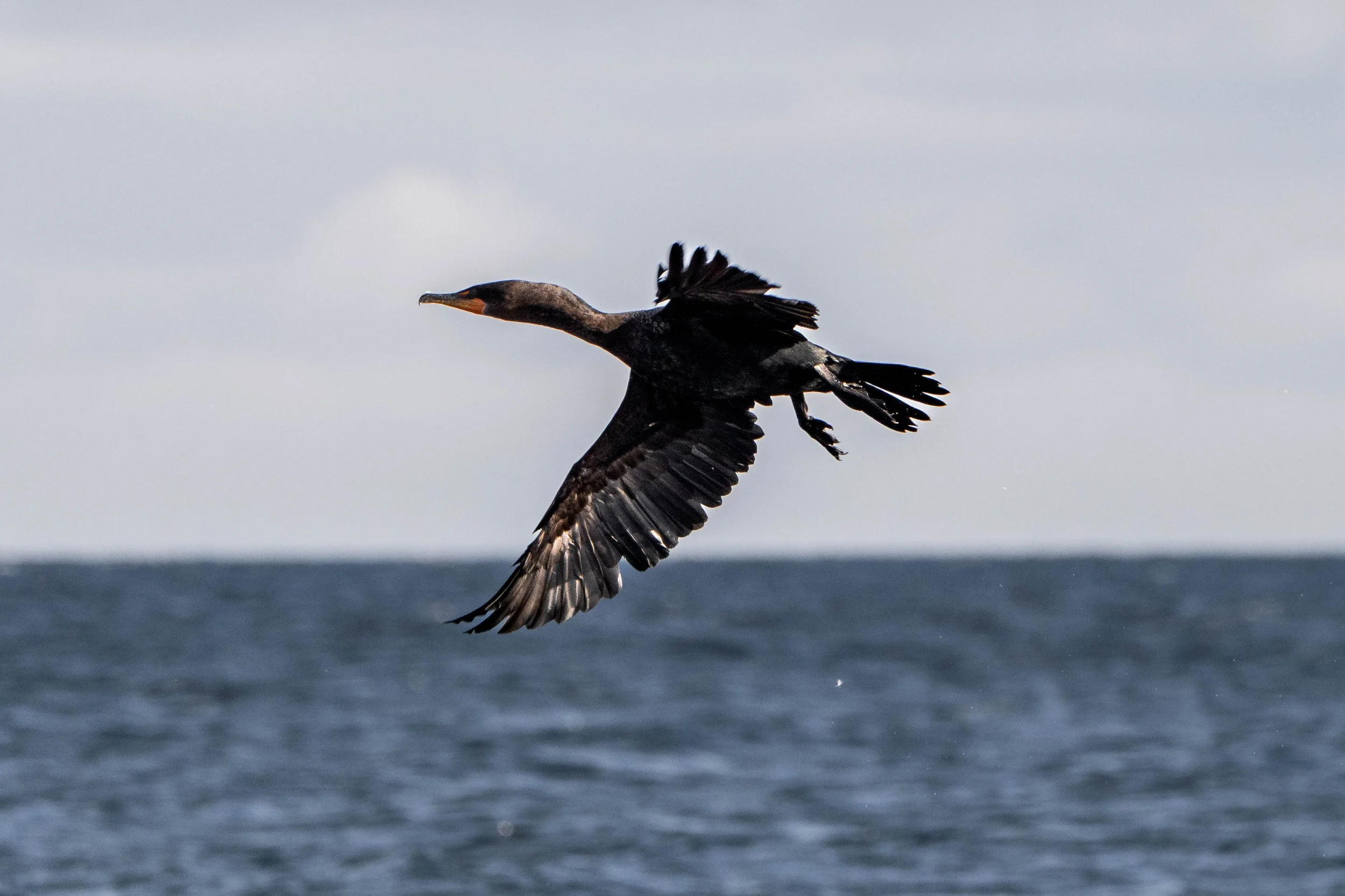
A Cormorant in flight.

Bickering amongst the Steller Sea Lions on Stinky Rocks.
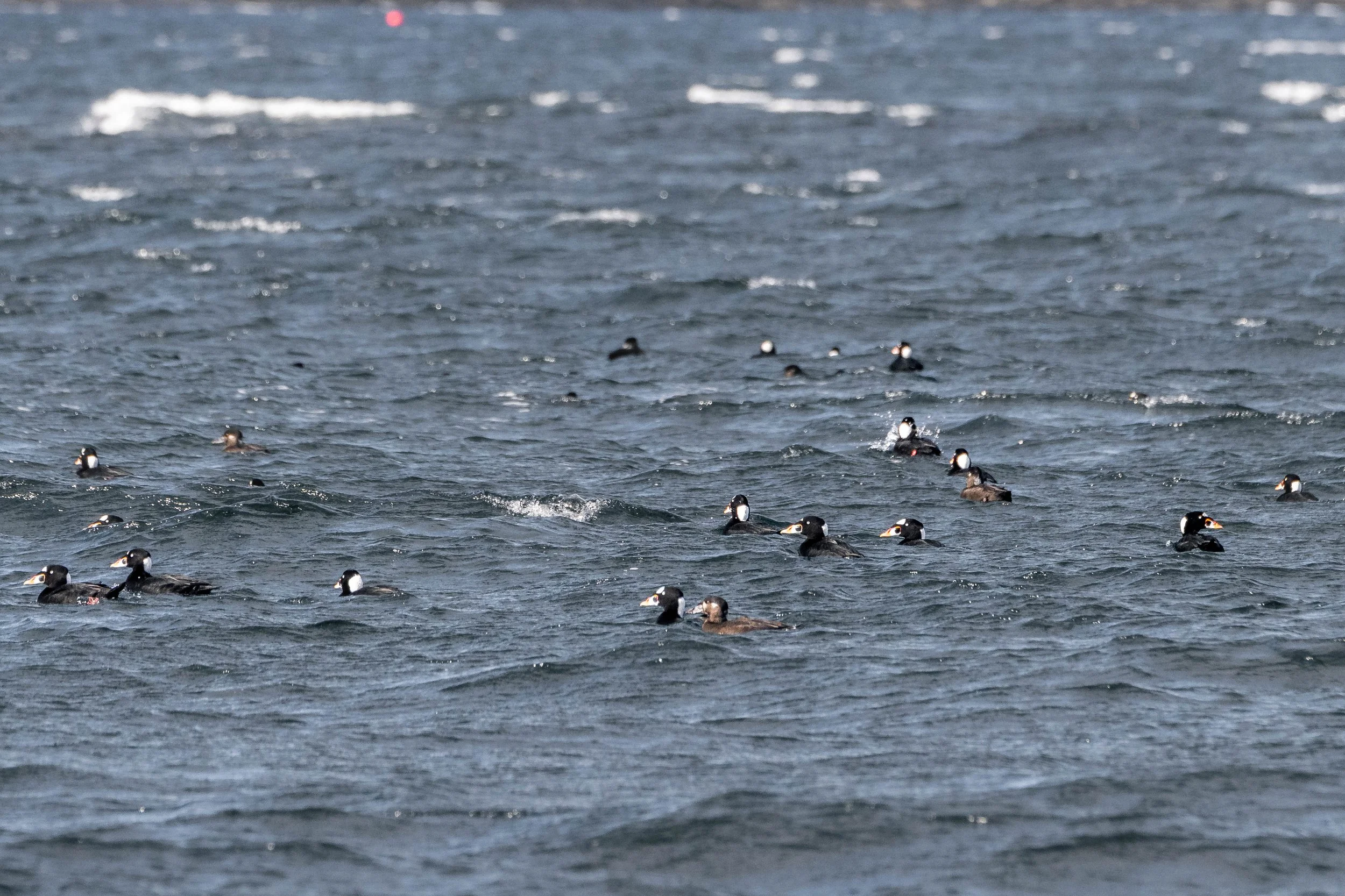
Surf Scoters floating by.
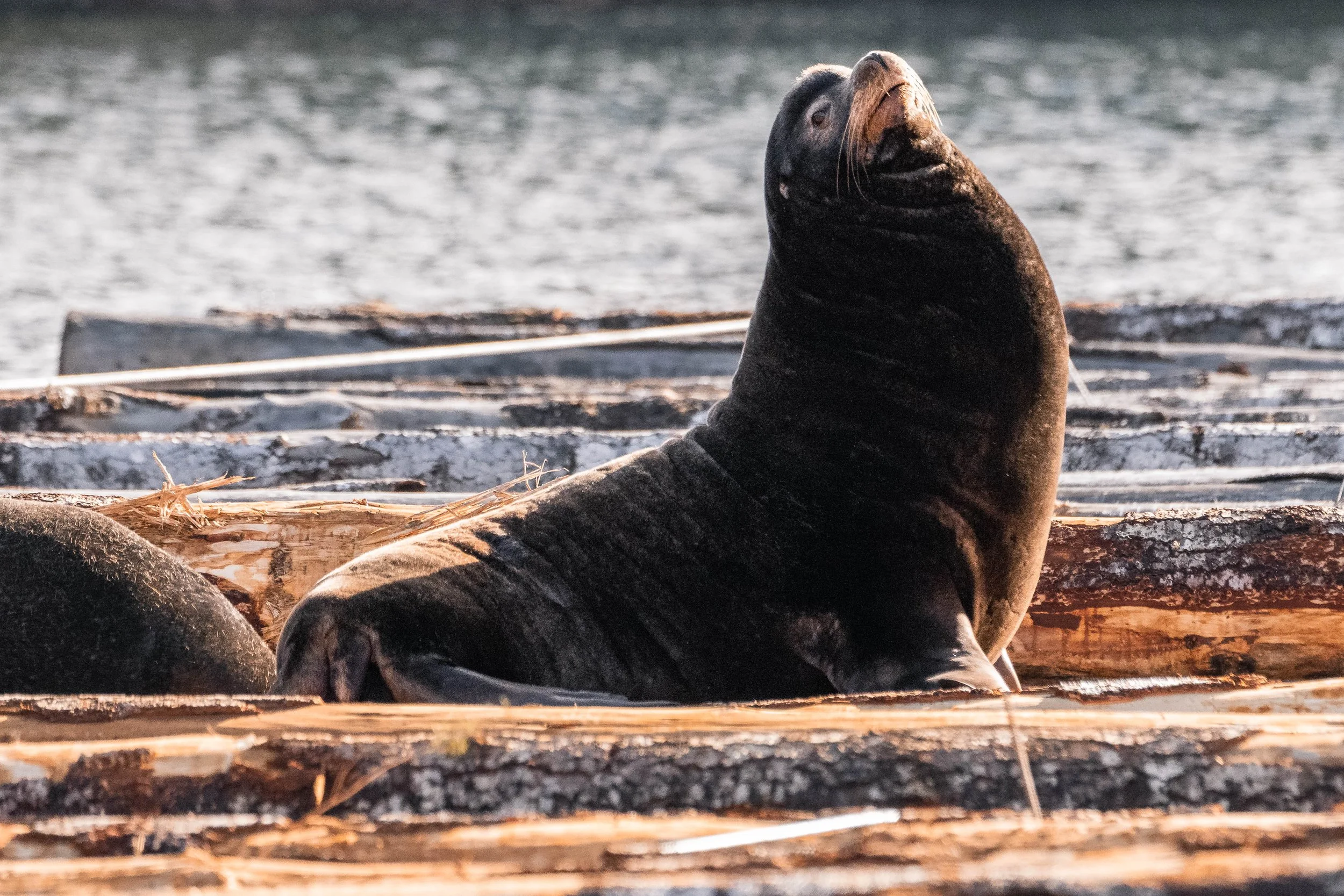
A very regal looking California Sea Lion.
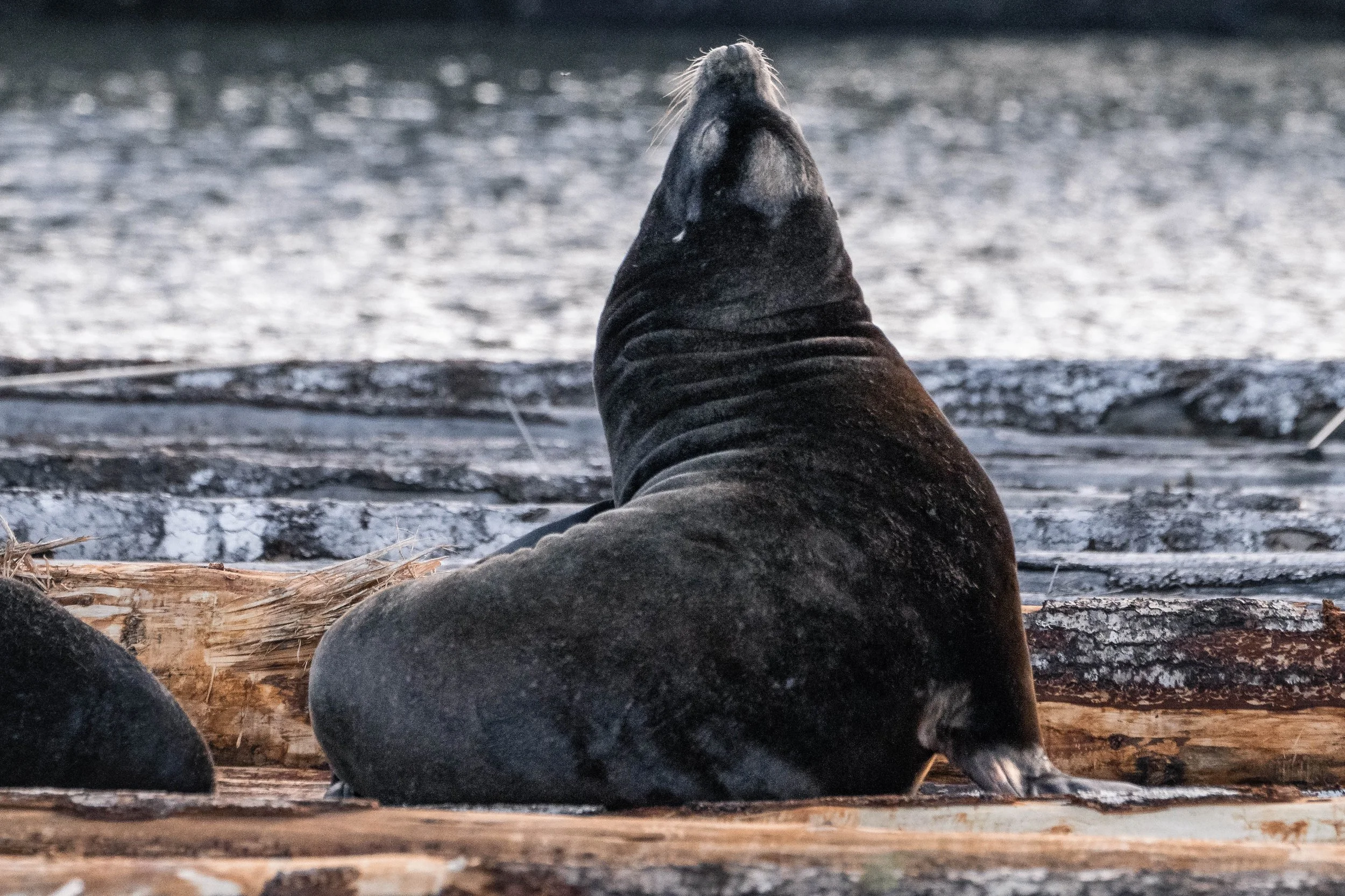
Scartching an itch.
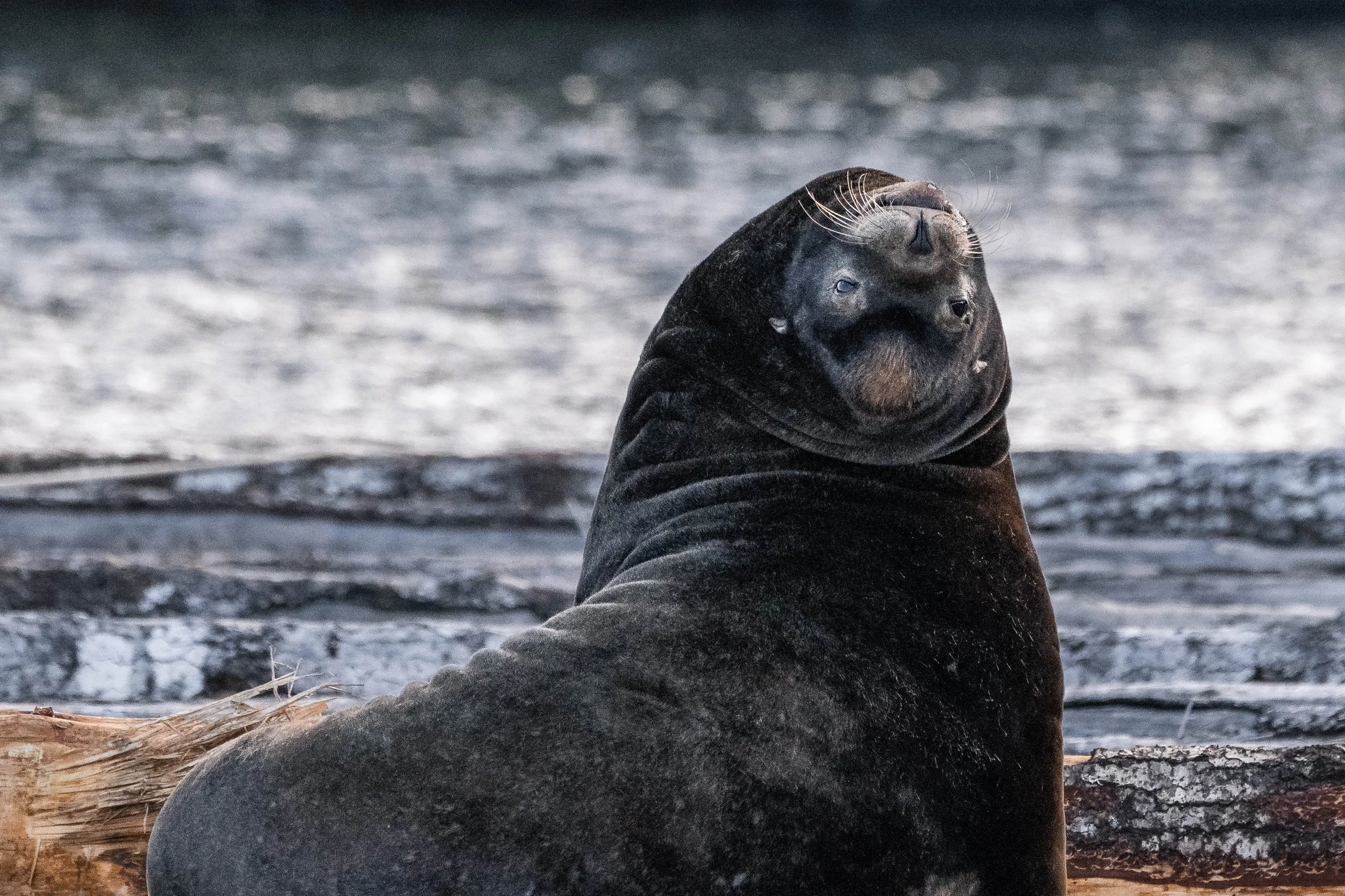
A bit of a different ‘angle’ of viewing.