
October 20, 2026 - Ghost, Lil' Boo, and Merlin making a splash in the waves
The sun shone overhead as we sent our two vessels out into the Strait of Georgia to start our search for the day. Before the tour departed, we'd heard shore-based reports of whales north of Gabriola Island, so we decided to try our luck and see if we could catch up with them again. Sure enough, after searching the waves, we spotted the distinct blow of a humpback whale nearby, so we slowed and approached to confirm the encounter.
As we got closer, it became clear that three whales were spending time together here. It was Ghost (BCX1333), her calf Lil’ Boo (BCX1333calf2026), and Merlin (BCY1033)! The waves seemed to give these whales extra energy, since we saw all sorts of surface behaviour during our time observing them. We heard trumpeting, saw tail and pectoral fin slapping, and even saw the calf breach clear out of the water! Because these movements were so unexpected, we didn’t get the clearest photos, but the memory will last nonetheless.
This kind of surface activity is rare, especially here in their feeding grounds. Each year humpback whales make a remarkable migration, heading from their breeding and calving grounds in either Hawaii or Mexico (for our population) back to the northern feeding grounds over the summer months. While they are here, their main goal is to eat as much as possible to build a fat reserve they use as their main energy source when they travel south over the winter months. This matters because when they are in Hawaii and Mexico, there isn’t much food available, so they burn that fat for energy during that time.
Because breaching is the most energetically expensive behaviour in the animal kingdom, it makes sense that we don’t see it very often. So why would they do it when we do see it? There are three main schools of thought. Humpback whales carry a lot with them, with nearly 500 pounds of barnacles and whale lice on their bodies at any given time. Breaching and other surface activity may help whales knock off some of these ride-alongs and any accumulated dead skin, reducing drag as they travel through the water. The loud impact from these activities may also help individuals communicate. Water transmits sound much better than air, so the loud impacts can travel miles and miles, signalling something to other whales. What they might be signalling is still unclear, though. Finally, these activities might just be fun for the whales and a form of play. Play is very important in the animal kingdom, especially with younger individuals. It not only keeps young animals entertained while their mothers focus on feeding or other tasks, but also helps them practice for when these movements become more important later. A young whale might not have accumulated many barnacles or lice yet, but learning to jump and knock them loose later in life can be important. Sometimes, you might even see the mom teach her calf these skills as they breach or cartwheel together! No matter why Lil’ Boo might have been full of beans today, we enjoyed our time watching the antics before it was time for us to continue our search in some calmer waters.
We spent the rest of the time exploring the Southern Gulf Islands, keeping our eyes peeled for wildlife and other whales along the way. Although no other whales made themselves known during the tour, we spotted plenty of wildlife. This started as we headed south through Northumberland Channel and into Dodd Narrows. This is an exceptionally active spot this time of year, as the narrow passage concentrates fish heading north to their home rivers to spawn. Sea Lions in particular take advantage of this highly productive area and can be found feeding here throughout the day. Today was no different; as we slowed to pass through, we saw plenty of both California Sea Lions and Steller Sea Lions in the waterway looking for their next meal.
From there, we continued our search of the islands, enjoying the beautiful scenery as we wove through the passages looking for wildlife. We did end up spotting a Harbour Seal haul-out as we went, stopping to see the little “rock sausages” relaxing on the rocks and enjoying the sunshine before they, too, started searching for food. Like sea lions, Harbour Seals take advantage of the seasonal abundance of food during the salmon run.
From there, we searched Stuart Channel back toward Dodd Narrows and ended the day watching the sea lions rest on the log booms near the Harmac Pulp Mill. Even though there are lots of fish to catch in nearby Dodd Narrows, the sea lions need a rest, too. They, and the Harbour Seals, also need to spend time out of the water to regulate their body temperature. Even in summer, the waters of coastal BC are quite cold, and even with all their fur and blubber, these marine mammals need to spend some time out of the water to warm up before returning to fishing. This gives us great opportunities to observe them up close, since they almost always return to the same rocky haul-out sites.
From active whales in the waves to our pinnipeds relaxing in calm waters, it was an amazing day on the water! Please enjoy the photos captured throughout the tour by Marine Naturalists Hayleigh Hilbert and Evan Hessels, included below.
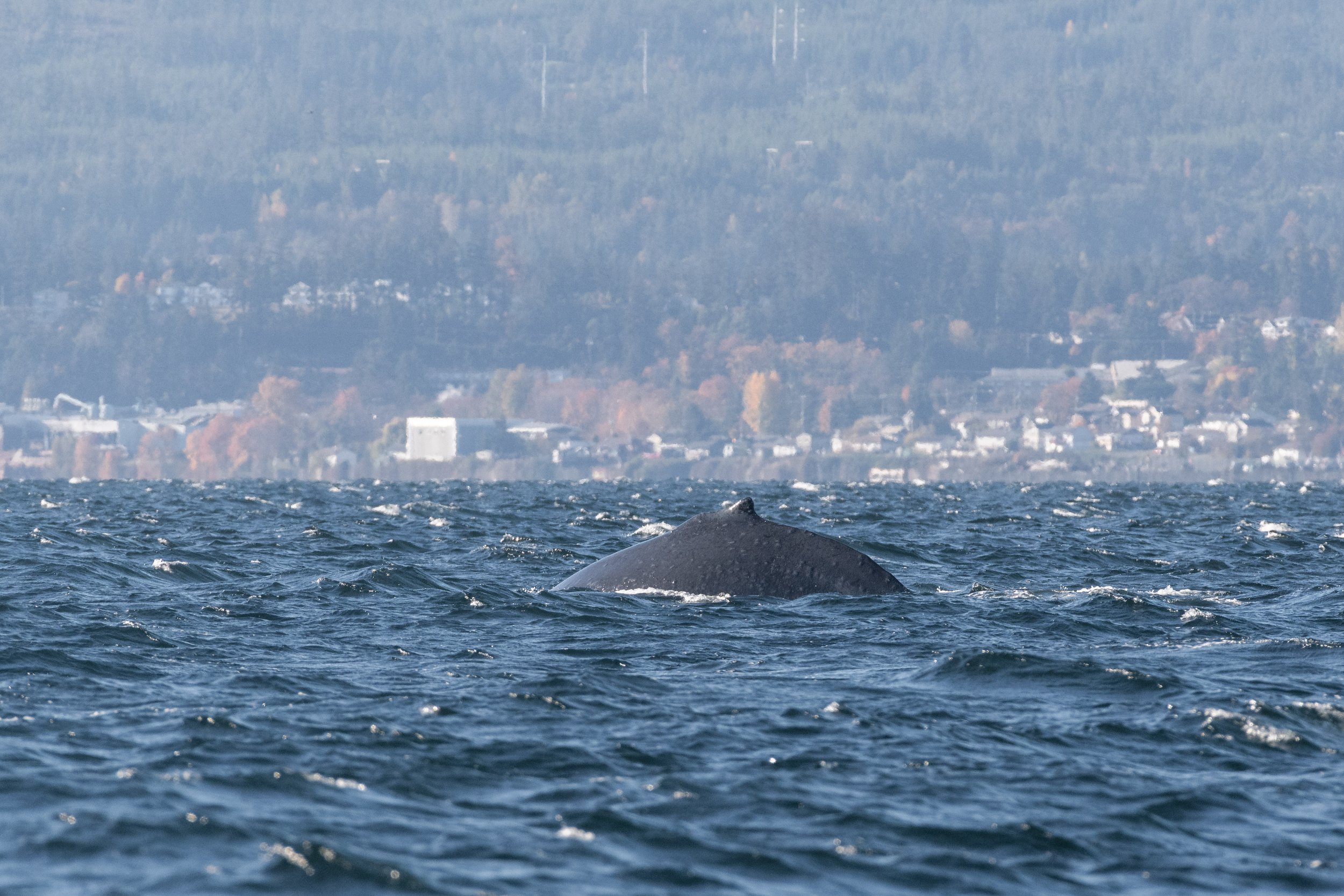
Ghost surfacing in the waves. Photo by Hayleigh Hilbert.
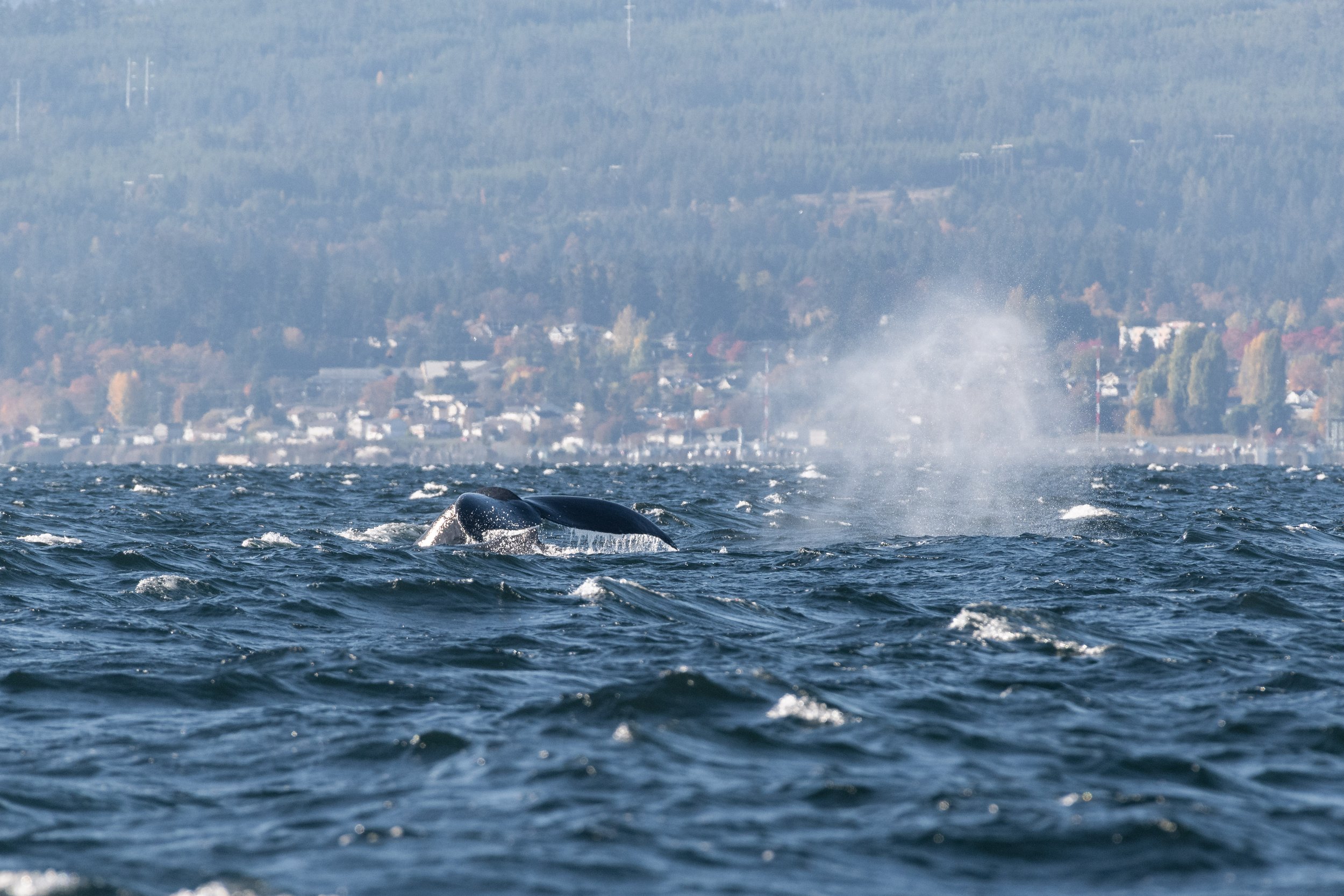
Ghost going for a dive with Merlin’s exhale at the surface beside her. Photo by Hayleigh Hilbert.
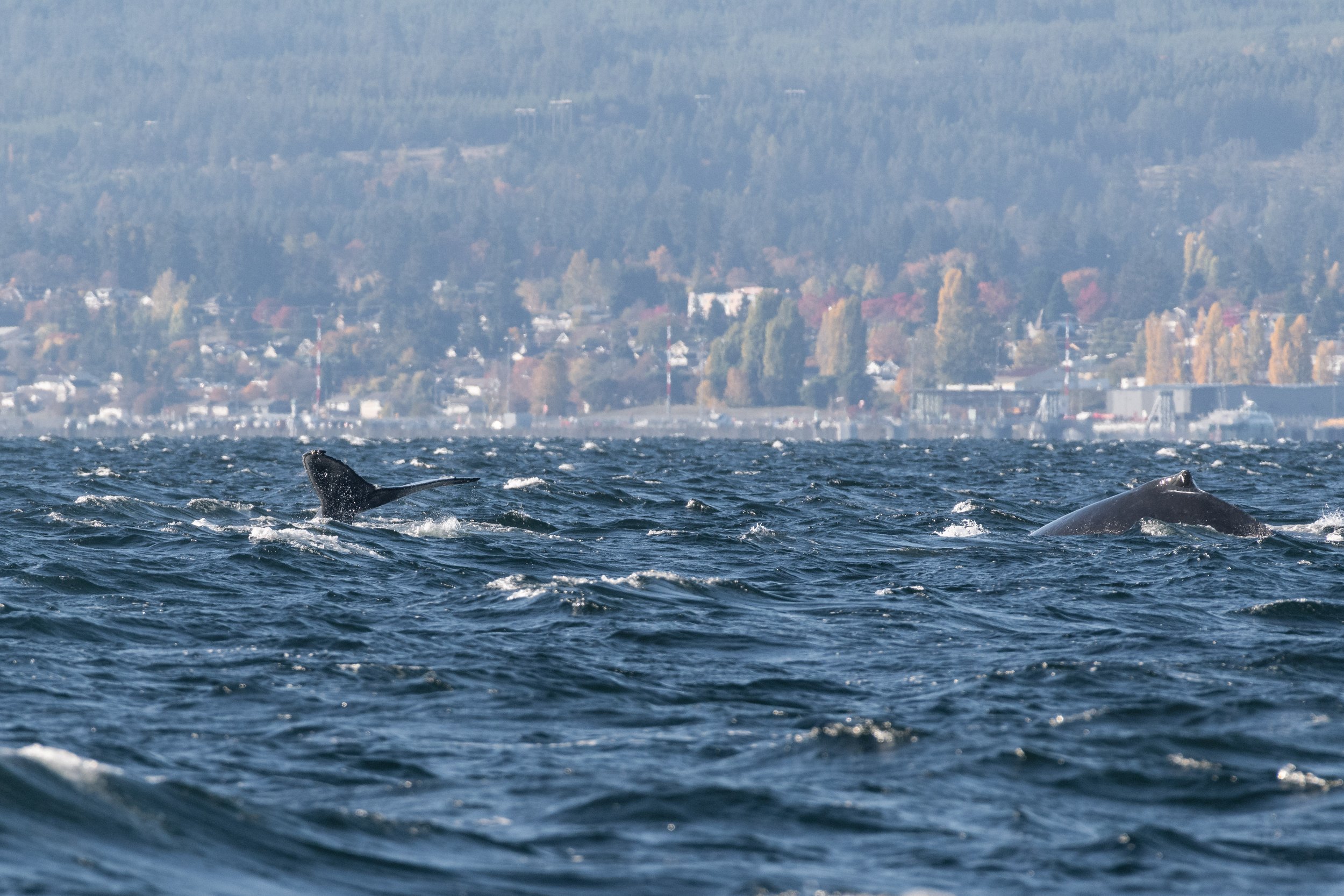
Lil’ Boo going for a dive with Merlin preparing to do the same on the right. Photo by Hayleigh Hilbert.
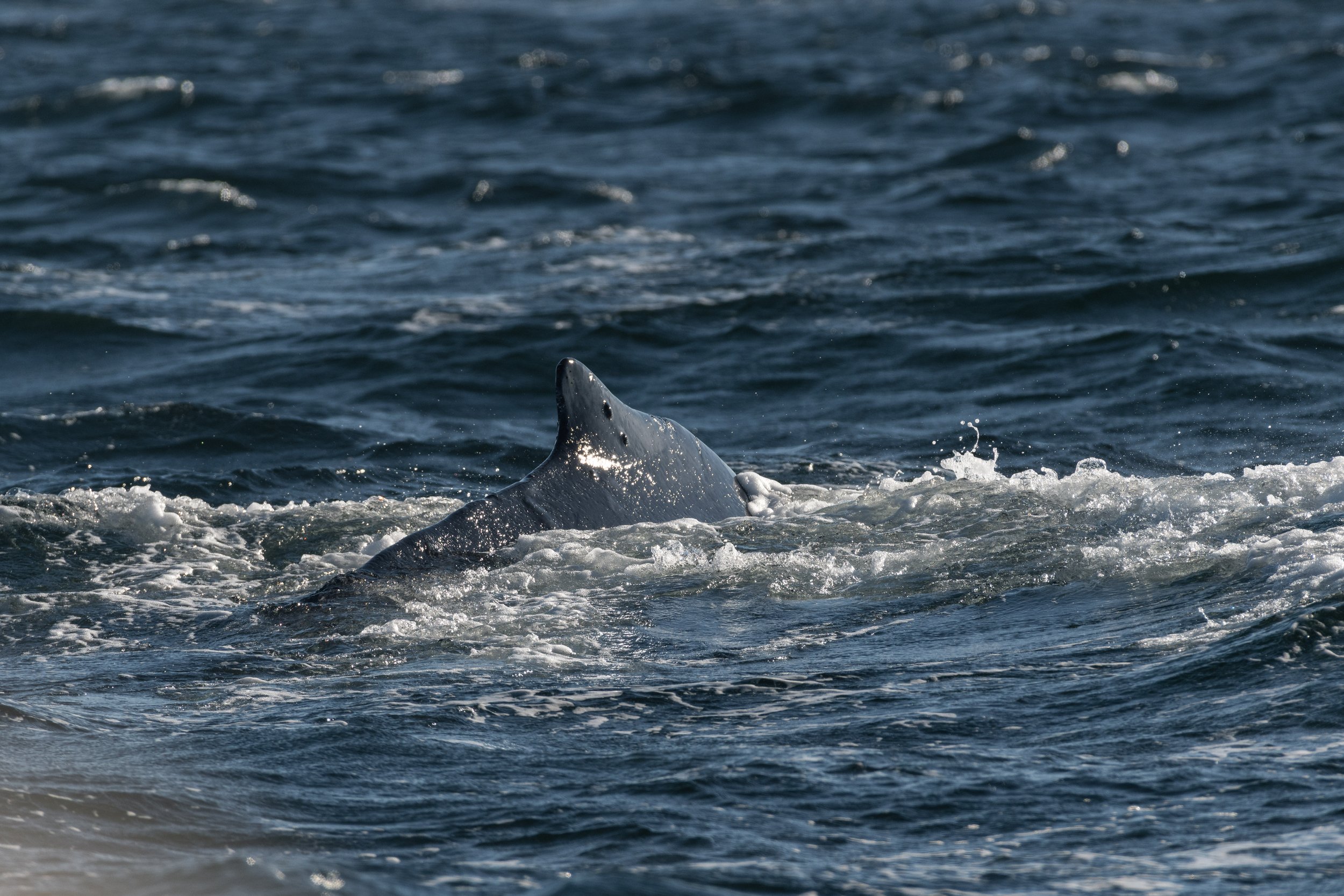
Ghost has these two distinct dots on her dorsal fin. Photo by Hayleigh Hilbert.
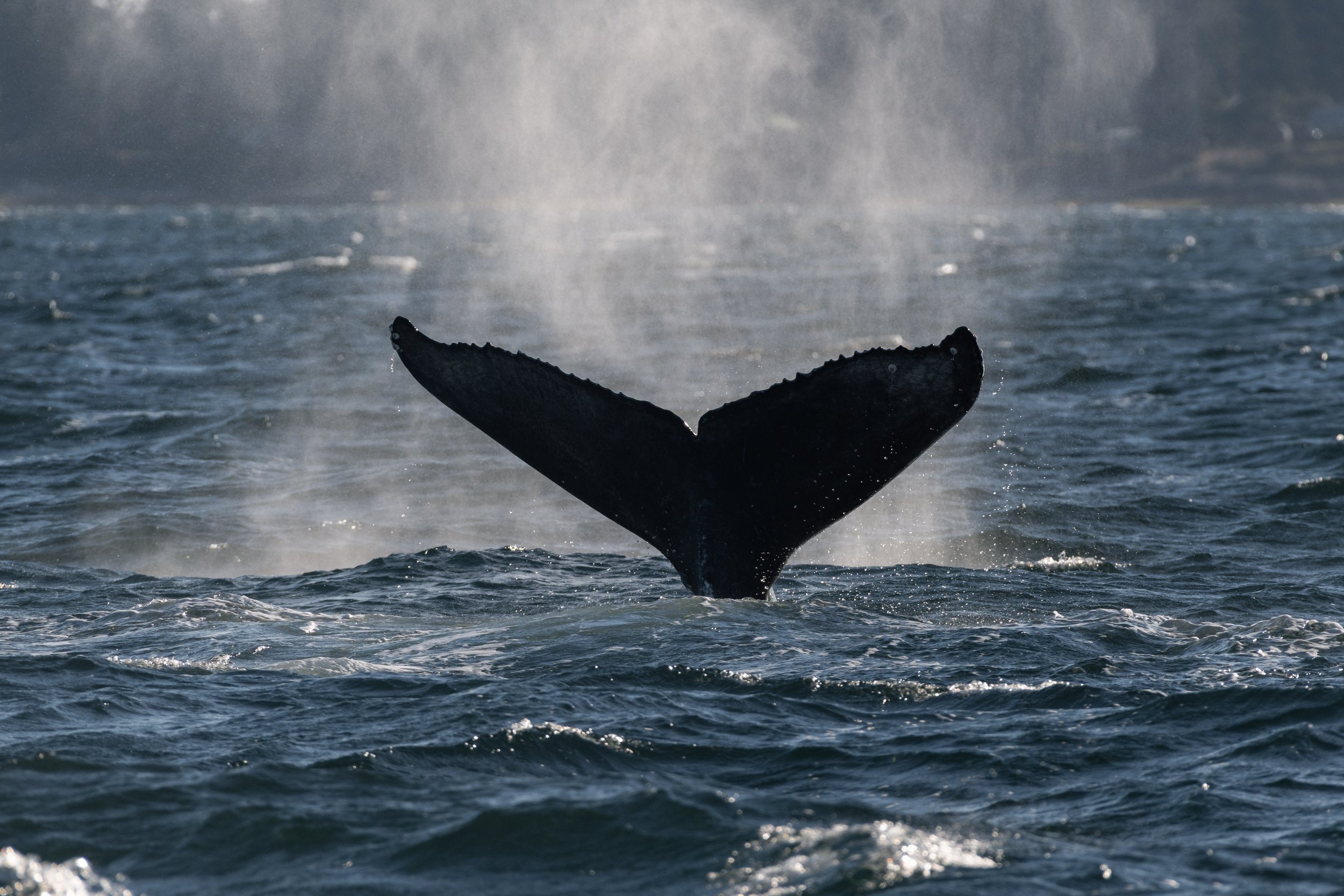
A fantatic look at Lil’ Boo’s tail as she dives. Photo by Hayleigh Hilbert.
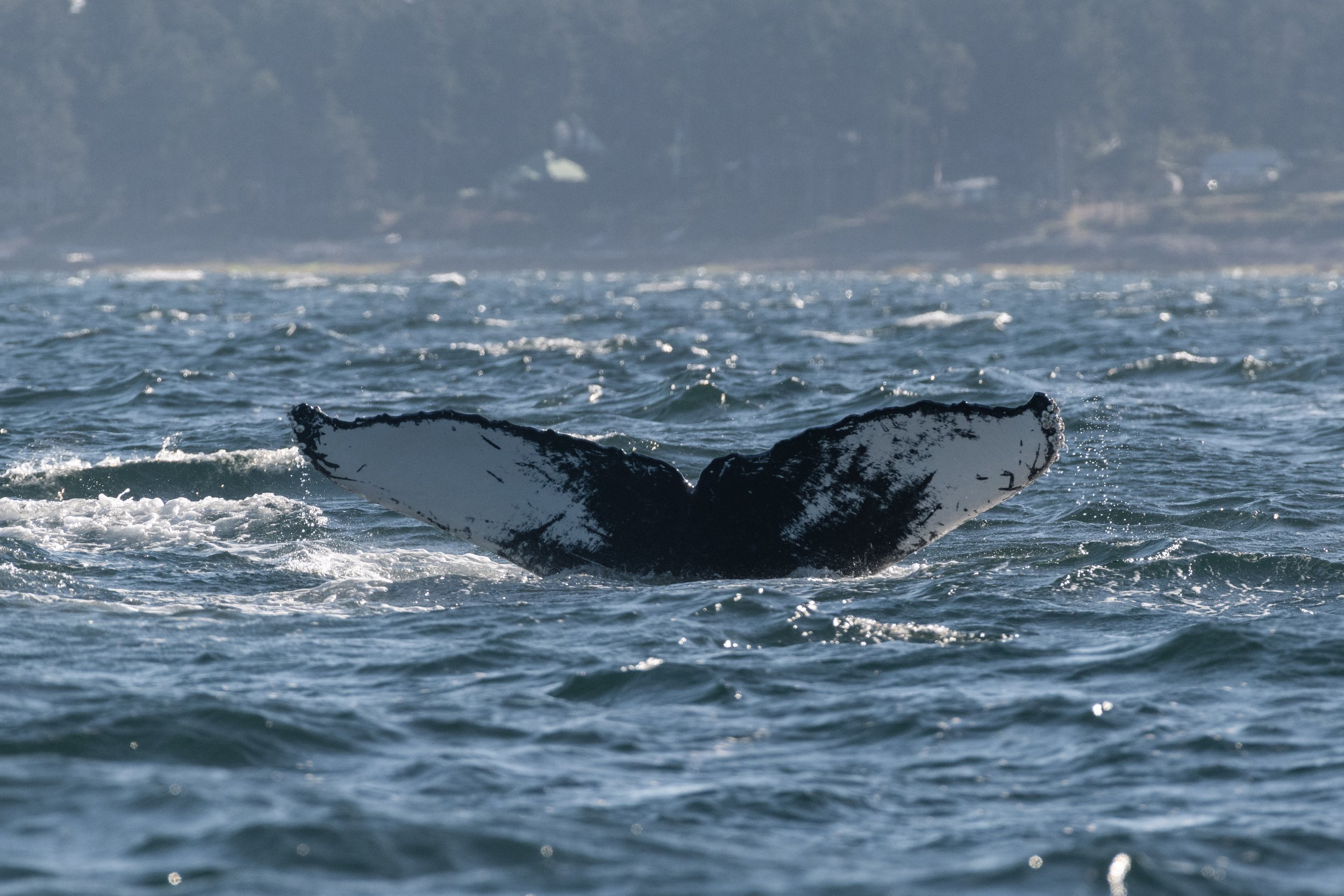
The bautiful underside of Merlin’s tail as he dives. Photo by Hayleigh Hilbert.
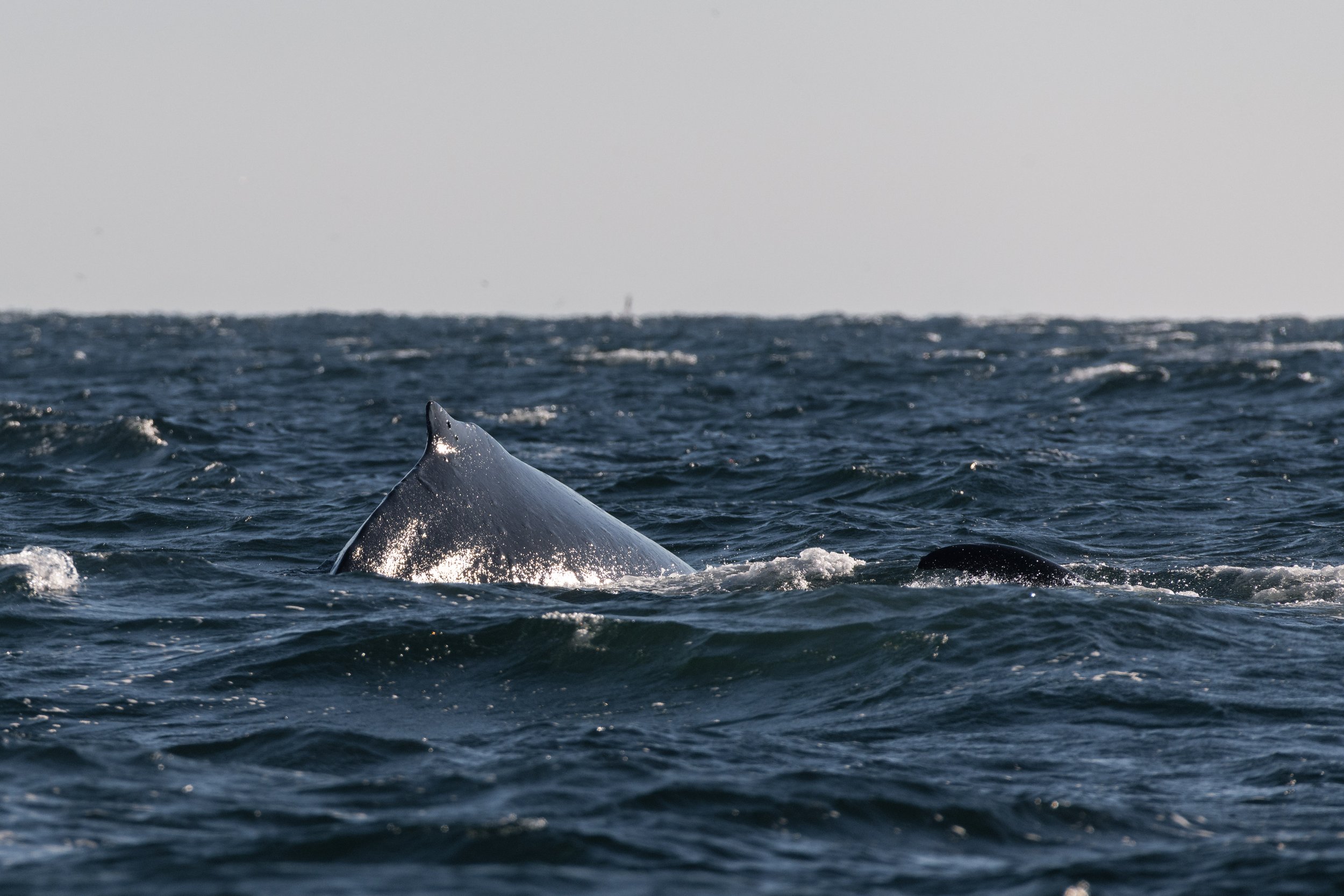
Ghost arching for a dive on the left with her calf rolling at the surface beside her Photo by Hayleigh Hilbert.
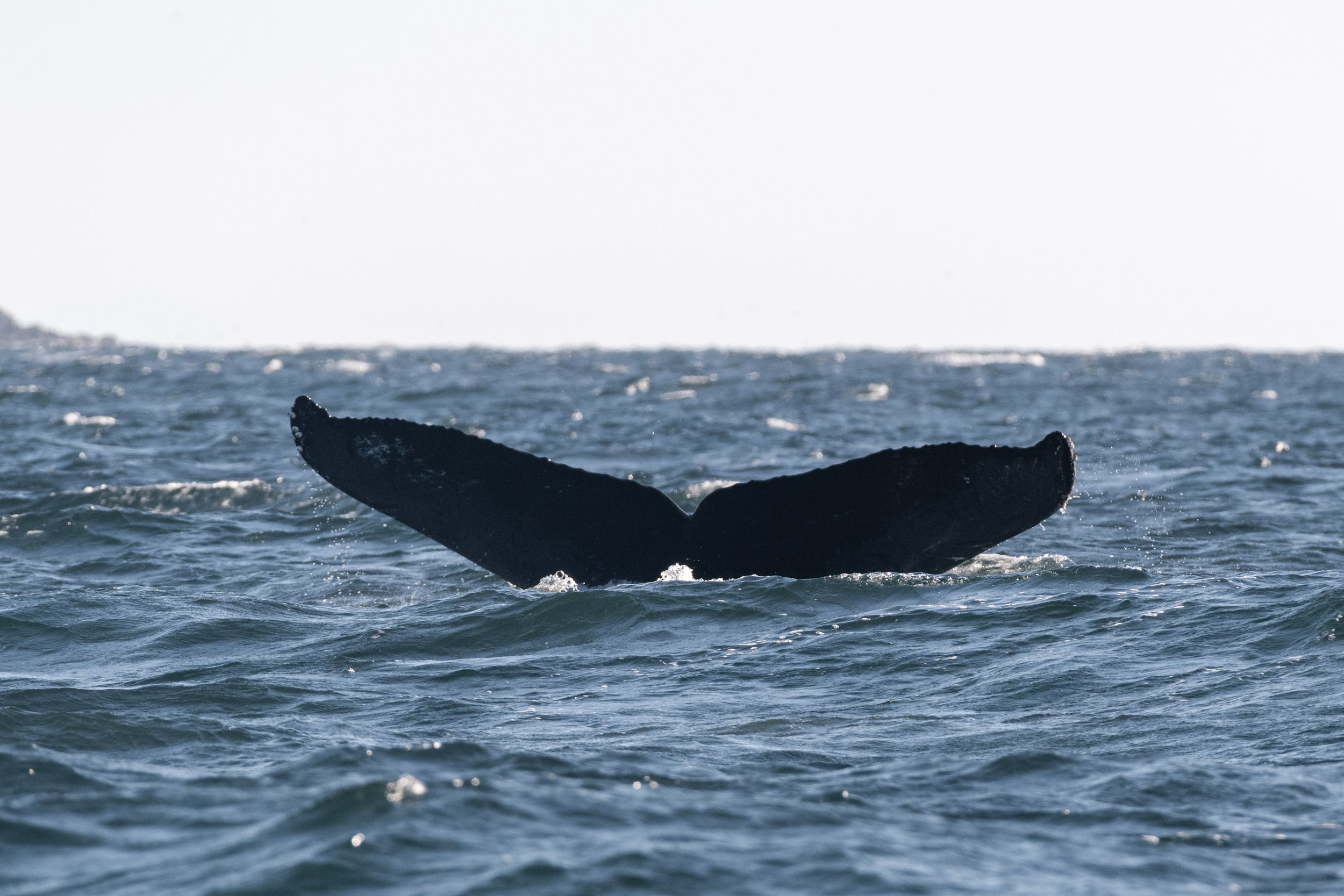
The underside of Ghost’s tail as she dives. The faded white on the left is her spooky namesake. Photo by Hayleigh Hilbert.
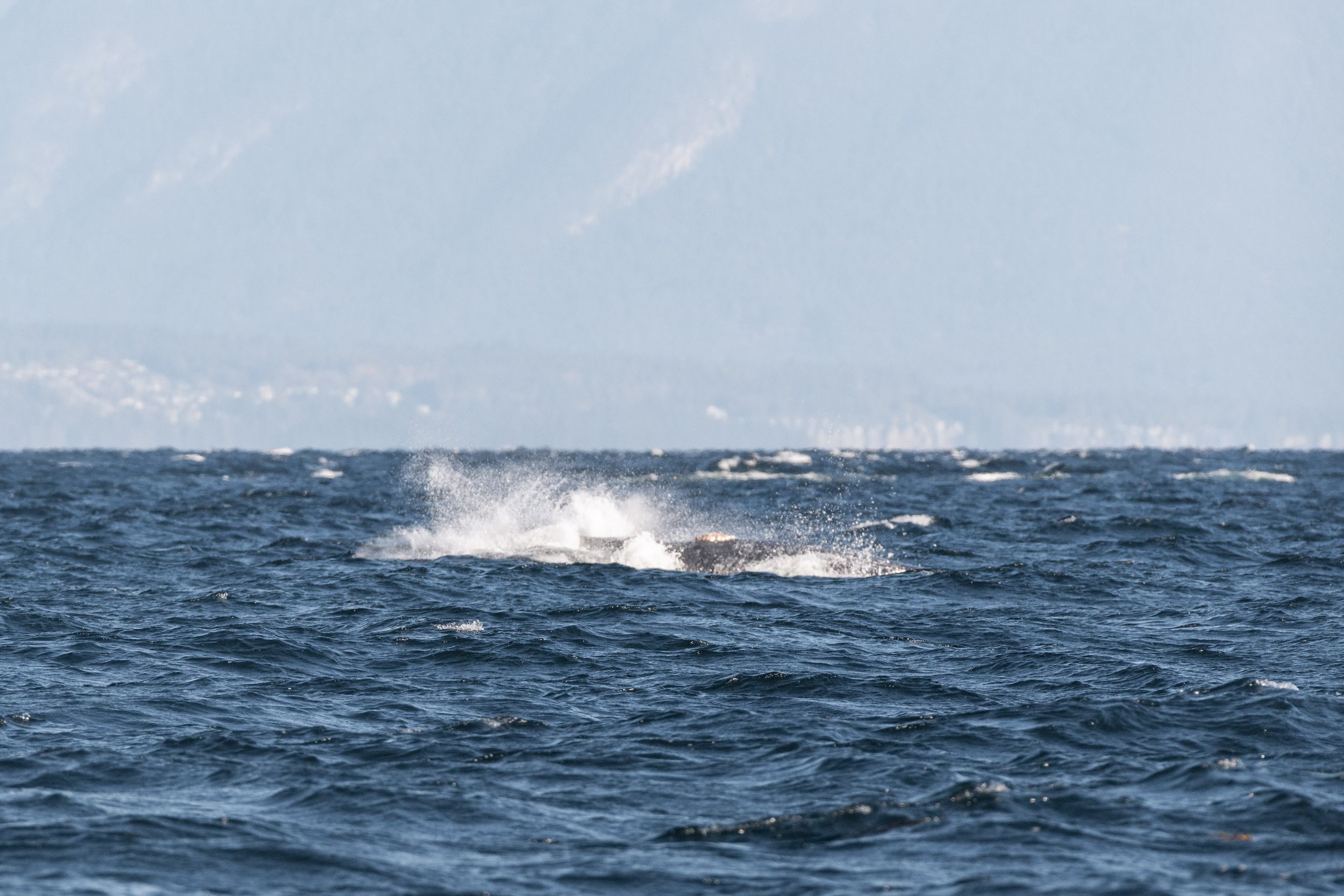
An upside down tail swish from one of the whales. Photo by Hayleigh Hilbert.
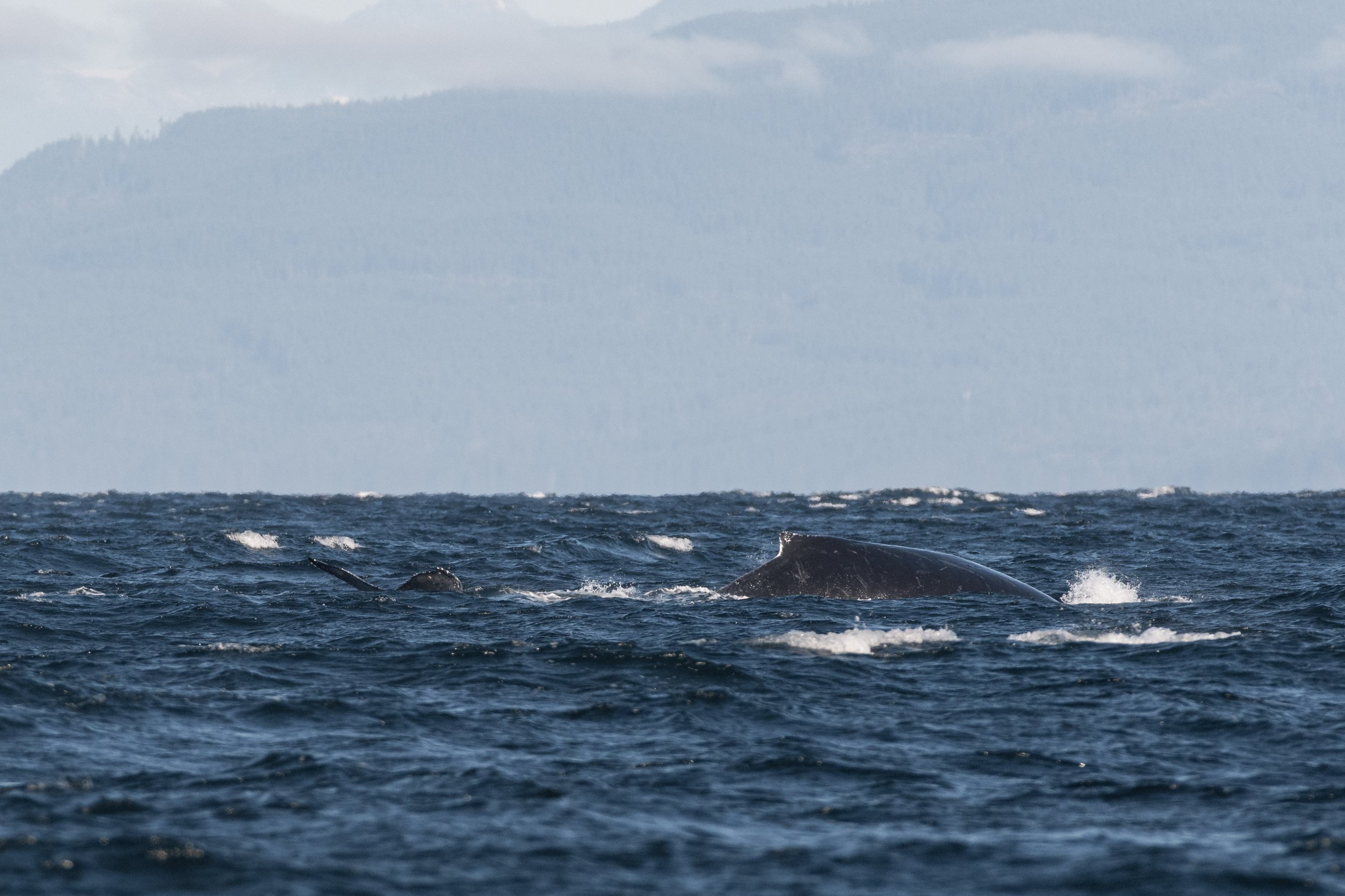
Merlin at the surface with Lil’ Boo diving beside him. Photo by Hayleigh Hilbert.
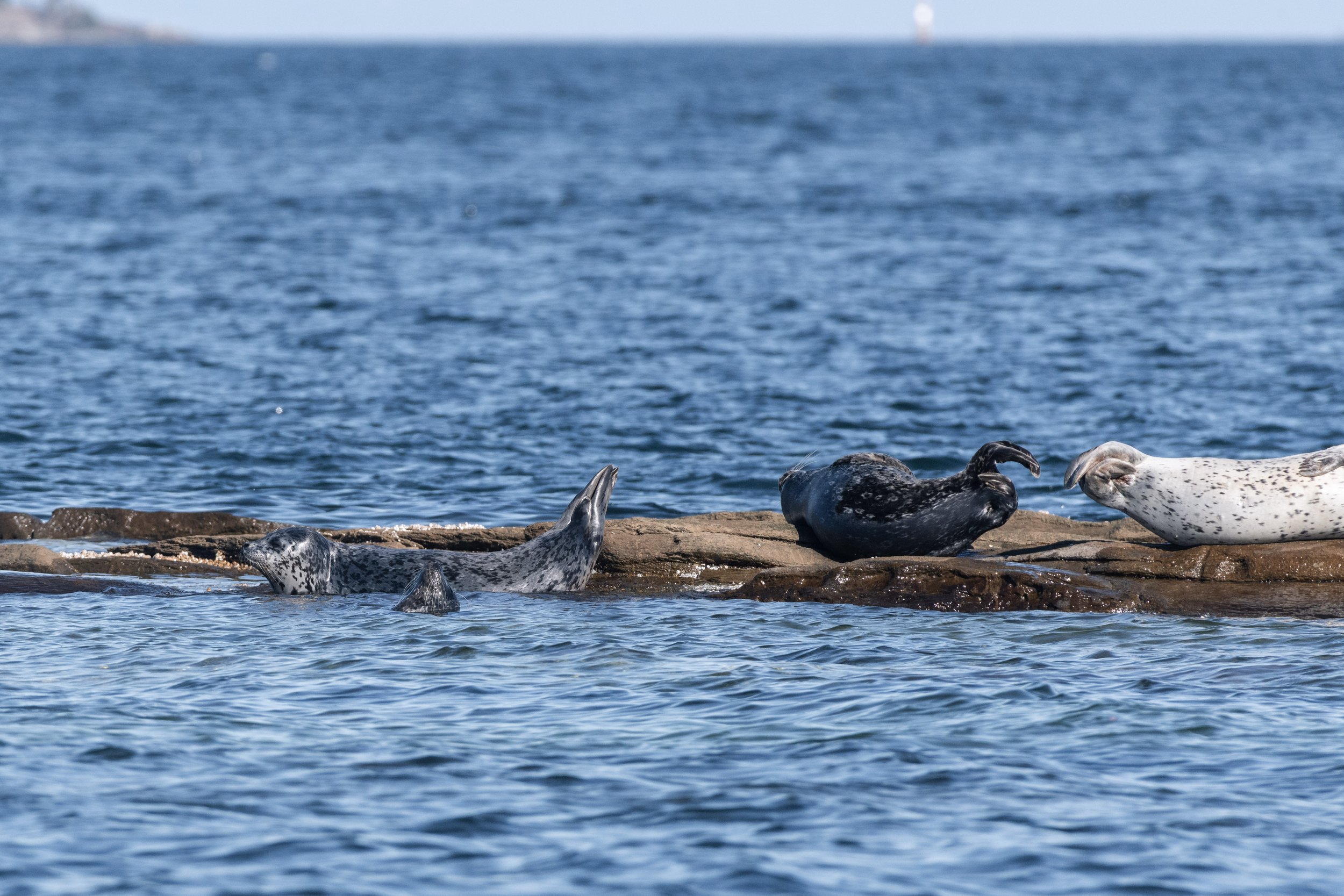
Harbour Seals practicing their rock yoga with Banana Pose. Photo by Hayleigh Hilbert.
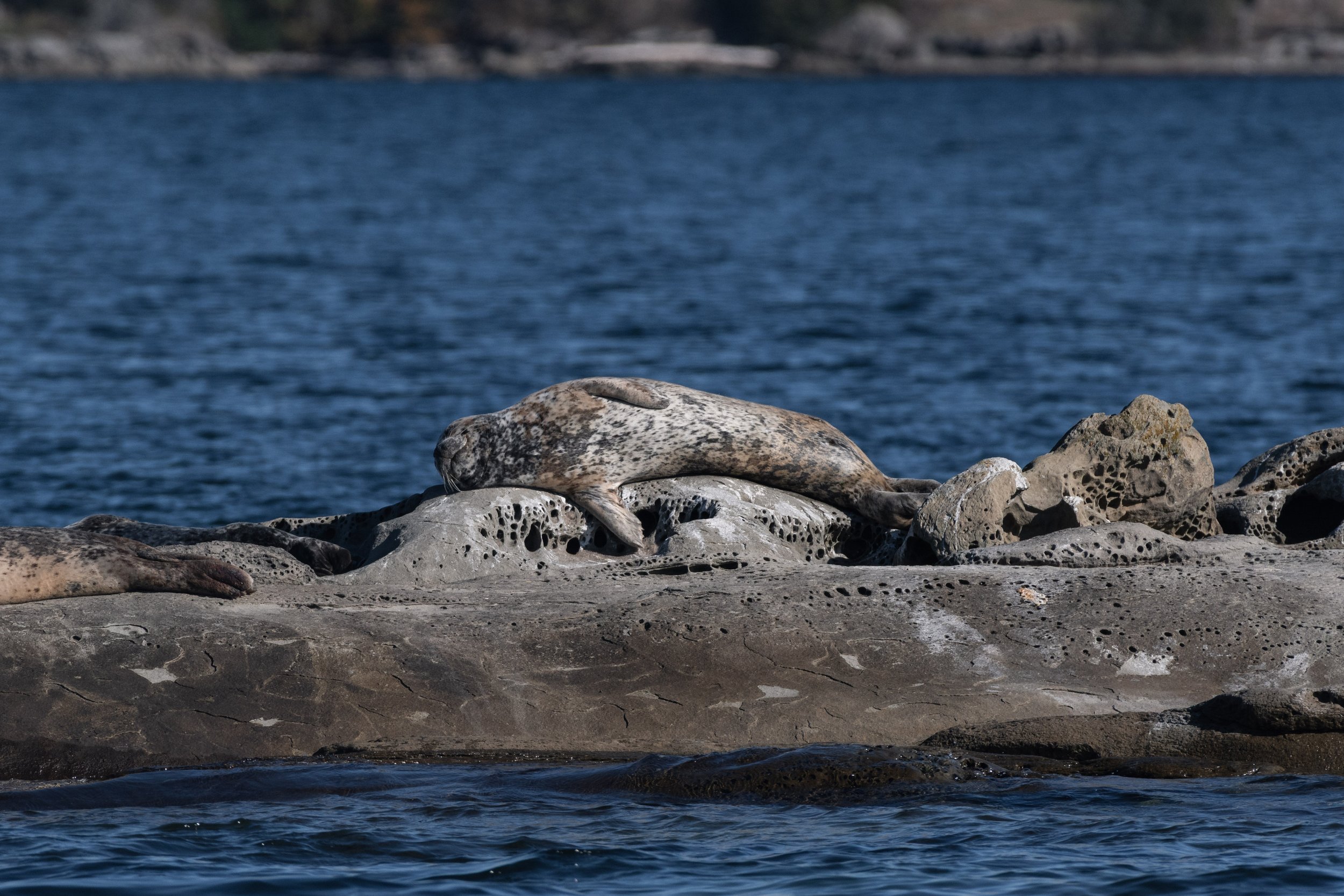
This rock in particular looks extra comfortable. Photo by Hayleigh Hilbert.
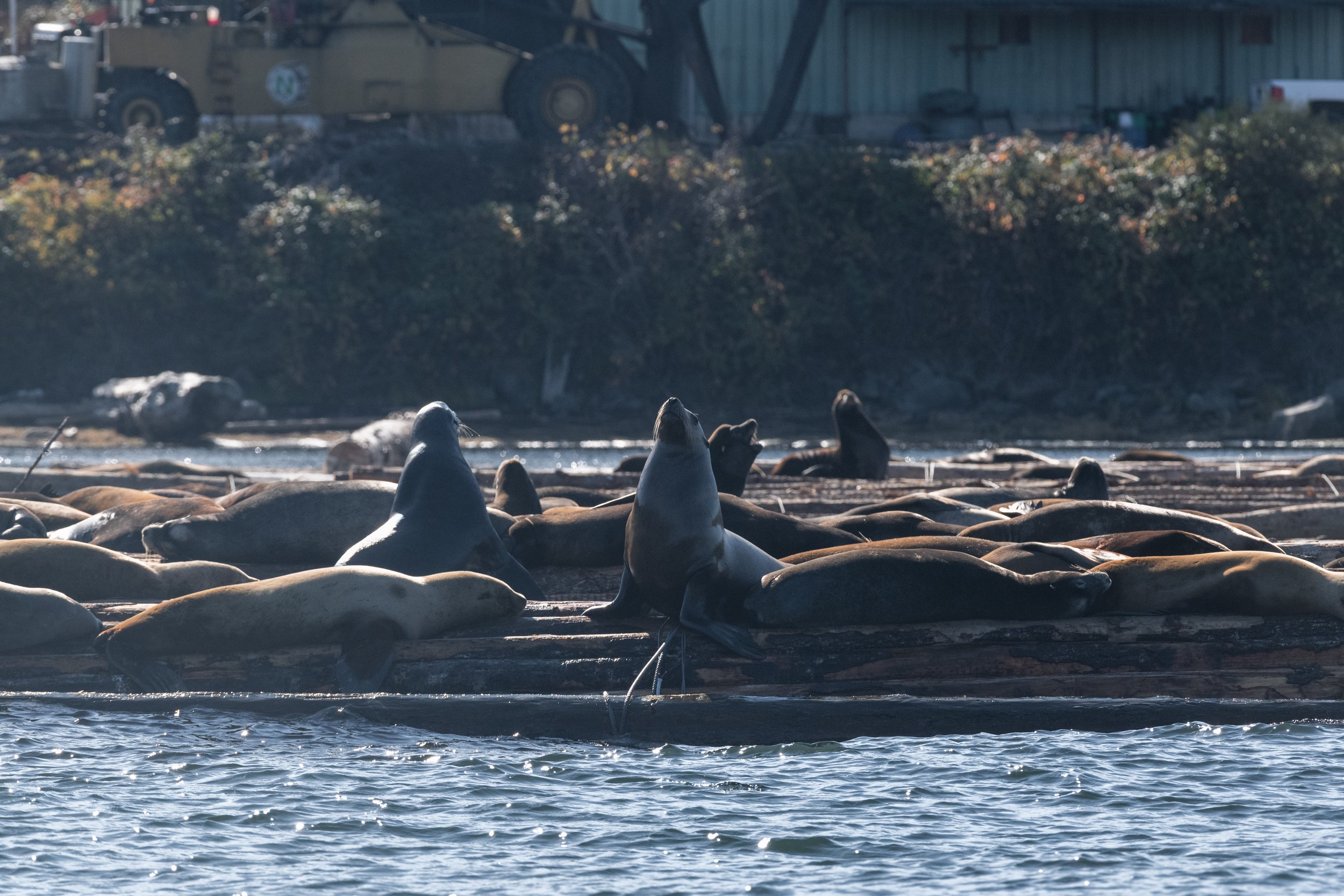
Sea lions hauled out at th Harmac Pulp Mill. Photo by Hayleigh Hilbert.
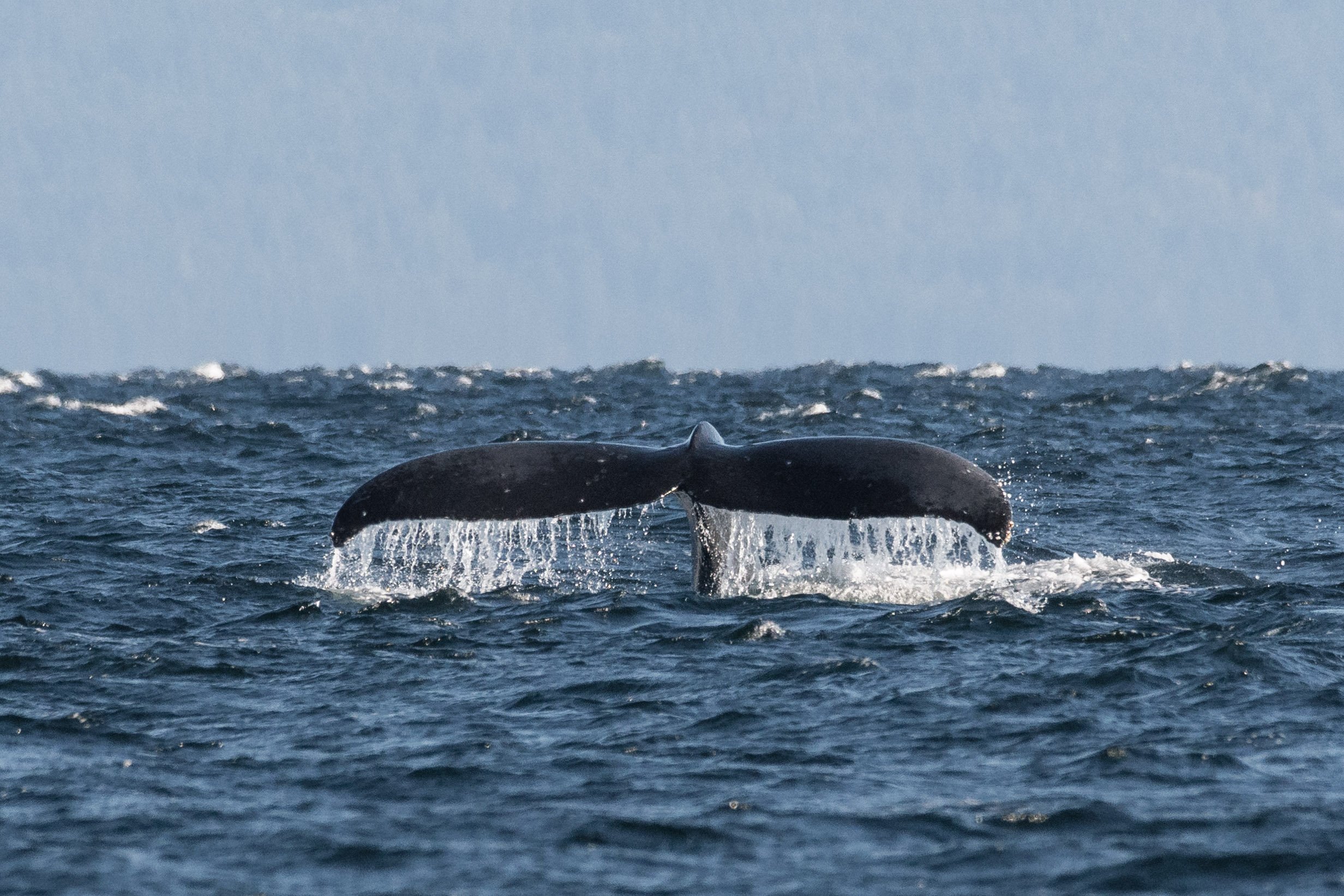
A nice fluke waterfall from Ghost as she prepares to dive. Photo by Evan Hessels.
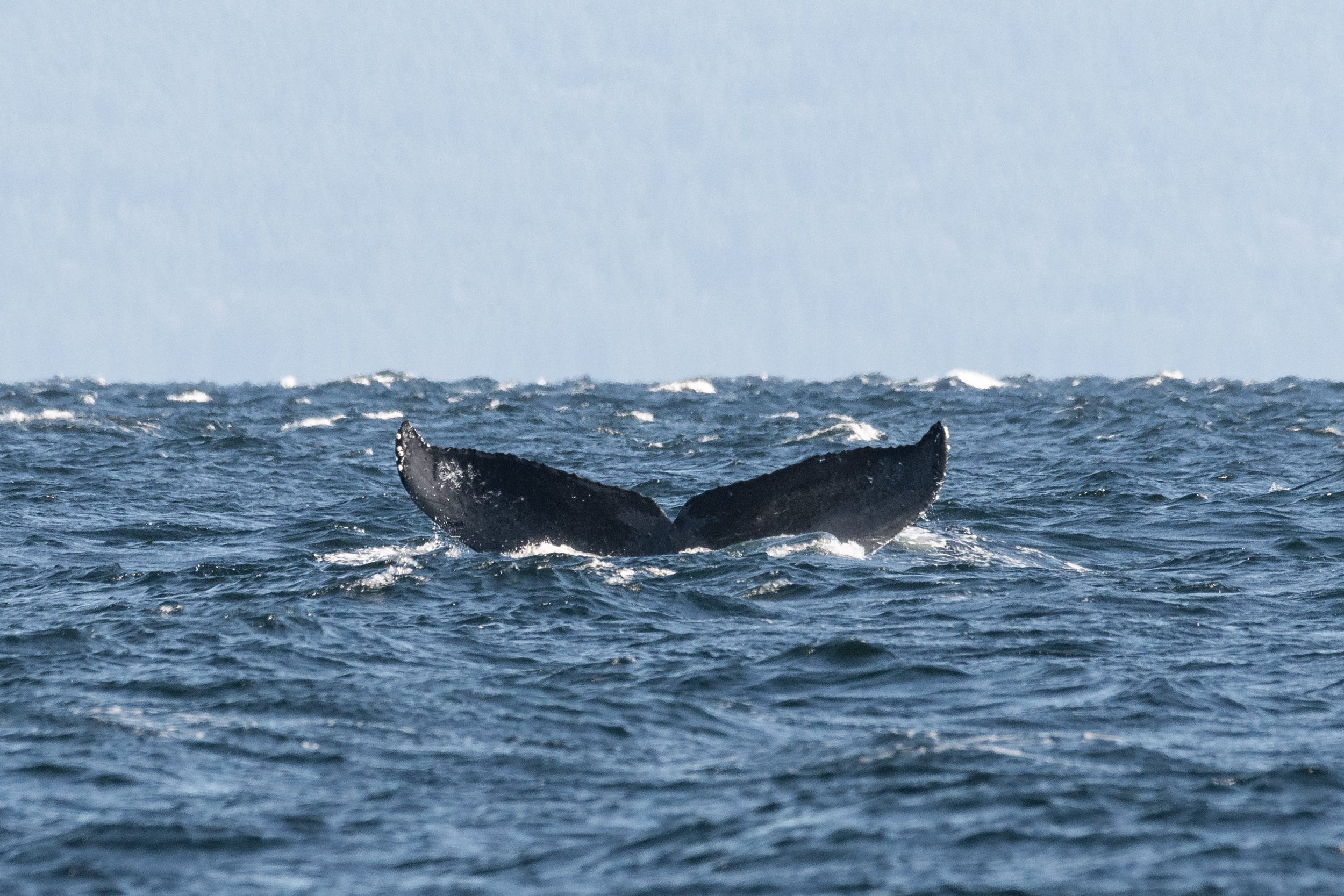
The underside of Ghost’s tail as she dips below the surface. Photo by Evan Hessels.
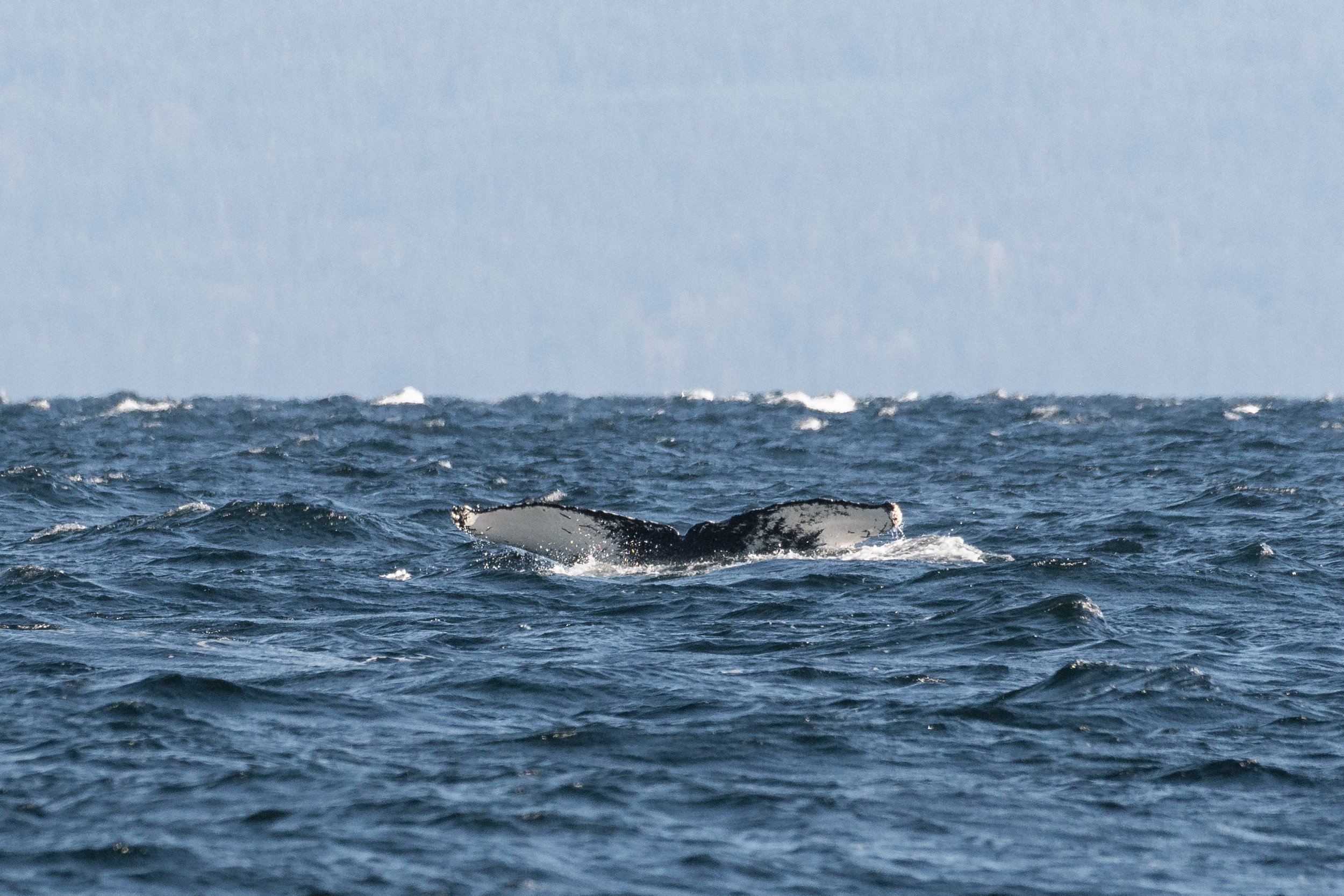
The very white underside of Merlin’s tail as he dives. Photo by Evan Hessels.
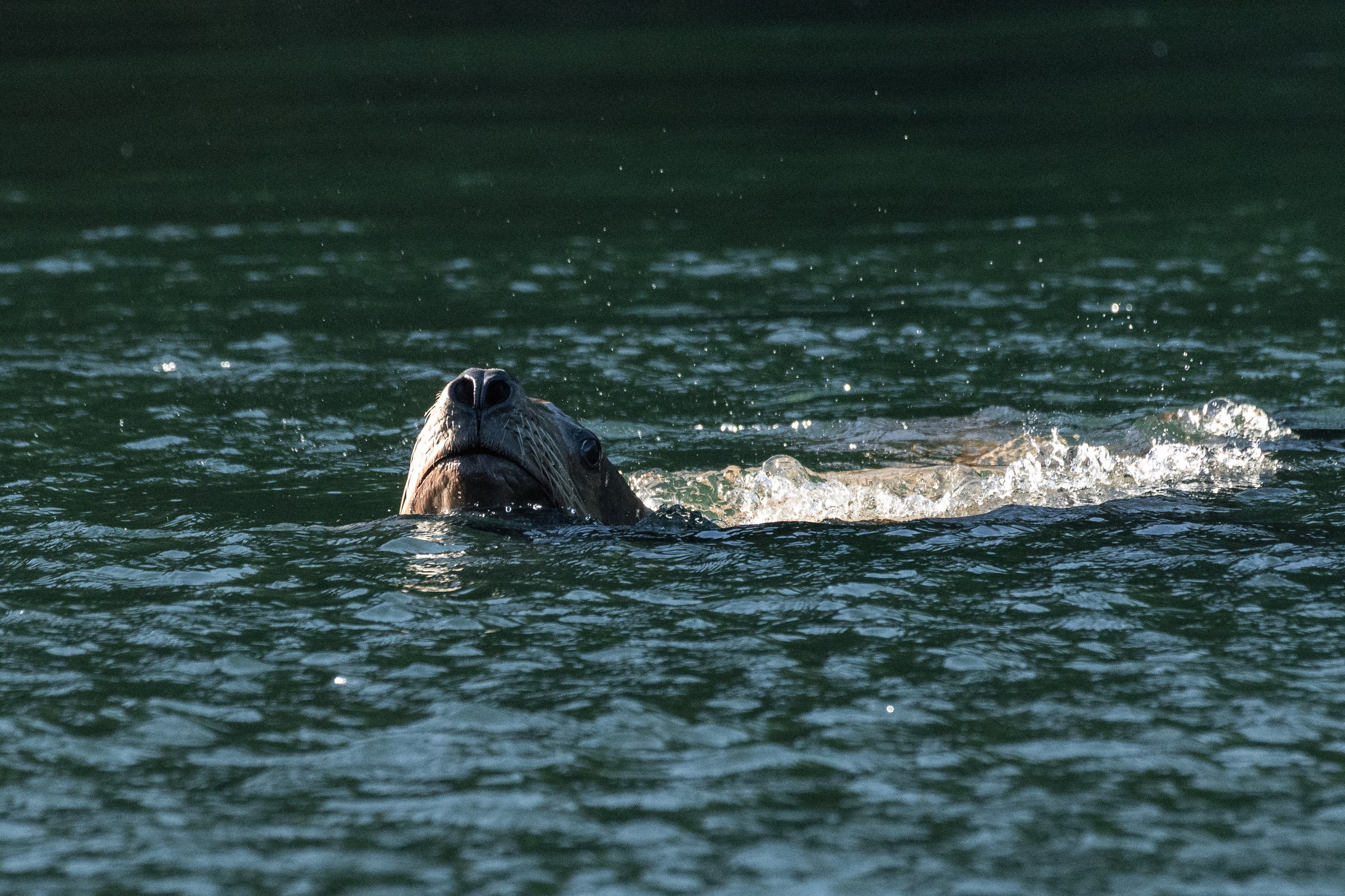
A Steller Sea Lion in Dodd Narrows. Photo by Evan Hessels.
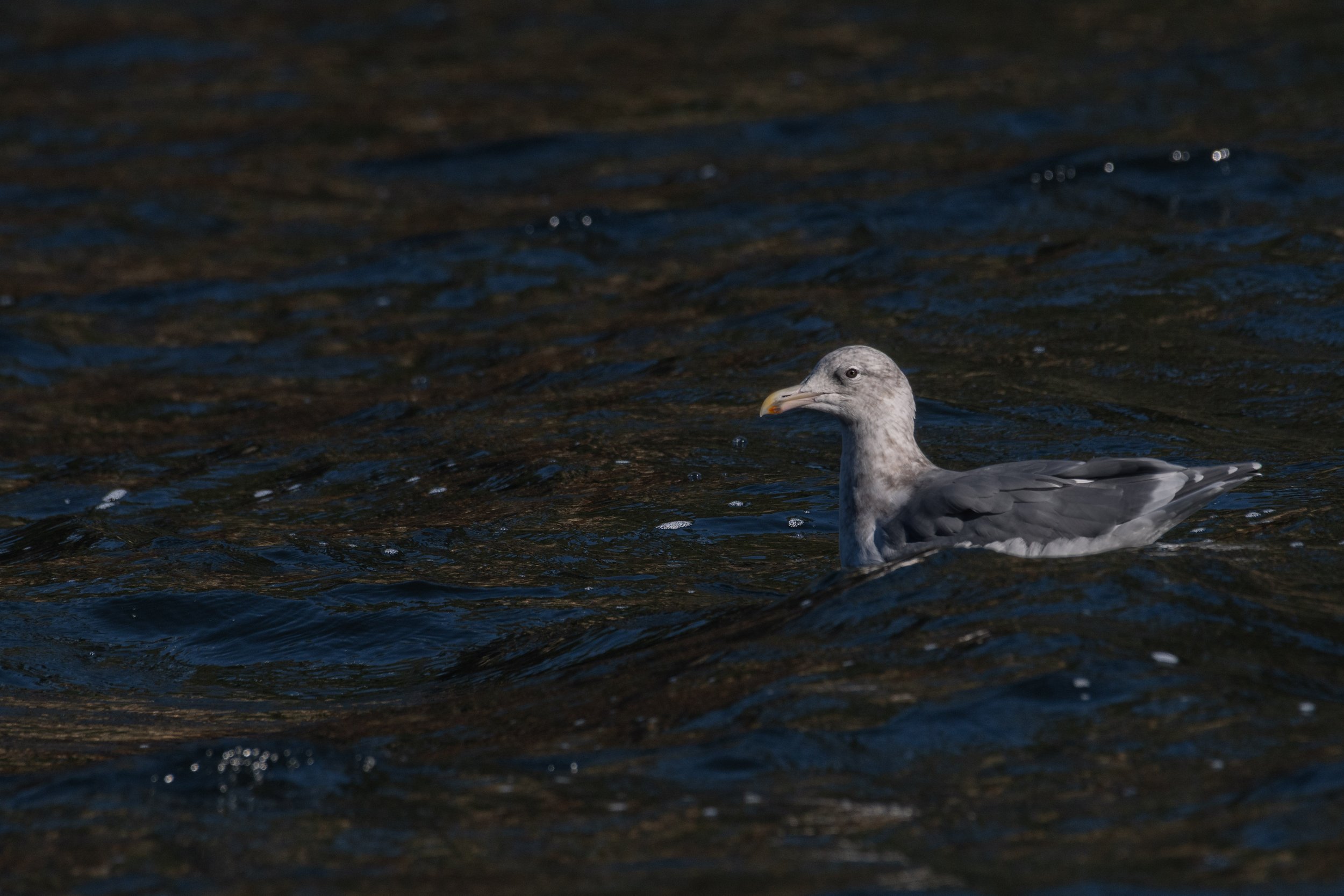
A gull floating by. Photo by Evan Hessels.
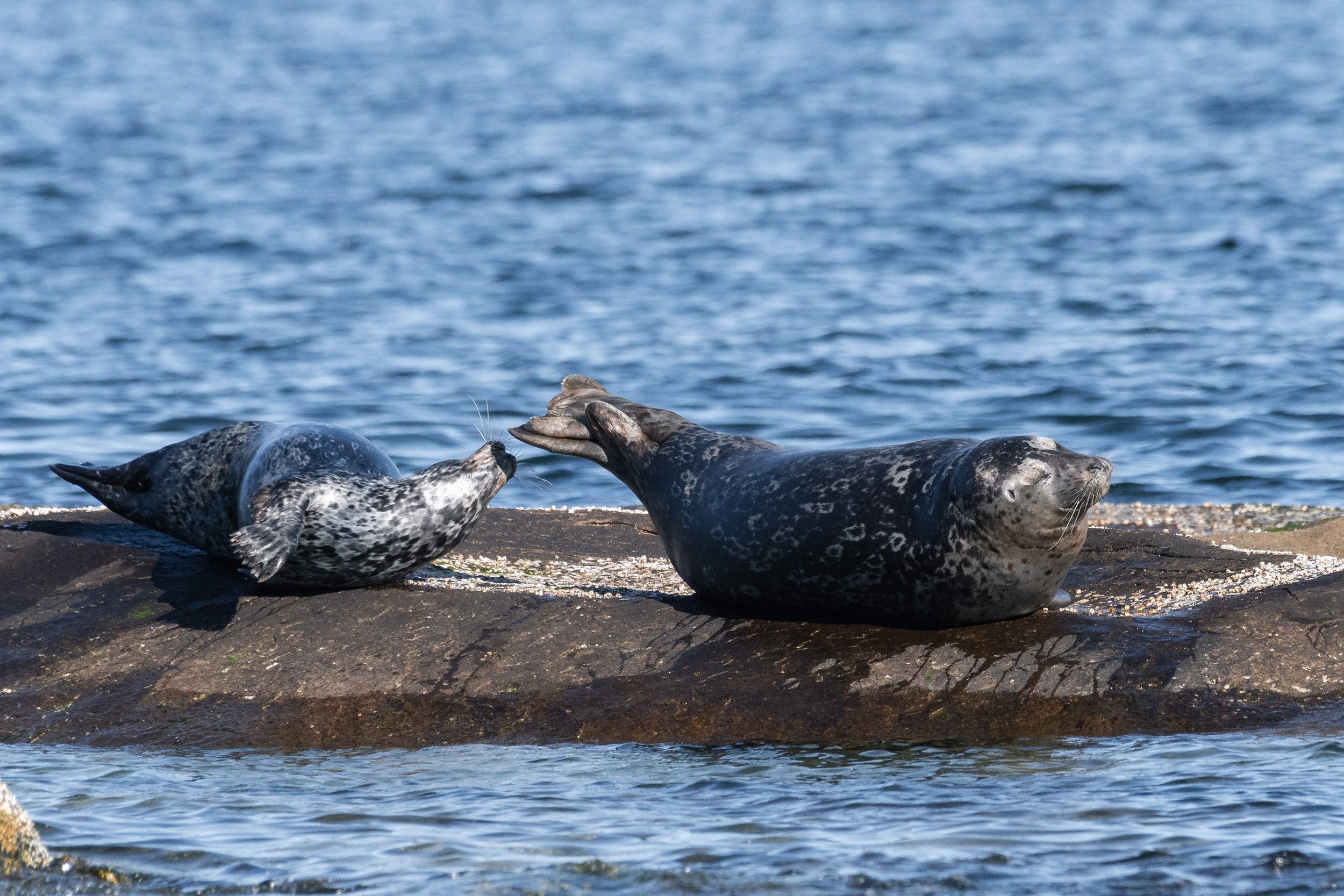
Harbour Seals relaxing on the rocks. Photo by Evan Hessels.
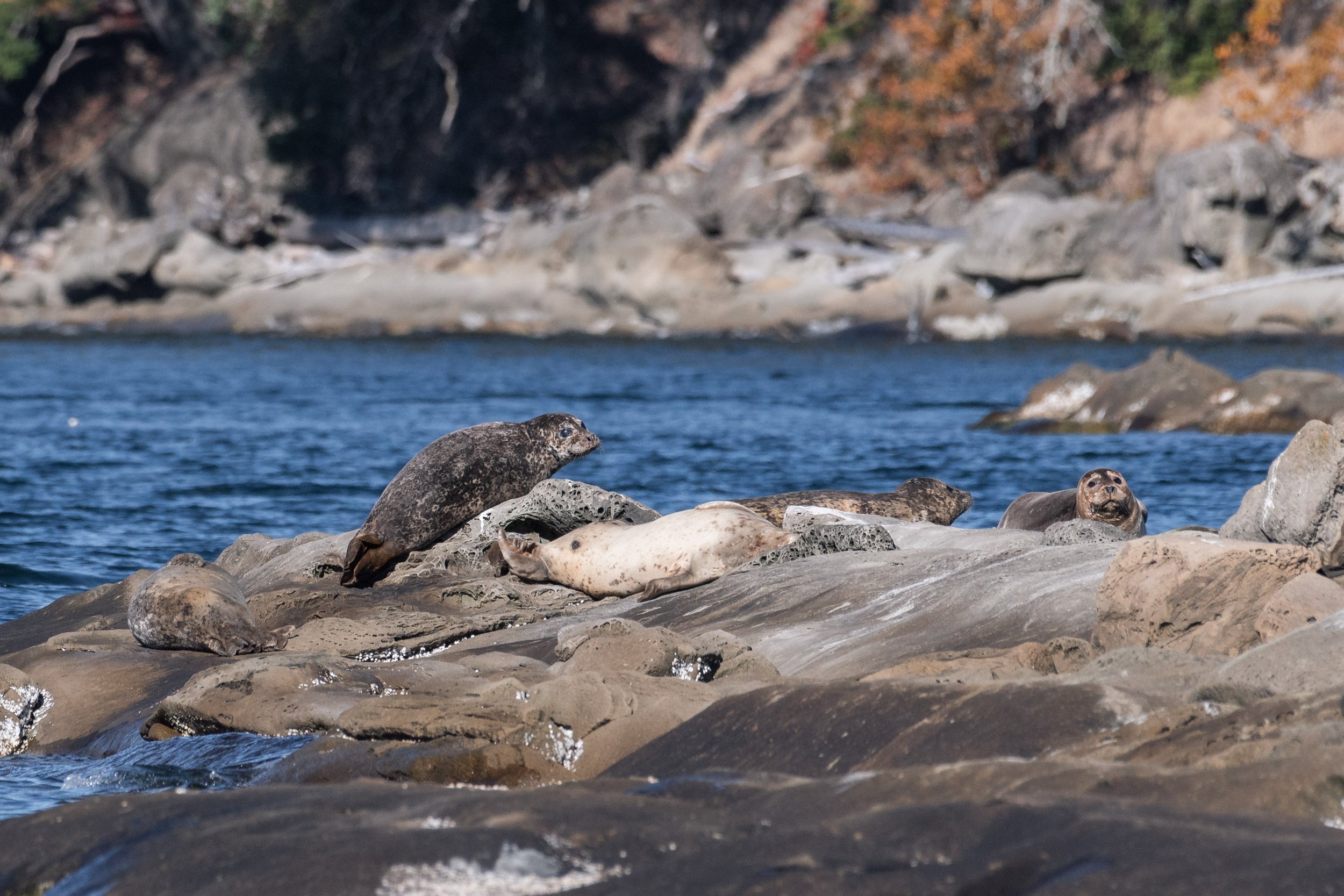
Some curious seals watching us as we pass by. Photo by Evan Hessels.
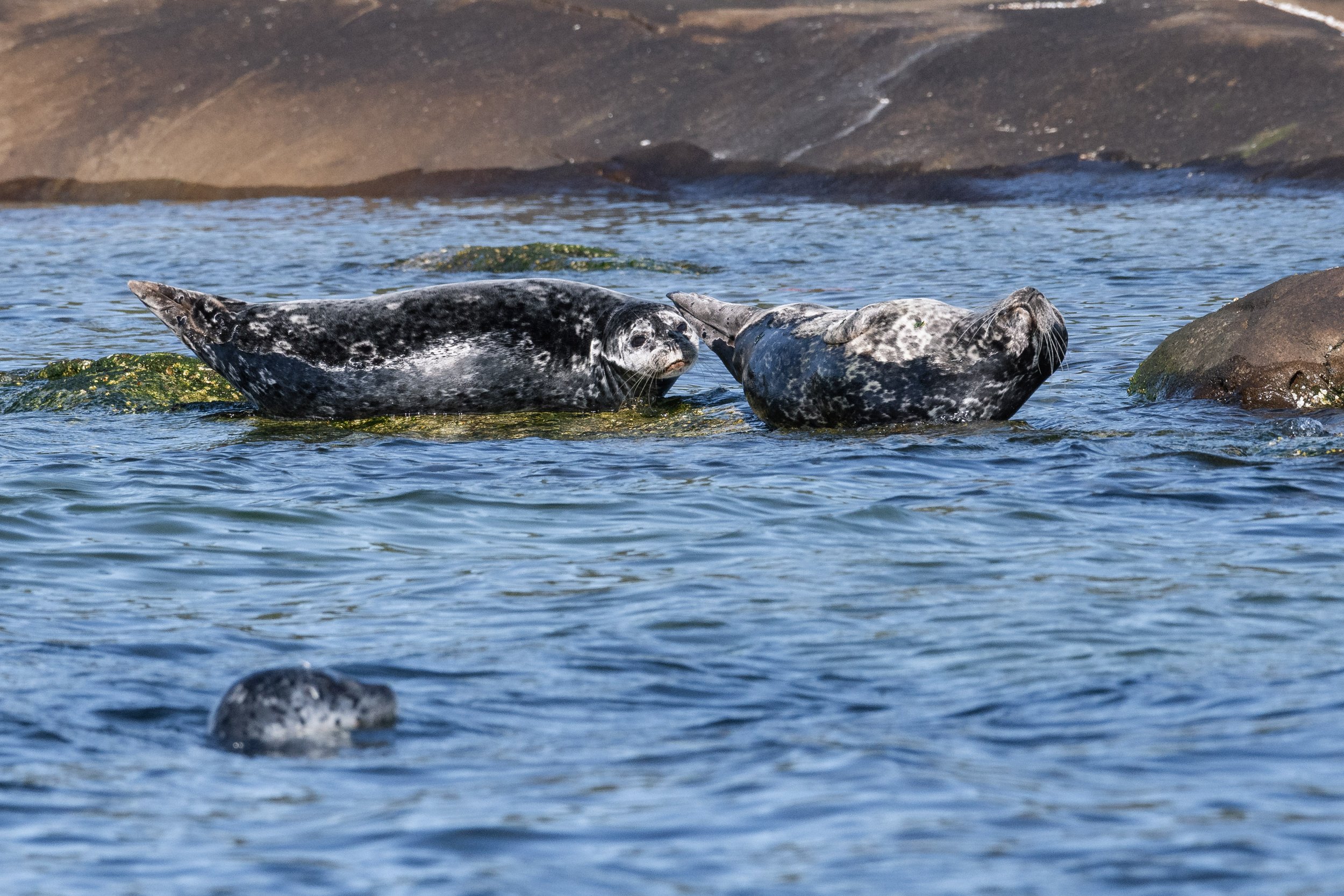
These two are in Banana Pose as well! Photo by Evan Hessels.
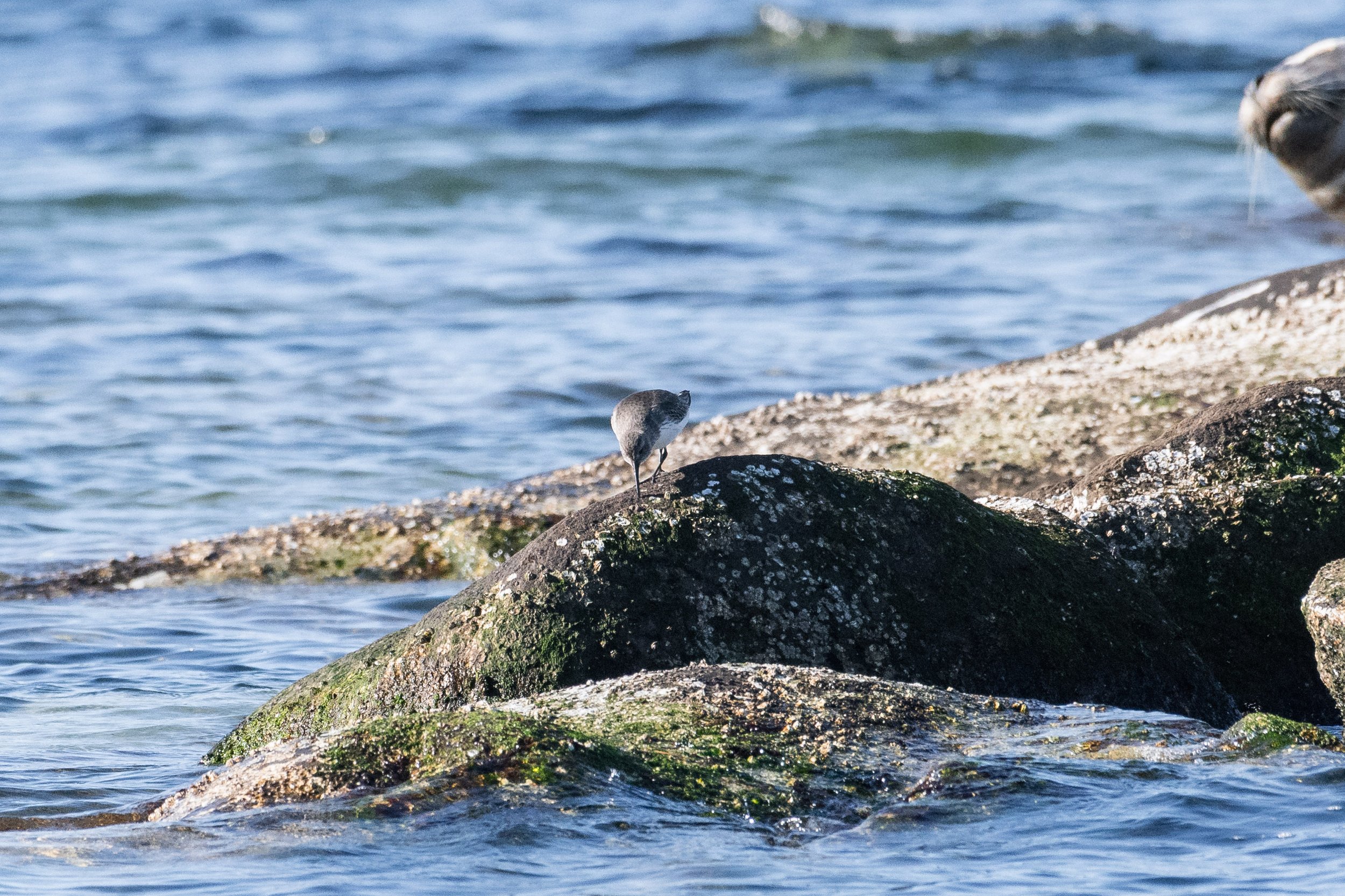
A bird poking around in the intertidal zone. Photo by Evan Hessels.
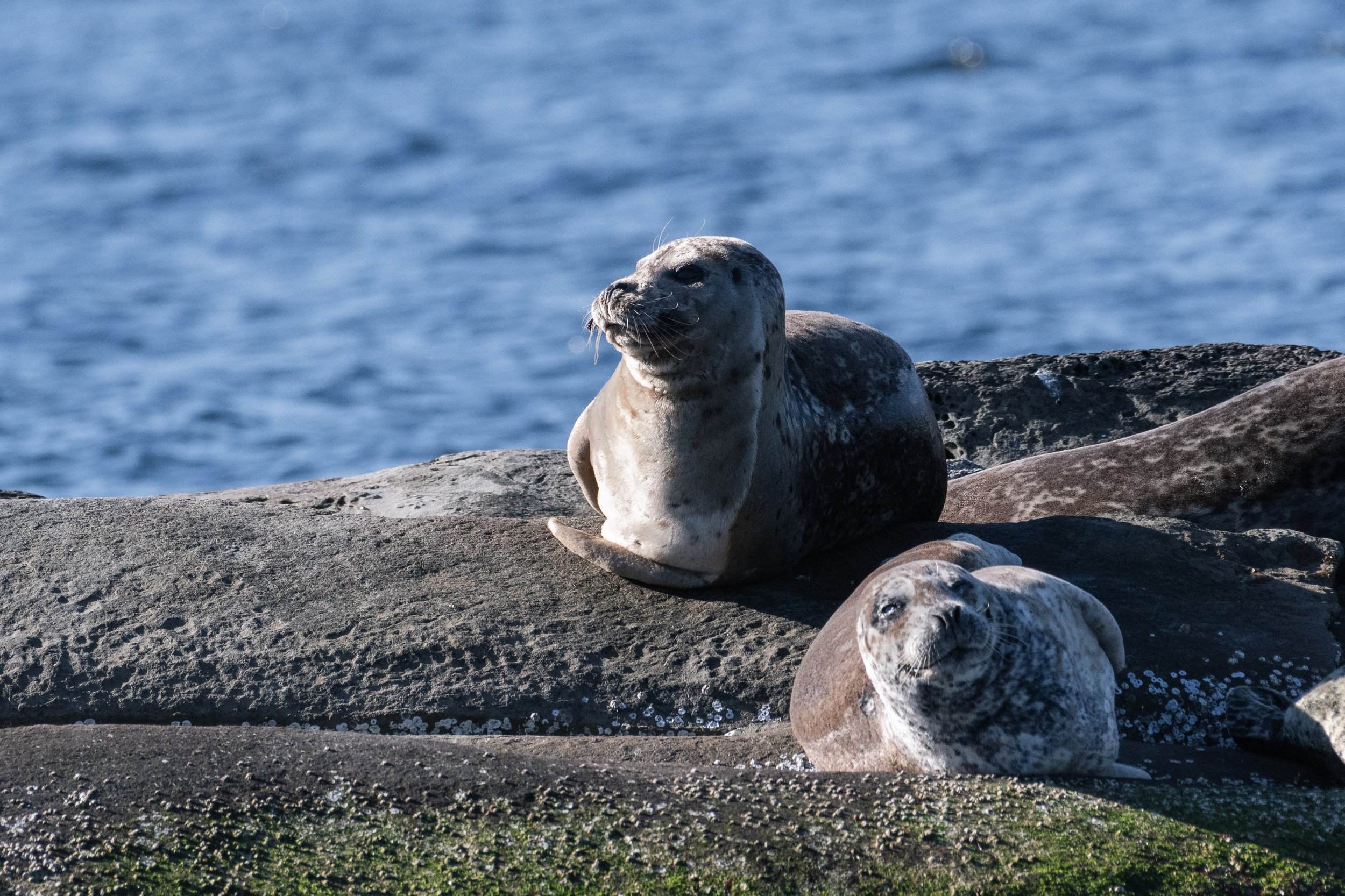
A pair of cute Harbour Seals relaxing in the sunshine. Photo by Evan Hessels.
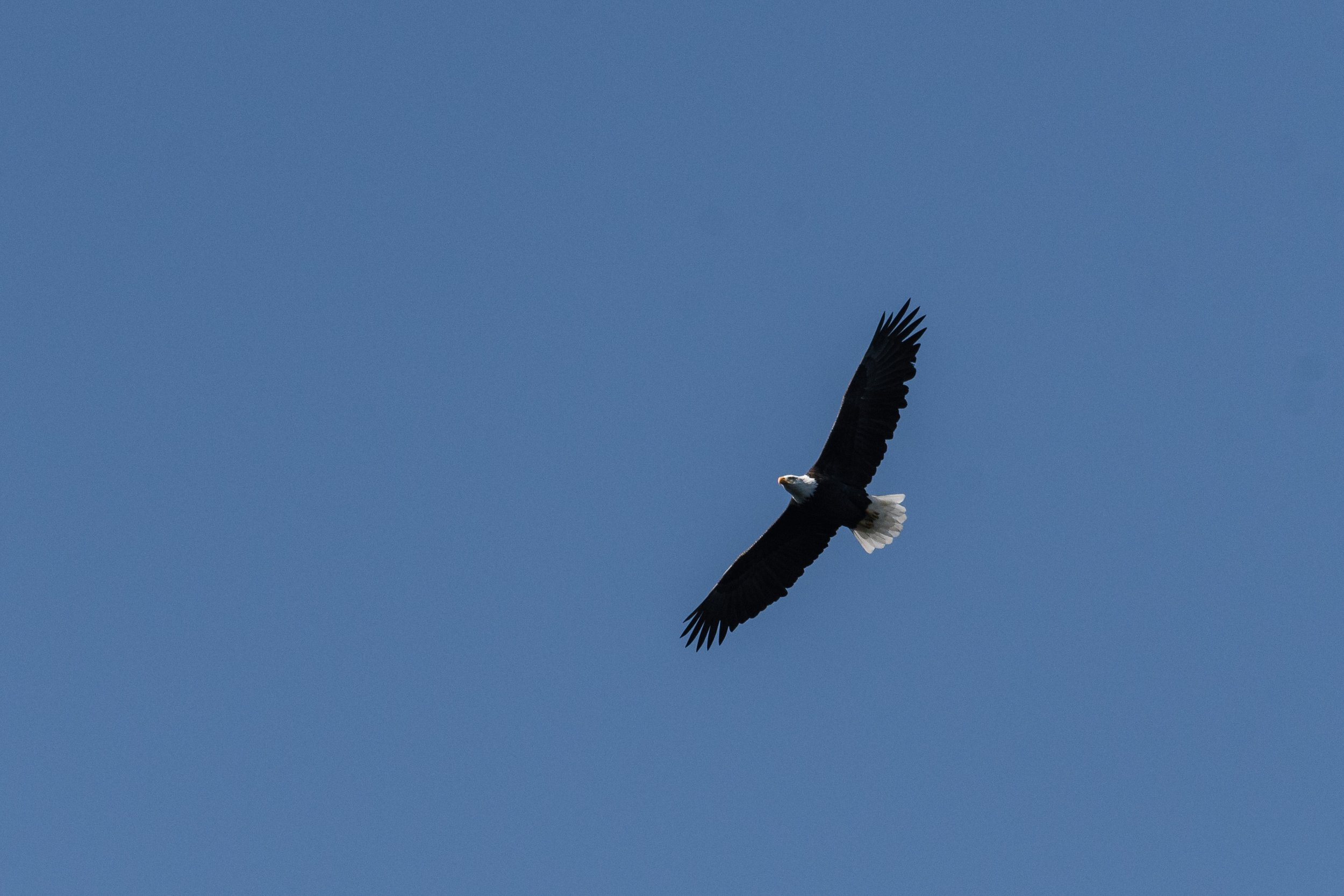
A Bald Eagle soaring overhead. Photo by Evan Hessels.
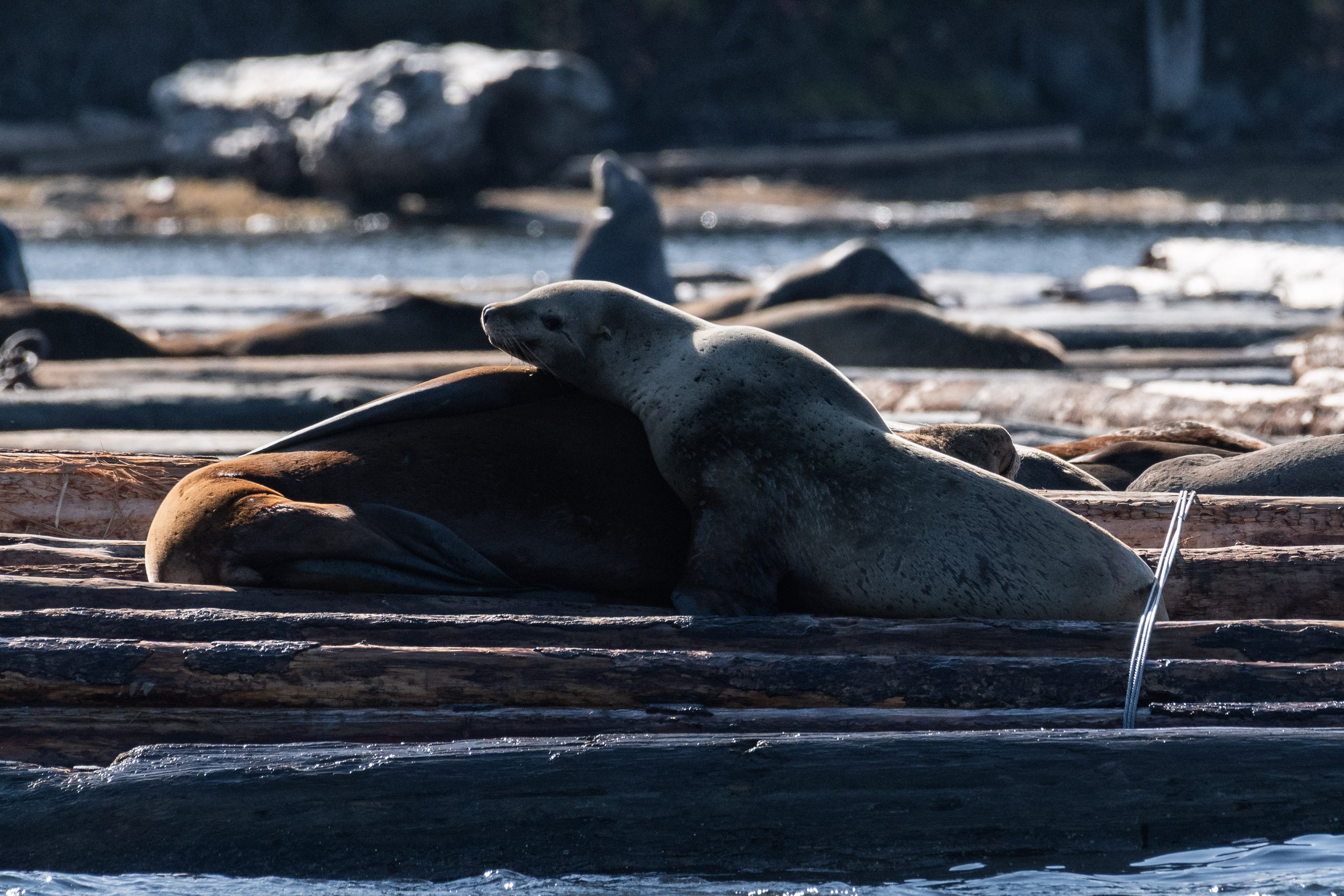
A couple of Steller Sea Lions cuddling on the log booms. Photo by Evan Hessels.
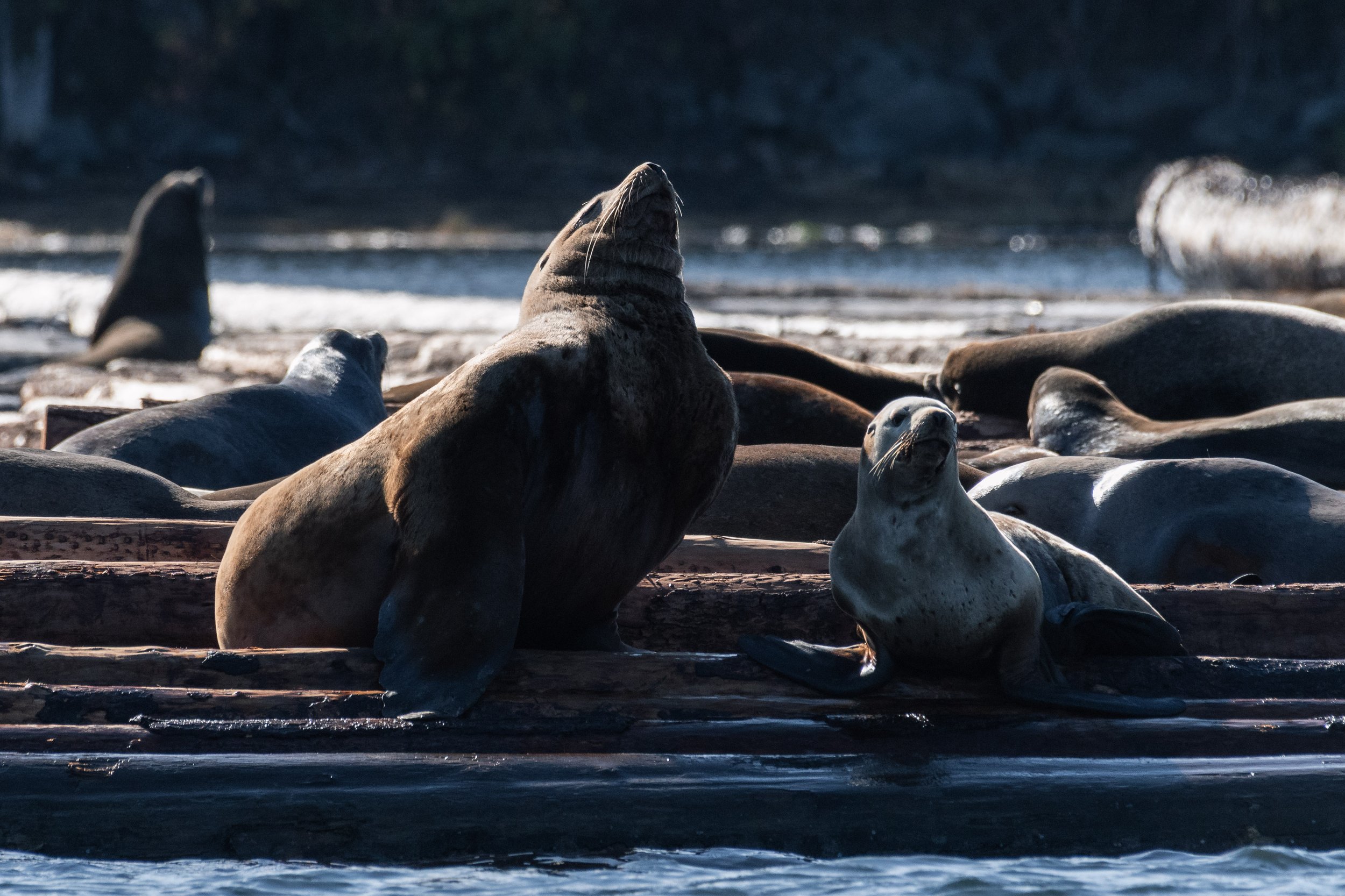
Check out the size differnce! Photo by Evan Hessels.