
March 7, 2025 - A plethora of orca close to home
The fresh scent of spring was in the air today, bringing with it plenty of beautiful moments out on the Salish Sea. As guests gathered and we began discussing the day’s plans, word came in from Captain Rodrigo: orca had been spotted very close to the harbour.
W made our way down the dock and boarded Kula, our semi-covered vessel. With excitement building, we pushed off a little early to begin the day’s adventure!
It didn’t take long at all before we saw them for the first time - four orca travelling steadily through Northumberland Channel. Three smaller dorsal fins cut through the water alongside one tall, towering fin. Marine Naturalist Val quickly snapped a few photos and soon identified the group as the T090s:
T090 Eagle ♀ (1980)
T090B Piglet ♂ (2006)
T090C Tigger ♀ (2010)
T090D Kanga ♀ (2017)
The most recognizable members of this pod are the large adult male, T090B Piglet, whose dorsal fin is remarkably tall, straight, and free of notches, and the matriarch, T090 Eagle. Eagle carries a distinctive bump on the left side of her dorsal fin - a scar from a satellite tag placed many years ago.
While satellite tagging whales is far less common today due to its invasive nature, some of the older whales still bear these marks from earlier research efforts. They serve as a reminder of how scientific practices have evolved over time as we continue to learn better ways to study and protect these animals.
The T090s are fairly regular visitors to our area. Over the past few years, they have developed a pattern of spending a few days in local waters each March before travelling south and not returning until late May. During that time away, they often meander through the waters around Victoria and into the United States.
As we observed them, Eagle and her family were engaged in one of the most common orca behaviours: travelling. Orca are incredibly mobile animals, sometimes covering more than 150 kilometres in a single day. As the largest warm-blooded predators on Earth, these powerful hunters often need to move considerable distances between hunting grounds.
For our Transient orca - who primarily prey on harbour seals and harbour porpoises, with the occasional sea lion also on the menu - this movement frequently brings them close to shore, which is why many sightings can also happen from land!
Before long it was time to say goodbye to the T090s as they continued on their journey. But the adventure was far from over. Reports had come in of another whale sighting within the sheltered waters of the Southern Gulf Islands, just south of Nanaimo.
Leaving the T090s behind, we turned our attention toward Dodd Narrows, the narrow passage separating Vancouver Island from Mudge Island. Crossing the shallow waters, we began searching for the whales that had been spotted earlier. Without trackers or tags, relocating whales - even after a recent sighting - can sometimes be a challenge.
Kula and the crew began scanning the water, watching for the telltale signs of dorsal fins or distant blows. As we passed through Ruxton Passage and turned our gaze north toward Gabriola Island, we finally spotted them - more black-and-white silhouettes slicing through the water, their soft blows drifting into the air above.
This group looked a little different from the previous pod. There were no tall male fins present, only shorter curved dorsal fins accompanied by a couple of very small ones belonging to young calves. Val once again worked quickly on identification, and we soon learned we were travelling alongside members of the T086A1s and the T124A4s:
T086A1 Nahanni ♀ (~2001)
T086A1B Denali (2023)
T124A4 Sabio ♀ (2010)
T124A4A Strix ♀ (2021)
T124A1A Sabine (2024)
At first glance, these pod names may seem complicated, but the alphanumeric system actually tells us a lot about family relationships within the orca population.
Take T086A1 Nahanni, for example. The “1” indicates that she is the first calf of T086A, a matriarch known as Eider. Nahanni’s own calf, T086A1B Denali, follows the same structure, with the letter “B” showing that Denali is Nahanni’s second calf.
Looking at the T124A4s, however, reveals an interesting mystery: the young whale known as T124A1A Sabine.
When Sabine was first documented, researchers believed she was the first calf (“A”) of T124A1 Bonapartes, a lone female born in 1996. This was exciting news, as Bonapartes - at 28 years old - had never previously been seen travelling with a calf. Most female orca begin reproducing in their teens or early twenties, so the arrival of her first calf drew a lot of attention.
But things soon took a worrying turn. The young calf began to look thin and lethargic, and many observers feared they might not survive.
Then another whale entered the picture.
Looking again at the family codes, we can see that T124A1 Bonapartes and T124A4 Sabio are sisters. Shortly after the calf’s initial sightings with Bonapartes, the young whale began travelling alongside Sabio instead. This change appeared to make all the difference. Travelling with Sabio and Sabio’s own calf, T124A4A Stix, Sabine began gradually regaining their strength and began looking healthier.
To this day, it remains unclear whether Sabine is truly Bonapartes’ calf or Sabio’s. Regardless of their origin, Sabio’s care helped give the young whale a second chance in the wild and unpredictable waters of the Salish Sea.
Not long after our sighting, Sabio and Nahanni’s families began transiting through False Narrows, an incredibly shallow passage that runs parallel to Dodd Narrows. Once again, we said our farewells and continued onward.
The next leg of the journey brought Kula to the edge of the Strait of Georgia, where we turned south toward one of our favourite pinniped haul-out locations. Just off the coast of Valdes Island sits a small cluster of rocky islets that rise just high enough above the waves to create a resting place for marine mammals.
This area, lovingly nicknamed “Stinky Rocks”, was our next stop. Several Steller Sea Lions lounged across the rocks, resting and conserving energy. Haul-out sites like this are incredibly important for pinnipeds, providing safe places to rest without battling ocean currents or remaining constantly submerged in the frigid waters of the depths.
After spending a few peaceful minutes with the massive sea lions and enjoying the expansive ocean view behind them, Captain Rodrigo guided the boat northward once more. We crossed through the Flat Top Islands and made a quick stop at Saturnina Island along the way.
Like Stinky Rocks, Saturnina Island is another popular haul-out - but here the residents are typically much smaller. Instead of sea lions, we were greeted by harbour seals stretched across the rocks. Many were fast asleep, occasionally opening a curious eye to glance in our direction.
As the day began to wind down, Kula and the crew started the journey back toward Nanaimo. Along the way, more black dorsal fins appeared near Snake Island - but these fins looked noticeably different from the Transient orca we had seen earlier.
Val took another series of photos and soon confirmed that these whales were members of the Southern Resident population.
The Southern Residents are a distinct ecotype of orca and are sadly listed as critically endangered. After confirming their identity, we quietly moved on. As a company, we made the decision at the time of our opening to not to watch Southern Residents, focusing our efforts instead on healthy and growing whale populations.
Canadian whale-watching regulations now also prohibit vessels from approaching this endangered population, an important step in protecting them and their fragile ecosystem. Vessel noise has been shown to interfere with their hunting, as Southern Residents rely heavily on echolocation to find salmon. The quieter their environment remains, the better their chances of survival.
Before long, we were back in the harbour, wrapping up an action-packed day exploring the coastline - filled with orca encounters, resting pinnipeds, and plenty of seabird activity along the way.
Please enjoy today’s photos captured by Marine Naturalist Val Watson!

River Otters playing on the docks.
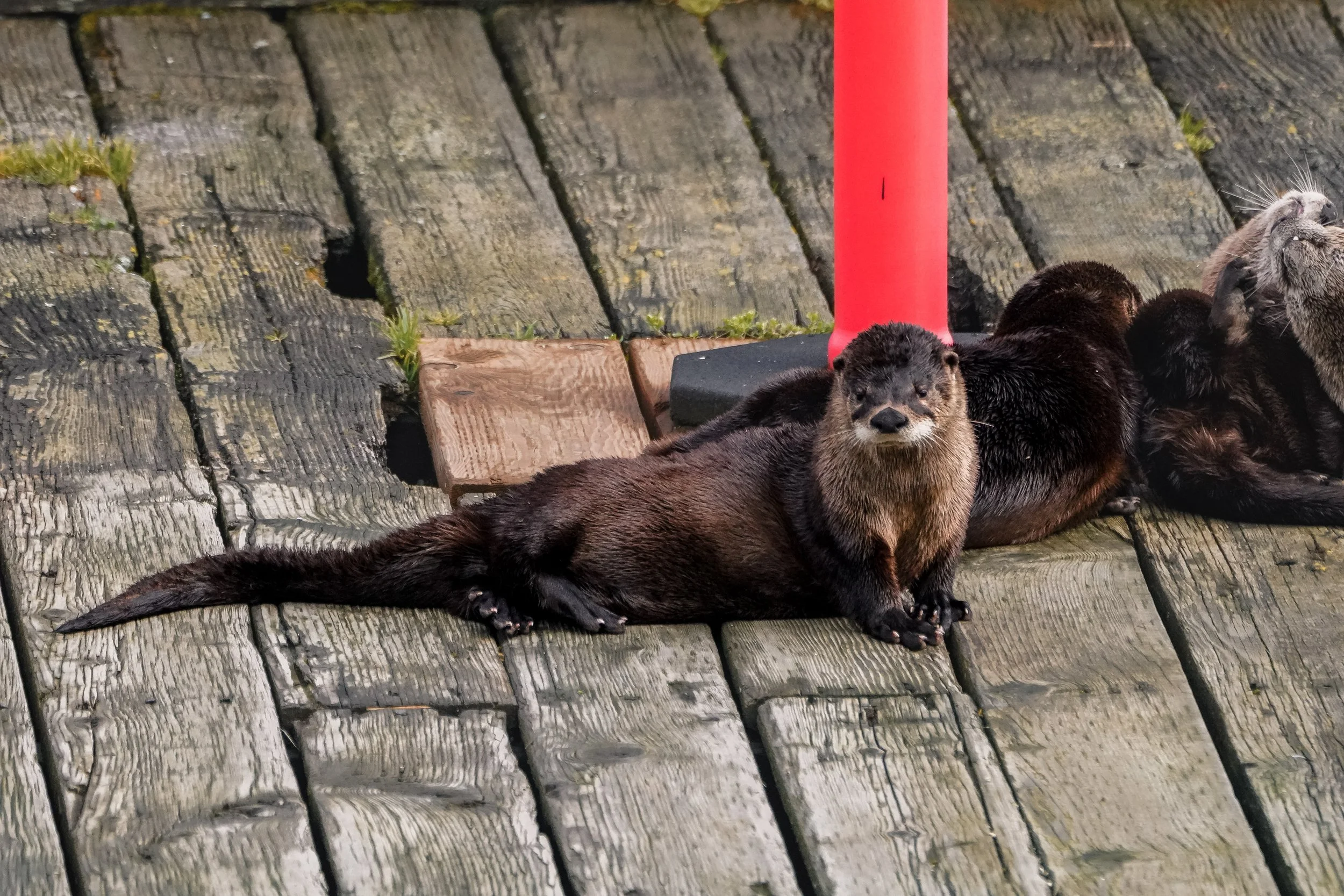
Aren’t they otter-ly adorable?
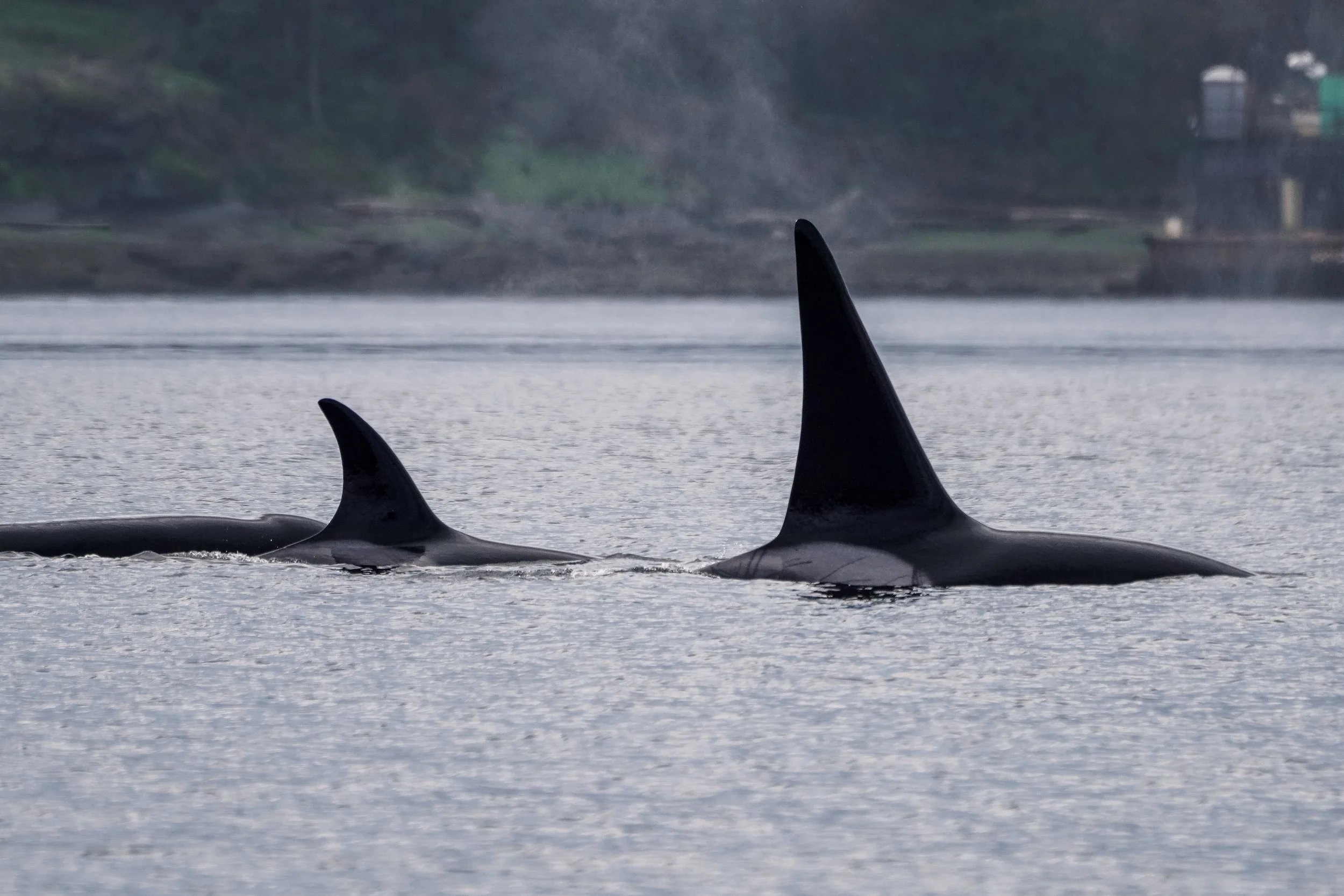
T090 Eagle beside her son T090B Piglet.
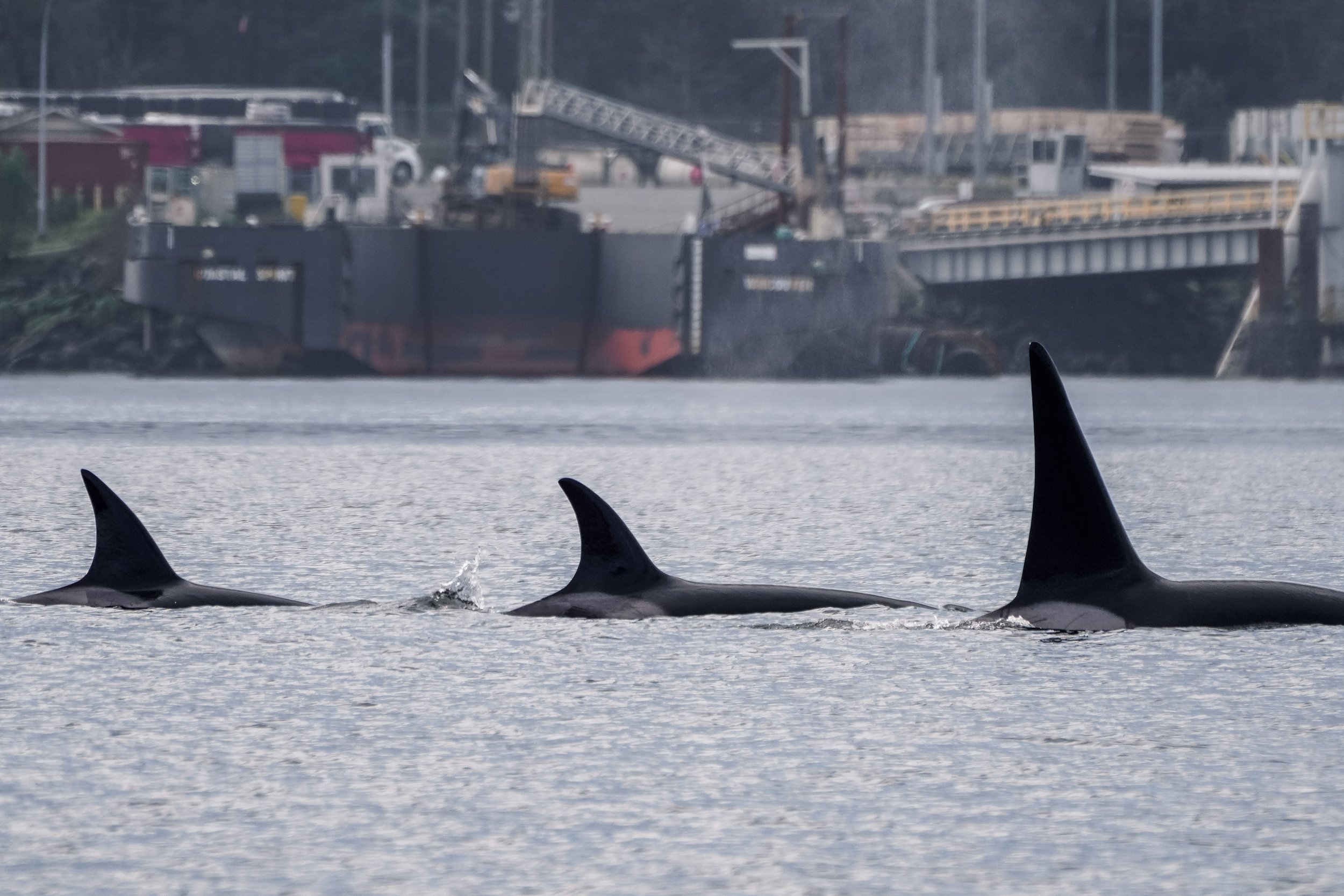
Left to right: T090C Tigger, T090 Eagle, and T090B Piglet.
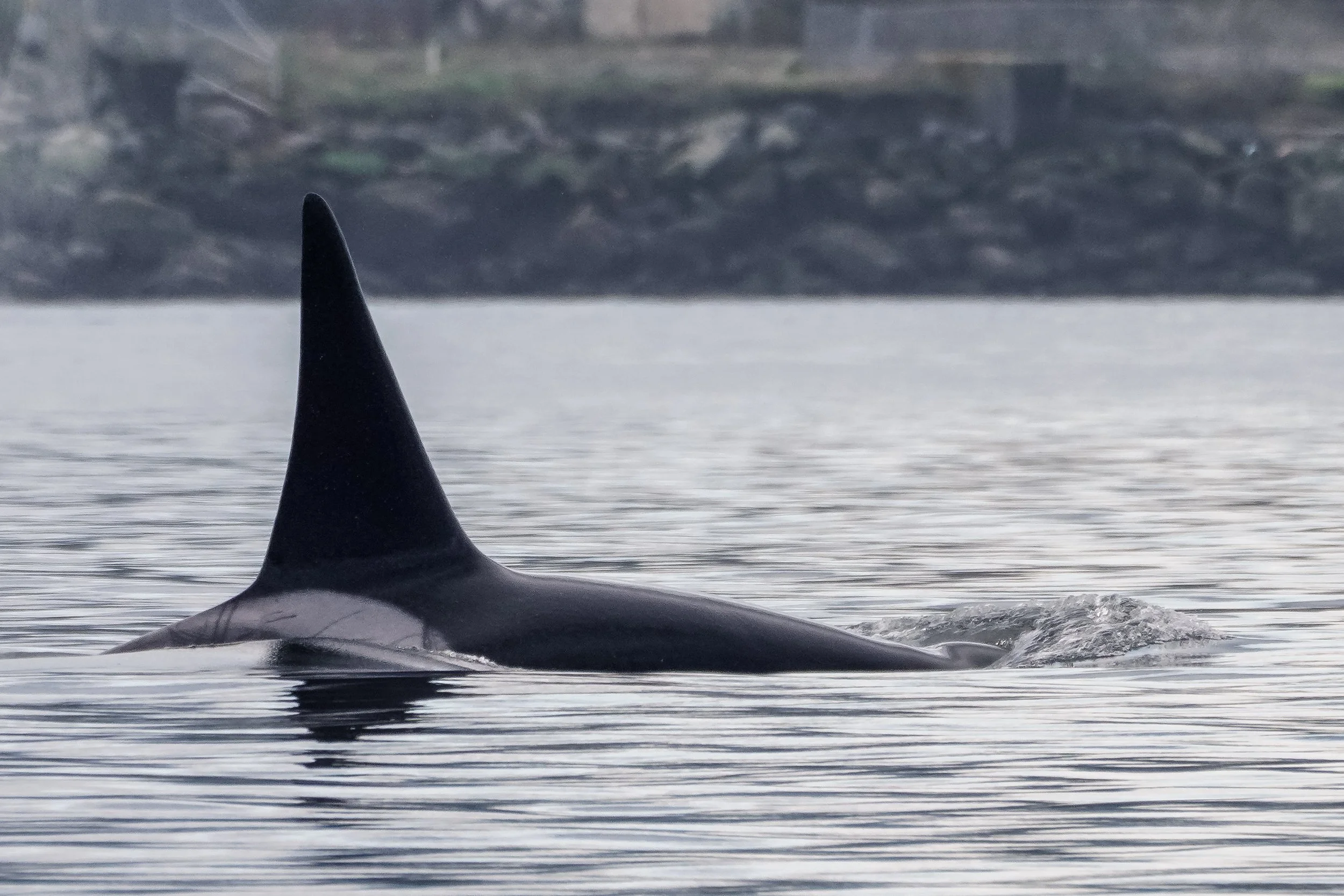
T090B Piglet sports many intense saddlepatch scars.
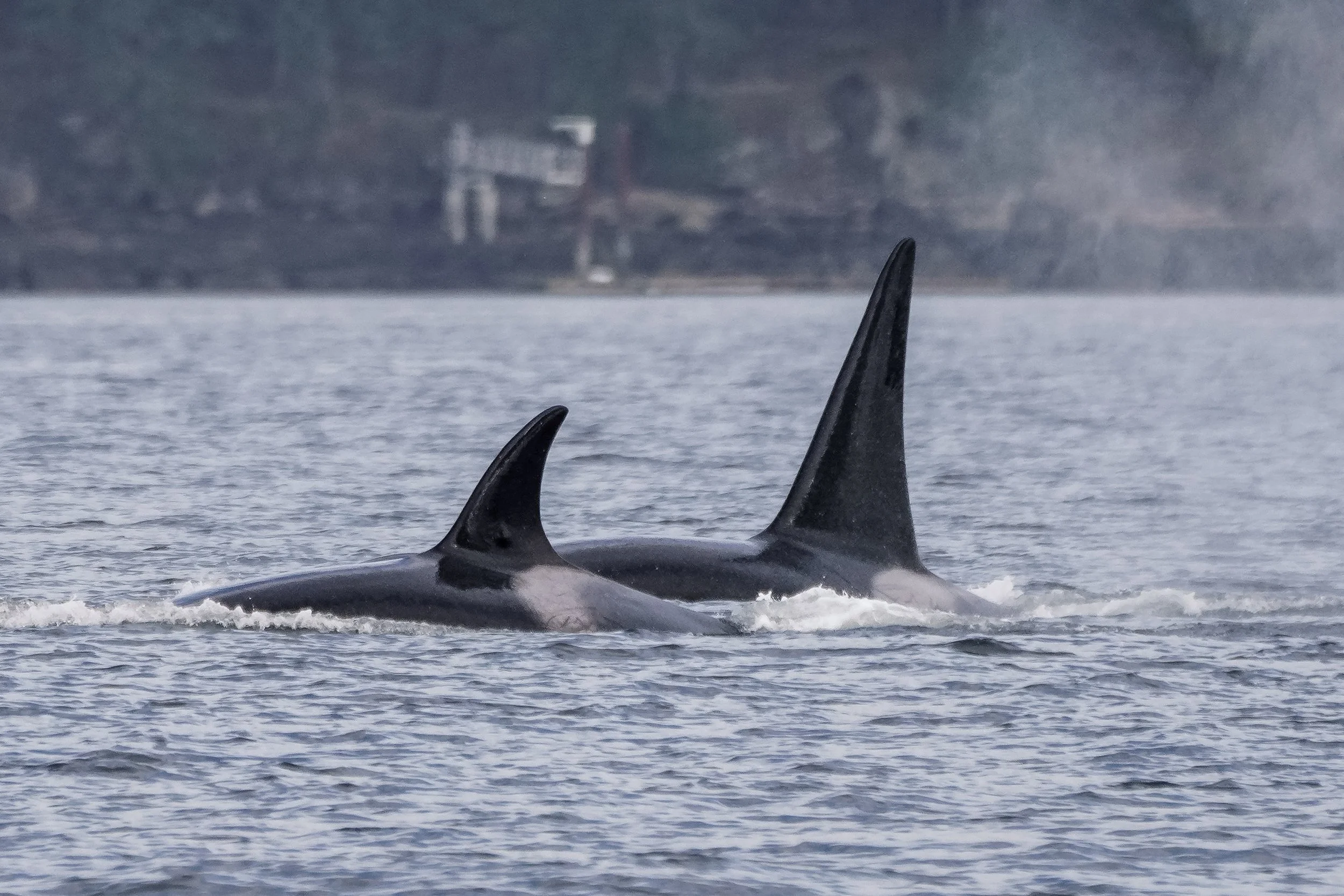
T090 Eagle with her old sat tag scar (bump) visible on her dorsal, with T090B Piglet behind her.
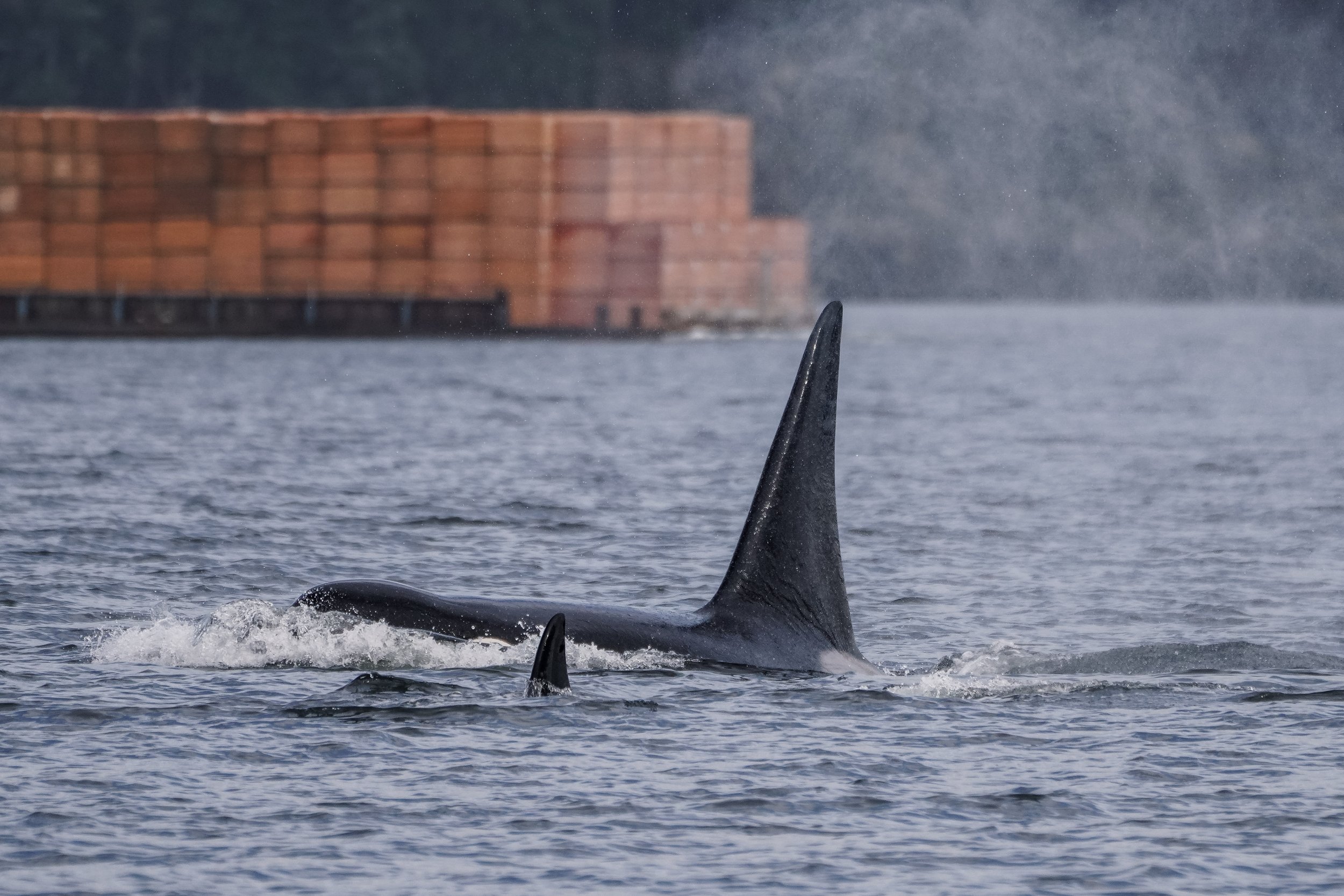
T090B cruising along.
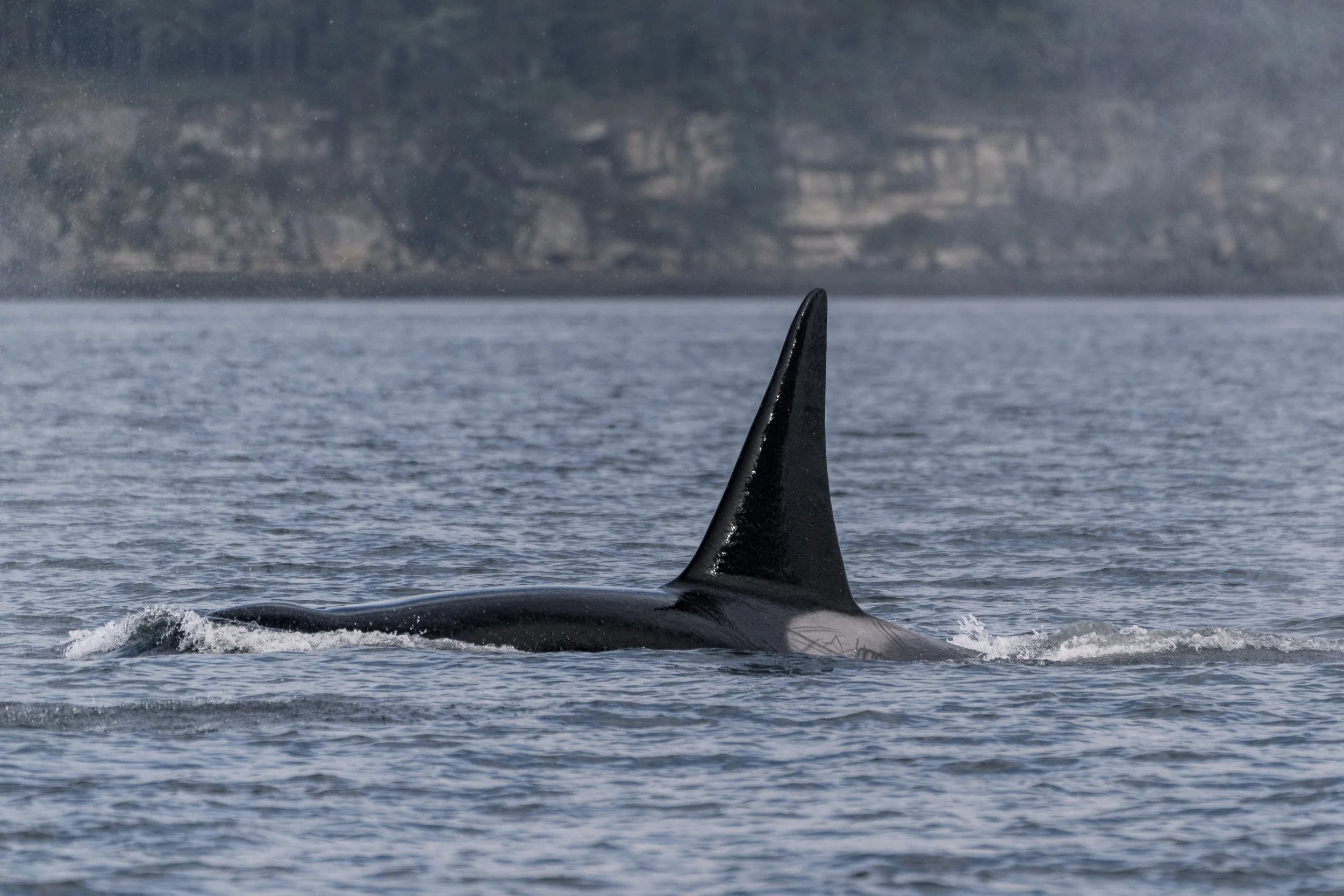
T090B Piglet is becoming such a large male!
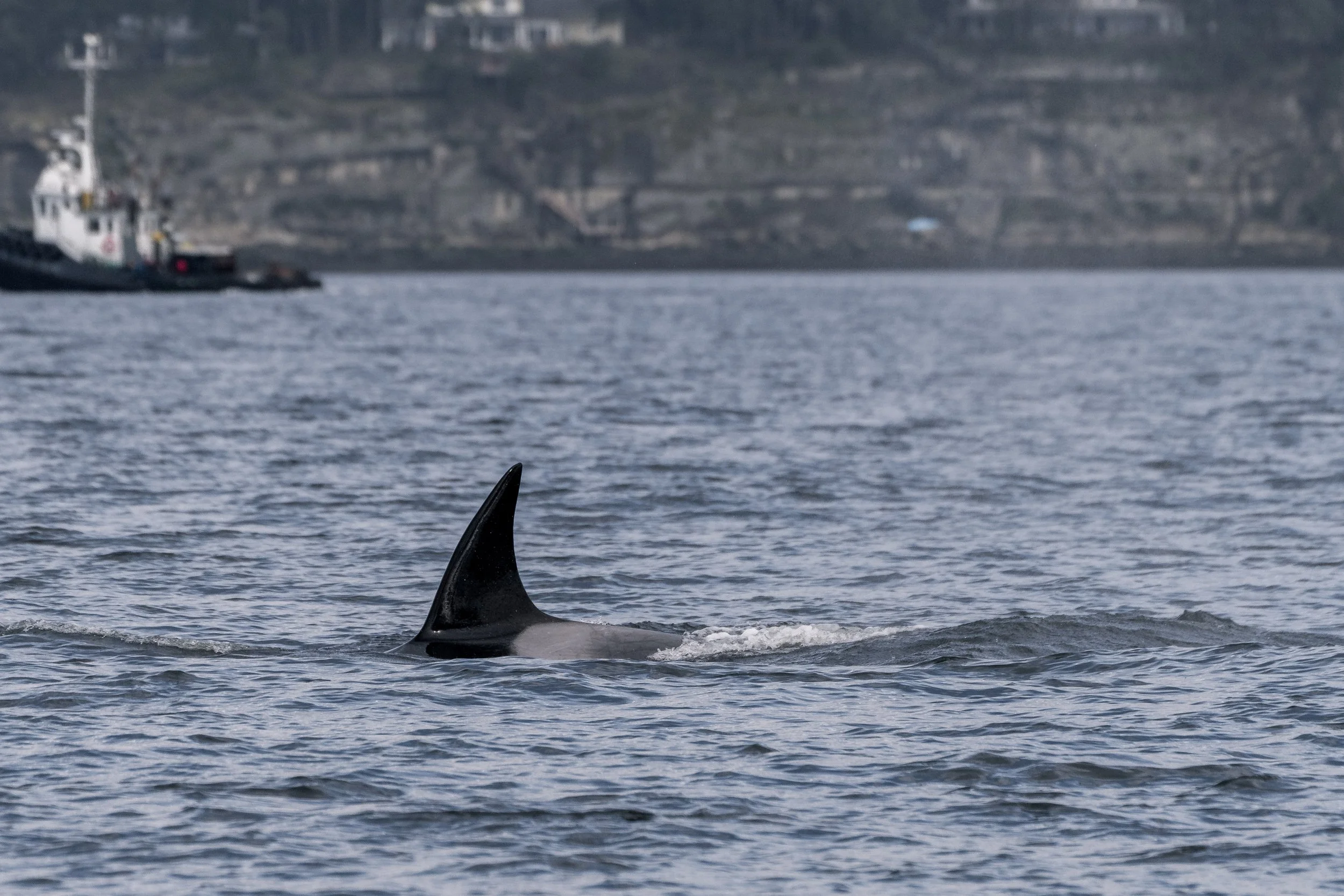
T090C Tigger with her distinct hooked and pointy dorsal fin.
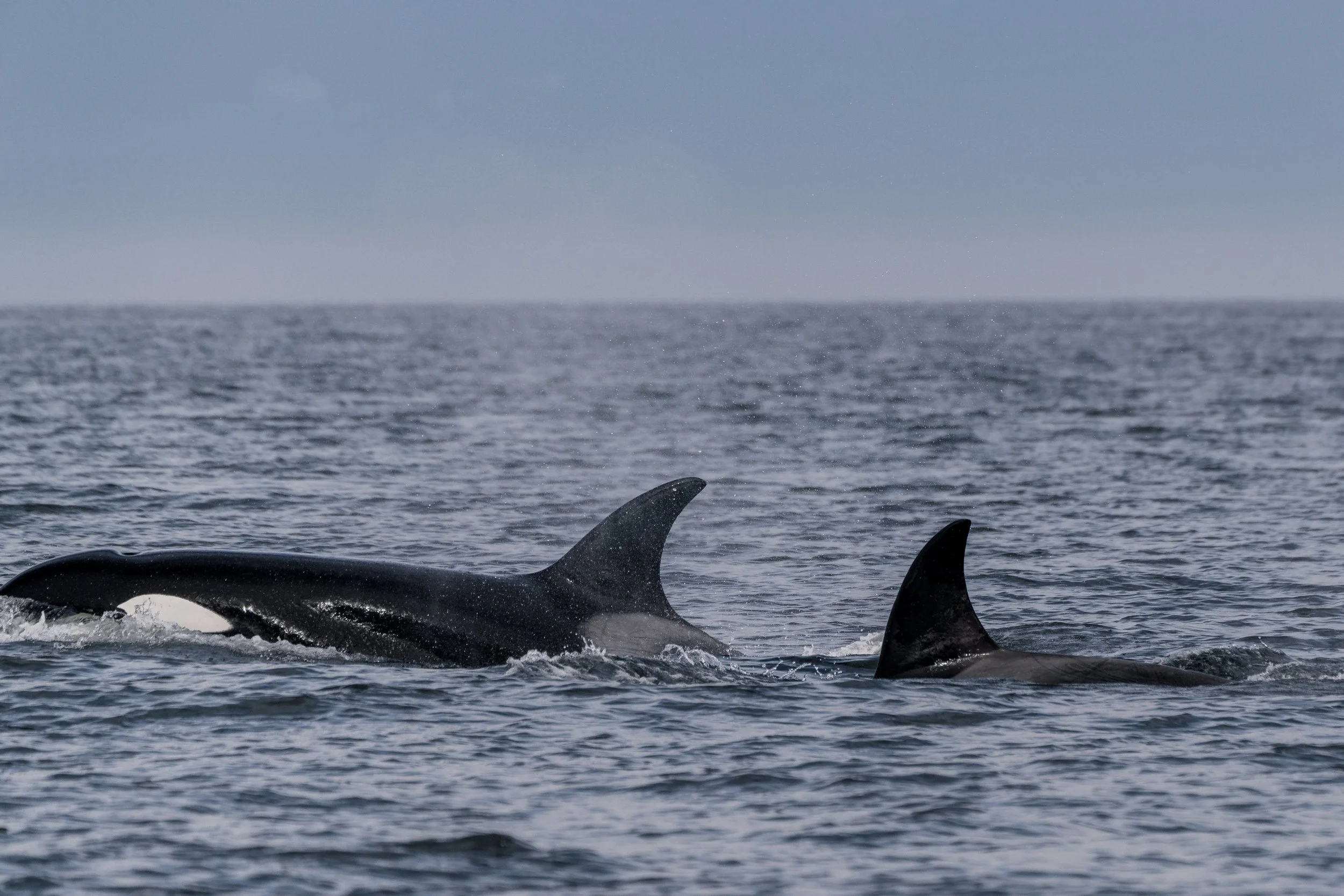
T090 Eagle with her youngest calf T090D Kanga behind her.
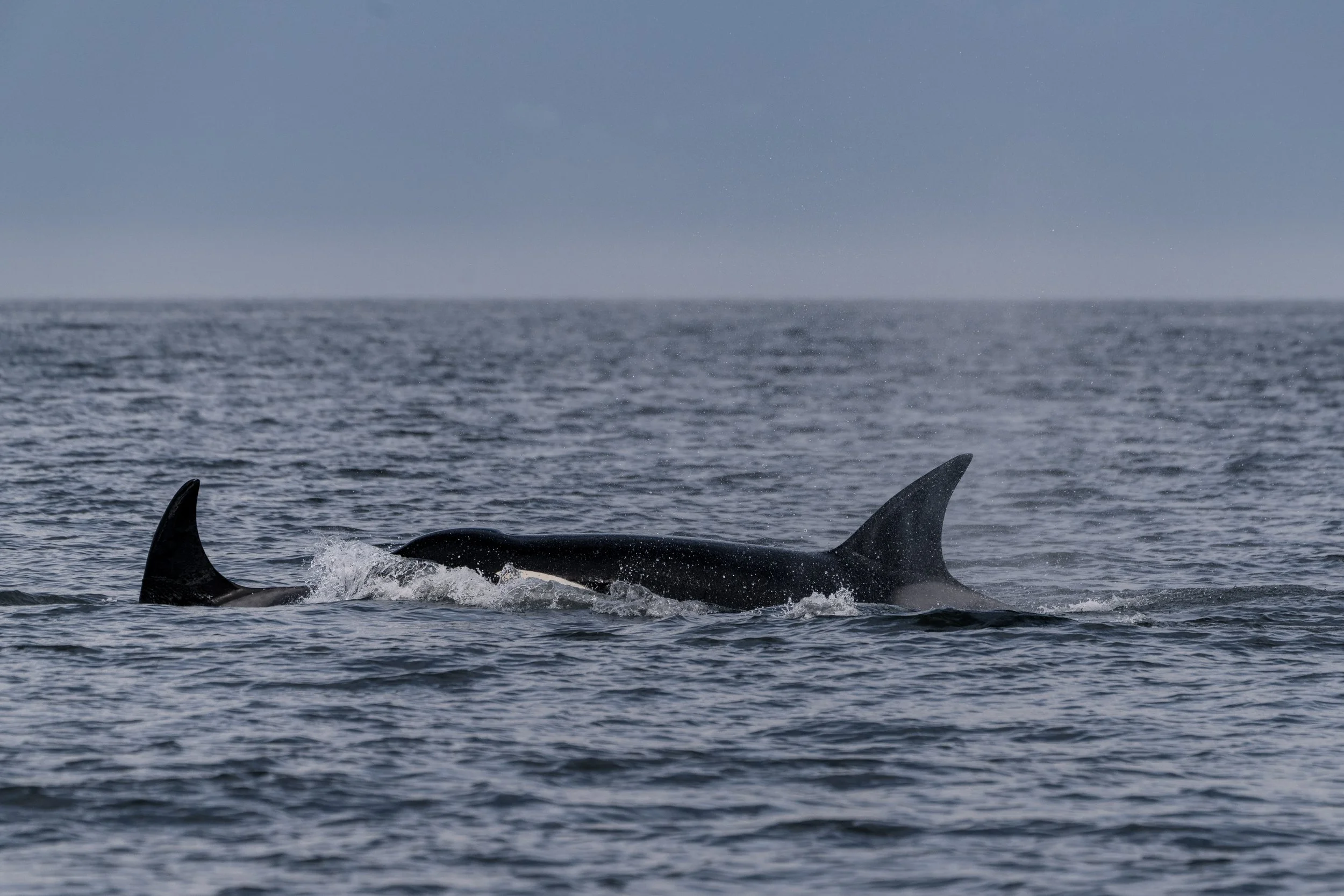
T090C Tigger racing to keep up with the family.
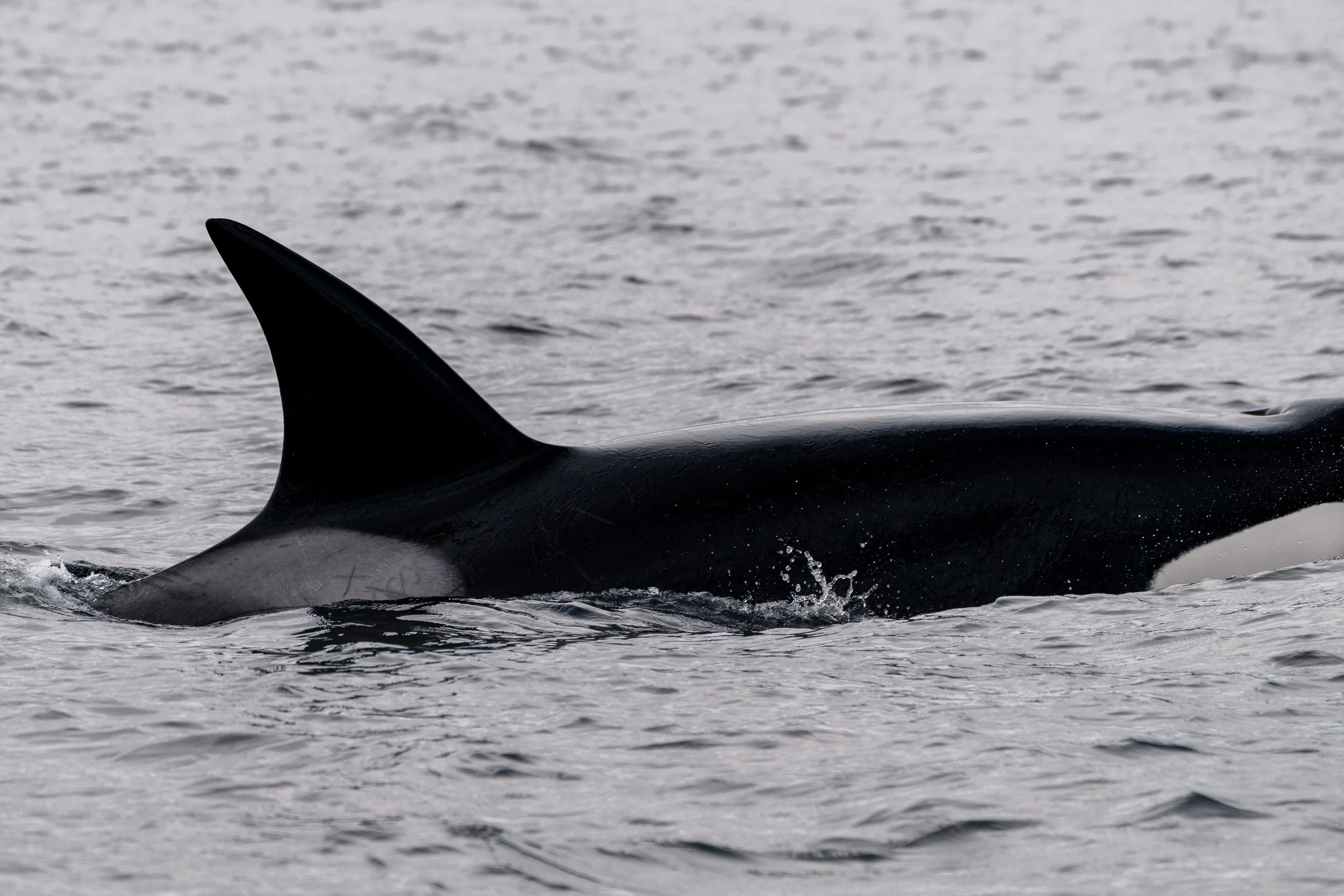
T090C Tigger.
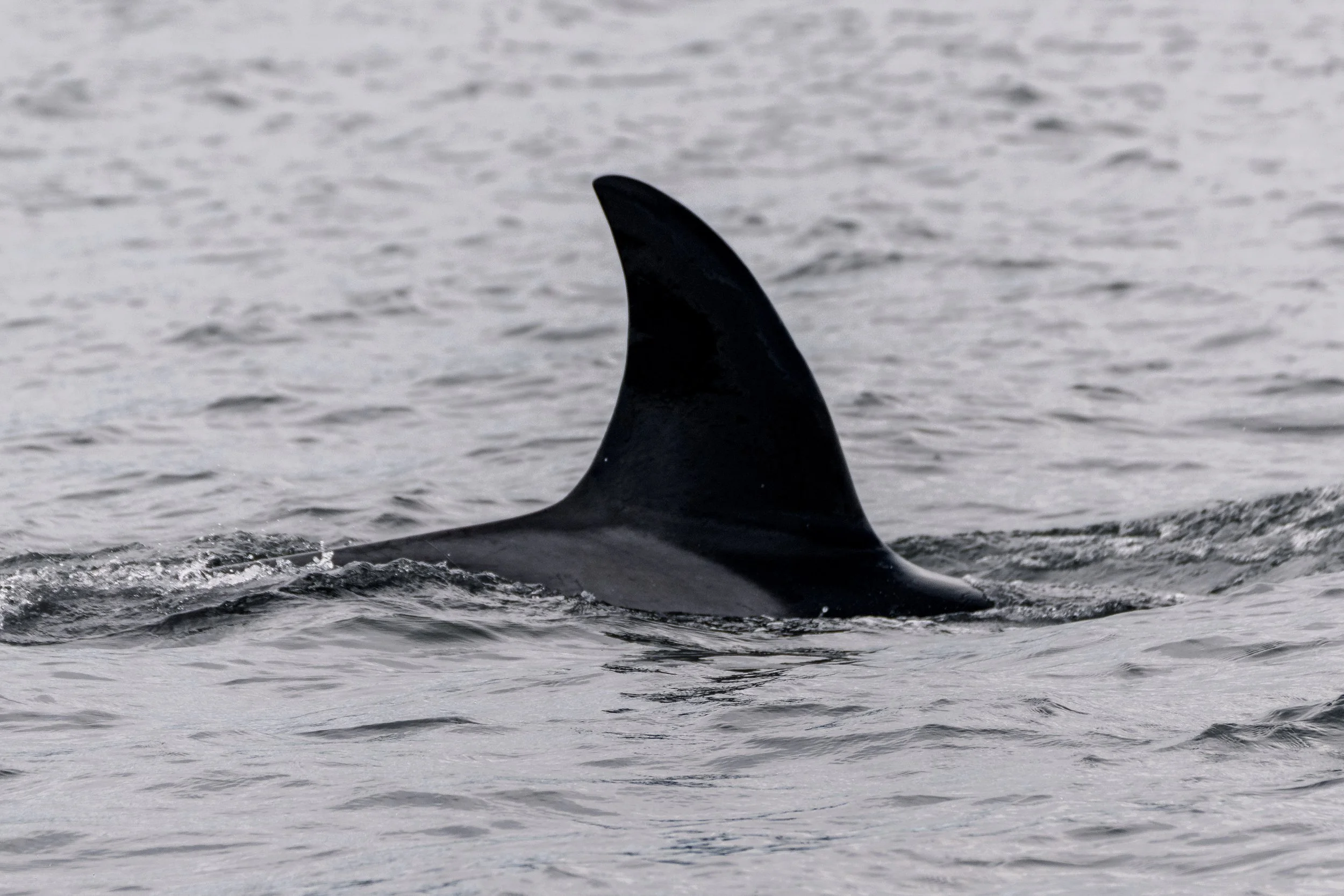
T090D Kanga’s dorsal fin is quite a bit stubbier than the rest of her family’s dorsal fins.
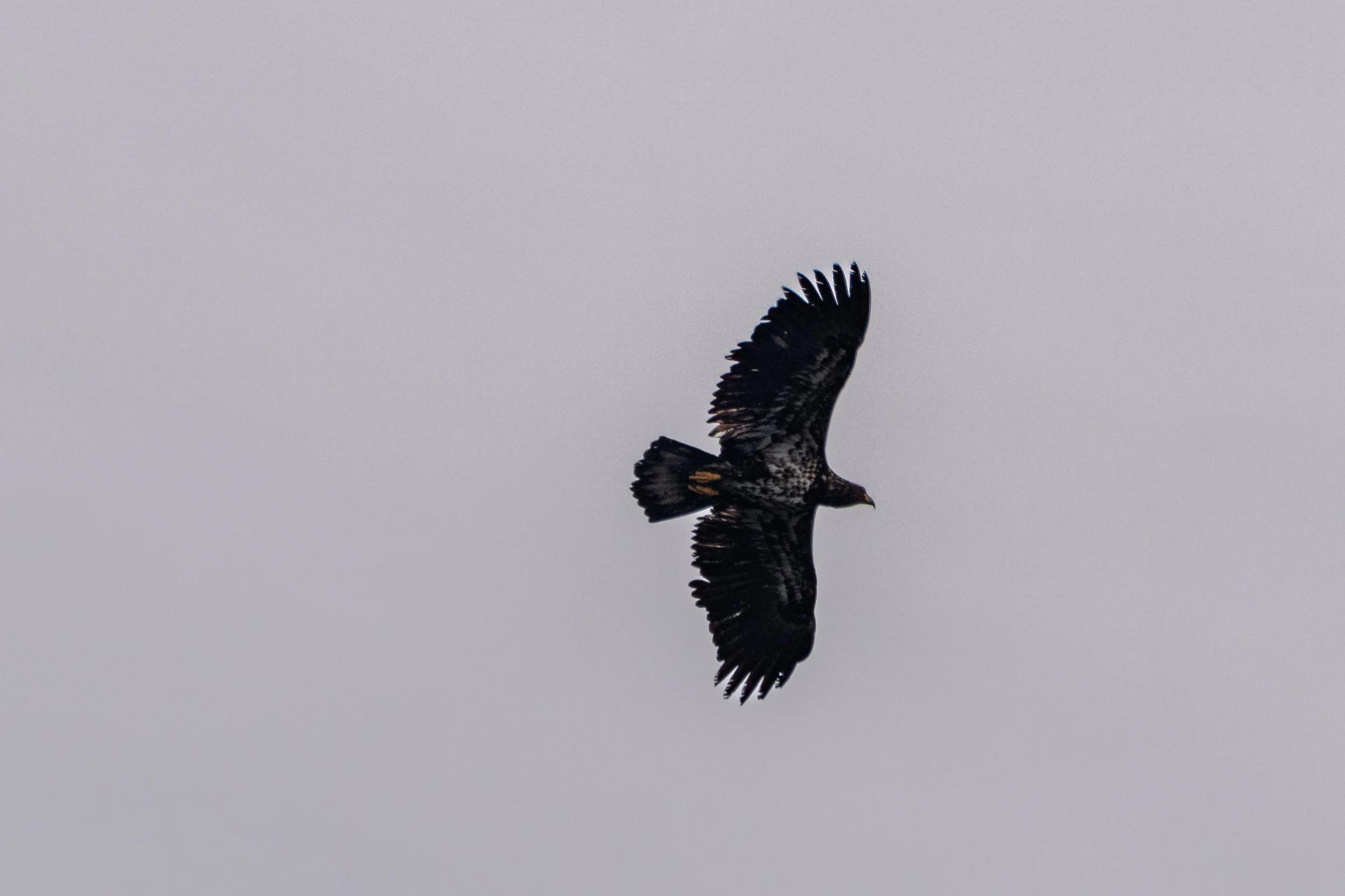
An immature Bald Eagle soaring above
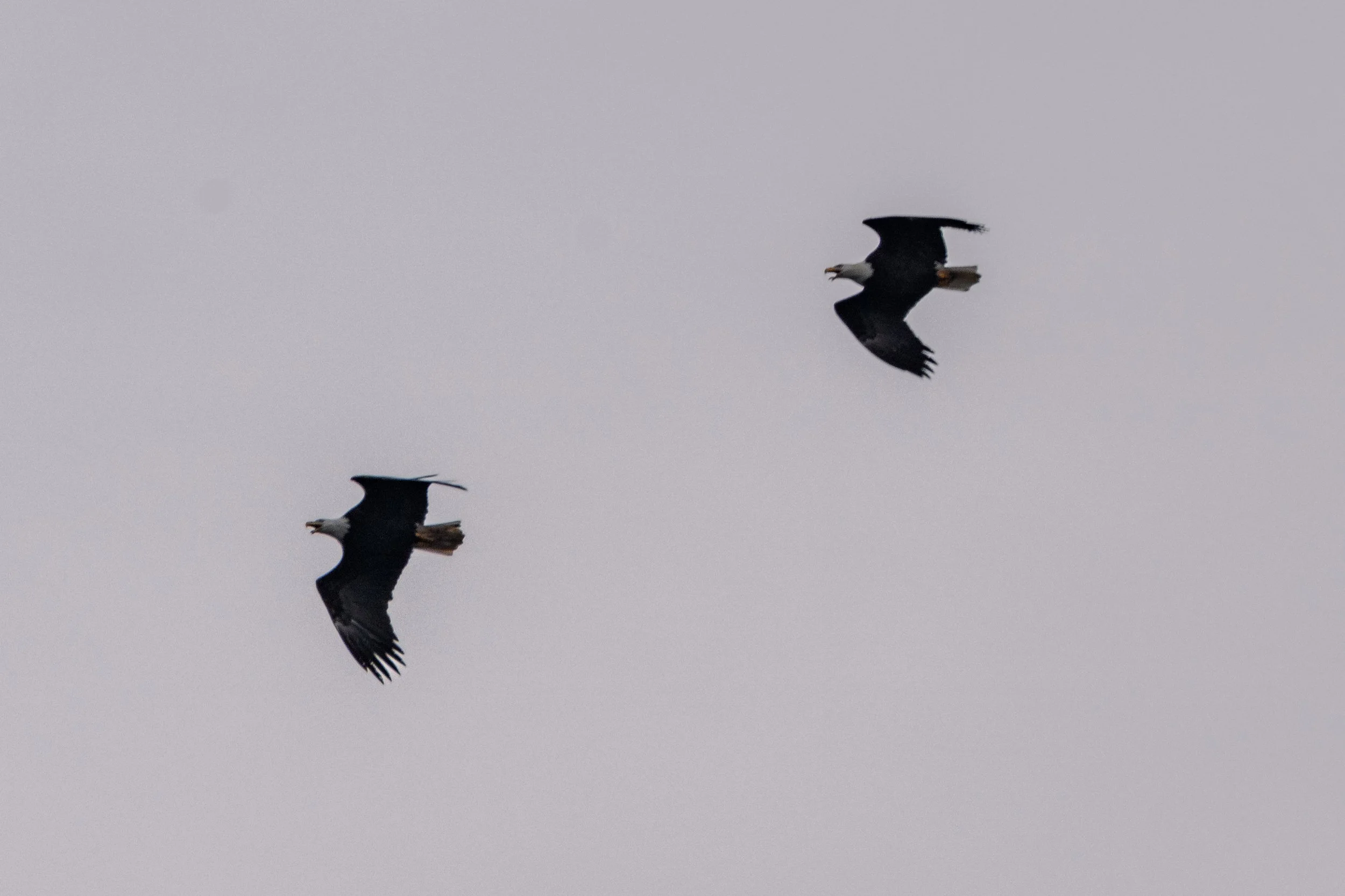
A duo of Bald Eagles bickering.
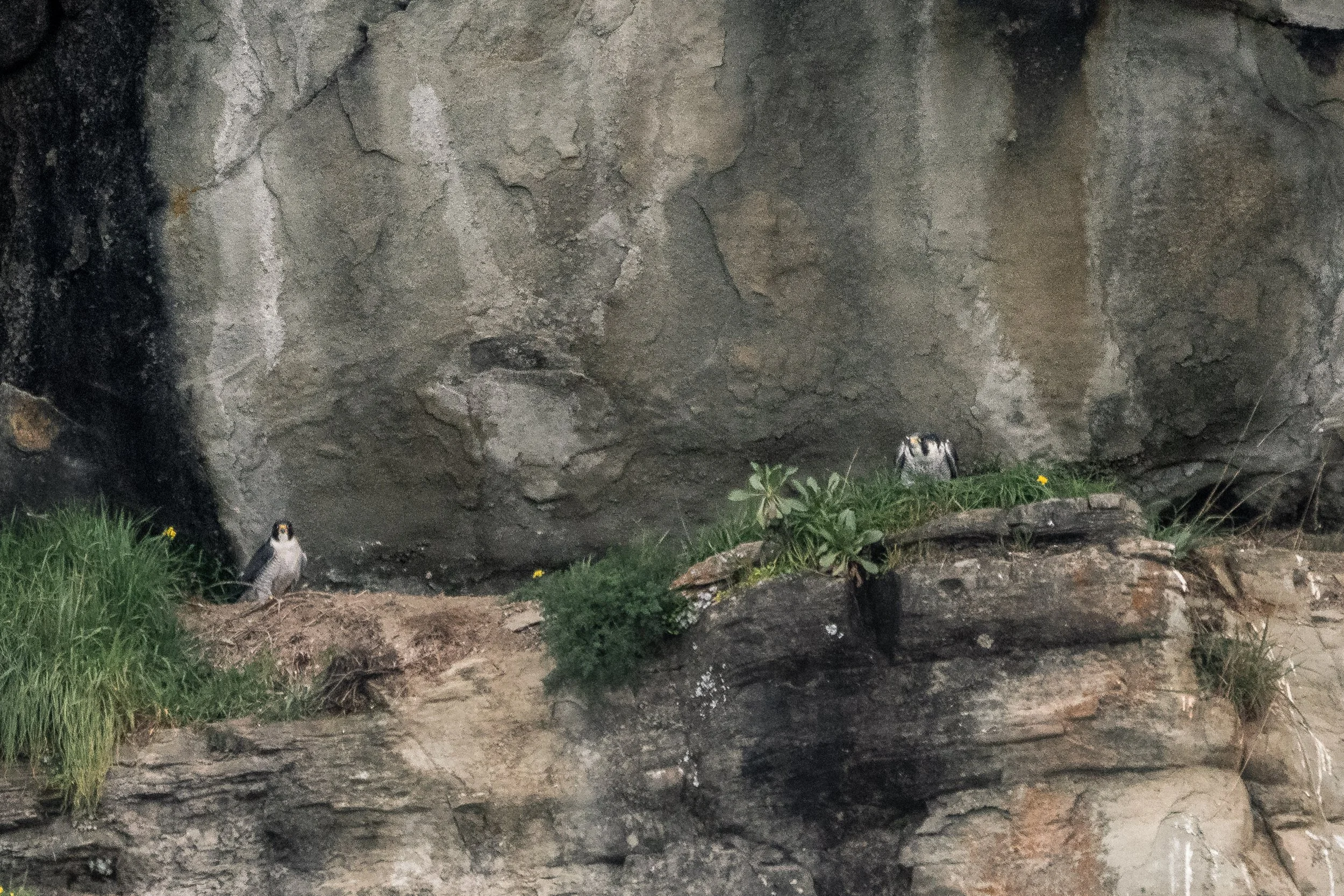
A pair of Peregrine Falcons - nesting high up on the cliffs.
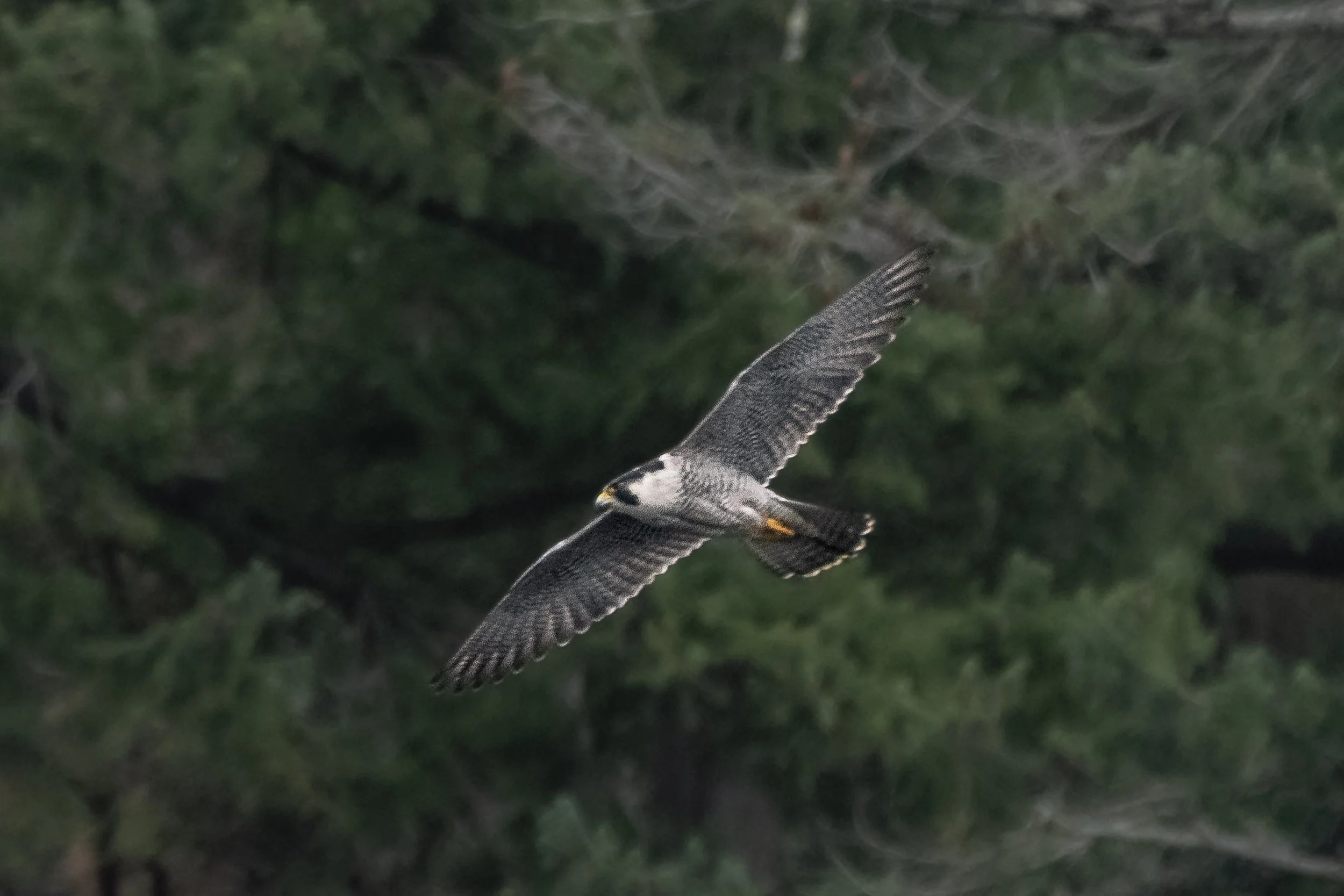
A Peregrine Falcon diving by - there was some discourse between them and the eagles.
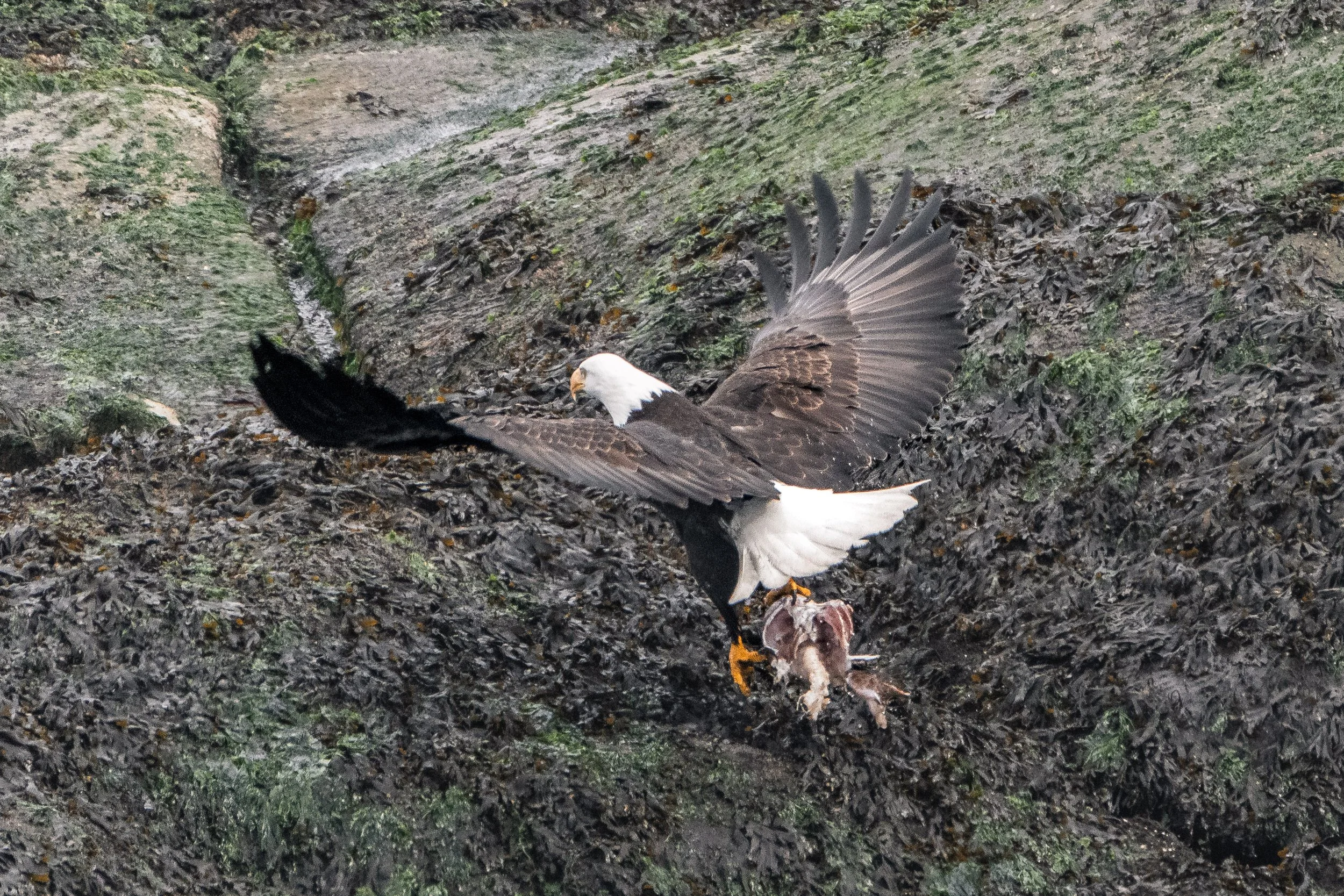
A large snack for this Bald Eagle.
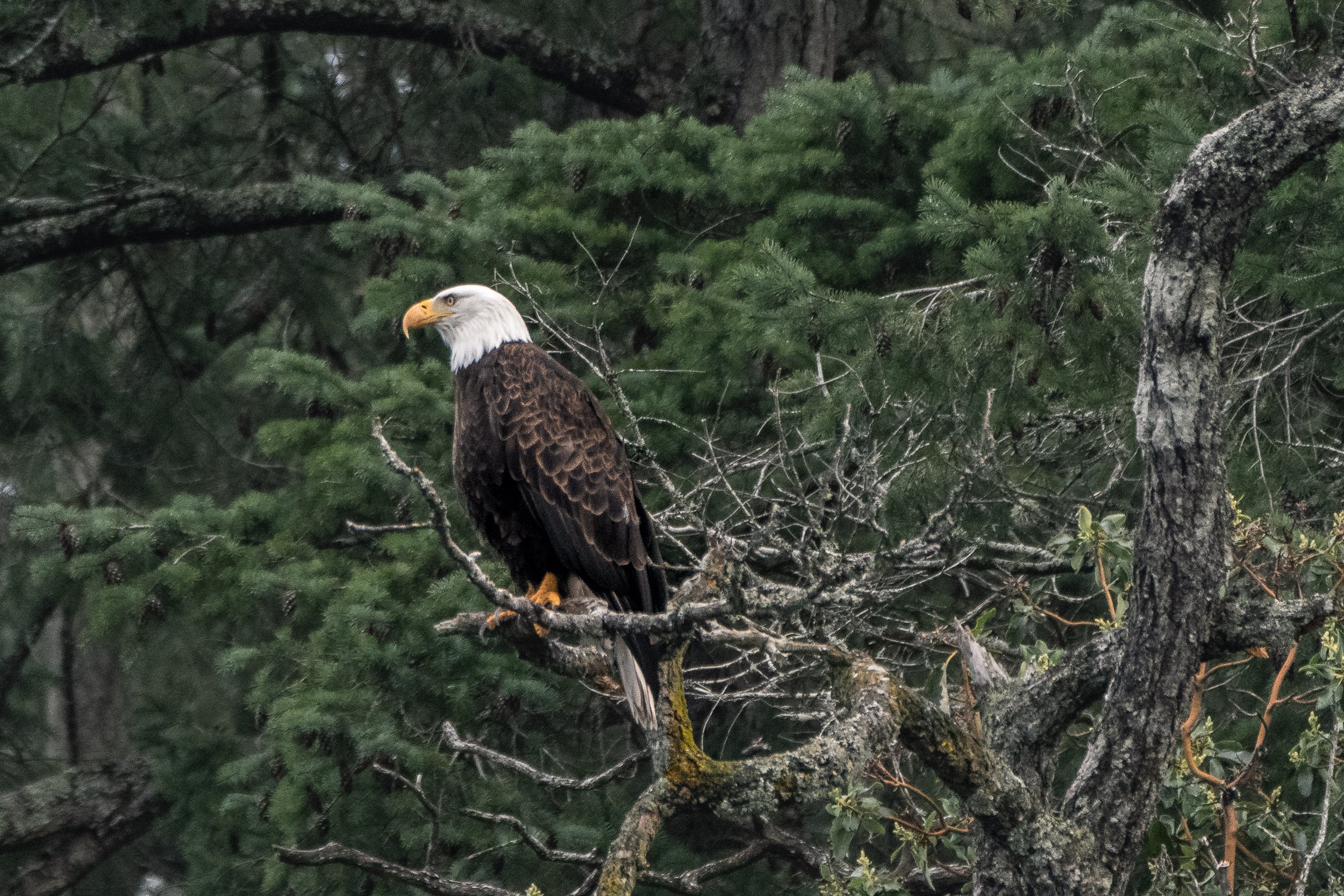
A Bald Eagle perched high up on a tree.
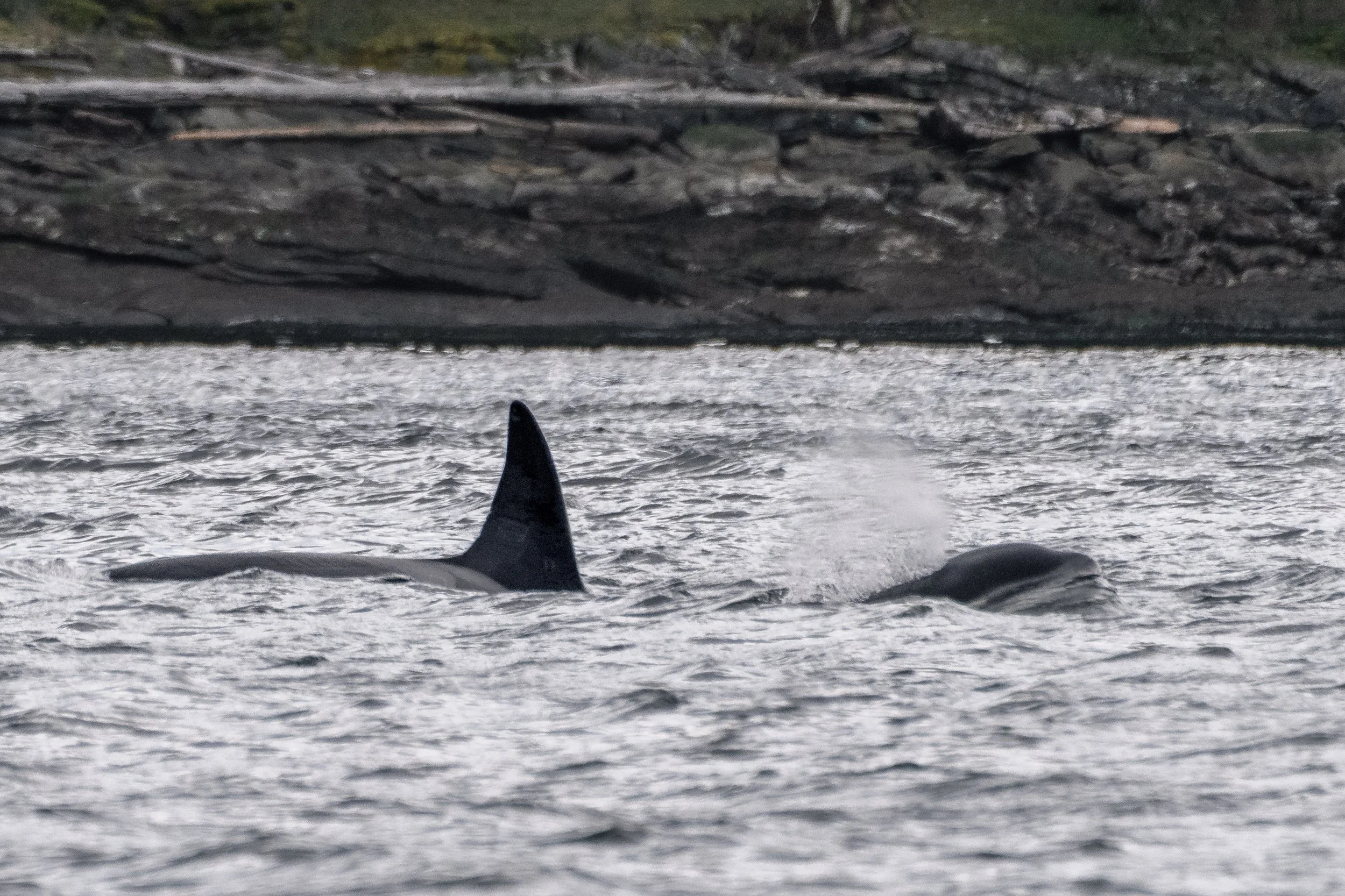
T124A4 Sabio with another surfacing ahead of her.
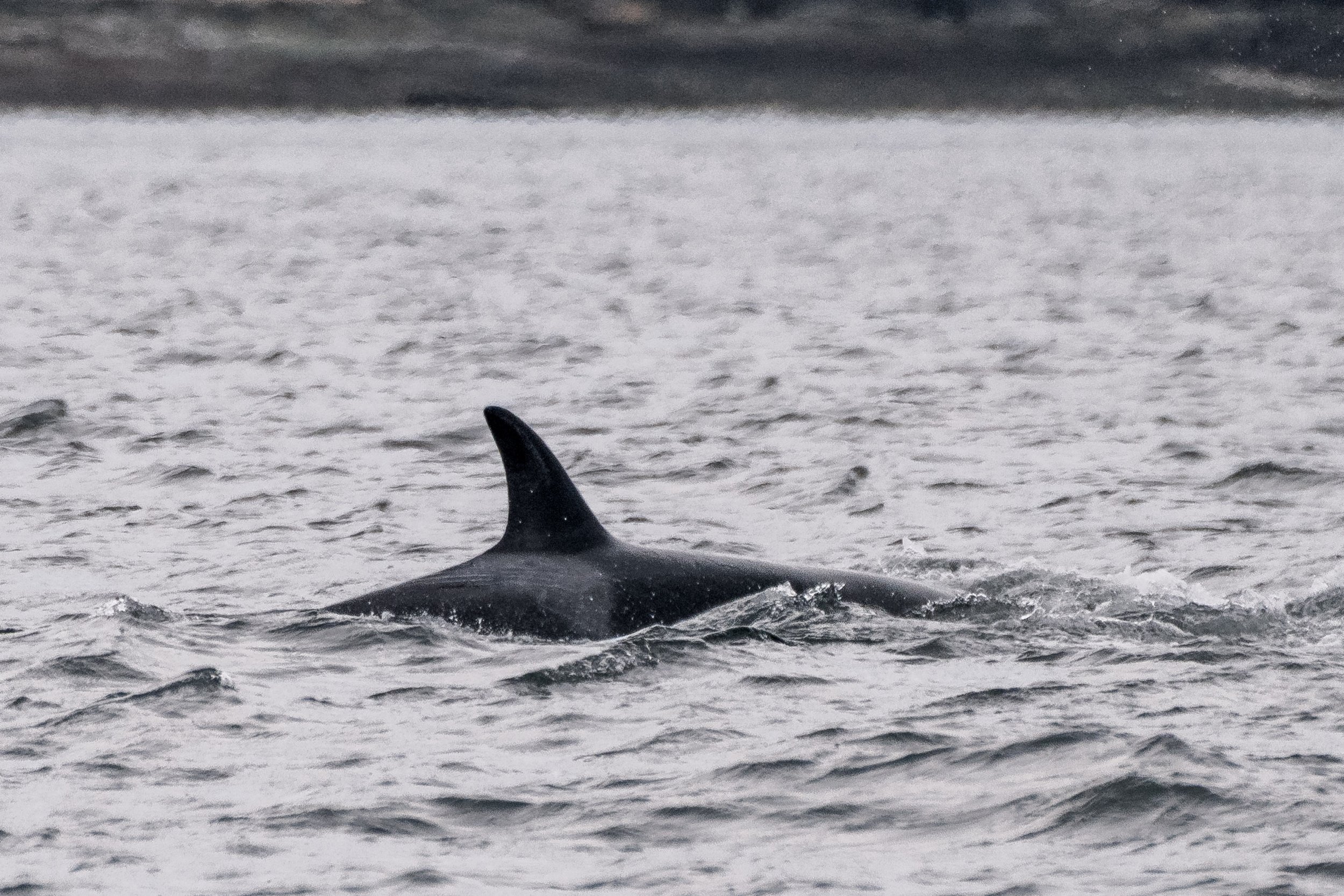
T124A4A Strix.
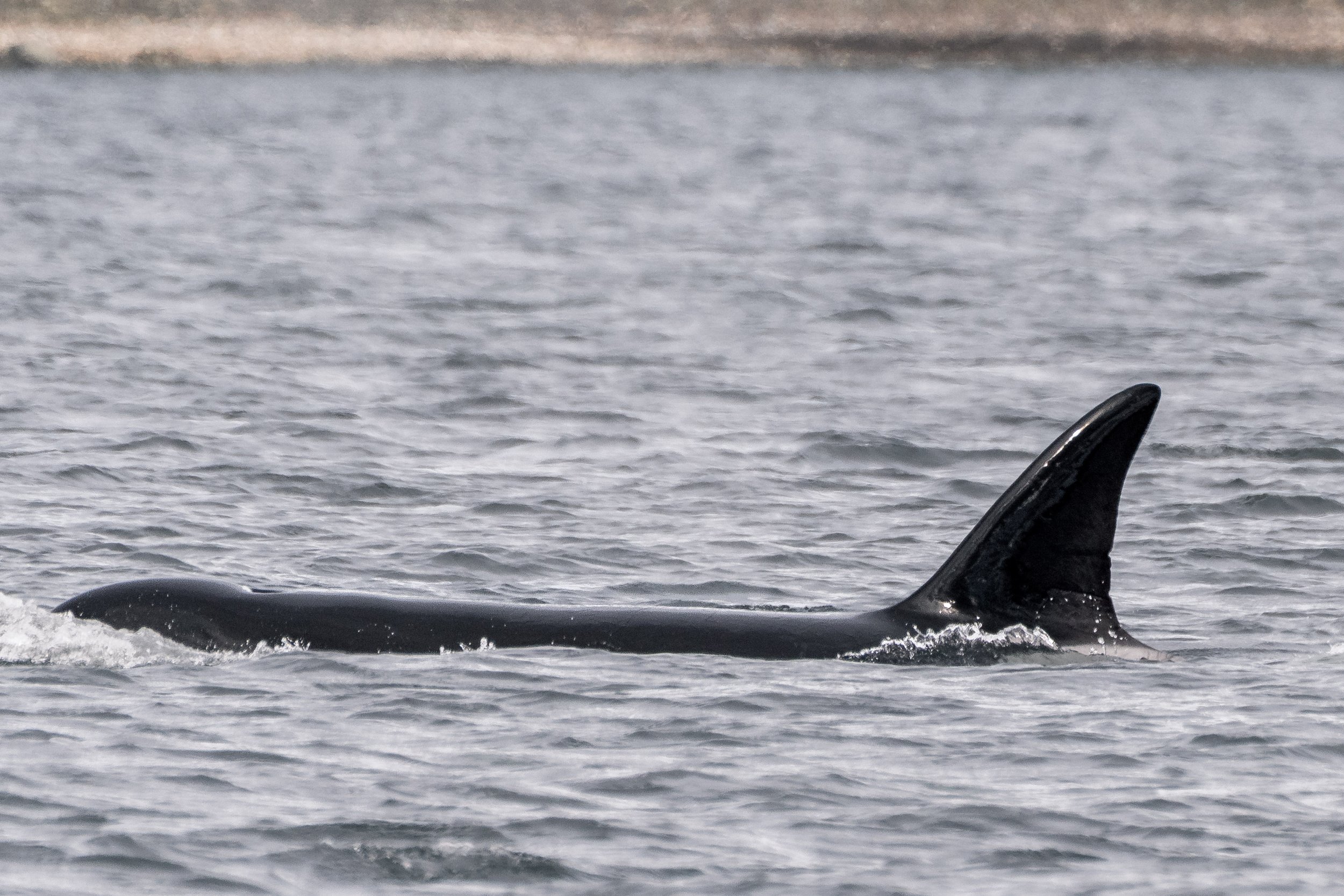
T124A4 Sabio has a very distinct dorsal fin.
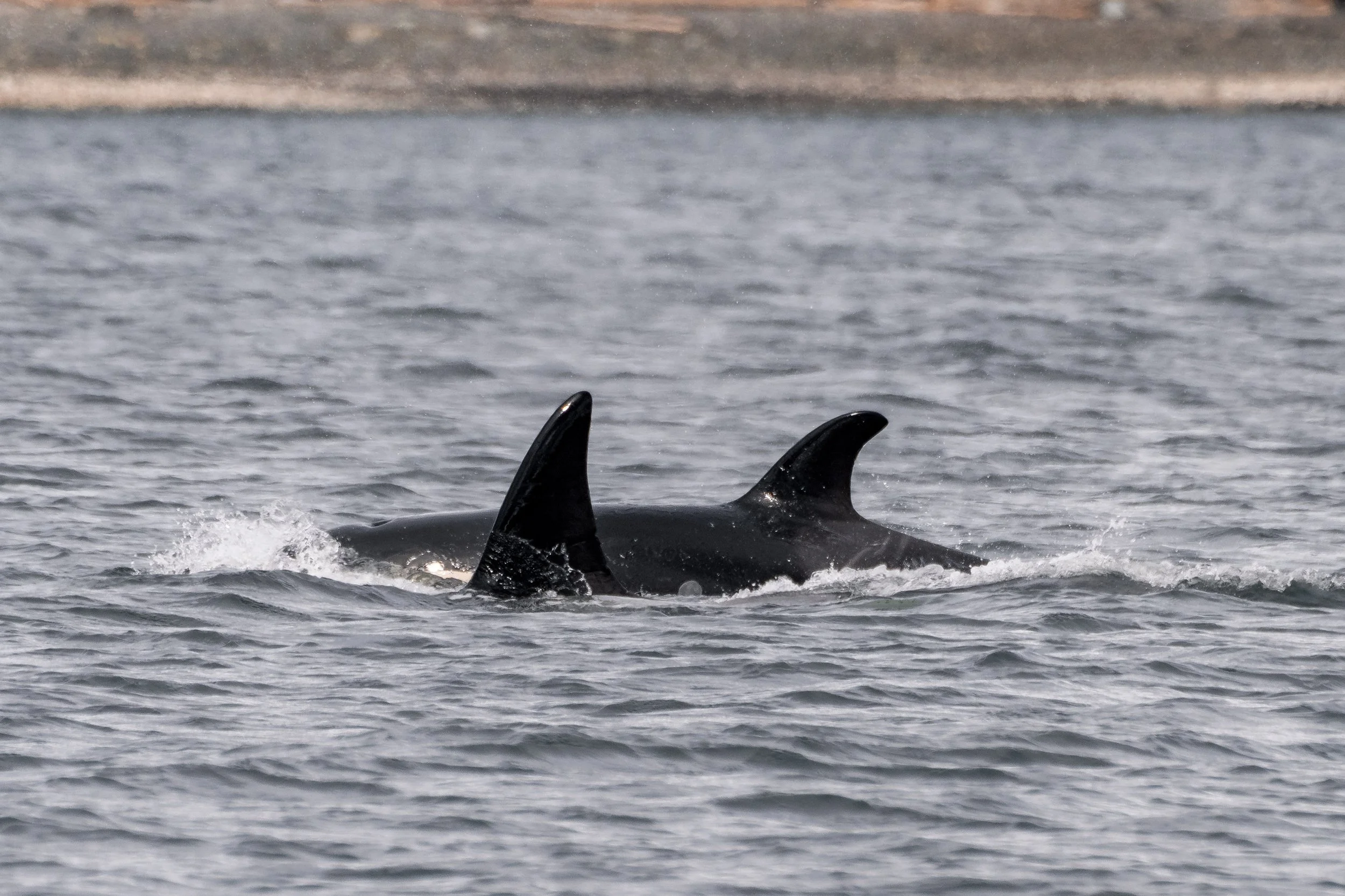
T124A4 Sabio with T124A1A Sabine close behind.
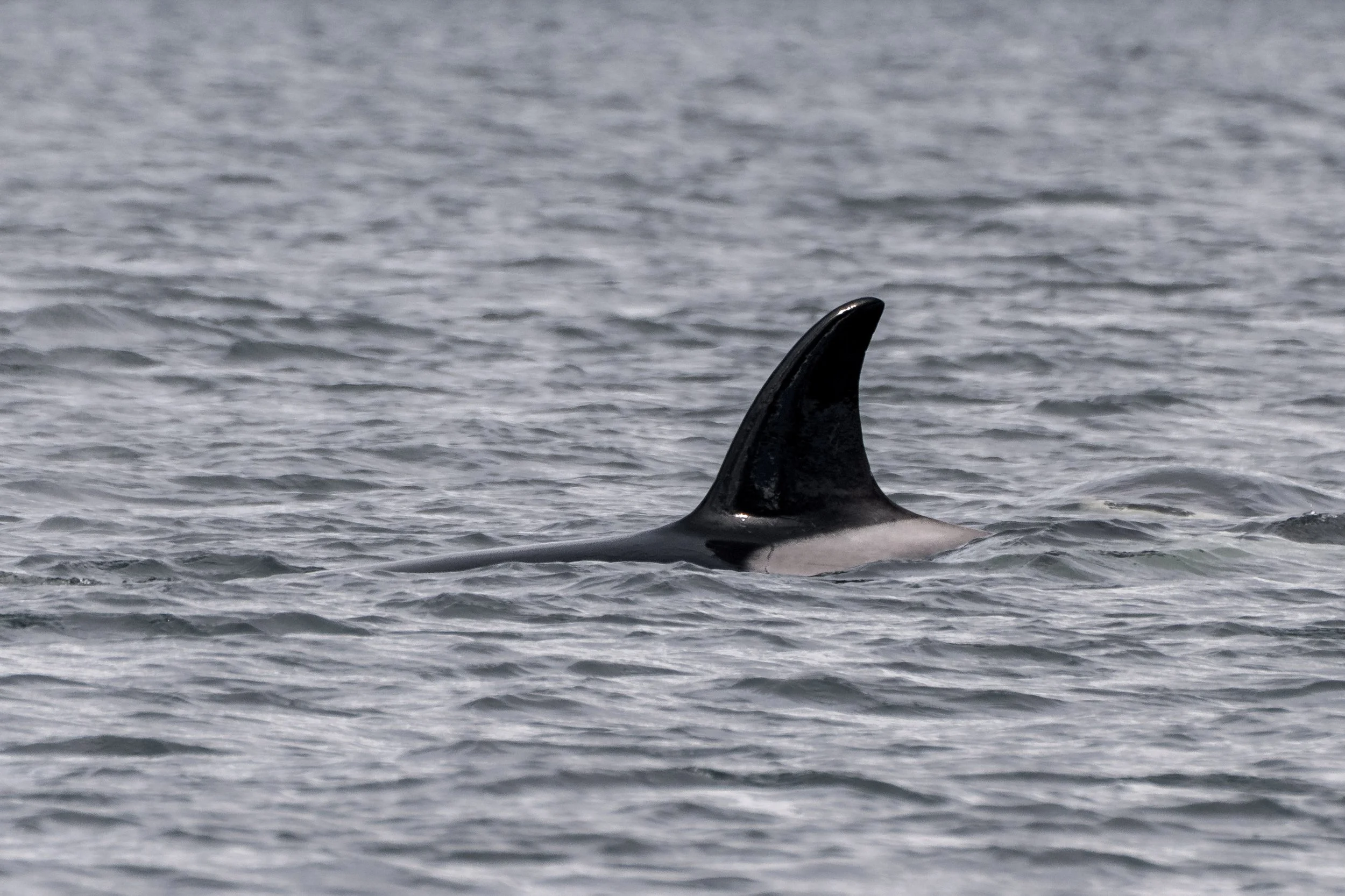
T086A1 Nahanni sports a few microscopic chips on the edge of her dorsal fin - can you spot them?
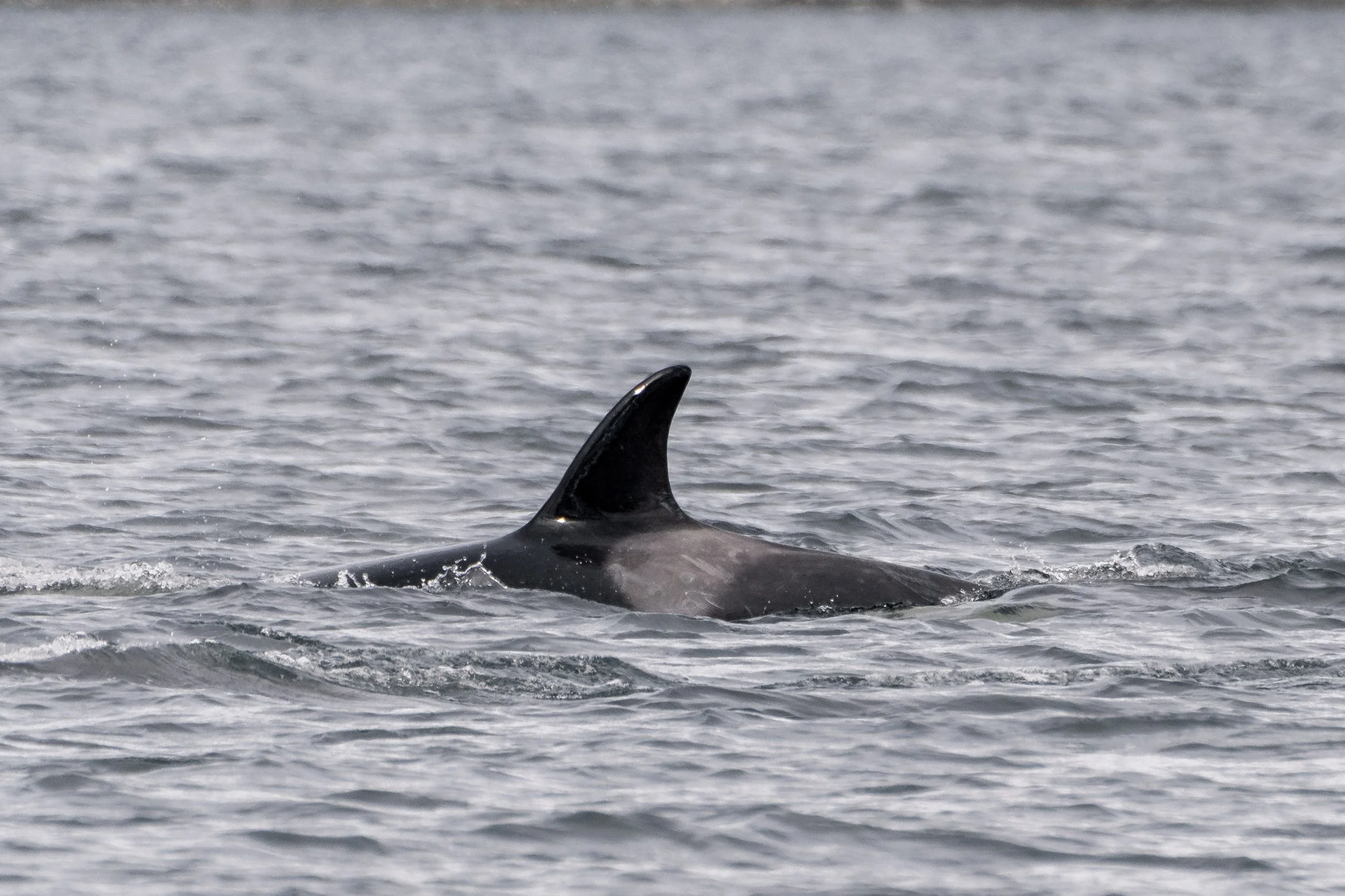
T124A4A Strix - While only 4 years old, she already has a number of prominent scars on her saddlepatch.
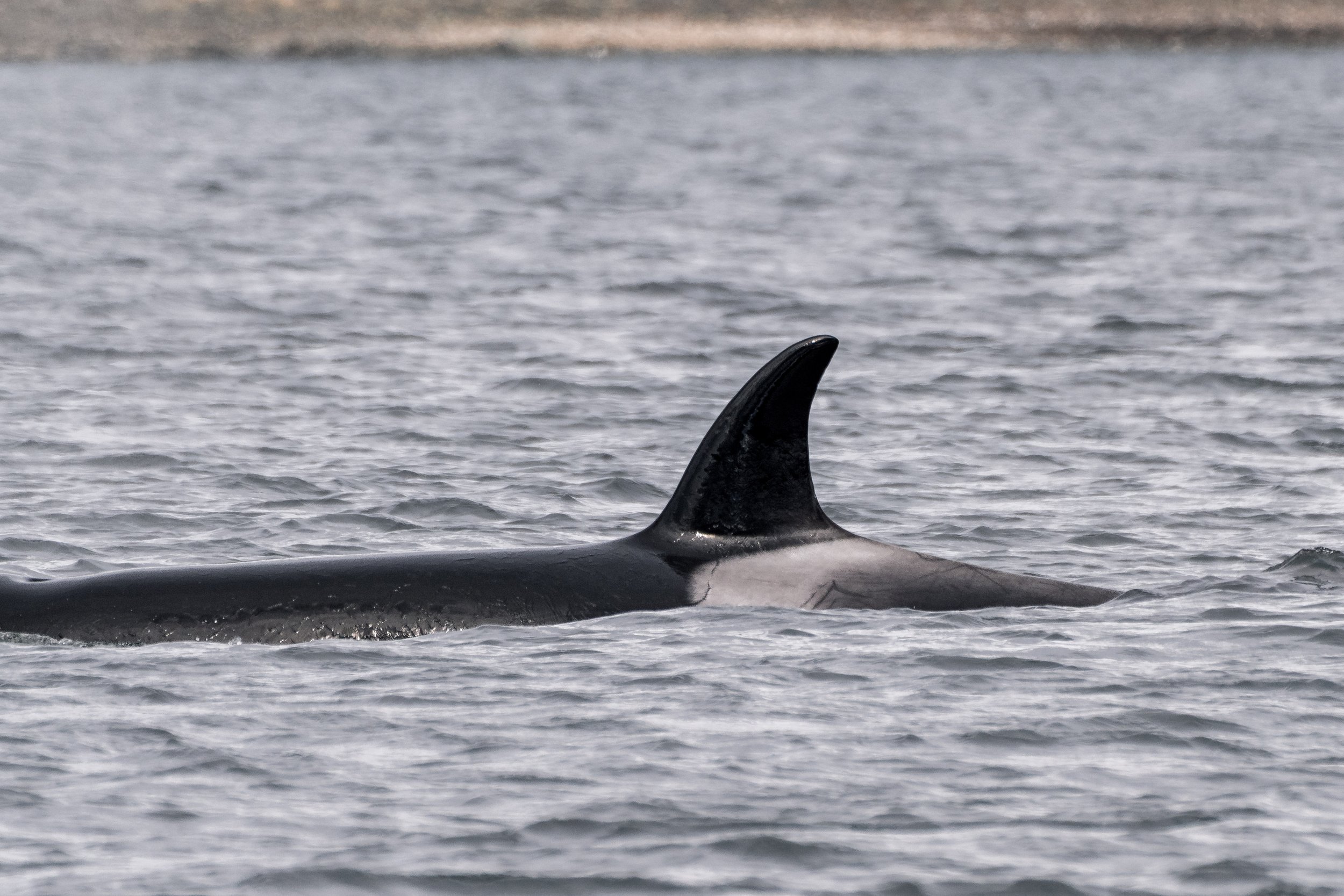
T086A1 Nahanni sports some distinct markings on her left saddlepatch.
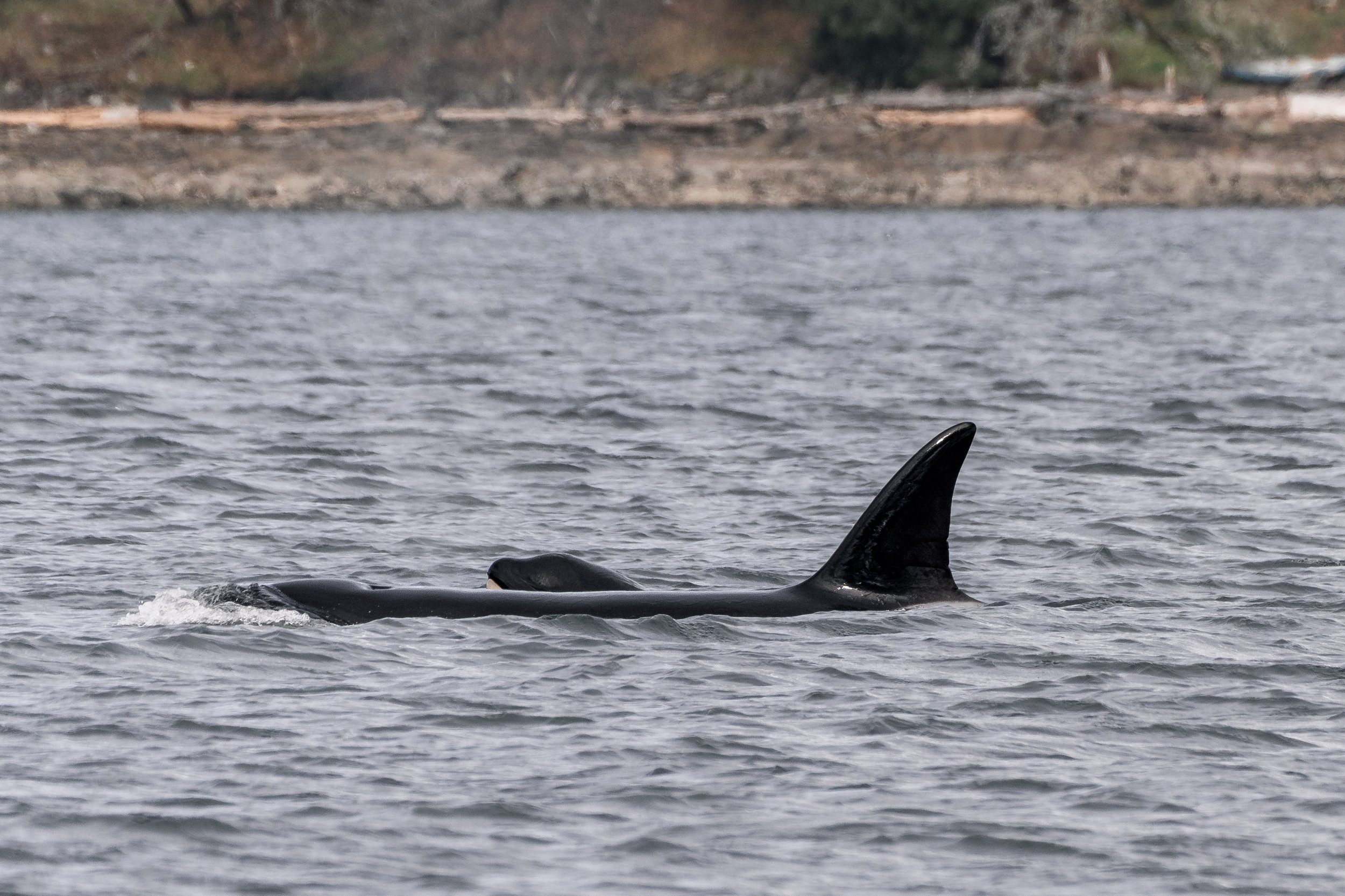
T124A4 Sabio with T124A1A Sabine right at her side.
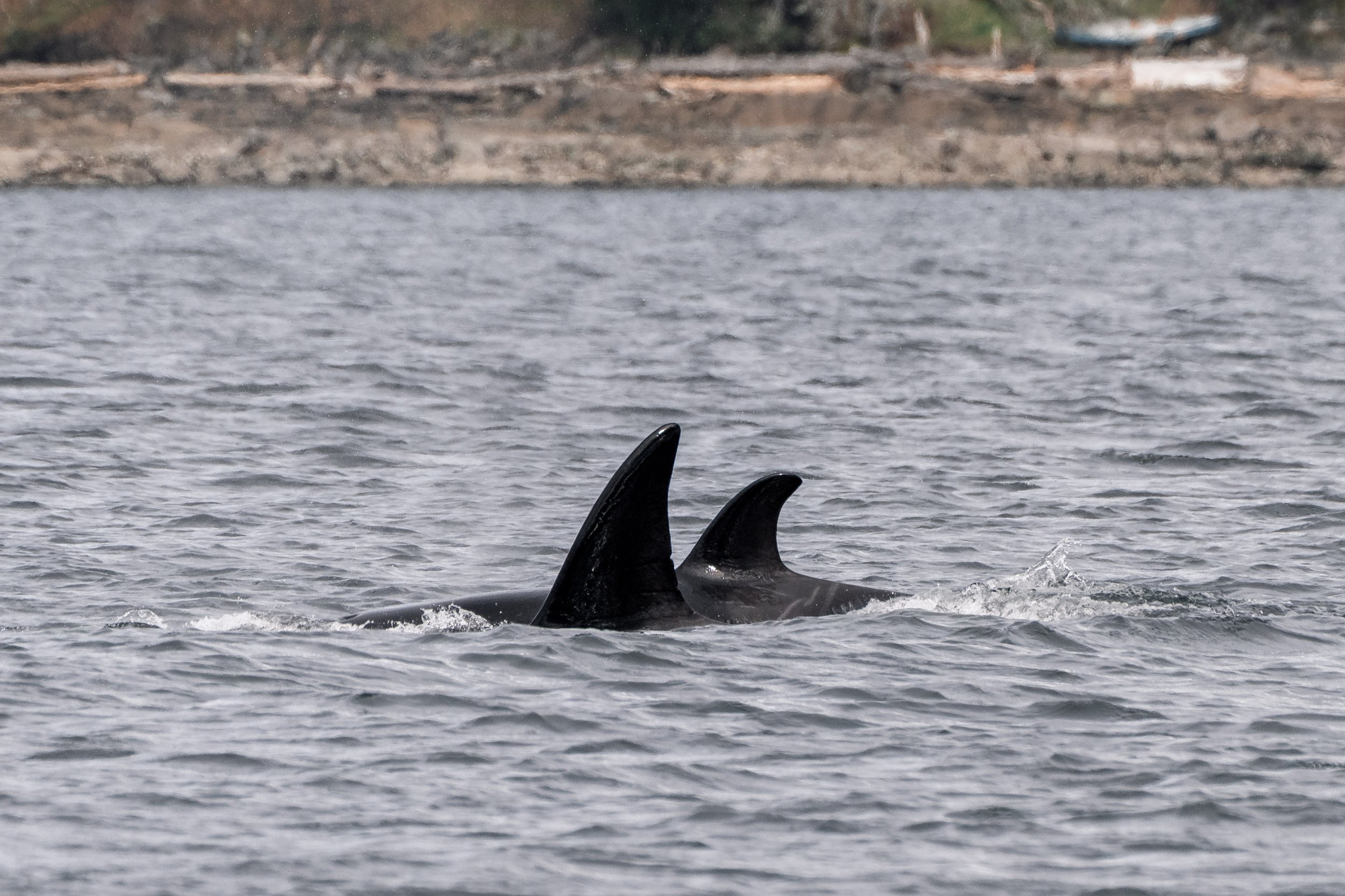
T124A1A Sabine surfacing with T124A4 Sabio.
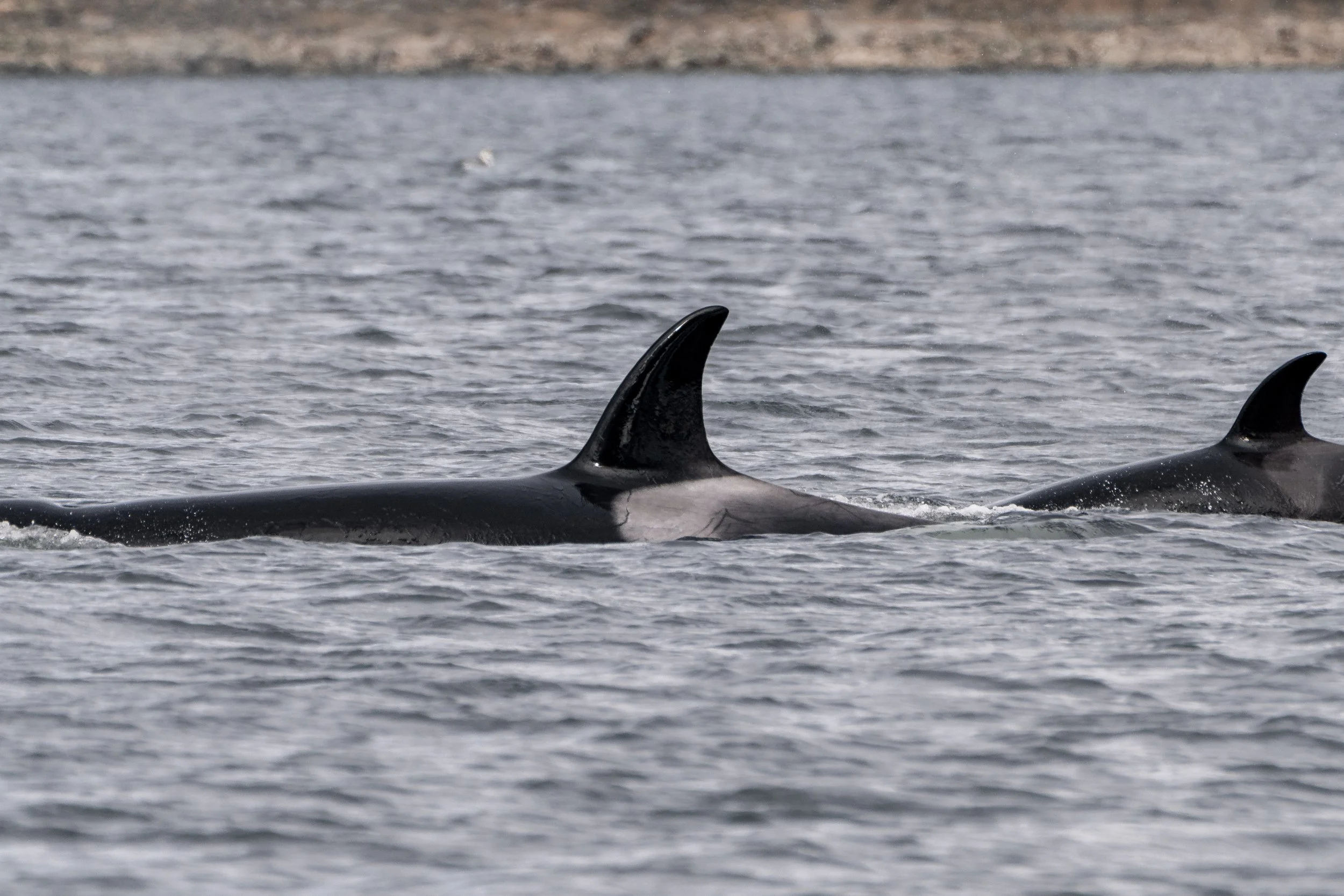
T086A1 Nahanni with young T086A1B Denali right behind her.
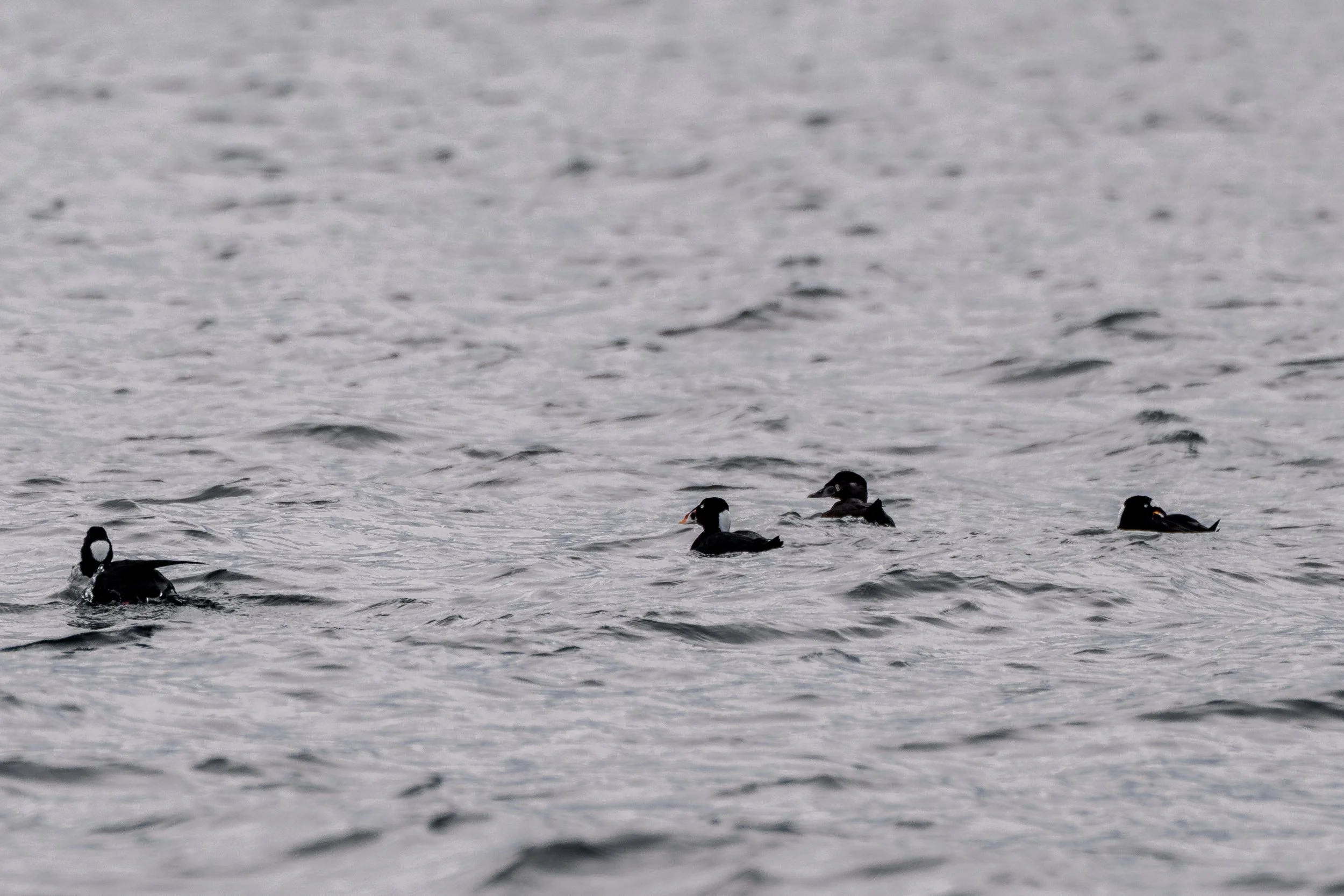
Surf Scoters bobbing along.
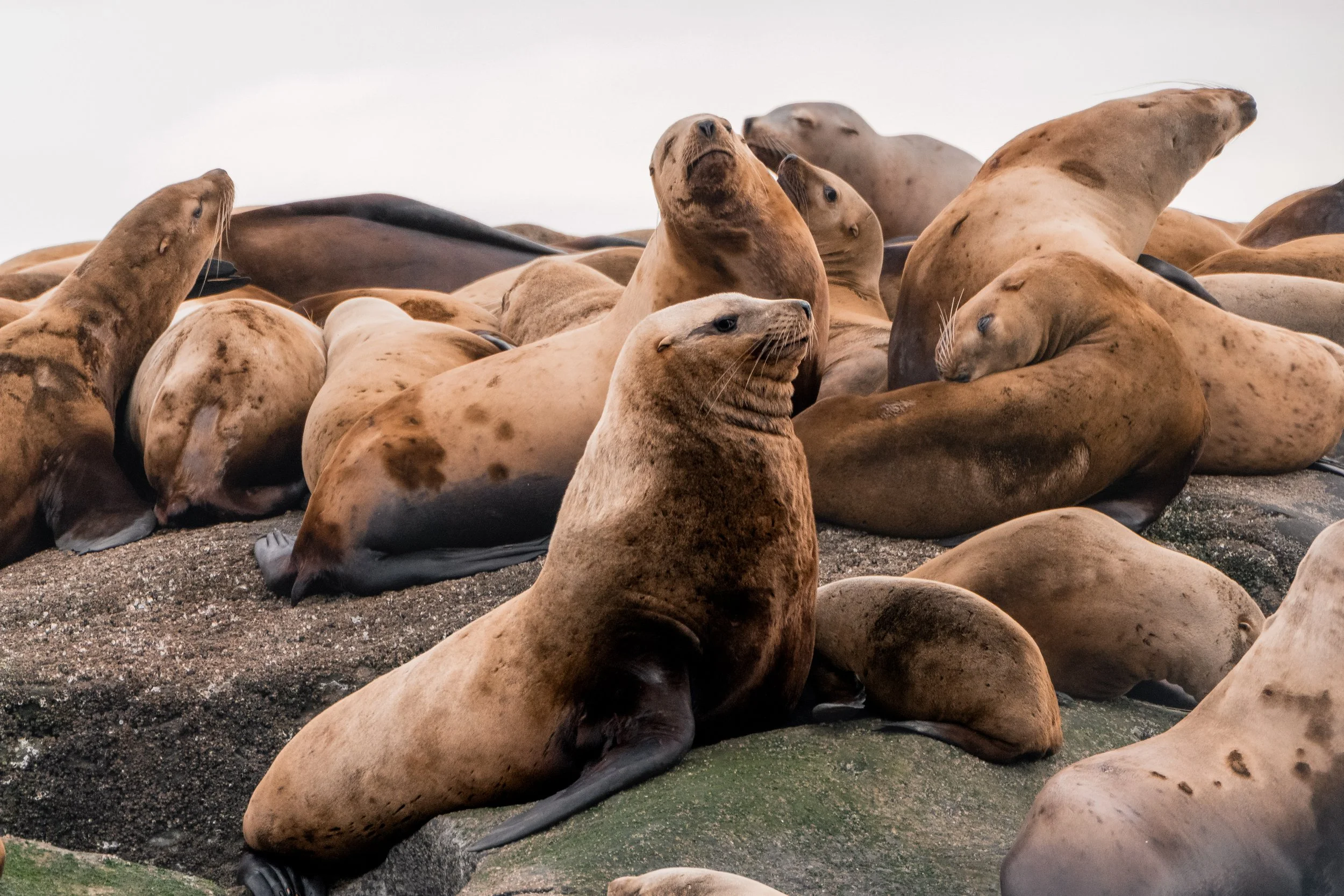
Side-eyeing us from the shores.
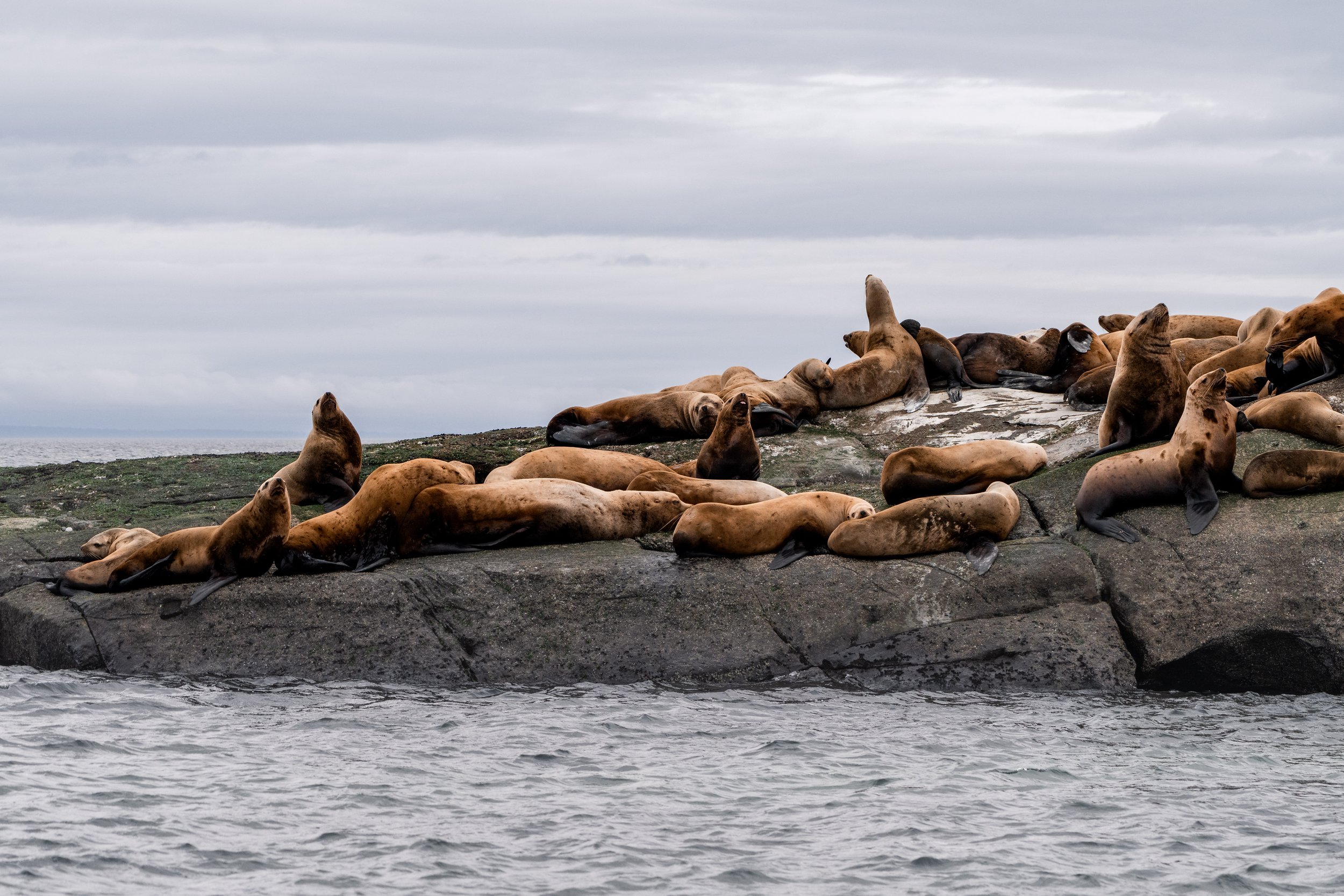
Steller Sea Lions hauled out, snoozing the day away.
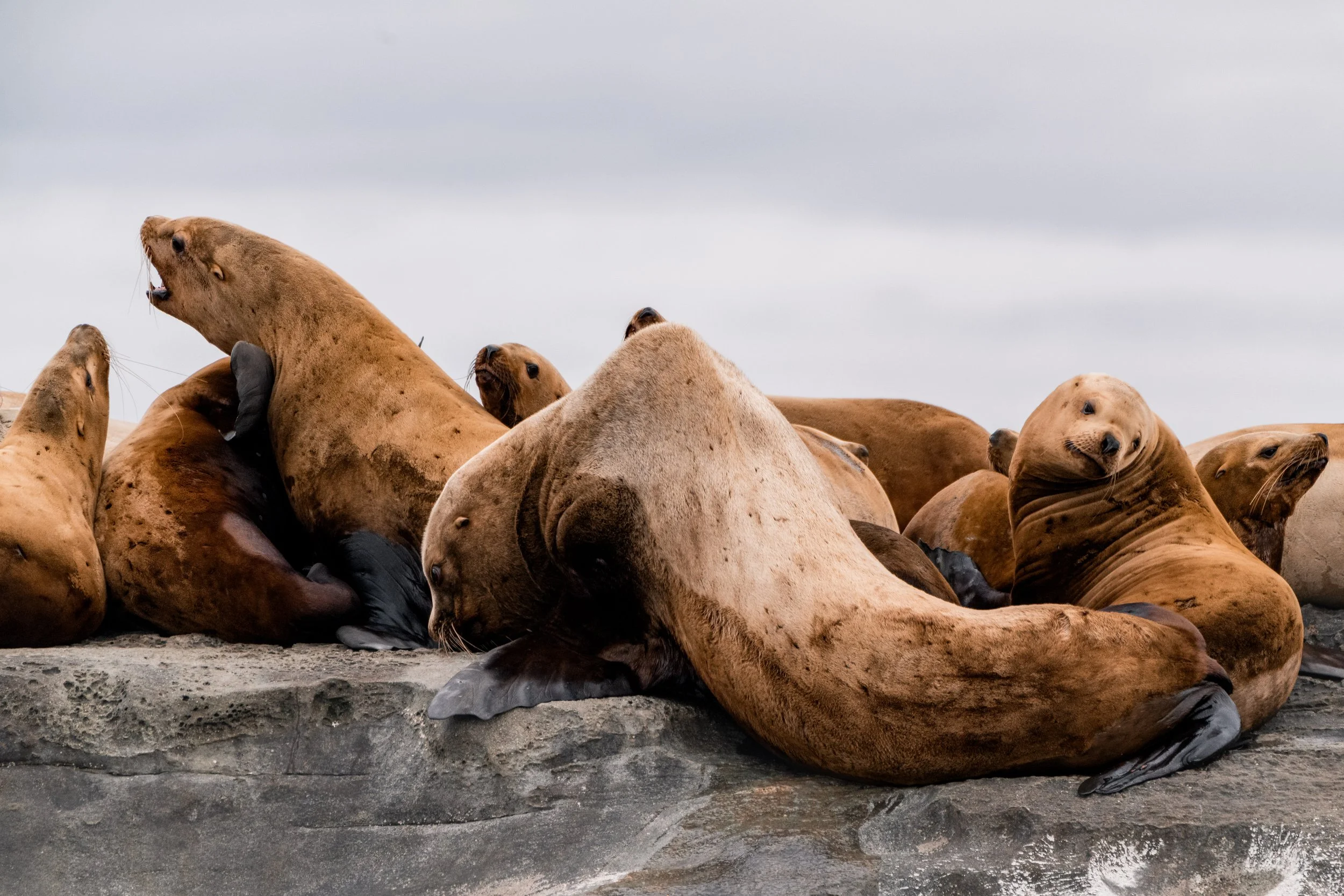
Grumbling, growling, and bellowing are all commonly heard sounds amongst the sea lions.
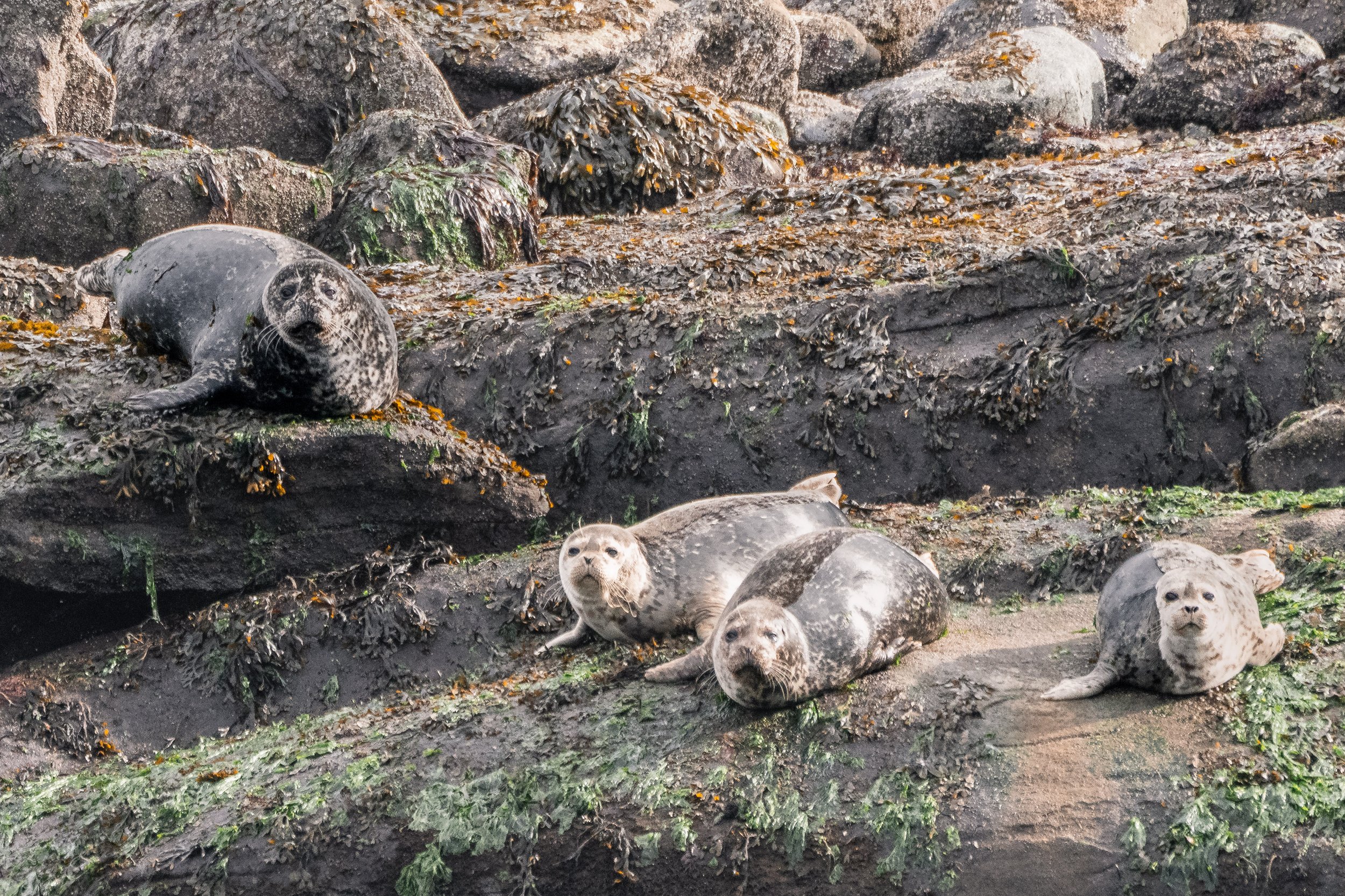
The always inqusitive Harbour Seals peeking at us from their rocky perch.