
April 24 ,2026, 09:30 AM - Travelling Northumberland Channel with the T086As.
With the sun shining overhead, we began our early-morning departure on board Kula with joy and excitement, wondering where we would be going today. It was discussed that we would begin the day heading southbound, through the Southern Gulf Islands. We boarded and settled into our seats as Marine Naturalist Aly began discussing what we could see today. Orca, dolphins, seals, sea lions… There were so many possibilities ahead of us!
Departing the harbour, Captain Rodrigo turned us into Northumberland Channel, pointing towards Dodd Narrows. Suddenly, there they were – a trio of small dark fins travelling together, quickly crossing through the waters!
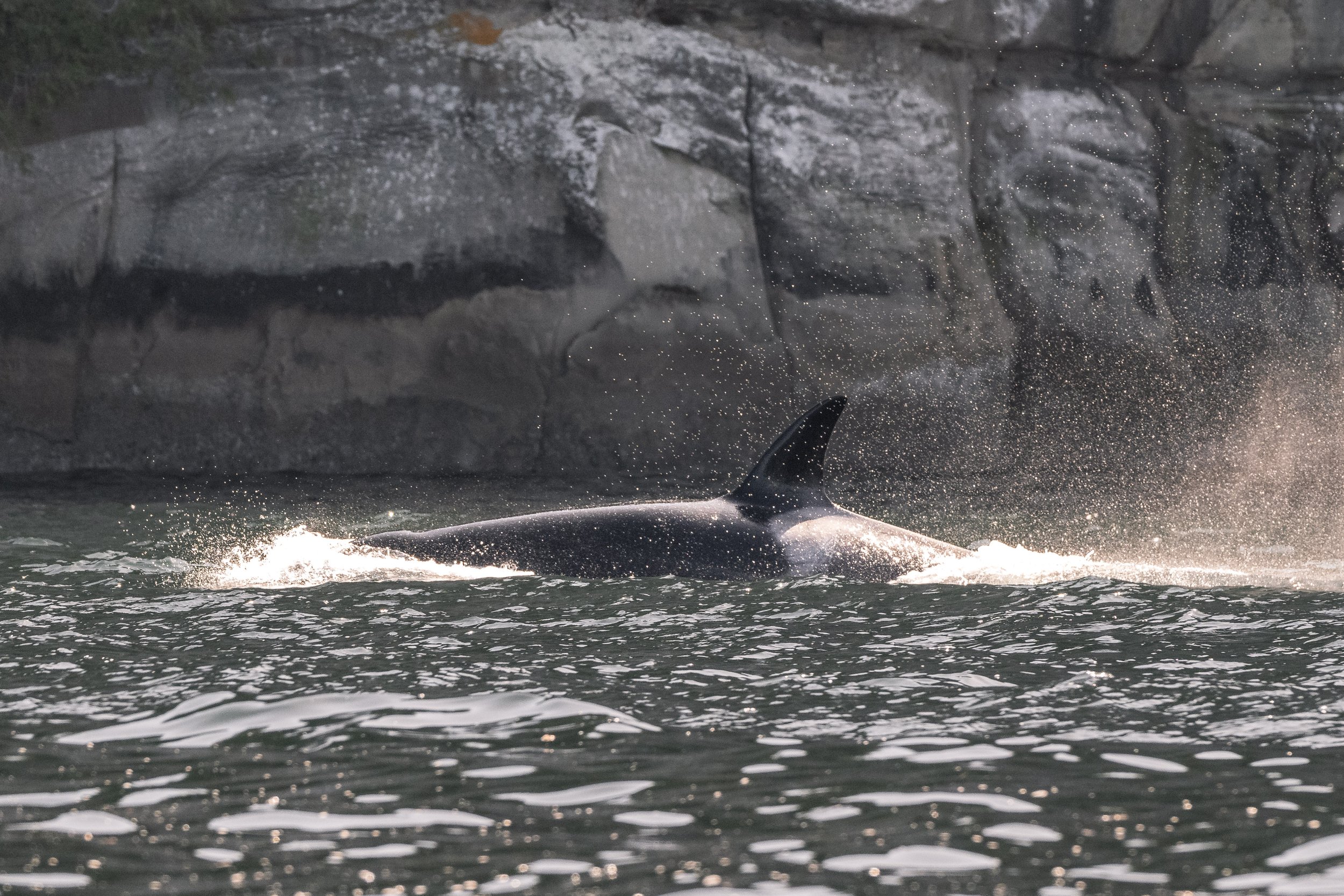
We got into position, and Aly began working on IDing who was present – a critical process in every adventure we take part in. For orca, we typically use dorsal shape and notches to identify individuals. Thankfully, one of these whales had two very distinctive notches on its fin. It turns out that this was the T086As:
T086A Eider ♀ (1988)
T086A4 Akia ♀ (2016)
T086A5 Siku ♂ (2024)
Recently, T086A Eider has been travelling with three of her calves: T086A4 Akia, T086A5 Siku, and T086A3 Tyndall. However, Tyndall was not present today. She has dispersed a few times recently, likely due to the birth of her first calf. Sadly, that calf is believed to have passed away, with multiple sightings of the matriline without them present. Born in 2024, Tyndall may be pregnant again and could be off exploring and foraging solo before her second calf is born.
Eider and her two youngest calves were busy travelling along as we observed them today. Travel takes up a vast majority of an orca’s day, with them travelling over 100km in a single day. This large distance is important, as if they stay in one area for an extended period, pinnipeds can grow weary of their presence, making it more difficult for them to hunt successfully.
Eider’s pod was just the start of the excitement, though, and soon we departed to see what else we could see for the day. Not long after, we spotted more dorsal fins cutting through the surf. These fins were different, though – much shorter than the orca, very curved, and sported a distinct two-toned colouration. These were Pacific white-sided dolphins, a different kind of cetacean, and another member of the toothed whale family!
This pod of dolphins has been seen cruising along our shorelines for a few days now. While we aren’t sure why they are here, they are always extra exciting for us to spot, as they are considered quite rare to spot in our part of the Salish Sea!
After watching the dolphins, Captain Rodrigo turned us again and continued our journey. We travelled until we reached the edge of Valdez Island. Here, low growls and grunts could be heard. These sounds came from the large number of Steller Sea Lions draped over the rocks ahead of us, in a little area known as Stinky Rocks. Dramatically posing and soaking up the sunshine, these giant pinnipeds take full advantage of our rocky coastline to haul out and rest before returning to navigating the ocean waters.
Kula’s crew and guests yawned briefly, feeling drowsy in the warmth after the day’s excitement. Departing Stinky Rock, we continued once more. We made our way back towards Northumberland Channel once more, this time to visit a few other kinds of wildlife. Over by Harmac, the smaller cousin of the Steller Sea Lions, the California Sea Lions, flopped lazily on the log booms. They were also taking full advantage of the early-season sunlight, sleepily resting the day away. Crossing to the other side of the channel, we approached the Gabriola Bluffs for one last taste of wildlife. A multitude of small black birds dotted the cliffs, iridescent feathers glistening. Many cormorants nest in these cliffs, raising their chicks and feasting on the plentiful bounty of the ocean waters at its base.
One final time, we departed, heading back towards the Nanaimo skyline just off on the horizon. We made our way back into the harbour and disembarked, wrapping up a perfect day exploring and learning about the many creatures that call this area home.
Please enjoy these photos taken by Marine Naturalist Aly Kohlman.
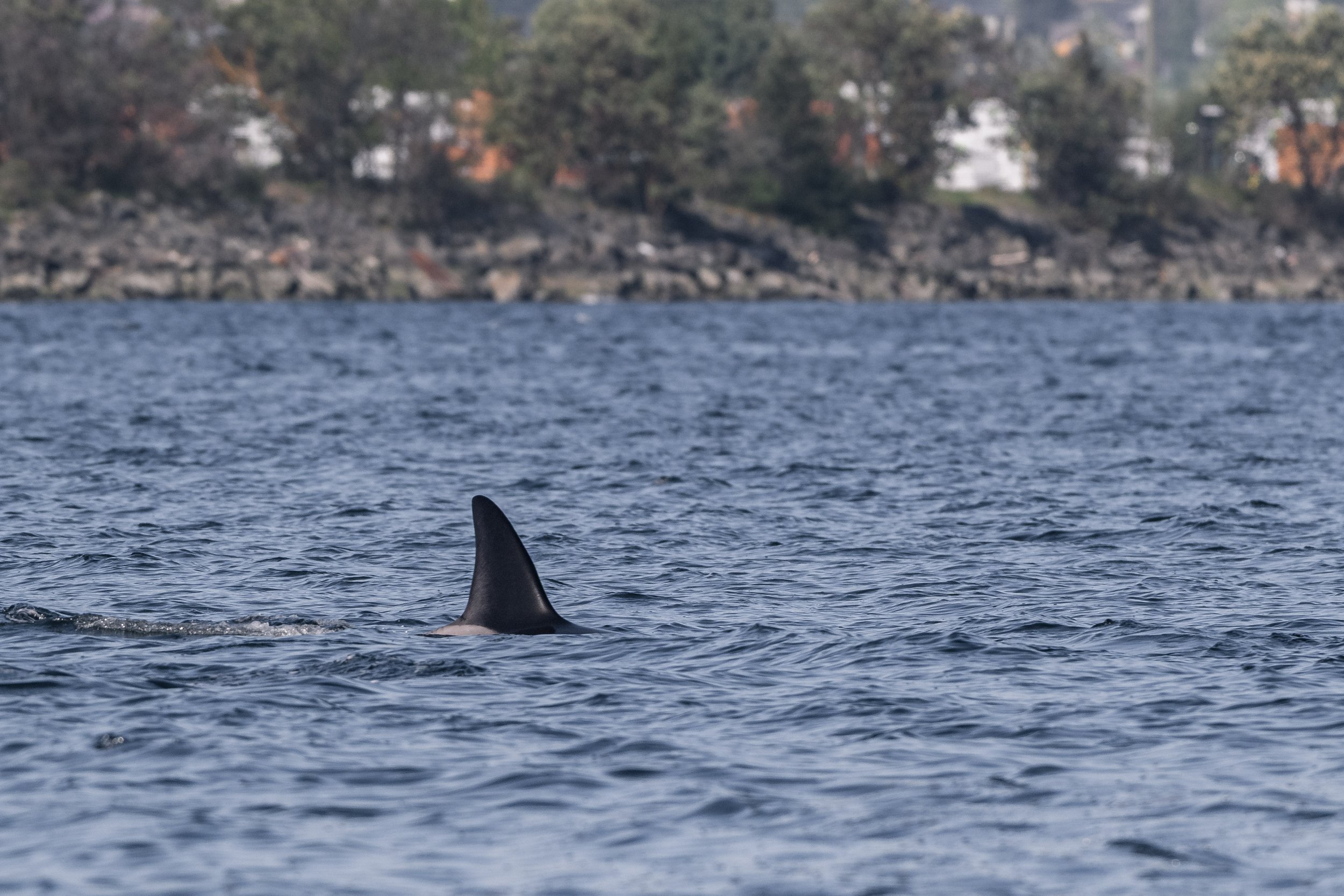
T086A4 Akia.
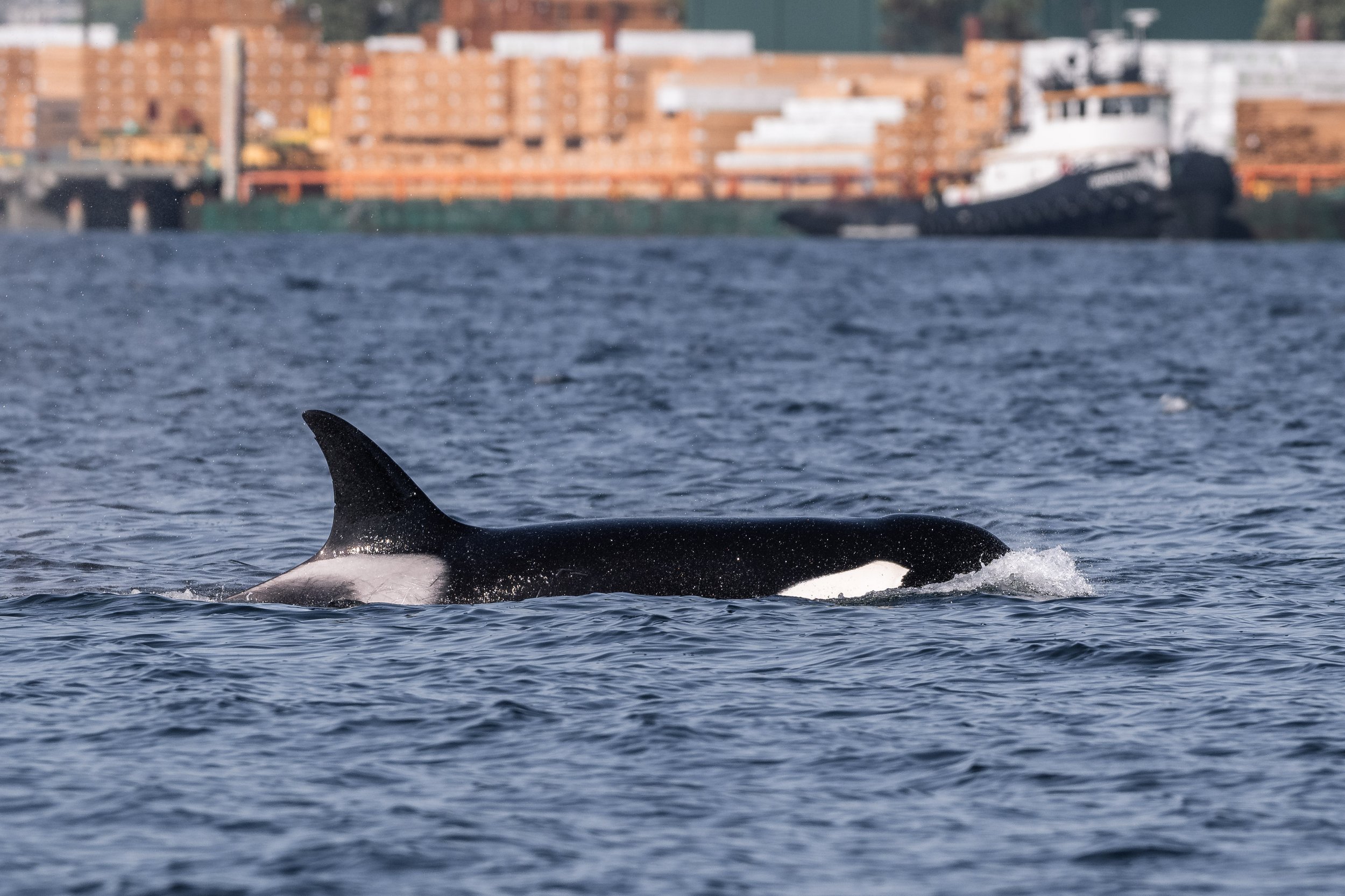
Matriarch T086A Eider.
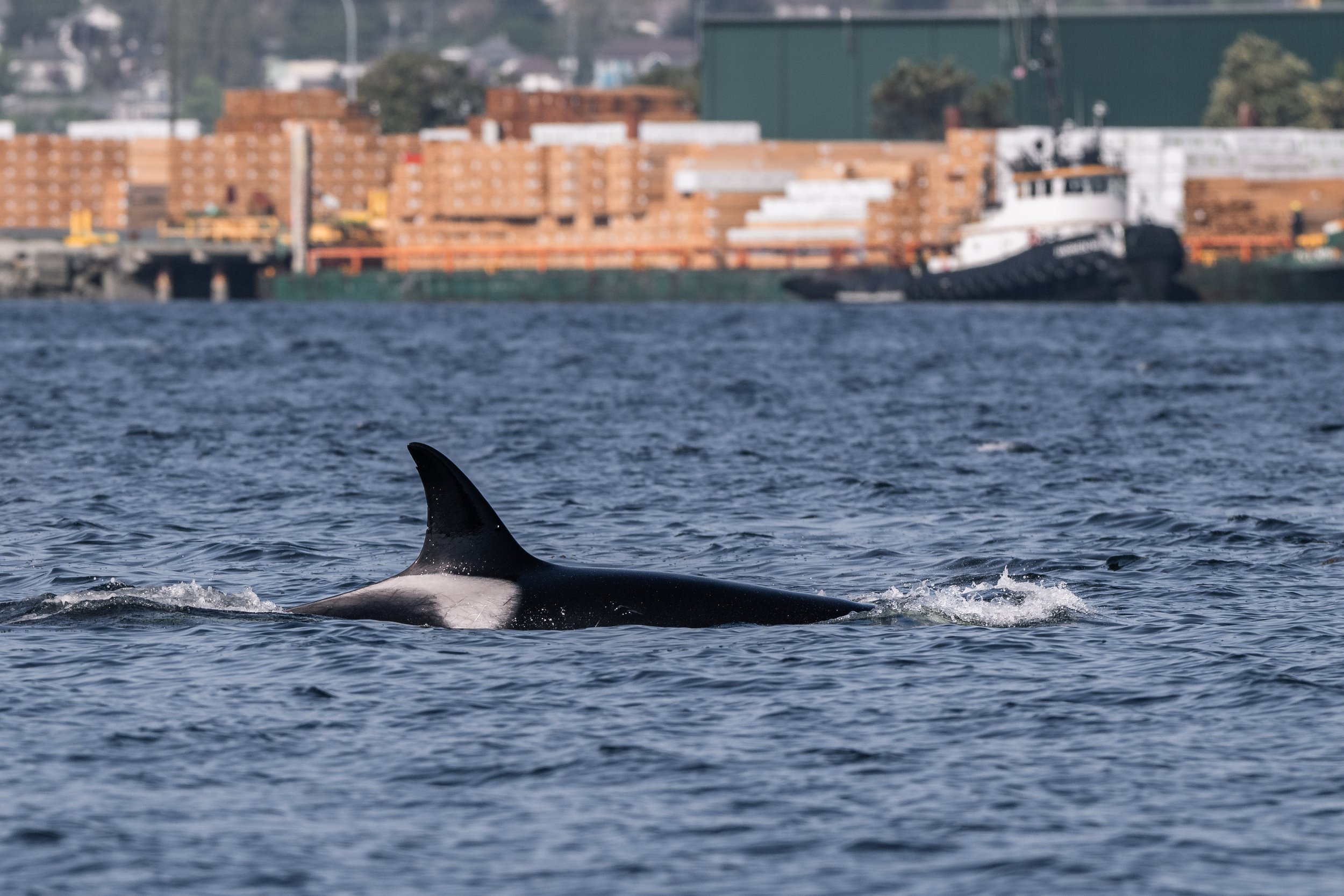
T086A Eider’s dorsal fin sports two small notches - can you spot them here?
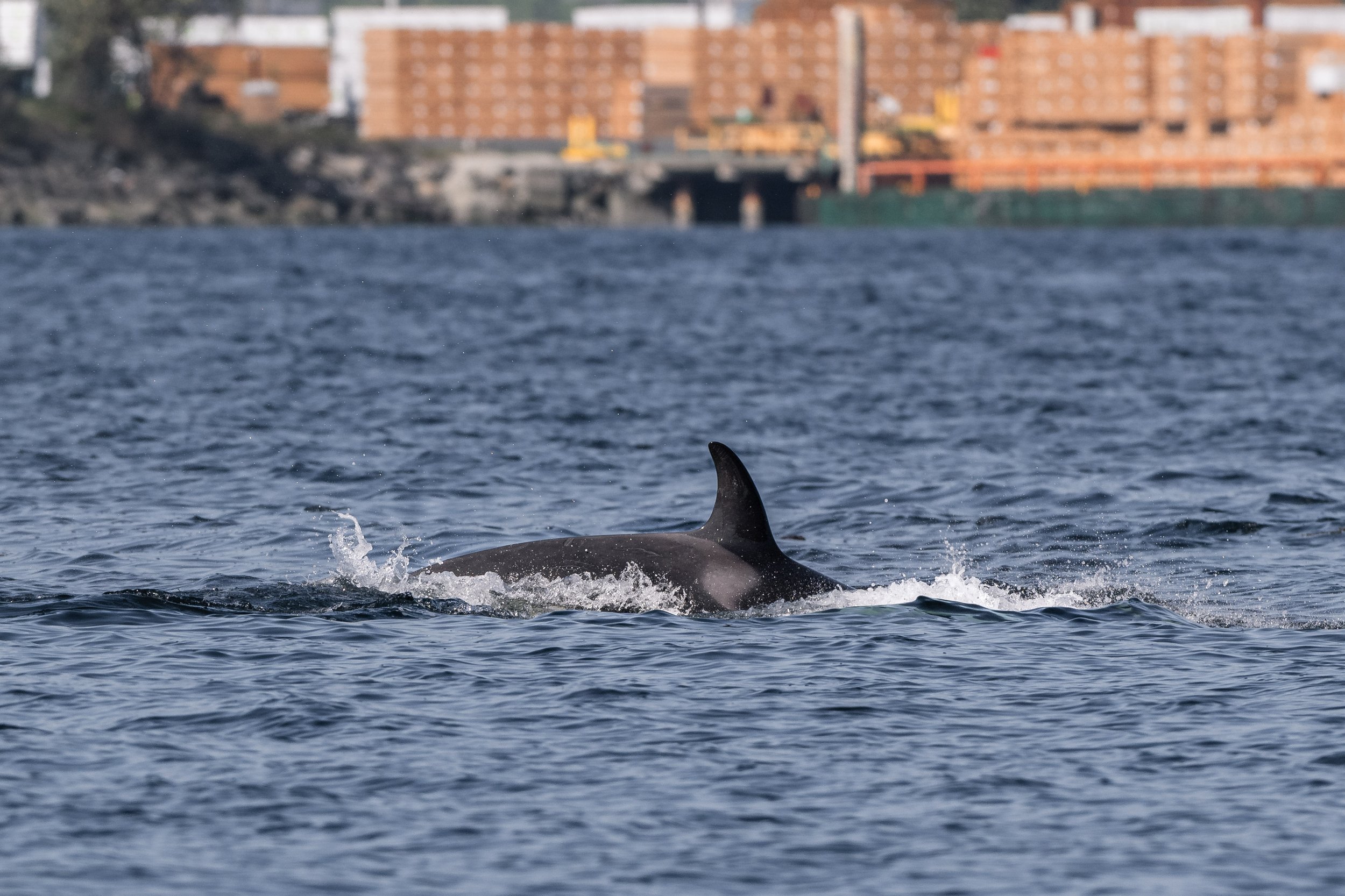
T086A5 Siku diving.
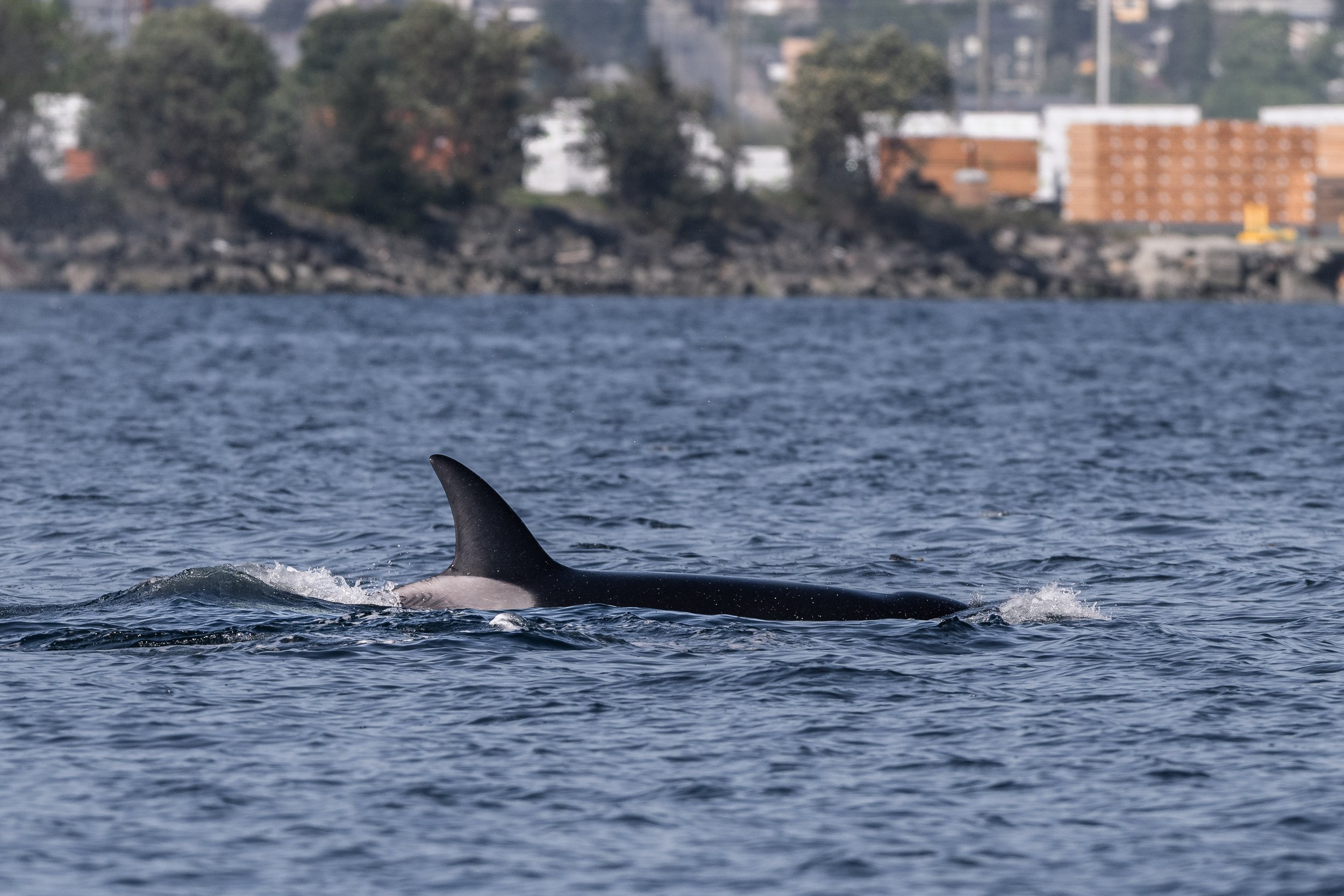
T086A4 Akia has some intense (but distinct!) saddlepatch scarring visible here.
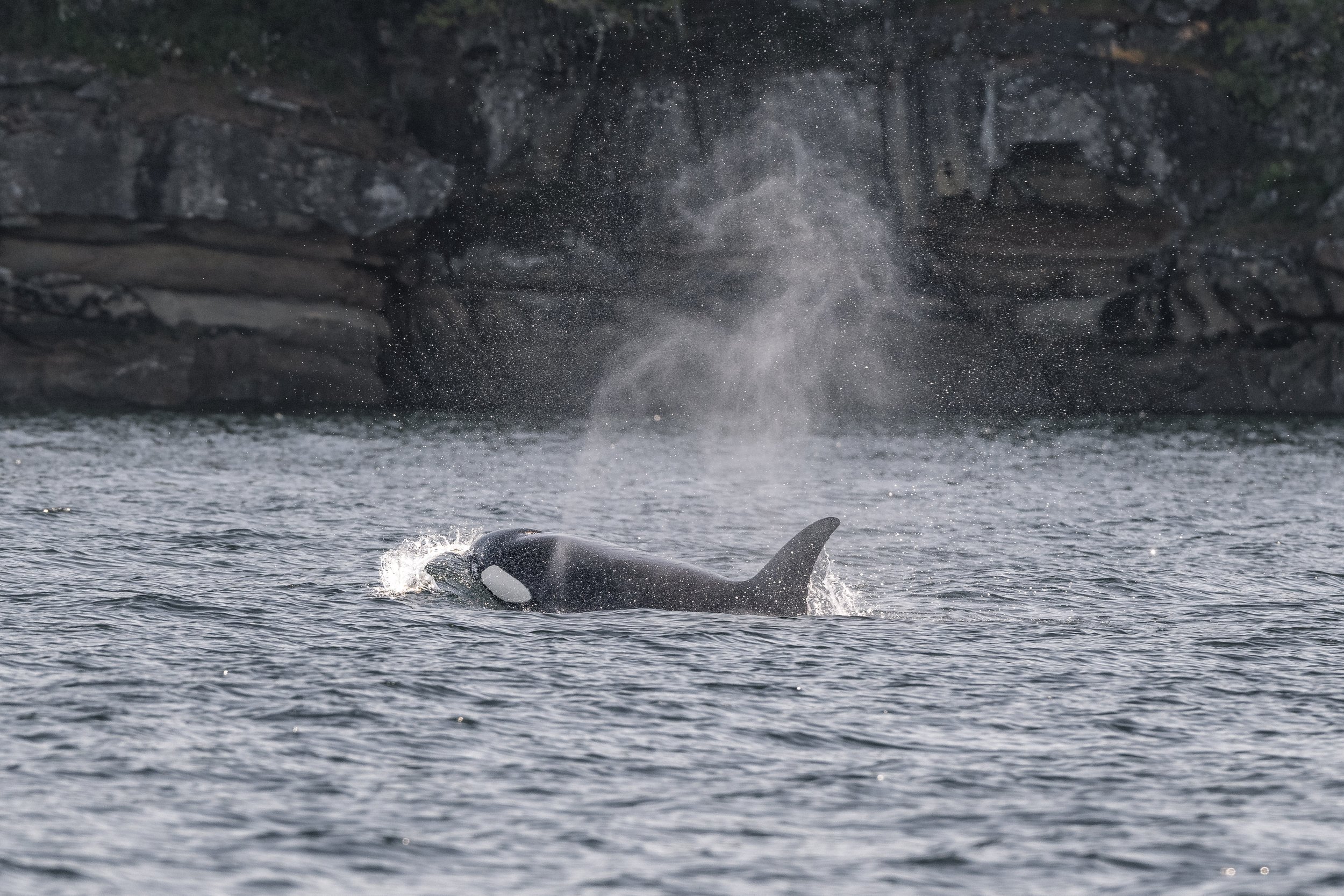
T086A Eider with a beautifully backlit blow.
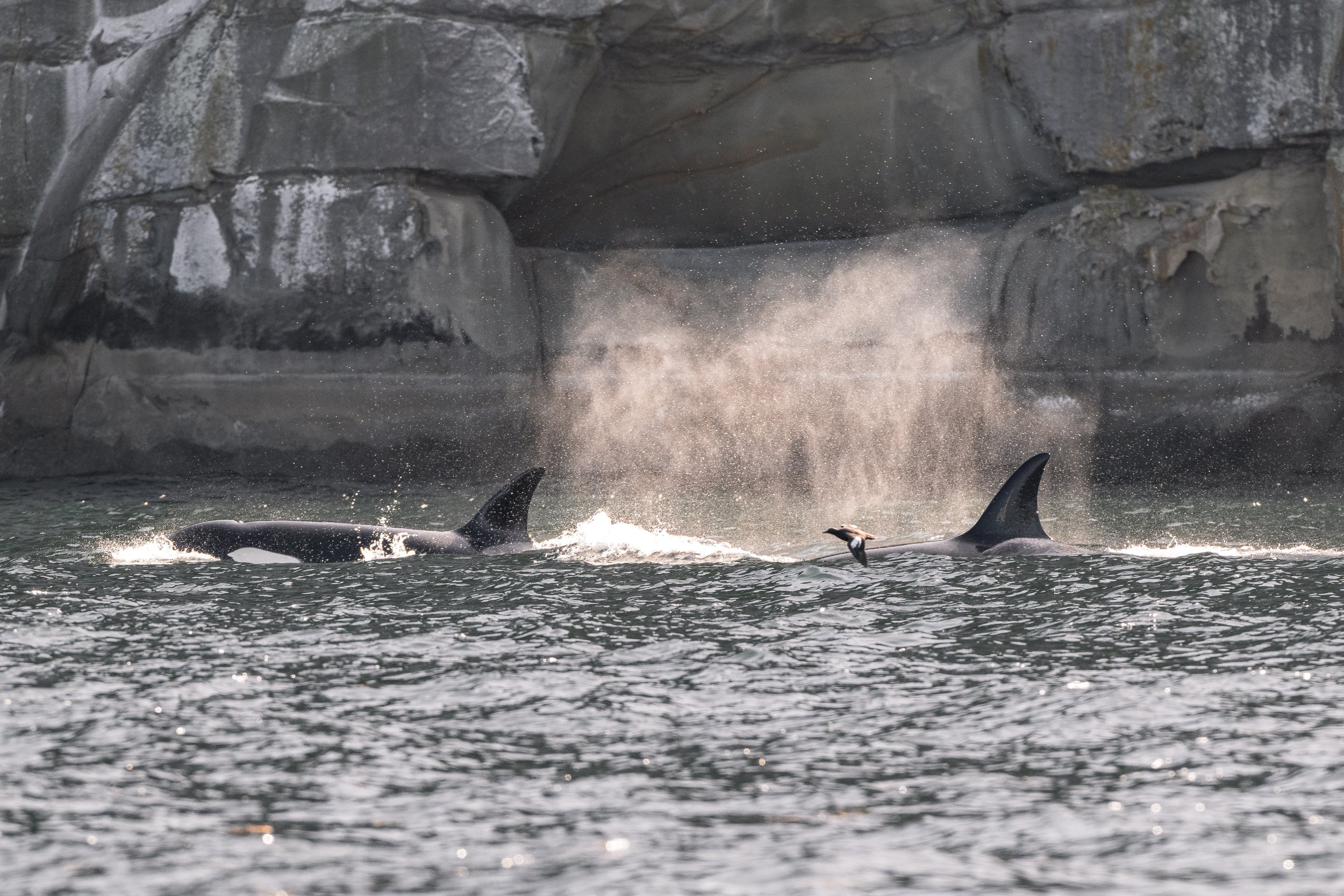
T086A4 Akia and T086A Eider with a photobombing Pigeon Guillemot ahead of them.
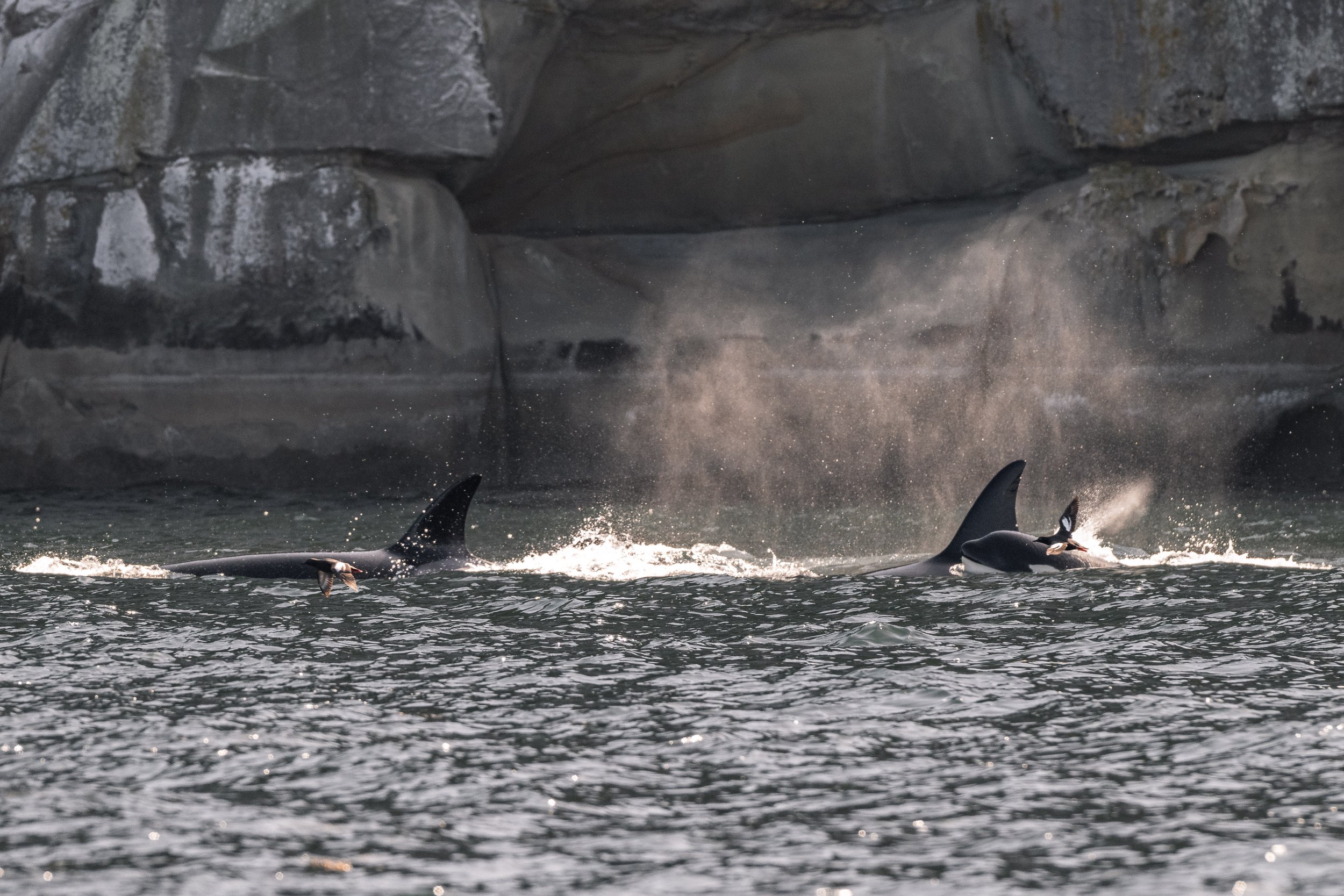
More Pigeon Guillemots as the three surface together - T086A4 Akia, T086A Eider, and T086A5 Siku.
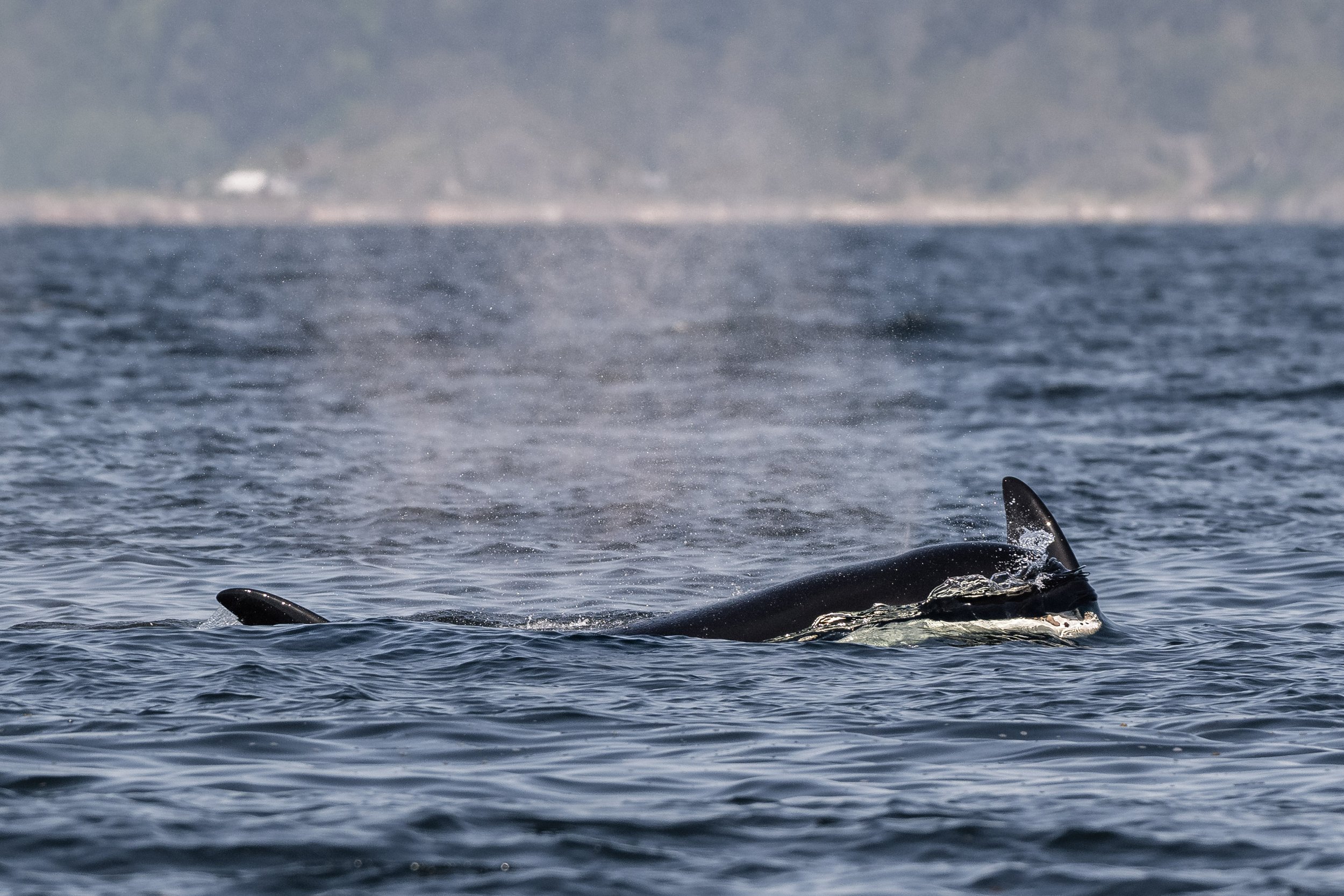
T086A Eider suffered an injury to her lower right jaw, leading to several of her teeth falling out. You can see that injury here, with the black holes being the empty spaces left behind. That injury doesn’t slow her down though!
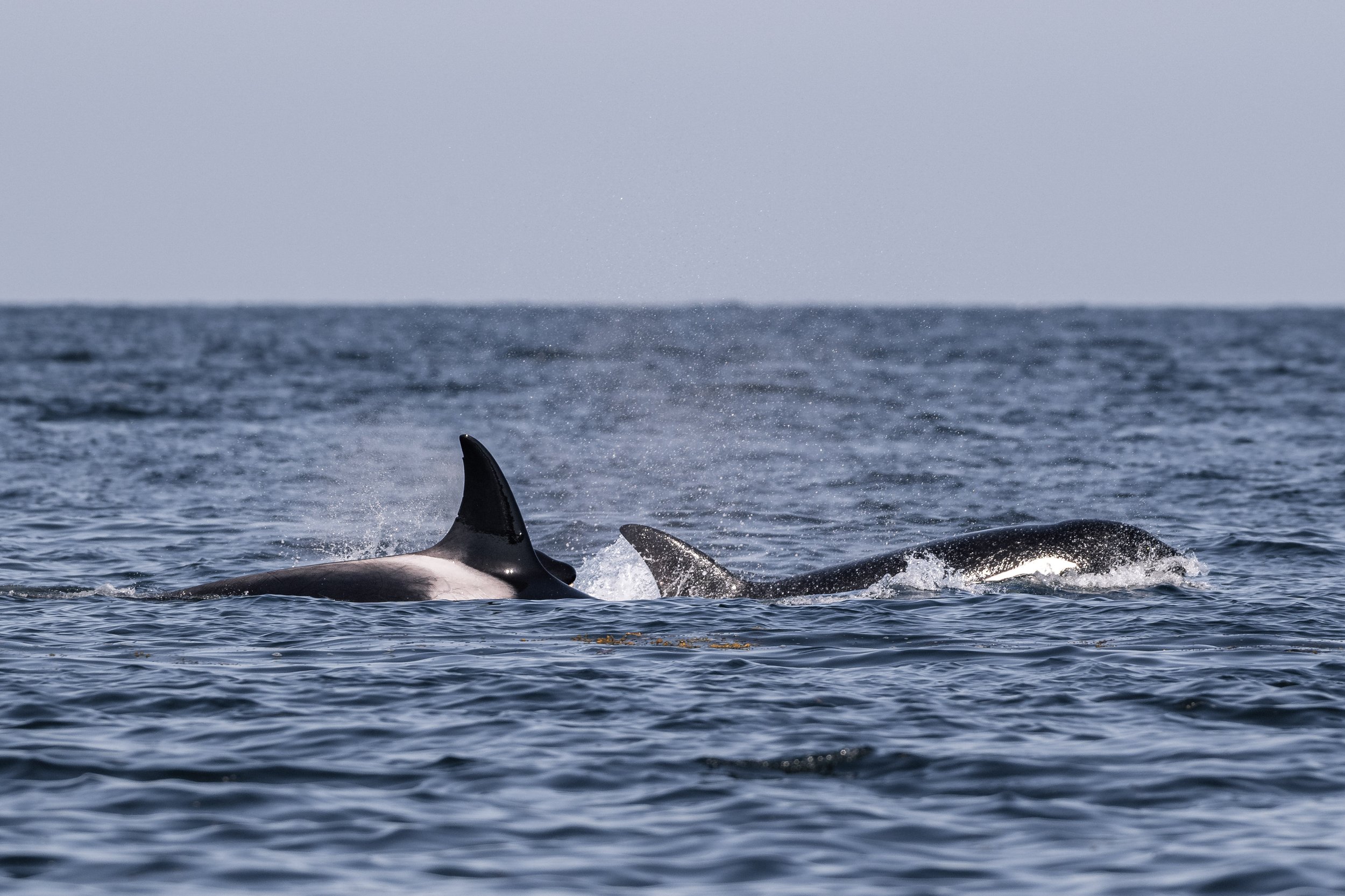
All together - T086A Eider, T086A5 Siku (behind her), and T086A4 Akia ahead of them.
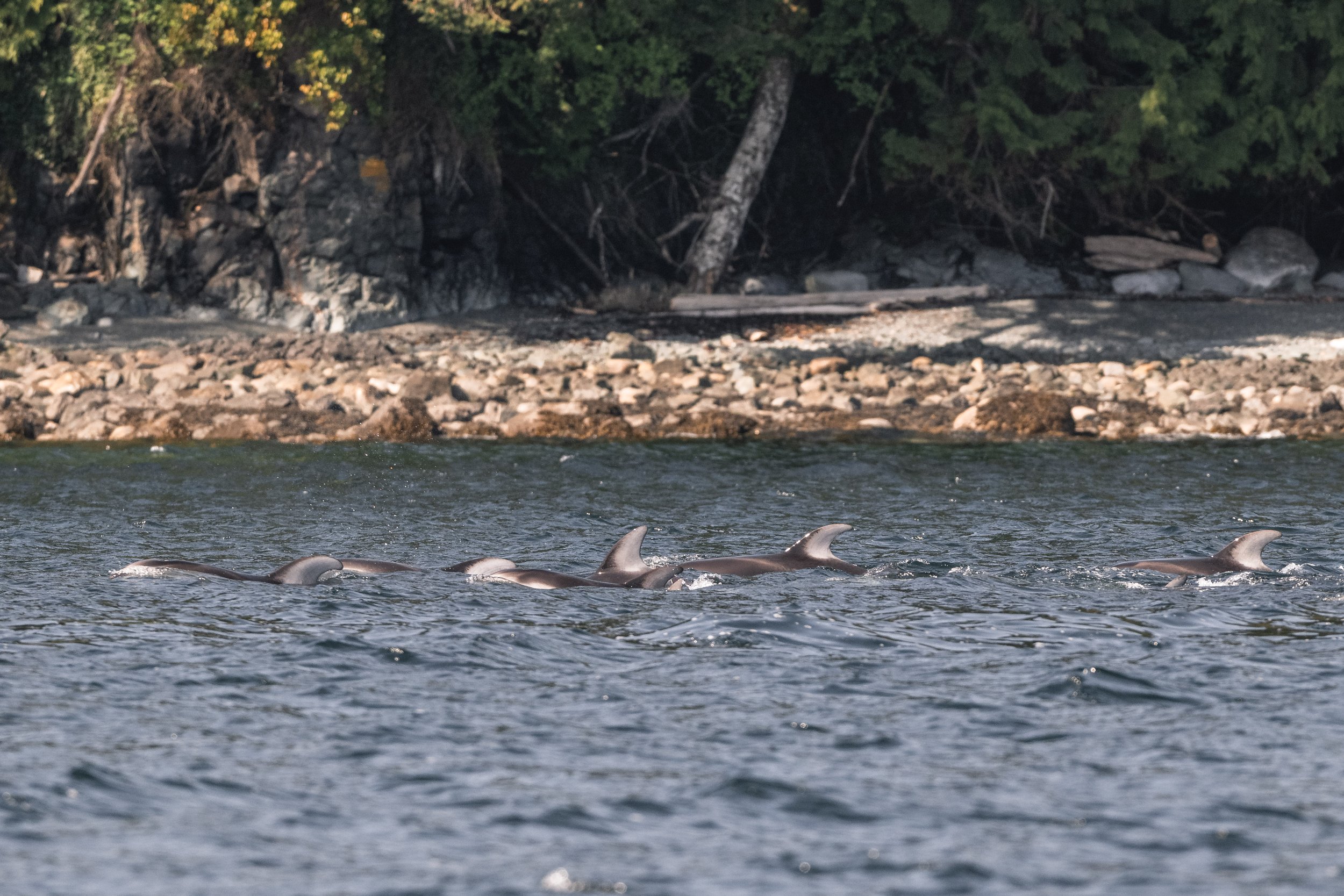
Pacific white-sided dolphins zipping by.
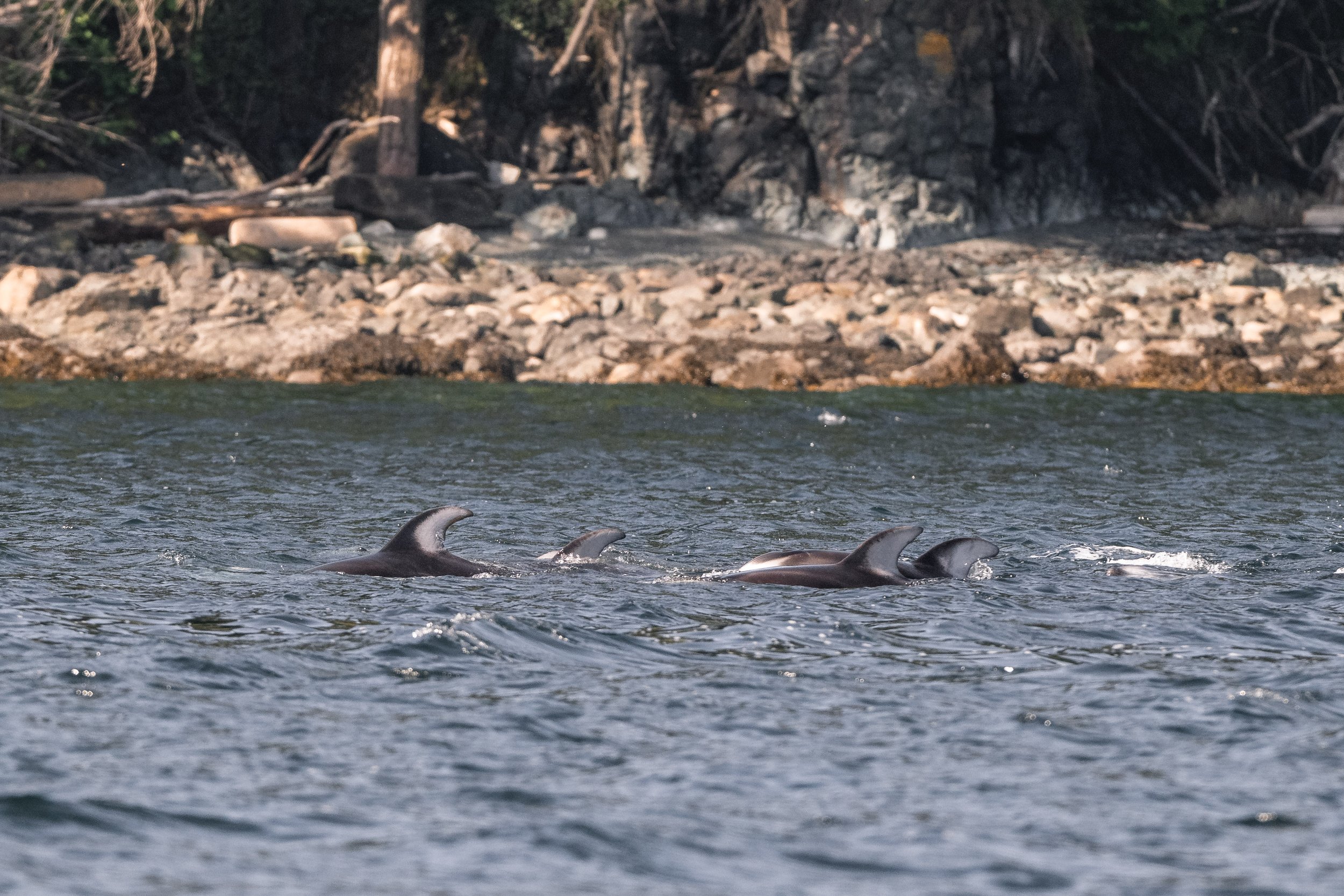
Short, dual toned dorsal fins are the key identifiers for this species.
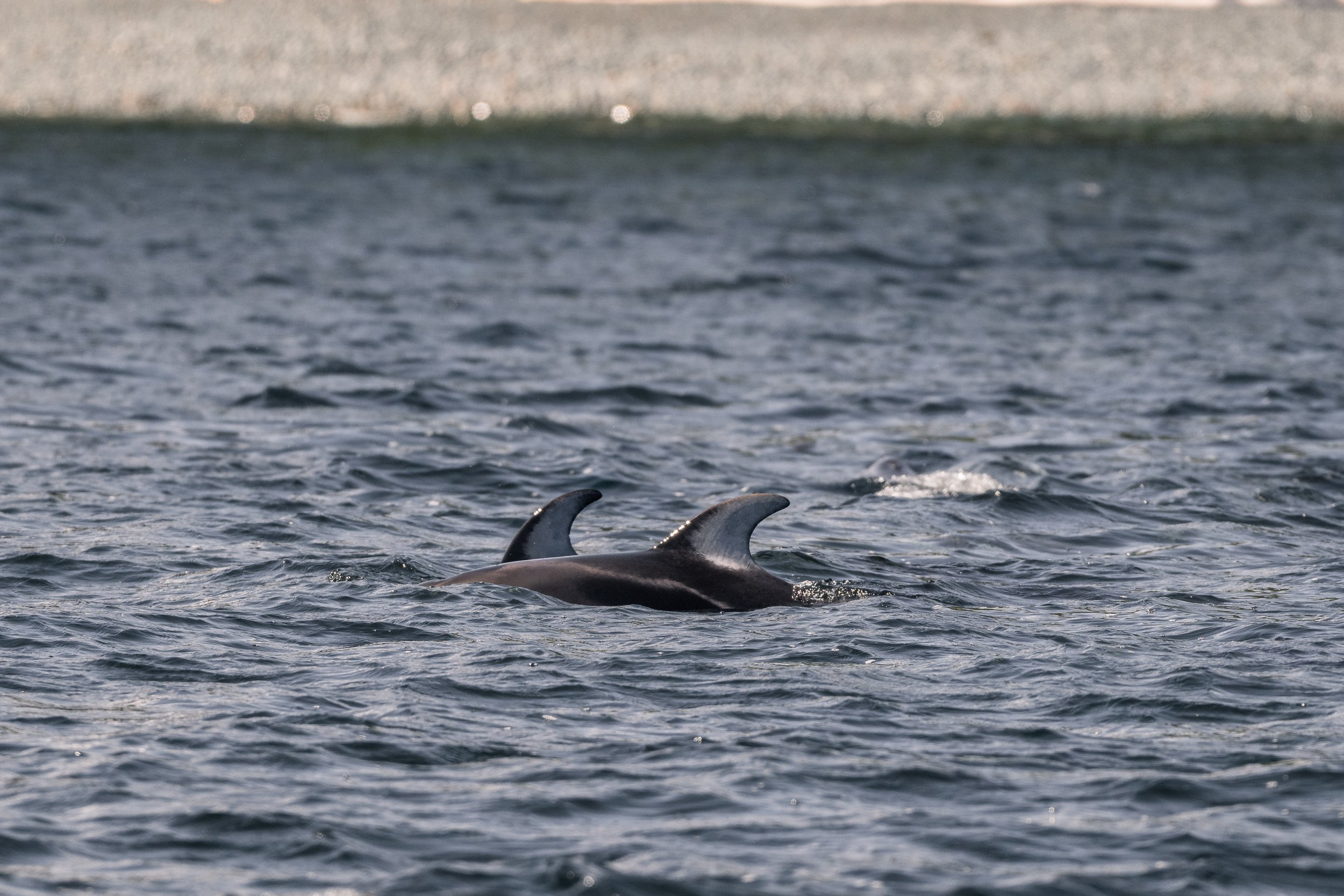
A pair of Pacific white-sided dolphins - an uncommon cetacean for us to see on trips!
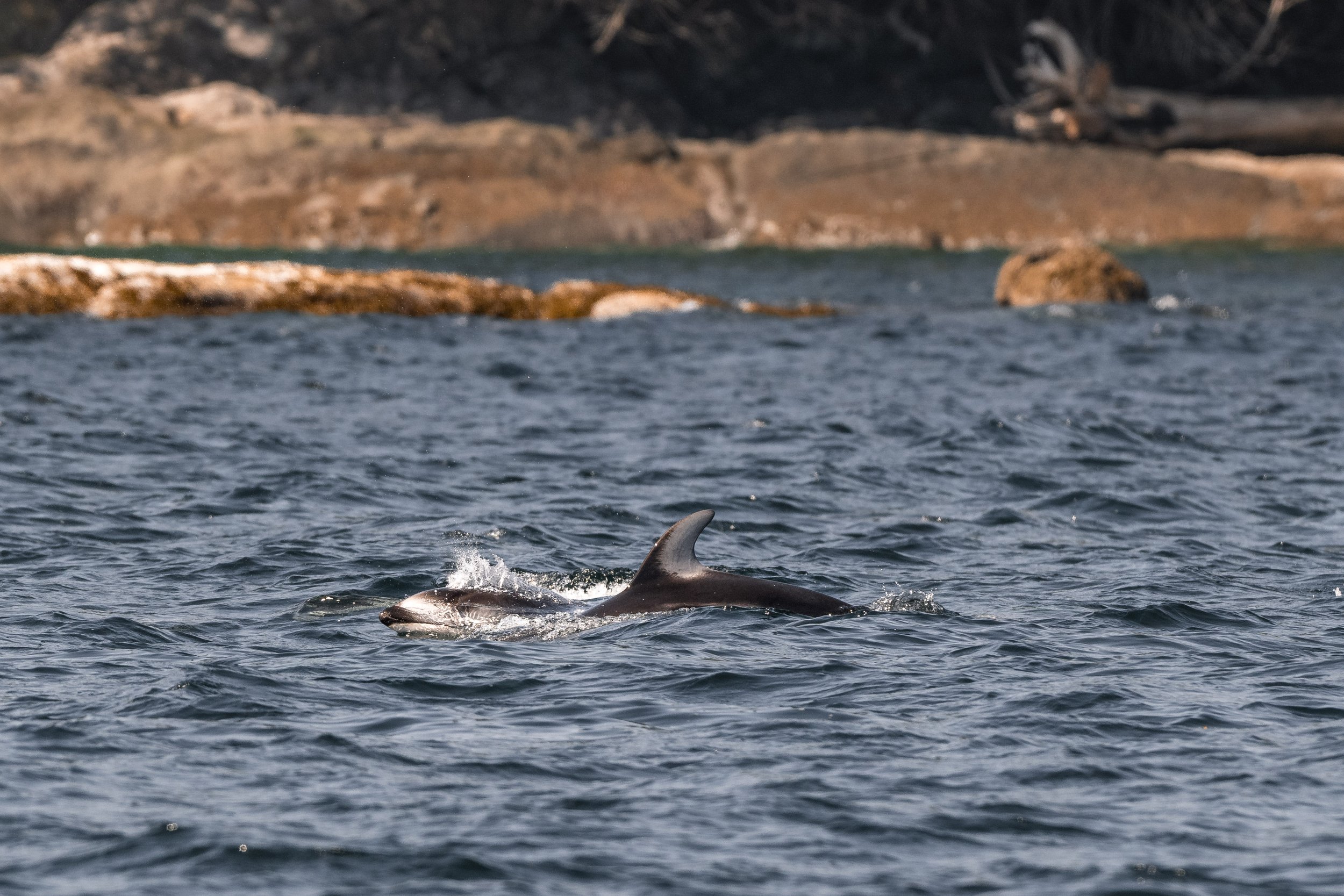
A tiny Pacific white-sided dolphin nose breaking the surface!
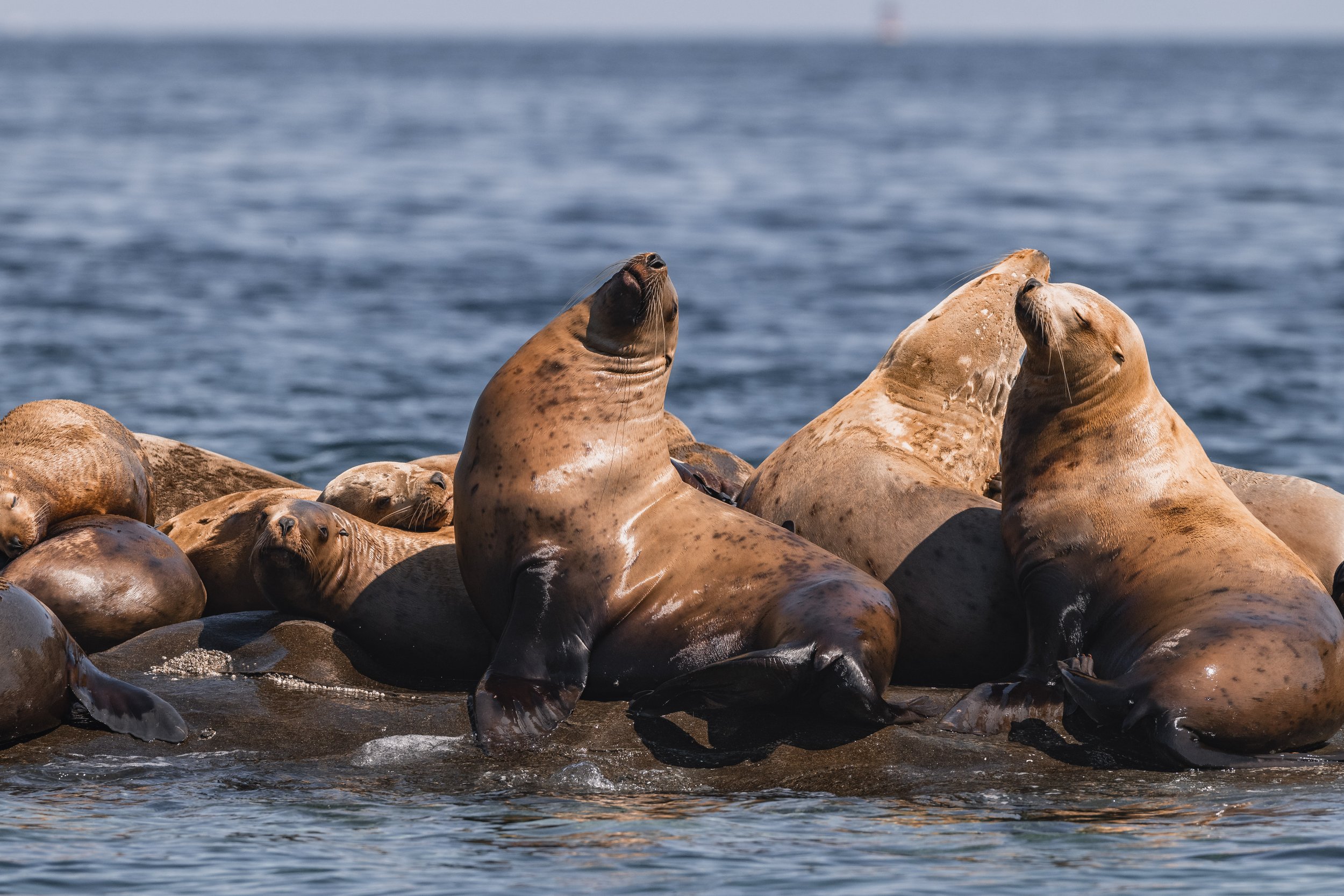
Resting on the haulout.
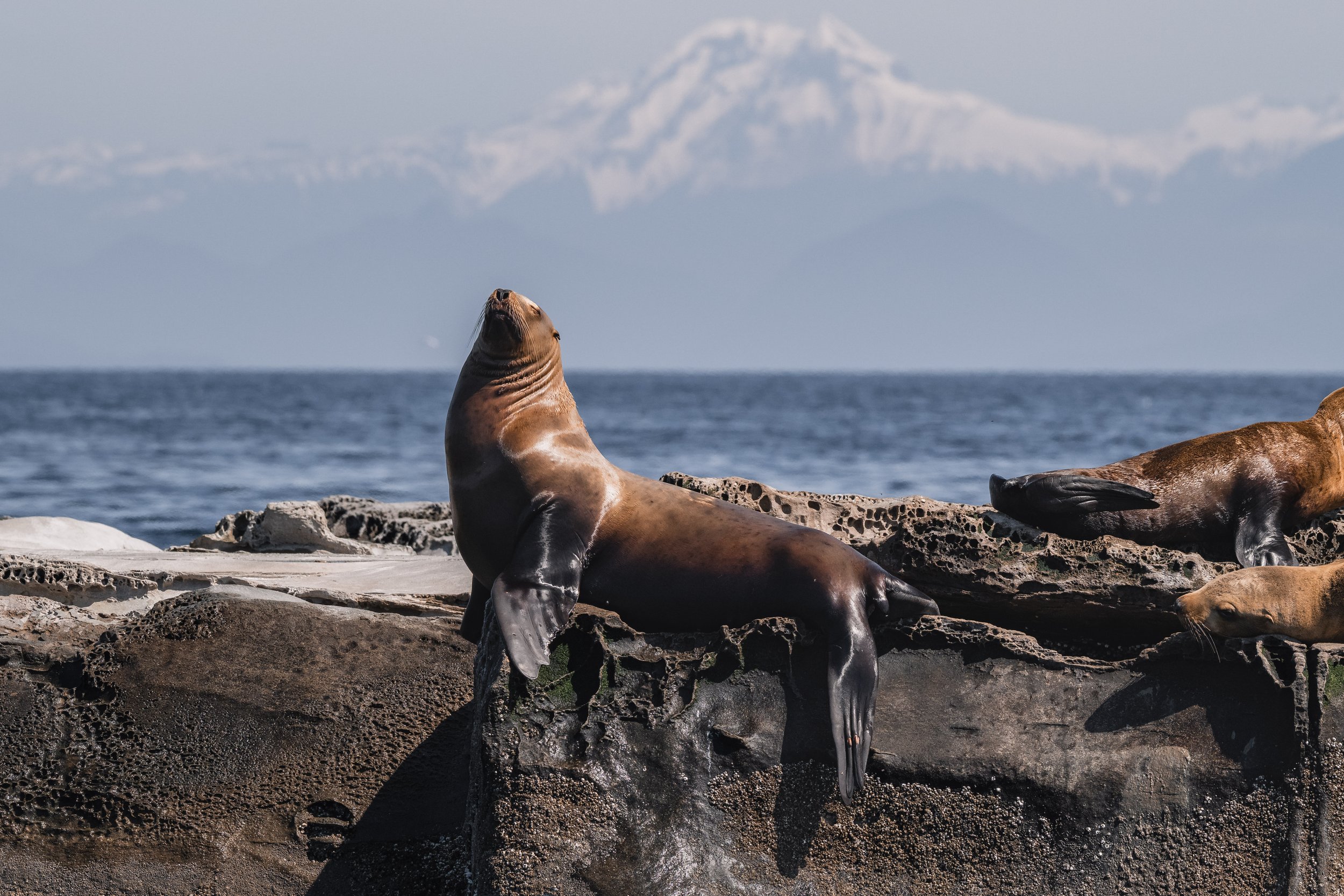
A sealion posing on top of the rocks, with the mountains behind them.
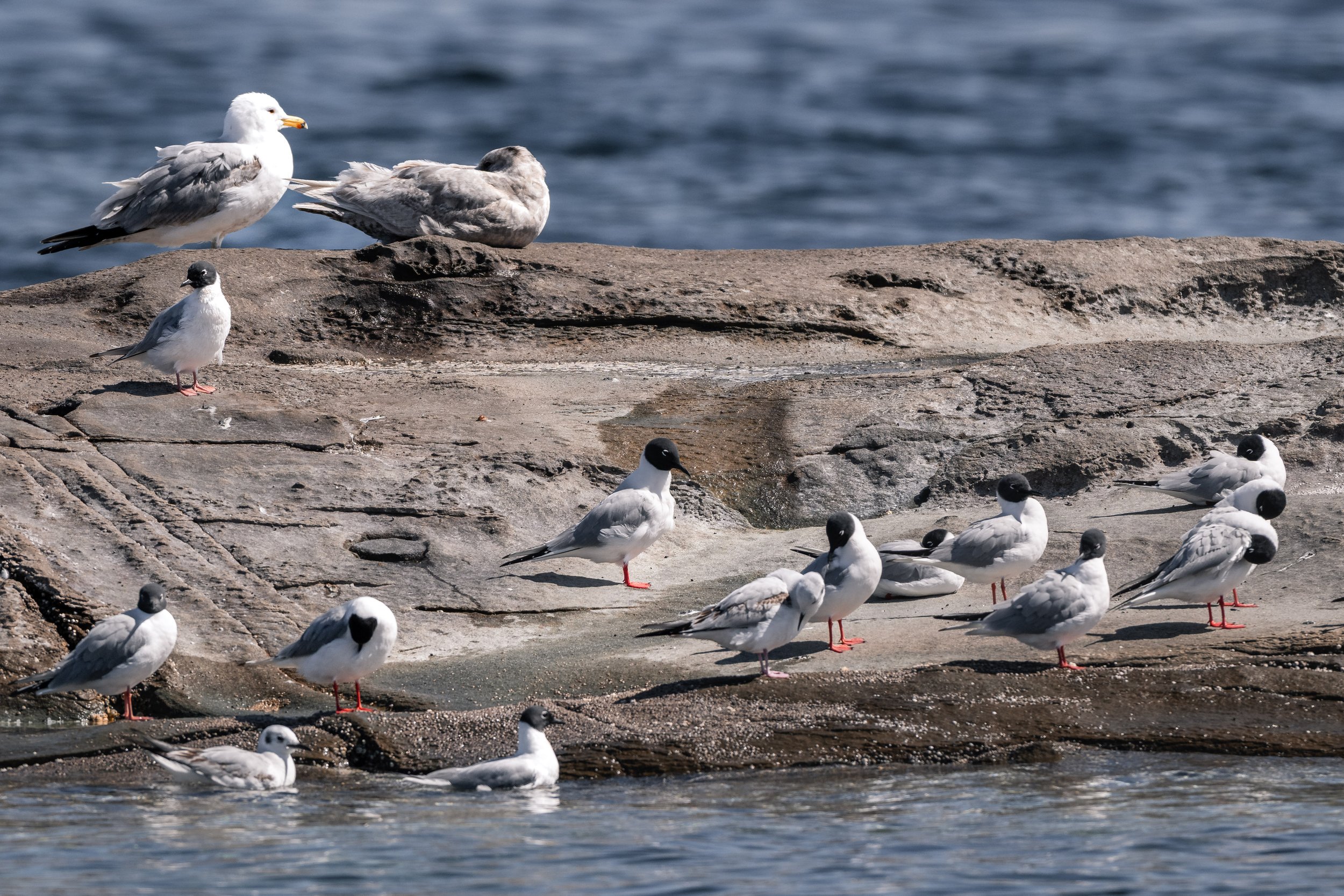
Gulls come in many different sizes and plummages, as seen here!
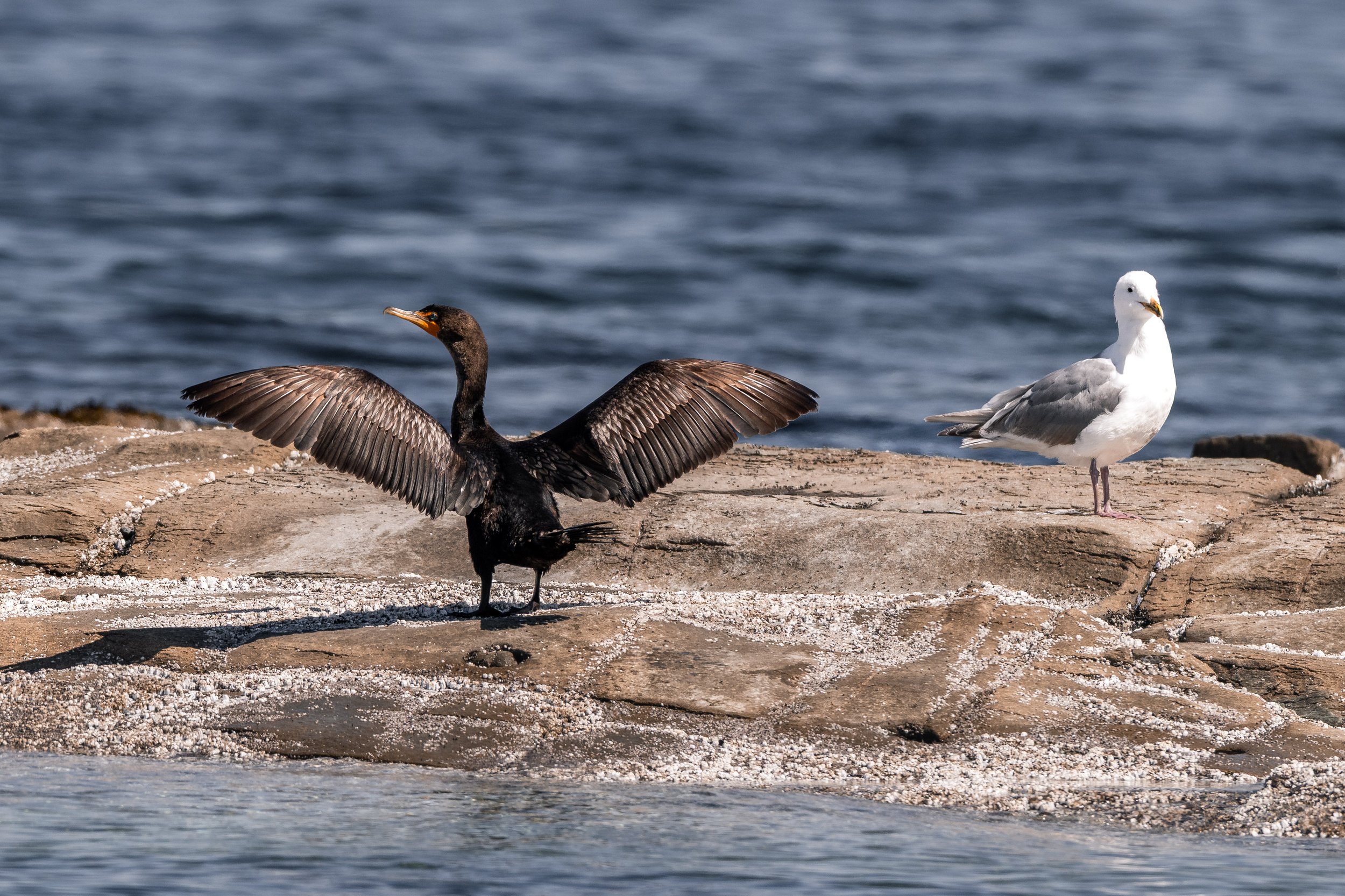
A Double-crested cormorant sunning itself.
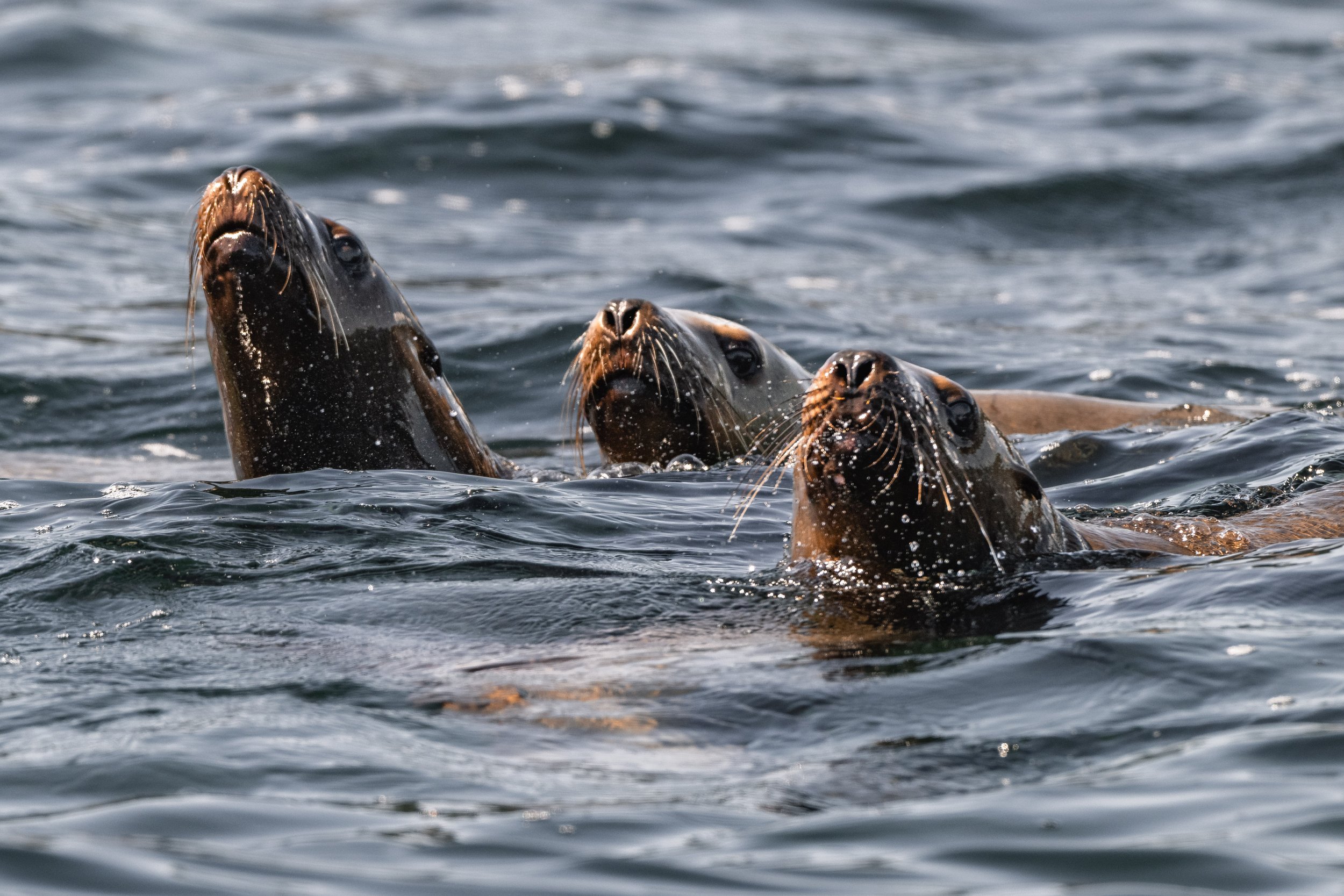
Eyeing us up as we travel along.
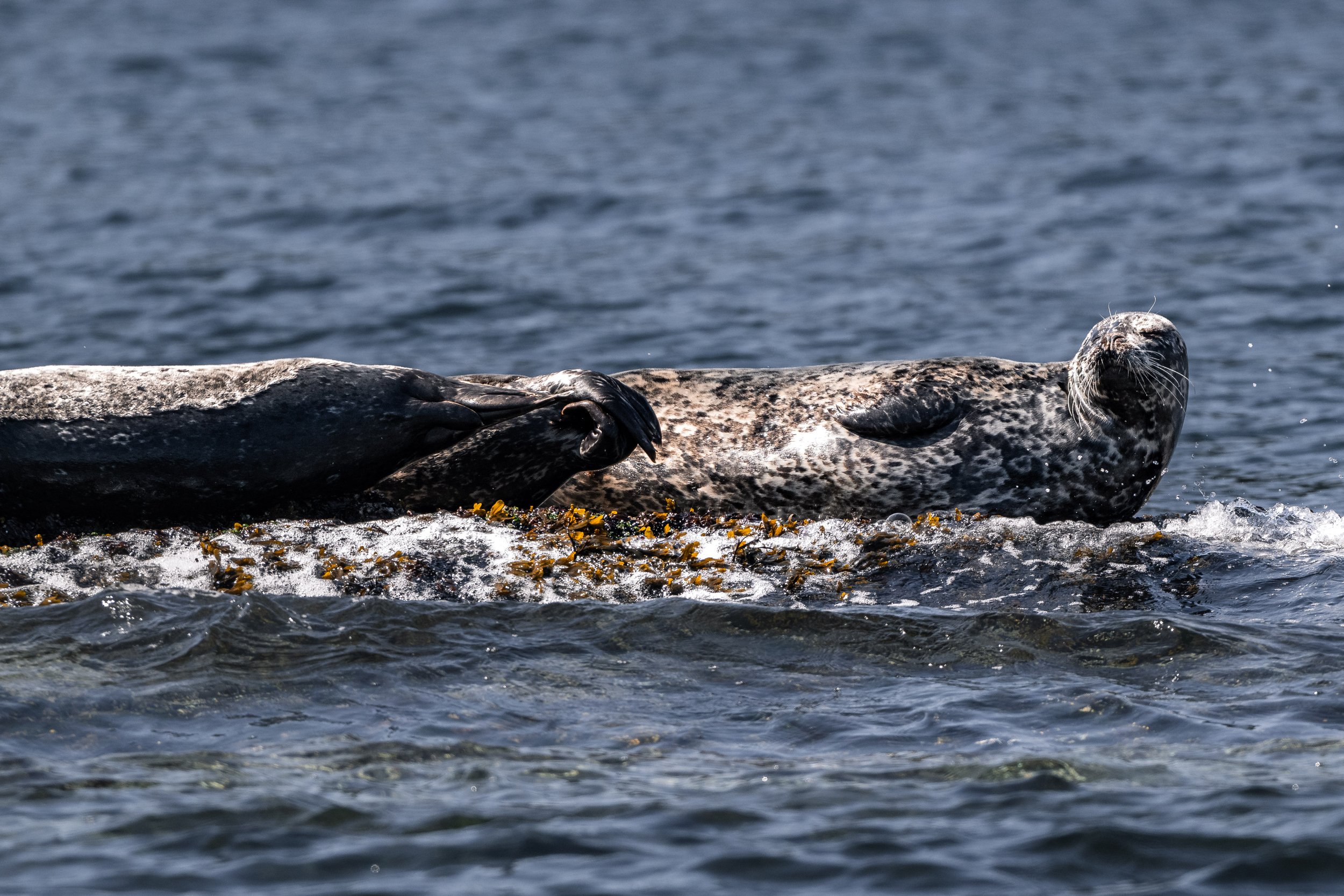
Harbour seals sunning and stretching on the rocks.
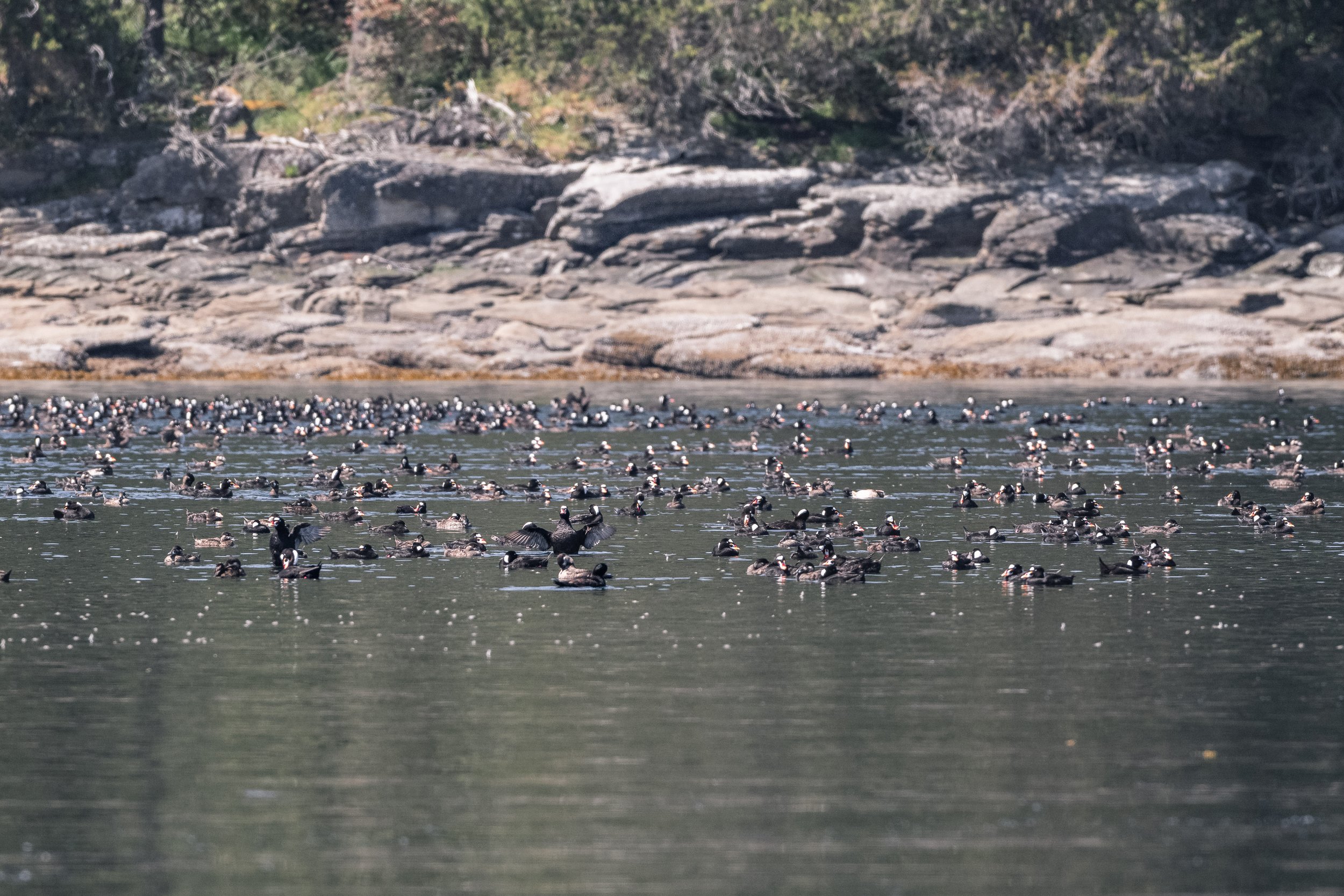
An incredibly large flock of Surf Scoters resting.
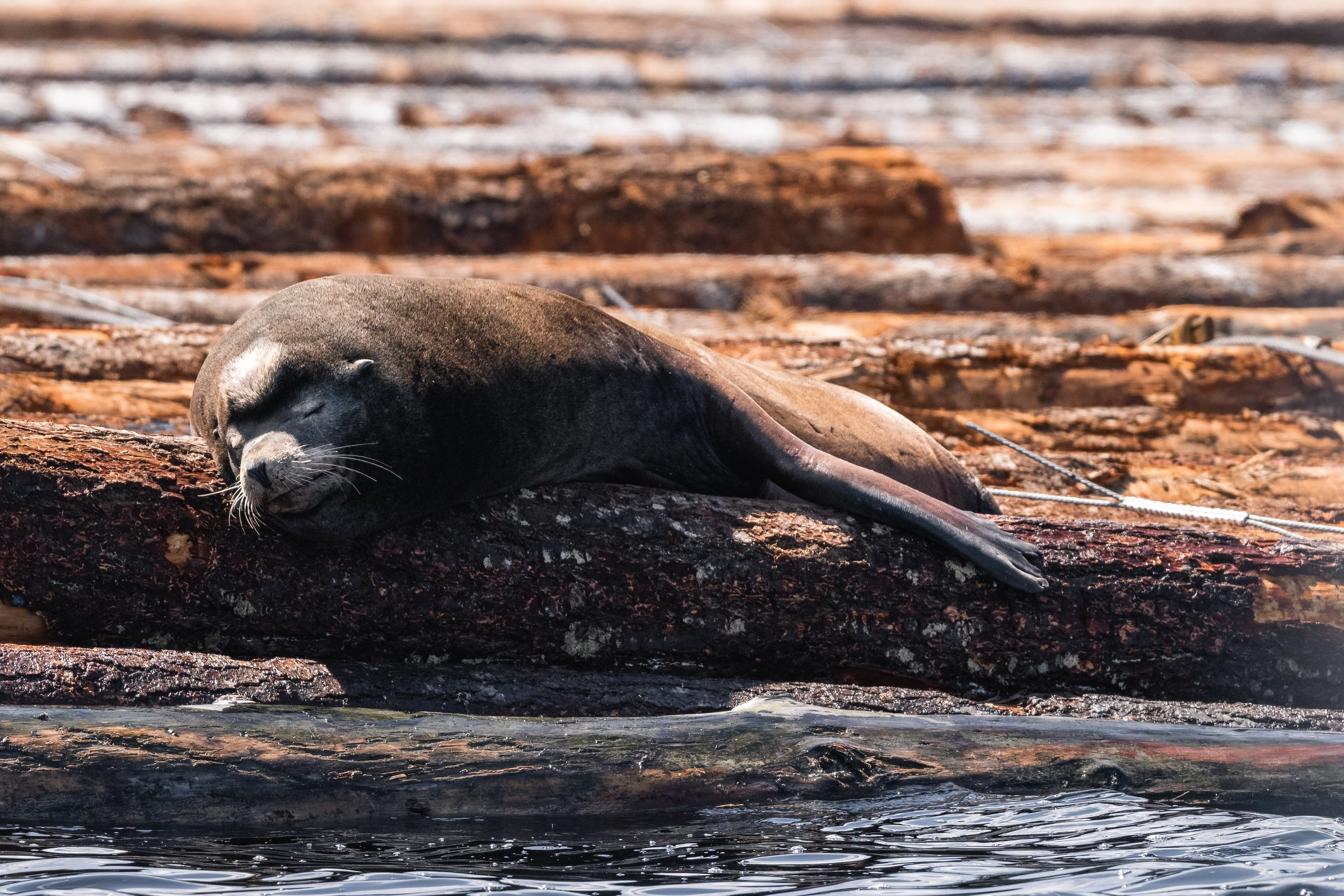
A sleepy California sea lion on the log booms.
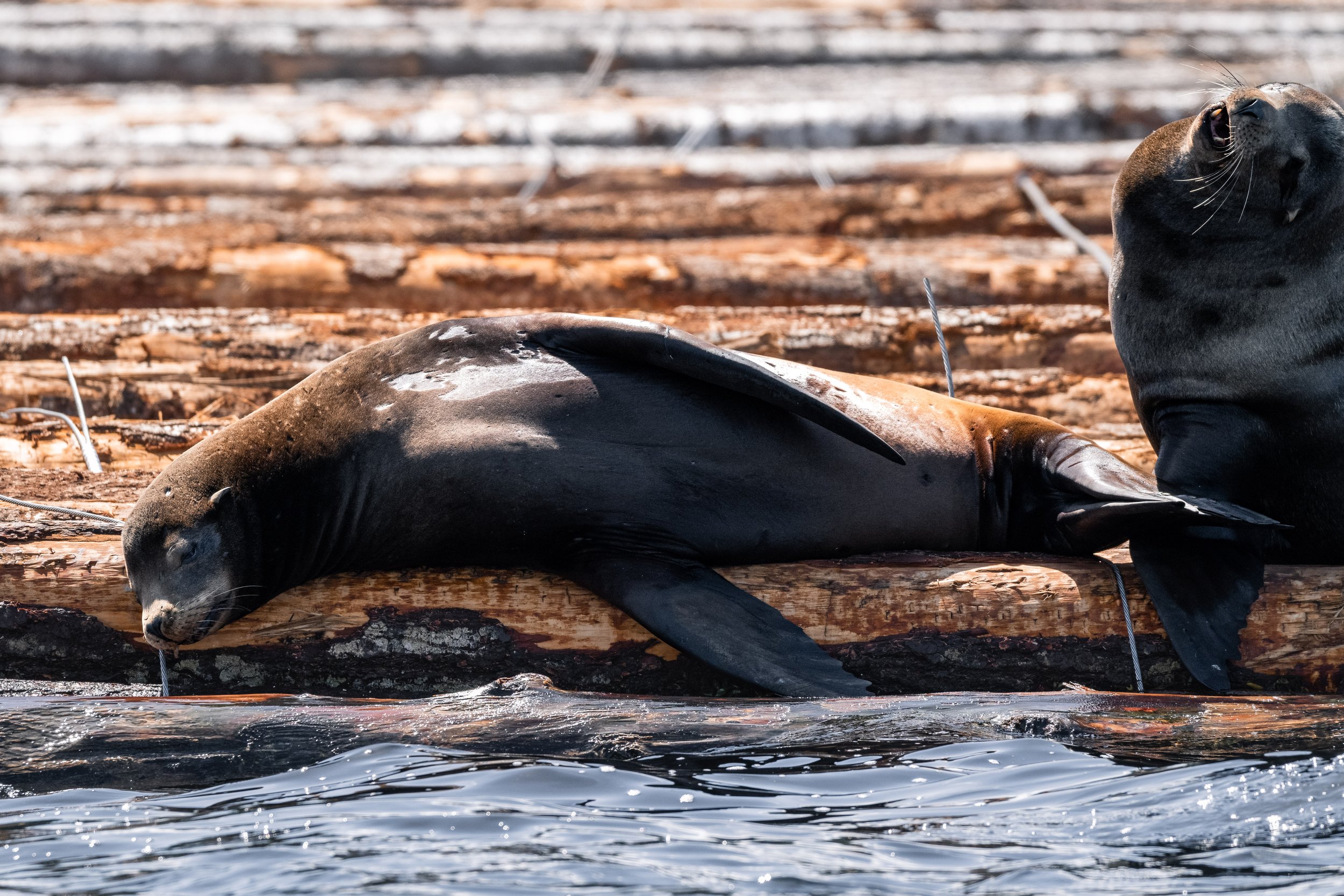
Dramatic poses are common amongst the pinnipeds.
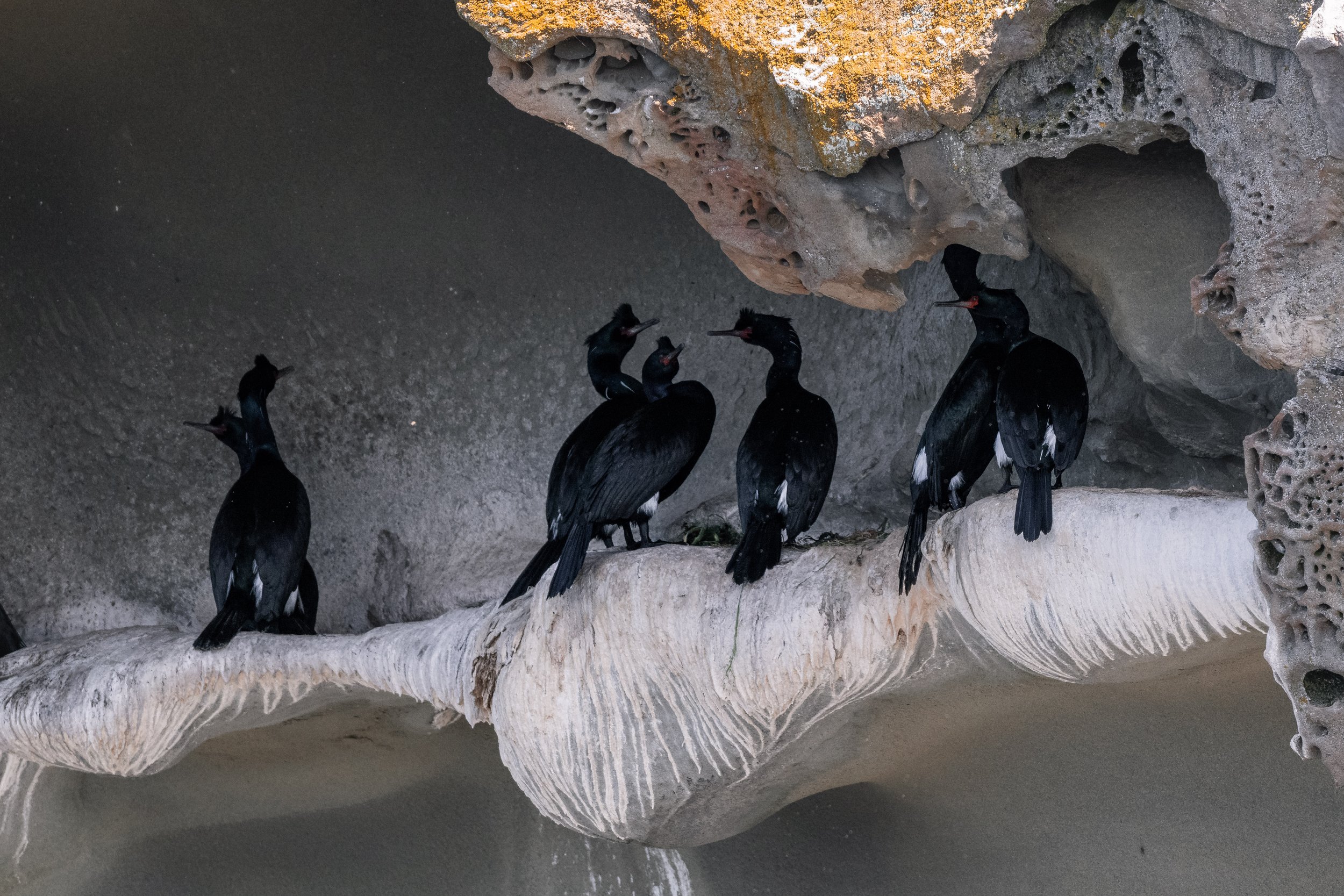
Pelagic cormorants on the edge of the Gabriola Bluffs.
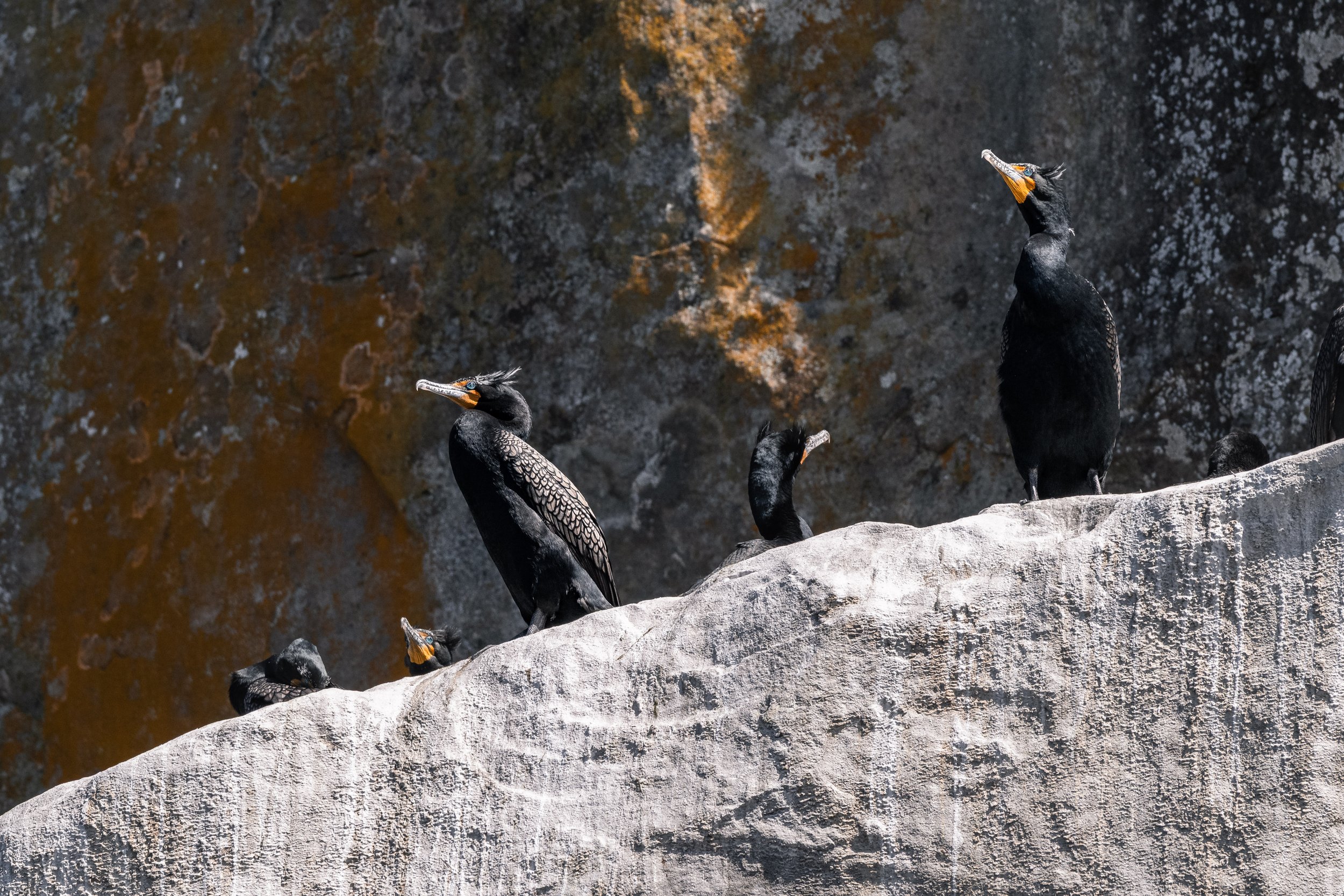
Double-crested cormorants sporting their namesake plummage.