
April 25, 2026 - Rare orca pair spotted near Crofton!
Sunny skies greeted us as we boarded Kula and Cascadia, getting comfortable and preparing for the day’s adventures. The Salish Sea has been bustling with whale activity in recent days, and we were eager to begin our own search. Splitting up and spreading out to cover a bit more ground, all eyes were scanning the waters as we departed the harbour.
Turning southbound, we entered into the Southern Gulf Islands through a narrow waterway known as Dodd Narrows. This beautiful area is home to many different creatures, and it is common to see sea lions porpoising through the currents or birds wandering the shorelines in search of snacks. We briefly peeked around us, taking in the gorgeous scenery before we were off once more, ever searching for signs of whales.
Heading south through Stuart Channel, we scanned and scanned. Soon, our search paid off, when we spotted a pair of orca travelling together near Crofton. Marine Naturalists Des and Evan pulled out their cameras, documenting the moment, and began working on identifying who these whales were. These fins looked new to us, and we began to wonder if these were individuals uncommon to our area. After comparing photos to our ID catalogues, we soon learned that that was the case. This pair, brother and sister, were T167A and T167B - a pair we have never seen before as a company:
T167A Doniol ♂ (2010)
T167B Valcroze ♀ (2015)
These two enigma orca both sported unique dorsal fins, with T167B Valcroze sporting a very unique blunted tip to her dorsal fin and T167A Doniol with a tall, straight dorsal fin. These two, plus the other members of their matriline, spend their time almost exclusively in Alaska, with only a handful of confirmed sightings around the southern tip of Vancouver Island, the northeastern tip of Vancouver Island, and into Puget Sound. Their mother, T167 Walpole, and younger sibling, T167C, were documented travelling alongside them back in September 2025, but ever since then, these two have been travelling as a duo. Walpole and T167C have also not had any confirmed sightings since – we are hopeful that they are still healthy and well.
While it used to be considered rare for adult male orca to leave their mother’s side, it has become more common in recent years. Individuals such as T049A1 Noah, T049A2 Jude, T065A3 Amir, and T065A5 Indy are all perfect examples of this. While they are occasionally documented travelling with their matriline, this reunion tends to last only a day or so before they part ways again.
Today, T167A Doniol and T167B Valcroze were busy hunting for lunch during our encounter. Hunts can be a bit deceptive for an observer, as most of the action happens below the surface. While we did not see any remnants to confirm their success, the follow-up behaviours, including tail slapping and spy hopping, likely indicated that this was the case.
After our time with the duo was up, we departed the scene and made our way out into the Strait of Georgia. Here, there are many areas known as haulouts. Haulouts are important areas where pinnipeds (seals and sea lions) can rest and relax. These haulouts are also excellent opportunities for us to witness these giant animals out of the water. Sea lions, in particular, take full advantage of these spots, often sleeping draped over one another to conserve body heat. Seals tend to respect each other’s space a bit more, and while they may be seen in close proximity, they are less likely to be using each other as pillows.
After an excitement-filled day, we made our way back to harbour, concluding another wonderful trip around the Salish Sea.
Please enjoy this tour’s photos taken by Marine Naturalists Evan Hessels and Desarae Poier.
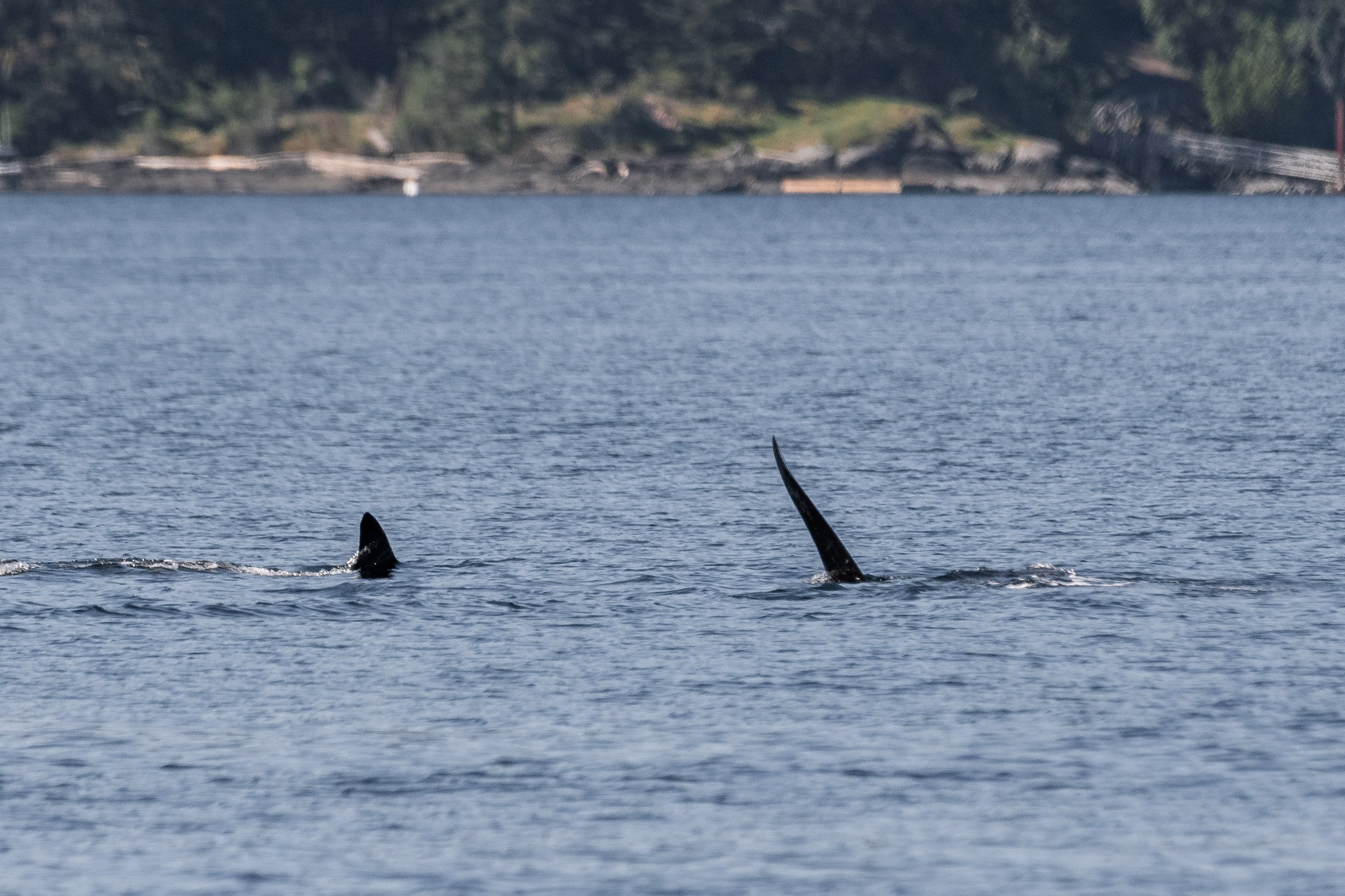
T167B Valcroze and her brother T167A Doniol. Photo by Evan Hessels.
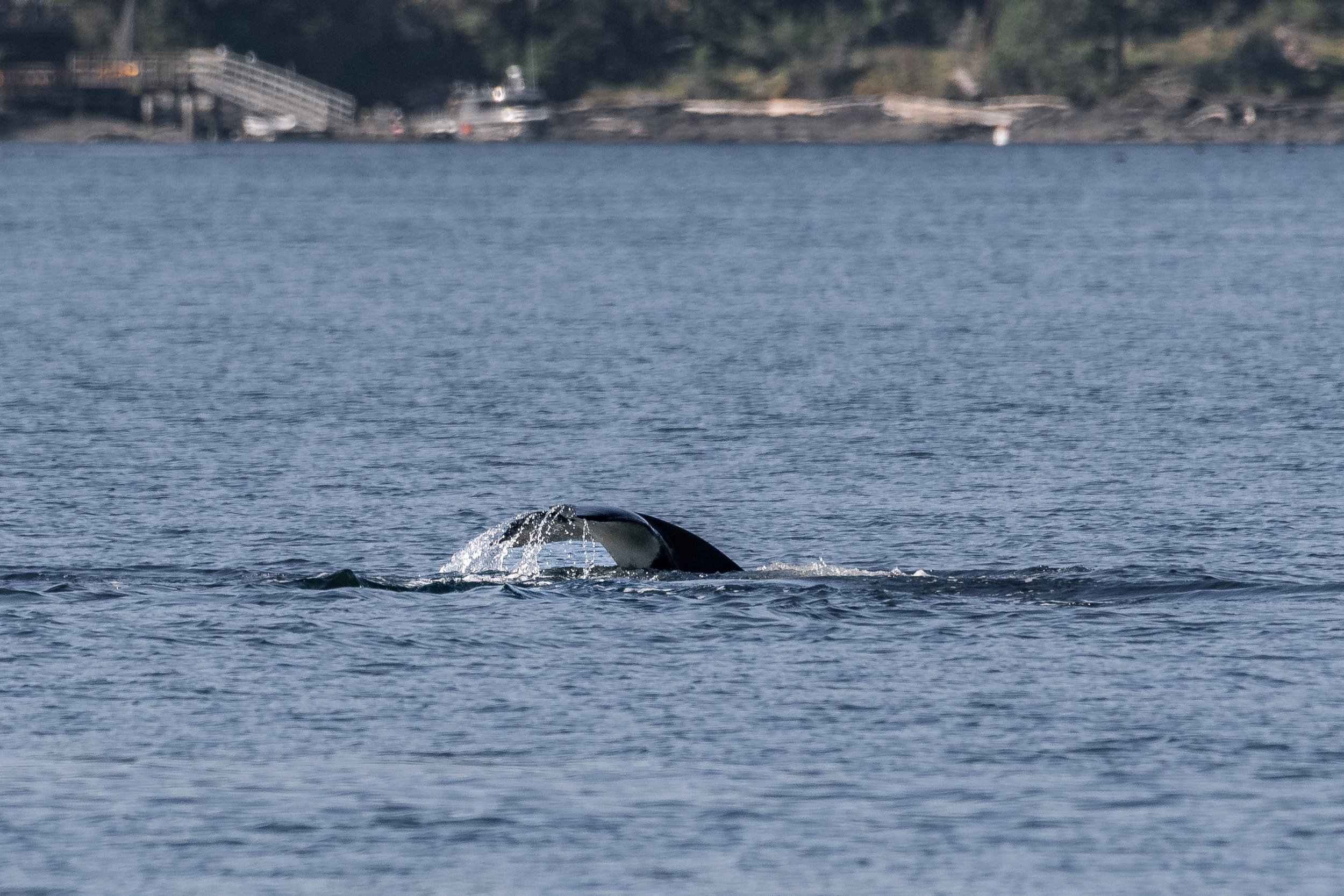
A tiny tailslap from T167B Valcroze. Photo by Evan Hessels.
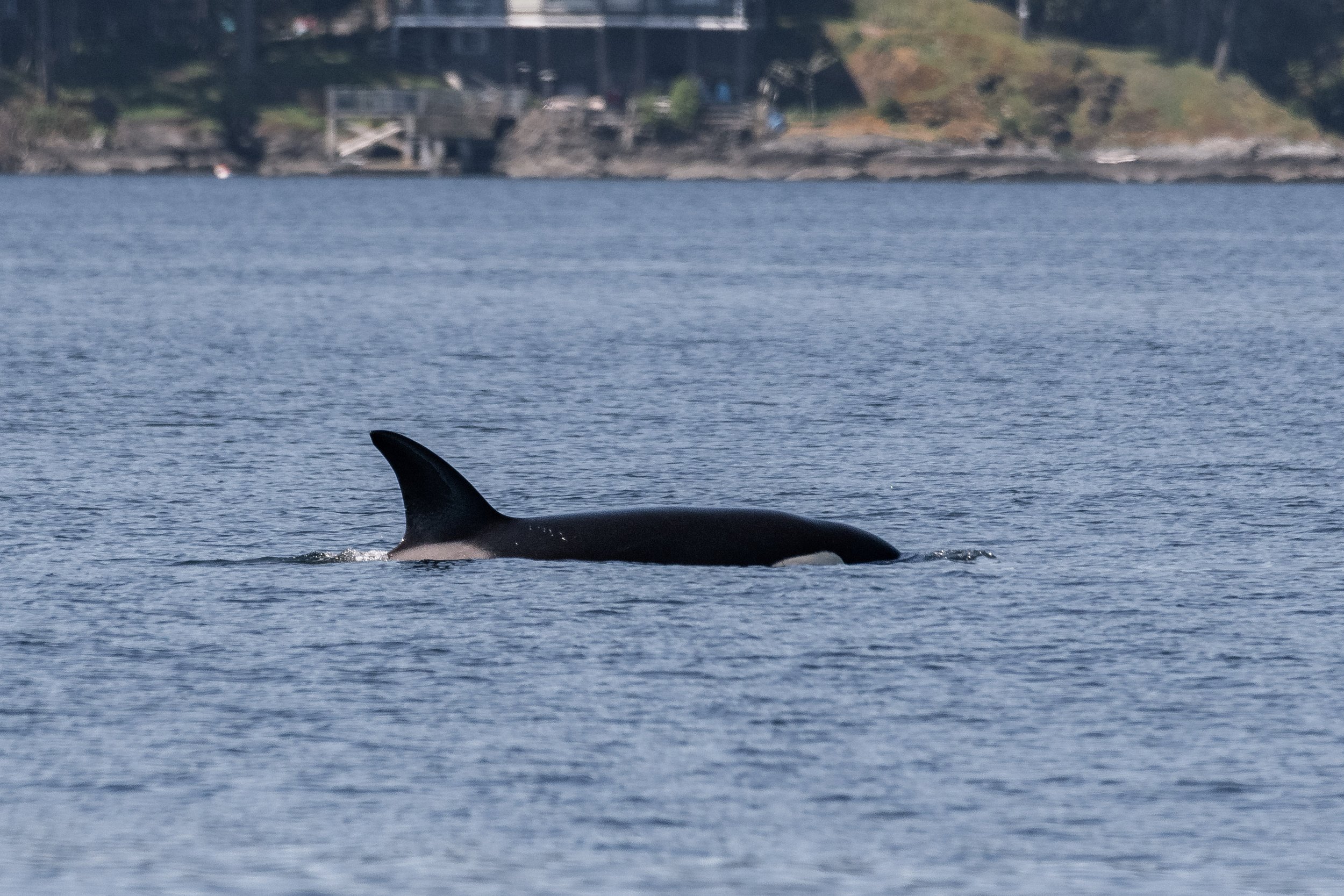
T167B Valcroze with her distinct blunt dorsal fin. Photo by Evan Hessels.
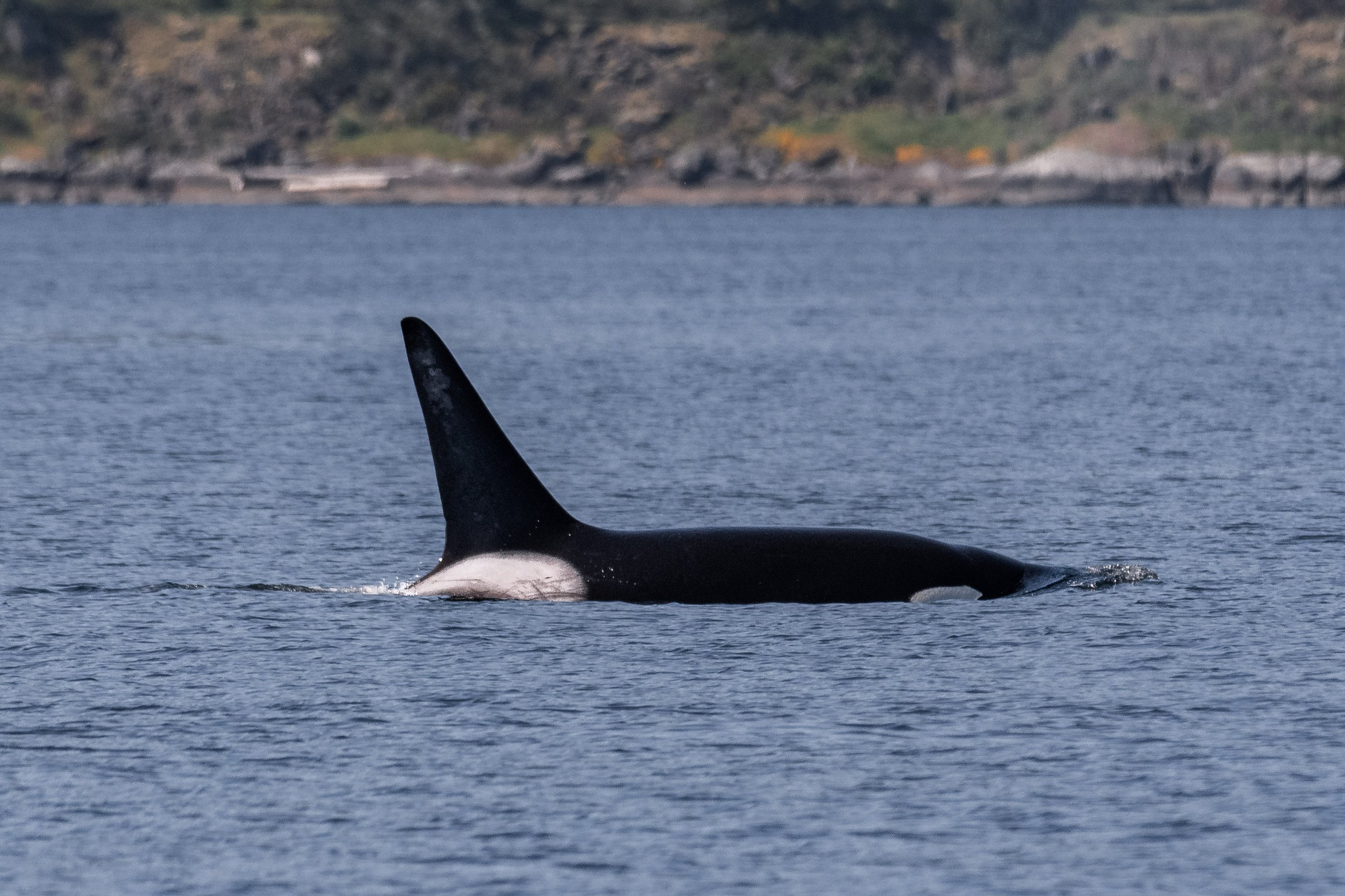
T167A Doniol travelling. Photo by Evan Hessels.
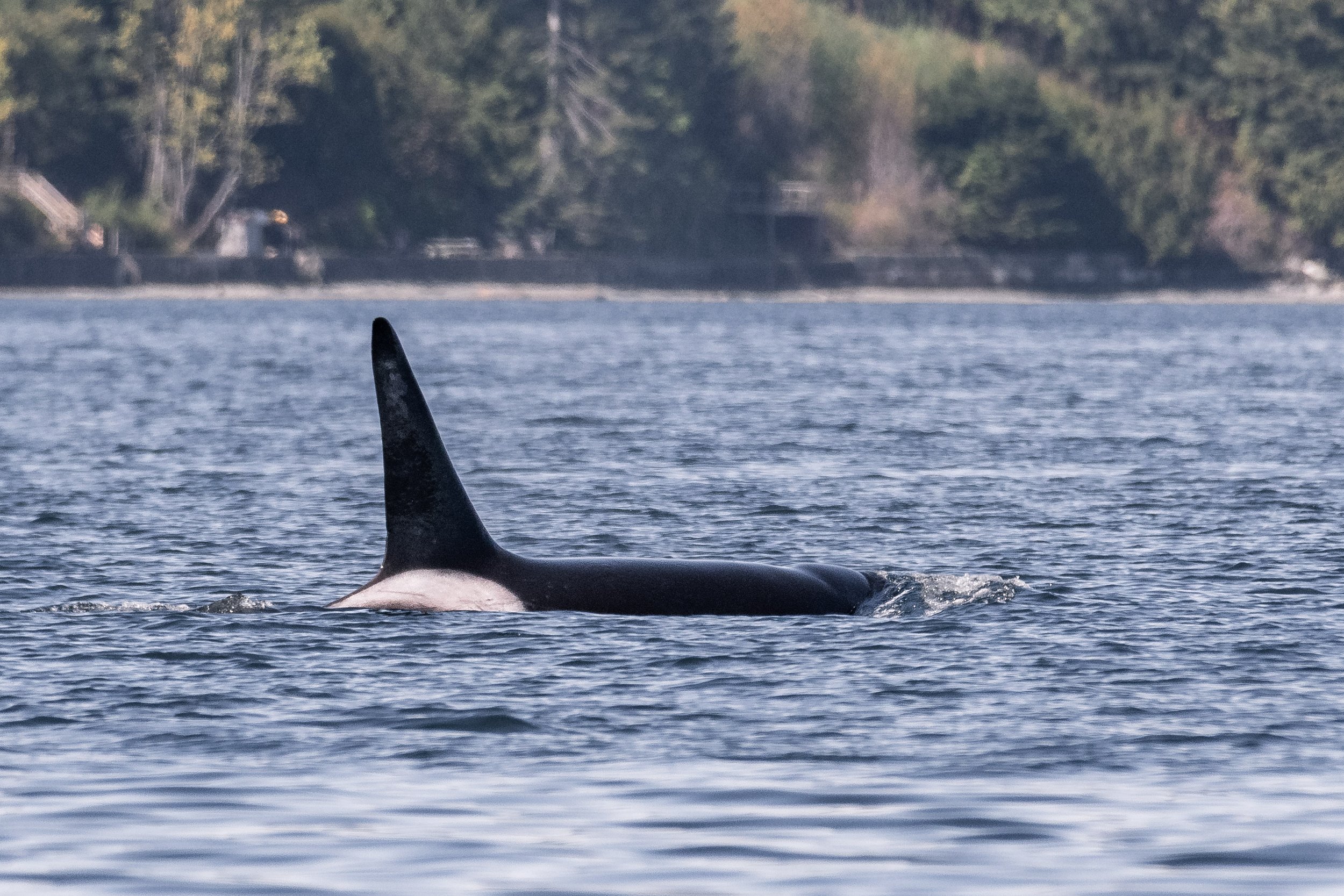
T167A Doniol travelling along. Photo by Evan Hessels.
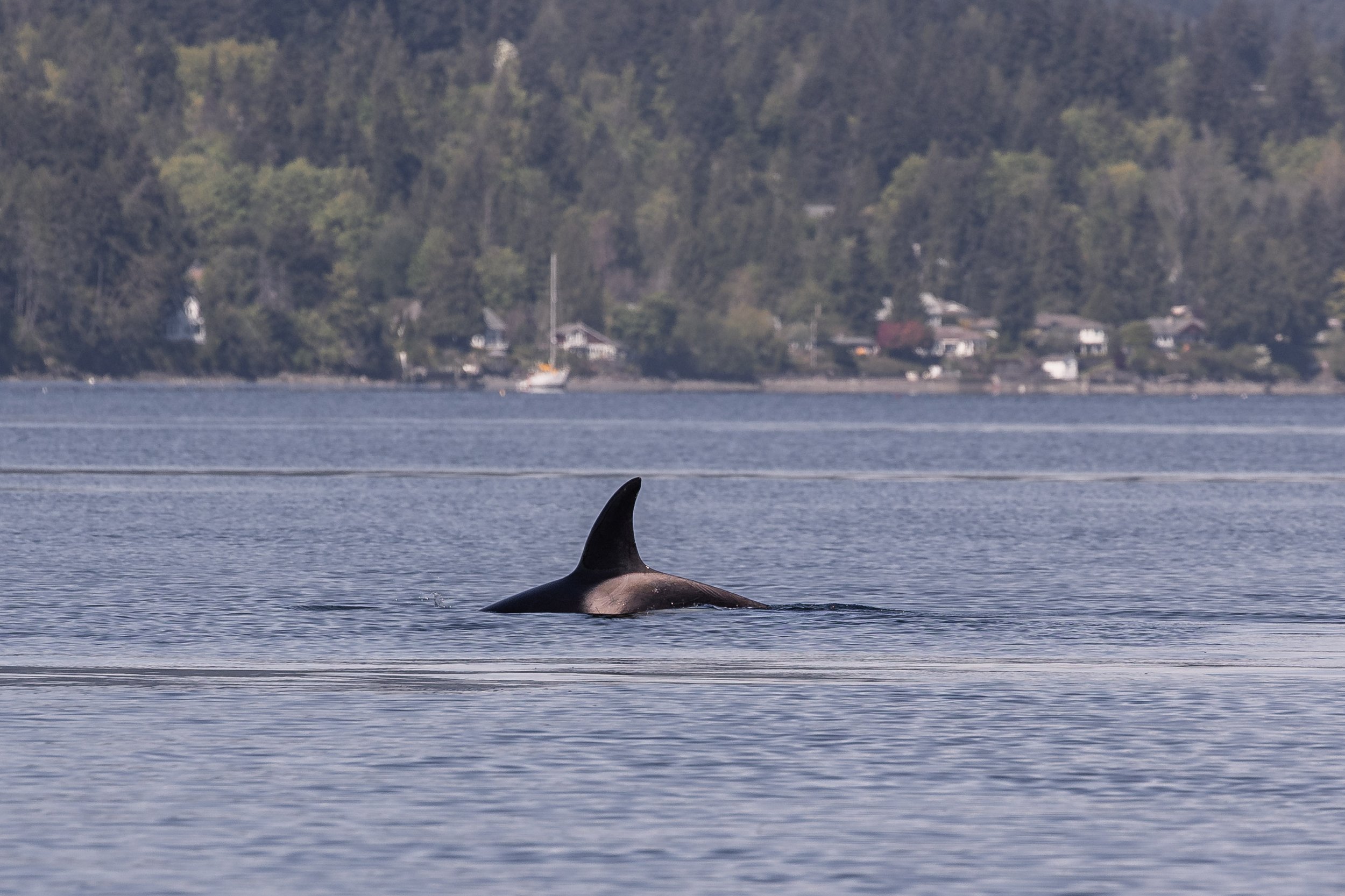
T167B Valcroze diving. Photo by Des Poier.
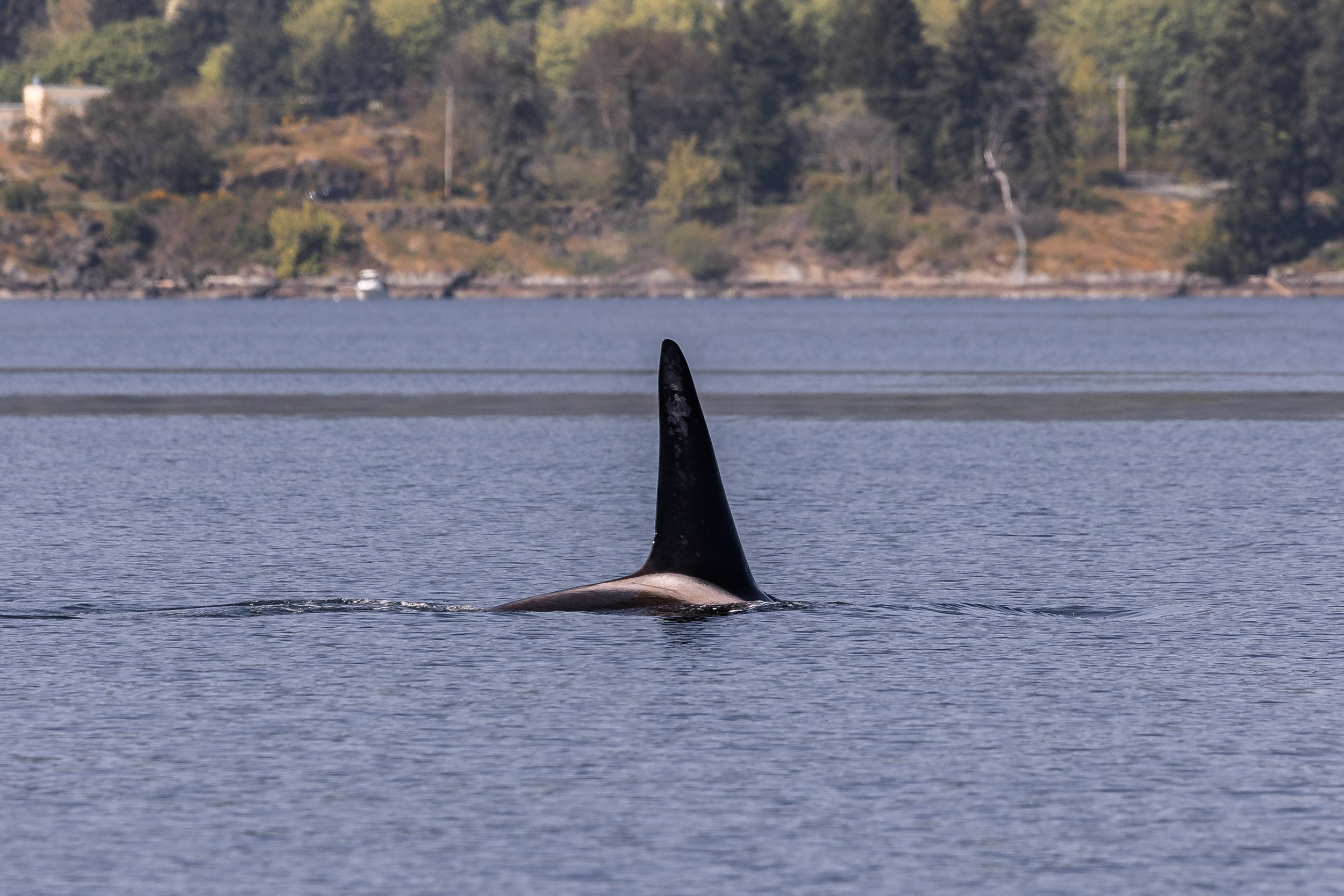
T167A Doniol diving. Photo by Des Poier.
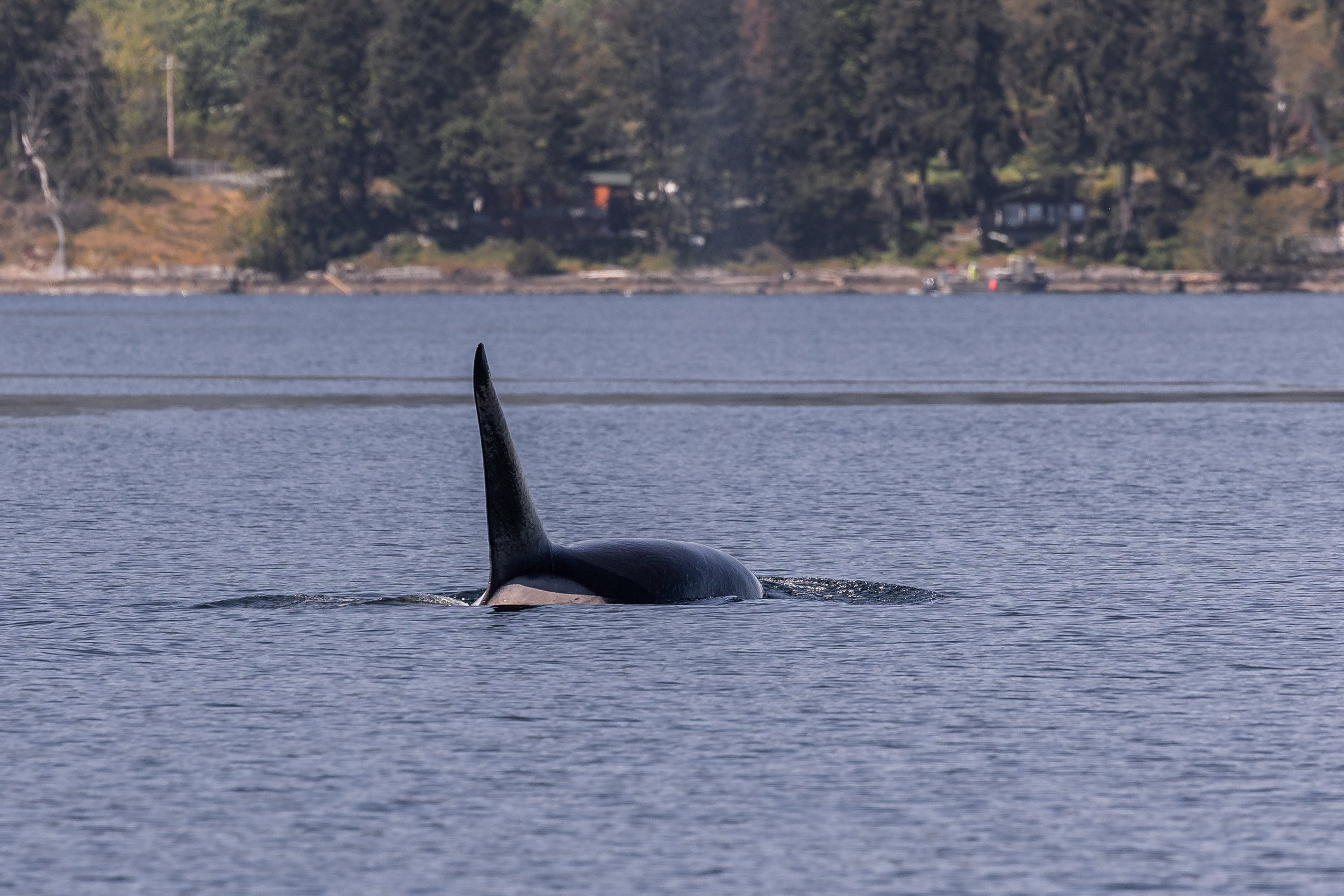
T167A Doniol from behind. Photo by Des Poier.
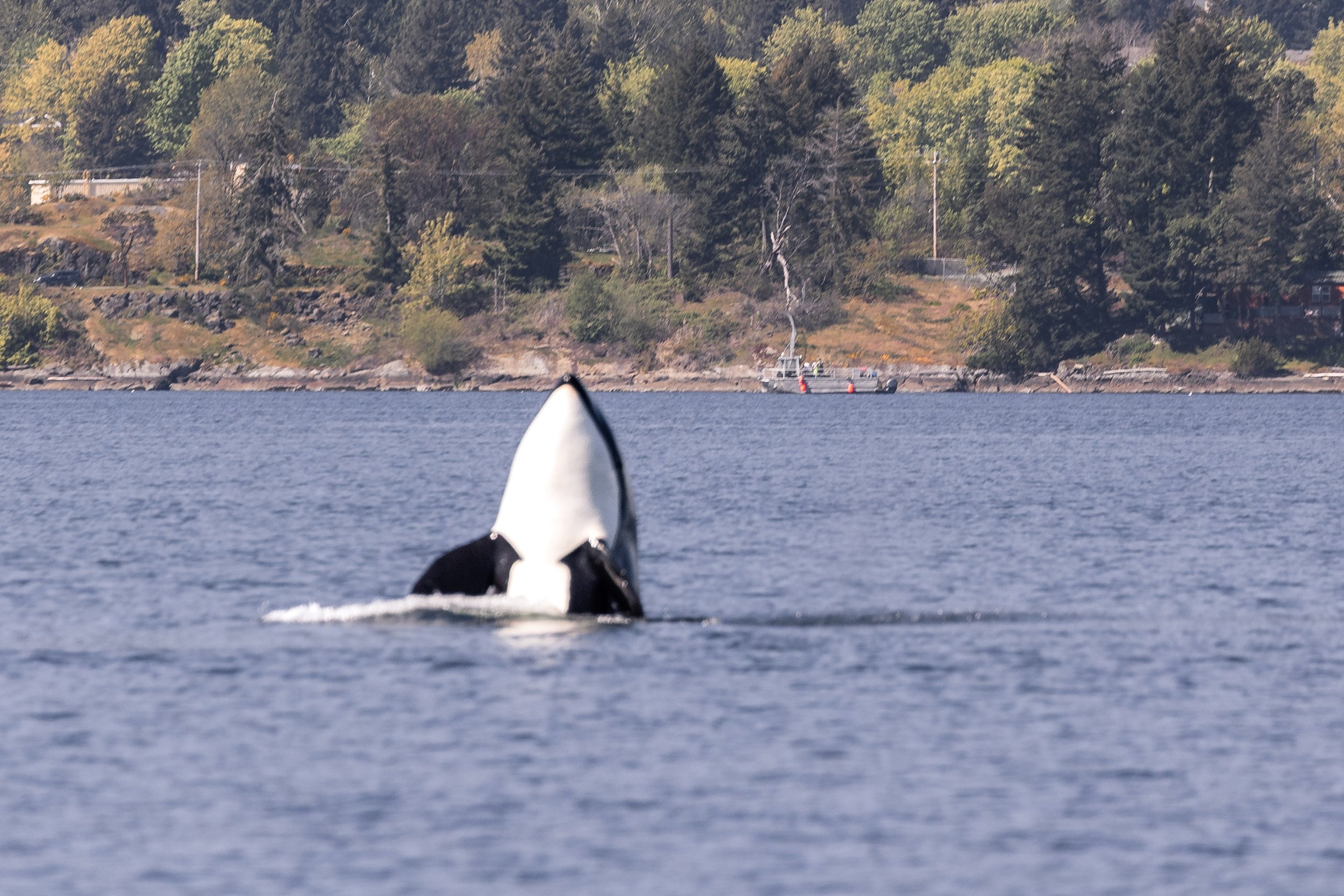
Spyhop! Photo by Des Poier.
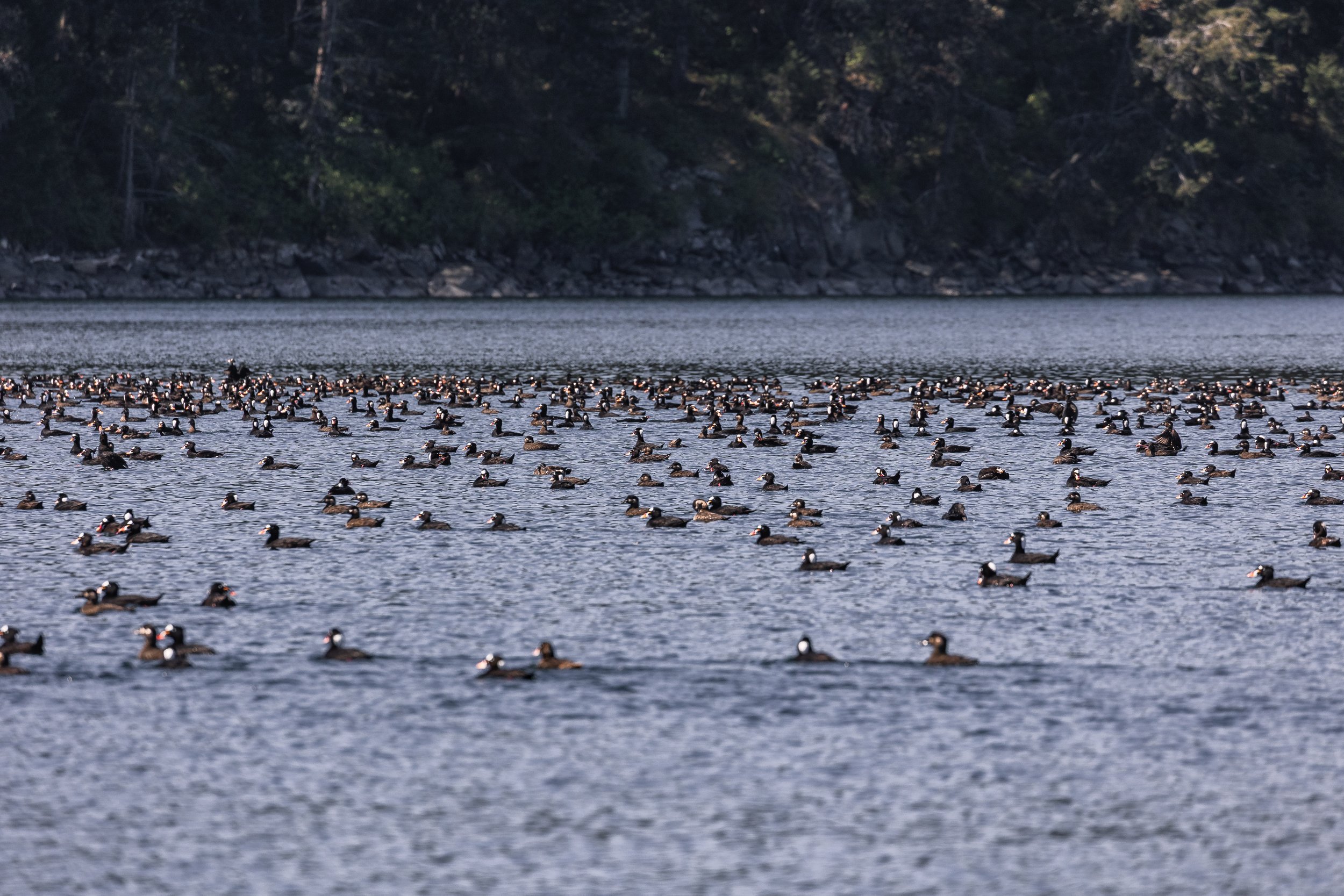
A huge flock of Surf scoters. Photo by Des Poier.
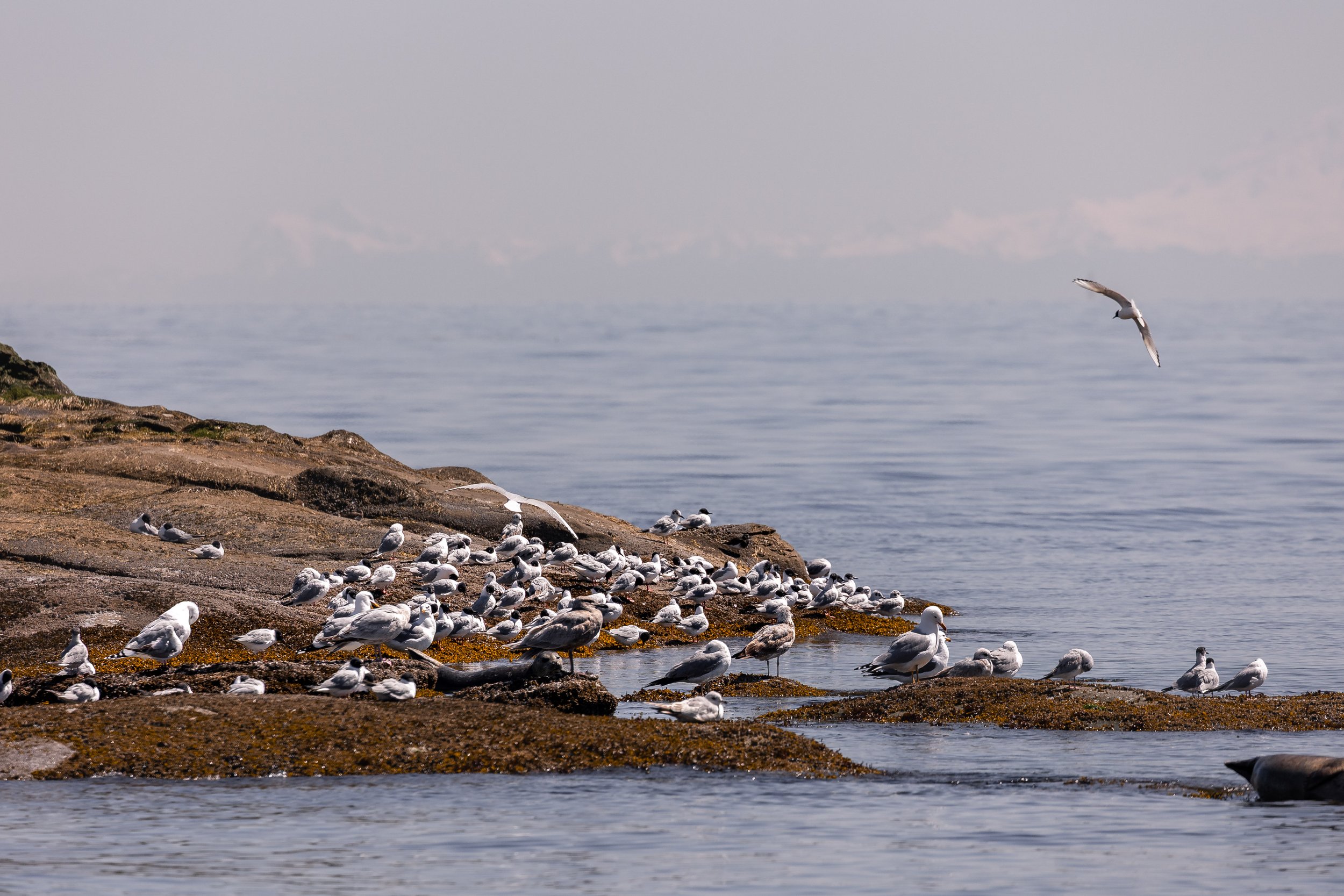
A multitude of gulls (and one single Harbour Seal). Photo by Des Poier.
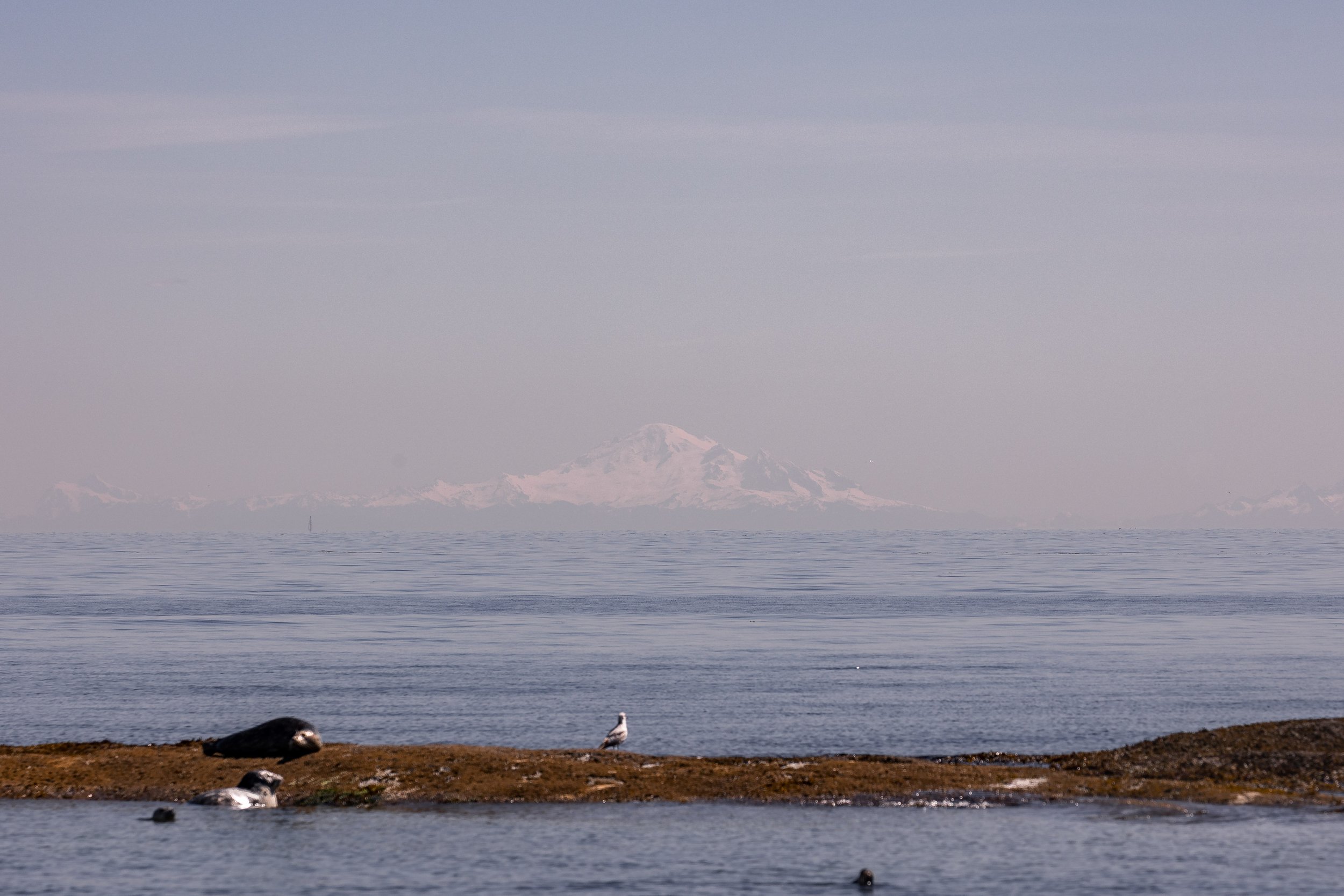
Mt.Baker with gulls and seals in the foreground. Photo by Des Poier.
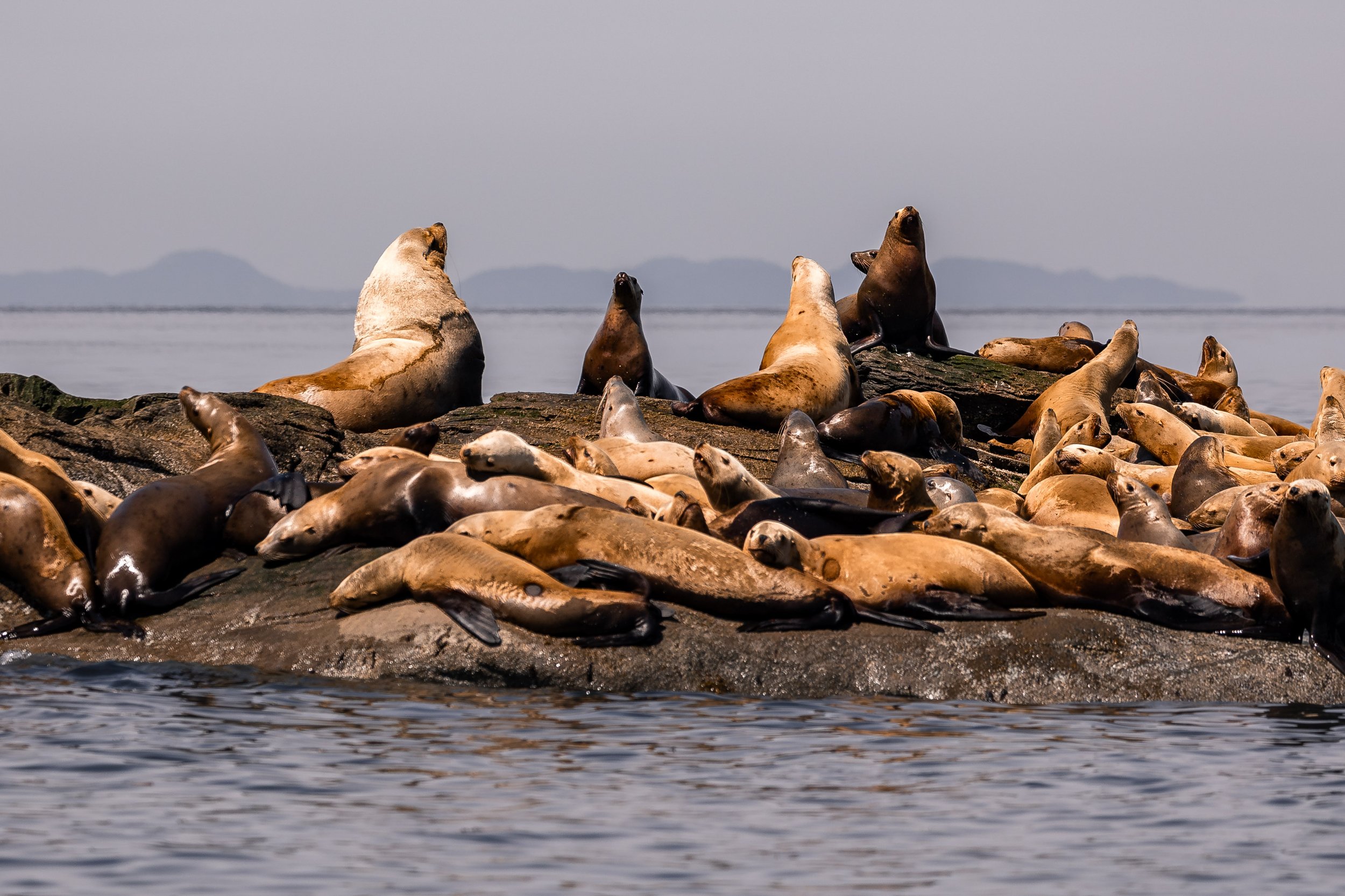
Steller Sea Lions sunning themselves and resting on the rocks. Photo by Des Poier.
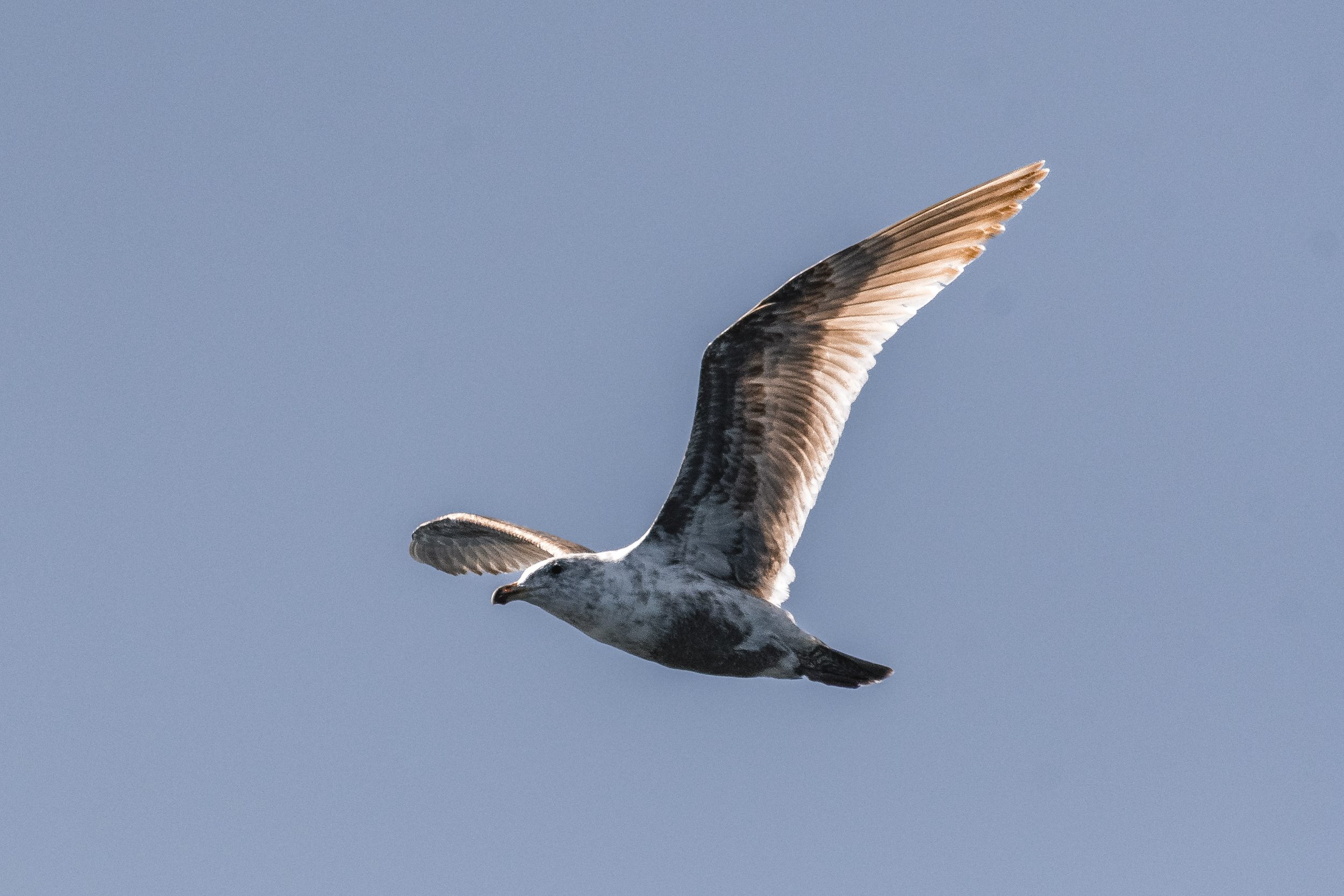
A gull in flight. Photo by Evan Hessels.
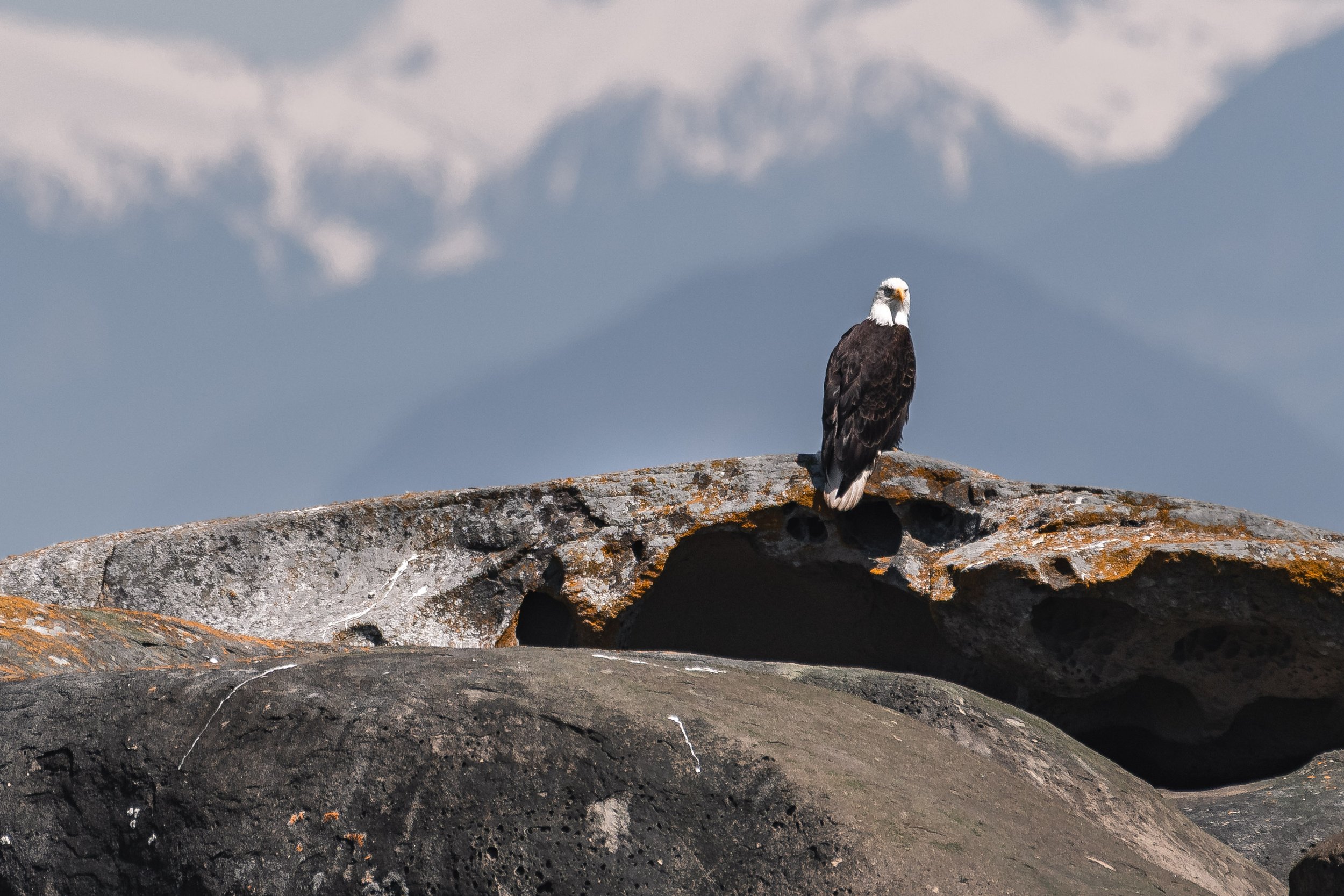
A Bald Eagle perched. Photo by Evan Hessels.
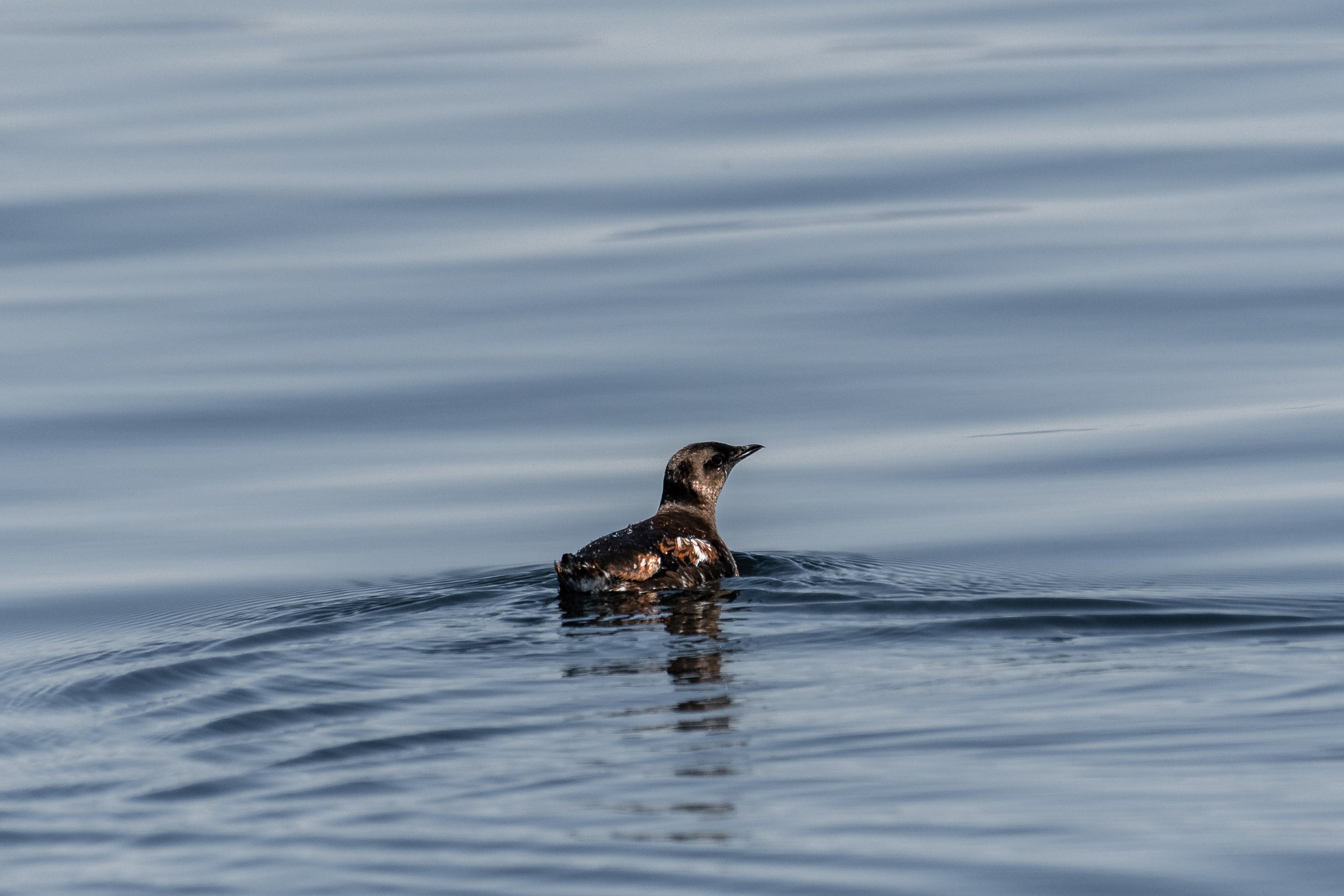
A Marbled Murrelet paddling along. Photo by Evan Hessels.
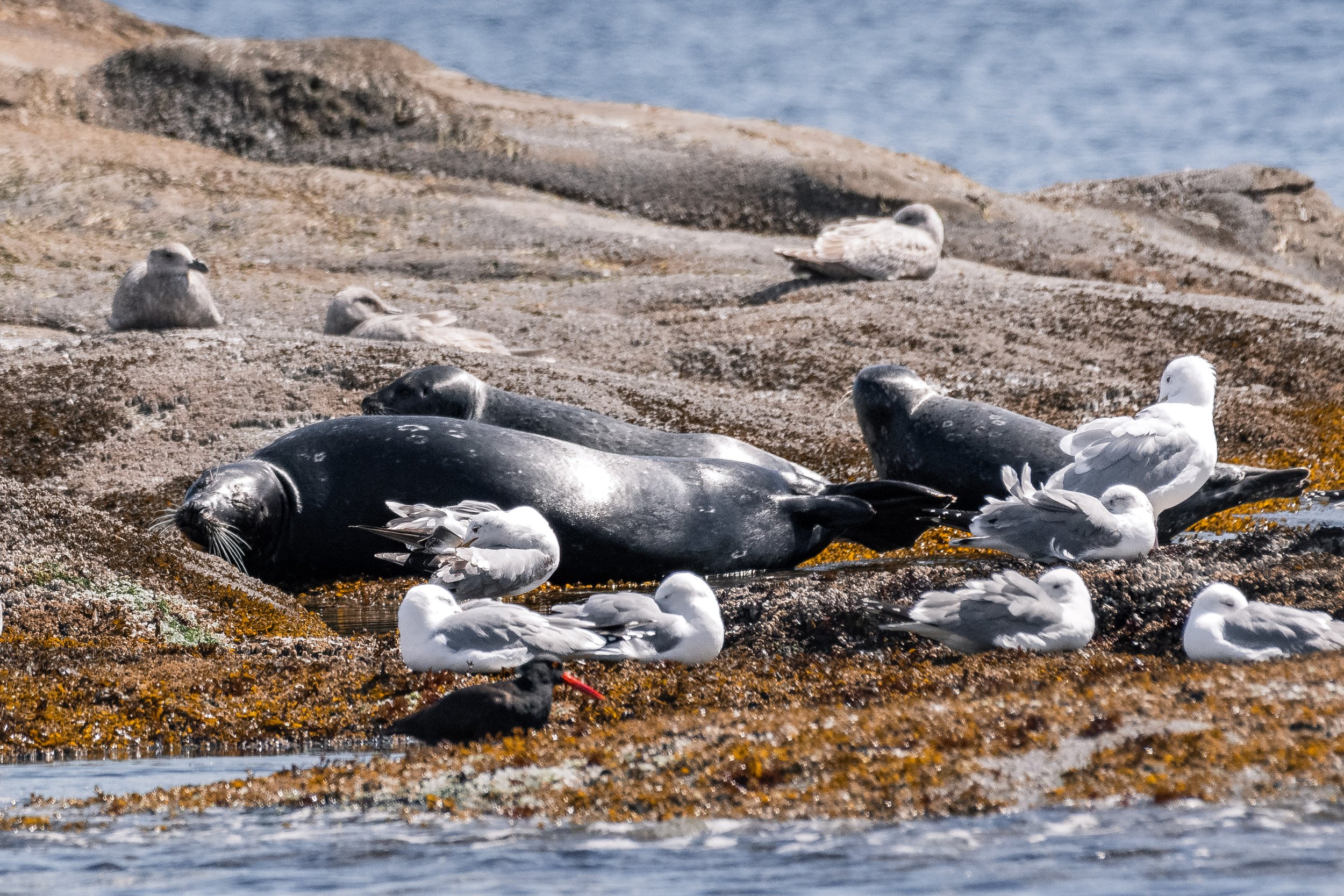
Nap time for the seals and gulls, and snack time for the oystercatchers! Photo by Evan Hessels.
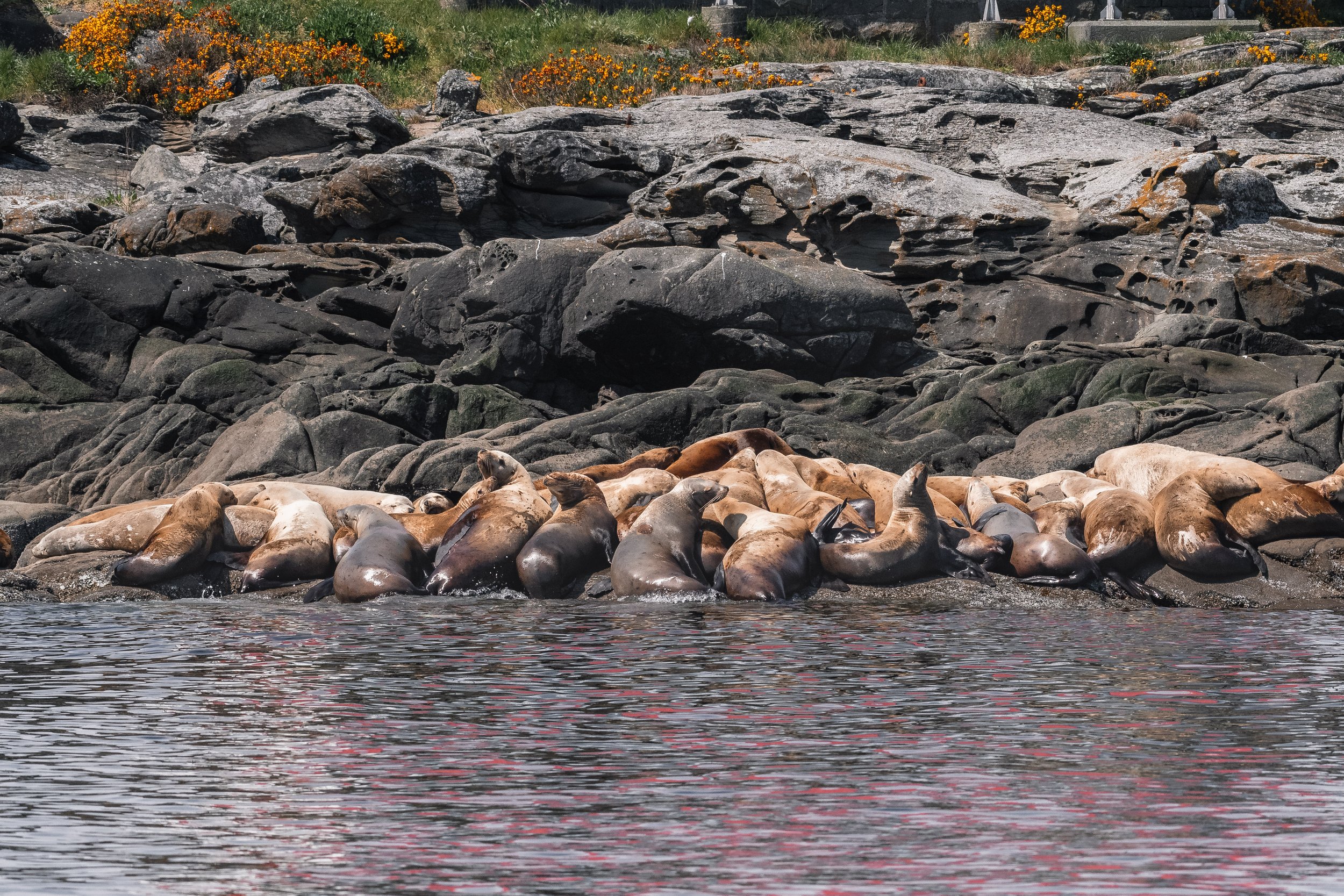
Hauled out on the edge of the water. Photo by Evan Hessels.
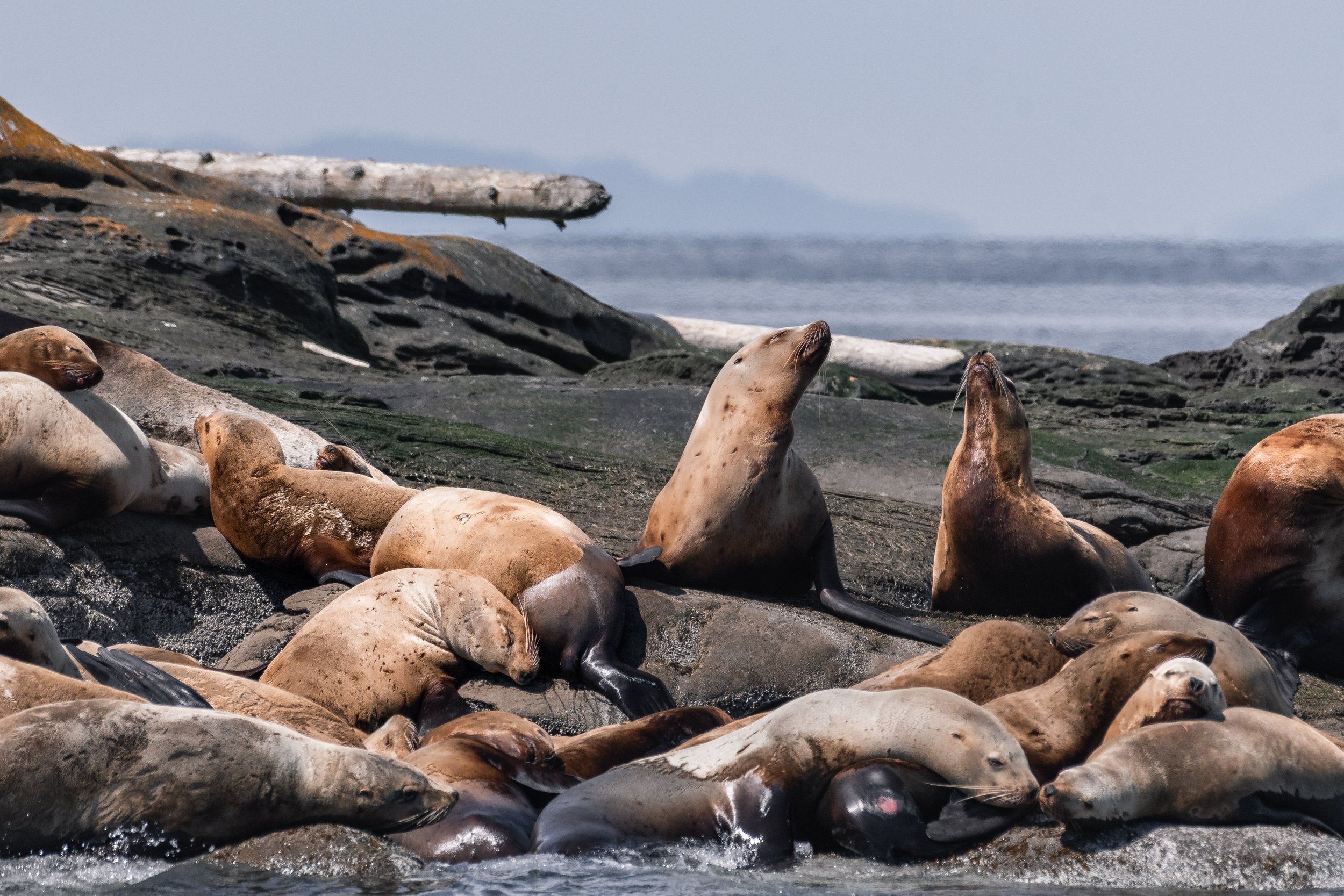
Sea lions resting and enjoying the early season warmth. Photo by Evan Hessels.