
May 16, 2026 - Orcas hunting in Sansum Narrows!
On this fine morning, cloudy skies and wavy seas waited for our passengers and crew. Zodiac vessels Keta and Cascadia pushed off the dock to brave the elements! Thankfully, the zodiac-style boats do a great job of cutting through the waves while avoiding excessive splashing. Our passengers and crew started their adventure by heading south into the calm waters of the Gulf Islands. On wavy days, these waters are perfect for avoiding the turbid conditions that are found out in the Strait of Georgia. Keta and Cascadia ventured through calm waters, keeping an eye out for any distant whale blows or orca dorsal fins. It didn’t take long for some reports of whales to reach our captains, Rodrigo and Rob. A large group of orcas were reported entering Sansum Narrows, between Vancouver Island and Salt Spring Island. Our captains adjusted our course and headed south to meet up with the orcas!
After arriving on the scene in Sansum Narrows, one large male dorsal fin stood out on the horizon, with multiple smaller fins dotted along the shoreline. Watching orcas in such a narrow waterway with high boat traffic can be tricky, but thankfully, our experienced captains are well-trained for operating under any conditions! While maintaining a respectful distance from both other vessels and the wildlife, Marine Naturalists Evan Hessles and Jordan Robinson were able to snap identification photos for the orcas present. The male amongst the group turned out to be T011A Rainy, who is the largest known male of all the orcas in our local Transient population! In 2015, he was photogrammetrically measured to be 8.3 m (27.2 ft)! Apart from his colossal dorsal fin, he can be identified by small marks on his saddle patch, just behind his dorsal fin.
T011A Rainy ♂ (1978)
Rainy has been travelling on his own since 2020, when his mother, T011 Wakana, disappeared from his side. She is presumed to be deceased. The bonds between family members of orcas are very strong; they form the foundation of pod composition! A matriarch, such as Wakana, will travel with her sons or daughters for her entire life.
A typical orca pod is centred around the matriarch and can include multiple generations of related whales, such as calves, siblings, and adult offspring. While many orcas stay closely connected to their family group throughout their lives, it’s not uncommon for some individuals to spend periods travelling on their own or associating more loosely with other pods. And today, Rainy was seen socializing and travelling with another pod of orcas. After receiving photos of their dorsal fins, saddle patches, and some eye patches, the remaining orcas were identified as the T046B pod!
T046B Raksha ♀ (1988)
T046B2 Akela ♀ (2008)
T046B2B Takaya ♀ (2023)
T046B3 Sedna ♀ (2011)
T046B3A Munro (2025)
T046B4 Quiver ♀ (2013)
T046B6 Sol ♀ (2019)
T046B7 Tala (2023)
T046B8 Pi (2026)
As far as Transient orca pods go, the T046Bs are as big as they get! The typical Transient orca pod contains 2-8 individuals, but the matriarch T046B Raksha has 8 of her own kids (7 surviving) and 6 grandkids (5 surviving). Many of these orca are currently travelling with her, though her eldest calf, T046B1 Tread and her 3 calves (grandchildren of Raksha’s) have been dispersed for many years. Her current pod travelling with her includes 9 individuals, which makes it quite large - one of the largest known pods that frequent our area!
These orcas were very active as our passengers and crew watched. The group was observed porpoising out of the water while pursuing sea lions, and it appeared their hunt was successful! After a successful hunt, Transient orcas often celebrate by slapping their fins and tails on the surface and even breaching. After the hunt, two juvenile Bald Eagles acted as the cleanup crew, circling around the pod, looking for an opportunity to get some leftovers. One of the eagles made off with some of the remaining bits of a sea lion; see the photos below!
After our time was up with the T046Bs and T011A Rainy, our captains, Rob and Robrigo, slowly pulled away from the orcas and headed back north to continue the tour. Along the way back to Nanaimo, our vessels spotted some strange-looking rocks at low tide. Upon further inspection, it was some camouflaged Harbour Seals! These seals only weigh up to 280 pounds and grow to be 6 feet long. Males and females are pretty indistinguishable from each other, unlike sea lions. These cute little pinnipeds are considered true seals because they belong to a different evolutionary lineage compared to sea lions. One of the key differences lies in their anatomy: true seals lack external ear flaps (pinnae) and have smaller front flippers. Additionally, their pelvic bones are fused, which limits their ability to move on land, but it gives them a decisive advantage in the water. This adaptation enhances thrust and agility, crucial when evading orcas during a hunt.
After departing the Harbour Seals, our vessels made their way over to some collections of logs called log-booms near Nanaimo that are anchored along the shoreline, waiting to be processed at the nearby veneer and round wood mill on Vancouver Island. These collections of logs create the perfect spot for some more of our local fuzzy friends to haul out - these were California Sea Lions!
These sea lions can grow significantly larger than their Harbour Seal cousins, maxing out around 700 pounds and reaching upwards of 220 centimetres (⁓7 feet). These sea lions are distinguishable from true seals, like Harbour Seals, by some of the anatomical features mentioned previously. The pelvic bones of sea lions are not fused, meaning they can rotate their hind flippers independently of one another for better locomotion while on land. Additionally, they contain external pinnae (ear flaps) and have larger front flippers!
California Sea Lions spend their winters in our polar waters, staying for two very important seasonal migration events, being the Herring spawn in early spring and the salmon run in the fall. California sea lions will arrive here in the fall, just in time for the salmon run, spending their winter as far north as Alaska. Beginning in early spring, the Herring will spawn and provide one more big gorge in food before heading south for the summer. By mid to late spring, these sea lions will start migrating south to sandy, warm beaches to breed from June to early August. This cycle is repeated yearly!
One more stop awaited our guests and crew: the rocky bluffs of Gabriola Island. The rocky cliffs provide ample nesting space for cliff-nesting birds, including Pelagic and Double-crested Cormorants, Pigeon Guillemots, Cliff Swallows, and various species of gulls. Enjoy the photos below, taken by Marnine Naturalists Evan Hessels and Jordan Robinson!
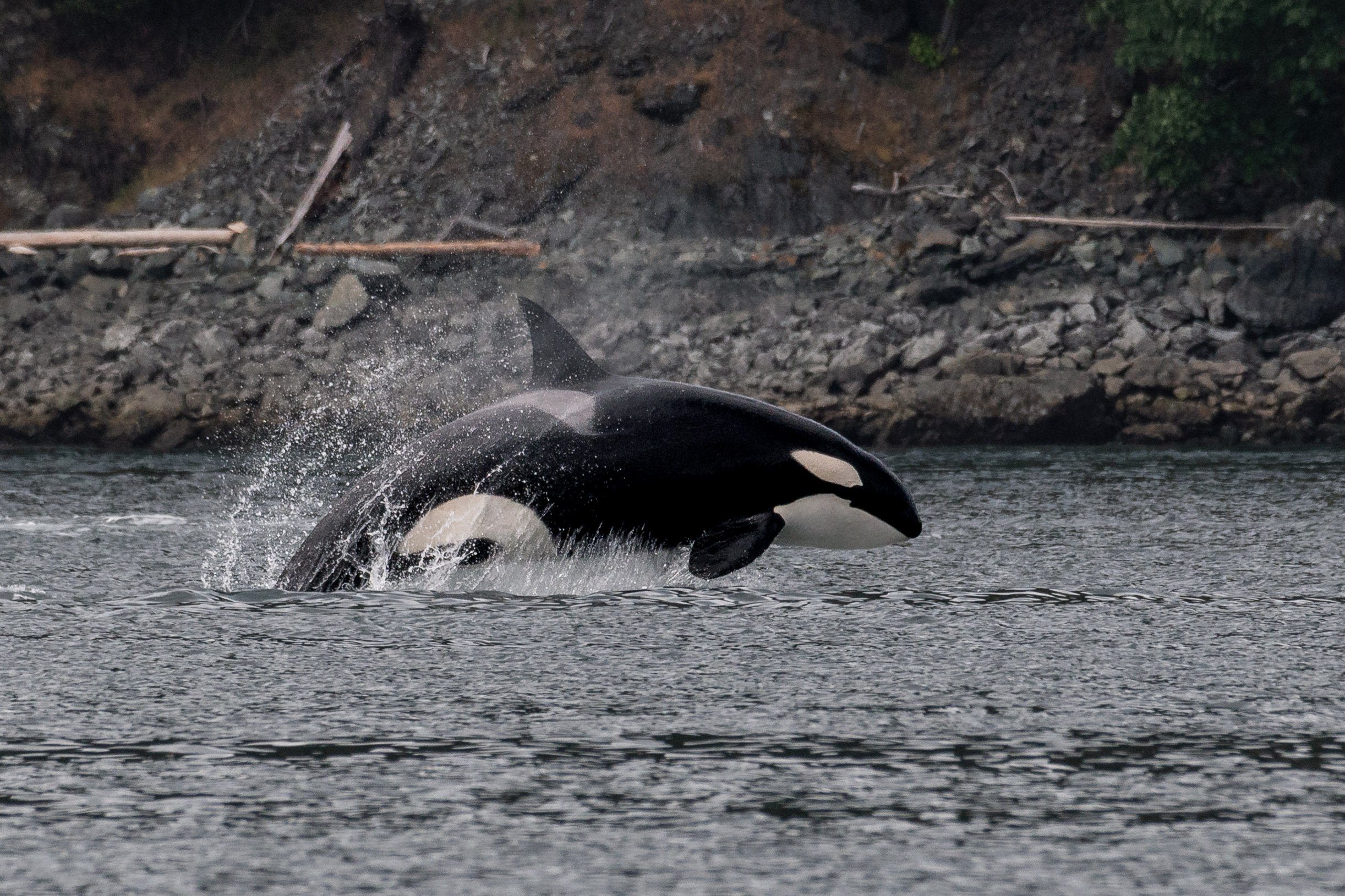
T046B3 Sedna Beginning to porpoise out of the water as the pod begins to hunt. Photo by Evan Hessels.
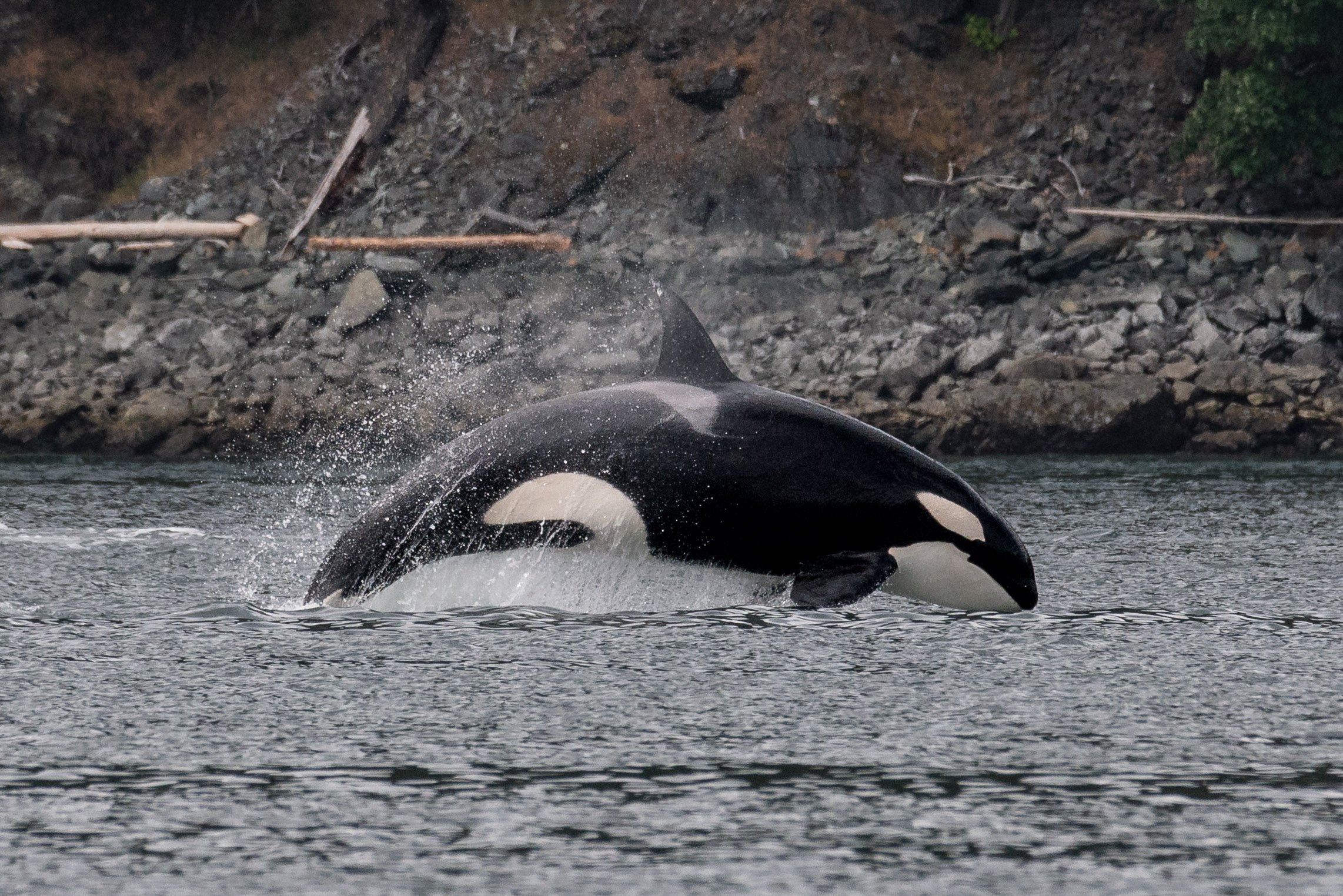
T046B3 Sedna continuing to come free of the water. Photo by Evan Hessels.
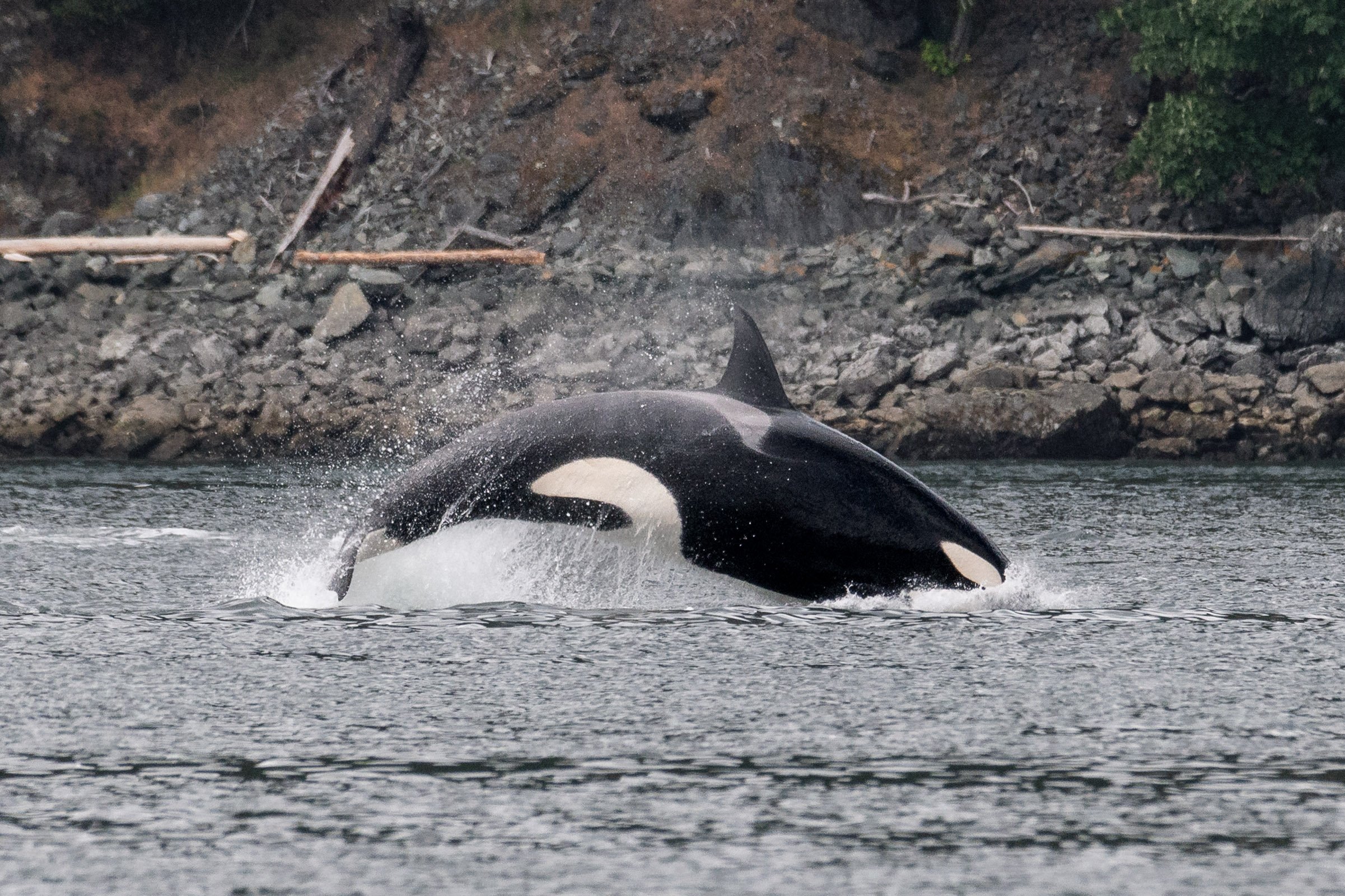
T046B3 Sedna’s tail breaching the water as she begins to descend. Photo by Evan Hessels.
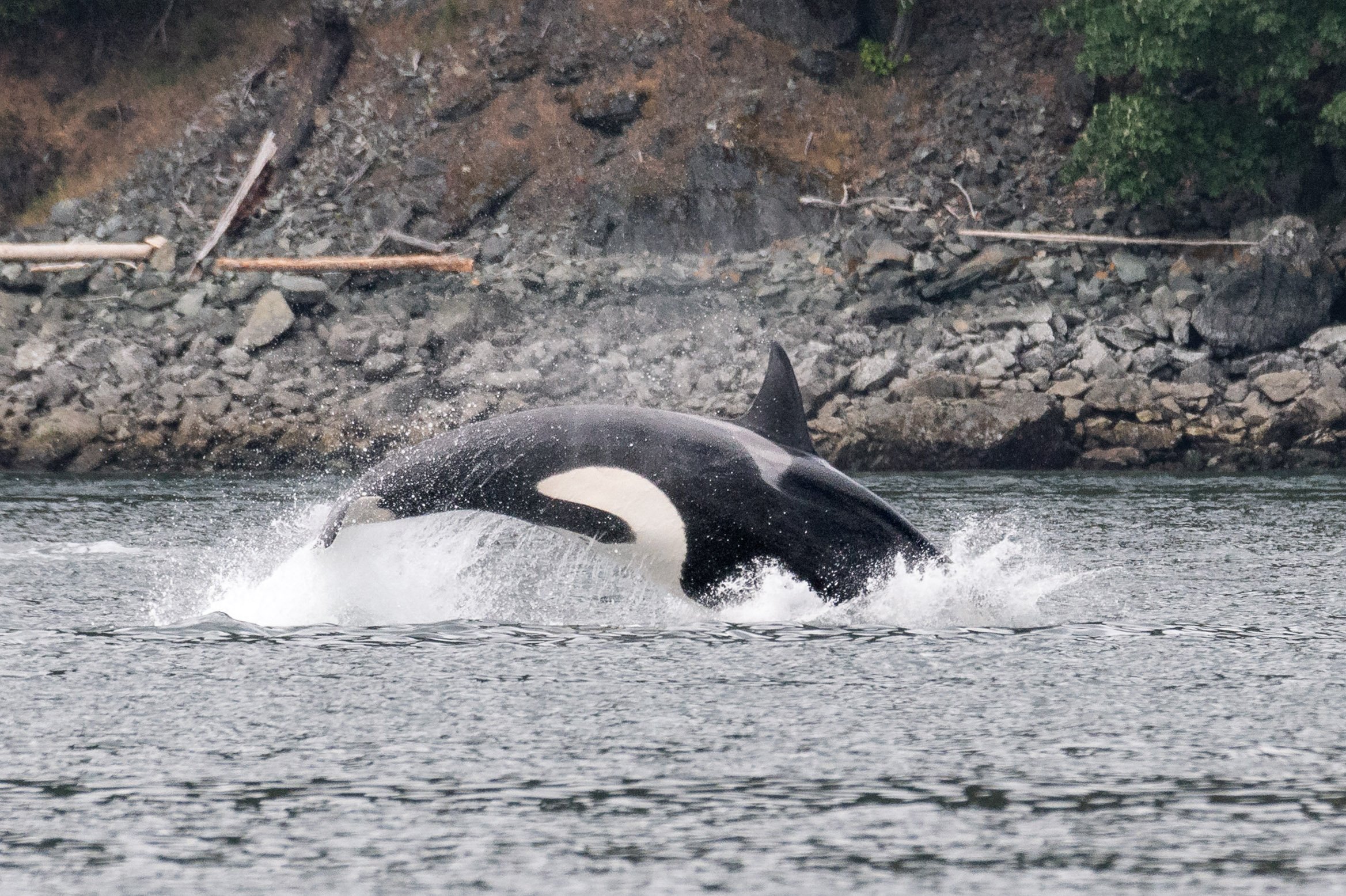
T046B3 Sedna descending back into the water. Photo by Evan Hessels.
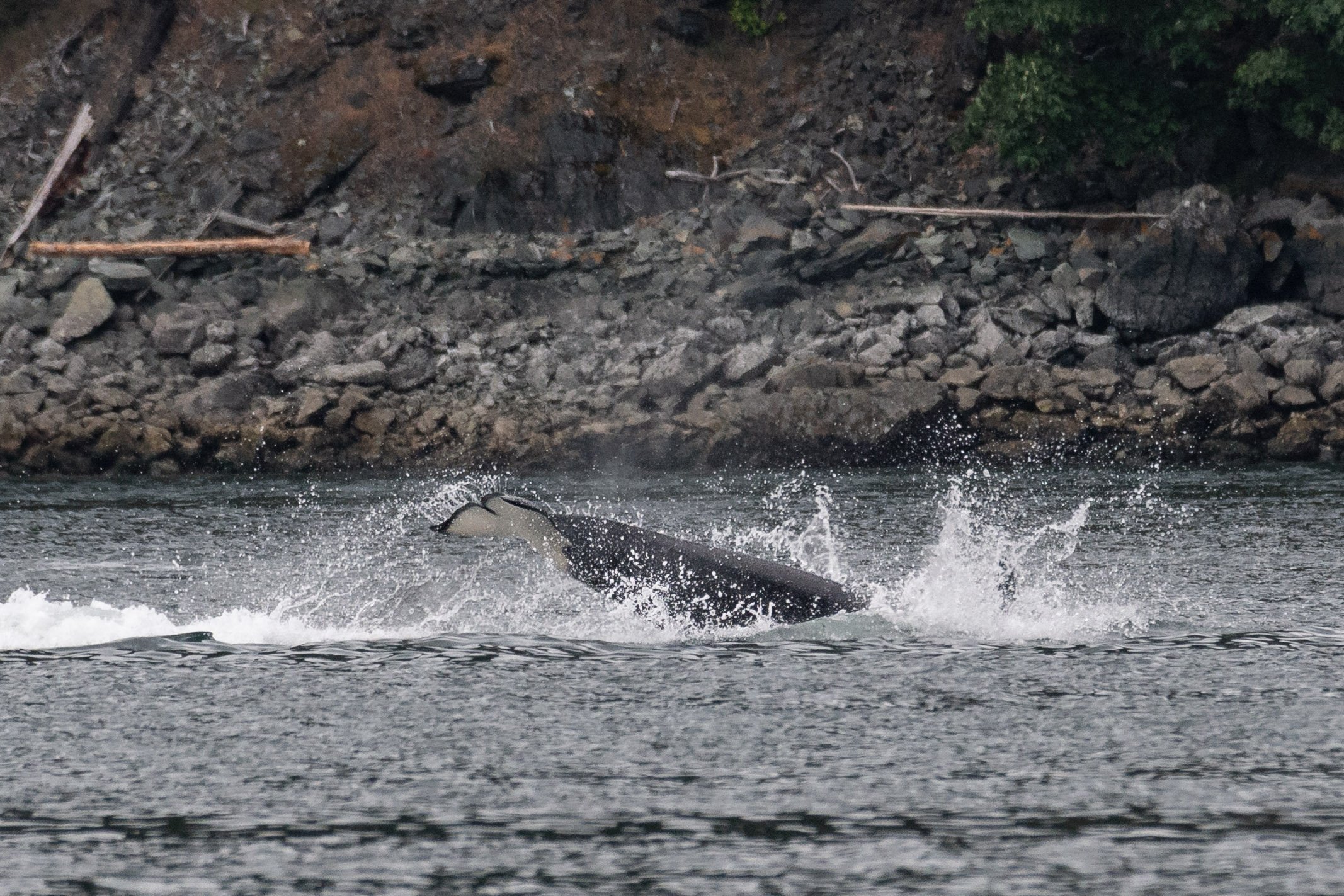
A final look at T046B3 Sedna’s tail. Photo by Evan Hessels.
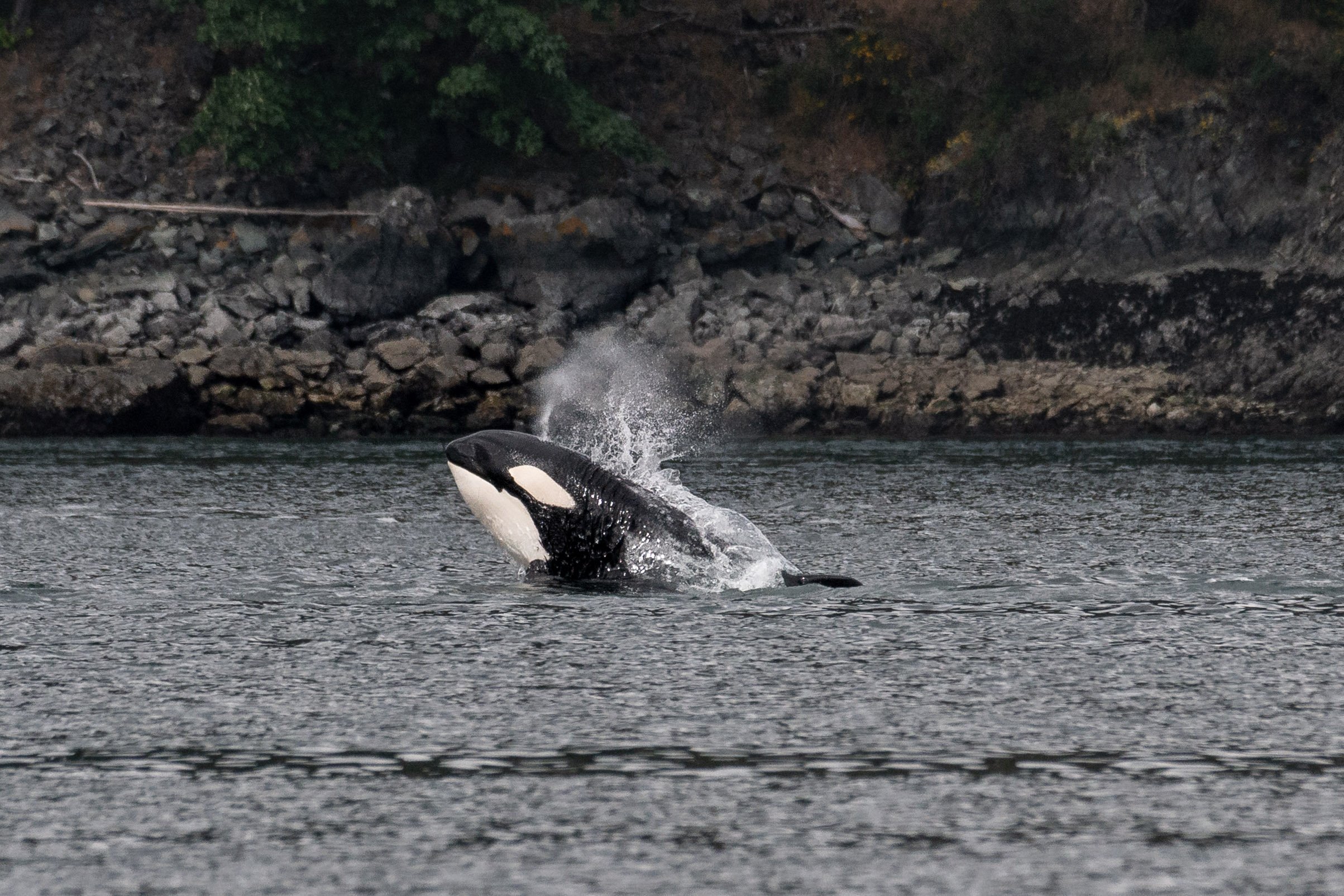
The other side of T046B3 Sedna, giving a good look at how her eyepatch varies between each side as she porpoises in the other direction. Photo by Evan Hessels.
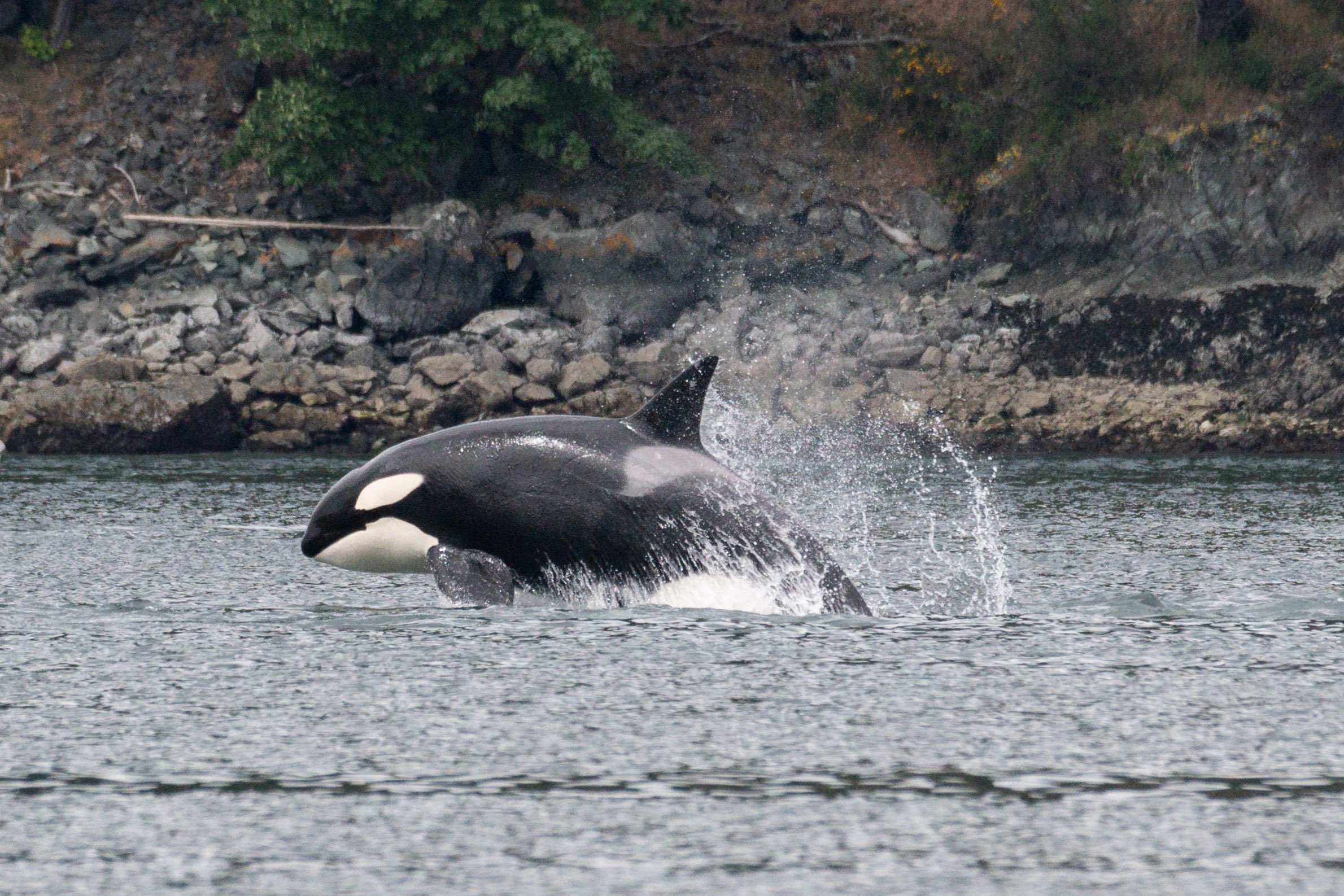
T046B3 Sedna continuing her porpoise action. Photo by Evan Hessels.
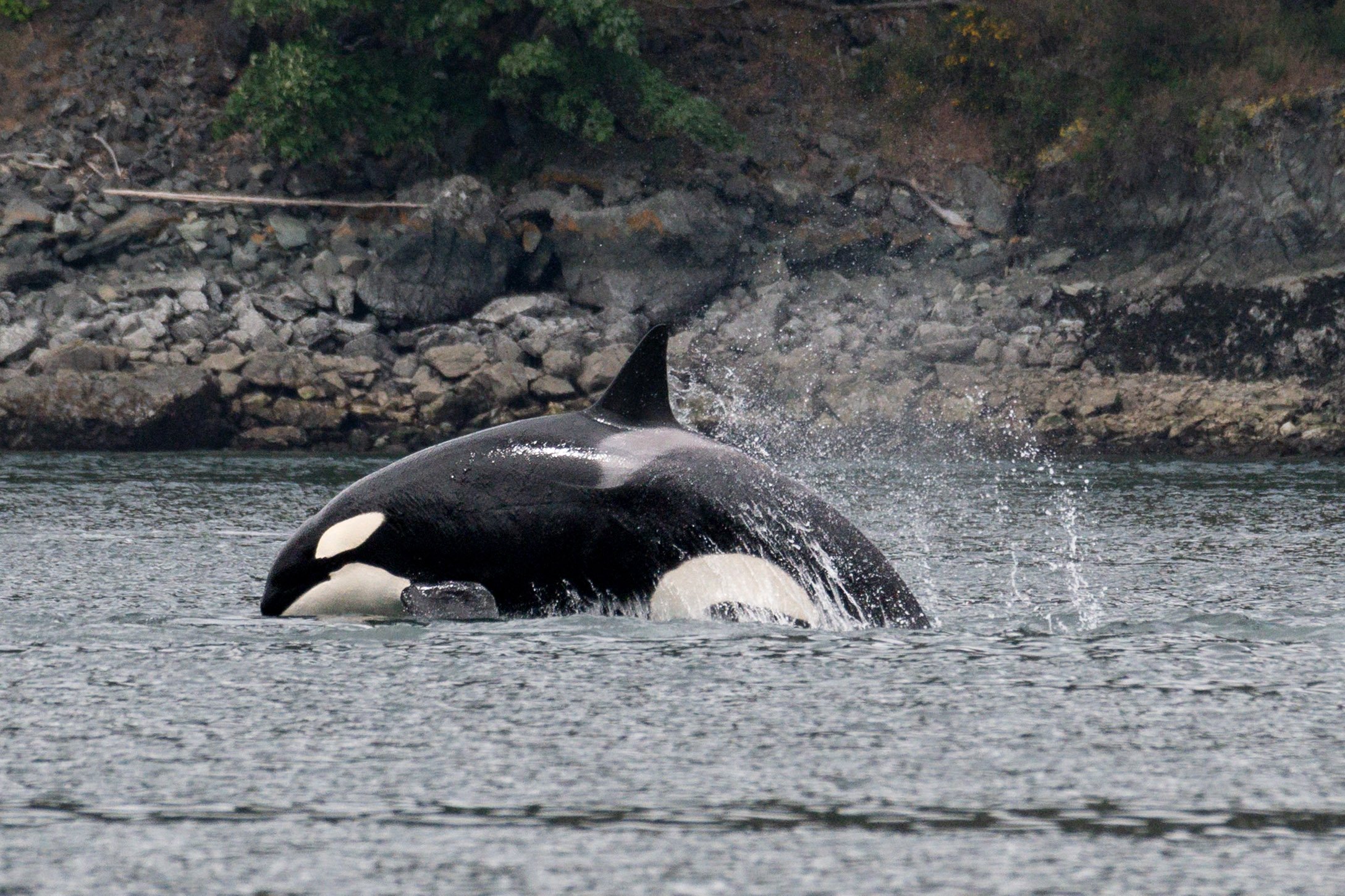
A great view of T046B3 Sedna’s saddle patch. Photo by Evan Hessels.
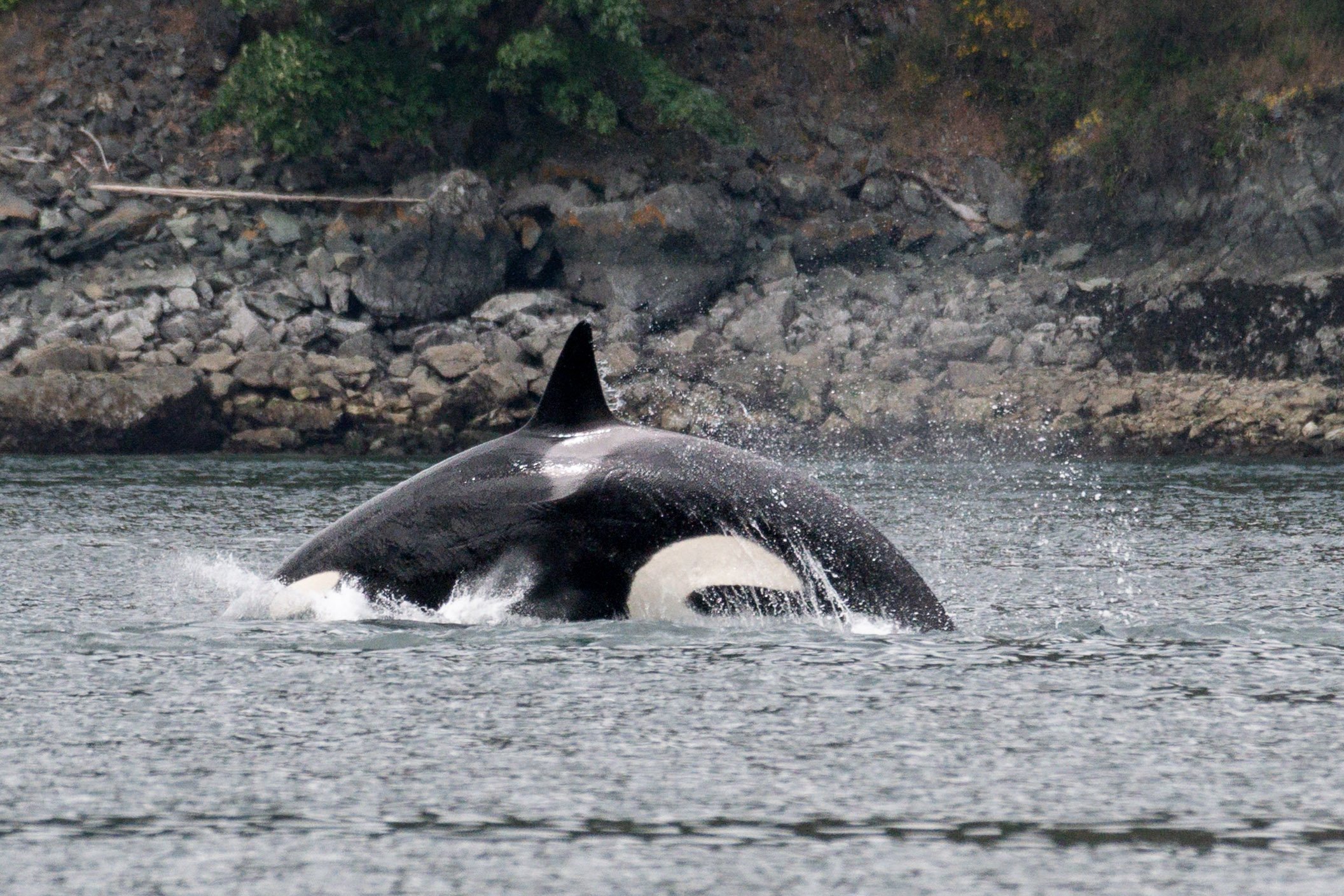
T046B3 Sedna descending back into the water. Photo by Evan Hessels.
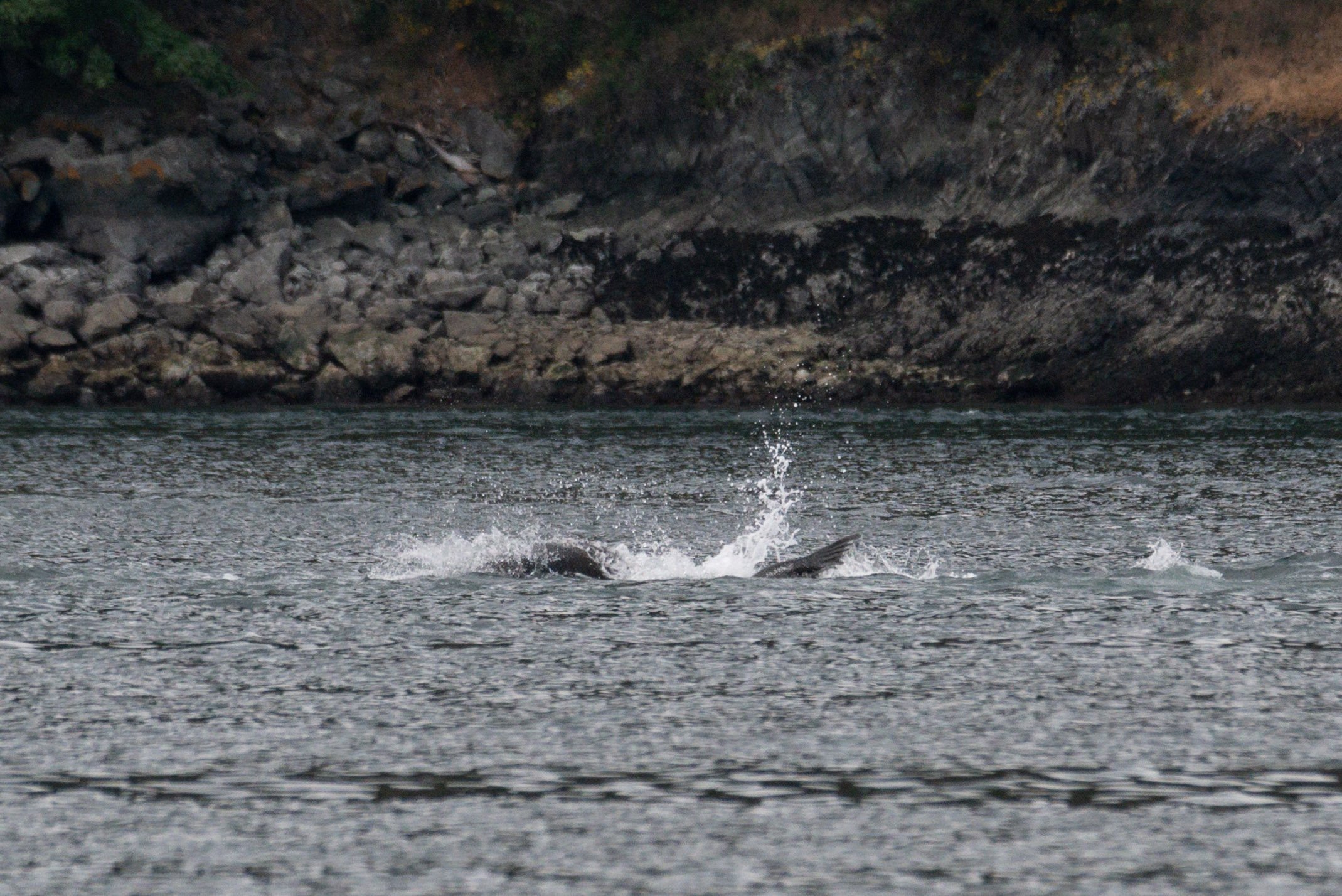
A little look at what the orca’s were hunting, what appears to be a California Sea Lion. Photo by Evan Hessels.
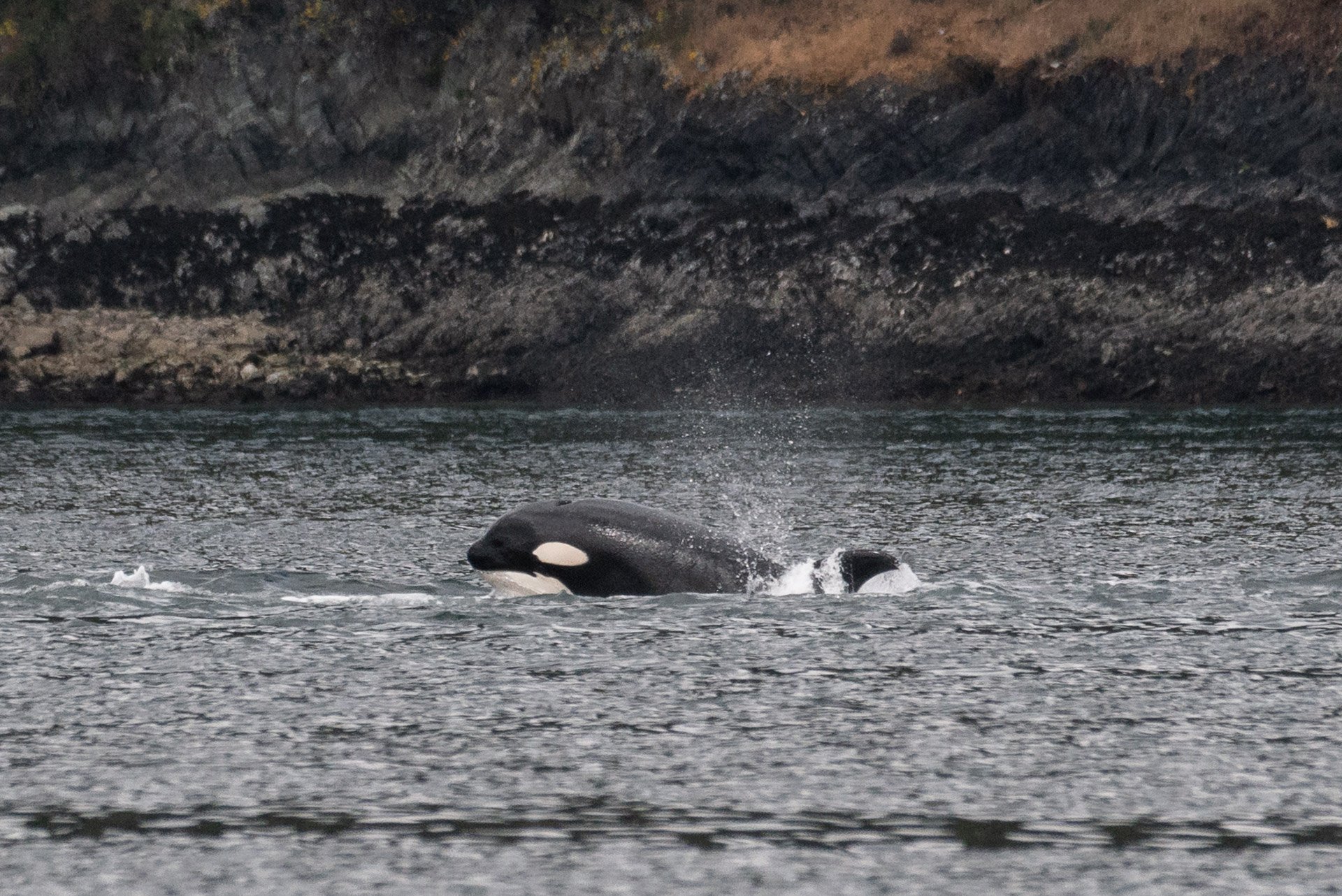
T046B6 Sol starting to porpoise out of the water. Photo by Evan Hessels.
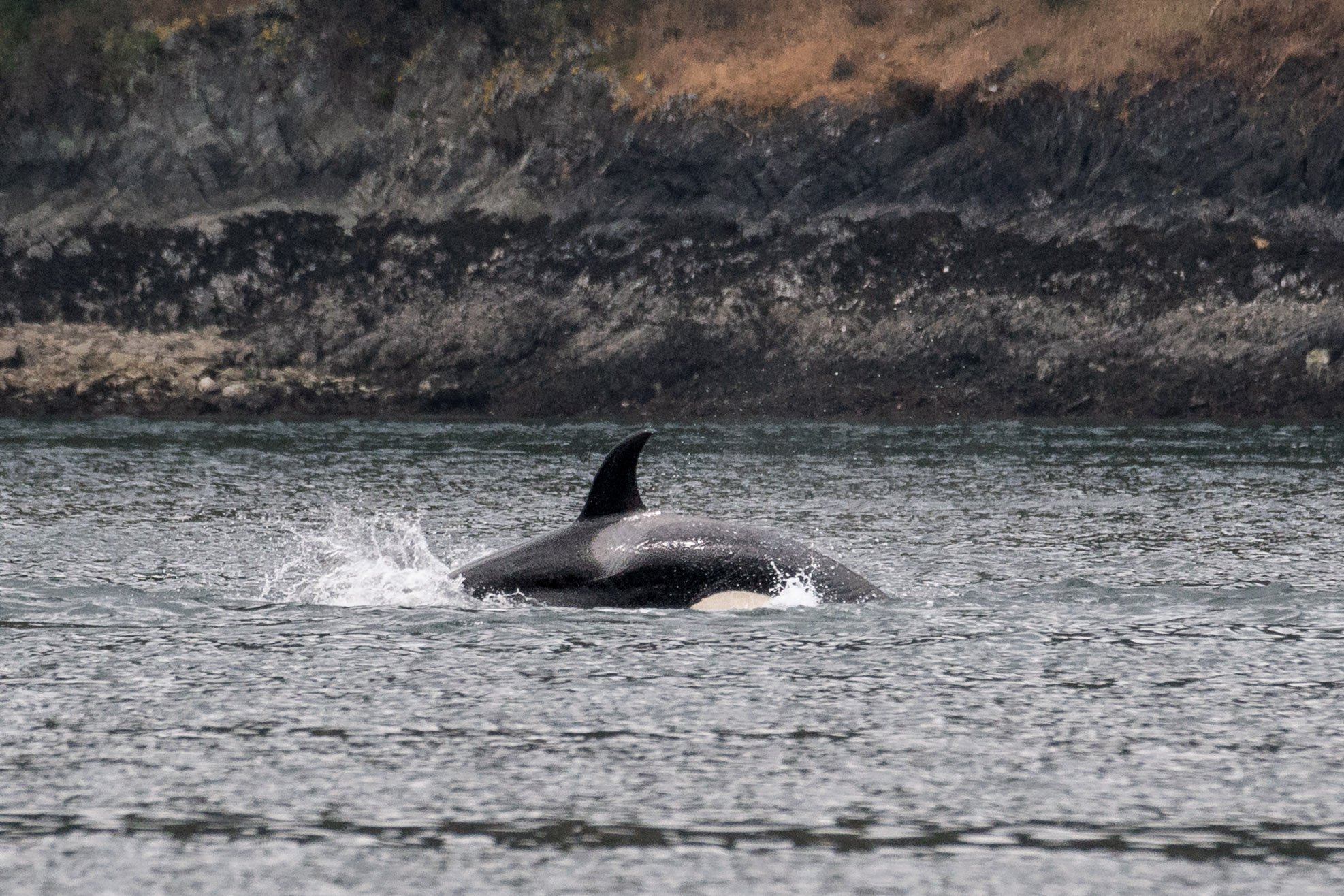
T046B6 Sol giving a good look at her dorsal fin and saddle patch. Photo by Evan Hessels.
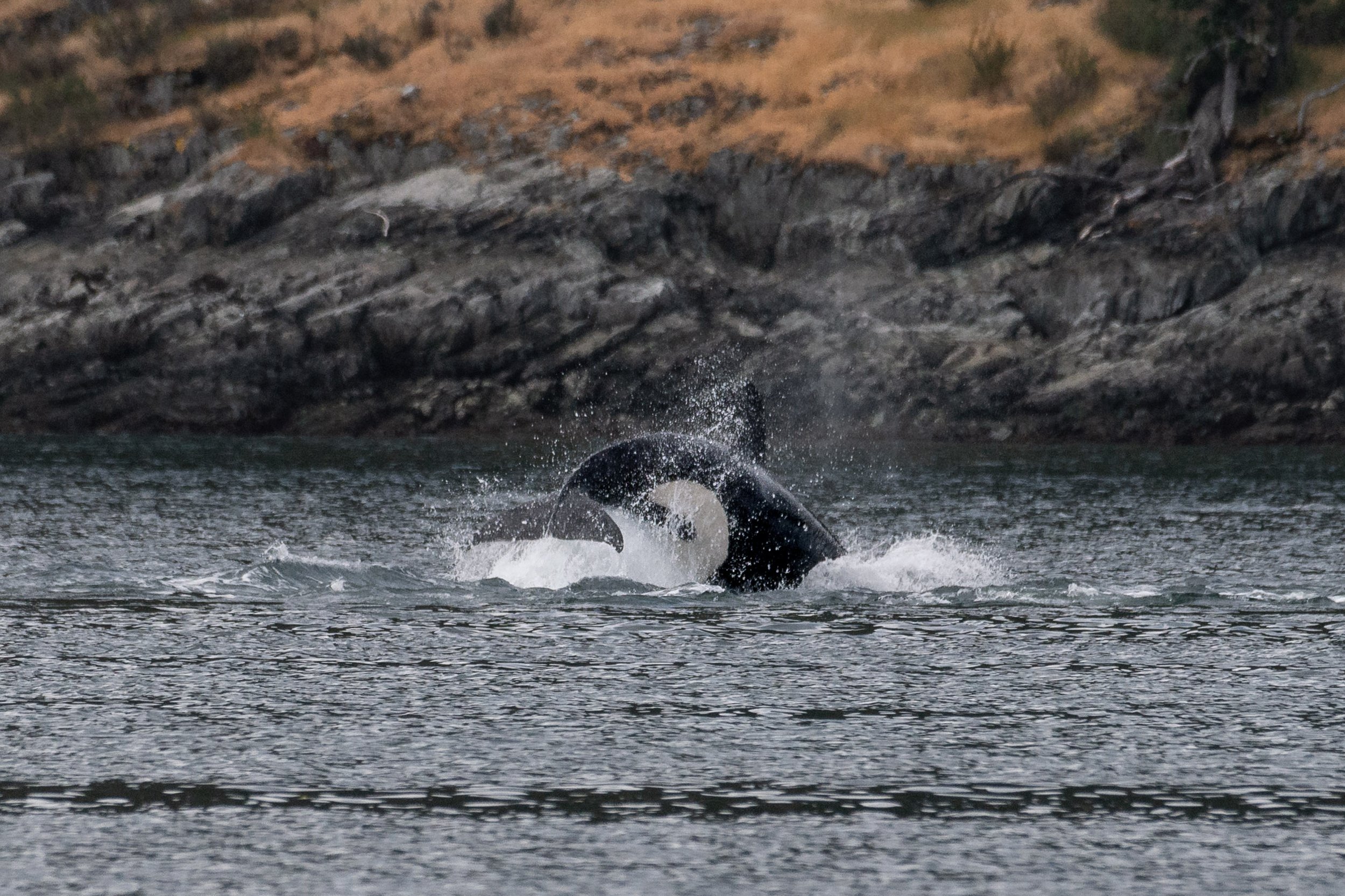
One of the orca porpoising away from us. Photo by Evan Hessels.
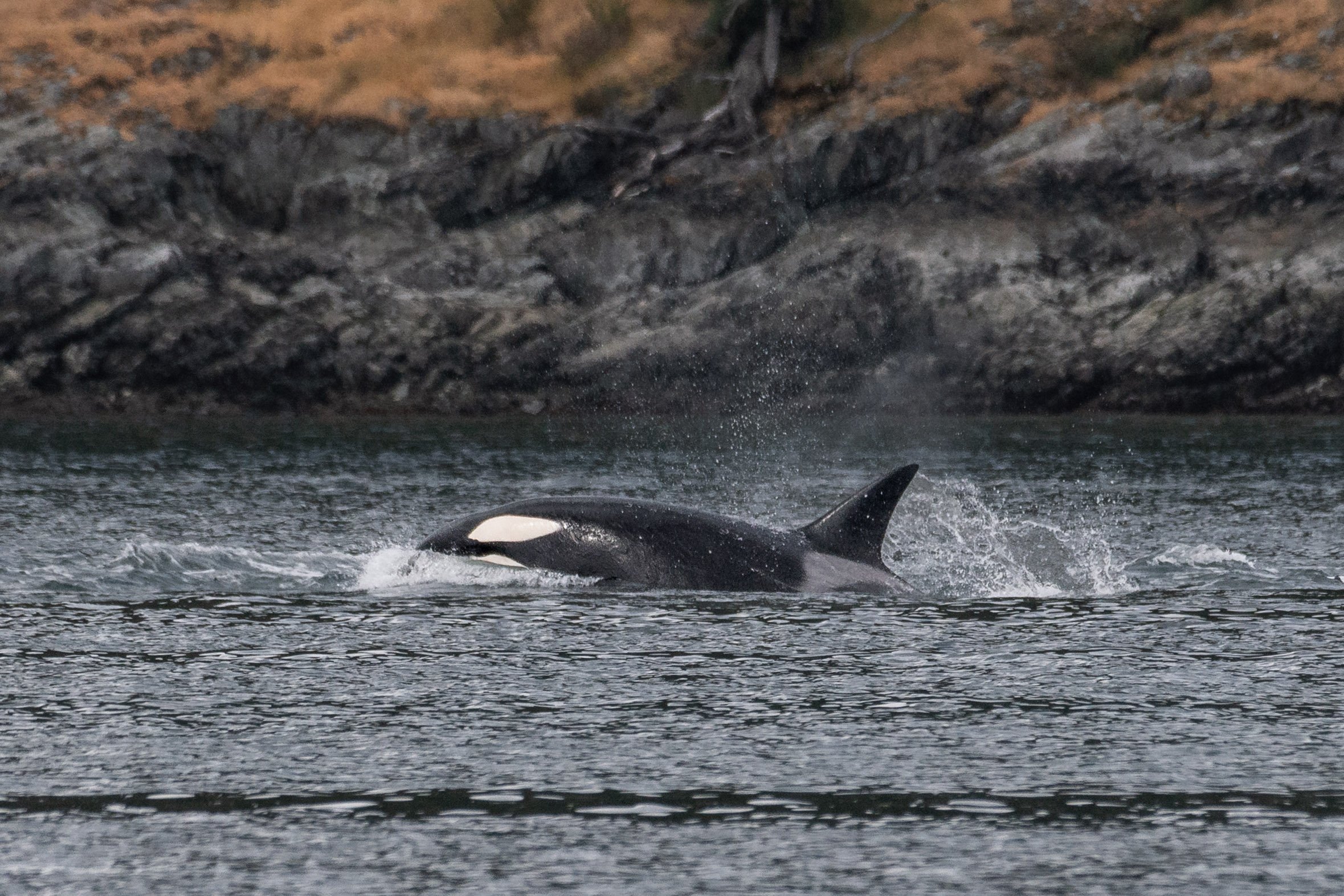
T046B3 Sedna showing off her eyepatch. Photo by Evan Hessels.
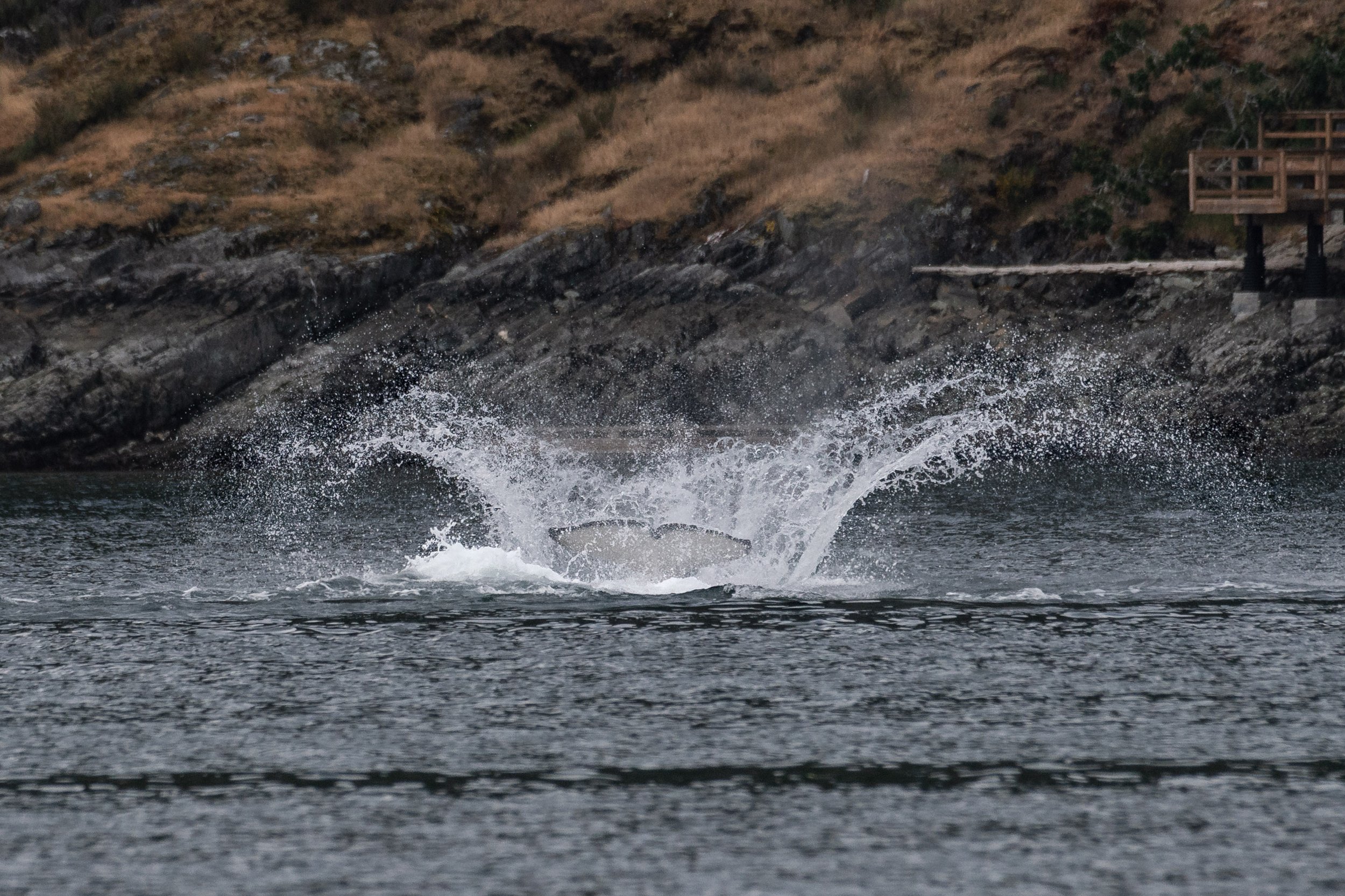
A large splash and a view of the an Orcas fluke as it descends into the water after a breach. Photo by Evan Hessels.
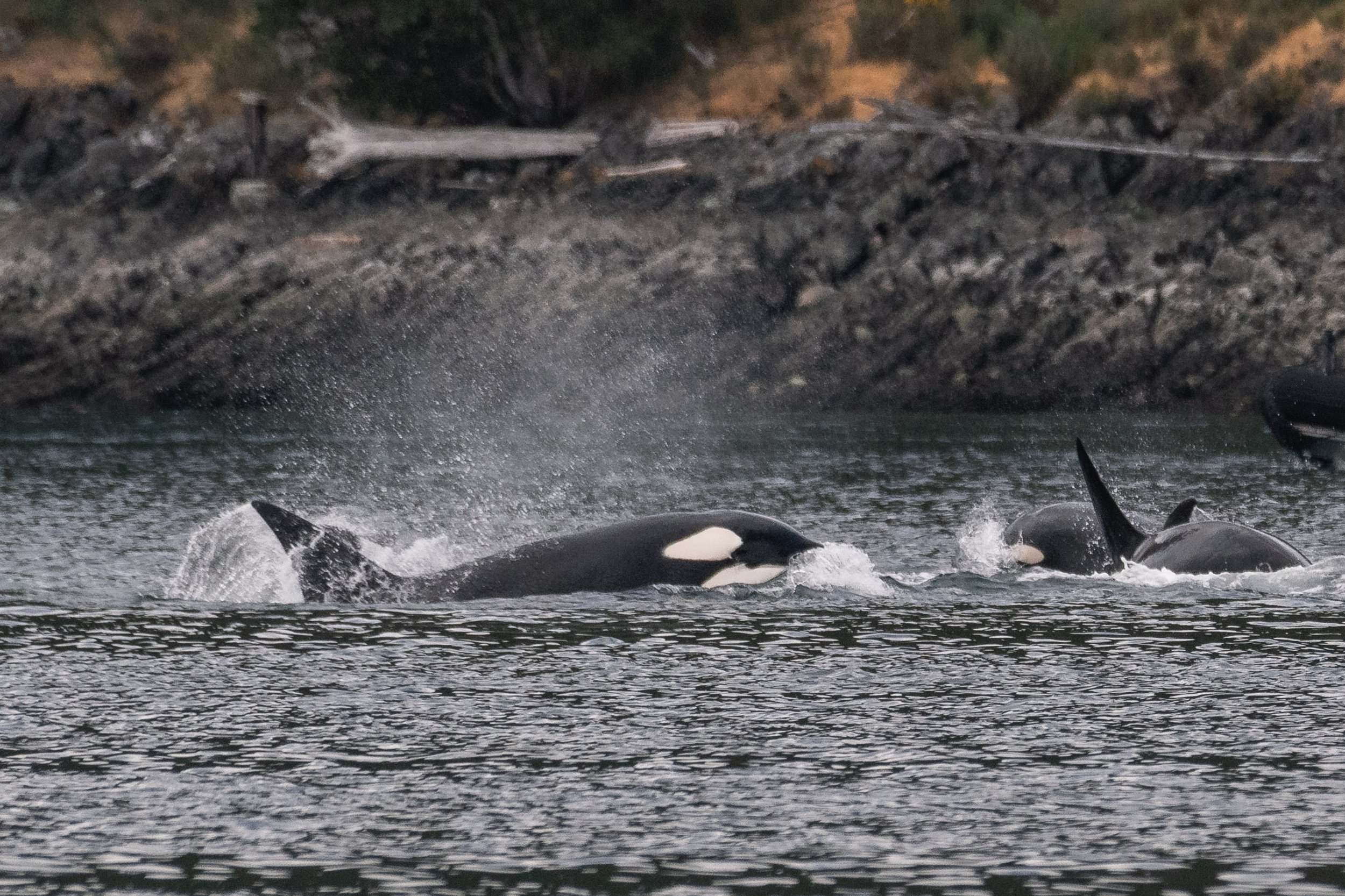
T046B4 Quiver moving towards T046B2 Akela and her daughter T046B2B Takaya. Photo by Evan Hessels.
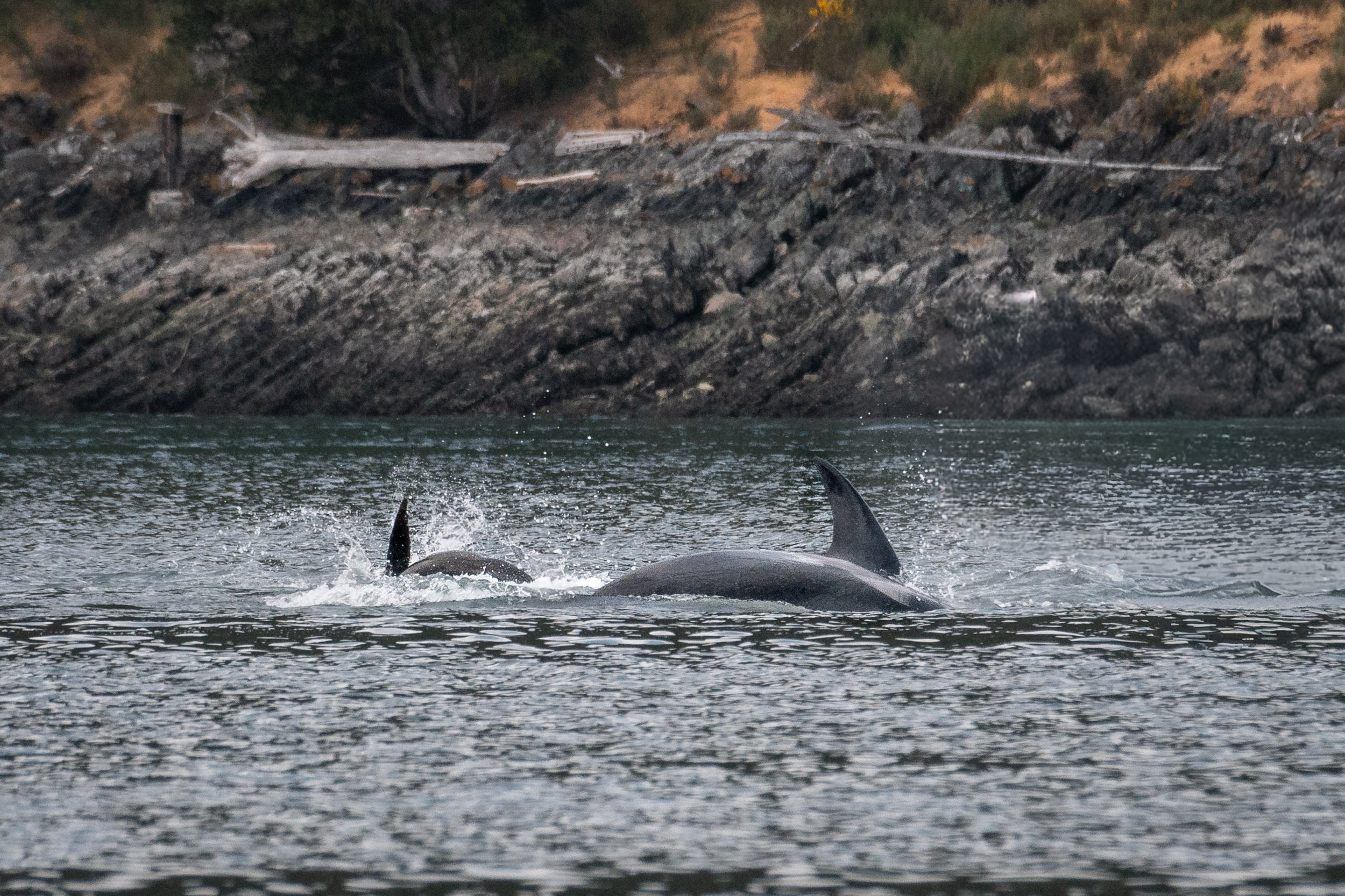
T046B4 Quiver on the right just missing a California Sea Lion as it swims towards the left. Photo by Evan Hessels.
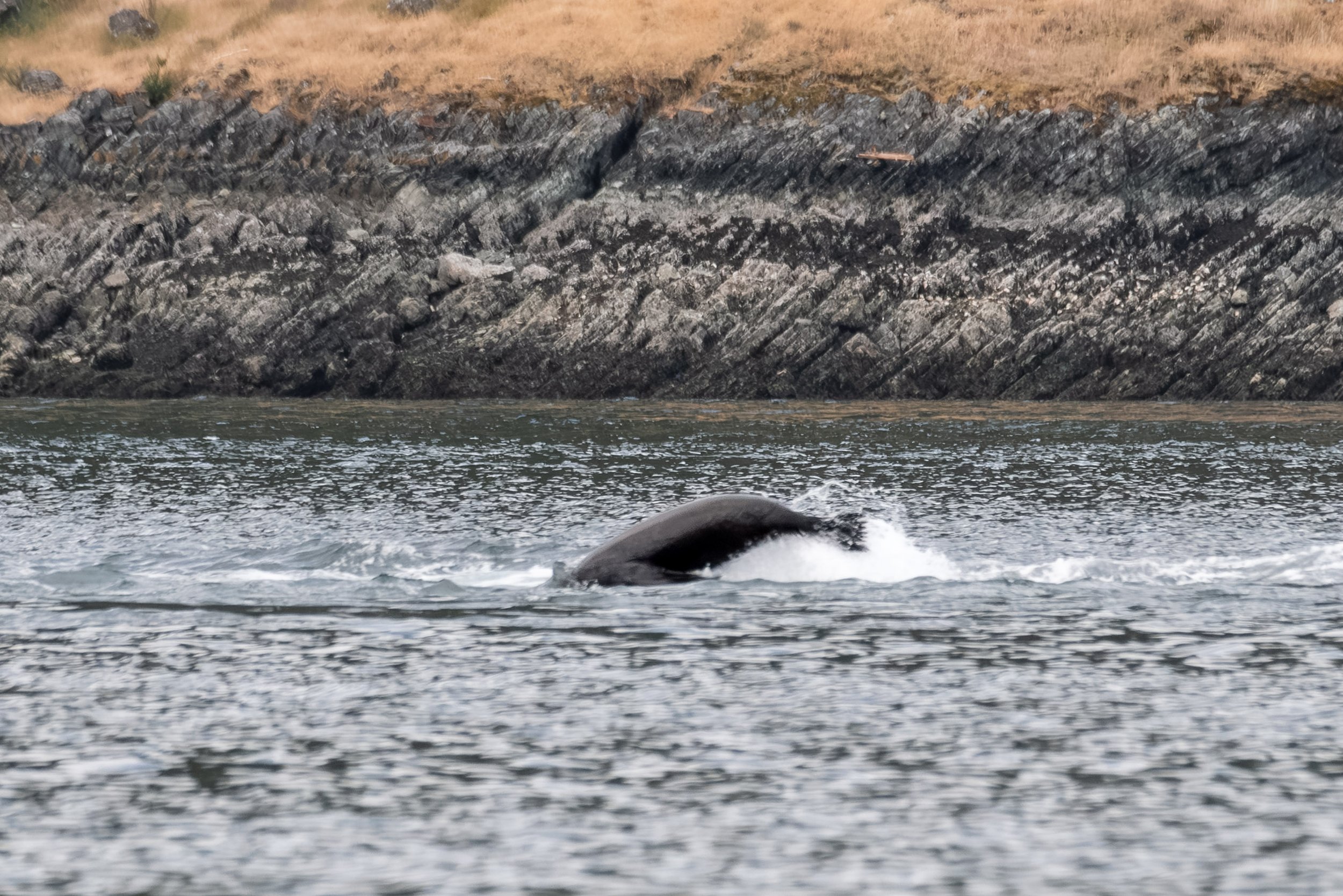
The California Sea Lion from the last photo porpoising away. Photo by Evan Hessels.
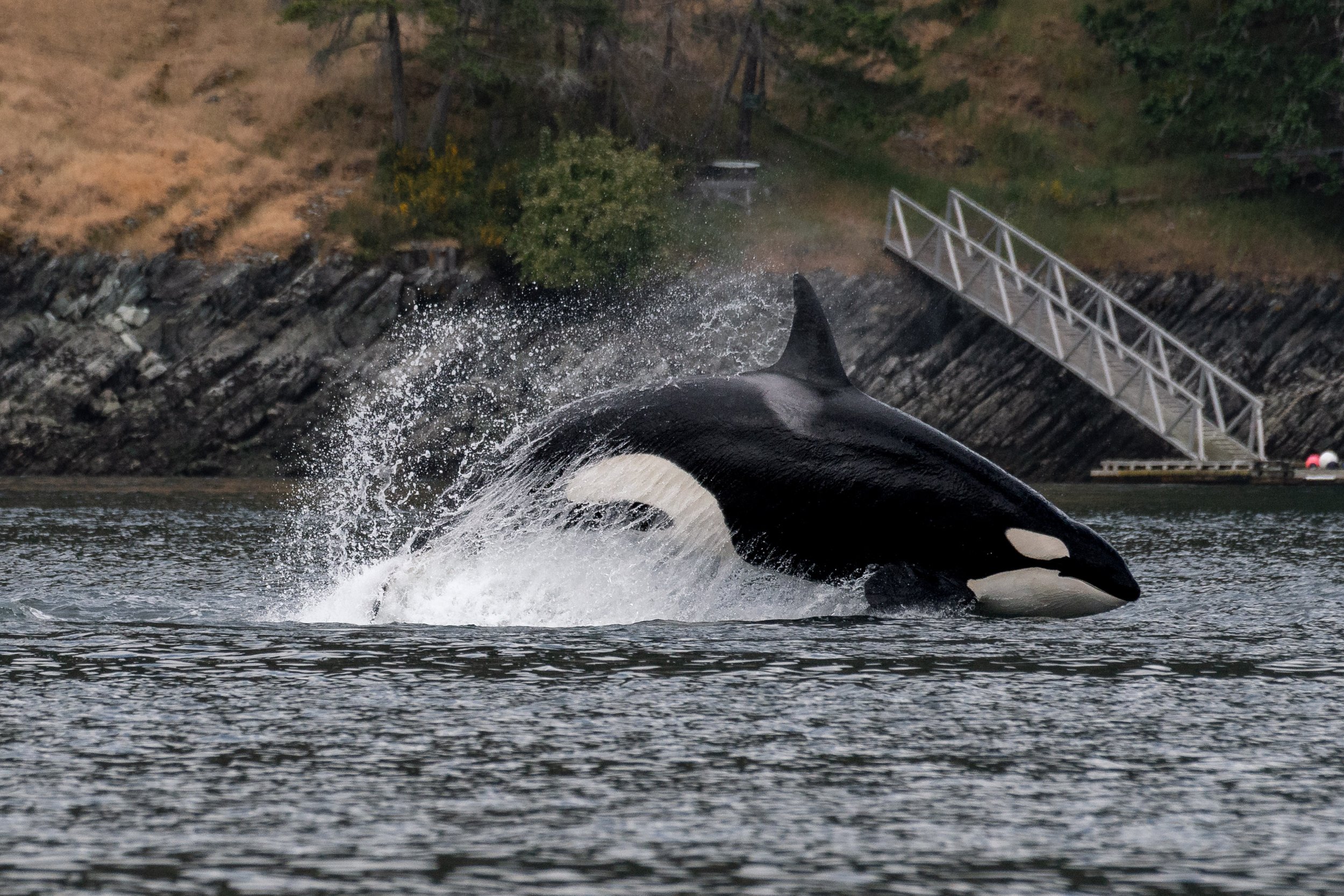
T046B2 Akela porpoising clear out of the water. Photo by Evan Hessels.
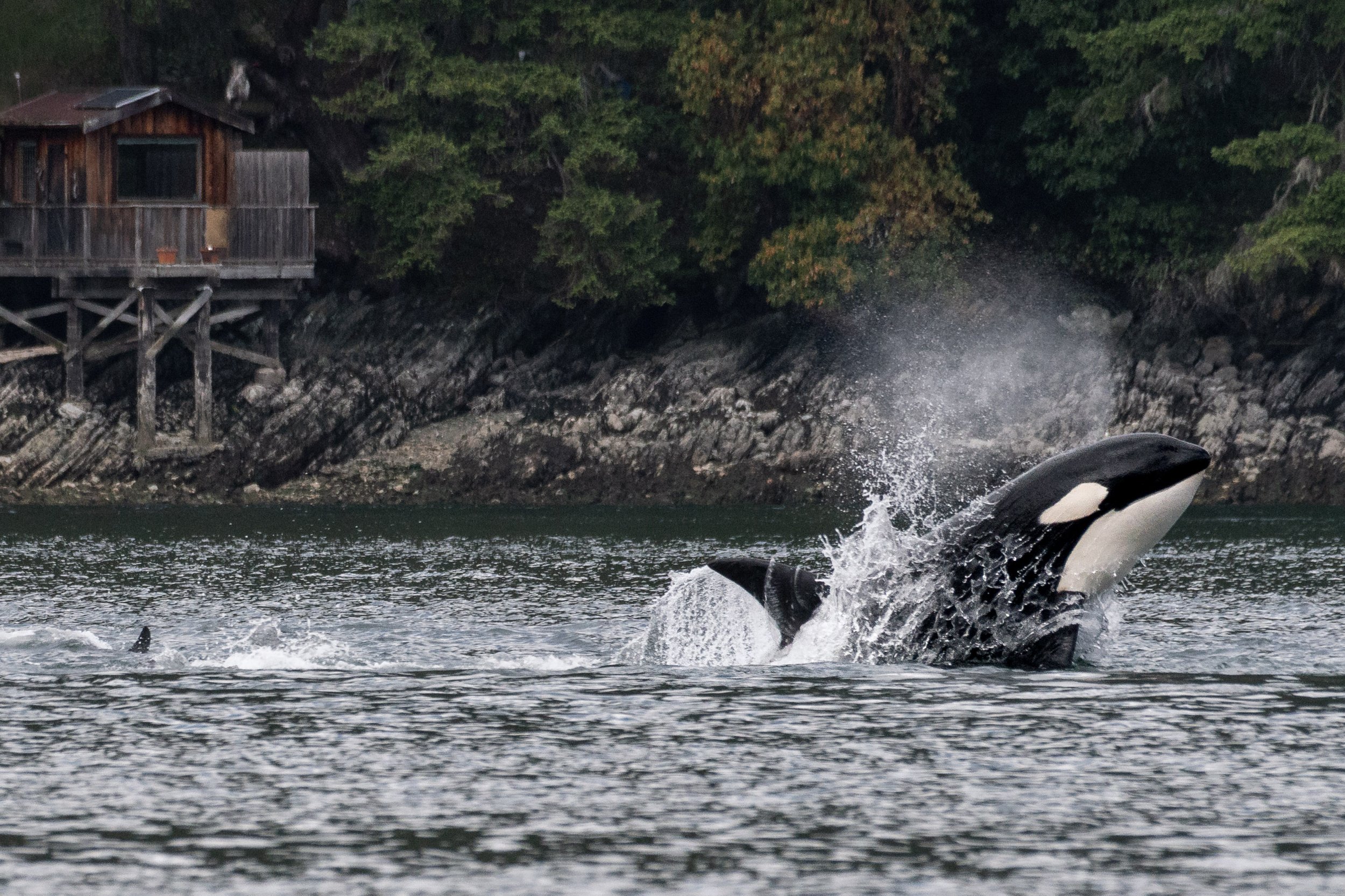
T046B4 Quiver also beginning to porpoise out of the water. Photo by Evan Hessels.
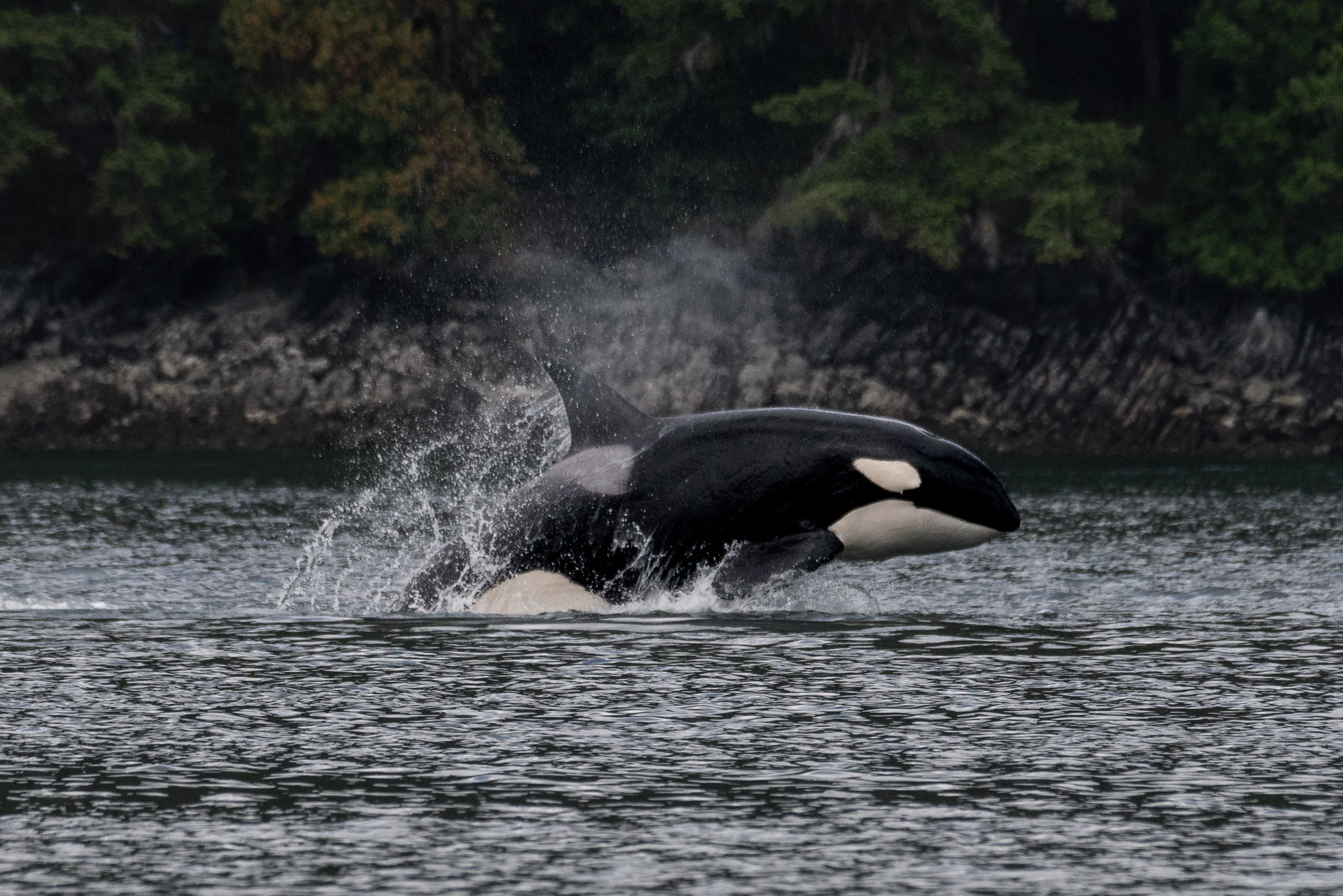
T046B4 Quiver showing off most of his body out of the water. Photo by Evan Hessels.
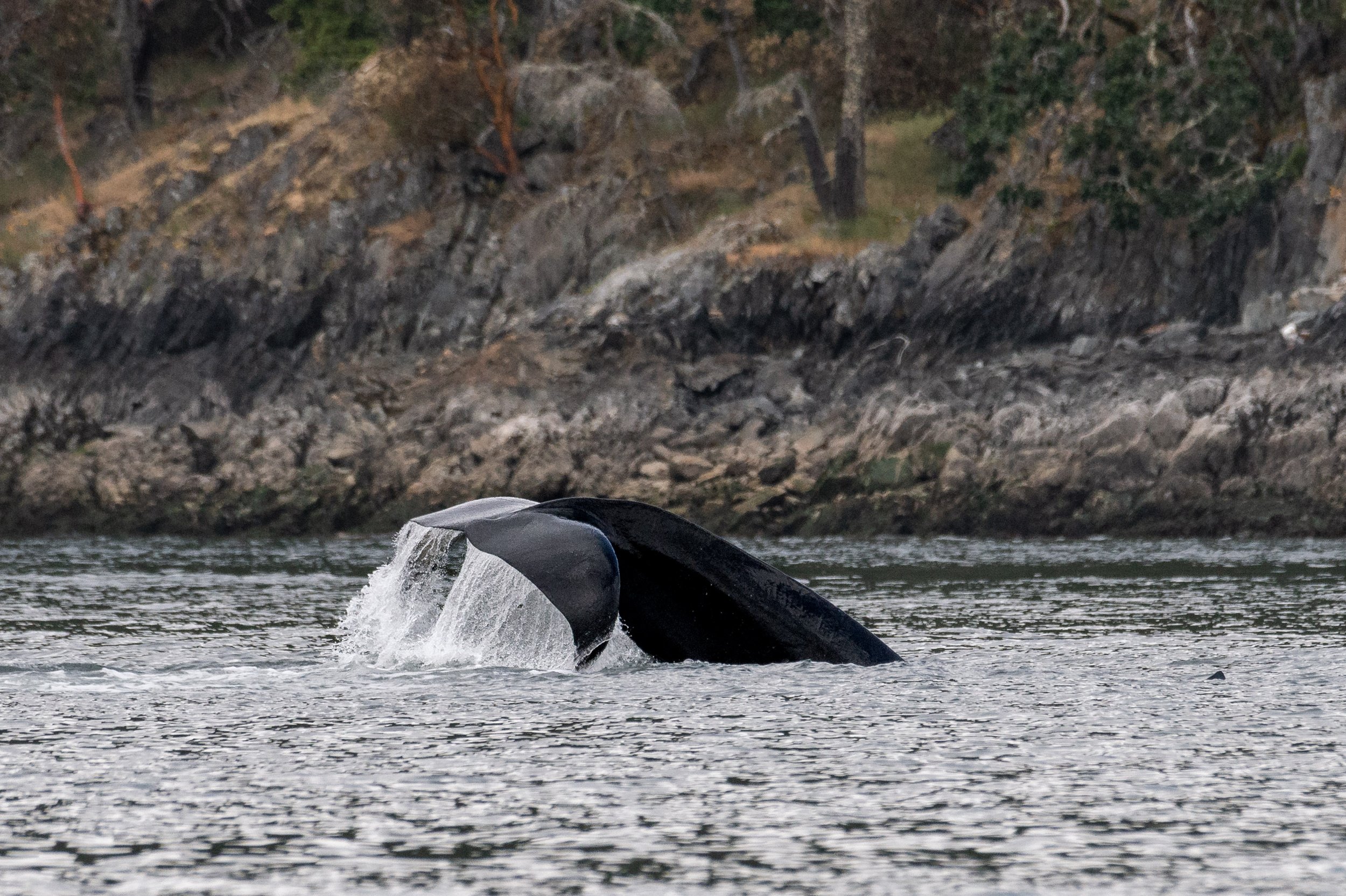
T011A Rainy raising his giant tail out of the water as he prepares to tail slap. Photo by Evan Hessels.
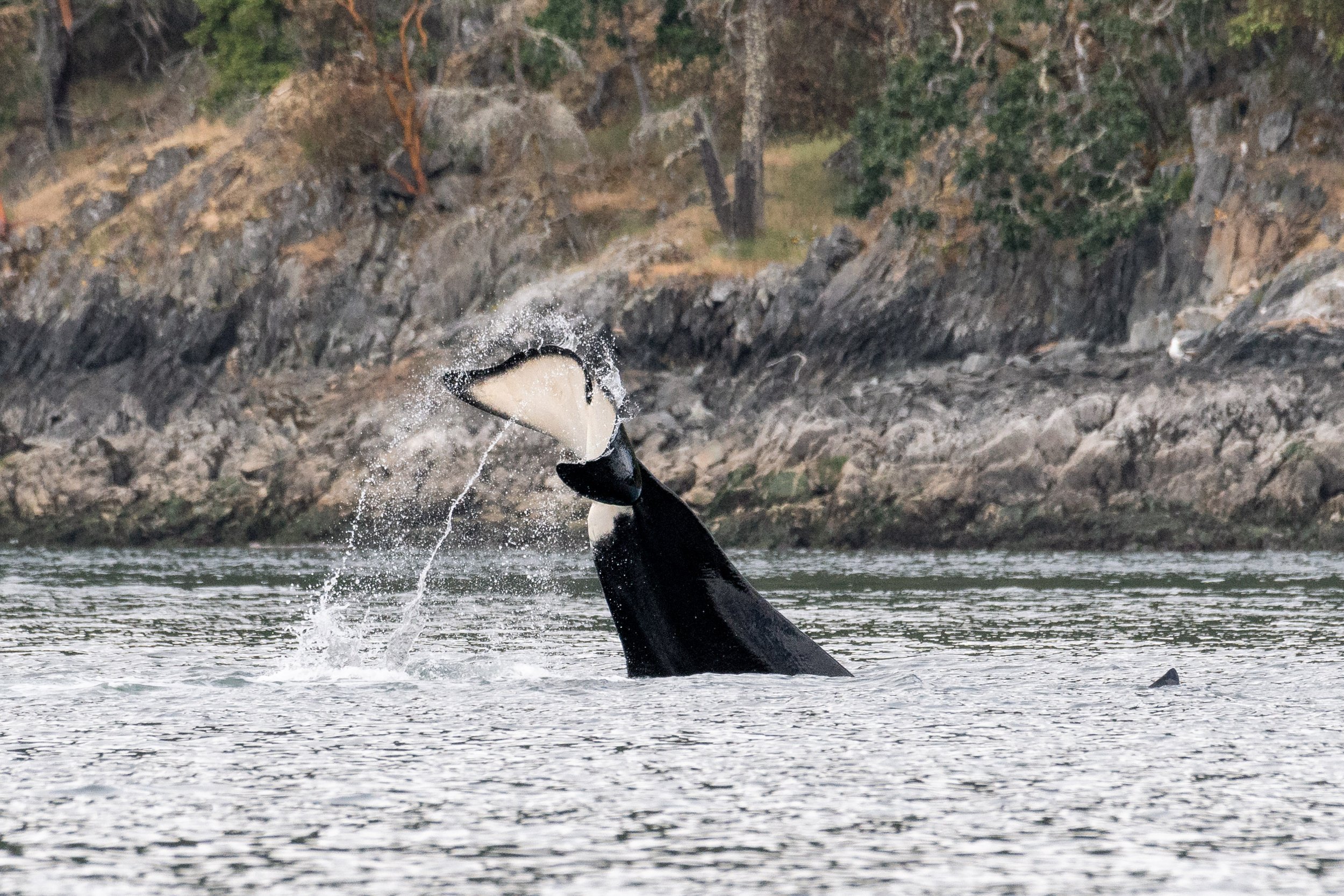
T011A Rainy beginning to slap his tail onto the waters surface. Photo by Evan Hessels.
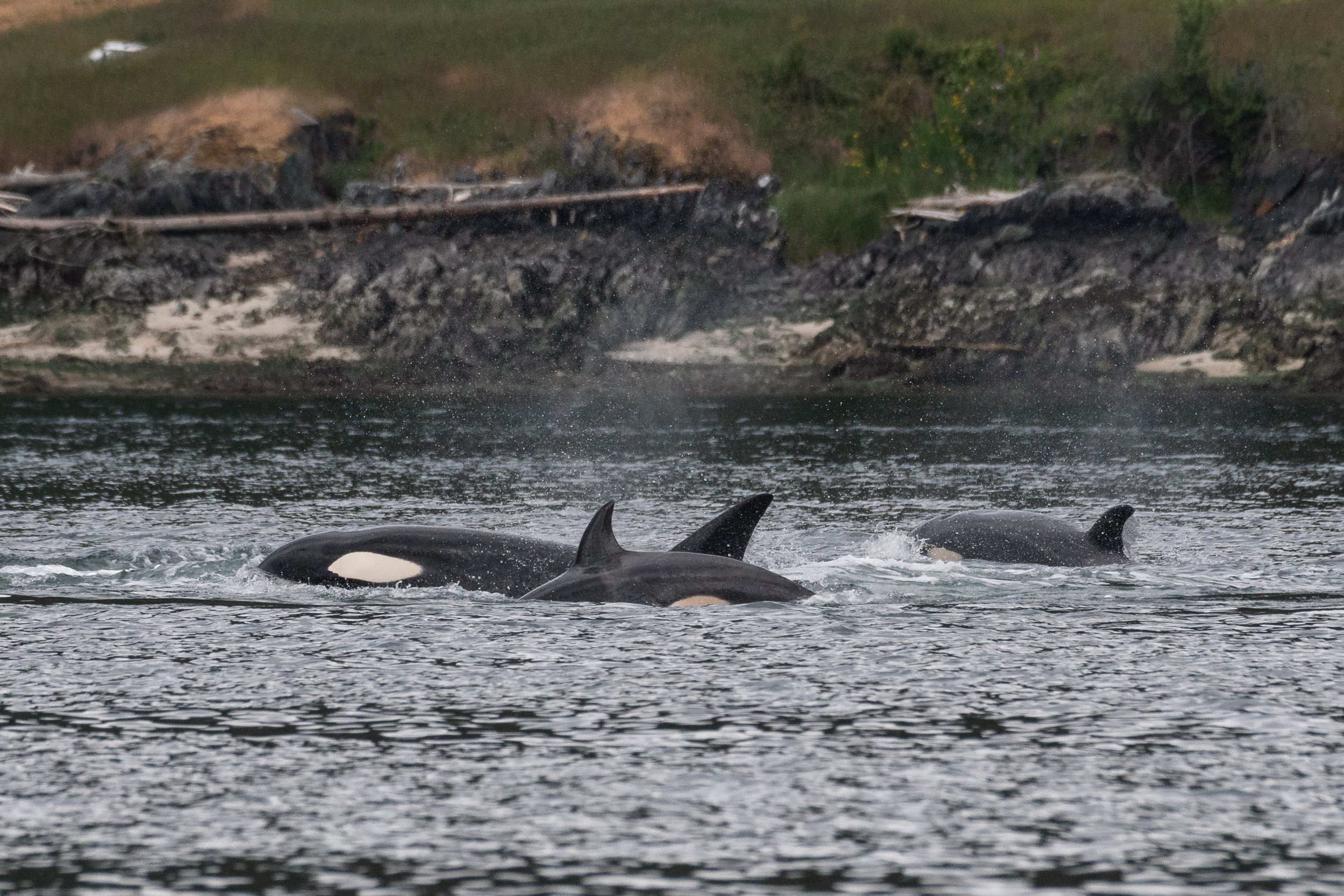
From left to right: T046B3 Sedna followed behind by her child T046B3A Munro and T046B7 Tala. Photo by Evan Hessels.
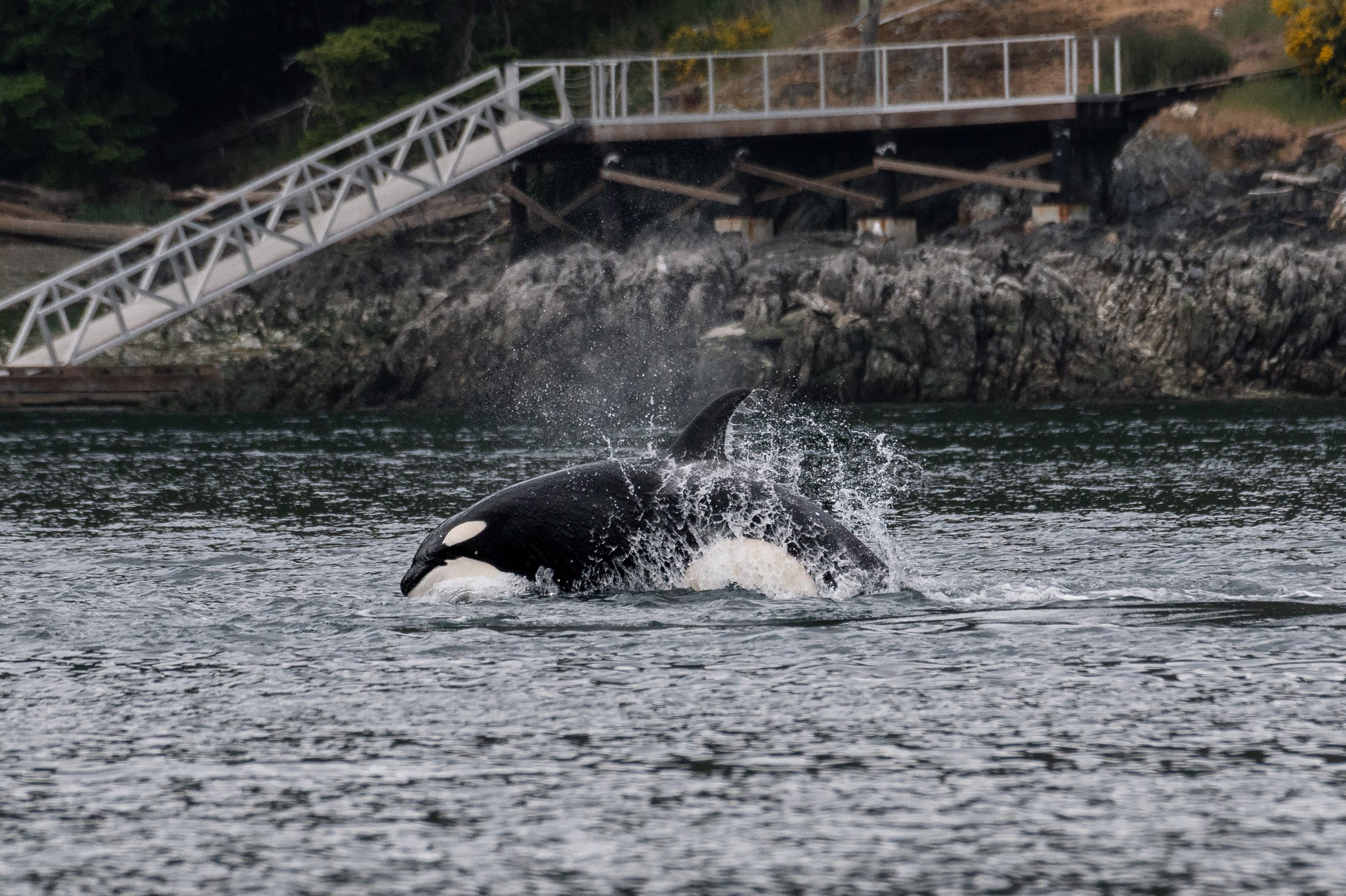
T046B6 Sol porpoising towards the hunting action nearby. Photo by Evan Hessels.
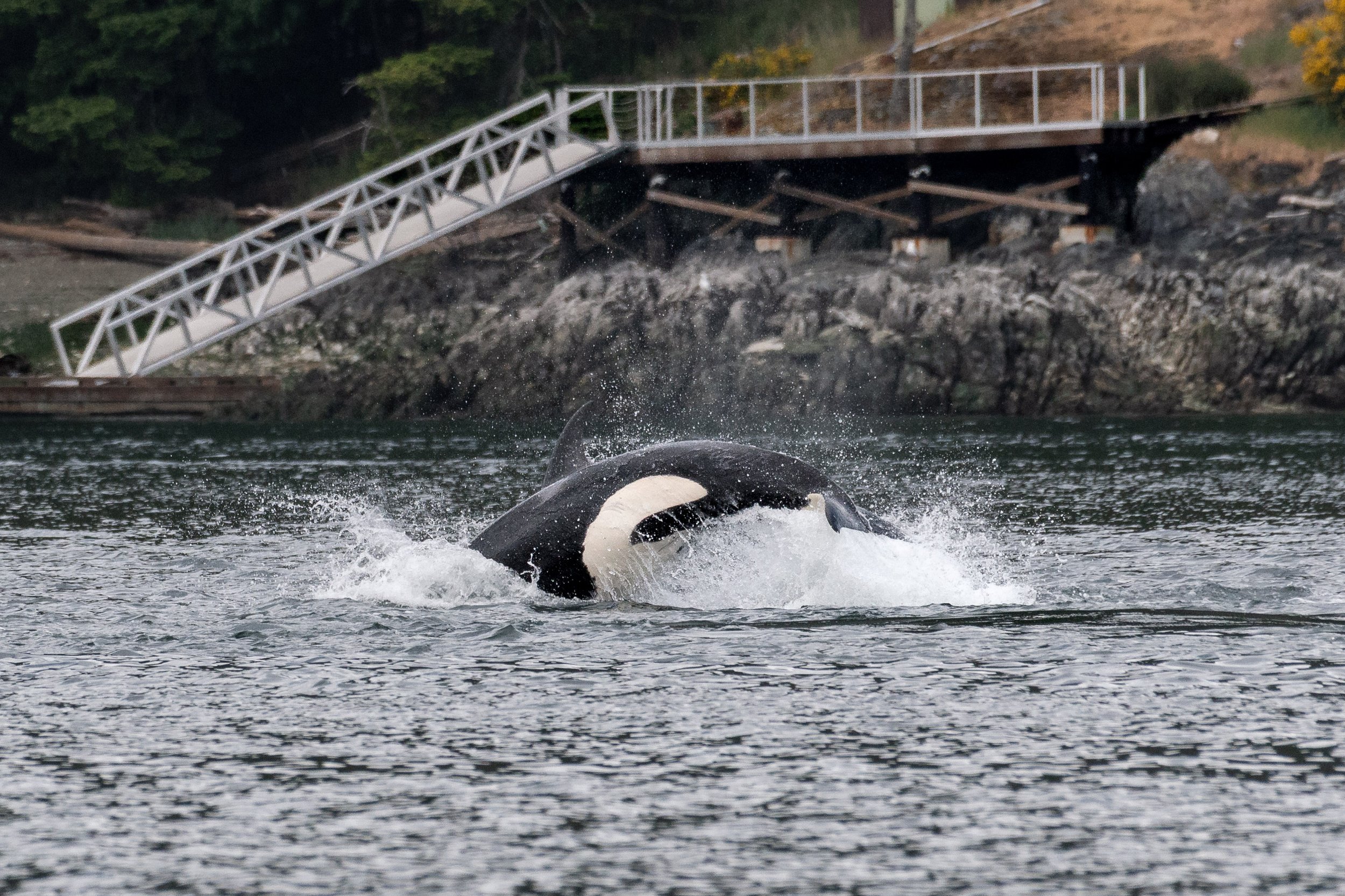
A great look at the countershaded bottom side of T046B6 Sol. Photo by Evan Hessels.
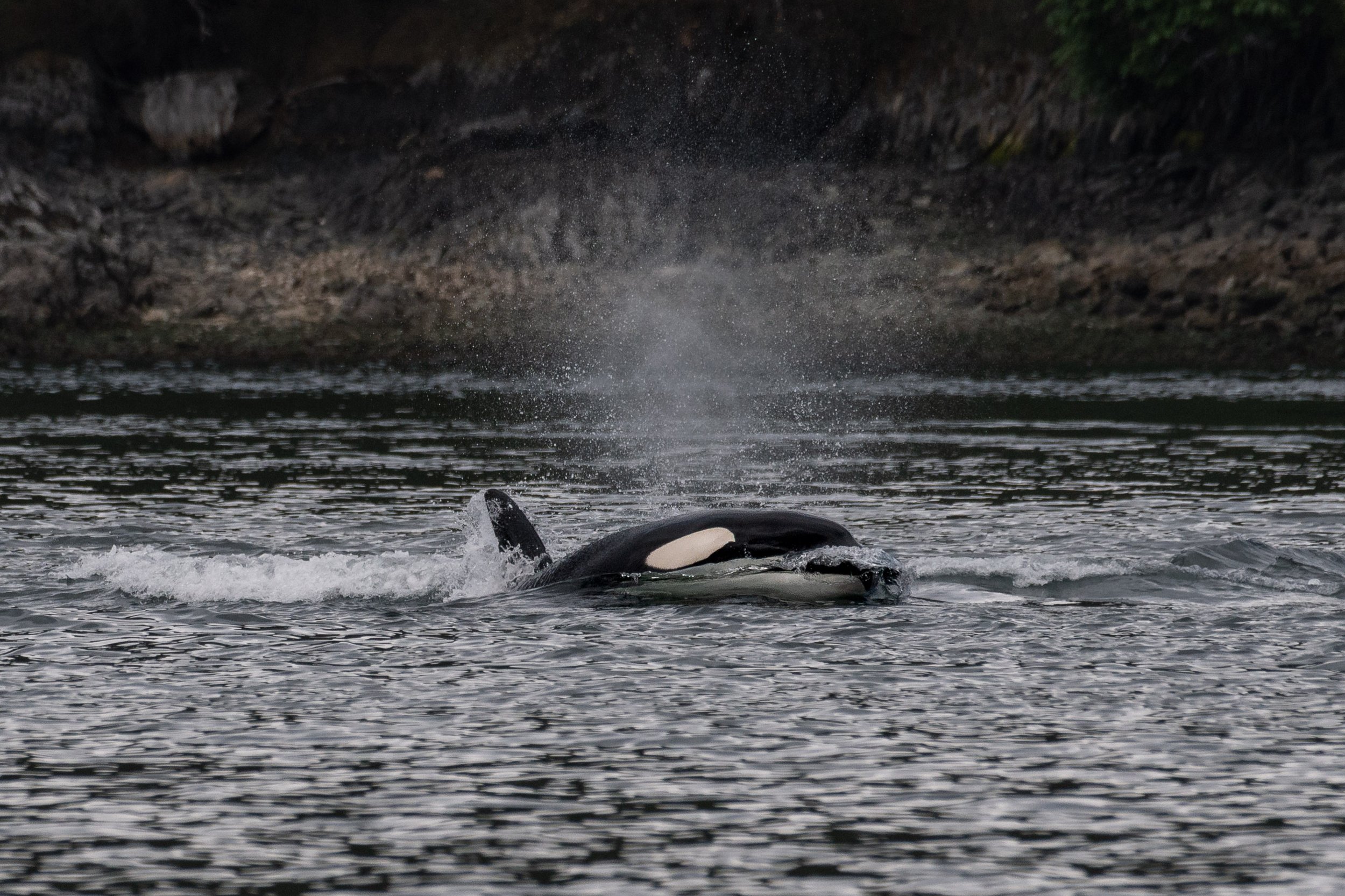
T046B2 Akela giving a blow as she surfaces moving towards us. Photo by Evan Hessels.
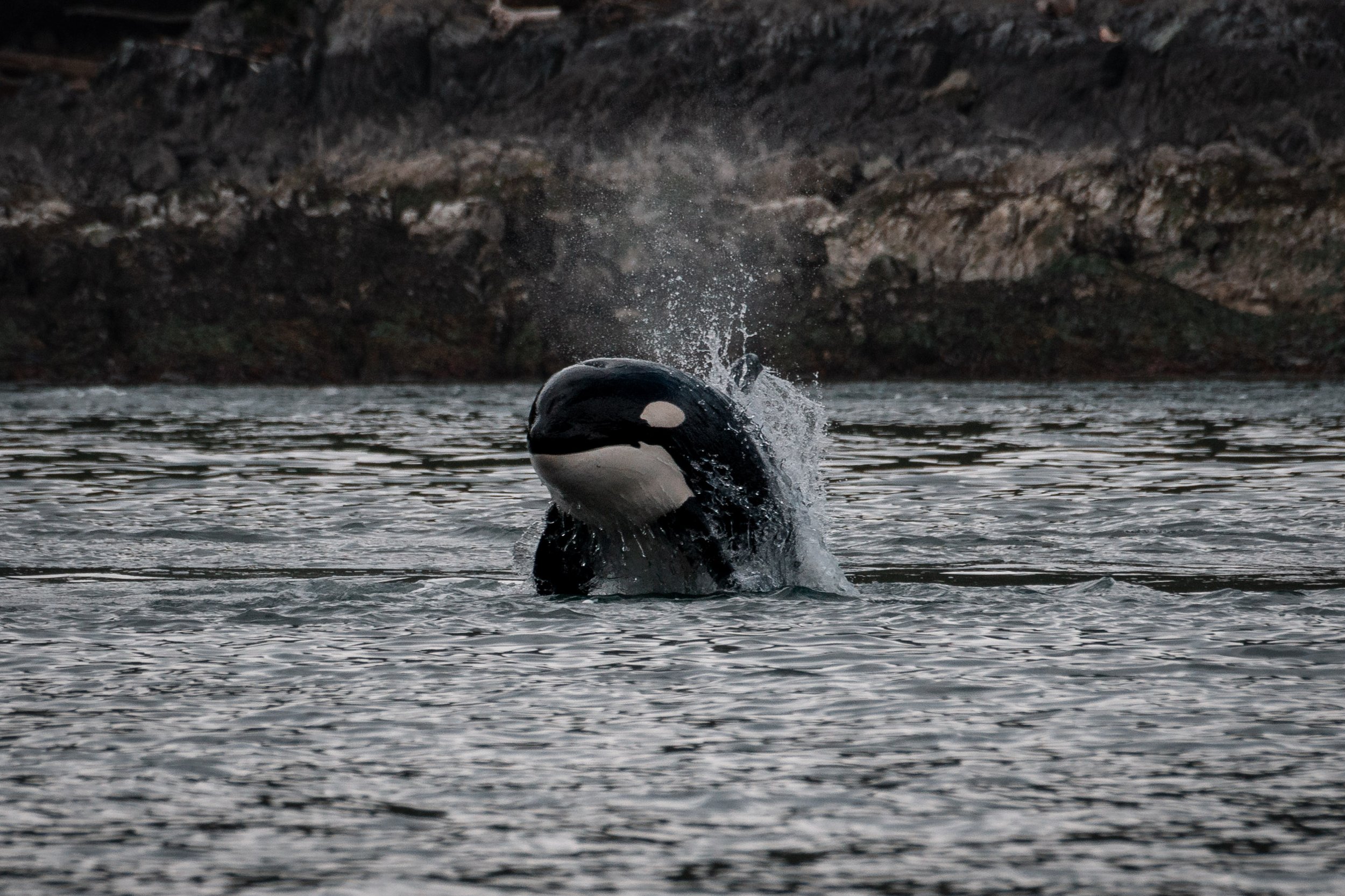
T046B6 Sol porpoising along. Photo by Evan Hessels.
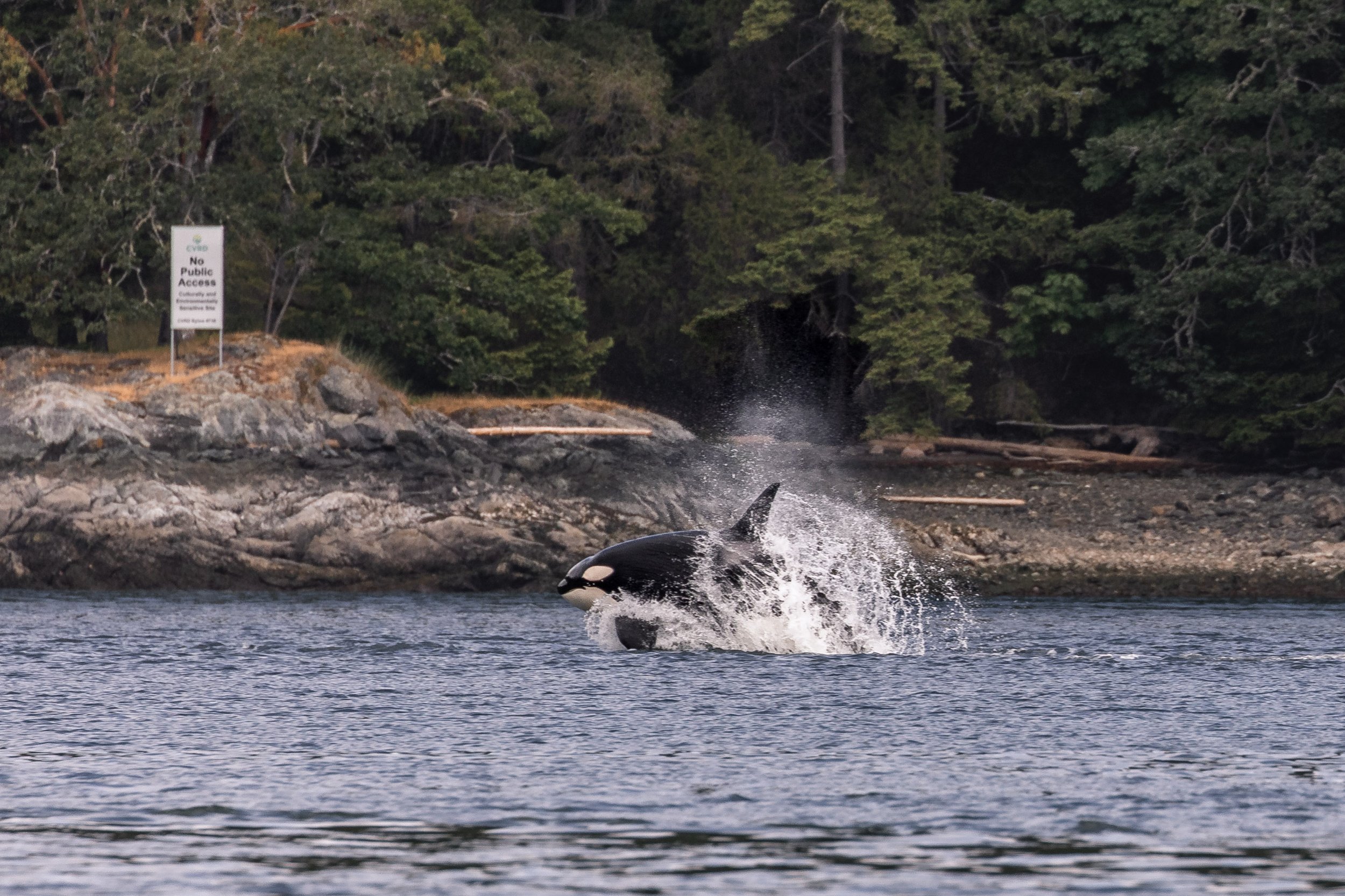
T011A Rainy porpoising along. Photo by Jordan Robinson.
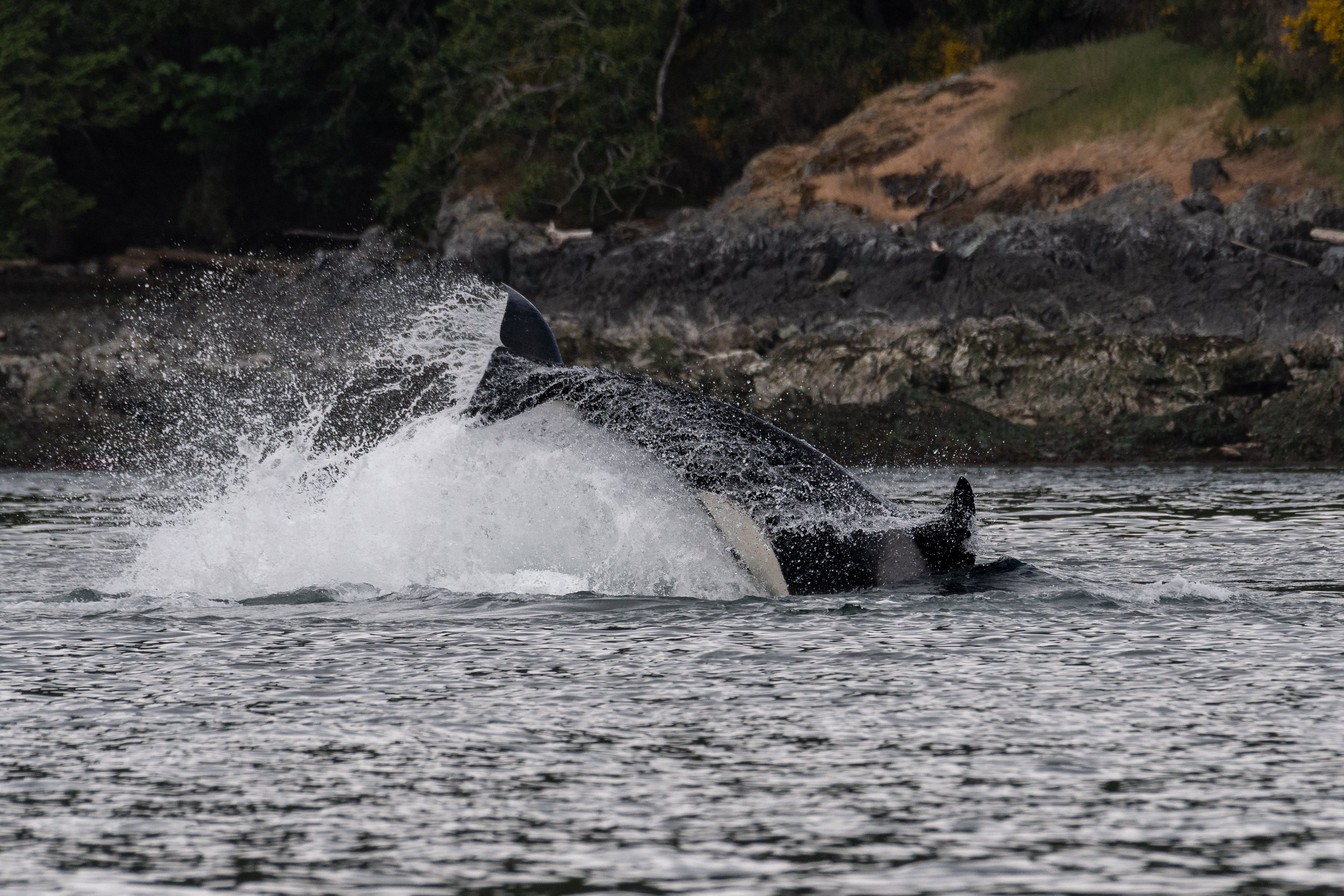
Reentry from one of the orca. Photo by Evan Hessels.
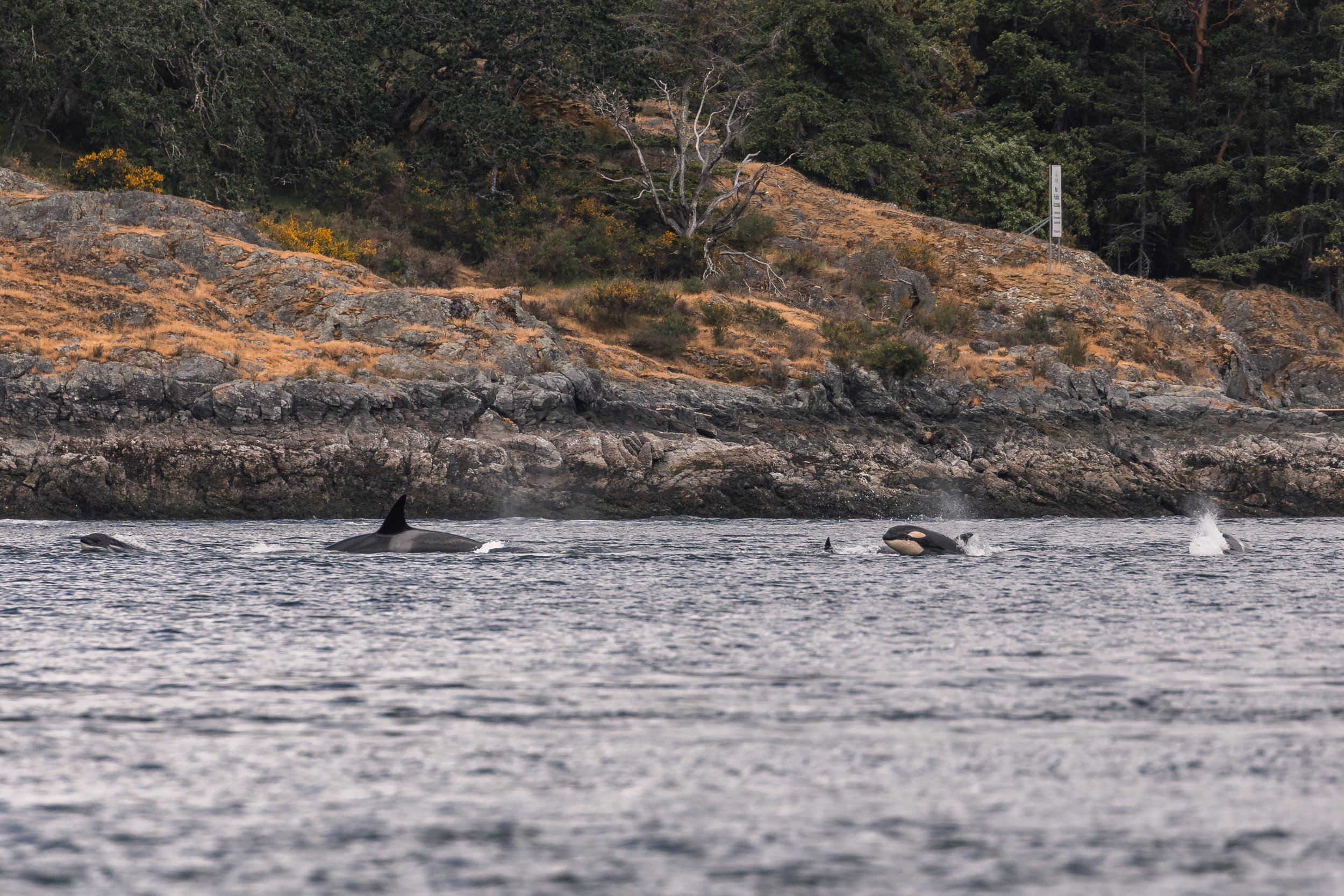
The T046Bs travelling together along the shore, with T046B3A Munro clearing the water. Photo by Jordan Robinson.
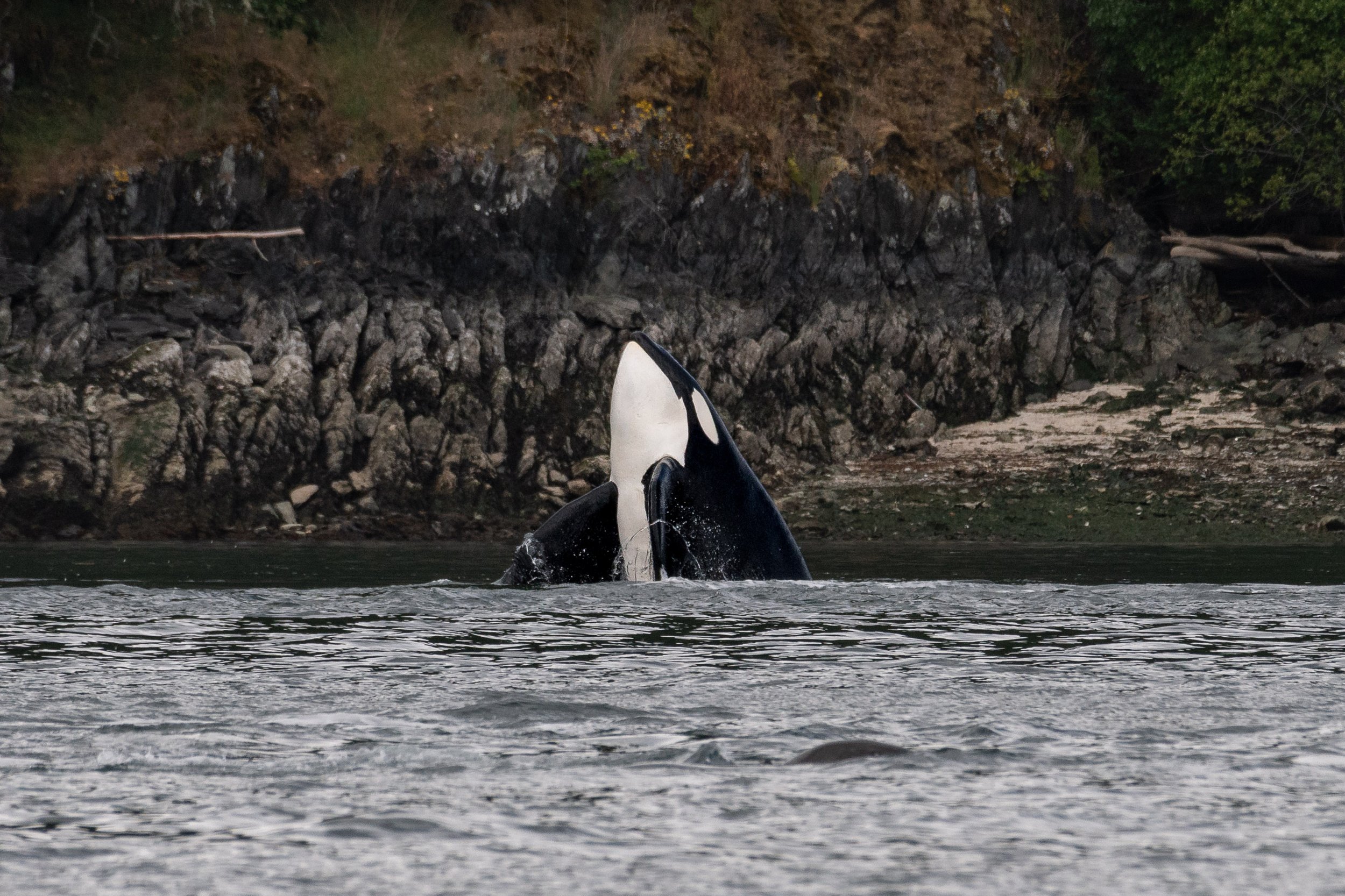
T011A Rainy backdiving. Photo by Evan Hessels.
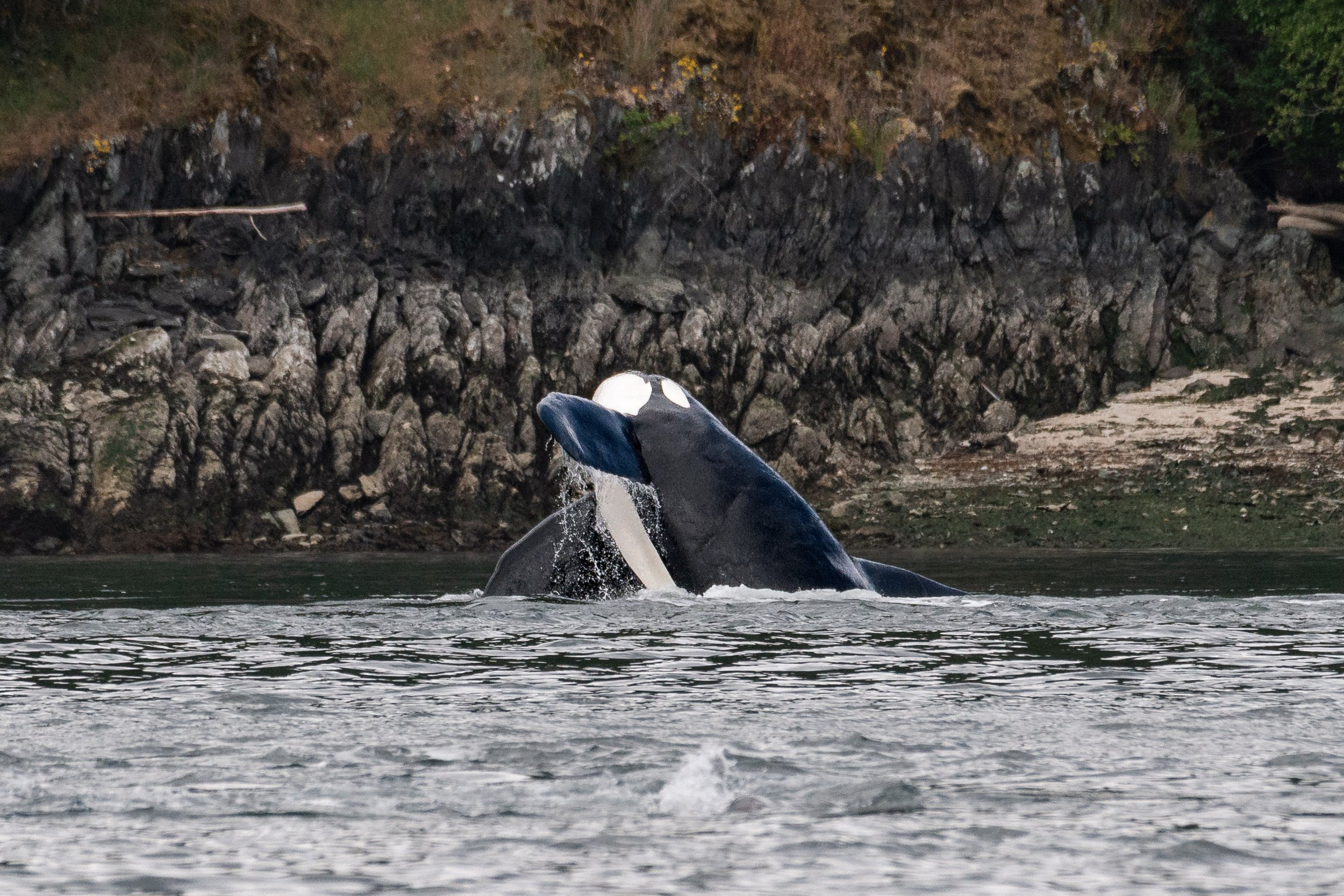
Look at how chunky T011A Rainy is! Photo by Evan Hessels.
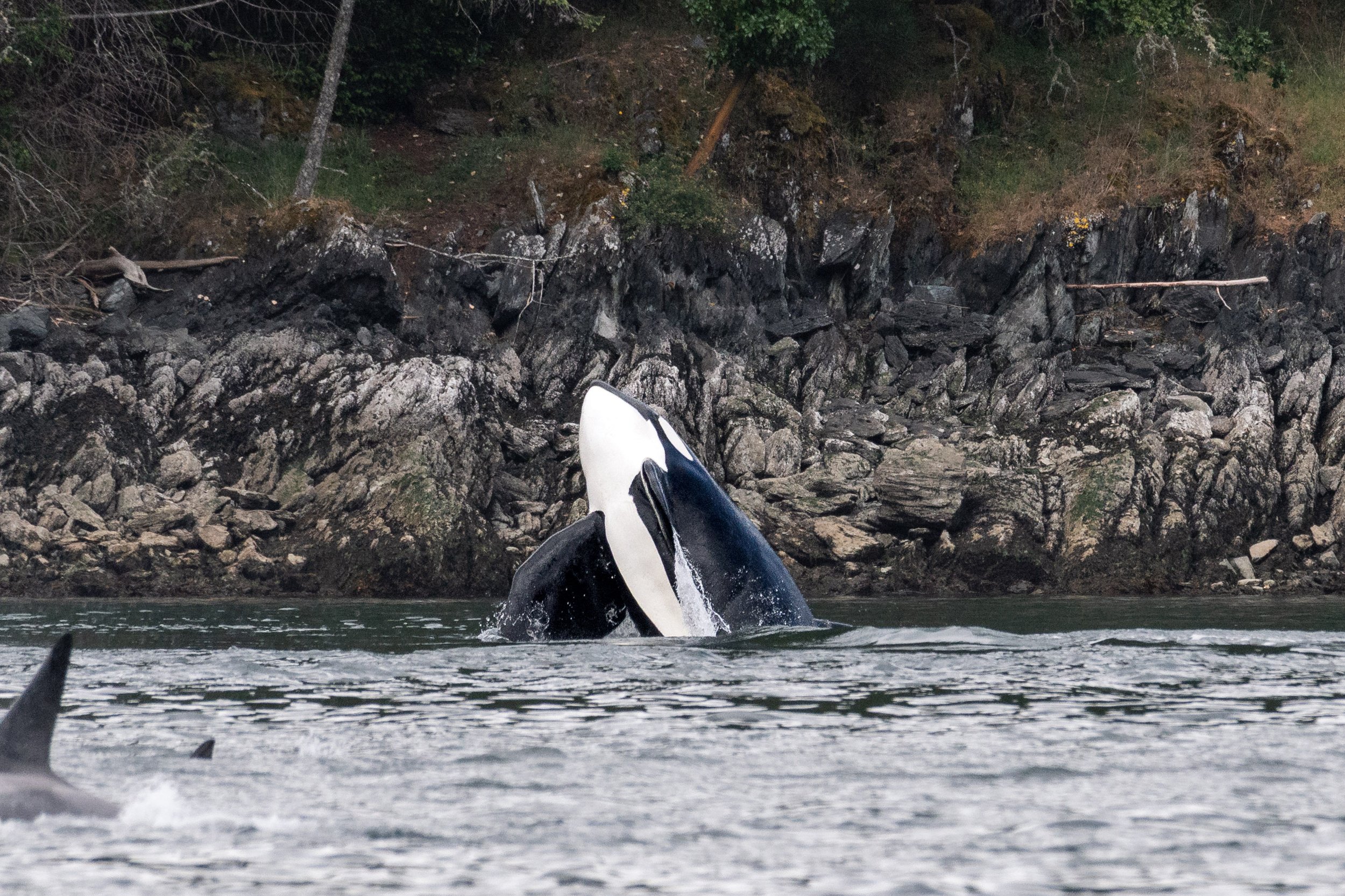
Another backdive from the giant T011A Rainy with the others ahead of him. Photo by Evan Hessels.
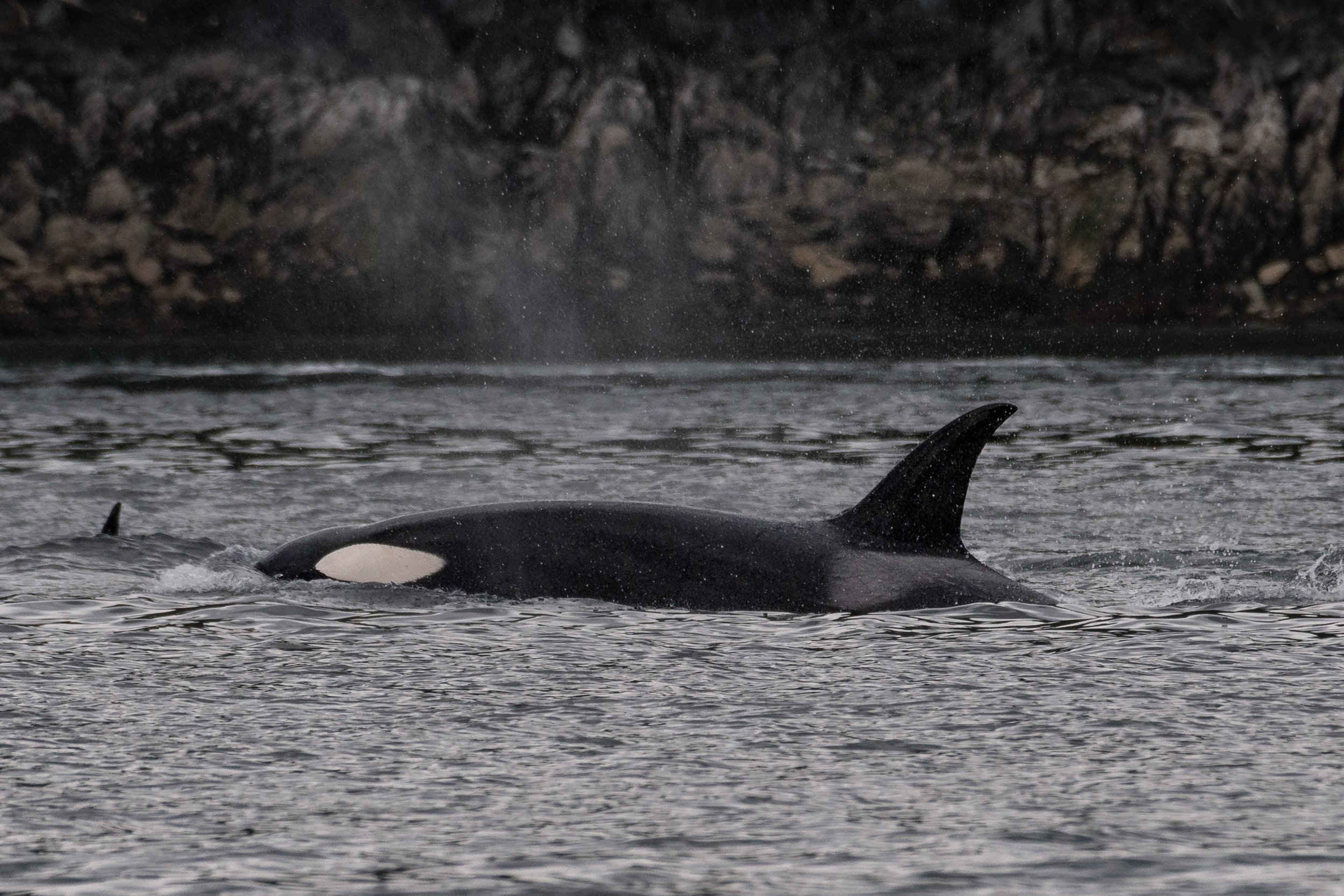
T046B Raksha with her eyepatch above the surface. Photo by Evan Hessels.
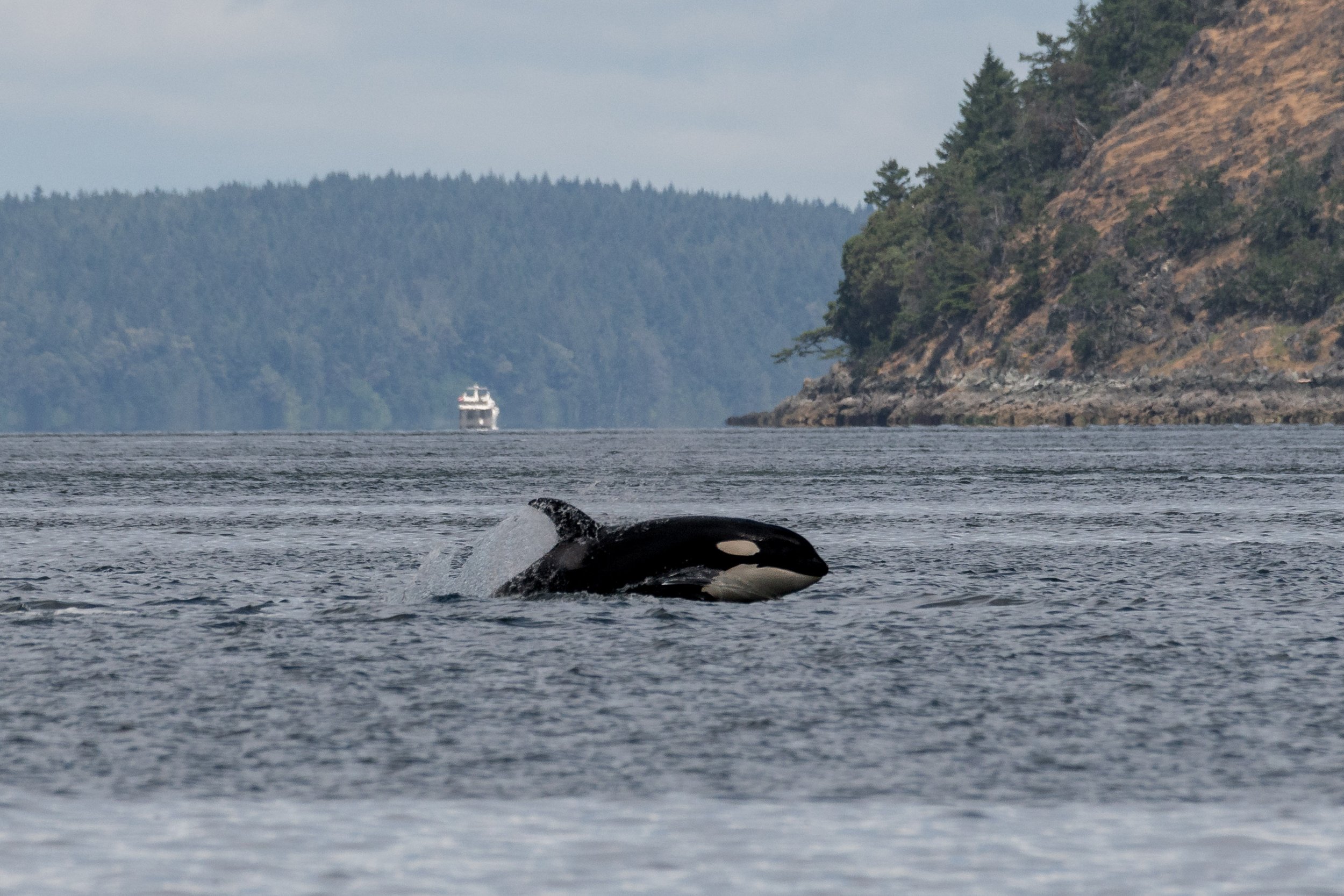
T046B8 Pi porpoising along. Photo by Evan Hessels.
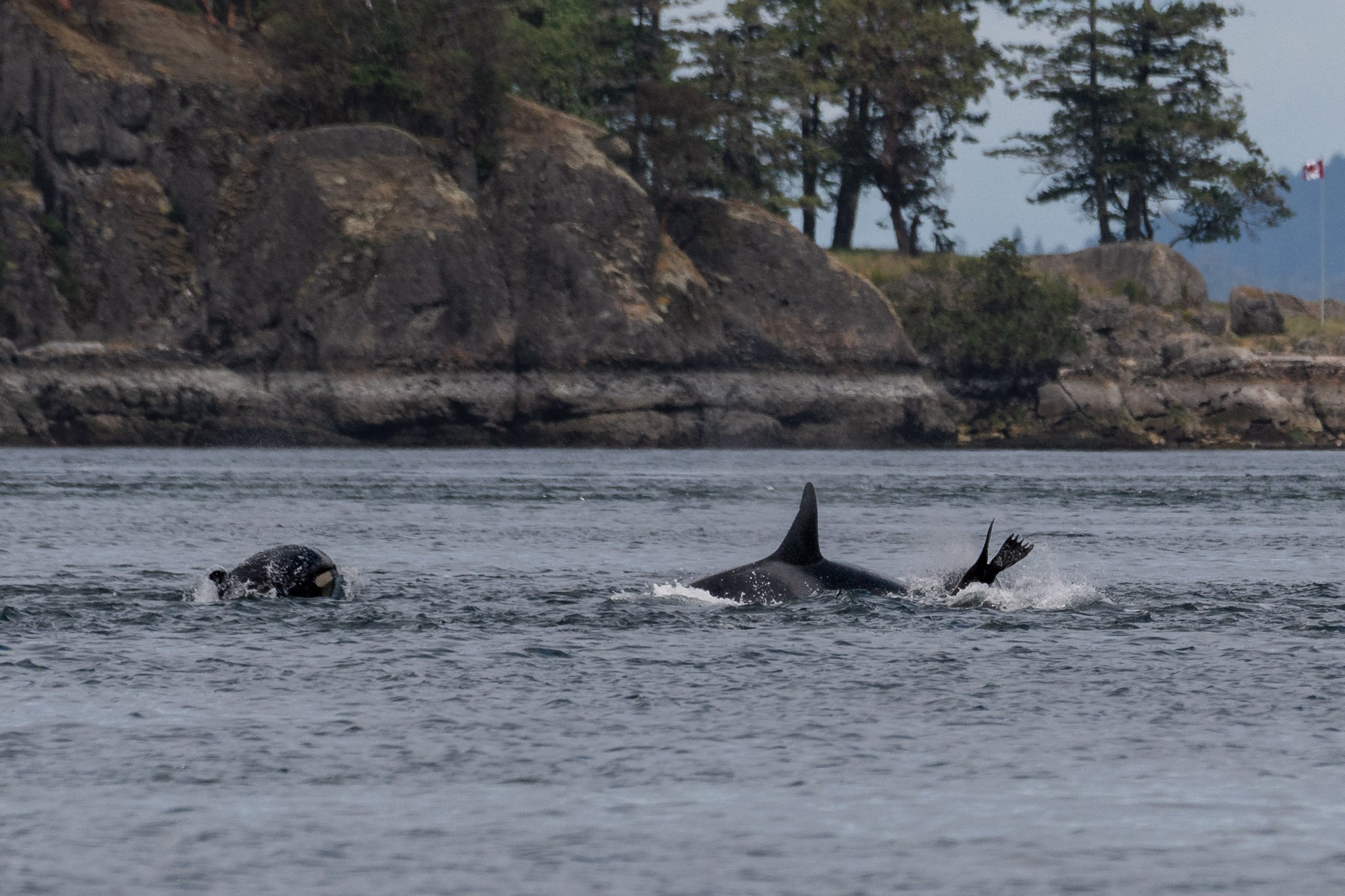
T046B2 Akela with a sea lion (flippers out of the water), and T046B2B Takaya behind her. Photo by Evan Hessels.
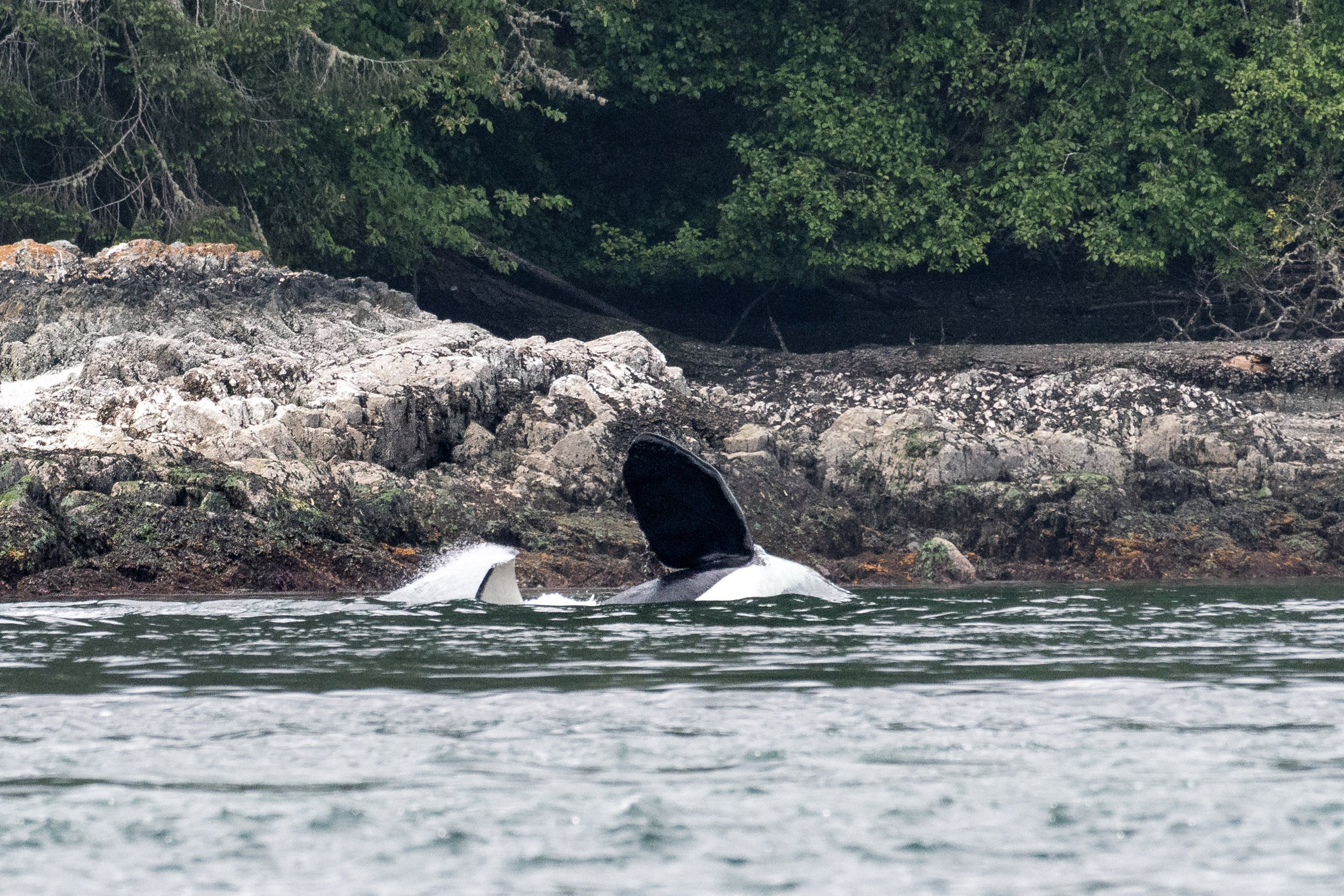
T011A Rainy with his pectoral fin in the air. Photo by Evan Hessels.
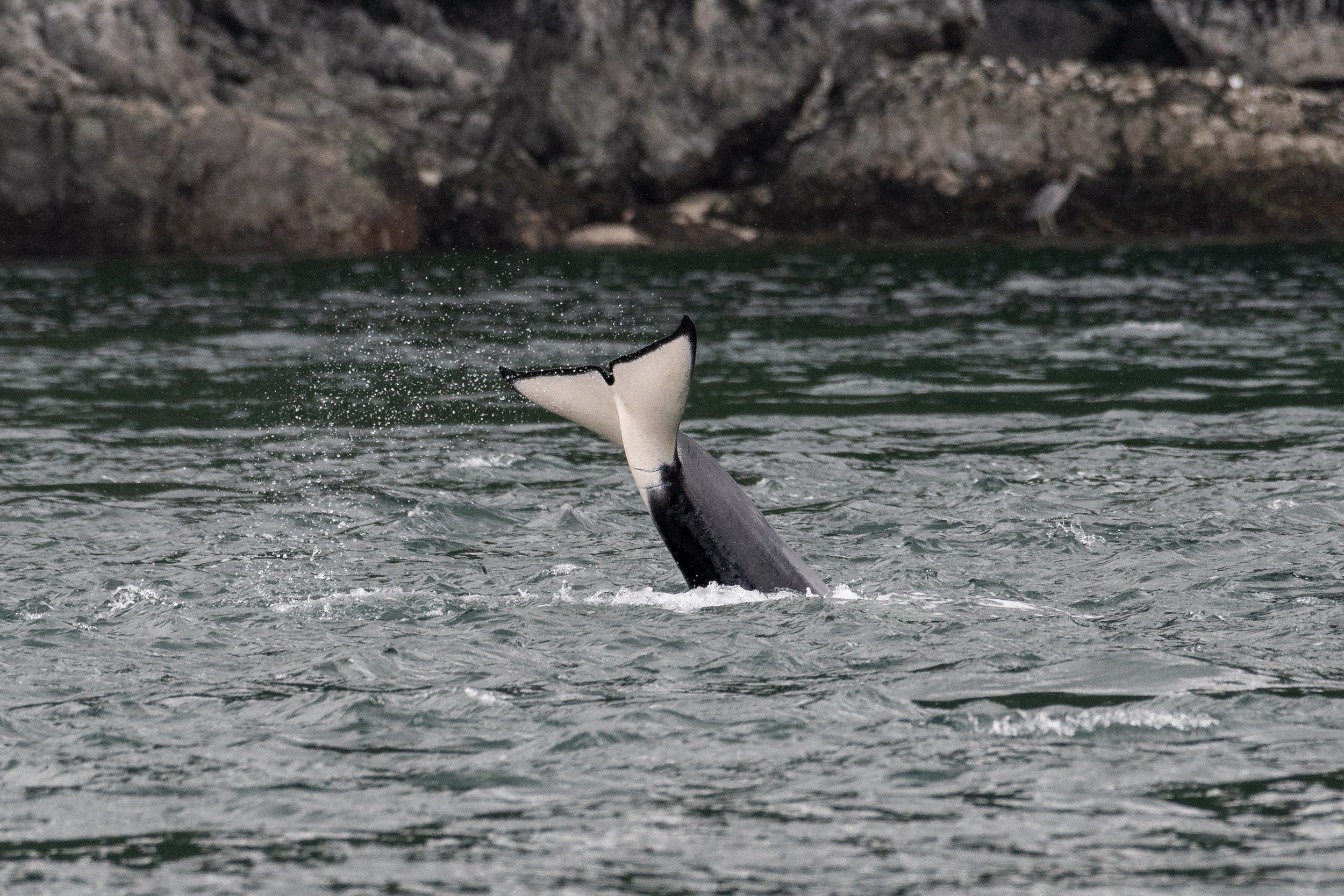
A tiny tail wave! Photo by Evan Hessels.
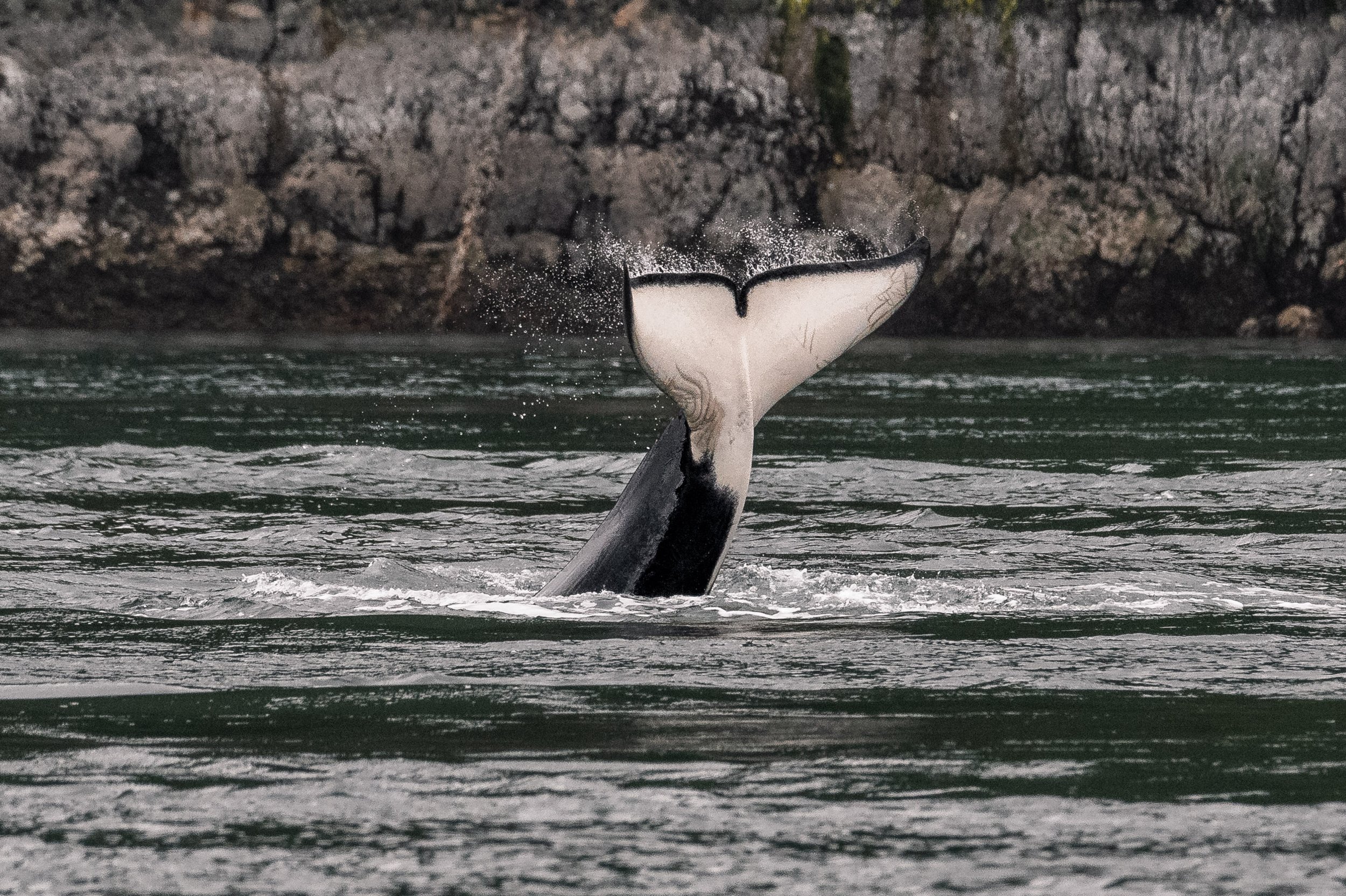
A different tail with lots of rake marks visible on it. Photo by Evan Hessels.
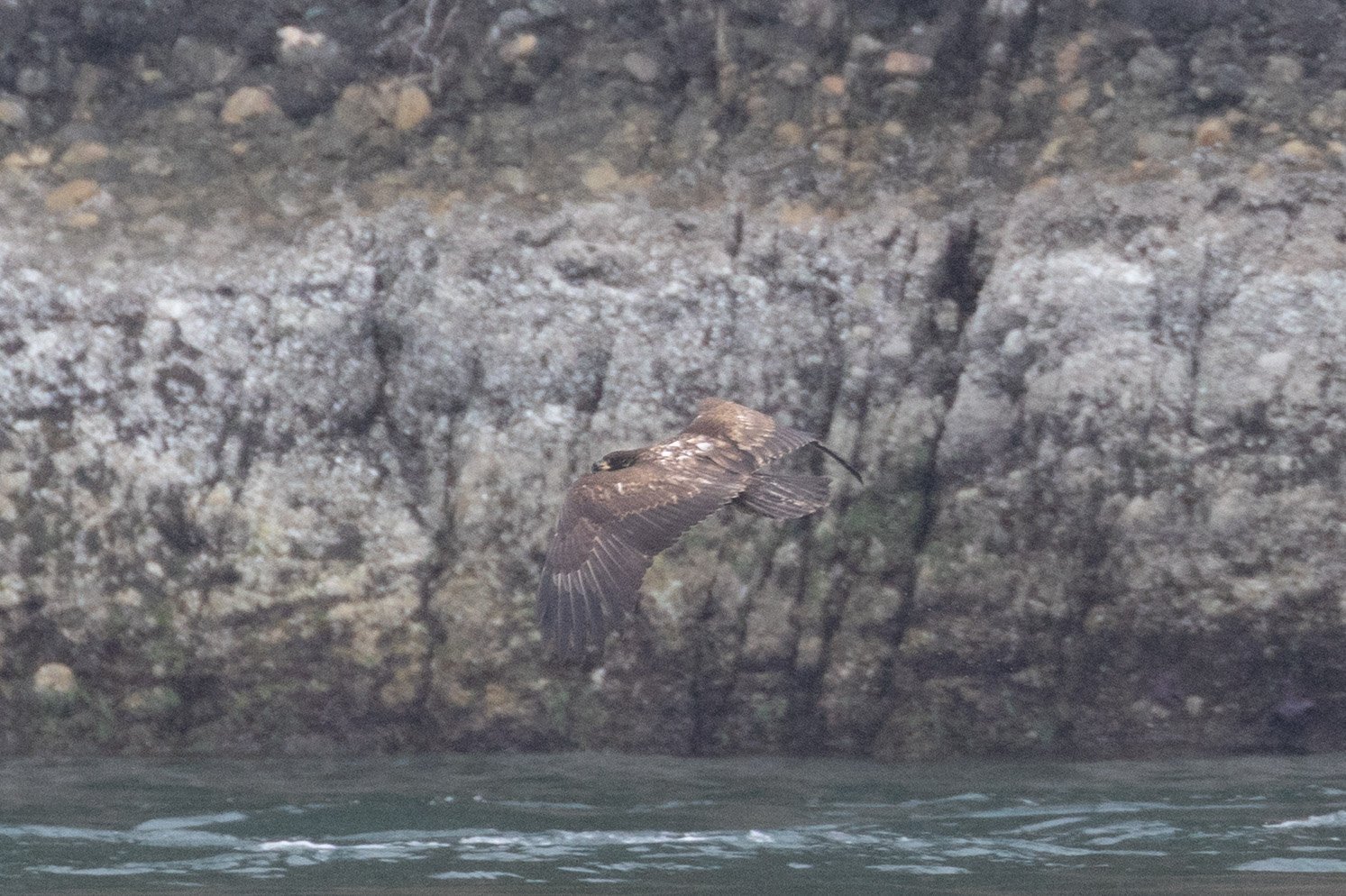
An immature Bald Eagle in flight. Photo by Jordan Robinson.
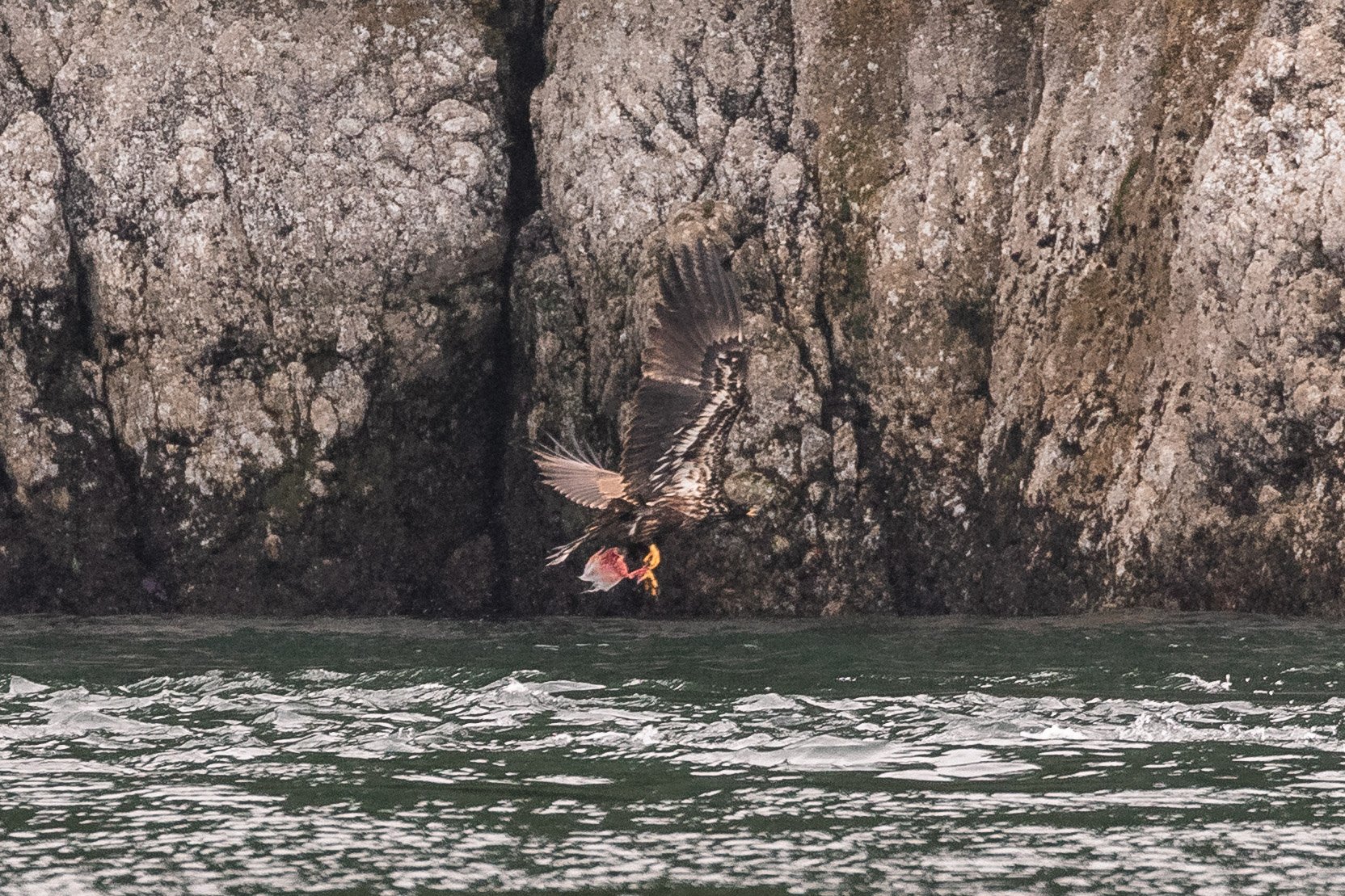
An immature Bald Eagle with a snack! Photo by Jordan Robinson.
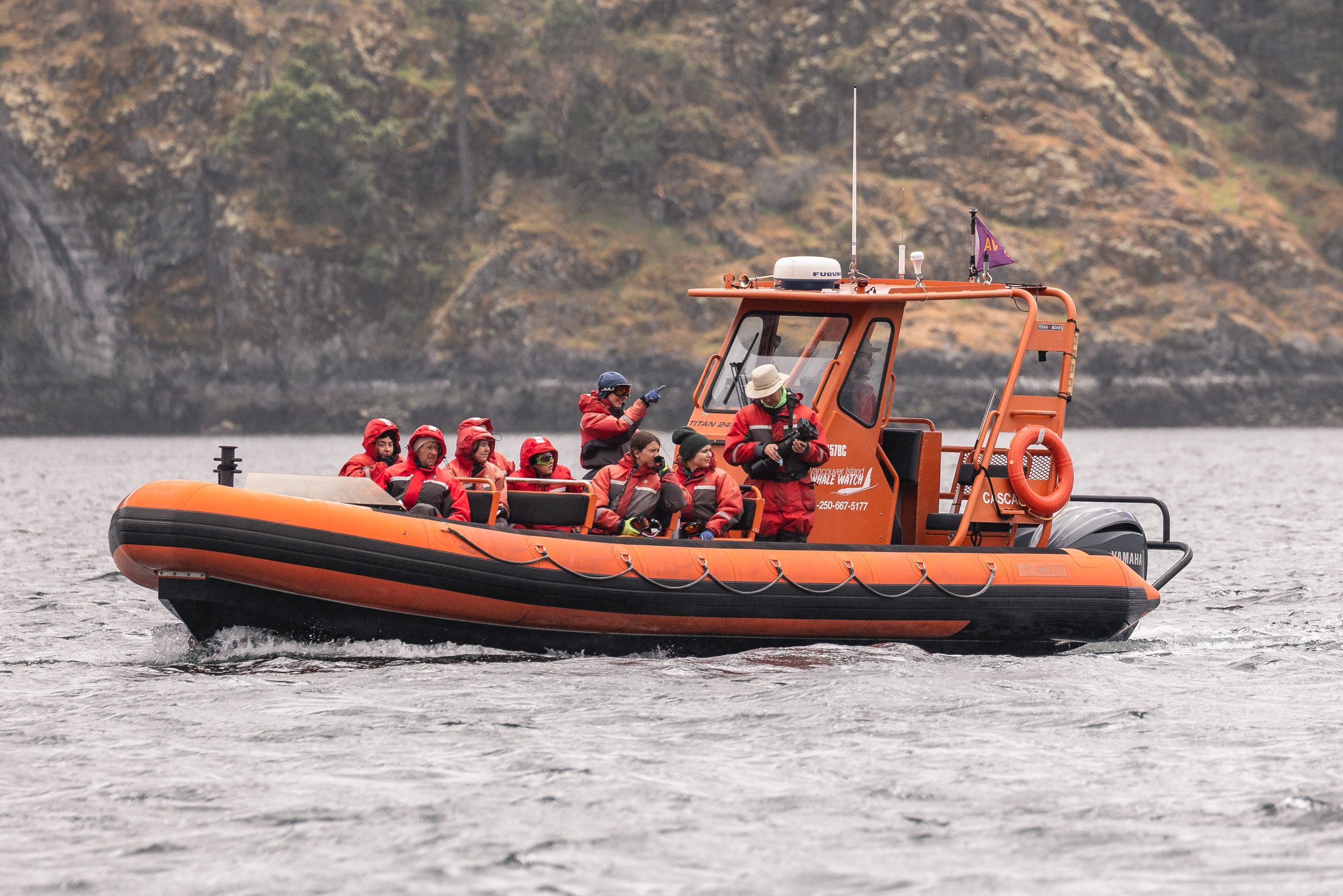
Cascadia’s guests watching the whales. Photo by Jordan Robinson.
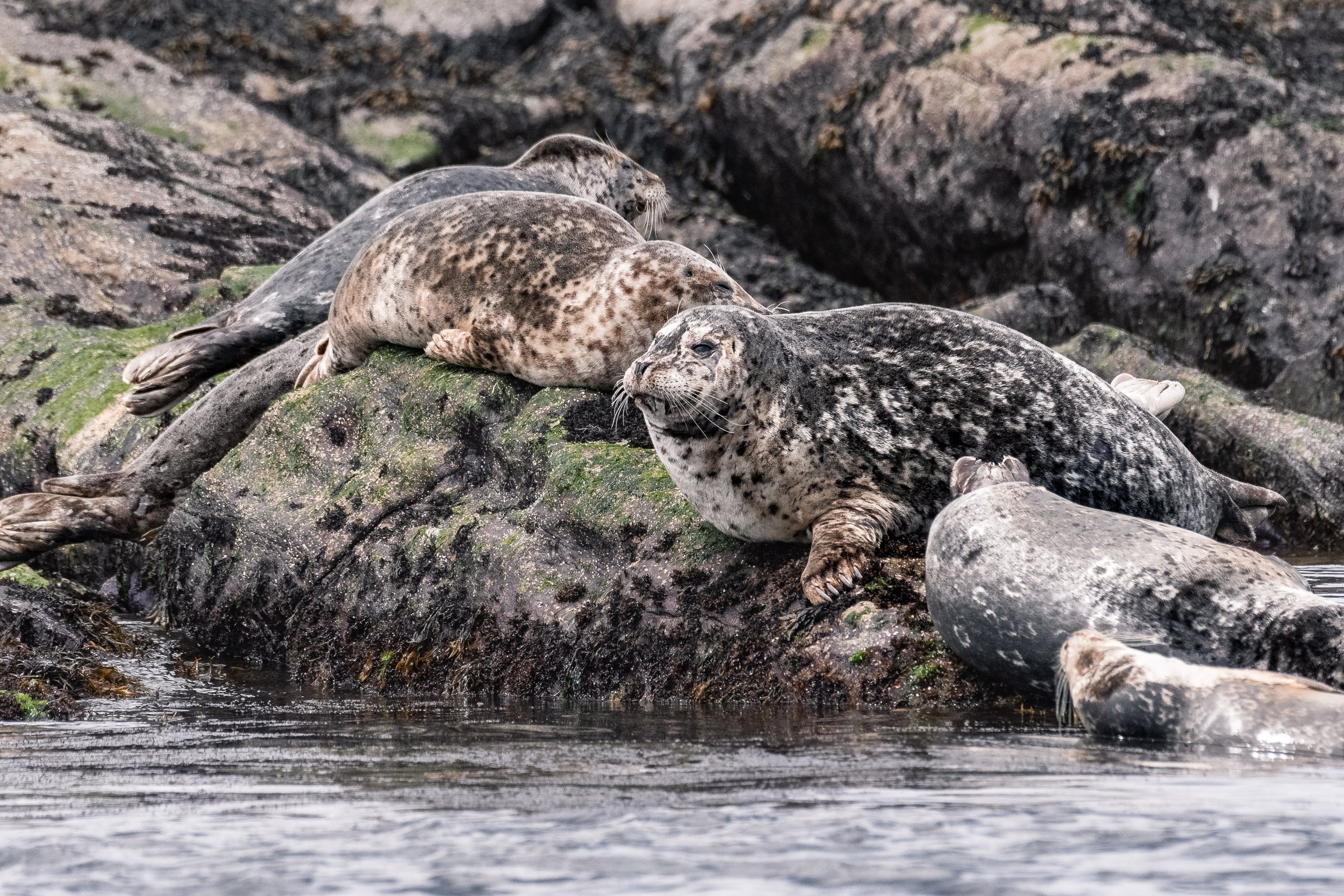
Sleepy Harbour seals hauled out on the rocks. Photo by Evan Hessels.
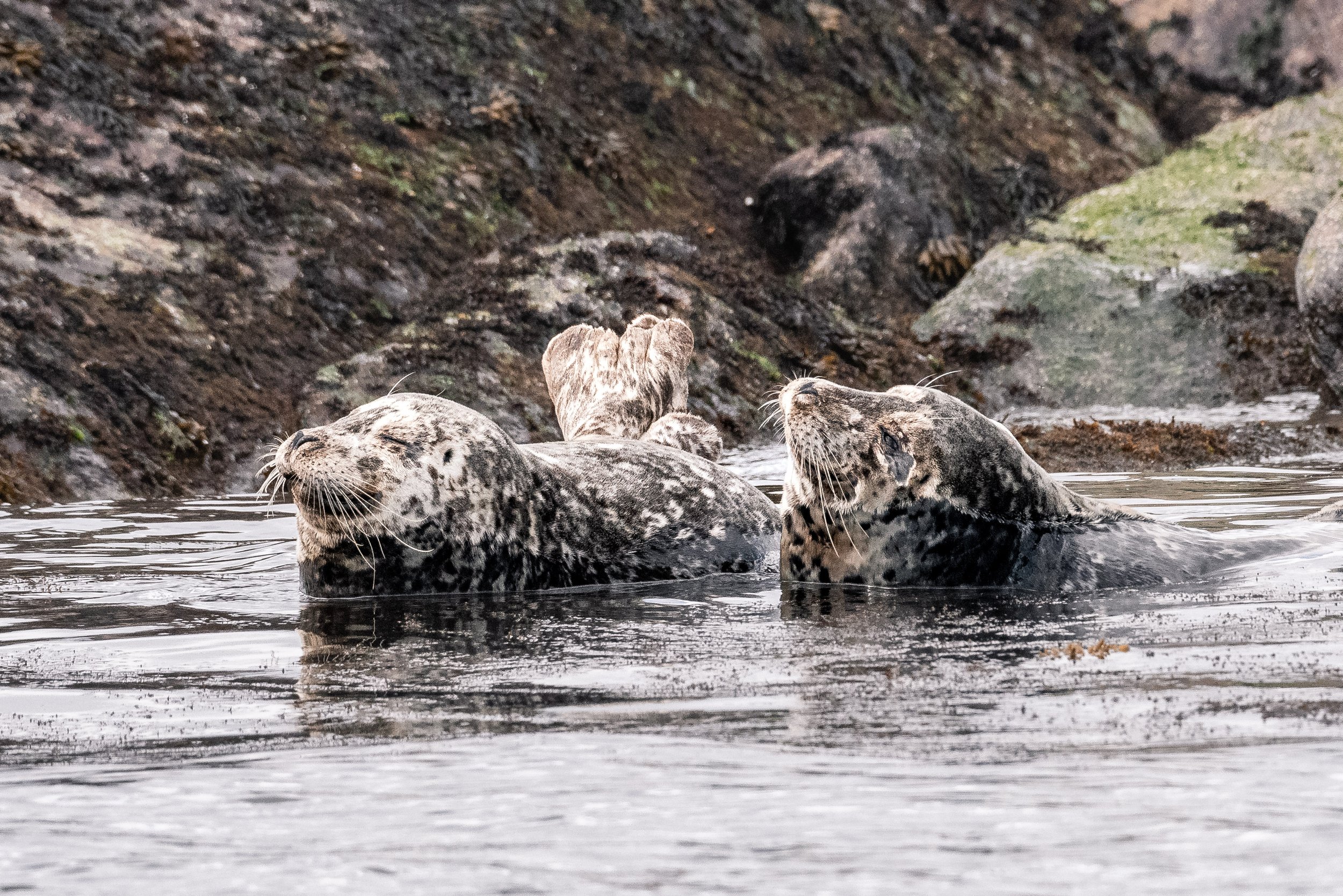
Resting in the shallows. Photo by Evan Hessels.
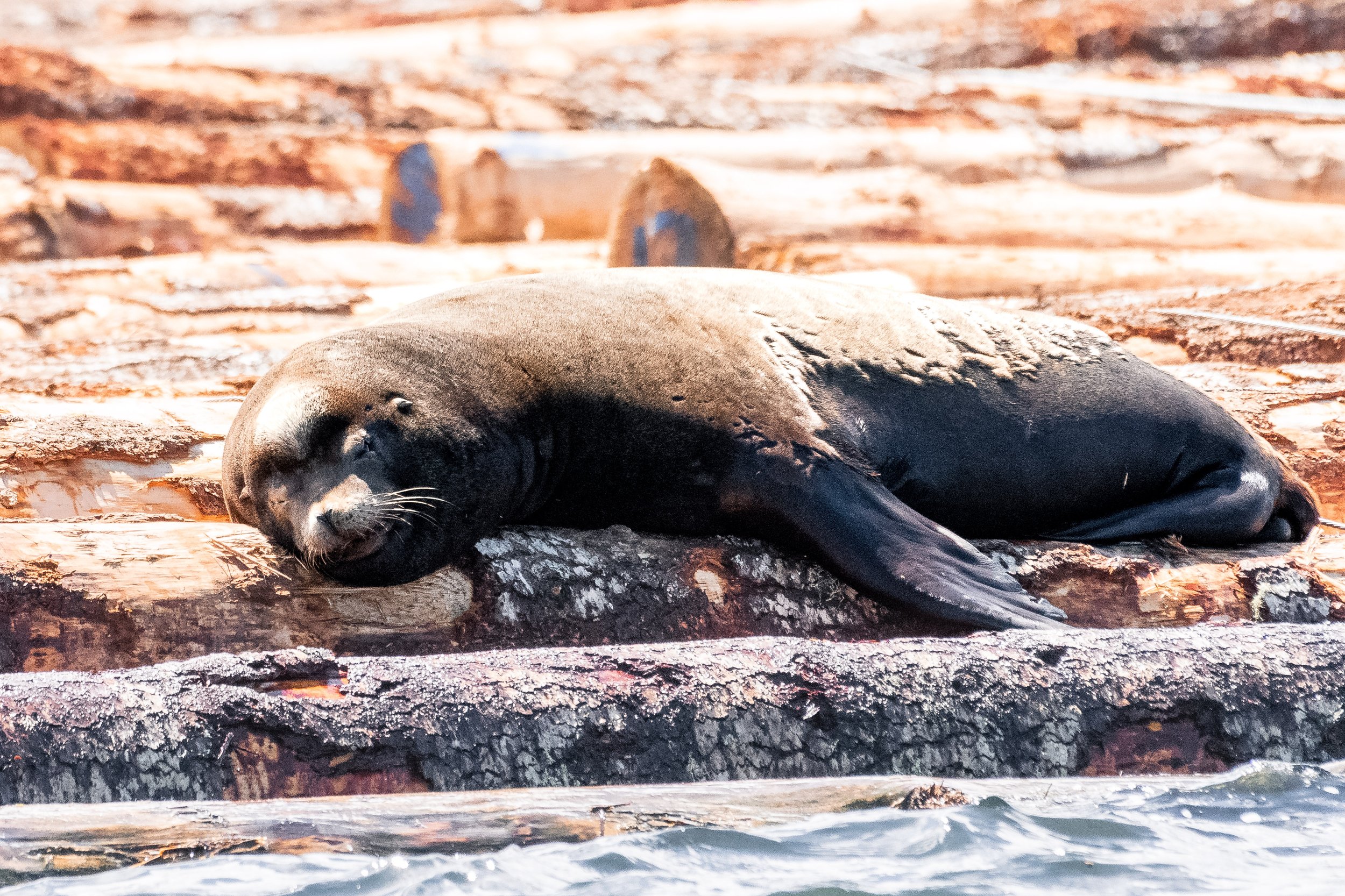
A male California Sea Lion snoozing on the log booms. Photo by Evan Hessels.
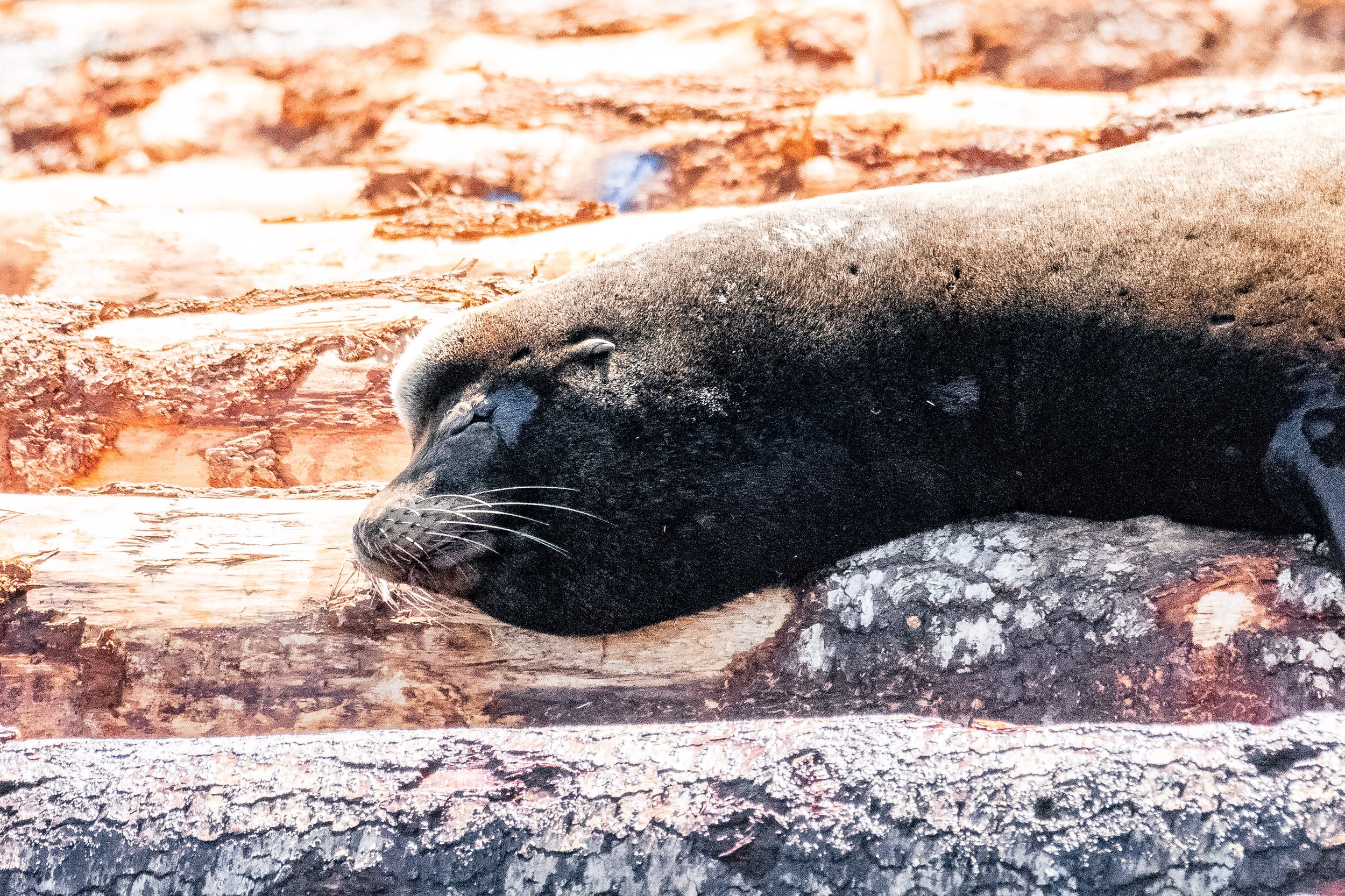
He looks oh so very comfortable! Photo by Evan Hessels.
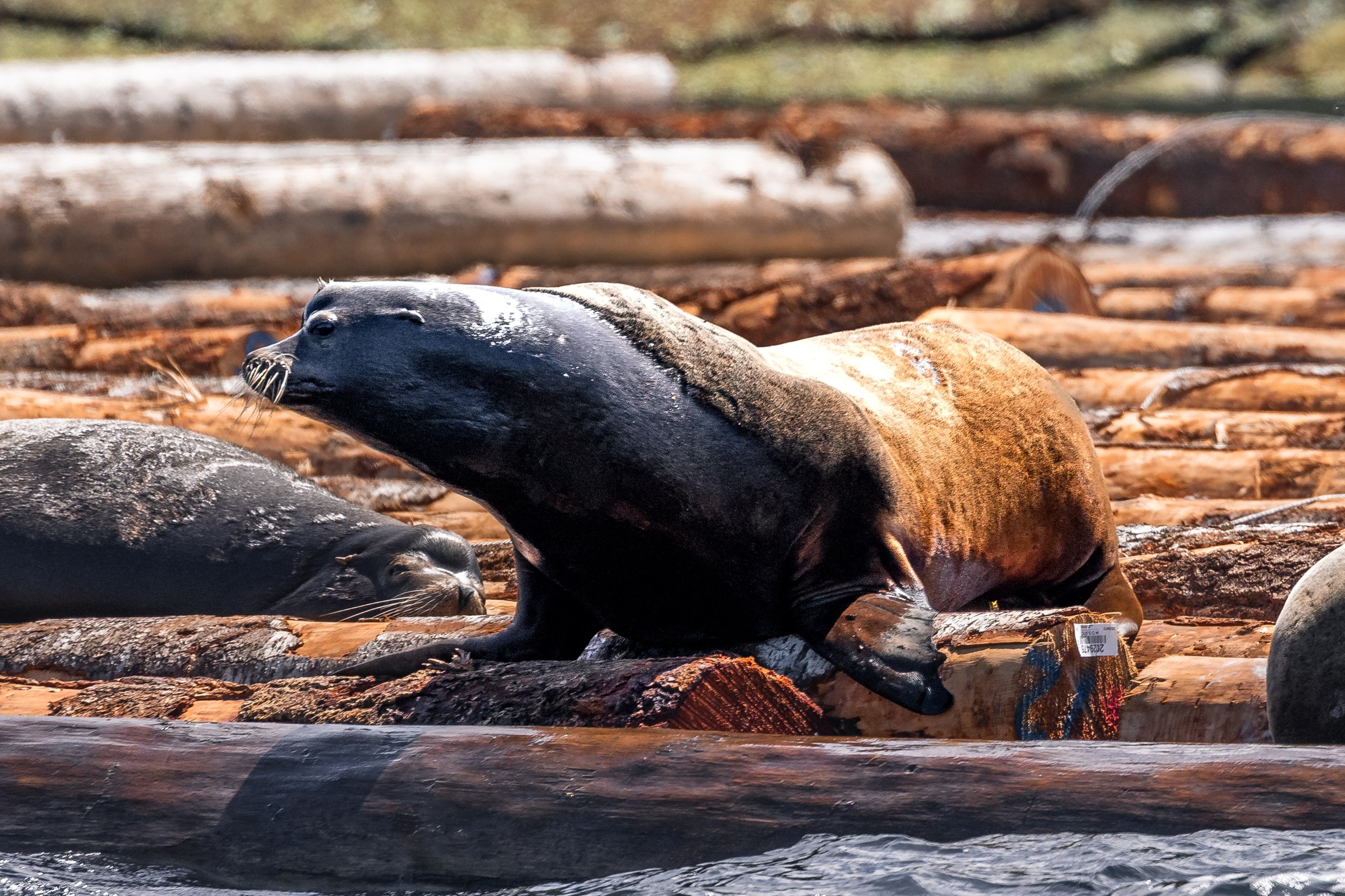
A California Sea Lion waddling along the log booms. Photo by Jordan Robinson.
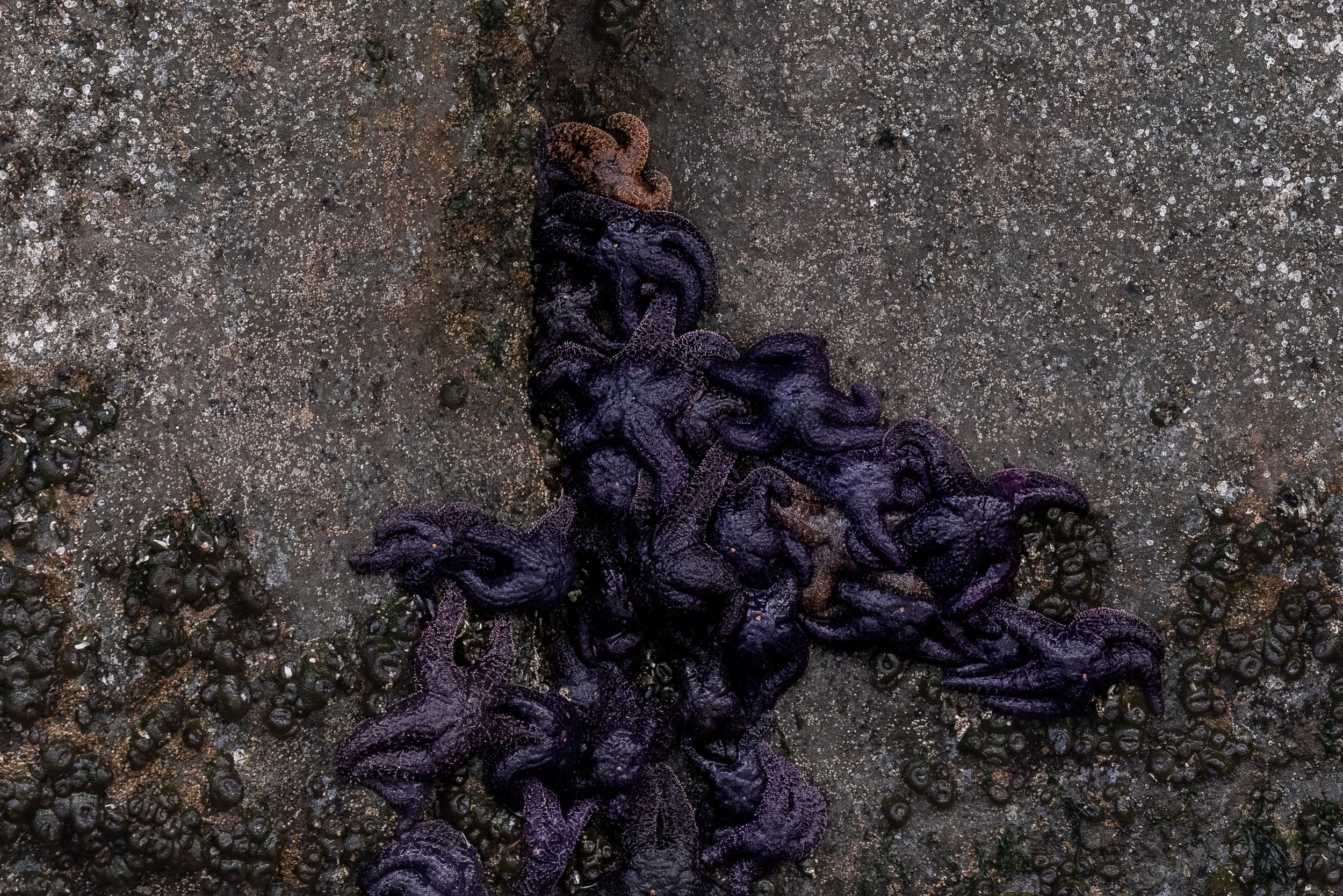
A large galaxy of Ochre Sea Stars. Photo by Jordan Robinson.
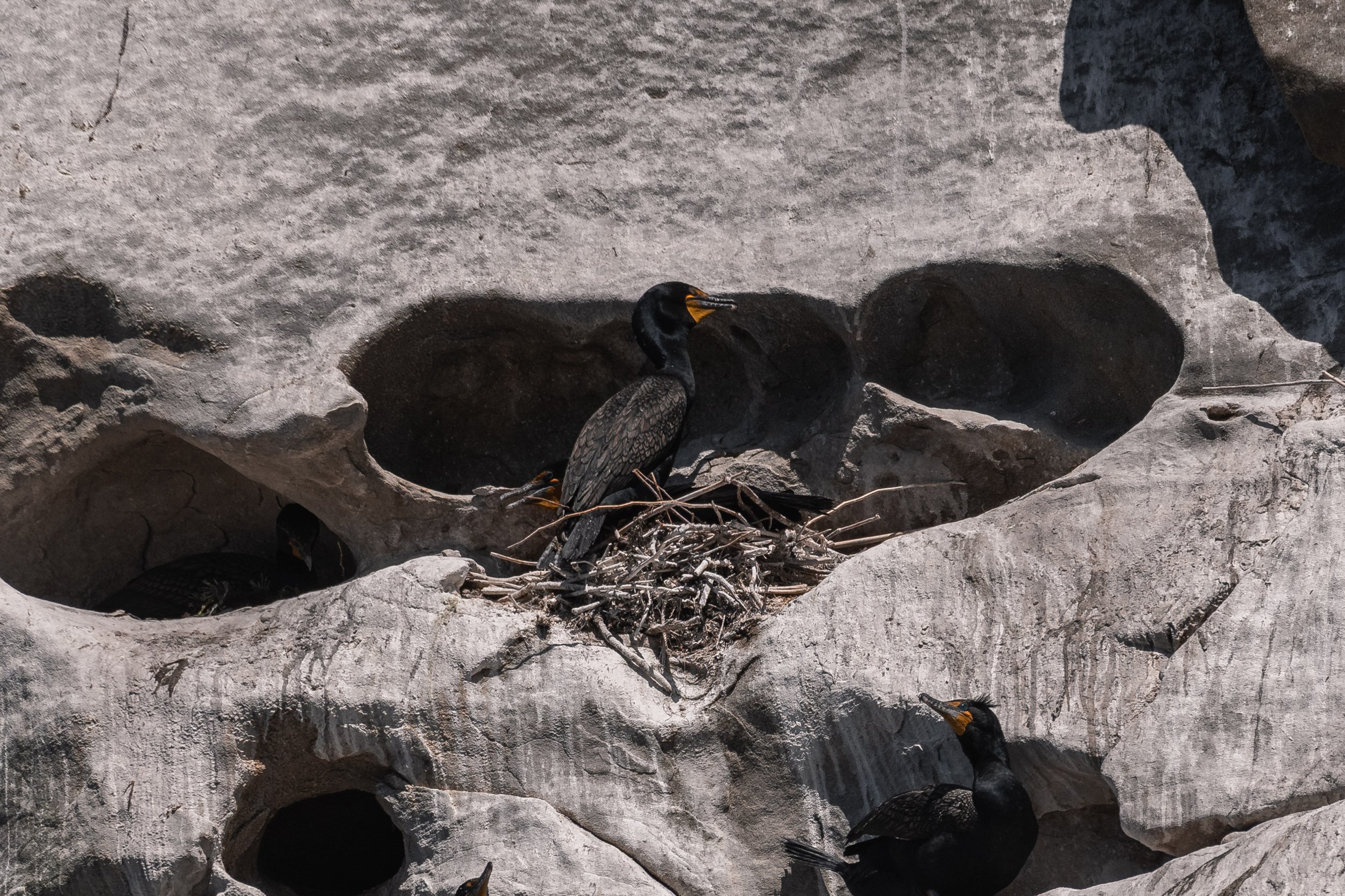
The cormorants were busy caring for their nests. Photo by Evan Hessels.
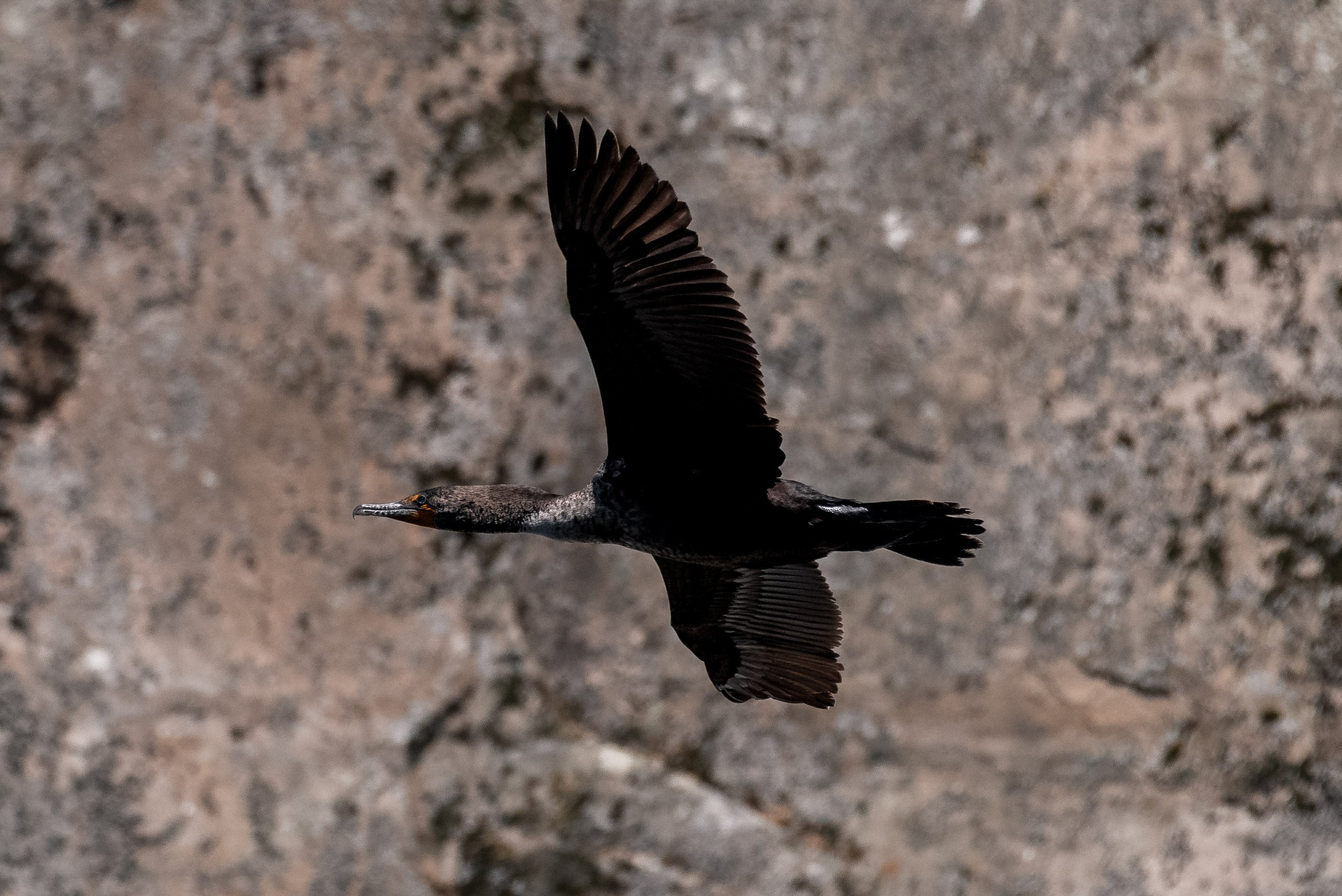
a Double-crested Cormorant soaring by. Photo by Evan Hessels.
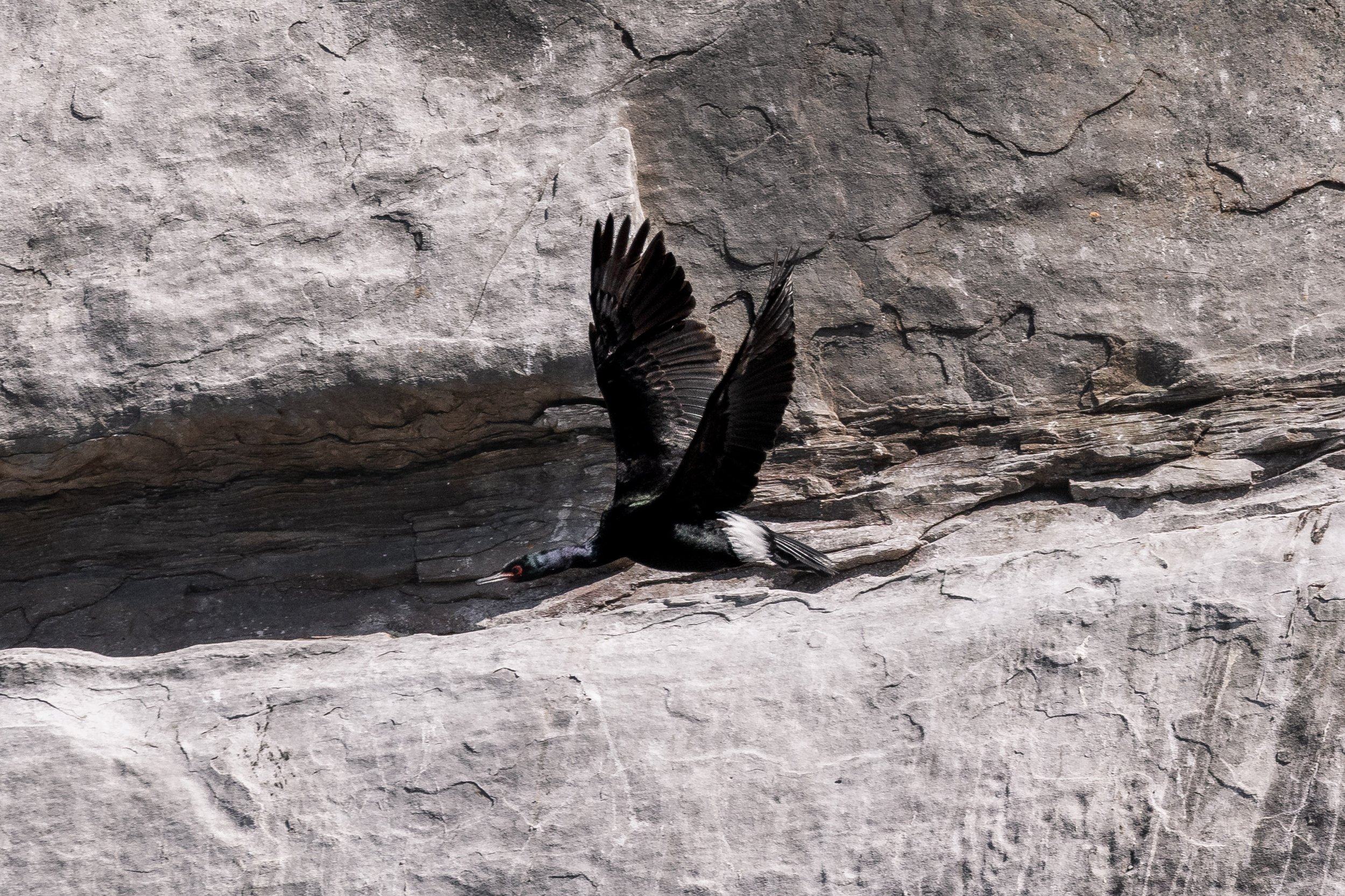
A Pelagic Cormorant flying by. Photo by Jordan Robinson.
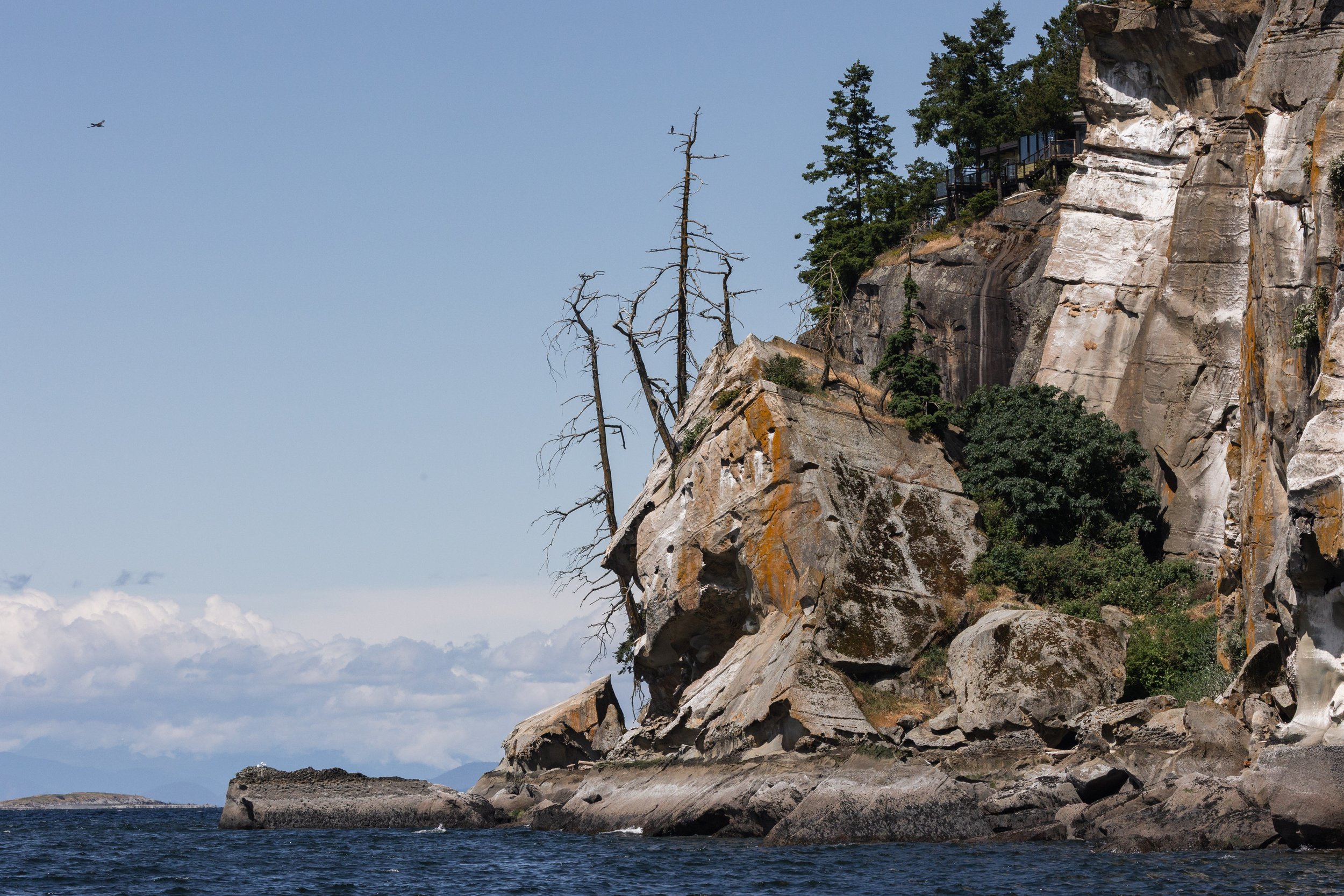
The Gabriola Bluffs. Photo by Jordan Robinson.