
May 27, 2026 - Exploring the Gulf Islands
After suiting up and boarding Keta, one of our open Zodiac vessels, Naturalist Jordan discussed where we were going and what to keep an eye out for, and soon after, we were off. The sun was shining as we headed out, zipping through the waters southbound. We crossed through Dodd Narrows, a bountiful narrow passage on the outskirts of the city, and entered the sheltered waters of the Southern Gulf Islands.
These waterways have been bustling with all kinds of marine life lately, and we were eager to see what we could find. We started by crossing Ruxton Passage into Pylades Channel, then turned northbound and exited the Gulf Islands through Gabriola Pass. After going through the pass, the waters ahead of us opened up, and we had our first peek at the Strait of Georgia ahead of us.
Skirting along the edge of Valdez Island, we headed south until a small rocky island came into view. Large lumbering forms could be seen waddling along the rocks as we approached. These creatures were Steller Sea Lions, and many of them were resting and wandering around as we observed them. One massive male in particular was very eyecatching - pleasantly plump and significantly bigger than any other sea lion around. Size is very important in the sea lion world, especially for the males. Sea lions breed in a harem style, meaning one male tries to court and keep as many females as he can to produce as many pups as possible with his genes. To do this, males often will fight each other, and their lumbering size is one of their biggest advantages over other competing males. When they put on weight, a significant portion of it accumulates around their necks, forming a chunky layer of blubber that resembles a lion’s mane! This ‘mane’ plays a critical role in their survival during the breeding season, protecting their throats as males fight each other to woo females. While they are not currently breeding, we still occasionally see the males posture toward the smaller individuals to push them out of the way, allowing them to have the best areas on the rocks to relax and nap.
Nearby, a smaller, quieter species could be seen. These little spotted individuals were Harbour Seals, the most abundant pinniped in the Pacific Northwest. While considered a cousin species to the sea lions, or very close relatives, they do have a number of differences. One of the big ones is their size - Harbour Seals top out at around 300 lbs (136 kg), versus Steller Sea Lions, which can reach an impressive 2,500 lbs (1,120 kg) among the large males. Their coats are also strikingly different, with Harbour Seals sporting a mottled, duotone coat versus the simpler fur of sea lions. Sea lions also have visible ear flaps, whereas seals do not, and simply have holes in the sides of their heads! The other biggest difference is their flippers, which are large and have a large range of motion in sea lions, so much so that they can rotate their hind flippers underneath them and walk on them like legs, making them surprisingly agile on land. Seals, on the other hand, have fused pelvises, which results in their hind flippers always remaining stuck directly out behind them. Because of this, their gait on land is quite funny-looking, with them inching along like a worm to get from place to place. This unusual form of locomotion is known as Galumphing, or to move clumsily. While they may be at a disadvantage on land, their fused pelvises provide them with incredible thrust in the water, making them very fast and maneuverable as they swim.
We also spotted a number of birds along the way, including Bald Eagles soaring overhead, a large flight of Surf Scoters flying by, and a Great Blue Heron foraging in the shallows. After a few more beautiful peeks at the various islands, we headed back north, cruising through Dodd Narrows and back into our home port of Nanaimo.
While the whales did elude us today, there were still many beautiful sights to see - from the grumbling Steller Sea Lions to the quiet and reserved Harbour Seals to the beautiful coastlines and plentiful mountains all around us.
Please enjoy these photos taken by Marine Naturalist Jordan Robinson!
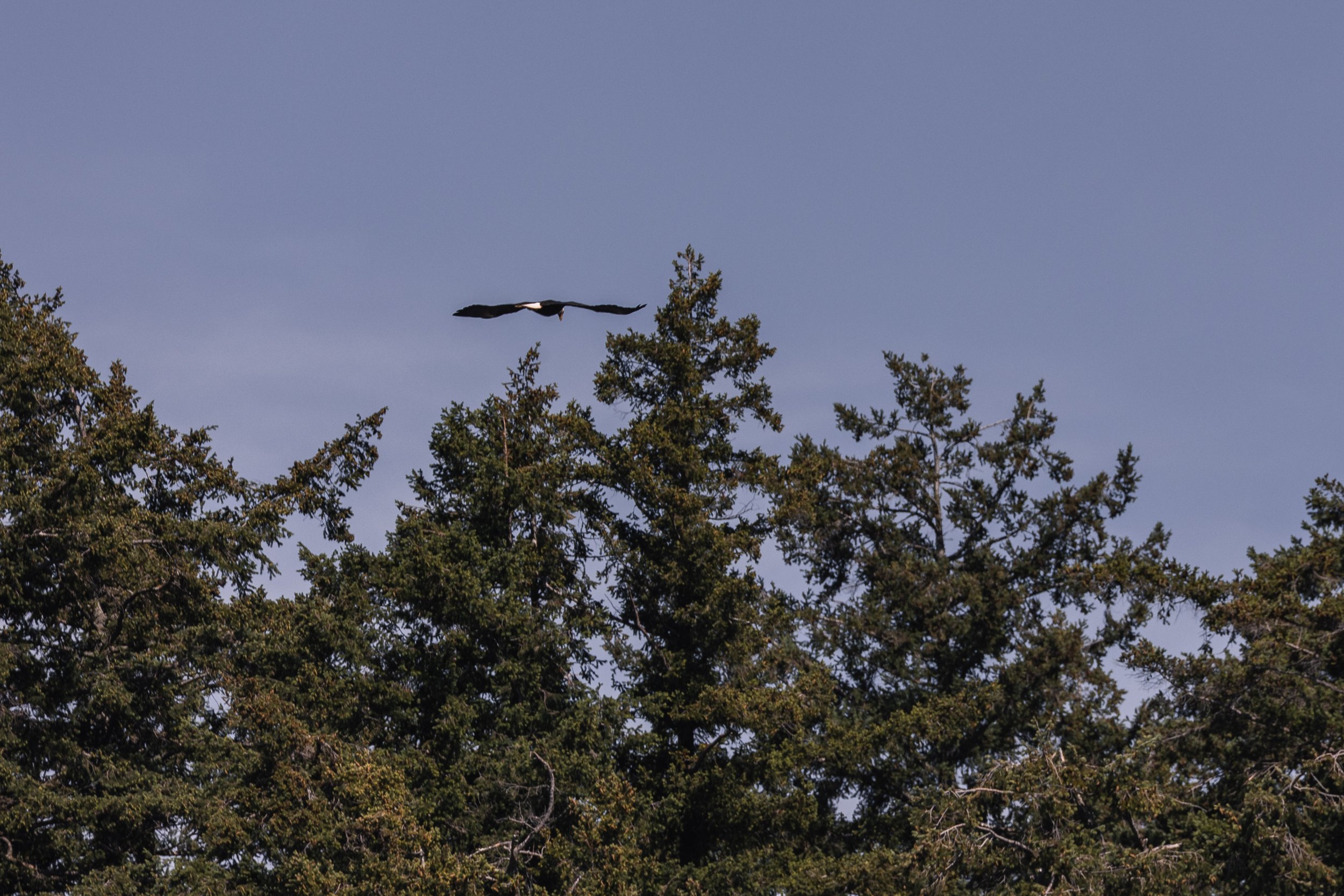
A Bald Eagle soaring overhead.
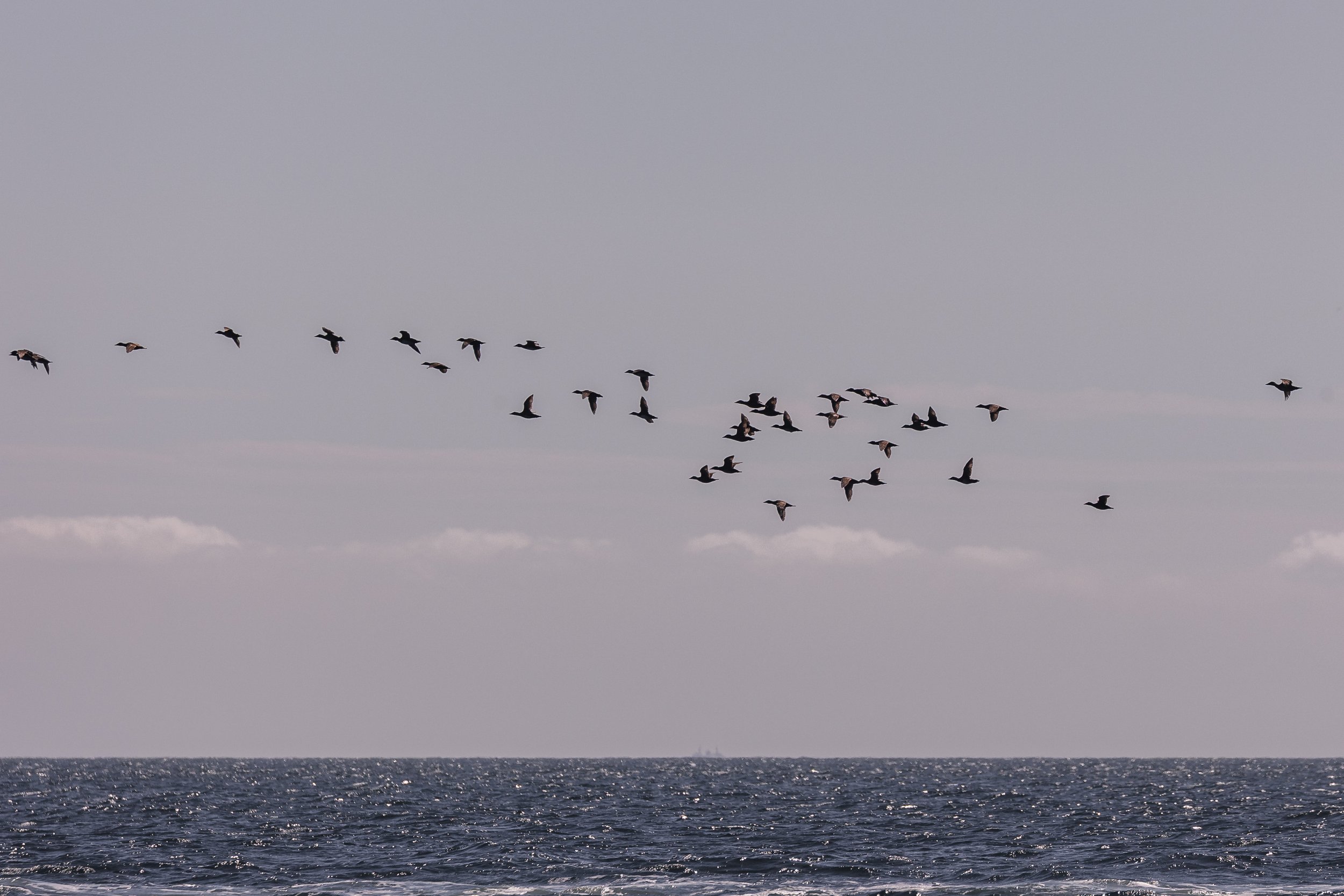
Surf Scoters flying by.
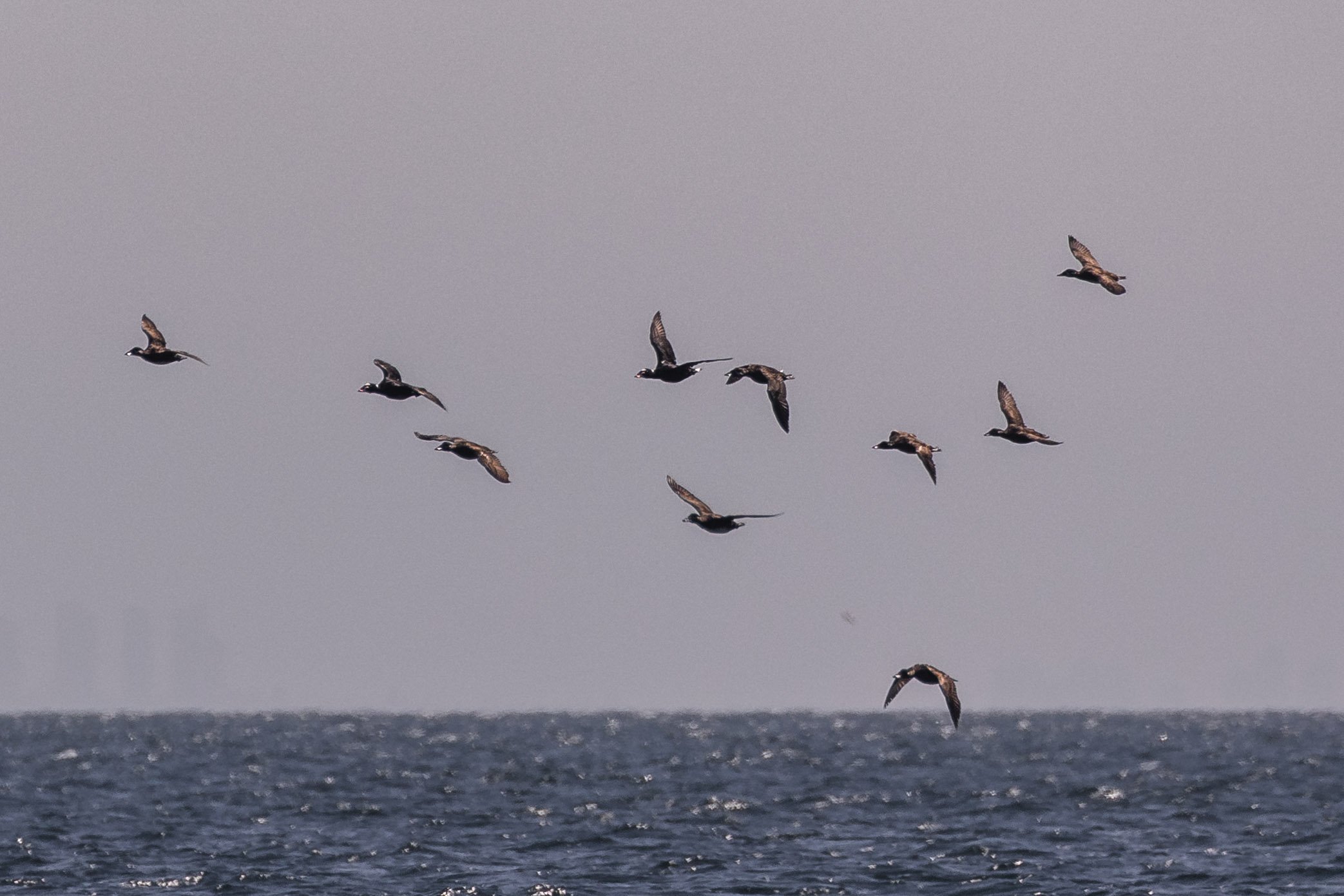
Surf Scoters are a type of sea duck.
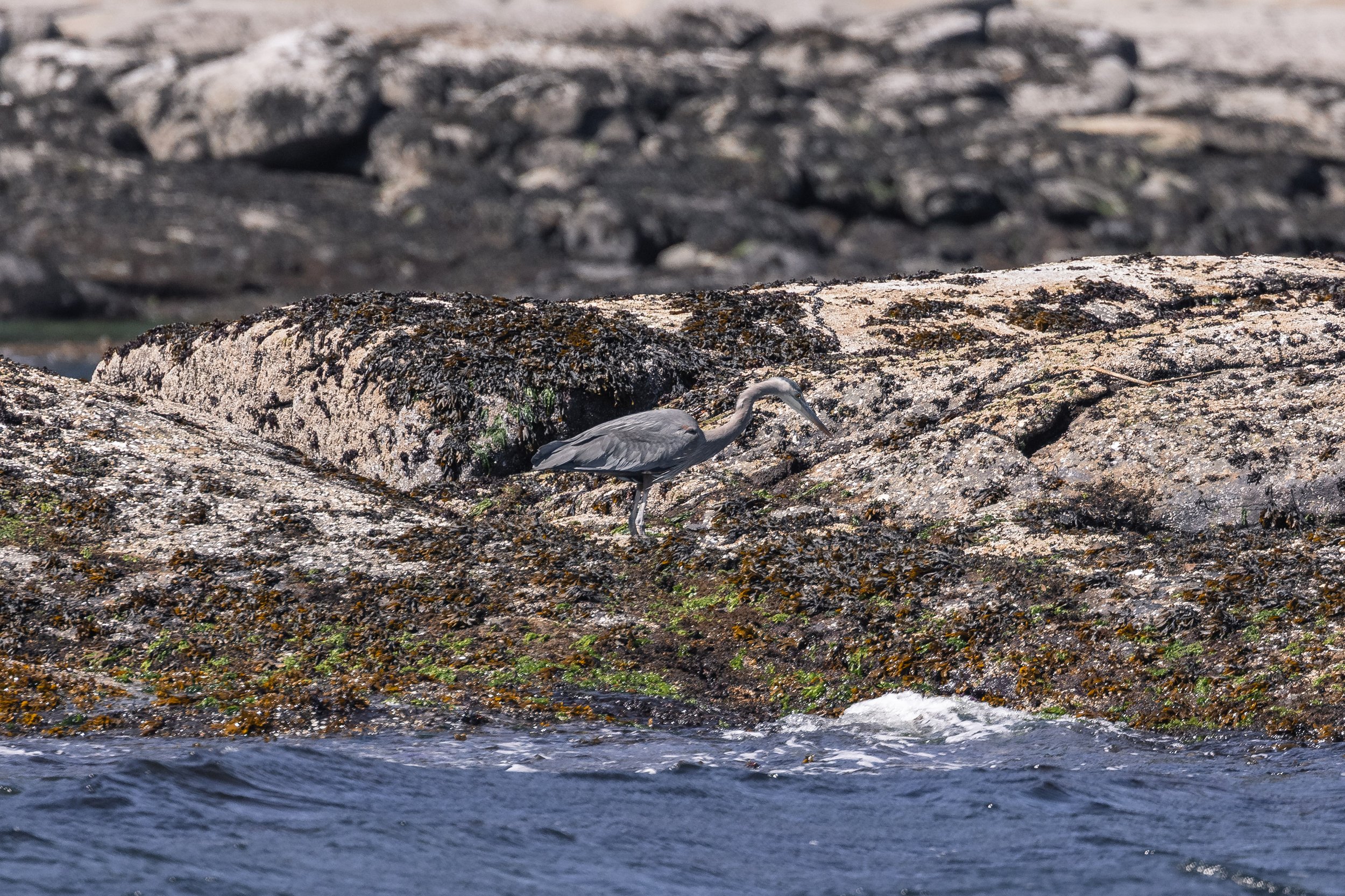
A Great Blue Heron looking for a snack.
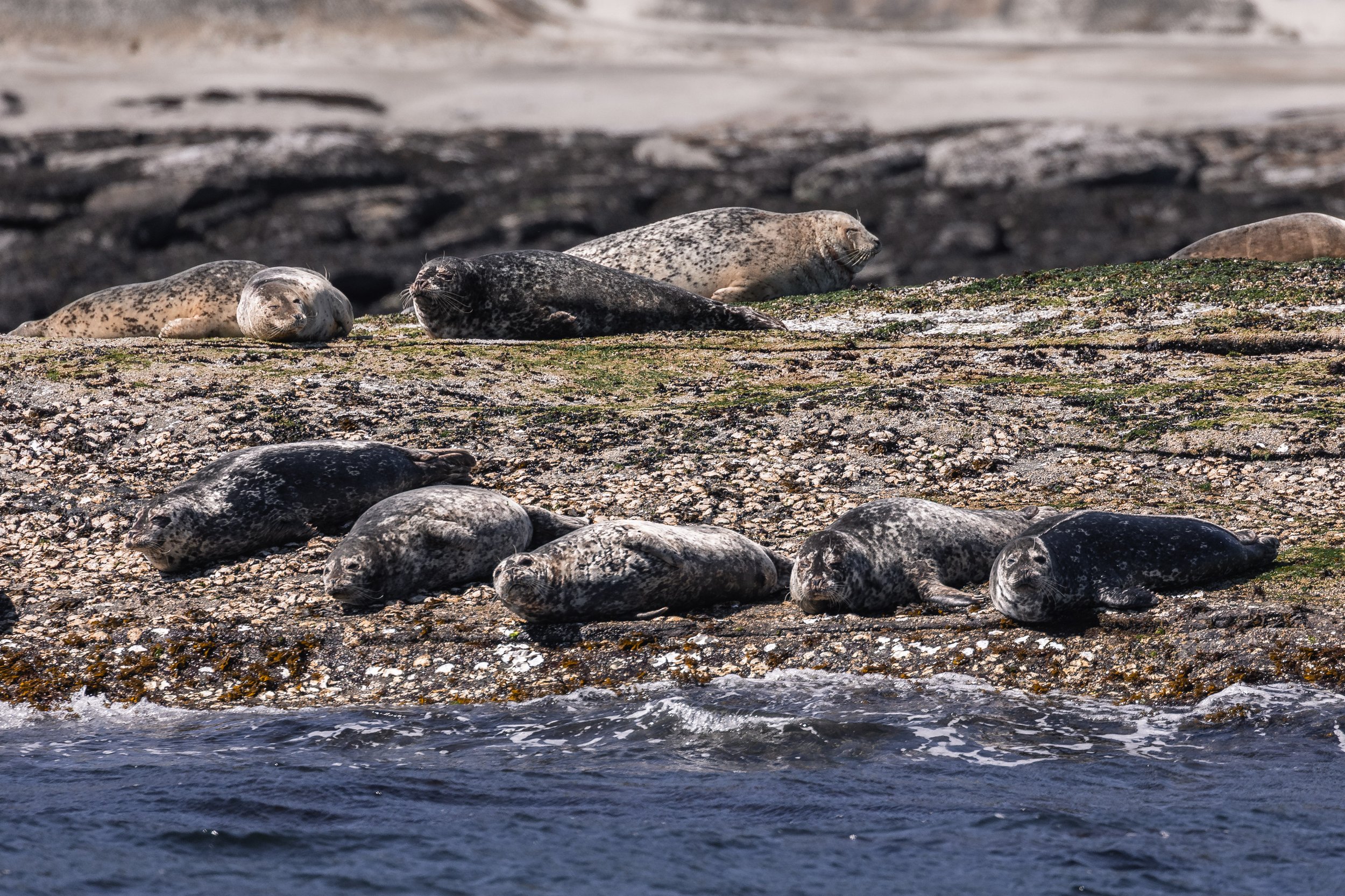
Harbour Seals hauled out on the rocks.
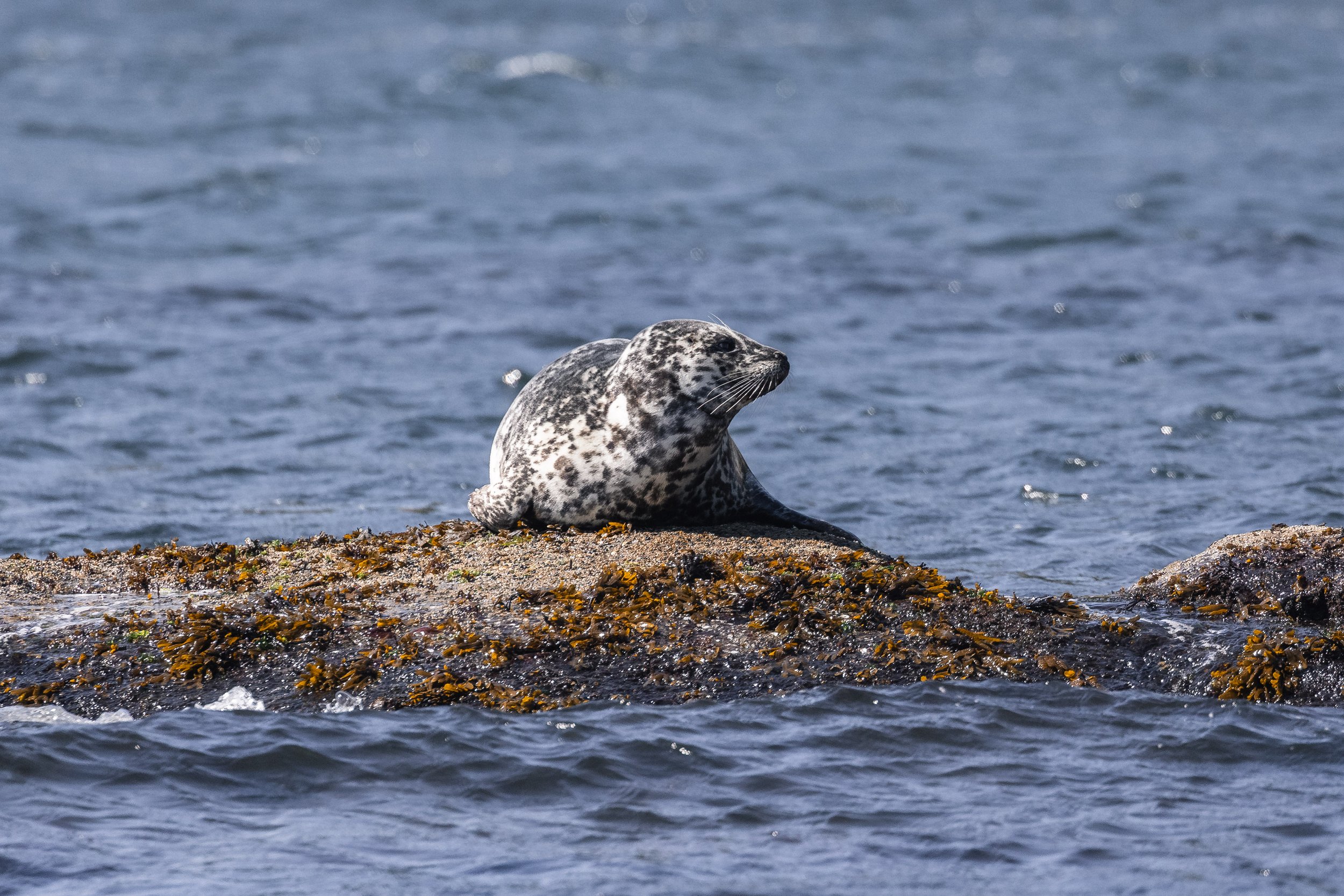
A good look at the speckled fur of this seal.
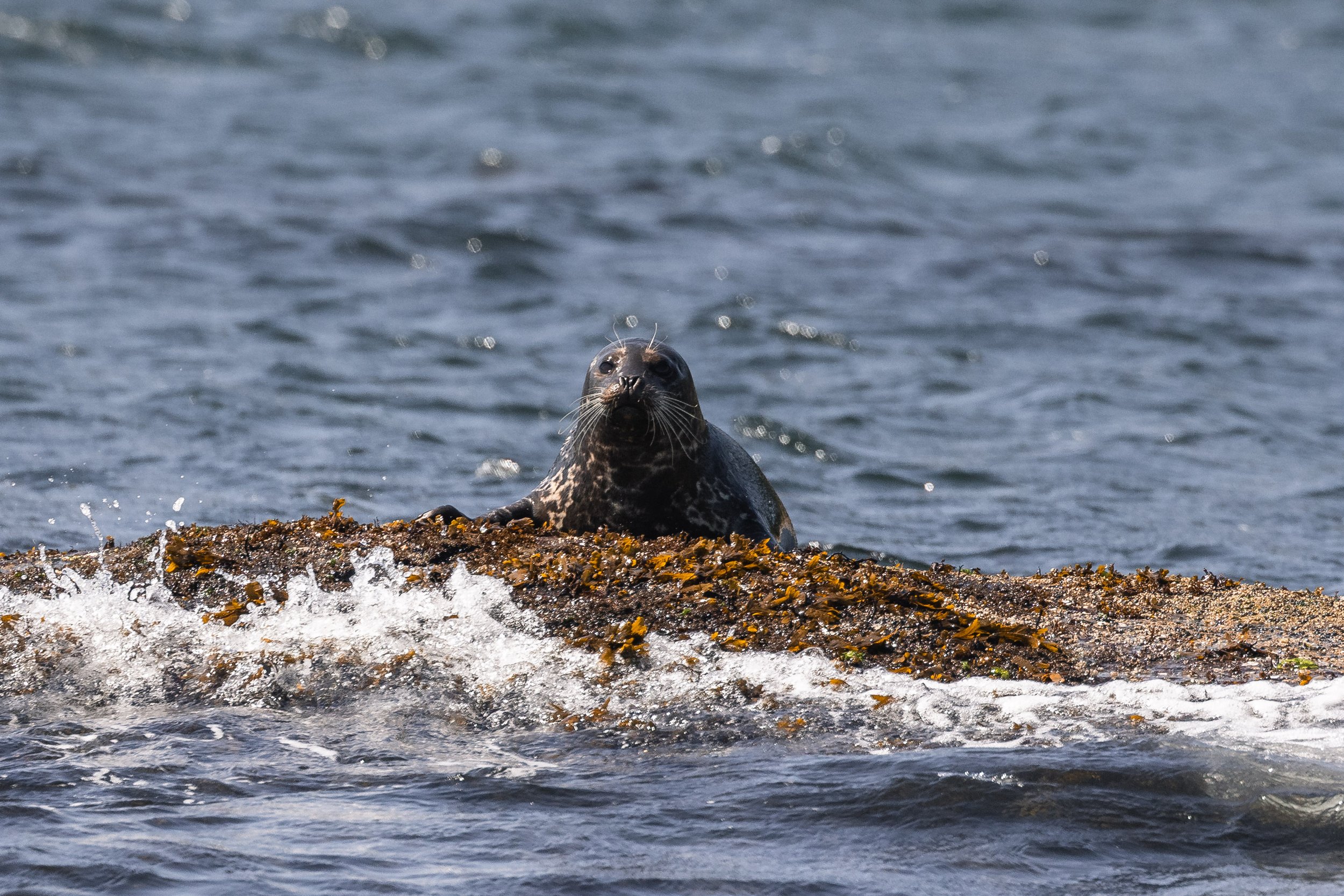
Those whiskers can help seals detect motion in the water, helping them catch fish.
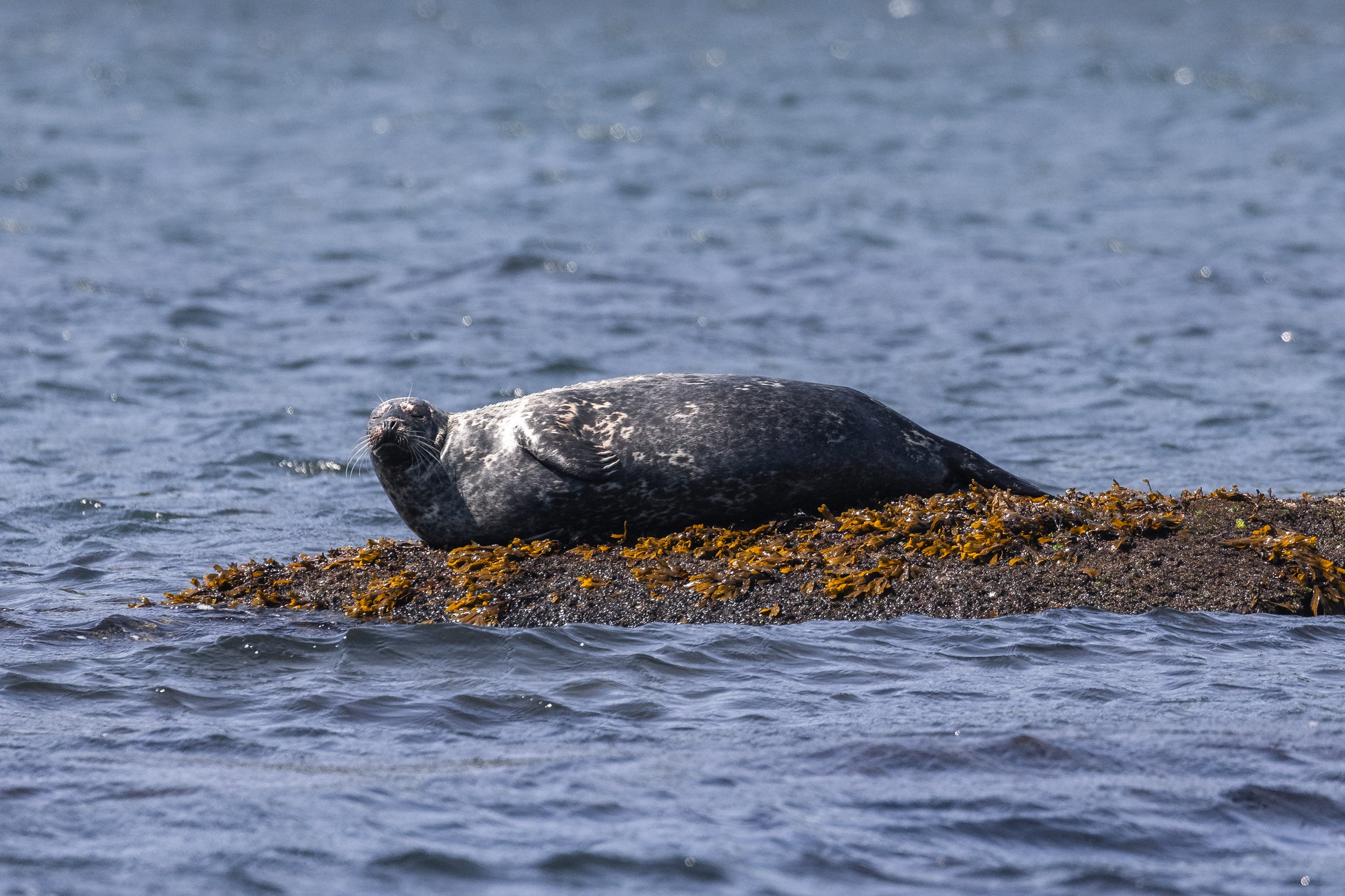
A very rotund Harbour Seal.
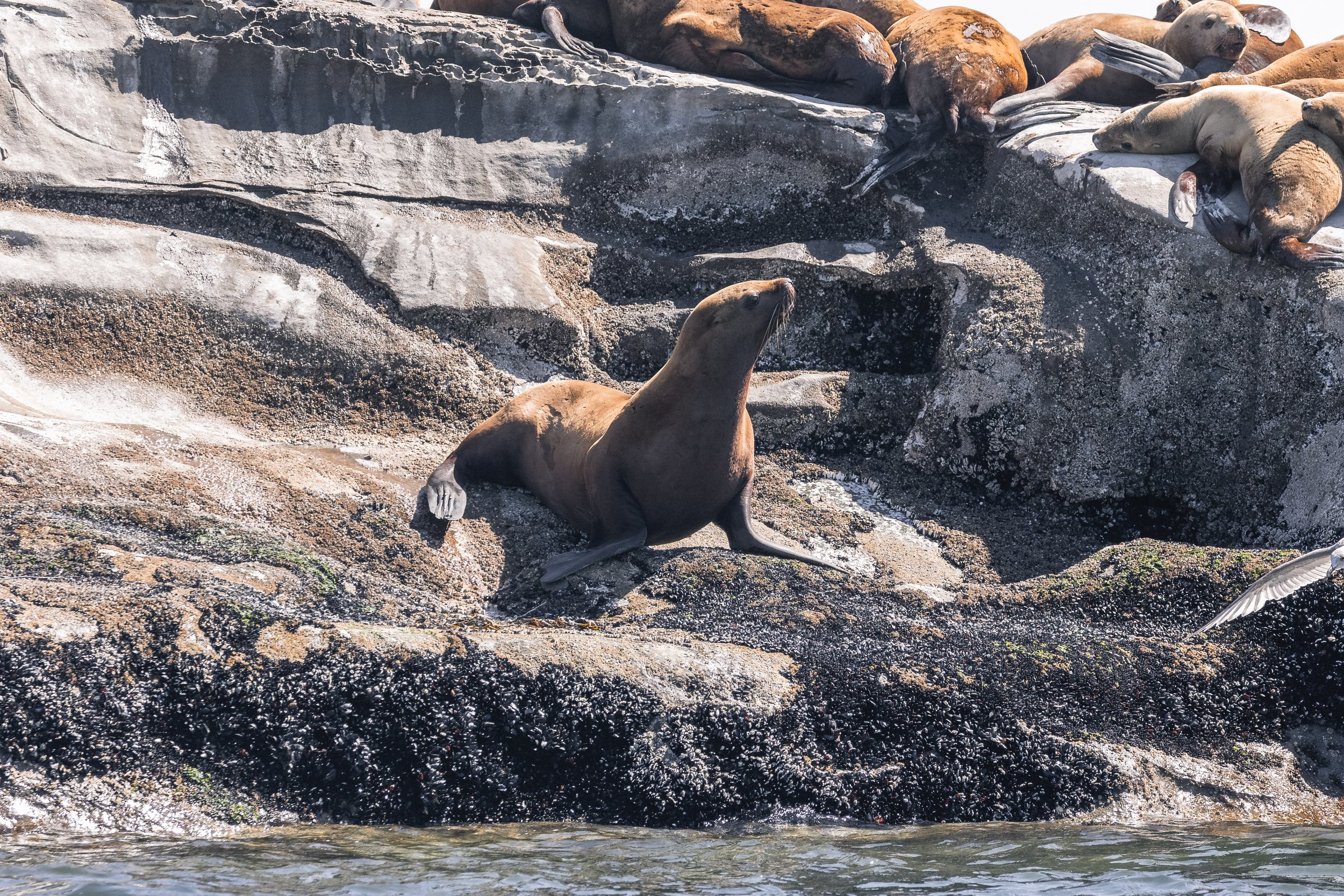
A Steller Sea Lion claiming some space away from the crowd.
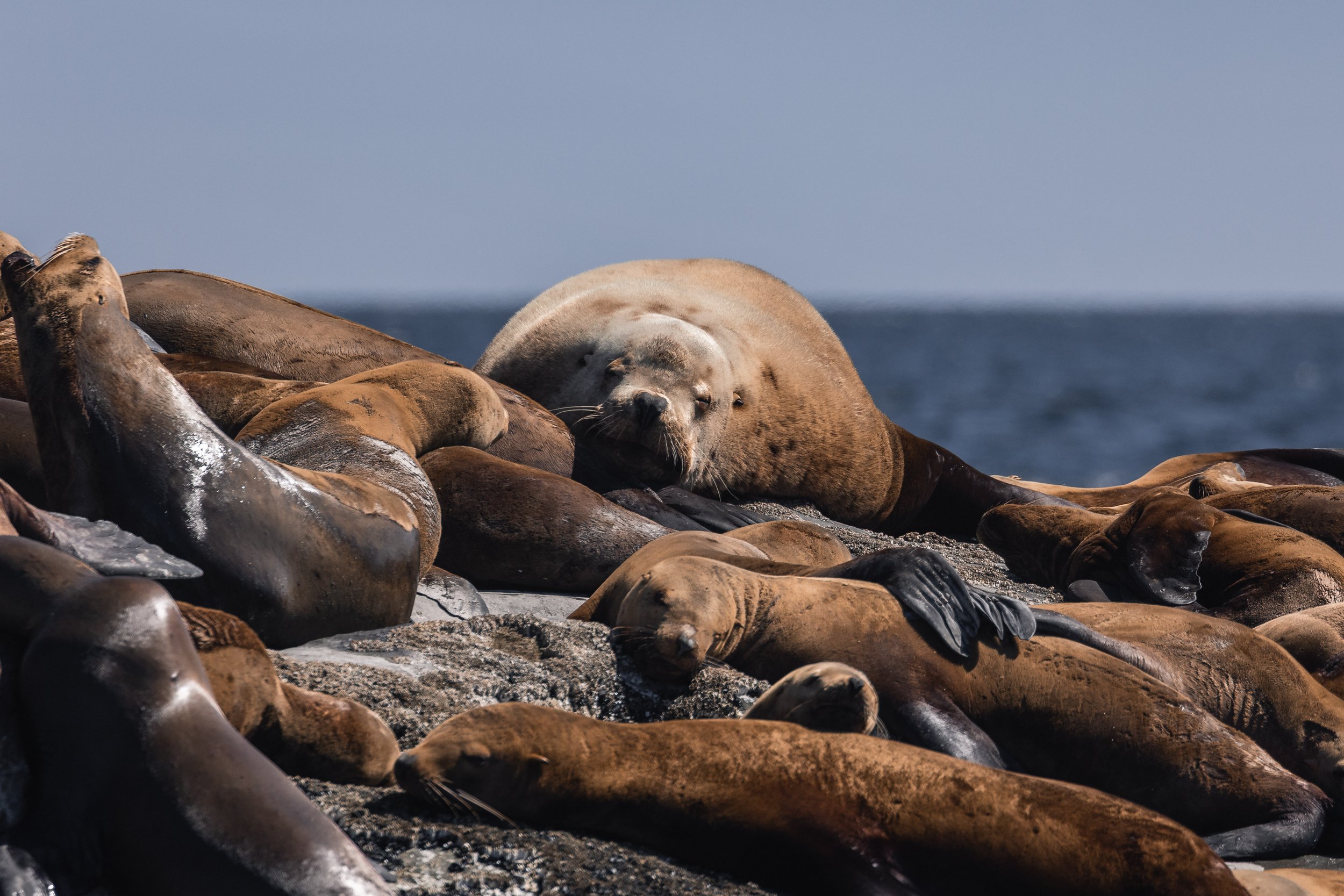
A very chunky male Steller Sea Lion.
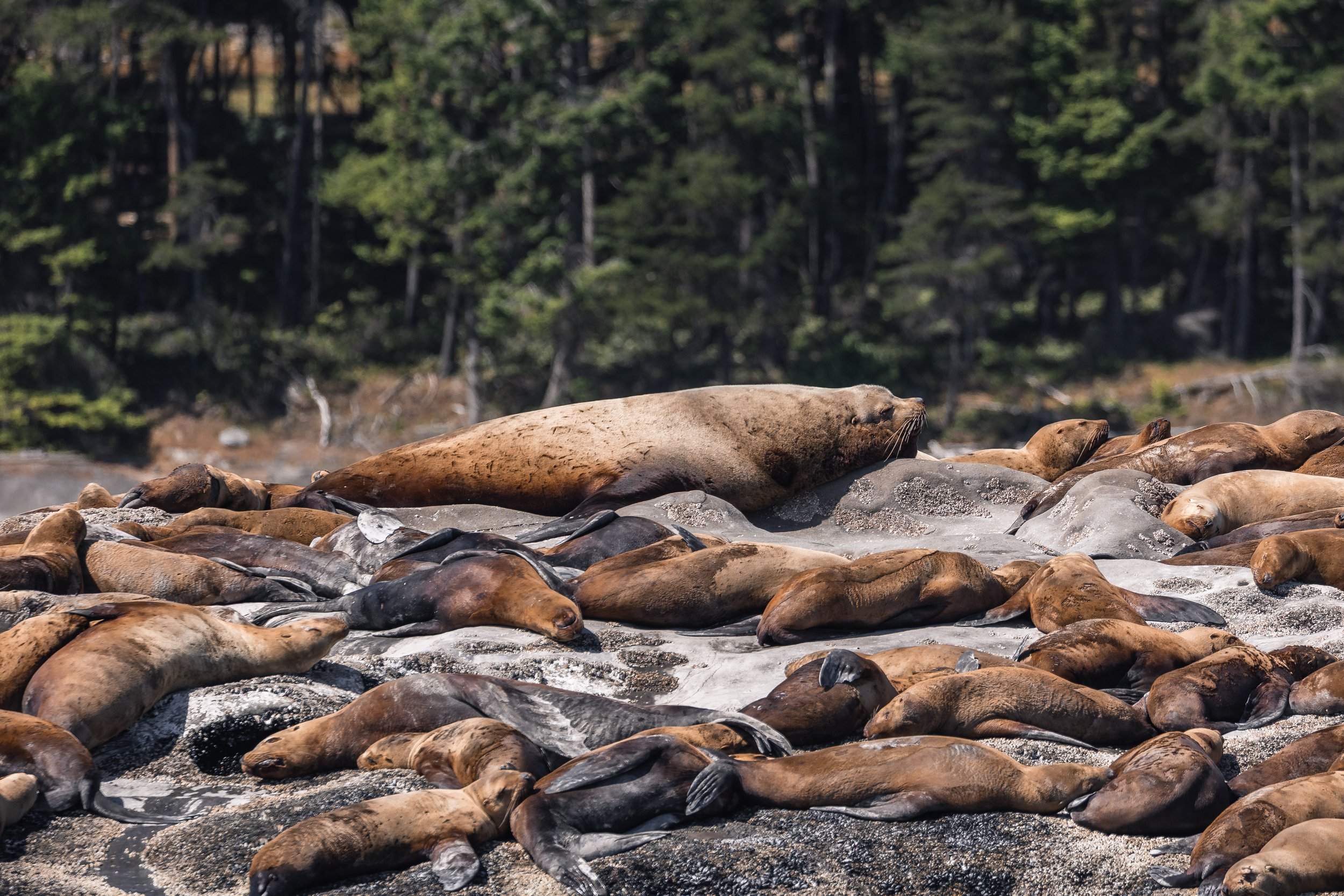
Not only chunky, but long too!
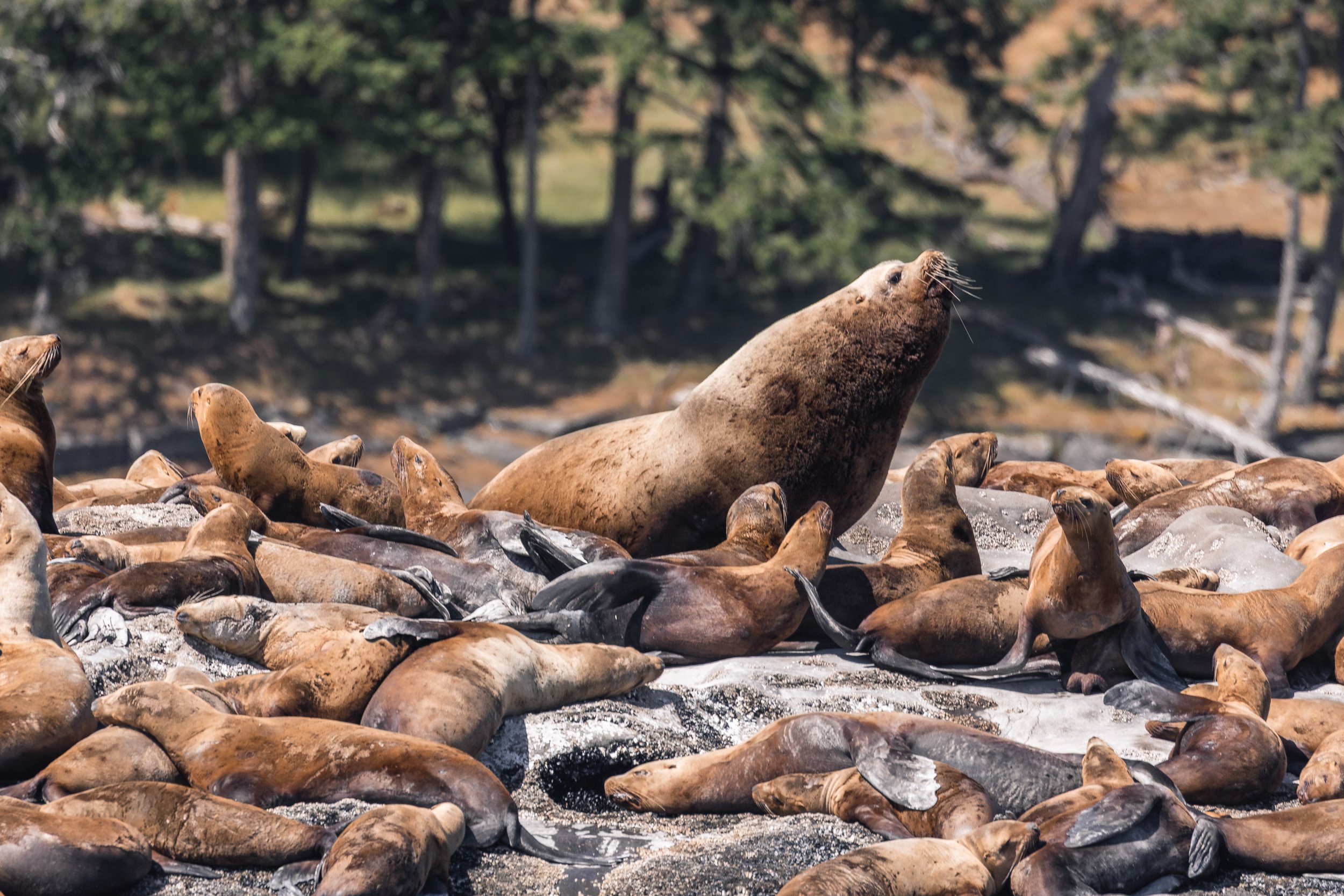
A fully grown male can weigh over 2,500 lbs!