
May 29, 2026 - Jude and Roswell teaming up in the SGI
The excitement was palpable as we cast off the dock aboard Keta this morning. Before departure, we had received an encouraging shore report of large orcas travelling south, not too far from home. With a promising lead and a boat full of eager passengers, we wasted no time setting course toward the southern Gulf Islands.
Our journey began with a thrilling run through Dodd Narrows, one of the most fascinating stretches of water on the British Columbia coast. This narrow passage runs between Mudge Island and Nanaimo and is famous for its powerful tidal currents, which can reach up to 9 knots during peak exchanges. As millions of litres of seawater are squeezed through this narrow gap every tidal cycle, nutrients are stirred up from the depths and mixed throughout the water column. This constant mixing creates an incredibly productive marine environment, attracting baitfish, seabirds, marine mammals, and countless smaller organisms that form the foundation of the food web. It's one of the many reasons wildlife thrives throughout our region.
Before long, we emerged into the southern Gulf Islands, where the sunshine greeted us, and the islands provided welcome shelter from the winds. The conditions couldn't have been better for spotting whales. With cameras ready and eyes scanning every direction, we began searching the calm waters for the unmistakable sight of tall black dorsal fins. At first, our search seemed to have us travelling in circles. We knew the whales were nearby, but finding them often requires patience, experience, and a little luck. Then suddenly, naturalist Aly called out, extending her arm toward the horizon. "There!" Everyone turned. The whales were actually behind us, travelling a little slower than we had anticipated. Even before reaching for her camera or binoculars, Aly was already smiling. "That's Jude."
To most people, the distant dorsal fin looked like any other. But years of experience have taught our naturalists to recognize individual whales from subtle details. Jude's dorsal fin has a distinctive shape and bend that makes him surprisingly recognizable, even from a distance. As we approached, another large dorsal fin appeared alongside him. Could it be Roswell? Out came the cameras as we worked to capture clear identification photographs. Jude has been known to spend time with other solitary males, and we were eager to confirm who was travelling beside him today. The photographs soon gave us our answer. It was indeed Roswell. Seeing these two together is always a fascinating reminder that not every orca follows the same life story.
Most transient orca remain closely tied to their mothers and family groups for life. Sons and daughters typically travel alongside their mothers for decades, creating strong matrilineal family units that form the backbone of orca society. These family bonds are among the strongest found anywhere in the animal kingdom. Jude and Roswell, however, are a little different. Both have spent much of their lives travelling independently, often moving between family groups or spending extended periods alone. Despite their solitary tendencies, the two males occasionally reunite, and today's encounter suggested they were enjoying one another's company once again.
Their shared history includes one of the most unusual events ever documented involving wild killer whales. In 2023, Jude and Roswell accidentally found themselves trapped in a freshwater lake near Sayward on Vancouver Island after swimming through a narrow channel during high water. As tides changed, the passage became impassable, leaving the pair temporarily stranded. For weeks, marine mammal experts, First Nations, government agencies, and local communities closely monitored the whales' situation while waiting for conditions that would allow them to leave safely on their own. You can read more about their adventure here https://www.fisheries.noaa.gov/feature-story/coffman-cove-residents-help-free-two-killer-whales-barnes-lake.
Today, they appeared healthy and relaxed as they travelled side by side near Ladysmith. While we can only speculate about their relationship, there may be advantages to occasionally teaming up. Transient orca hunt marine mammals, and cooperative hunting can increase success rates. Whether they are exchanging information, enjoying companionship, or simply benefiting from having another set of eyes and ears nearby, two fins can sometimes be better than one. After spending quality time with Jude and Roswell, we left the pair to continue their journey and resumed our search for additional wildlife.
It wasn't long before we encountered several harbour seals hauled out along the shoreline. These charismatic pinnipeds are among the most commonly seen marine mammals in our region and are perfectly adapted for life in coastal waters. Harbour seals can dive for up to 30 minutes, although most dives are much shorter, and they possess incredibly sensitive whiskers that detect tiny vibrations left by swimming fish. Even in complete darkness, these whiskers help them locate prey with remarkable precision. Harbour seals are also important members of the local ecosystem, serving as both predators and prey. Their presence helps support healthy food webs throughout the Salish Sea.
Later in the afternoon, we came across their much larger cousins lounging around local log booms; they were California Sea Lions. At first glance, these impressive animals can look similar to seals, but there are several easy ways to tell them apart. Sea lions have visible external ear flaps, longer front flippers, and can rotate their rear flippers beneath their bodies, allowing them to "walk" on land. Harbour seals, by contrast, move with a much more wriggling motion when hauled out. The males we see here can be especially impressive. Adult male California Sea Lions can weigh over 1,000 pounds and often gather around log booms and docks throughout the winter months. One fun fact is that many of the sea lions we see around Vancouver Island spend their summers breeding in California before migrating hundreds of kilometres north to take advantage of the rich feeding opportunities available in British Columbia waters.
As the afternoon drew to a close, we pointed Keta back toward Nanaimo. The sun remained high overhead as we reflected on another incredible day in the Salish Sea. From racing through the swirling currents of Dodd Narrows to spending time with two of the coast's most recognizable lone-wolf orcas, the day was filled with unforgettable encounters and fascinating wildlife stories.
What an incredible day on the water. Enjoy the photos below taken by Aly Kohlman.
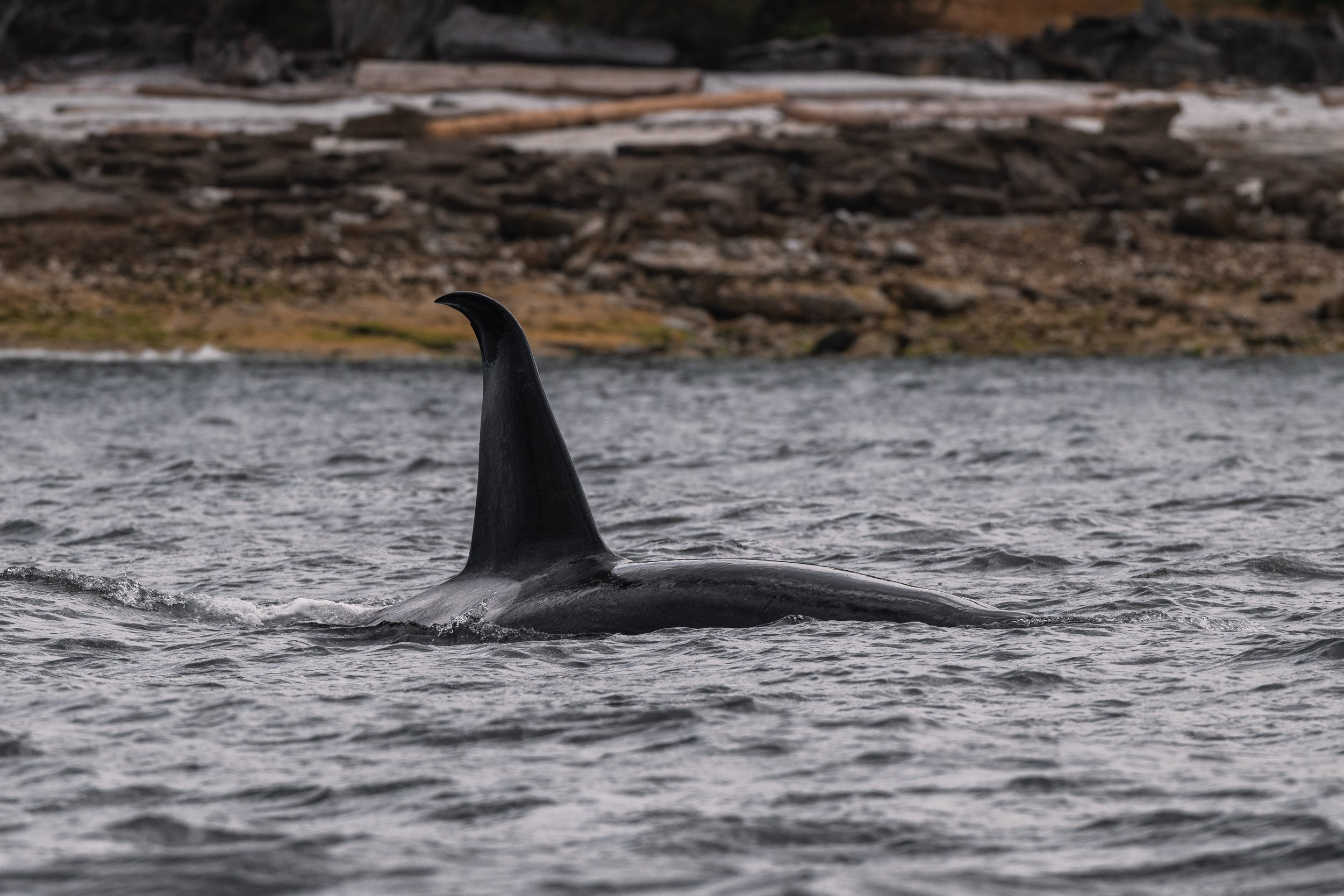
Jude with his distinct dorsal fin.
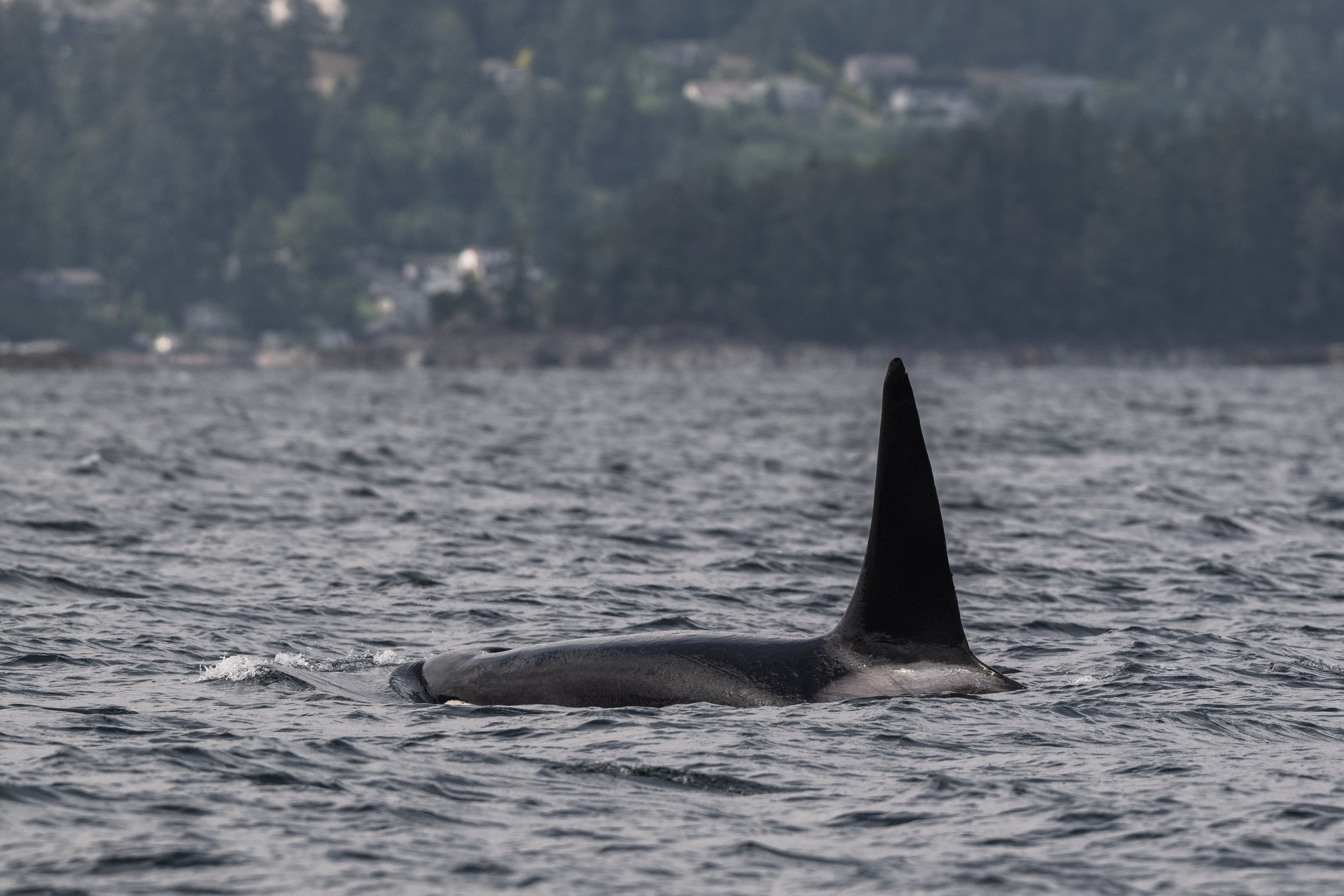
Roswell surfacing.
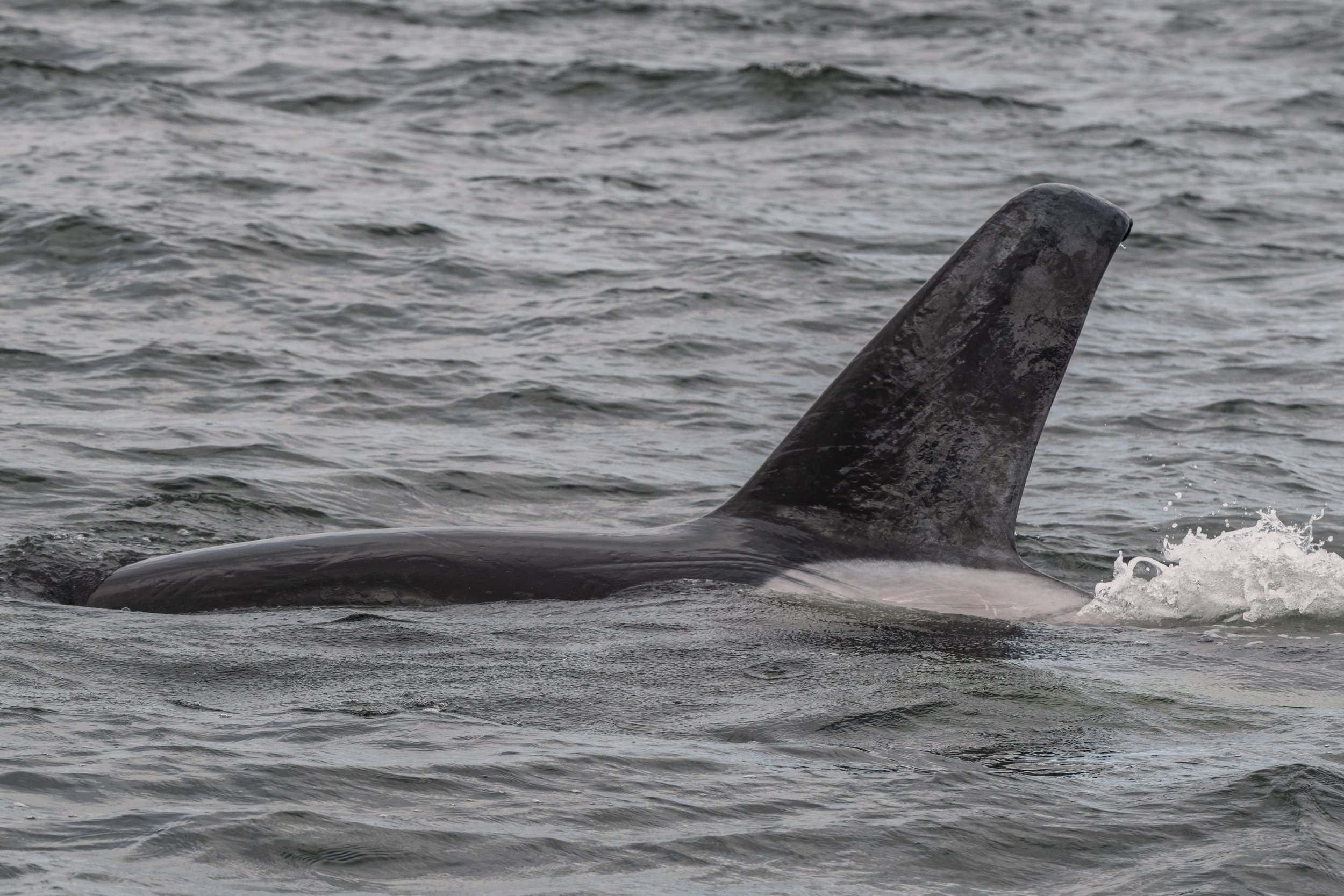
Jude’s leaning dorsal.
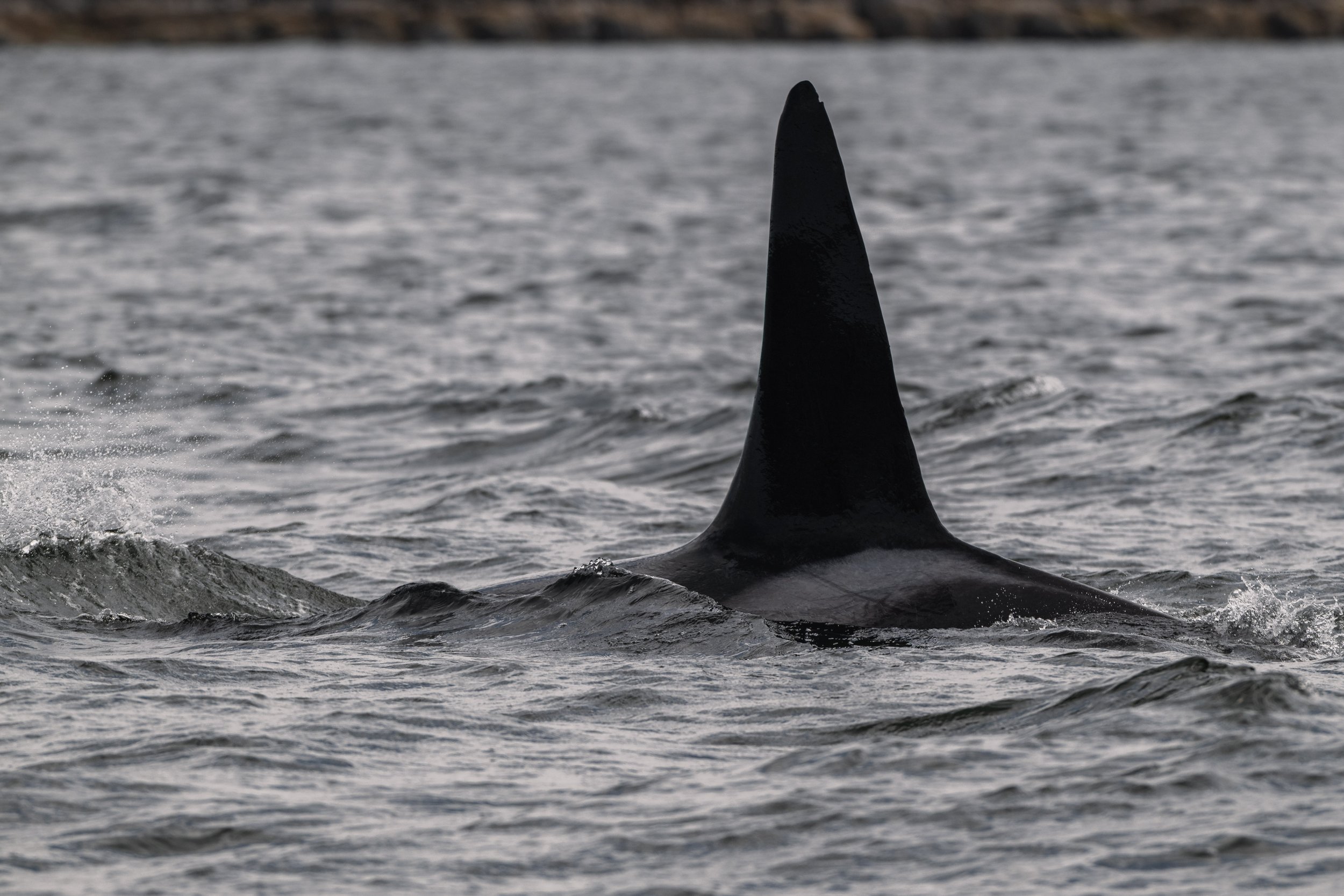
Roswell in the waves.
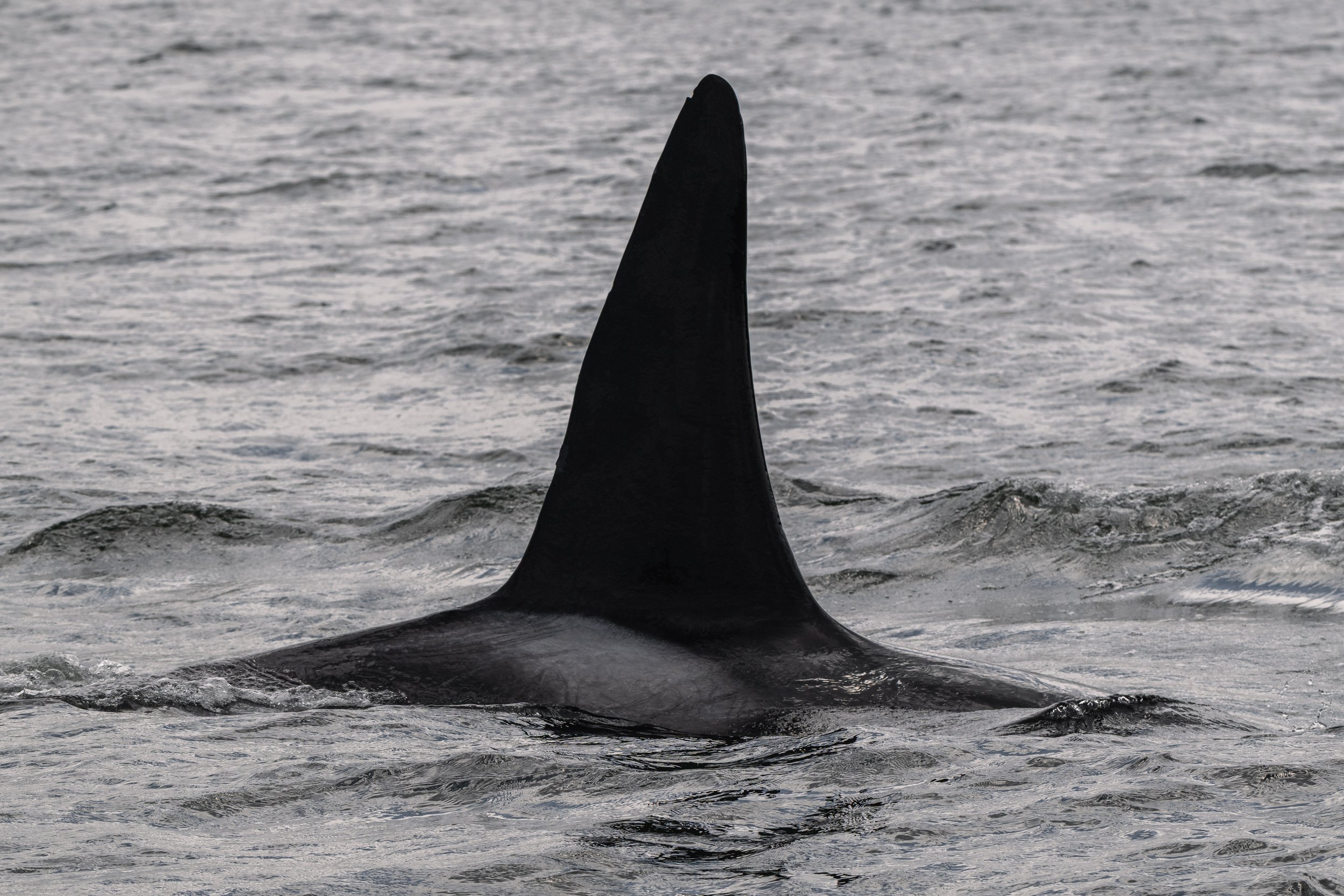
Can you see the tiny notch at the tip of Roswell’s dorsal?
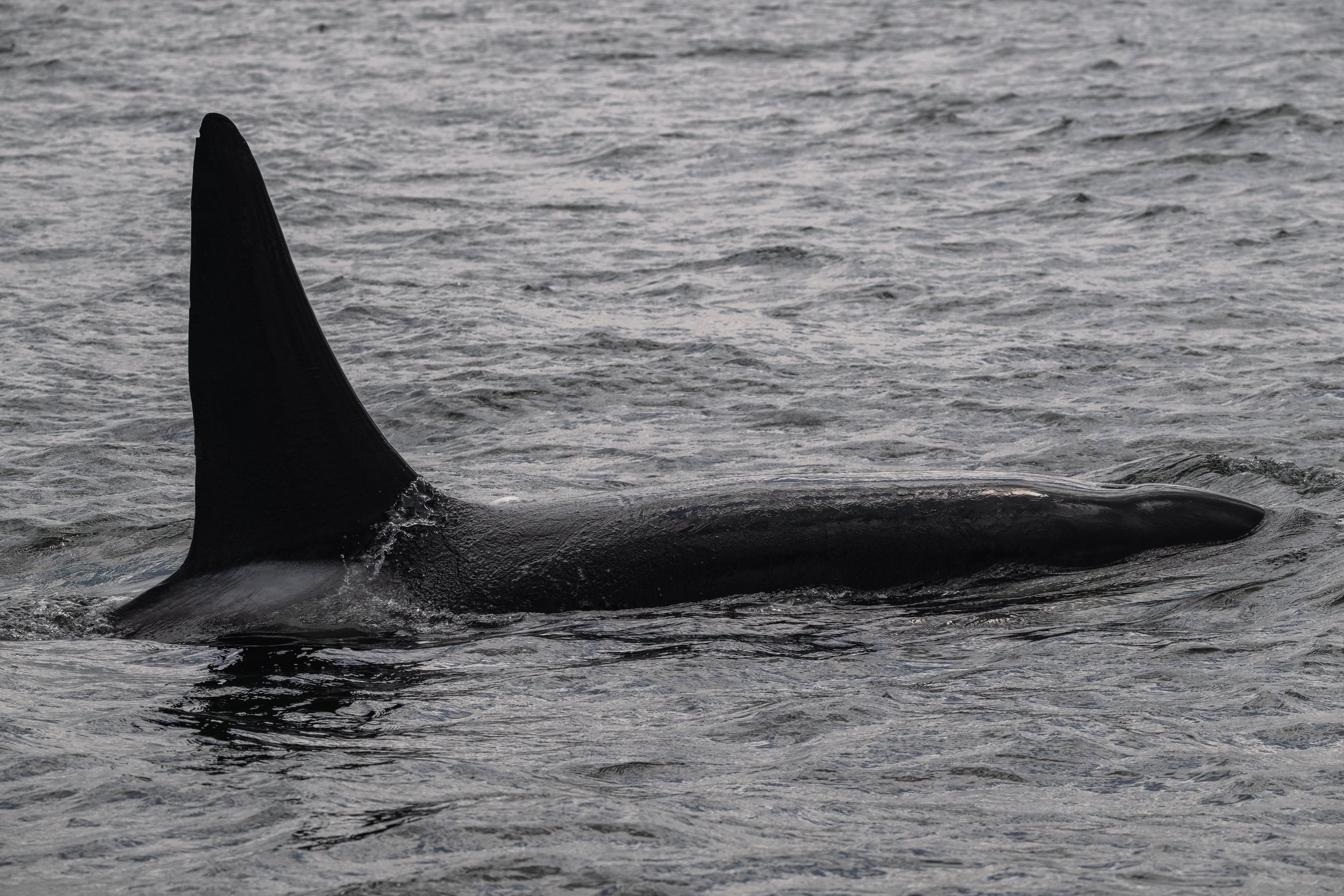
Roswell surfacing.
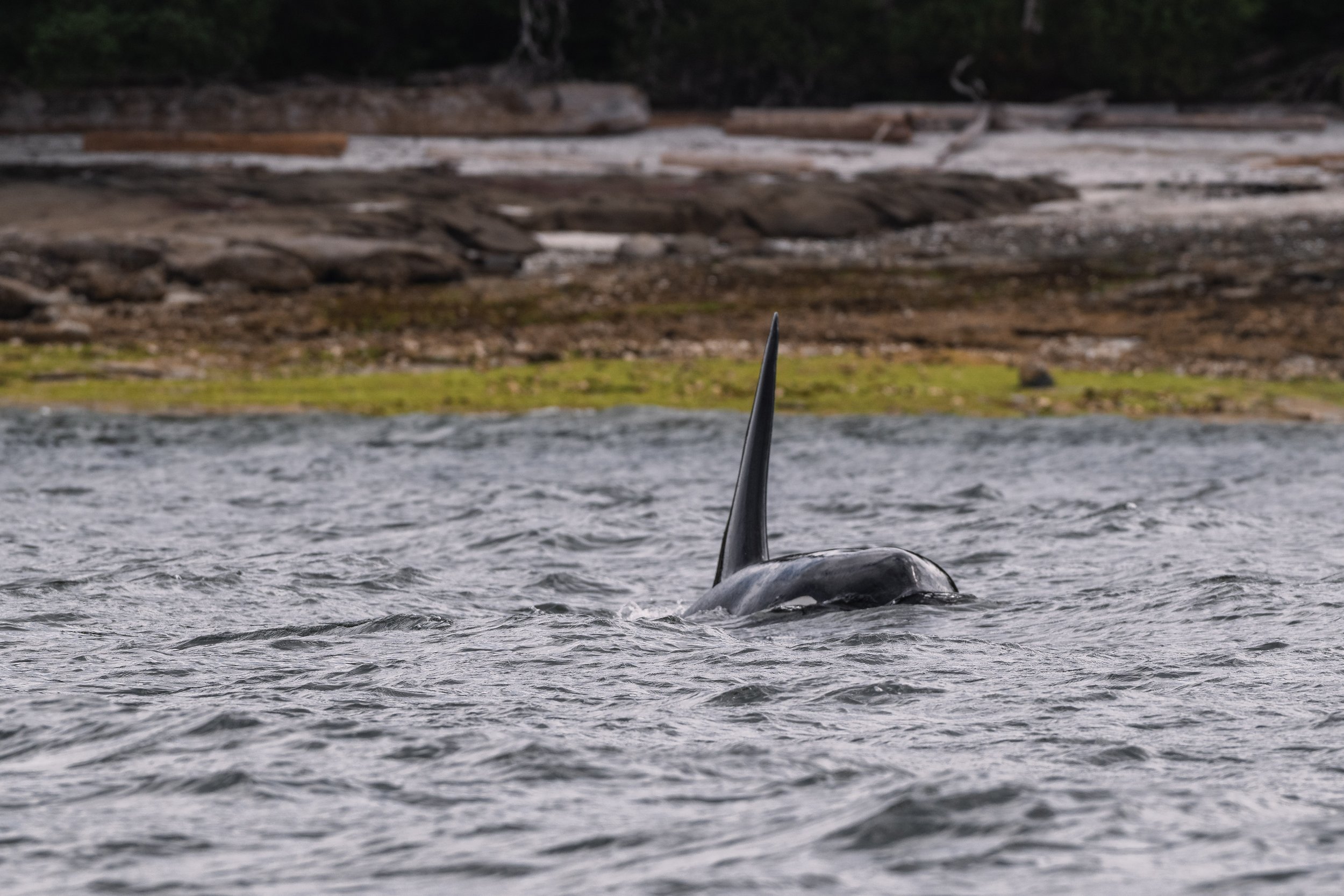
An interesting angle of Roswell.
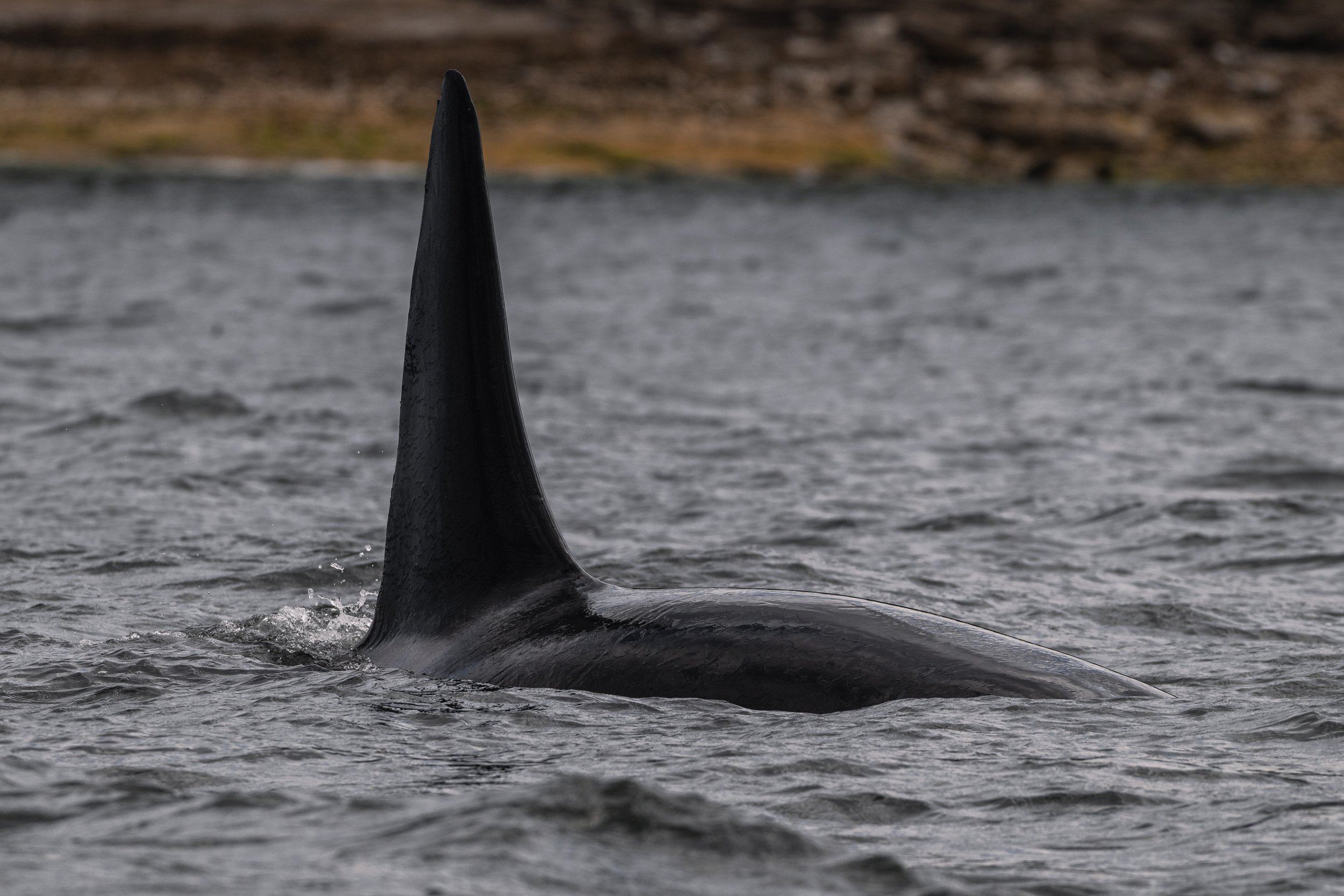
Roswell crusing past.
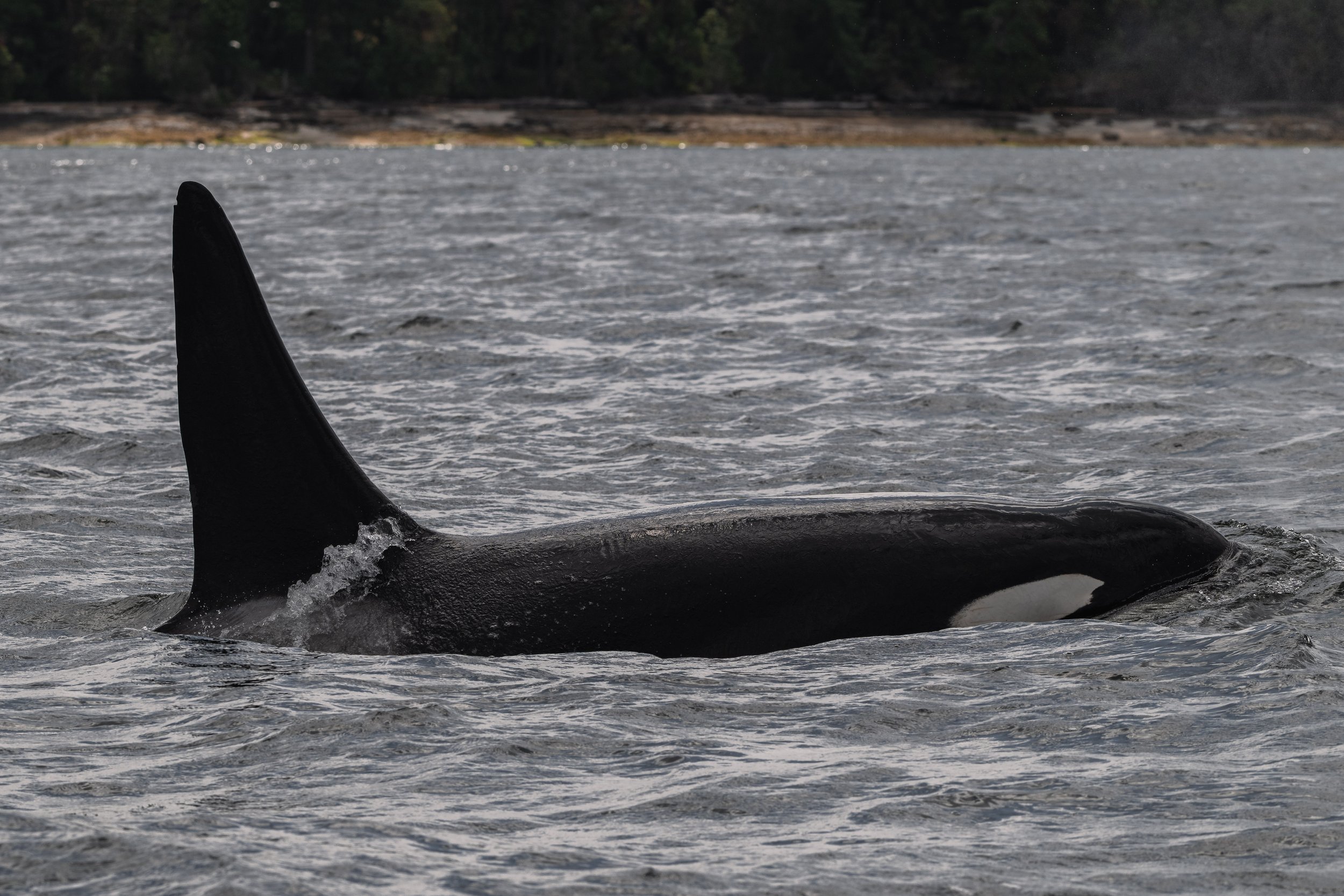
A good look at Roswell’s eye patch.
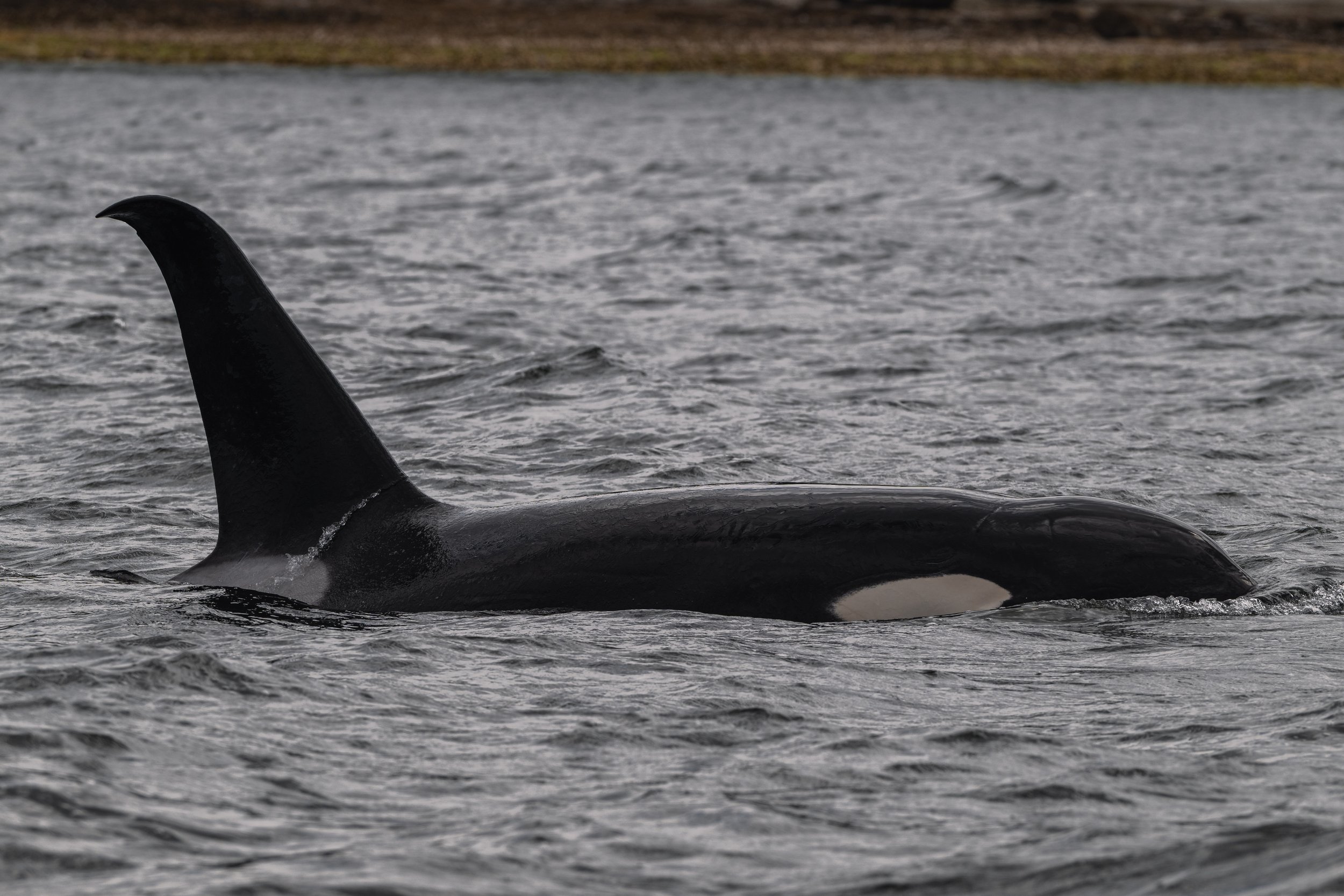
A look at Jude’s eye patch.
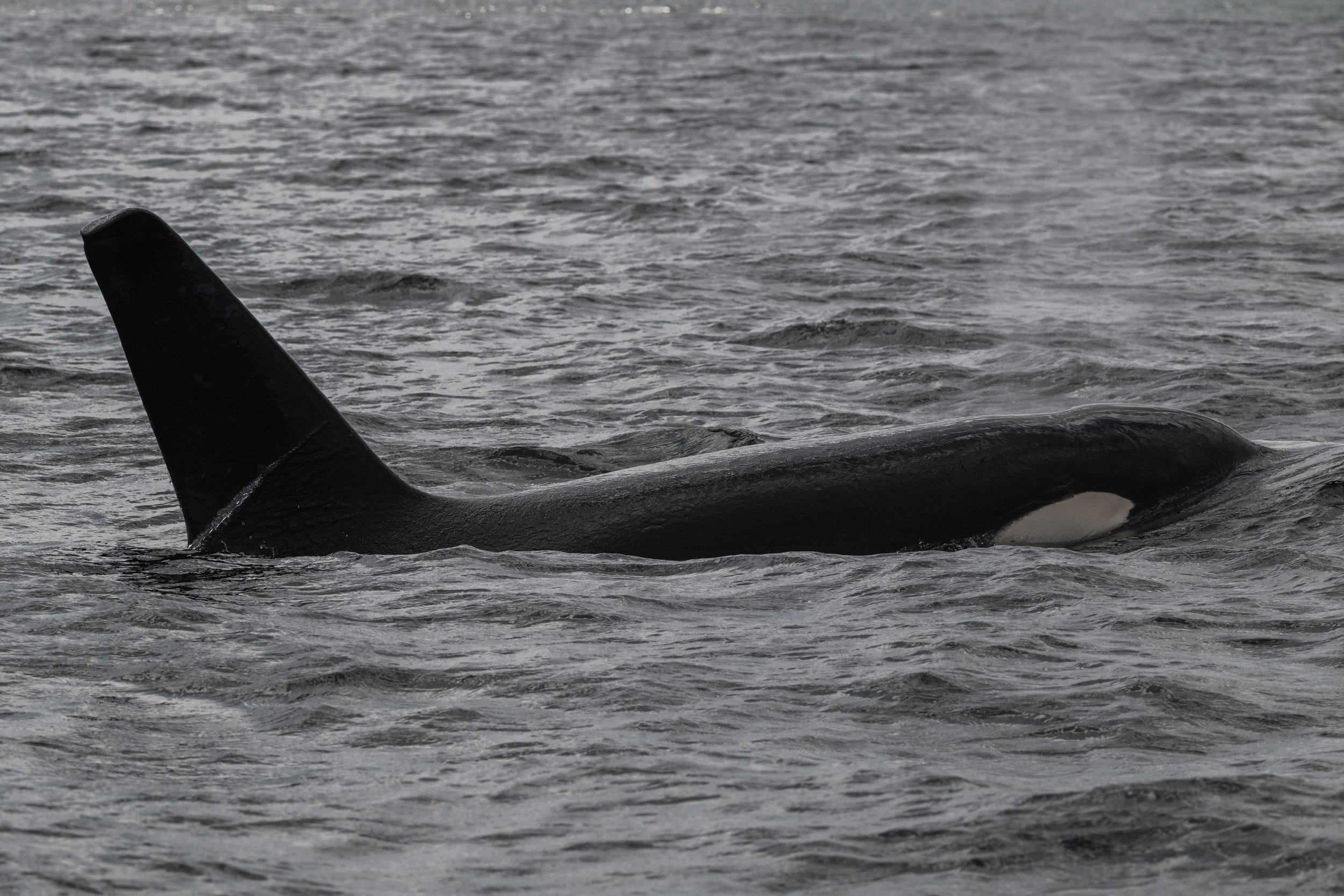
Jude surfacing.
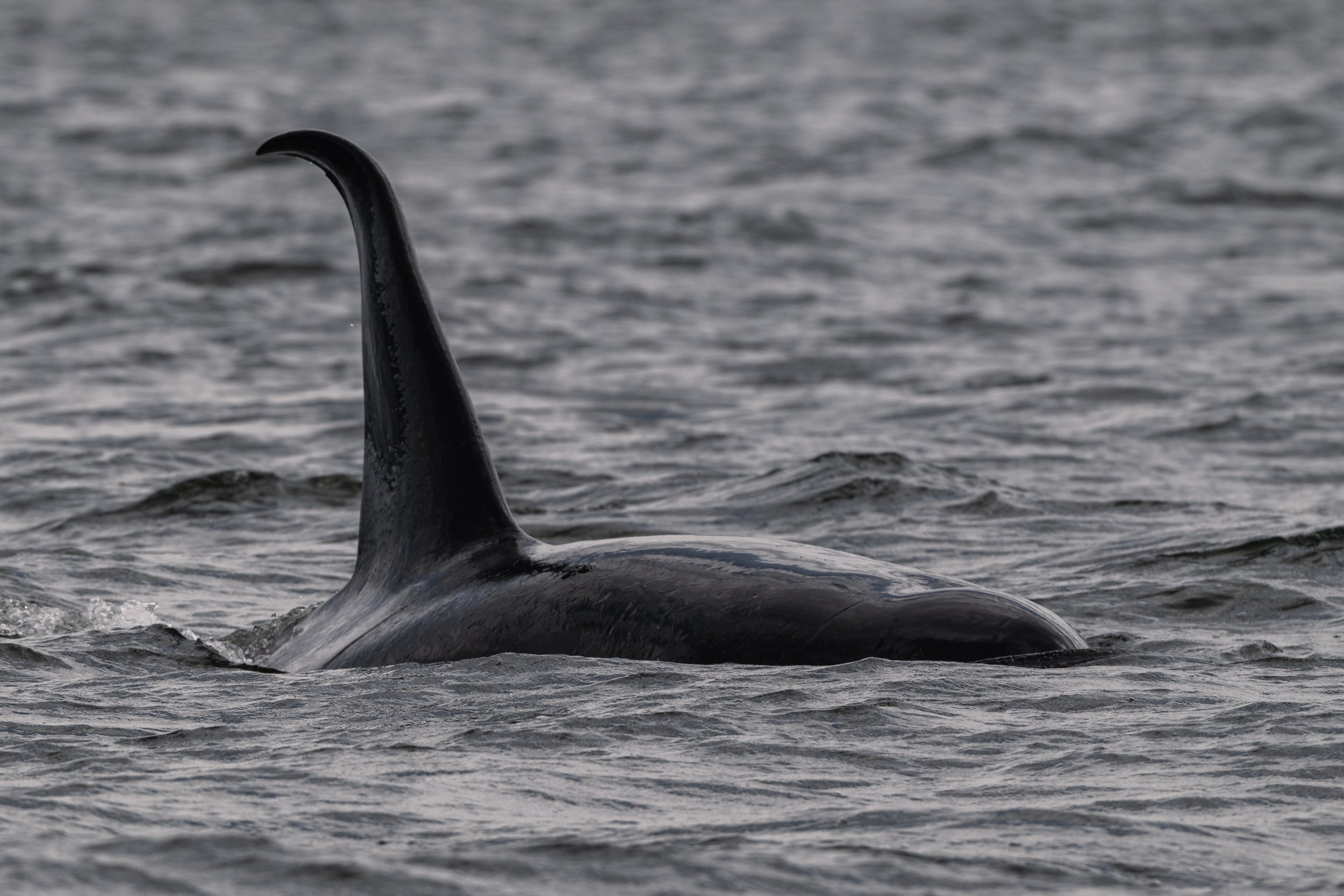
Check out Jude’s dorsal fin!
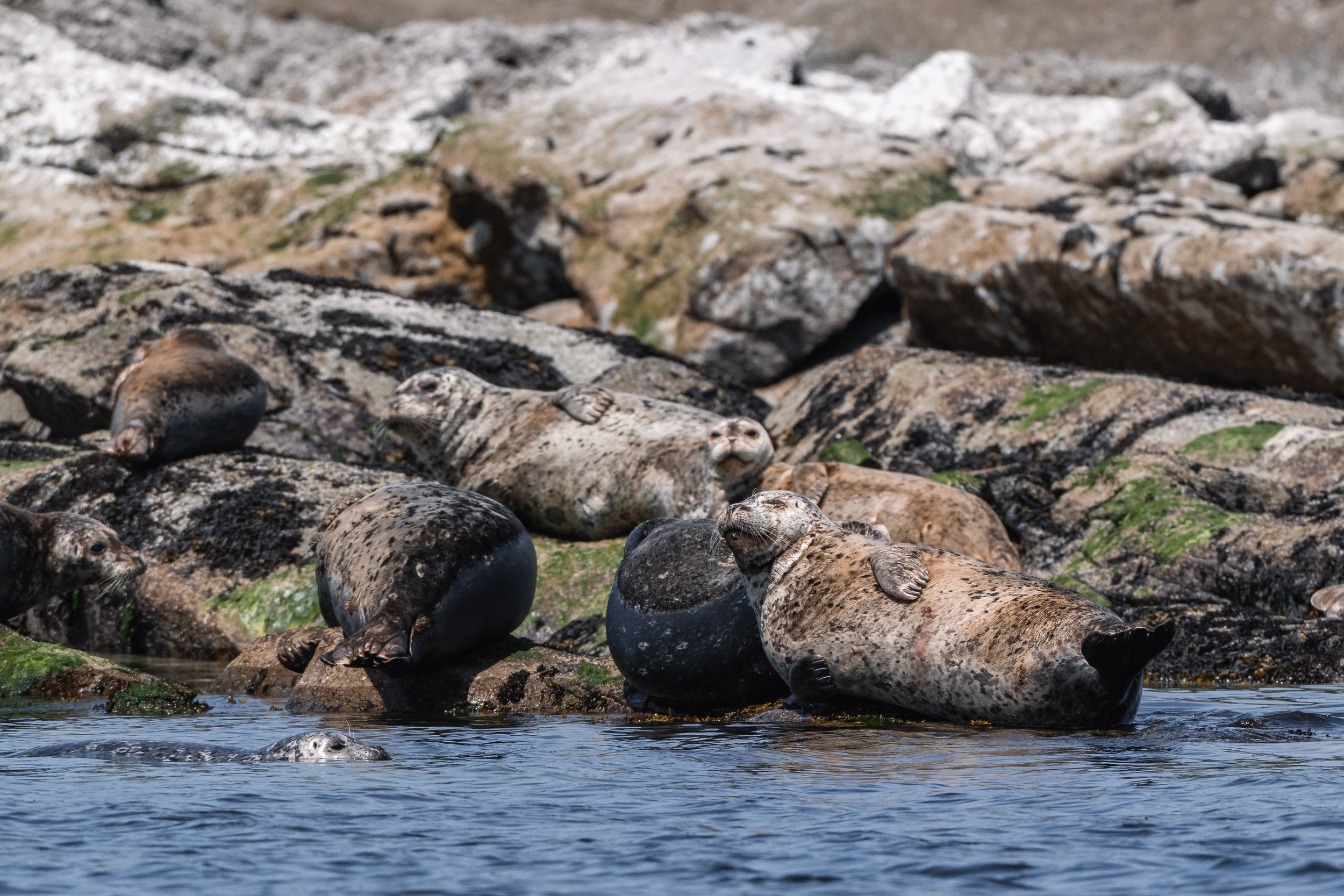
Happy harbour seals lounging around.
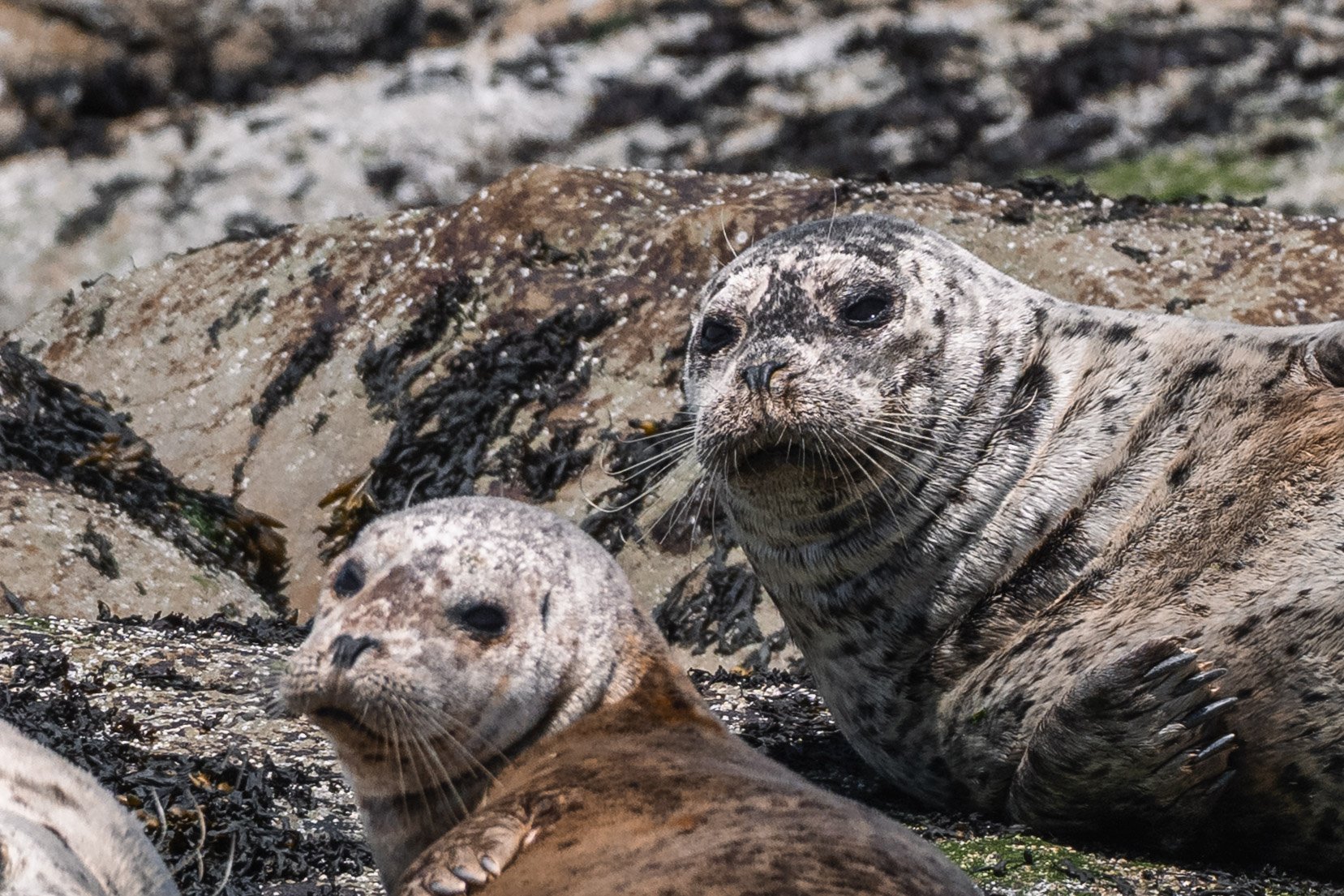
“What are you looking at?” these seals probably!
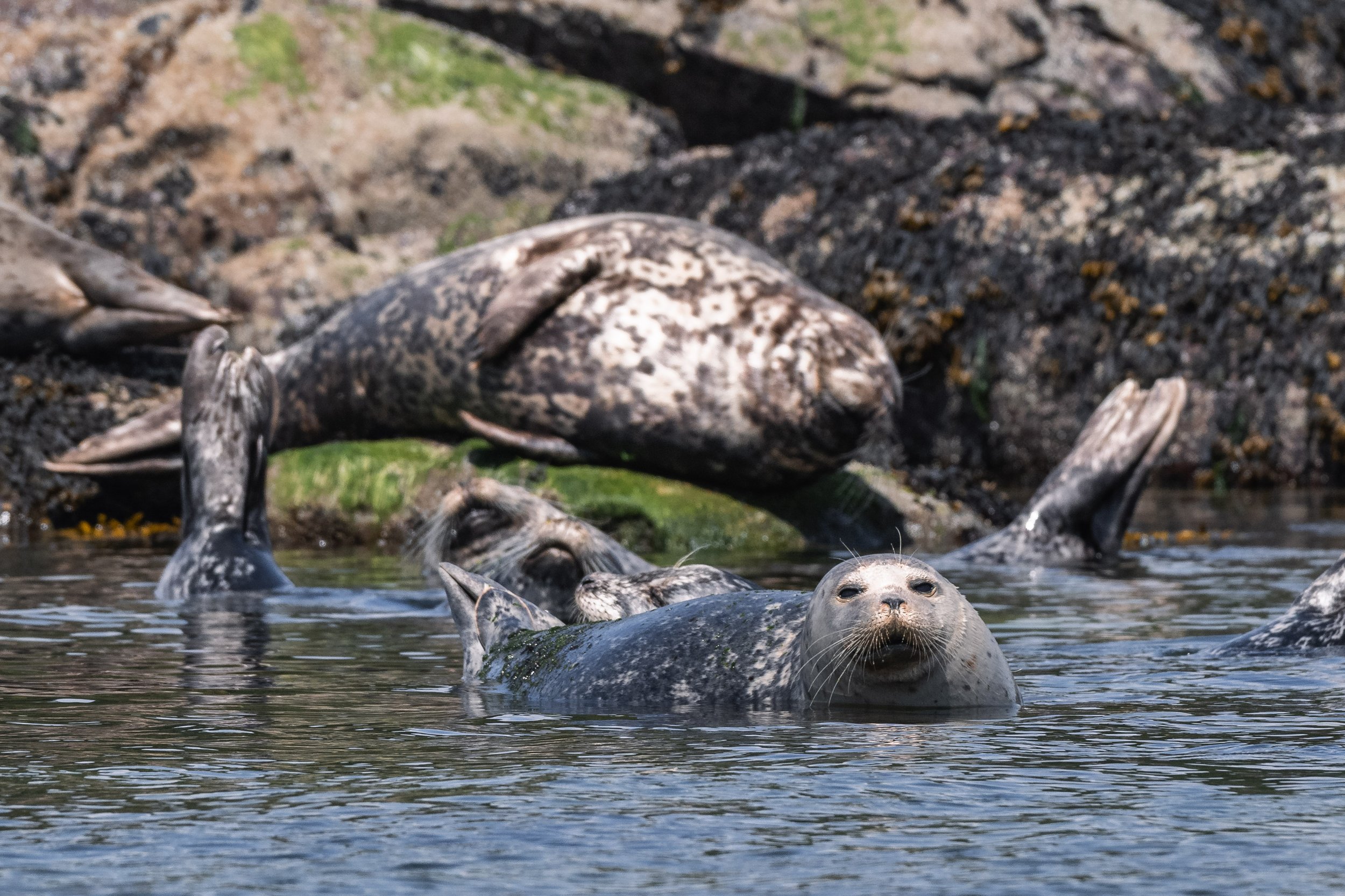
Can you spot the cuddle puddle of seals?
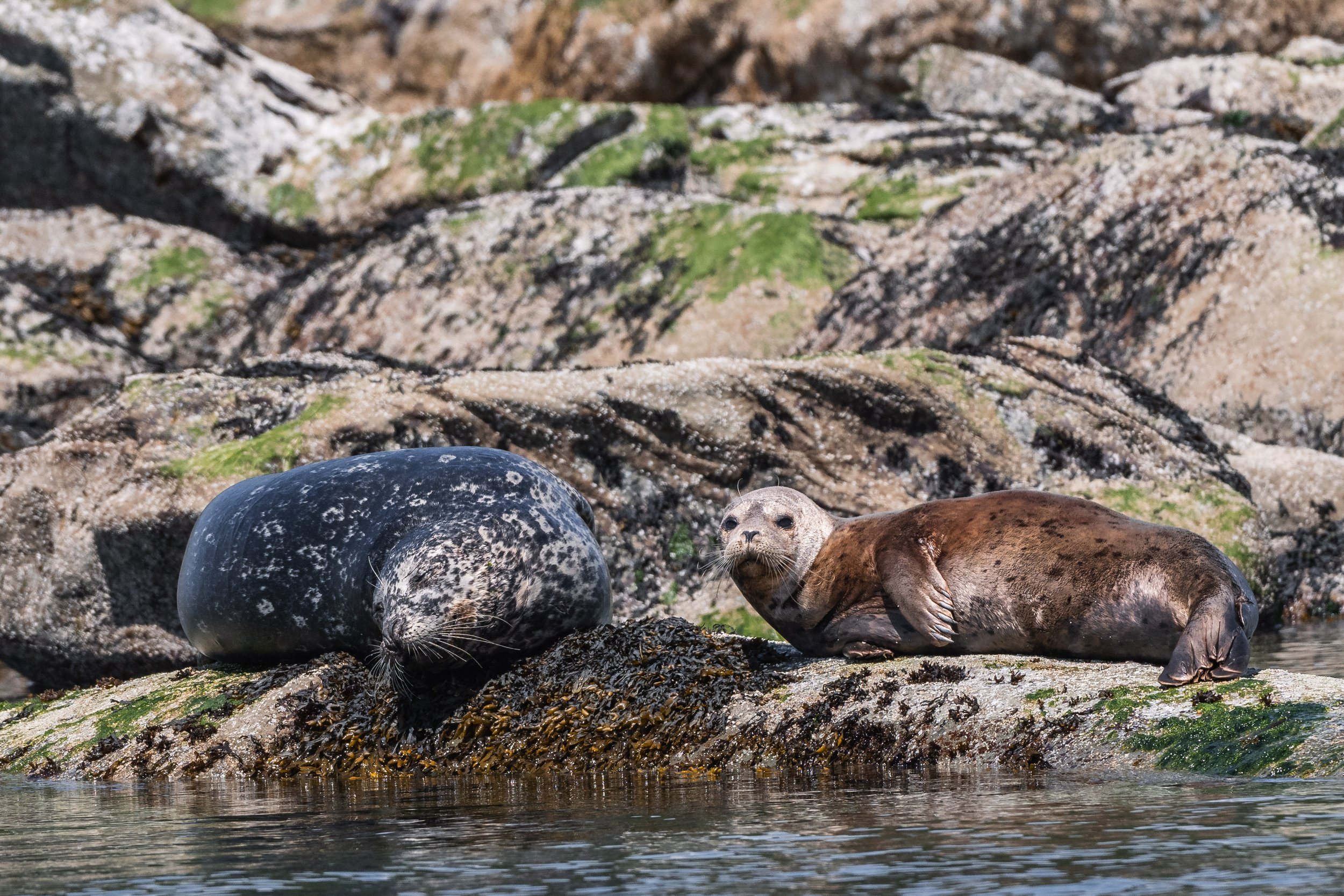
Seals resting on the rocks.
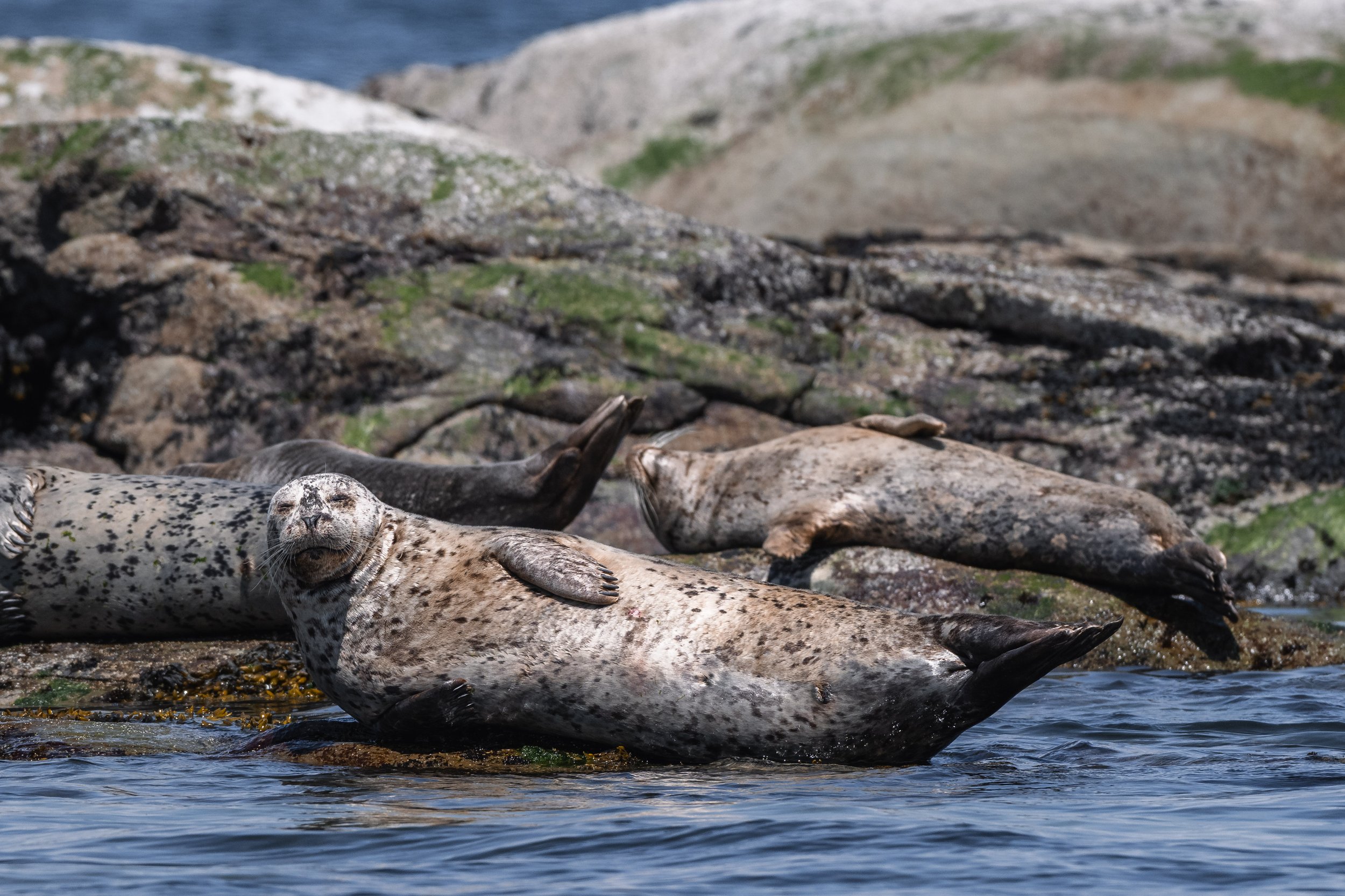
Harbour seals snoozing.
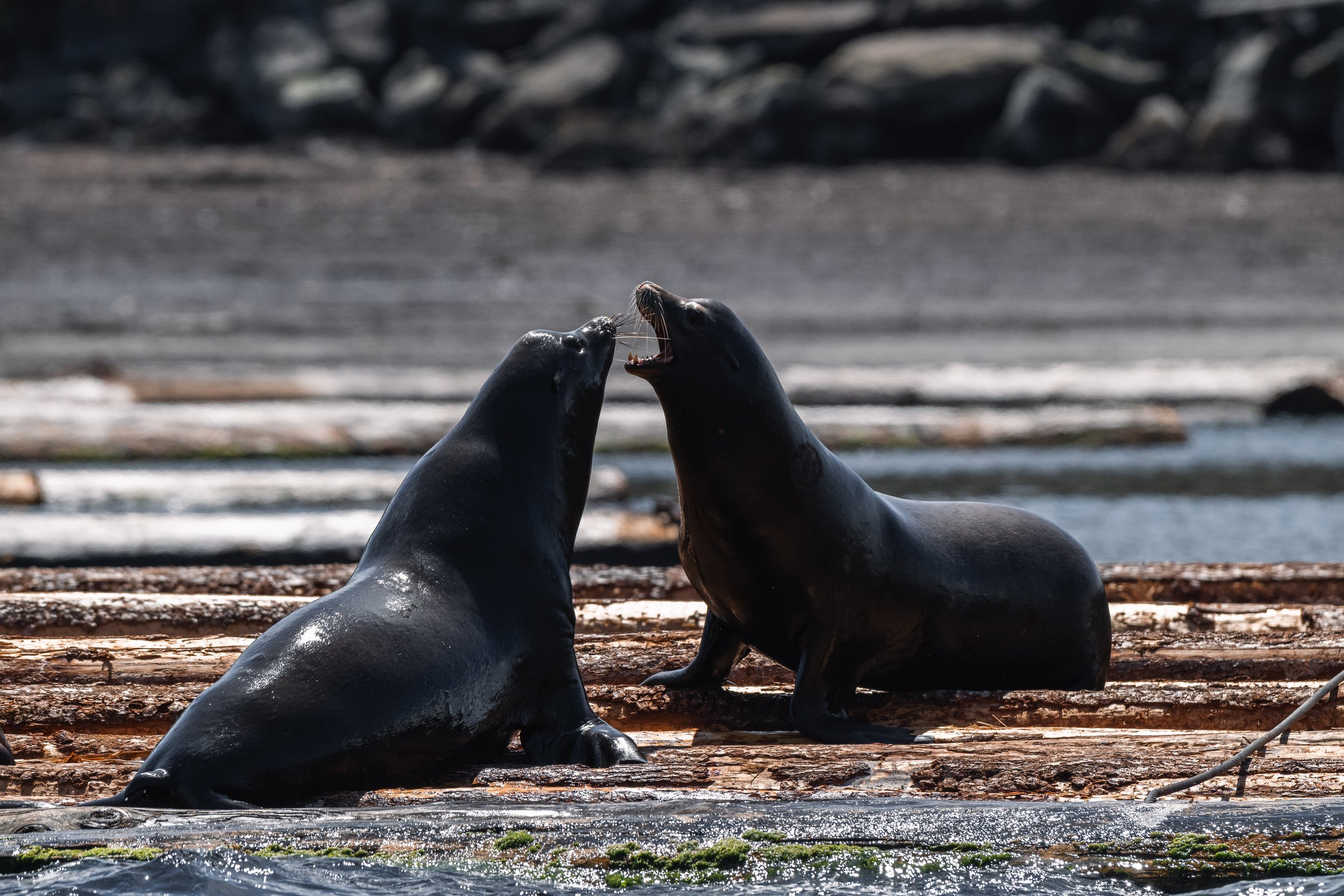
California Sea Lions fighting at the booms.
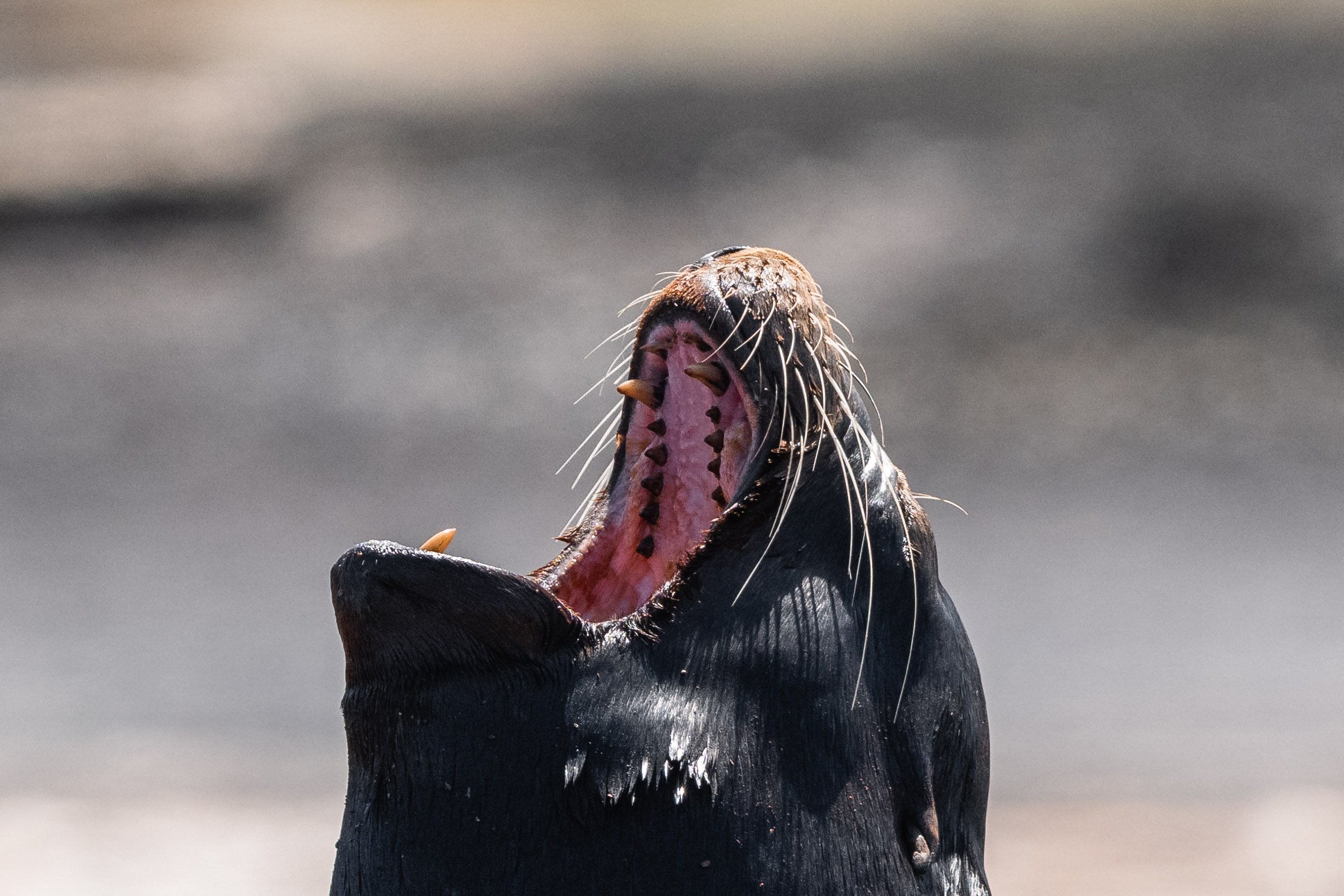
Look at this sea lion’s teeth!
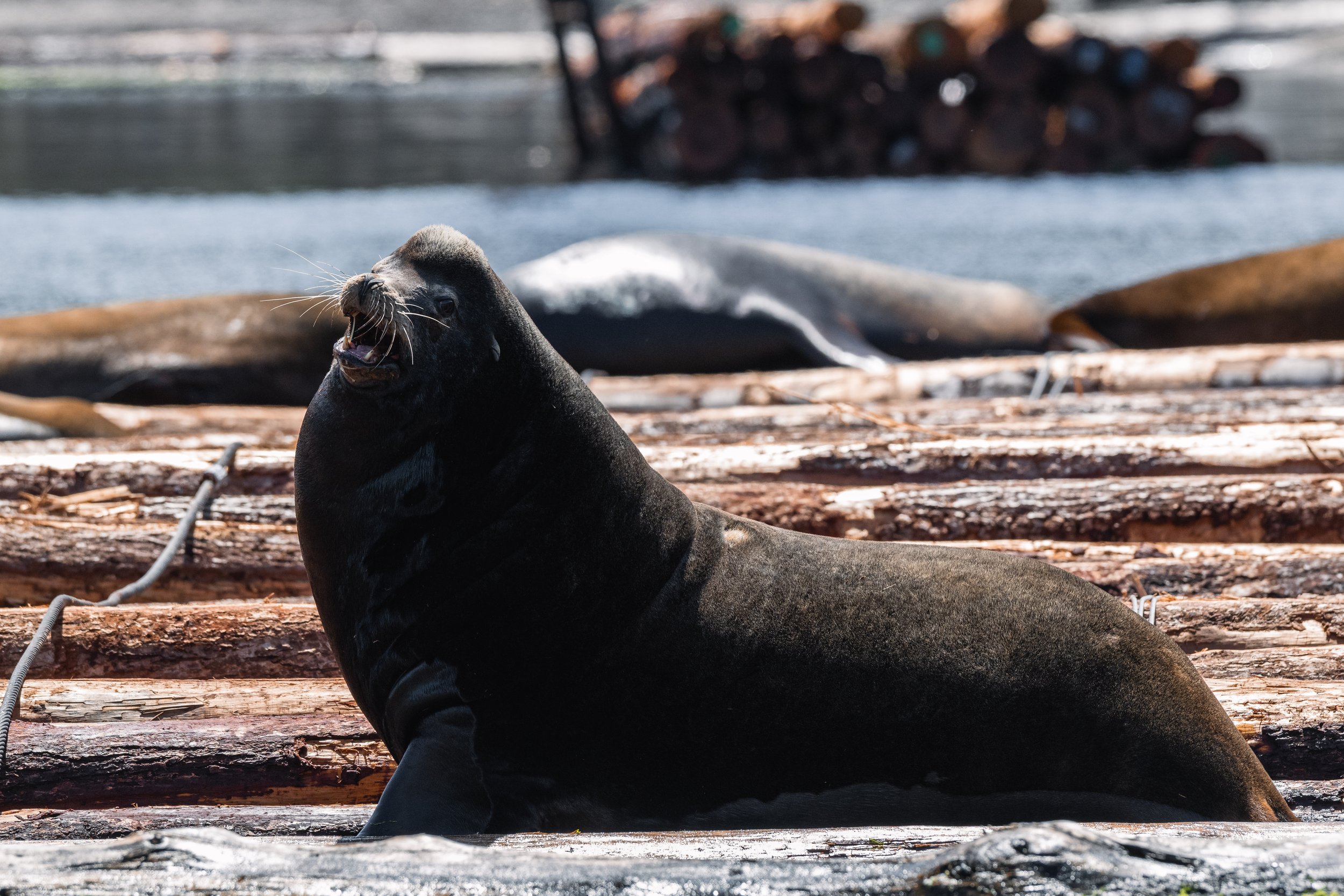
A large male California Sea Lion in the sun.
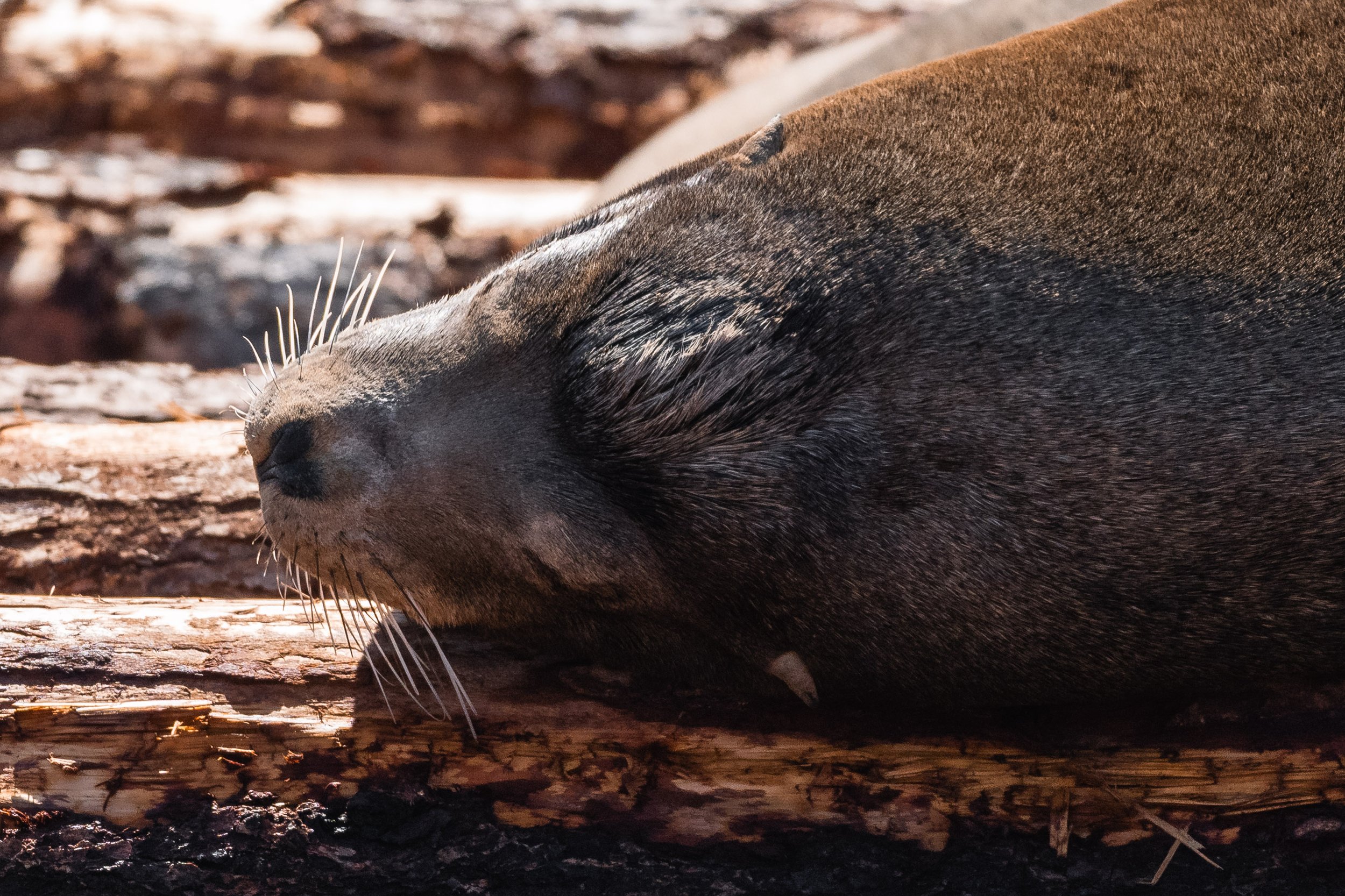
A sleepy sea lion.