
May 9, 2026 - Orca Party in the Outer Nanaimo Harbour
Light winds and glimpses of sunshine greeted our guests and crew on this fine morning. Our semi-covered boat, Kula, and open-zodiac boat, Keta, set off from the dock in search of an adventure! We started our search by investigating a land-based report about some mysterious orca that had been spotted between Gabriola Island and Snake Island. And it didn’t take long before some action had been spotted!
Guests aboard our open Zodiac boat Keta were the ones to spot the whales first! Both large and small dorsal fins were spotted moving through the water, a tell-tale sign of orcas. The dorsal fin of males reaches upwards of 6 feet tall, which makes the mature male orcas the easiest to spot when compared to the smaller 3-foot dorsal fins of the females. Marine Naturalist Evan Hessels and Jordan Robinson used photography to identify and compare the dorsal fins of the orcas present with those in published catalogues. Upon examination, it appeared as though multiple pods were present! Once the large male dorsal fin was identified as T123A Stanley, we knew the rest of his family, the T123s, would be present!
Additionally, Jordan and Evan documented a young orca that appeared to be only a couple of years old. After Evan captured a photo of the child's eyepatch, the kid was identified as T046B1D, a one-year-old baby in the T046B1 pod! Interestingly enough, there was still one unknown orca among the bunch that didn’t belong to either pod. It was T046C2 Sam, a female orca who travels separately from the rest of her family. Something interesting about Sam is that she is actually Tread's cousin! In recent years, Sam has been observed travelling with her cousins' pod, the T046B1’s.
T123 Sidney ♀ (~1985)
T123A Stanley ♂ (2000)
T123C Lucky ♀ (2012)
T123D Darcy ♀ (2018)
T046C2 Sam ♀ (2009)
T046B1 Tread ♀ (2003)
T046B1A Tsakani ♀ (2015)
T046B1C Tide ♂ (2022)
T046B1D (2025)
The group of orcas was observed swimming slowly and closely together, surfacing almost in unison. They displayed plenty of social behaviour, including rubbing against one another and the occasional small spyhop! When multiple pods of orcas gather together like this, it’s called a “T-party,” with the “T” referring to the transient ecotype of orca.
When so many whales are huddled together, it can be challenging to determine exactly which individuals are present. This is where photo identification becomes incredibly valuable. One of the most fascinating things about orcas is that each individual has a unique combination of dorsal fin shape, saddle patch pigmentation, and markings. These features act almost like fingerprints when investigating a whale’s identity. By photographing these features, researchers and naturalists can identify and keep track of individual whales.
Identification is not always straightforward, however. Some orcas, particularly younger individuals, may lack distinctive dorsal fin shapes or obvious markings, making them harder to identify at first glance, especially within large groups. In these situations, naturalists rely on other identifying features, such as the shape and pigmentation of the saddle patch or eyepatch. Scars, nicks, and subtle markings can all help distinguish one whale from another.
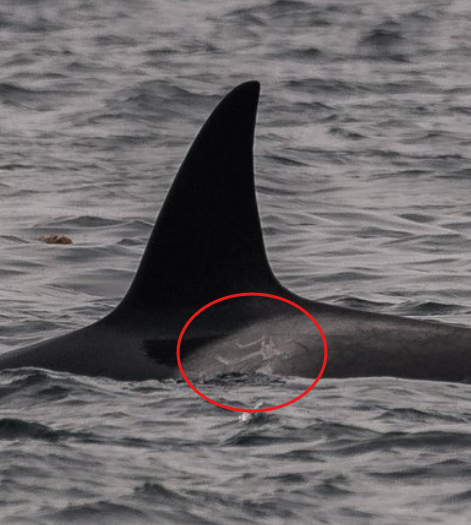
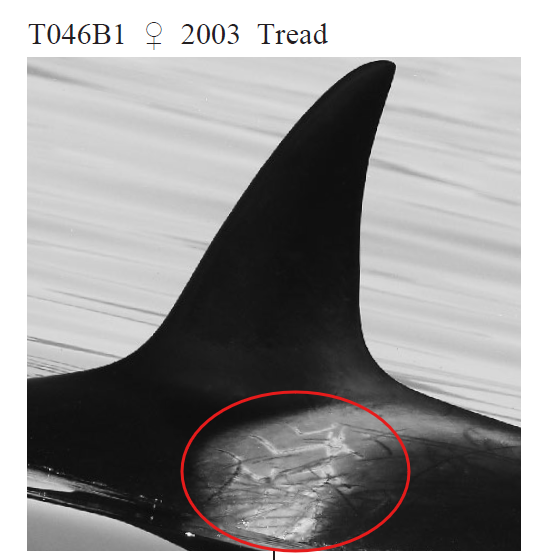
Some photographs from our tour perfectly demonstrate how these identification techniques are used. T046B1 Tread is a great example of how scarring on the saddle patch can become a defining feature. Although the origin of her scar is unknown, it inspired her nickname because of its resemblance to tire tread marks. Once the left (port) side of her saddle patch is visible, these markings make her easy to identify.
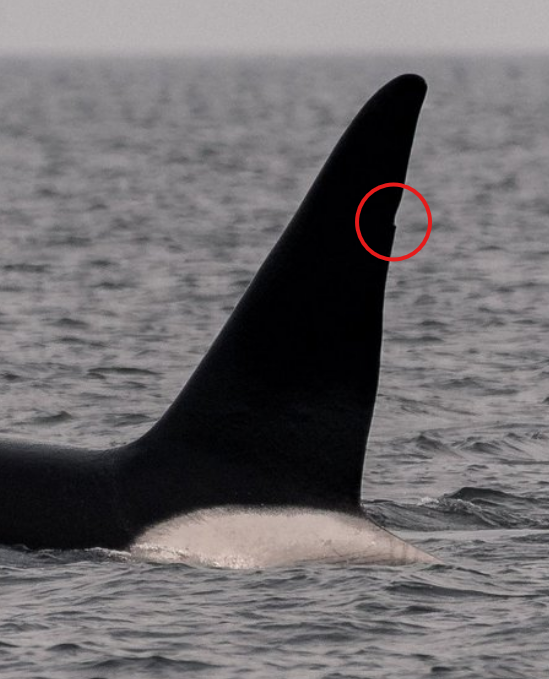
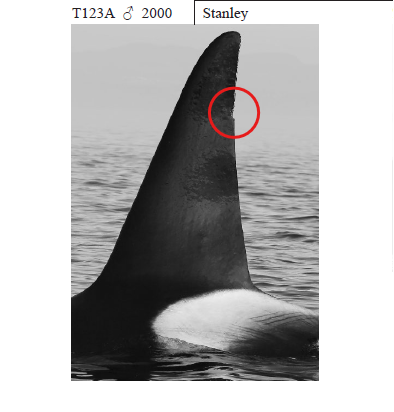
T123A Stanley demonstrates another common identification method, notches in a dorsal fin. He has a very noticeable notch carved about two-thirds of the way up his dorsal fin, making him easy to recognize. Distinctive notches like these are often one of the quickest ways to identify an orca in the field, though some individuals can have similarly placed markings that require closer comparison to confirm their identity.
Once our time with the T-party had wrapped up, captains Laura and Rob carefully pulled away from the group of orcas until a sufficient distance was established, and the search for more wildlife continued! The next stop was at the Harmac area in the Northumberland Channel, between Gabriola Island and Vancouver Island. In this area, collections of logs called log-booms are anchored along the shoreline, waiting to be processed at the nearby veneer and round wood mill on Vancouver Island. These collections of logs create the perfect spot for some of our local fuzzy friends, sea lions! California Sea Lions love to lounge on top of these log-booms, spending much of the day snoozing and resting. These sea lions are resting up before beginning their southward migration to California and Mexico, where they gather to breed on warm, sandy beaches. The California sea lions that visit the Salish Sea begin their southbound journey in late April to early May, making these some of the last individuals we’ll see in the area this season.
After enjoying the presence of the California Sea Lions, the crew and guests ventured south through Dodd Narrows and entered the calm waters of the Southern Gulf Islands. These islands are a pristine setting for a boat tour due to their calm, wind-protected waters. Both vessels, Kula and Keta, cruised through the islands, looking for more spectacular creatures. Eventually, our fleet reached the south end of Valdes Island and decided to change things up by entering the Strait of Georgia through Porlier Pass, which lies between the southern shore of Valdes Island and the north shore of Galiano Island. Once through, guests and crew continued north through the Strait of Georgia. Along the outer coastline of Valdes Island, some large fuzzy silhouettes had been spotted hauling out on some rocks. Upon getting a closer look, it was some Steller sea lions!
The Steller Sea Lions that haul out on these rocks are the largest species of sea lion in the world. They exhibit a trait called sexual dimorphism, in which males and females have different physiological characteristics. Females only grow to be one-third the size of mature males, with males reaching 11 feet long and weighing upwards of 2500 pounds, whereas females max out at around 800 pounds and reach 8 feet long. The size difference is a crucial advantage for the males during the breeding season, which has just begun and runs through mid-July. During this time, dominant males claim and defend harems of females on rocky haul-outs. Incredibly, these males will fast and remain on land, without entering the water to feed, for the entire two-month period. When they get the chance to feed, they’re feeding on schooling fish, squid and octopus.
Additionally, on a smaller nearby rock were some skittish Harbour Seals! These seals only weigh up to 280 pounds and grow to be 6 feet long. Males and females are pretty indistinguishable from each other, unlike sea lions. The snout of Harbour Seals is shorter and more blunt when compared to that of sea lions. These cute little pinnipeds are considered true seals because they belong to a different evolutionary lineage compared to sea lions. One of the key differences lies in their anatomy: true seals lack external ear flaps (pinnae) and have smaller front flippers. Additionally, their pelvic bones are fused, which limits their ability to move on land, but it gives them a decisive advantage in the water. This adaptation enhances thrust and agility, crucial when evading killer whales.
From here, guests and crew continued through the Strait of Georgia, following Gabriola Island along the way. Before heading back into the Nanaimo Harbour, our vessels stopped at the bluffs of Gabriola Island. The rocky cliffs provide a great spot for nesting birds, such as Pelagic Cormorants, Double-Crested Cormorants, Gulls, Cliff Swallows, and Pigeon Guillemots! Additionally, bald eagles frequent the bluffs to pick off young cormorants for an easy snack.
Shortly after, we found ourselves back in the Nanaimo Harbour after an amazing tour! Please enjoy all of the photos below, captured throughout the tour by Marine Naturalists Evan Hessels and Jordan Robinson.
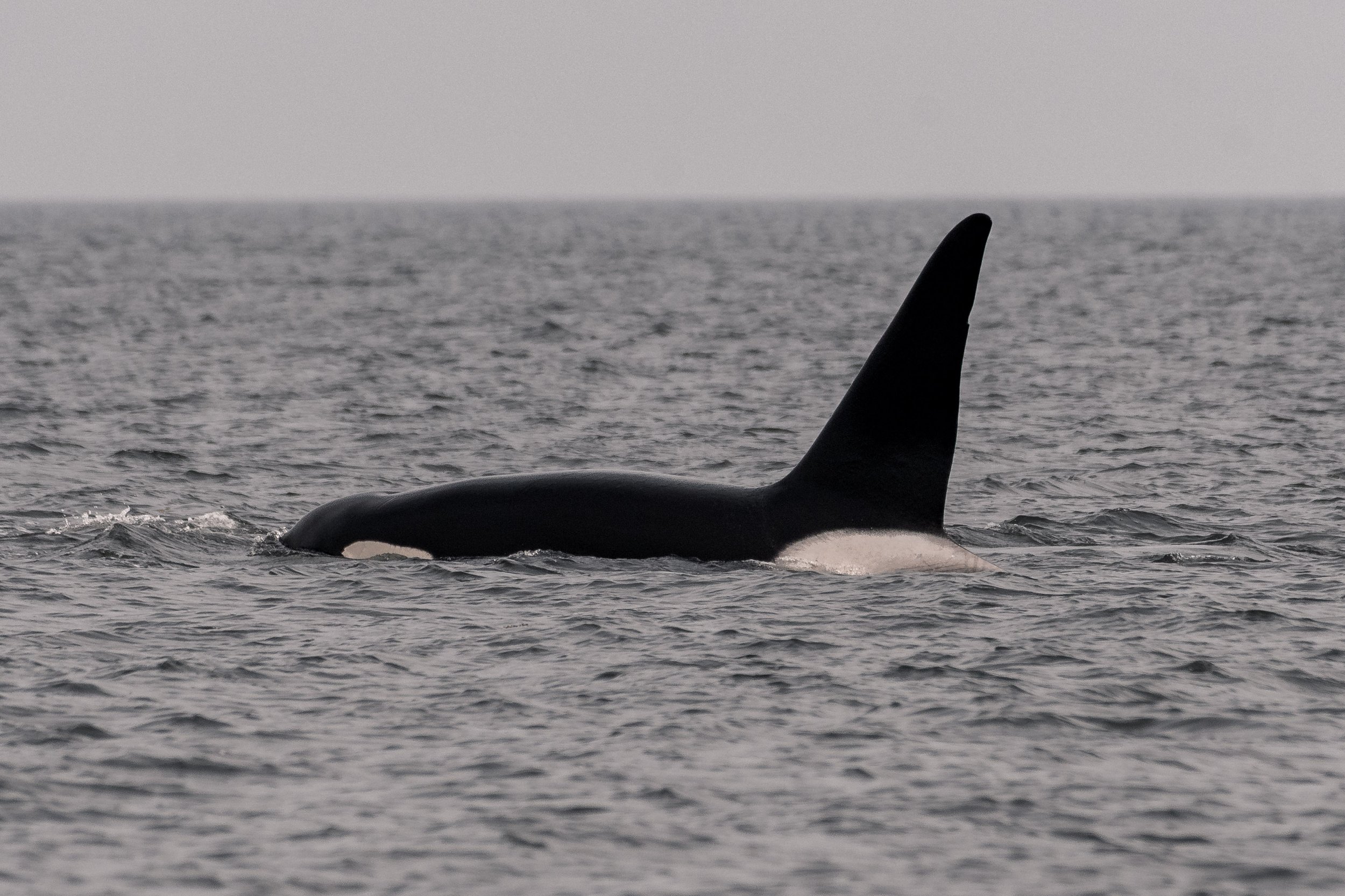
T123A Stanley showing off his impressive size as the largest male in these pods. Photograph taken by Evan Hessels.
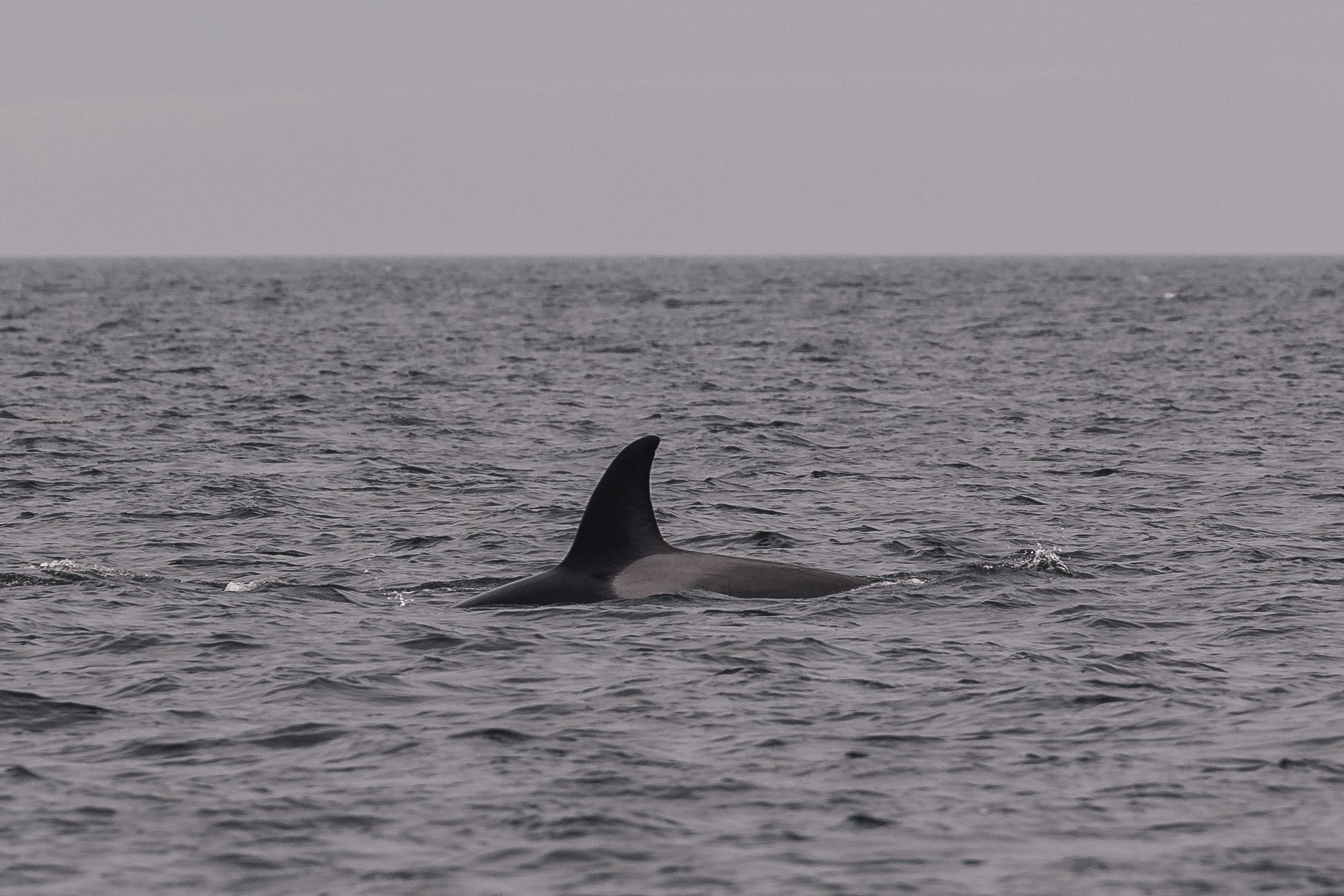
T123D Darcy giving us a look at the tiny nick in her dorsal fin. Photograph taken by Jordan Robinson.
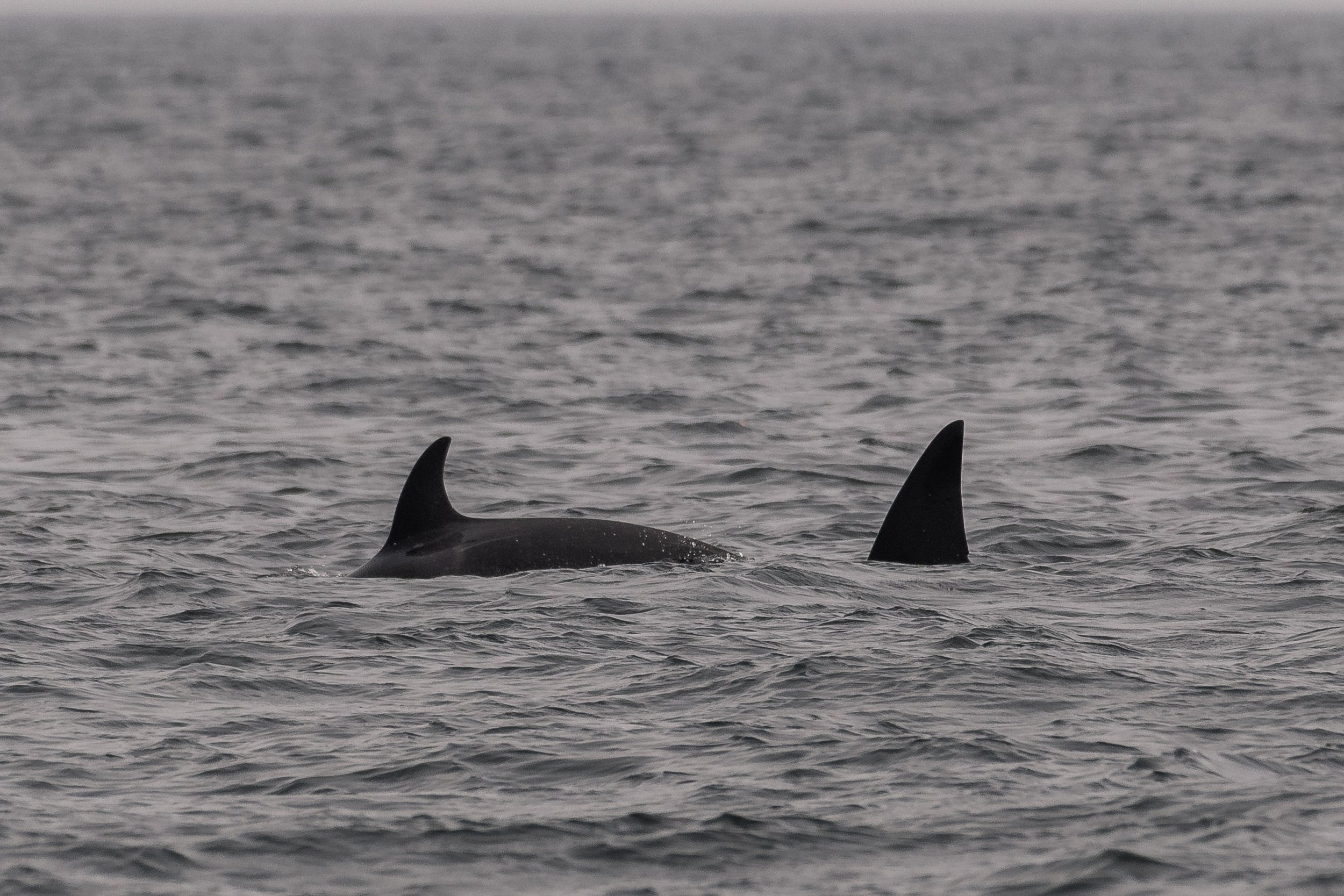
T046B1D, the youngest orca in these pods swimming ahead of T046C2 Sam. Photograph taken by Evan Hessels.
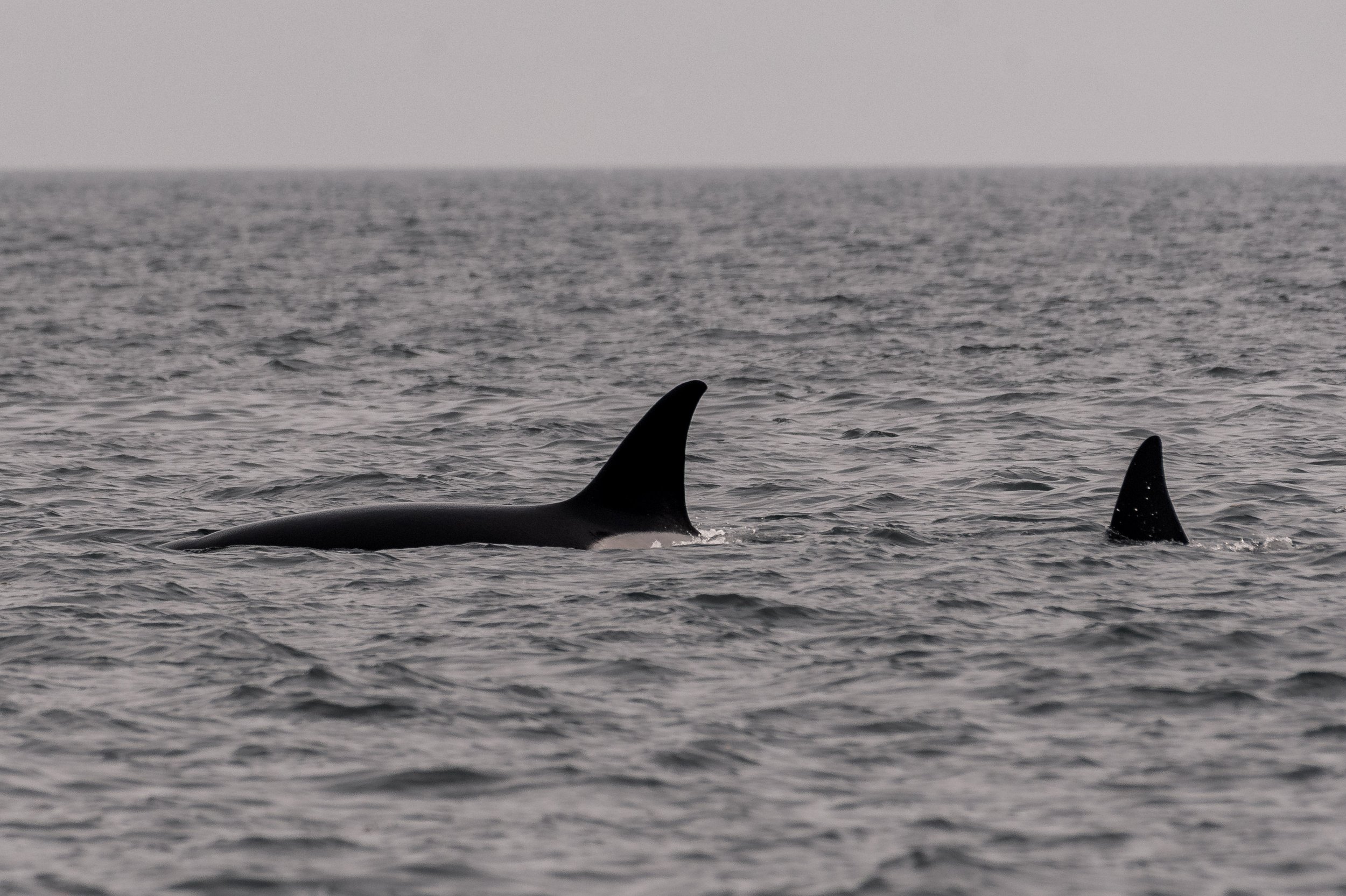
T123 Sidney, the matriarch traveling ahead of T123C Lucky. Photograph taken by Evan Hessels.
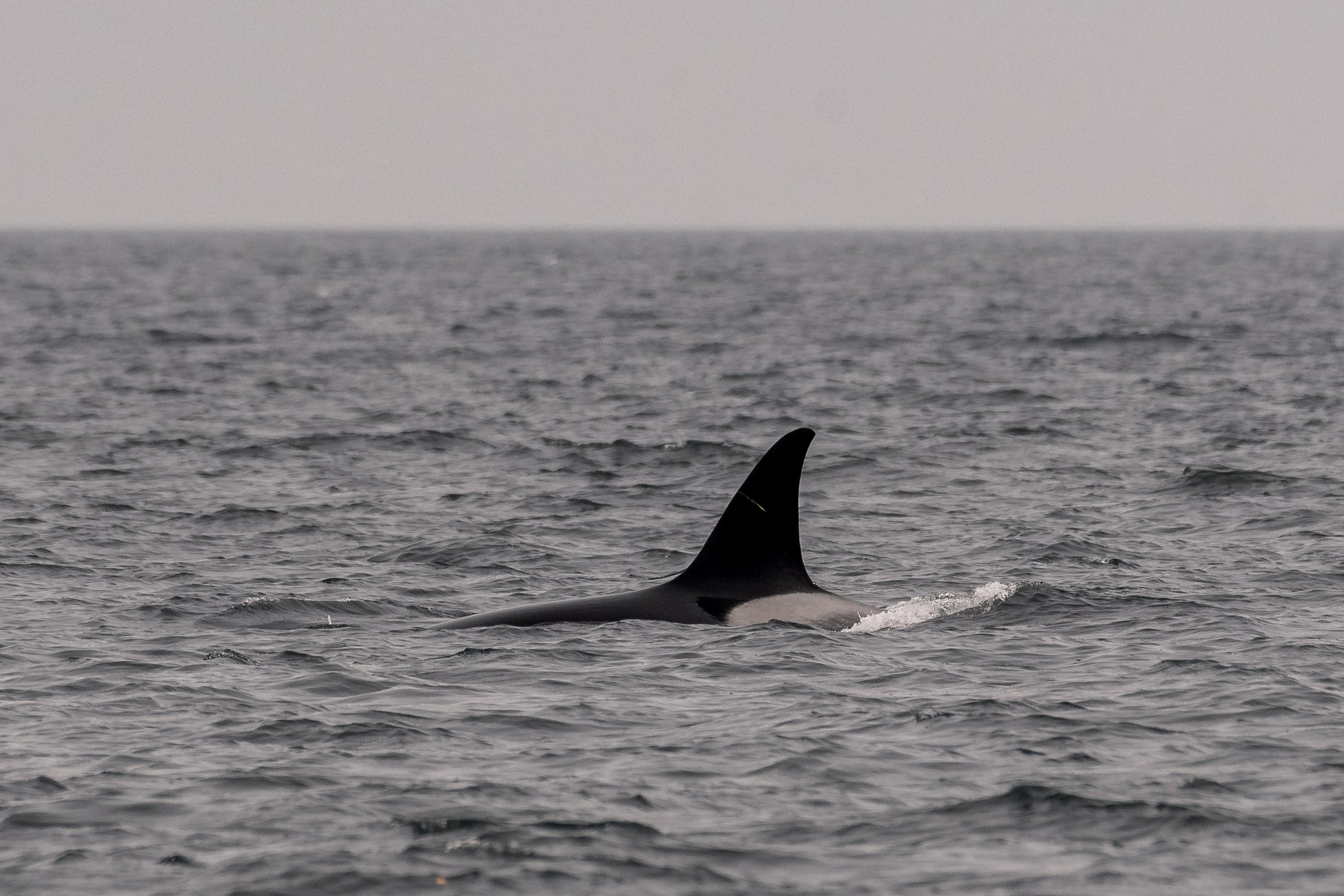
A good look at T123 Sidney’s saddle patch. Photograph taken by Evan Hessels.
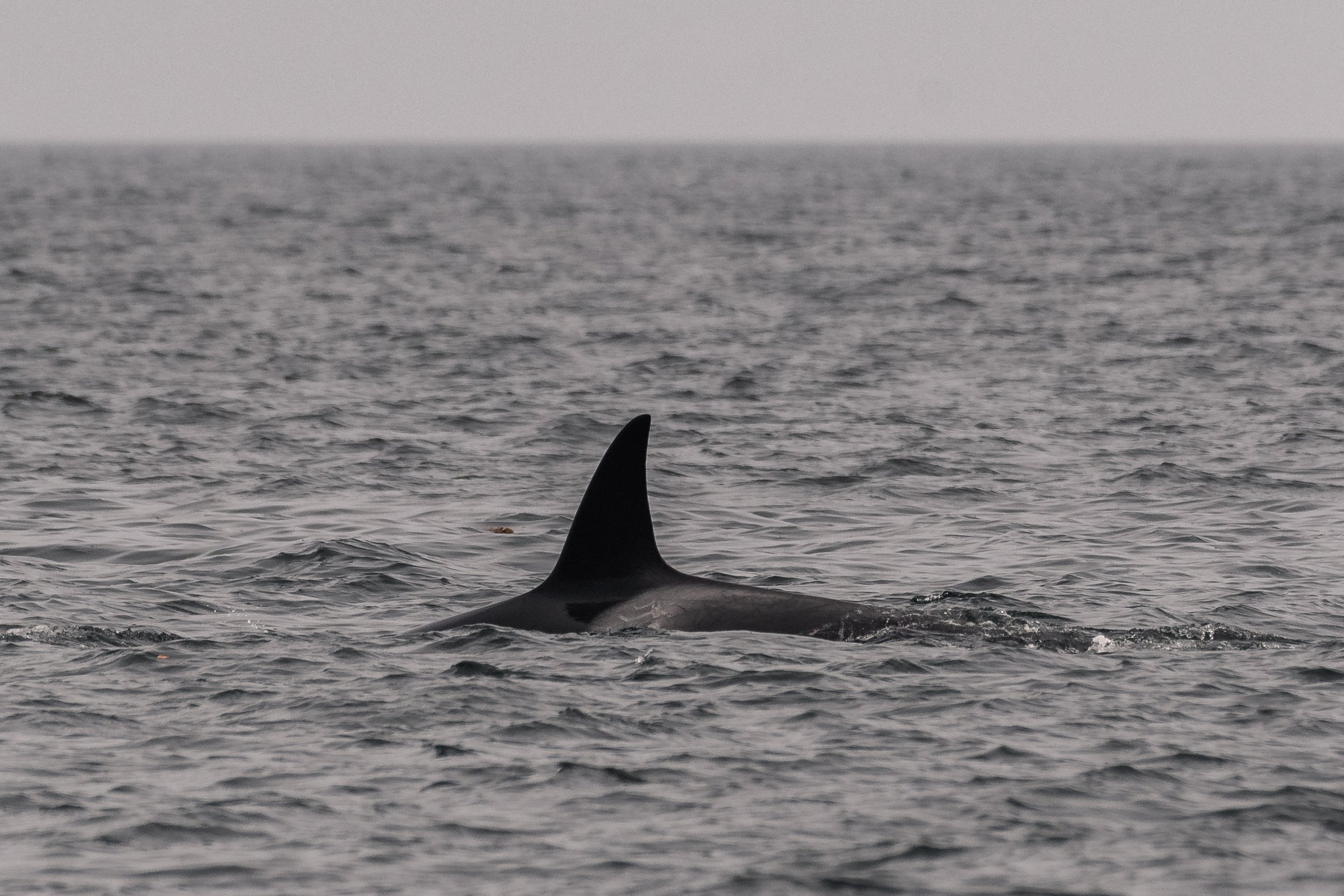
T046B1 Tread showing off her unique “tread-like” saddle patch markings. Photograph taken by Jordan Robinson.
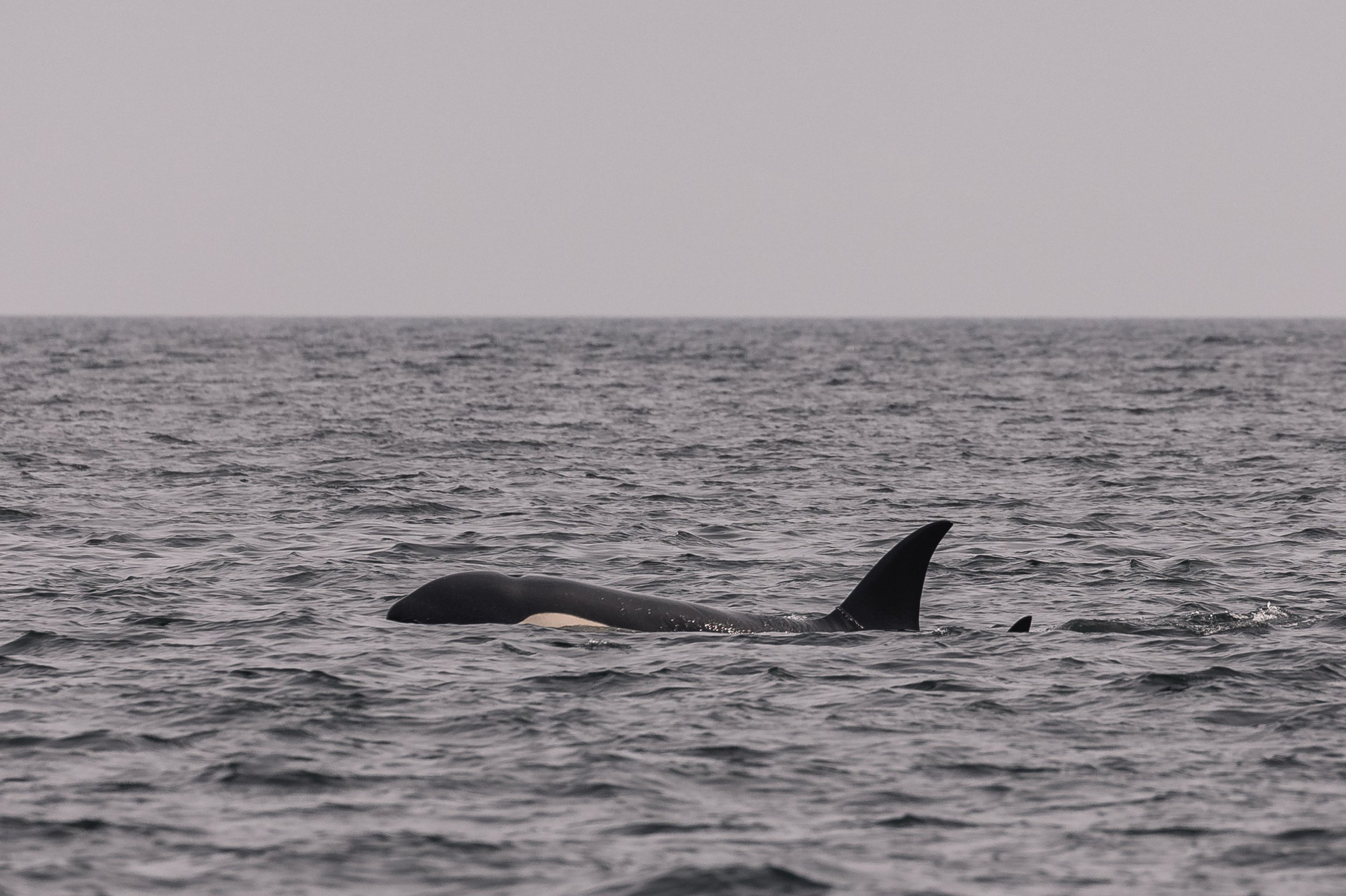
T046B1A Tsakani showing off a little bit of her eye patch. Photograph taken by Jordan Robinson.
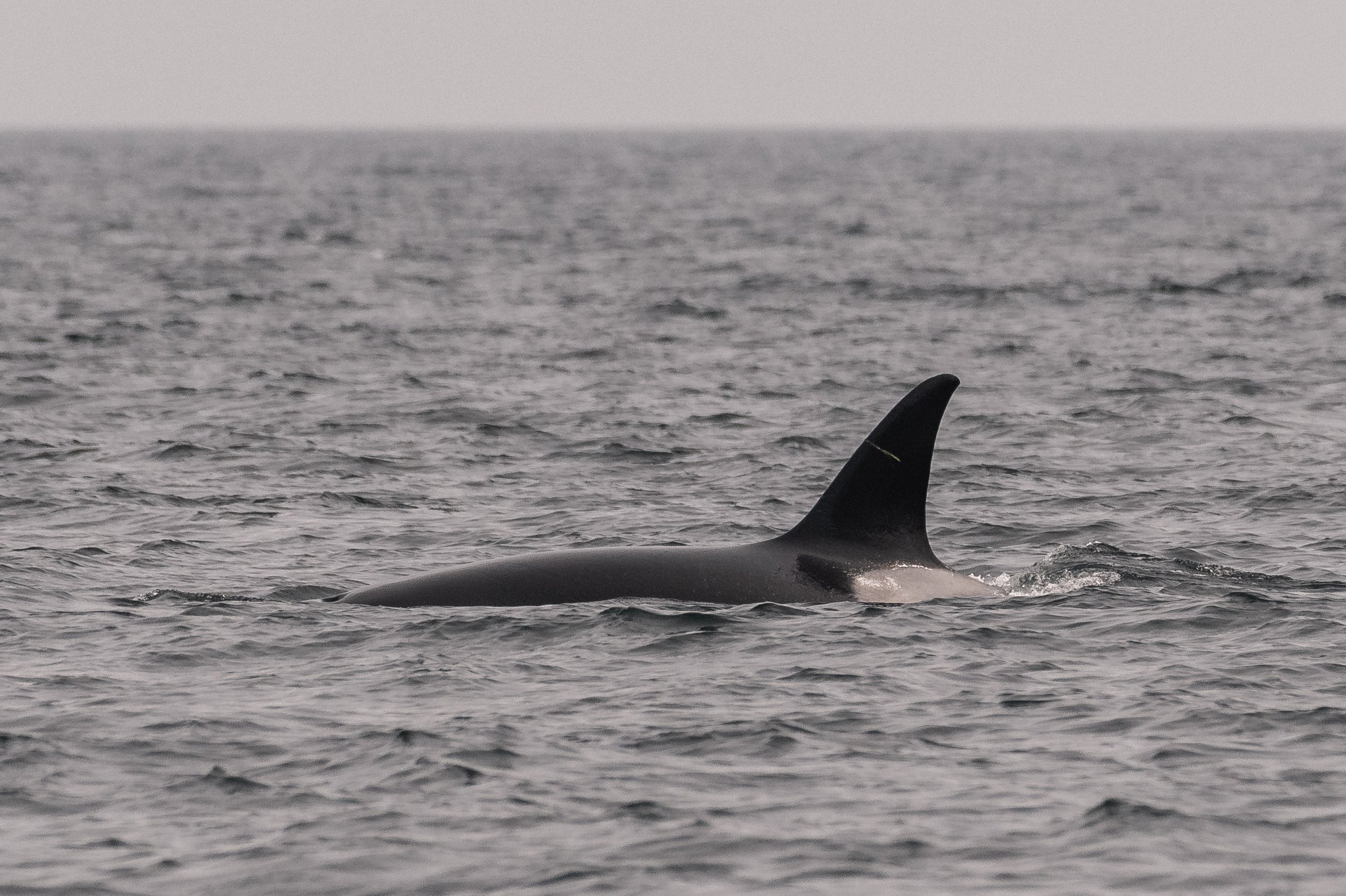
Another good look at T123 Sidney, with a peek at her blowhole just outside of the water. Photograph taken by Evan Hessels.
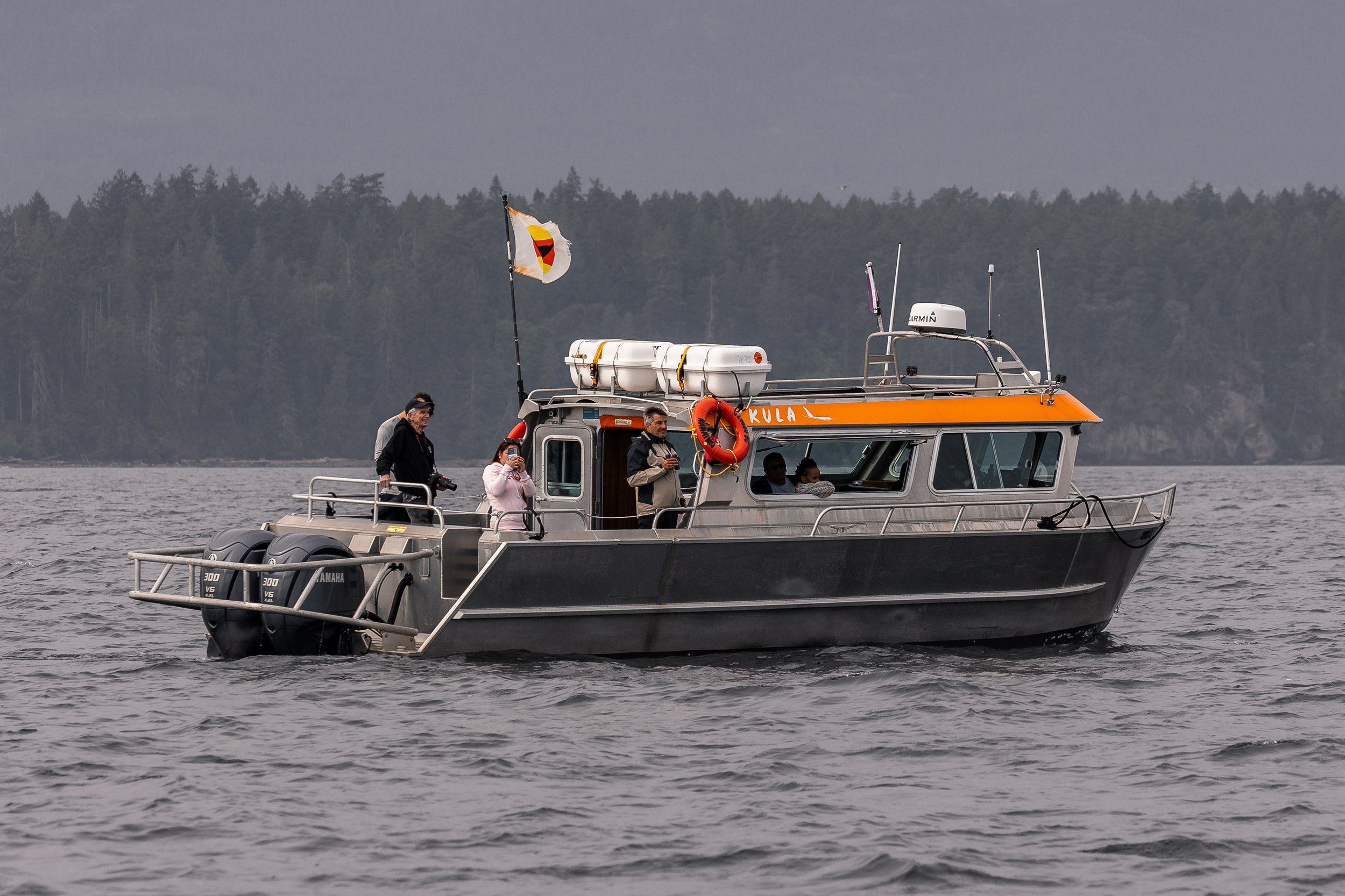
Our guests on Kula observing the pod of Orca. Photograph taken by Jordan Robinson.
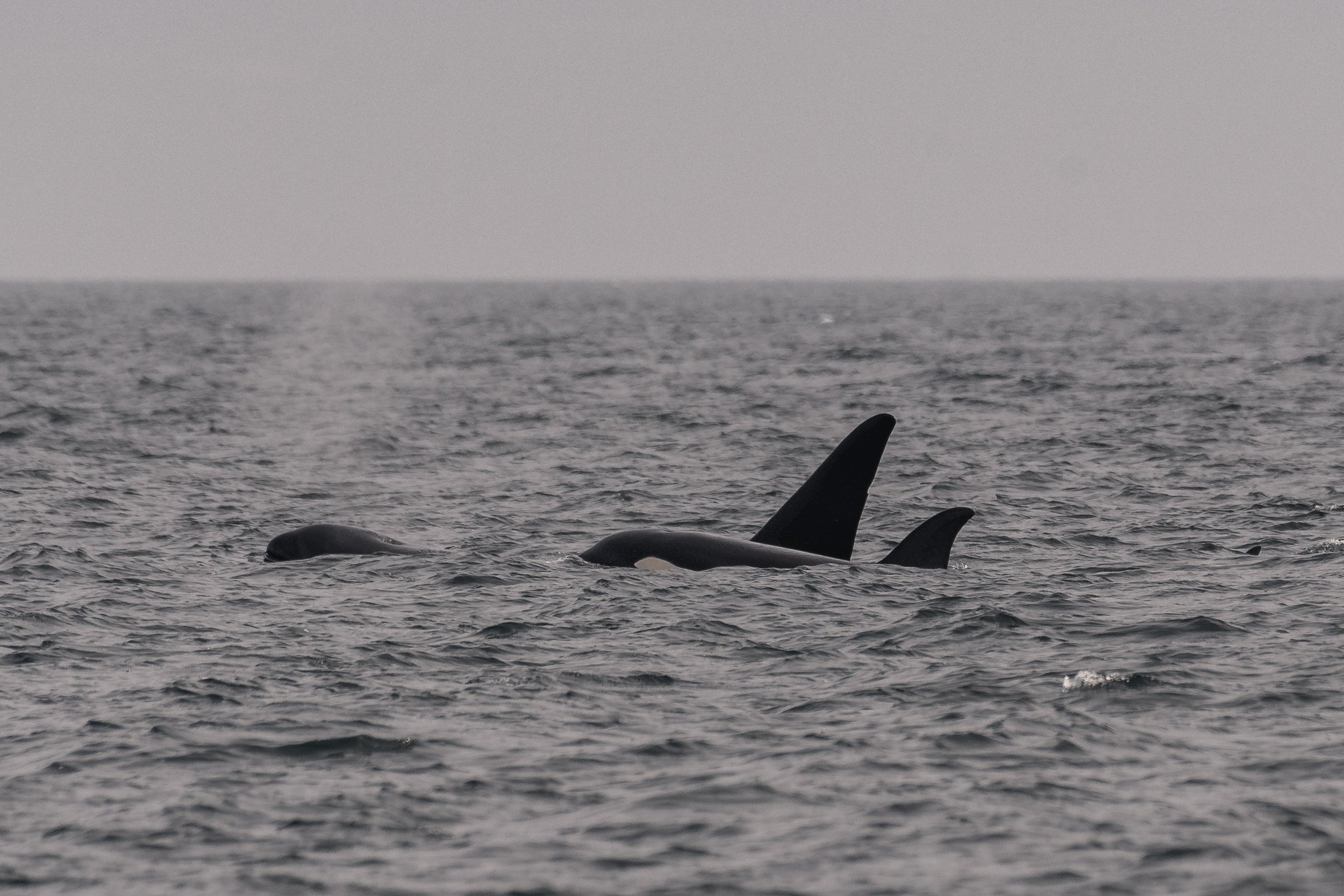
T123A Stanley moving just behind T123D Darcy. Photograph taken by Evan Hessels.
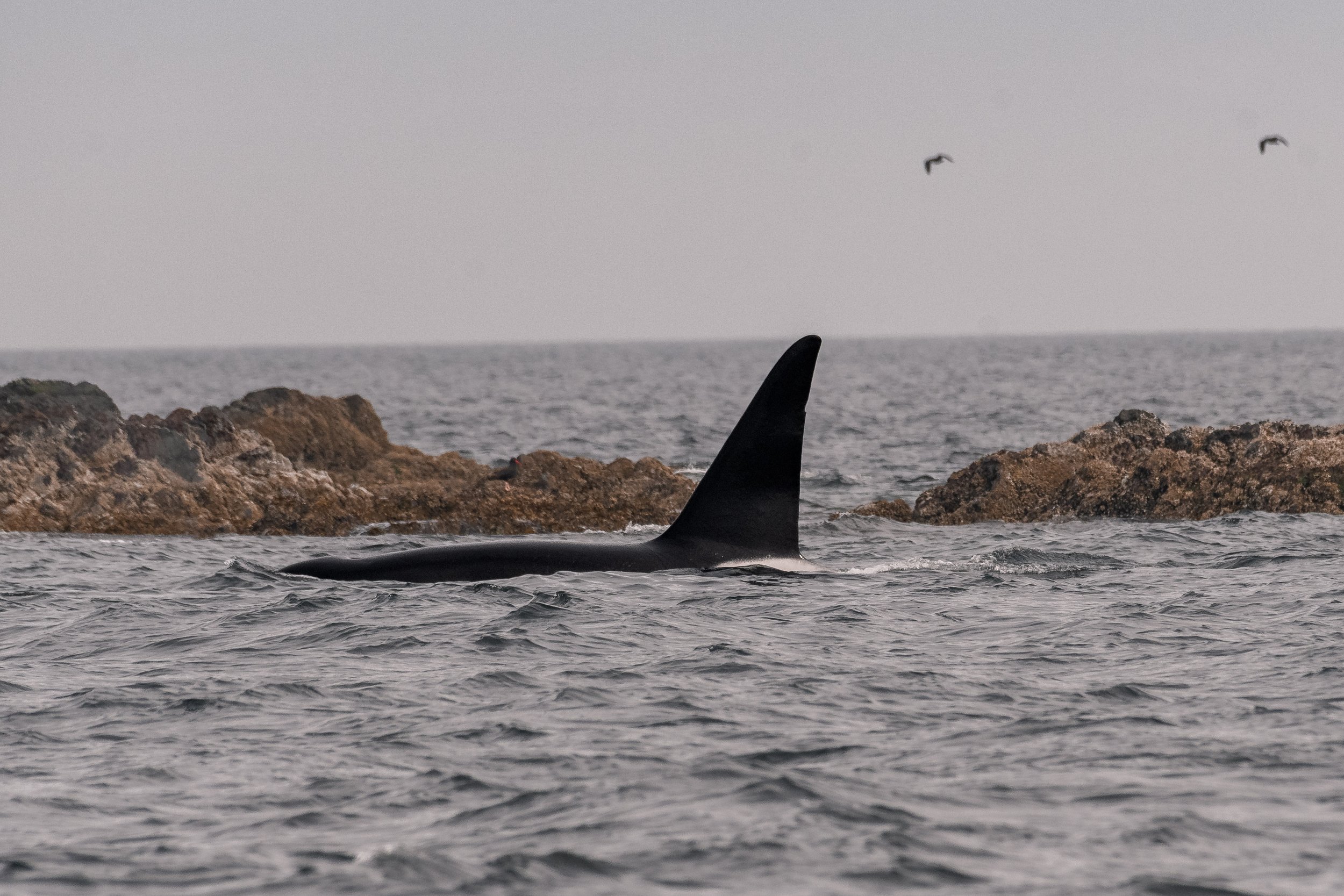
T123A Stanley giving a close pass along the Five Finger Islands. Photograph taken by Evan Hessels.
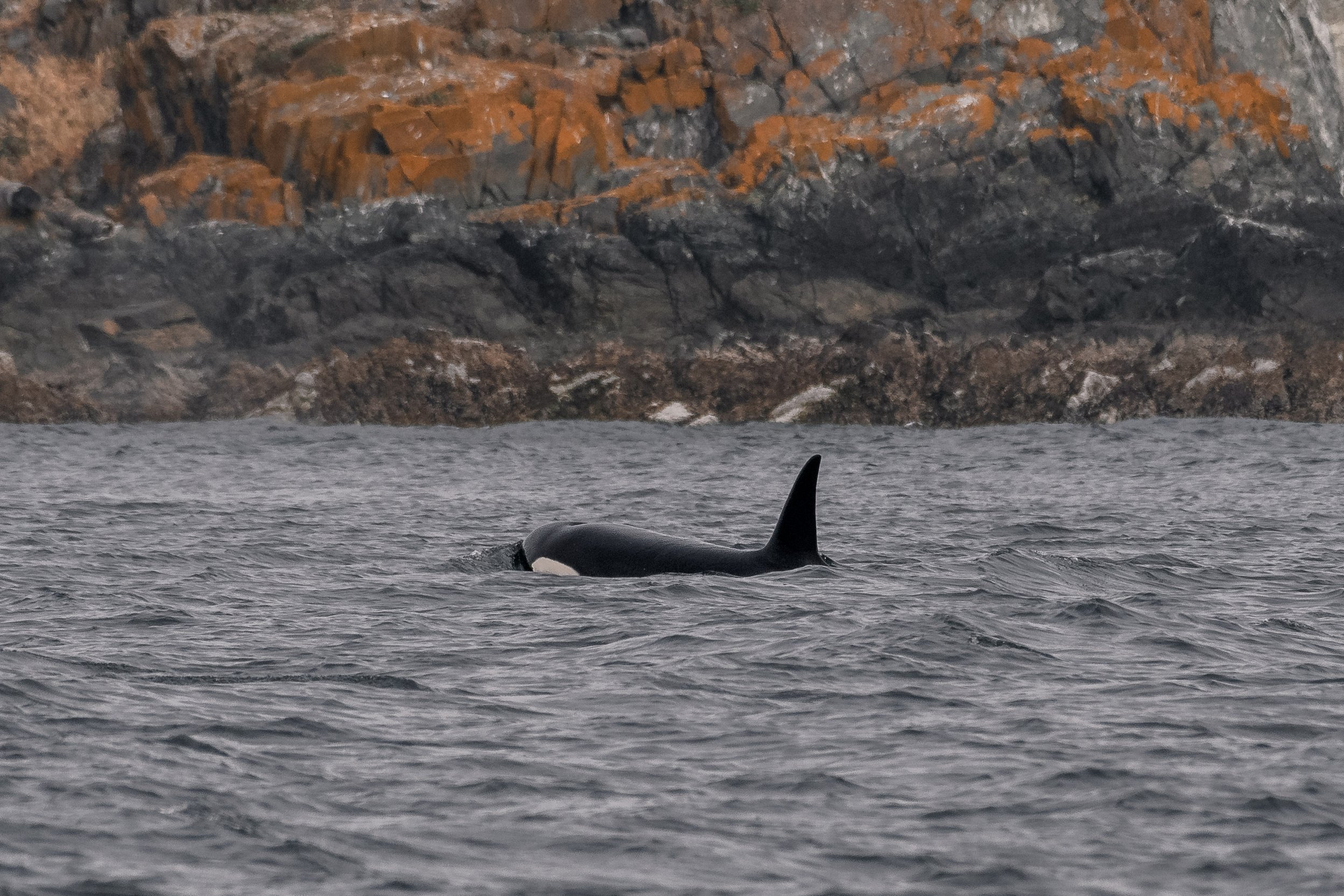
T046B1 Tread showing off a little bit of her eyespot while moving through the Five Finger Islands. Photograph taken by Evan Hessels.
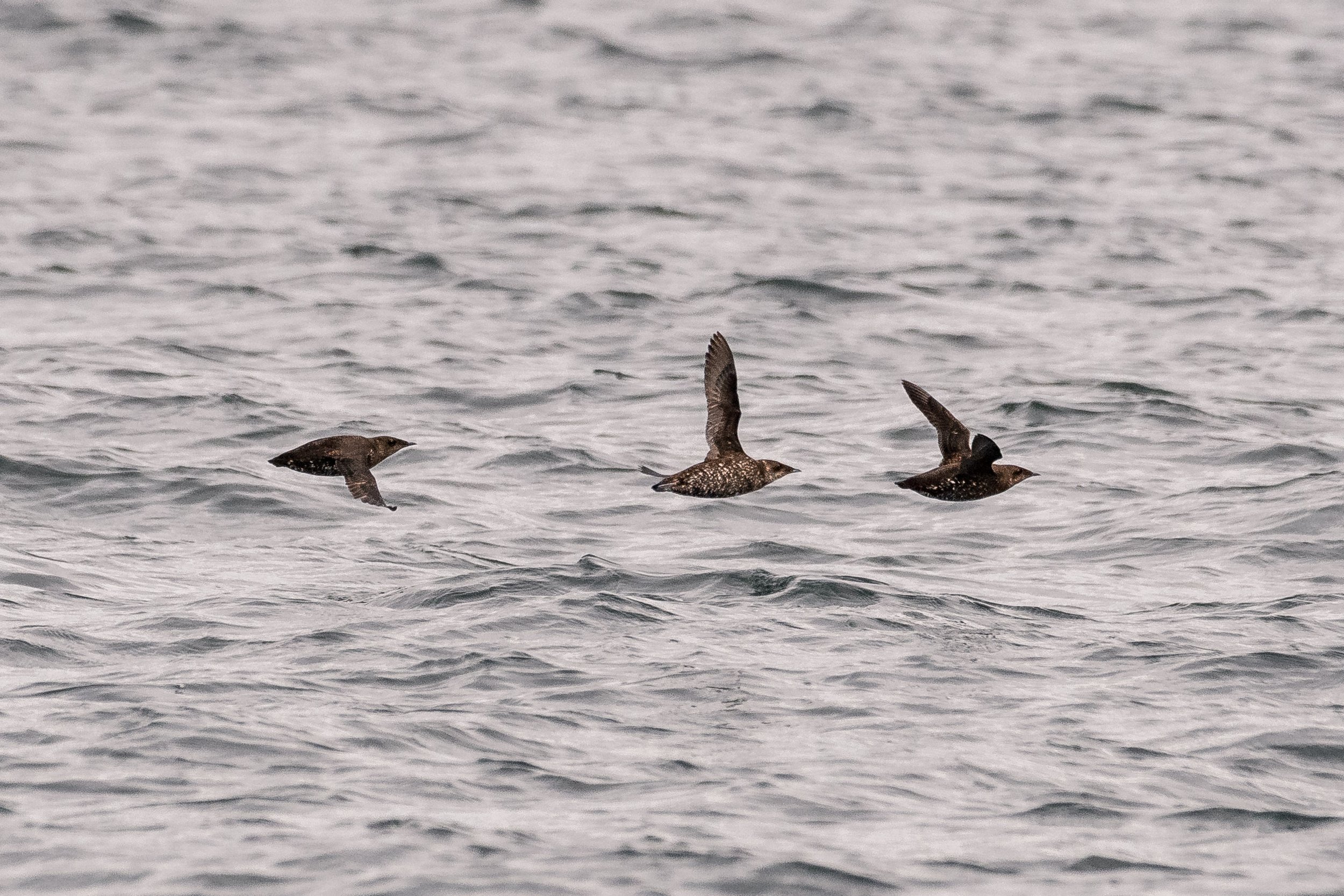
A small flock of Marbled Murrelets flying by. Photograph taken by Evan Hessels.
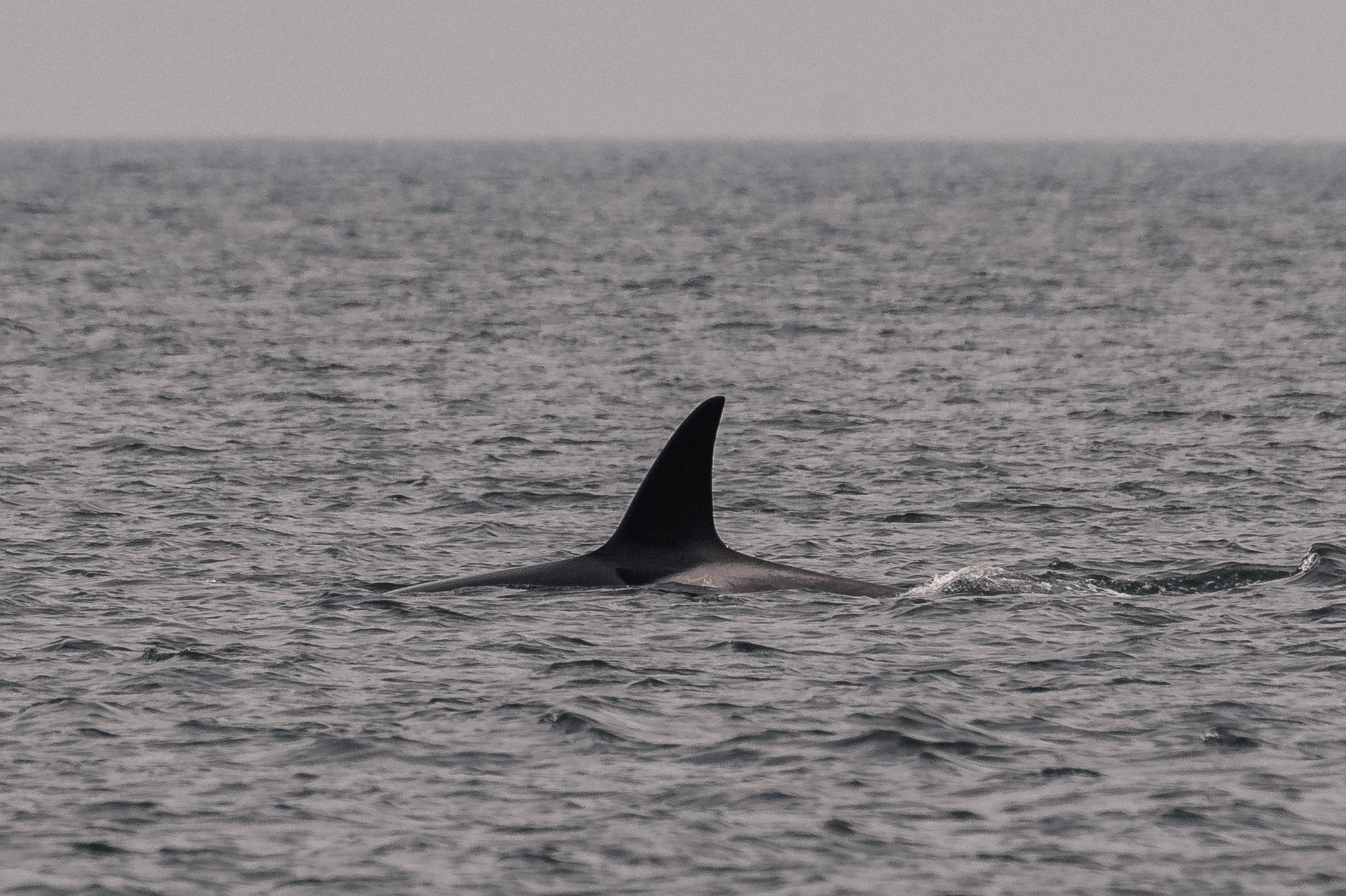
T046B1 Tread cruising along. Photograph taken by Evan Hessels.
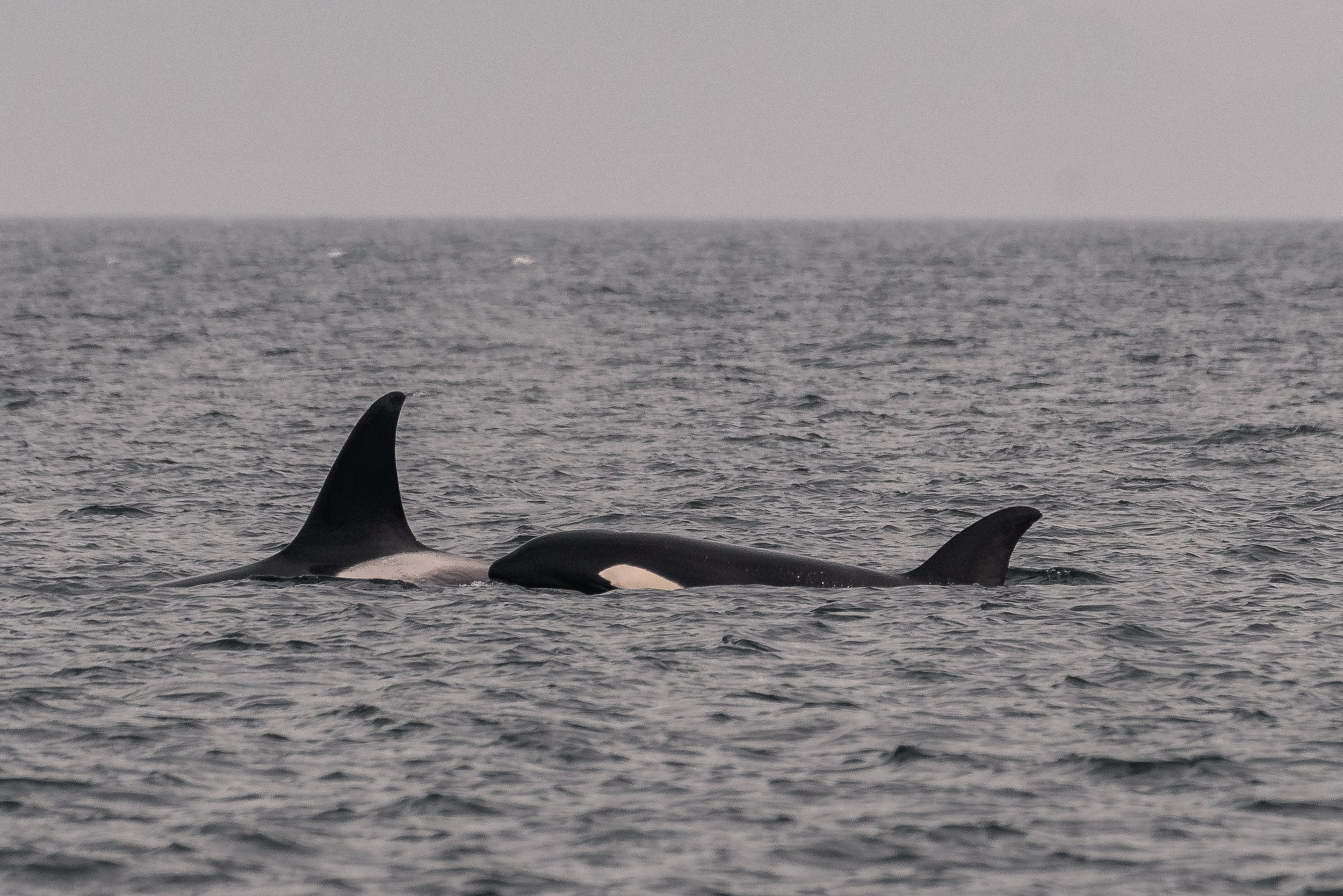
T123 Sidney moving ahead of her youngest kid T123D Darcy, whos giving a good look at her eyepatch. Photograph taken by Evan Hessels.
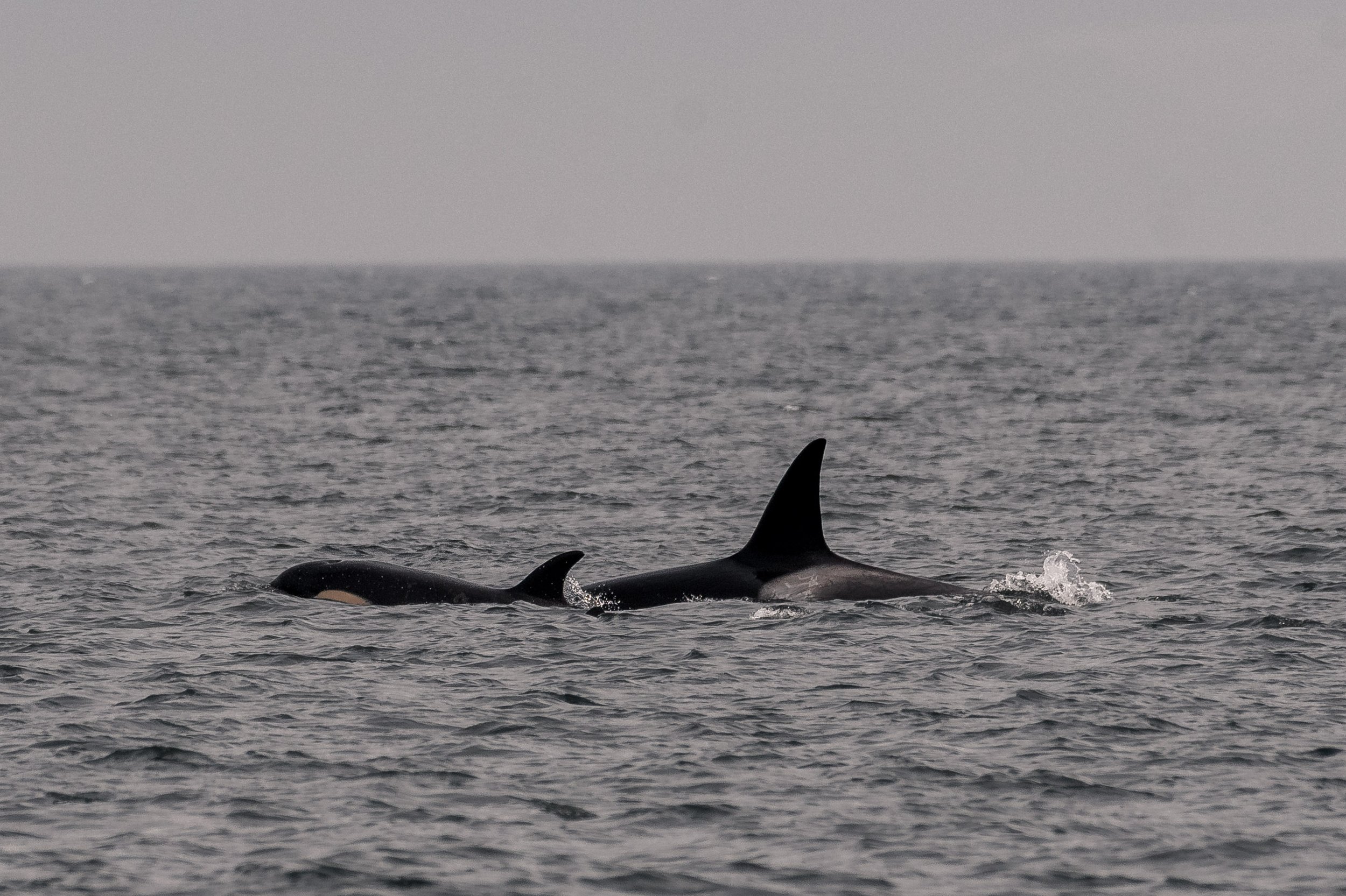
T046B1D moving ahead of their mother T046B1 Tread. Photograph taken by Evan Hessels.
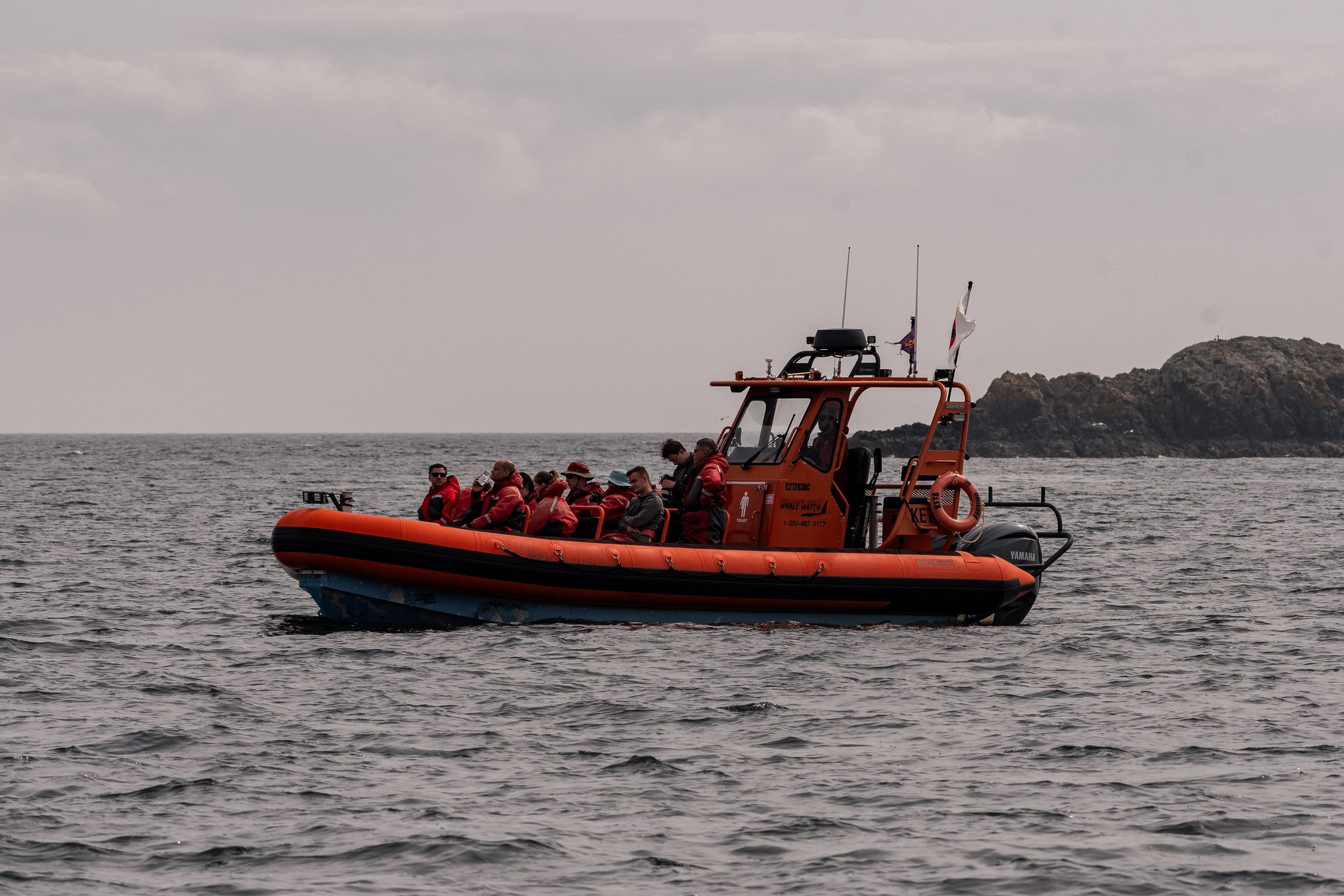
Our guests on Keta enjoying the view of the Orca. Photograph taken by Evan Hessels.
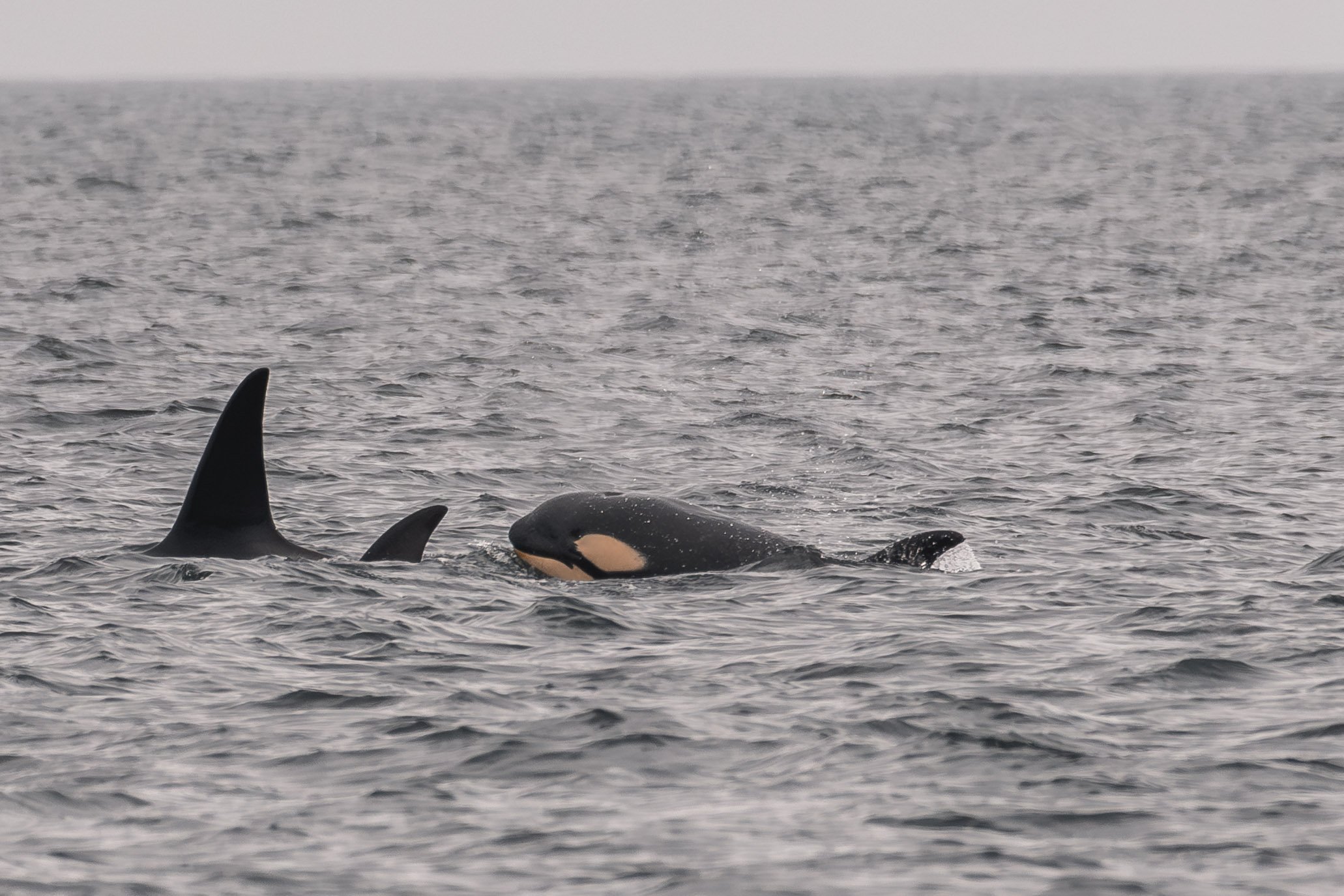
A great view of T046B1D showing off the orange colouration of young Orca. Photograph taken by Evan Hessels.
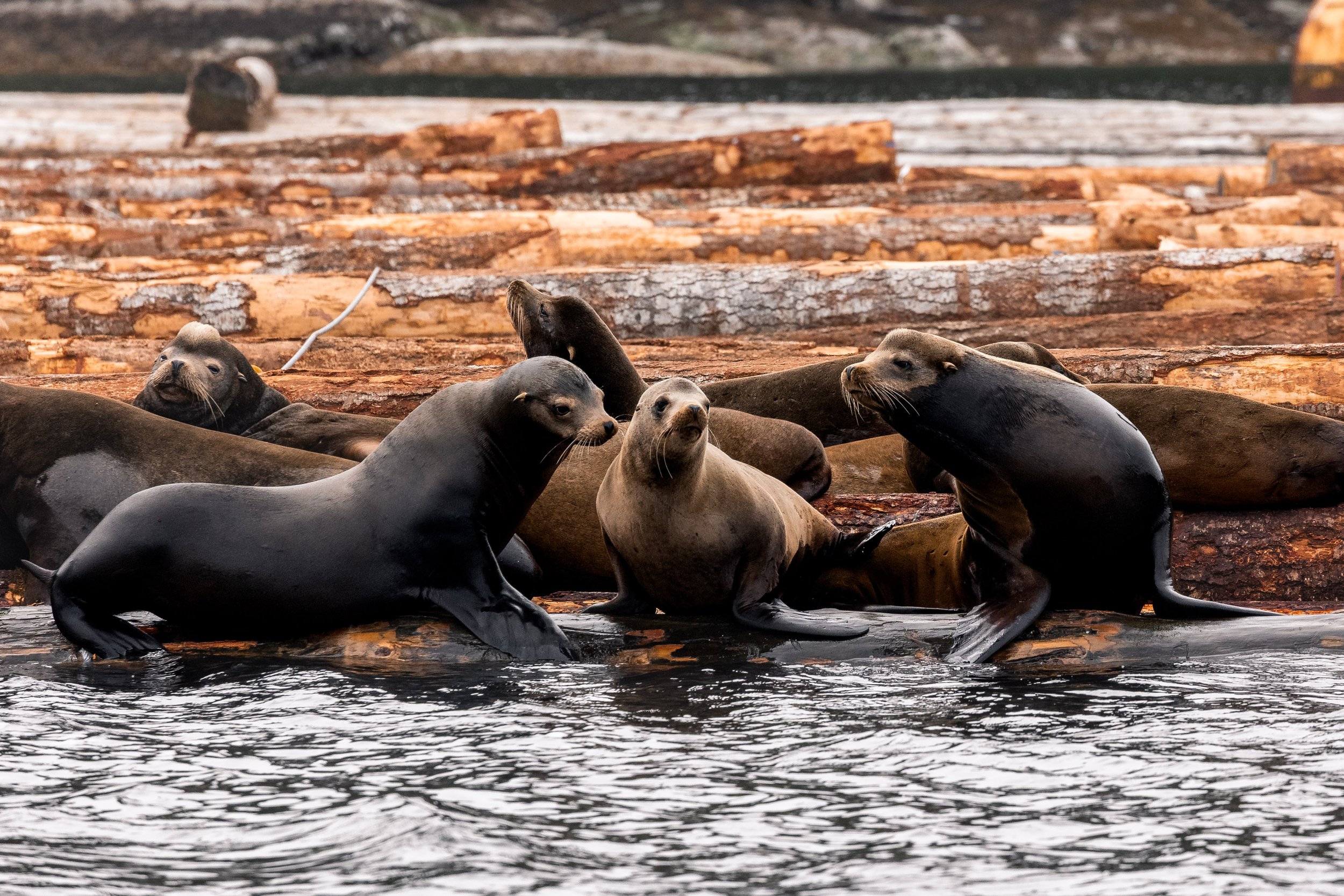
A standoff between three California Sea Lions. Photograph taken by Jordan Robinson.
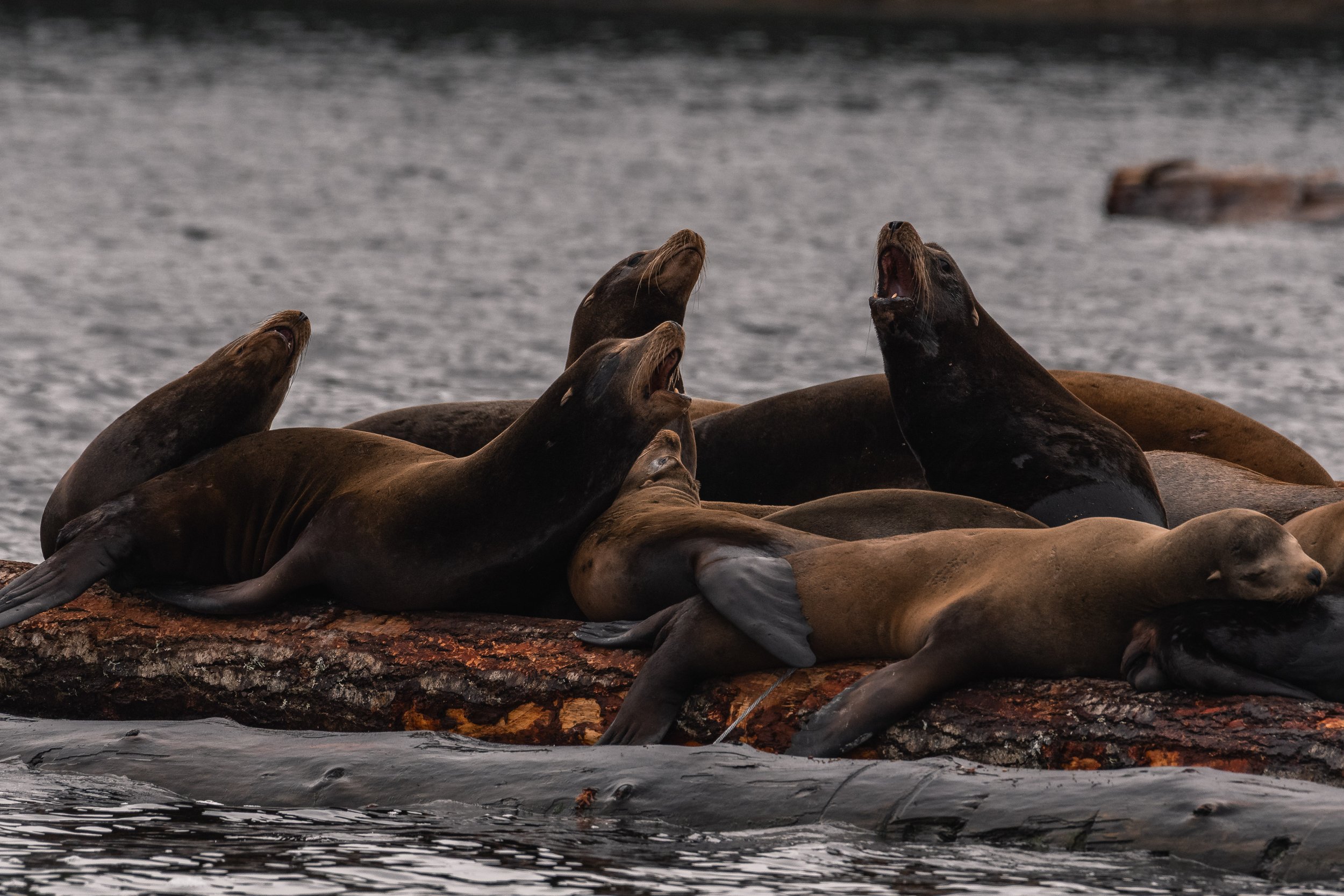
A chorus of California Sea Lions making their distinct barking call. Photograph taken by Evan Hessels.
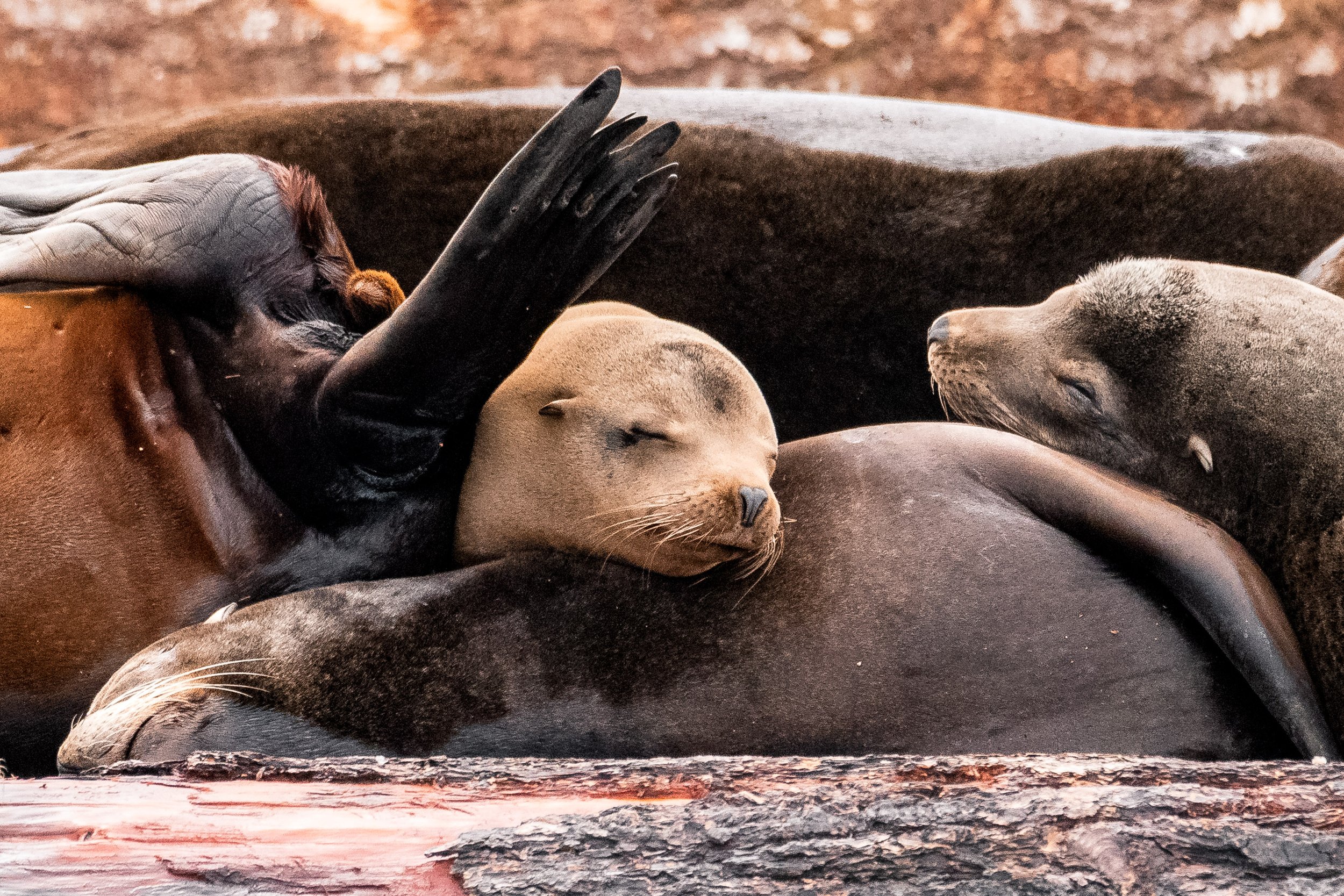
A California Sea Lions taking a rest overtop of another. Photograph taken by Evan Hessels.
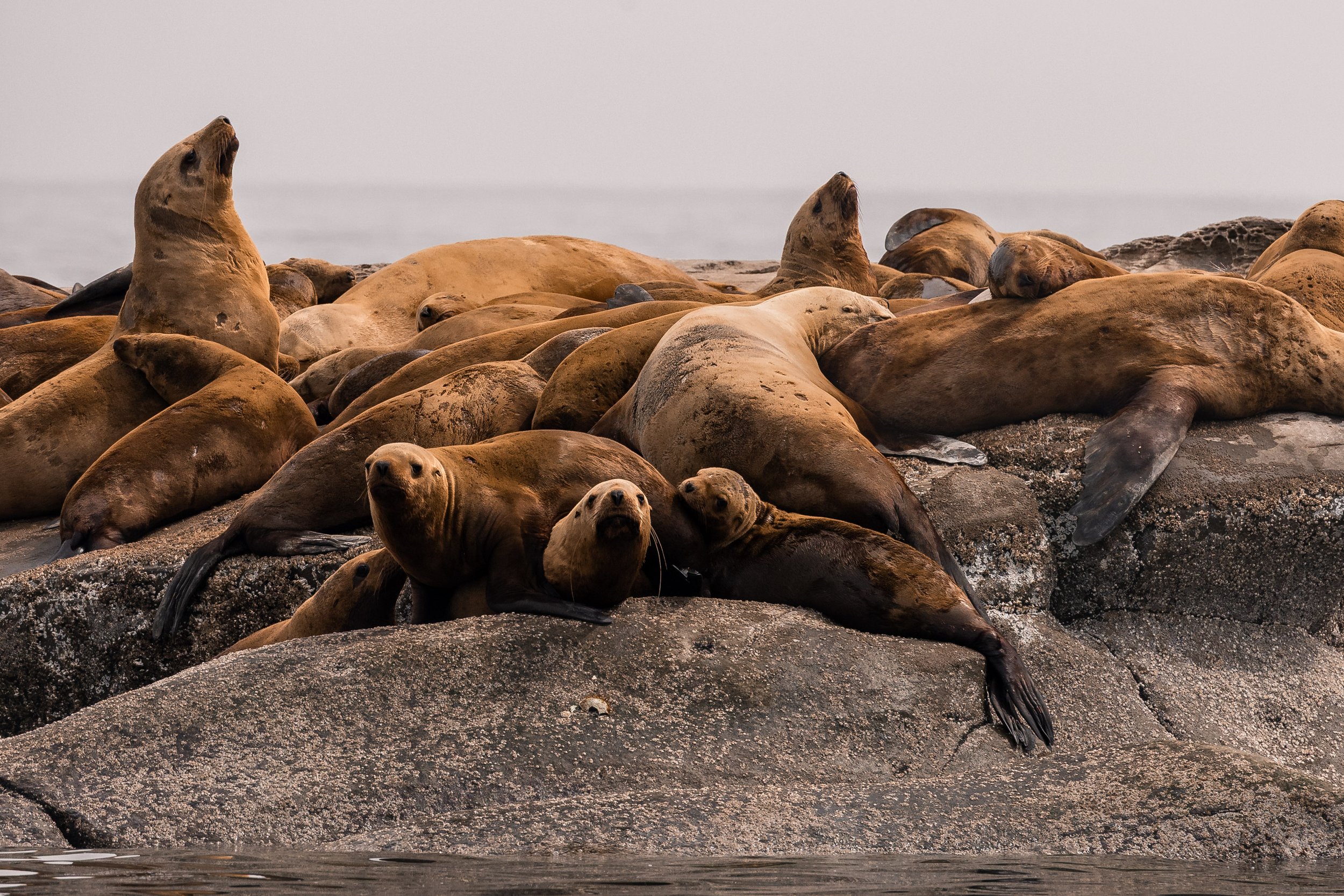
A number of curious Steller Sea Lions watching us as we boat past. Photograph taken by Jordan Robinson.
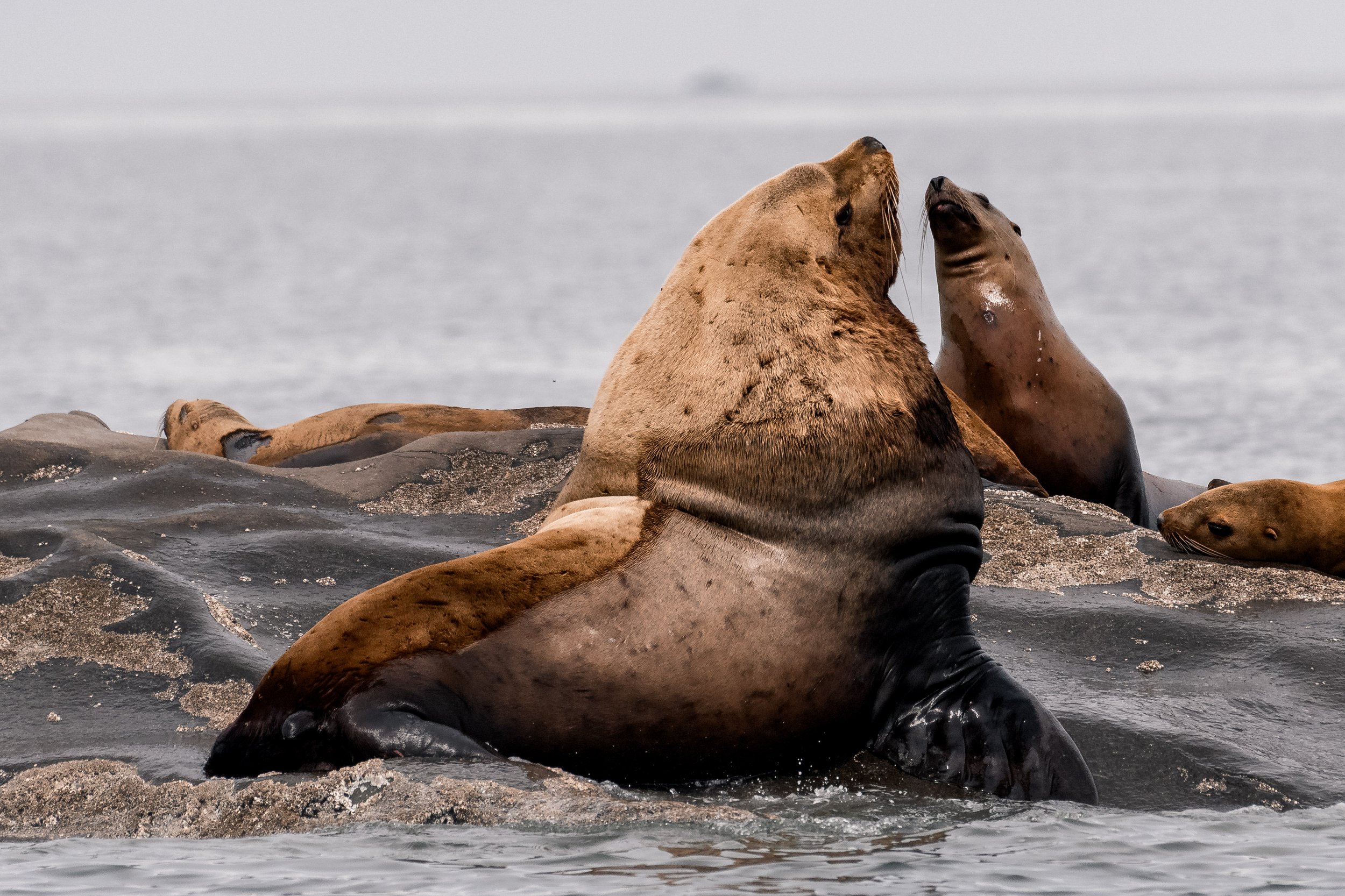
An very large male Steller Sea Lion showing off his impressive bulk. Photograph taken by Evan Hessels.
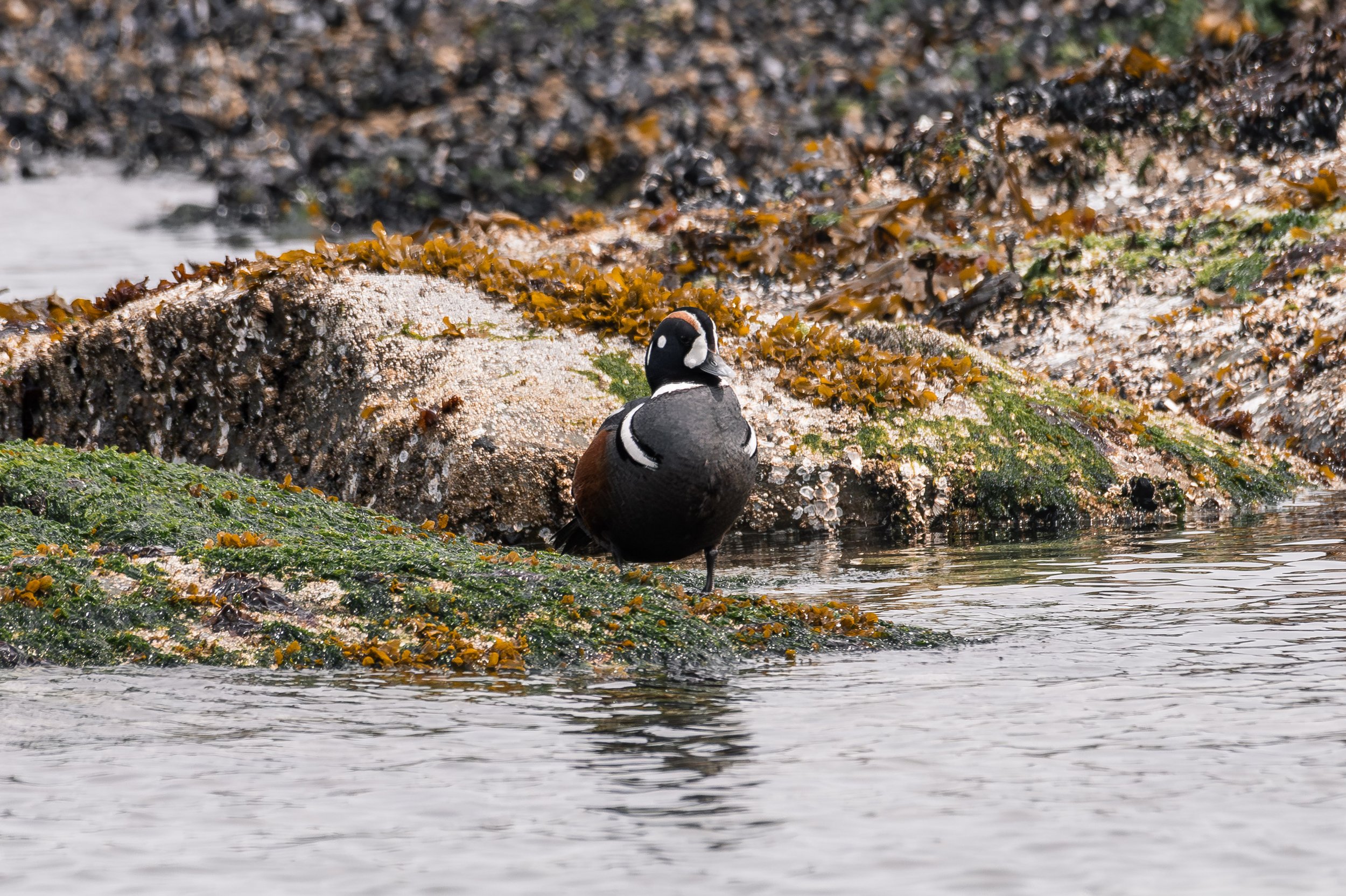
A Harlequin Duck on the rocks alongside the water. Photograph taken by Evan Hessels.
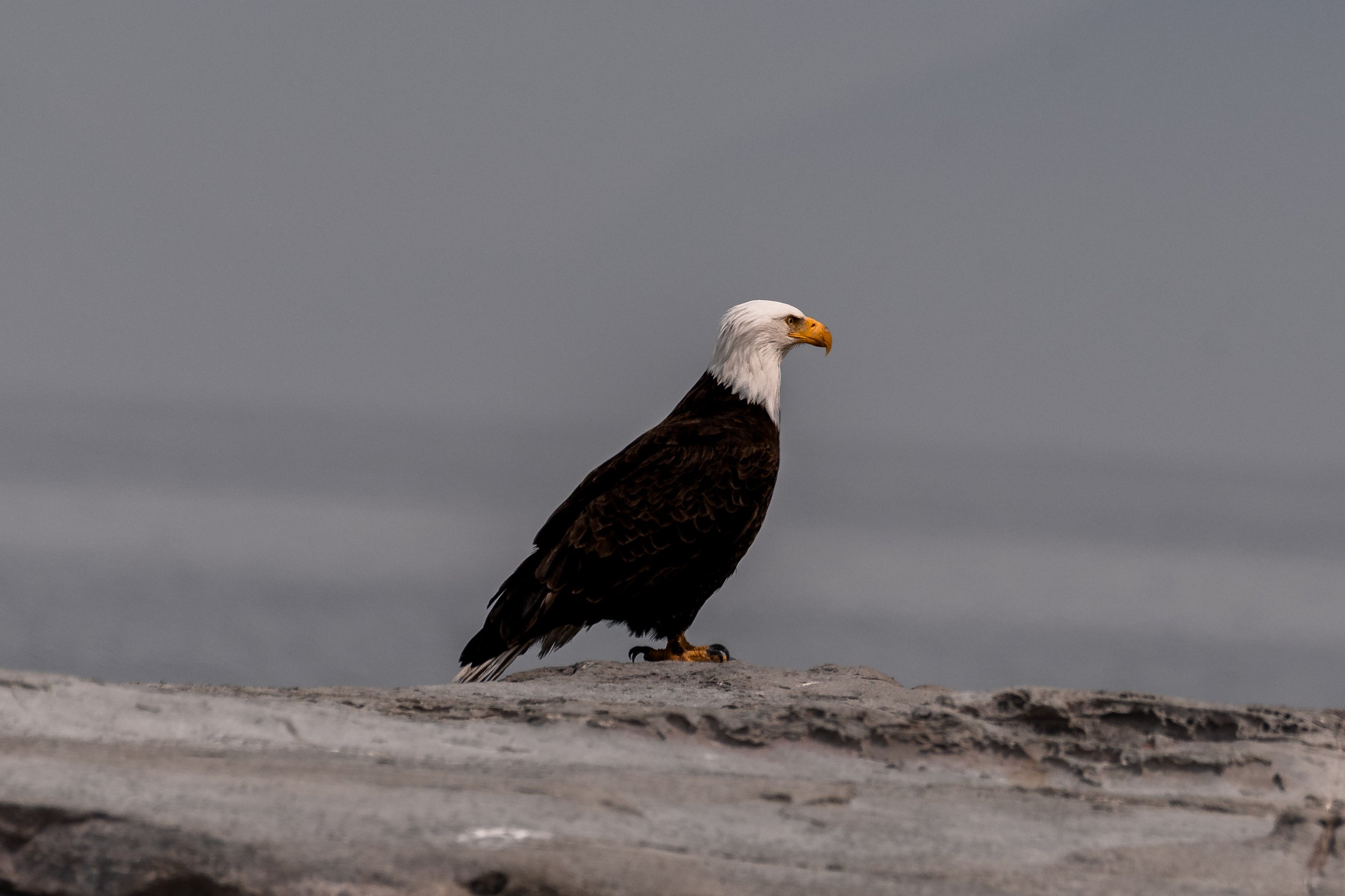
An adult Bald Eagle observing the area on top of the rocks. Photograph taken by Evan Hessels.
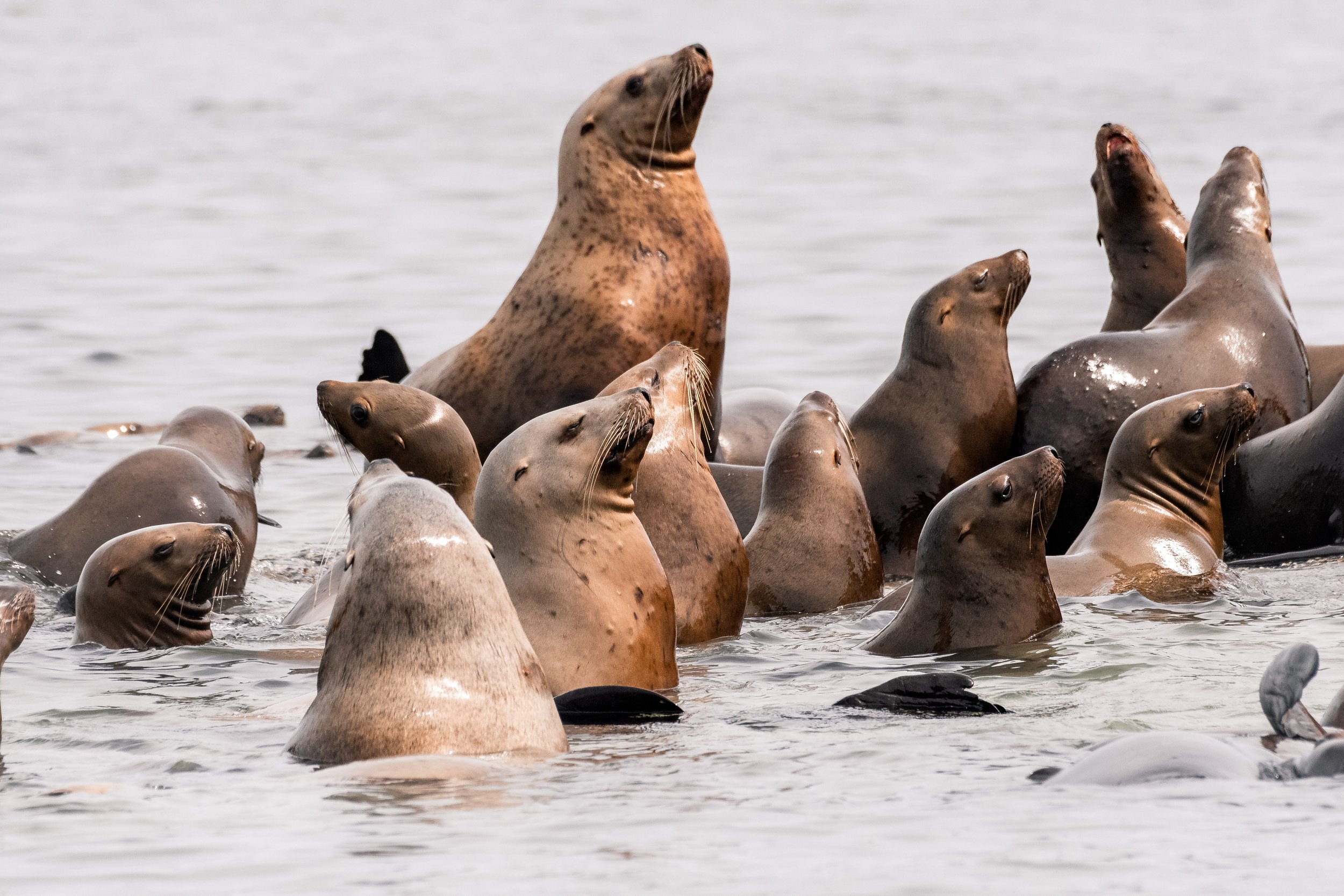
Numerous Steller Sea Lions sitting in the shallow waters. Photograph taken by Evan Hessels.
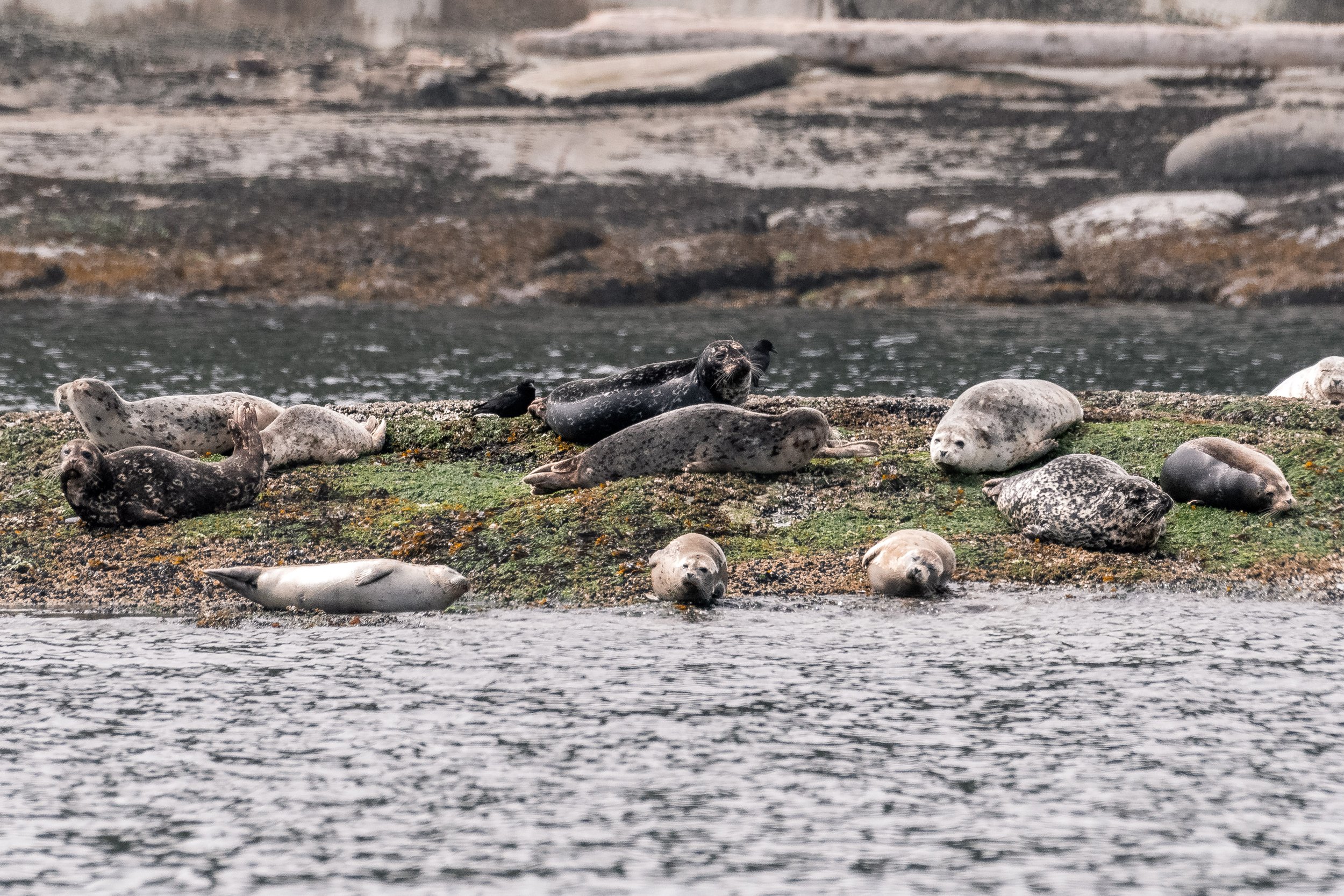
Harbour Seals relaxing across from the Sea Lions on another rocky outcrop. Photograph taken by Evan Hessels.
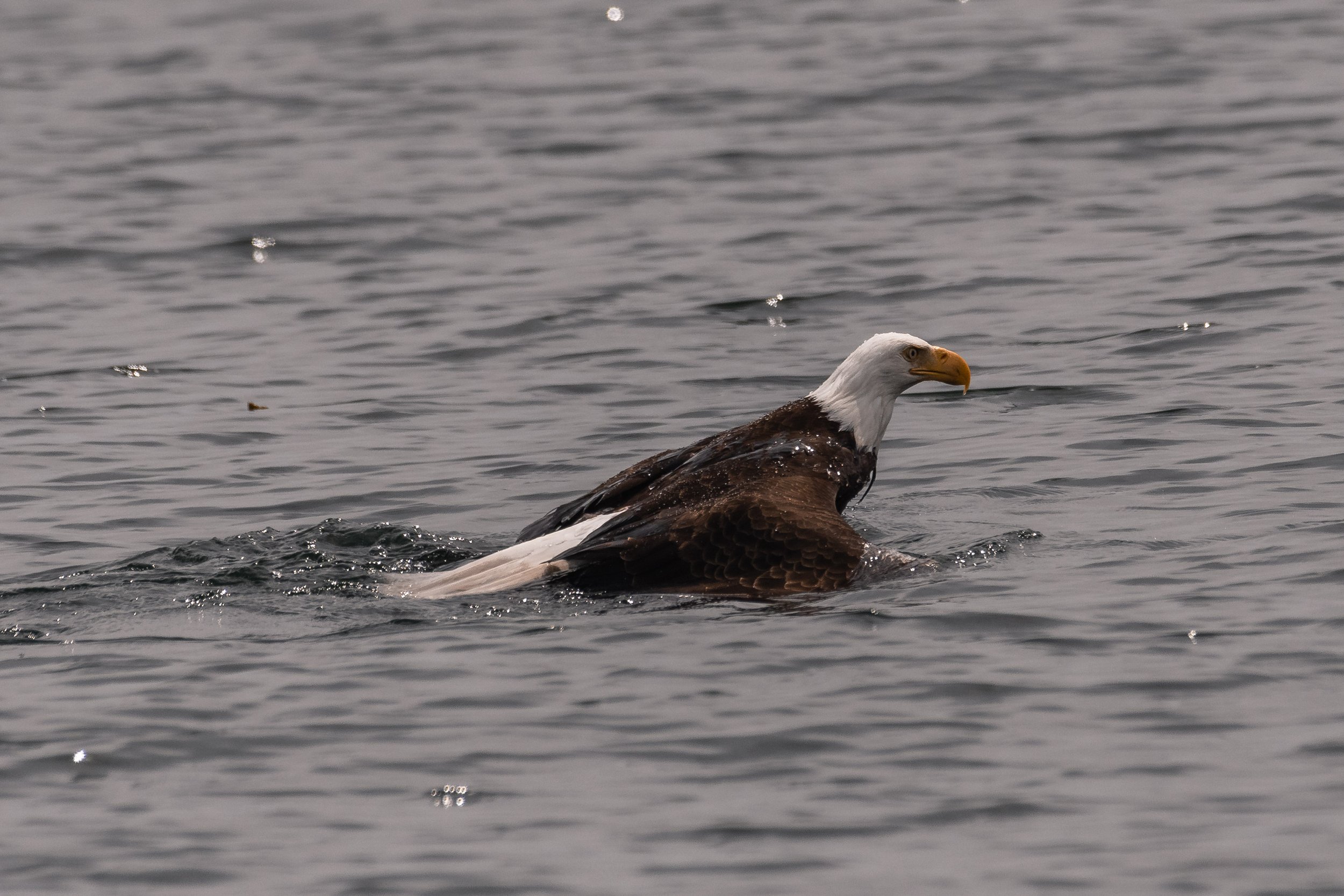
The previous Bald Eagle after an unfortunate hunting accident having to swim back to shore. Photograph taken by Evan Hessels.
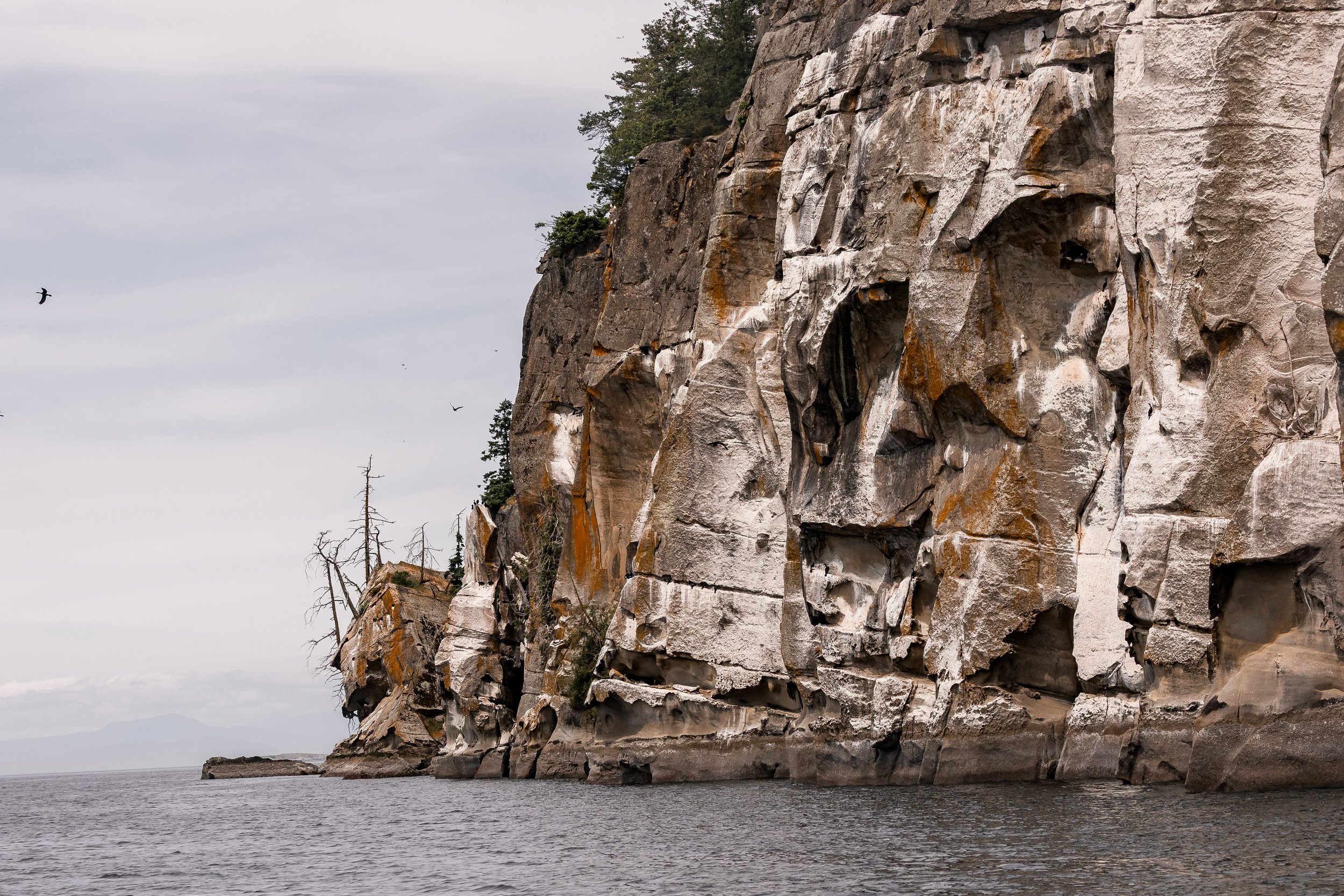
The Gabriola Bluffs. Photograph taken by Jordan Robinson.
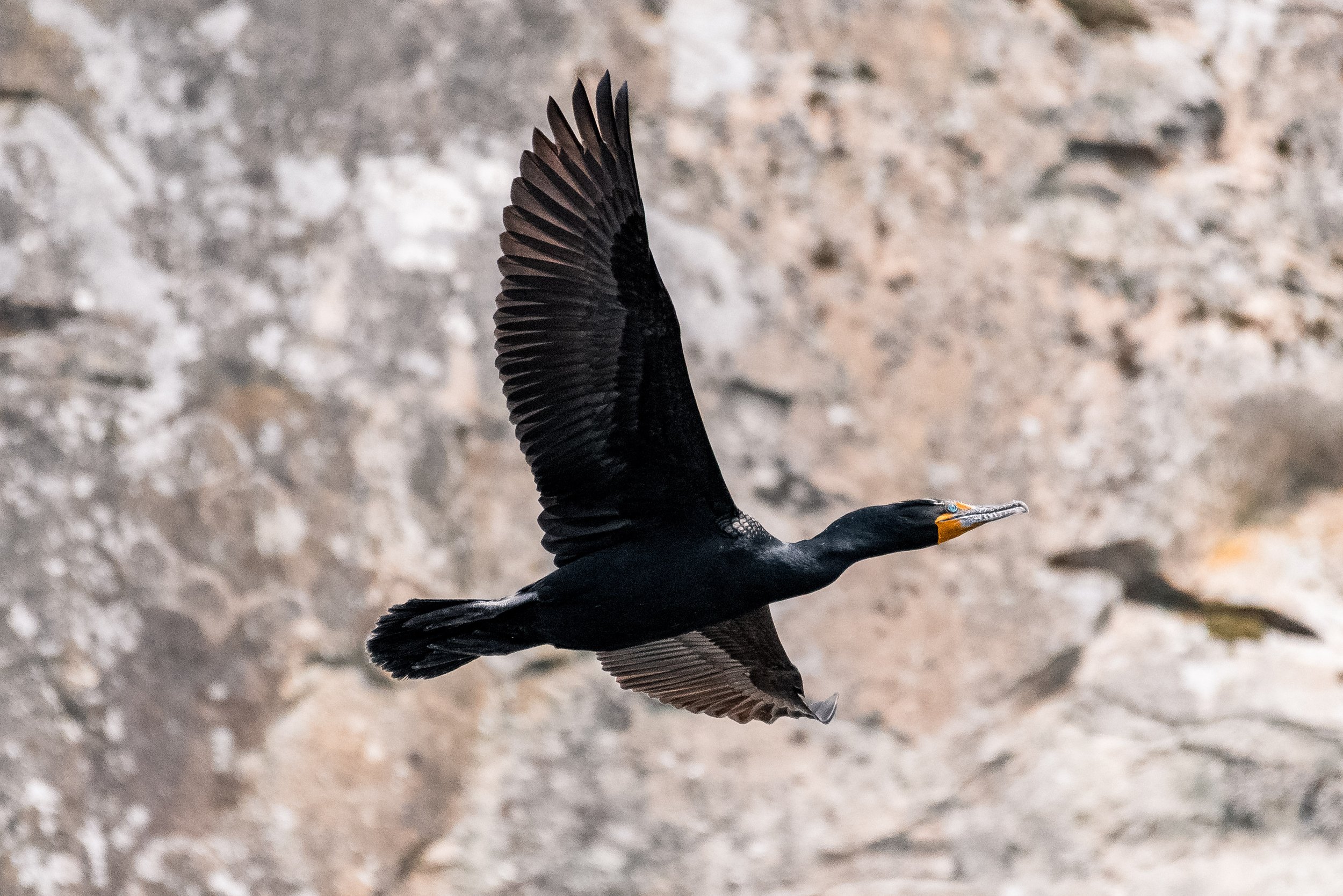
A Double-Crested Cormorant in full breeding plumage flying by. Photograph taken by Evan Hessels.
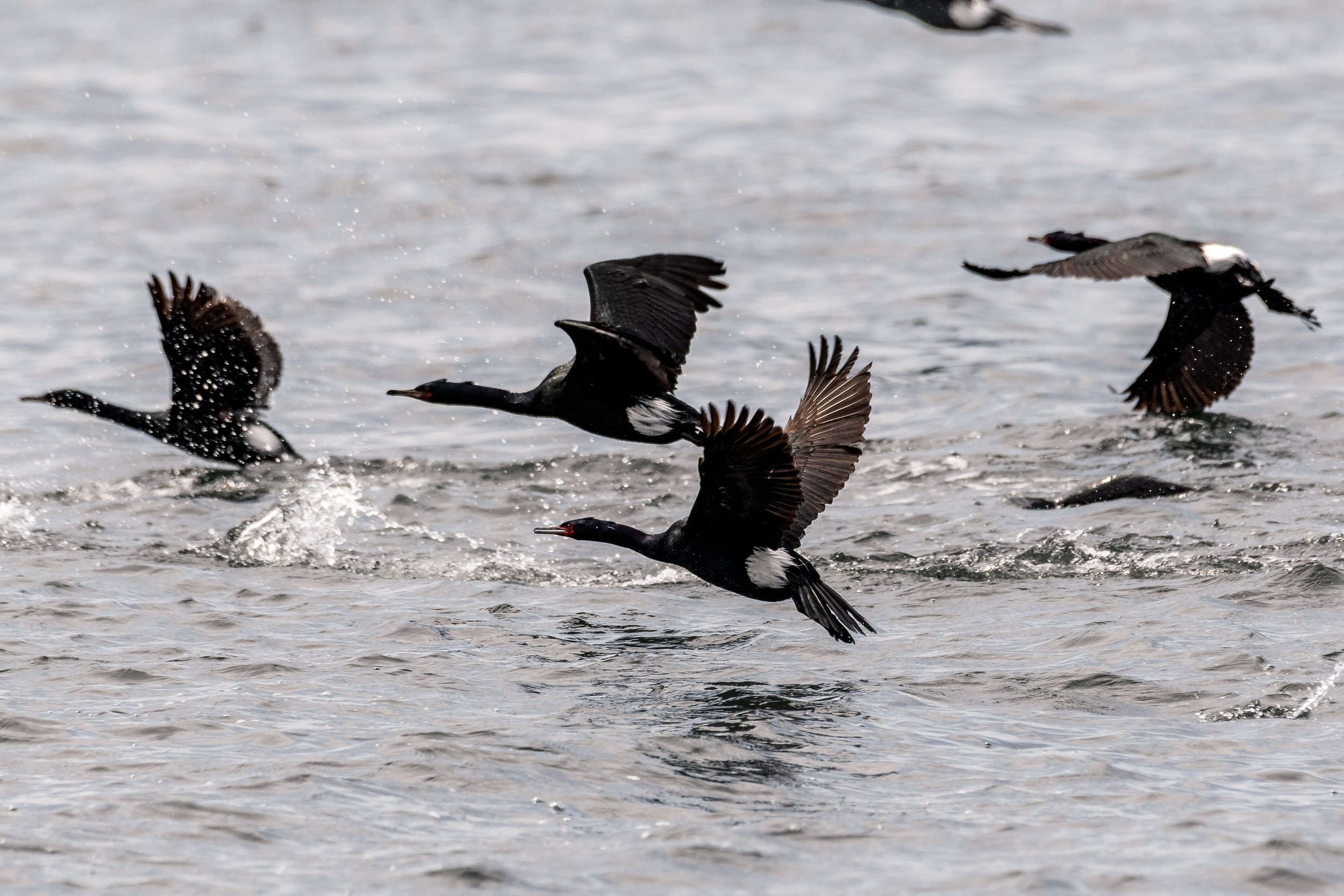
A flock of Pelagic Cormorants in breeding plumage taking off from the water. Photograph taken by Evan Hessels.