
July 13, 2026, 10:30 AM - Spending Time with the T049As and T046Bs in the Strait
It was another beautiful day on the water as two of our vessels departed Nanaimo, eager to begin their search across the Salish Sea. We started by heading out into the Strait of Georgia, the vast body of water that separates Vancouver Island from mainland British Columbia. Although it may seem like an endless stretch of open ocean, these waters are some of the most biologically productive in the region.
The Strait's powerful tidal currents constantly mix nutrient-rich deep water with the sunlit surface, creating ideal conditions for microscopic phytoplankton to flourish. These tiny marine plants form the foundation of the food web, feeding equally tiny zooplankton, which in turn support schools of fish such as herring and salmon. Larger predators, including seals and sea lions, rely on those fish, while at the very top of this incredible food chain are the apex predators of the Salish Sea: the Bigg's (transient) killer whales. Every encounter we have with wildlife is part of this larger ecological story, where each species plays an important role in keeping the ecosystem healthy and balanced.
As we searched the Strait, a series of blows appeared on the horizon. We made our way over and soon found a group of Bigg's killer whales travelling steadily together. Cameras came out, photographs were taken, and before long we were able to identify the family as the T049As.
T049A Nan ♀ (1986)
T049A3 Nat ♂ (2011)
T049A4 Neptune ♂ (2014)
T049A5 Nebula ♀ (2017)
T049A6 Charlie II ♂ (2022)
T049A7 Nimbus (2026)
This family appeared to have just wrapped up a hunt before we arrived. Rather than maintaining the steady, purposeful travel we often observe, the whales were making frequent directional changes and milling about near the surface. Bigg's killer whales spend much of their day travelling quietly between hunting areas, surfacing in a predictable line before disappearing on longer dives. When they locate prey, however, that forward momentum often halts as they work together to capture and process their meal.
One of the most remarkable behaviours of Bigg's killer whales is how they share food. After a successful hunt, prey is often divided among the family members, ensuring that each whale gets a portion. Adult females generally consume between 150 and 200 pounds of food each day, while full-grown males require considerably more energy and may eat closer to 300 pounds daily. Sharing meals also reinforces the strong social bonds within these close-knit matrilines, which can remain together for decades.
If the T049As had indeed been feeding, we had only caught the final moments before they resumed their journey north. We wished them well and continued on our own adventure, making a stop at one of our favourite local haul-outs, affectionately known as Stinky Rock.
The unmistakable aroma greeted us long before we arrived, but so did dozens of impressive Steller Sea Lions sprawled across the rocks alongside several harbour seals. These pinnipeds occupy an important place in the Salish Sea food web. Both species are skilled predators that feed on a variety of fish and squid and serve as an important food source for Bigg's killer whales.
Harbour seals can be found in these waters year-round and are one of the most common marine mammals in the Salish Sea. During the summer months, many females can be seen caring for recently born pups, which begin swimming only hours after birth. Steller Sea Lions, on the other hand, migrate seasonally. Most mature adults spend the summer at breeding rookeries farther north in British Columbia and Alaska, while many of the younger, non-breeding animals remain in our local waters throughout the warmer months. Watching these massive sea lions lounge together on the rocks is always a highlight, especially knowing the important role they play in the ecosystem.
Continuing north through the Strait of Georgia, we suddenly noticed another black dorsal fin in the distance. Before long, several more appeared behind it. We had found another family of killer whales.
This second encounter was with the T046Bs, another well-known Bigg's killer whale matriline.
T046B Raksha ♀ (1988)
T046B2 Akela ♀ (2008)
T046B2B Takaya ♀ (2023)
T046B4 Quiver ♀ (2013)
T046B7 Tala (2023)
T046B8 Pi (2026)
A few familiar fins were missing today, though that isn't unusual for this family. Some of Raksha's offspring, Sedna, Munro, and Sol, were reportedly travelling together elsewhere. As younger whales mature, temporary separations like these become more common, particularly when siblings begin exploring independently or associating with other related families before eventually rejoining their mother.
Unlike the fish-eating resident killer whales, Bigg's killer whales typically travel in relatively small groups. Their primary prey consists of marine mammals, animals with excellent hearing that can detect underwater sounds from great distances. Travelling in smaller family groups helps these predators remain stealthy while hunting. Large groups are easier for prey to detect and require substantially more food, making successful hunts more challenging. By keeping their numbers smaller, Bigg's killer whales increase their chances of surprising seals, sea lions, porpoises, and other marine mammals.
The T046Bs were clearly in travel mode today, surfacing in a smooth, coordinated line as they steadily continued north through the Strait. After spending some time admiring this beautiful family, it was time for us to begin our own journey home, pointing the bow back toward Nanaimo after another unforgettable day exploring the incredible waters of the Salish Sea.
Please enjoy the photos captured throughout today's adventure by our onboard Marine Naturalists, Vanessa Vereschahen and Aly Kohlman.
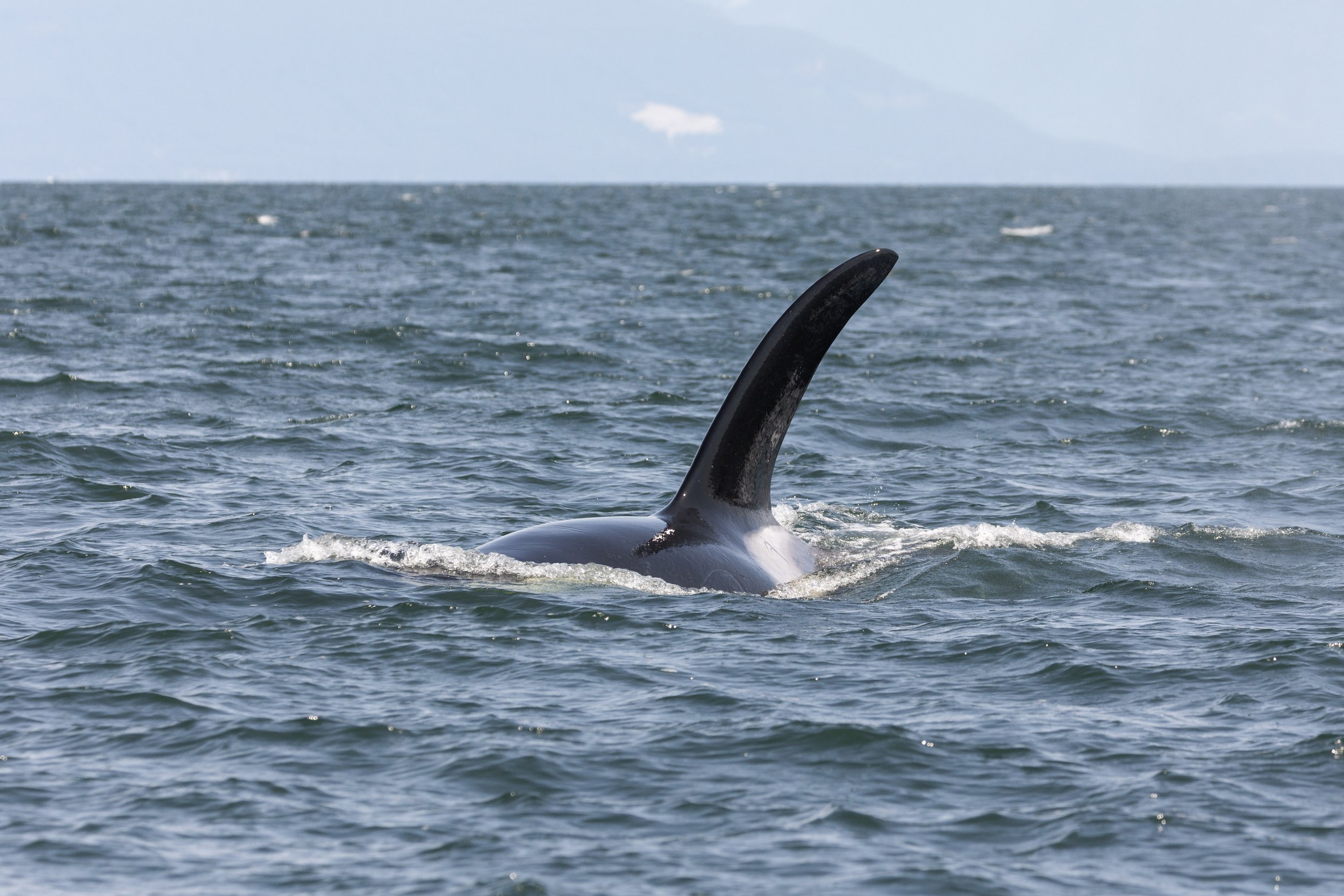
T049A3 Nat surfacing in the waves. Photo by Vanessa Vereschahen.
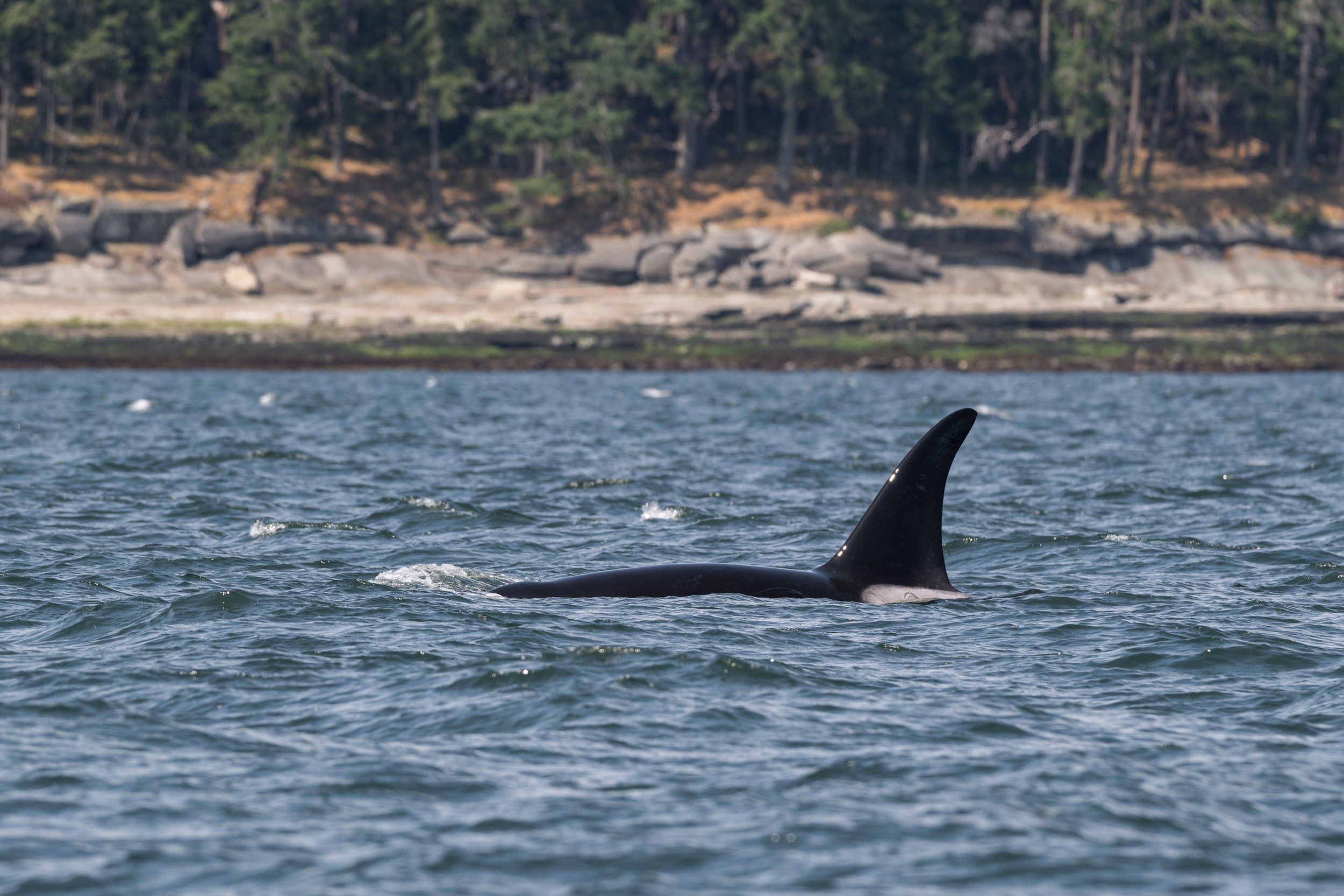
T049A3 Nat showing off some new scars. Photo by Aly Kohlman.
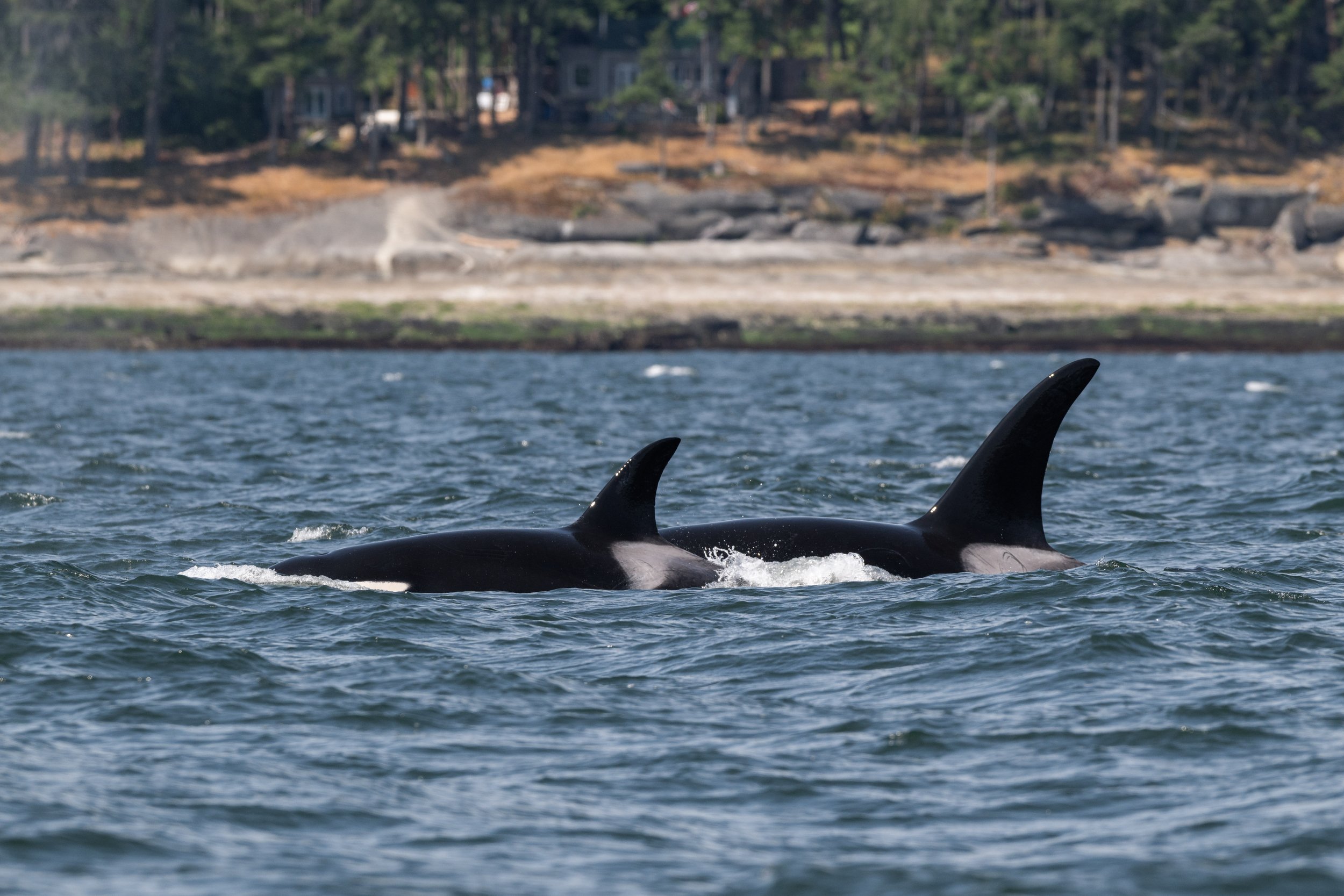
T049A4 Neptune surfacing next to T049A3 Nat. Photo by Aly Kohlman.
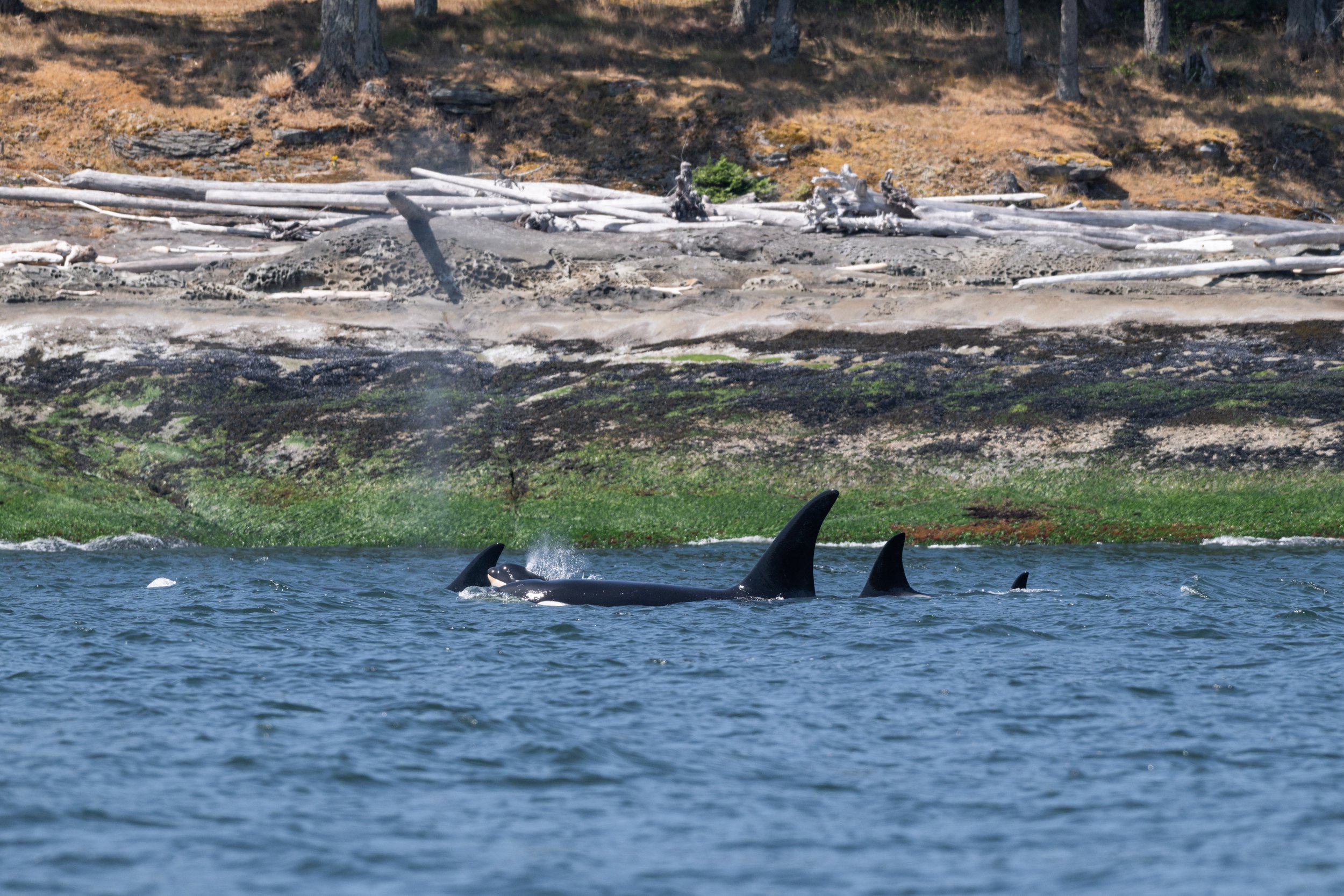
Most of the T049As surfacing together! T049A Nan in the lead followed by T049A7 Nimbus, T049A3 Nat, T049A4 Neptune, and T049A6 Charlie. Photo by Aly Kohlman.
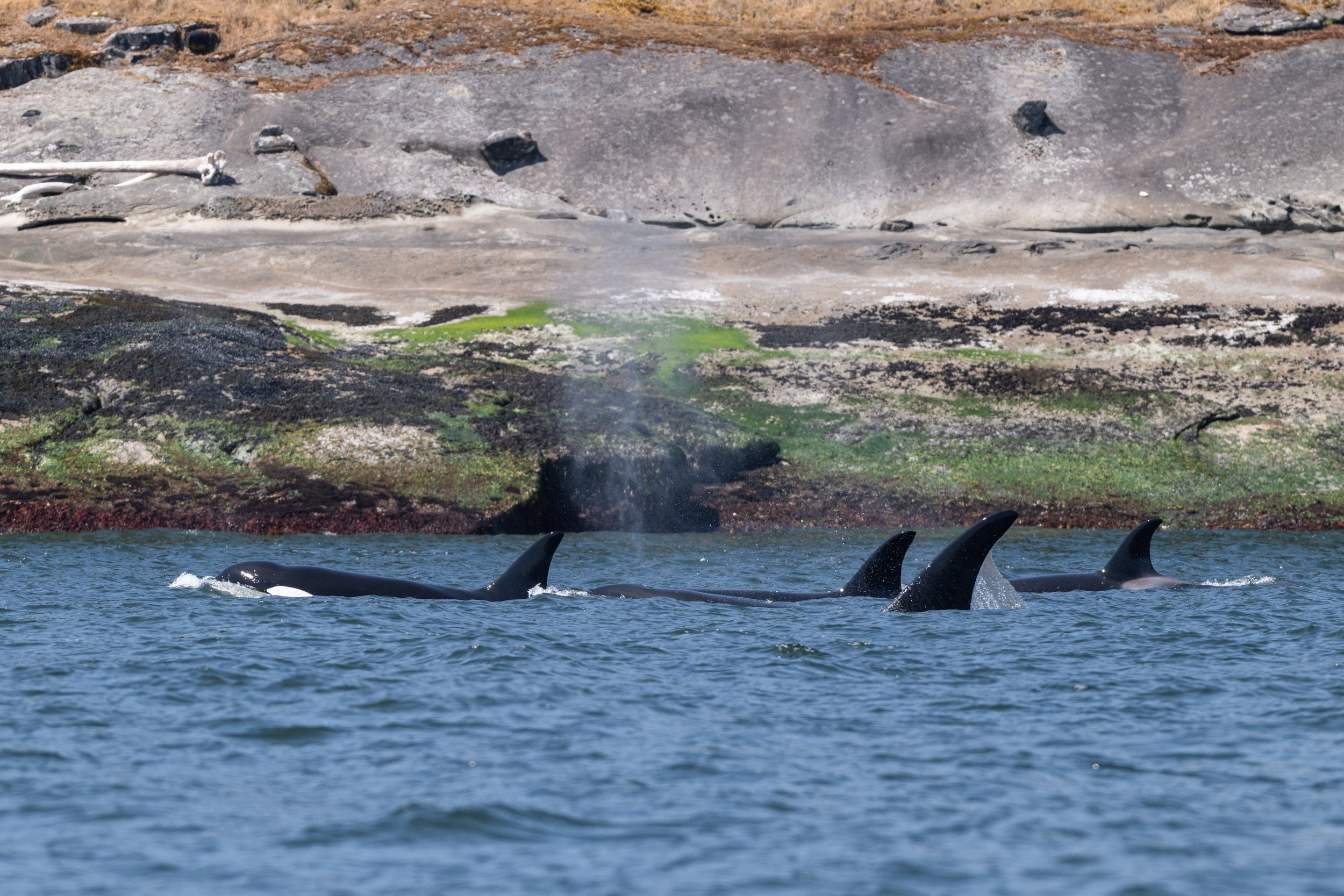
T049A Nan, T049A4 Neptune, T049A3 Nat, and T049A5 Nebula. Photo by Aly Kohlman.
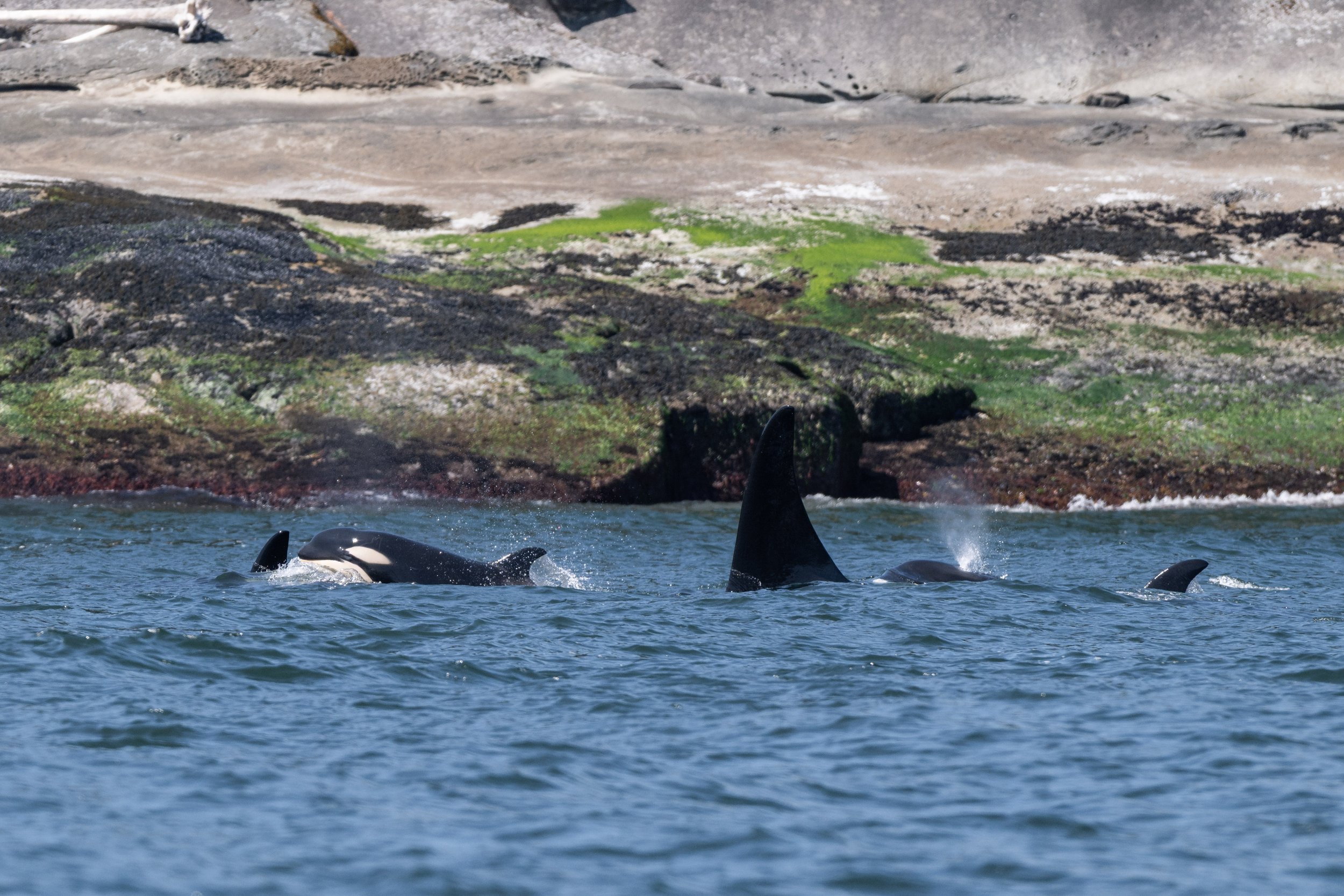
A great look at the new calf, T049A7 Nimbus, surfacing amongst the other members of the pod. Photo by Aly Kohlman.
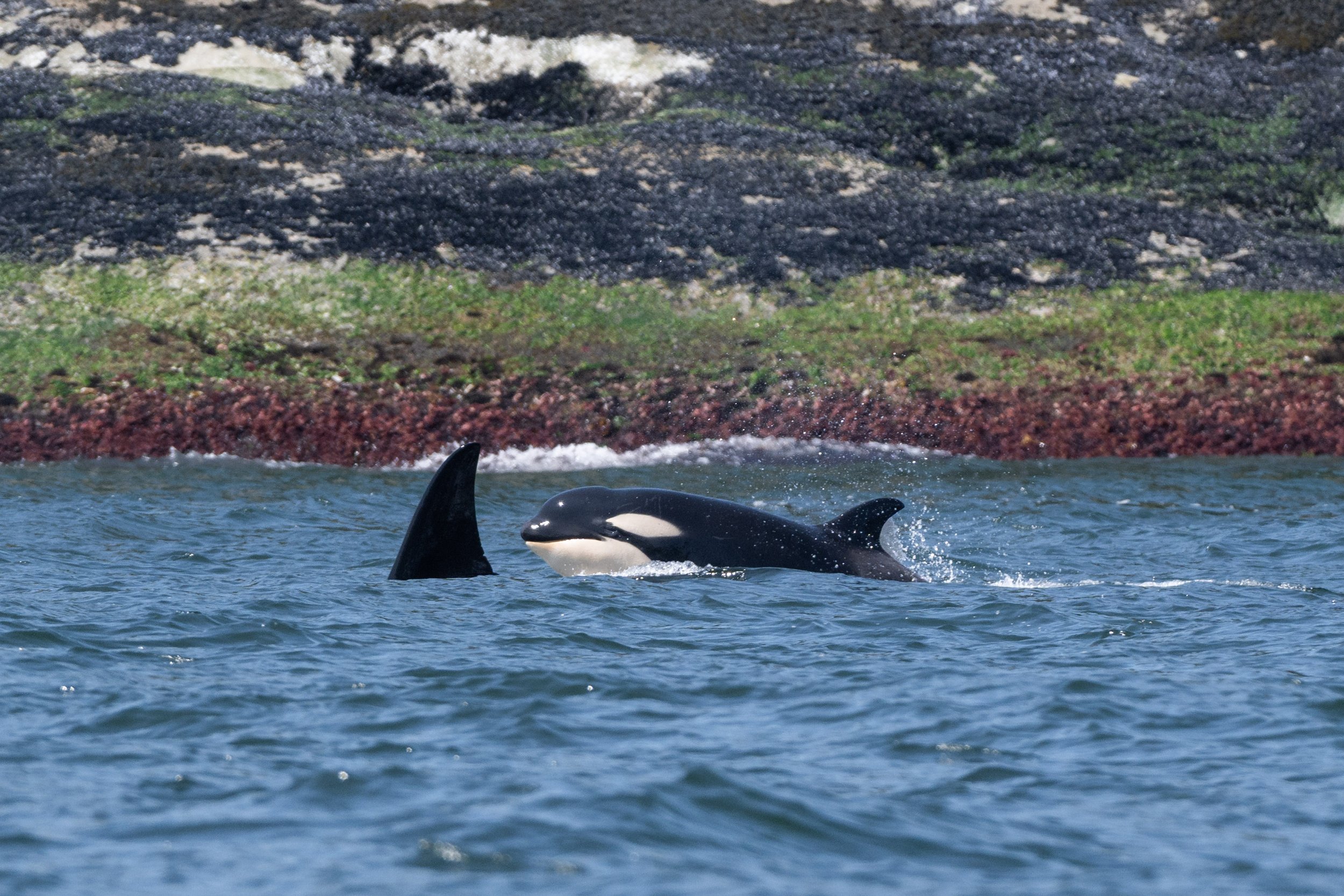
What a cute little baby T049A7 Nimbus is! Photo by Aly Kohlman.
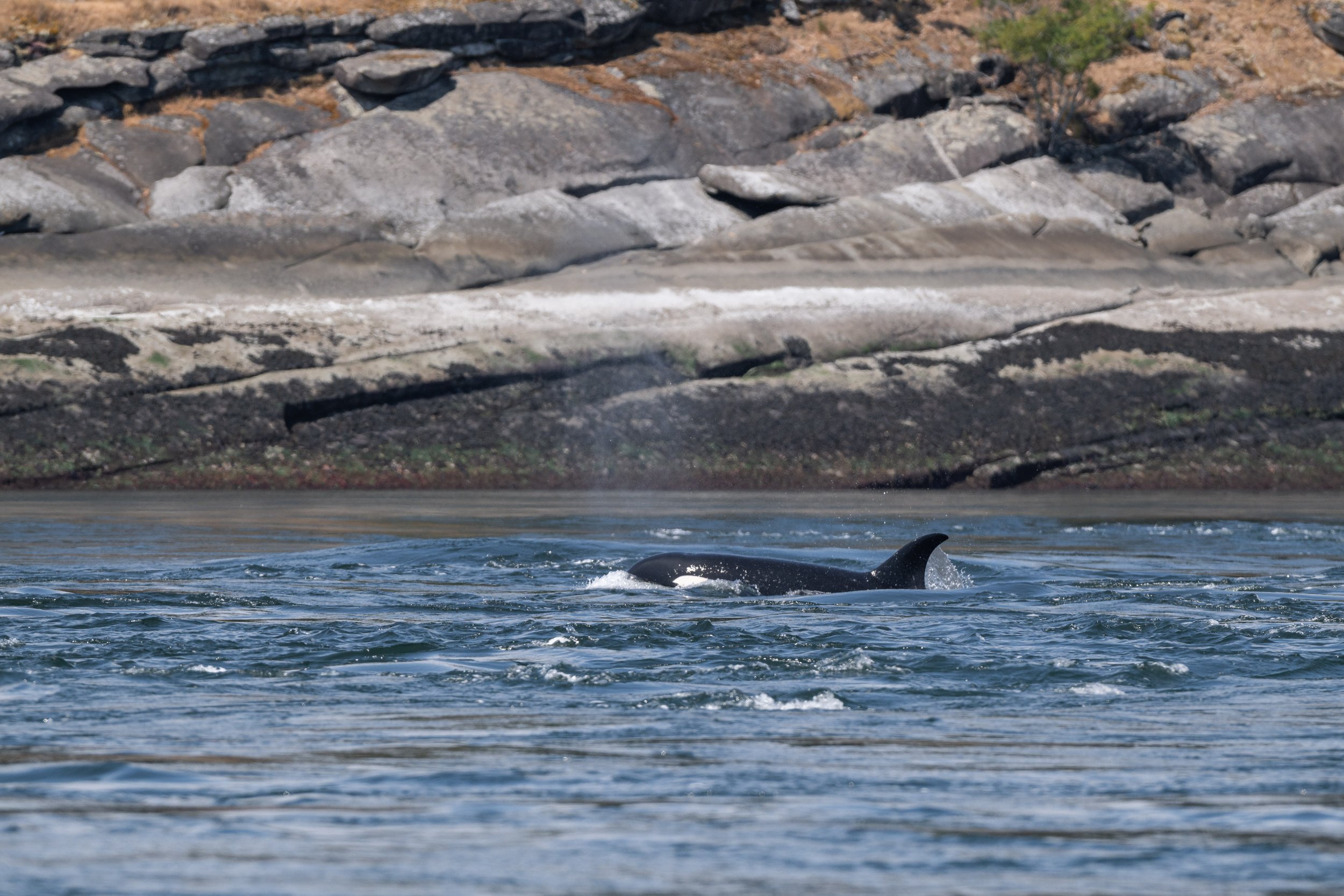
T049A6 Nebula surfacing in the currents. Photo by Aly Kohlman.
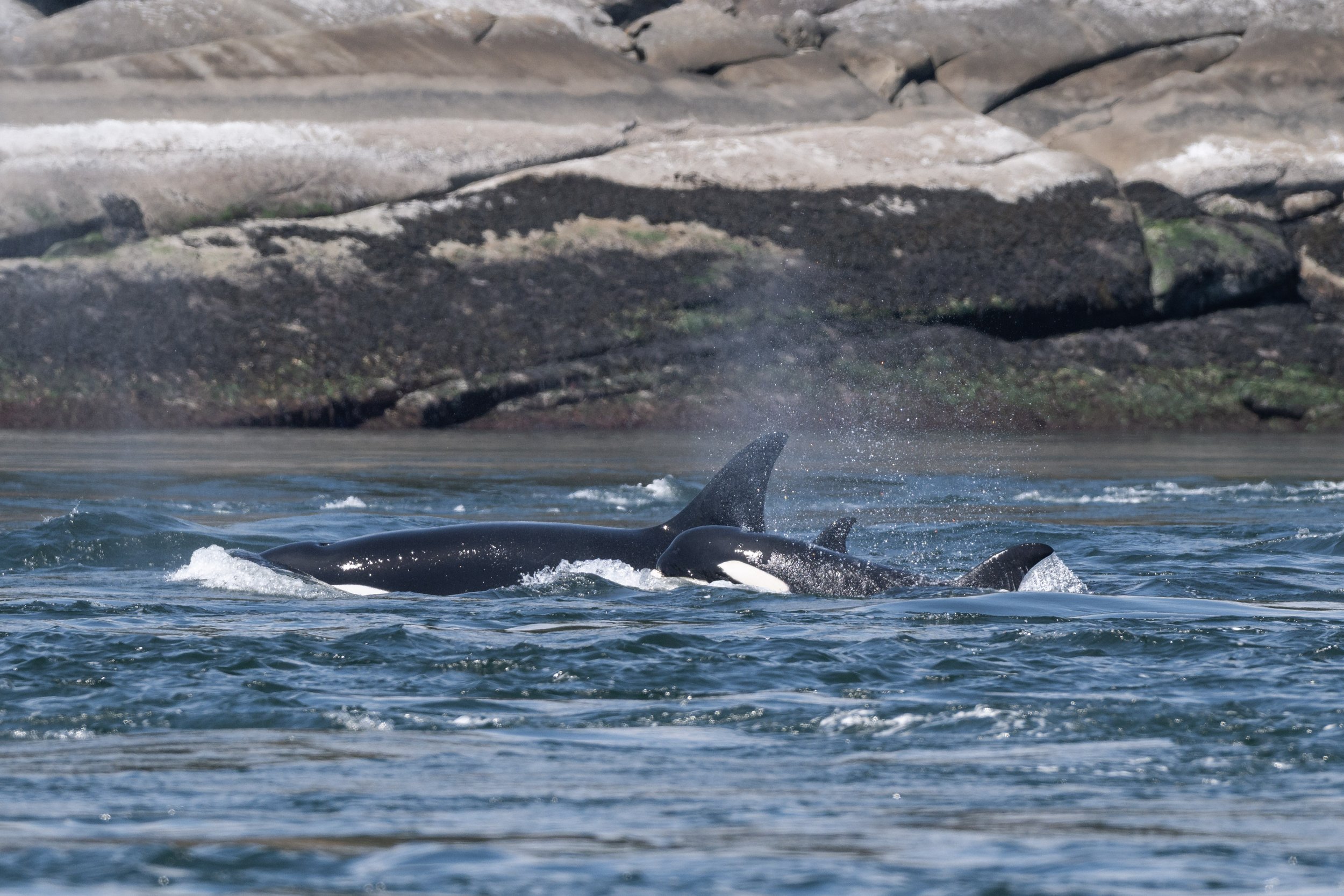
T049A Nan with T049A6 Charlie and T049A7 Nimbus behind her. Photo by Aly Kohlman.
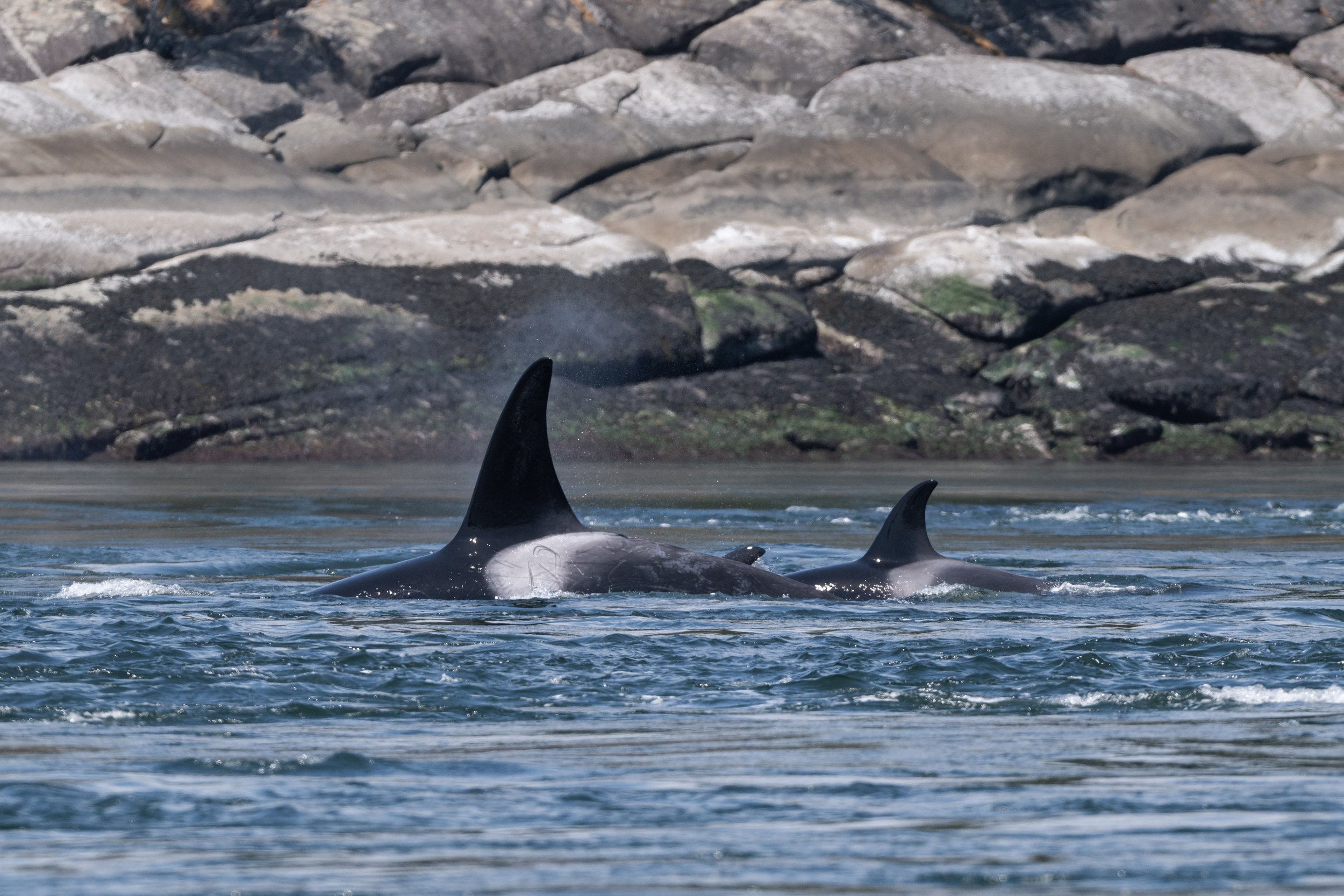
T049A3 Nat surfacing with his sister, T049A5 Nebula. Photo by Aly Kohlman.
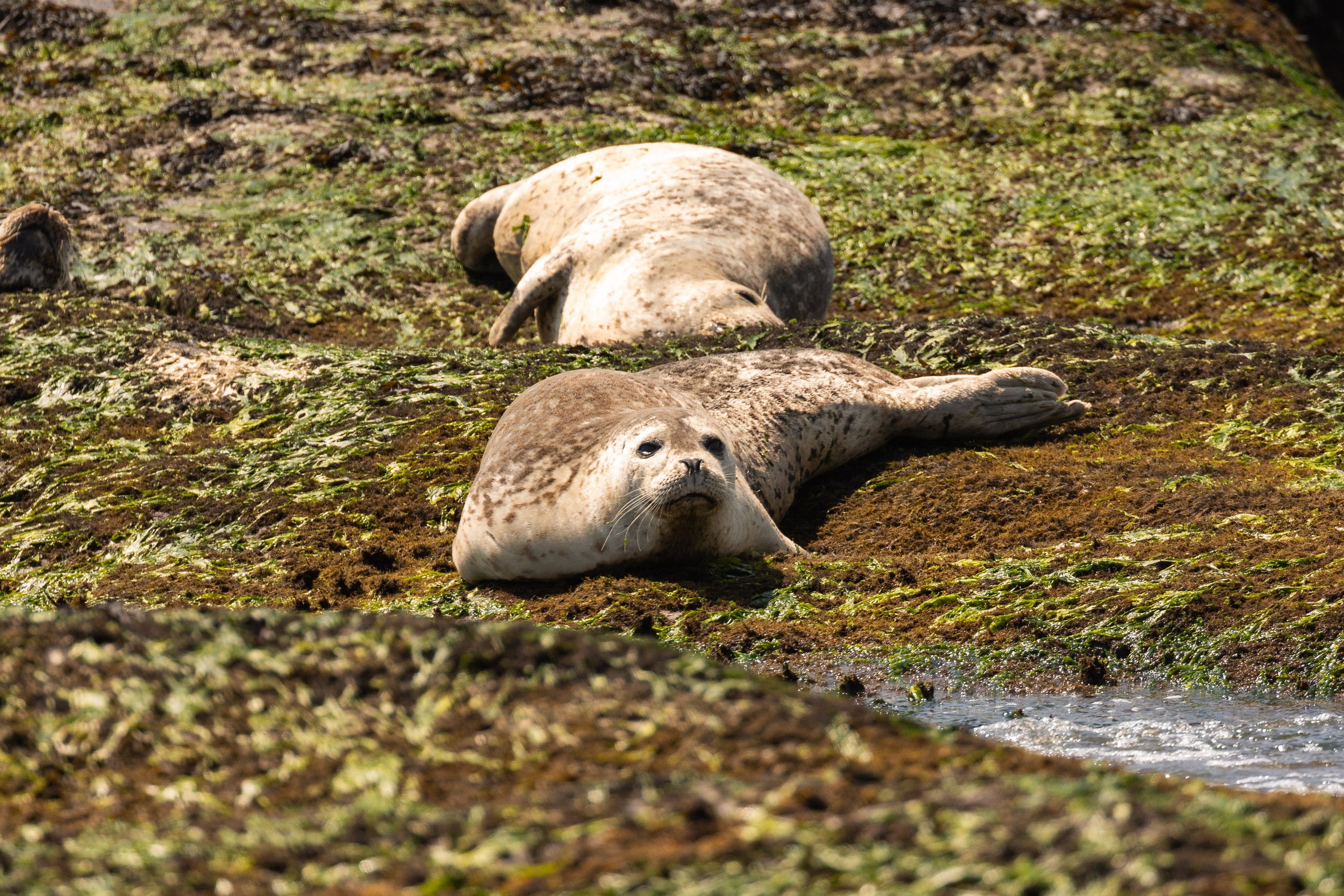
A cute little Harbour Seal in the seaweed. Photo by Vanessa Vereschahen.
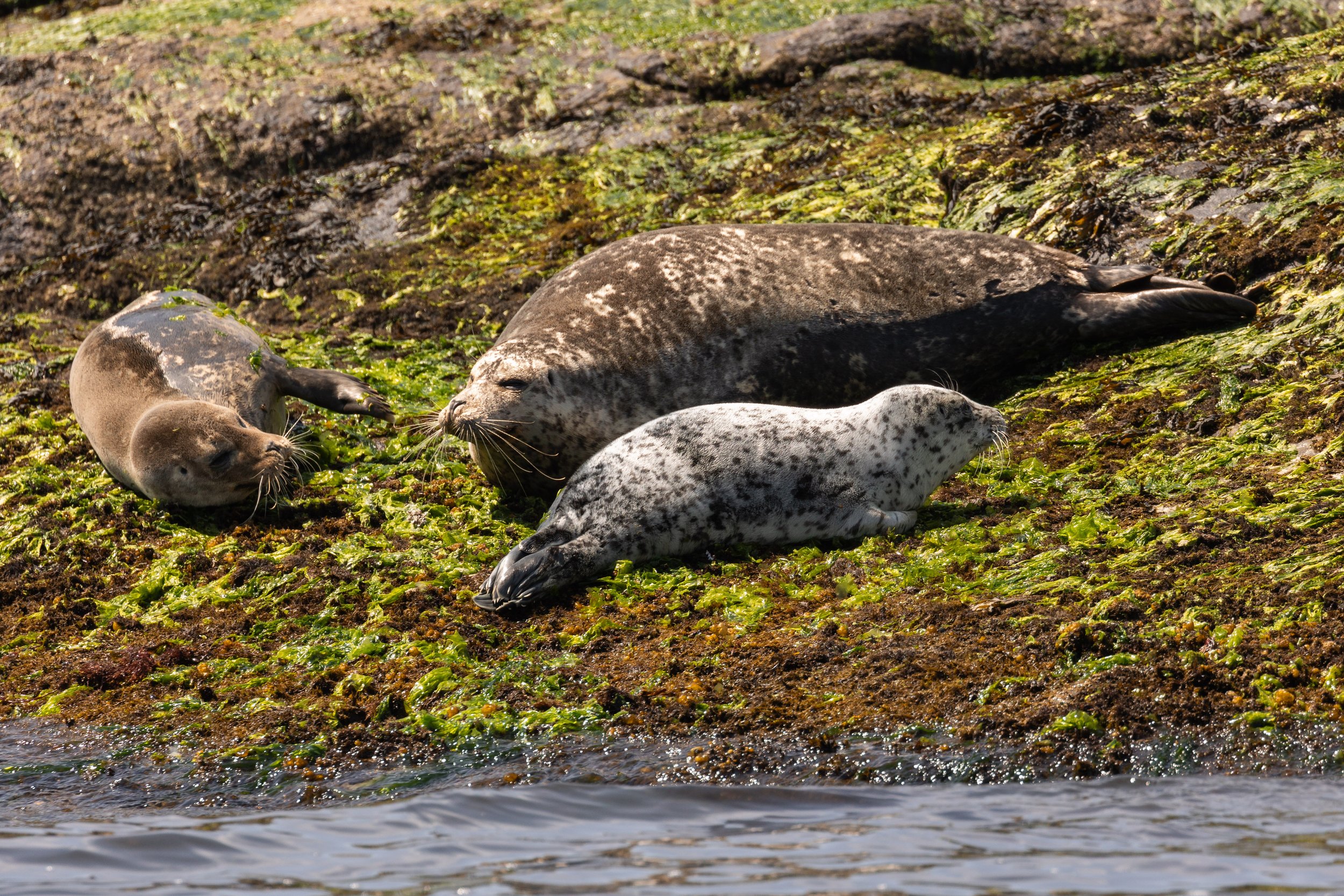
A pup! Photo by Vanessa Vereschahen.
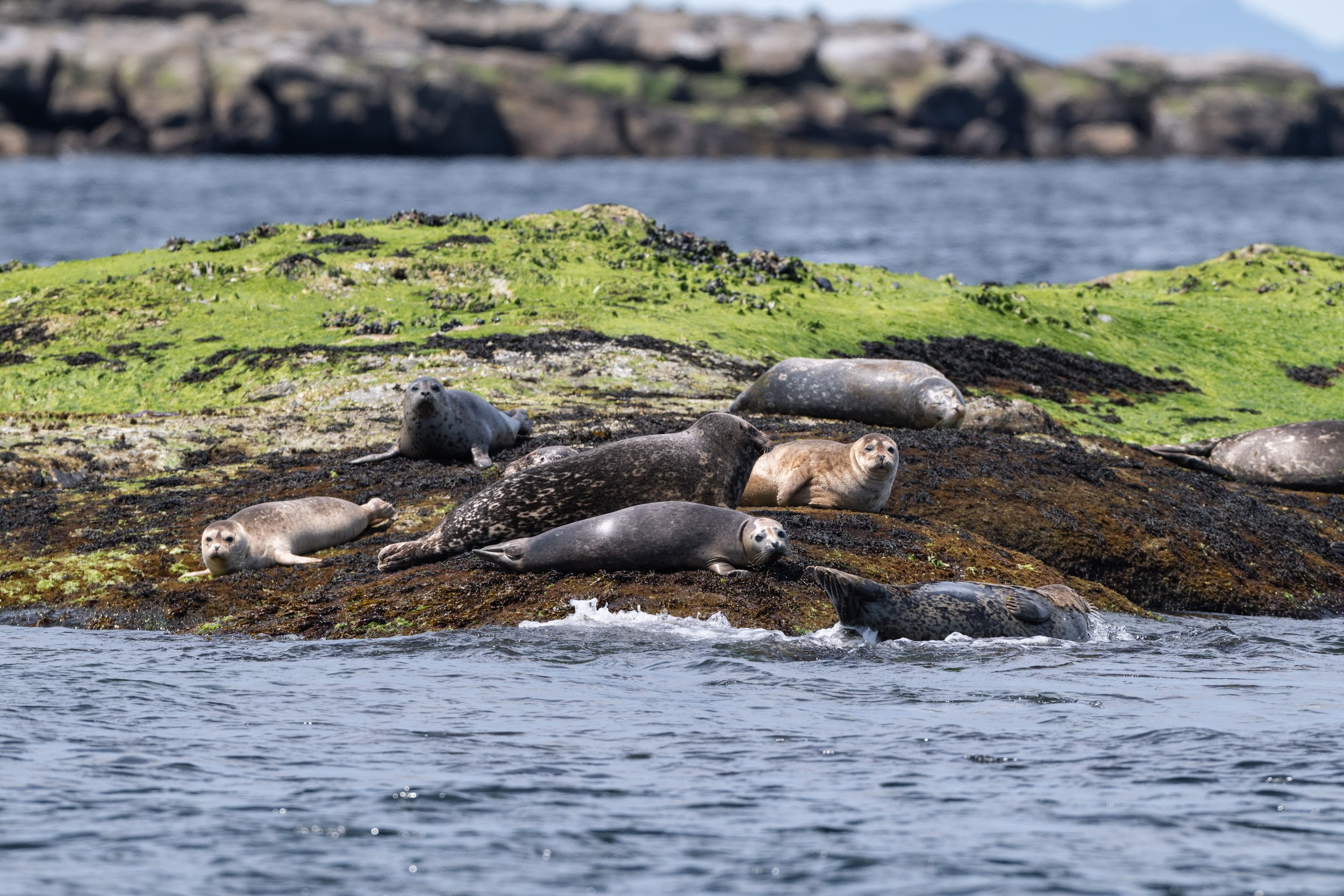
A colony of Harbour Seals on the rocks at Stinky. Photo by Aly Kohlman.
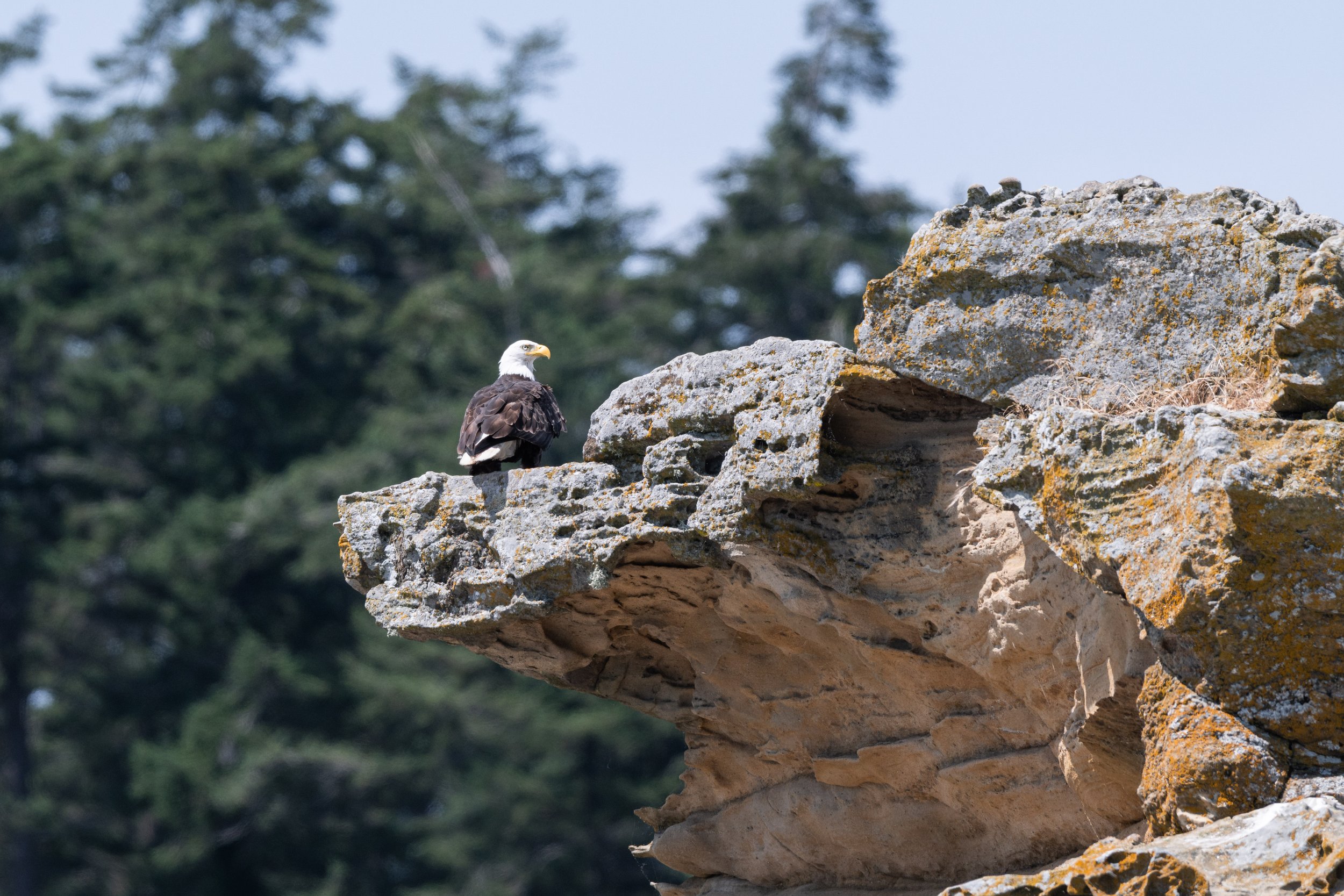
A Bald Eagle watching from a sandstone overhang. Photo by Aly Kohlman.
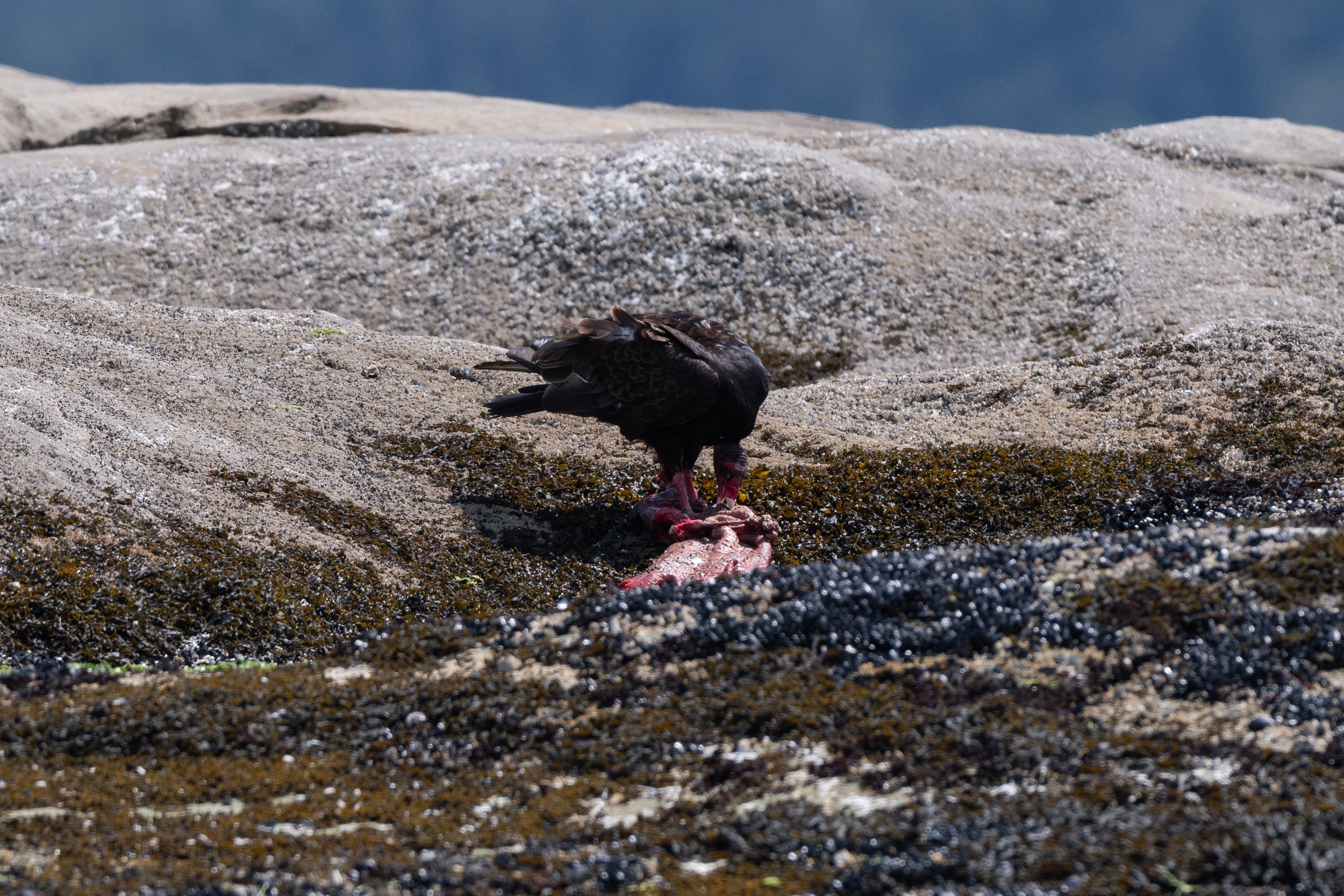
A turkey Vulture enjoying lunch. Photo by Aly Kohlman.
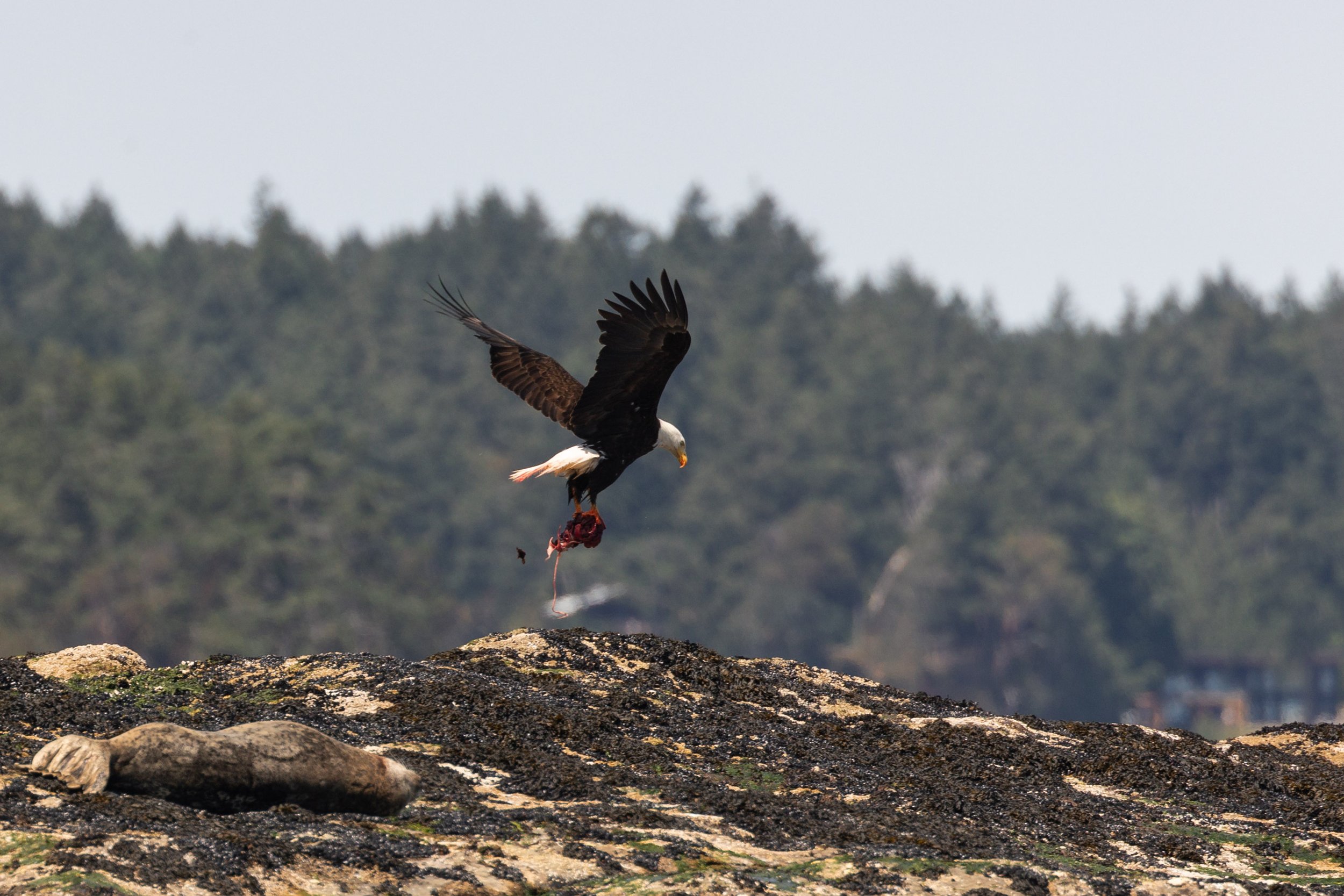
A Bald Eagle flying off with said lunch. Photo by Vanessa Vereschahen.
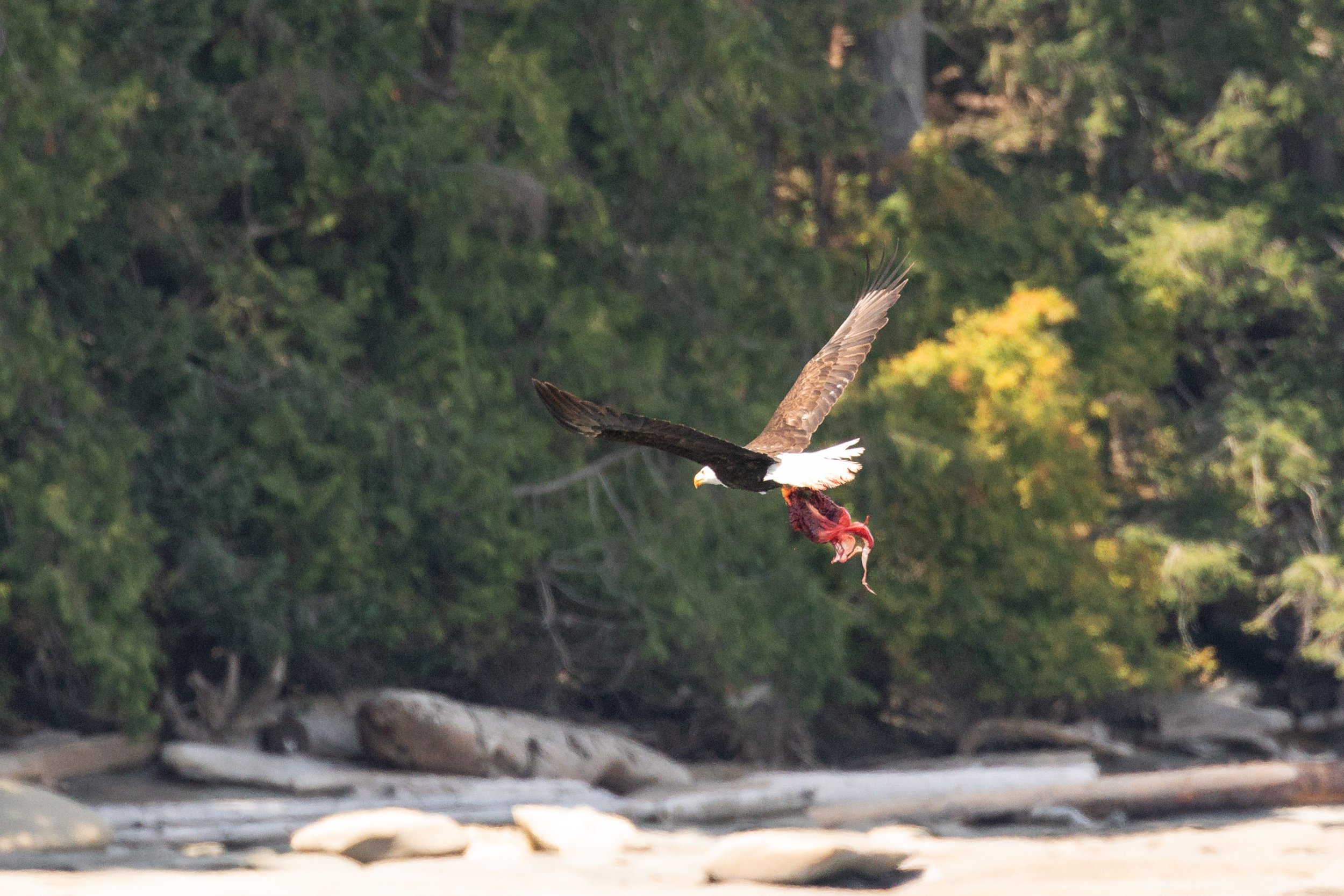
Looks like the guts of a marine mammal, likely a Harbour Seal, in this Bald Eagles talons. Photo by Vanessa Vereschahen.
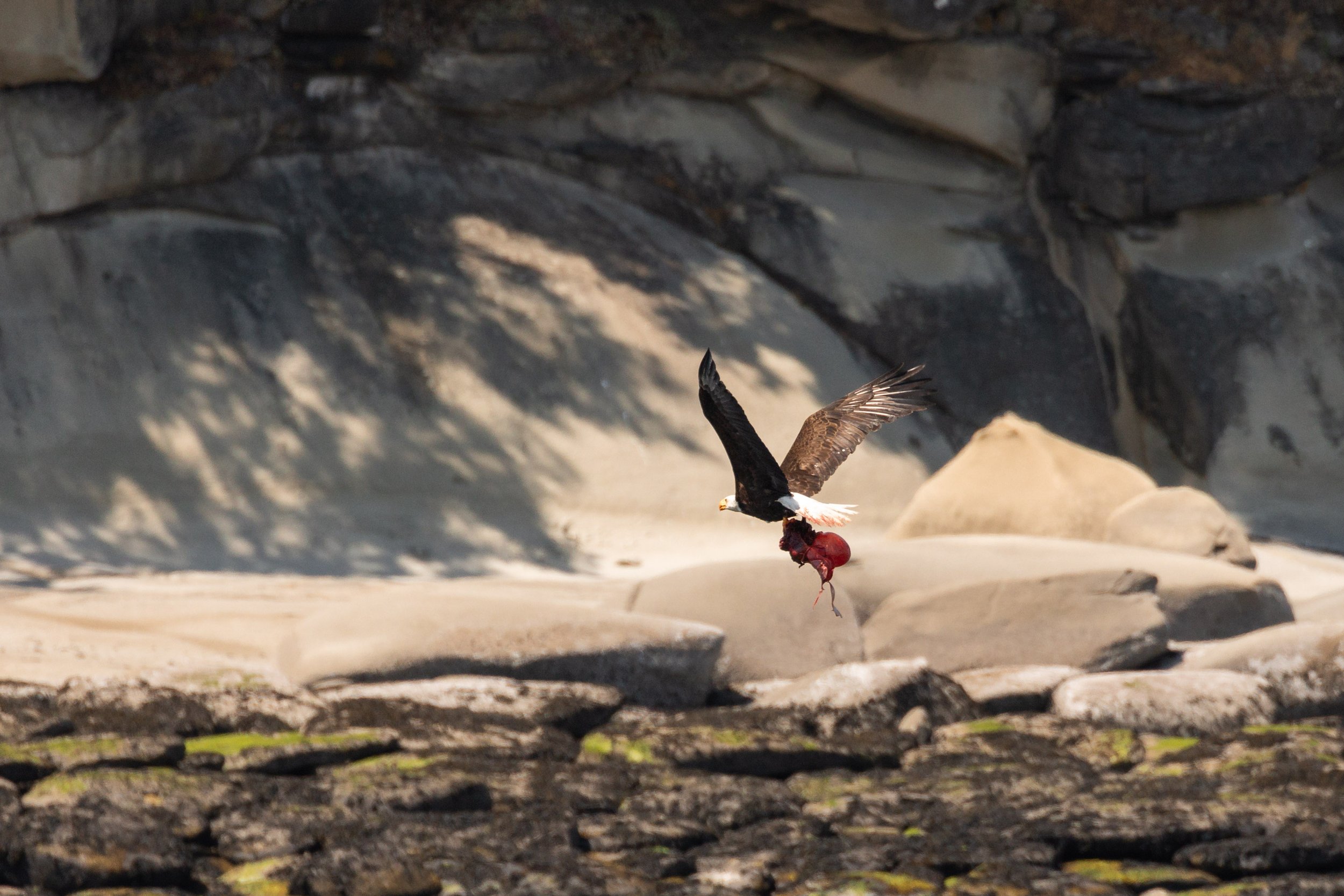
Another look at the Bald Eagle with it’s snack. Photo by Vanessa Vereschahen.
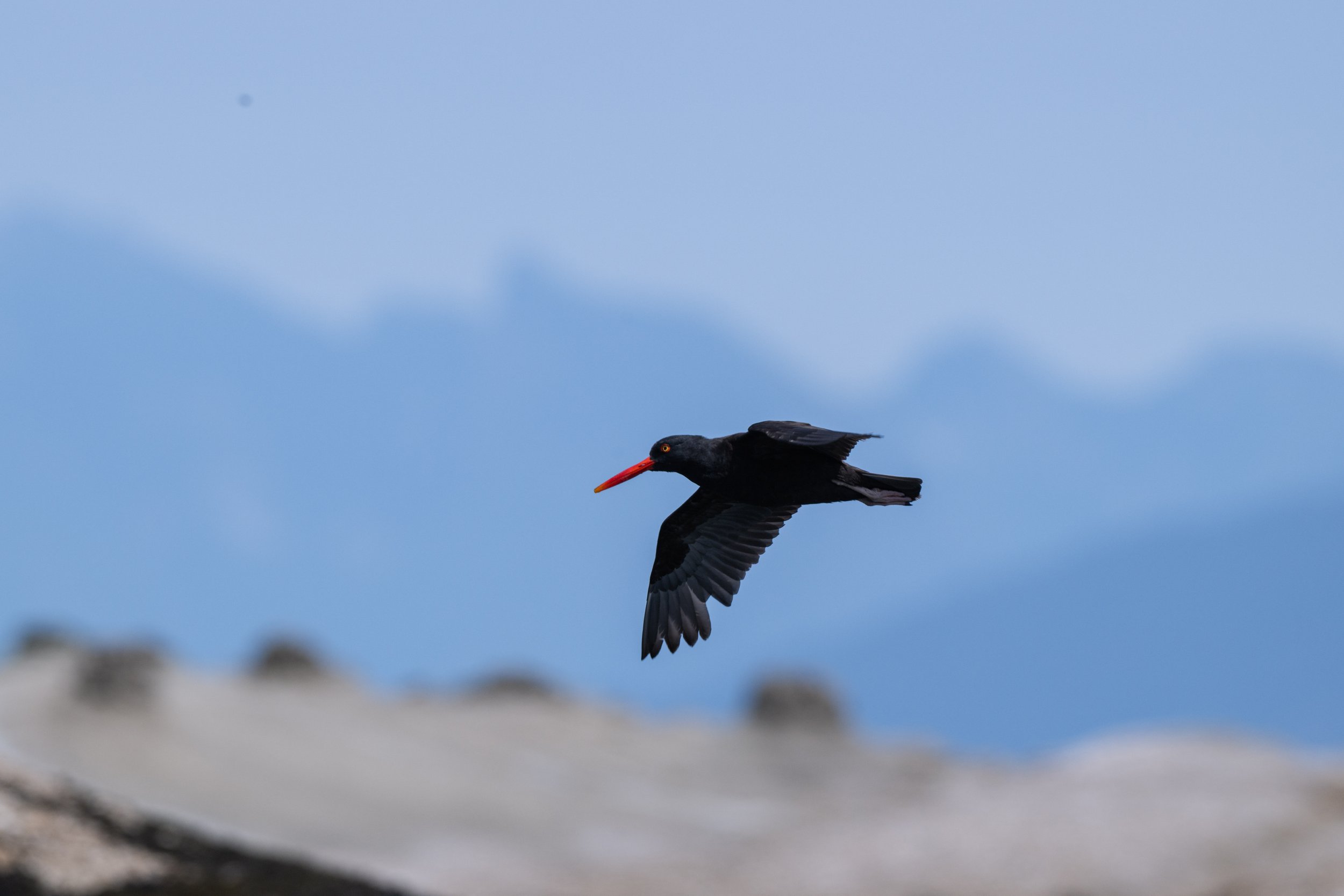
A great look at an Oyster Catcher flying by. Photo by Aly Kohlman.
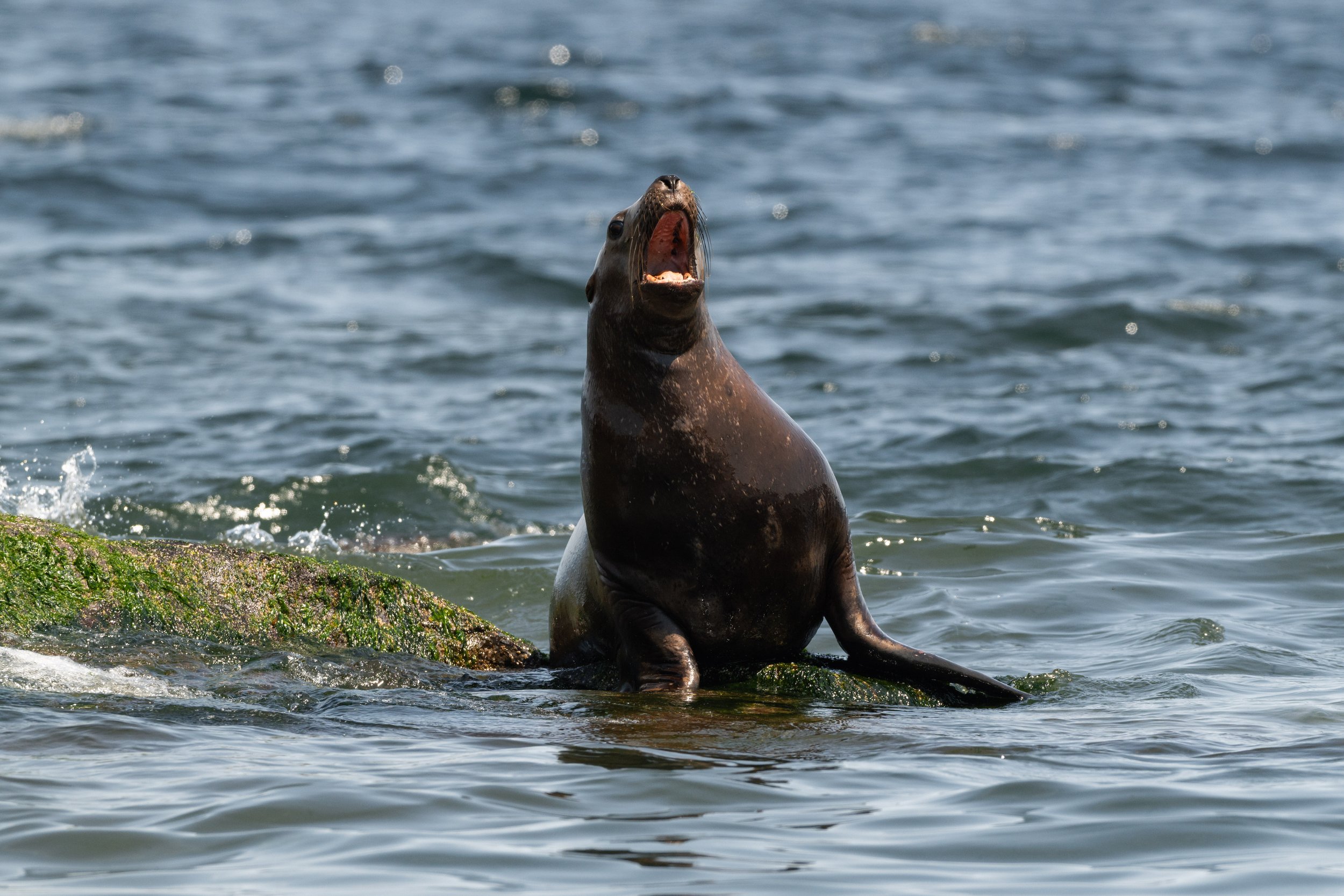
A Steller Sea Lion on the edge of the shore. Photo by Aly Kohlman.
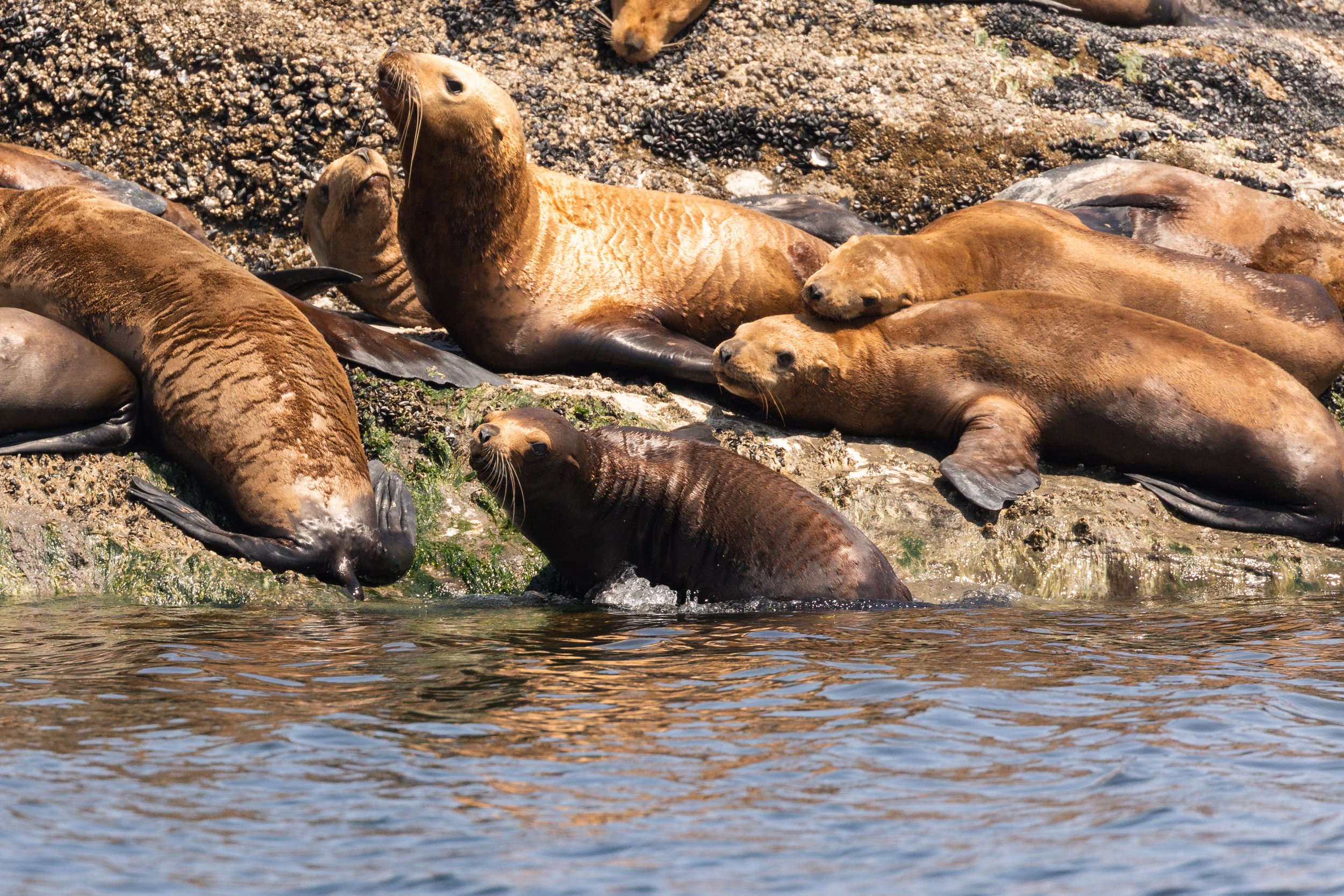
A Steller Sea Lion colony on Stinky Rocks. Photo by Vanessa Vereschahen.
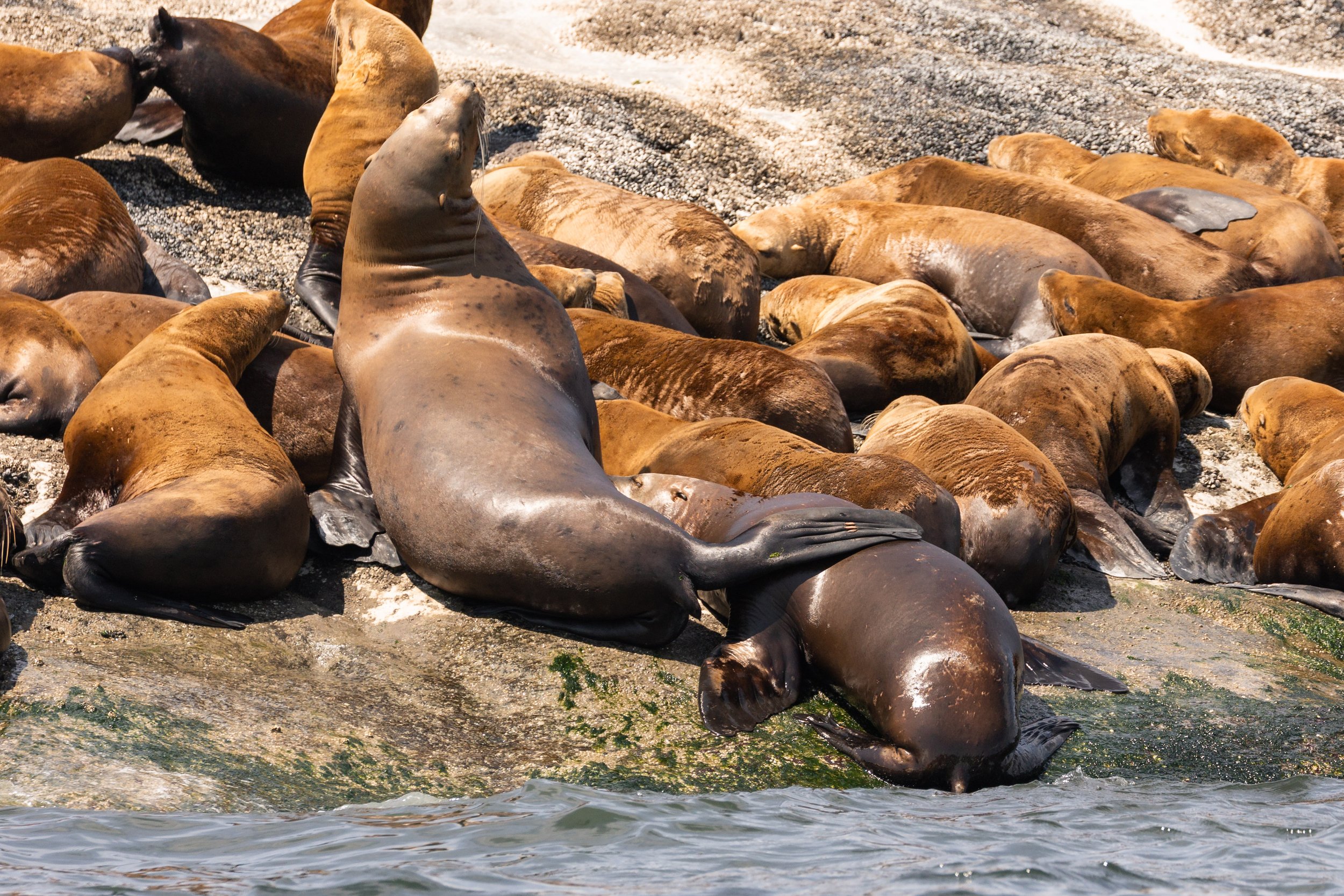
This rather large looking baby is feeding off it’s mom. Photo by Vanessa Vereschahen.
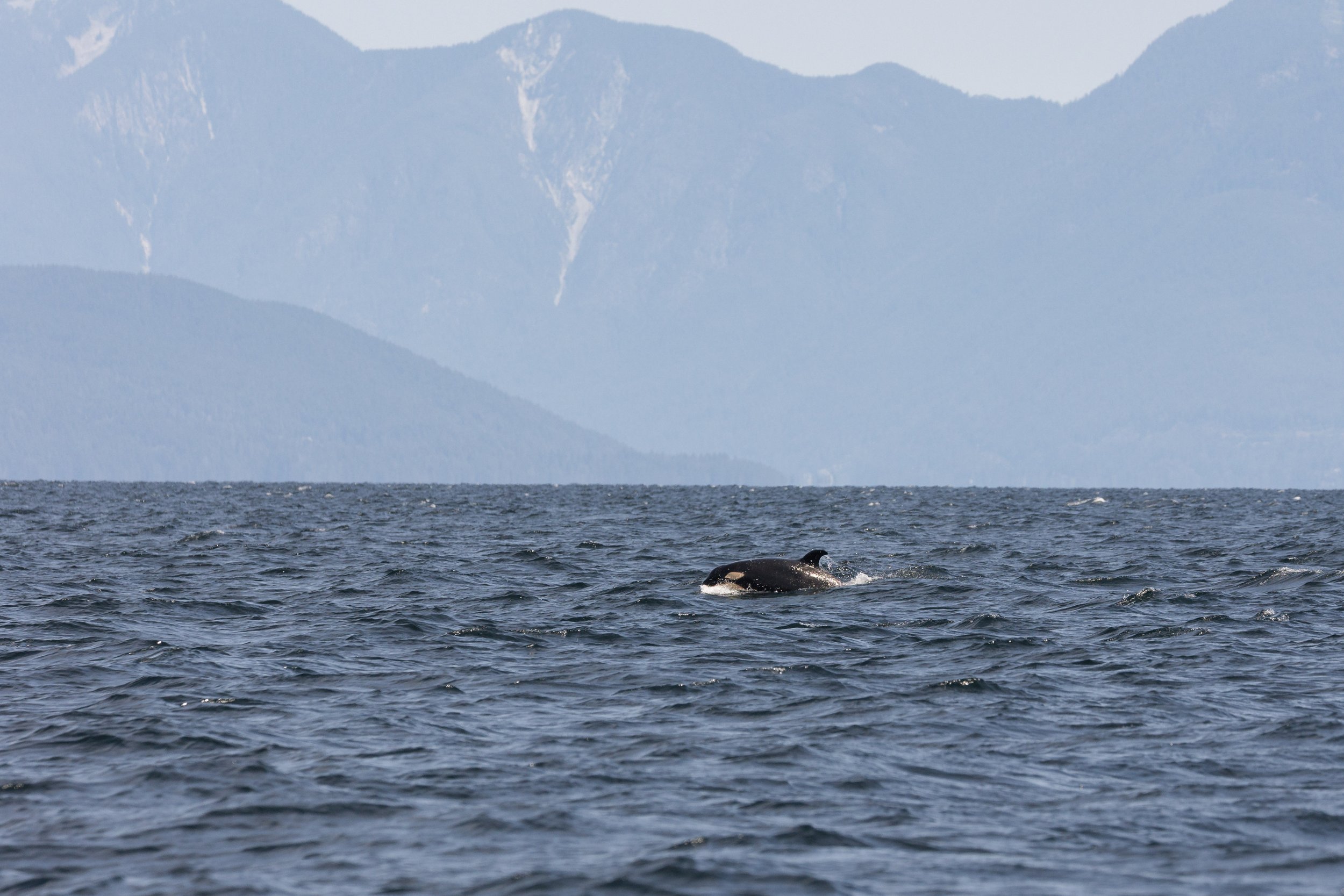
T046B8 Pi surfacing in the waves. Photo by Vanessa Vereschahen.
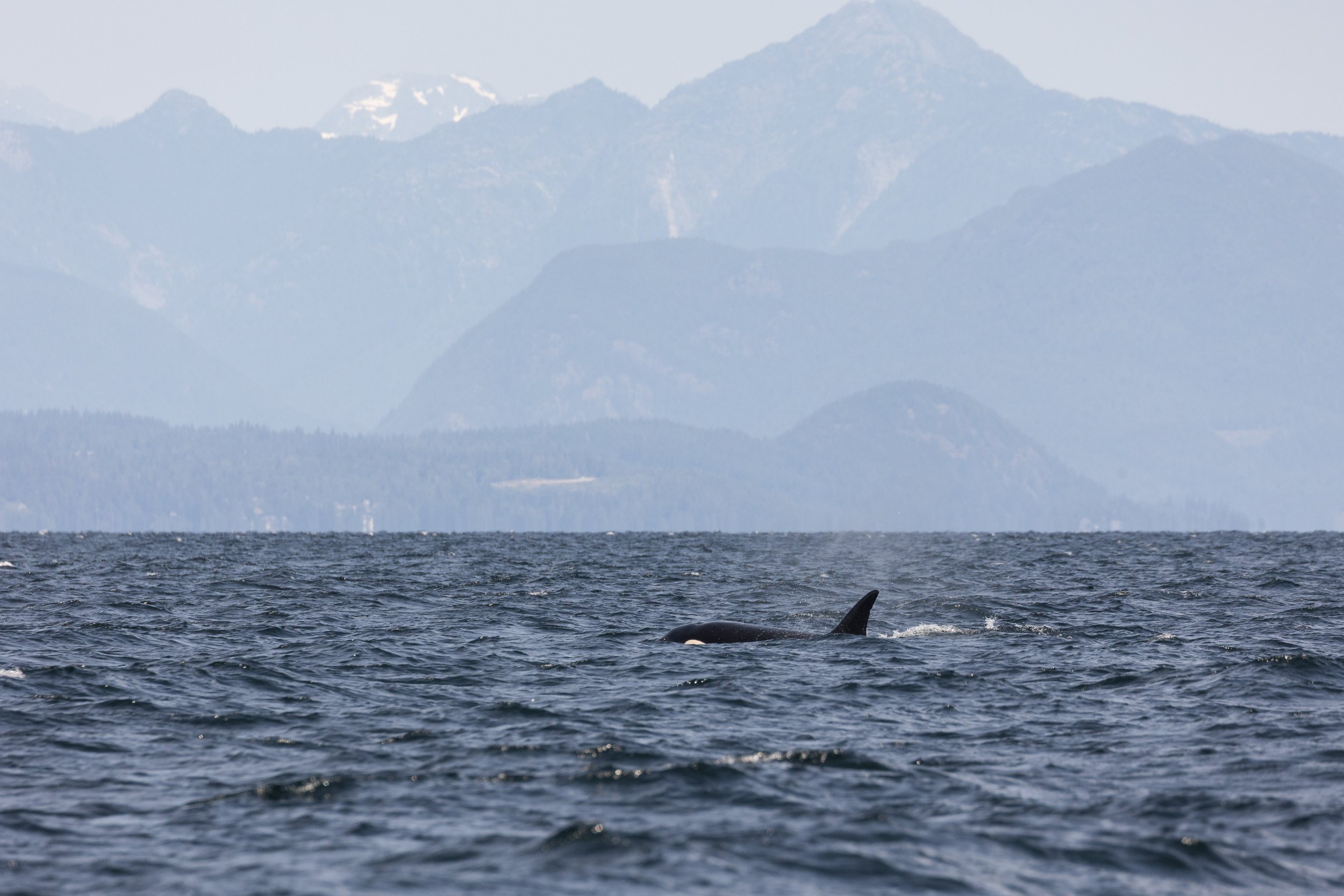
T046B2 Akela surfacing. Photo by Vanessa Vereschahen.
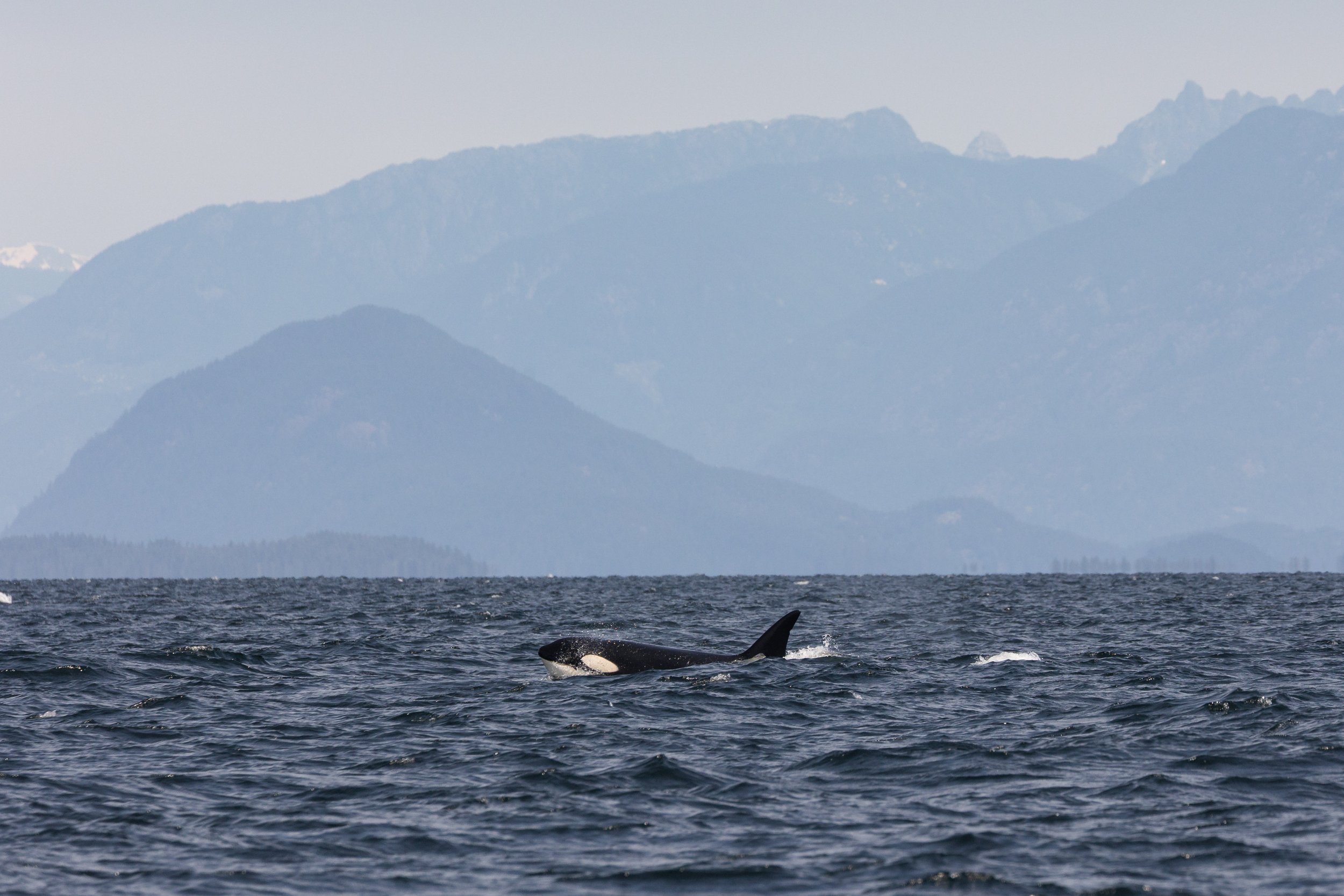
T046B2 Akela showing off her eye patch as she surfaces. Photo by Vanessa Vereschahen.
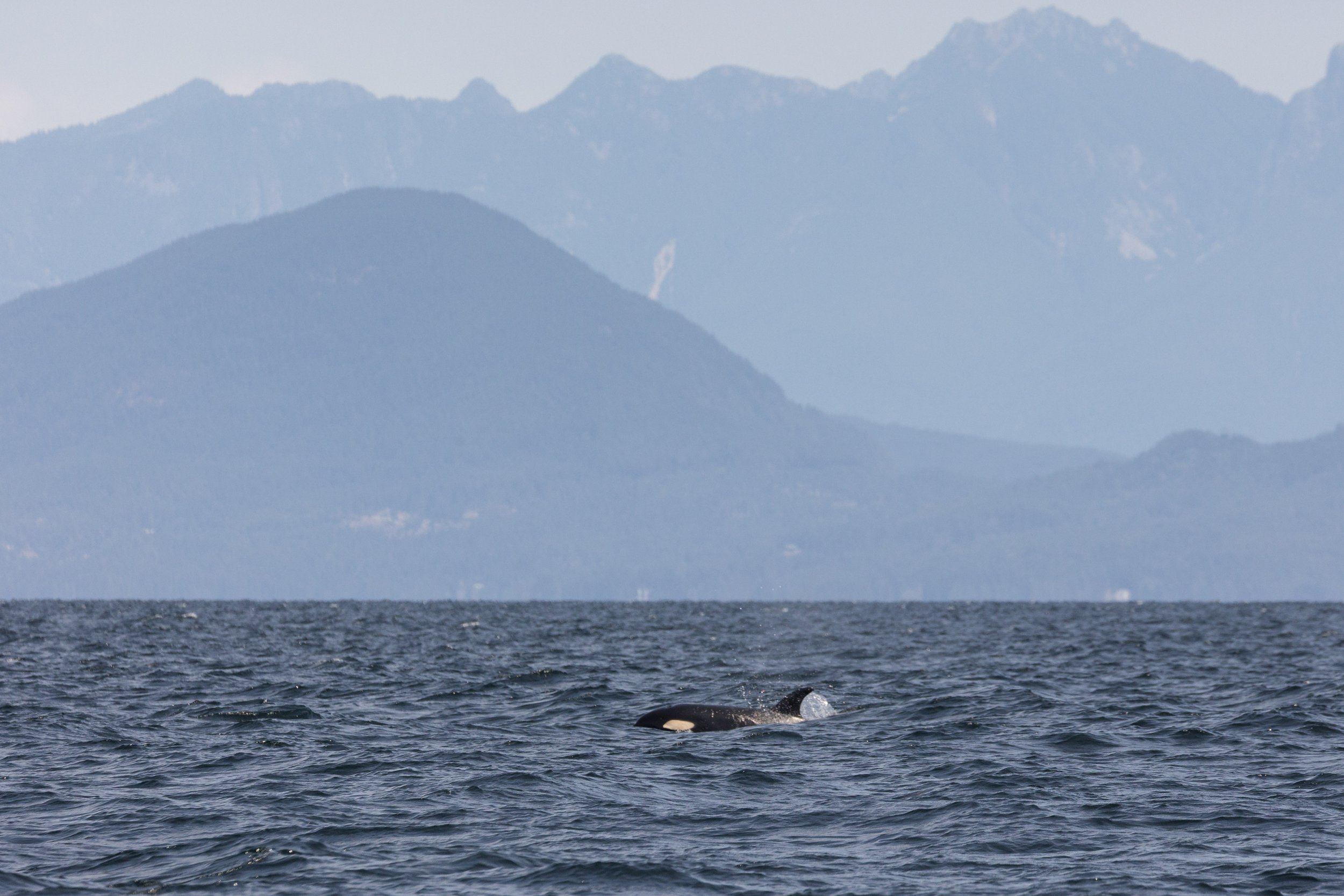
T046B2B Takaya surfacing with the Coastal Mountains as a backdrop. Photo by Vanessa Vereschahen.
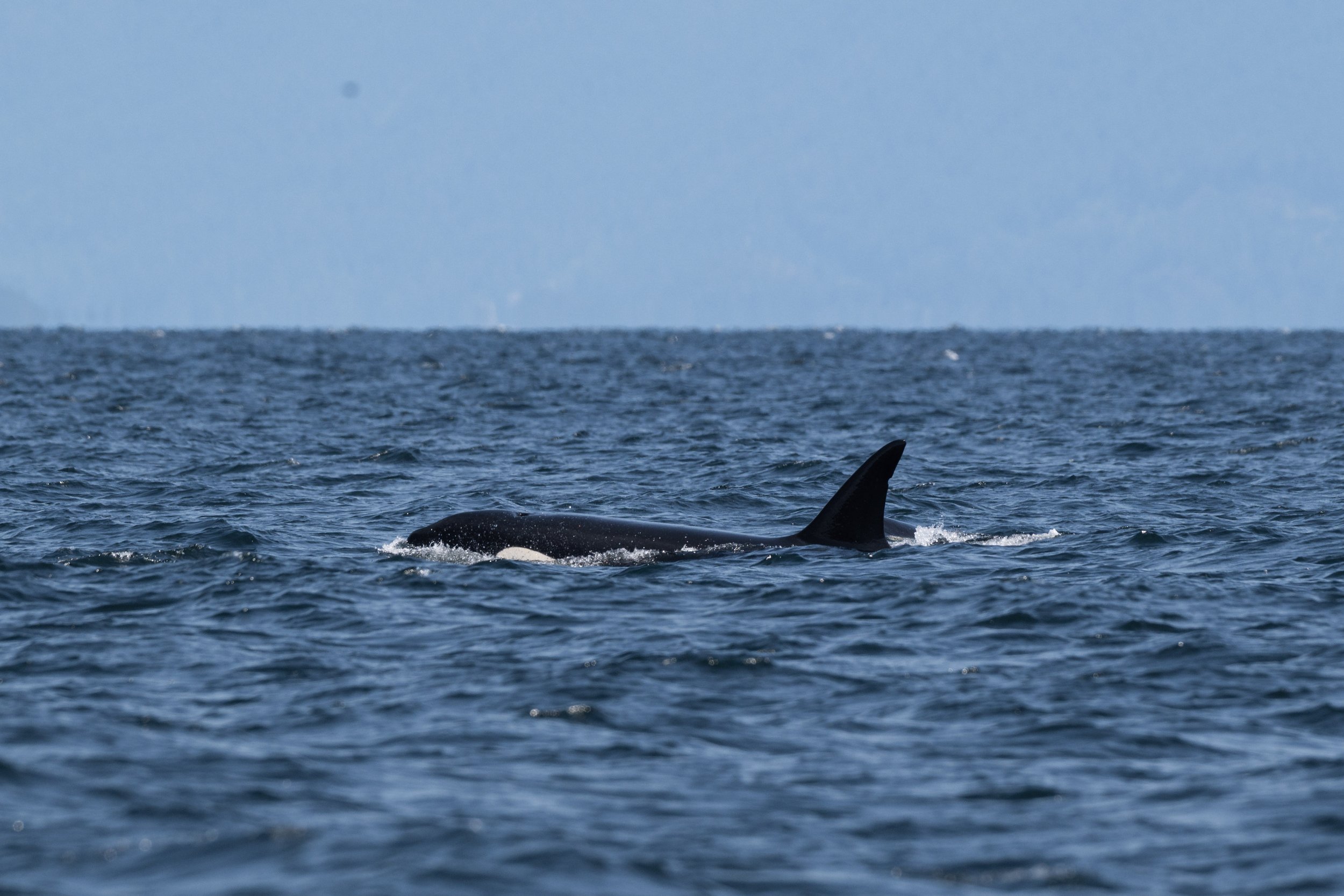
T046B2 Akela surfacing. Photo by Aly Kohlman.
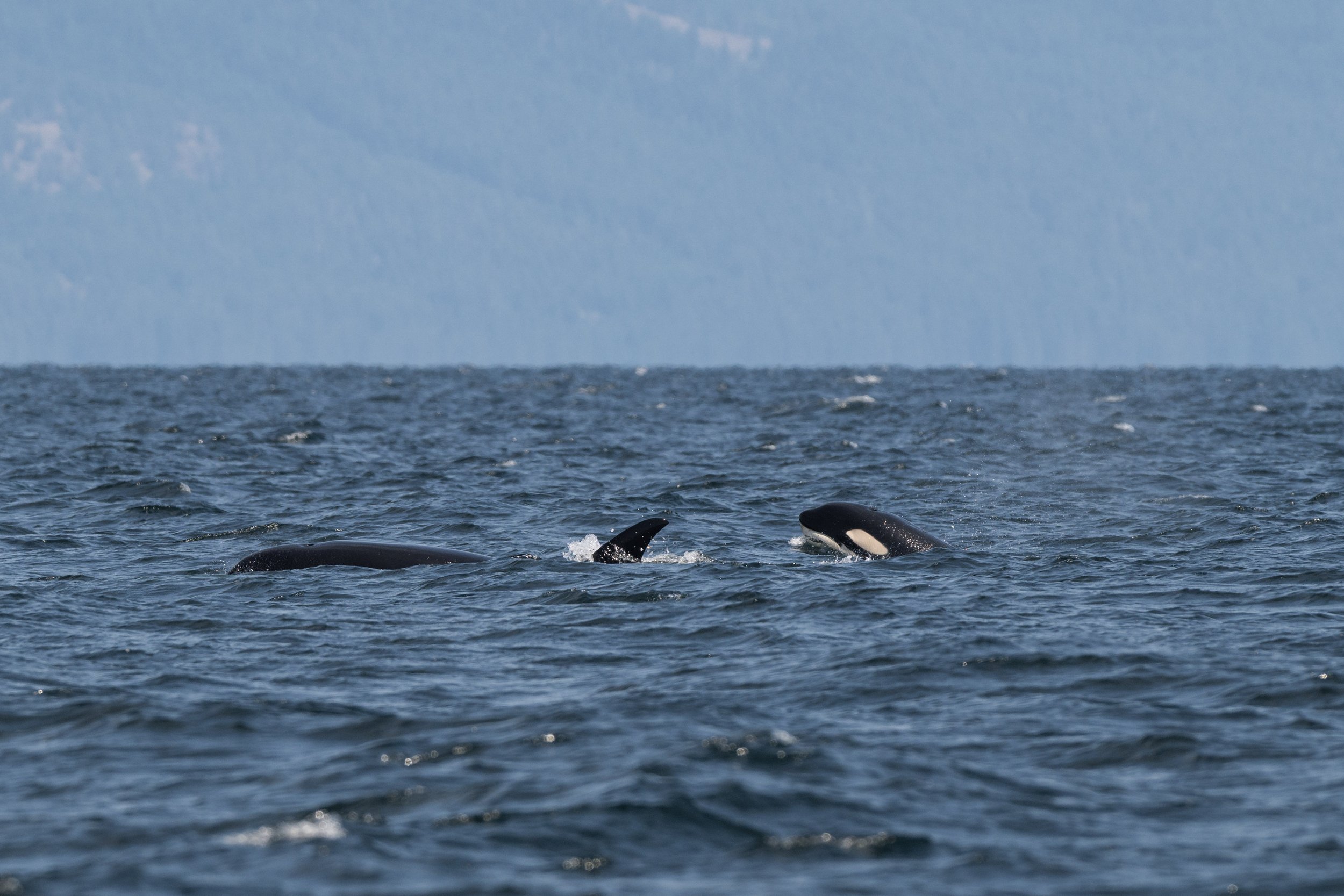
T046B Raksha surfacing with T046B2B Takaya just behind. Photo by Aly Kohlman.
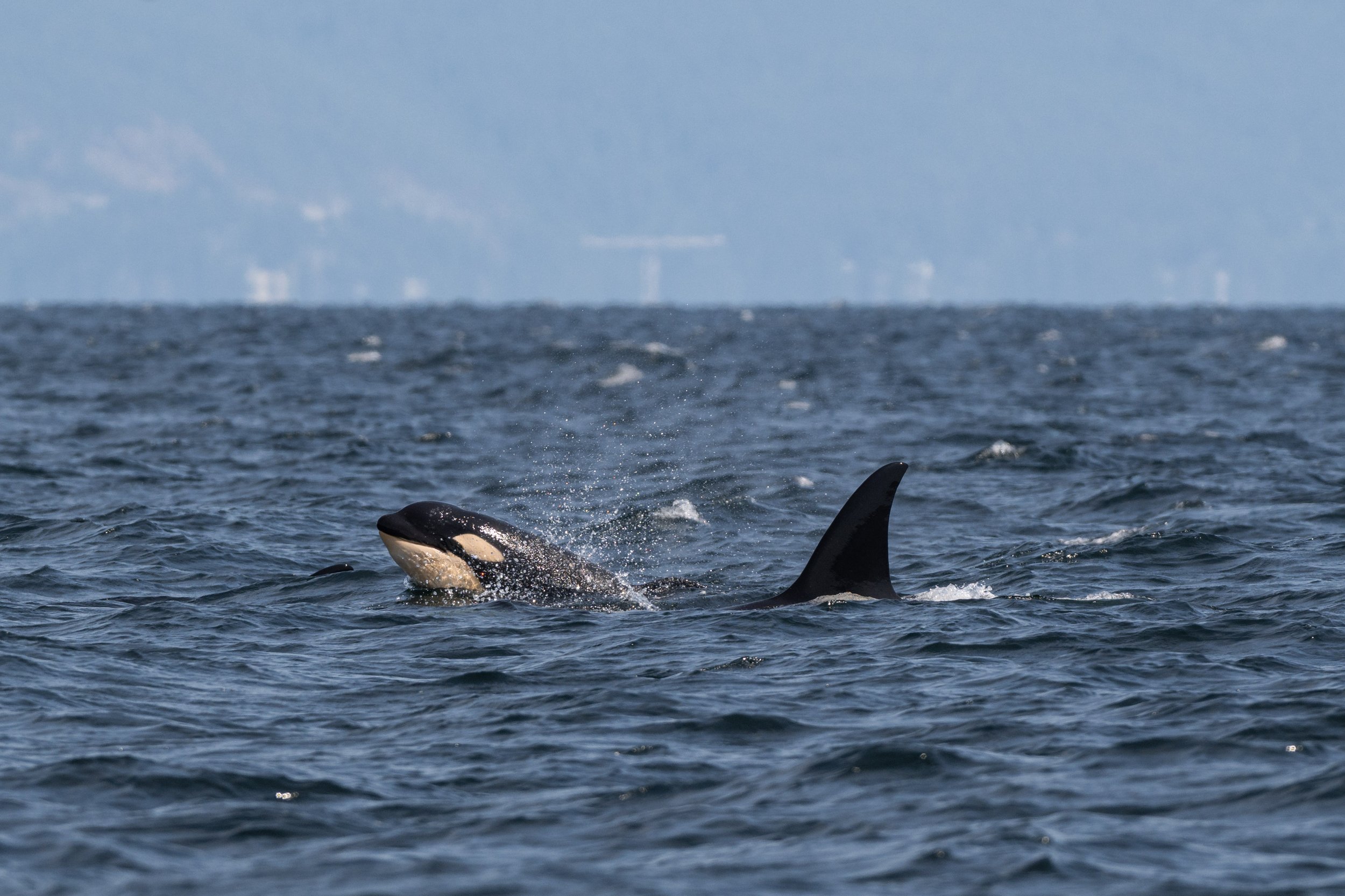
The newest member of the pod, T046B8 Pi, surfacing just ahead of mom, T046B Raksha. Photo by Aly Kohlman.
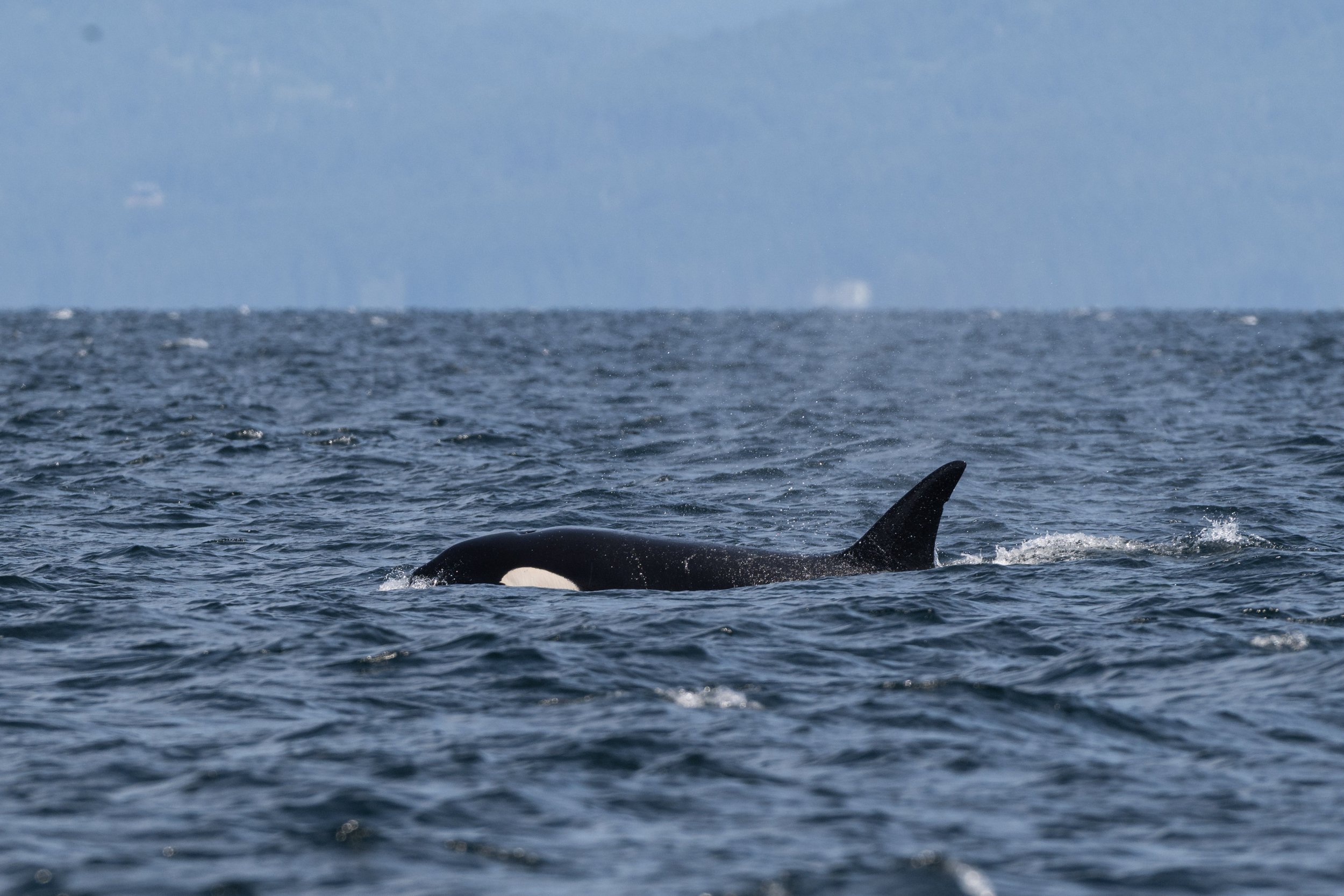
T046B2 Akela surfacing in the waves. Photo by Aly Kohlman.
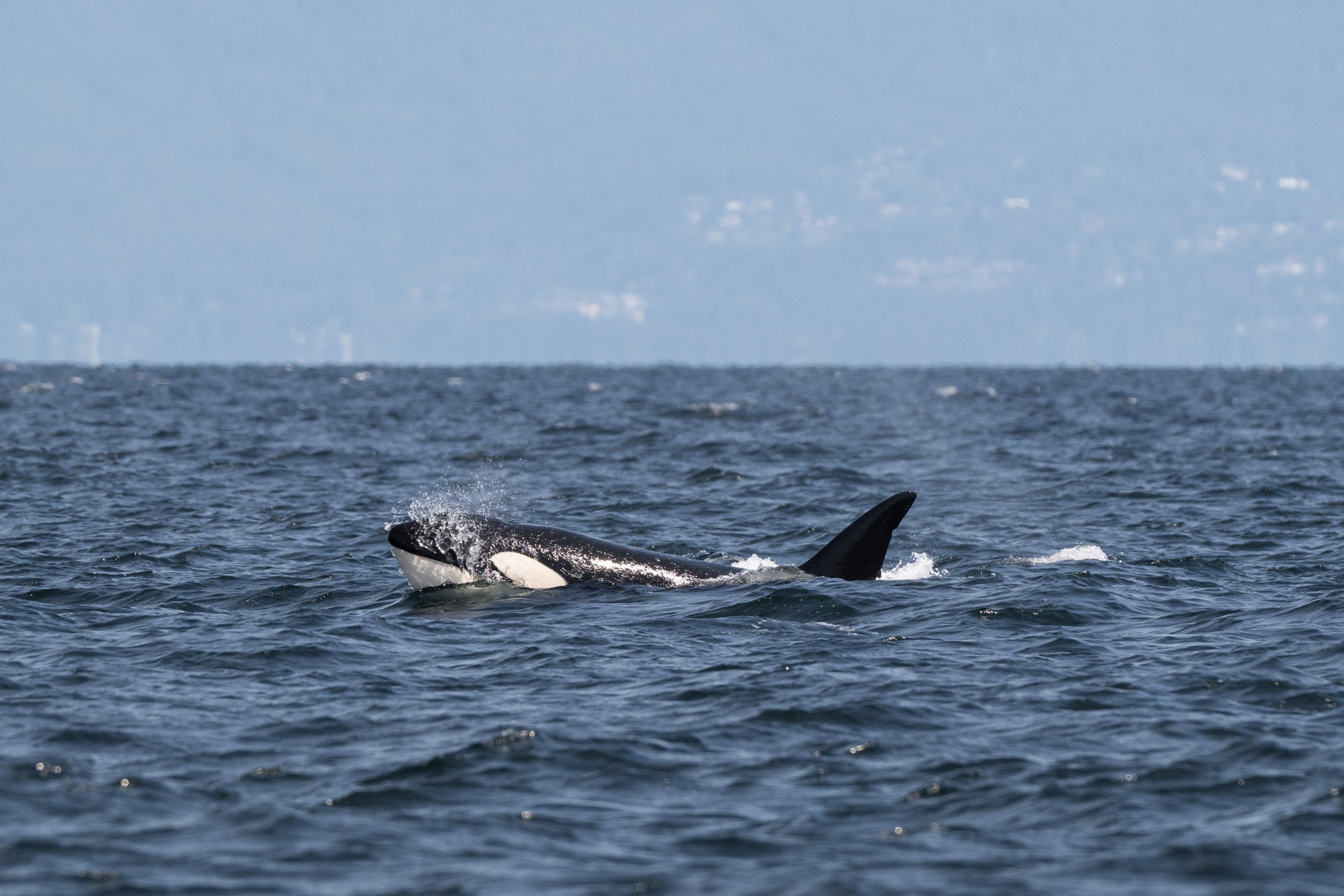
T046B2 Akela breaking through a wave. Photo by Aly Kohlman.
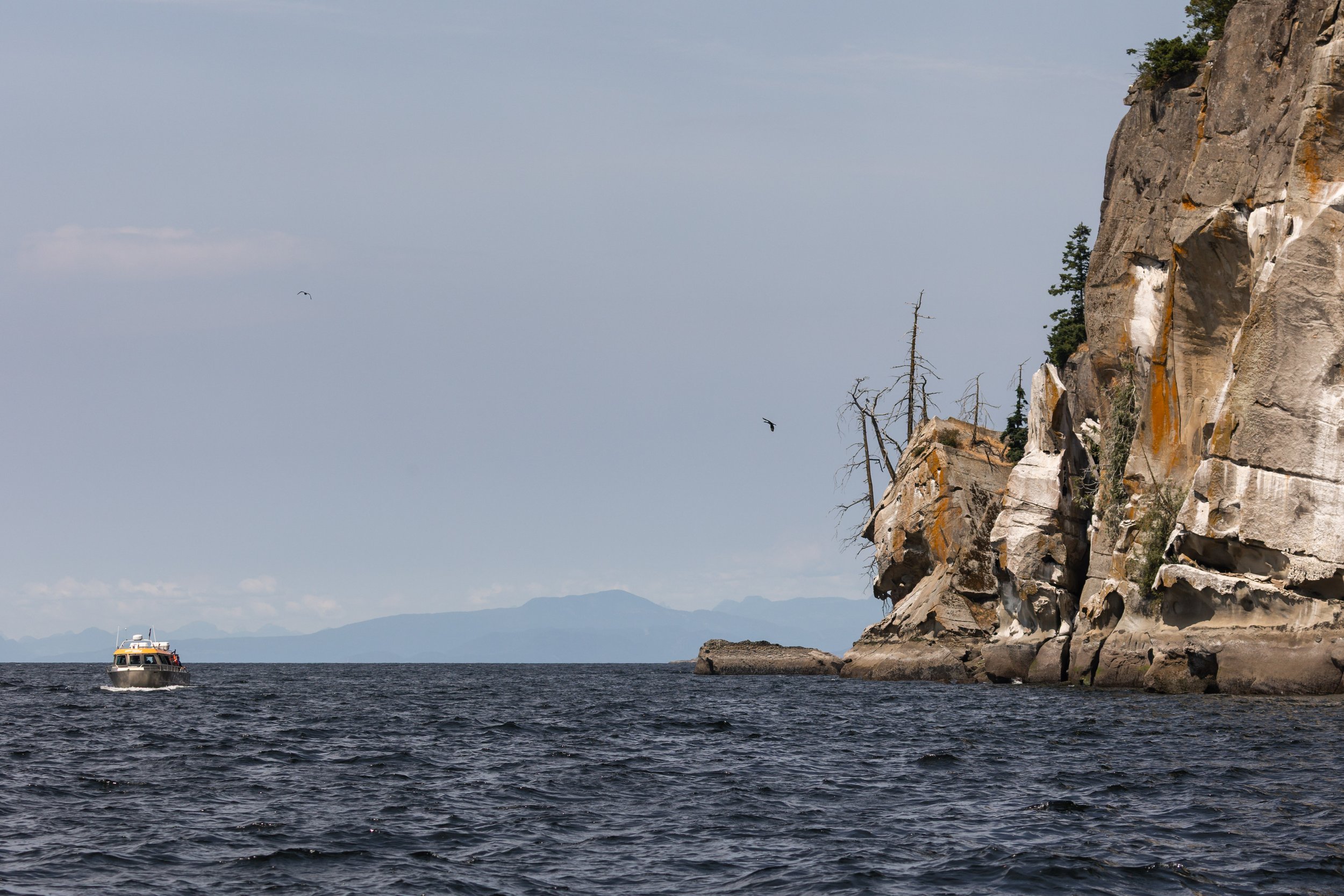
Kula watching the birds at the Gabriola Bluffs. Photo by Vanessa Vereschahen.
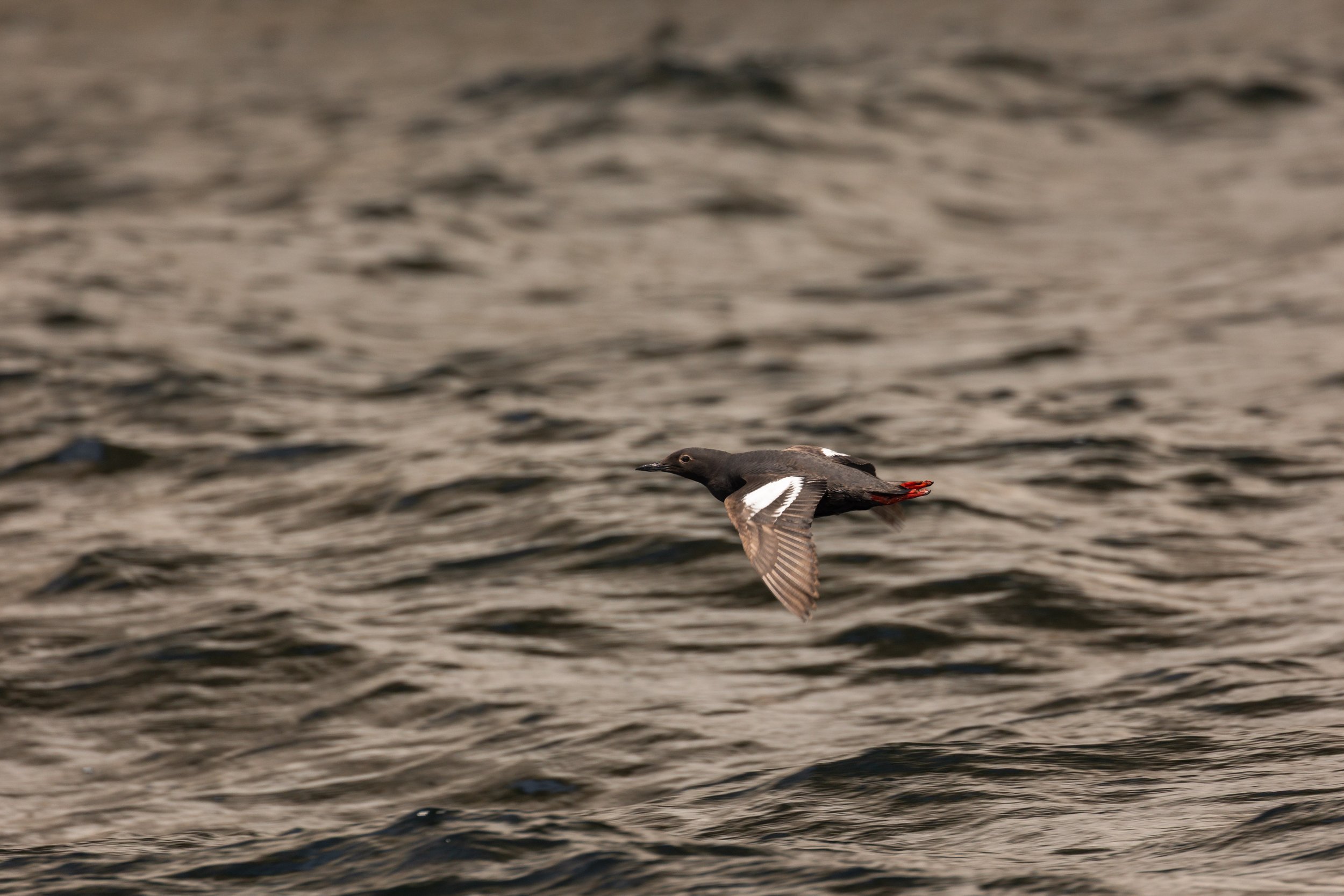
A Pigeon Guillimont flying by. Photo by Vanessa Vereschahen.
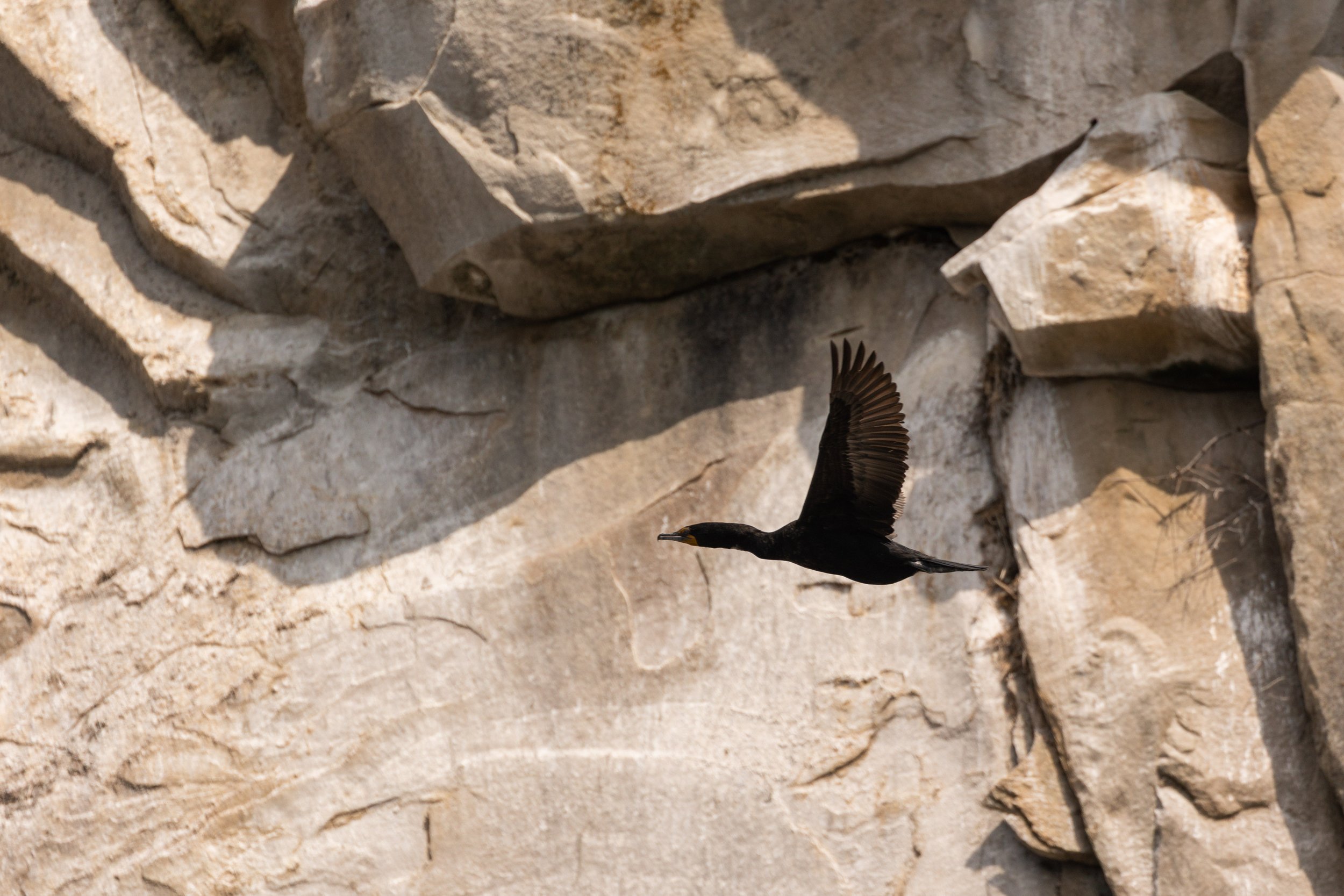
A cormorant flying overhead. Photo by Vanessa Vereschahen.
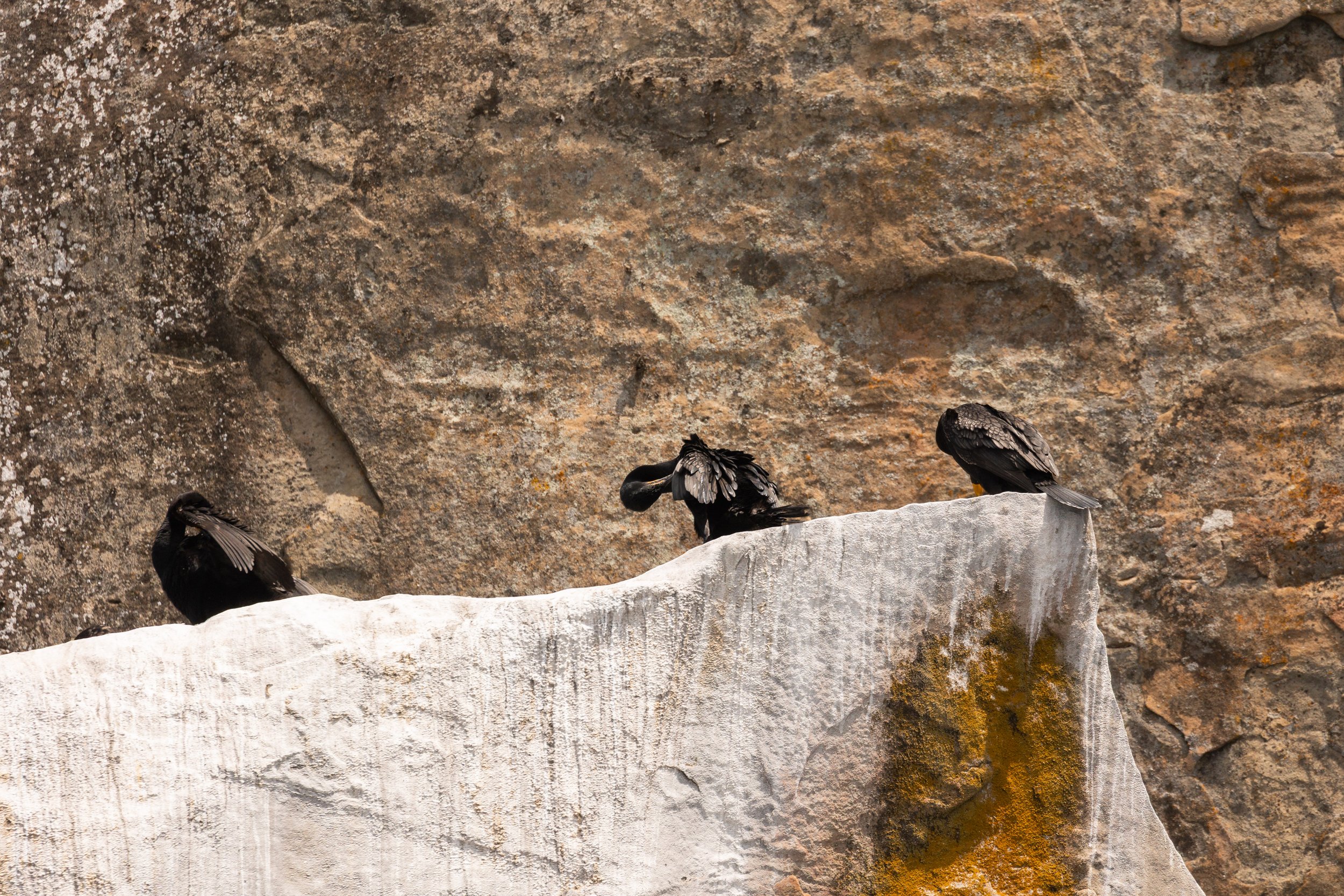
Some cormorants preening on the Gabriola Bluffs. Photo by Vanessa Vereschahen.