
November 26, 2025 - A Day Spent with Gentle Giants in the Salish Sea
A calm and beautiful day greeted us as we began our search of the Salish Sea, searching for some of the most charismatic of the species in BC: whales! While many types of whales are found in the waters off the British Columbia coast, two main species spend their time in the waters of the Salish Sea that our tours explore: Humpback Whales and Orca (aka Killer Whales).
Today, it was the former species that we were lucky enough to view: Humpback Whales! We are treasuring the time we have remaining to spend with these giants of the Salish Sea, as we are nearing the end of their season here. Humpback Whales are migratory, meaning that each year they will travel distances of nearly 6,000 km from their feeding grounds (like BC) down south to their breeding/calving grounds (like Hawaii and Mexico).
Interestingly, of the five humpback whales that we were able to identify today, we had a half-and-half split between which breeding grounds they have been cross-matched to, with one of the animals not yet cross-matched to either one. Now, this doesn’t mean they don’t migrate; it just means that no one in the breeding grounds has a photo of them yet and submitted it to the website we typically use to check: Happywhale. It has yet to be proven that any humpback chooses to forego this migration and stay all winter feeding. However, researchers are investigating this further since we are seeing humpbacks nearly year-round in these waters! This year-round presence is due to whales leaving south later and later, and arriving back earlier and earlier.
All five of these whales were spending their time in the Strait of Georgia, just to the east of Galiano Island. This seems to be an excellent spot for the humpbacks to feed this time of year, as it is typically teeming with whales. As we sat watching each group of whales today, we saw even more blows off in the distance! It’s always an incredible sight to see so many happy humpbacks, especially given that not two decades ago the Strait would have been basically devoid of whales, thanks to commercial whaling that took place in the area up until the mid-1960s.
The first group we saw taking advantage of the high productivity near Galiano was Octo (BCX1920) and Velvet (BCY1186). Neither of these whales has a confirmed gender, but both have been cross-matched to a breeding ground: Octo is preparing to travel to Mexico, and Velvet is travelling to Hawaii. These two seemed to be travelling while we watched them, likely heading from one food hotspot to the next before stopping to feed. While humpbacks are here to feed, they will spend nearly their entire day doing so, sometimes up to 20 hours of their day!
The next group of whales that we found was a loosely associating group of 3: Watson/Cerulean (BCY1461), Graphite (BCX2077), and Bullet (BCX1658). While on the water, Bullet had been mistaken for another whale in the area, Crater, thanks to a big dent in her dorsal fin, but a review in the office confirmed the correct ID! This can be one of the tricky things about whales: a lot of them look very familiar, so looking at the small screen of the camera on the water sometimes doesn’t provide the details needed. That’s why we always get extra eyes on the photos to confirm everything. This is especially important, as we share all our sightings with researchers at the end of the season, providing valuable data that helps protect these incredible animals!
Interestingly, all three of these whales have known genders: Watson/Cerulean and Bullet are known females, and Graphite is a known male. While this doesn’t really matter while they are still here feeding, it is still interesting to know! Graphite is also the whale that hasn’t been cross-matched to a breeding ground yet. Bullet and Watson/Cerulean have been matched, though: Bullet will migrate to Hawaii, while Watson/Cerulean will be heading to Mexico.
Humpbacks have very high site fidelity, meaning they usually return to the same spot each year for both feeding and breeding, which is why we can assume that if they have been matched to one area before, they will continue to return to the same spot in subsequent years. There are exceptions to this, of course, but it holds true for most whales.
Spending time with these gentle giants made for a fantastic day, as did seeing all the other wildlife and exploring the beautiful Salish Sea along the way. The onboard Naturalist, Aly Kohlman, captured some great photos throughout the tour, which are available below!
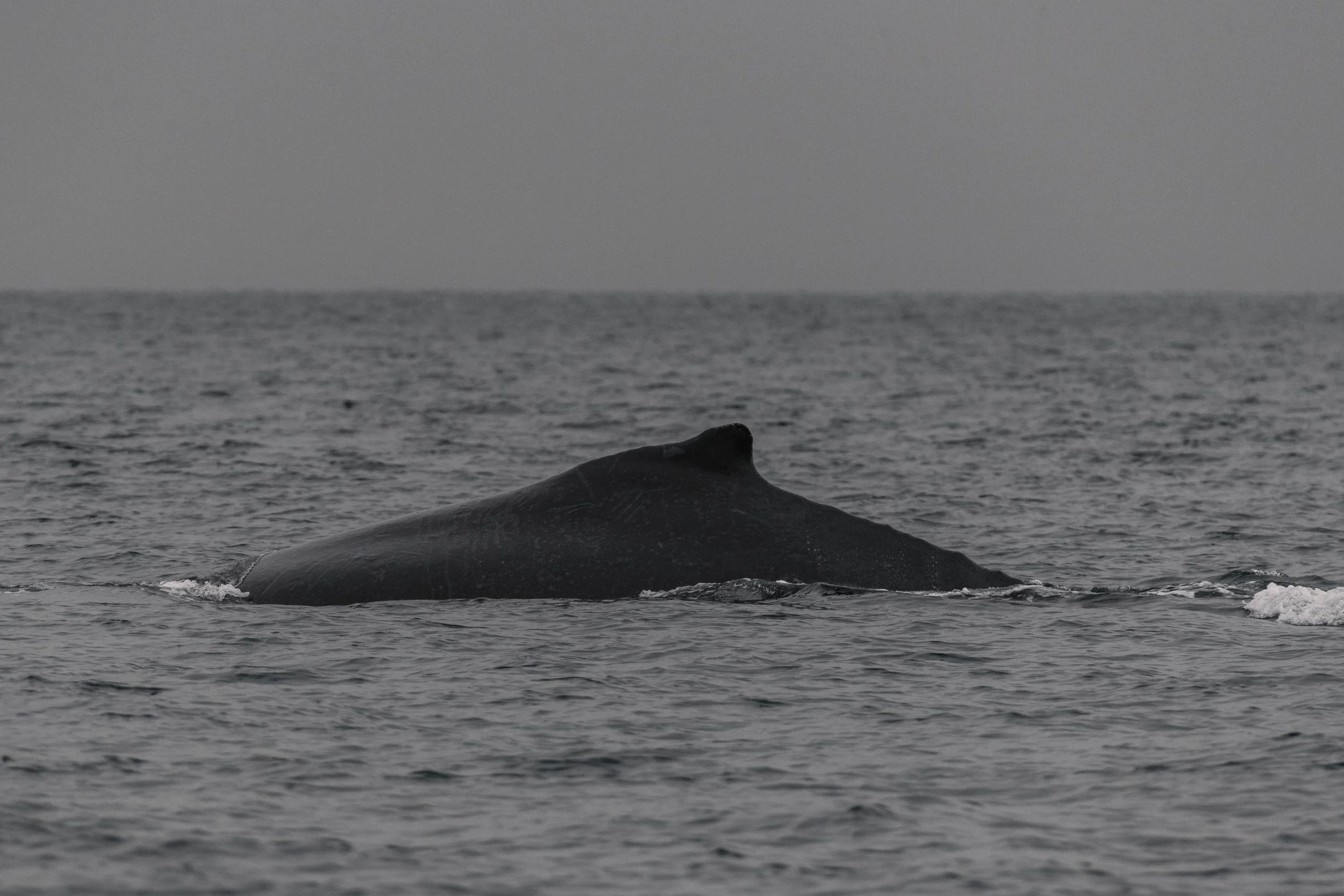
Velvet’s dorsal fin as they surface.
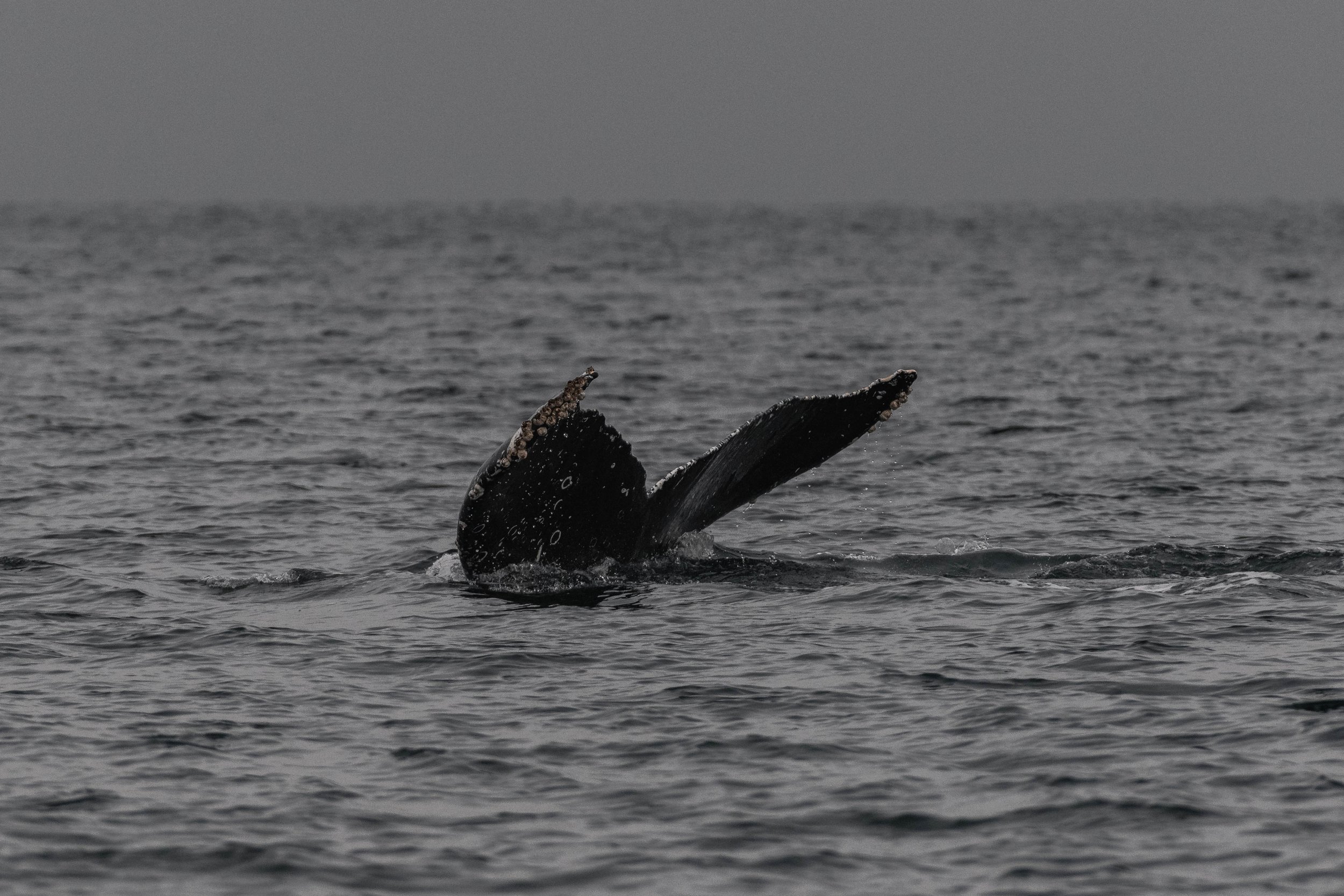
The underside of Octo’s tail as they dive.
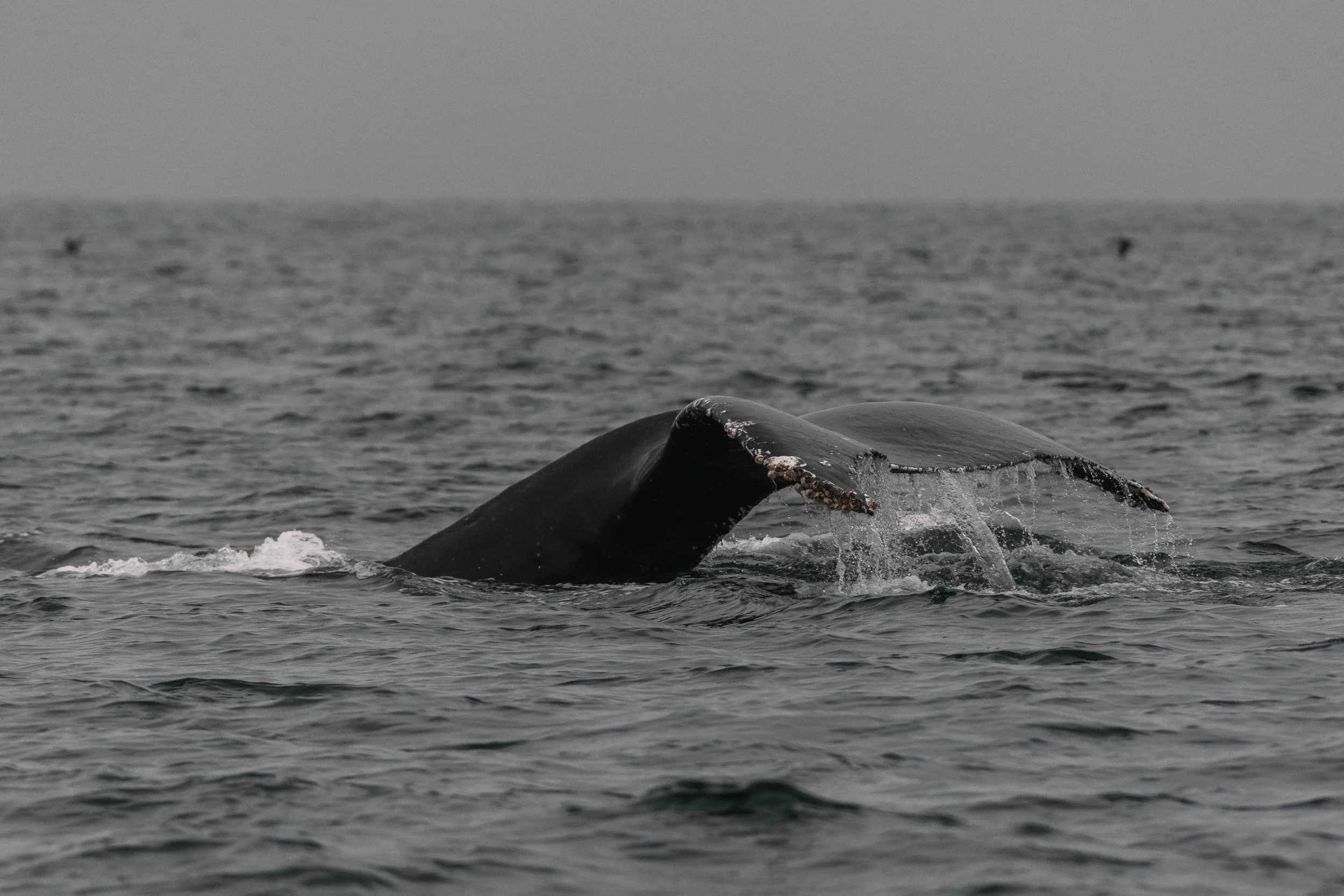
Velvet creating a fluke waterfall as they dive.
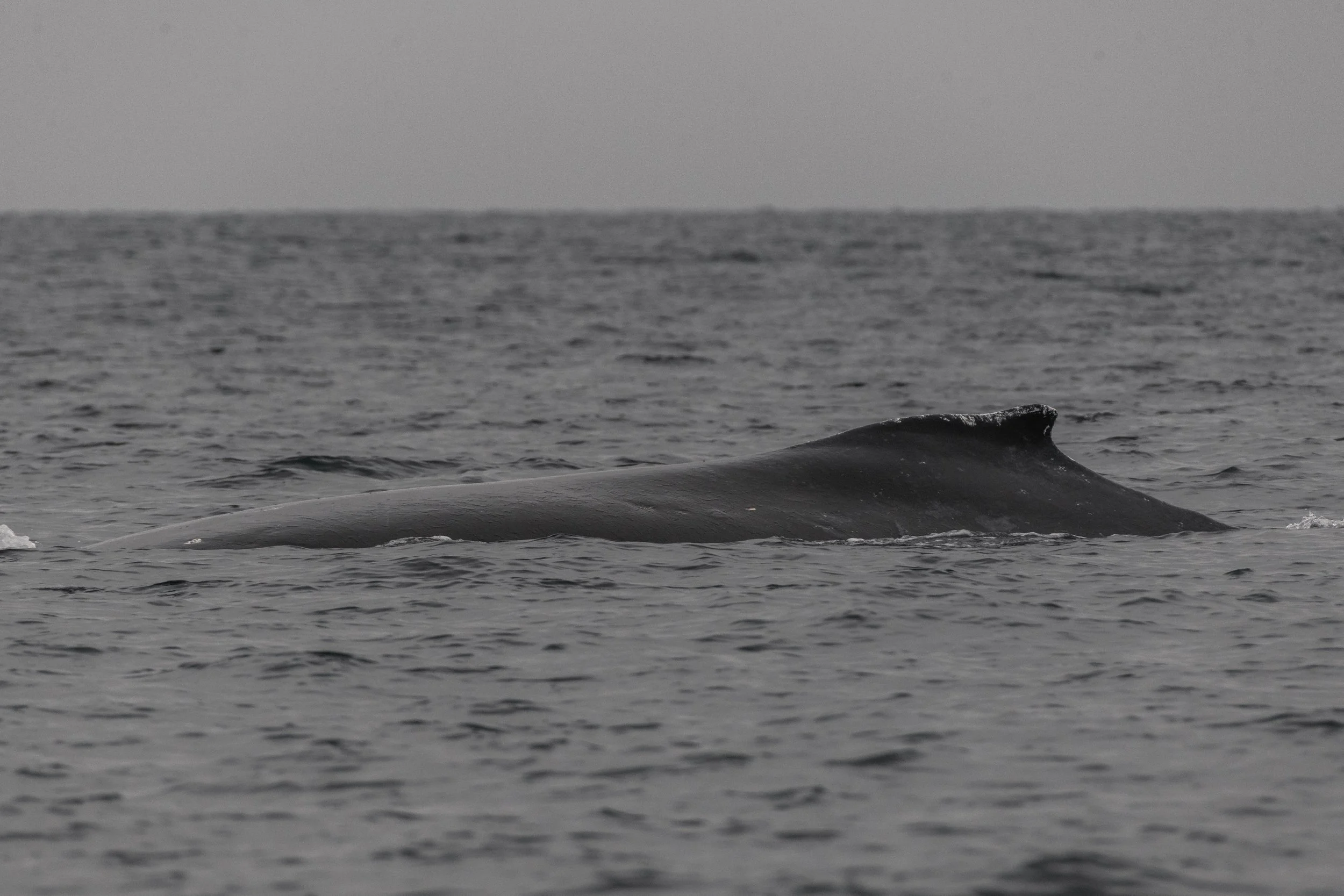
Octo’s dorsal fin.
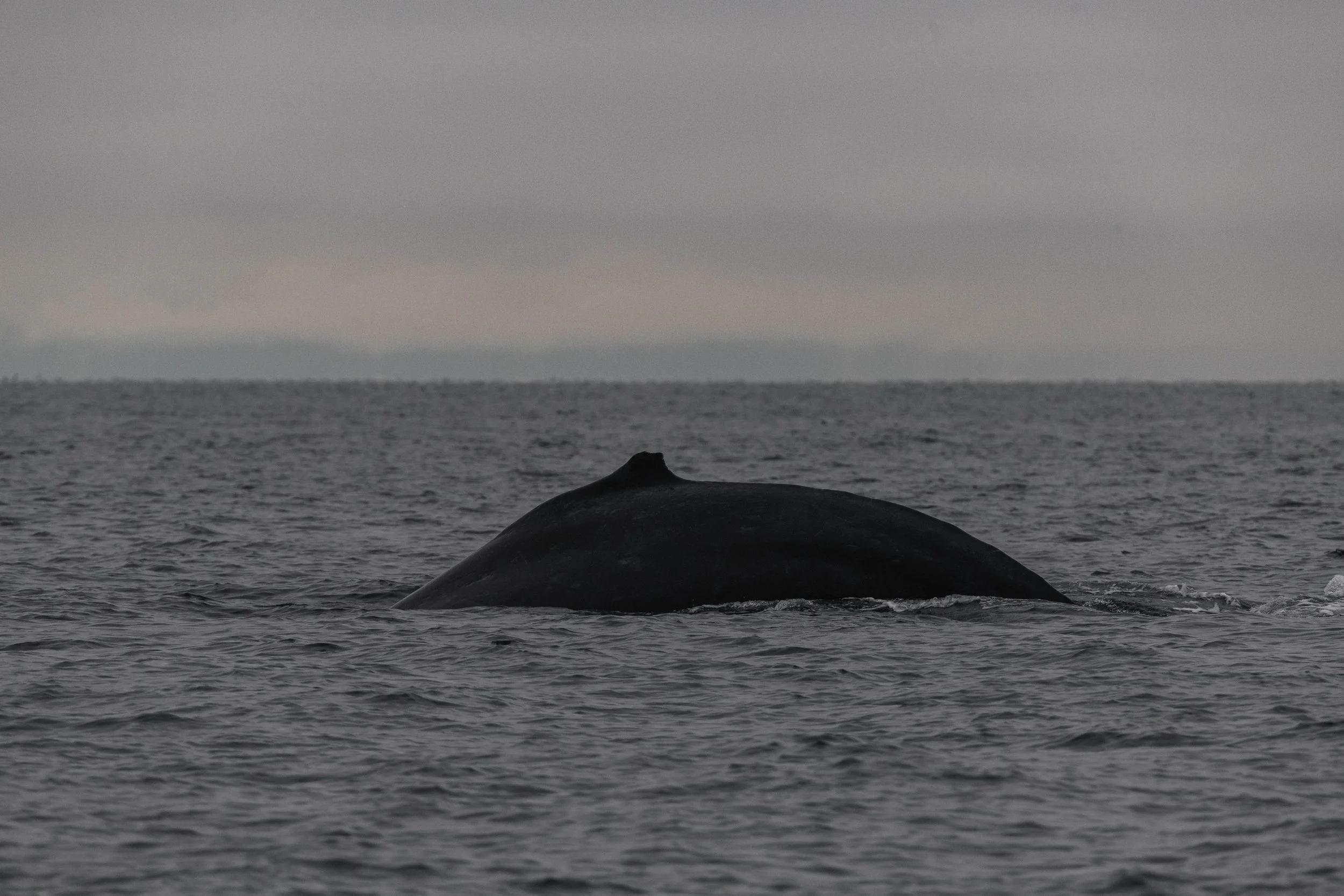
Bullet’s dorsal fin as she arches for a dive.
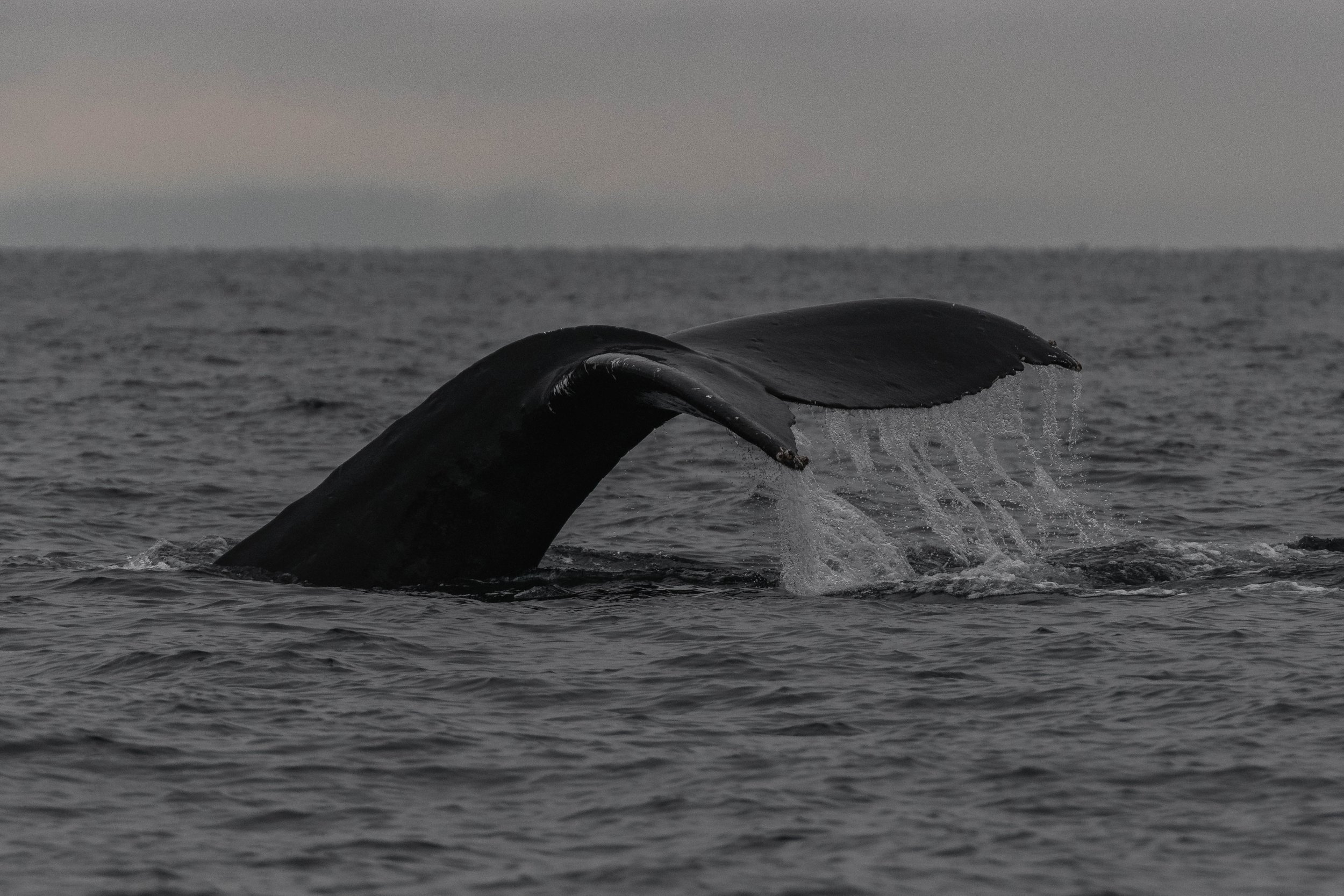
A beautiful fluke waterfall as Bullet dives.
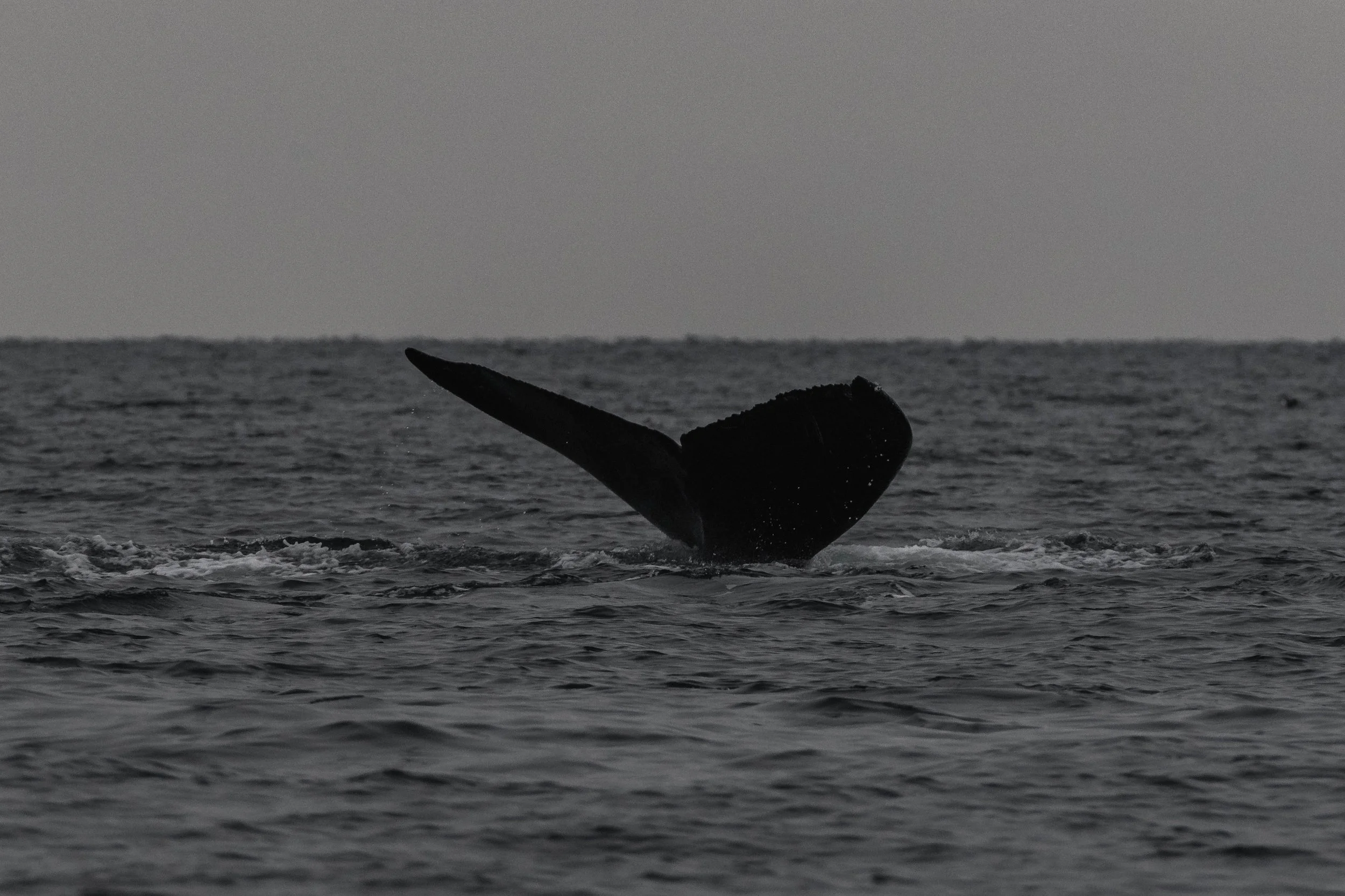
The underside of Graphite’s tail as he dives.
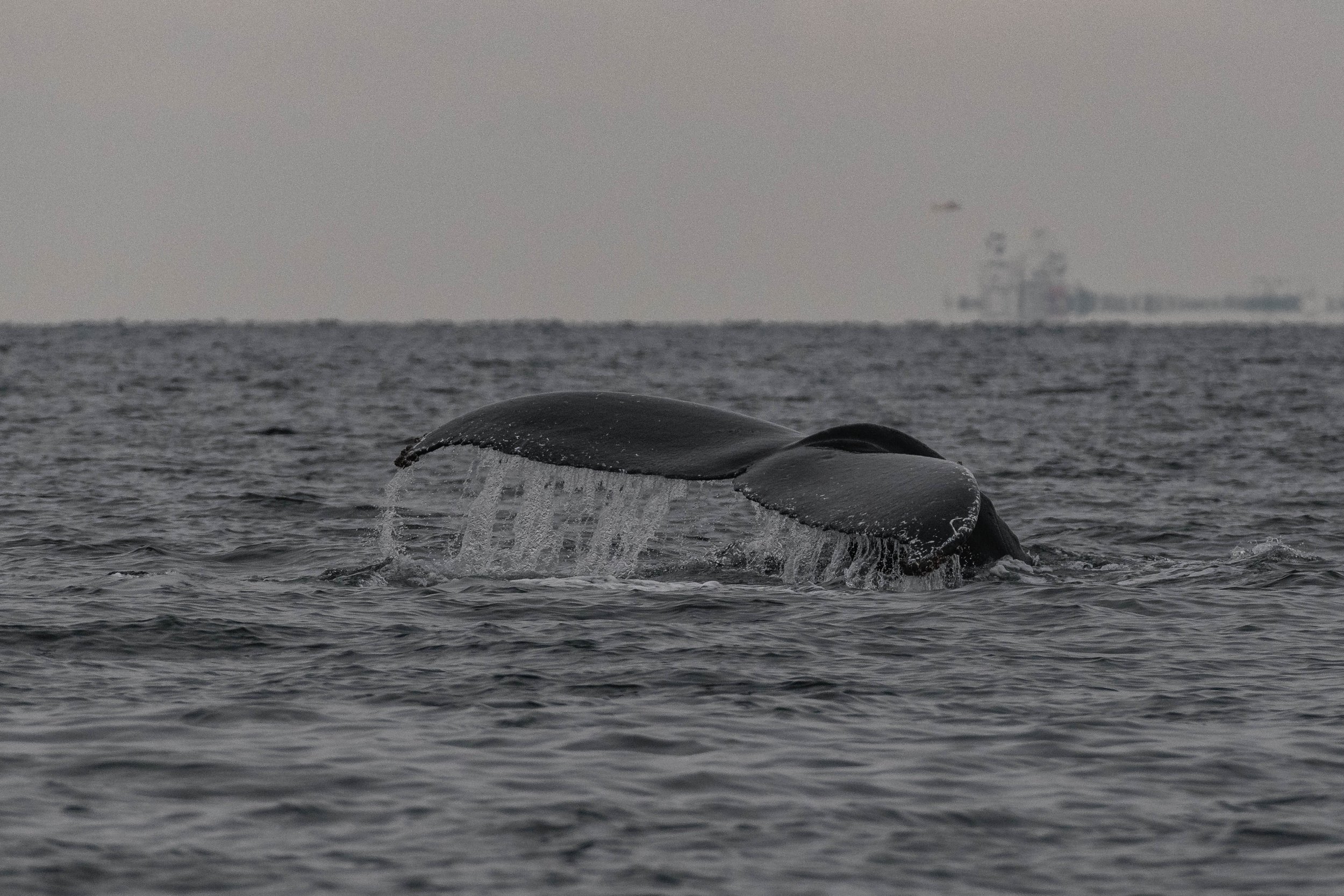
Water cascading off of Watson/Cerulean’s tail as she dives.

A Common Murre floating by.
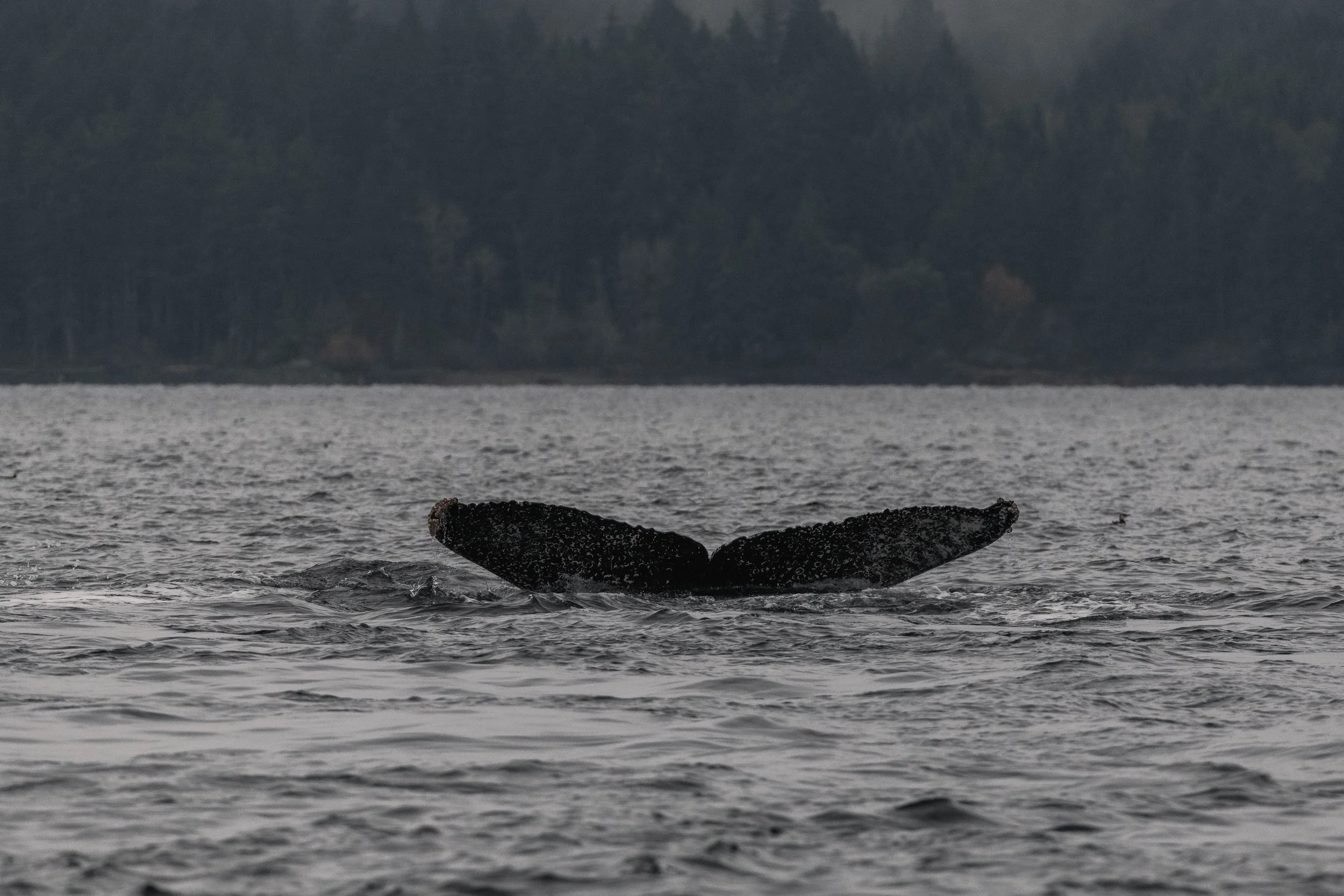
The underside of Watson/Cerulean’s tail.
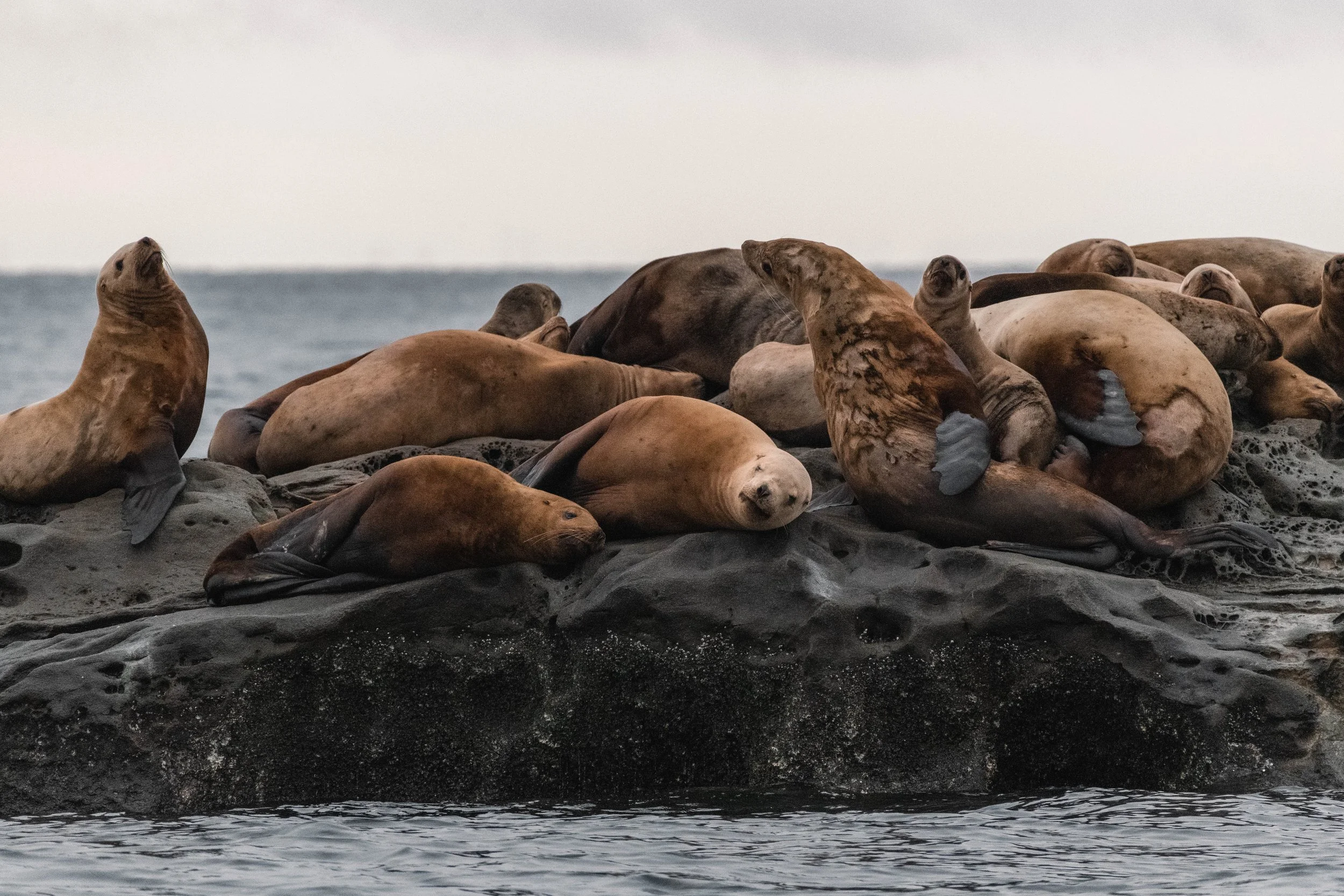
Steller Sea Lions on Stinky Rock.
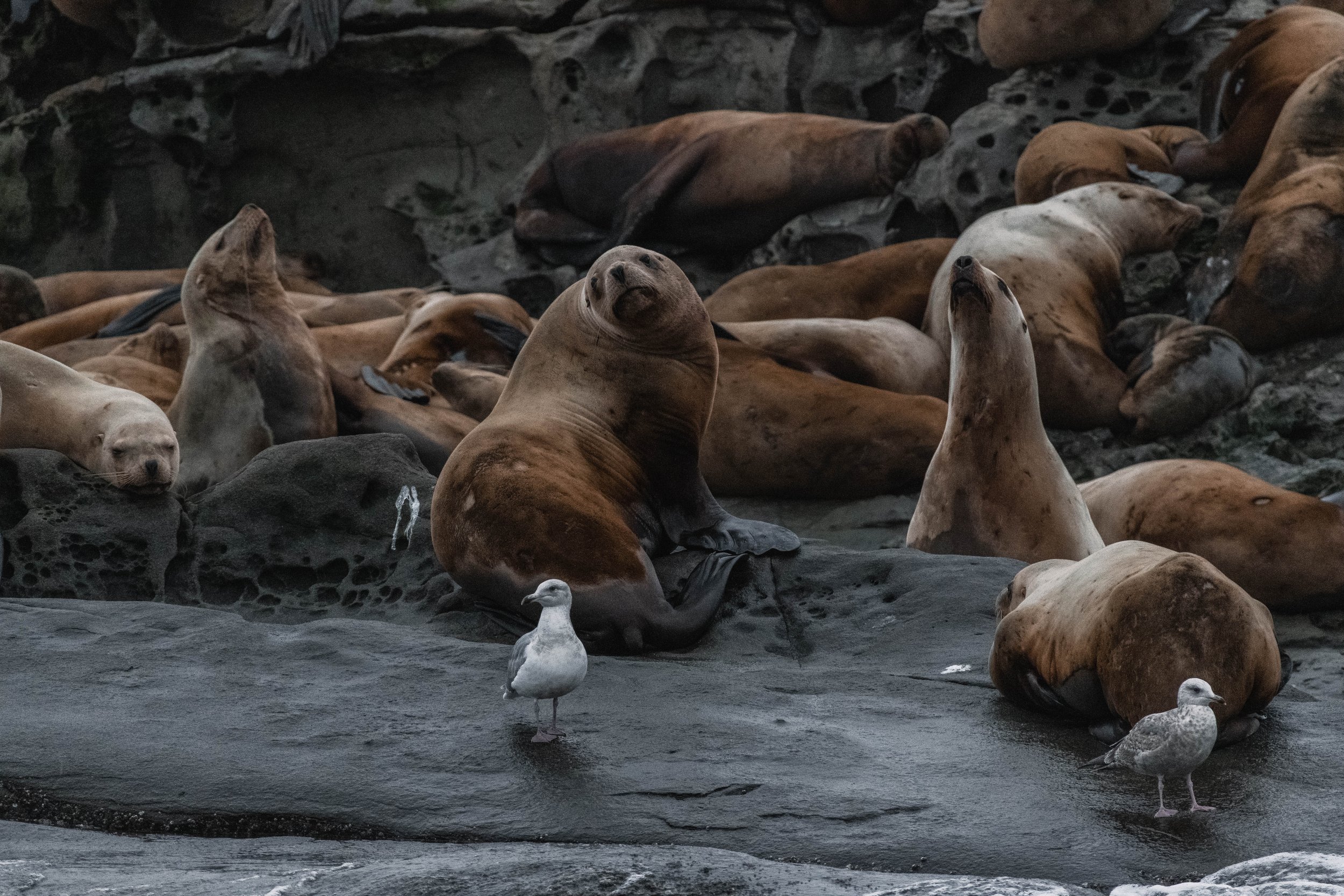
Some gulls sharing the rocks with the Steller Sea Lions.
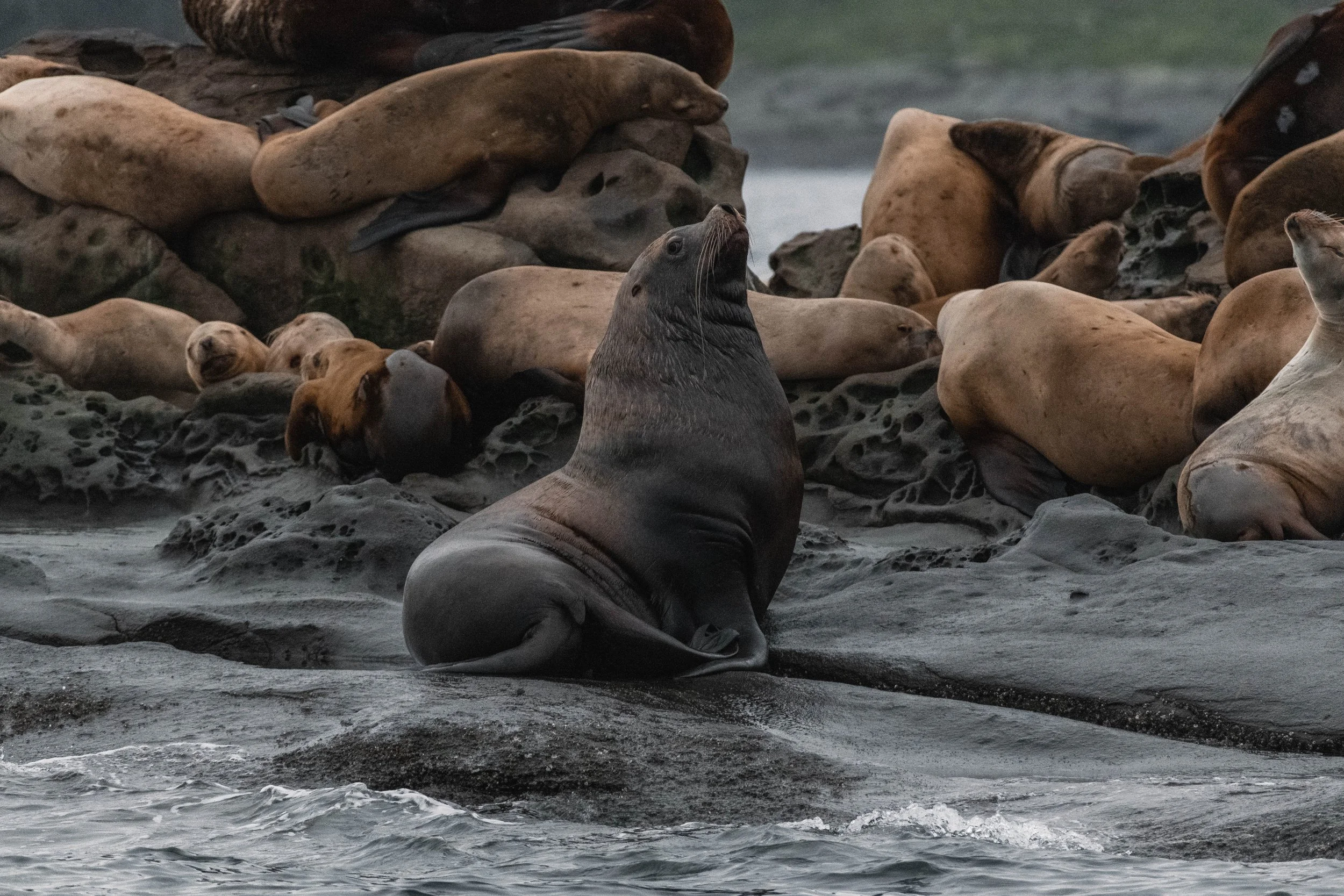
A large male Steller Sea Lion, fresh out of the water.
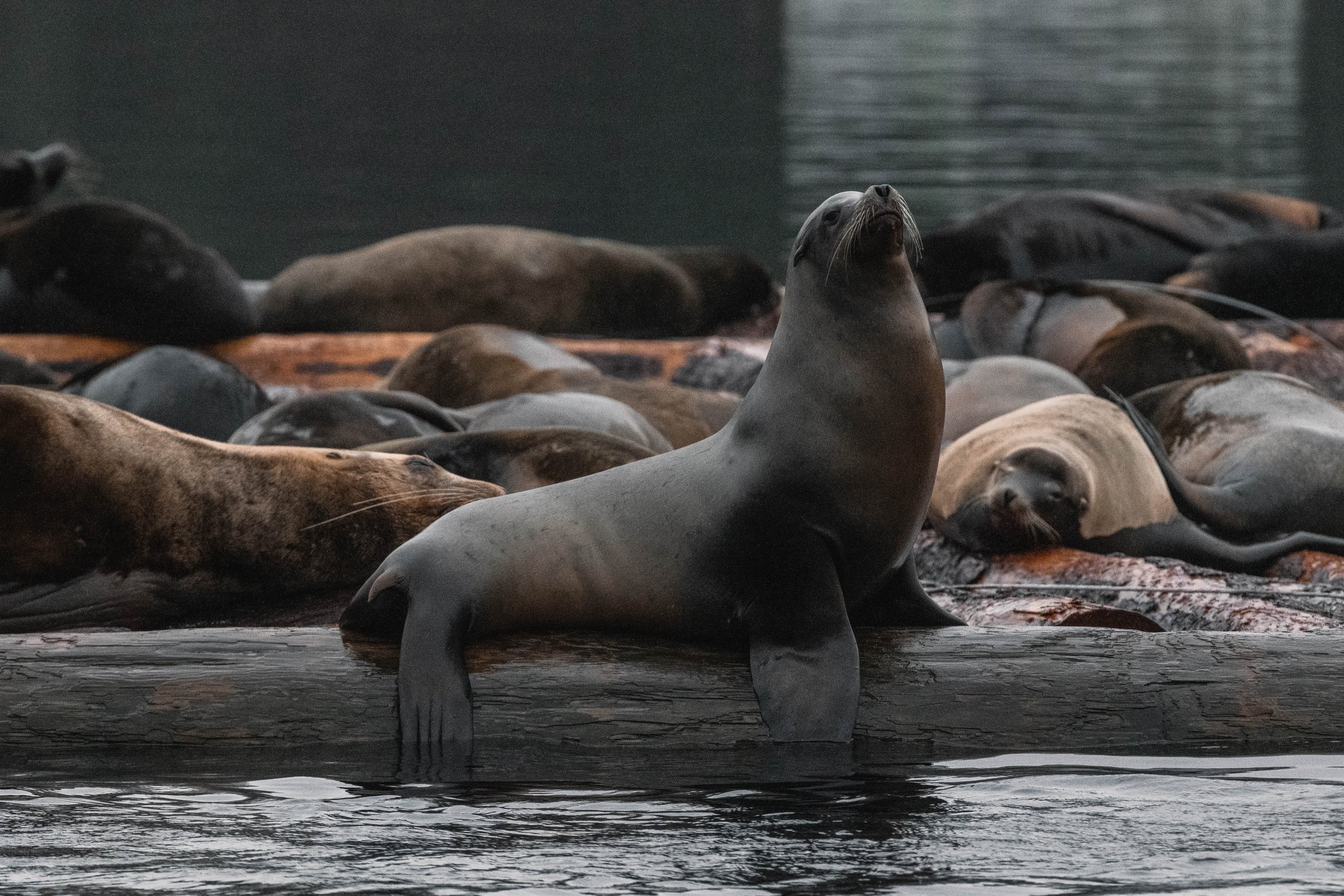
A Steller Sea Lion posing on the log booms at the Harmac Pulp Mill.
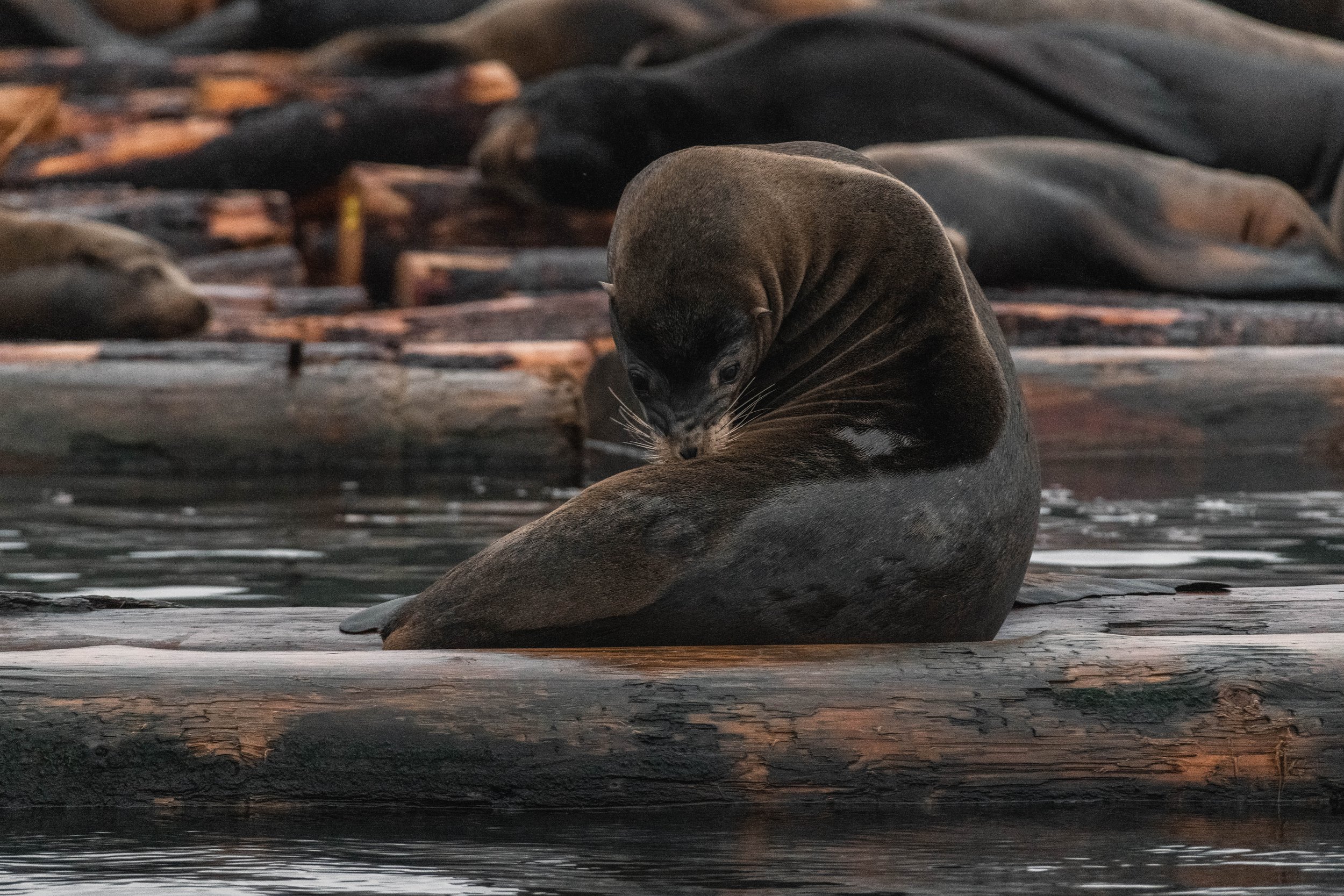
A California Sea Lion scratching an itch on the log booms.