
December 6, 2025 - Hungry Humpbacks on a cool December day
The day was brisk as we boarded and began the adventures for the day. The journey took us southbound, through the Southern Gulf Islands, and out into the Strait of Georgia.
After a bit of searching, we found what we had been looking for: two big blows were cast high into the air, lingering in the cool breeze. It was a pair of humpbacks travelling together! We began watching them and taking photos to identify them. For humpbacks, we generally rely on the underside of their fluke pattern to tell individuals apart. This pattern consists of pigmentation, scratches, scrapes, chunks, and notches that make it unique to each whale. These two were being cooperative, and soon after arriving, we identified them as Hammer (BCY1222) and Octo (BCX1920)! They had a third friend hanging back a bit further away, but due to their deeper dives, we were unable to get any photos of them.
Hammer is the 2019 calf of Claw (BCX0749), a female that spends most of her summer off of Telegraph Cove. Typically humpbacks show strong site fidelity, meaning most of the time calves will return to the areas their mothers taught them about. With Claw having no confirmed sightings in the southern part of the Salish Sea, we aren’t exactly sure why Hammer has decided to stop in our area instead. This isn’t the first time Hammer has been here, though, as they spent multiple weeks off of Yellowpoint in April 2021!
Octo, on the other hand, is a regular to the southern Salish Sea. They are at least 6 years old, with their first sightings being from 2019. Octo has been crossmatched to the breeding grounds in Baja California Sur, Mexico, and we suspect they will be heading out of our area soon to make the incredible journey down south to the breeding grounds.
The day’s adventures weren’t over, though, as shortly after finding our first group of humpbacks, we found another group closer to shore! Fluking and diving, this pair was backlit beautifully as they travelled along. At the start of the encounter, there were two humpbacks travelling together side by side, however, one soon began diving deeper and disappeared. The second whale was identified as Sherwina (BCY0961), another regular to our area. Unfortunately, because of the deep dives we did shortly after we arrived, we weren’t able to get an ID shot for her friend, so their identity remained a mystery!
After spending some time with Sherwina, we continued on. After passing Porlier Pass, we found another set of humpbacks associating! This time, we were with a trio, with one of them significantly smaller than the other two. This was a mother and calf travelling with another adult whale. Unlike the previous humpbacks, these three were not very cooperative for fluke photos; however, after cross-referencing their dorsal fins, we confirmed these three as Vivaldi (BCX1704), her 2025 calf (BCX1704 calf 2025), and Crater/Mensa (BCX1565). Interestingly, these three were also seen travelling together on October 16 - does Crater enjoy babysitting? Is he trying to woo Vivaldi for the next breeding season, and showing her he’d make a good partner? We will never know, but it’s always interesting to brainstorm what might be going through these gentle giants’ minds!
We said our goodbyes to Vivaldi and crew, and once again began adventuring. Suddenly, a tall black dorsal fin was spotted slicing through the water ahead of us. As we approached, we started the most important task we undertake whenever we encounter orcas: identifying their ecotype and individual identity. Unlike our humpbacks, we rarely use flukes to identify orca. Instead, we rely on their dorsal fins and their saddle patches to figure out who is who. Identifying which ecotype individuals belong to is incredibly important, as we have two main ecotypes in our area: the Southern Residents and the Transients. This distinction is vital, as the Southern Residents are critically endangered, with a declining population, whereas the Transients have a growing population. After taking a few photos, we quickly spotted an unmistakable open saddlepatch, which is an identifying factor of the Southern Residents. This individual was J27 Blackberry, a 34-year-old male Southern Resident. With the ecotype confirmed, we departed and began searching elsewhere. As a company, we have never watched the Southern Residents, as we strive to focus only on healthy, growing whale populations. Canadian Whale Watching Regulations now also prohibit watching this endangered ecotype, furthering efforts to help conserve them and their delicate ecosystem. In particular, vessel traffic around Southern Residents has been noted to disrupt their hunts, as they rely on echolocation, so the quieter we can keep the waters around them, the better!
Seeing a single Southern Resident like this is very unusual, though, as they usually travel in larger pods. However, Blackberry is a bit of an oddball, and occasionally will be spotted further away by himself, like today. We hope Blackberry returns to his family soon, so they can all continue meandering their way up and down the coast!
After leaving Blackberry, the team made their way over to Stinky Rocks, a little haulout located in the Strait of Georgia alongside Valdez Island. Here, many lumbering sea lions were grumbling, growling, and belching away. Stinky Rocks is primarily inhabited by Steller Sea Lions, the largest sea lions in the world. With the mature males reaching staggering weights of 1,100-1,200 kg (2,400-2,500 lbs), these aren’t animals you’d want to mess with! Today they appeared fairly docile, with many of them resting as we observed. Nearby, a large Bald Eagle swooped down, skirting the surface of the water as it went by. Once near extinct due to DDT useage, Bald Eagles are now flourishing, with thousands returning to our area yearly to breed and raise their chicks.
Venturing back towards home port, we wrapped up another excellent day discovering and exploring the beautiful area and animals that call the Salish Sea home
Please enjoy these photos by Marine Naturalist Des Poier.
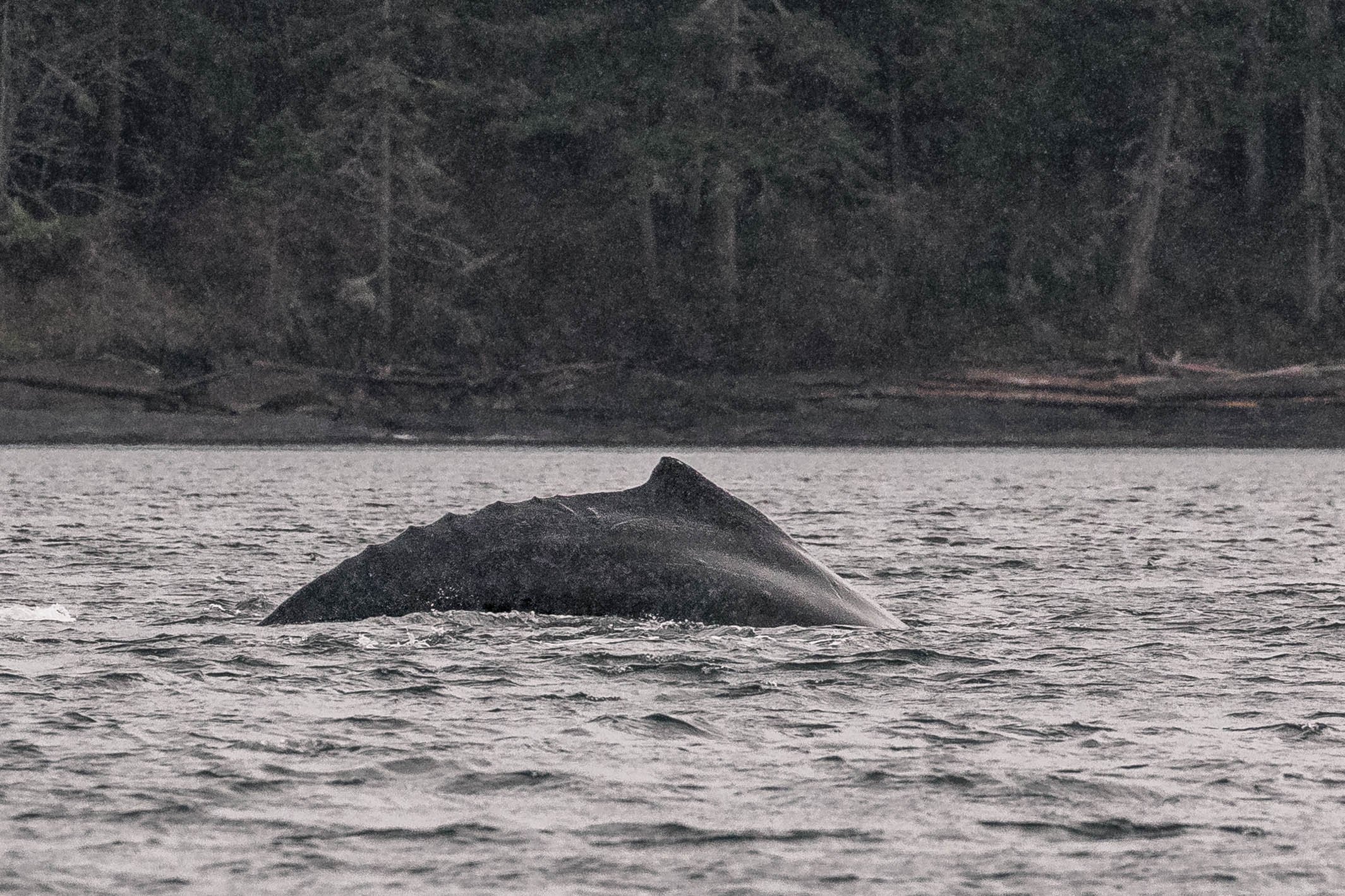
Hammer’s dorsal fin.

Hammer’s fluke.
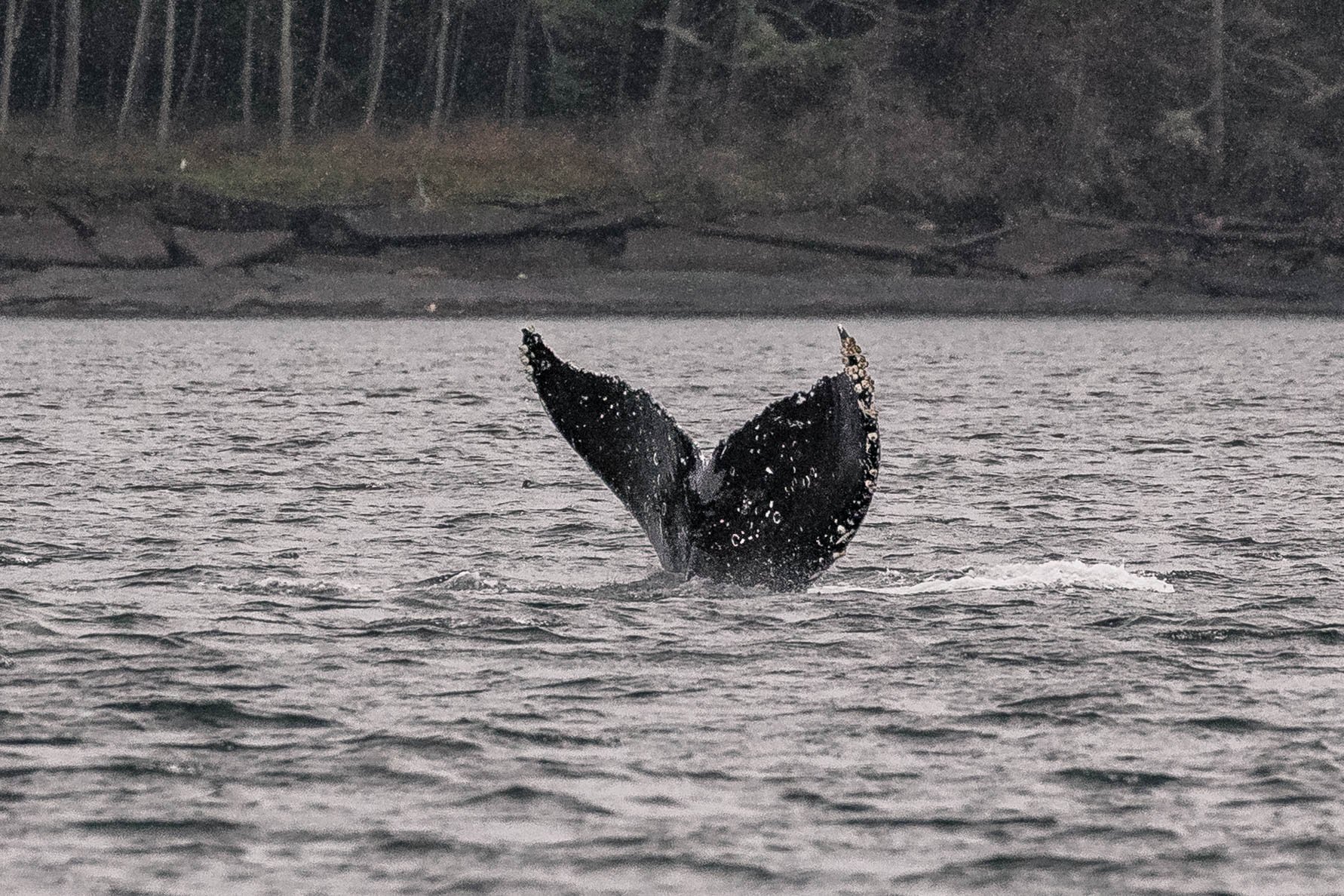
Octo’s fluke.
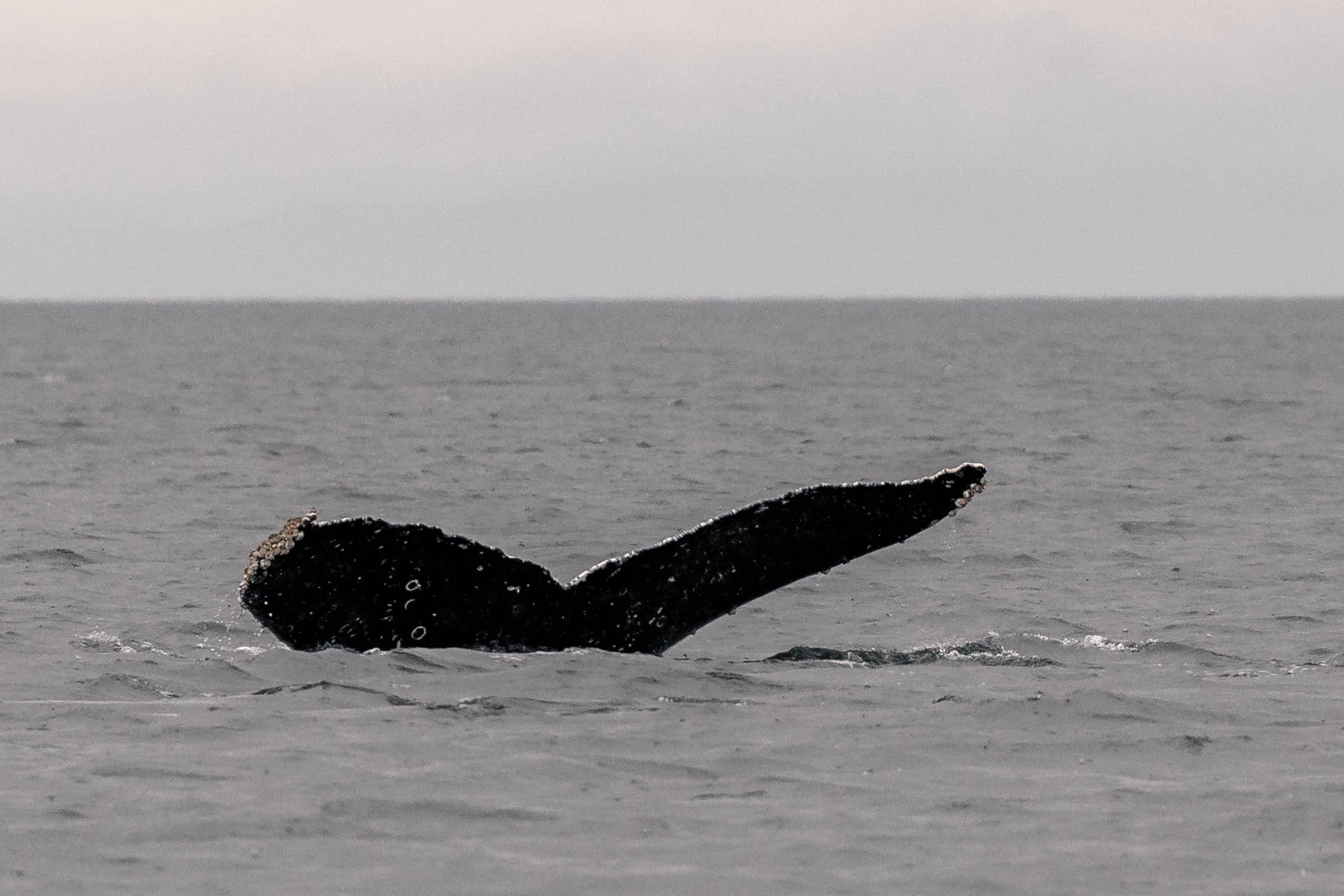
Octo diving.
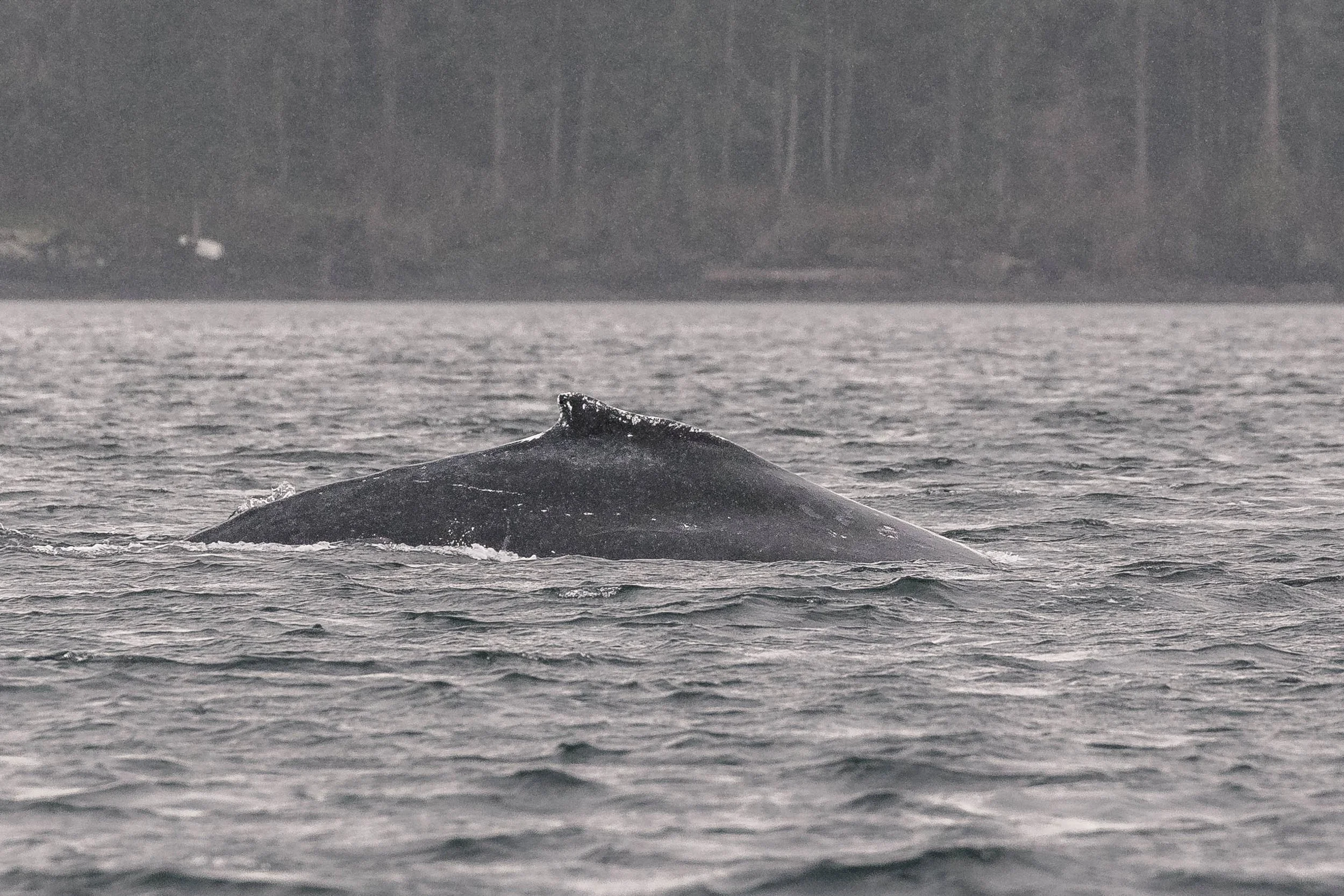
Octo’s dorsal fin.
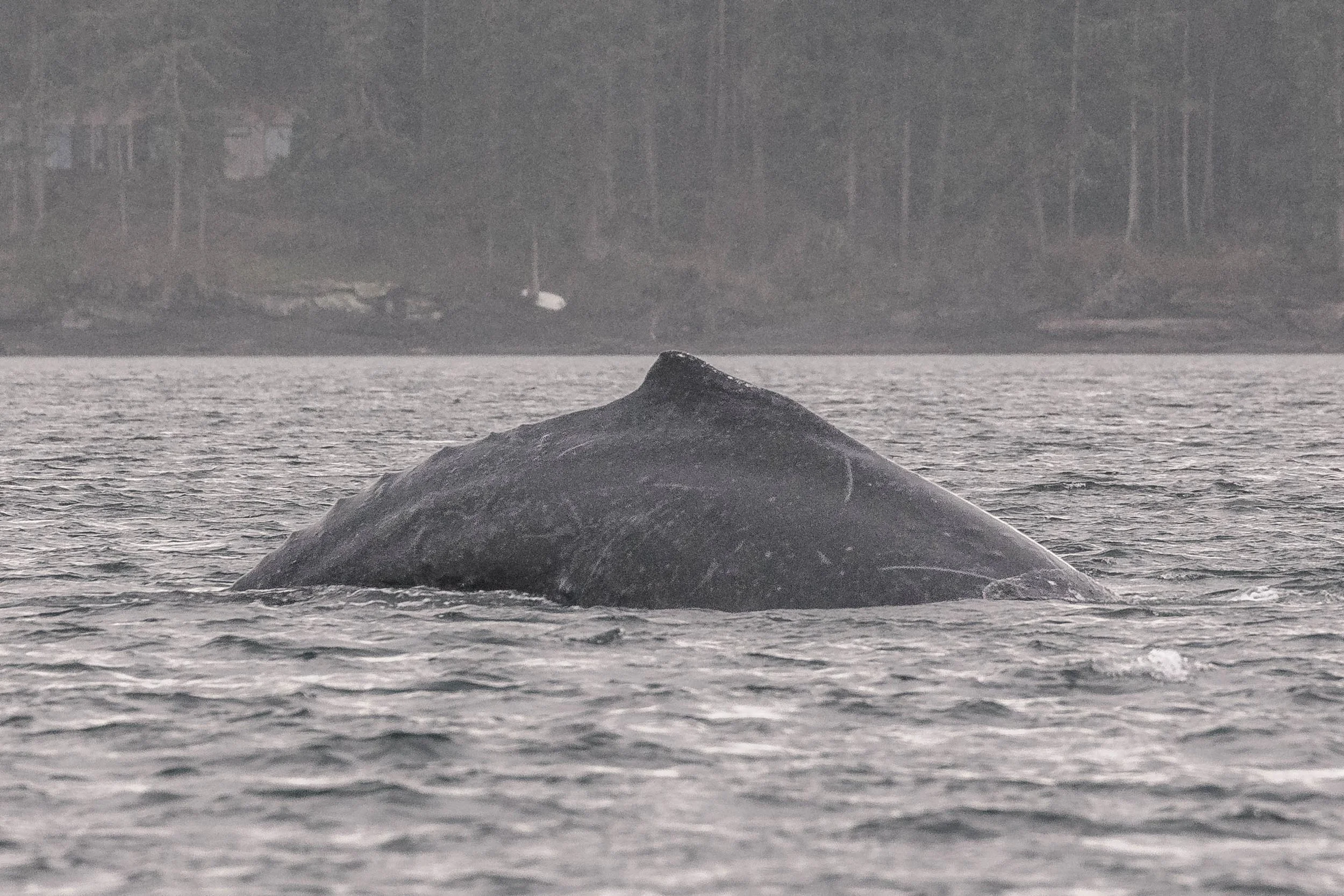
Hammer’s dorsal fin.
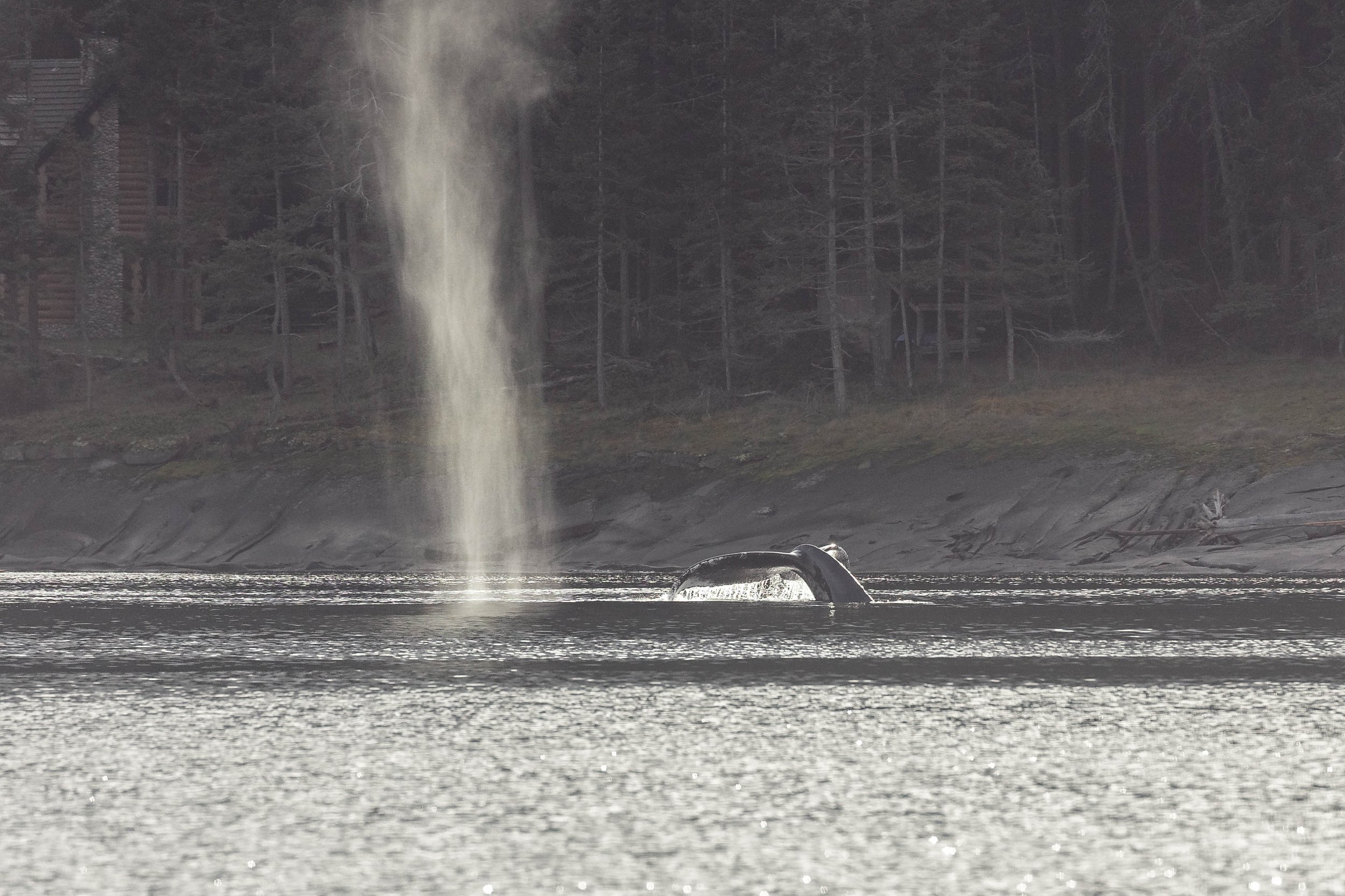
Sherwina diving with an unknown friend beside her.
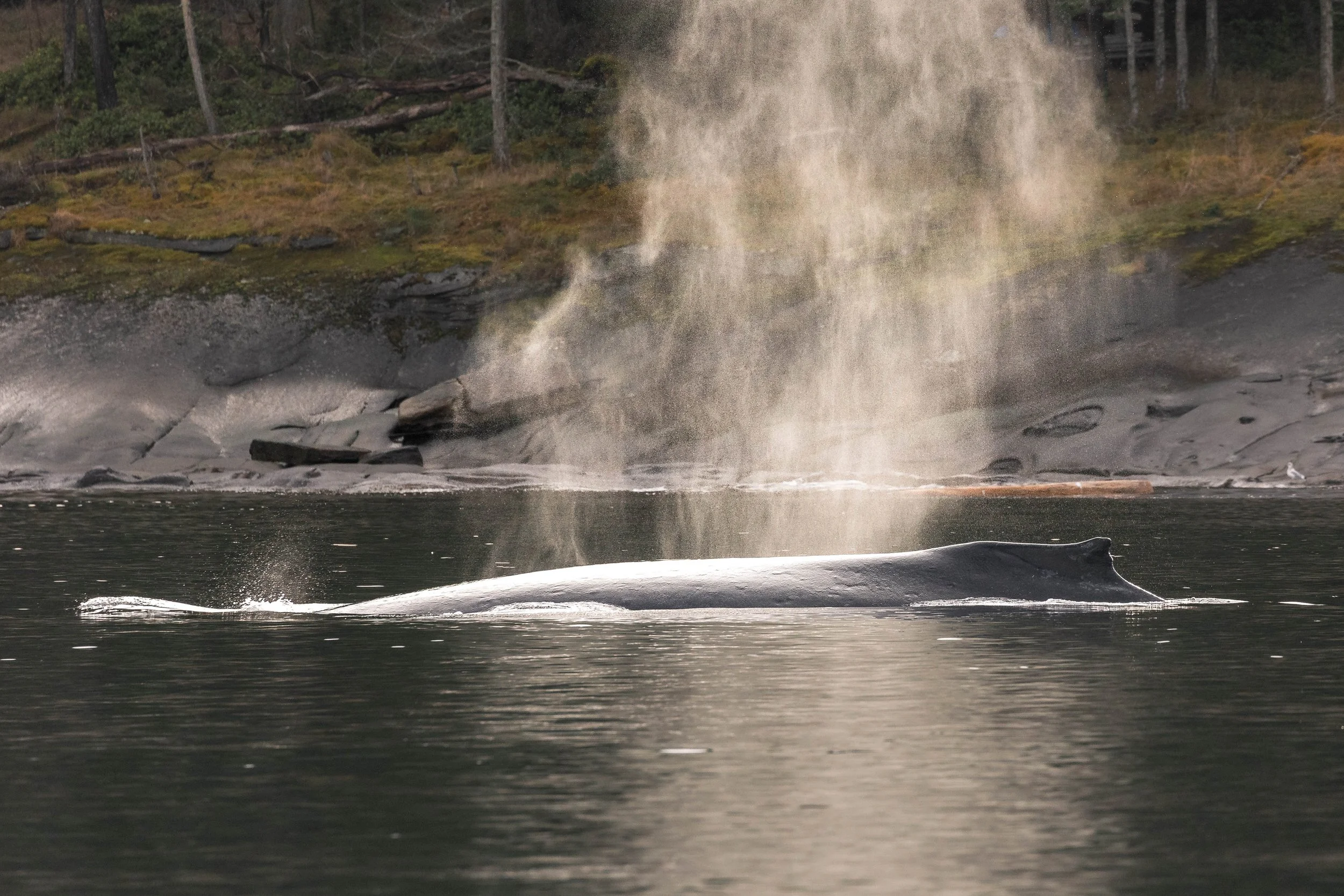
Sherwina’s dorsal fin with a beautifully backlit blow.
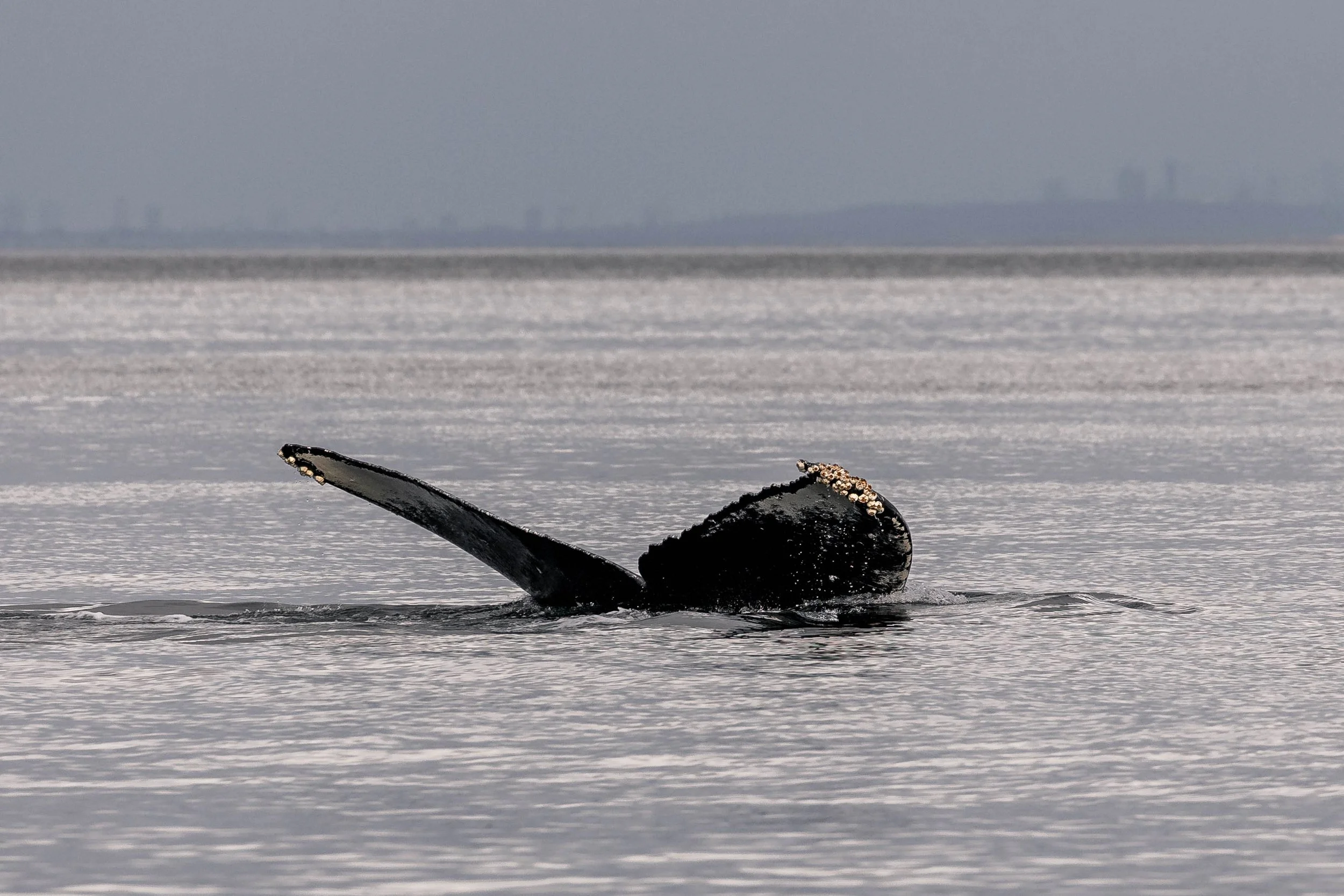
Sherwina’s fluke.
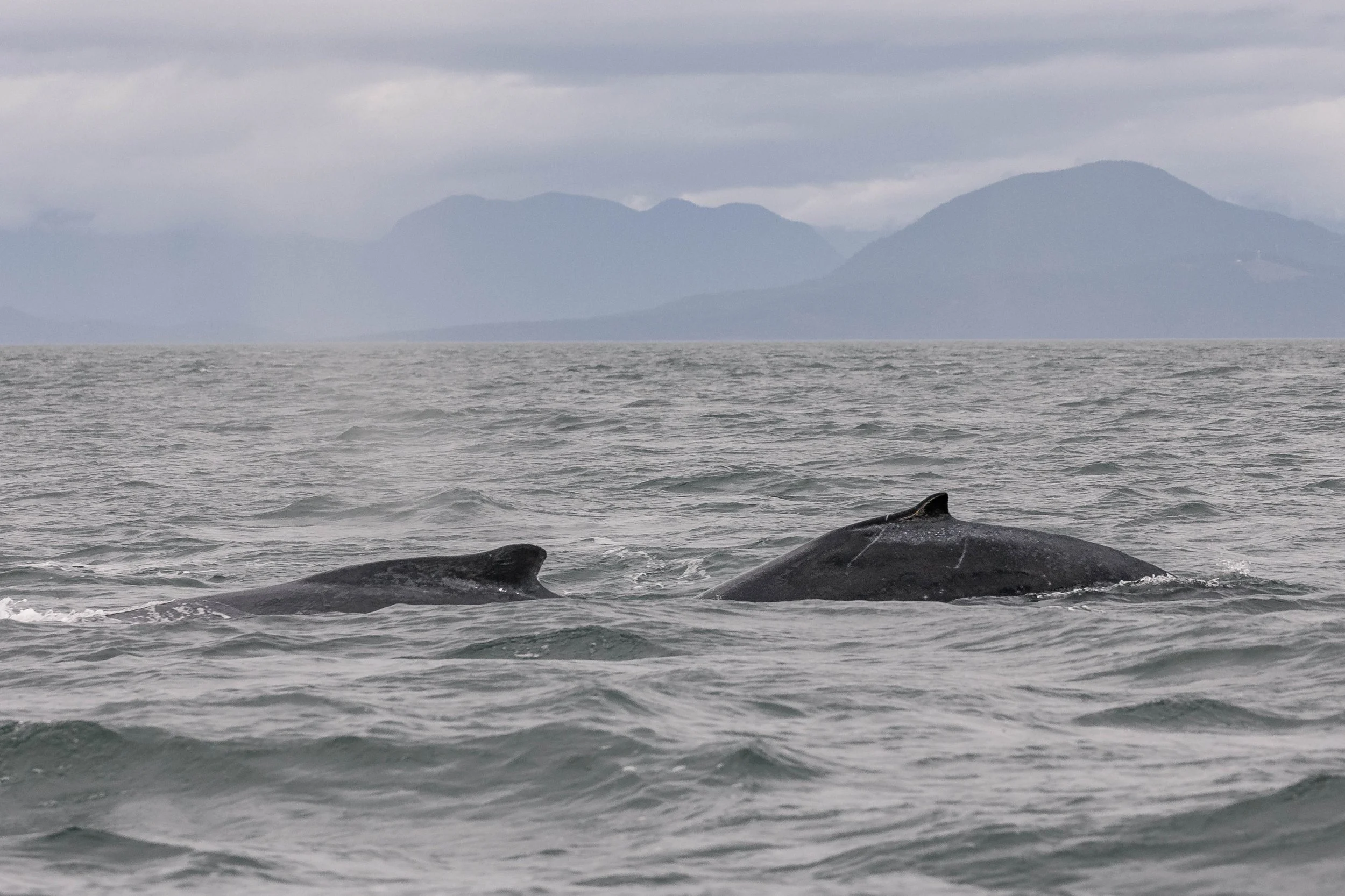
Vivaldi and her calf.
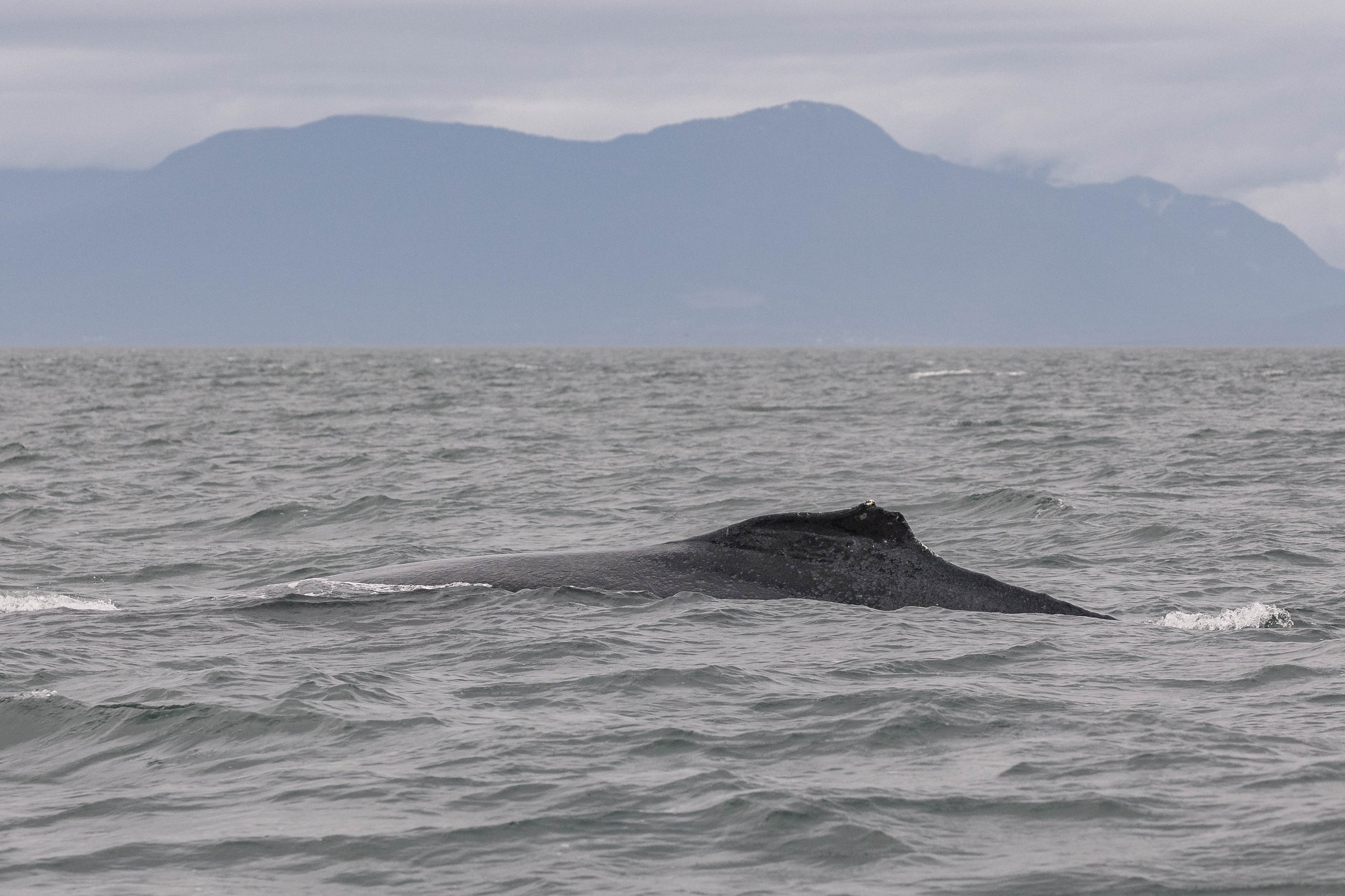
Crater’s dorsal fin.
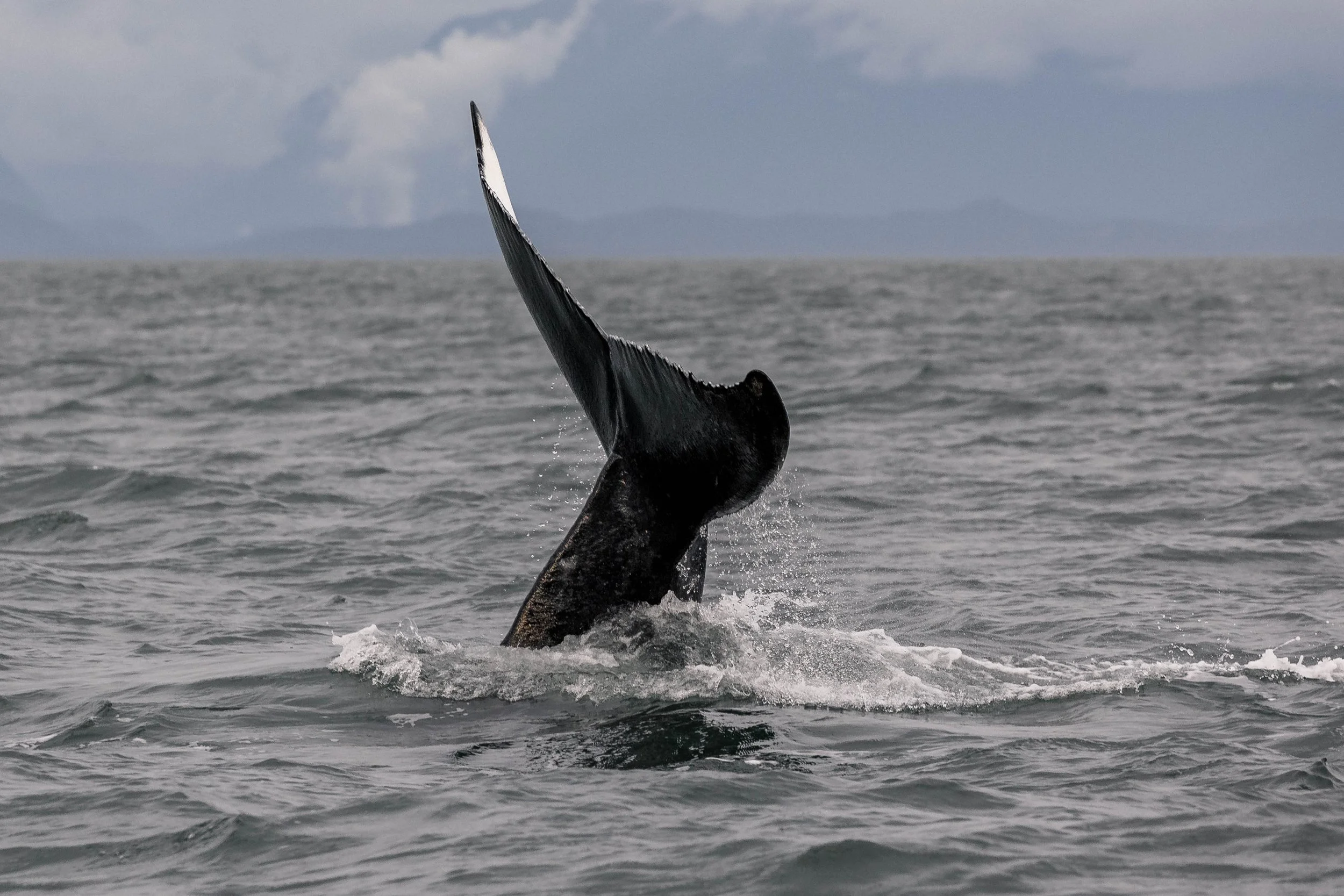
Flukes up!
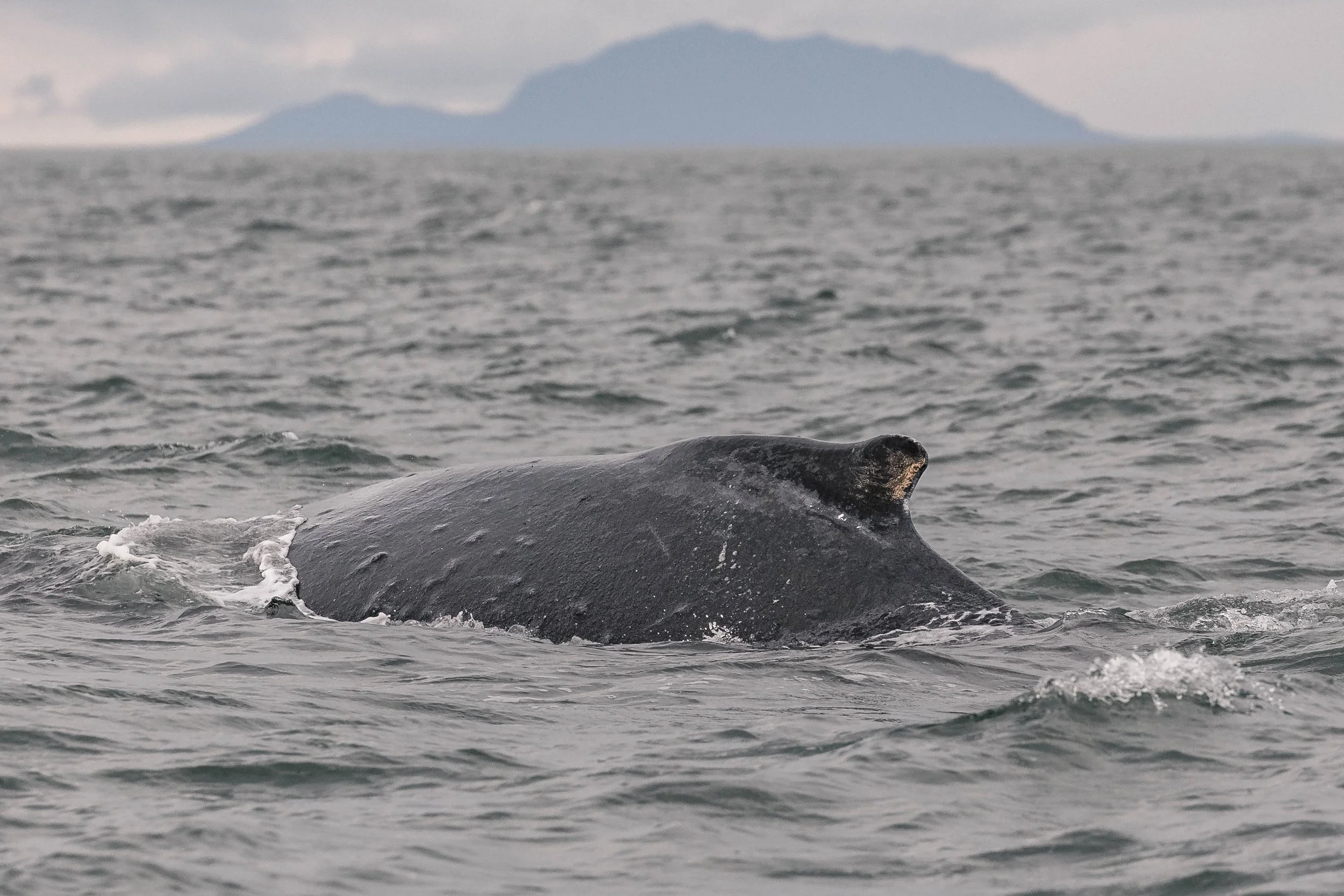
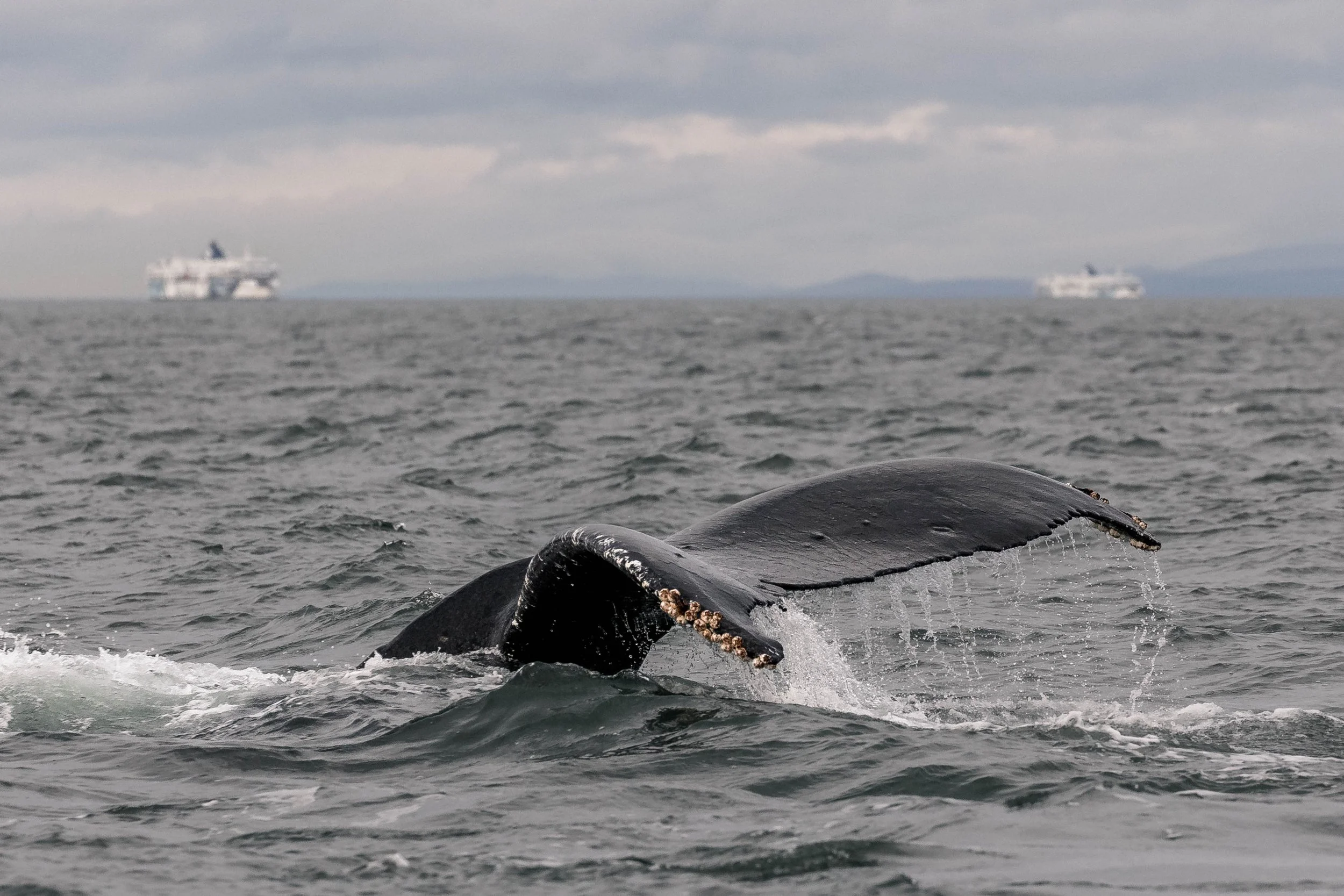
Going for a dive, with two BC Ferries in the background.
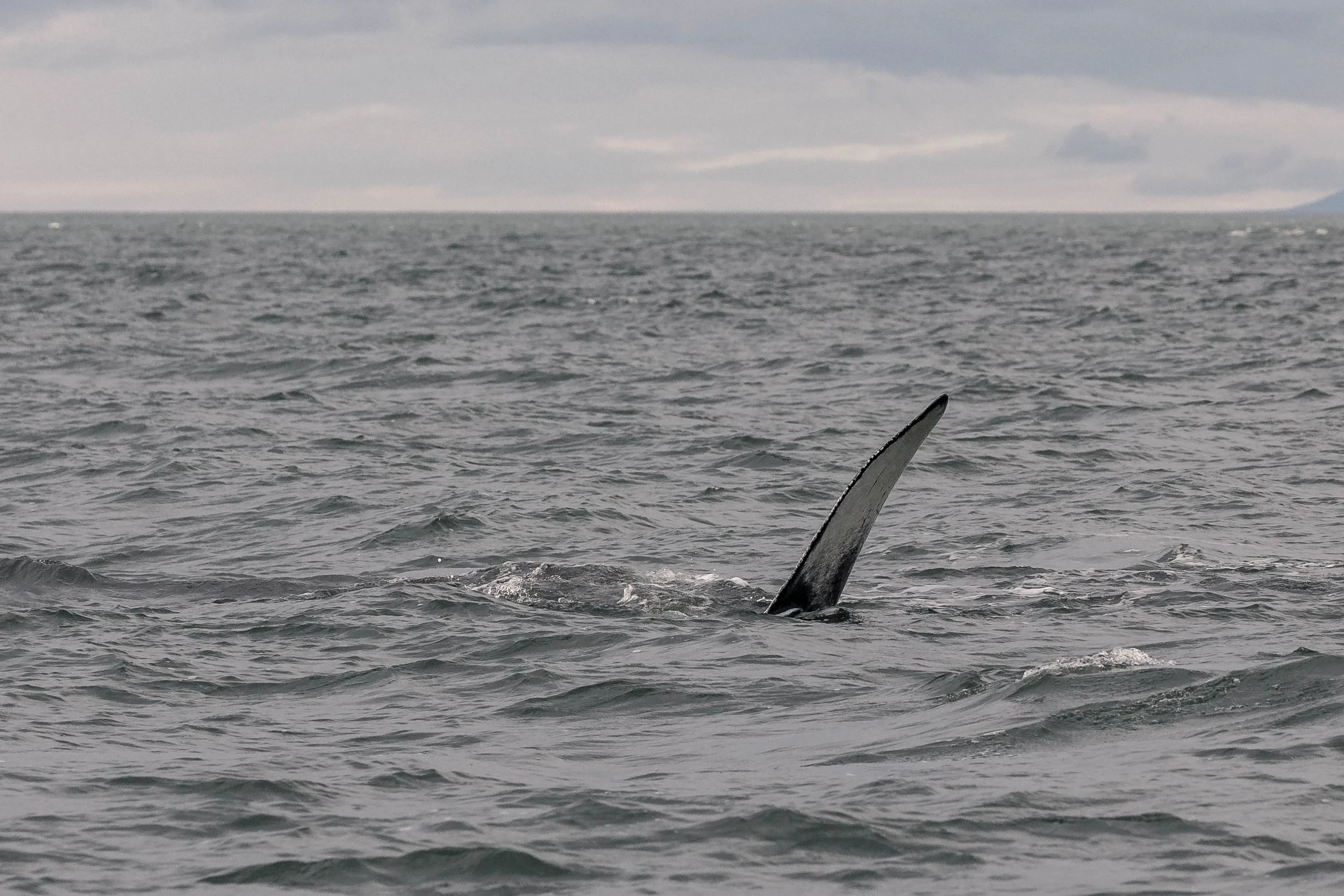
A tiny corner of the calf’s fluke.
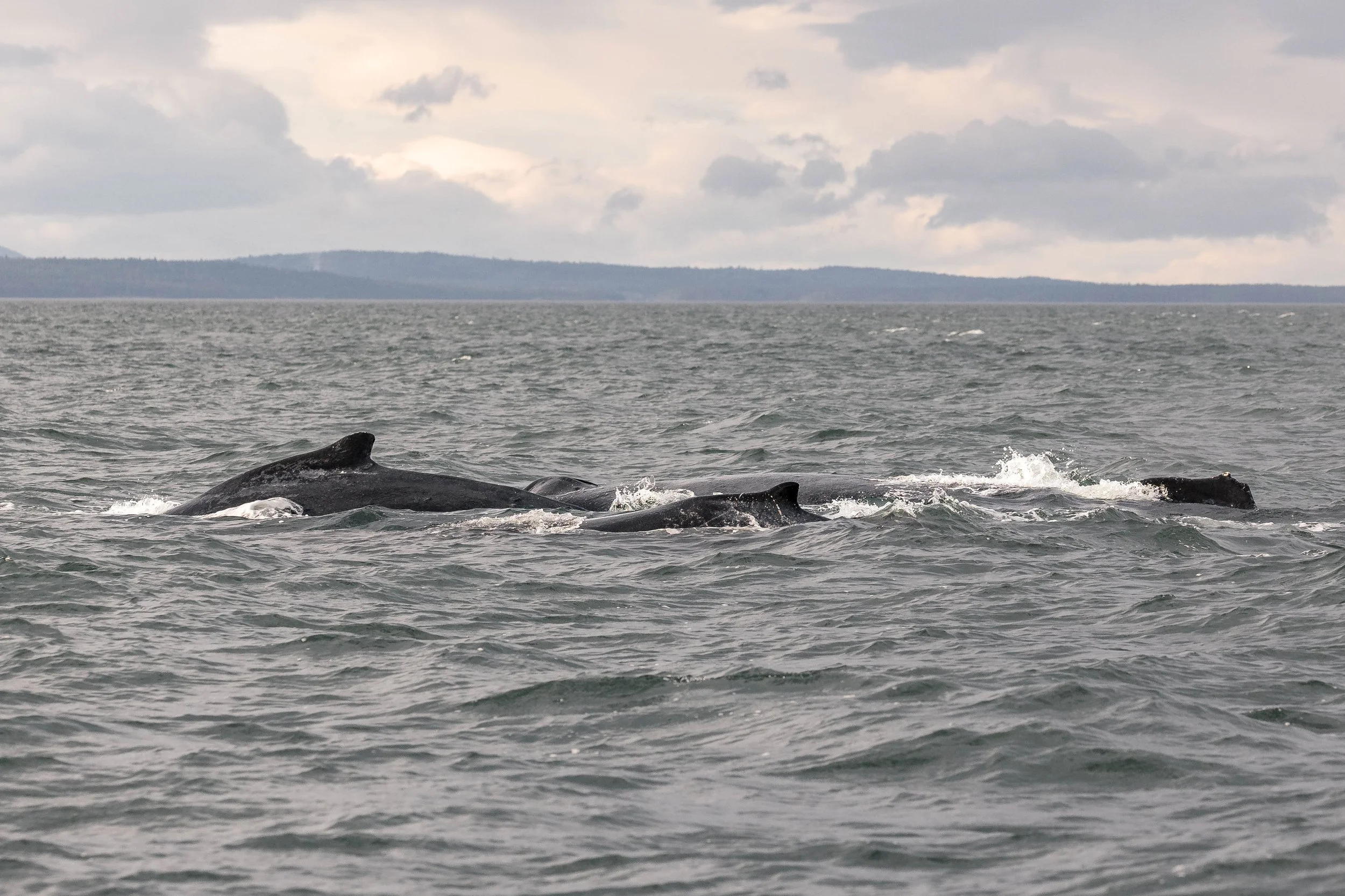
Vivaldi, her calf, and Crater in a line.
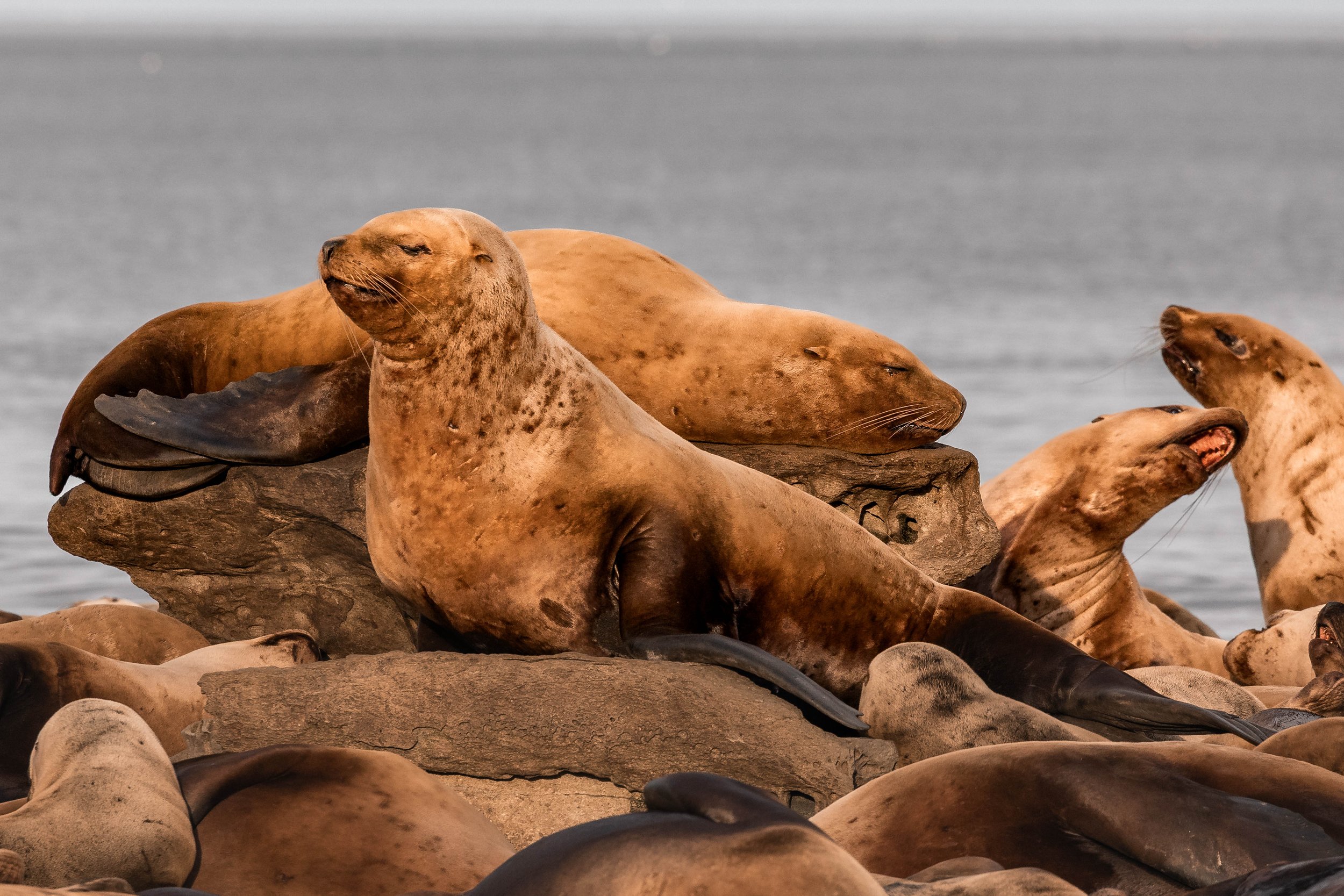
Snoozing sea lions on the rocks.
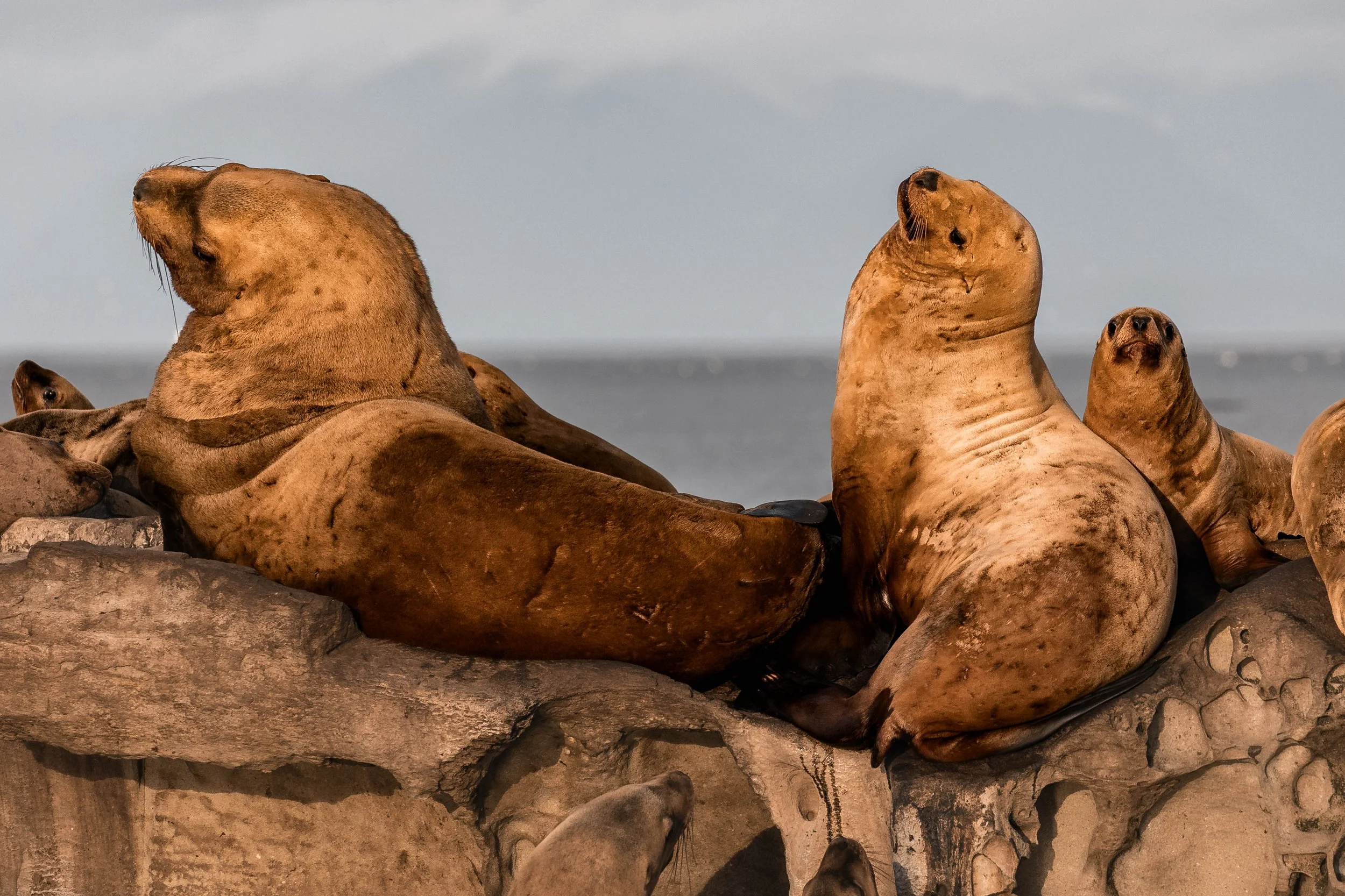
Now THAT’s a big guy!
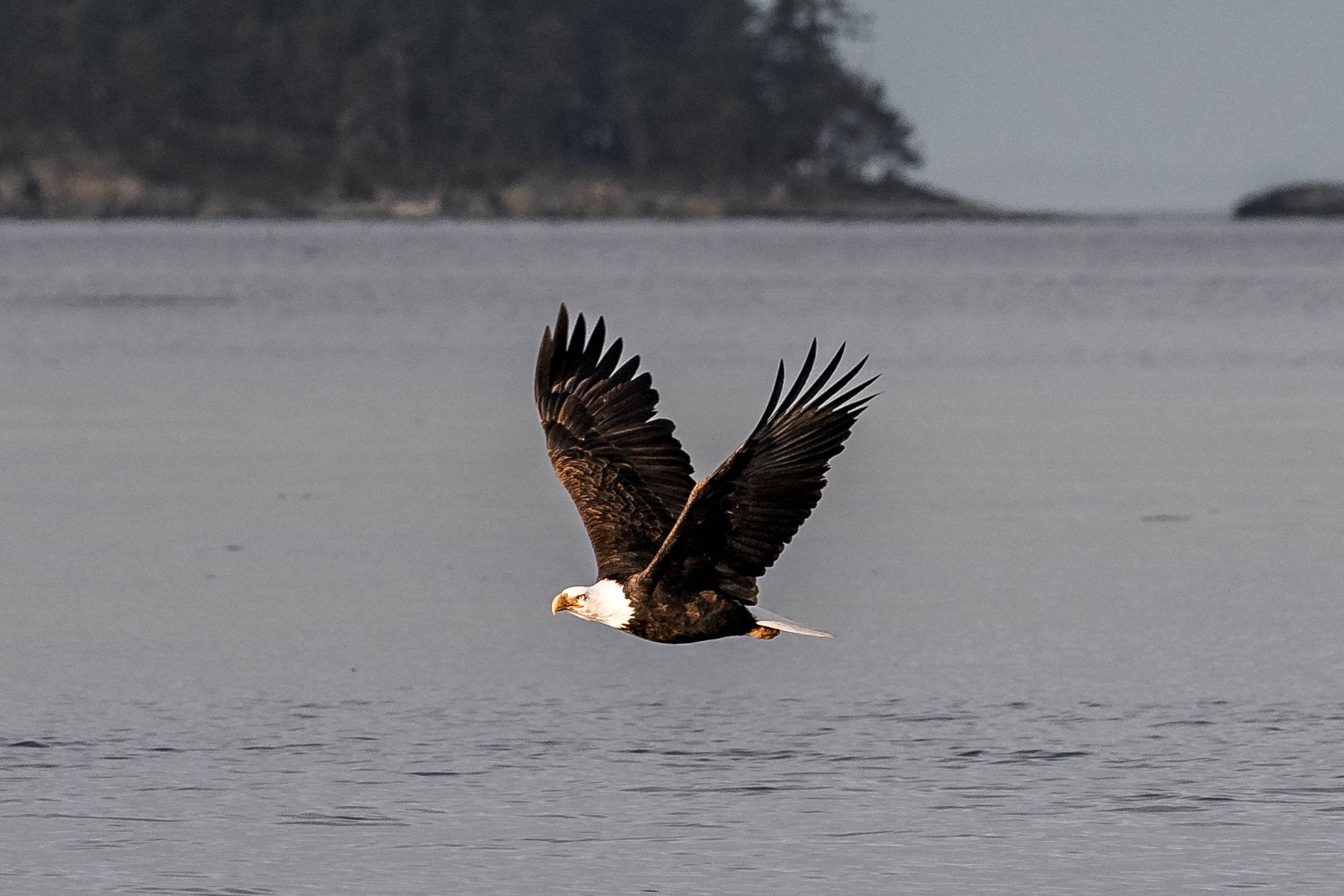
A Bald Eagle in flight.