
December 7, 2025 - A Doubles Species Day to conclude the Season!
This morning was extra exciting, as before we got off the dock, we had already heard about an orca sighting right outside the harbour! After a very brief transit out of the harbour, we found them!
These whales were travelling southbound, transiting through the Northumberland Channel as they made their way towards Dodd Narrows, a tiny waterway we frequently pass through ourselves. The onboard Naturalist began working away, snapping photos of their dorsal fins to confirm their identities. These whales were confirmed to be the T077s, travelling with a known troublemaker loner male, T065A5 Indy:
T065A5 Indy ♂ (2014)
T077 Asja ♀ (1981)
T077C Neftali ♂ (2006)
T077D Alycon ♀ (2009)
T077E Misneach (2016)
Indy has been very interesting to observe this year. After showing up absolutely covered in scars from head to tail, many scientists wondered if he would survive. The patterning of his scars is also odd, as they cover both the top and bottom of his body. It is believed he may have been pinned against rocks, resulting in scrapes and scratches on all sides. Whatever the case, we are glad Indy survived his wild adventure, and we are excited to see him interacting with other whales!
The T077s are a fairly uncommon pod in our area. Back in 2021, the two middle calves, T077C Neftali and T077D Alcyon, were seen travelling away from their pod, spending their time socializing with T049A2 Jude. Calves leaving their pods at younger ages seems to be an increasing trend as of late, though scientists aren’t quite sure why. However, Neftali and Alycon ended up returning to their mother’s side, and now, once again, they are back to travelling with their family.
Shortly after our first orca encounter, another larger pod was spotted right nearby! This new pod seemed to have no interest in socializing with our original group, though, passing each other like two ships in the night.
After photographing the new pod, we confirmed they were the T046Bs:
T046B Raksha ♀ (1988)
T046B3 Sedna ♀ (2011)
T046B32A Munro (2025)
T046B4 Quiver ♀ (2013)
T046B6 Sol ♀ (2019)
T046B7 Tala (2023)
The T046Bs is a very large pod for Transient orca. While most pods usually are 4 to 7 members, the T046Bs currently have eight members, and that is likely to increase even more as the two eldest daughters continue reproducing. This large size is likely why Raksha’s second-oldest daughter, Akela, and her calf were likely not present today. Akela may be beginning the next phase of her life, and starting a matriline of her own. Raksha’s eldest daughter, Tread, has already done this and has three calves of her own. With her three eldest calves being females, Raksha and her descendants are likely among the most abundant families in the Transient orca population.
After leaving the orca behind, we once again began searching for more whales. This time, we were looking for the second species of whale commonly found in our area: humpbacks! While it is quite late in the year now, and many humpbacks have departed our waters to head to their winter breeding grounds, we are still seeing quite a few of them hanging around. We began scanning the horizon once more, and soon after, we spotted them - a pair of humpbacks blowing and travelling together!
Once we approached, we began taking photos to identify who was here. However, this became a bit challenging, as the pair suddenly changed behaviour! The two whales began approaching Kula, a behaviour known as mugging. Mugging is a behaviour that is not encouraged as it can be dangerous for both the whale and the boat. If they approach a vessel that was being piloted by people unaware of humpback behaviours, both parties could be gravely injured. If a whale does approach your boat, the best course of action is to turn off your vessel if safe to do so and remain calm until they give you space again. Then, once they are a safe distance away, start back up and slowly leave the area. This is exactly what ended up happening today as these two began curiously examining Kula and her crew. While remaining calm and quiet, one of the humpbacks dove, leading to the perfect opportunity to ID them! This whale was identified as Kappa’s 2022 calf (BCX0158 calf 2022). While we didn’t recognize the second whale on scene, largely due to them being uncooperative about showing their fluke, after cross-matching their dorsal fin, we learned that the calf’s friend was Hale-Bopp (BCX1278). This was our third encounter with Hale-Bopp this year, as we also saw them on November 1st and November 14th. It’s worth noting that the distinctive injury on their left side was not visible on either of these tours, so they must have been injured in the last ~3 weeks. Thankfully, the injury does not look too deep, and we expect that they will have a full recovery with a relatively small scar visible in the end.
After a whale-filled afternoon, we began venturing back towards Nanaimo, concluding the 2025 whale watching season with Vancouver Island Whale Watch. We hope everyone has a wonderful holiday season, and we will see you again in 2026!
Please enjoy these photos taken by Marine Naturalist Vanessa Vereschahen.
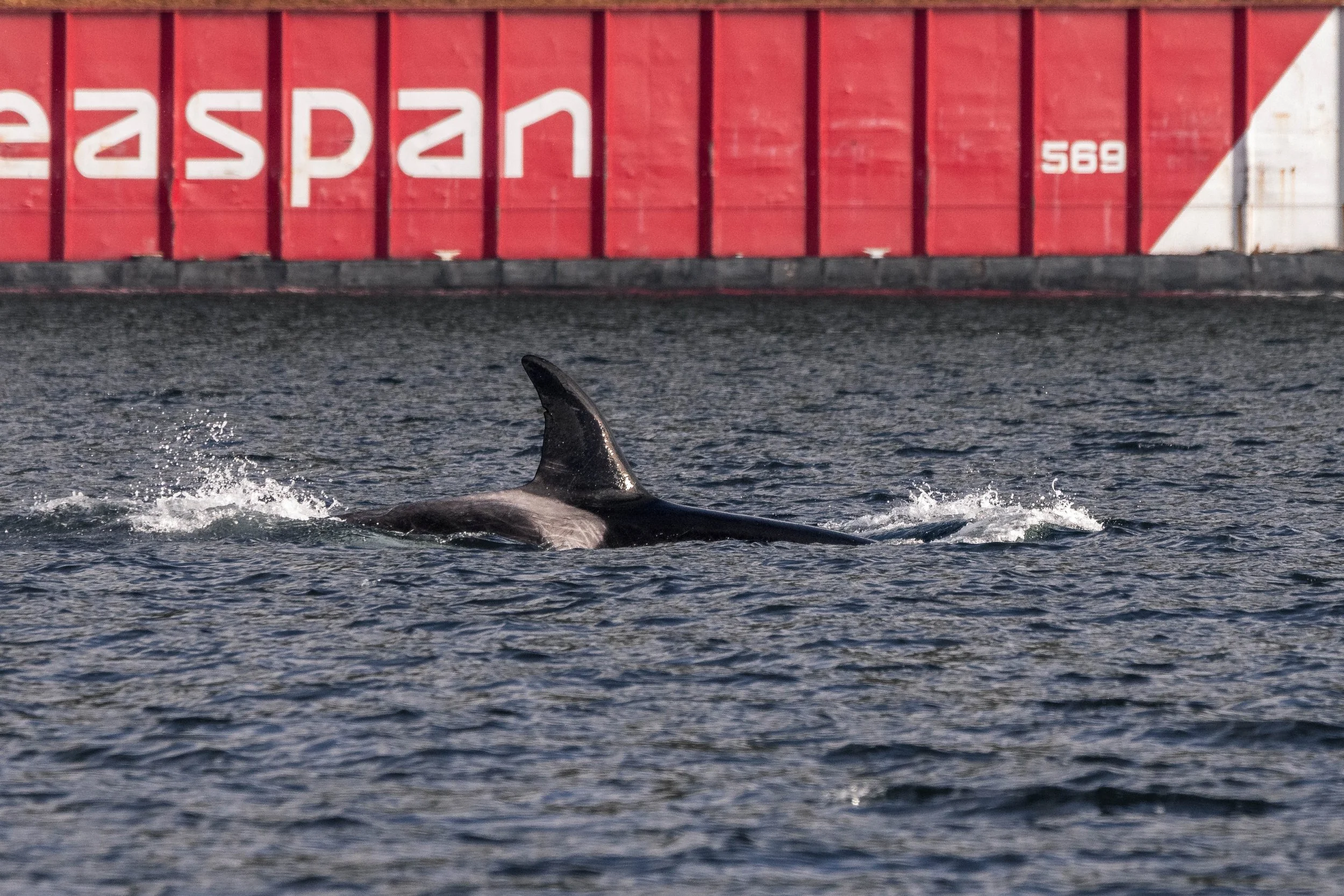
T065A5 Indy, covered in scratches and scrapes.
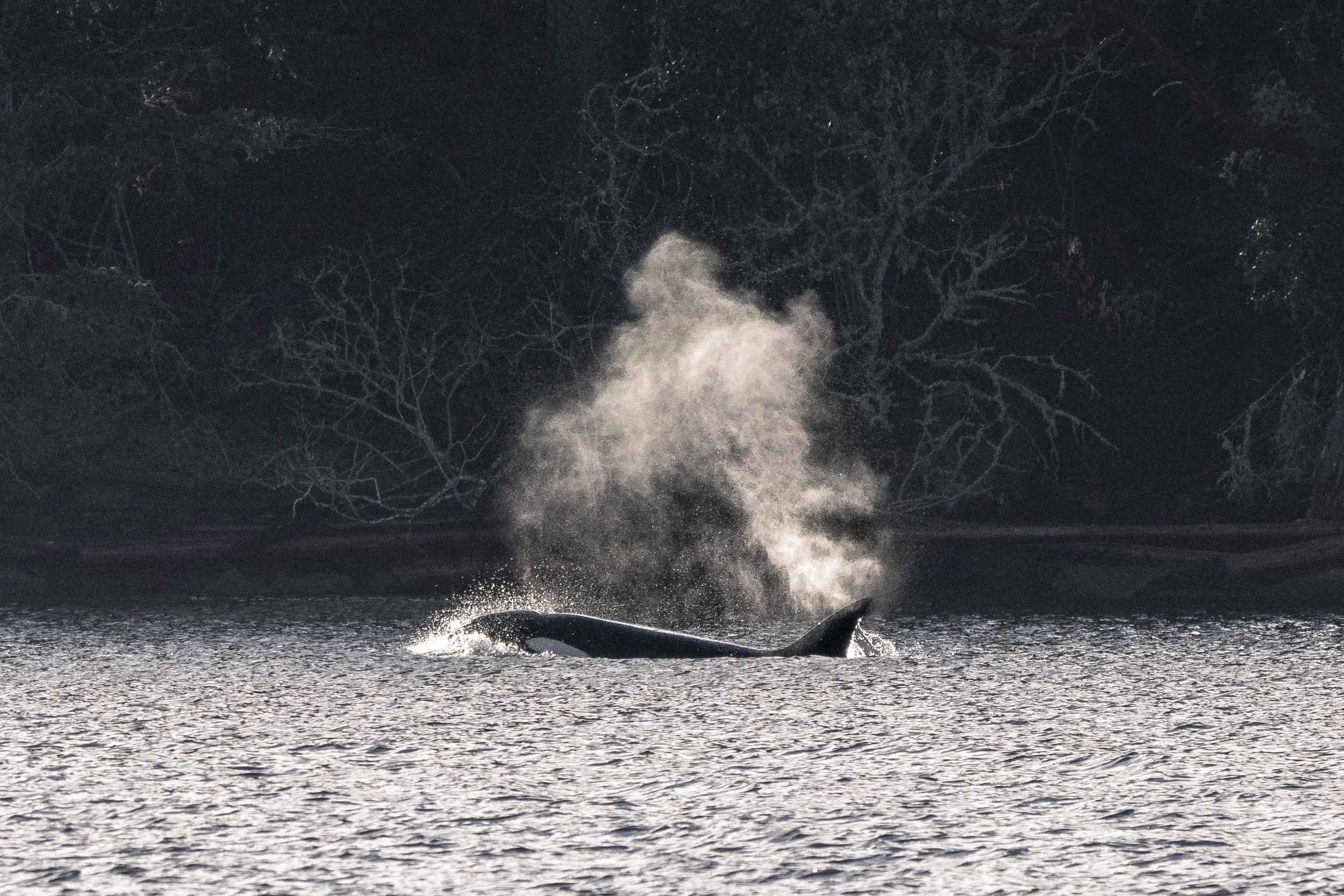
T077D Alycon beautifully backlit.
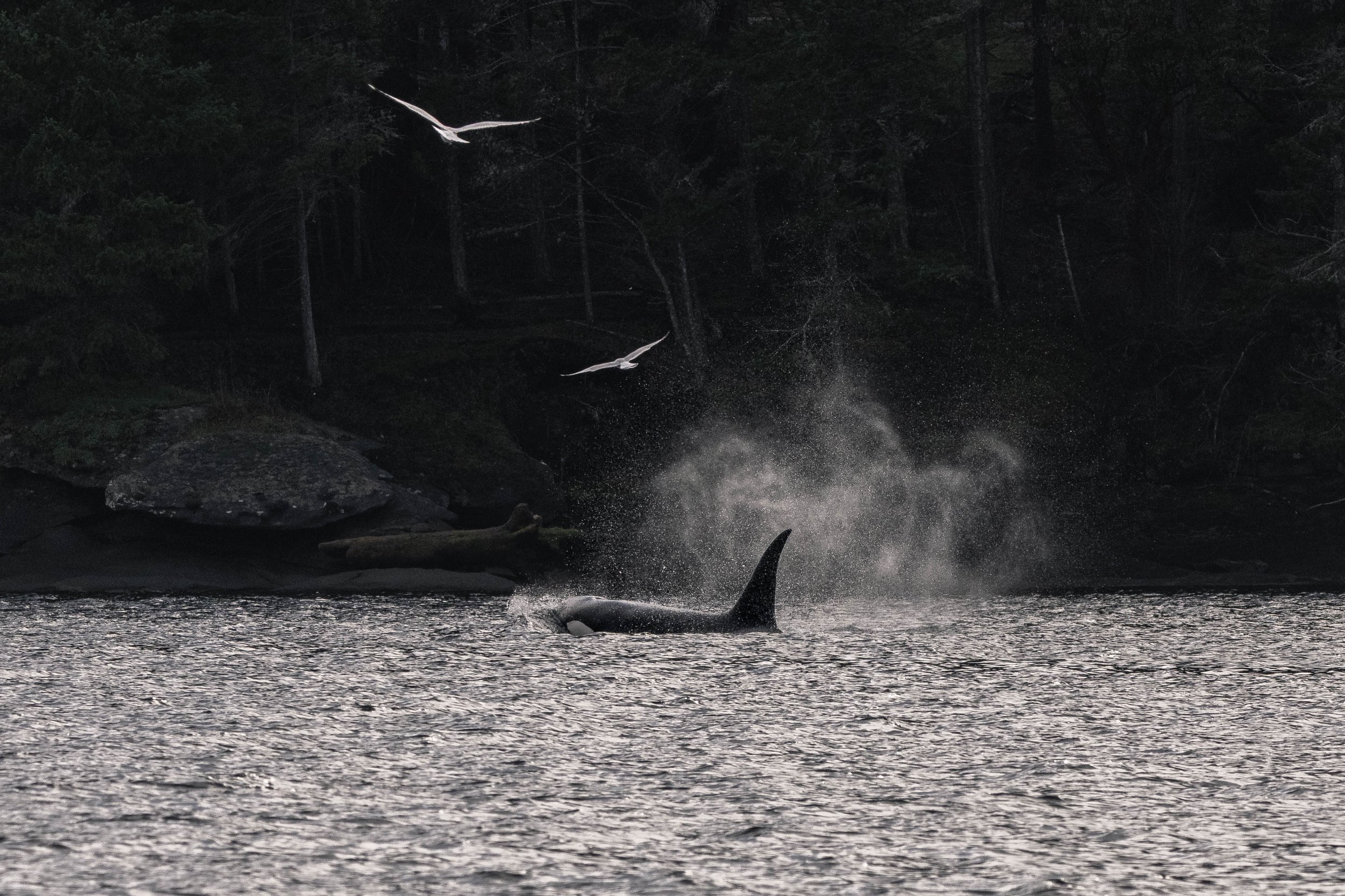
T077C Neftali travelling.

Look at how close to the edge of Dodd Narrows they got - can you see the little seal head on the edge of the rocks?!
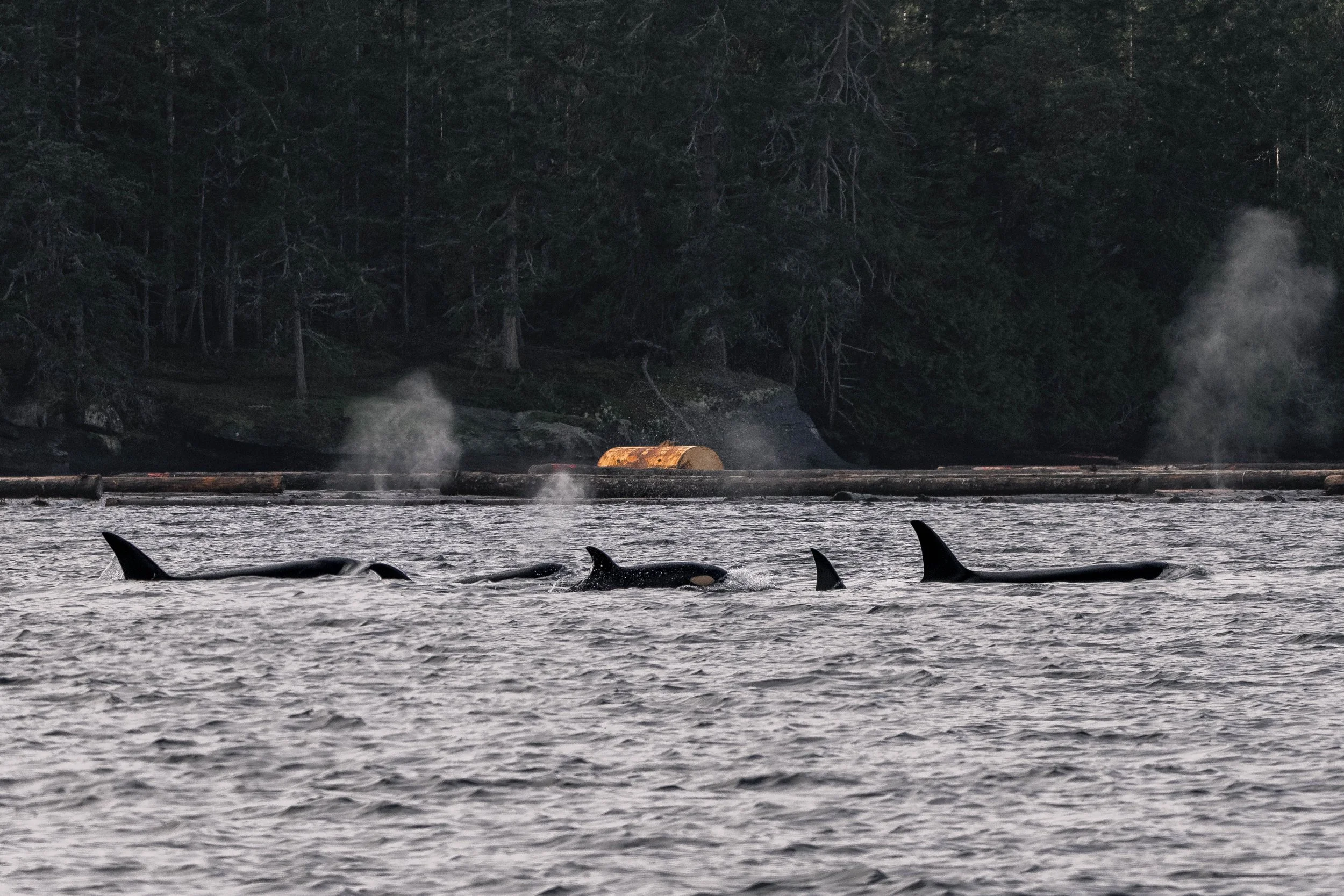
T046B3 Sedna, T046B6 Sol, T046B3A Munro, T046B4 Quiver, and T046B Raksha.

T046B3A Munro and T046B6 Sol.
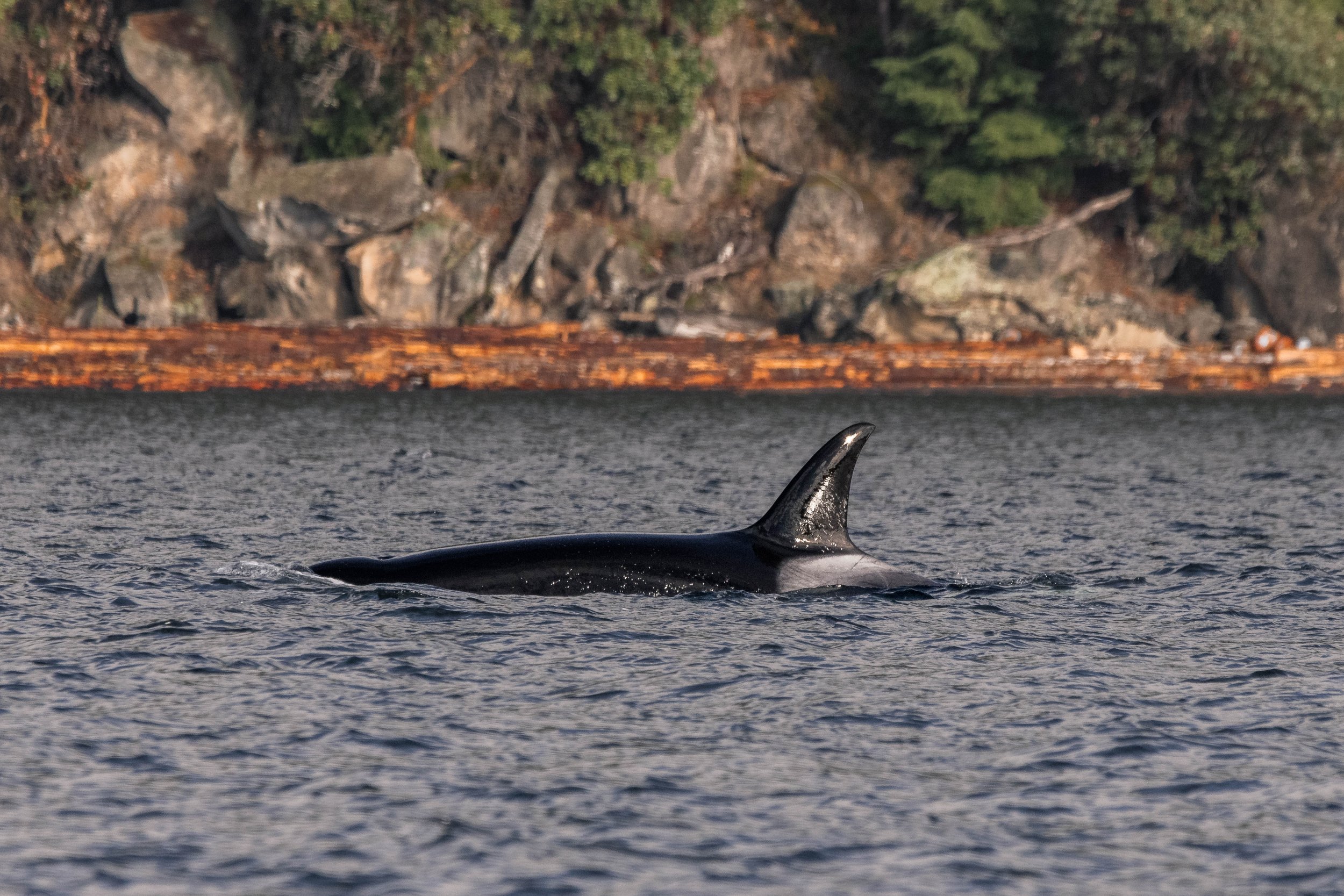
T046B Raksha.

T046B3 Sedna with T046B6 Sol right behind her.
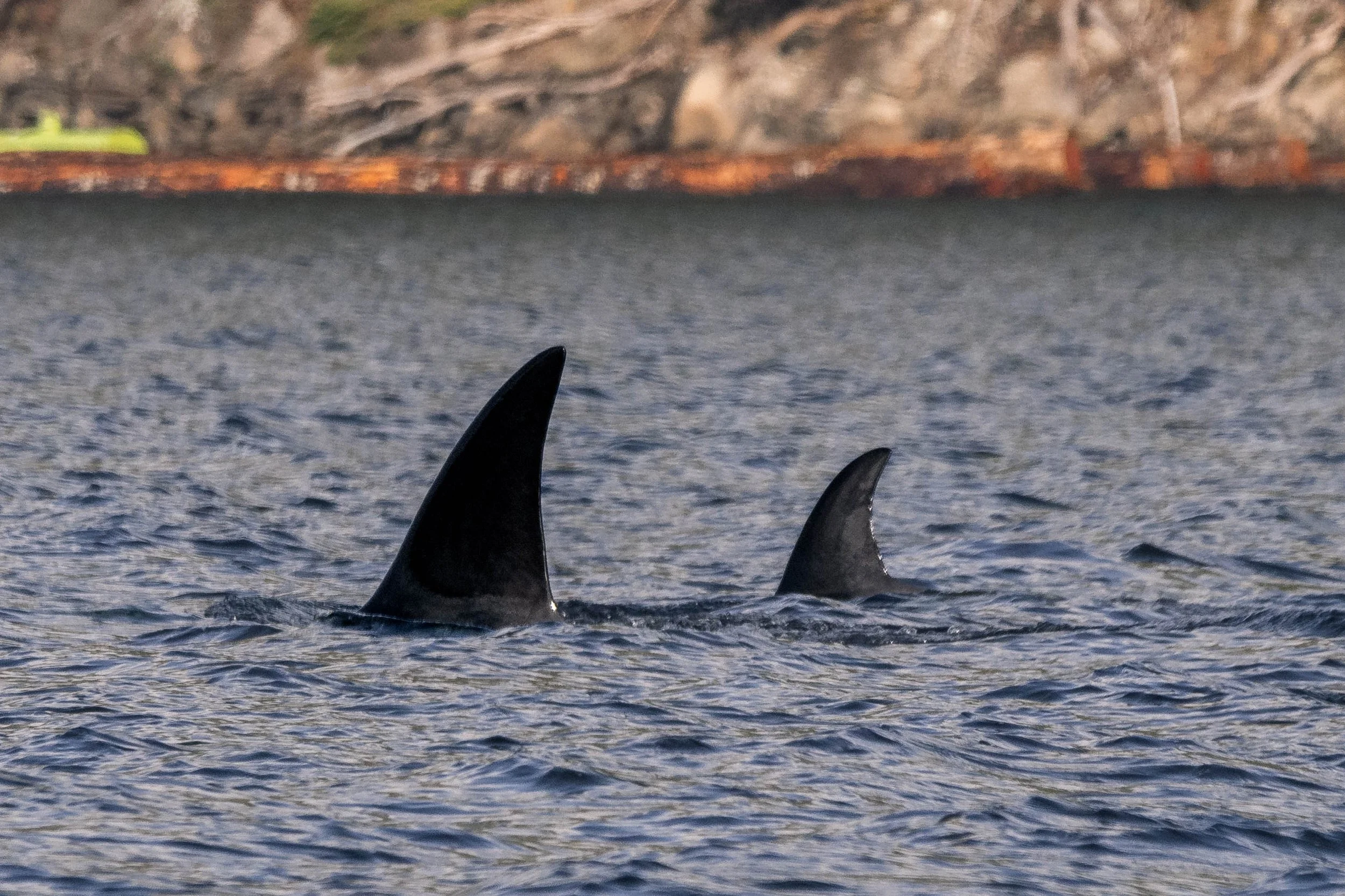
T046B3 Sedna and her calf T046B3A Munro.
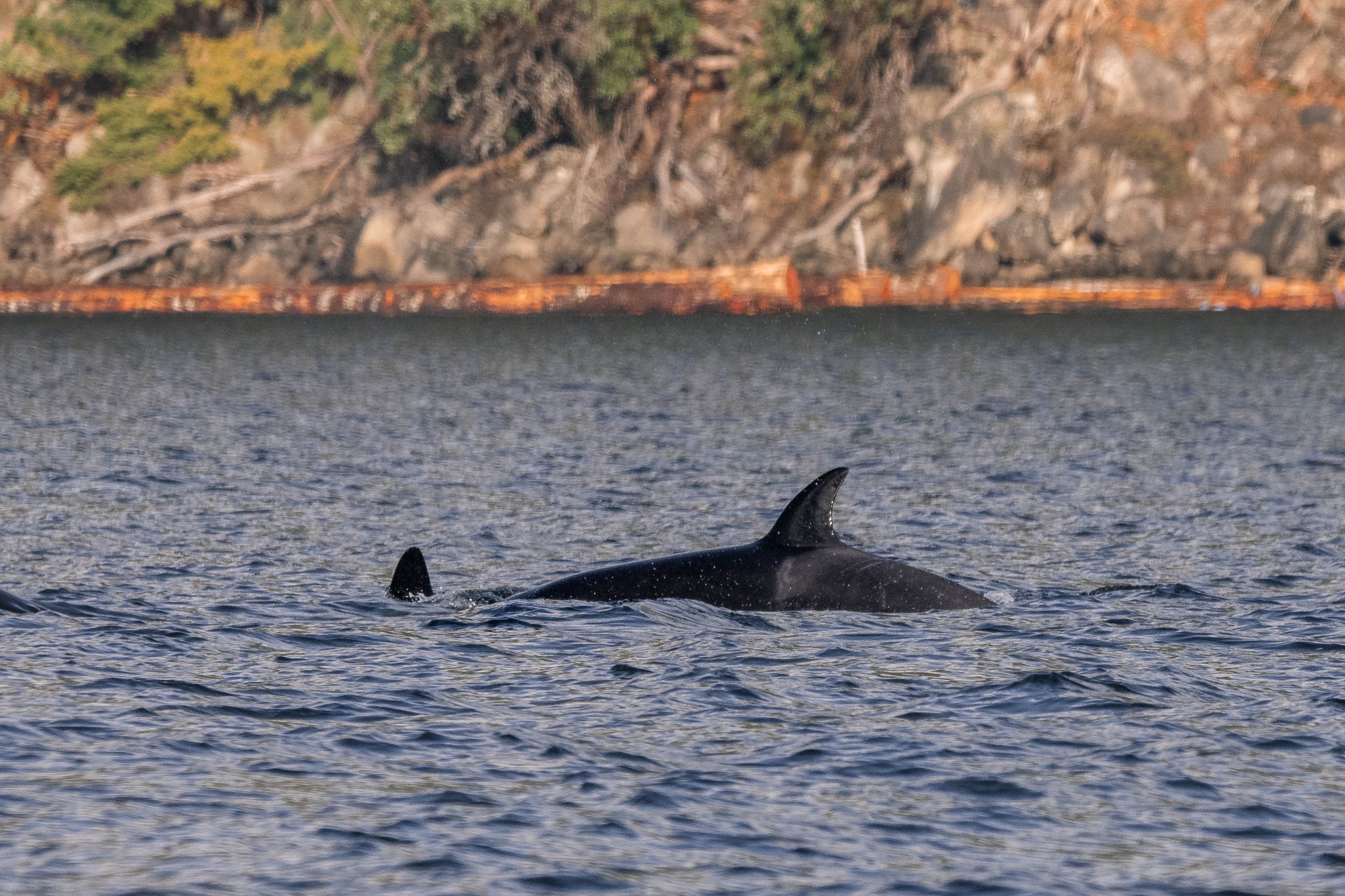
Tiny little T046B3A Munro.
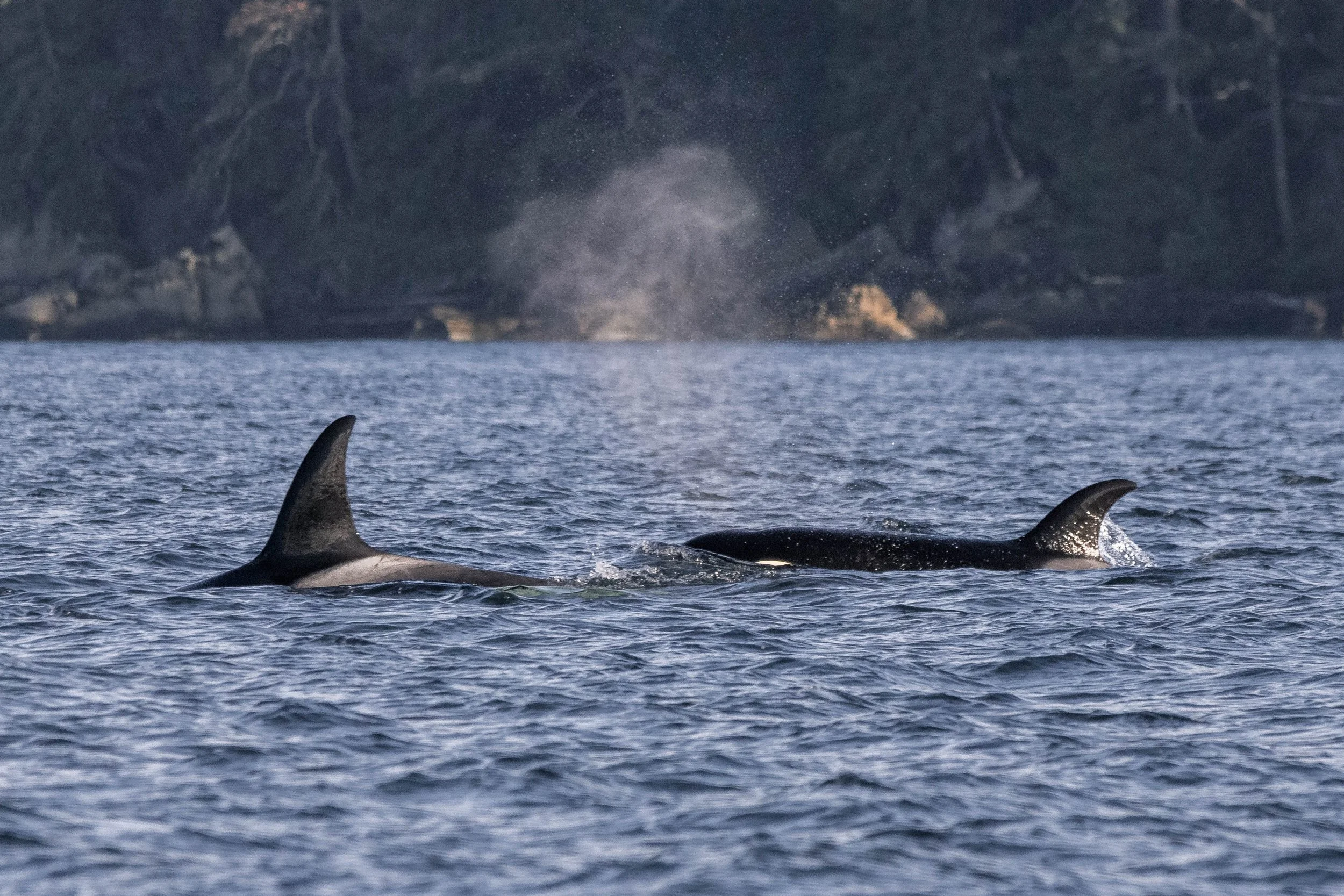
T046B Raksha and T046B6 Sol.
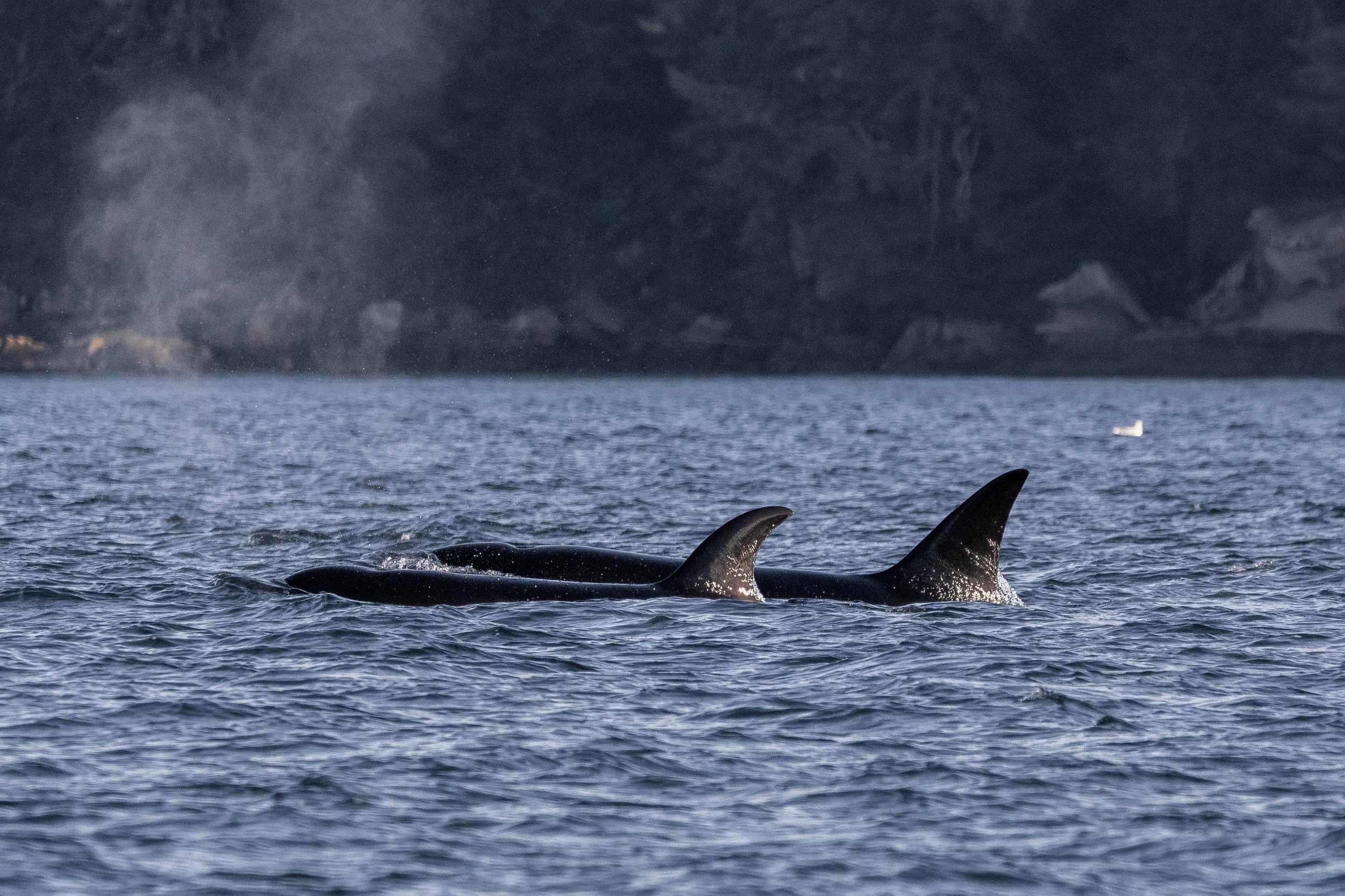
T046B6 Sol with T046B3 Sedna.
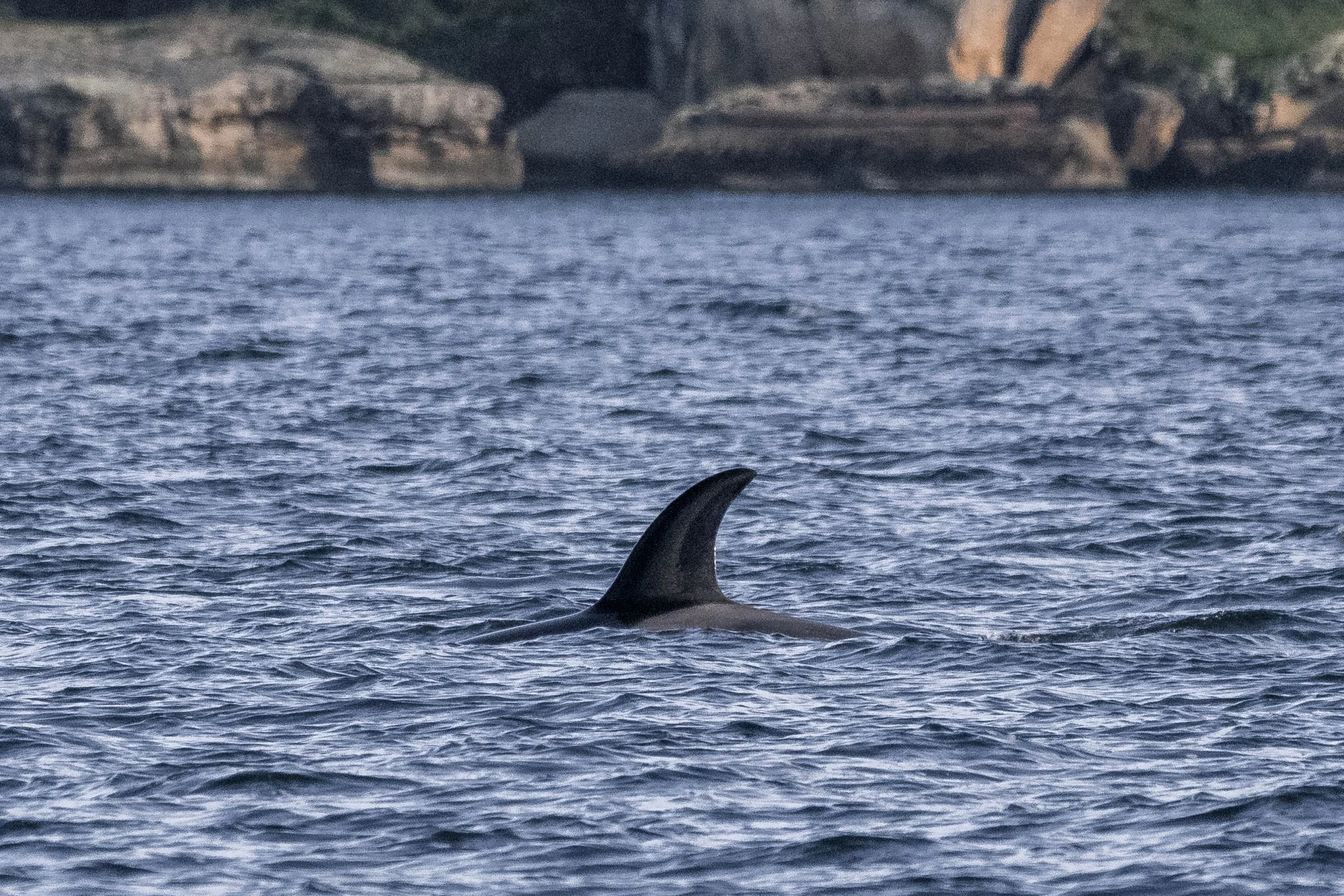
T046B6 Sol.
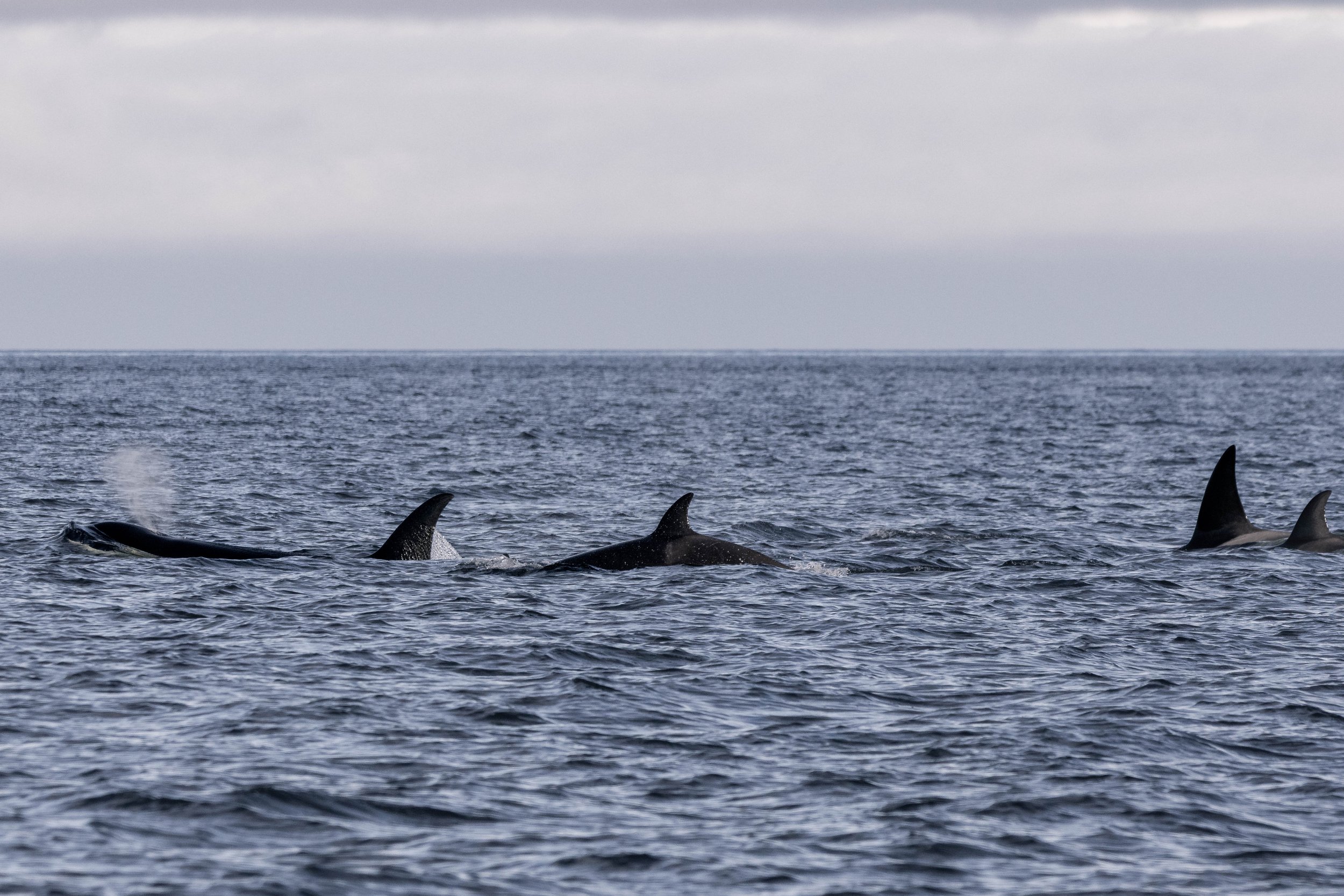
T046B Raksha with T046B3A Munro behind her, with T046B3 Sedna and T046B7 Tala behind them.

T046B3 Sedna.
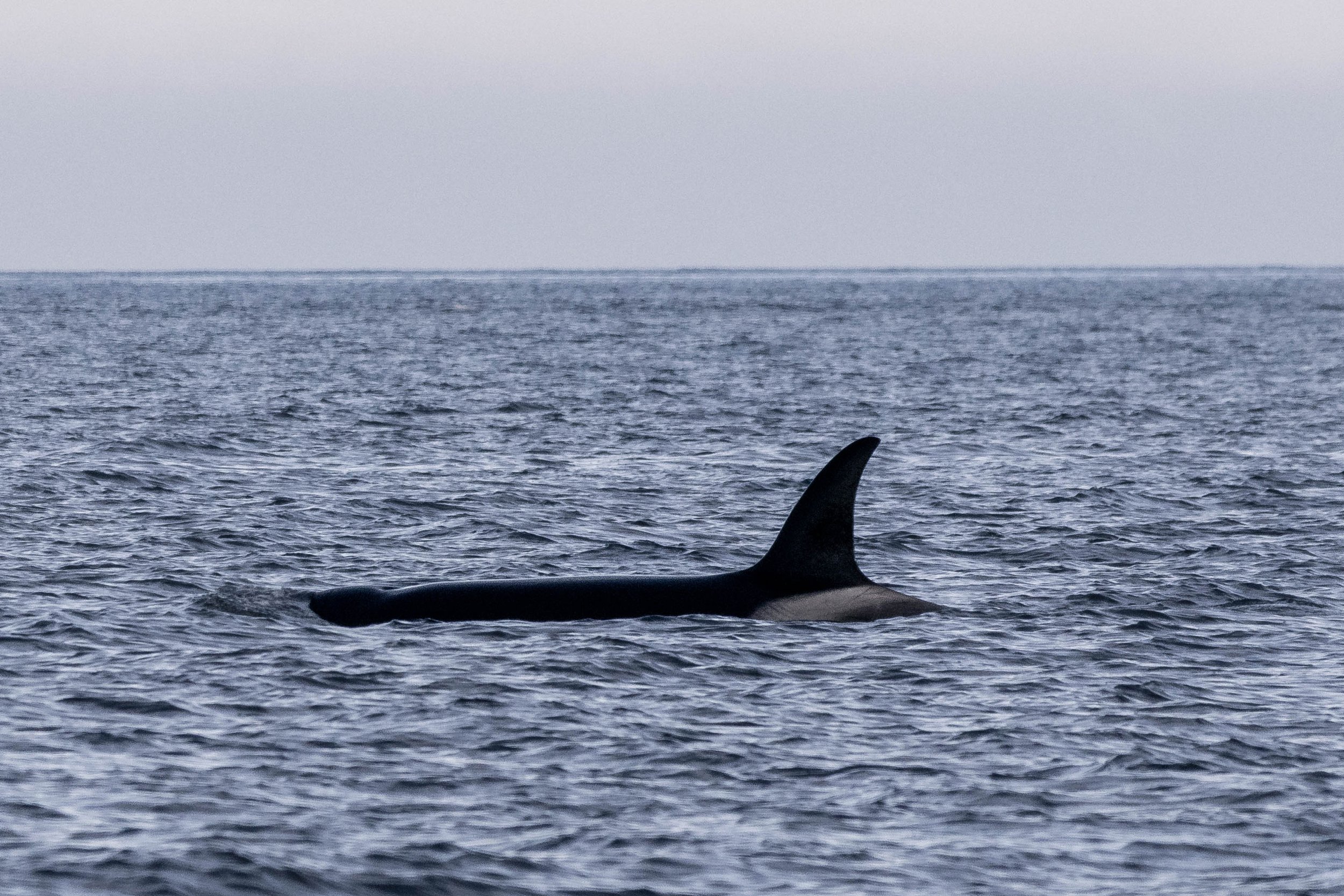
T046B Raksha.
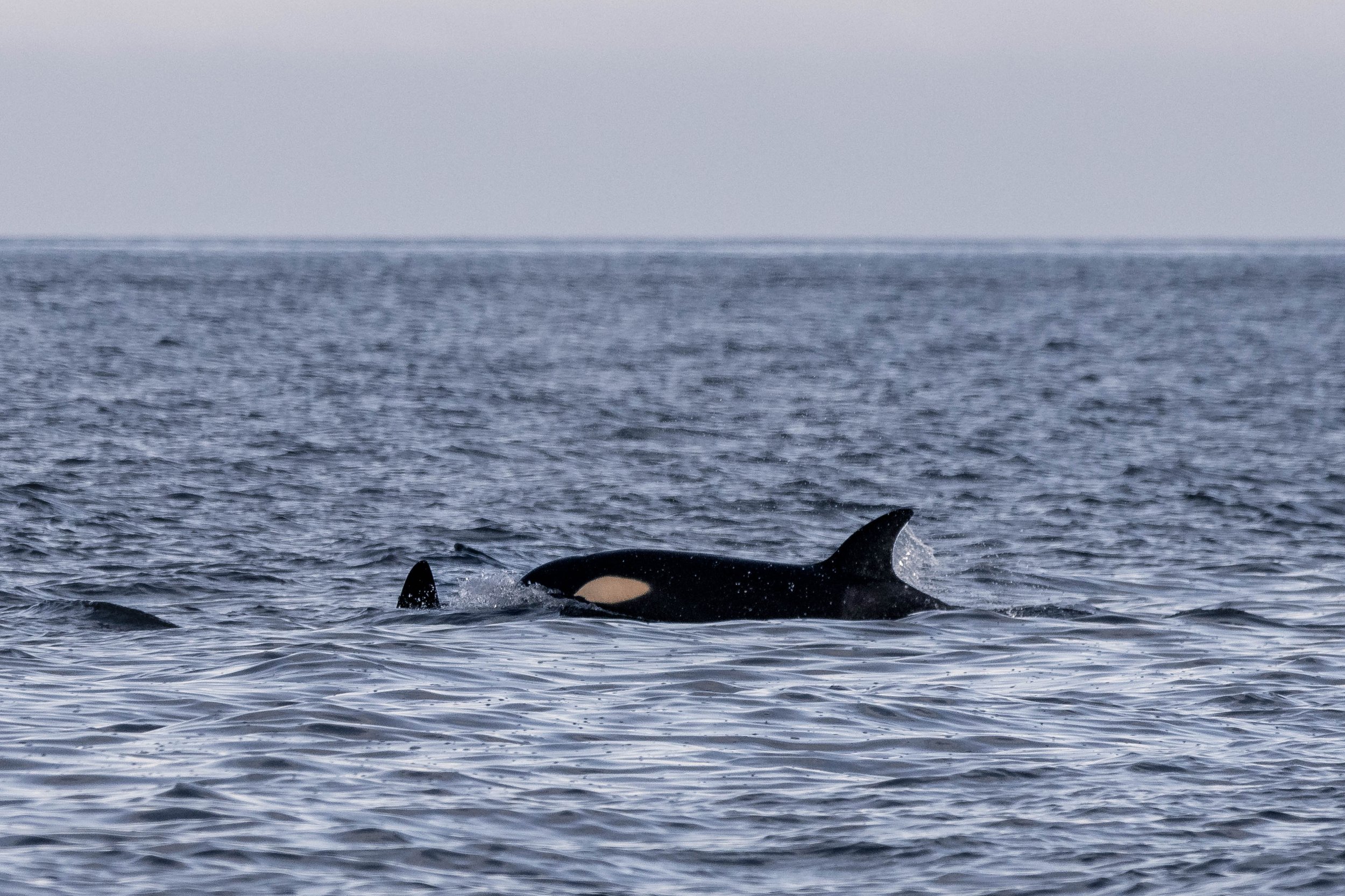
T046B3A Munro.
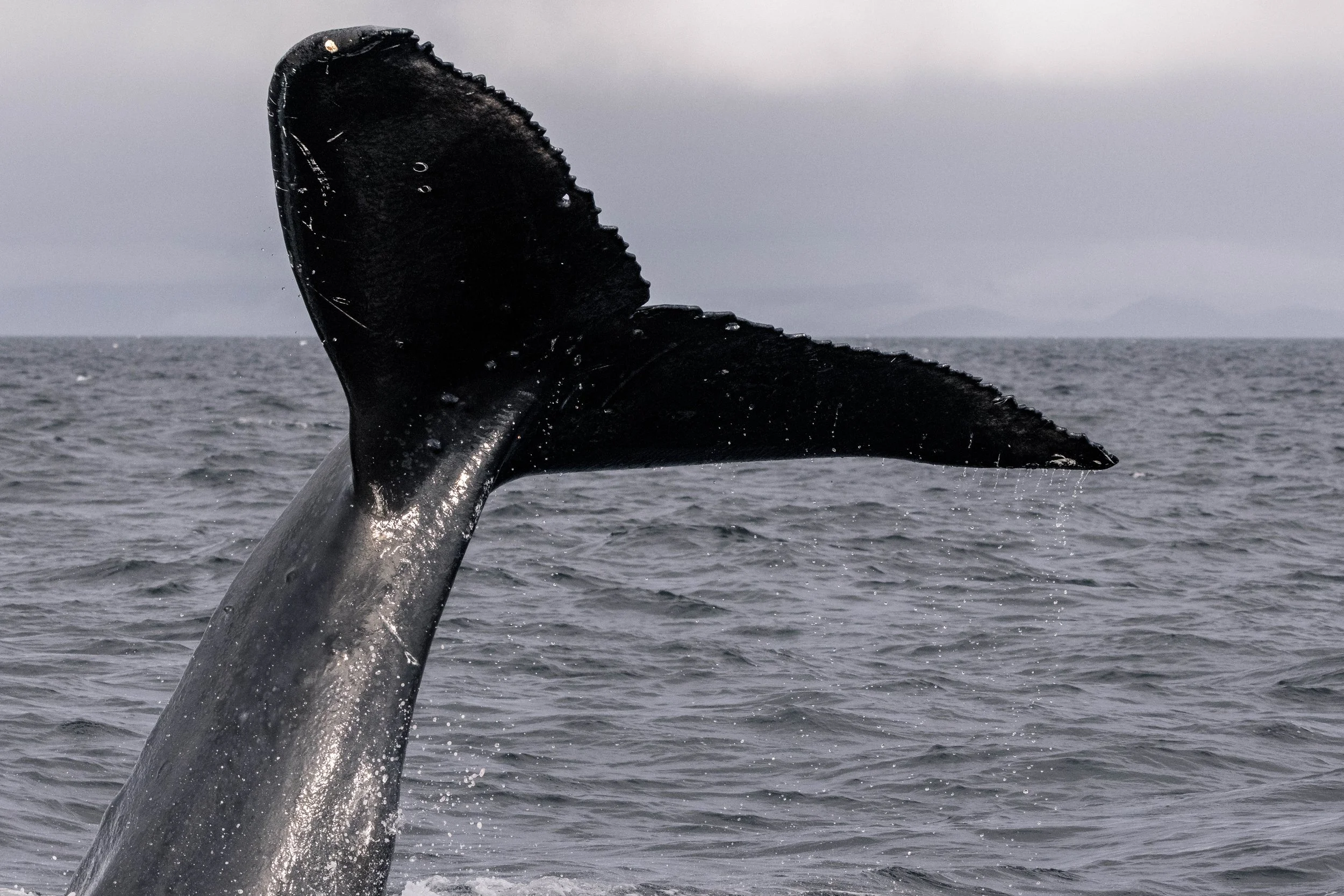
Kappa’s 2022 calf diving.
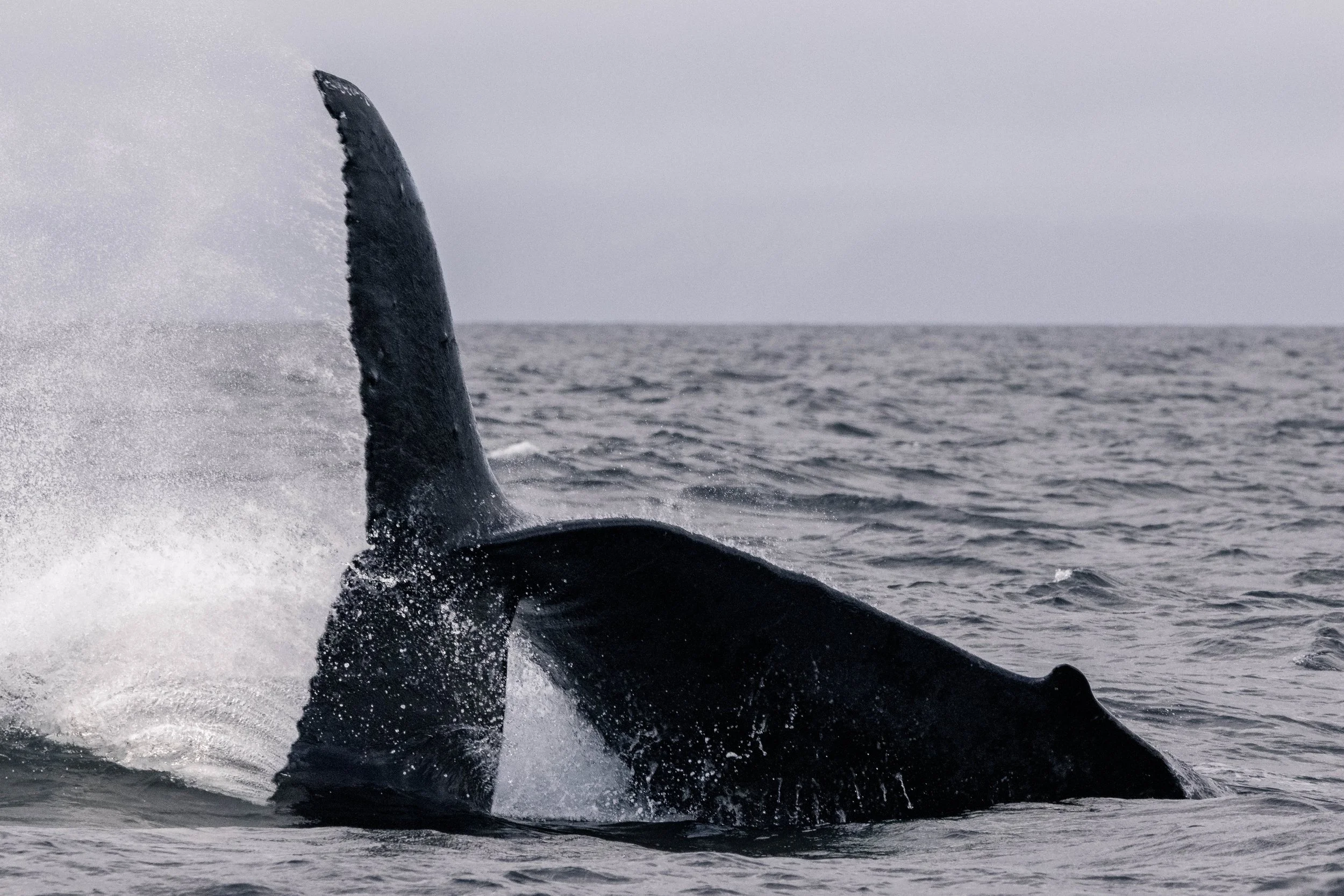
Kappa’s 2022 calf cartwheeling.
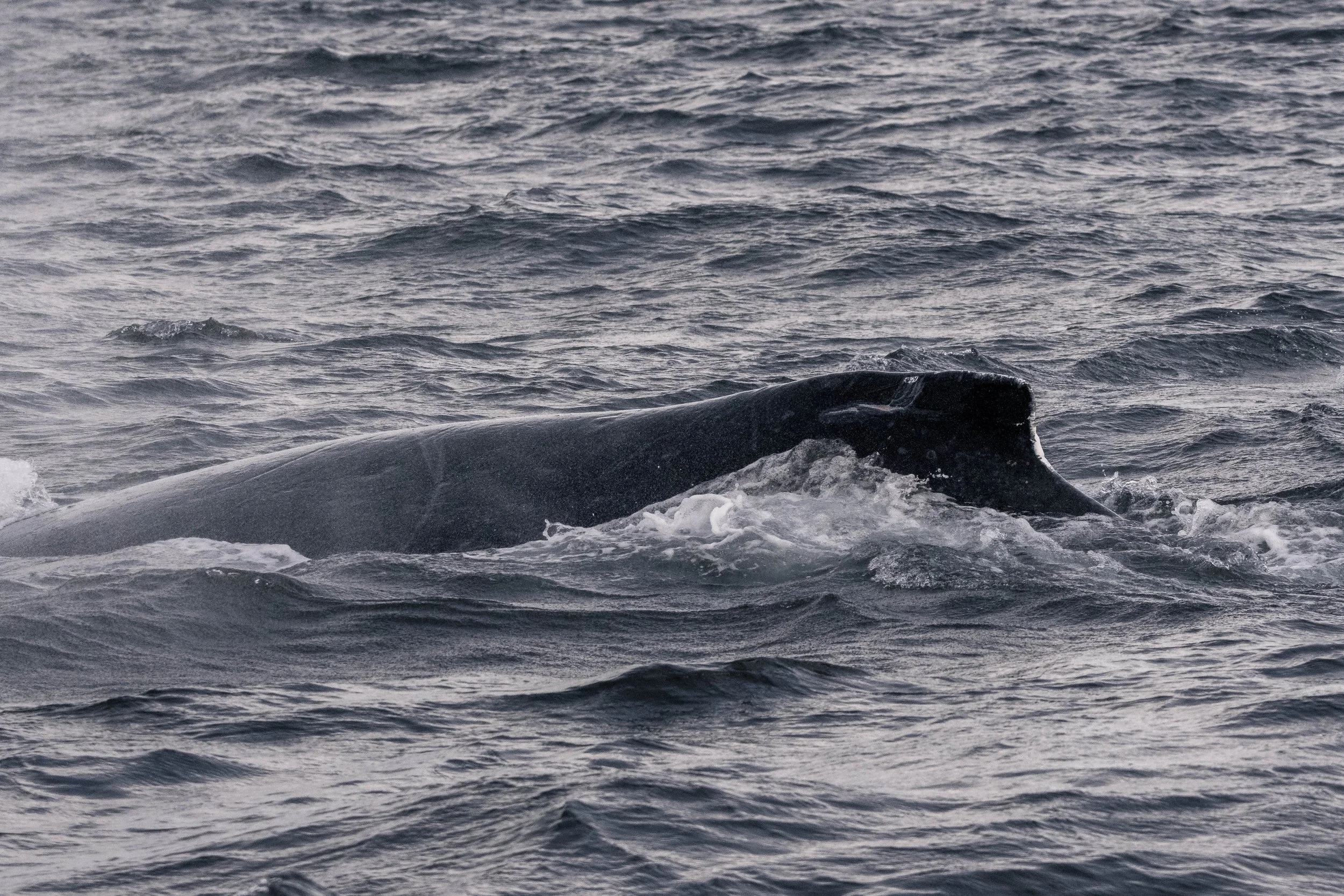
Hale-Bopp’s dorsal fin, with new scarring visible.
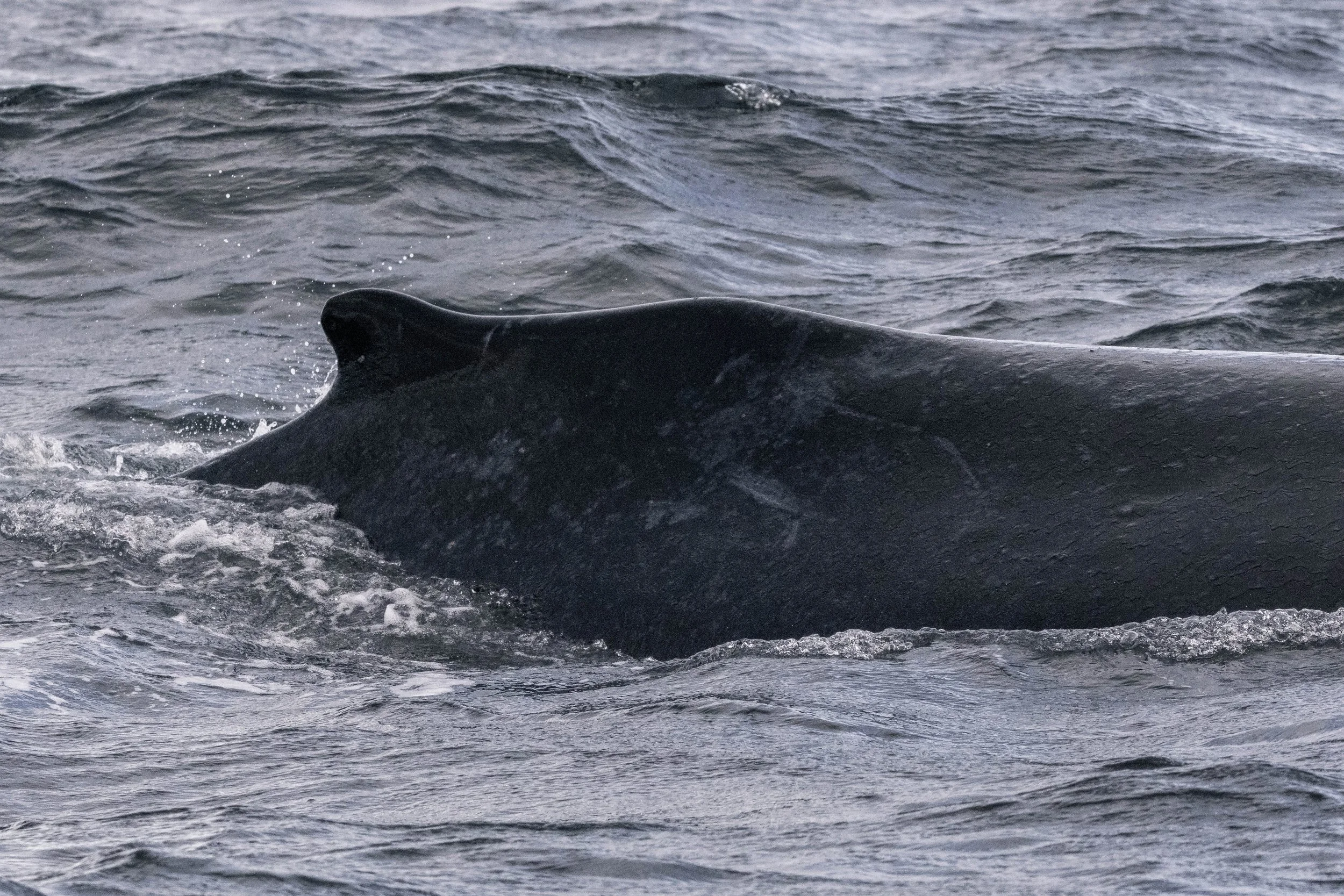
Kappa’s 2022 calf’s dorsal fin.
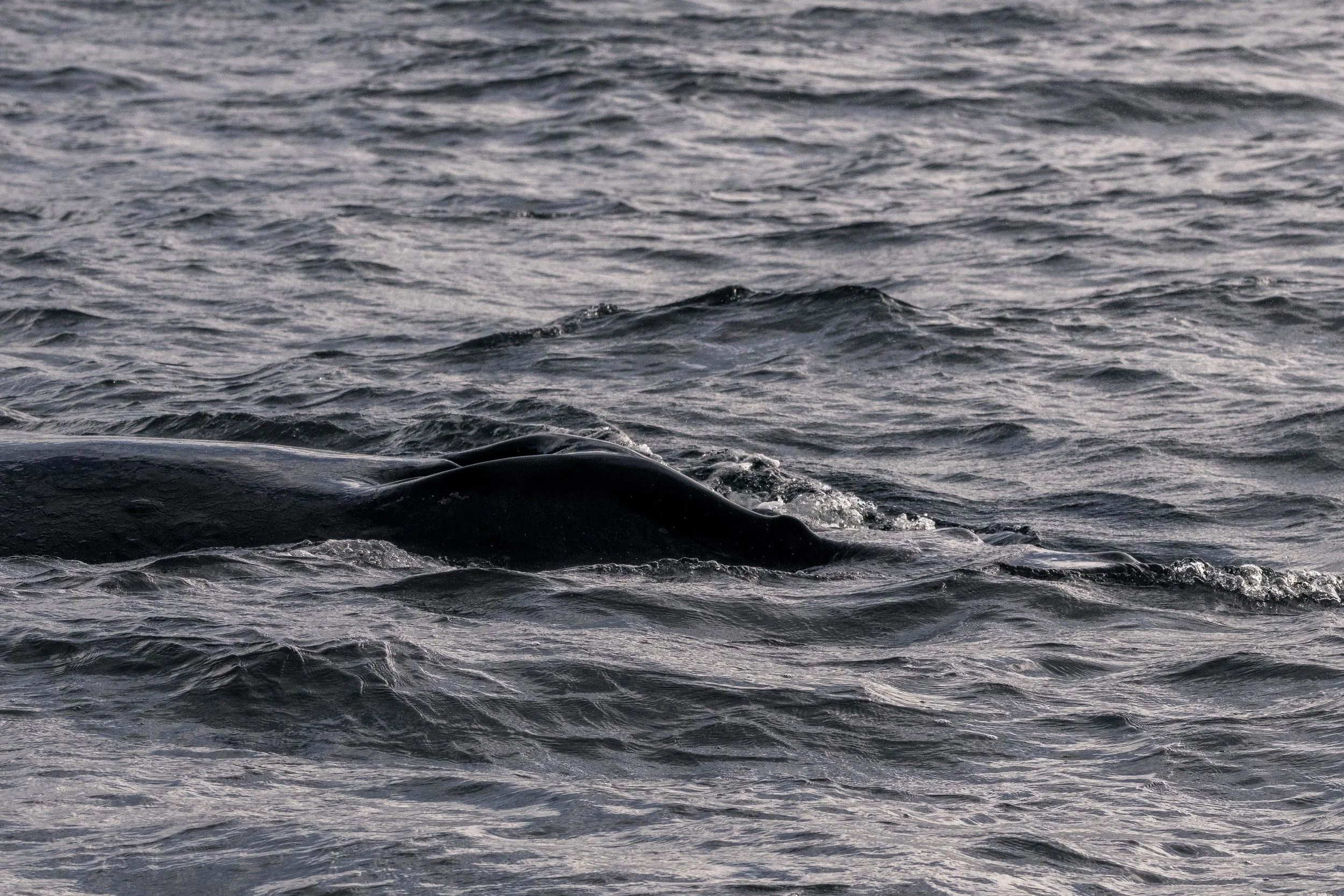
The nostrils of one of the pair!
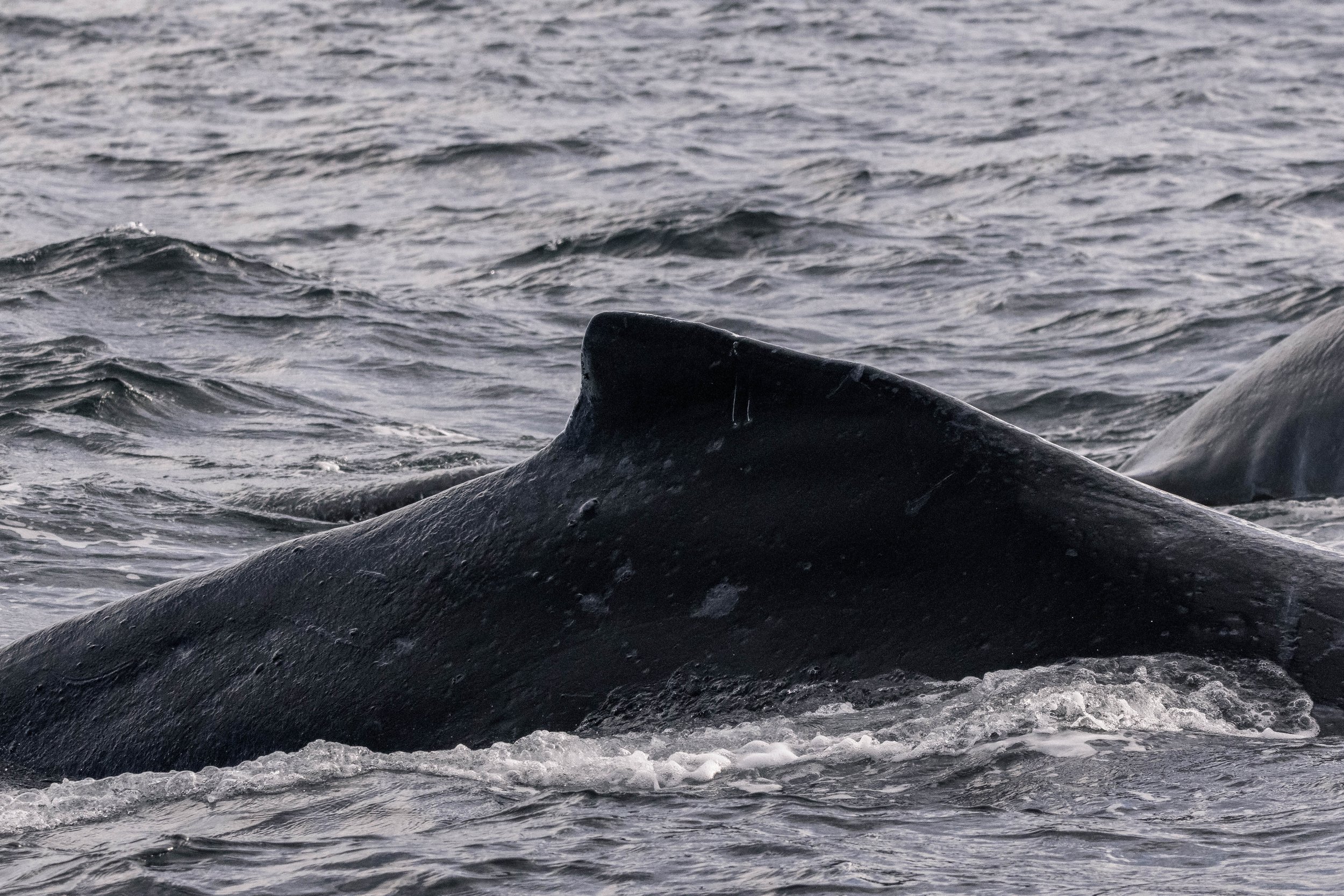
Hale-Bopp with Kappa’s 2022 calf behind them.

Kappa’s 2022 calf diving, with Hale-Bopp in the foreground.
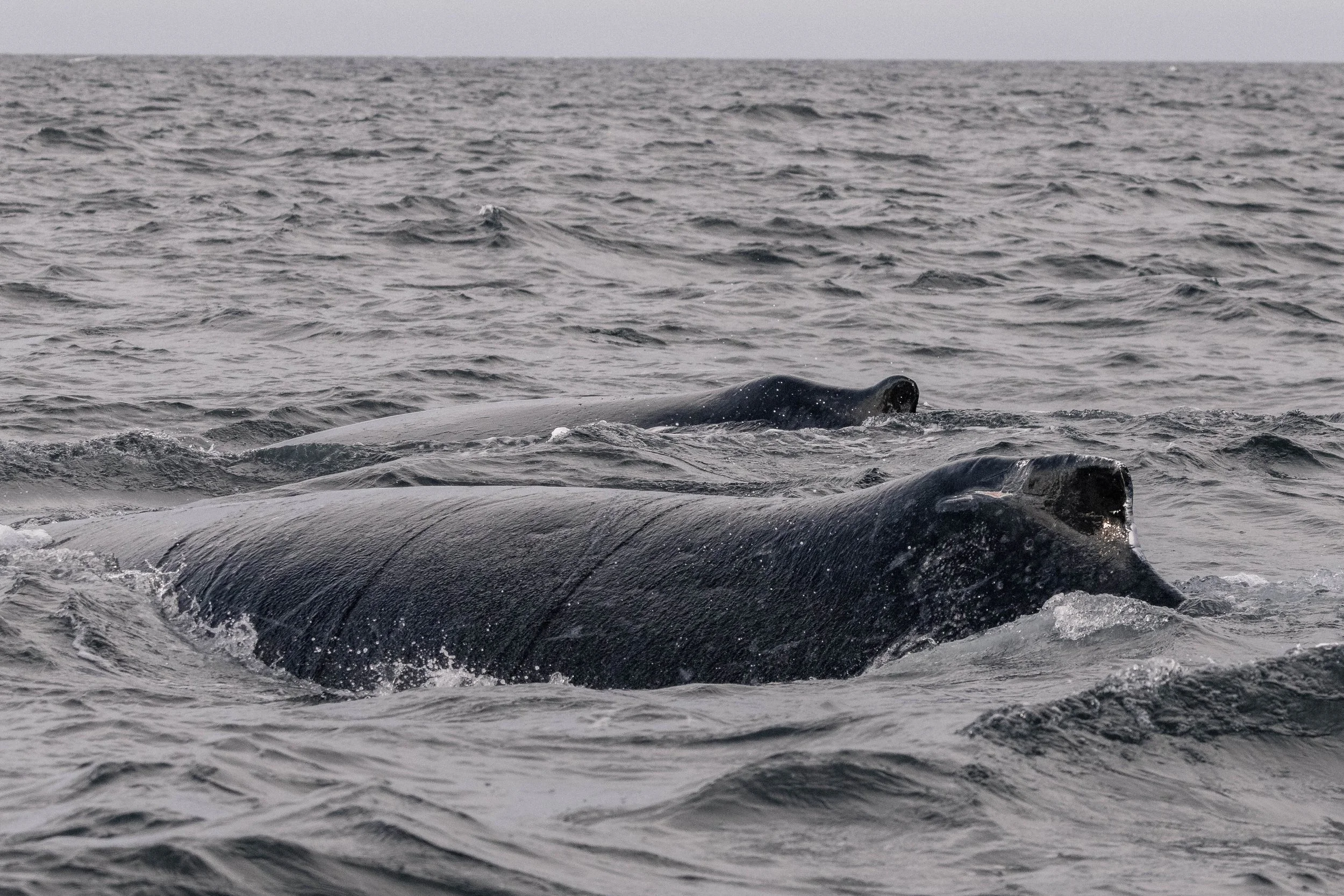
Hale-Bopp (front) and Kappa’s 2022 calf (back).
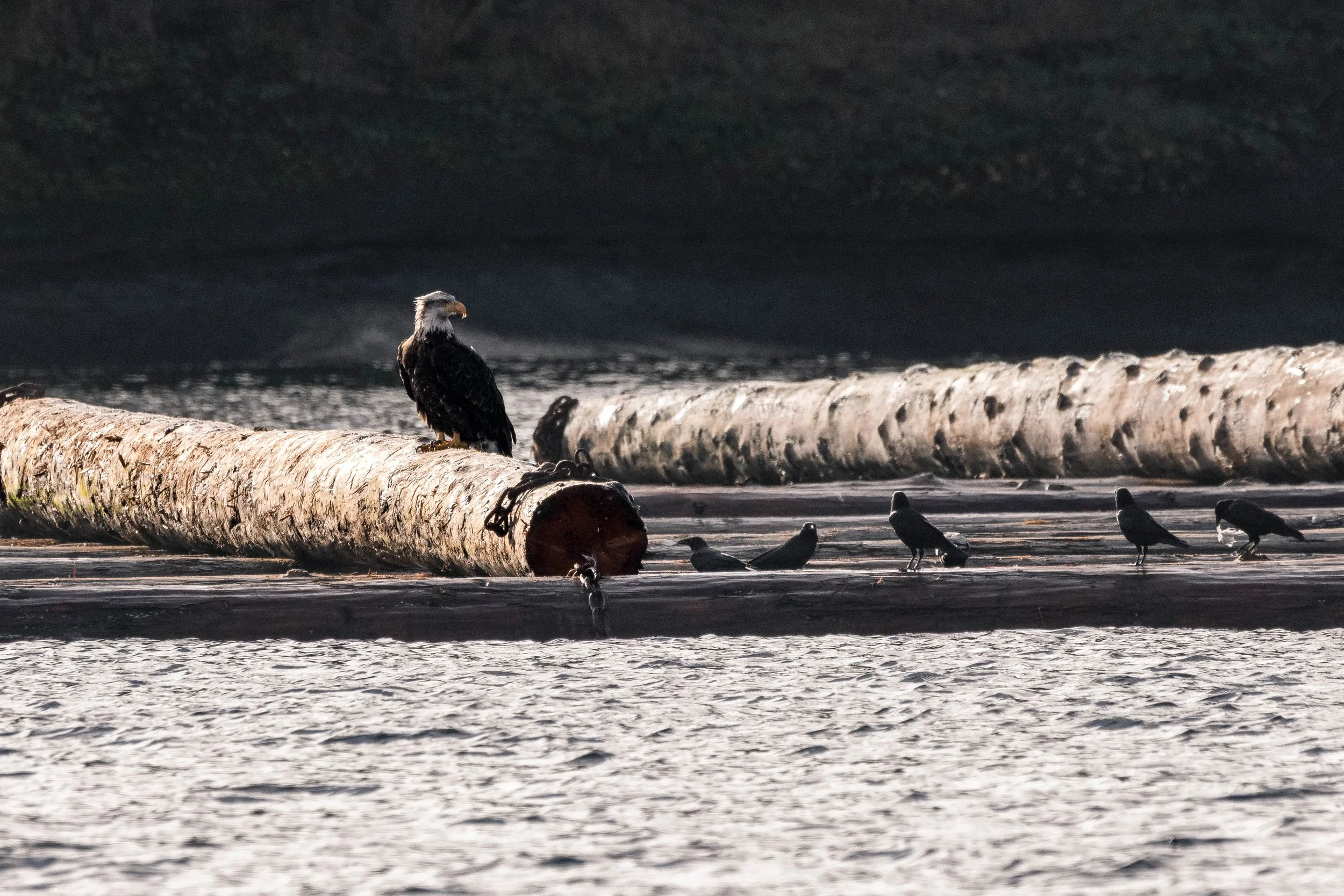
A young Bald Eagle perched on a log, with ravens beside them.
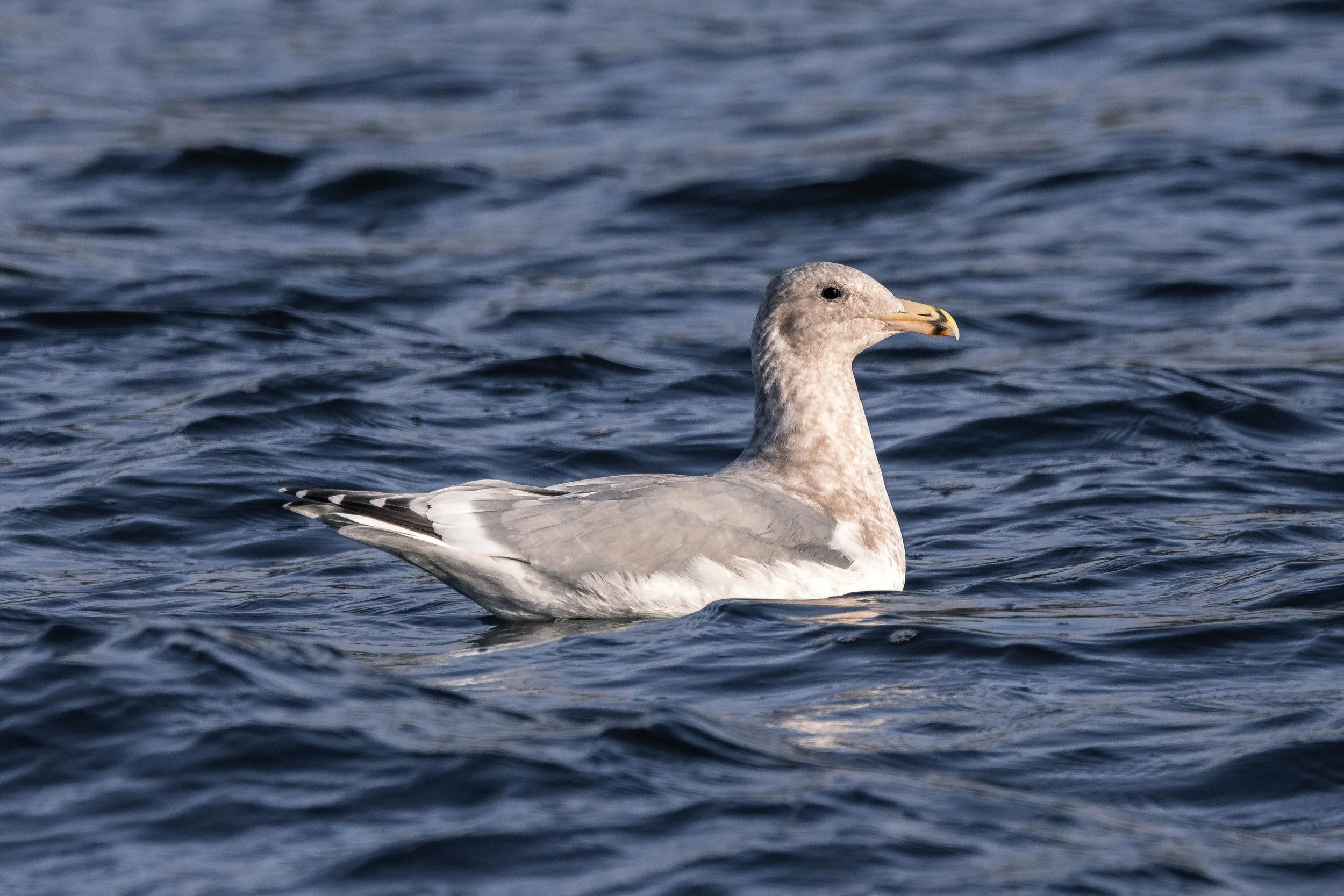
A gull enjoying the sunshine.