
October 5, 2026 - Humpbacks in the fog!
Foggy skies greeted us for a perfect October-themed trip as we boarded onto Keta and Kula. While we usually use visuals to locate whales, such as flukes, dorsal fins, or blows, we can also use sounds to help locate them too. After a short chat on what to look and listen for, we set off, and began adventuring around.
We didn’t have to go too far before we had our first sighting of the day. A large dark back arched out of the water, then a tail came up, and soon we learned we had found Honu (BCX1856) travelling close to the Five Finger Islands. Situated just outside Departure Bay, it had been a quick 15-minute adventure over to where Honu was foraging.
Honu is an interesting whale, as we know little about them. With their first Happywhale sightings dating back to 2018, and not being noted as a juvenile in those sightings, they are likely an older whale. As old sightings are collected and compiled, there is a chance that they may be cross-matched to a previous cow-calf pair in the future, which would help solidify our knowledge of their age, but for now, Honu’s history will remain a mystery.
After some time with them, we departed from Honu and started heading north, going back into search mode. Kula headed north, while Keta ducked in closer to shore. Spreading out increases our chances of locating more sightings, and can sometimes lead to slightly different encounters.
Close to Neck Point Park, Keta located another pair of humpbacks. These two were travelling in close proximity to each other, surfacing and arching their backs before fluking together and going down for a dive. These dives allowed Naturalist Val to photograph each fluke to confirm their identities. This pair was confirmed to be Tag (BCX0429) and Spock (BCY1134). While we have had a handful of sightings of Tag over the last month, this was our first encounter with Spock this season.
Spock is a very fascinating individual, as she has been seen in not one, not two, but three separate feeding grounds over the years. In 2022, she spent roughly a month in the waters off of San Francisco, California. Just last month, on September 11th, Spock was cross-matched with a Juneau, Alaska sighting, roughly 1,200 kilometres away from her sighting today. That means she swam roughly 50 kilometres every day to get here. Given that humpback whales tend to show strong site fidelity, returning to the feeding and breeding grounds their mothers taught them in infancy, these multiple deviations are quite unusual. We are eager to see where Spock’s adventures take her next!
Further north, another duo of humpback whales occasionally appeared out of the fog. One of them had many small scars dappled all over their back, giving them an almost spotted appearance. The other had a large divot in its dorsal fin, another unique identifier. These features, along with the fluke photos we captured, let us confirm their IDs as Stingray (BCZ0409) and Crater/Mensa (BCX1565). This was only our second sighting of Stingray this season, and interestingly, their first encounter was with Tag, one of the humpbacks Keta had been with earlier.
Stingray and Crater sat right on the edge of the fog bank, letting us grab a couple of photos in the sunlight before the darkness rolled in again.
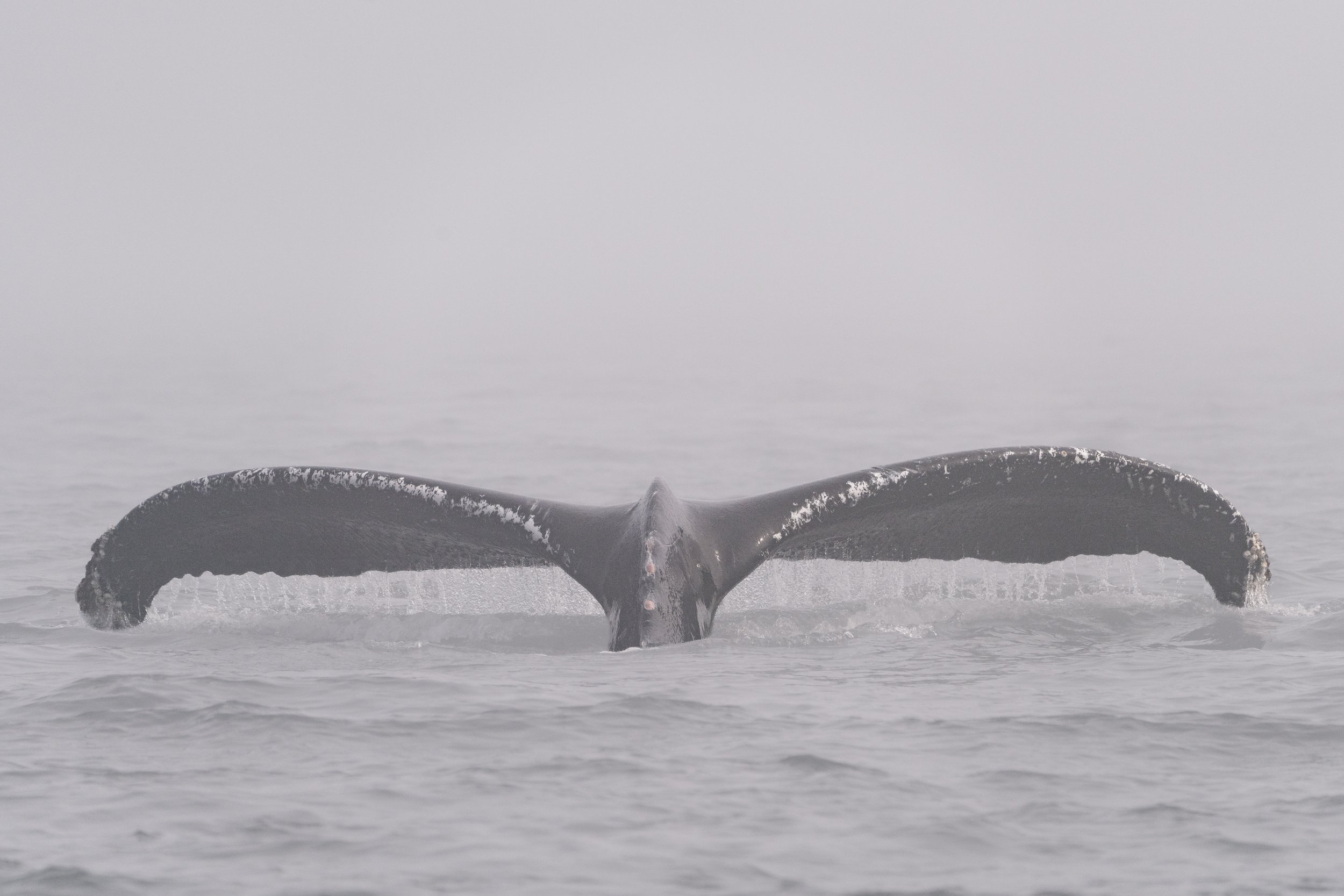
This pair was a perfect example of the wide variety of fluke pigmentation patterns we can see, with Crater’s nearly perfectly black fluke a stark contrast to Stingray’s largely white fluke. In British Columbia, humpback whales are divided into three groups based on how much white is visible on their flukes. X whales (such as Crater) show 0-20% white pigmentation, or a largely dark fluke; Y whales (such as Spock) have 20-80% white pigmentation; and Z whales (such as Stingray) have more than 80% white pigmentation across their flukes. This designation system streamlines whale identification and lets naturalists narrow down which sections of ID catalogues they should reference.
Wrapping up our time with the pair, it was time for us to slowly make our way back along the coast. The scenery changed as we headed south, and soon we were back in the harbour. The fog gave the trip a very October vibe, and we were eager to grab a hot chocolate afterward to warm up. It had been very interesting seeing (and hearing!) the gentle giants navigate around, travelling and foraging away.
Please enjoy this tour’s photos taken by Marine Naturalists Val Watson and Evan Hessels.
Honu
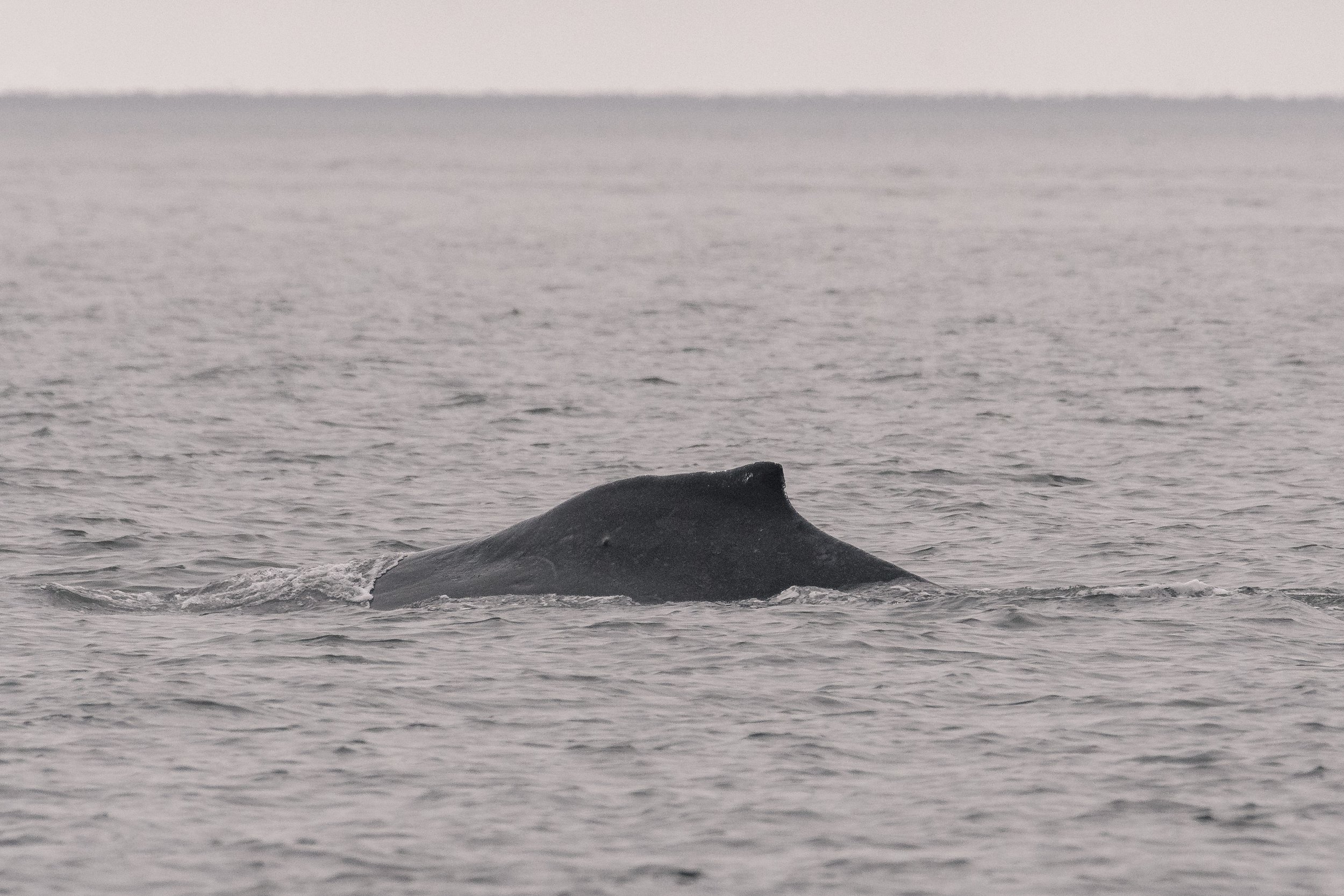
Honu making their way along in the fog.Photo by Evan Hessels.
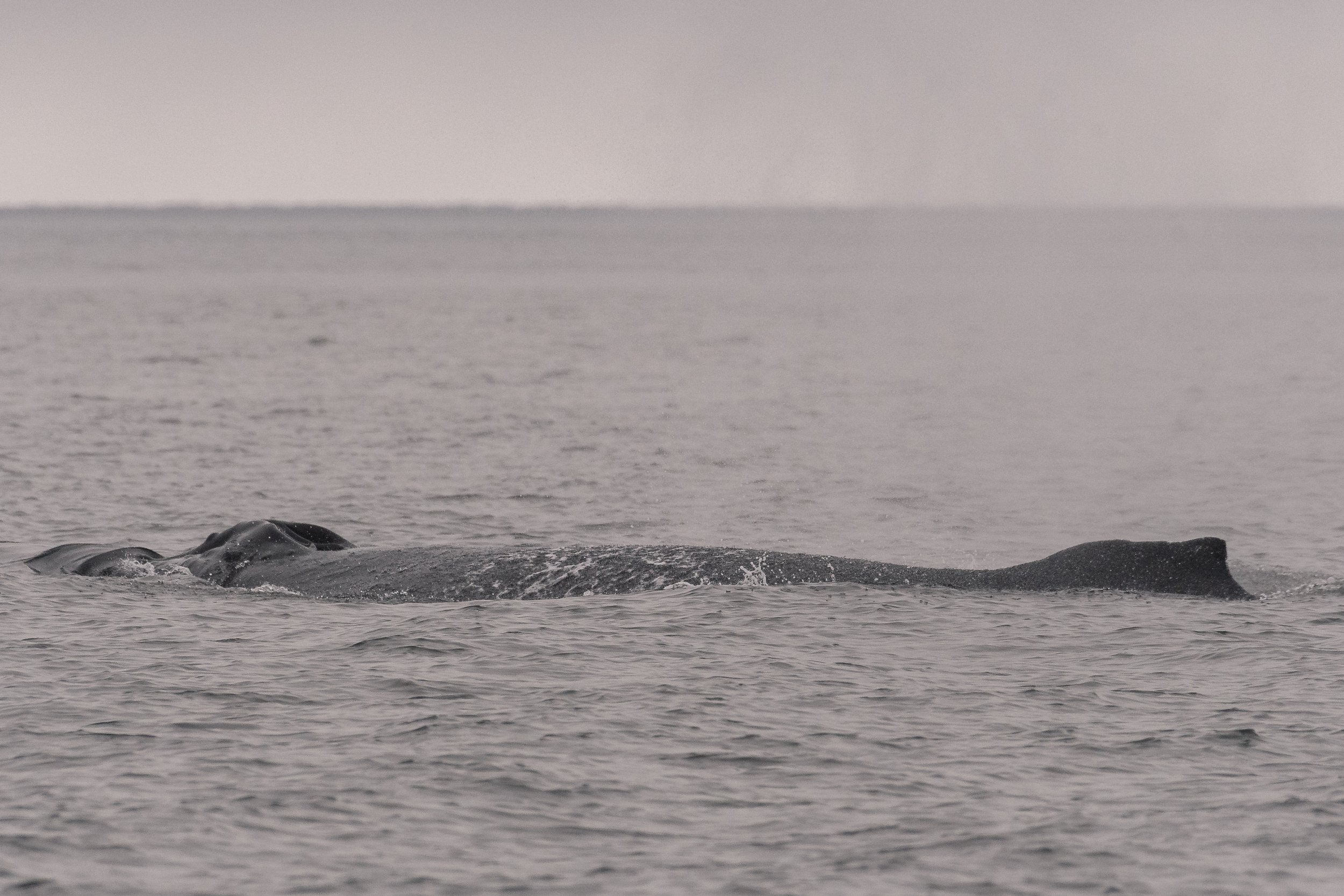
A big blow from Honu, with their blowholes above the surface. Photo by Evan Hessels.
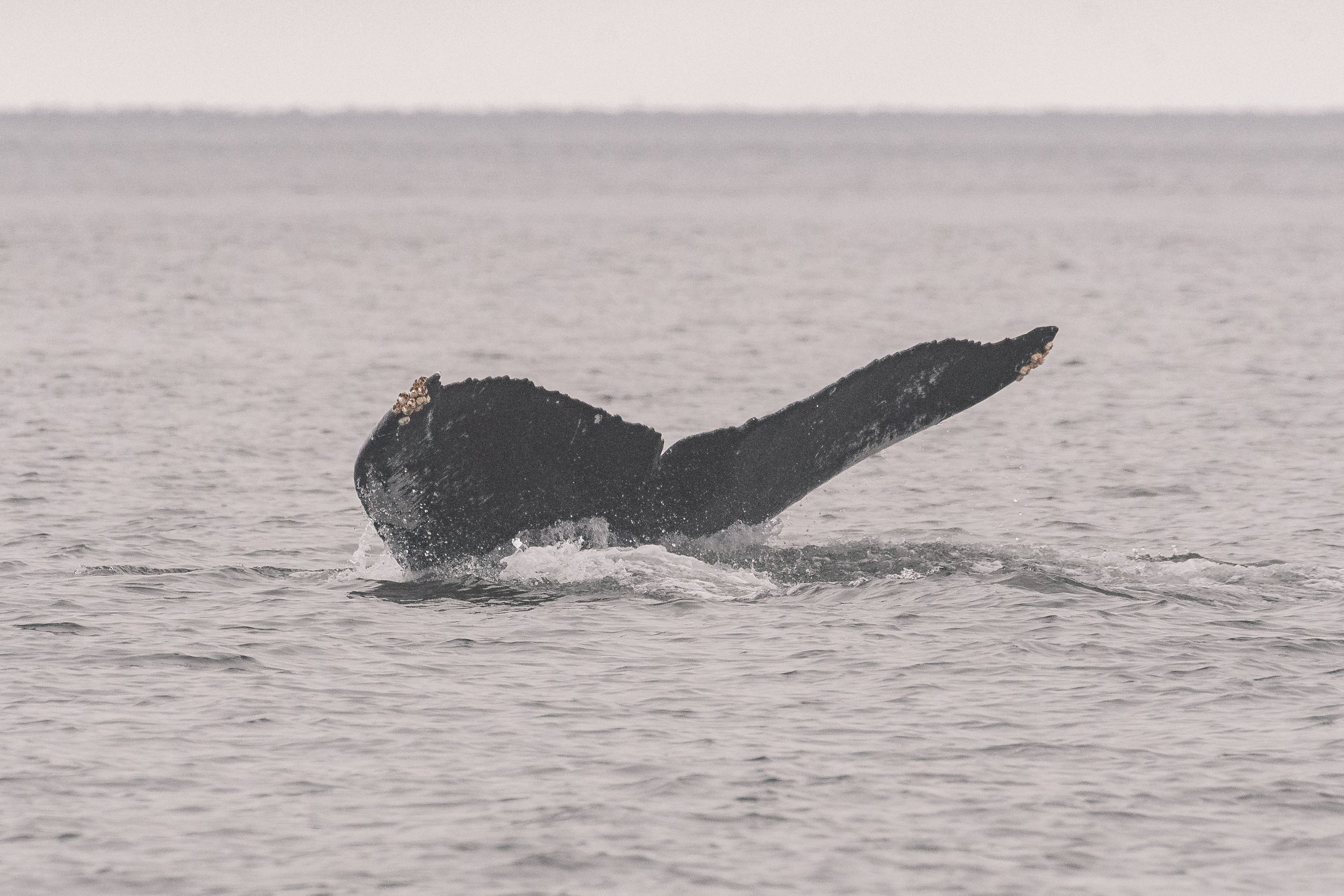
Time for a dive! Photo by Evan Hessels.
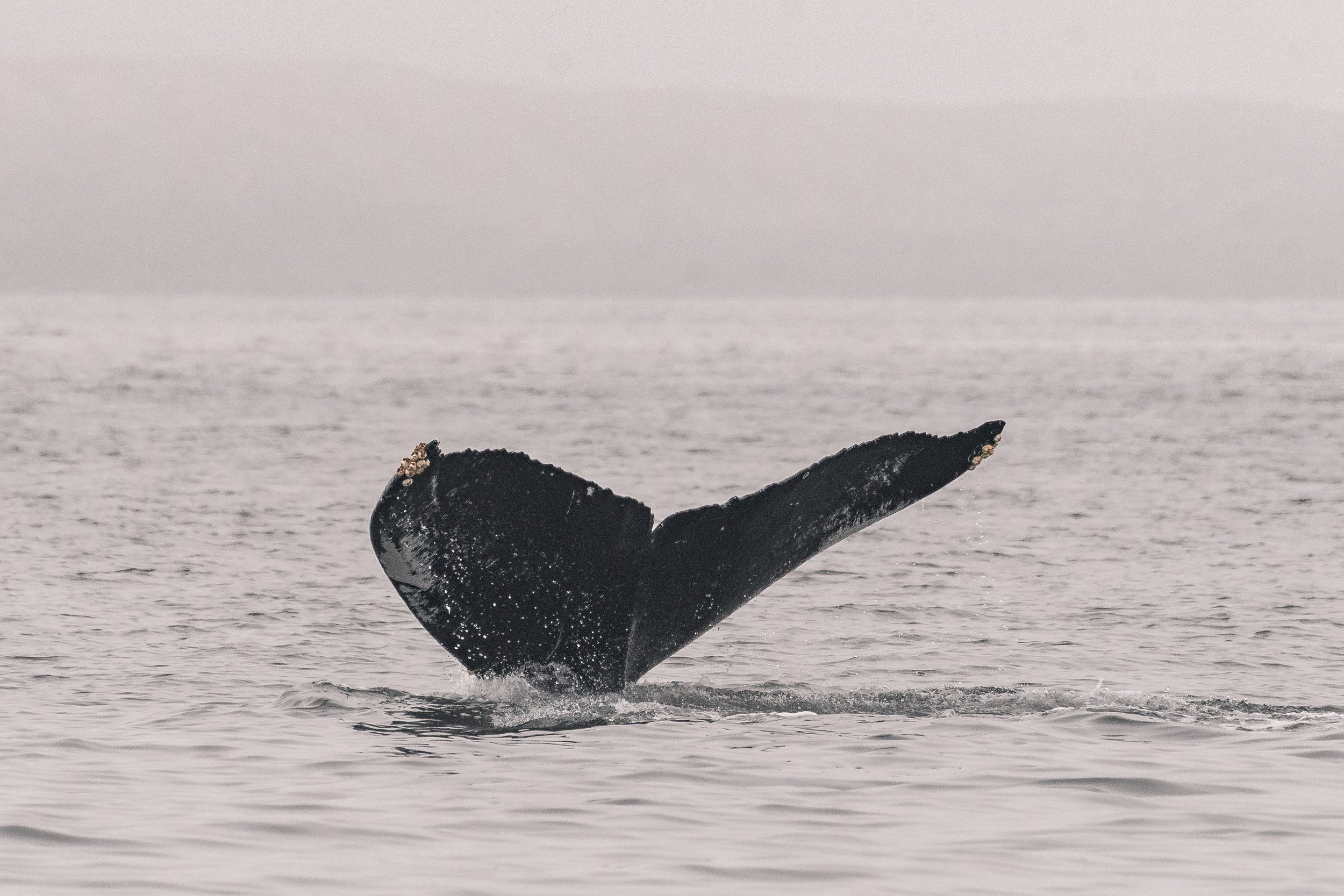
Honu’s interesting fluke pattern. Photo by Evan Hessels.
Tag and Spock
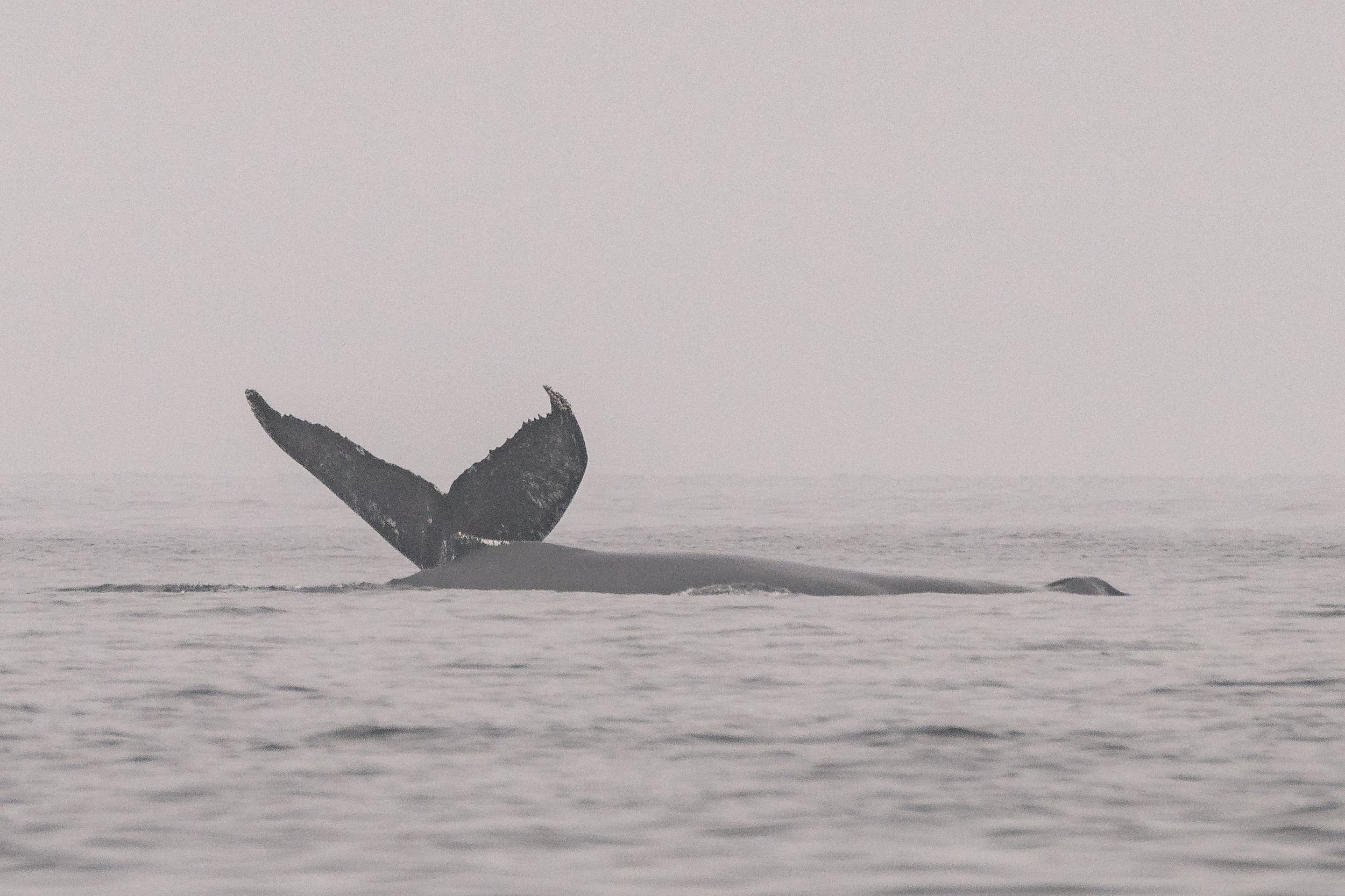
Spock fluking with Tag in front of her. Photo by Val Watson.
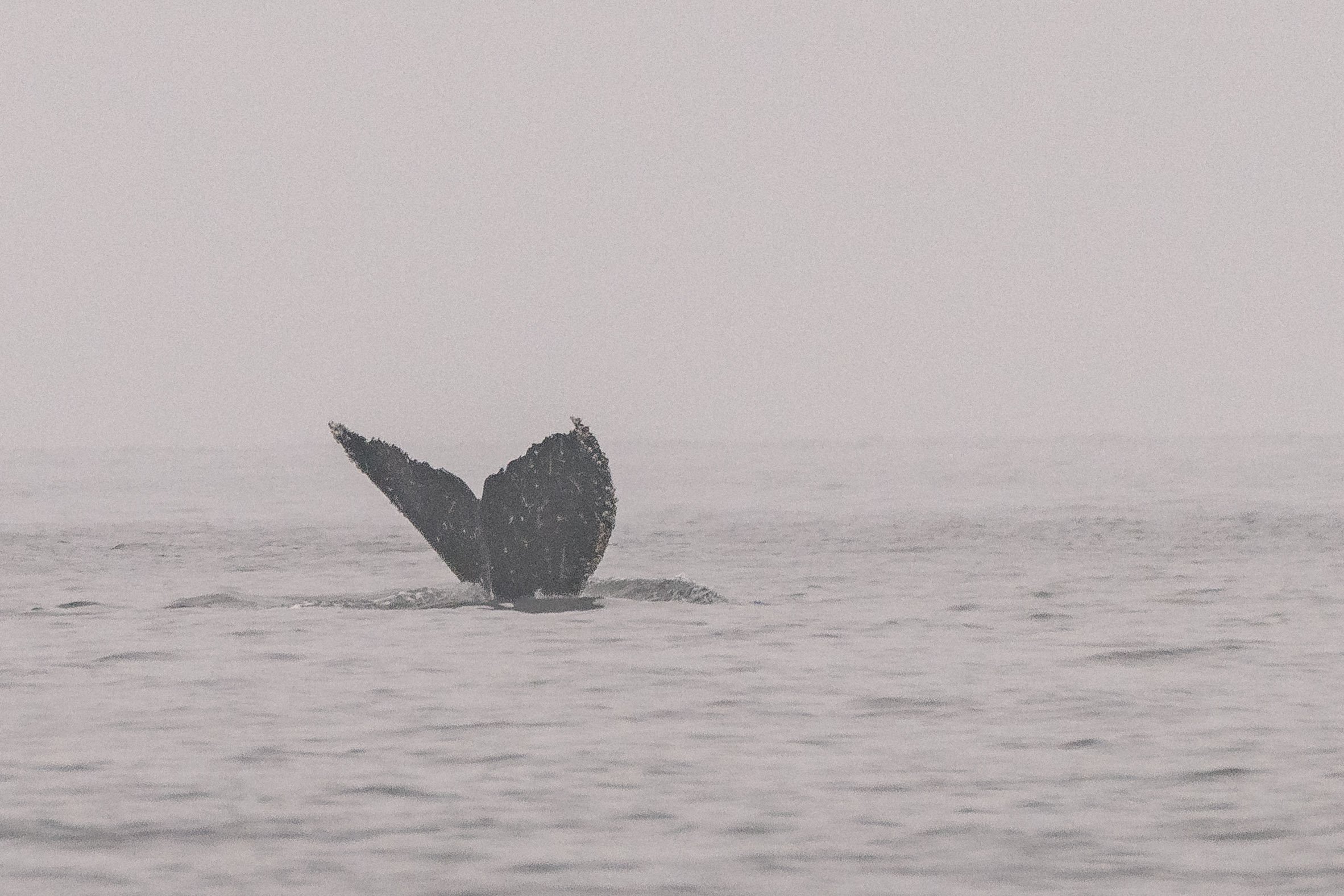
Tag following Spock down for a dive. Photo by Val Watson.
Stingray and Crater/Mensa
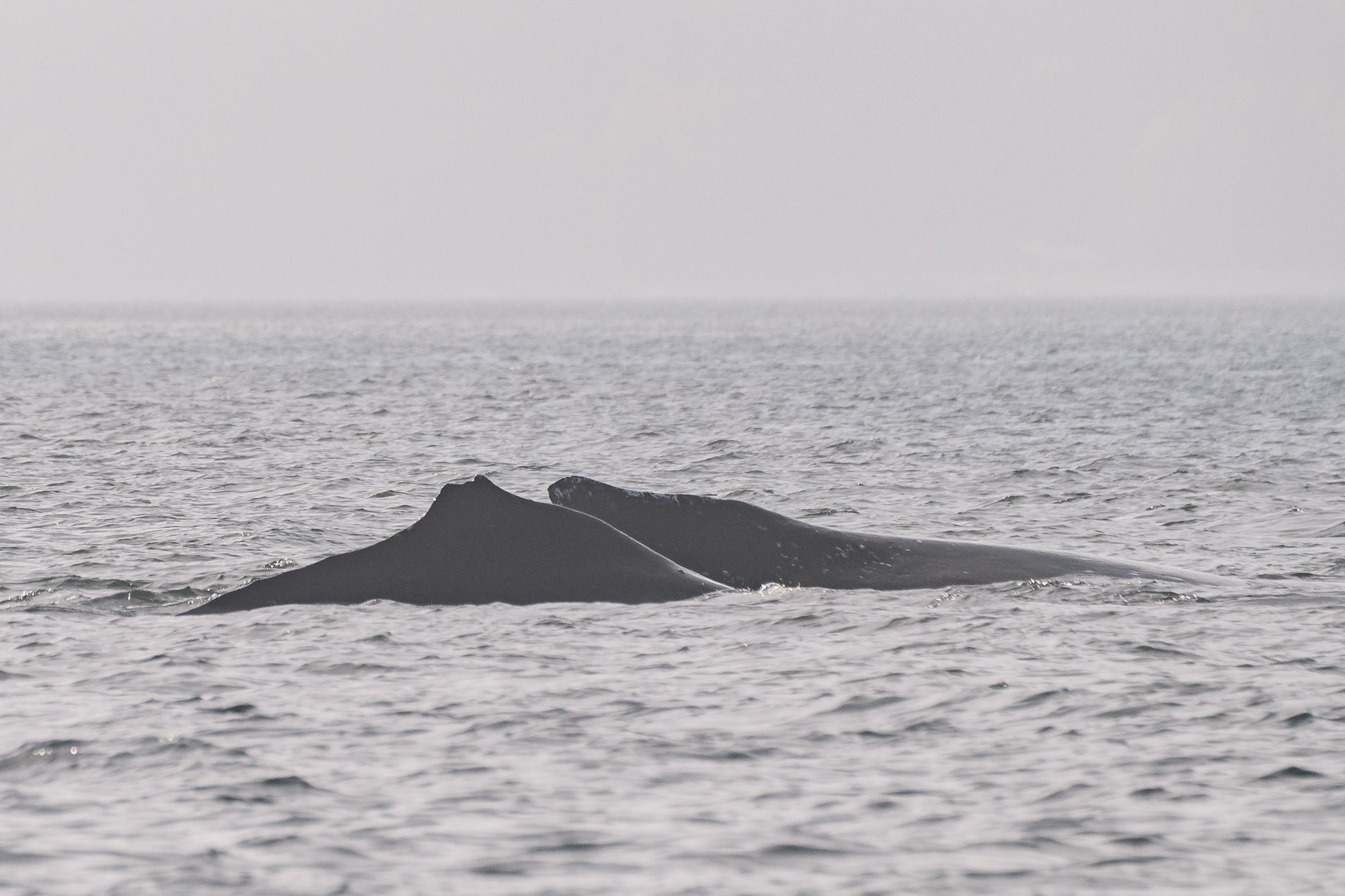
Crater/Mensa travelling closely with Stingray. Photo by Val Watson.
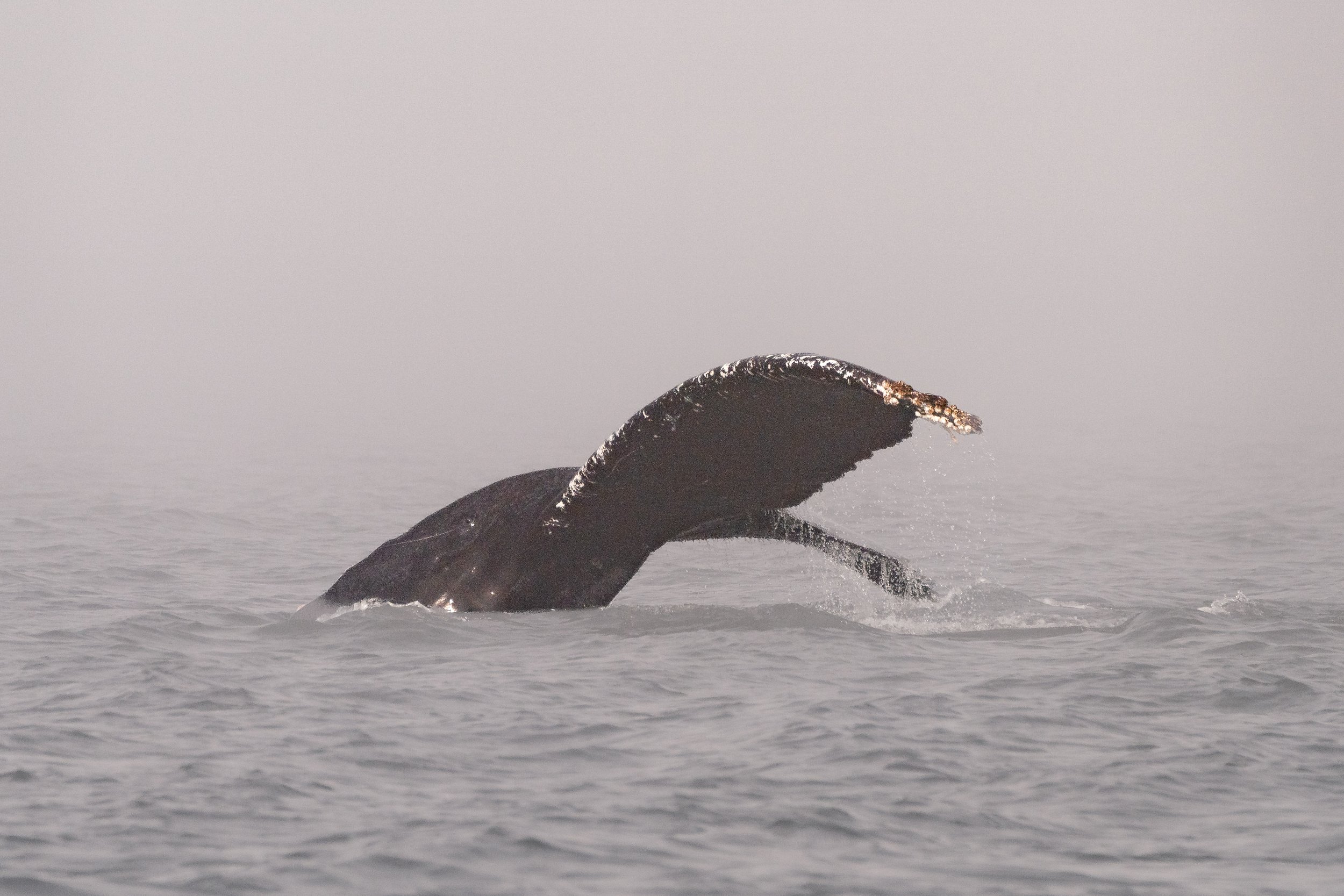
Crater/Mensa fluking from an interesting angle. Photo by Val Watson.
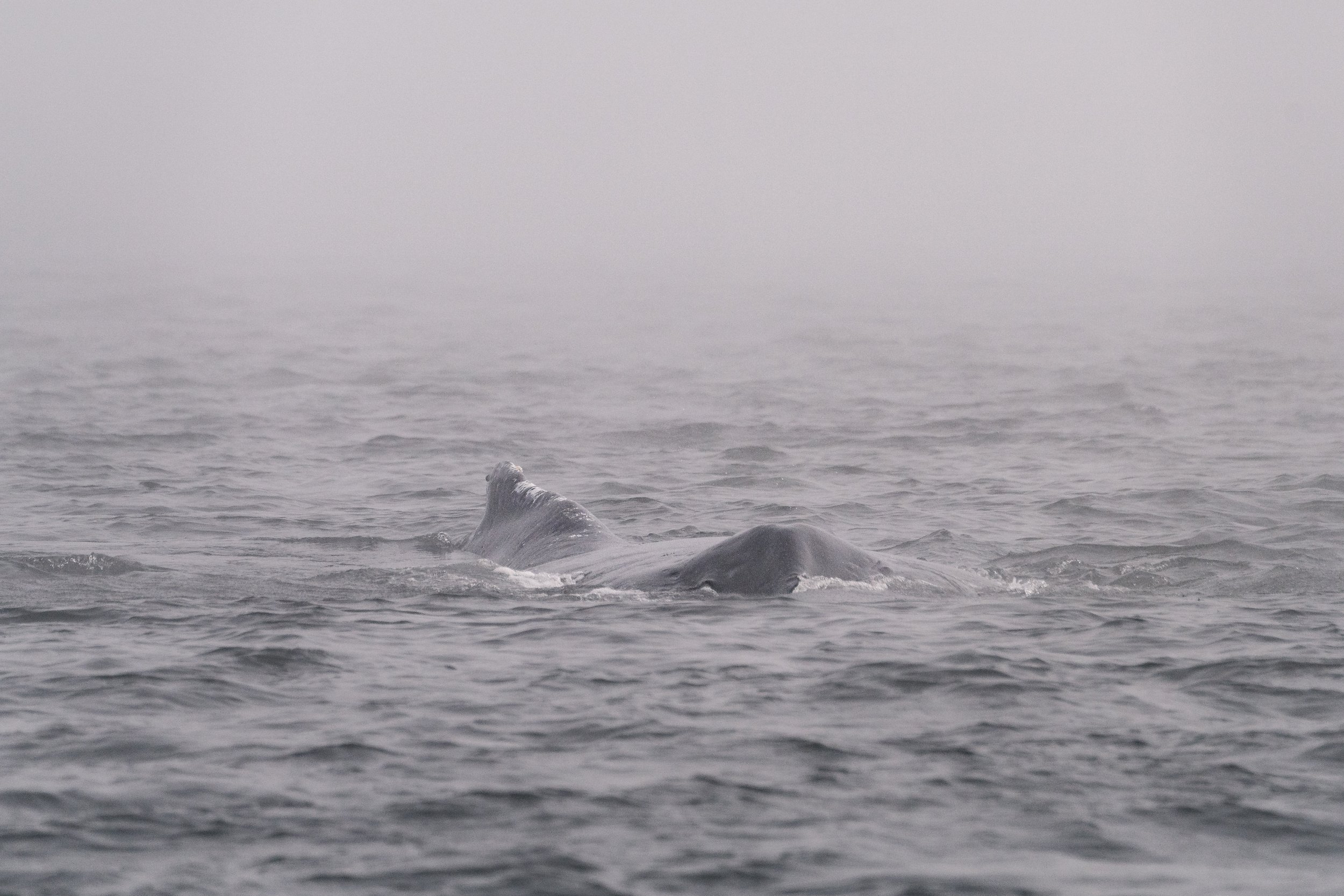
Stingray approaching in the fog. Photo by Val Watson.
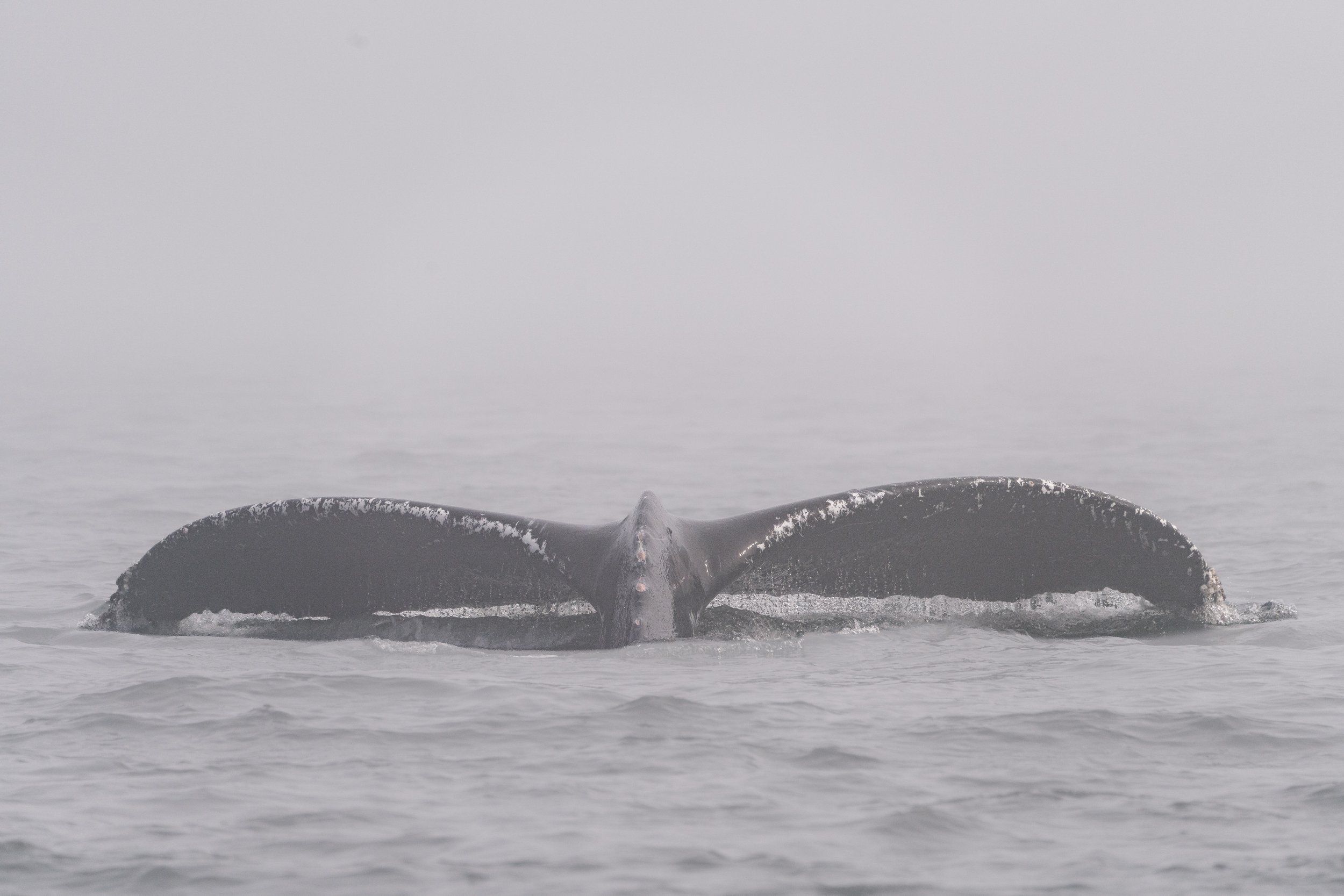
Crater/Mensa arching for the start of a dive. Photo by Val Watson.
Crater/Mensa popping in and out of the mist. Photo by Val Watson.
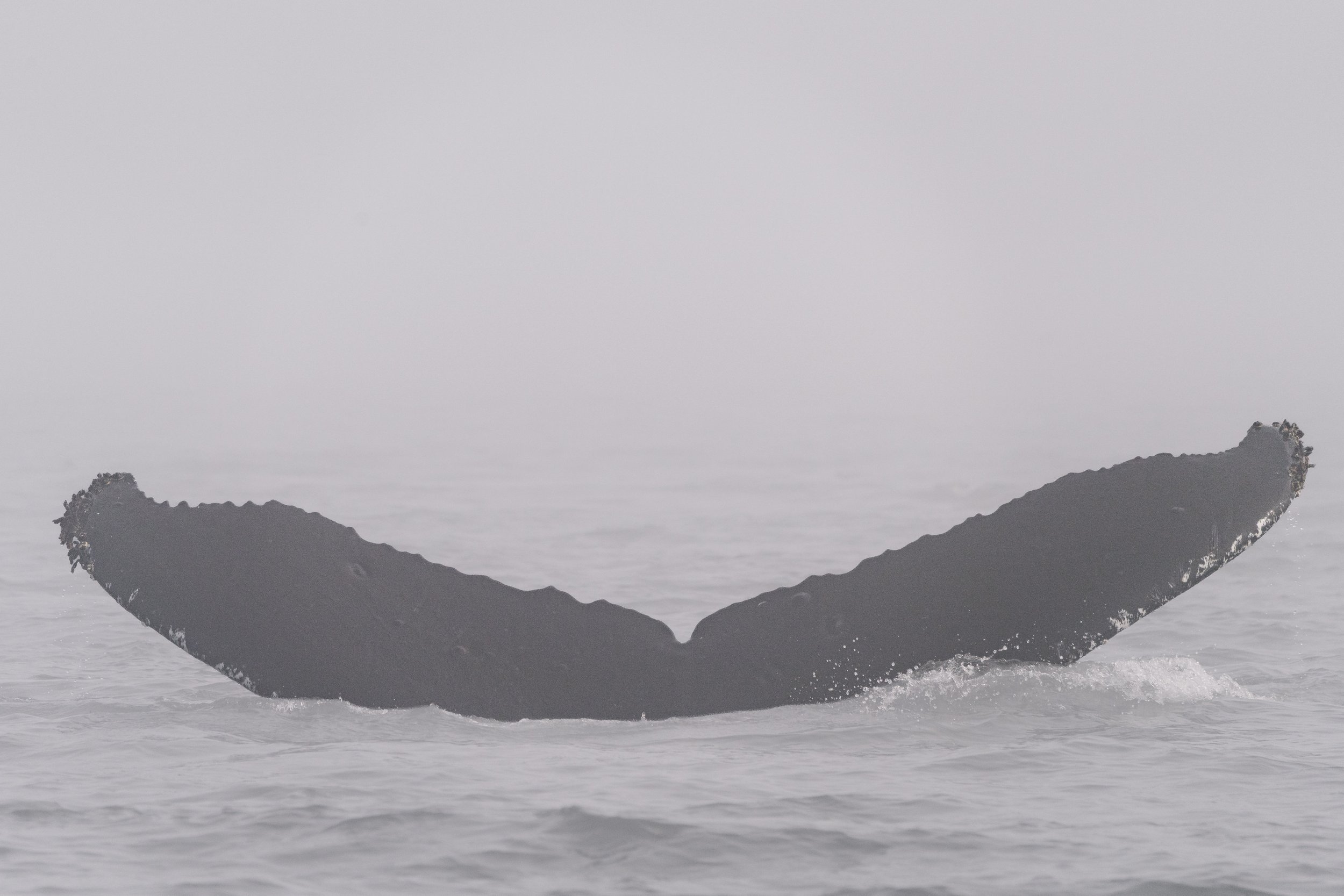
Crater/Mensa’s top fluke as they go under. Photo by Val Watson.
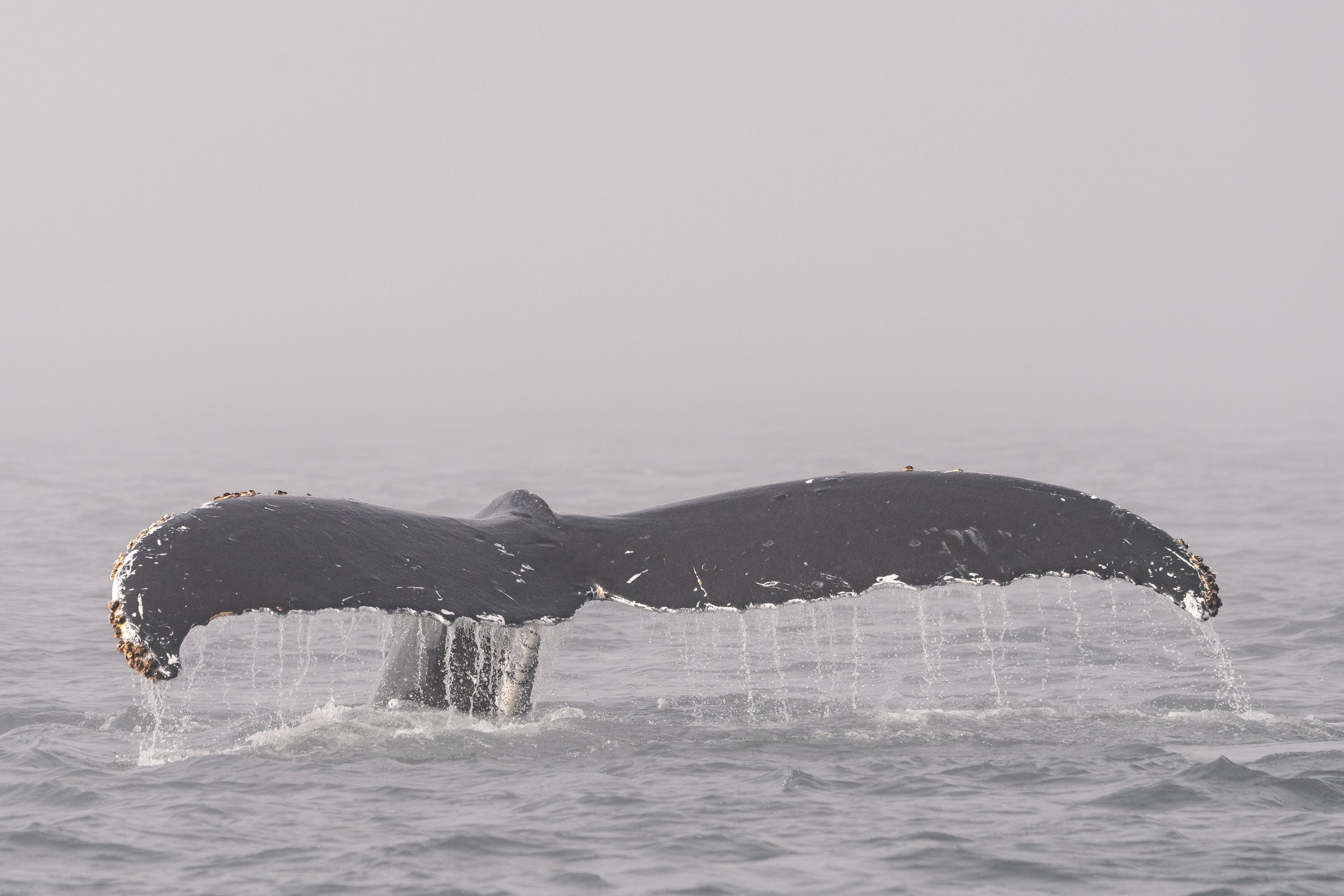
A fluke waterfall from Stingray. Photo by Val Watson.
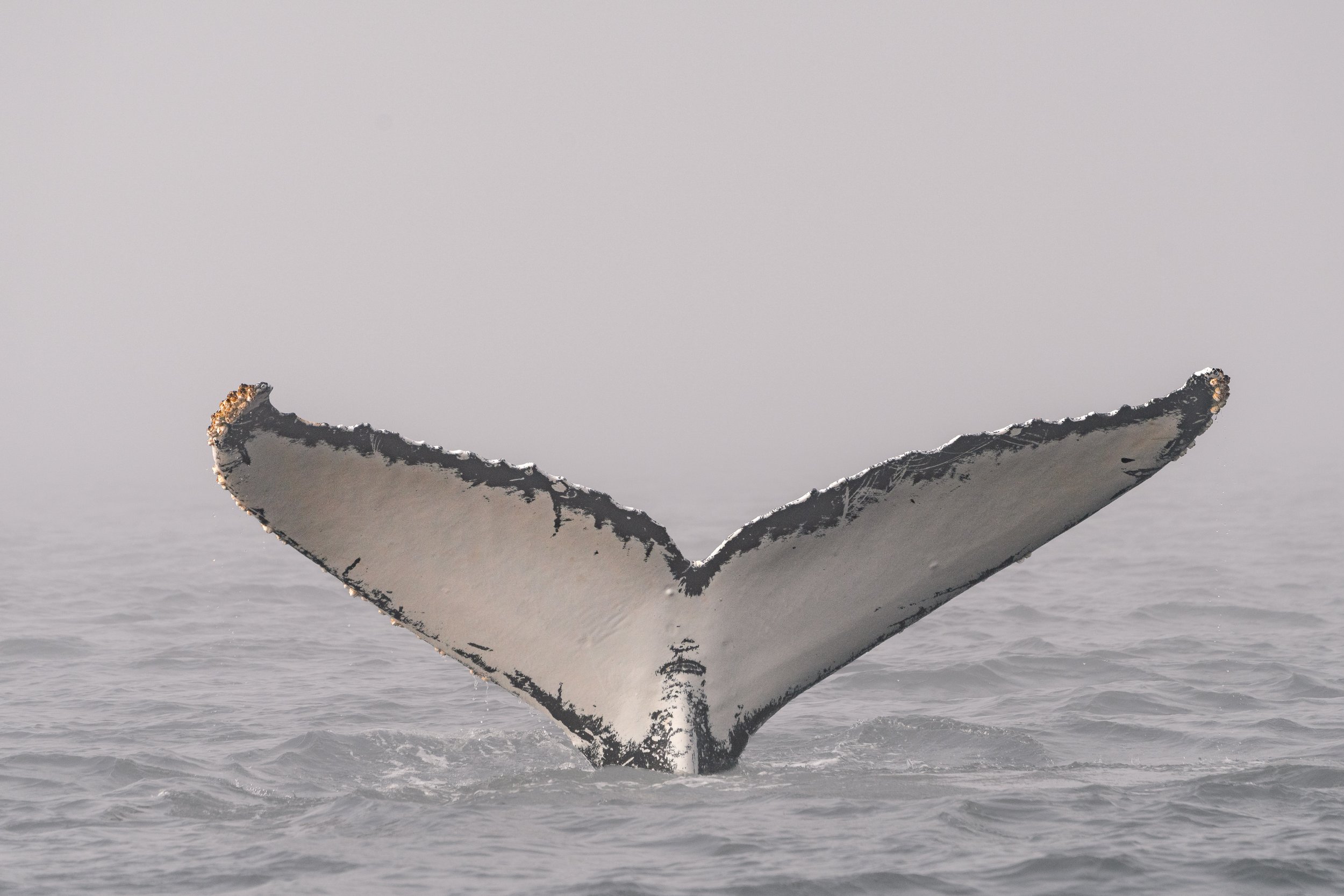
Stingray, with one of the argueably most beautiful flukes in the Salish Sea! Photo by Val Watson.
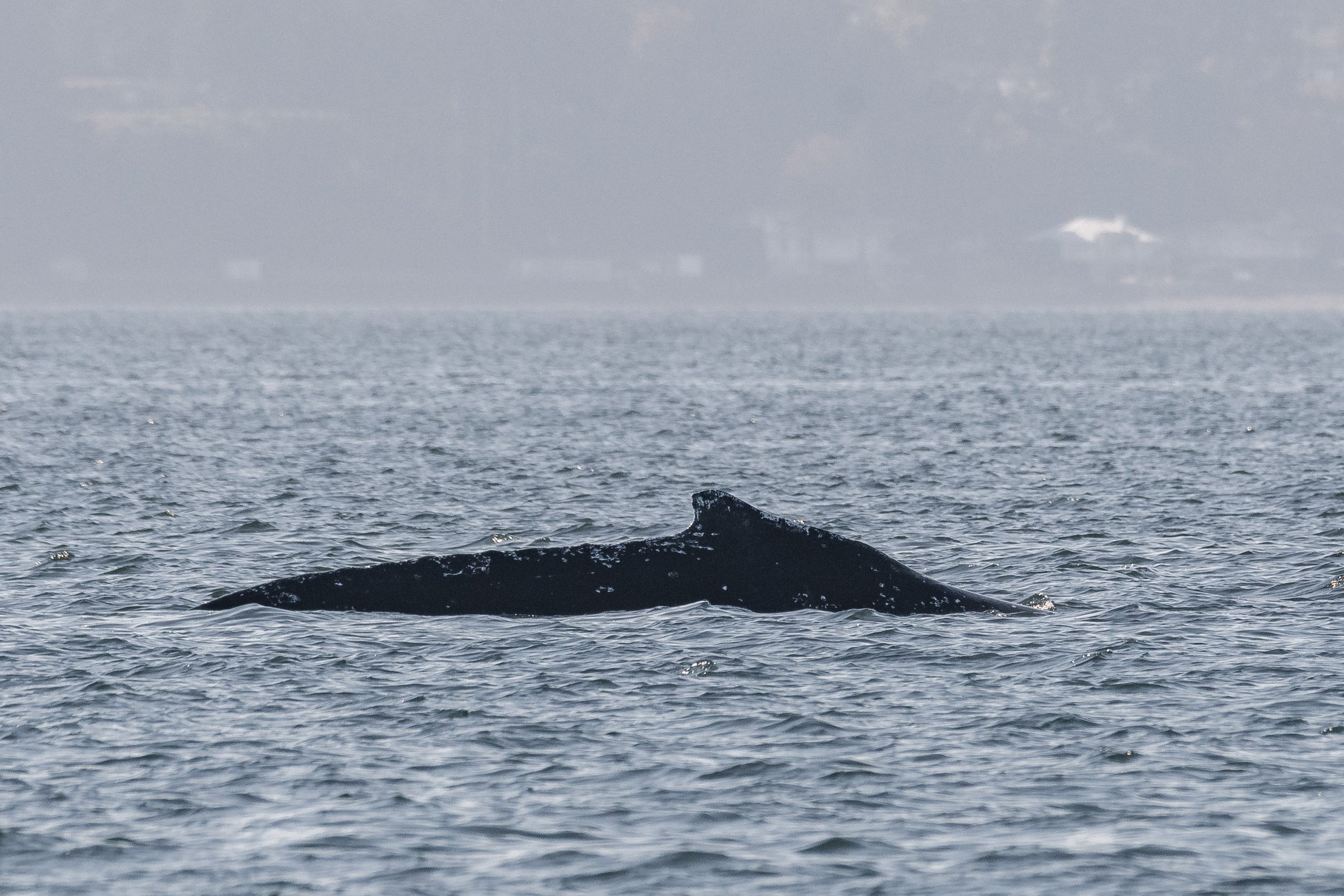
Stingray travelling along through a tiny patch of sunlight. Photo by Evan Hessels.
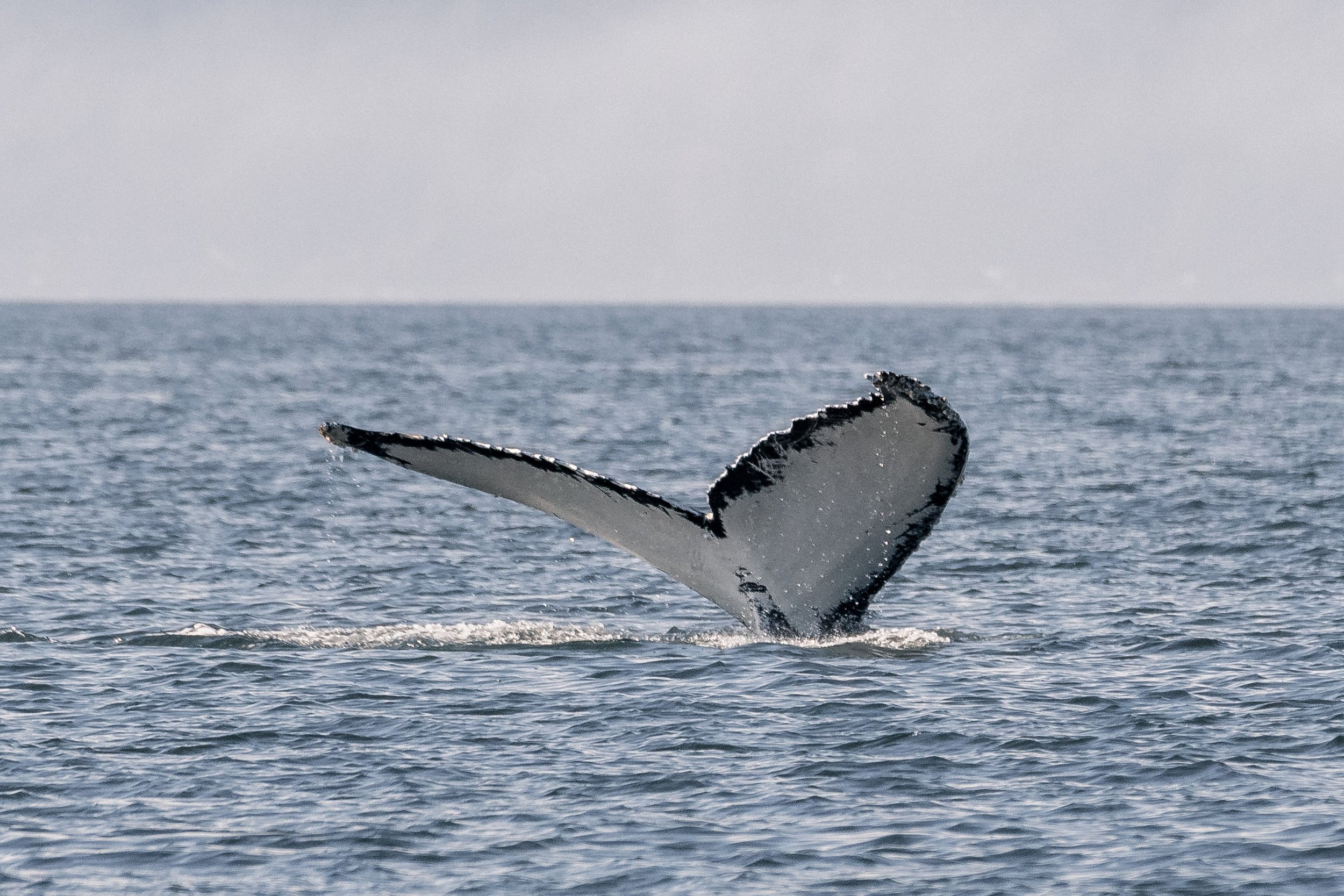
Stingray diving ahead. Photo by Evan Hessels.
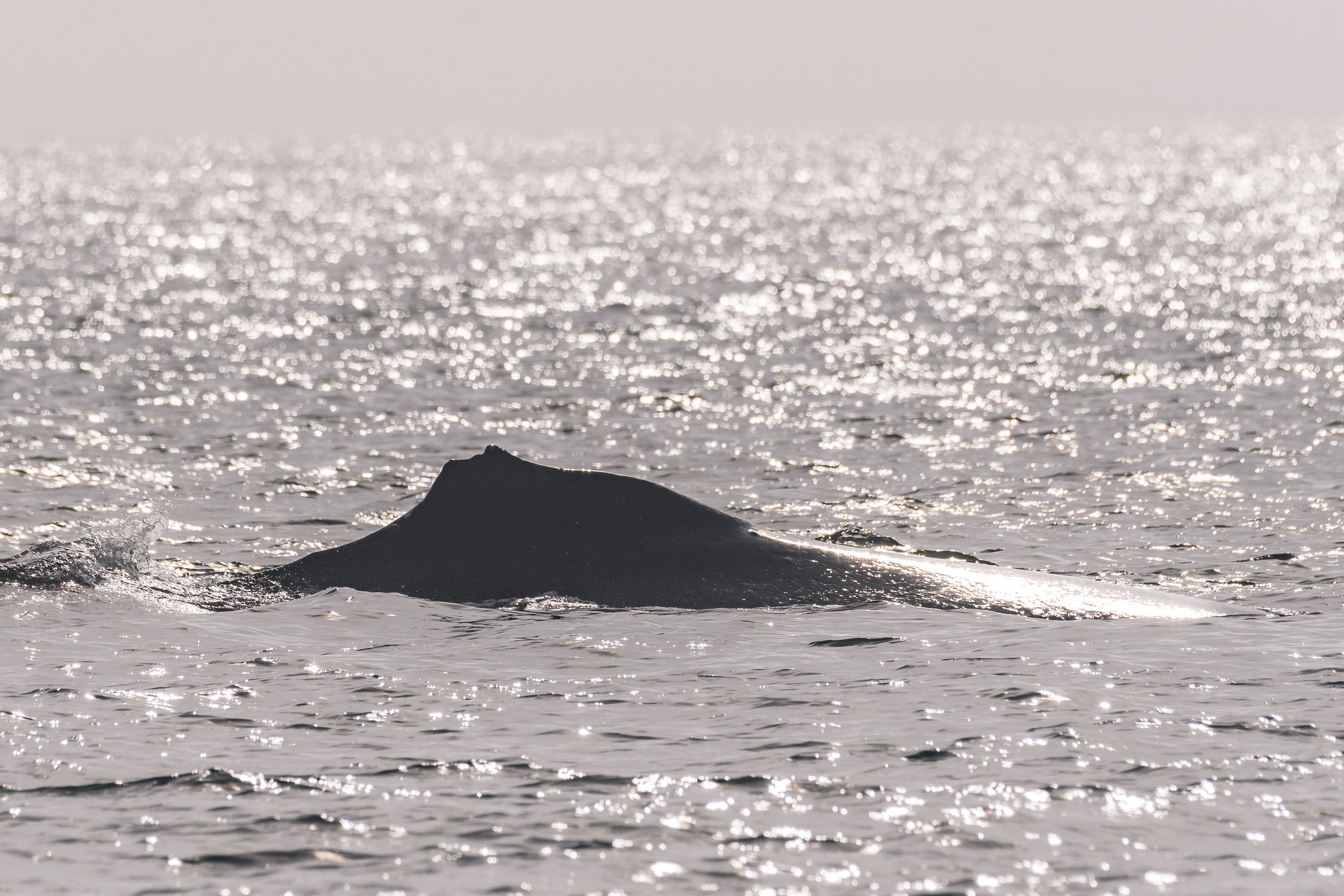
Crater/Mensa backlit in the glowing sunlight. Photo by Evan Hessels.
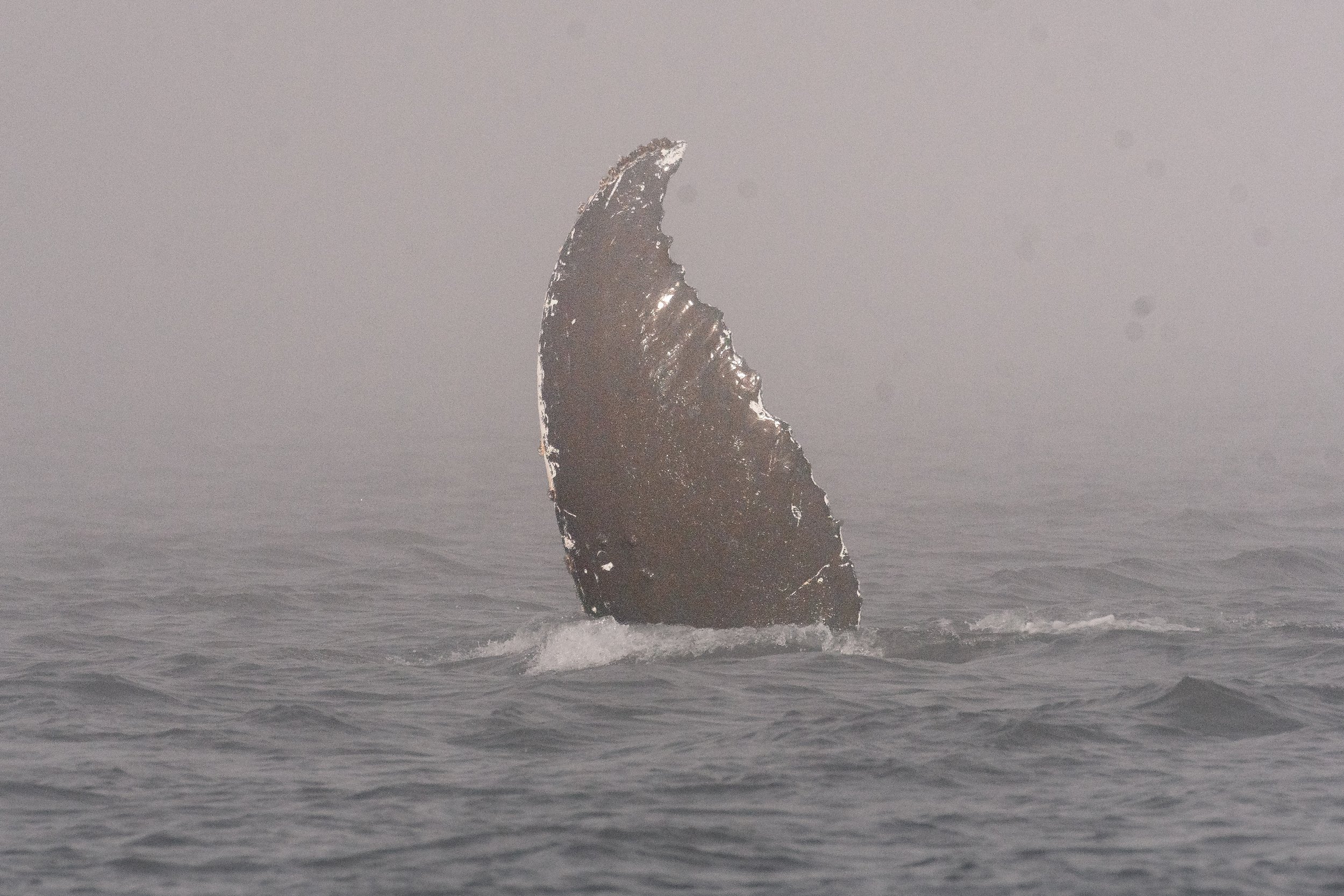
Stingray diving as the fog rolls back in. Photo by Evan Hessels.
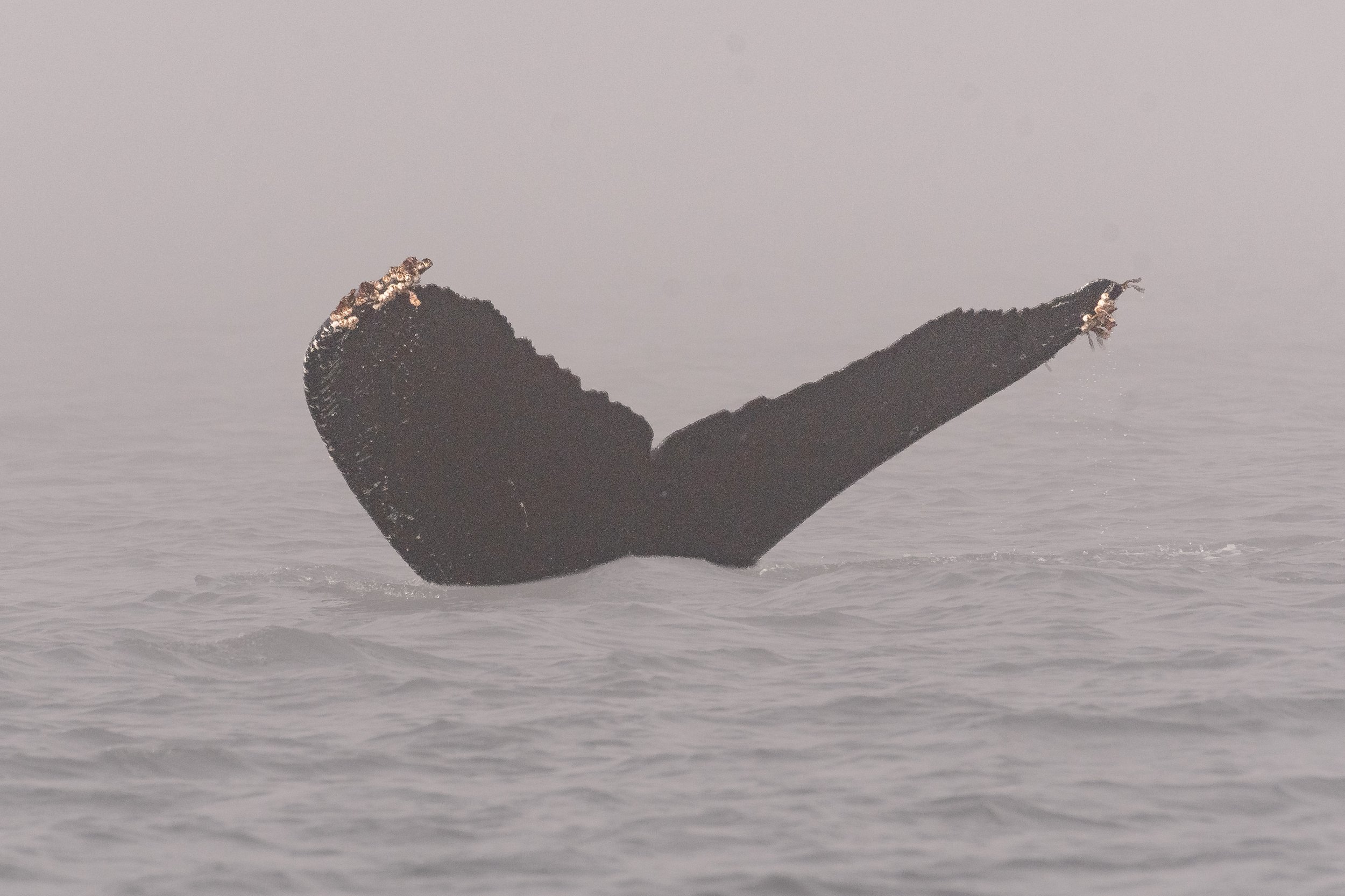
Crater/Mensa follwing suit. Photo by Evan Hessels.
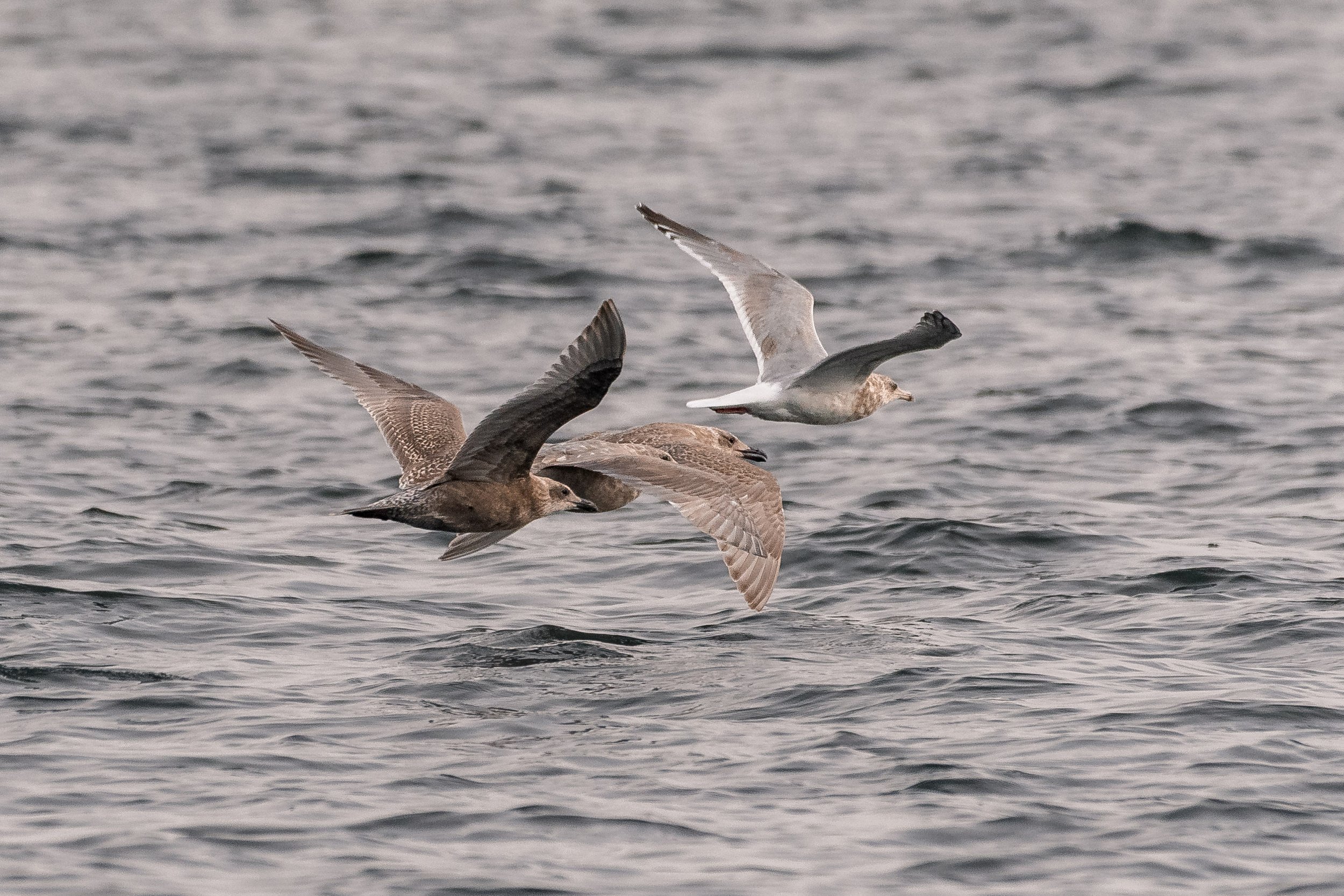
Gulls flying by. Photo by Evan Hessels.
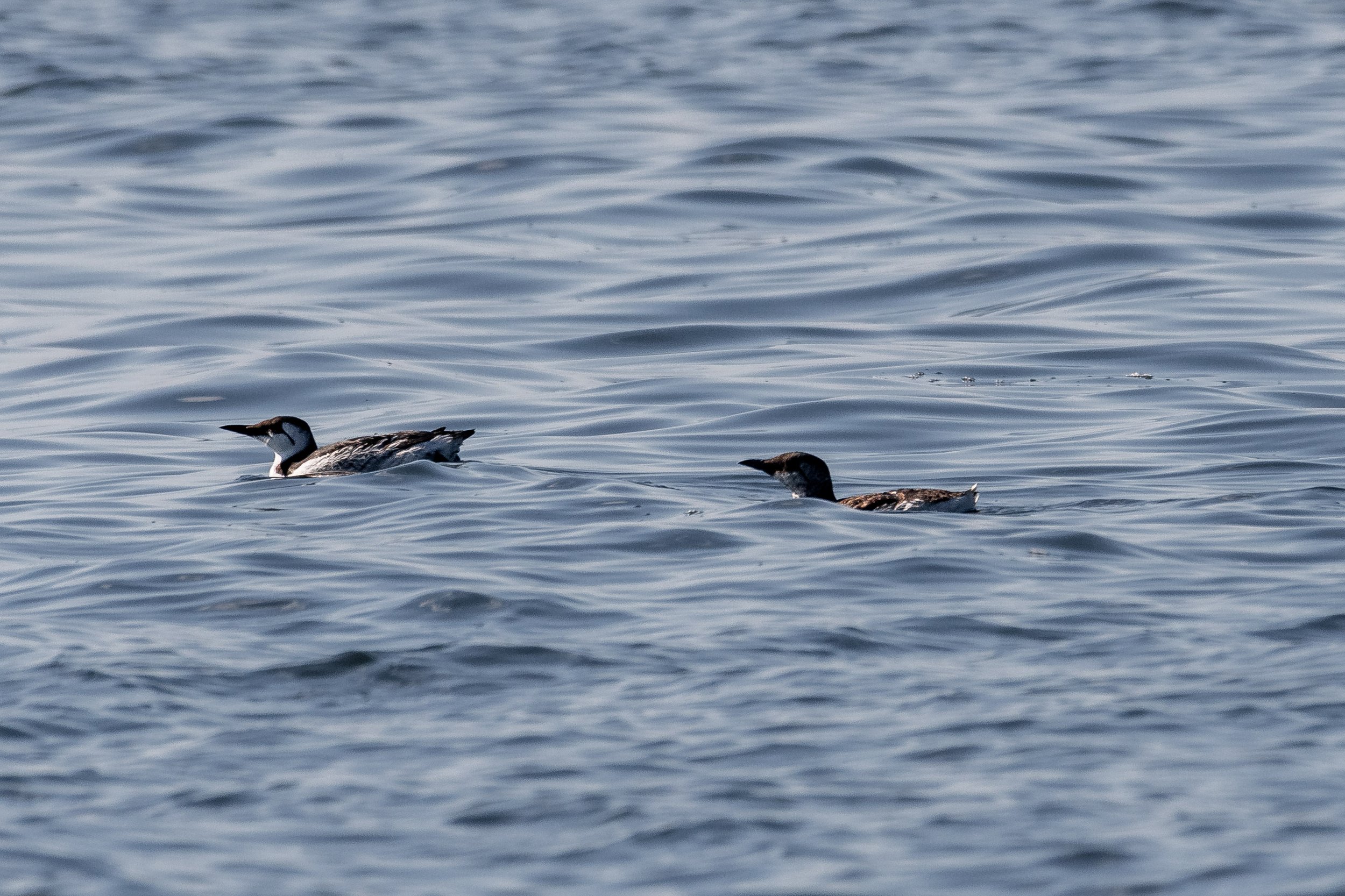
Common Murres paddling along. Photo by Evan Hessels.
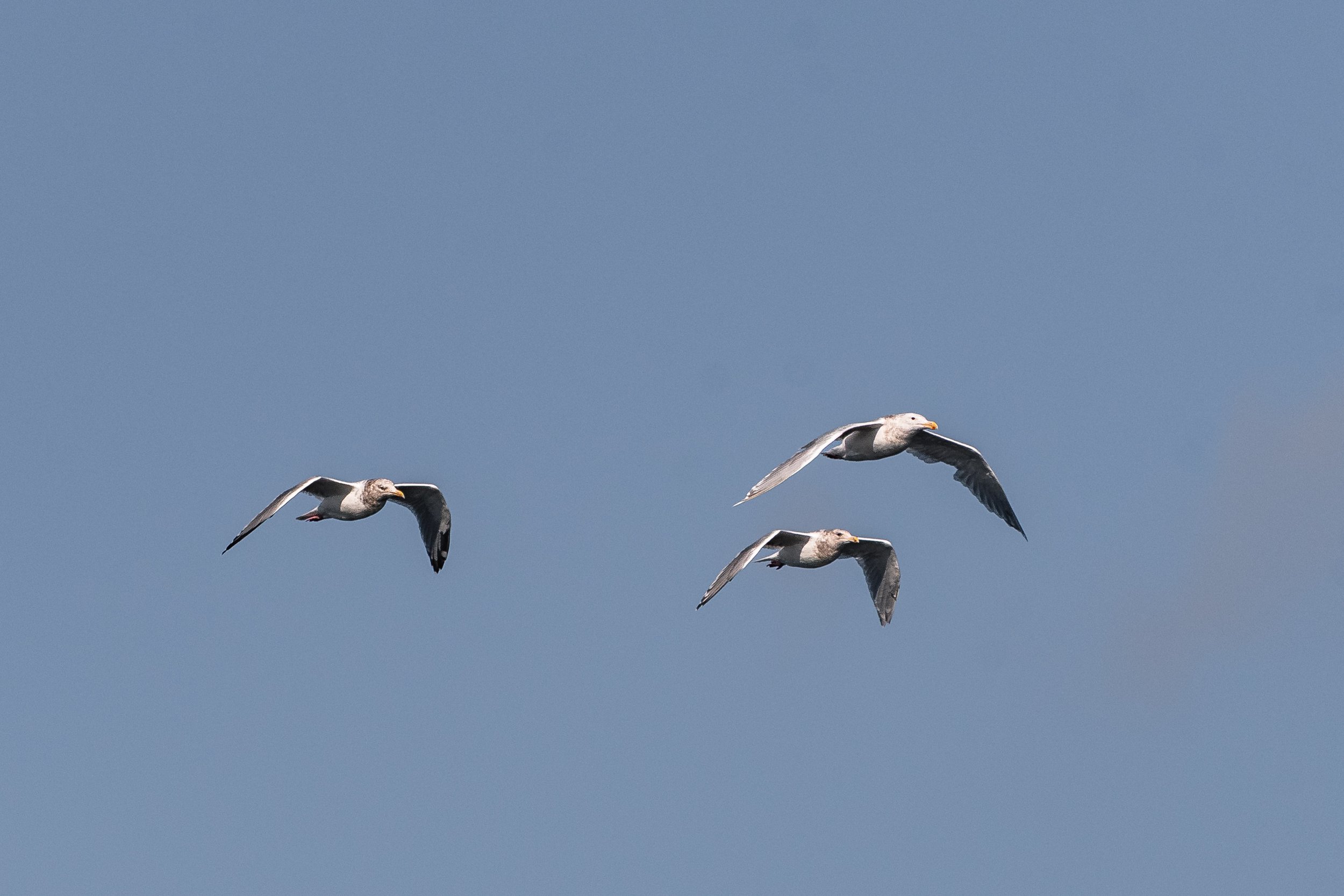
Gulls overhead as the fog breaks. Photo by Evan Hessels.
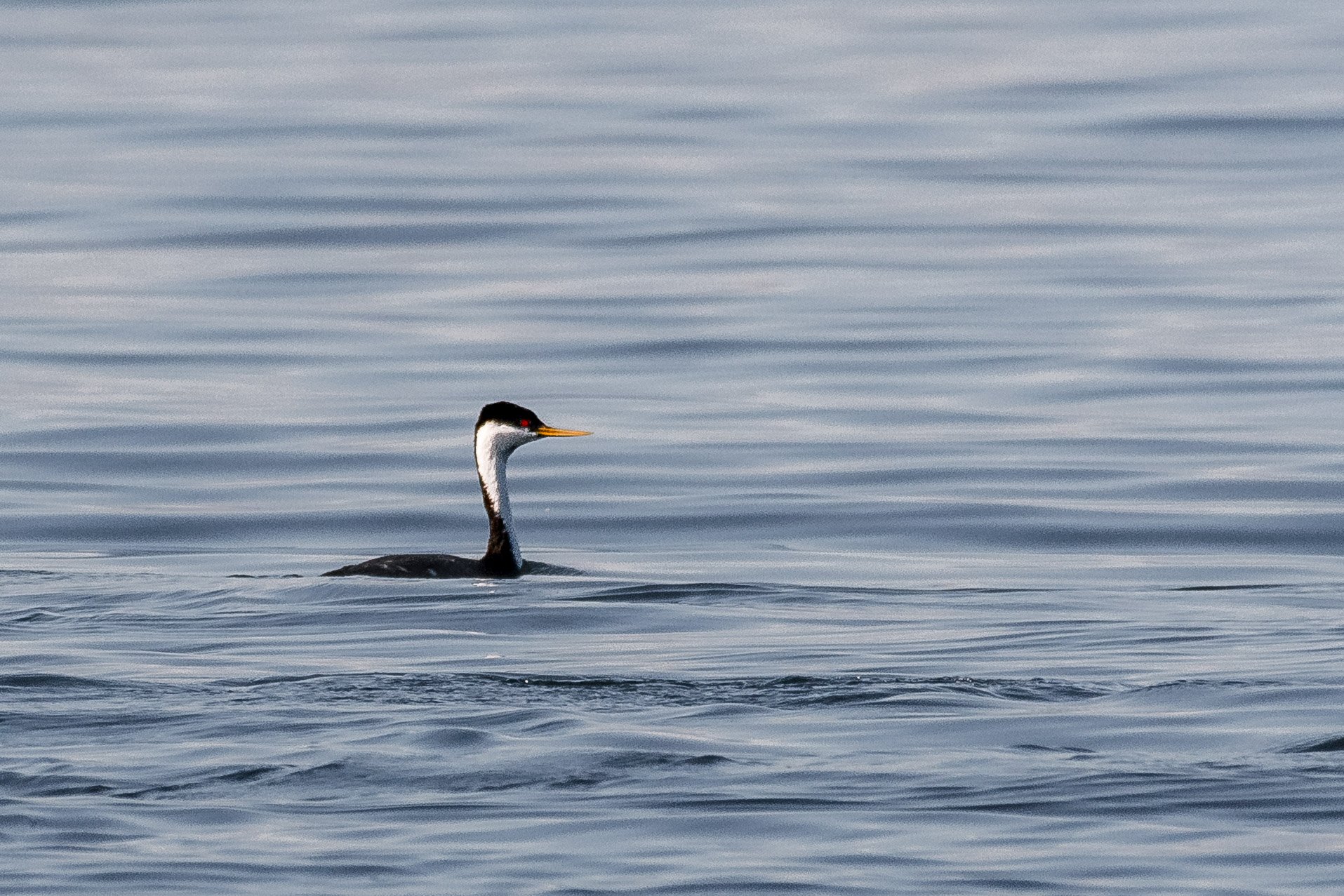
A Western Grebe, one of the less common birds we spot on trips. Photo by Evan Hessels.
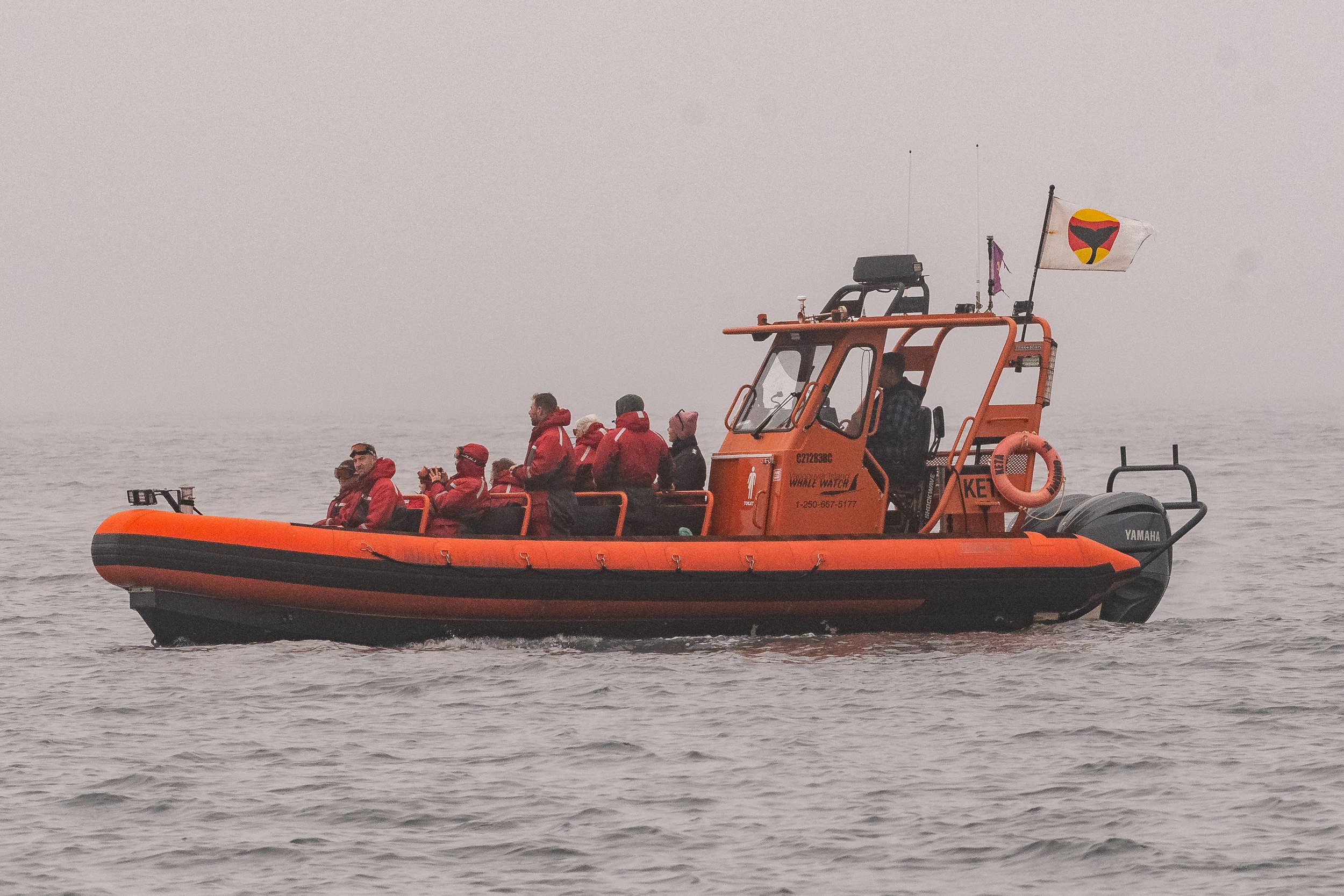
Keta and guests enjoying the whales. Photo by Evan Hessels.
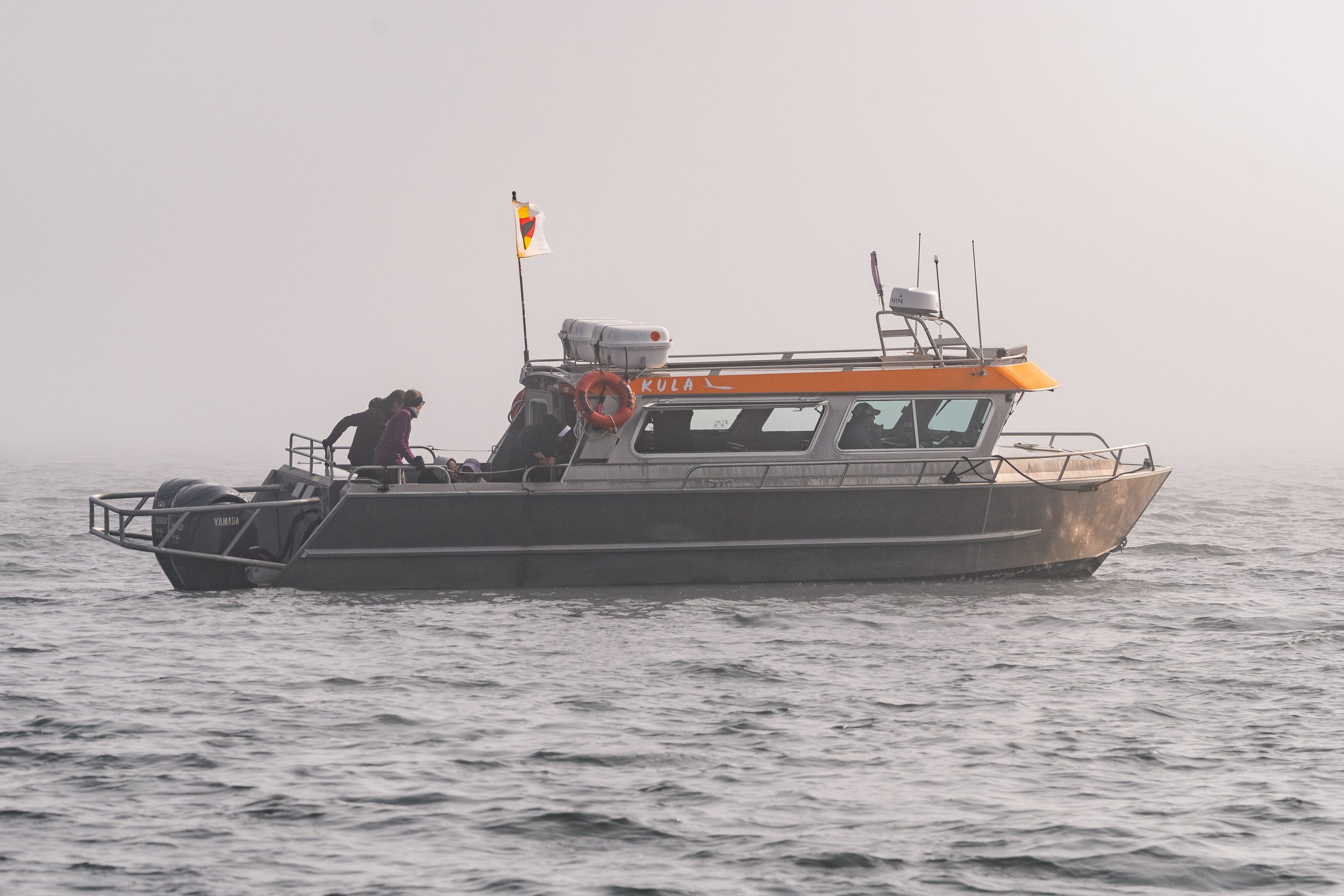
Kula and guests on scene. Photo by Val Watson.