
October 8, 2026 - Breakfast is Served!
It’s a busy time in the Salish Sea, and the feeding is GOOD! After leaving the dock bright and early, breakfast was on everyone’s mind, including a nearby juvenile California Sea Lion. With the seasonal salmon runs fully underway, many species are finding an abundance of food in the area. This morning, we watched the young pinniped start its day with the breakfast of champions: a fresh Chum Salmon!
As different salmon populations begin their journey inland to spawn in their natal rivers, adult salmon like the one pictured must first navigate an assortment of hungry predators looking for a quick meal. These fish also provide an important food source for wildlife further inland, including Bears, River Otters, and Bald Eagles. This part of the salmon life cycle is incredibly important to marine, freshwater, and forest ecosystems alike. Even after spawning, salmon continue to nourish the surrounding environment. As their bodies decompose, they return valuable marine-derived nutrients to rivers and forests, supporting plant growth and providing food for a variety of species.
Of course, the Gulls were quick to clue in that breakfast was served! As the sea lion whipped its prize around, the gulls began to swarm, hoping to snag a share of the feast.
We carried on our way to check out a nearby report of two humpbacks spotted off the coast of Gabriola. Here, the feeding continued as we watched these two whales repeatedly surface quickly. We soon identified them as Checkmate (BCY1104) and Puntada (BCX1662). Puntada was a new whale to us, and watching them feed alongside Checkmate was a real treat.
Humpbacks are a baleen whale species that feed on a variety of smaller schooling fish here in the Salish Sea. These massive animals will open their mouths wide and launch themselves headfirst into a large bait ball. The expandable grooves along the underside of their throats, known as ventral grooves, allow their mouths and throats to expand as they take in these enormous gulps. They then push the water back out through the large baleen plates in their mouths, trapping the fish inside to be swallowed. This active feeding strategy is called lunge feeding, and can happen either at the surface of the water or deeper down in the water column. Lucky for us, these two were showing off some amazing surface feeding, giving us glimpses of their palates and baleen with each lunge.
The cold water of the Salish Sea has plenty of oxygen and nutrients to support large numbers of these smaller schooling fish such as Pacific Sand Lance and juvenile Herring. This seasonal abundance of prey is one of the primary reasons the Humpbacks return here each year, making the long migration from warmer breeding regions, including Hawaii and Mexico, to feed throughout the summer and into the fall. When they return to their breeding grounds, where food is often much less abundant, humpbacks rely on the energy stored in their thick layers of blubber. They may go for extended periods with little or no feeding, drawing on these reserves to sustain themselves through migration and breeding. Over the course of this time, they can lose a substantial portion of their stored energy, sometimes as much as a third of their body fat! It was great to see these two making the most of their time here before they begin their long migration back to Hawaii!
After leaving our lunging humpbacks, we decided to head south into the Gulf Islands to find some more wildlife. As we wove through the islands heading further and further south, we kept our eyes out in hopes of spotting some more whales. After a long, unsuccessful loop around Salt Spring island, we were on our way home when a large male Orca popped up, out of the blue! This time it was T065A3 Amir.
T065A3 Amir ♂ (2007)
Amir doesn’t regularly travel with his matrilineal pod, choosing instead to spend much of his time on his own. This behaviour is not unusual among mature male Bigg’s orcas, which may travel independently or form temporary associations with other individuals. At nearly 20 years old, Amir is a fully grown male who may weigh between 8,000 and 12,000 pounds.
Orcas are sexually dimorphic, meaning males and females develop noticeable physical differences as they mature. These differences become more apparent during adolescence, typically between 10 and 15 years of age, as the males begin to “sprout” and grow much bigger than their female family members. Before then, juvenile males and females can look remarkably similar, making it difficult to determine their sex from photographs alone. In fact, Amir was originally named Amira because researchers didn’t yet know he was male! As he grew and his physical characteristics became more distinct, researchers identified him as a male and updated his name accordingly.
Although Amir is often seen travelling independently, there is always a possibility that he may reconnect with his mother, T065A Artemis, and his younger siblings. Male Bigg’s orcas can maintain connections with their family members even when they spend extended periods apart. For now, Amir appears to be doing well on his own, continuing to navigate the Salish Sea as an independent and capable hunter.
After spending a full day on the water, it was time for some lunch of our own! We headed back to the dock, enjoying the last of the day's sunshine.
All the photos from the day can be enjoyed below. Taken by onboard Marine Naturalist Hayleigh Hilbert.
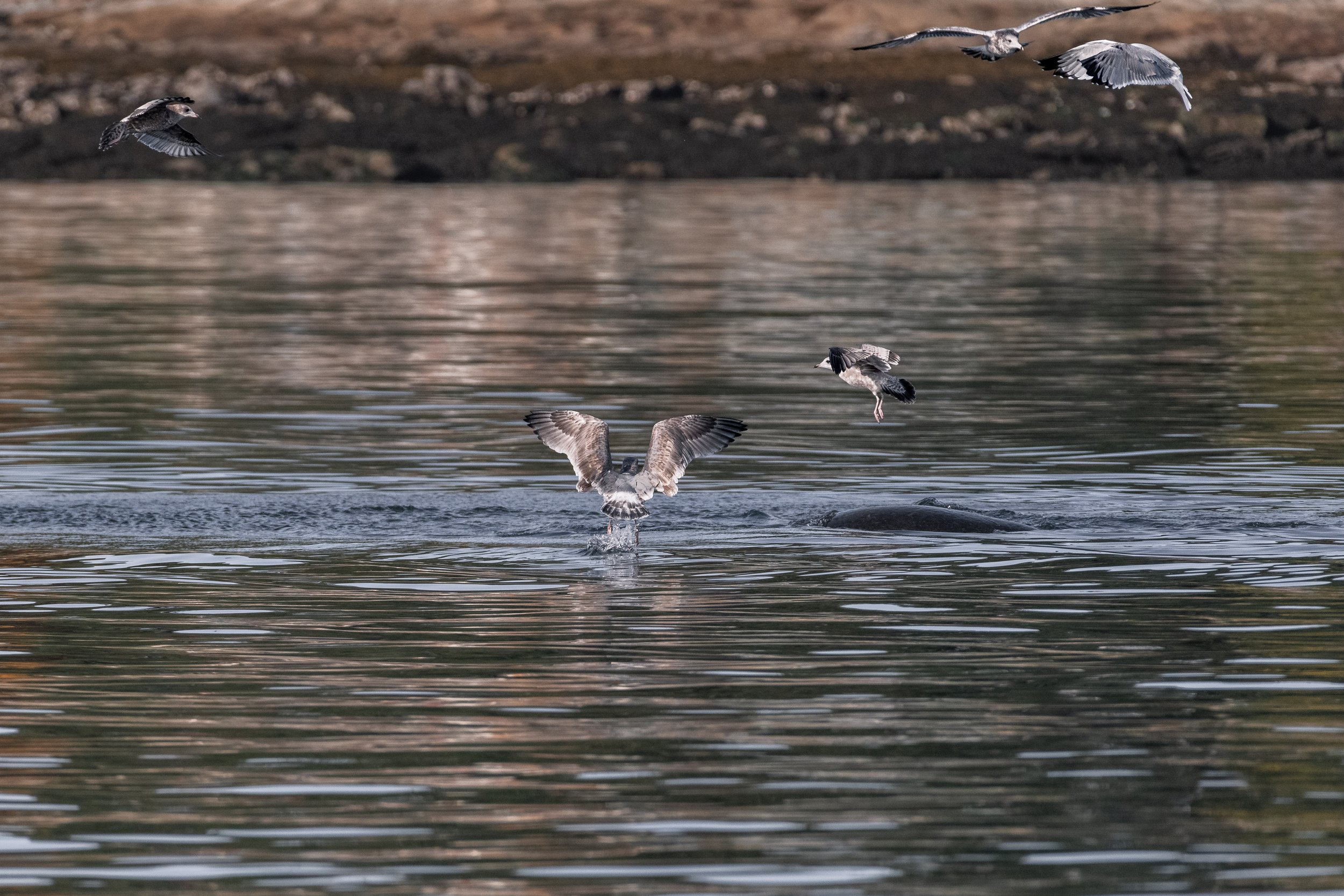
Some oppurtunistic Gulls crowding a sea lion.
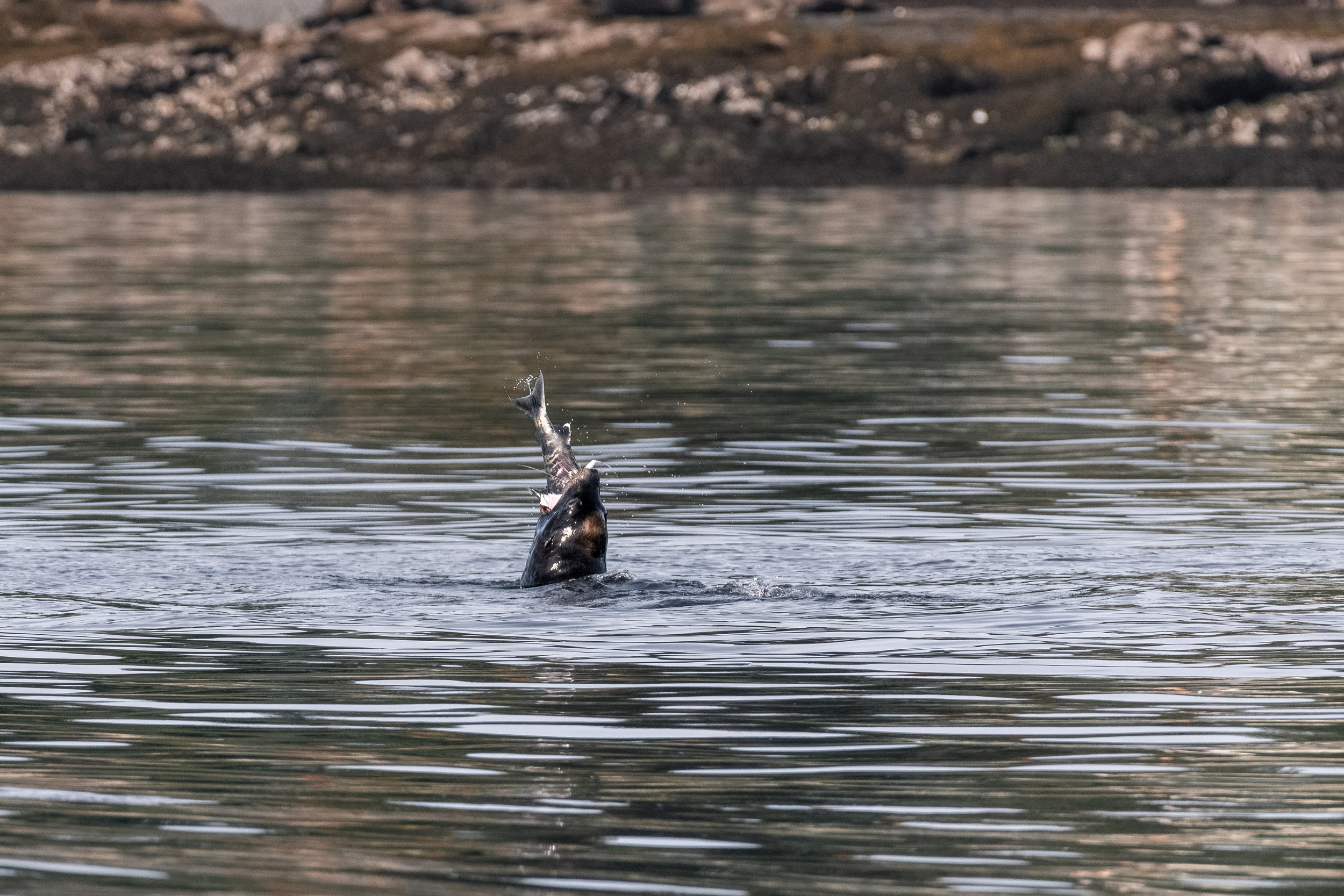
A big meal for a little sea lion!
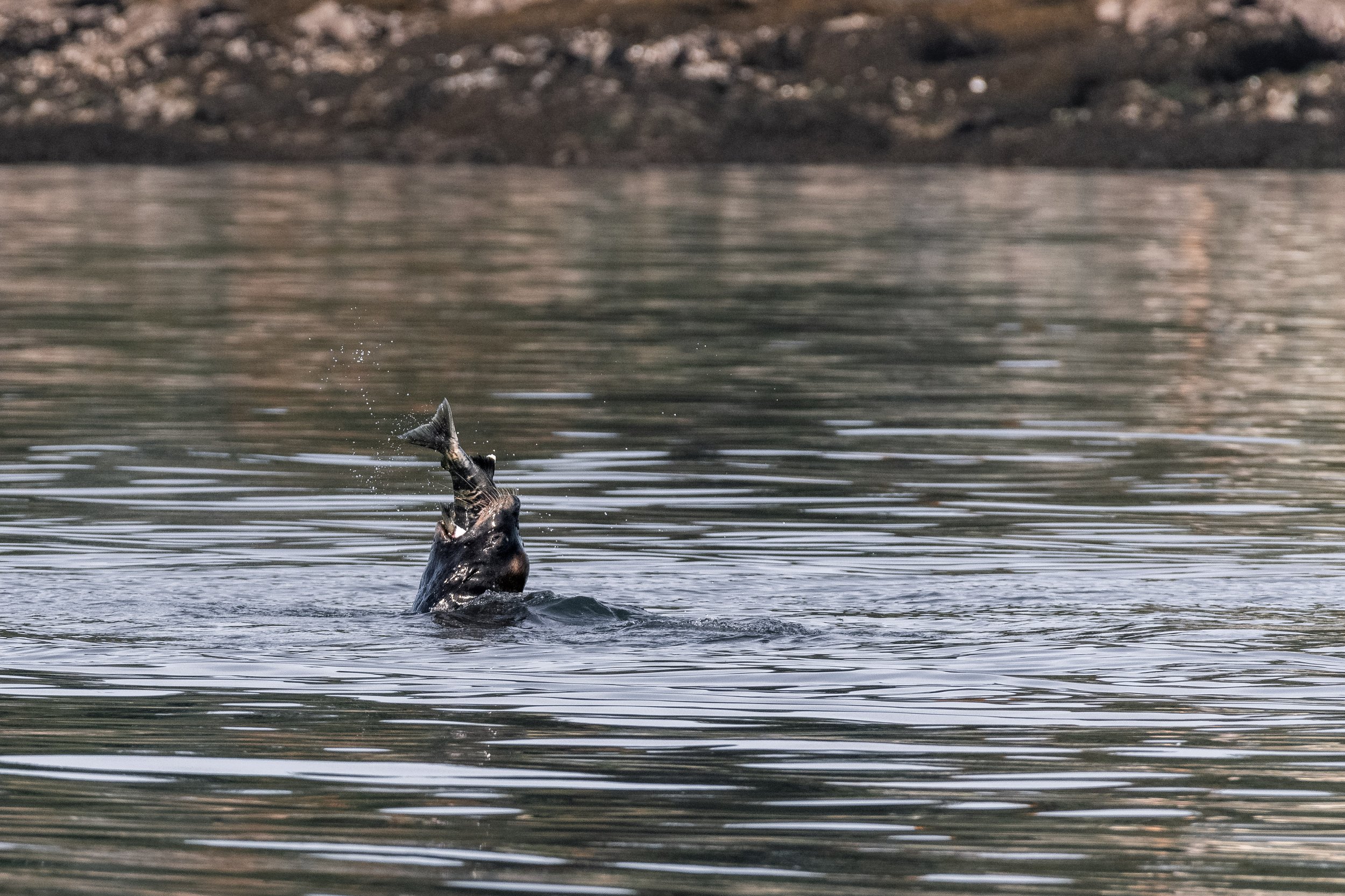
Om nom nom nom nom!
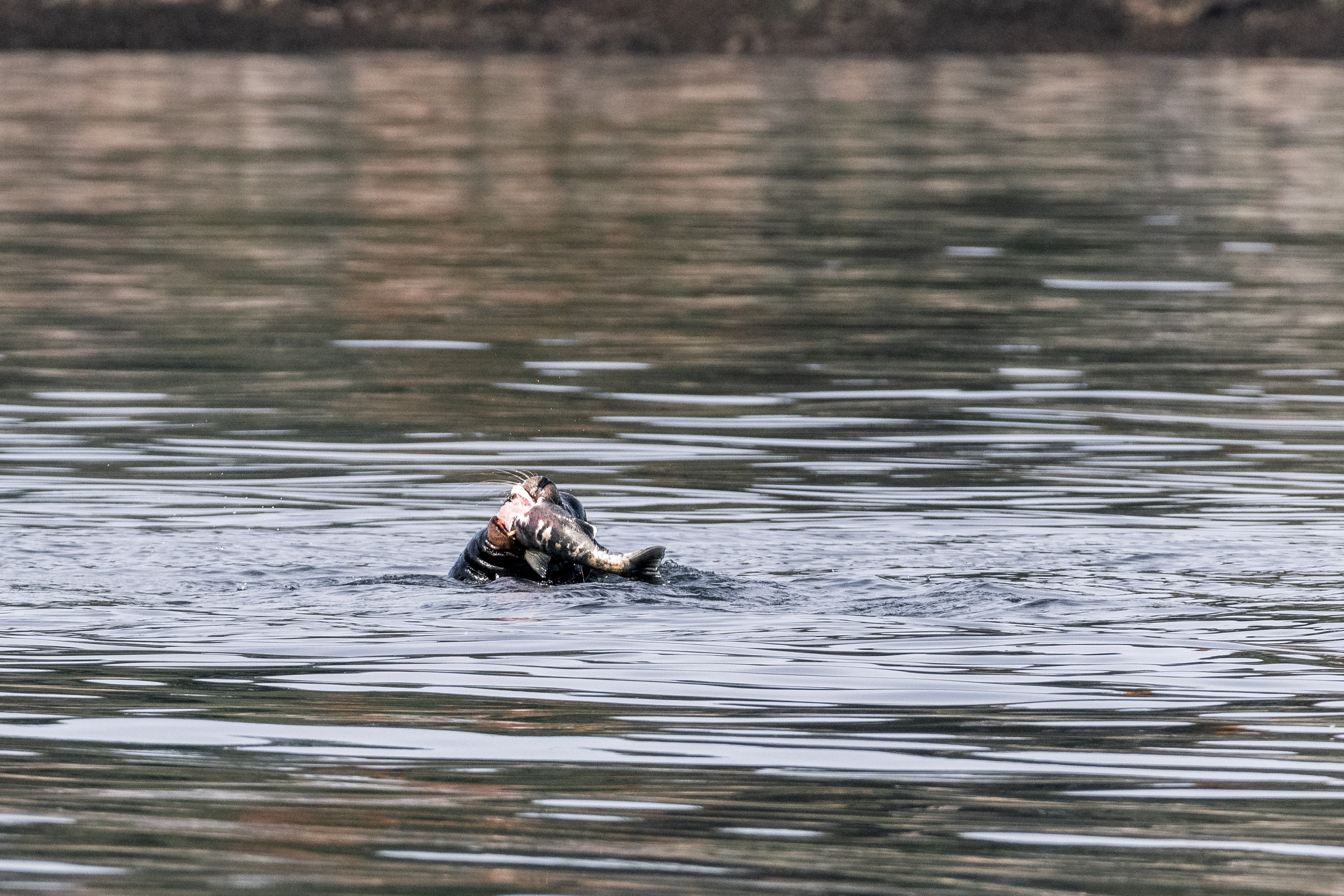
This California Sea Lion appears to be feasting on a Chum Salmon.
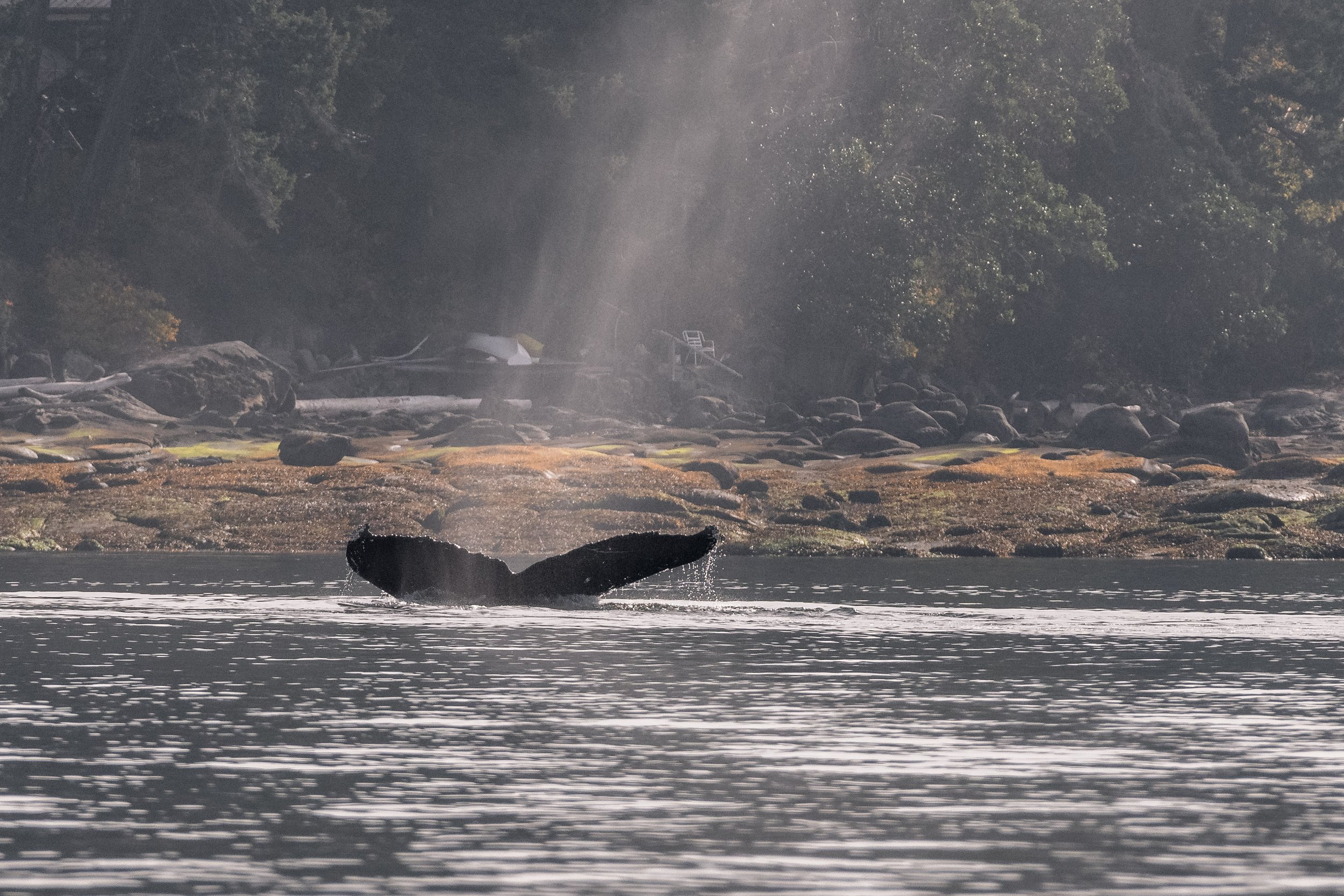
Puntada fluking close to shore.
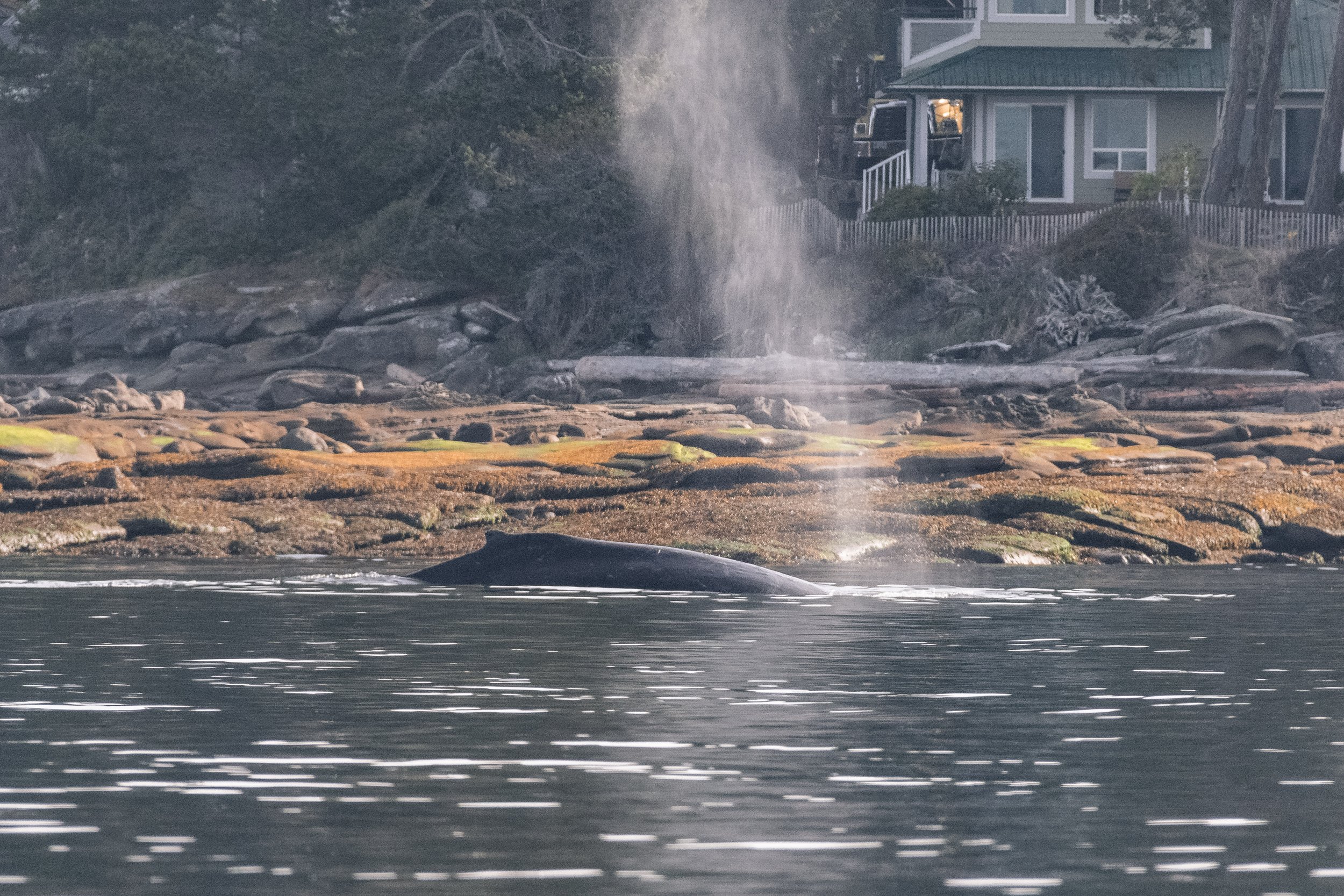
Puntada skirting along the shoreline.
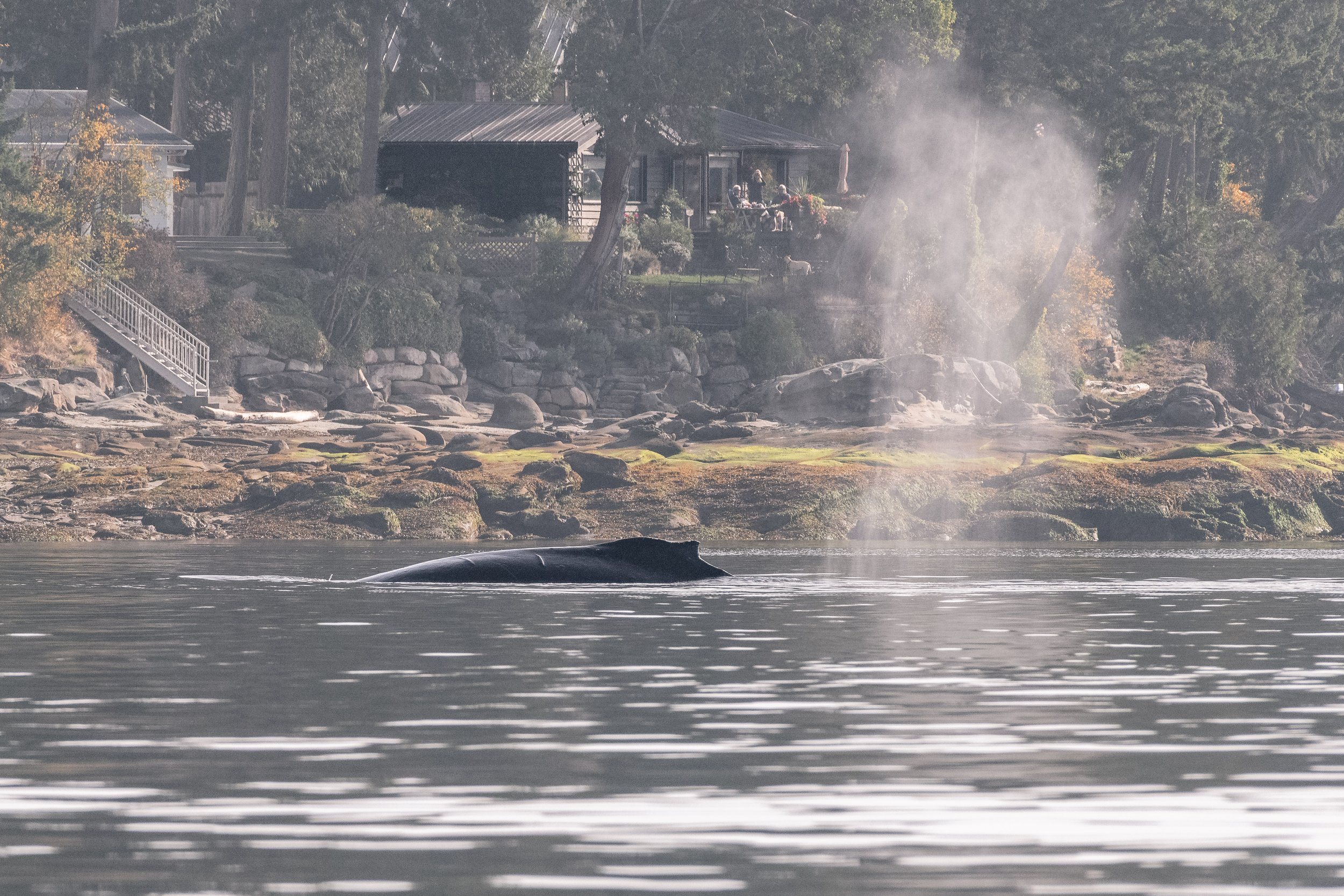
Checkmate travelling along.
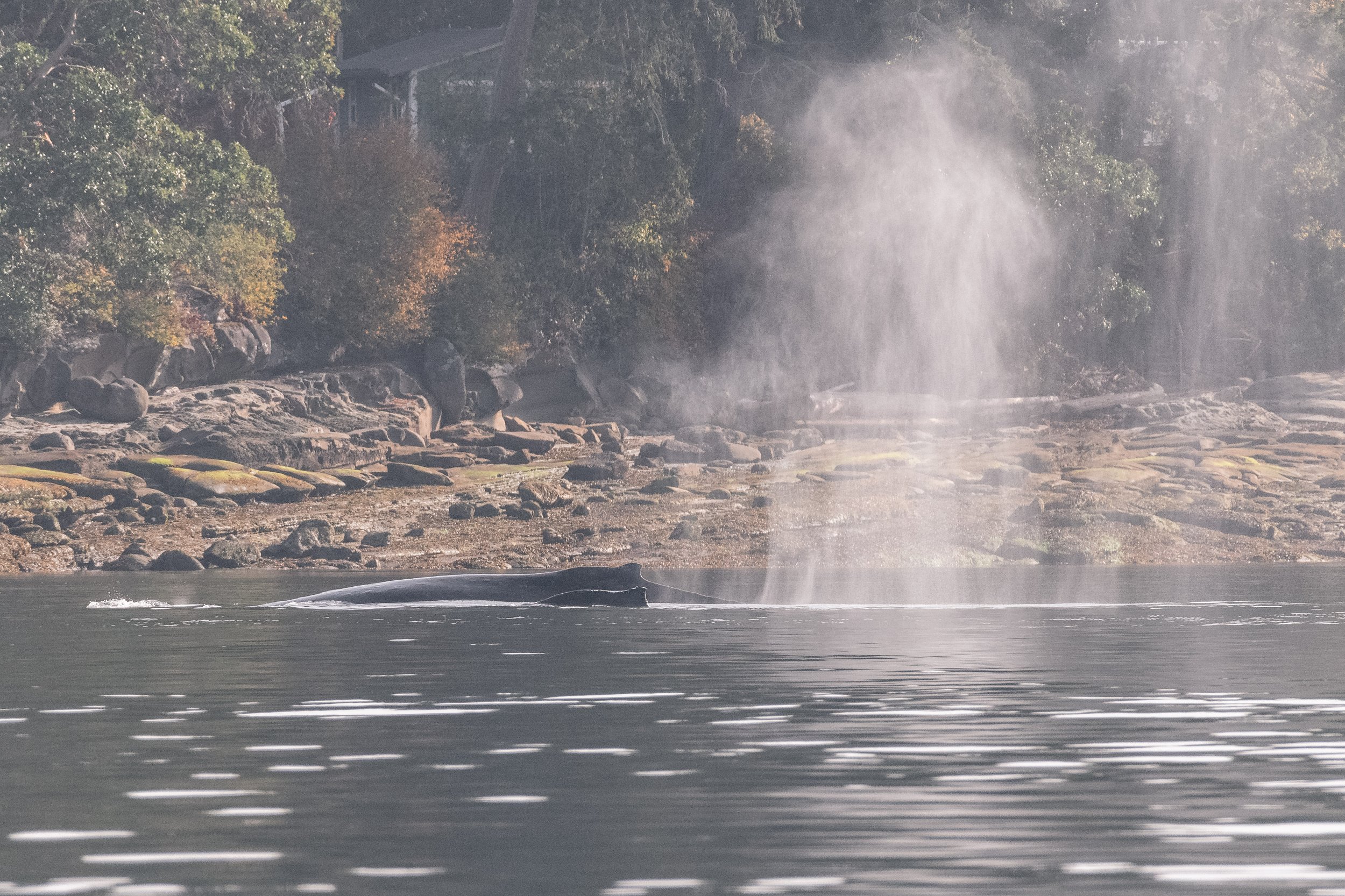
Puntada in the back with Checkmate in the front.
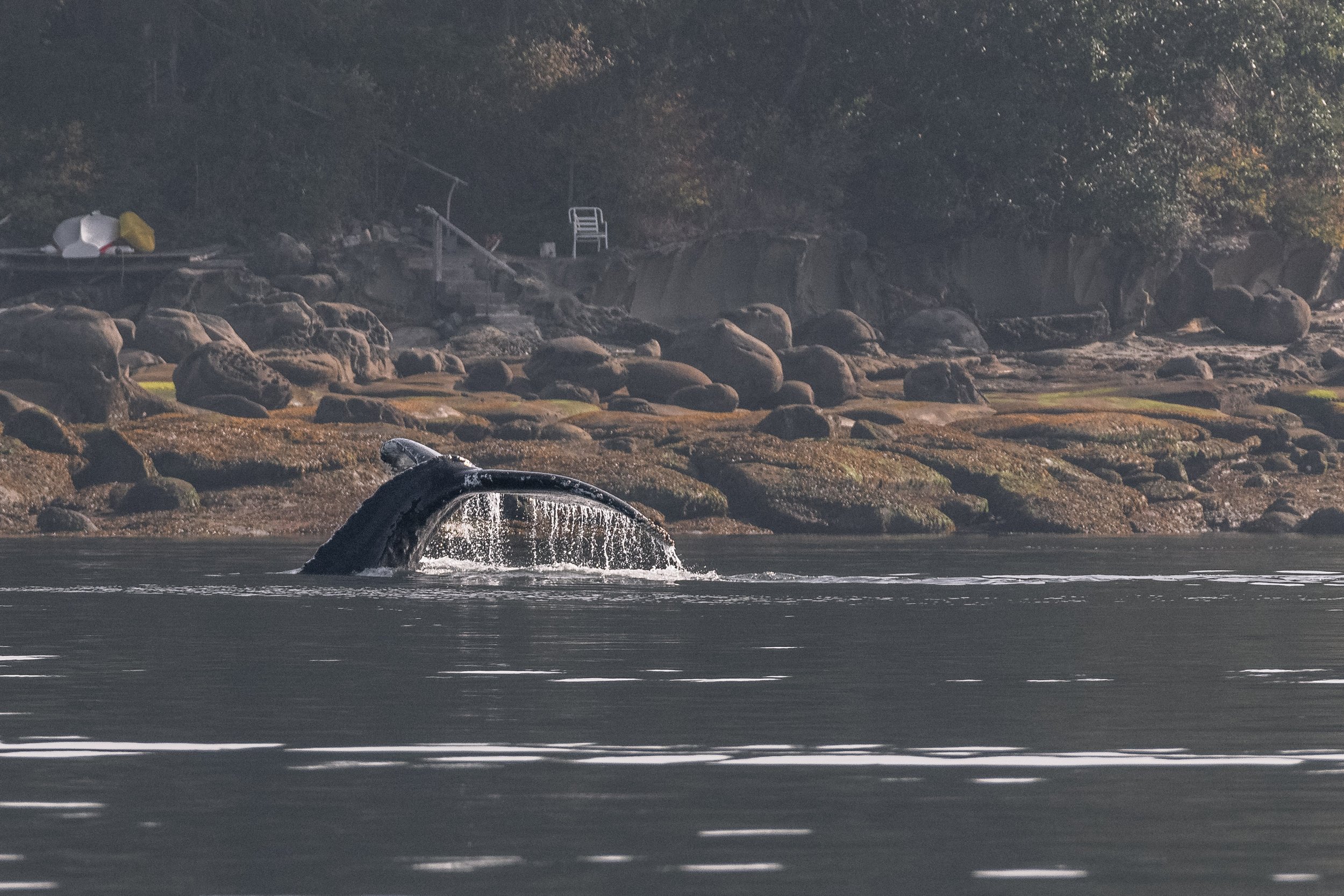
Checkmate going down for a dive.
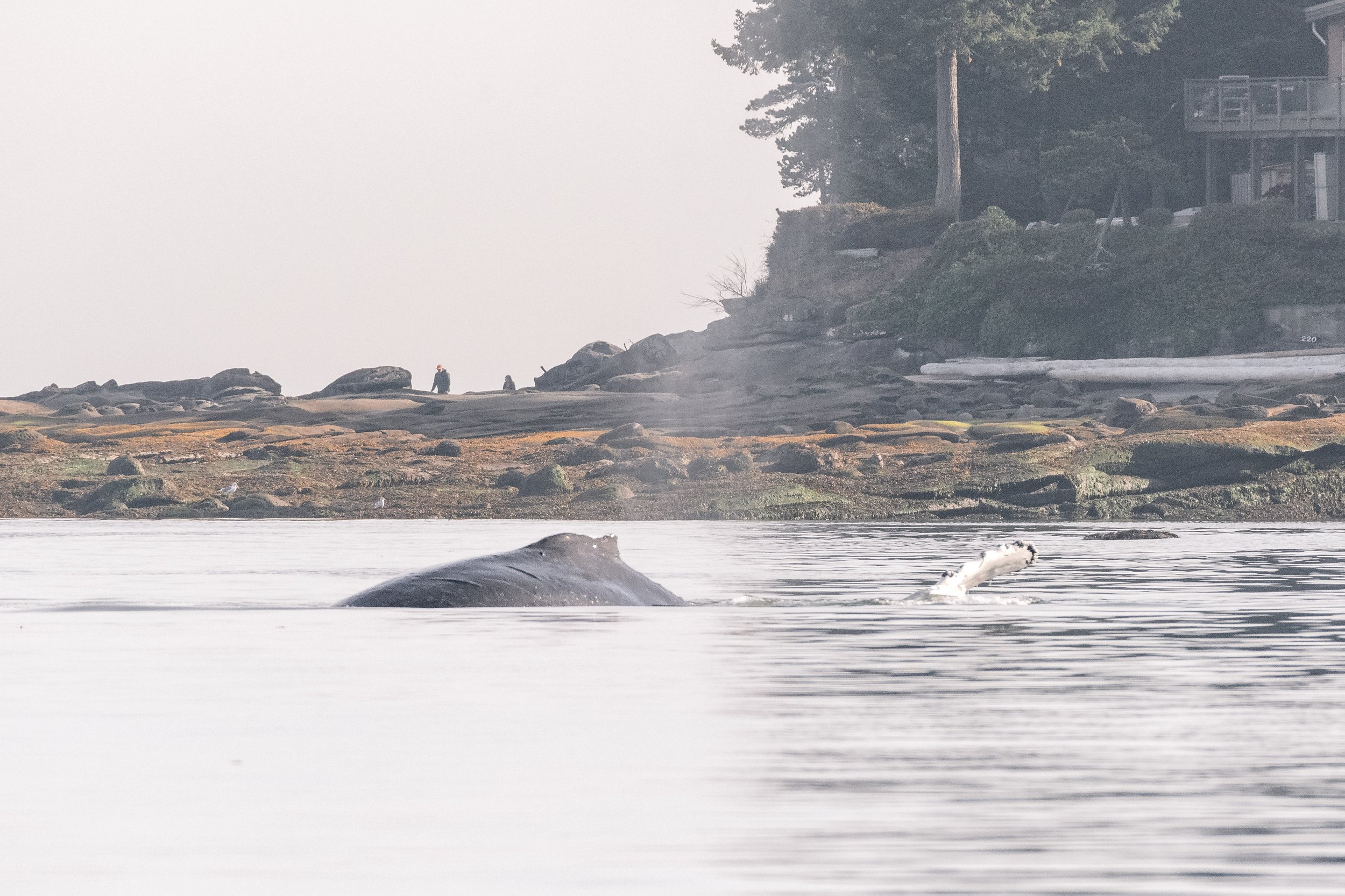
Checkmate travelling with Puntada waving a pectoral fin around.
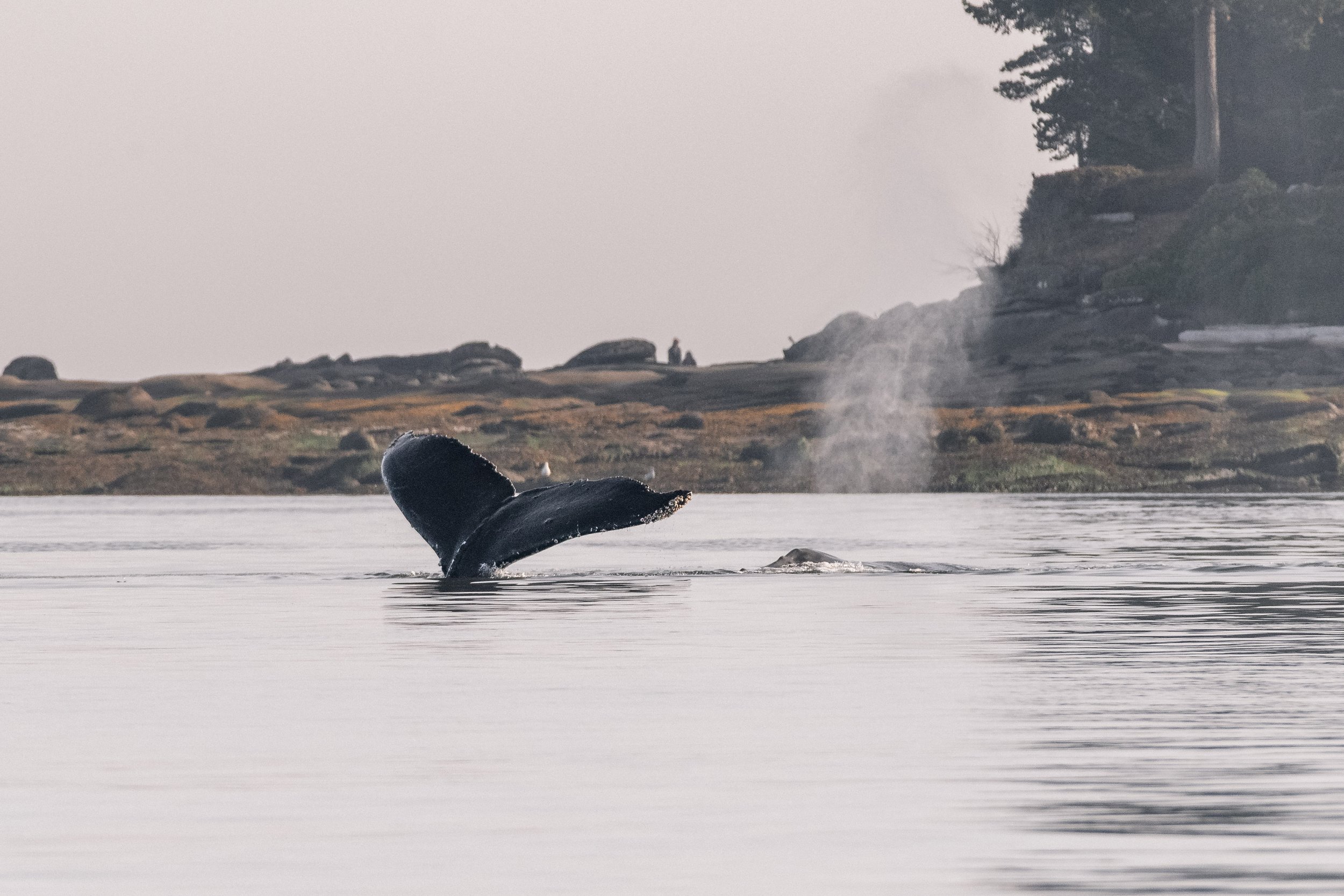
The top of Checkmate’s fluke and Puntada with their nostrils above the surface.
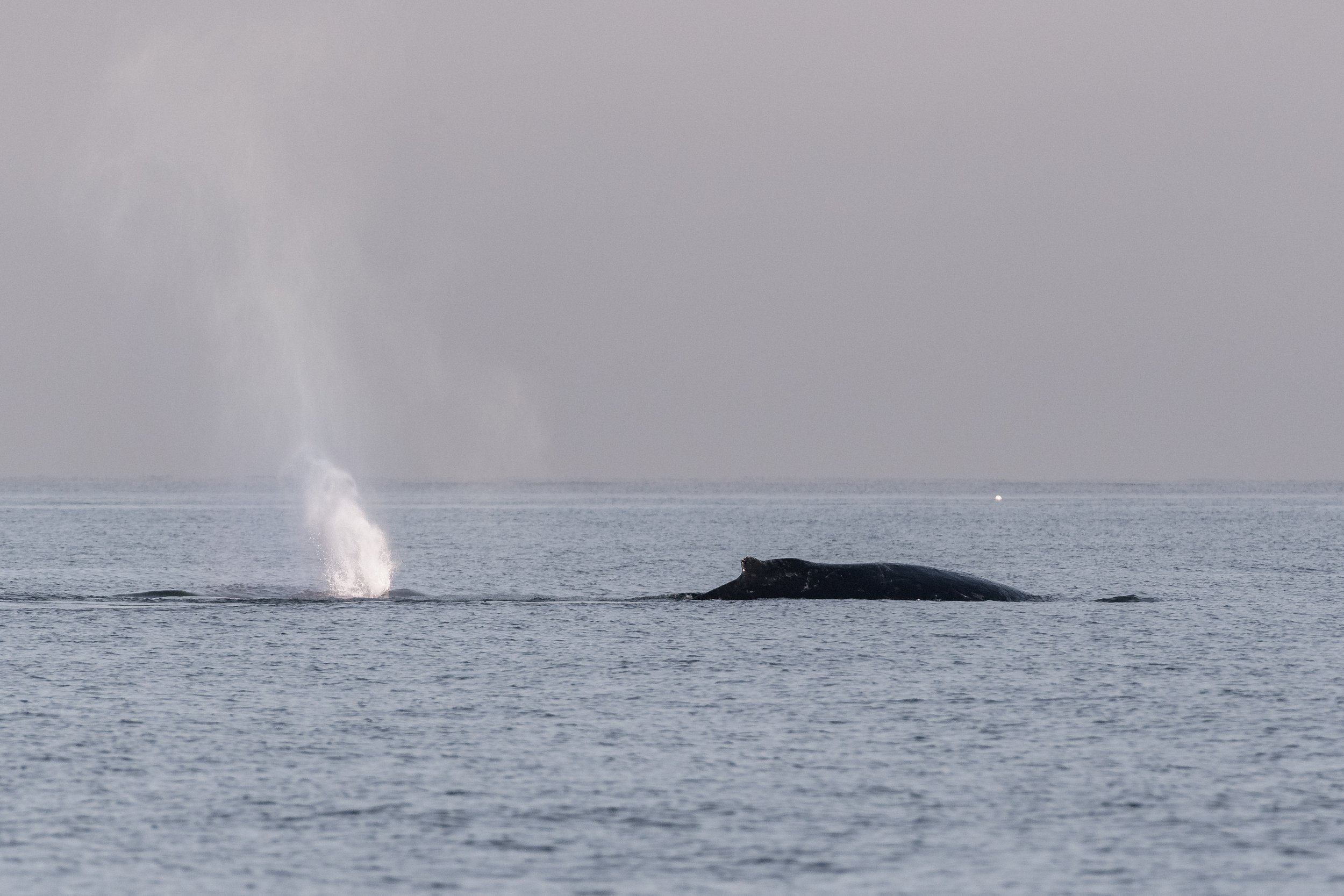
Puntada with Checkmate blowing behind them.
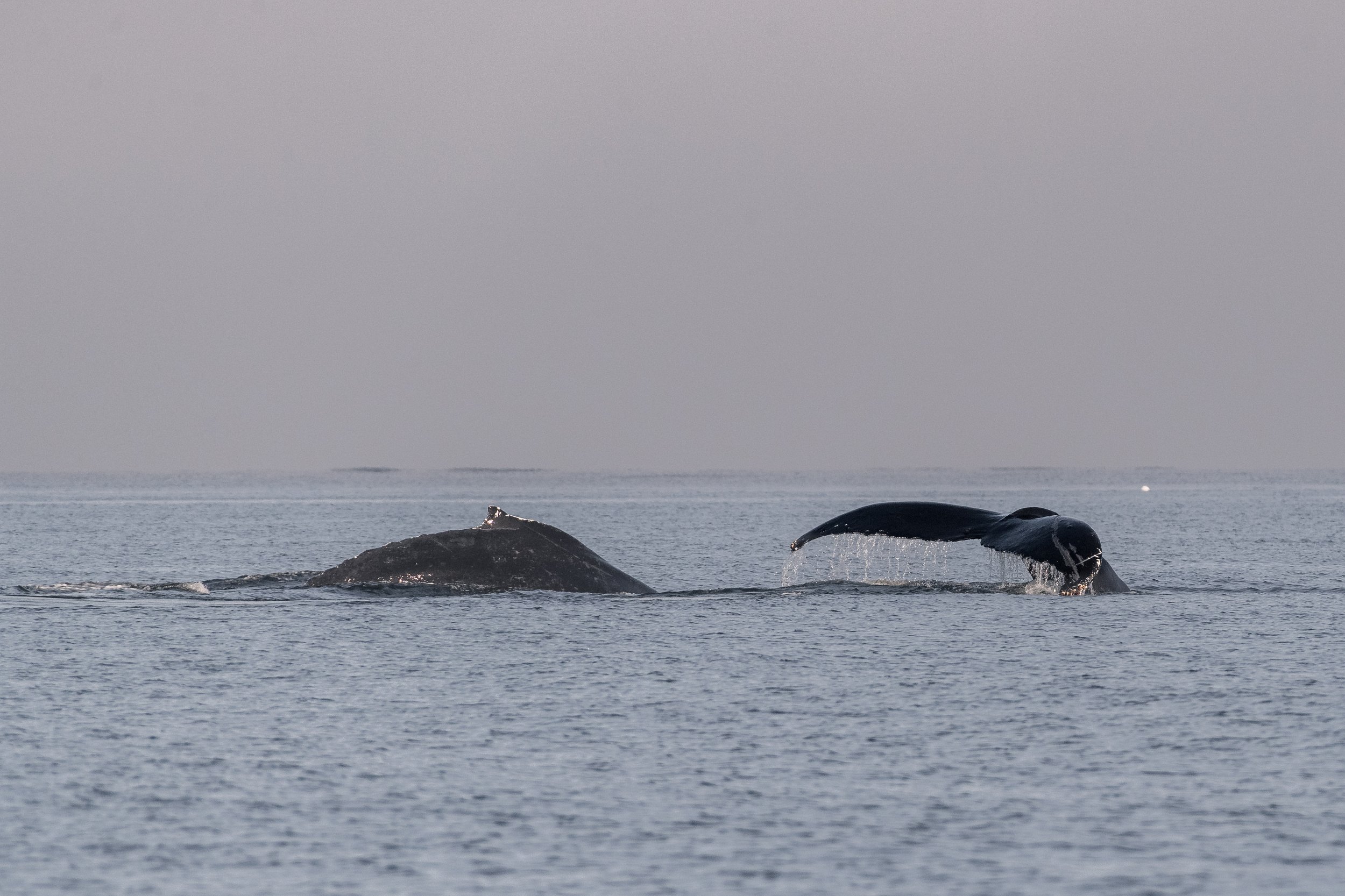
Checkmate surfacing with Puntada fluking beside them.
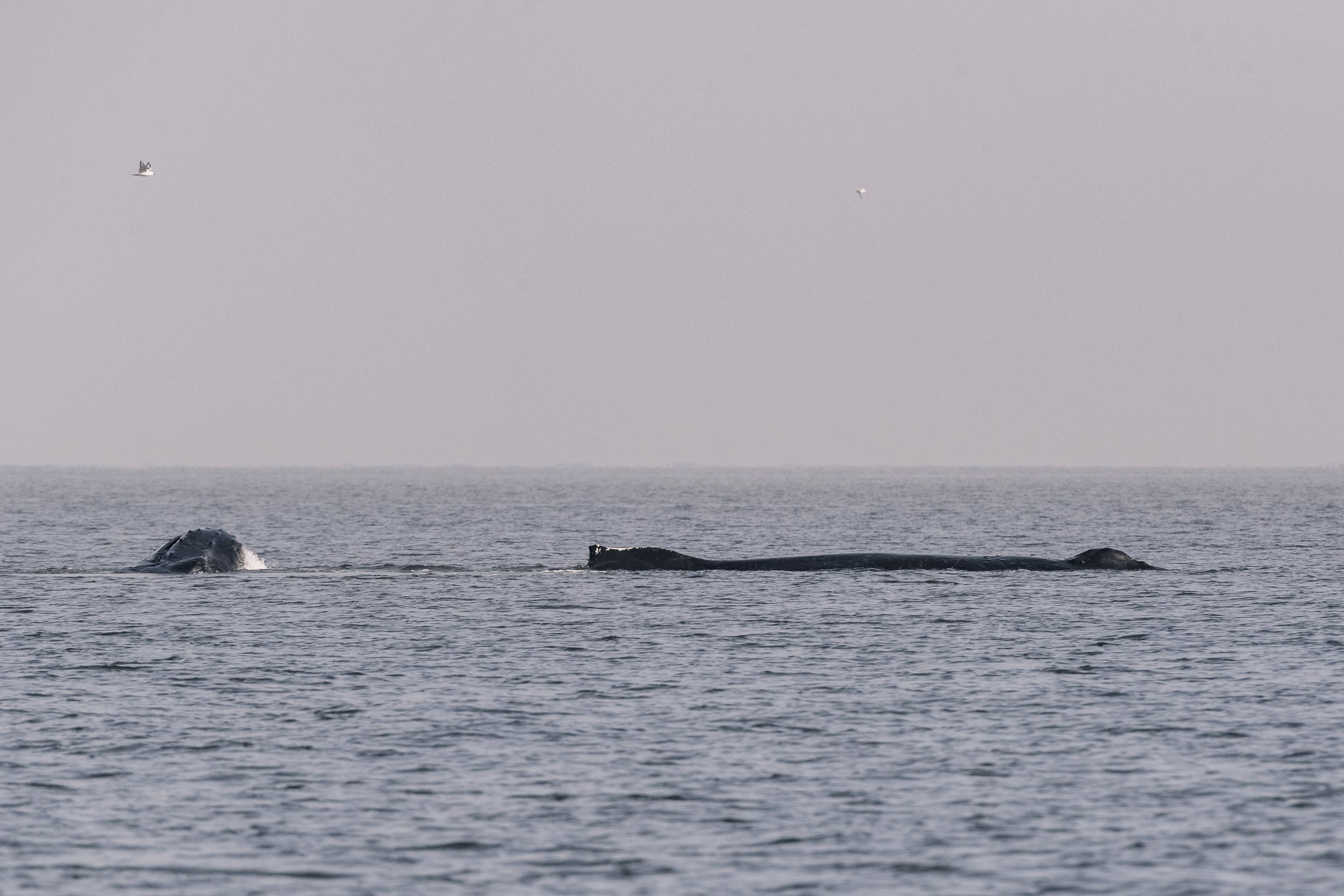
Puntada lunging behind Checkmate.
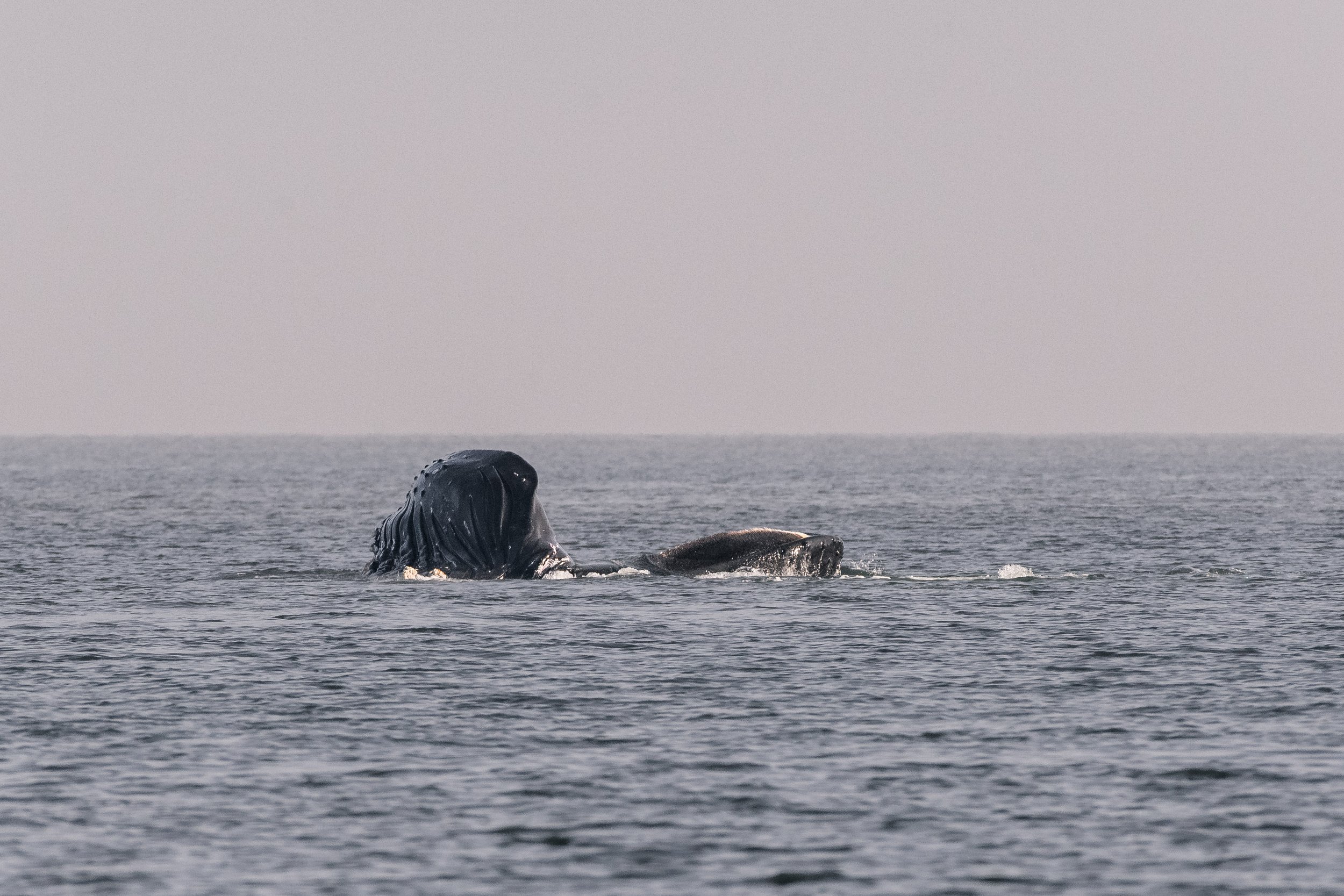
A big chomp at the surface as the duo lungefeeds.
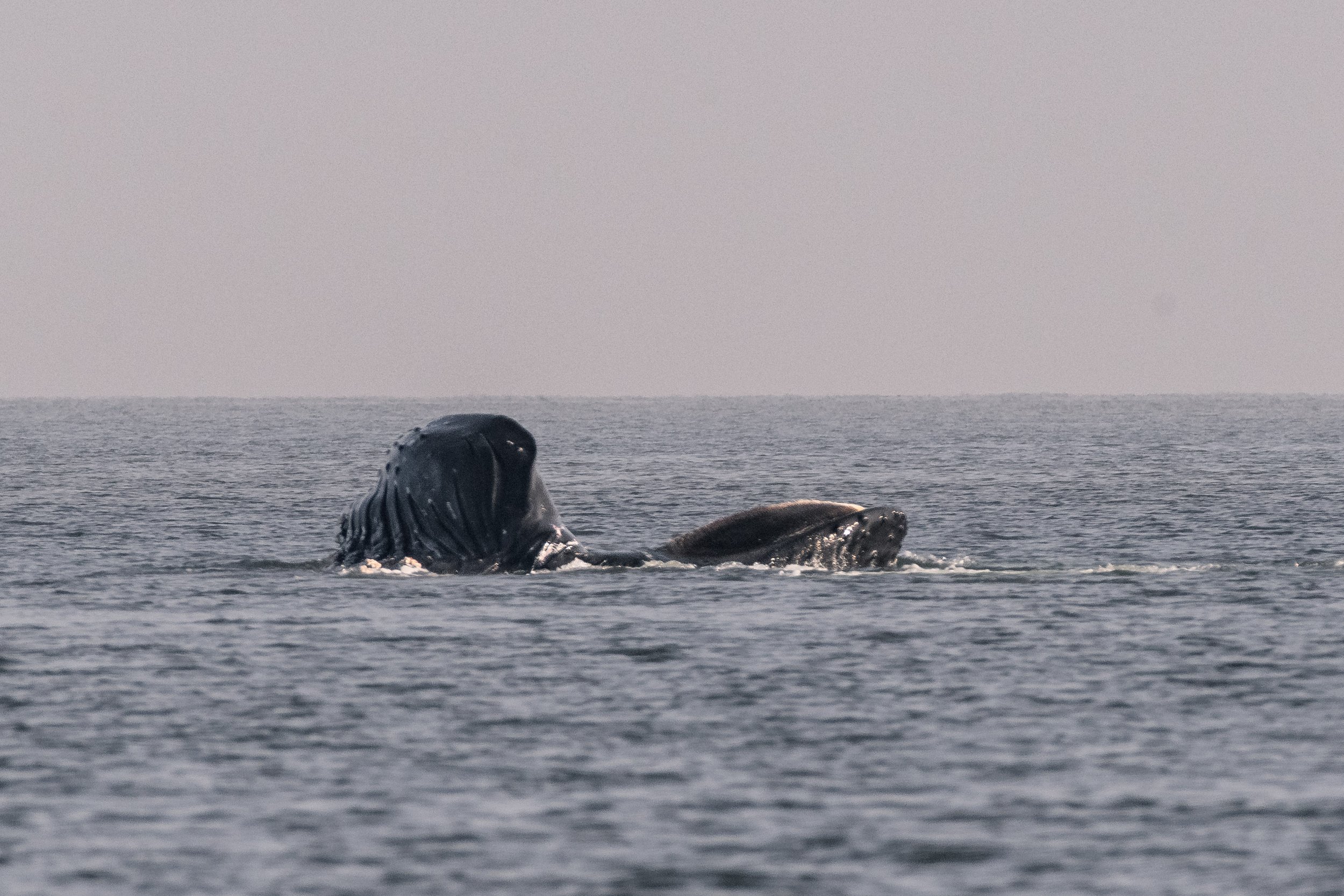
Can you spot the baleen plates in the humpback’s mouth?
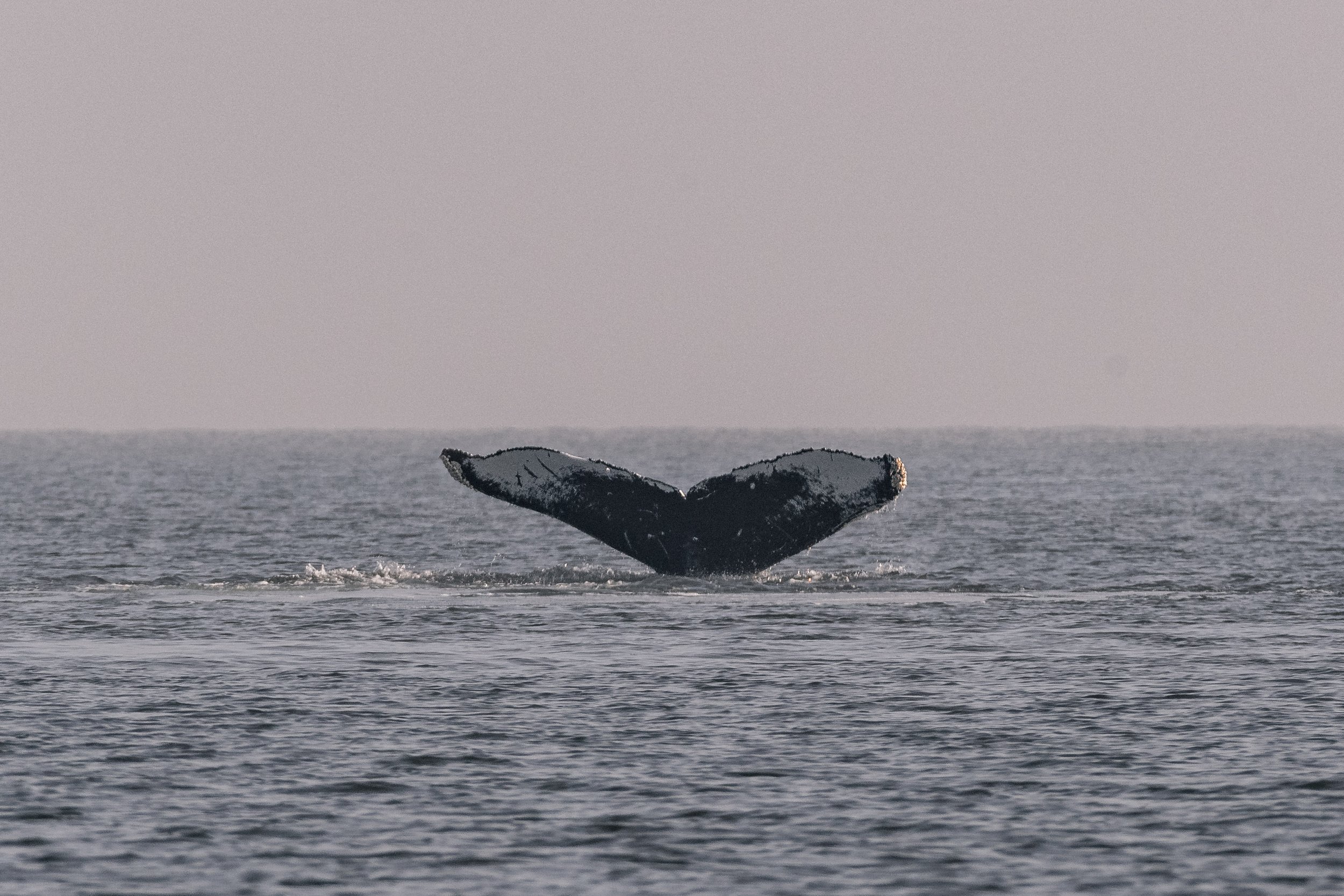
Checkmate fluking in the distance.
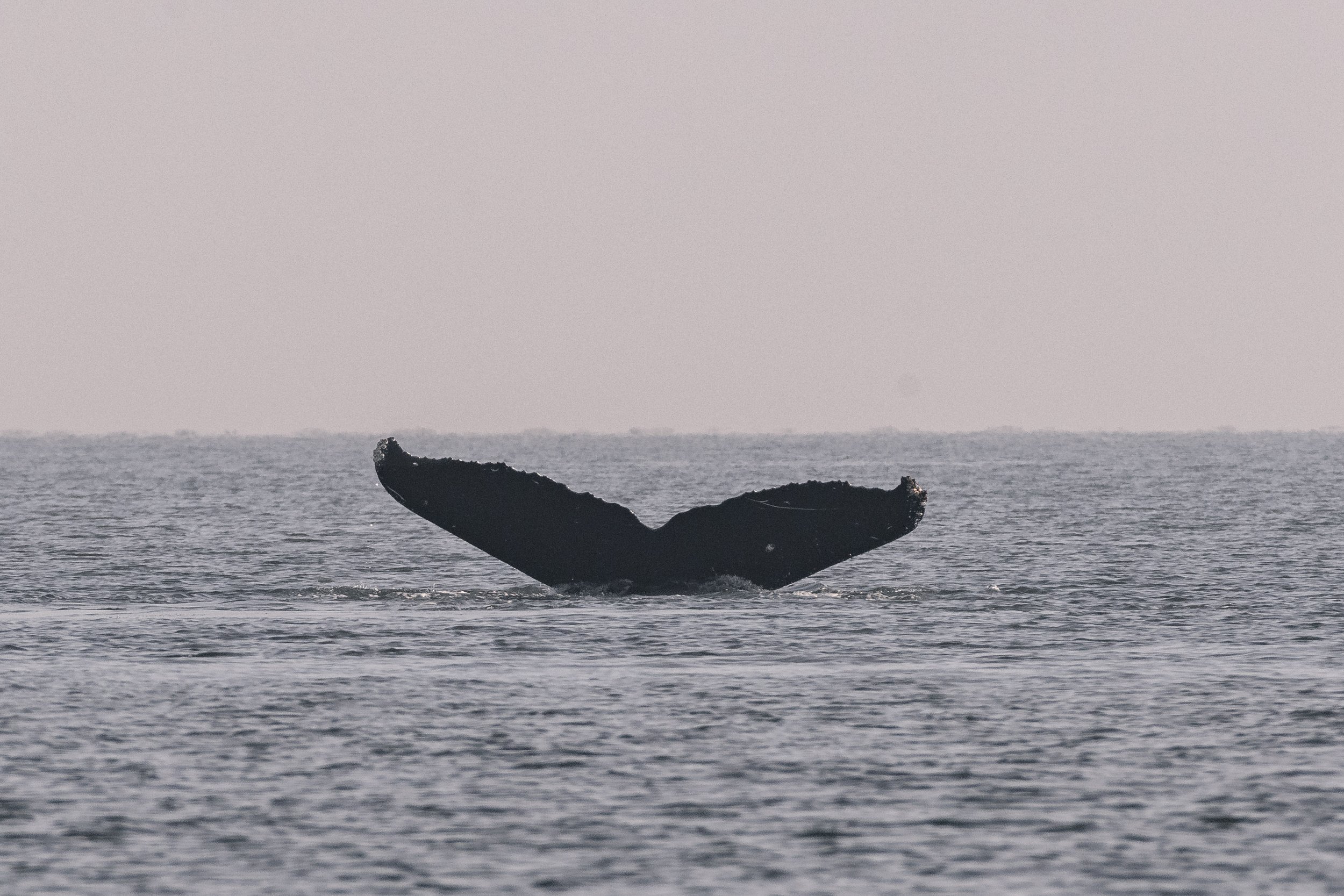
Puntada’s interesting fluke - a new-to-us whale!
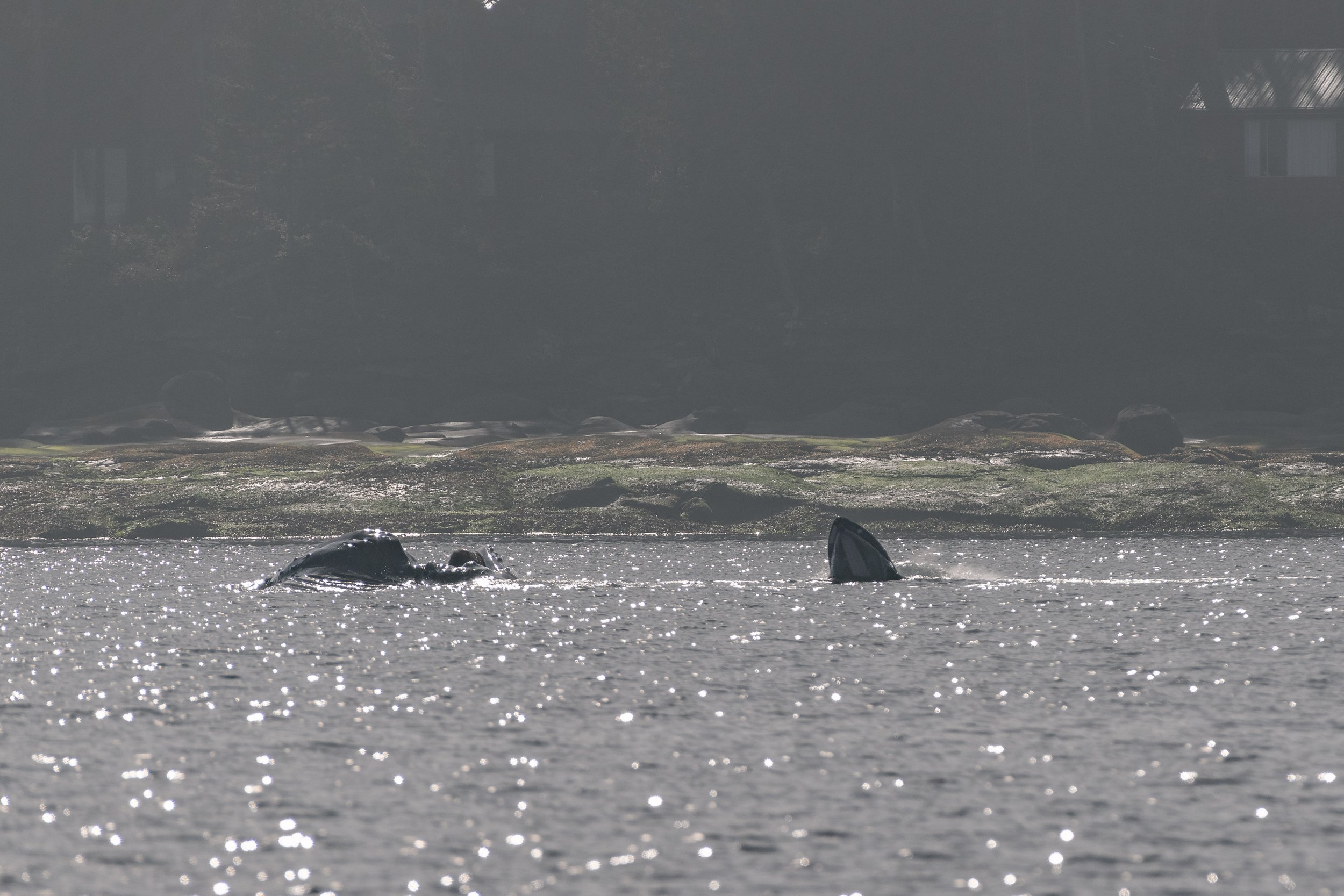
The pair chomping away at the surface together - there must have been a lot of food at the surface!
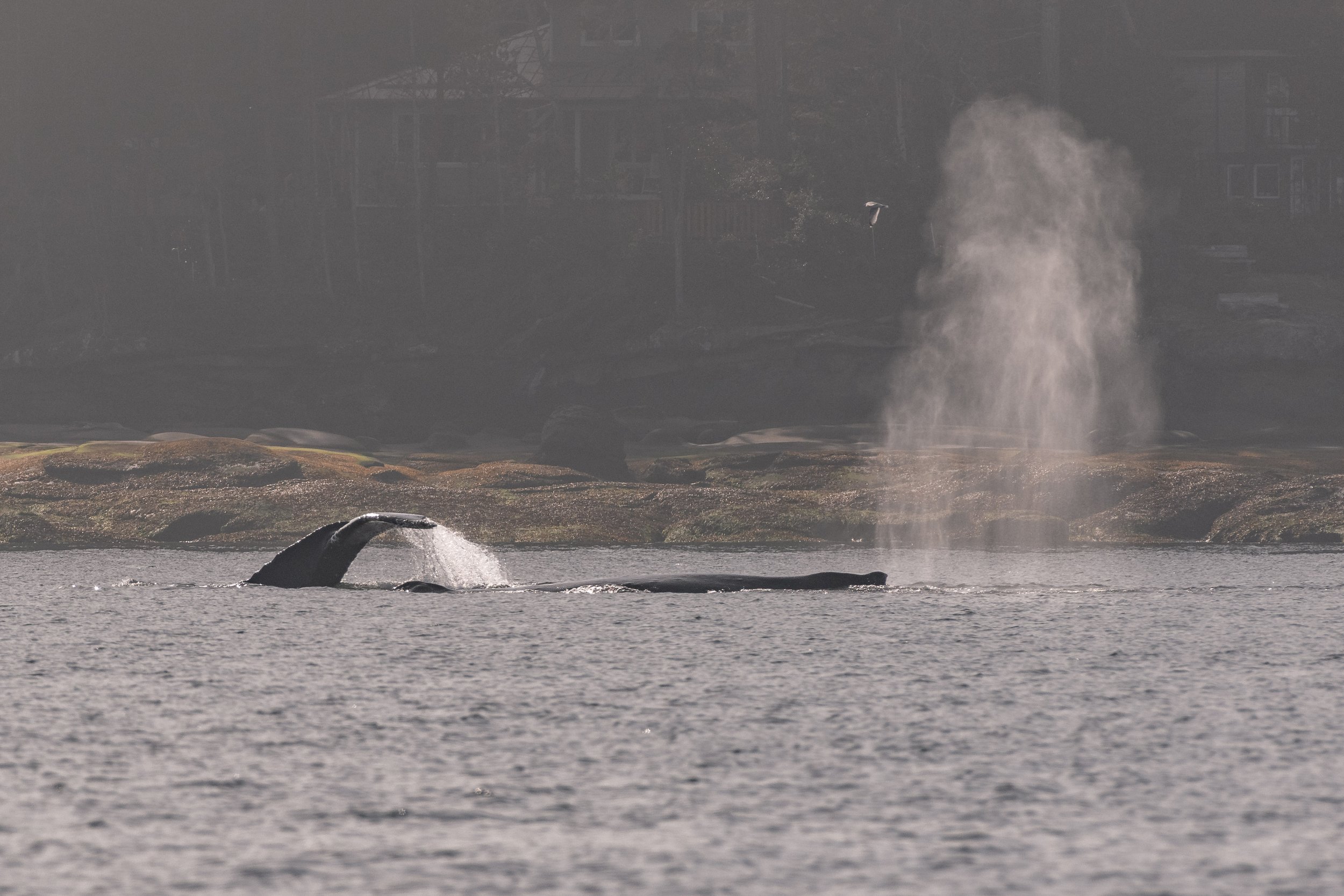
Checkmate fluking and Puntada travelling behind them.
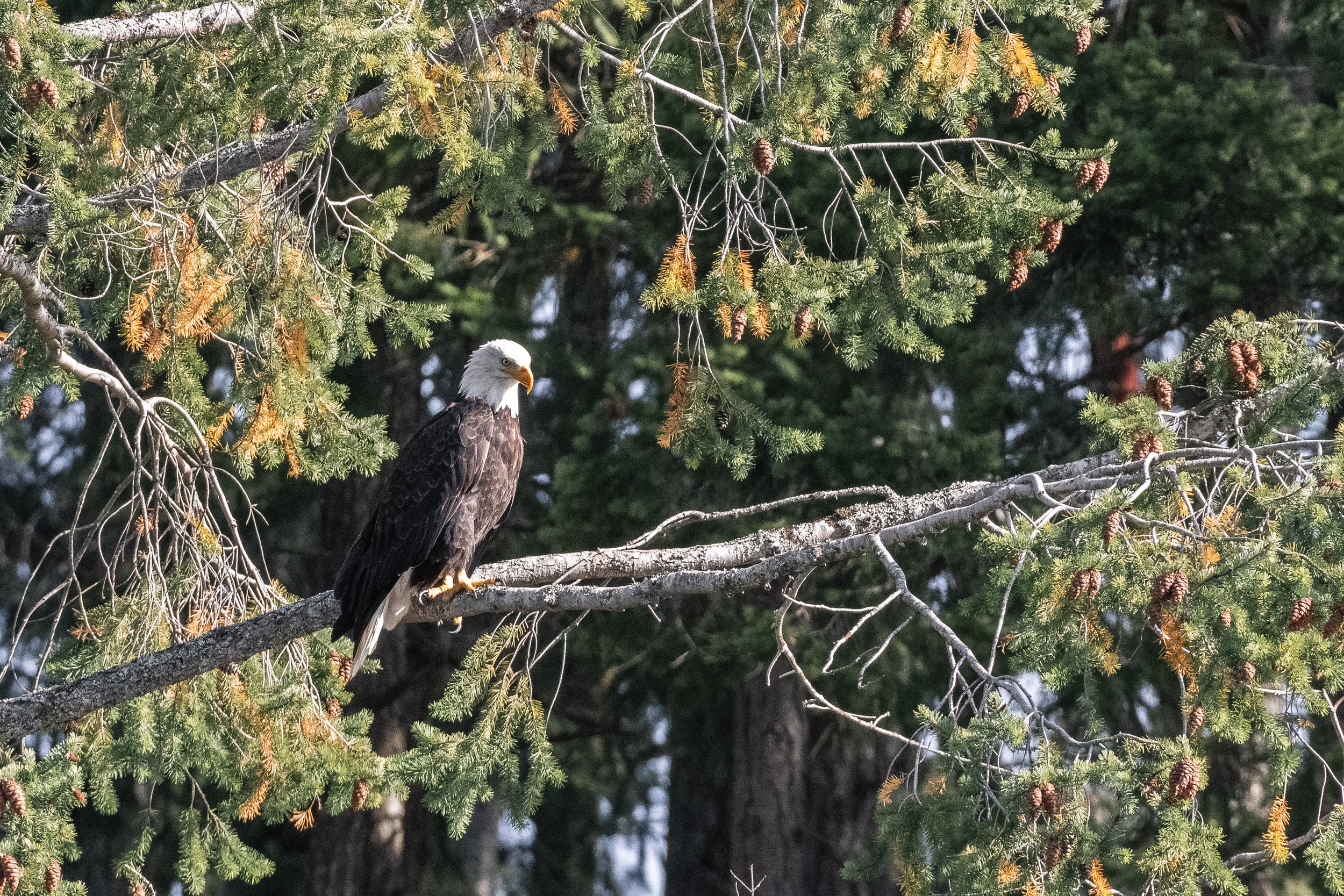
A Bald Eagle eyeing the waters up below.
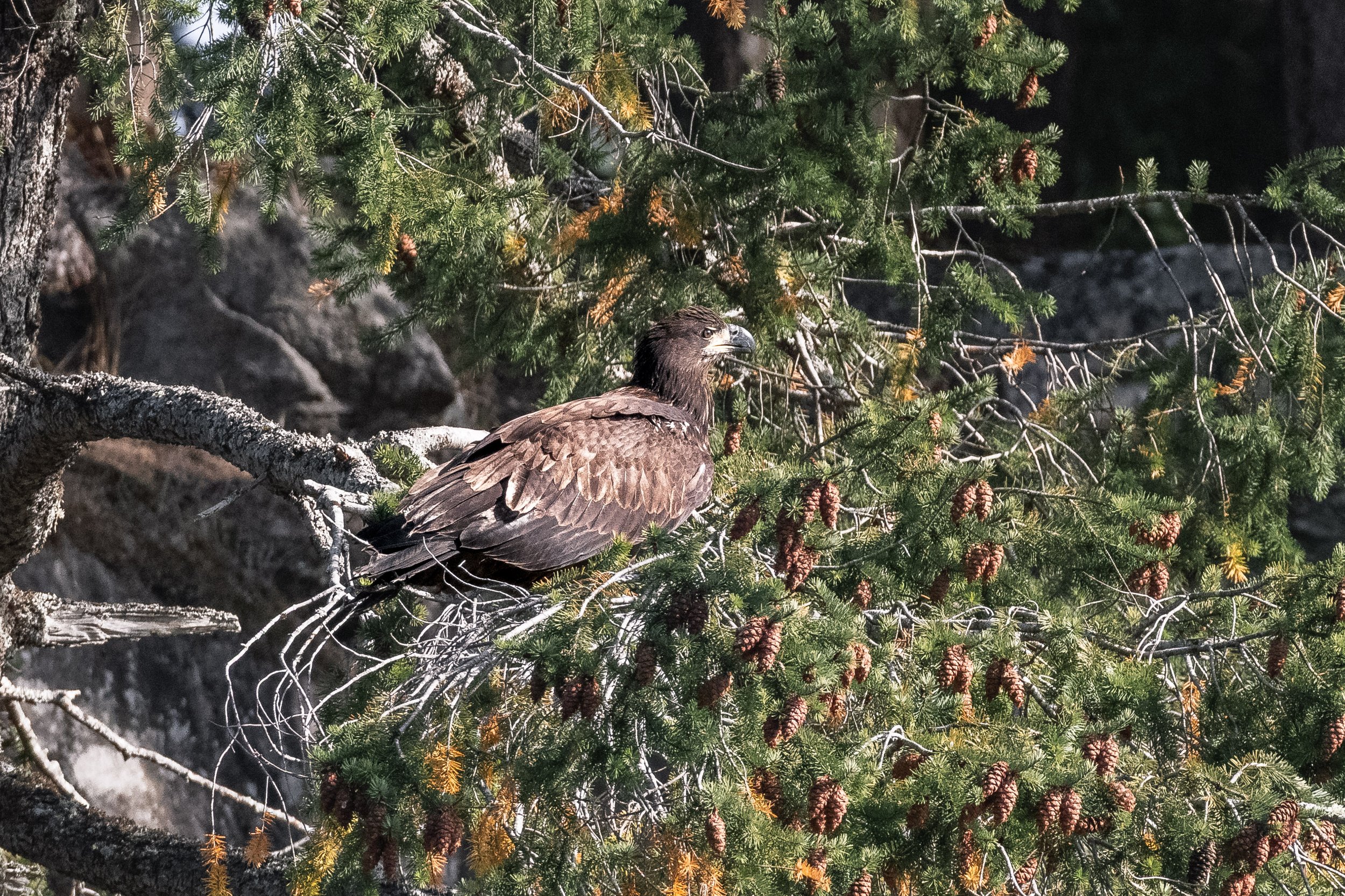
A juvenile Bald Eagle nestled up in the trees.
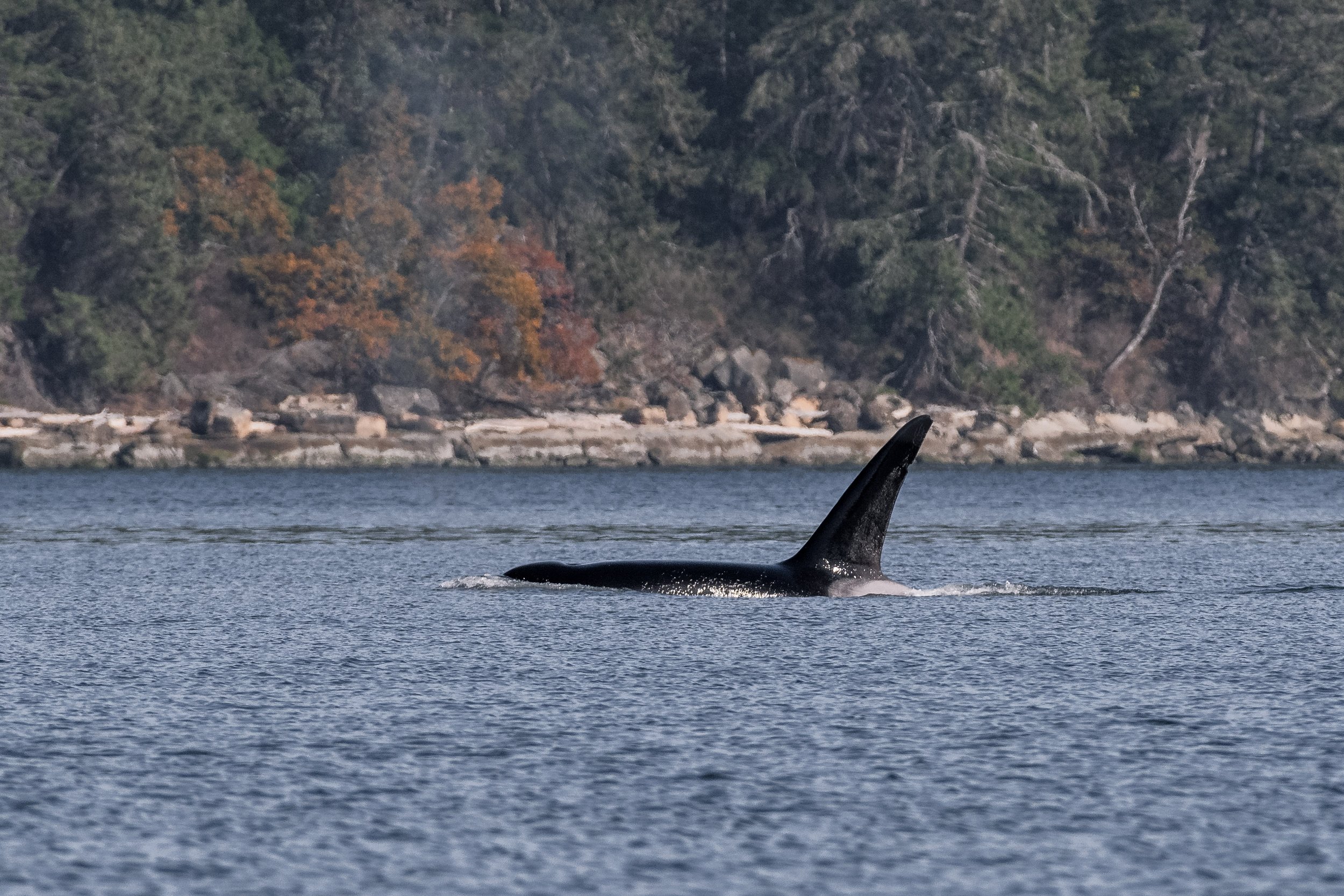
T065A3 Amir - our surprise orca for the day!
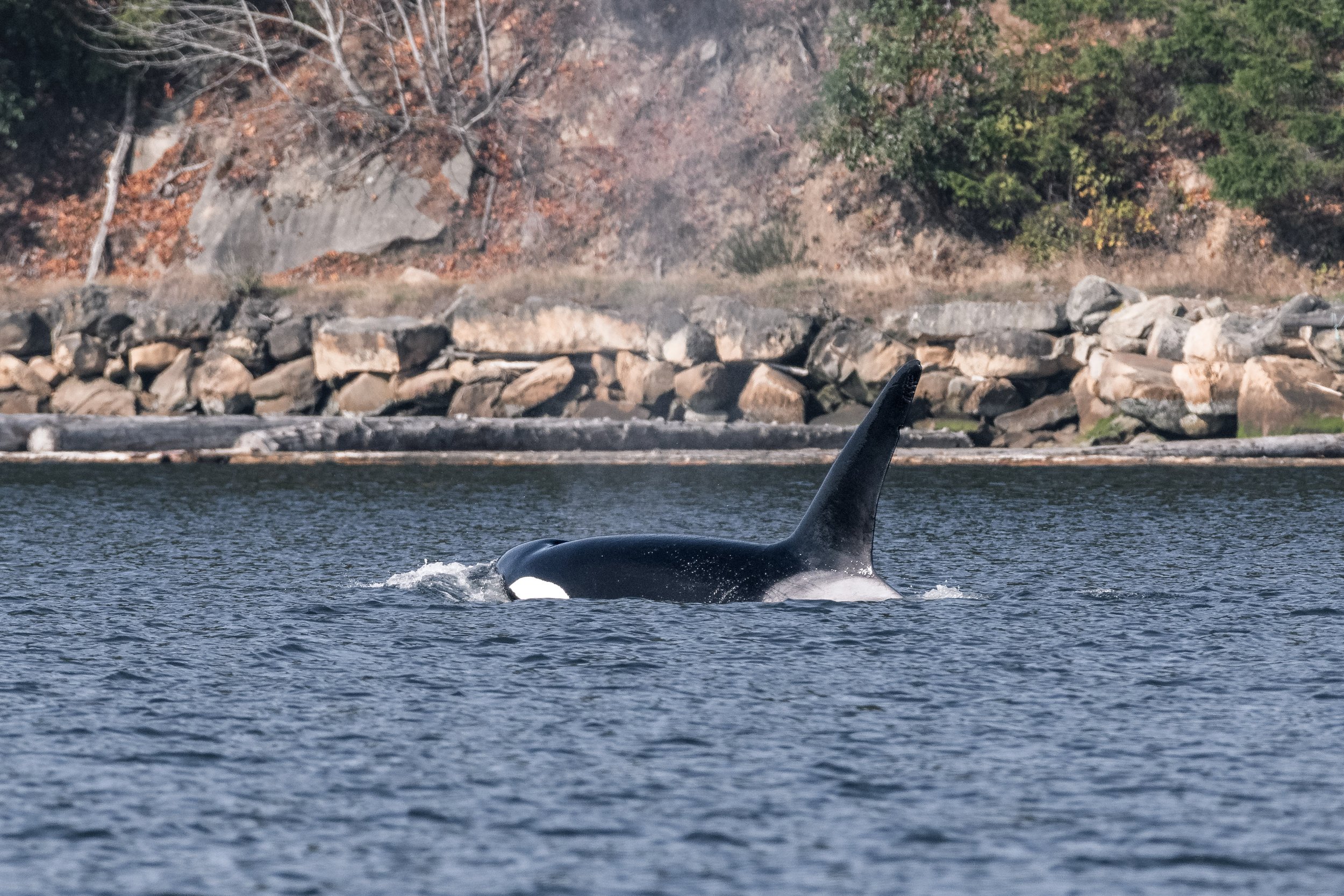
T065A3 Amir looks quite pudgy from this angle…
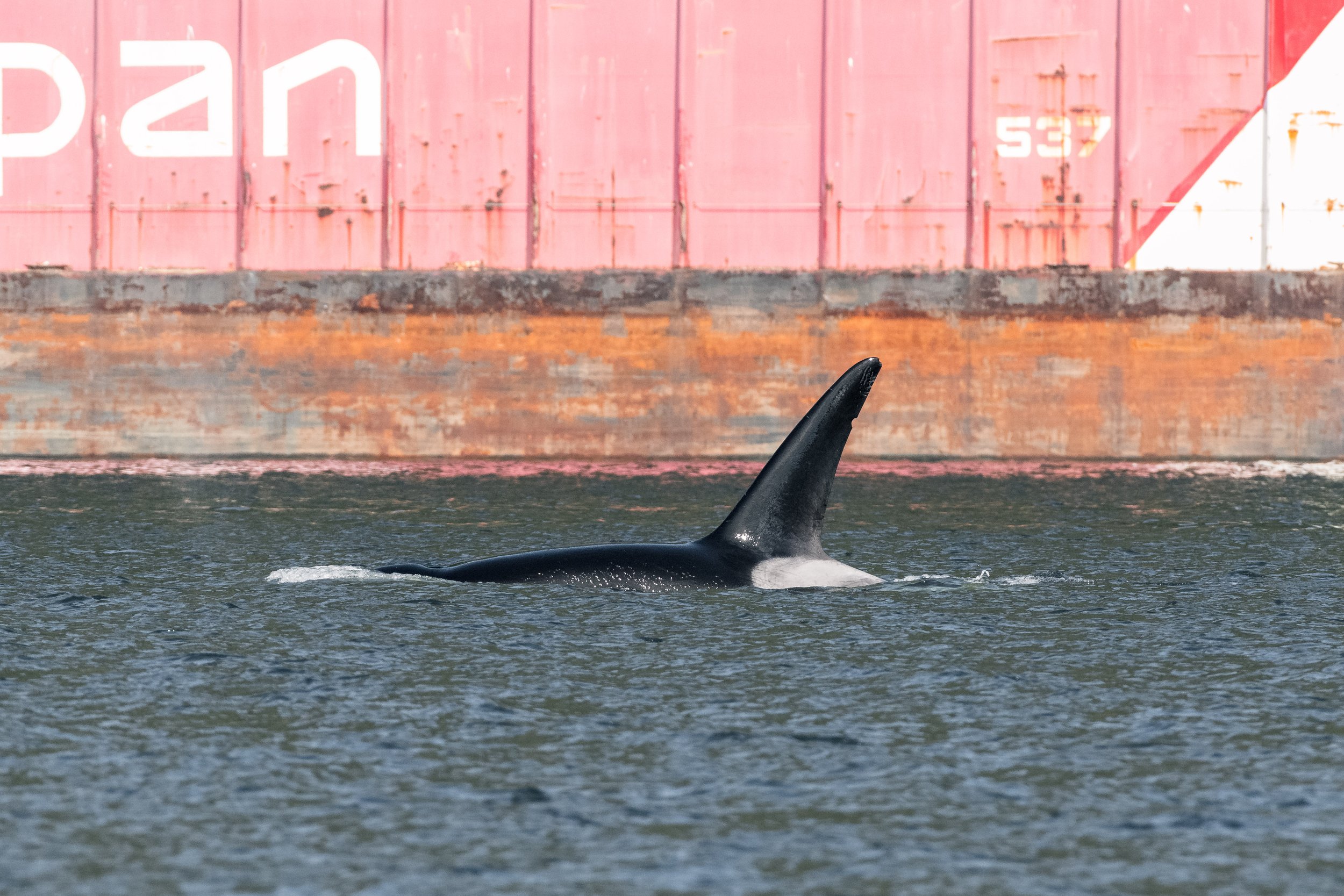
T065A3 Amir has a lot of new scars near the tip of his dorsal fin.
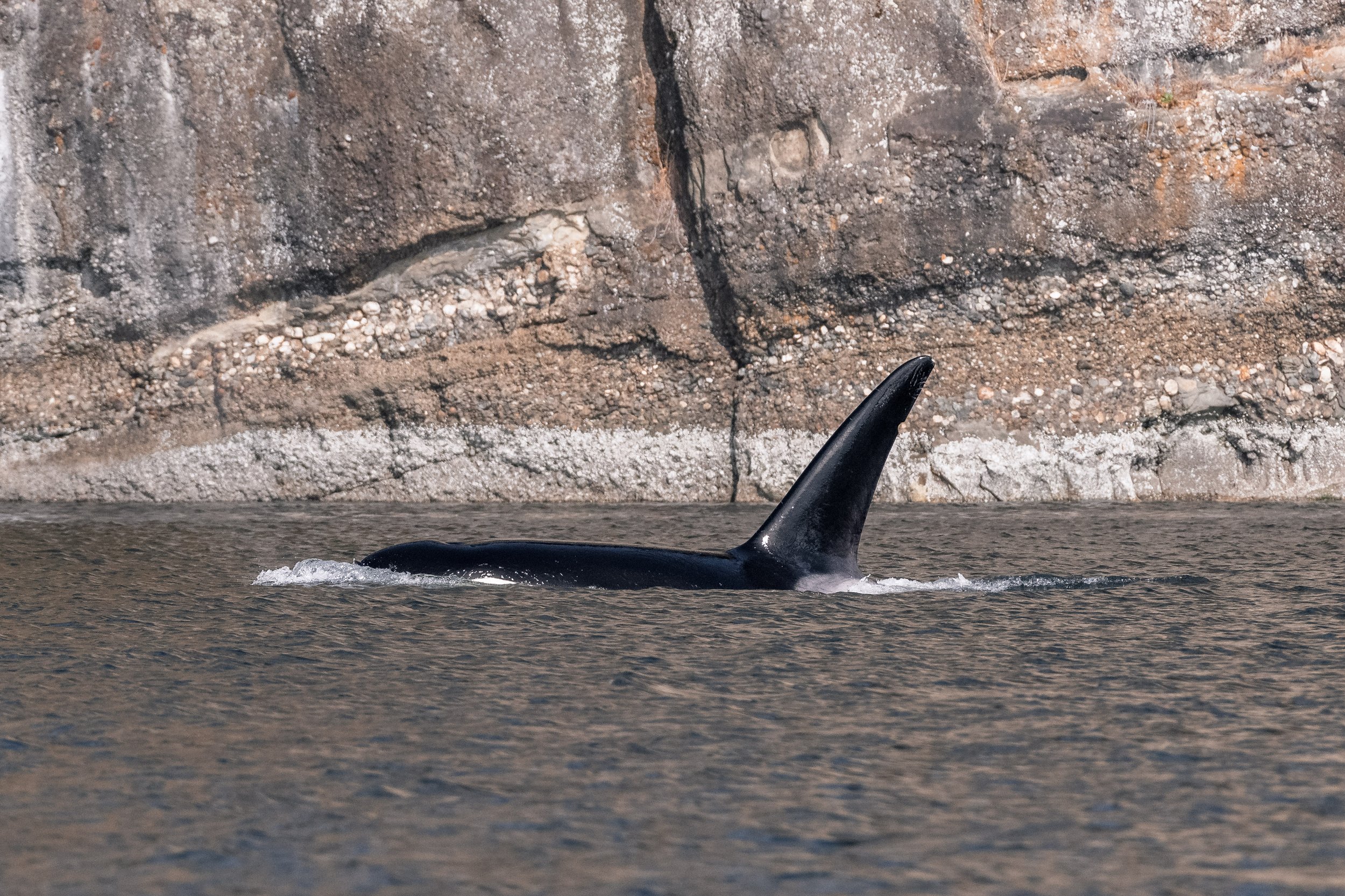
T065A3 Amir skirting close to the edge of the Gabriola Bluffs.
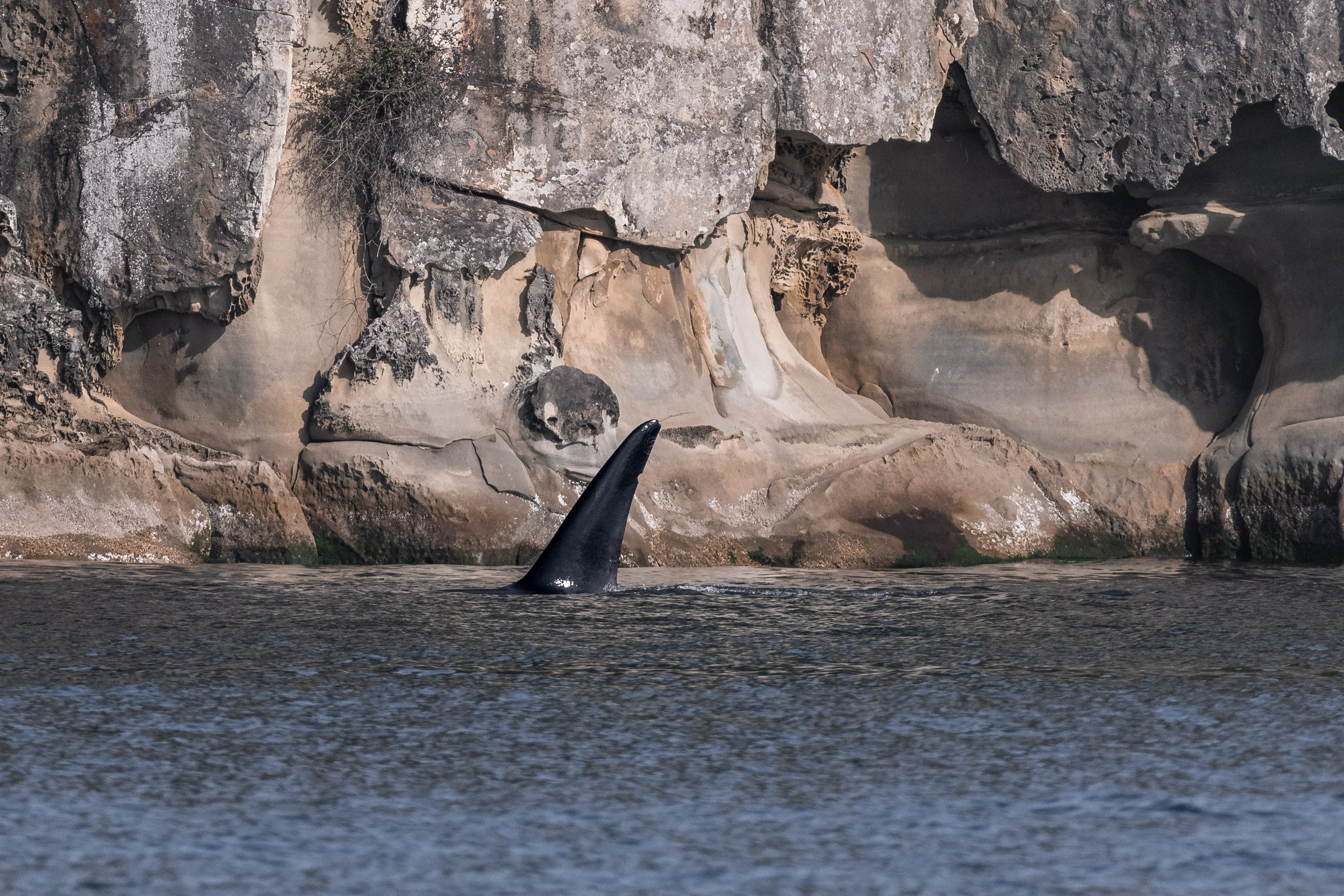
The beautiful sandstone formations behind T065A3 Amir.
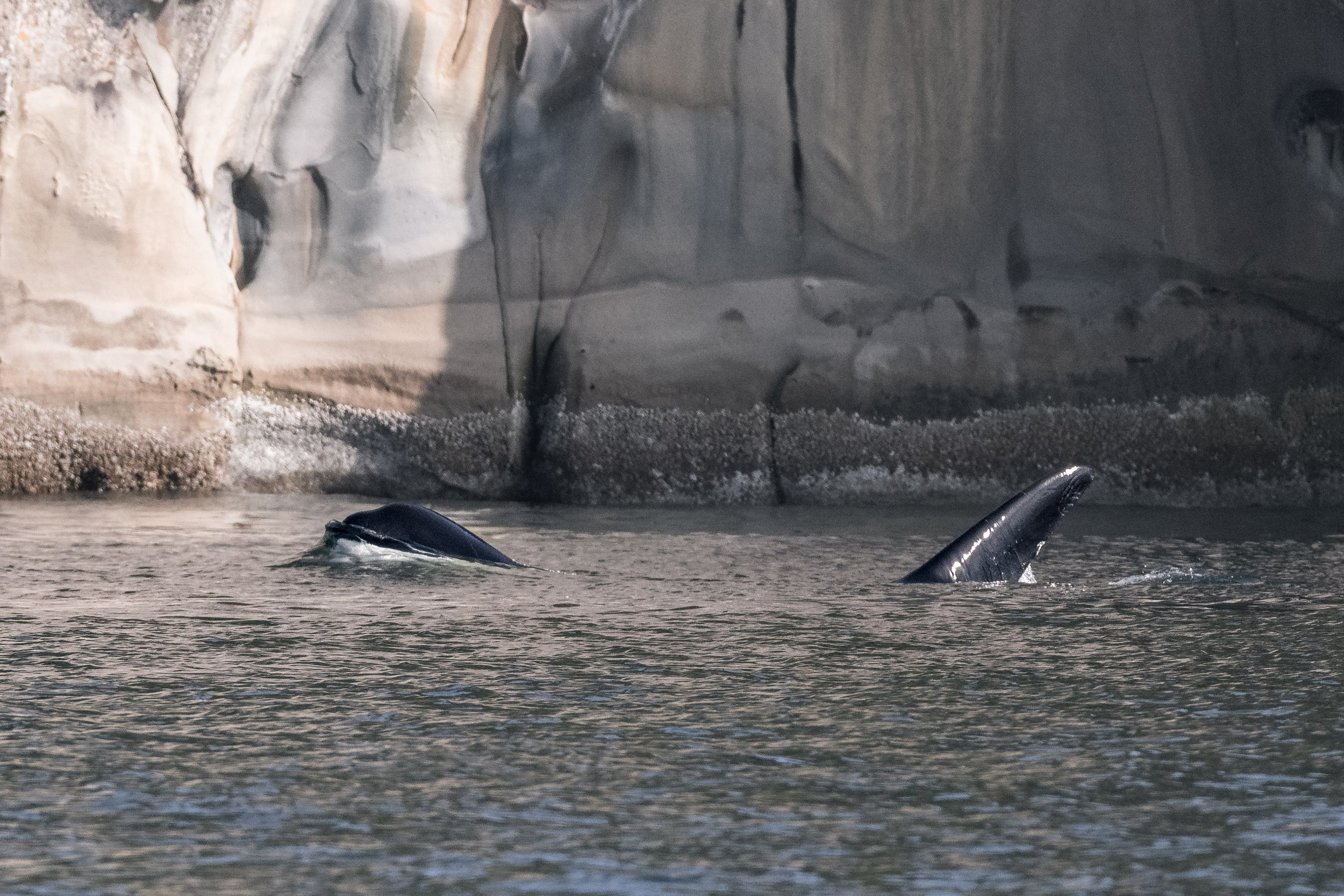
T065A3 Amir just before he breaks the surface!
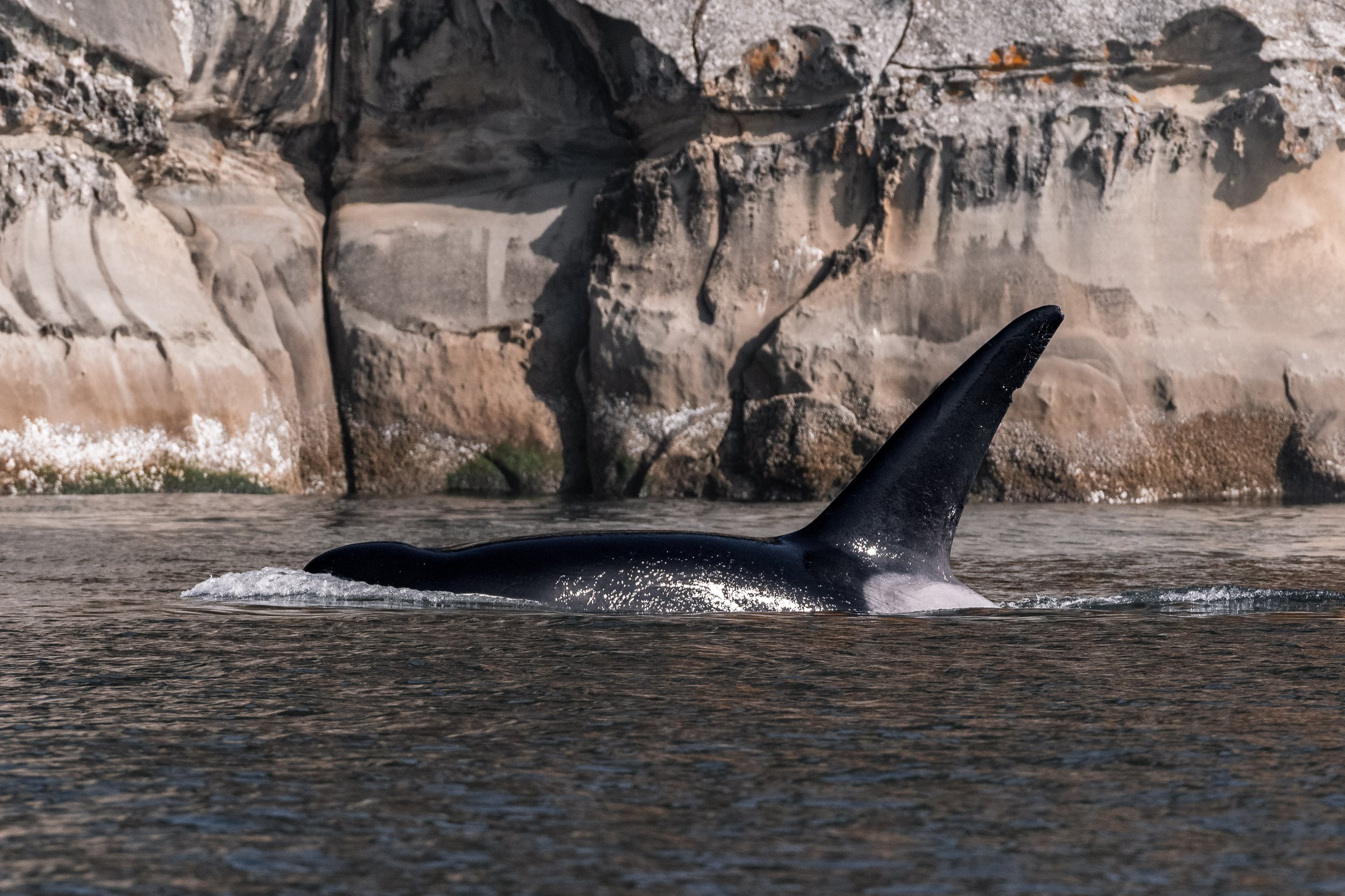
T065A3 Amir zooming on by.
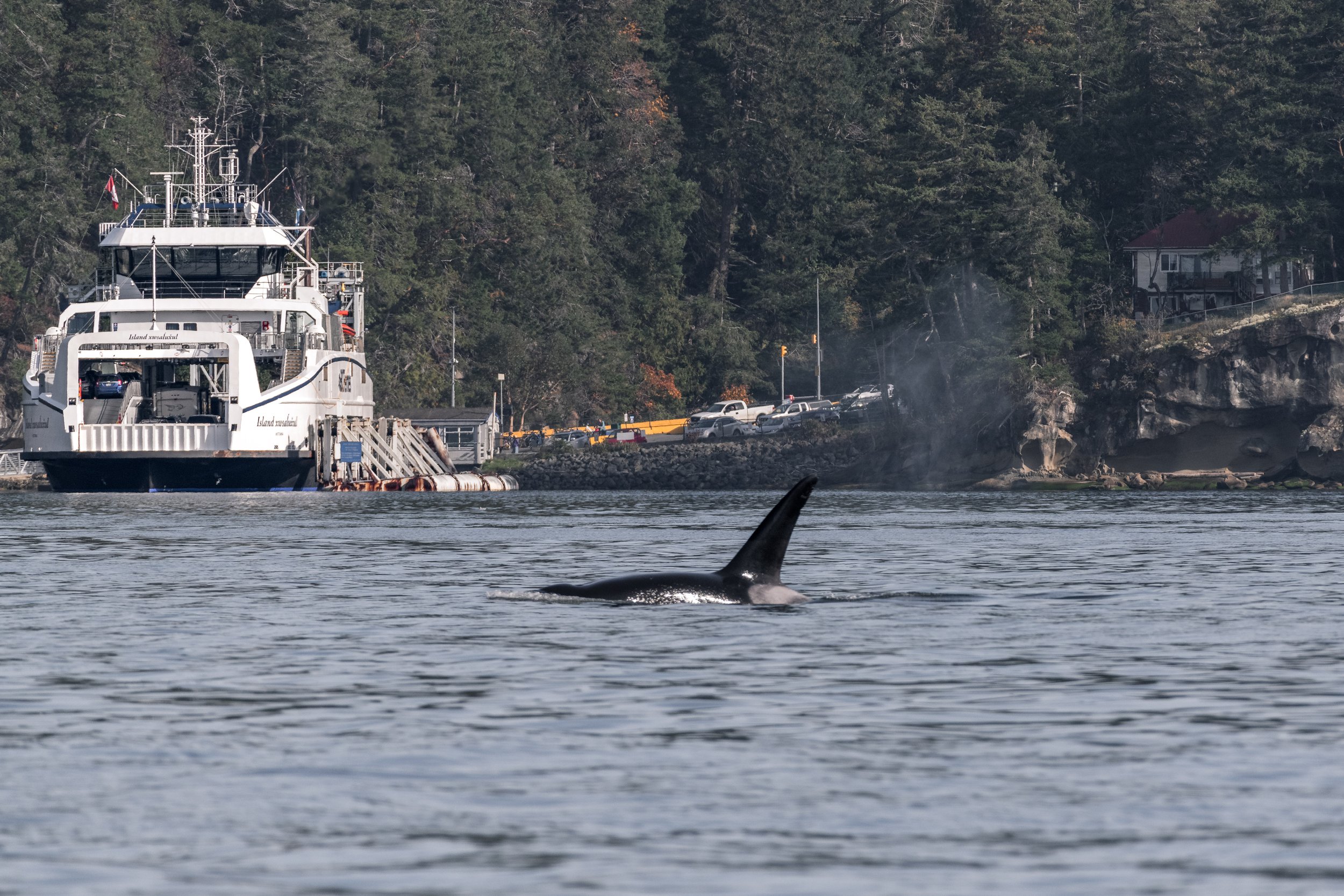
T065A3 Amir in the foreground, with the Gabriola Island ferry Island Xwsaluxul behind him, and the Gabriola Ferry line visible as well.