
October 7, 2026 - Sleepy humpbacks by Entrance Island, and a lone orca near Active Pass
While we never know exactly how far we have to go to find whales, sometimes they pop up in our own backyard! As we travelled out towards the Strait of Georgia, we soon spotted some familiar blows near Snake Island. We had humpbacks! This time, it was two familiar fins: Kappa (BCX0158) and Orion (BCX1251).
Kappa is one of the more established females in our local population. First spotted in 1997, she appeared in the Salish Sea at a pivotal time for humpback whales in the region. Following the end of the whaling industry, humpbacks had been largely absent from these waters for decades. In 1997, some of the first whales began returning to the Salish Sea, including the iconic Big Mama, who has since produced an impressive lineage. Although Kappa has only brought two documented calves into our local waters, we can hope there will be many more to come! Both Orion and Kappa belong to the Hawaiian breeding population of humpback whales. Although we see whales from both the Hawaiian and Mexican breeding populations here in British Columbia, the numbers are not evenly split. Around 64% of the humpbacks identified in BC come from the Hawaiian population, compared to approximately 33% from the Mexican population. A few individuals even visit both breeding grounds, reminding us that there is still so much to learn about these fascinating animals!
As we continued on, another pair of humpbacks surfaced nearby. This time, it was Eeyore (BCY1221) and Barge Boy (BCX2514)! Both of these younger whales were first spotted in 2022. At around four years old, they still have quite a bit of growing to do and would look much smaller alongside mature adults like Kappa and Orion. Humpback whales generally reach their full size and weight around age 8-12. Although we don’t know exactly how long these animals' lifespans are, estimates suggest these animals can live comfortably into their fifties when given the opportunity.
After a few minutes without seeing a fluke, it became apparent that these two were getting some much-needed rest. Once we identified them, we decided to give them space and continue with our day. There would be plenty more to discover!
We headed farther south into the Gulf Islands, a beautiful, biologically rich area that is home to a wide variety of species. Along the way, we stopped to check out some pinnipeds at one of our favourite places: Stinky Rocks! Guests were treated to the peaceful sight of several Harbour Seals basking in the sunshine, high on the rocks. Their distinctive, disruptive spot pattern on their coats allows them to almost disappear entirely into the rocks, one of their best forms of protection against predators. Nearby, the less peaceful Steller Sea Lions were also enjoying the sunshine. These massive pinnipeds migrate north each summer to give birth to their pups before travelling south again in the fall, when salmon begin their seasonal runs. Sea lions are always a guest favourite, and for good reason! These noisy animals can weigh up to 2,500 pounds and cause quite a commotion when they feel territorial.
After leaving the pinnipeds behind, we continued south towards Prevost Island. Following a humpback-heavy morning, we were thrilled to spot a large black dorsal fin gliding through the water. It was one of our large, lone male orcas, Nielson!
T049C Nielson ♂ (1998)
At 28 years old, Nielson is a mature, confident adult. He has dispersed from his matrilineal pod and instead prefers to travel on his own. While many adult orcas travel with their families for the entirety of their lives, it is not uncommon for mature males in the Transient Orca population, such as Nielson, to leave their pods and take on the world on their own. He is a capable hunter, able to find and catch prey without relying on other members of his family.
As he cruised close to the Prevost Island shoreline, we watched closely to see if he would be successful in his hunt for some lunch. A large male like Nielson requires an enormous amount of energy to sustain his body, making the search for food an important part of his daily routine. Estimates of daily energy requirements vary, but a large male may need well over 200,000 calories a day. Depending on the size and type of prey, this could mean catching one or two Harbour Seals each day to maintain a healthy body weight. Luckily for the Transient Orca population, there are thousands of Seals, Sea Lions and harbour porpoises available to them to meet these requirements. These prey species help sustain the population, although finding and capturing them still requires considerable time, energy, and skill. And while Nielson didn’t appear to catch anything while we were with him, we still enjoyed watching him weave through the islands.
Enjoy all the photos of the day below, taken by onboard Marine Naturalist Hayleigh Hilbert.
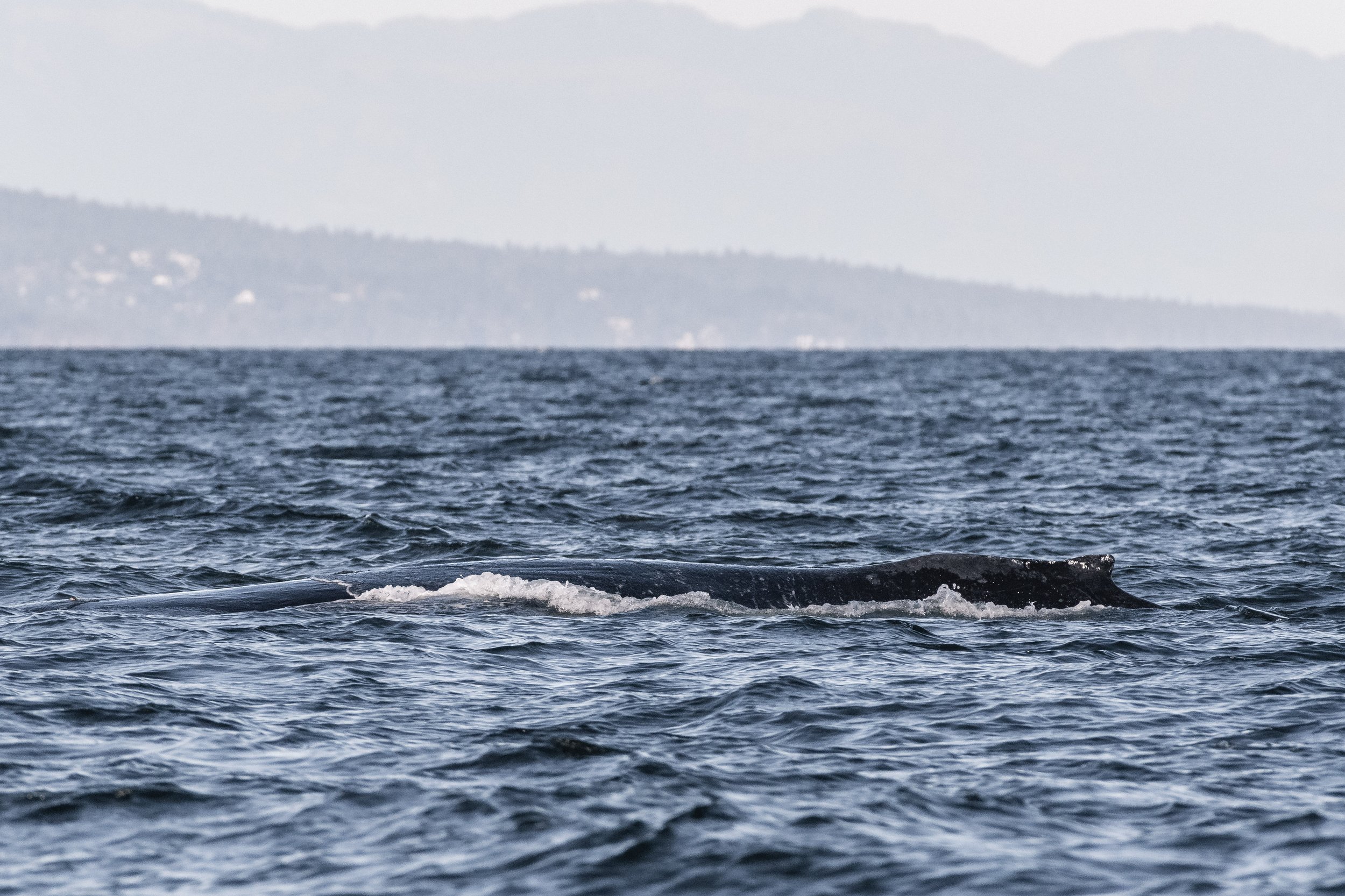
Kappa skirting the surface of the water.
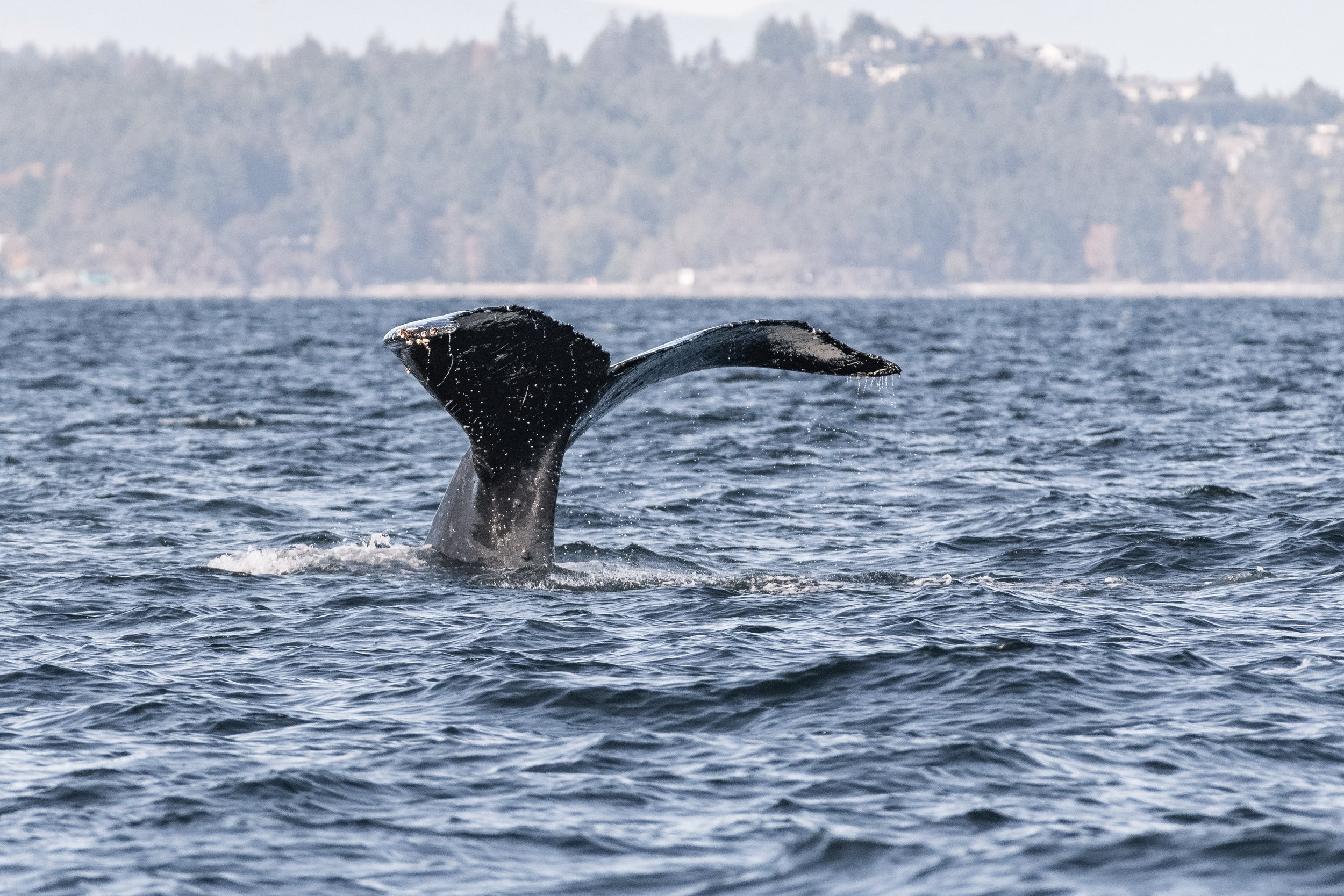
A nice high fluke from Orion.
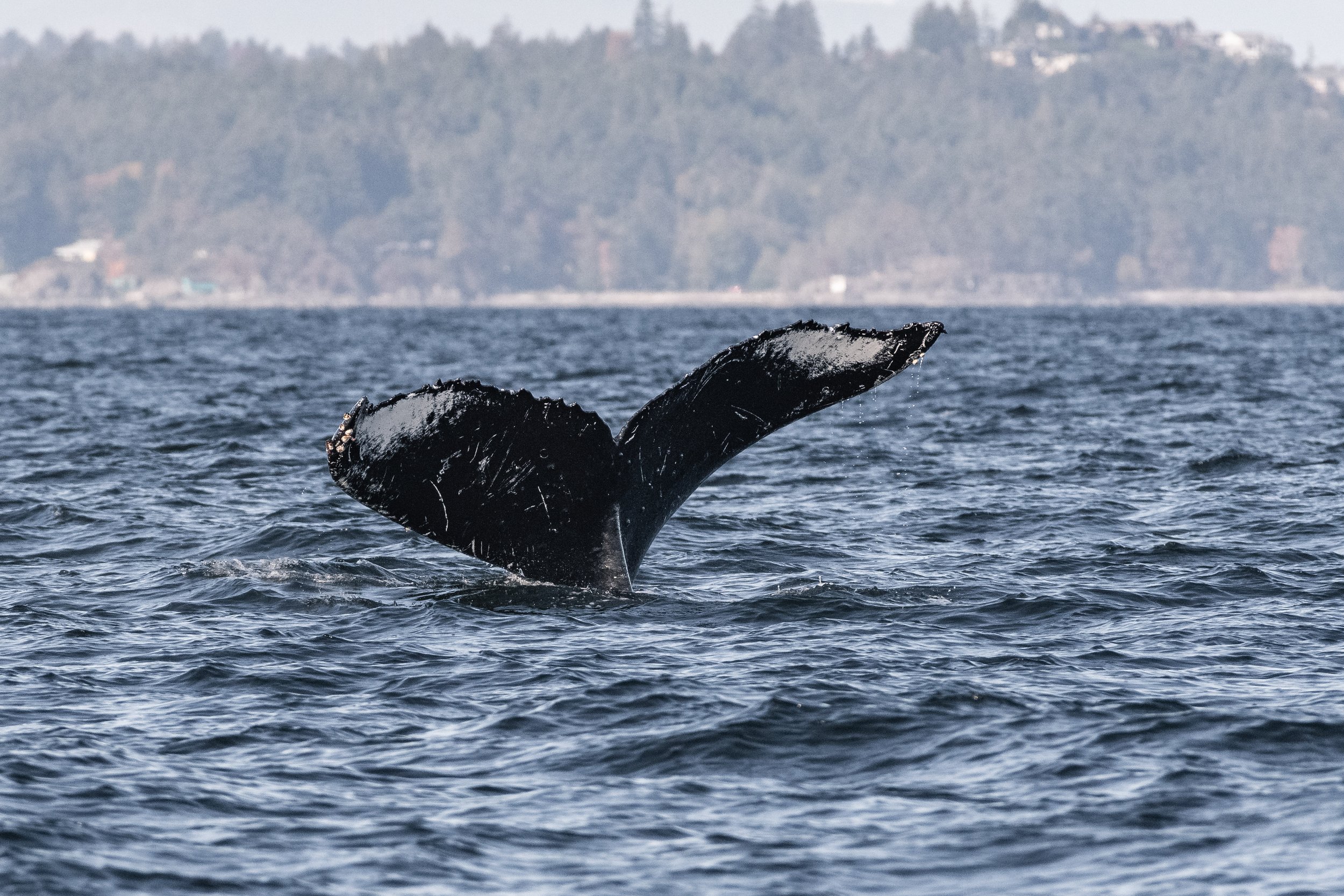
Orion has many interesting markings over his fluke.
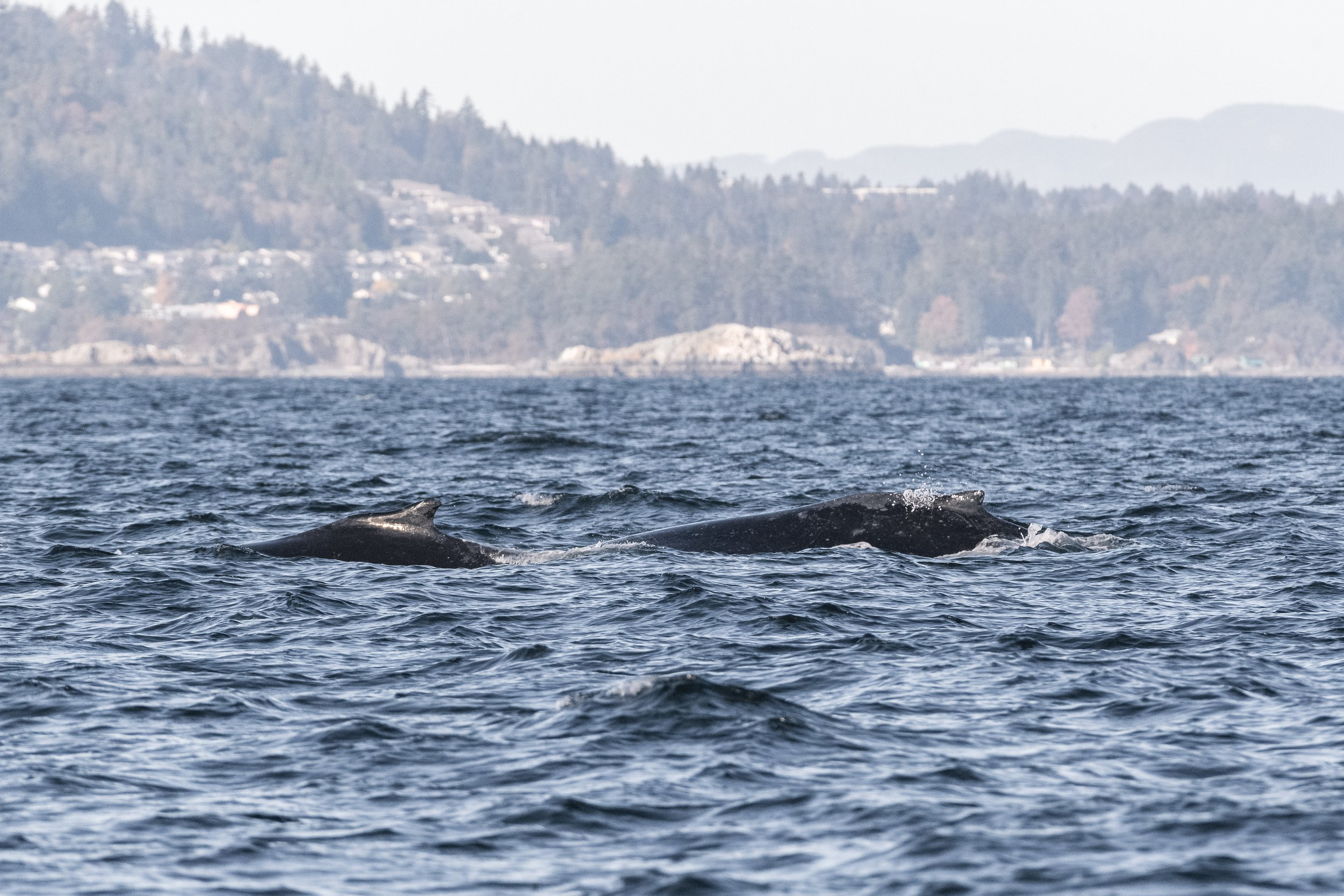
Orion in the lead, with Kappa behind him.
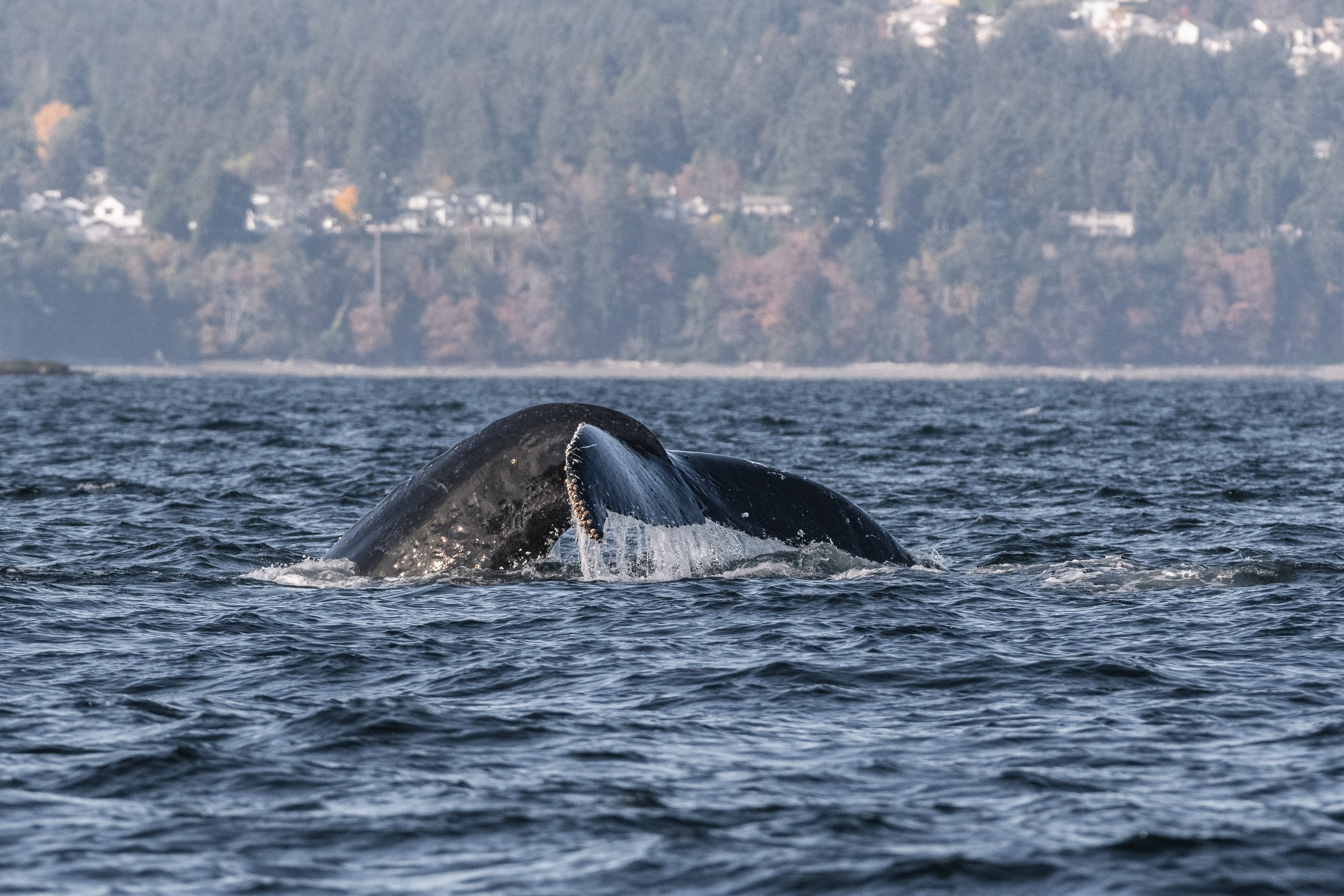
A beautiful fluke waterfall.
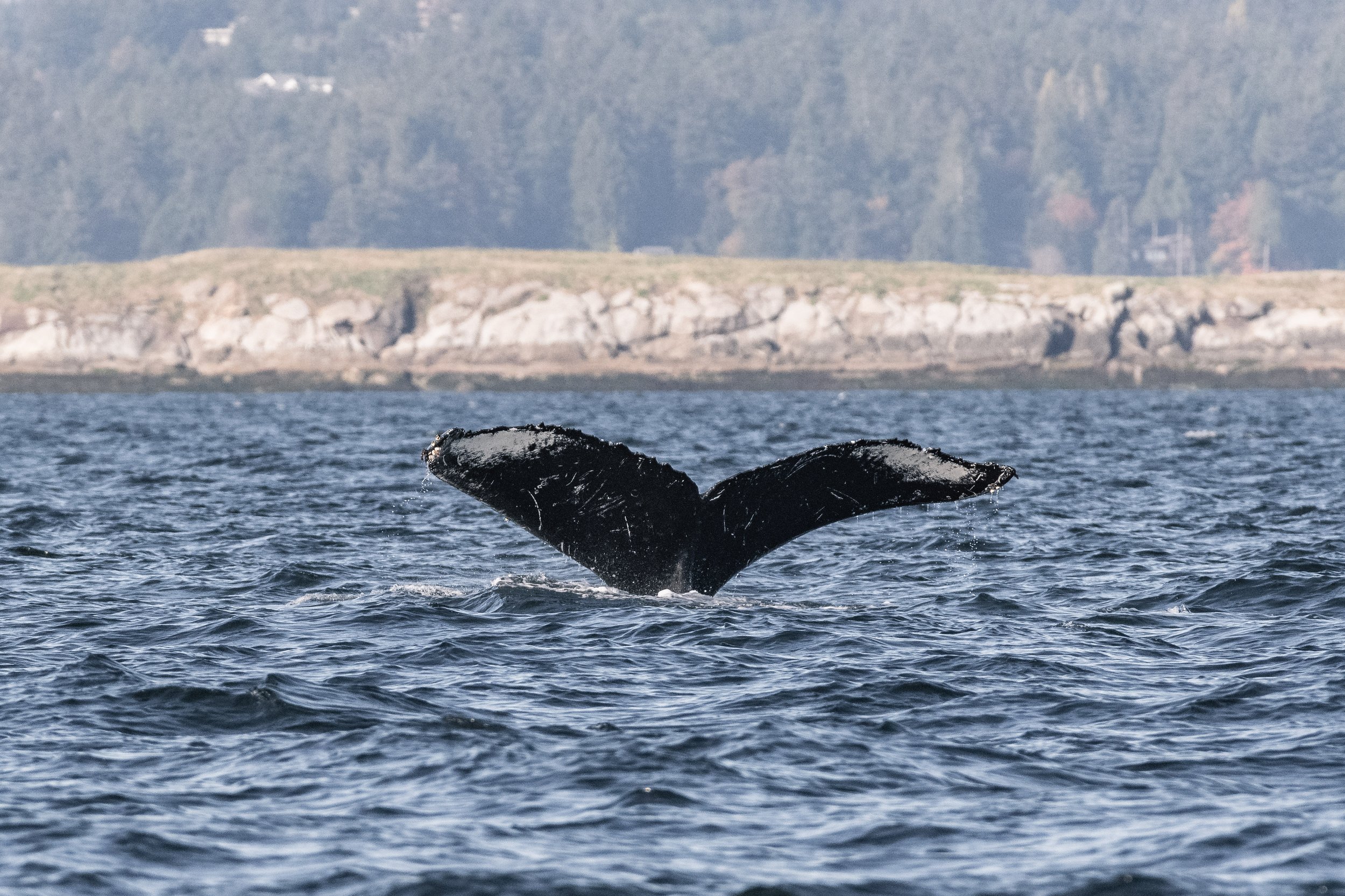
Orion fluking with Snake Island behind him.
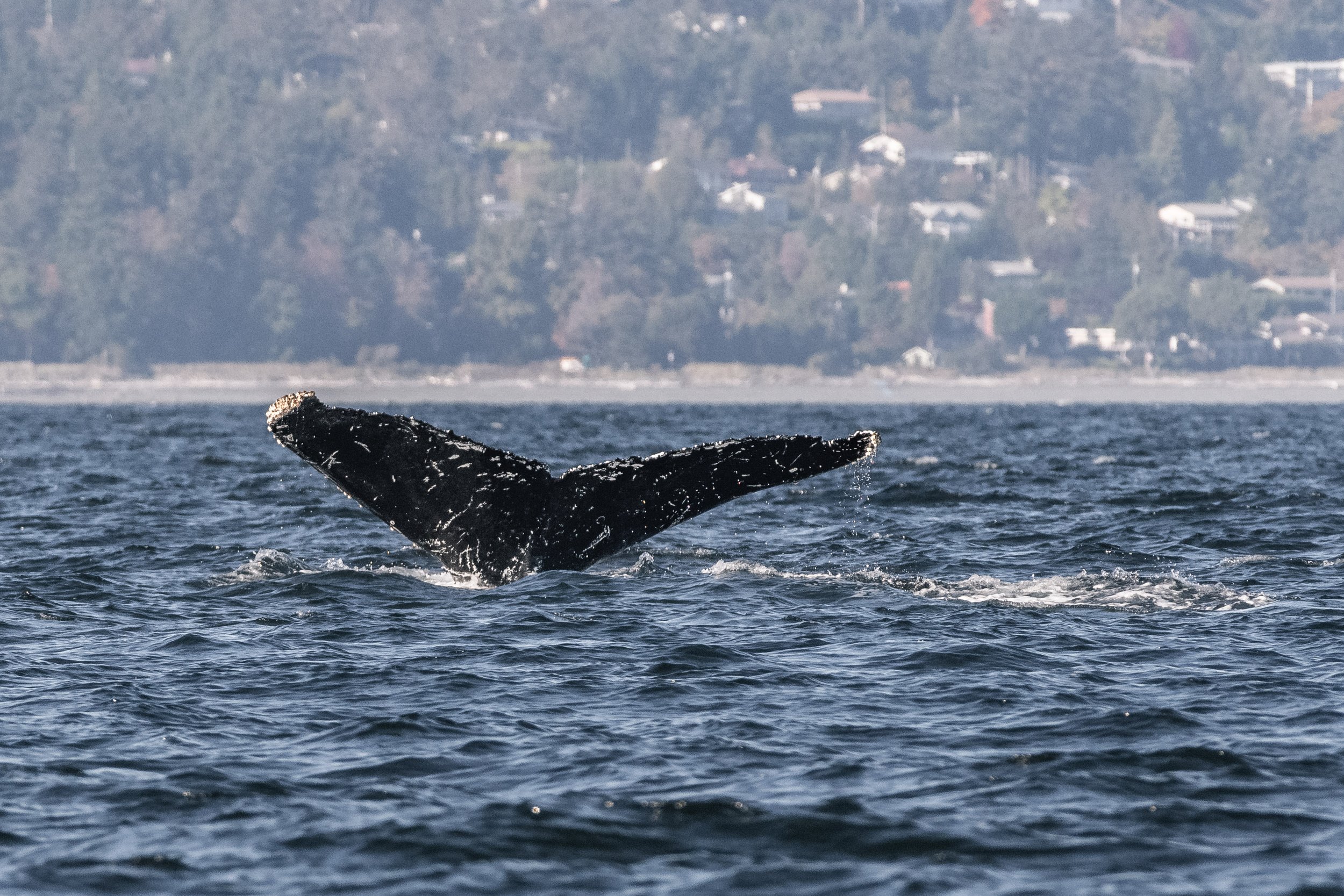
Kappa fluking with water raining off her fluke.
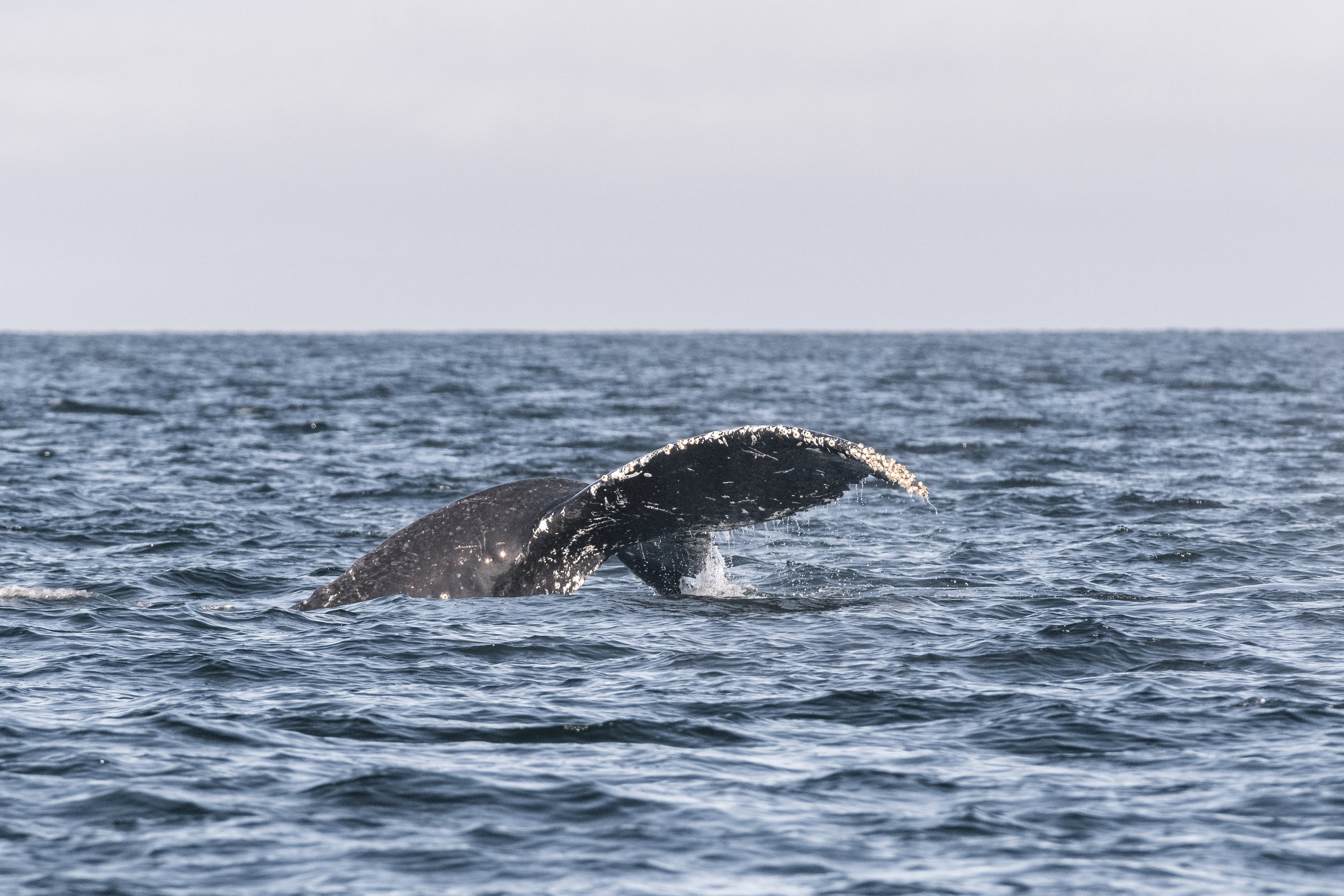
A side angle of Kappa’s fluke.
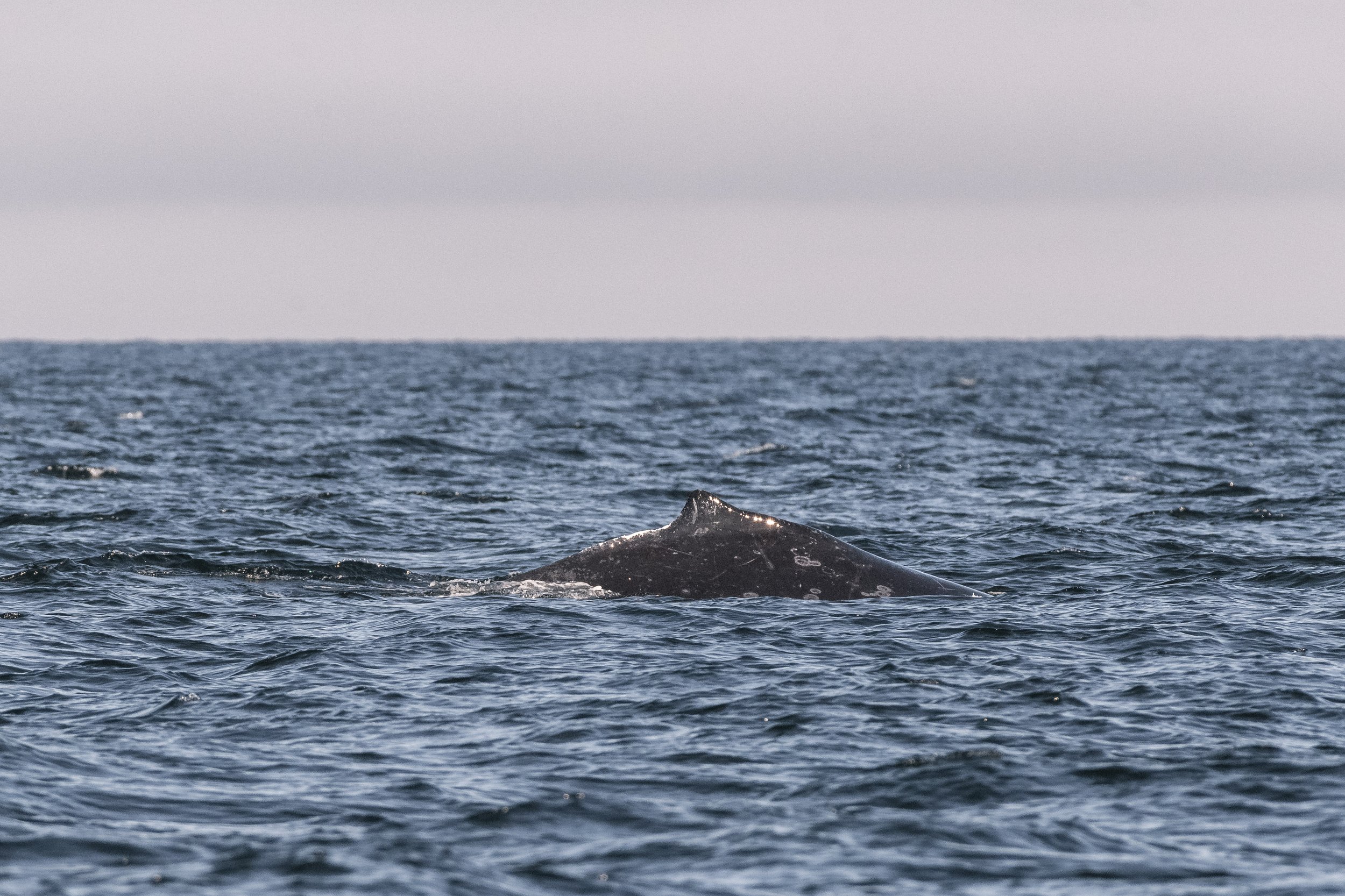
Eeyore travelling along.
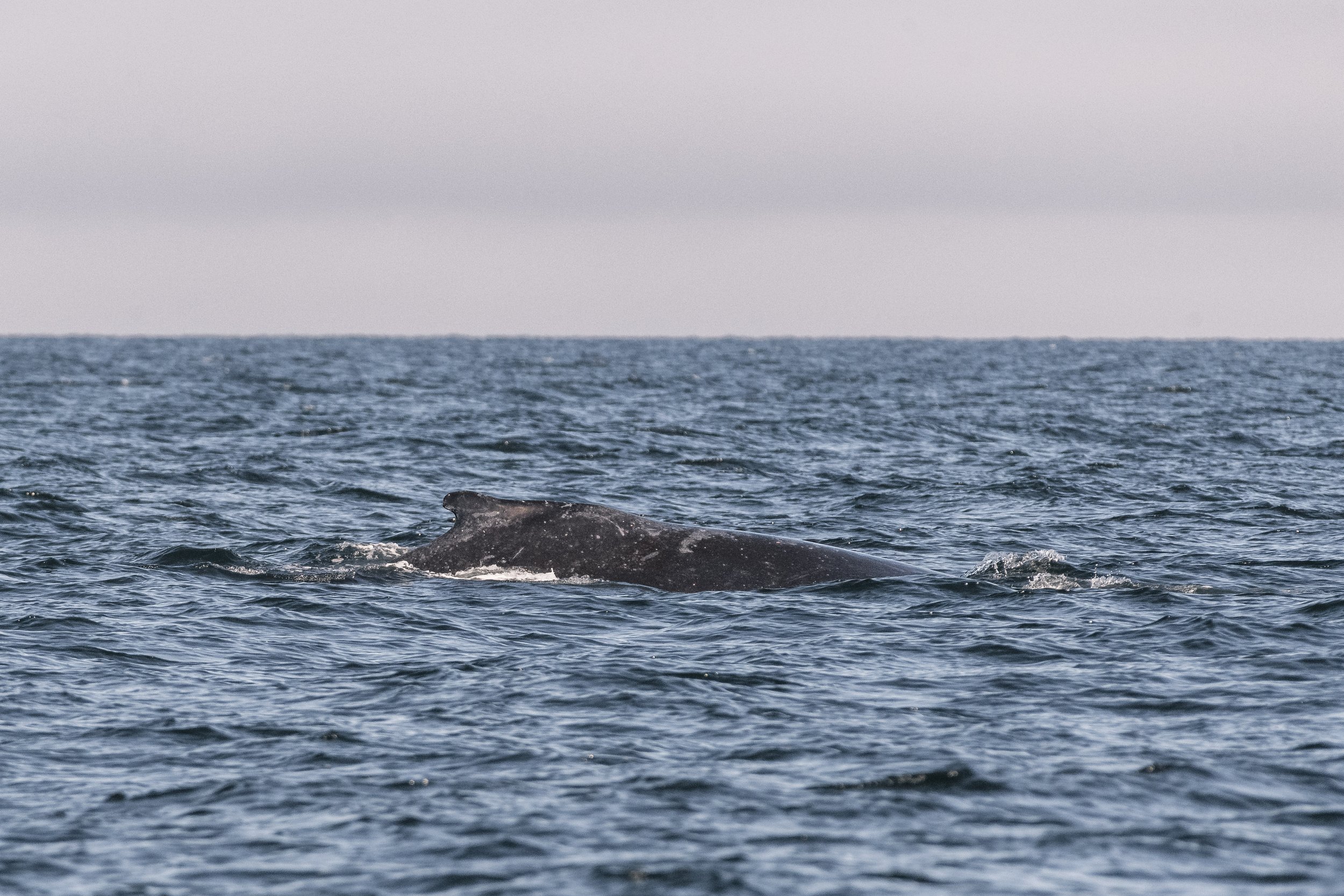
Barge Boy cruising on by.
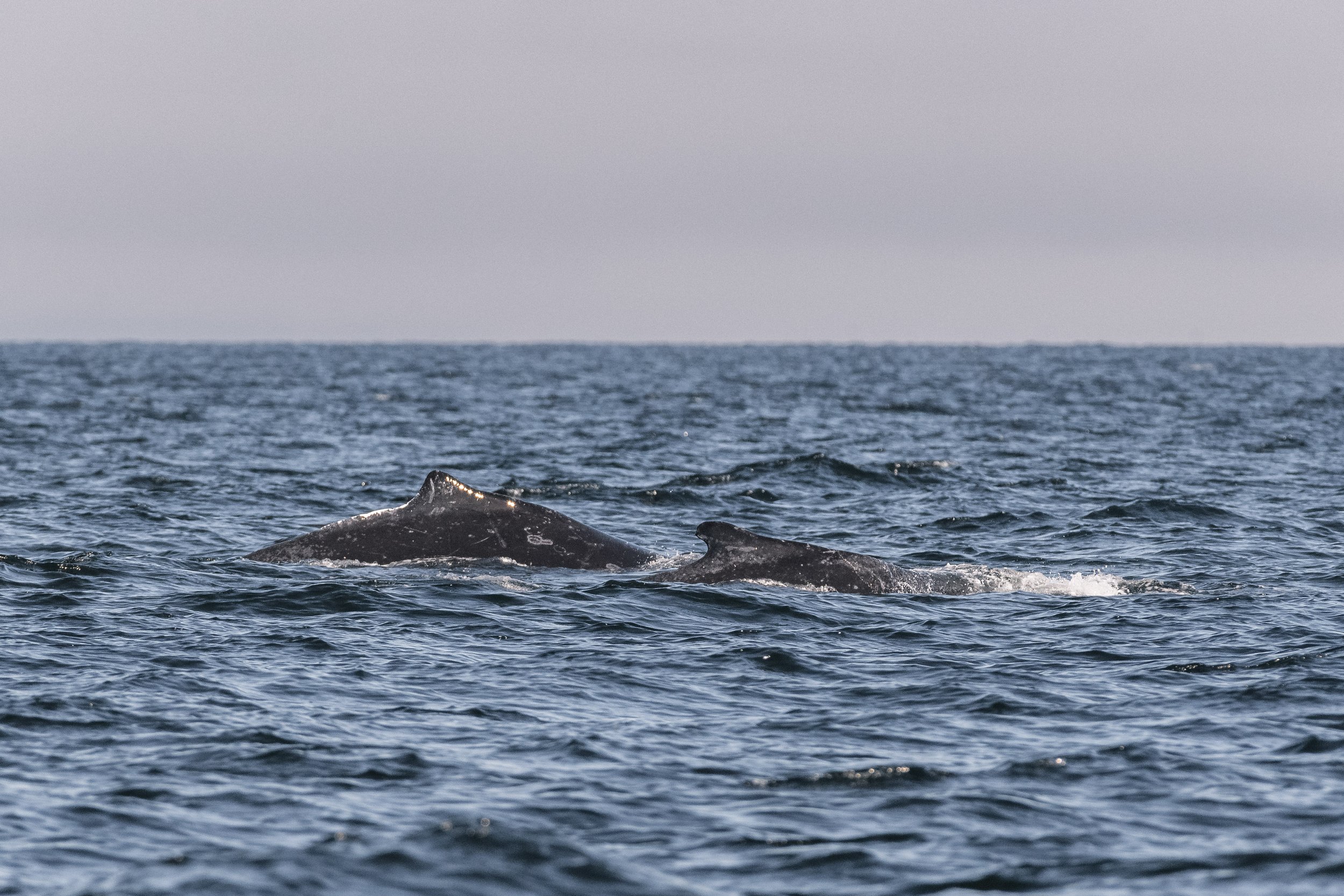
Eeyore right behind Barge Boy.
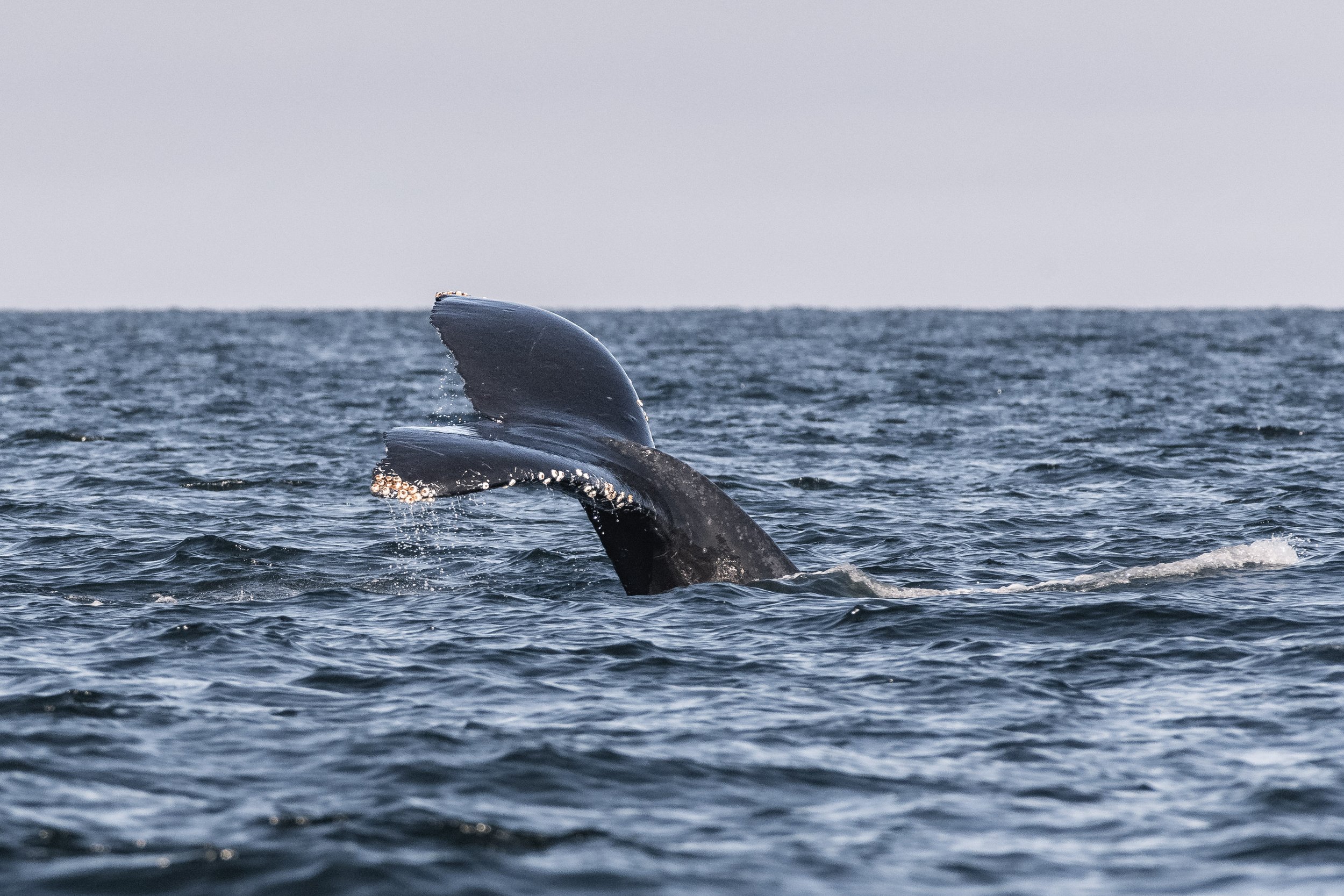
A dive from Eeyore.
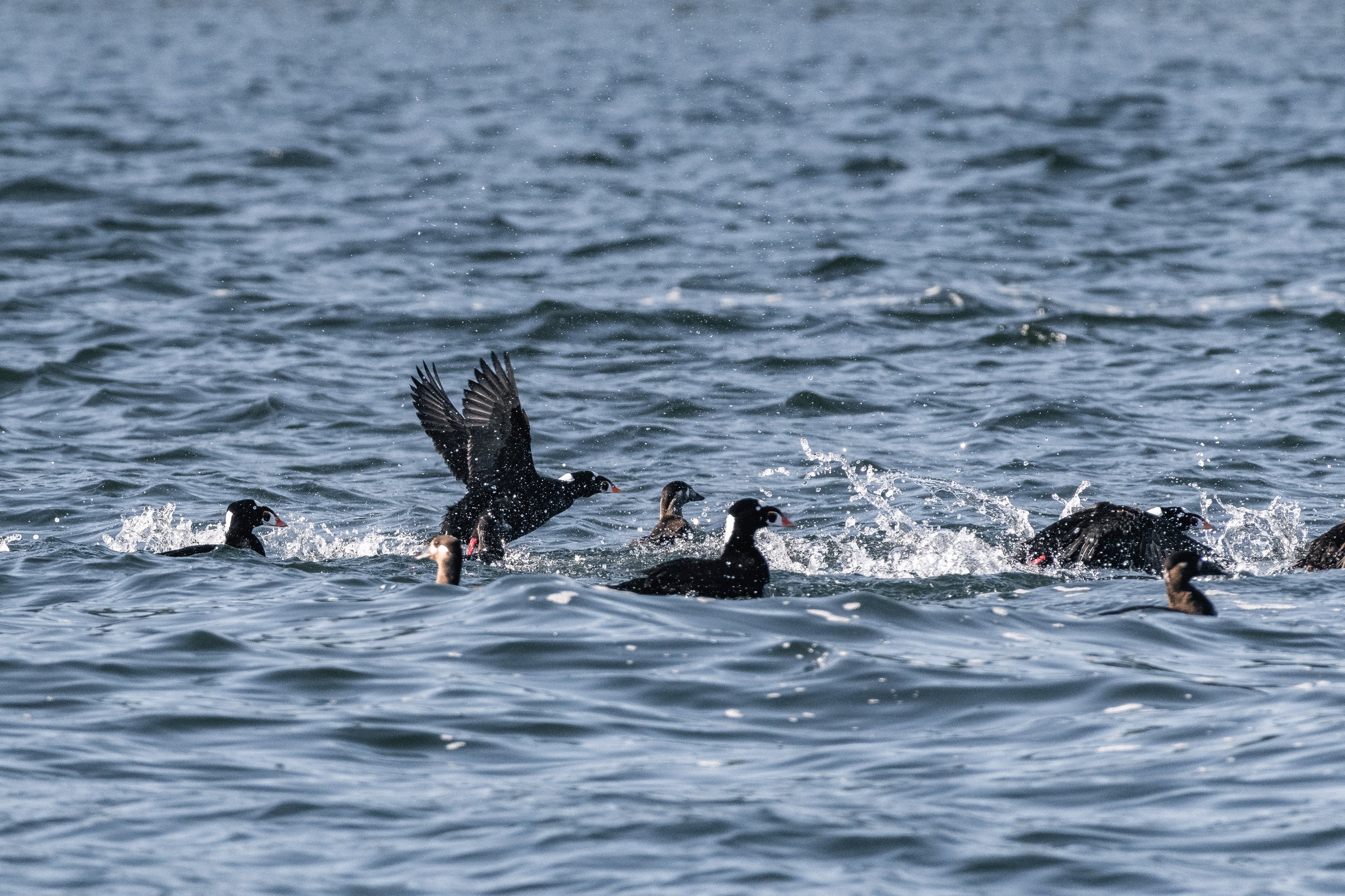
Surf Scoters making a ruckus.
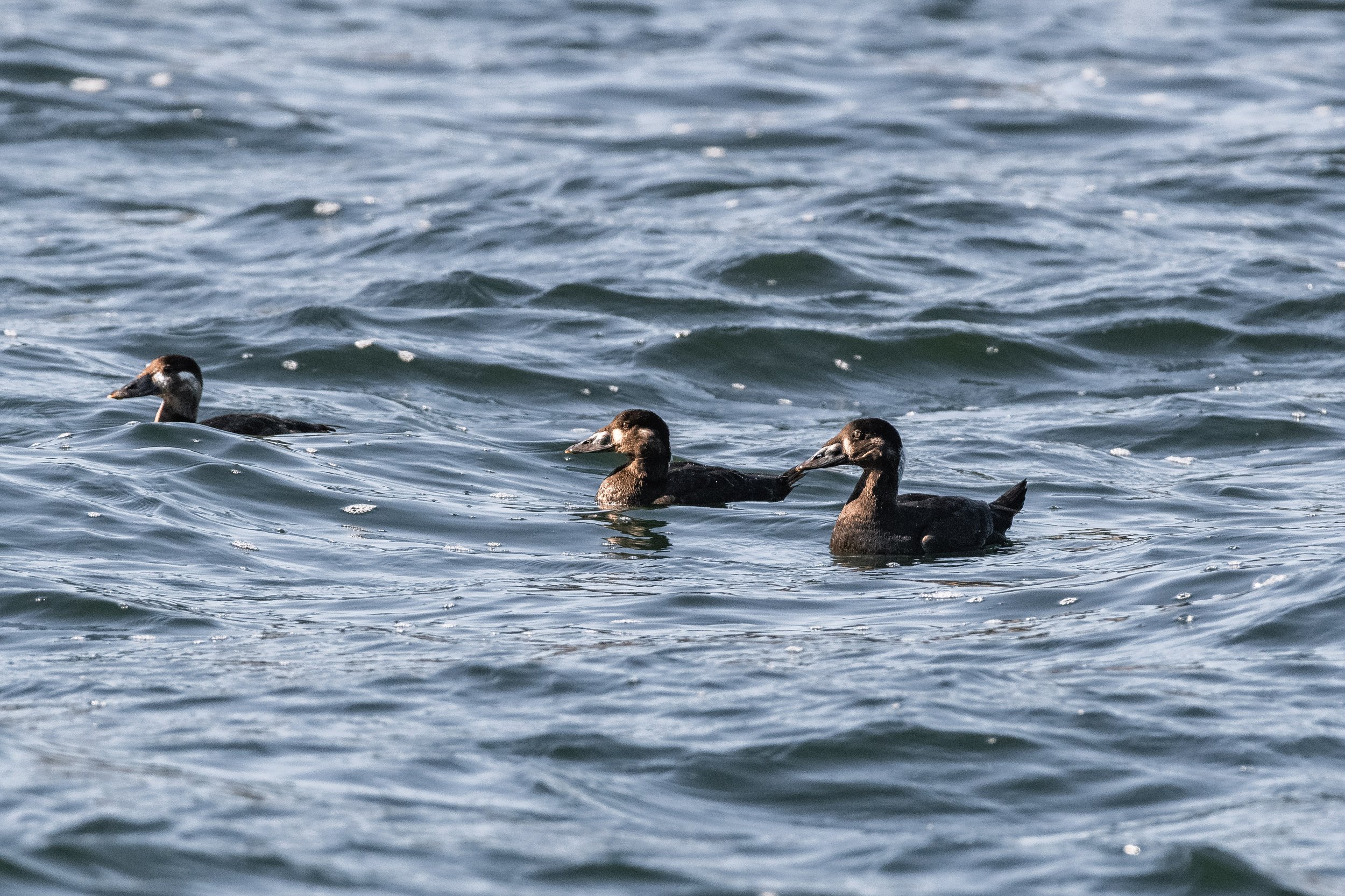
Several female Surf Scoters paddling along.
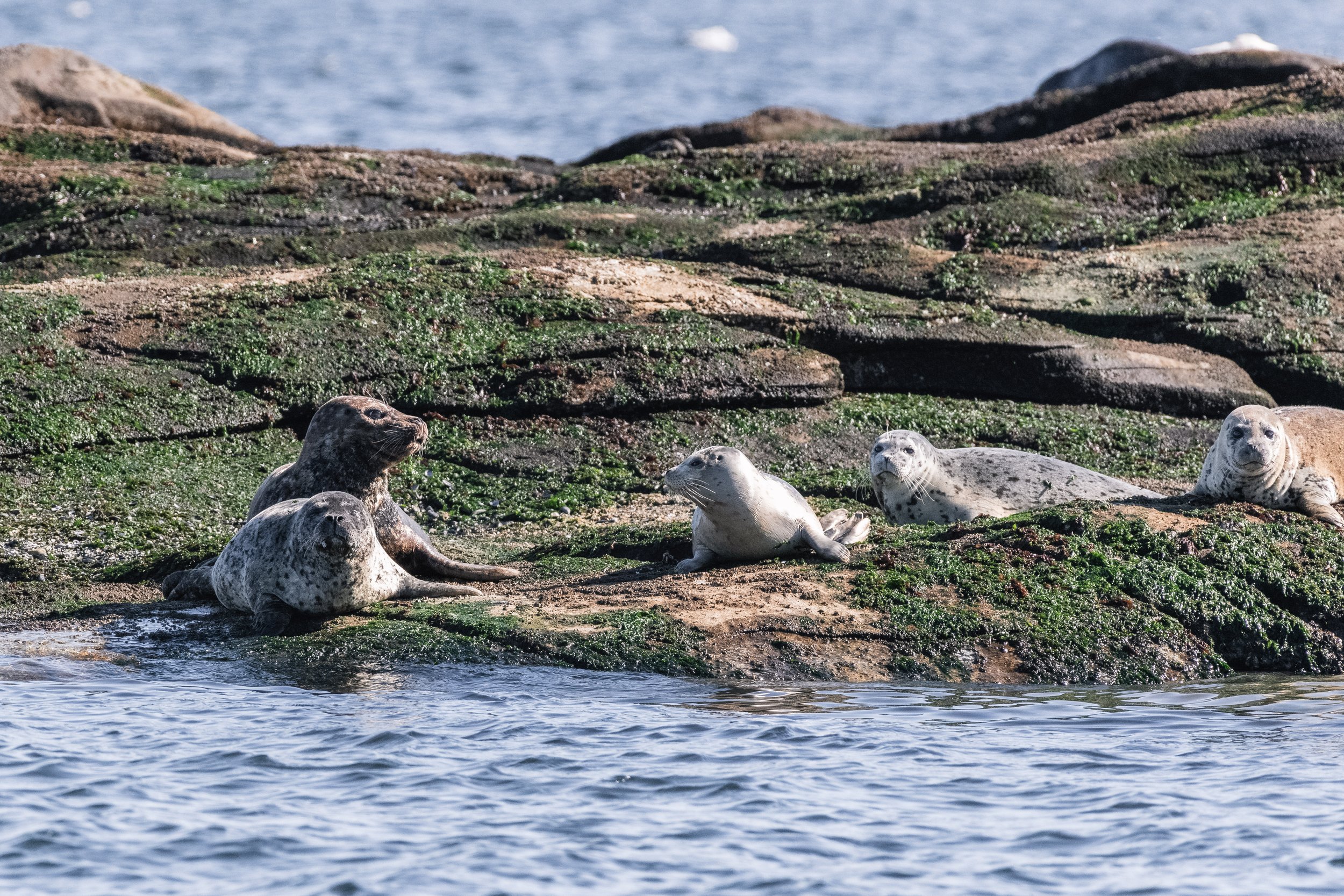
Harbour Seals hauled out together on the rocks.
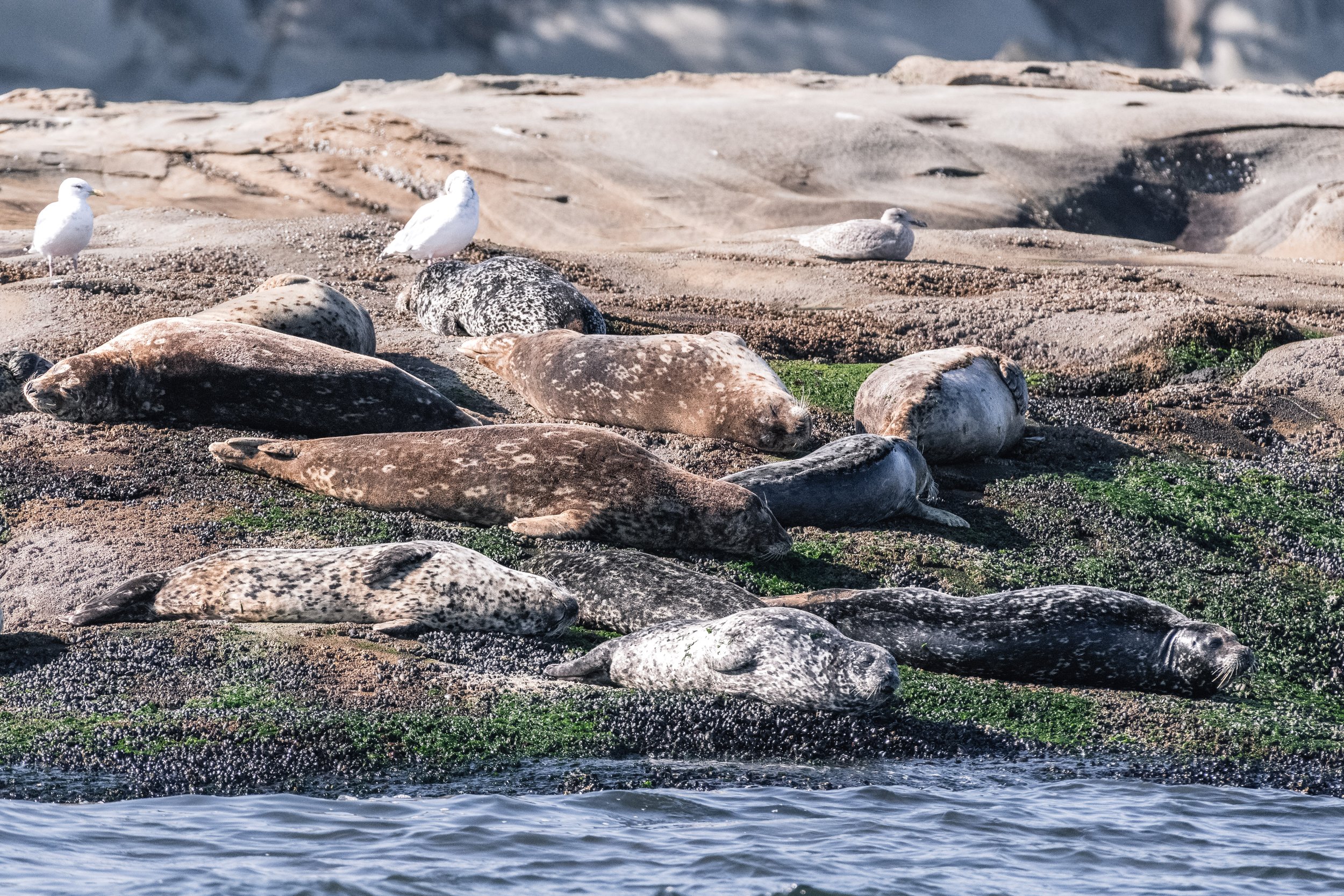
The Gulls were also meandering around the sleepy Harbour Seals today.
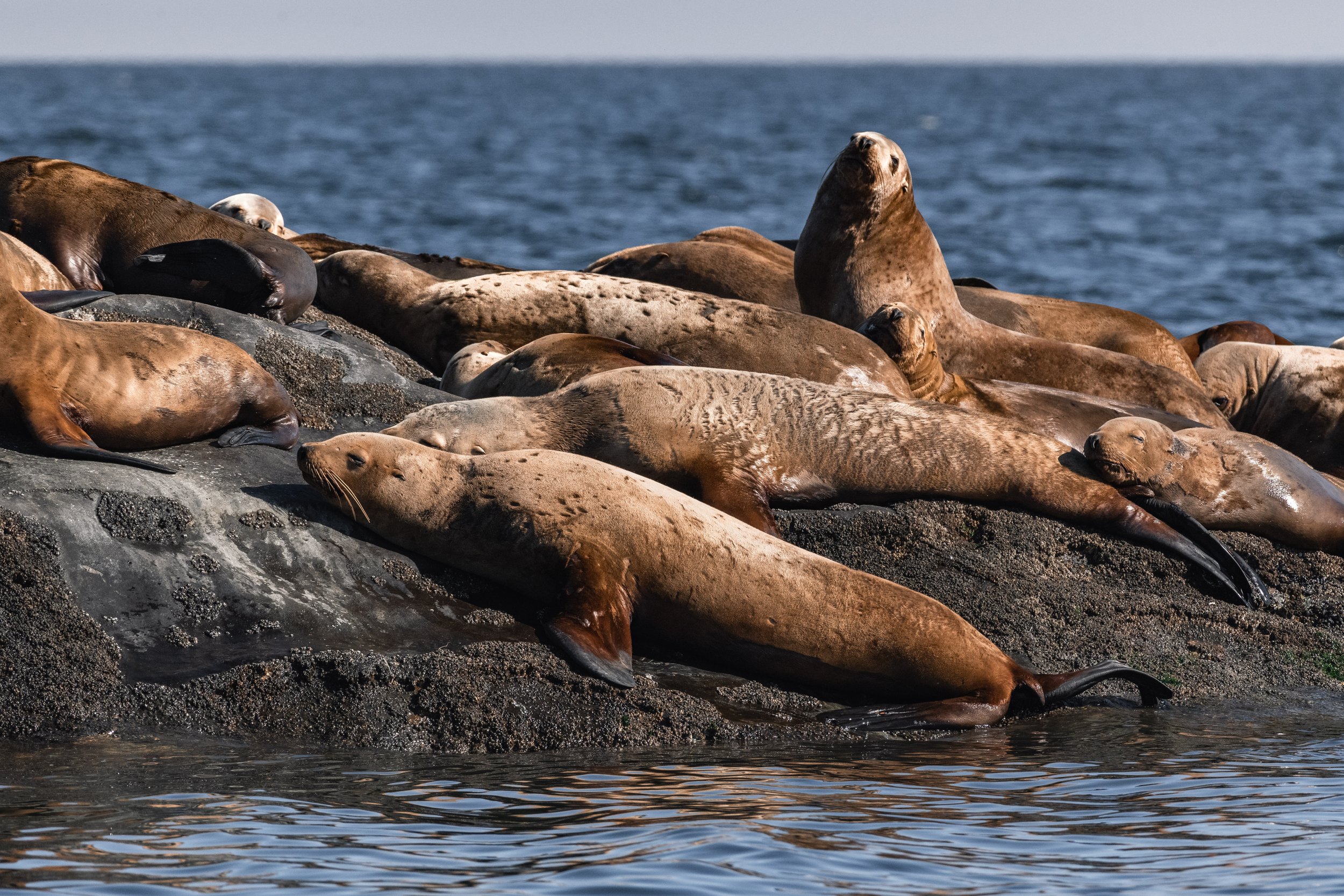
The Steller Sea Lions soaking up the autumn sunshine.
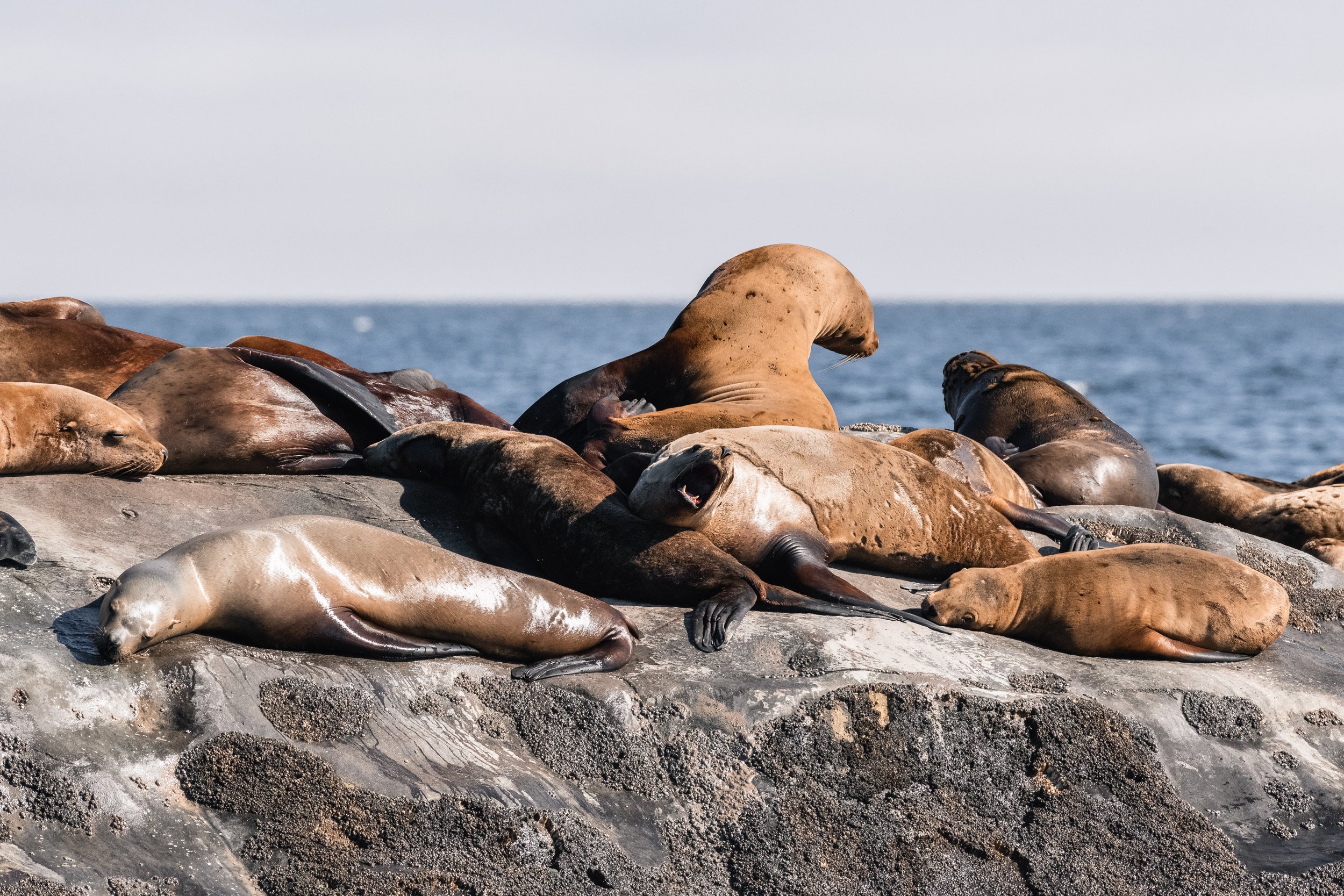
Stretching and squawking.
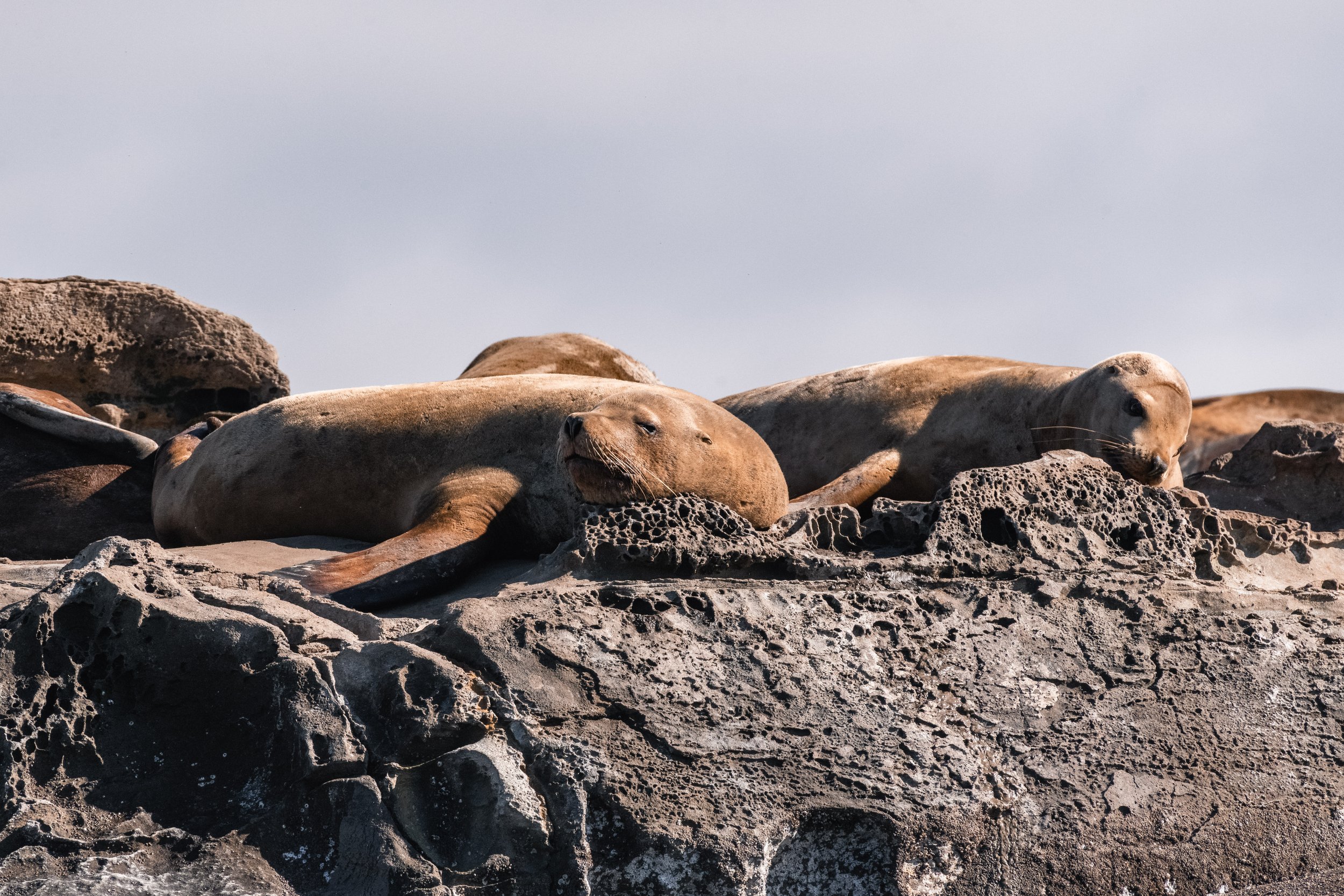
That doesn’t look like a very comfortable pillow…
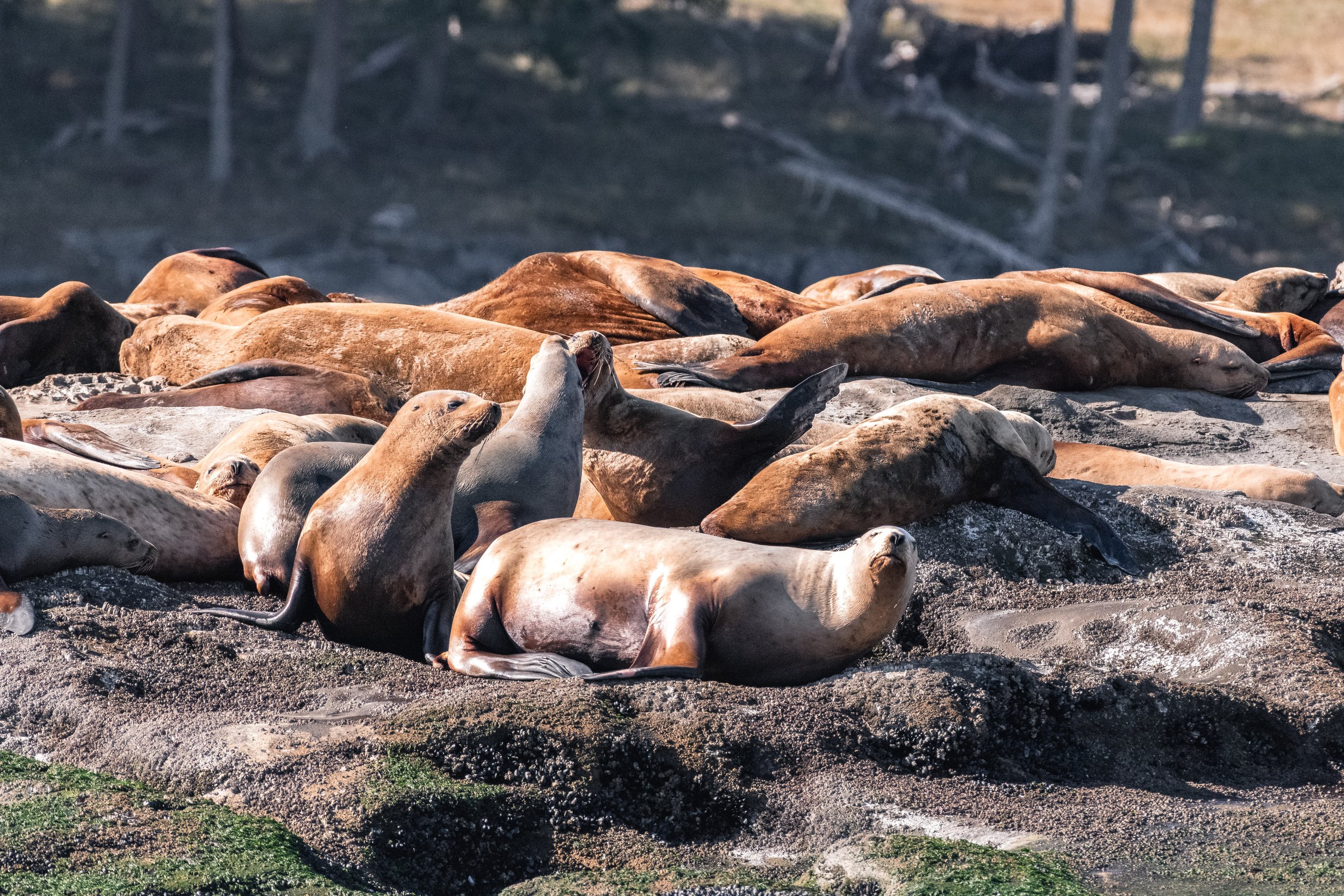
Shuffling around to get the best nap spot.
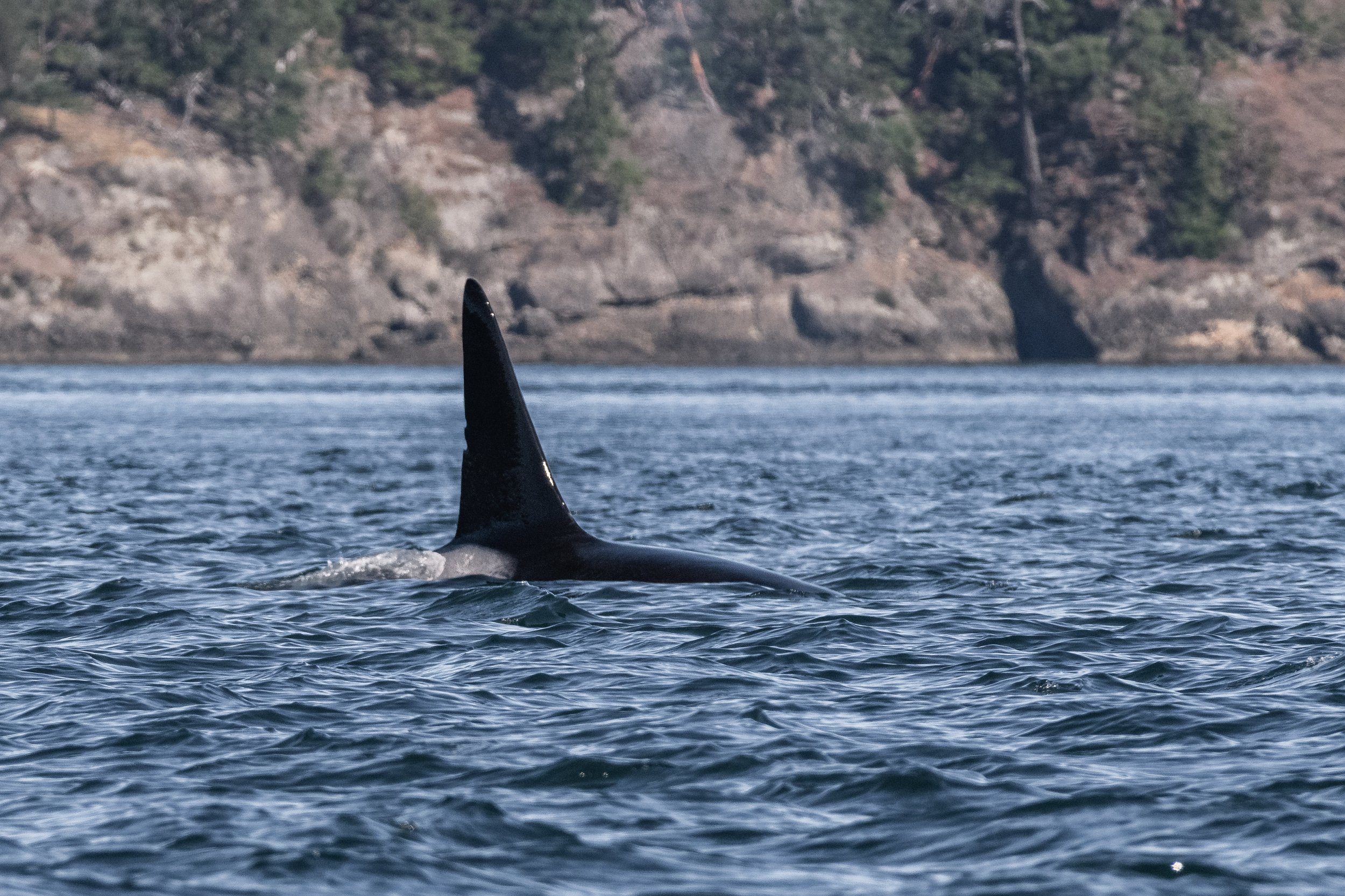
T049C Nielson with his distinct double notched dorsal fin.
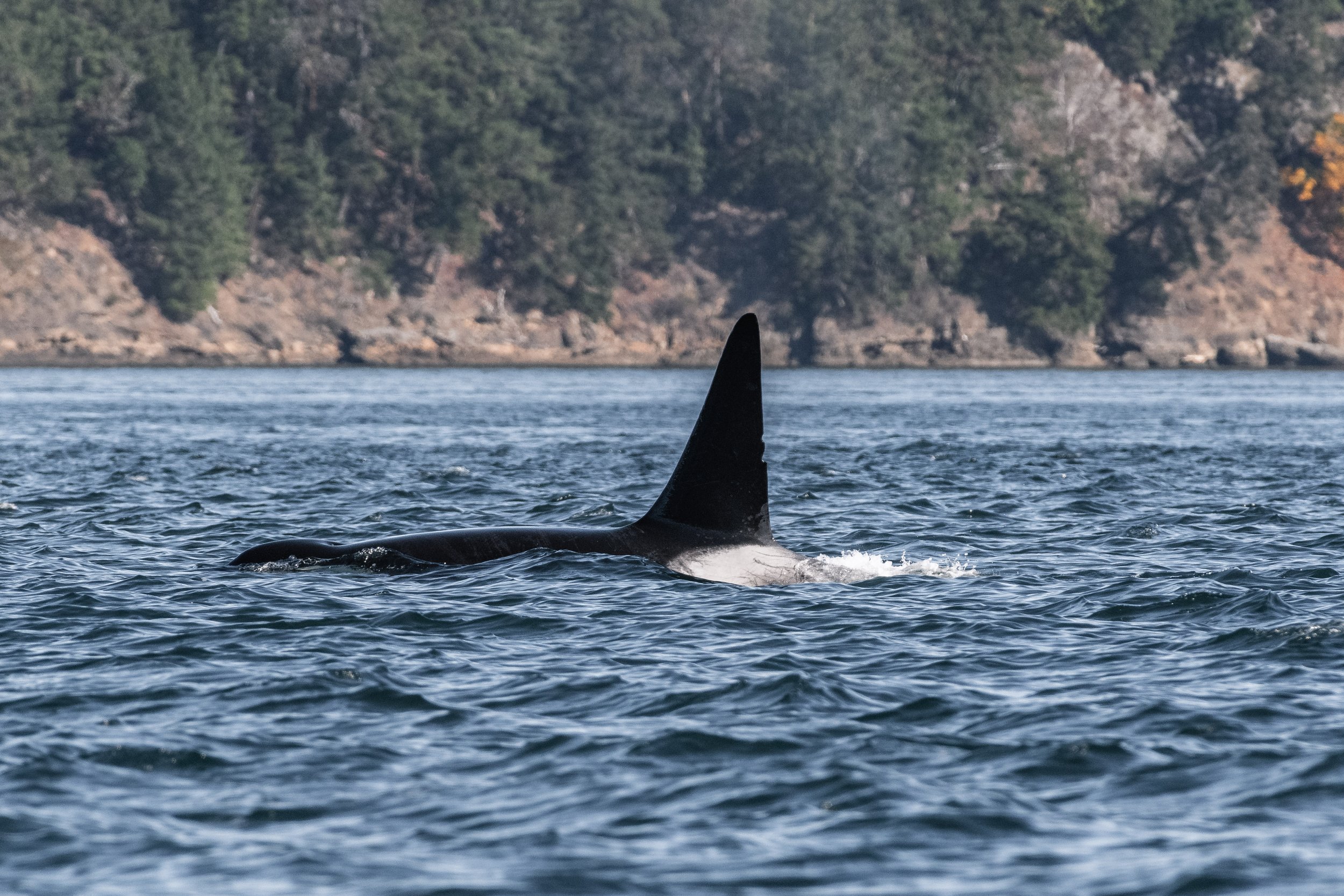
T049C Nielson zig zagging along.
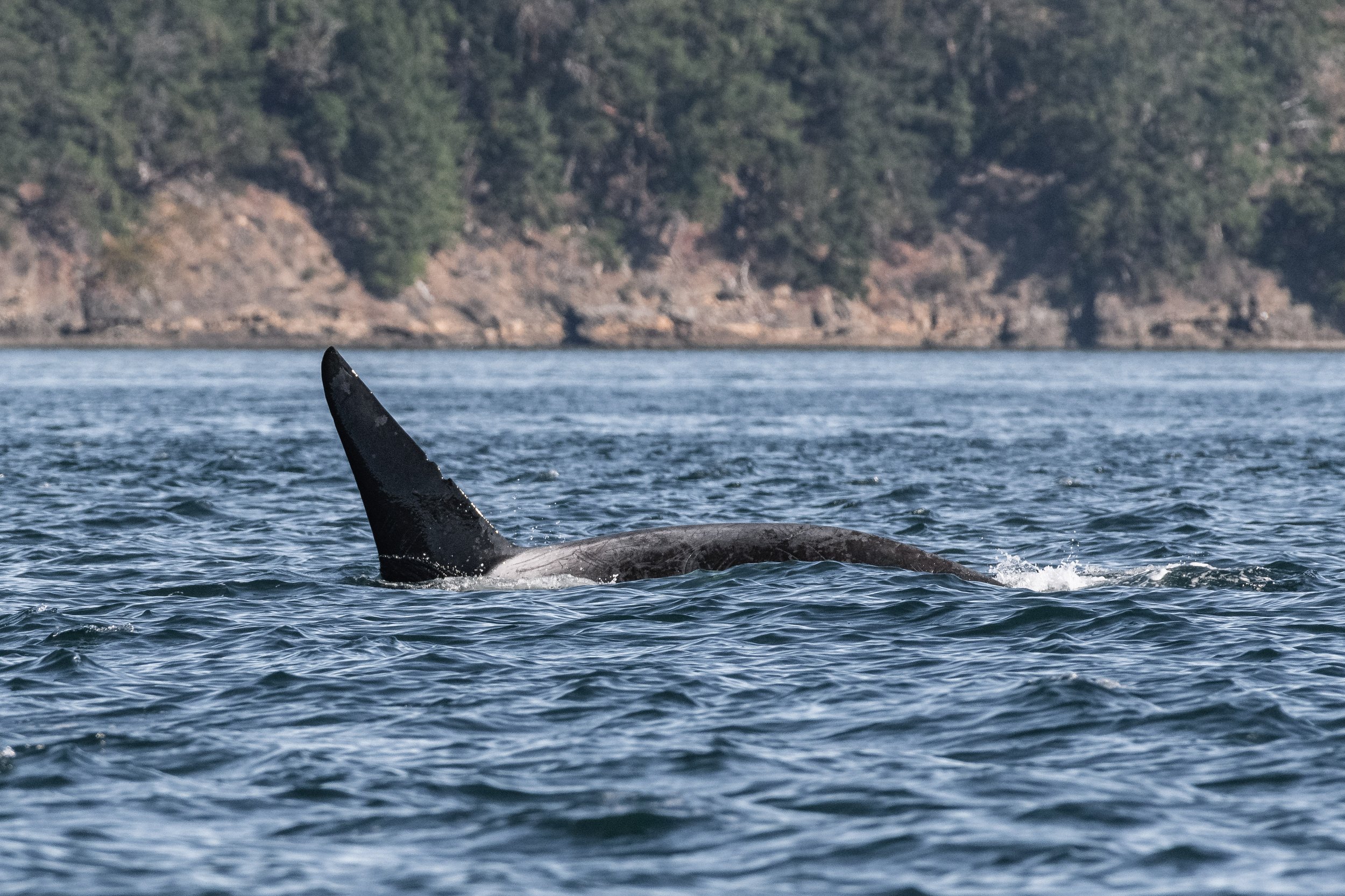
T049C Nielson going for a dive, a bit of his saddlepatch visible.
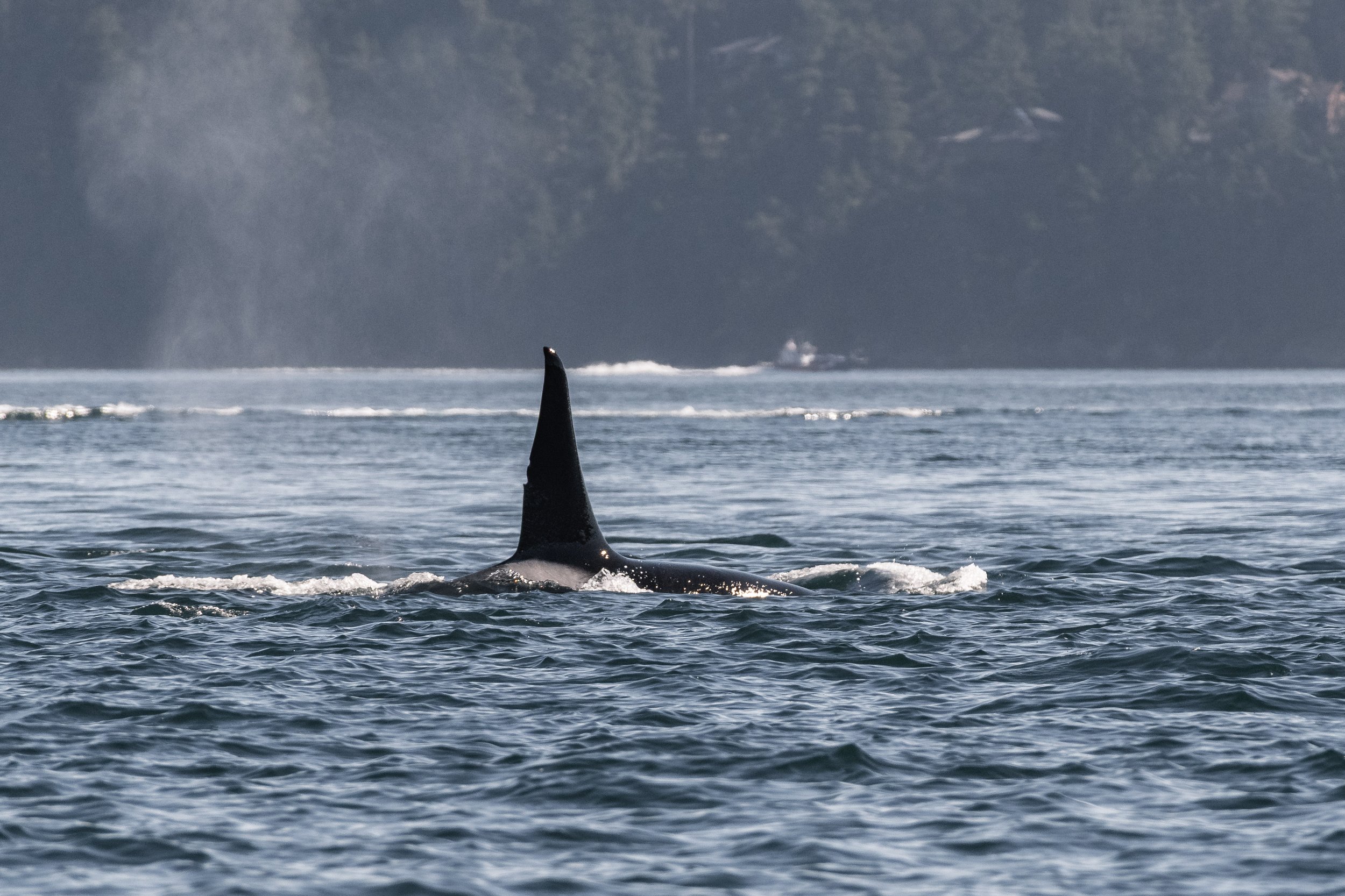
T049C Nielson making his way along.
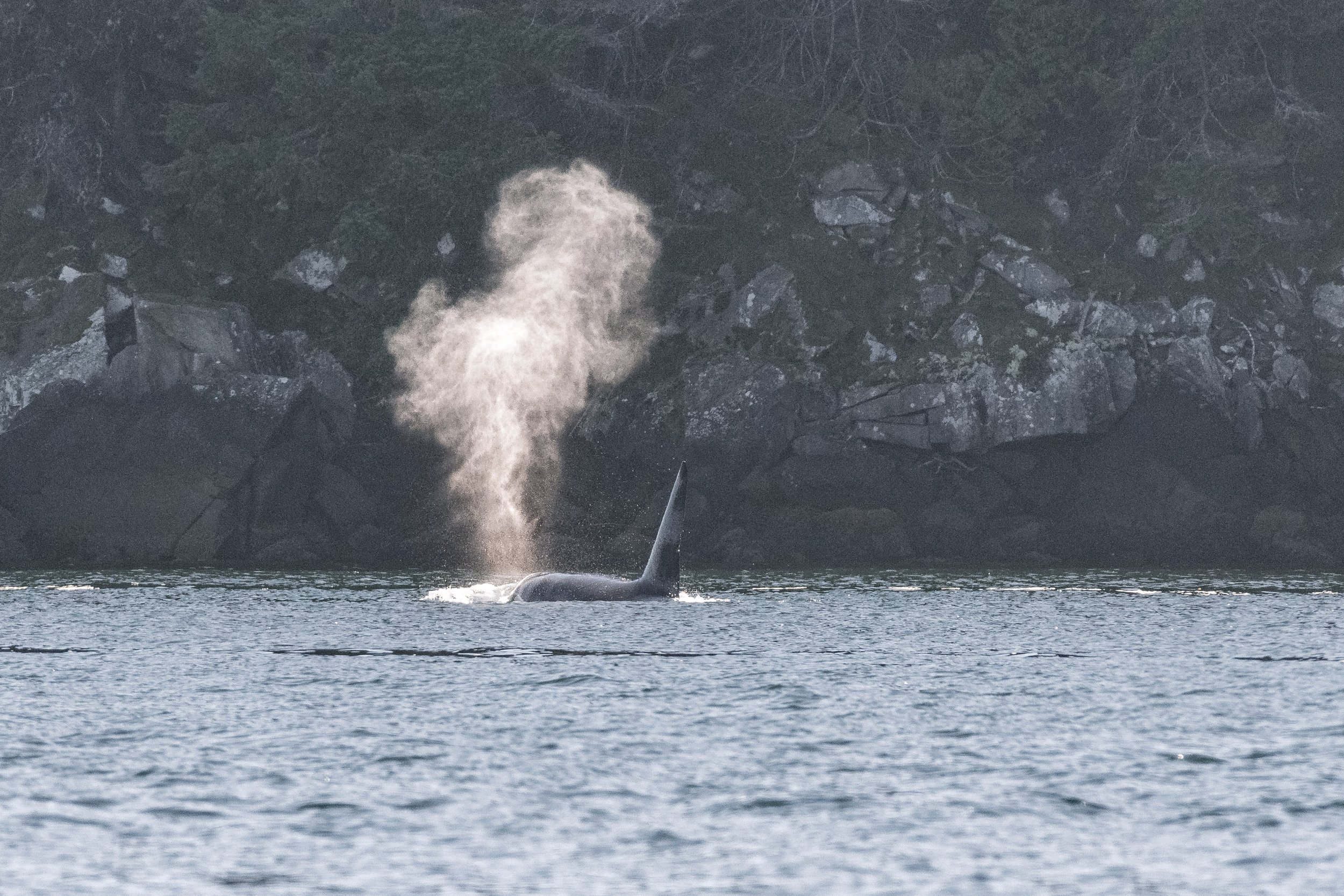
Off in the distance, T049C Nielson travels with a beautifully backlit blow visible.
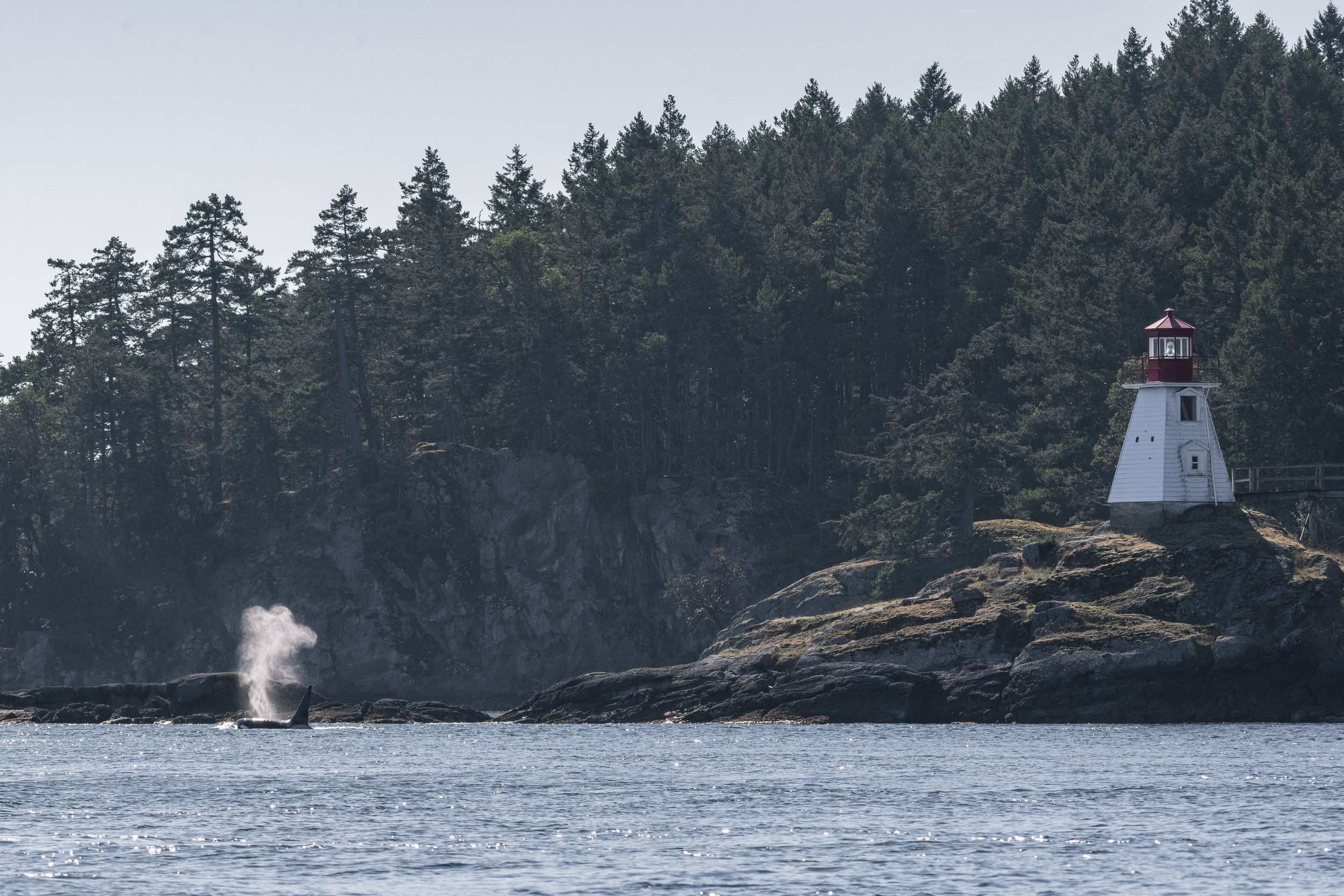
T049C Nielson skirting the Prevost Island shores.
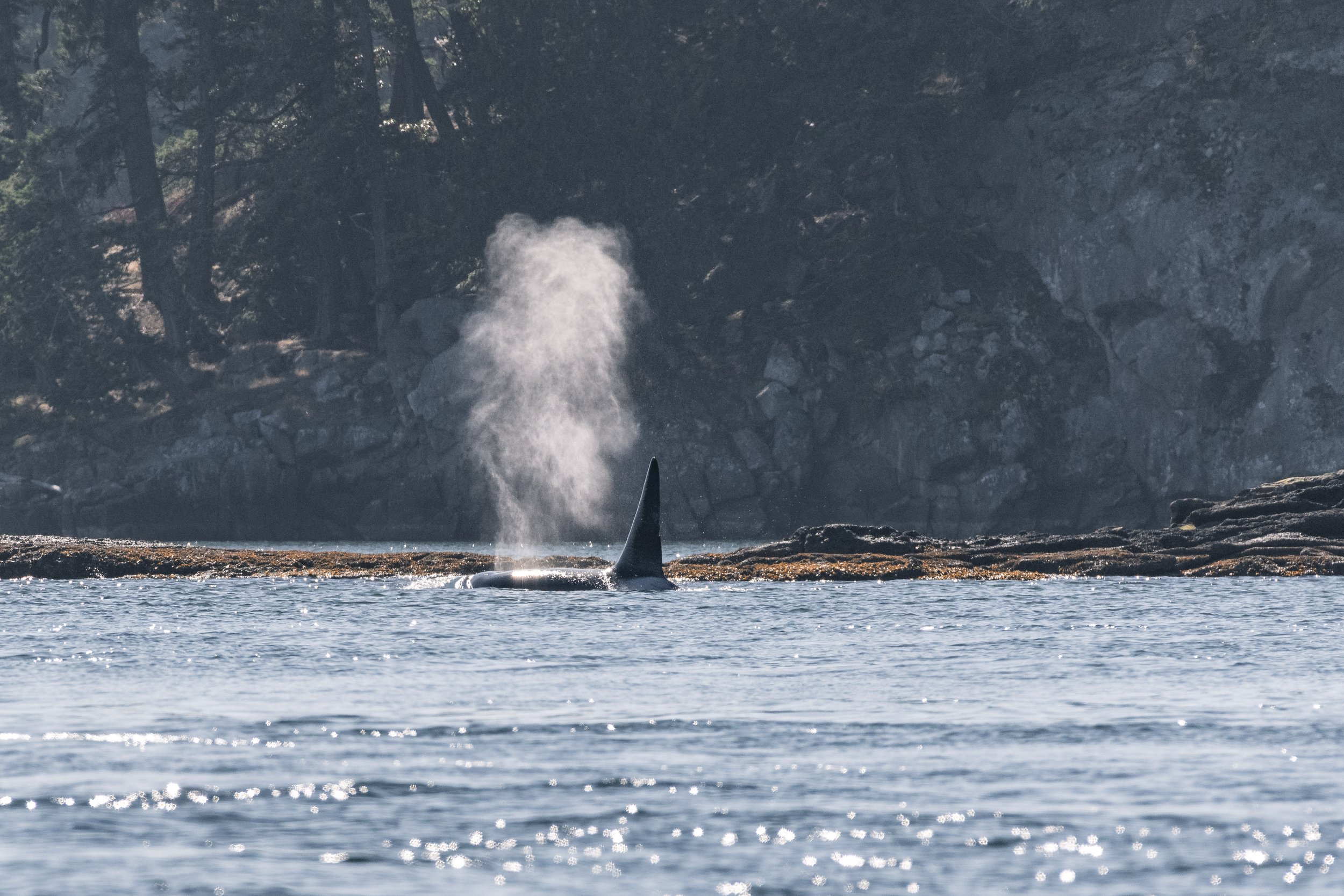
We think T049C Nielson was looking for a late lunch.
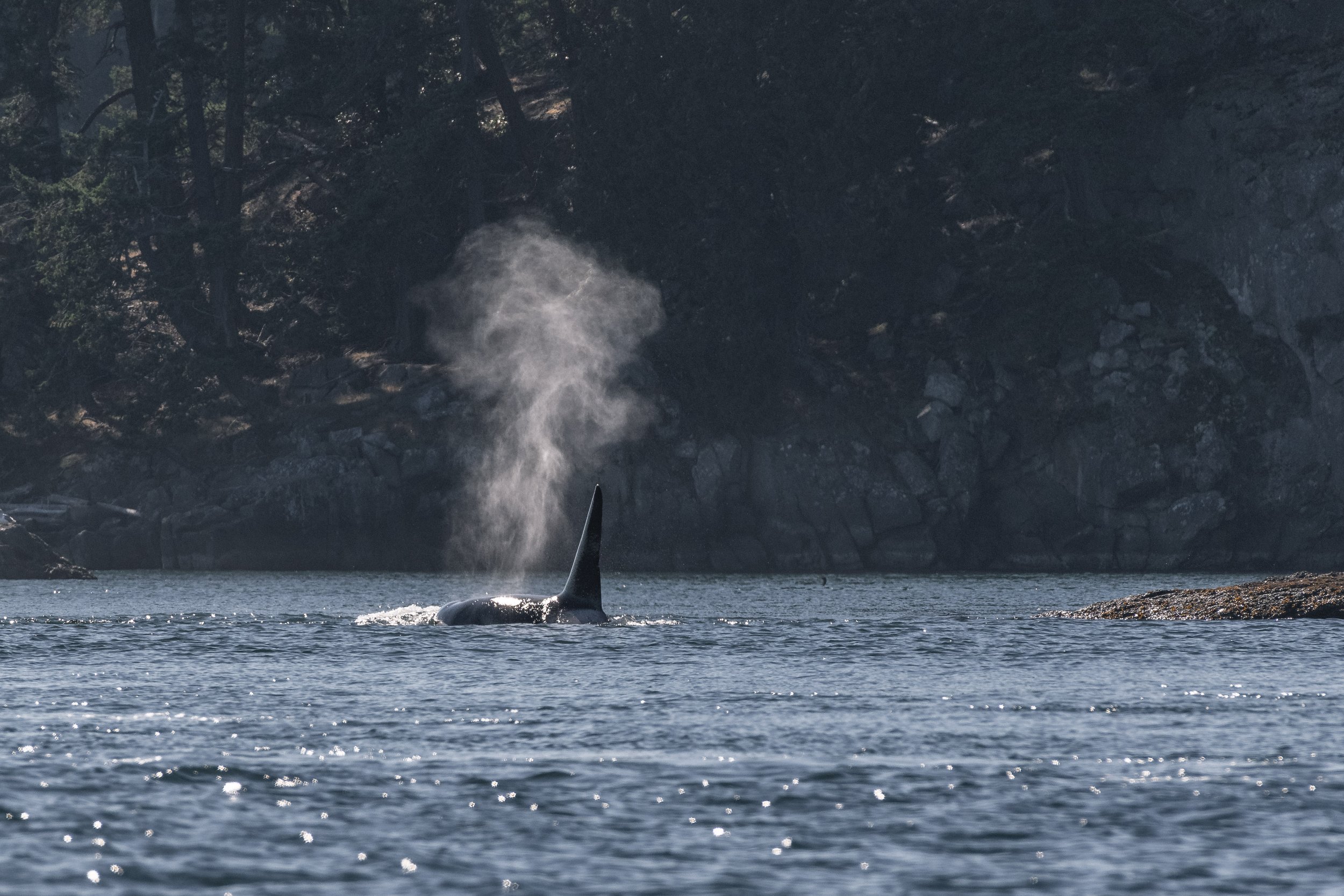
One last peek at T049C Nielson as he heads off.
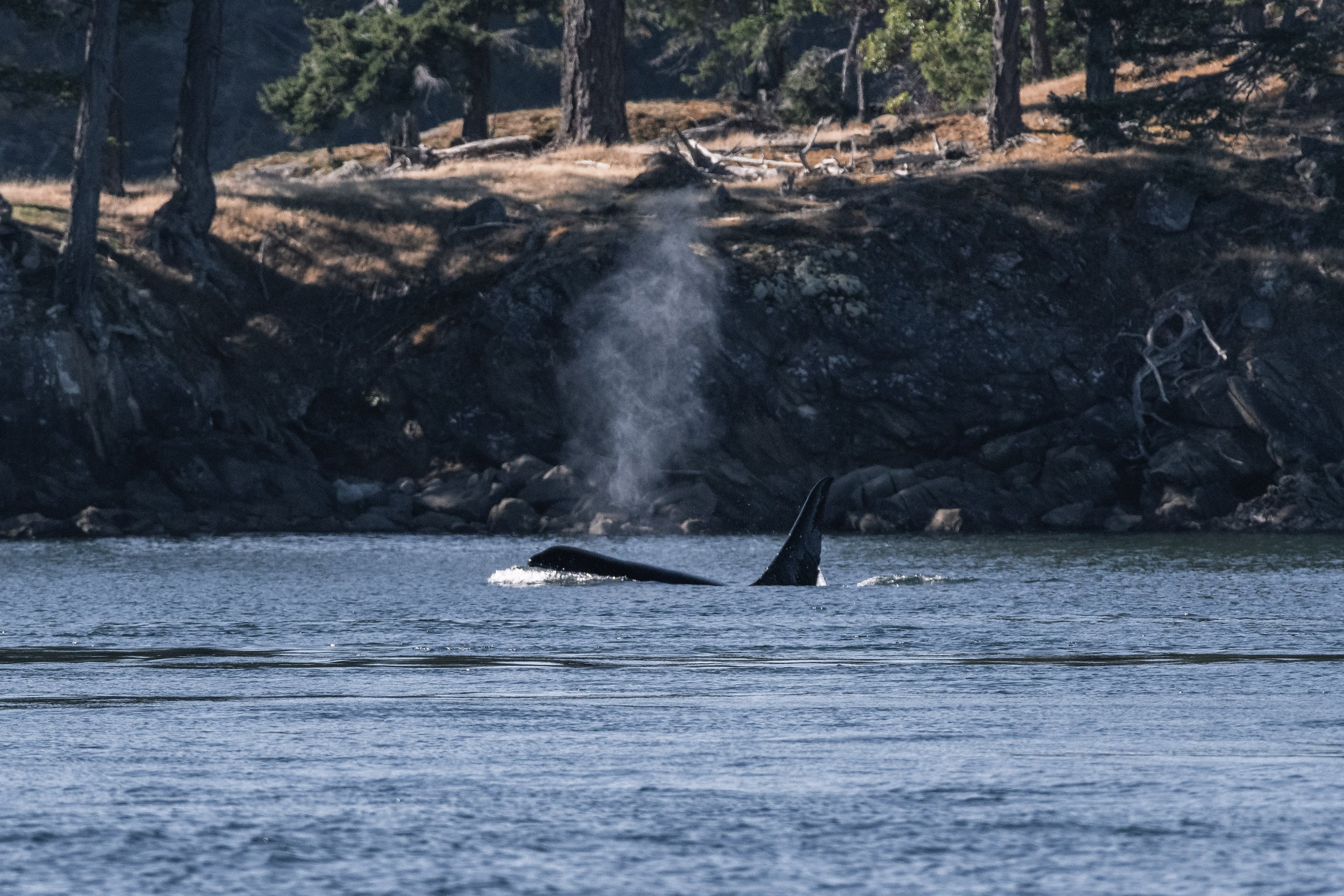
Goodbye, Nielson!
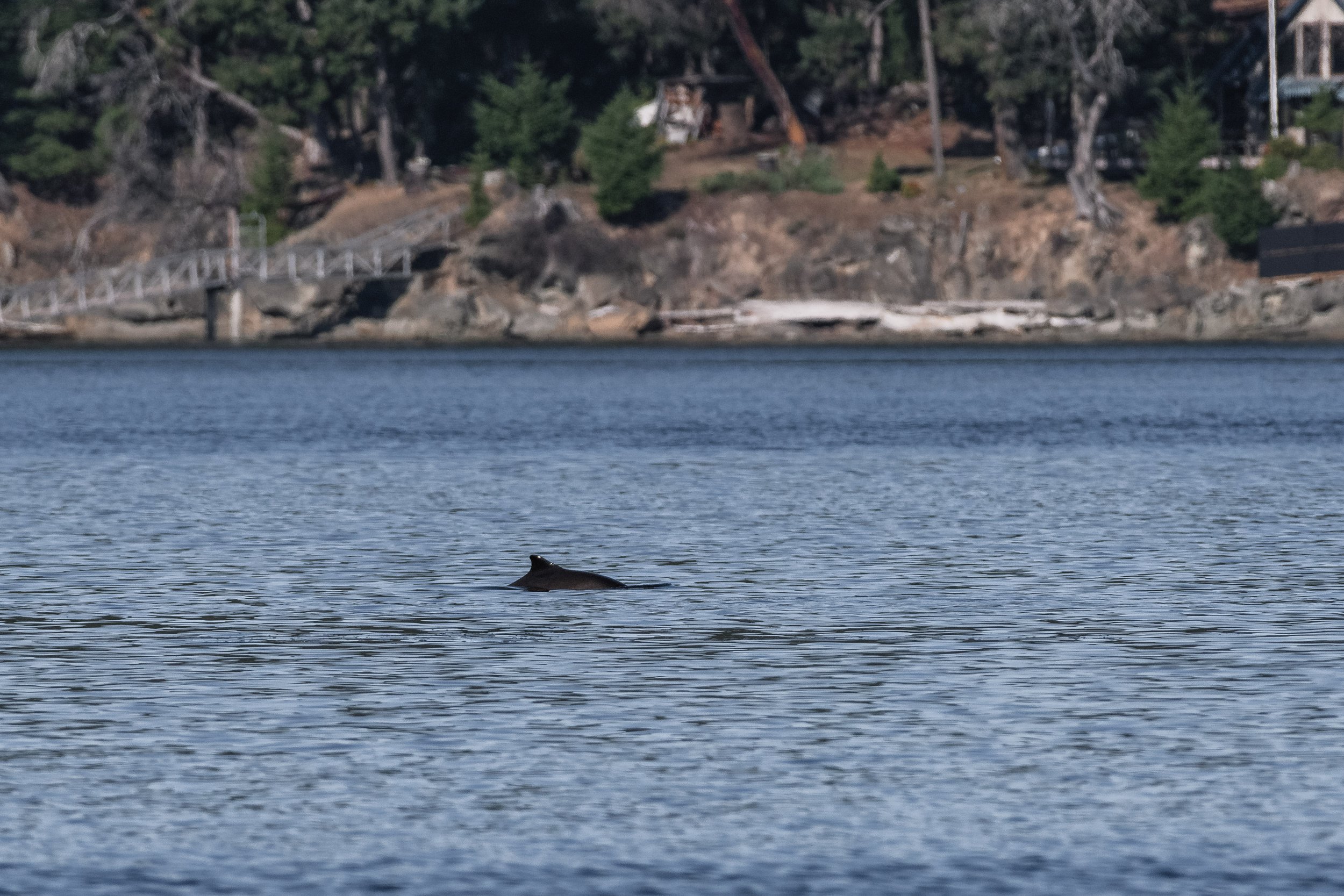
A surprise Harbour Porpoise nearby!