
October 11, 2026, Semi-covered Vessel - Surfing the Salish Sea
Every day on the water brings the possibility of a new discovery, and today's trip aboard Kula reminded us just how much wildlife shares the Salish Sea. From pinnipeds to whales, we never truly know what we will find until we head out and began peeking around. Our search began along Gabriola Island, where two humpbacks were about to be our first encounter of the day.
Kula's first whale encounter of the day brought us to Phi/Corona (BCX1416) and Geometry (BCZ0338), two humpbacks travelling through the waters off Gabriola Island. As the pair surfaced and disappeared beneath the waves, we attempted to photograph their tail flukes to confirm their identities; however, Phi/Corona was being a bit tail-shy. Thankfully, she has a very unique dorsal fin which can be used to help confirm IDs as well.
Identifying individual humpbacks is a little like recognizing familiar faces. The underside of each whale's tail has a unique combination of pigmentation, markings, and scars, making fluke photographs an important tool for researchers. These images allow us to compare sightings with records from previous years, helping us better understand where individuals go from year to year and helping researchers better understand important matters such as site fidelity, or the (typically) inherent return to the breeding and feeding grounds their mothers taught them about while they were still by their side.
There is plenty more to learn about humpbacks beyond their identities, particularly when it comes to how they feed. Despite their enormous size, these whales primarily eat relatively small prey, including krill and schooling fish such as herring. Rather than catching individual fish with teeth, humpbacks use hundreds of baleen plates to filter prey from seawater. Some even use more advanced techniques such as bubble-net feeding, releasing curtains of bubbles to concentrate fish into a tighter group before lunging through the middle with their mouths wide open. This behaviour has been documented both solo and in cooperative groups. These are impressive examples of how these whales have adapted to make the most of the food available in their feeding grounds, no matter the conditions or where in the water column their prey is residing.
While Phi/Corona and Geometry weren't feeding at the surface today, they may have been diving deeper to feed in the depths as we travelled with them. After spending some time with the pair, we said our goodbyes to Phi/Corona and Geometry, and Kula continued its journey across the Strait of Georgia toward Point Grey. A sighting report had come in a bit earlier, and we eagerly peered around as we approached. Soon, two black dorsal fins were spotted slicing through the waves - it was a pair of orca! Of the two, one fin was particularly distinct - tall, with two large notches. We quickly discovered that we were with T063 and T065:
T065 Whidbey II ♀ (~1971)
T063 Chainsaw ♂ (~1978)
The large notched dorsal fin belonged to T063, and off to the side a smaller curved dorsal fin confirmed to be T065 Whidbey II could be seen. These two are members of the Transient orca population - the ecotype of orca that feed on marine mammals and can be found all along British Columbia’s coastline, and even up into Alaska and down into the western United States. Their diet can include seals, sea lions, and porpoises, making them important predators within the marine ecosystem. Unlike the fish-eating Residents who use echolocation (sound waves), Transients often hunt quietly, relying on coordination and communication to locate their next meal.
While we observed them, the pair kept switching directions, zipping in close together before breaking away once more. They may have been looking for their next meal, or simply enjoying an afternoon swim along the coast. Orcas can travel well over 100 kilometres a day as they navigate waterways, bouncing from haul-out to haul-out in search of an easy hunt.
With our whale encounters behind us, we soon crossed the Strait of Georgia once more, aiming back towards Vancouver Island. Surfing our way along, we travelled back up through the Southern Gulf Islands and made our way towards the Harmac pulp mill located on the outskirts of Nanaimo. Here, we spotted both Steller Sea Lions and California Sea Lions resting along the log booms in the early afternoon sunshine.
Although these two sea lion species can look similar at first glance, they have a few distinguishing features you can use to tell them apart. Steller Sea Lions typically have a lighter, sand-coloured coat and are the largest sea lion species in the world, with adult males capable of reaching enormous sizes - males sometimes weigh up to 1,134 kg (2,500 lbs), or over 1,000 lbs heavier than a Grizzly Bear! California Sea Lions are generally quite a bit smaller, have a darker chocolate-coloured coat, and are well known for their unmistakable barking calls that sound similar to a dog. When they gather along the coast, both species can be wonderfully entertaining to see as they haul out of the water, jostle for space, and rest between feeding trips.
Watching these animals offered another perspective on life in the Salish Sea. Sea lions are powerful swimmers and capable hunters that feed on a variety of fish and other marine prey. They also form an important part of the coastal food web, serving as prey for Transient orca such as Chainsaw and Whidbey II. This connection reminds us that the wildlife we encounter on our tours is part of a much larger, interconnected ecosystem, carefully balanced from the smallest of fish to the largest of whales.
After spending some time with the sea lions, it was time to head back towards Nanaimo Harbour. It had been an exhilarating day full of multiple whale encounters, and a good example of how incredibly diverse the animal life is throughout the Salish Sea.
Photos taken by Marine Naturalist Rosalie Burauen - please enjoy!
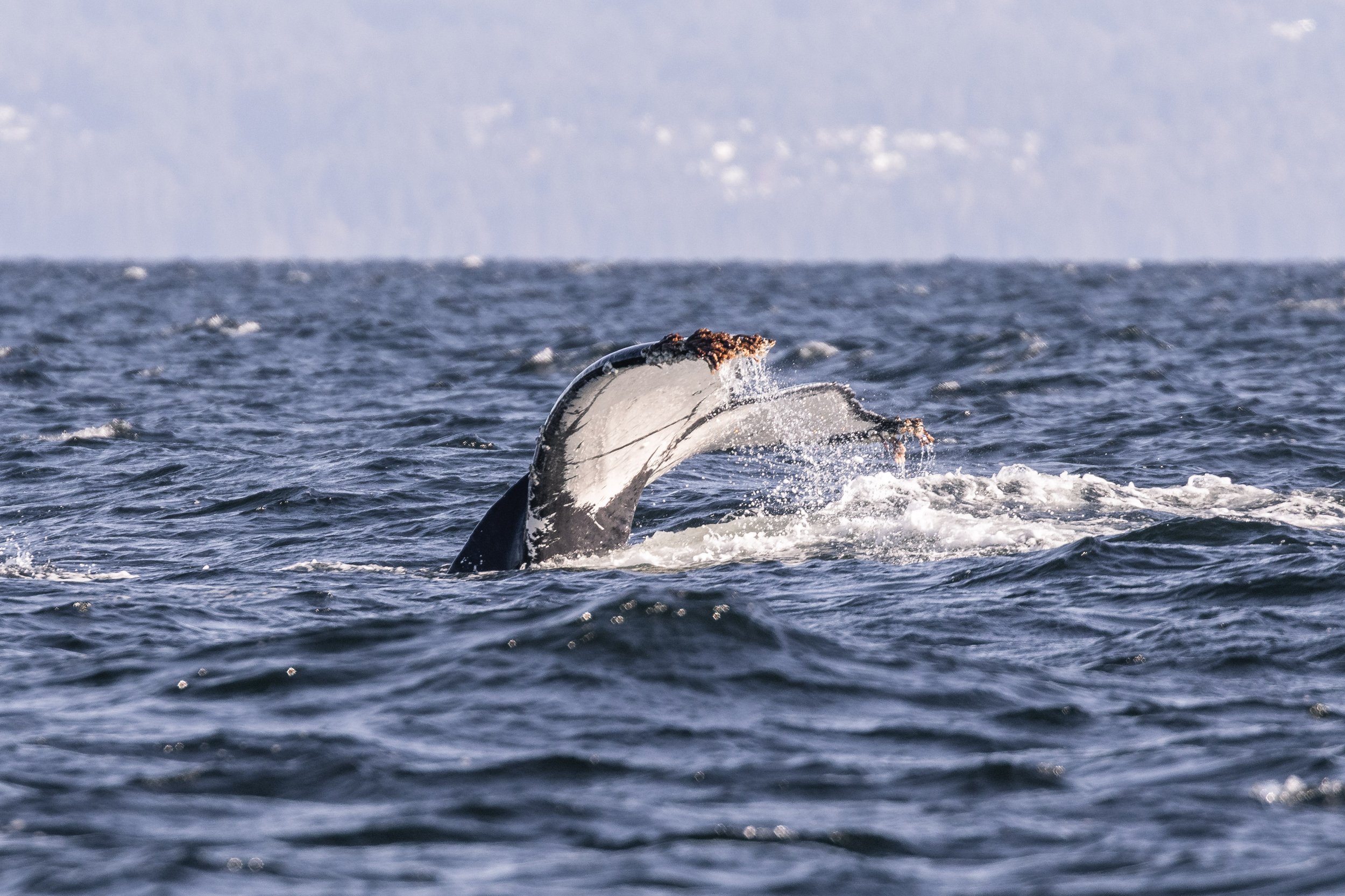
Geometry heading down for a dive. Photo by Rosalie Burauen.
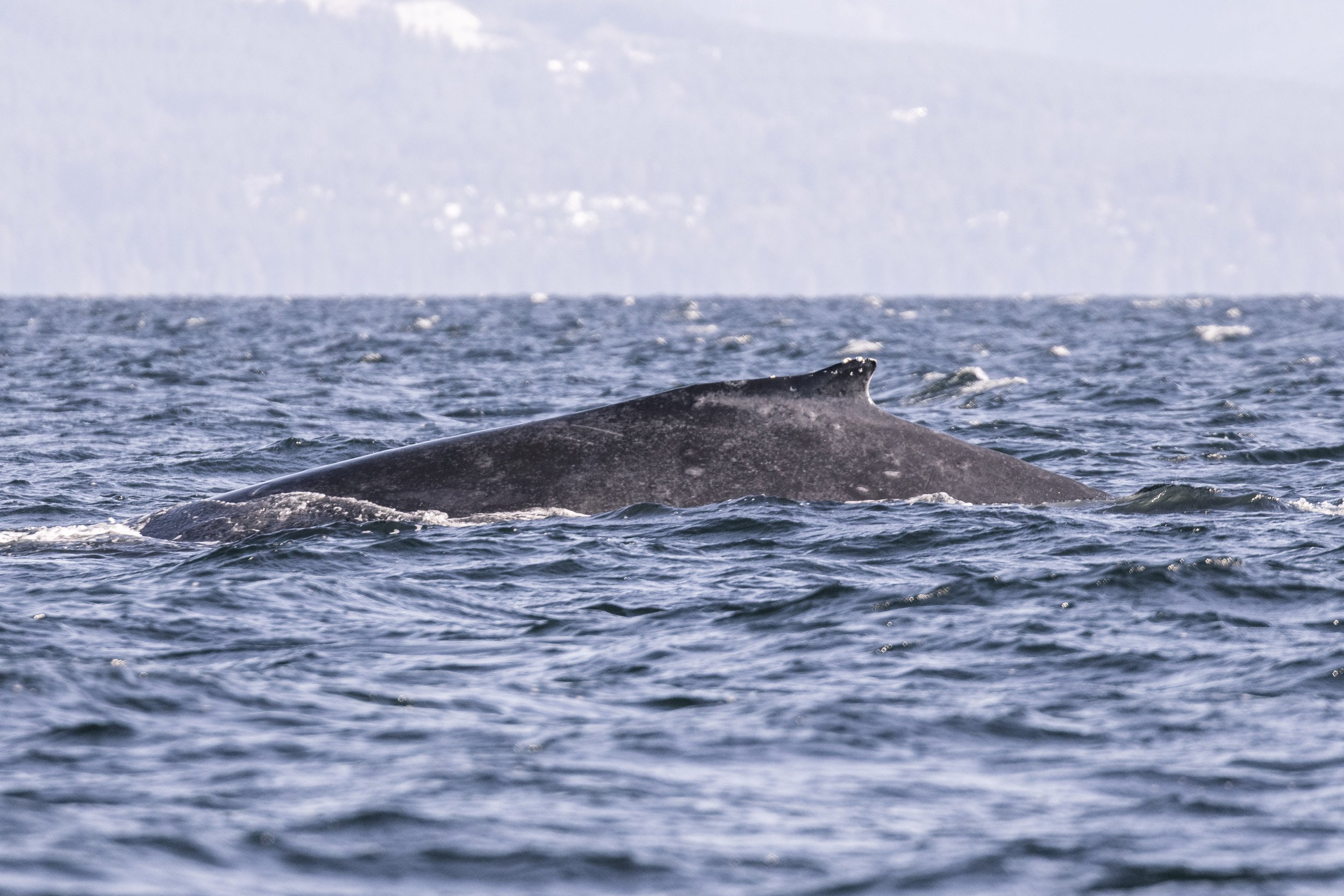
Phi/Corona’s dorsal fin. Photo by Rosalie Burauen.
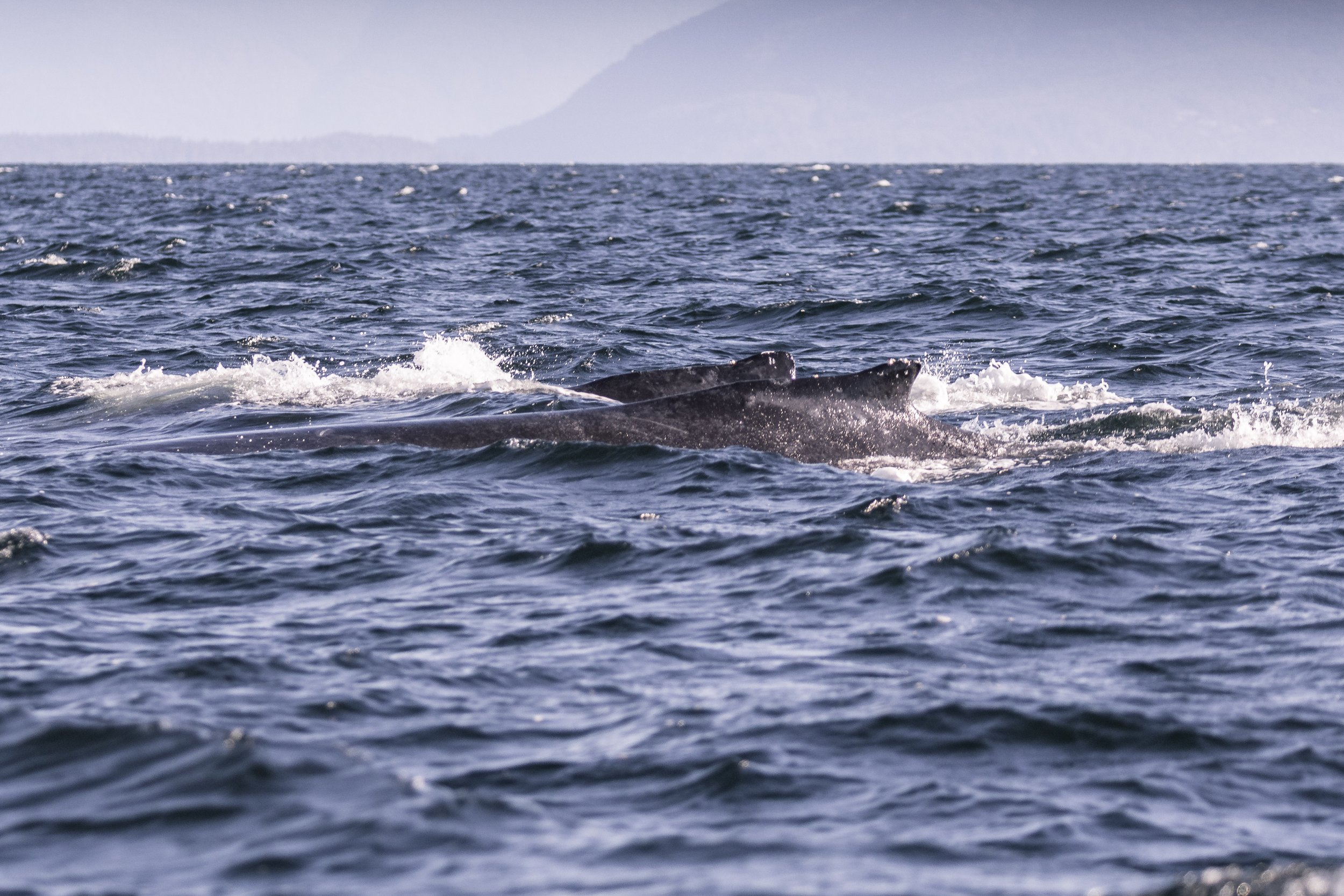
Phi/Corona and Geometry side by side. Photo by Rosalie Burauen.
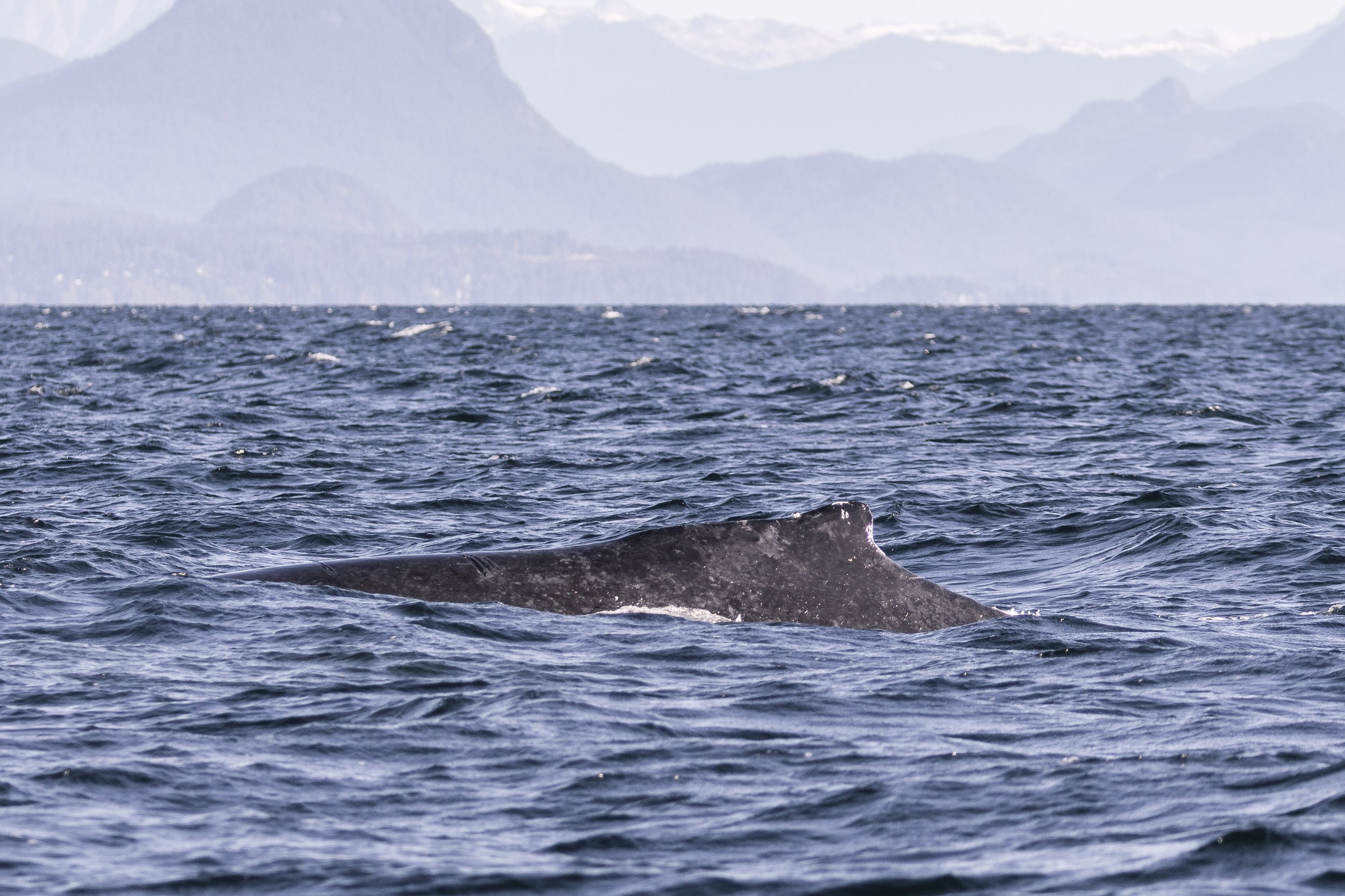
Geometry’s dorsal fin. Photo by Rosalie Burauen.
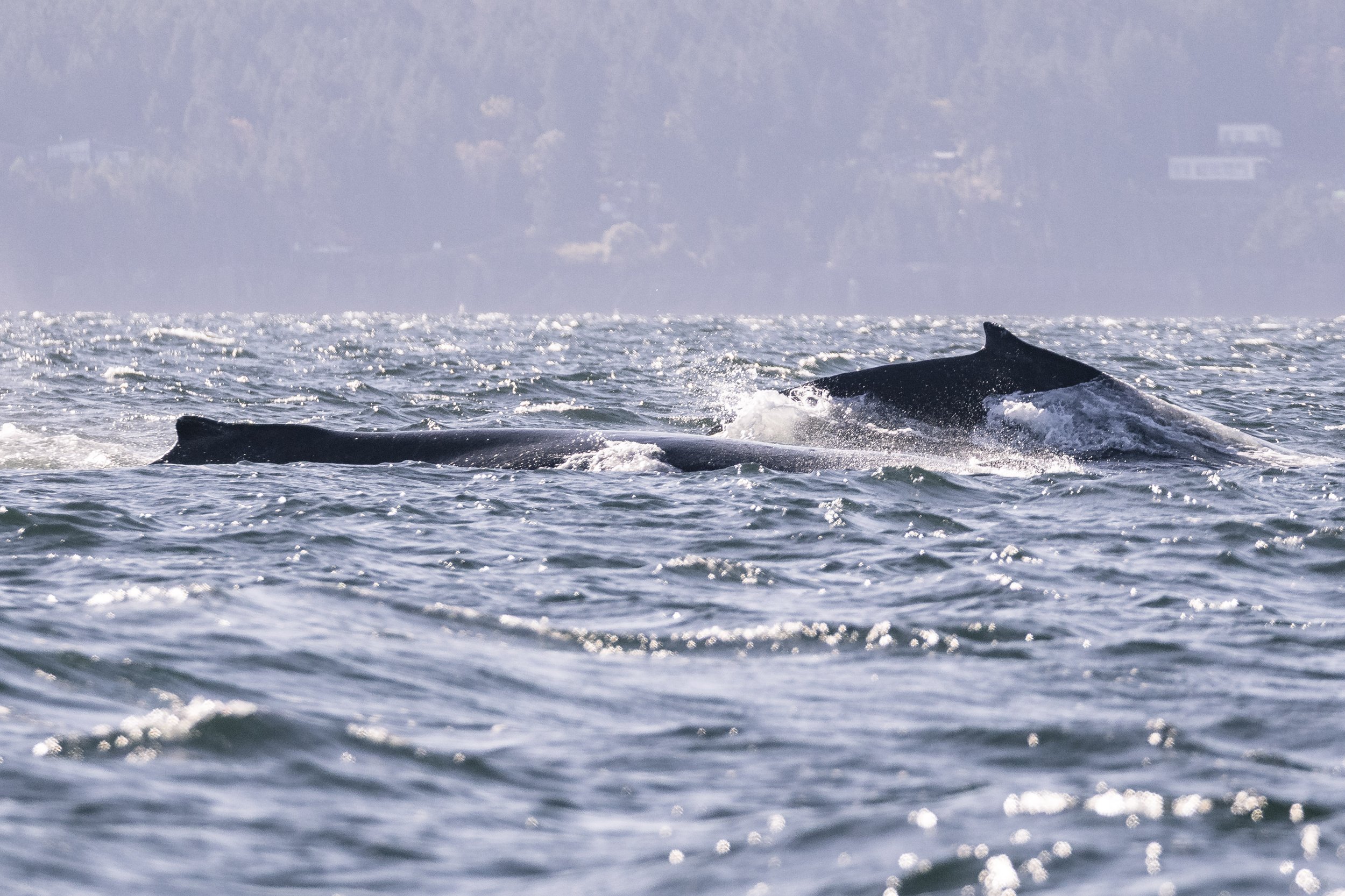
Cruising through the waves. Photo by Rosalie Burauen.
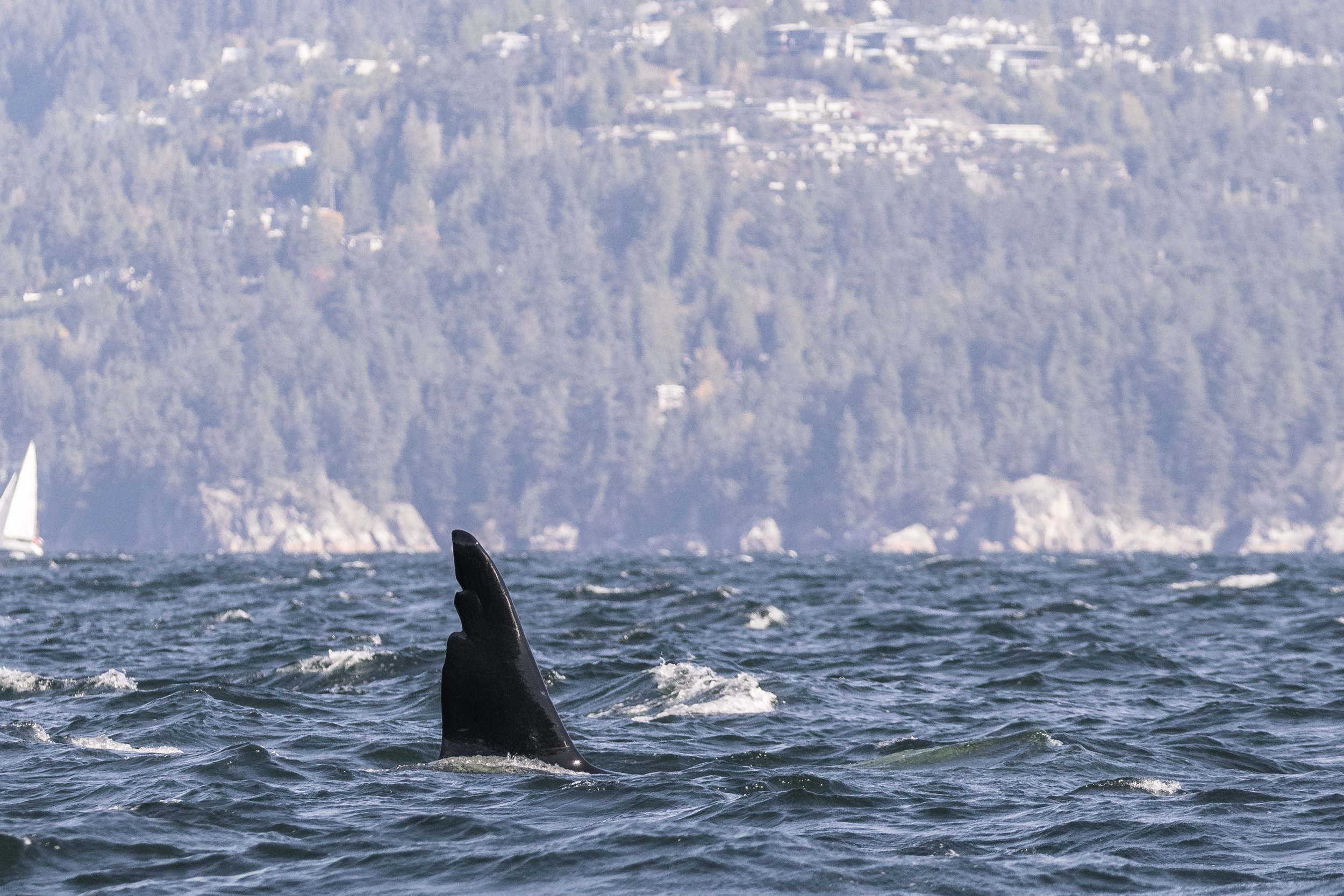
T063 Chainsaw’s distinctive dorsal fin. Photo by Rosalie Burauen.
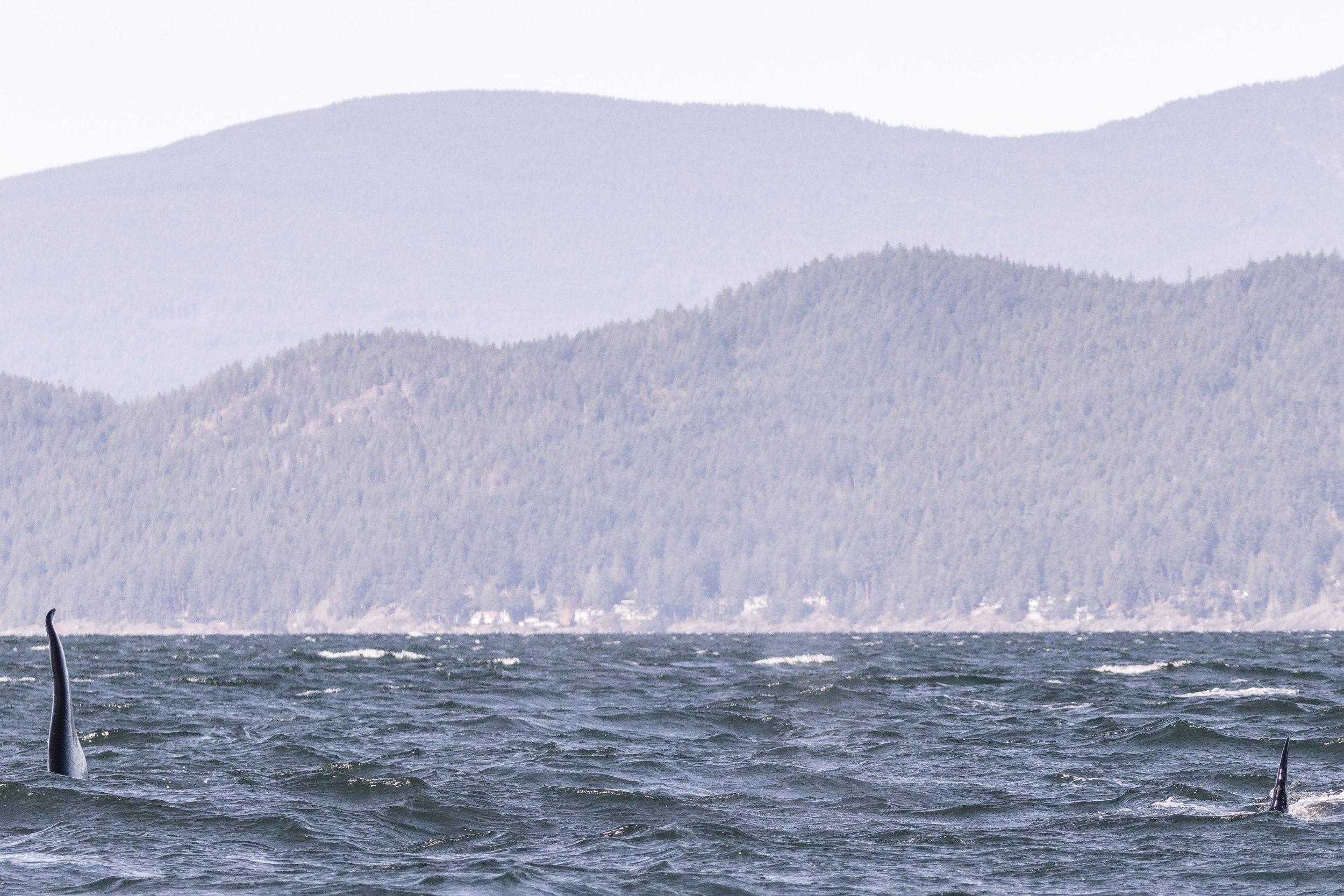
T063 Chainsaw on the left and T065 Whidbey II on the right. Photo by Rosalie Burauen.
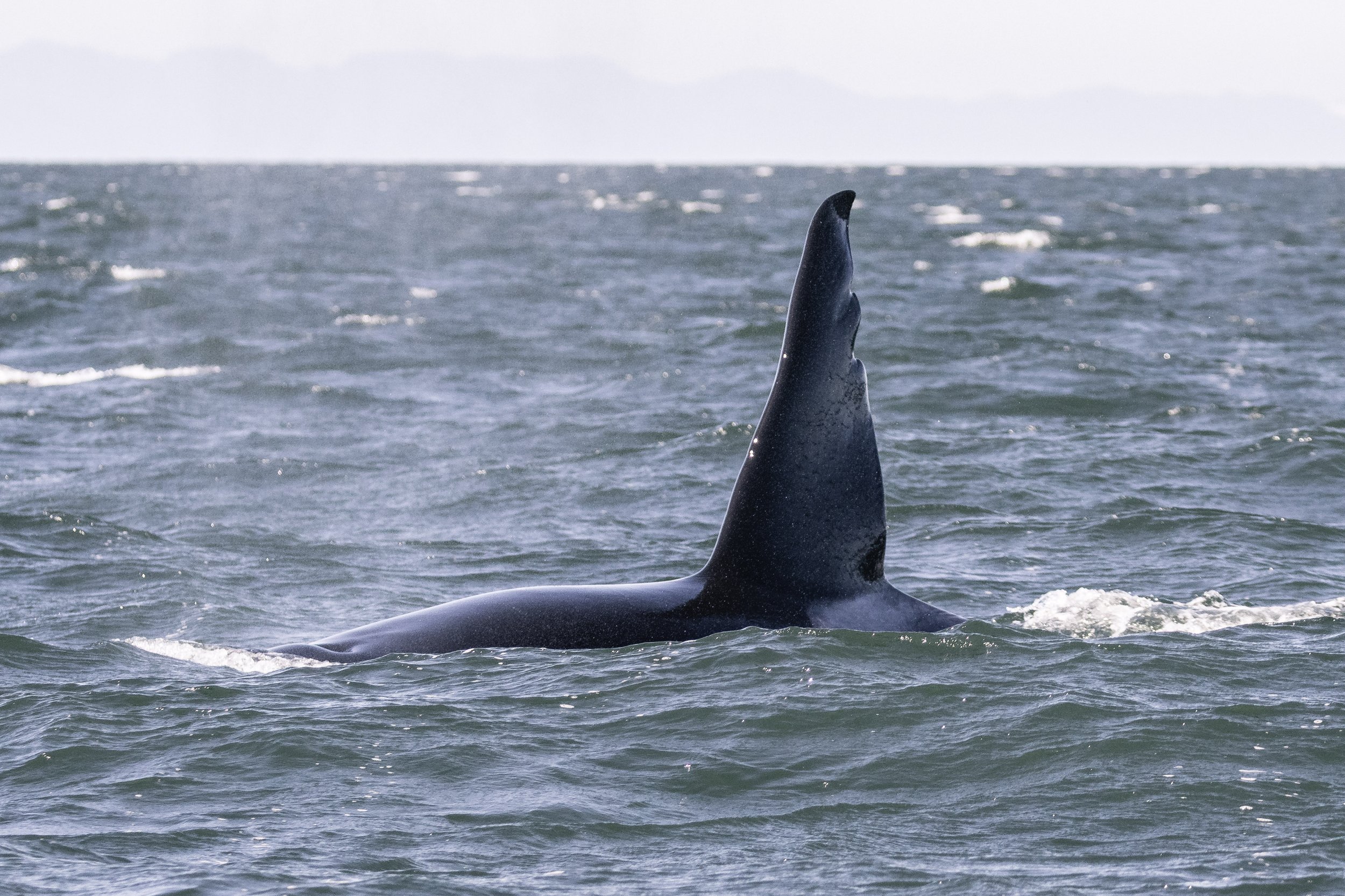
T063 Chainsaw passing us by. Photo by Rosalie Burauen.
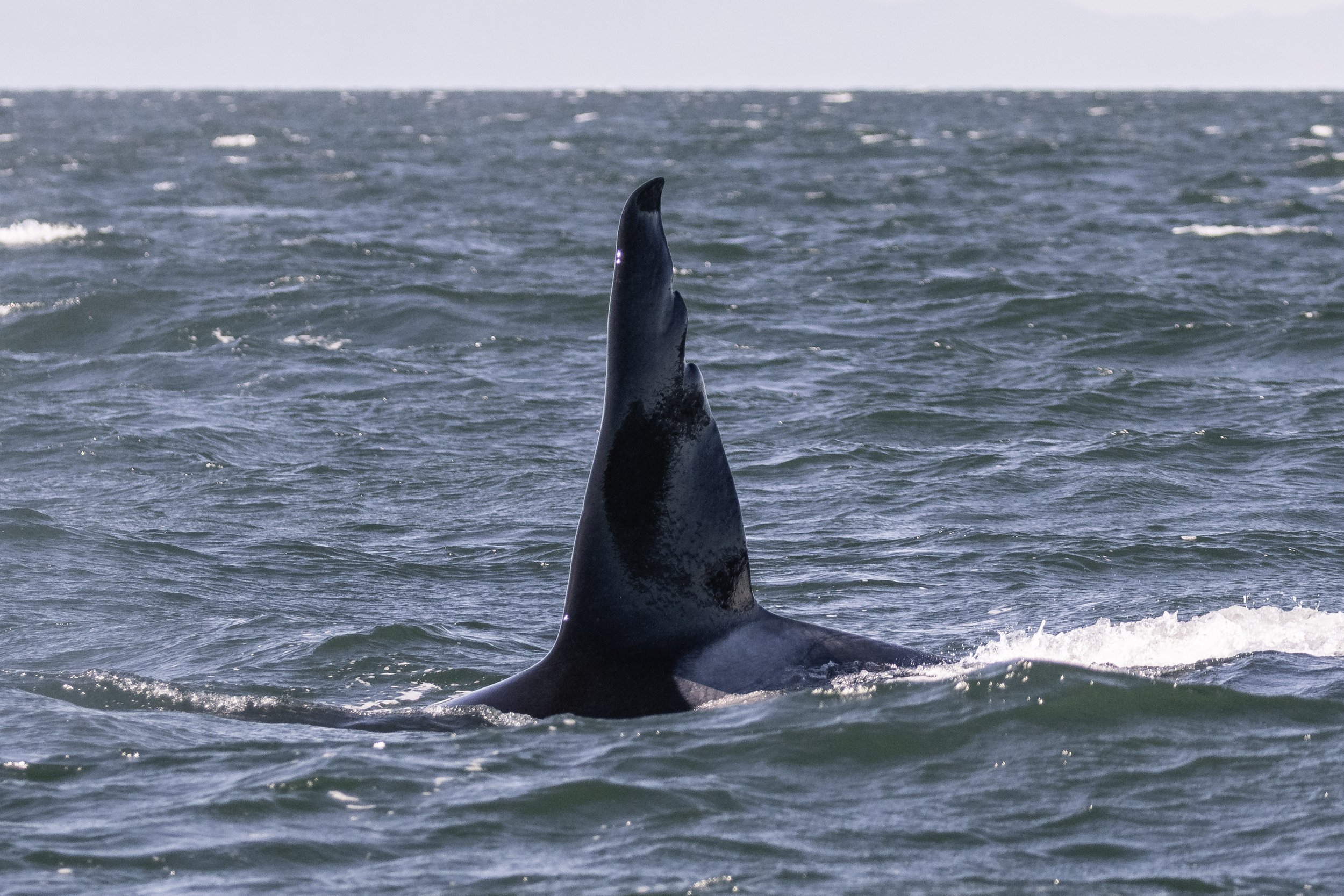
Photo by Rosalie Burauen.
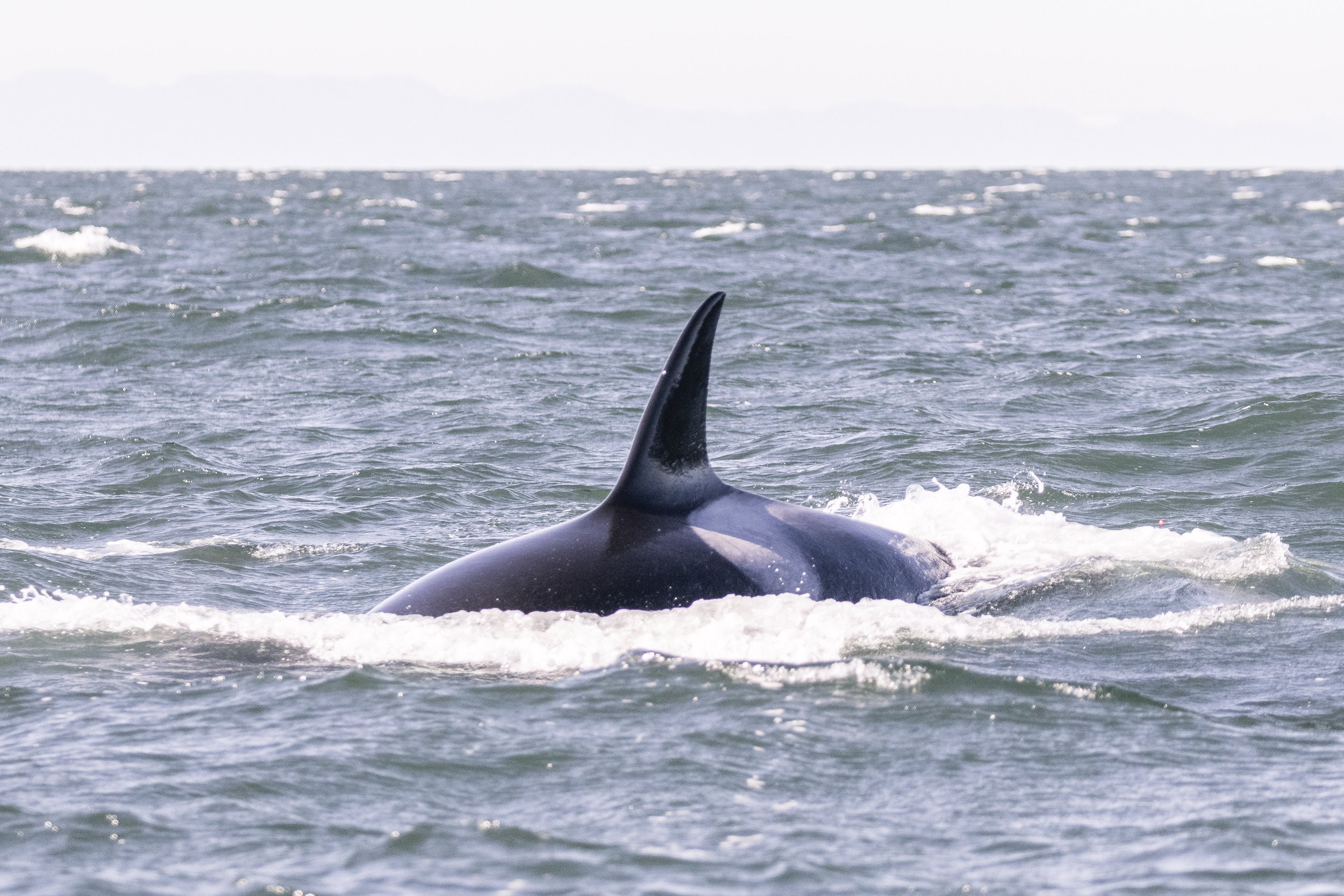
T065 Whidbey II cruising by. Photo by Rosalie Burauen.
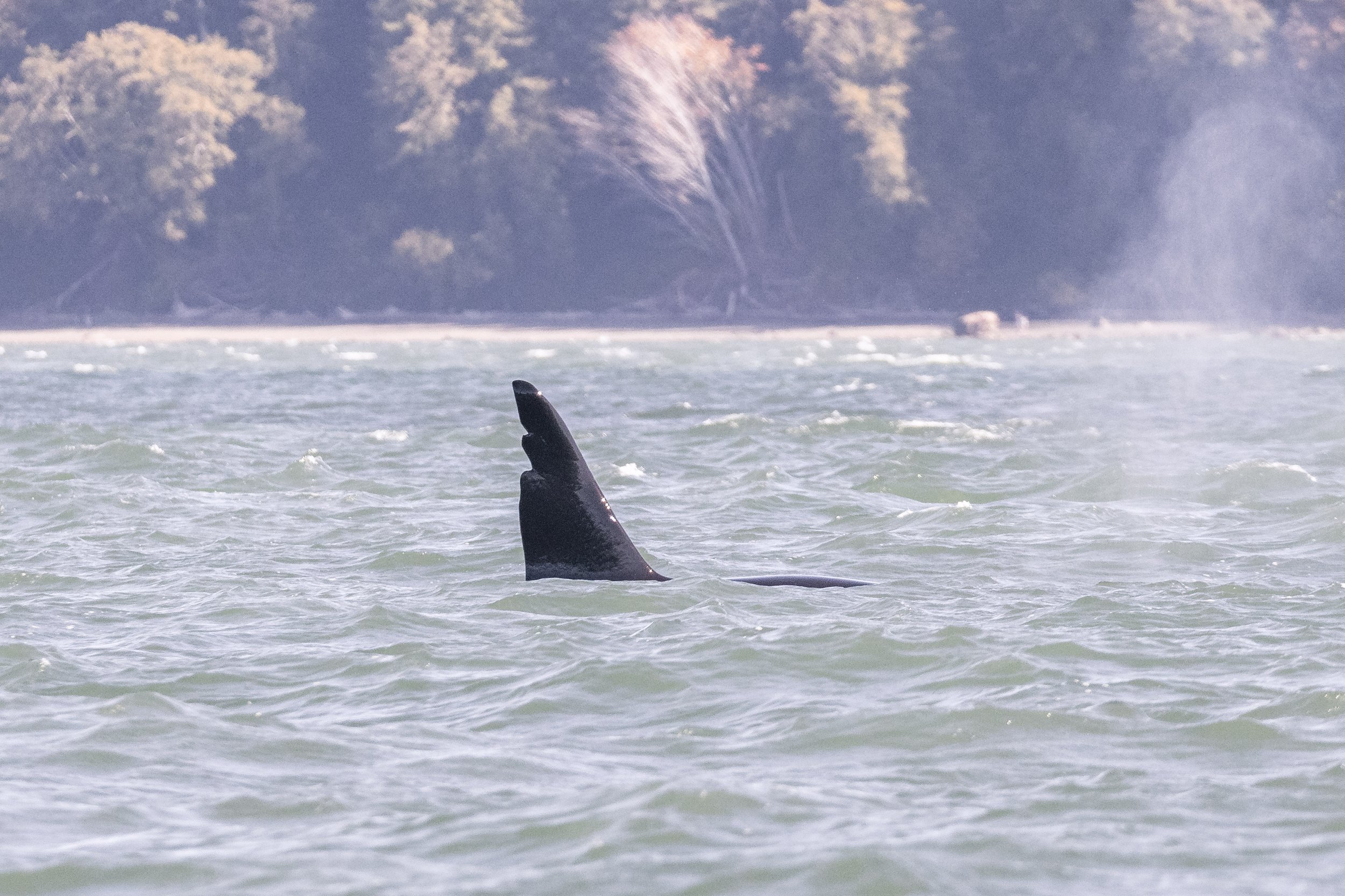
One last look at T063 Chainsaw. Photo by Rosalie Burauen.
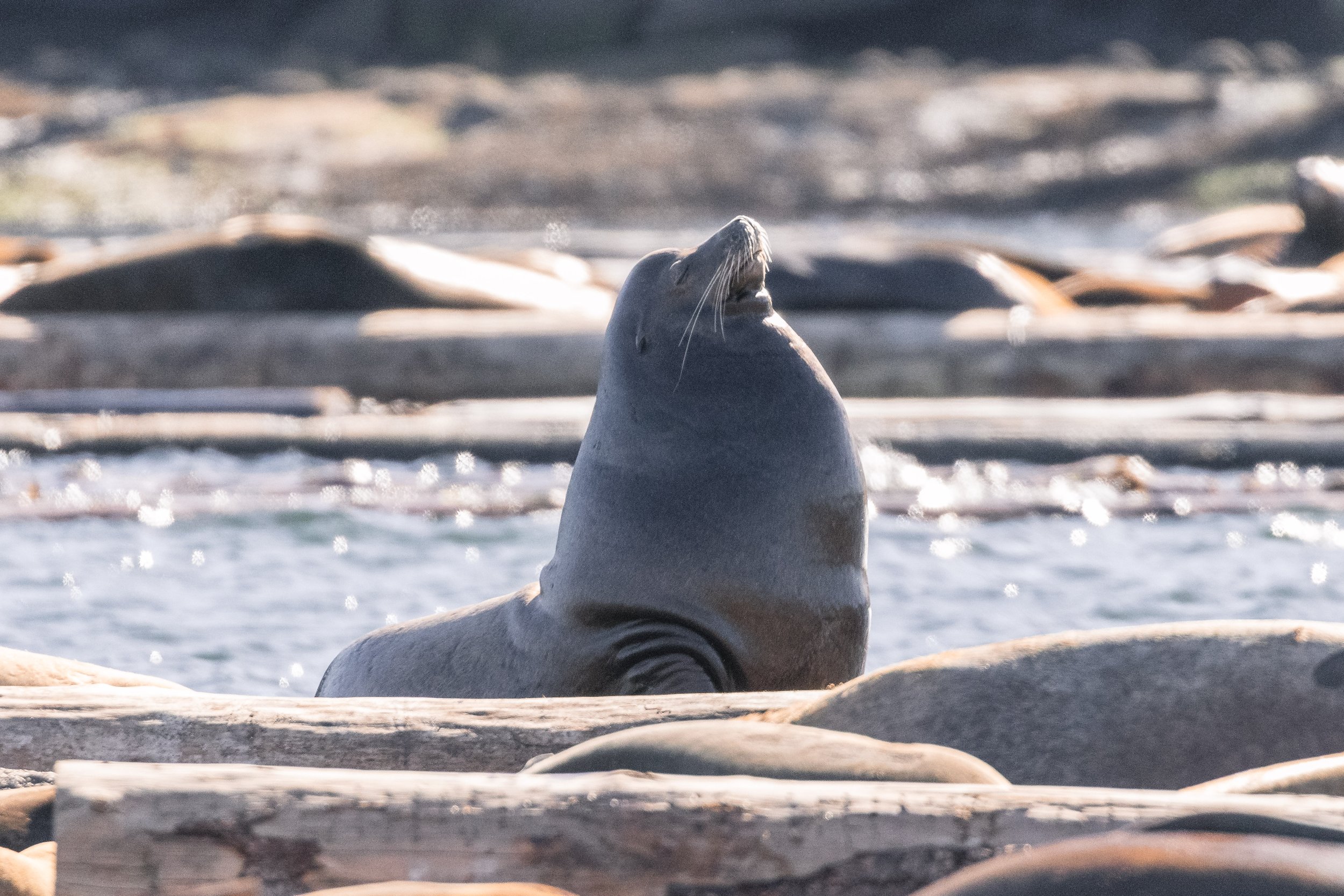
A California Sea Lion posing on the log booms. Photo by Rosalie Burauen.
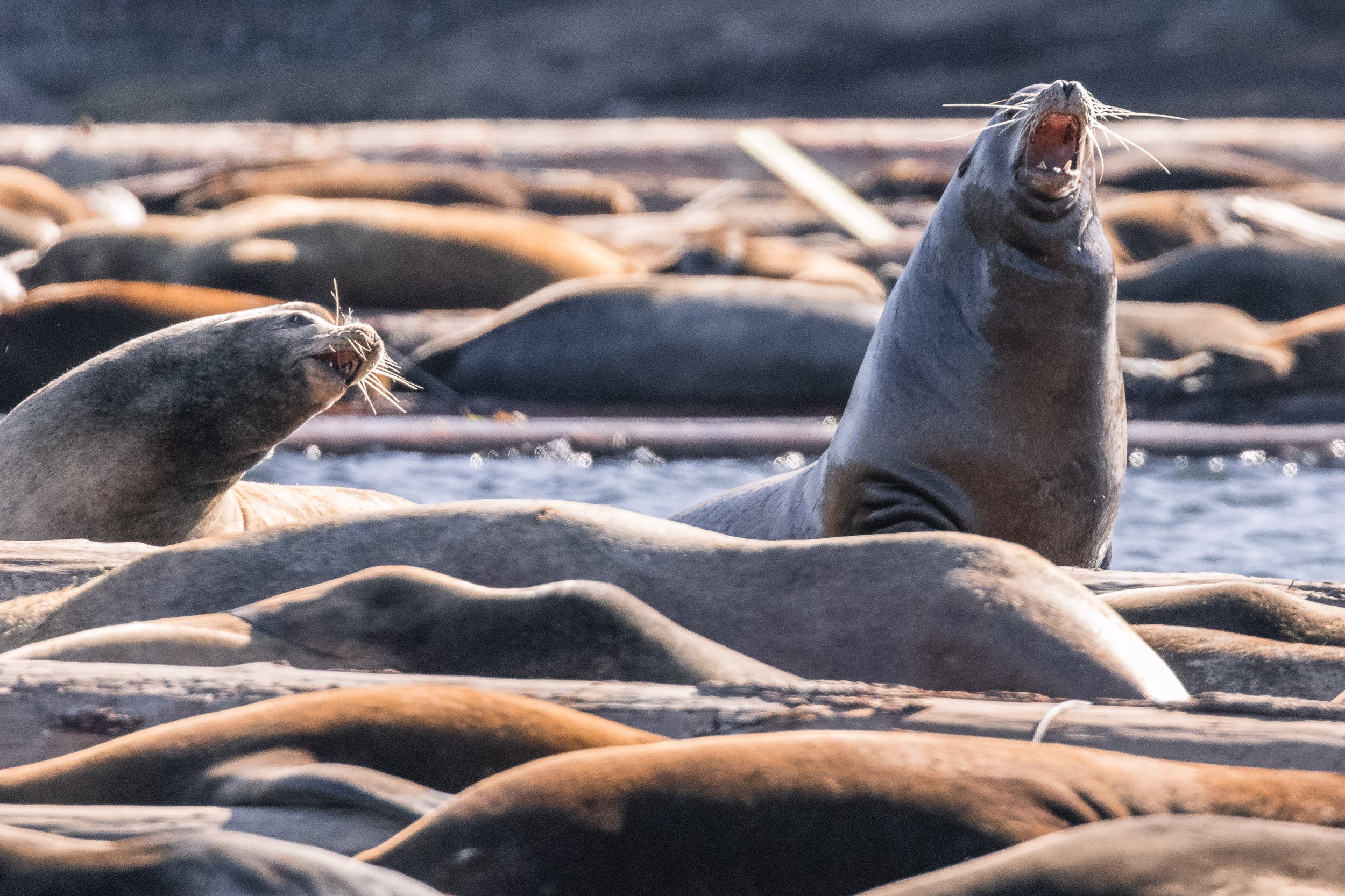
Arf arf. Photo by Rosalie Burauen.
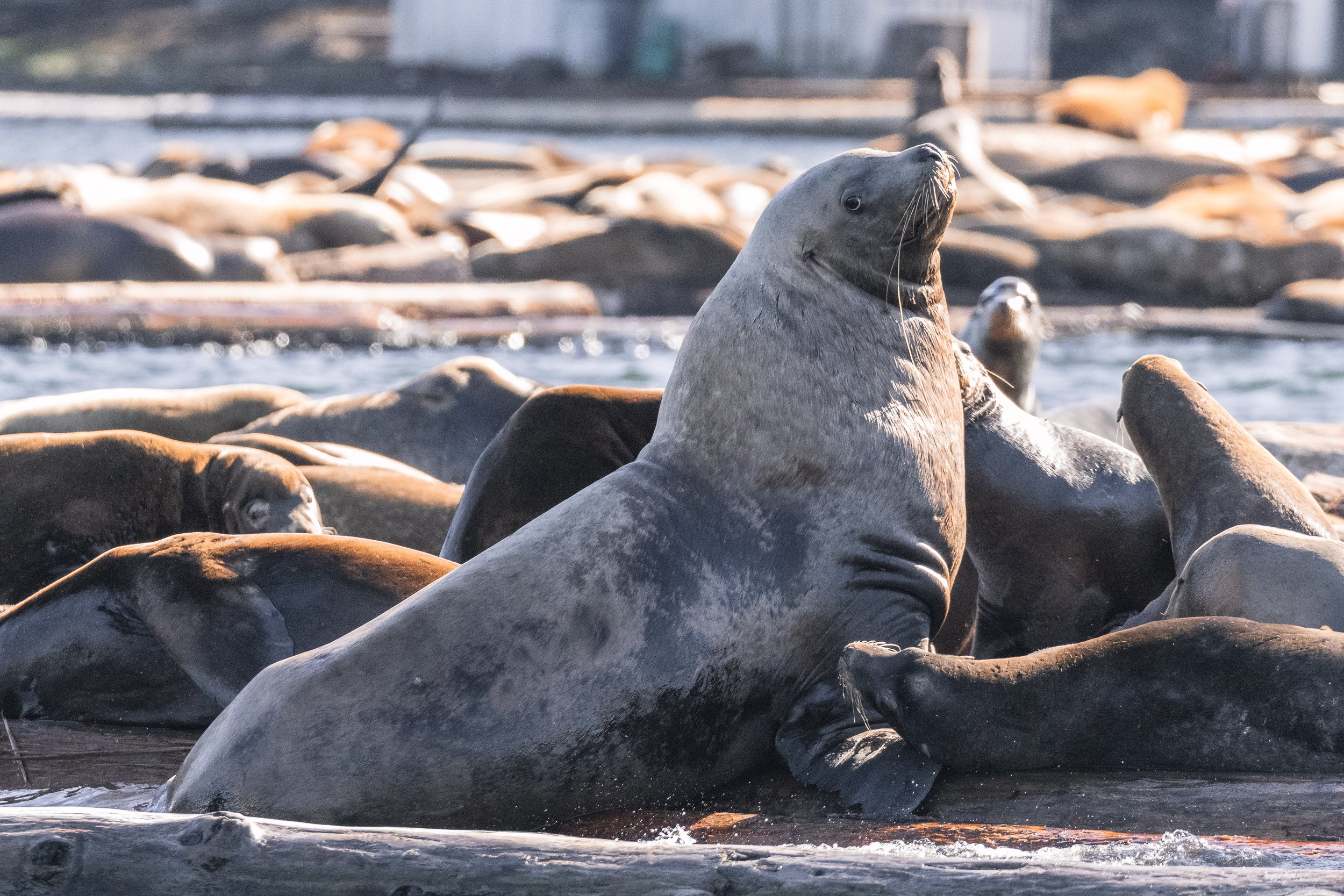
This Steller Sea Lion is wondering if the California Sea Lions will notice him hanging out with them. Spoiler: they already have. Photo by Rosalie Burauen.