
October 11, 2026, Open Zodiac - A Gentle Giant kind of day
We set out aboard Keta today, travelling along the coastline of Gabriola Island as we began our search for whales. After a little searching, we spotted two humpback whales diving through the waves. As they prepared for deeper dives, we were able to capture photographs of their tail flukes, giving us the opportunity to identify both whales. Our pair turned out to be Phi/Corona (BCX1416) and Geometry (BCZ0338)!
Phi is a known female humpback who has been documented travelling with three different calves over the years: Omega (BCY1224), Iota (BCY1466), and her 2024 calf (BCX1416calf2024). Tracking these family connections helps researchers learn more about humpback whale reproduction, calf survival, and the lives these animals lead between their breeding and feeding grounds. Geometry, meanwhile, is a known male humpback, making this an interesting pair to encounter together. We still know little about humpback social dynamics, so every encounter like this is valuable!
Both whales have first recorded sightings on Happywhale dating back to 2008. As neither was considered a calf at the time, they are likely at least 20 years old. While that sounds quite young, that is actually a notable age for whales in our local population. Commercial whaling once pushed humpbacks along the coast of British Columbia close to extirpation. Following decades of protection, their numbers have rebounded significantly, particularly over the past 15 to 20 years. We feel blessed to have witnessed this bounce back, especially as mothers such as Phi/Corona continue to bring calves back, further increasing the population.
After spending some time with our first pair, we continued on our search. It wasn't long before we spotted our second humpback sighting of the day, this time with three whales! Two travelled close together, while a third followed a little farther behind. We identified the close companions as Snoopy (BCY0770) and Smiley (BCY0995), with Pingu (BCY1110) bringing up the rear.
The whales seemed quite energetic as they travelled through the water, occasionally trumpeting as they went. Humpbacks are known for producing a variety of sounds, from low-frequency calls to louder vocalizations that can sometimes be heard above the surface, such as trumpeting. Although we cannot always tell exactly what a whale is communicating through a particular sound, it is always incredible when we get to witness them firsthand.
With multiple humpback sightings now concluded, it was time to broaden our search and see what else the Salish Sea had to offer. We continued south toward the coastline of Valdes Island, making our way to the familiar landmark of Stinky Rocks.
Stinky Rocks is a well-known haul-out site for pinnipeds, the scientific term for the group of marine mammals that includes seals and sea lions. The difference between the two species was easy to appreciate as we drifted by. Huge Steller Sea Lions clambered over the rocks, jostling for space and occasionally biting or fighting with one another as they competed for their preferred resting spots. These large, powerful animals can be surprisingly boisterous on land, and a crowded haulout often comes with plenty of pushing, shoving, and vocal disagreements.
Nearby, Harbour Seals offered a much more peaceful scene. They stretched out sleepily across the rocks, seemingly content to rest without getting caught up in the sea lions' commotion. While Harbour Seals can sometimes be feisty themselves, they often seem far less dramatic than their larger neighbours when sharing a haulout. For both species, these resting areas are important for conserving energy between trips into the water to feed.
The pinnipeds weren't the only wildlife making use of the rocky shoreline while we observed either. Among the seals and sea lions, Black Oystercatchers called out as they skirted along the water's edge, while Harlequin Ducks floated on by. These colourful sea ducks are well adapted to life in fast-moving coastal waters, where they forage among rocks and along shorelines for aquatic invertebrates. Stopping at places like Stinky Rocks lets us appreciate how many different species depend on the same stretch of coastline, each using the habitat in its own way.
After taking in the busy haulout and its array of sea creatures, we turned back towards Nanaimo Harbour. From humpbacks travelling through the surf to the lively pinnipeds of Stinky Rocks, the day reminded us that the Salish Sea is full of wildlife that come in all shapes and sizes!
Please enjoy today’s photos taken by Marine Naturalist Jordan Robinson.
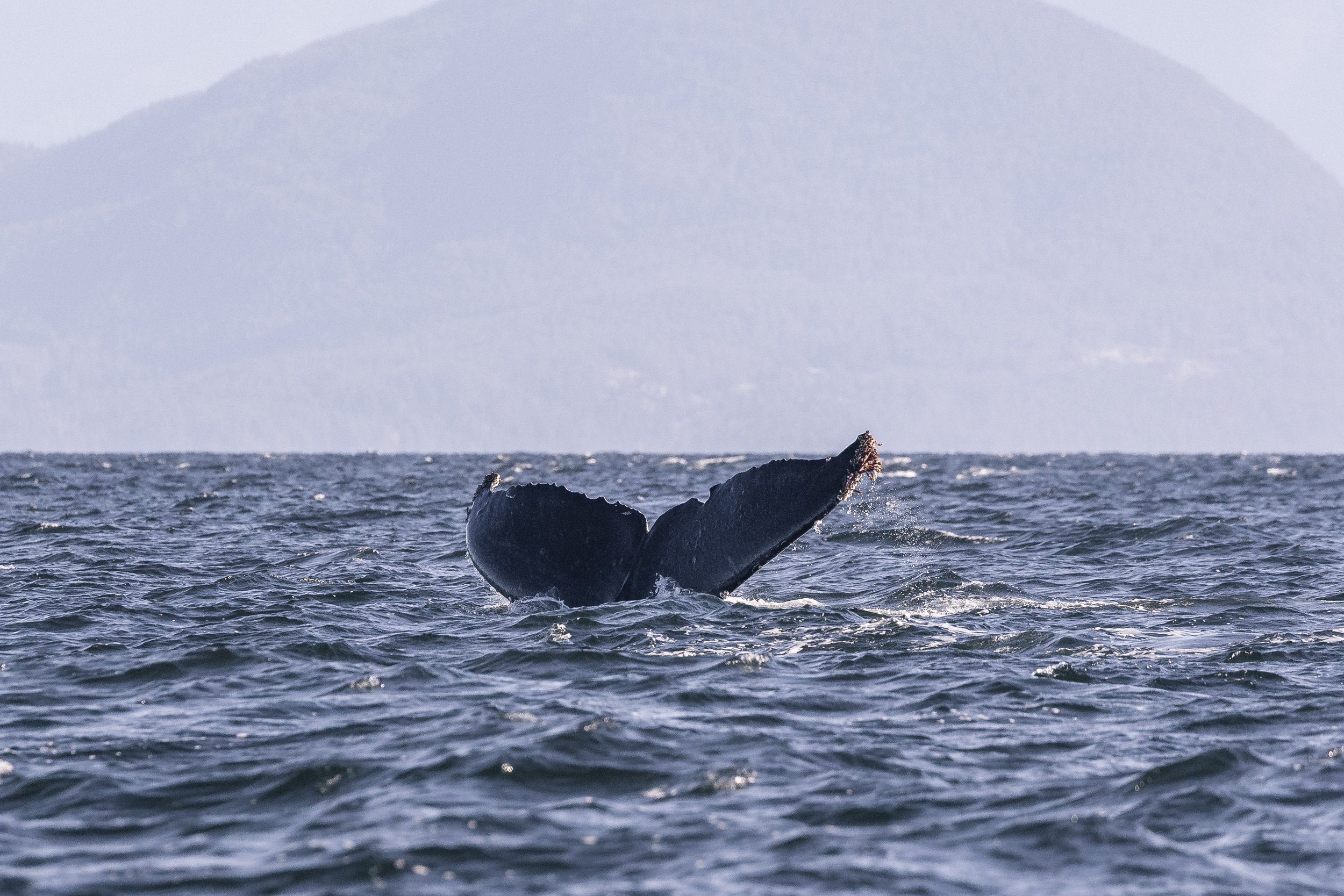
The top of Geometry’s tail. Photo by Jordan Robinson.
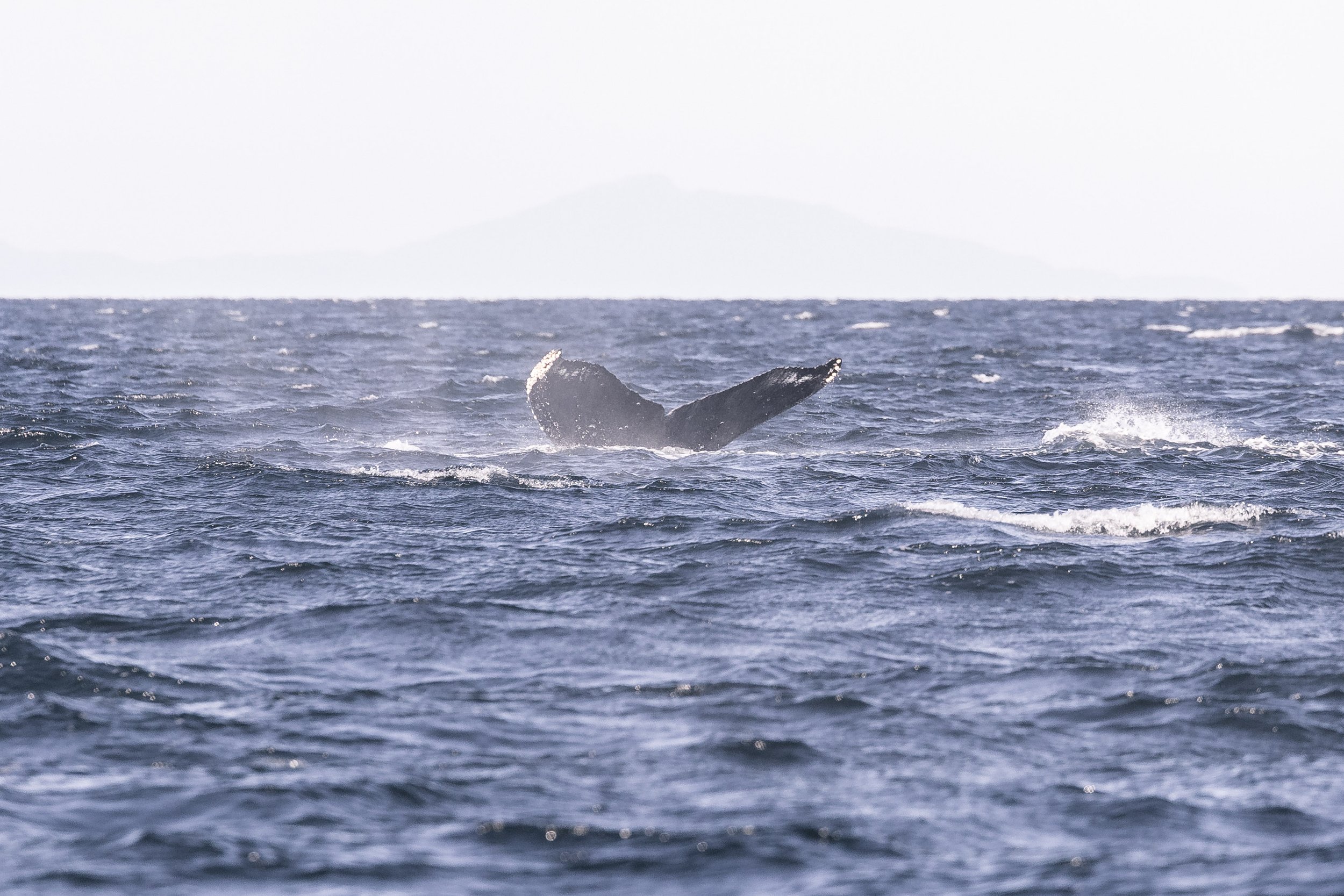
Phi/Corona’s tail. Photo by Jordan Robinson.
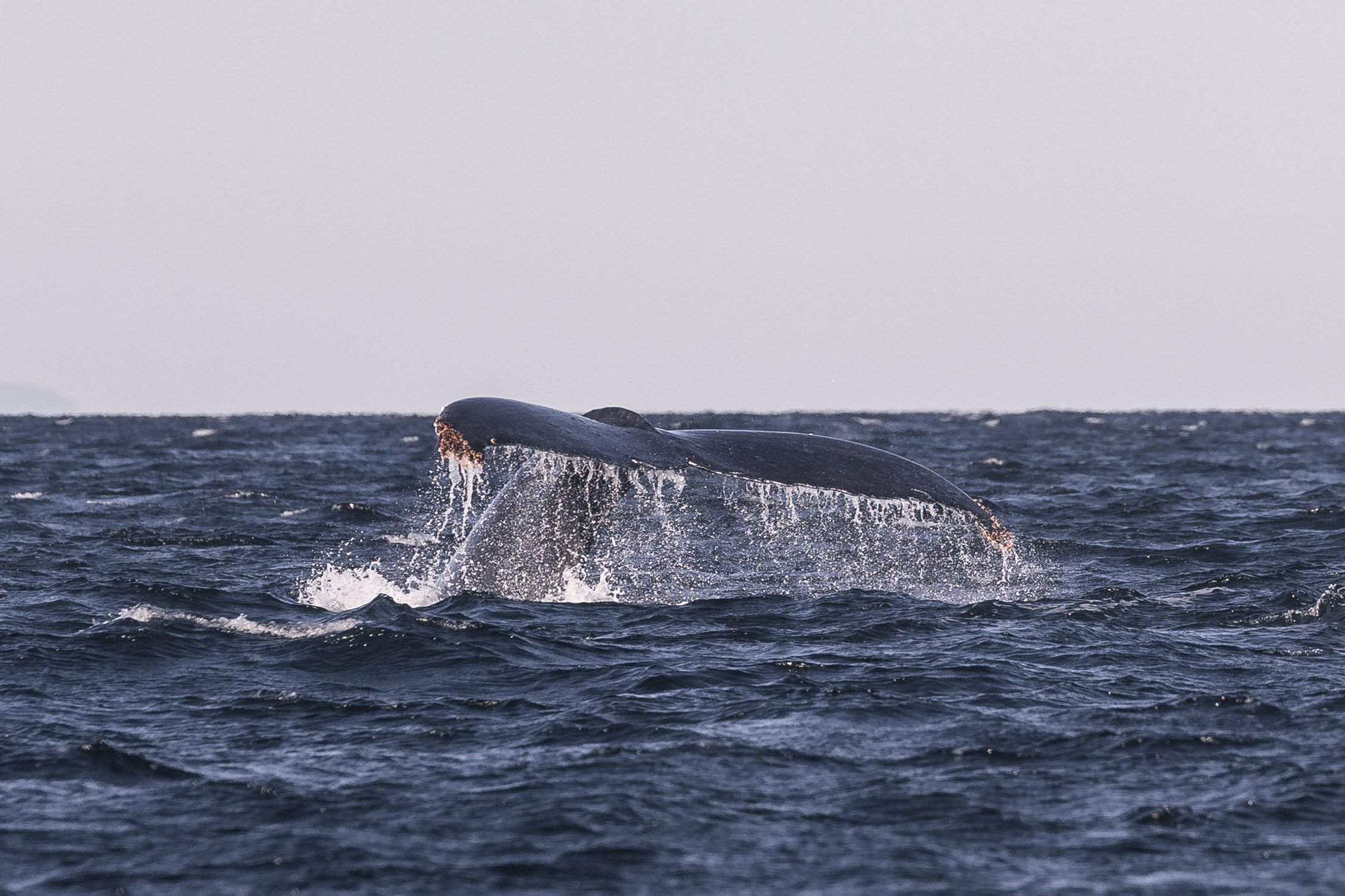
A fluke waterfall as Geometry dives down. Photo by Jordan Robinson.
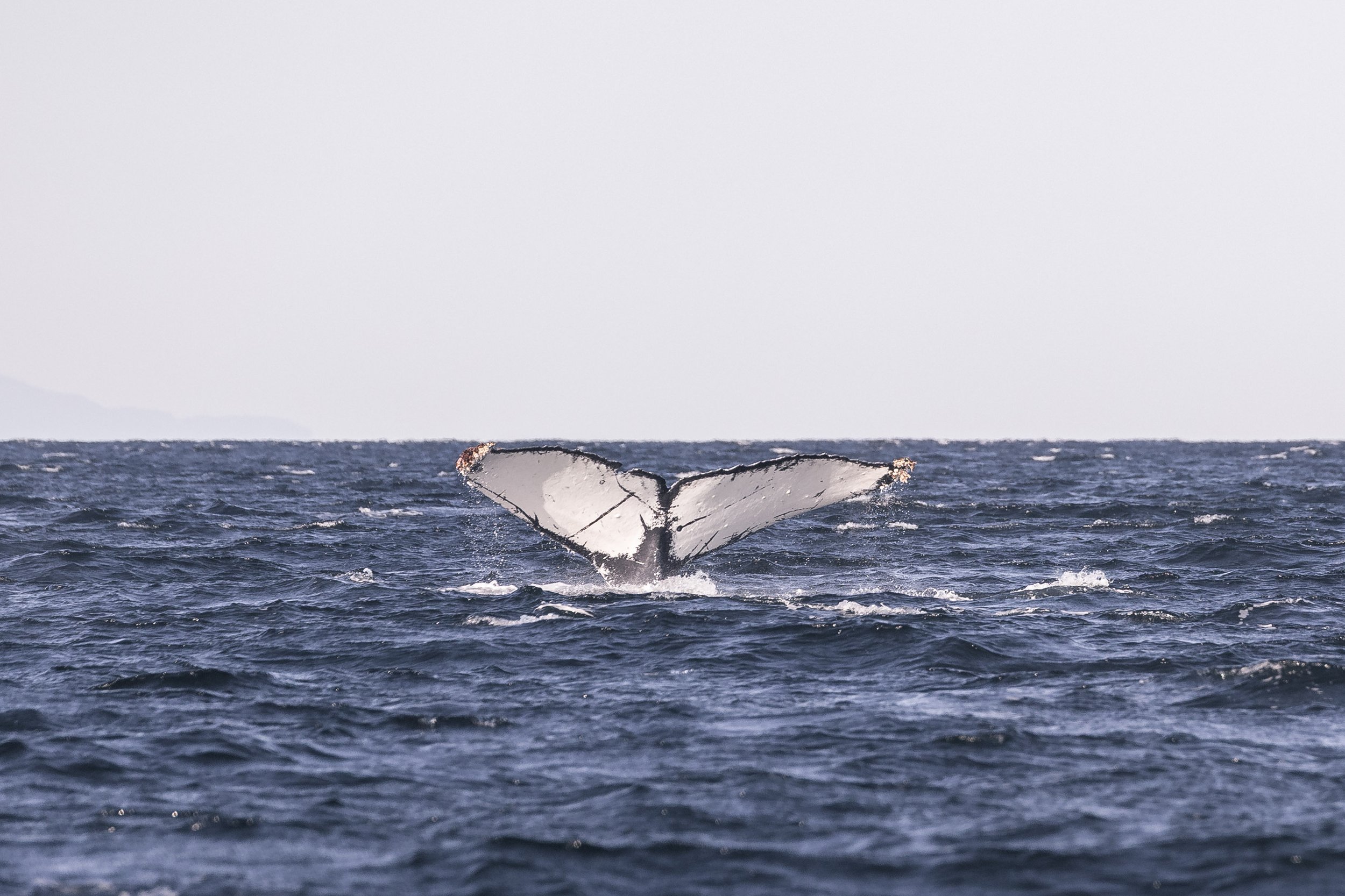
Geometry’s unique tail markings. Photo by Jordan Robinson.
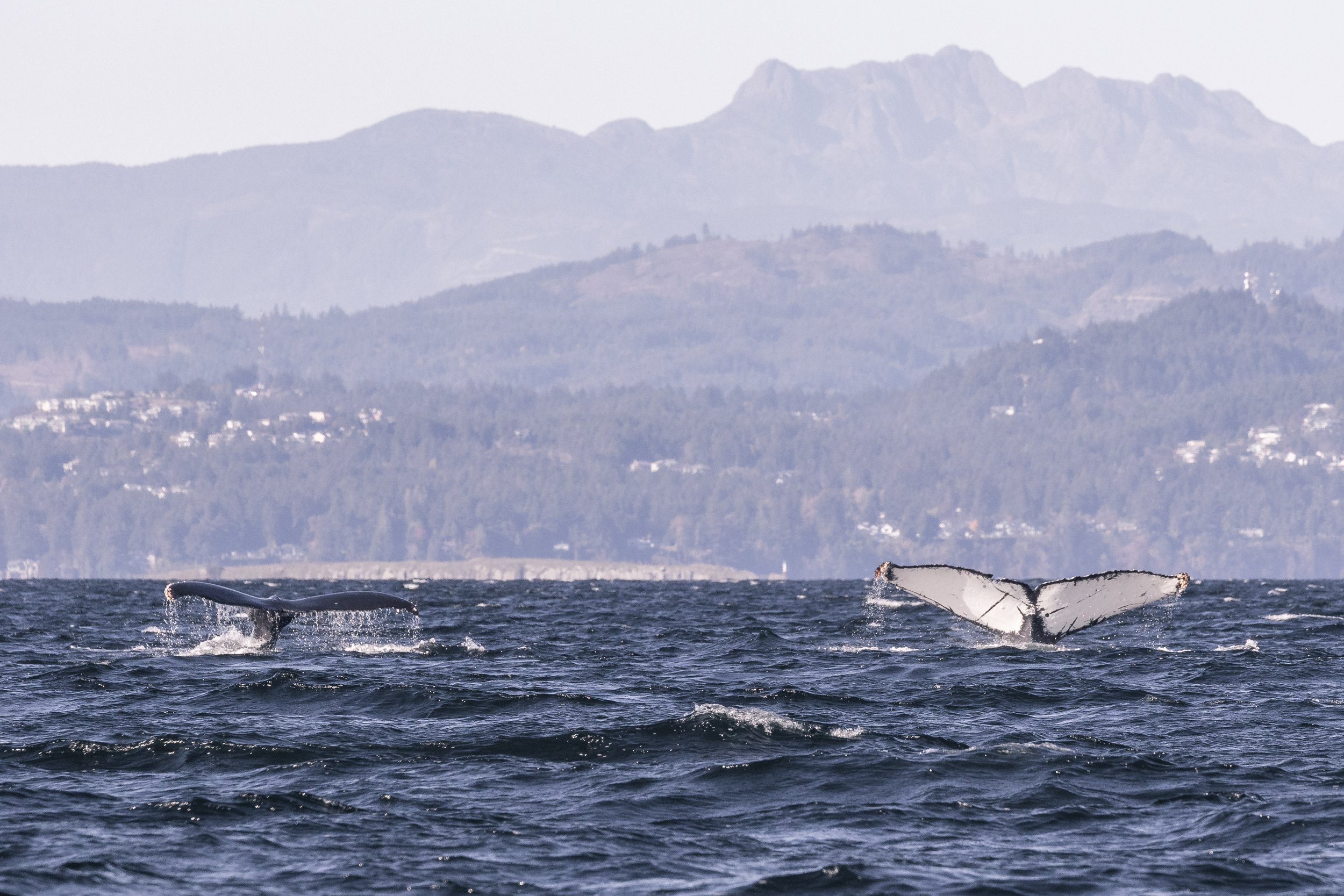
Phi/Corona on the left and Geometry on the right, fluking in unison. Photo by Jordan Robinson.
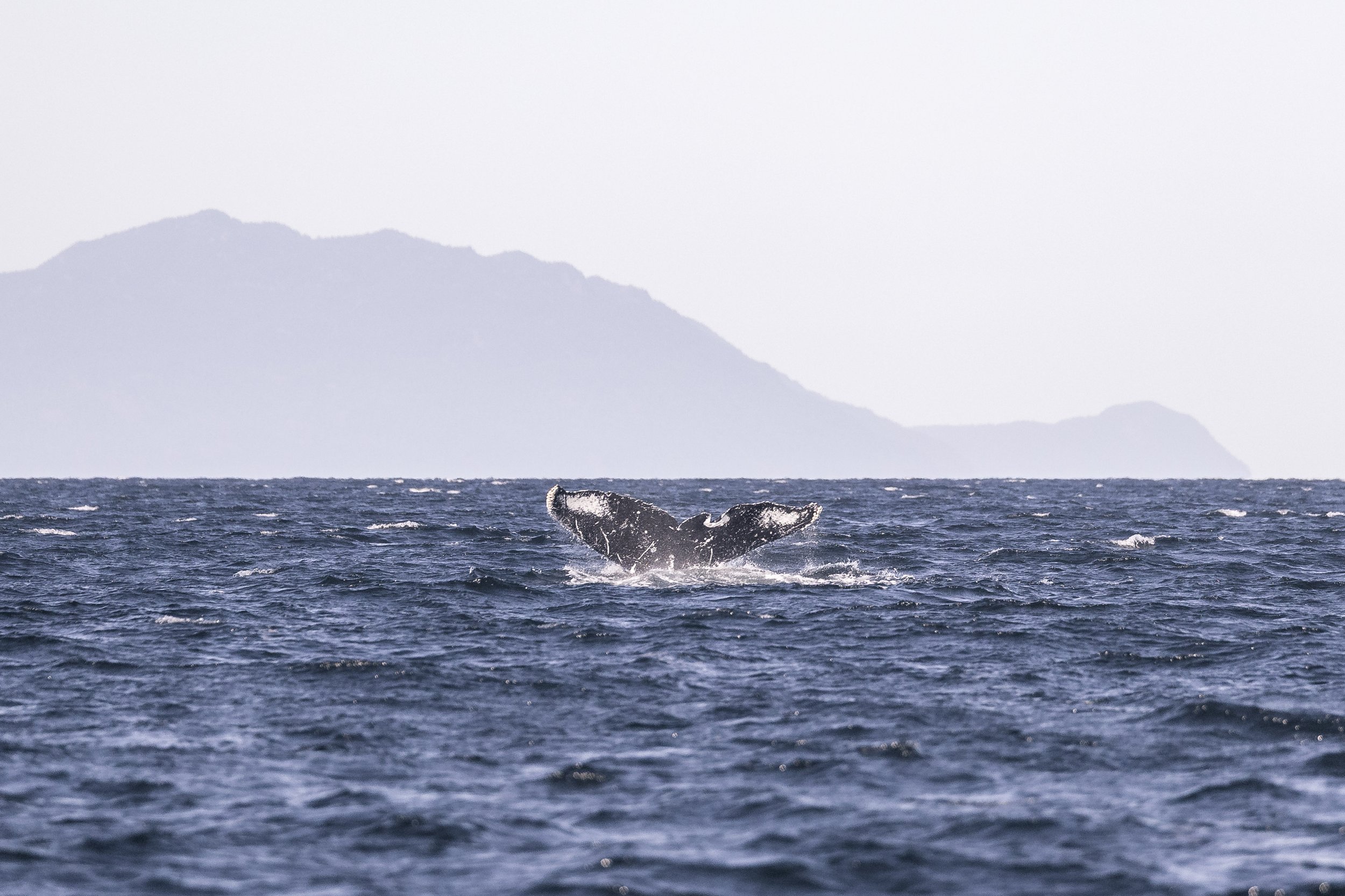
Snoopy’s tail. Photo by Jordan Robinson.
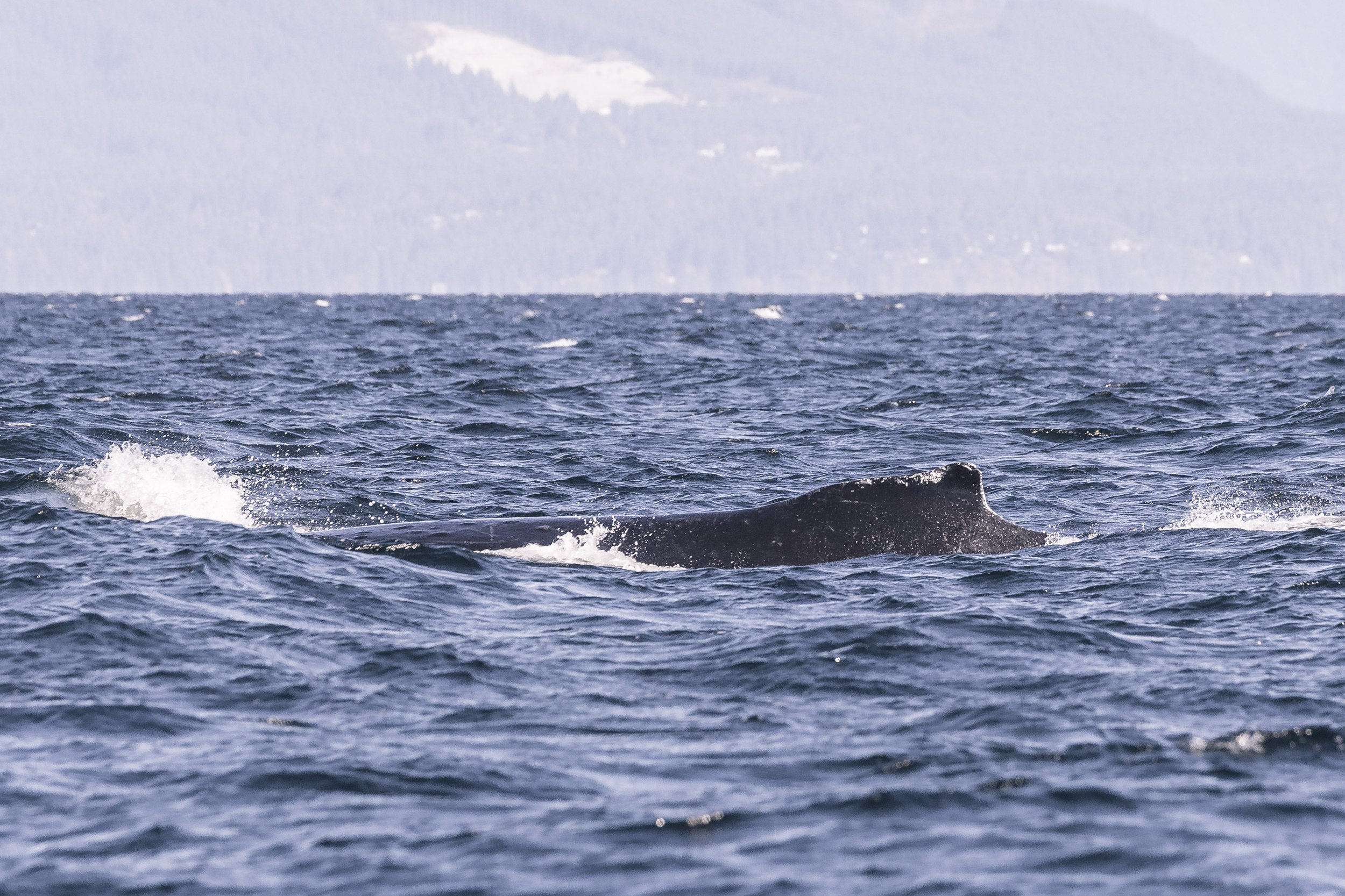
Snoopy’s dorsal fin. Photo by Jordan Robinson.
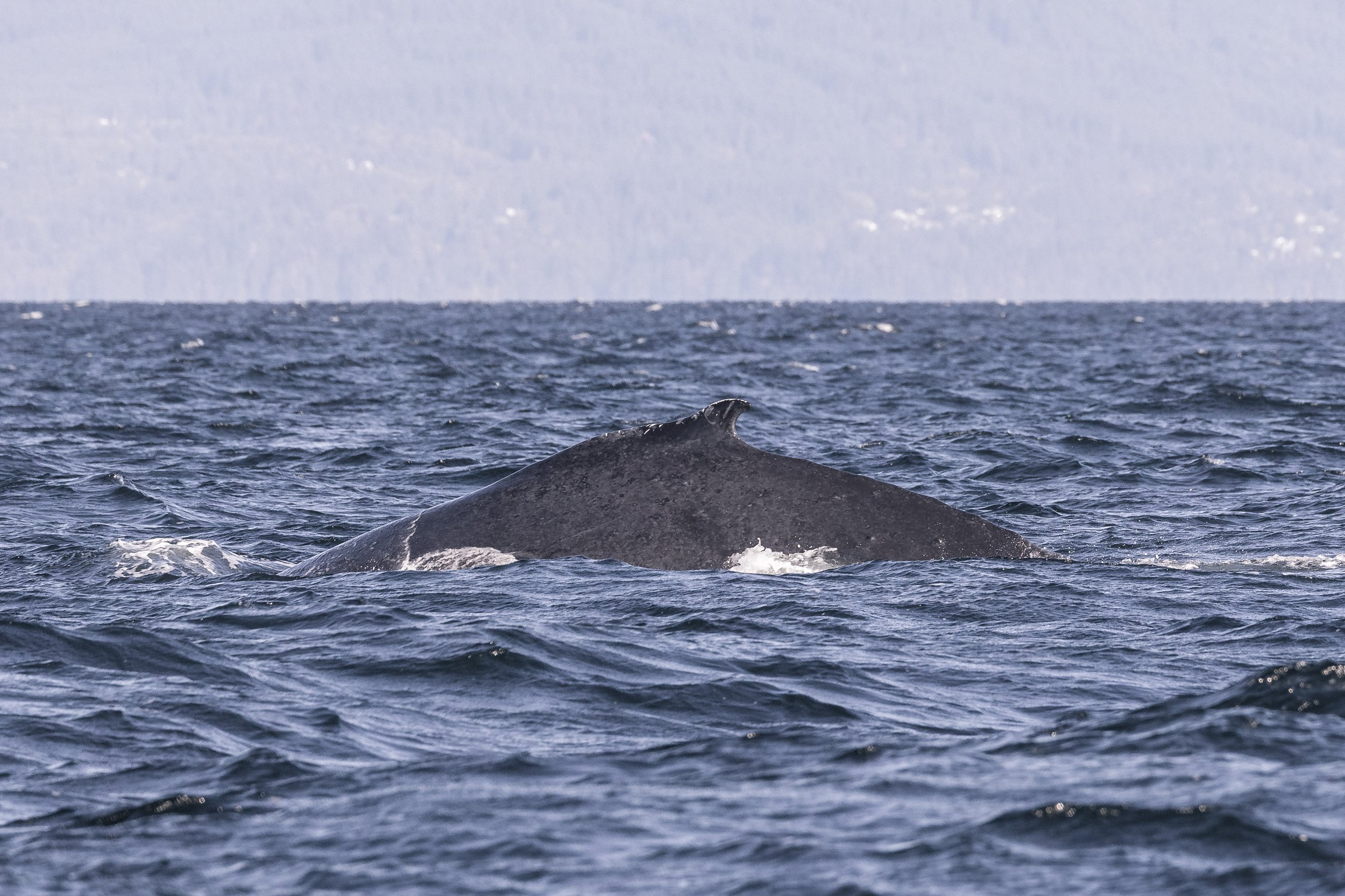
Smiley’s dorsal fin. Photo by Jordan Robinson.
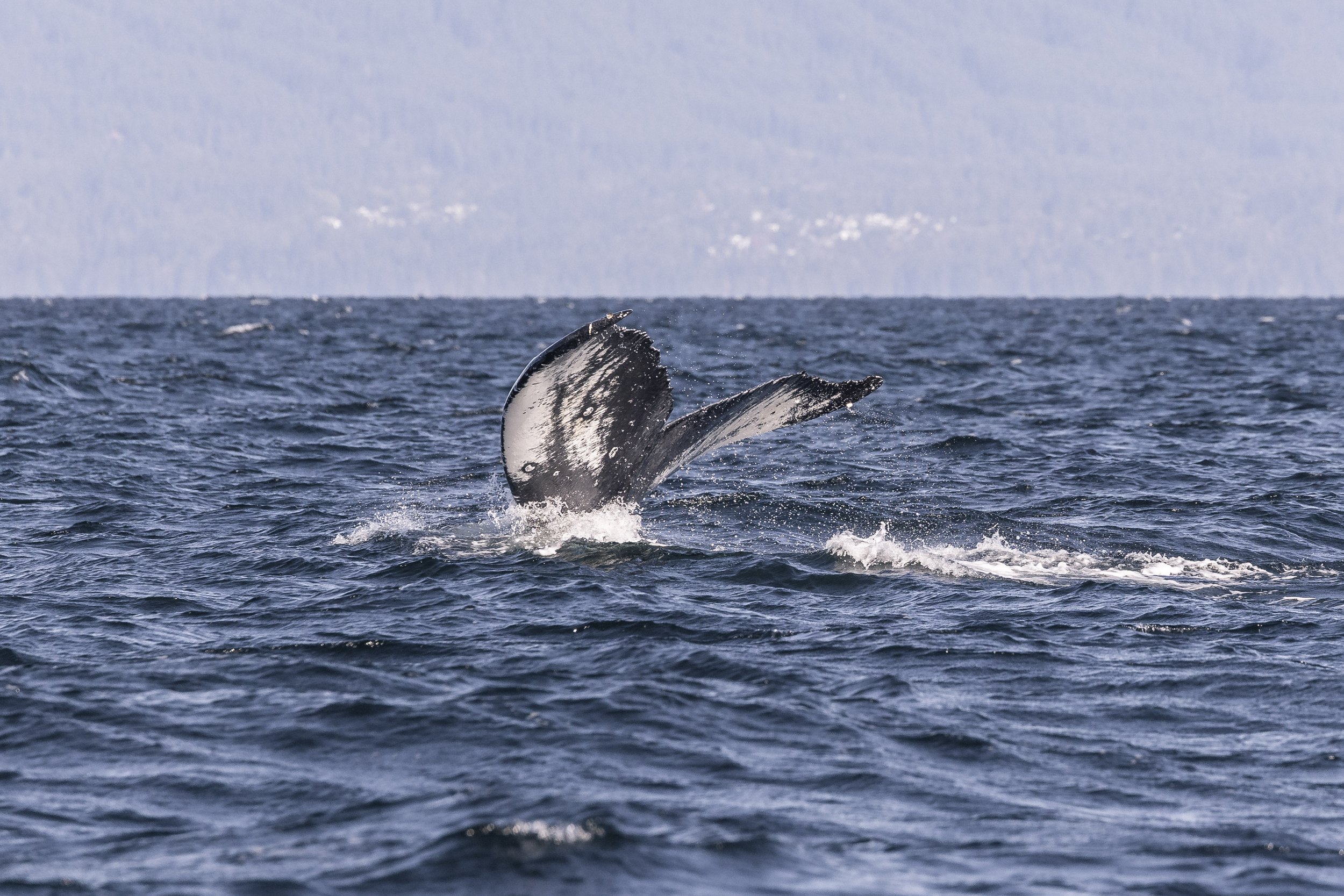
A good look at Smiley’s tail. Photo by Jordan Robinson.
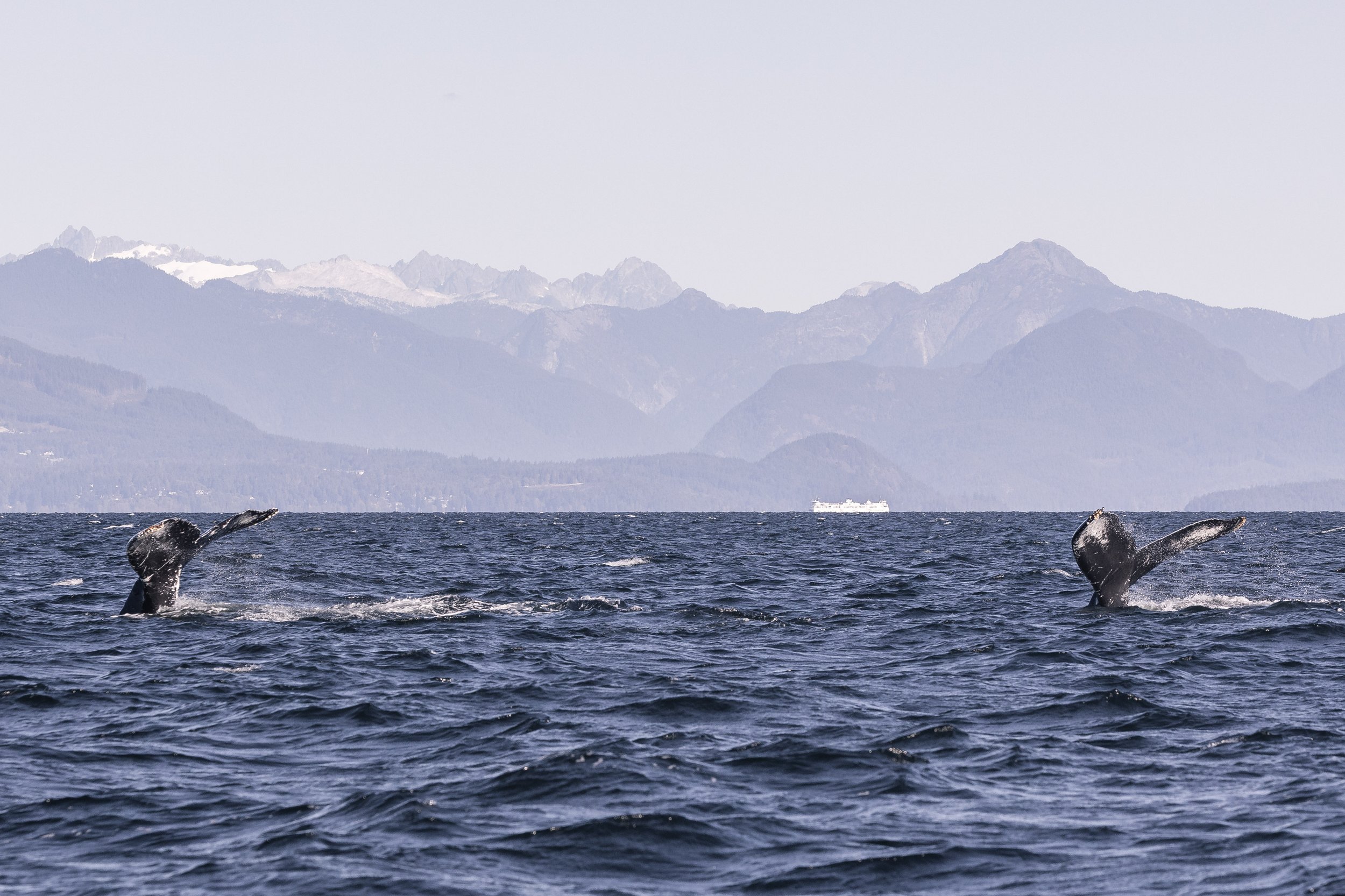
Snoopy left and Smiley right with the coastal mountains in the background. Photo by Jordan Robinson.
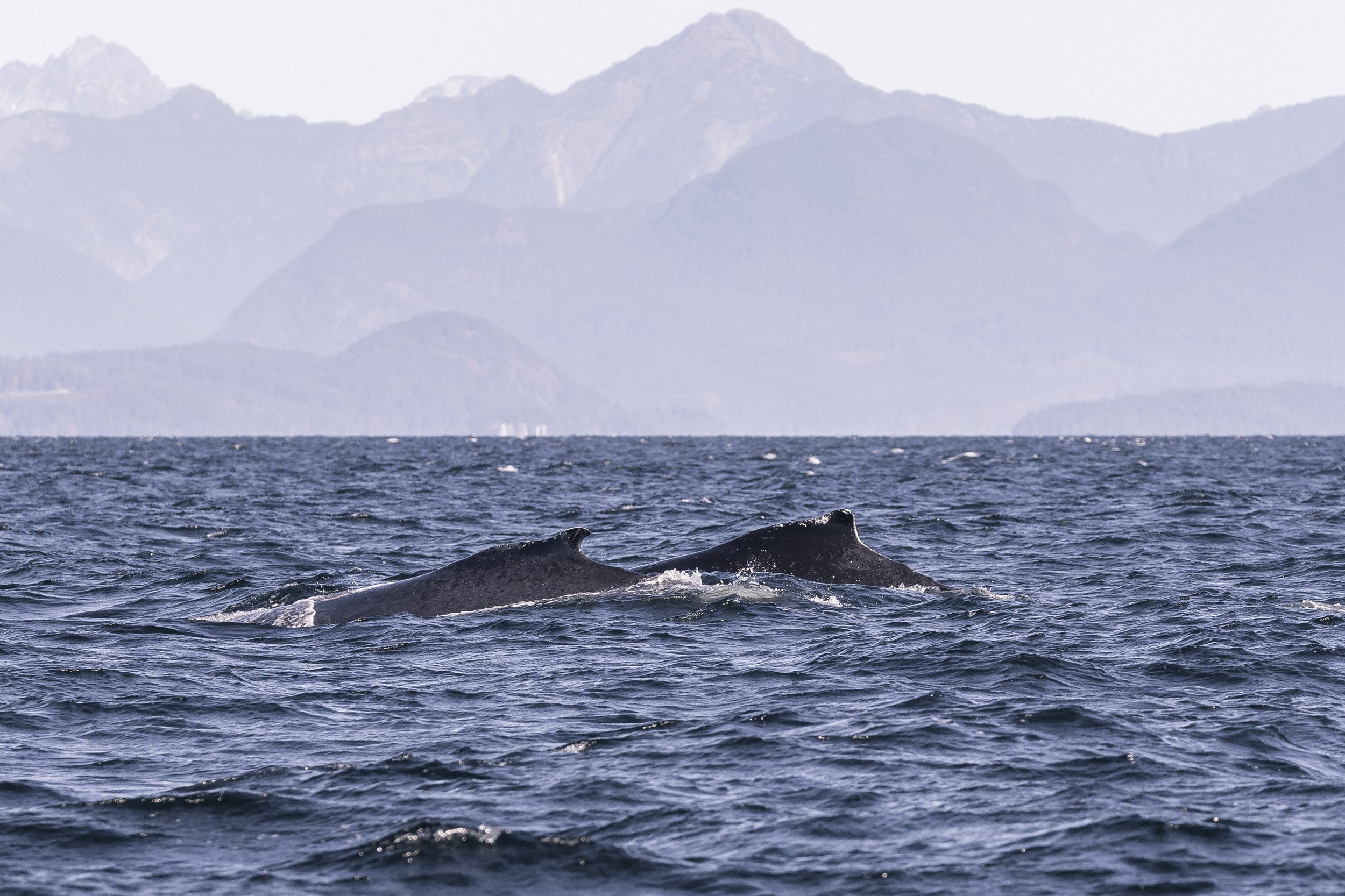
Smiley and Snoopy side by side. Photo by Jordan Robinson.
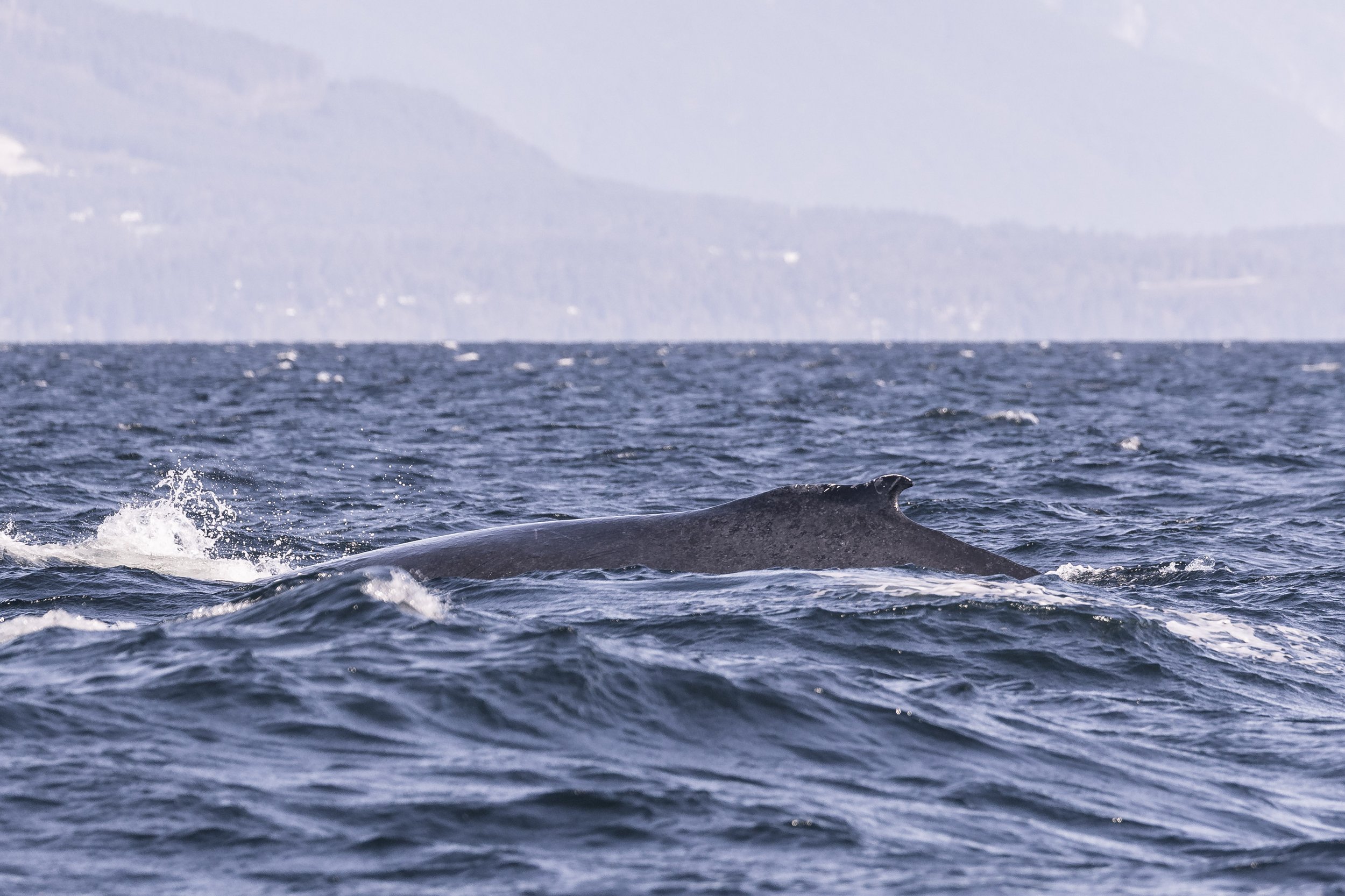
Smiley’s dorsal fin. Photo by Jordan Robinson.
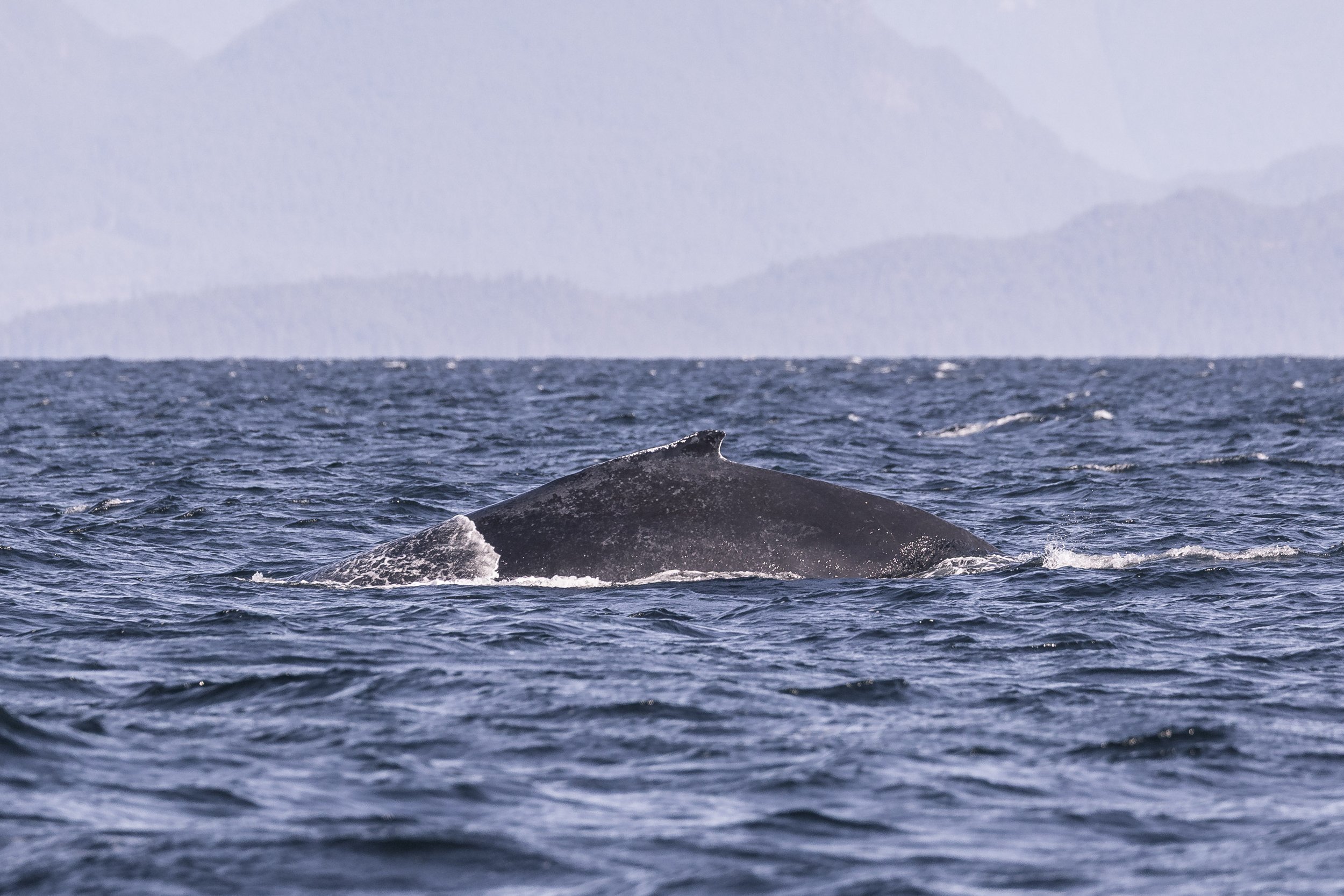
Pingu’s dorsal fin. Photo by Jordan Robinson.
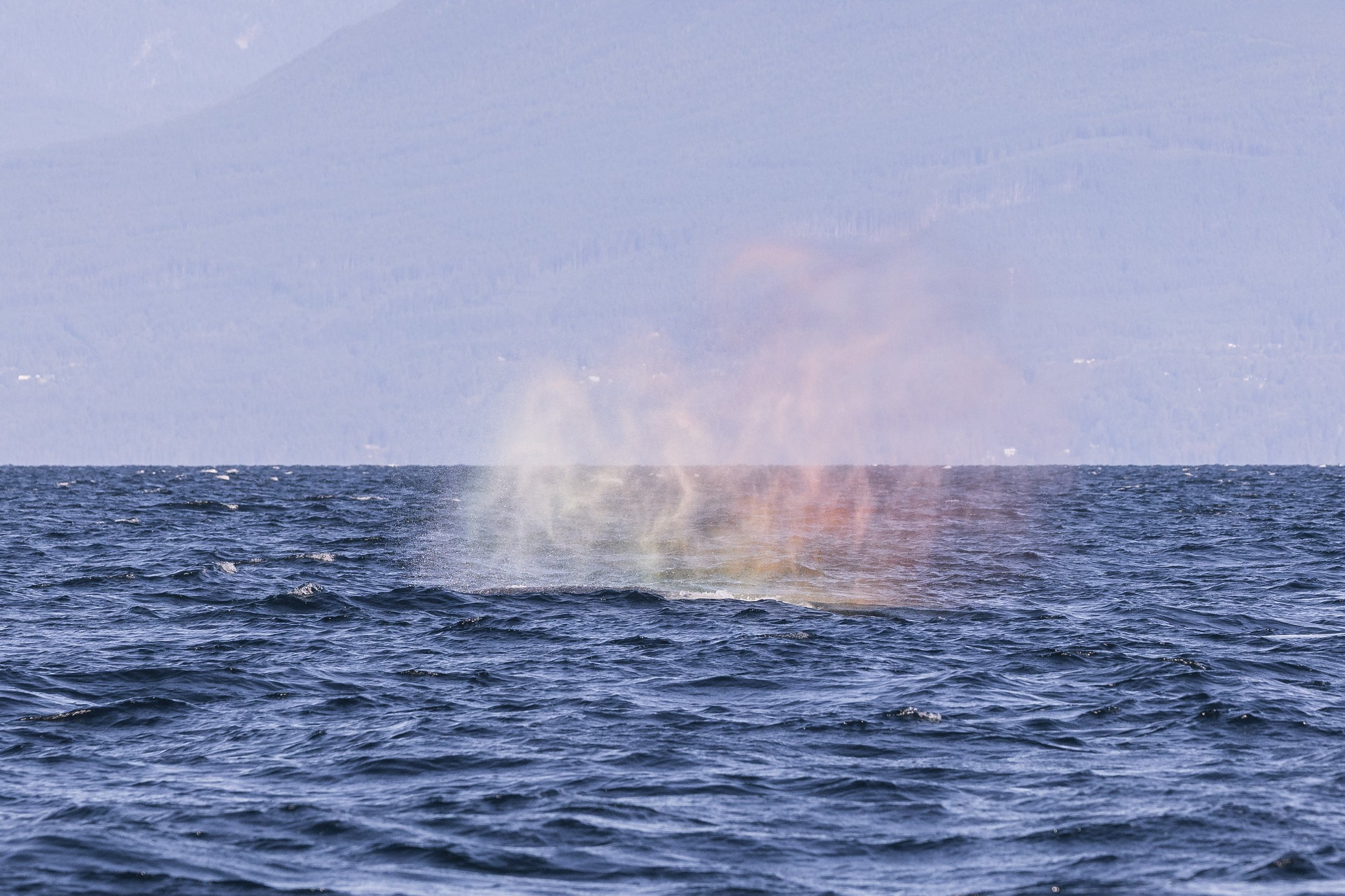
A rainblow. Photo by Jordan Robinson.
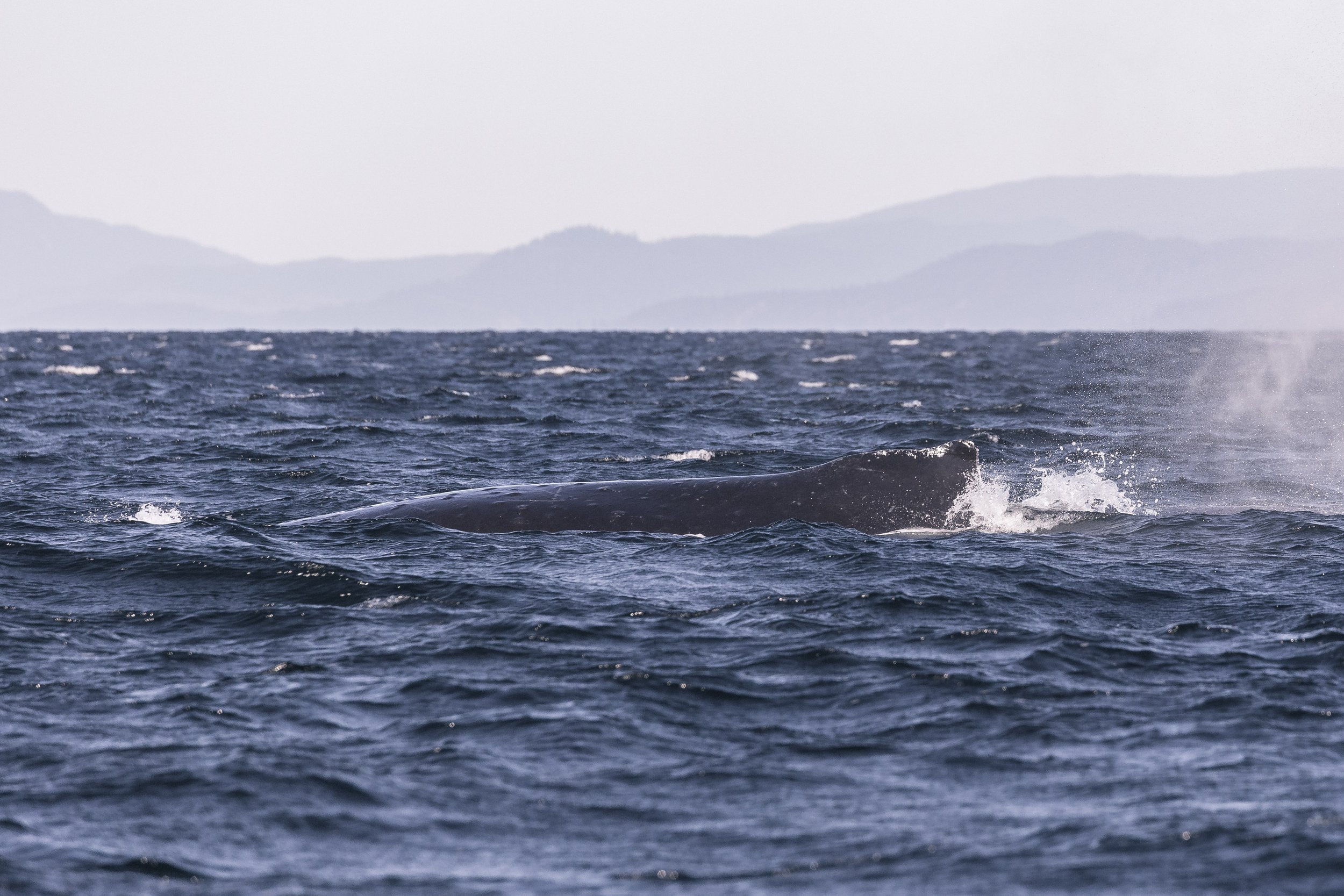
Snoopy’s dorsal fin. Photo by Jordan Robinson.
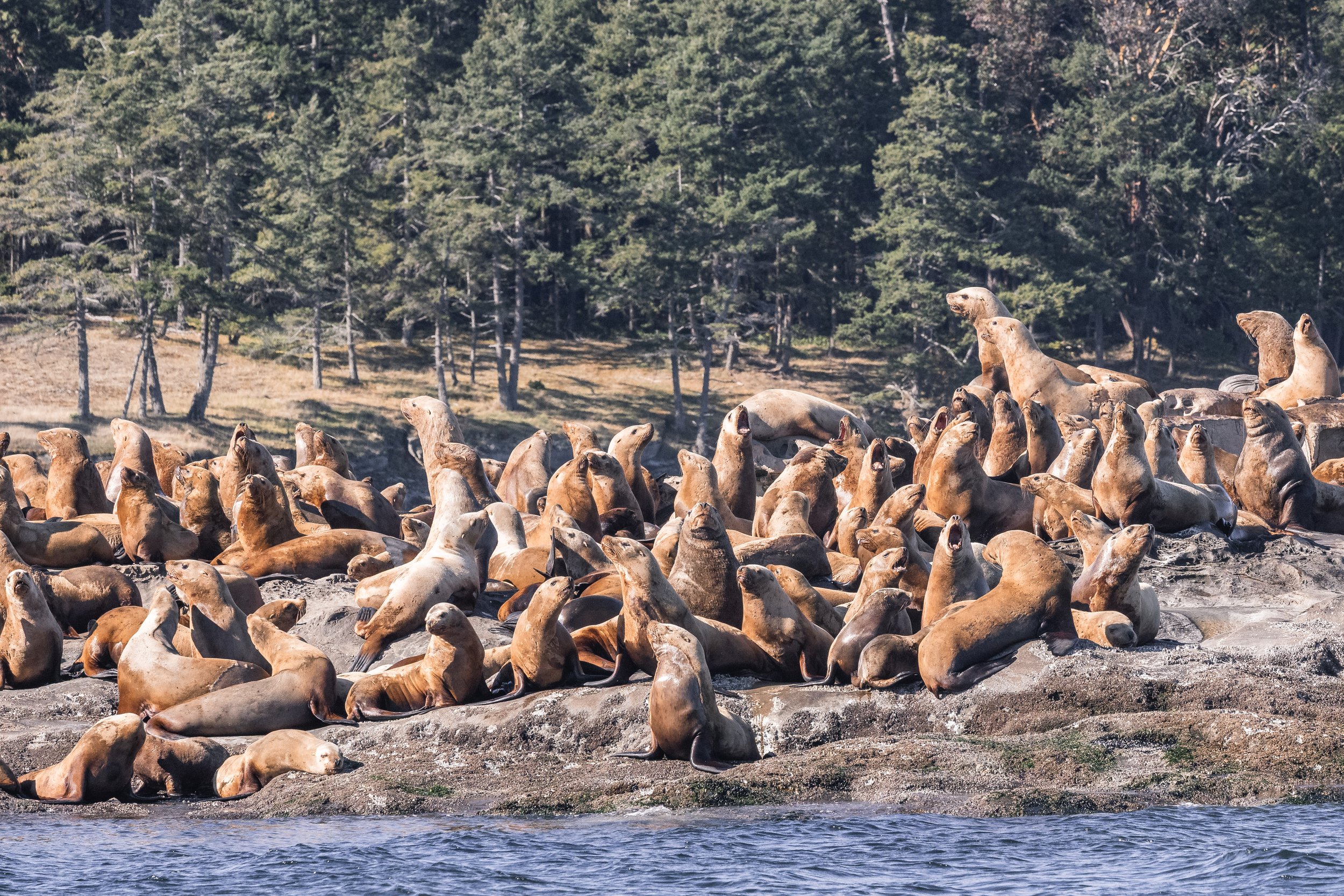
Stinky Rock was busy today. Photo by Jordan Robinson.
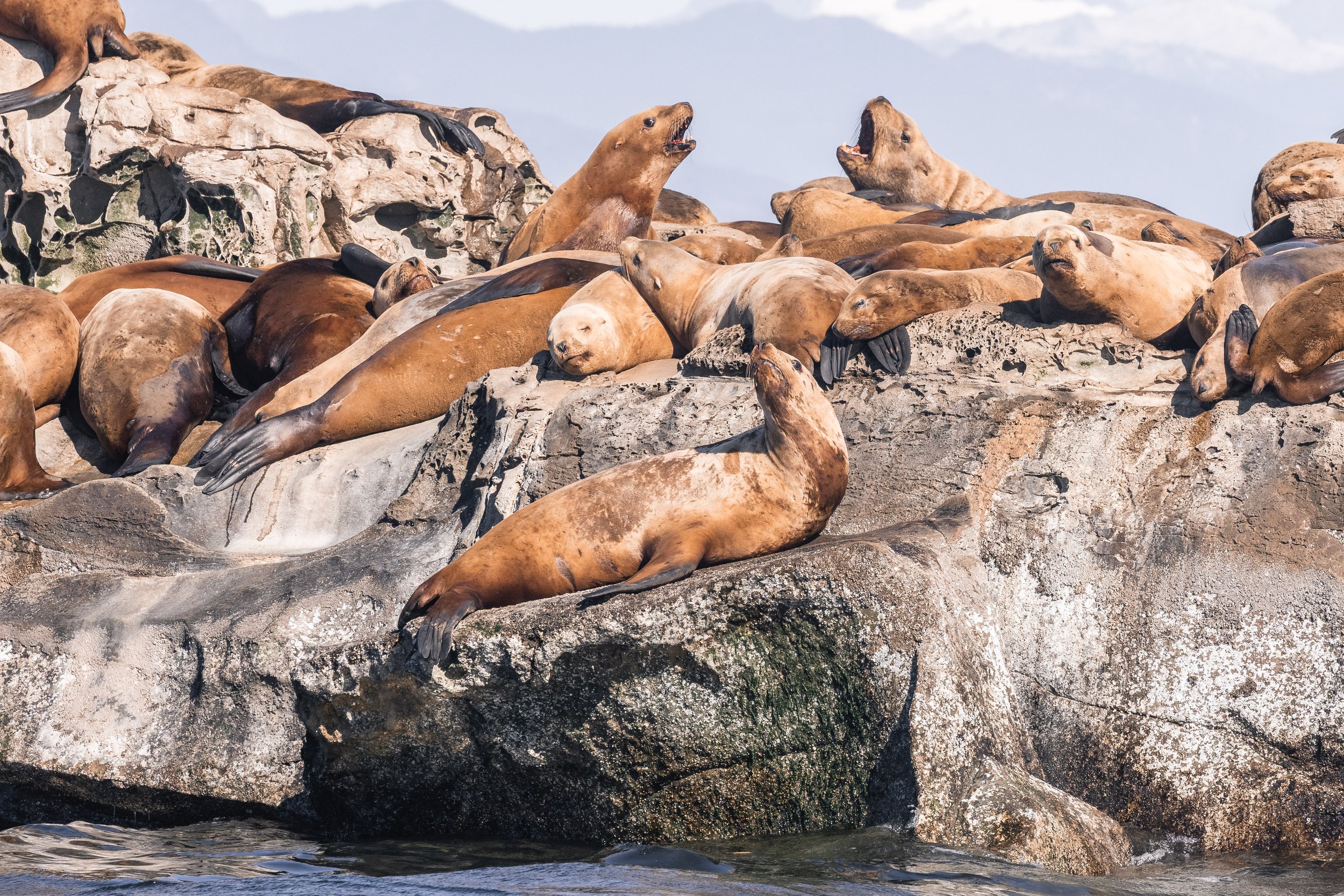
Steller Sea Lions taking up space. Photo by Jordan Robinson.
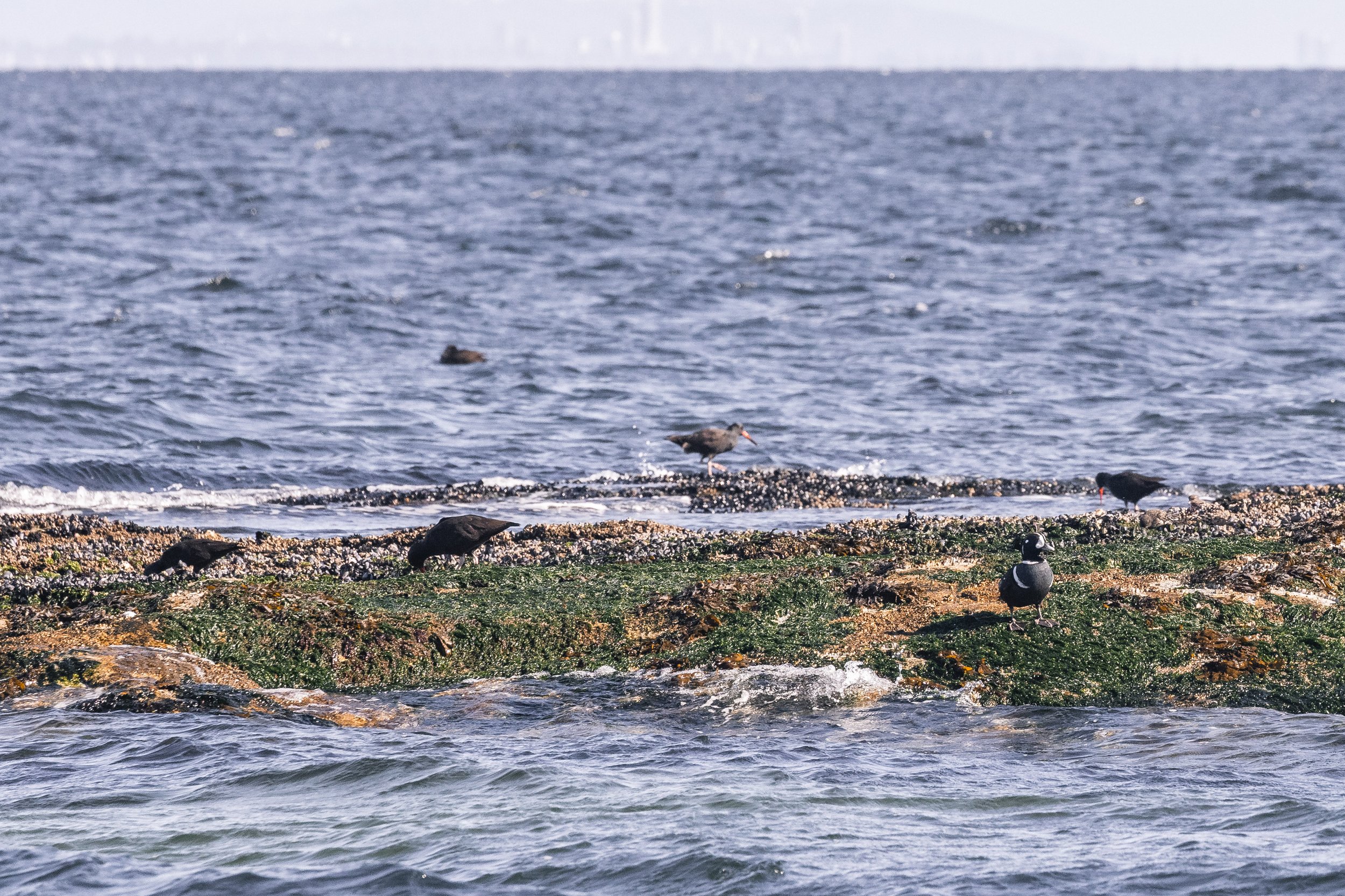
Black Oystercatchers picking at the mussels and a Harlequin Duck nearby. Photo by Jordan Robinson.
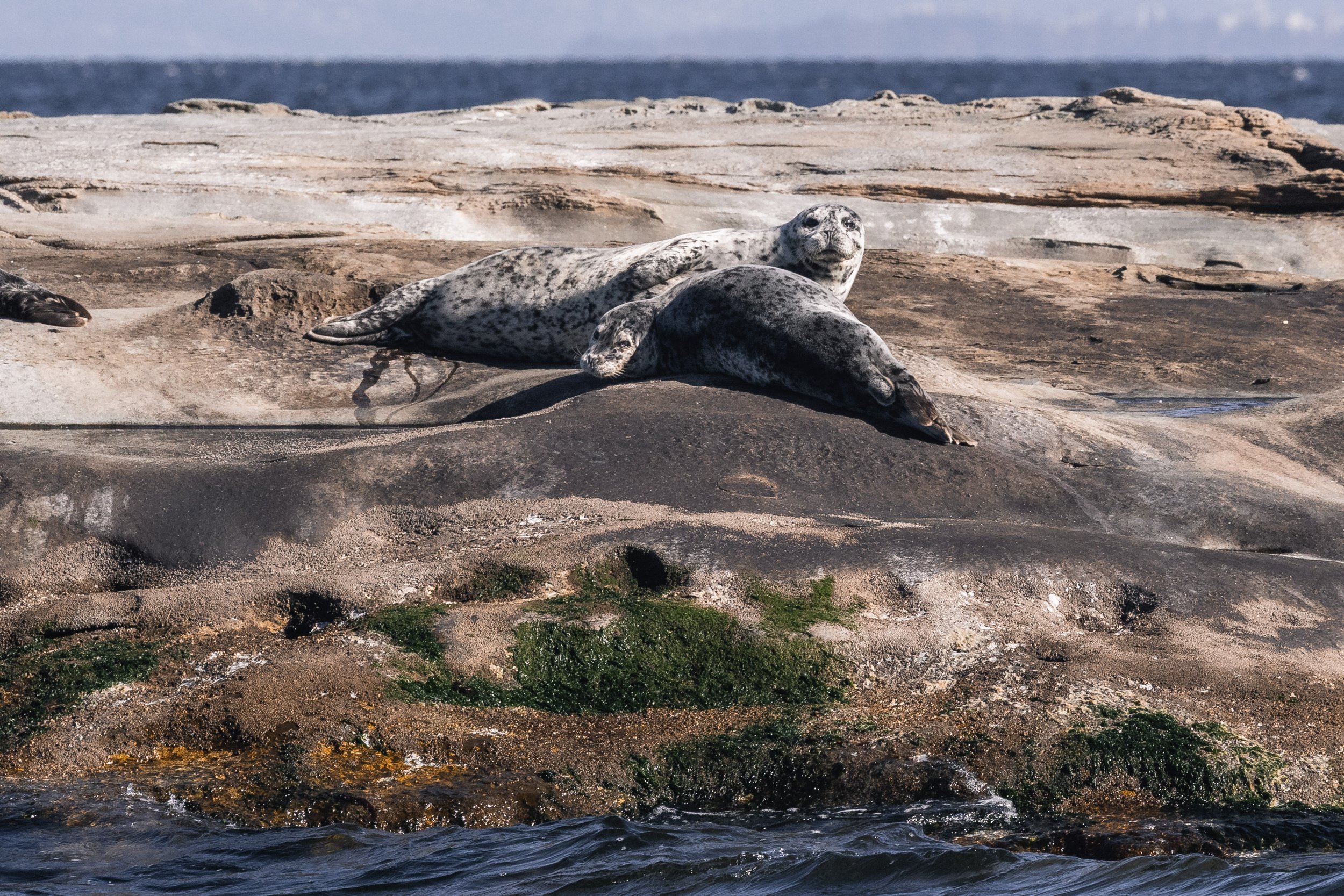
Harbour Seals checking us out. Photo by Jordan Robinson.
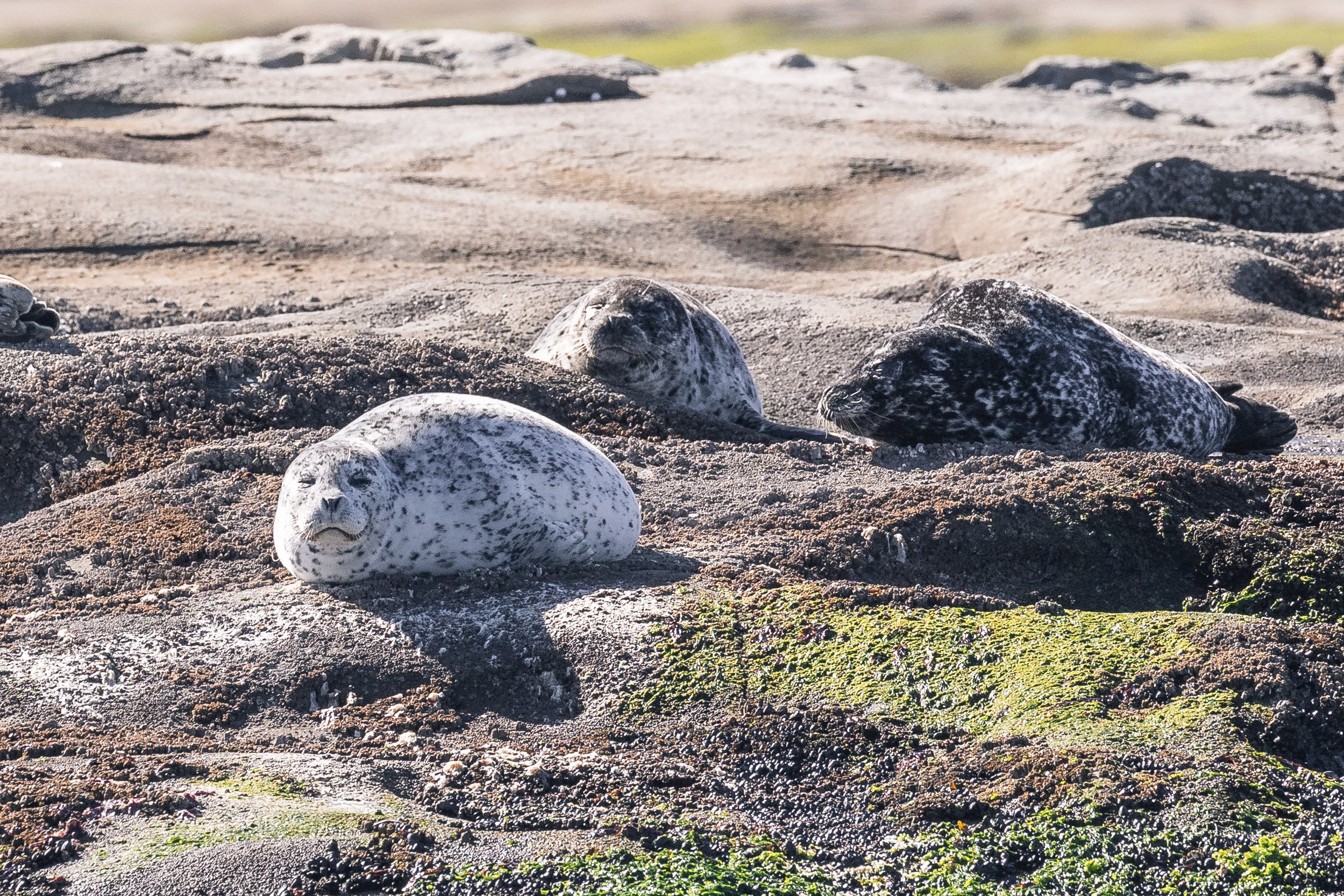
Such cute little faces. Photo by Jordan Robinson.
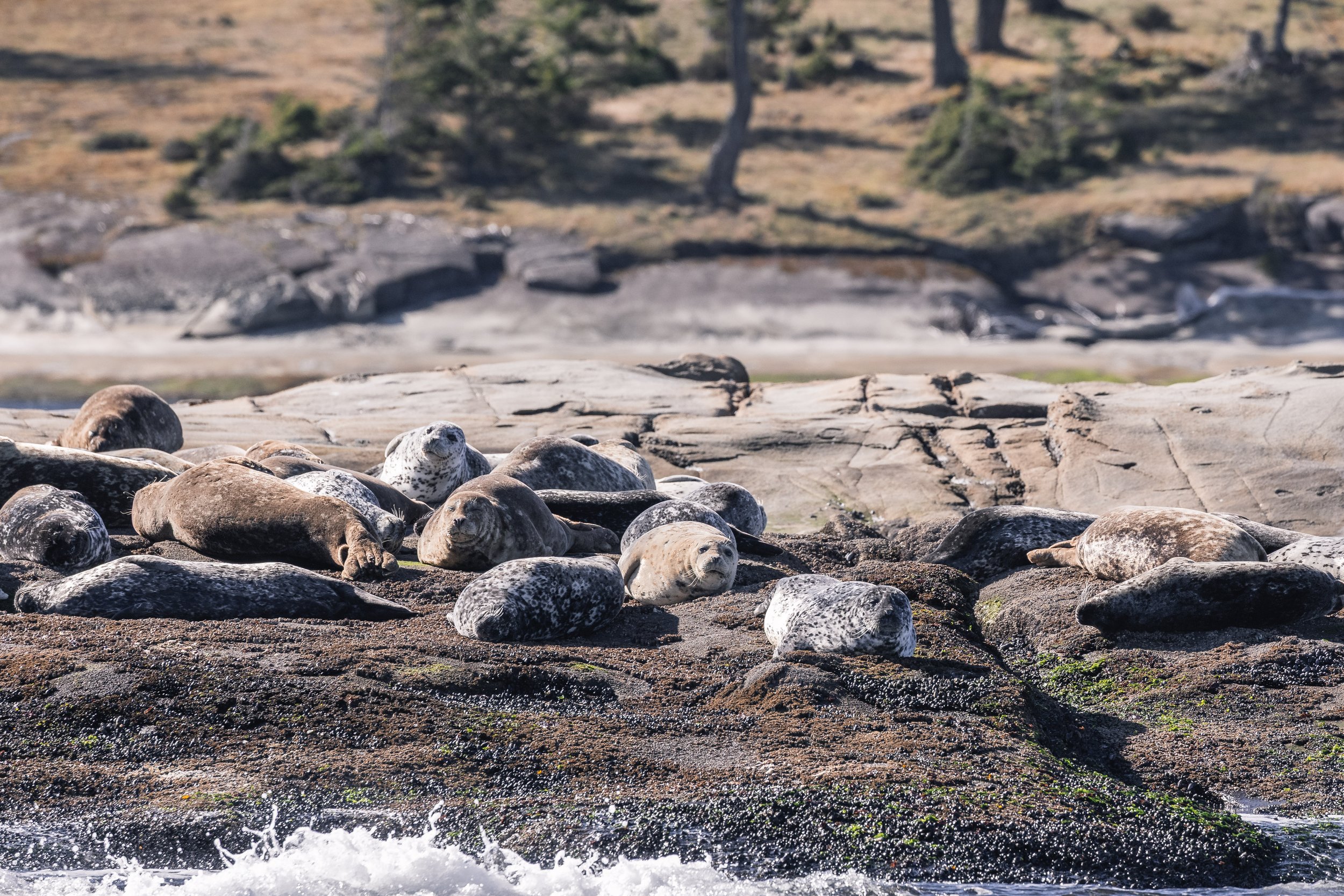
How many seals do you see? Photo by Jordan Robinson.