
October 15, 2026 - Enjoying all sorts of whales in Howe Sound
The 15th began with two of our vessels leaving Nanaimo and heading into the Strait of Georgia in search of whales. Conditions were nearly flat calm, although a layer of fog lingered over the water. We hoped to leave it behind as we passed Gabriola Island, but the wildlife had other plans for us.
Before we could escape the mist, our open boat spotted a pair of humpbacks surfacing in the fog and alerted the other vessel so both crews could share the encounter. Marine Naturalists quickly began photographing the whales, identifying them as Sherwina (BCY0961) and her calf (BCY0961calf2026), travelling alongside an unidentified companion.
Despite the limited visibility, the calf immediately caught our attention. It was rolling playfully at the surface when we first arrived, continuing its energetic displays as the fog began to close in around us. Unfortunately, the thickening mist meant we couldn’t stay for long. After a brief encounter, both vessels moved on, leaving Sherwina and her young calf to disappear back into the haze.
With visibility becoming a challenge, we headed east where the fog cleared and toward Howe Sound, where another report had come in. A Vancouver-based whale-watching vessel had already located a pod of Bigg’s killer whales, allowing us to join the encounter with the T037Bs:
T037B Harald ♀ (1998)
T037B1 Lance ♂ (2012)
T037B3 Slice ♀ (2022)
The three whales were moving quickly through the sound, their tall dorsal fins cutting through the otherwise glassy water as they travelled farther into Howe Sound. Although we observed them travelling rather than hunting, their movements offered a reminder that these whales may be searching for their next meal. Bigg’s killer whales specialize in hunting marine mammals, including seals and sea lions, many of which inhabit the sheltered waters and rocky shorelines of Howe Sound.
The area itself has an important story to tell. During the height of industrial activity, mining, logging and other industries contributed to significant pollution throughout Howe Sound, placing considerable pressure on its marine ecosystems. Decades of restoration, conservation work and changing environmental practices have helped the region recover, with efforts involving local communities, Indigenous groups, industry and conservation organizations. Today, Howe Sound supports a wide variety of marine life, from schooling fish and seabirds to harbour seals, sea lions, humpback whales and the occasional passing pod of Bigg’s killer whales.
The T037Bs were just one part of the picture. As we continued through the sound, we encountered several more humpback whales, with four different pairs spread throughout the area. These included Graze (BCY0523) and Eeyore (BCY1221), Grizzly (BCY1330) and Kappachino (BCX2492), Trooper (BCX1854) and Slice (BCX2487), and Dalmatian (BCY0994) travelling with an unidentified companion.
Each pair appeared to be making use of the productive waters in much the same way. The whales would surface to breathe several times before arching their backs and lifting their flukes as they began a deeper dive. Although we couldn’t see what was happening beneath the surface, these repeated dives may have been part of their search for food.
Unlike Bigg’s killer whales, which pursue individual marine mammal prey, humpbacks are filter feeders. They target small schooling fish and krill, taking in large mouthfuls of prey-filled water before filtering it through the hundreds of baleen plates hanging from their upper jaws. These plates act like a sieve, allowing water to escape while trapping food inside the mouth.
Humpbacks can forage at considerable depths, with dives often taking them well below the surface and sometimes to depths of 100 to 200 metres, depending on where their prey is concentrated. During periods of active feeding, an adult humpback may consume around 3,000 pounds of food in a day, with requirements varying according to its size, condition and reproductive stage. For a mother supporting a growing calf, finding enough food is particularly important. The energy gained during the feeding season helps sustain these whales through migration and other periods when food may be less readily available.
Seeing so many humpbacks using Howe Sound was a wonderful reminder of the life these waters can support. Each whale was moving through the same general area, yet every encounter offered a slightly different glimpse into how these animals navigate their environment and make use of the available food resources.
Eventually, it was time to begin the journey back across the Strait of Georgia towards Nanaimo. Even with the day drawing to a close, the wildlife encounters weren't quite finished. Just south of Thrasher Rock, we came across another productive stretch of water where several more humpbacks were spending time near the surface.
Among them were Ghost (BCX1333), her calf Lil’ Boo (BCX1333calf2026), along with Stitch (BCX0519), Dandelion (BCY1107), and Nova (BCY1178). With the tour already running late in the day, we couldn't spend as much time with this group as we would have liked, but it was a fantastic way to round out an already memorable day on the water.
After one final stop to watch some sea lions, both vessels turned back towards Nanaimo. From a playful humpback calf in the fog to a travelling pod of Bigg’s killer whales and a remarkable number of humpbacks feeding throughout Howe Sound, the day had offered a little bit of everything.
Marine Naturalists Hayleigh Hilbert and Evan Hessels captured some wonderful photographs throughout these encounters. Take a look through the gallery below to revisit the wildlife we encountered on the 15th!
Sherwina, her calf, and an Unknown friend
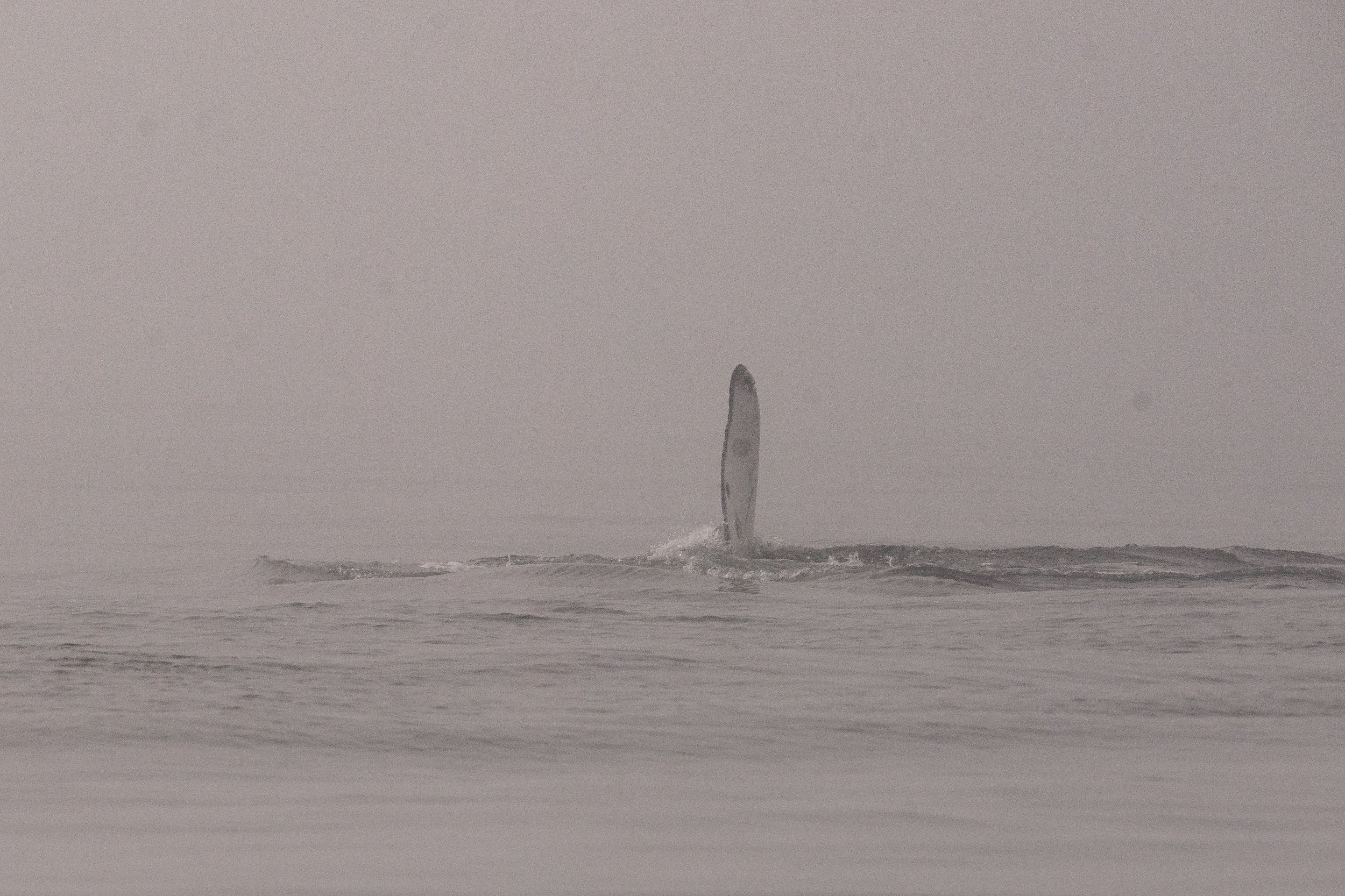
Sherwina’s calf swimming sideways with their tail out of the water. Photo by Hayleigh Hilbert.
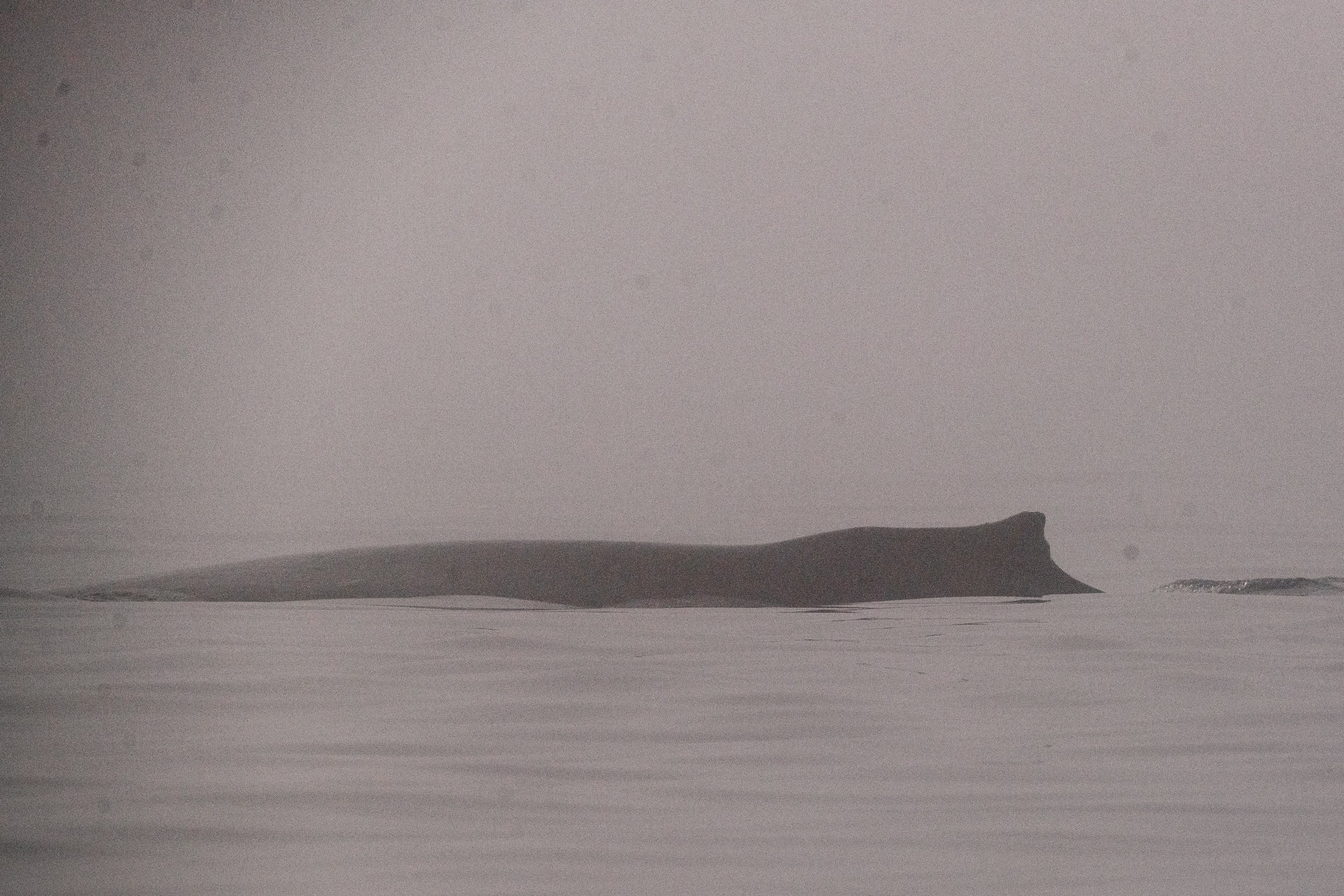
Sherwina’s very distinct dorsal fin which is how we IDed her today. Photo by Hayleigh Hilbert.
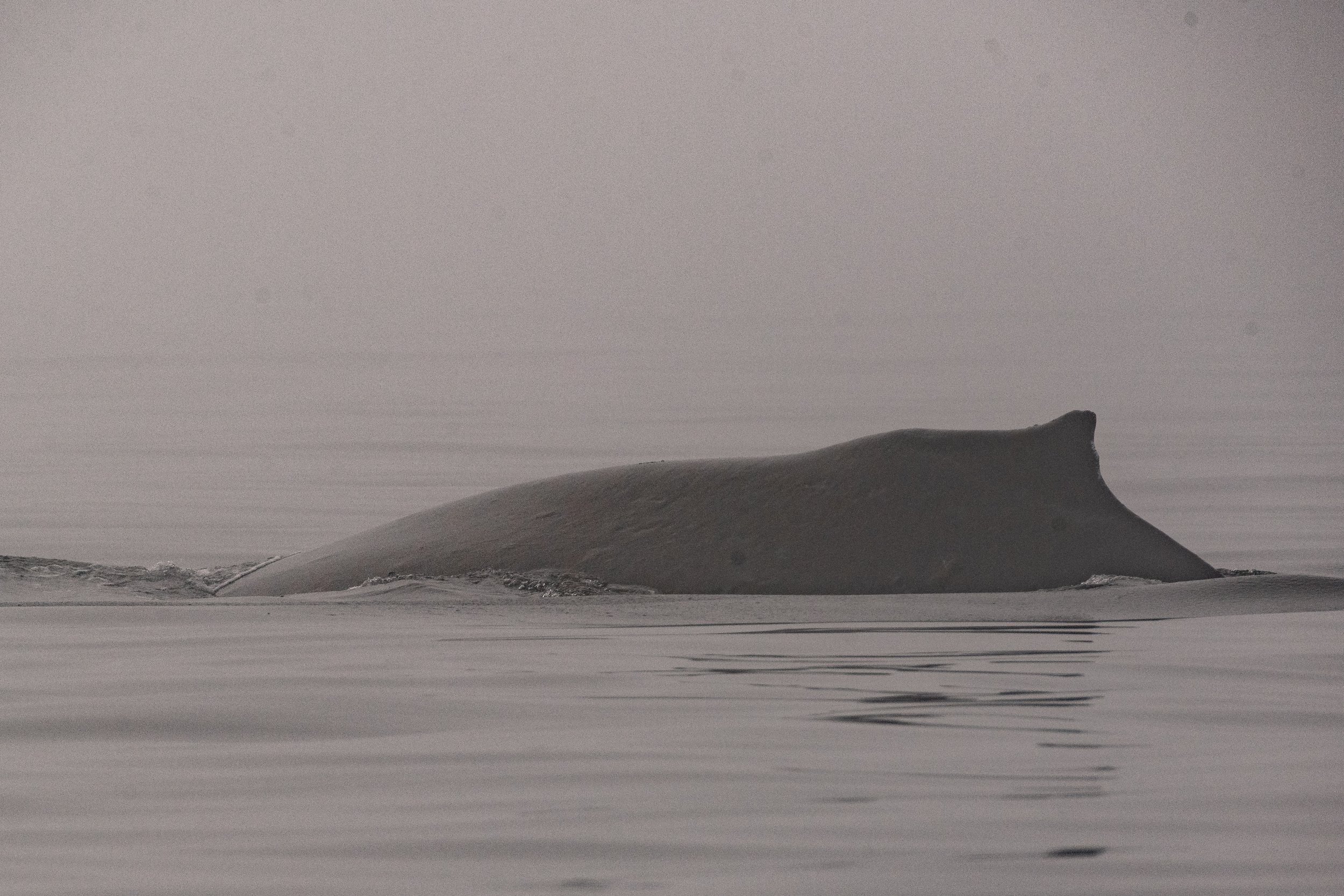
Sherwina giving a small arch as she was travelling along. Photo by Hayleigh Hilbert.
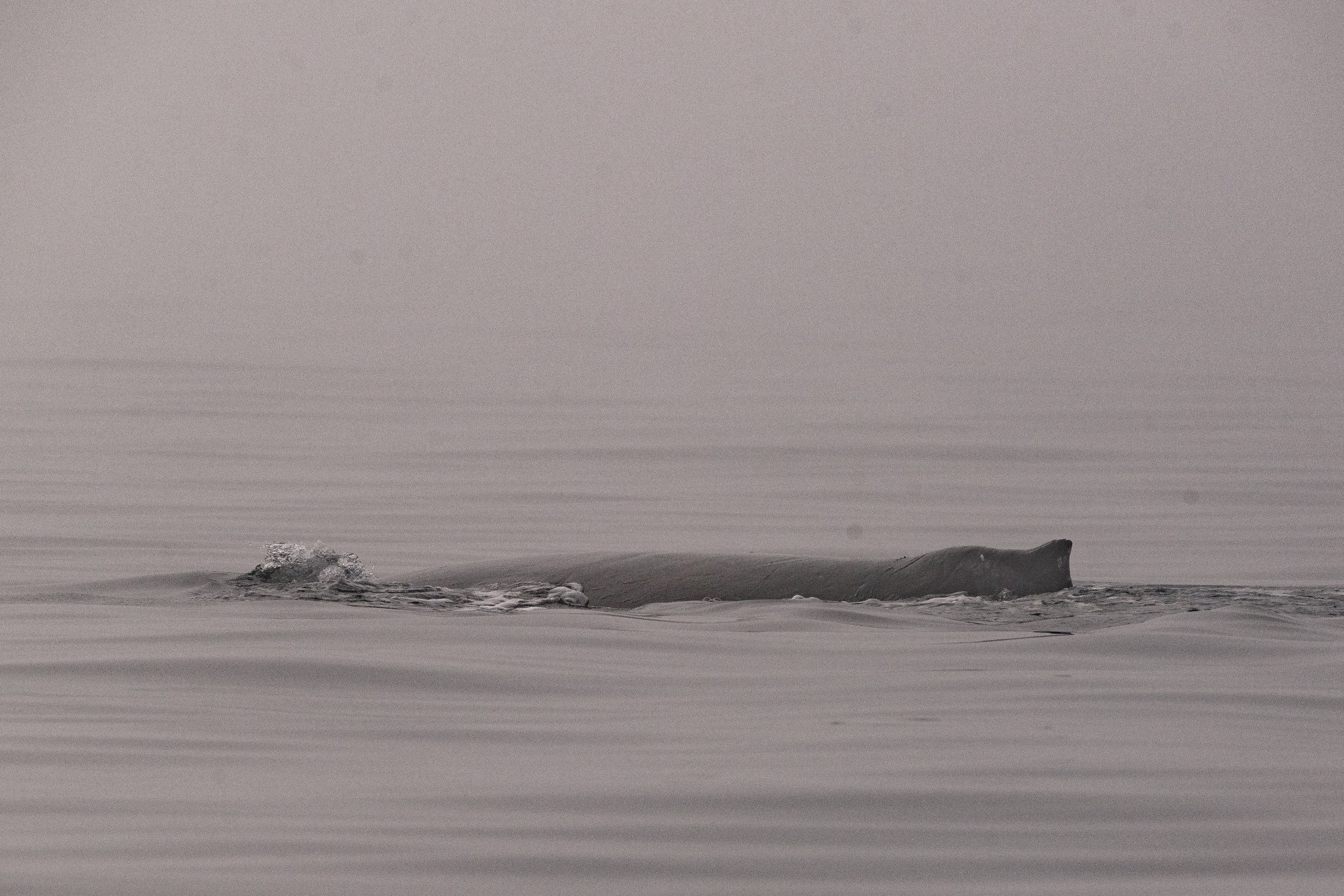
The dorsal fin of the calf. Photo by Hayleigh Hilbert.
The T037Bs
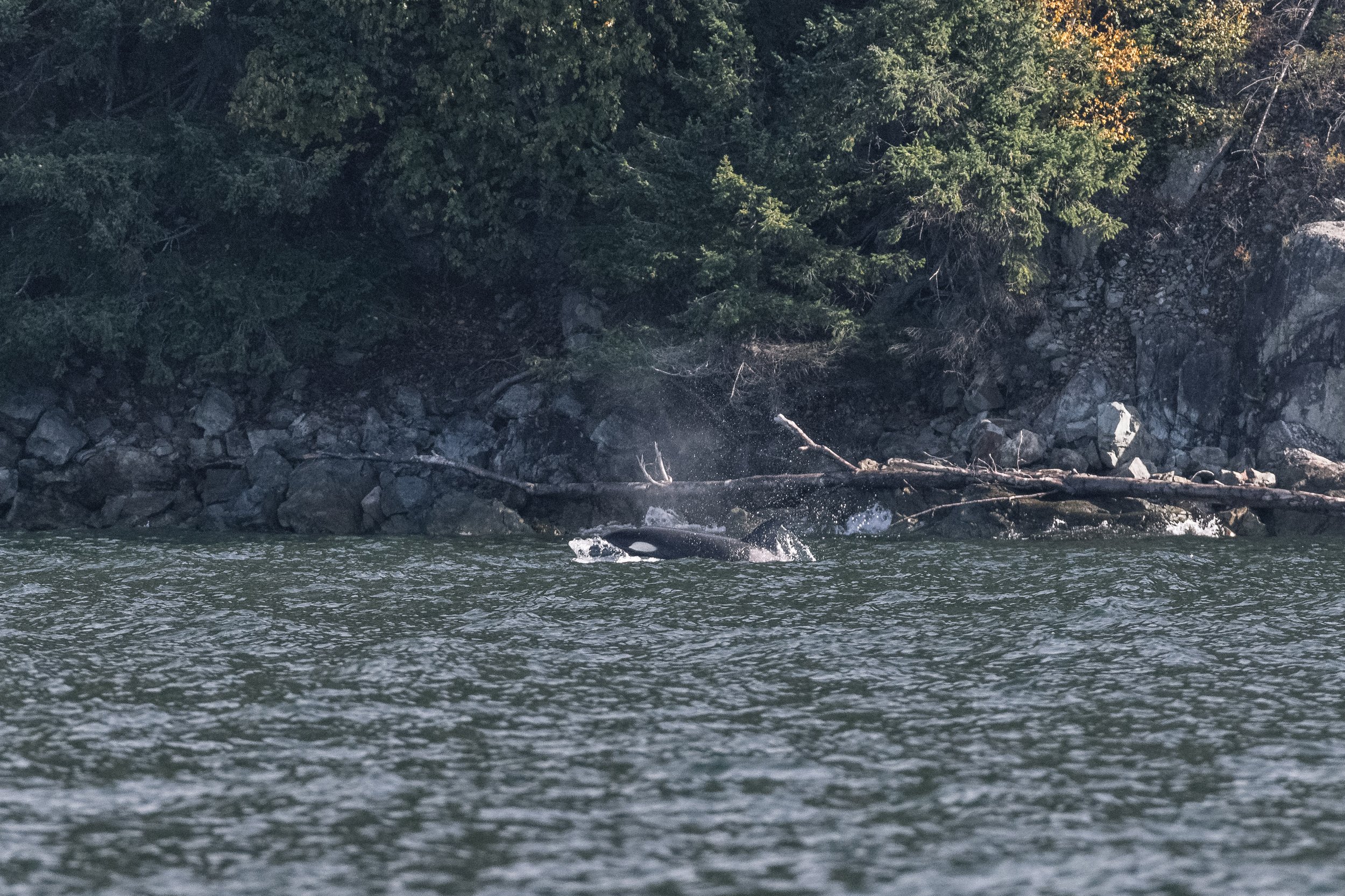
T037B3 Slice moving quickly through the water. Photo by Hayleigh Hilbert.
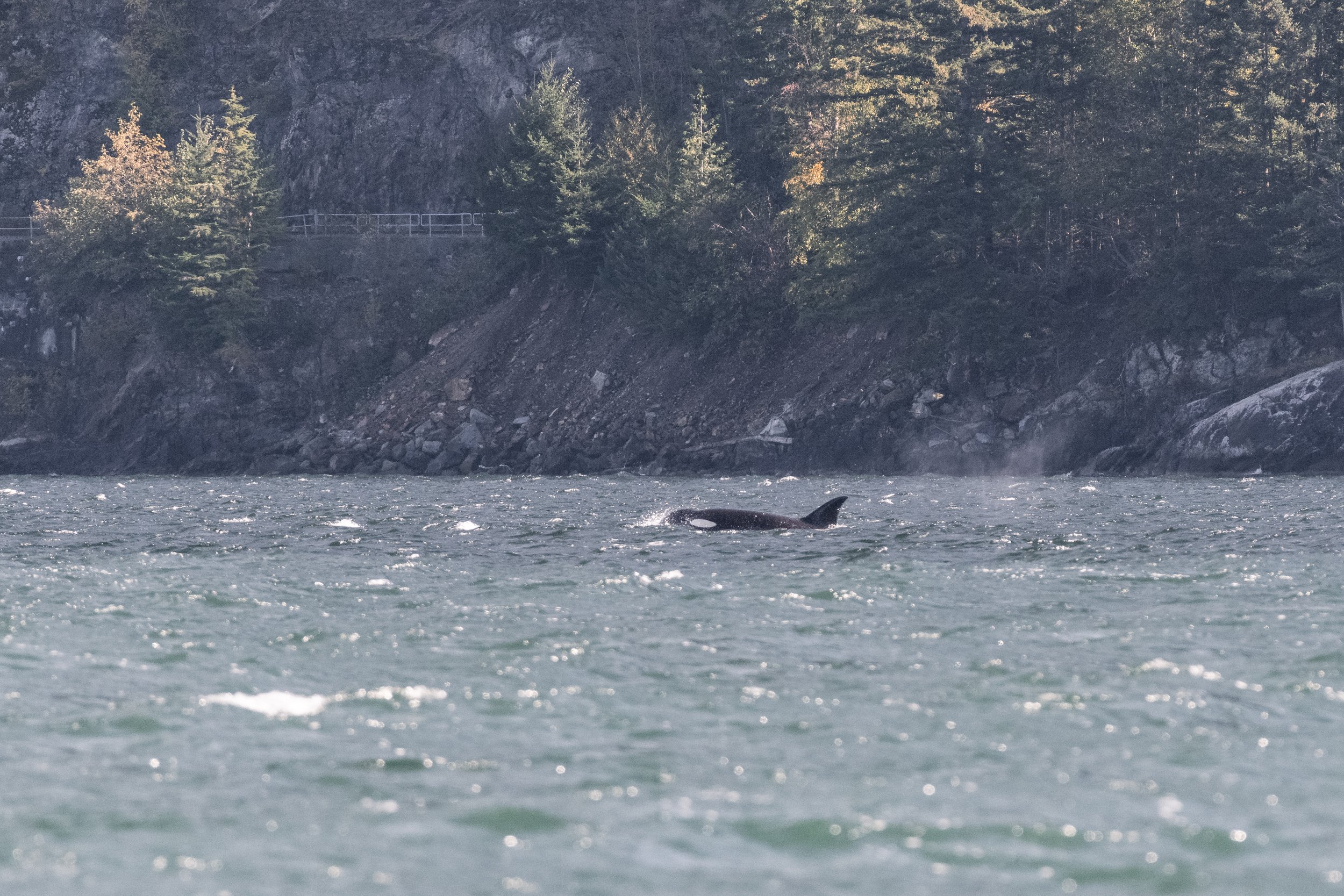
T037B Harald the Matriarch of this pod leading the way. Photo by Hayleigh Hilbert.
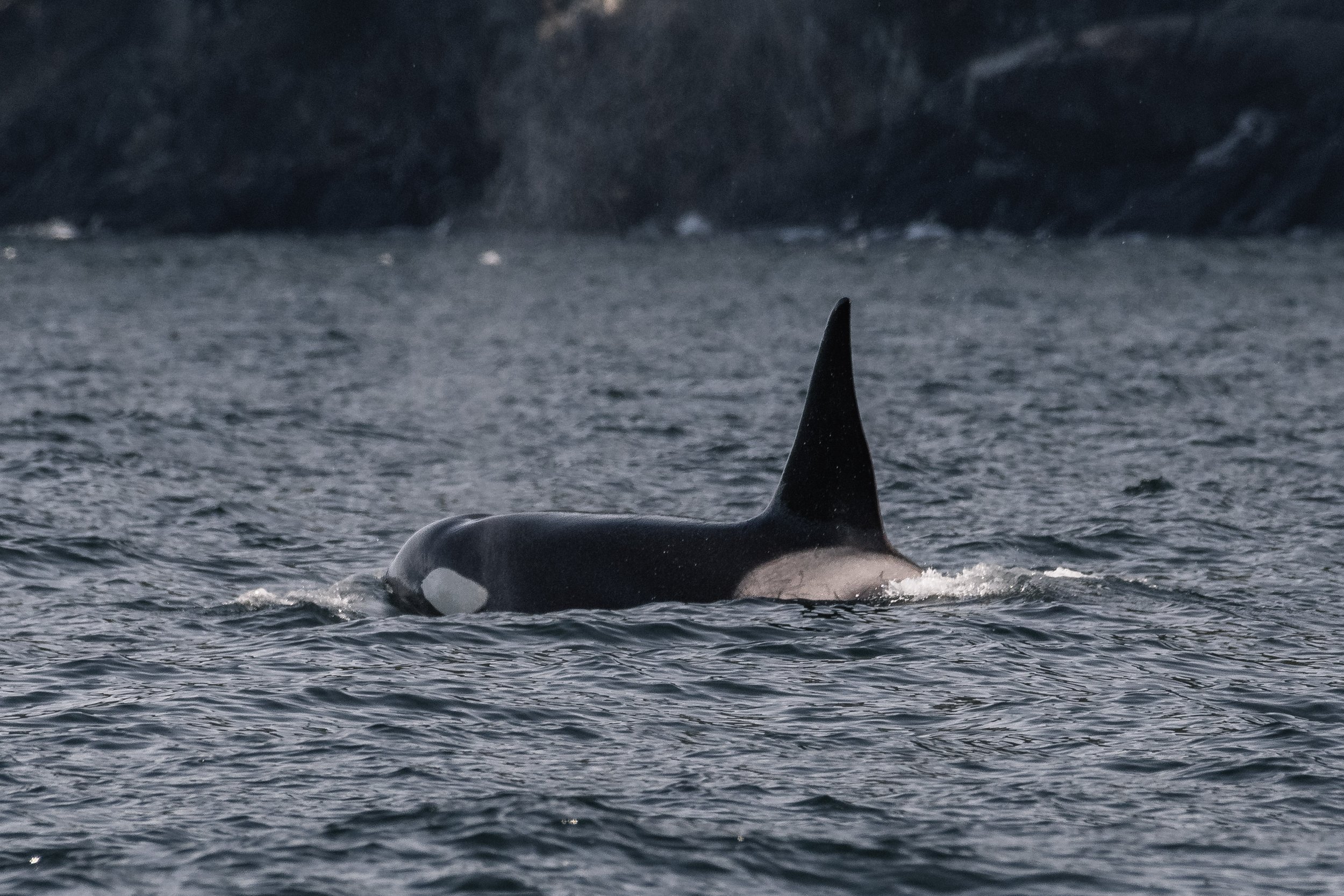
A great look at T037B1 Lance and his unique saddle patch scaring. Photo by Evan Hessels.
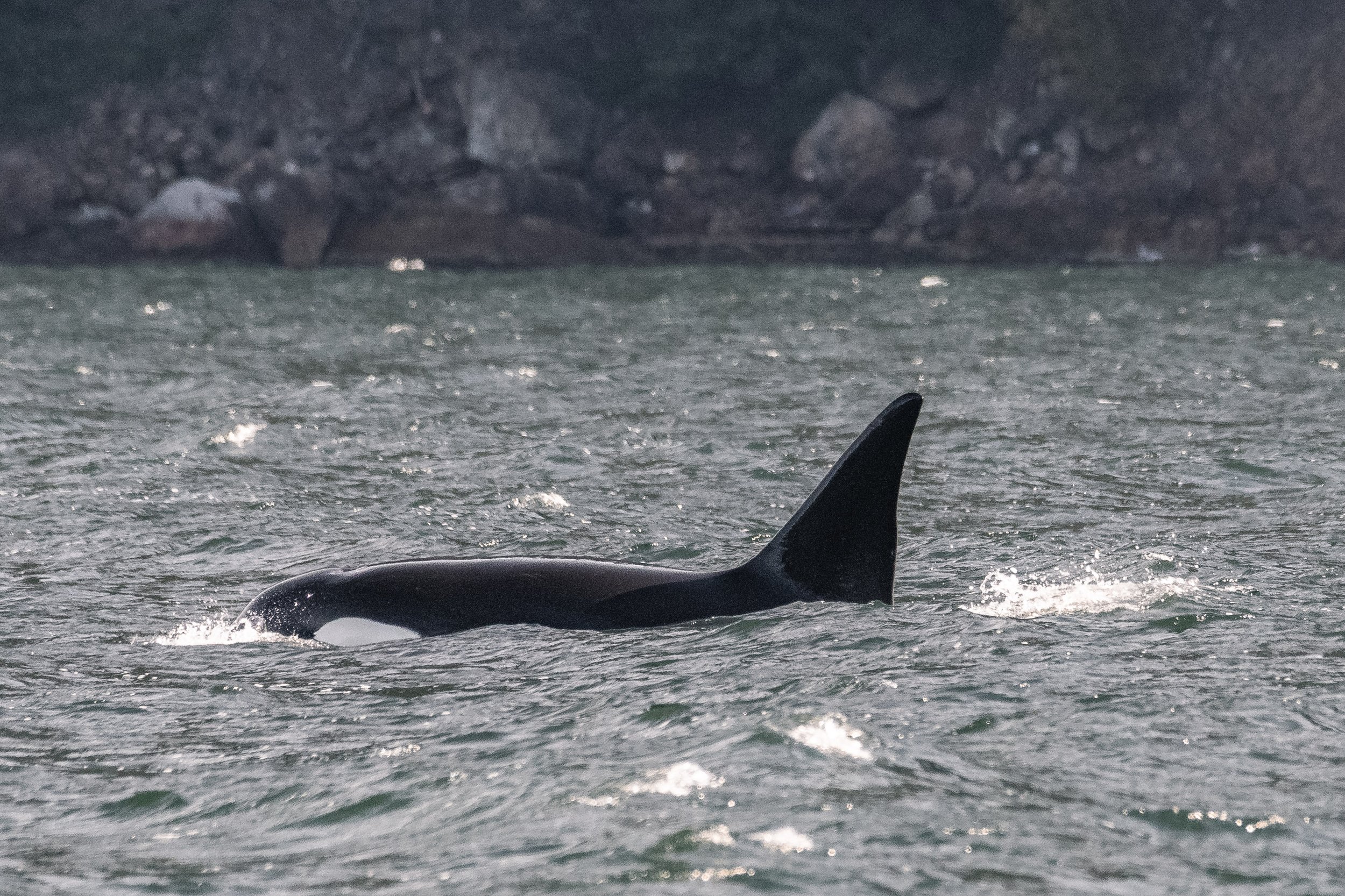
Another great look at T037B1 Lance in the waves. Photo by Evan Hessels.
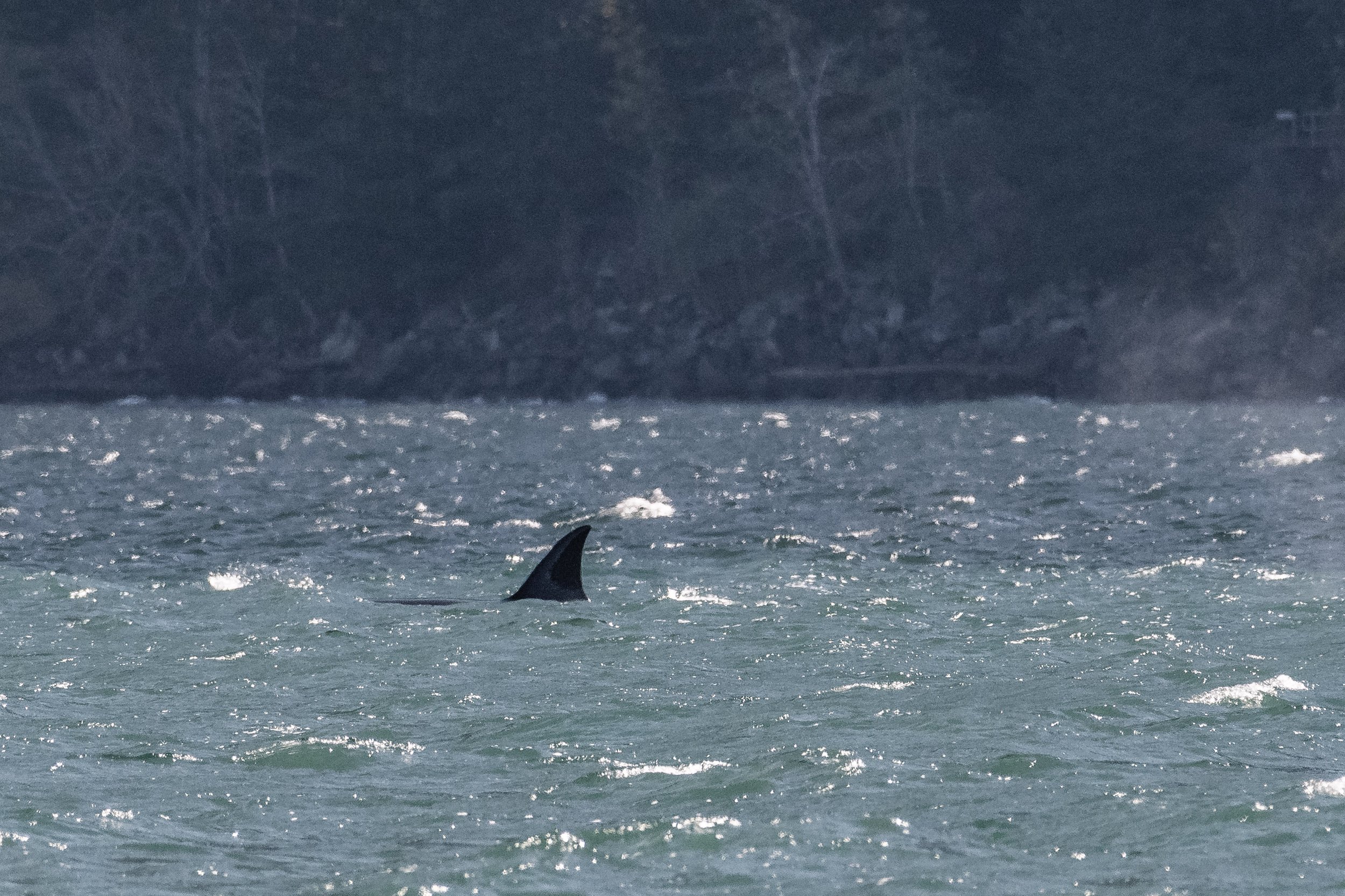
T037B Harald surfacing in the green waters of Howe Sound. Photo by Evan Hessels.
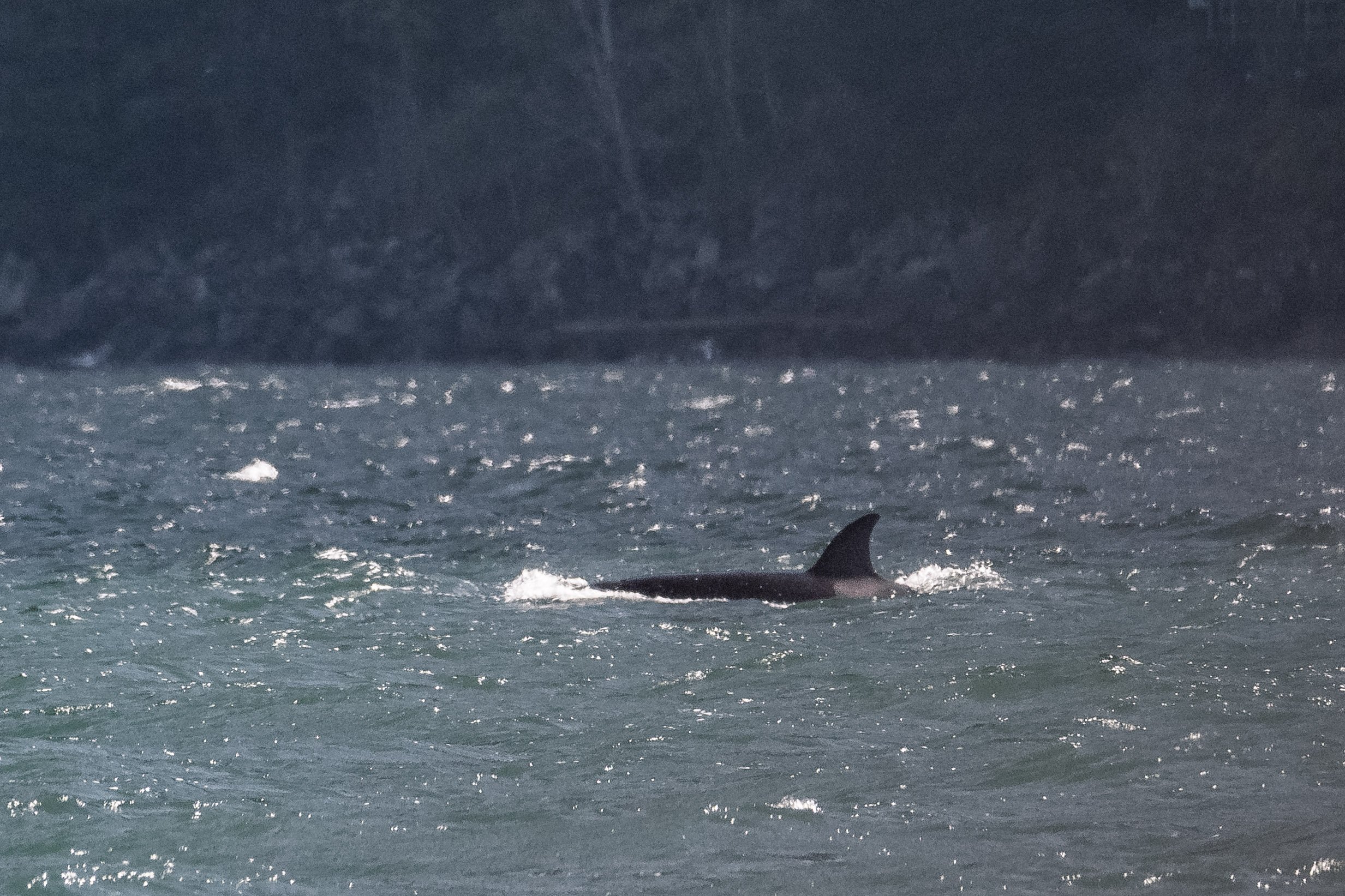
T037B3 Slice moving quickly through the water. Photo by Evan Hessels.
Graze and Eeyore
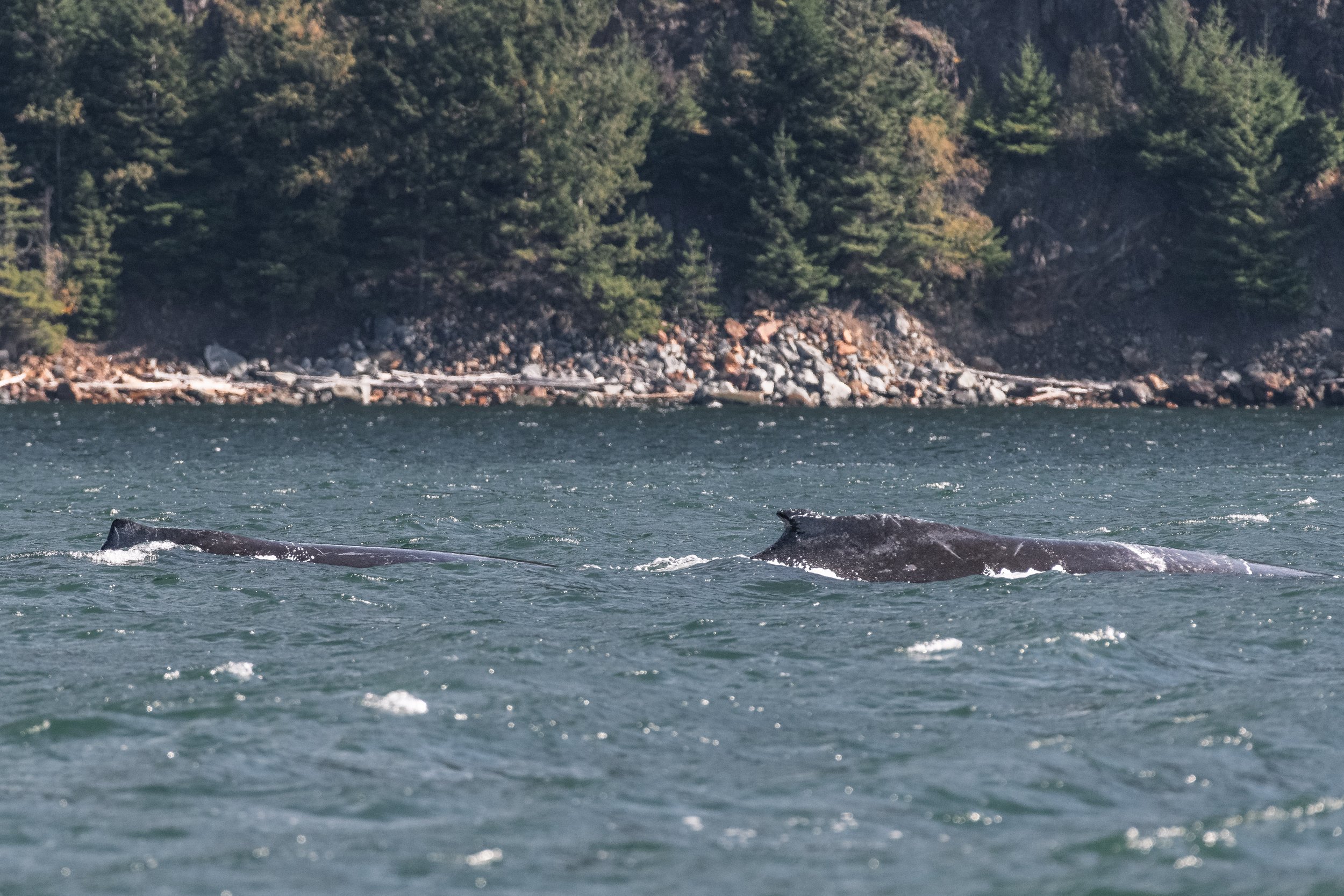
Graze (right) and Eeyore (left) surfacing together. Photo by Hayleigh Hilbert.
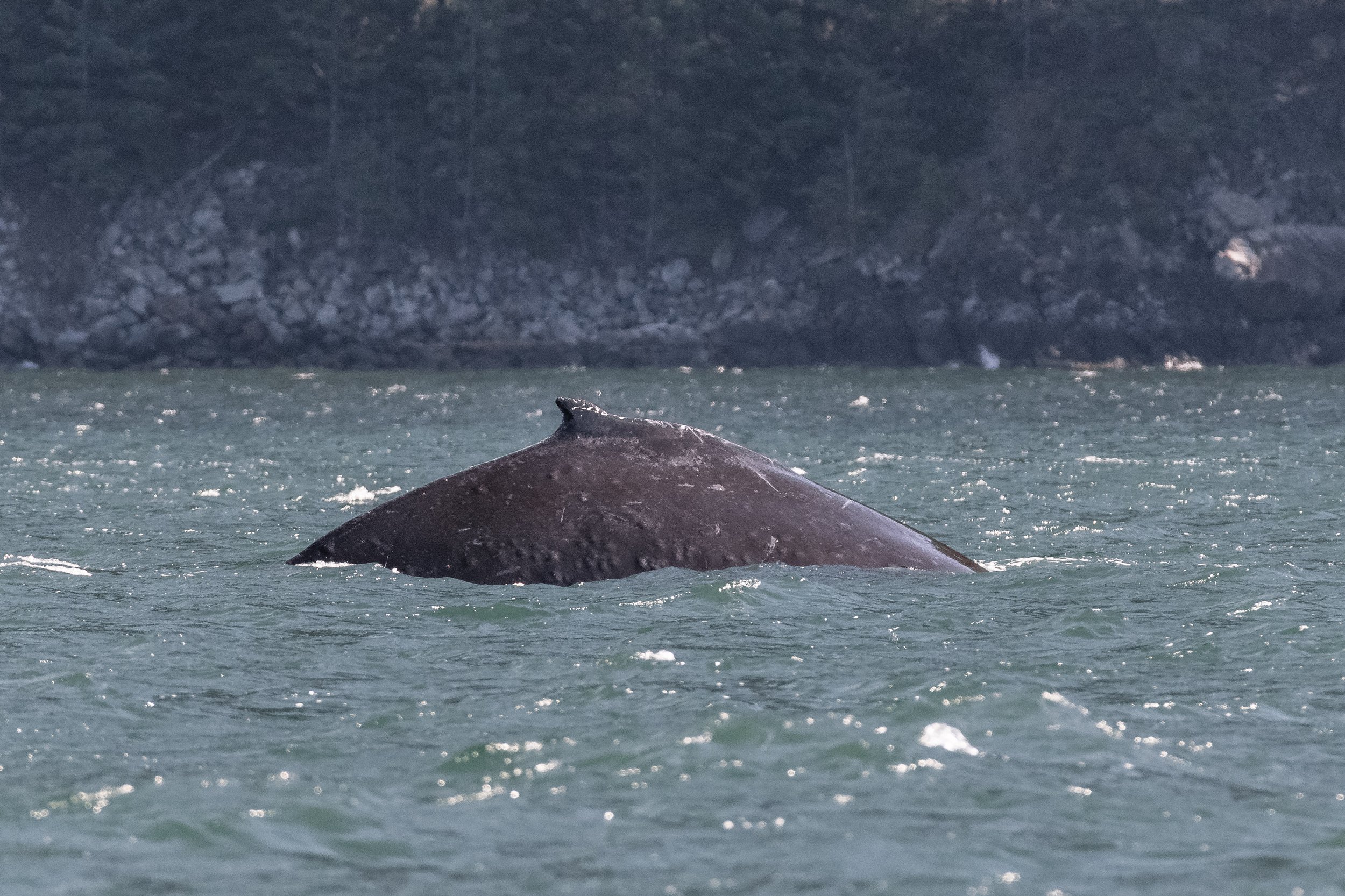
Graze has very unique scarring on her dorsal fin, shown here. Photo by Hayleigh Hilbert.
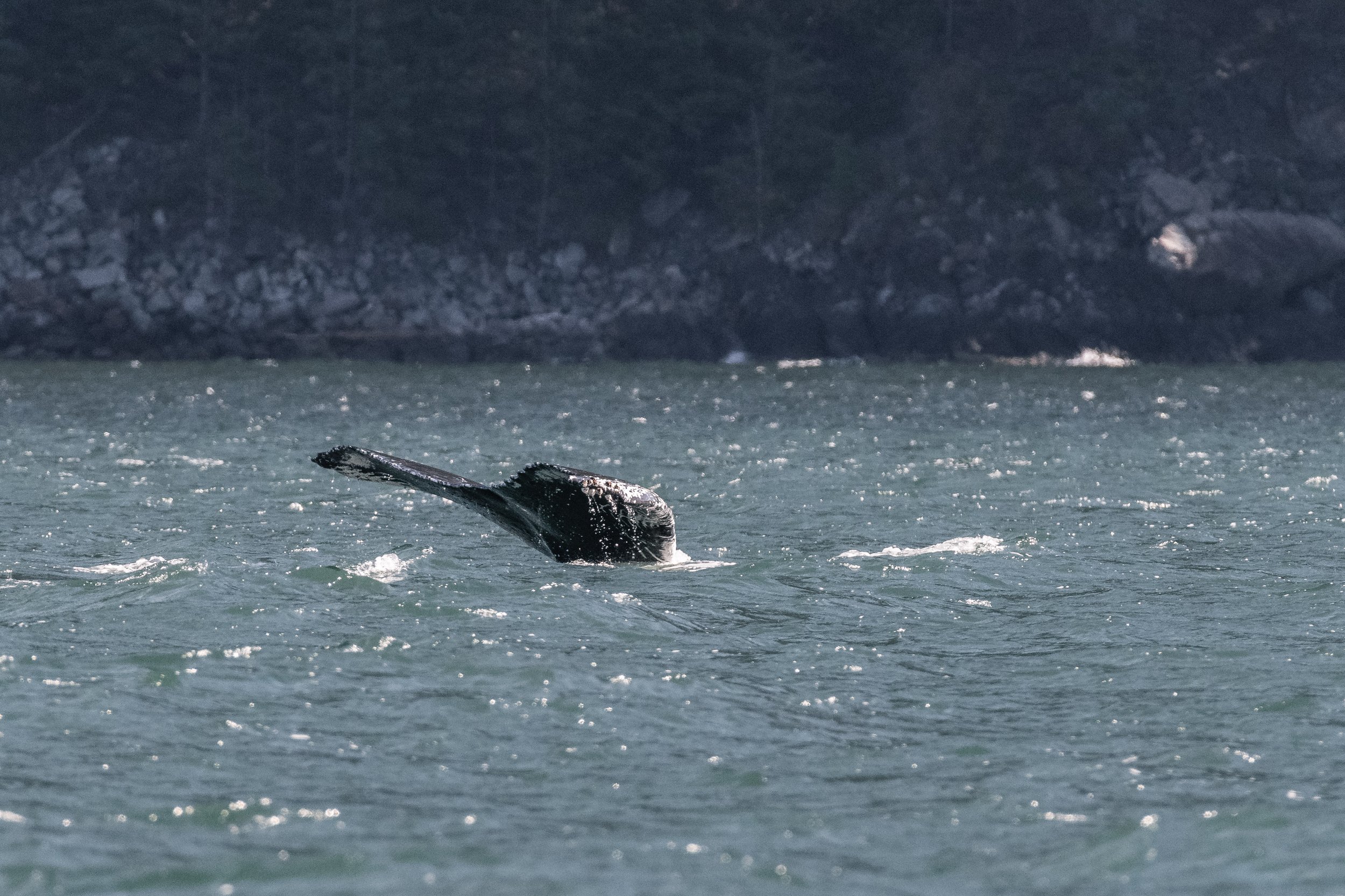
Graze lifting her scarred up tail to dive. Photo by Hayleigh Hilbert.
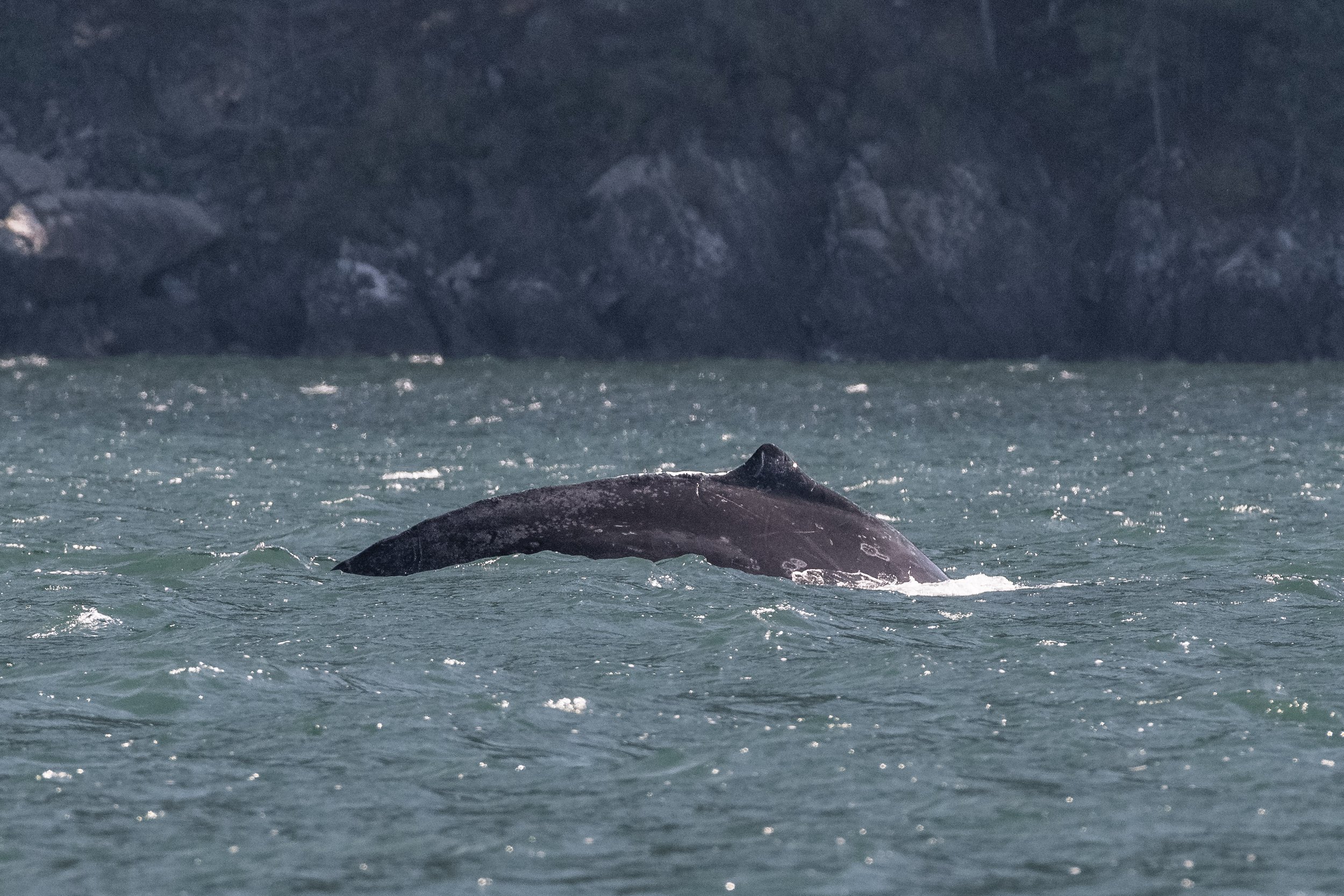
Eeyore arching to dive in the green waters of Howe Sound. Photo by Hayleigh Hilbert.
Grizzly and Kappachino
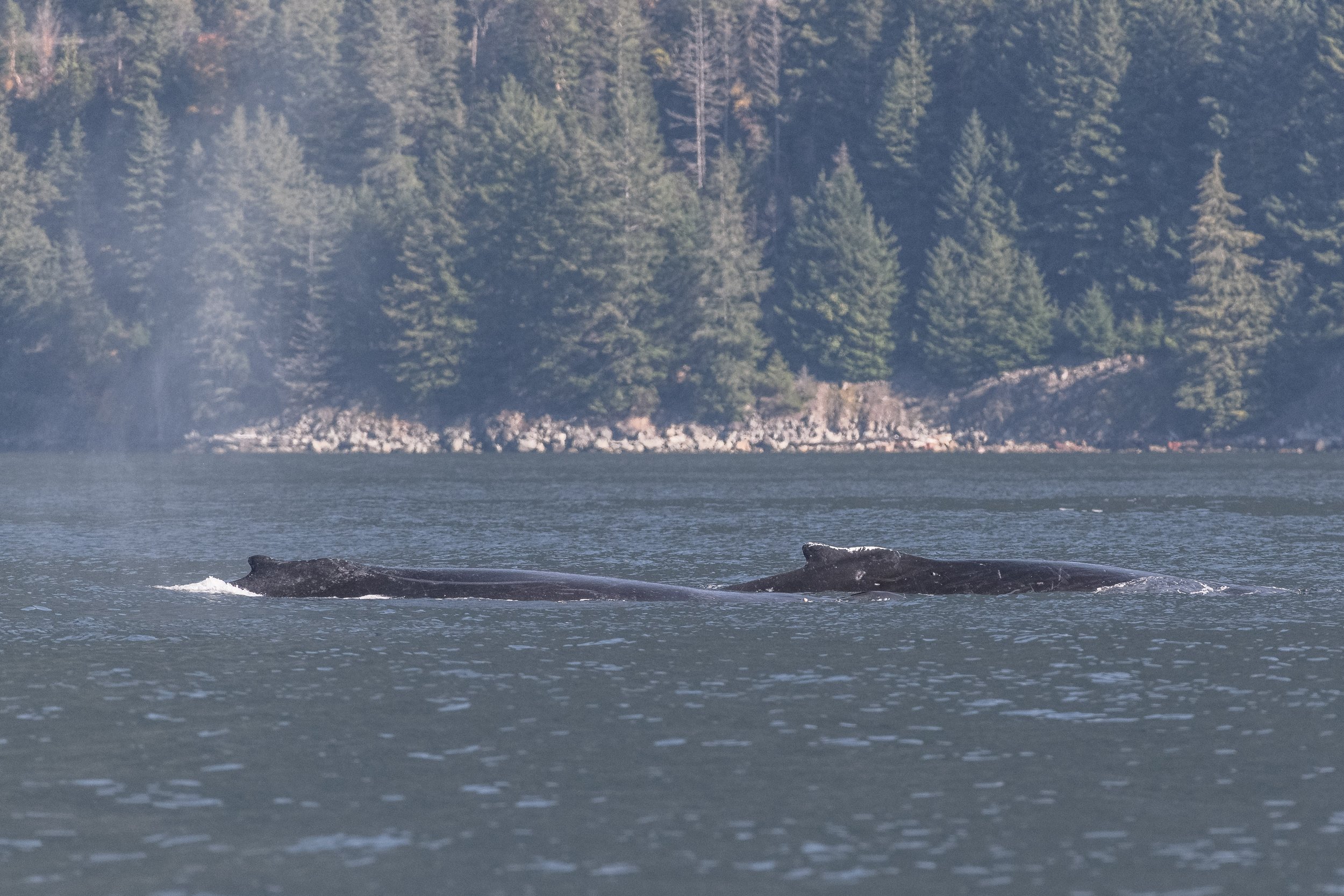
Grizzly in the lead followed by Kappachino. Photo by Hayleigh Hilbert.
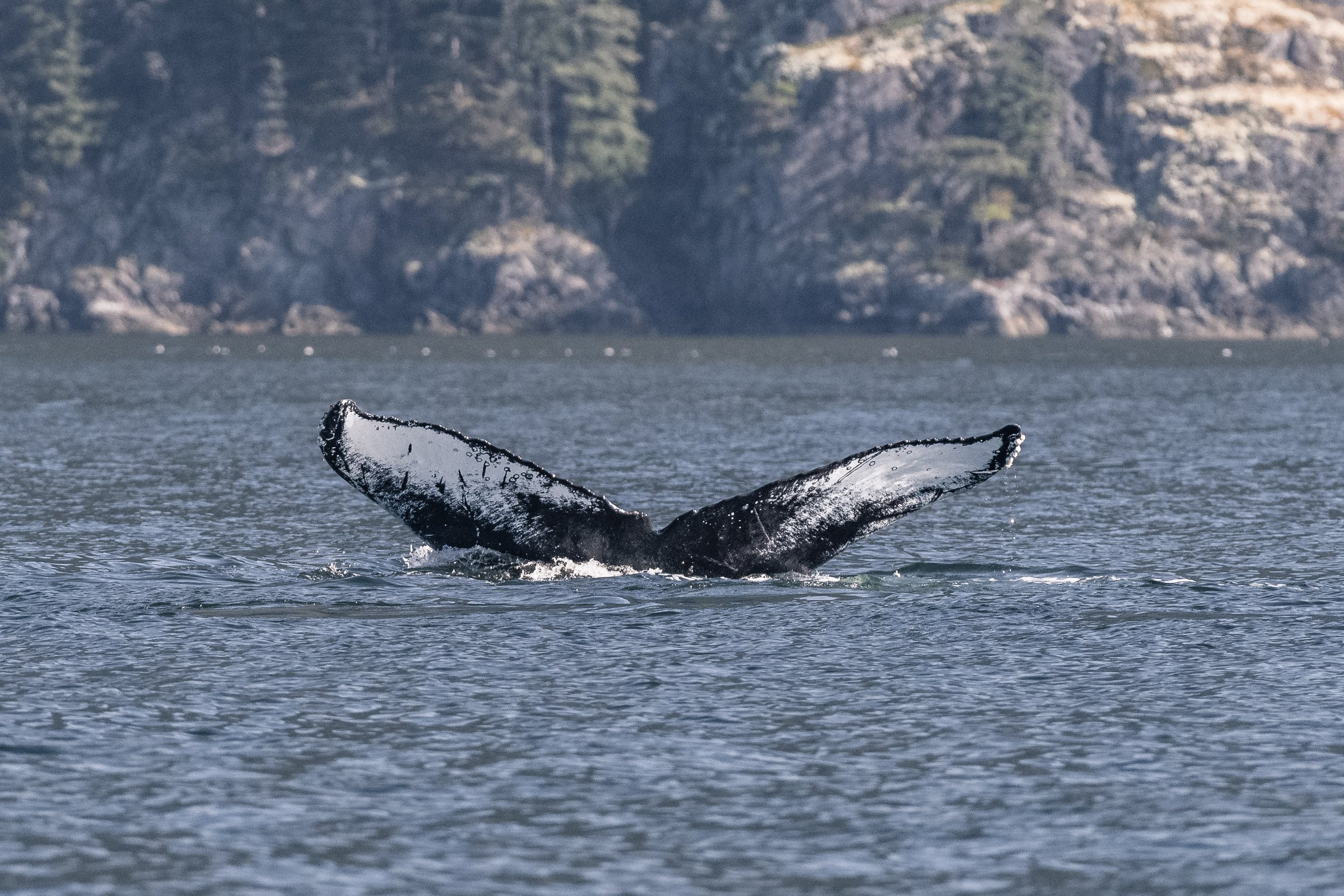
The beautiful underside of Grizzly’s tail as they dive. Photo by Hayleigh Hilbert.
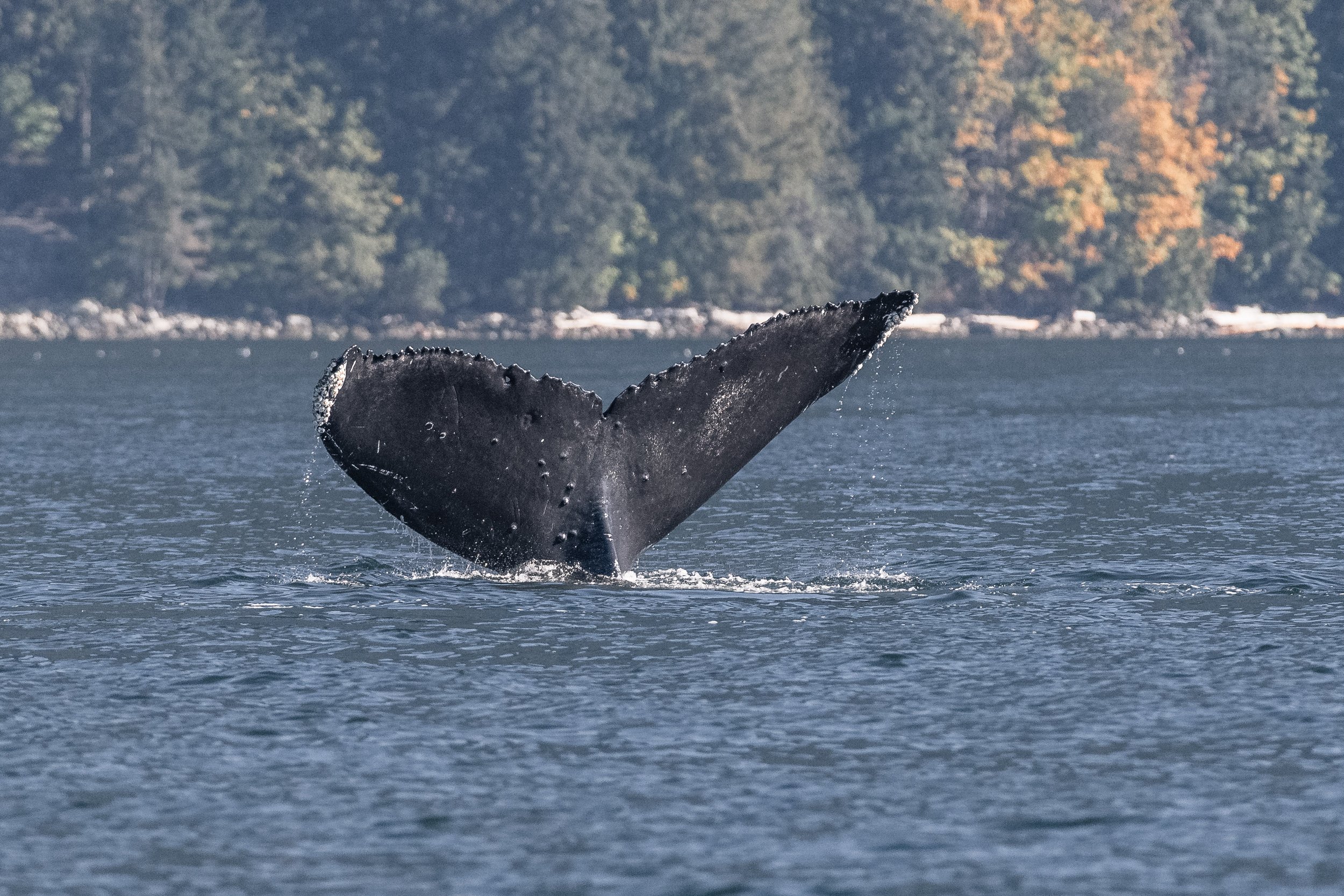
Kappachino’s tail flukes are also very interesting, just not quite as white as their travel companion. Photo by Hayleigh Hilbert.
Trooper and Slice
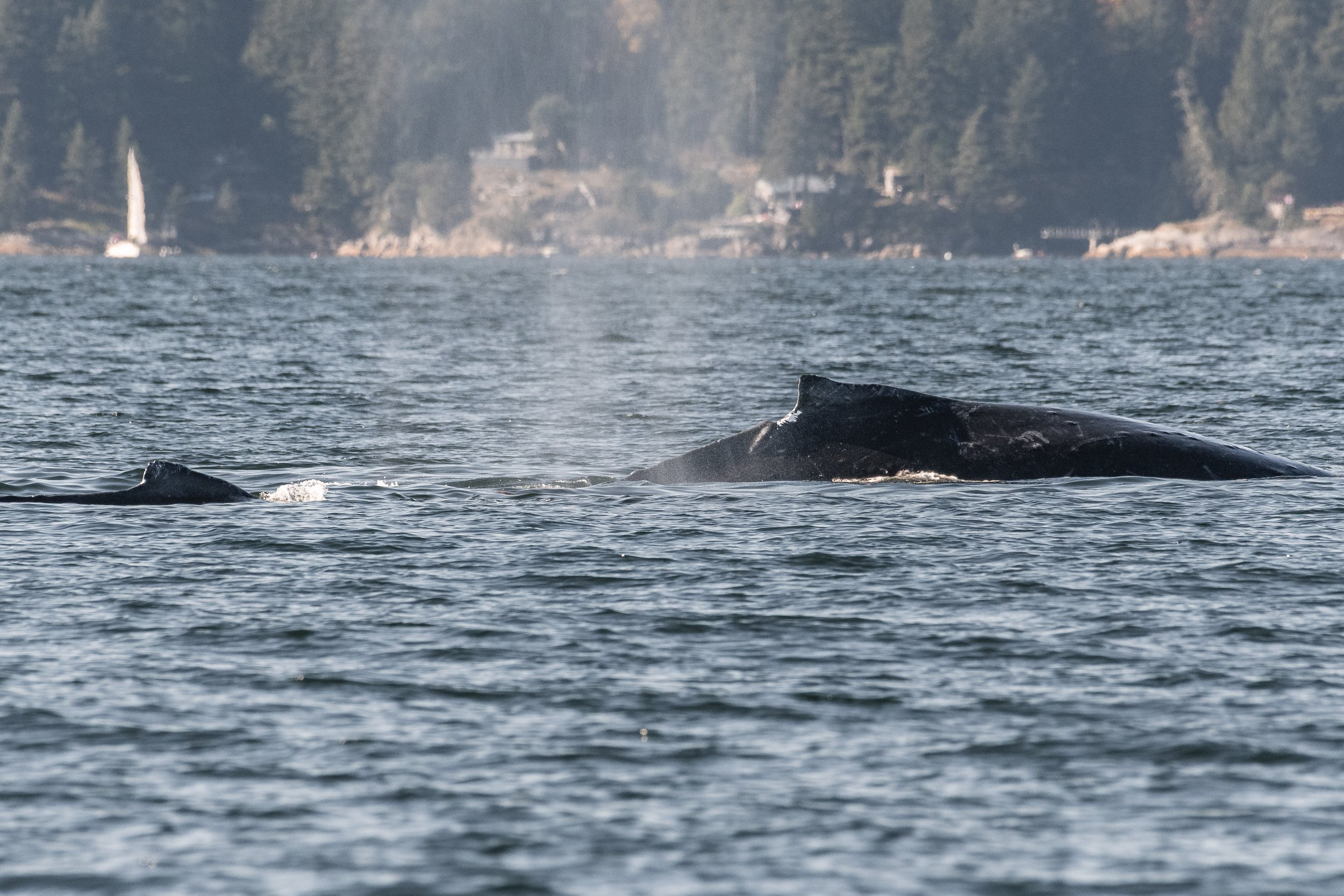
Trooper (right) and Slice (left) surfacing together. Photo by Evan Hessels.
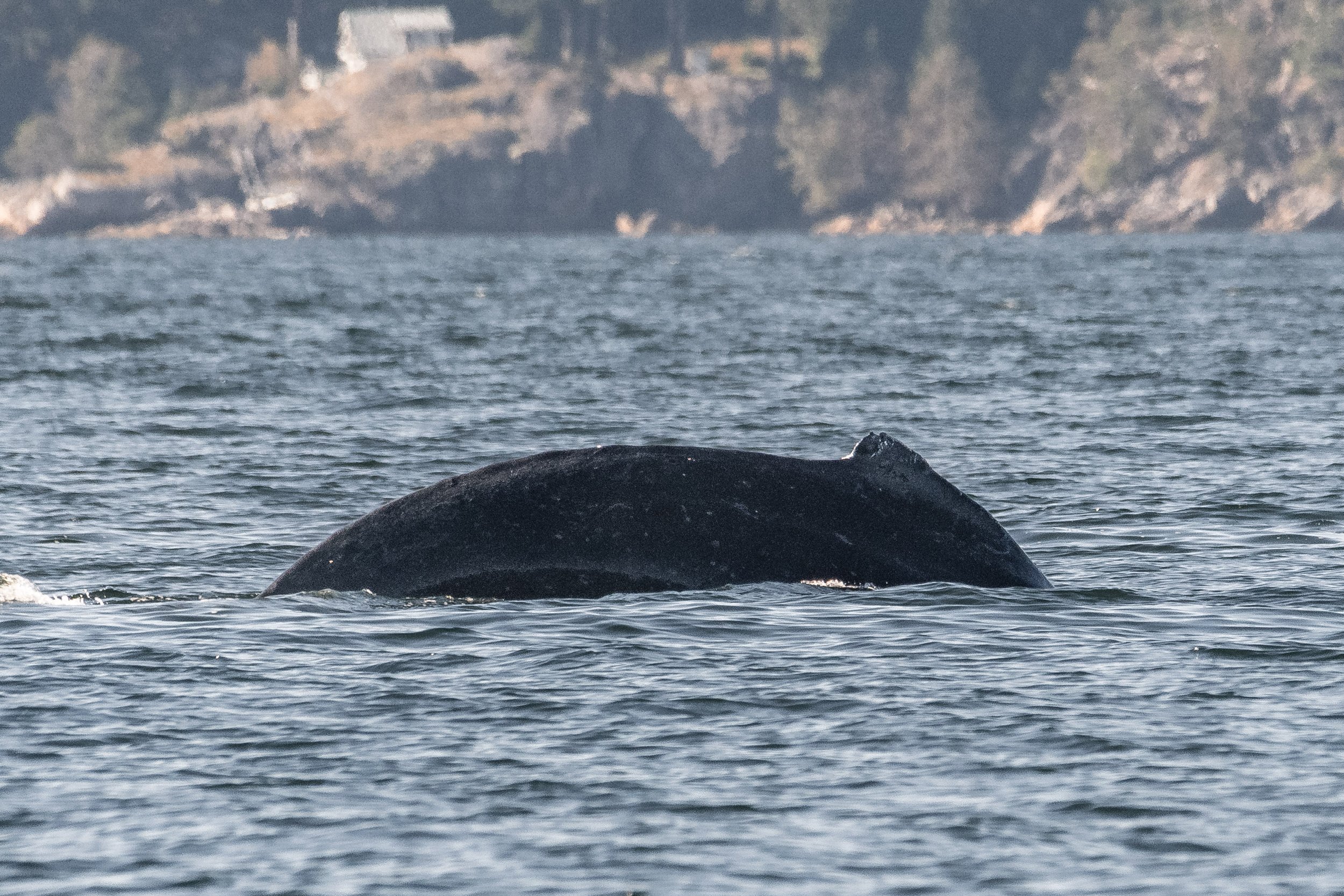
A big arch from Slice as they prepare to dive. Photo by Evan Hessels.
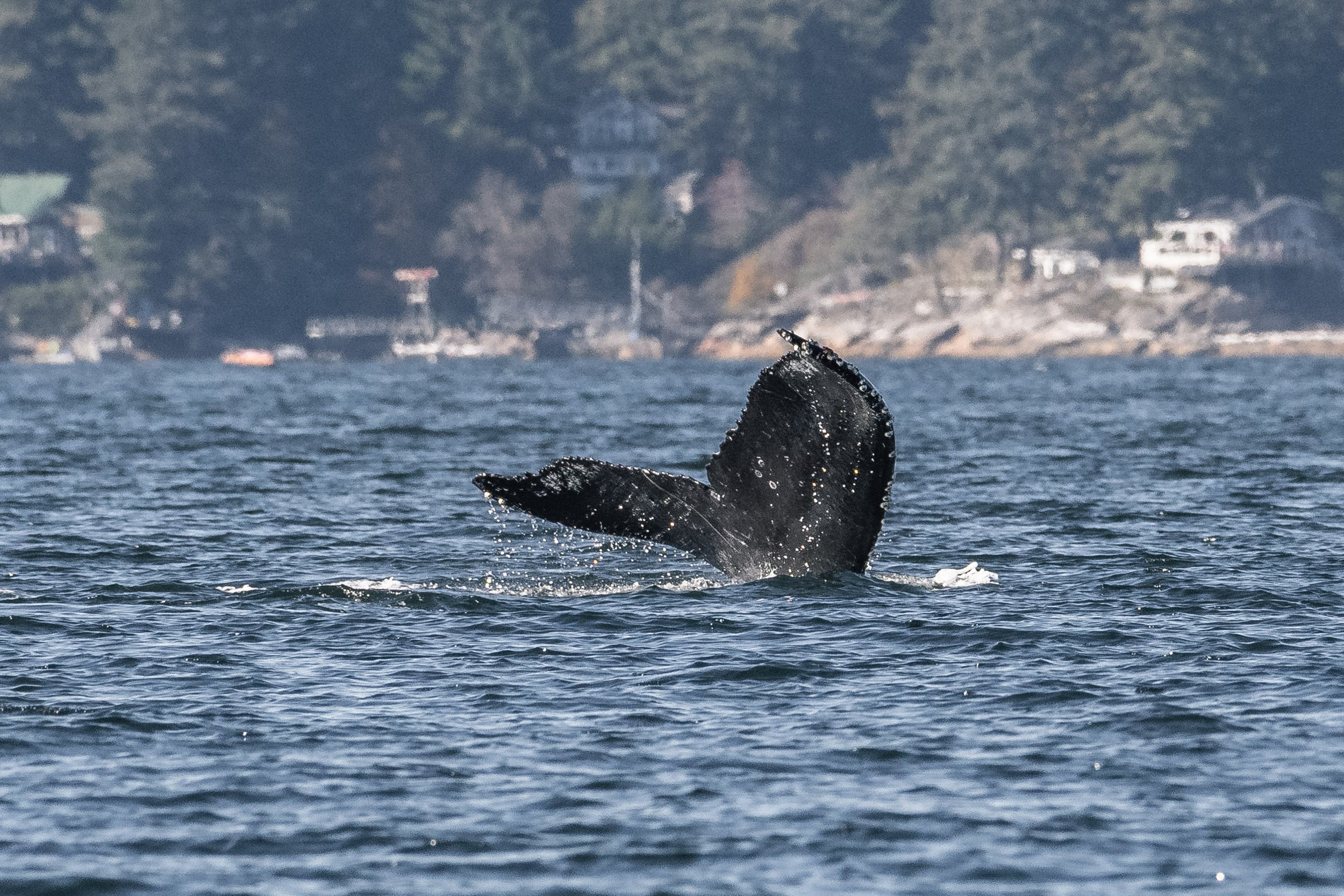
The underside of Trooper’s tail flukes as he dives. We don’t often use his tail to ID him since his dorsal is so unique! Photo by Evan Hessels.
Dalmatian and an Unknown friend
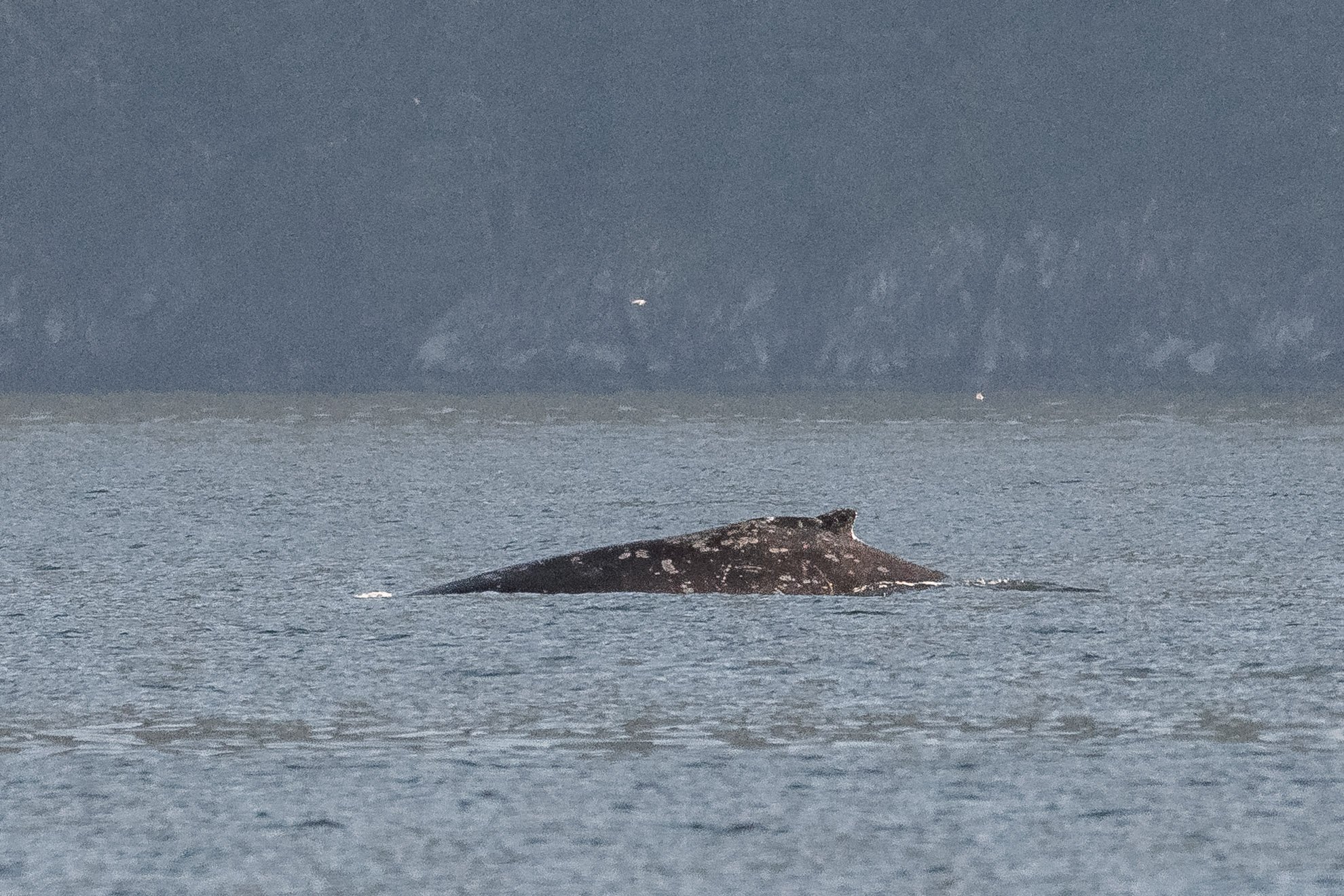
Dalmatian’s friend. Photo by Evan Hessels.
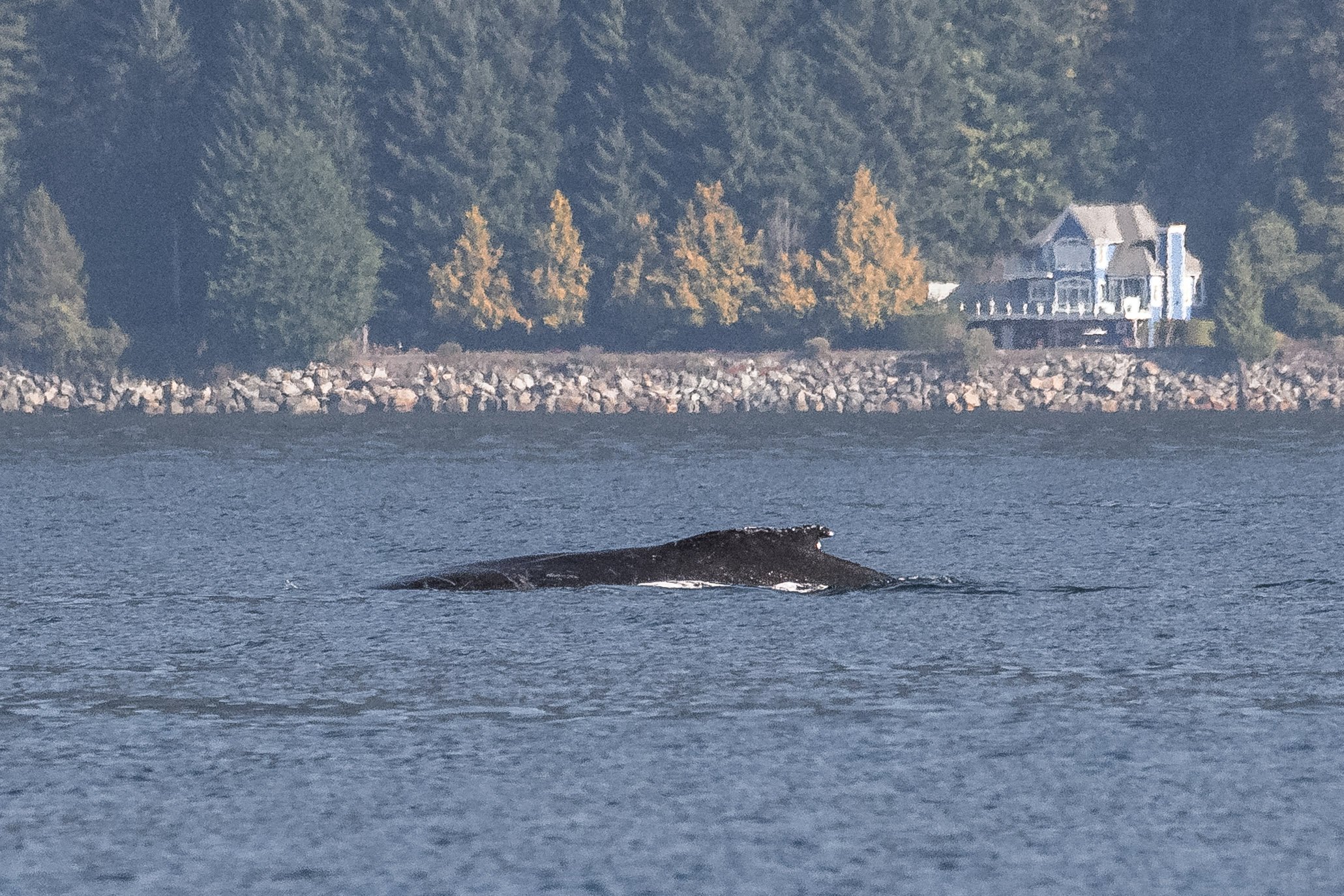
Dalmatian travelling along. Photo by Evan Hessels.
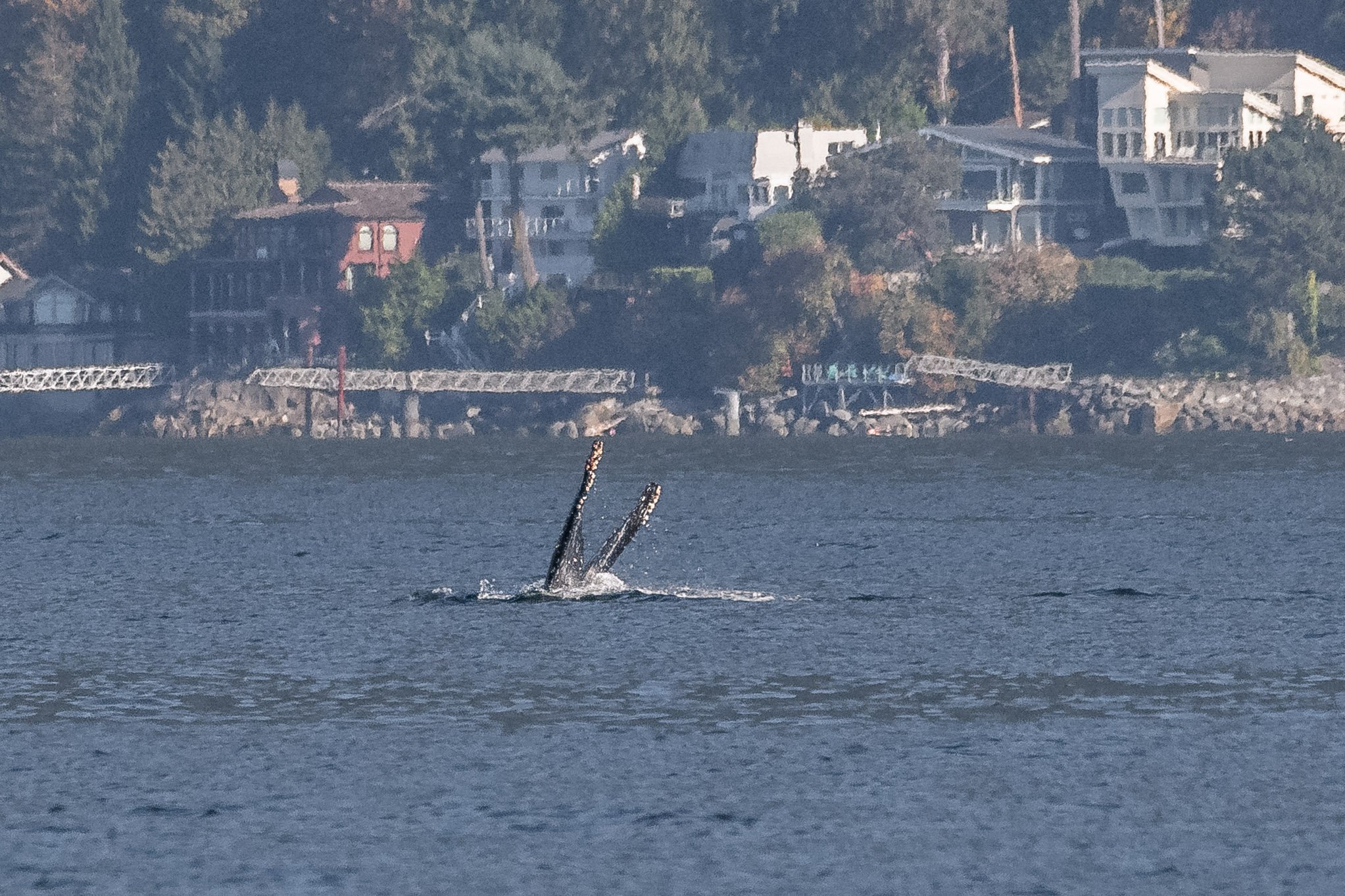
Dalmatian diving. Photo by Evan Hessels.
Ghost, Lil’ Boo, Stitch, Dandelion, and Nova
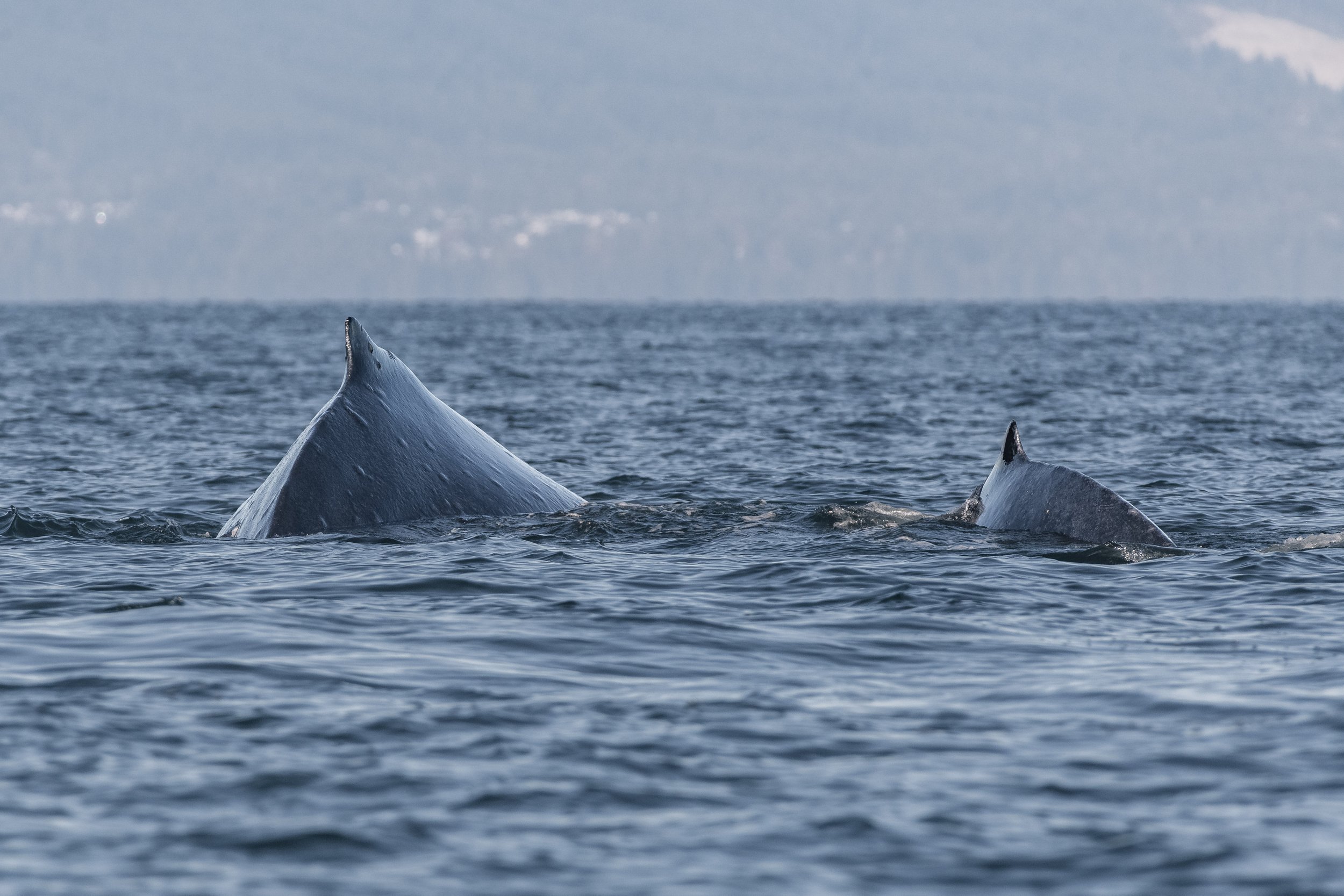
Ghost (left) surfacing alongside her calf (right). Photo by Hayleigh Hilbert.
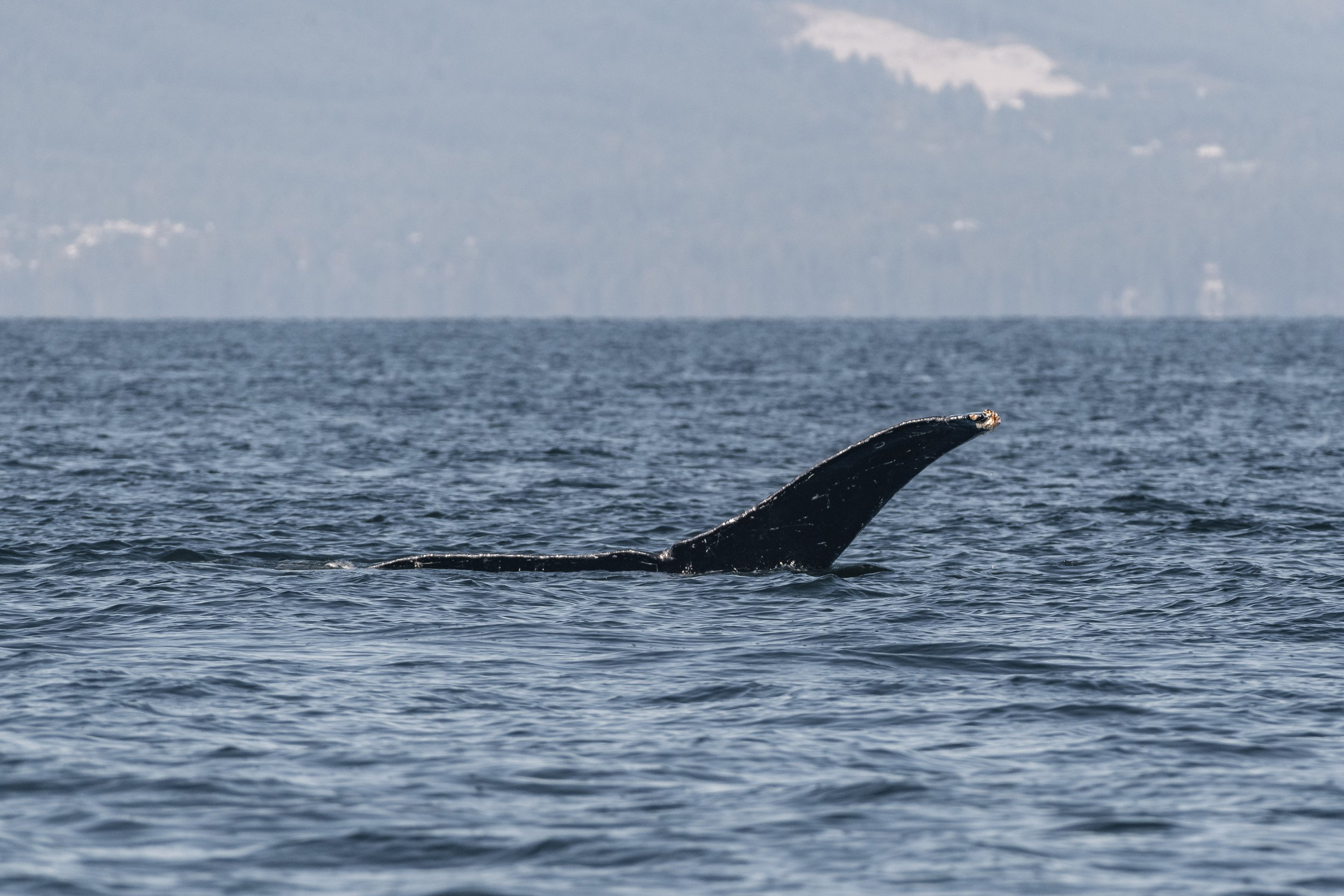
A look at Stitch’s tail as they go for a dive. Photo by Hayleigh Hilbert.
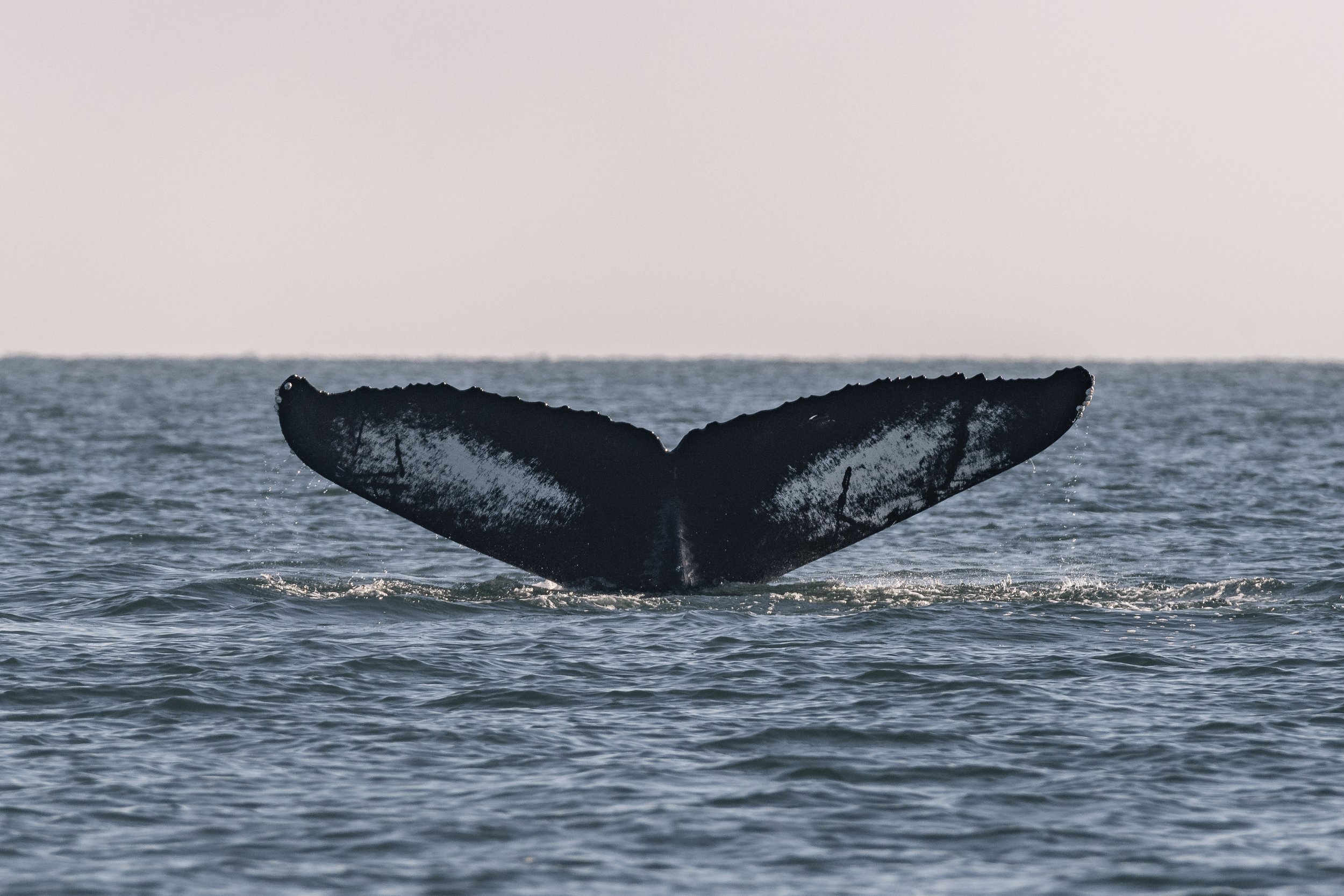
Nova’s very striking tail flukes as she dives. Photo by Hayleigh Hilbert.
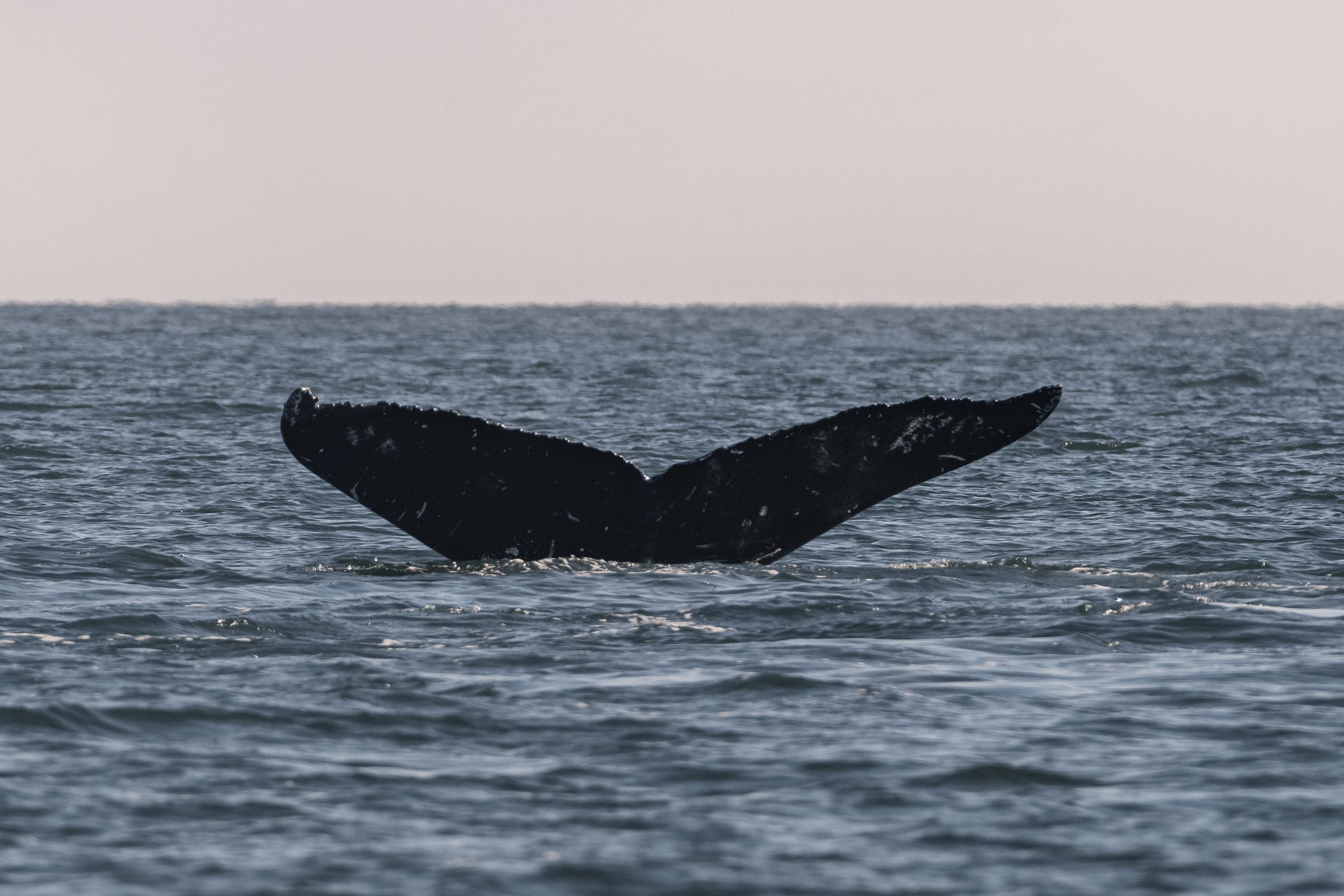
Dandelion’s tail as they go for a dive. Photo by Hayleigh Hilbert.
Other Wildlife
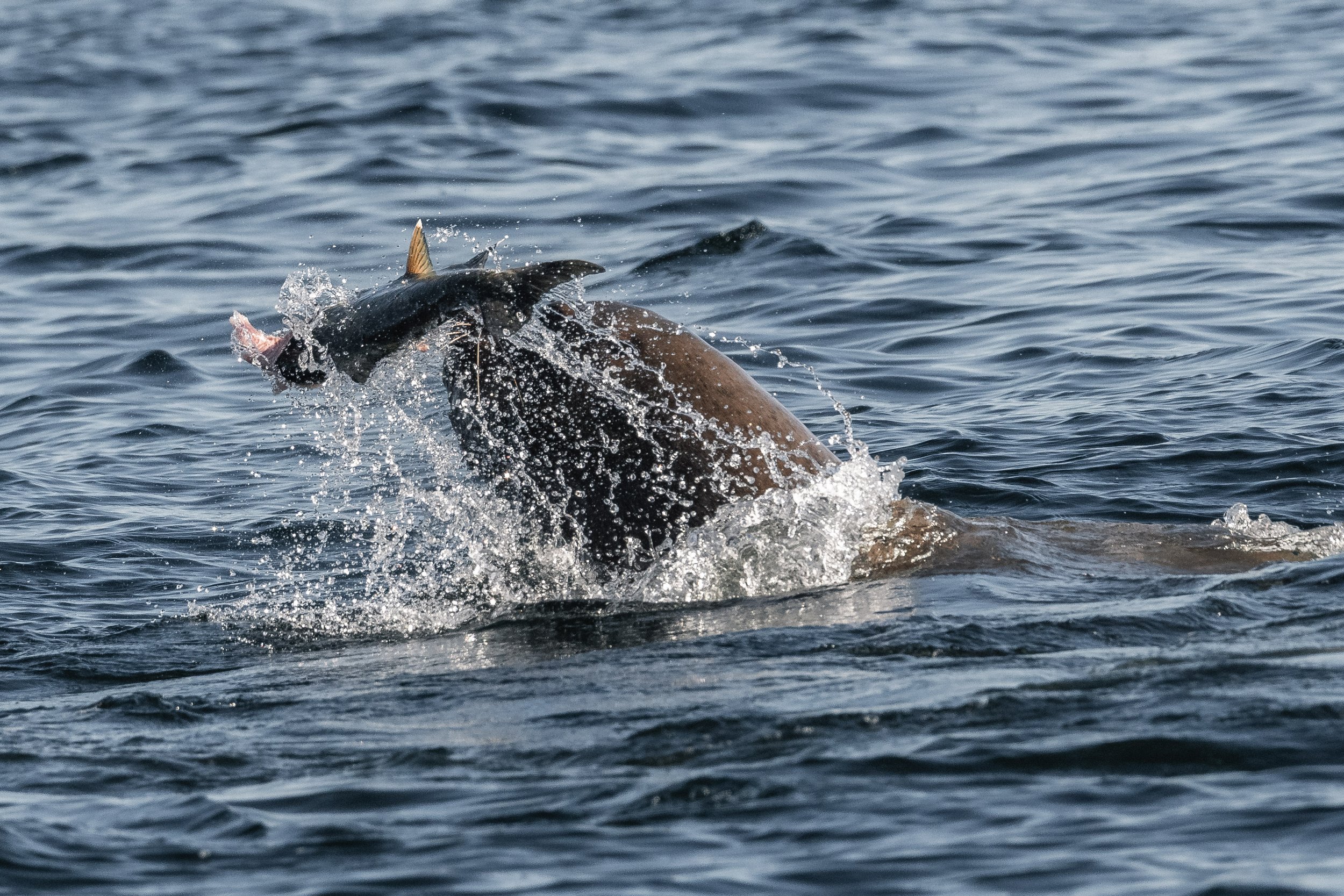
A Steller Sea Lion throwing a salmon around at the surface. Photo by Evan Hessels.
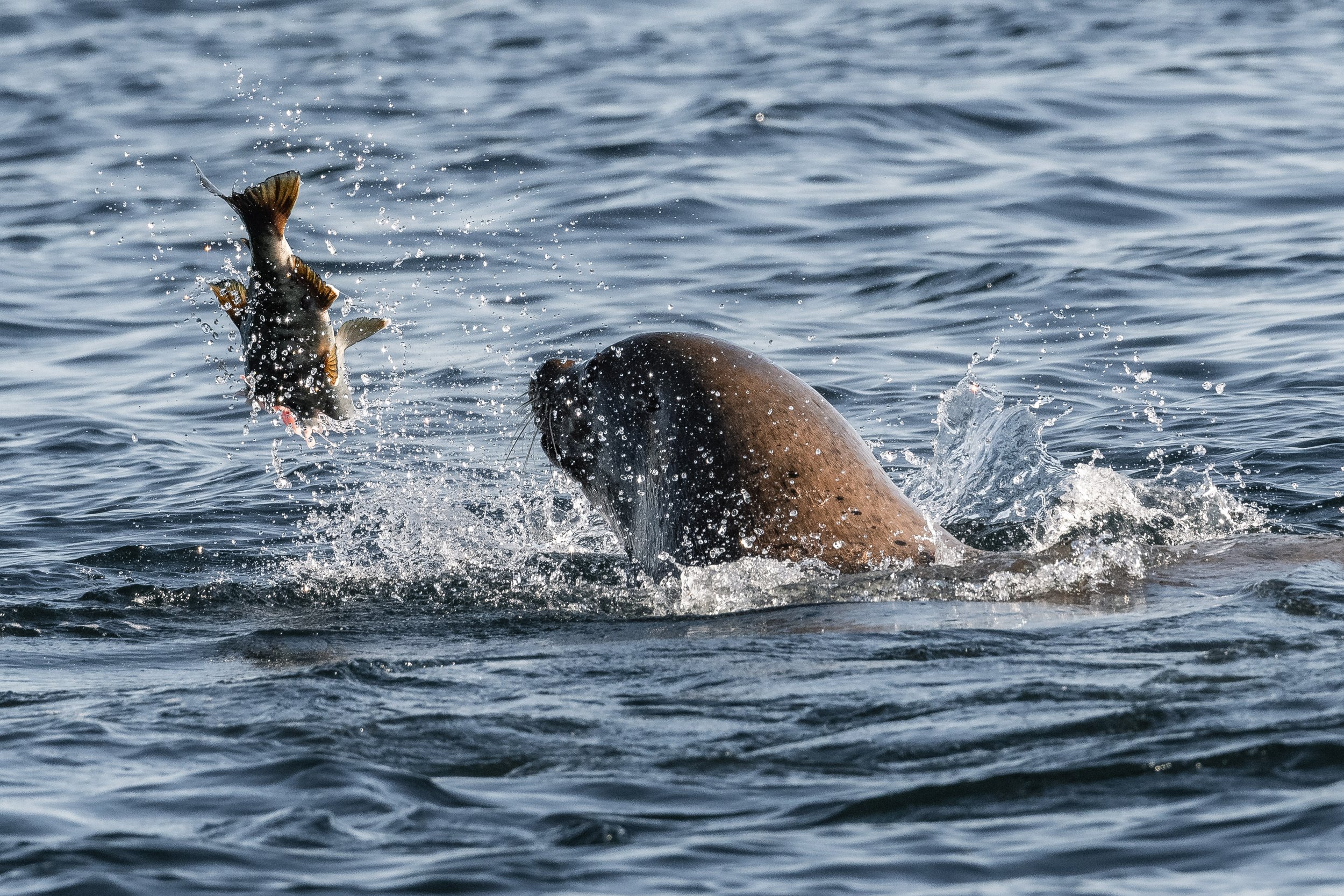
You can tell from the markings on the fish that this is a Chum Salmon. Photo by Evan Hessels.
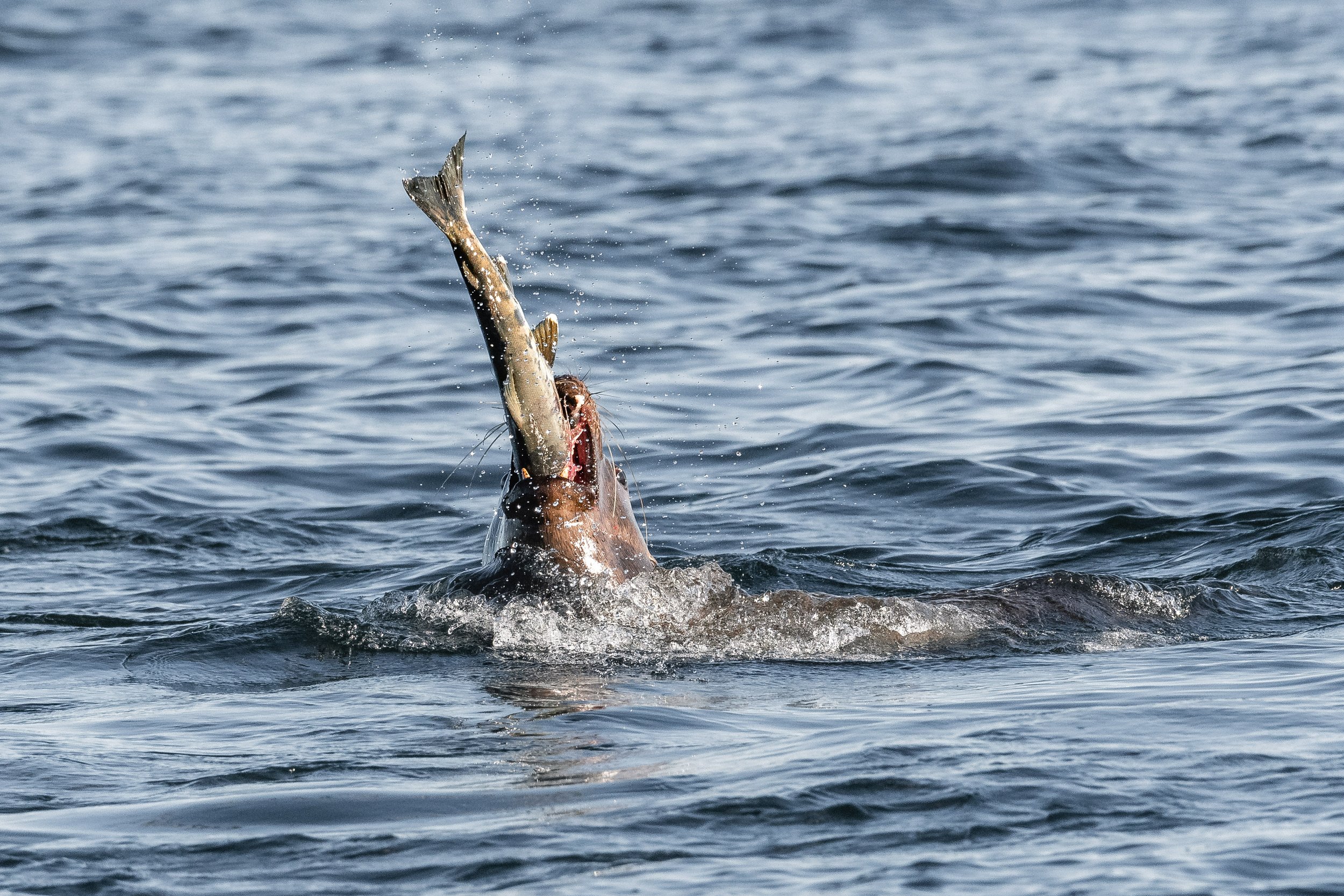
Down the Hatch! Photo by Evan Hessels.
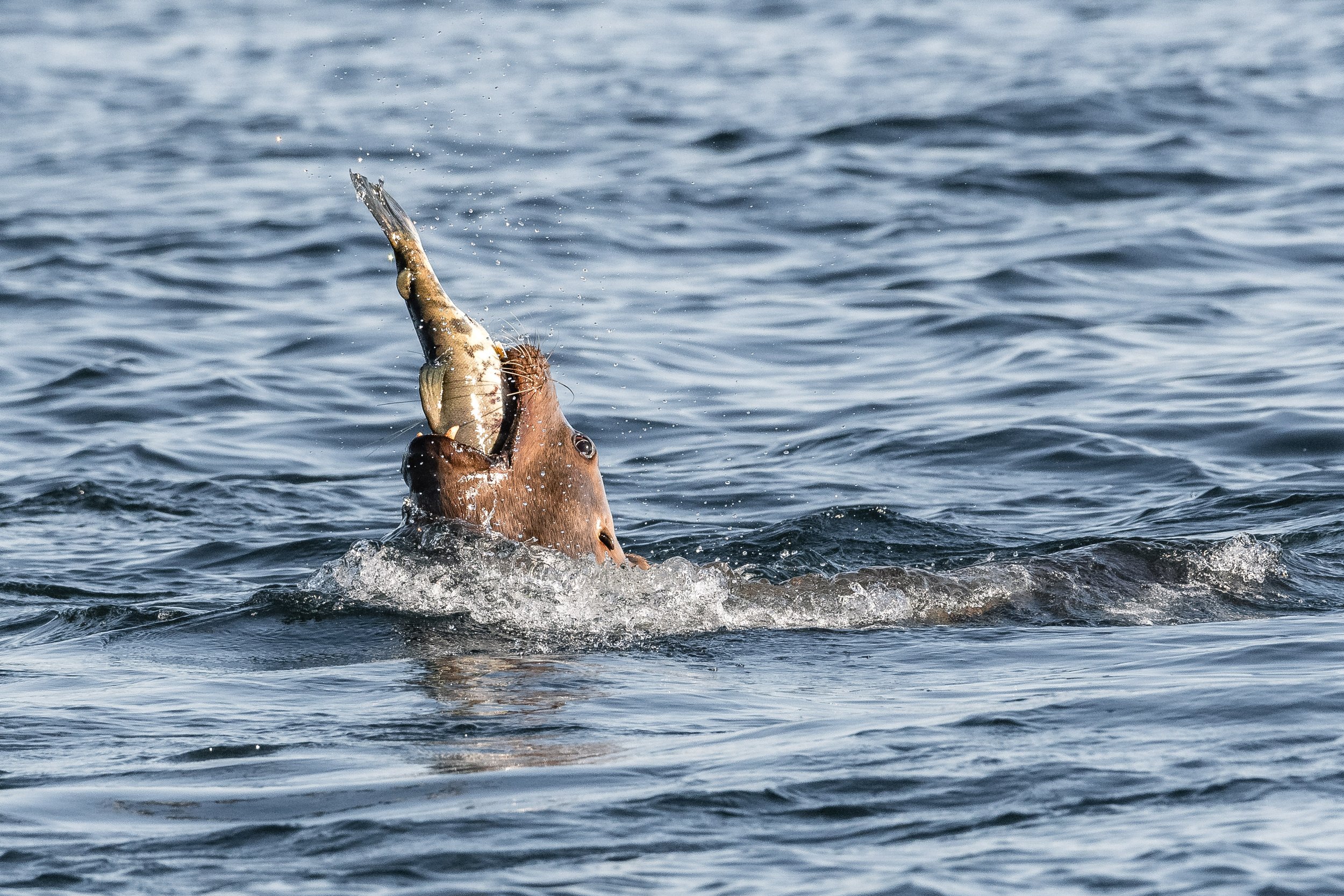
A nice salmon meal for this Steller Sea Lion. Photo by Evan Hessels.
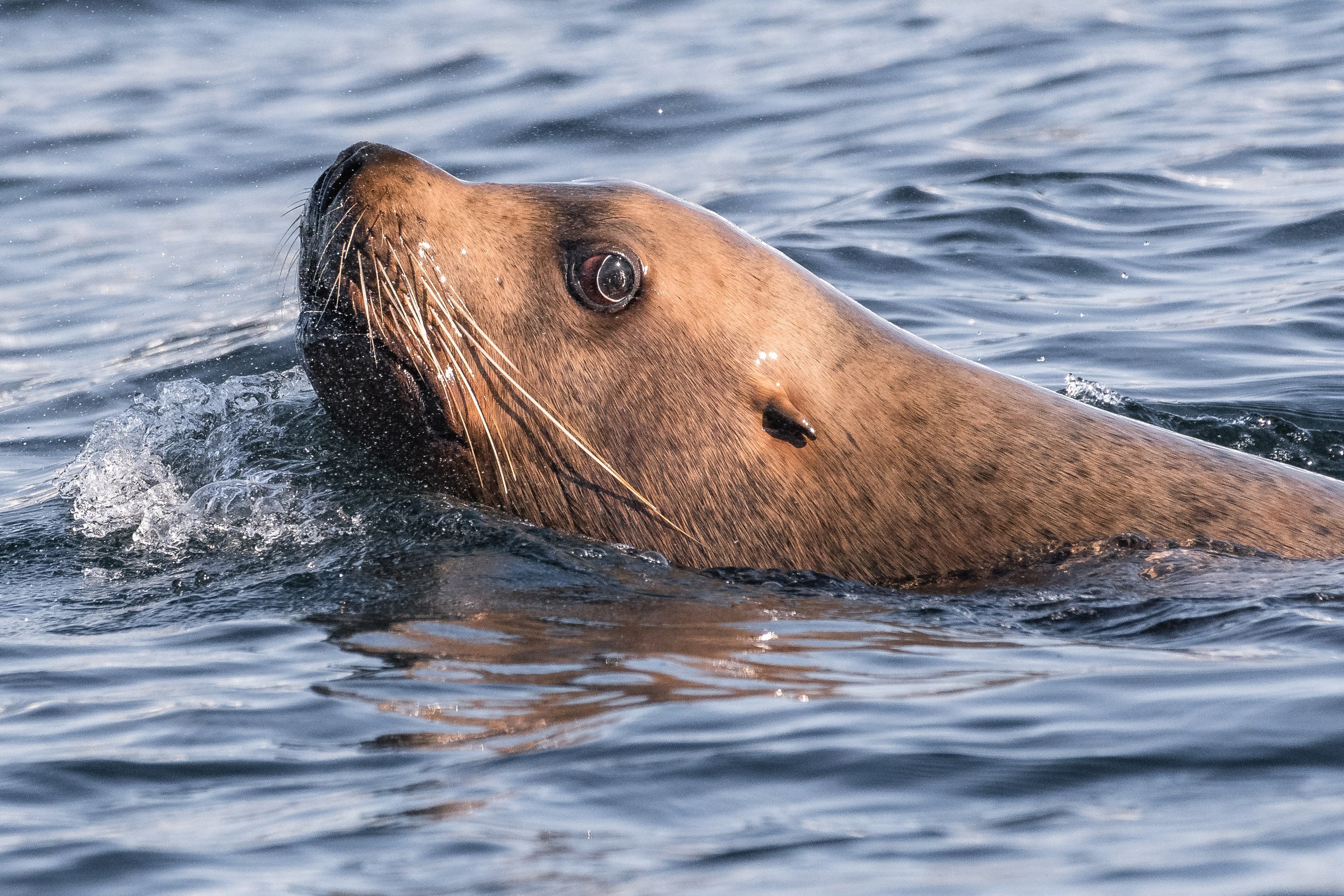
That silver ring around the sea lions eye is thought to help them see underwater in low light conditions. Photo by Evan Hessels.
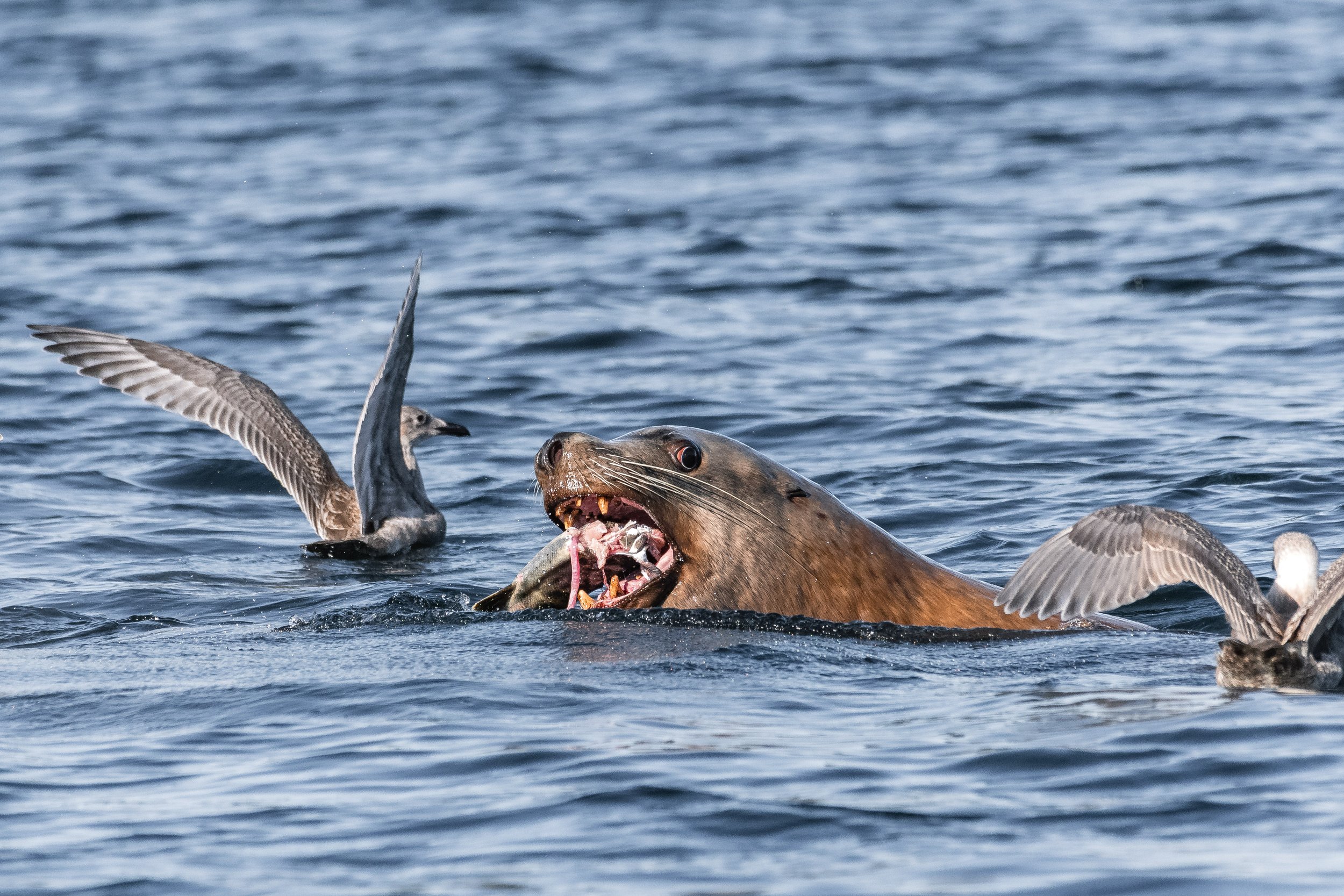
A visceral look at the salmon meal. Photo by Evan Hessels.
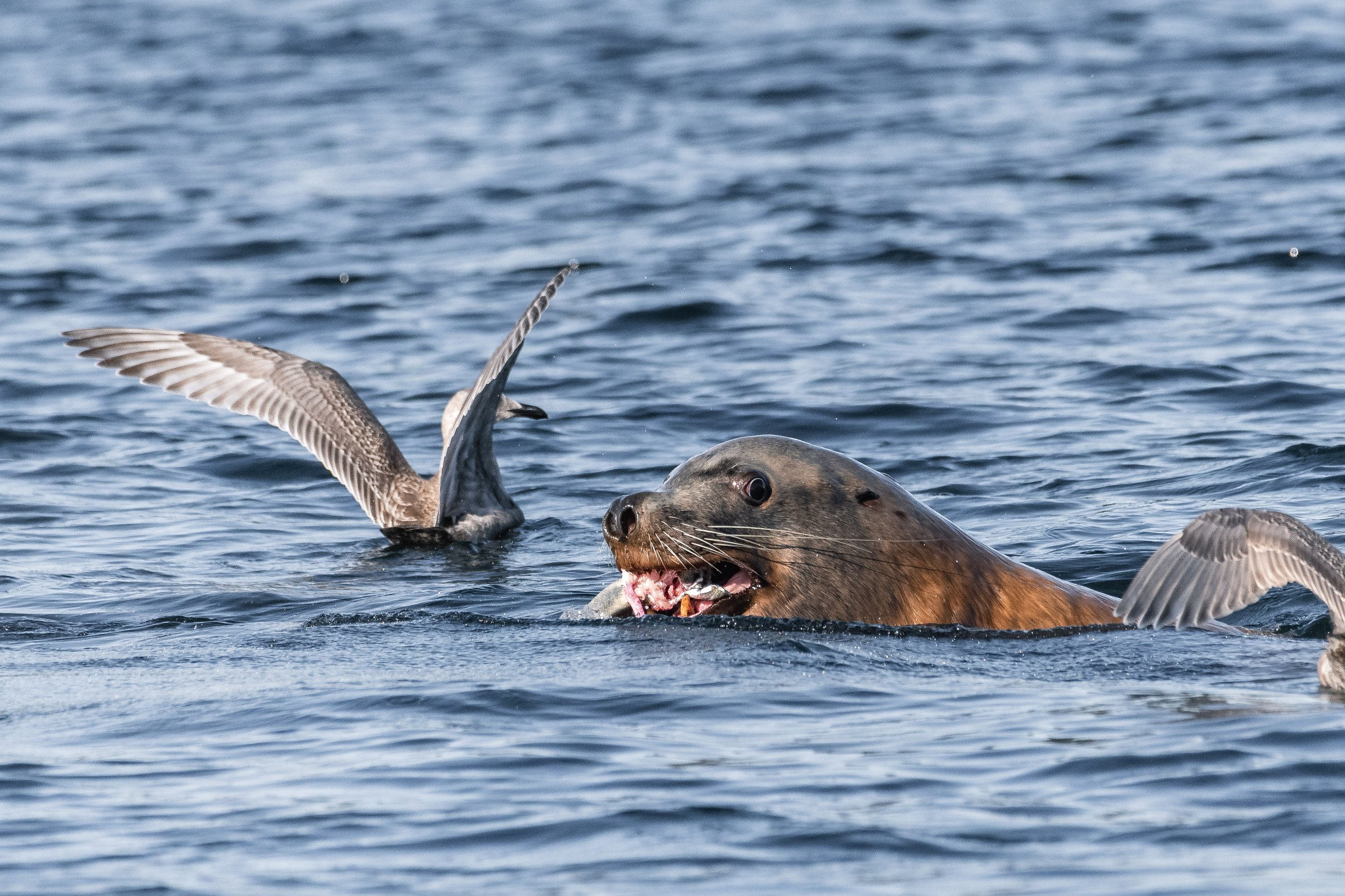
These gulls will be looking for scraps from the sea lions messy meal. Photo by Evan Hessels.
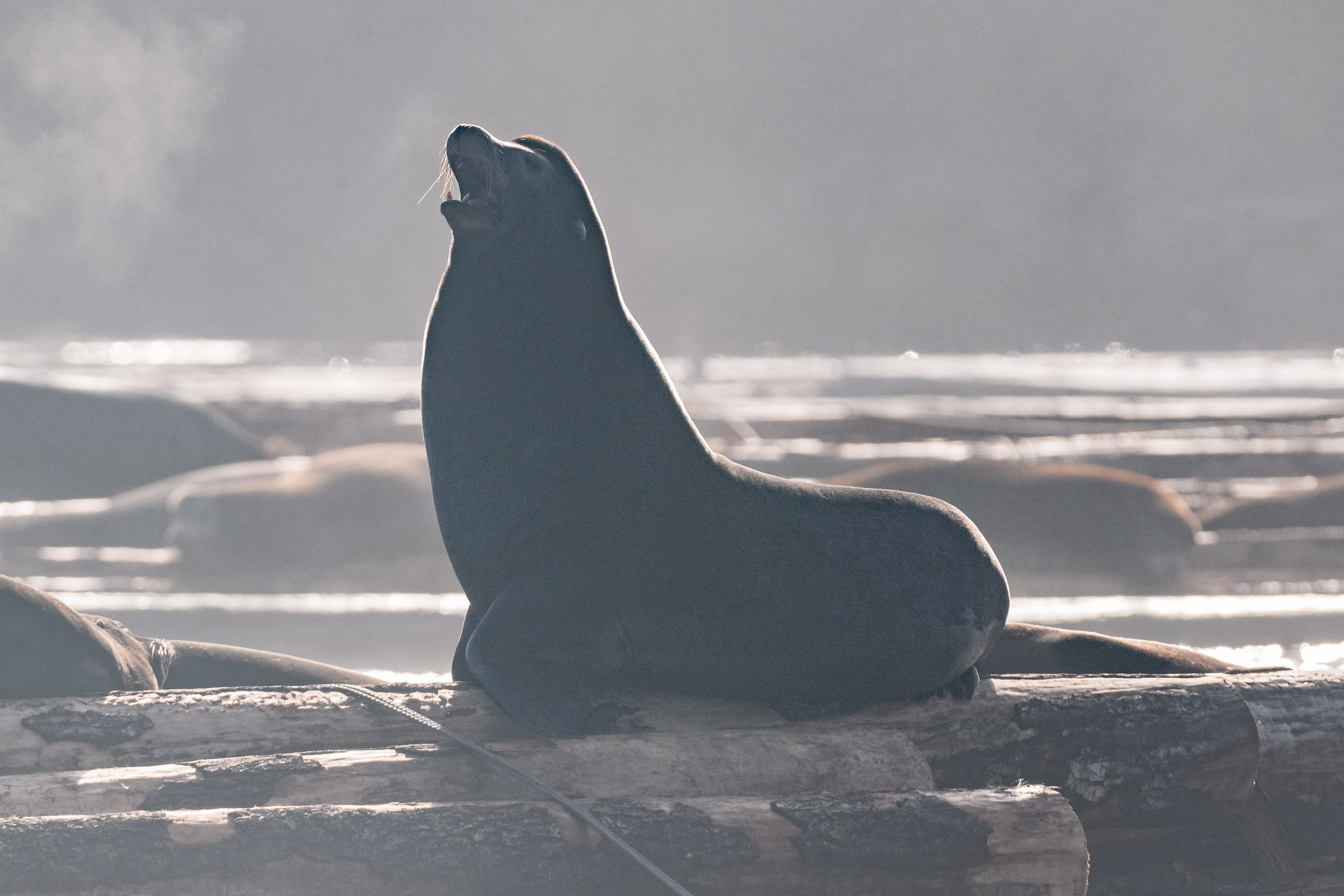
A California Sea Lion on the log booms at Harmac Pulp Mill. Photo by Hayleigh Hilbert.
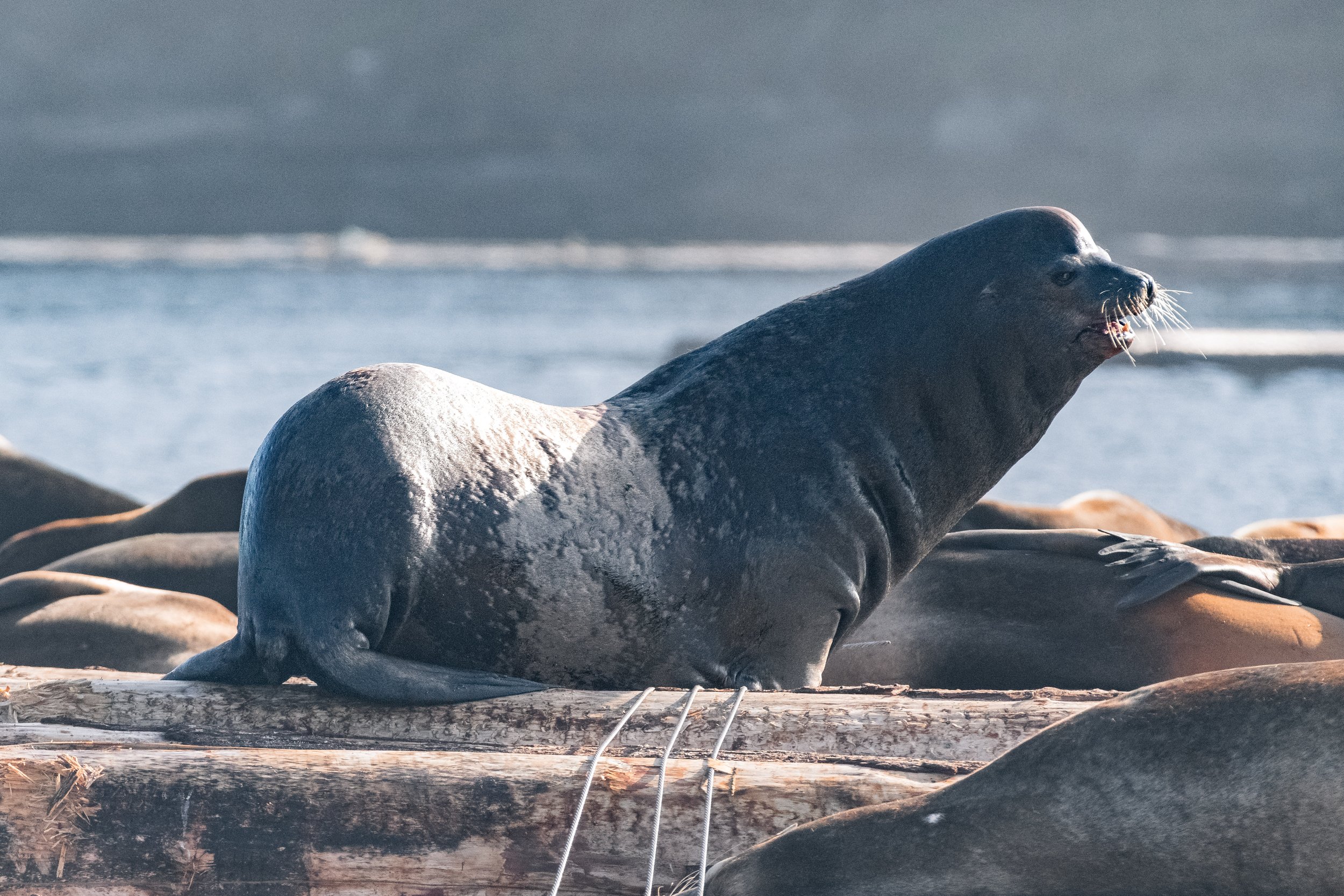
This California Sea Lion doesn’t look to pleased at his log-mates. Photo by Hayleigh Hilbert.