
October 16, 2026 - A Long Day of Wildlife Encounters in the Strait of Georgia
The water was wonderfully calm as our open boat left Nanaimo Harbour and began its search for whales. We barely had time to settle into the adventure before our first sighting appeared just north of Gabriola Island. Two humpback whales, Barge Boy (BCX2514) and Vanta (BCX1730), were travelling together through the Strait of Georgia, giving us an early opportunity to observe these impressive animals.
Both whales appeared to be feeding in the area, disappearing beneath the surface to pursue prey. Humpback whales feed on small schooling fish and krill, and their time spent underwater can offer clues about what they are doing. While we cannot always see the prey they are pursuing, repeated dives and resurfacing in the same general area can suggest that a whale has found a productive patch of food. We enjoyed our time with Barge Boy and Vanta before continuing southeast along the coast in search of more wildlife.
Our next encounter came near Thrasher Rock, where we found three more humpback whales. This group included Hecate (BCX0470), her calf (BCX0470calf2026), accompanied by a male humpback named Dalmatian (BCY0994). Seeing a mother and calf together is a wonderful reminder of just how much work goes into raising a young whale.
During its first year of life, a humpback calf grows rapidly, gaining much of the size and strength it will need for its future migrations. Hecate provides the energy behind this growth through her exceptionally rich milk, which helps her calf build the blubber reserves it needs to survive. With her calf still so dependent on her, Hecate must balance nursing demands with her own need to feed and maintain her condition.
This makes the feeding grounds around Vancouver Island especially important. Humpback whales spend the productive summer months building energy reserves that sustain them through seasonal migration and time in breeding grounds farther south. Feeding opportunities are limited during this period, so the food they find here supports both their own needs and, for mothers like Hecate, their calves' early growth. Every successful feeding opportunity matters.
After observing the trio for a while, we continued south and eventually arrived at Stinky Rock. The exposed rocks were crowded with Steller Sea Lions, making for an entertaining stop along our journey. With the tide covering much of their usual resting space, the sea lions seemed to be making the most of the remaining rocky spots.
There was plenty of activity to watch, from individuals squabbling over space to others resting close together. Some were lounging peacefully, while others leapt through the surrounding waves. Steller Sea Lions are highly social animals, and a crowded haul-out can be a lively place as individuals jostle for position and interact with their neighbours. Their size and strength make them impressive animals, but watching their antics at the surface can reveal a more playful side, too.
We could have spent much longer watching the sea lions, but another sighting was waiting for us farther south. Reports of a pod of orca travelling through Active Pass caught our attention, so we kept going. Before reaching the pass, however, we encountered two more humpback whales: Zephyr (BCZ0414), another known female, and Notcho (BCX1700).
Like Barge Boy and Vanta earlier in the day, Zephyr and Notcho appeared to be feeding. We spent some time enjoying their presence as they surfaced and dove through the calm water. Humpbacks may come together temporarily while using the same feeding area, and these associations can change as the whales move around and search for food. With another pair of whales added to our sightings list, we continued toward Active Pass in hopes of finding the orca.
There, we located the T037Bs travelling together.
T037B Harald ♀ (1998)
T037B1 Lance ♂ (2012)
T037B3 Slice ♀ (2022)
Although we missed the hunt itself, their behaviour offered intriguing clues that they had recently caught a meal. The whales were making longer dives, with periods of activity at the surface that included tail slapping. We also witnessed Lance performing a moonwalk, a behaviour in which an orca moves backward across the surface.
These behaviours can sometimes occur around prey sharing, when members of a Bigg's orca family divide up a meal after a successful hunt. Much of the hunting takes place underwater, so we do not always get to witness the entire sequence. Instead, we may see the activity that follows, as the whales surface, interact and continue travelling together.
Bigg's orcas are cooperative hunters that prey on marine mammals, and successful hunts can provide food for multiple members of a family group. Sharing prey is an important part of life within these groups, reflecting the close social relationships between individuals. Even without seeing the actual hunt, observing the T037Bs together and interpreting the clues they left at the surface gave us a fascinating glimpse into their lives.
After spending time with the family and enjoying some excellent looks at the whales, it was time to begin the journey north again. We travelled back through the waterways toward Nanaimo, eventually arriving home after a full day on the water.
From five different humpbacks across three encounters to the lively Steller Sea Lions at Stinky Rock and a family of Bigg's orcas following what appeared to be a successful hunt, the day brought an impressive variety of wildlife experiences. The long journey south was certainly worthwhile, and the calm conditions gave us plenty of opportunities to appreciate each encounter.
Please enjoy the photographs below, taken throughout the tour by our Marine Naturalist, Evan Hessels.
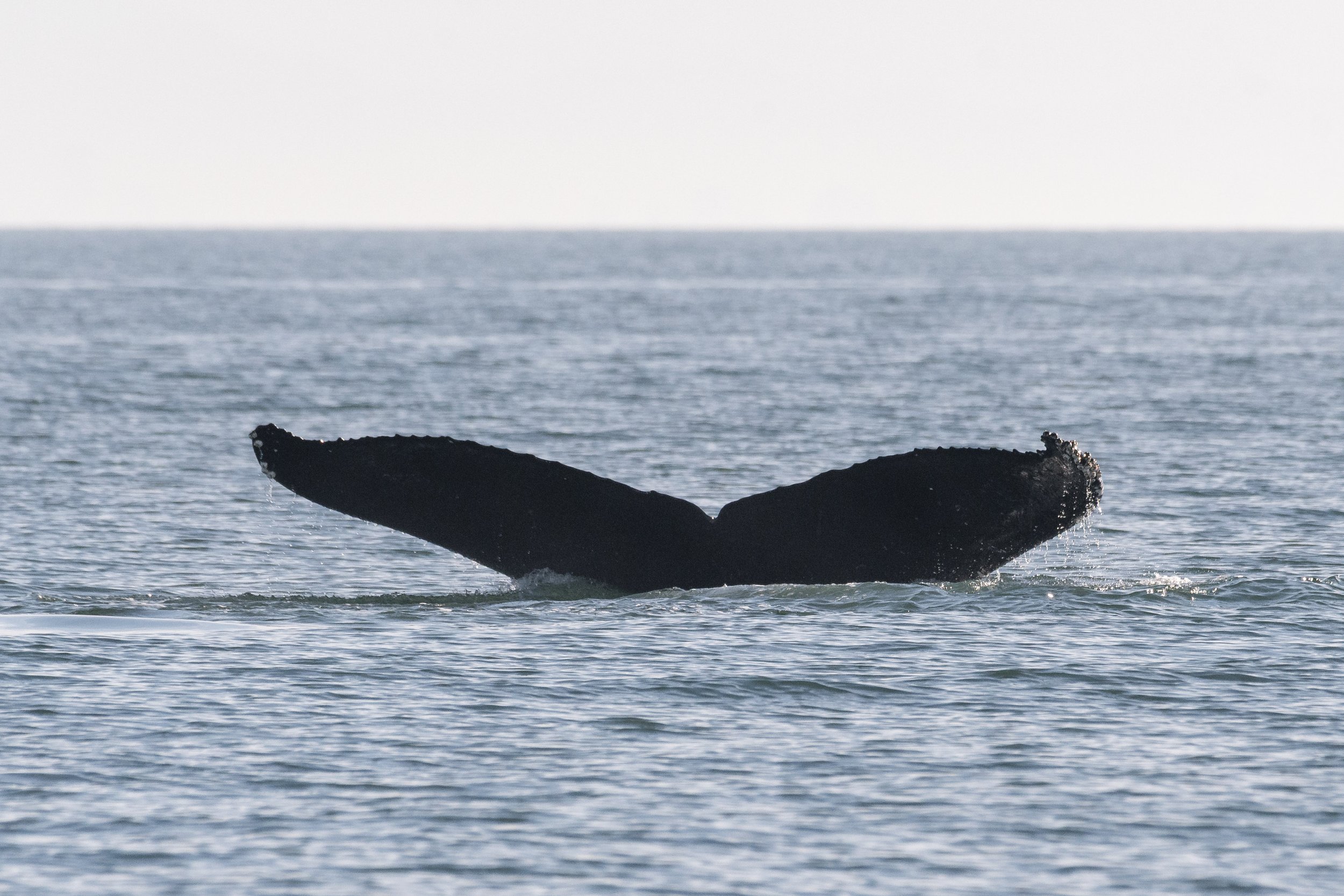
Barge Boy showing off their tail as they go for a dive.
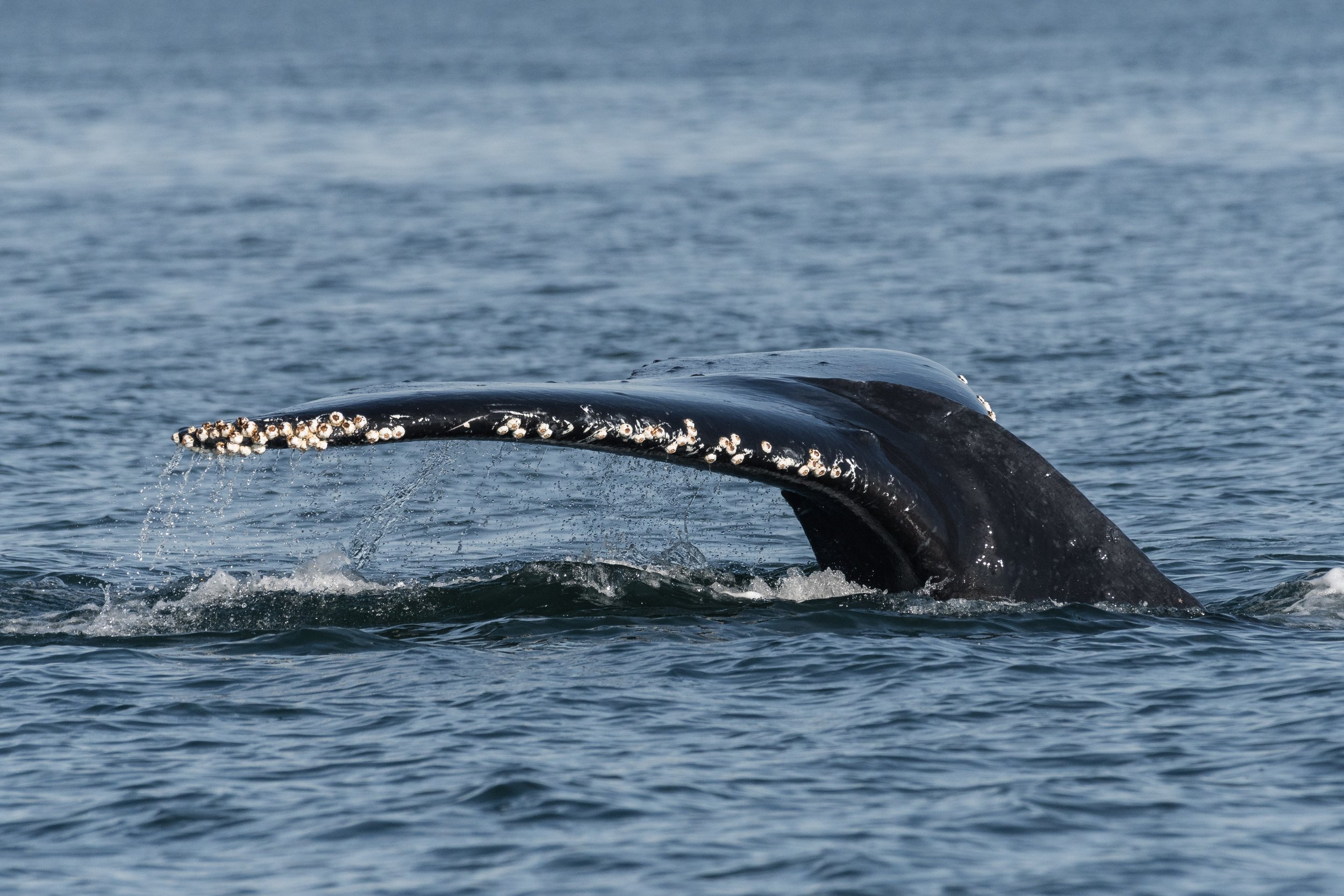
A great look at the barnacles on the side of Vanta’s tail.
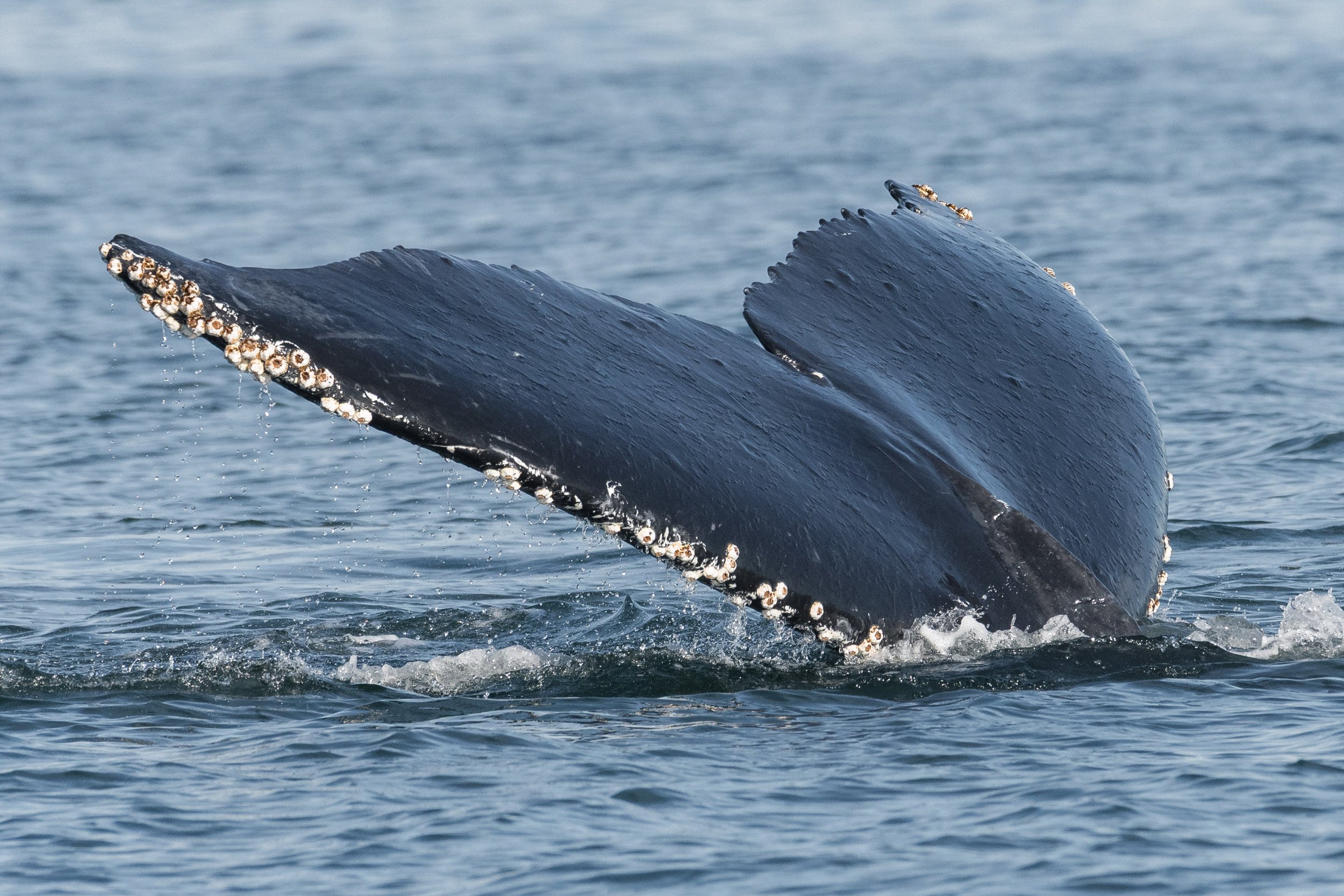
A close up look at Vanta as they dive.
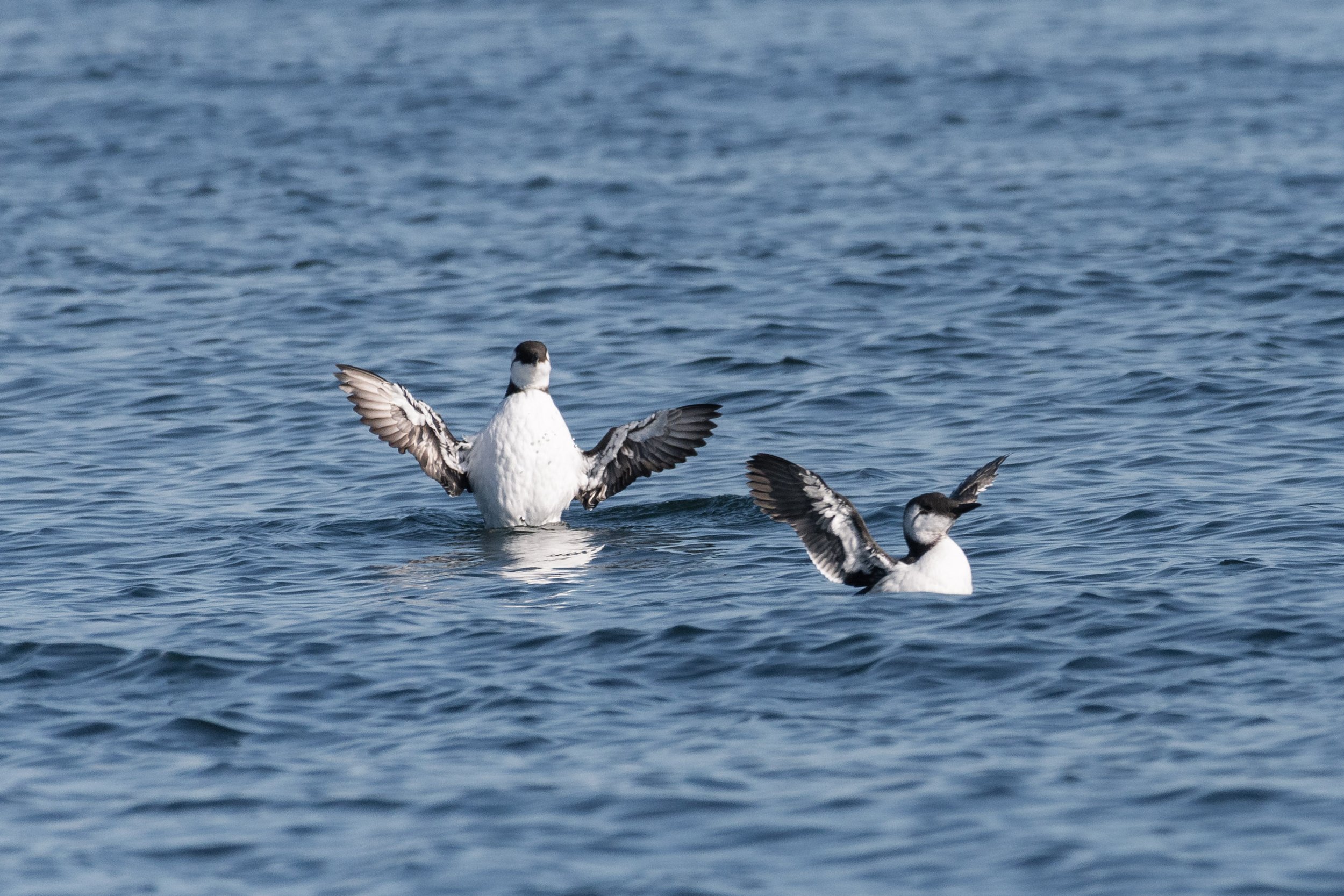
This common murre looks like hes trying to start a fight with us…
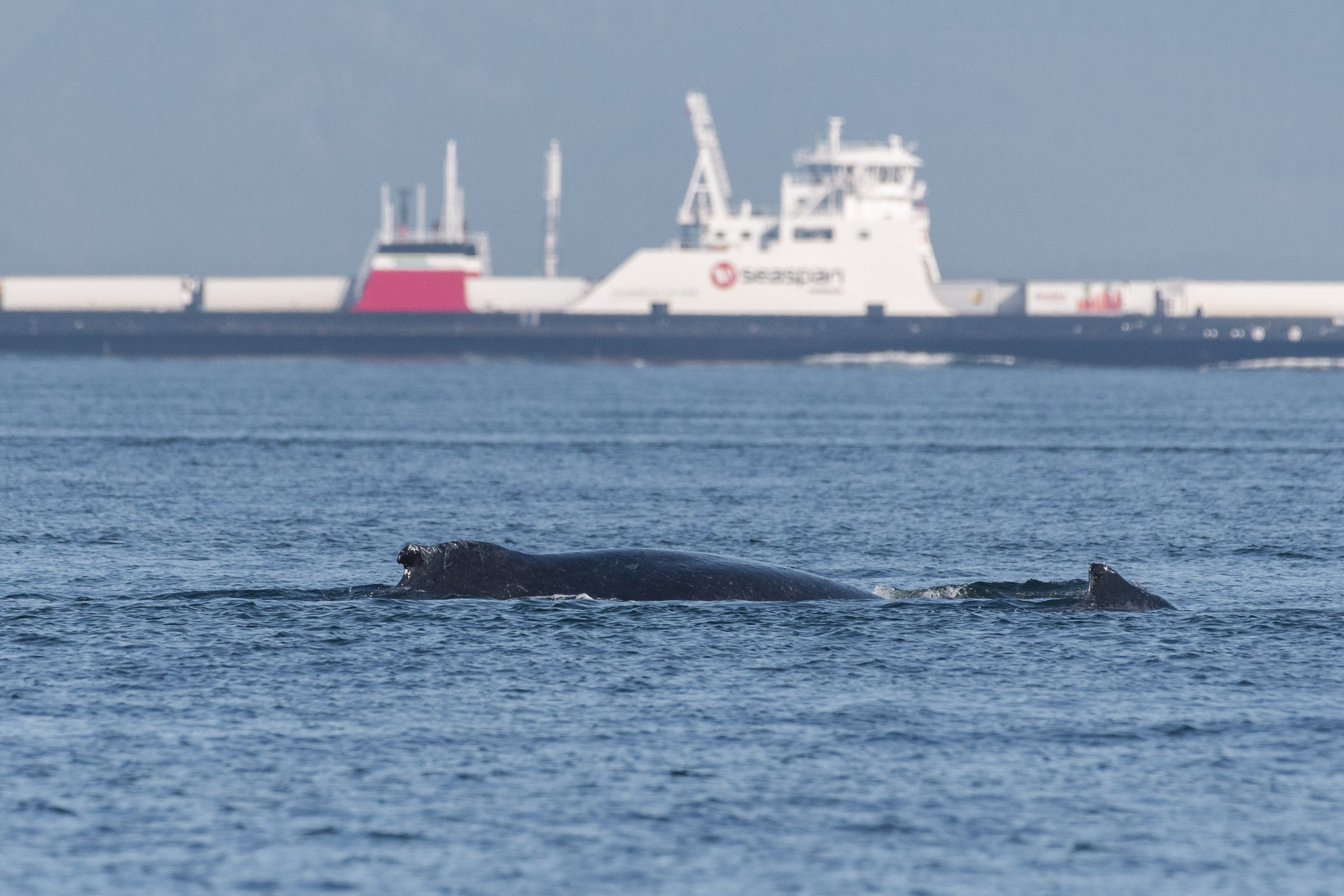
Dalmatian (left) and Hecate (right) surfacing together.
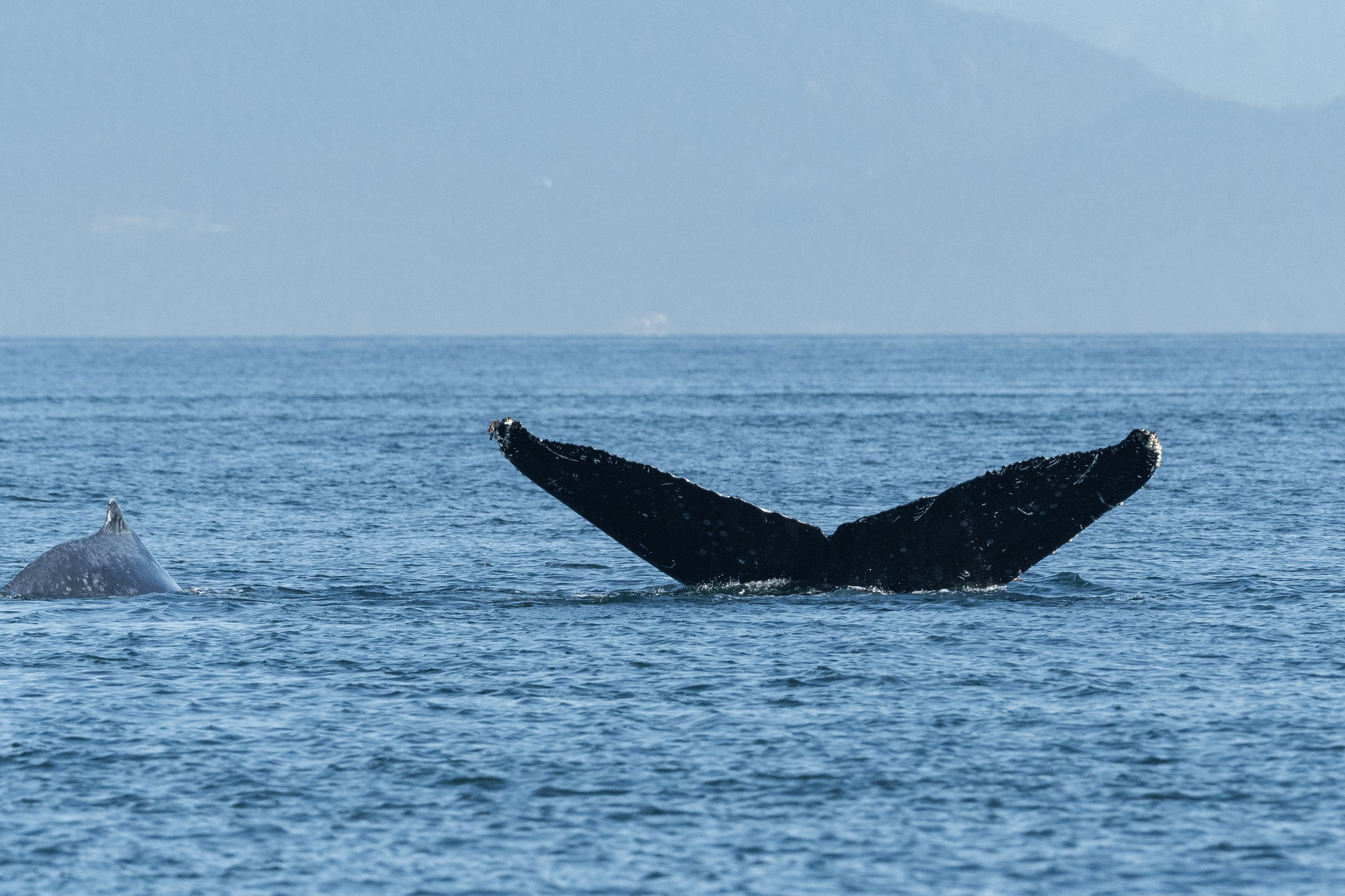
Hecate lifting her tail to dive as her calf arches beside her.
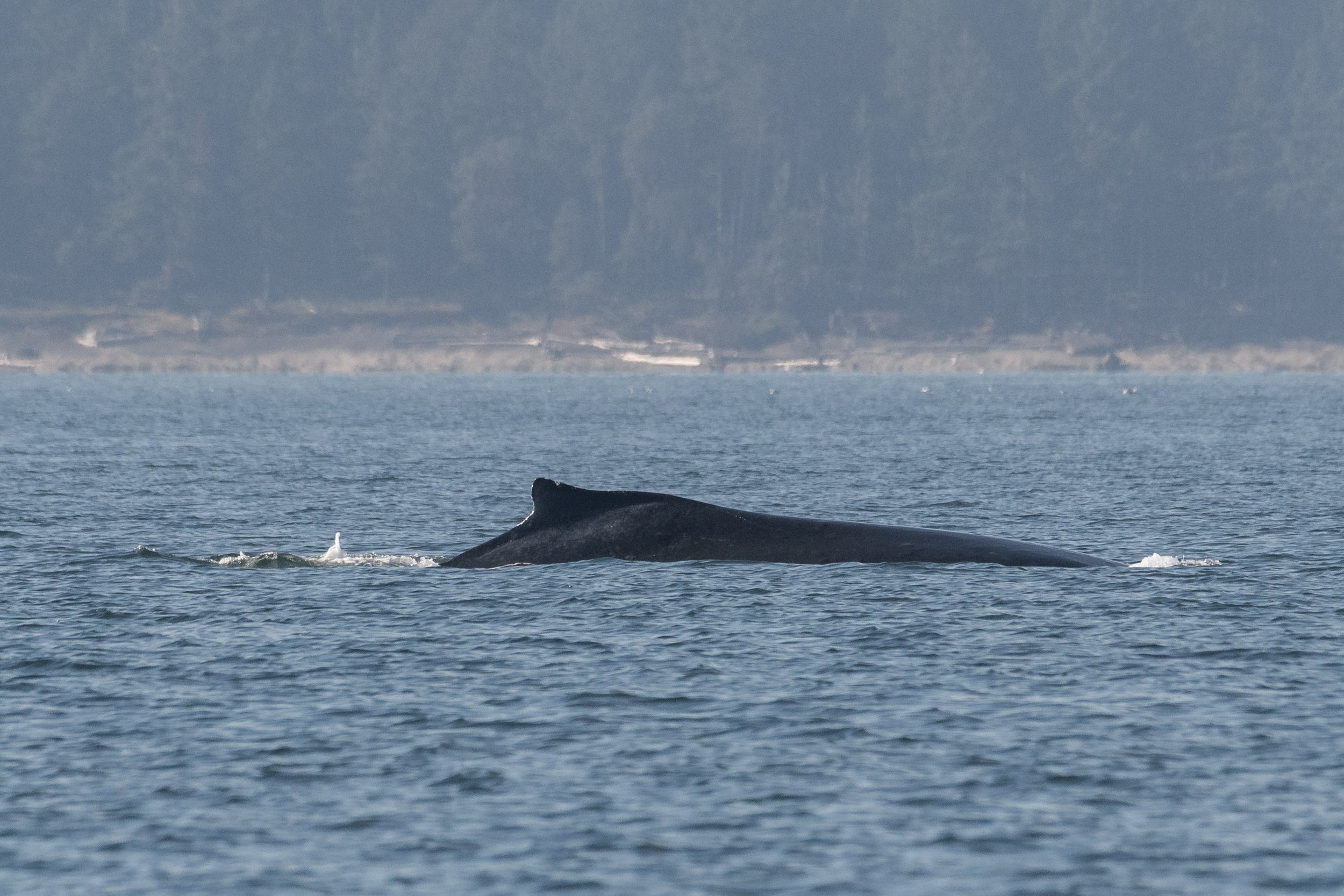
Zephyr has a white mark on her dorsal fin which helps us identify her, as you can see in this photo.
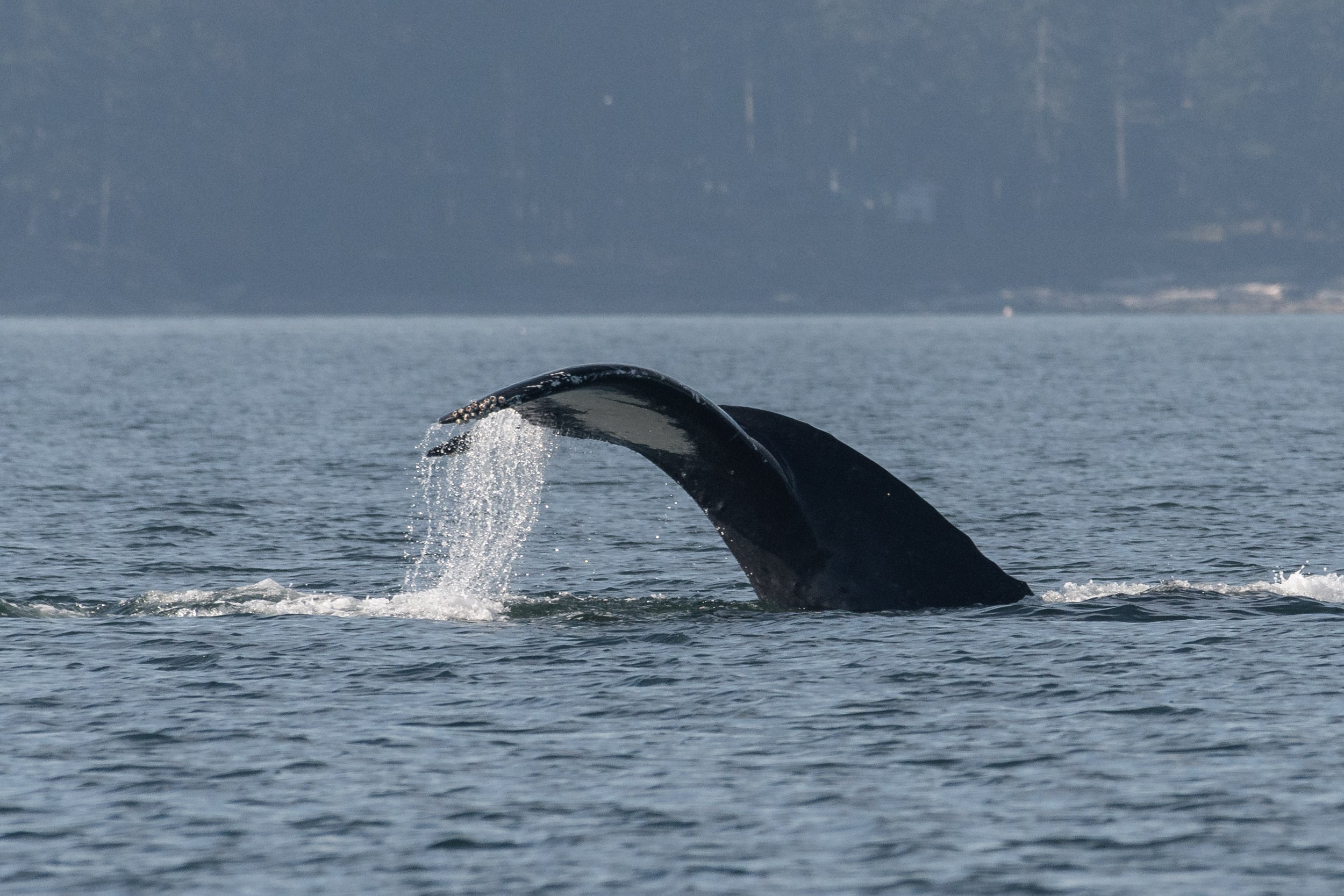
Zephyr lifting her tail to go for a dive.
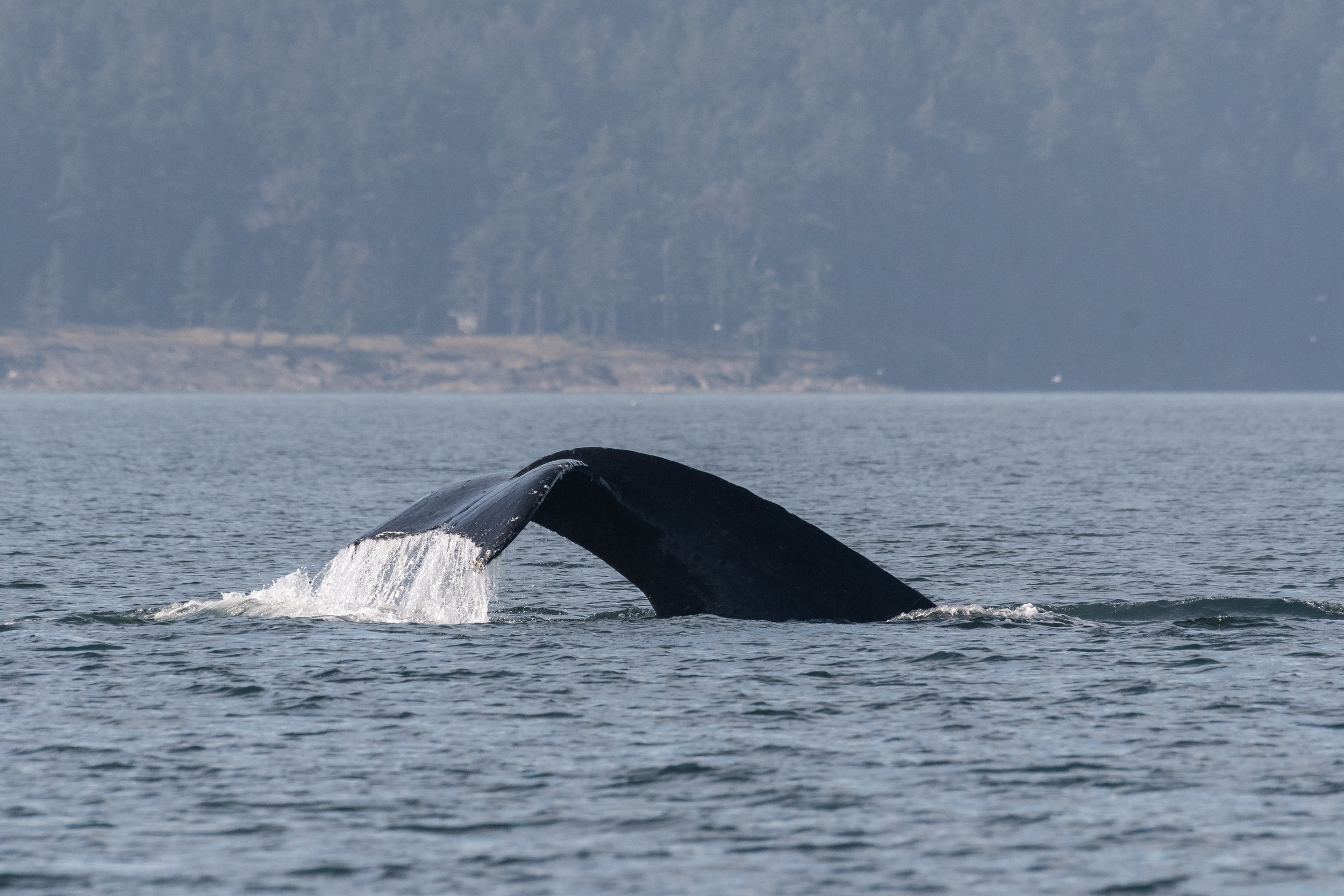
Notcho giving a lovely fluke waterfall as they dive.
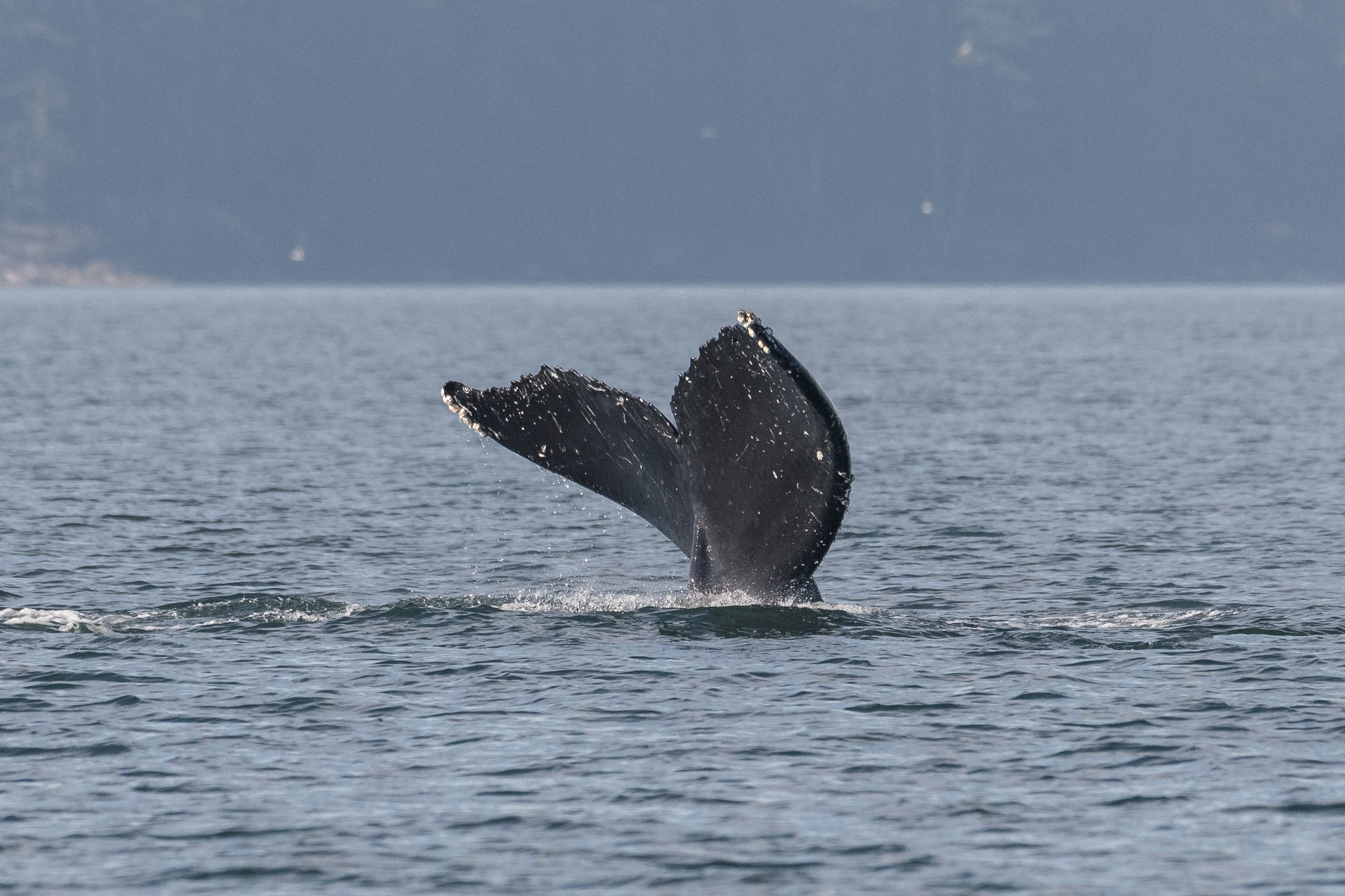
The underside of Notcho’s tail as they dive. Can you spot the notch that is his namesake?
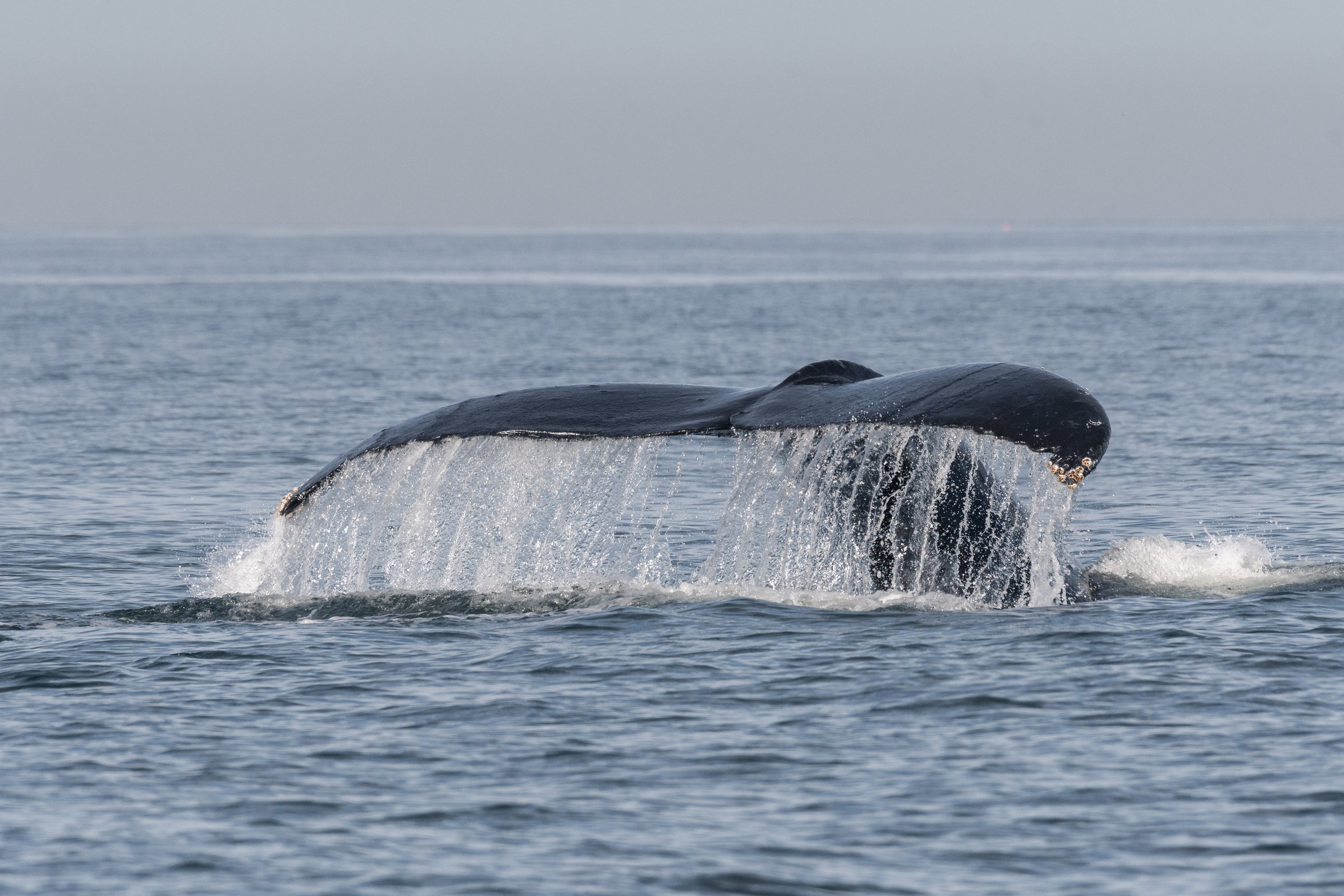
A fluke waterfall from Zephyr as she dives.
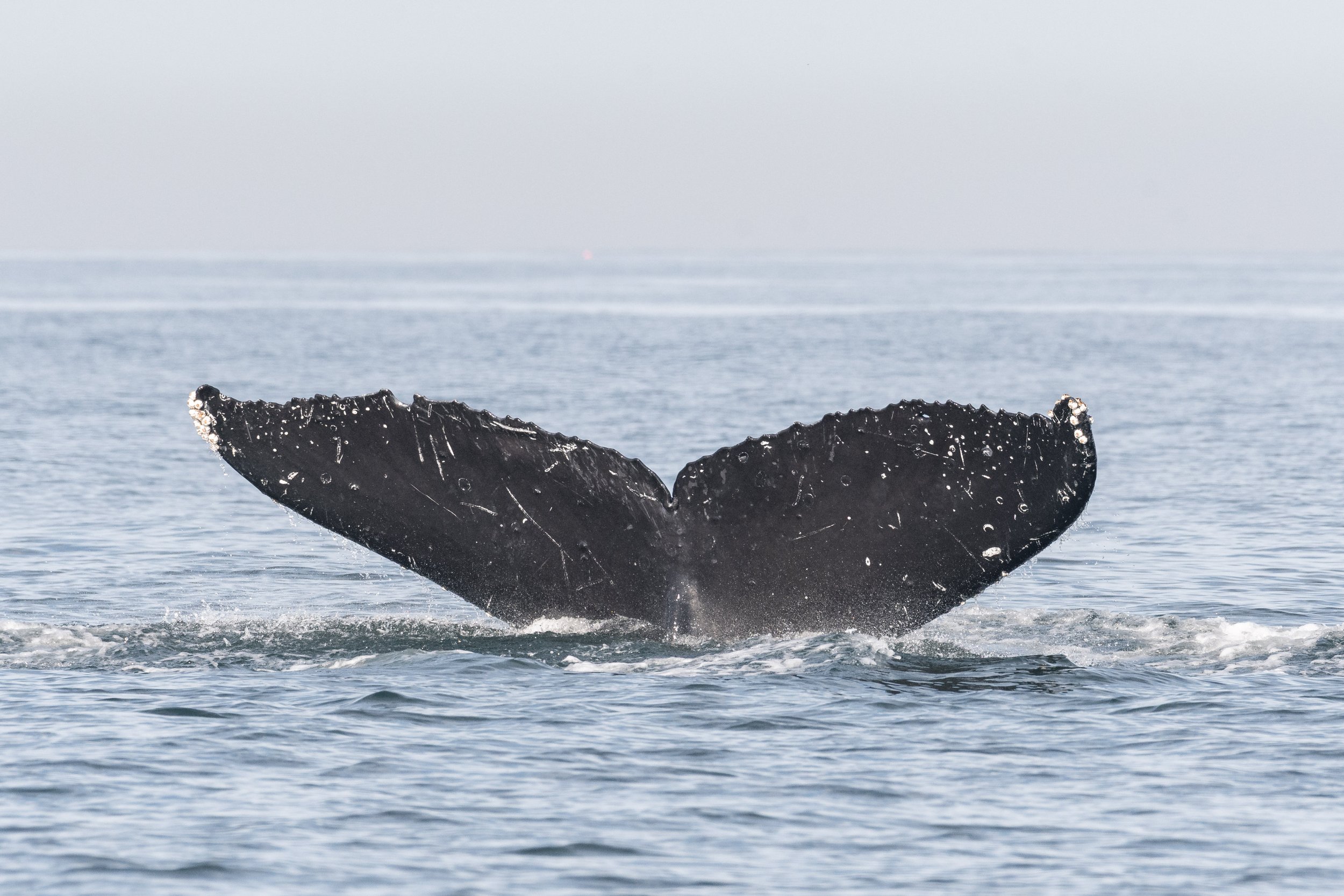
You can spot Notcho’s notch even better here.
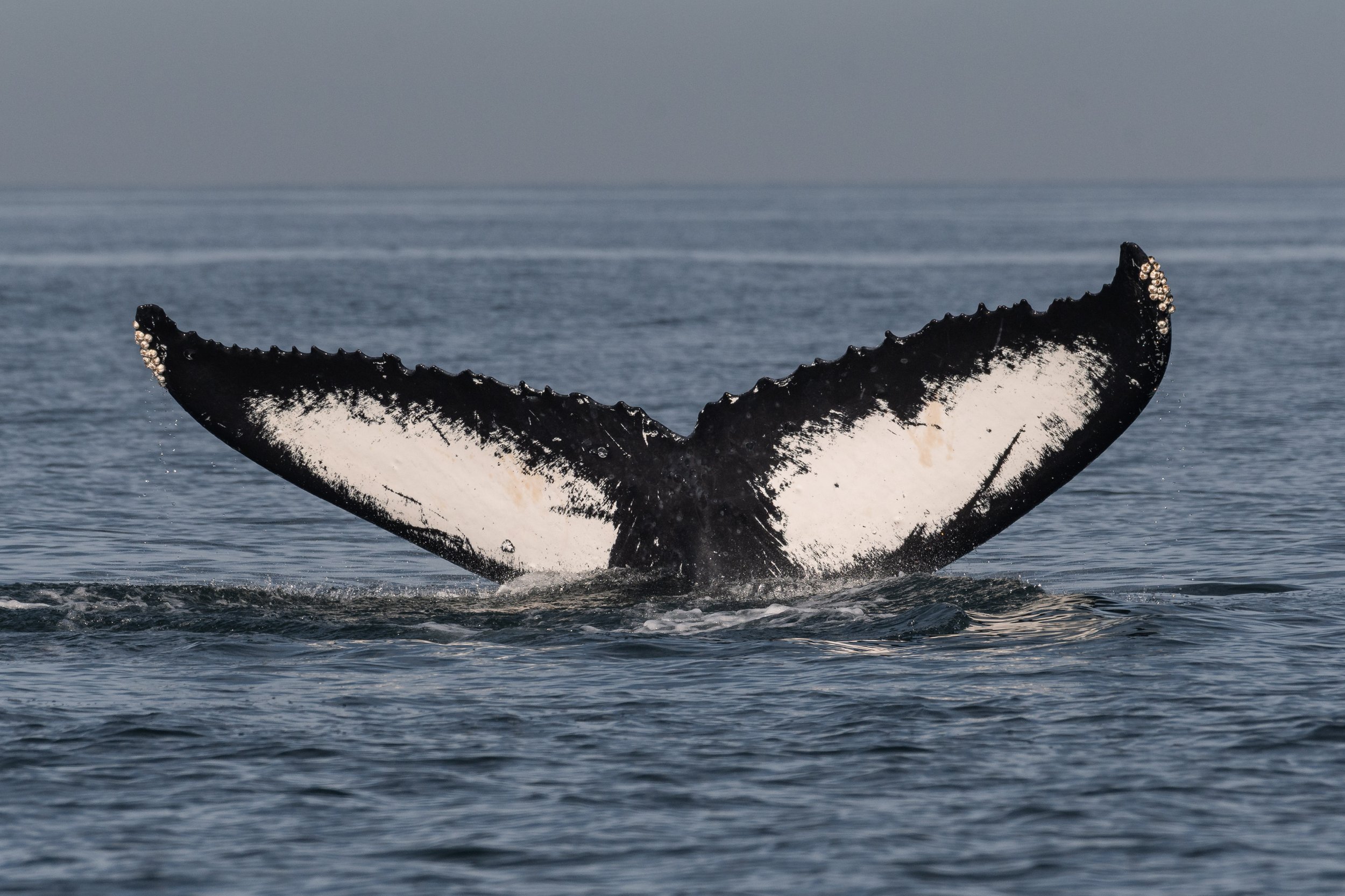
The beautiful white underside of Zephyr’s tail as she dives.
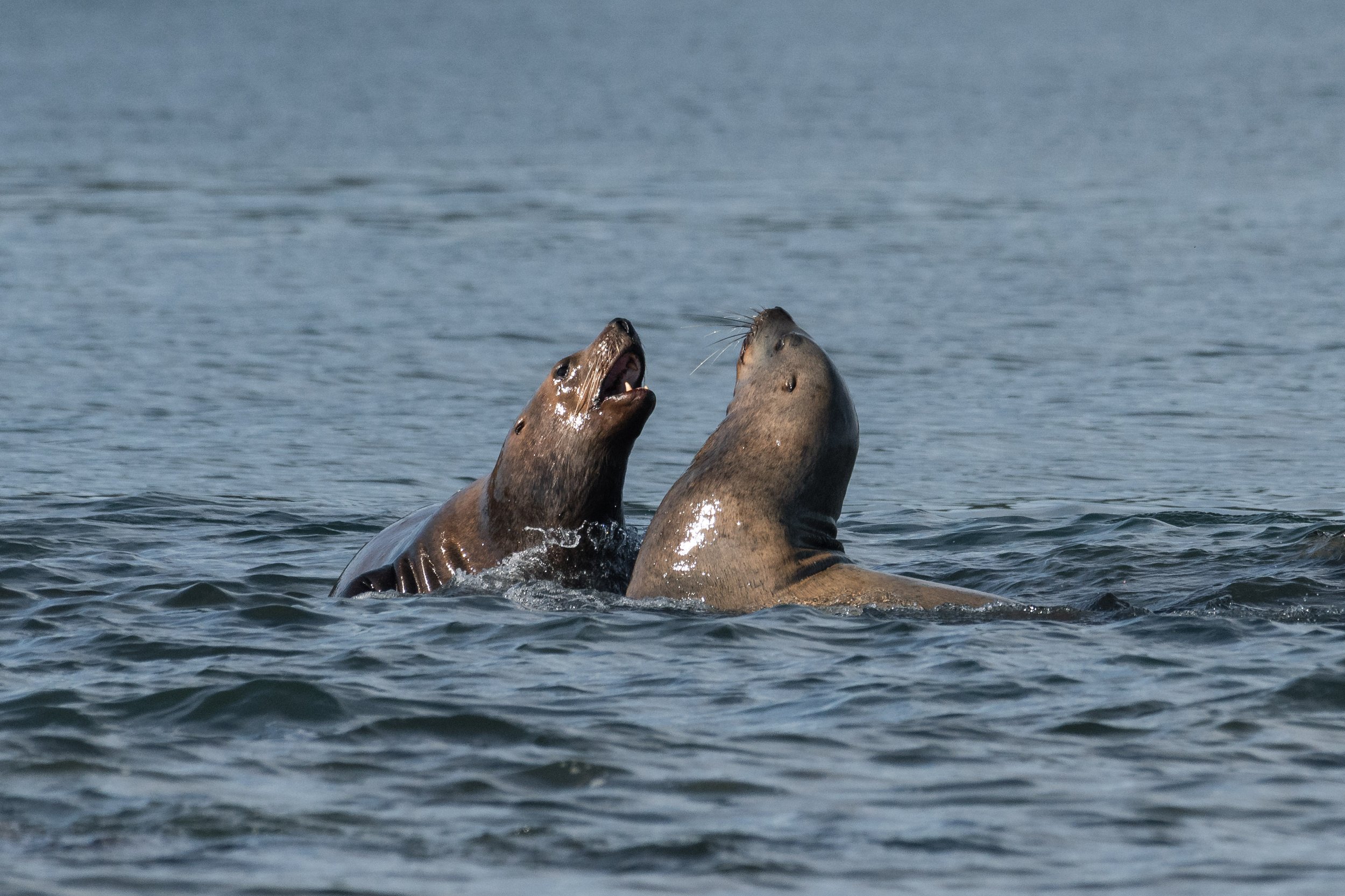
Steller Sea Lions fighting at Stinky Rock.
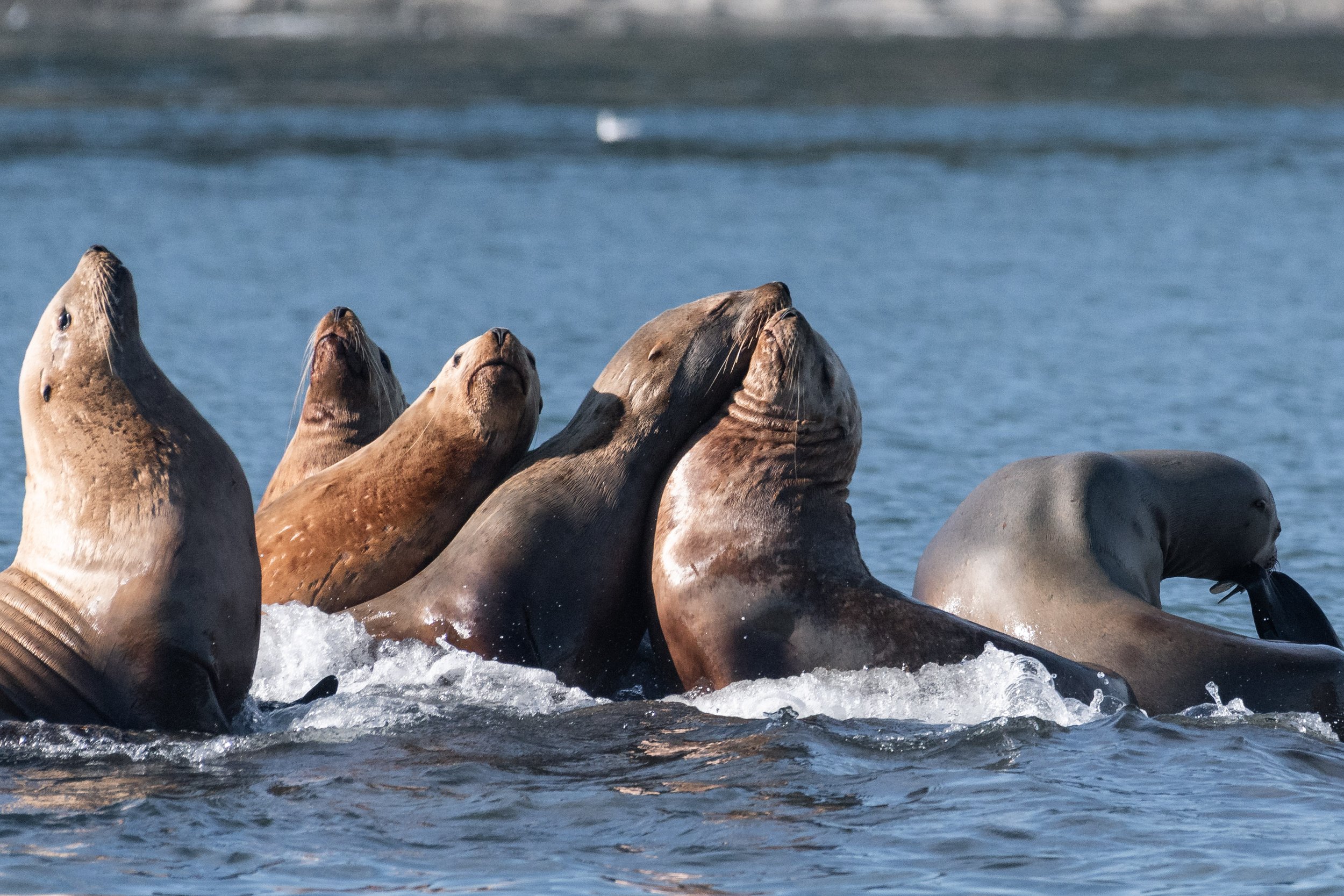
From fighting to cuddling.
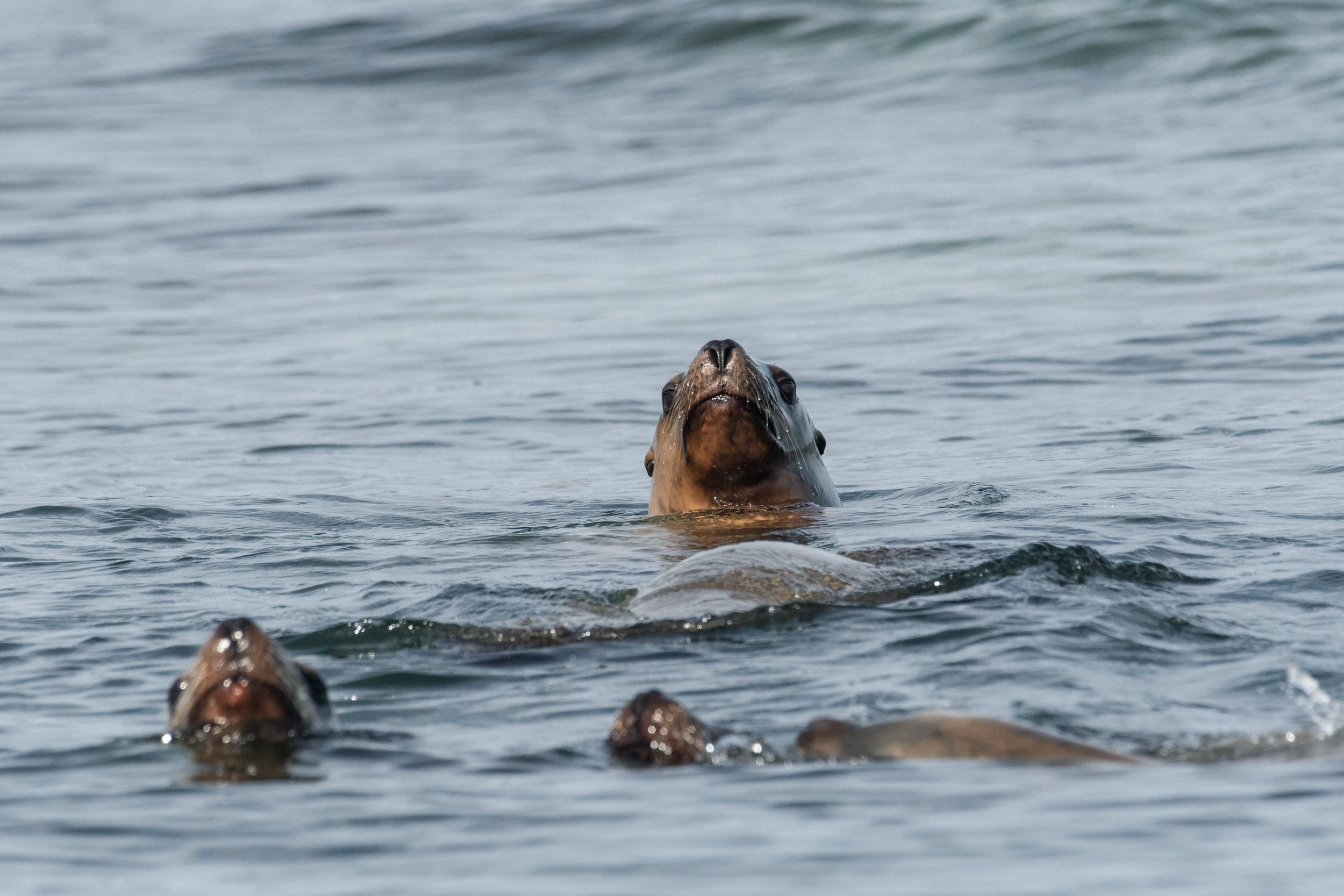
Curious Steller Sea Lions watching us from the water.
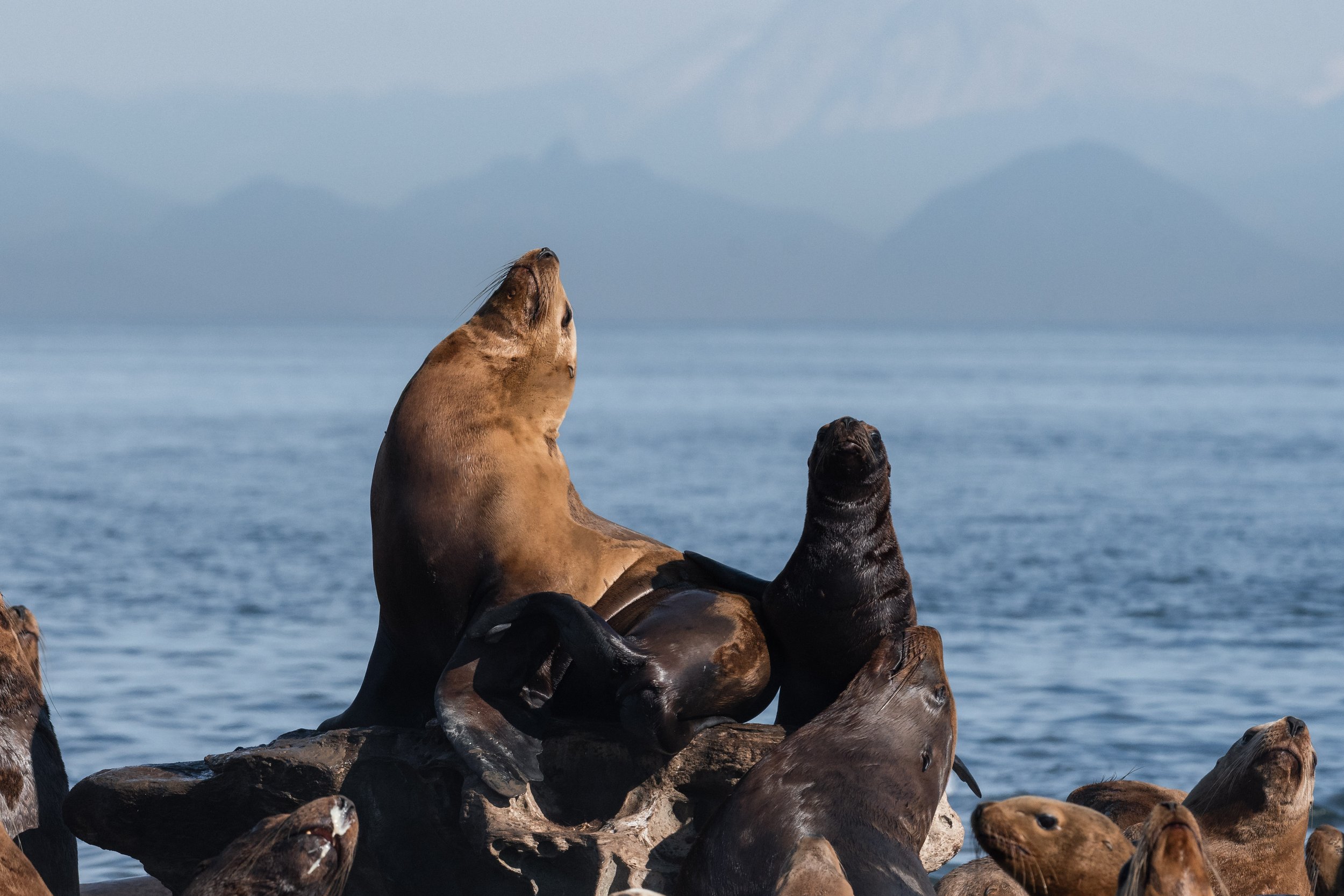
Lots of Steller Sea Lions sharing the little bit of rock left by the tide.
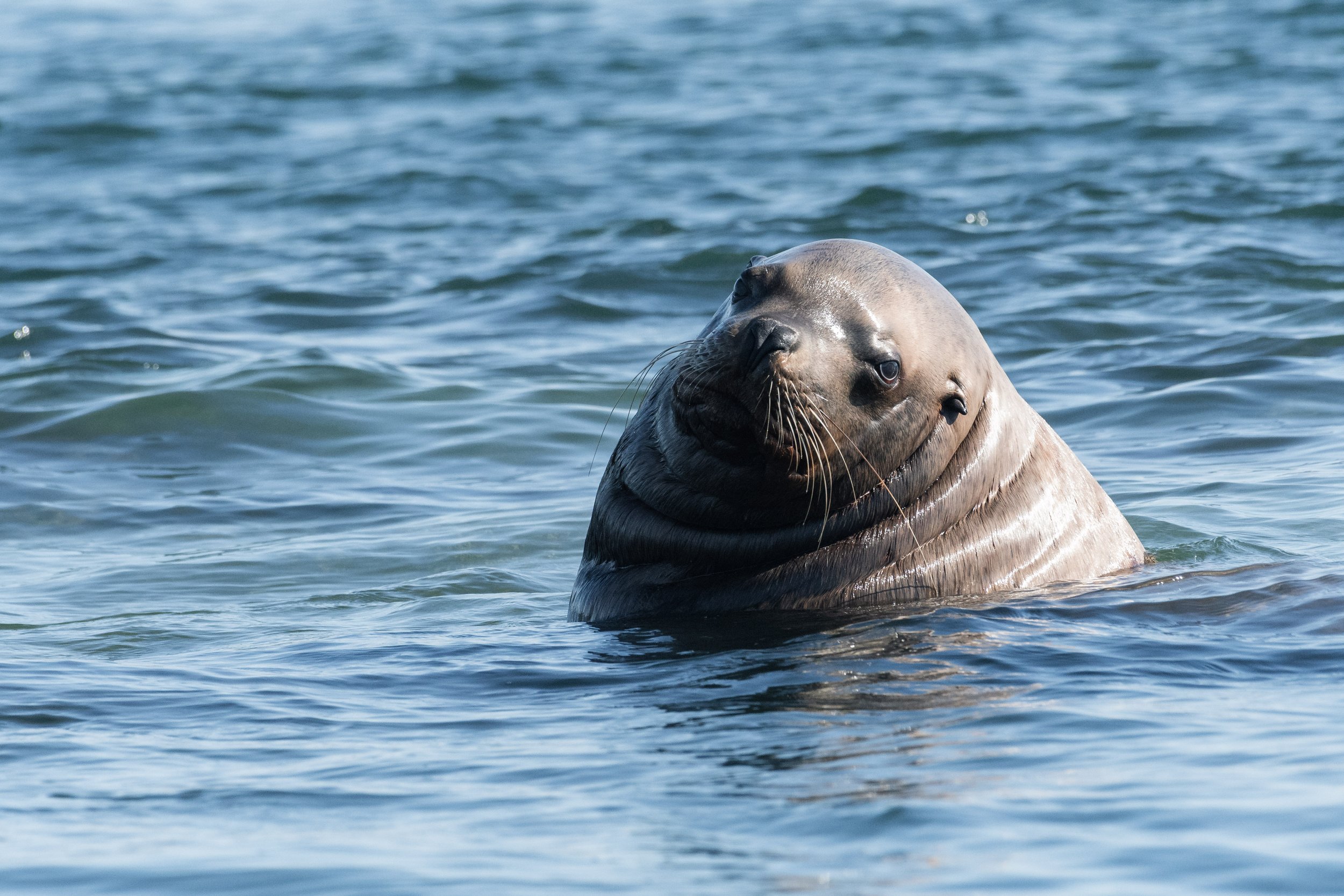
This large male Steller Sea lion was giving us quite the look!
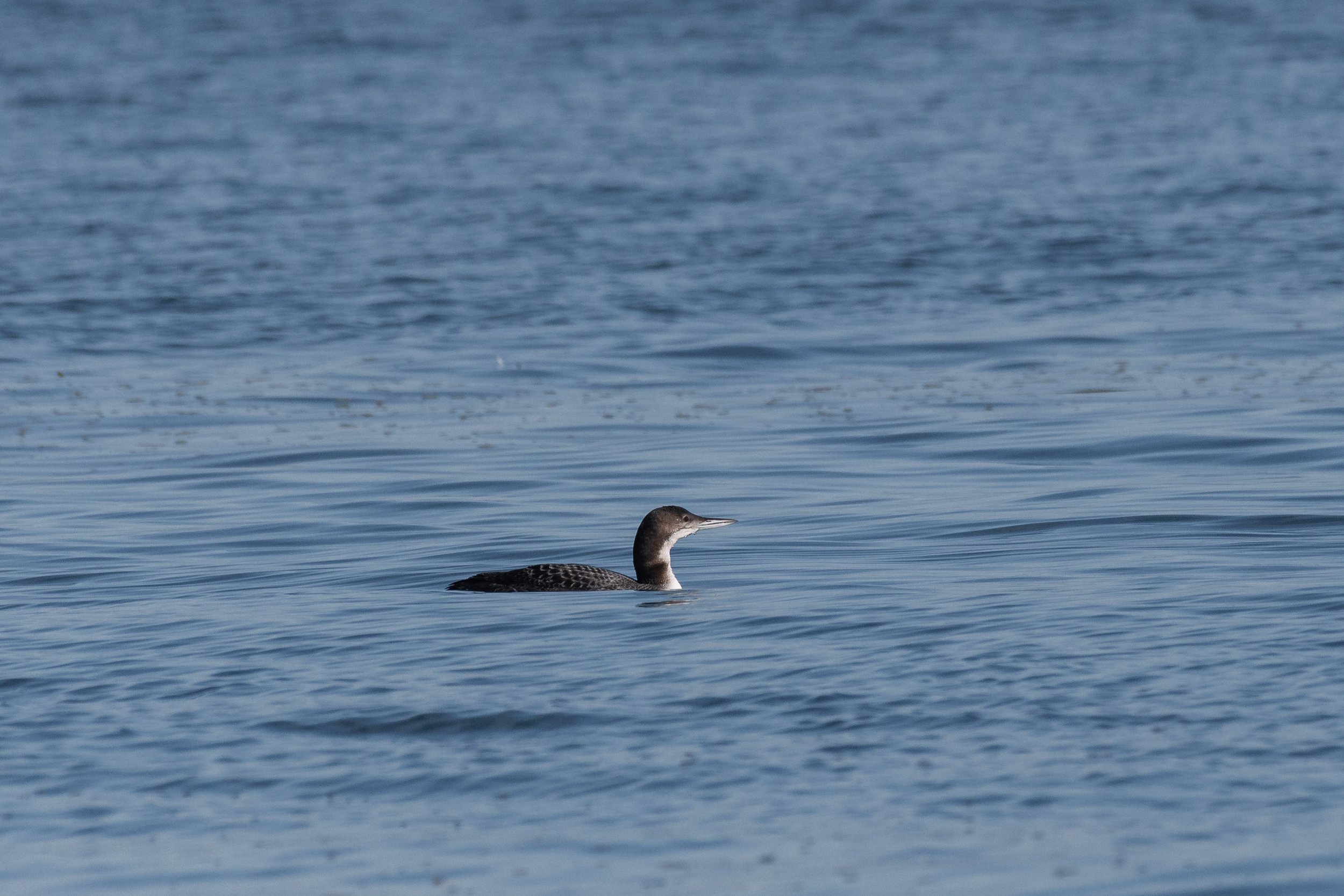
A loon floating by in the calm water.
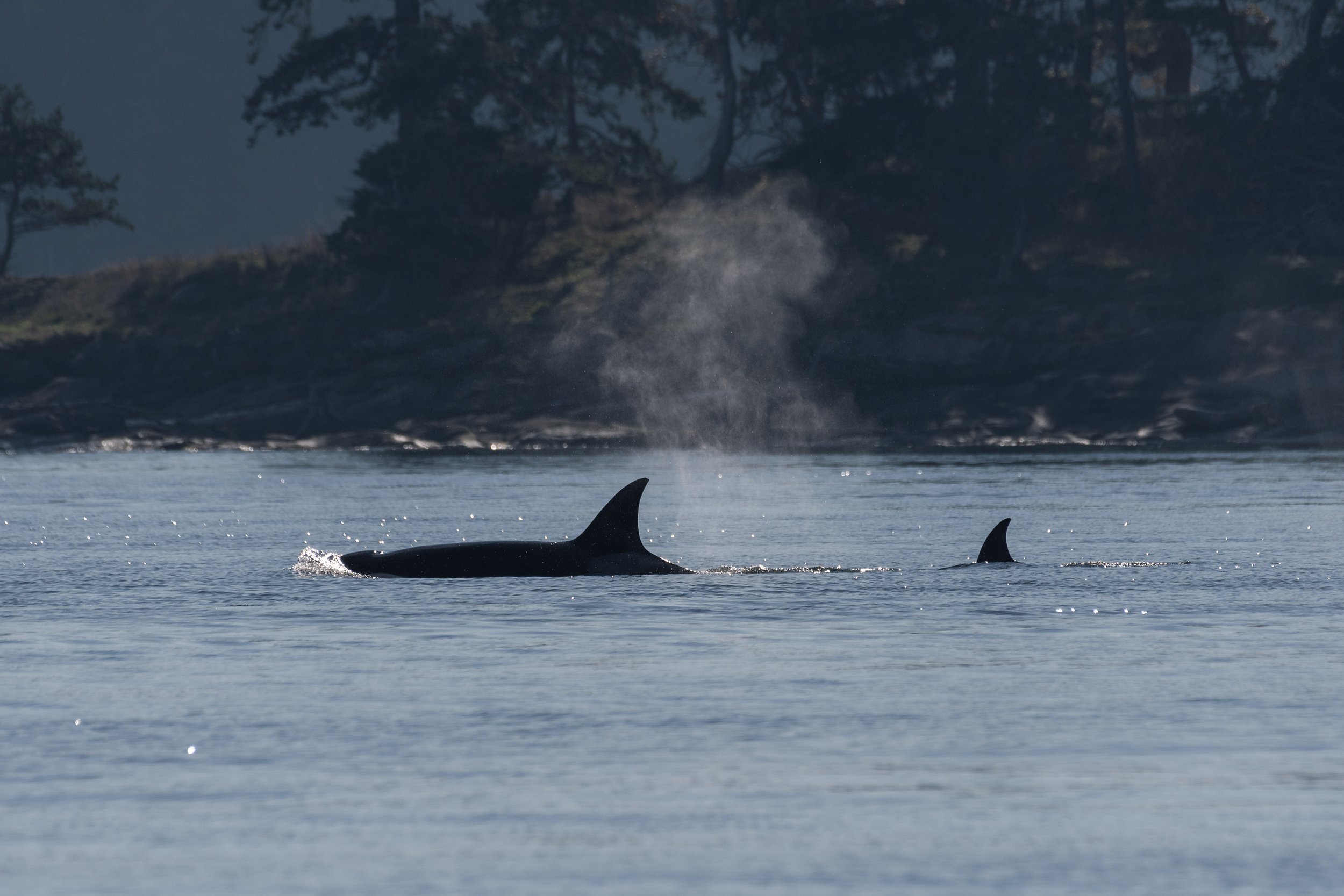
T037B Harald and T037B3 Slice surfacing together.
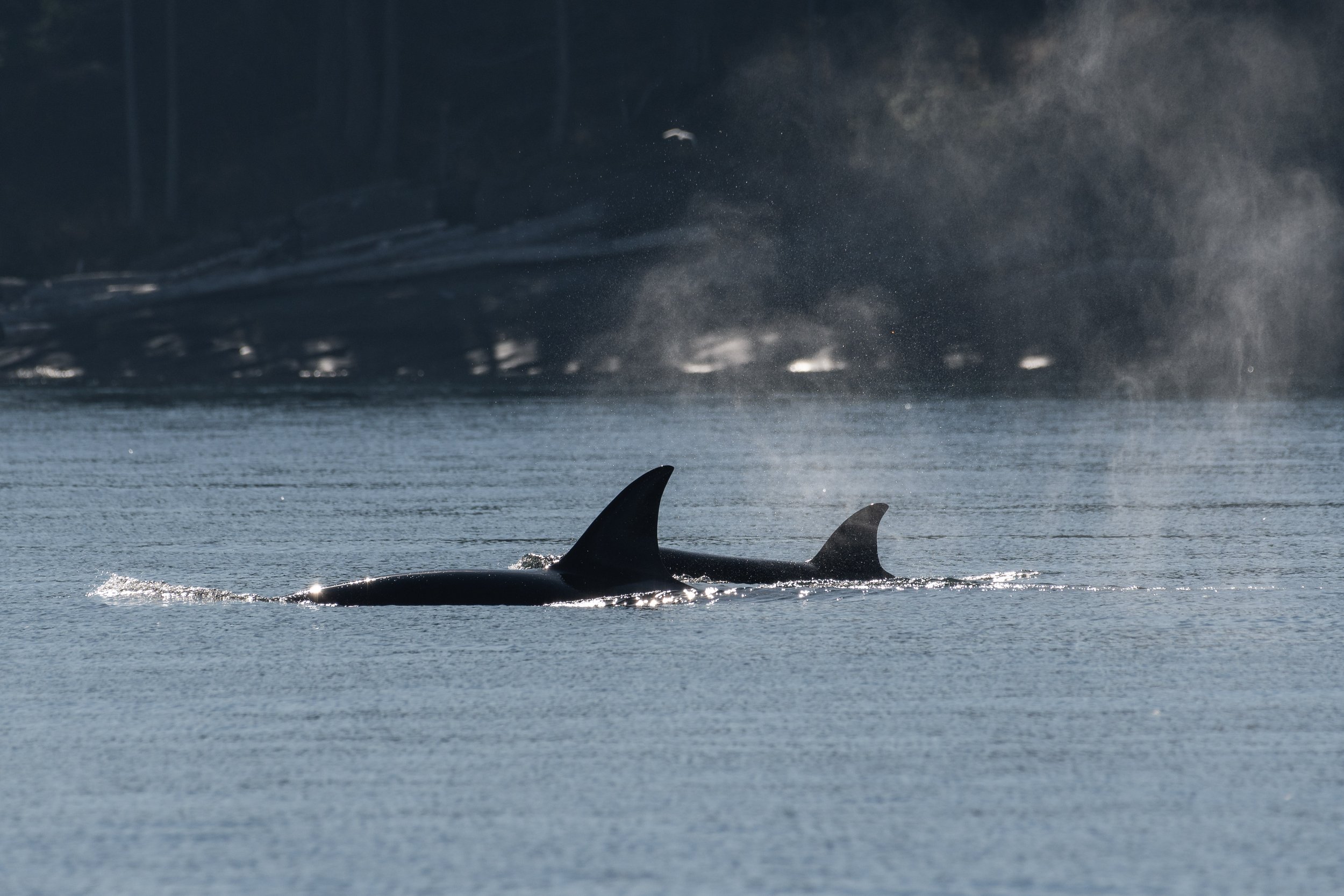
A lovely look at T037B Harald and T037B3 Slice.
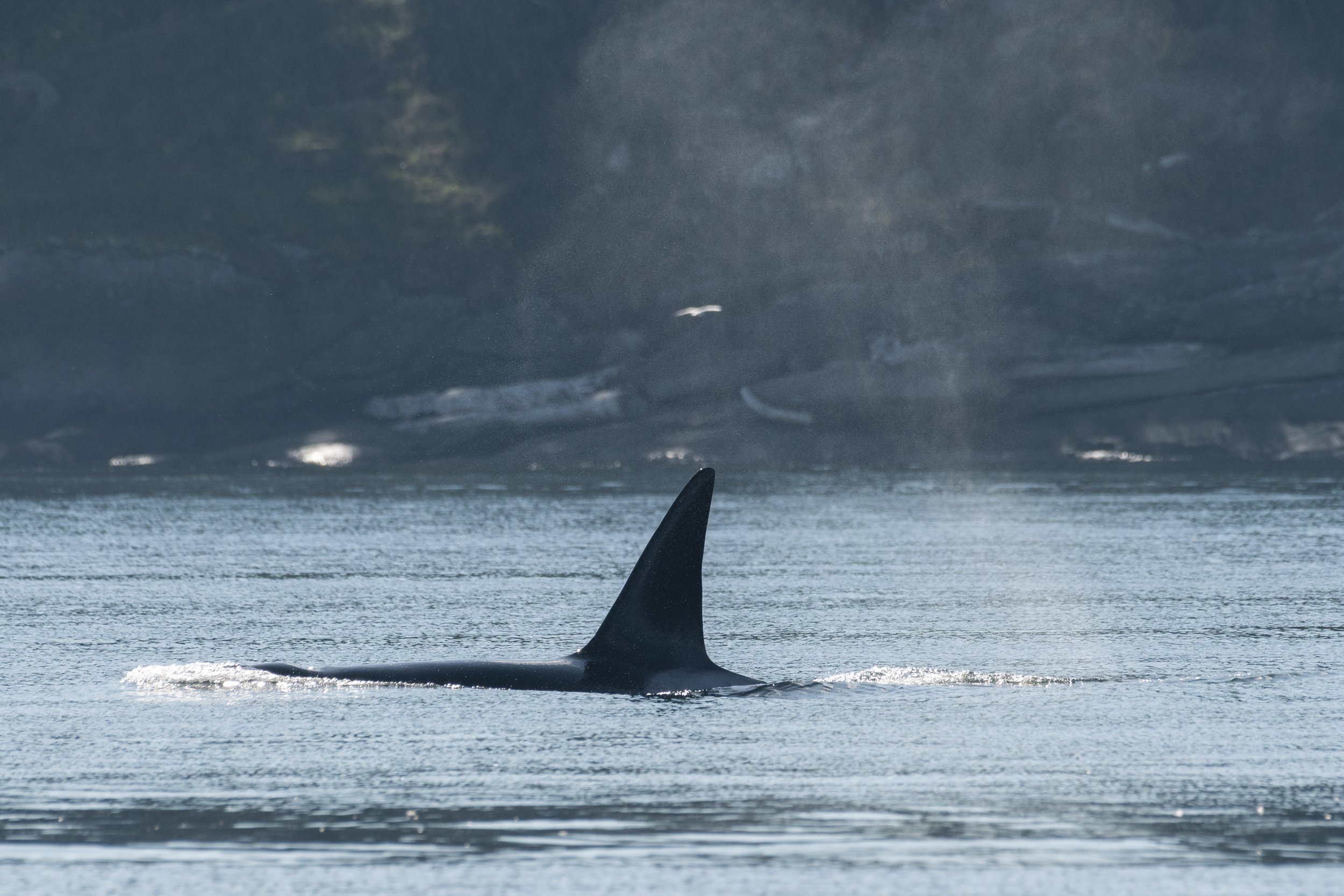
A nice look at T037B1 Lance in the sunshine.
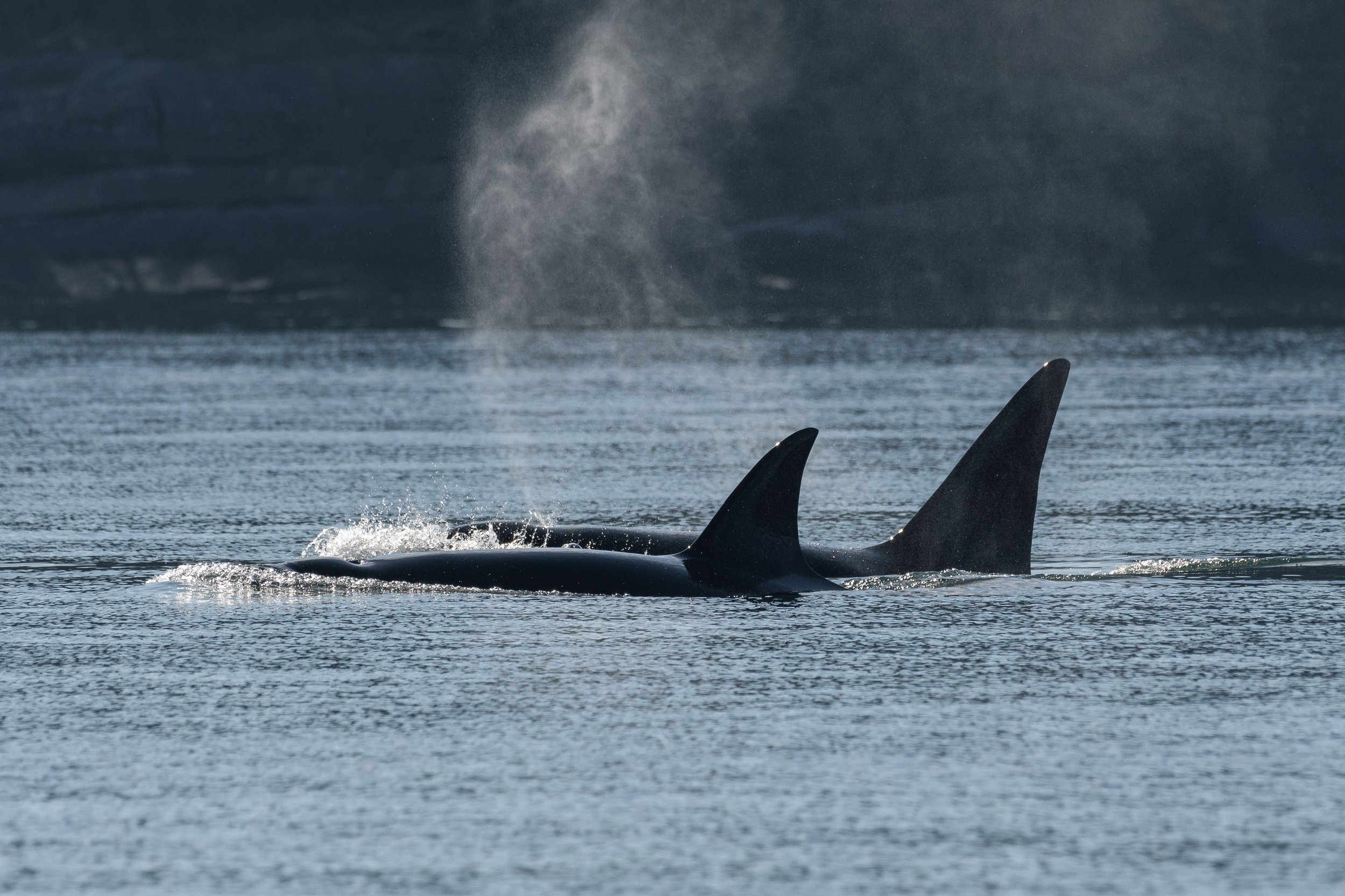
T037B Harald and T037B1 Lance surfacing together.
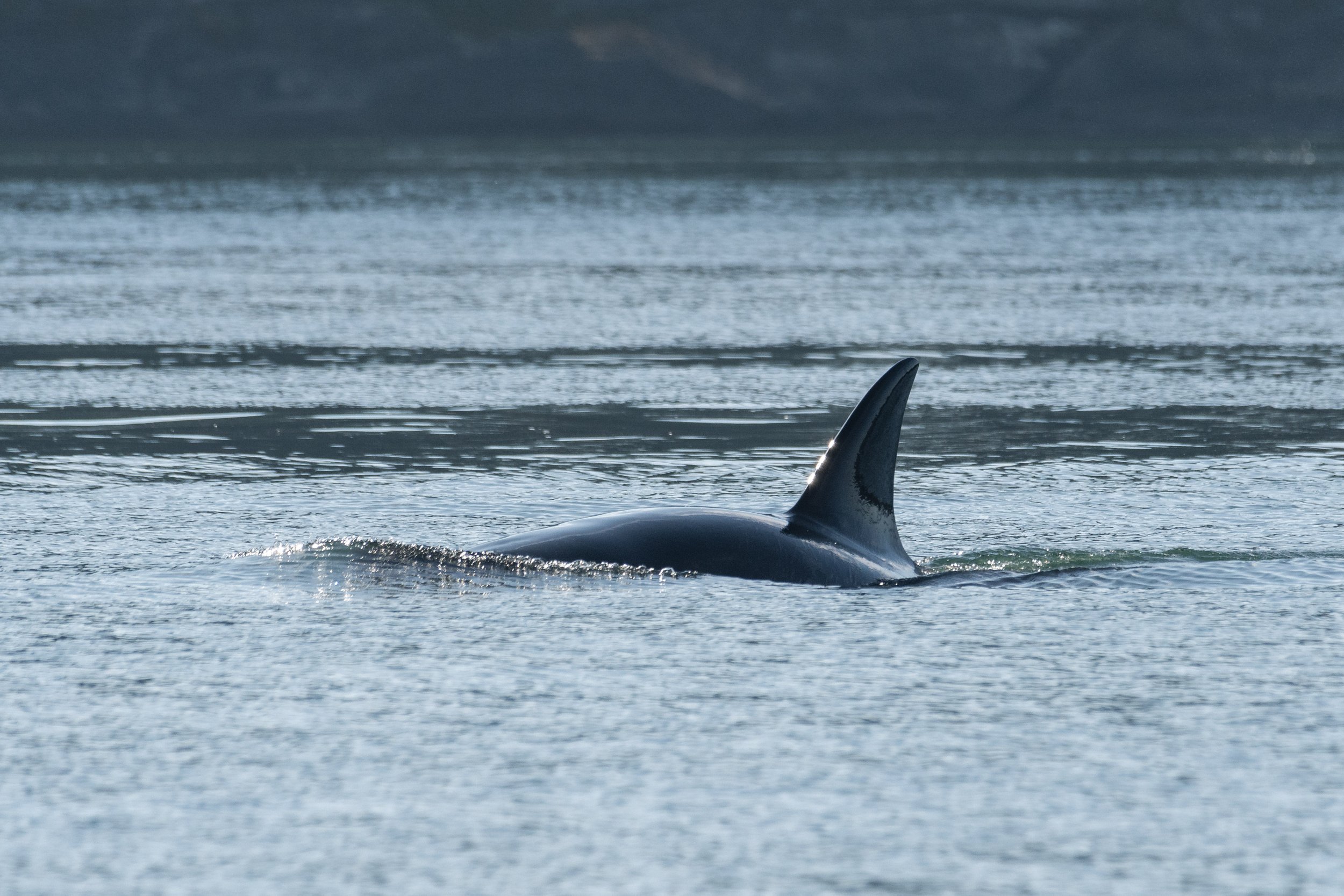
T037B Harald dipping below the calm water.
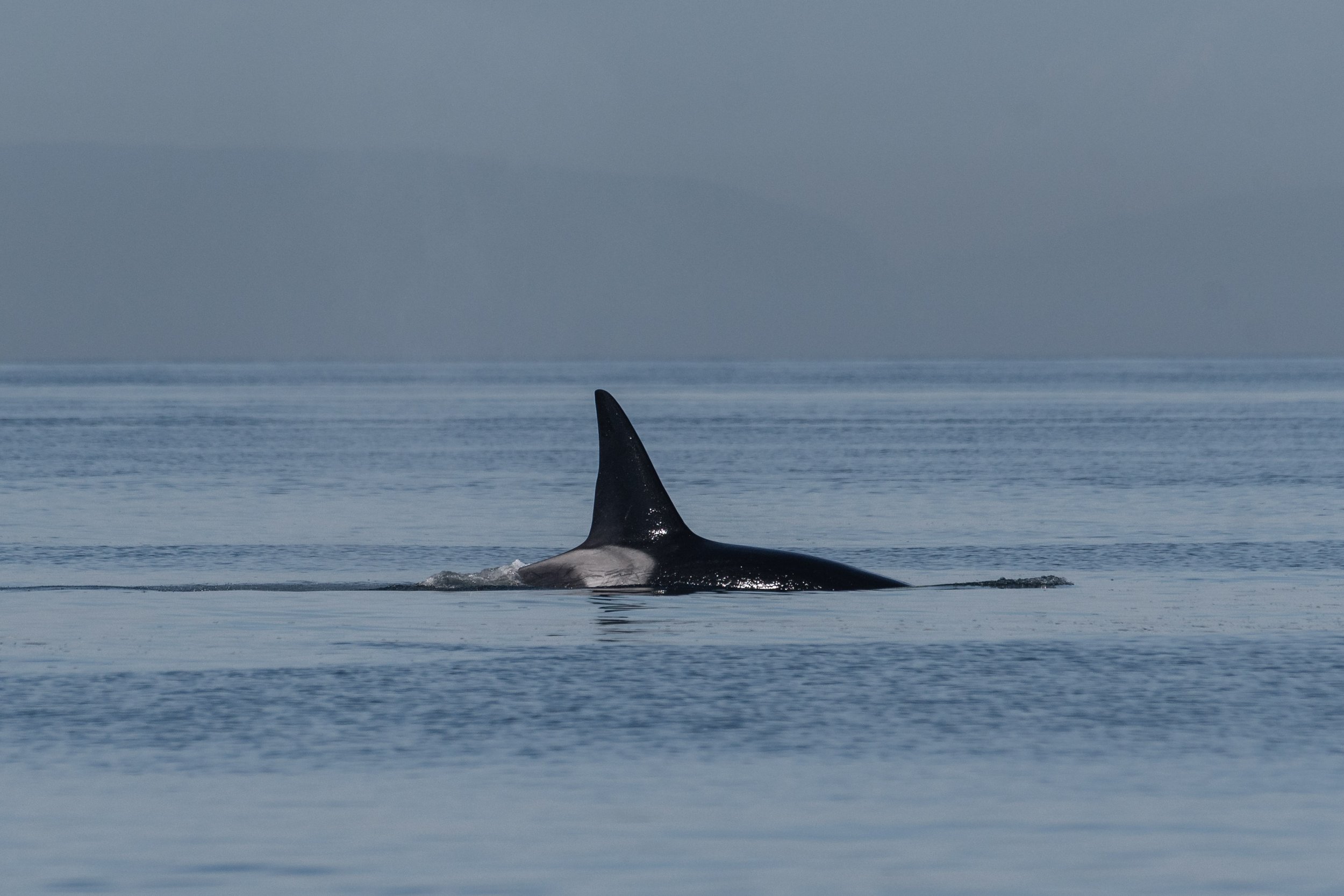
A lovely look at T037B1 Lance’s unique saddle patch.
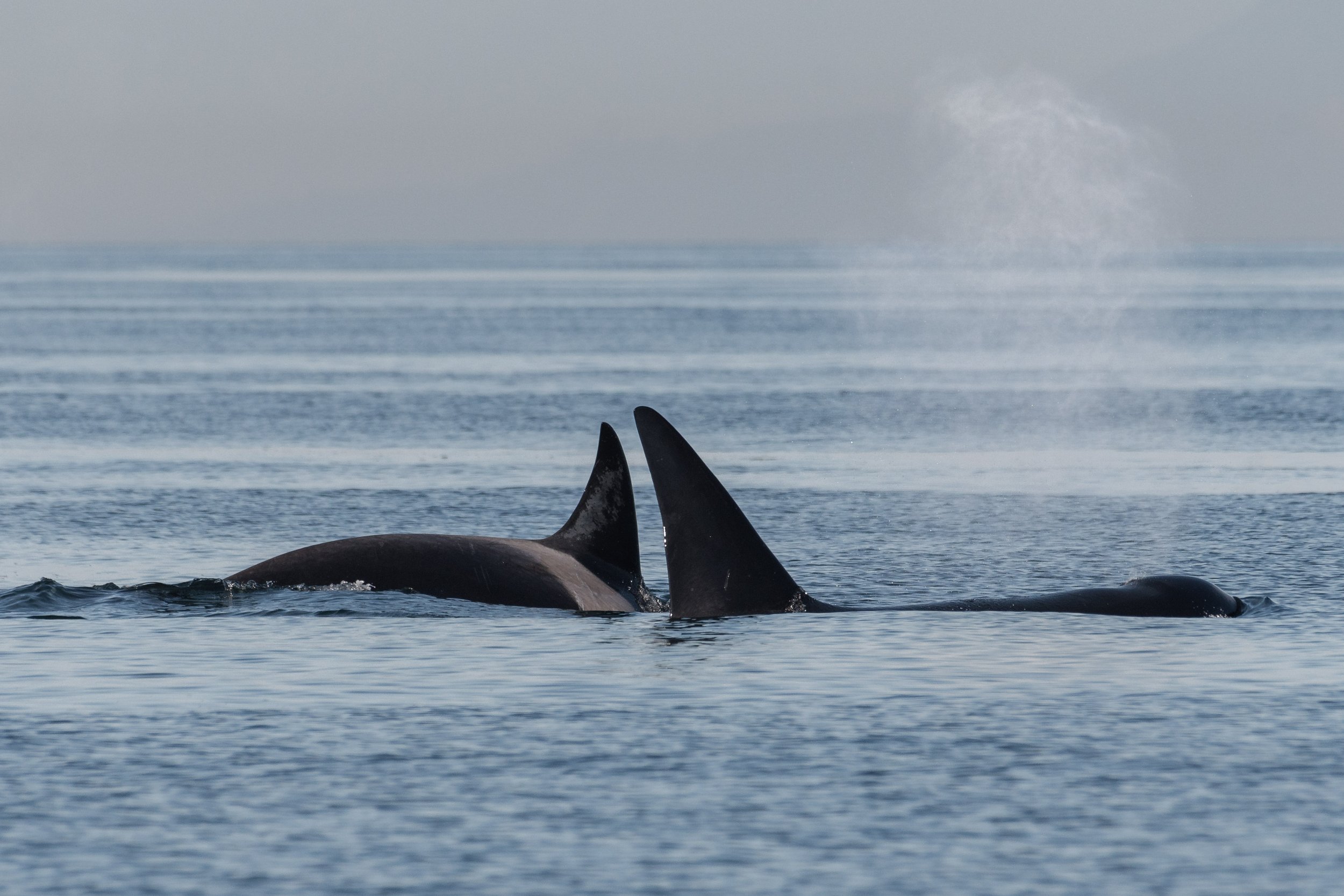
T037B1 Lance surfacing with his mom, T037B Harald.
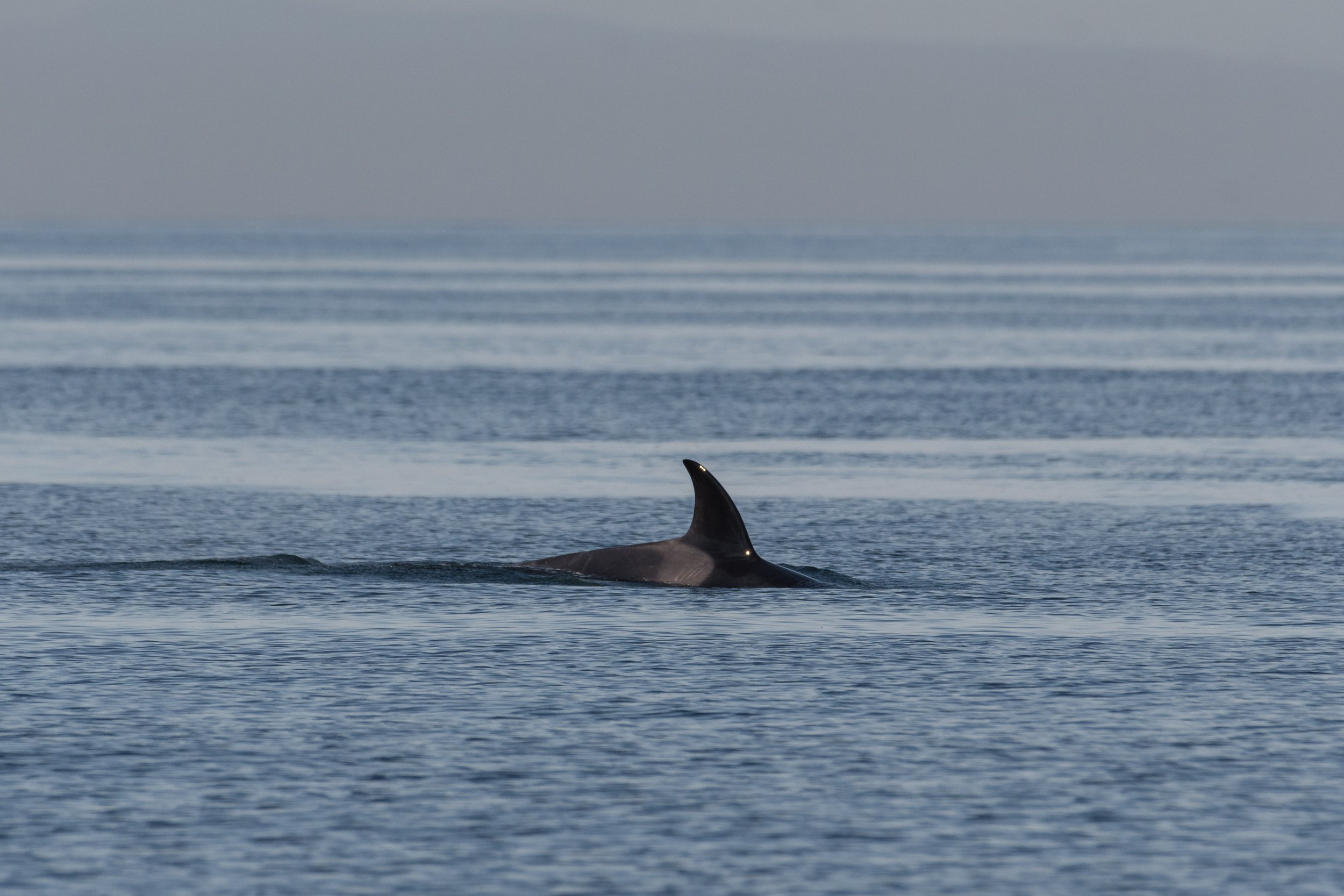
T037B3 Slice surfacing.
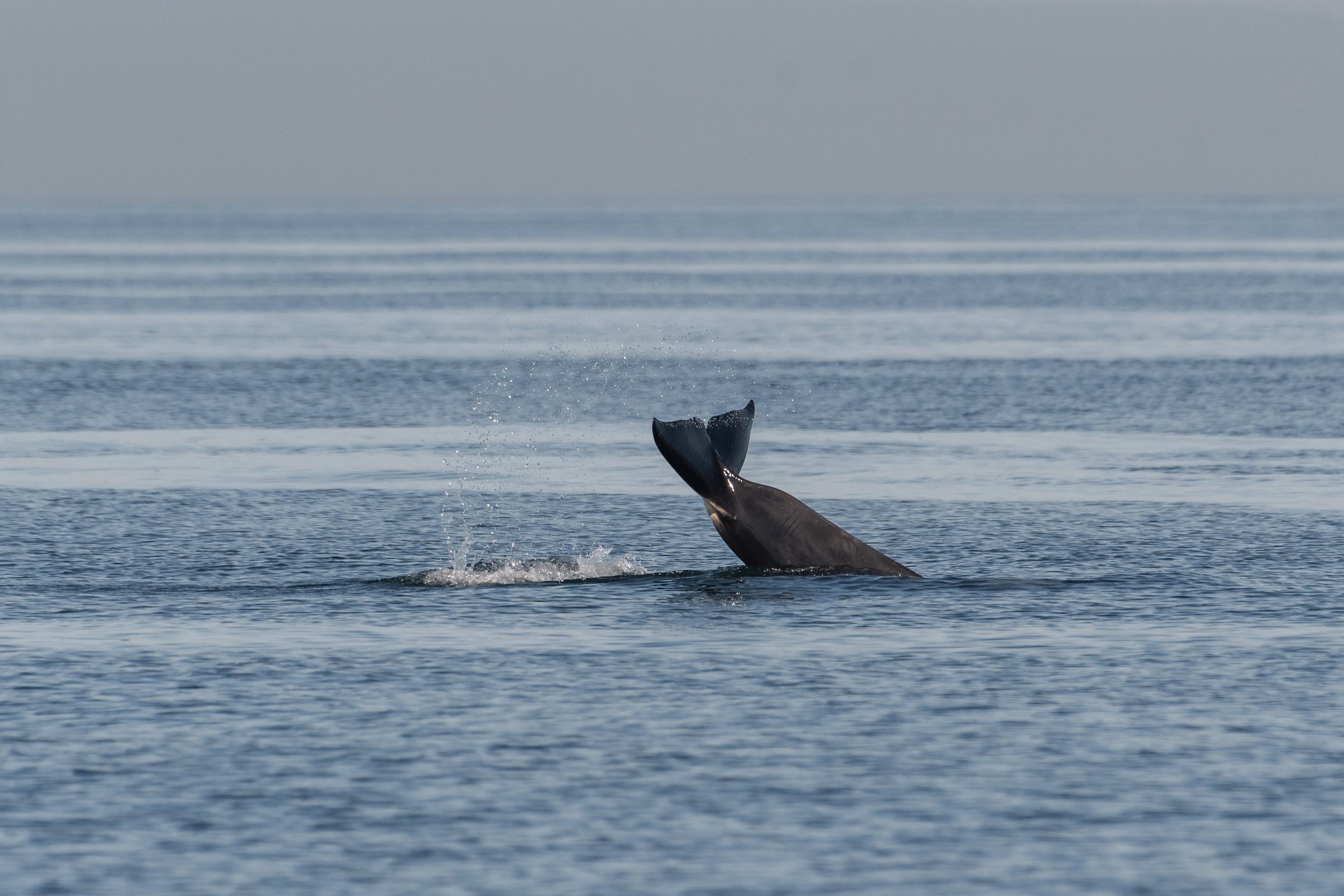
A nice little tail flick from T037B3 Slice.
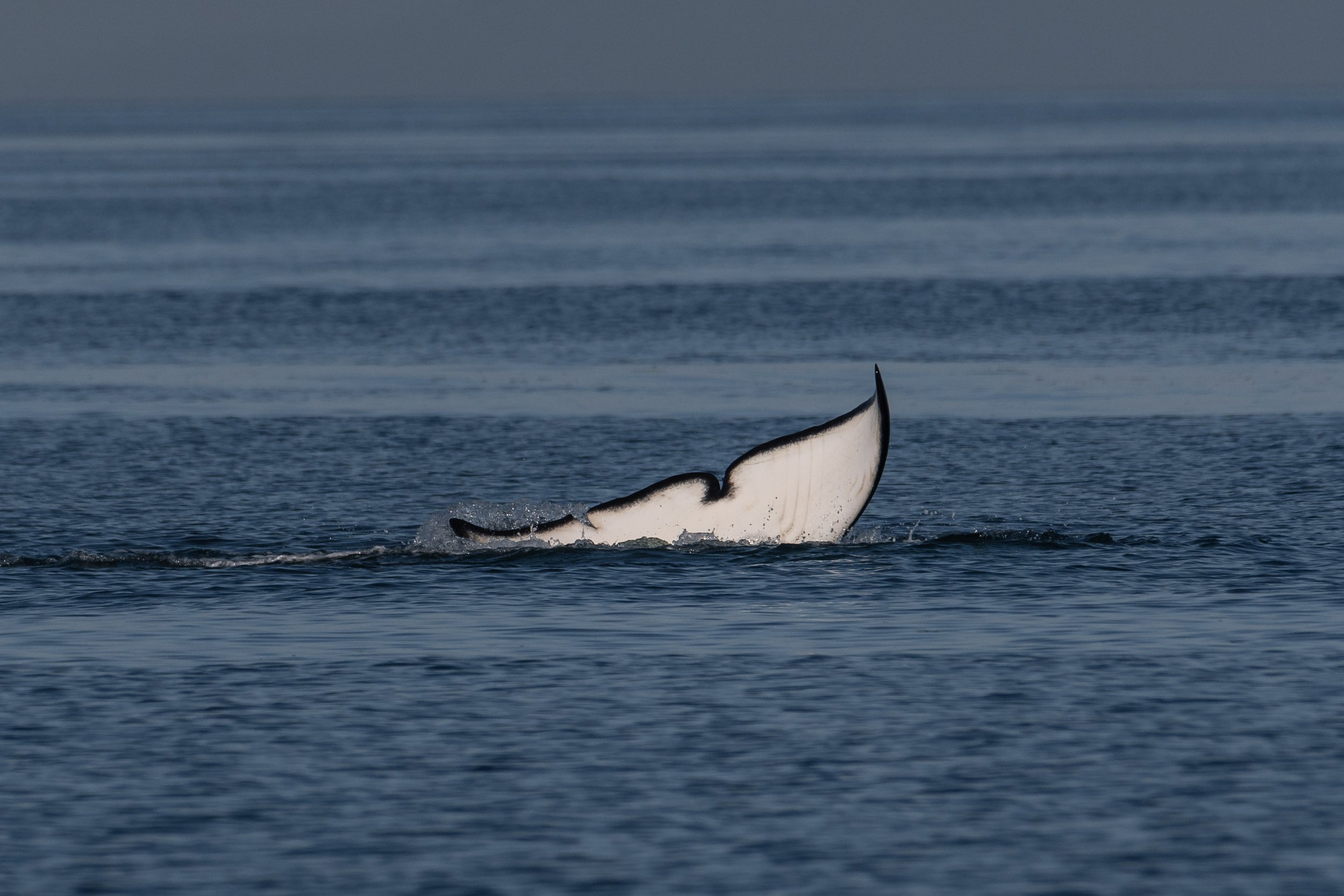
T037B3 Lance has some damage to his flukes, visible here.
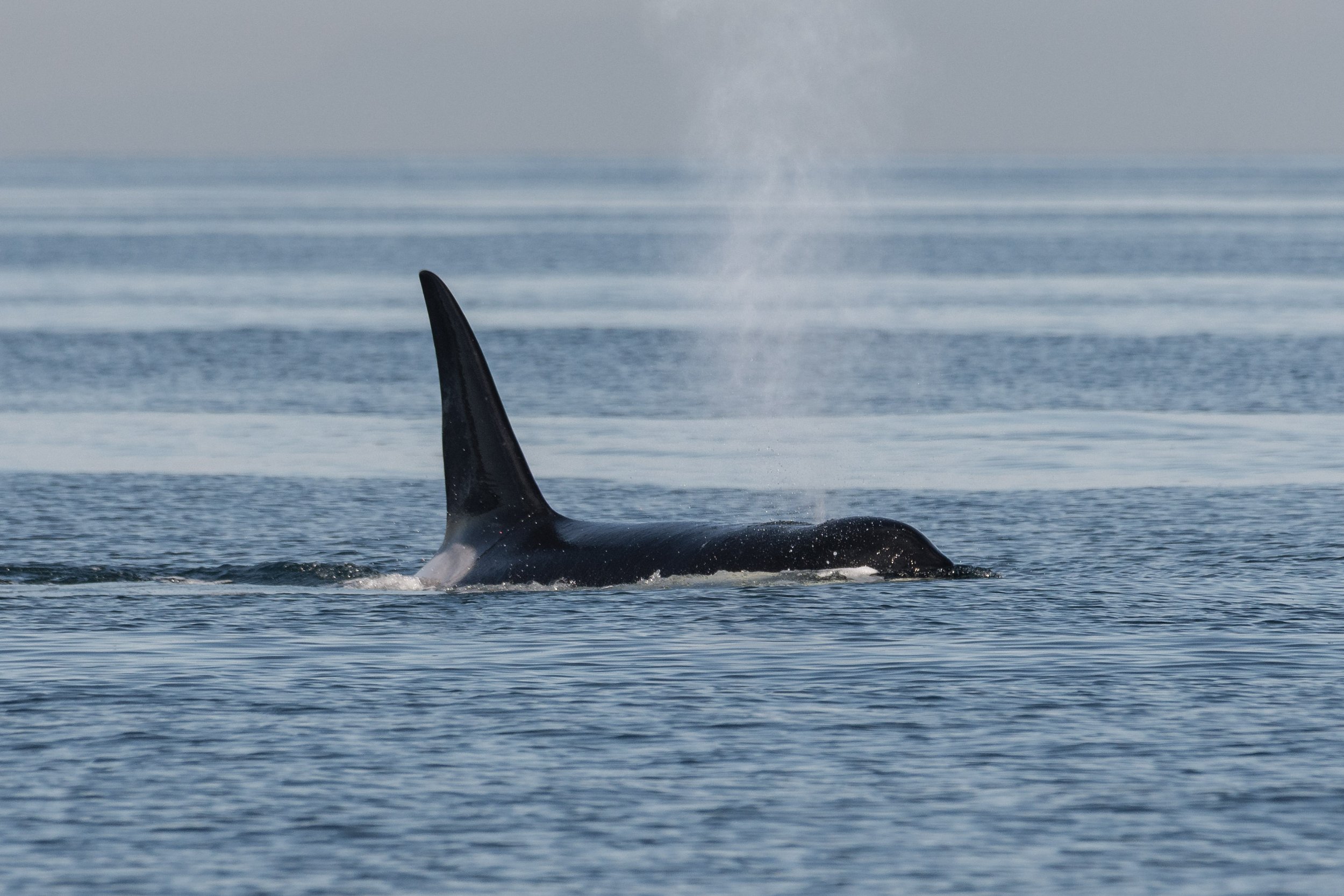
T037B1 Lance exhaling at the surface.
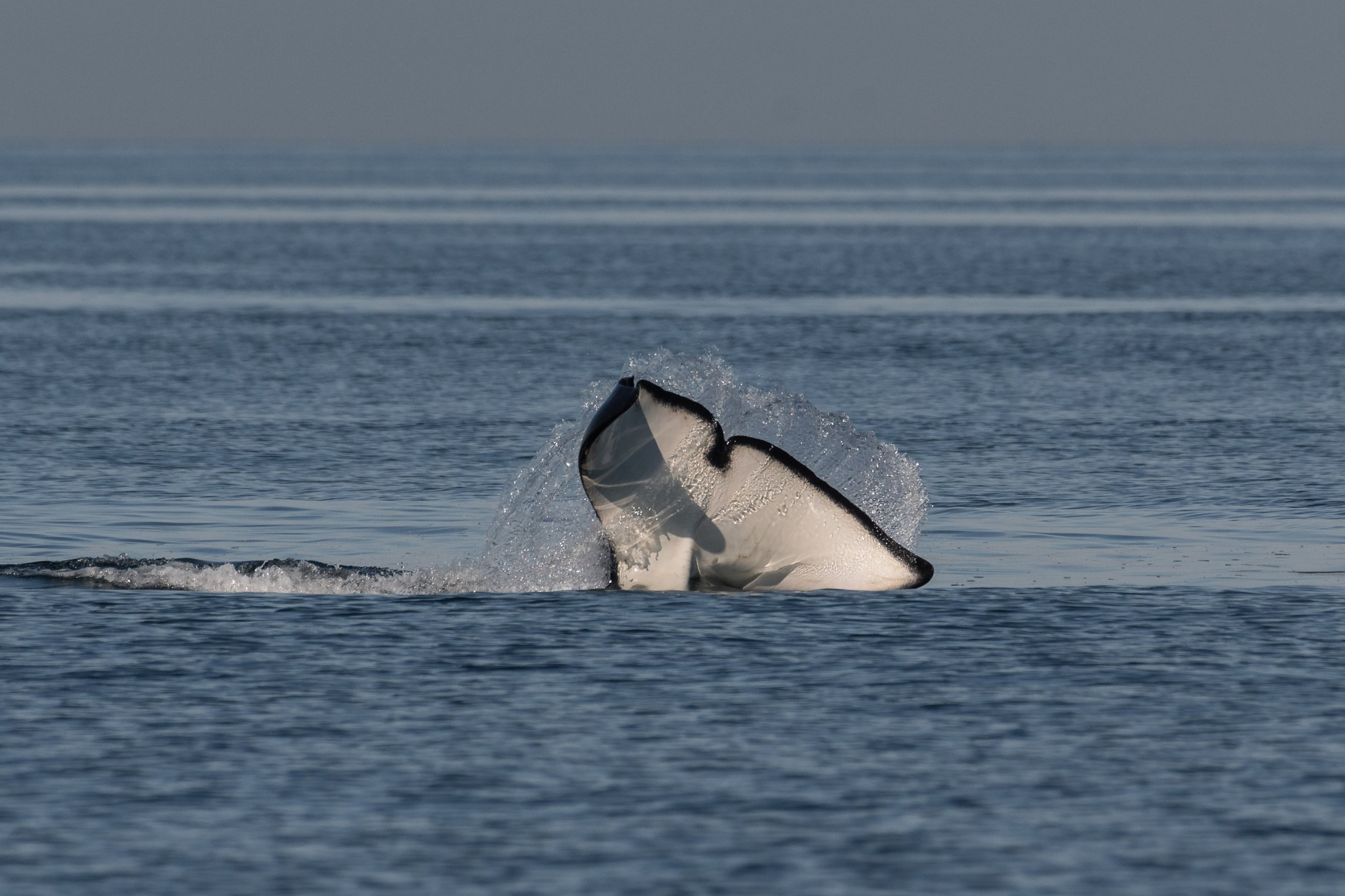
T037B1 Lance flicking his tail at the surface.
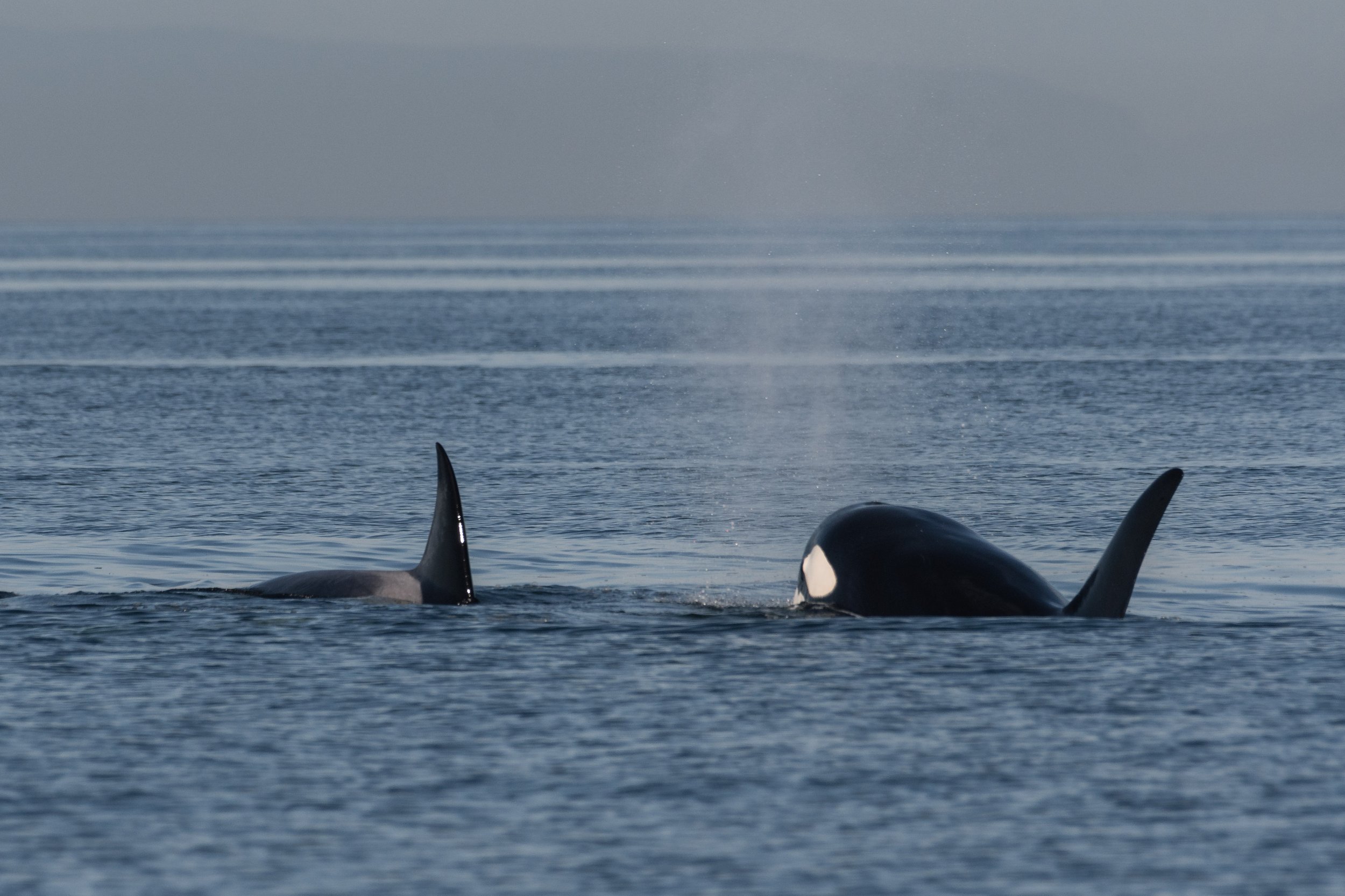
T037B Harald and T037B1 Lance surfacing together.
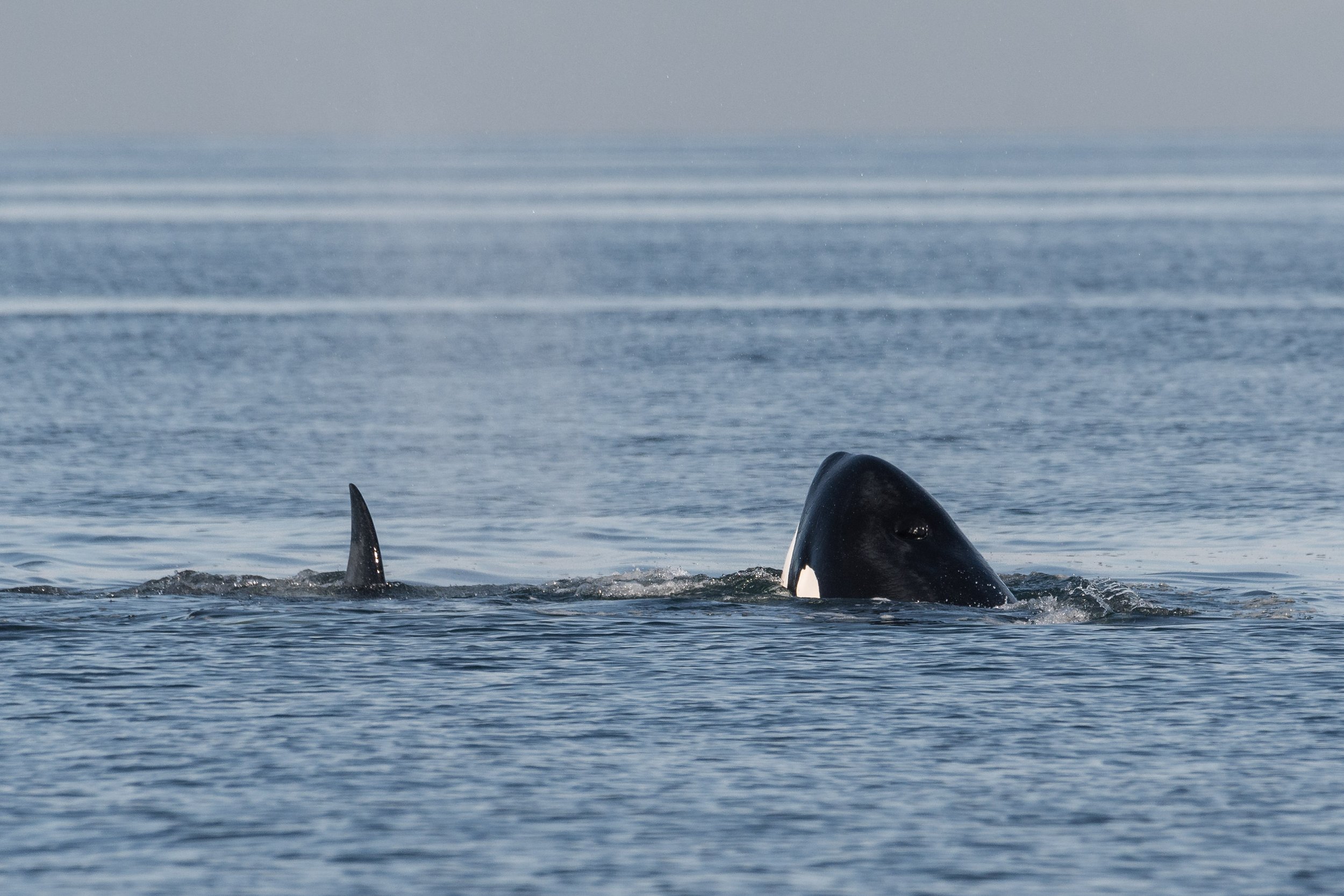
T037B1 Lance finishing off a moon-walk.
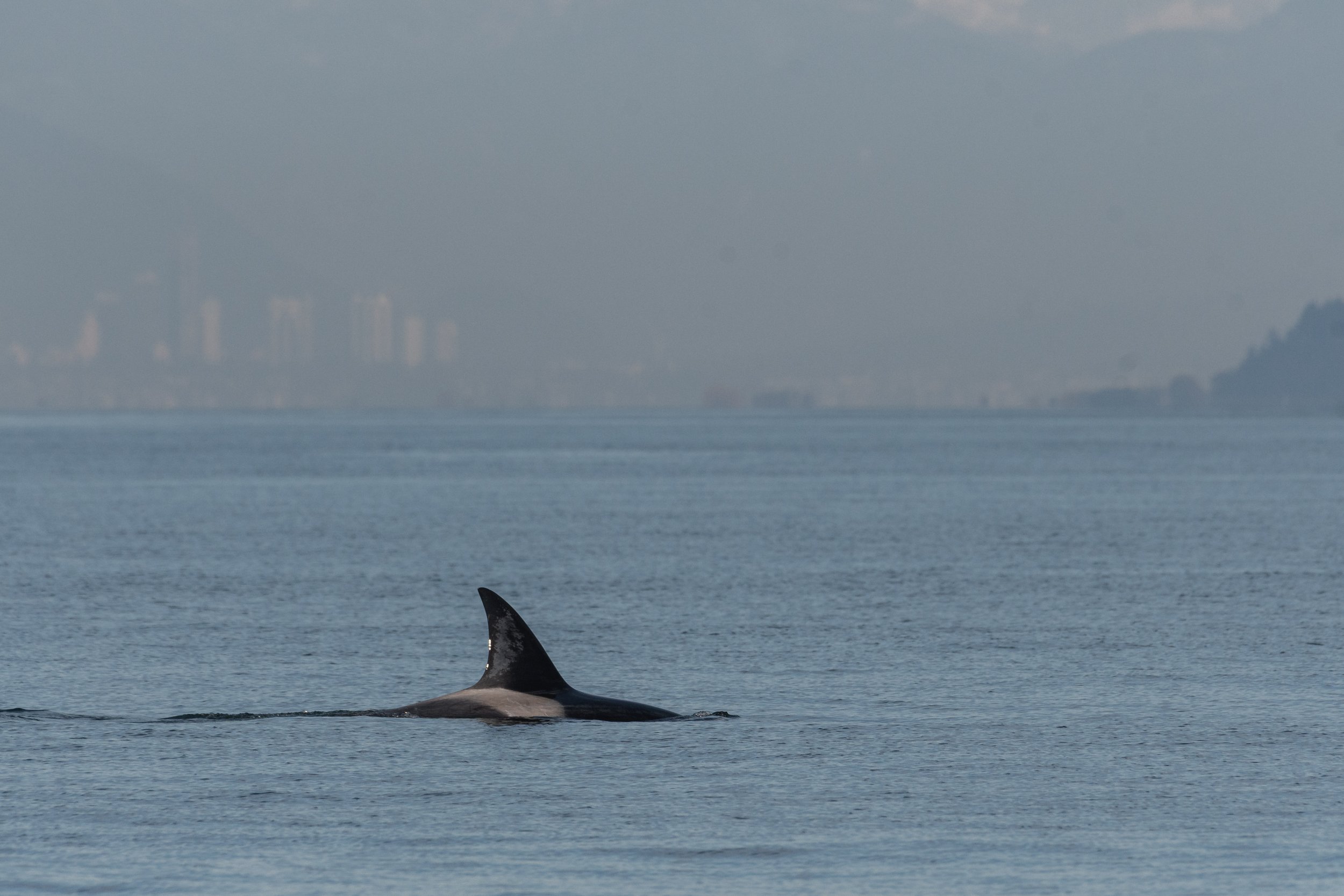
T037B Harald surfacing with the mainland in the background.
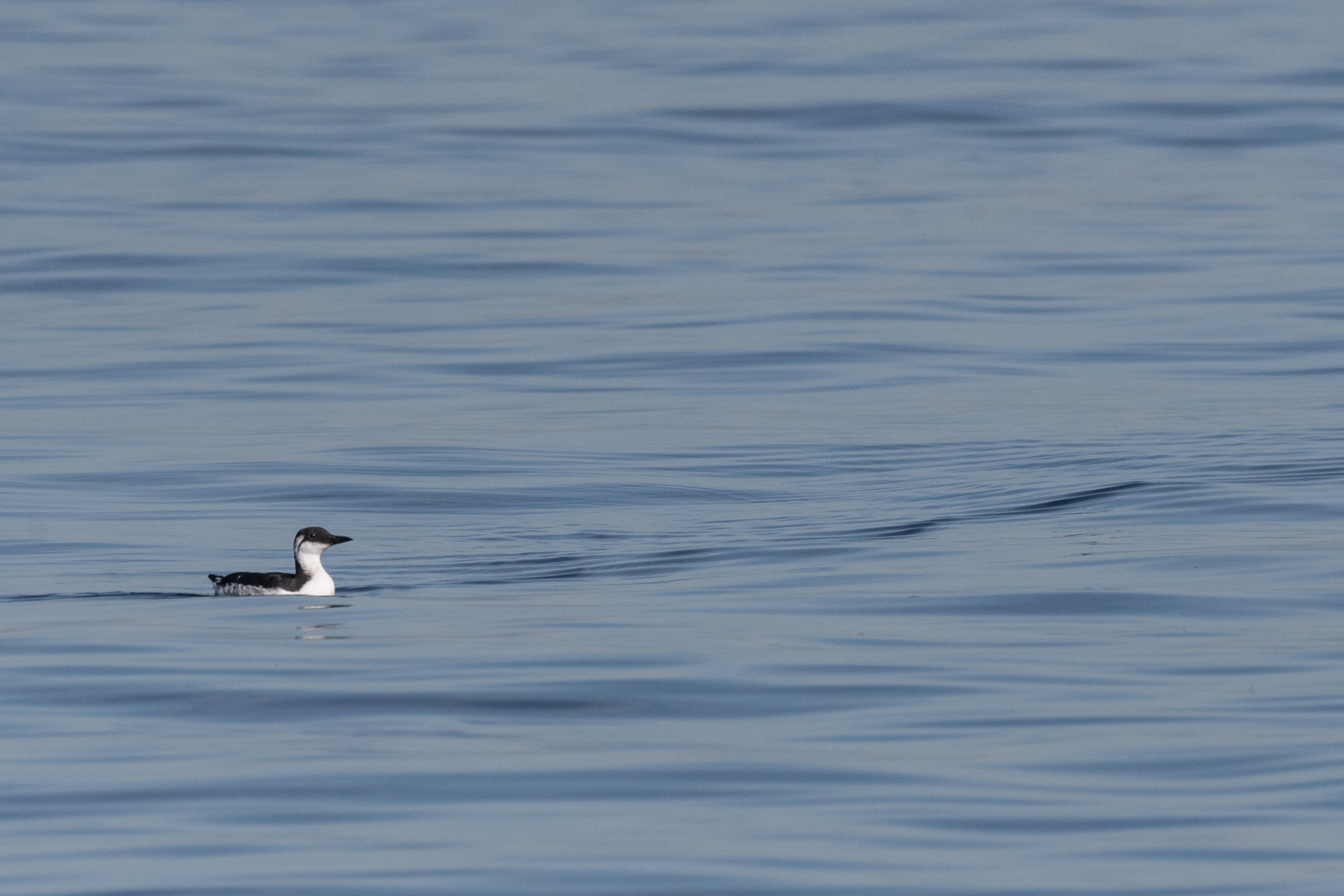
A very photogenic Common Murre.