
October 18, 2026 - Humpbacks spread across the Strait of Georgia, plus some interacting with orca!
Our open boat began the day east of Gabriola Island in the Strait of Georgia, where we found our first humpback whale resting by himself. This was Chi (BCZ0575), a familiar individual in our local waters. Humpback whales are often spotted travelling or feeding, but they also spend time resting between more active periods. Chi appeared to be enjoying a quiet moment at the surface, surfacing to breathe as he remained on his own. These slower encounters offer a different perspective on humpback behaviour, reminding us that their lives are not always filled with dramatic breaches, tail slaps, or feeding displays. Sometimes, the most interesting thing we can do is slow down and observe.
After spending time with Chi, we continued our search toward Halibut Bank, an area known for attracting wildlife because local upwelling makes the water highly productive. Here, we encountered several more humpback whales spread throughout the area. Kappa (BCX0158) and Bump (BCY0771) were travelling together, while Hammer (BCY1222) and Vector (BCX2485) were another pair in the area. We also spotted Helen (BCX2494) passing through alone.
Seeing so many familiar whales in the same general area reminds us how important productive feeding grounds are for humpbacks. During the feeding season, these whales need to consume substantial quantities of prey, up to 3,000 pounds daily, to build the fat reserves that sustain them through their seasonal migration. Humpbacks feed on small schooling fish and krill, using a variety of techniques to gather prey before filtering enormous mouthfuls of water through their baleen plates.
Although several whales may feed in the same area, that does not necessarily mean they belong to one group. Humpbacks can form temporary associations while using the same feeding grounds, and these relationships may change as the whales move around. Some individuals may travel together, while others pass through the area independently. Each encounter gives us another small glimpse into how these animals use the waters around Vancouver Island.
With several humpbacks already on our sightings list, we continued along the coast toward Stinky Rock. Here, we found a group of Steller Sea Lions hauled out on the exposed rocks. After watching whales move through the Strait of Georgia, the sea lions offered a change of pace, and their gathering gave us a chance to observe another important part of the local marine ecosystem.
Haul-outs are places where sea lions come ashore or rest on the rocky shorelines between periods in the water. These sites provide opportunities to rest, socialize and carry out other important behaviours, including thermoregulation. Steller Sea Lions are highly social animals, and several individuals may gather closely together on a suitable stretch of rock. The same animals that appear relatively relaxed while hauled out are capable swimmers and formidable predators in the water, where they feed on fish and squid.
After our stop at Stinky Rock, the adventure took a particularly interesting turn. We encountered T065A3 Amir, travelling quickly on his own and seemingly intent on reaching a larger gathering of orcas. We followed his direction of travel and eventually caught up with the group he was heading toward.
What we found was a gathering known as a T-party, with the T034s, T037, T037Bs and T049A2 travelling together.
T034 Grace ♀ (≤ 1969)
T034A Pachamama ♀ (2007)
T034A2 Amaru ♀ (2024)
T034B Sonder ♀ (2017)
T037 Rocky III/Pizza Fin ♀ (1979)
T037B Harald ♀ (1998)
T037B1 Lance ♂ (2012)
T037B3 Slice ♀ (2022)
T049A2 Jude ♂ (2007)
T065A3 Amir ♂ (2007)
These gatherings bring together Bigg's orcas from different family groups and can provide opportunities for social interaction beyond the whales' usual family associations. Bigg's orcas are known for their close family relationships, but their social lives are not limited to travelling with the same individuals every day. Seeing whales from several groups together makes encounters like these especially interesting, as we get to observe a broader range of relationships within the population.
However, the orcas were not alone. Two humpback whales, Uluka (BCX1702) and Turkey (BCY1157), were pursuing the group, and the water around us soon became a flurry of activity. The humpbacks trumpeted and rolled at the surface, while the orcas responded with dramatic tail slaps. Rather than simply travelling together, the whales appeared to be actively interacting, creating a scene that was both exciting to witness and fascinating to interpret.
Interactions between humpbacks and Bigg's orcas can be particularly complex. Bigg's orcas specialize in hunting marine mammals, and humpbacks have been documented approaching and interfering with them during encounters involving prey. Researchers studying these interactions have recorded behaviours such as pursuing orcas, vocalizing and slapping the water with their tails or flippers. Researchers sometimes describe this behaviour as mobbing, although the motivation behind any particular encounter is not always clear.
The behaviour we witnessed from Uluka and Turkey was a striking example of just how dynamic these interspecies encounters can be. Their trumpeting and rolling, alongside the orcas' tail slaps, gave us plenty to observe. However, surface activity alone cannot tell us exactly what prompted the interaction or what each animal was communicating. Without seeing what had happened before we arrived, we could not confidently determine why the humpbacks were pursuing the orcas. That uncertainty is part of what makes observing wild animals so compelling. We can gather clues from their behaviour, compare what we see with previous observations, and still recognize that we may not have the full story. In addition to this interesting interaction, we also observed two additional humpbacks, Valiant (BCX1773) and an unknown friend in the area, seemingly unbothered by the orca’s presence.
For us, the encounter was a reminder that the Strait of Georgia is more than a corridor for whales moving between feeding areas. It is a living ecosystem where different species share the same waters, sometimes crossing paths in ways that reveal unexpected sides of their behaviour. An orca travelling independently can lead us to a gathering of several family groups, and that gathering can become the setting for a remarkable interaction with another of the ocean's largest mammals.
From Chi resting east of Gabriola Island, to the collection of feeding humpbacks at Halibut Bank, the Steller Sea Lions at Stinky Rock, and the lively encounter between Amir's group and Uluka and Turkey, the day offered a wonderful range of wildlife behaviours to observe. Each sighting was different, and together they highlighted the diversity of marine life that makes our local waters such a fascinating place to explore.
Photos by Marine Naturalist Rosalie Burauen.
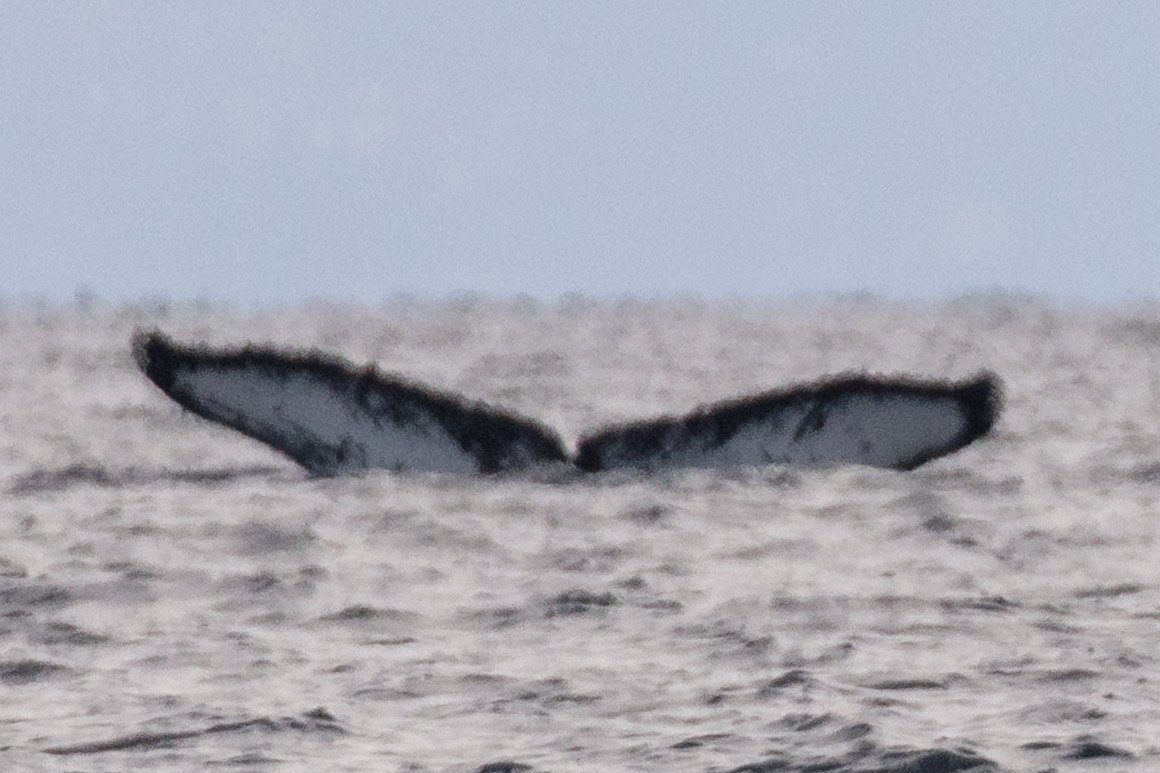
A distant photo that lets us confirm our sleepy whale was Chi!
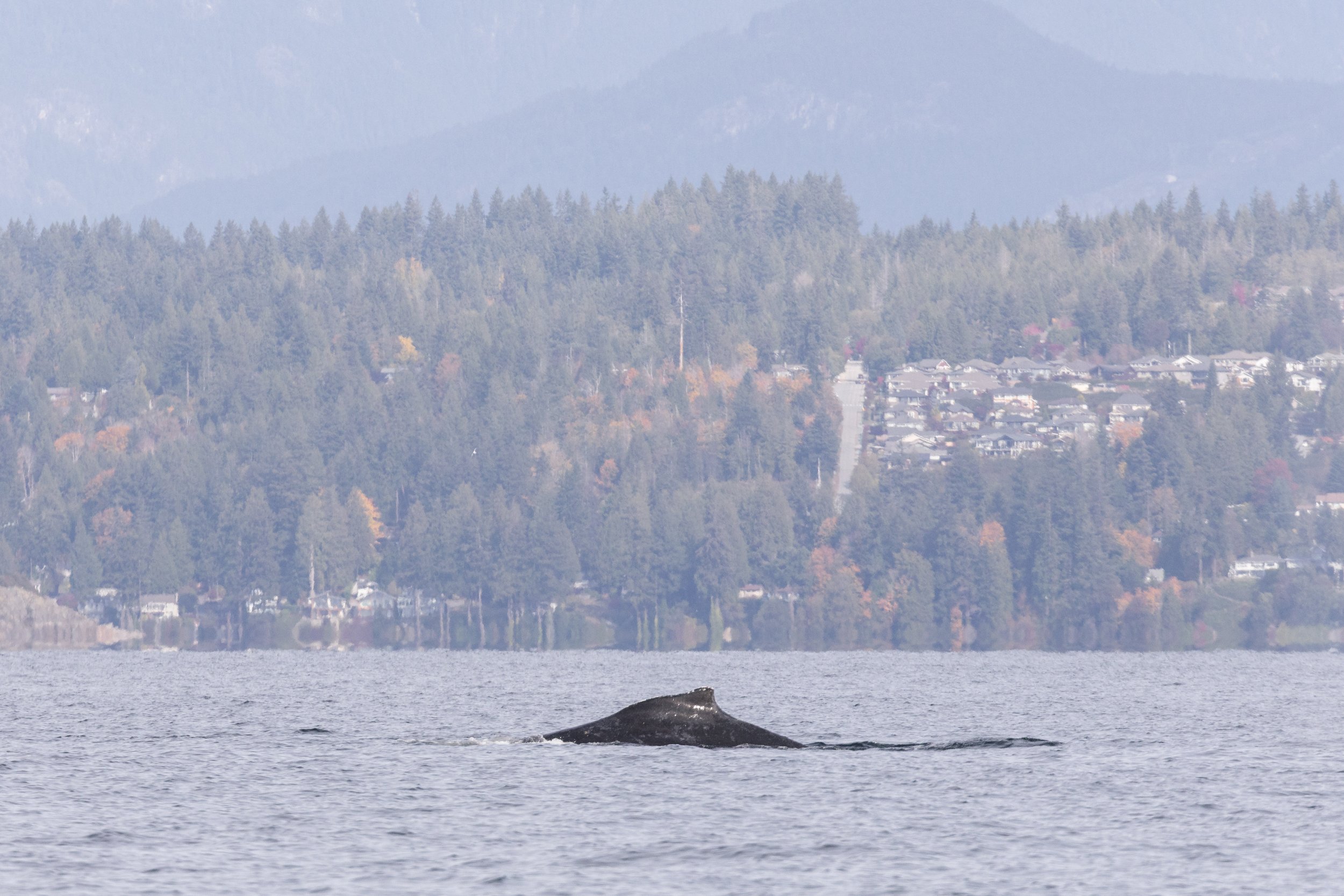
Bump surfacing with the beautiful fall colours behind them.
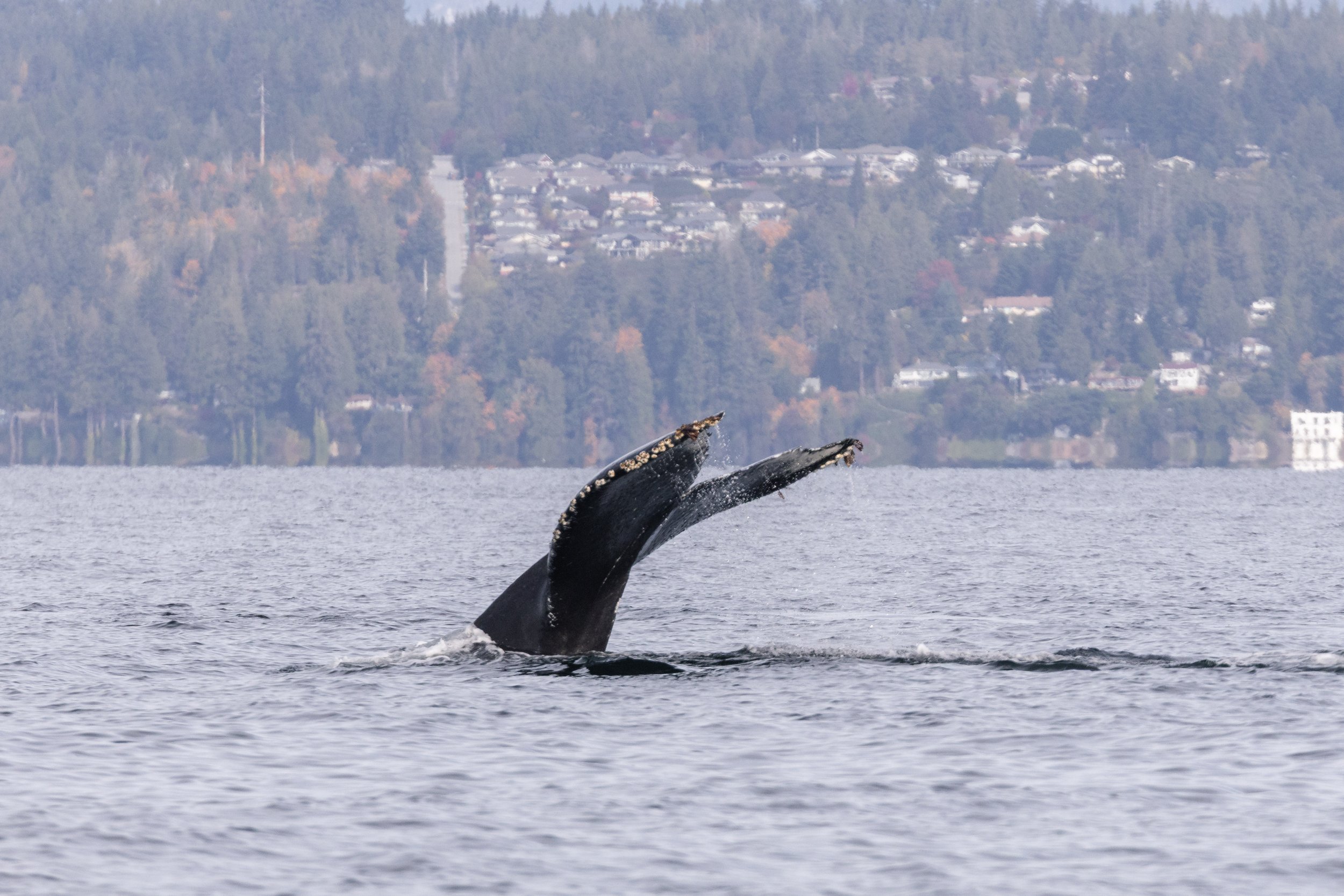
Bump lifting their tail to go for a dive.
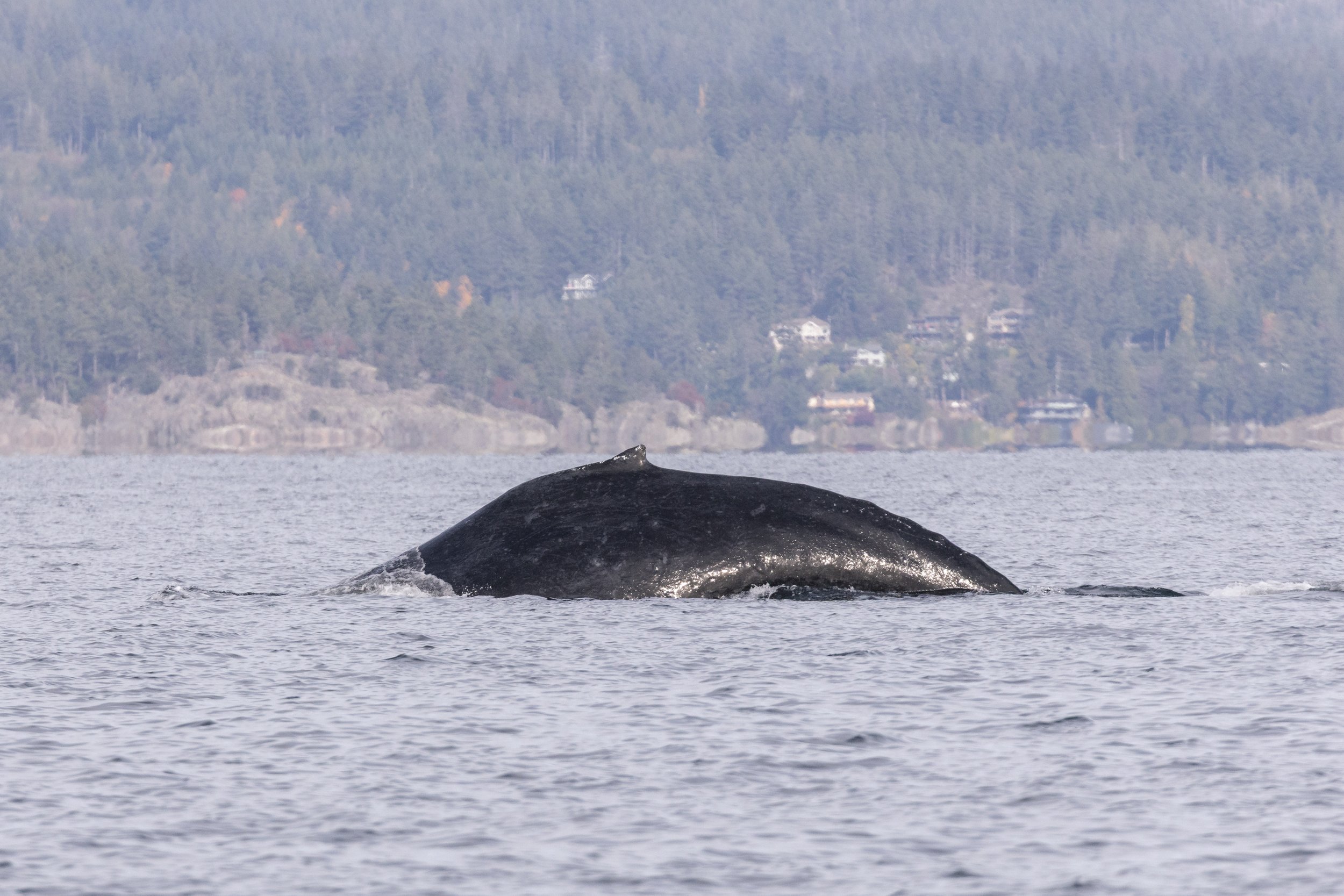
Kappa doing a big arch to dive.
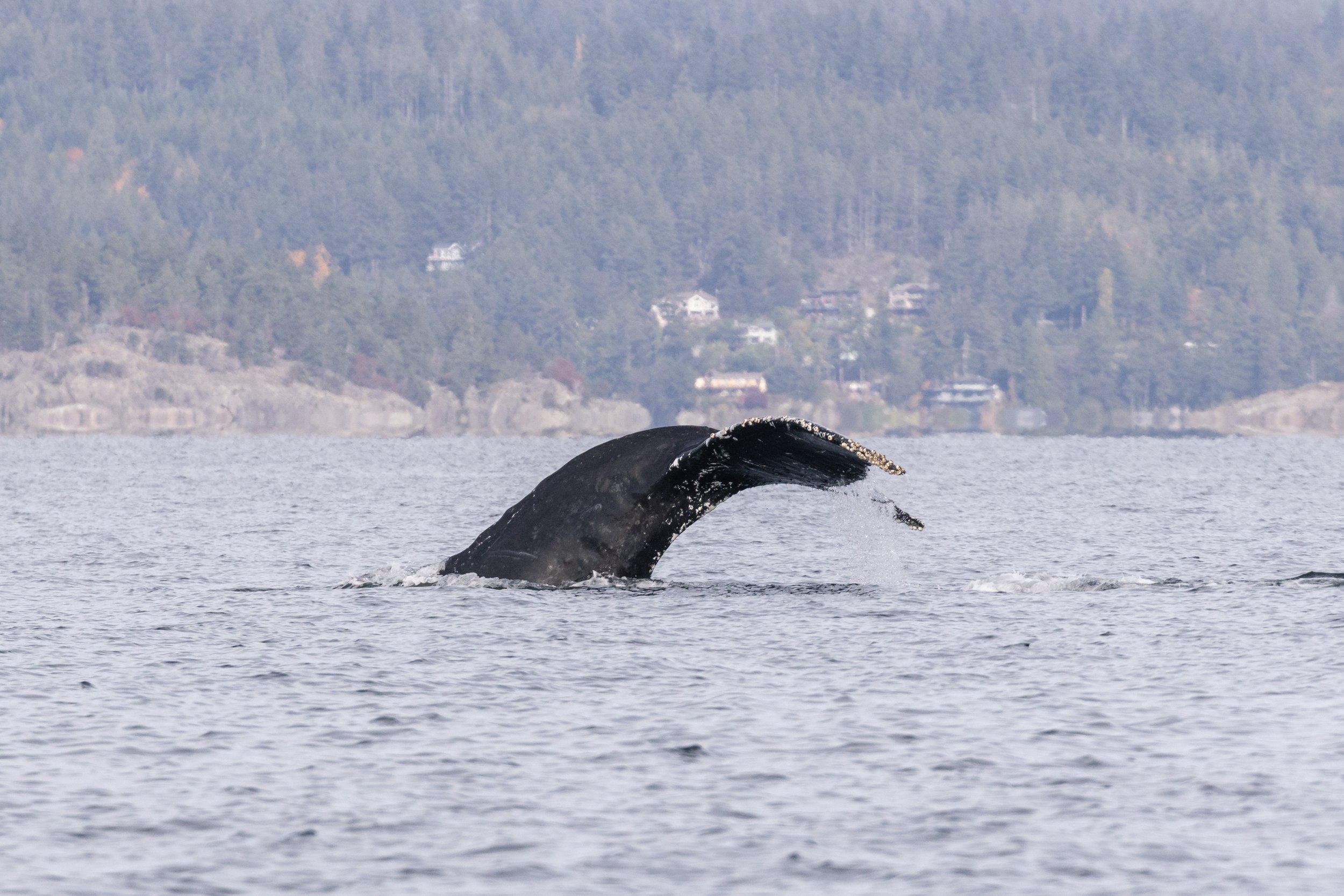
A lovely fluke waterfall from Kappa.
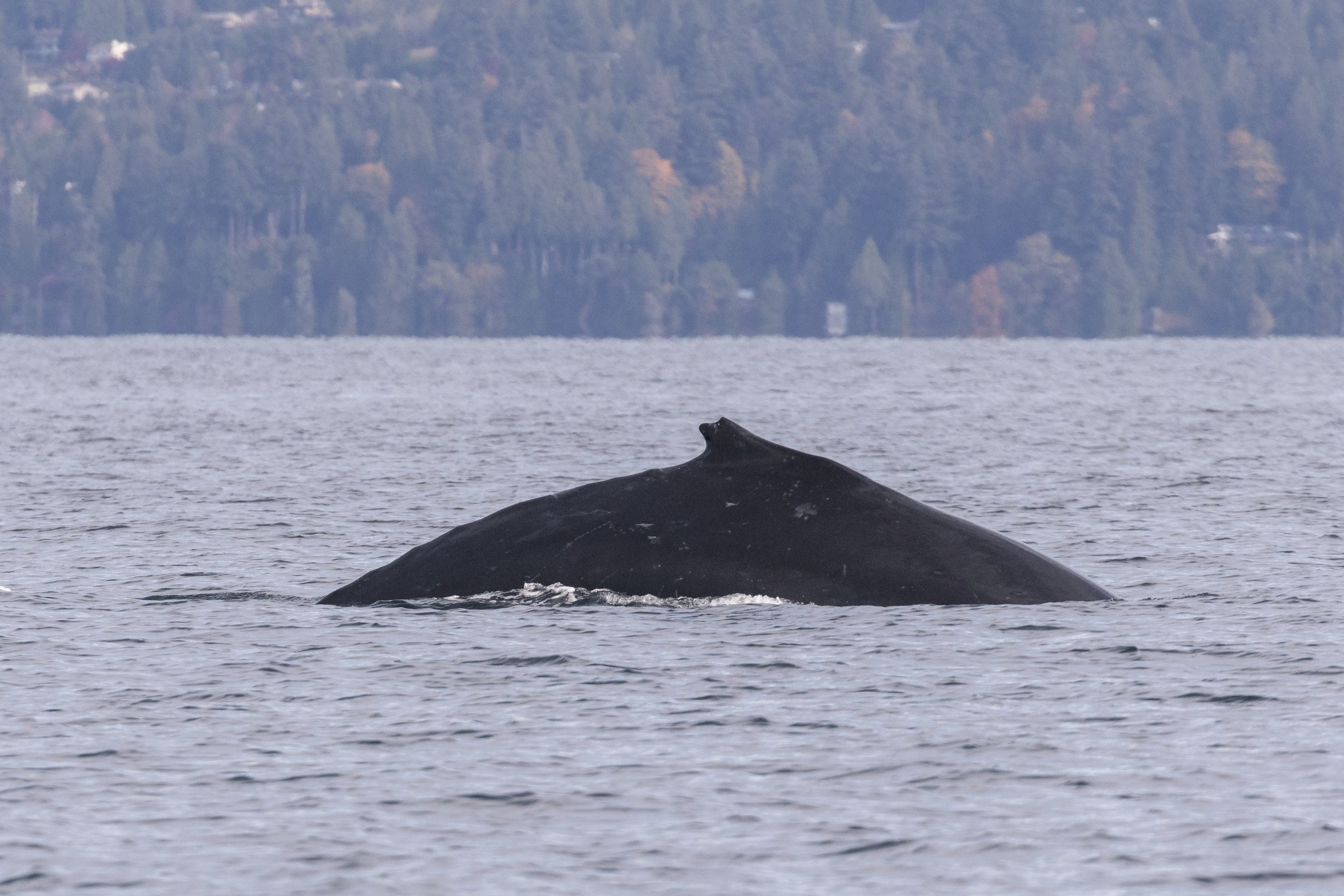
Helen doing a swim-by.
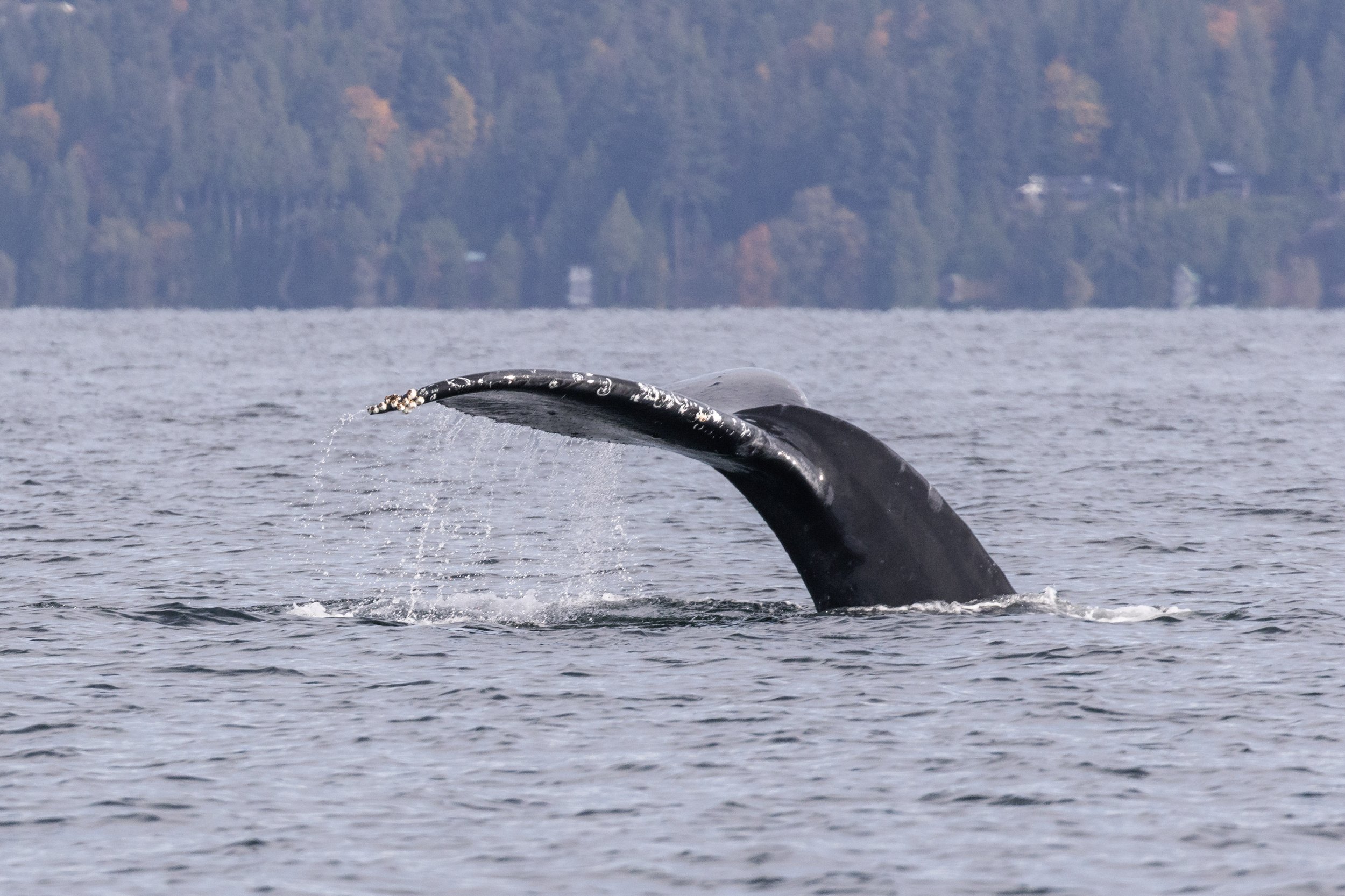
Helen lifting her tail to dive.
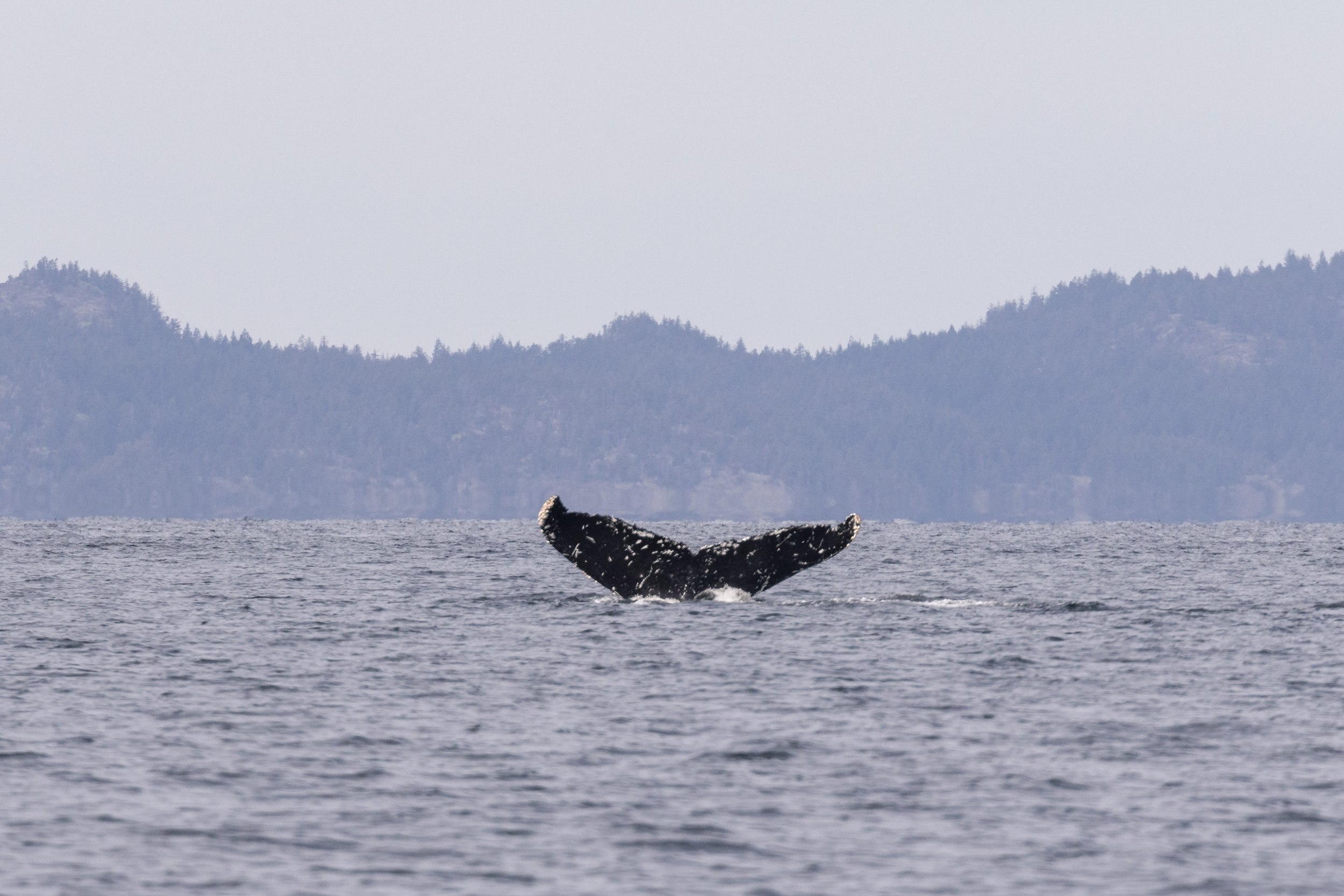
The very distinctly scarred underside of Kappa’s tail. Can you spot the K mark on the left side shes named for?
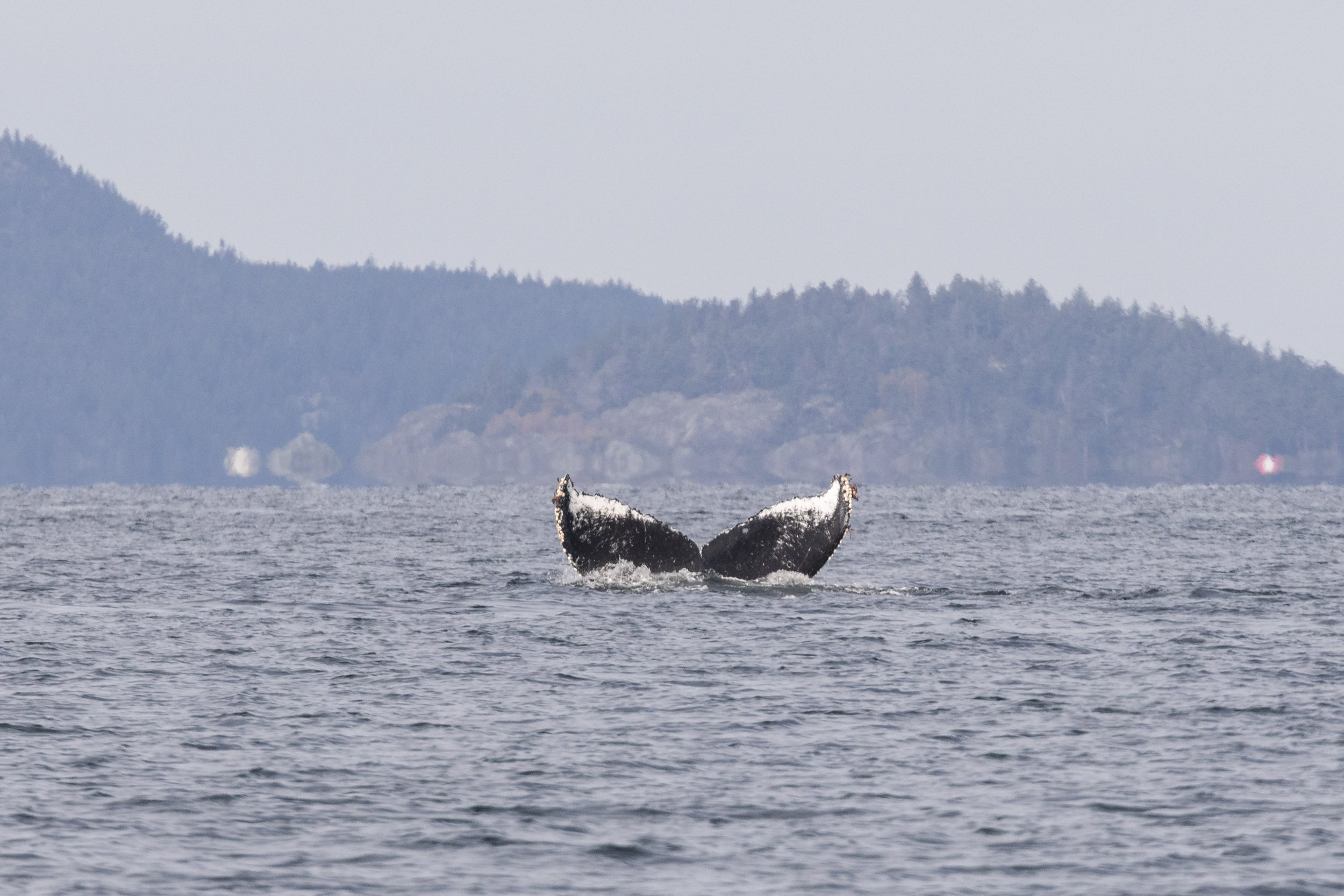
Bump showing off the white tips o their fluke as they dive.
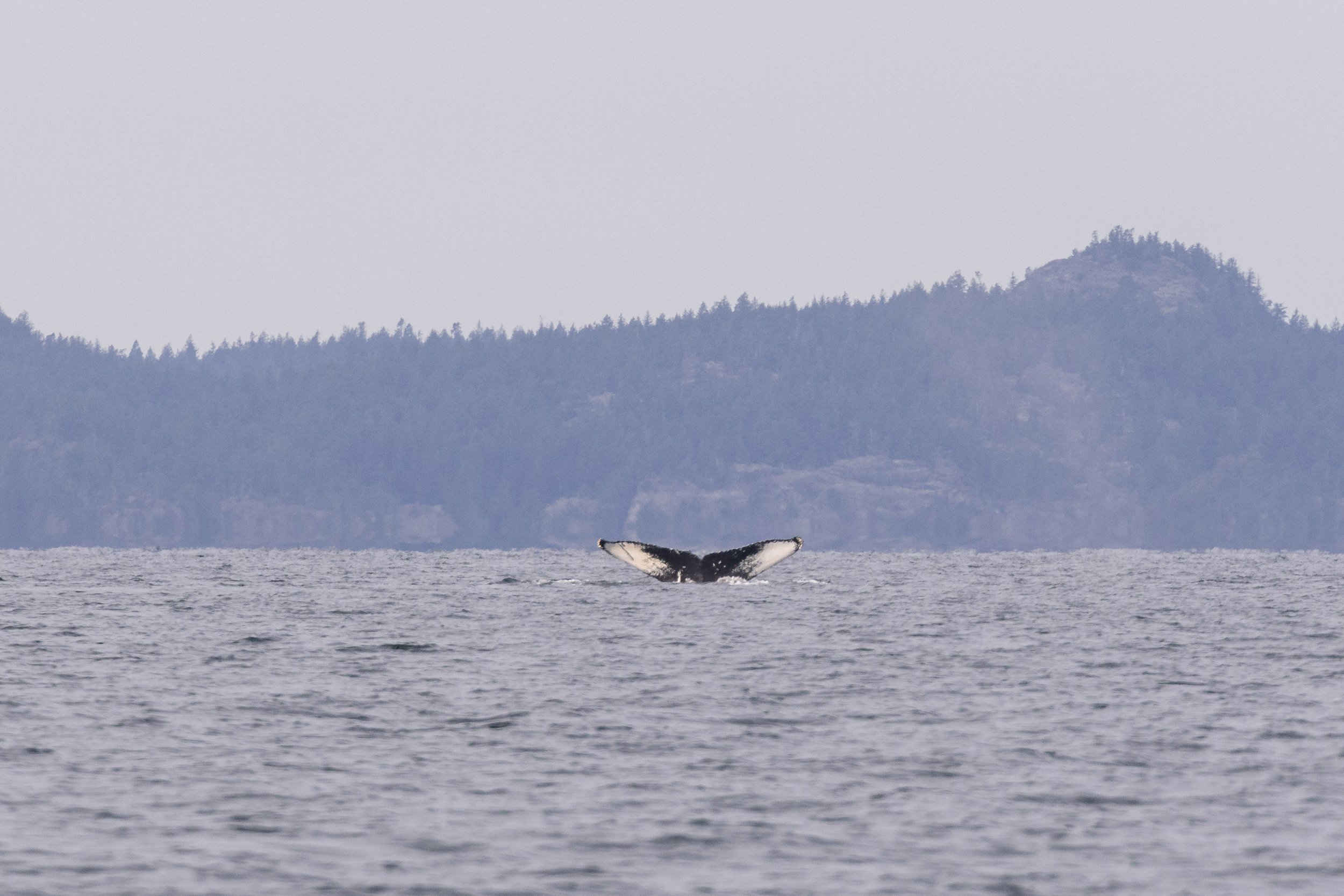
Hammer diving in the distance.
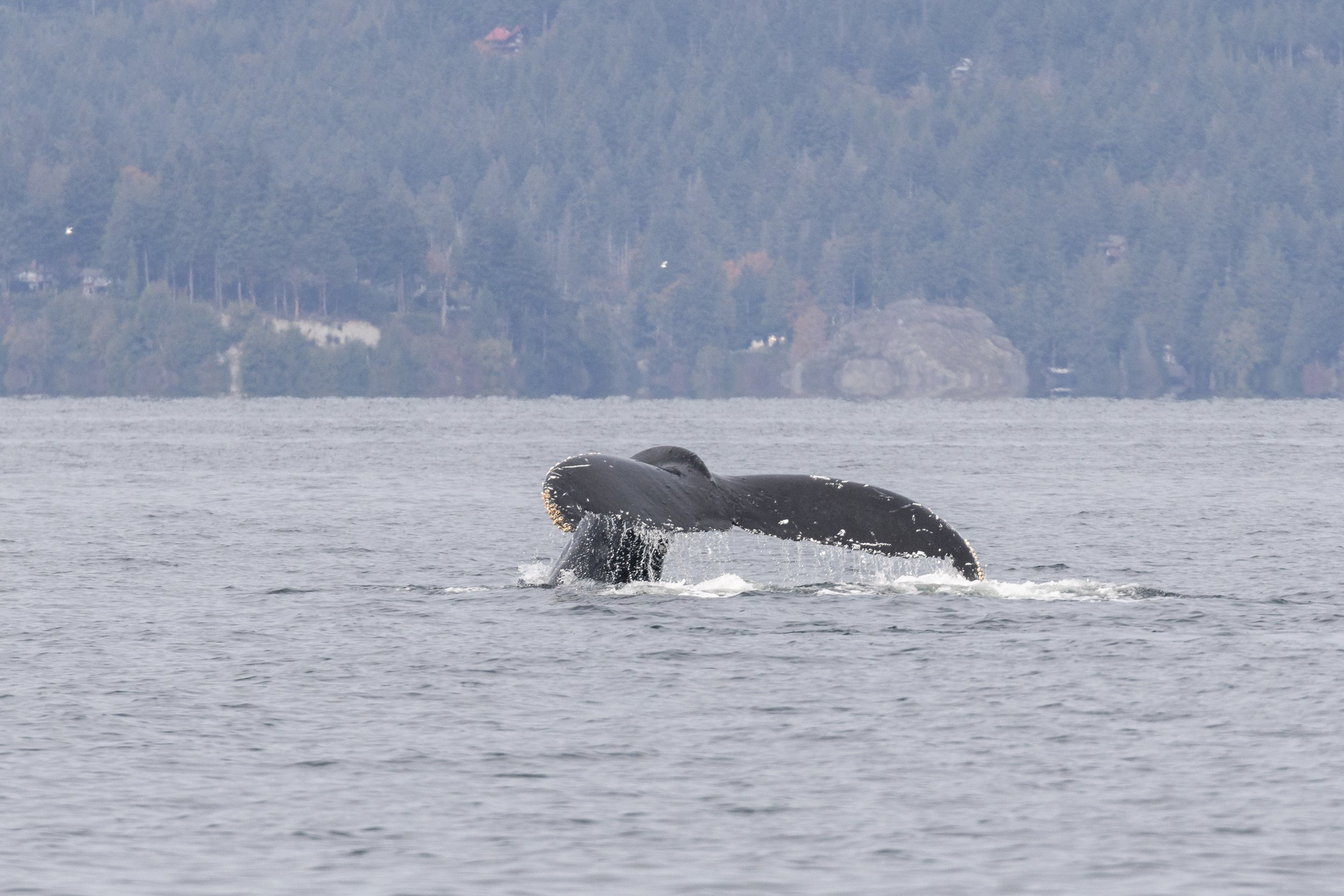
Water cascading off of Kappa’s tail as she lifts it to dive.
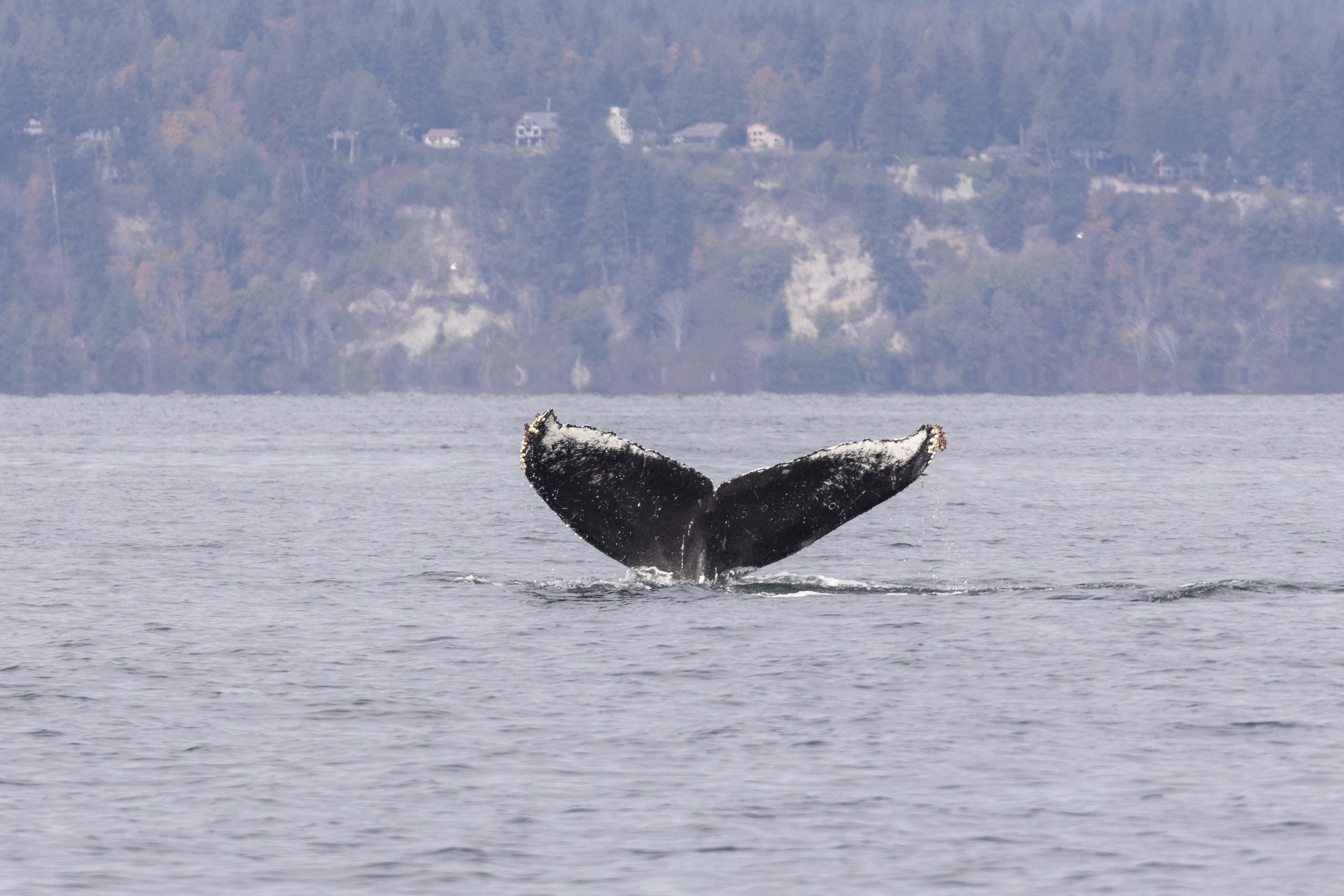
Bump going for a dive.
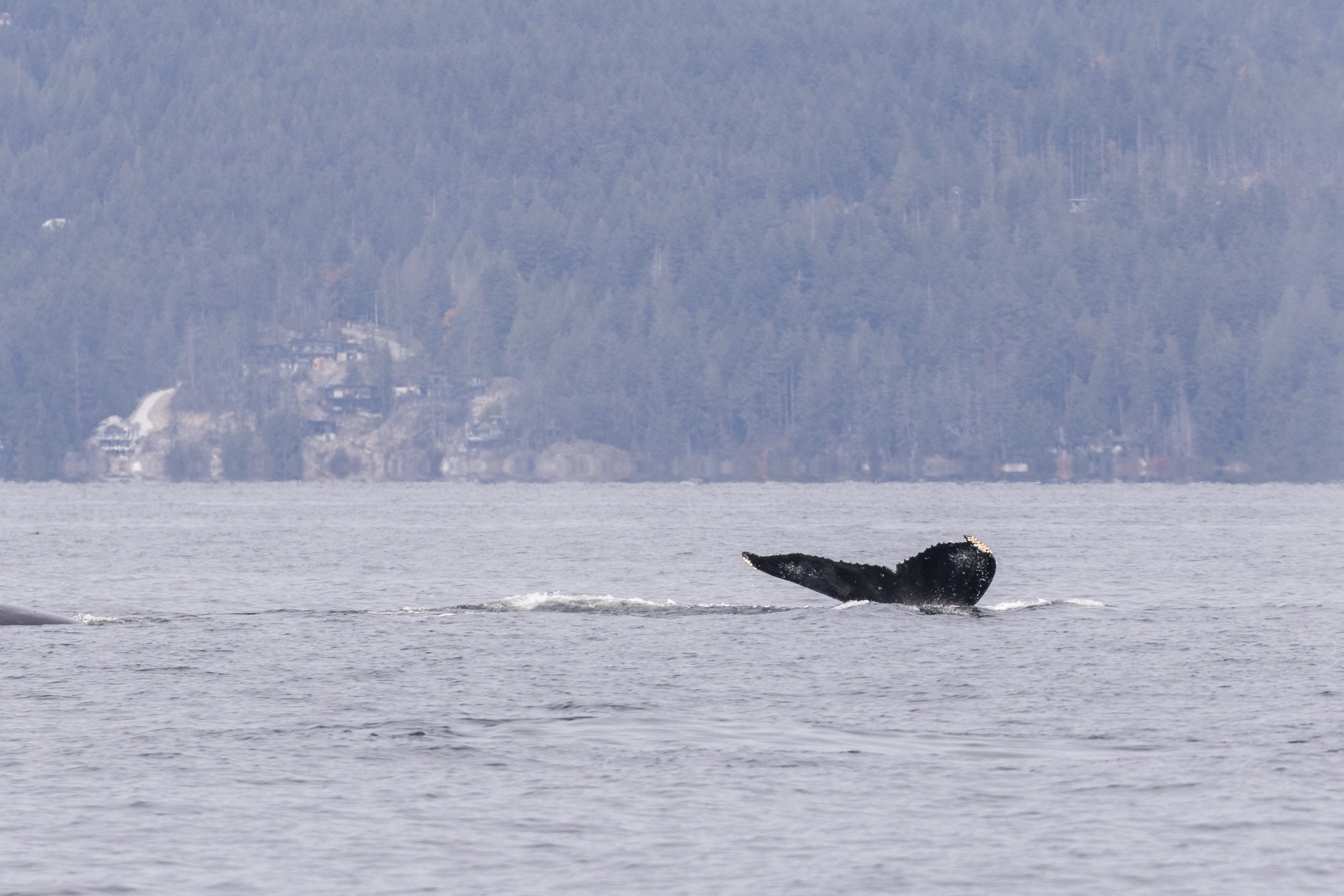
Vector lifting their tail to dive.
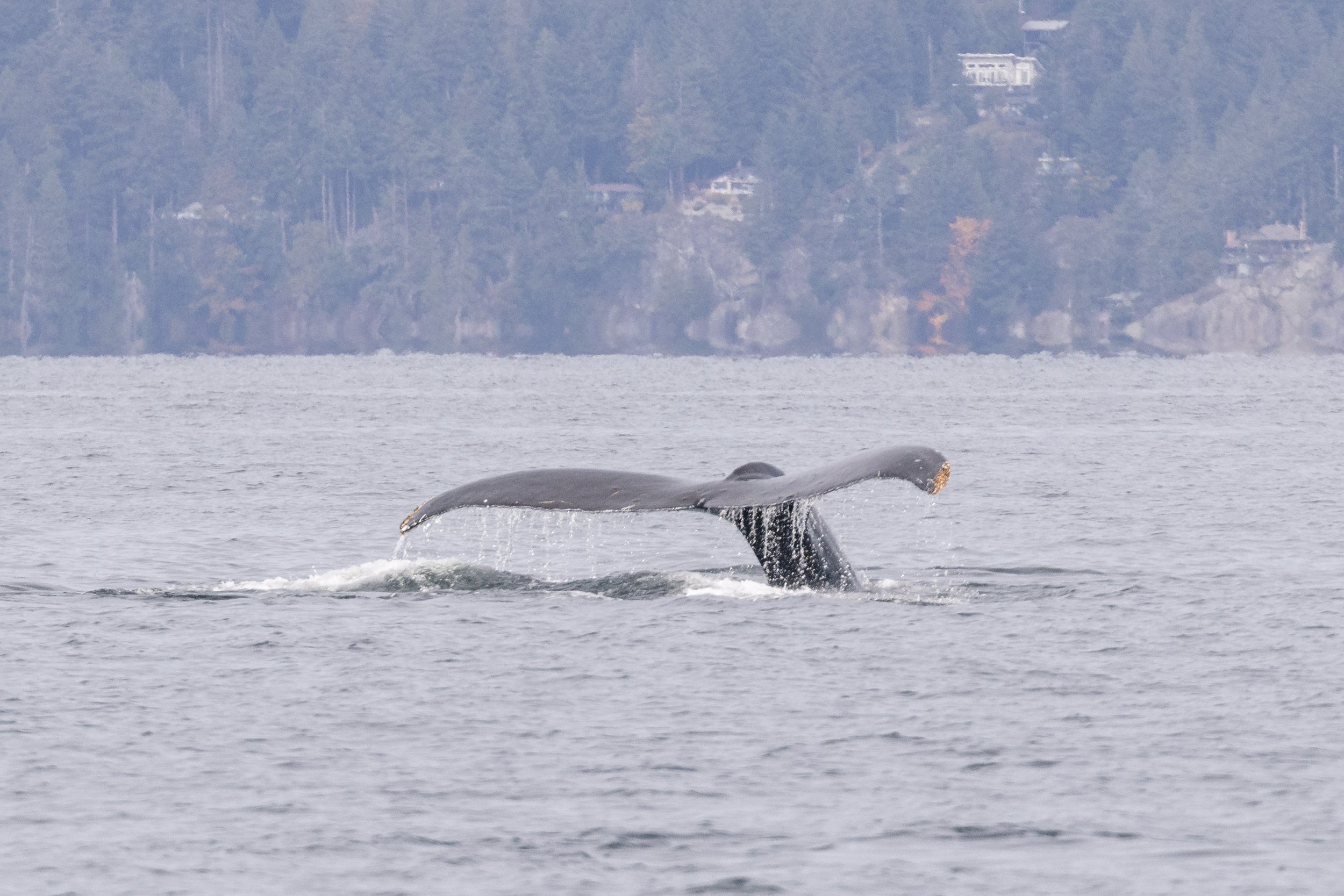
A nice fluke waterfall from Hammer.
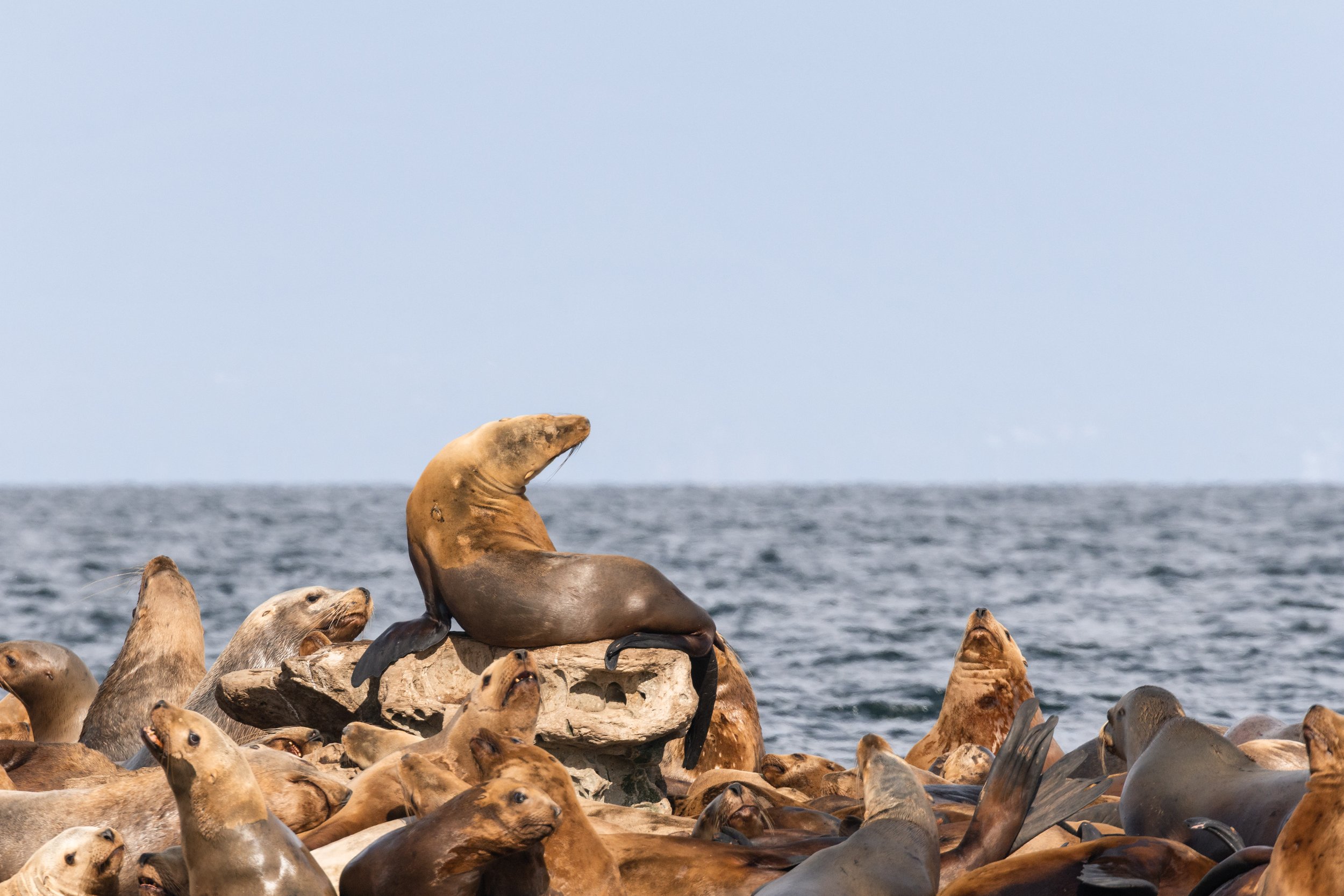
Steller Sea Lions hauled out at Stinky Rock.
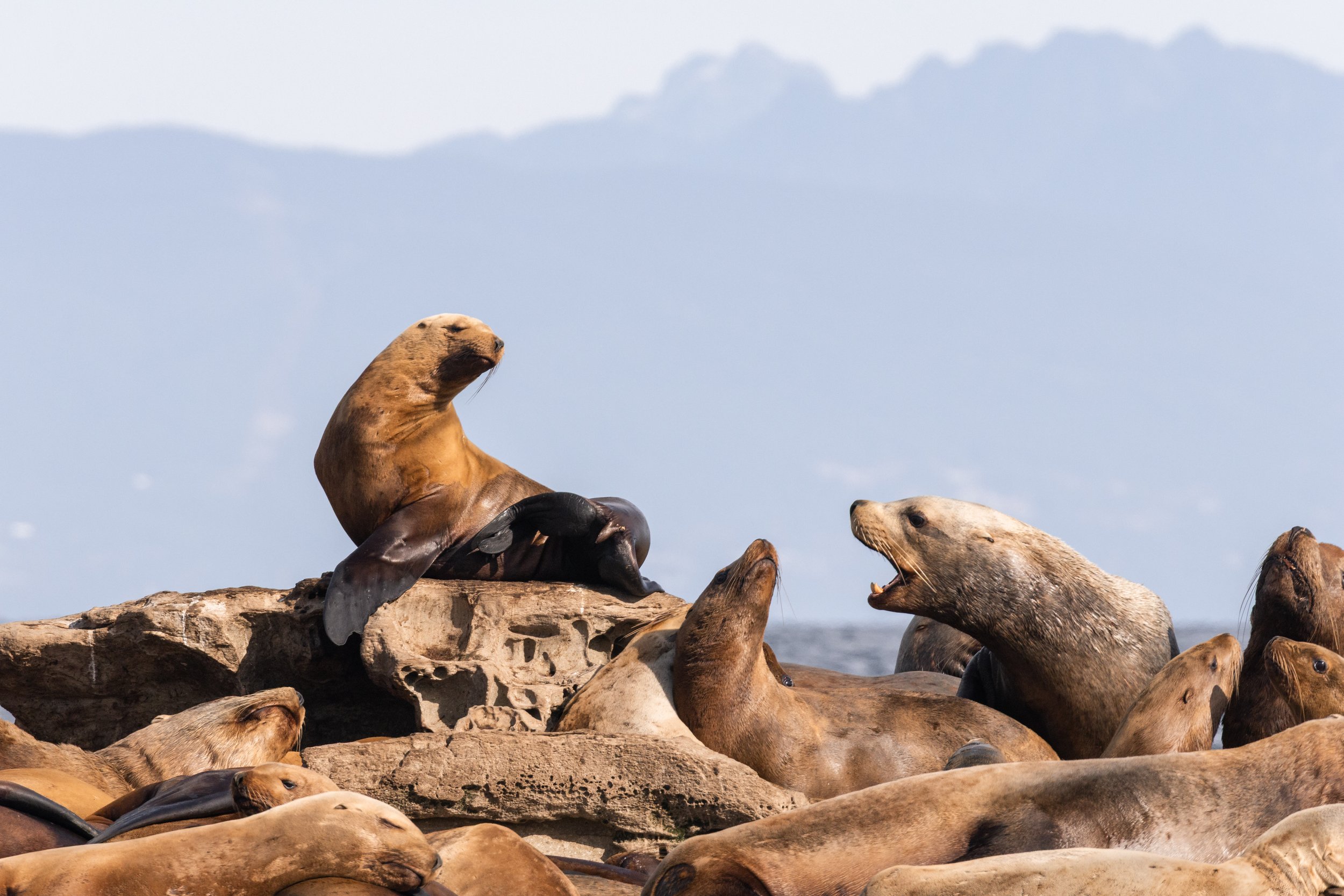
This one was trying to start a fight it seems.
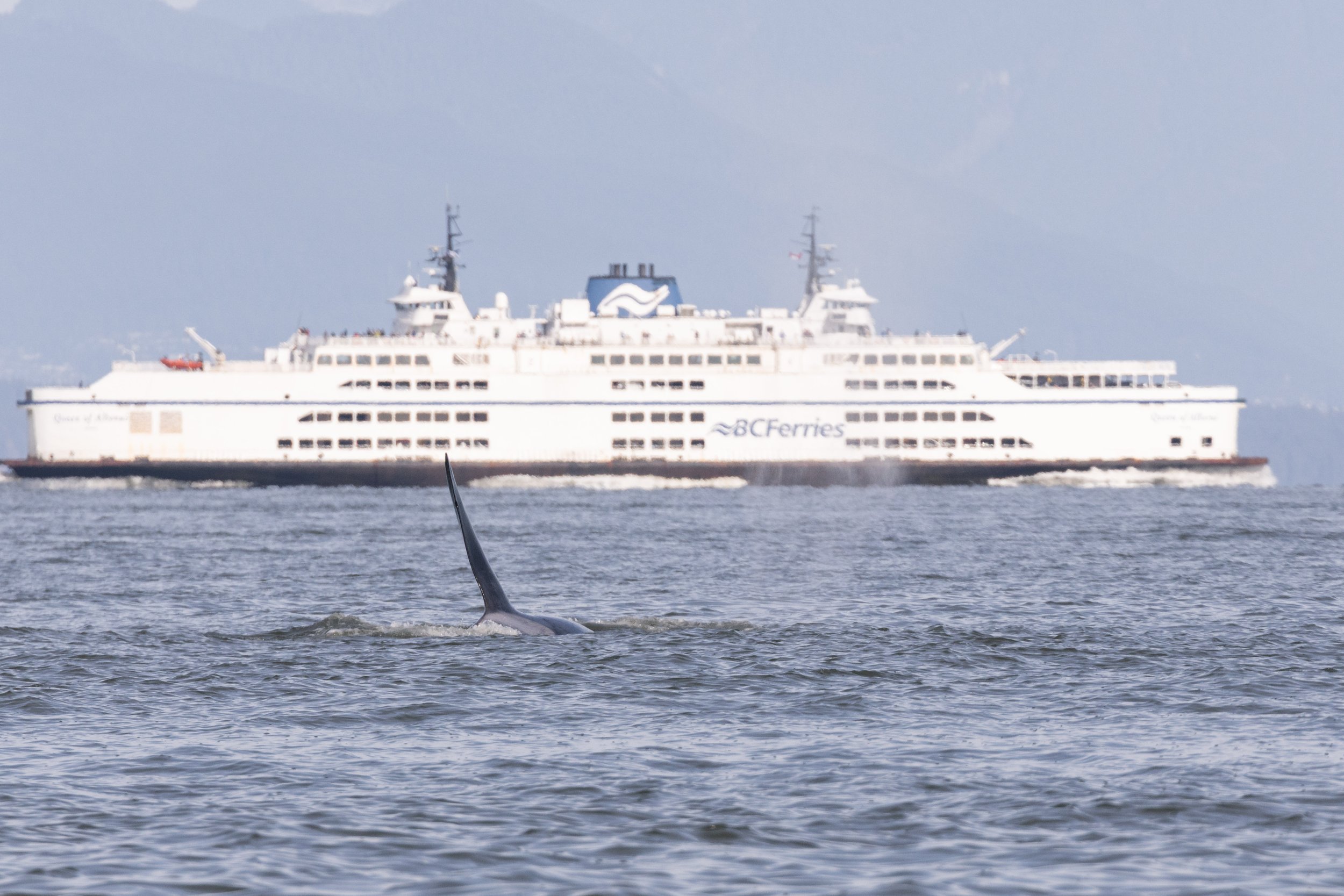
T065A3 Amir travelling quickly.
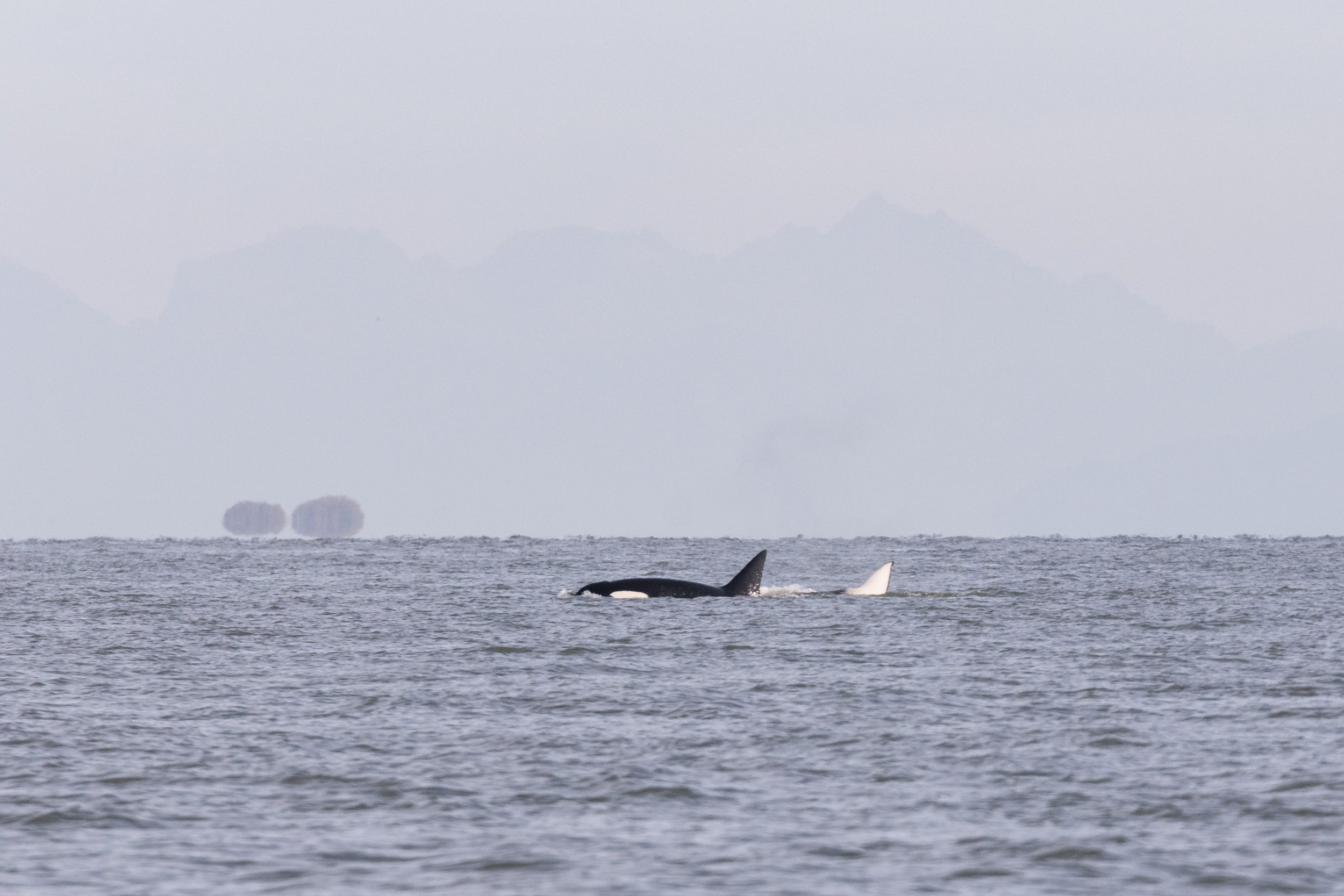
T037 Pizza Fin surfacing with another whale swimming sideways with their tail sticking out of the water.
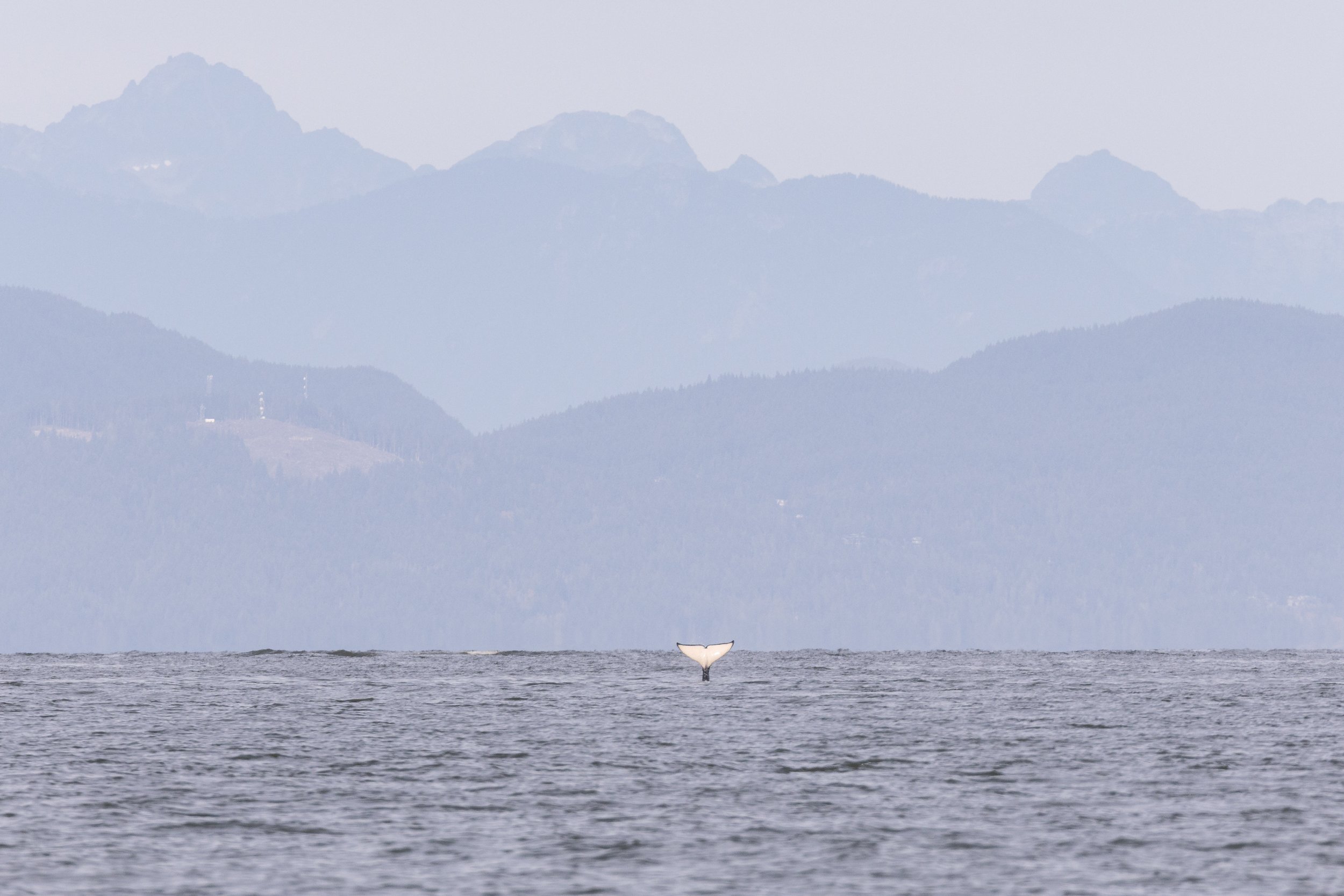
Flukes up during the T-party.
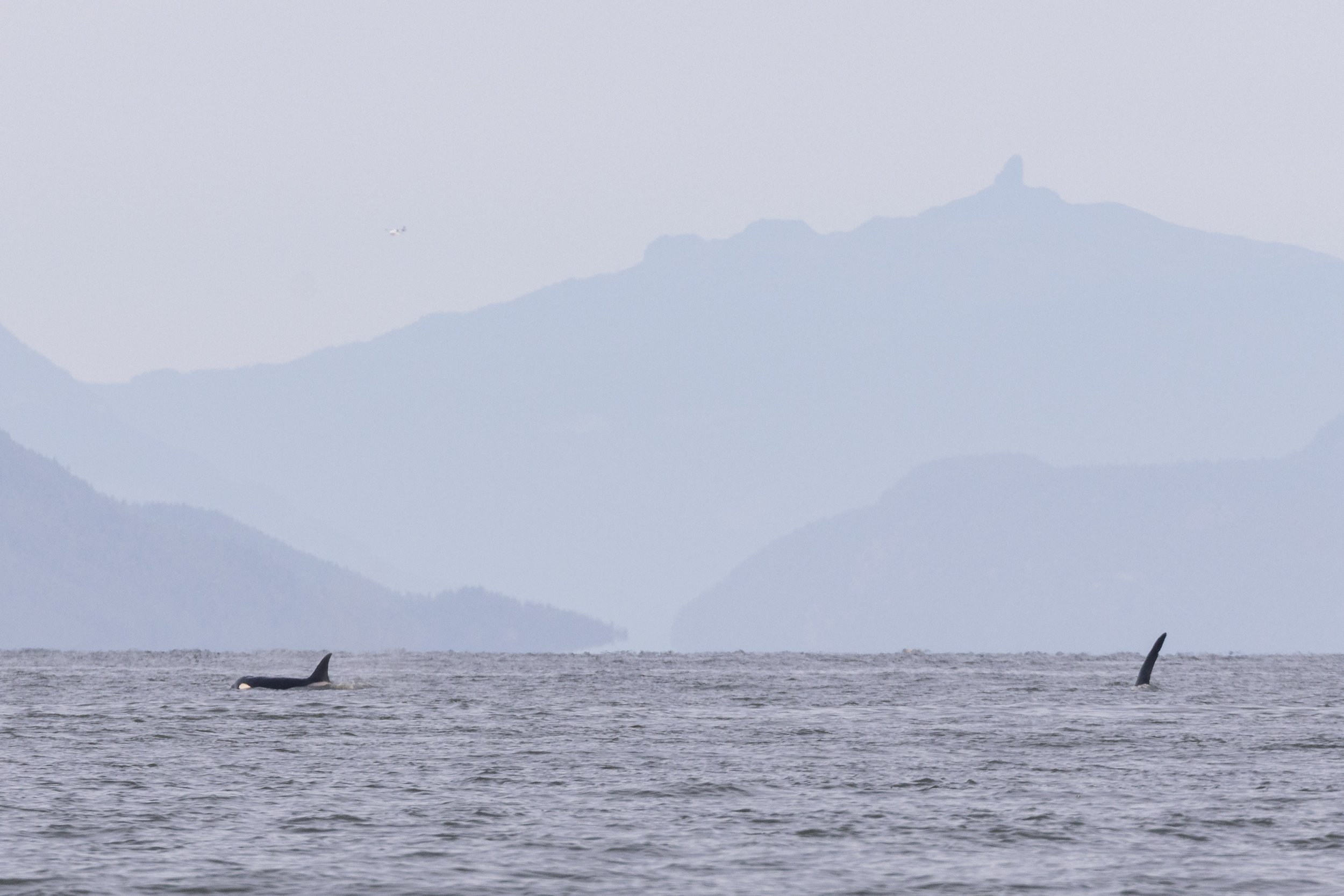
T34A Pachamama surfacing on the left with T065A3 Amir surfacing on the right.
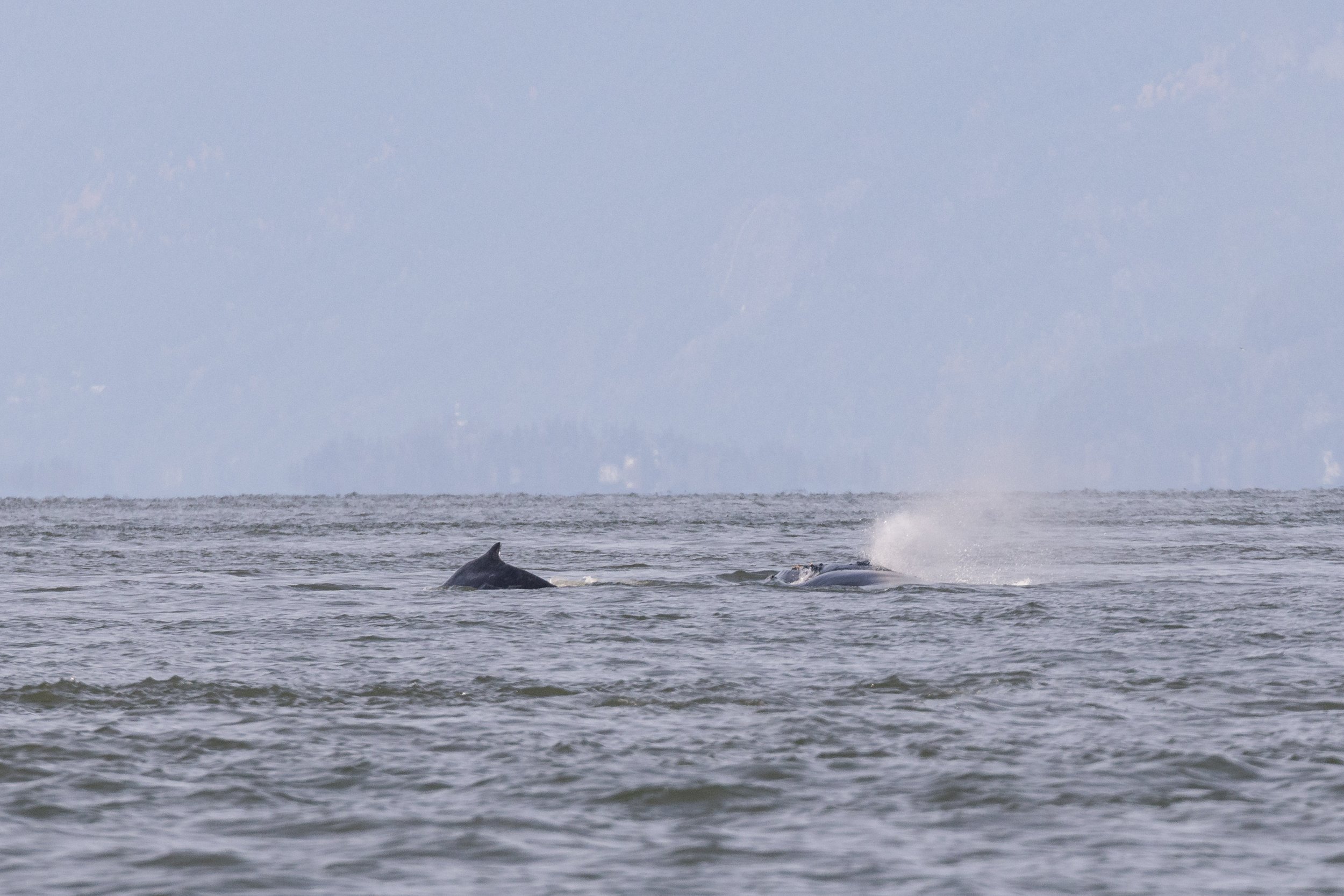
Turkey (left) surfacing with Uluka rolling beside them.
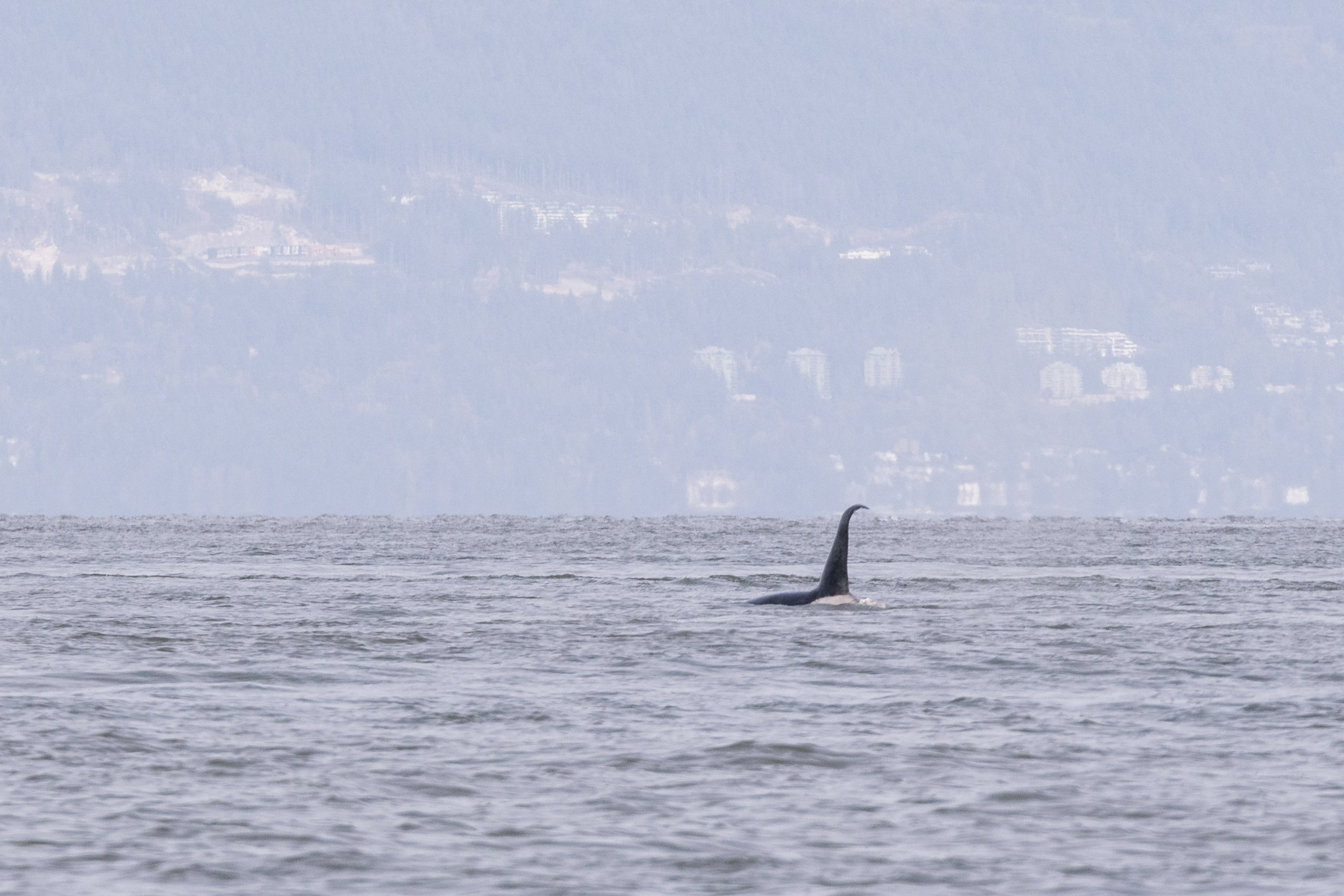
T049A2 jude surfacing. He is easy to recognize with the big bend at the top of his dorsal fin!
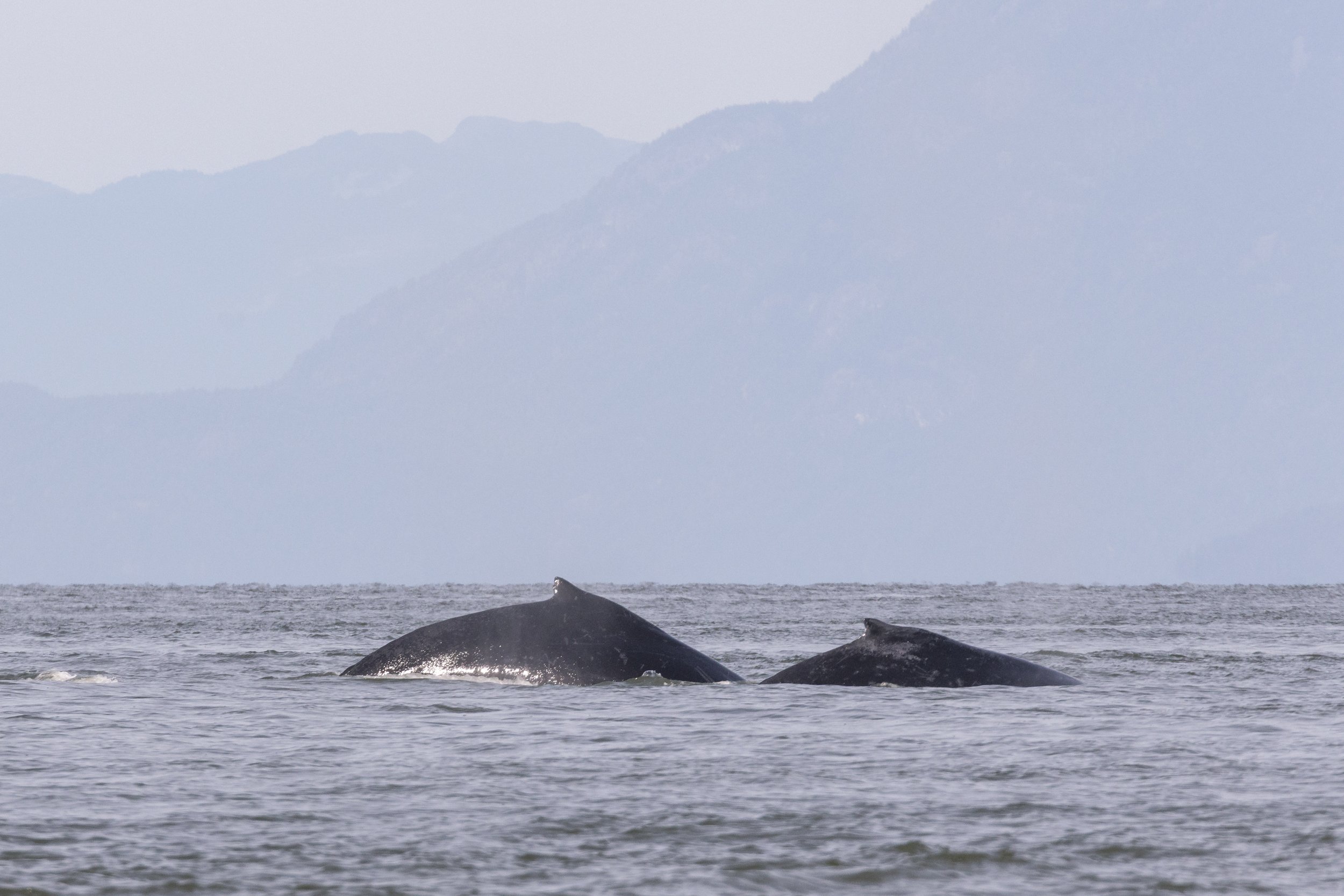
Uluka (left) and Turkey (right) surfacing together as they chase the orca around.
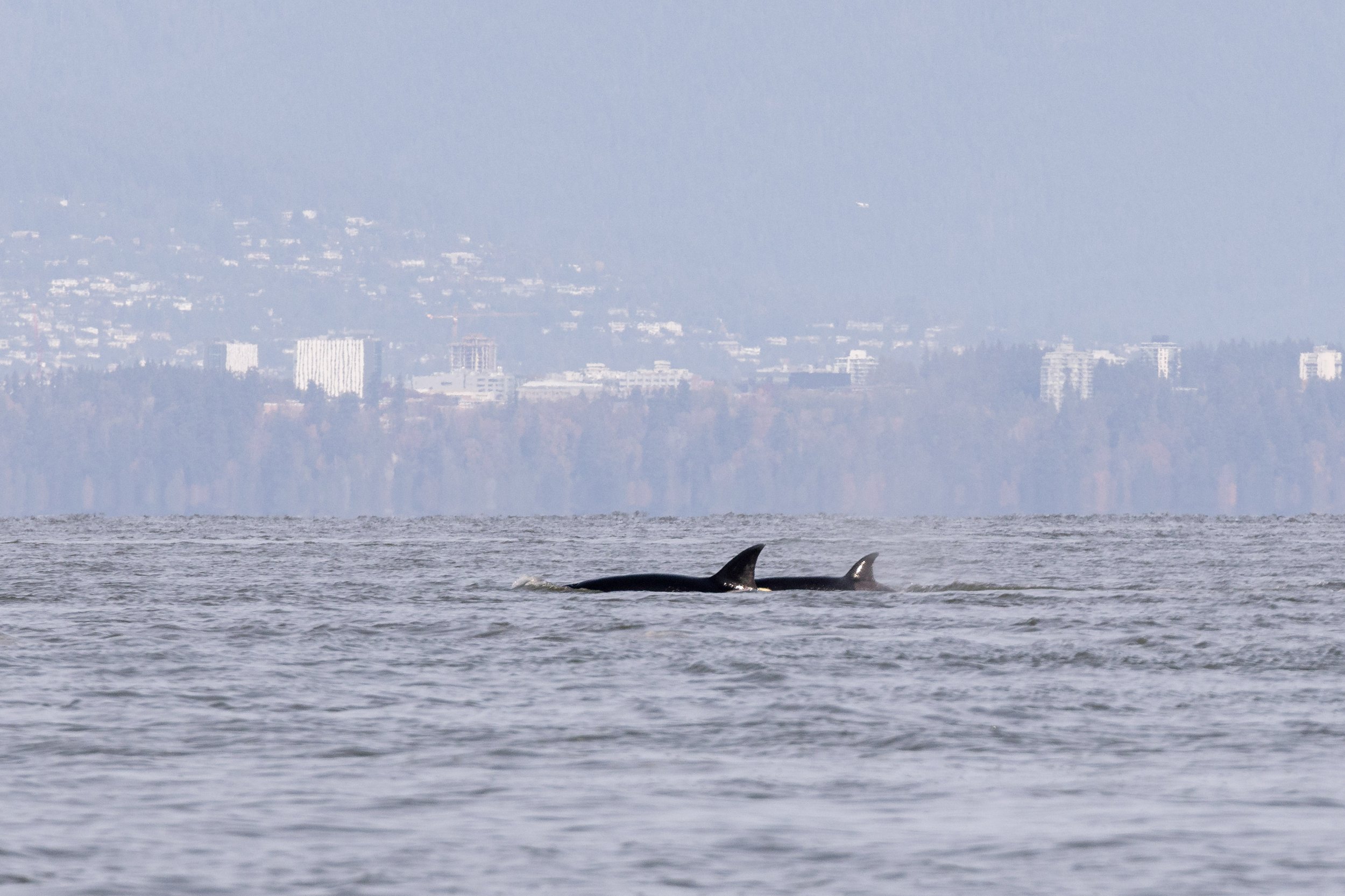
T037B Harald and T037B3 Slice surfacing together.
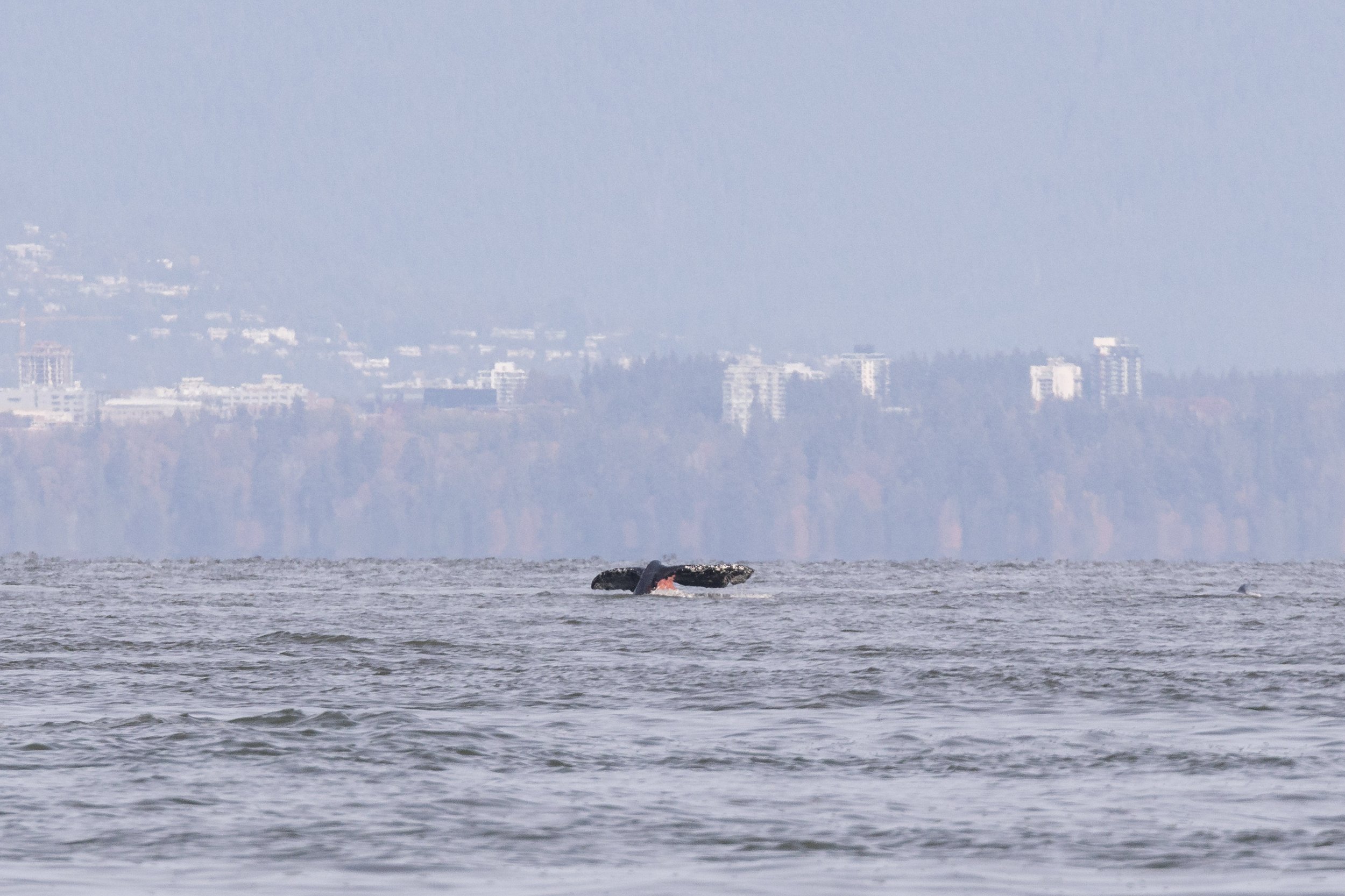
Valiant going for a dive in the distance. Did the orca scare the poop out of her or was nature just calling?
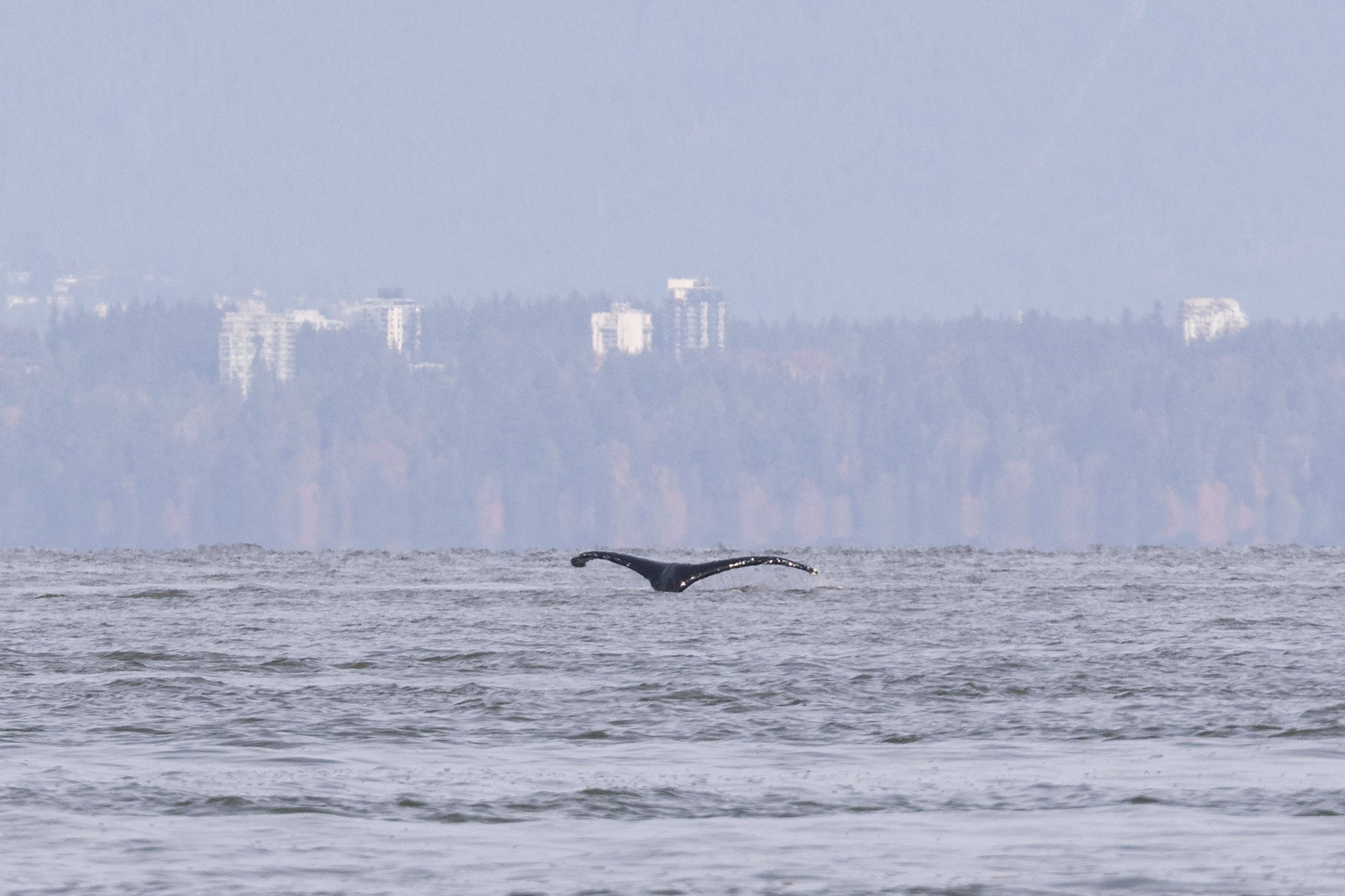
The unknown humpback going for a dive.