
October 24, 2026 - A quiet October day with a trio of humpbacks
The rains have finally arrived, but that didn’t dampen our spirits as we settled in aboard Kula. Naturalist Jordan chatted about where we were heading and what to keep an eye out for, and soon we were off.
With none of our whales being equipped with trackers or tags, every day is truly a new adventure to see what we can find.
Heading south through the Southern Gulf Islands, we passed through picture-perfect Dodd Narrows along the way. Mudge Island flanks this waterway on one side, and Vancouver Island on the other. On the Vancouver Island side, a large white-and-green navigational marker stands. This marker, while important for mariners, is also the end of the Joan Point Park/Cable Bay Trail system. This beautiful hike takes about an hour and a half to complete, and we often suggest it for guests who want to keep exploring around Nanaimo.
Heading out through Gabriola Pass, the waters ahead opened up as the Strait of Georgia came into view. The day's first wildlife stop took us down to Stinky Rocks, an area cheekily named for its odorous presence. The tide was high today, but the persistent Steller Sea Lions didn't seem to care one bit. Throwing their heads back high in the air, grumbles and growls could be heard bouncing off the landscape. We are in prime sea lion season right now, with many large males popping up at the haul-outs. Our cooler waters are perfect for them to relax in fall and winter, when they can take full advantage of the highly productive waters of our rivers and ocean as salmon runs happen.
After some time with the snoozing sea lions, we hopped back into search mode. A bit further down the coast, we saw a tall blow followed by a large arching back. A lone humpback whale was skirting the coast of Valdes Island!
As they made their way along, they kept surfacing before slowly submerging again, never truly diving. Because of this, we were unable to get a photo of their fluke or the pattern on the underside of their tail. Without this shot, identification can be tricky; however, this individual’s dorsal fin had a unique marking on the right side, letting us confirm them as Meqe’ (BCZ0492)!
While every individual has a scientific code used to identify them, many whales also often have nicknames. These nicknames usually refer to markings on their fluke, but sometimes come from a family theme as well.
Meqe’ is the 2017 calf of Pillar (BCY0584). Meqe’ (MUH-quh!) is a Hulʼqʼumiʼnumʼ word meaning “snow.” Look at their ID photo below to see how they got it!
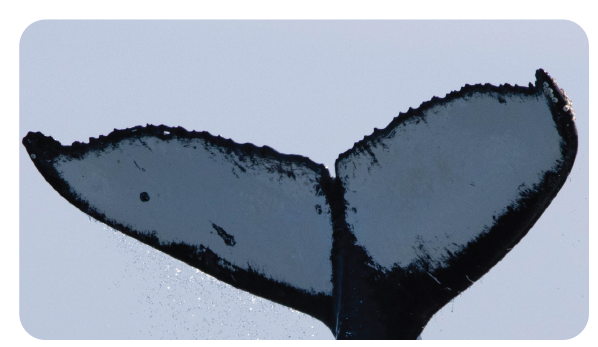
Meqe’’s fluke, with small soft white markings over a mostly white background, in the Keta Coastal Conservation Catalogue.
They continued their journey gracefully as we observed, paying no mind to the many birds flying by or the rain pattering down on the surface of the ocean.
After spending time with Meqe’, we departed to continue the adventure once more. Heading farther out into the open waters of the Strait, we spotted two more individuals. Once again, we got into position and began identifying who was present.
Zipping along and only shallowly fluking as they went, we once again were with whales that generally would be on the trickier side to ID. However, we lucked out: once again, both had very unique dorsal fins. One was nearly perfect black, but was very tall and pointed instead of the traditional hooked shape. The other was very mottled, with many striking markings all over its surface. Based on photos of these, we concluded we were with Nalu (BCY1072) and Fukurō (BCY1473).
Born in 2021 to Potamus (BCY0885), Fukurō is still quite young, but they have had multiple seasons where we've seen them return to our area. Fukurō (FOO-koo-roh) is a Japanese word meaning owl. Can you spot the owl face on their fluke below?
Nalu (NAH-loo) is a Hawaiian word that typically means wave or surf. If you look at the markings on either side of her fluke, you may notice the white areas resemble a wave rising high out of the water and beginning to cascade back down.
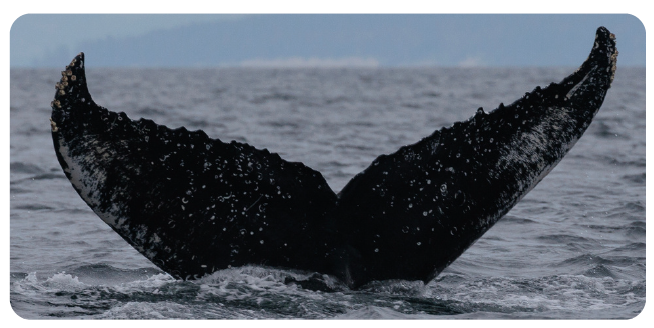
Nalu’s fluke in the Keta Coastal Conservation Catalogue.
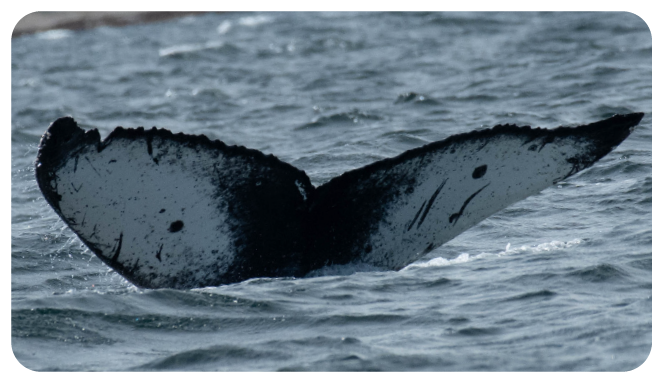
Fukurō’s fluke in the Keta Coastal Conservation Catalogue.
As the pair continued to travel along, their speed soon decreased. Soon, they were bobbing along close together. It appeared that they had decided it was the perfect time to have a little nap. Interestingly, humpbacks do not sleep in the same way humans do. They rest using a technique known as Unihemispheric Sleep, resting only half their brain at a time. As mammals, they must surface regularly to breathe air, since they don't have gills like fish. Because of this, the conscious half of the brain is in charge of lifting the body out of the water to breathe, then slowly submerging again. Humpbacks typically have multiple shorter rest cycles throughout the day, instead of sleeping in one long block.
As we concluded our time with our slumbering giants, we headed back out into the Strait. Always eager to maximize our sightings, we peered around. Soon, we spotted more fins, though these were a bit different from the ones we had seen earlier. A large, towering black dorsal fin appeared. It was an orca, with many more scattered along the horizon.
Naturalist Jordan raised his camera to identify who was present. A quick glance at the shape and unique saddle patch let us conclude this was the Southern Residents, a critically endangered orca ecotype. We noted the sighting and continued onward.
The Southern Residents are an orca ecotype that faces many different hardships. Over time, new conservation methods have been implemented to try and help the population recover. Unfortunately, it is a multifaceted issue, with no single solution that can solve their woes. Southern Residents are a fish-eating orca population, and up to about 80% of their diet is strictly Chinook Salmon (Oncorhynchus tshawytscha, also known as King Salmon or Spring Salmon). Unfortunately, this stock has declined in recent years, and salmon numbers are much lower than historical levels, leading to food scarcity. They also rely on biosonar, or echolocation, to hunt, and as vessel traffic increases on the water and, by proxy, underwater disturbances, hunting has become much harder. Bioaccumulation of toxins such as PCBs in their blubber has also played a part in their plight, sadly leading to high levels of calf mortality amongst the members.
Regulations such as dedicated no-go zones and efforts to implement slowdown zones aim to address some of the challenges they face. In addition, stricter fishing regulations have been added to help stock levels recover. With continued monitoring, we hope they will be able to bounce back.
In the meantime, though, we will continue to focus on growing populations, such as humpback whales and Transient orcas.
As the Southern Residents faded into the distance, we continued up and around Gabriola Island. As we neared shore, we stopped at another small sandy haulout near Orelbar Point. We saw many birds waddling along the shore, along with occasional Harbour Seals popping up out of the water. As the rain continued to fall, we began travelling one final time and headed back to Harbour. As we rounded the corner of Gabriola Island, the harbour soon came into view. Nanaimo’s skyline faded in and out of the mist, a final beautiful scene as we pulled back up to the dock and concluded the trip.
Photos by Marine Naturalist Jordan Robinson - please enjoy!
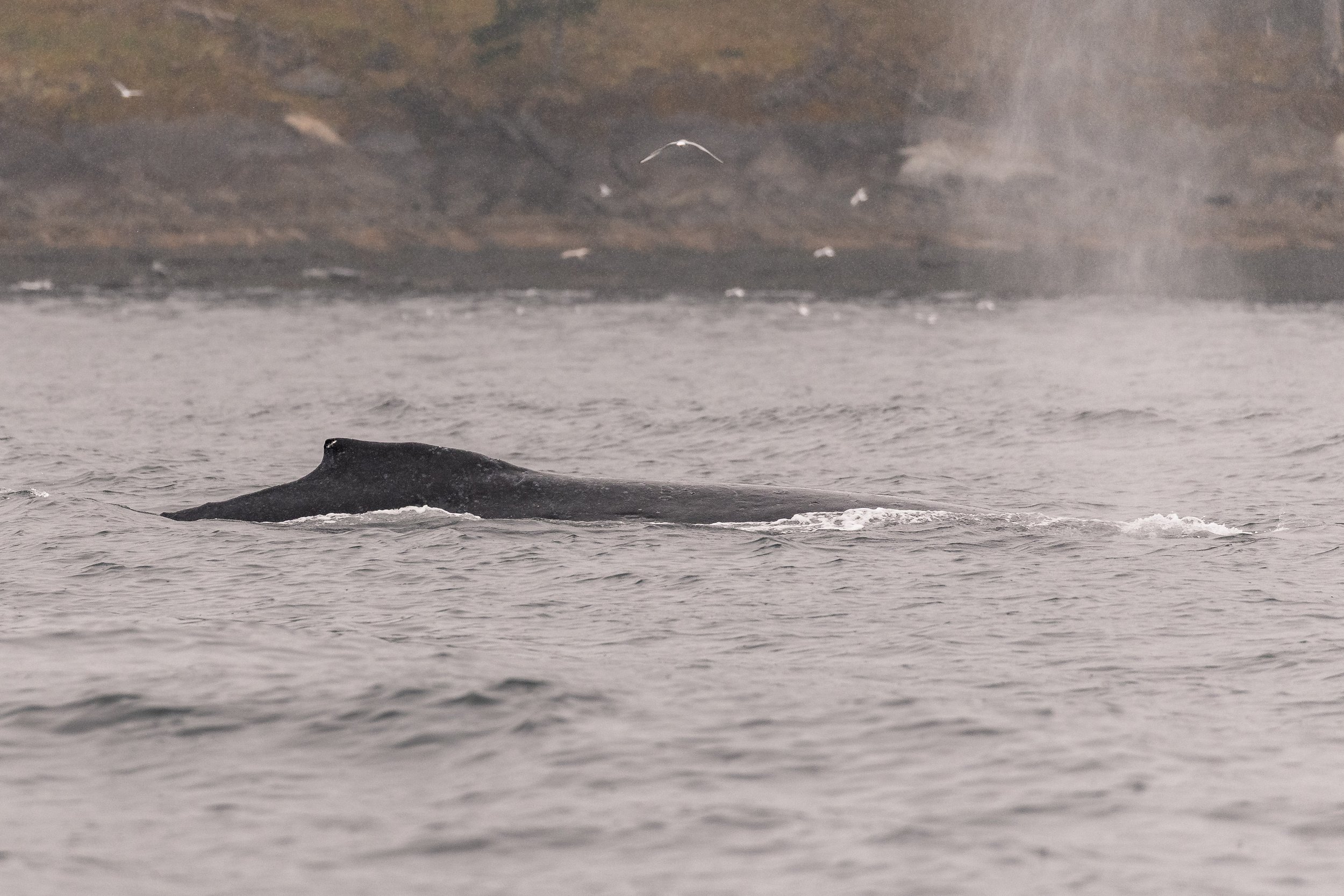
Meqe’ cruising along Valdes Island’s shoreline.
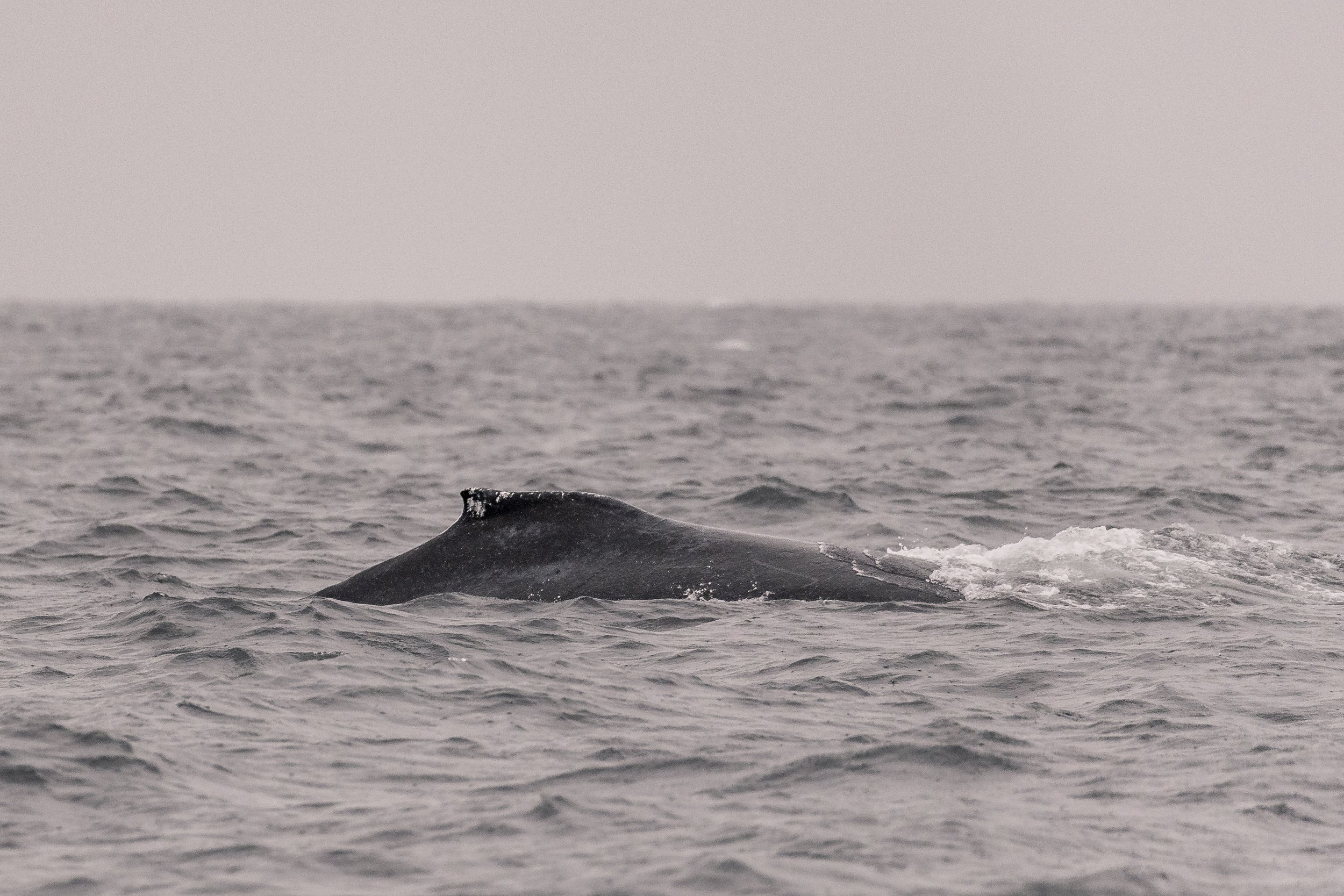
Nalu preparing to dive.
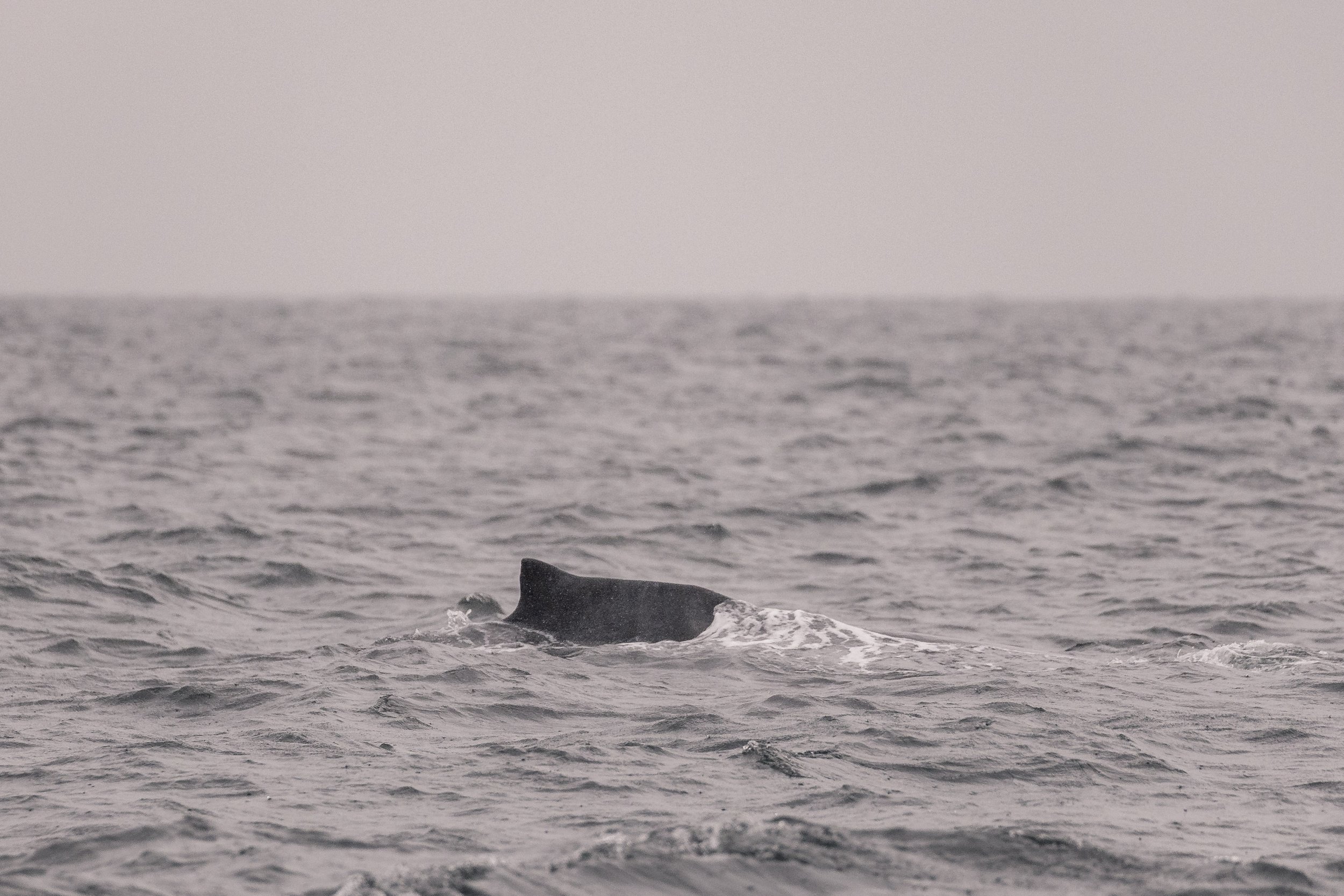
Fukurō with just the tip of the dorsal fin and back visible.
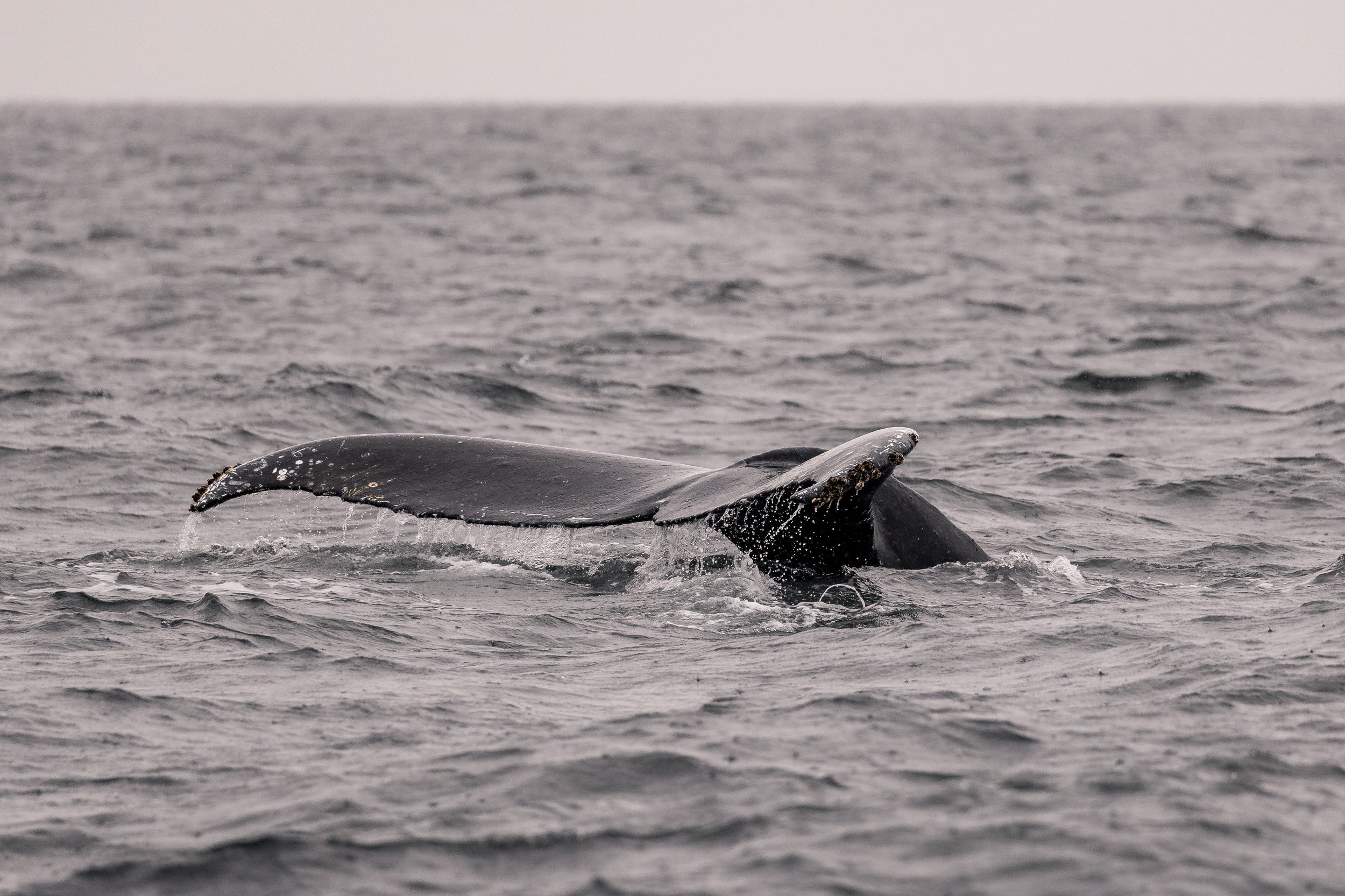
A fluke waterfall from Nalu.
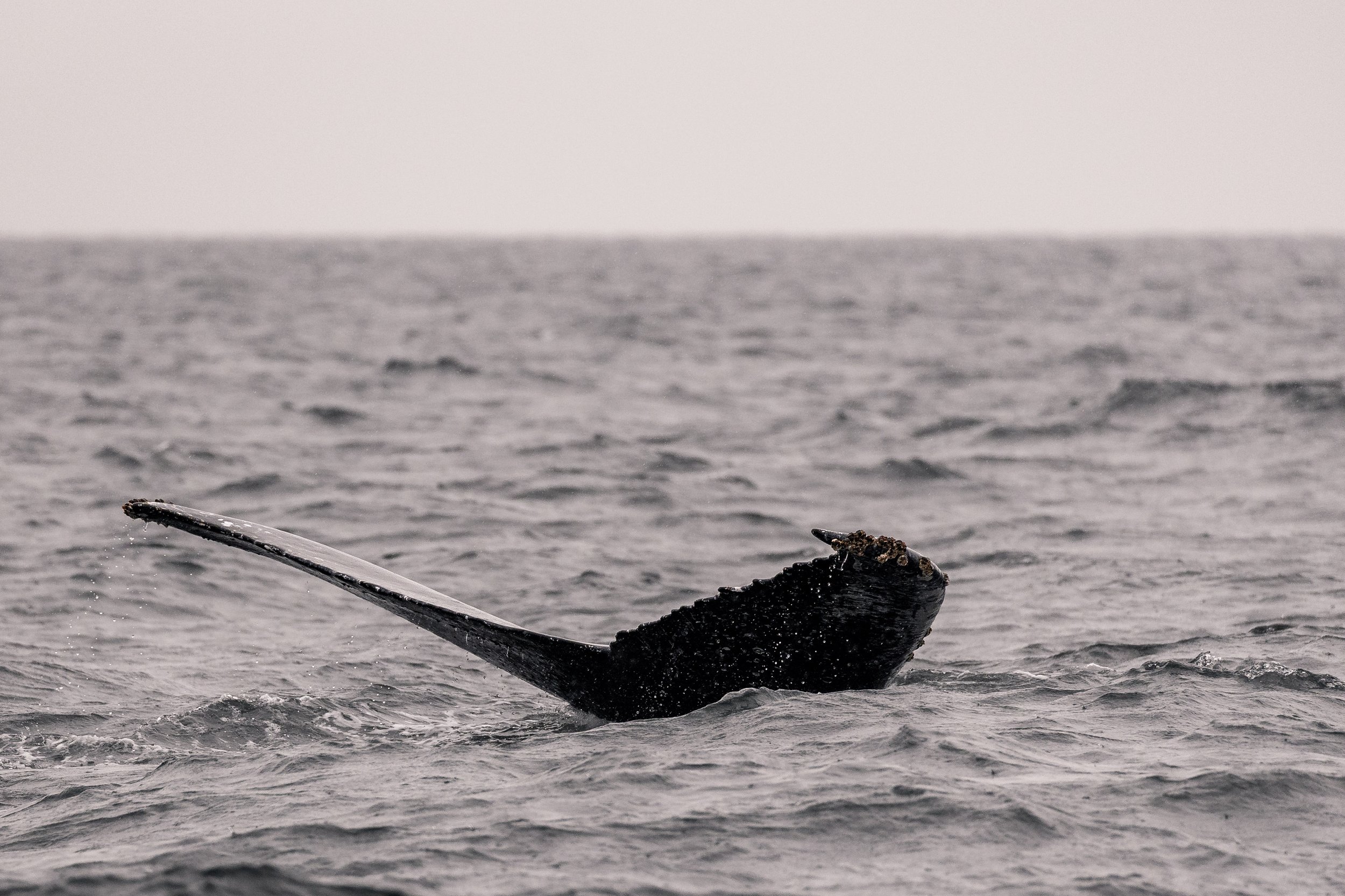
A peek at the underside of Nalu’s fluke as she dives.
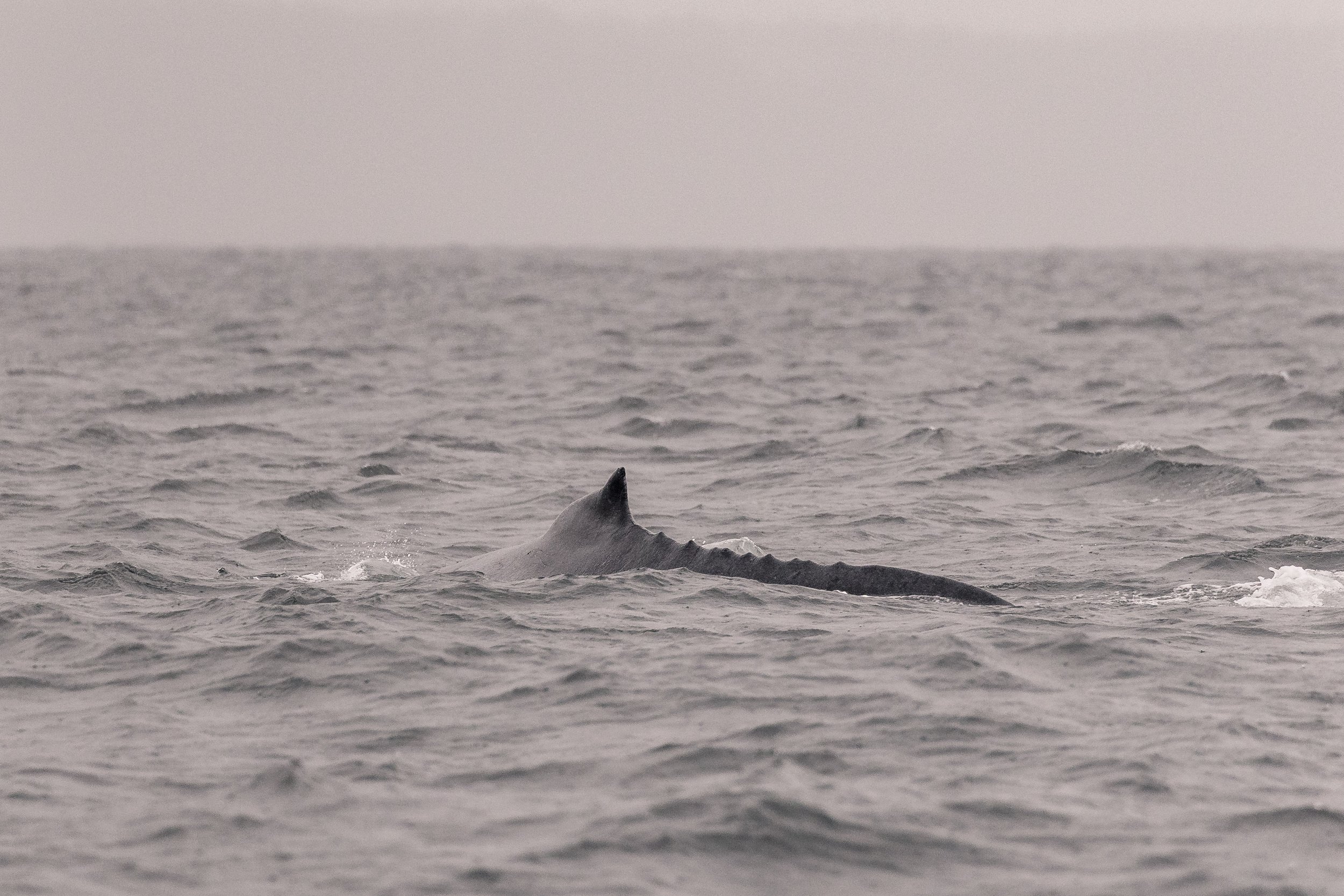
Fukurō has a very knucklely spine!
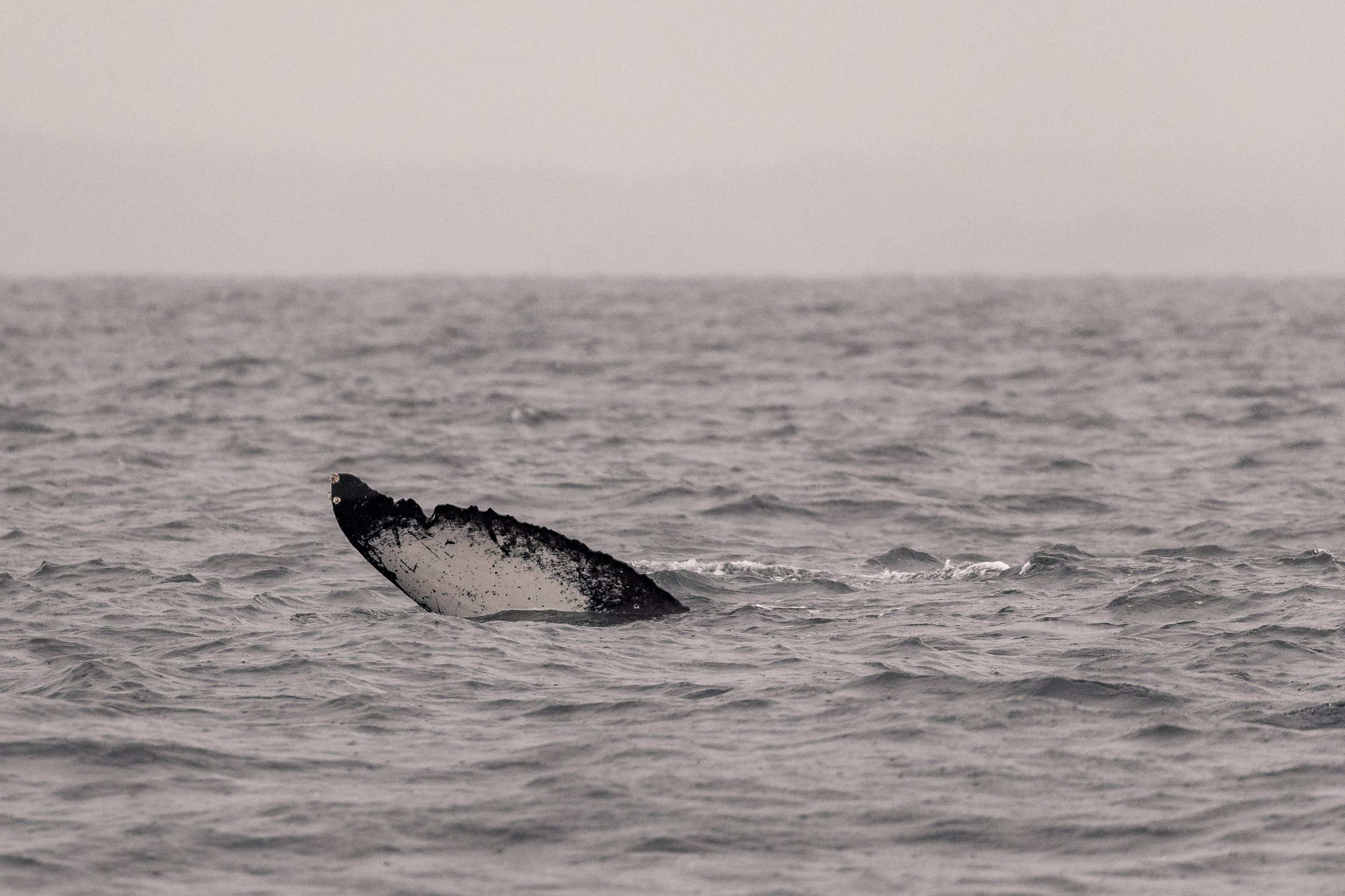
The corner of Fukurō’s fluke as they dive.
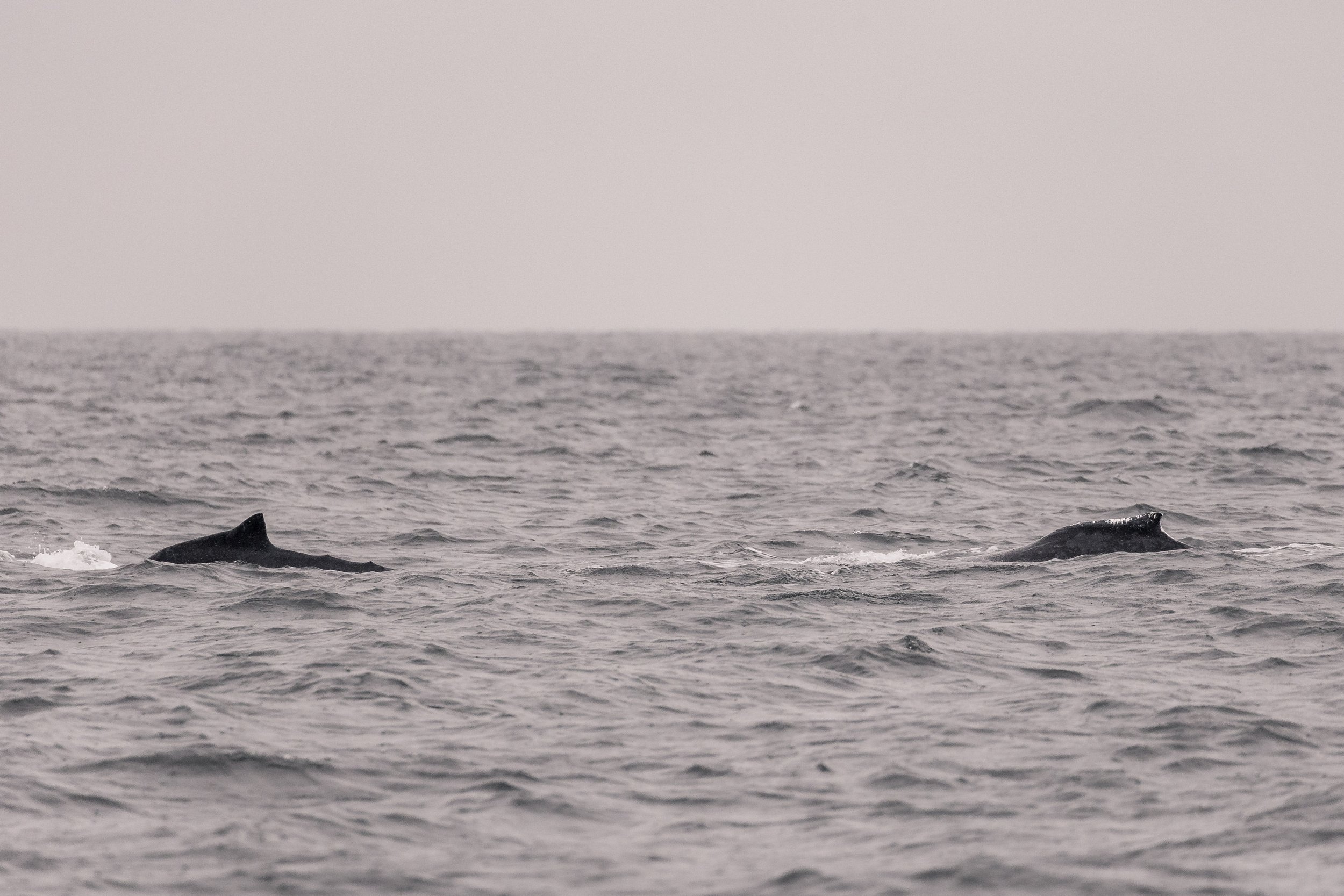
Fukurō in the front, with Nalu approaching them from the rear.
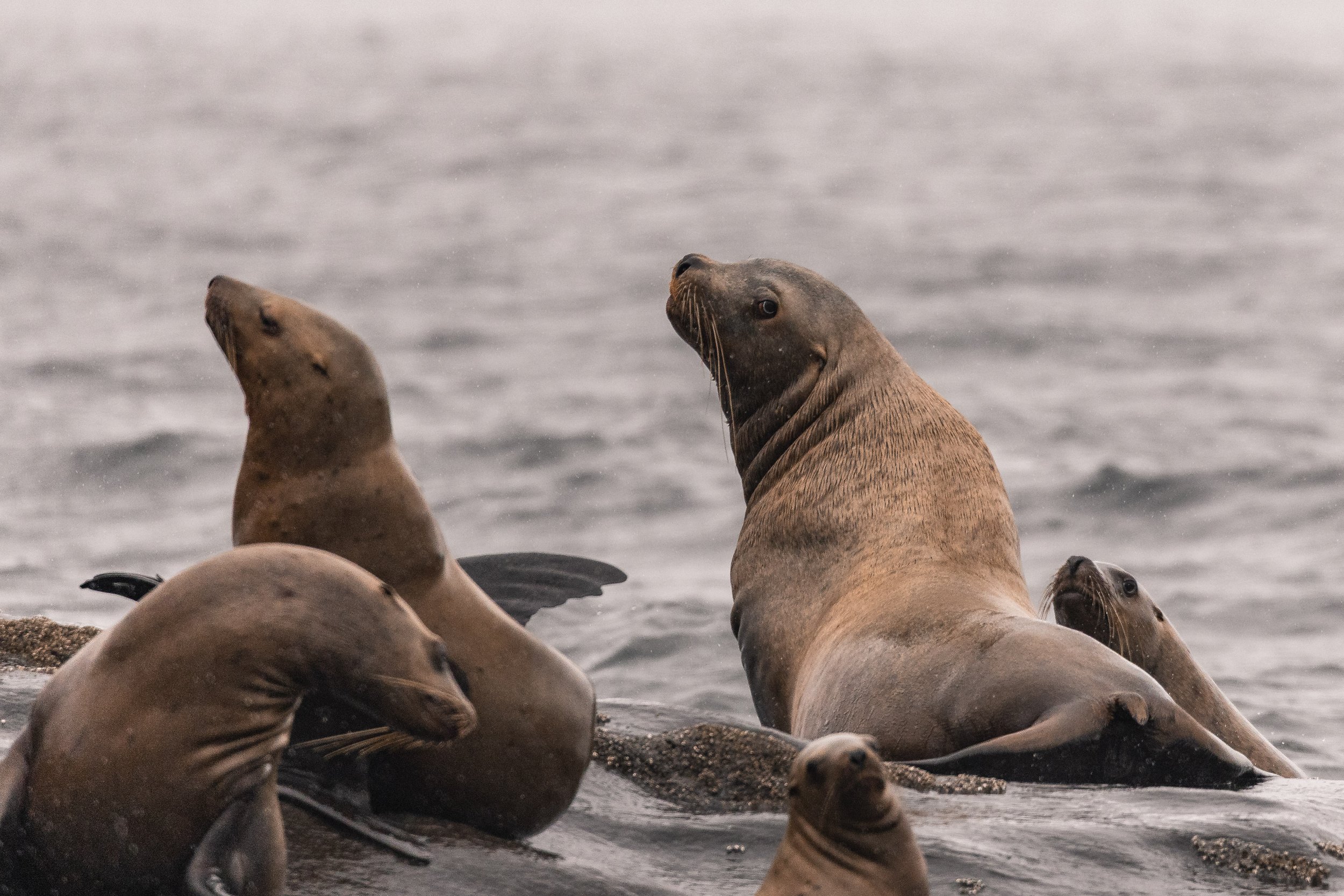
A wild sideeye from a Steller Sea Lion.
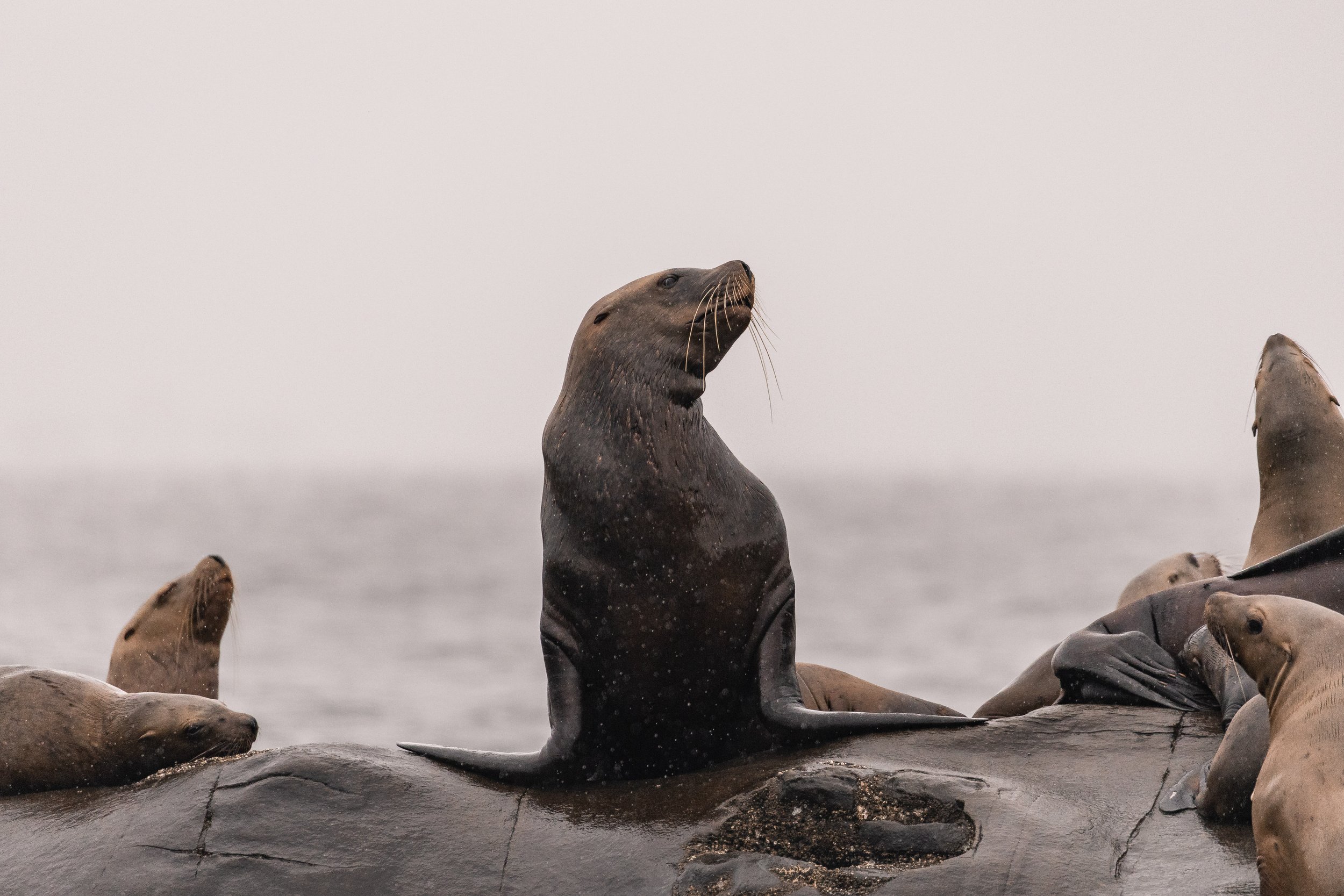
Posing up on the rocks.
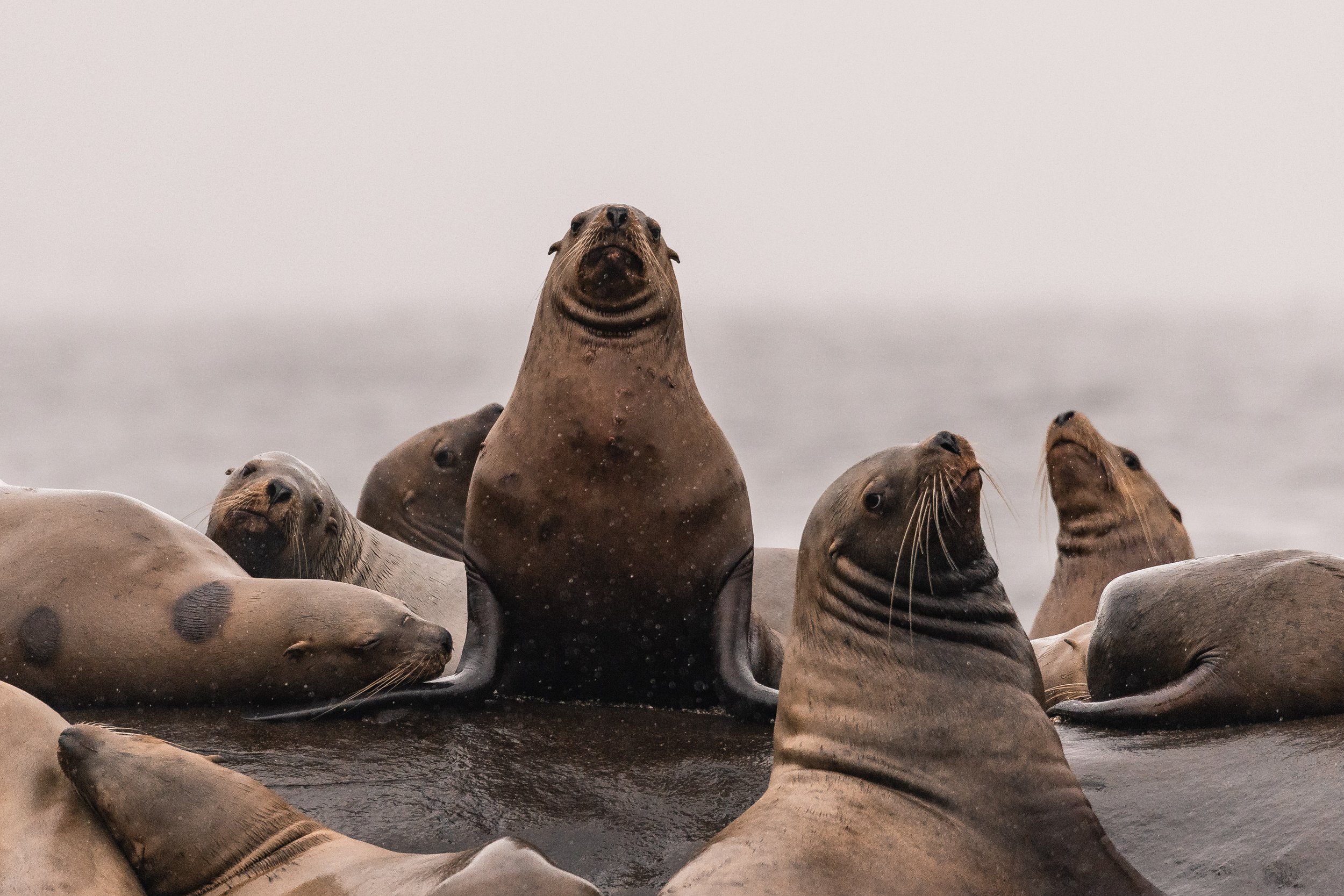
What a face!
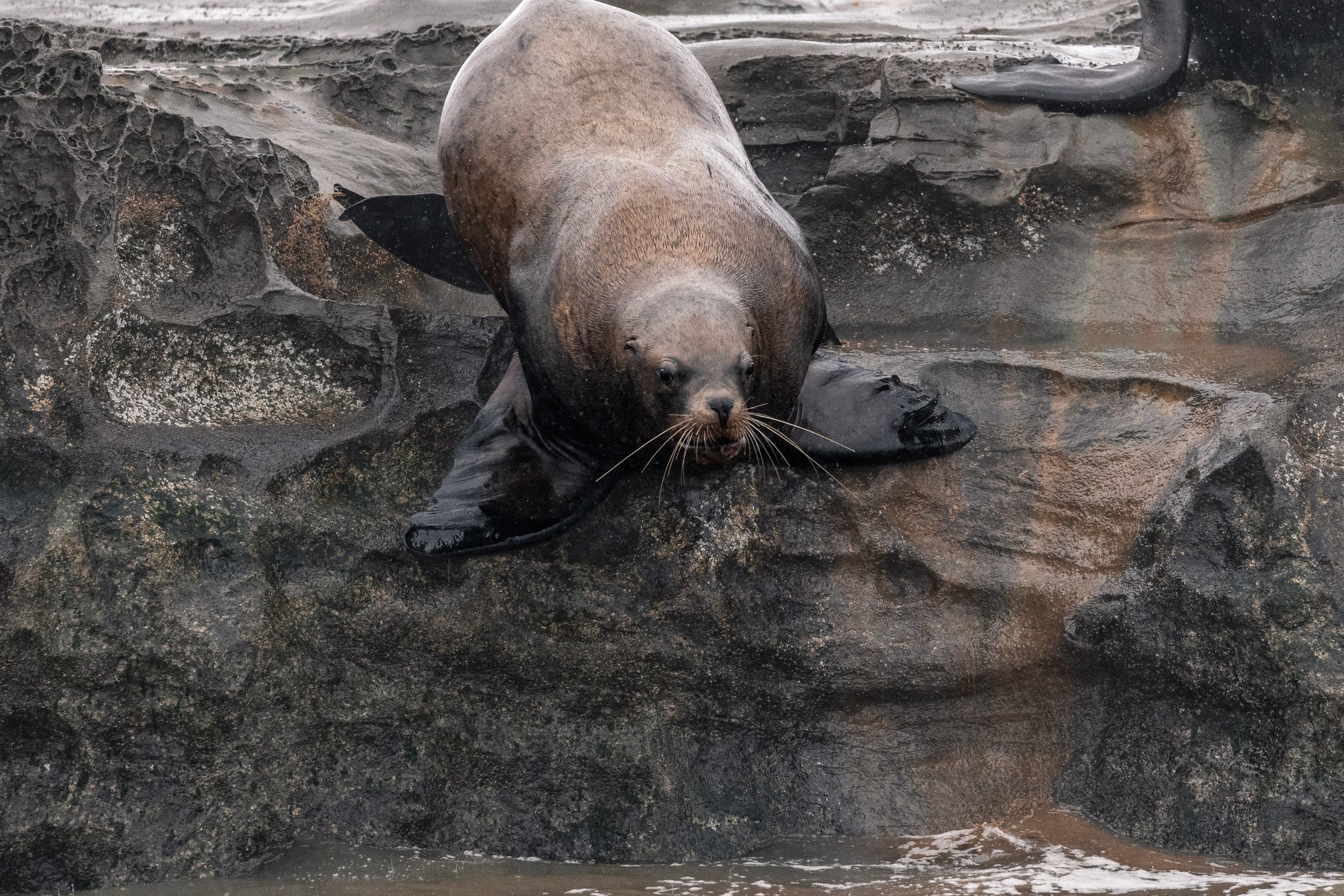
Contemplating plunging into the ocean below…
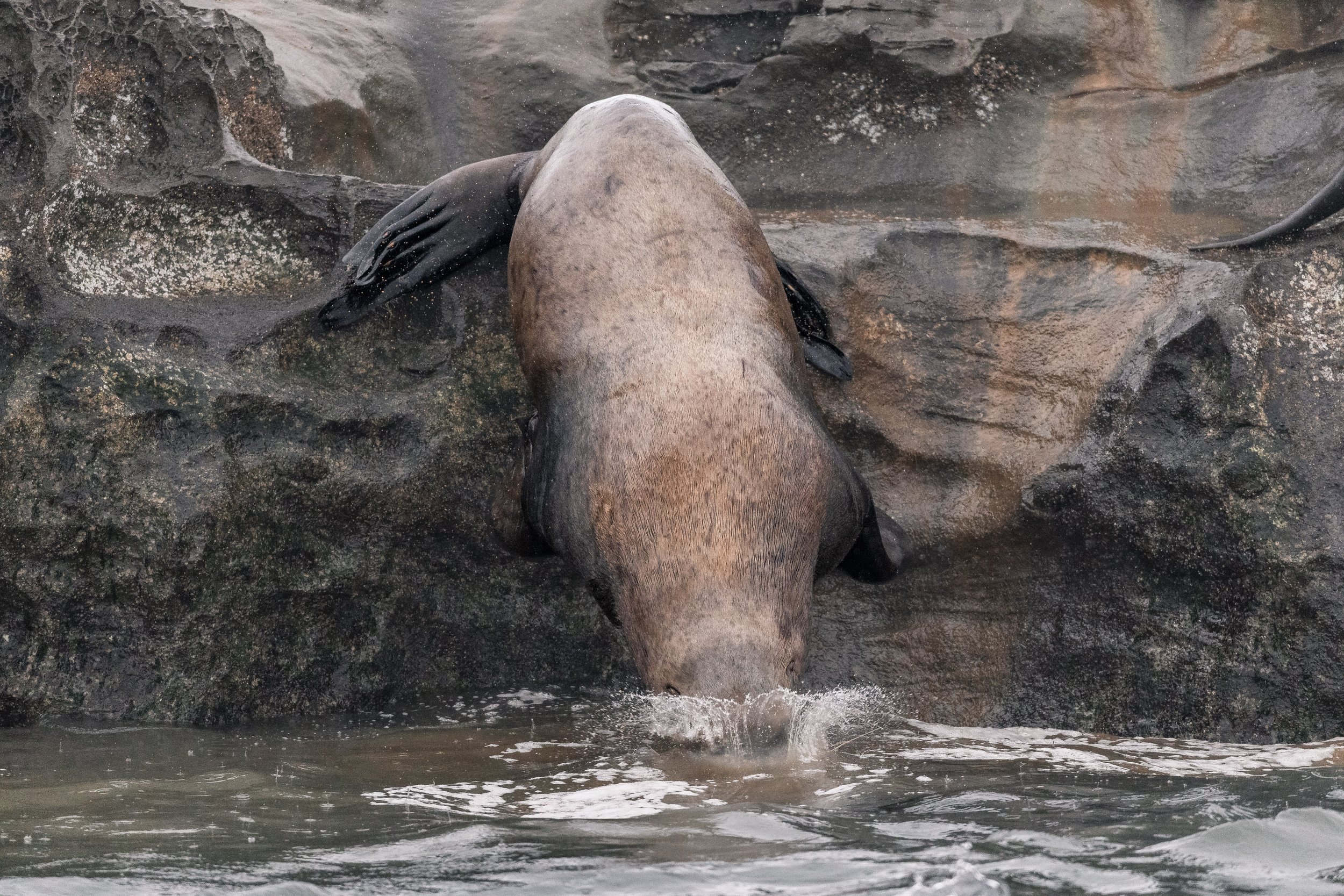
Going for it…
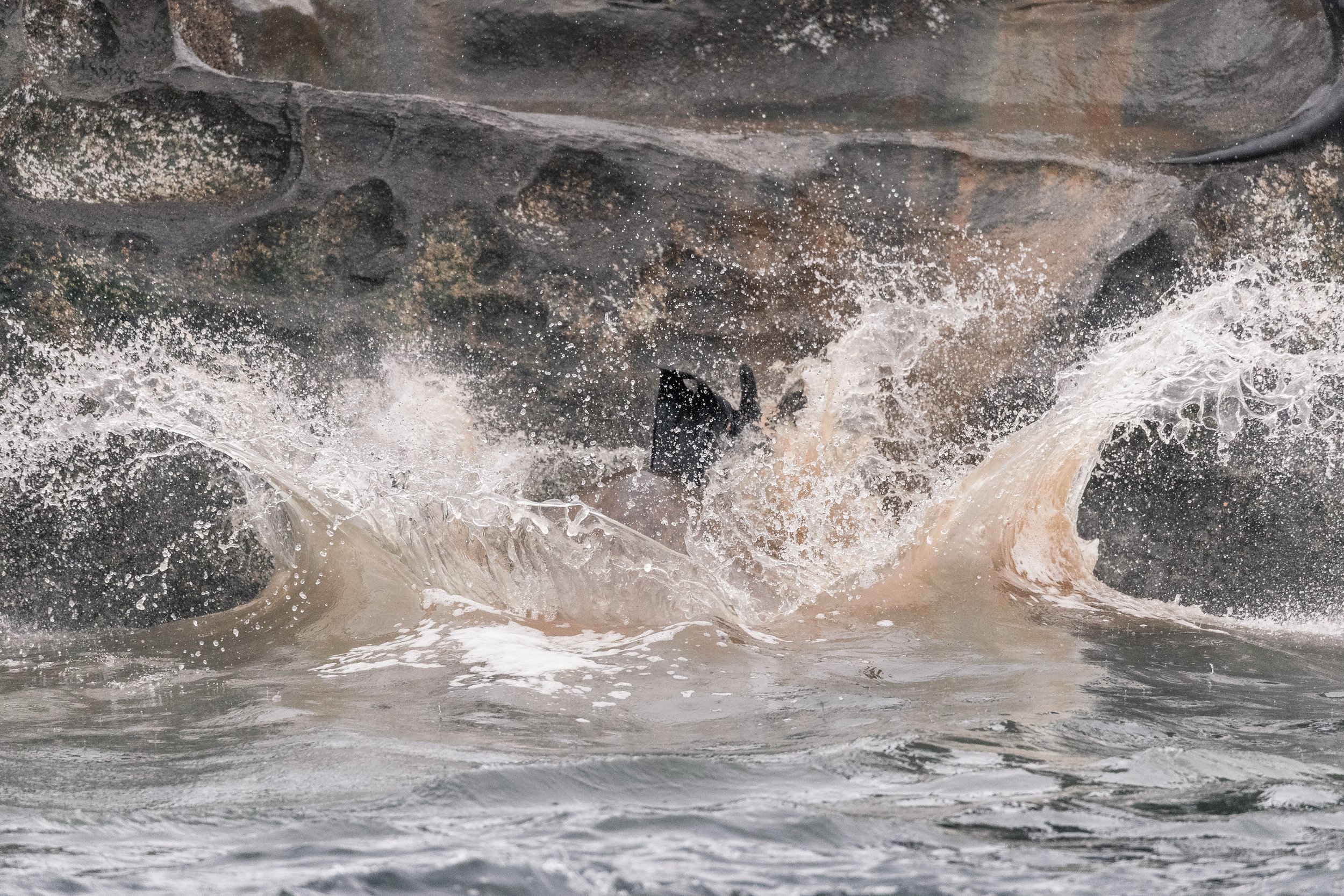
A giant splash as they break the surface!
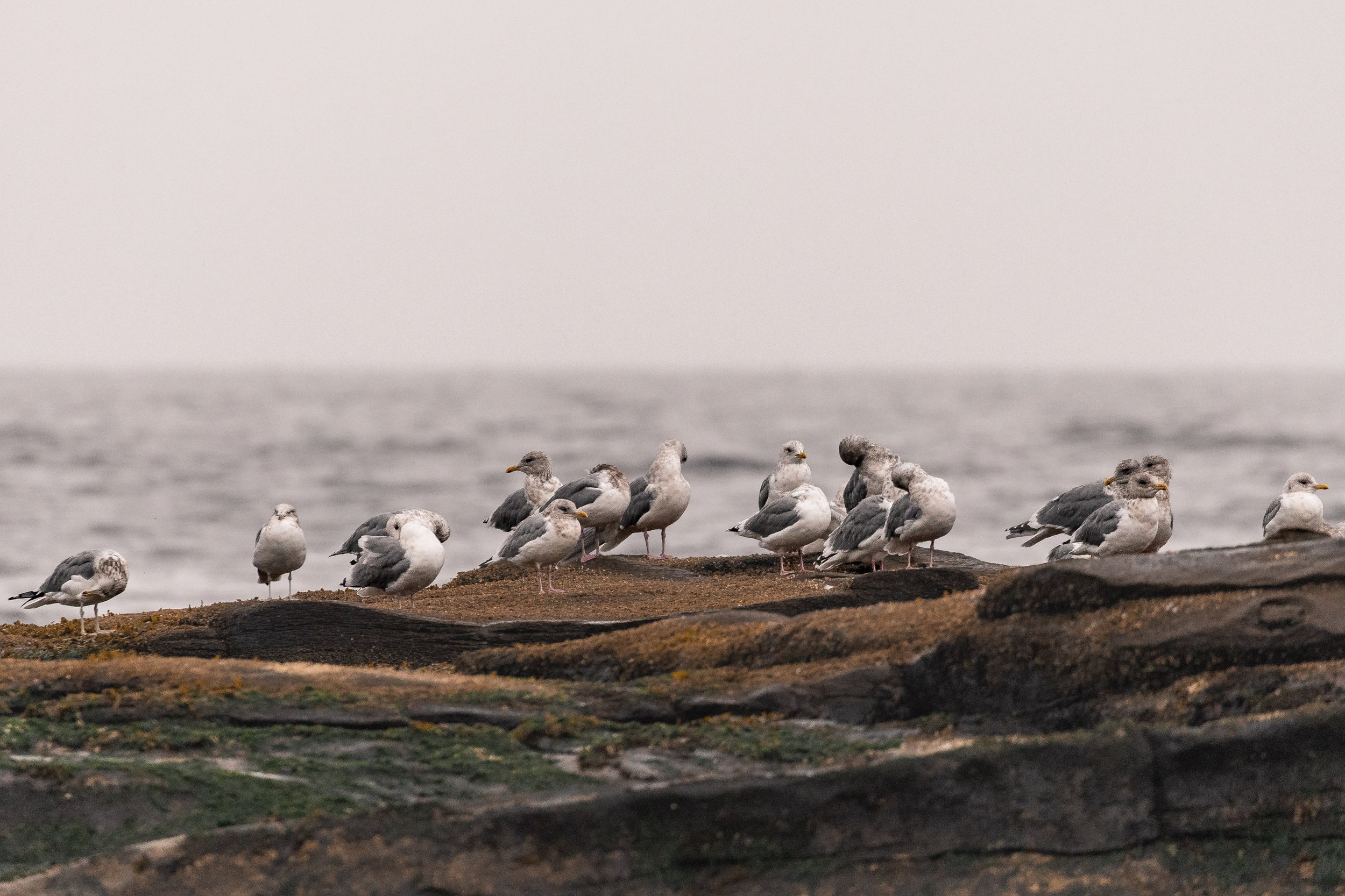
Nap time for the Gulls.
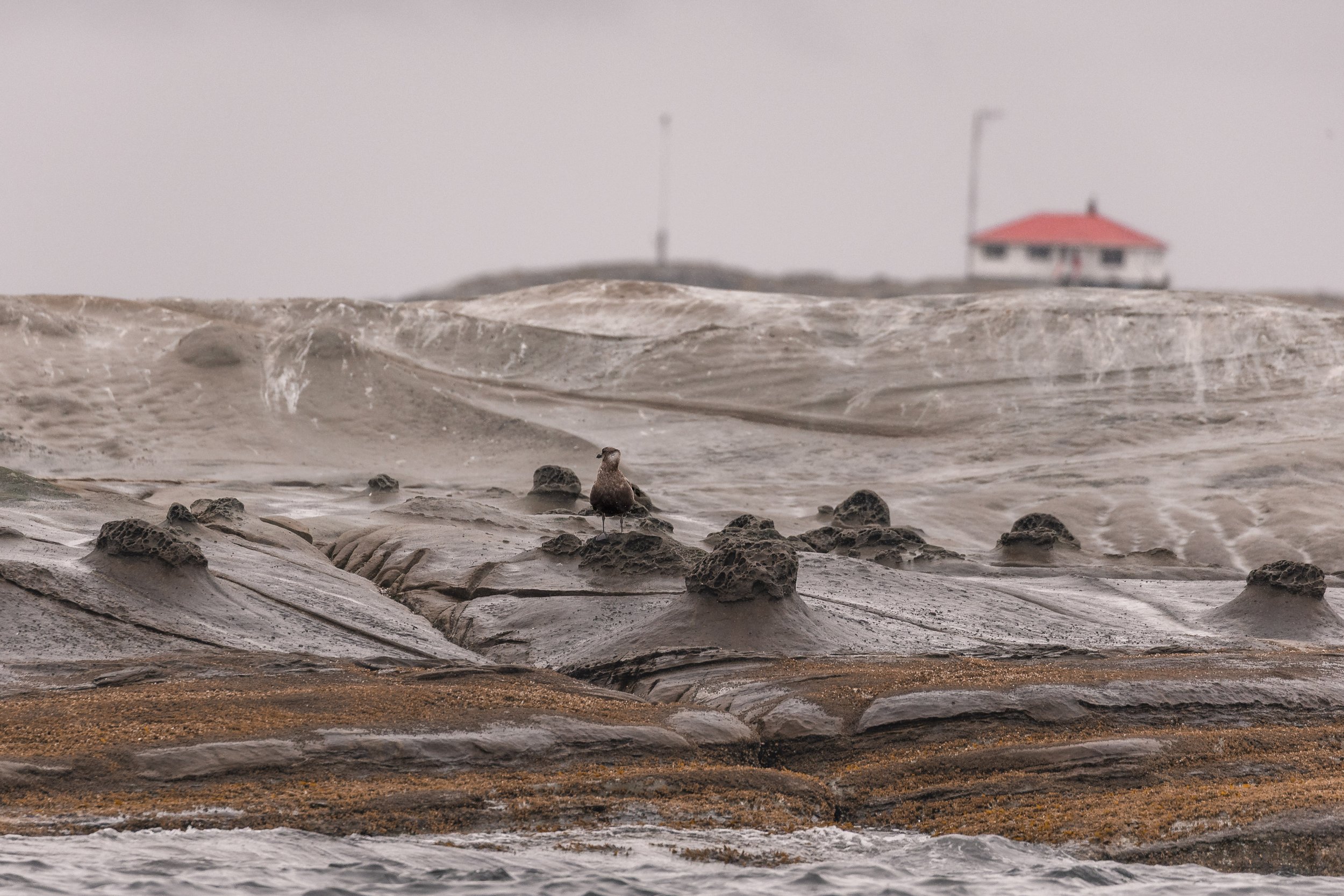
A juvenile Gull on the rocks with Entrance Island visible in the back.
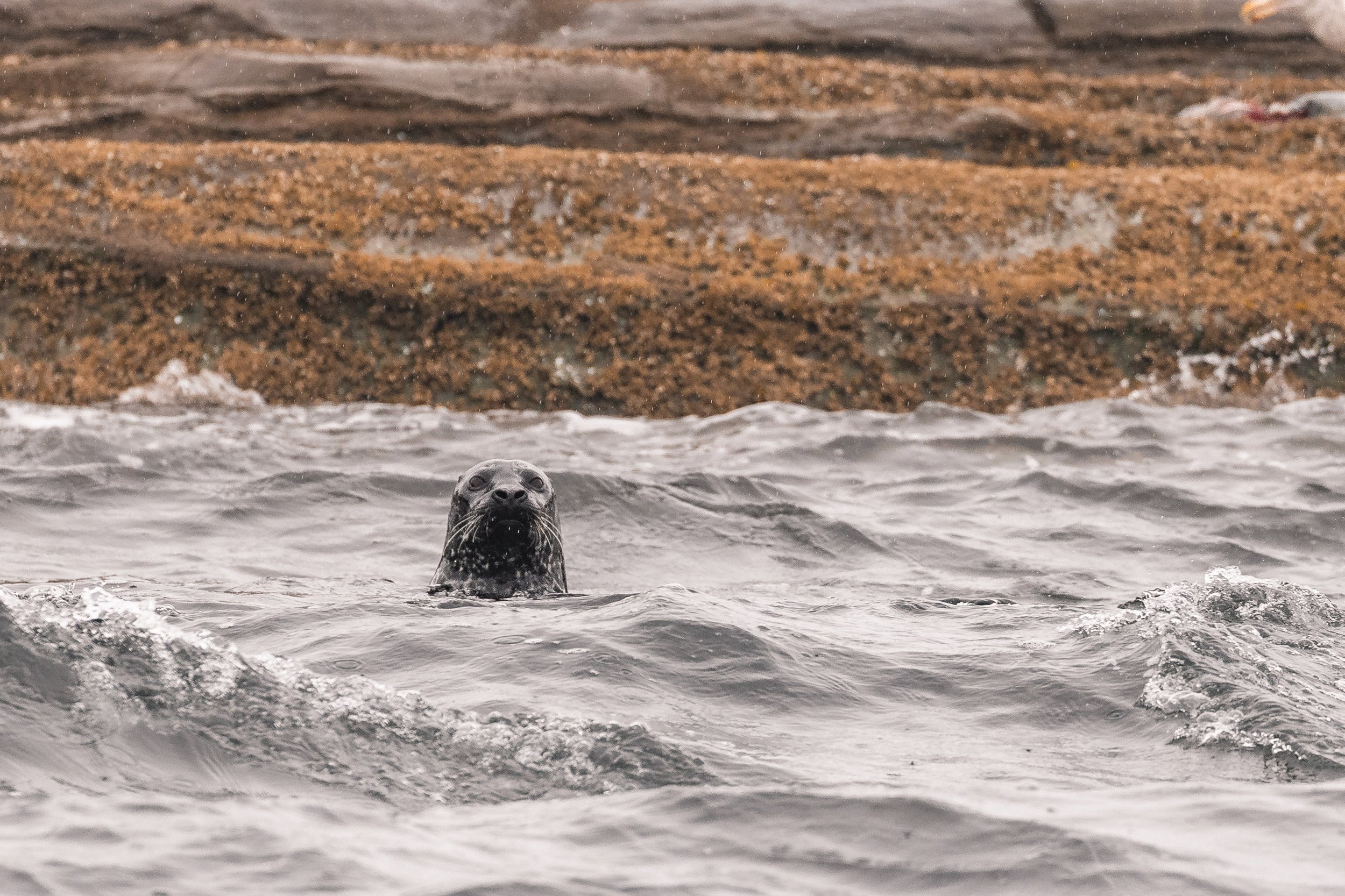
A curious Harbour Seal popping out of the water.
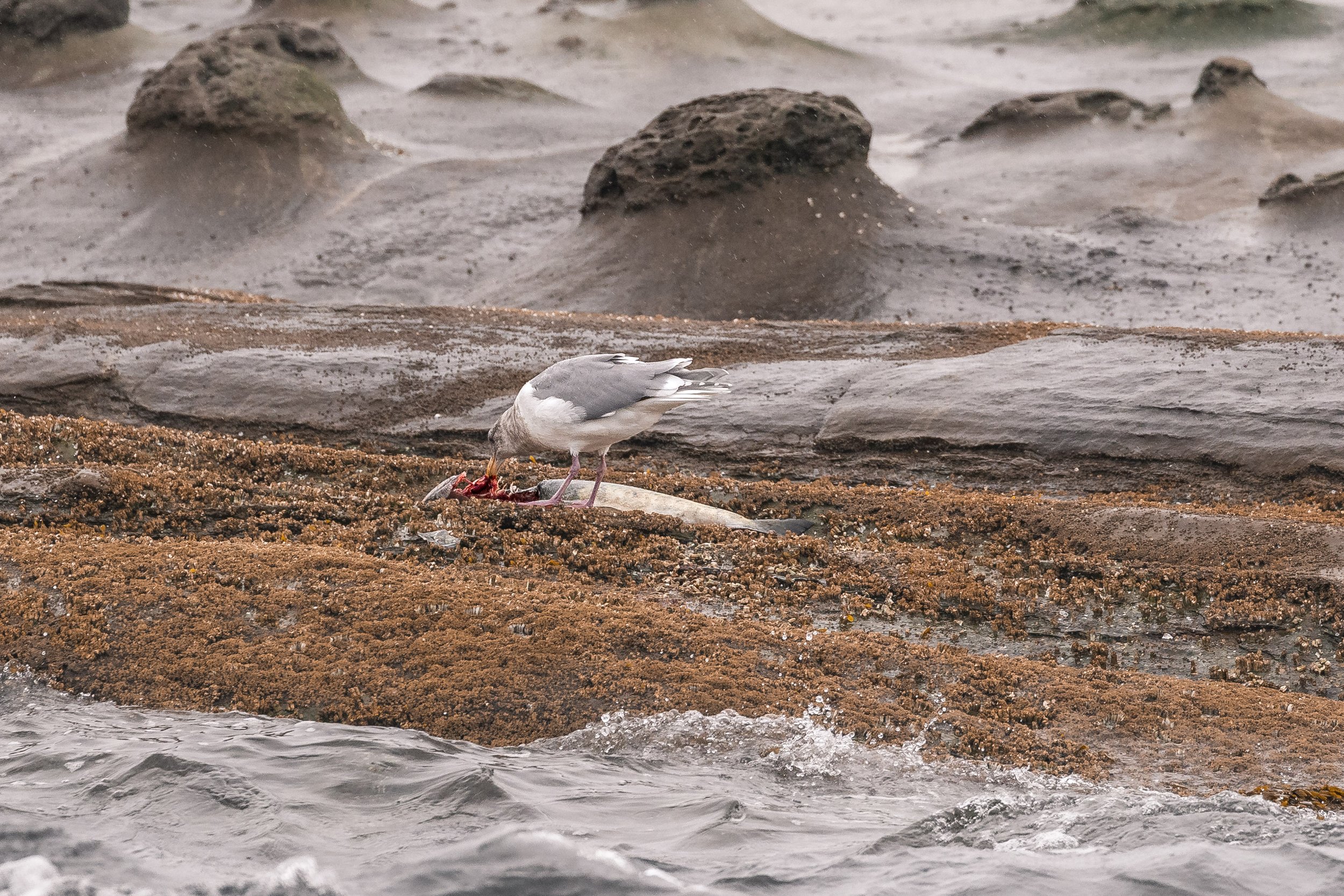
A tasty snack for the Gulls - this appears to be a salmon.
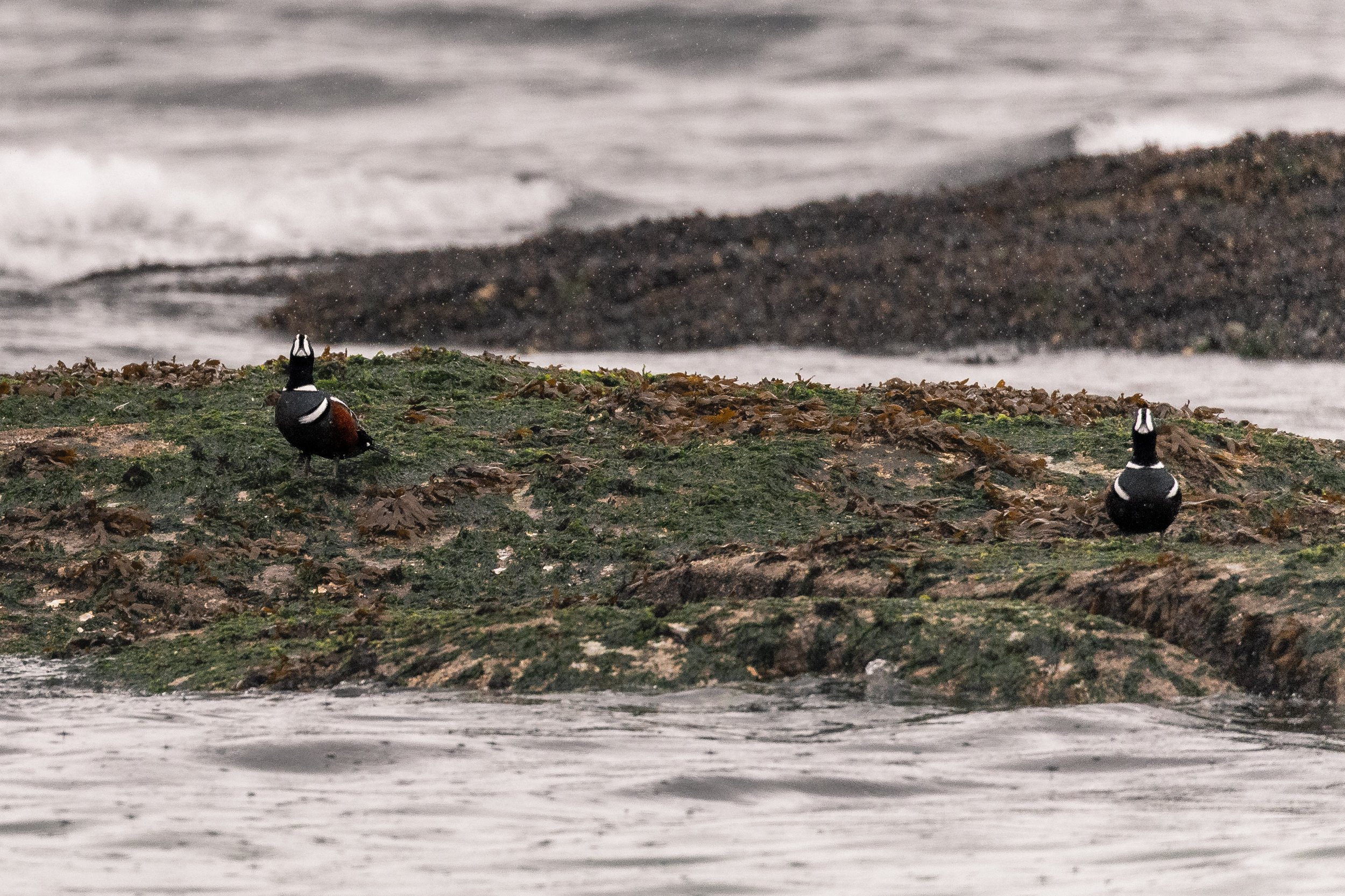
Harlequin Ducks staring down the barrel of the camera lens.
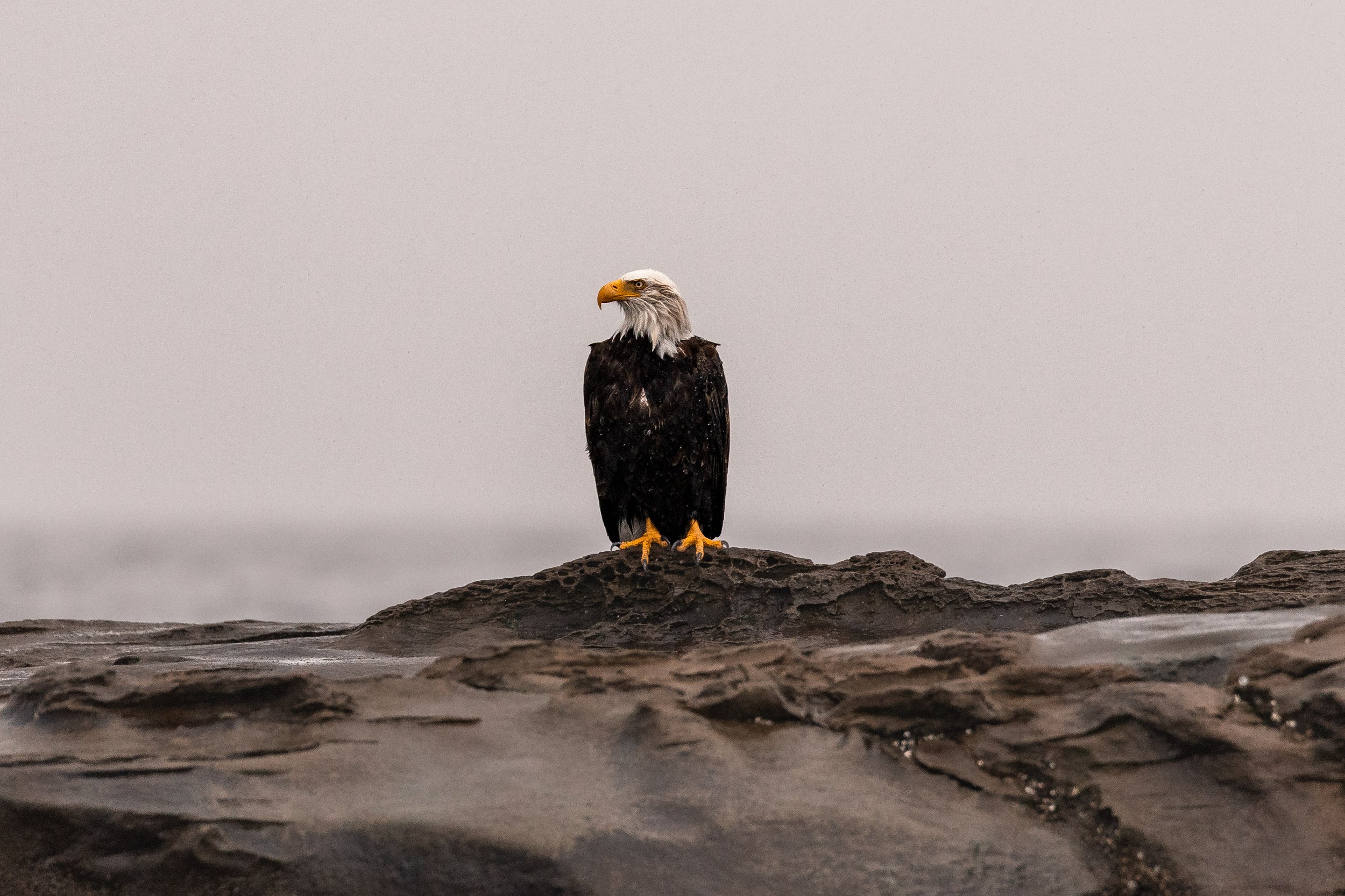
A soggy Bald Eagle up on the rocks.
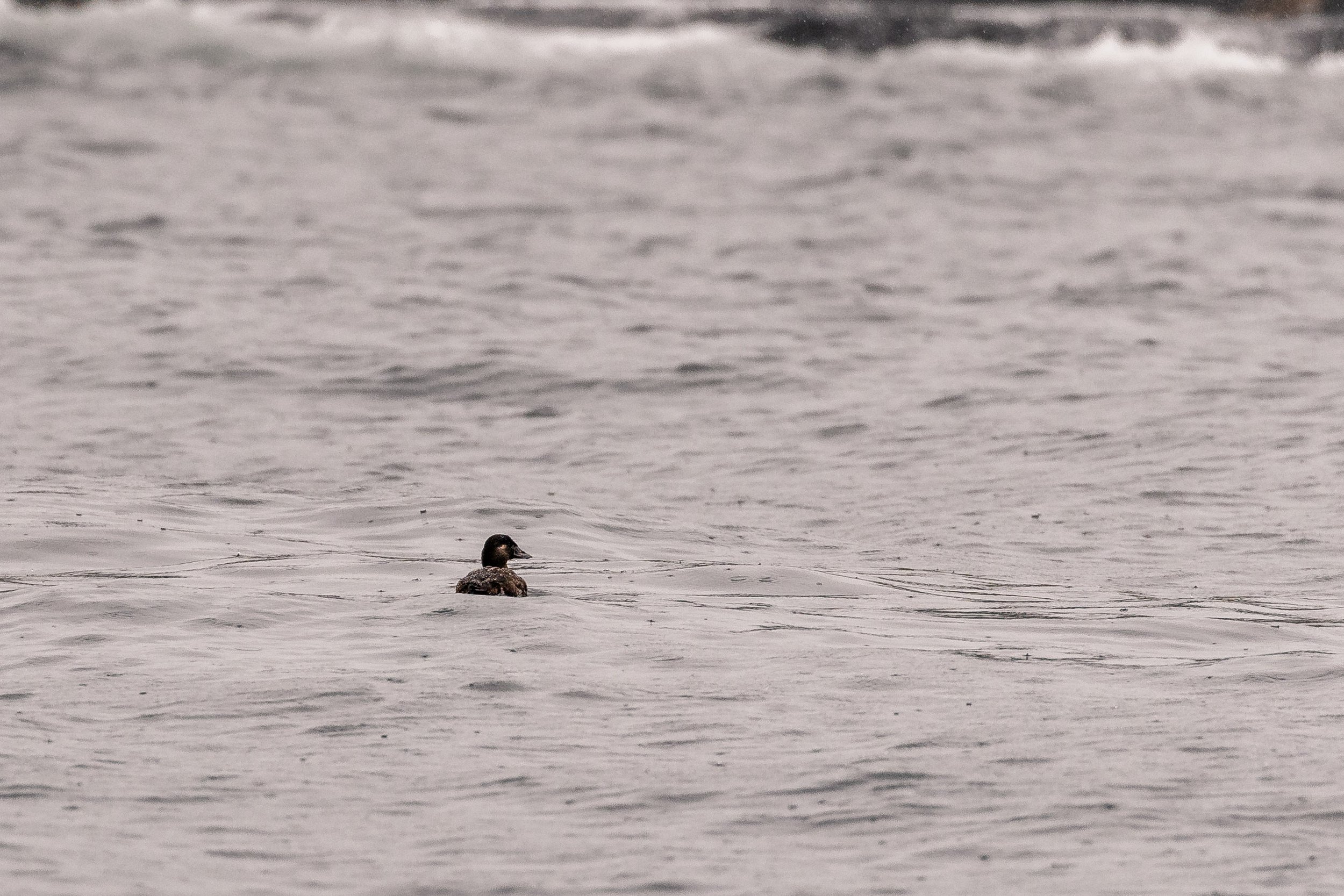
A Surf Scoter in the rain.
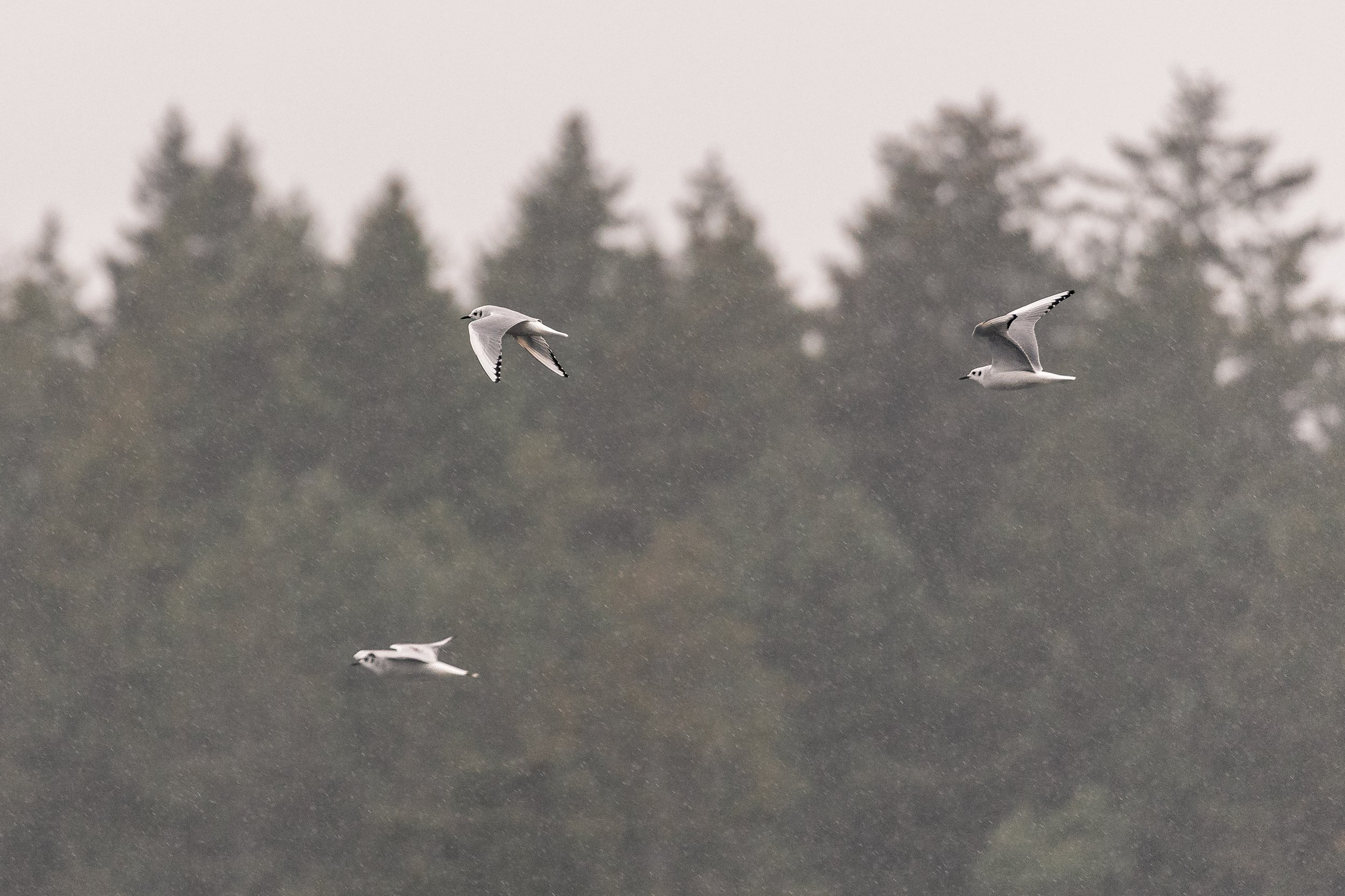
Bonapartes Gulls flying overhead.
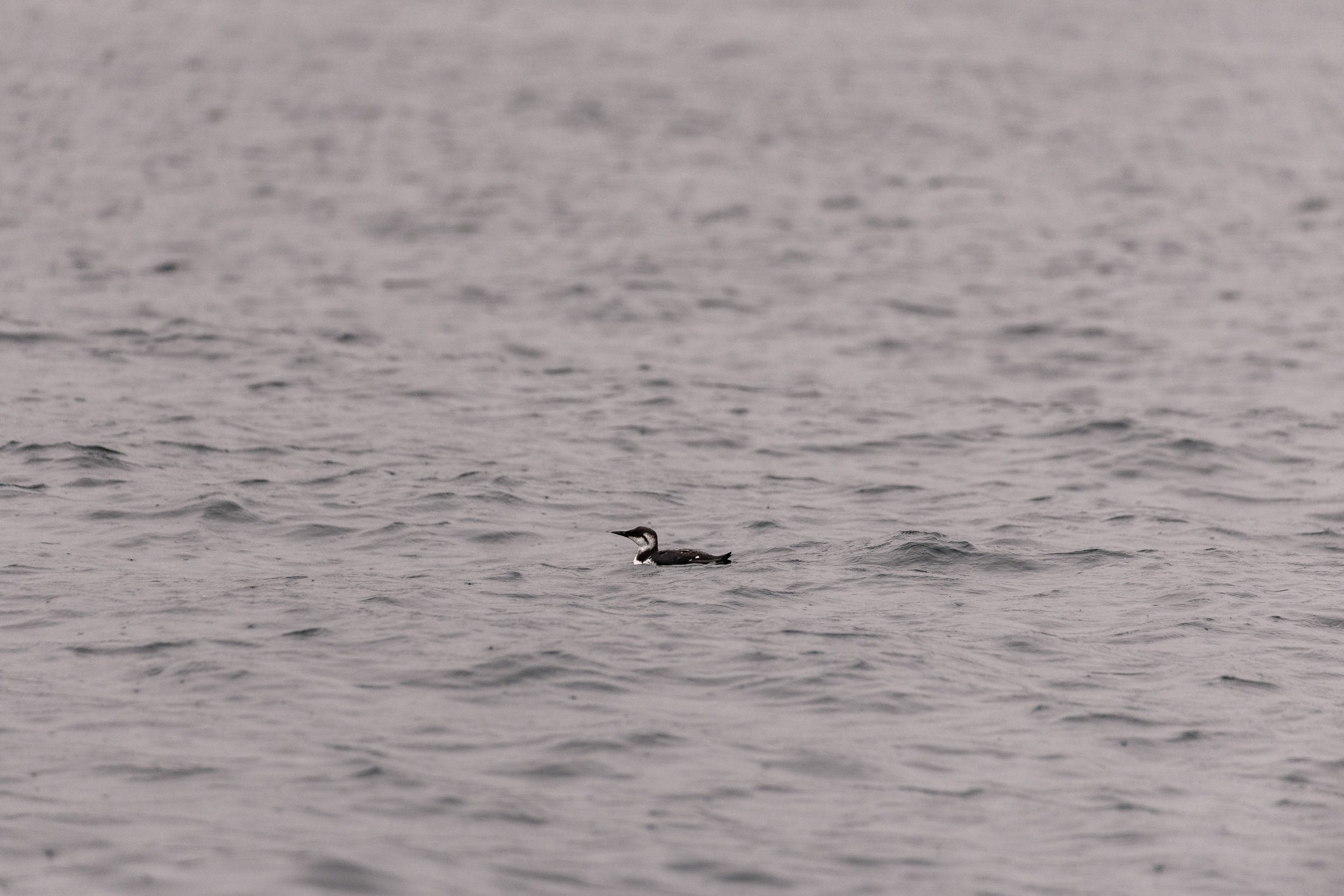
A Common Murre swimming along.
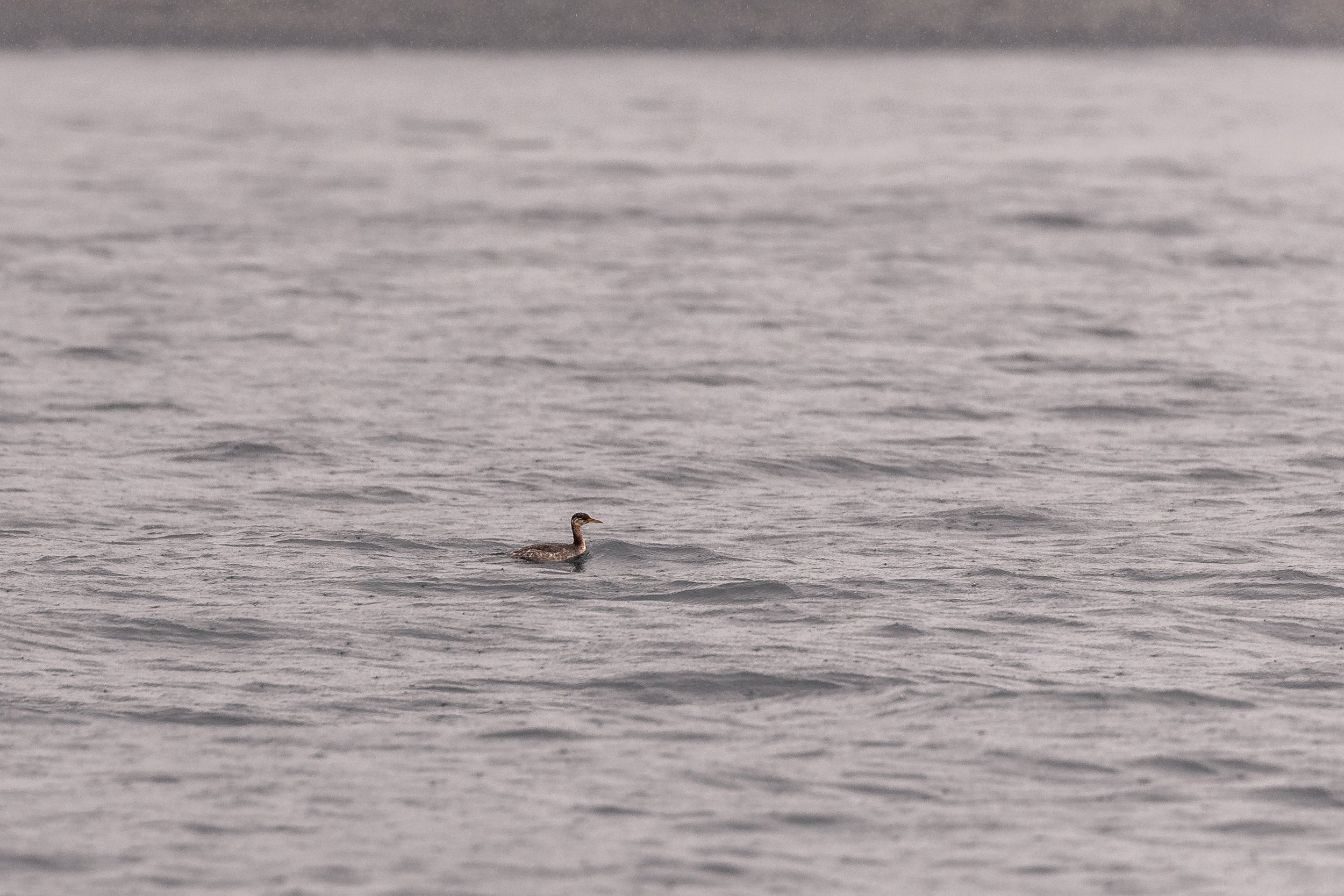
An immature Red-Necked Grebe in the distance.
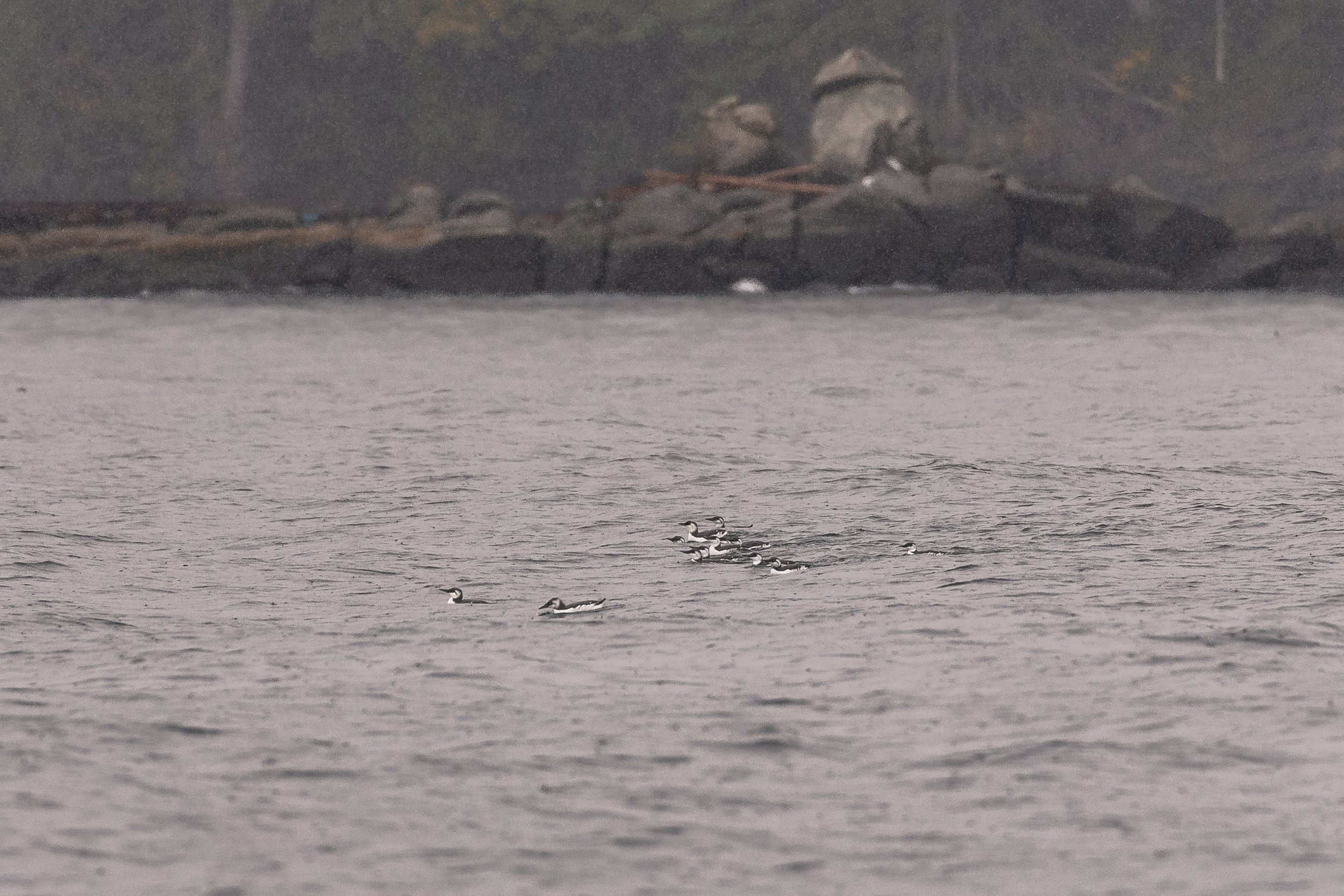
Did you know a flock of Common Murres is referred to as a Niagara, just like the waterfall?
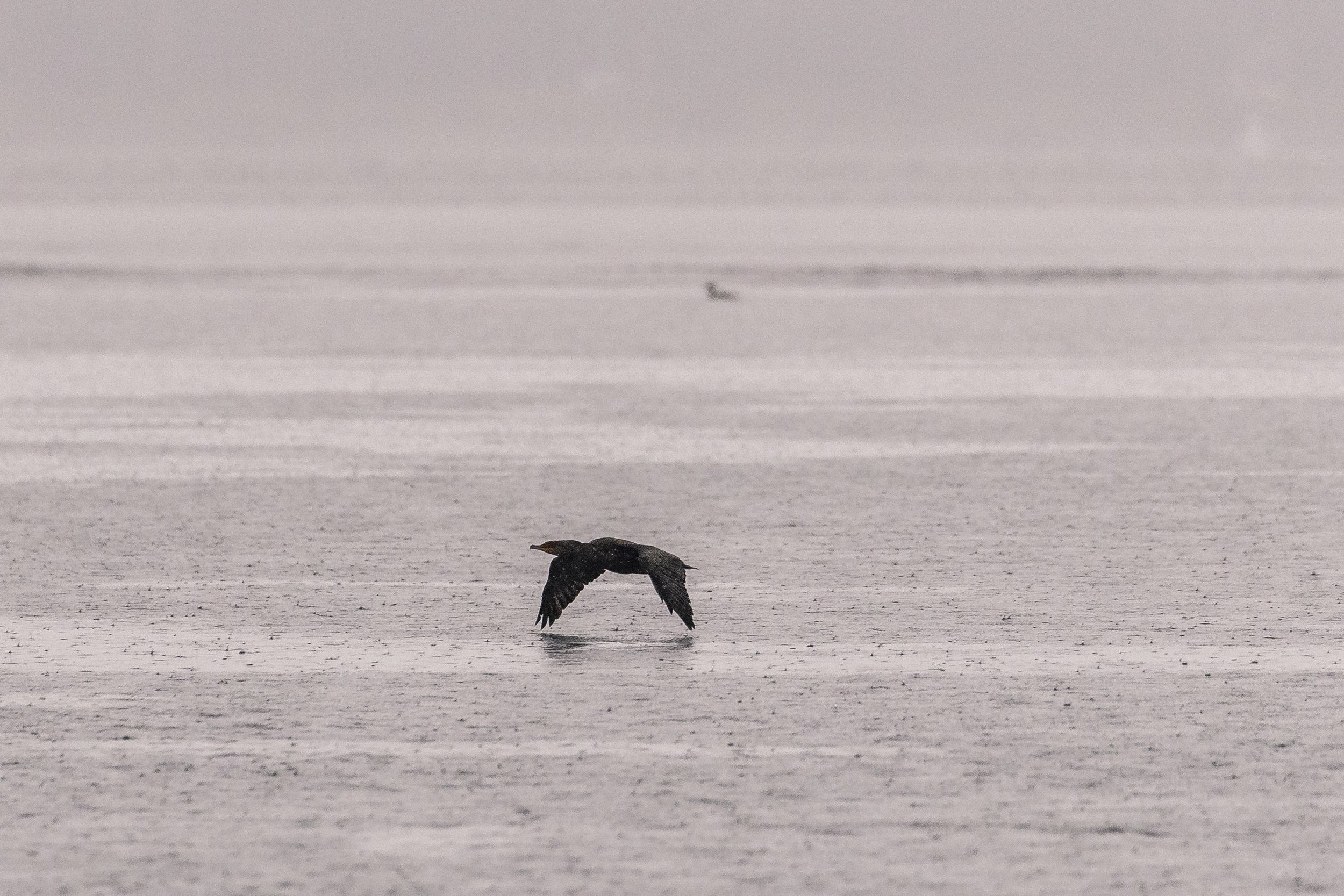
A Pelagic Cormorant gracefully flying just above the water’s surface.
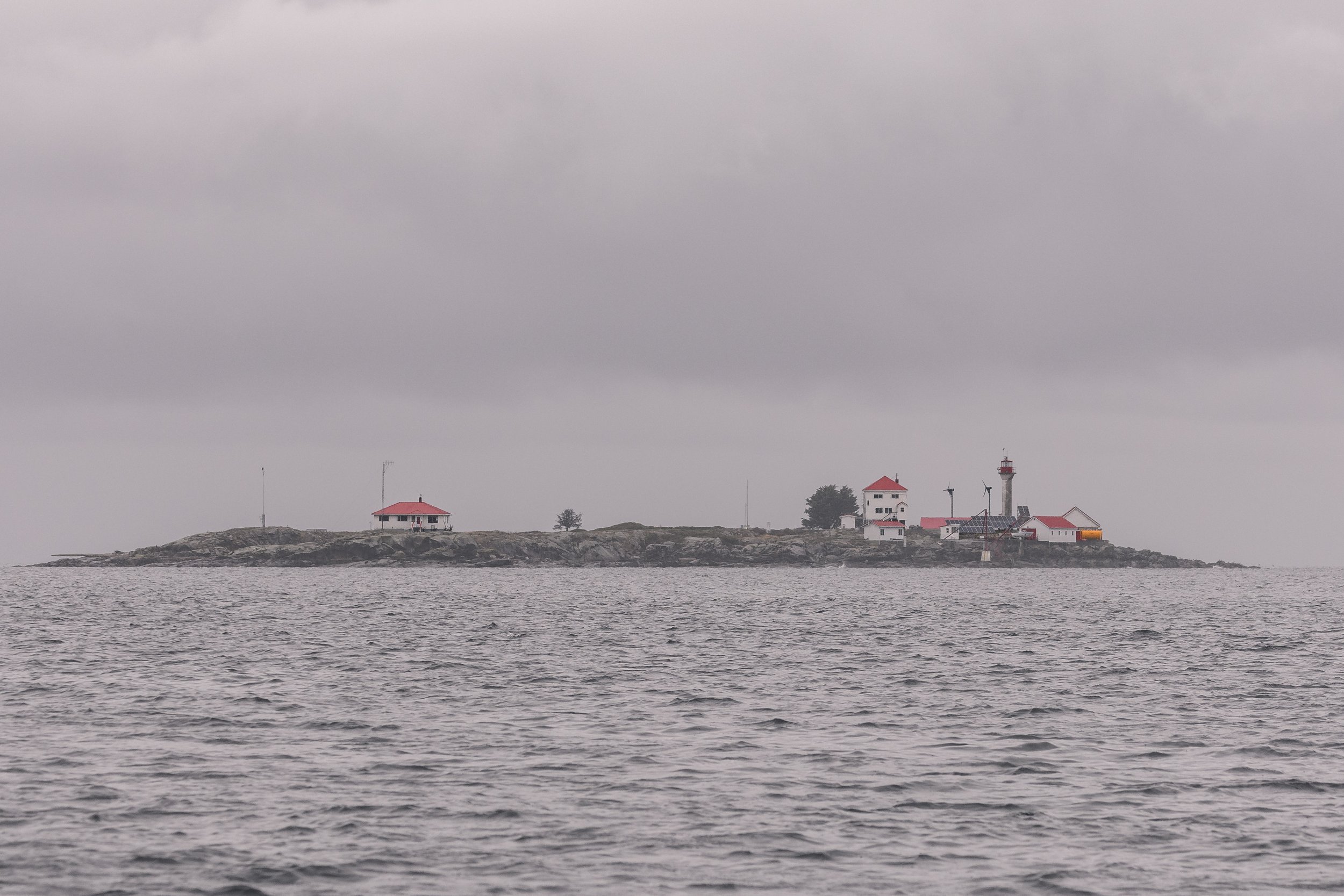
Entrance Island in the mist.
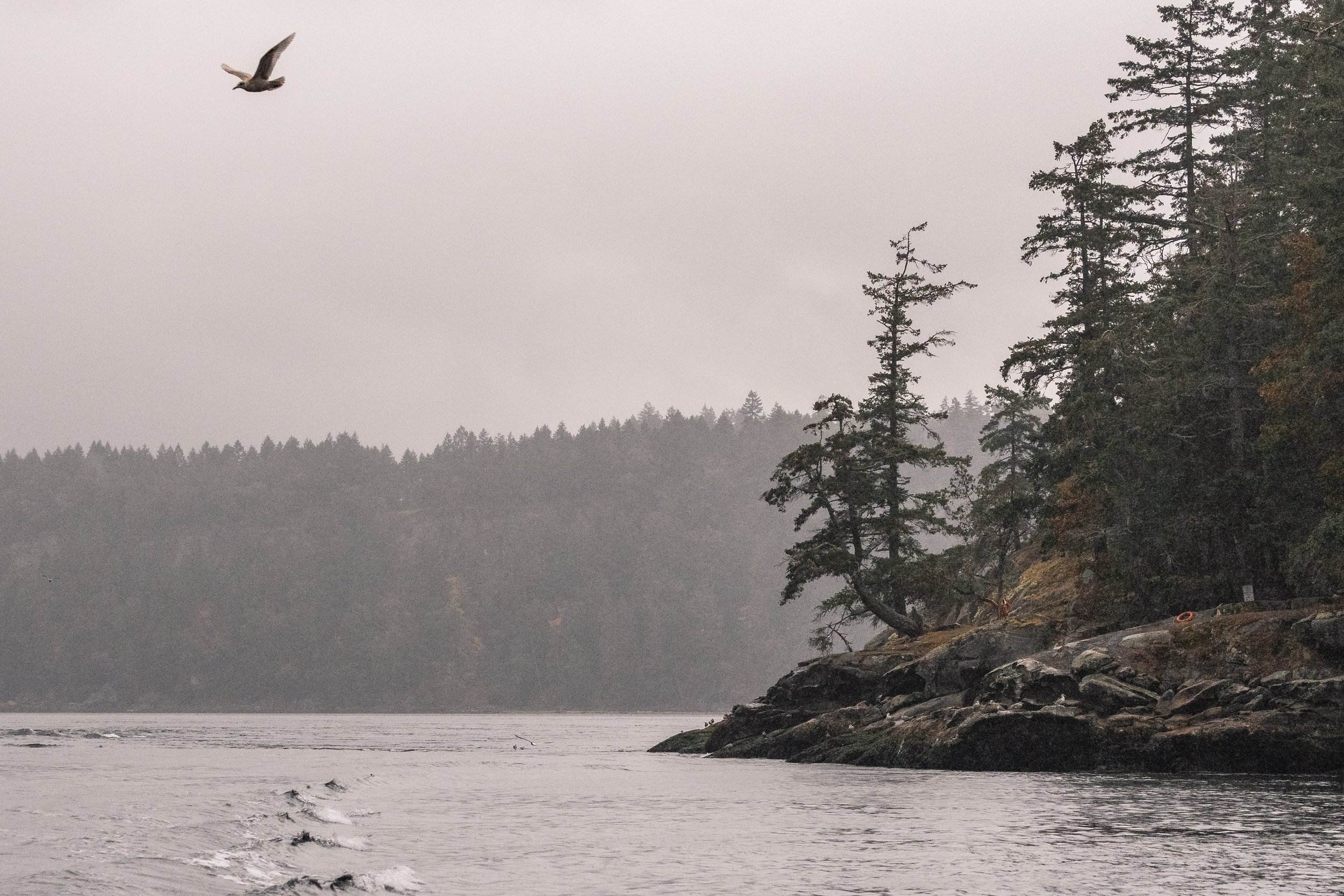
Dodd Narrows, a picture-perfect area we often visit.
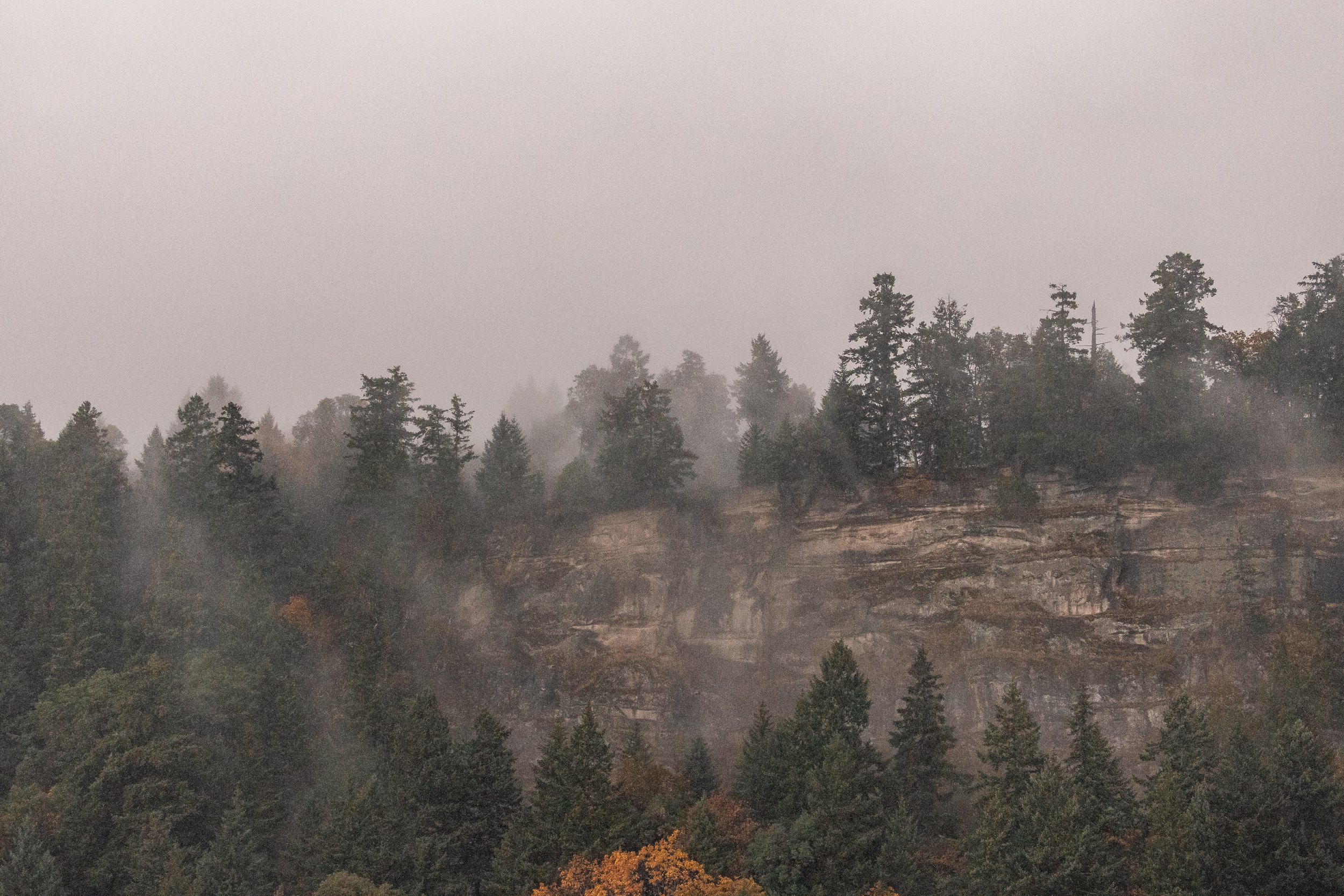
The foggy-misty conditions lead to many beautiful West Coast moments on the trip.