
October 27, 2026 - Sky high with Sherwina & friends
Chilly fall weather was in full swing today as we headed out to explore and begin adventuring around the Salish Sea. It was decided that we would start the day inside the Southern Gulf Islands, peeking around in case any of the whales that had been spotted over the last day were still roaming around.
Exploring around the misty island landscape, we went all around the coast, eyes ever searching the horizon. After a bit of peeking about, we headed towards Porlier Pass. Here, we crossed through the narrow waterway, making our way out into the more open waters of the Strait of Georgia.
Searching all around once more, we soon found what we were looking for - a couple of towering blows followed by dark shapes diving were spotted. It was a pair of humpback whales! Getting over and into position, Naturalist Hayleigh began working on identifying who we were with. As she did, one of the whales launched themselves high out of the water, before crashing back down into the depths. This individual began breaching repeatedly, arching dramatically as they landed. A couple of photos of the duo let us confirm that the breacher was Sherwina (BCY0961), and the little one nearby was her 2026 calf (BCY0961Calf2026). While breaching is always an incredible behaviour to witness, it is typically uncommon to see it so continuously, as each breach burns a large number of calories. Our humpbacks will soon depart our waters, heading to the warmer waters of Mexico or Hawaii to breed and give birth. This final journey usually marks the end of the time calves stay by their mother’s side before separating and going on their own. There is a lot to learn over the year they are with their mothers, and we hope Sherwina’s little one was very studious along the way!
After some more splashing about, more blows could be seen in the distance, quickly approaching the pair. Soon, two more humpbacks were intermingling with Sherwina and her calf, and a third new whale was meandering a bit further away. We took more photos and soon learned that the new arrivals were Phi/Corona (BCX1416) and Fader (BCY0195), while the lone lurker was identified as Yakima (BCX2182).
While we are always excited to see more whales, these three individuals hold a special place in our hearts, as they are all known entanglement survivors. Just over a year ago, Fader was successfully disentangled off of Nanoose Bay. In 2019, Phi/Corona had a similar case, though she appeared to have self-disentangled. Although no disentanglement effort was documented, Yakima had fresh entanglement scarring spotted on their fluke in 2021 that has now healed to a nearly perfectly black scar. These three are an important reminder of how crucial ocean cleanup efforts are, and how resilient these gentle giants can be.
The afternoon had been full of many beautiful moments with the humpbacks, but it was soon time for us to depart and continue onward. Whales are rarely the only wildlife species we spot on tour, and we were eager to see what else we could find. As we slowly departed scene, the next encounter happened a bit sooner than expected. Above our heads in Porlier Pass, a Merlin swooped, grabbing a small songbird in its talons. While predation is a behaviour we can occasionally see among our whales, it isn’t very often we get to see it amongst the birds as well!
Heading out, we began travelling back up north. Crossing back through Dodd Narrows, the picture-perfect waterway located just outside Nanaimo, we cruised for a few more minutes before arriving at our next destination.
Piled high on the log booms, California Sea Lions and Steller Sea Lions rested the day away. Log booms like these, situated beside the Harmac pulpmill, are a perfect place for pinnipeds to rest out of the water. Unlike natural haulouts such as those at Stinky Rocks that become submerged depending on the tides, manmade structures such as log booms or buoys always remain at the surface, letting pinnipeds maximize the hours they can rest.
The roars and barks bounced off the surrounding landscape, echoing all around us. We had a few more minutes with them before setting off for one more time. After a couple more minutes of travel, we were back in Nanaimo, wrapping up another excellent day exploring and learning about the many inhabitants of the Salish Sea!
Please enjoy these photos taken by Marine Naturalists Hayleigh Hilbert and Evan Hessels.
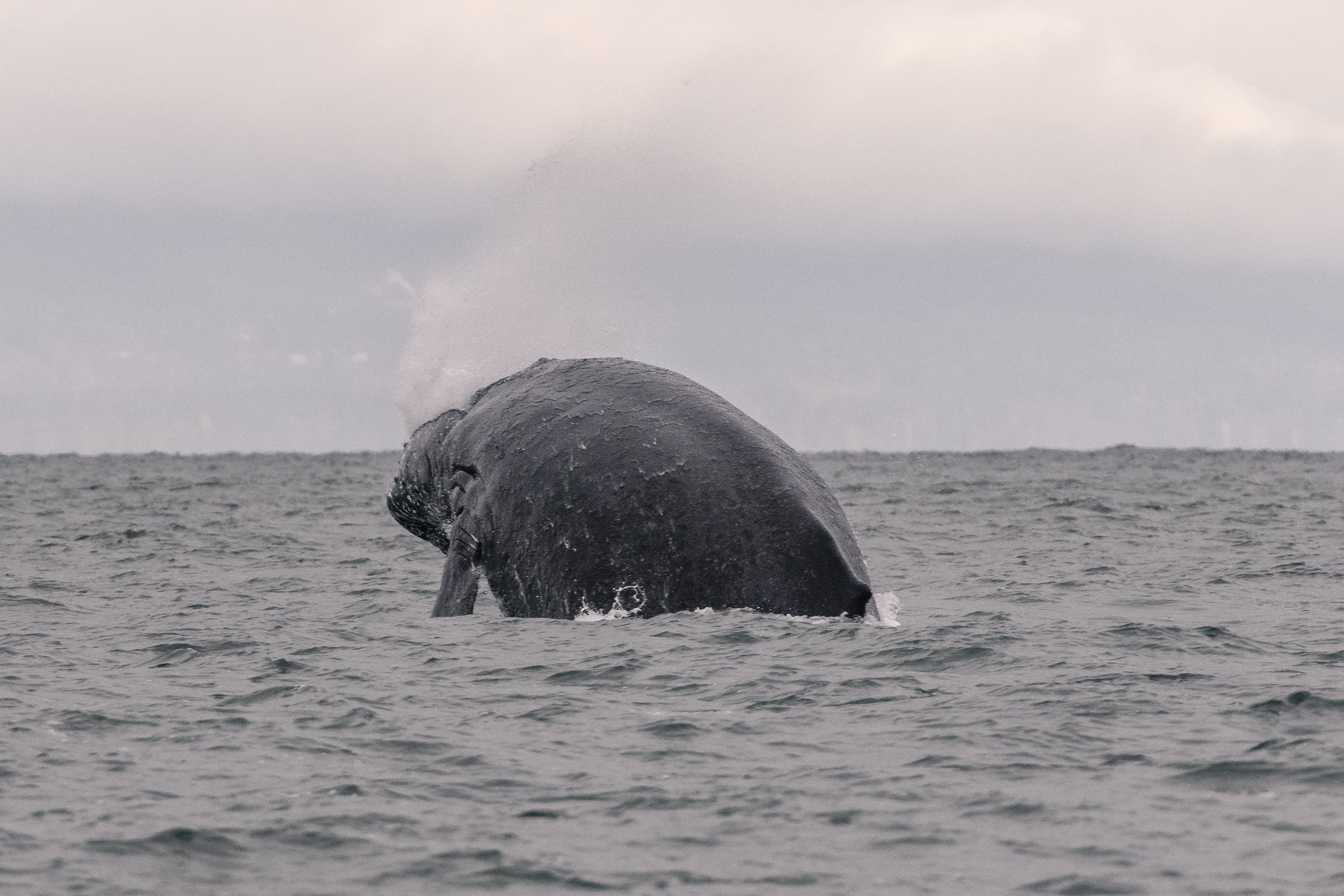
Sherwina coming in for a landing! Photo by Hayleigh Hilbert.
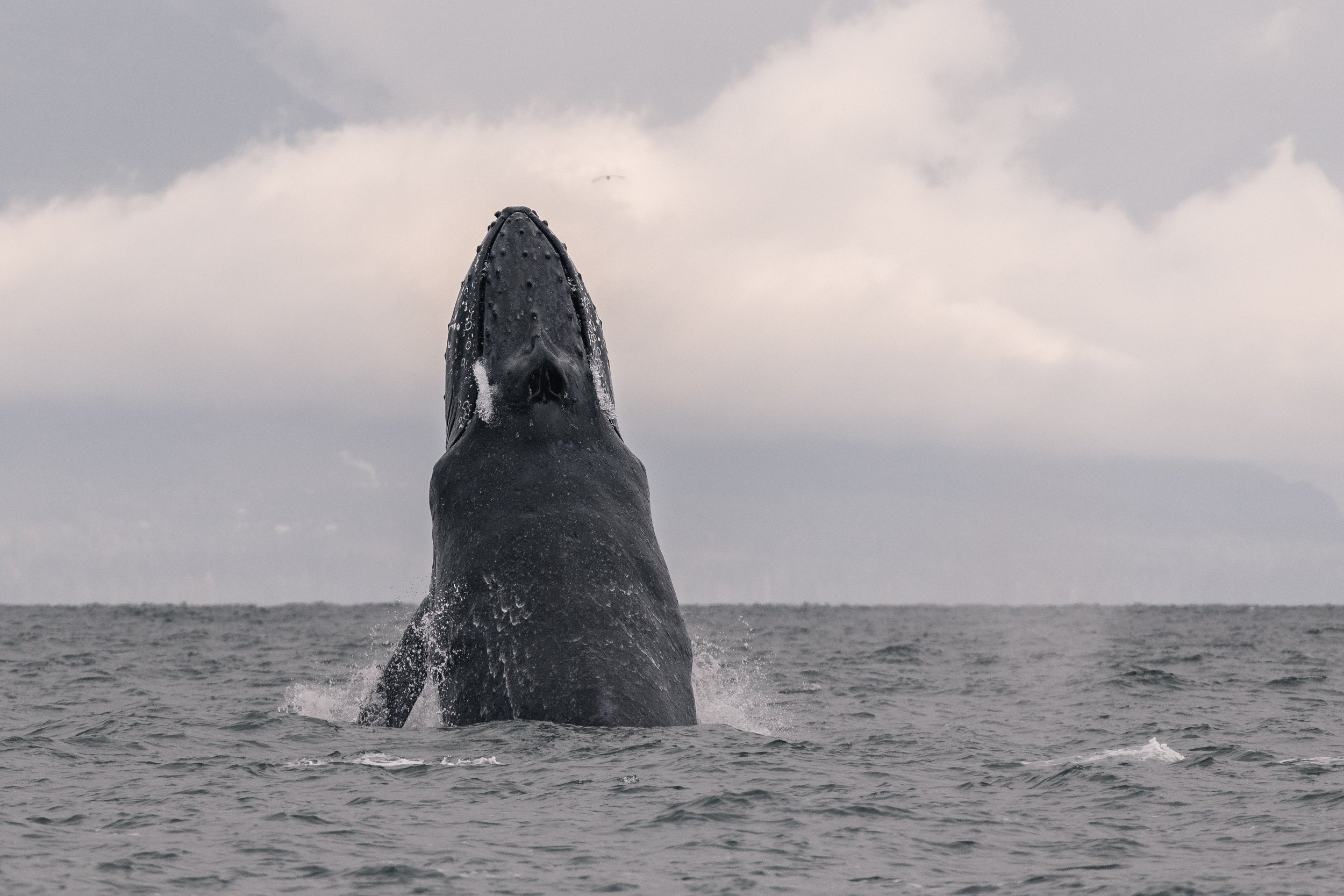
A peek at Sherwina’s blowholes as she breaches. Photo by Hayleigh Hilbert.
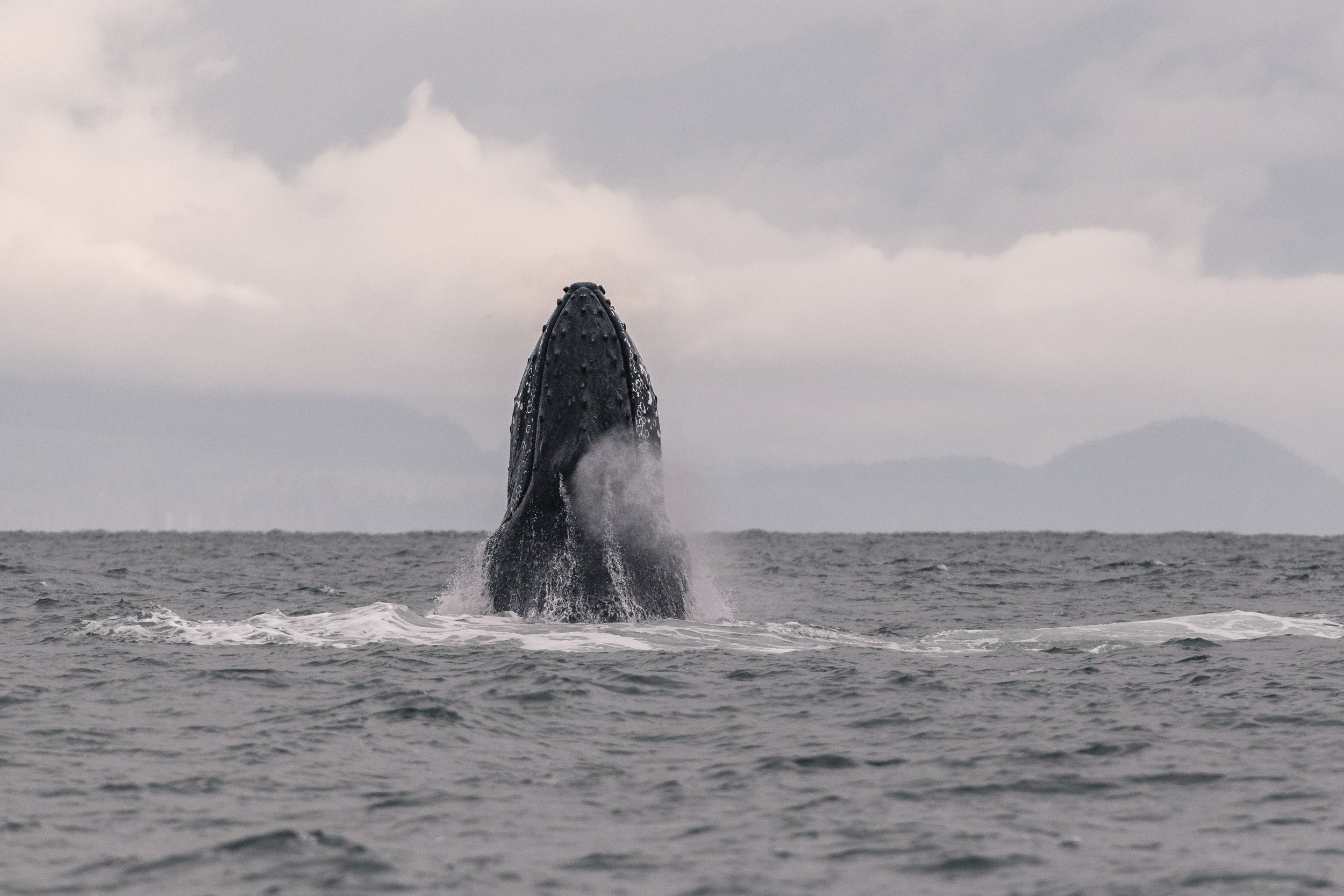
Sherwina breaking the surface. Photo by Hayleigh Hilbert.
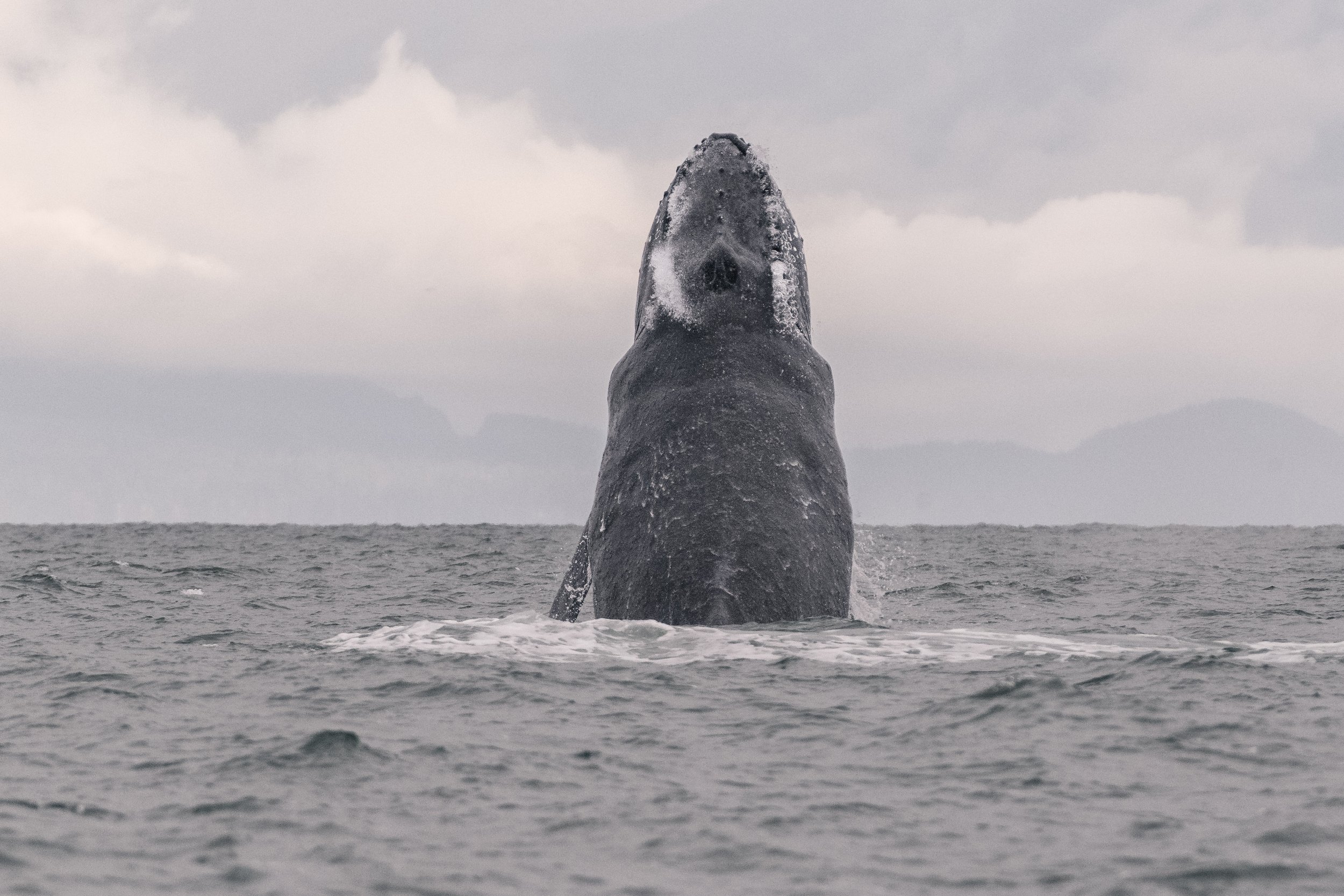
Sherwina was bursting with energy today! Photo by Hayleigh Hilbert.
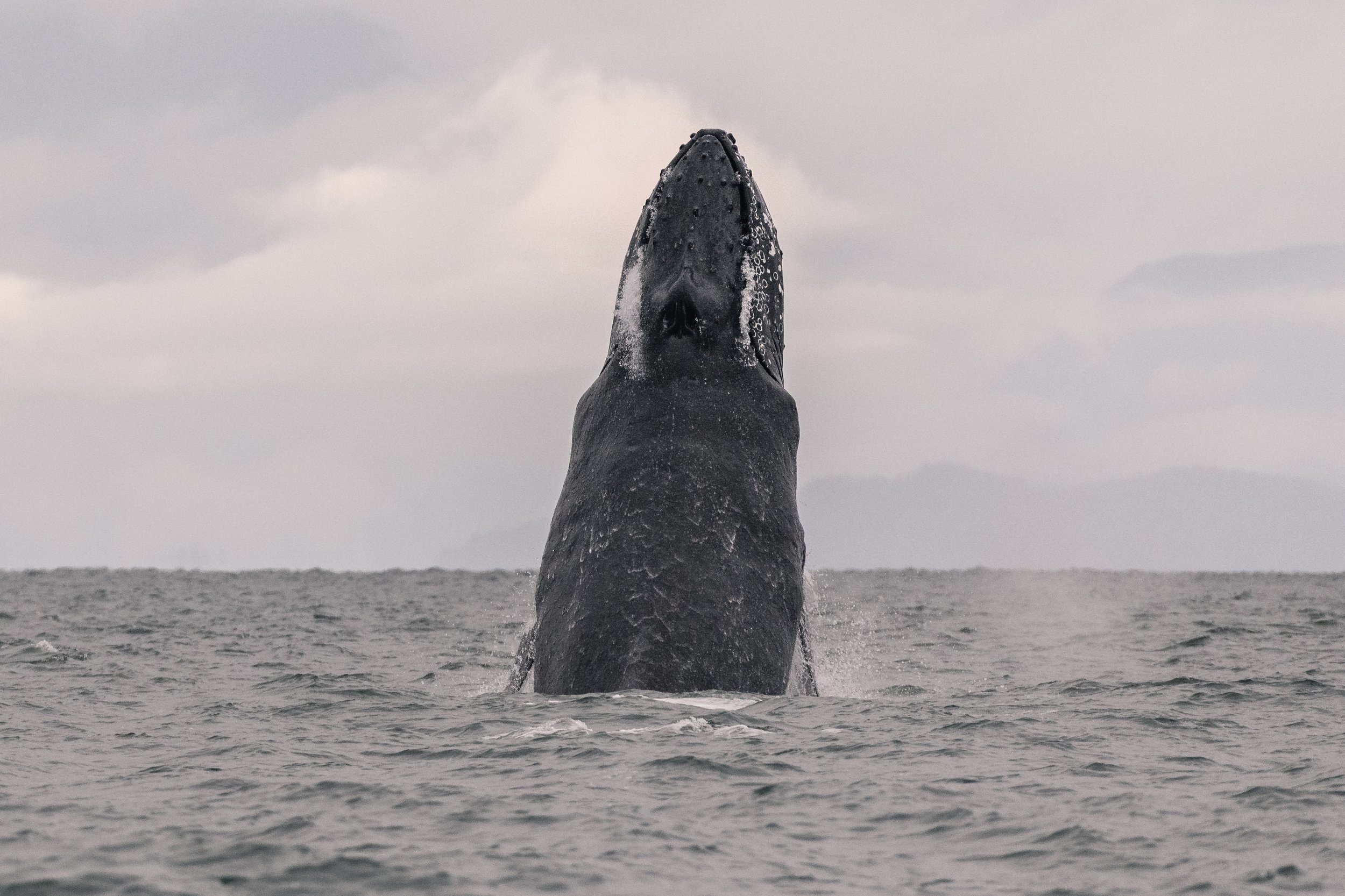
Humpback whales are surprisingly long, as seen here. Photo by Hayleigh Hilbert.
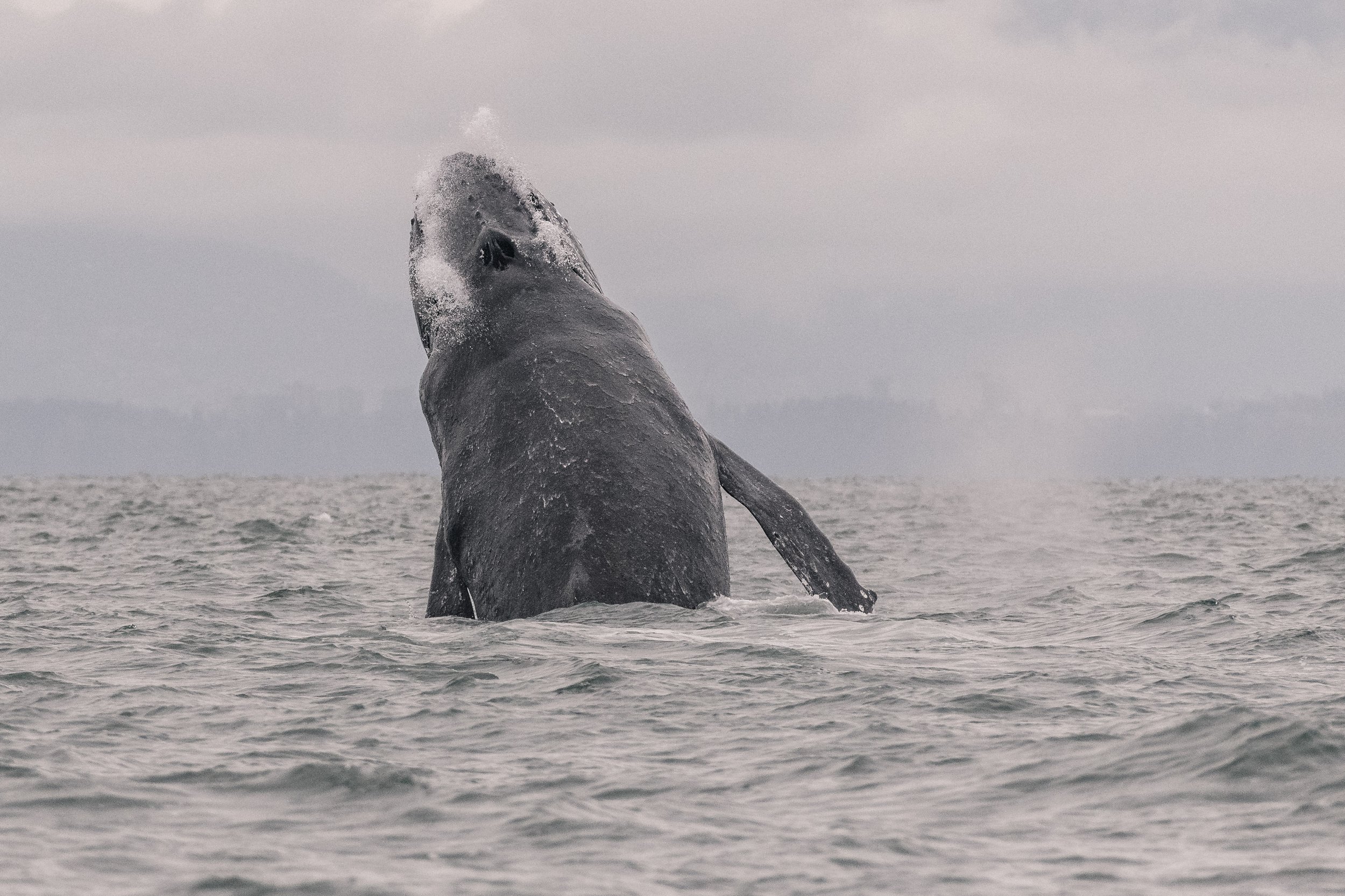
Sherwina breaching, with water raining out of her mouth. Photo by Hayleigh Hilbert.
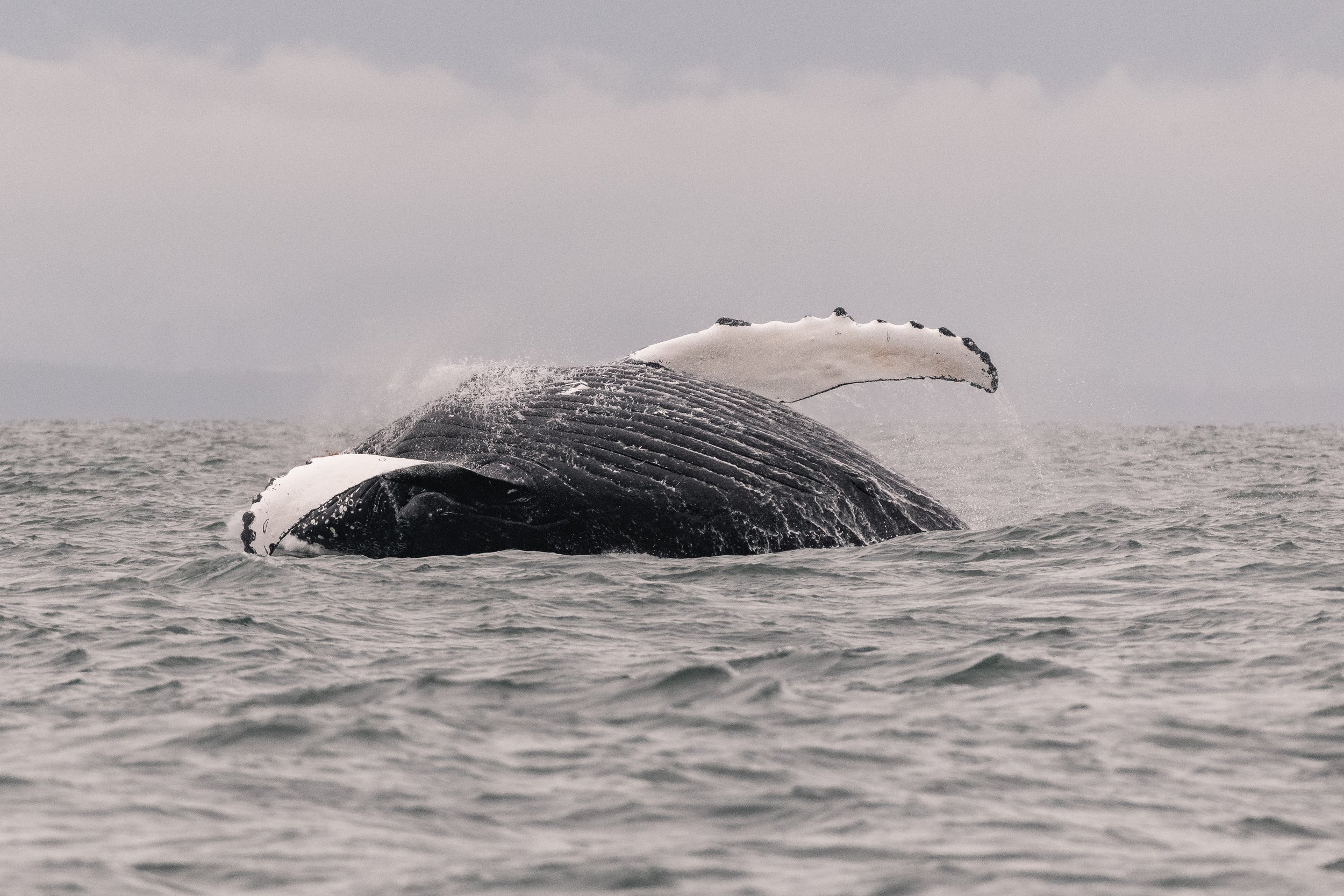
Sherwina with her ventral pleats fully visible. Photo by Hayleigh Hilbert.
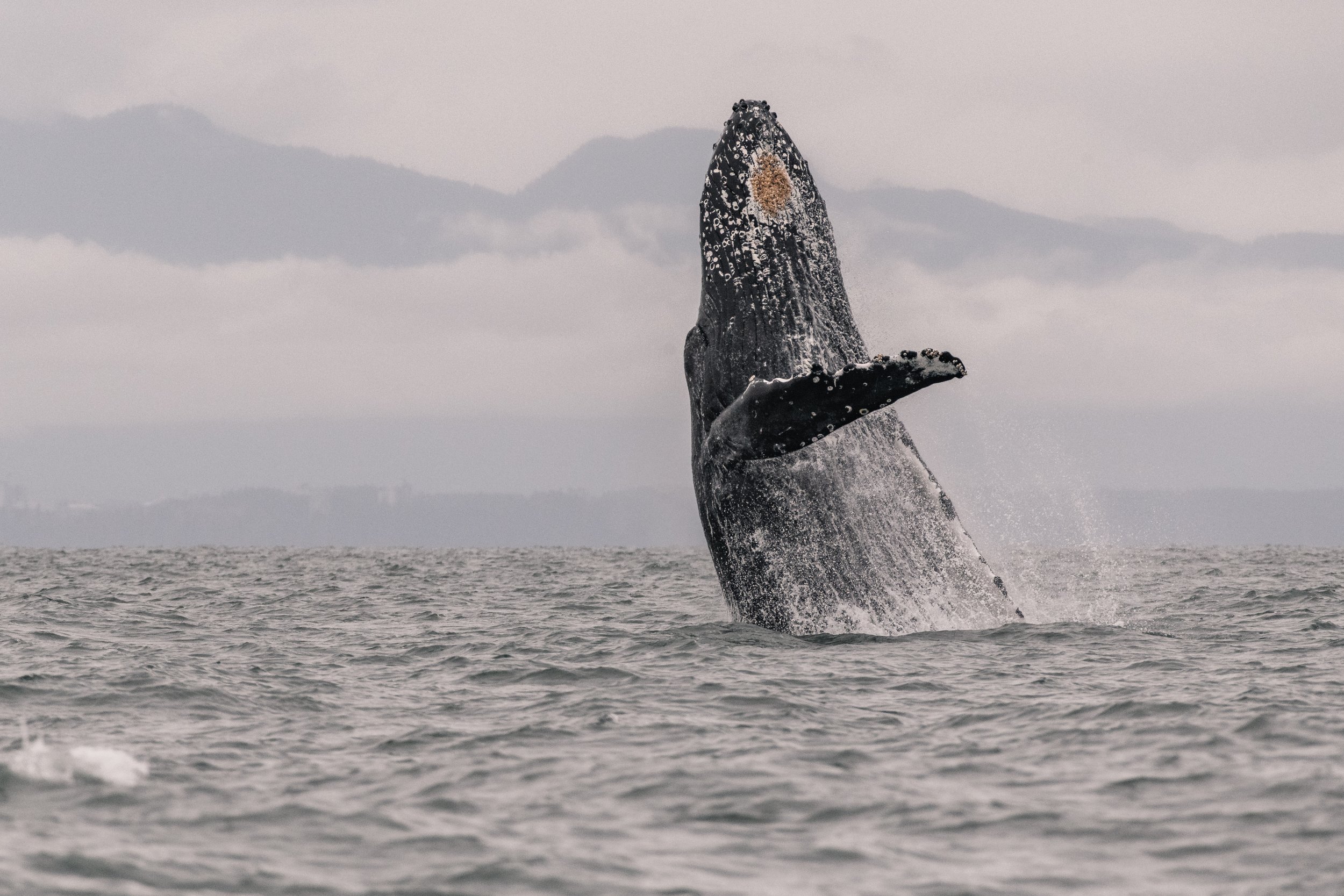
While atypical, pectoral fins are sometimes used for individual idetification as well as flukes and dorsal fins. Photo by Hayleigh Hilbert.
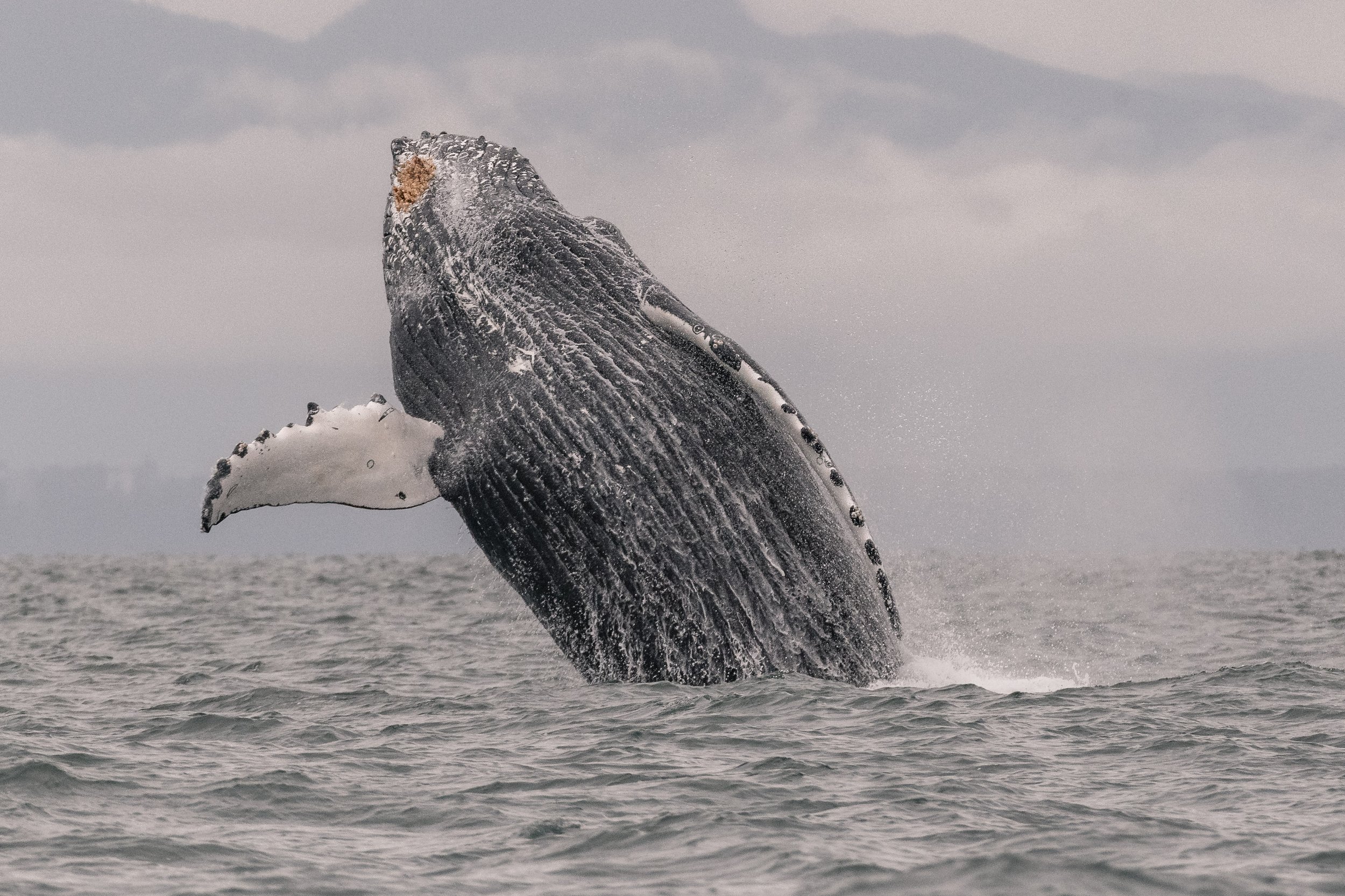
Sherwina was twisting and turning in all sorts of weird angles while she breached. Photo by Hayleigh Hilbert.
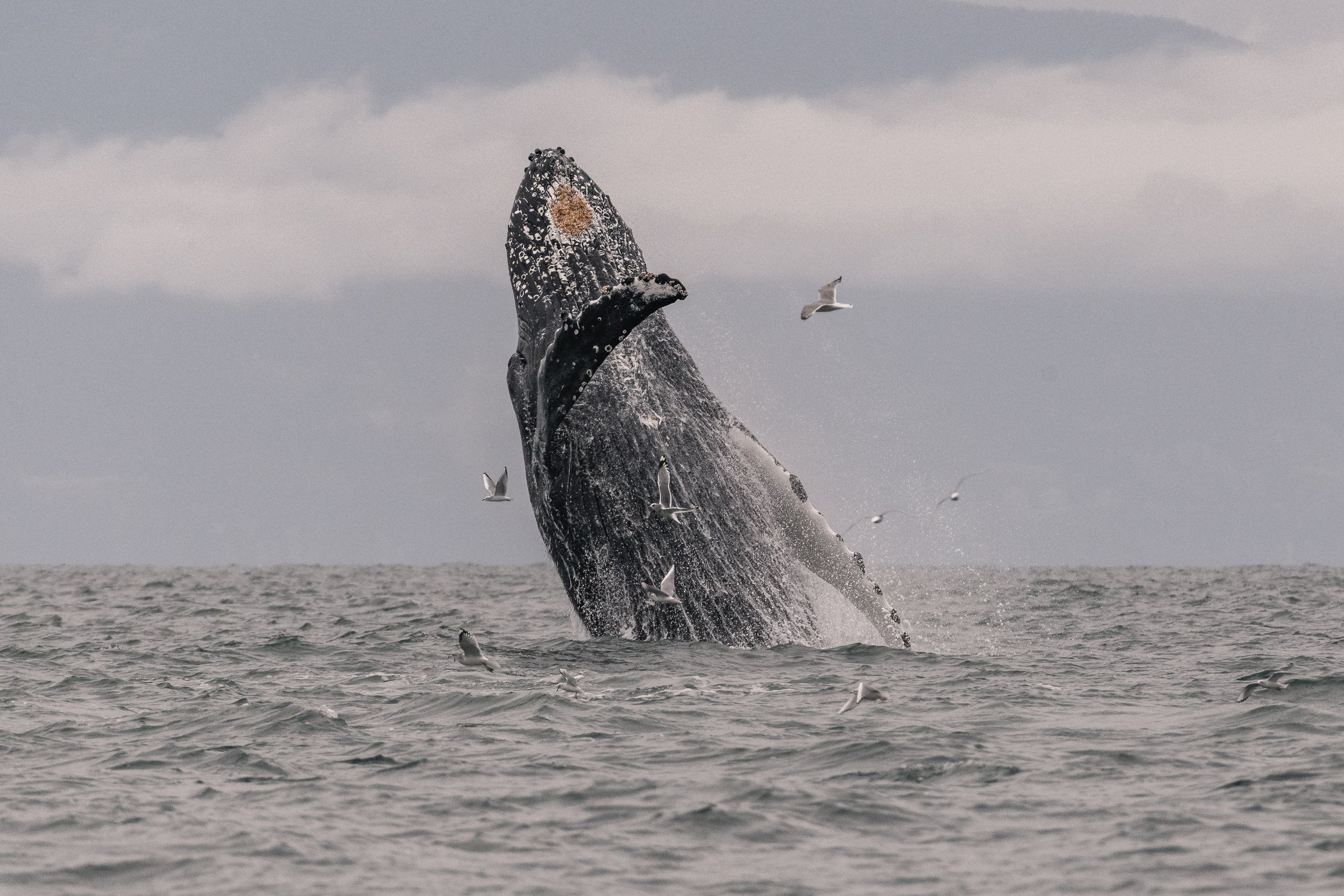
Look at all those barnacles under Sherwina’s chin! Photo by Hayleigh Hilbert.
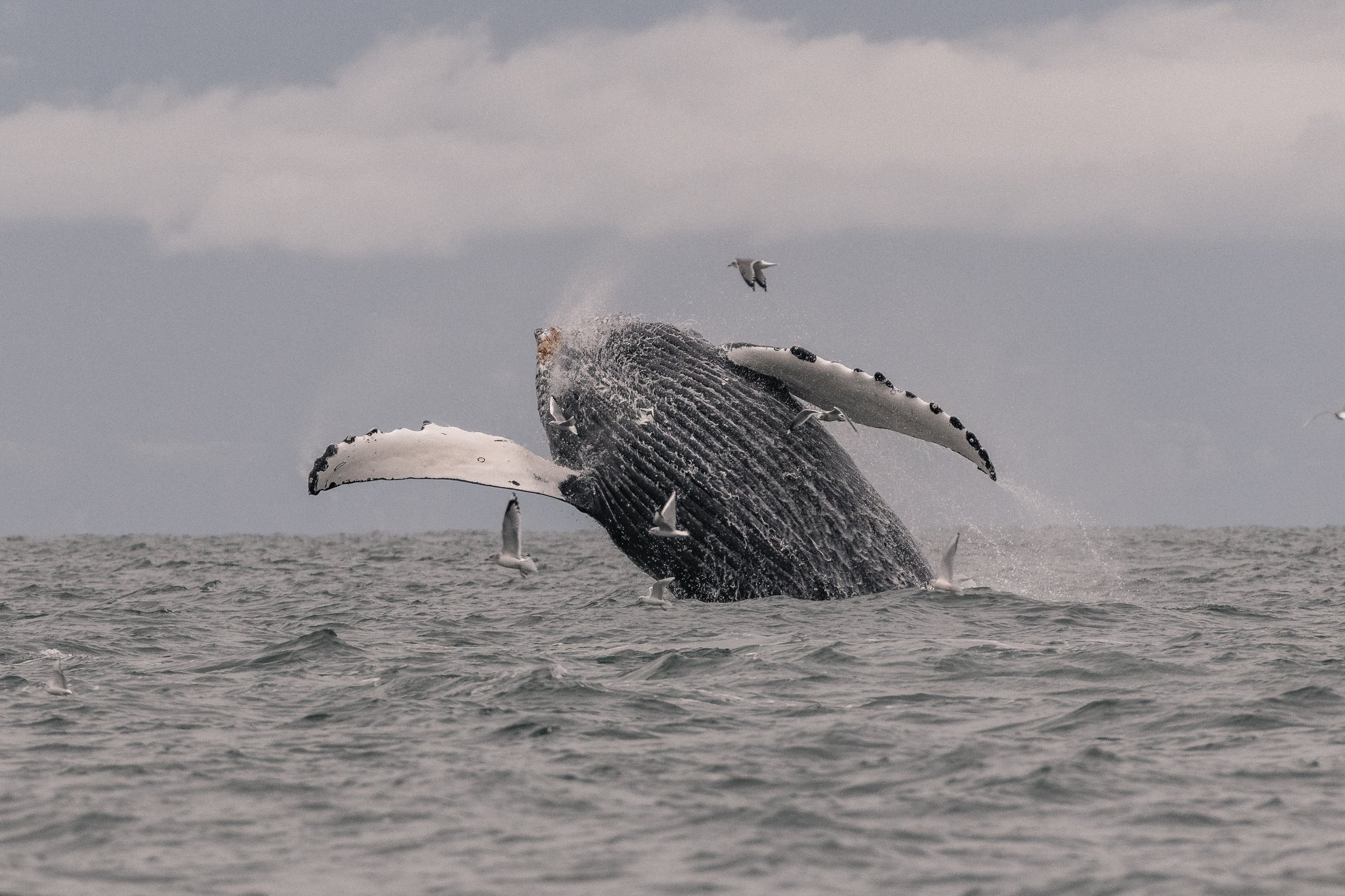
Sherwina breaching and being photobombed by Gulls. Photo by Hayleigh Hilbert.
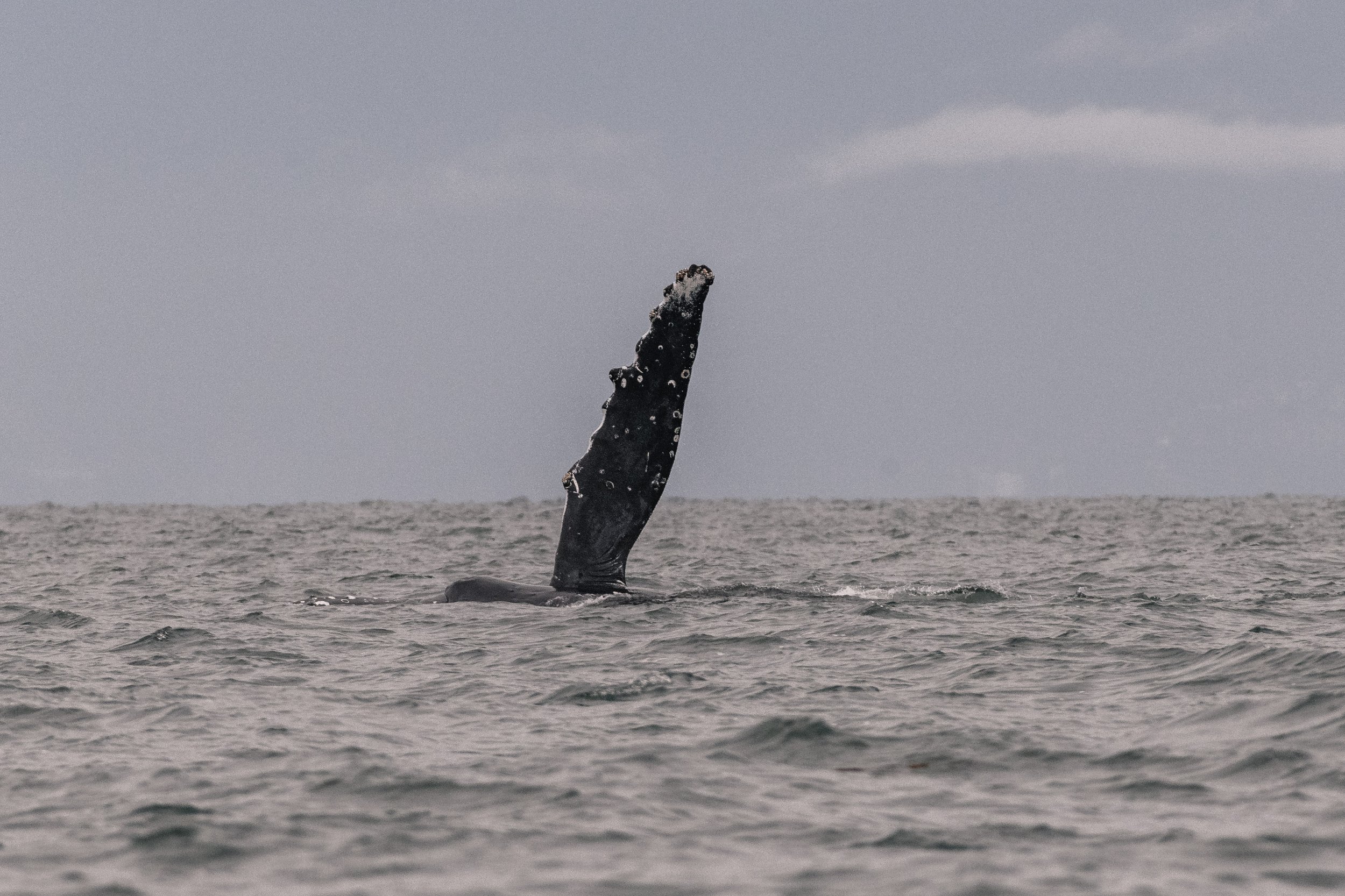
A little pectoral wave from Sherwina - goodbye! Photo by Hayleigh Hilbert.
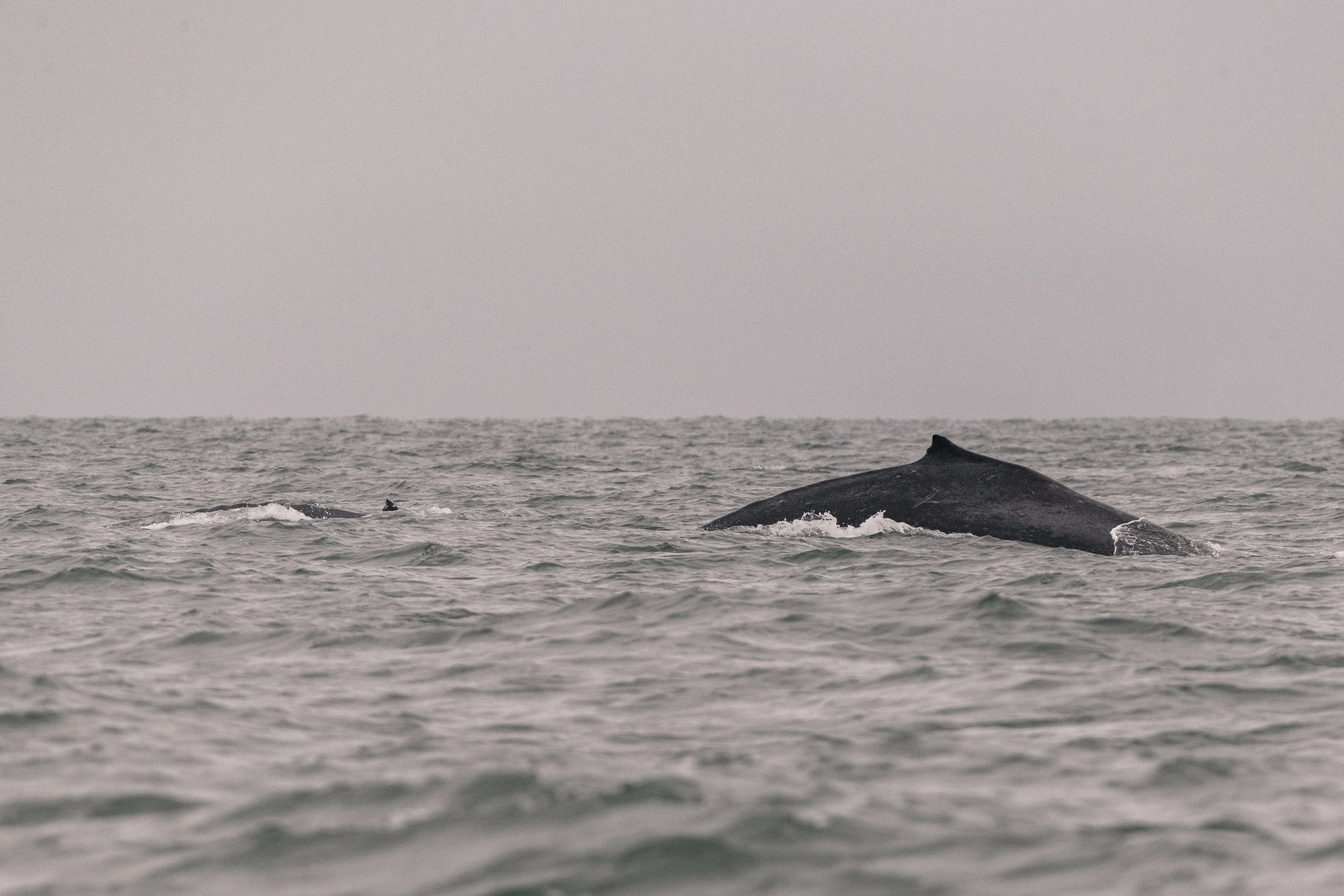
Sherwina in the lead, with her calf just barely visible behind her. Photo by Hayleigh Hilbert.
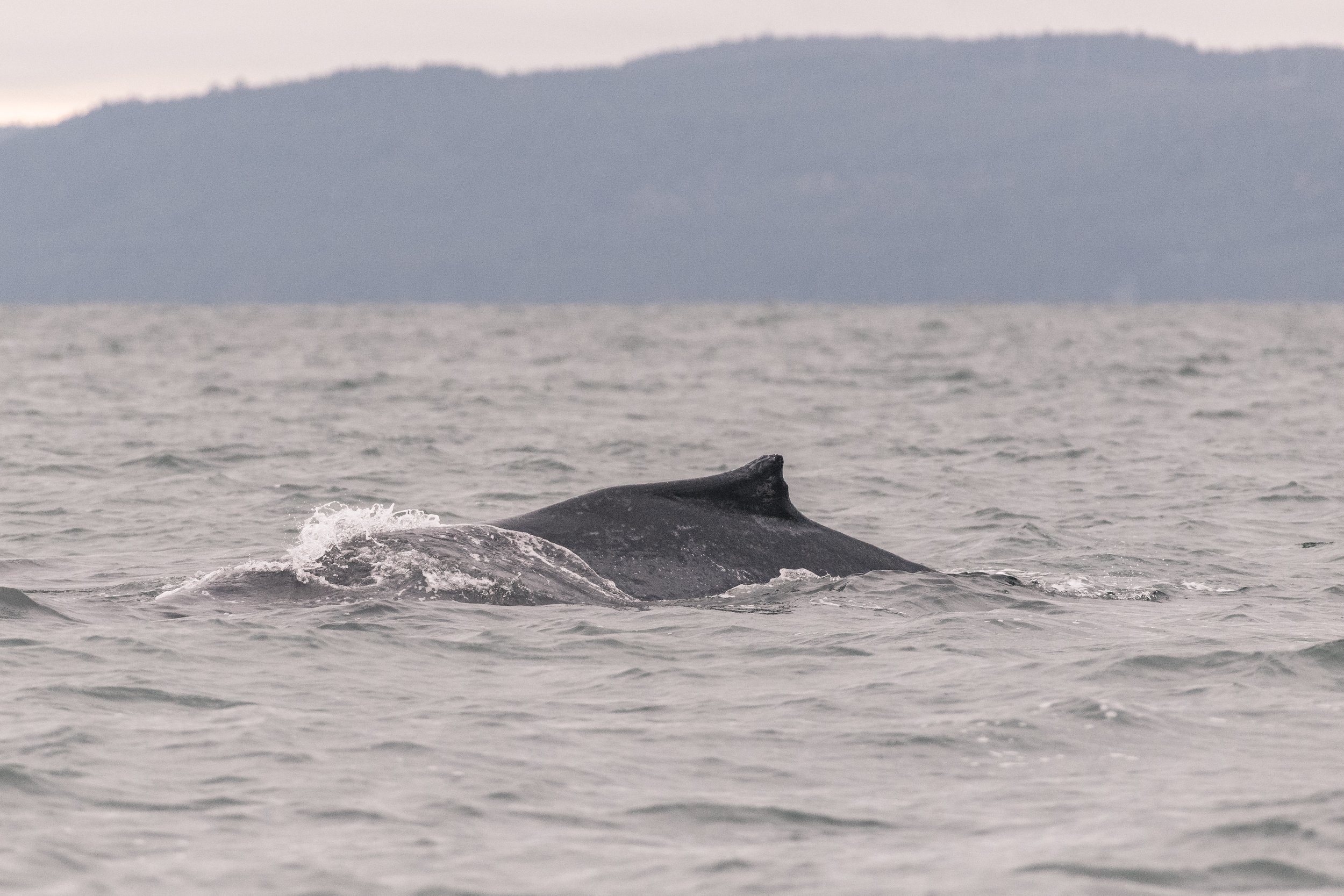
Sherwina making waves. Photo by Hayleigh Hilbert.
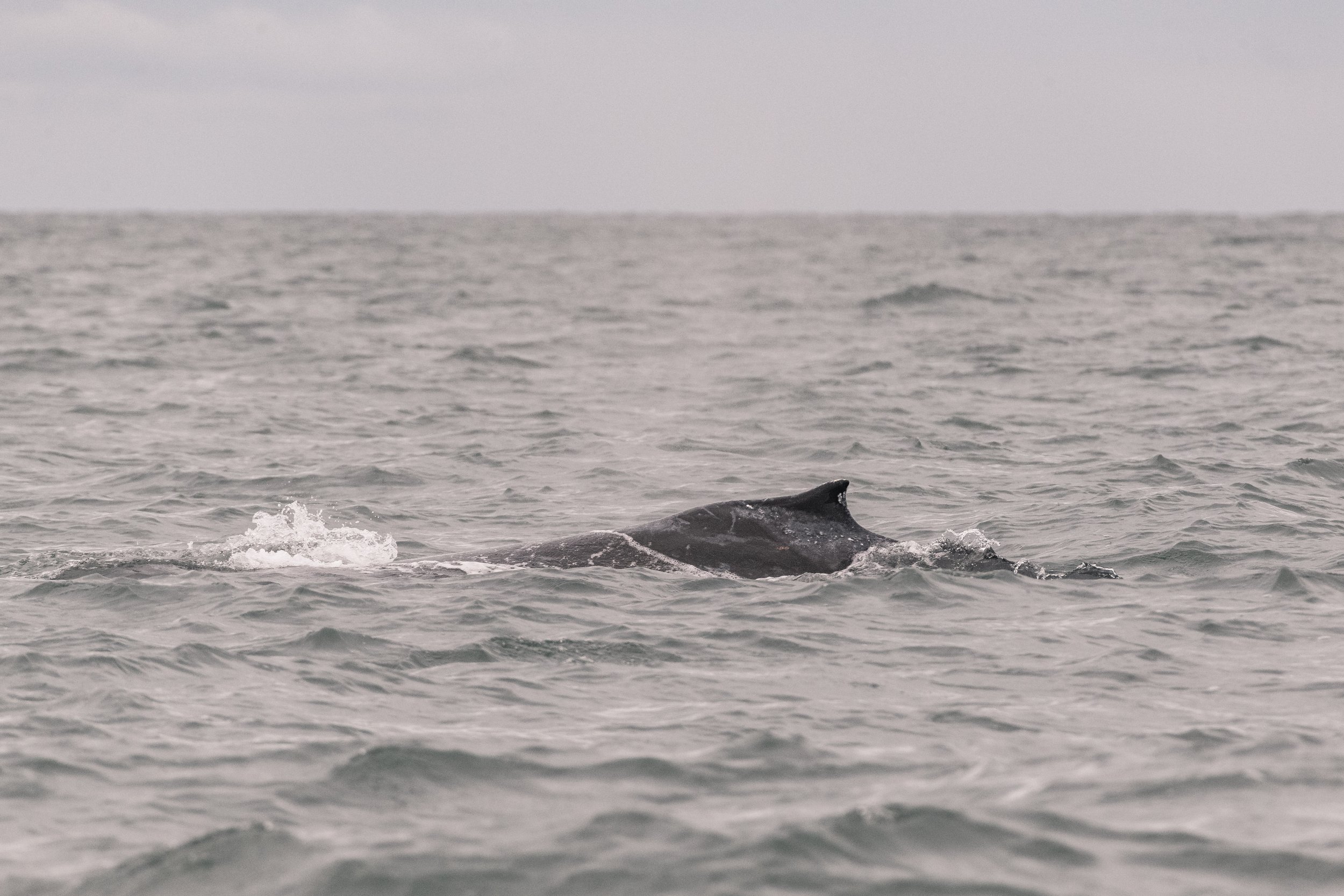
Sherwina’s calf has a very interesting skin condition going on right now. Photo by Hayleigh Hilbert.
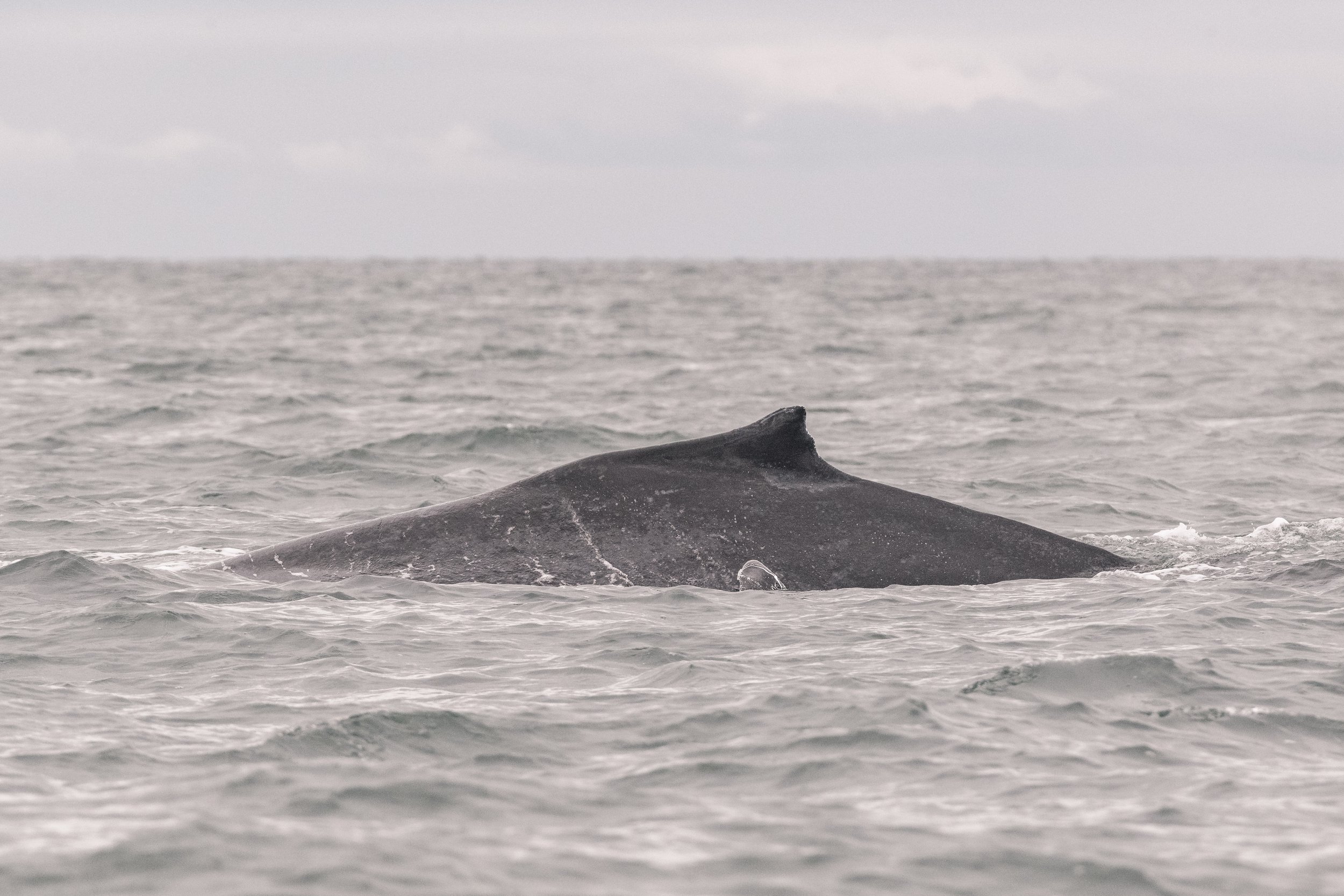
Sherwina has a very unique dorsal fin, as seen here. Photo by Hayleigh Hilbert.
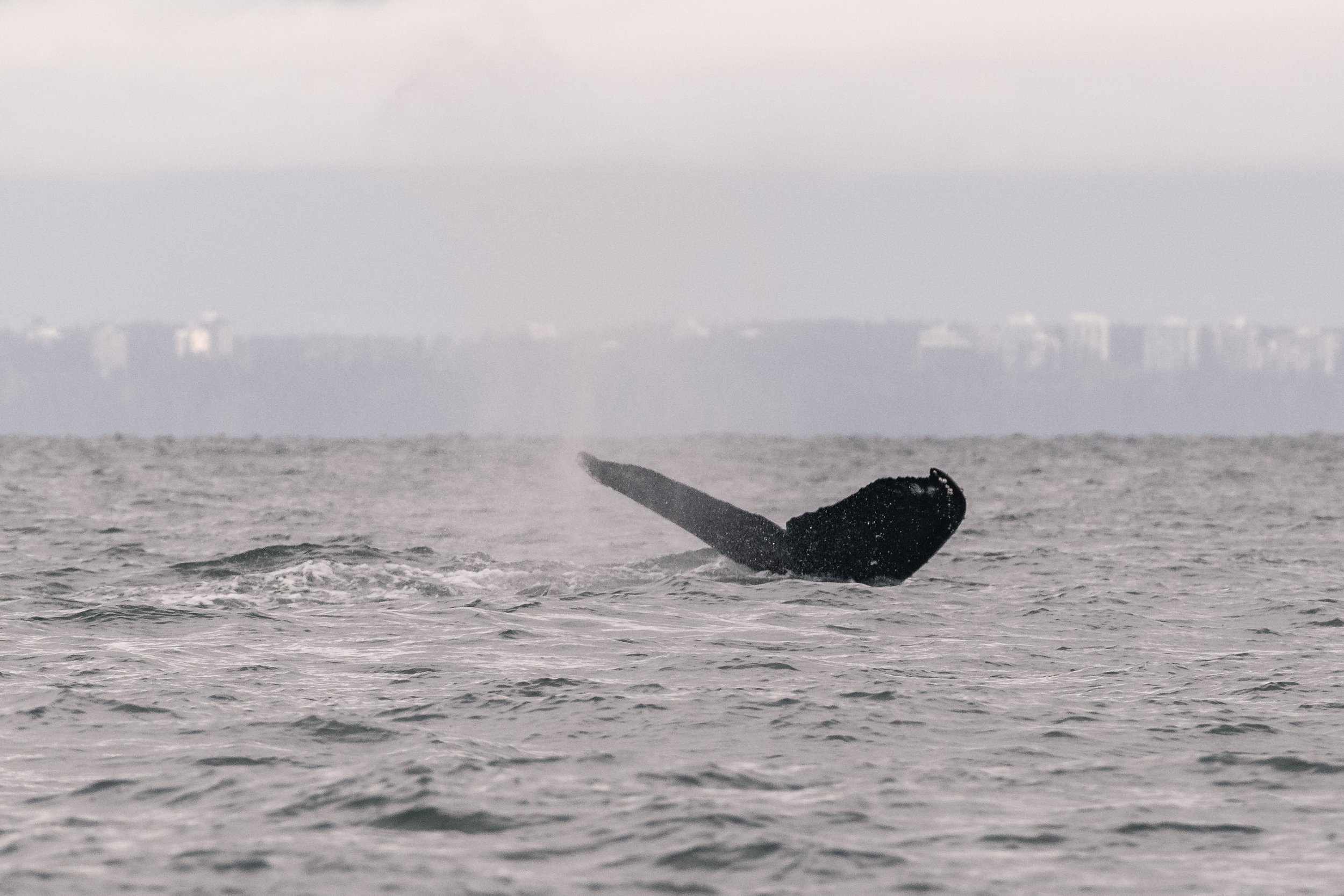
A misty blow with Phi/Corona’s fluke behind it. Photo by Hayleigh Hilbert.
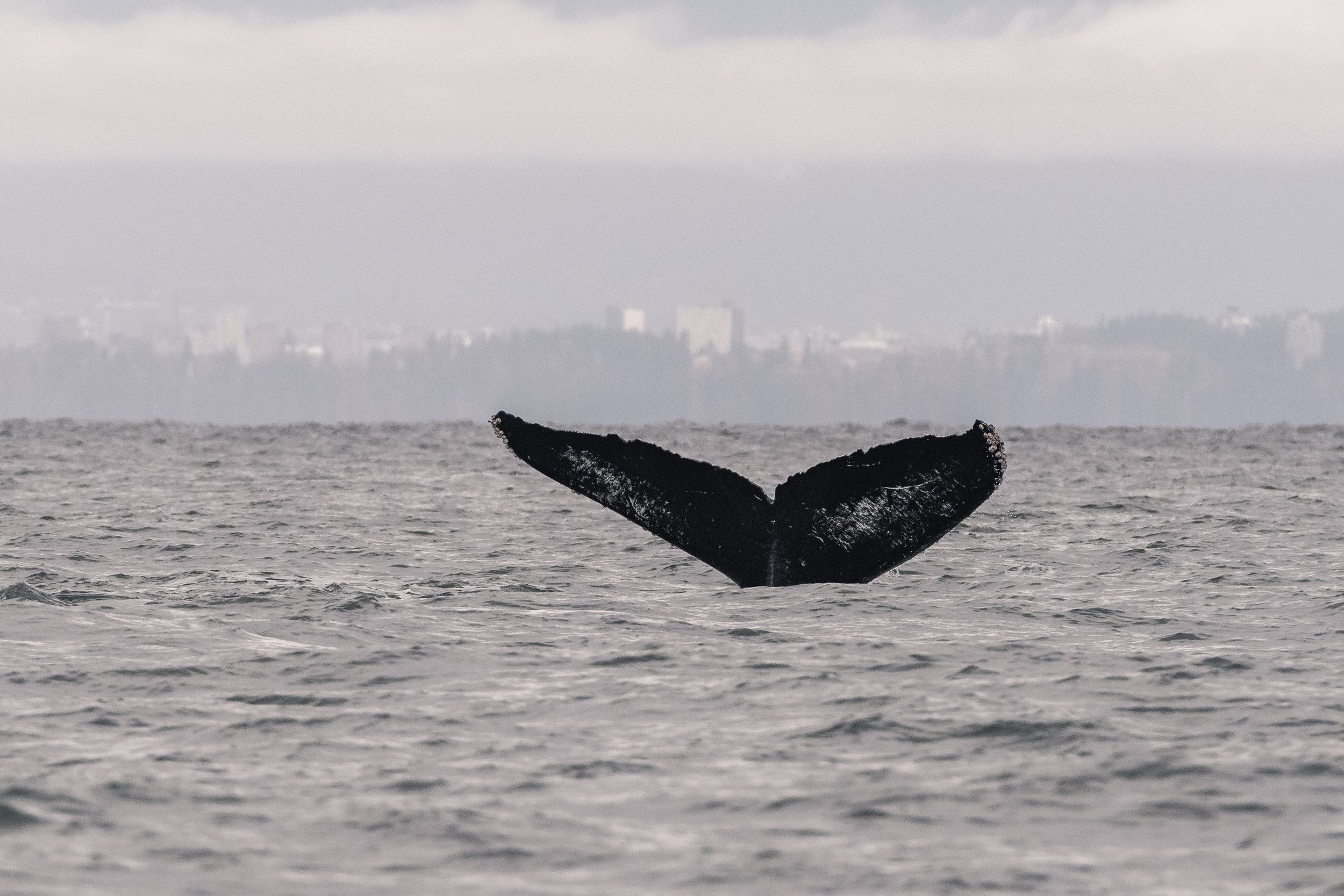
Fader’s beautiful fluke. Photo by Hayleigh Hilbert.
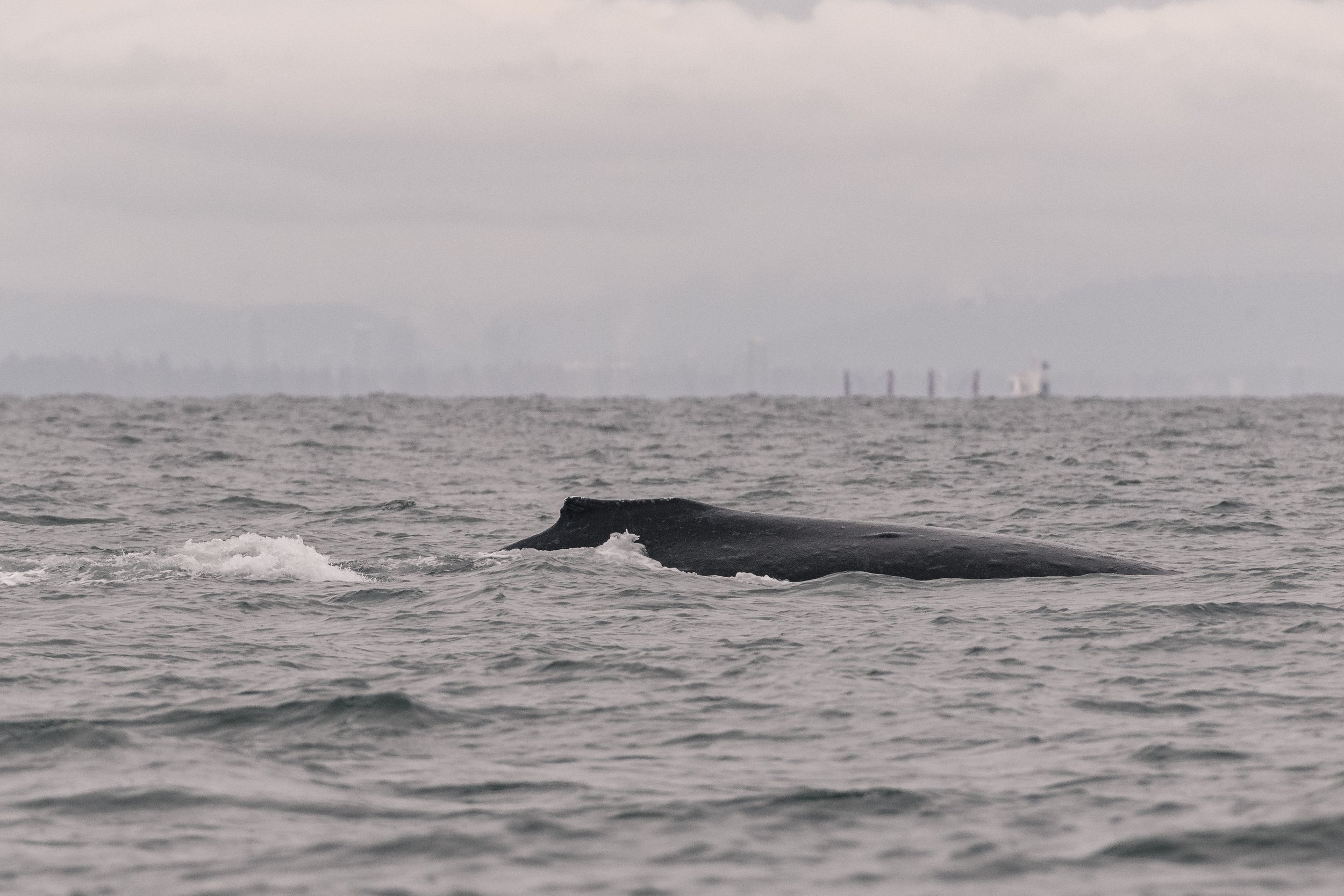
Fader has many lumps and bumps all over their back. Photo by Hayleigh Hilbert.
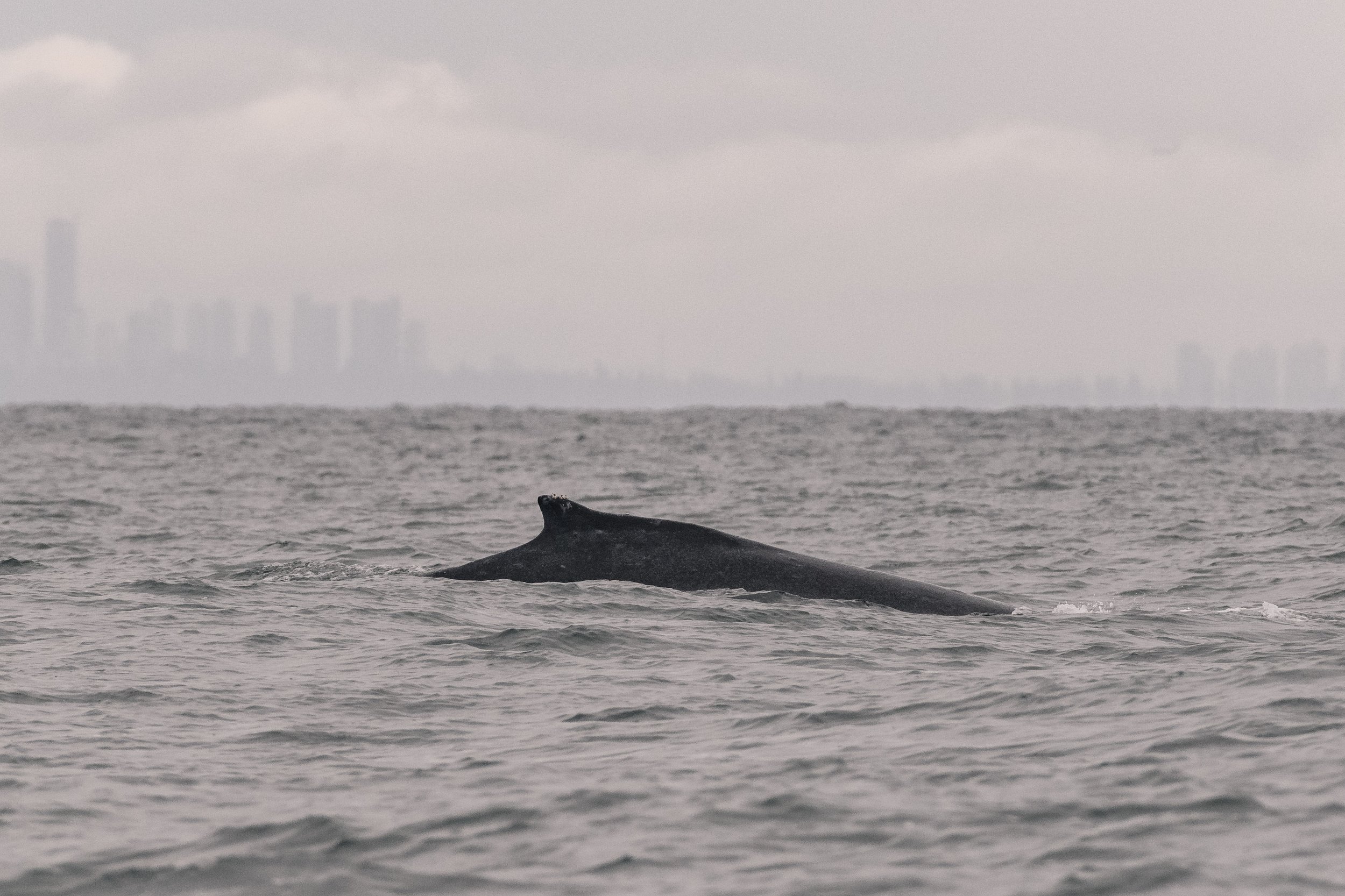
Phi/Corona’s dorsal fin looks a bit different this year due to some new barnacle tagalongs! Photo by Hayleigh Hilbert.
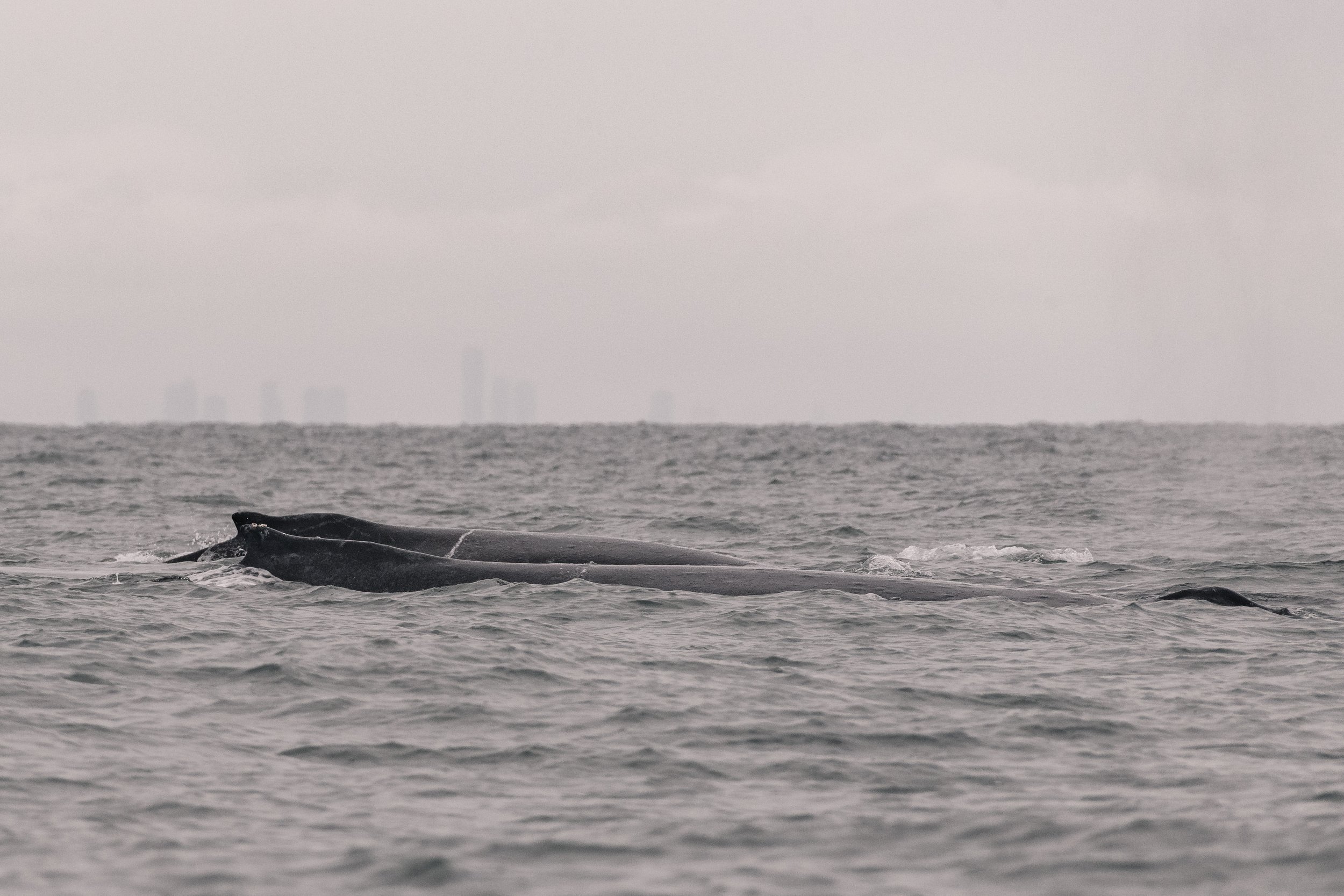
Yakima and Phi/Corona travelling very close together. Photo by Hayleigh Hilbert.
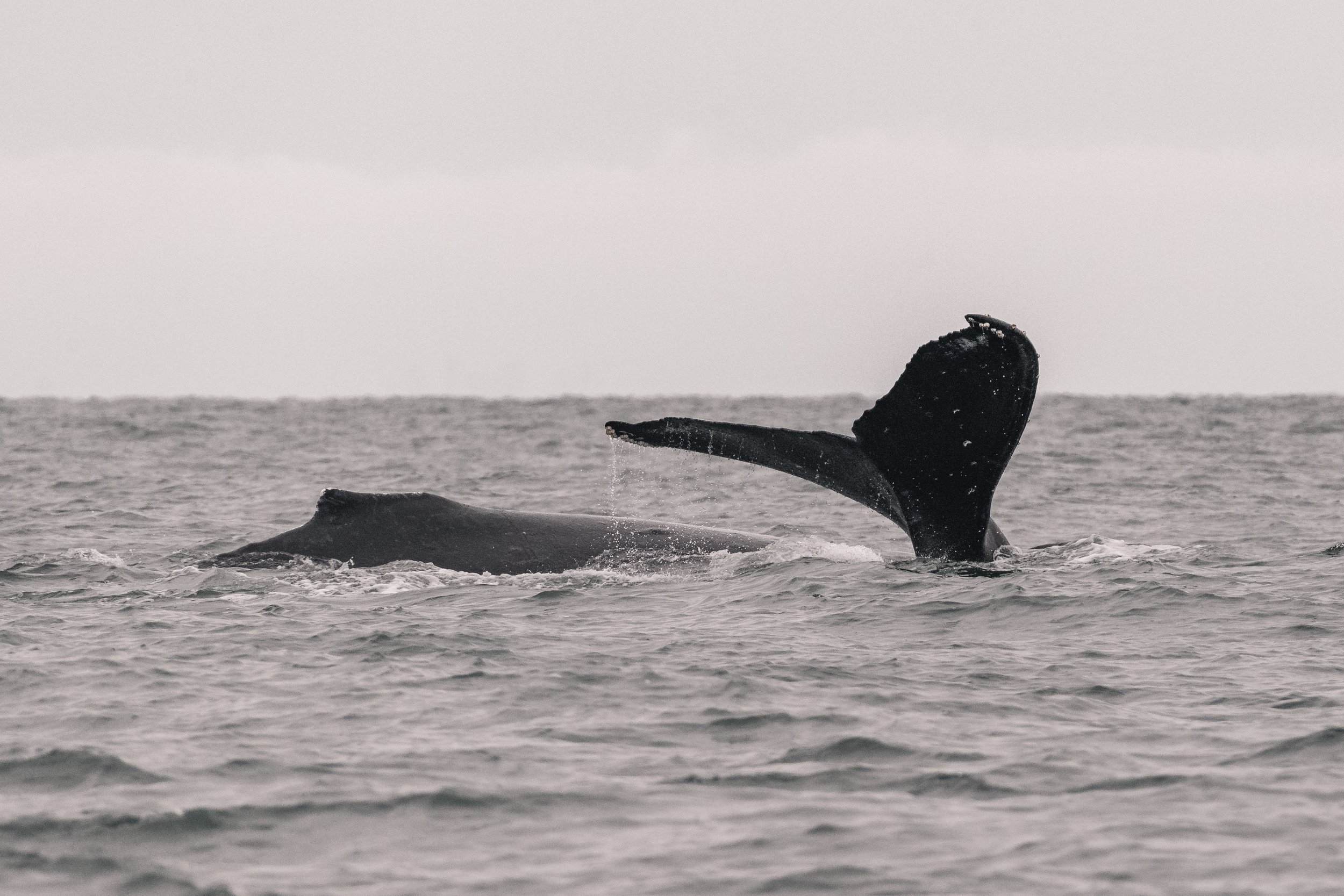
Fader’s dorsal fin with Phi/Corona’s fluke beside them. Photo by Hayleigh Hilbert.
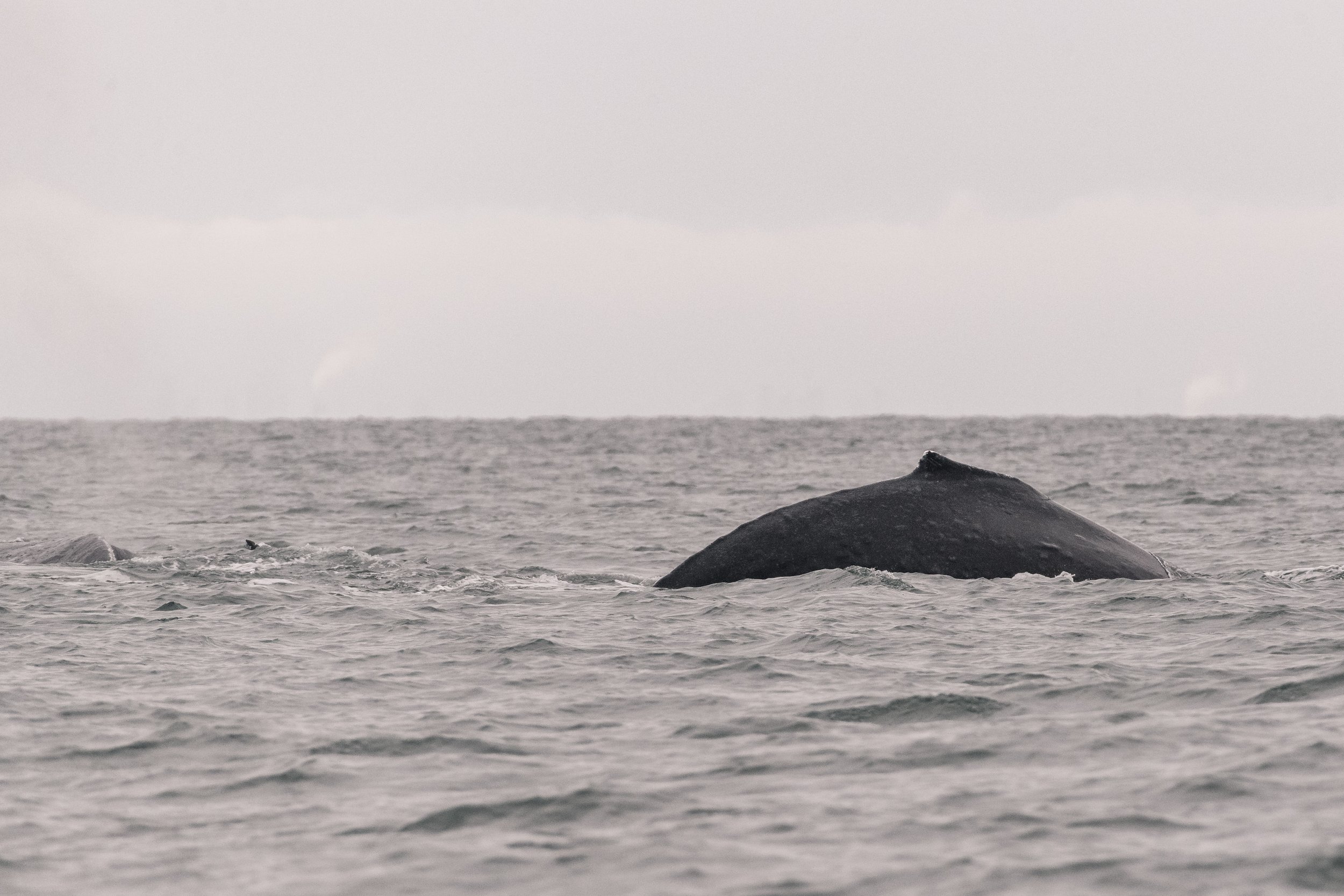
Fader arching with another behind them. Photo by Hayleigh Hilbert.
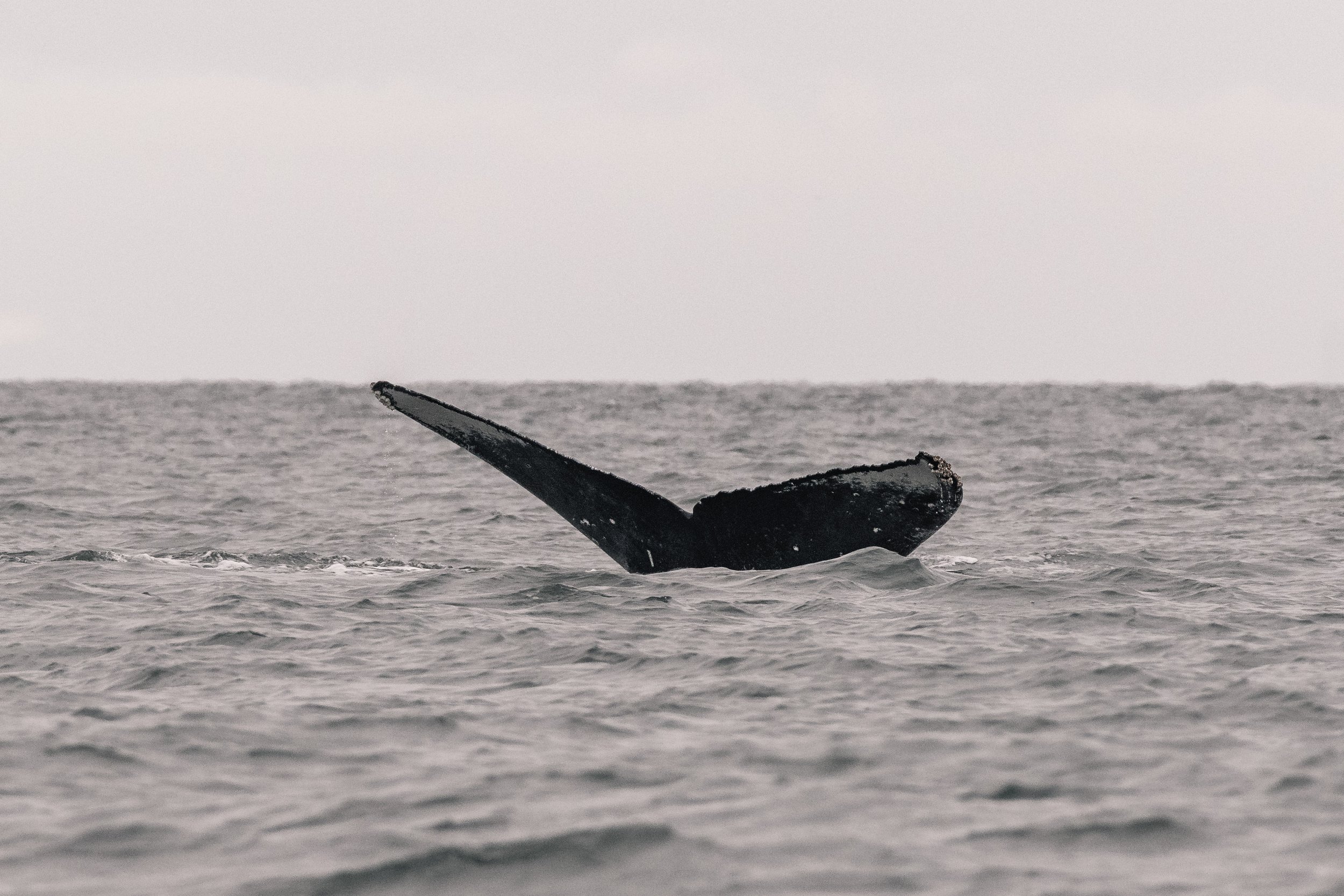
Sherwina fluking, her ‘paint-dipped’ flukes visible. Photo by Hayleigh Hilbert.
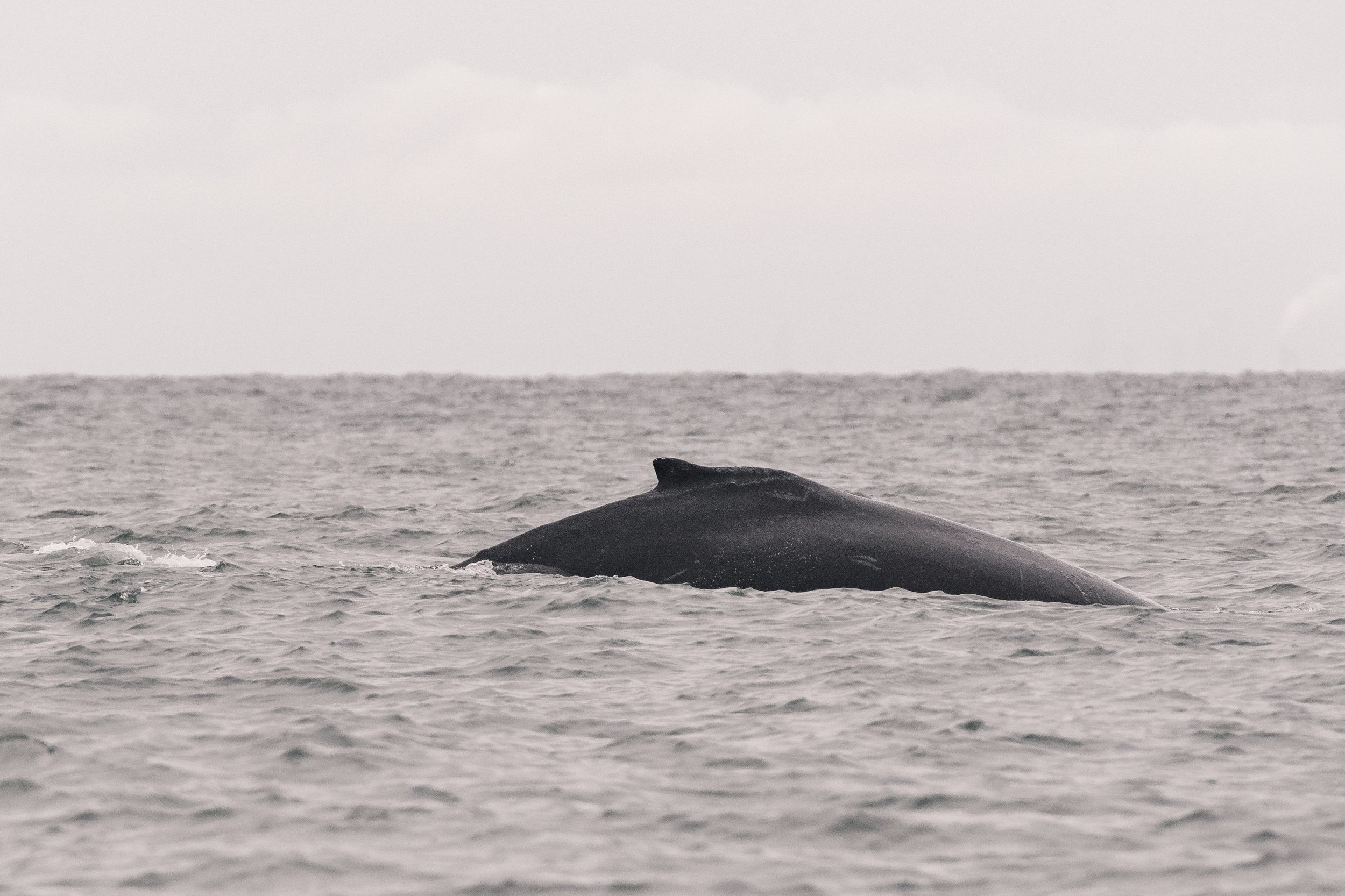
Yakima travelling along. Photo by Hayleigh Hilbert.
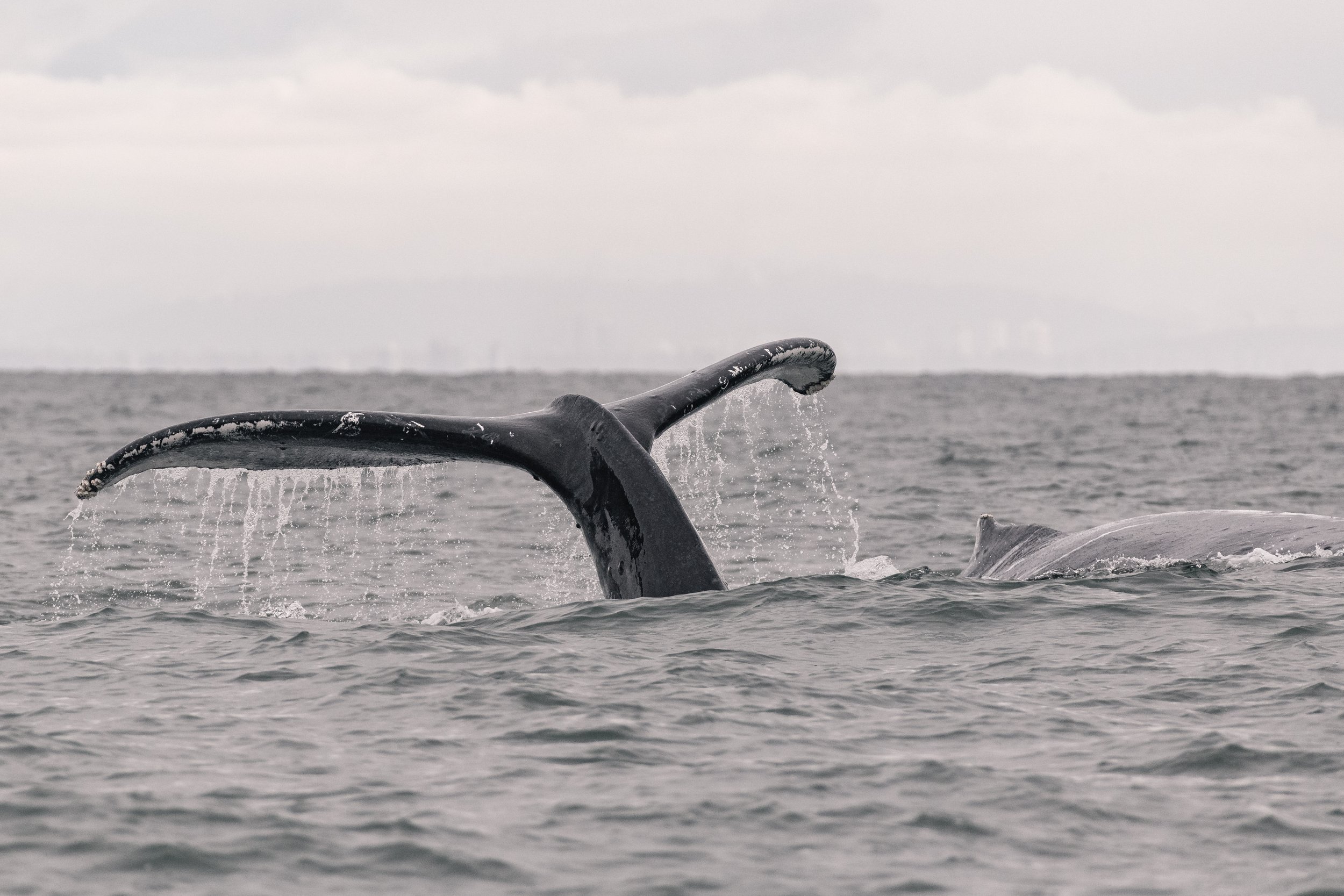
Sherwina fluking beside Phi/Corona. Photo by Hayleigh Hilbert.
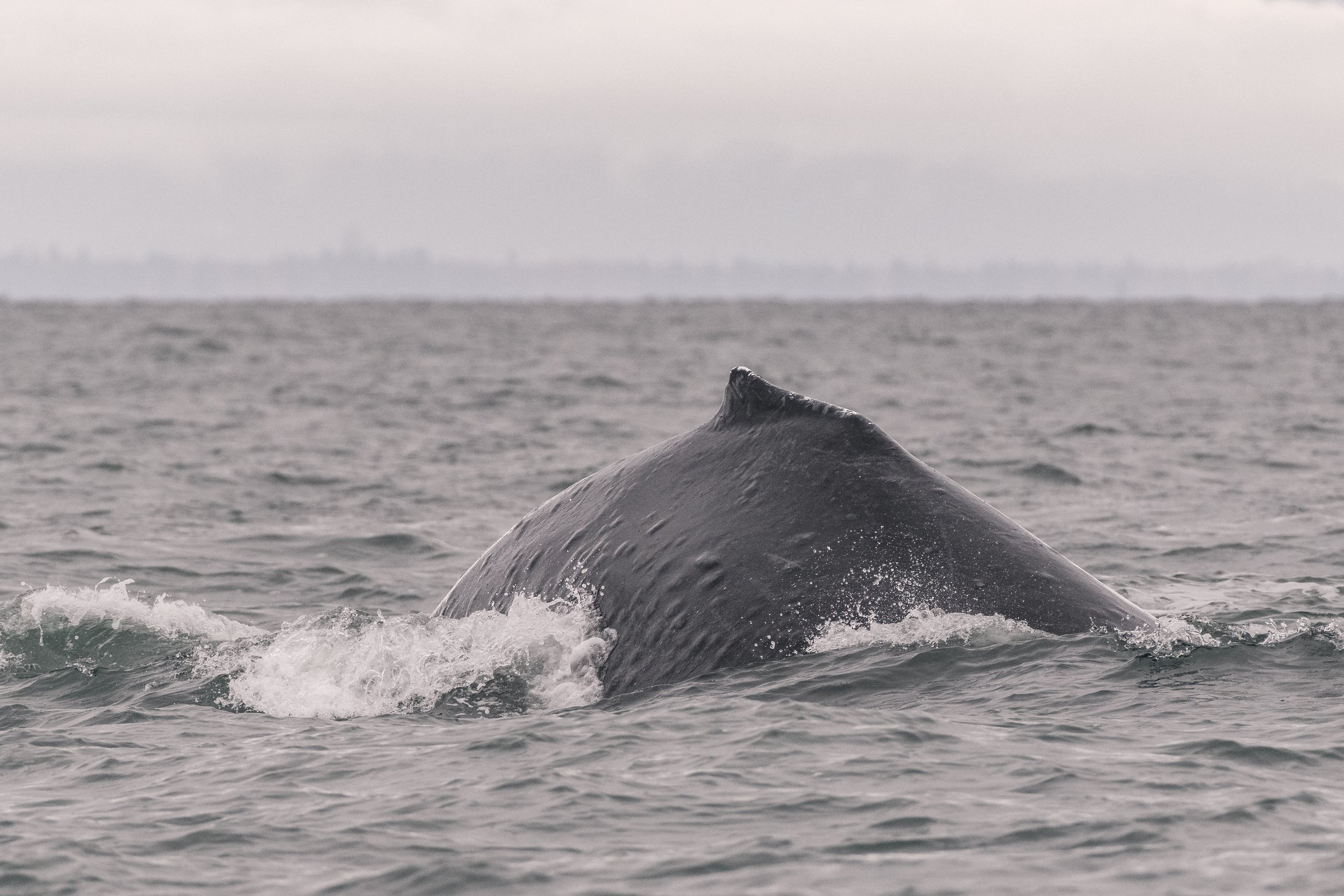
Fader getting ready to dive. Photo by Hayleigh Hilbert.
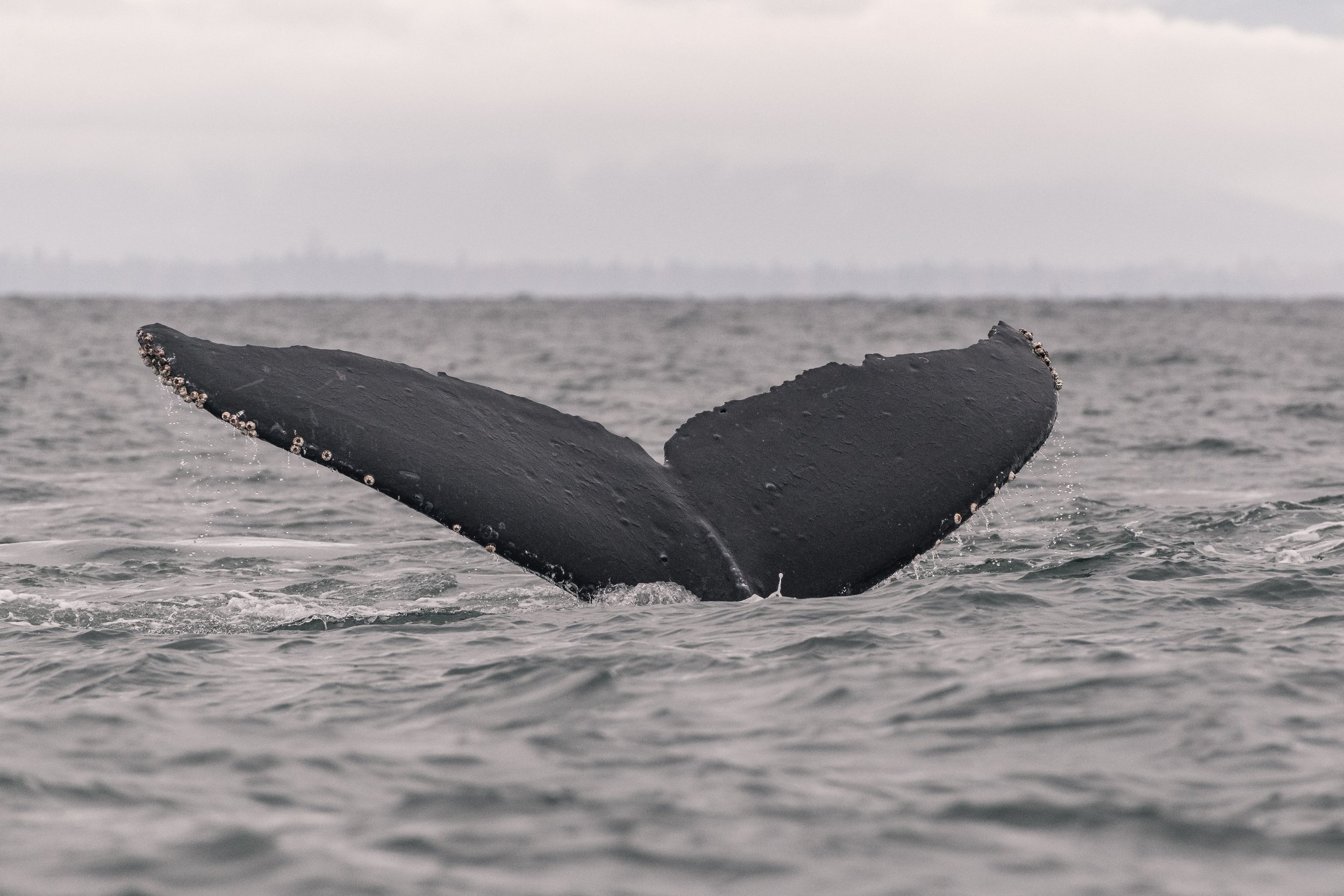
Fader’s top fluke as they go under. Photo by Hayleigh Hilbert.
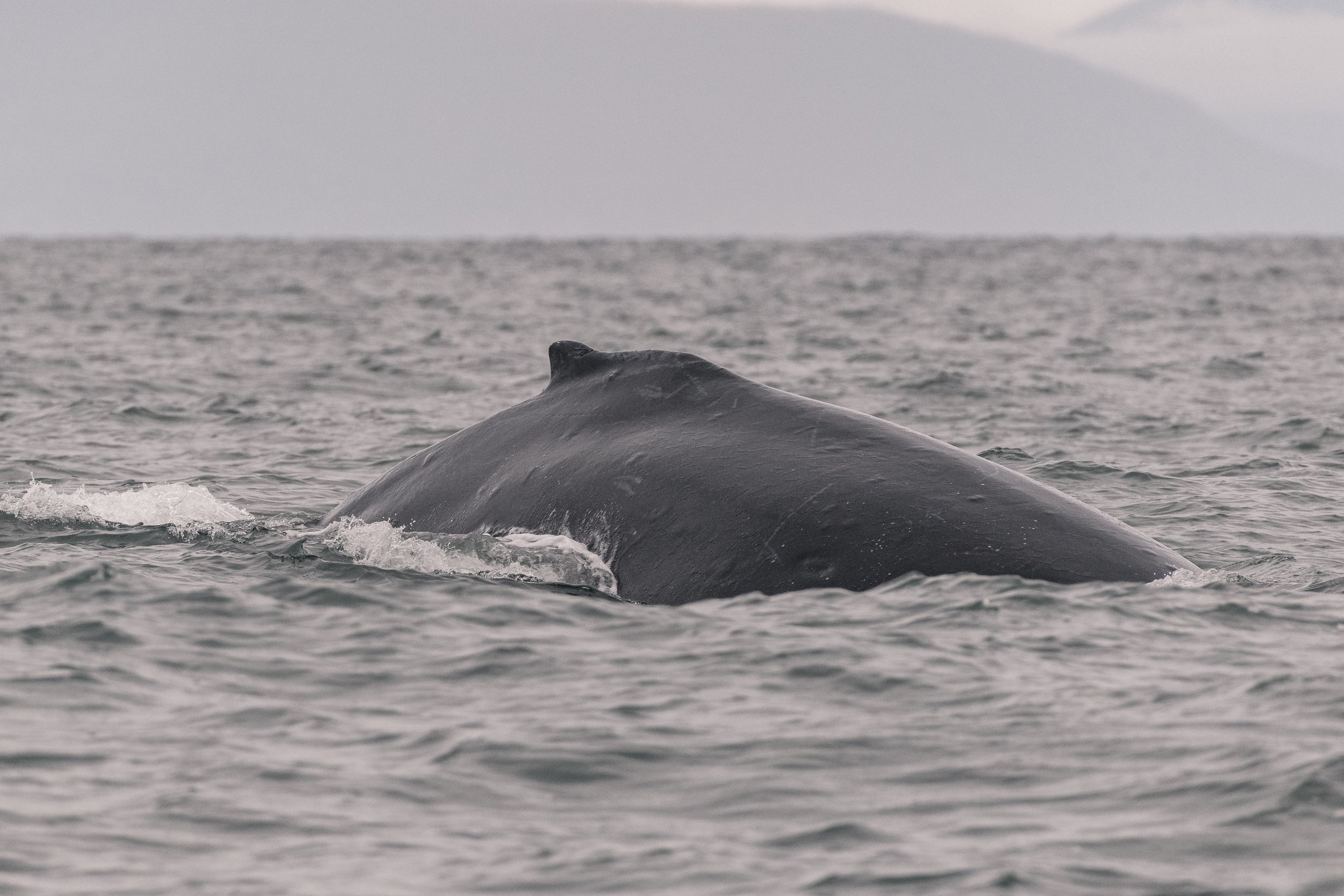
Yakima approaching. Photo by Hayleigh Hilbert.
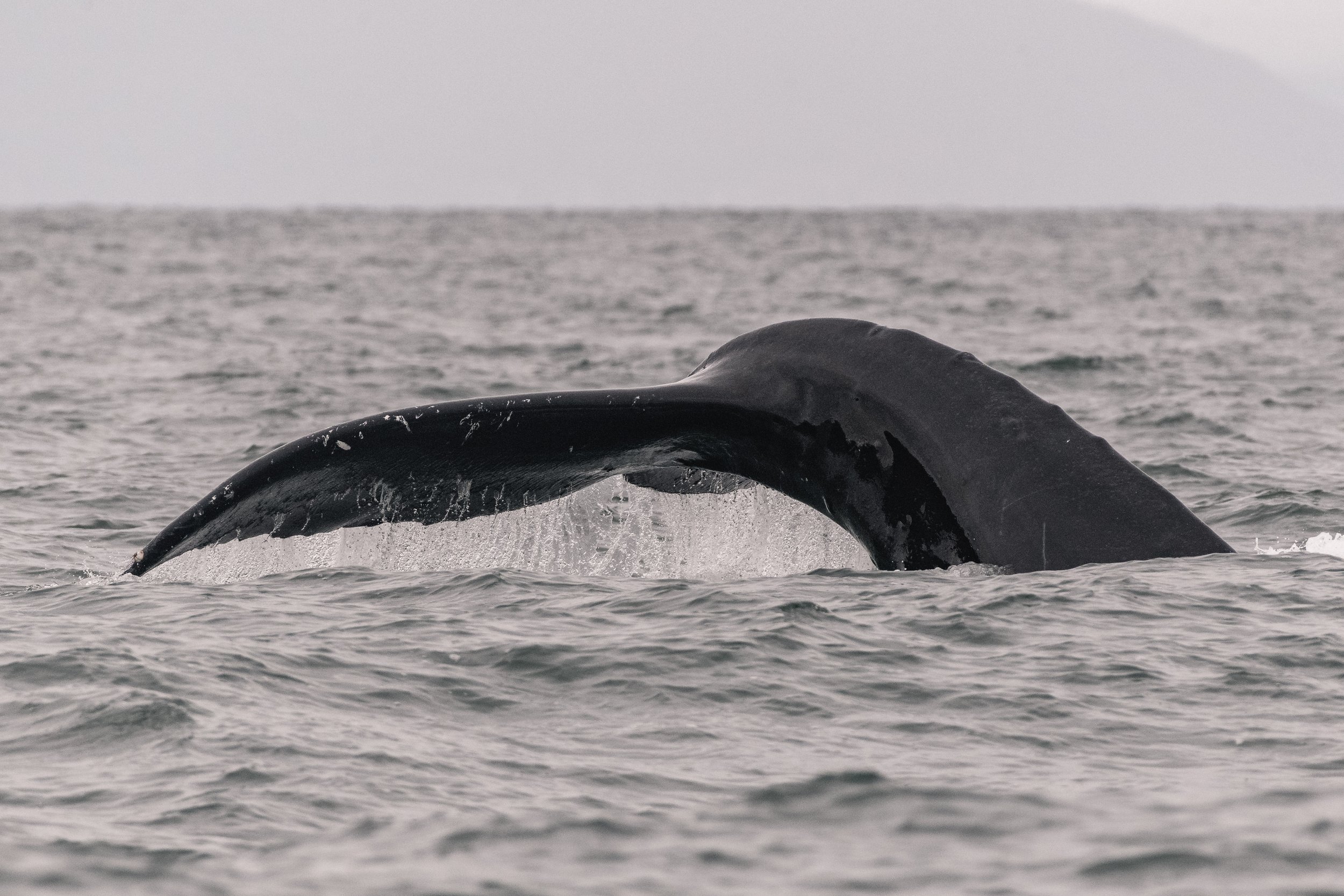
A fluke waterfall from Yakima. Photo by Hayleigh Hilbert.
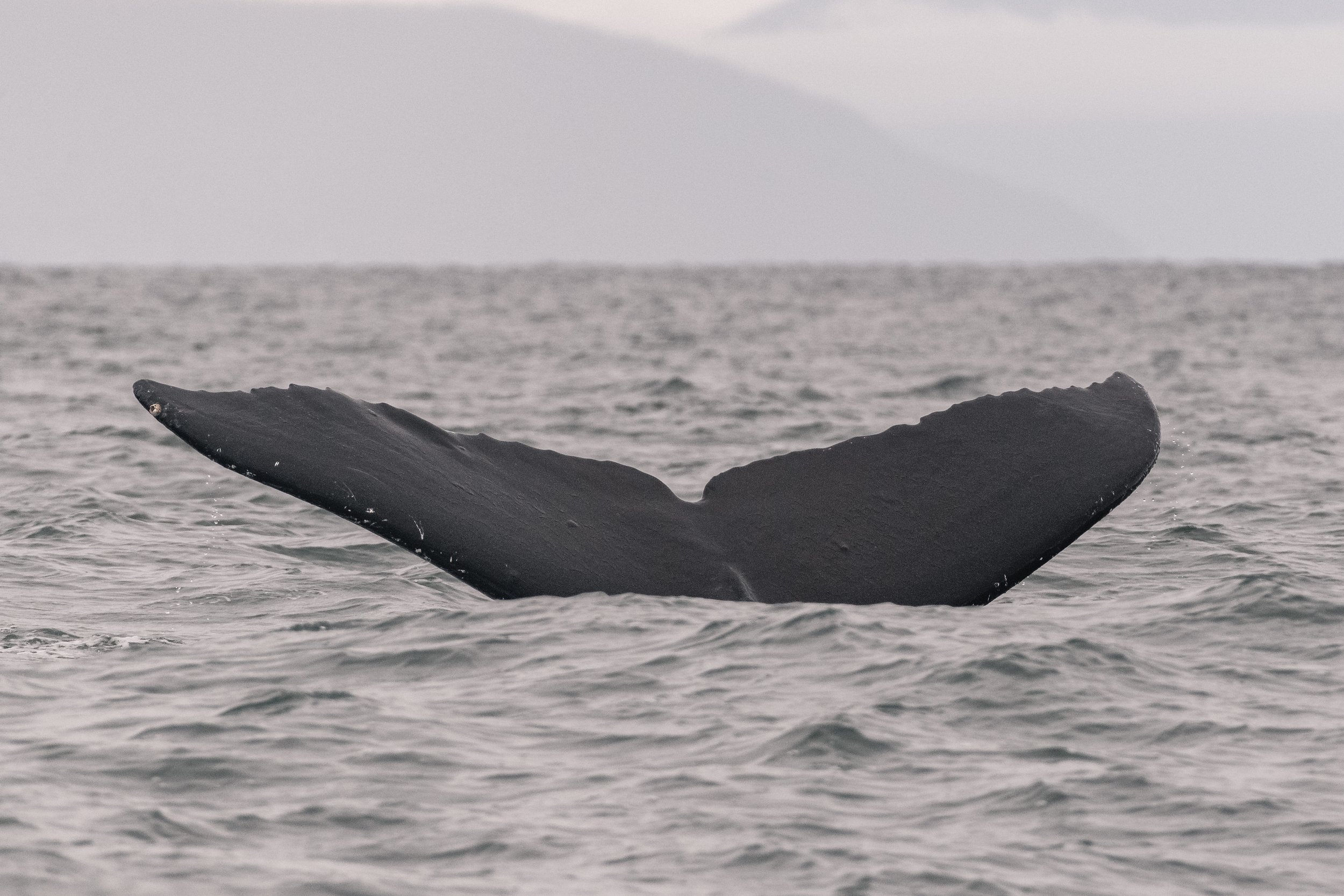
The top of Yakima’s fluke, with their old entanglement scarring visible in the wobbly edge of their fluke. Photo by Hayleigh Hilbert.
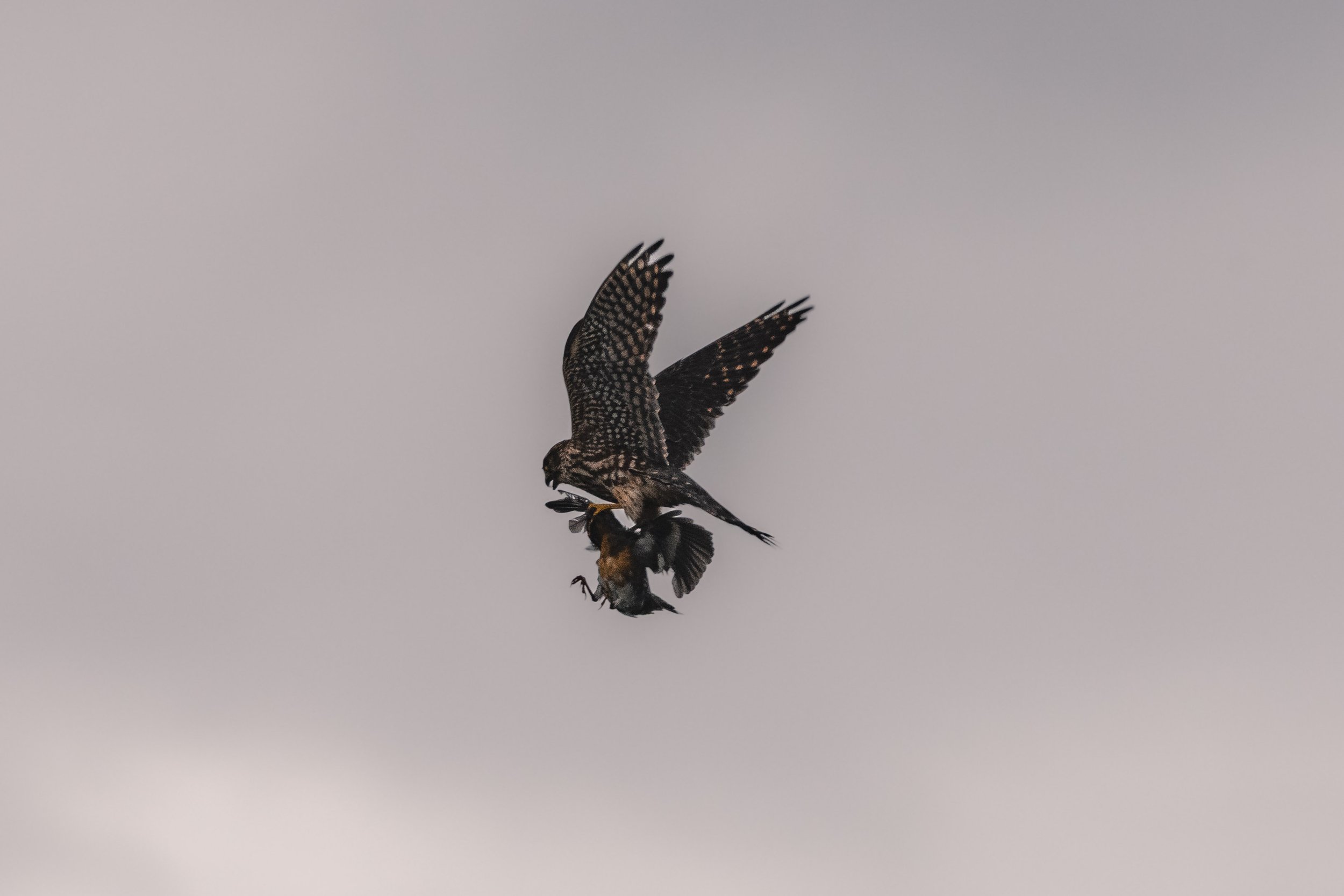
A Merlin with its next meal. Photo by Hayleigh Hilbert.
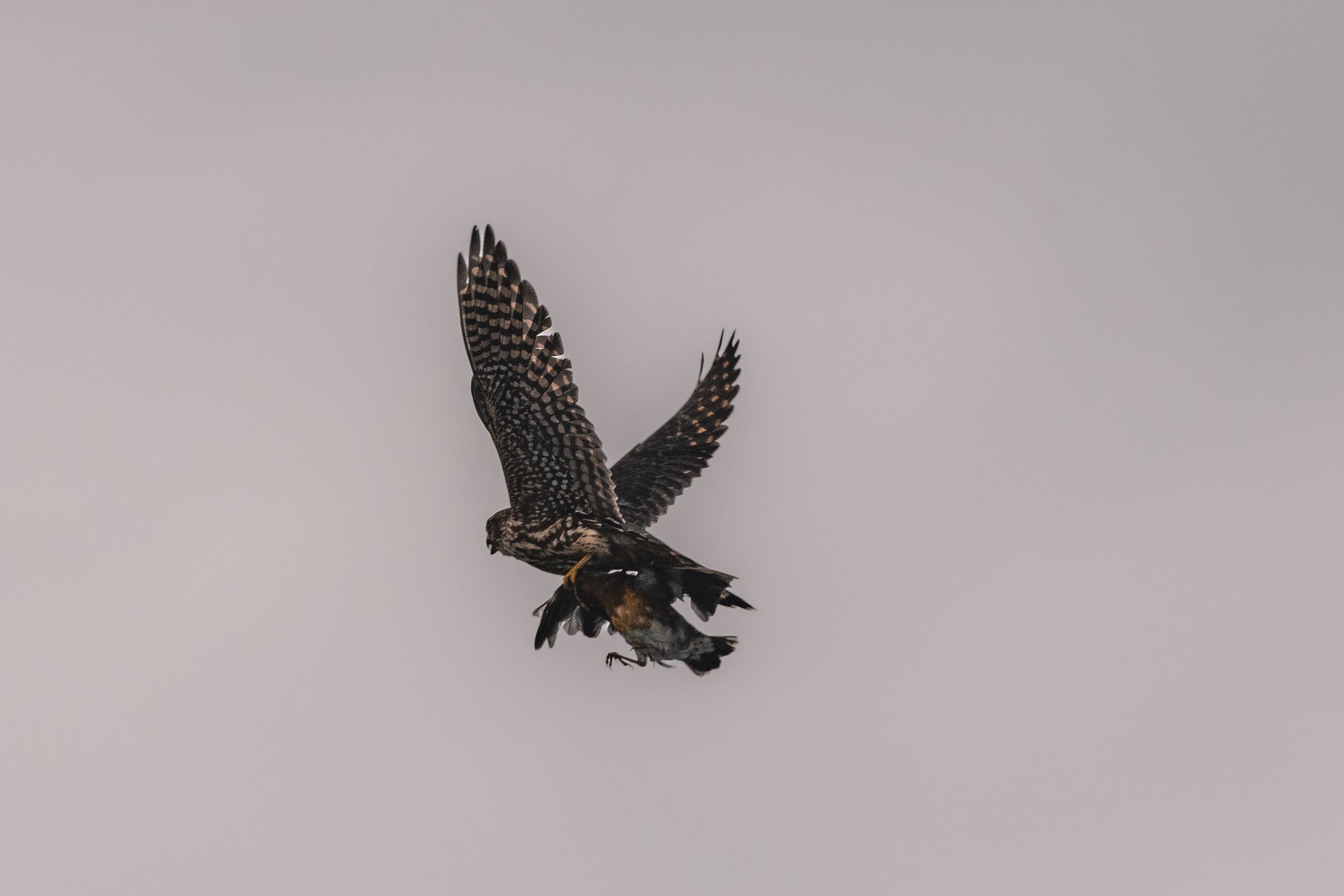
Feathers were flying as this pair took off! Photo by Hayleigh Hilbert.
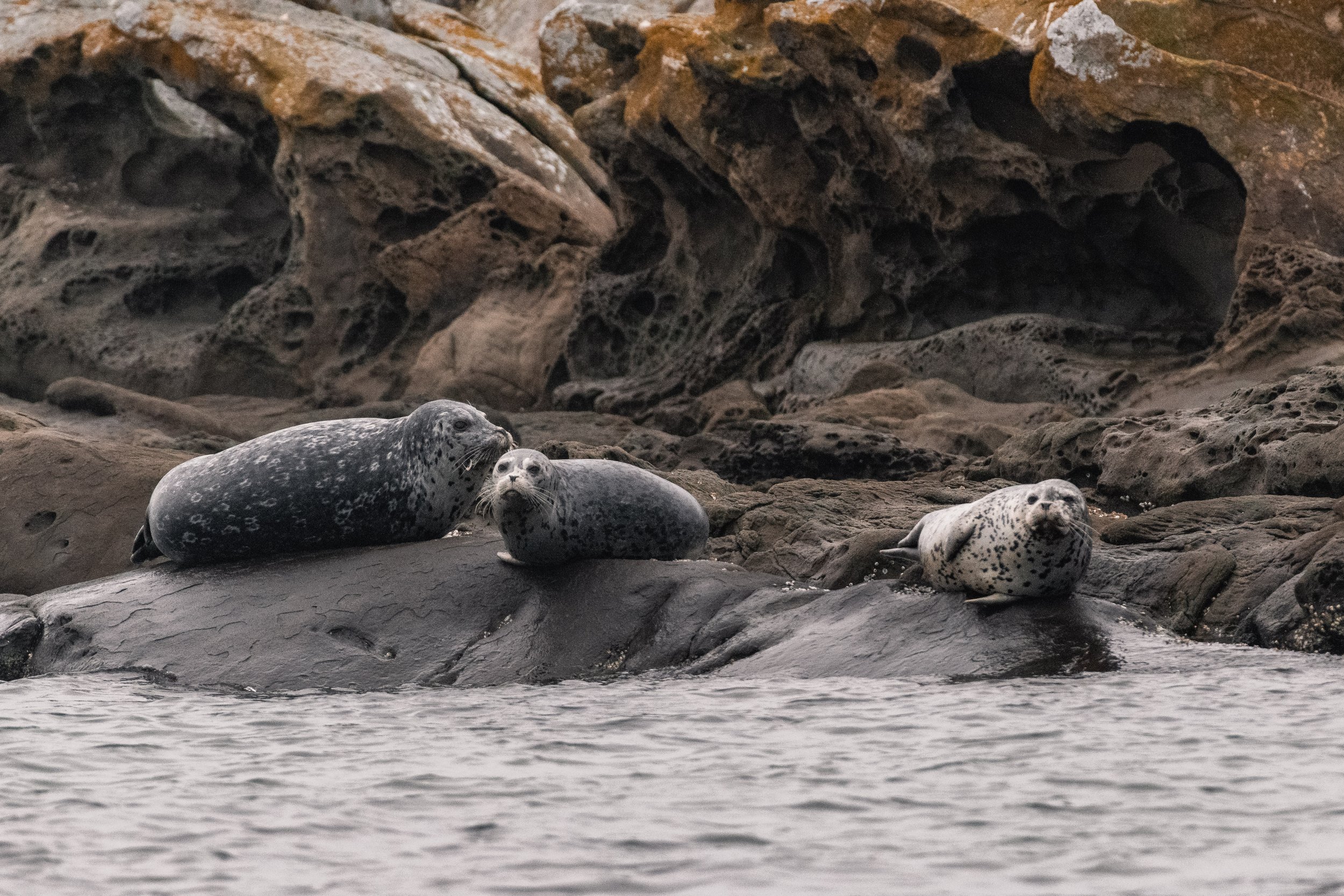
Harbour Seals enjoying their ‘perch’ up on the rocks out of the chilly water. Photo by Hayleigh Hilbert.
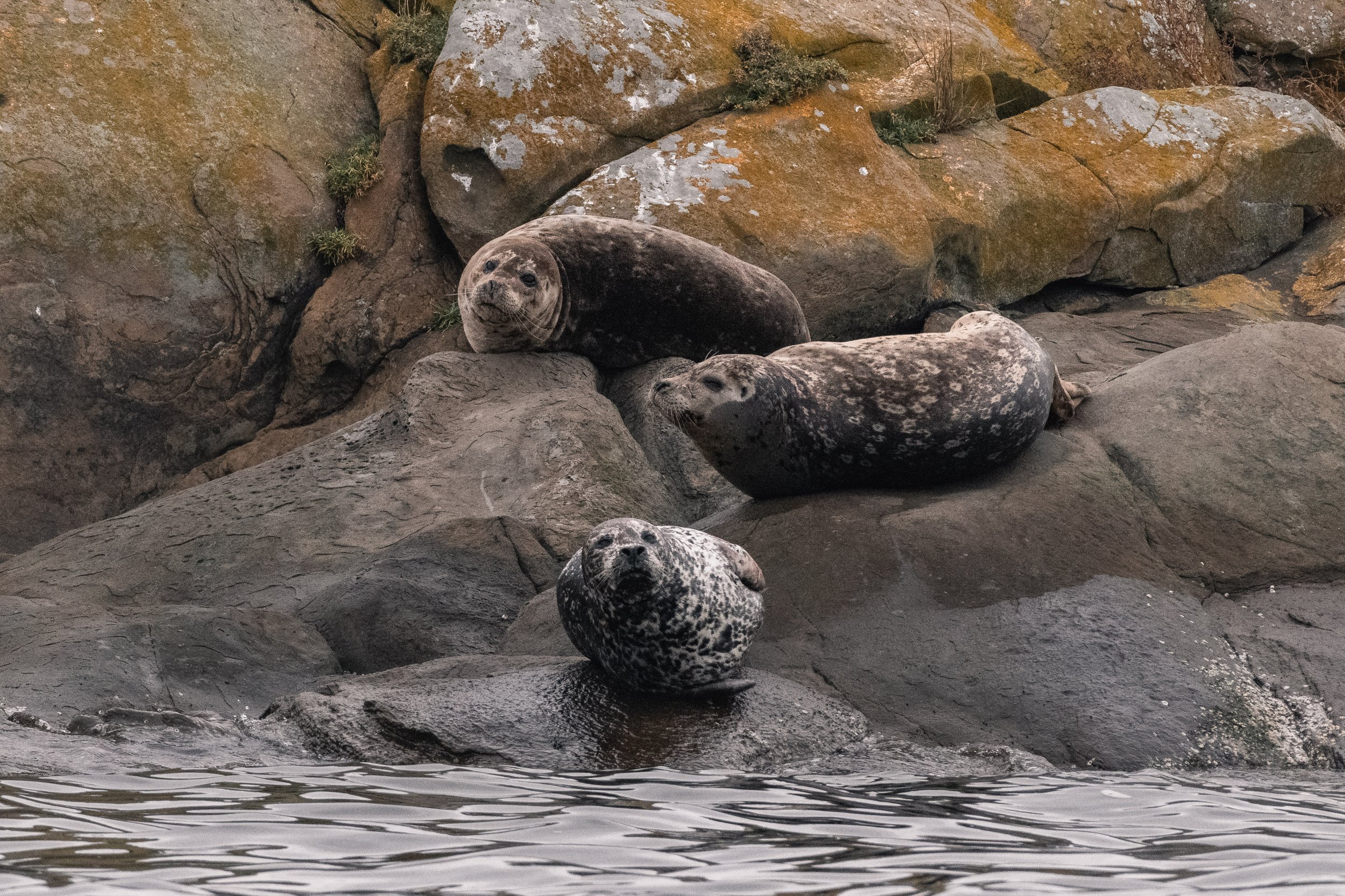
Comfy and cozy. Photo by Hayleigh Hilbert.
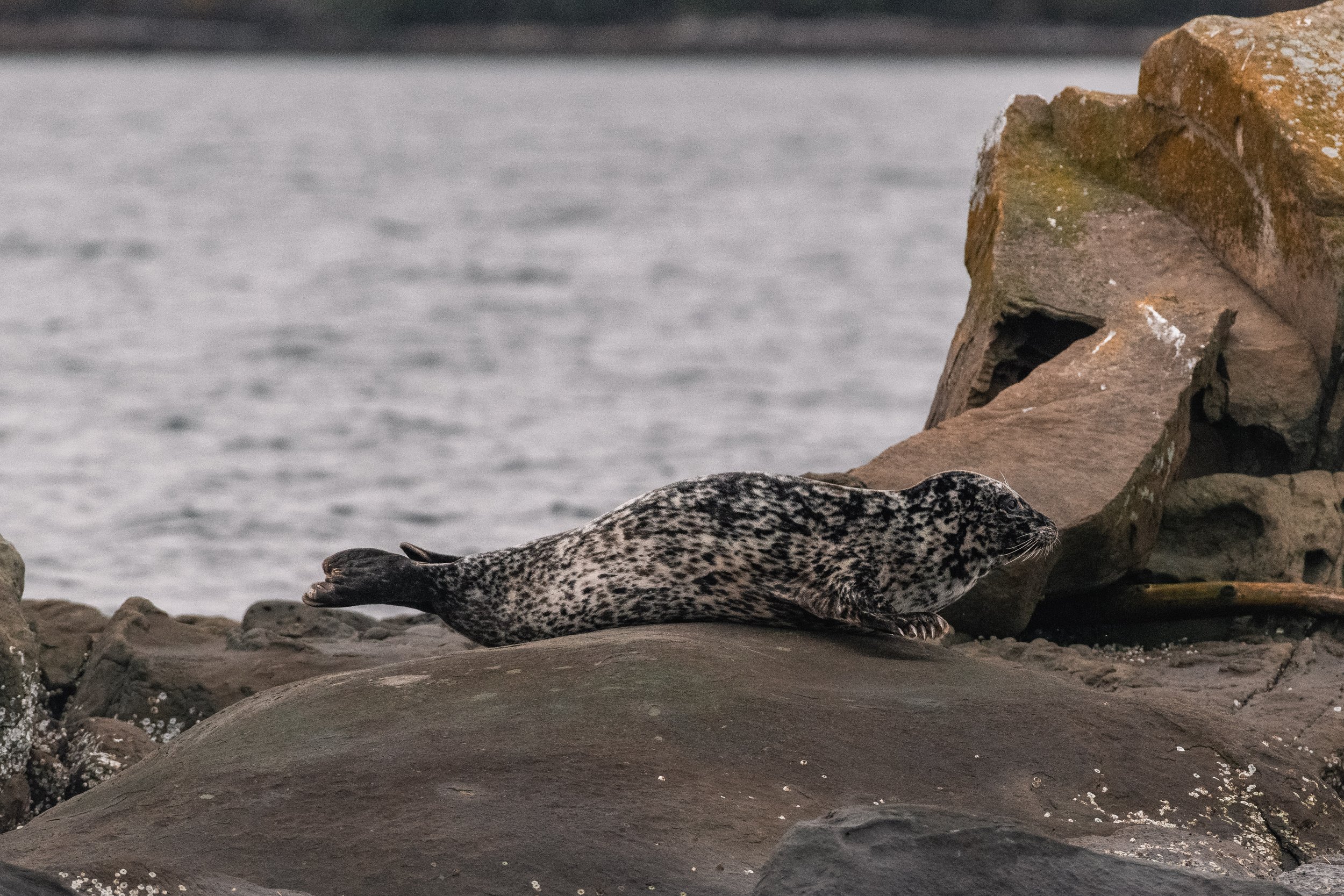
Carefully balanced. Photo by Hayleigh Hilbert.
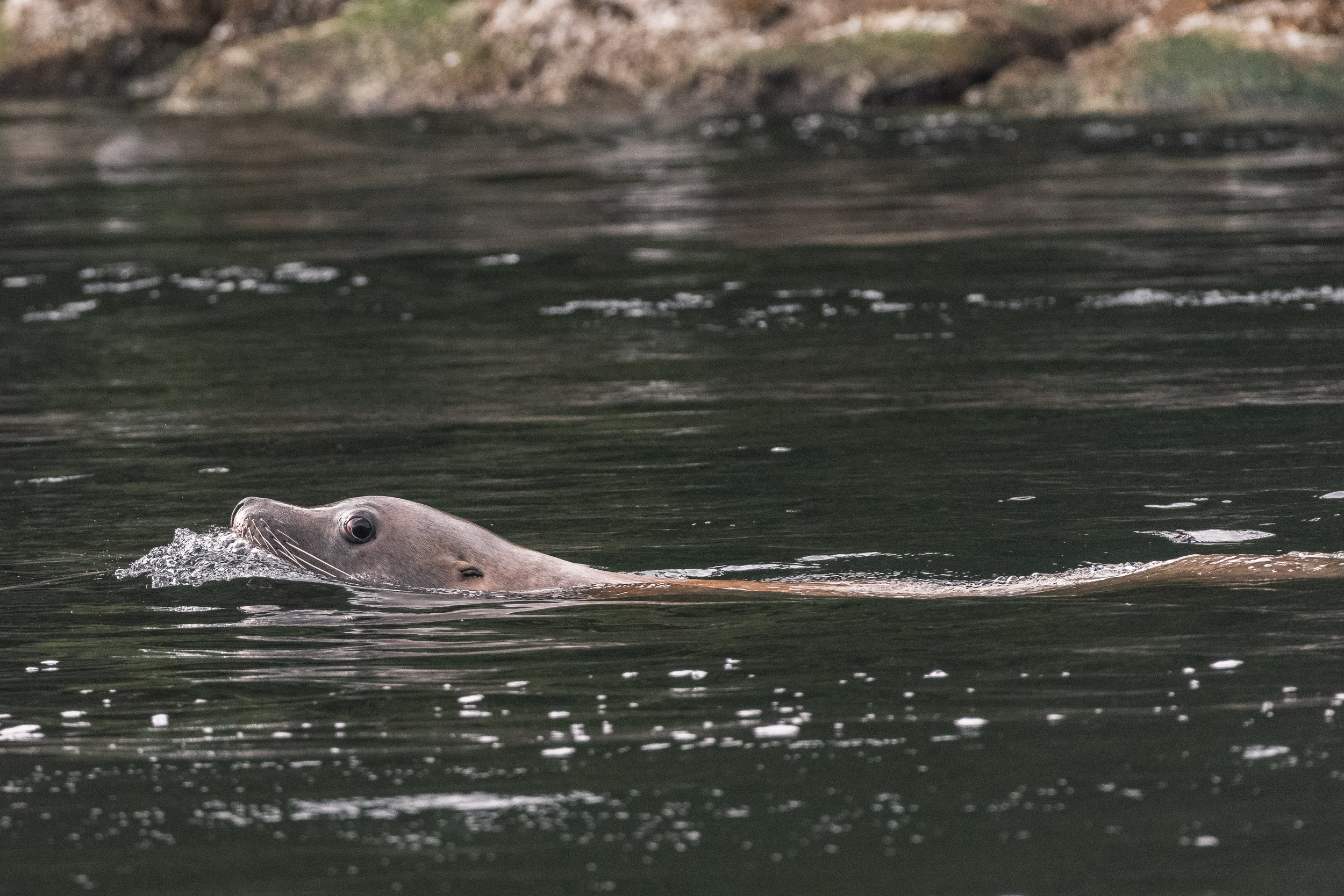
A wicked sideeye as this large Steller Sea Lion swims by. Photo by Hayleigh Hilbert.
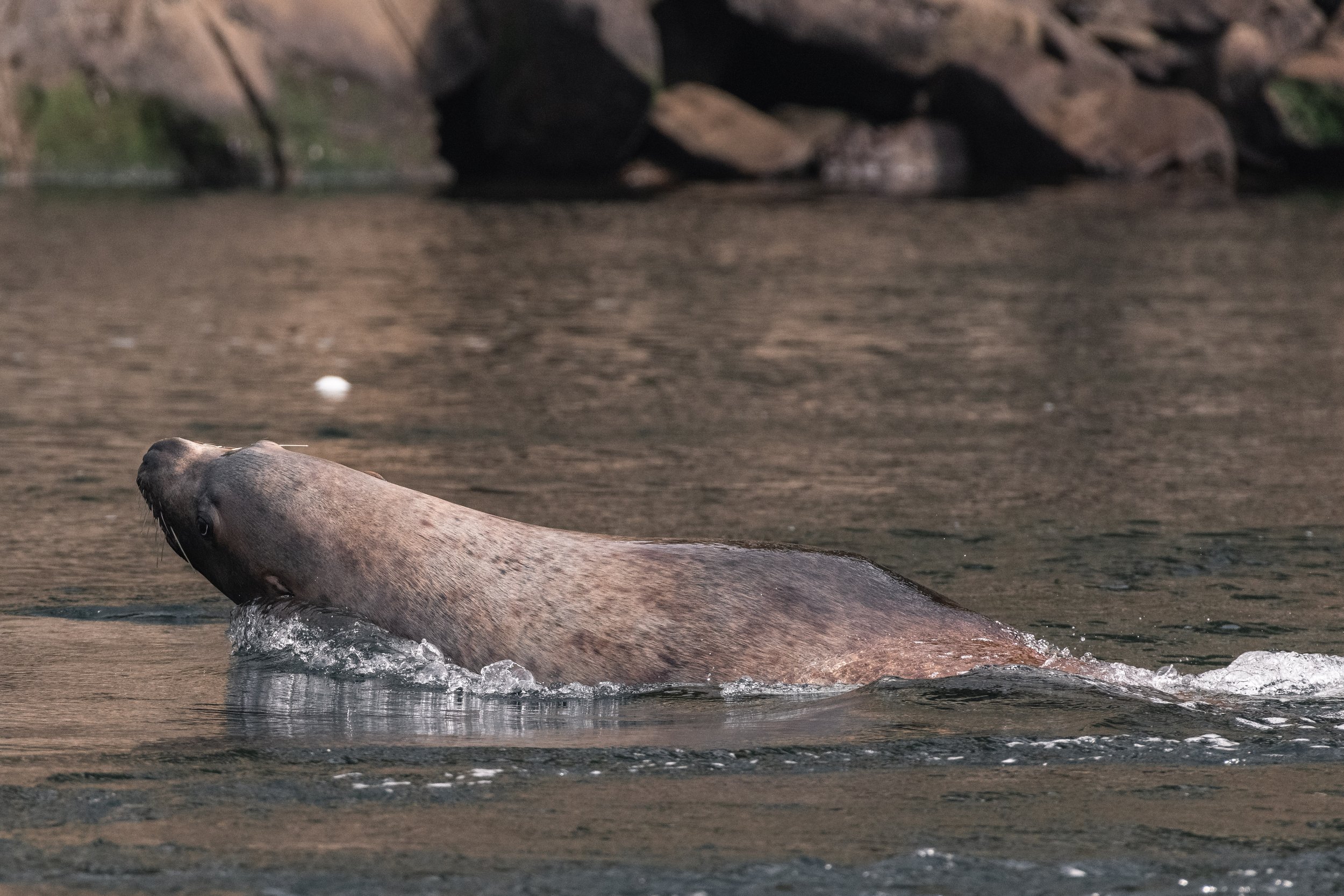
A side lunge from the Steller Sea Lion. Photo by Hayleigh Hilbert.
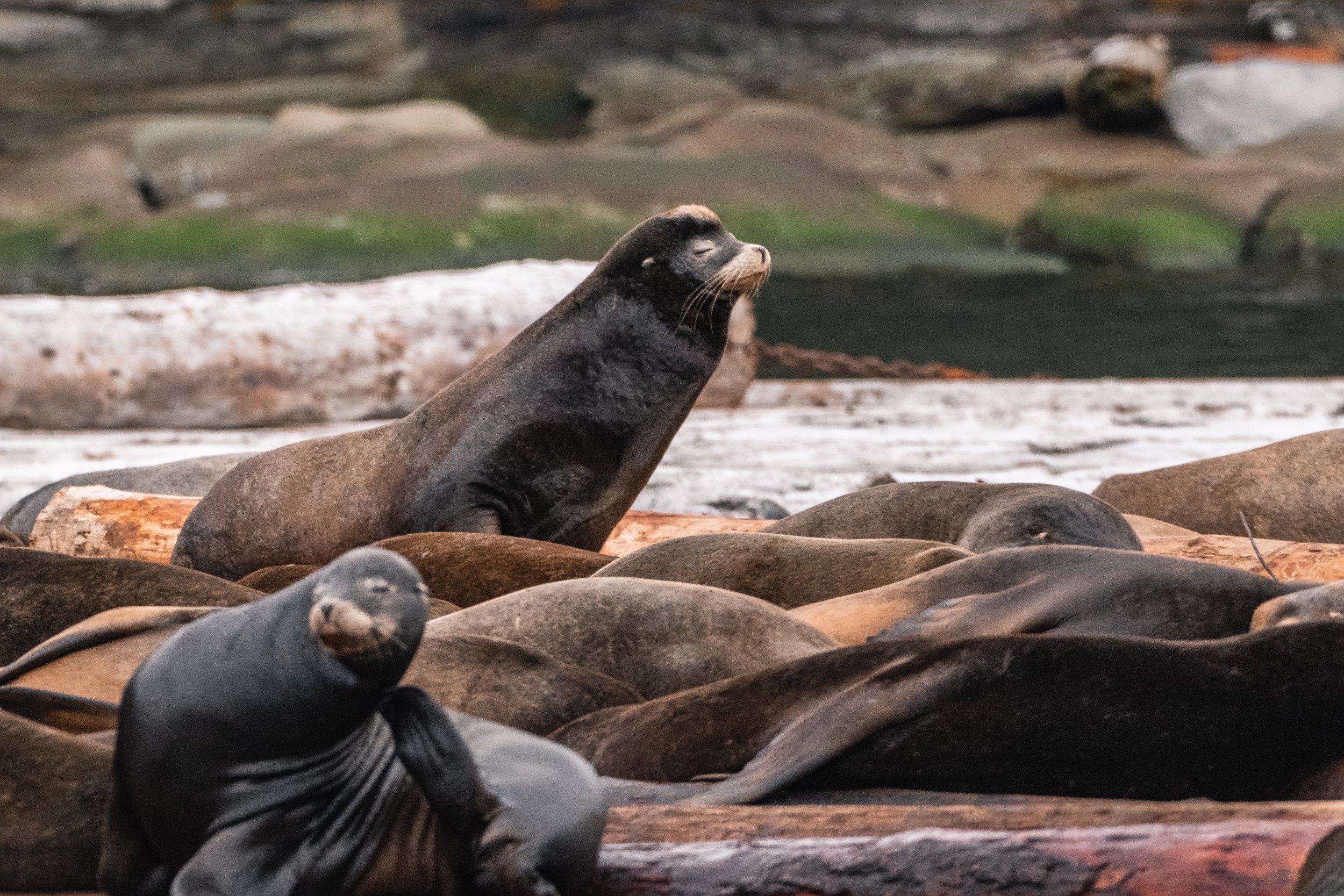
These California Sea Lions look like they woke up on the wrong side of the bed. Photo by Evan Hessels.
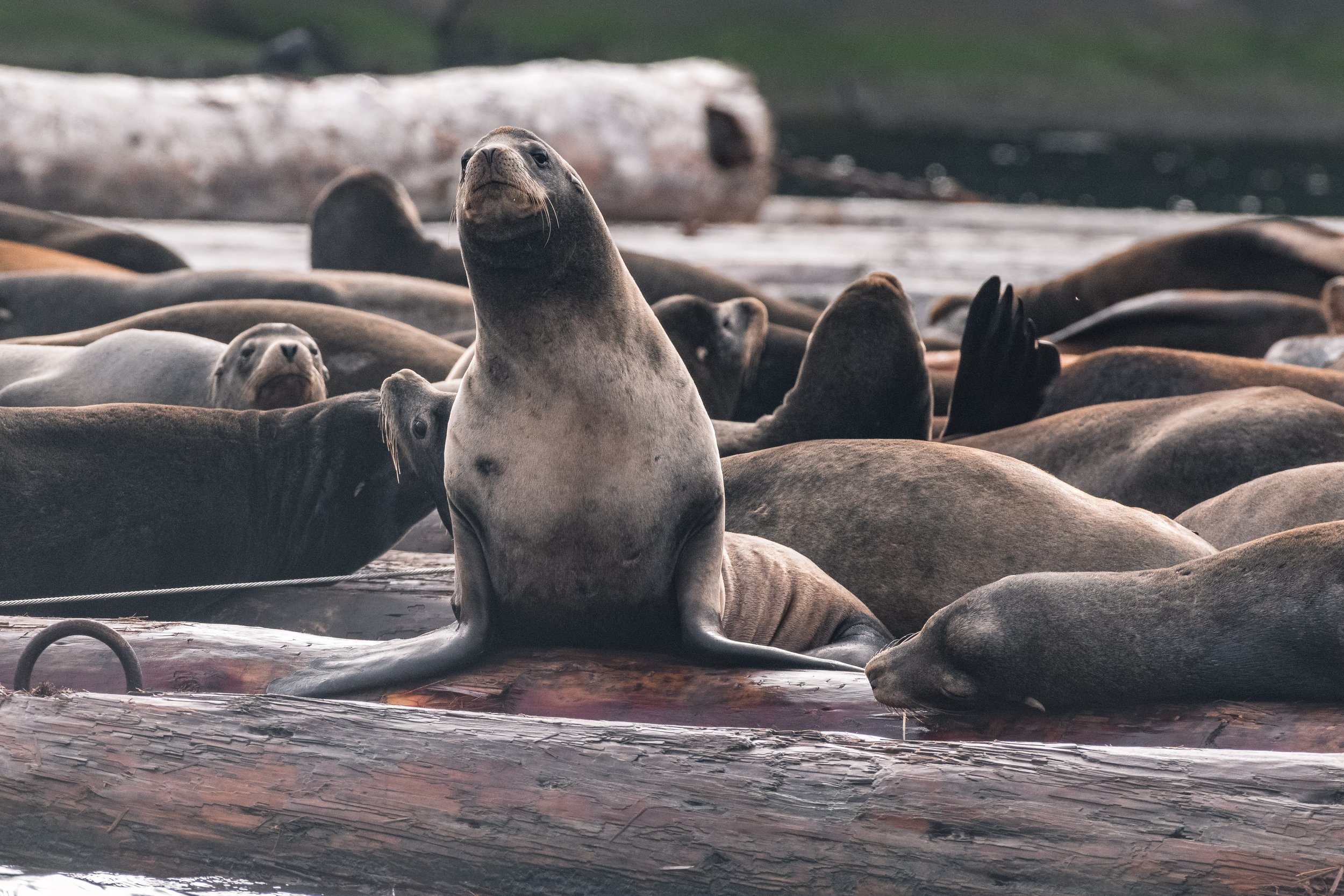
Posing and snoozing on the log booms. Photo by Hayleigh Hilbert.
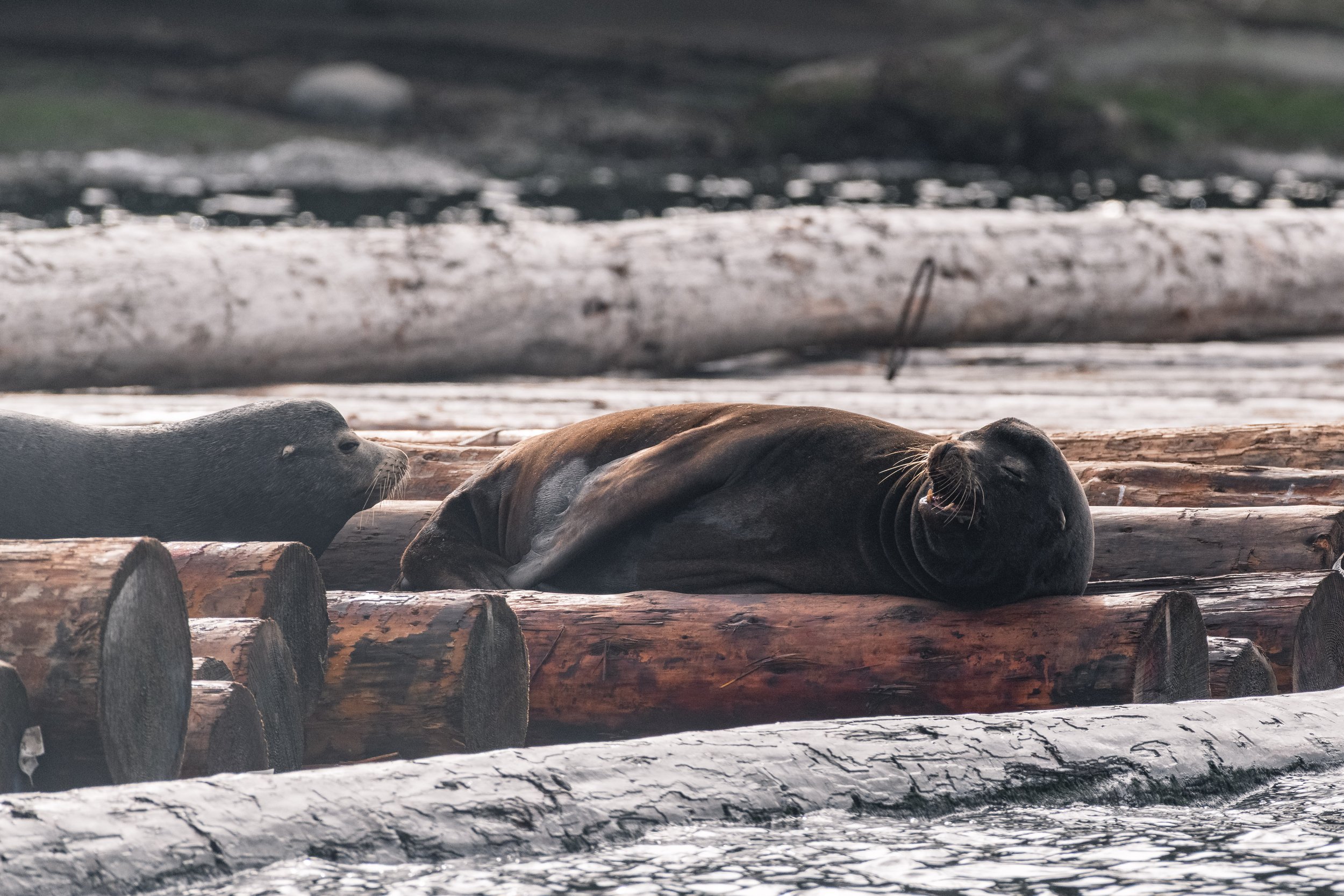
A little roar and yawn from the California Sea Lions. Photo by Hayleigh Hilbert.
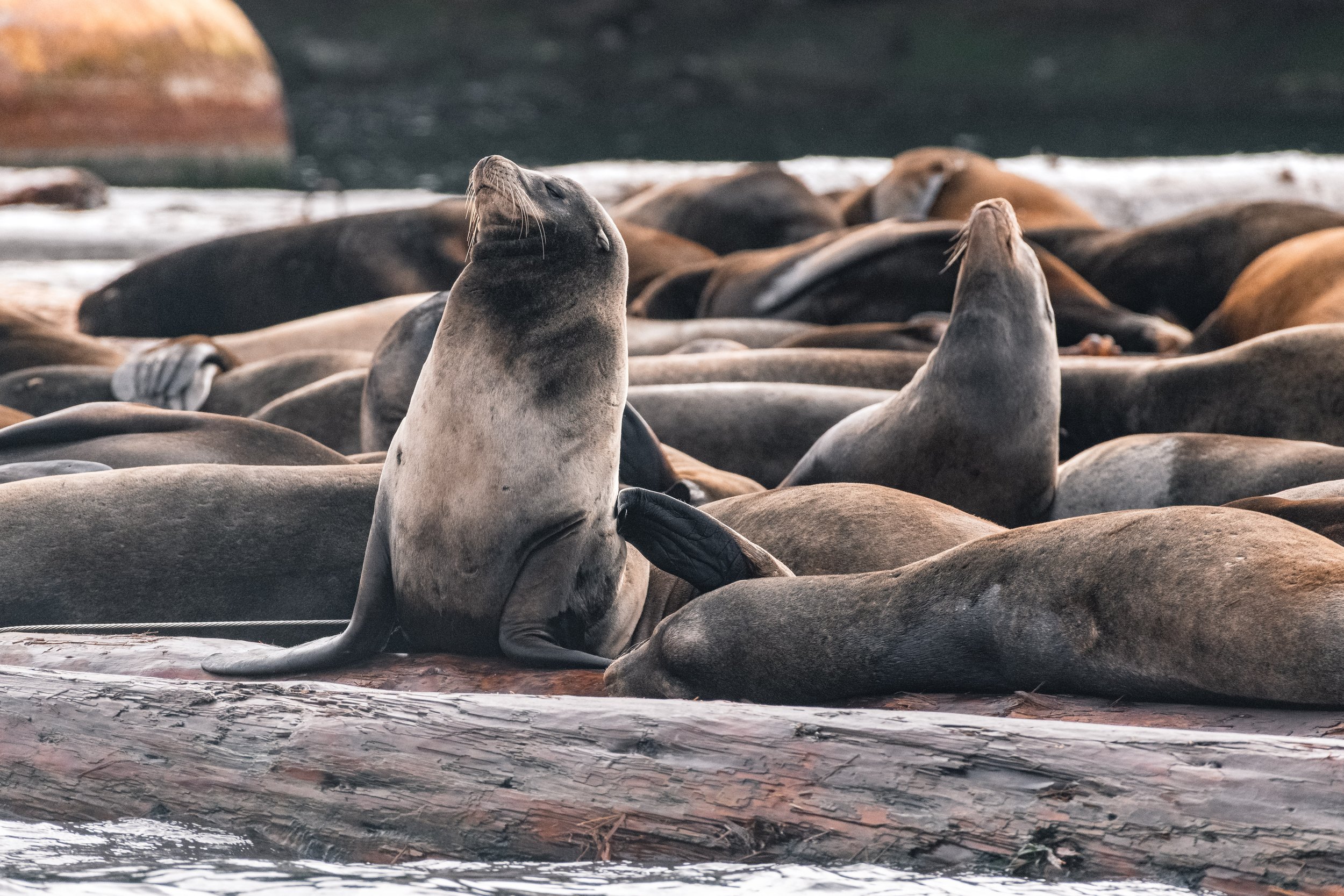
Scratching time! Photo by Hayleigh Hilbert.
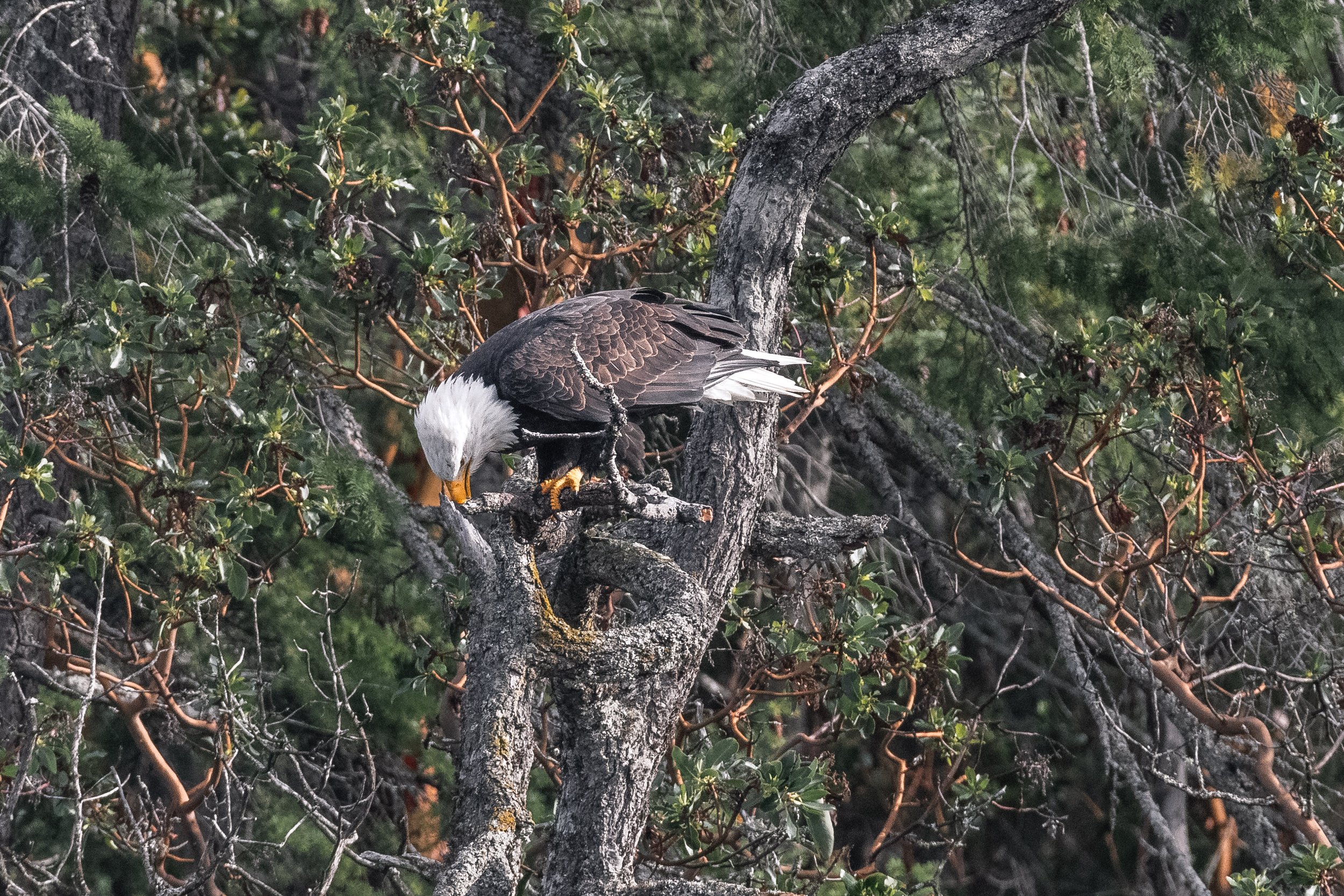
A Bald Eagle picking away at a tree. Photo by Hayleigh Hilbert.
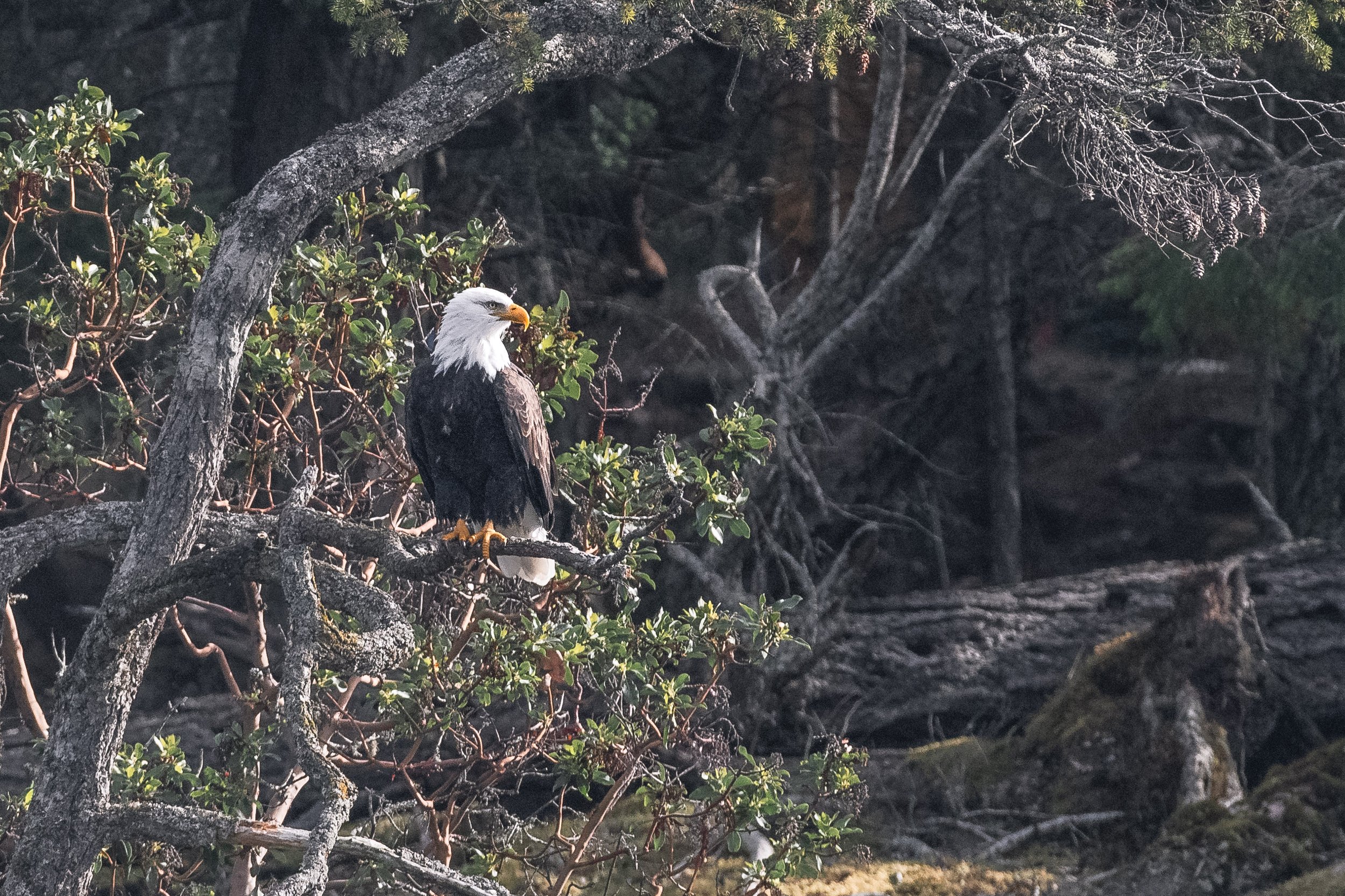
A Bald Eagle watching the waters. Photo by Hayleigh Hilbert.
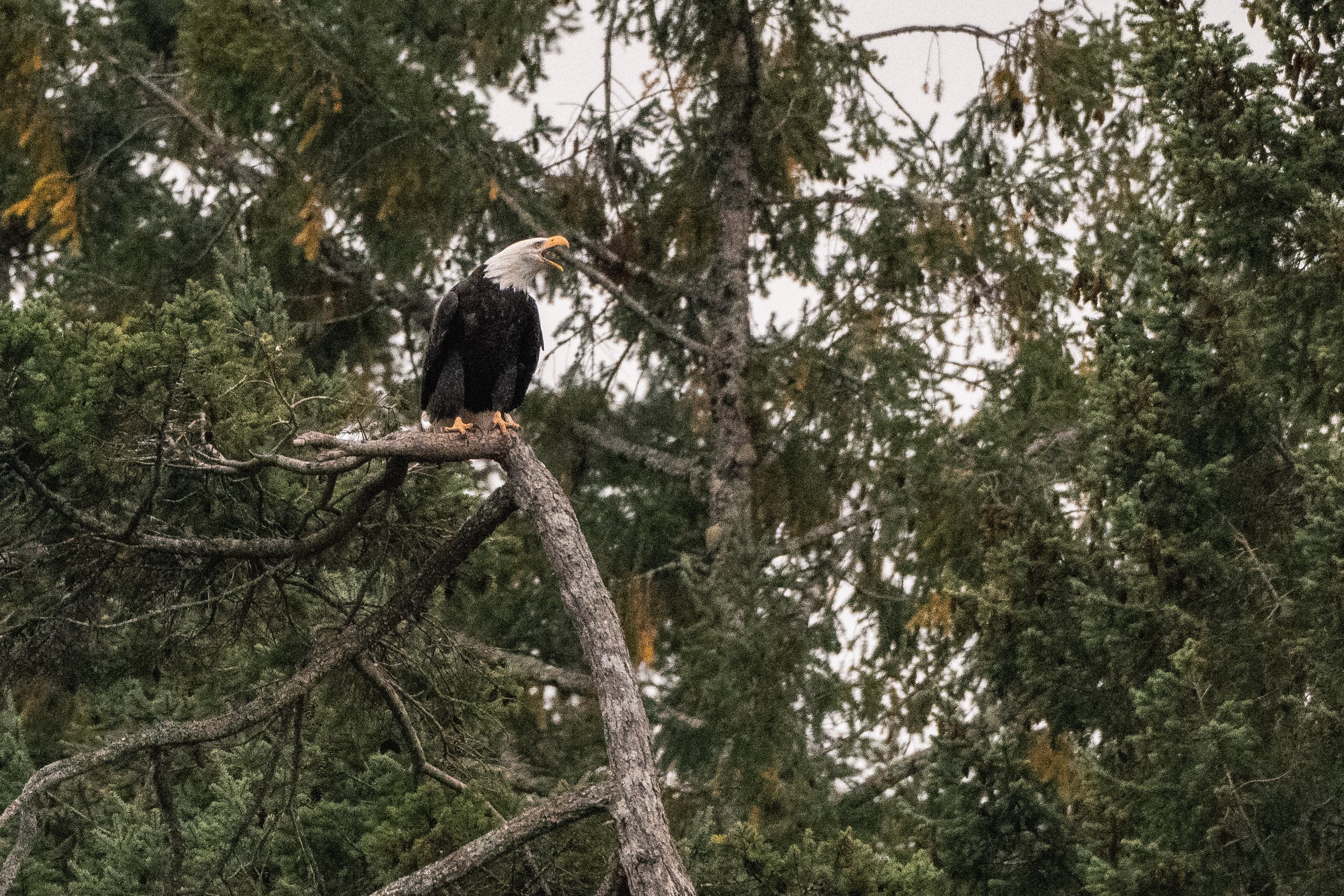
Someone offended this eagle! Photo by Evan Hessels.
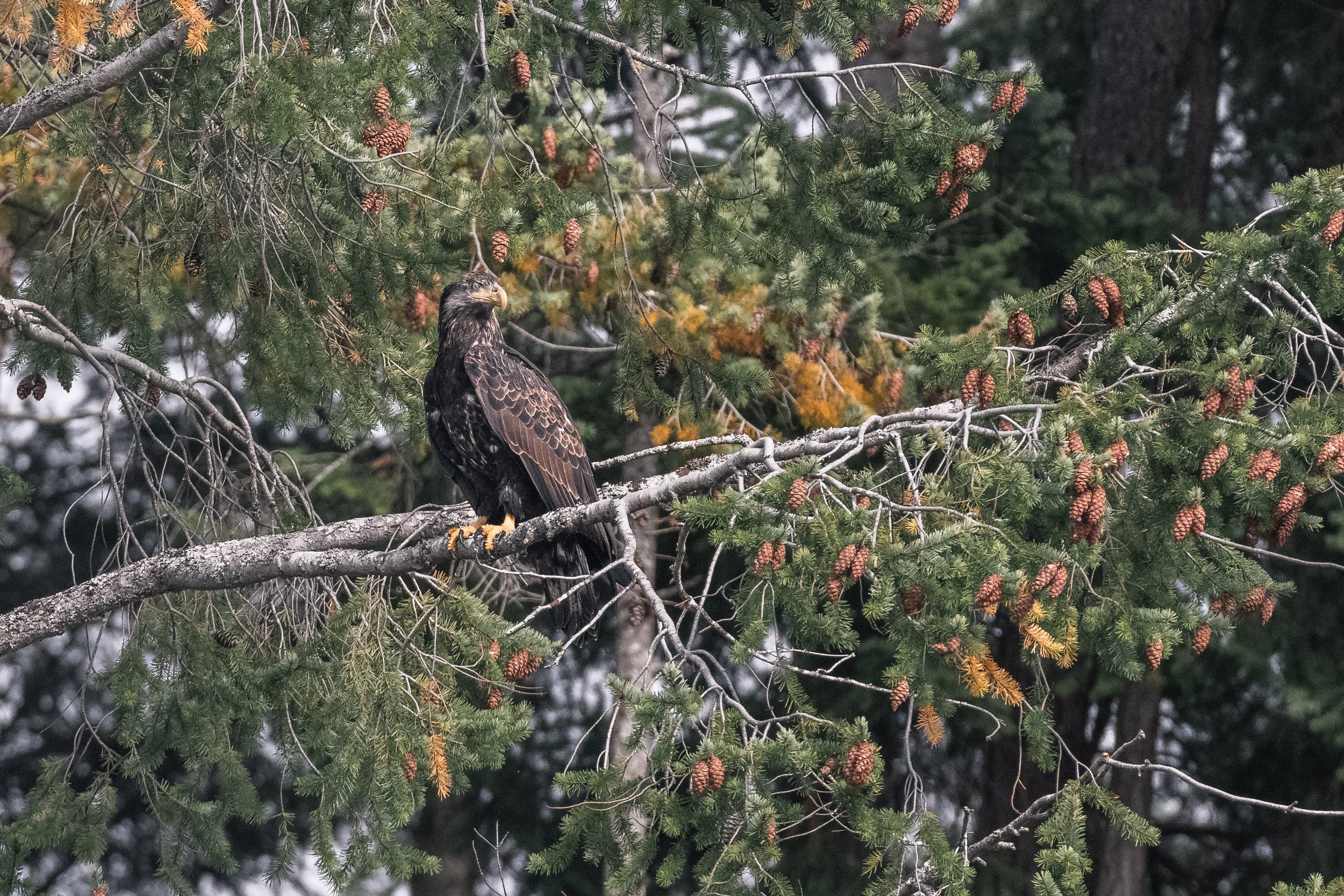
An immature Bald Eagle perched in a tree. Photo by Hayleigh Hilbert.
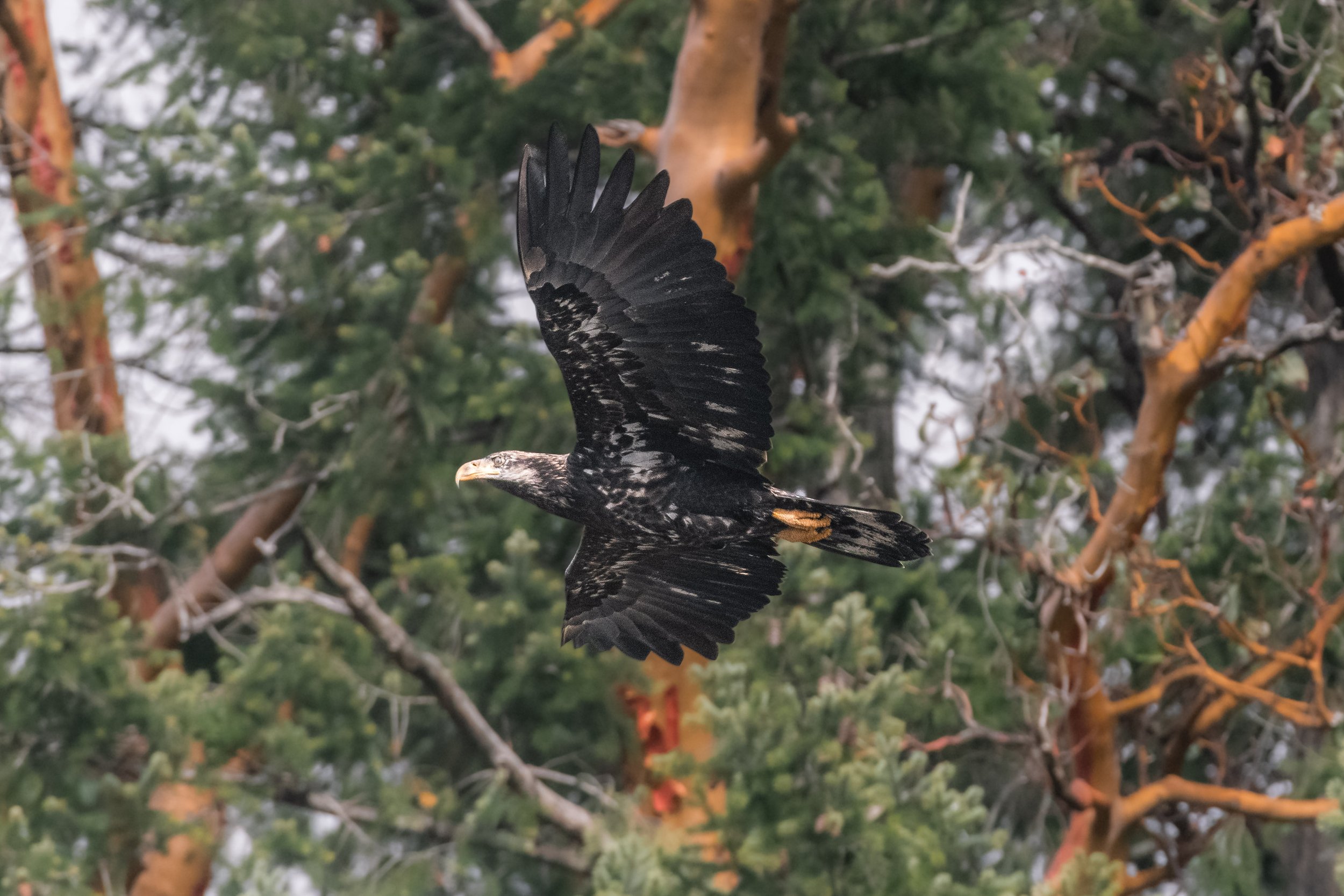
An immature Bald Eagle flying by. Photo by Hayleigh Hilbert.
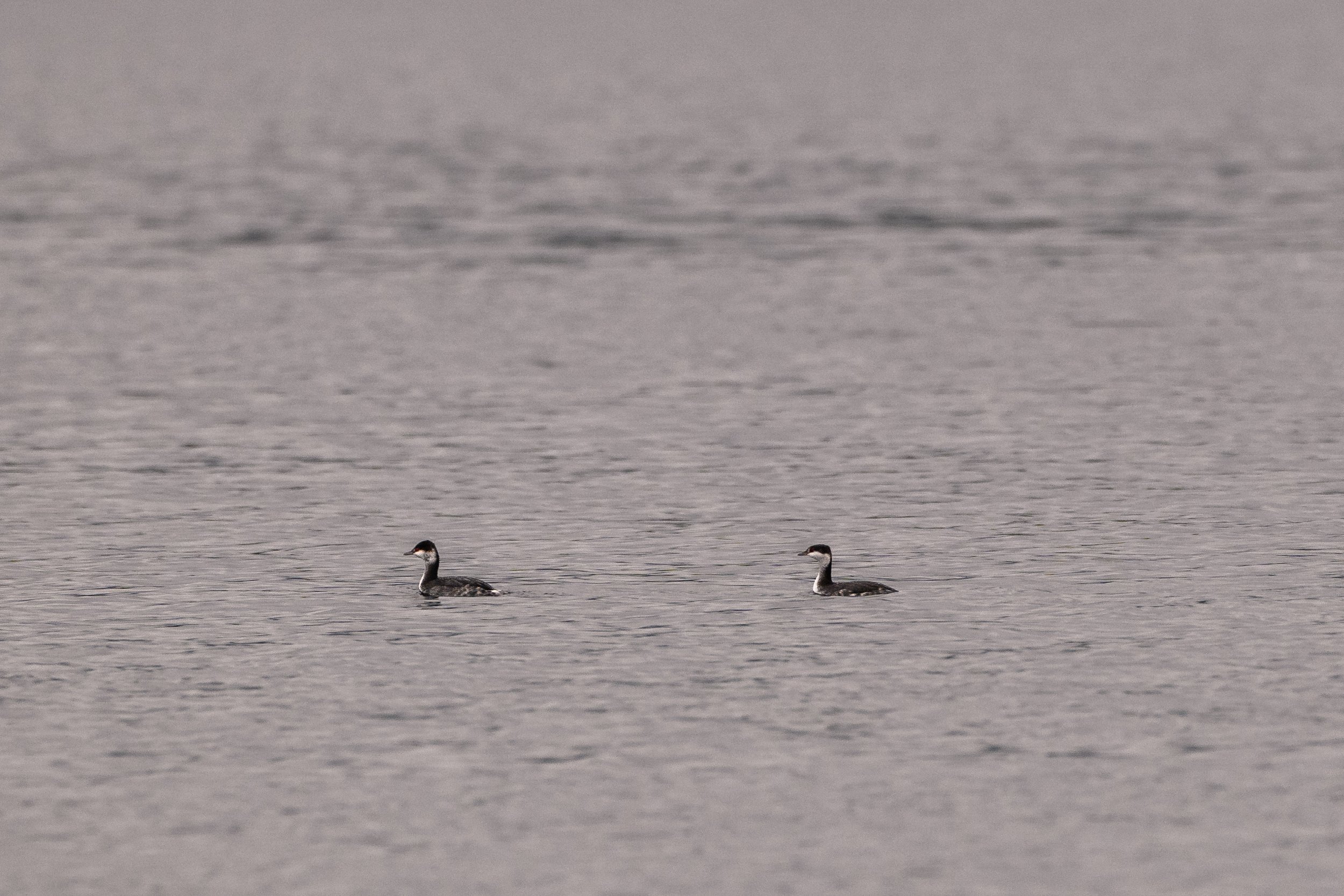
A pair of Horned Grebes paddling along. Photo by Evan Hessels.
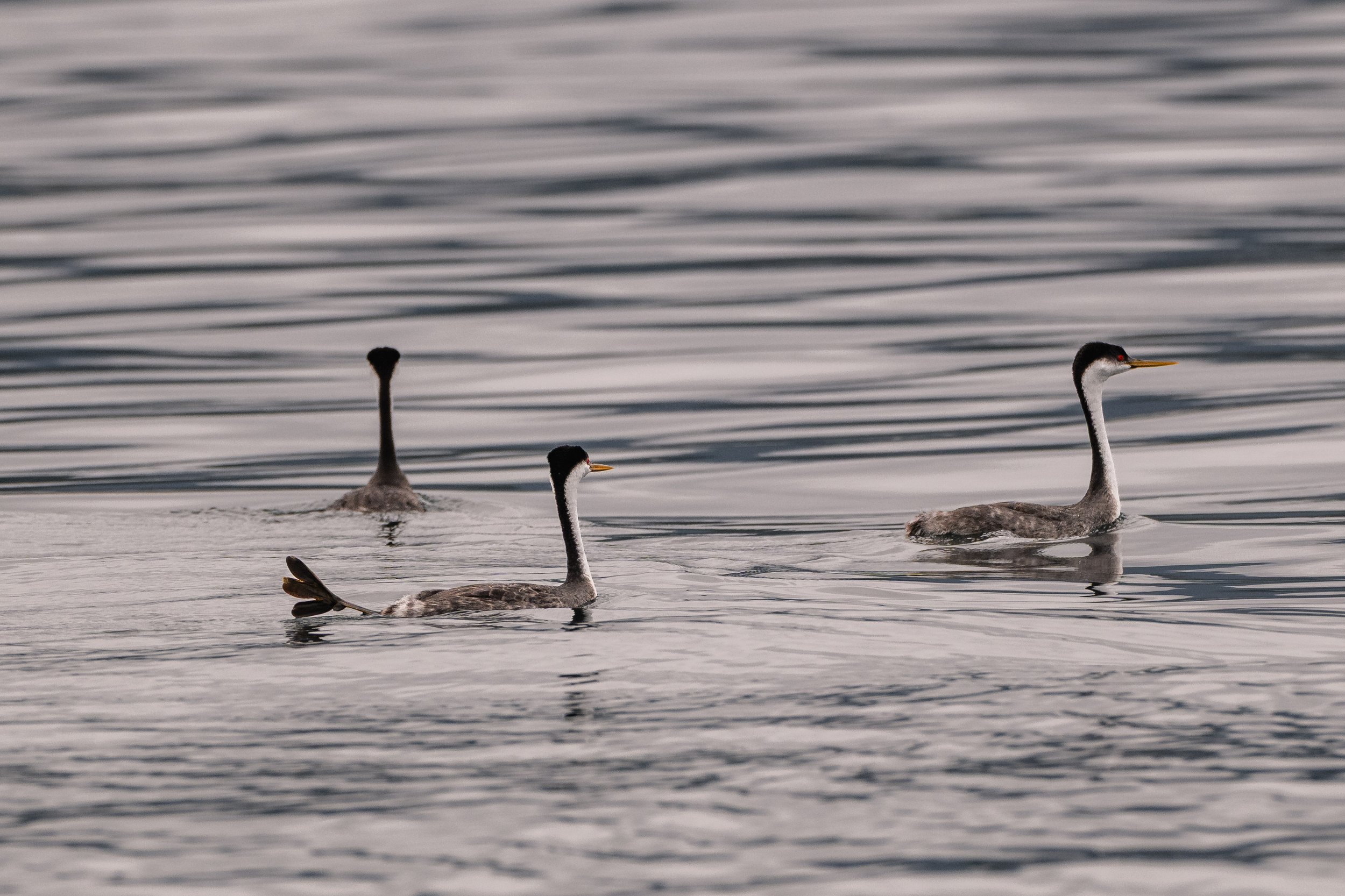
A trio of Western Grebes, with one stretching its foot out of the water in a behaviour known as feet shipping, an interesting behaviour documented in Grebes to help them thermoregulate. Photo by Evan Hessels.
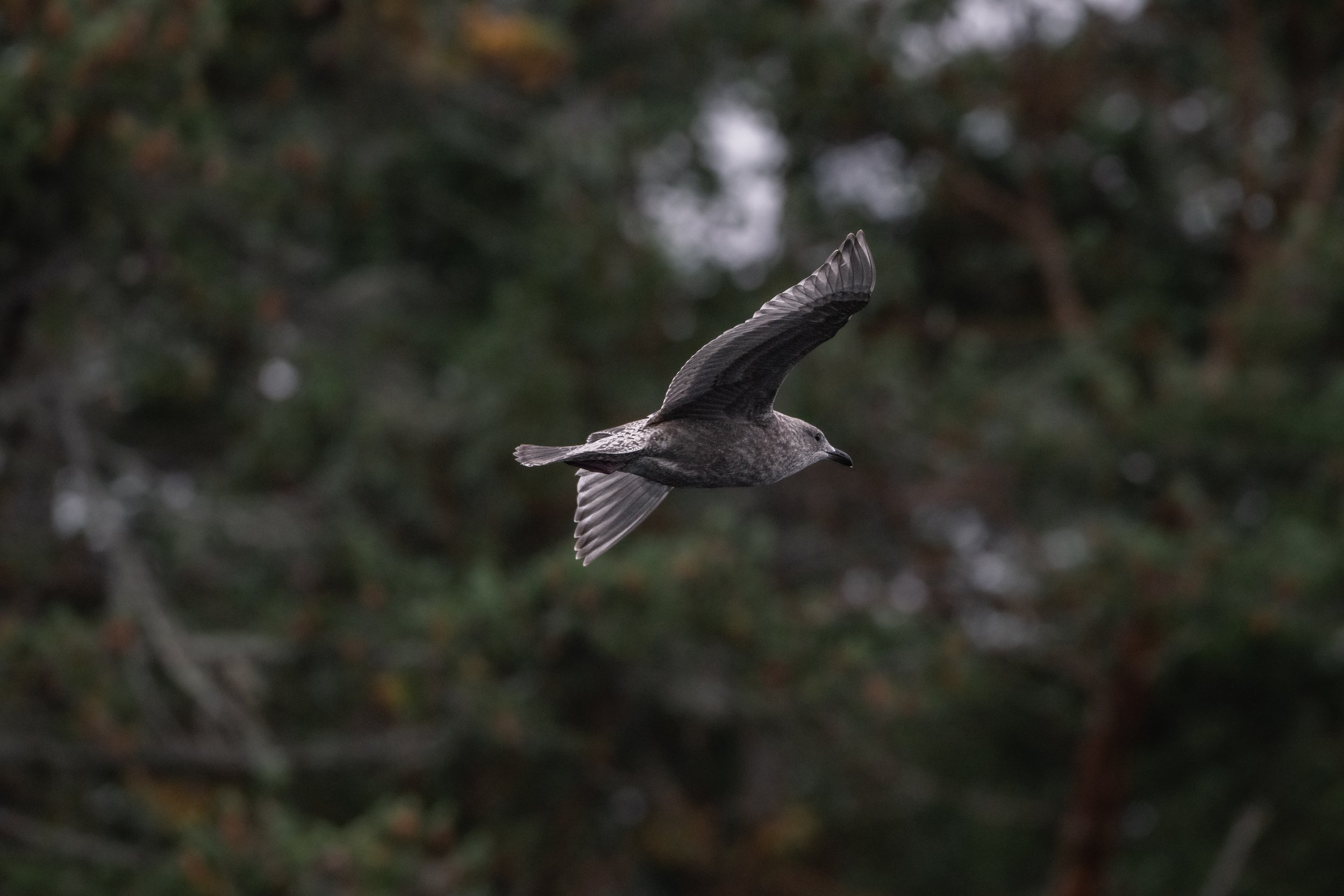
A Gull flyby! Photo by Evan Hessels.
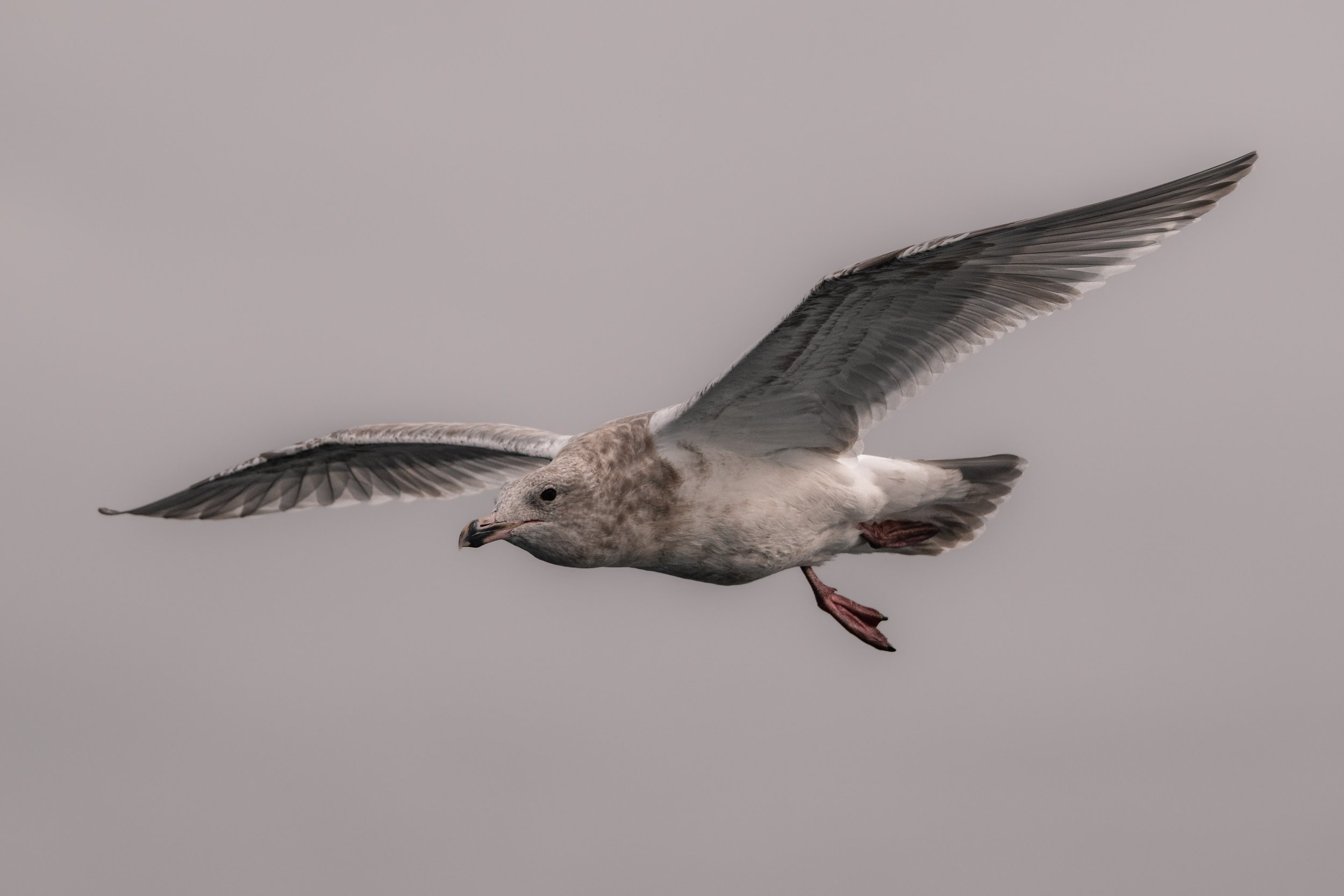
Daintly resting a leg as it swoops overhead. Photo by Evan Hessels.
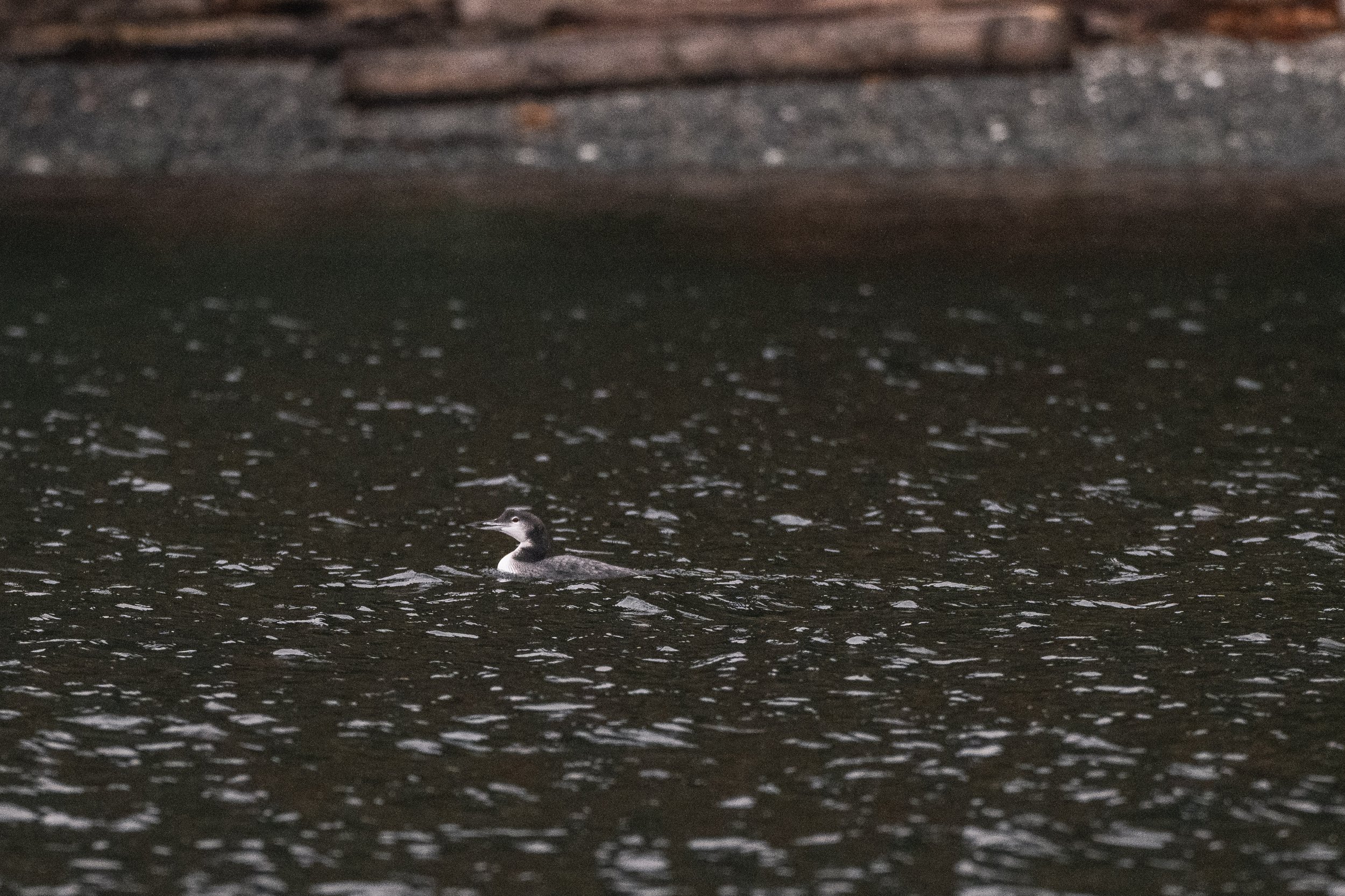
A Common Loon in the water. Photo by Evan Hessels.
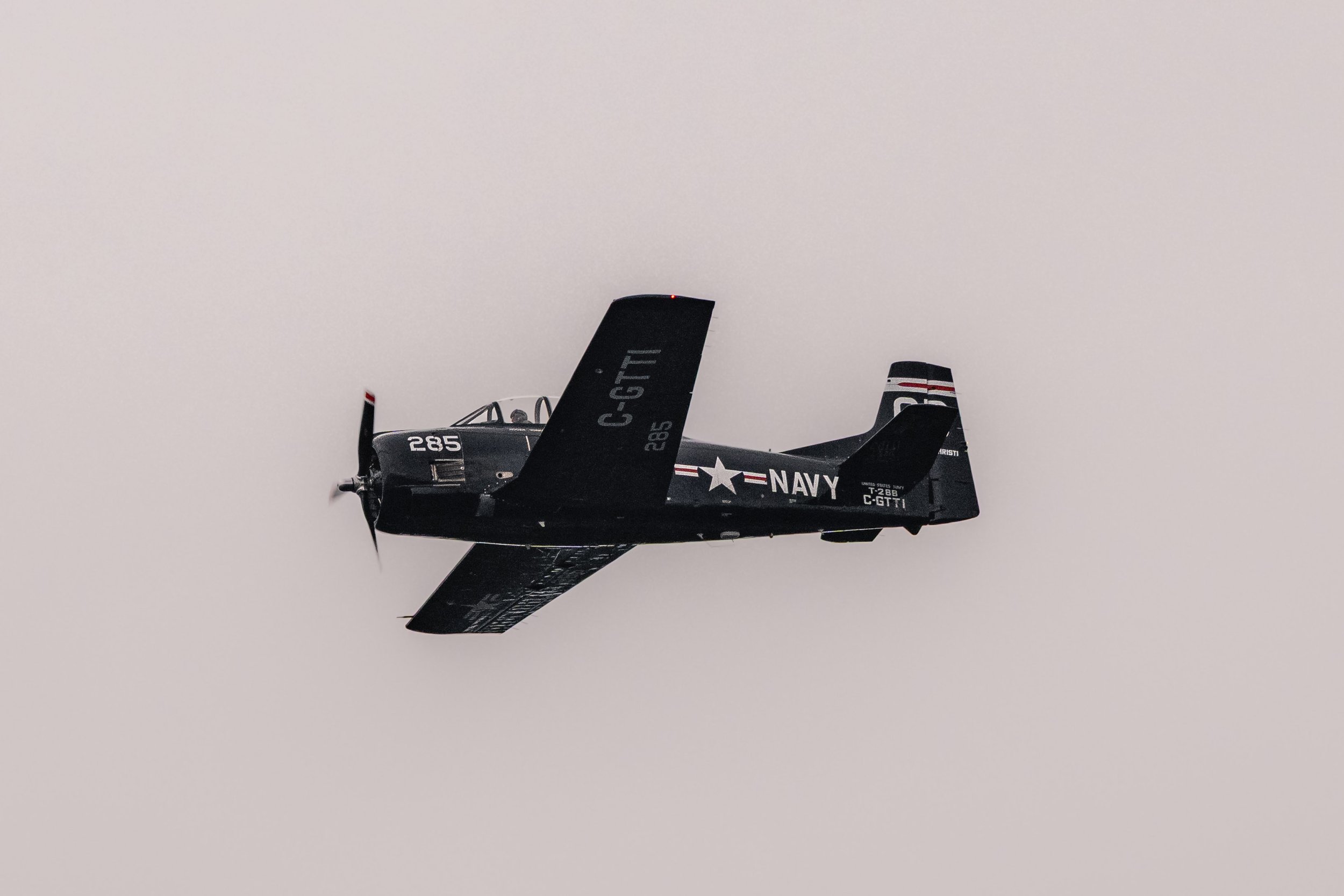
A North American T-28 Trojan military trainer aircraft - video of this aircraft in flight here! Photo by Evan Hessels.