
September 22, 2026 - A double-double kind of day!
Keta and Cascadia departed Nanaimo with a plan to head south through the Southern Gulf Islands, giving both vessels plenty of space to explore and cover ground. As they pushed away from the dock, the boats turned and entered Northumberland Channel.
It did not take long for the first whale encounter of the day. Cascadia spotted a single humpback travelling through Northumberland Channel, the waterway just outside Nanaimo Harbour. As the whale surfaced and raised its flukes, we got a perfect ID shot. It was Kata (BCY1218), a whale that has been spending quite a bit of time in the area, making nearly continuous circles around the channel for almost a week.
After a few quick looks at Kata, it was time to continue south. Both boats made their way through Dodd Narrows, the narrow passage between Vancouver Island and Mudge Island. The waters soon opened up ahead of us, as the Southern Gulf Islands and the many small waterways appeared.
Near Crofton, we finally found what we had been hoping to see. Several black dorsal fins appeared together in the distance, travelling as a group - it was a group of orca!
Among the group was a large male with a distinctive notch in the middle of his dorsal fin. After comparing photographs and looking closely at the individuals travelling alongside him, we confirmed the group as the T109As:
T109A Frio/Runaway ♀ (1990)
T109A4 Garrett ♂ (2012)
T109A5 Argyle ♂ (2014)
T109A6 Riley ♀ (2018)
T109A7 Wieland ♂ (2021)
T109A8 Weiss (2024)
When we arrived on scene, the pod was already quite active. T109A4 Garrett appeared to have caught something, and the rest of the group quickly converged on him.
Hunting is a highly social activity for orca. When prey is caught, the excitement does not necessarily end with the successful hunt. Sharing food is an important part of life within a pod, and individuals often come together to take their share of a meal. Watching the T109As gather around Garrett offered a glimpse into that social side of their lives, as the group came together before eventually continuing on their journey.
Once the feeding activity was finished, the T109As continued travelling northbound. After spending some time with the pod, we said goodbye and continued on our own route.
We made our way through Porlier Pass and out into the Strait of Georgia. After some more searching, another humpback appeared. This whale was noticeably smaller than Kata, and when it surfaced and dove, we got a good look at their fluke. We confirmed its identity as Vivaldi’s 2025 calf (BCX1704calf2025).
This young whale is now entering its first season travelling independently. The transition from travelling alongside their mother (which usually lasts for one year) to navigating the waters alone is an important stage in a humpback's life, and we are eager to see how this young whale continues to grow and establish itself in the years ahead.
From there, we turned north and began making our way along the Valdes Island coastline, with a pinniped haul-out as our next destination. But, as often happens on the Salish Sea, the plan changed when another black dorsal fin appeared ahead.
This one was incredibly easy to recognize. Two large notches visible on the dorsal fin made this ID nearly immediate. It was T063 Chainsaw:
T063 Chainsaw ♂ (~1978)
Chainsaw is usually seen travelling alongside his mother, T065 Whidbey II, but today he appeared to be making his way on his own. We did spot blows closer to the coastline, so it is certainly possible that Whidbey II was nearby and simply spread out from him. Chainsaw continued steadily along the coast, giving us a chance to spend some time seeing him before we continued north.
Eventually, we reached Stinky Rocks, one of the area's familiar pinniped haul-outs.
The Steller Sea Lions had clearly settled in for a lazy day. They were piled on top of one another along the rocks, resting in large, noisy groups. The Harbour Seals were a little more spread out, with several choosing to bob along in the water rather than haul out onto the rocks.
From Stinky Rocks, the two boats went their separate ways once again.
Cascadia continued toward the Harmac pulp mill, an area that can offer another interesting wildlife encounter. Here, among the log booms, we found several California Sea Lions. It is still relatively early in their return to our waters, but already a number of them had arrived and were moving around the logs.
Meanwhile, Keta encountered another pair of humpbacks along the way.
Once again, tails came up, cameras were raised, and photographs were captured for identification. The two whales were Heron (BCX0470calf2024) and Iota (BCY1466), both young humpbacks travelling together.
Iota is the 2022 calf of Phi (BCX1416), while Heron is the 2024 calf of Hecate (BCX0740). Seeing young whales travelling together is always an interesting encounter, particularly when both are still relatively early in their lives. The pair surfaced alongside one another, occasionally raising their flukes together before continuing through the water.
After a few more surfaces, it was time for us to turn toward home.
With the day's encounters behind us, we made our way north once again, eventually arriving back in Nanaimo after a day that had taken us through narrow island channels, open stretches of the Strait of Georgia and along several of the Gulf Islands. It had been a beautiful day full of many interesting encounters, and we happily chatted about it as we came back into the harbour.
Photos by Marine Naturalists Hayleigh Hilbert and Des Poier - please enjoy!
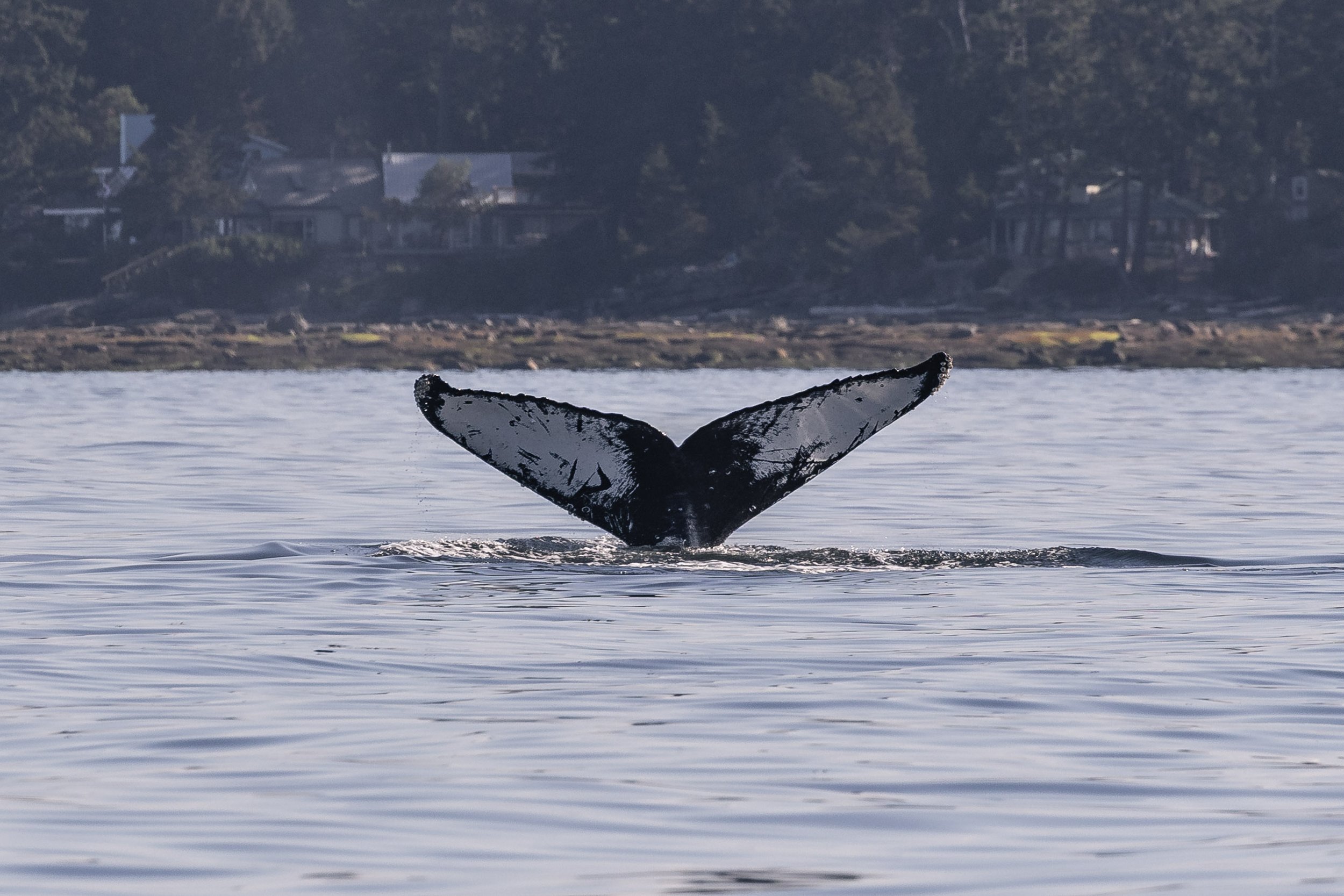
Kata preparing to dive. Photo by Des Poier.
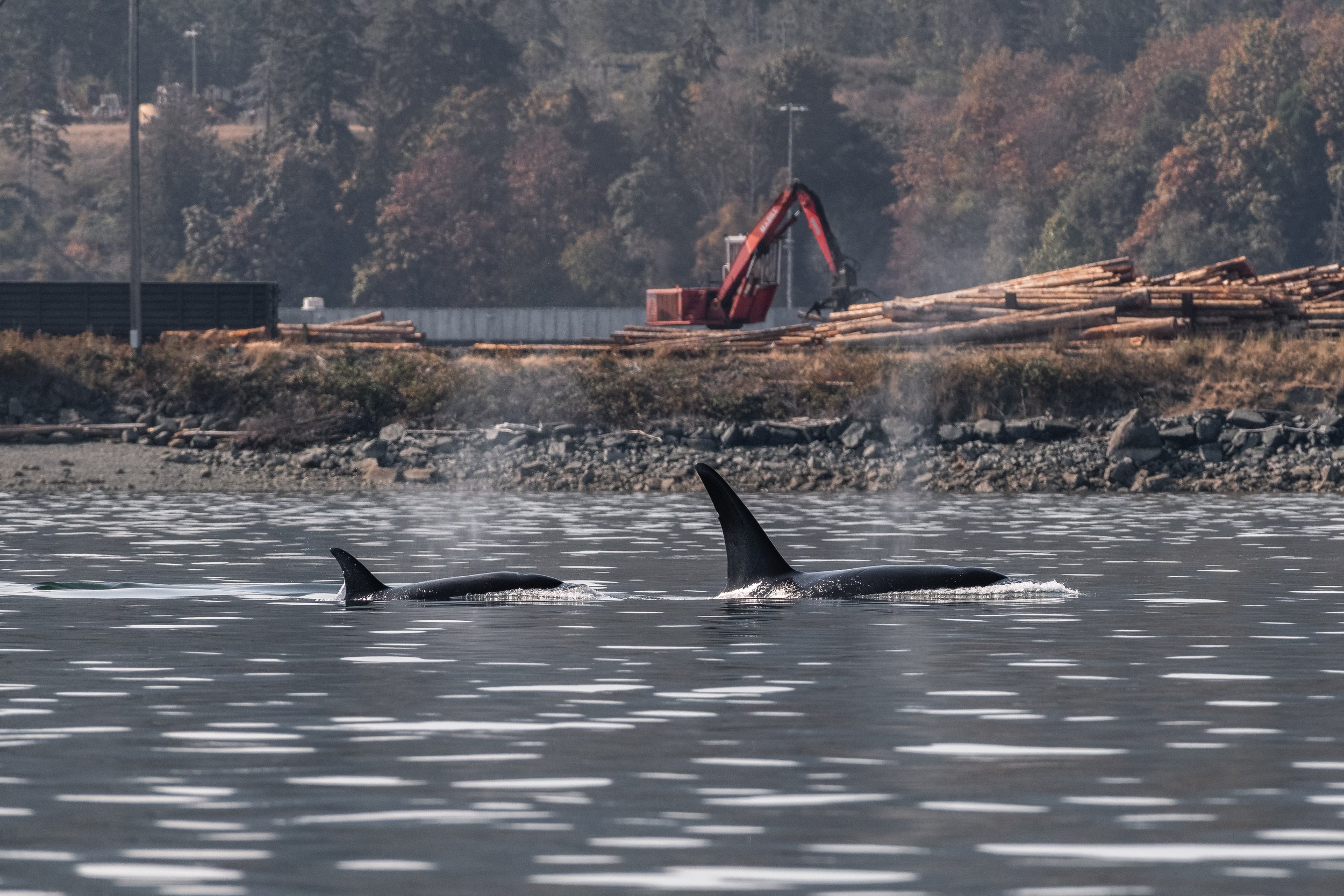
T109A6 Riley behind T109A4 Garrett. Photo by Hayleigh Hilbert.
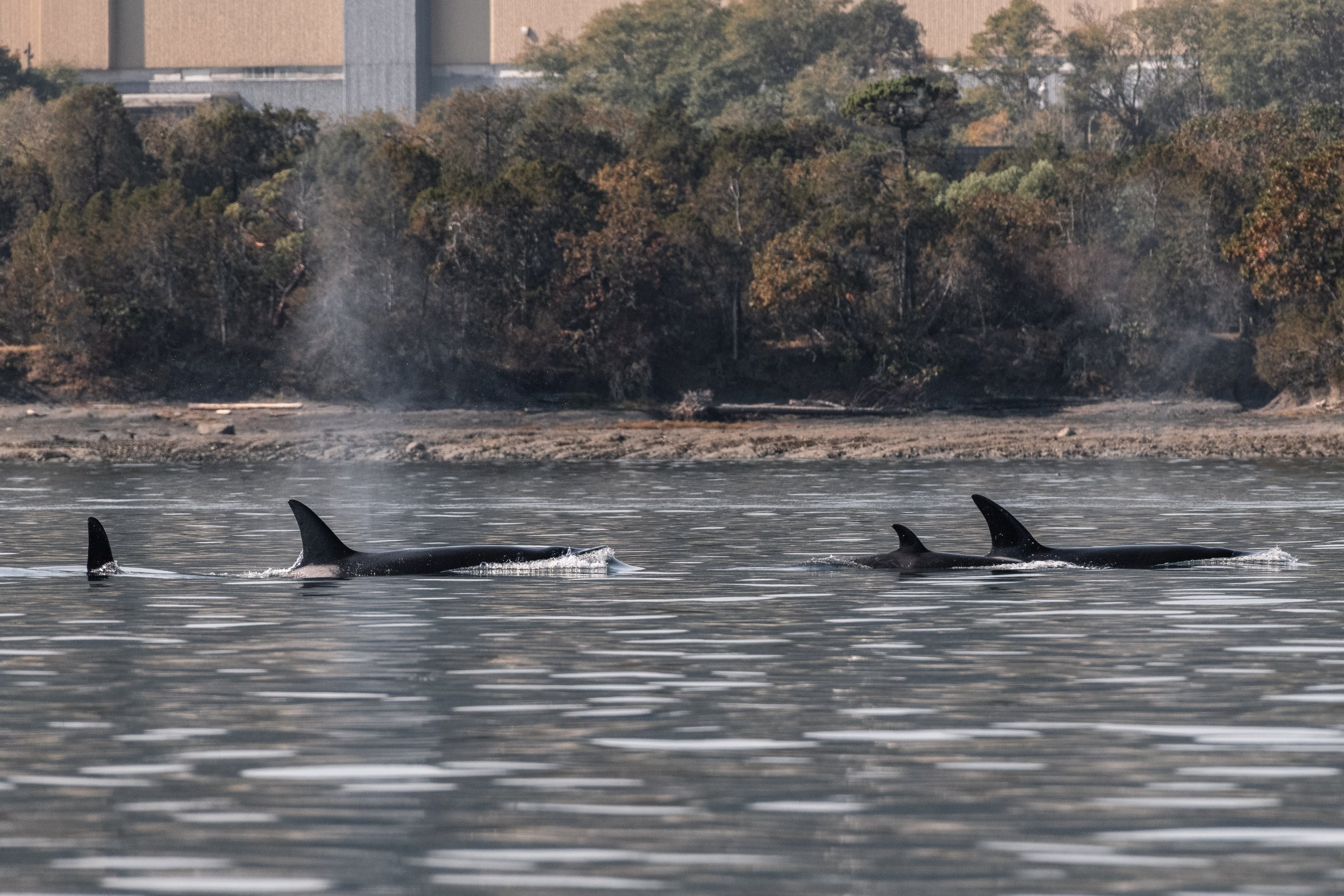
T109A4 Garrett, T109A Frio, T109A8 Weiss, and T109A5 Argyle. Photo by Hayleigh Hilbert.
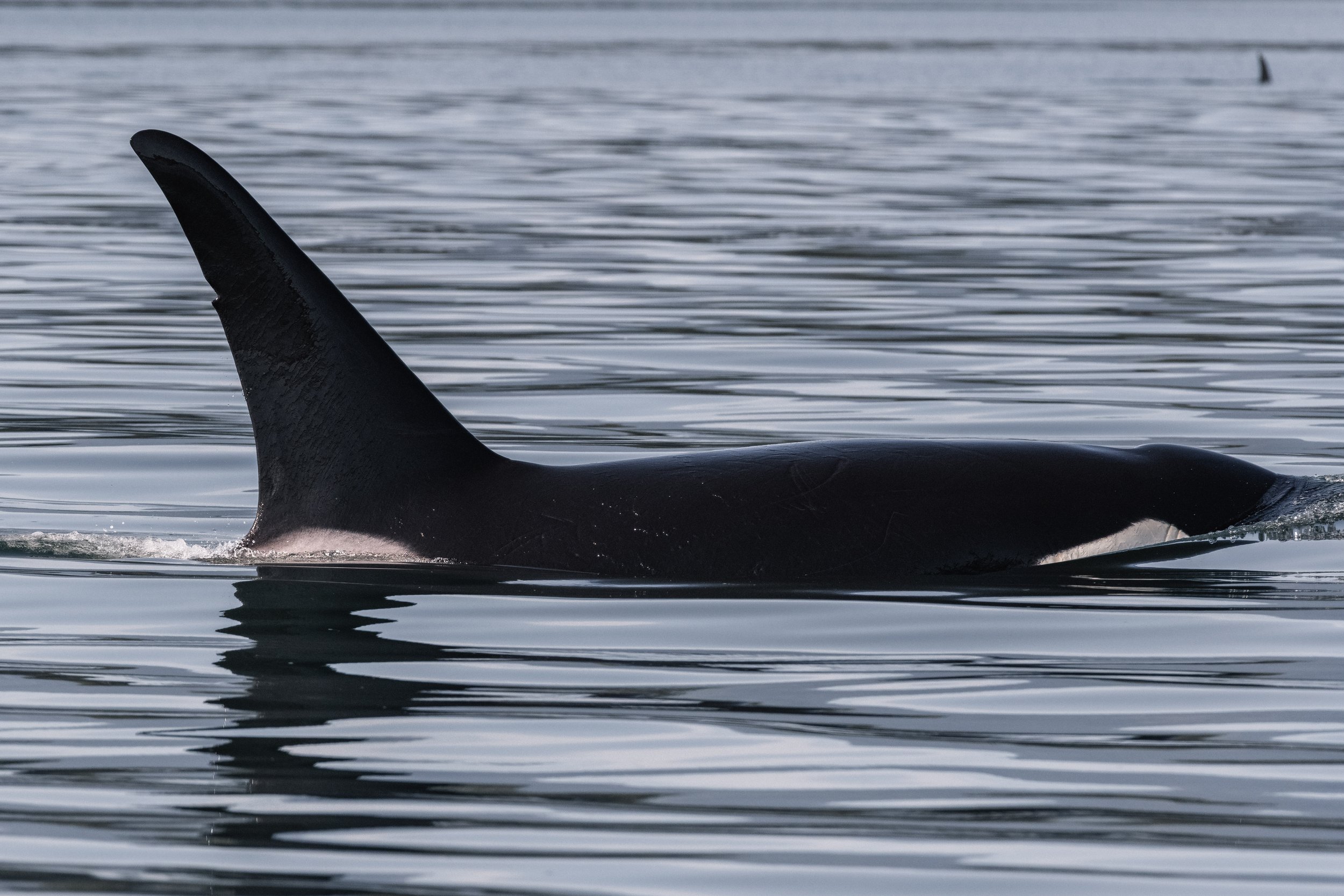
T109A4 Garrett, with a slight view of his now heavily scarred eyepatch. Photo by Hayleigh Hilbert.
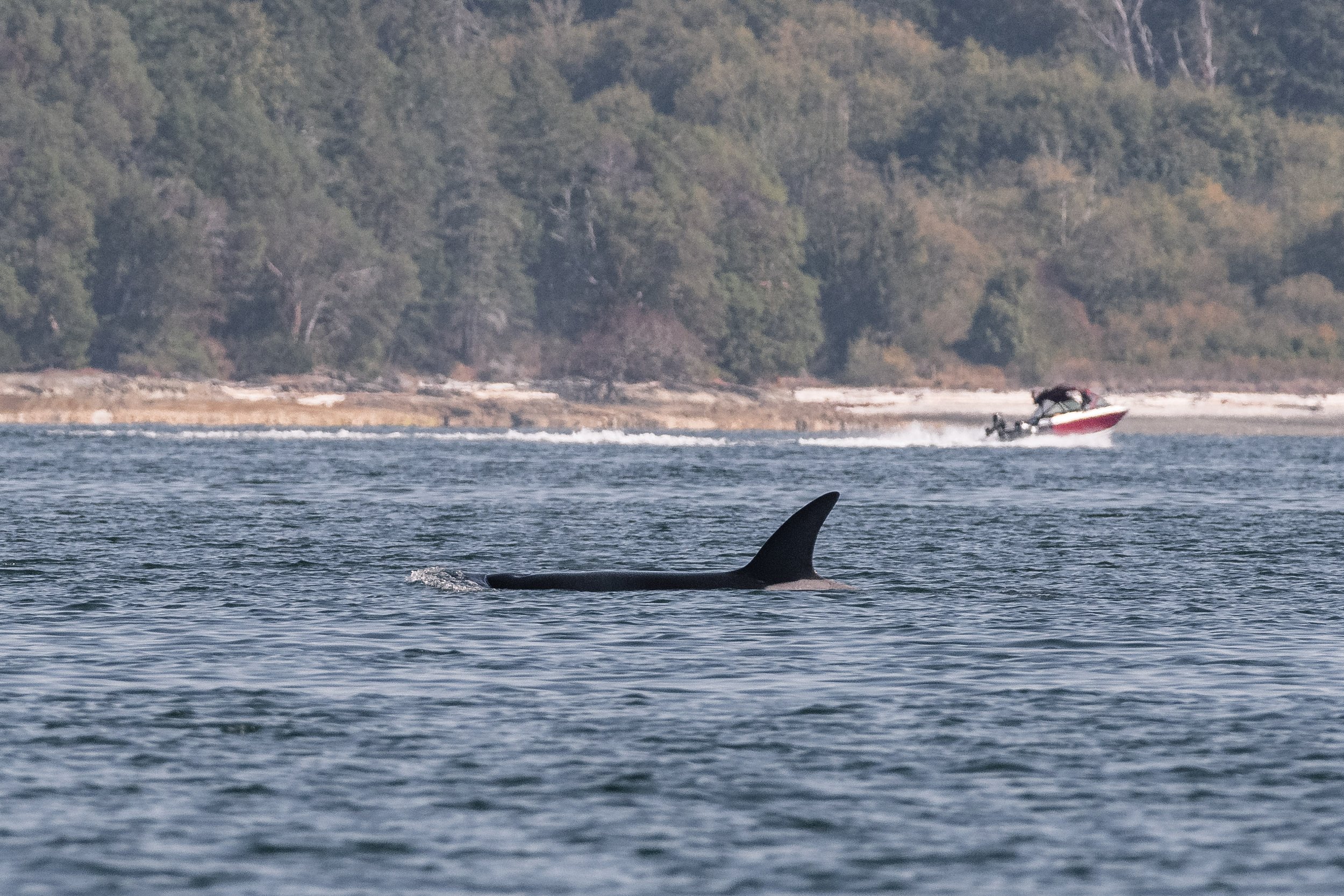
T109A5 Argyle travelling along. Photo by Hayleigh Hilbert.
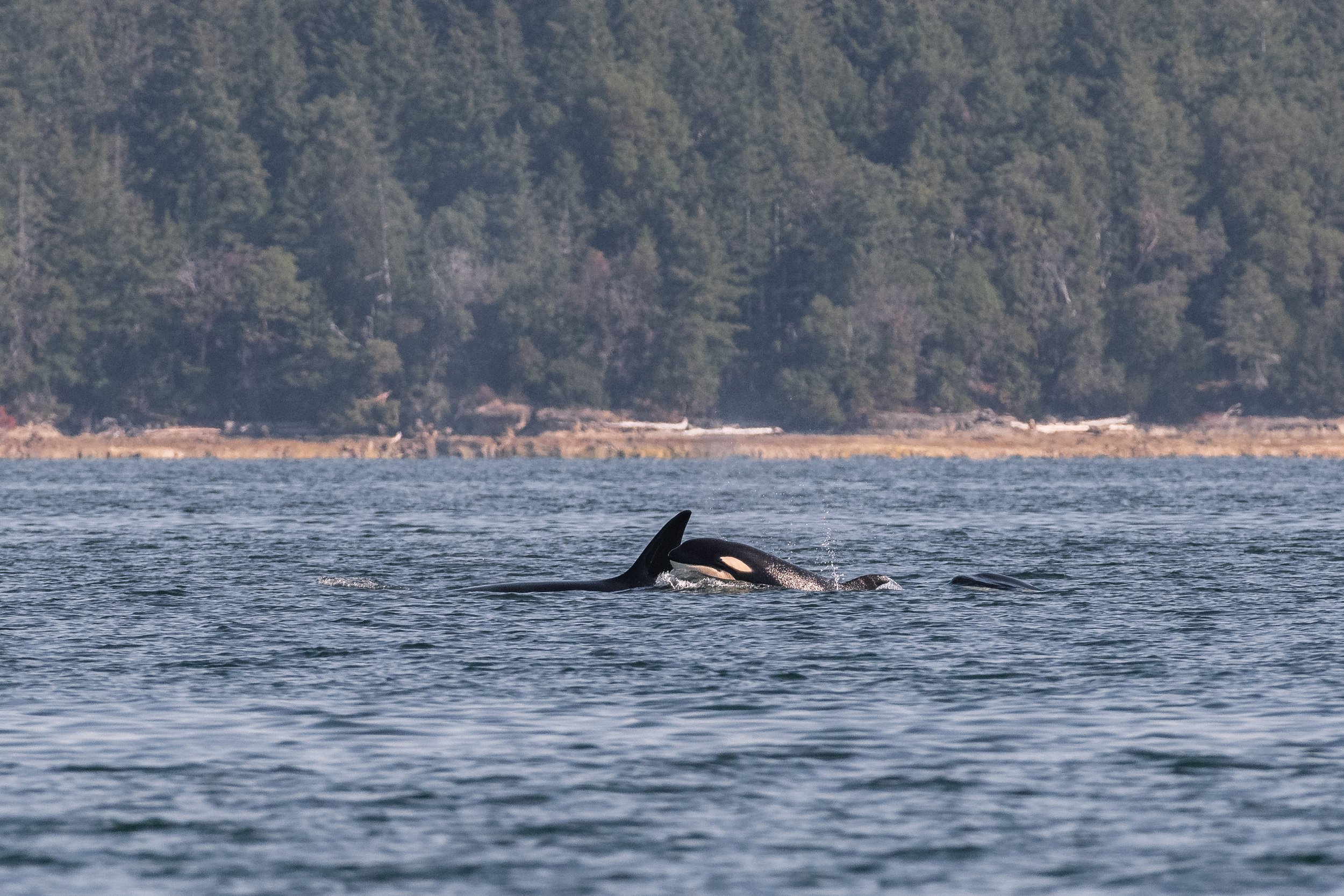
T109A Frio and T109A8 Weiss, her youngest calf. Photo by Hayleigh Hilbert.
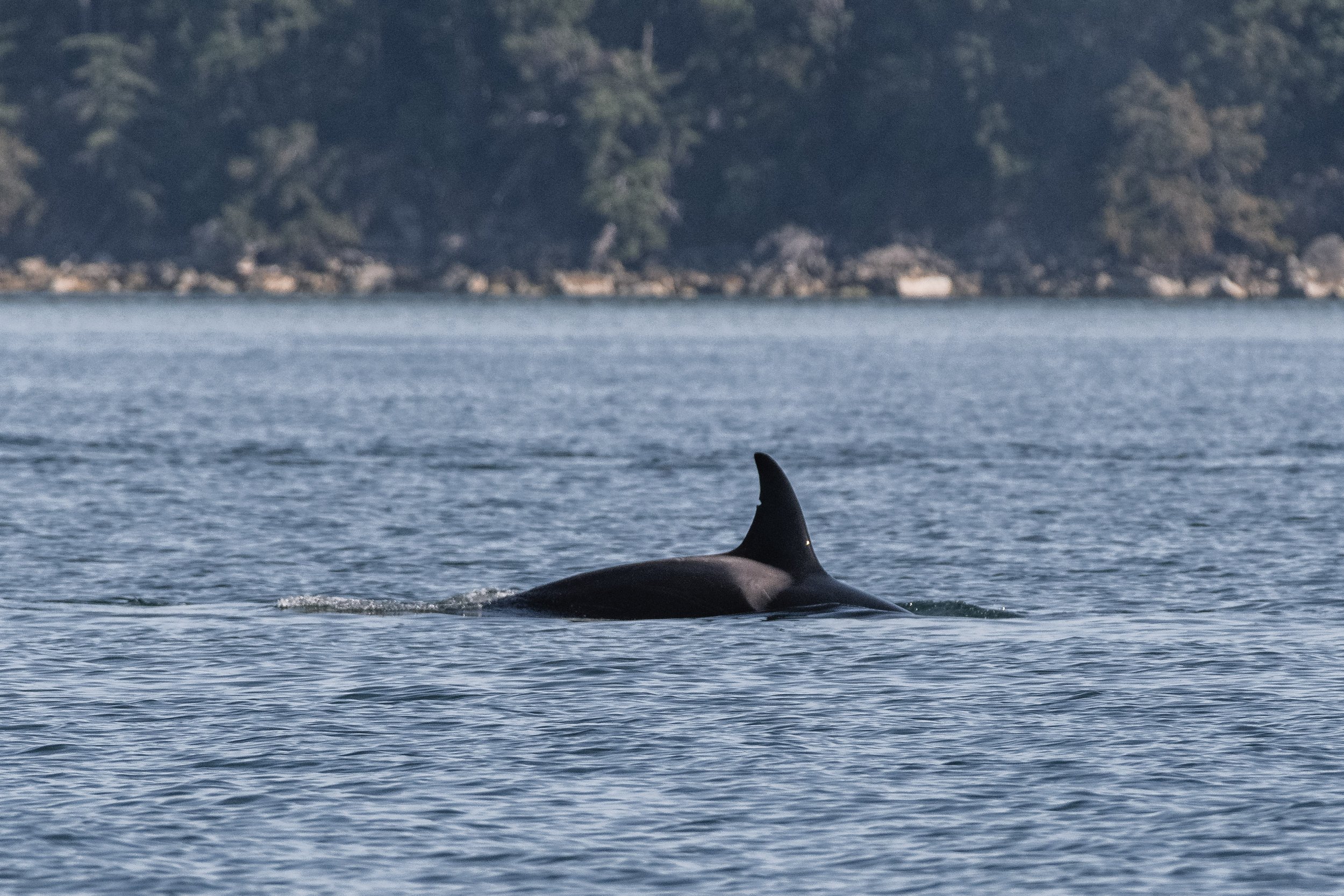
T109A6 Riley, the other distinct dorsal fin in the pod. Photo by Hayleigh Hilbert.
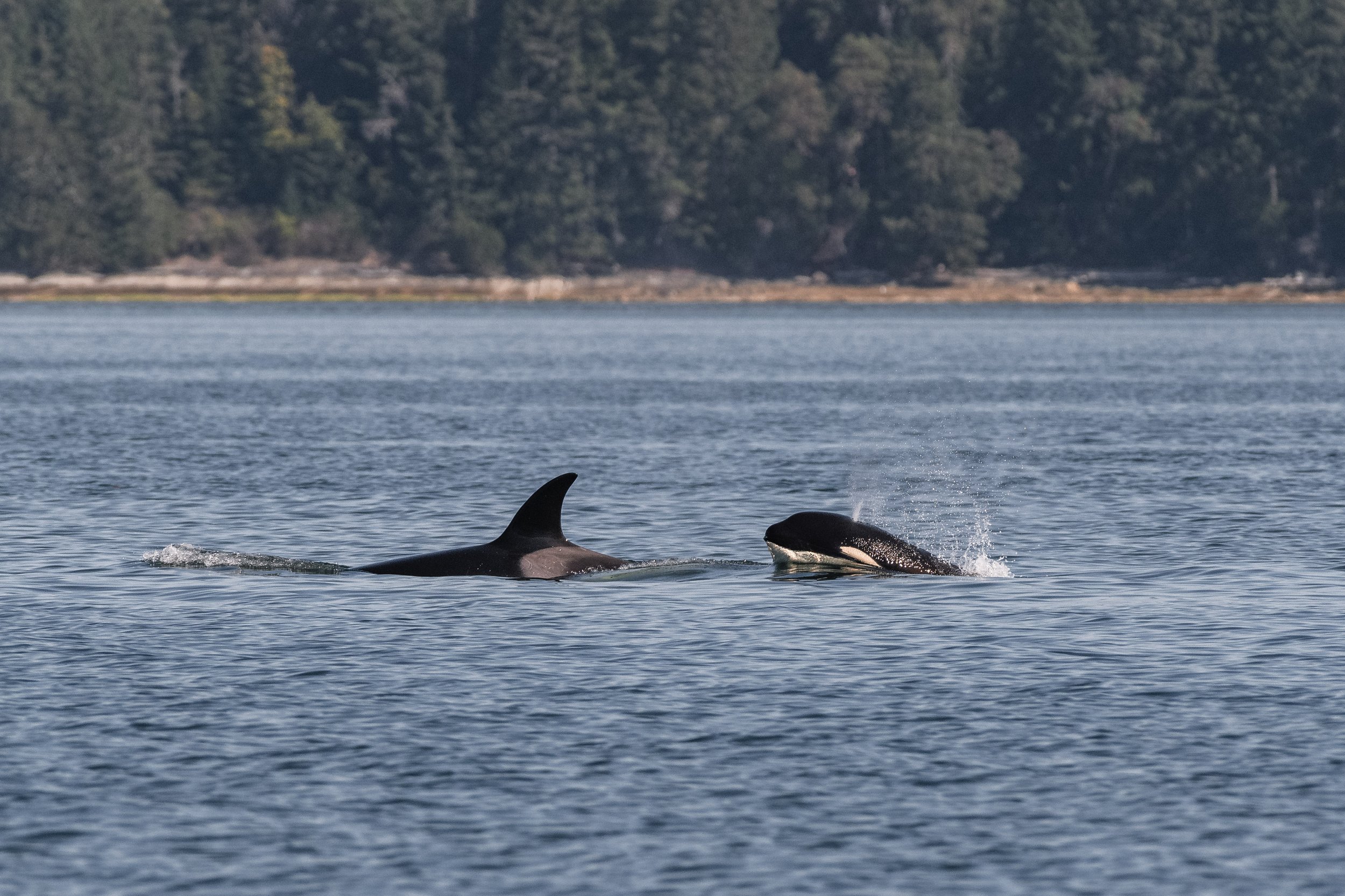
T109A7 Wieland with T109A8 Weiss blowing behind her. Photo by Hayleigh Hilbert.
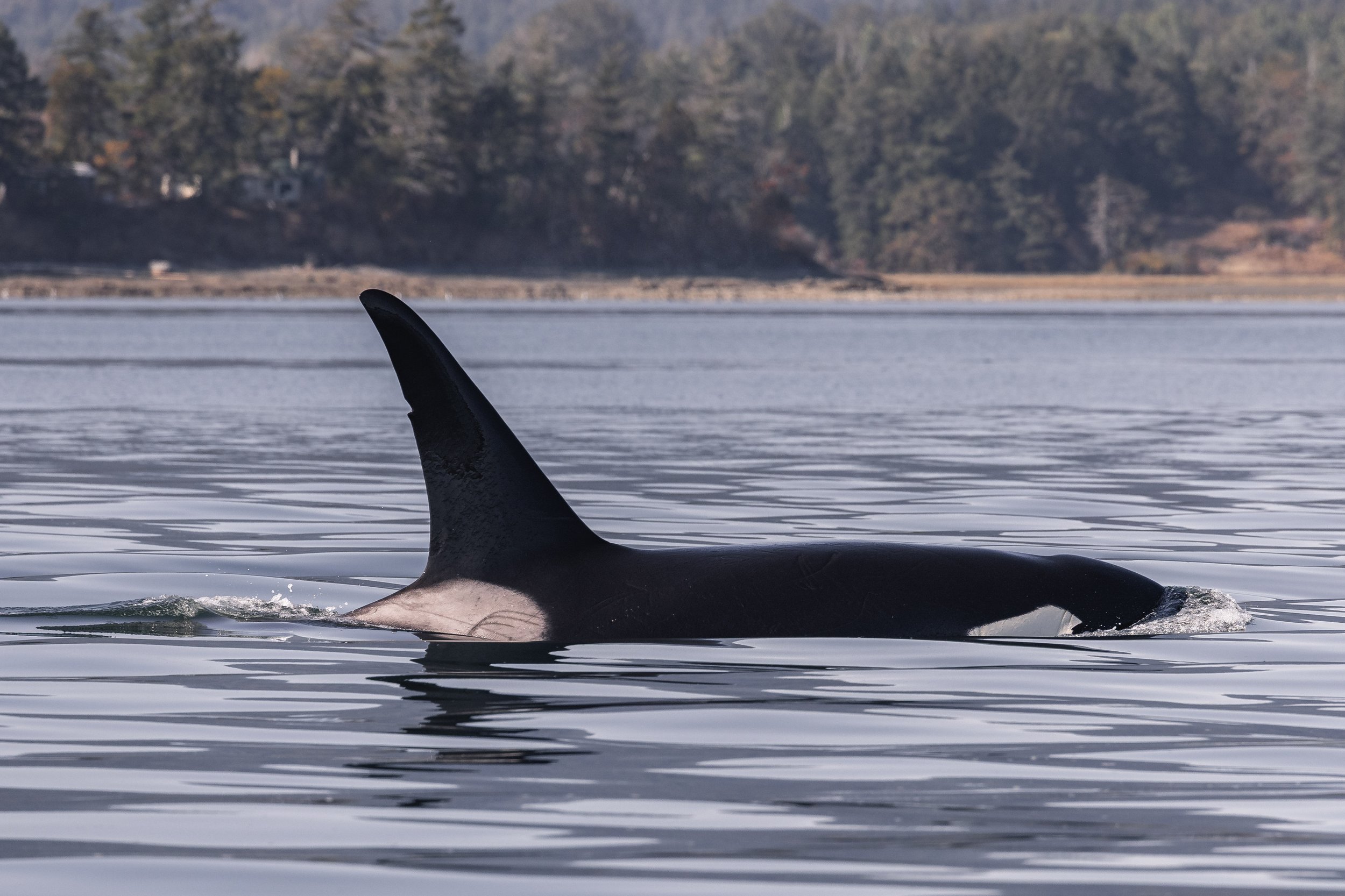
T109A4 Garrett, who has many scars through his saddlepatch. Photo by Des Poier.
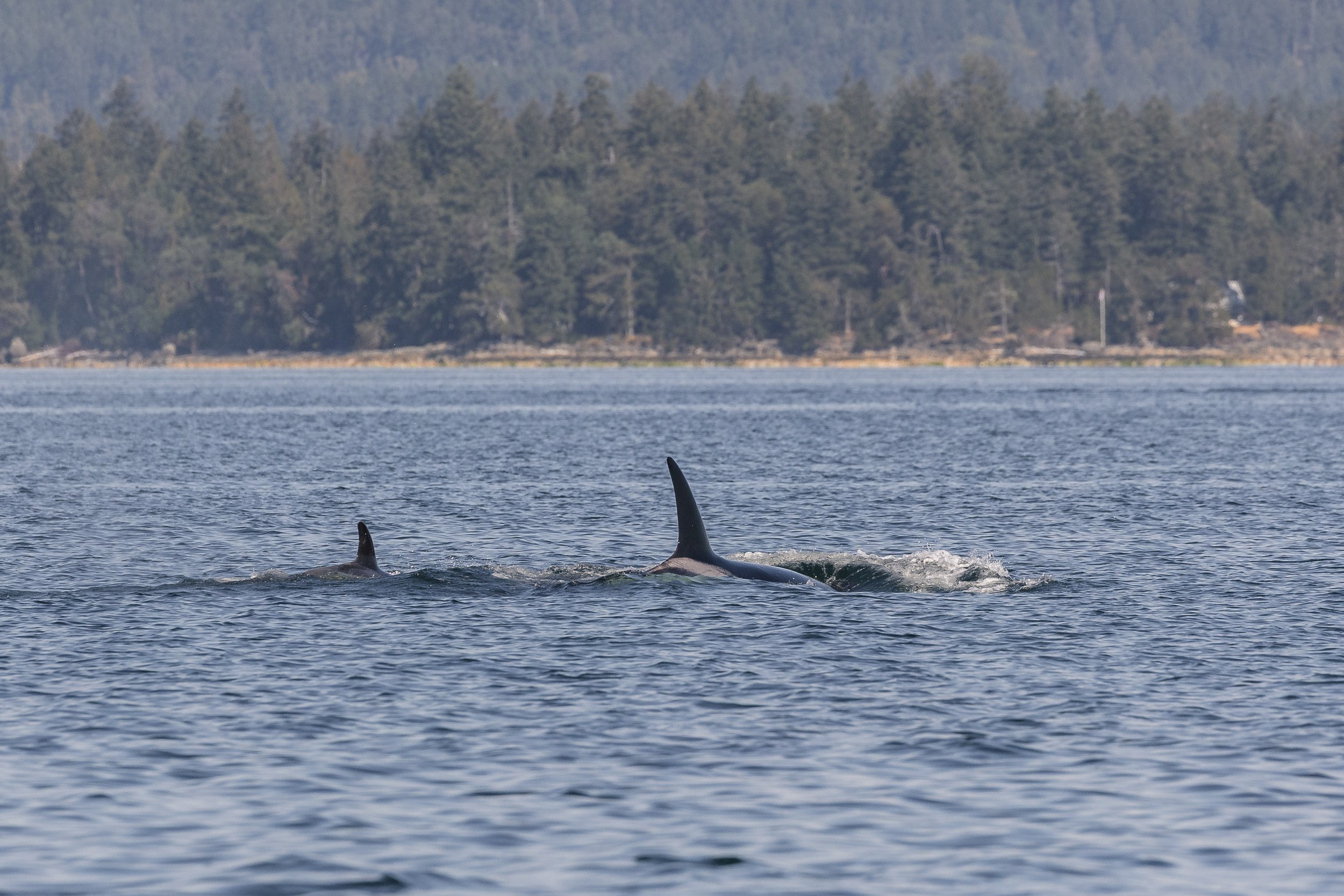
T109A8 Weiss and T109A Frio side by side. Photo by Des Poier.
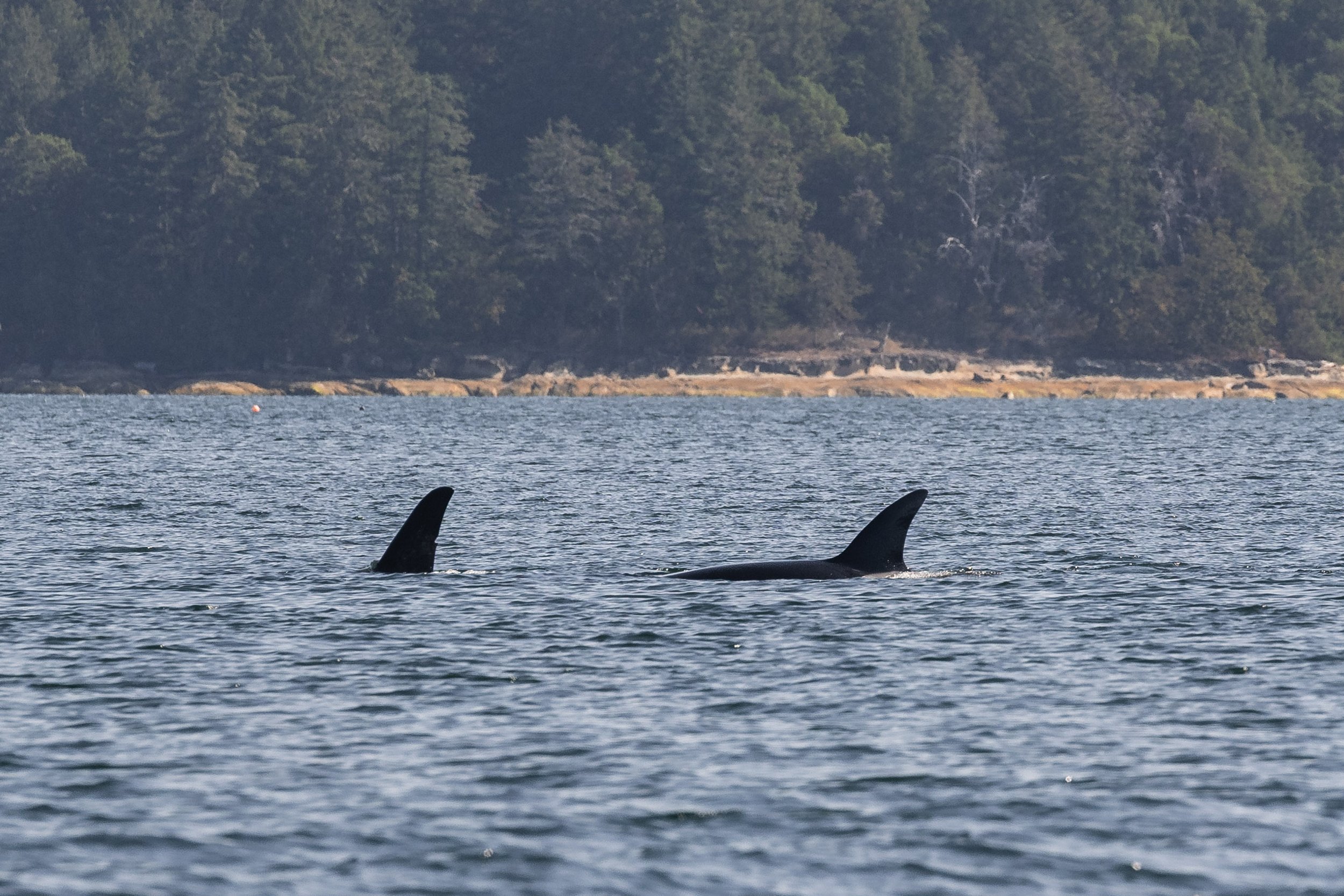
T109A4 Garrett with just part of his dorsal fin visible, with T109A5 Argyle. Photo by Des Poier.
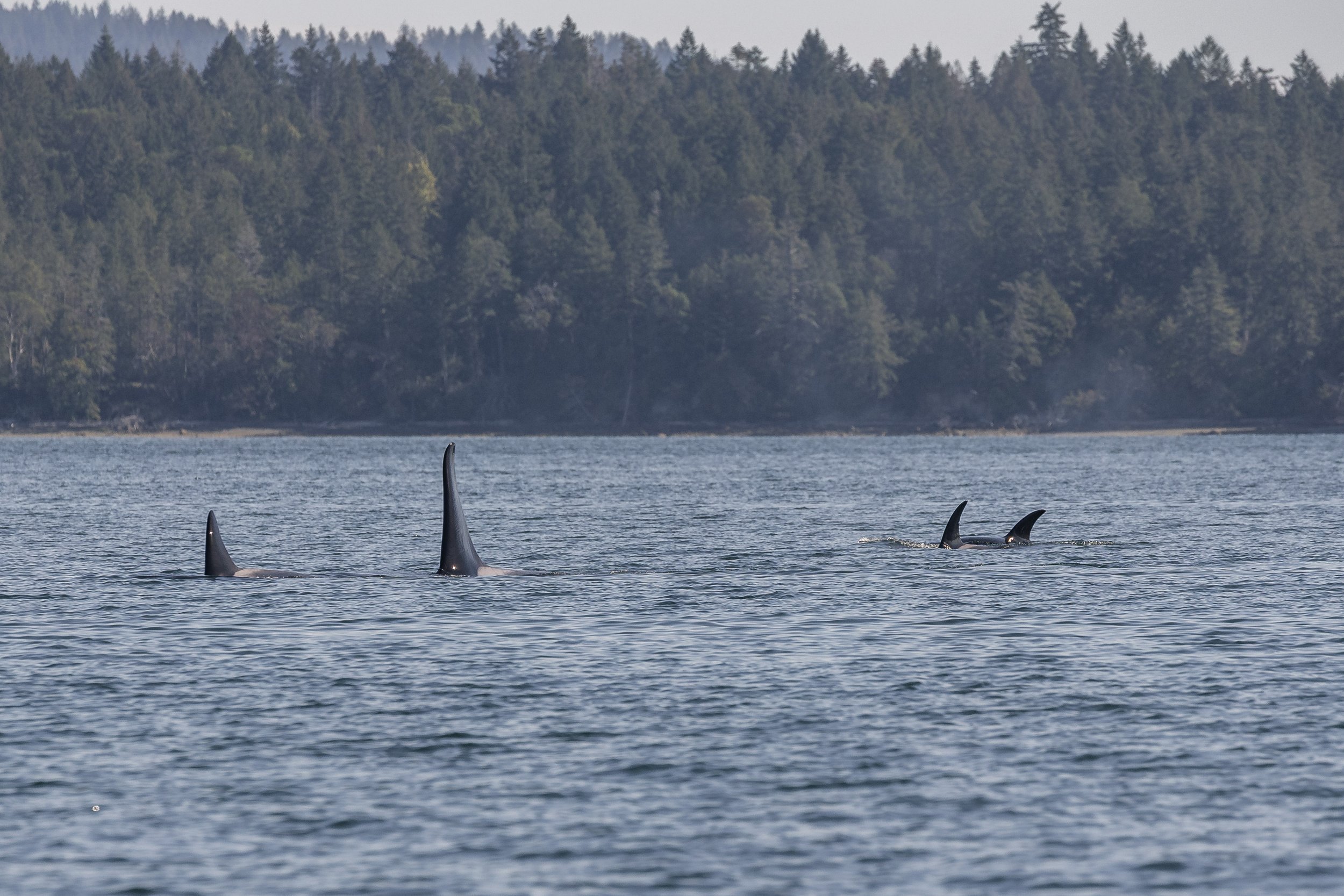
A different angle of the T109As meandering along. Photo by Des Poier.
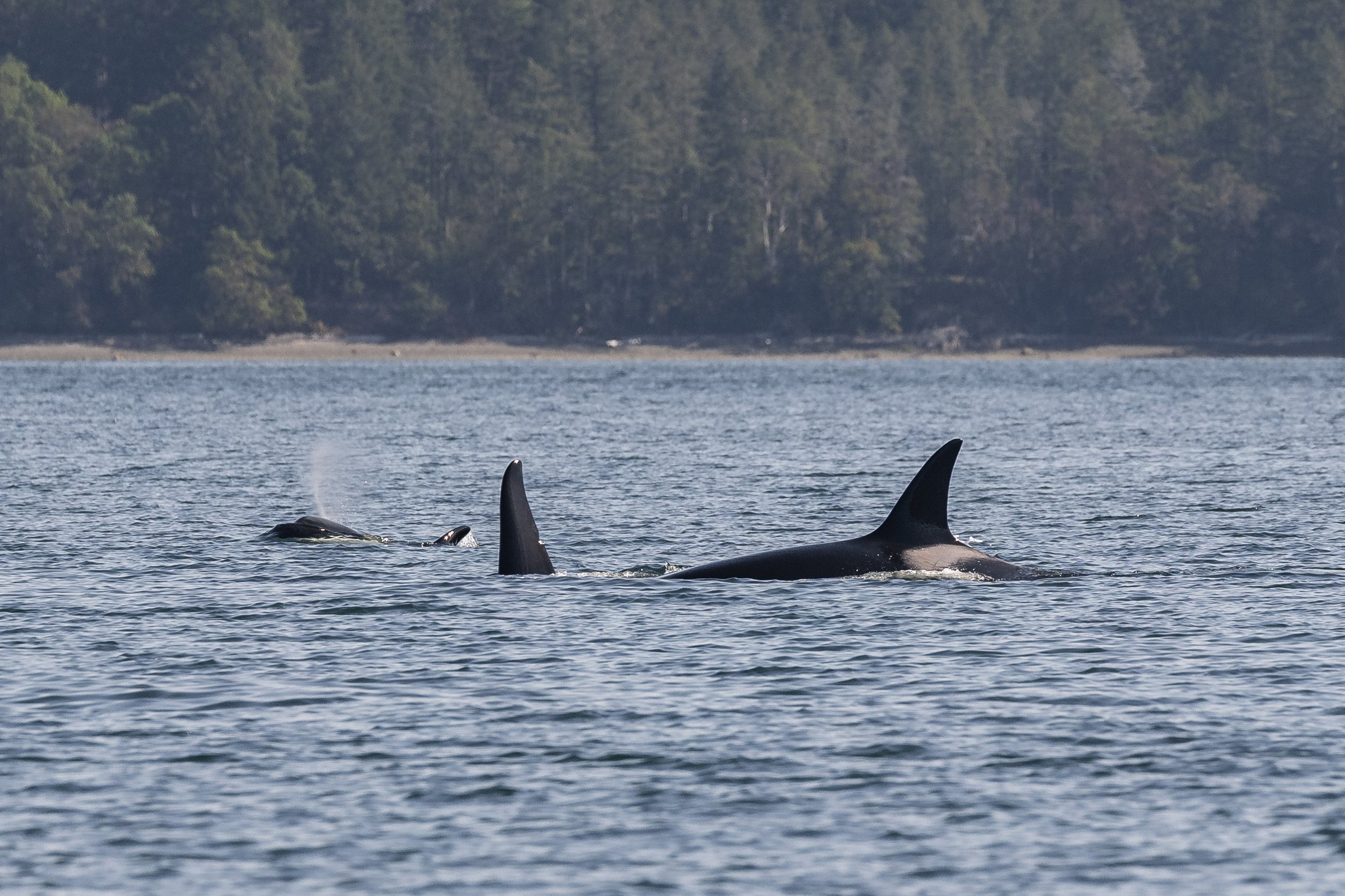
T109A Frio with T109A4 Garrett andT109A8 Weiss beside her. Photo by Des Poier.
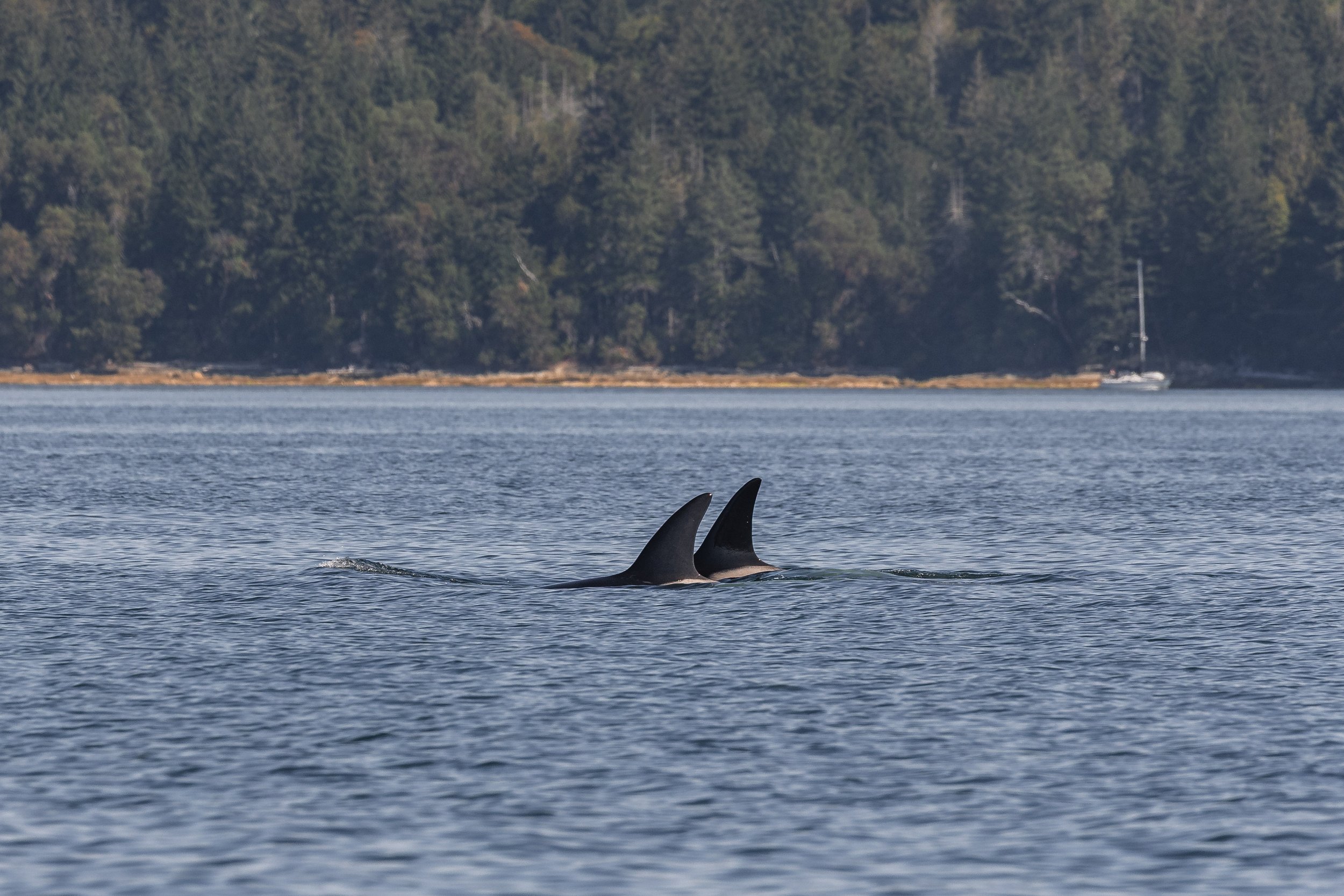
T109A5 Argyle with their mother T109A Frio. Photo by Des Poier.
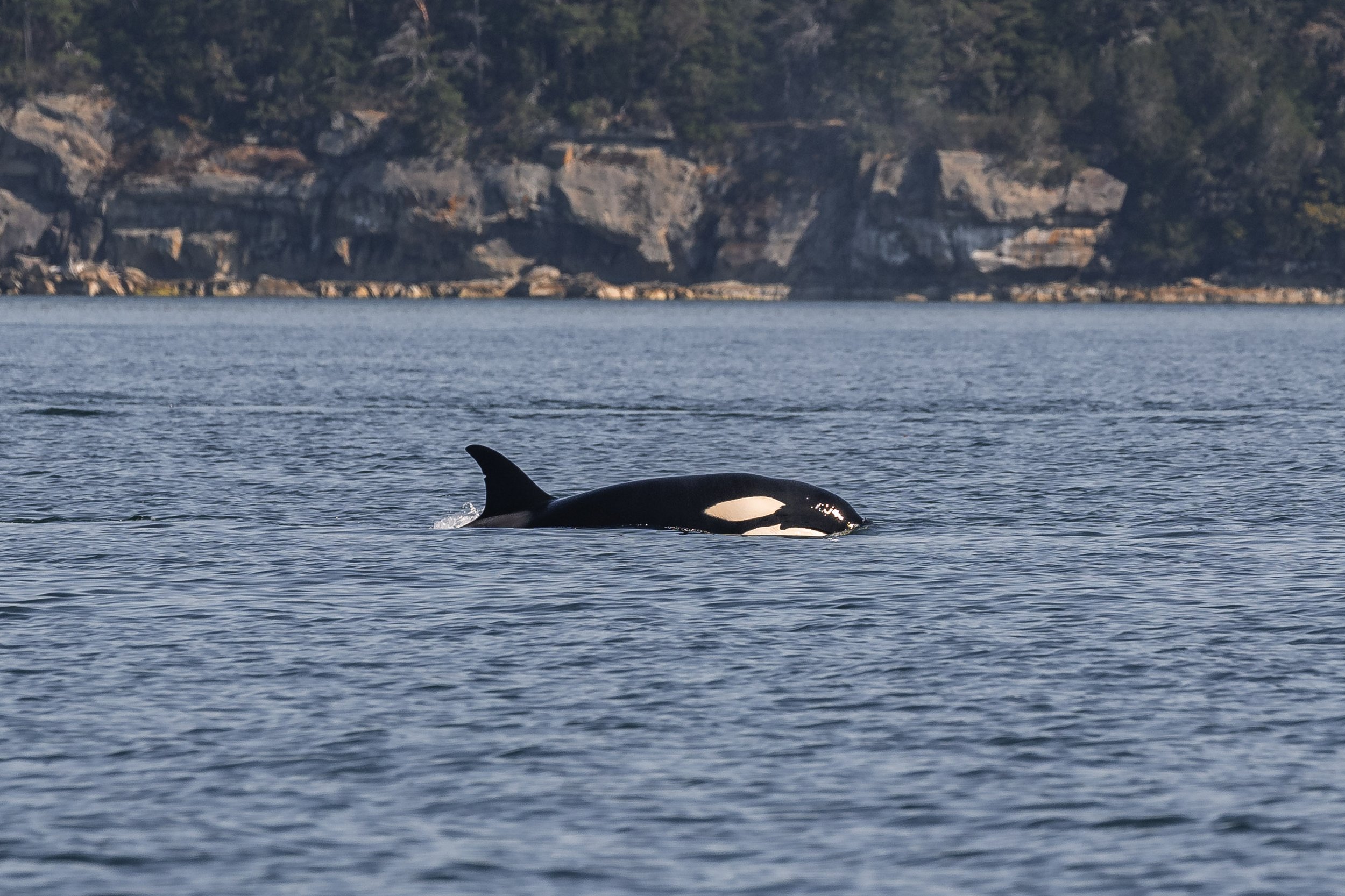
T109A6 Riley with her eyepatch above the surface. Photo by Des Poier.
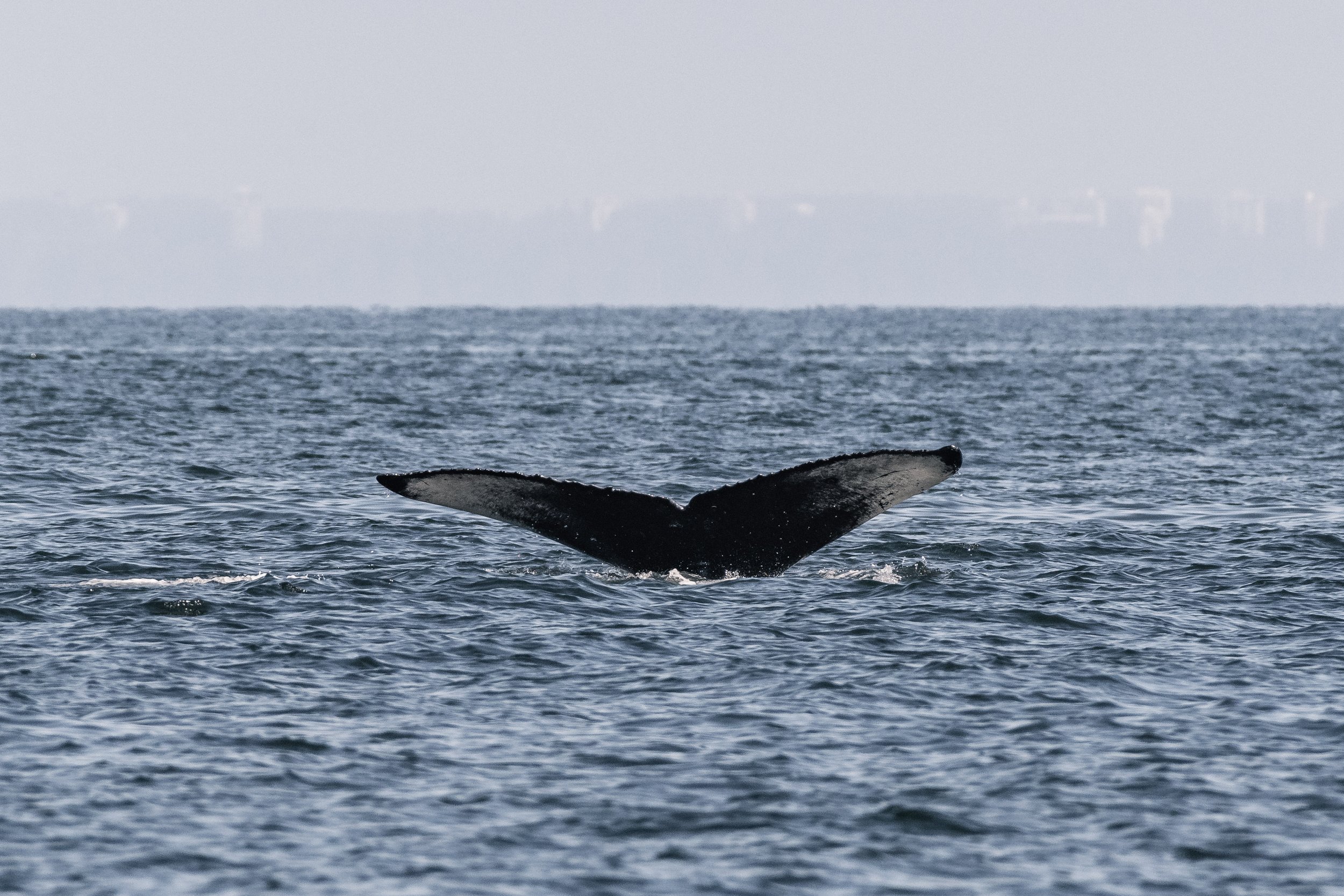
Vivaldi’s 2025 calf diving. Photo by Hayleigh Hilbert.
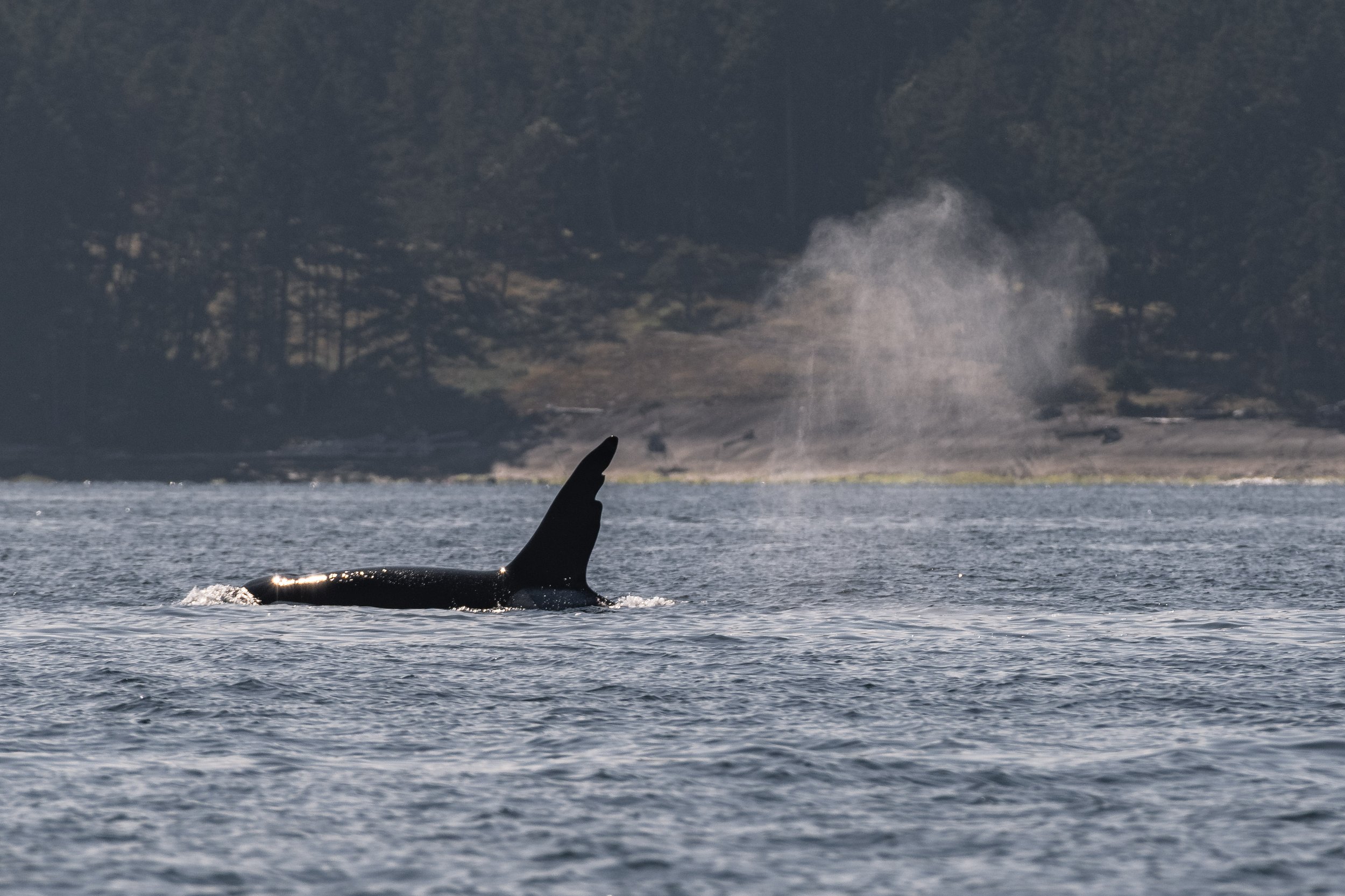
T063 Chainsaw with a backlit blow. Photo by Hayleigh Hilbert.
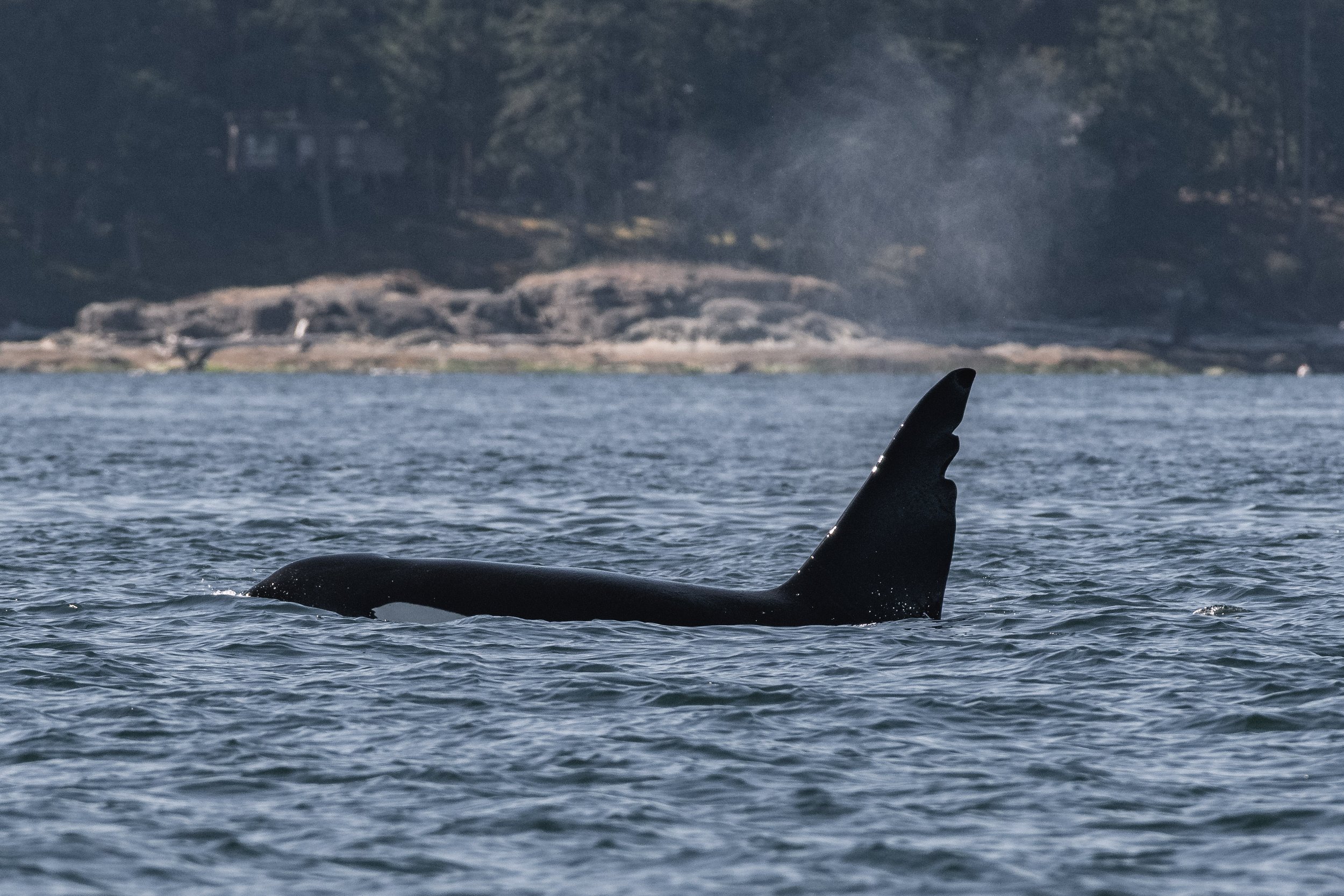
Can you see how T063 Chainsaw got his name? Photo by Hayleigh Hilbert.
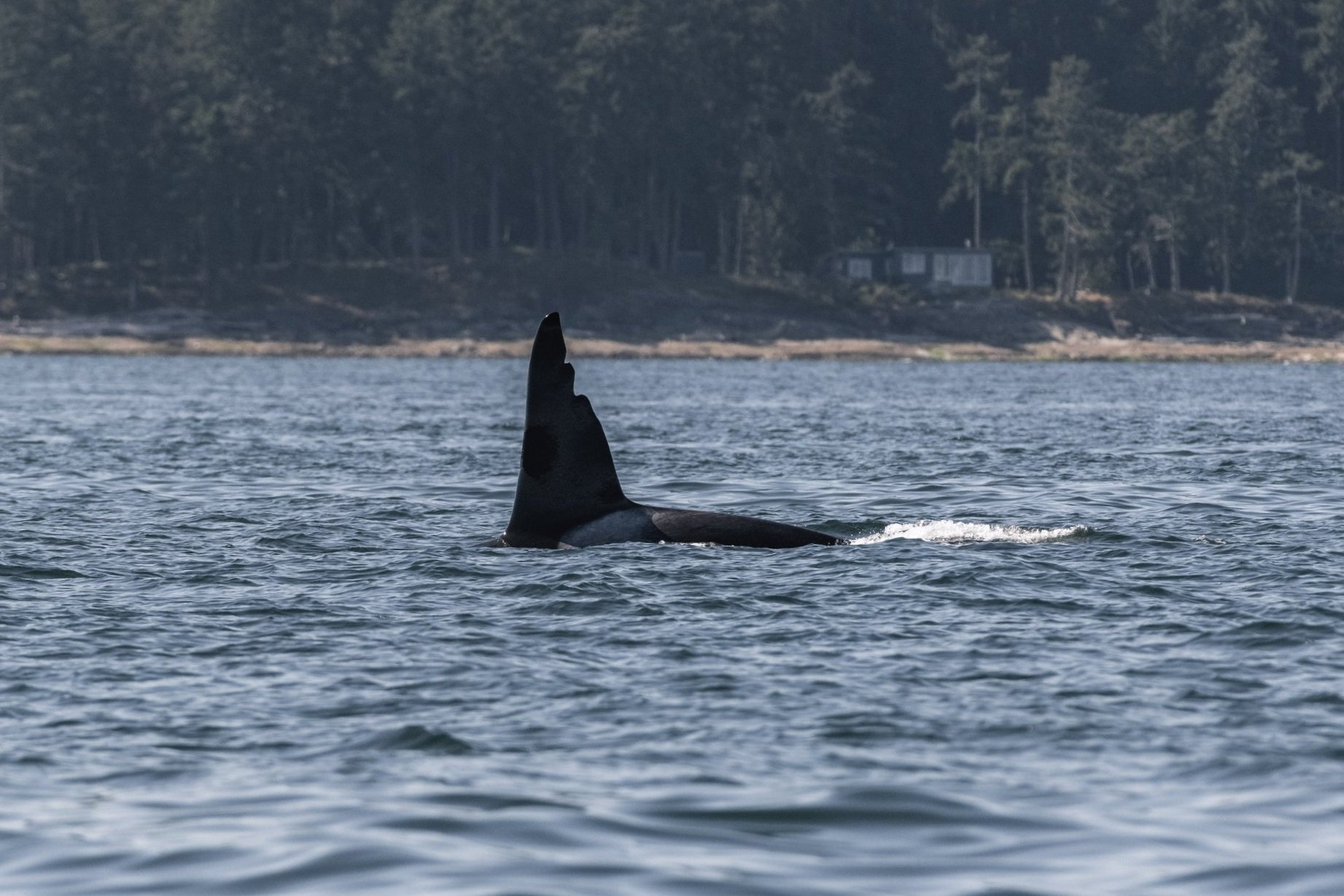
T063 Chainsaw diving. Photo by Hayleigh Hilbert.
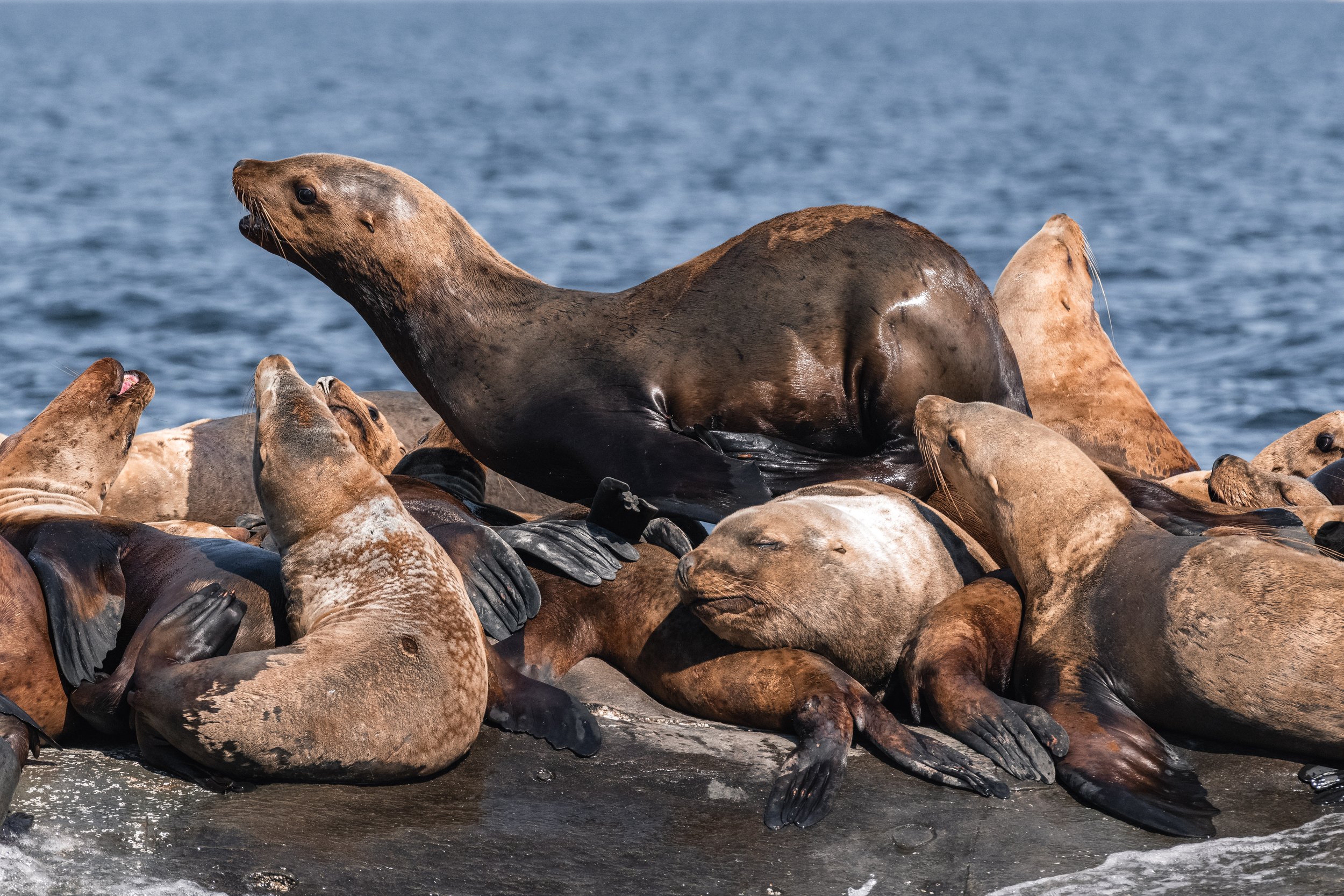
Crowdsurfing amongst the Steller Sea Lions. Photo by Hayleigh Hilbert.
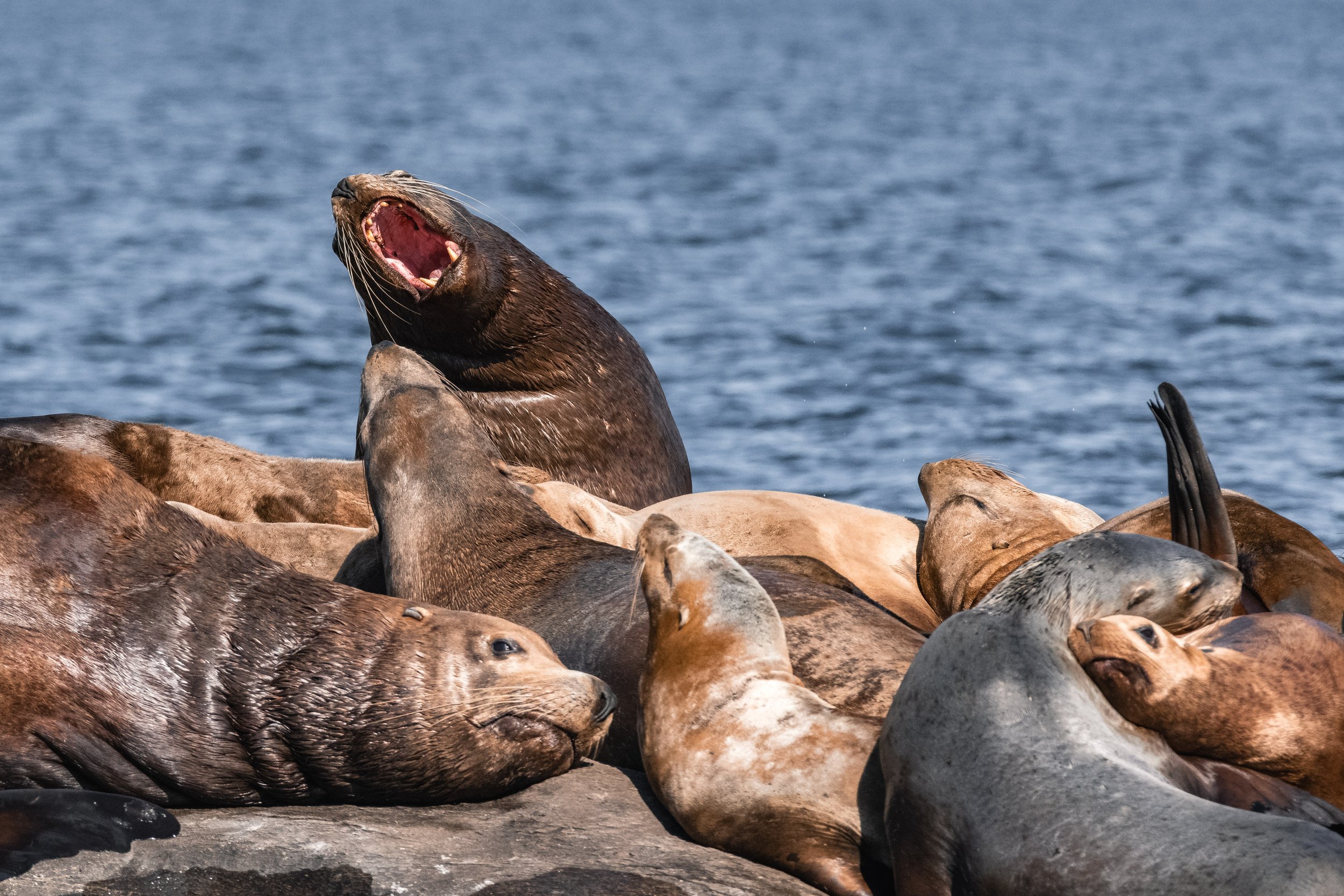
Complaining about one of the others moving in the cuddle puddle. Photo by Hayleigh Hilbert.
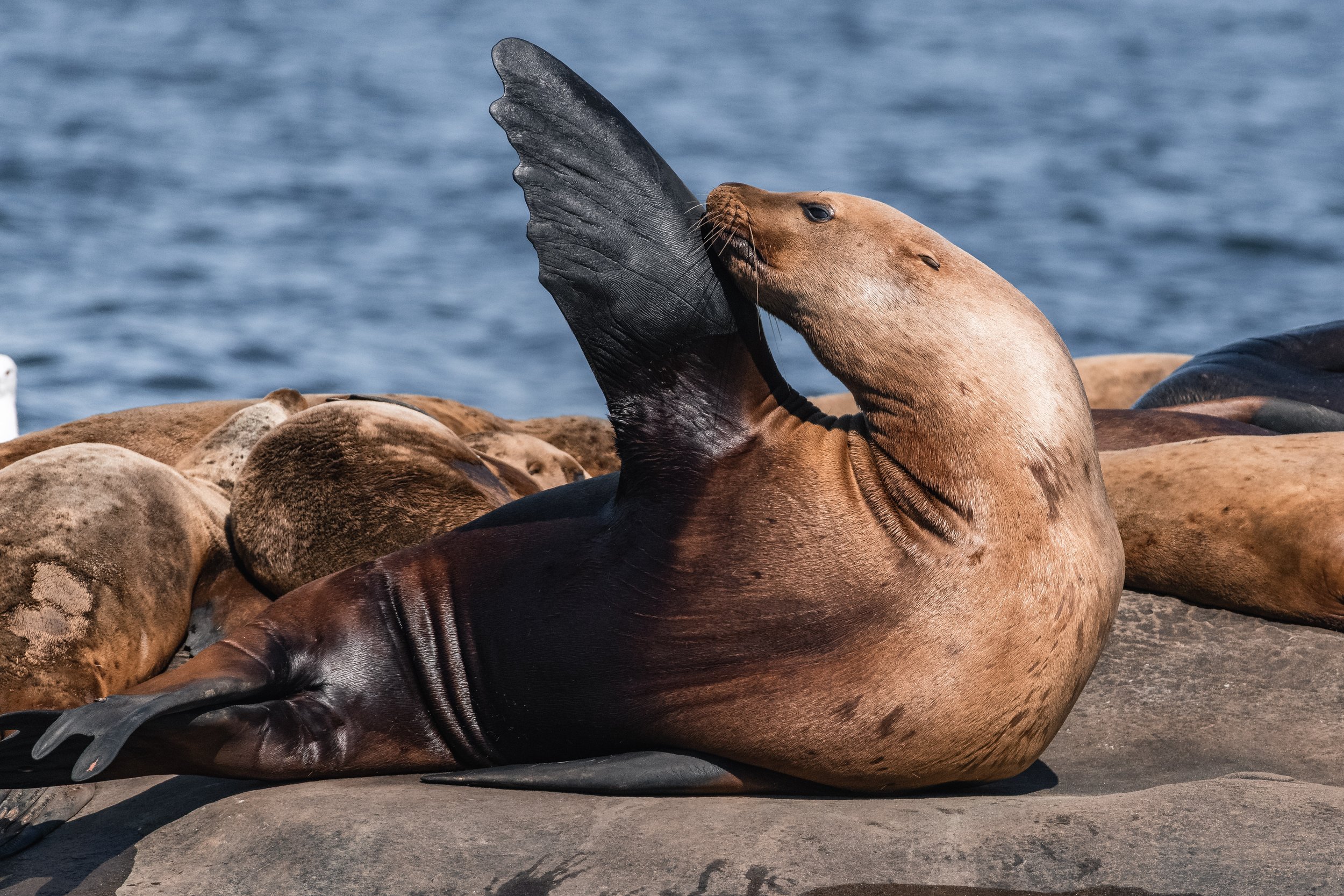
Cleaning away. Photo by Hayleigh Hilbert.
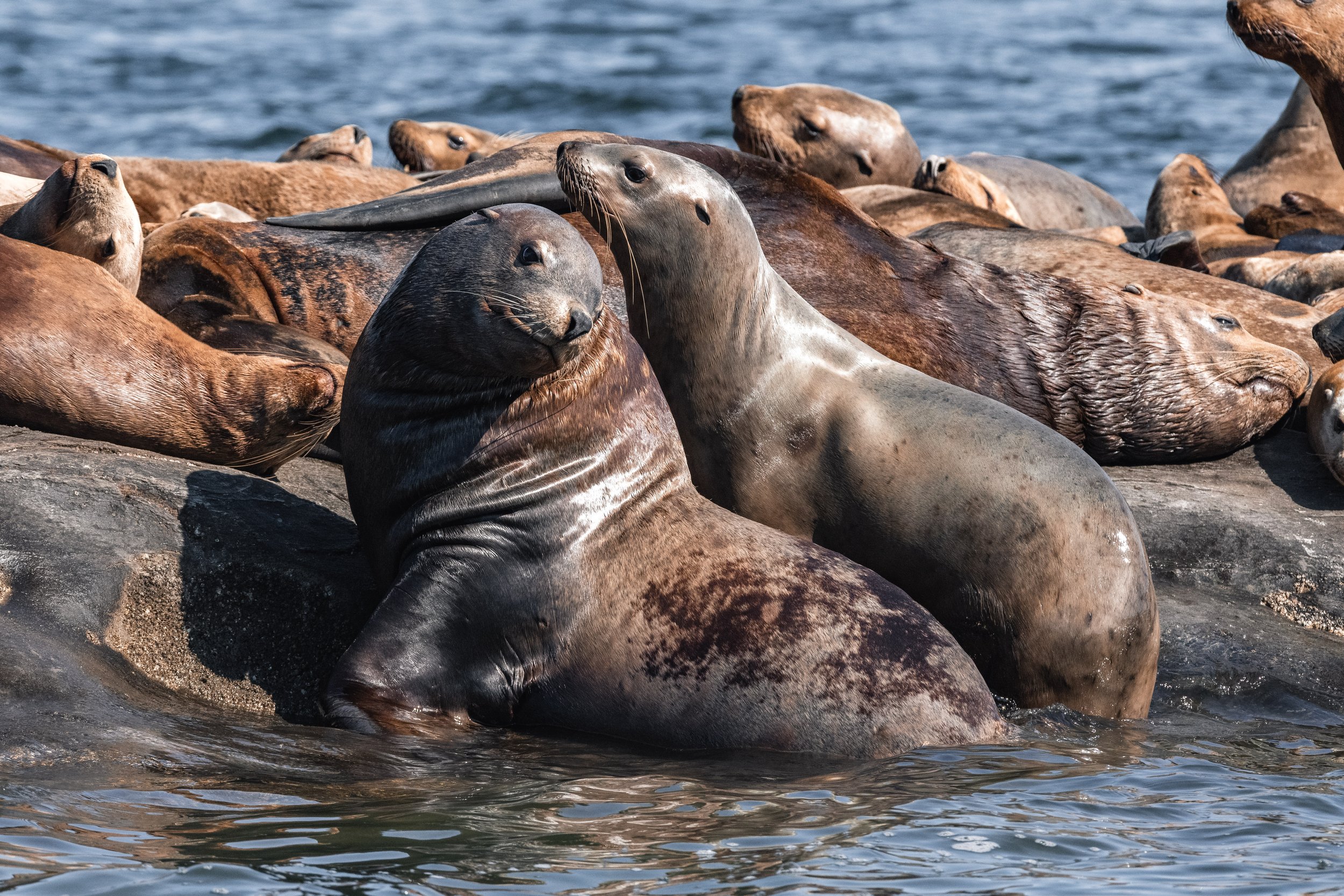
Enjoying the sunshine. Photo by Hayleigh Hilbert.
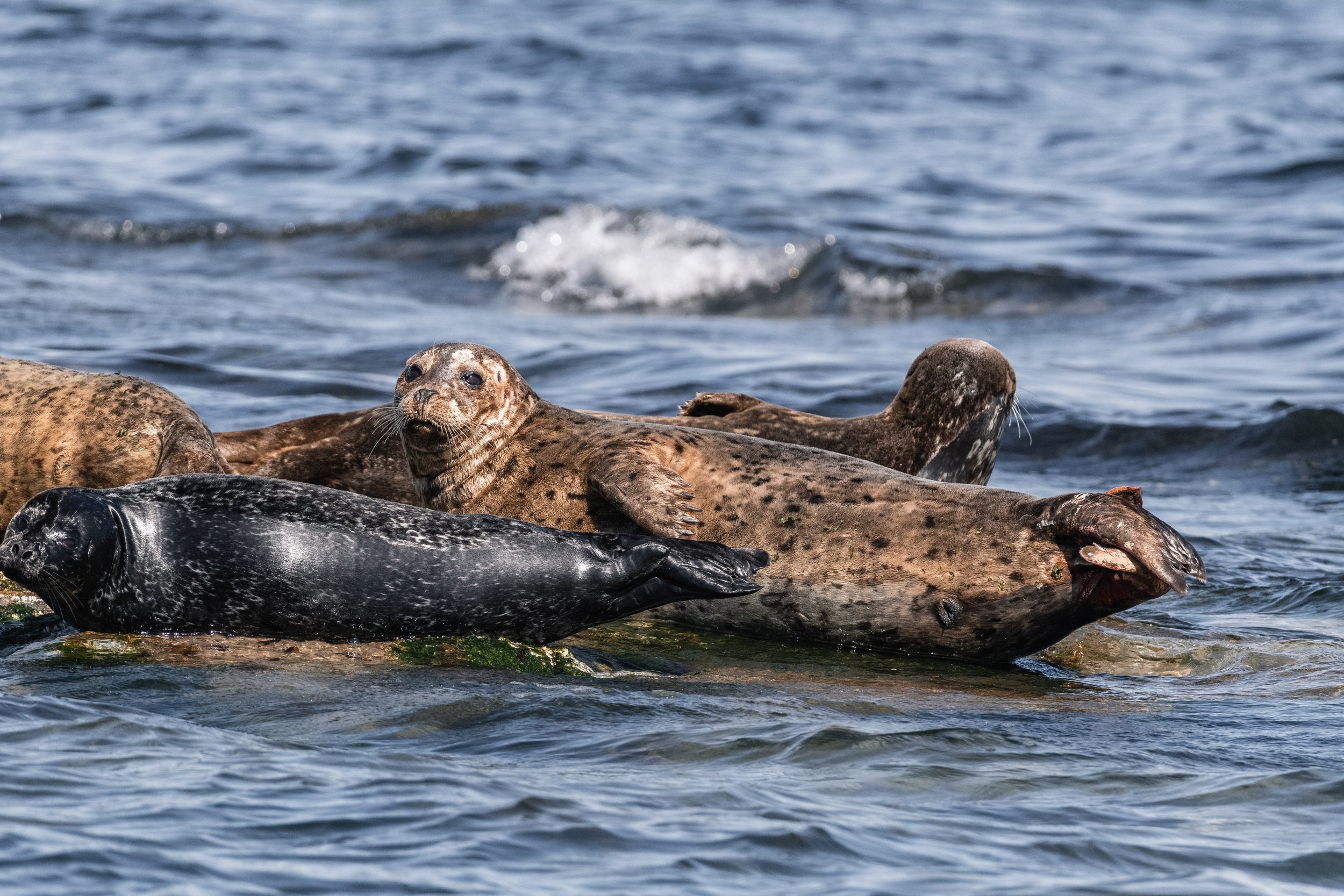
The Harbour Seals eyeing us up. Photo by Hayleigh Hilbert.
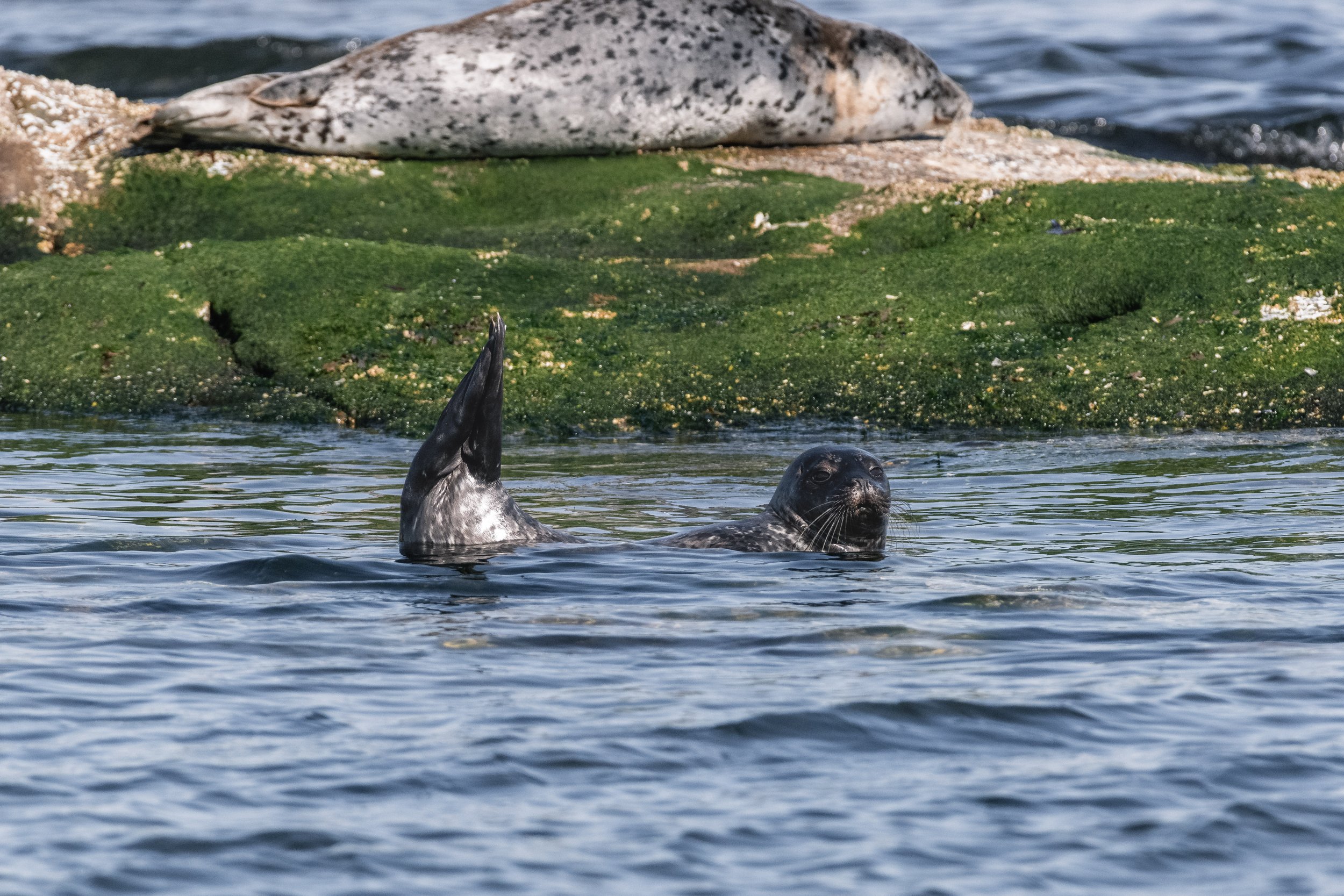
Banana posing in the shallows. Photo by Hayleigh Hilbert.
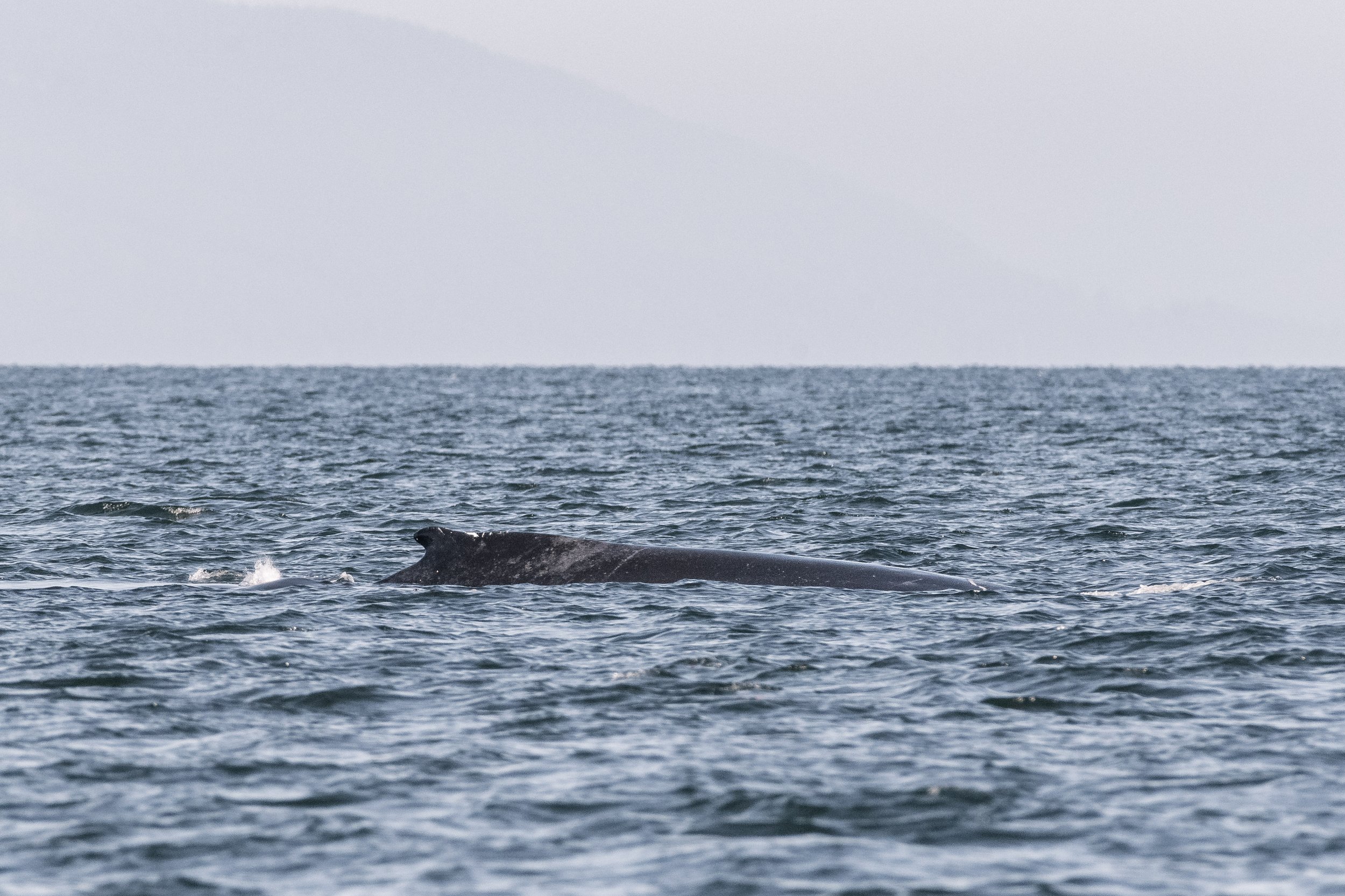
Iota with just the top of their back popping out of the water. Photo by Hayleigh Hilbert.
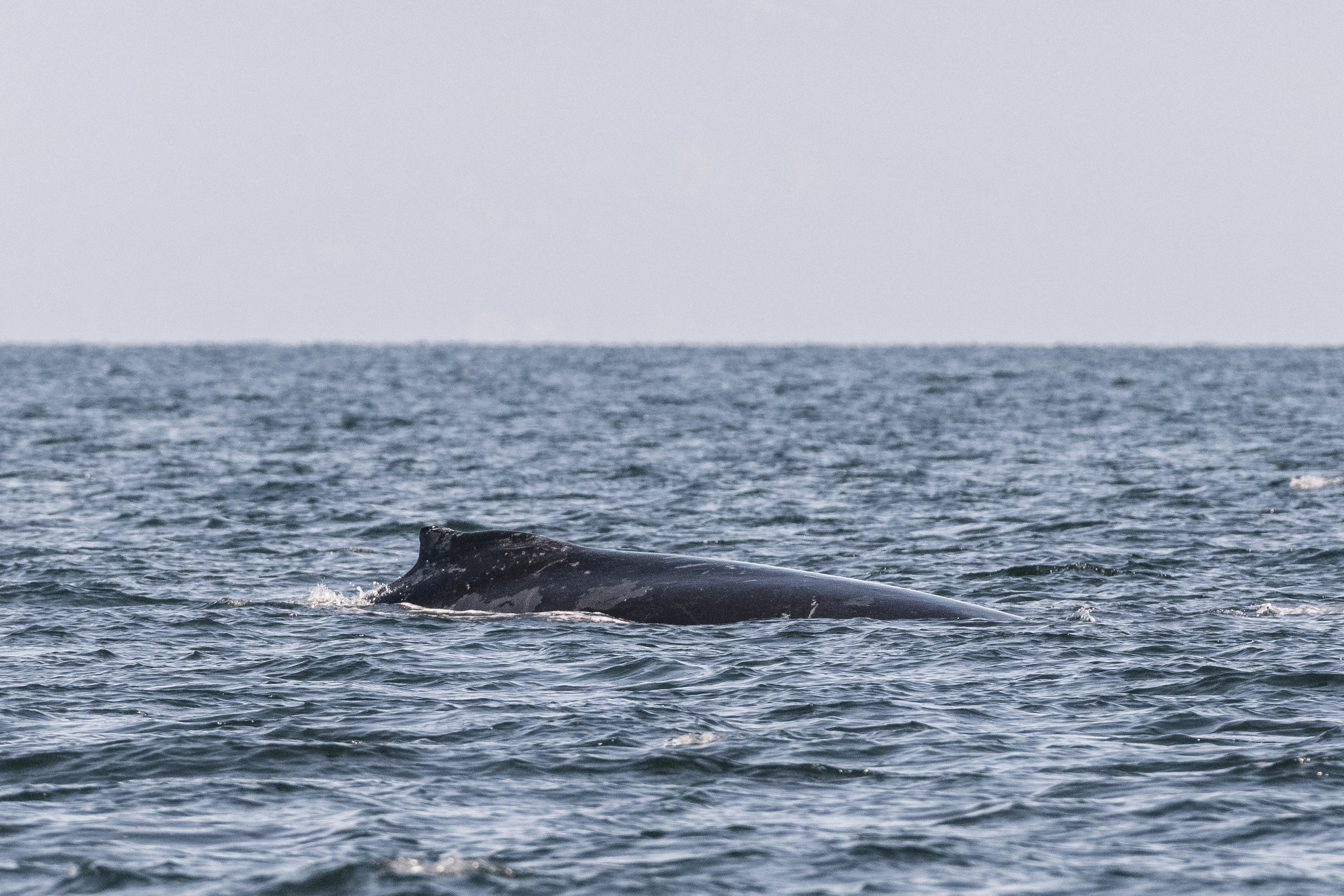
Heron travelling along. Photo by Hayleigh Hilbert.
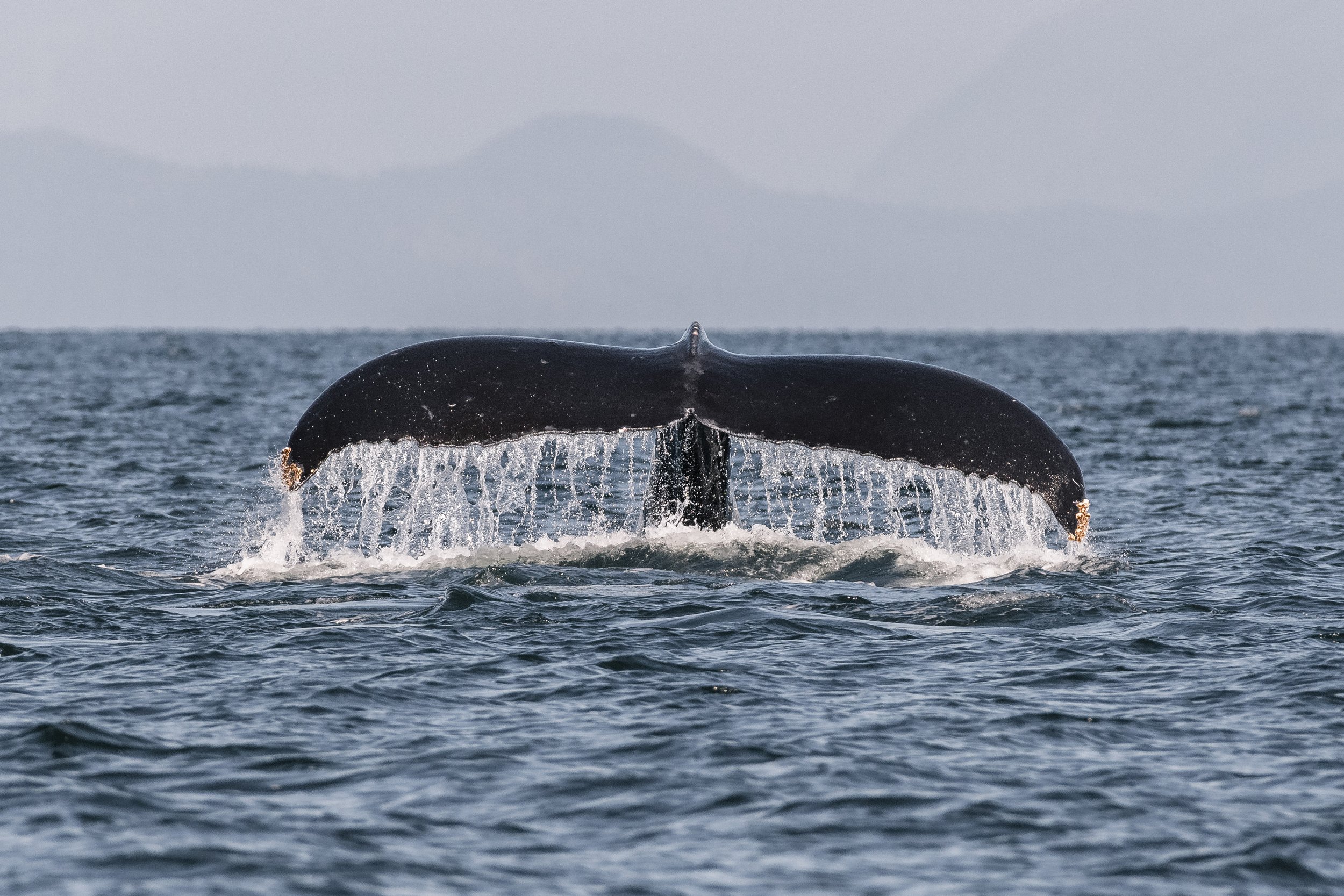
A beautiful fluke waterfall from Iota. Photo by Hayleigh Hilbert.
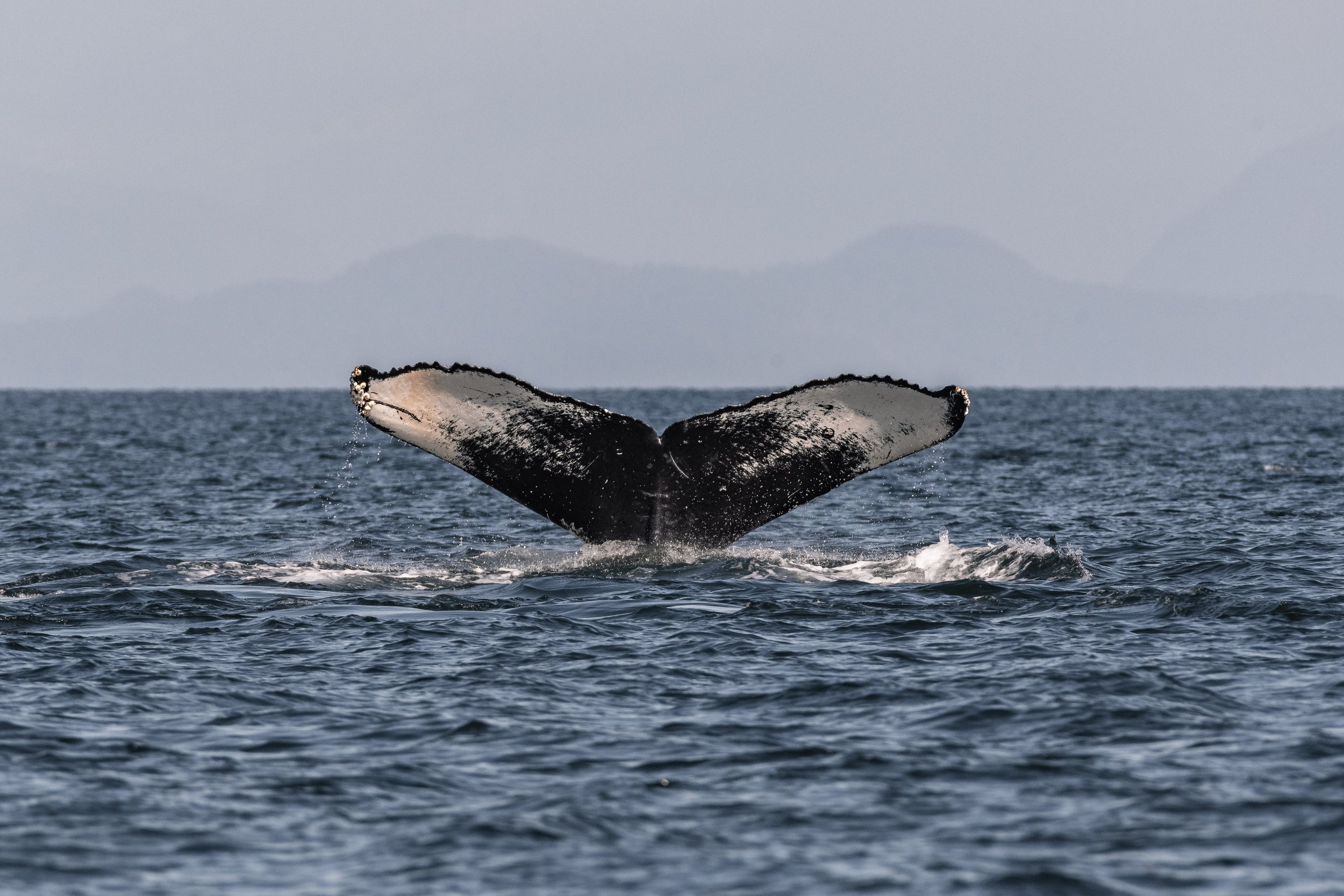
Iota’s interesting fluke. Photo by Hayleigh Hilbert.
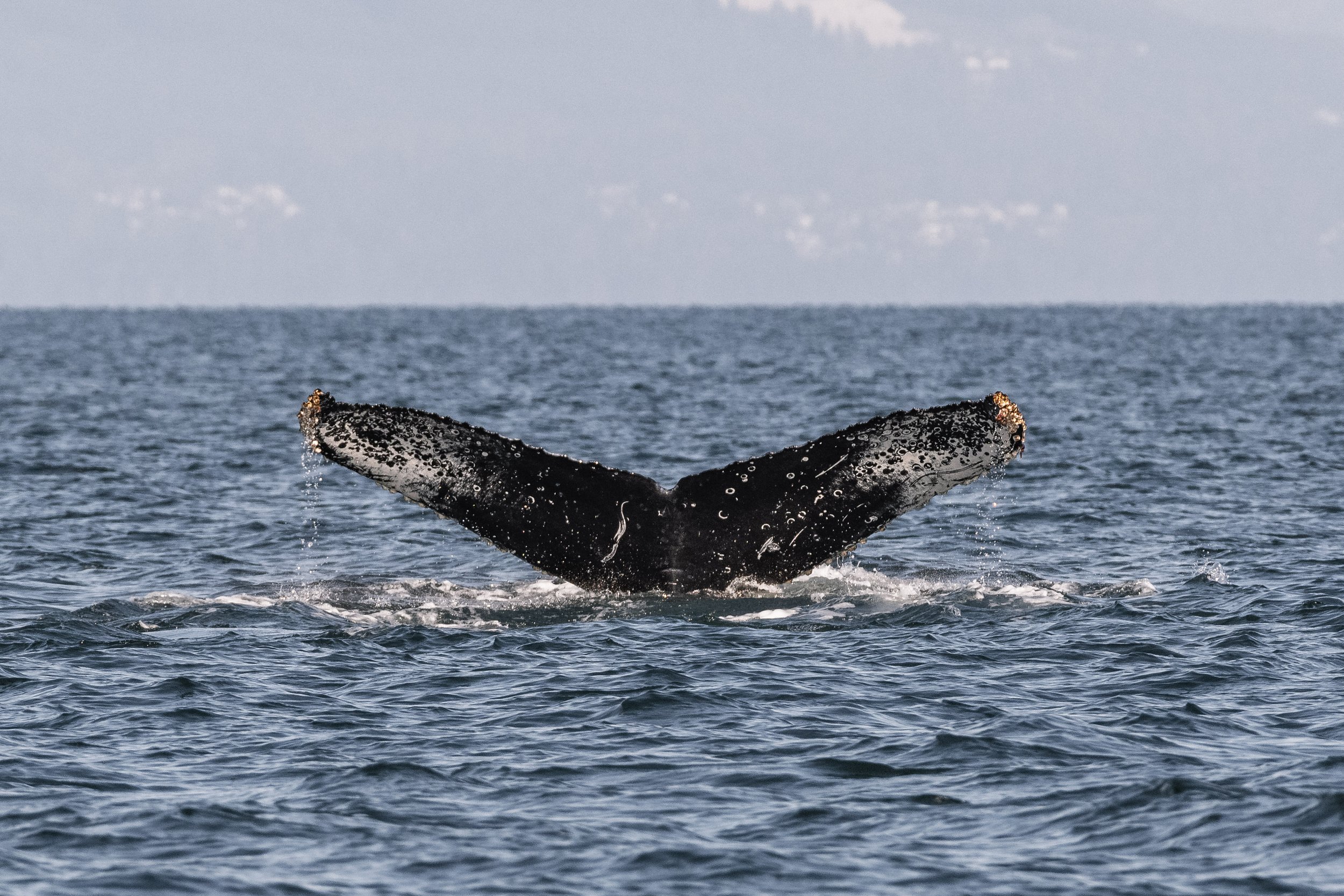
Heron diving. Photo by Hayleigh Hilbert.
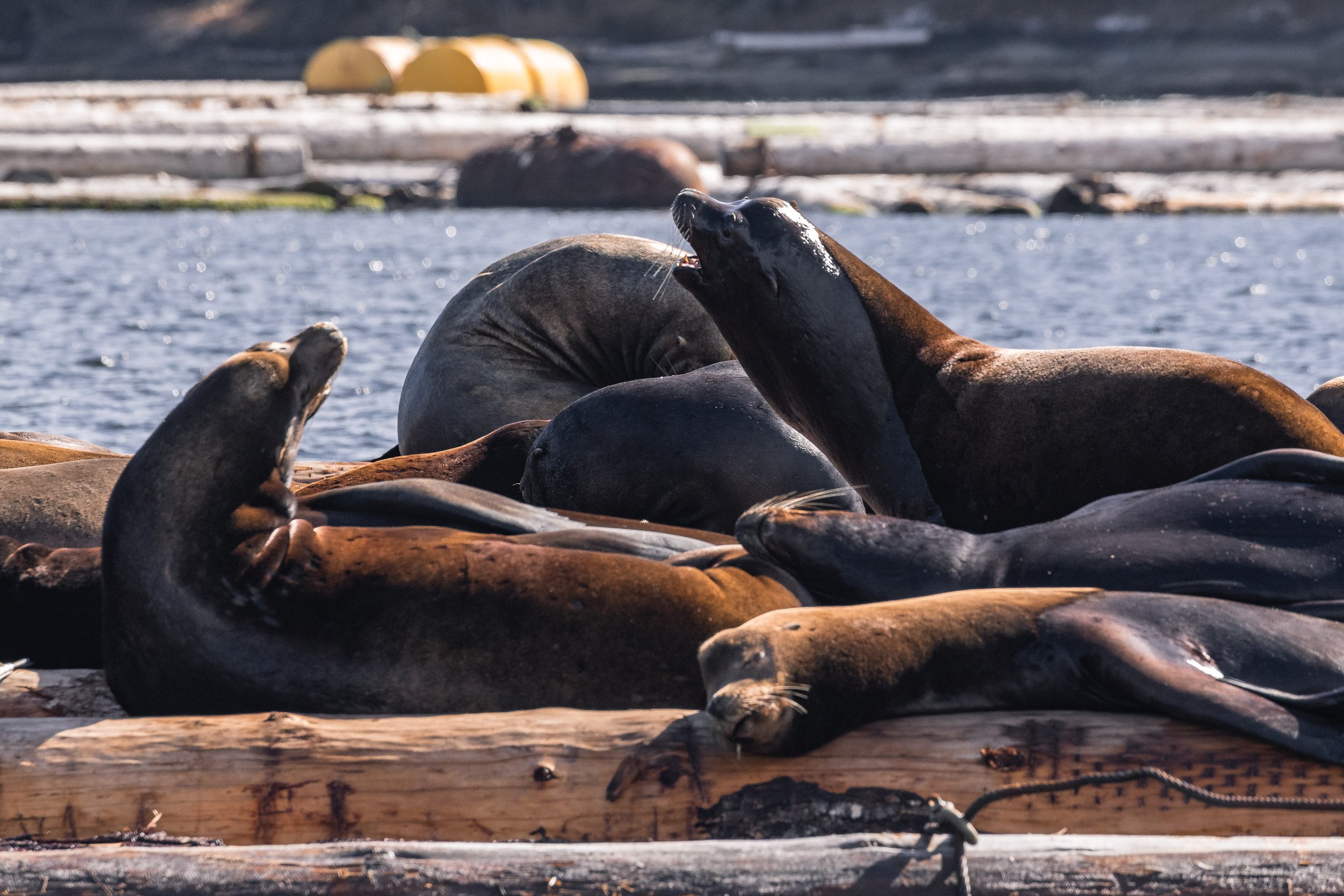
California Sea Lions fighting for the best nap spots. Photo by Des Poier.
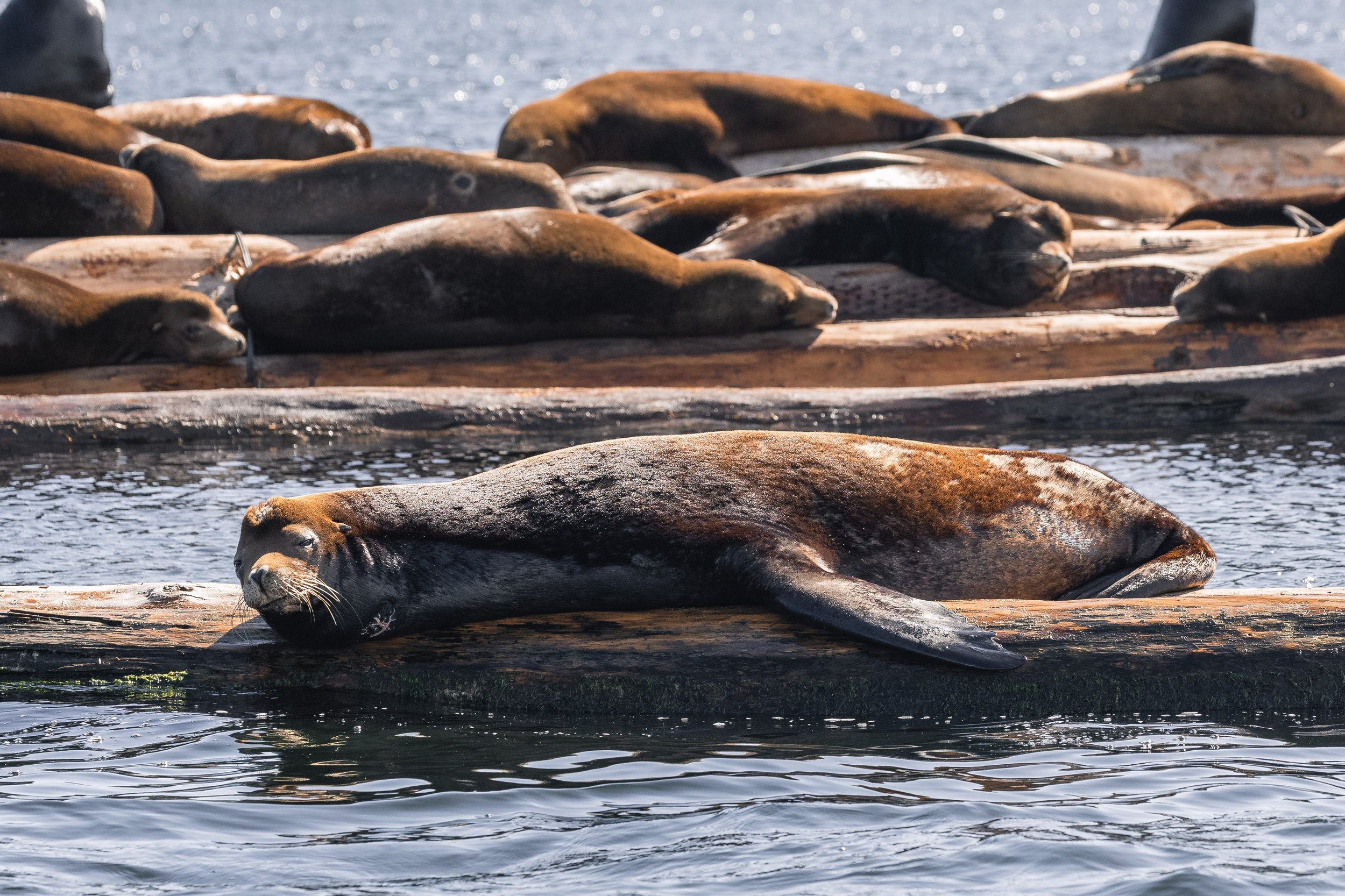
A very drowsy male California Sea Lion. Photo by Des Poier.
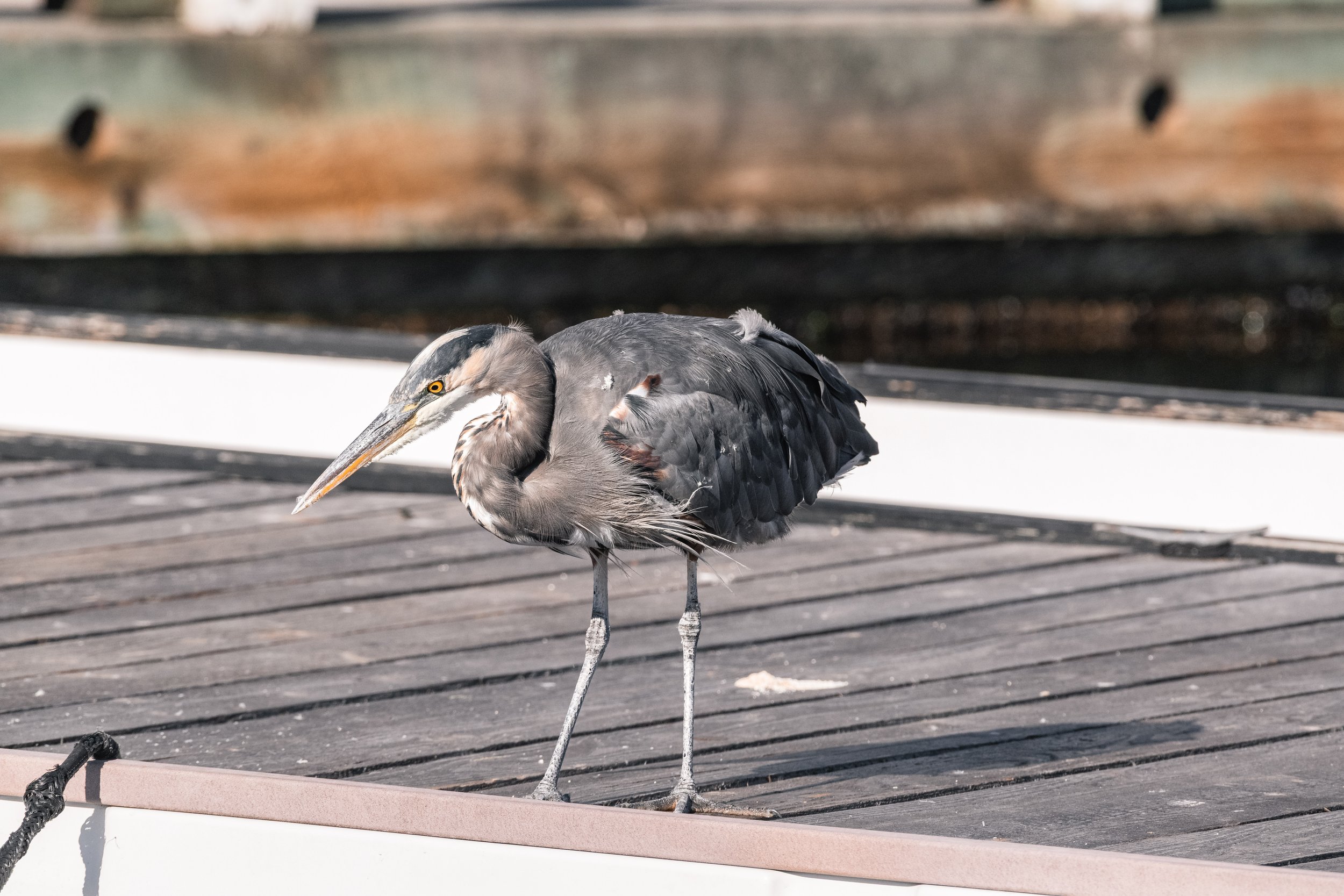
A Great Blue Heron looking for a snack. Photo by Hayleigh Hilbert.