
September 23, 2026 - Mischief maker humpbacks and a suprise orca encounter close to port
Another exciting day greeted us as we boarded Cascadia and Kula, eager to see what we could spot. Naturalists Hayleigh and Evan chatted about what could be seen out there, and what to keep an eye out for us as we set off. Sightings had been sparse throughout the morning, so the decision was made for the boats to spread out to maximize the area we could cover. Kula coasted along Valdes Island, while Cascadia headed down to check out Galiano Island’s shoreline. This led to both boats finding whales at nearly the same time!
By Kula, a lone humpback was slowly travelling along. They would surface, arch their back, and lazily fluke as they meandered on along. After grabbing a photo of their dorsal fin and their fluke, we confirmed that this whale was Beak (BCX1606), the 2014 calf of Big Momma (BCY0324). Big Momma is considered one of the most famous humpback whales in our area, as she was one of the first individuals spotted returning to the area after the population was nearly wiped out due to whaling activity. She also has one of the largest tracked family lines of our humpback whales, with currently 21 known descendants. See if you can spot Beak on the family tree below:
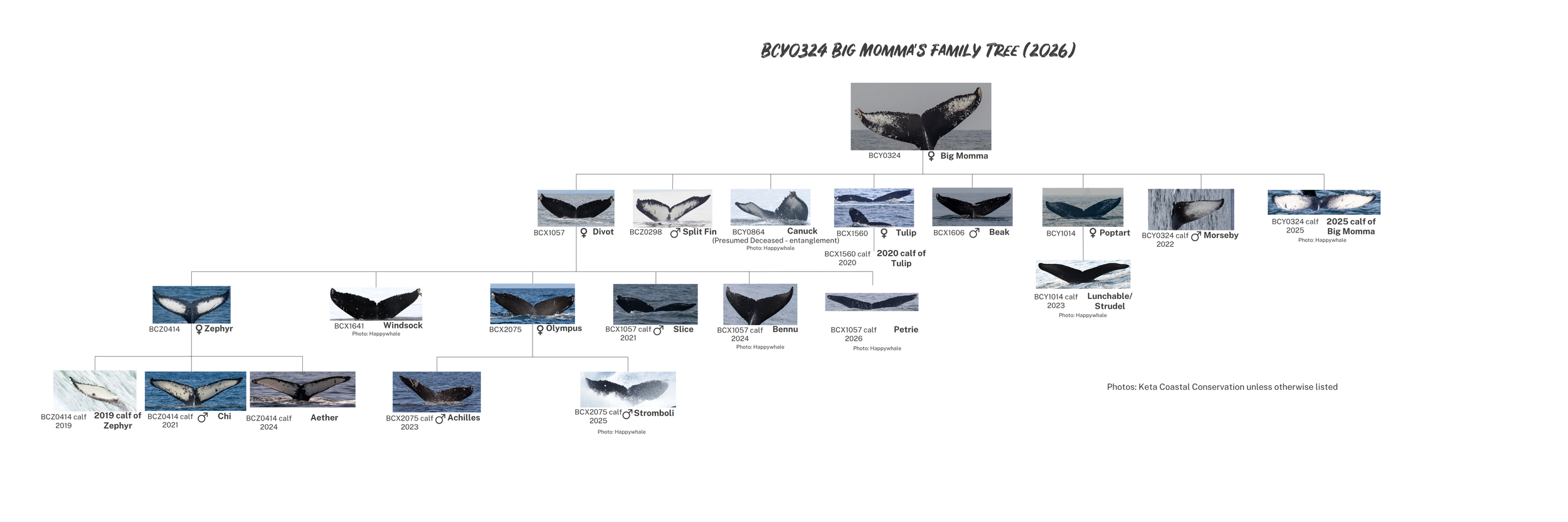
Big Momma’s family tree, as of early 2026.
At the same time, Cascadia had located a trio of humpbacks. These three darted back and forth, making it tricky to get ID photos. However, we managed to confirm all three of them: BCX2316, Kaju (BCY1474), and Uluka (BCX1702). After a few surfaces with Beak, Kula departed and made their way over to the trio to spend some time with them as well.
These three were being very energetic today. After a few dives and passes close together, they turned and soon focused on the boats themselves. They soon began displaying a behaviour known as “mugging,” where a whale approaches a vessel and remains unusually close, sometimes surfacing alongside or even beneath the boat. While it is an awe-inspiring behaviour to encounter, it is not something that can be encouraged. A curious whale choosing to approach a vessel can create dangerous, potentially life-threatening encounters for the whale and boaters alike. When mugging occurs, our priority is to remain calm and give the whale plenty of space once it is safe to do so. After examining the vessels, Kaju, Uluka, and BCX2316 turned and started making their way away. At this point, we also turned and began slowly departing the scene. While the encounter had been exciting, we were sure we had many other good wildlife moments ahead of us as the trip continued.
From here, we headed closer to shore northbound until we were at a tiny haulout known as Stinky Rocks. Many different species take advantage of this area, as it is a perfect place to relax before diving into the depths to travel or hunt. On the shorter rocks, Harbour Seals draped themselves amongst the seaweed. These year-round residents are always very interesting to spot, as they tend to just dramatically flop onto the rocks and sleep the day away. Nearby, the Steller Sea Lions were making a ruckus, as they pushed each other around, fighting for the best sunning spots on the rocks. A lone Gull also was enjoying a rest, and a chatty Belted Kingfisher was spotted zipping off the rocks. It was an incredible display of how much biodiversity can be found in even tiny areas of the Salish Sea!
At this point, it was time to head back to Nanaimo. As we made our way along, we cruised the coast, with the landscape flashing by. We were nearing Nanaimo when we caught word of a sighting near Dodd Narrows - several smaller black dorsal fins, accompanied by one larger fin, were quickly travelling through. It was a pod of orca! We zoomed by, and soon we started peeking around for them. They were diving deep as we waited, but soon our patience paid off. We grabbed a few photos of each pod member, and soon learned that this was the T109As:
T109A Frio/Runaway ♀ (1990)
T109A4 Garrett ♂ (2012)
T109A5 Argyle ♂ (2014)
T109A6 Riley ♀ (2018)
T109A7 Wieland ♂ (2021)
T109A8 Weiss (2024)
We had spotted this pod just yesterday down near Crofton, so it was interesting to see them still so close by. Orcas can travel over 100 kilometres in a day as they bounce between haul-outs, searching for prey. However, Crofton was only about 32 kilometers from here, so we suspect they spent the night foraging amongst the smaller Gulf Islands.
These six were speeding by as we observed, with the young ones porpoising out of the water to keep up. They seemed to be on a mission, as they didn’t slow down at all while we were on scene. It was very interesting to see such large animals travelling so fast for an extended period of time.
Soon, however, we had to say our goodbyes. We slowly made our way back towards the harbour, peeking back occasionally at where we had departed from the T109As. It had been an exhilarating day, from the curious humpbacks to the lazy pinnipeds, and it ended with a surprise orca encounter. We couldn’t ask for a better way to finish the tour!
Photos by Marine Naturalists Hayleigh Hilbert and Evan Hessels - please enjoy.
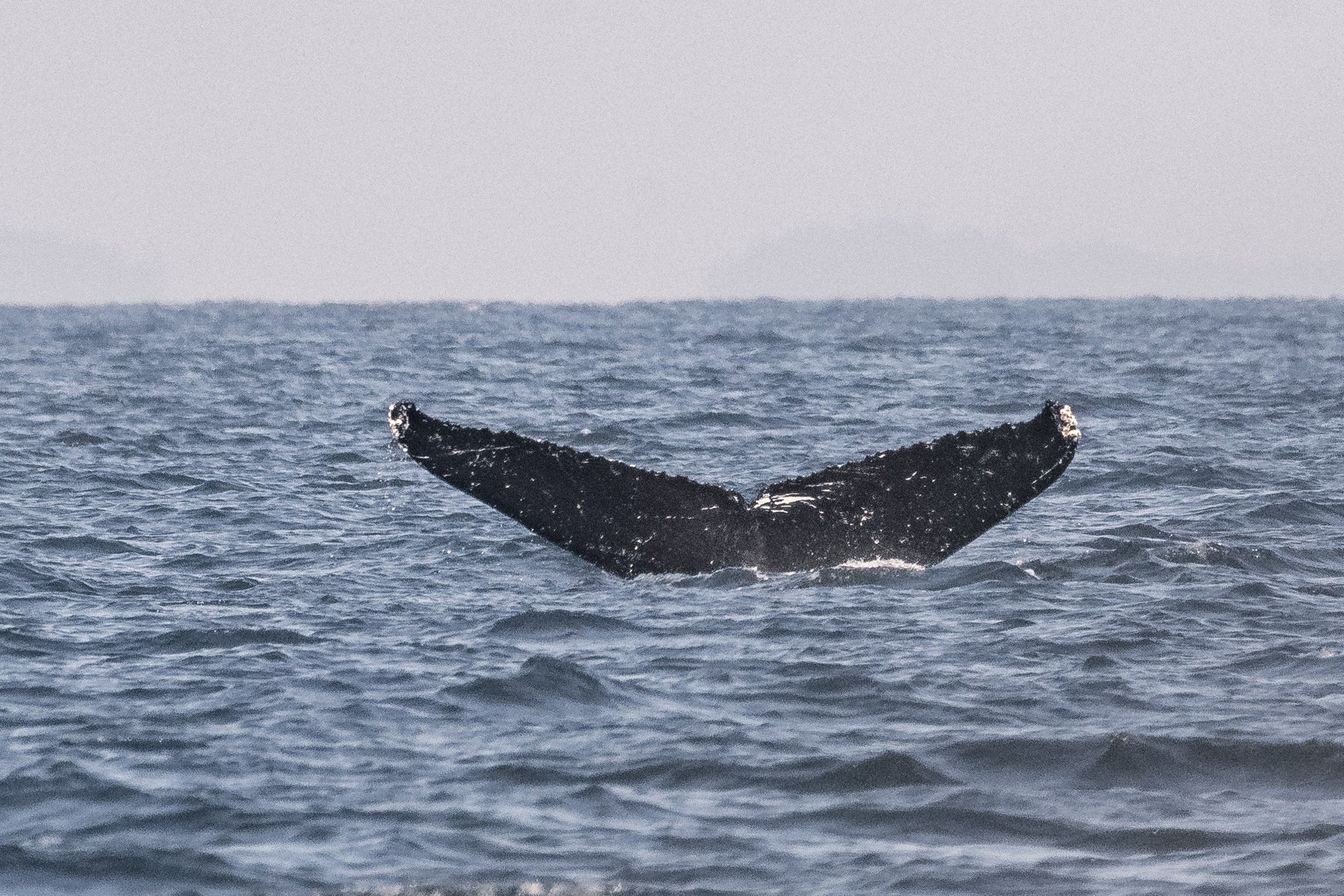
Beak fluking in the distance. Photo by Evan Hessels.
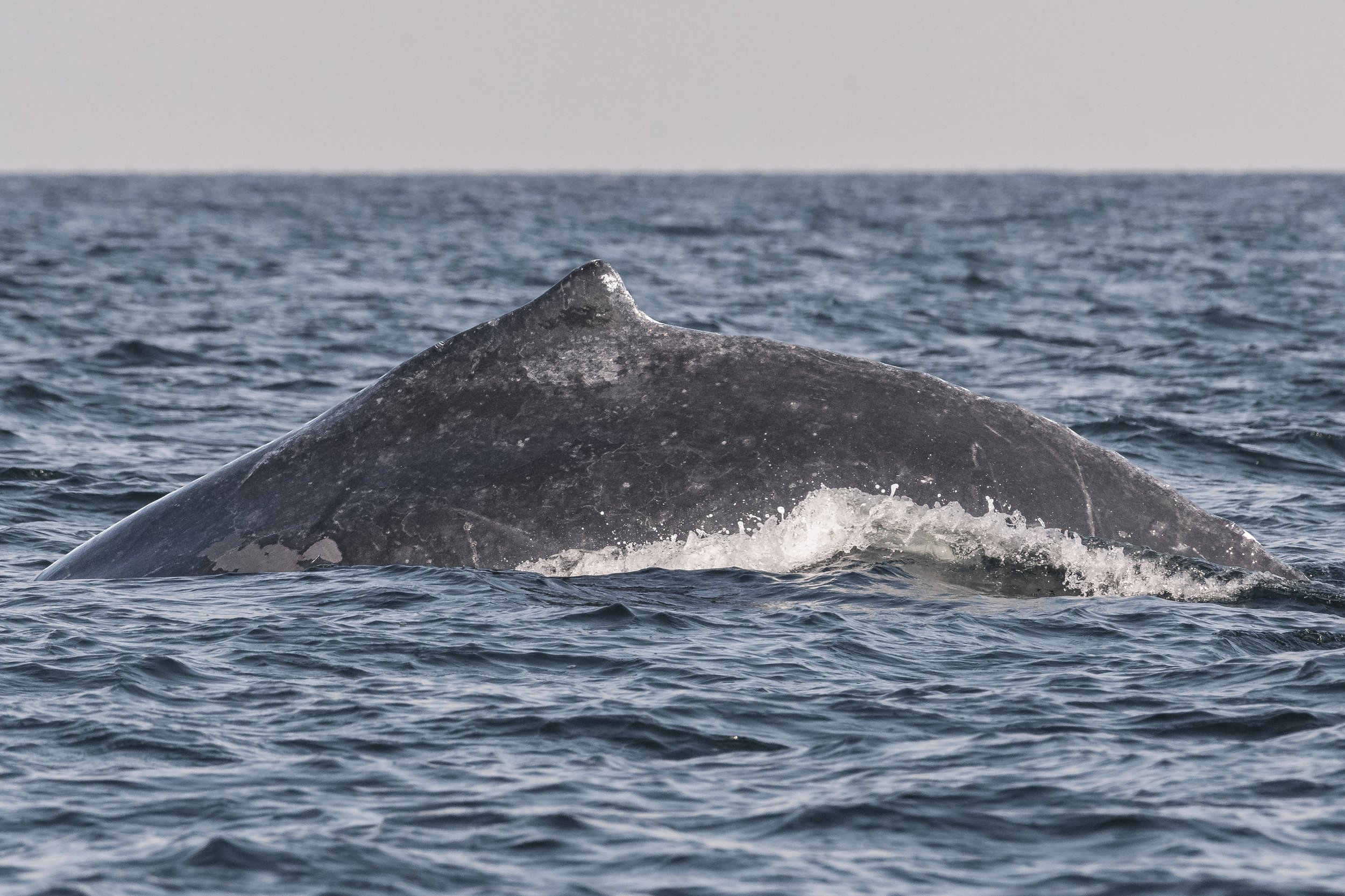
Beak arching for a dive. Photo by Evan Hessels.
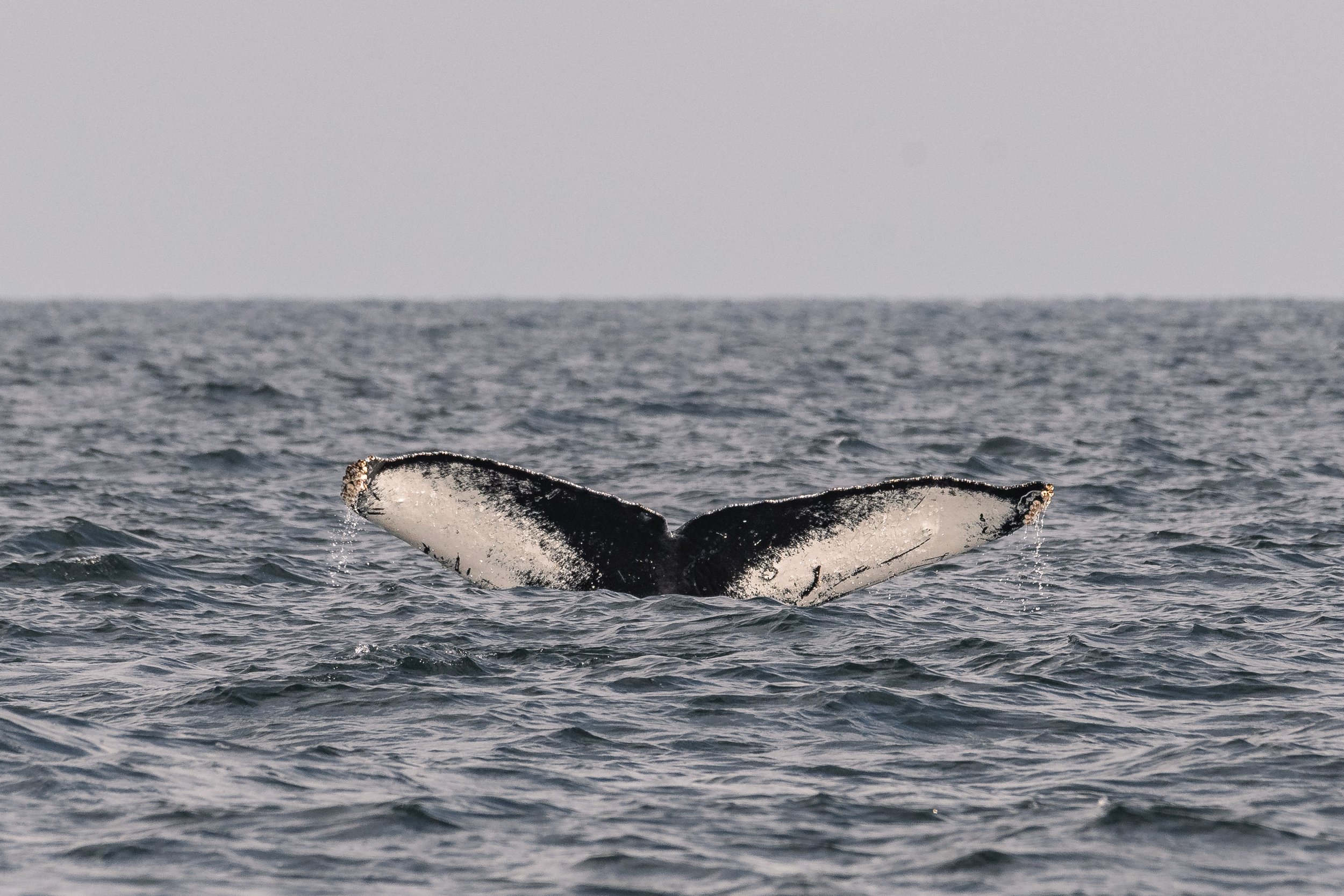
Kaju’s unique fluke as they dive. Photo by Evan Hessels.
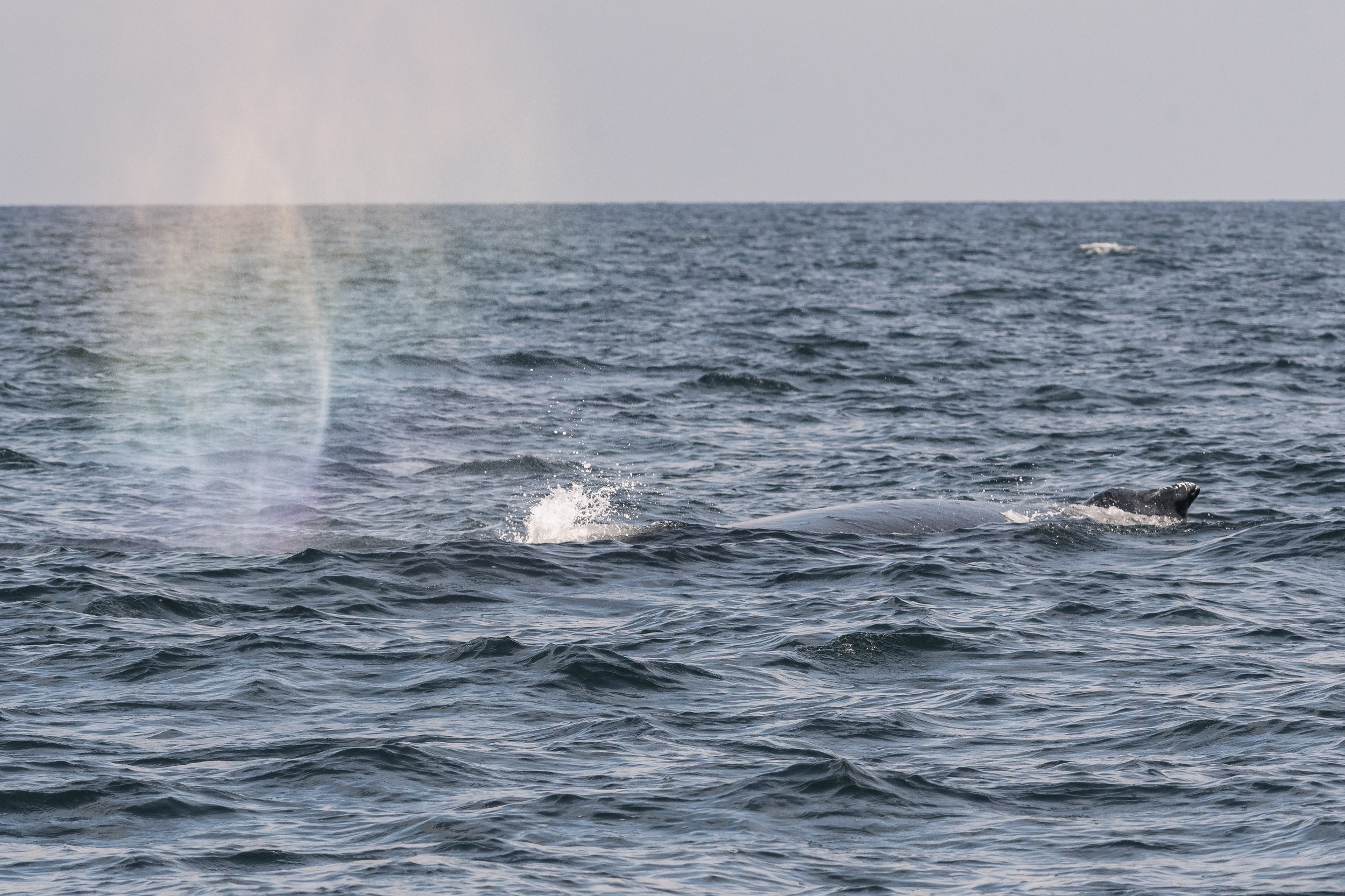
A rain-blow! Photo by Evan Hessels.
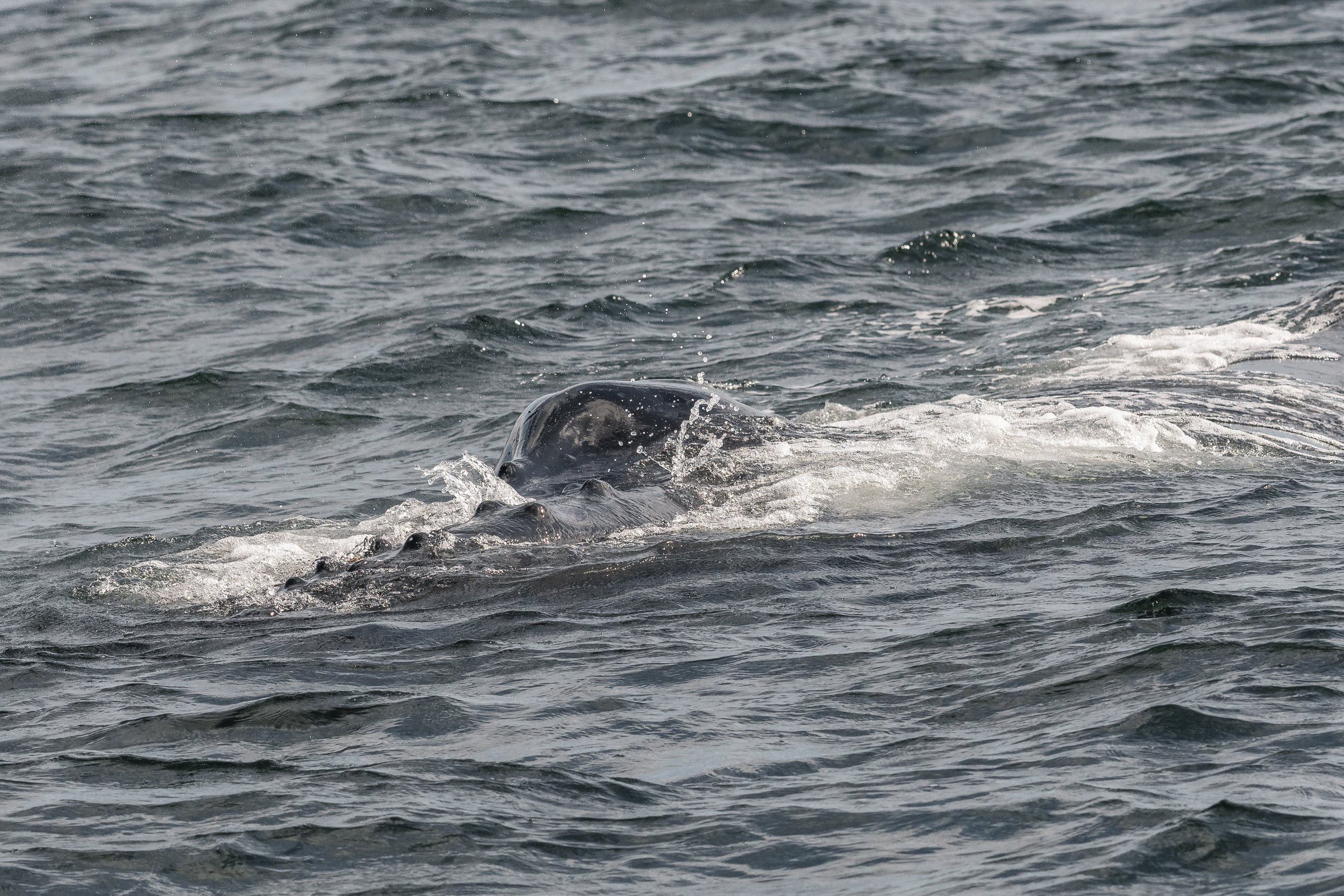
Tubercles on one of the humpbacks. Photo by Evan Hessels.
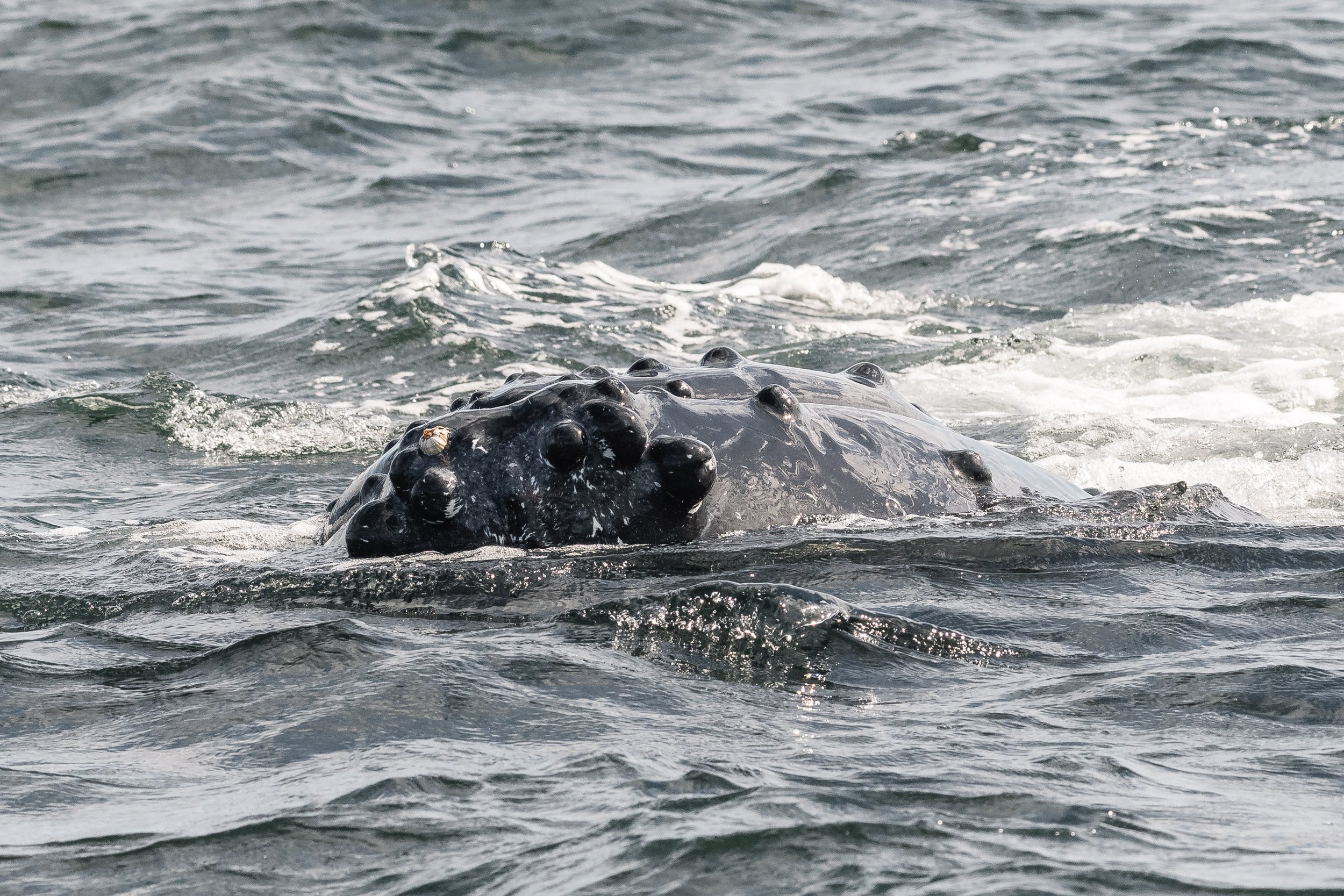
A tiny rostrum lift! Photo by Evan Hessels.
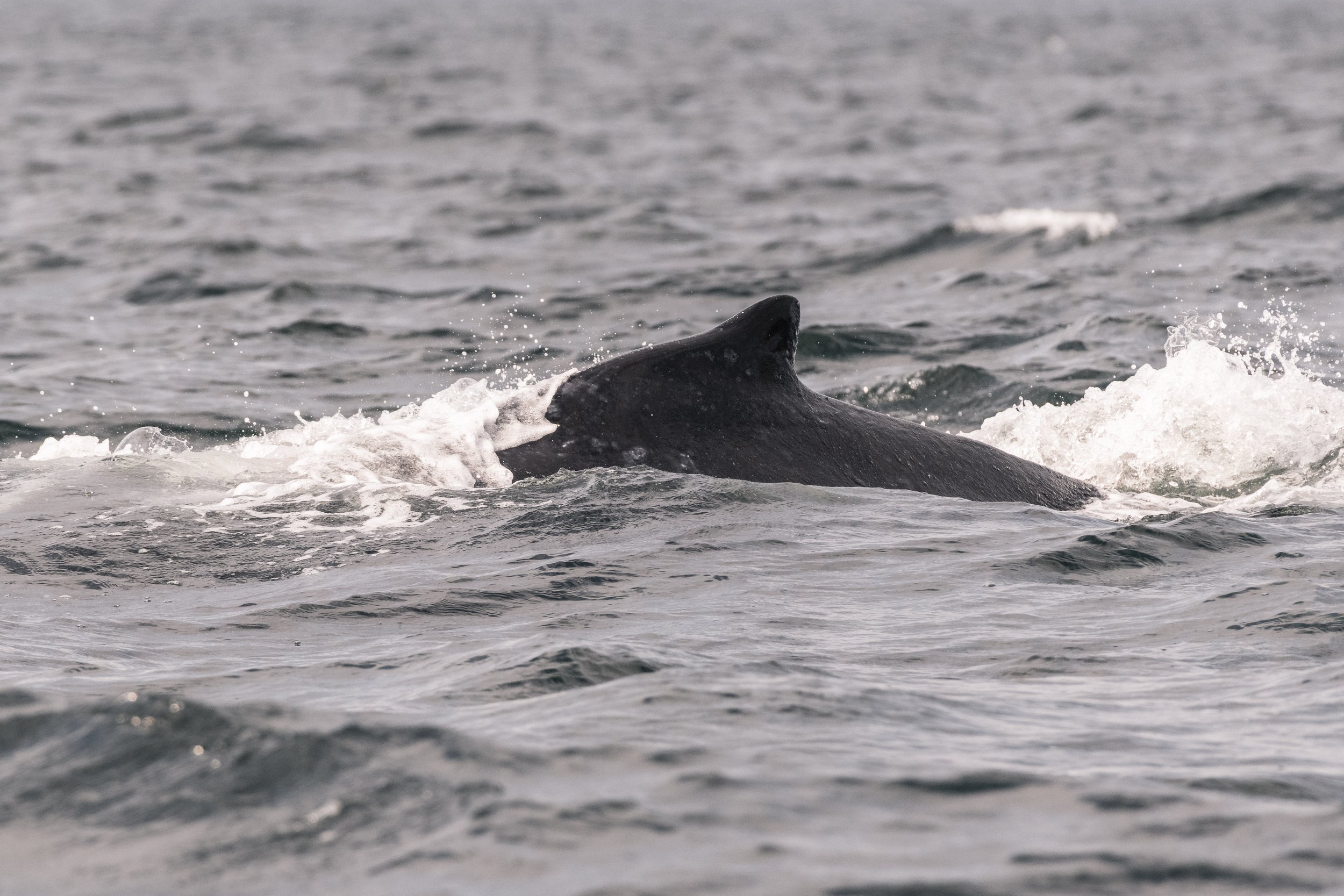
Kaju with a wave cascading over them. Photo by Hayleigh Hilbert.
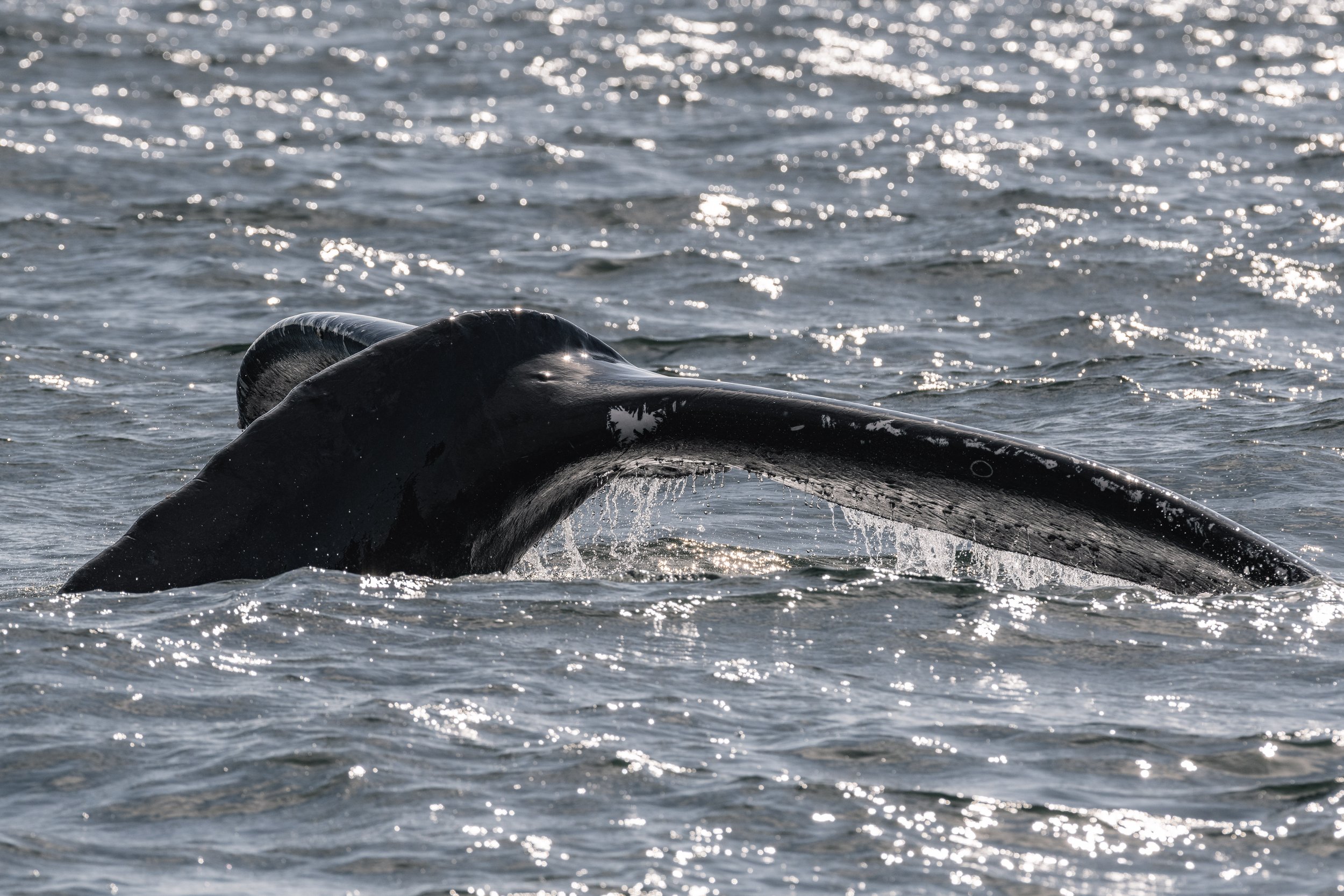
Arching to go down. Photo by Hayleigh Hilbert.
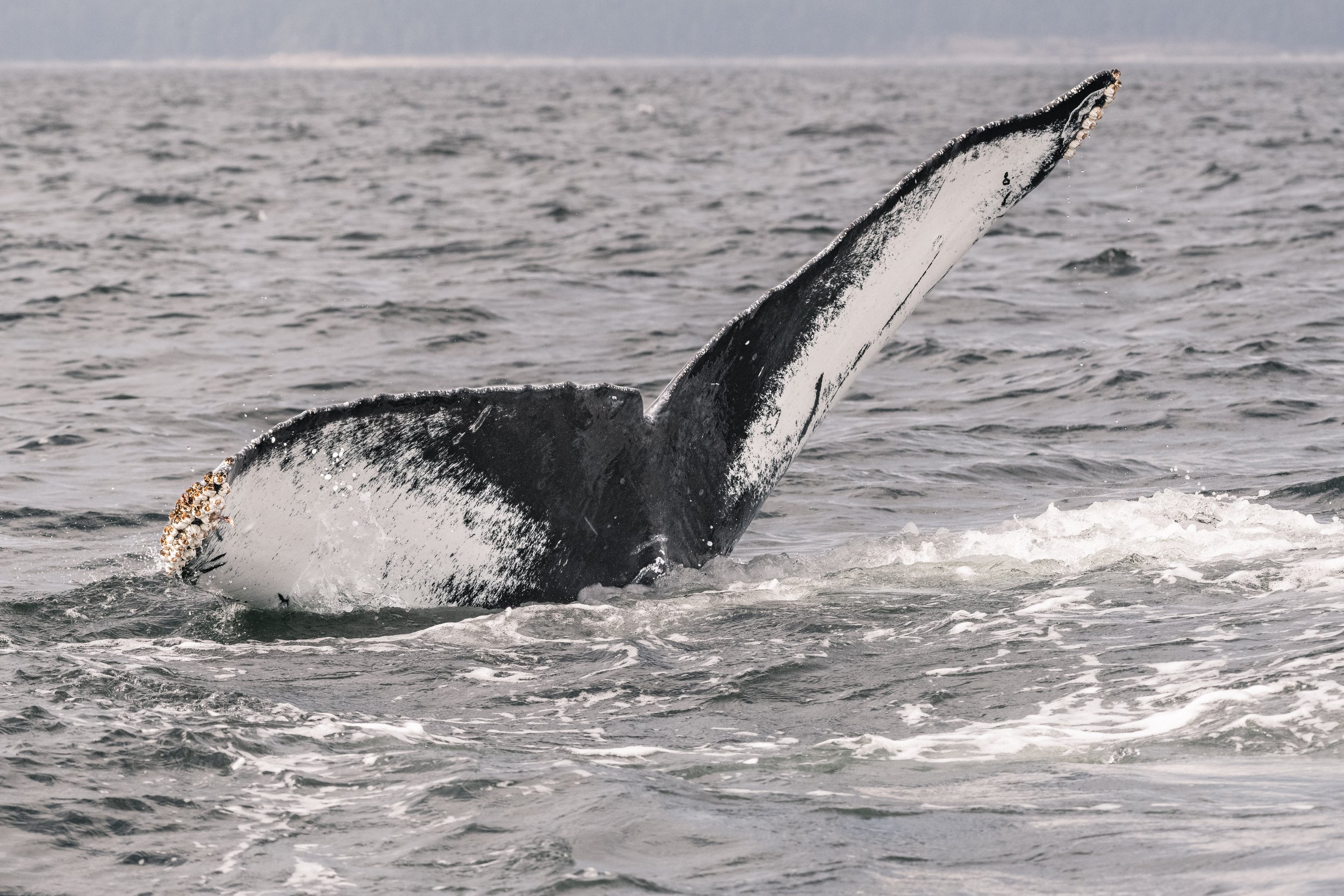
Kaju from an angle. Photo by Hayleigh Hilbert.
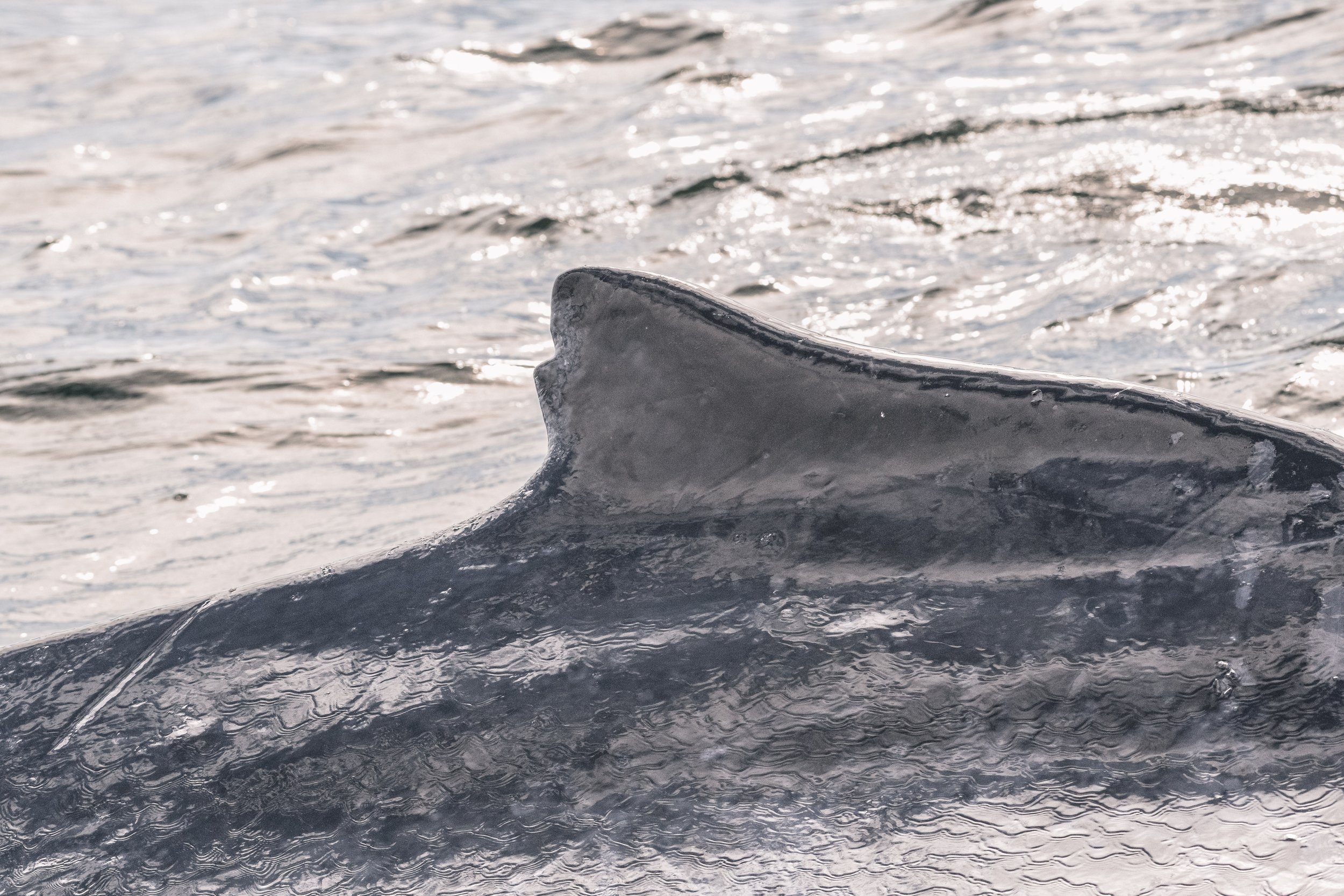
Uluka has a very uniquely notched dorsal fin, as seen here. Photo by Hayleigh Hilbert.
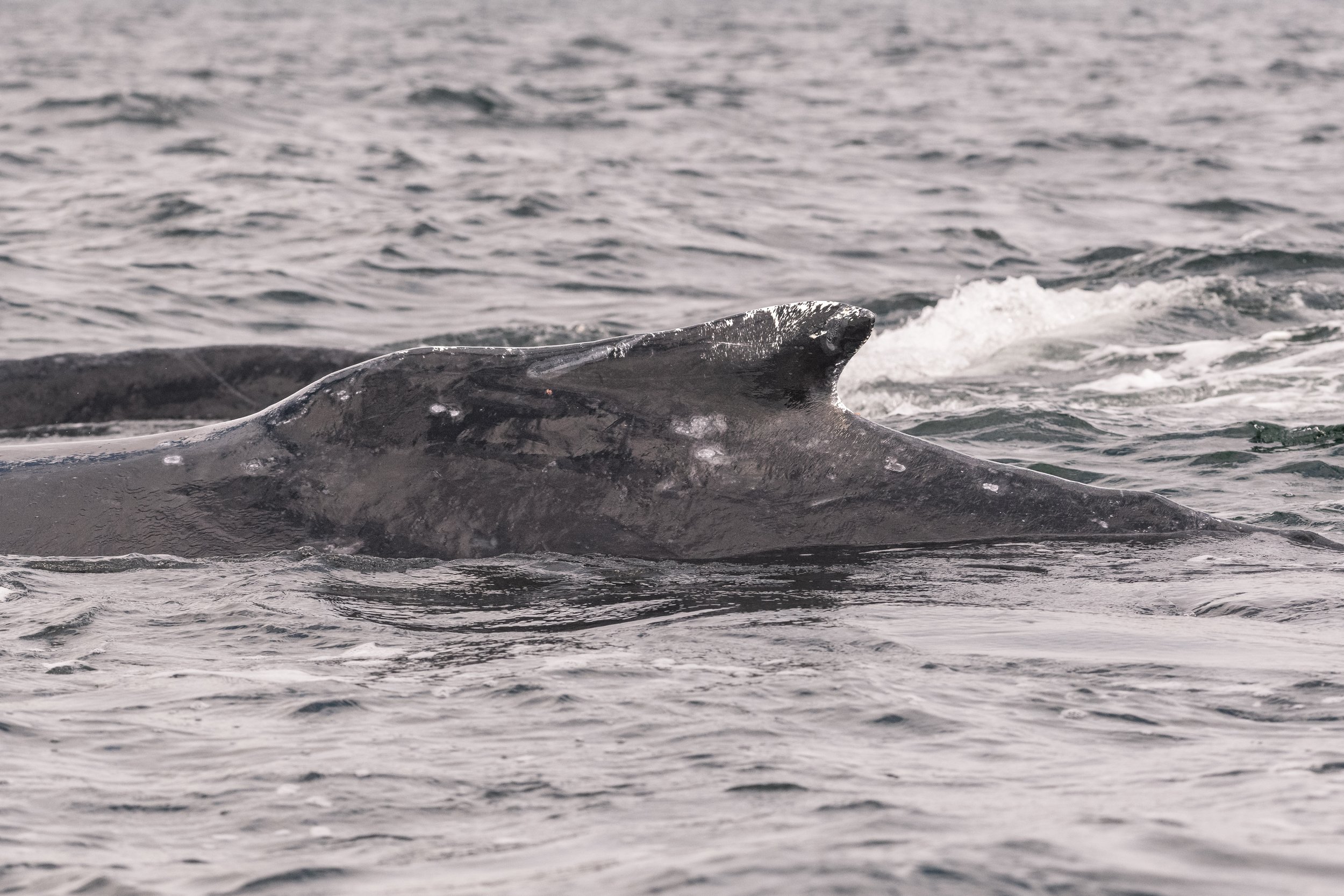
BCX2316 has many scars across their dorsal fin. Photo by Hayleigh Hilbert.
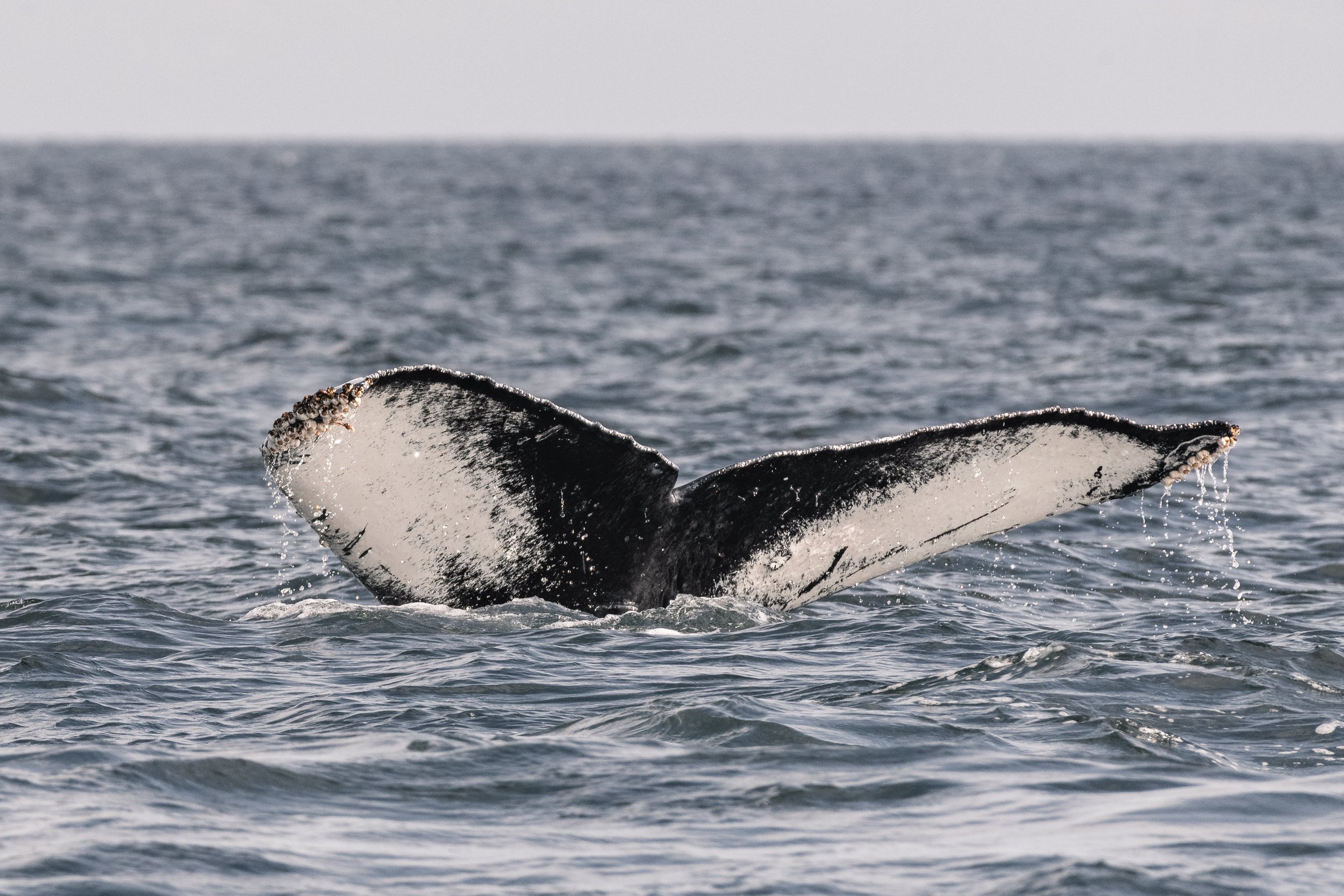
Kaju means Cashew, the name this whale was given based off ofthe marking on the right side. Photo by Hayleigh Hilbert.
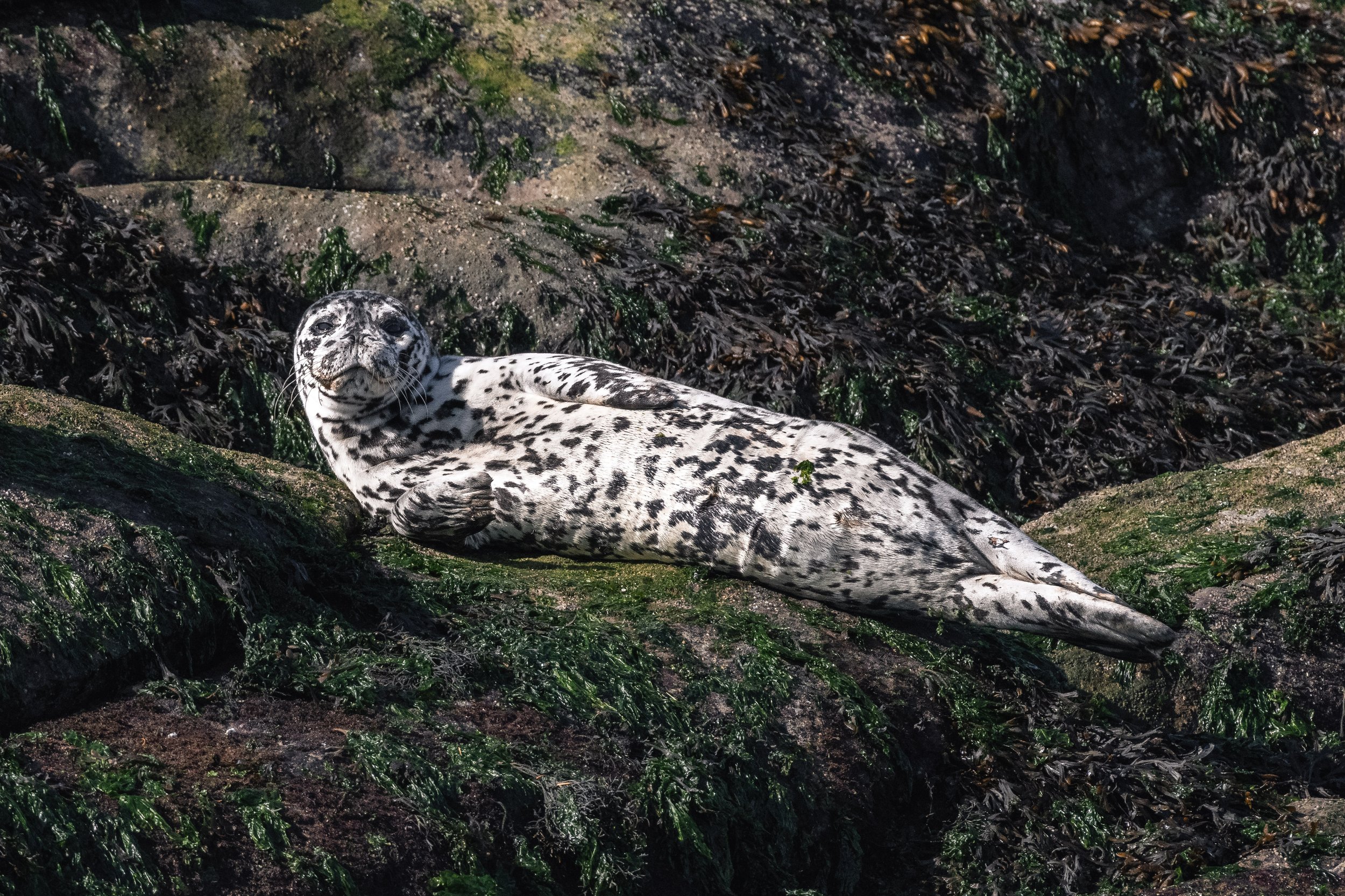
A beautifully spotted Harbour Seal. Photo by Hayleigh Hilbert.
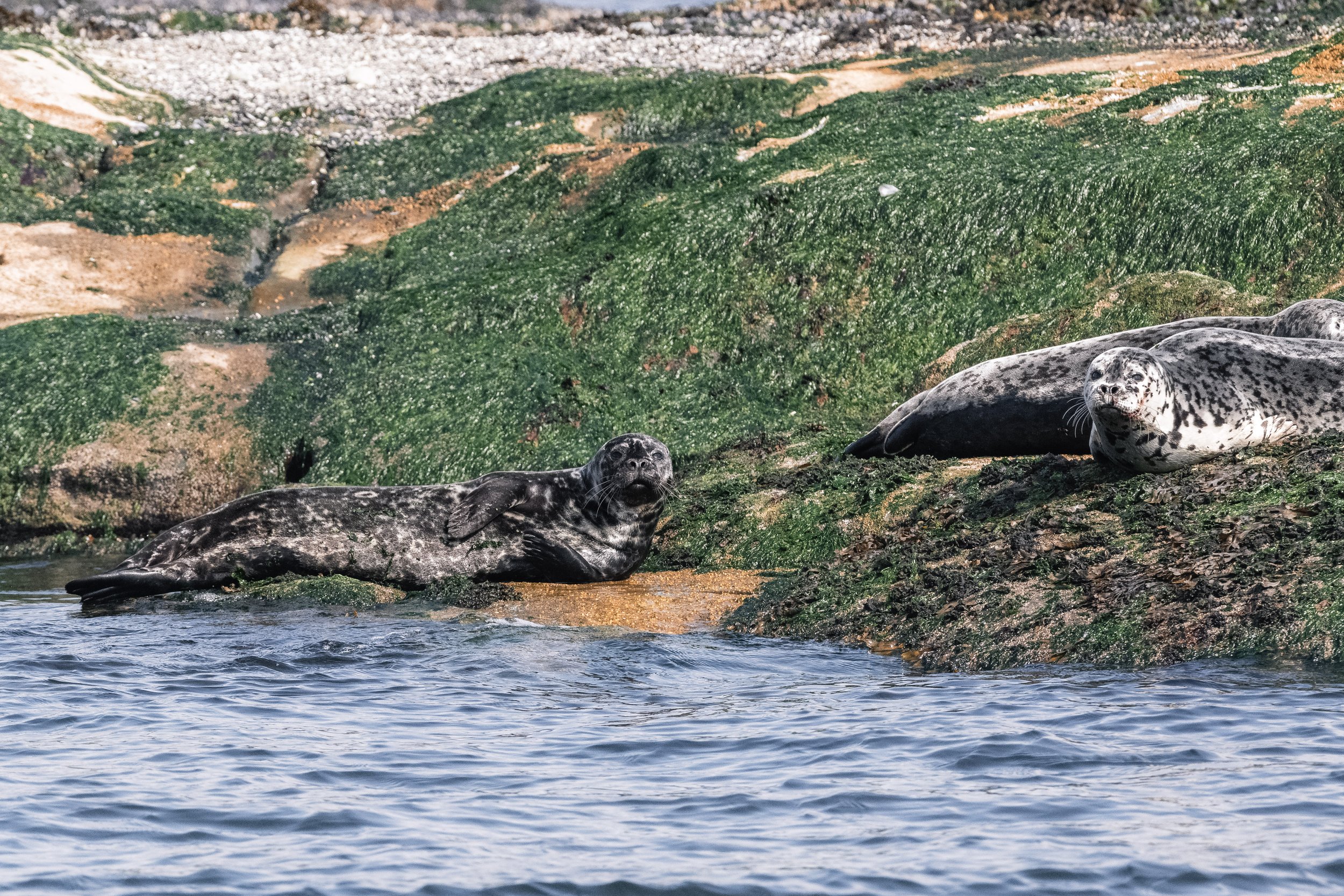
Resting at the waters edge. Photo by Hayleigh Hilbert.
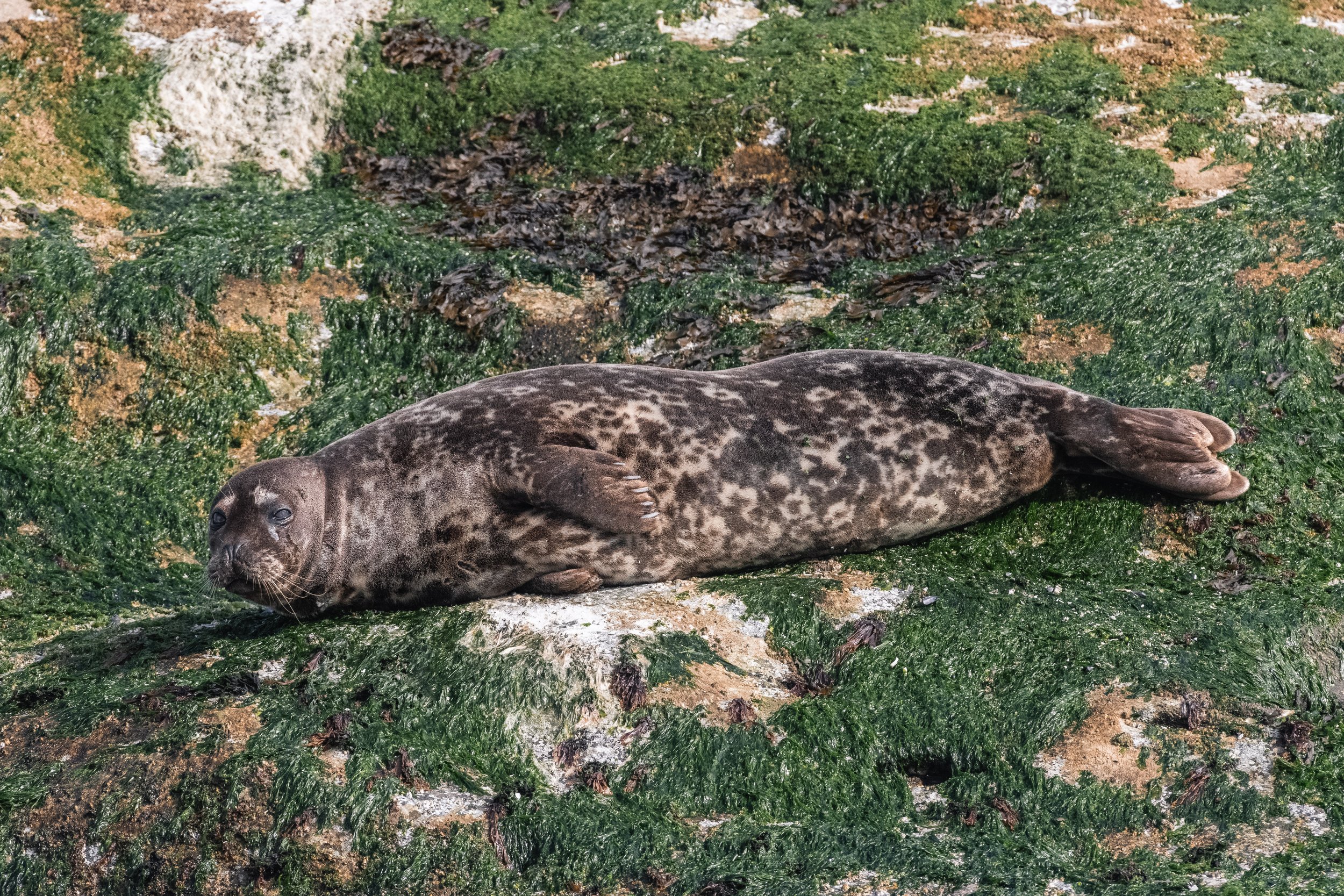
So fluffy! Photo by Hayleigh Hilbert.
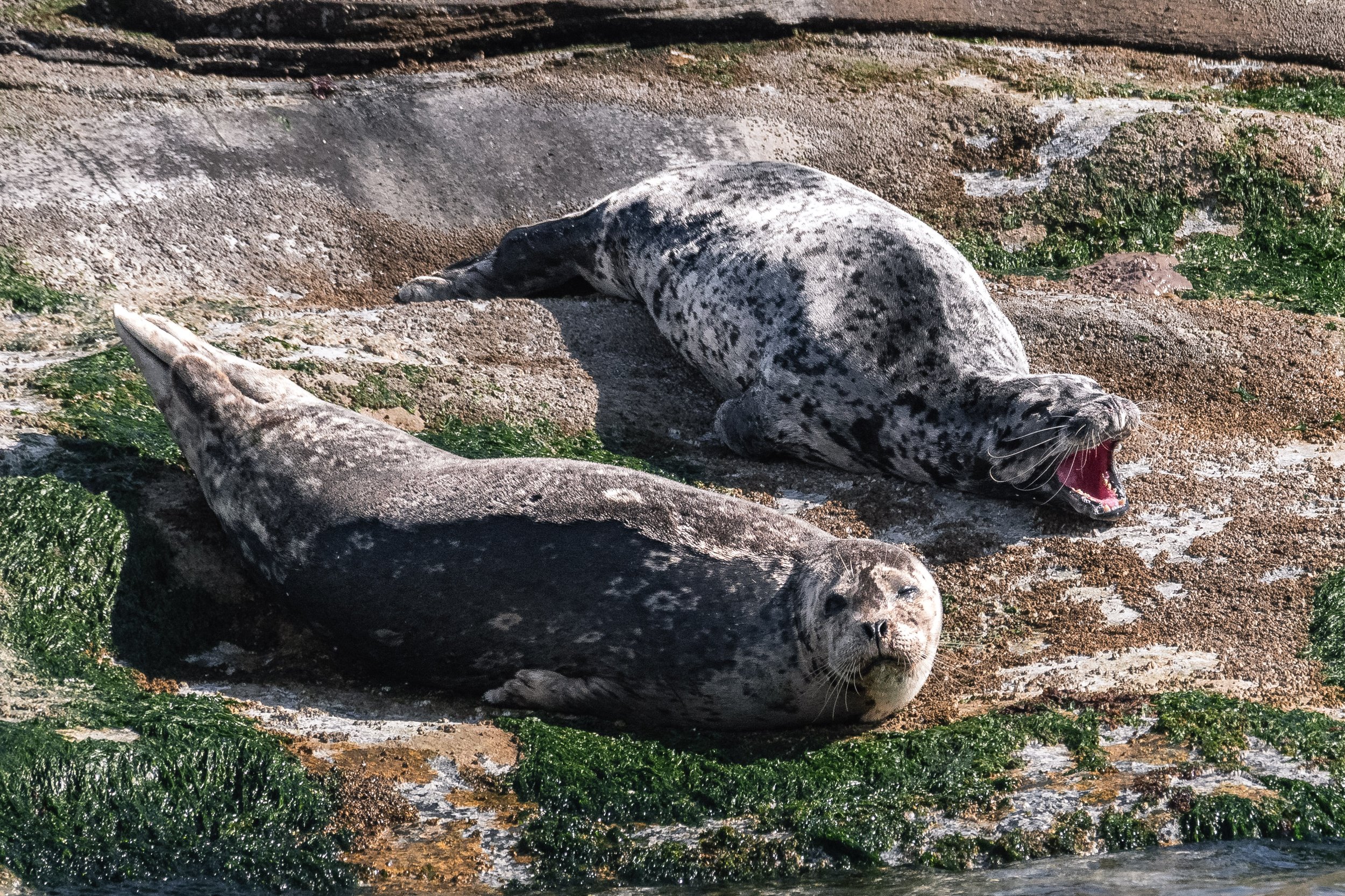
The Harbour Seals can pull off some rather unmajestic poses. Photo by Evan Hessels.
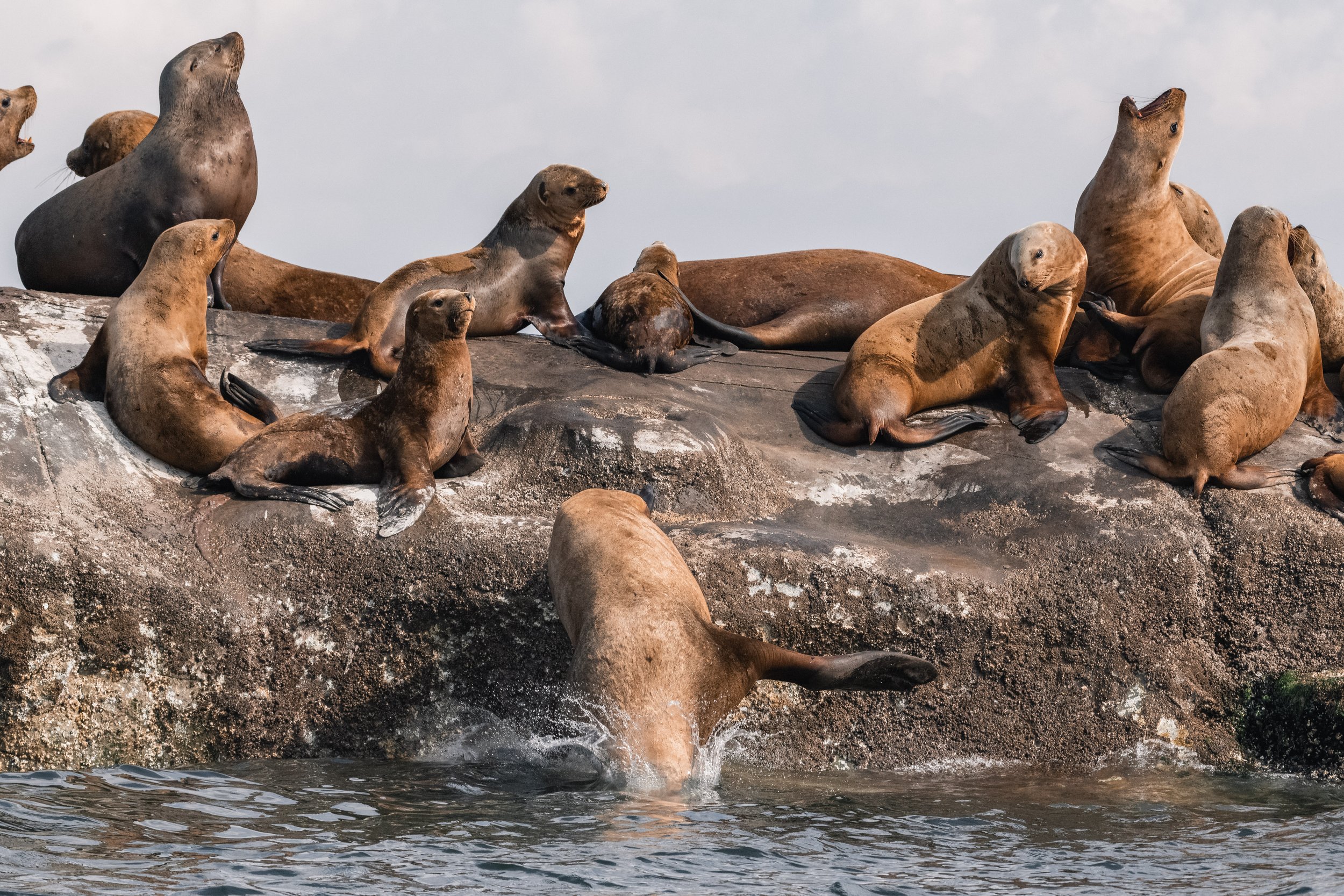
Entering the water is equally as ungraceful for the sea lions! Photo by Hayleigh Hilbert.
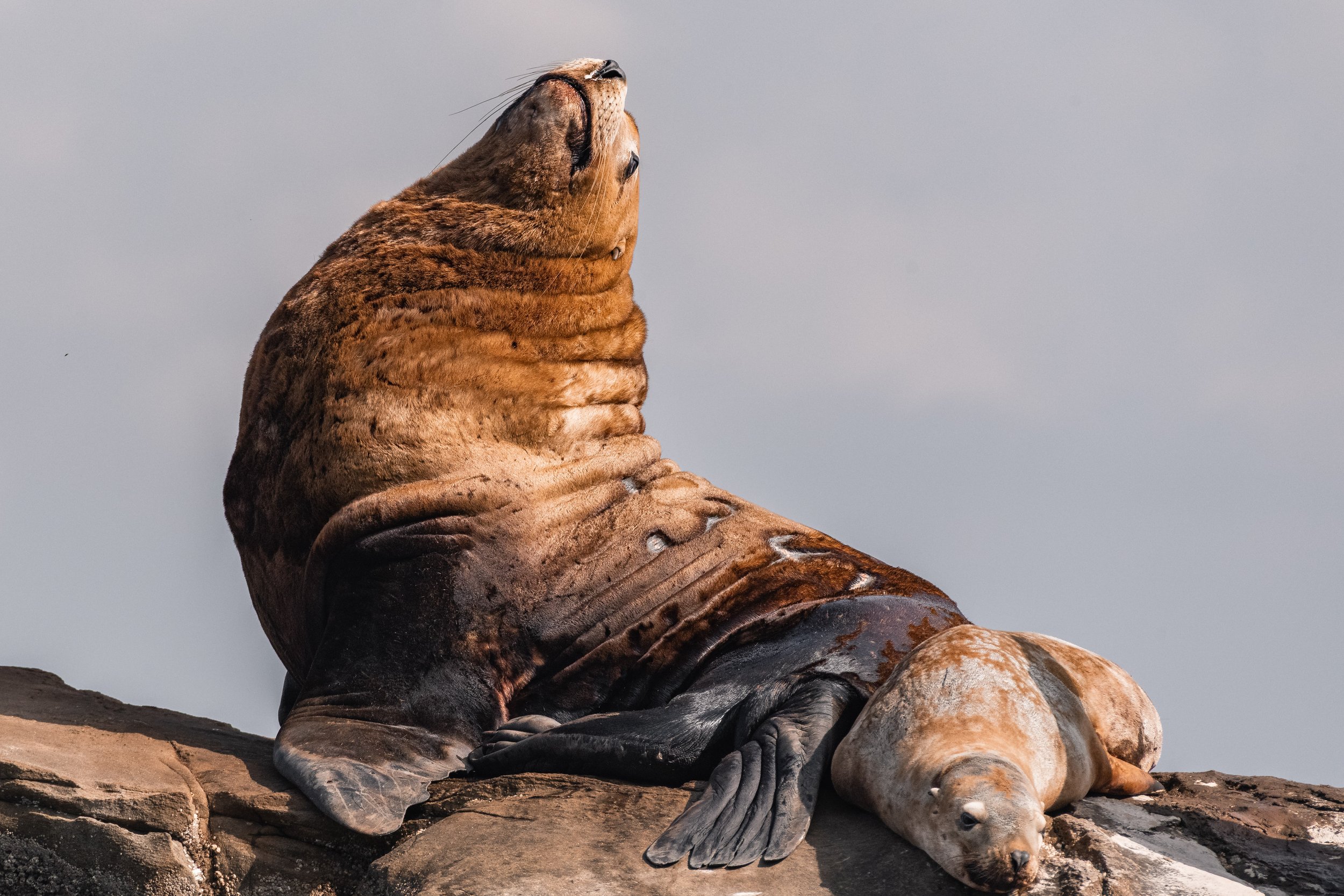
A large male Steller Sea Lion - but what’s that on his back? Photo by Hayleigh Hilbert.
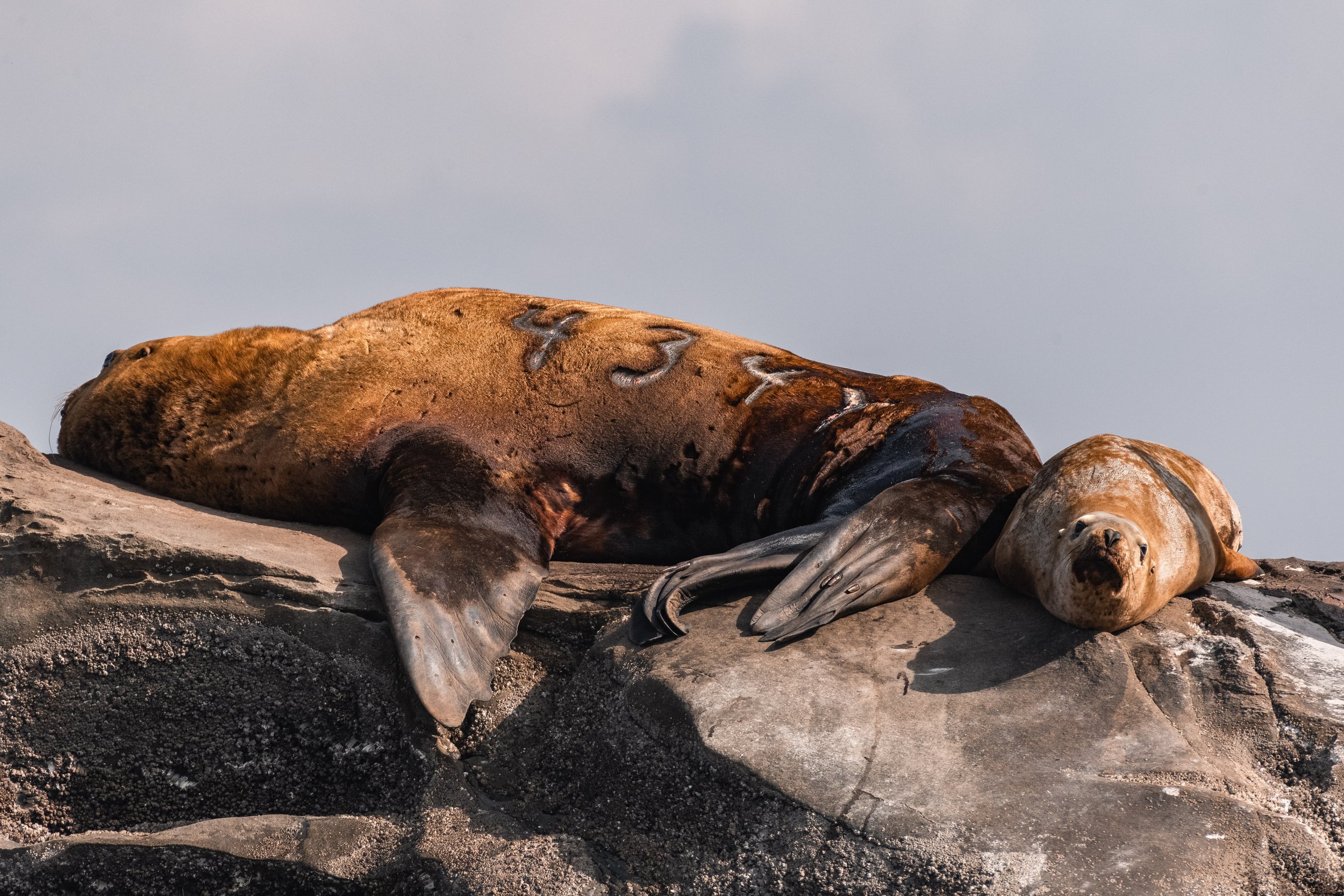
A brand! This one reads 434Y - with this information, we can confirm this male was branded in 2013 in Rogue Reef, OR. Photo by Hayleigh Hilbert.
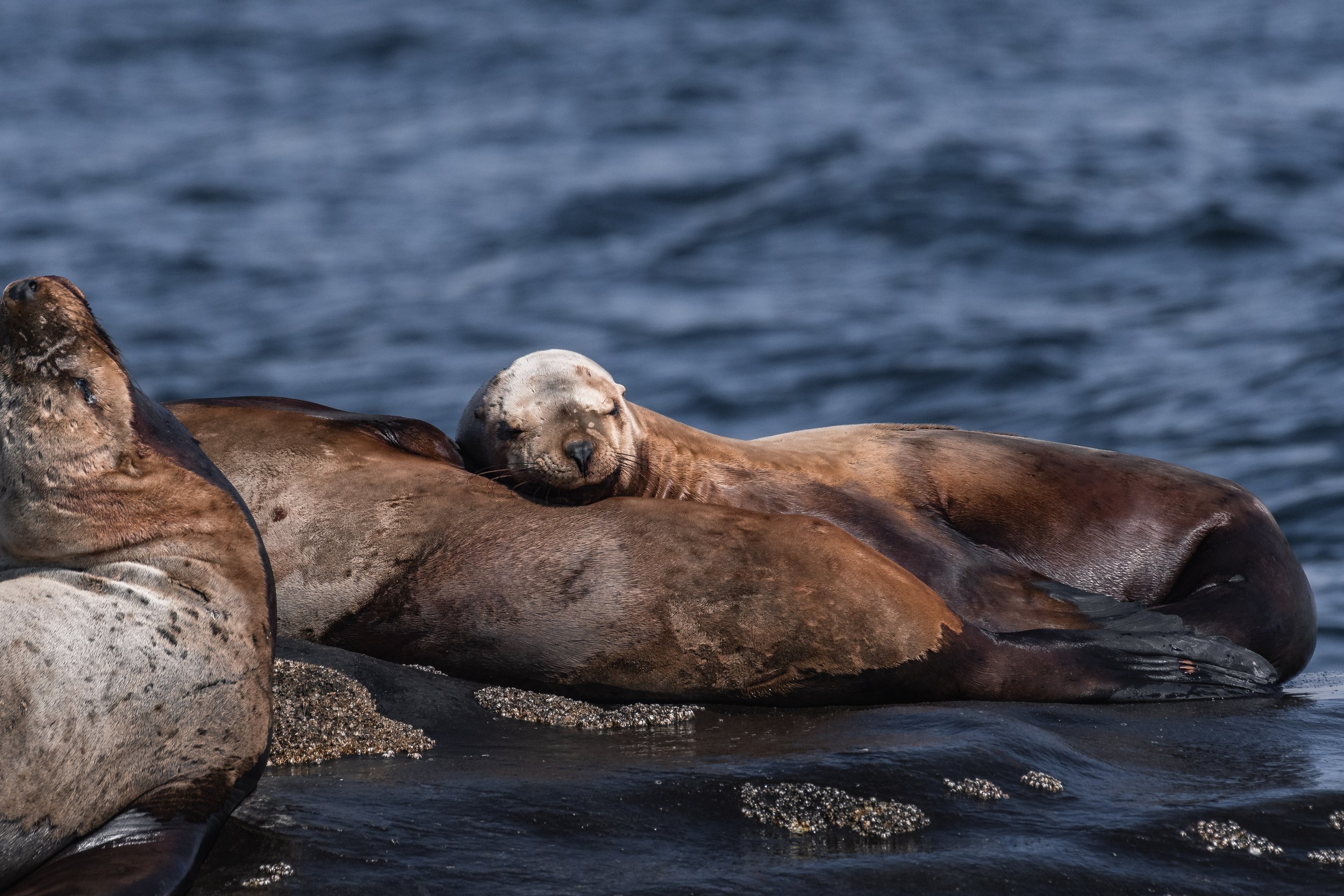
Steller Sea Lions snoozing away. Photo by Evan Hessels.
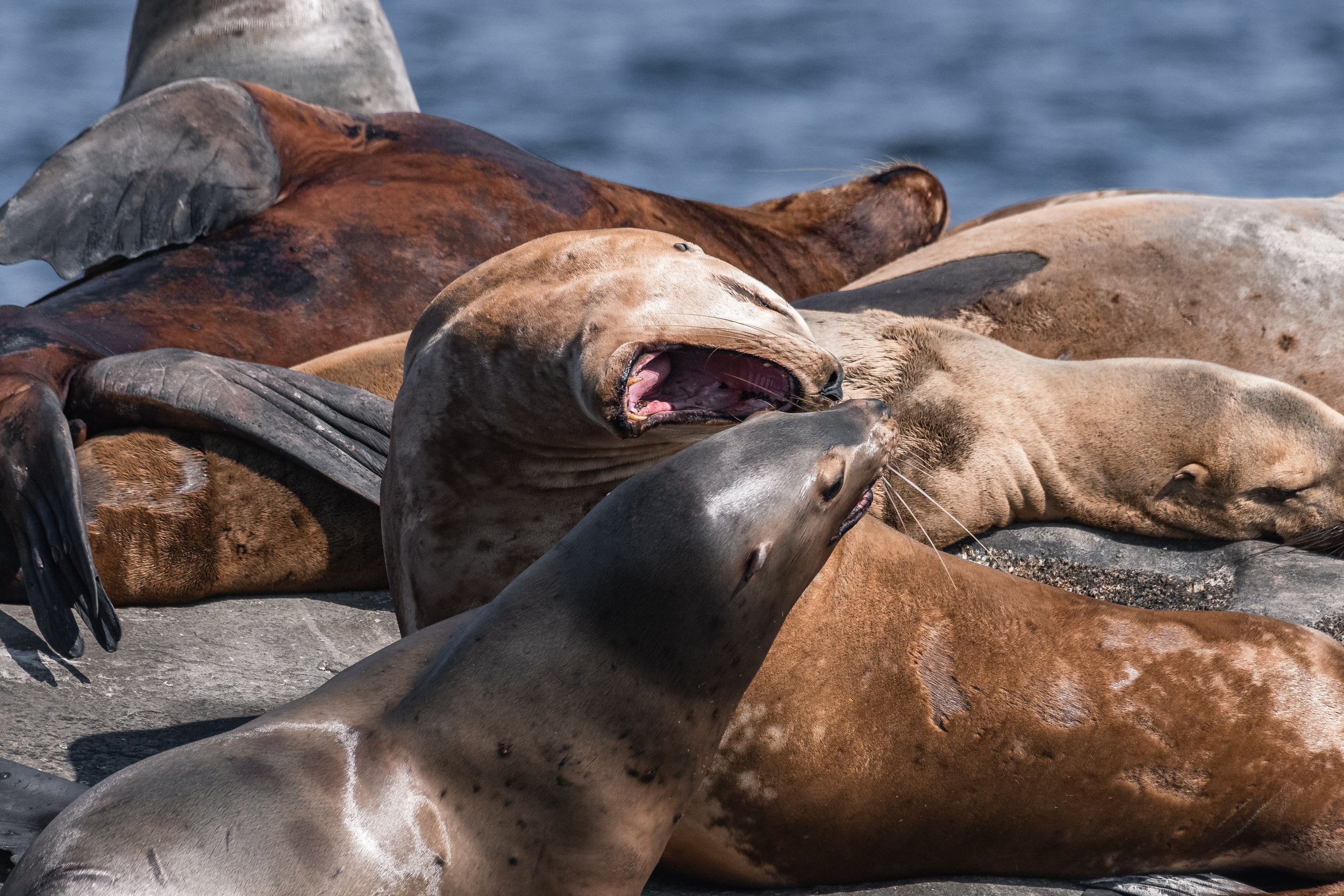
Some of them were a bit more restless than others. Photo by Evan Hessels.
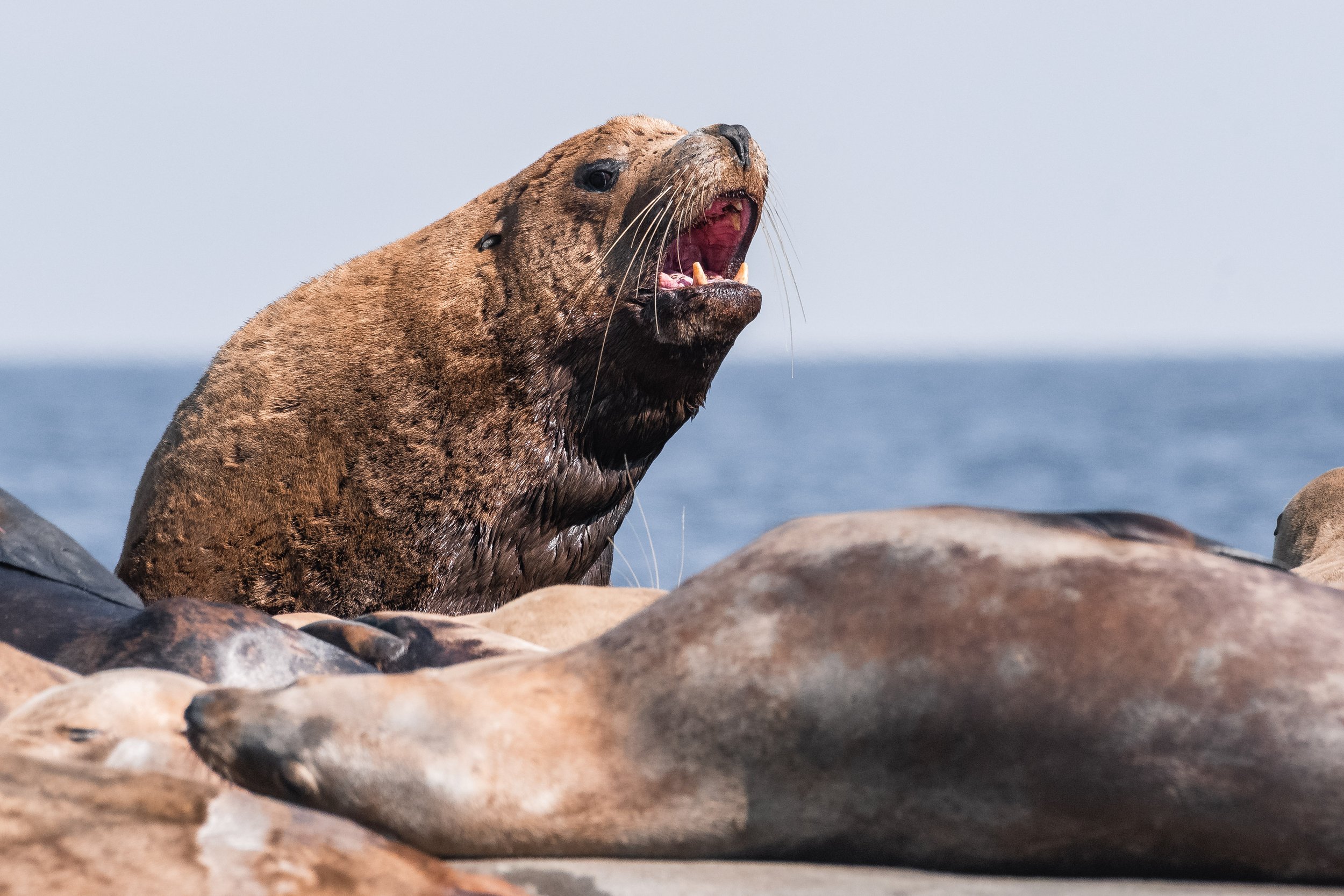
One of the large grumbly males. Photo by Evan Hessels.
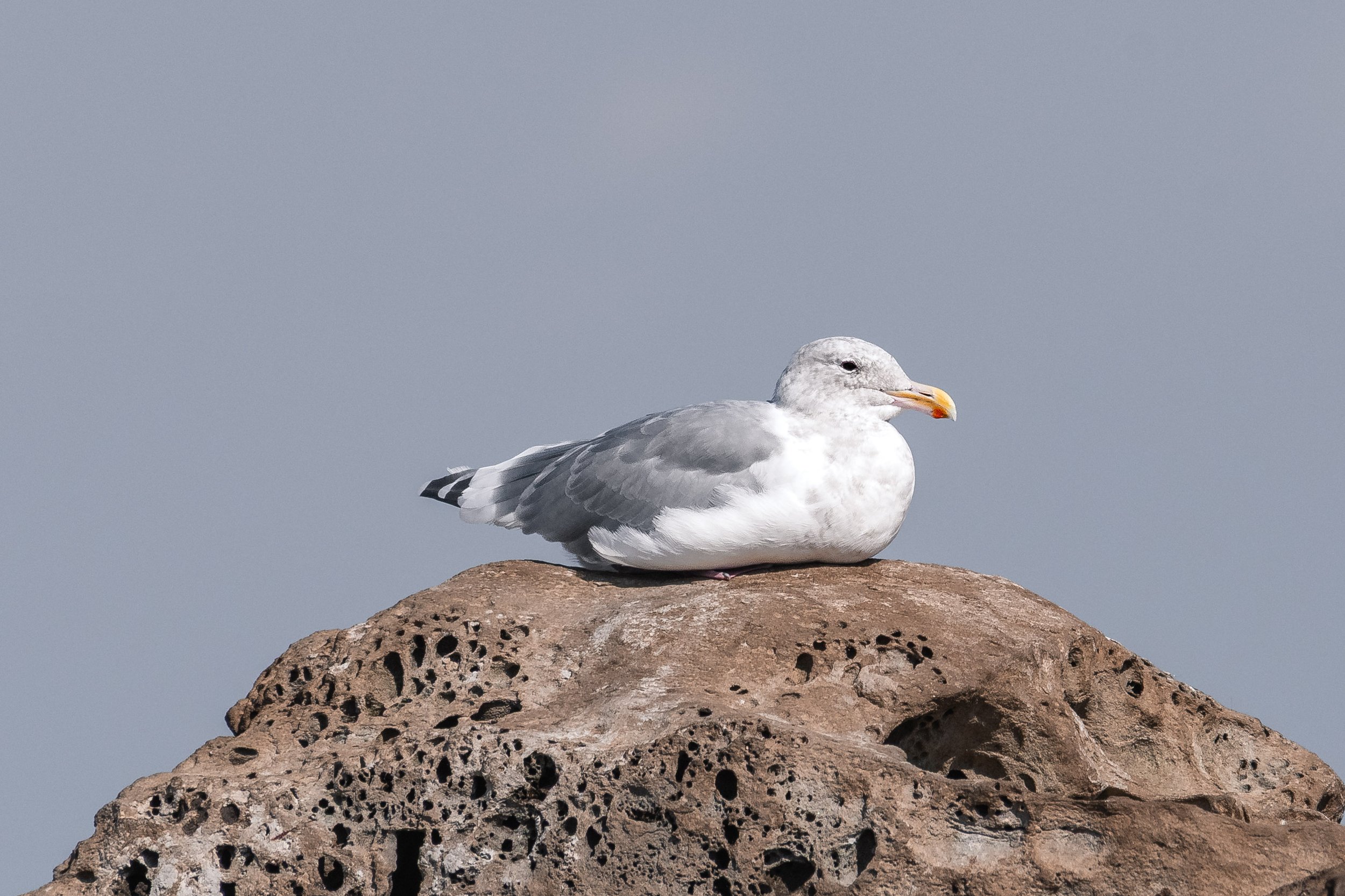
A Gull comfy and cozy on the rocks. Photo by Evan Hessels.
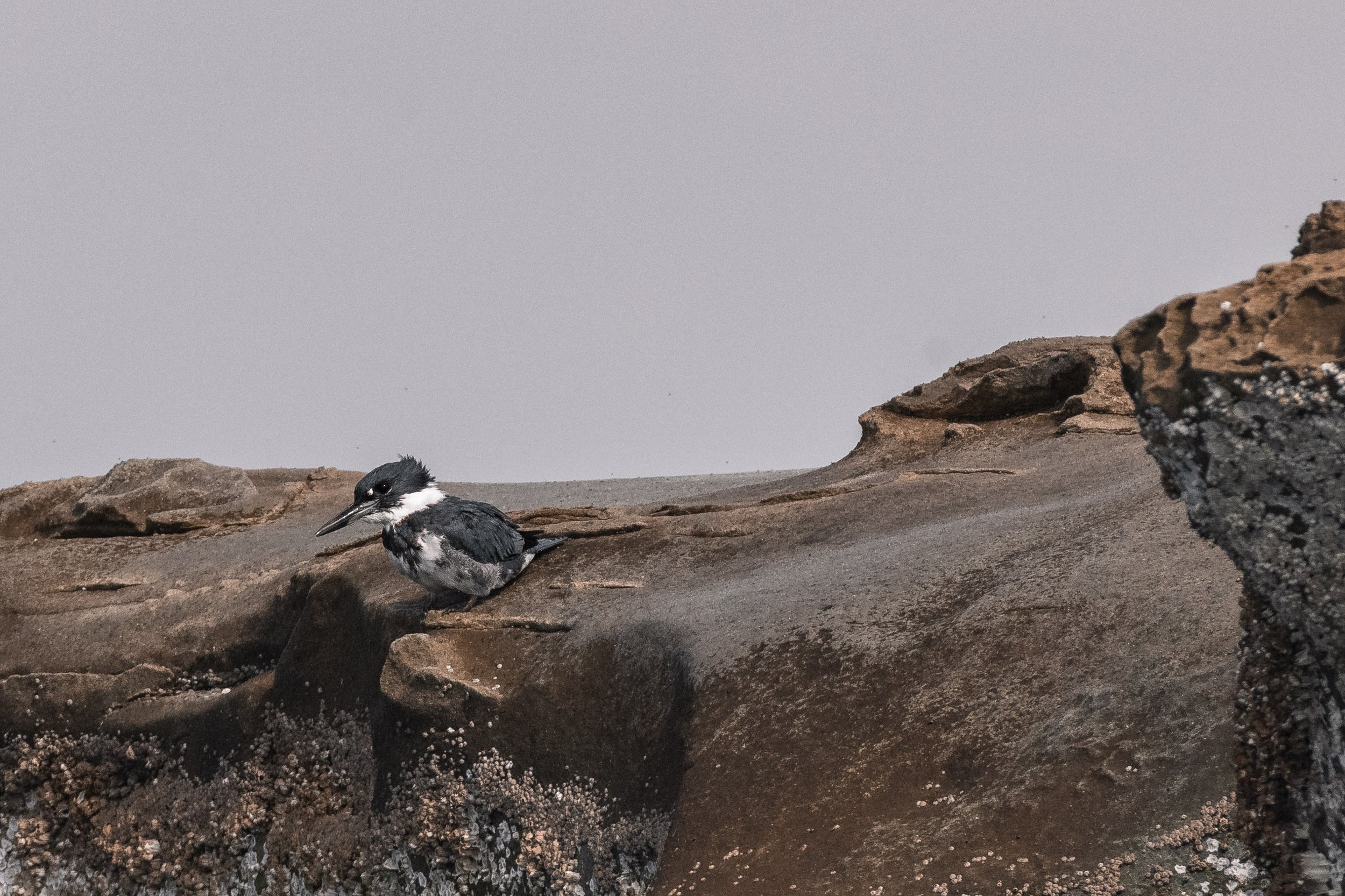
A Belted Kingfisher - not a very common sight at Stinky Rocks! Photo by Hayleigh Hilbert.
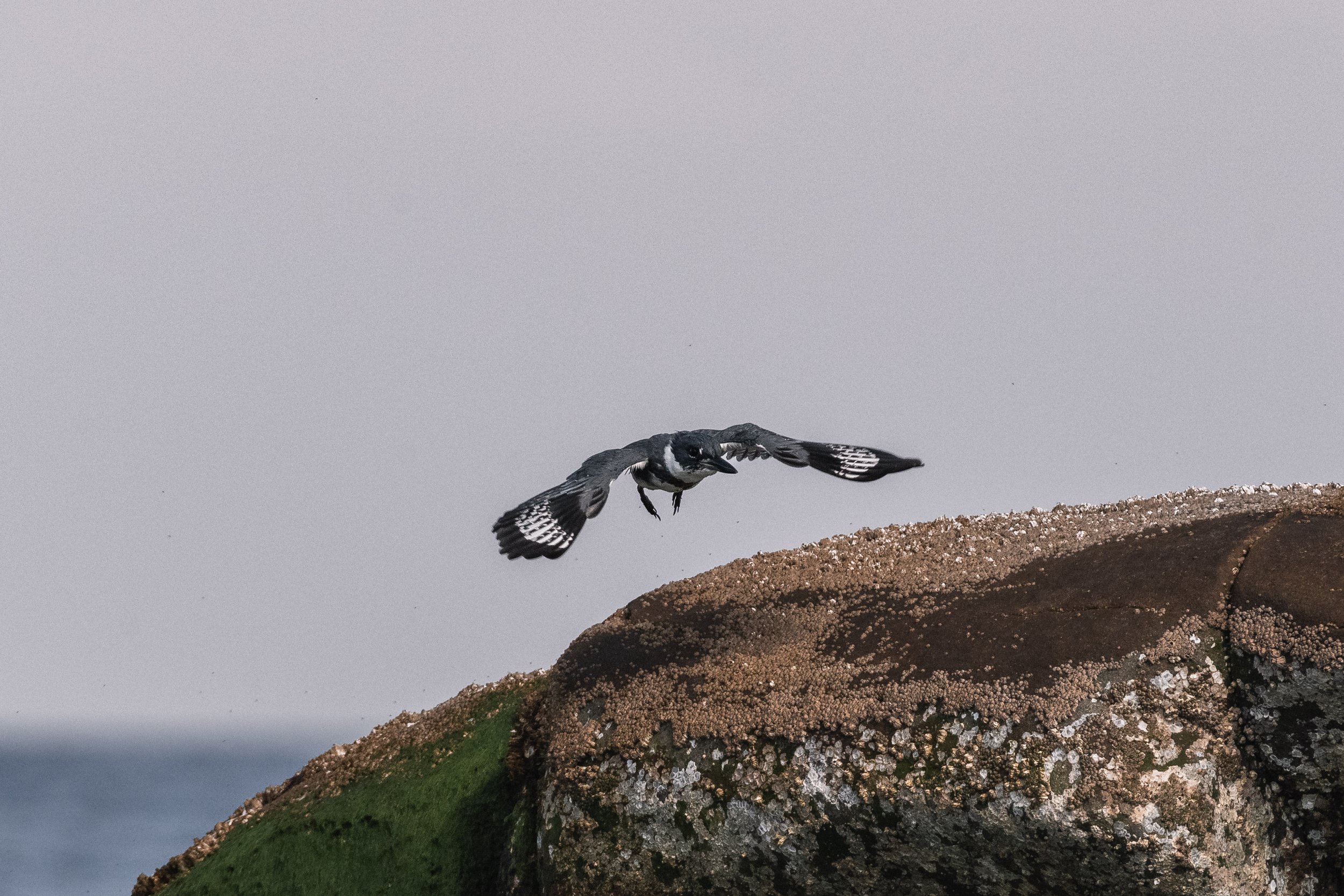
Take off! Photo by Hayleigh Hilbert.
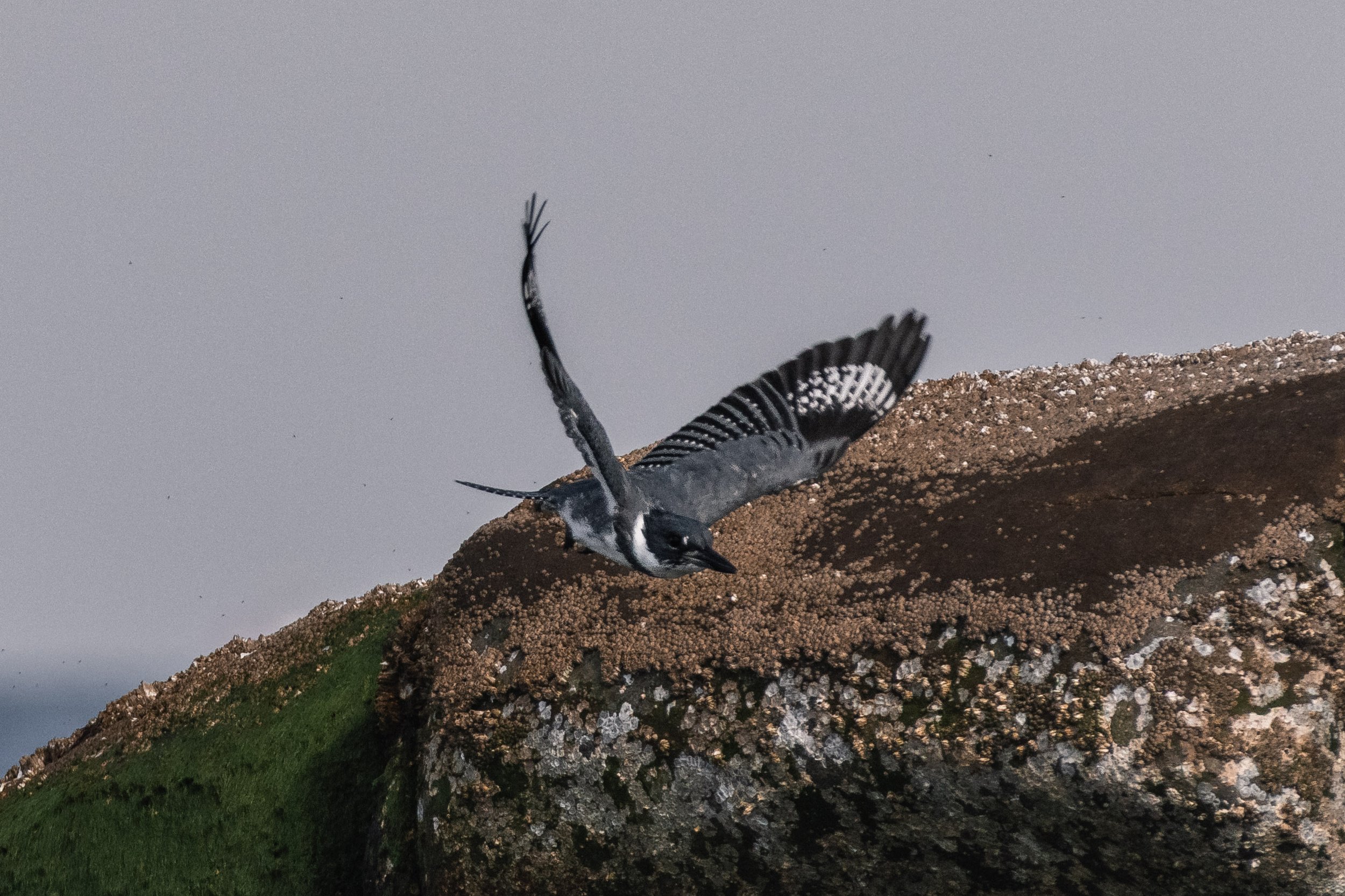
Heading on out. Photo by Hayleigh Hilbert.
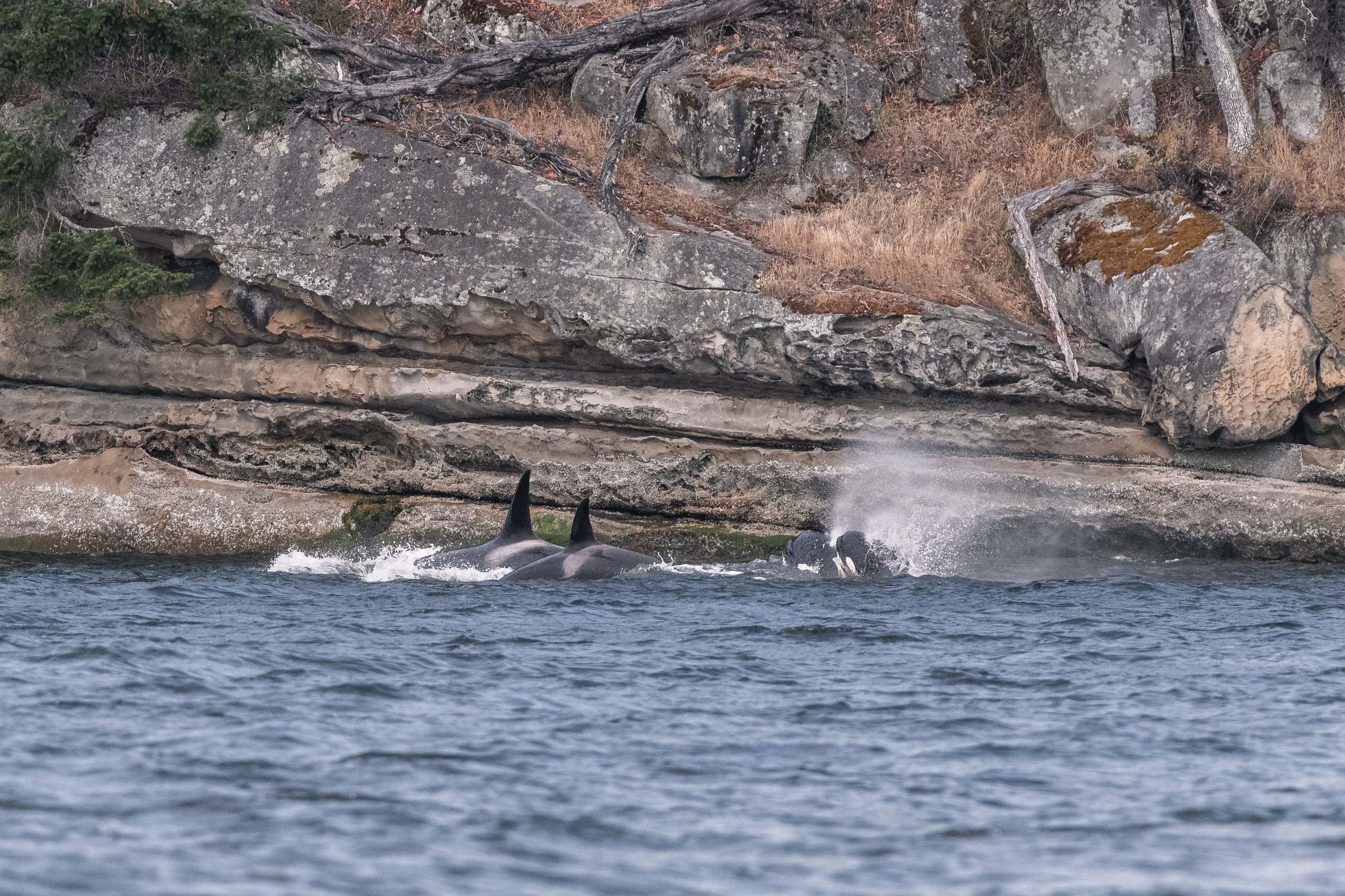
T109A Frio, Photo by Hayleigh Hilbert.
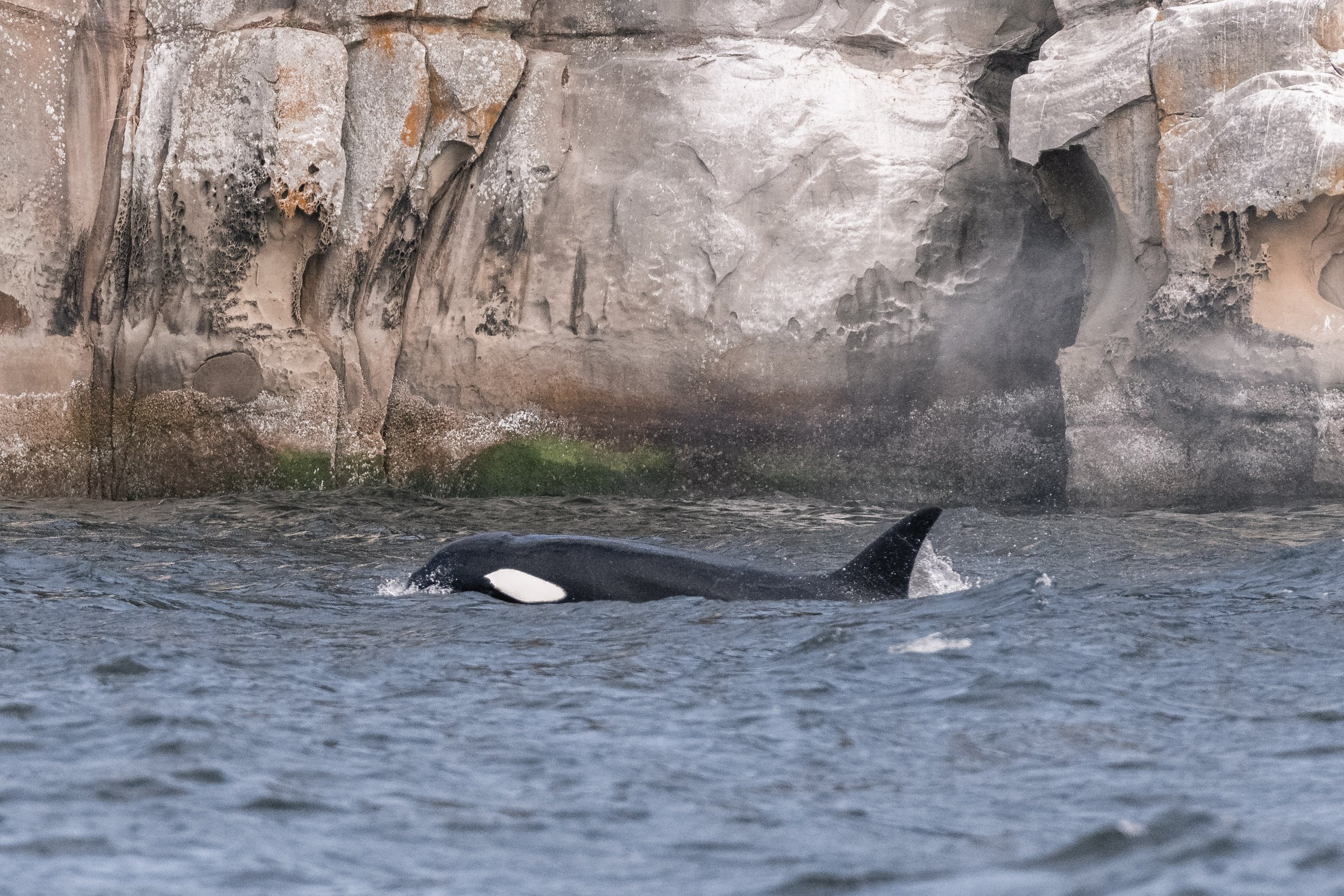
The matriarch, T109A Frio, with her eyepatch visible. Photo by Hayleigh Hilbert.
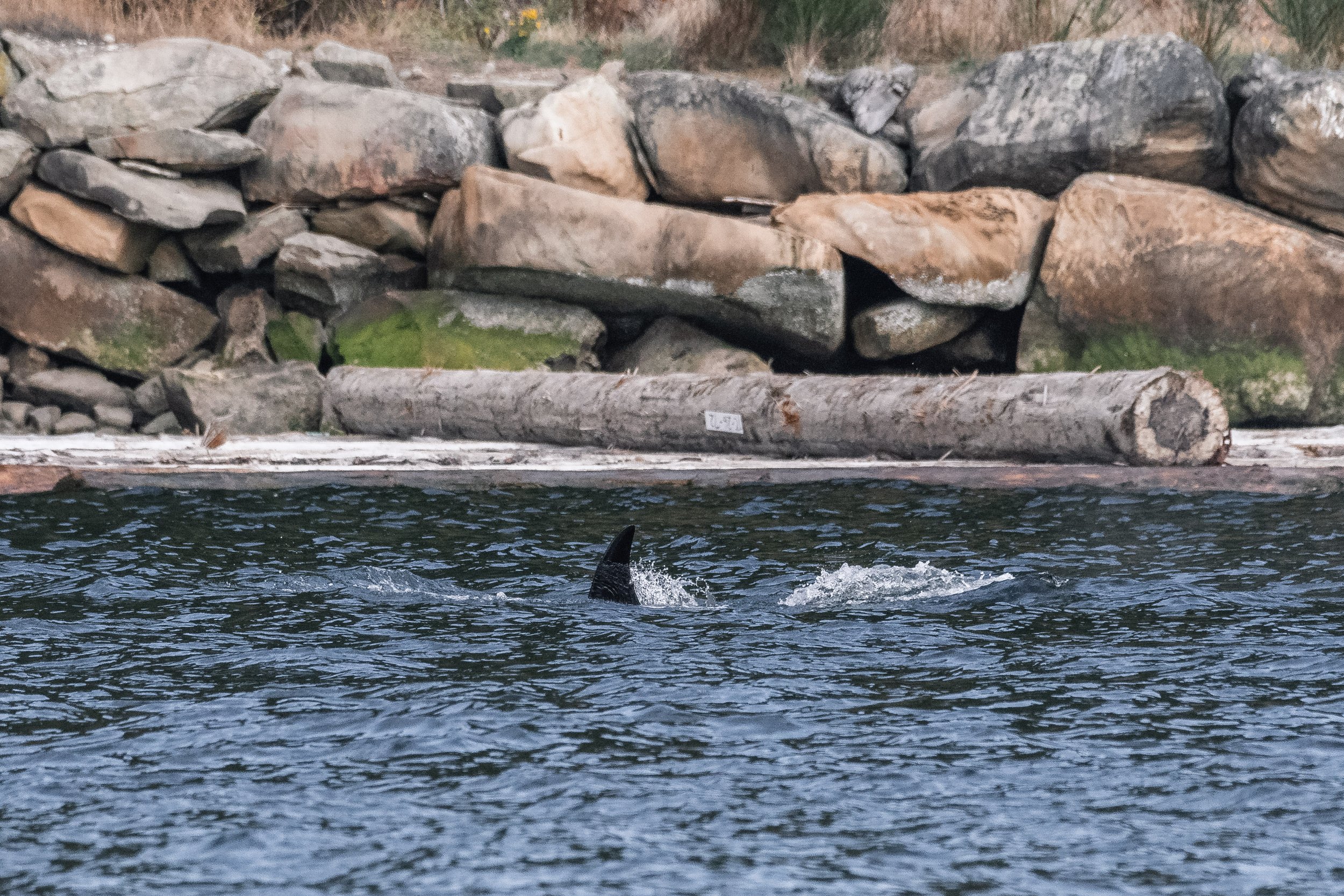
A tiny peek at T109A6 Riley as she dives. Photo by Evan Hessels.
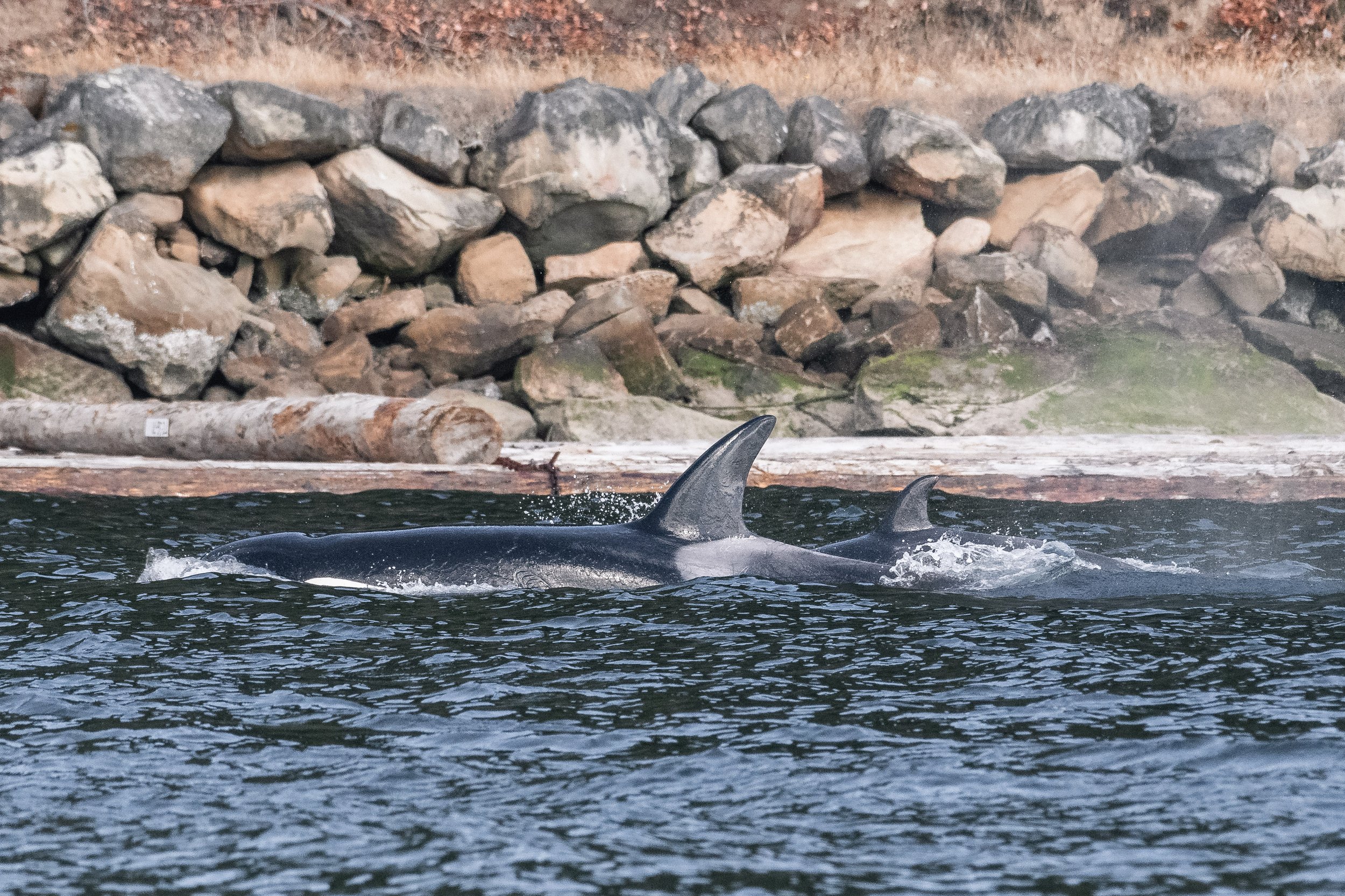
T109A4 Argyle with T109A8 Weiss in tow. Photo by Evan Hessels.
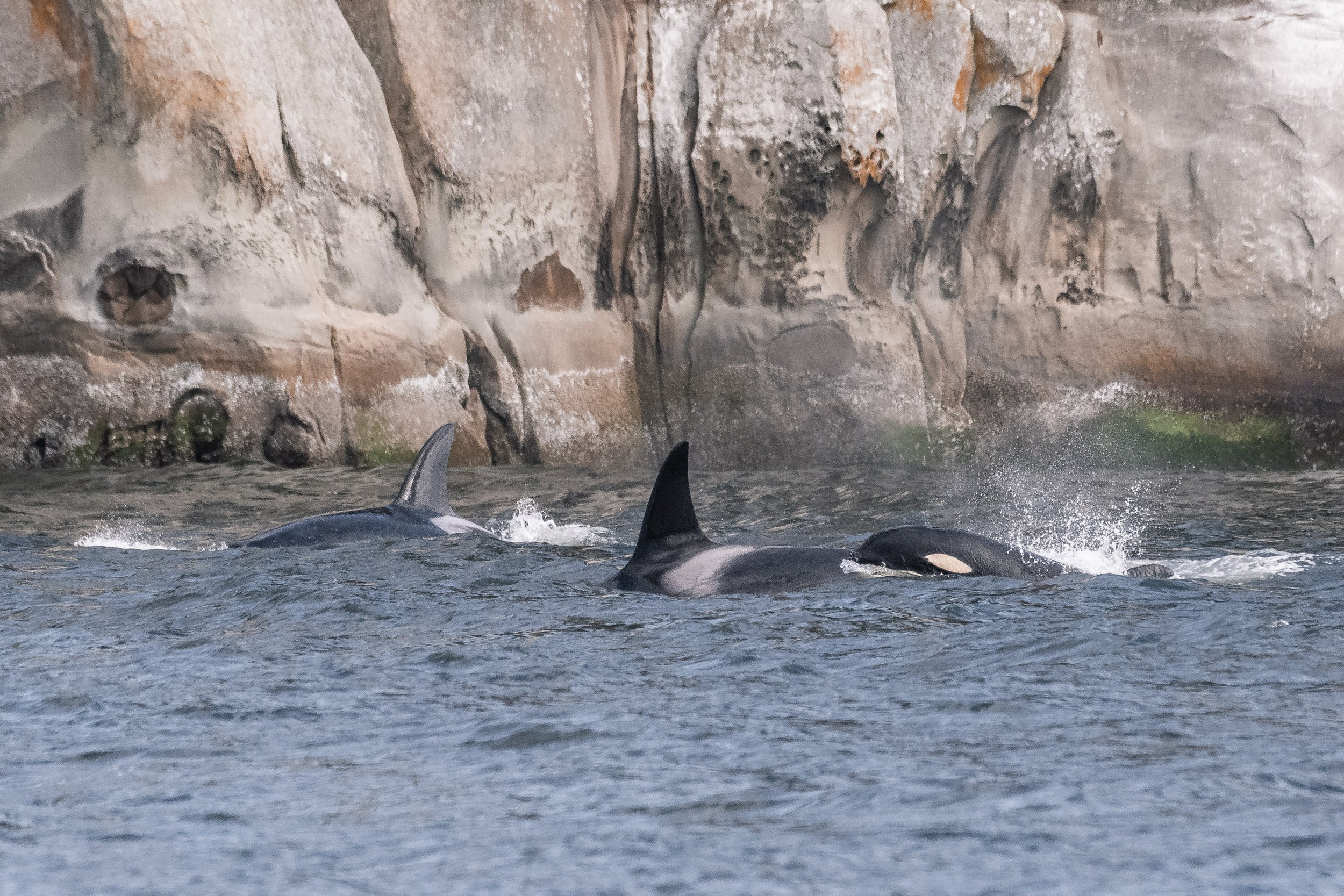
T109A Frio with her youngest calf T109A8 Weiss beside her, and T109A5 Argyle in front of them. Photo by Evan Hessels.
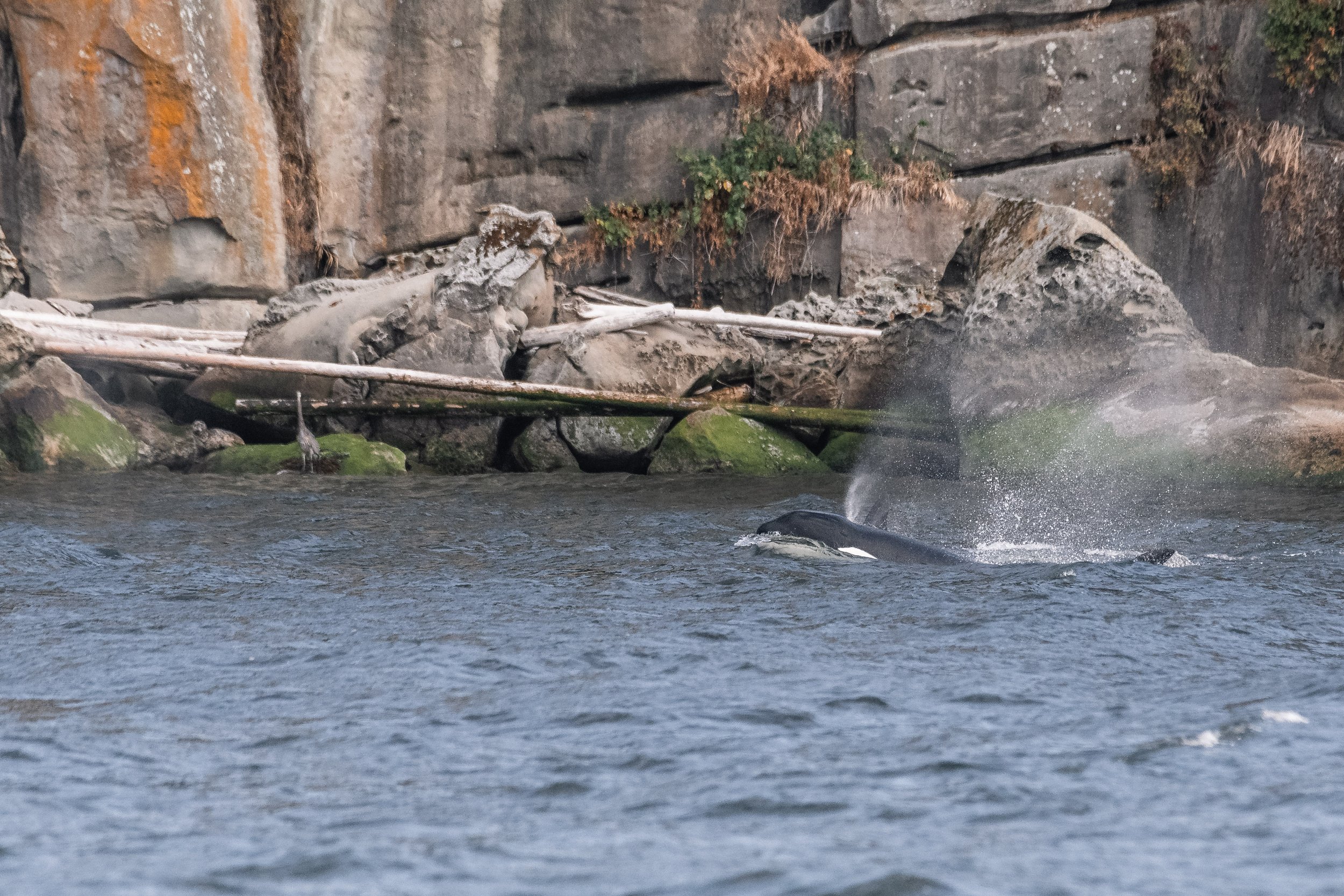
A big blow as the pod races by. Photo by Evan Hessels.
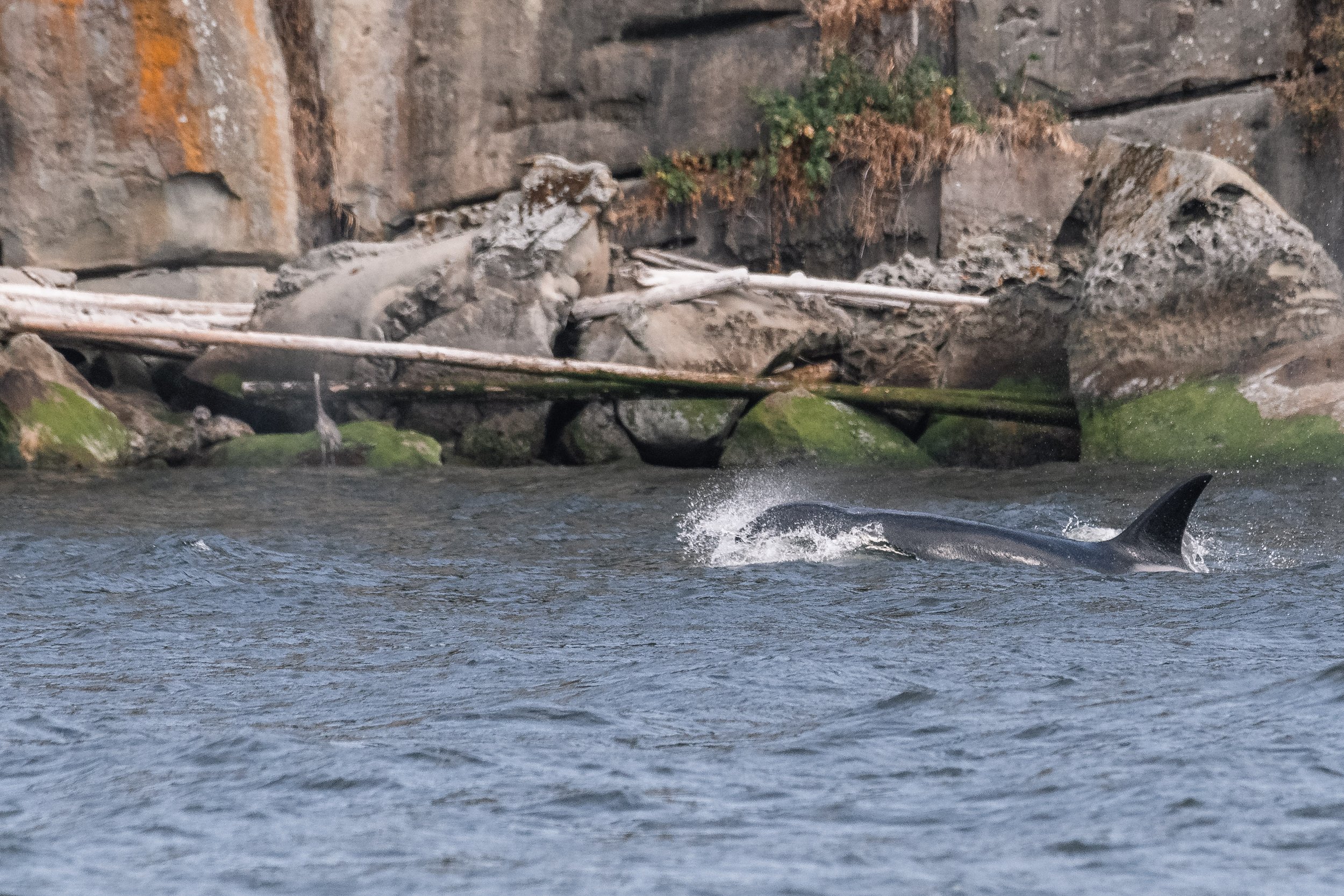
T109A Frio leading the charge besie the Gabriola Bluffs. Photo by Evan Hessels.
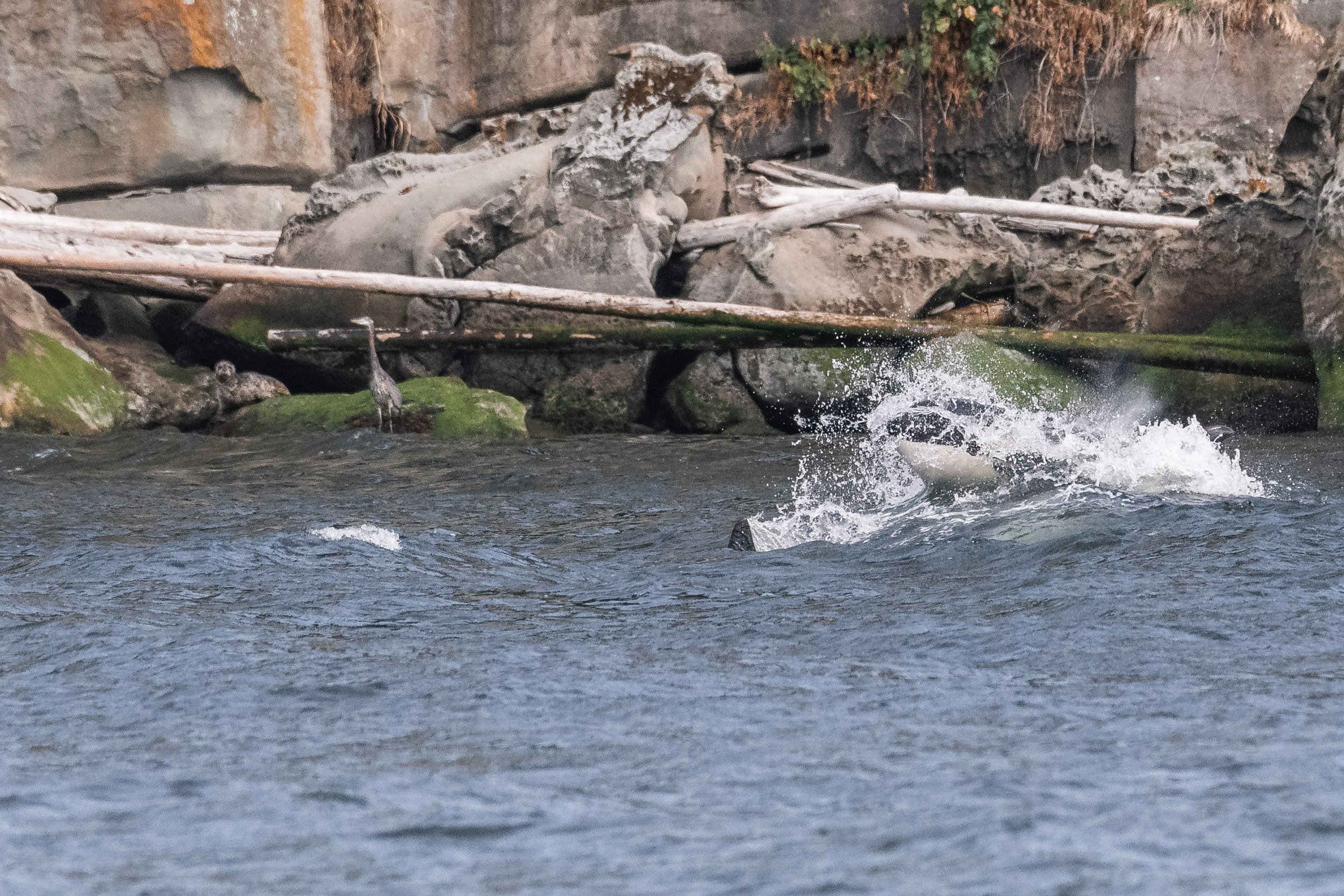
How many different species can you spo in this photo? Photo by Evan Hessels.
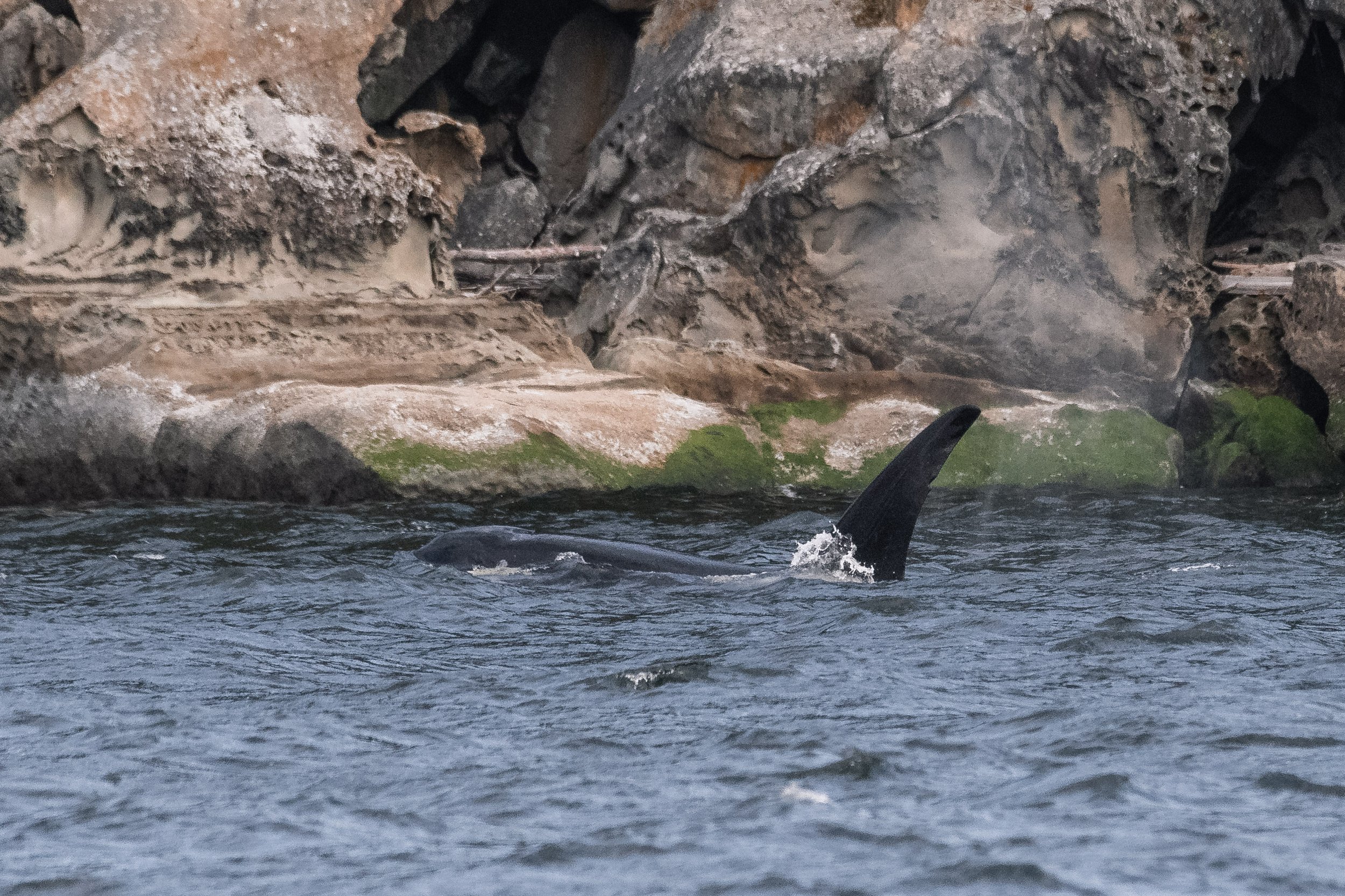
T109A4 Garrett holding up the rear. Photo by Evan Hessels.