
September 26, 2026, 9:00 AM - A Humpback Hat Trick
Our day began with all three boats travelling over Gabriola Island, where it didn't take long to spot our first humpback whales. Two familiar fins appeared at the surface as Smiley (BCY0995) and Merlin (BCY1033) travelled together through the area.
Merlin is not a whale we regularly encounter, although he does seem to appear about once a year. His occasional visits remind us that the humpbacks we see here are part of a much larger population moving throughout the northeast Pacific.
For humpbacks, British Columbia is primarily a feeding ground. During the warmer months, these whales move into productive northern waters where prey such as herring, krill and other schooling fish can provide the energy they need. Rather than staying in one place, they move where food is available, and some individuals may spend weeks or months in the region while others pass through during migration.
This also helps explain the constantly changing combinations of whales we encounter.
Humpbacks are generally much less socially fixed than killer whales. While a pod of killer whales may consist of closely related individuals that remain together for years or even decades, humpback associations are often much more fluid. Two whales may travel together for a short period before separating, and the same individuals may not be seen together again.
So while Smiley and Merlin were travelling together when we found them, we had no way of knowing how long that association would last.
After spending some time with the pair, one of our boats continued farther south and found another two humpbacks, Crackle (BCY1277) and BCY1483. They were travelling together as well, but their encounter was brief. Before long, word came through that the other boats had located another pair nearby, this time with plenty of surface time.
That sent all three boats in the same direction, where we found Snoopy/Gibbous (BCY0770) and Hydra (BCY1000) travelling together.
Three different pairs of humpbacks in a single trip gave us a fascinating glimpse into how dynamic their movements can be. Rather than a fixed group of whales following a predictable routine, we were seeing individuals overlapping in the same productive waters at different points throughout the day.
For some whales, that overlap may last only a short time. For others, it may continue for hours or even days. Migration adds another layer to the picture. Humpbacks travel between their feeding and breeding grounds each year, and an individual moving through British Columbia may only spend a short time here before continuing north or south.
That may be part of why Merlin appears so infrequently. His occasional sightings do not necessarily mean that he is a rare whale. He may simply spend most of his time elsewhere in his range, crossing through our local waters only occasionally.
While the humpbacks kept moving, we also made time for some of the year-round wildlife that makes these waters home. A stop at Stinky Rock gave us the chance to watch Harbour Seals and Steller Sea Lions resting around the rocks.
Stinky Rock is a particularly interesting place to see the contrast in how marine mammals use this environment. The humpbacks were constantly on the move, travelling through the surrounding waters in search of food, while the seals and sea lions could settle onto the rocks to rest before returning to the water.
By the end of the trip, we had seen three different pairs of humpbacks, along with two pinniped species at Stinky Rock.
It was a good example of why no two days on the Salish Sea are quite the same. The animals we find are responding to a living, changing environment, and what we see is only a small moment in their much larger story. Please enjoy the photos taken throughout the trip by Marine Naturalists Des Poier, Jordan Robinson, and Rosalie Burauen.
Smiley and Merlin
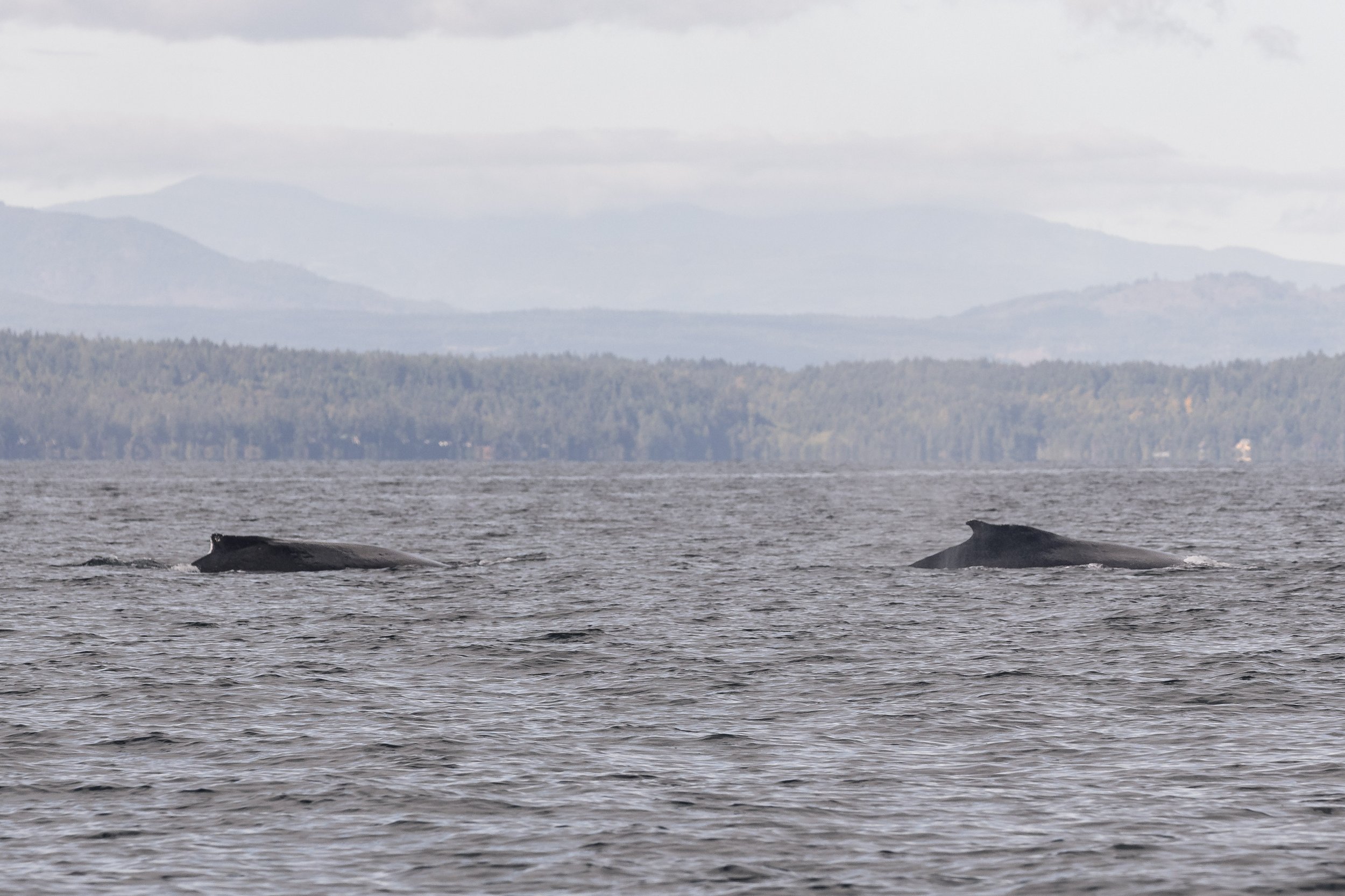
Merlin travelling behind Smiley. Photo by Jordan Robinson.
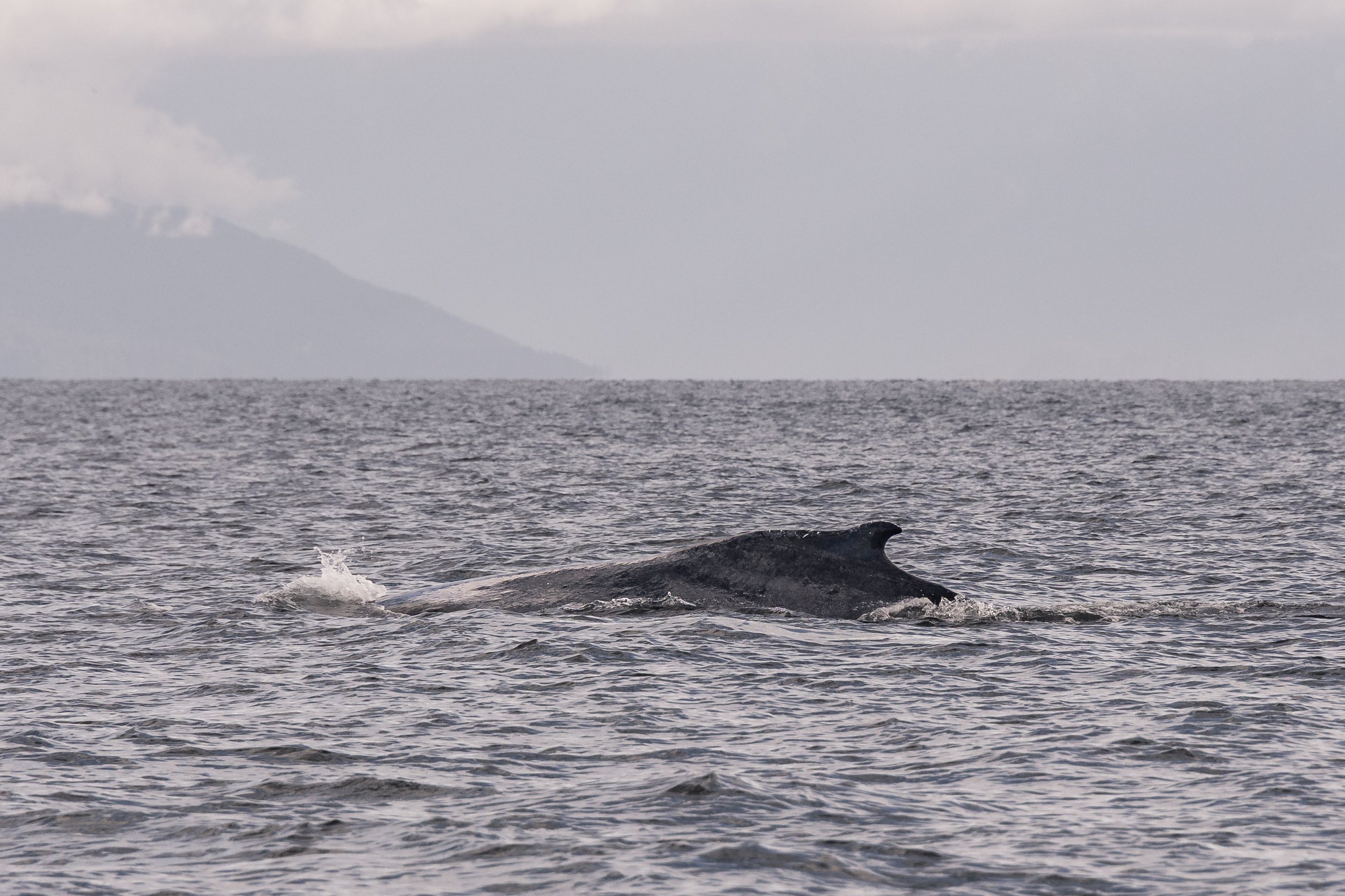
Smiley cruising on by. Photo by Des Poier.
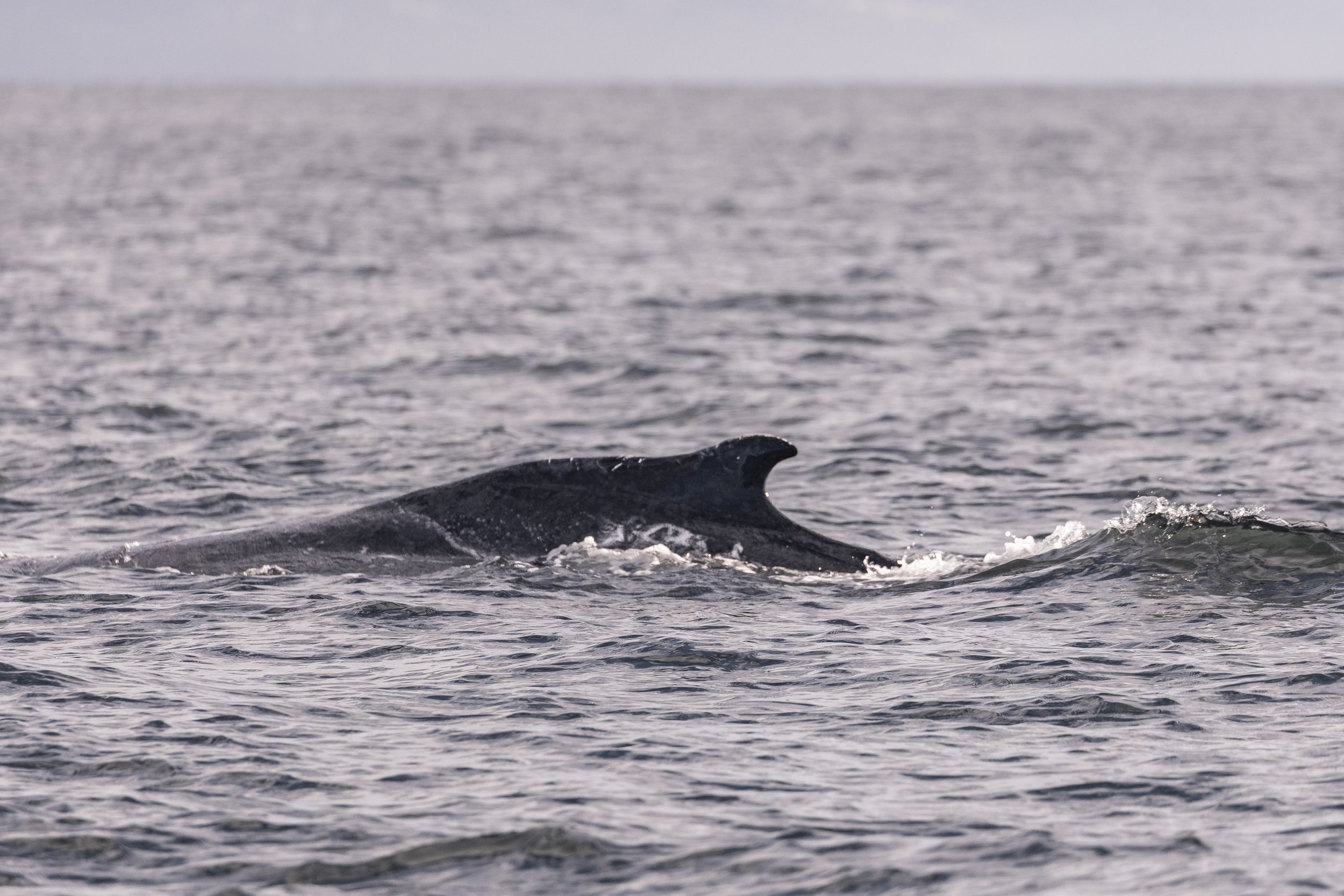
Smiley in the waves. Photo by Jordan Robinson.
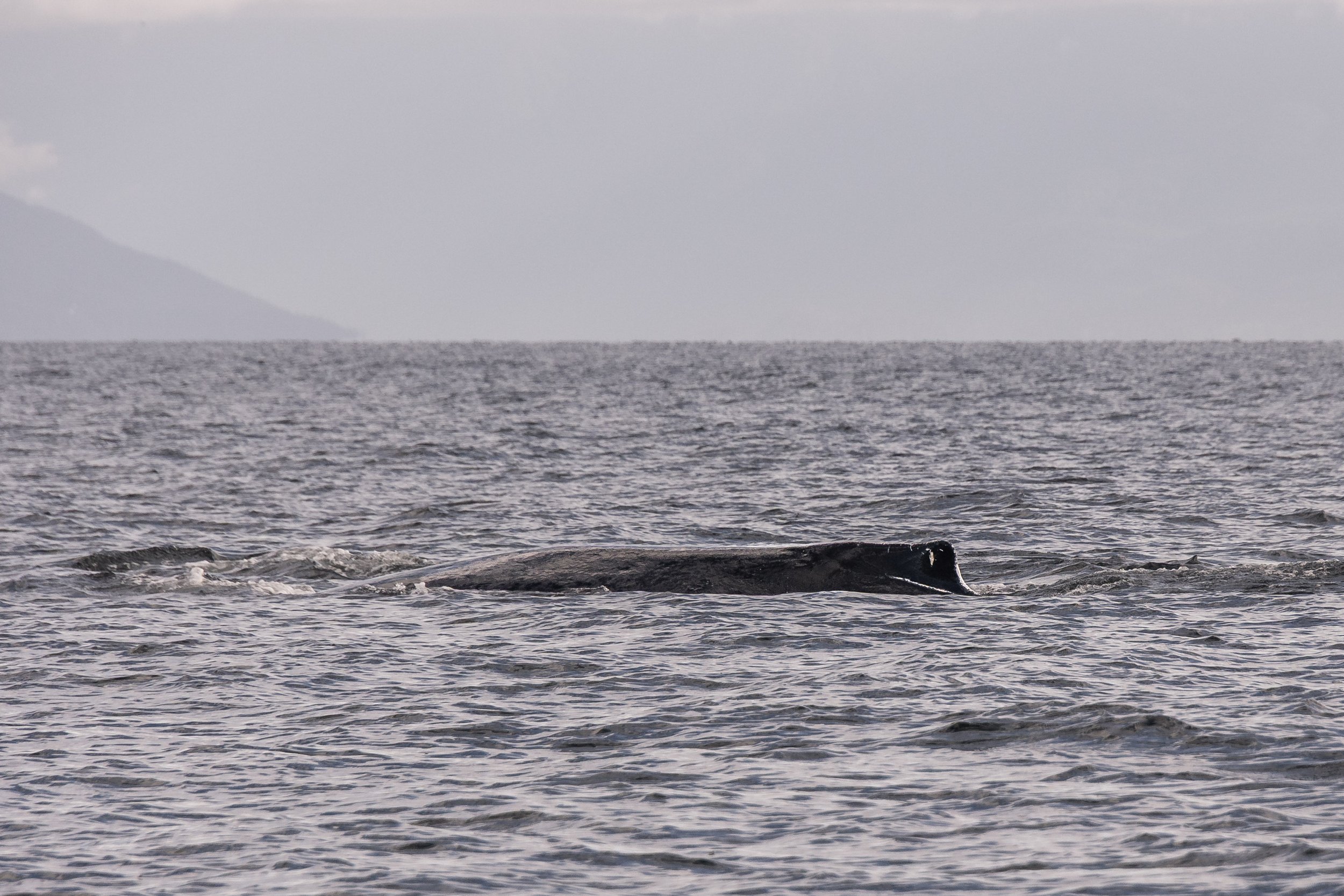
Merlin has two distinct scars on his left dorsal fin as seen here. Photo by Des Poier.
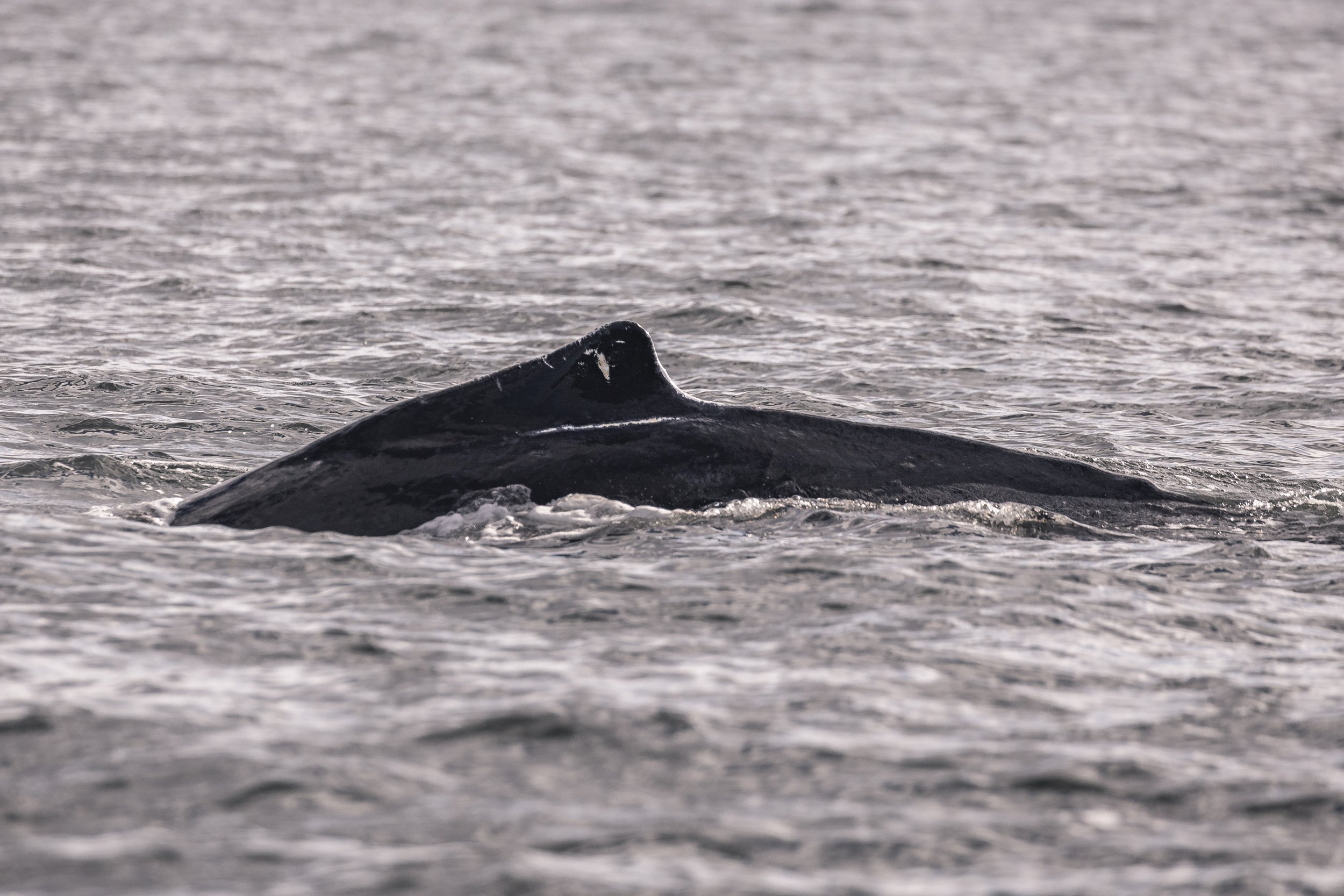
A closer look at Merlin’s scars. Photo by Jordan Robinson.
Crackle and BCY1483
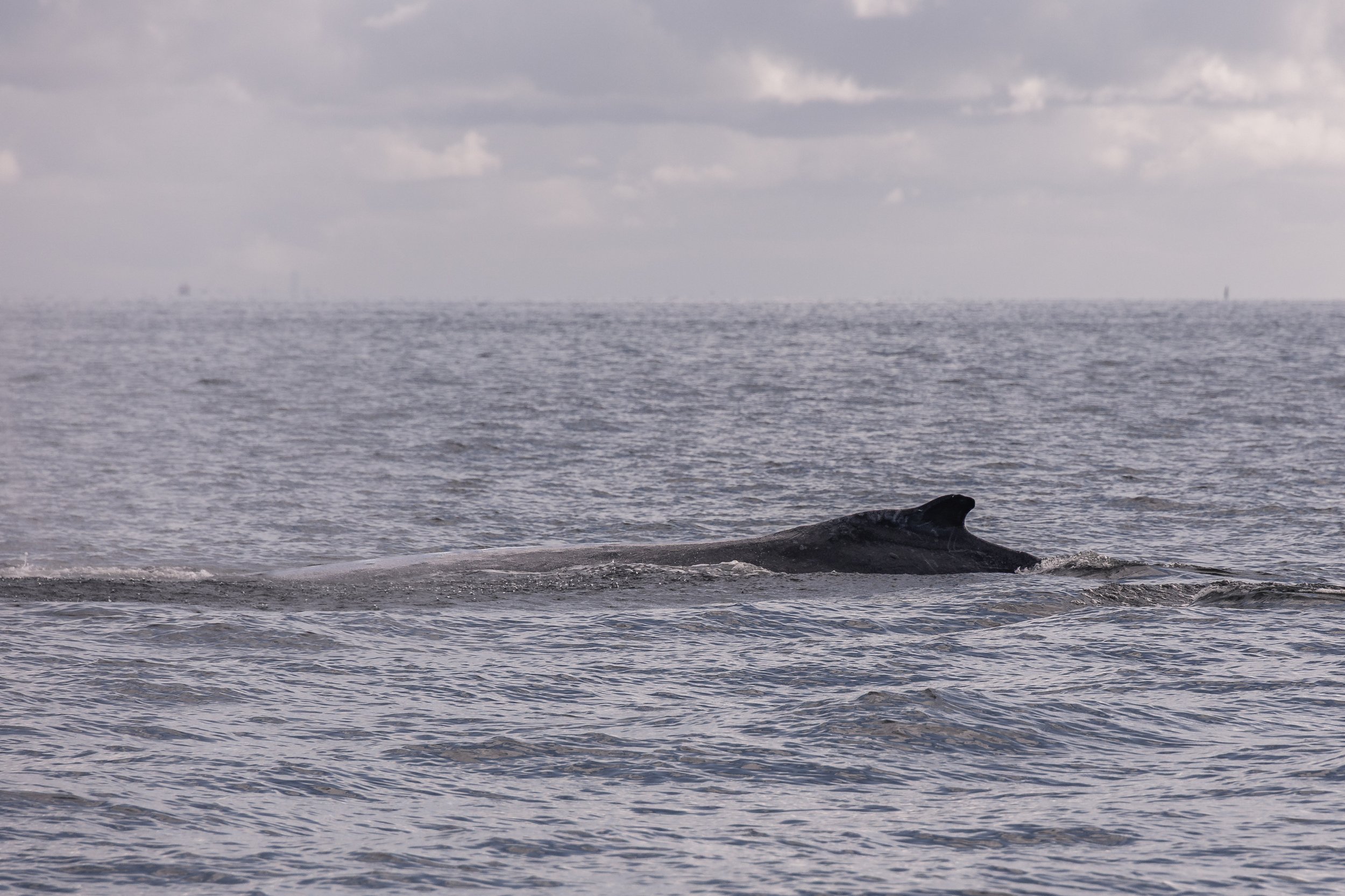
Crackle about to start diving. Photo by Des Poier.
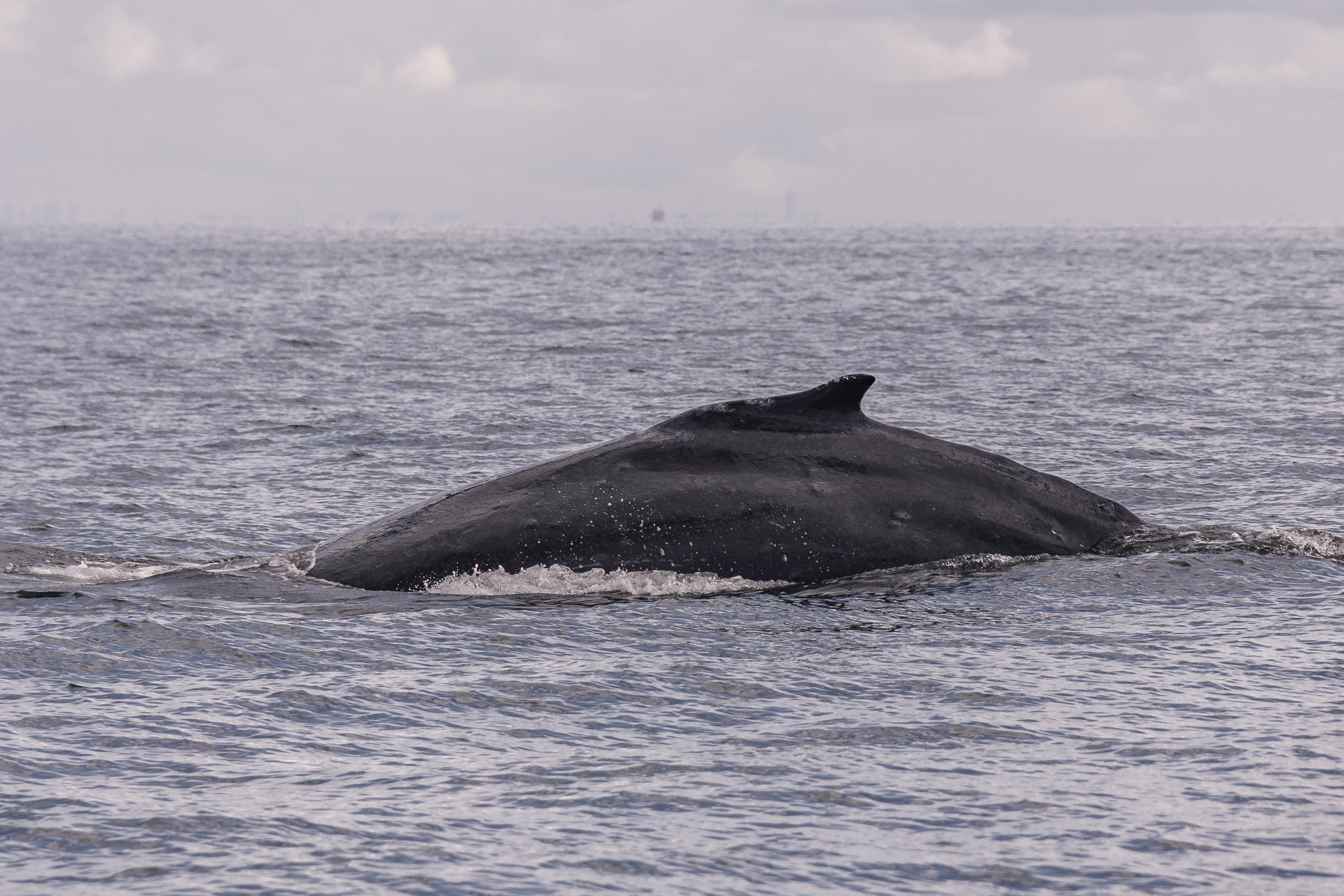
BCY1483 following close behind Crackle. Photo by Des Poier.
Snoopy/Gibbous and Hydra
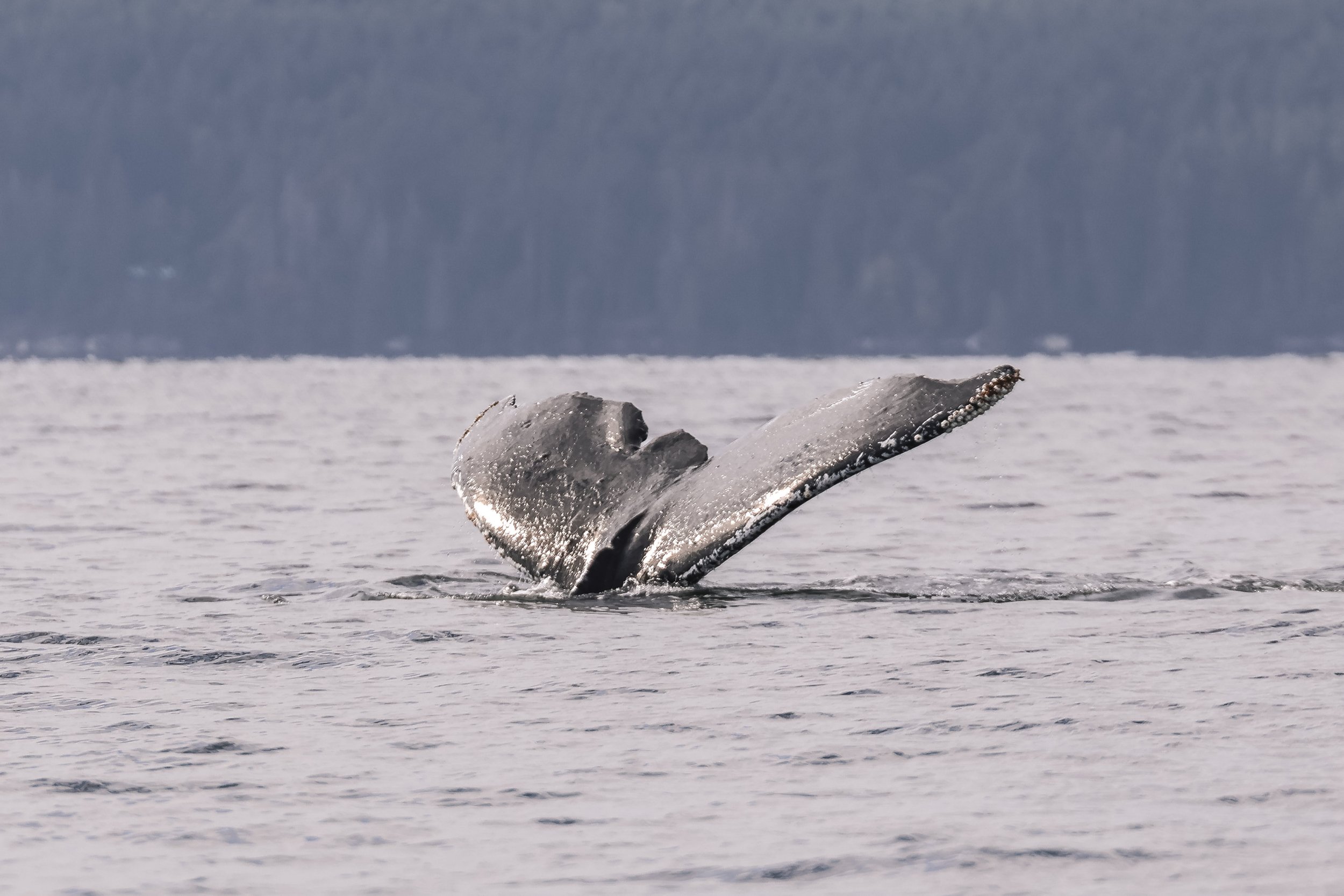
Even from the top side, Snoopy can be easily identified! Photo by Rosalie Burauen.
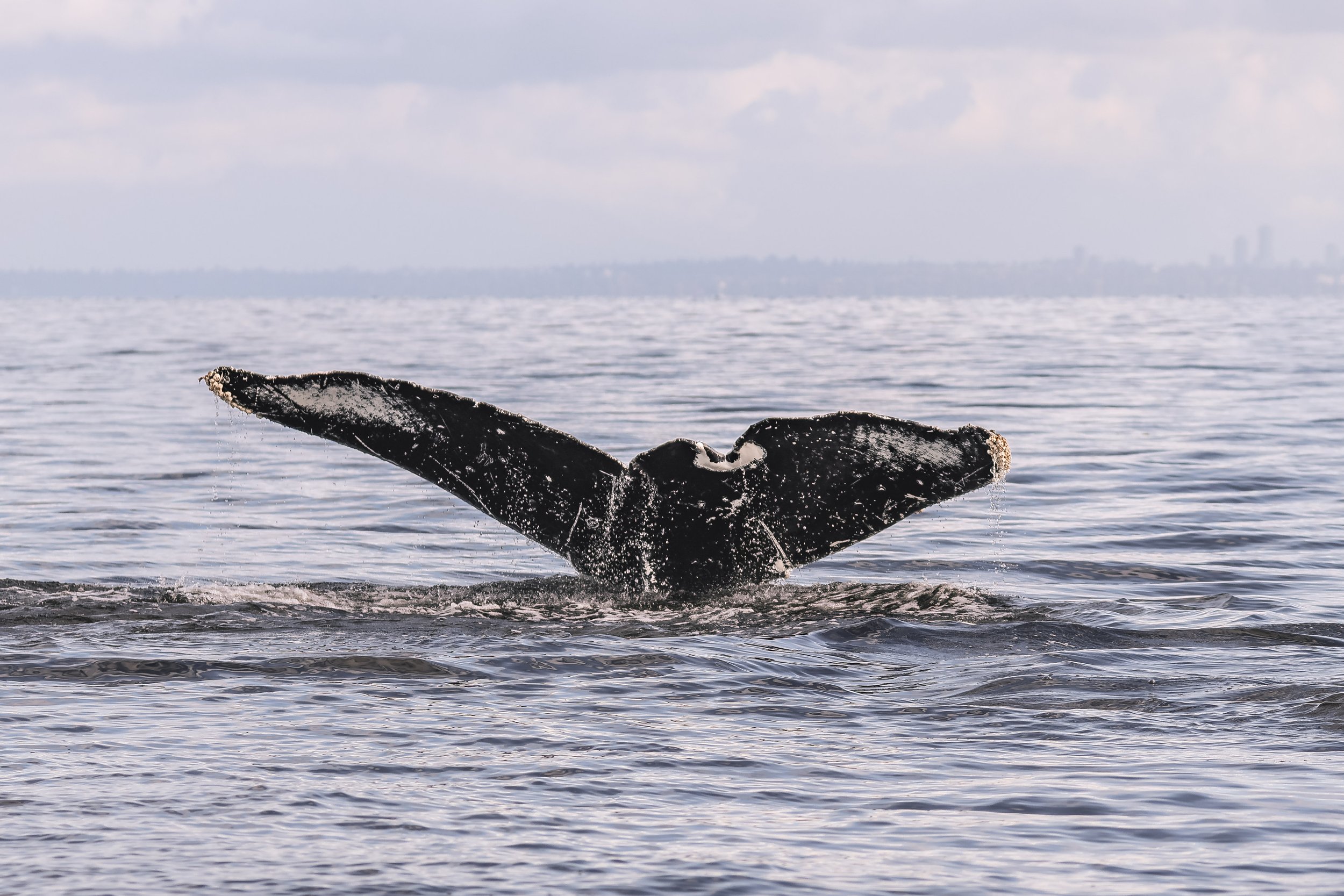
Snoopy has many scars all over his fluke. Photo by Rosalie Burauen.
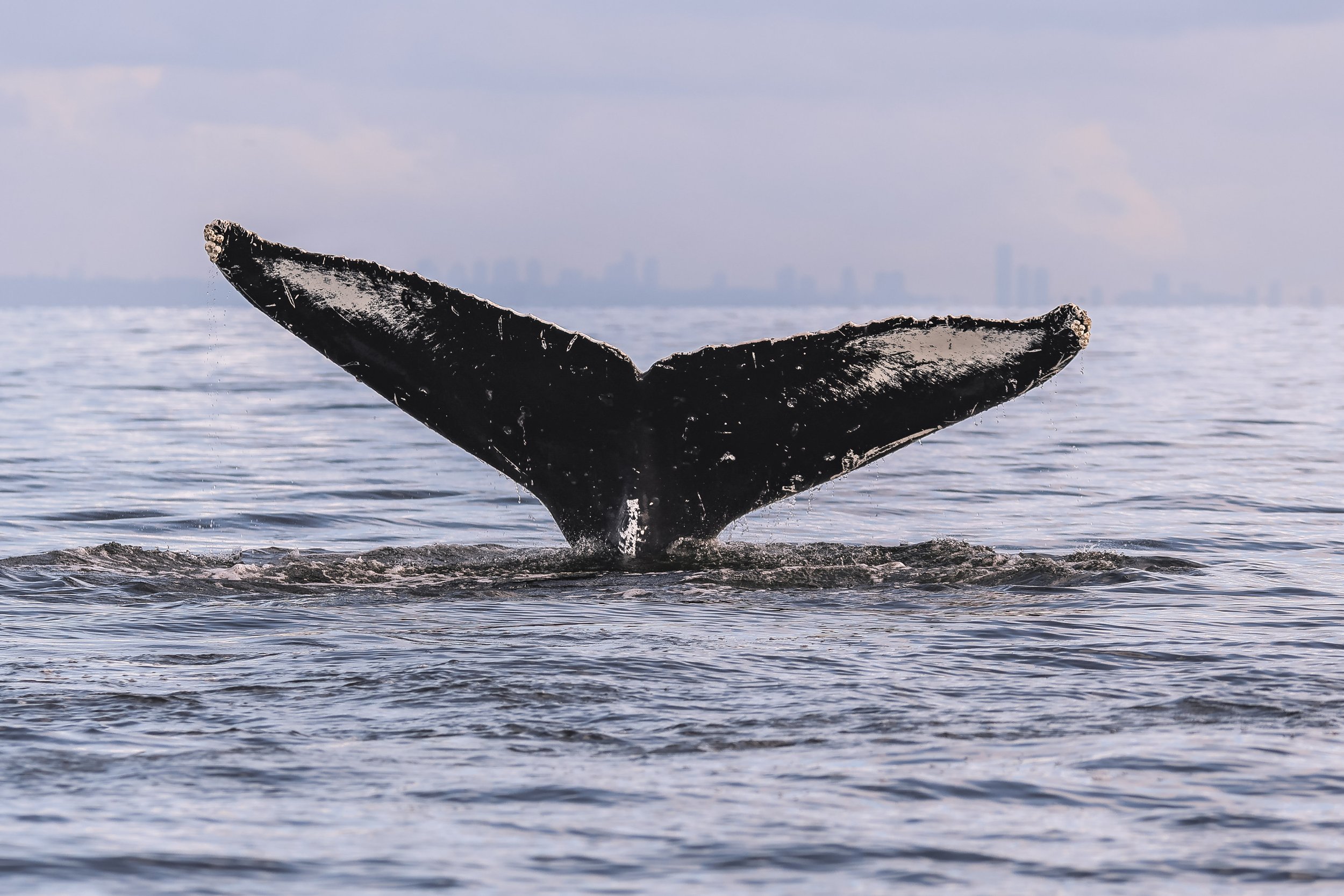
Hydra’s fluke, on the other hand, is much less scarred up. Photo by Rosalie Burauen.
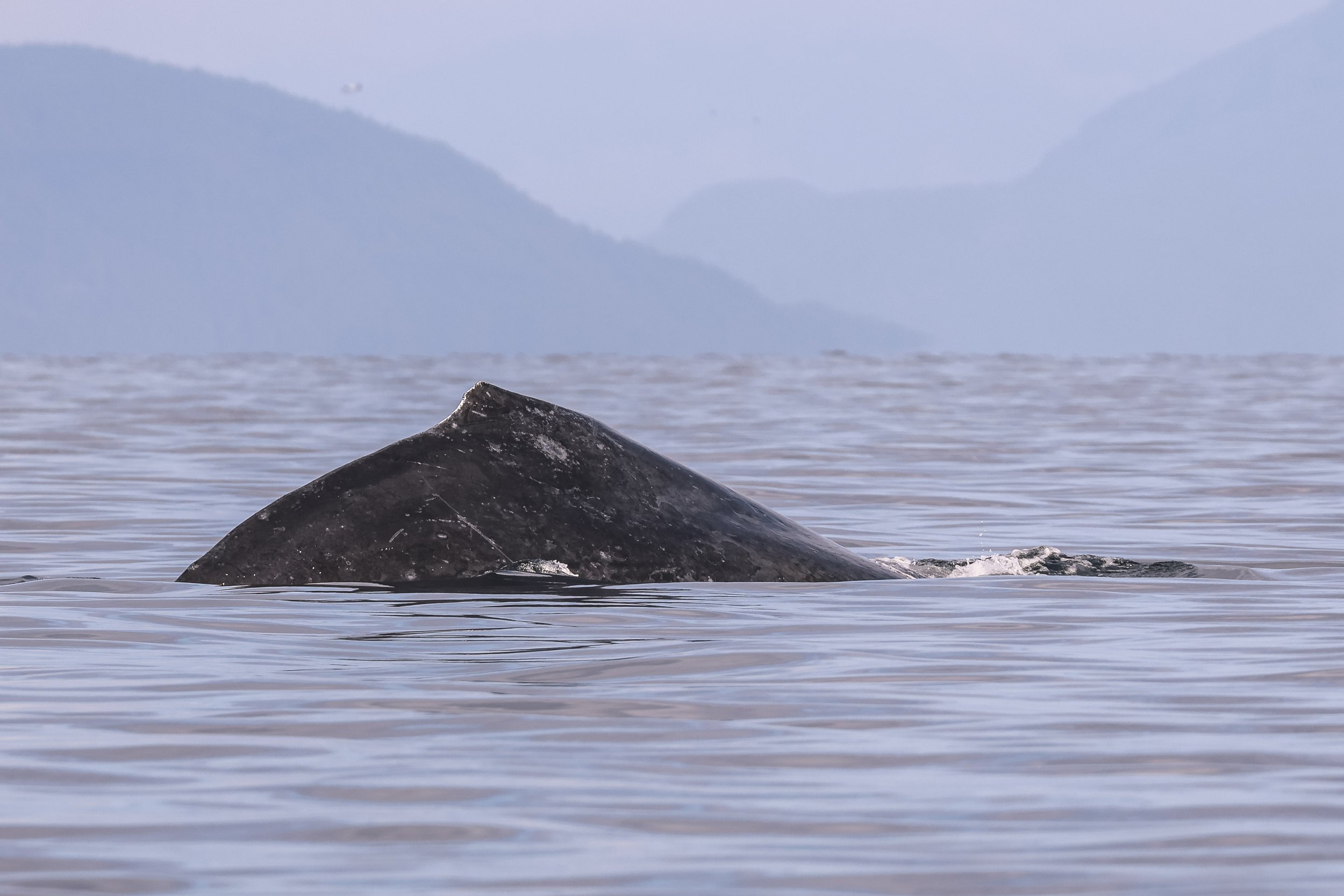
Hydra’s blunted dorsal fin as she dives. Photo by Rosalie Burauen.
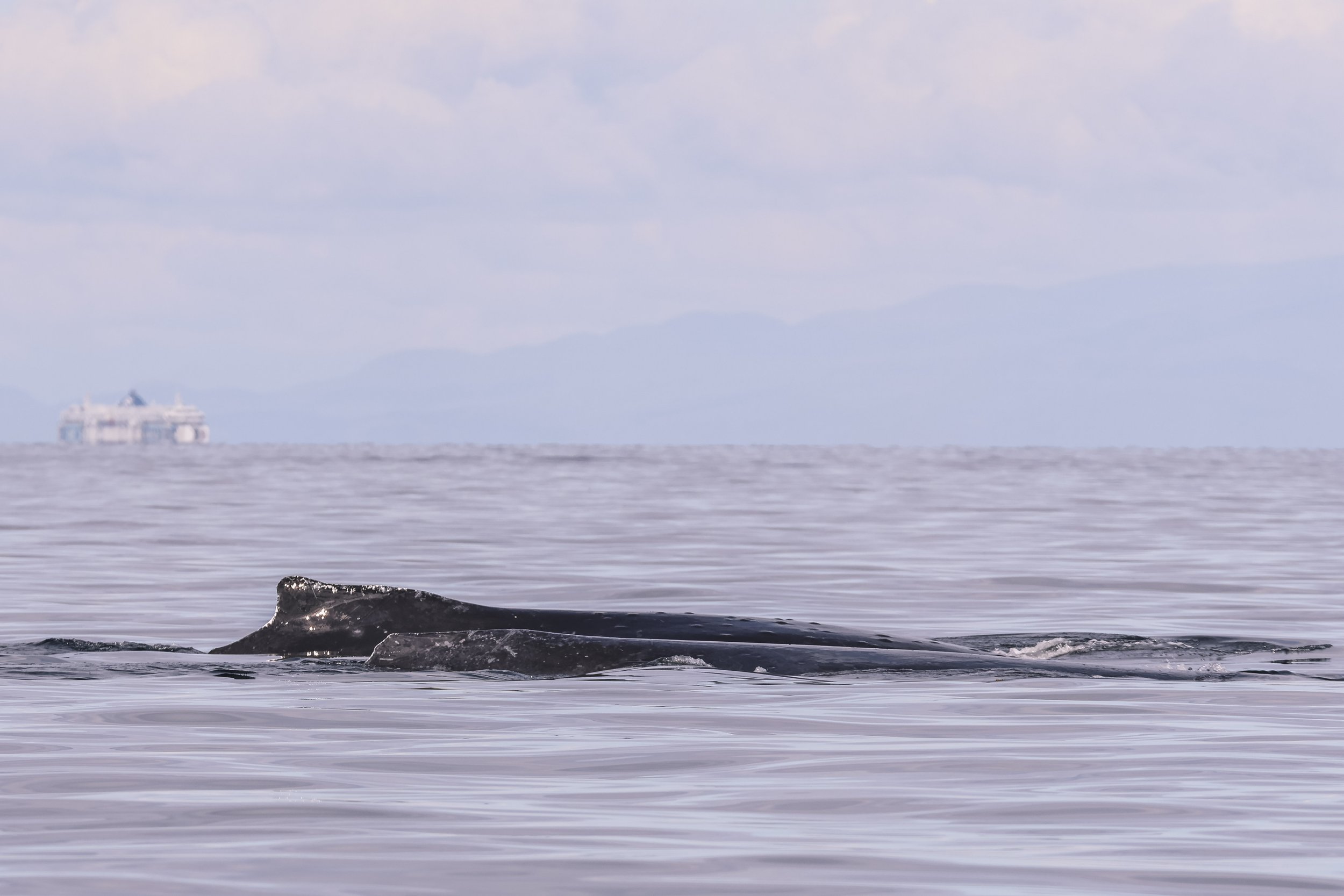
Snoopy and Hydra side by side with a BC Ferry in the background. Photo by Rosalie Burauen.
Other Wildlife
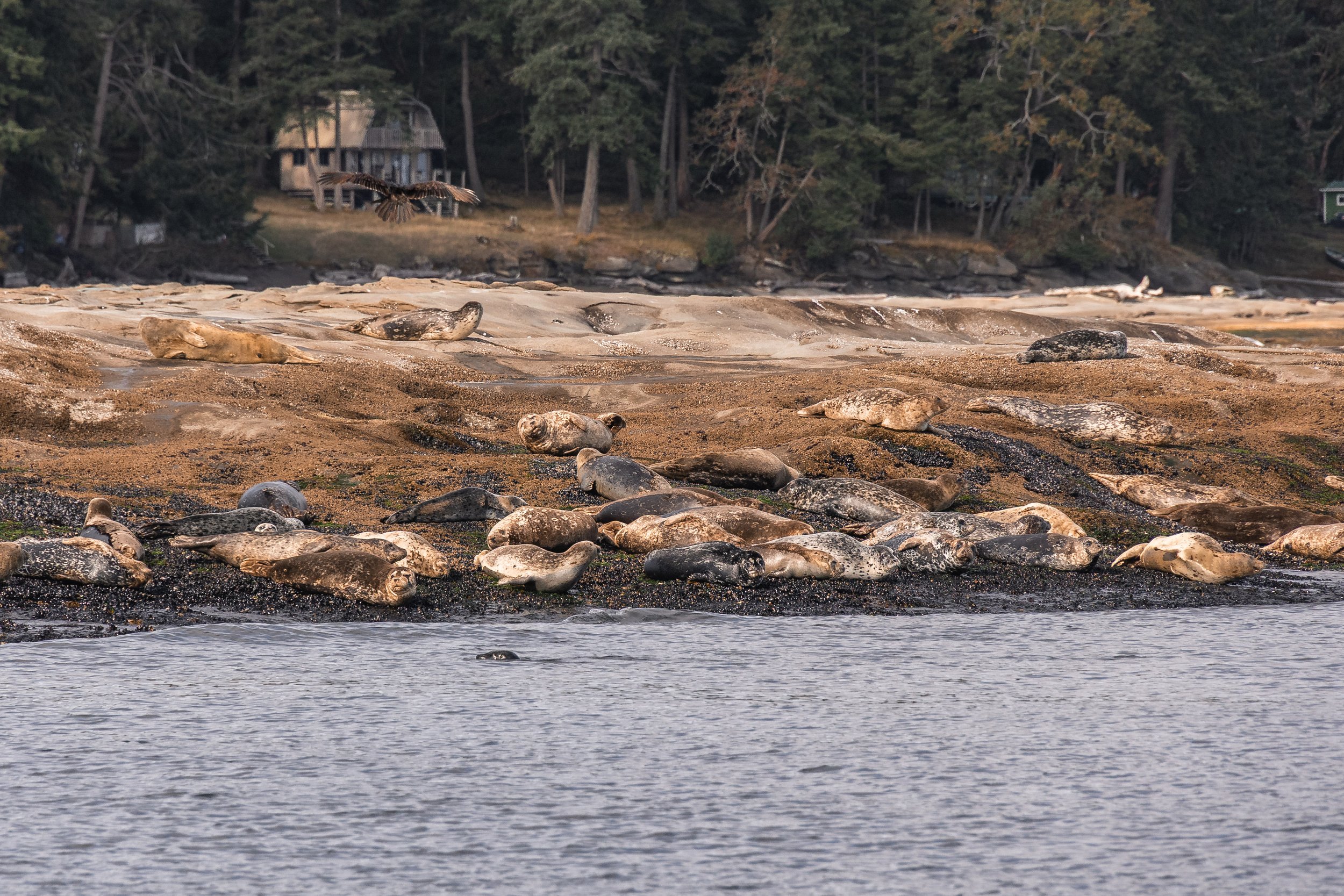
Harbour Seals are also cheekily referred to as Rock Sausages. Photo by Des Poier.
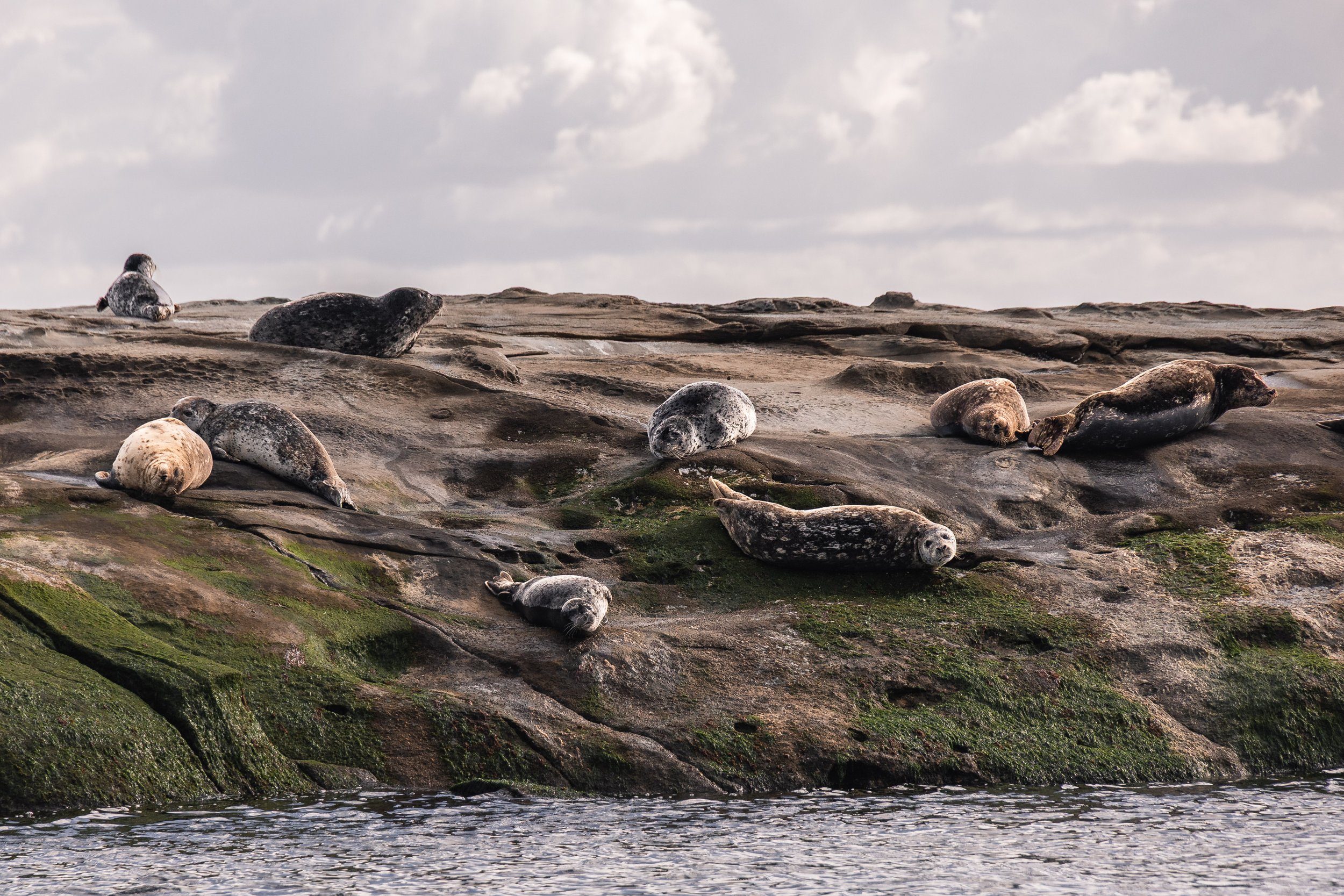
Huddled up high out of the water. Photo by Des Poier.
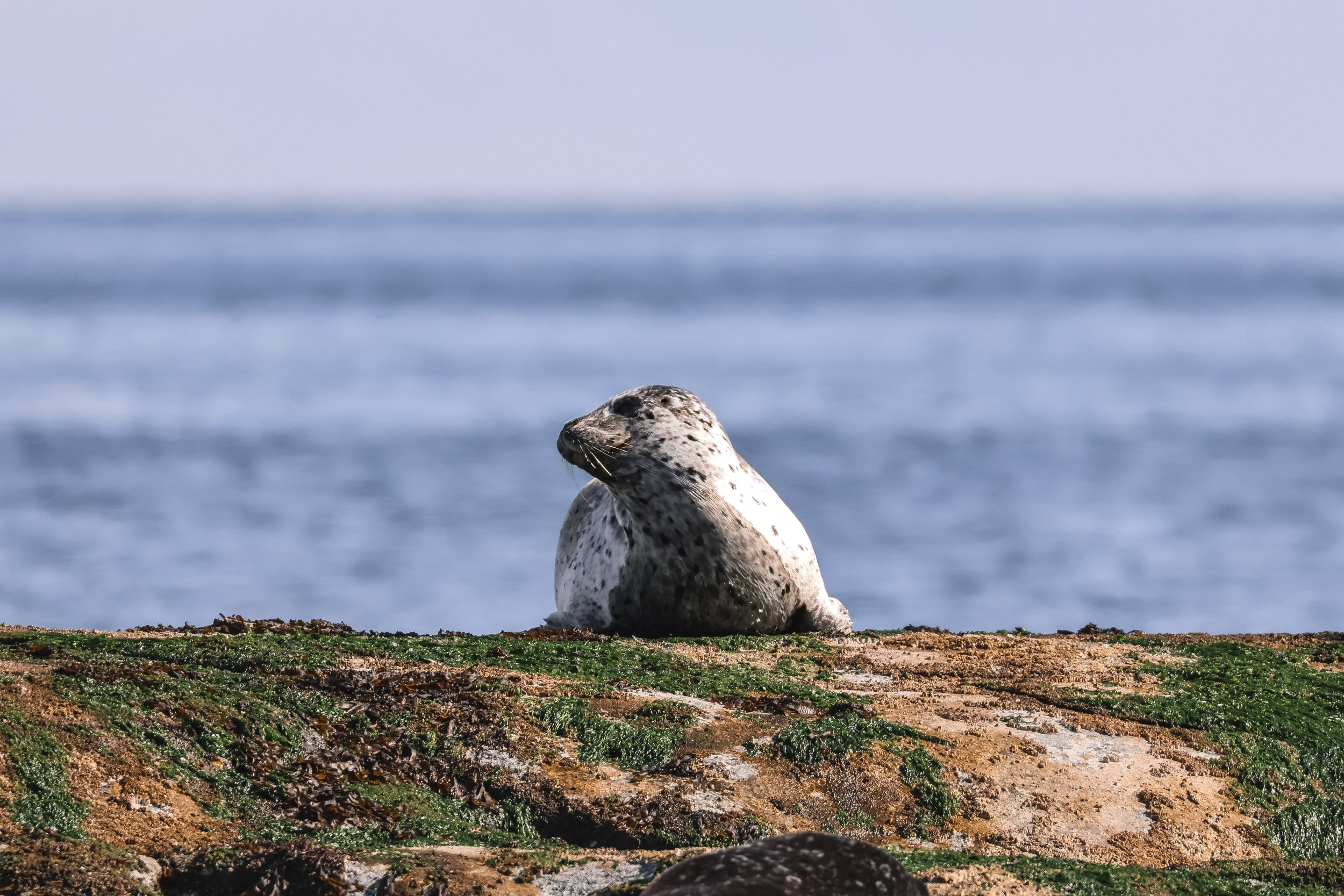
A lone Harbour Seal looks around. Photo by Rosalie Burauen.
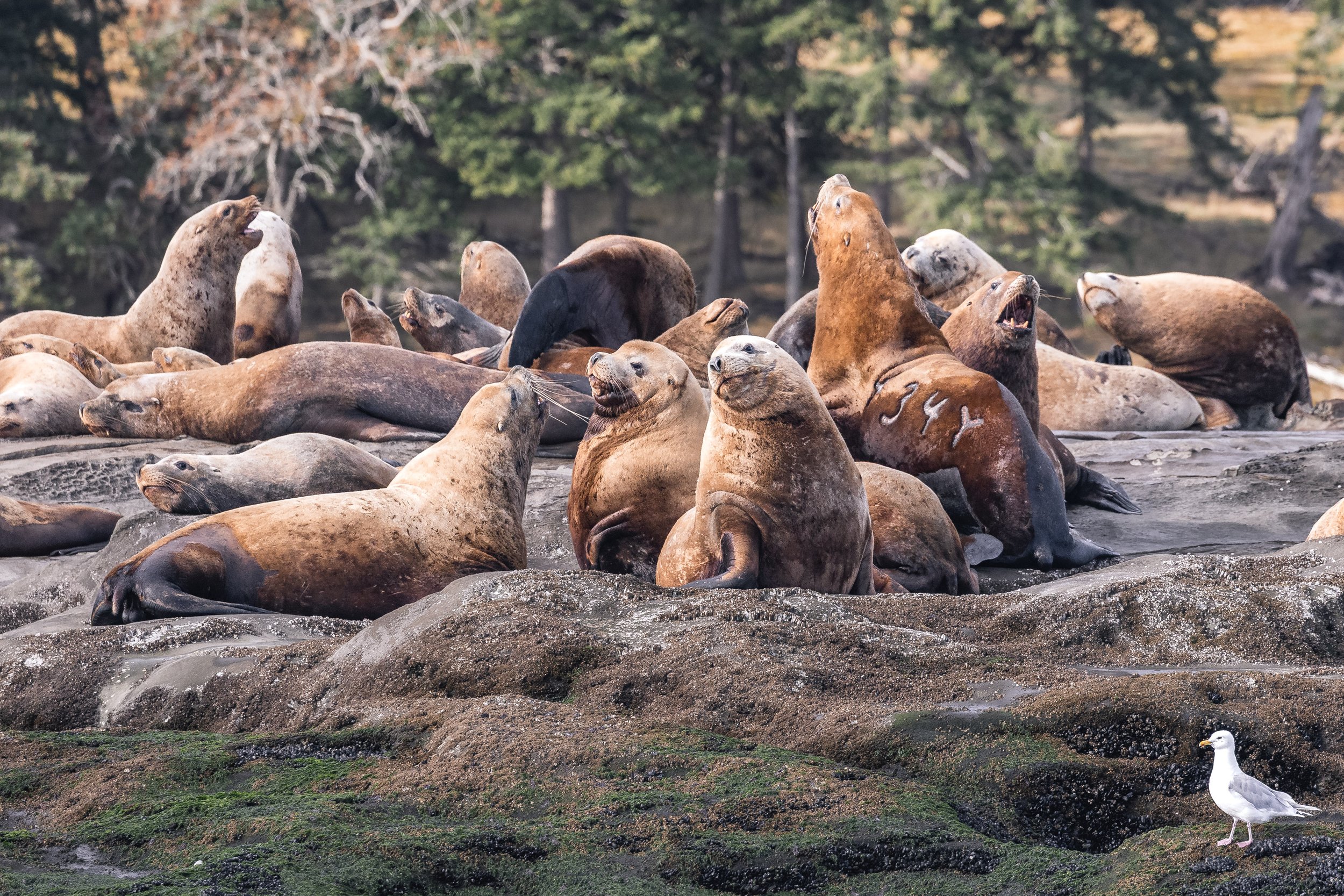
Steller Sea Lions, including branded male 434Y, branded back in 2013 in Rogue Reef, OR. Photo by Jordan Robinson.
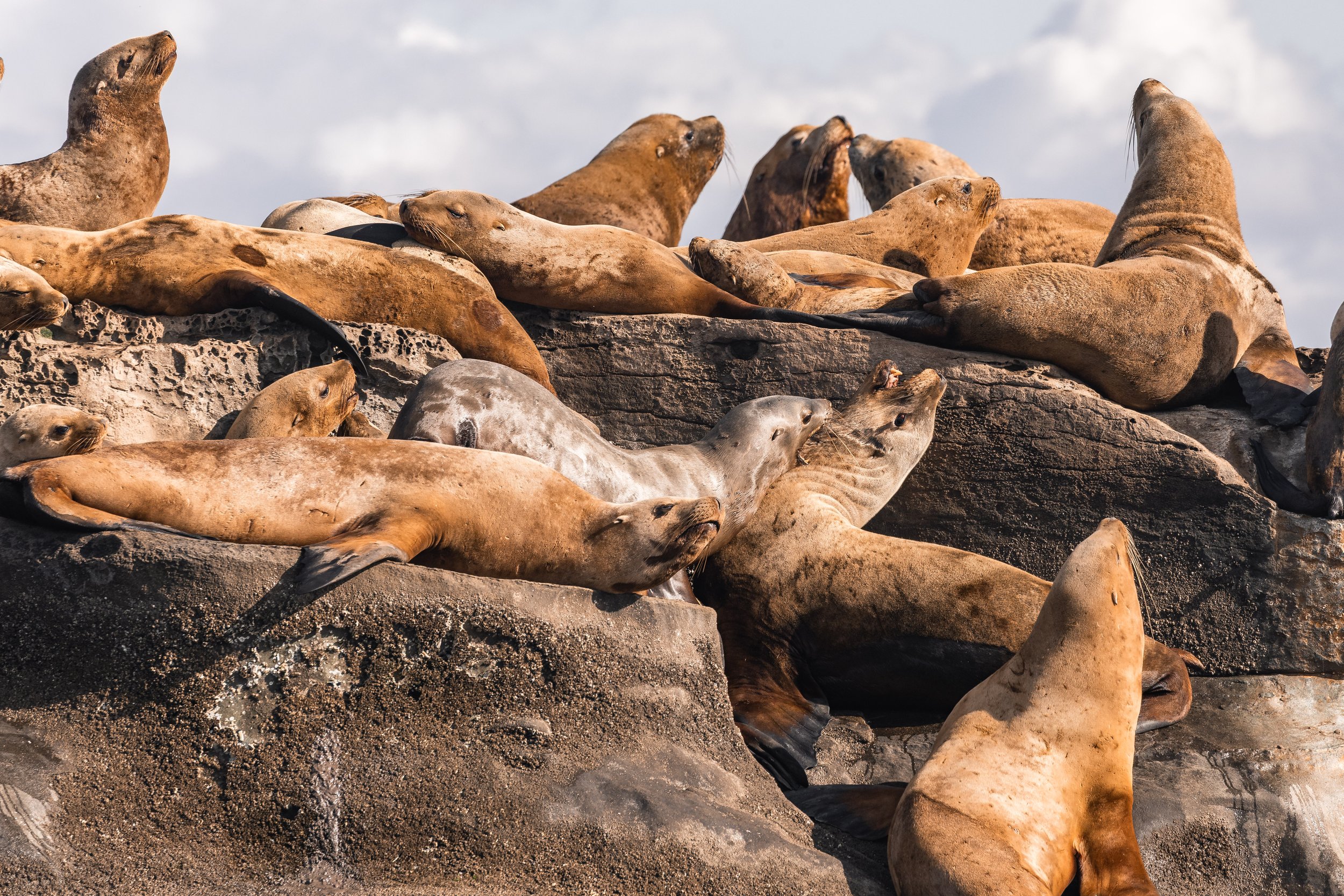
The sealions essentially play Tetris with themselves at Stinky Rocks. Photo by Jordan Robinson.
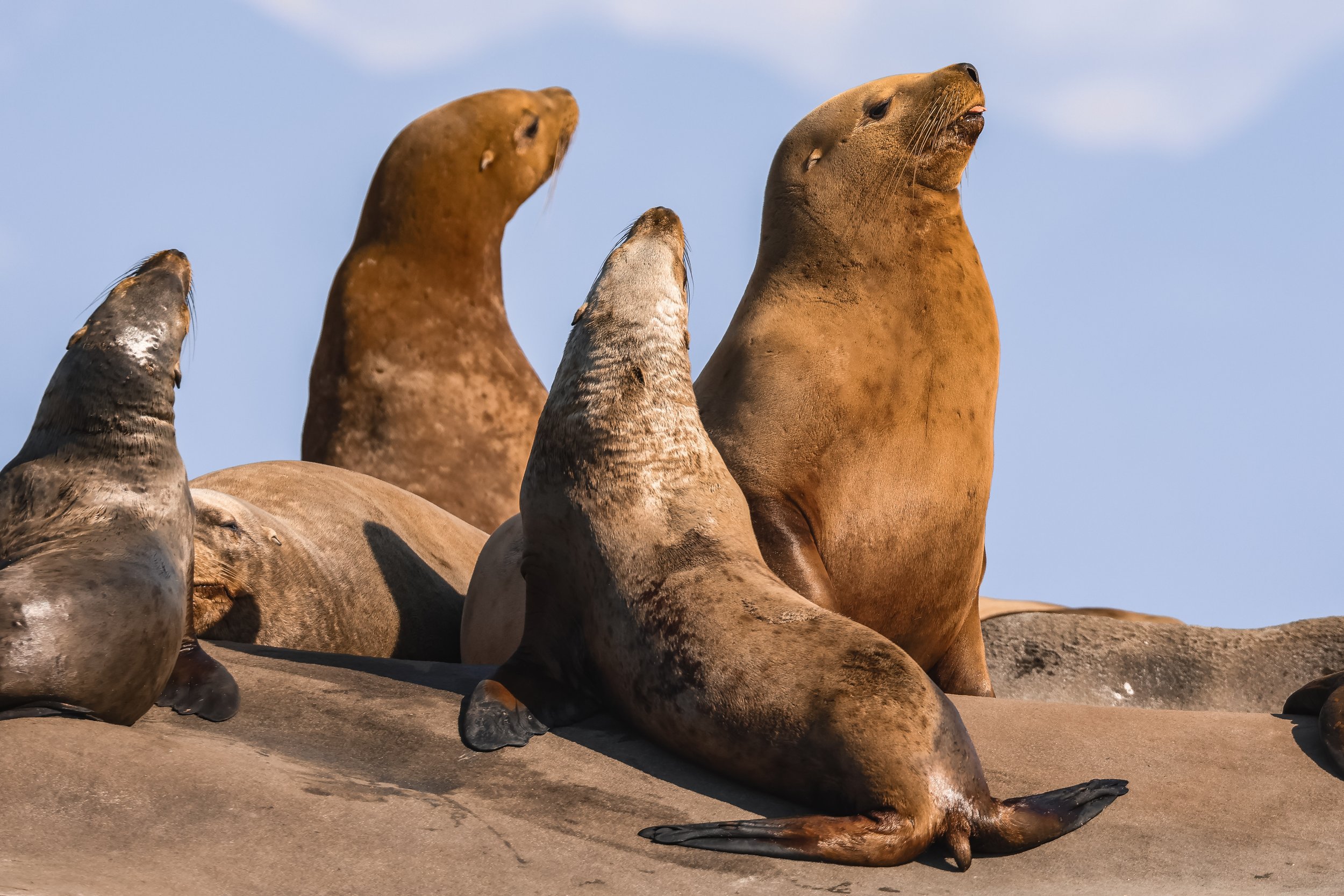
Proudly posing. Photo by Rosalie Burauen.
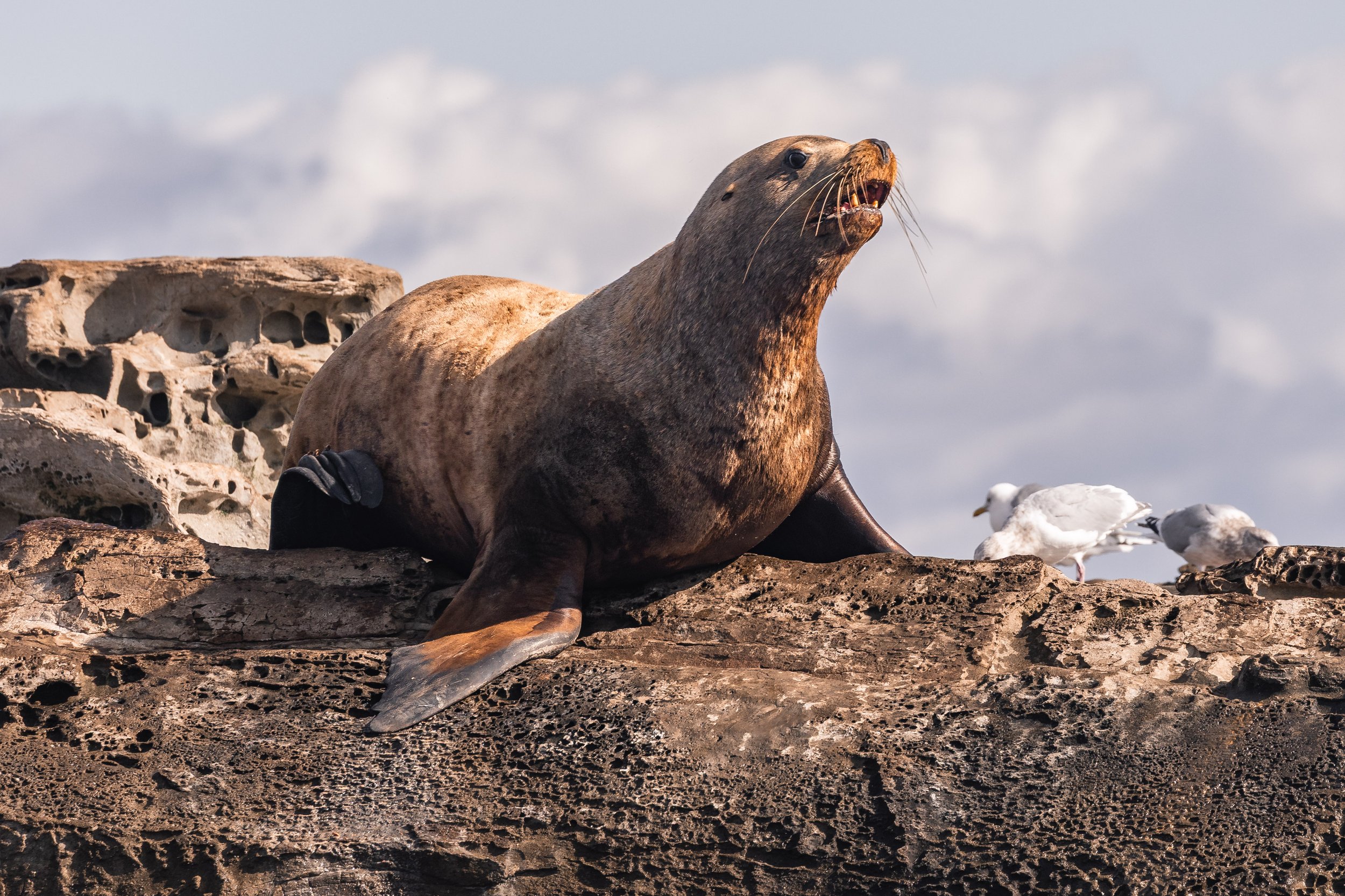
Scooting along the top of the rocks. Photo by Jordan Robinson.
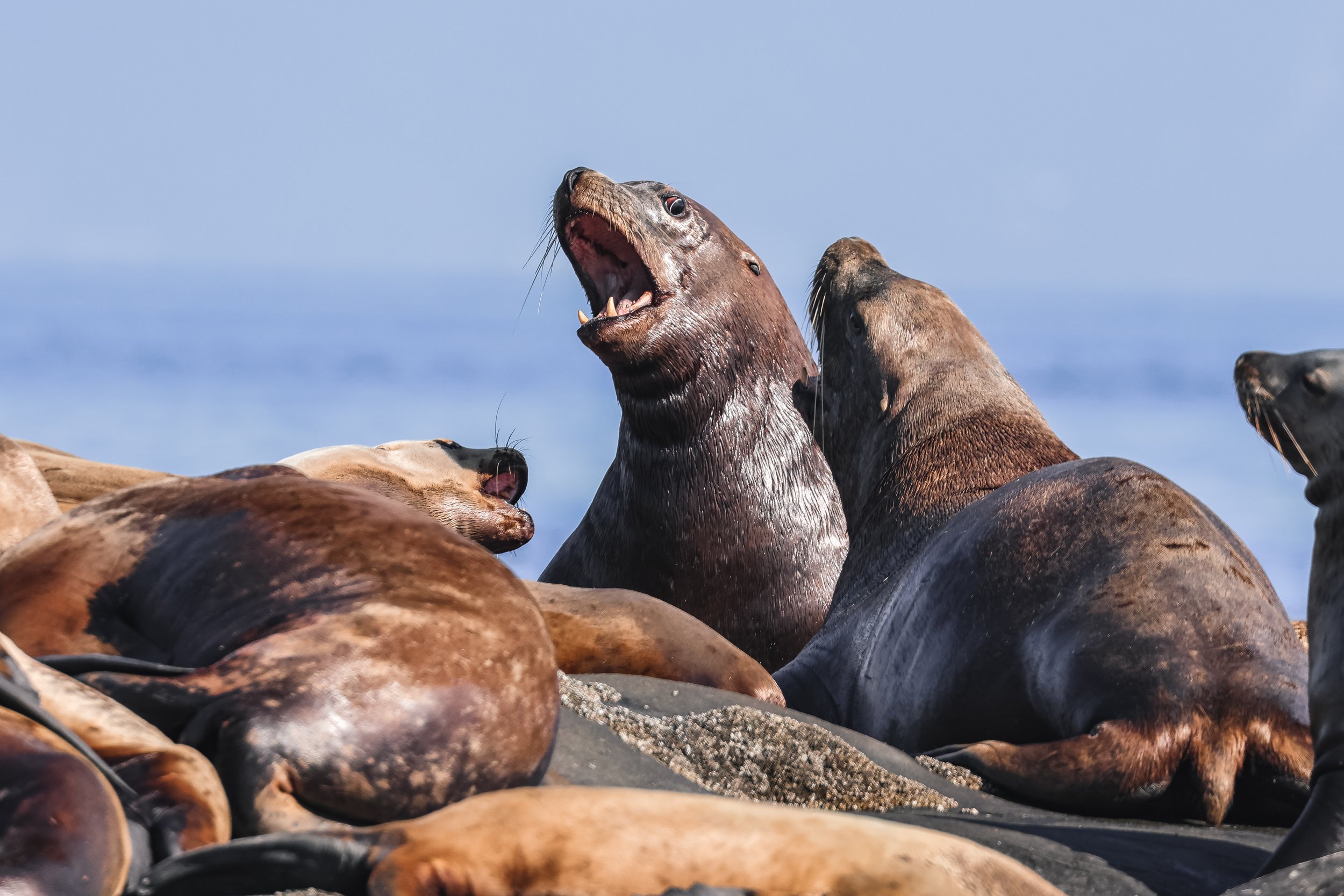
A fight breaks out amongst the Steller Sea Lions. Photo by Rosalie Burauen.
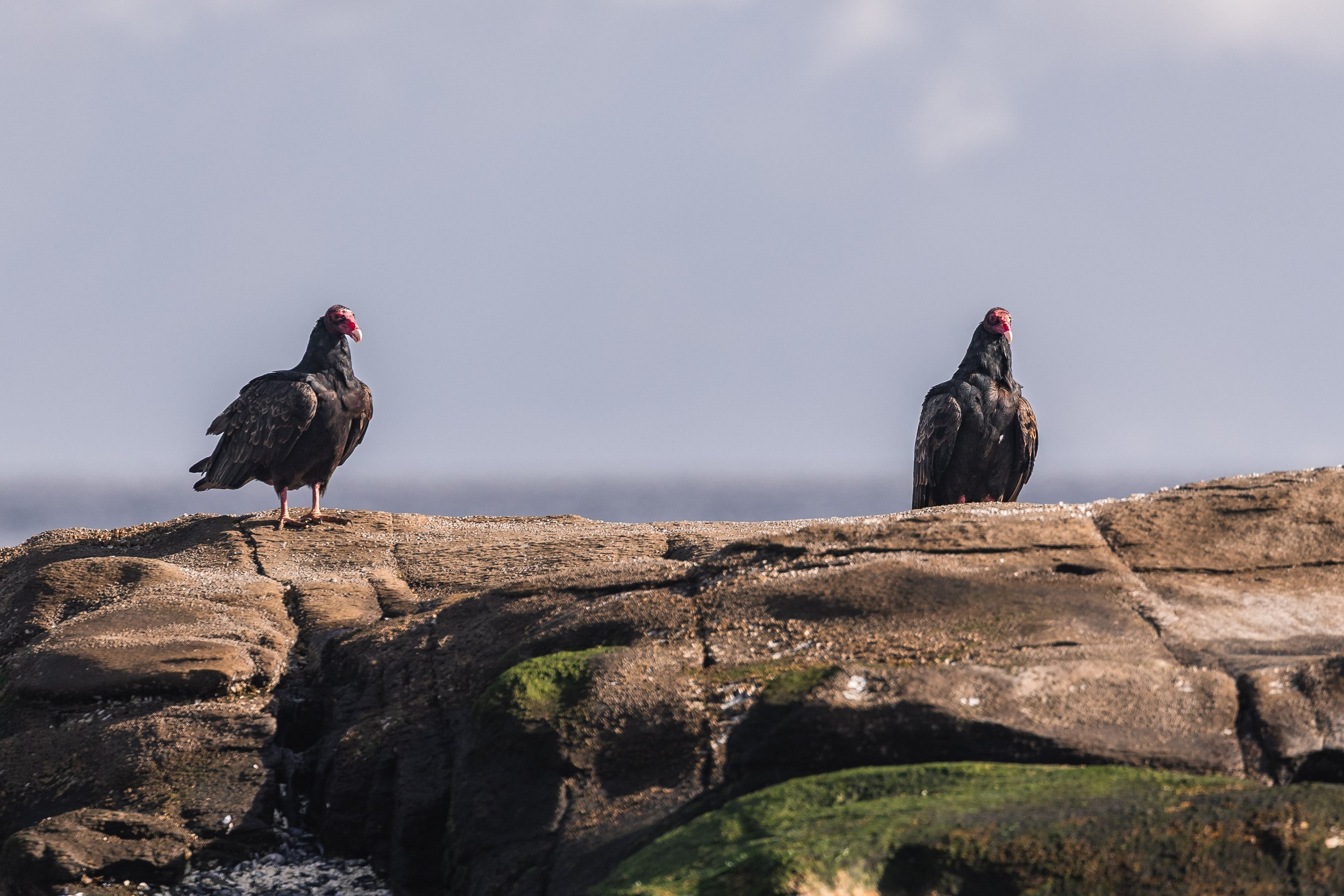
A pair of Turkey Vultures. Photo by Jordan Robinson.
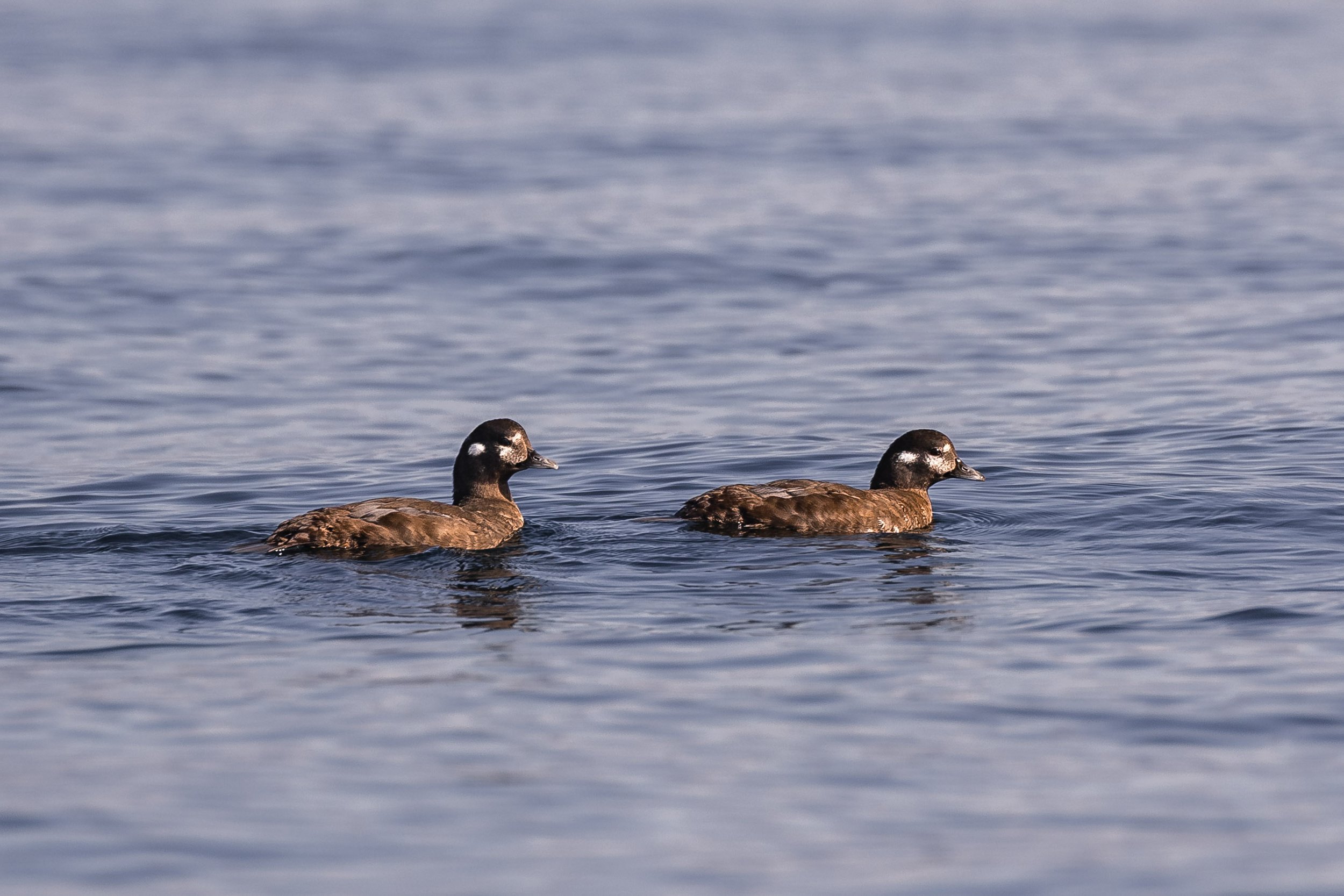
A pair of female Harlequin Ducks paddling along. Photo by Jordan Robinson.
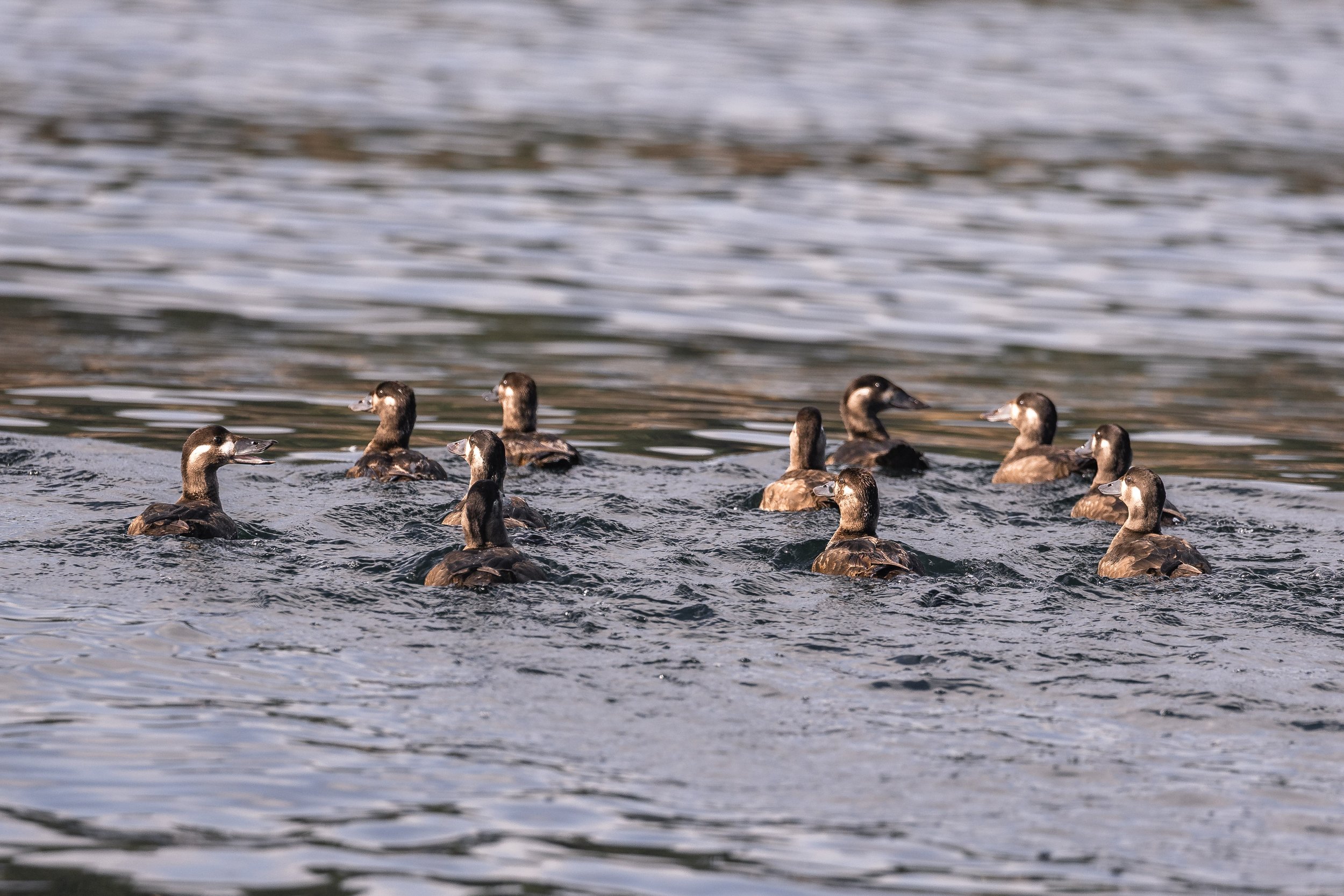
A flock of Surf Scoters. Photo by Jordan Robinson.
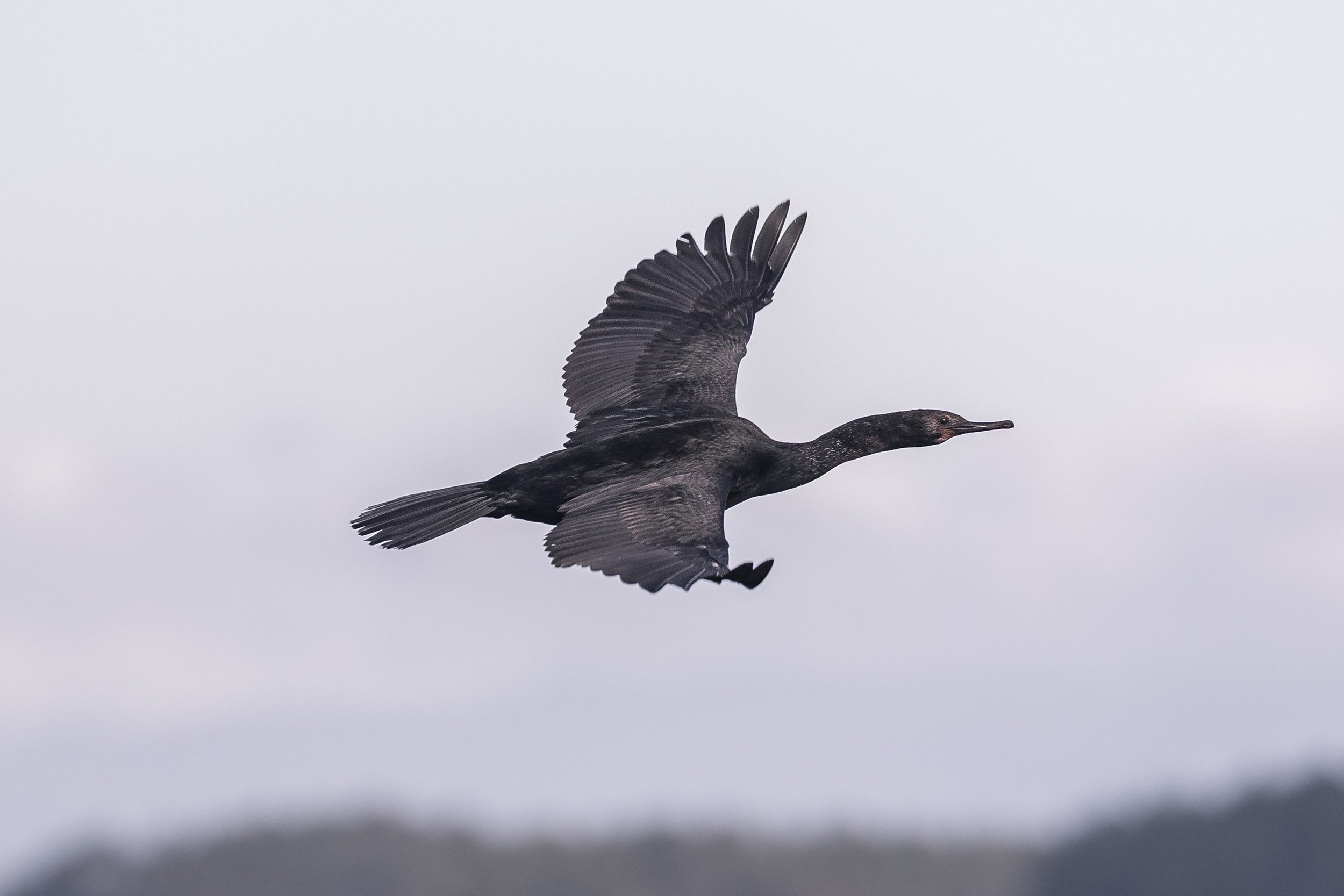
A Pelagic Cormorant flying overhead. Photo by Jordan Robinson.
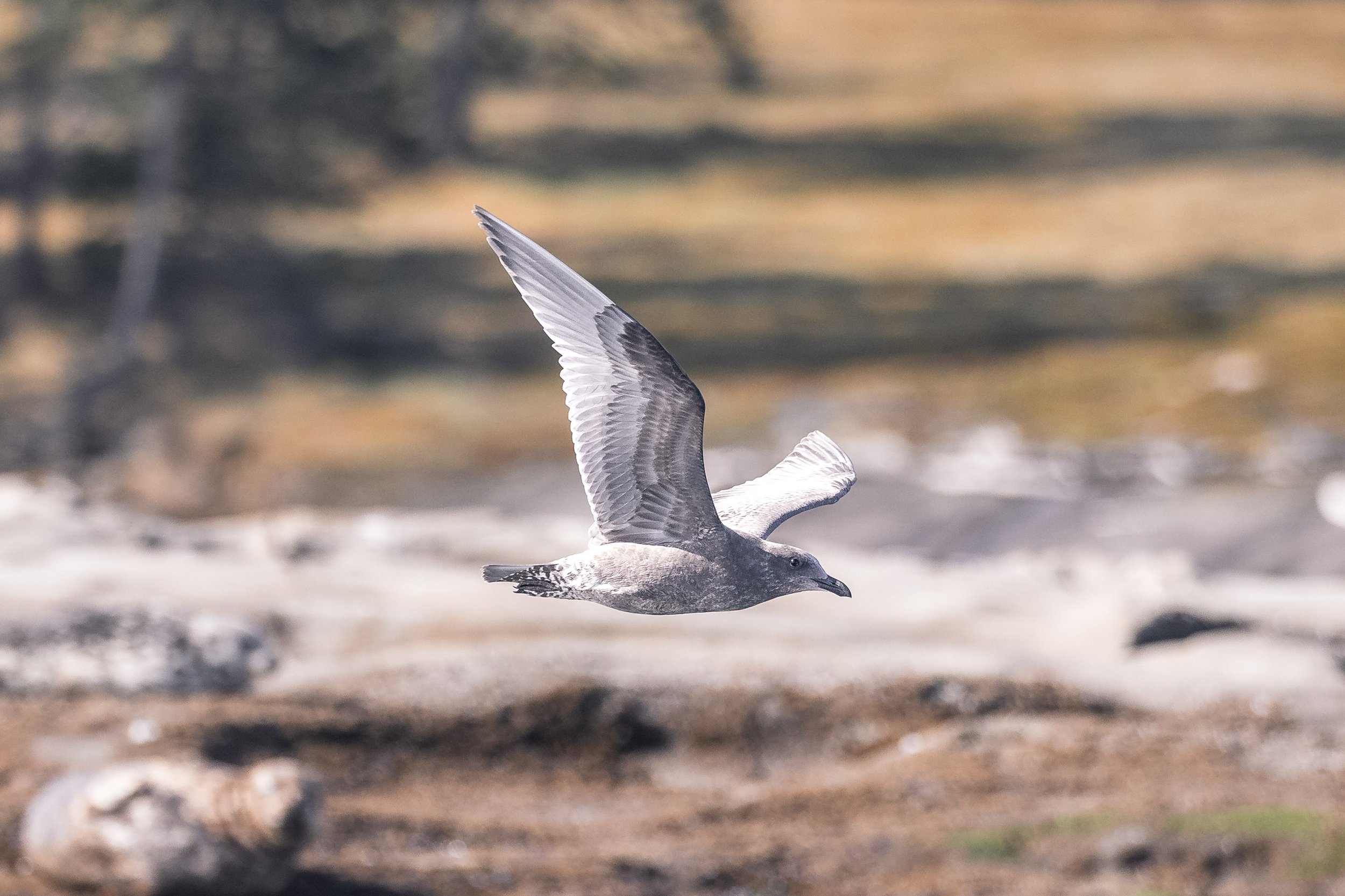
A Gull zooming on by. Photo by Jordan Robinson.
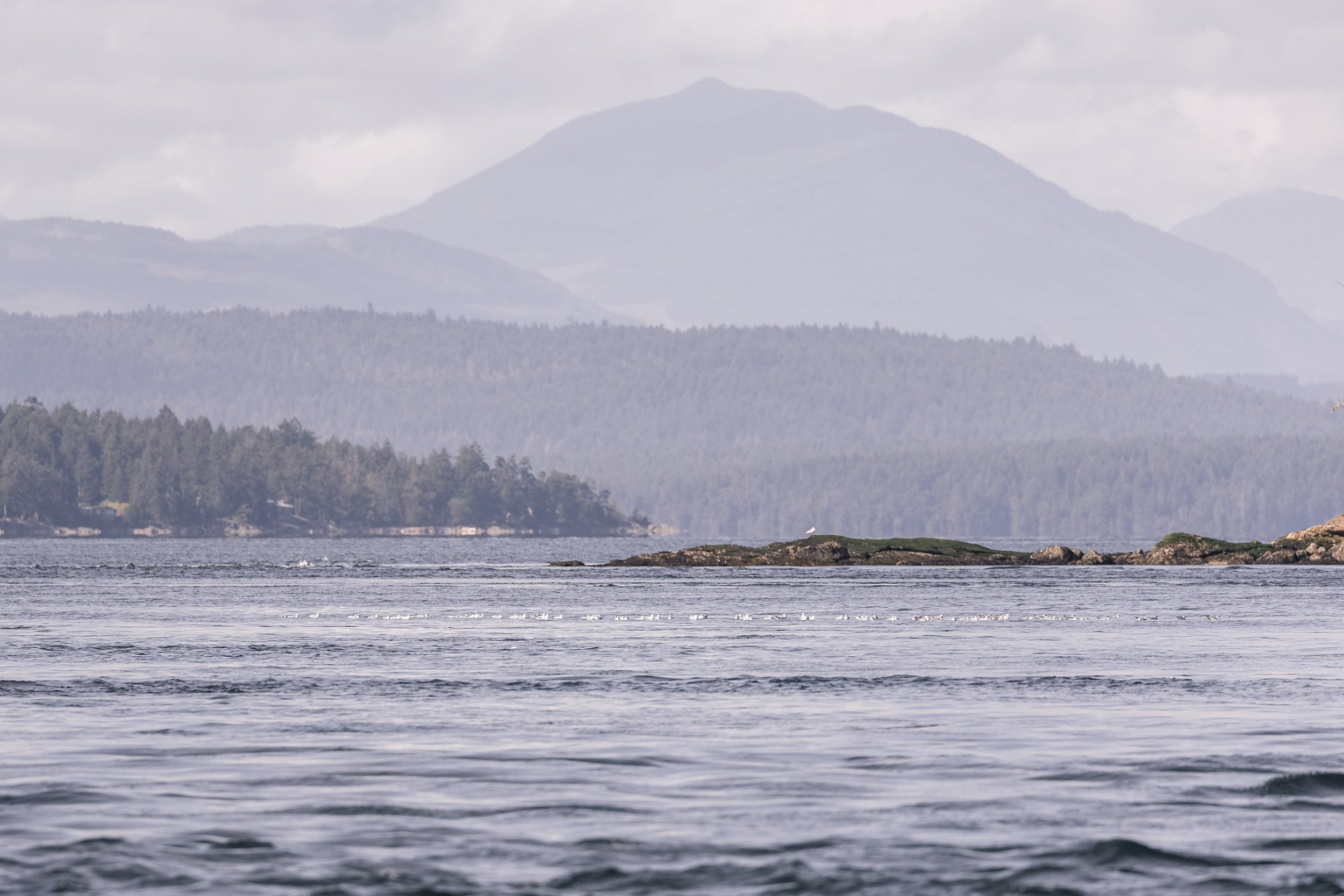
A peek inside the Southern Gulf Islands. Photo by Jordan Robinson.
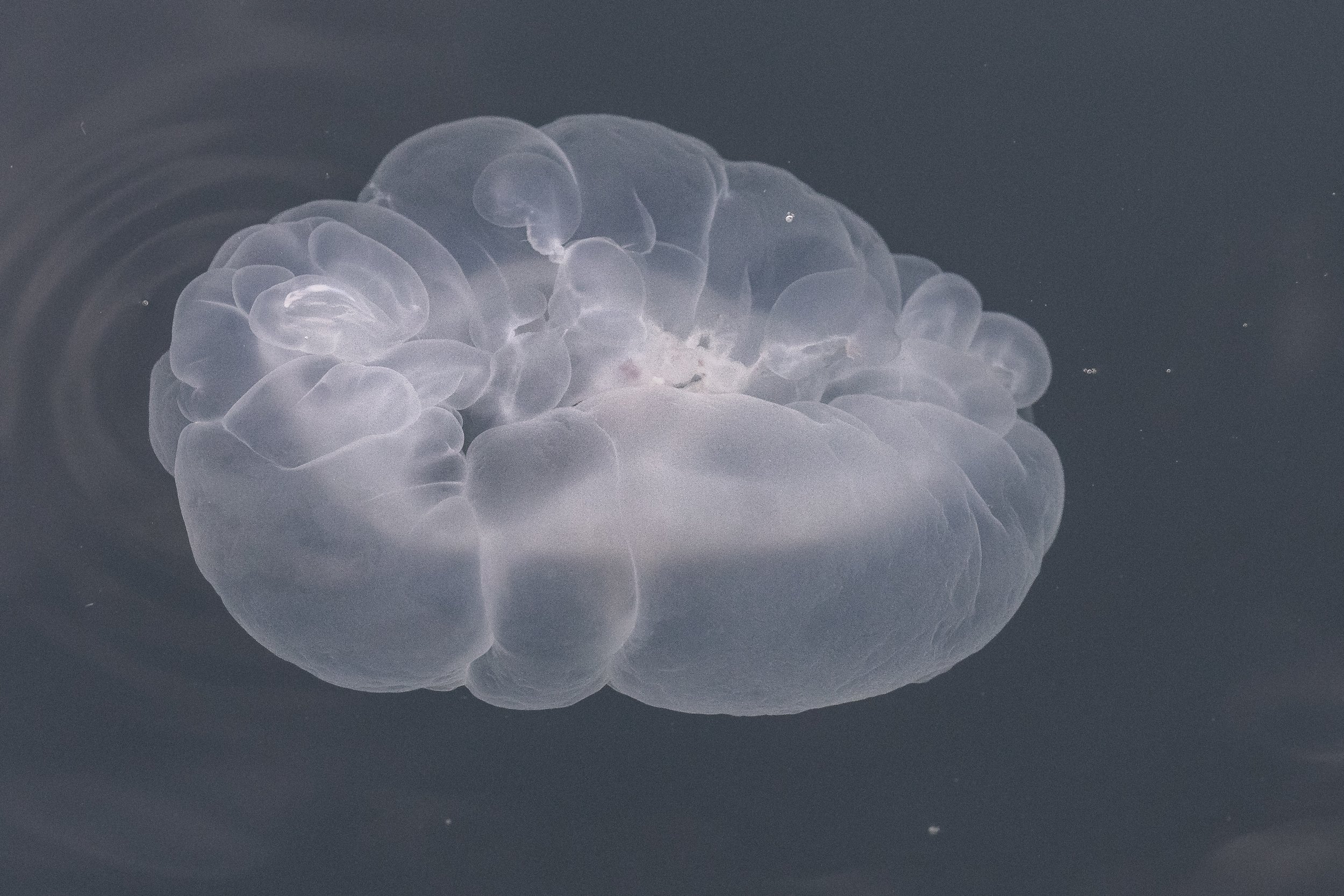
A jellyfish bobbing through the water. Photo by Jordan Robinson.
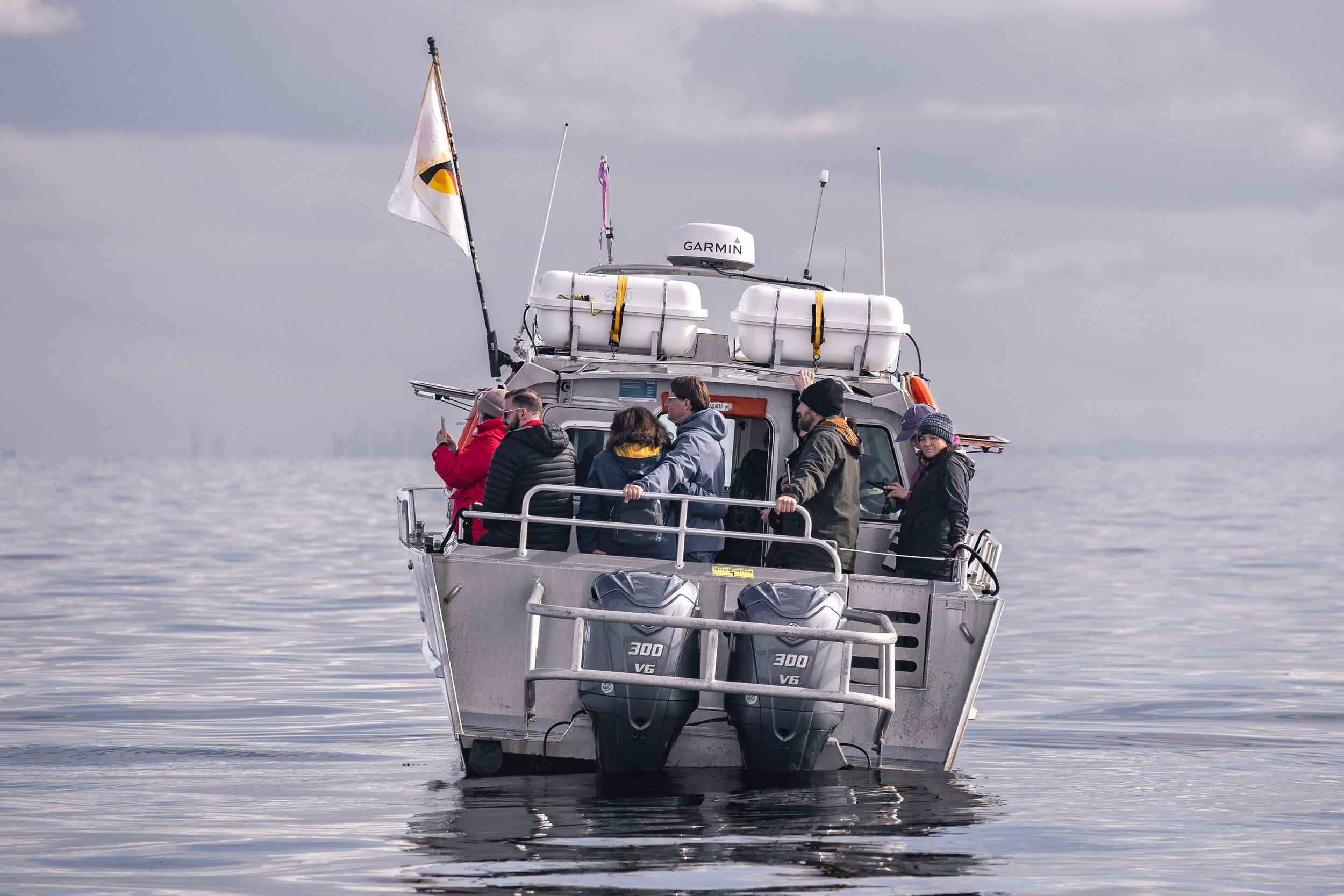
Guests aboard Kula while watching the whales. Photo by Jordan Robinson.