
September 26, 2026, 2:00 PM - Heading North for the T109As and a Handful of Humpbacks
The afternoon began with all three of our boats heading into the Strait of Georgia, travelling north toward an earlier report of a pod of orca moving south. Conditions were beautiful, with calm water and little wind, so we made good time as we searched the area. It was not long before we found what we were looking for. At first, a single towering black dorsal fin rose above the water, standing out against the distant horizon. As we watched, more dorsal fins began appearing across the surface, revealing that the whales were spread throughout the area rather than travelling in a tight group. Even with the distance between individuals, we identified the pod as the T109As.
T109A Frio/Runaway ♀ (1990)
T109A4 Garrett ♂ (2012)
T109A5 Argyle ♂ (2014)
T109A6 Riley ♀ (2018)
T109A7 Wieland ♂ (2021)
T109A8 Weiss (2024)
The T109As are a Bigg’s killer whale family, part of the population of mammal-eating orca that travel throughout the coastal waters of British Columbia. Bigg’s killer whales are often encountered moving through the Strait of Georgia and the surrounding waterways in search of prey. Unlike their fish-eating counterparts, Bigg’s killer whales primarily hunt marine mammals, including seals, sea lions, and porpoises. Their hunting strategies are adapted to this prey, relying on stealth and coordination rather than the vocal communication commonly associated with fish-eating orca. Because marine mammals can hear underwater sounds, staying quiet can be a key advantage when approaching potential prey.
Watching the T109As surface across the calm water reminded us that a pod does not always travel as one tightly connected group. Family members may spread out over a considerable distance while moving through an area, with individuals surfacing at different times and following slightly different paths. From the surface, it can be hard to appreciate how much space separates the whales until several dorsal fins appear at once. Identifying individuals within a pod helps researchers and naturalists better understand their movements, family relationships, and long-term travel patterns in our coastal waters.
After spending time with the T109As, we continued exploring the area and soon found ourselves among several humpback whales. Our first encounter was a brief visit with Squirrel/Smoke (BCX2183) and her calf (BCX2183calf2026). Humpback calves are a special sight during the feeding season, when young whales spend time alongside their mothers as they grow and develop.
A humpback calf is born after a long migration and gestation period, already equipped with the instinct to swim and surface for air. During the early months, the calf depends on its mother for milk, which is exceptionally rich in fat and provides the energy needed for rapid growth. The pair generally stays close together, with the mother protecting and guiding the calf as it builds strength and coordination. Although calves are born in warmer breeding waters, they eventually follow their mothers to northern feeding grounds, where they begin learning the movements and behaviours of these productive waters.
After spending a little time with Squirrel and her calf, we began making our way toward another group of whales. Along the way, activity in the distance caught our attention. A humpback whale was launching itself out of the water in a full breach, sending spray in every direction as it crashed back onto the surface. We changed course to investigate and arrived to find a whale with plenty of energy to spare.
The whale was identified as Moraine (BCY1465), and the activity continued as we watched. Moraine breached multiple times, throwing much of their body clear of the water before landing with an impressive splash. Between breaches, Moraine also performed chin slaps and pec slaps, repeatedly bringing different parts of their body down onto the surface. It was a remarkable display of movement and power, made all the more striking by the calm conditions surrounding us.
Breaching is one of the most recognizable humpback whale behaviours, but its purpose is not always easy to determine. Breaching requires considerable strength and energy, especially for an animal that can weigh several tonnes. Researchers have proposed several explanations, including communication, social signalling, play, and removing parasites or loose skin. The sound a whale makes when it lands can travel underwater, potentially carrying information to other whales some distance away. However, a breach does not necessarily serve a single purpose, and the reason for an individual whale's activity may remain unknown.
Chin slapping and pec slapping can also occur in a variety of social contexts. During a chin slap, a whale lifts its head and lower jaw out of the water, then brings its chin down onto the surface. A pec slap involves raising one long pectoral fin and striking it against the water. Humpback pectoral fins can measure several metres in length, making these slaps particularly noticeable. The resulting splashes and sounds may play a role in communication or social interactions, although their meaning depends on circumstances not always visible to observers.
When a whale displays several behaviours in quick succession, it can be tempting to assign a particular emotion or intention to what we are seeing. In reality, the science is more complicated. We can document what a whale does and compare those observations with patterns seen in other encounters, but we cannot always know why the behaviour is occurring. That uncertainty is part of what makes observing wild whales so fascinating. Each encounter offers another chance to learn, while reminding us there is still much to discover about these animals.
Eventually, Moraine's activity began to settle, and we continued toward more blows visible in the distance. There, we found another humpback mother-calf pair, this time Lucky (BCZ0419) and her calf (BCZ0419calf2026). Nearby, Wallace (BCZ0597) travelled independently, adding another individual to an afternoon that already included a variety of whale behaviours and social arrangements.
Humpback whales have flexible social lives. Unlike the strong, enduring family associations seen in many killer whale populations, humpback relationships are often temporary. Individuals may travel together or feed in the same area before separating again. Mothers and calves form an important bond during the calf's early development, but many other humpback associations can change within hours or days. Finding Wallace travelling alone near Lucky and her calf was therefore not unusual. A solitary whale can still be part of a much larger feeding community, even when it is not directly interacting with other individuals.
The presence of multiple humpbacks in the same area also highlights the Strait of Georgia's importance as a feeding habitat. During the feeding season, humpbacks build the energy reserves they will rely on during migration and time spent in warmer breeding areas. Their diet consists mainly of small schooling fish and krill, depending on the region and available prey. When conditions are favourable, several whales may concentrate in productive areas where food is abundant, though their feeding strategies and movements can differ from one individual to another.
For mothers raising calves, these feeding grounds are especially important. Nursing requires a substantial energy investment, and mothers must balance their own nutritional needs with the demands of supporting a growing calf. Time spent in northern waters lets them replenish their reserves while their calves continue developing. Seeing Squirrel and Lucky with their young on the same afternoon offered a glimpse into this important stage of the humpbacks' annual cycle.
After spending time with Moraine, Lucky and her calf, Wallace, and the other whales in the area, we began our journey south. Along the way, one more humpback quickly appeared just long enough for us to snap a photo of its dorsal fin before they dipped back beneath the surface. That dorsal fin was enough to later identify the whale as Meqe’ (BCZ0492) by the scar near the dorsal tip. After this quick glimpse of Meqe’, we turned the bow once again to Nanaimo.
Before returning, we made one final stop at the Harmac pulp mill, where several sea lions were hauled out along the waterfront.
Hauling out is an important behaviour for sea lions, letting them rest out of the water, regulate their body temperature, and spend time in groups. Unlike seals, which tend to move awkwardly on land, sea lions can rotate their hind flippers beneath their bodies and use all four flippers to support themselves. This adaptation makes them much more mobile on shore and on rocky haul-out sites. Depending on the season and local conditions, these resting areas may attract a mixture of individuals, from animals taking a break between feeding trips to males and females gathering during different stages of their annual cycle.
The sea lions at Harmac provided a fitting end to an afternoon spent exploring the connections between marine wildlife and the waters they share. From the spread-out members of the T109A family to the energetic displays of Moraine and the quiet companionship of humpback mothers and calves, each encounter offered a different perspective on life in the Strait of Georgia.
On a calm afternoon, with three boats covering the water and wildlife appearing in every direction, it was a reminder that no two trips are quite the same. Some encounters are defined by dramatic displays at the surface, while others reveal themselves through a dorsal fin on the horizon or a mother travelling steadily alongside her calf. Together, these moments help us appreciate the variety of behaviours, relationships, and habitats that make our coastal waters such an extraordinary place to explore.
Please enjoy the photos included below, captured throughout the tour by Marine Naturalists Hayleigh Hilbert, Jordan Robinson, and Rosalie Burauen.
The T109As
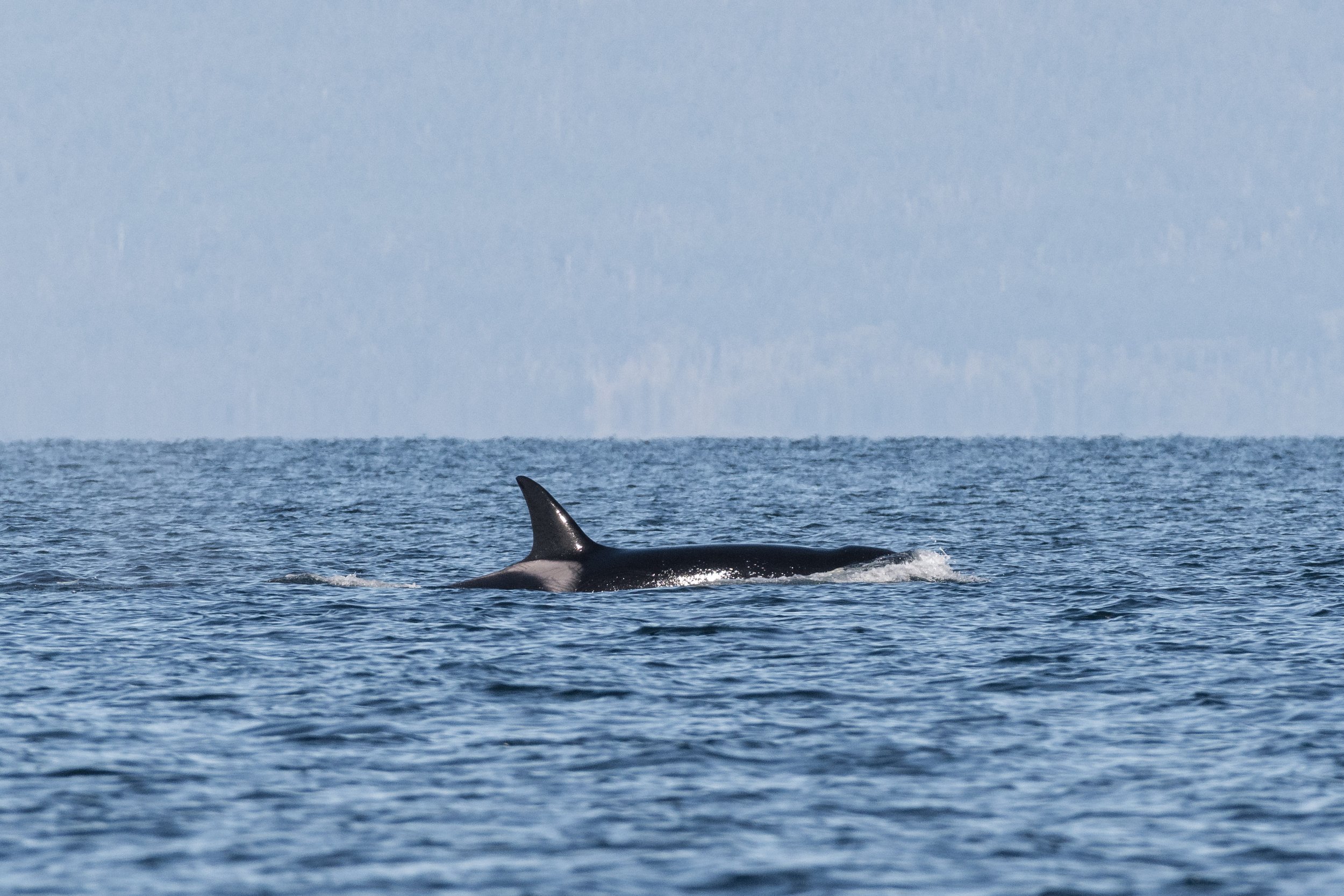
The Matriarch, T109A Frio surfacing. Photo by Hayleigh Hilbert.
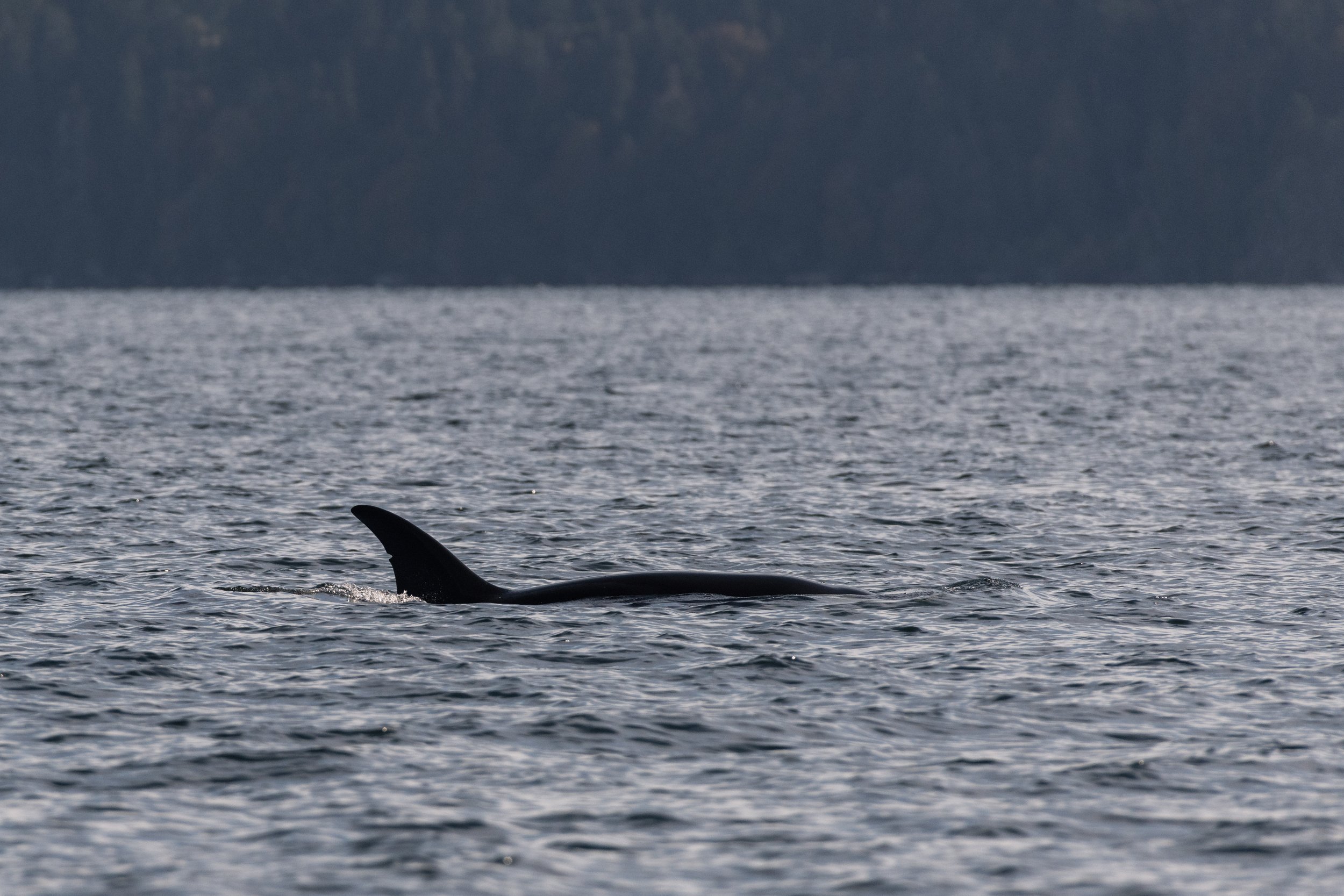
T109A6 Riley had a distinct notch in her dorsal fin. Photo by Hayleigh Hilbert.
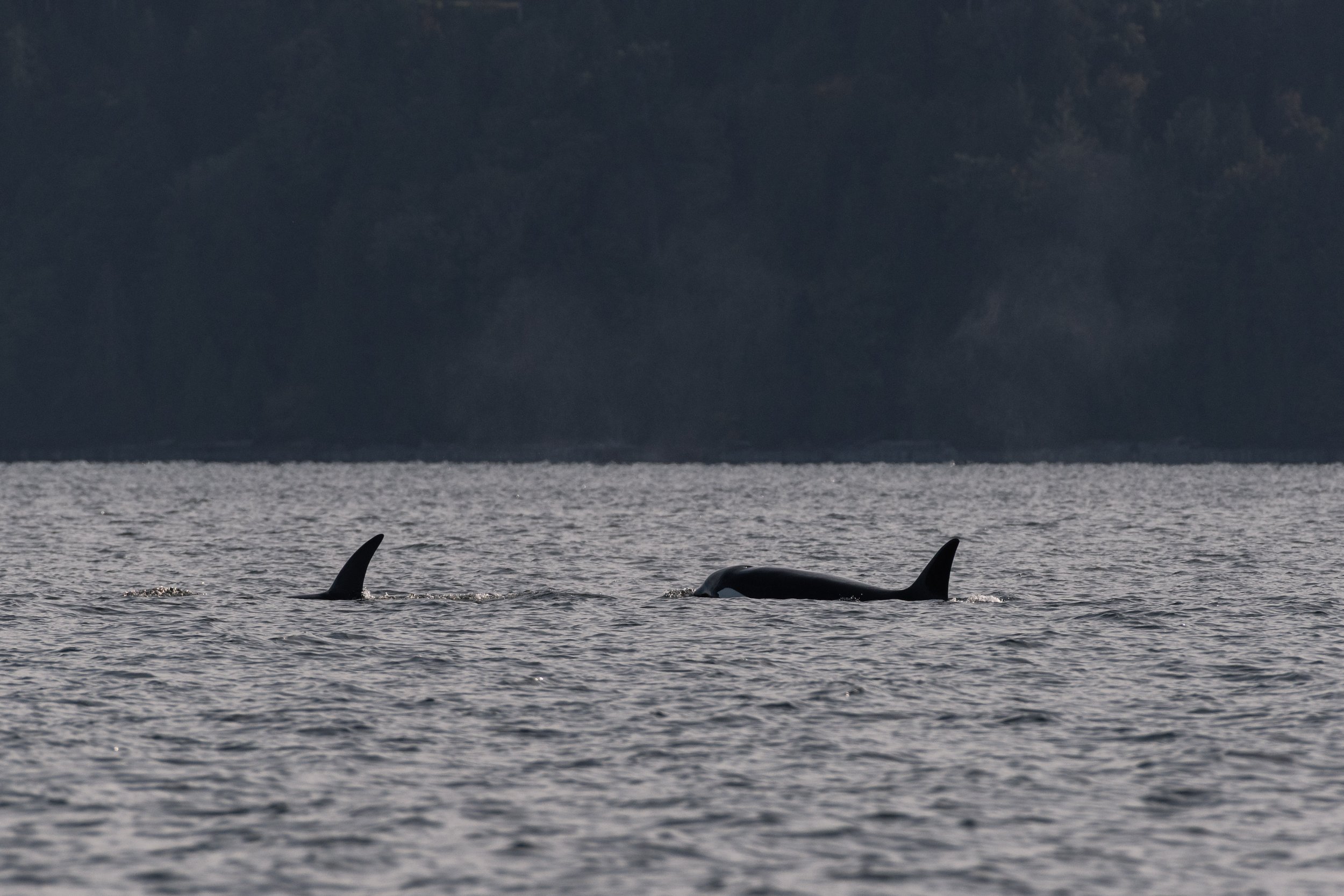
T109A5 Argyle surfacing just ahead of their mom, T109A Frio. Photo by Hayleigh Hilbert.
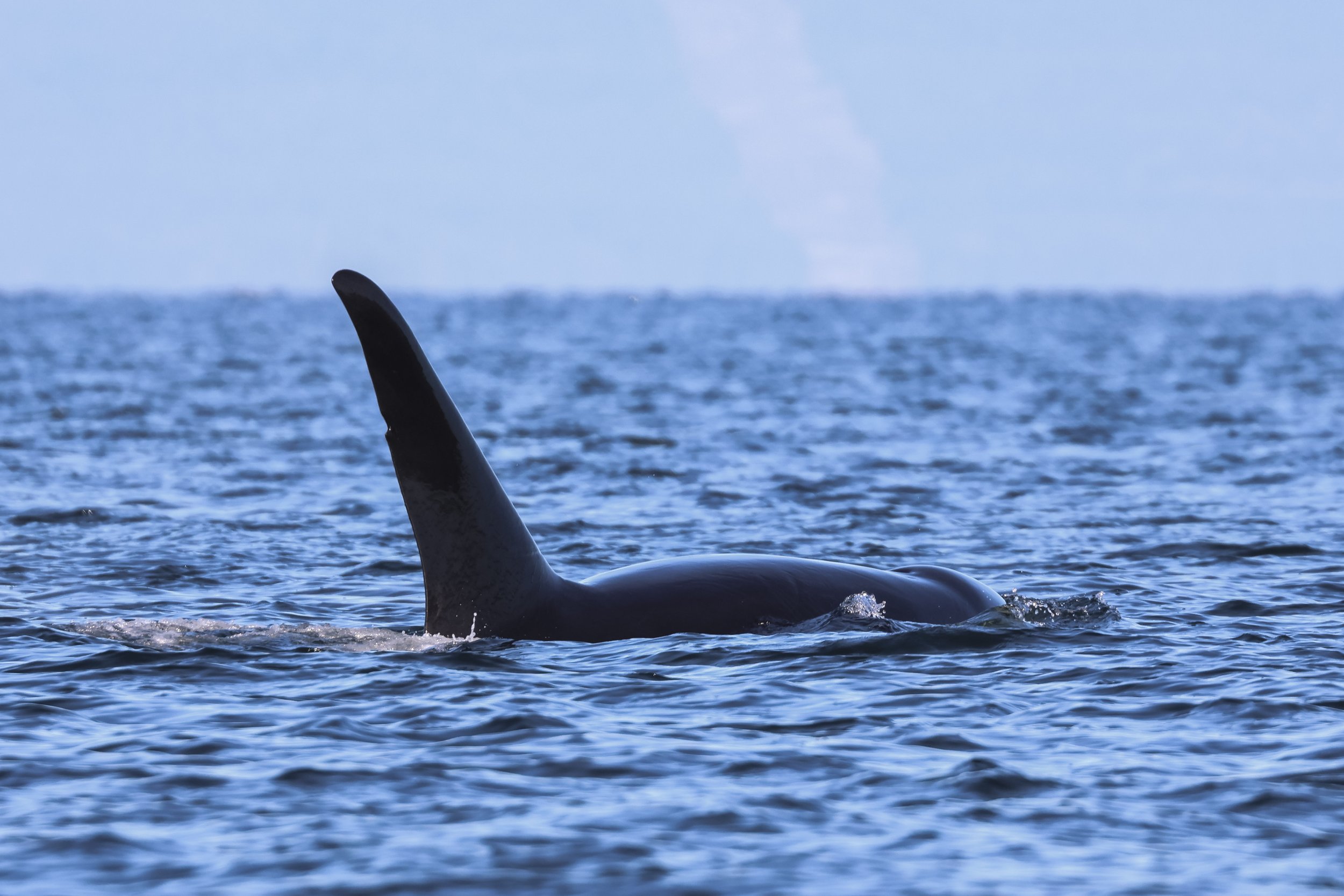
T109A4 Garrett swimming by. Photo by Rosalie Burauen.
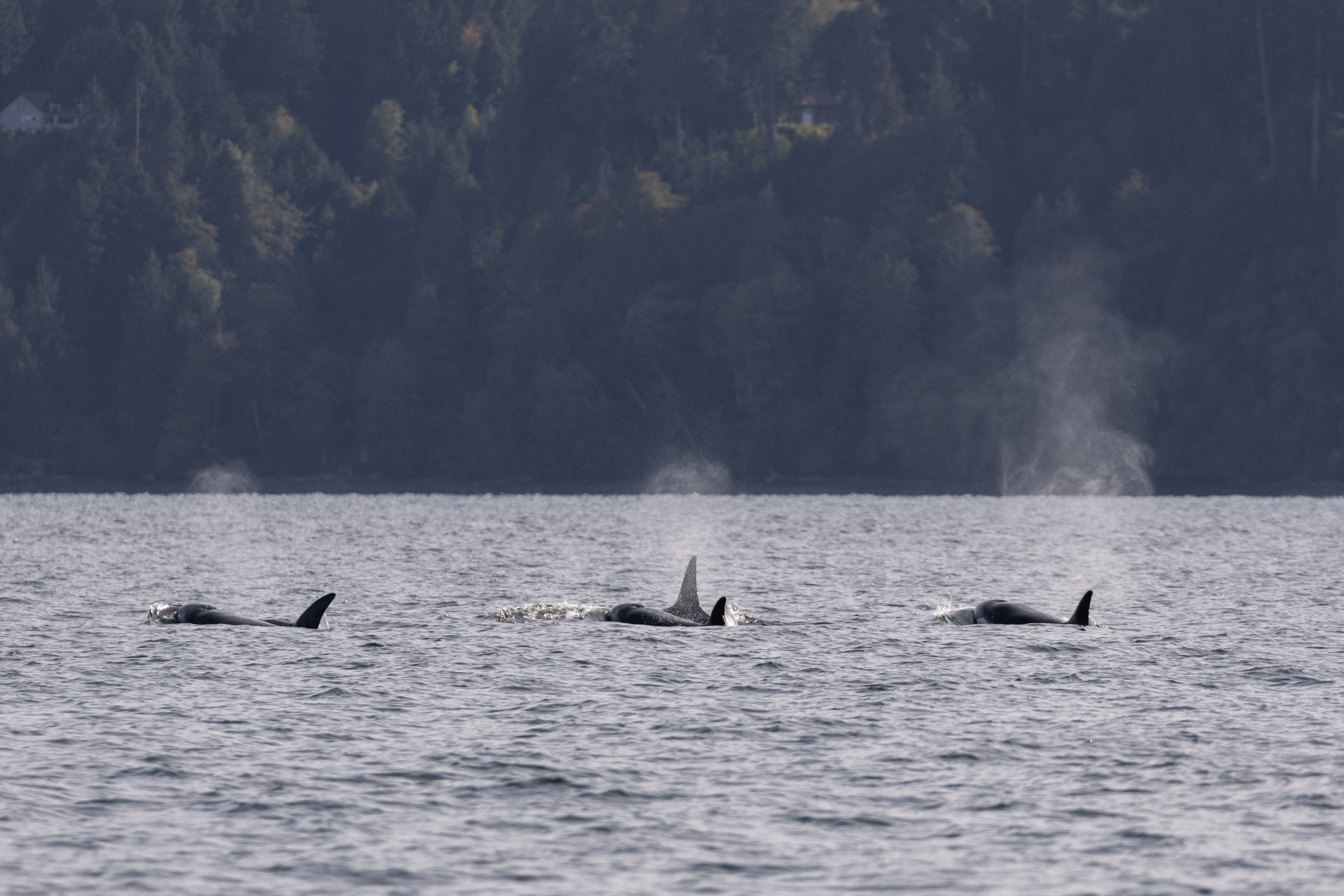
A Family Photo with T109A5 Argyle, T109A Frio, T109A7 Weiland, and T109A6 Riley. Photo by Rosalie Burauen.
Squirrel/Smoke and calf
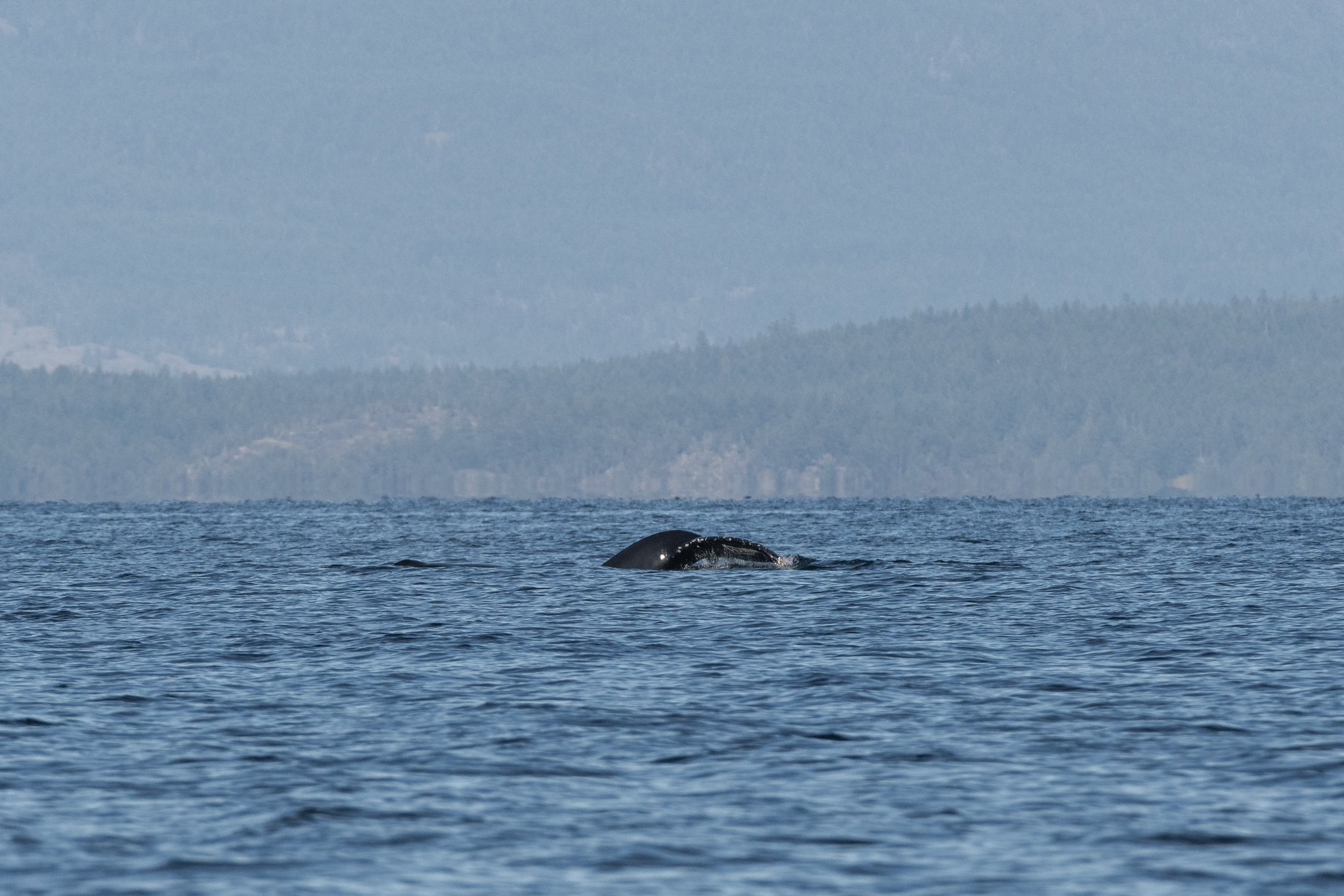
Squirrel/Smoke going for a dive with her calf surfacing just ahead of her. Photo by Hayleigh Hilbert.
Moraine
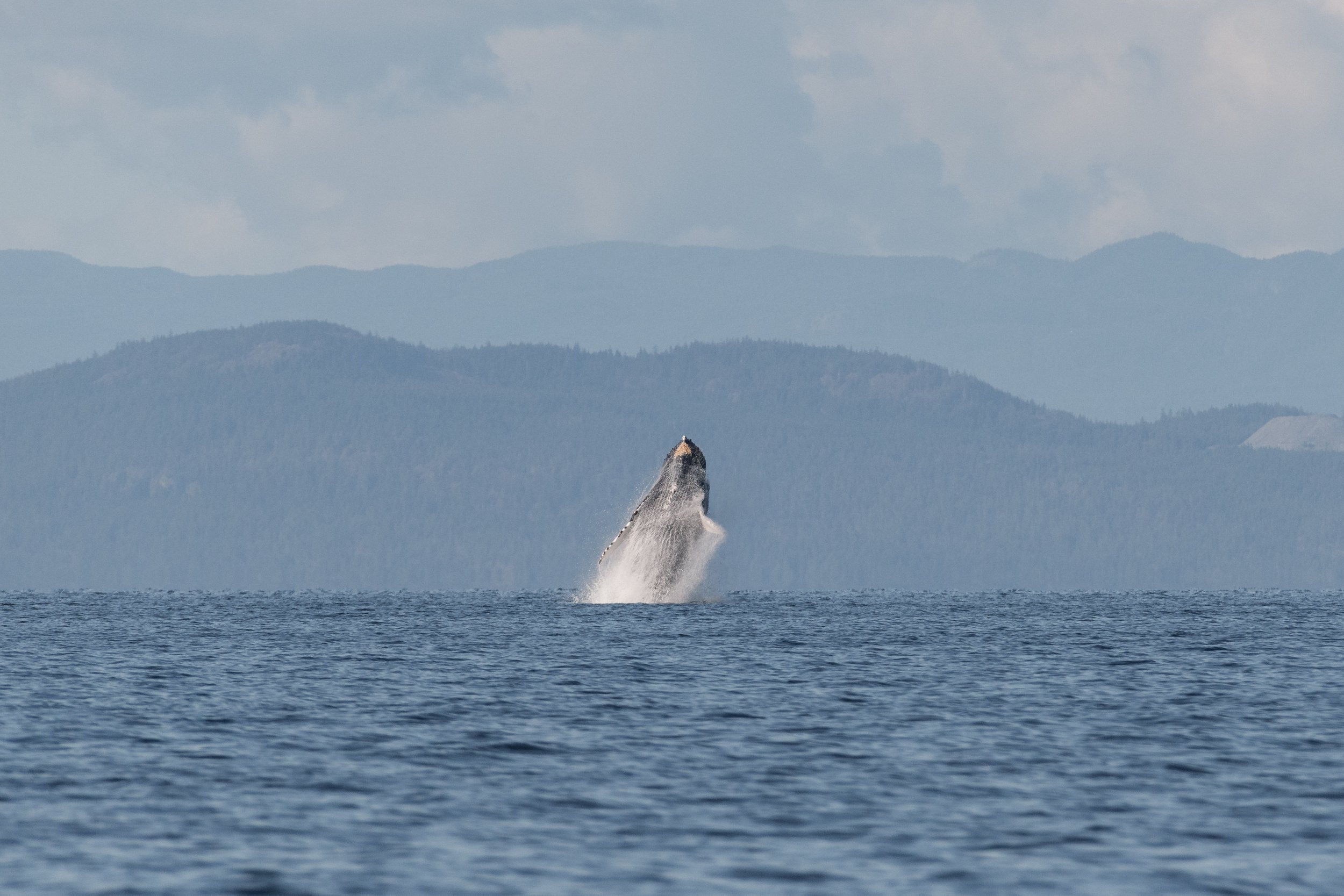
Moraine breaching from the water. Photo by Hayleigh Hilbert.
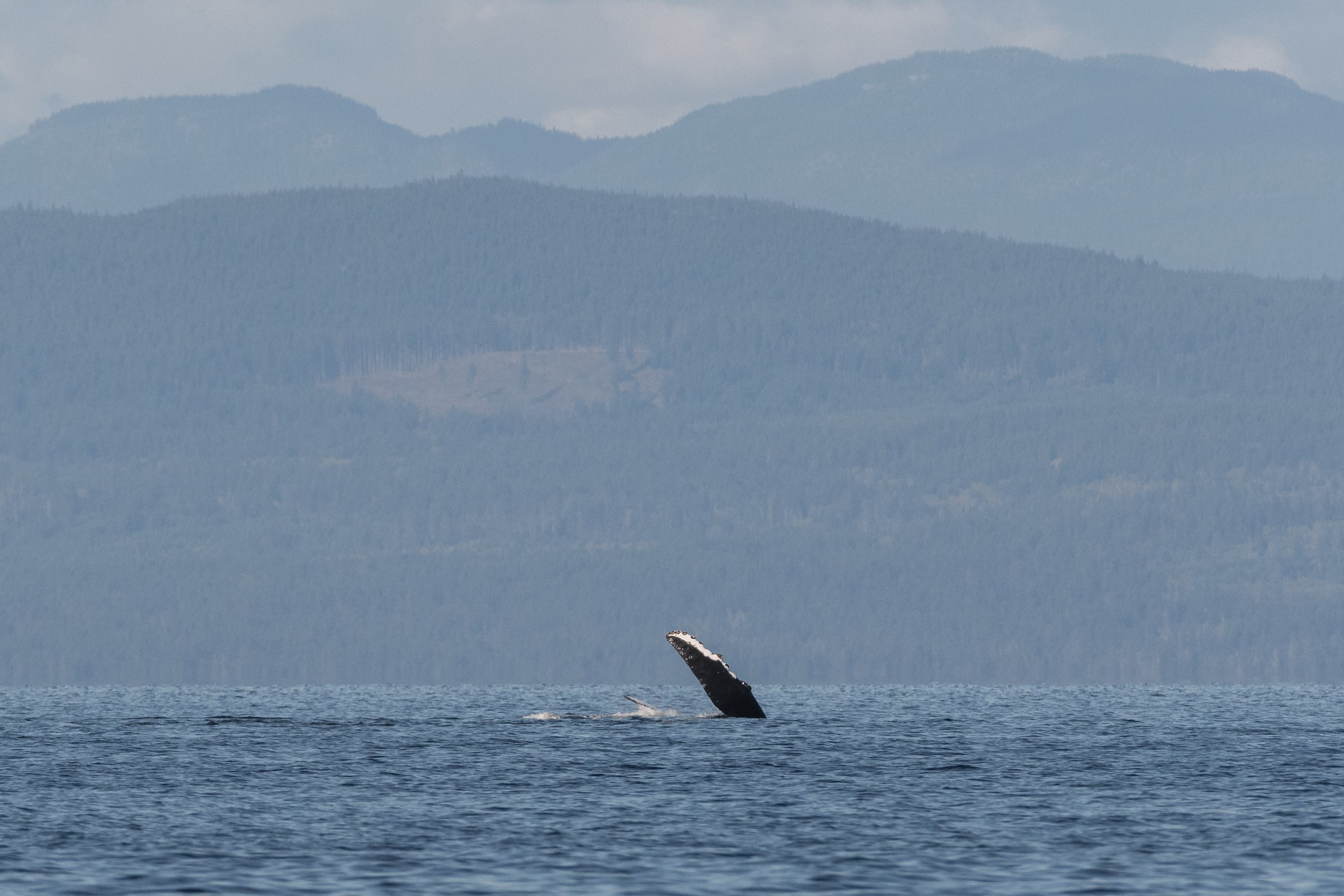
Moraine swimming upside-down with their pectoral fins in the air. Photo by Hayleigh Hilbert.
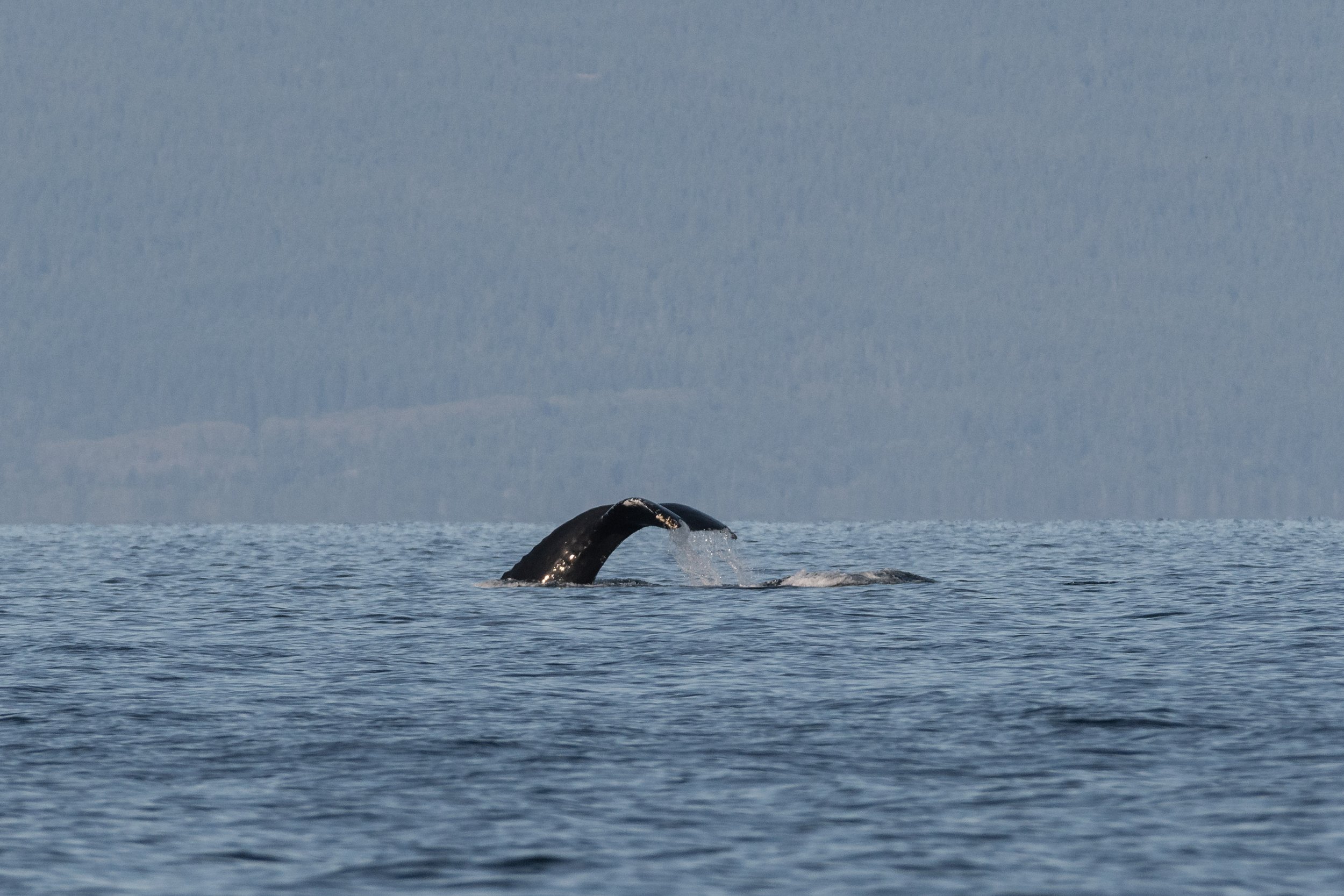
A lovely fluke waterfall from Moraine as they dive. Photo by Hayleigh Hilbert.
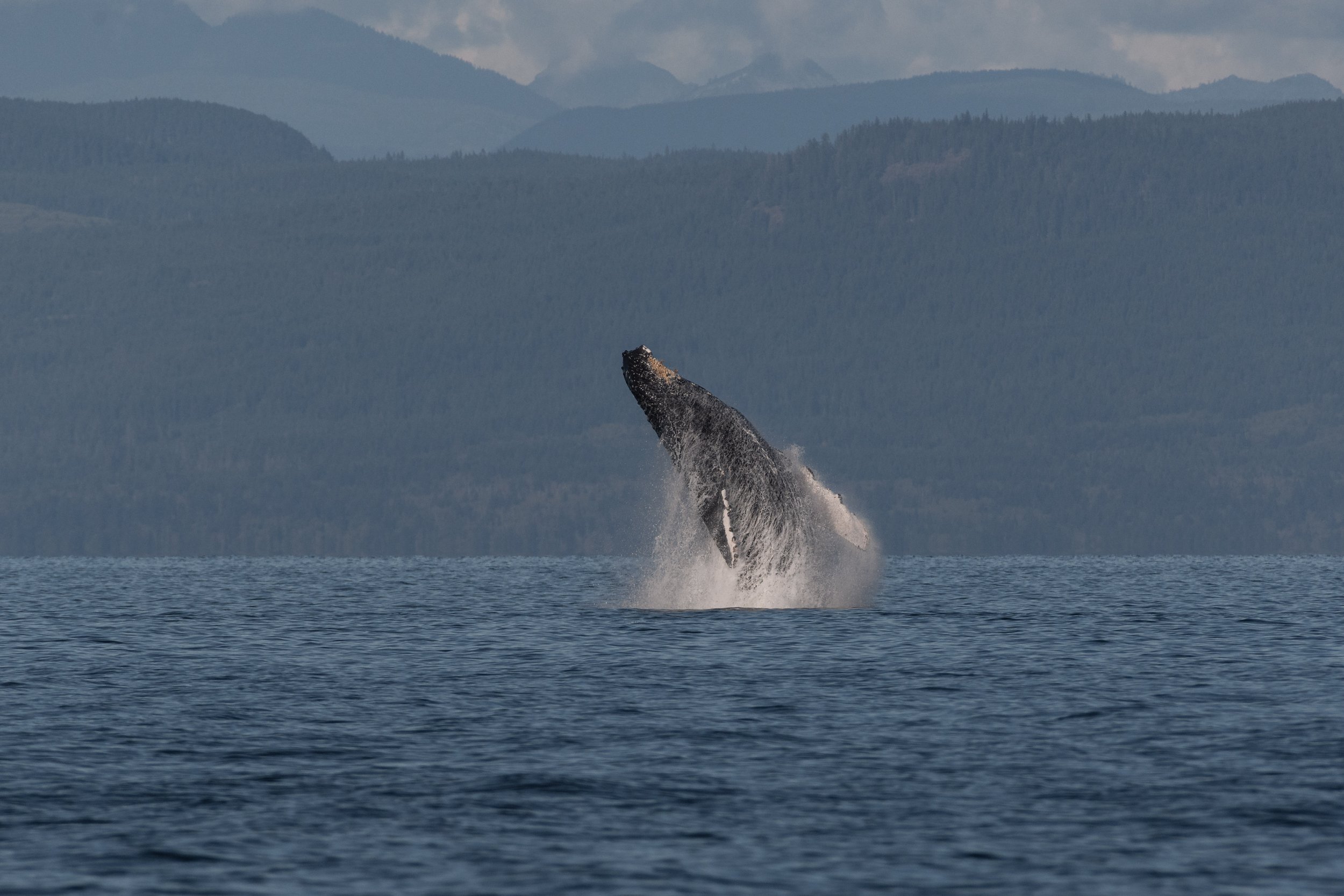
Another big breach from Moraine. Photo by Hayleigh Hilbert.
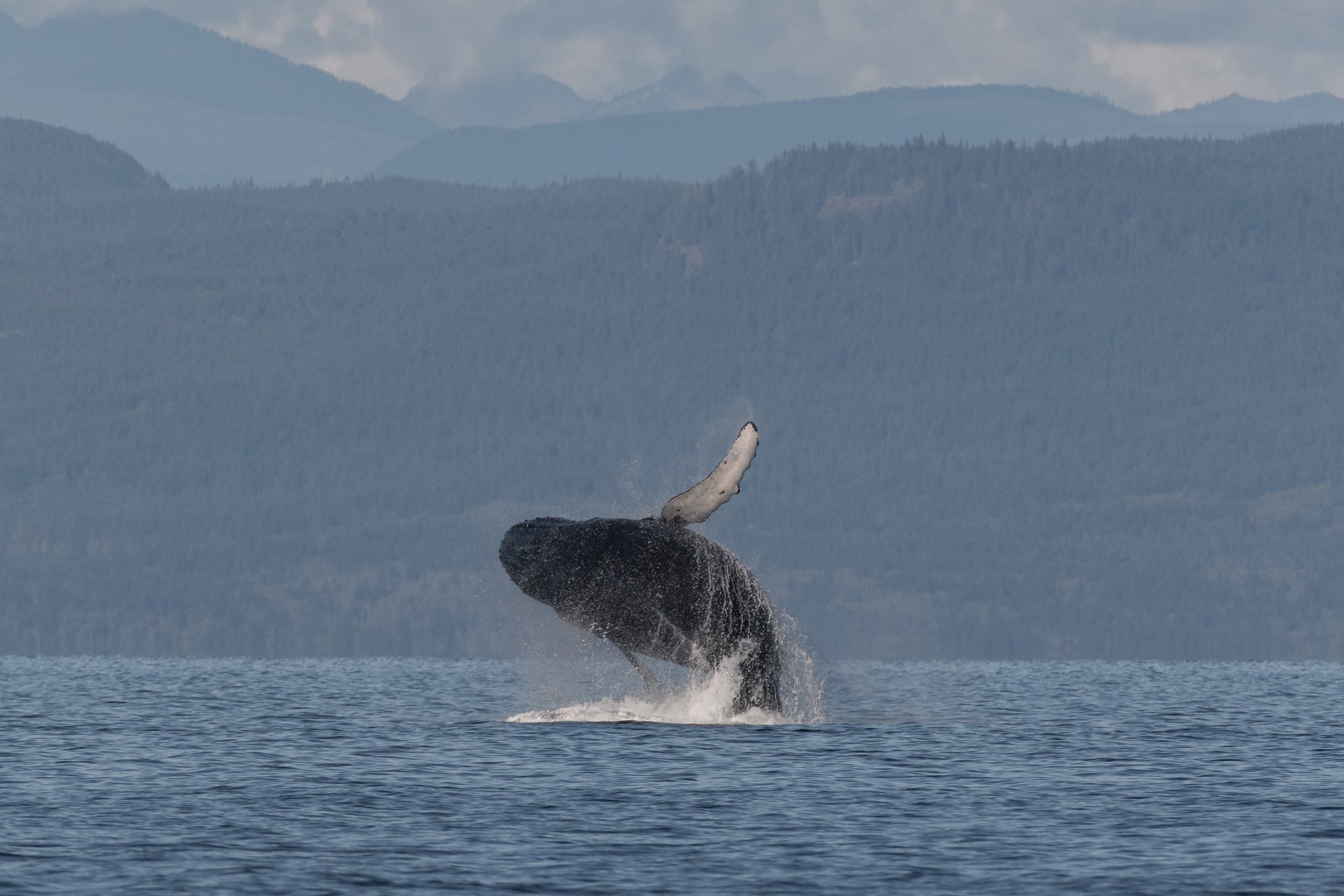
Moraine coming in for a landing. Photo by Hayleigh Hilbert.
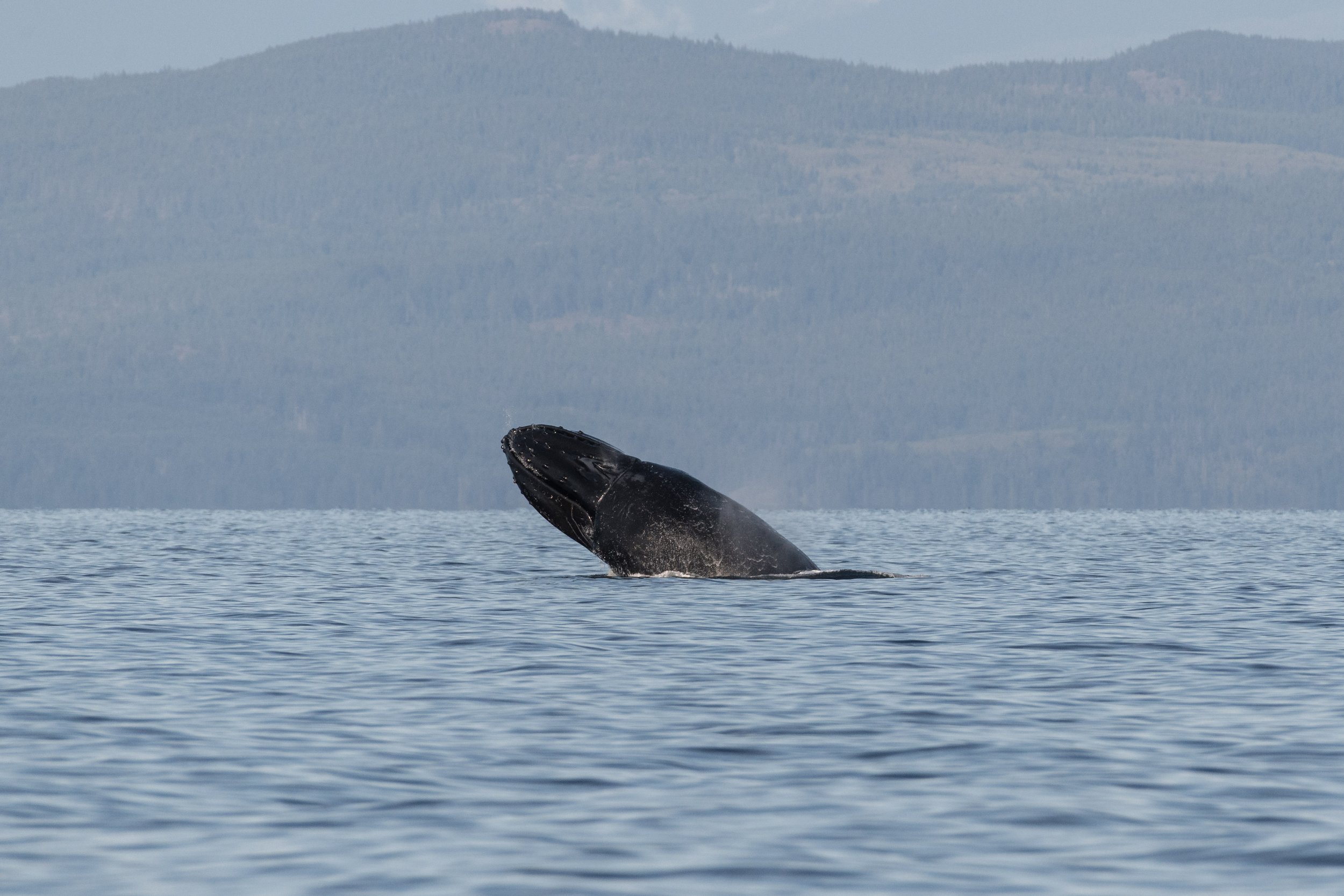
A little chin slap from Moraine. Photo by Hayleigh Hilbert.
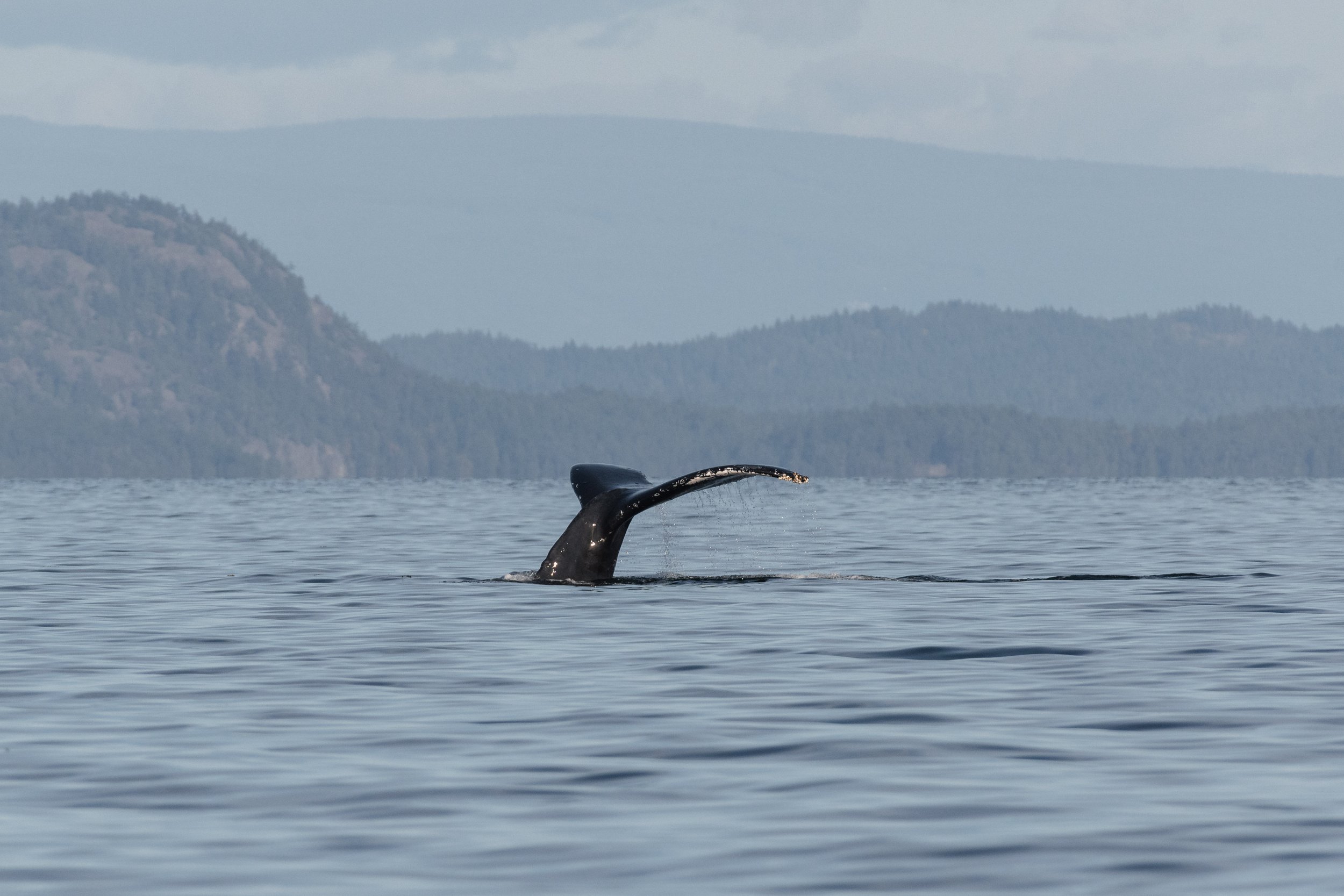
A nice tall fluke from Moraine. Photo by Hayleigh Hilbert.
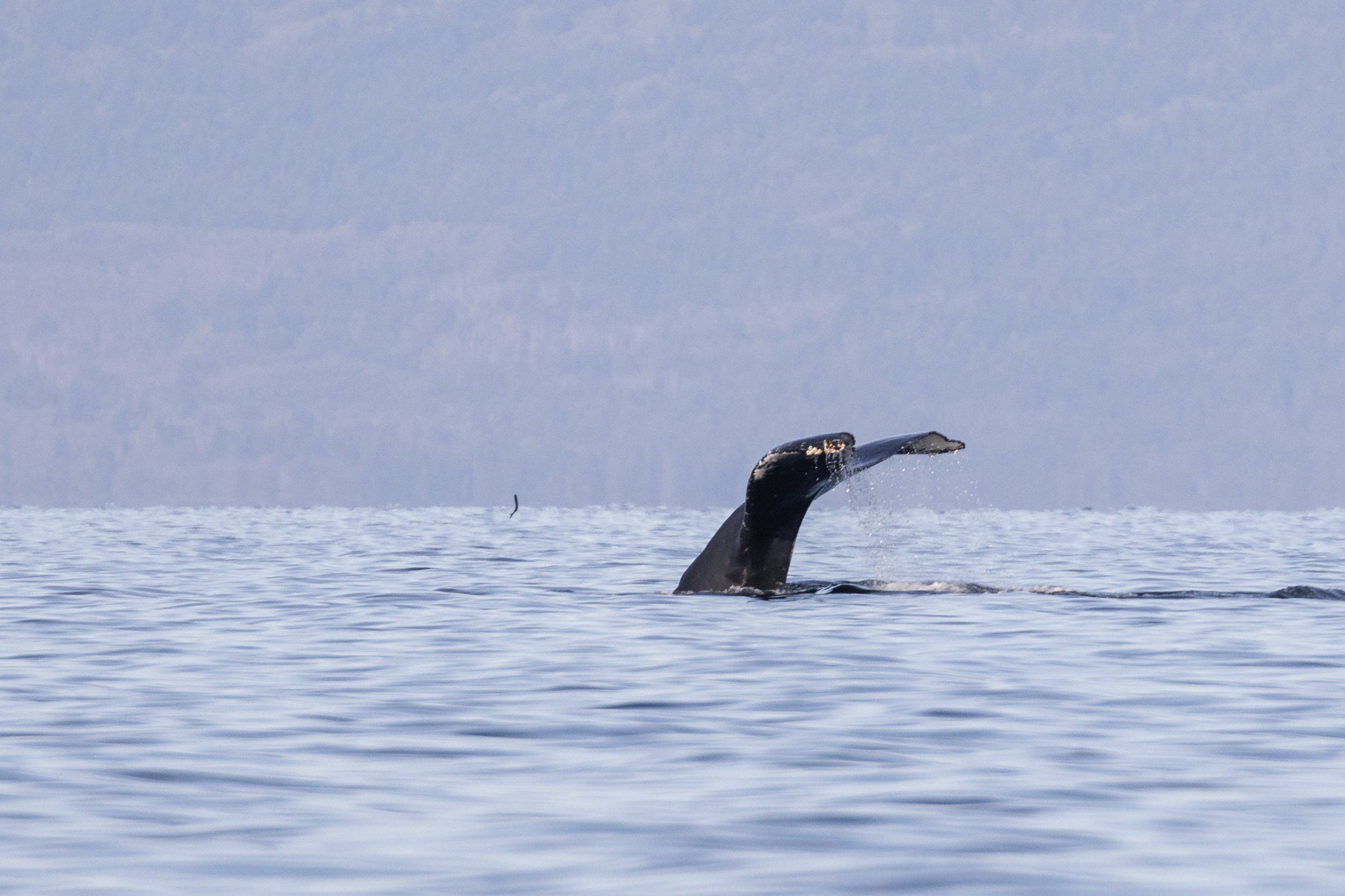
Moraine going for a dive with a fish jumping in the background. Photo by Rosalie Burauen.
Lucky and calf & Wallace
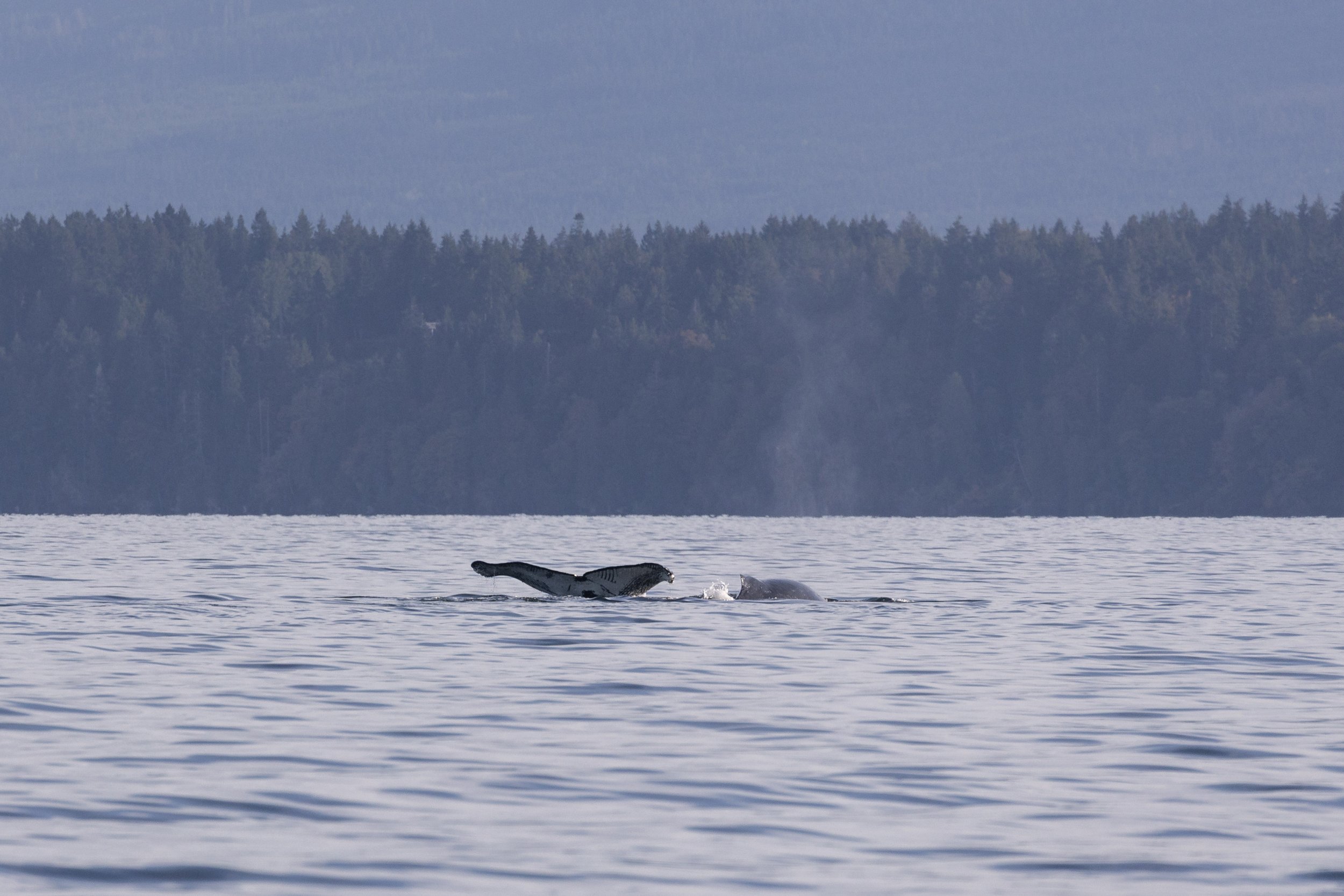
Lucky lifting her tail to dive next to her calf. Photo by Jordan Robinson.
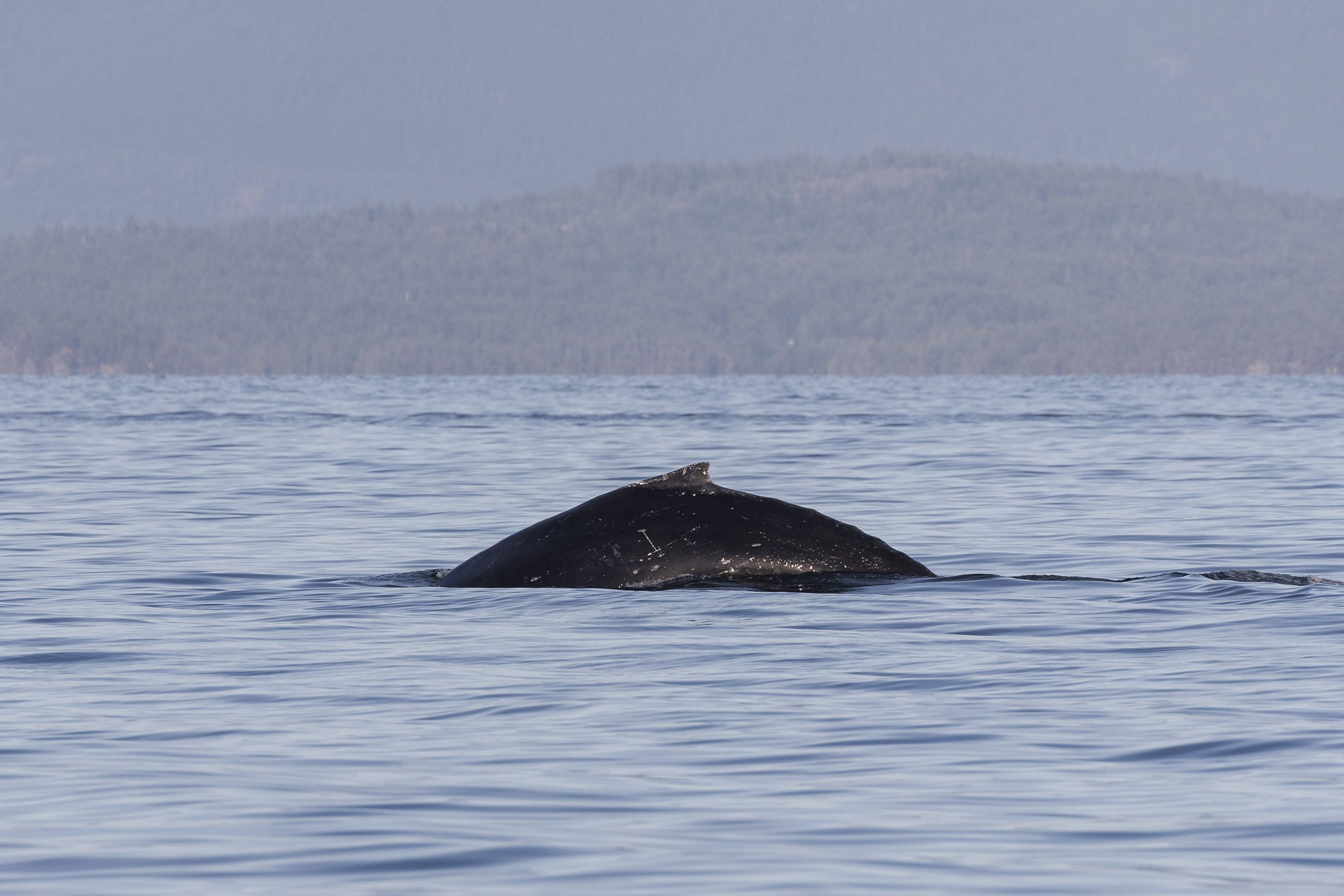
Wallace arching to prepare to dive. Photo by Jordan Robinson.
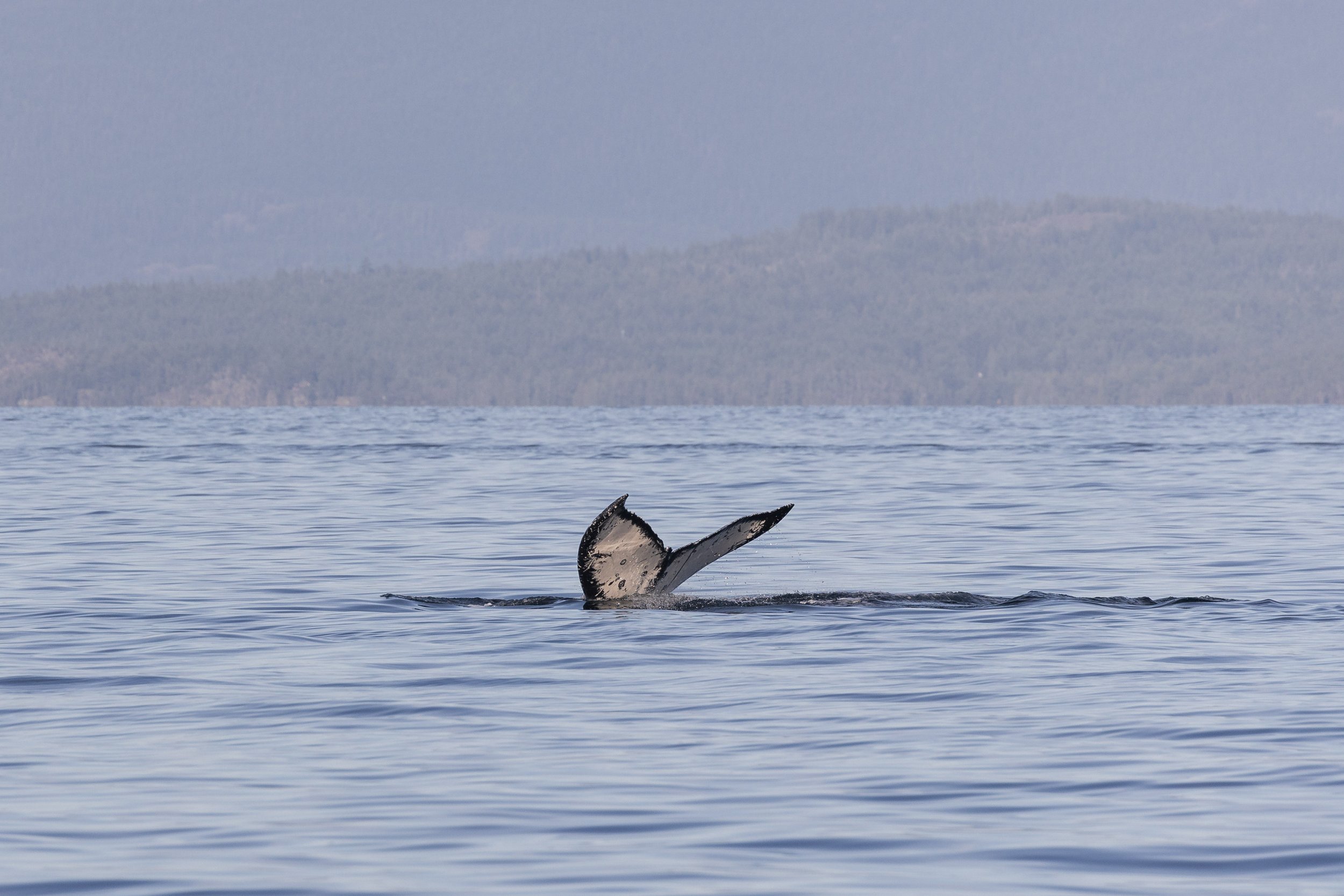
Wallace’s tail with the water reflecting on it. Photo by Jordan Robinson.
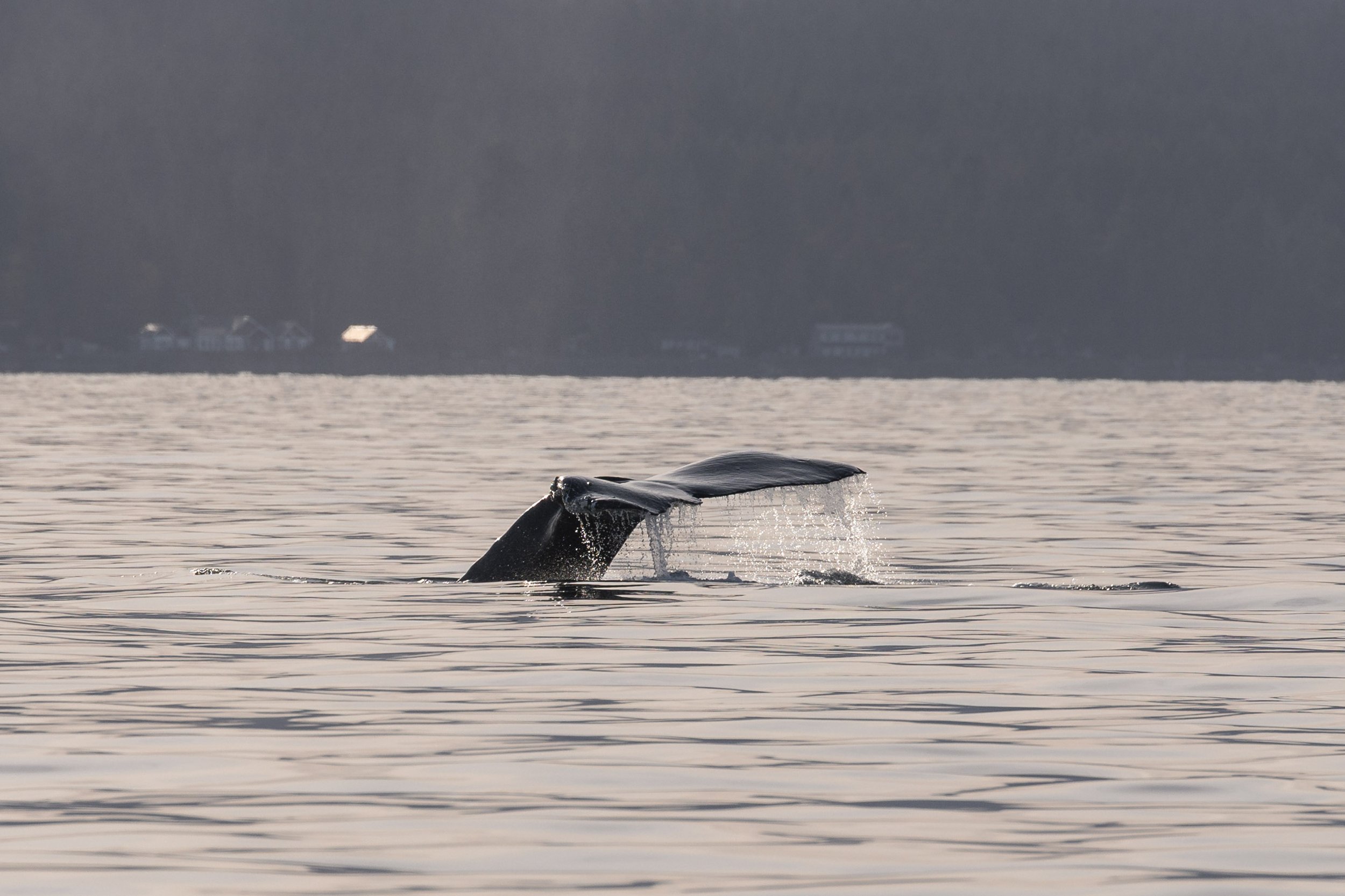
Lucky giving a beautiful fluke waterfall as she dives. Photo by Jordan Robinson.
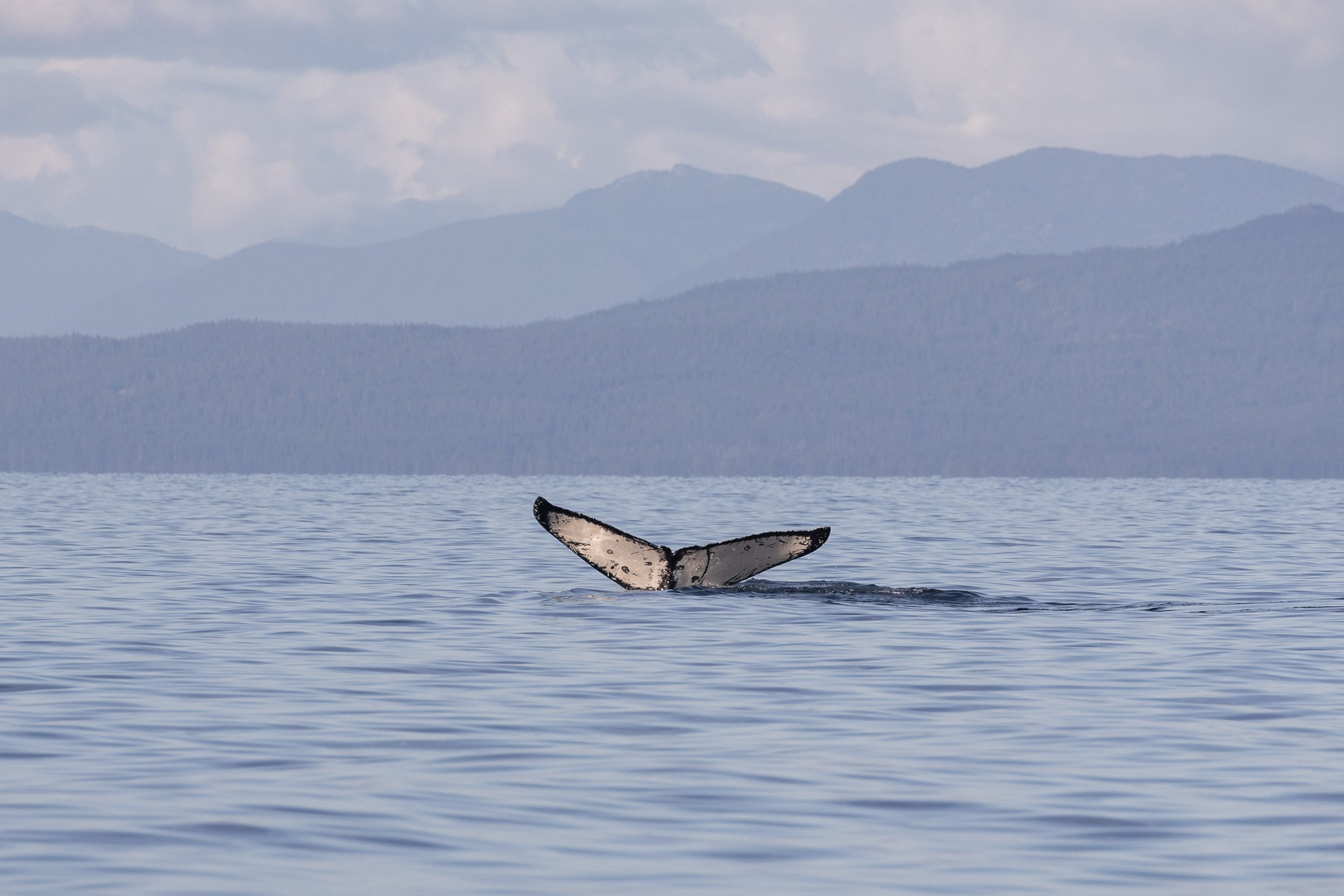
The unique underside of Wallace’s tail. Photo by Jordan Robinson.
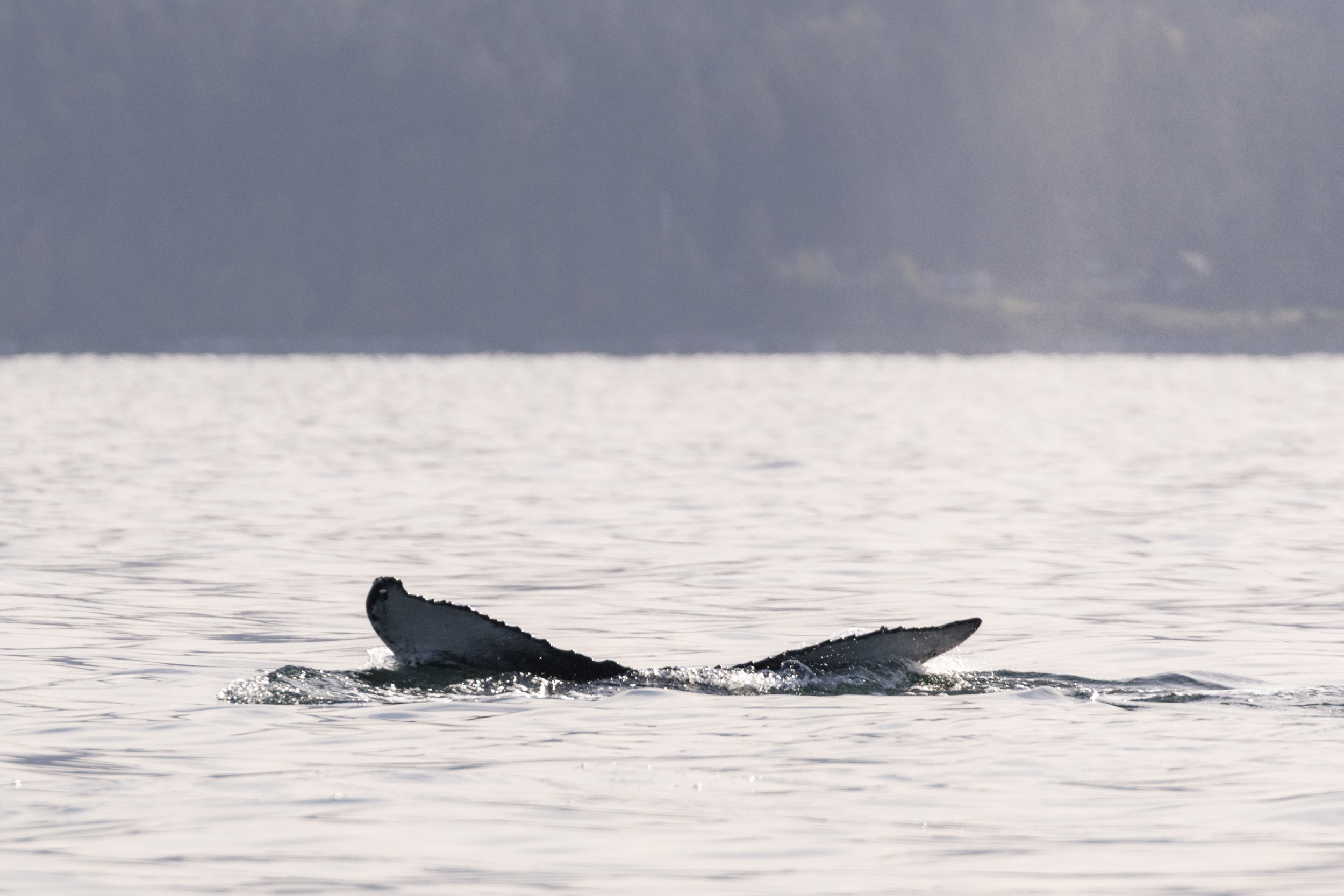
Lucky’s calf going for a dive. Photo by Rosalie Burauen.
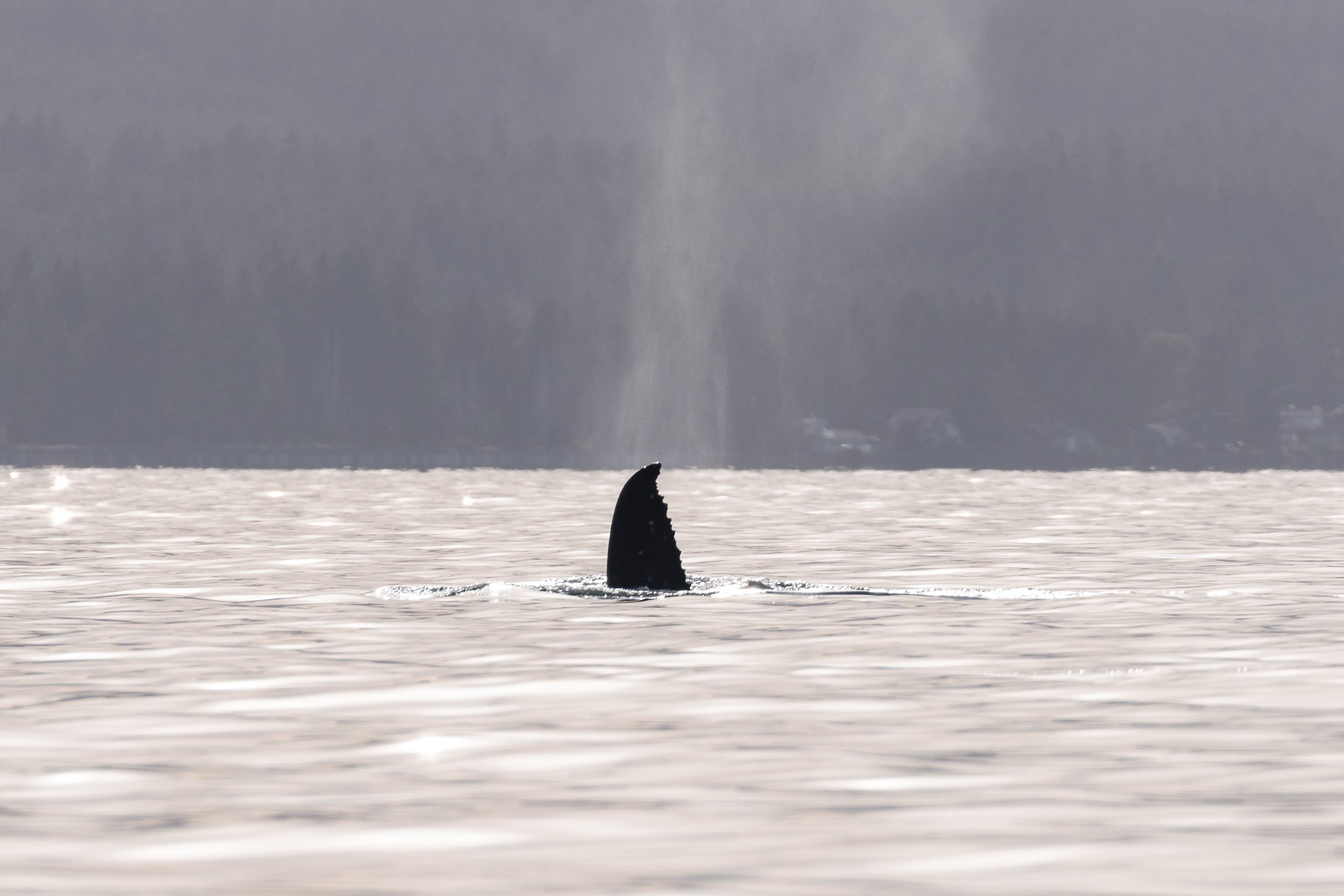
A sideway’s fluke poking out of the water. Photo by Rosalie Burauen.
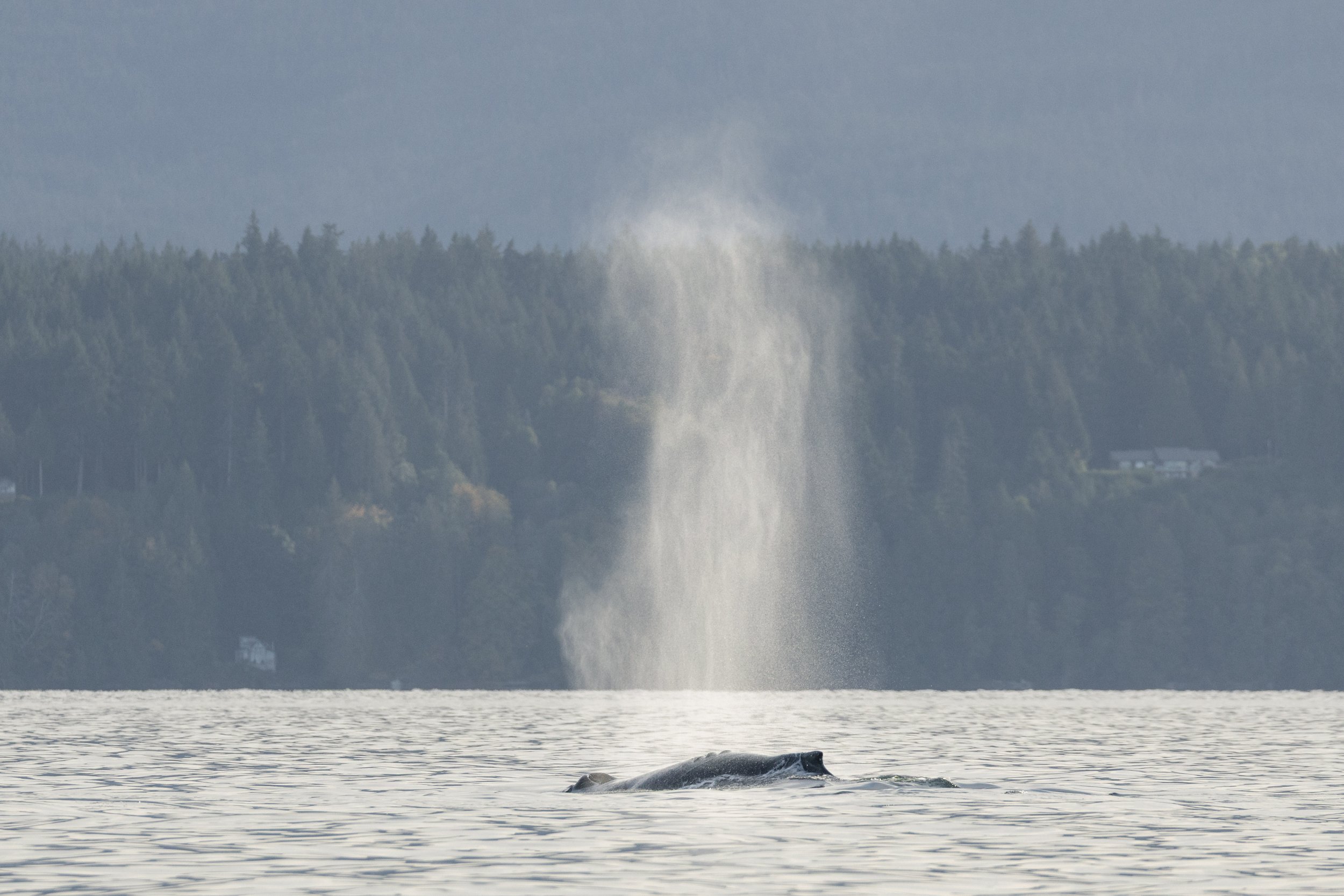
Wallace with a beautiful backlit blow. Photo by Rosalie Burauen.
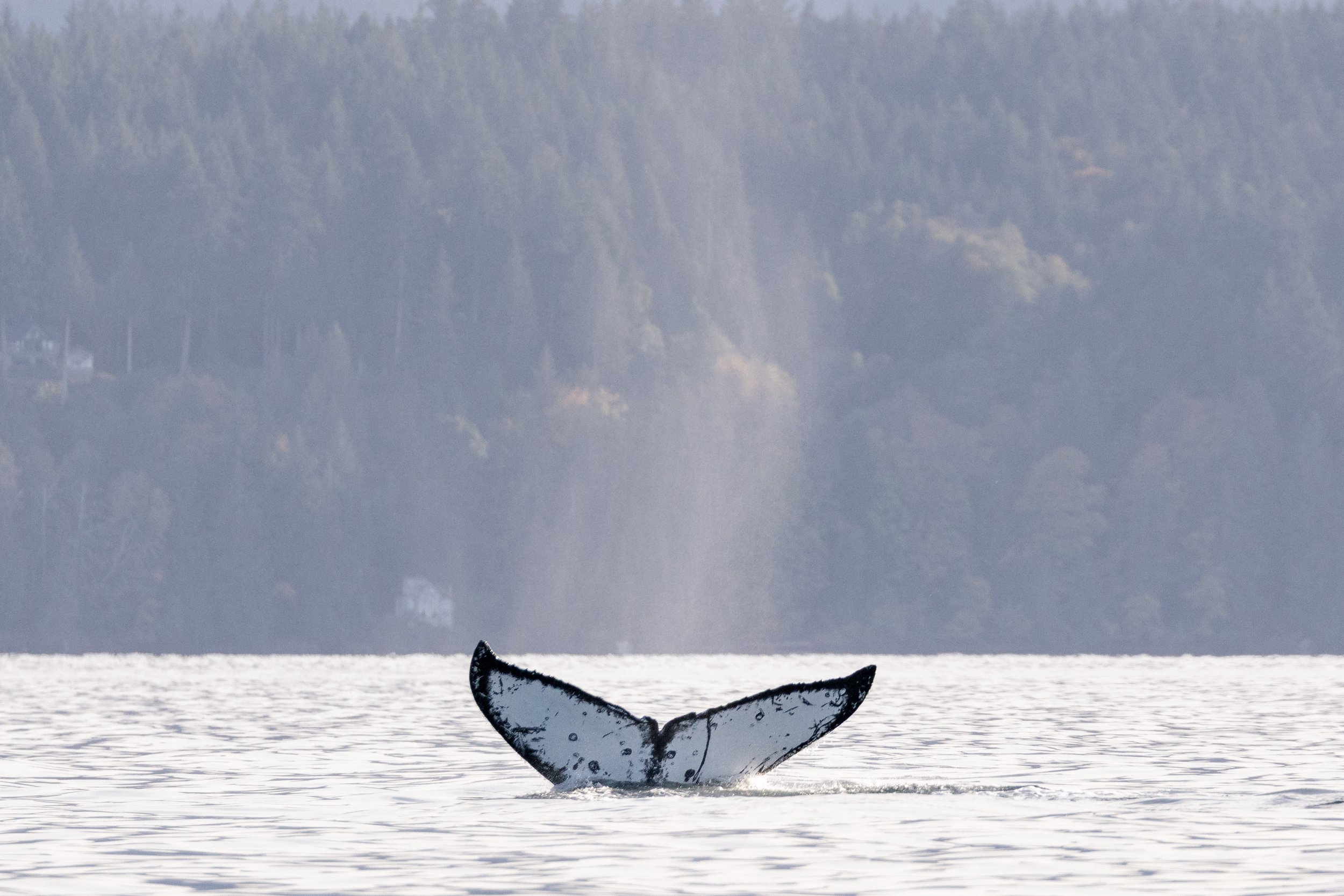
The underside of Wallace’s tail as they go for a dive. Photo by Rosalie Burauen.
Meqe’
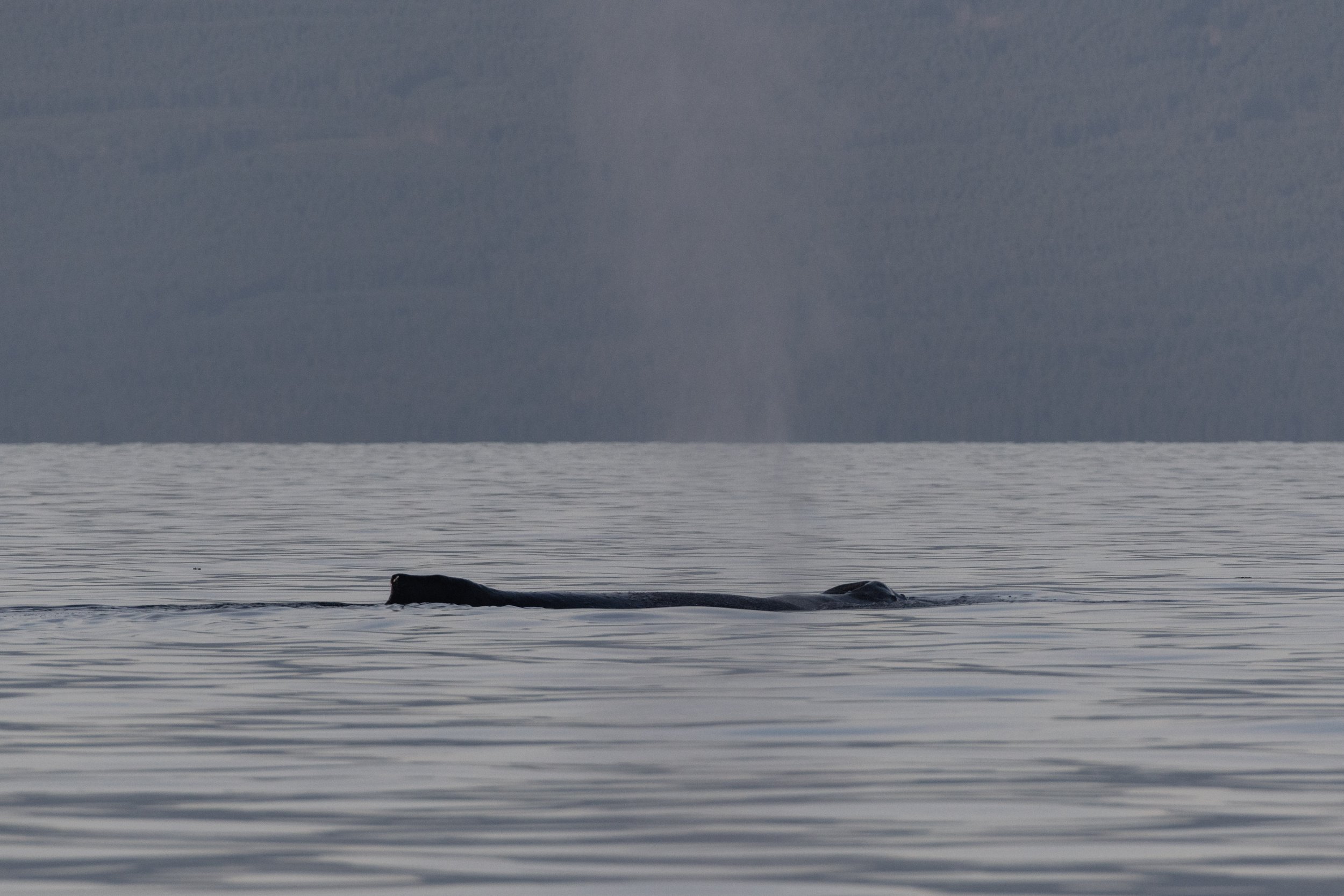
Meqe surfacing. They are recognizable from the small whitescar across the dorsal fin. Photo by Hayleigh Hilbert.
Other Wildlife
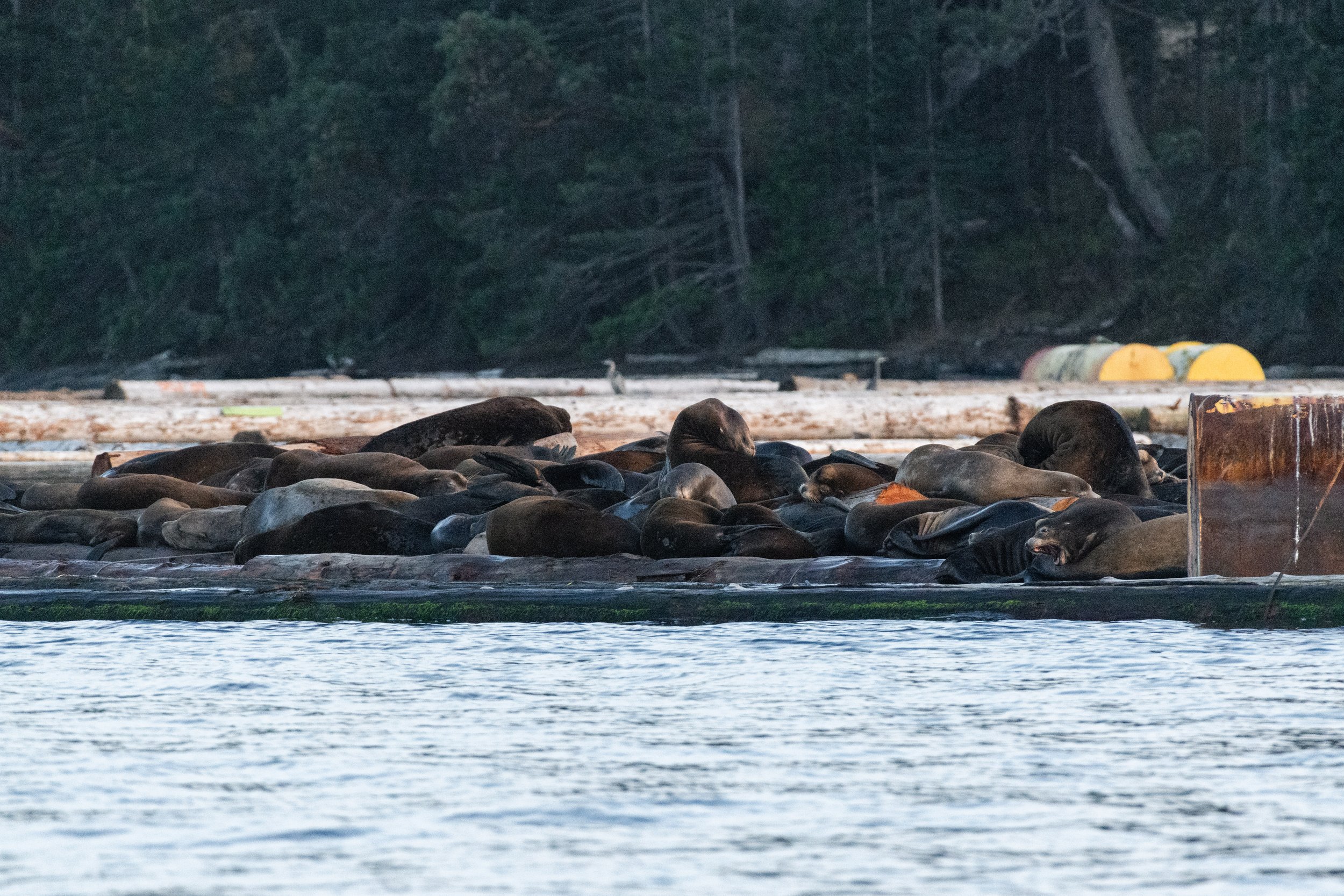
Sea lions cuddling on the log booms at the Harmac Pulp Mill. Photo by Hayleigh Hilbert.
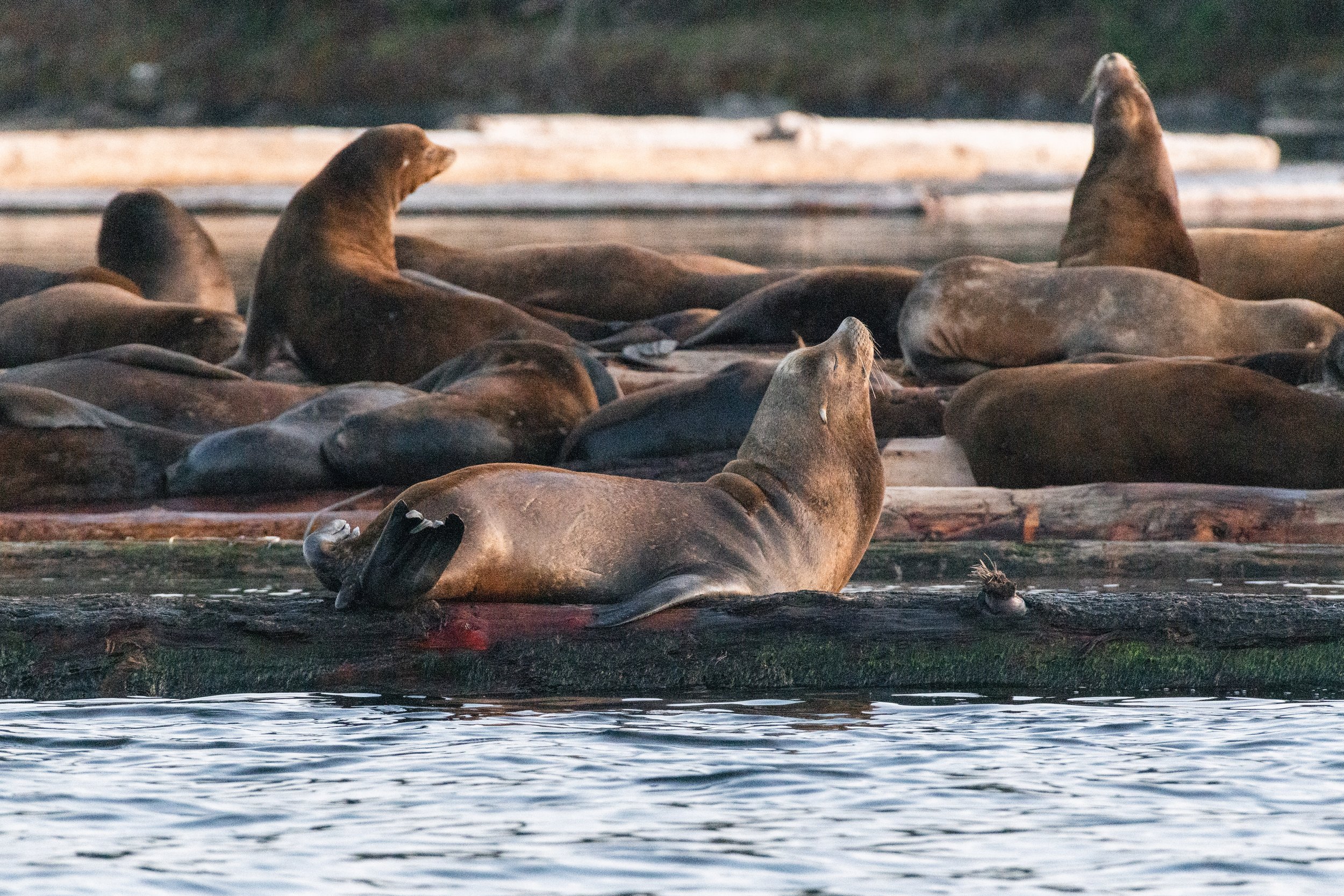
An intersting pose from this California Sea Lion. Photo by Hayleigh Hilbert.
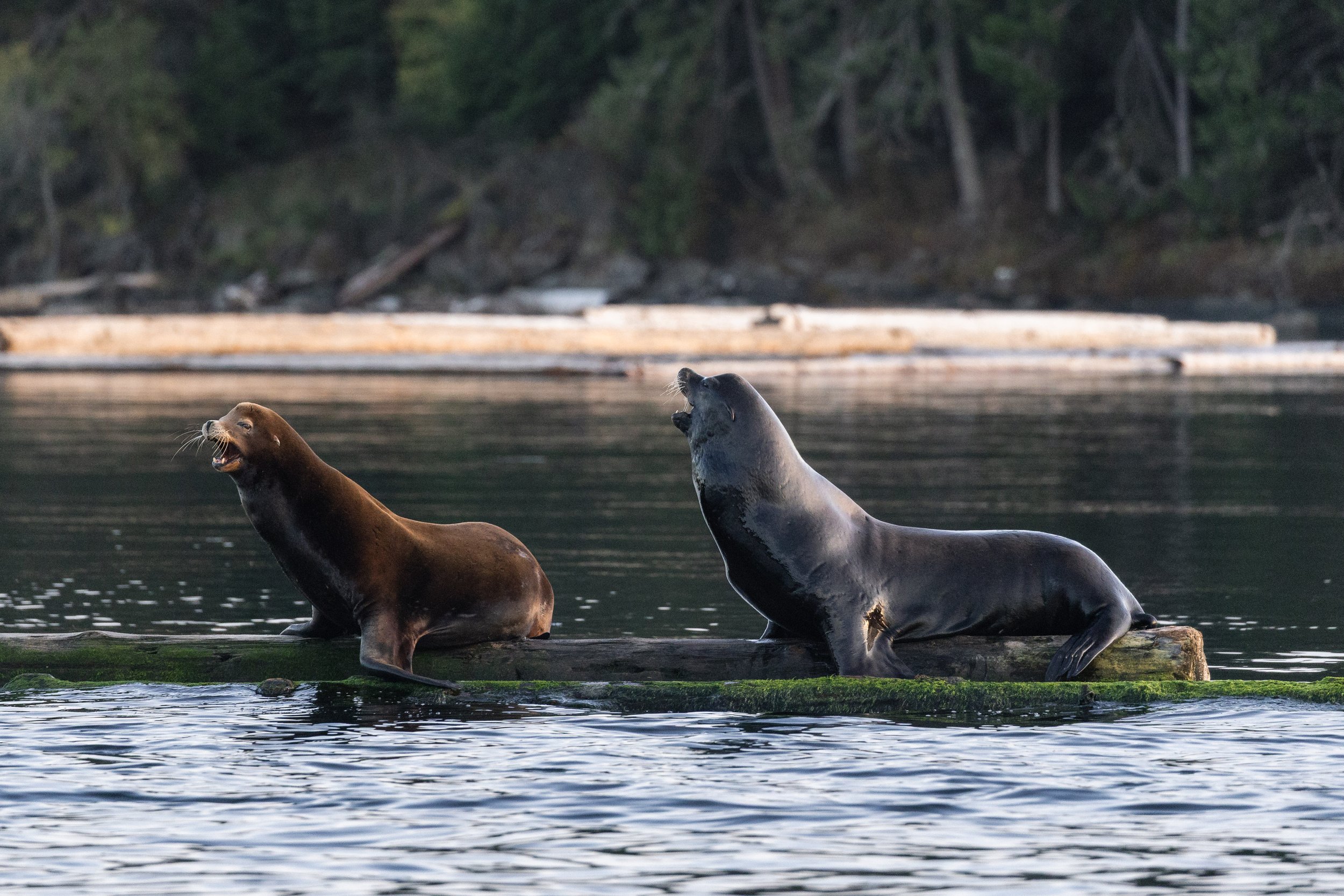
California Sea Lions captured mid bark. Photo by Jordan Robinson.
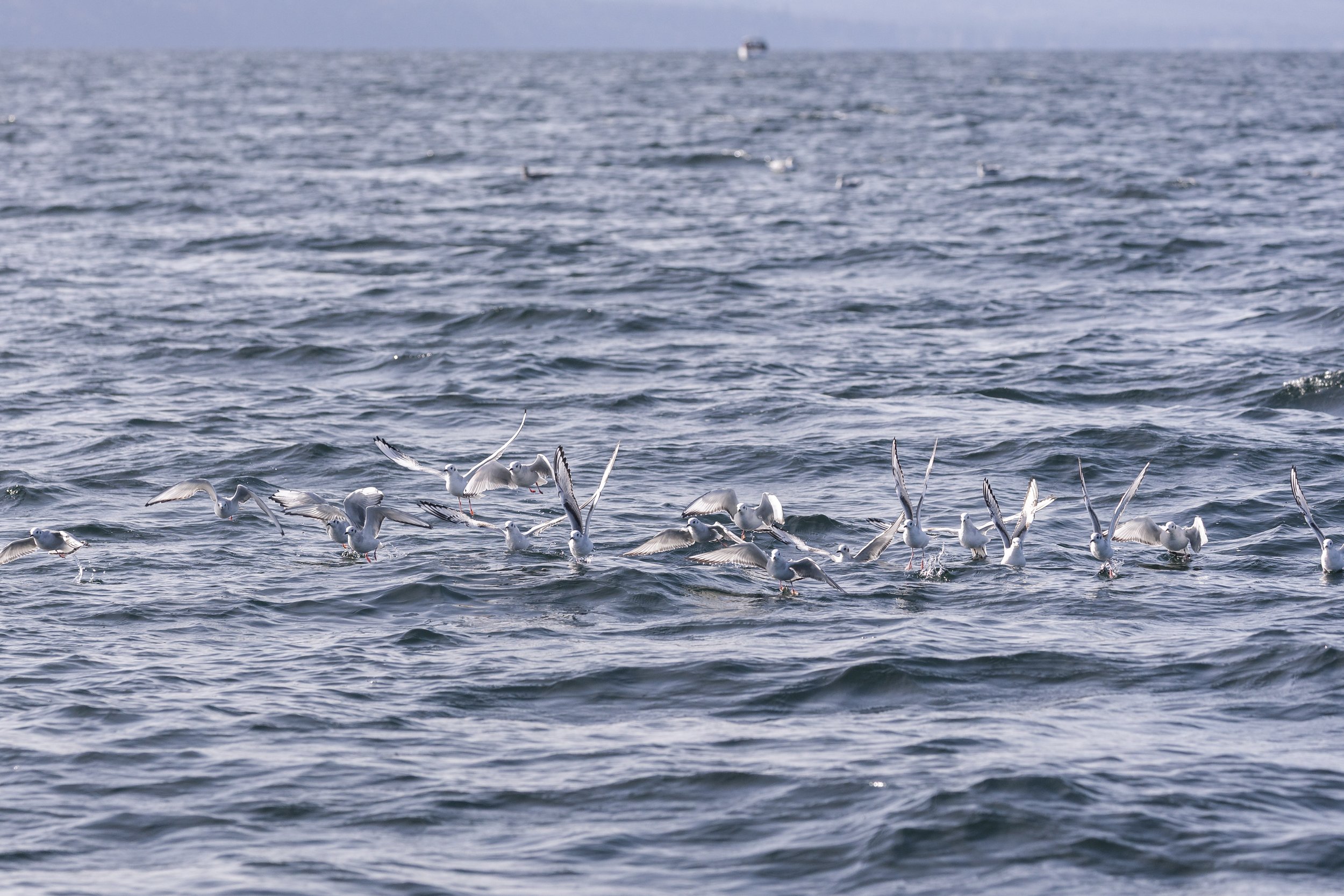
A bunch of Bonepartes gulls taking off. Photo by Jordan Robinson.
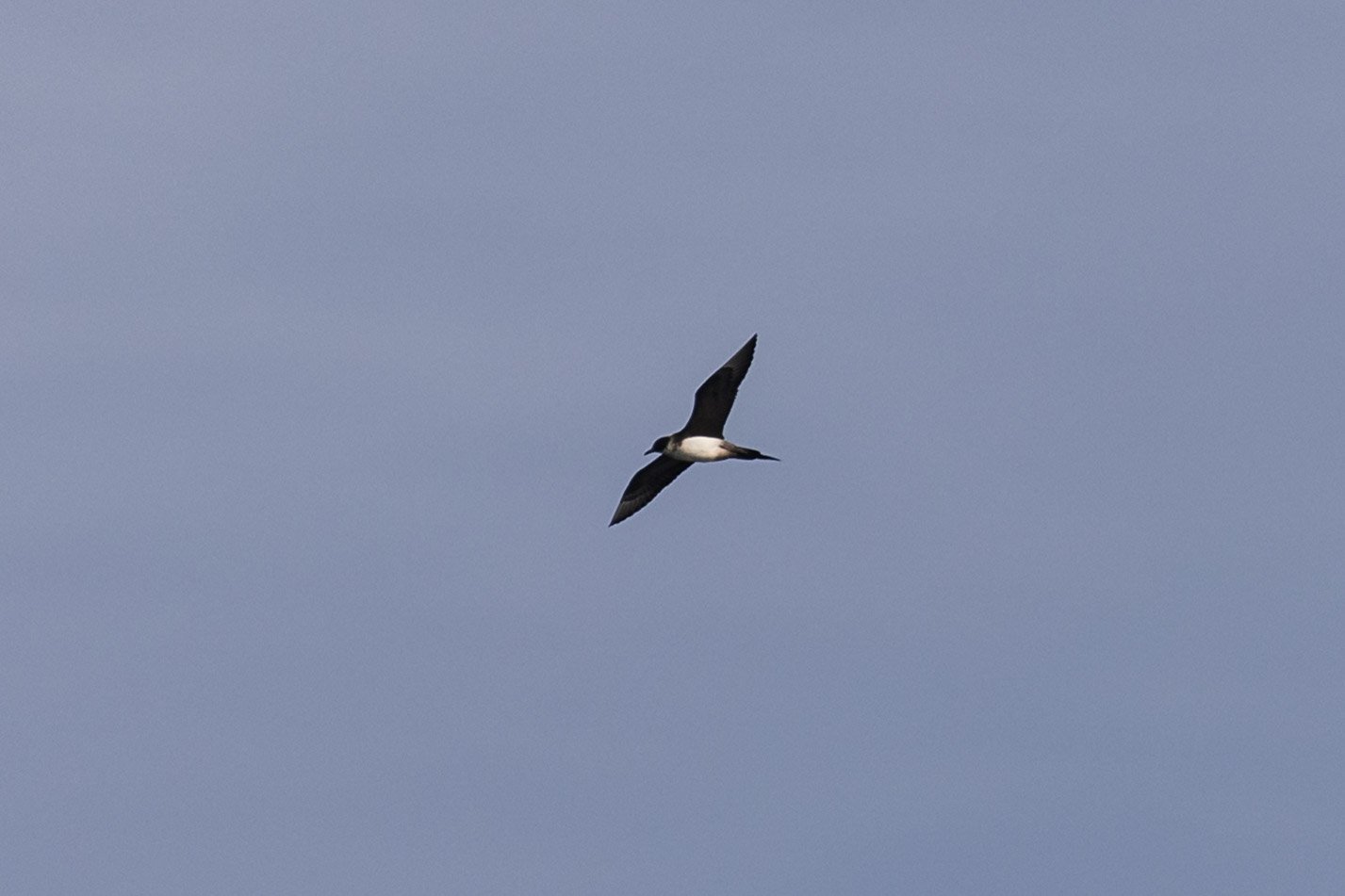
A jaeger flying overhead. Photo by Jordan Robinson.
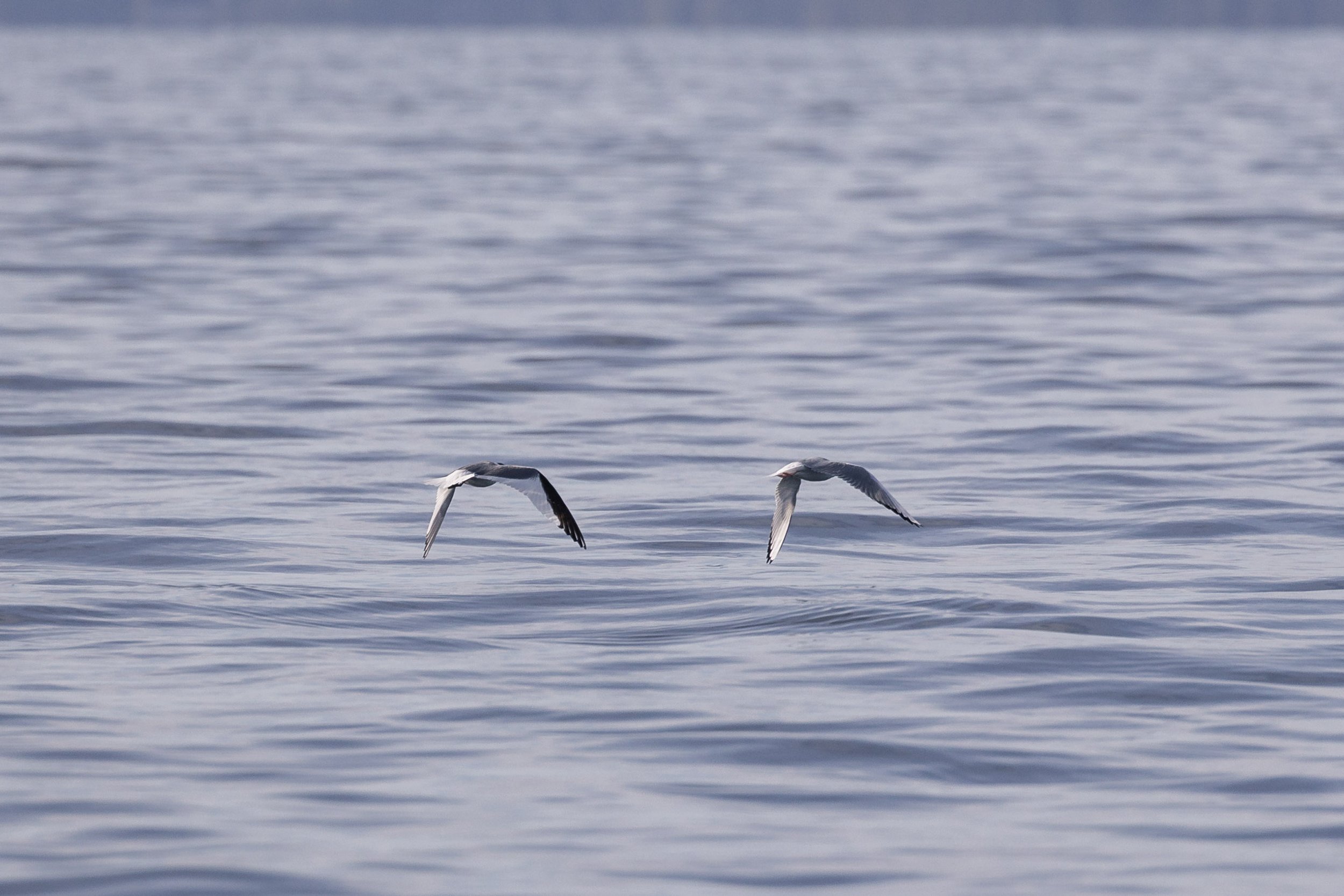
A Sabine’s gull flying alongside a Bonepartes gull. Photo by Jordan Robinson.
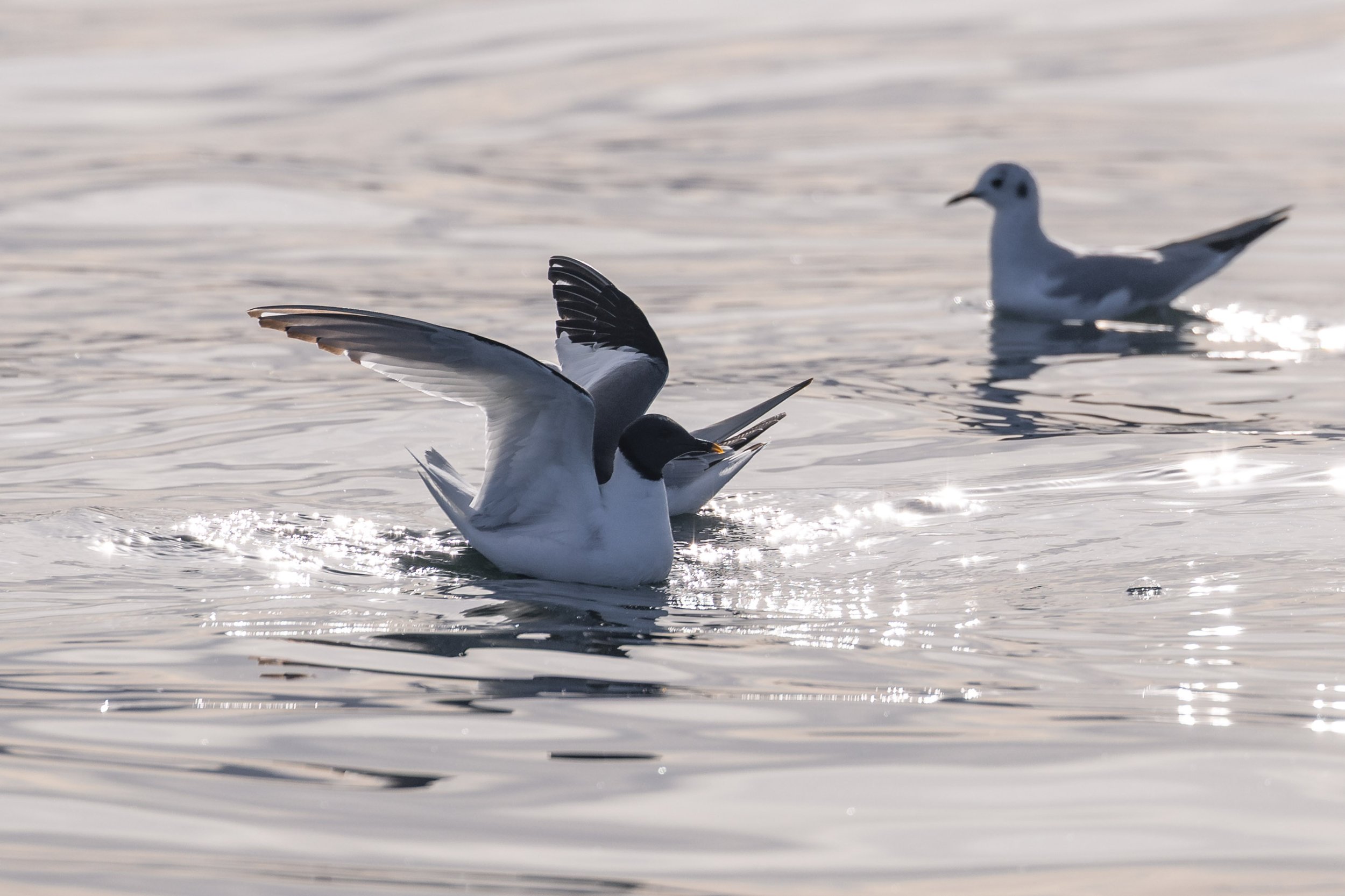
The Sabine’s gull striking a pose in the sunshine. Photo by Jordan Robinson.