
September 27, 2026 - Double Trouble with the T030 siblings and the T109As
The day began on the waves of the Strait of Georgia, where we spotted two familiar dorsal fins moving steadily through the water. These were the T030 siblings, whom we’ve taken to calling “the Trees”.
T030A Sequoia ♂ (1986)
T030C Salix ♀ (2005)
The nickname comes from the names of the two whales in this family group, Sequoia and Salix, both named after trees. Like many Bigg’s killer whales, the siblings were travelling with purpose, moving north through the waves as we spent time observing them. Even a simple encounter with a pair of travelling orca can offer an opportunity to appreciate the individual identities and family connections that make each group unique.
Bigg’s killer whales are mammal-eating orca that travel throughout the coastal waters of British Columbia, often covering considerable distances as they search for prey. Their movements can take them through open water, along island shorelines, and into sheltered bays where seals and sea lions may be found. Naturalists and researchers can identify individual whales by their dorsal fins and the grey saddle patches behind them, allowing them to track these movements over time. These markings, along with scars and other distinguishing features, help build a detailed picture of each whale’s life and the relationships they maintain.
After watching the T030 siblings travelling north, we turned south and continued into the Southern Gulf Islands. Our next encounter offered a very different glimpse into the lives of Bigg’s killer whales. In Chemainus Bay, we found the T109As hunting among the log booms, moving with precision through the maze of floating timber.
T109A Frio/Runaway ♀ (1990)
T109A4 Garrett ♂ (2012)
T109A5 Argyle ♂ (2014)
T109A6 Riley ♀ (2018)
T109A7 Wieland ♂ (2021)
T109A8 Weiss (2024)
Log booms create a distinctive environment along this coastline, with large groups of logs secured together as they await transport. For wildlife observers, these areas can sometimes provide opportunities to see marine mammals navigating close to industrial shorelines. For hunting killer whales, the surrounding waters may offer access to prey moving through the bay. Watching the T109As manoeuvre through the area was particularly fascinating, not only because of the coordinated movements involved in their hunt, but also because of the remarkable family history behind this group.
The T109As earned the nickname “the Runaways” during what seemed like an unusual pattern of family dispersal that first drew considerable attention from local whale observers. To understand why this family became so well known, it helps to look at how killer whale societies are structured and how different populations maintain their family relationships.
Killer whales live in complex social systems, but those systems differ across populations. In some populations, individuals remain closely associated with their maternal relatives throughout their lives. Southern Resident killer whales, for example, are well known for their enduring matrilineal bonds, with offspring generally remaining associated with their mothers even into adulthood. These long-term relationships are central to their social structure.
Bigg’s killer whales also have strong family connections, but their social patterns can be more flexible. Individuals may travel with different relatives, and some females eventually separate from their original family groups to form new associations with their own offspring. Although researchers have increasingly documented these patterns, the details of Bigg’s killer whale society have become clearer over decades of photo-identification and behavioural research.
This is where Frio, the female at the centre of the Runaways’ story, became particularly significant. In 2010, Frio dispersed from her original matriline, an event that surprised many local observers who had grown accustomed to seeing killer whale families maintain familiar associations. At the time, researchers were still exploring the social structure of Bigg’s killer whales in detail, and this kind of separation challenged expectations shaped by observations of other killer whale populations.
What initially seemed unusual has since become part of a broader understanding of Bigg’s killer whale society. Female dispersal and the formation of new family groups are now recognized as features of this population’s social dynamics. The Runaways offered a particularly memorable example of how these relationships can change over time, demonstrating that even well-known killer whale families may develop in unexpected ways.
Since Frio’s dispersal, the family line has continued to grow. As her daughters matured, smaller matrilines formed, and some established their own associations, creating additional branches within the broader family. Rather than remaining a single, tightly connected group, the descendants have developed a more complex network of relationships, with different branches travelling together at different times.
Today, the T109 family line includes 26 living individuals, 11 of whom are descendants of Frio. Each new generation adds another layer to the family’s history, making their movements and associations especially interesting to follow. A sighting of the T109As is therefore more than an opportunity to observe a group of whales. It is also a chance to see one part of a much larger story about family, dispersal, and how killer whale societies evolve.
As we watched the T109As hunting among the log booms in Chemainus Bay, their movements were especially striking. The whales navigated the area with precision, surfacing and disappearing among the floating logs as they worked through the bay. Bigg’s killer whales rely on stealth and careful coordination when hunting marine mammals. Their prey, including seals and sea lions, have excellent underwater hearing, so a quiet approach can be an important advantage. The whales’ ability to move through their environment while remaining aware of one another is part of what makes their hunting behaviour so compelling to observe.
Although a successful hunt is not always visible from the surface, the movements leading up to one can reveal a great deal. Changes in direction, spacing between individuals, and the timing of their surfacings may offer clues about how the whales move through an area.
For the naturalists aboard our boats, seeing the T109As in this setting carried an added significance. Knowing Frio's history and the generations of whales connected to her added another dimension to the encounter. The individuals moving through Chemainus Bay were not simply members of a passing pod. They were part of a family whose changing relationships have helped illustrate the flexibility of Bigg’s killer whale society.
After spending time with the T109As, we continued south and made a brief stop near Thetis Island to visit a group of harbour seals. Often found resting on rocks or other sheltered haul-out sites, harbour seals use these locations to rest, regulate their body temperature, and escape the demands of swimming and foraging. They are a familiar part of the Southern Gulf Islands, where sheltered shorelines and productive waters provide important habitat.
Harbour seals may not command as much attention as a towering killer whale dorsal fin, but they play an important role in the coastal ecosystem. They are also among the marine mammals Bigg’s killer whales hunt, linking the quiet scenes of seals resting near shore to the complex predator-prey relationships unfolding in the surrounding waters.
From the T030 siblings travelling through the Strait of Georgia to the Runaways hunting among the log booms of Chemainus Bay, the day reminded us how much individual history a whale sighting can carry. The T109 family’s story continues to develop with each generation, and every encounter adds another small piece to our understanding of their lives. After our final stop with the harbour seals, we made our way back to Nanaimo, carrying with us another glimpse into the remarkable social world of Bigg’s killer whales.
Please enjoy the photos below taken throughout the trip by Desarae Poier, Jordan Robinson, and Vanessa Lugin.
The Trees (T030A &T030C)
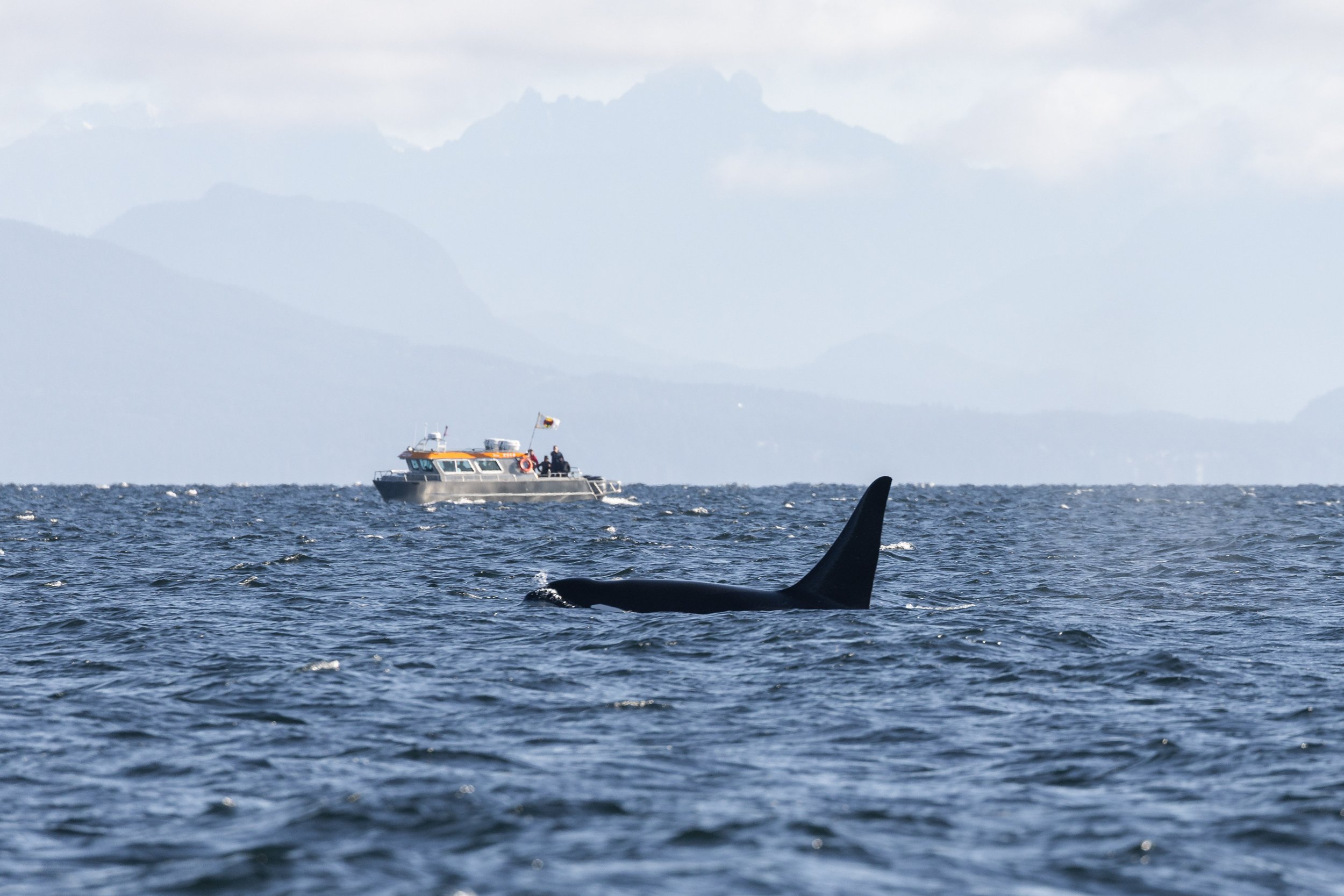
T030C Sequoia surfacing with Kula watching in behind him. Photo by Desarae Poier.
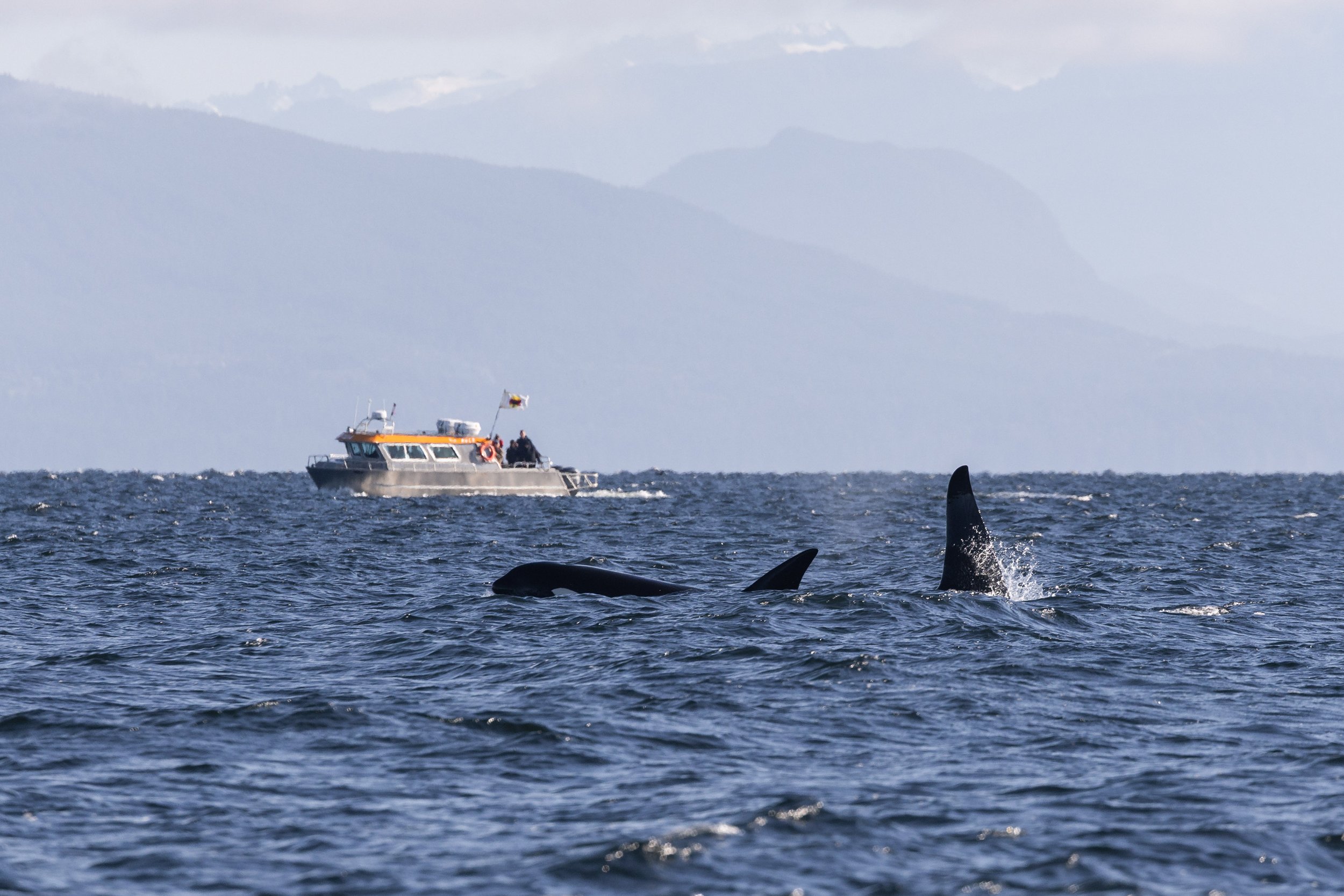
T030C Salix in the lead, ahead of T030A Sequoia. Photo by Desarae Poier.
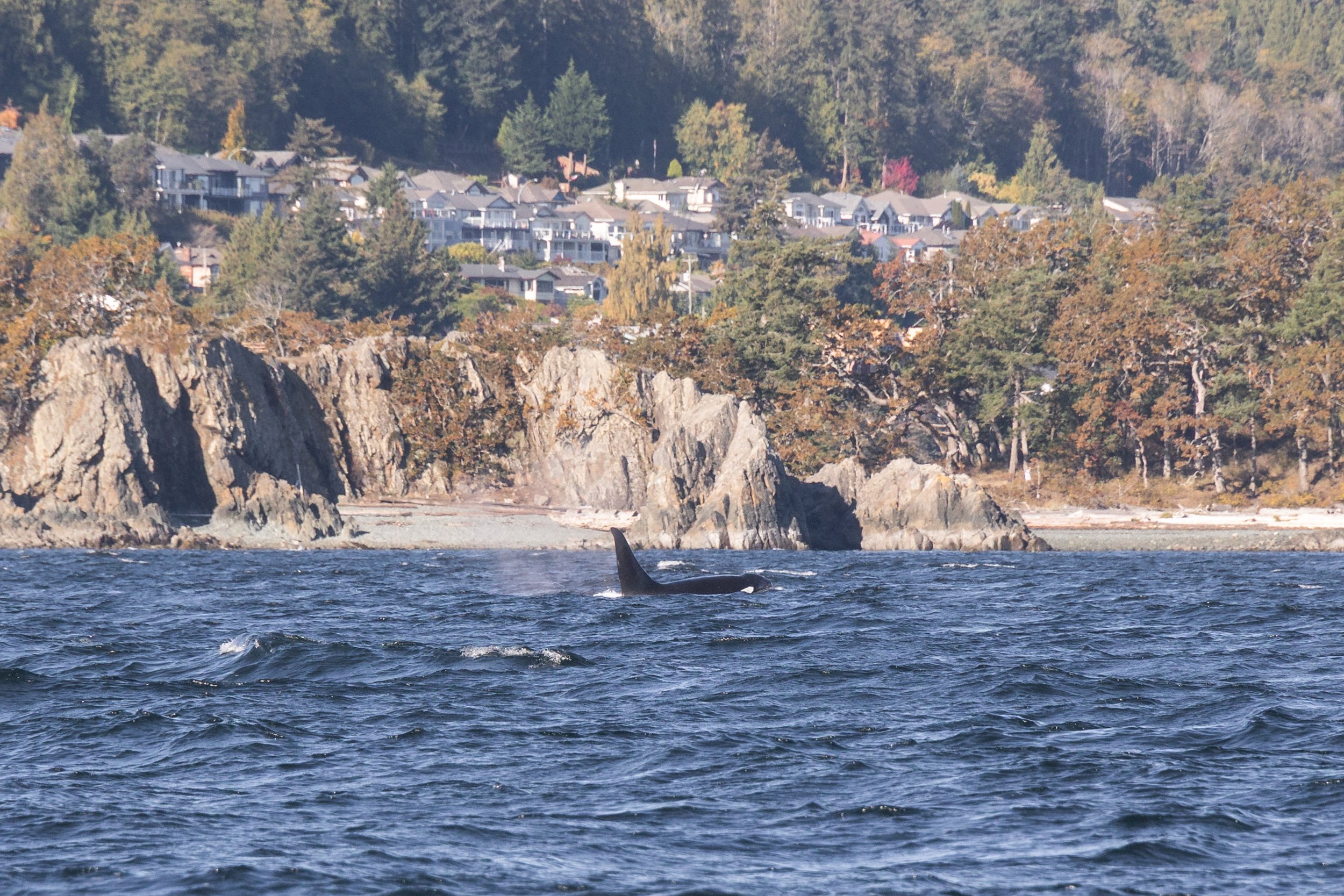
T030C Sequoia surfacing in front of Pipers Lagoon. Photo by Jordan Robinson.
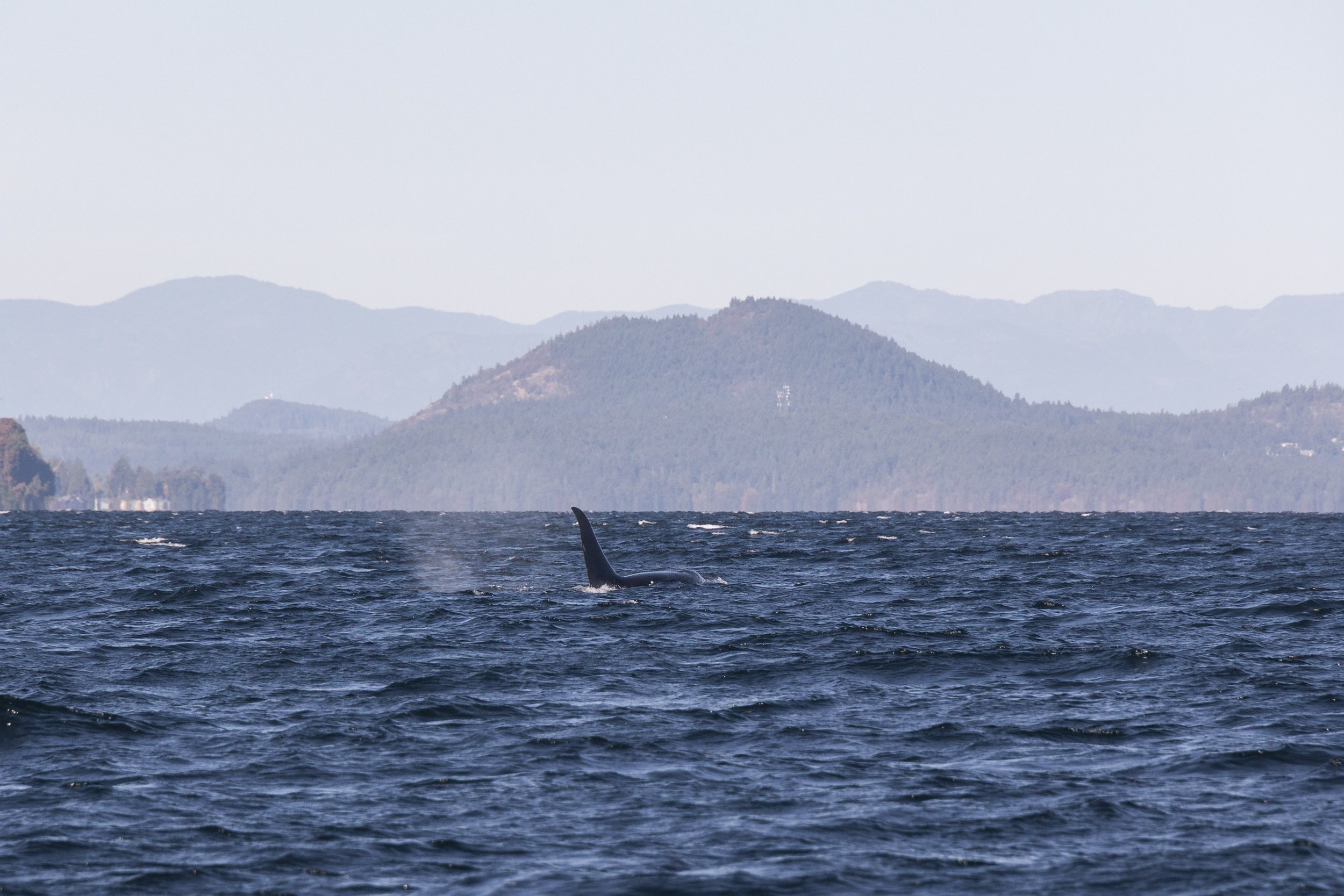
A great look at T030A Sequoia surfacing in the waves. Photo by Jordan Robinson.
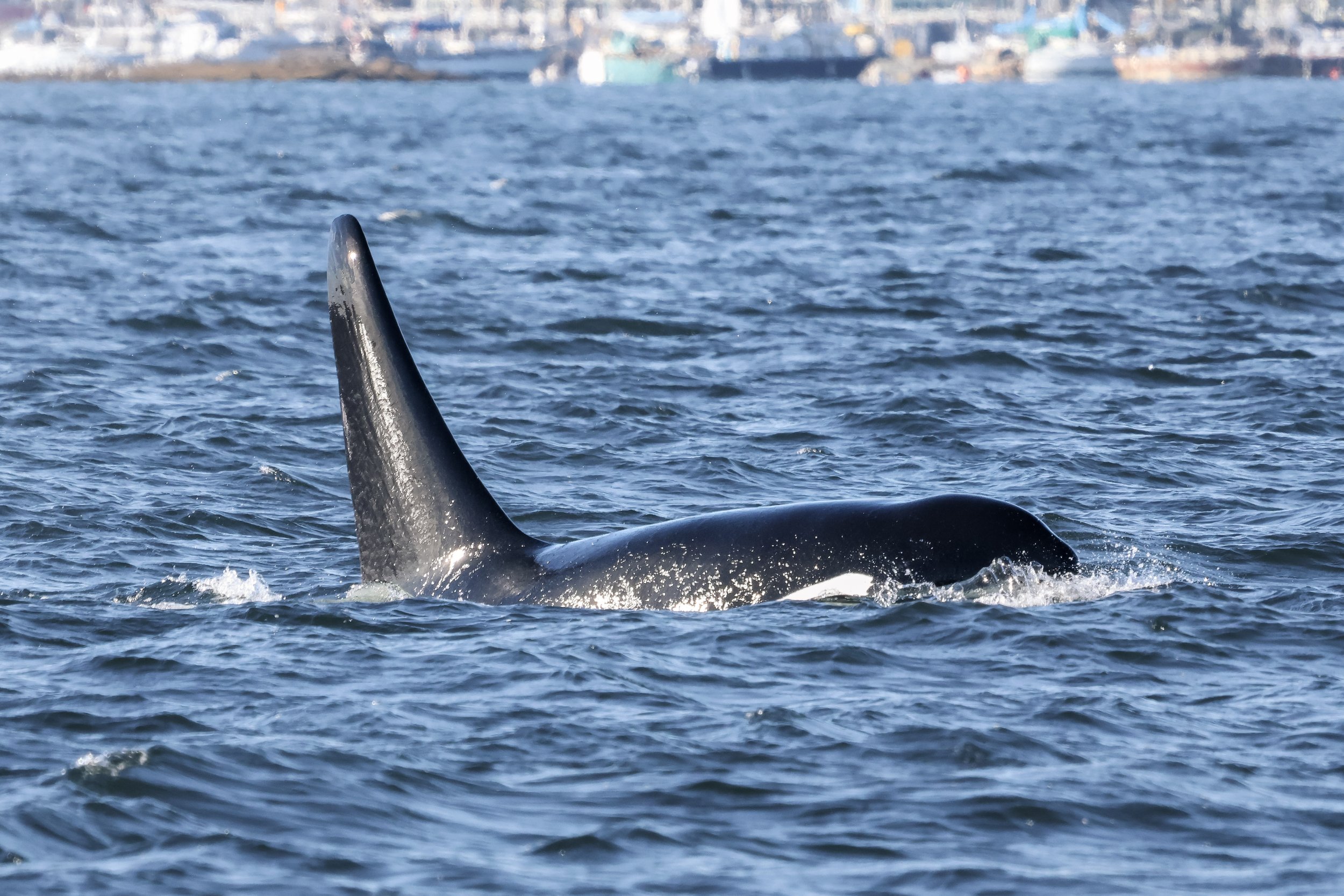
T030A Sequoia surfacing in the waves. Photo by Vanessa Lugin.
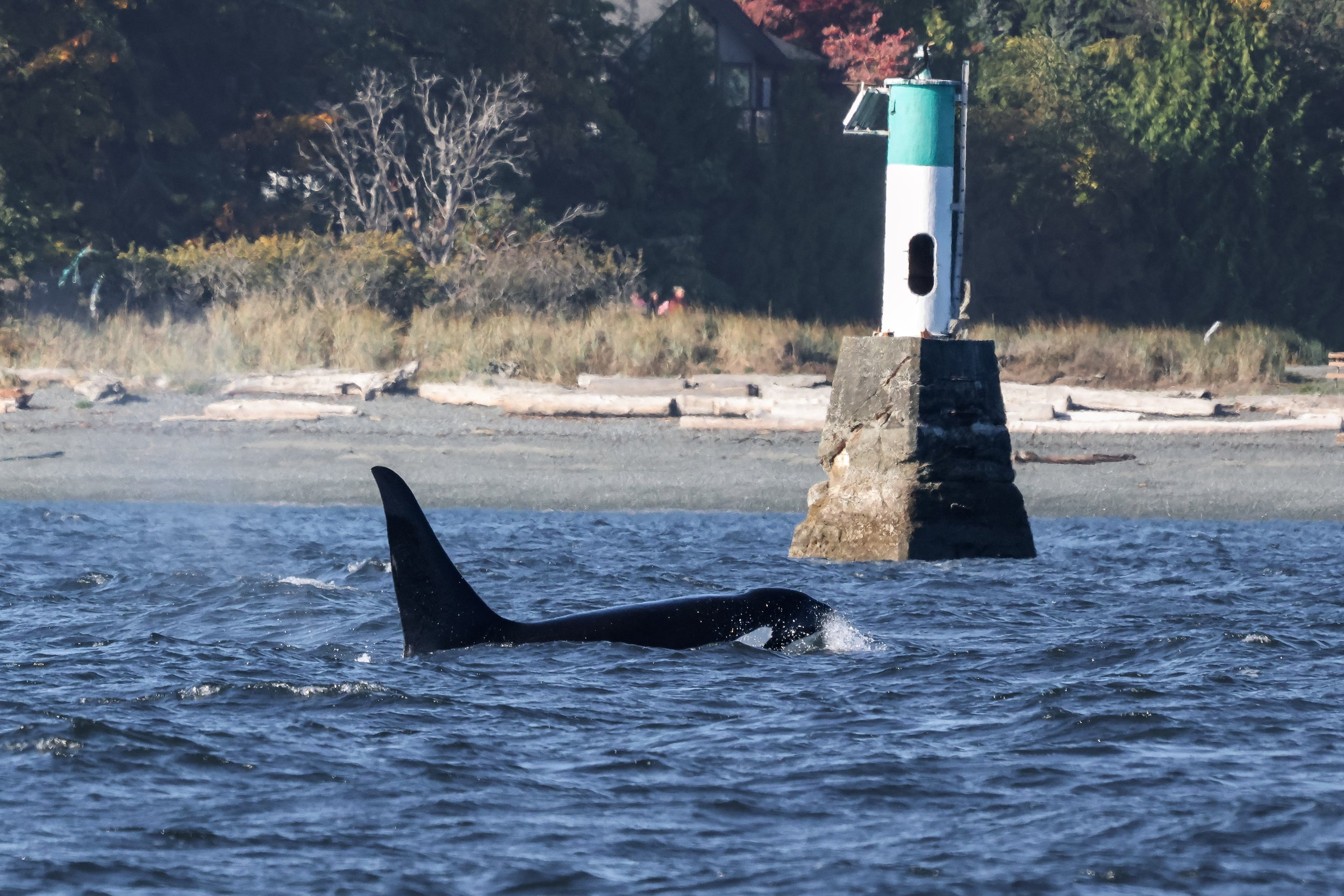
T030A Sequoia surfacing with Pipers Lagoon as the backdrop. Photo by Vanessa Lugin.
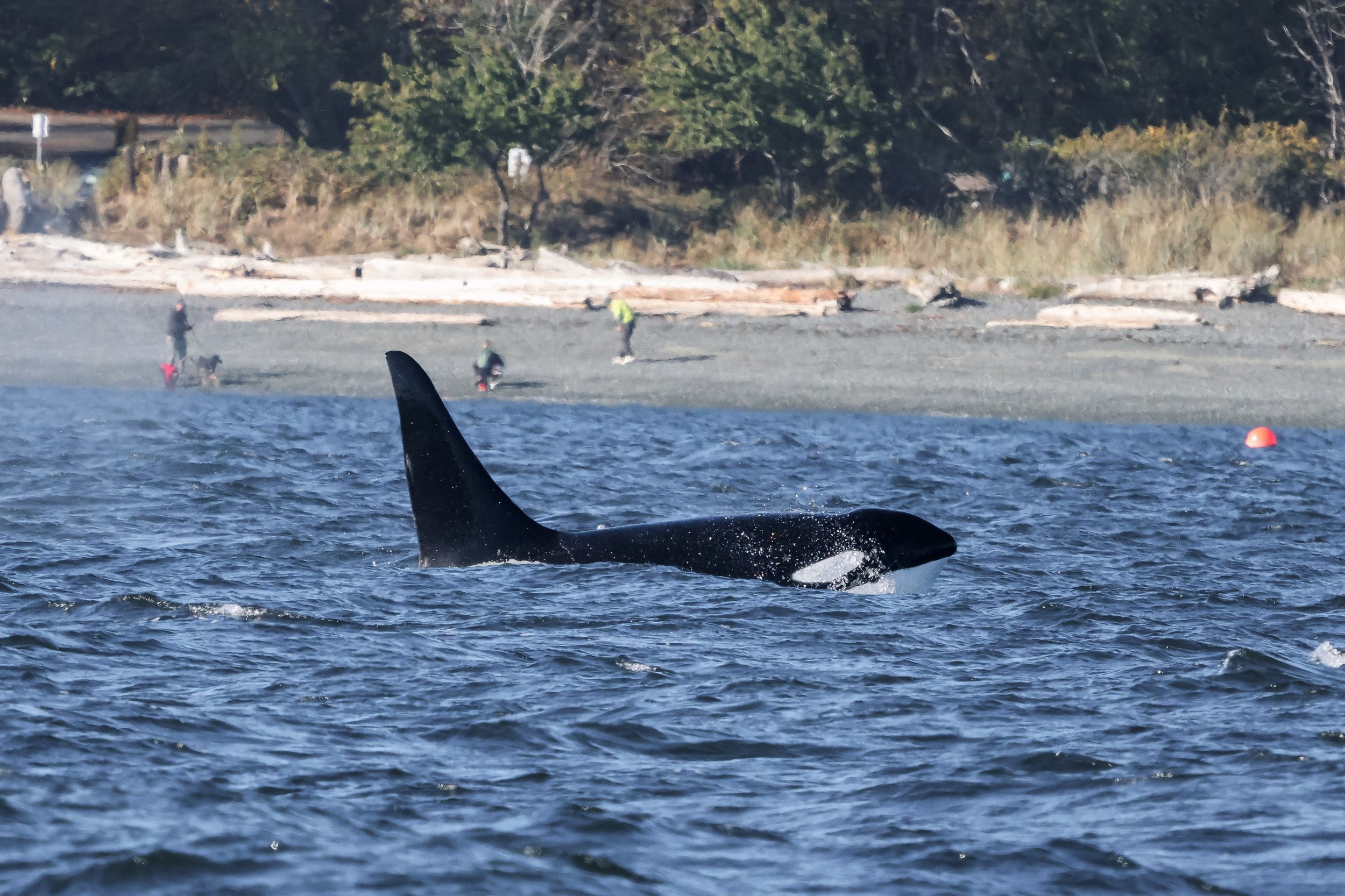
A cute look at T030A Sequoia moving through the water and showing off his rostrum. Photo by Vanessa Lugin.
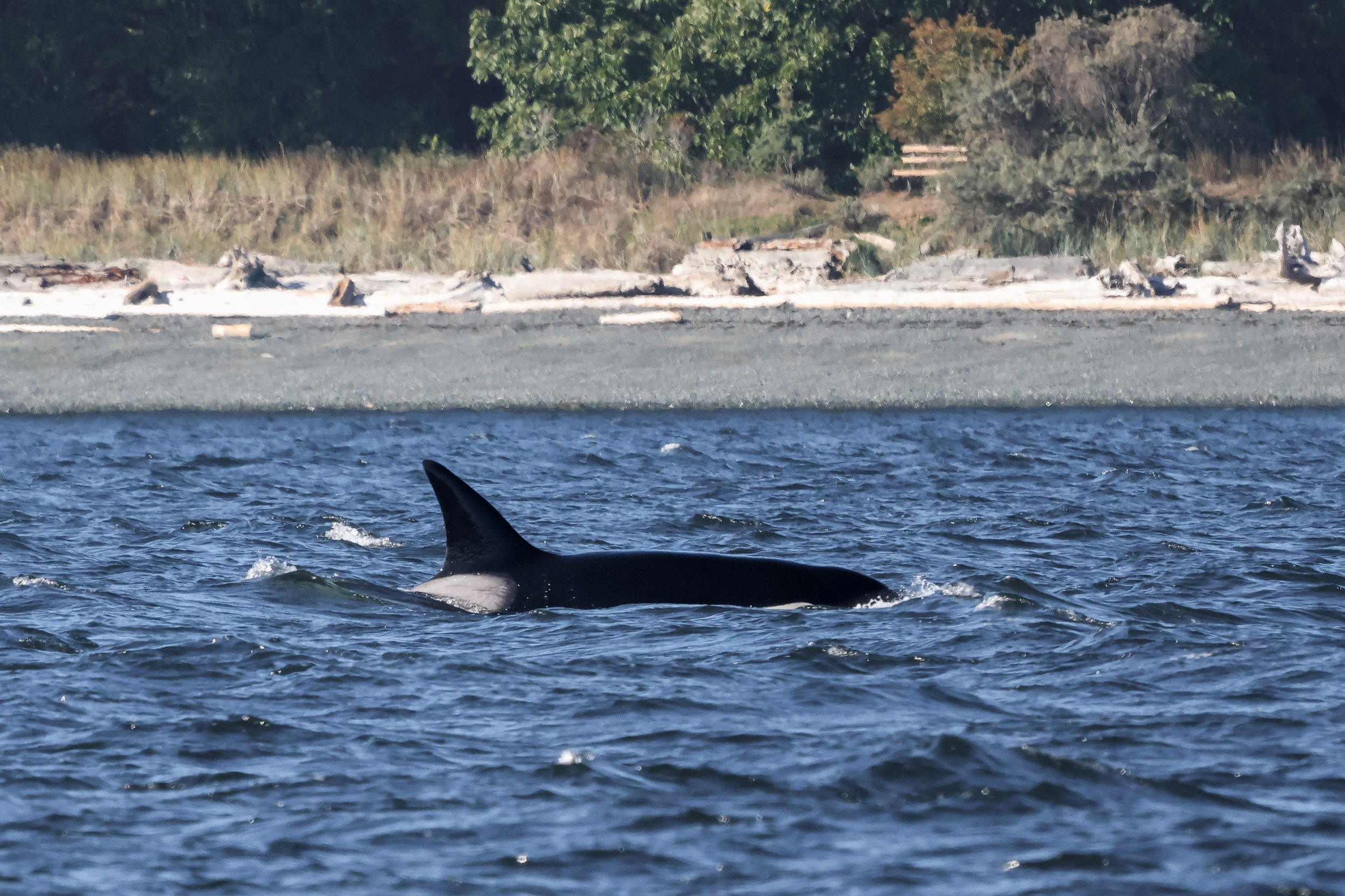
A great look at T030C Salix. Photo by Vanessa Lugin.
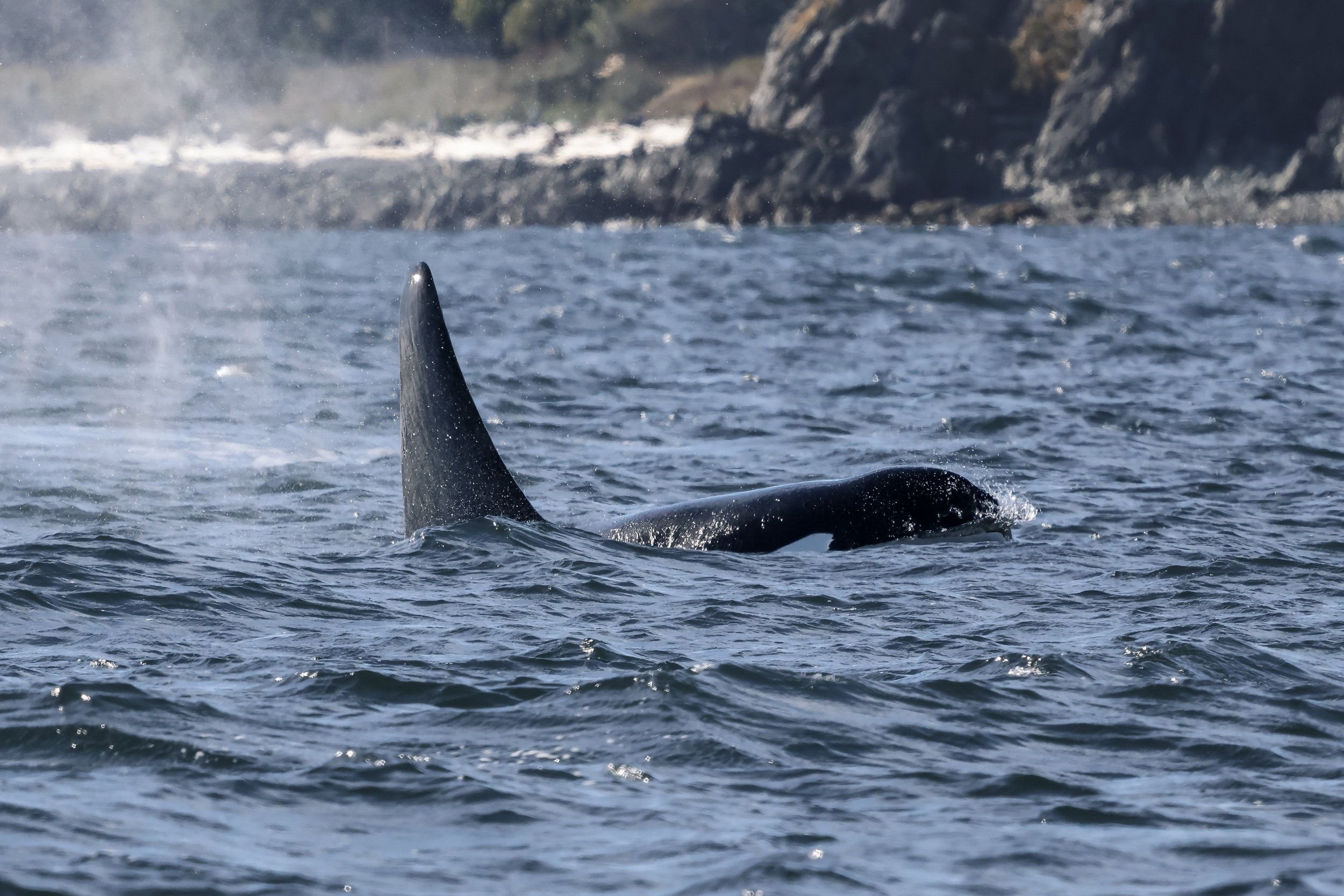
T030A Sequioa breaking through the waves as he travels. Photo by Vanessa Lugin.
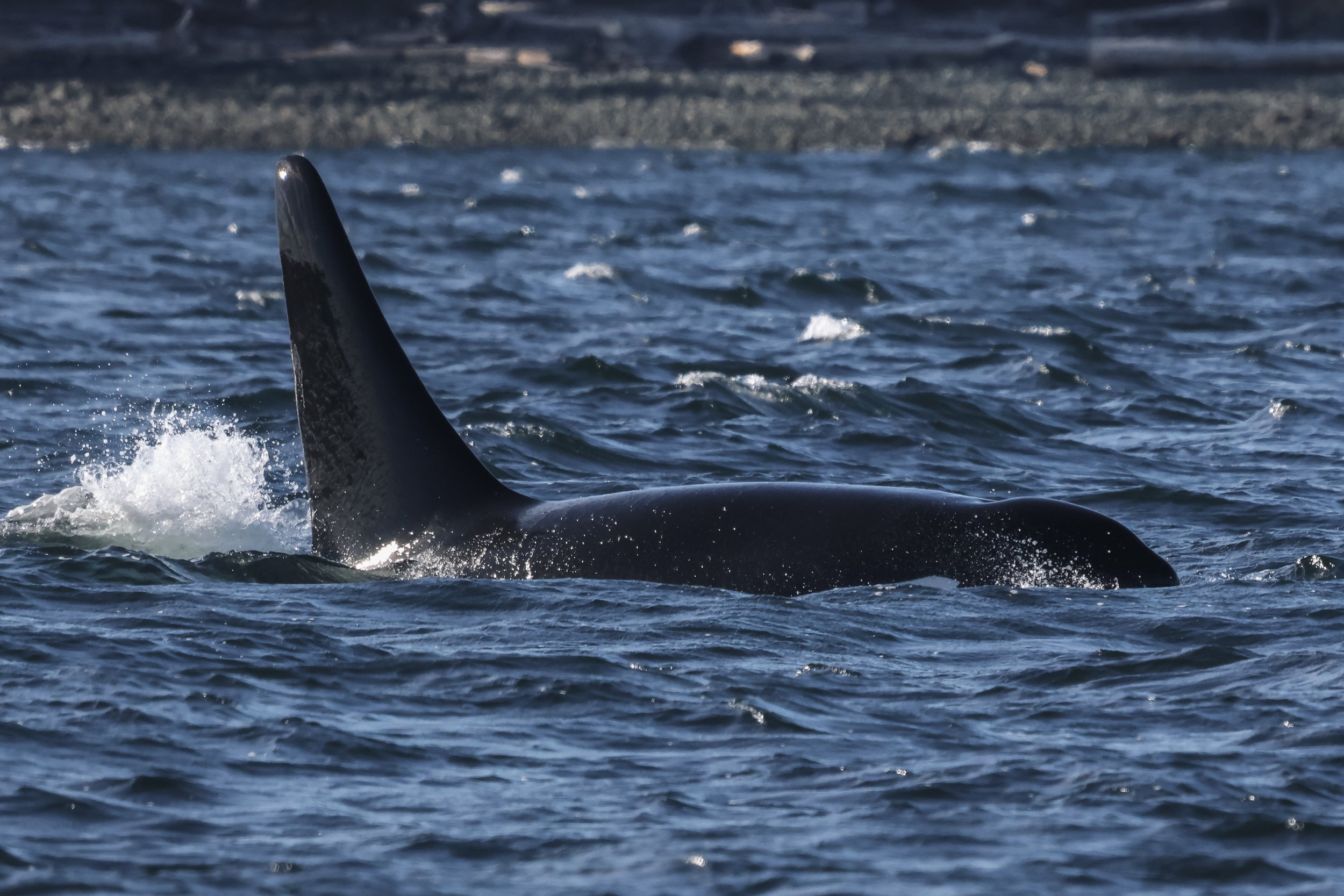
Just look at the splash caused by T030A Sequoia surfacing. Photo by Vanessa Lugin.
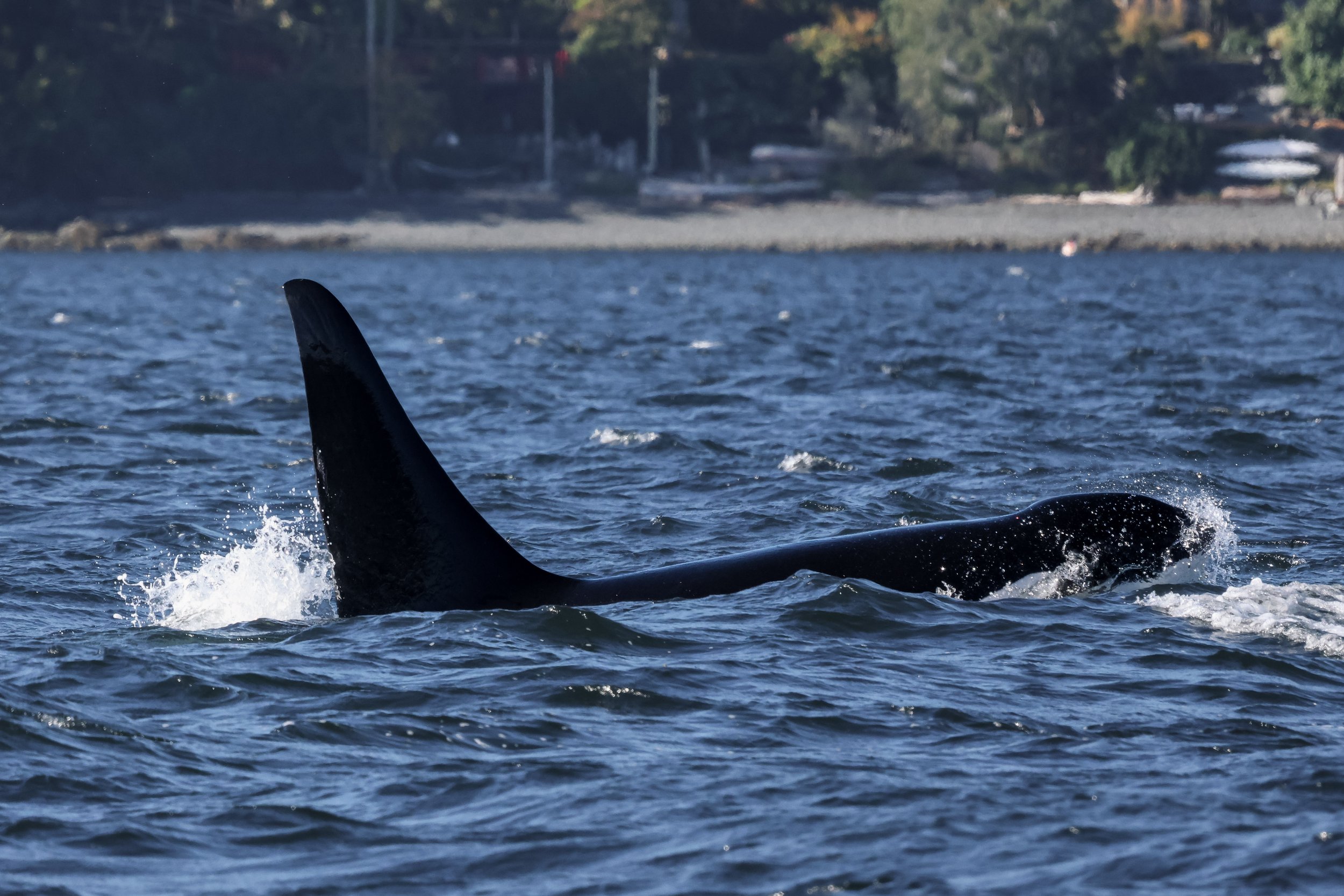
T030A Sequoia splashing in the waves. Photo by Vanessa Lugin.
The Runaways (T109As)
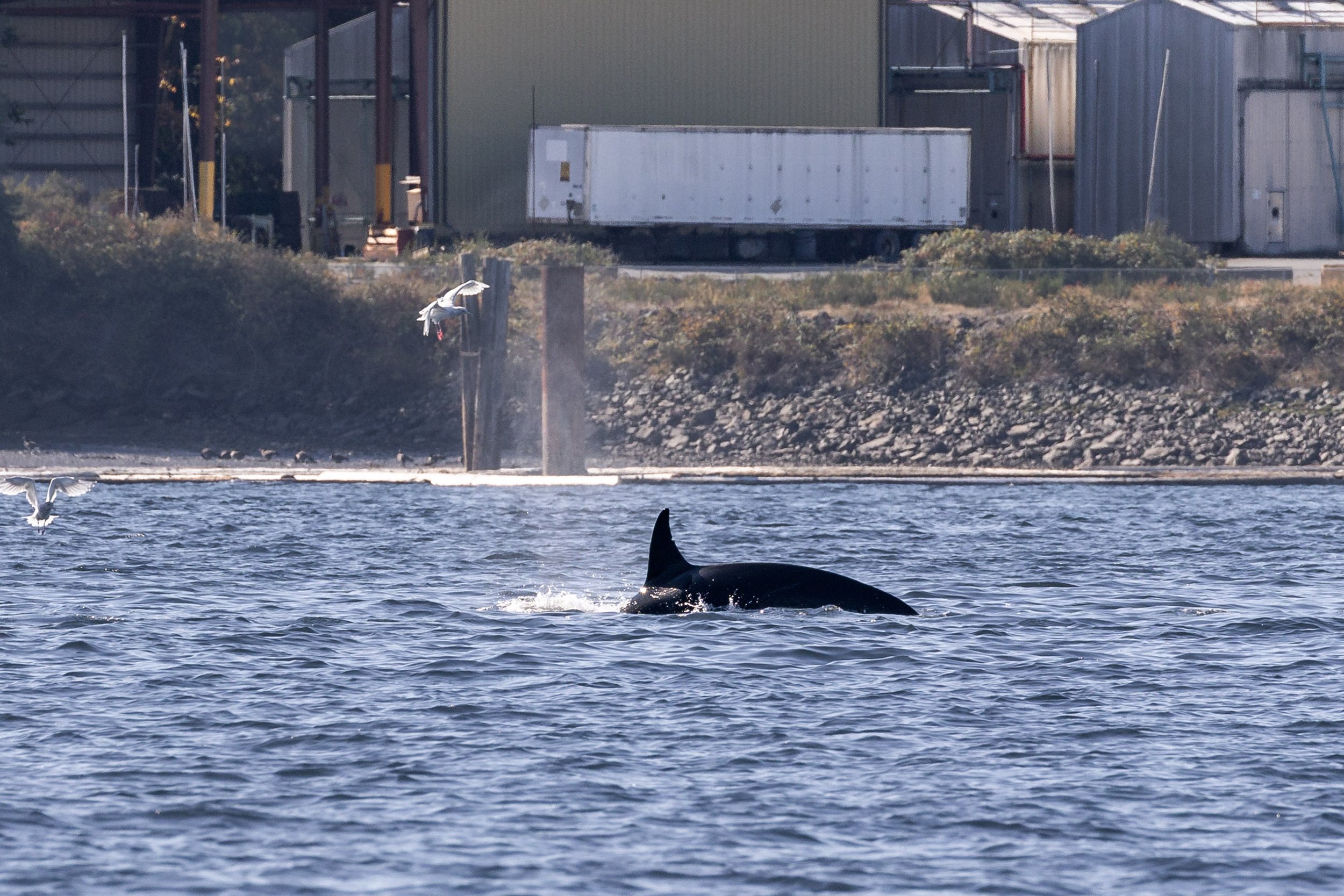
T109A6 Riley surfacing in the bay. Photo by Desarae Poier.
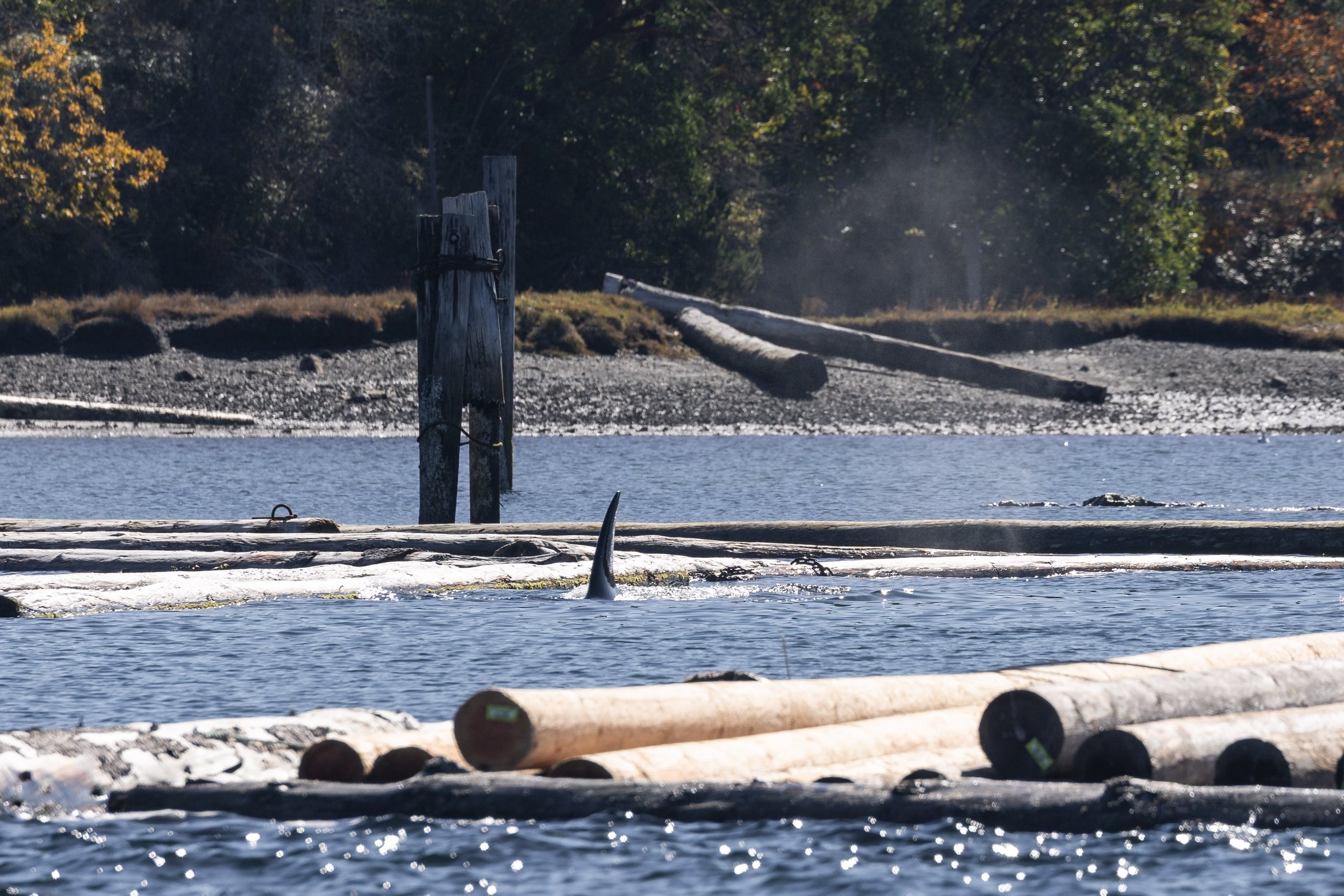
Prowling for food in the log booms. Photo by Desarae Poier.
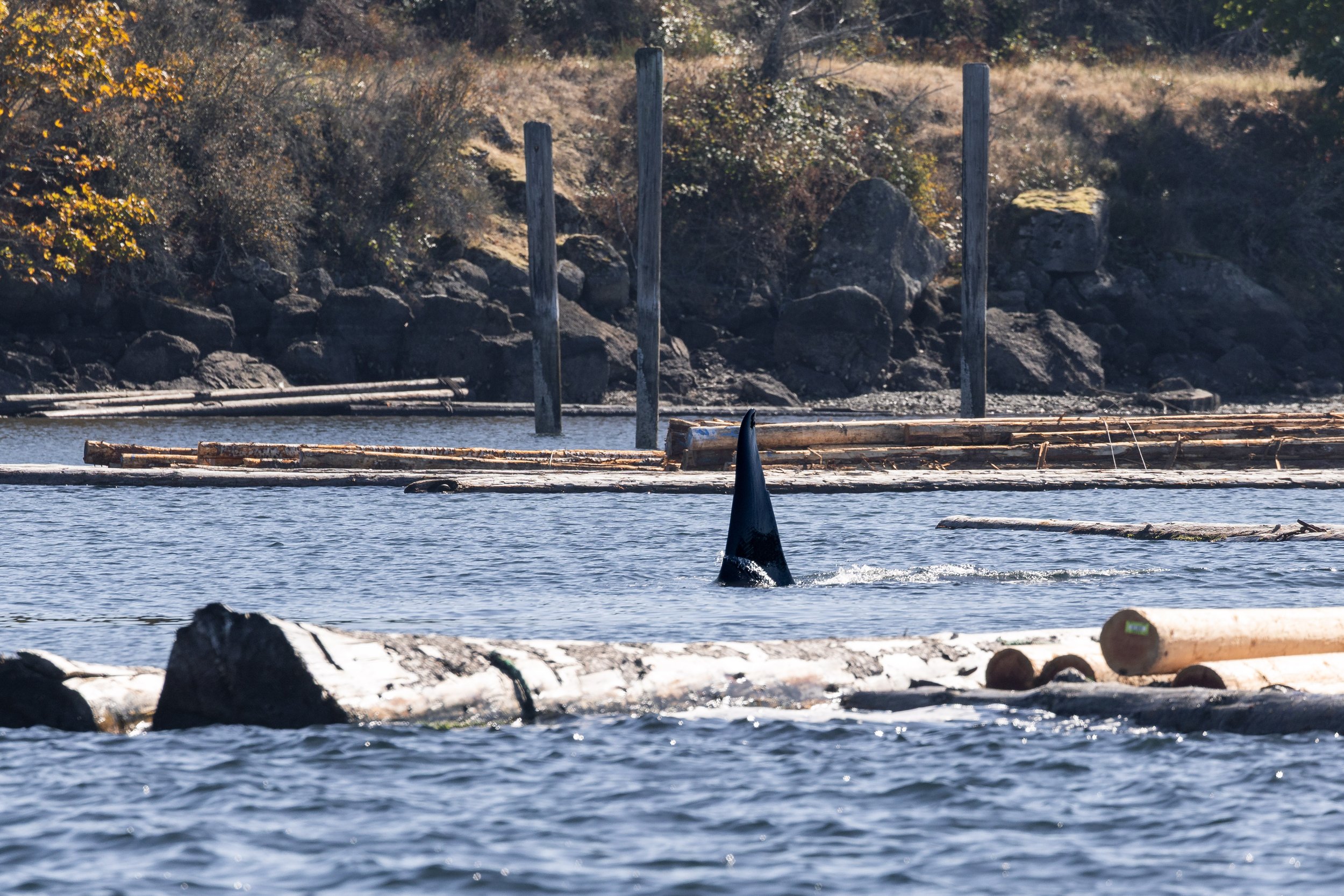
T109A4 Garrett coming out from the logs. Photo by Desarae Poier.
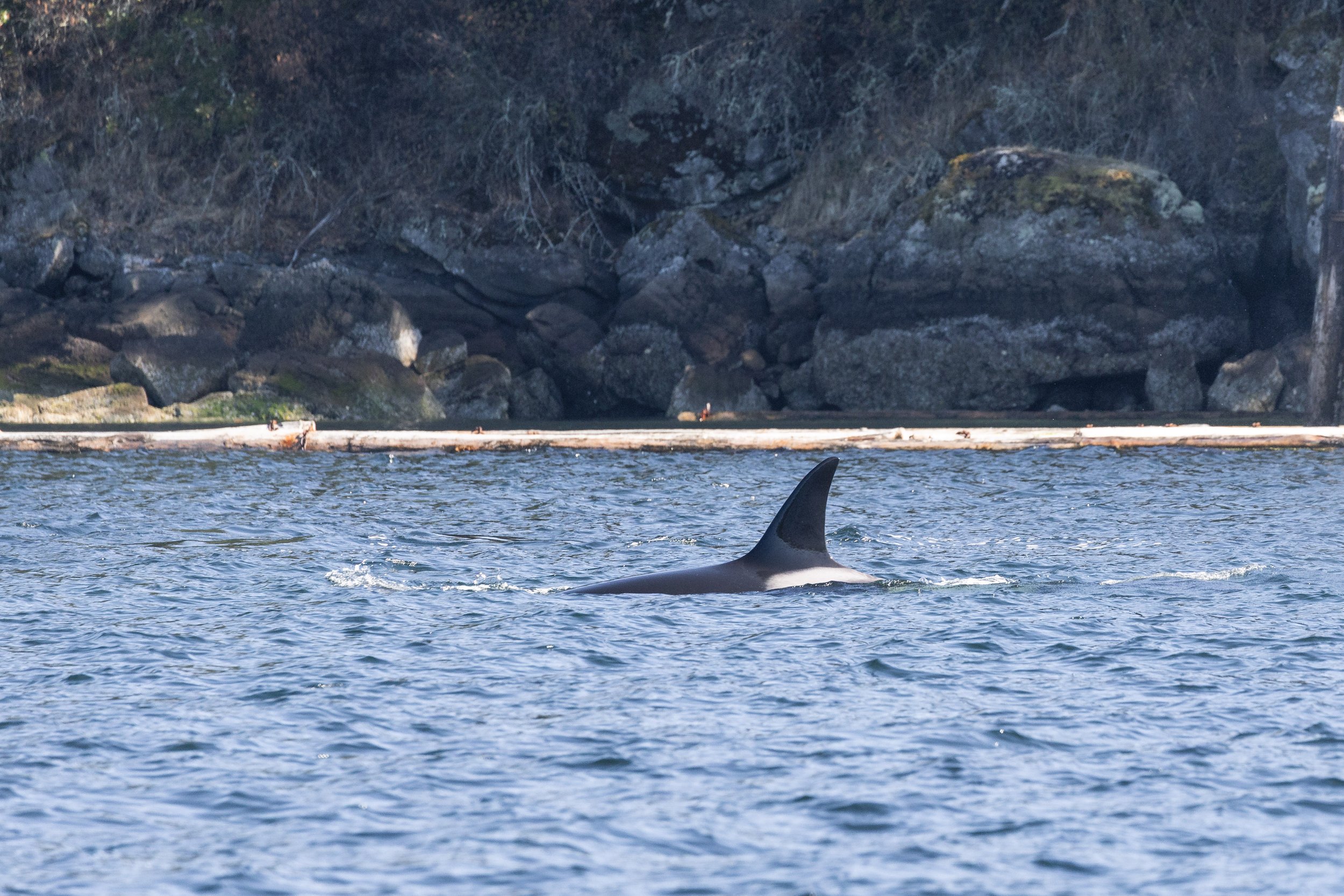
T109 Frio surfacing next to the logs. Photo by Desarae Poier.
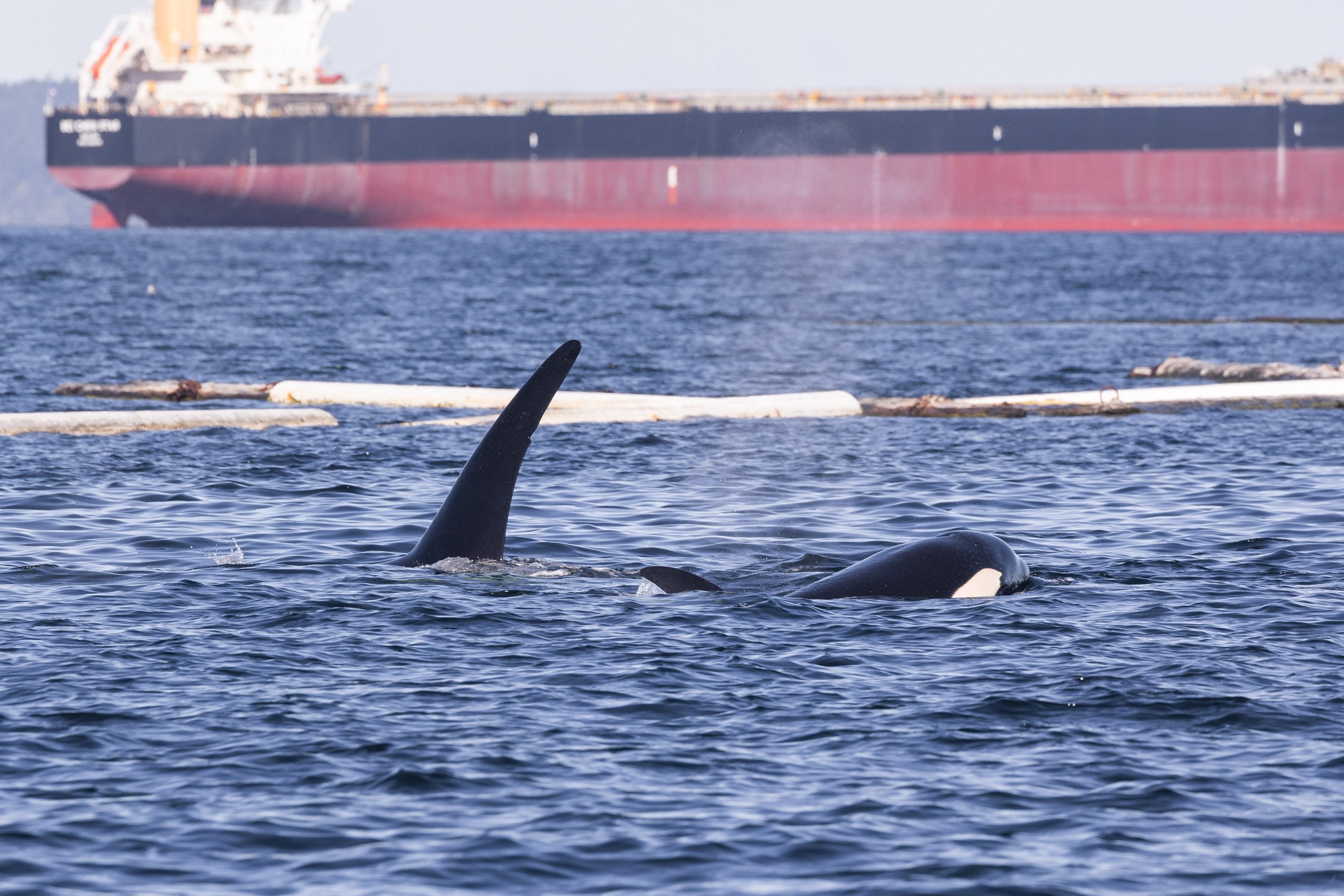
T109A4 Garrett and T109A7 Weiland surfacing together. Photo by Desarae Poier.
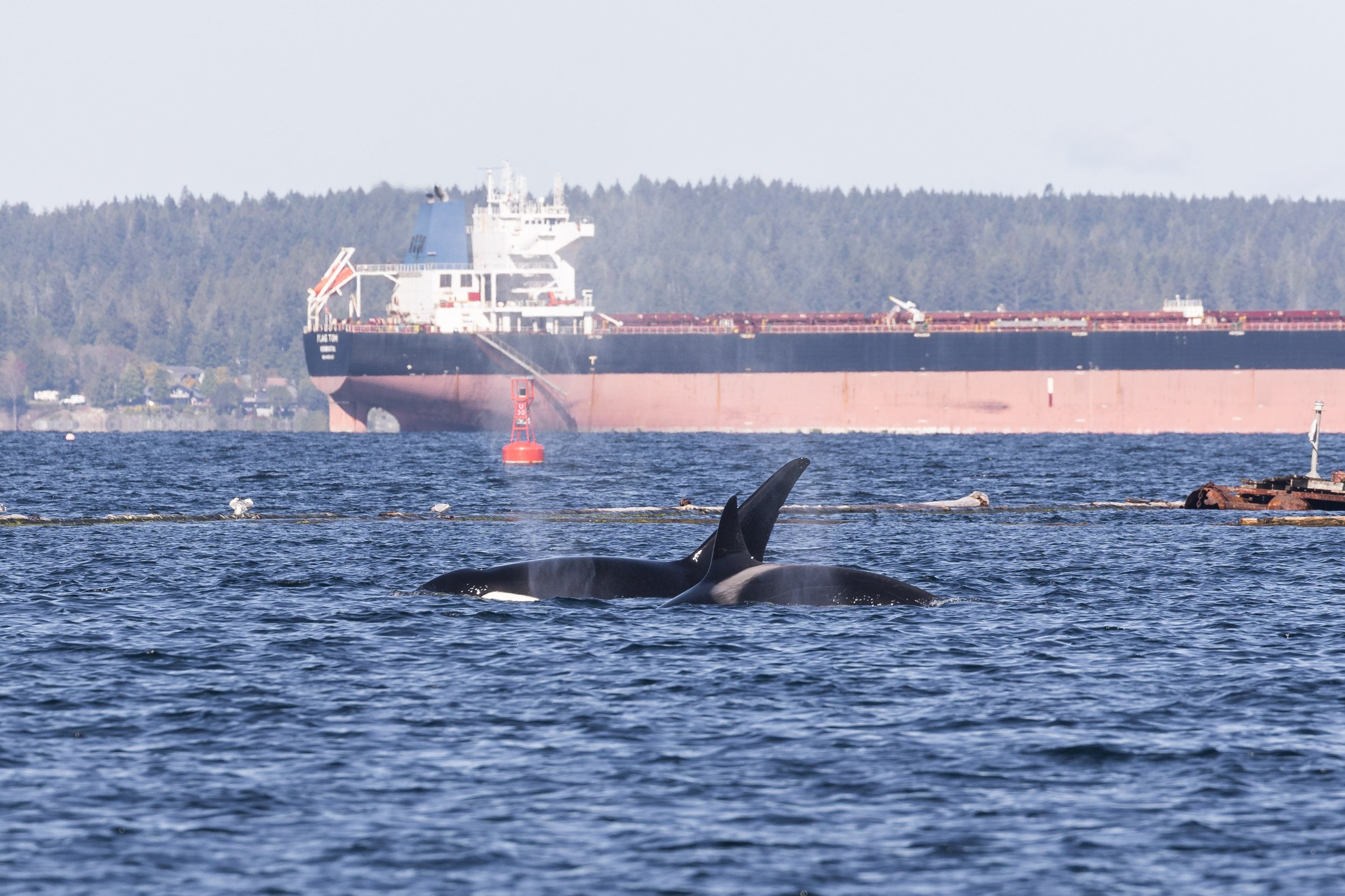
T109A Frio surfacing with T109A4 Garrett. Photo by Desarae Poier.
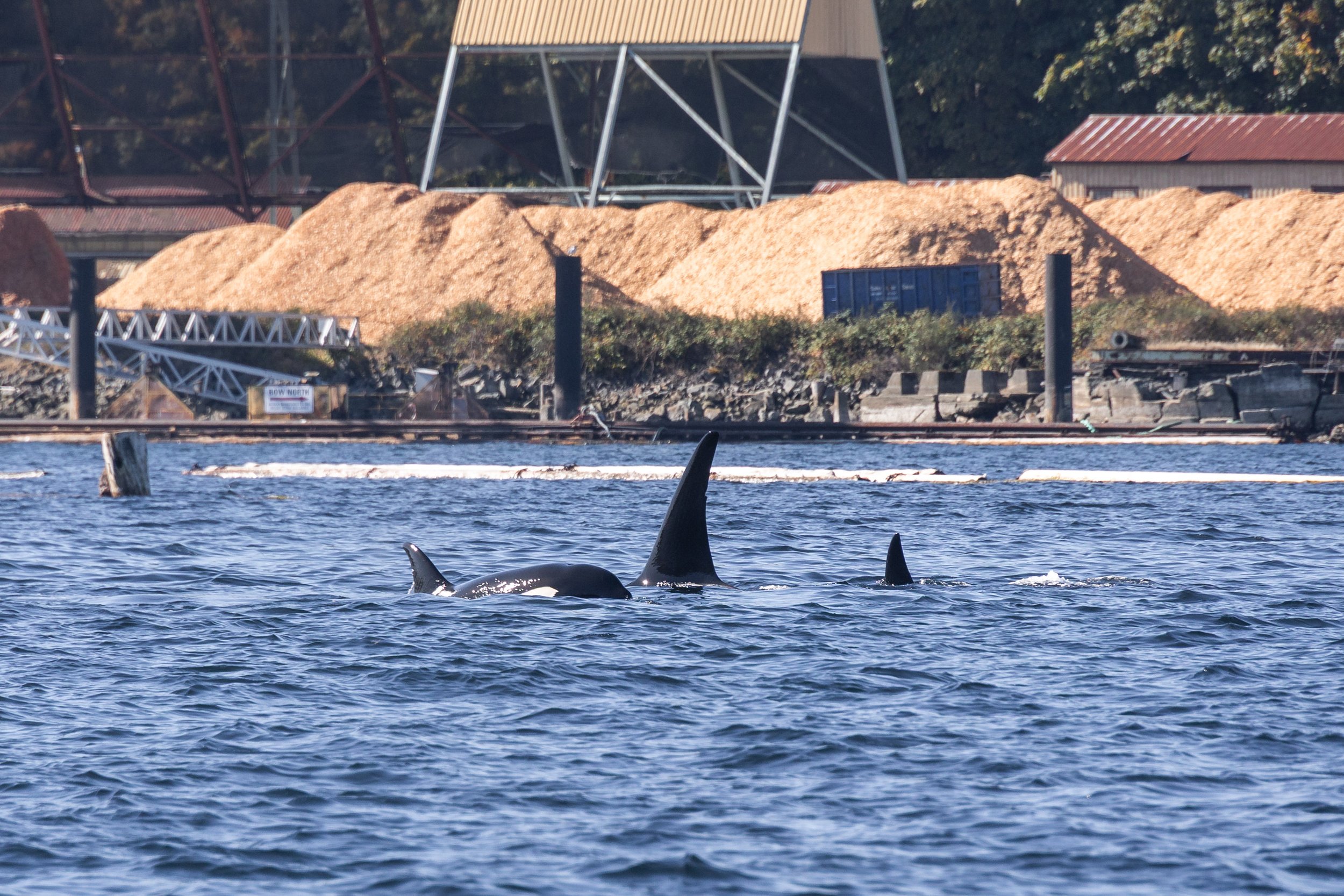
T109A4 Garrett and T109A6 Riley hunting with another family member. Photo by Jordan Robinson.
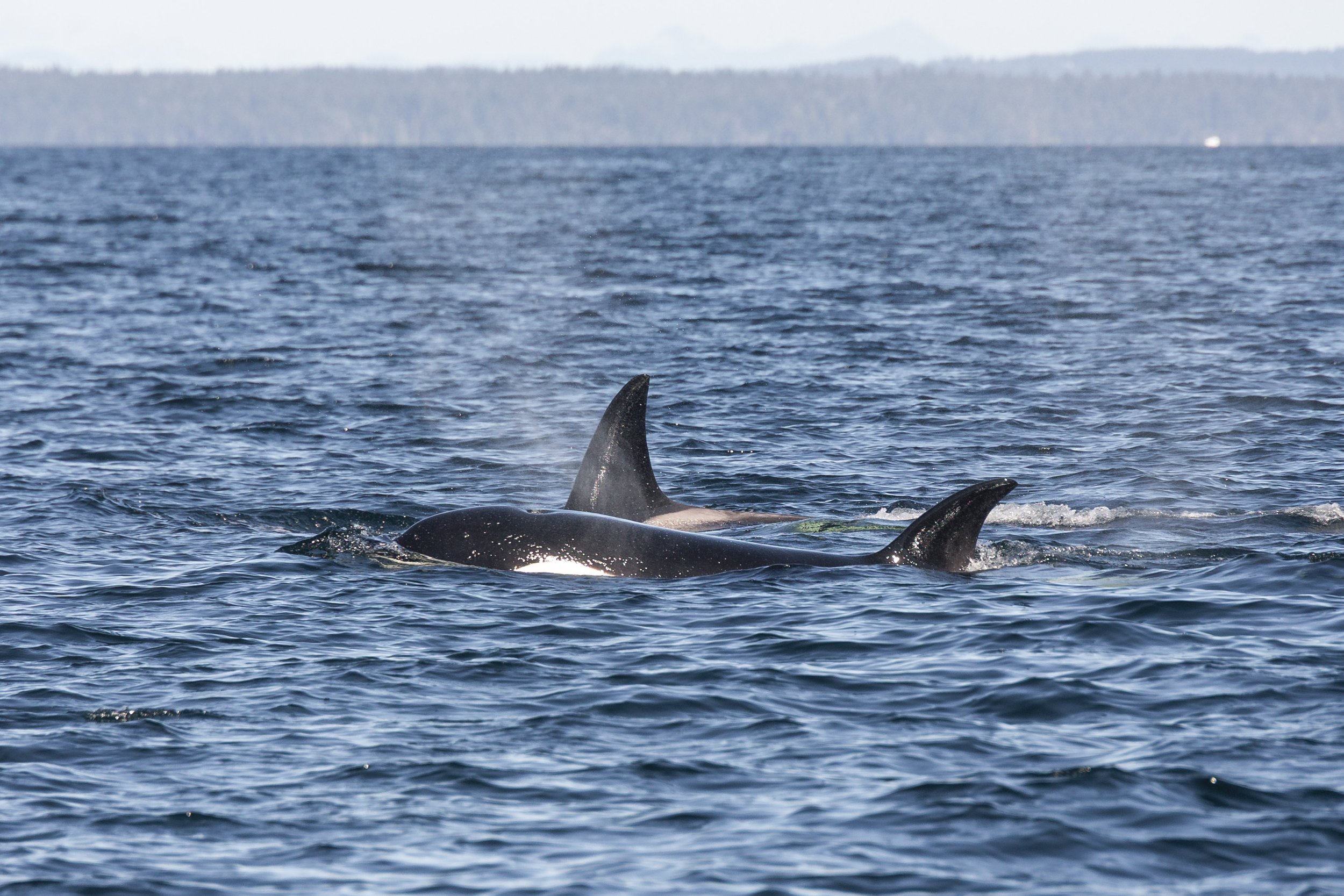
T109A Frio in the back, surfacing with T109A7 Wieland. Photo by Jordan Robinson.
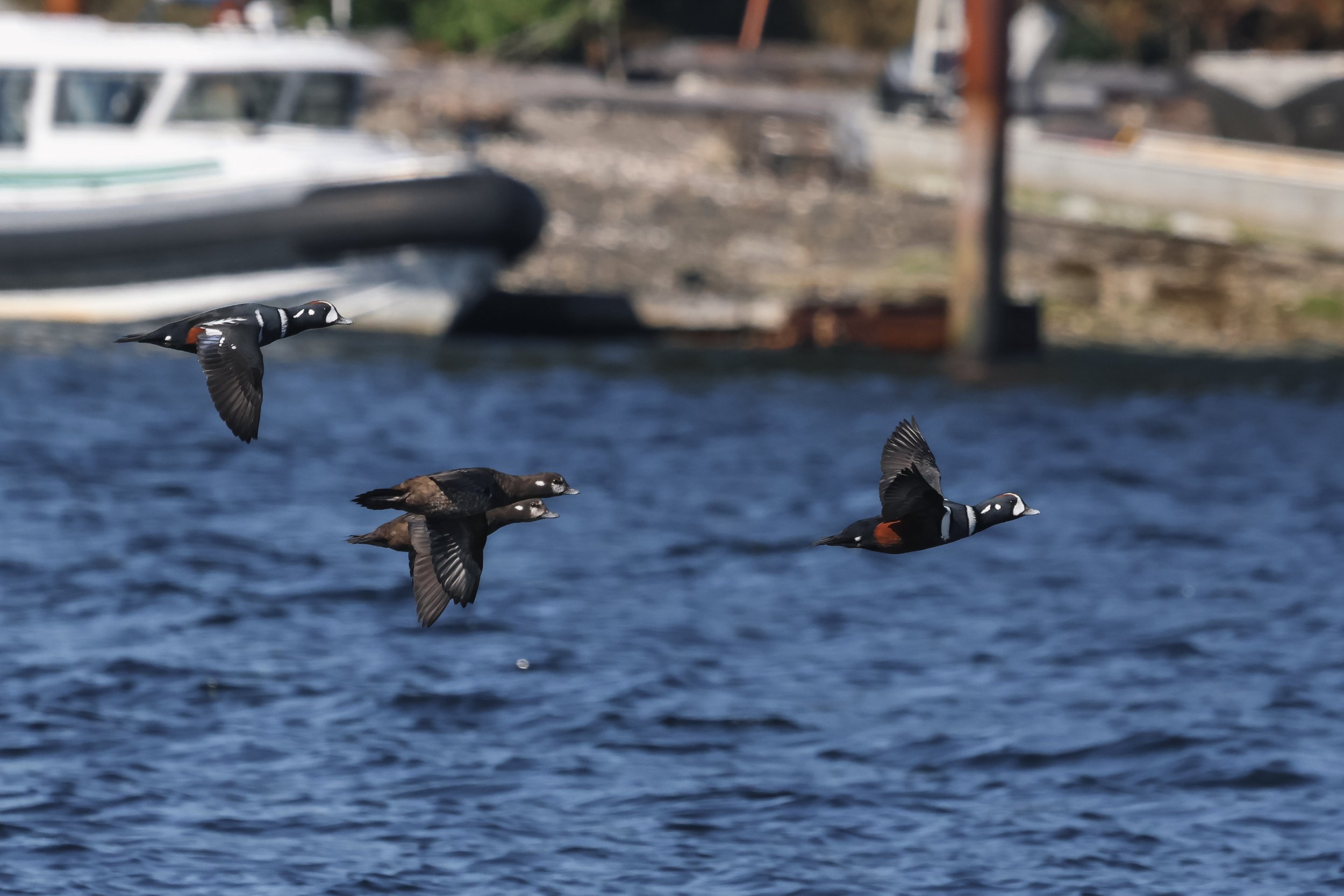
Some Harlequin Ducks flying by. Photo by Vanessa Lugin.
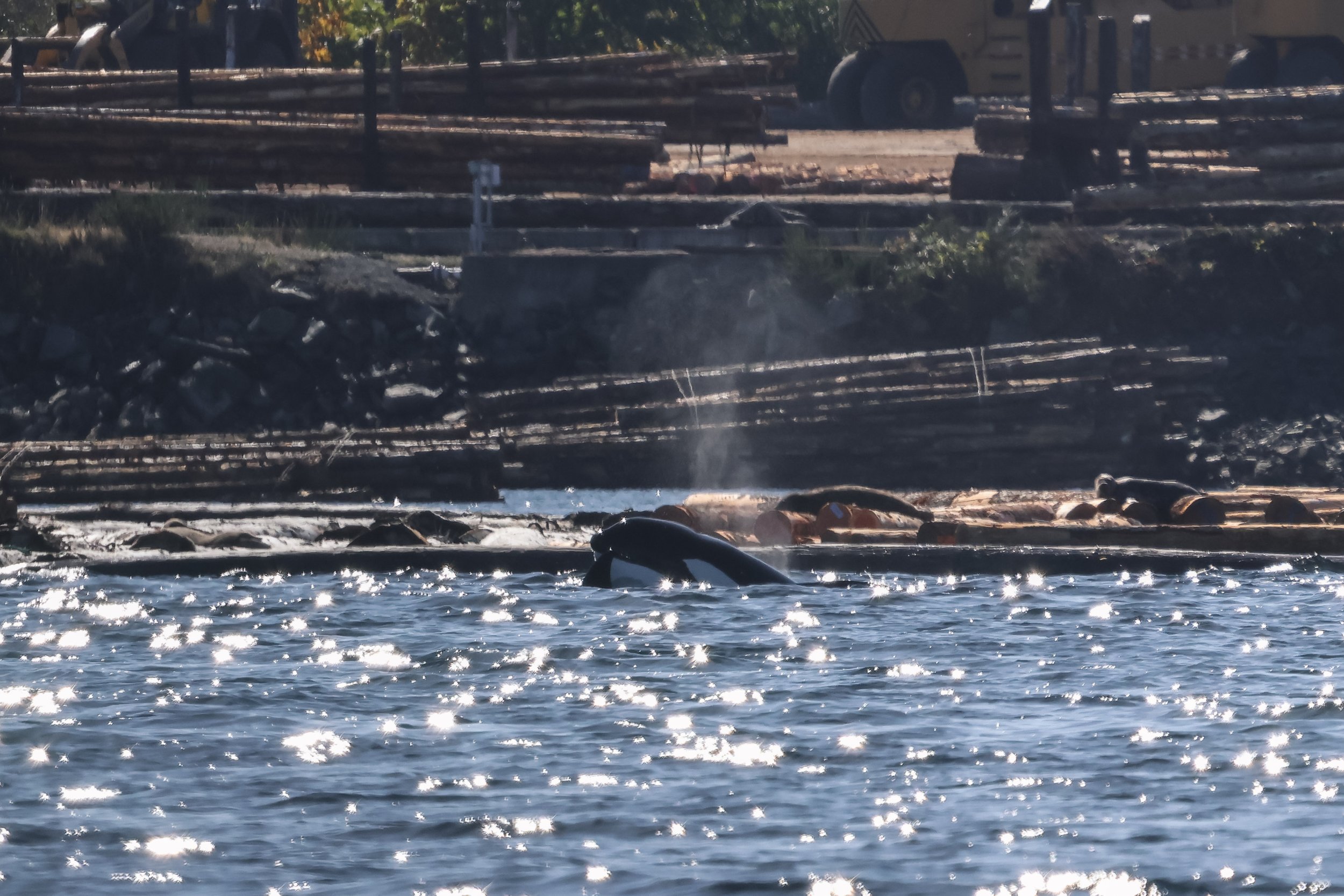
T109A7 poking their head of of the water. Photo by Vanessa Lugin.
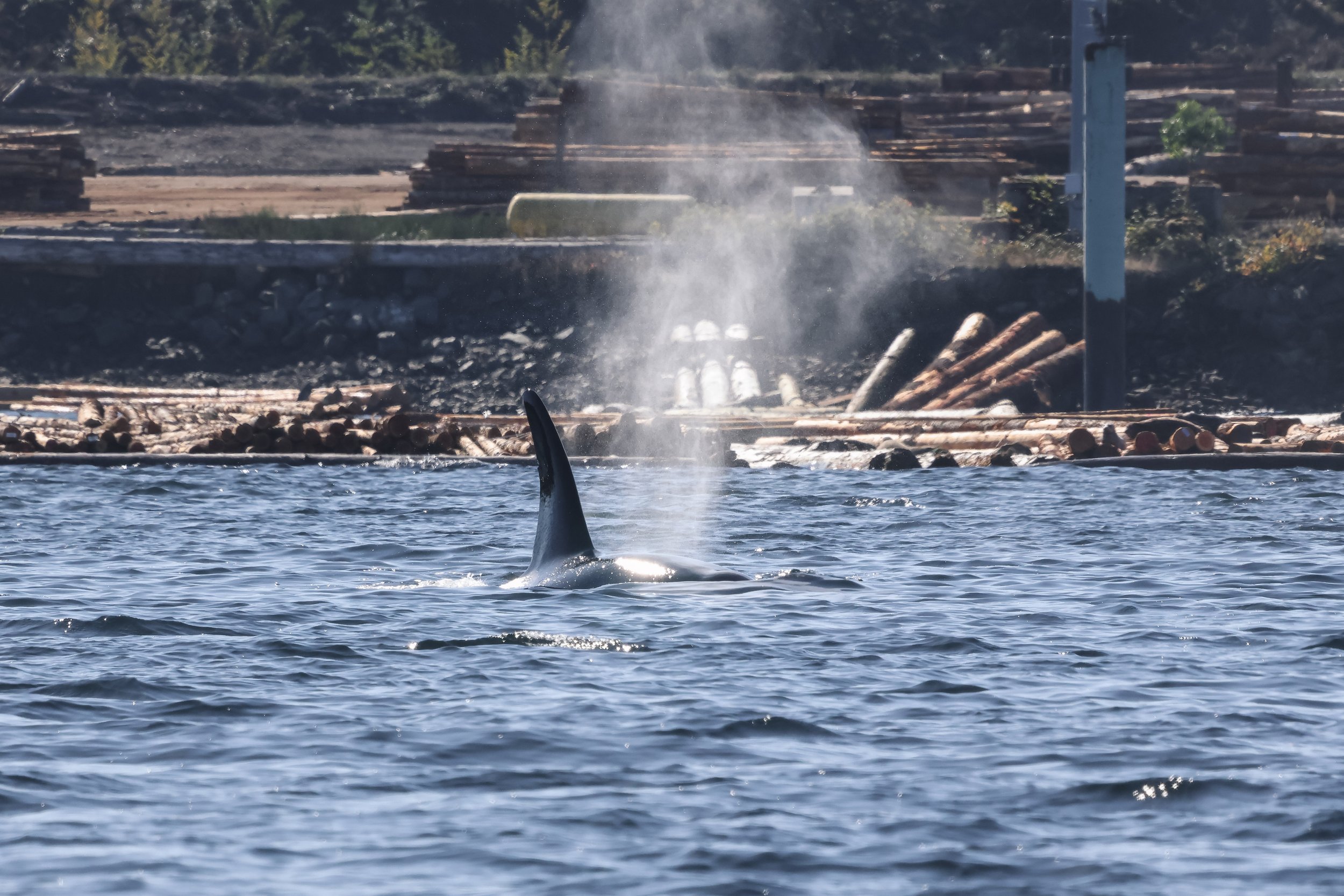
T109A4 Garrett coming this way! Photo by Vanessa Lugin.
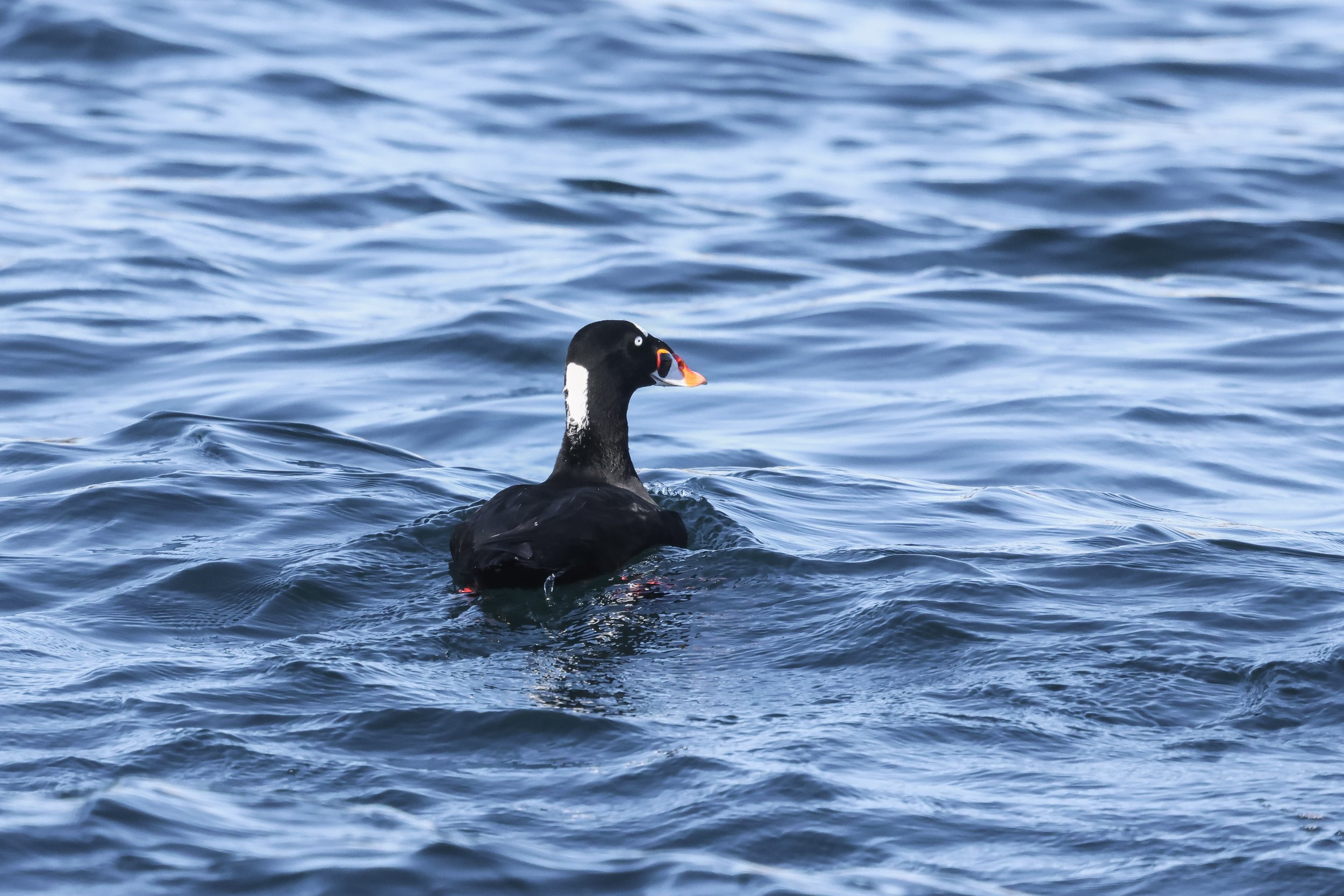
A Surf Scoter scooting by. Photo by Vanessa Lugin.
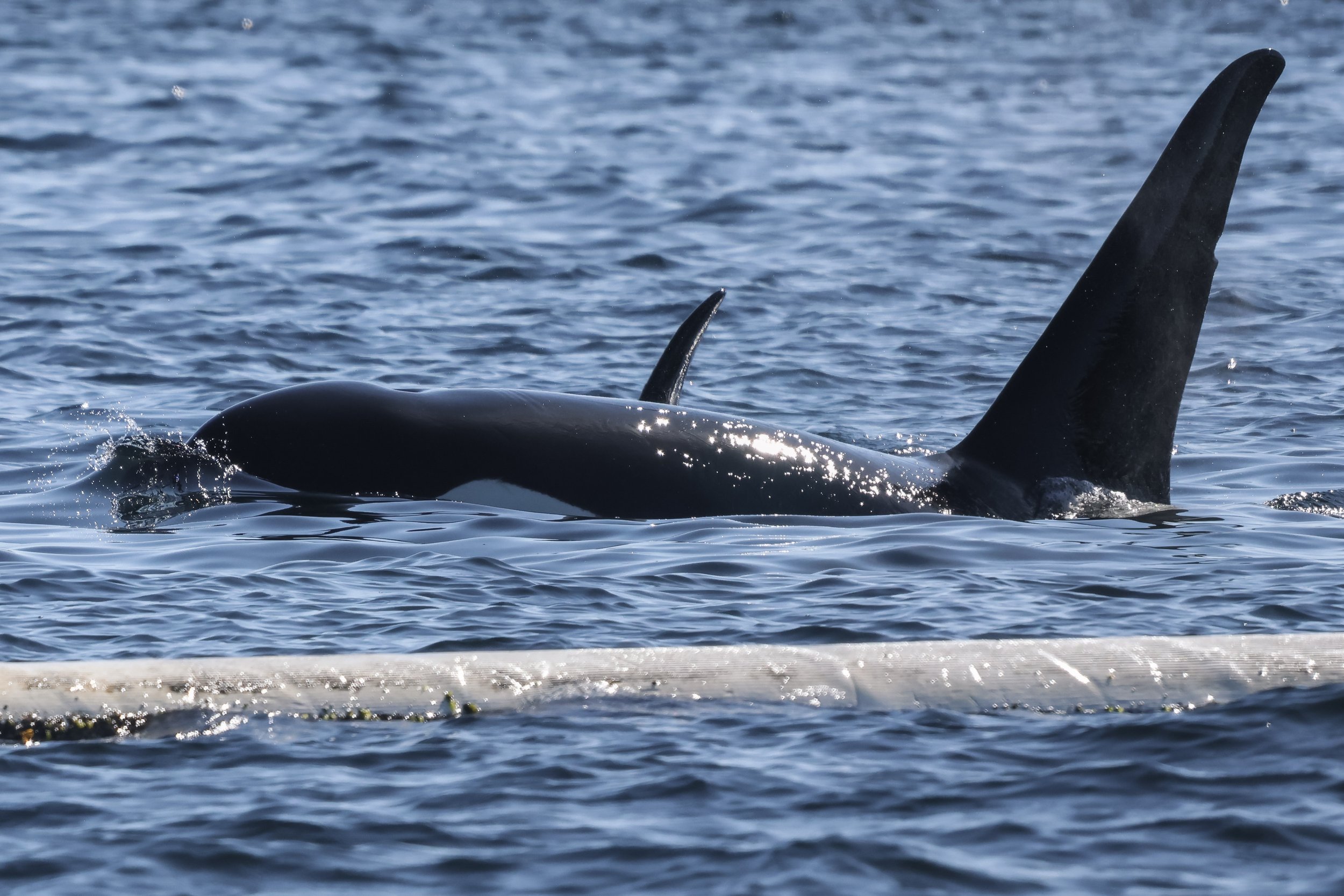
A great look at T109A4 Garrett surfacing amongst the logs. Photo by Vanessa Lugin.
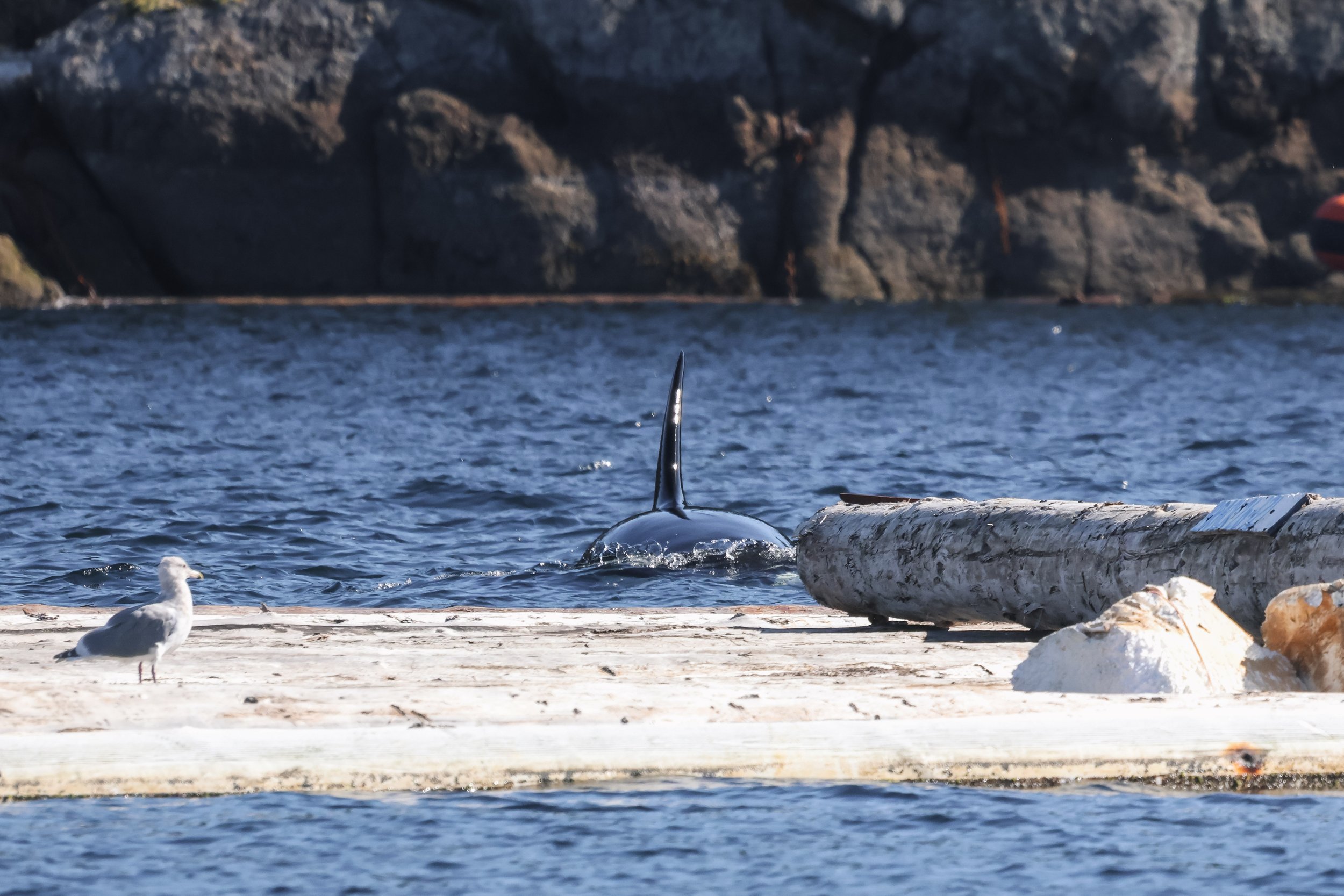
A head-on look at one of the orca as they hunted in the bay. Photo by Vanessa Lugin.
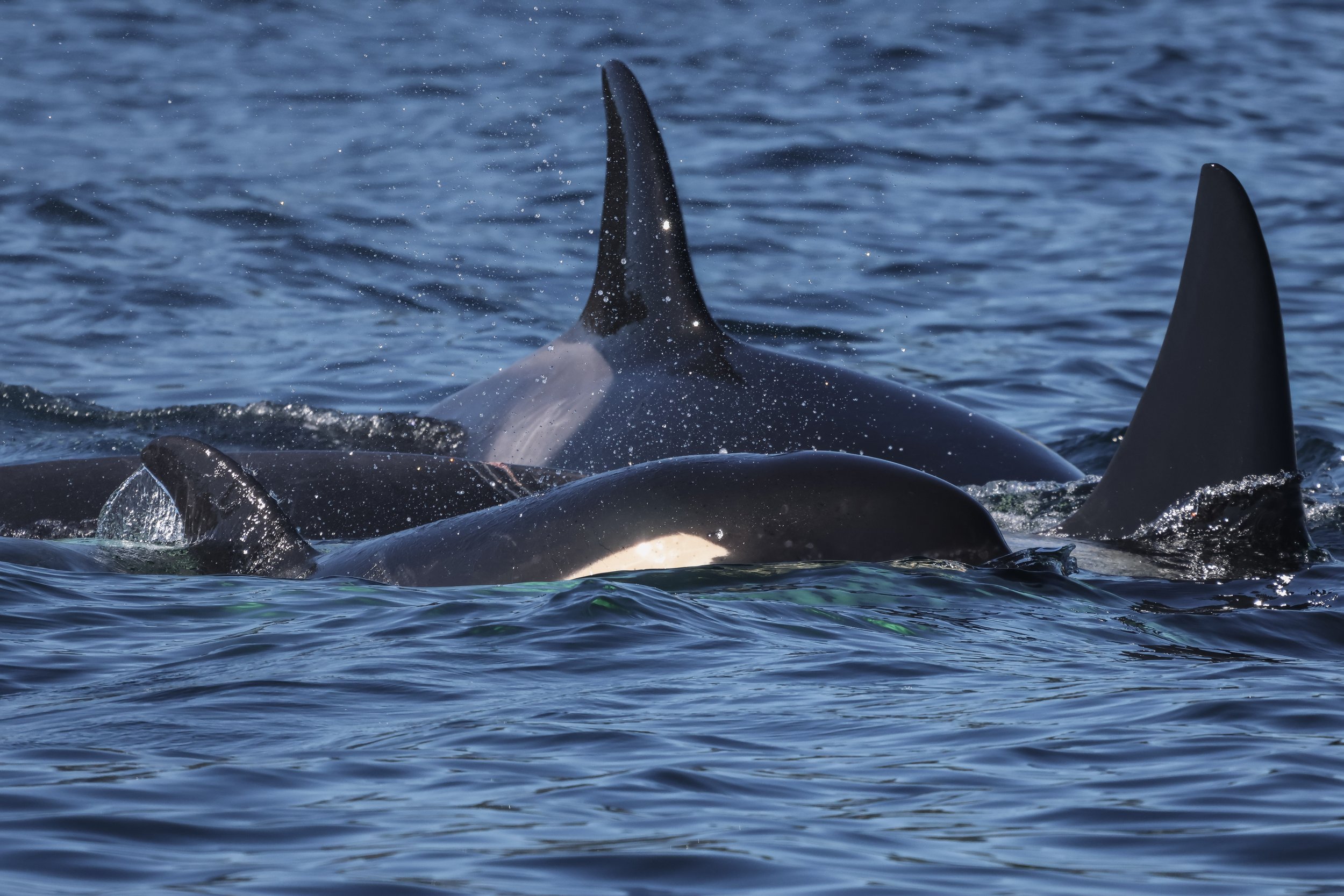
A close up look at the family featuring T109A Frio, T109A8 Weiss, and T109A7 Wieland. Photo by Vanessa Lugin.
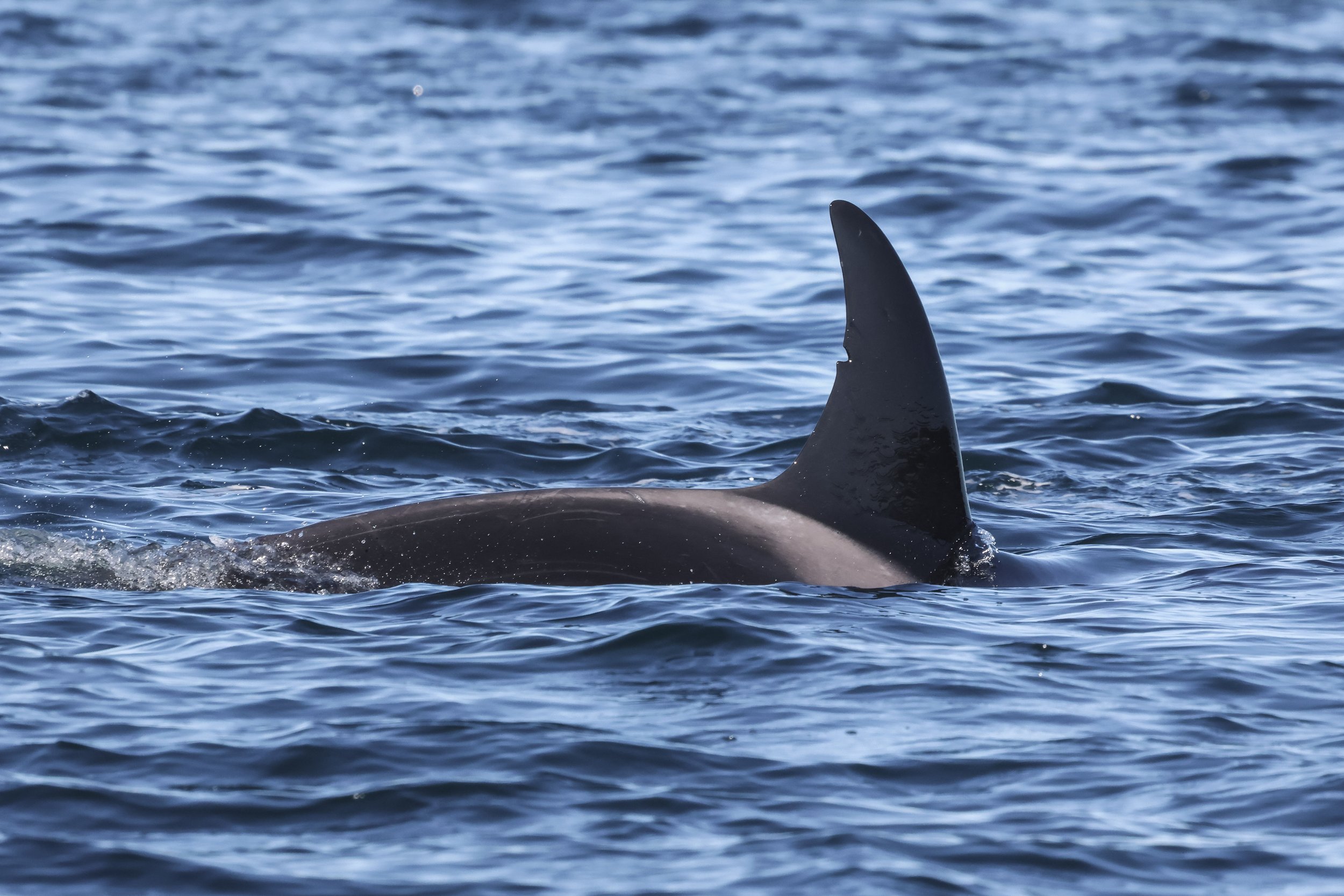
A nice look at T109A6 Riley. Photo by Vanessa Lugin.
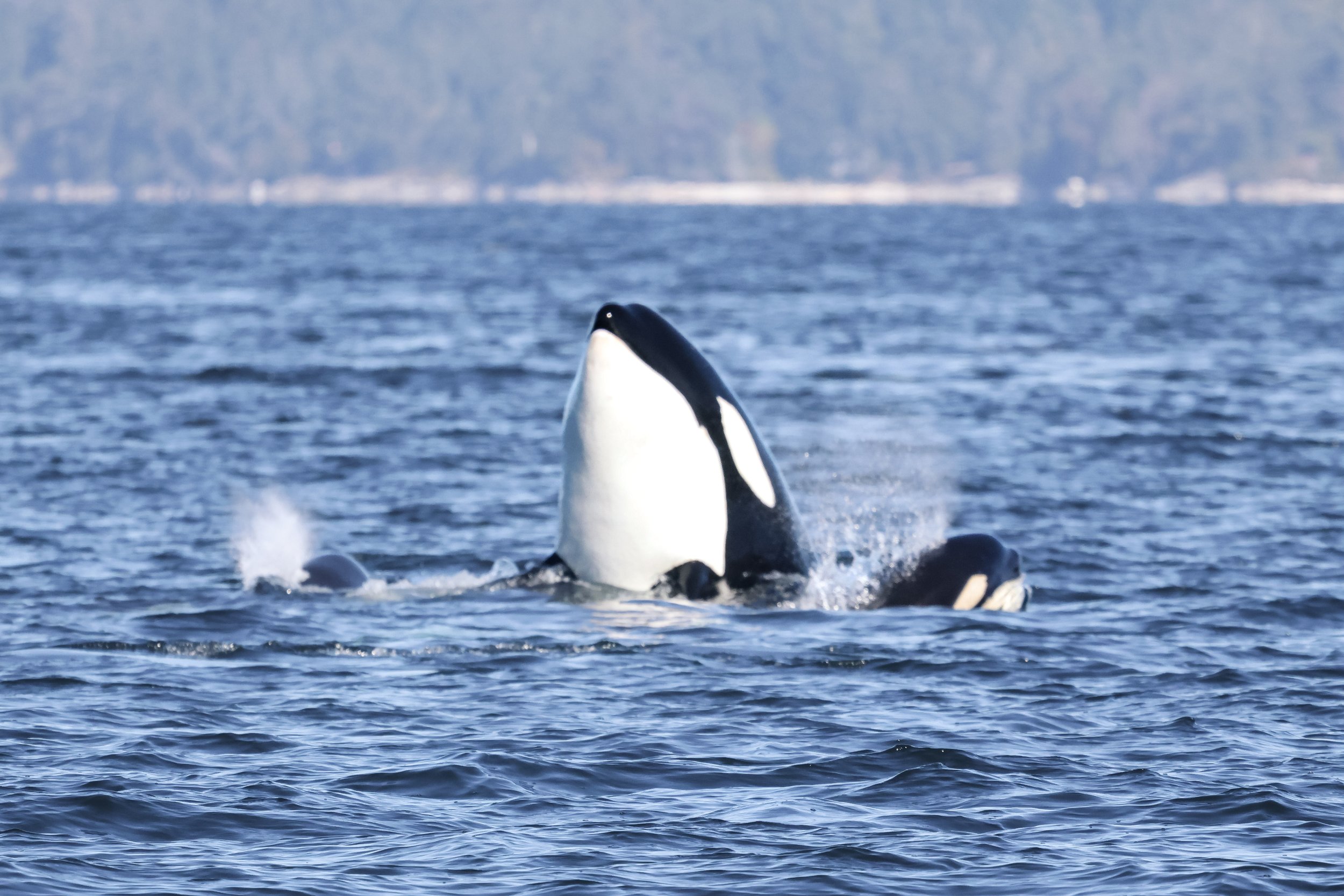
A great (but slightly out of focus) Spy Hop from matriarch T109A Frio. Photo by Vanessa Lugin.
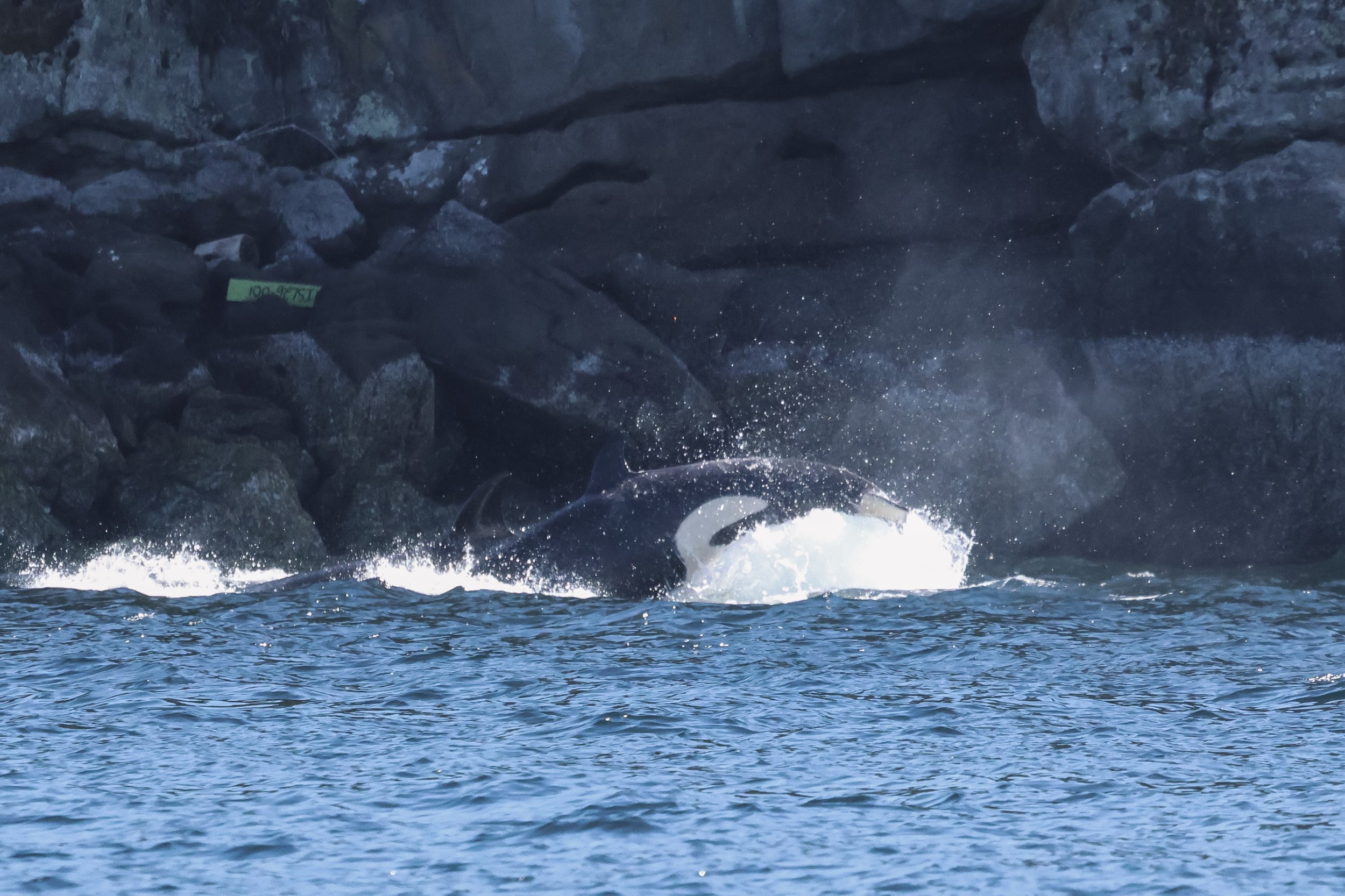
T109A8 Weiss jumping for joy after the hunt. Photo by Vanessa Lugin.
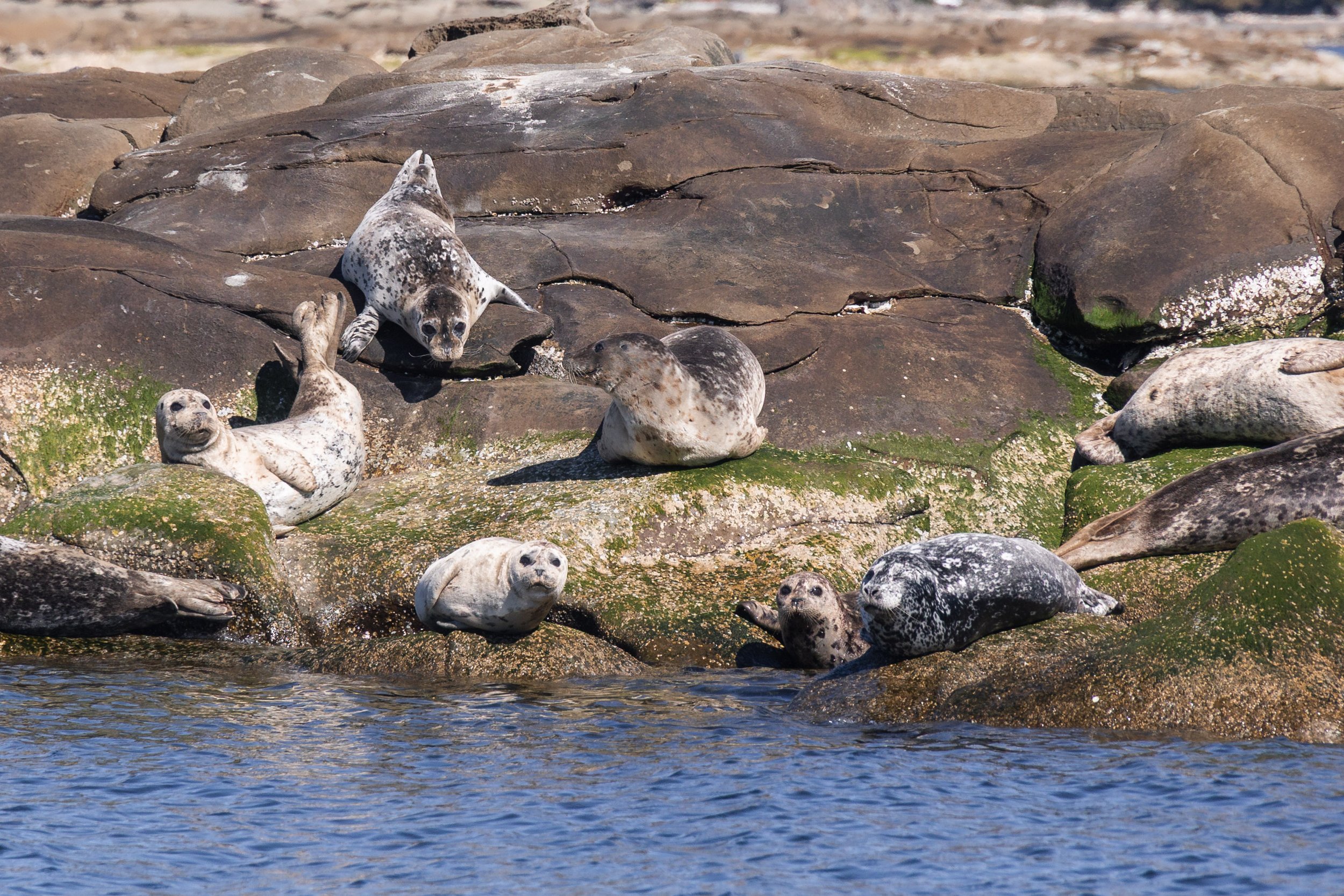
Harbour Seals near Thetis Island. Photo by Jordan Robinson.
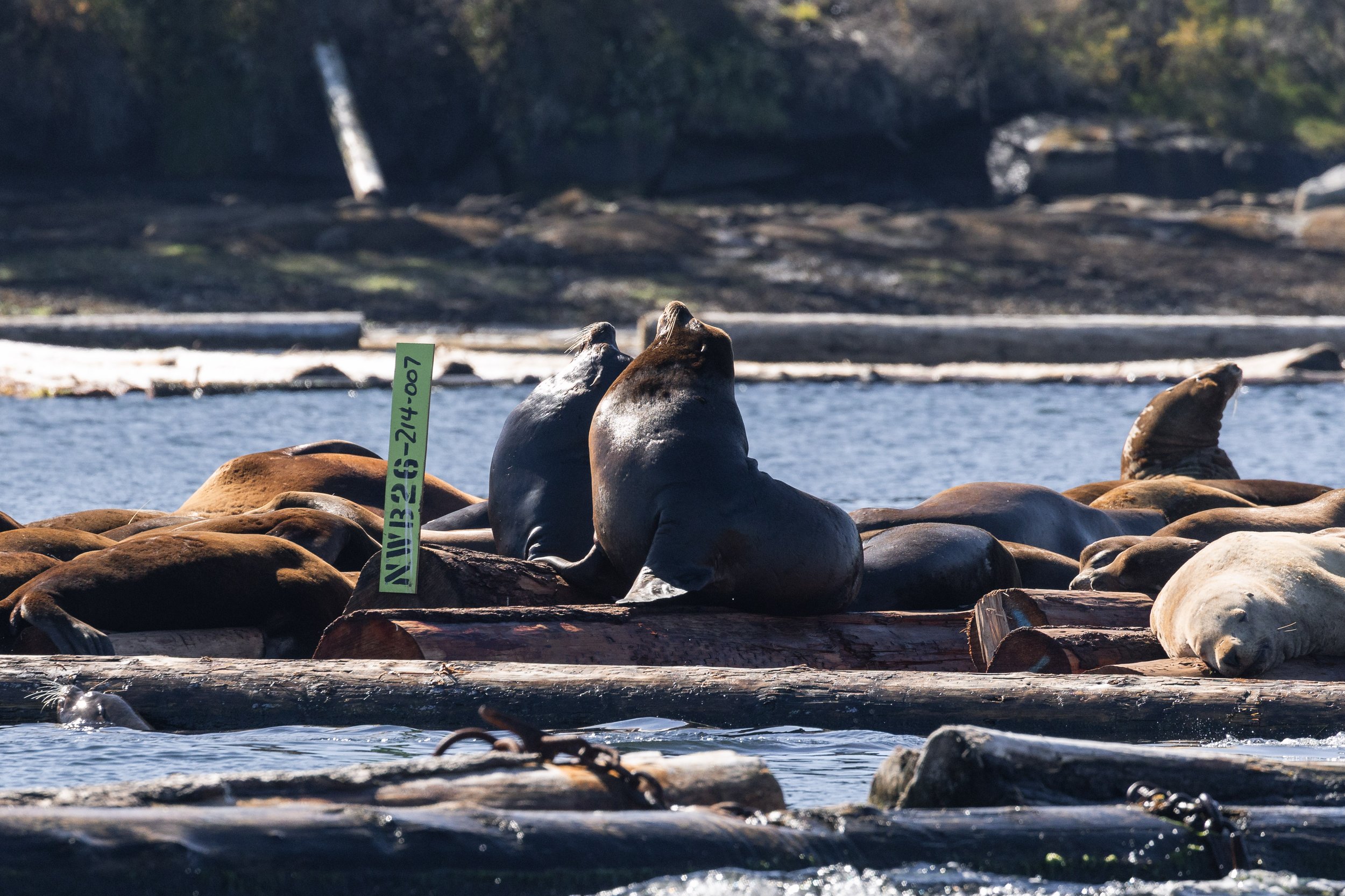
California Sea Lions posing on the log booms. Photo by Desarae Poier.
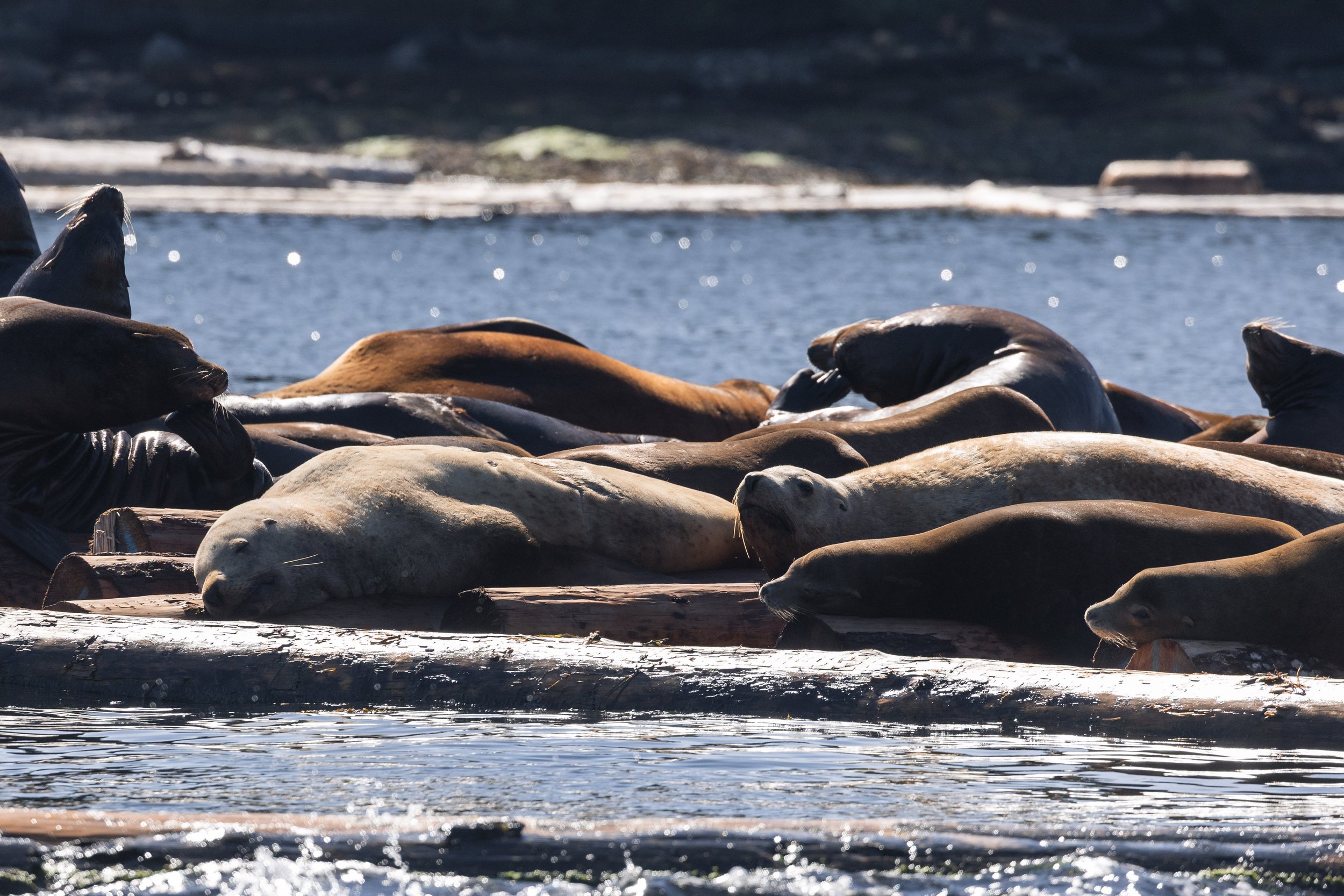
A pair of Steller Sea Lions in the mix as well. Photo by Desarae Poier.
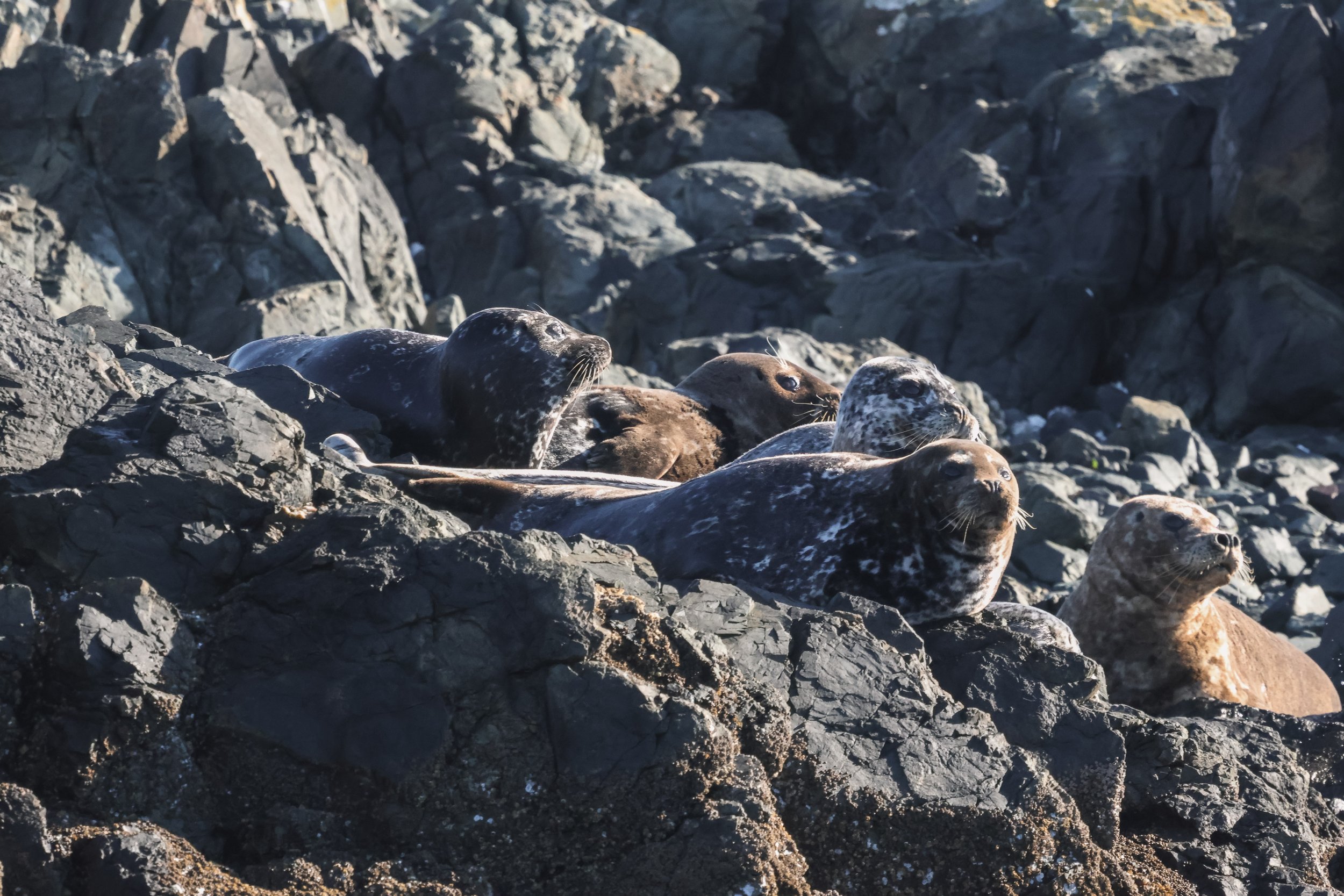
A cute collection of Harbour Seals. Photo by Vanessa Lugin.