February 10, 2026 - The T030Bs and T099s together, plus an eagle feeding frenzy in the Strait
You couldn’t have asked for a better day than we had on February 10th. The wind was calm, the sun was shining, and wildlife seemed to be everywhere we looked.
Our sightings began before we even left the Inner Harbour, when a family of River Otters crossed our path on the way out. These adorable little mammals are a common sight here in Nanaimo, with about five individuals typically spending their time resting on the docks or fishing in the harbour itself.
Although River Otters spend a fair amount of time in the ocean, don’t confuse them with Sea Otters! There are many differences between the two, but one of the easiest ways to tell them apart, especially when they’re swimming, is by how they hold themselves in the water. River Otters usually swim facing downward, with their legs tucked beneath them. Sea Otters, on the other hand, often float on their backs, sometimes holding food on their stomachs before beginning their meal. Their tails are another giveaway. Because River Otters spend time on land, they have long, sleek tails that help them balance as they move. Sea Otters rarely come onto land, so their tails are much shorter.
Before we left the harbour, our captain also spotted a pair of Bald Eagles perched on a channel marker, giving us a great view before we headed south into the Gulf Islands to begin our search for whales.
Our journey took us through Northumberland Channel, Dodd Narrows, and down the length of Stuart Channel. As we entered Sansum Narrows, an excited shout rang out onboard: whales! The tall blows of a large group of Transient (Bigg’s) Orca had been spotted. Once we got alongside them, we were able to photograph the group and determine that two pods were travelling together: the T099s and the T030Bs. In total, nine whales were present.
T030B Lyra ♀ (1993)
T030B1 Vega (2012)
T30B2 Capella (2017)
T030B3 Vesper (2024)
T099 ♀ Bella ( ~1984)
T099B ♀ Holly (2007)
T099C ♂ Barakat (2009)
T099D ♂ Puck (2015)
T099E ♀ Qwiin qwiin oo qwii la (2021)
Watching such a large group of Bigg’s Orca travelling together was incredibly exciting. Larger aggregations like this are less common in this ecotype because Transients are stealth predators. Travelling in smaller groups makes them less detectable to their prey, helping them maintain the impressive hunting success they are known for. However, pods don’t always remain isolated. Transient Orca pods are matrilineal, led by a matriarch who travels with her offspring.
If you look at the alphanumeric names, you can see the family structure. When a female has calves, they are named after her and numbered in order of birth. In the T099s, Bella is the matriarch, followed by Holly as her second-born, Barakat as her third, and so on. If one of Bella’s daughters has calves of her own, those calves receive an extension of her designation, again in birth order. You can see this with Lyra and her calves: Vega was first-born, Capella second, and Vesper third. Over generations, this system creates a long but highly informative naming structure that reveals each whale’s lineage.
You’ll notice that the T099s and T030Bs are not directly related. It’s quite common to see unrelated pods travelling together. Orca have complex social lives, and spending time with whales outside their immediate pod appears to be important, as long as they are of the same ecotype. Interactions between different ecotypes are typically not positive.
We watched as the whales travelled swiftly north along the stunning shoreline of Salt Spring Island, marvelling at their synchronized movements and effortless grace. Eventually, it was time to continue our search for more wildlife.
Next on our list were the pinnipeds: Harbour Seals and Steller Sea Lions. We found a group of Harbour Seals hauled out on the rocks not far from where the whales had been travelling. Thankfully, they were far enough away that we didn’t have to worry about them becoming lunch! Harbour Seals play an important role in the ecosystem. They consume a wide variety of fish species, from larger salmon to small flatfish and even the occasional octopus.
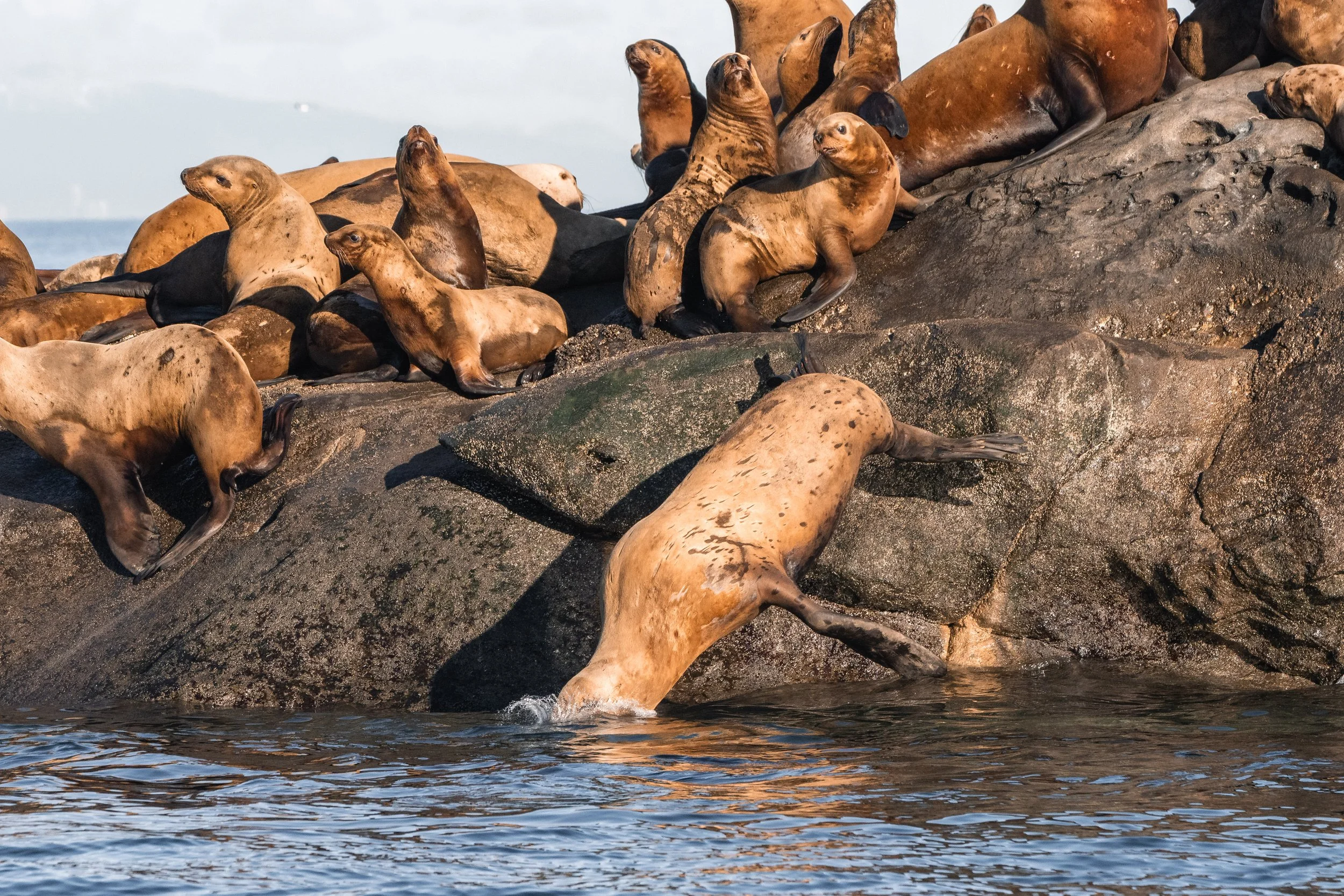
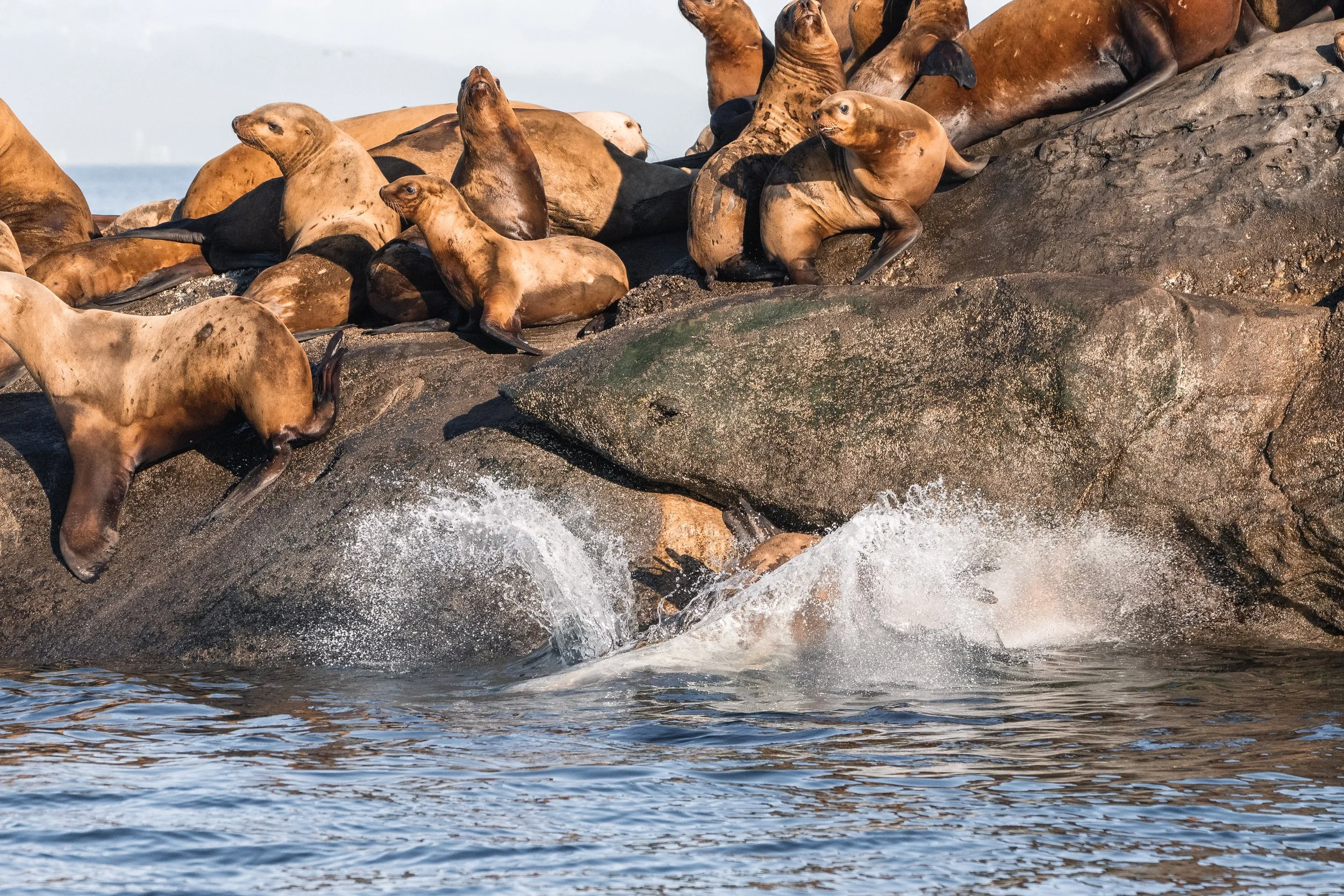
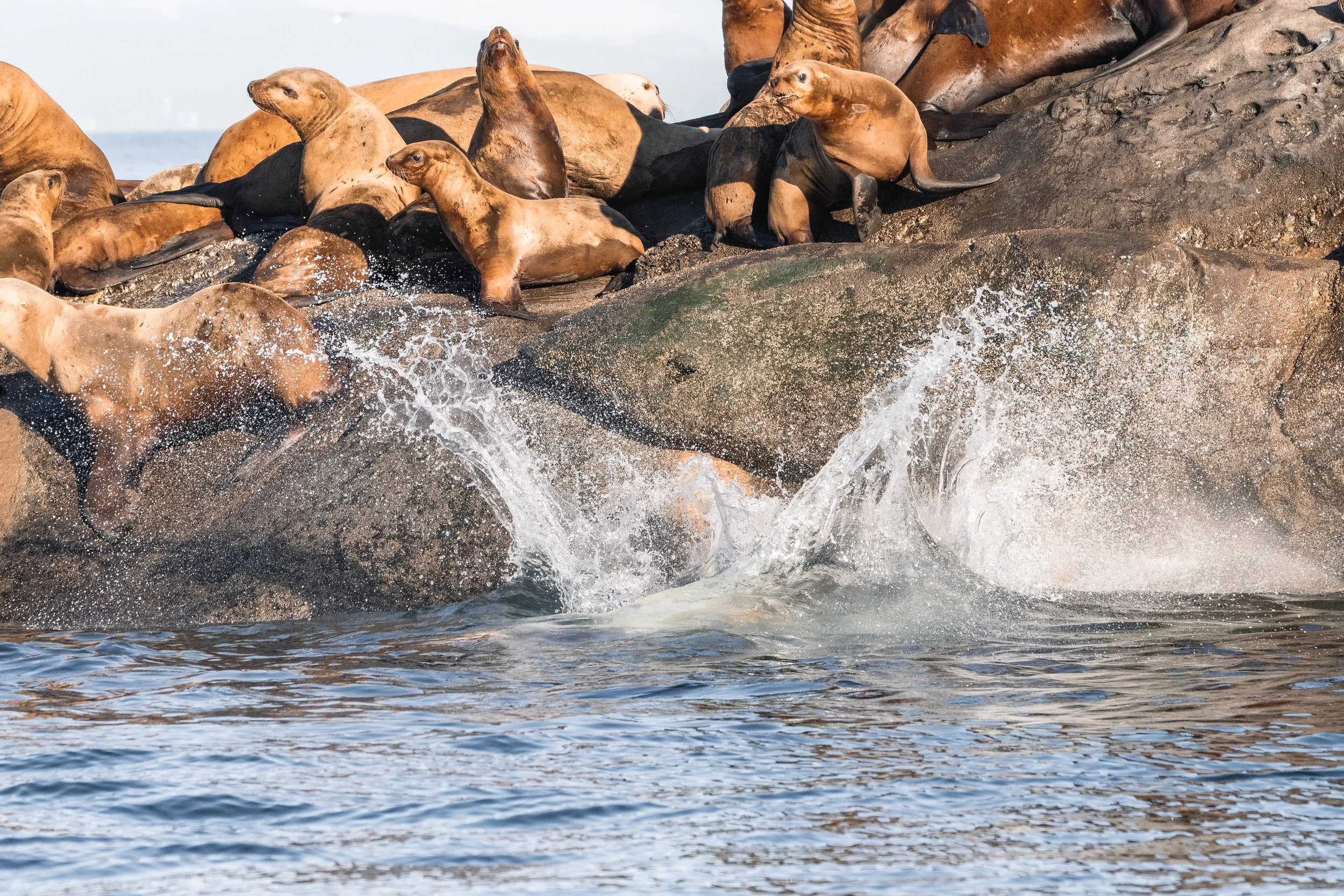
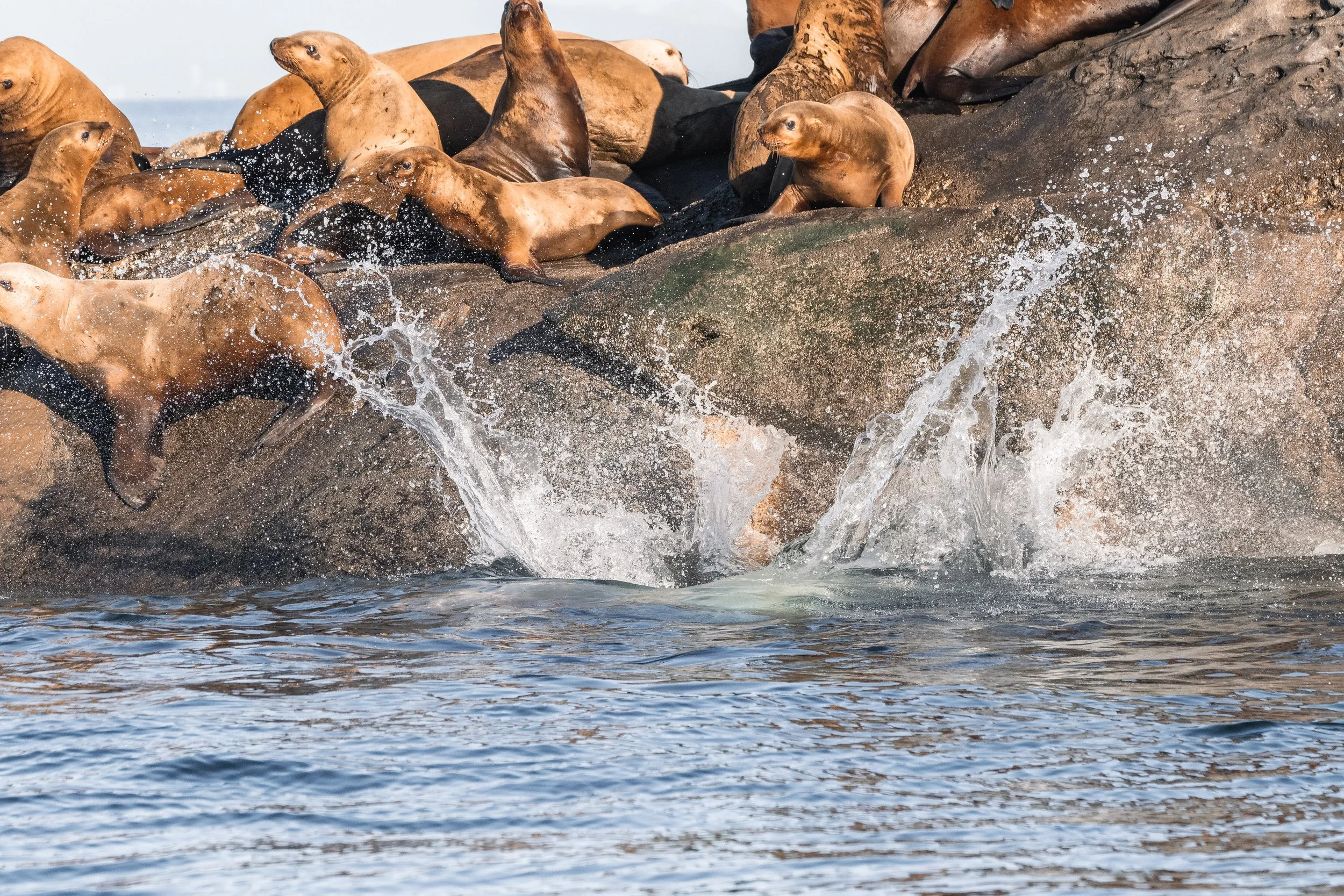
Our next stop brought us to a haul-out of Steller Sea Lions. Their diet is similar to that of Harbour Seals, though their larger size means they need to eat even more. Despite their size, Stellers are still sometimes prey for Transient Orca. Fortunately, during our visit, there were no predators nearby, and the sea lions were behaving as only Stellers can! There was plenty of posturing, pushing, and noisy squabbling on the rocks. Sharing the rocky outcrop was an impressive congregation of Bald Eagles; approximately 15 of them perched and observed the scene.
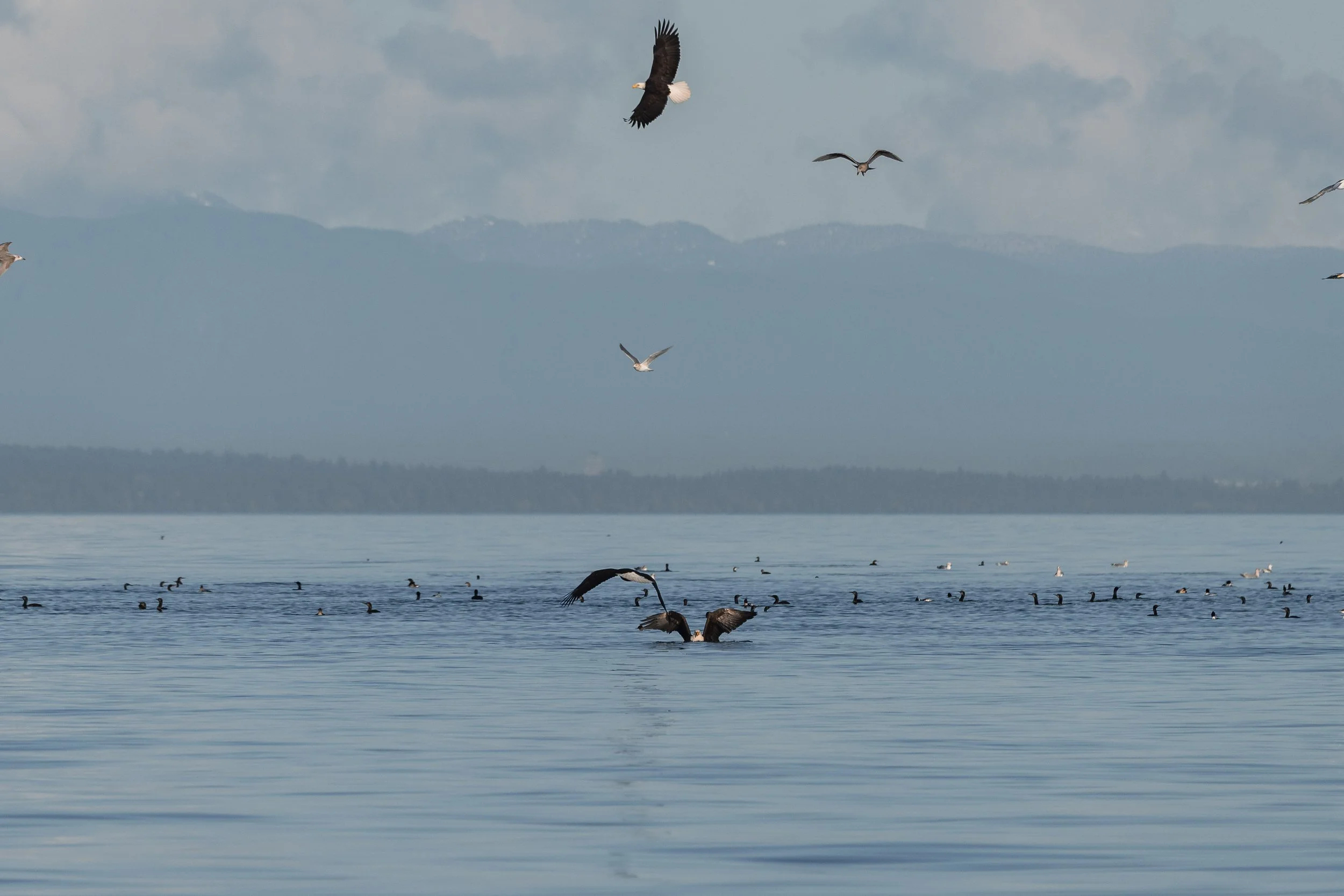
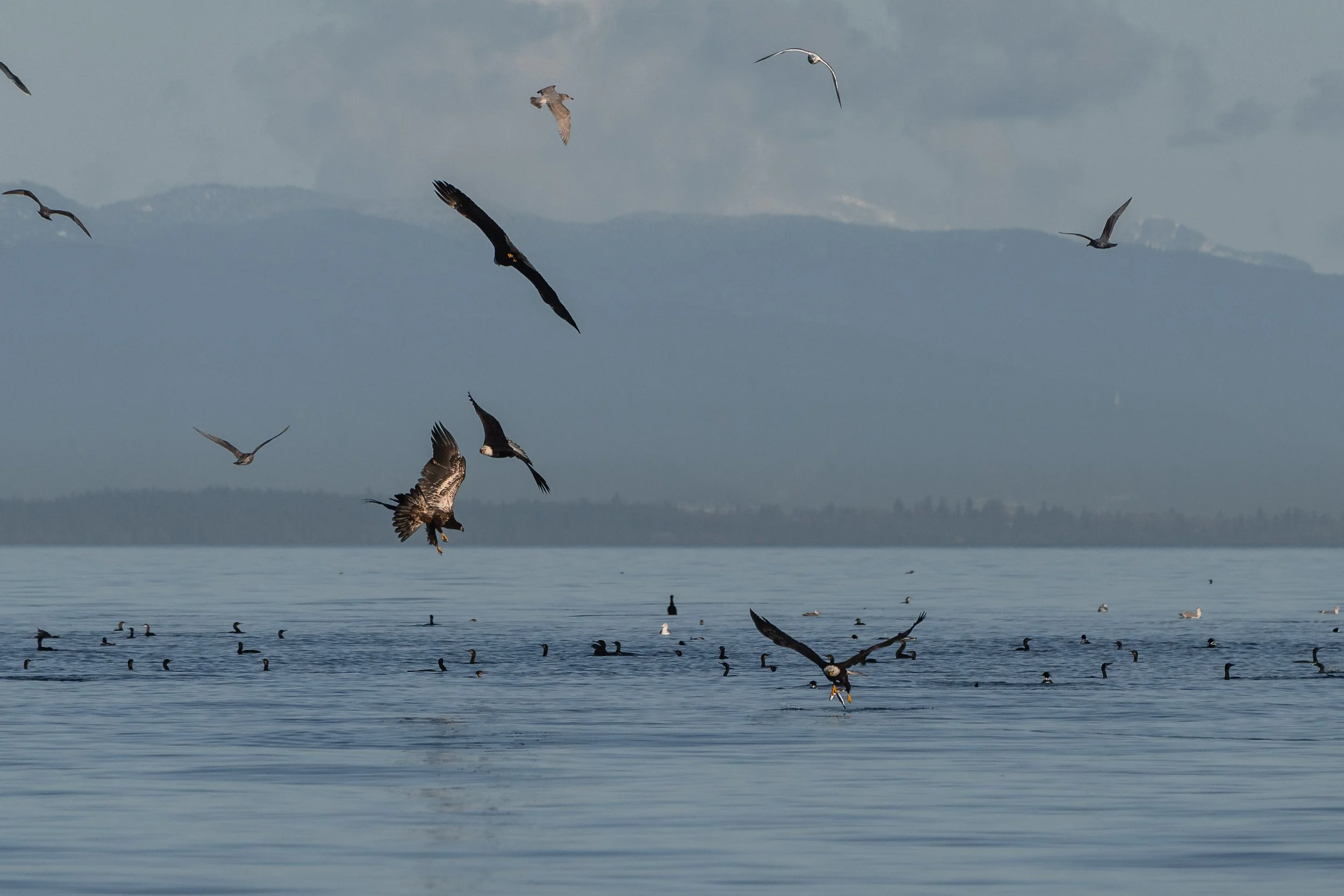
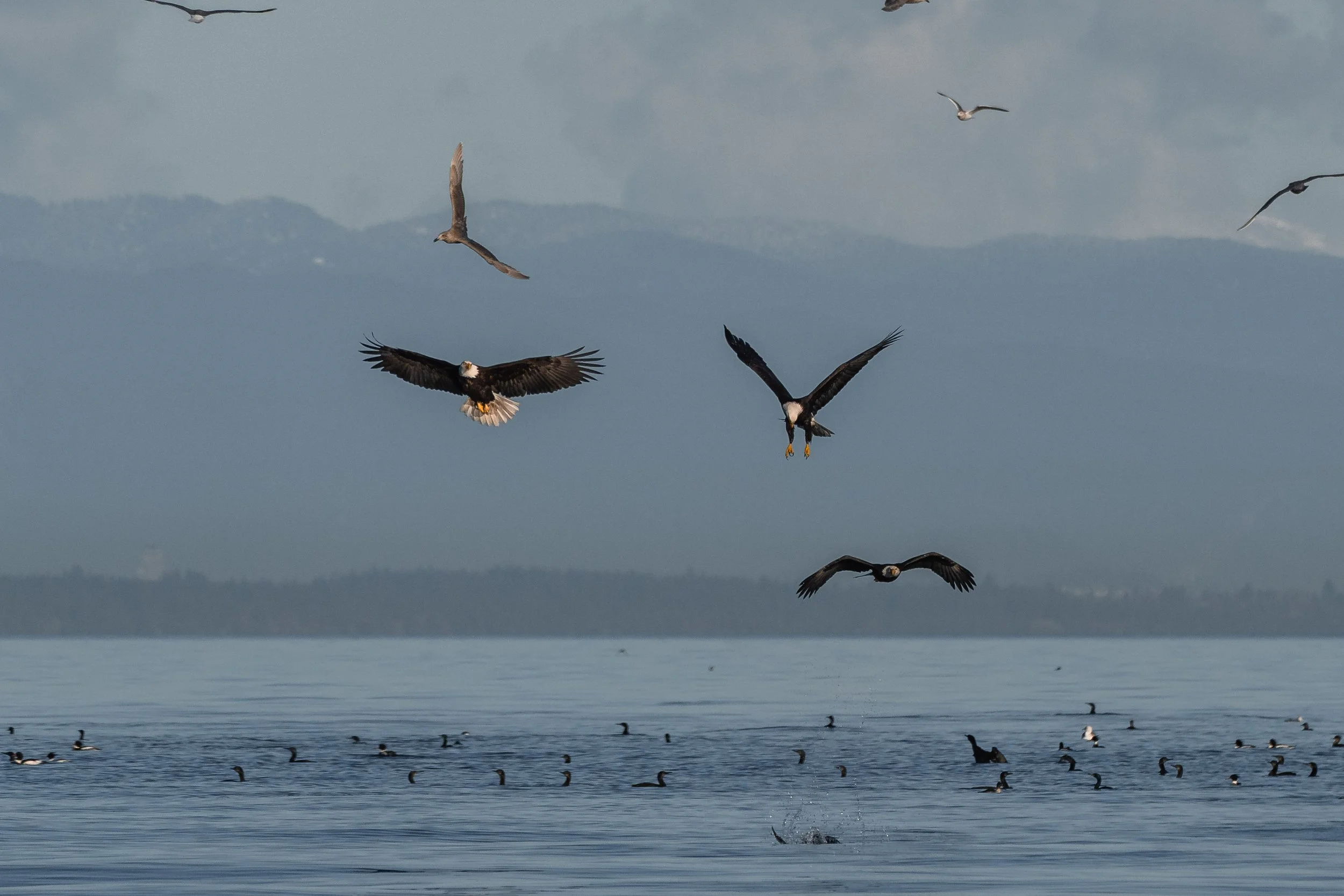
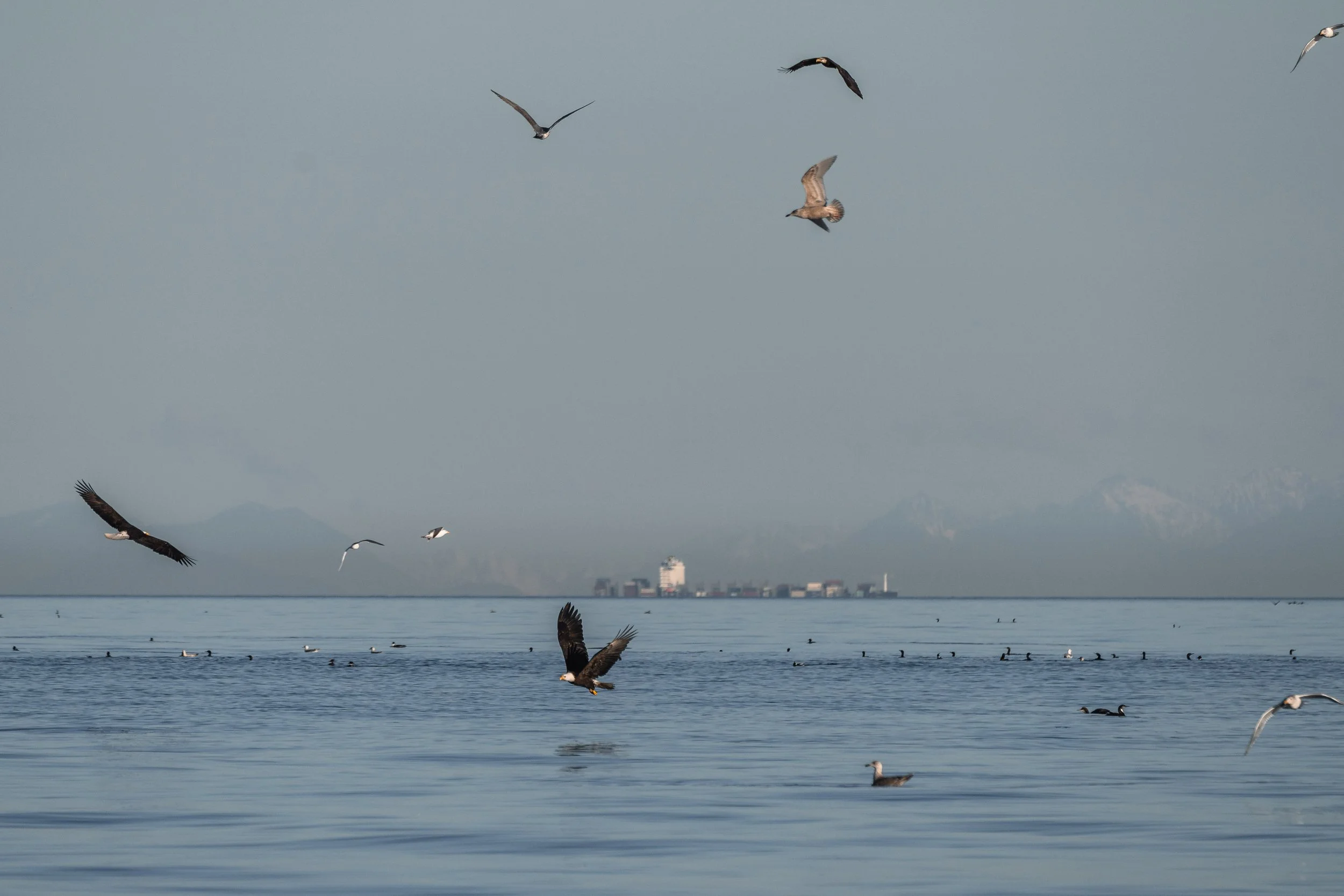
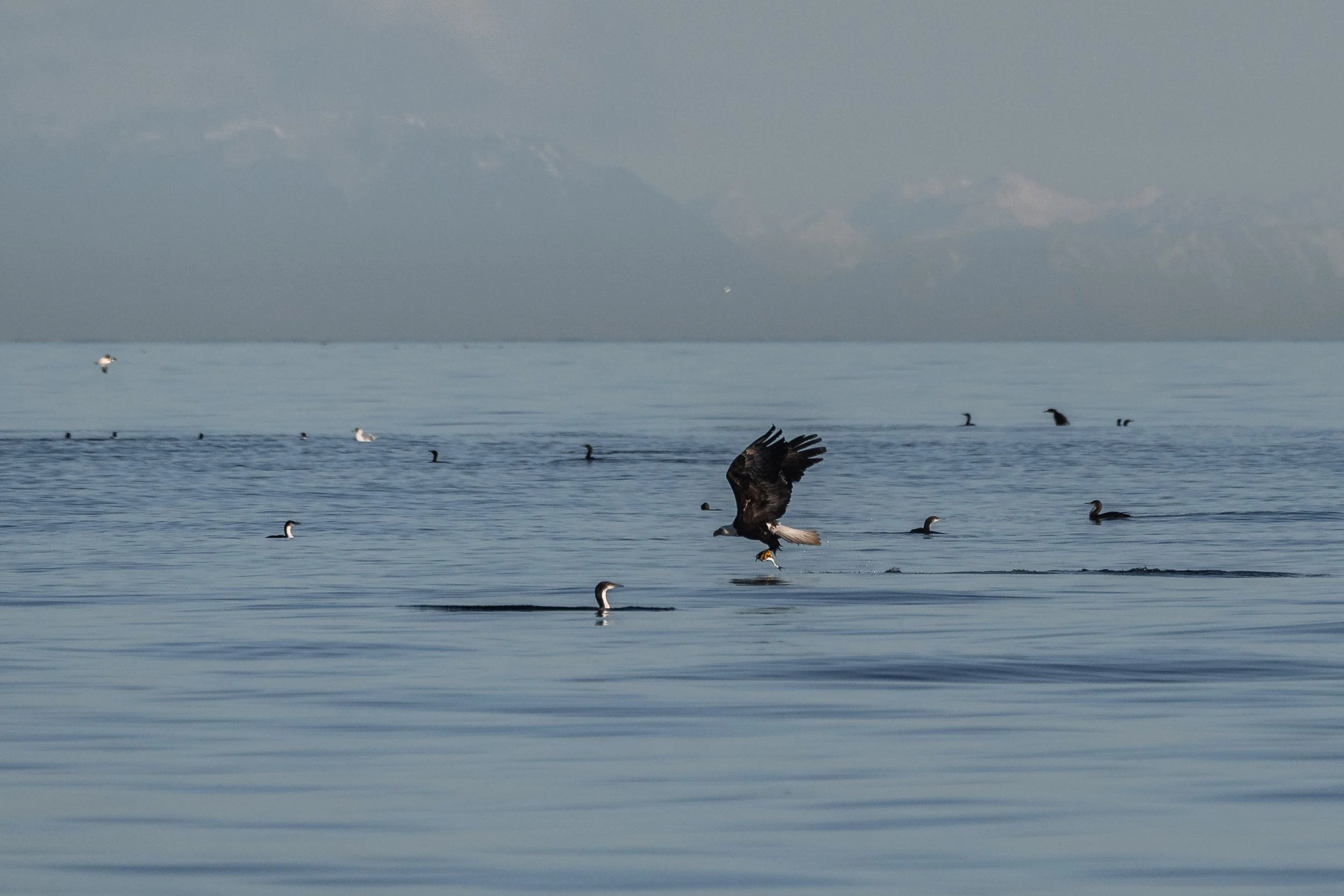
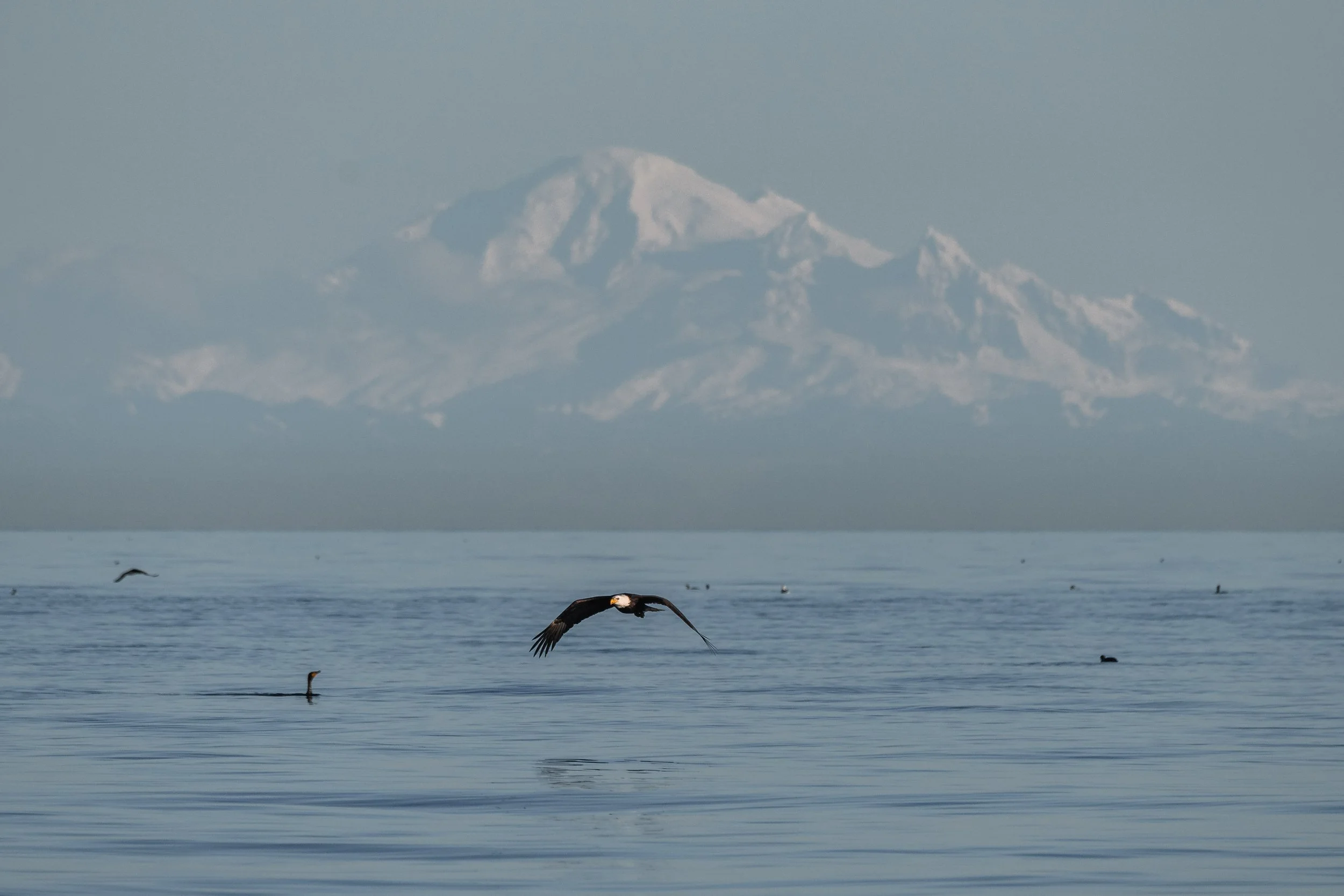
Leaving the sea lions and eagles behind, we continued north into the Strait of Georgia, making our way back toward Nanaimo. Before reaching the harbour, we spotted a large feeding frenzy just off the Gabriola Reefs. A school of Herring had gathered, likely preparing to move toward shore to spawn. Taking full advantage were large groups of loons on the water, gulls overhead, and Bald Eagles diving into the action.
The Eagles were incredible to watch. They swooped low over the water, extending their massive talons to scoop up their share of the small silver fish. One eagle employed a particularly bold technique: landing fully in the water for several minutes before beating its wings powerfully to lift off, talons full of herring. It was an unforgettable sight.
From there, we continued back to Nanaimo and returned to the dock after an absolutely incredible day on the water. We felt so fortunate to witness such a diverse array of wildlife in just a few hours.
Onboard Marine Naturalist Val Watson captured some stunning photographs throughout the tour, which you can view below.
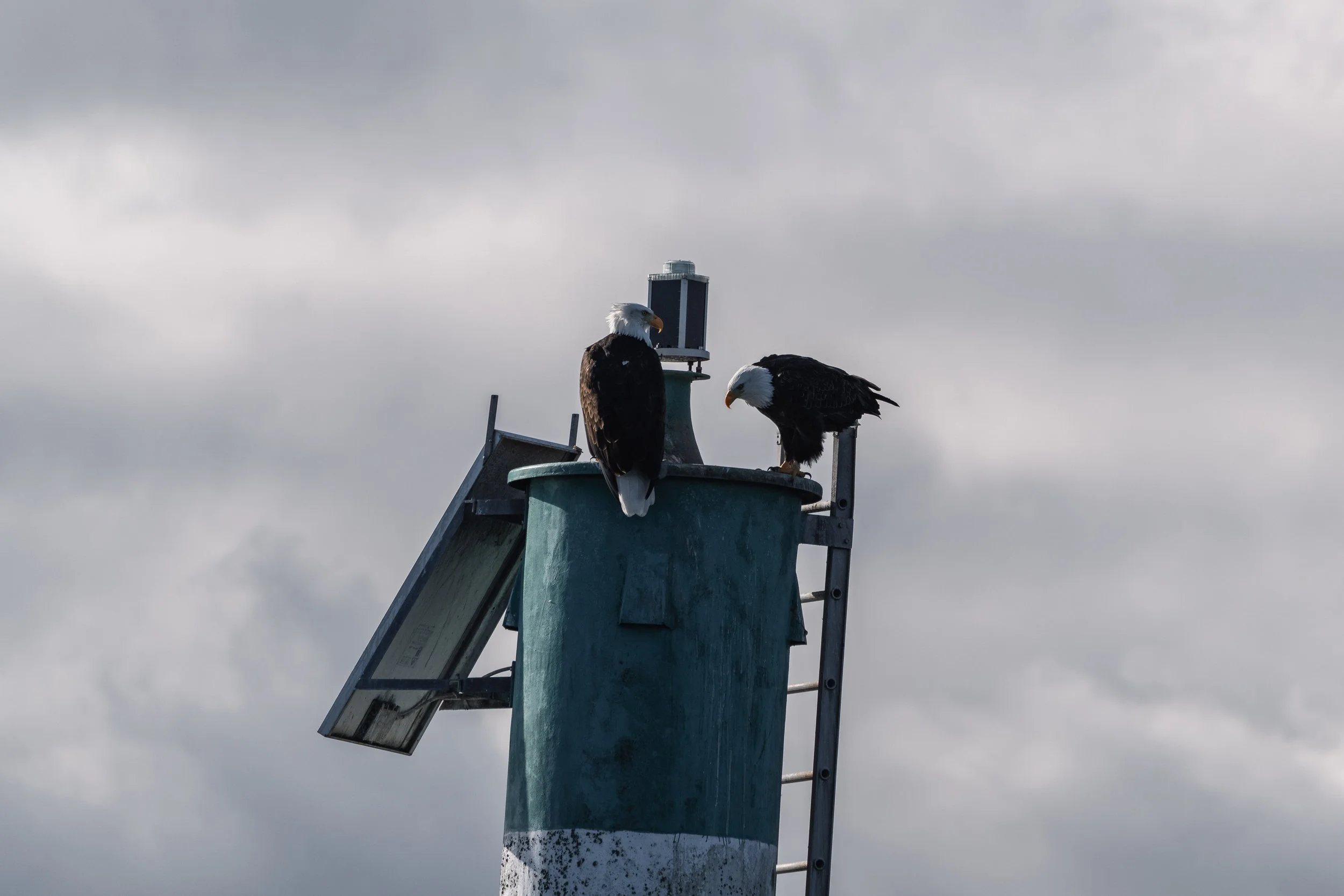
Bald Eagles on the marker leaving the harbour.
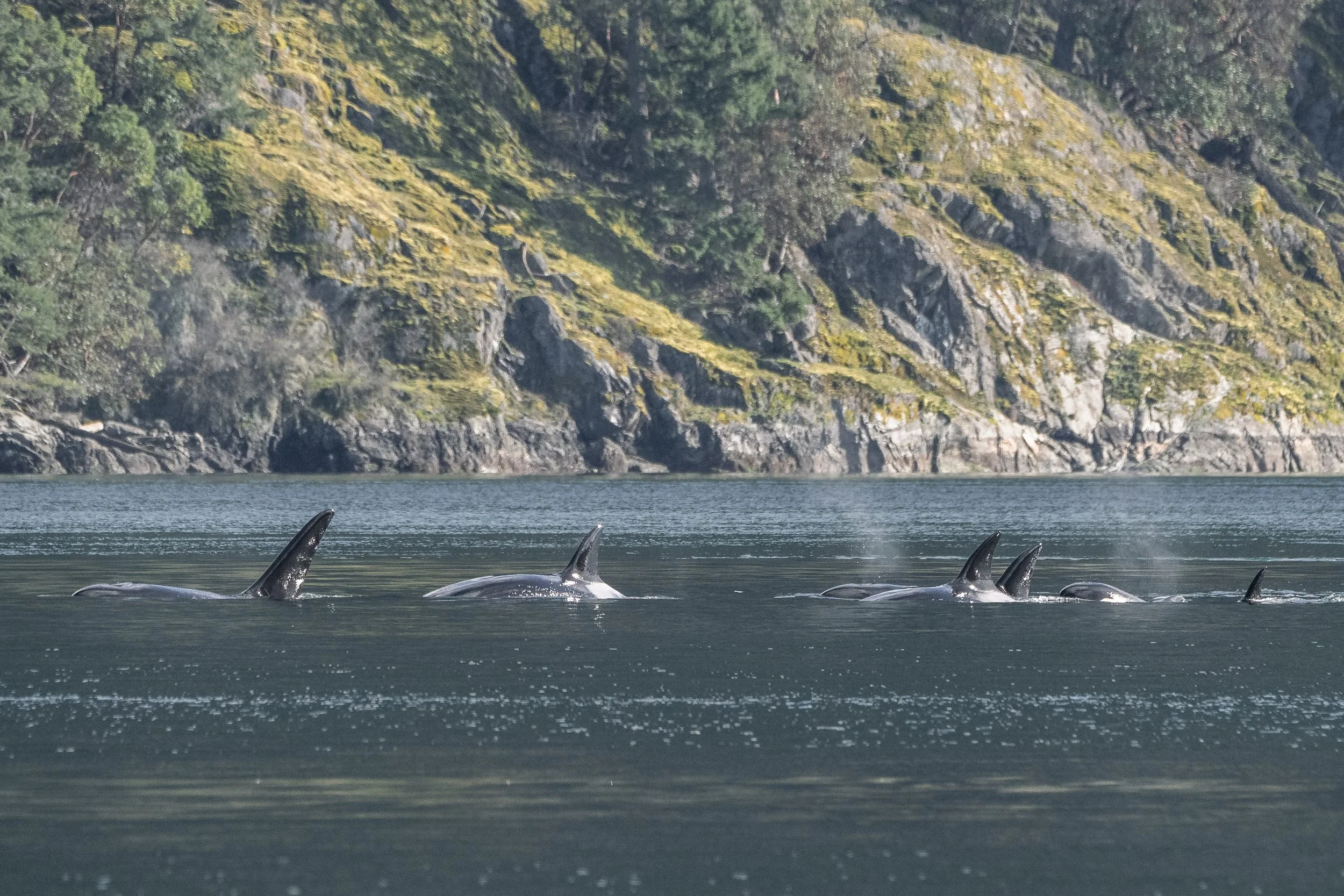
A group photo of the T030Bs and T099s in the Narrow part of the channel.
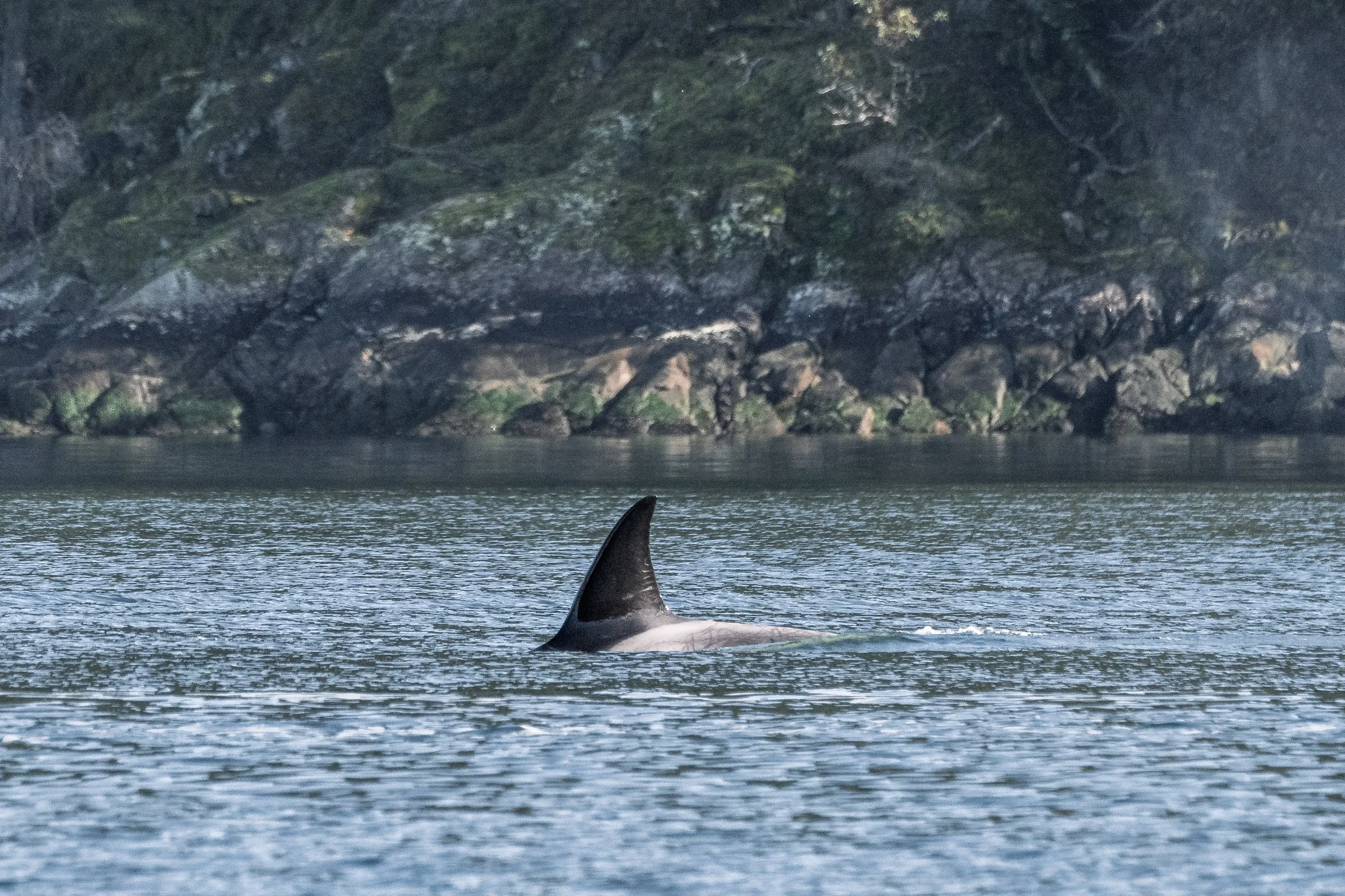
T030B1 Vega surfacing in th calm water.
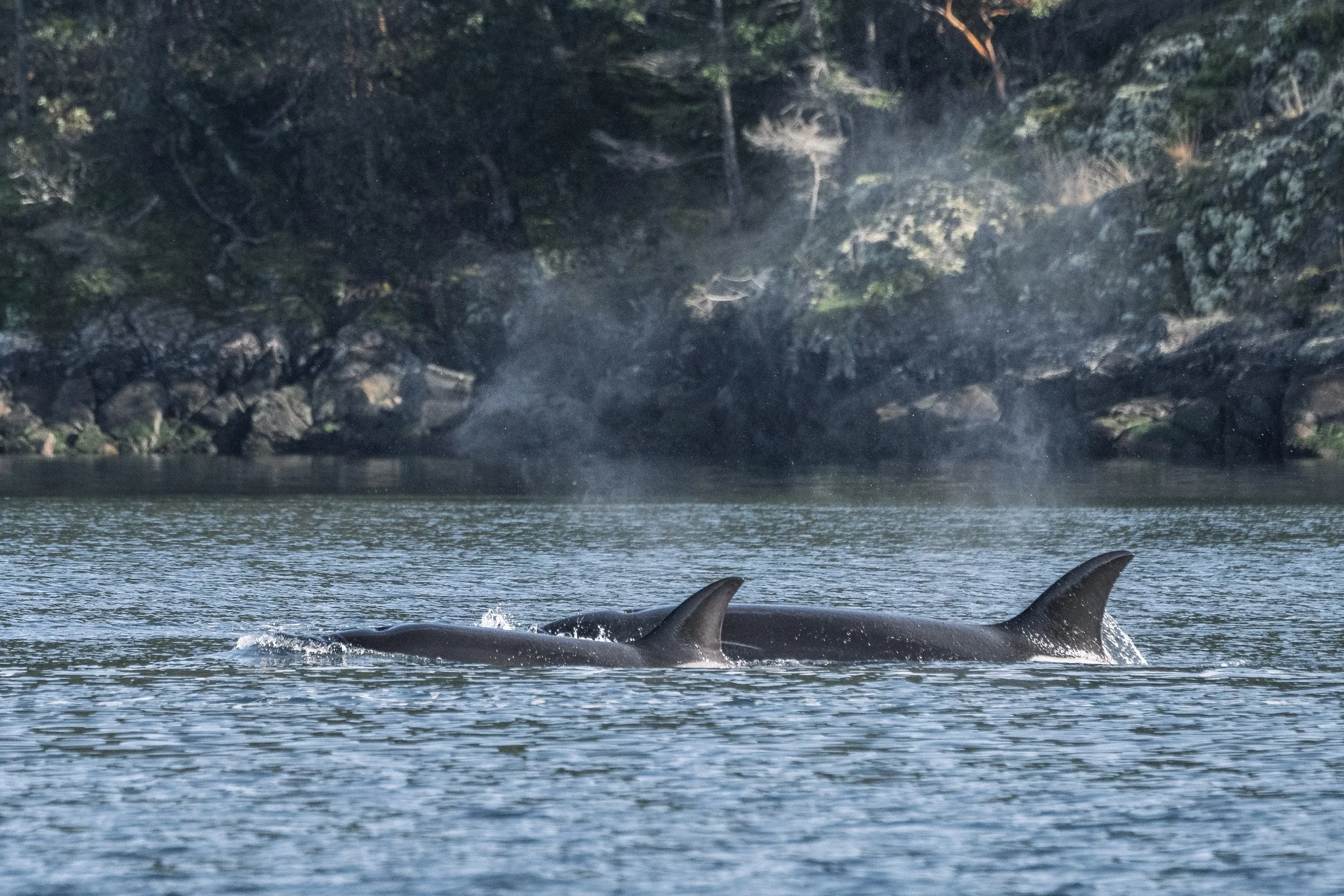
T099E Quiin qwiin oo qwii la surfacing next to mom T099 Bella.
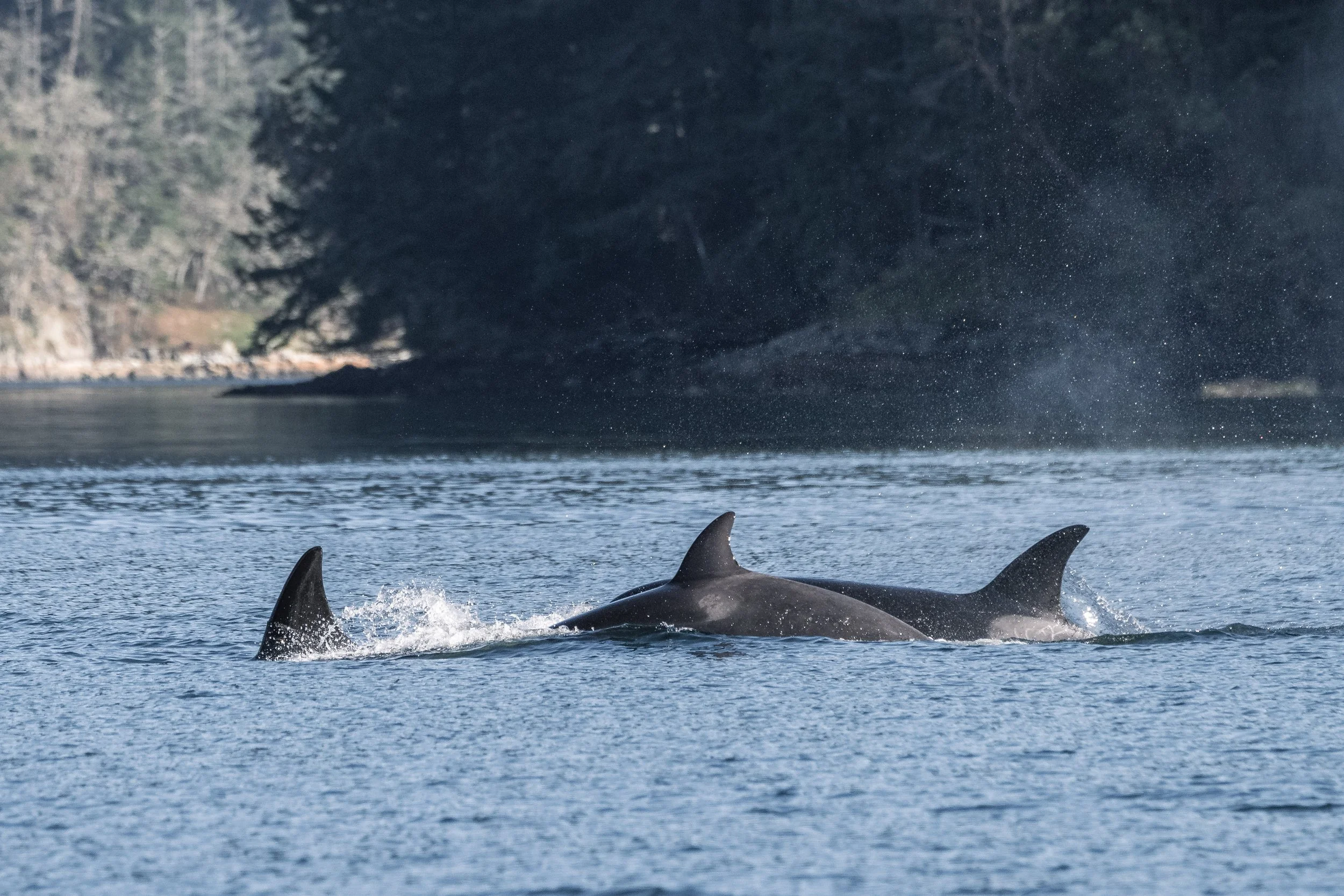
T030B Lyra in the lead, followed bny T030B3 Vesper and T030B2 Capella.
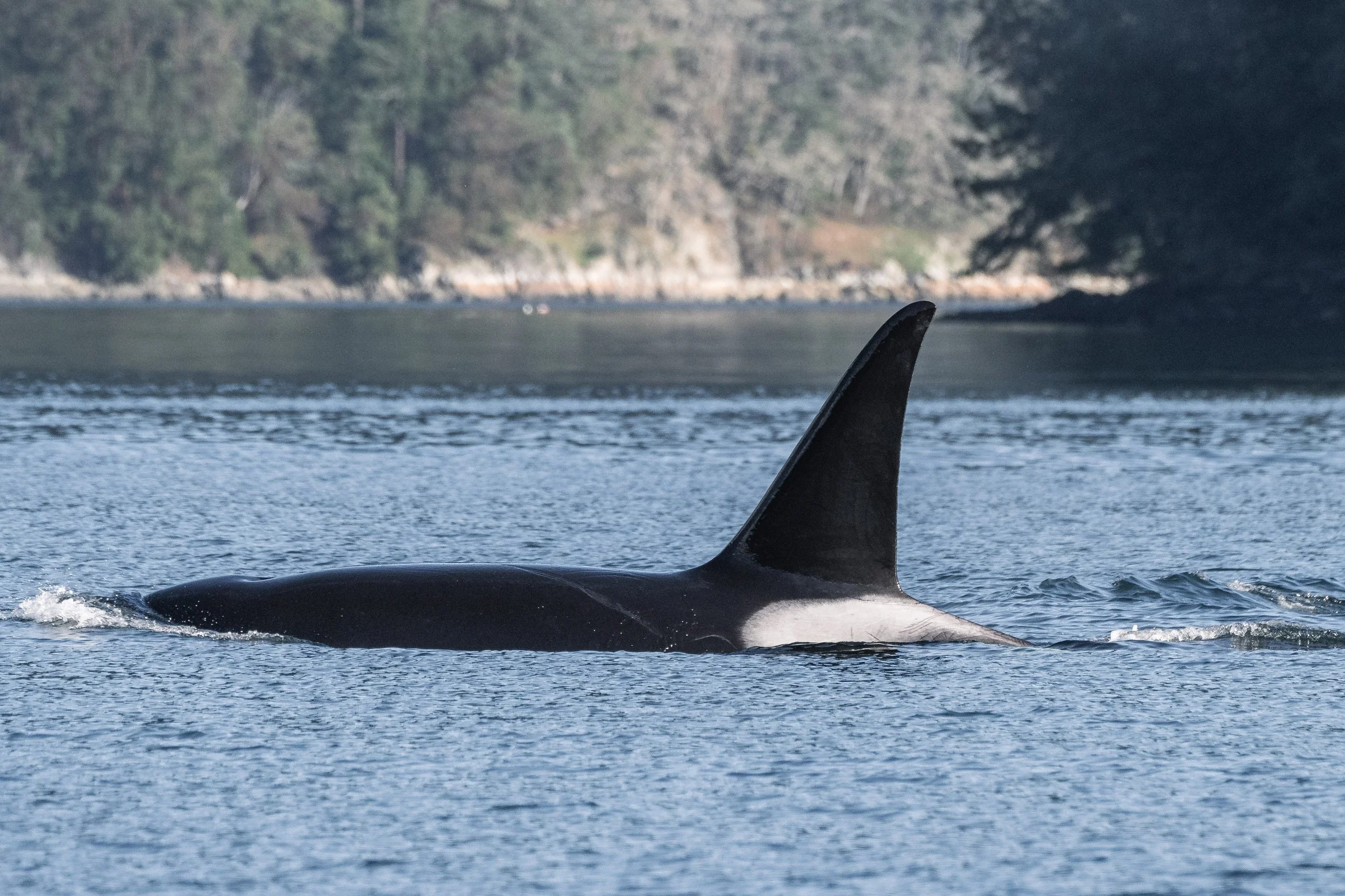
The massive fin of T099C Barakat.
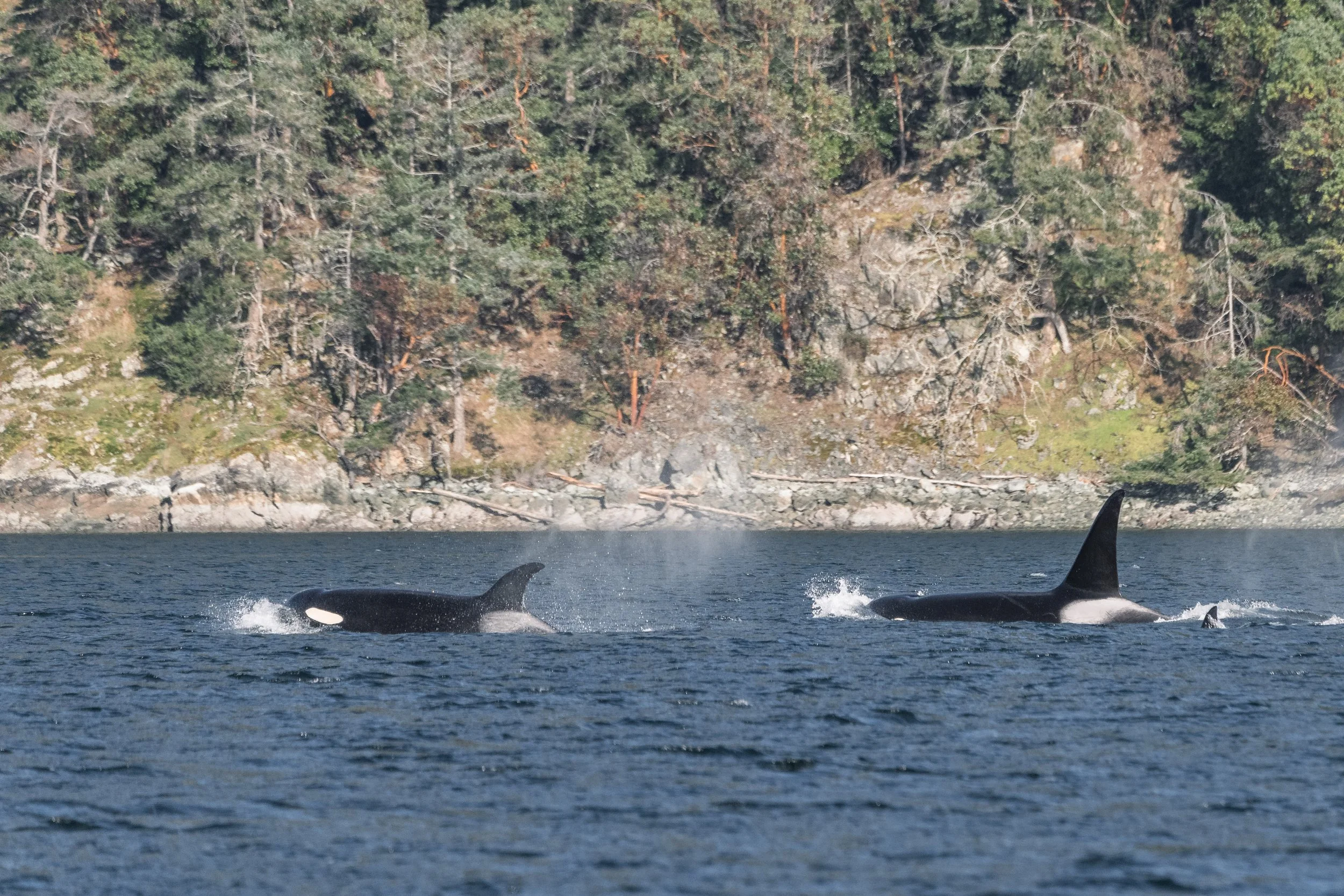
T099B Holly showing off her eye patch, with her brother T099C Barakat following.
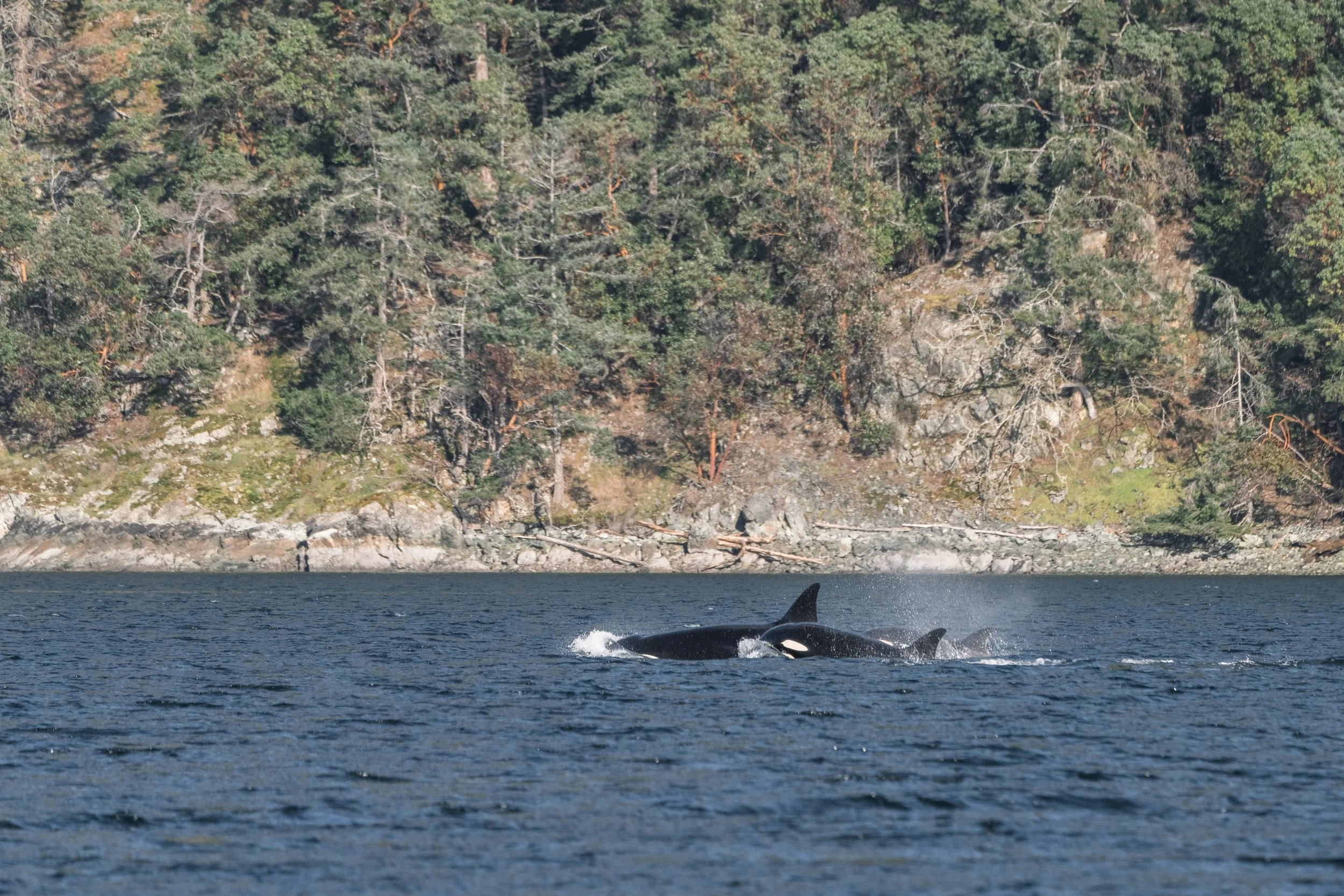
T030B Lyra surfacing with her two youngest, T030B2 Capella and T030B3 Vesper, on either side of her.
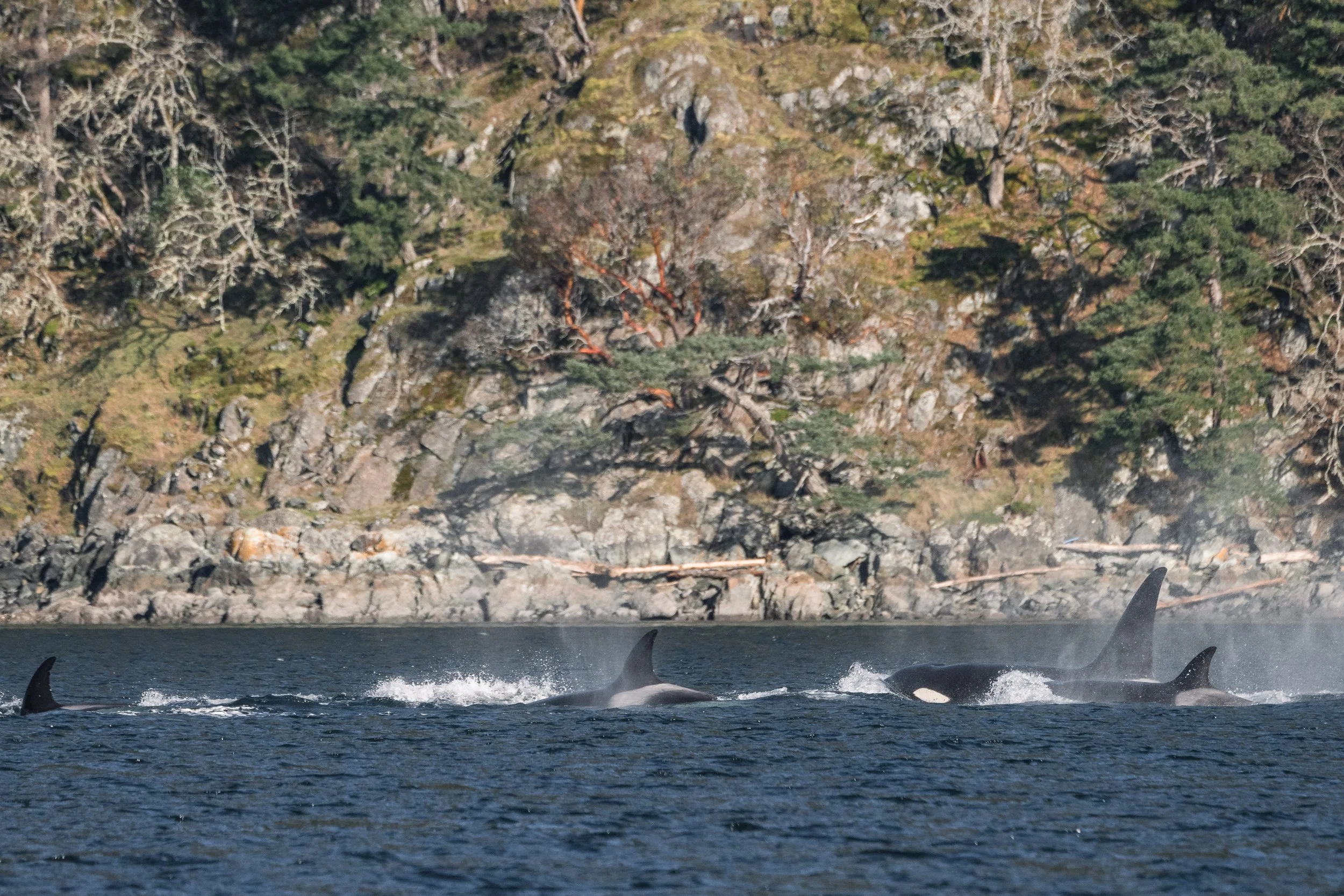
T099 family photo! Left to right: T099B Holly, T099 Bella, T099C Barakat, and T099E Qwiin qwiin oo qwii la.
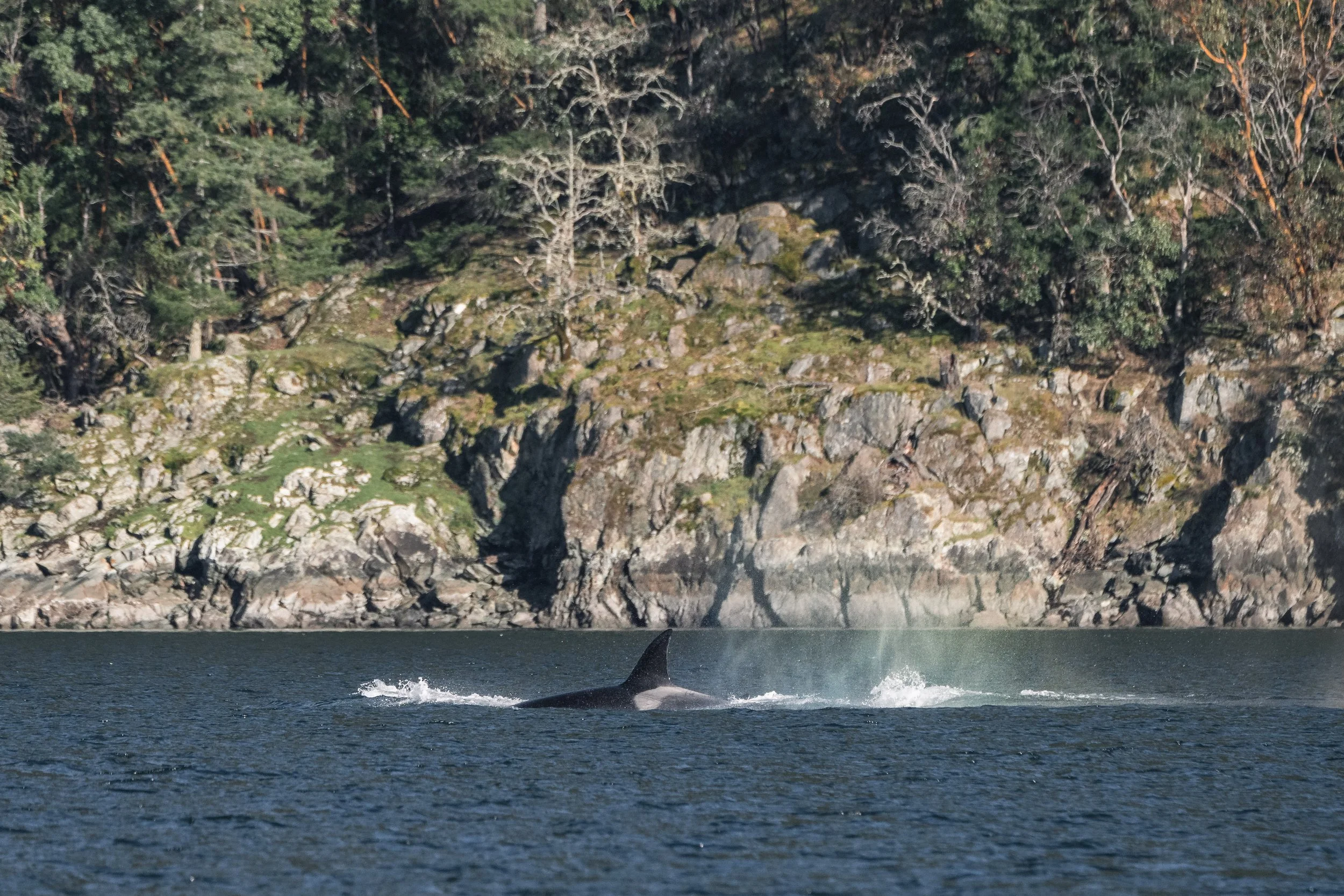
T099D Puck surfacing on his own. Can you spot the “rainblow”?
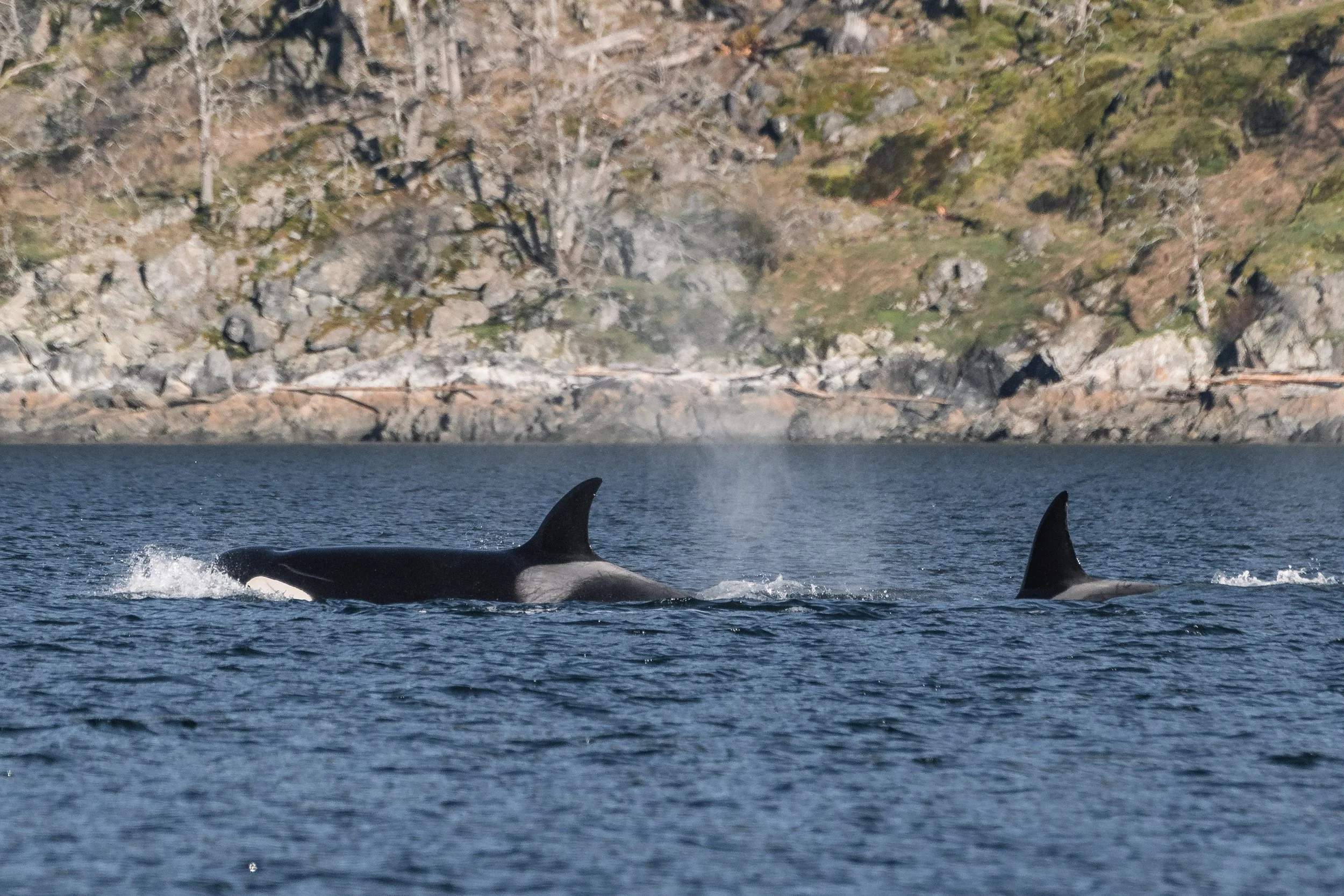
T099 Bella surfacing with her son, T099D Puck.
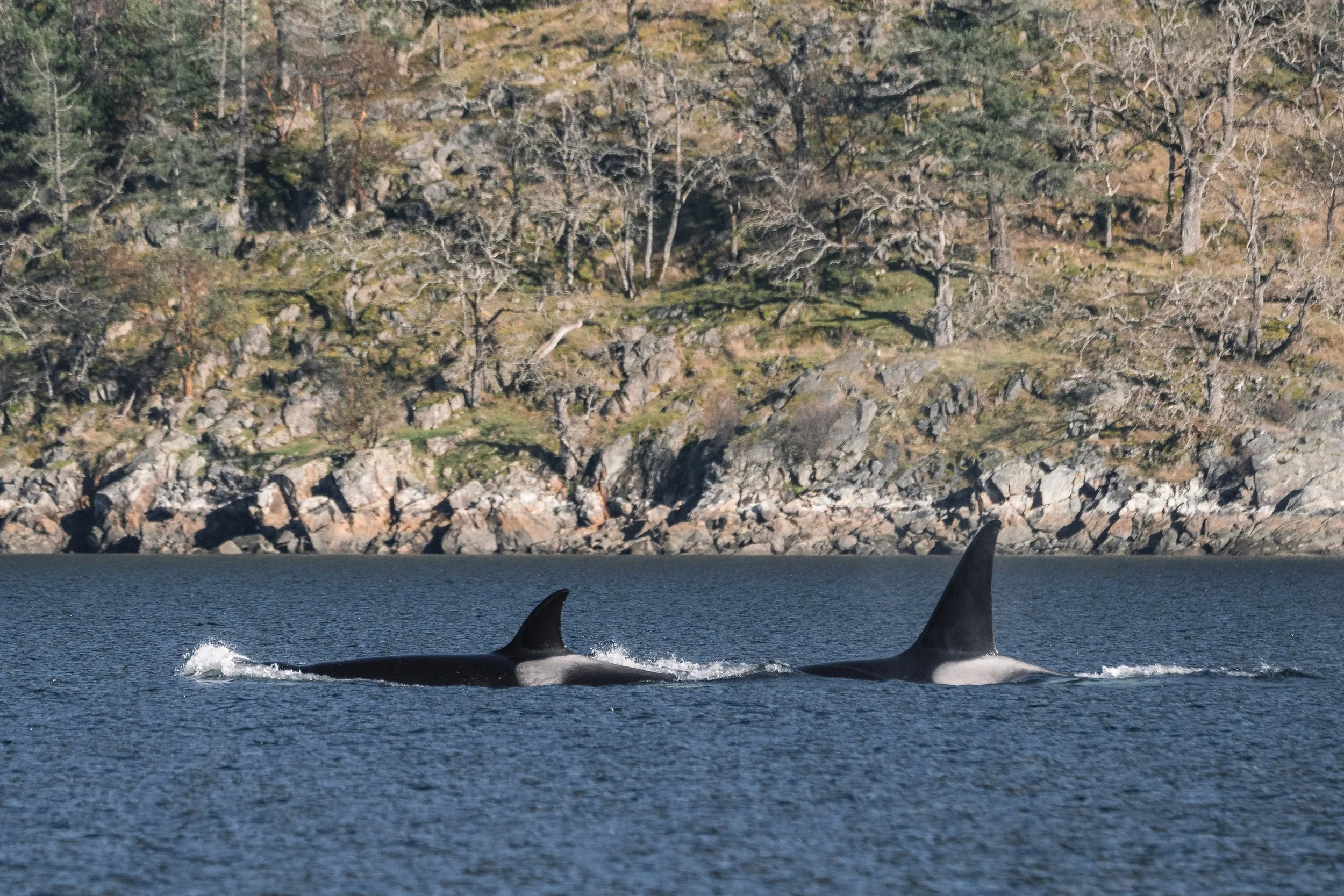
T099 Bella surfacing with her other son, T099C Barakat.
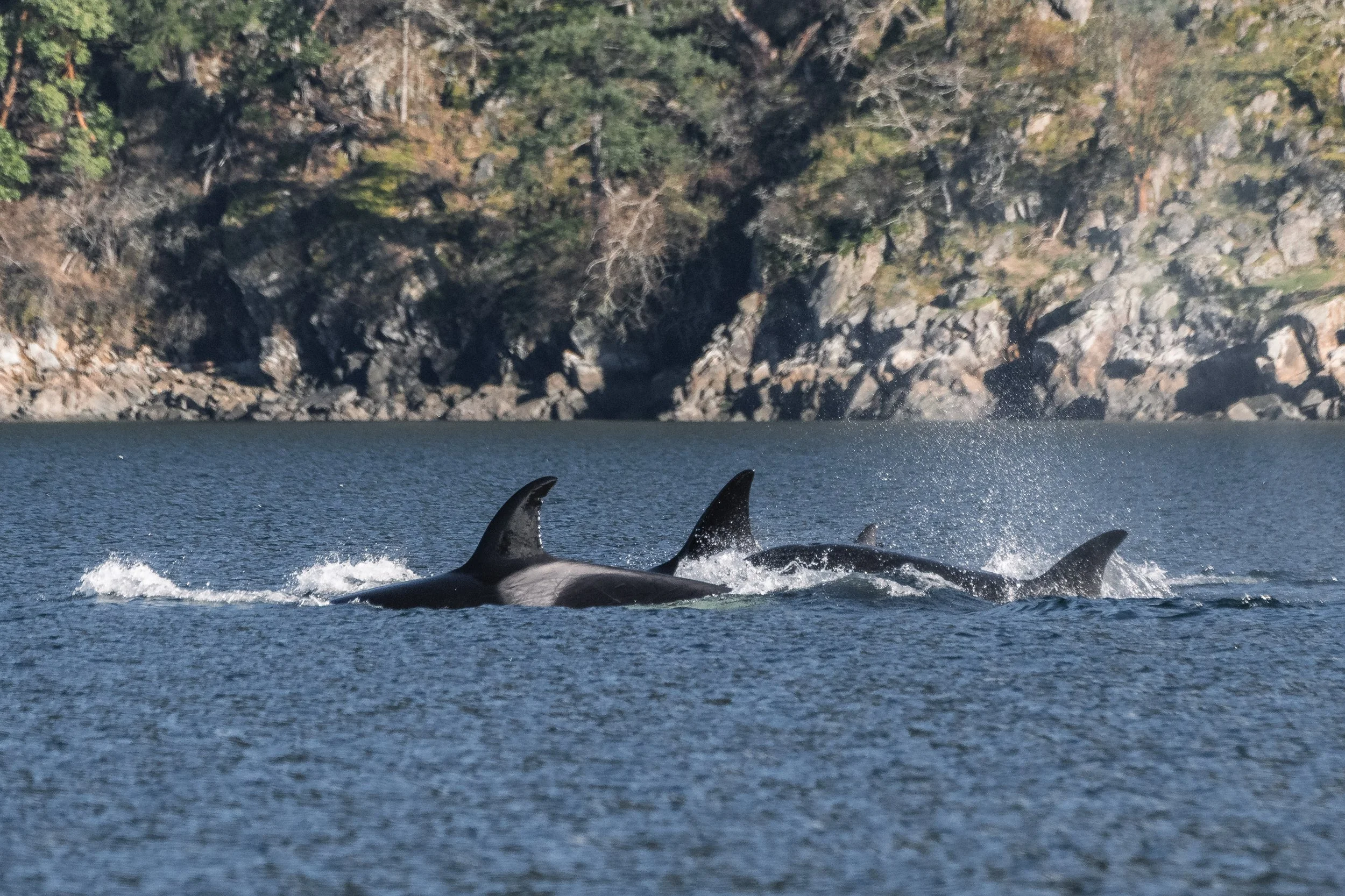
T099B Holly surfacing with the T030Bs.
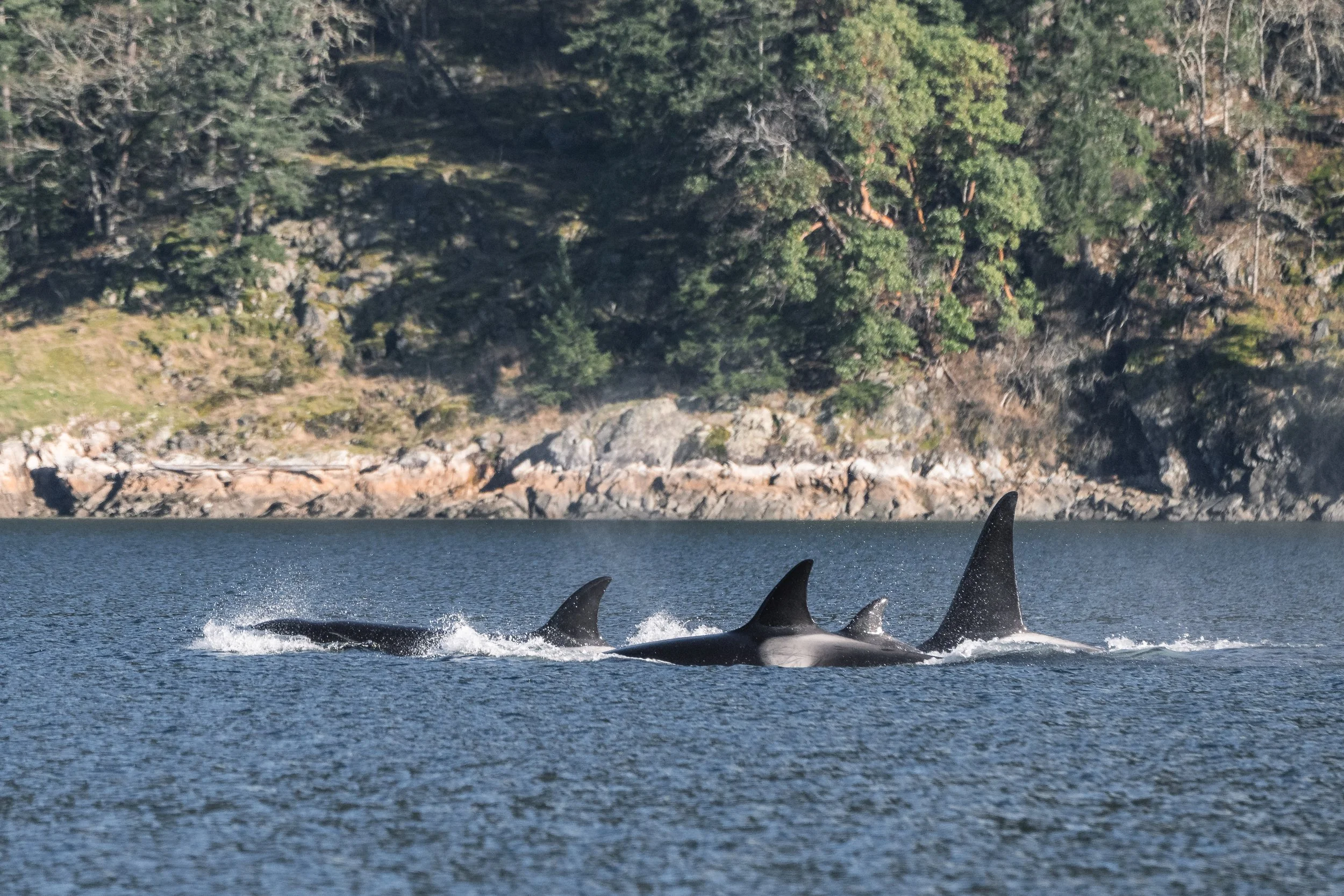
The matricarchs, T099 Bella and T030B Lyra in the lead, with T030B3 Vesper and T099C Barakat behind.
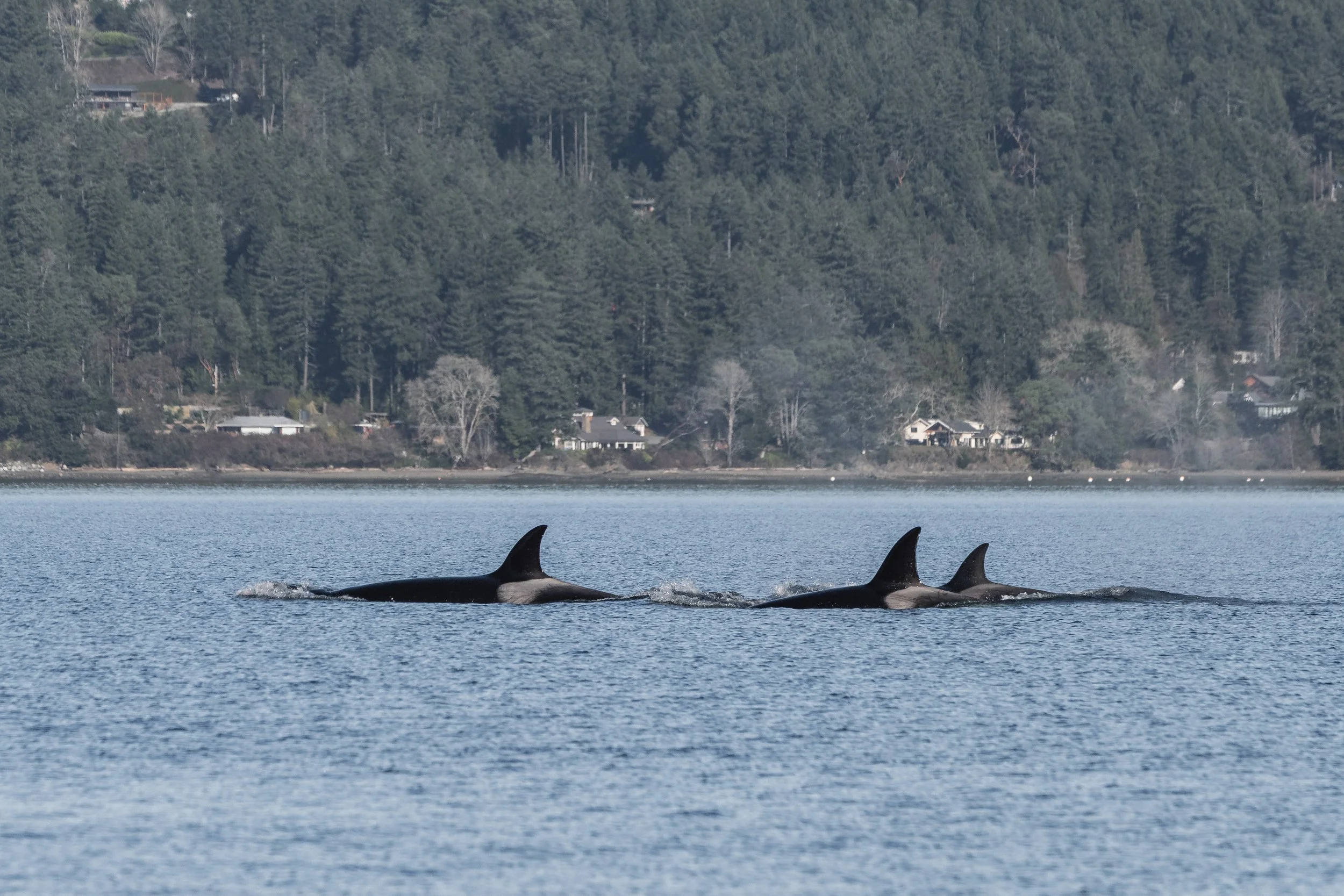
T099 Bella, T099D Puck, and T099E Qwiin qwiin oo qwii la surfacing together.
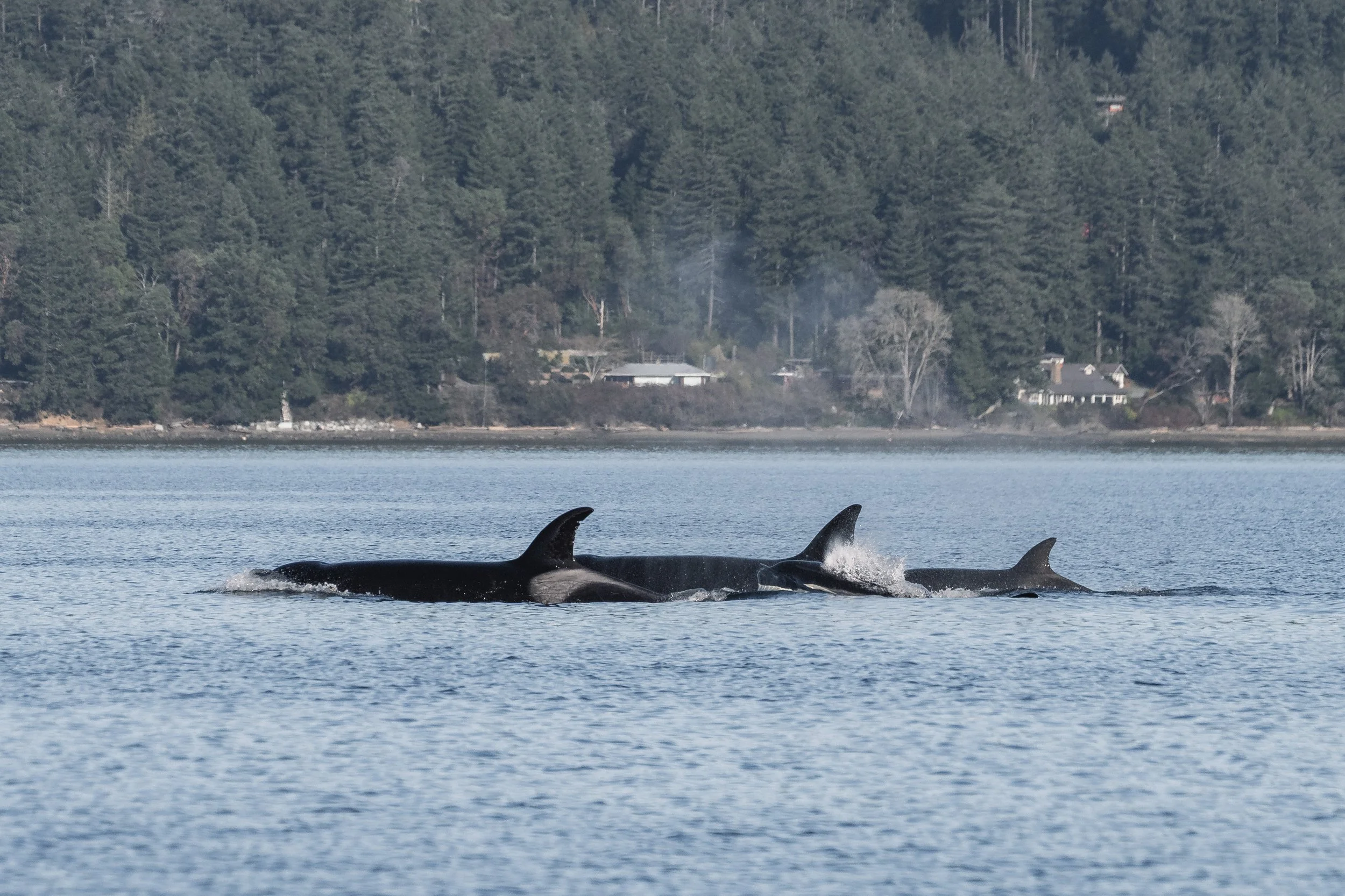
T099B Holly, T030B Lyra, T030B2 Capella, and T030B3 Vesper surfacing together.
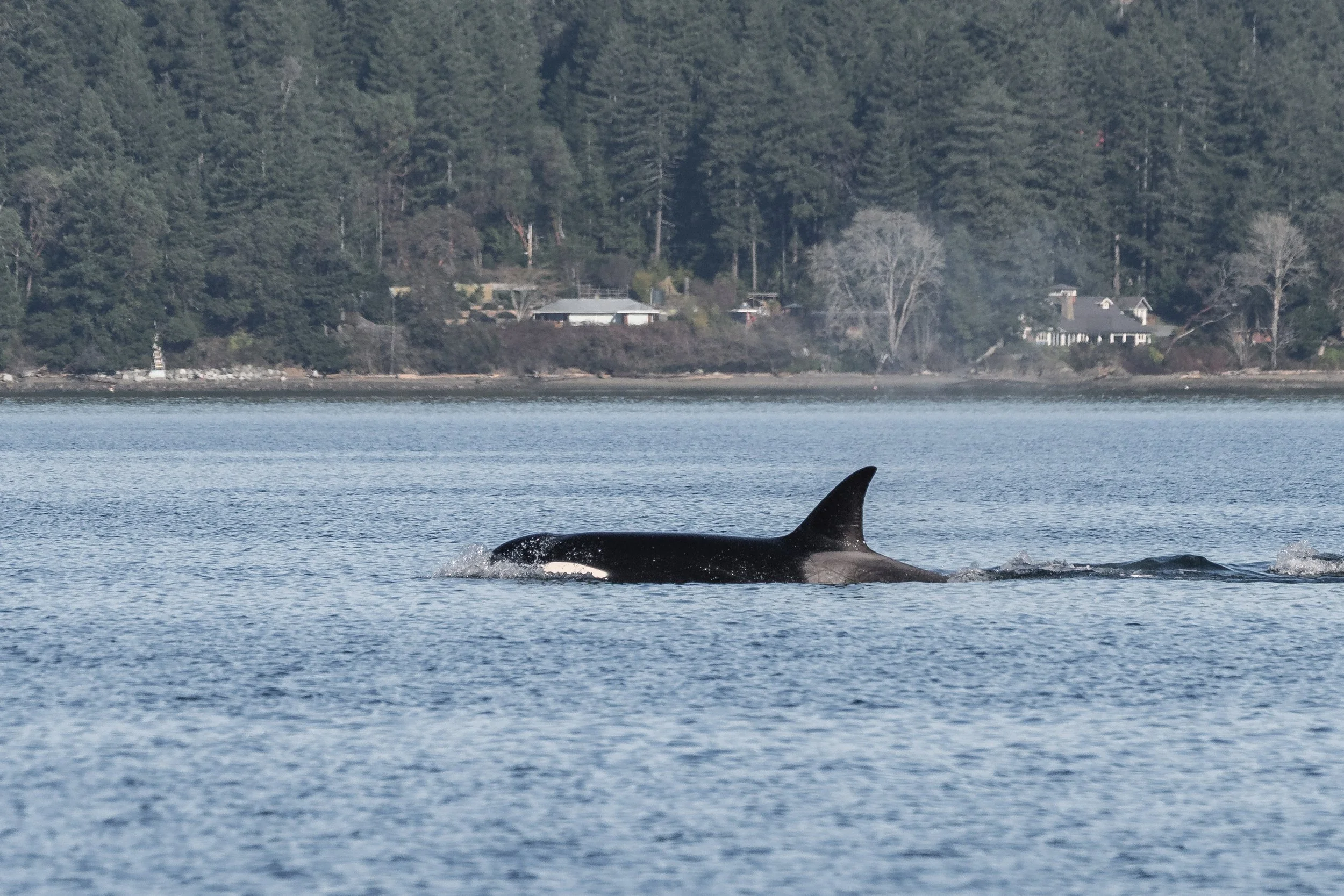
T030B1 Vega surfacing on their own.
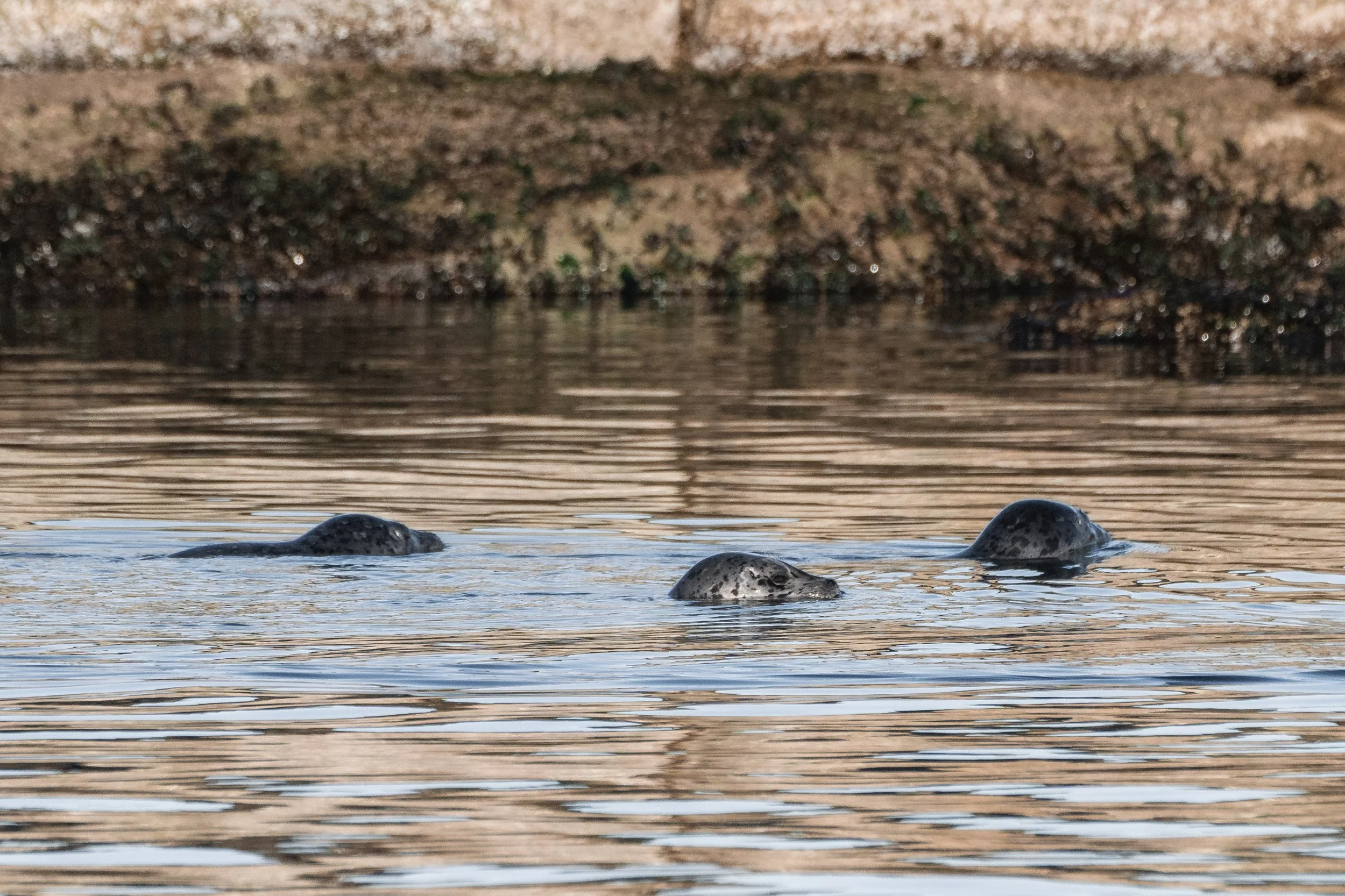
Harbour Seals floating by in the water.
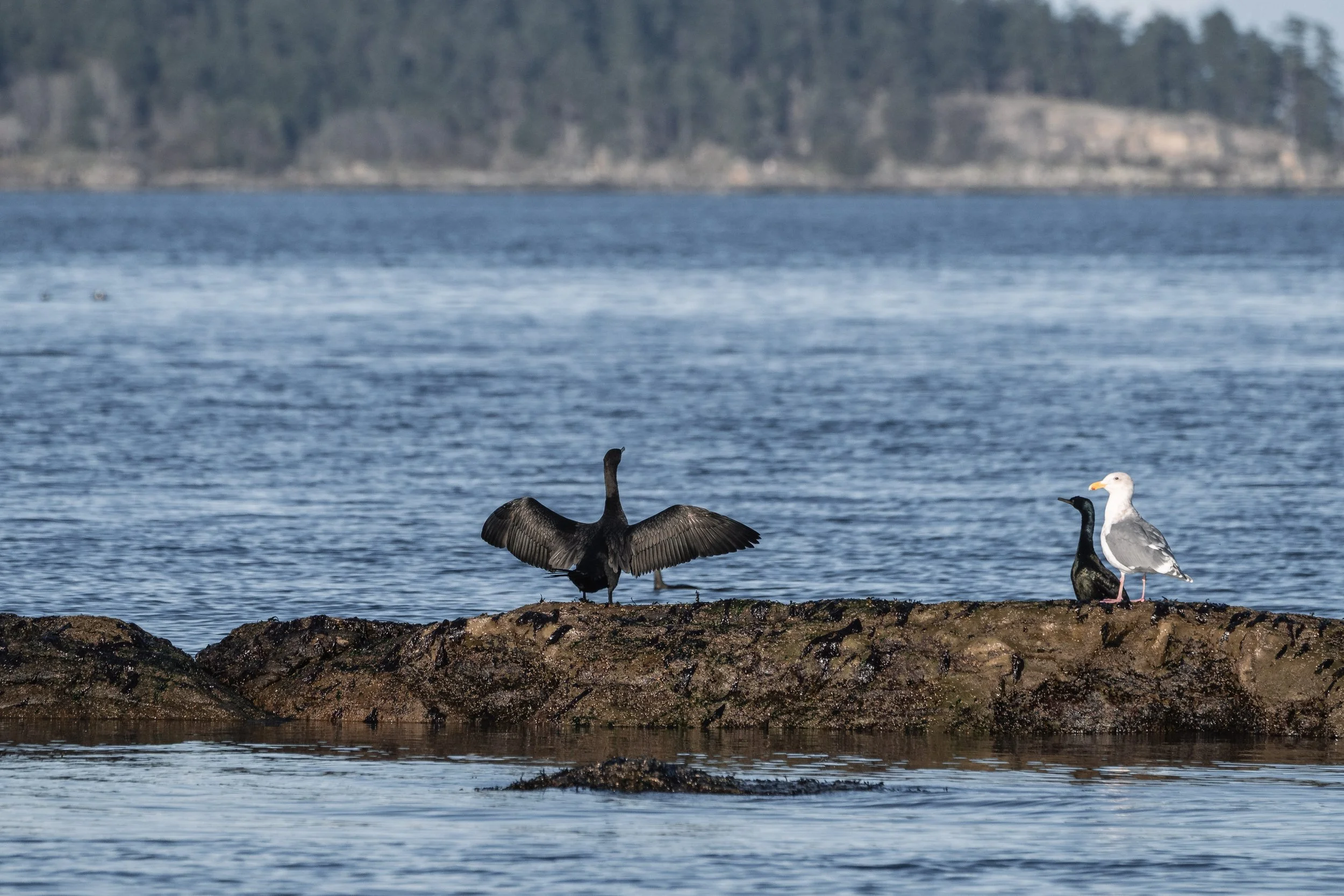
A cormorant drying itself off on the rocks.
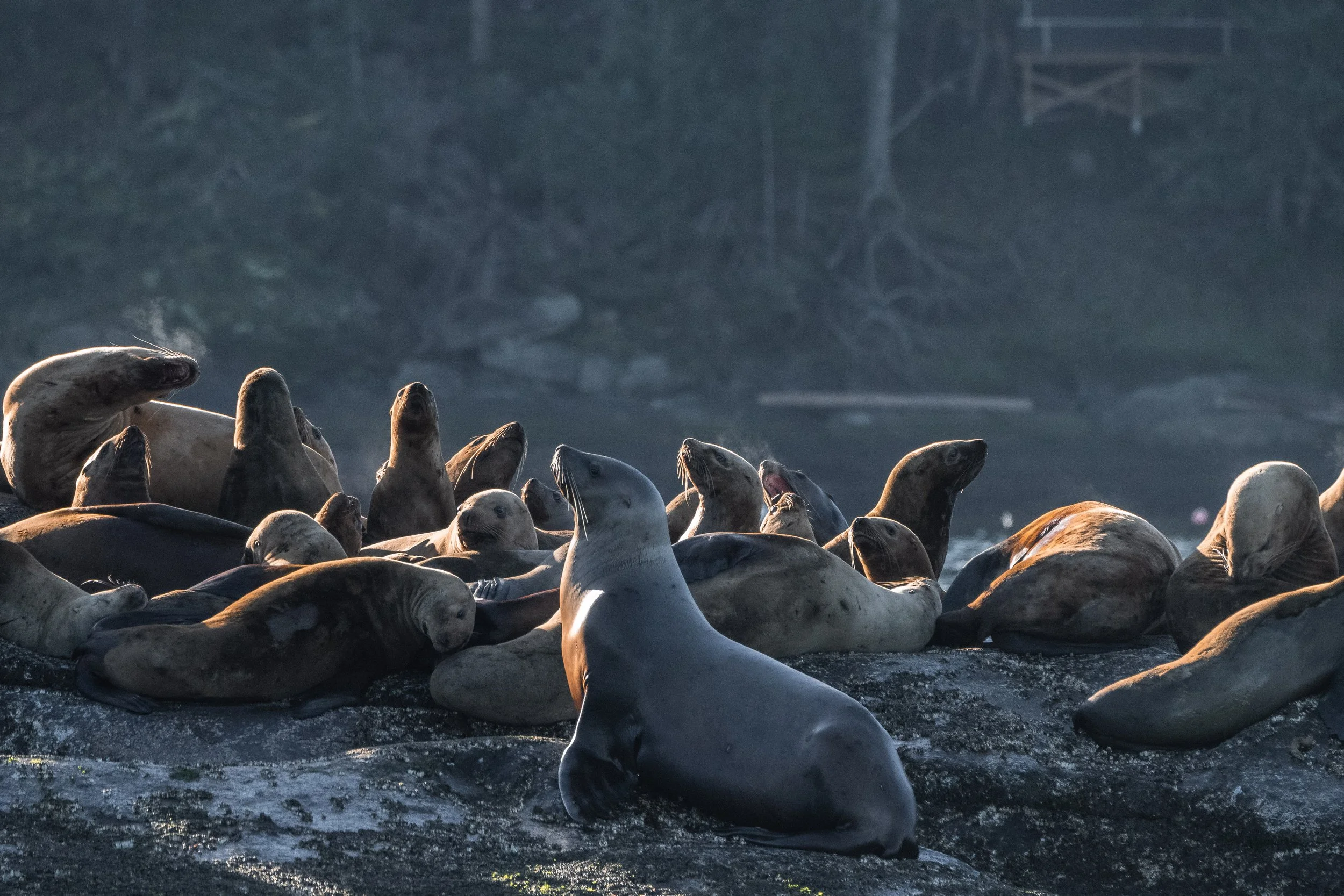
A bunch of Steller Sea Lions striking a pose!
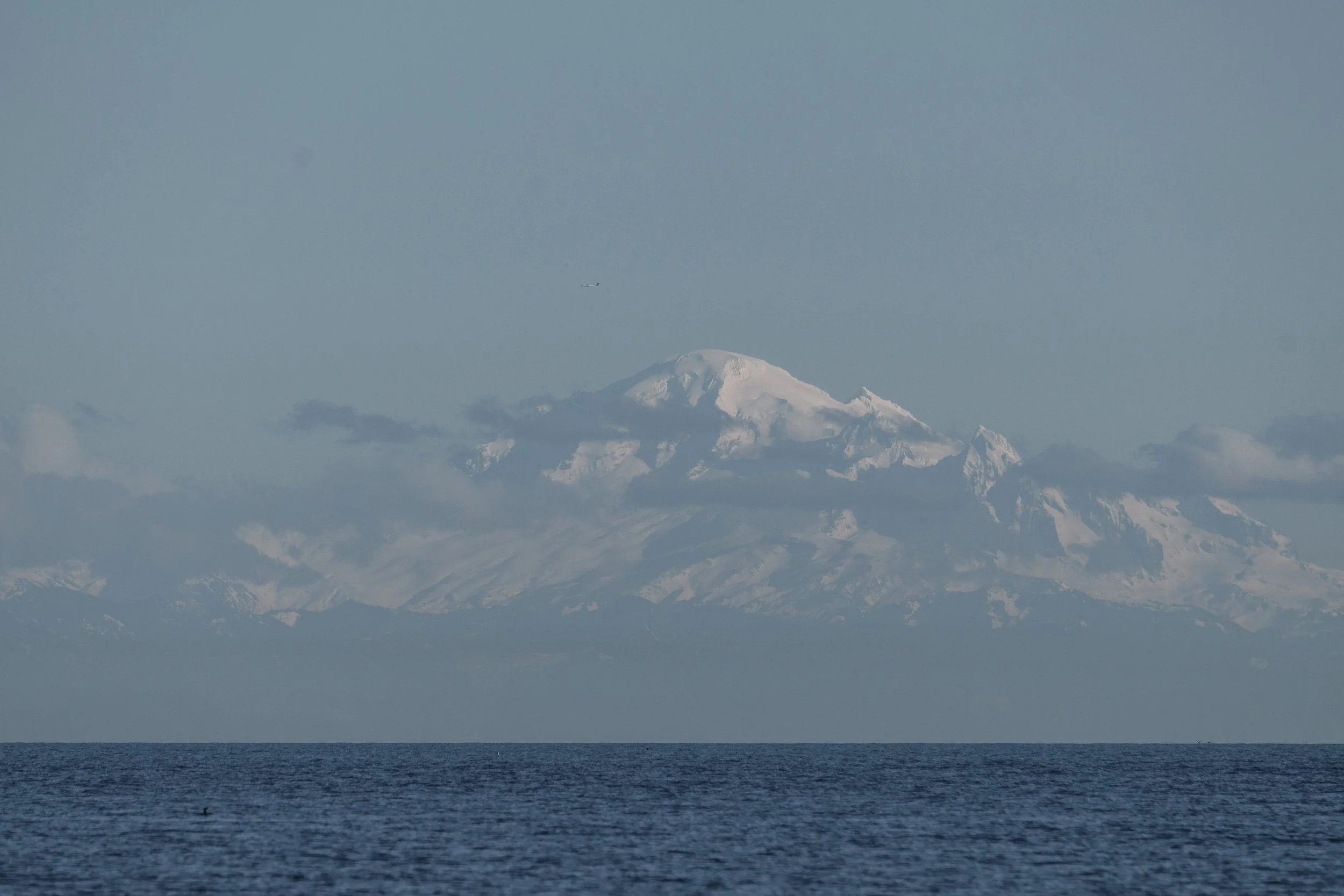
A great look at Mt. Baker in the distance!
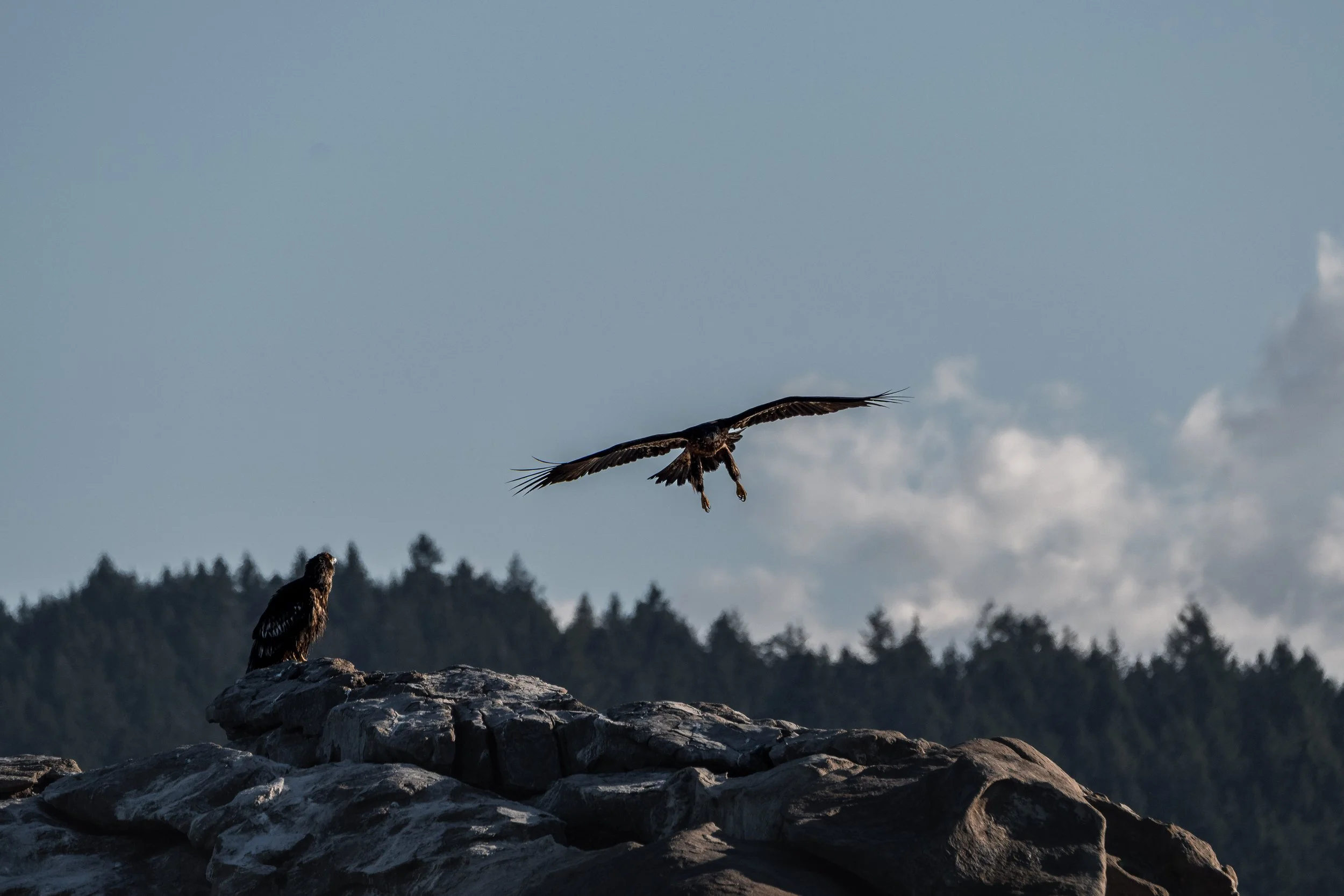
A juvenile bald eagle coming in for a landing.
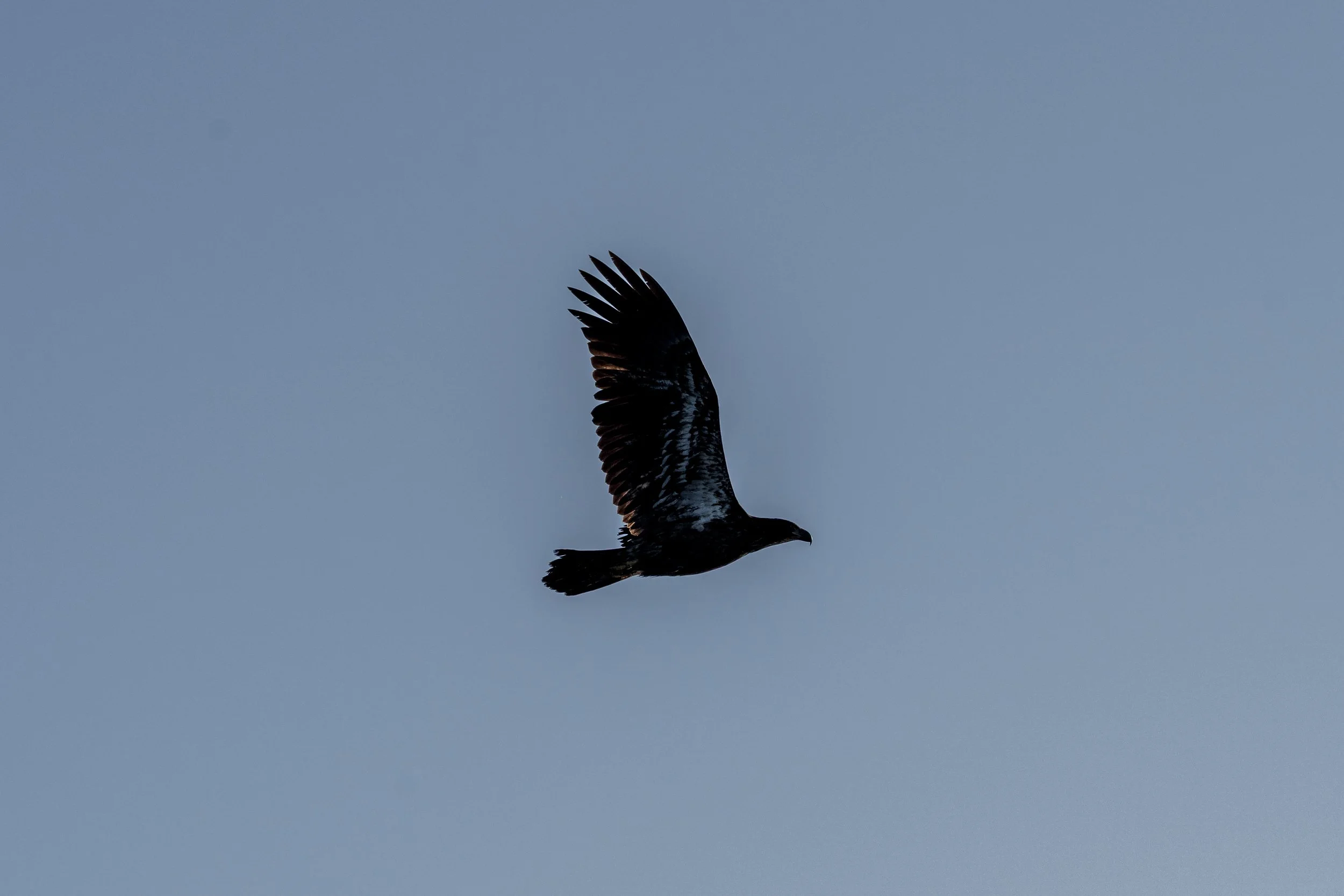
Another Bald Eagle flying overhead.
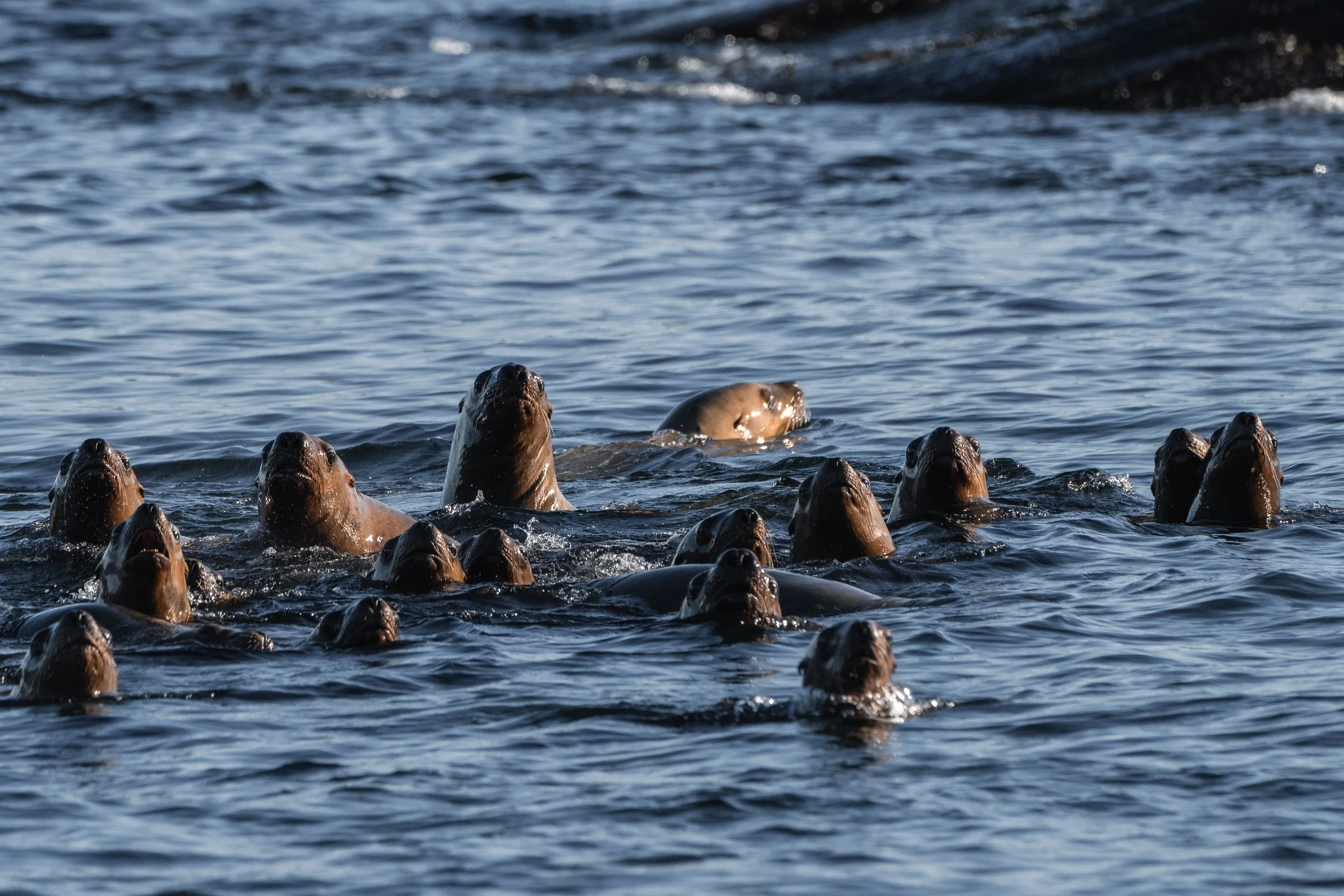
Steller Sea Lions watching us from the water.
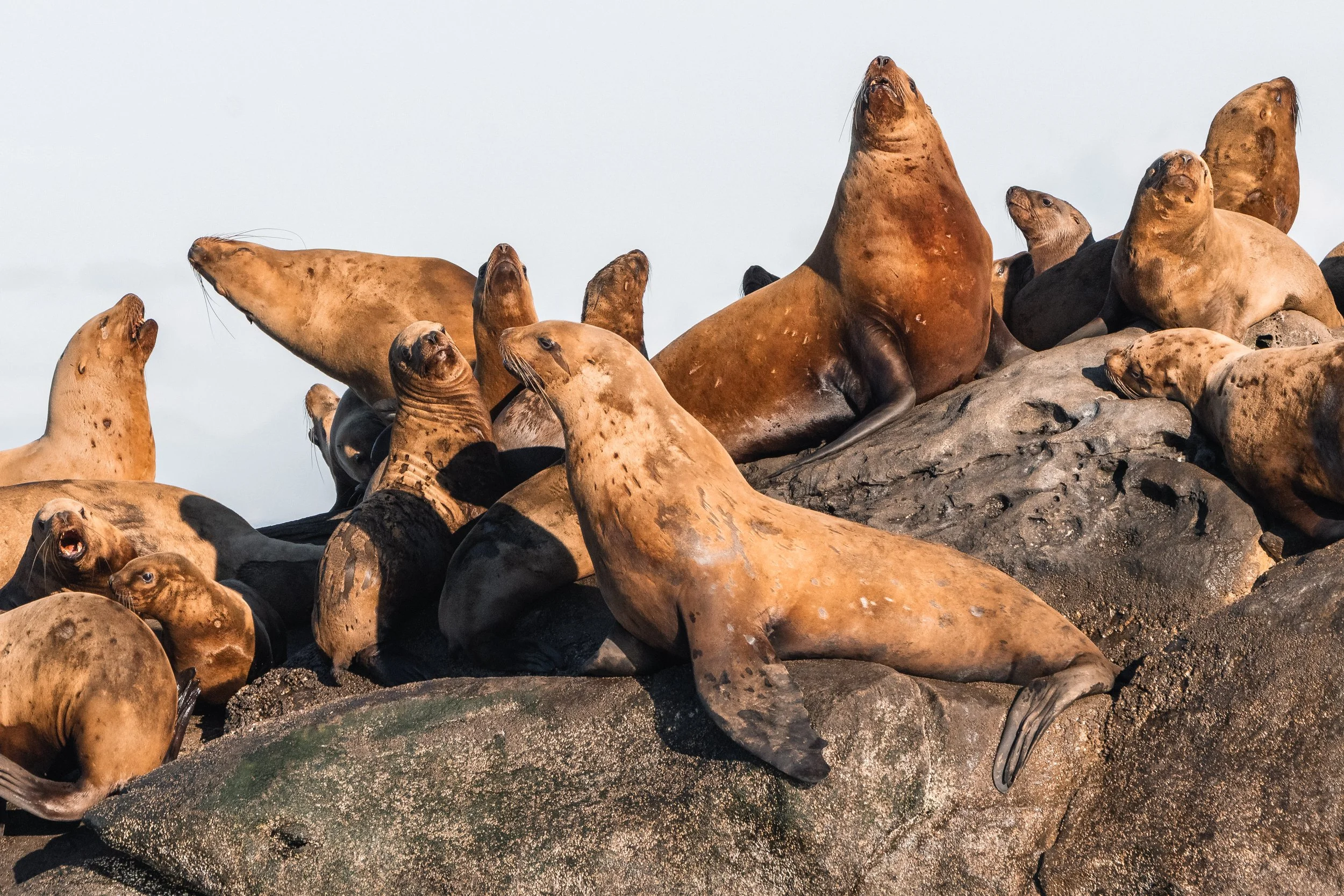
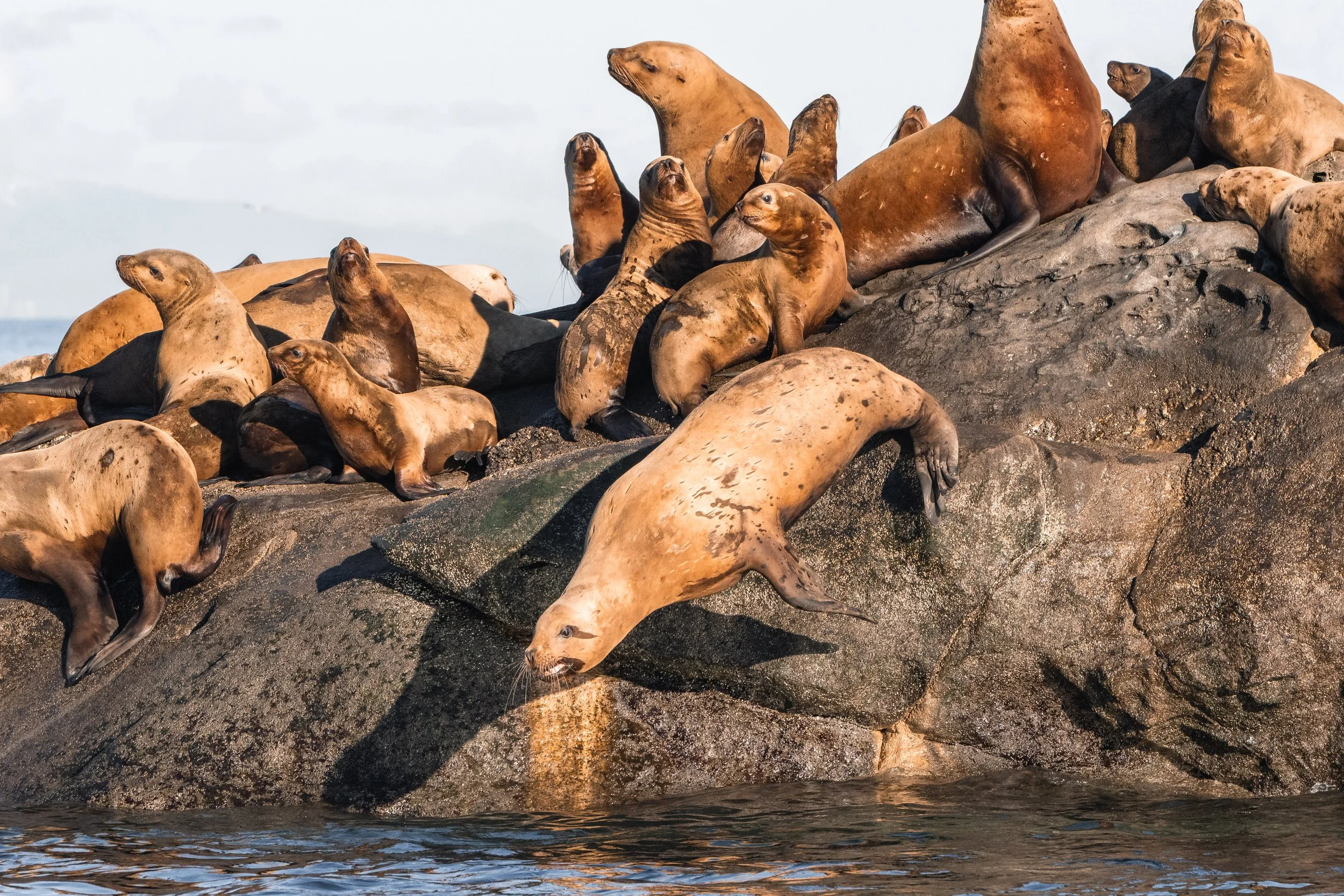
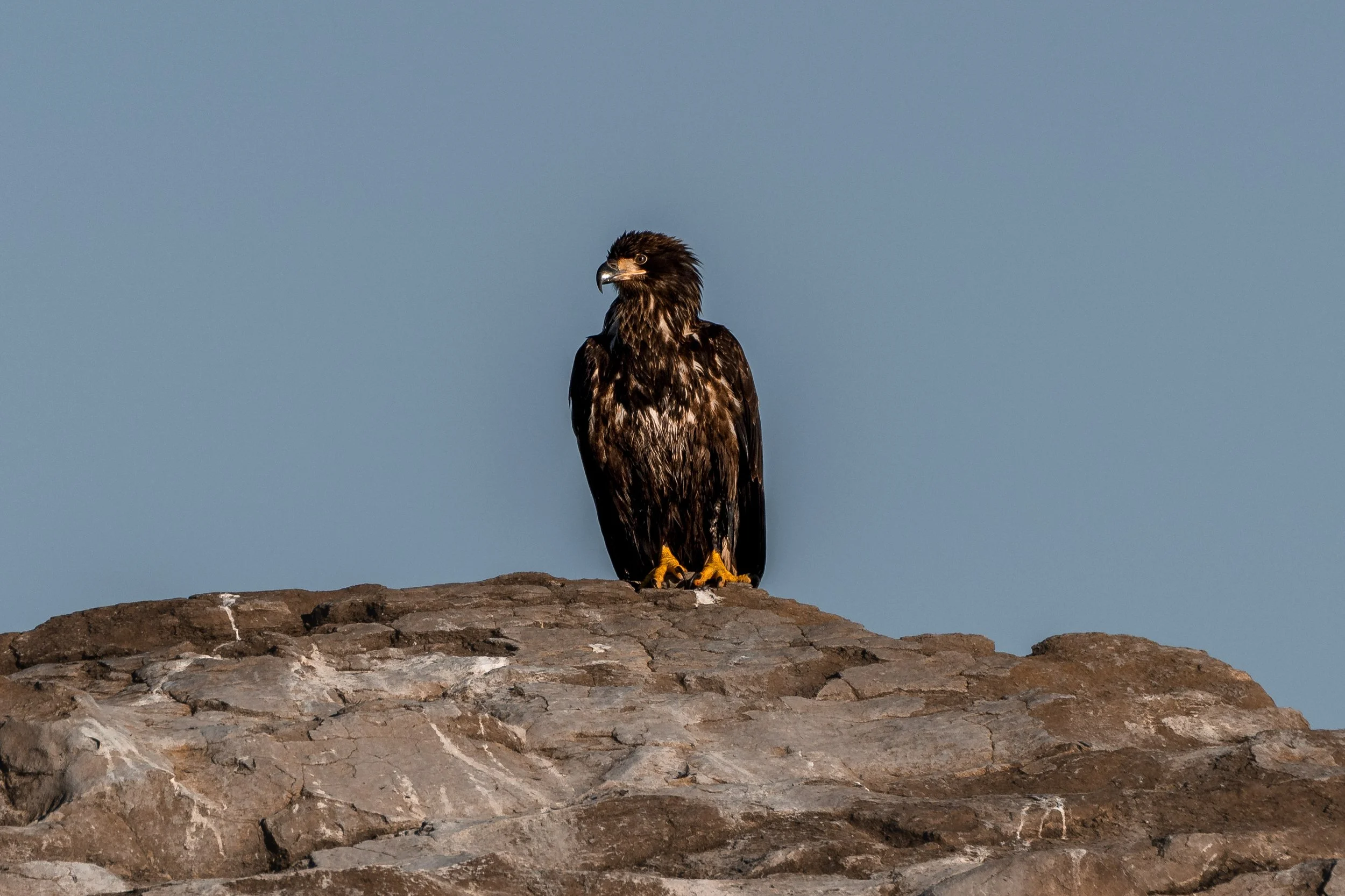
A juvenile Bald Eagle sharing the rock with the sea lions.
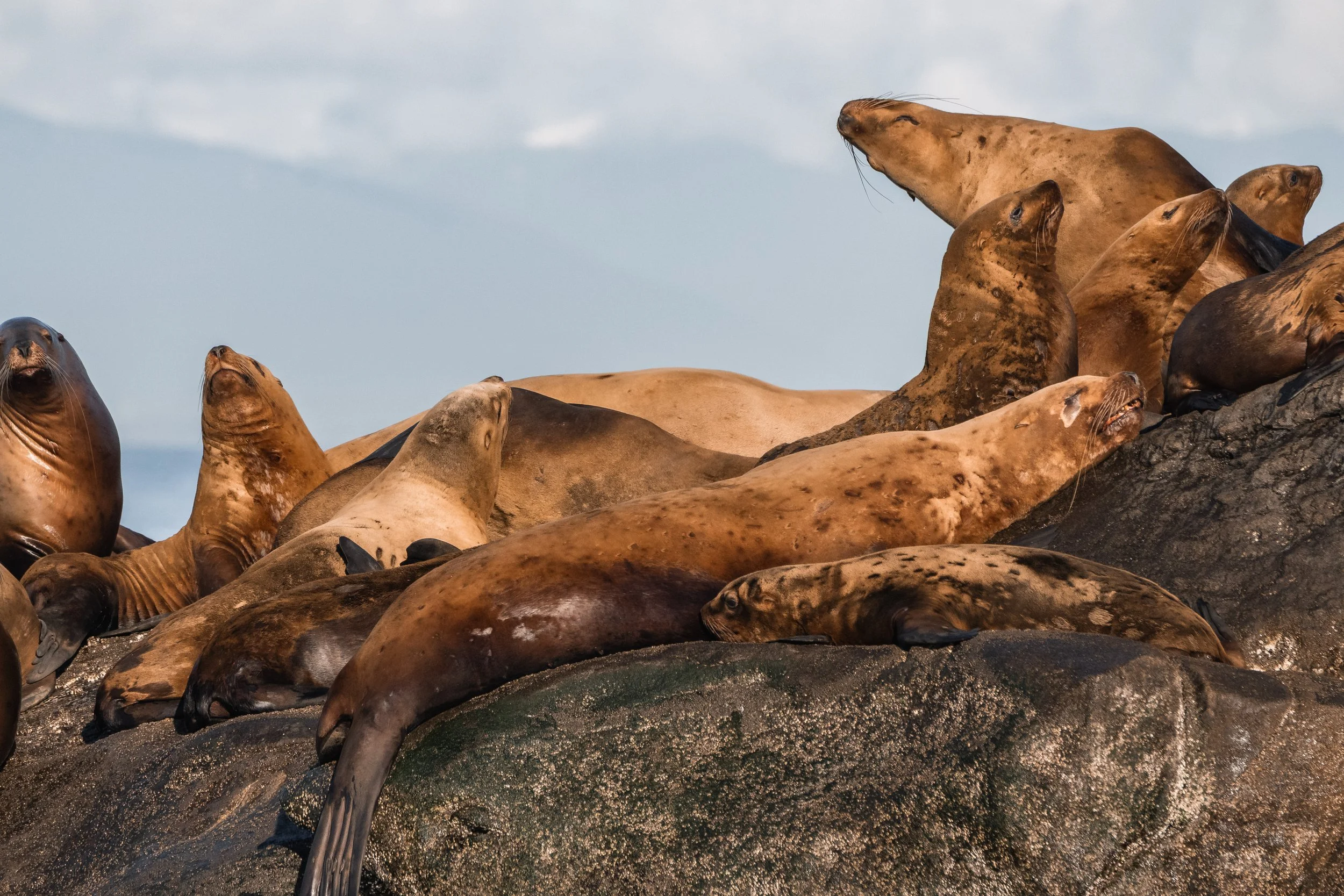
A Steller Sea Lion mom and pup.
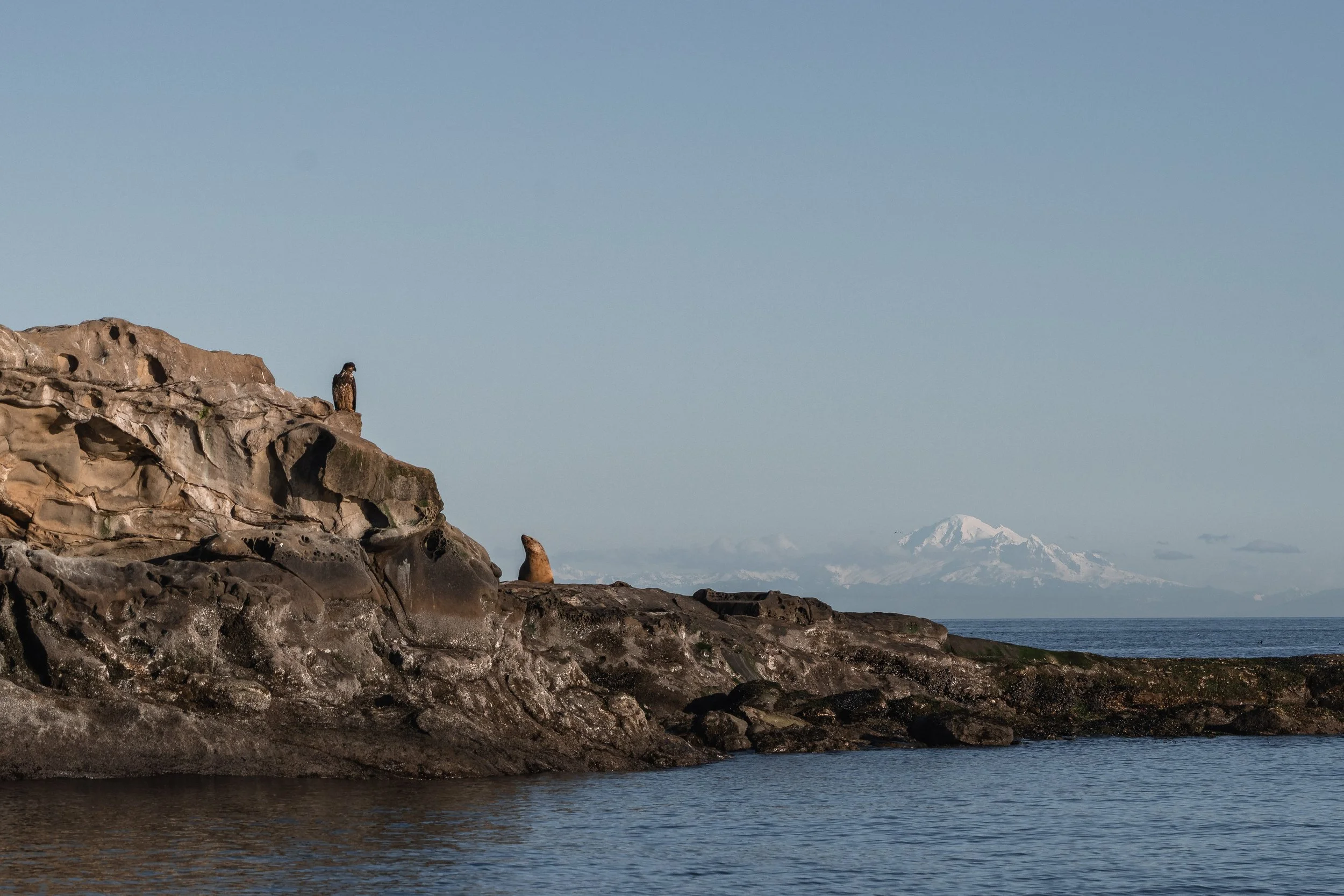
A Bald Eagle, Steller Sea Lion, and Mt. Baker all in one photo!