
February 16, 2026 - Jumping for joy - first humpback of the season!
Overcast skies, hinting at the rain and snow to come, blanketed the island and surrounding waterways as we set out on the day’s adventure. This kind of weather is classic for the West Coast, perfectly showcasing the quiet beauty of a moody Salish Sea.
Our journey took us south, weaving through the Southern Gulf Islands. After passing through Dodd Narrows - a narrow passage just outside Nanaimo - the search truly began. We scanned the waters south of the Narrows before cruising toward Gabriola Island, carefully watching the coastline for any sign of activity. With no luck there, we turned our attention farther south, travelling down Stuart Channel and navigating the passages around Salt Spring Island.
Every day on the water is a new adventure. With no trackers attached to the whales to guide us, we never know where whales might appear, so it’s essential to keep a sharp eye out - even in the most unexpected places. After rounding the southern tip of Salt Spring Island, our focus shifted north when Kula and her crew began transiting up Trincomali Channel.
It had been a quiet trip so far, but our patience paid off when we spotted something splashing on the horizon. At first, the disturbance seemed small - perhaps a sea lion porpoising? As we approached, however, it became clear that it was a humpback whale - and a very small one at that!
While humpback sightings in February aren’t unheard of (we had one on February 23rd last year), they are still considered uncommon. What made this encounter even more unusual was the whale’s tiny size. It seems highly unlikely that this individual had already migrated to the breeding grounds and back. Instead, we suspect this young whale may be skipping migration altogether this year, remaining in our nutrient-rich waters to feed on fish and krill.
Typically, humpbacks seen early in the year are thin and fatigued after their long migration. They fast while away from our feeding grounds and return hungry for substantial meals. This little whale, however, was anything but tired. It was bursting with energy - breaching repeatedly, tail-slapping, pectoral-slapping, and diving with enthusiasm. Humpbacks are among the most acrobatic of whale species, and we were treated to a spectacular display. These behaviours require enormous energy, making this lively time all the more remarkable for winter. We hope this young whale continues to find plenty of prey to stay healthy and thrive in our waters.
While we admired the action, our onboard naturalist worked on the challenging task of identification. For humpbacks, this means photographing the underside of the fluke and comparing it to regional catalogues. After capturing a clear image, a match was found: BCXUK2025#1. This designation indicates that previous cross-matching attempts with other catalogues were unsuccessful, suggesting this may be a newly documented whale. Given its small size, it could potentially be a calf that separated from its mother earlier than expected. While we can only speculate, we hope both this young whale and its mother are doing well.
The humpback wasn’t the only wildlife making an appearance, though! Hundreds of birds - mostly cormorants and gulls - rested on the water’s surface, drifting with the current. A raft of sea lions sped past us, fin-to-fin, briefly lifting their heads to inspect us before continuing on their way.
Eventually, it was time to leave our energetic humpback behind. We travelled north through Porlier Pass toward the northern tip of Galiano Island. This area has been bustling with sea lions for months. Haul-out sites - where pinnipeds rest and escape the cold depths - are often located near narrow passages like Porlier Pass, where tidal currents concentrate fish for easy hunting. During the winter, these resting spots are especially important, allowing sea lions to huddle together and conserve body heat until warmer days return.
After one last visit with the sea lions, we began our journey home. Crossing back through Dodd Narrows, we returned to Nanaimo, reflecting on a day that began quietly and unfolded into an unforgettable winter encounter - perfectly capped off with thoughts of a warm cup of hot cocoa once we were back on land!
Please enjoy these photos taken by marine naturalist Vanessa Vereschahen!
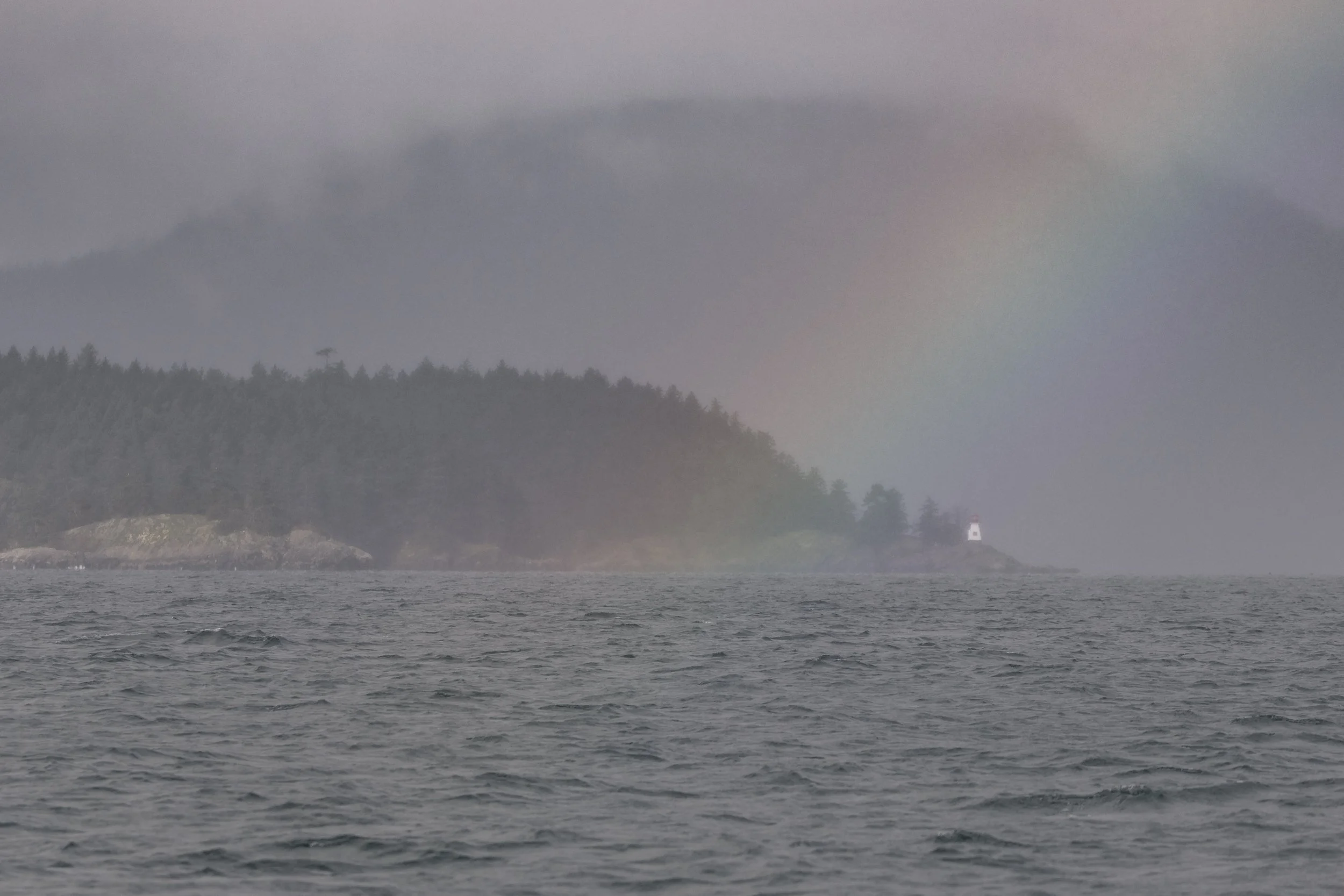
A beautiful rainbow spotted as we transited about.
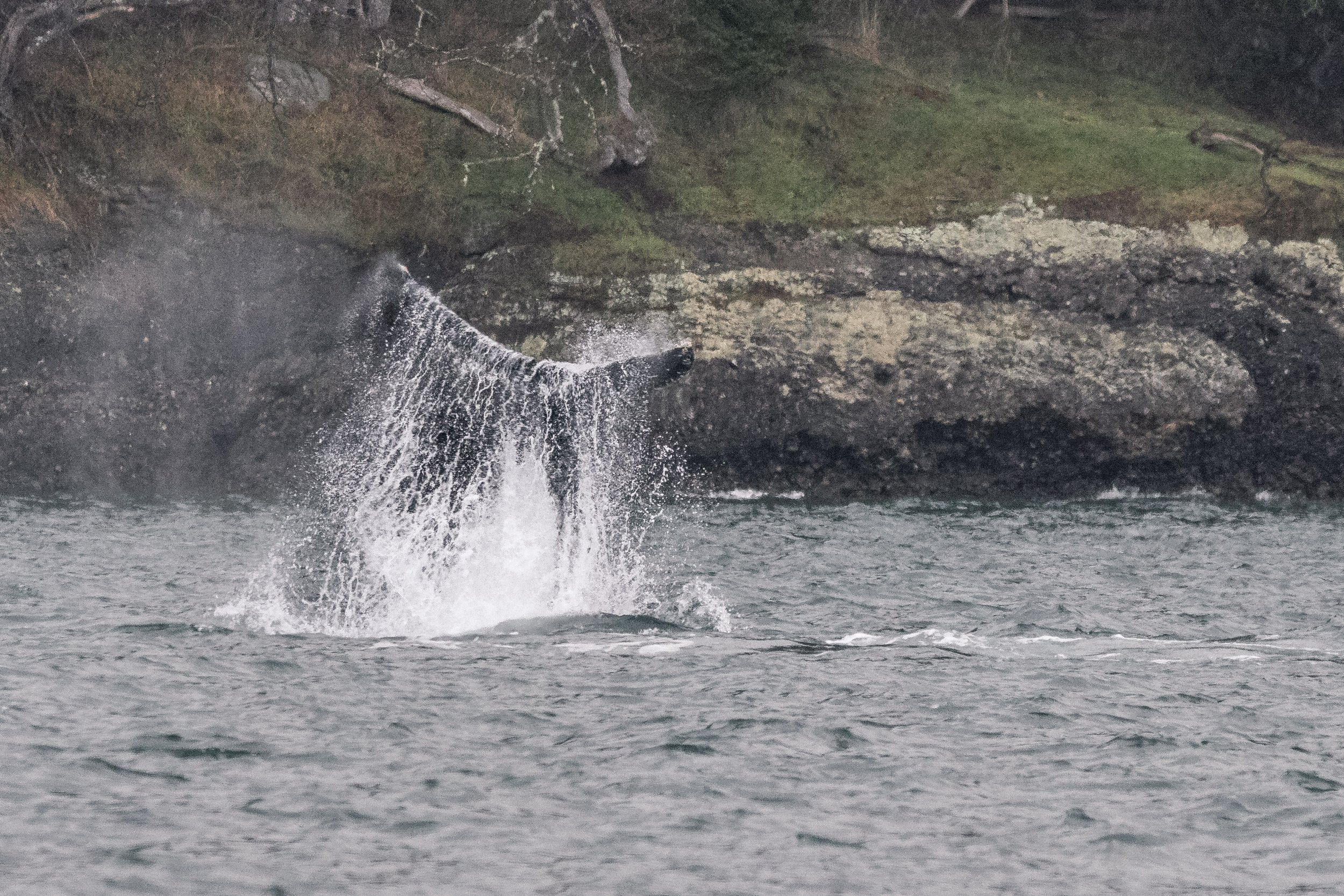
BCXuk2025#1 tail slapping away.
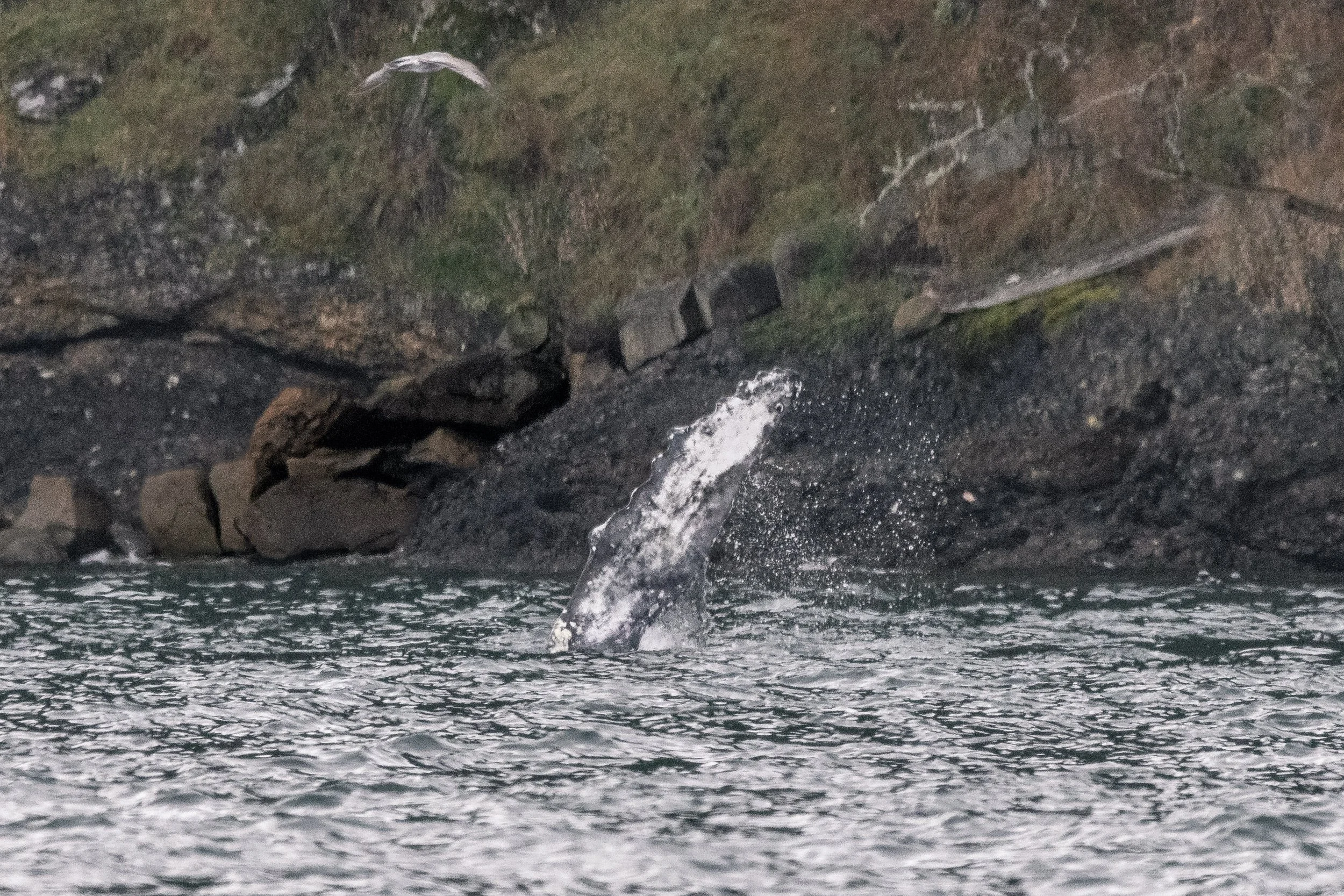
A pec wave from BCXuk2025#1 - what a beautiful fin!
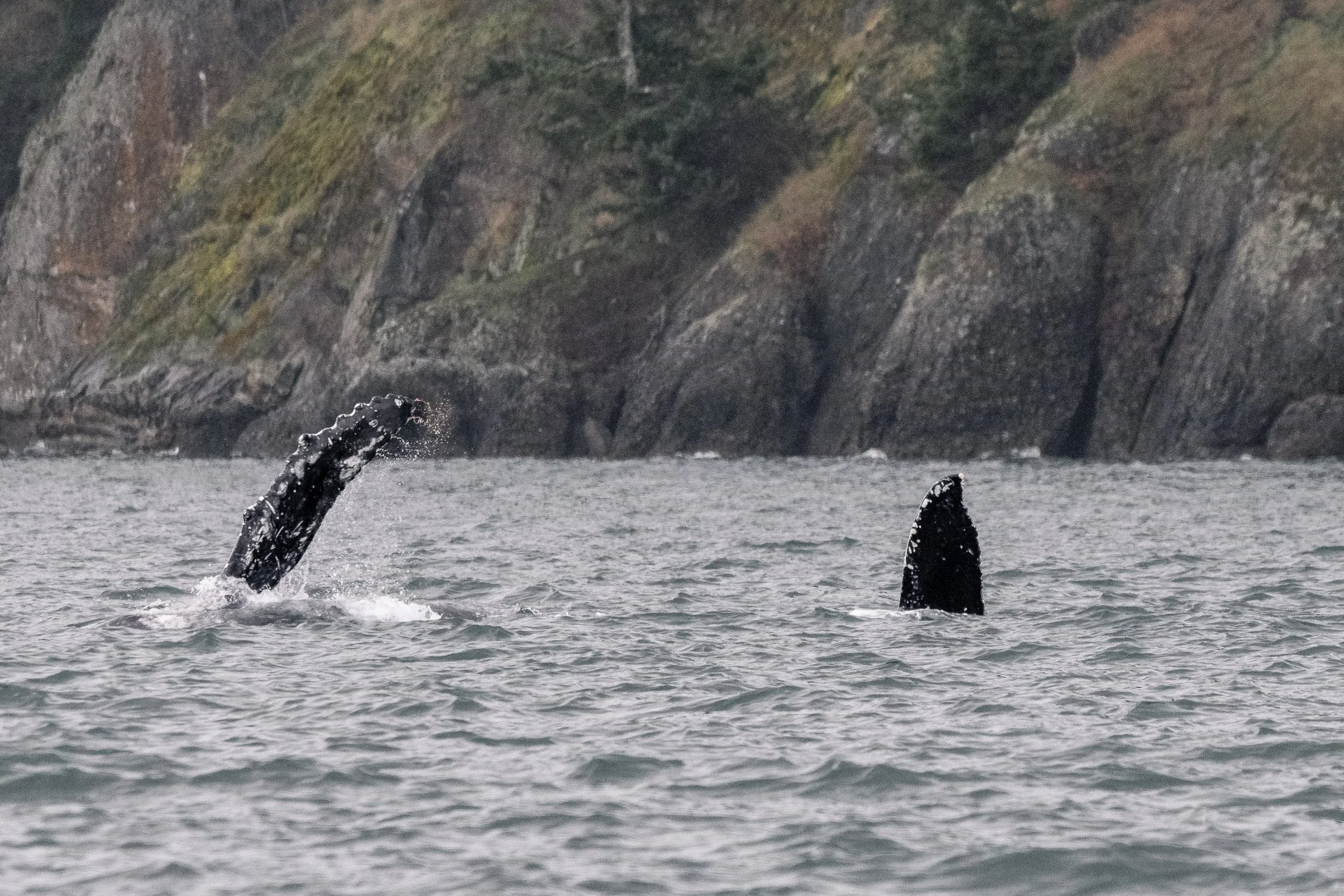
BCXuk2025#1 travelling on their side, one pec up, and half a fluke visible.
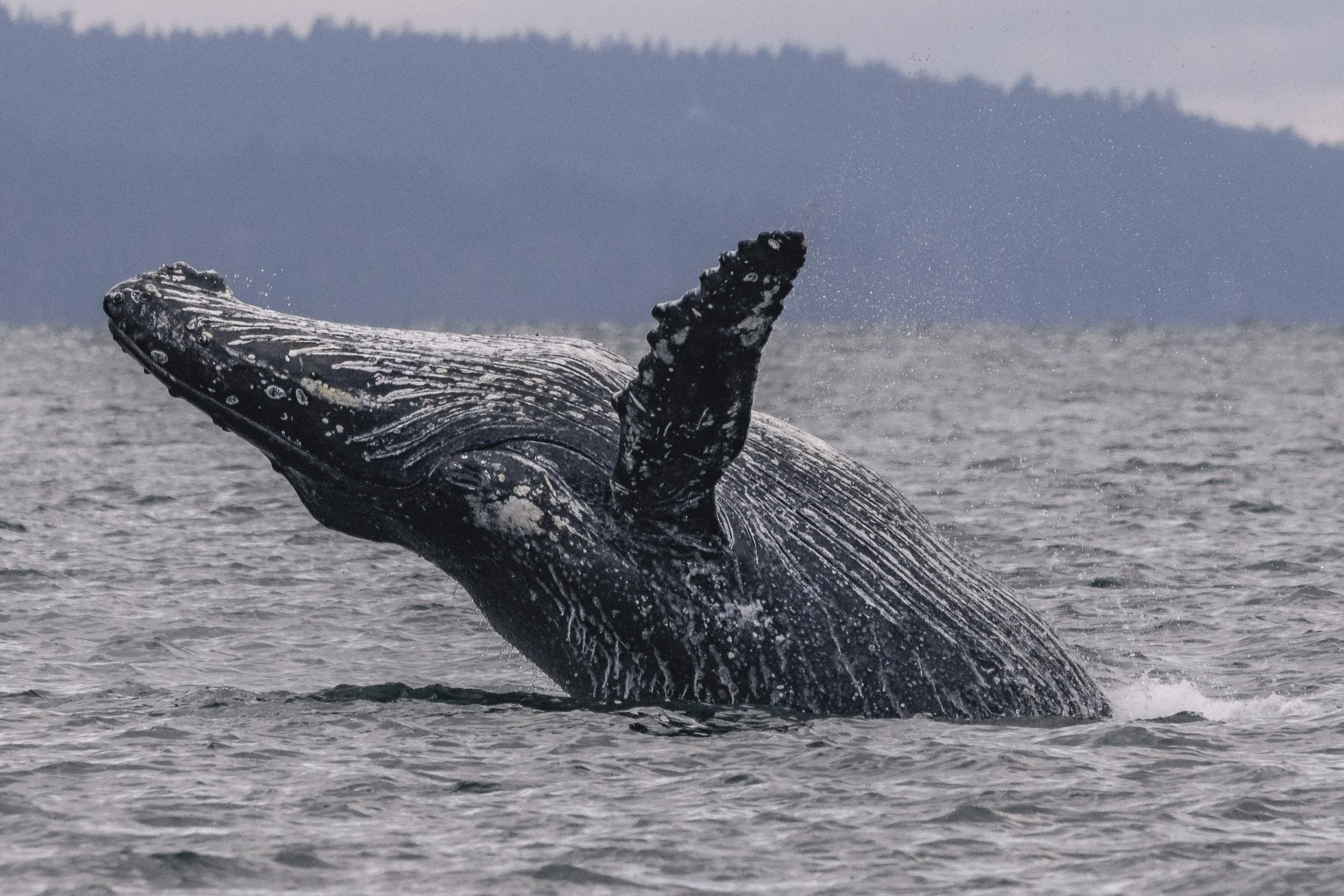
BCXuk2025#1 back diving.
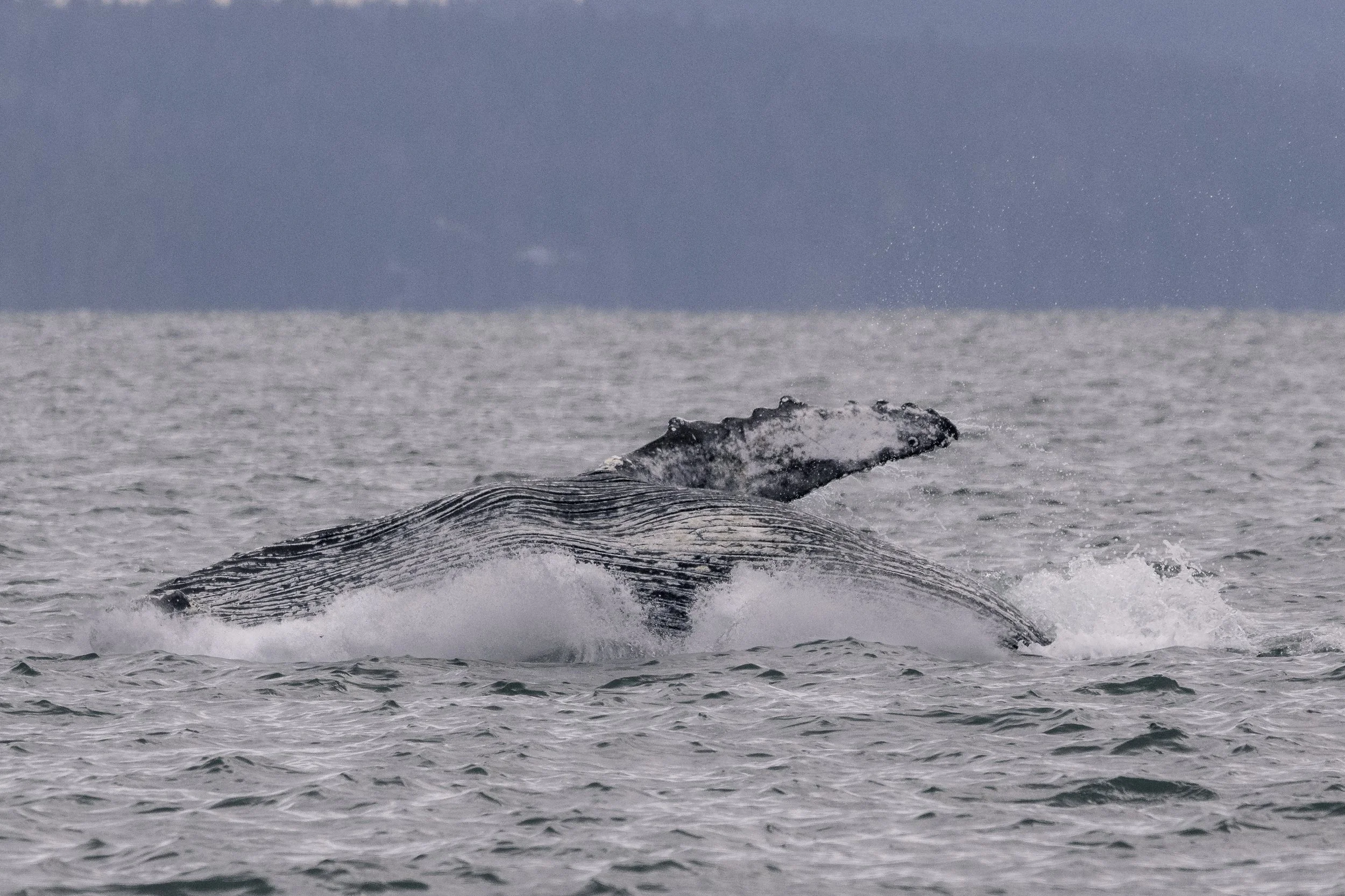
Can you see the fish on this humpback’s pectoral fin?
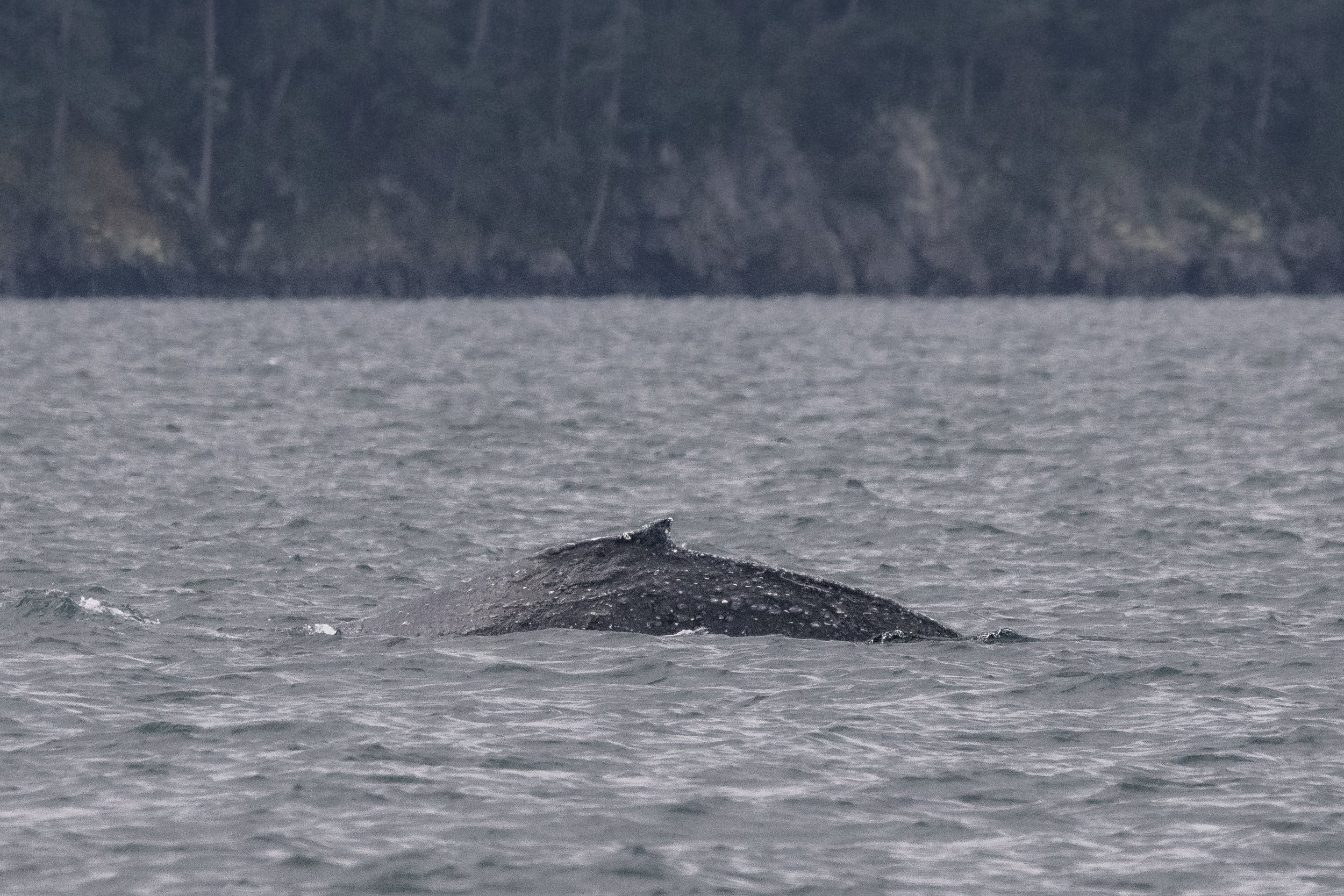
BCXuk2025#1’s dorsal fin and body is very lumpy and bumpy, with all sorts of wild textures visible along their sides.
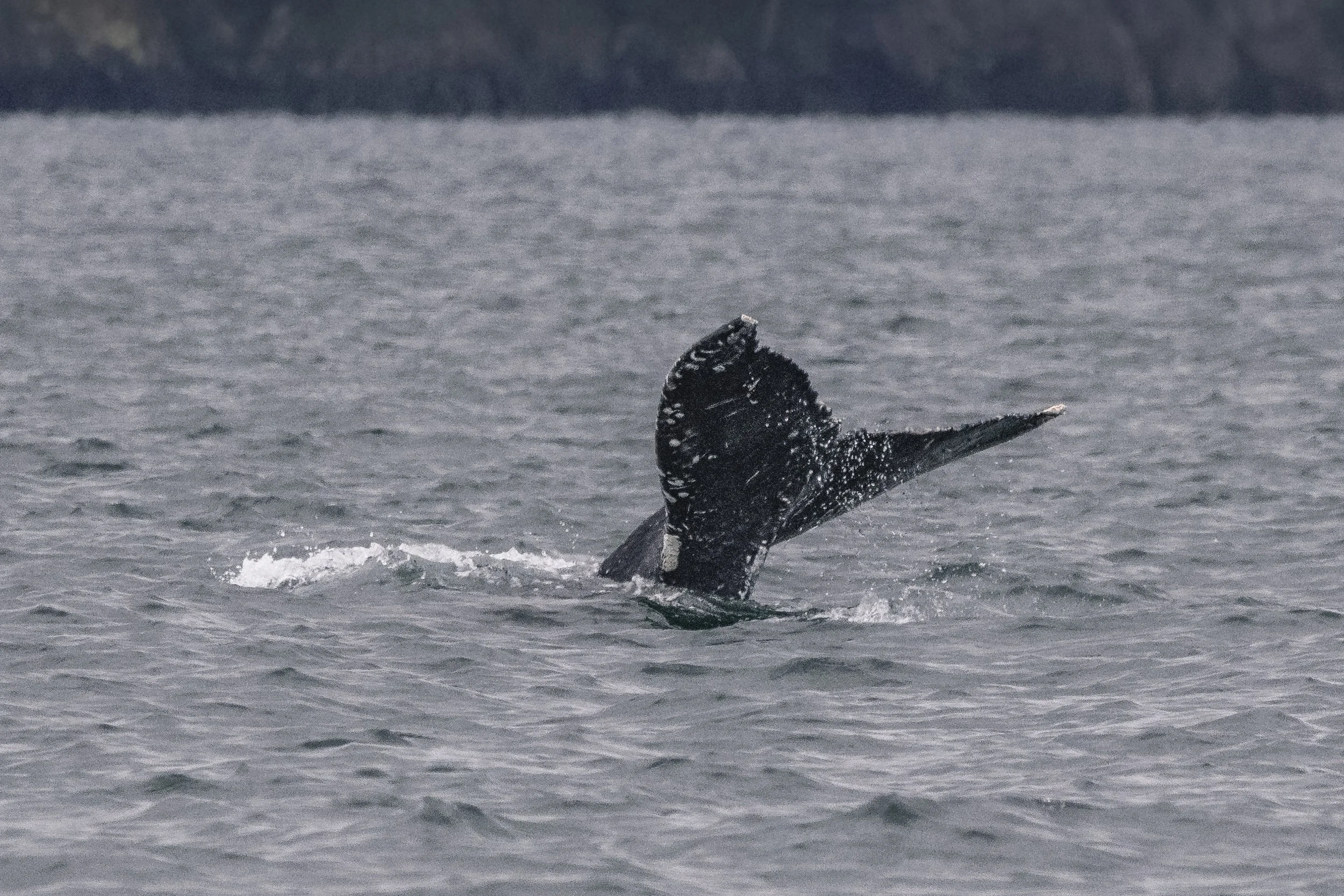
BCXuk2025#1 diving, flukes up.
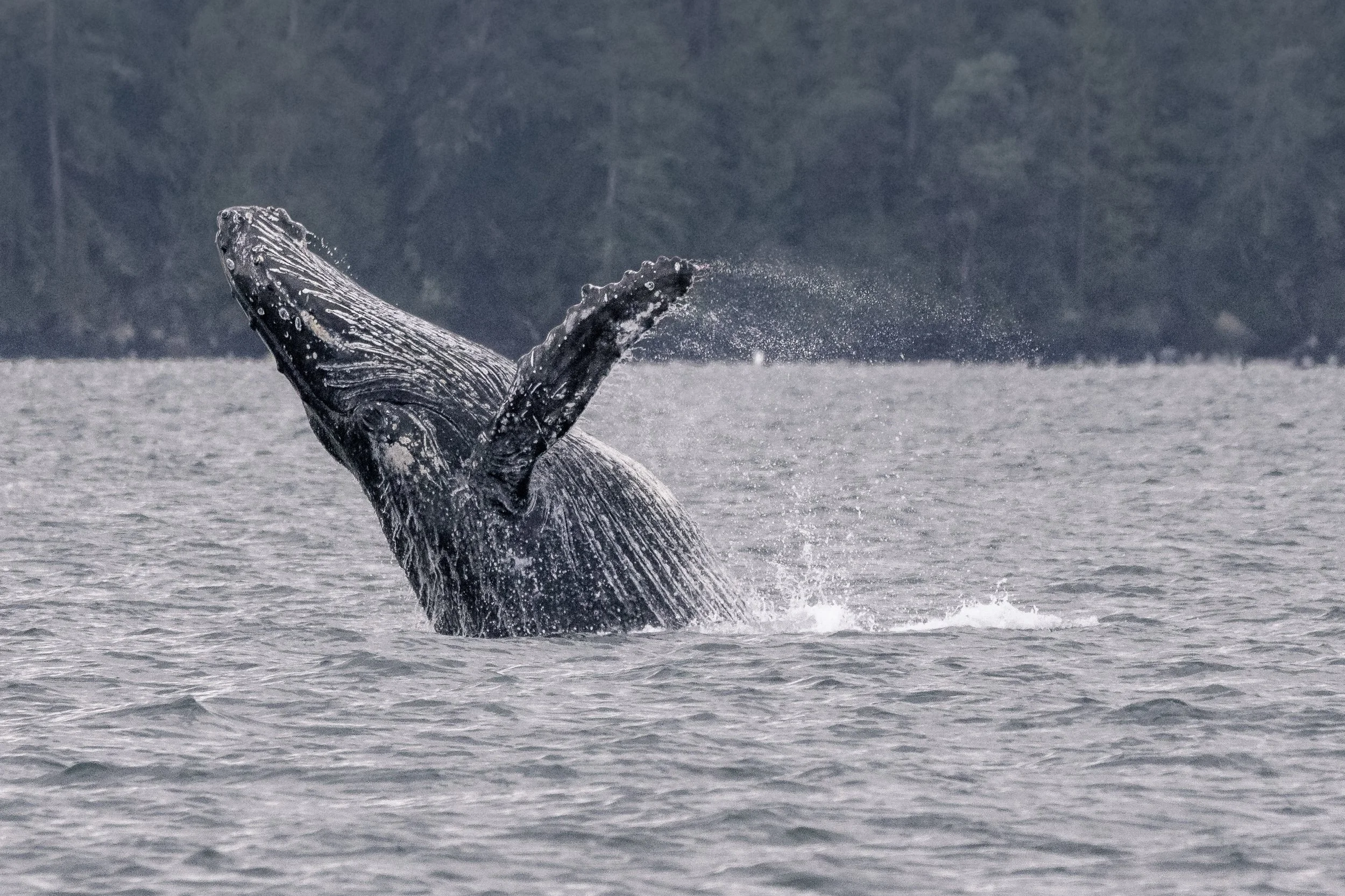
A beautiful dive from BCXuk2025#1 as water cascades off their pectoral fin.
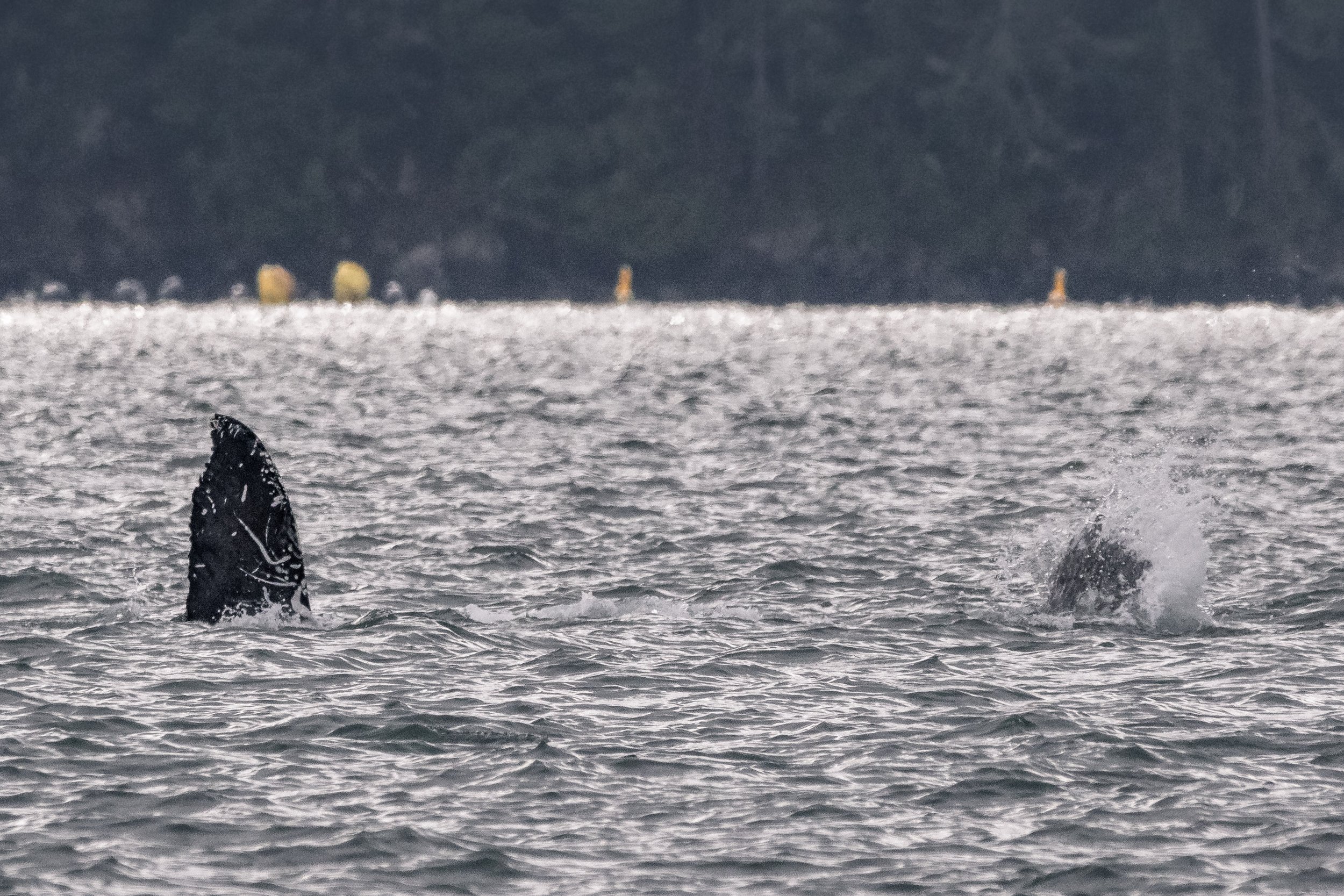
Half of BCXuk2025#1’s fluke visible above the water.
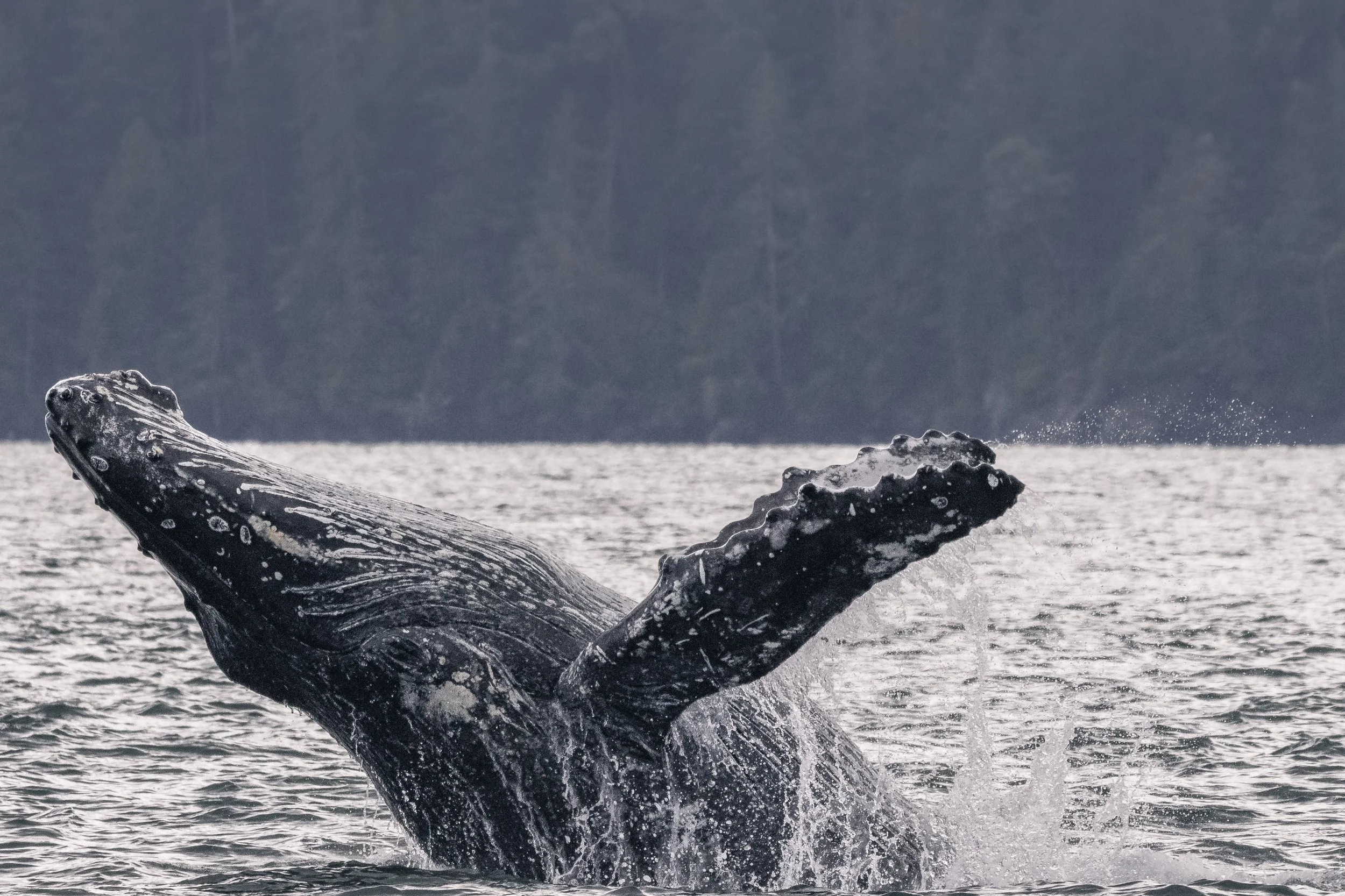
Backstroke!
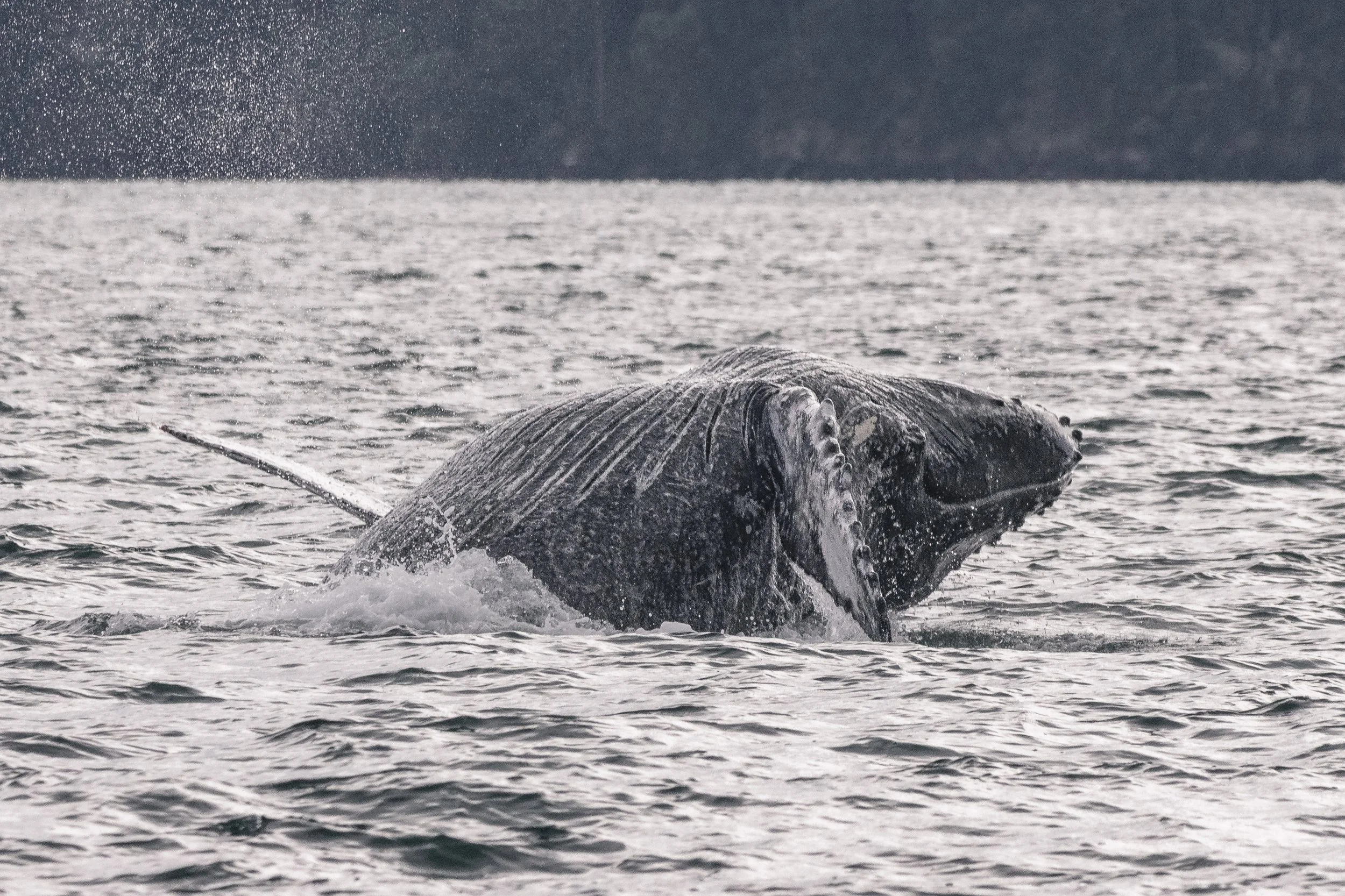
Beauty and grace!
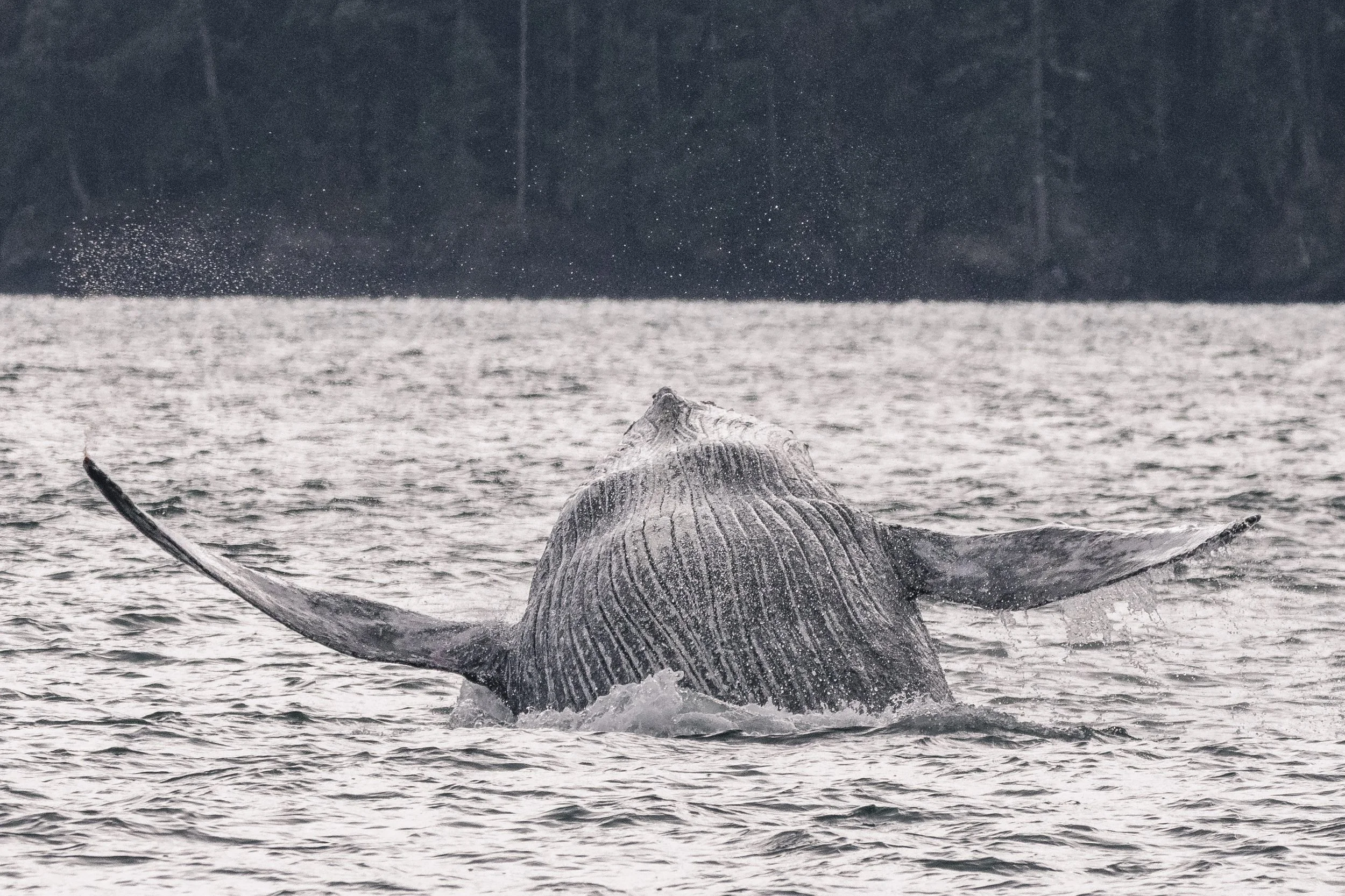
BCXuk2025#1 belly up - ventral pleats visible.
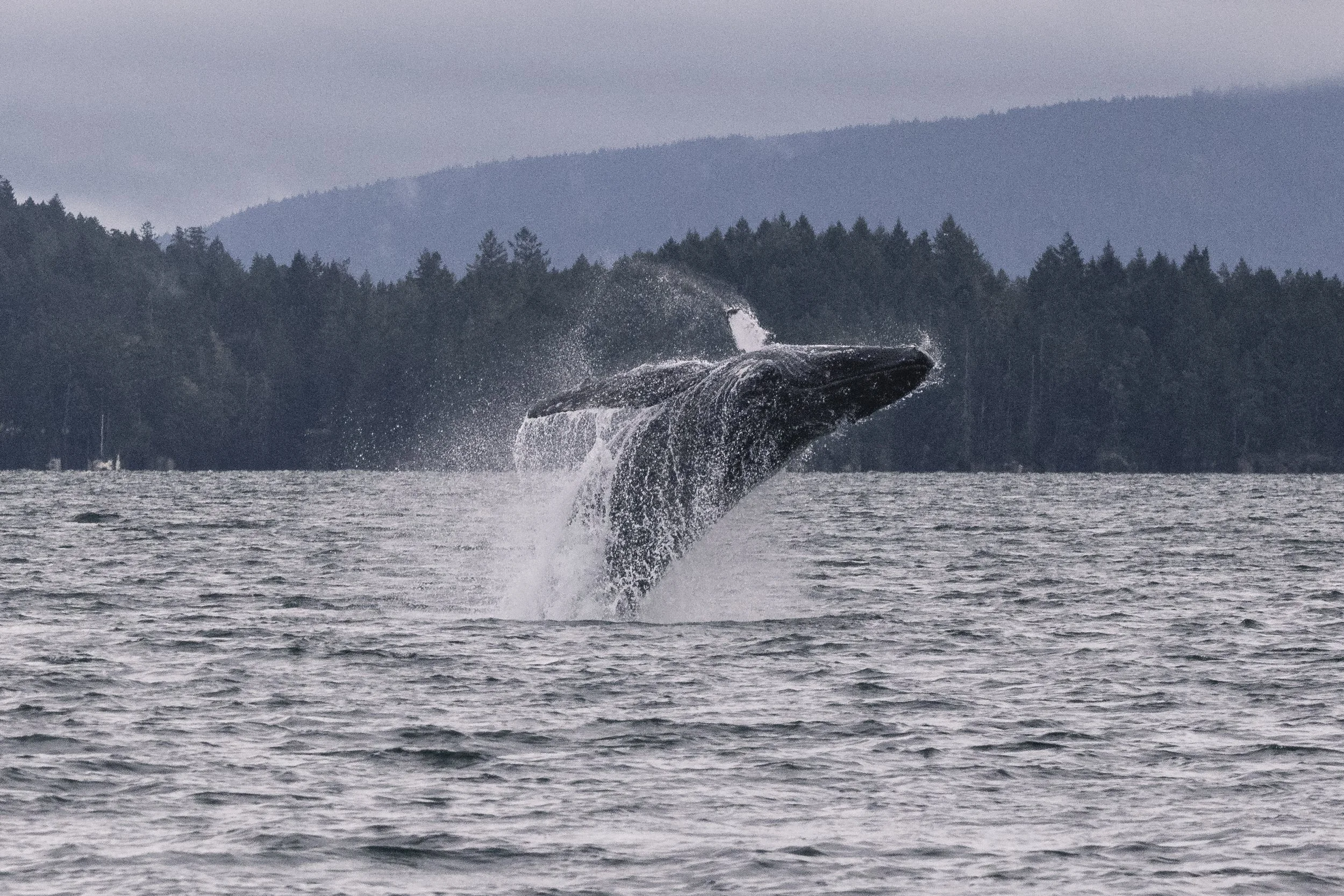
Dancing in the sky!
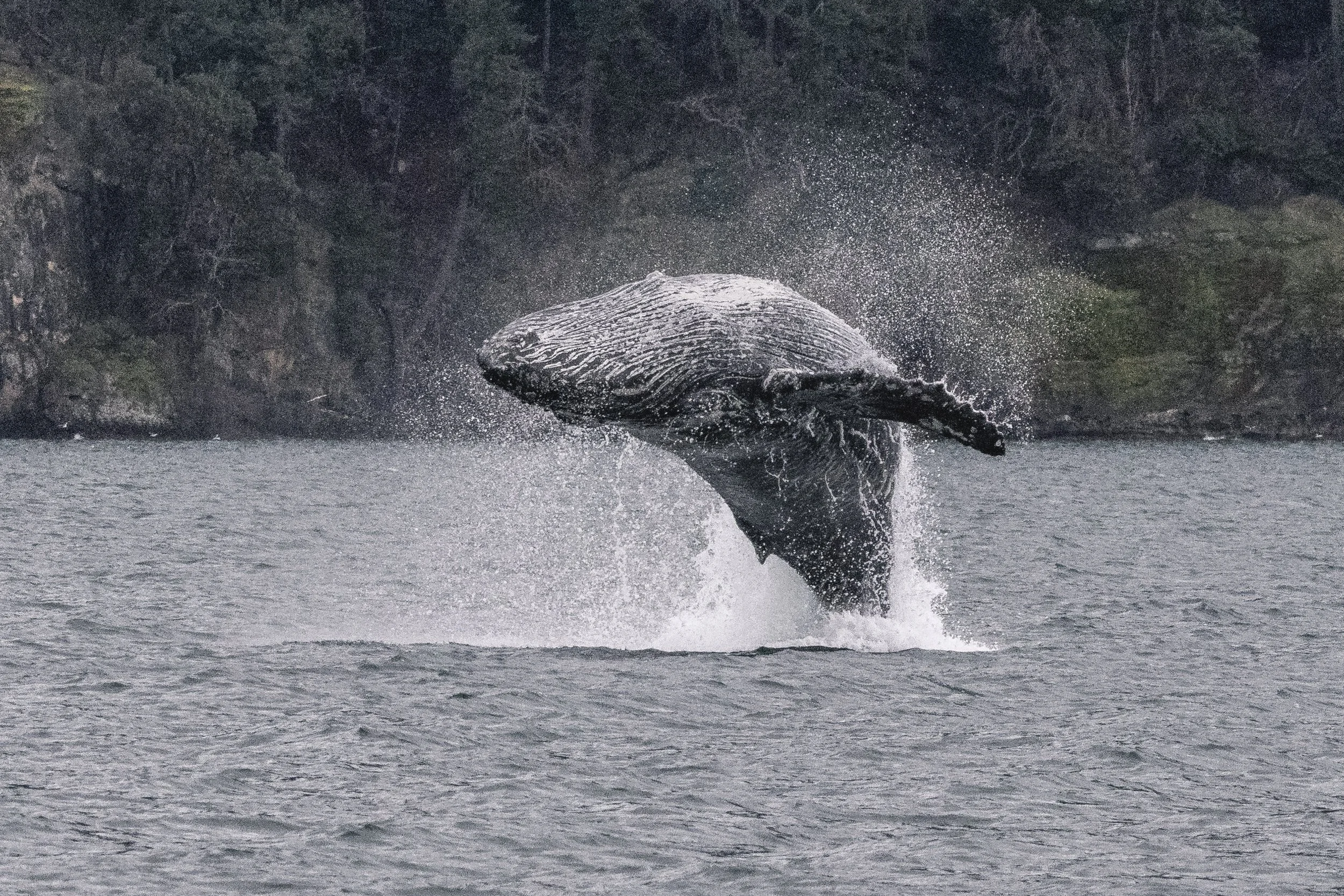
Breach for the sky!
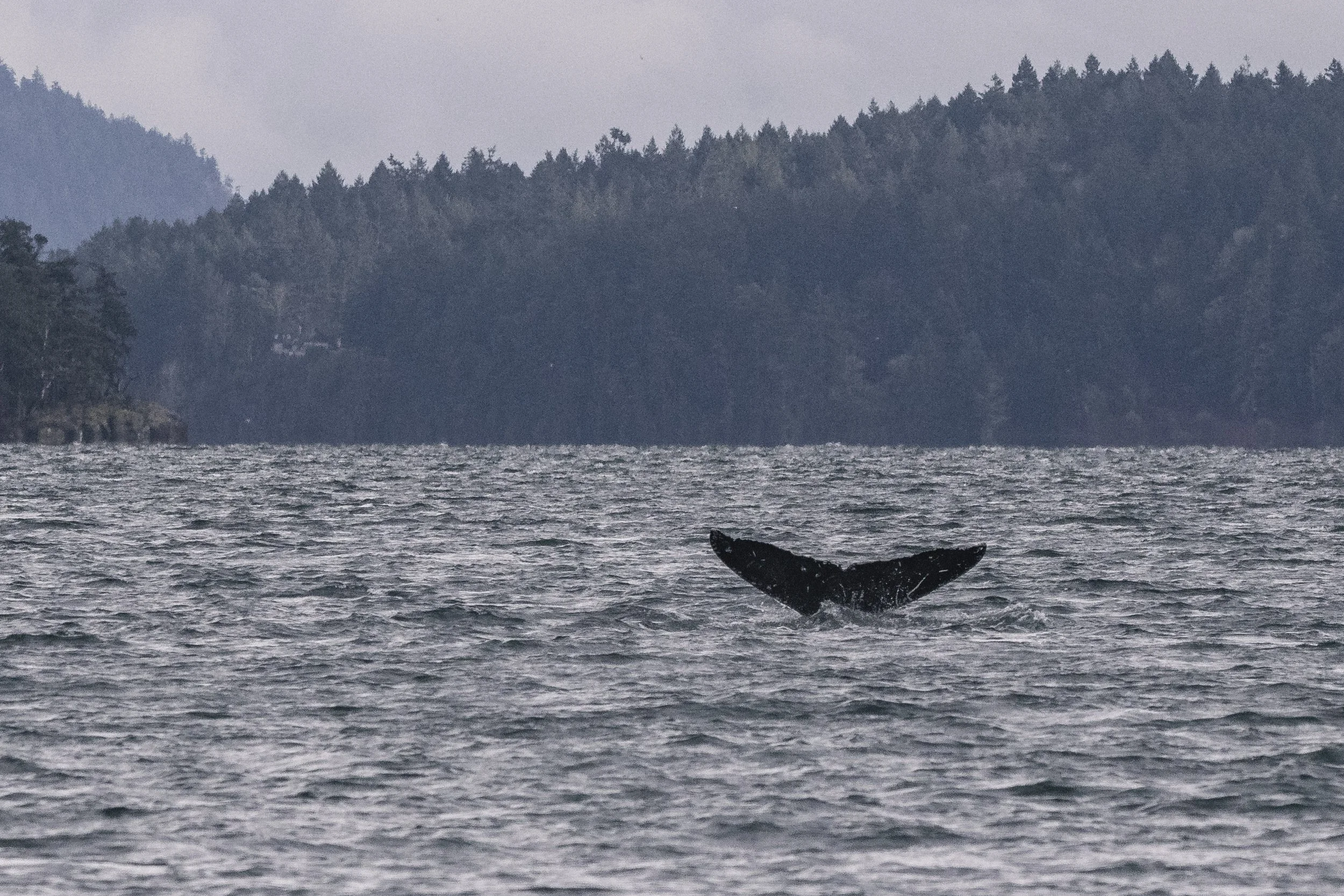
BCXuk2025#1 fluking.
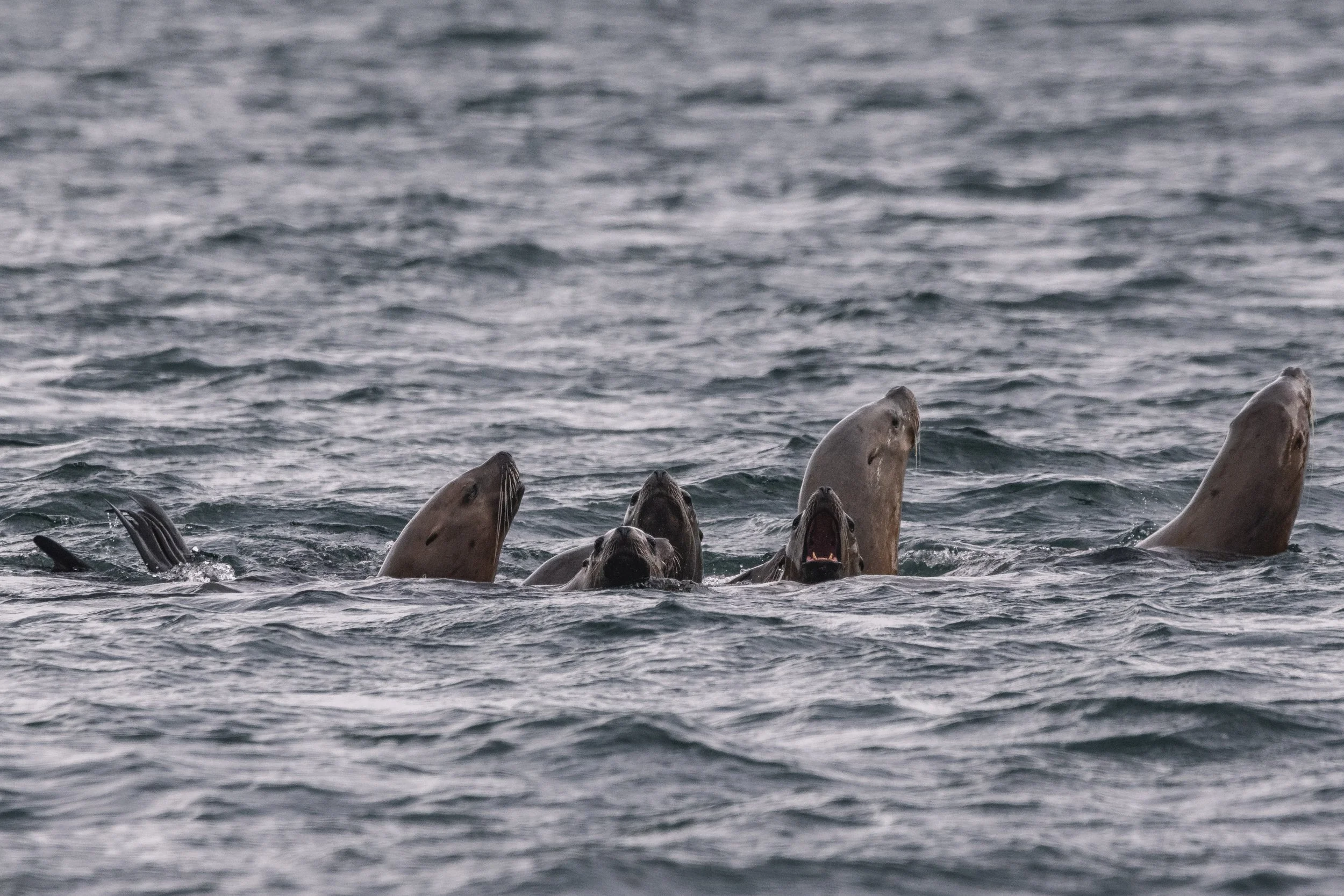
A raft of sea lions peeking at us as we continue onwards.
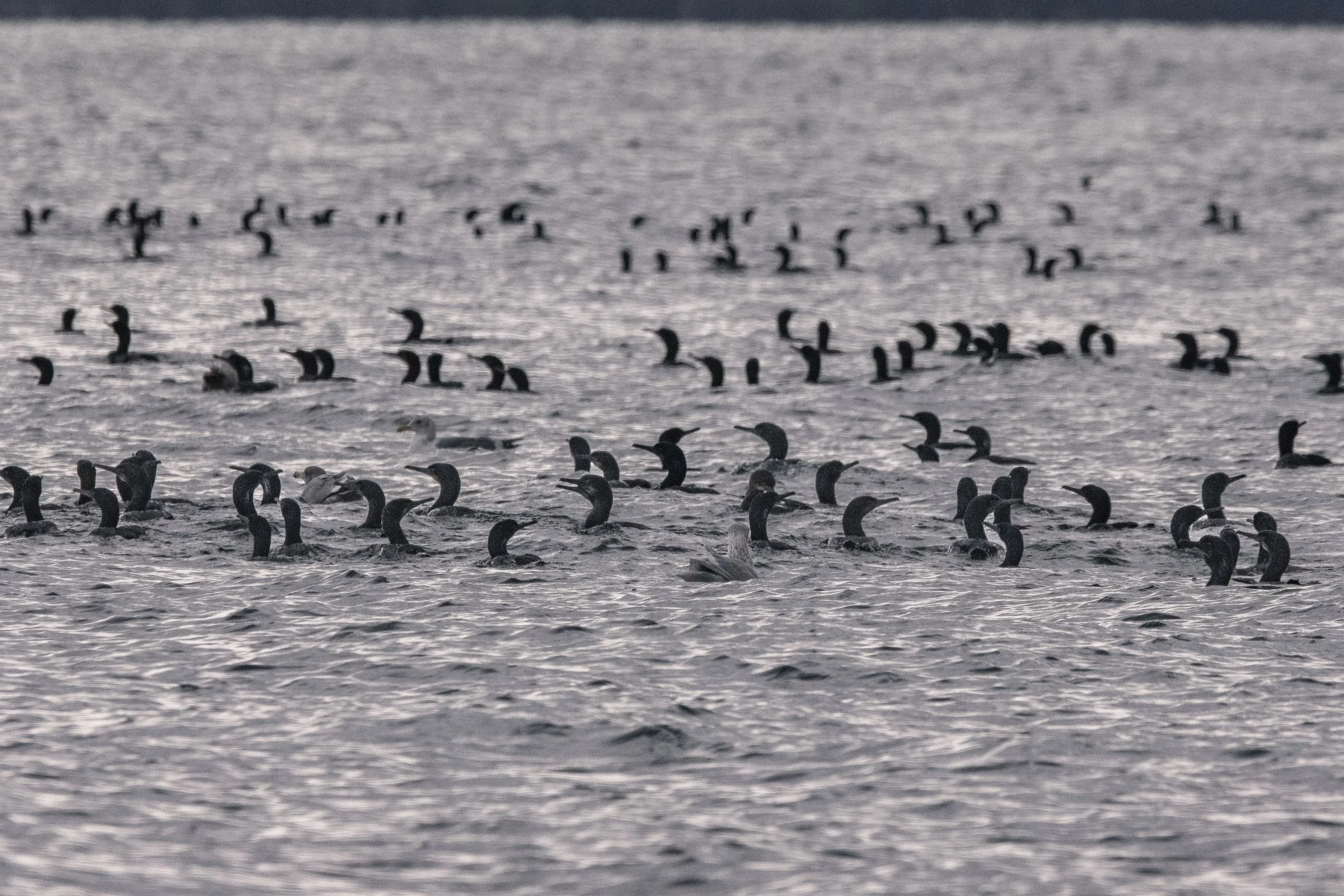
How many birds can you count in this photo?
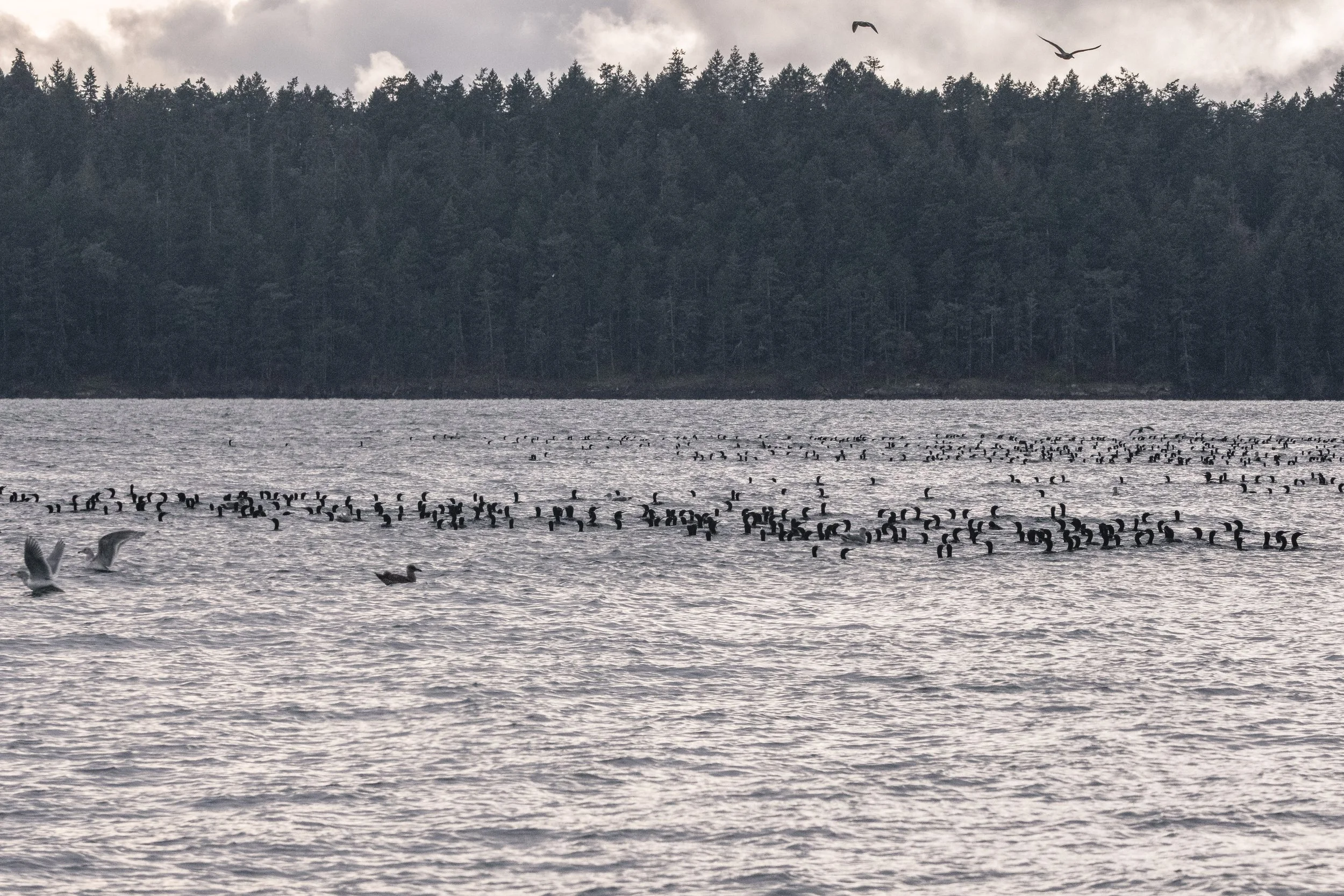
Birds for days!
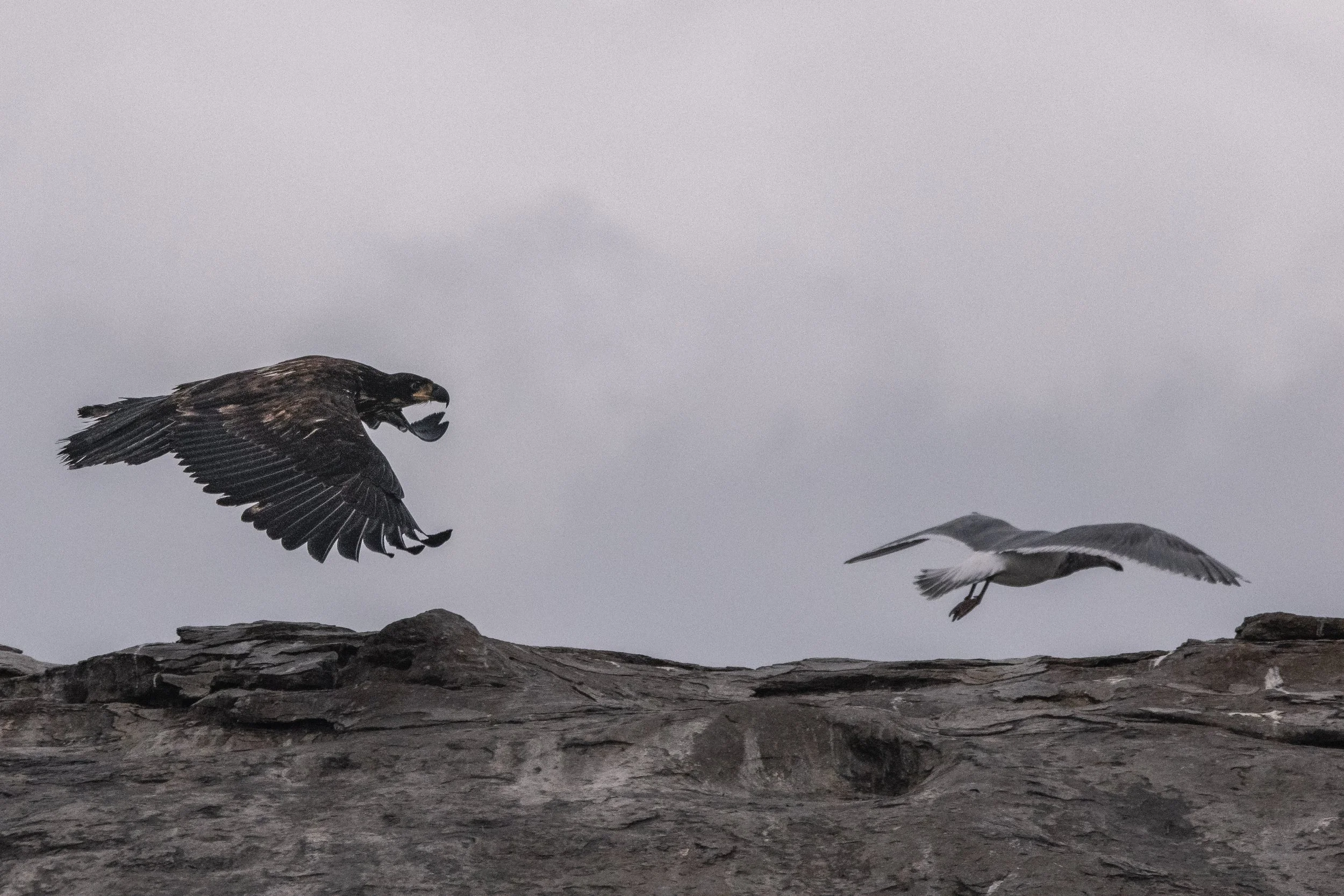
An immature Bald Eagle coming to pester a Gull.
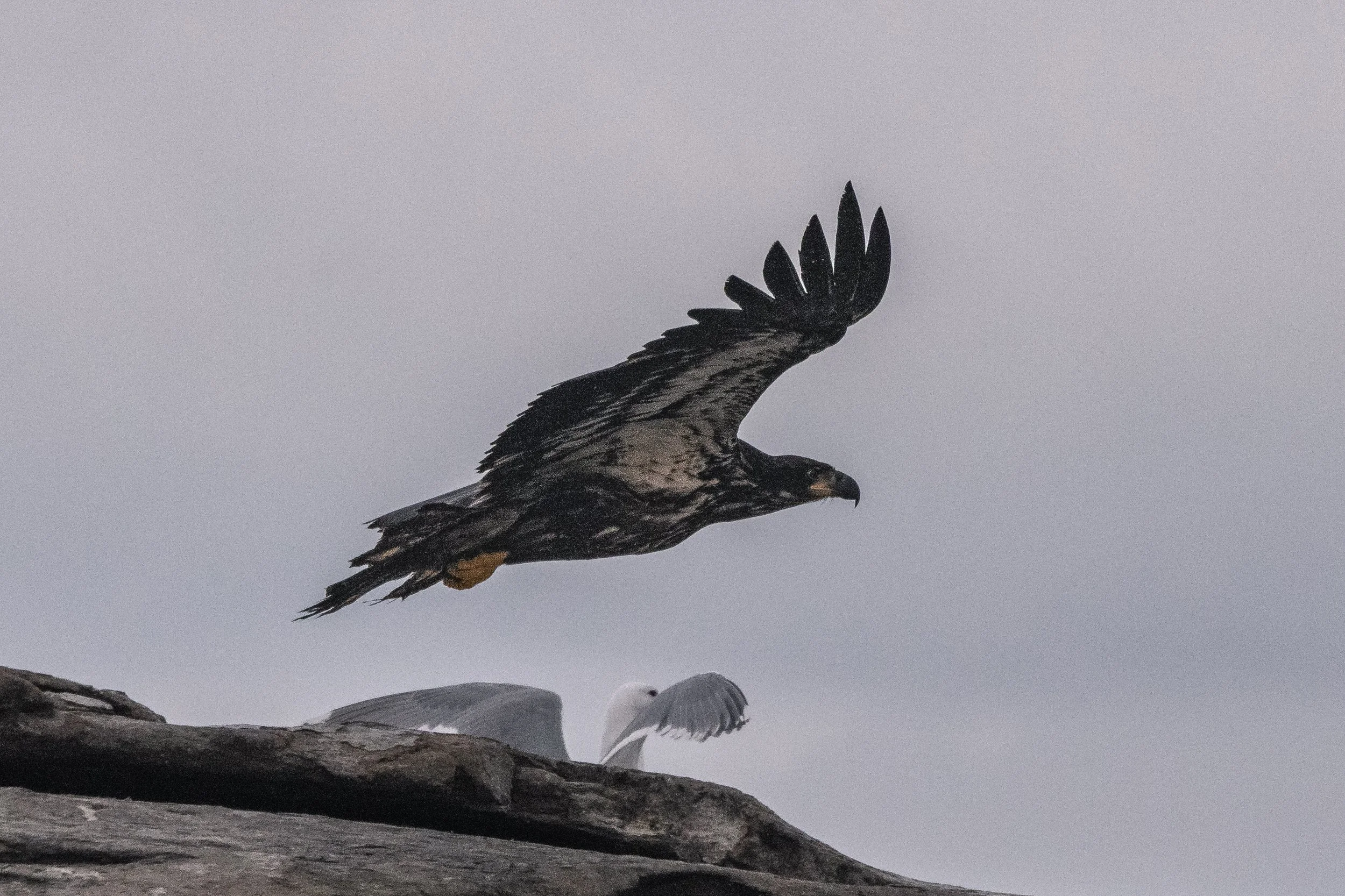
Coming in for a landing!
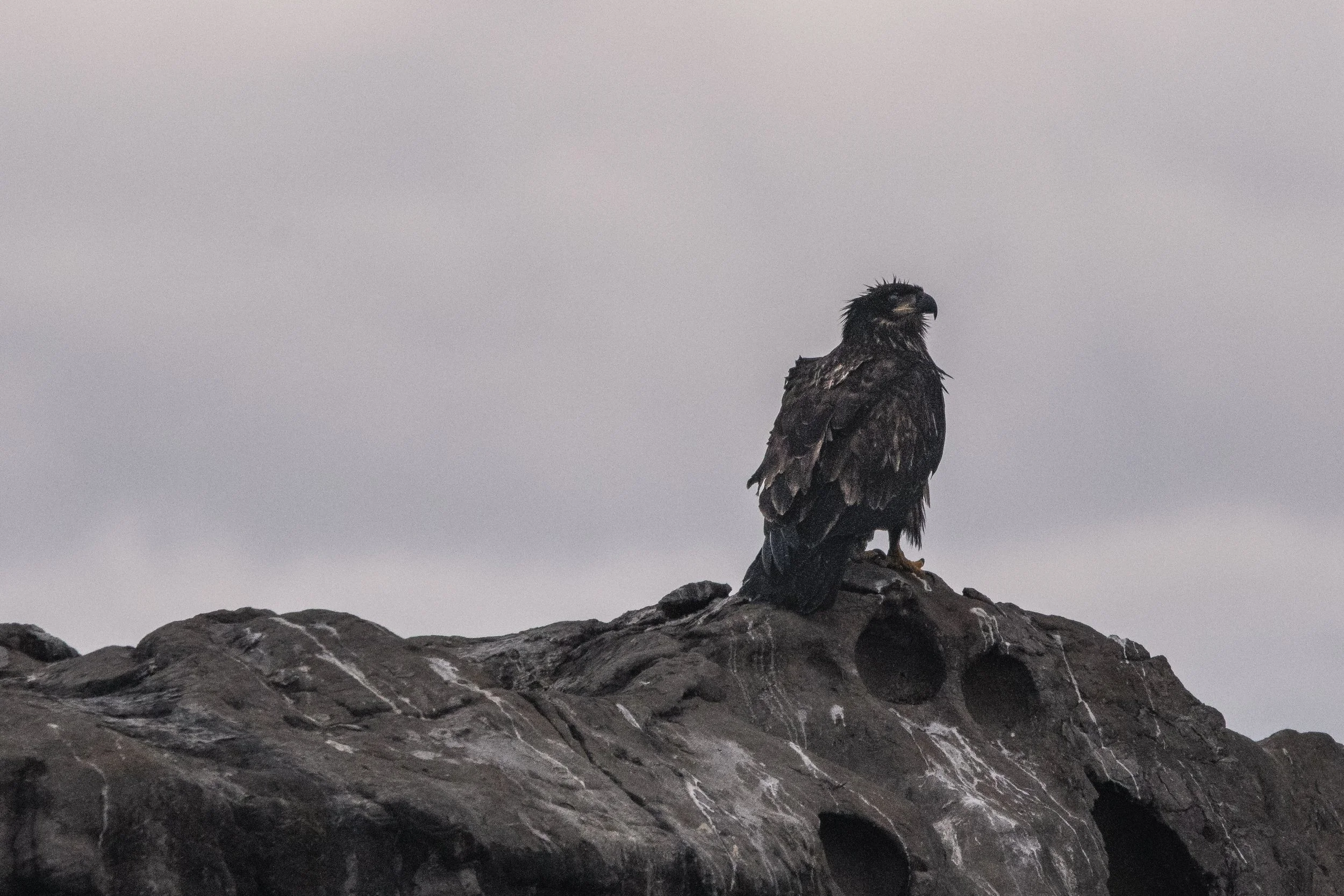
Landing on the top of the rocks.
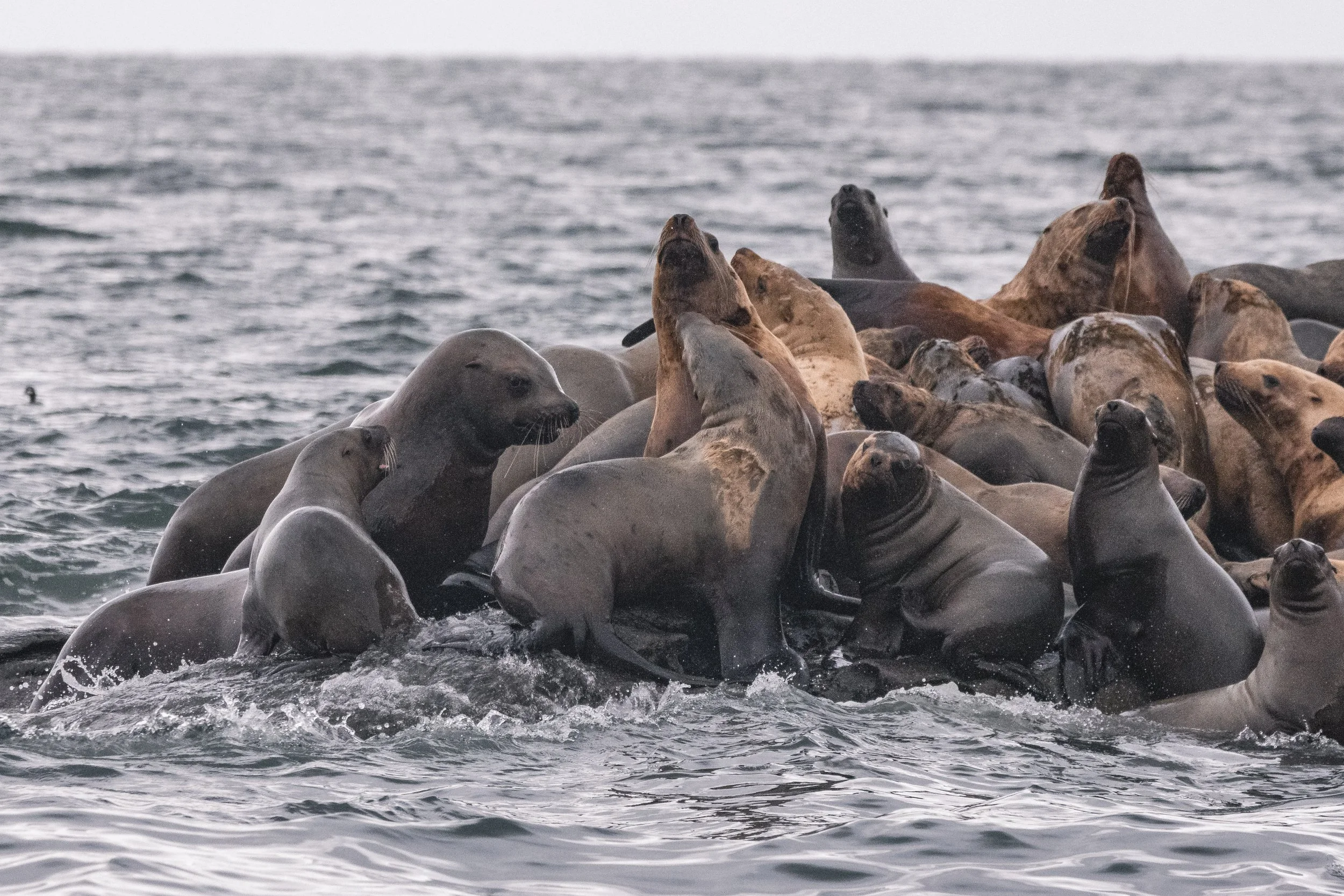
Huddled together at the tip of the island.
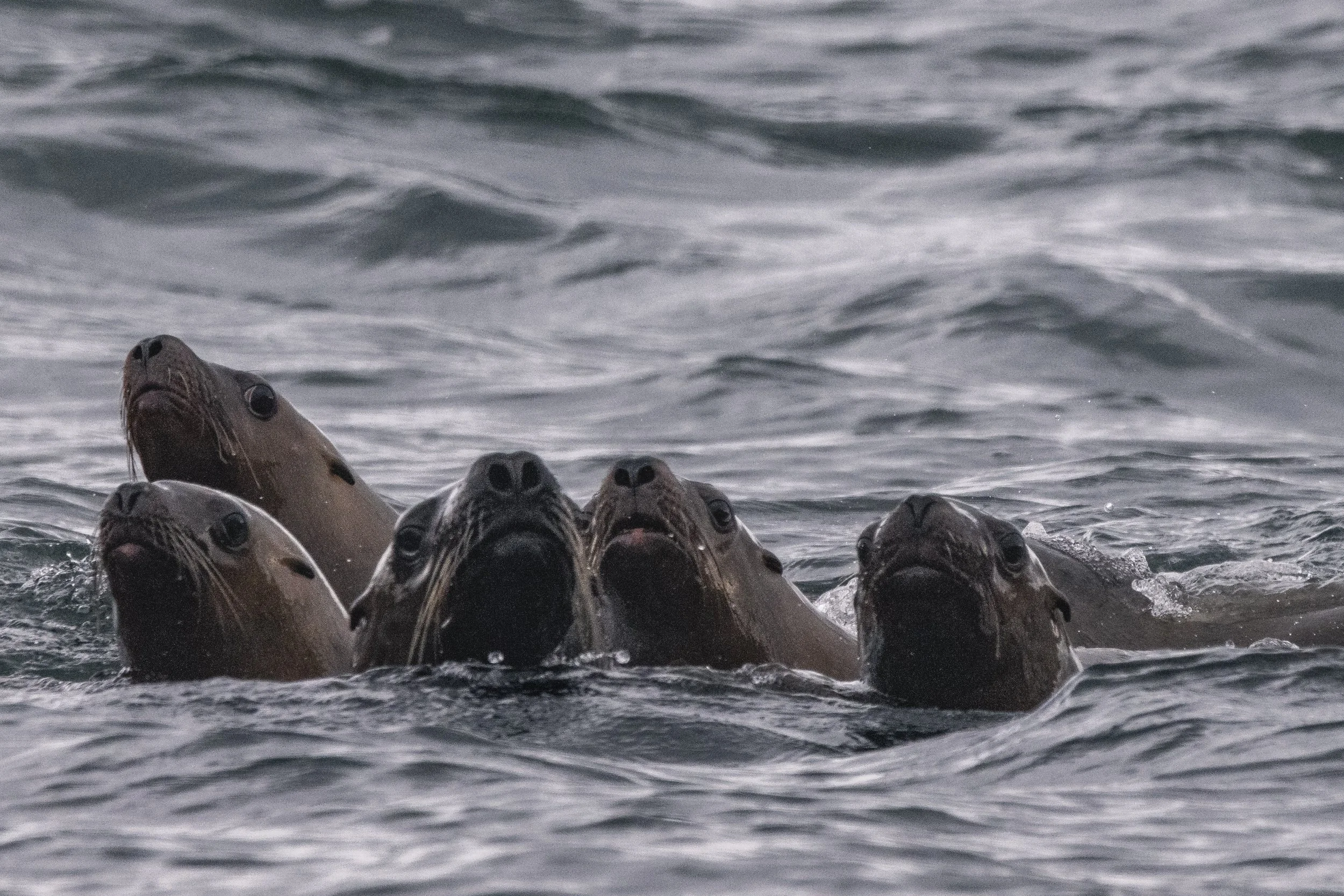
Watching us as much as we are watching them!
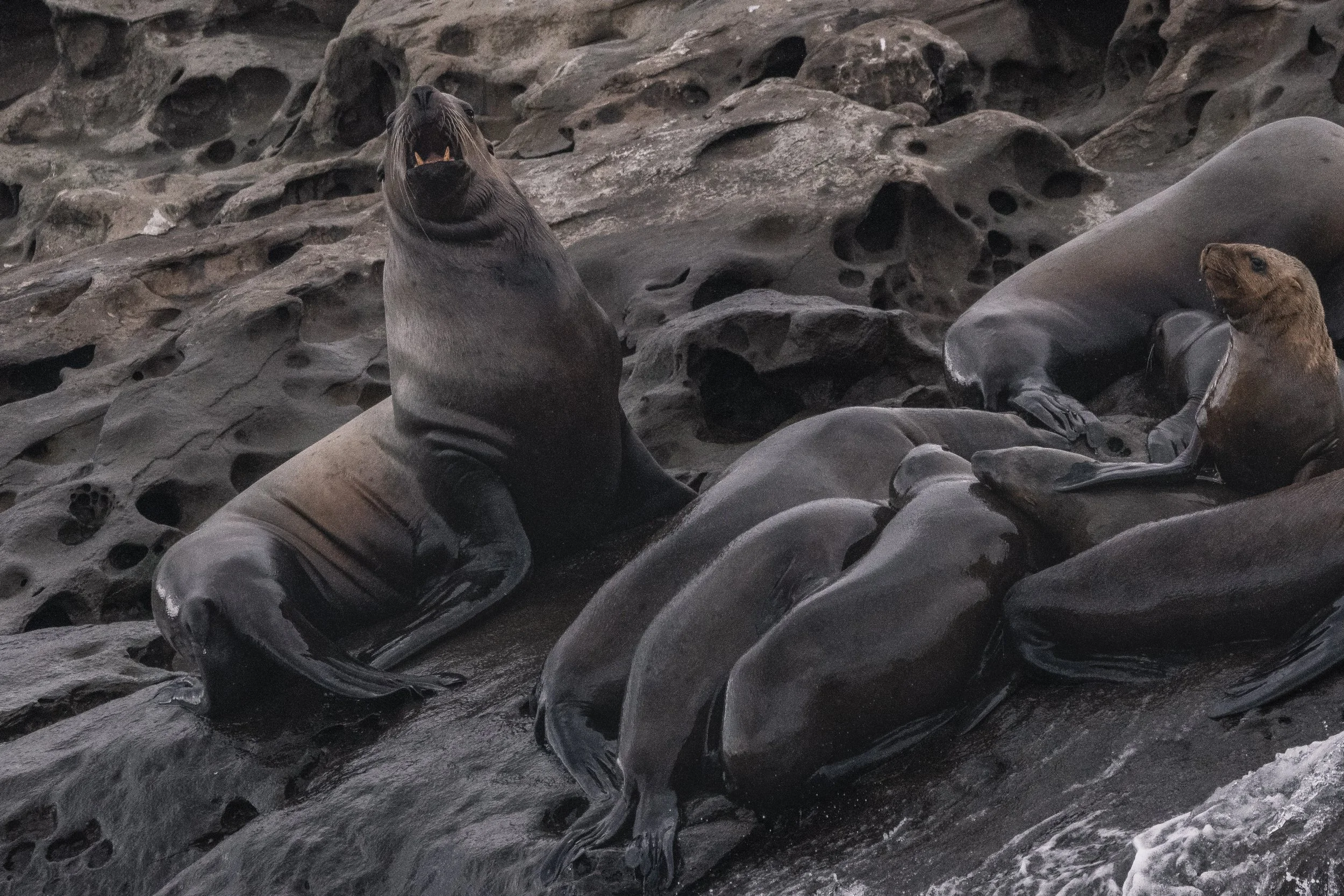
Grumbling and mumbling is common amongst the pinnipeds.
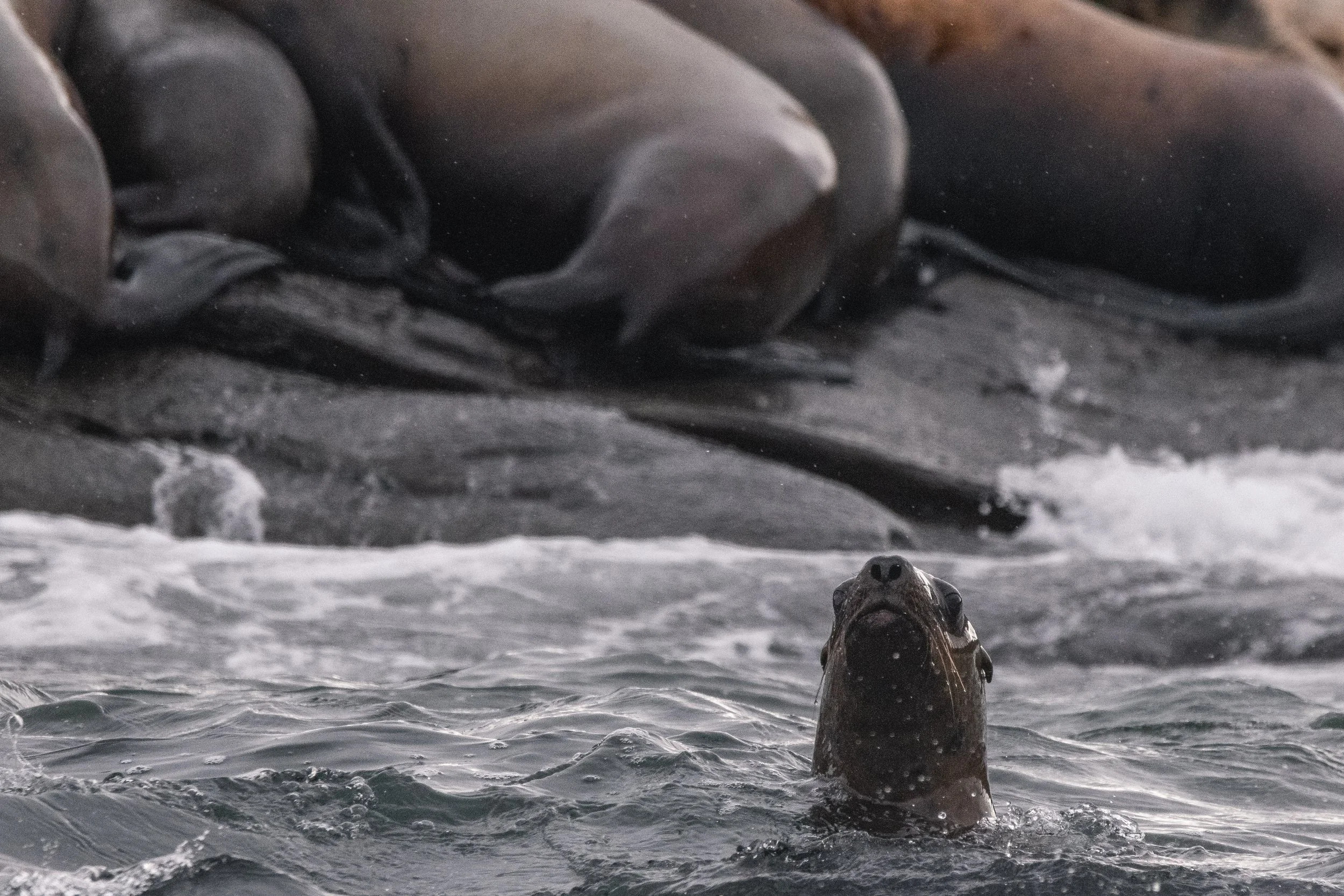
There isn’t always space for everyone on the rocks…
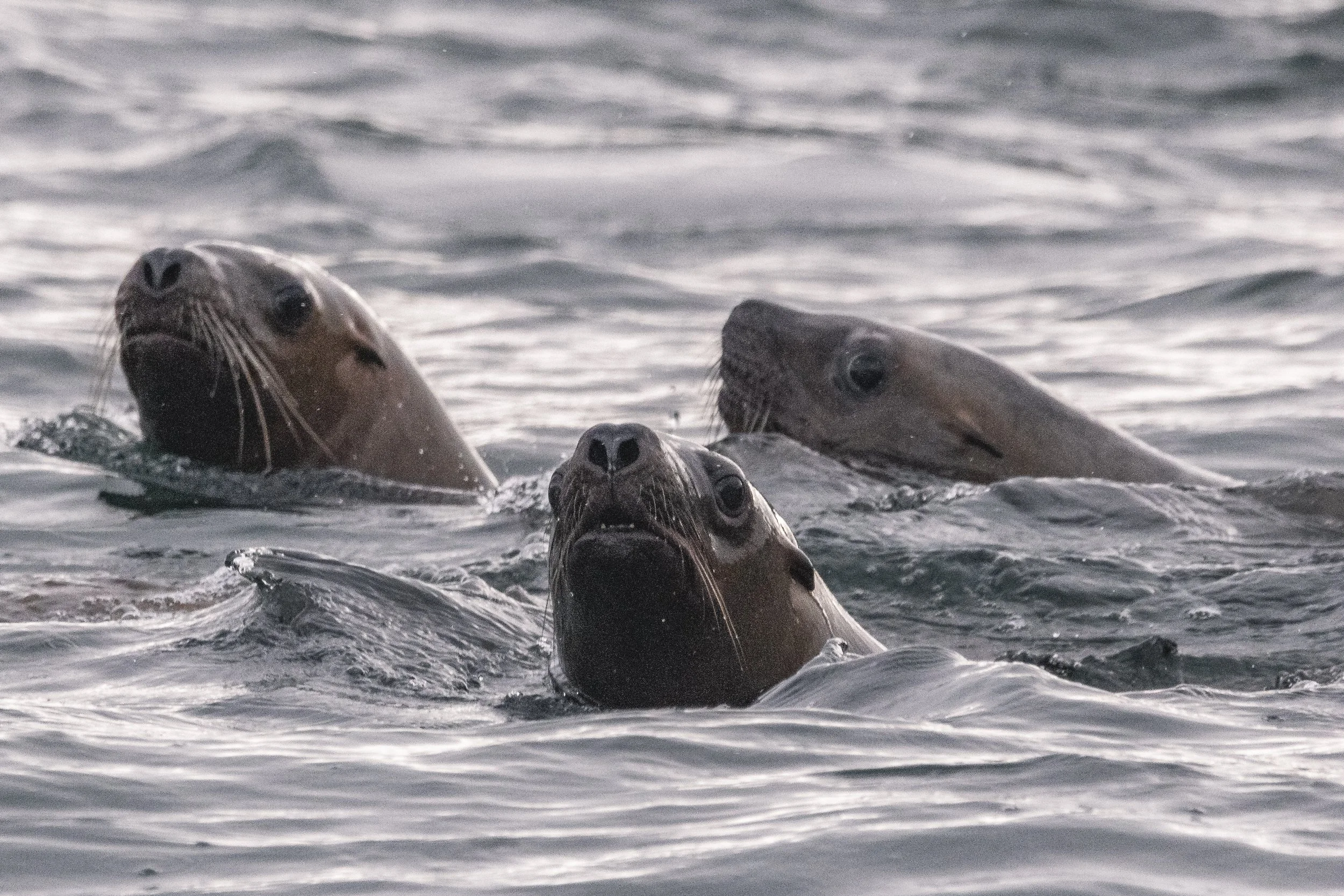
Always watching…