
February 15, 2026 - A family reunion of the whale kind
Beautiful sunny skies greeted us as we began boarding, eager to head out for another adventure on the Salish Sea. With unseasonably warm weather for this time of year - and snow in the forecast later this week - we were determined to soak up every minute of the sunshine.
We set off along Nanaimo’s shoreline, an area that has been teeming with whale sightings over the past few weeks. None of the whales we encounter are equipped with tags or trackers, so every sighting is the result of careful observation and a bit of luck. It’s a constant scan of the horizon - you never know where a dorsal fin might appear from one day to the next!
After searching for some time, we received word of whales near the mouth of Nanaimo Harbour. Looping back toward Protection Island, along the harbour’s edge, we soon spotted a cluster of black fins slicing through the waters. Fins of every size were present - from a tiny youngster to adult females and several towering males.
Our onboard naturalist began comparing photographs to our ID catalogues and quickly confirmed the group: the T100Bs, the T101s, and two “oddballs” - T101E Tharaya and T087 Harbeson.
T100B ♀ Freya ♀ (1997)
T100B1 Seidr ♂ (2010)
T100B3 Selkie ♀ (2024)
T101 Reef ♀ (≤1969)
T101A Rush ♂ (1993)
T101B Lagoon ♂ (1997)
T087 Harbeson ♂ (~1962)
T100E Tharaya ♀ (2009)
Orca are catalogued using an alphanumeric system. Each matriarch is assigned a number (e.g., T101 Reef), and her calves receive corresponding letters in birth order (e.g., T101A Rush). In theory, this makes family relationships simple to follow. In reality, it can get a little complicated - especially when early observations led to numbering quirks.
Take Rush, for example. You might assume he was Reef’s first calf, with his code including an “A”. However, Rush is likely Reef’s second calf. Her first calf is believed to have been a now-deceased male named Beardslee, assigned code T102. This discrepancy likely occurred because, when the whales were first documented, it wasn’t yet clear that Beardslee was travelling with Reef, leading to the familial connection being made later down the line.
Another fascinating connection involves T100B Freya, one of the matriarchs present that day. Her code indicates she is the second calf (“B”) to T100 Hutchins. What makes this especially interesting is that Hutchins is believed to be one of Reef’s daughters. If that lineage is correct, then we were witnessing three generations of the same family line travelling together!
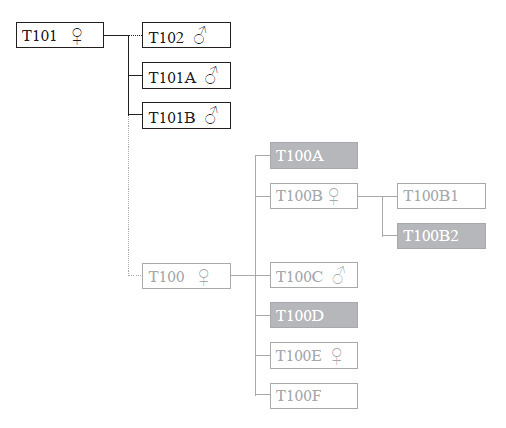
Family lineage of the T100s and T101s. Dotted lines are suspected familial connections. Chart: 2019 Photo-identification Catalogue, Population Status, and Distribution of Bigg’s Killer Whales known from Coastal Waters of British Columbia, Canada by Towers et al.
Reef would likely be the grandmother of T100E Tharaya, who has recently been travelling solo, and also the grandmother of T100B Freya, Tharaya’s sister. That would make Reef the great-grandmother of Freya’s calves, T100B1 Seidr and T100B3 Selkie. Talk about a remarkable family reunion!
One whale, however, didn’t quite fit into this family puzzle: T087 Harbeson. Harbeson is impressive in his own right and is believed by many researchers to be one of the oldest living wild male orcas - potentially even the oldest! Estimated to be around 64 years old - more than double the average lifespan for a male - he is frequently seen travelling alone, as many older males do after their mothers pass away. In recent years, though, he has occasionally been spotted associating with younger males, including one of his most frequent companions, T124C Cooper. Cooper wasn’t with the group initially - but the day was still young!
Leaving the orca, we made our way to Snake Island, a small sandstone islet that serves as a favourite haul-out site for harbour seals. With the tide running low, plenty of rocky ledges were exposed, providing ideal resting spots. Many seals were fast asleep in the sunshine, though the occasional curious face popped up to watch us drift by.
After a brief visit with the seals, we carried on to the log booms outside Harmac pulp mill, a popular resting place for another pinniped species: sea lions. Like the seals, they were stretched out and snoozing, some even using one another as pillows. It’s hard to imagine these typically loud and boisterous animals cuddling up, but huddling together during colder weather helps conserve valuable body heat.
From there, we continued through Northumberland Channel back towards our home port, where another dorsal fin appeared. It was none other than Cooper, racing through the channel toward where we had left the other whales earlier. He seemed determined to join the gathering, as he was travelling very very fast as we watched him!
T124C Cooper ♂ (1992)
With one last look at Cooper as he zipped by, we turned back toward Nanaimo. After a day filled with whales, seals, and sea lions, we returned to the harbour under those same bright skies - ending a truly beautiful day on the water.
Please enjoy today’s photos taken by Marine Naturalist Vanessa Vereschahen!
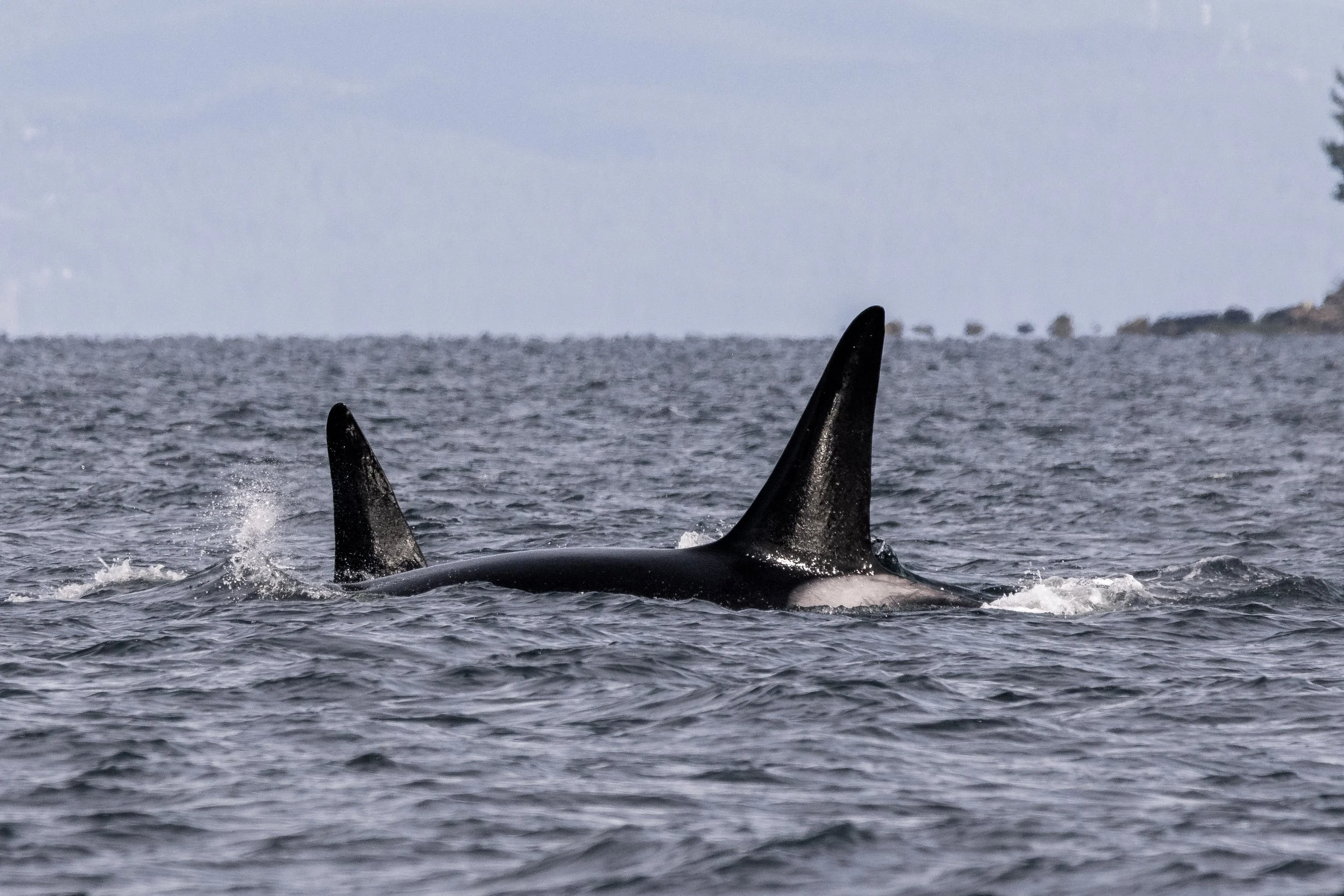
The brothers, T101B Lagoon and T101A Rush, travelling together.
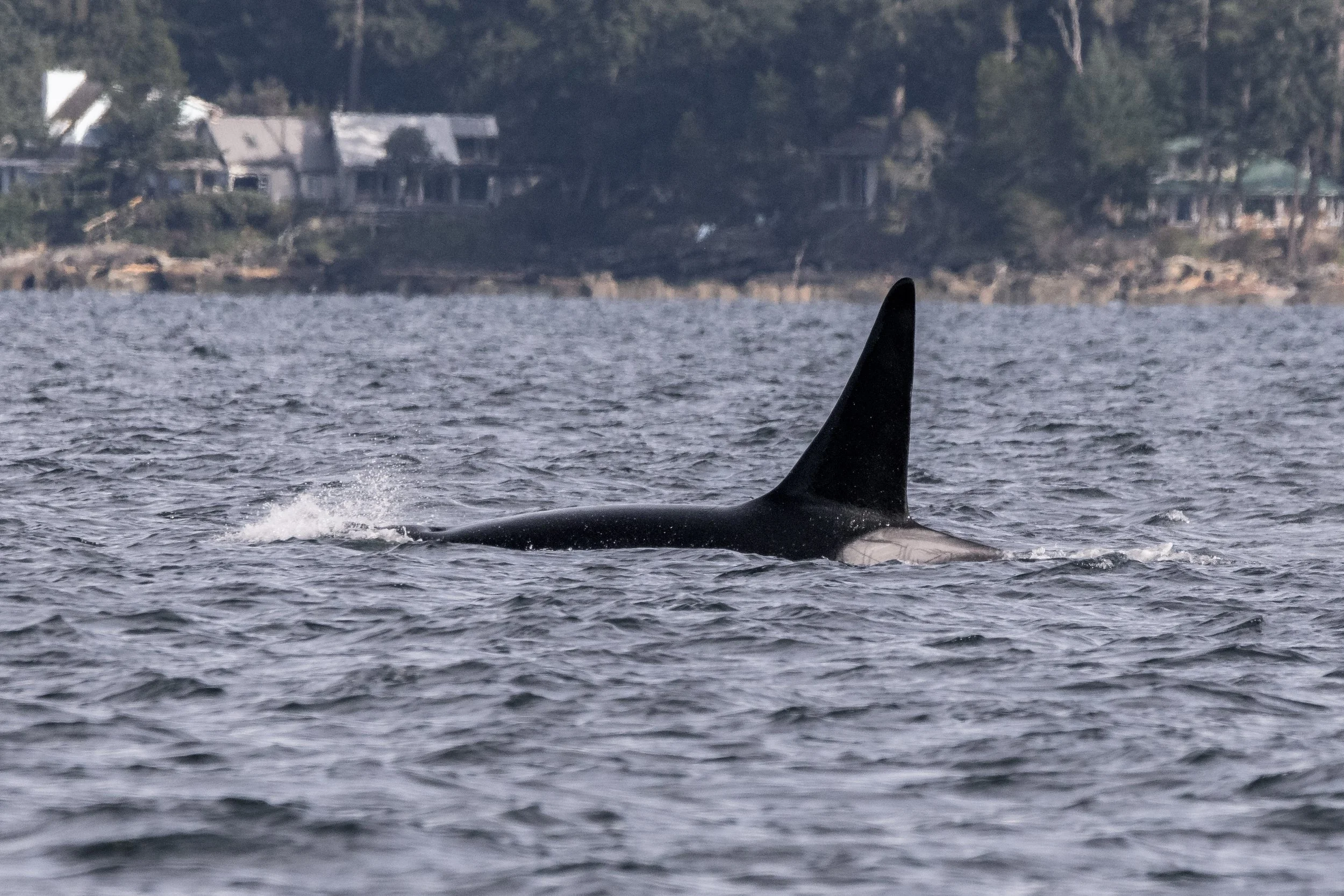
T101B Lagoon’s scratched up saddlepatch.
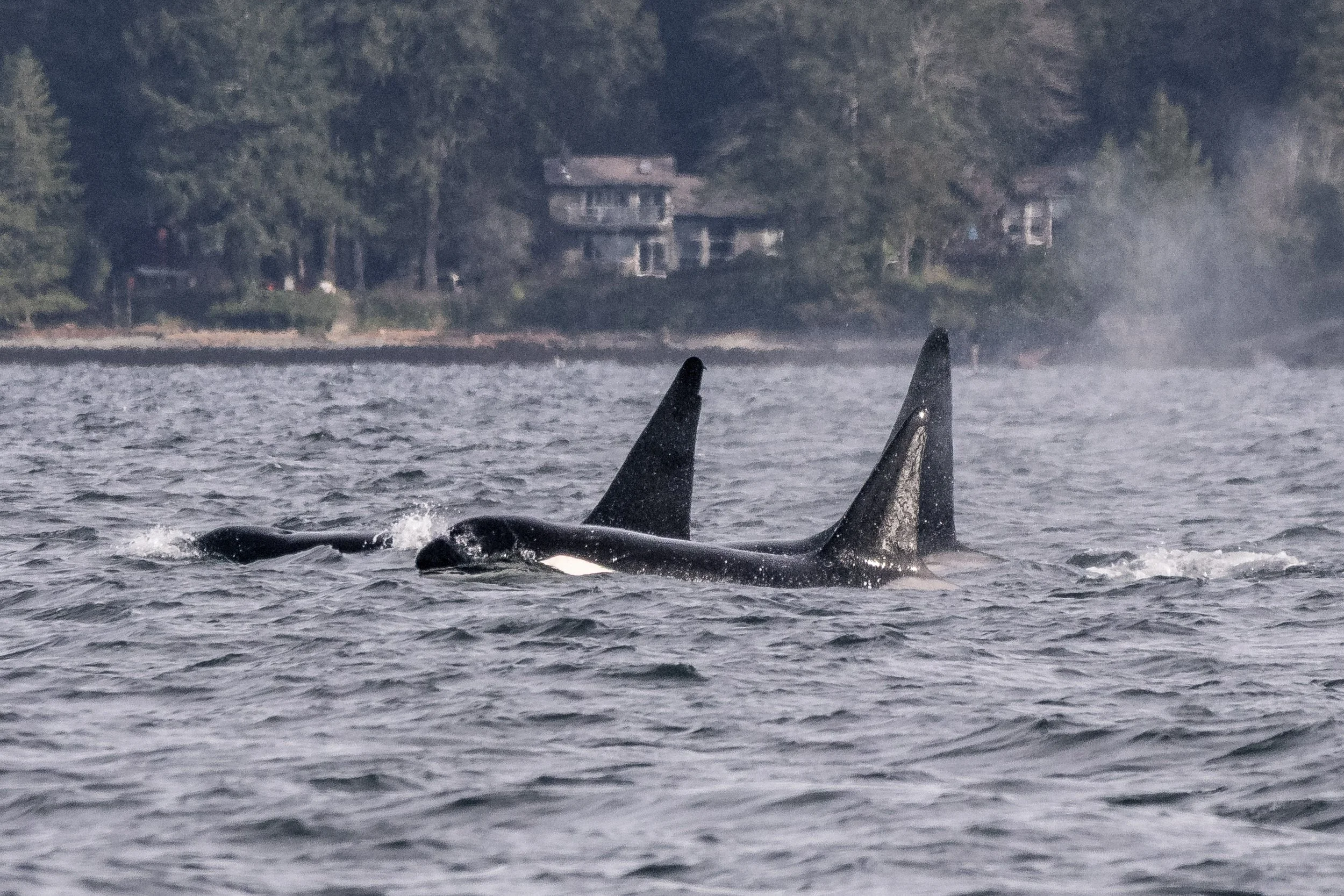
T087 Harbeson, T100B1 Seidr (front), and T101B Lagoon.
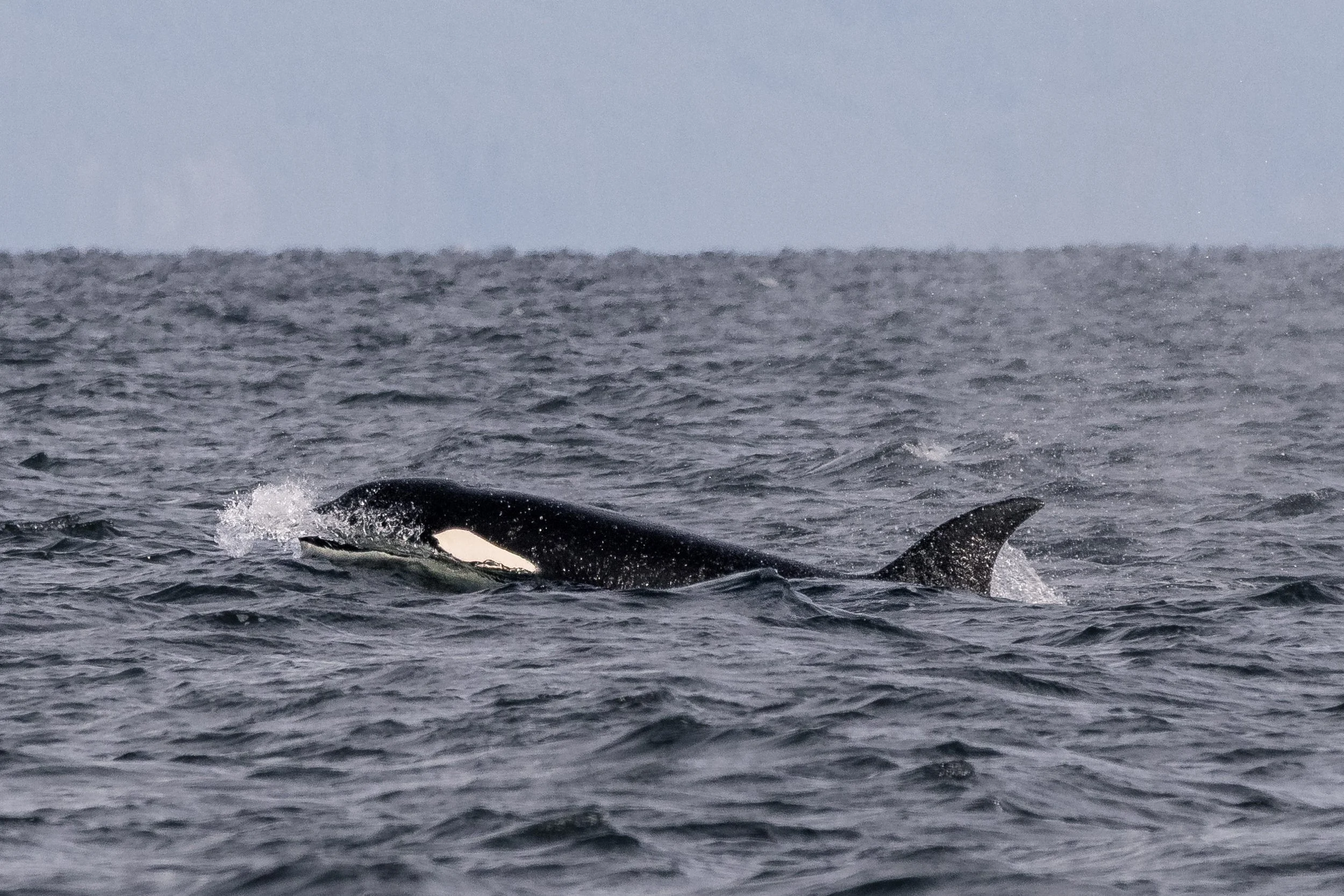
T100E Tharaya plunging ahead.
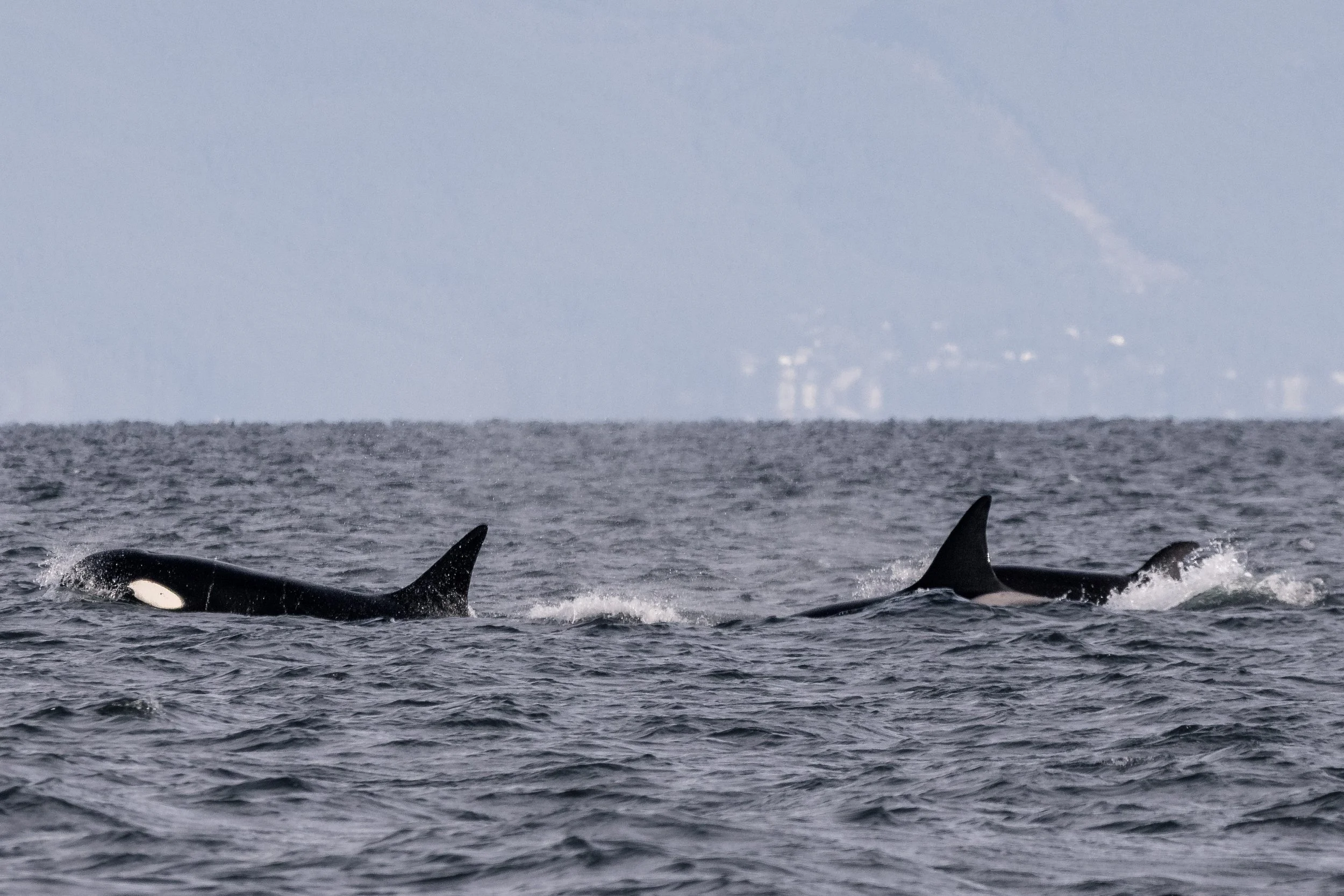
Matriarch T101 Reef with her granddaughter T100B Freya behind her, and her great grandchild T100B3 Selkie to her side.
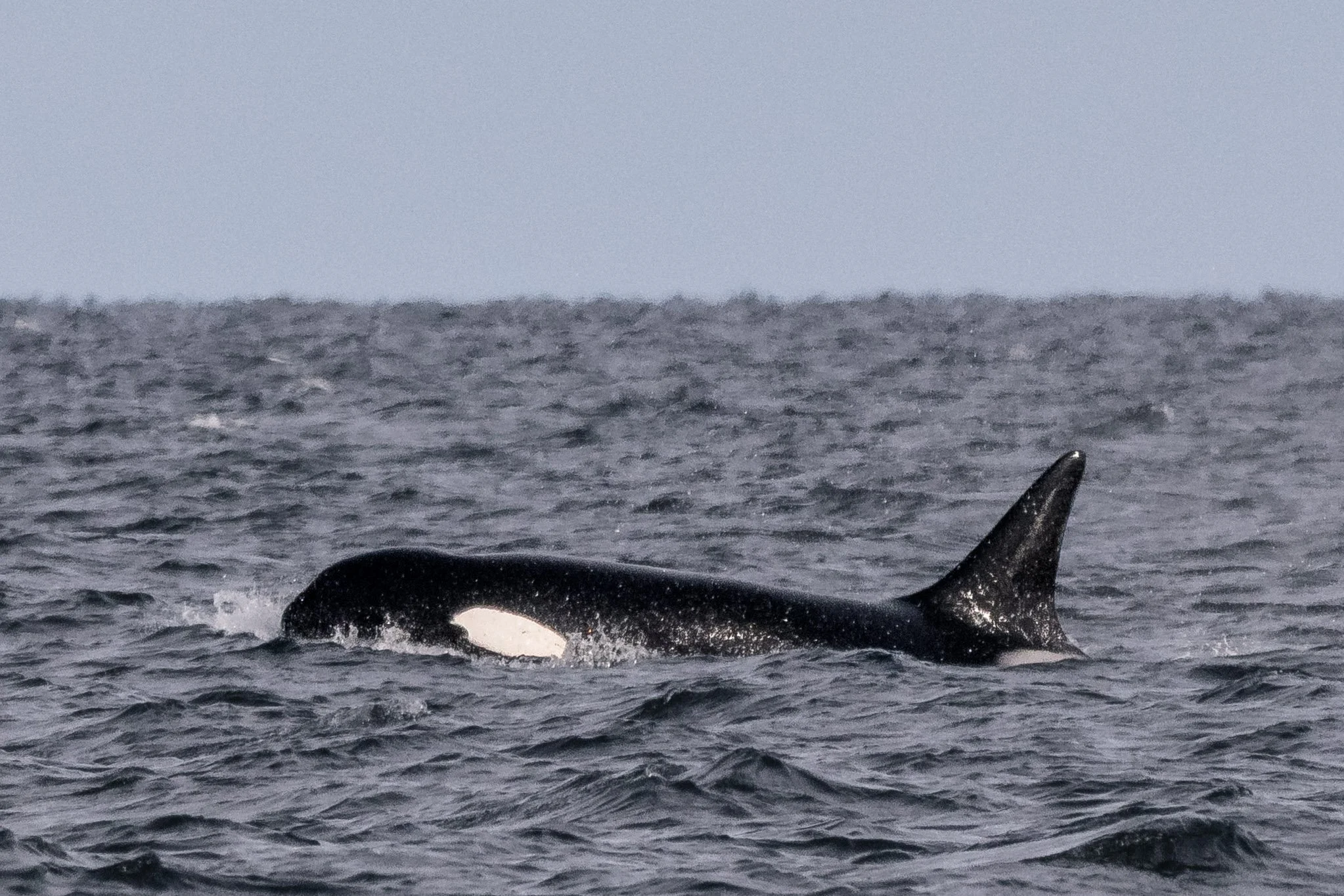
T101 Reef.
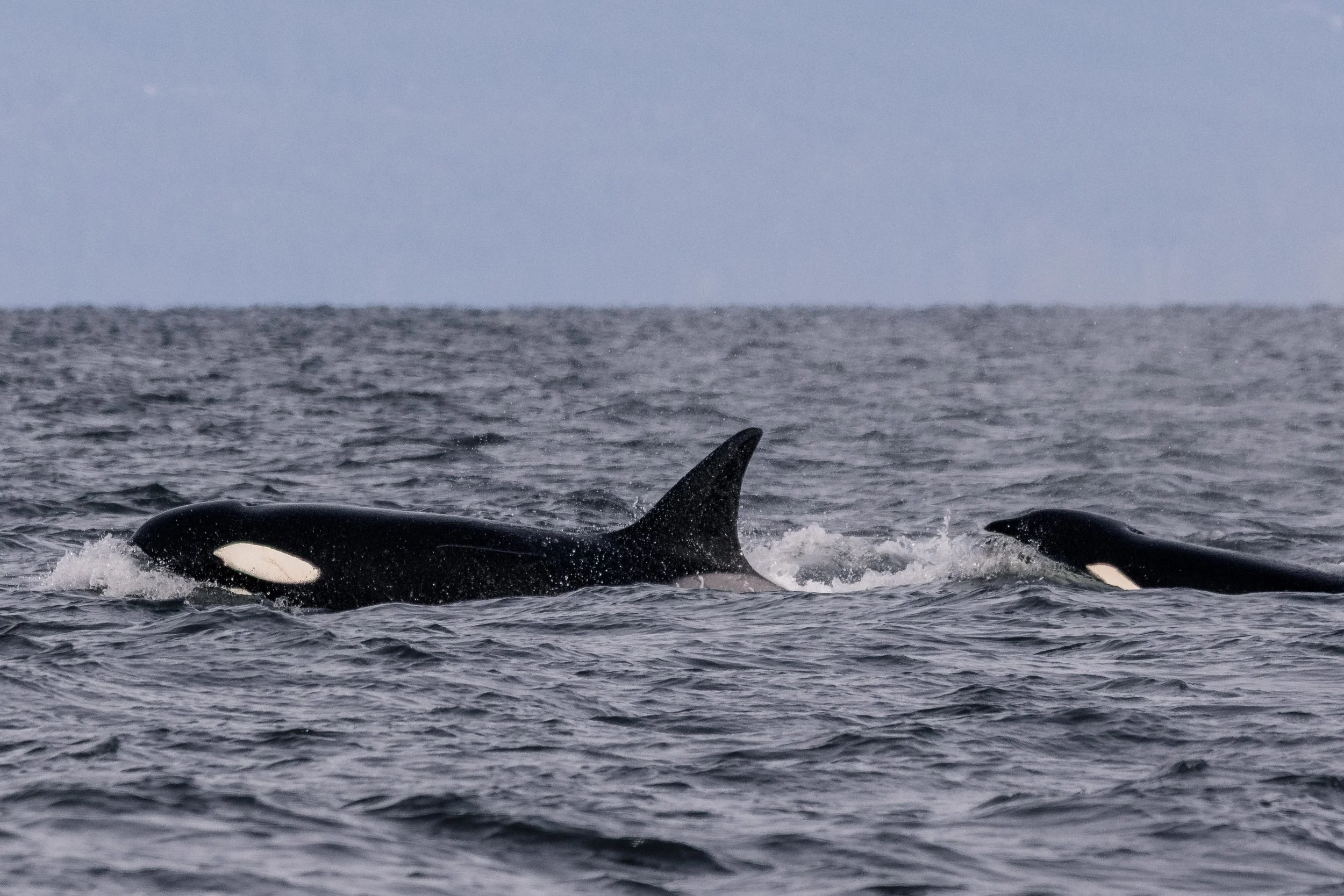
T100B Freya with her sister T100E Tharaya behind her.
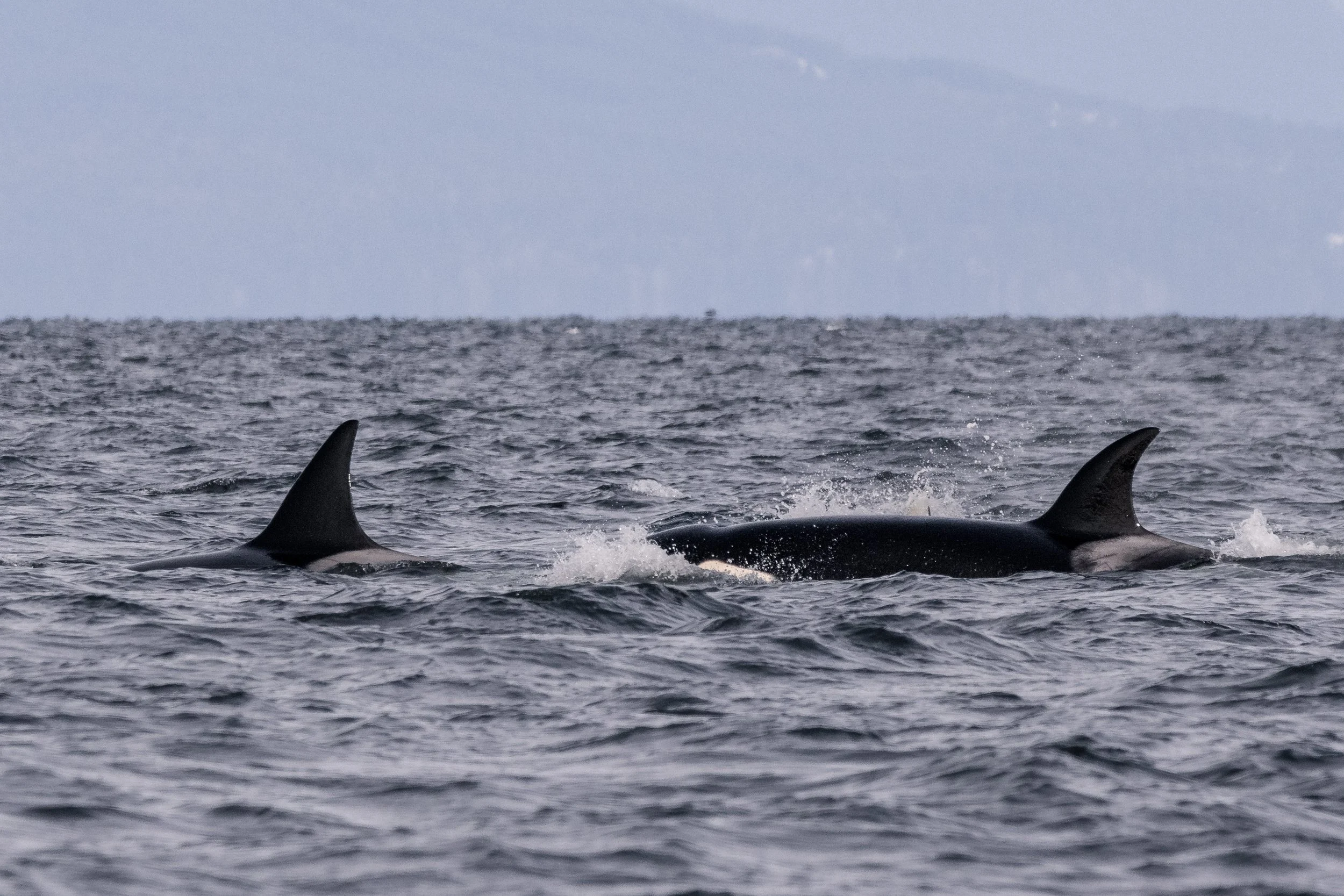
T100E Tharaya surfacing behind her sister T100B Freya.
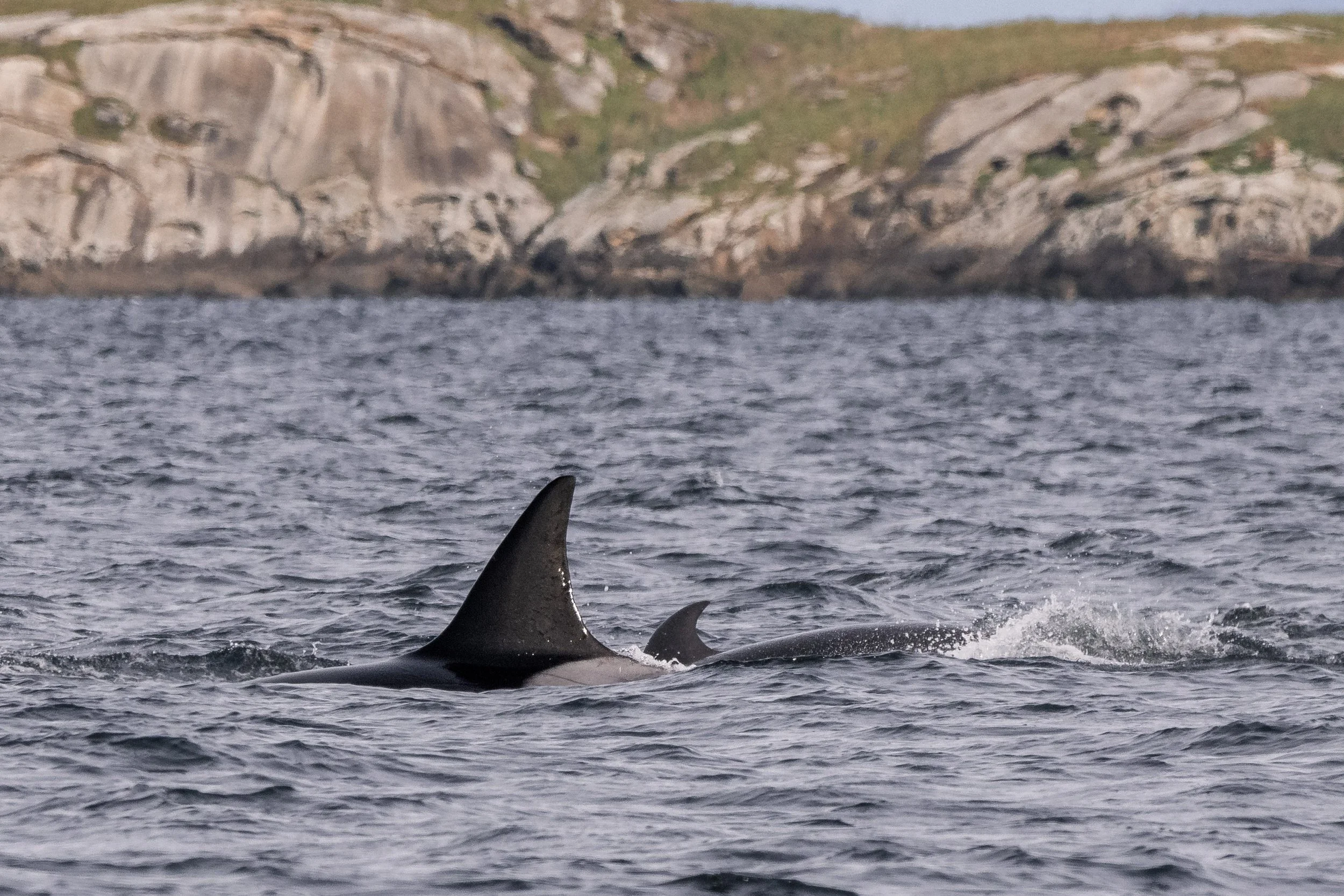
T100B Freya with young T100B3 Selkie right beside her.
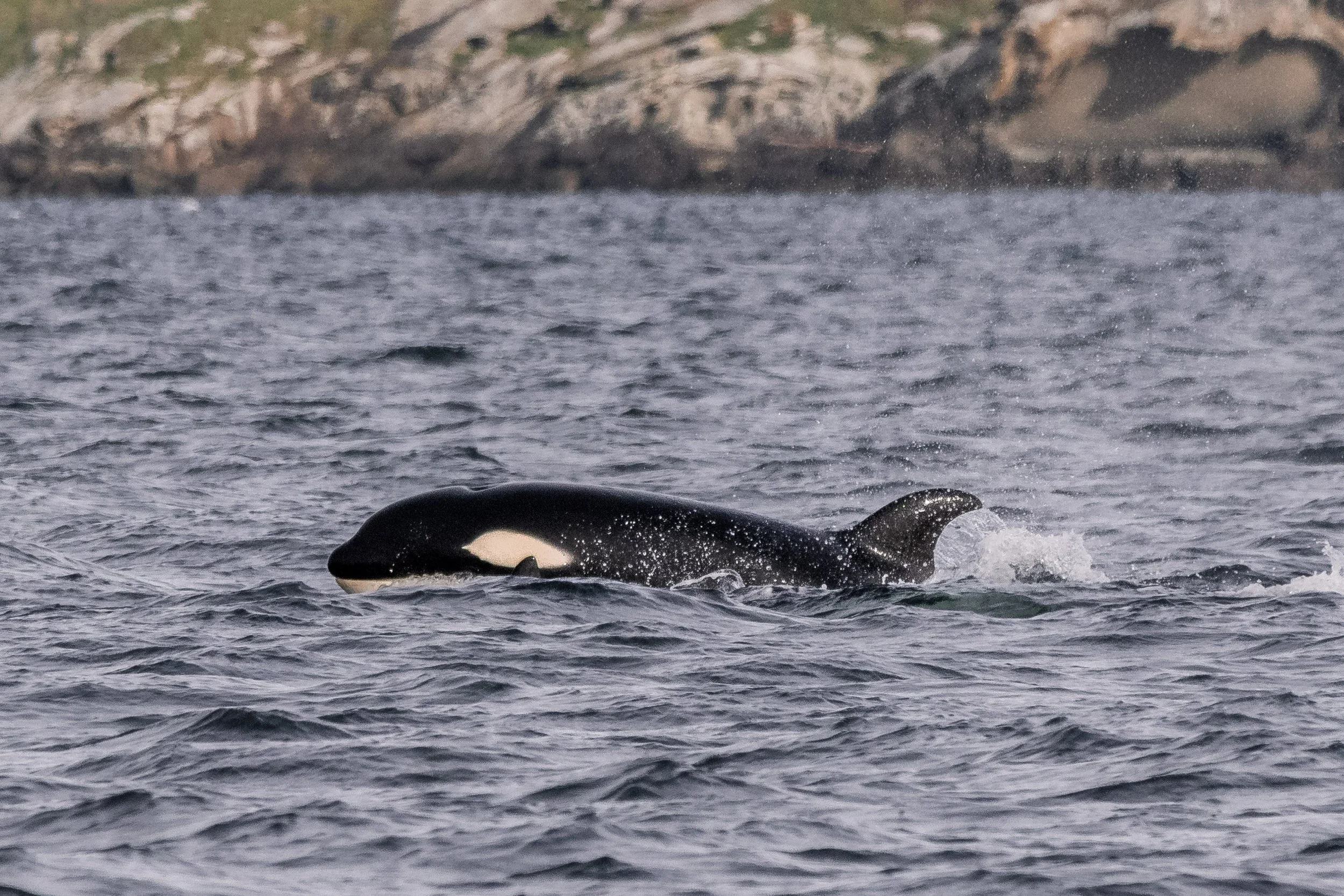
T100B3 Selkie with her face above the water.
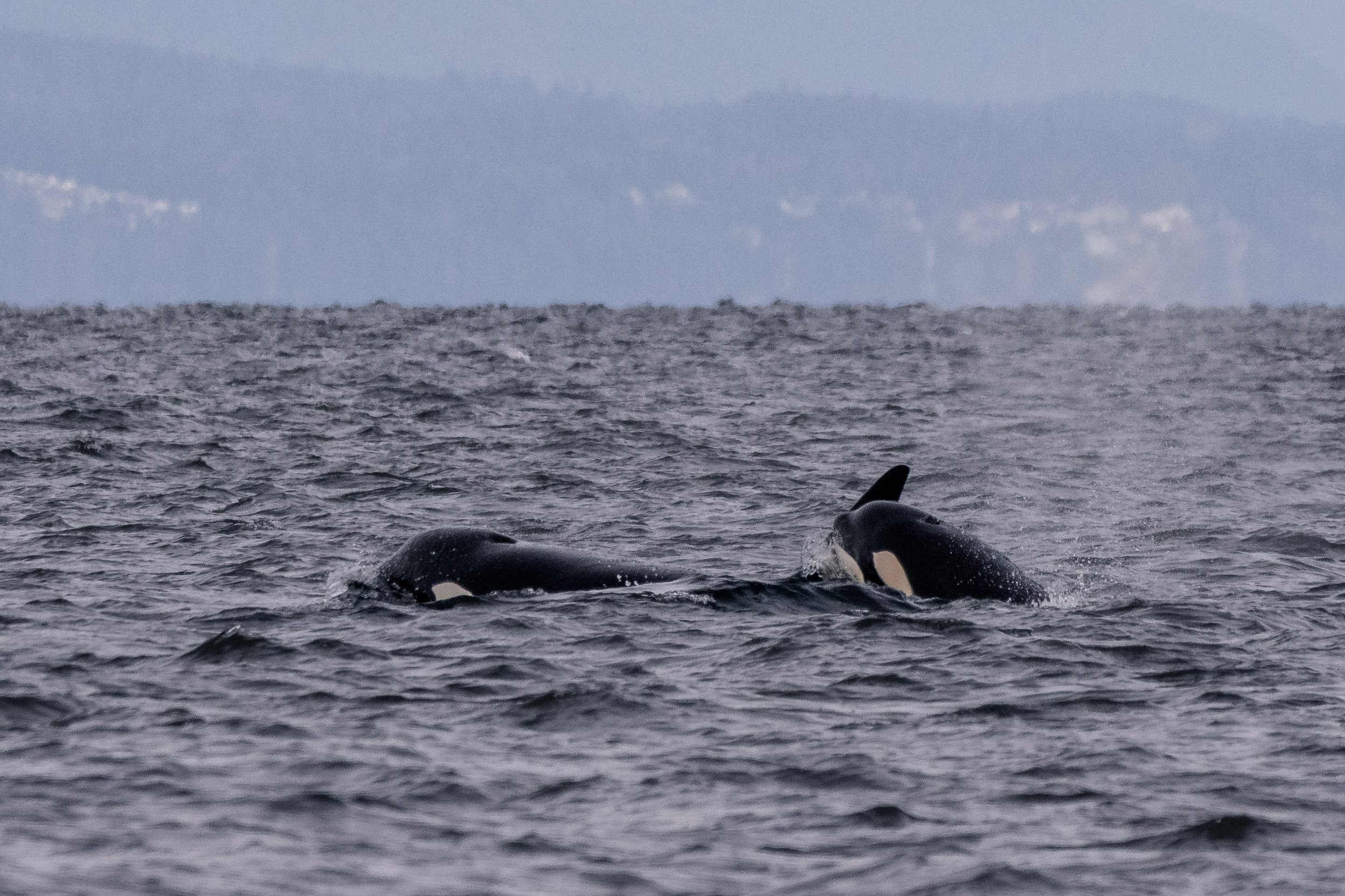
T100B3 Selkie popping up face first beside her mother T100B Freya.
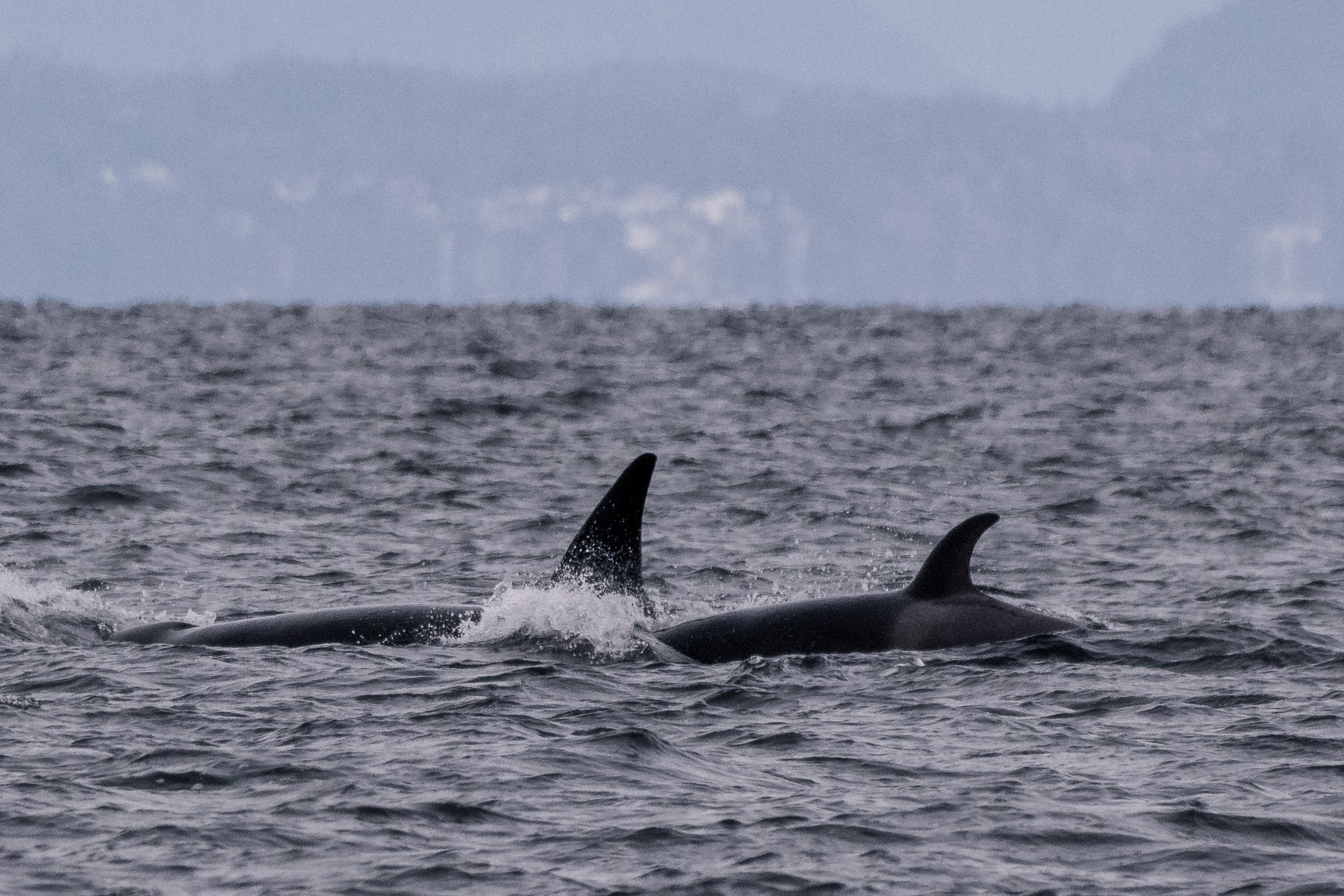
Mother and daughter travelling - T100B Freya and T100B3 Selkie.
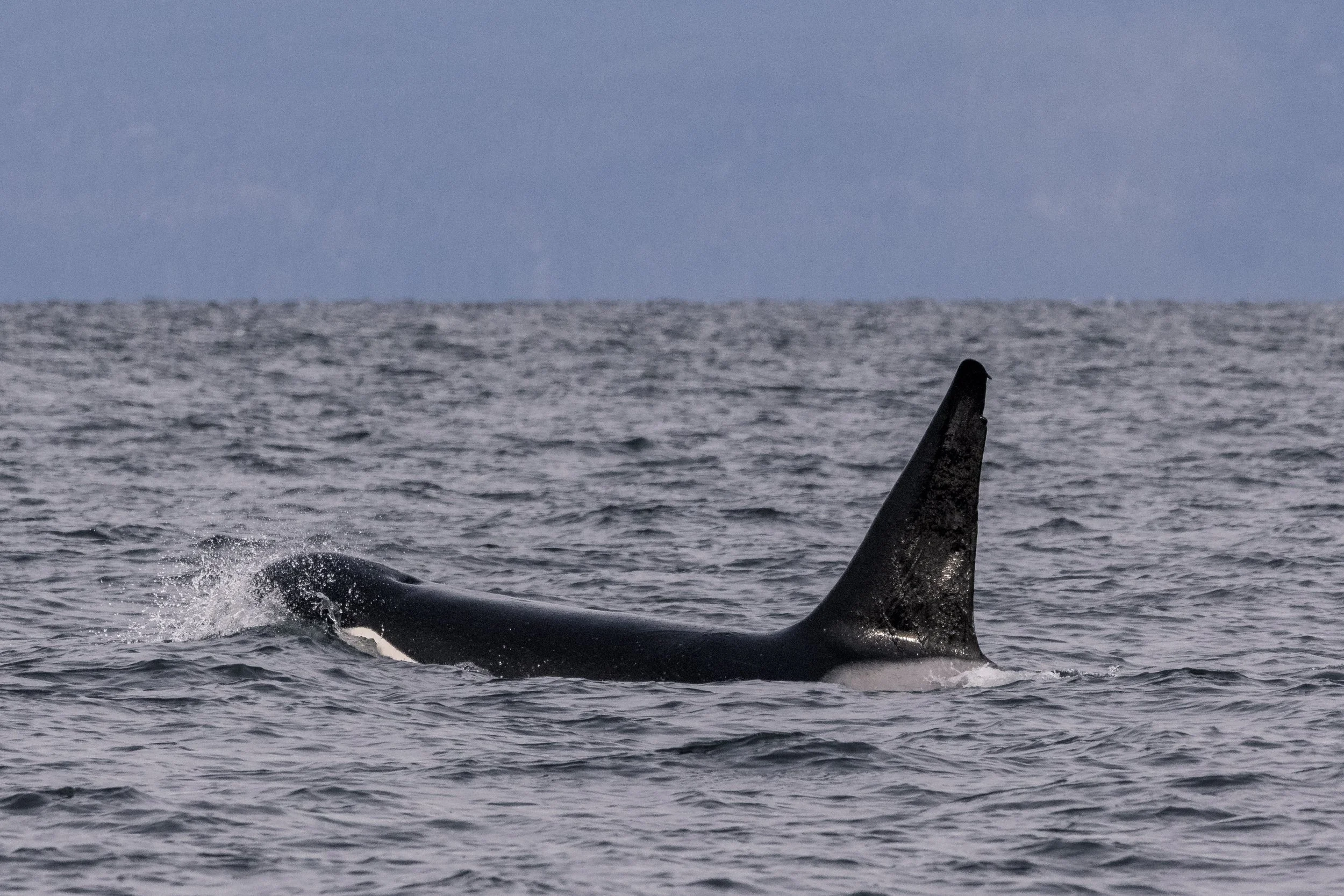
T087 Harbeson.
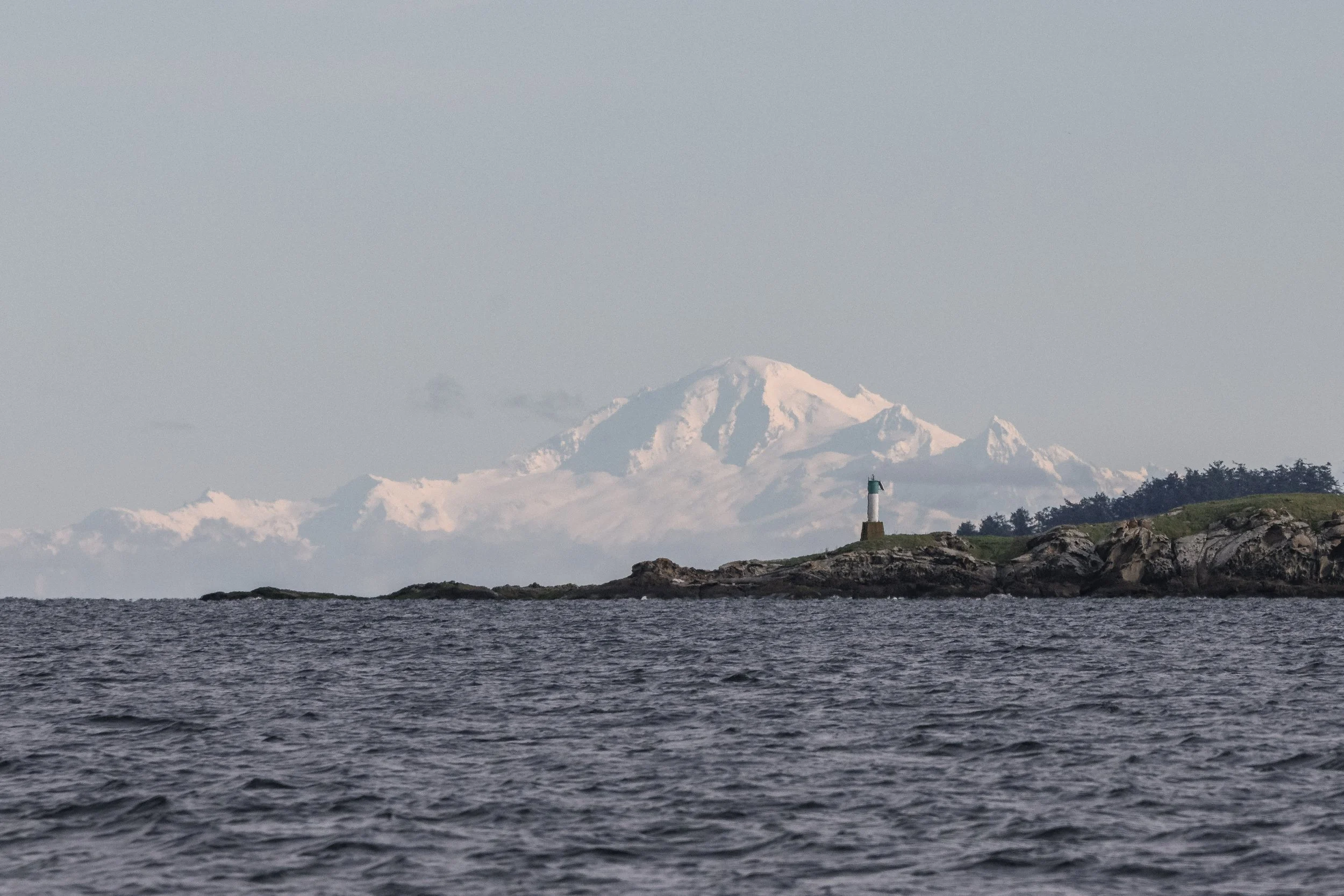
Mt Baker popping up behind Snake Island.
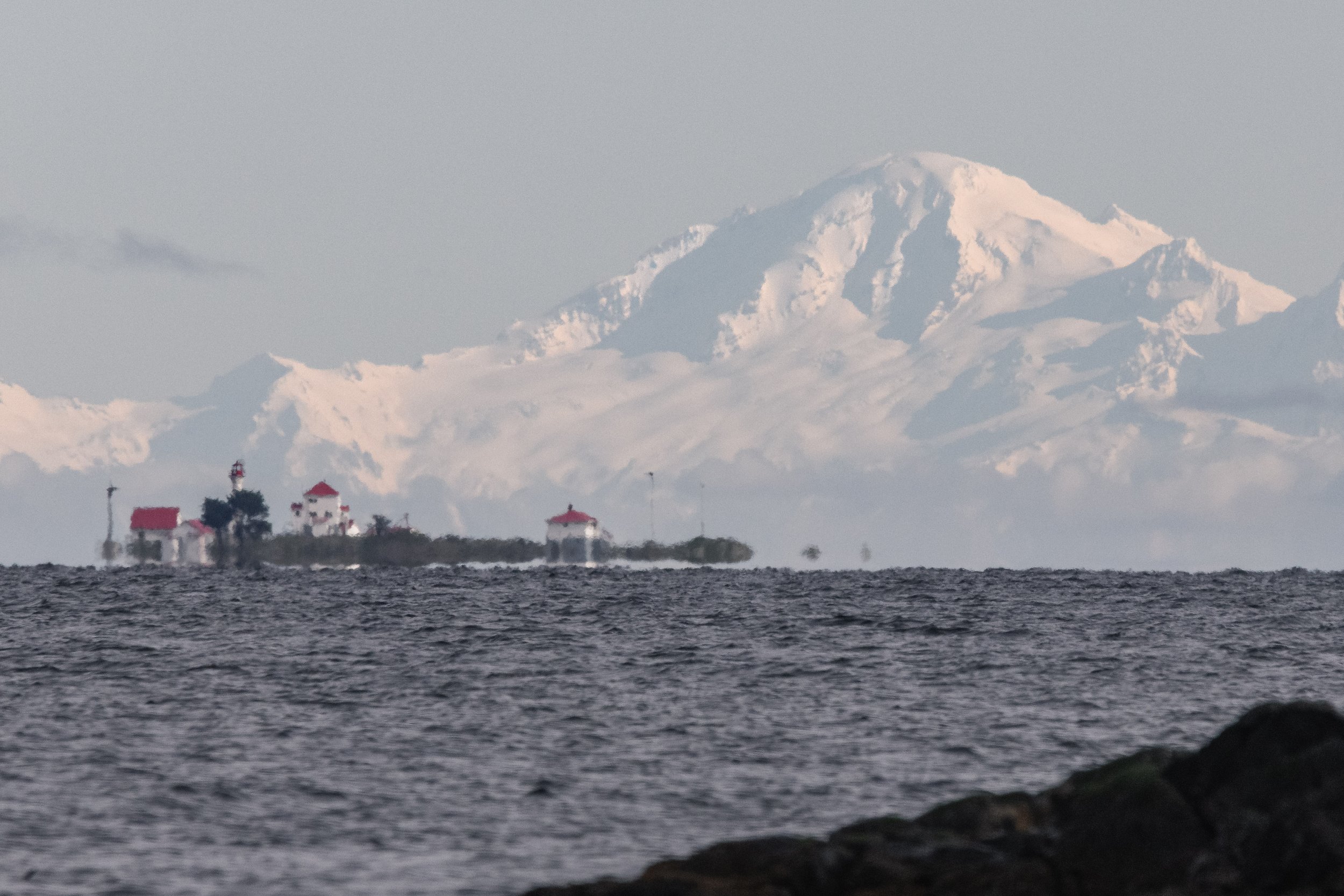
A Fata Morgana, or mirage, of Entrance Island with Mt. Baker behind it.
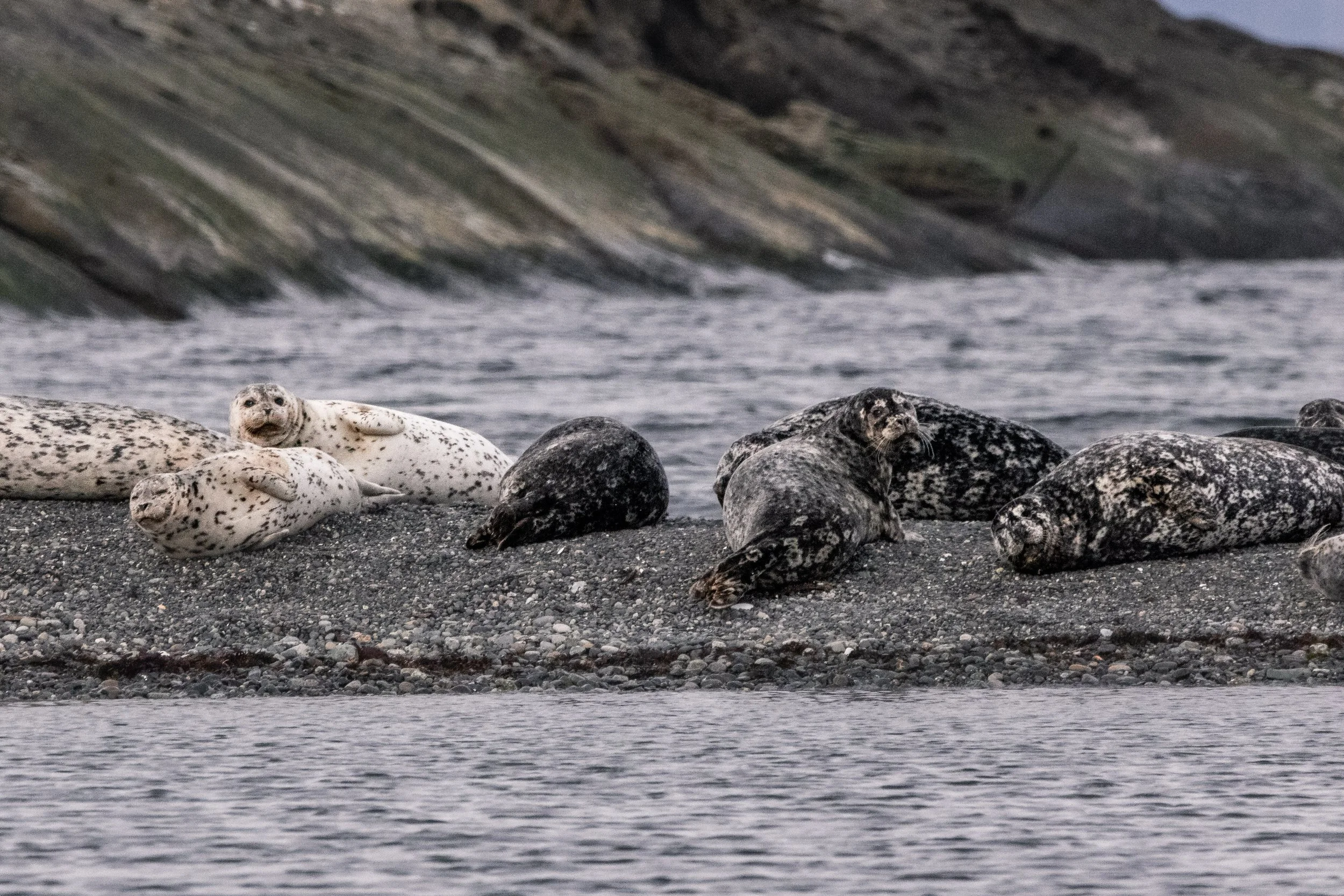
Slumbering Harbour Seals.
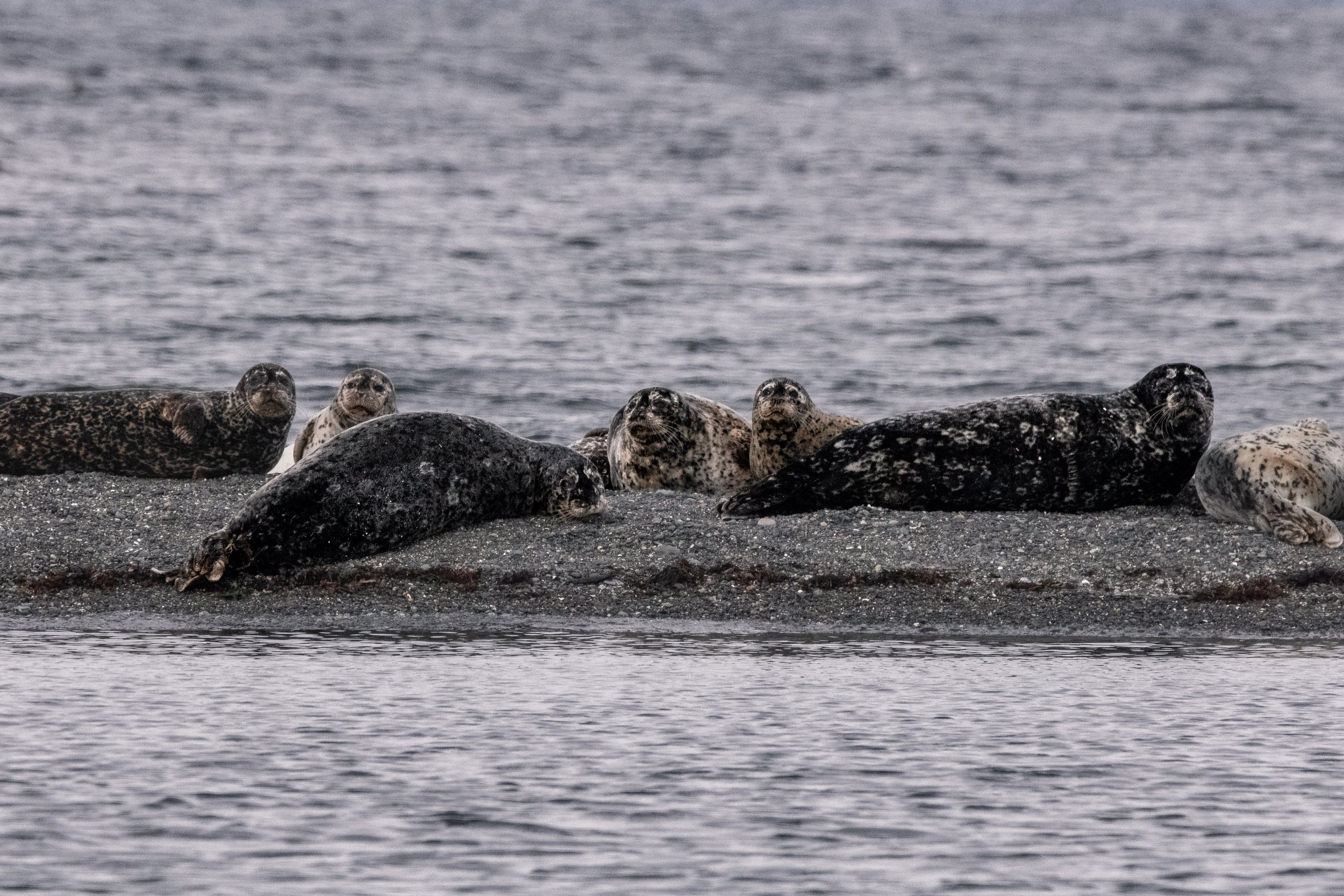
Ever curious, wondering what we are up to.
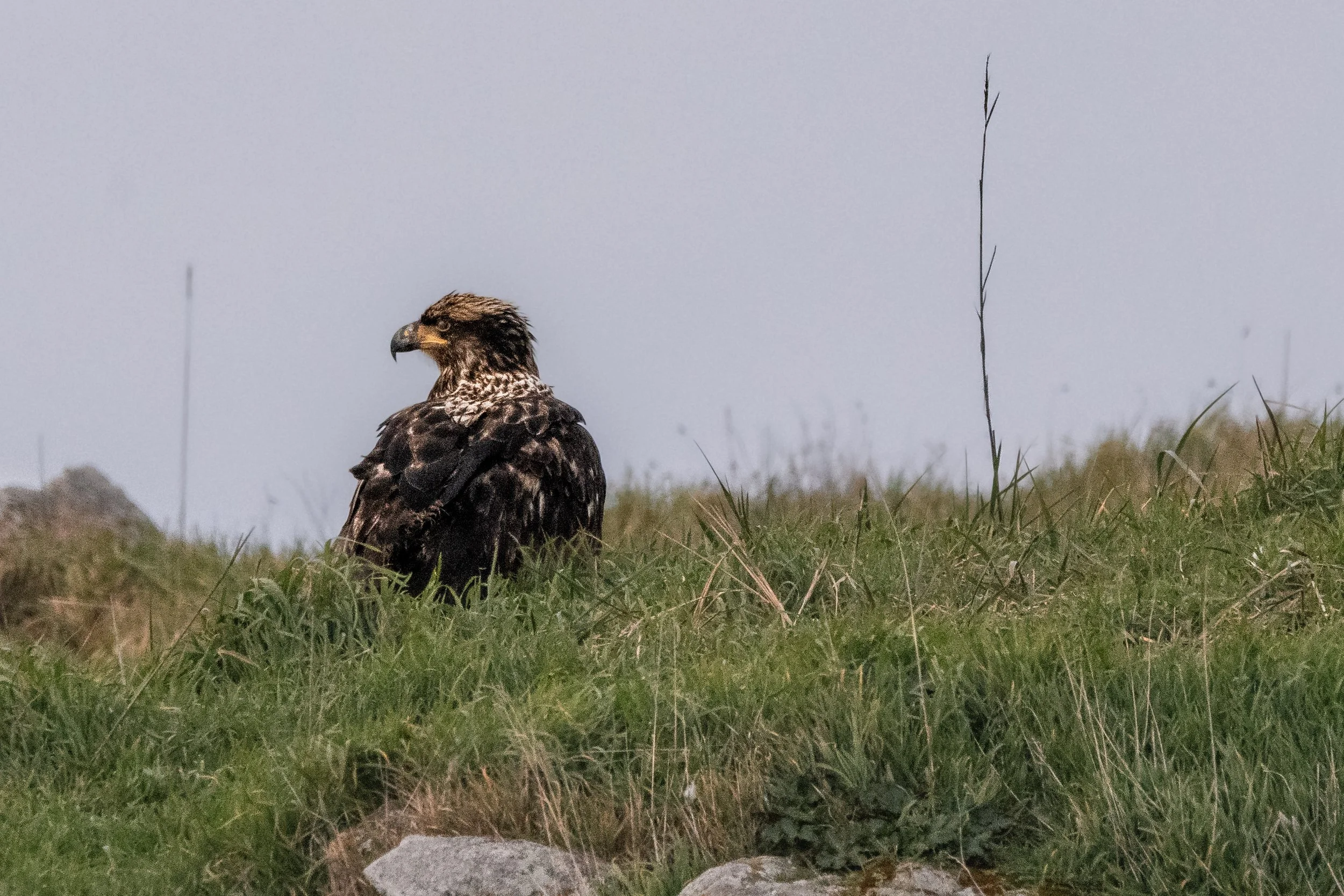
An immature Bald Eagle resting on Snake Island.
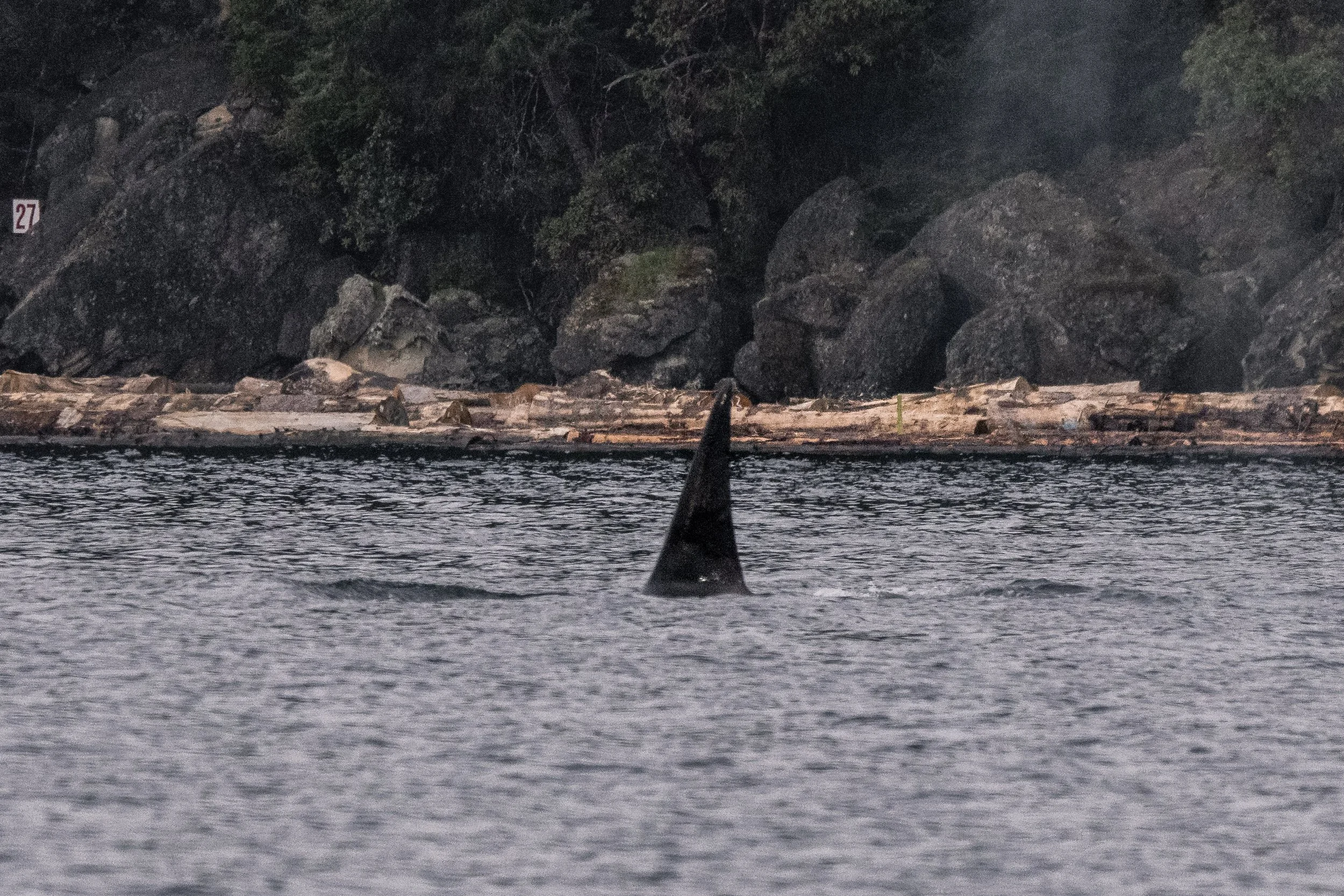
T124C Cooper zipping by.
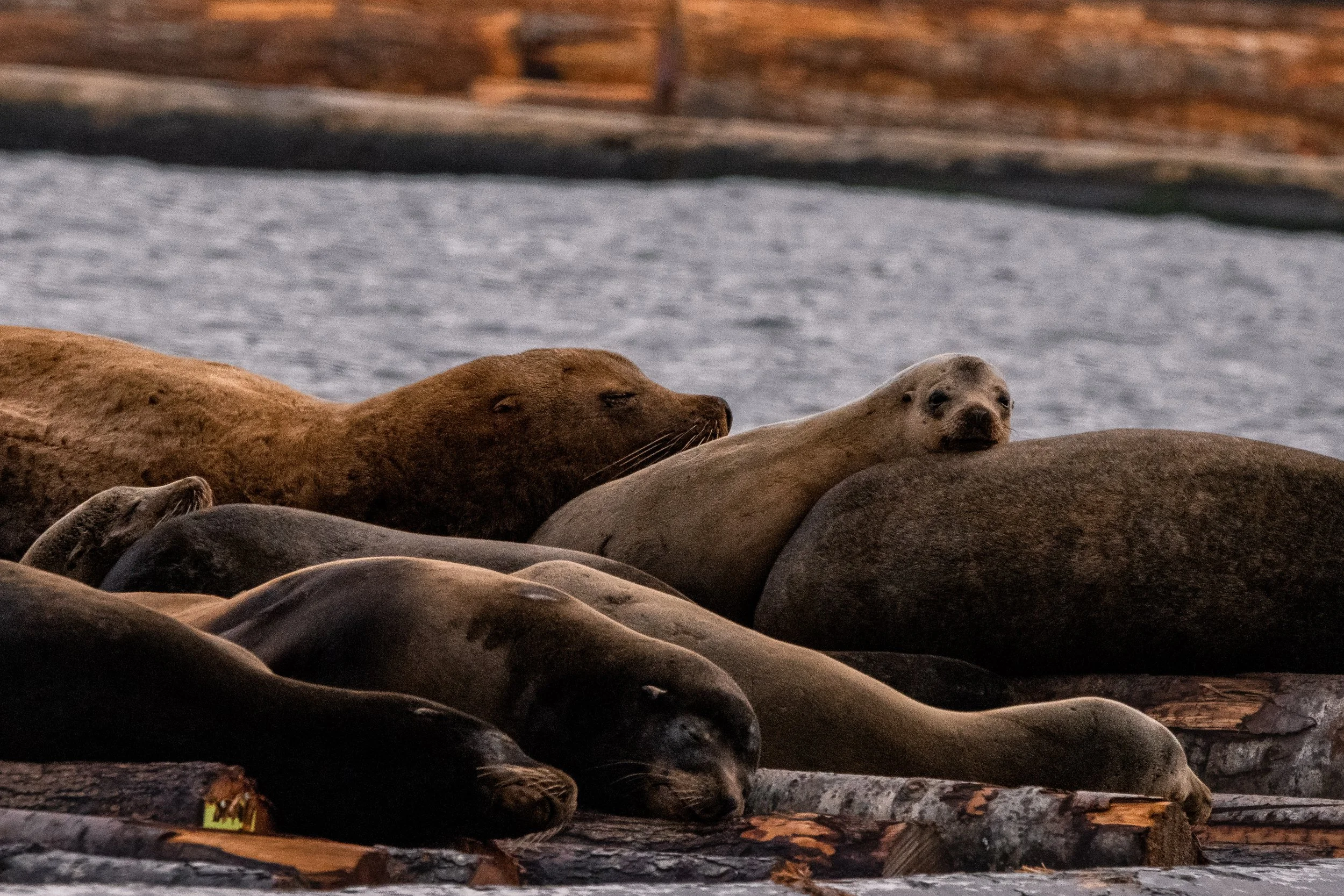
Slumbering sea lions on the log booms.
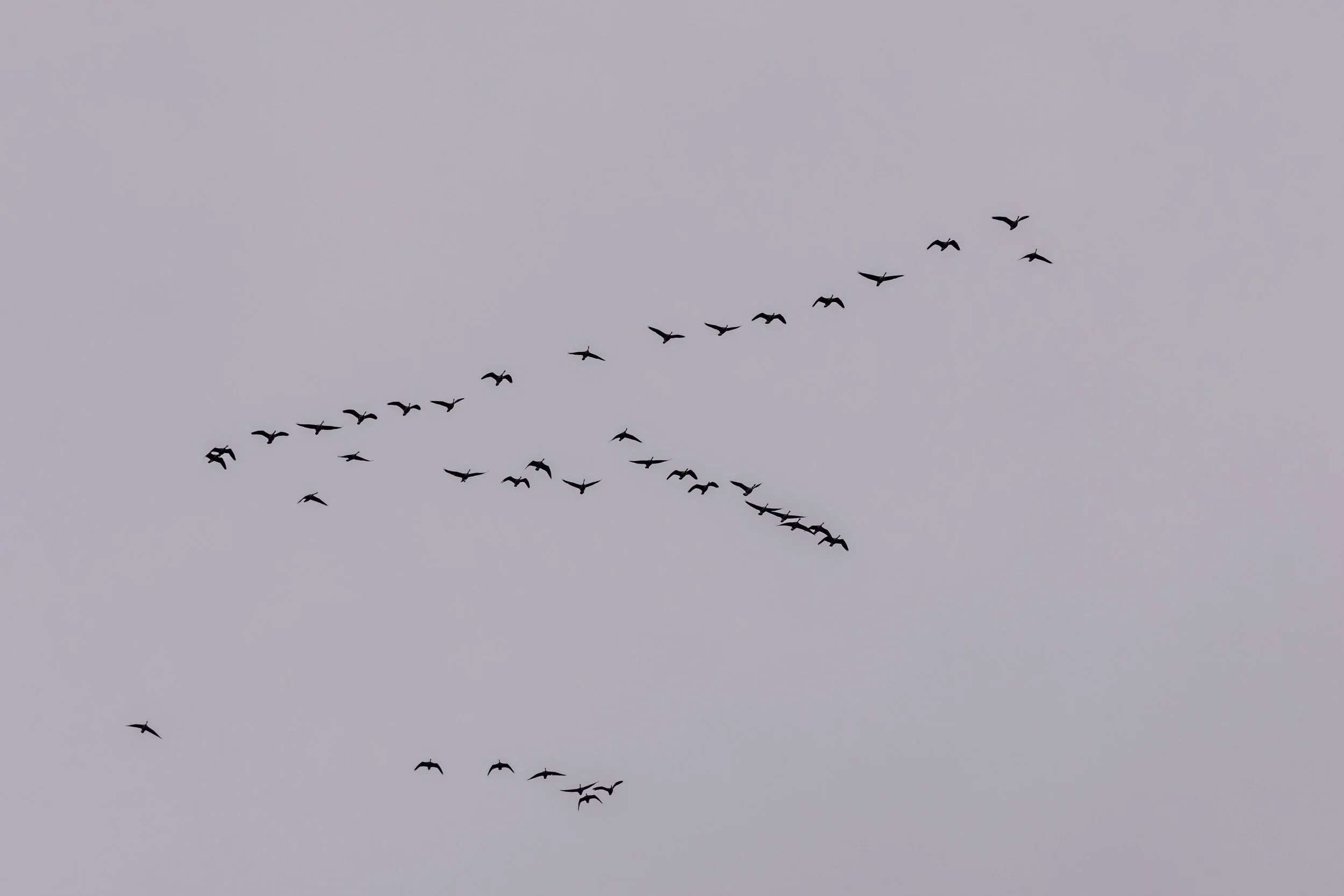
Flying by.
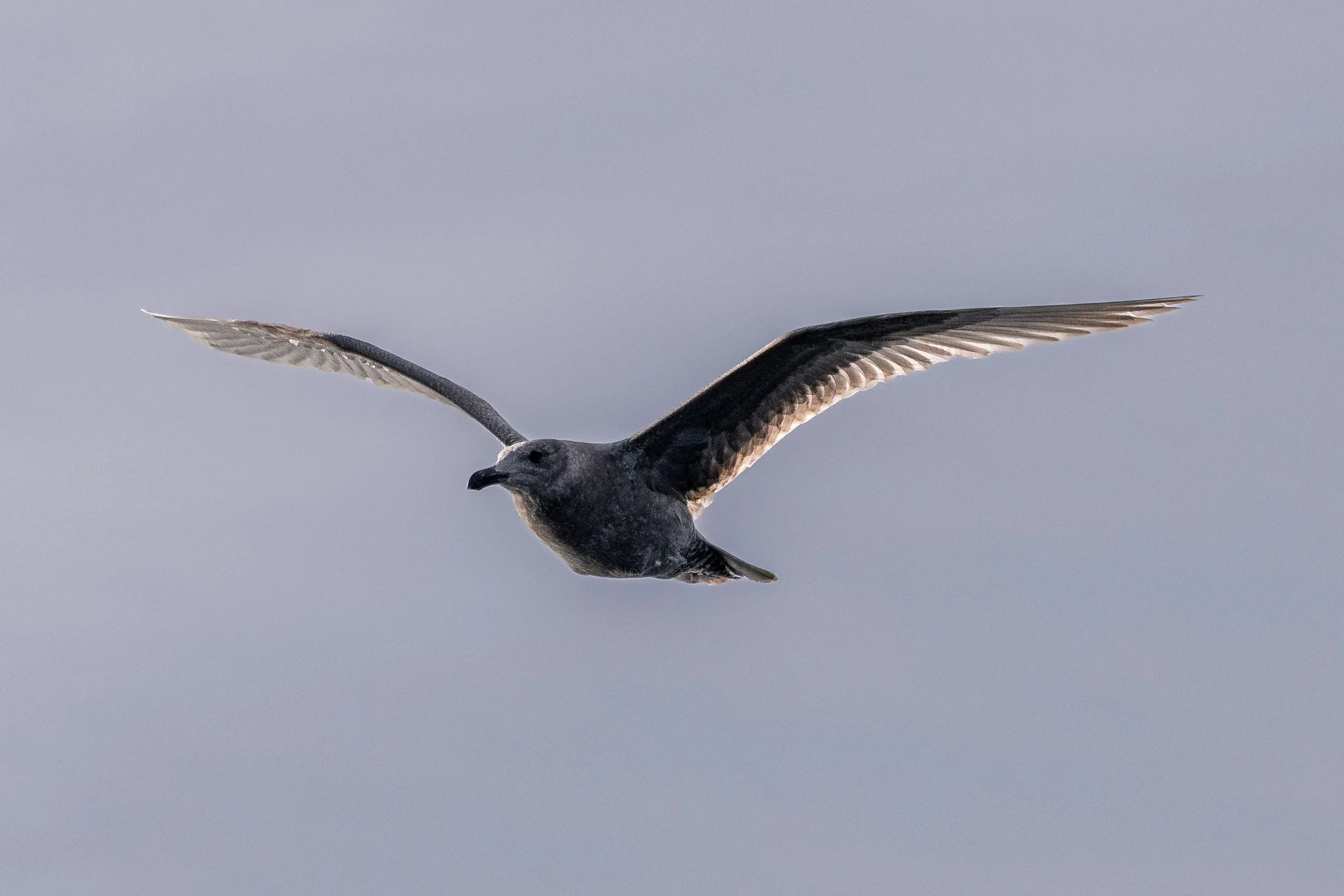
A Gull in flight.
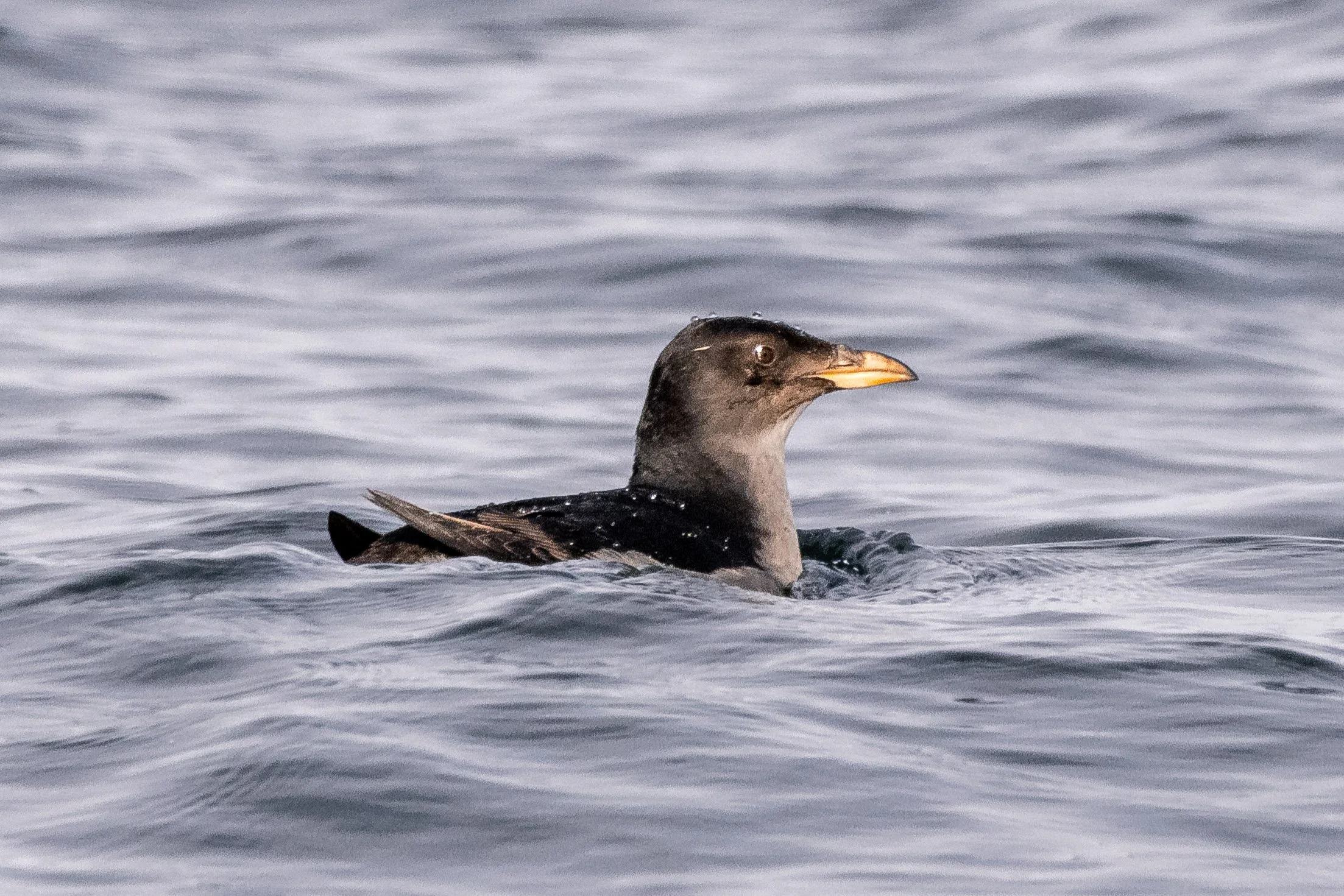
A nonbreeding Rhinoceros Auklet.
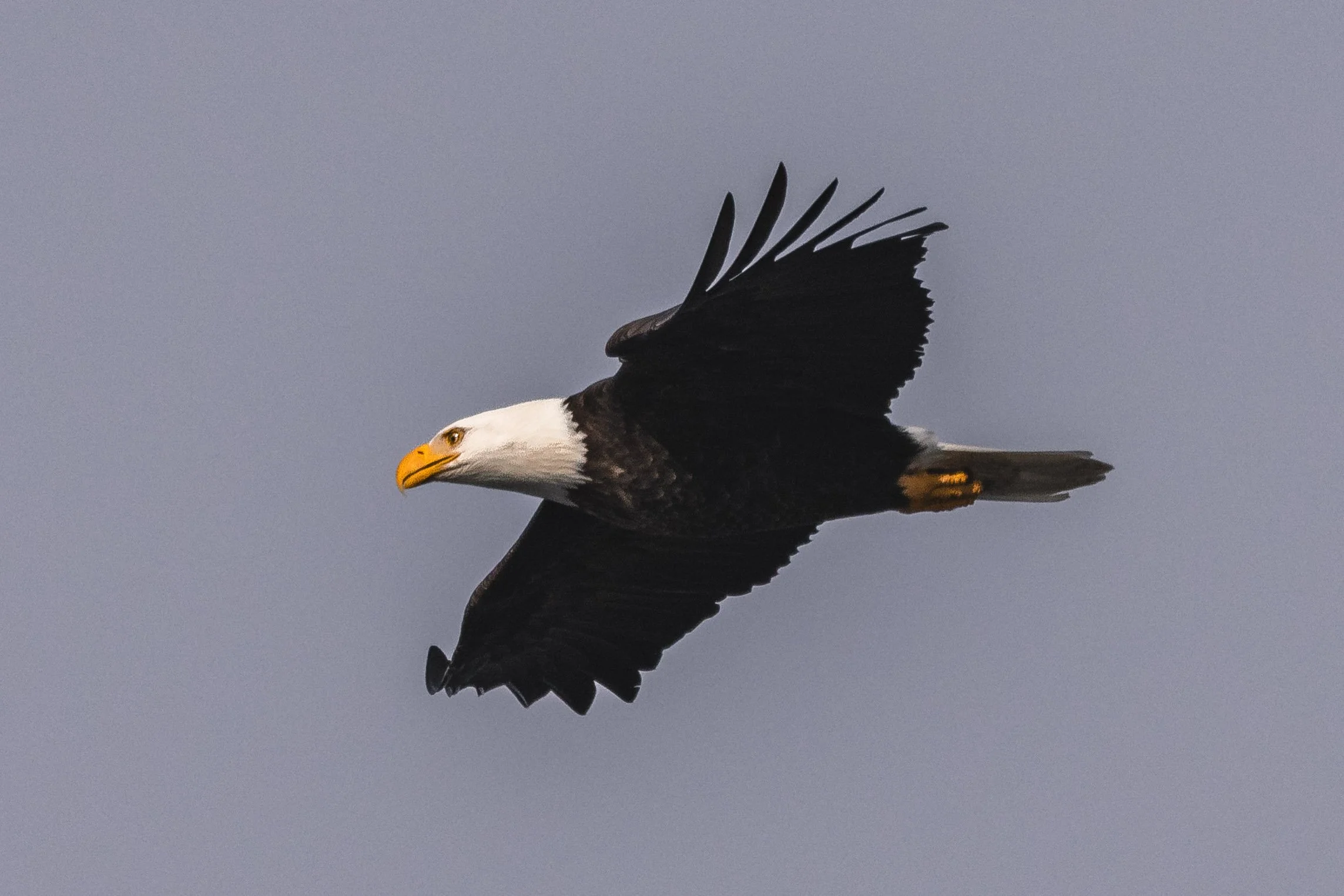
A Bald Eagle in flight.
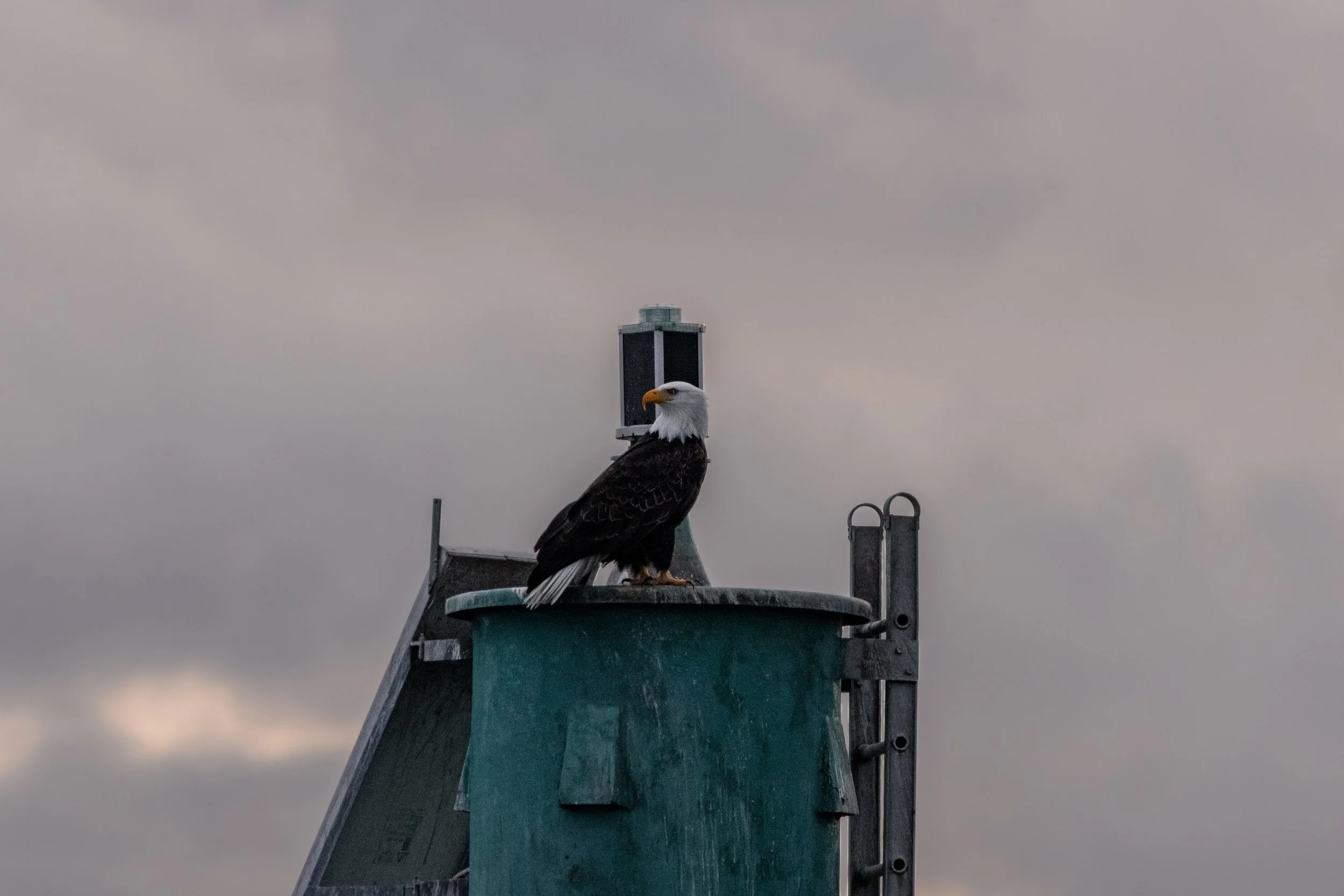
A Bald Eagle resting on a marker.
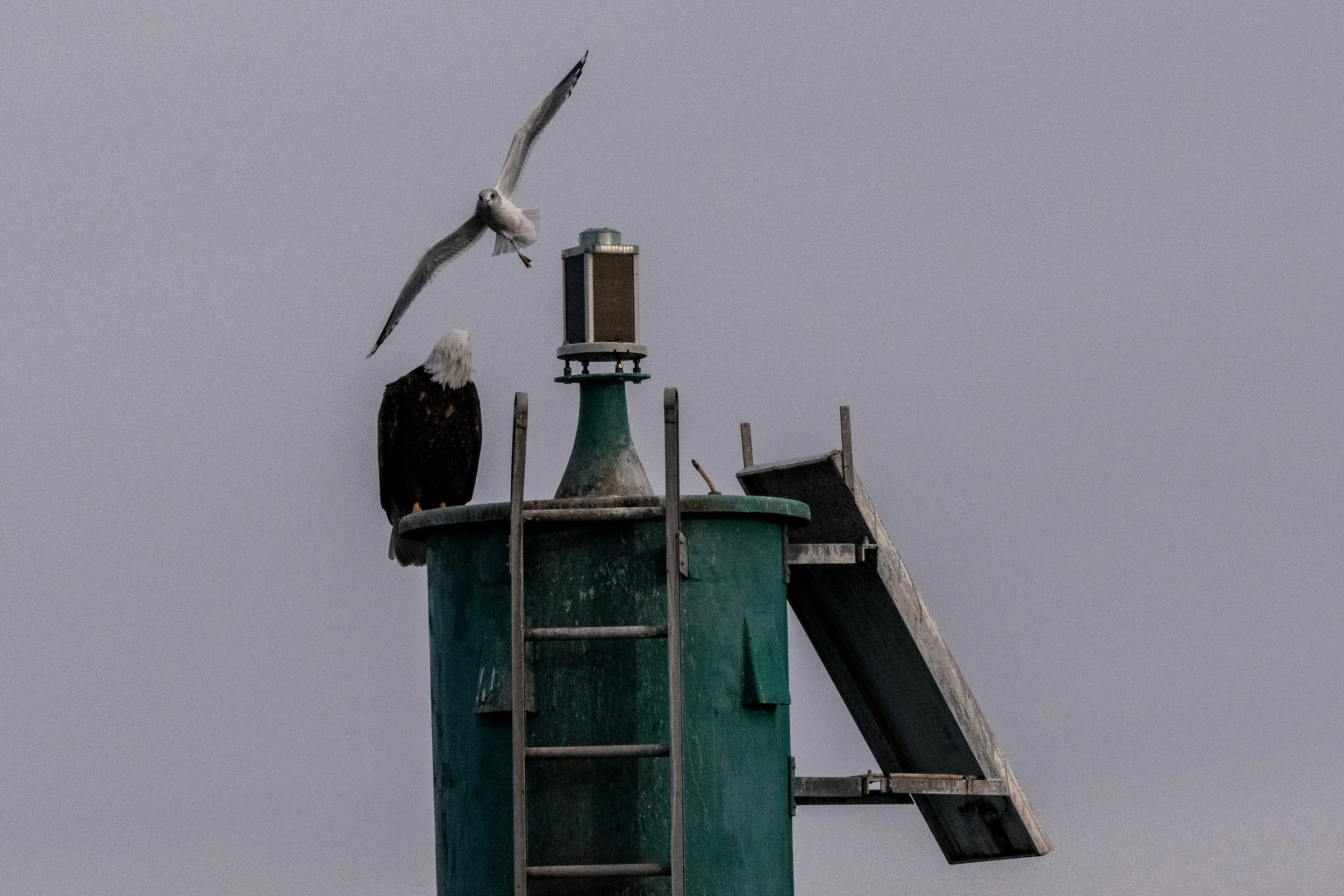
A Gull harassing the Bald Eagle.