
February 18, 2026 - Spending time with Pinnipeds of all kinds!
It was a classic West Coast winter day as our semi-covered vessel, Kula, departed Nanaimo in search of whales. Fresh snow dusted the mountaintops overnight, and beneath soft grey skies, the Southern Gulf Islands looked especially dramatic as we cruised south to begin our adventure.
To reach the heart of the islands, we first passed through Dodd Narrows, a narrow, dynamic passage well known to locals for its abundant wildlife. Seabirds wheeled overhead, seals and sea lions rode the currents, and the occasional Bald Eagle watched from the treetops; all on the lookout for their next meal. The powerful tidal exchanges that funnel through this narrow channel create strong currents and upwellings, concentrating baitfish near the surface and sometimes leaving them momentarily disoriented. It’s a natural buffet for predators.
As one of the northern exits from the Gulf Island channels, Dodd Narrows can also serve as a transit route for whales moving between the sheltered islands and the open waters of the Strait of Georgia. Today, however, no whales appeared in the narrows, so we continued south through Stuart Channel, Ruxton Pass, Pylades Channel, and out into the Strait ourselves.
Before getting too far, activity on the rocks just south of Gabriola Pass caught our attention. We made our way to a well-known haul-out site, Stinky Rock, and found it packed with Steller sea lion! While we see Stellers here year-round, winter often provides some of the best viewing opportunities. Adults spend the colder months feeding in our rich coastal waters before travelling south to their breeding rookeries in the spring and summer.
Juveniles, especially young males, typically remain in British Columbia through the breeding season. Although males reach sexual maturity between 3 and 8 years of age, they usually aren’t large enough to successfully defend a breeding territory until they approach full size at around 10 to 13 years old.
Size matters for Stellers. Breeding beaches are highly competitive, with males battling for prime stretches of shoreline where females gather. The dominant male on a section of beach sires the pups born there. During this intense period, males may fast for up to two months, surviving entirely on the fat reserves built up during winter feeding. Females, on the other hand, can leave periodically to forage, replenishing their energy while nursing their pups. The males’ thick, muscular necks, layered with protective blubber, serve both as armour during fights and as an important energy reserve.
As fascinating as these pinnipeds are, our search for whales continued. We headed farther into the Strait of Georgia, scanning for the telltale blows or dorsal fins on the horizon. After completing a wide search loop toward the Vancouver mainland, we returned toward the islands and entered Active Pass, another narrow channel known for strong currents and heavy vessel traffic.
Here we encountered several BC Ferries vessels navigating through the pass, surrounded by flocks of feeding Bonaparte's Gull. The swirling currents, amplified by passing ferries, brought small fish to the surface, creating a feeding frenzy for the agile seabirds.
Continuing north through Trincomali Channel and past Salt Spring Island, we made a stop near Thetis Island to visit another group of pinnipeds: Harbour seals. Unlike their sea lion cousins, Harbour Seals remain in British Columbia year-round and often stay within about 15 miles of their chosen haul-out sites. With numerous rocky resting spots throughout the Salish Sea, sightings of these smaller seals are common and always a delight.
Sharing the shoreline were several cormorants: sleek black seabirds perfectly adapted for underwater hunting. These remarkable divers can plunge as deep as 120 feet in pursuit of fish. Unlike many other seabirds, cormorants have less preening oil on their feathers, allowing them to reduce buoyancy and dive more efficiently. The tradeoff? Wet feathers. That’s why you’ll often see them perched with wings fully outstretched, drying in the wind, just as we observed today.
Although whales remained elusive on this particular tour, the day was anything but empty. With snow-capped mountains, dramatic currents, bustling seabird colonies, and thriving pinniped haul-outs, there was no shortage of West Coast wildlife to enjoy. Guests received complimentary return vouchers, giving everyone another opportunity to join us in search of whales.
As captured beautifully in the photos below by Marine Naturalist Vanessa Vereschahen, the Salish Sea always has a story to tell, and we can’t wait to welcome everyone back to continue the search.
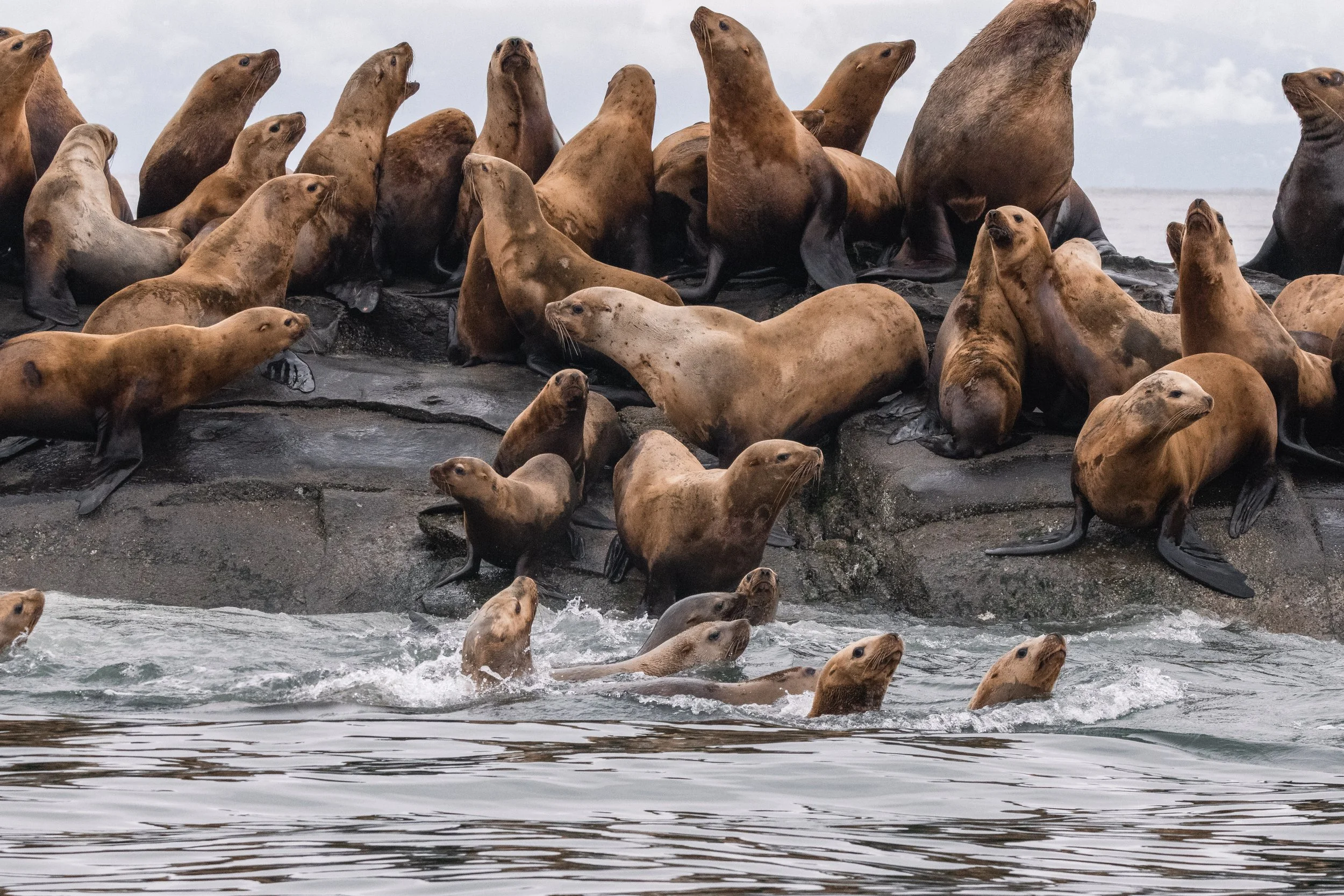
Steller Sea Lions both on the rocks and in the water at Stinky Rock.
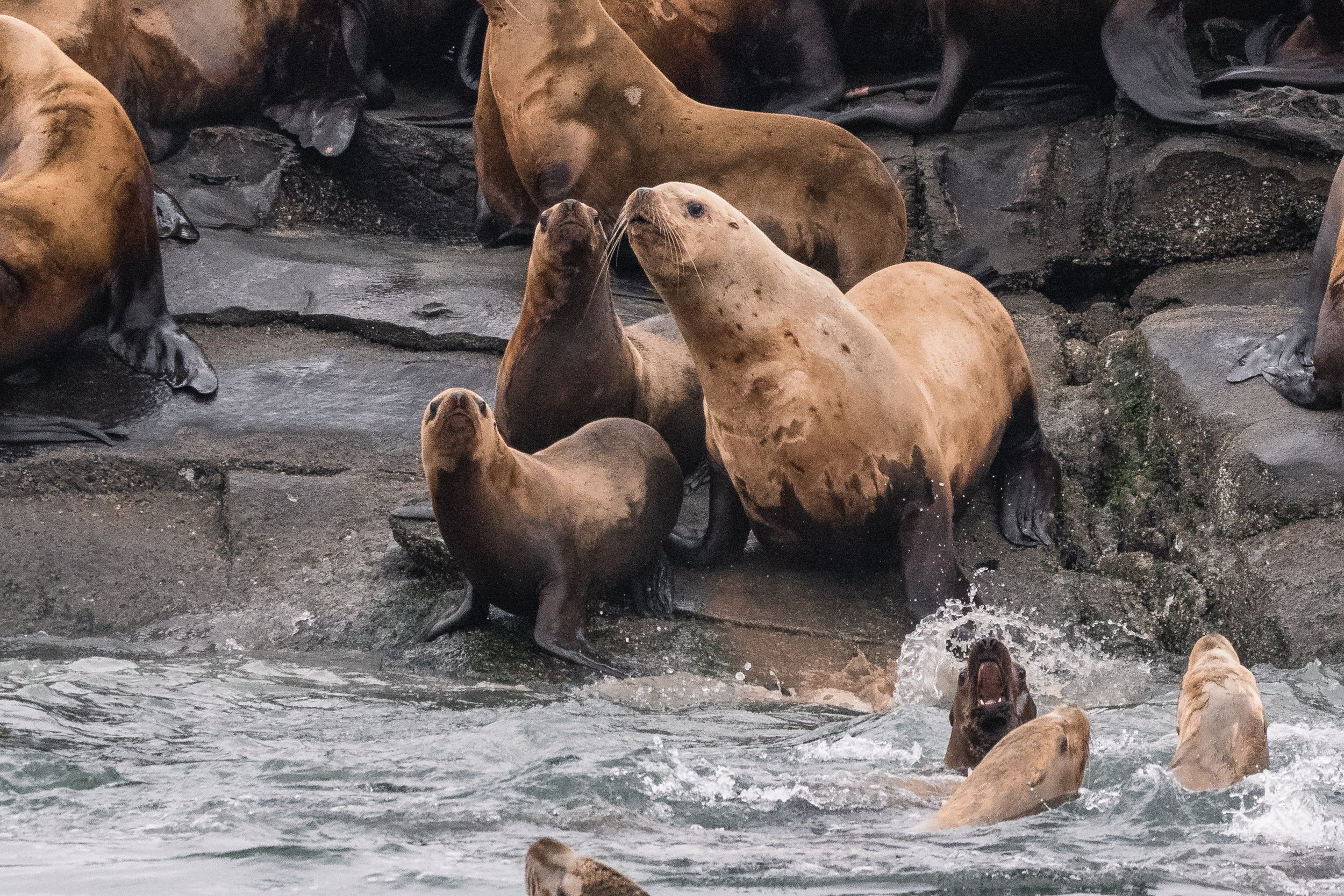
A trio of Steller Sea Loons watching us.
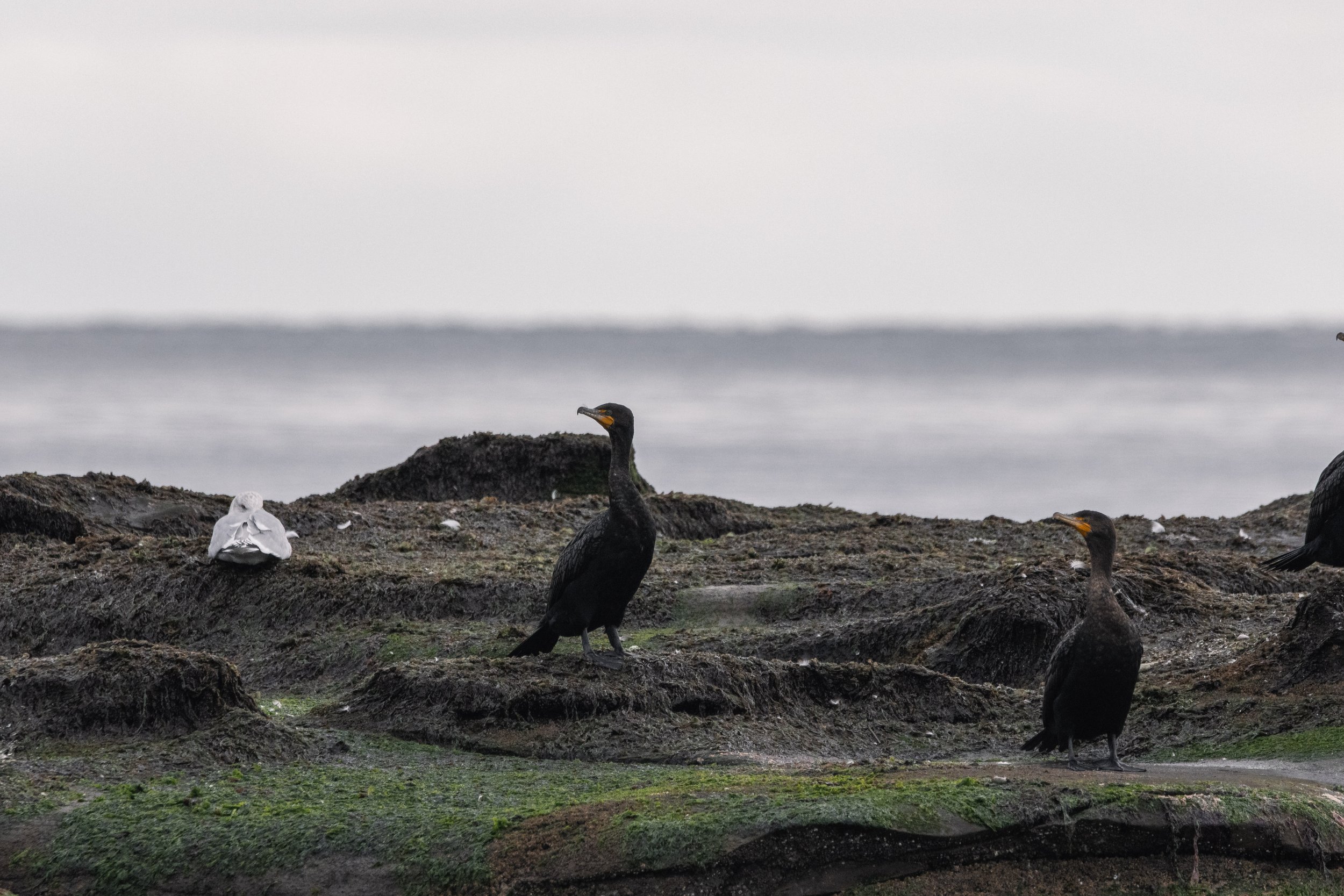
A very photogentic Cormorant shairng the rocks.
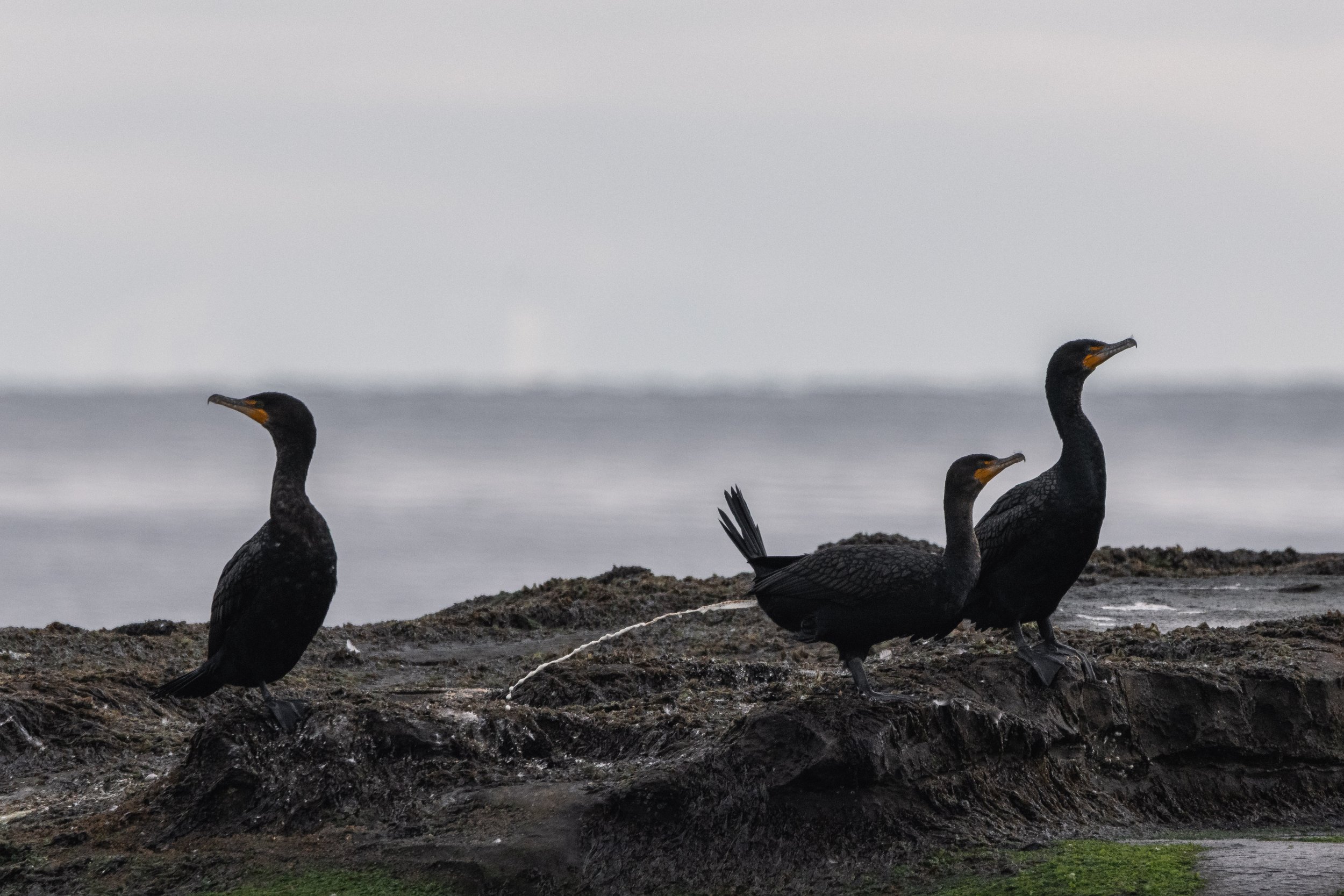
While it’s impressive the photo caught it, cormorants are estimated to poop every 4 - 10 minutes, so there are lots of opportinities!
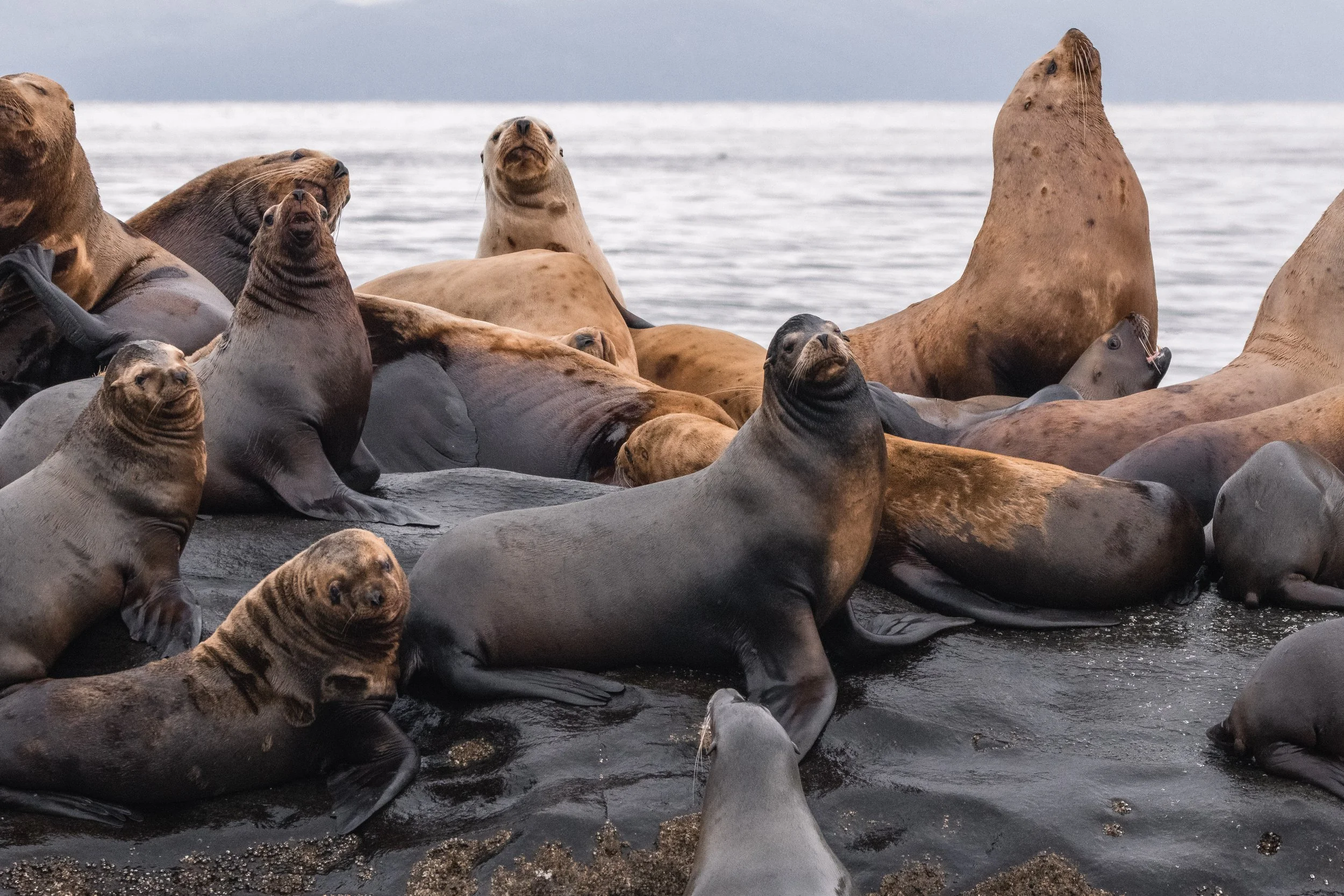
You can see how curious the sea lions are.
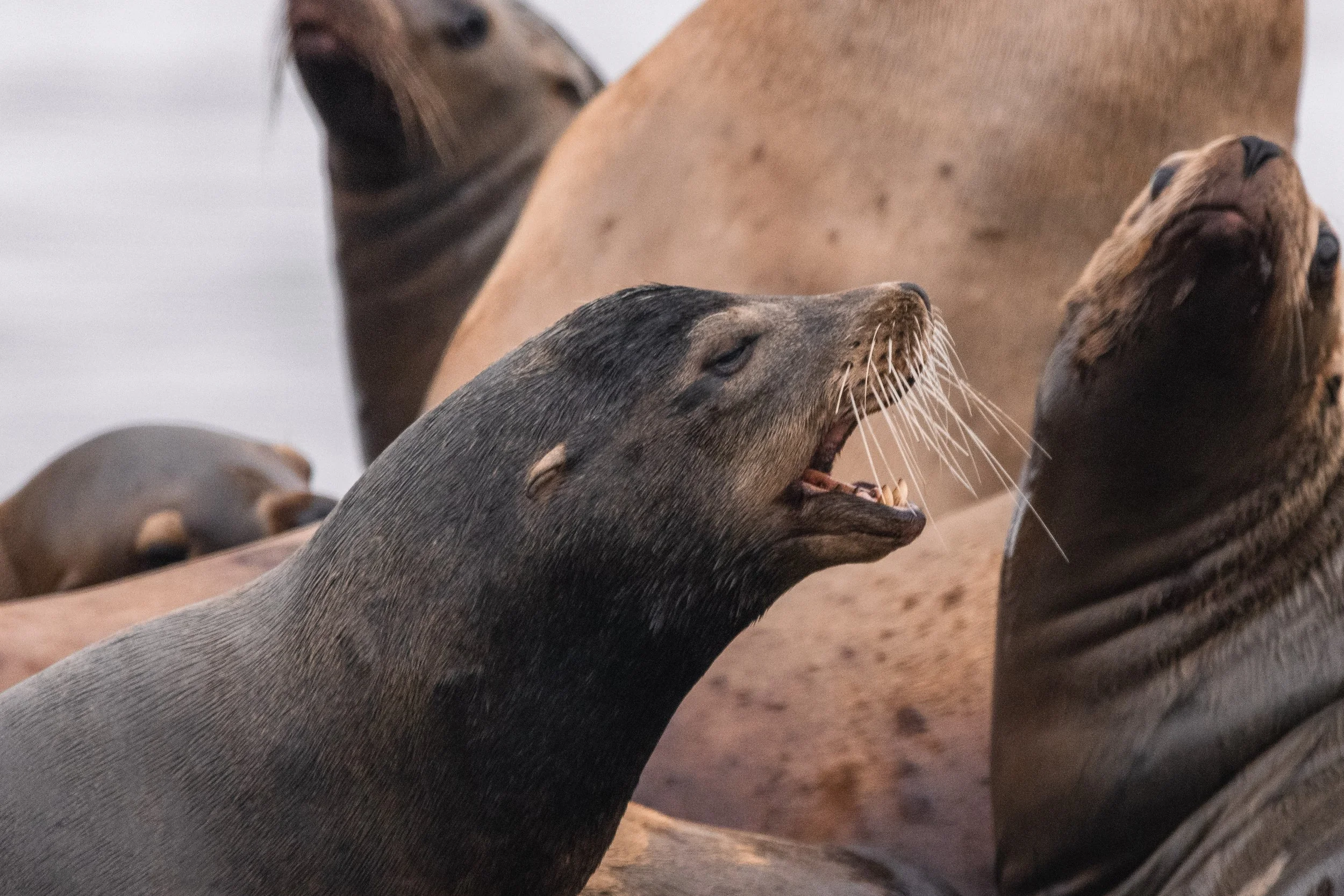
Fights often break out on the rocks when the sea lions are in close proximity.
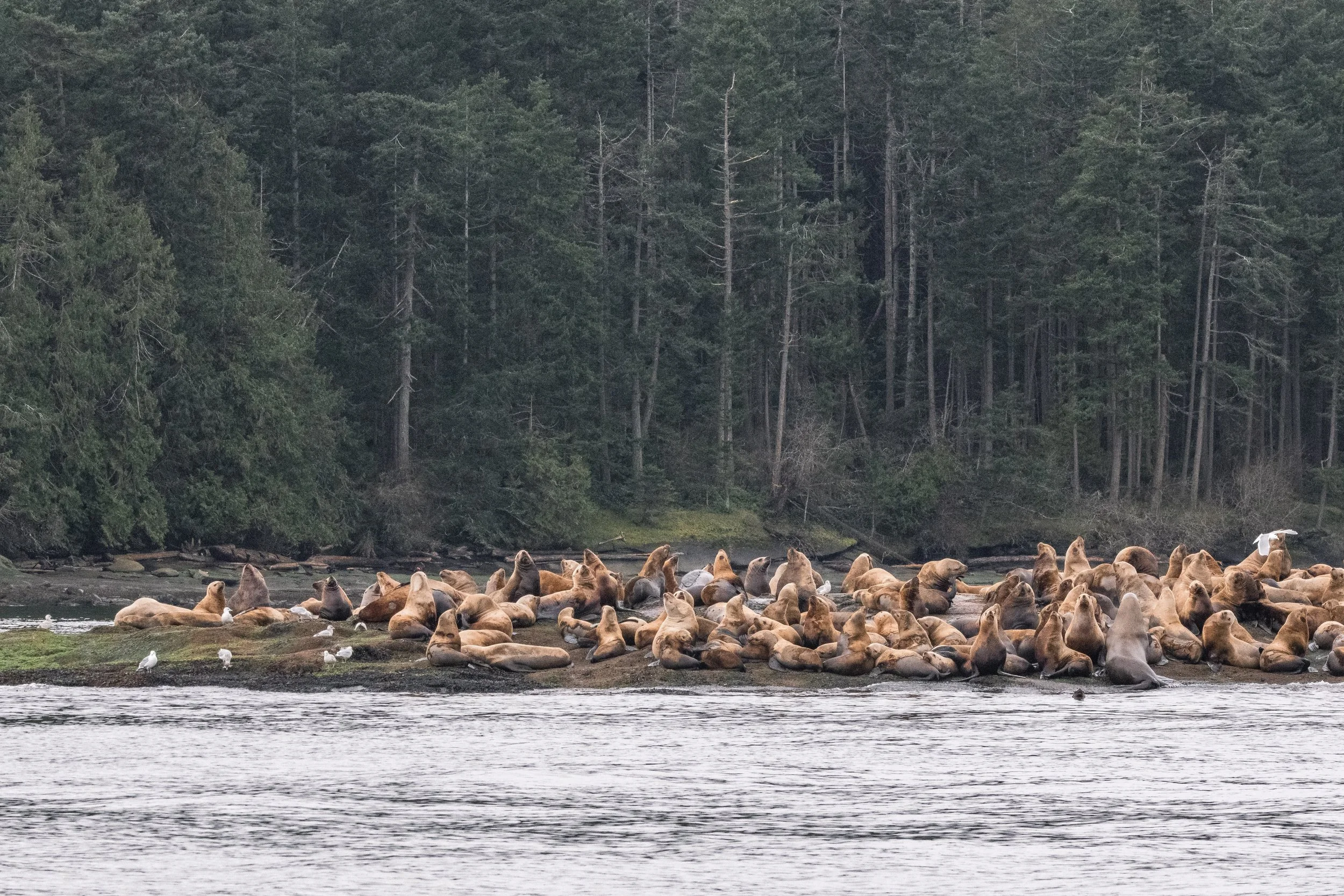
A longer shot of the Haul-out site.
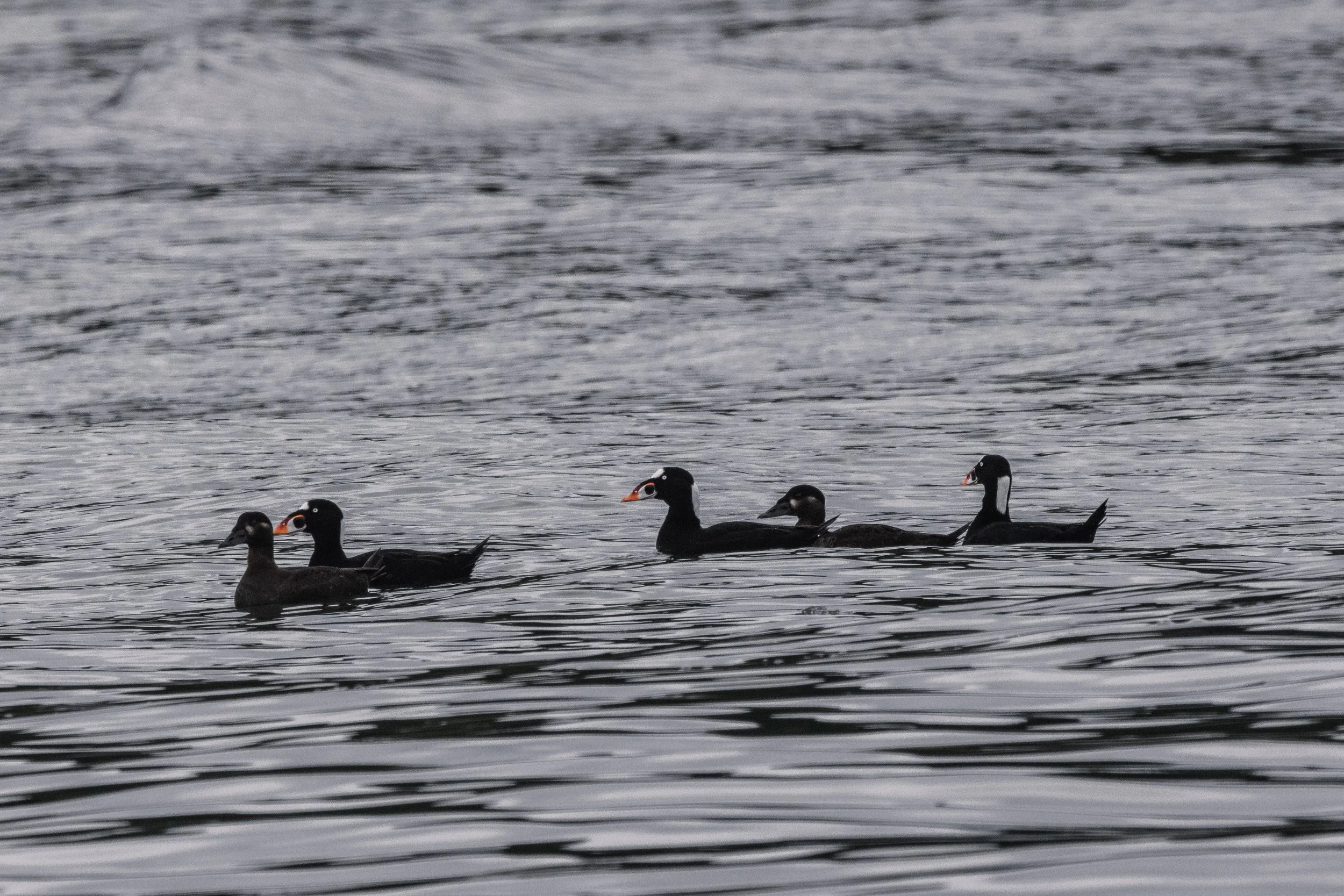
Surf Scoters floating by.
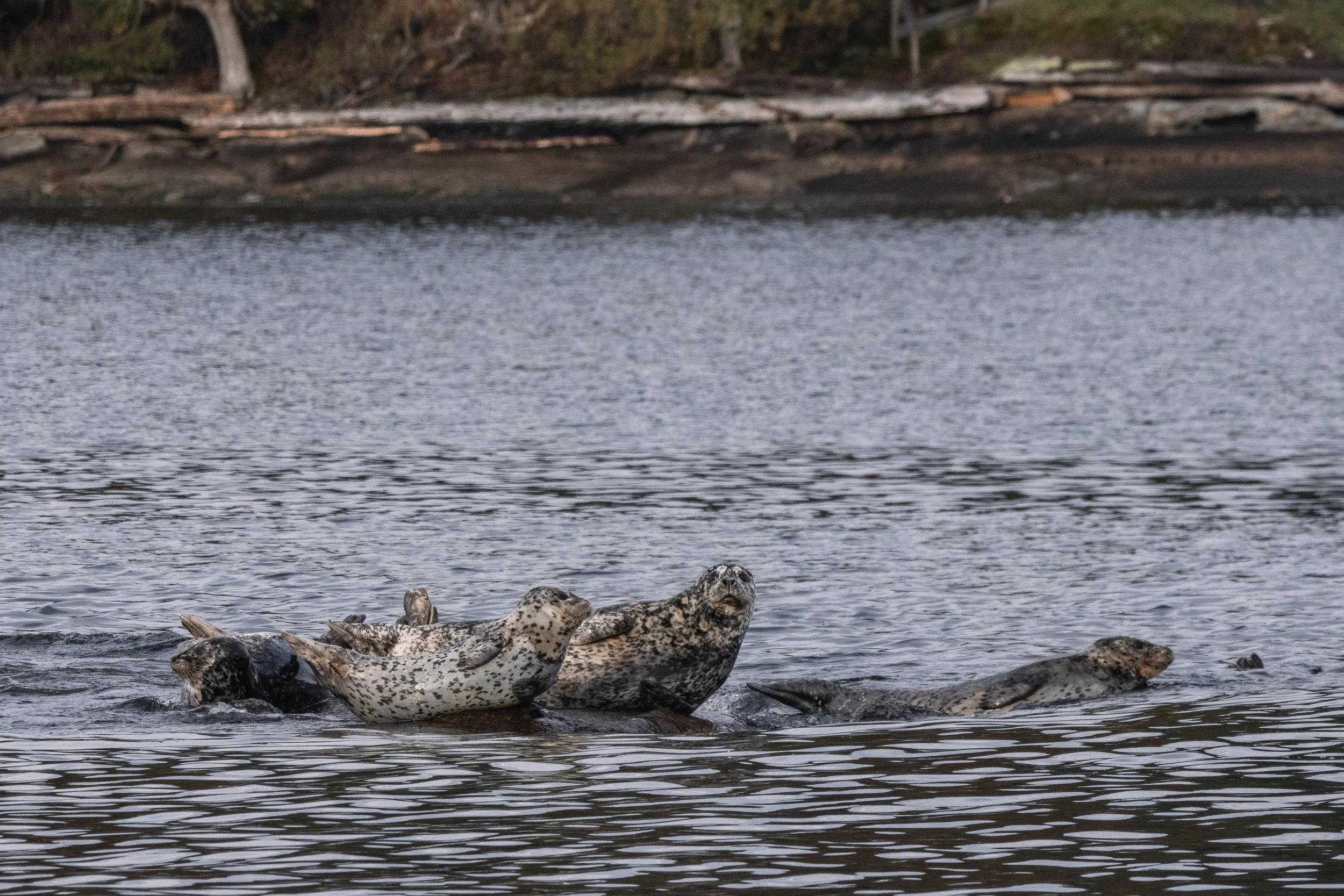
Harbour Seals balancing on the rocks.
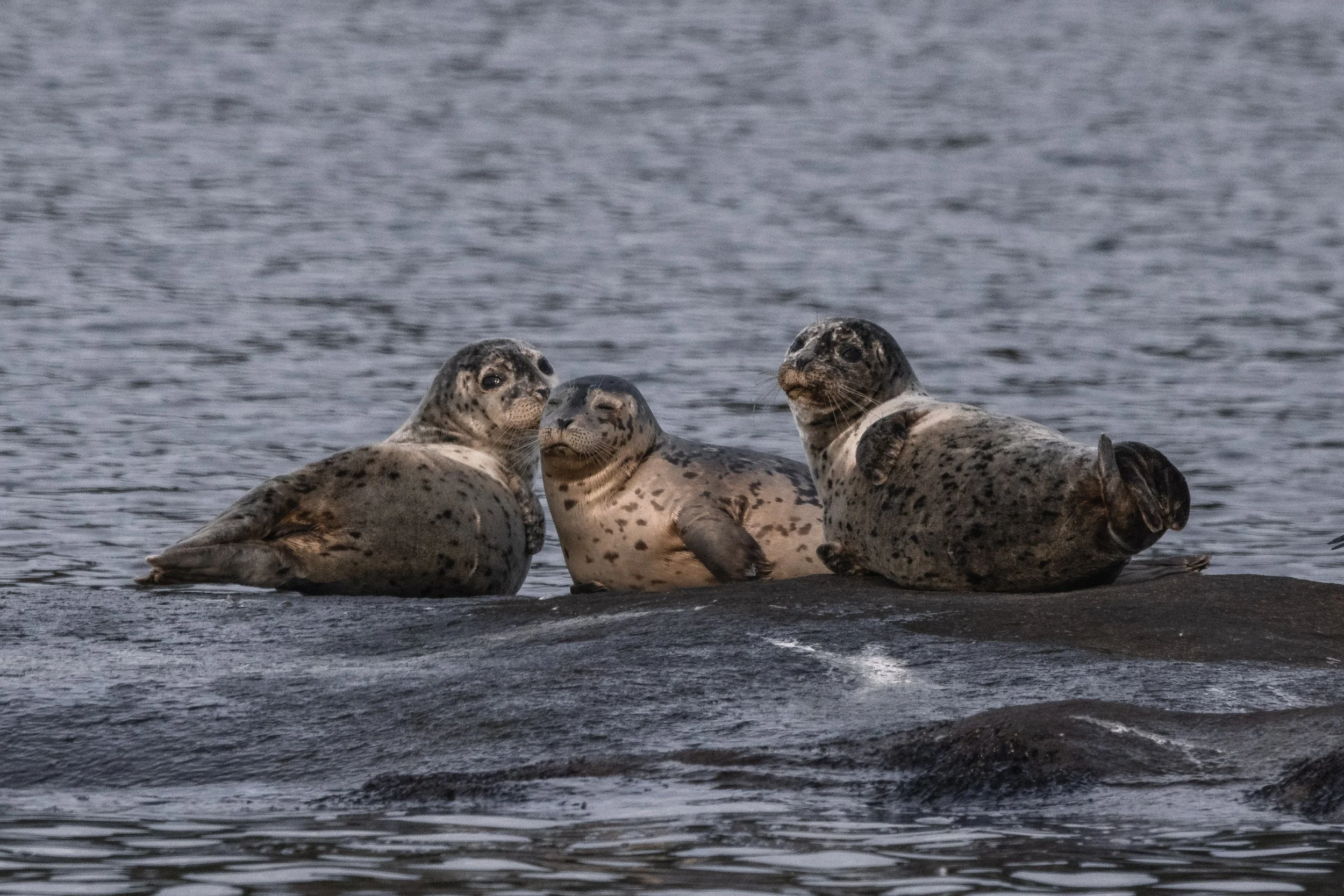
A very content looking group of seals.
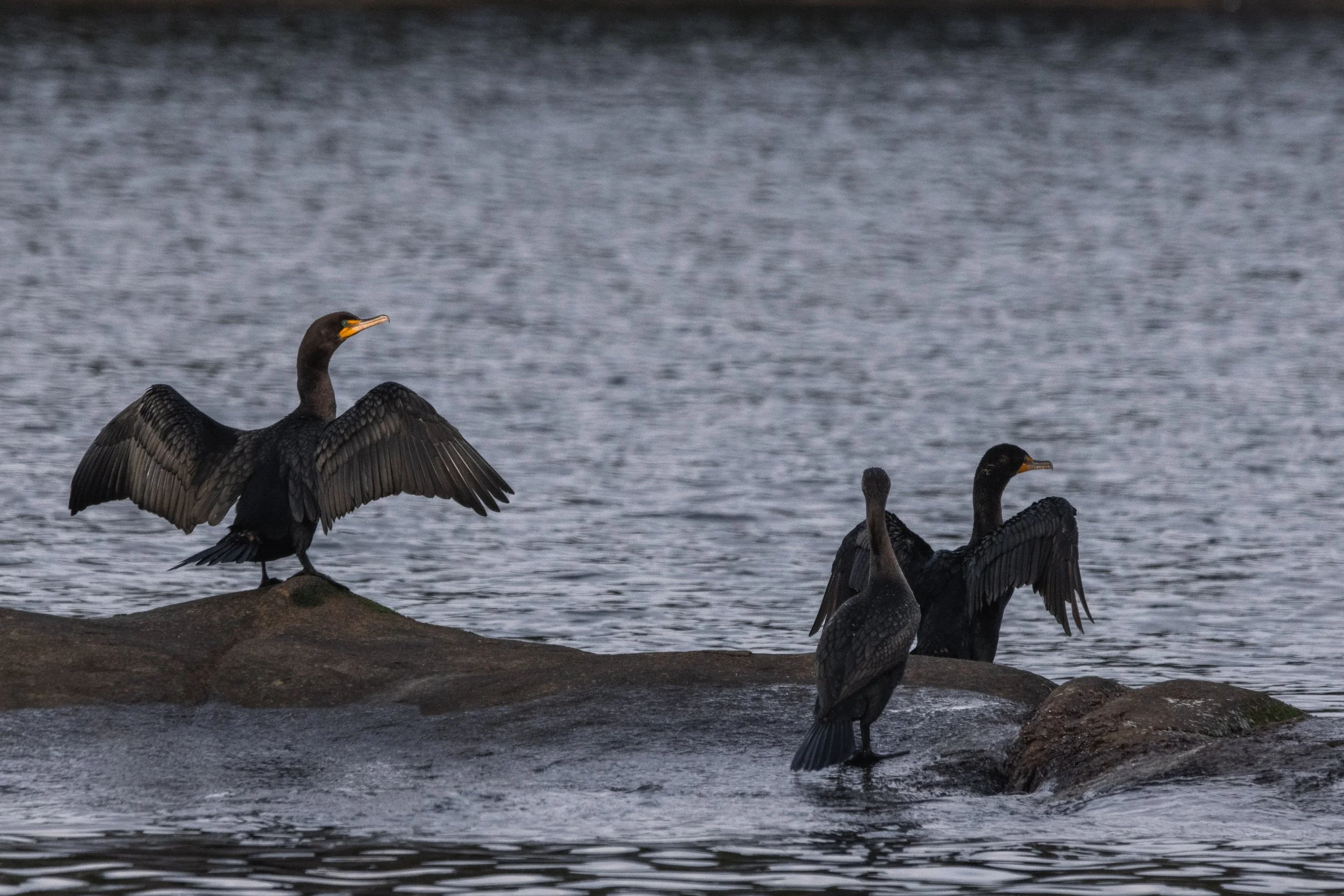
Cormorants drying themselves off in the wind.
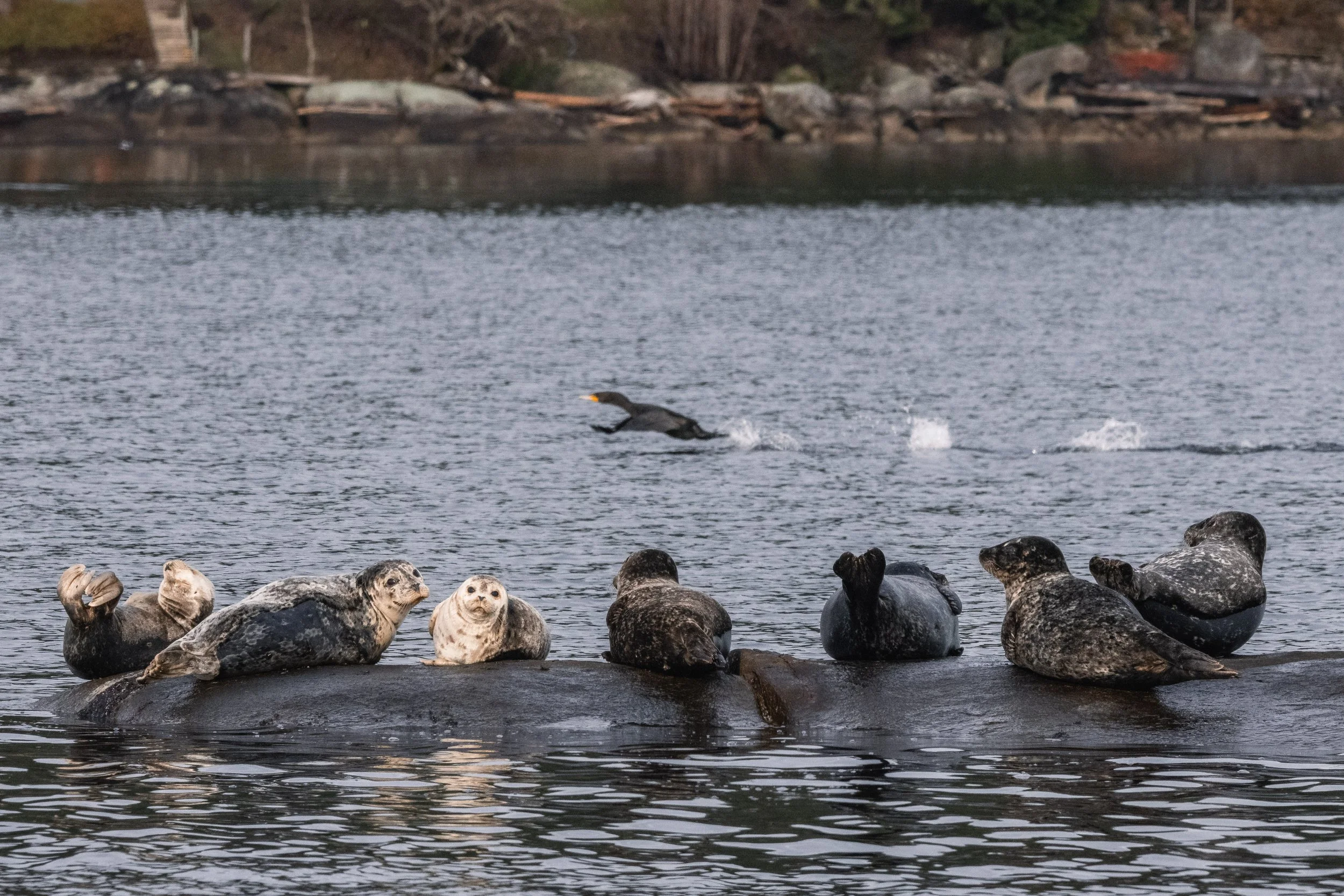
A bunch of differnt seal poses in the foreground, with an awkward takeoff from a cormorant in the back!