
March 13, 2026 - A new baby in the Salish Sea!
With a little wind and a lot of sunshine on our side, we pushed off the dock aboard Kula, our semi-covered vessel, ready for a day of exploring the beautiful Salish Sea. The water sparkled under the morning light as we scanned the horizon the old-fashioned way, with our eyes.
Unlike many animals that researchers track using satellite tags or chips, the whales we see here are completely wild. They are not chipped or tracked in real time. Instead, experienced captains and naturalists rely on sharp observation, knowledge of the whales’ travel patterns, and communication with other responsible vessels to locate them. Every sighting is the result of patience, teamwork, and a little bit of luck. Some days we find whales quickly… and other days, like today, the search takes a bit longer. Even when whales are playing hide-and-seek, the Salish Sea always has something incredible to offer.
As we explored the coastline, we stopped by the White Islets, where the rocks were bustling with life. Stretched across the sun-warmed stone were dozens of harbour seals, one of the most commonly seen marine mammals in our region. Harbour seals are perfectly adapted for life in the water. They can hold their breath for up to 30 minutes, dive hundreds of metres deep, and use their sensitive whiskers to detect fish movement in dark or murky water. Despite their cute appearance, they are impressive hunters that feed on a wide variety of fish, squid, octopus and even crabs.
Sharing the rocky outcrops were the much larger Steller Sea Lions, the giants of the sea lion world and the largest sea lions on the planet. Adult males can weigh over 2500 pounds and are easy to recognize by their thick necks and powerful, roaring calls that echo across the water. Unlike harbour seals, which are relatively quiet, Steller Sea Lions are social and vocal animals, often gathering in noisy groups as they rest between feeding trips. It was a wonderful boat ride filled with wildlife and stunning scenery, but still no whale blows in sight. Our captain, Rodrigo, watched the water carefully before making a call. “Let’s search north.” So north we went, cruising further into the Salish Sea in hopes of finding a telltale splash or distant plume of mist on the horizon. Then, just over three hours into our search, near the northern end of Hornby Island, it finally happened. A splash. Moments later, another. Our patience had paid off!
As we approached carefully, we realized we had stumbled upon something special: a T-party. In the world of transient killer whales, a T-party occurs when multiple family groups temporarily come together, forming a larger social gathering. These events can be exciting because they often involve socializing, play, and sometimes coordinated hunting. And today, the whales were clearly on the hunt.
Most of what happens during an orca hunt actually occurs beneath the surface, hidden from our view. These whales are highly intelligent predators that work together to locate and capture marine mammals such as seals and sea lions. They move silently through the water, communicating with subtle signals and coordinating their movements as a team. While we may only see brief splashes, quick dives, or sudden bursts of activity at the surface, we know an incredible display of cooperation is unfolding below the waves. Even catching small glimpses of this behaviour is thrilling. But the surprises weren’t over yet. Among the whales, we spotted the T049A family, and with them was a brand-new addition to the group, the newest calf swimming close beside their mother, Nan. The orca present today were:
T049A Nan ♀ (1986)
T049A1 Noah ♂ (2001)
T049A3 Nat ♂ (2011)
T049A4 Neptune ♂ (2014)
T049A5 Nebula ♀ (2017)
T049A6 Charlie II ♂ (2022)
T049A7 (2026)
T050 Boulder ♀ ~ (1908)
T050B Sita ♀ (1999)
T050B2 (2020)
T050B3 (2025)
T050D Lyrical (2011)
T071B1 Zengo (2013)
Seeing Nan was especially meaningful. Recently, her children were spotted twice without her, raising concern among those who closely follow these whales. While it’s not unusual for transient killer whales to travel separately from their maternal groups from time to time, especially like T049A2 Jude, Nan’s second son, who often ventures off on his own, it is less common for the matriarch to be absent. Naturally, we wondered what might have happened. As it turns out, Nan simply had something important to take care of: welcoming a new calf into the world! We like to imagine she may have slipped away for a bit of peace and quiet to give birth away from the chaos of her famously rambunctious children. On one memorable occasion, Nan was seen punting her calf Nebula clear out of the water after some particularly mischievous behaviour. She’s a tough mom, but clearly a very good one. In fact, all seven of Nan’s calves are alive, which is remarkable. Orca calves face a challenging start to life, and the mortality rate during the first few years can be high. Many calves do not survive their early development, making Nan’s success as a mother especially impressive. Her experience and leadership likely play an important role in helping her family thrive. And with a new calf in the family, it makes perfect sense that the group was actively hunting today. A nursing mother requires extra calories to produce milk, and transient killer whales rely on high-energy prey like seals and sea lions to meet their nutritional needs.
When several pods gather in a T-party, hunting can become even more effective. Different whales may take on different roles during a hunt, some searching, others herding prey, and others moving in for the capture. Once a successful hunt is made, the whales often engage in prey sharing, distributing pieces of the meal among family members. This behaviour strengthens social bonds within the group and ensures that younger or less experienced whales, as well as nursing mothers like Nan, get the nourishment they need.
Watching this family together, with their brand-new calf swimming alongside them, was an unforgettable moment and a powerful reminder of how dynamic and resilient these animals are. After a long search across the Salish Sea, our patience had been rewarded with an incredible encounter: a social gathering of transient killer whales, an active hunt, and the exciting discovery of a new member of the T049A family.
Days like this remind us why every trip out on the water is an adventure. You never know what you’ll find, but when nature decides to reveal its stories, they are always worth the wait.
Photos below taken by Marine Naturalist Aly Kohlman.
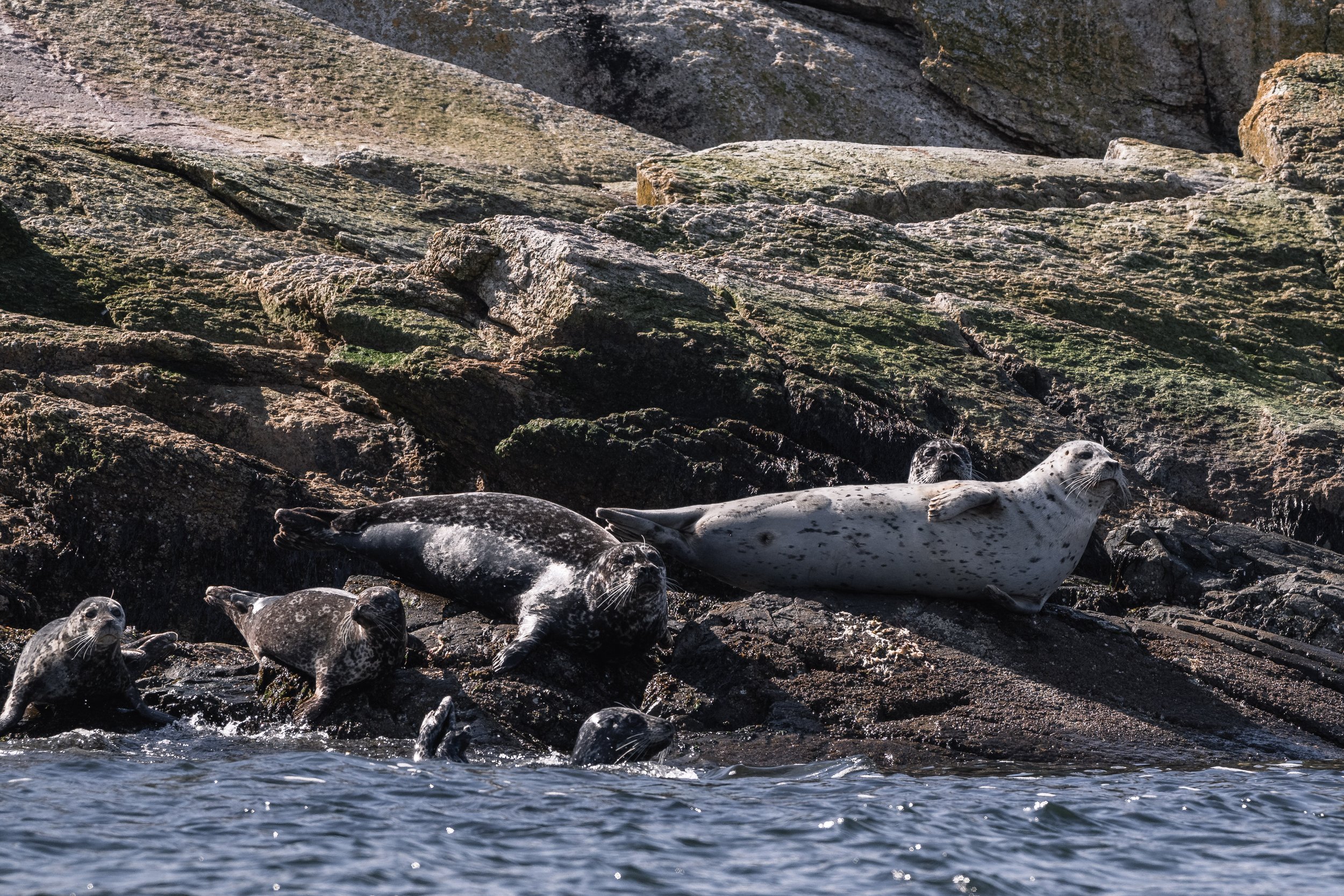
Harbour seals relaxing on the rocks.
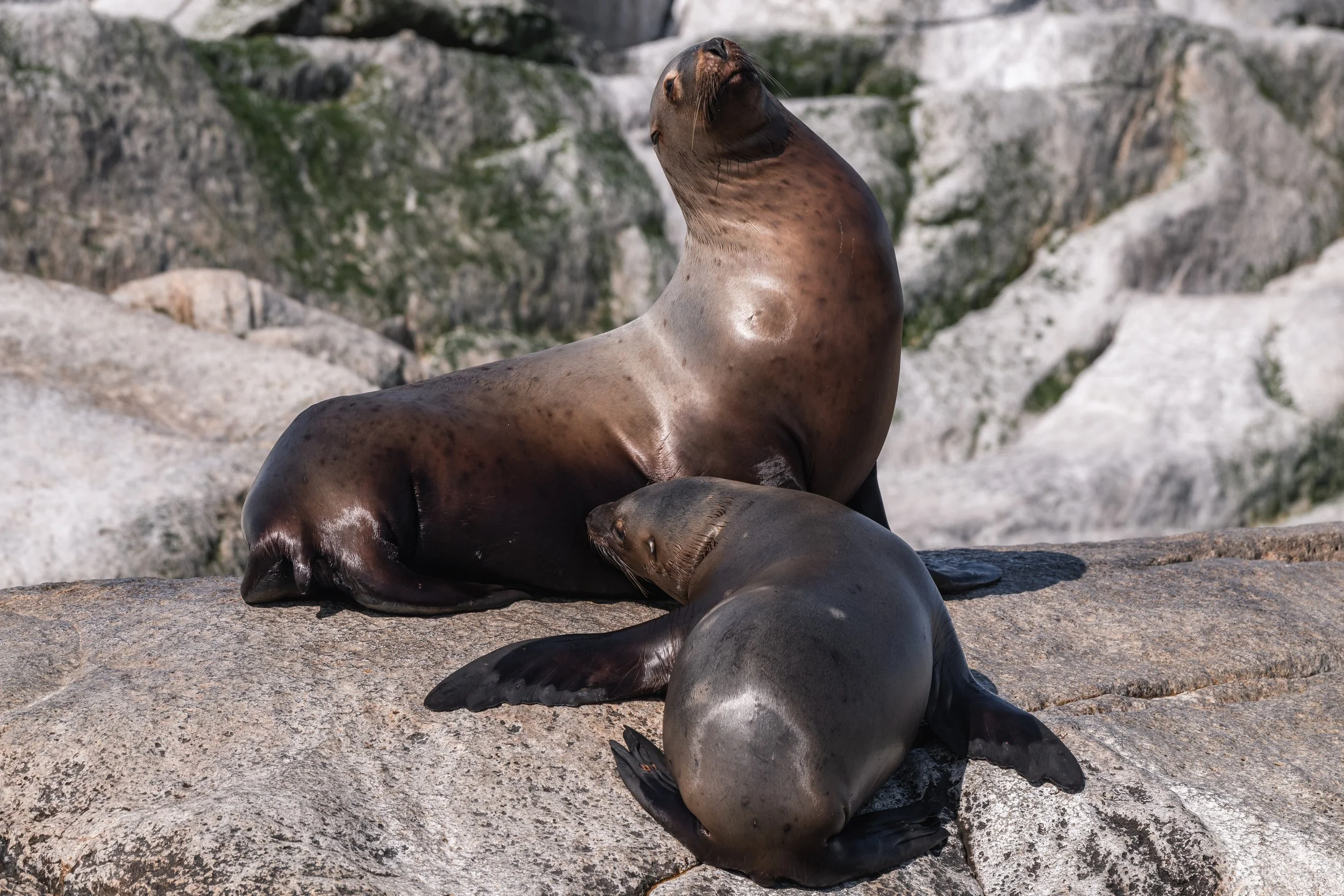
A Steller Sea Lion nursing.
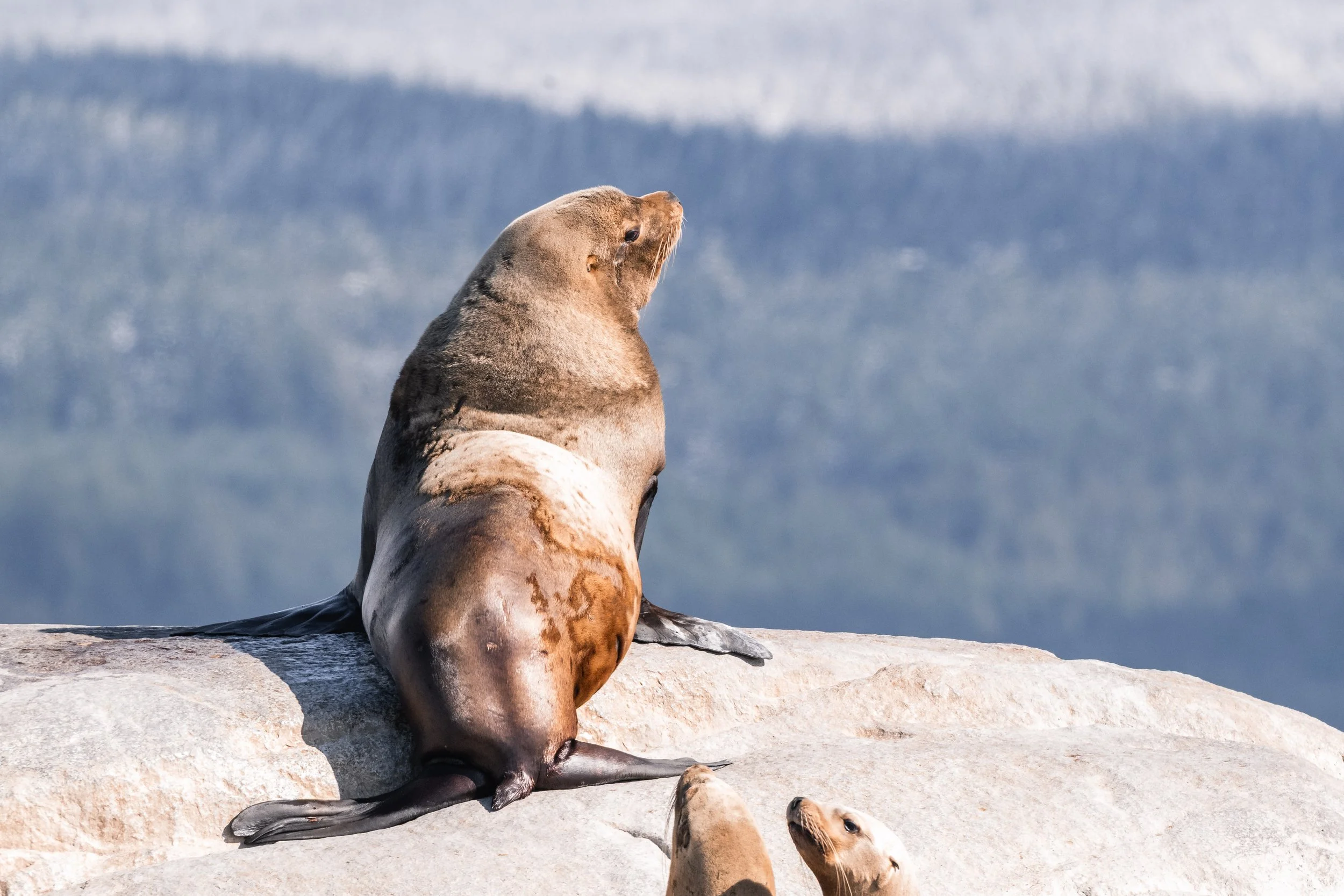
A large male Steller Sea Lion posing for the camera.
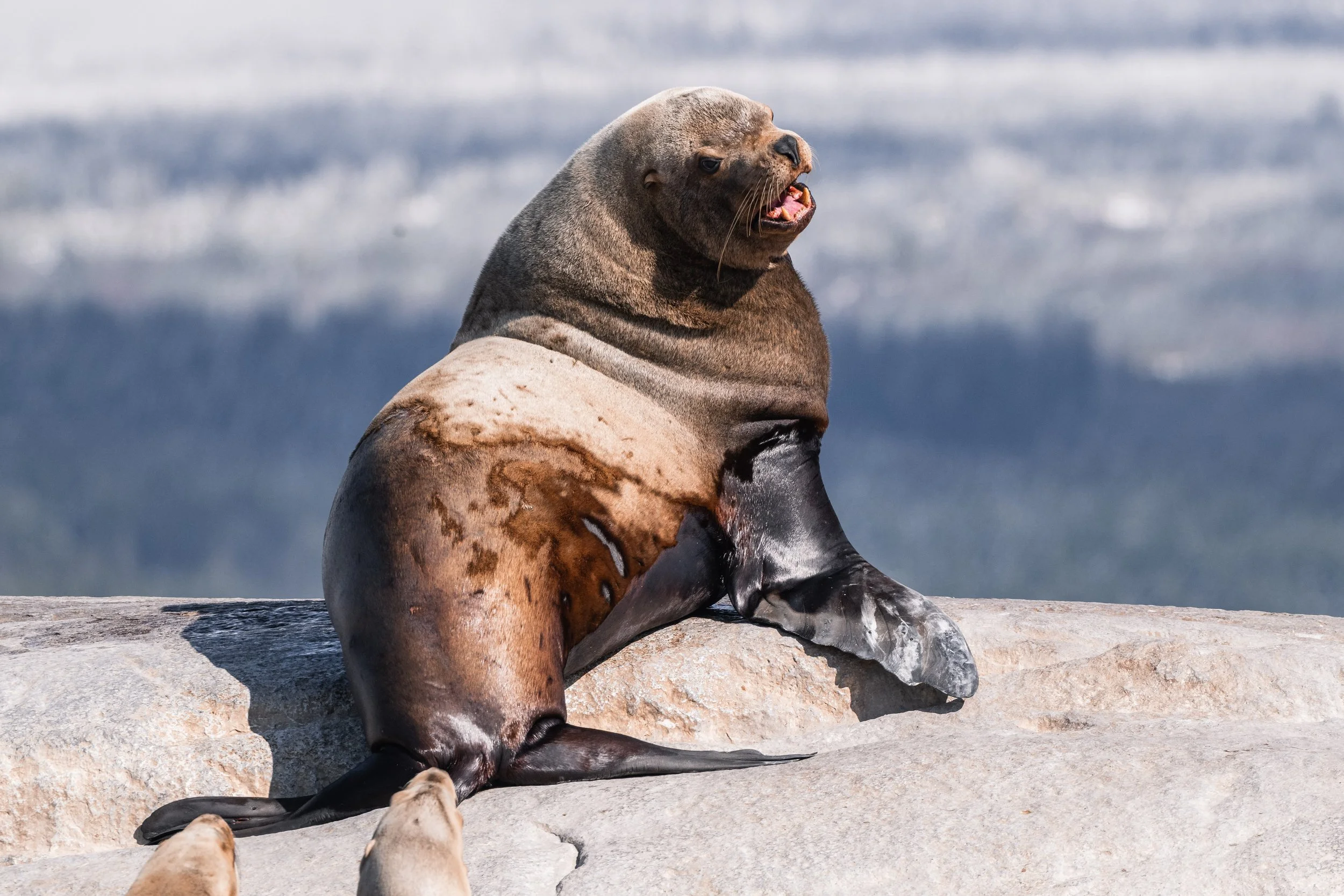
Something has made him grumpy!
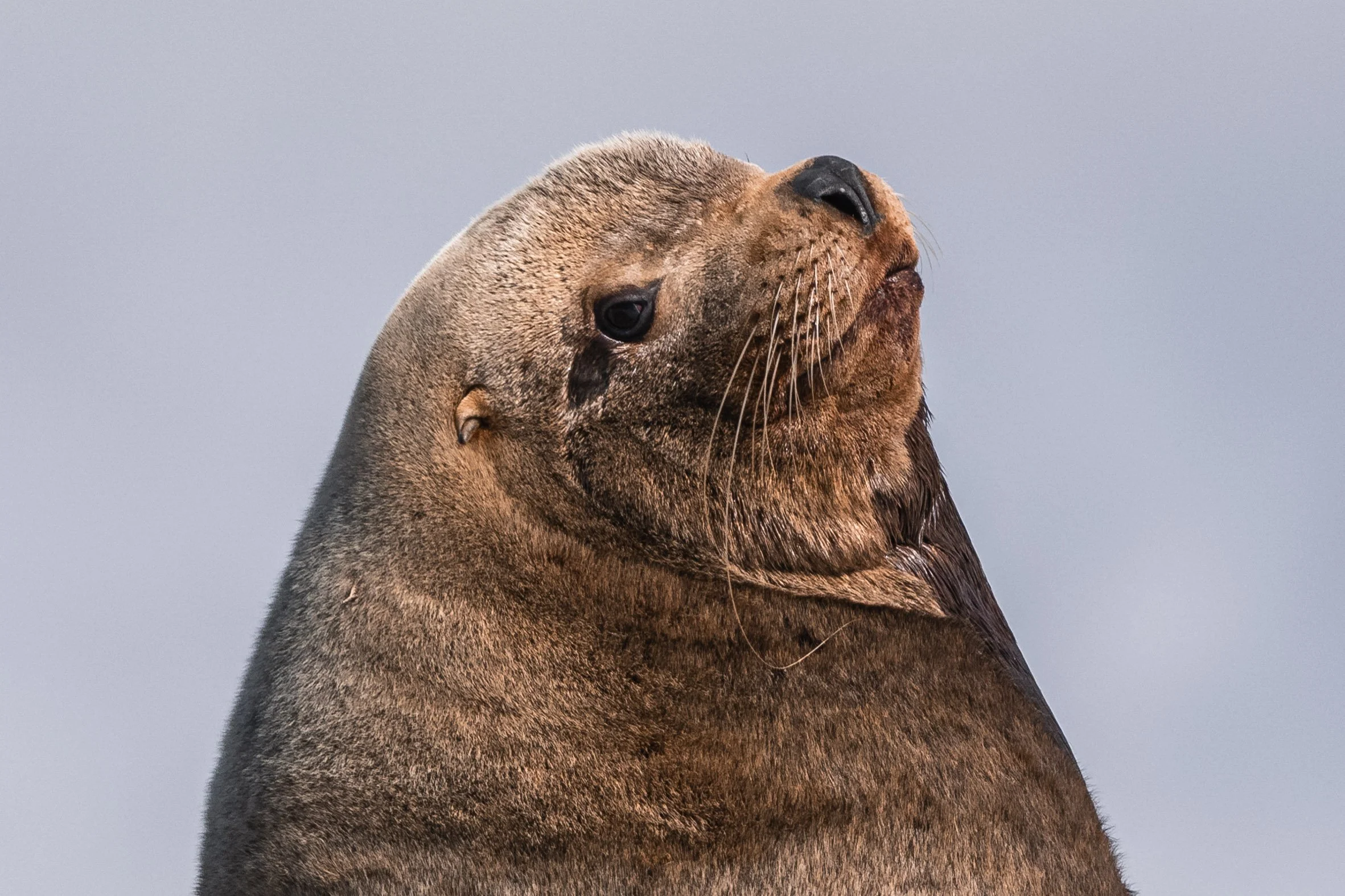
Look at his fuzz!
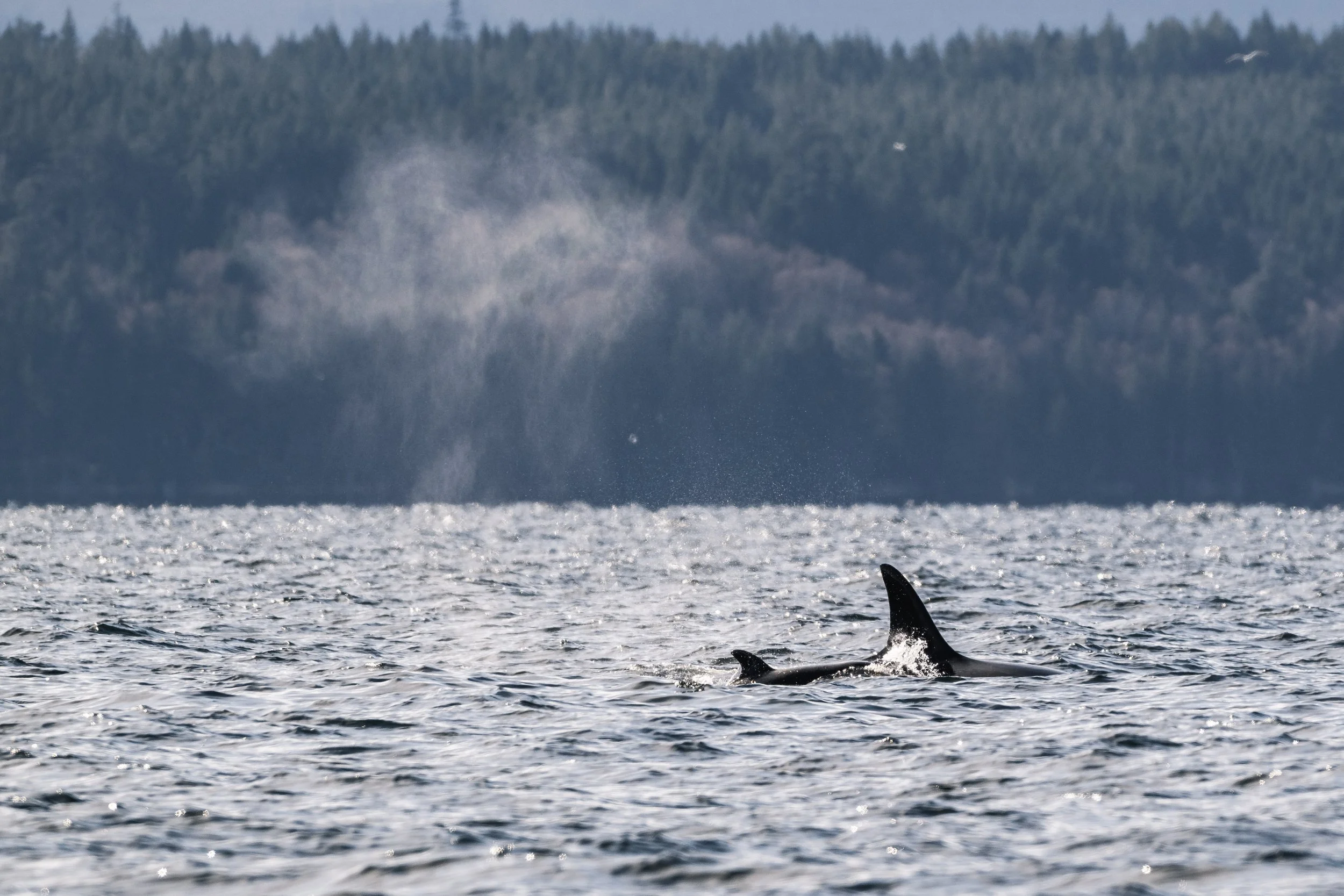
T049A Nan and T049A7 crusing along.
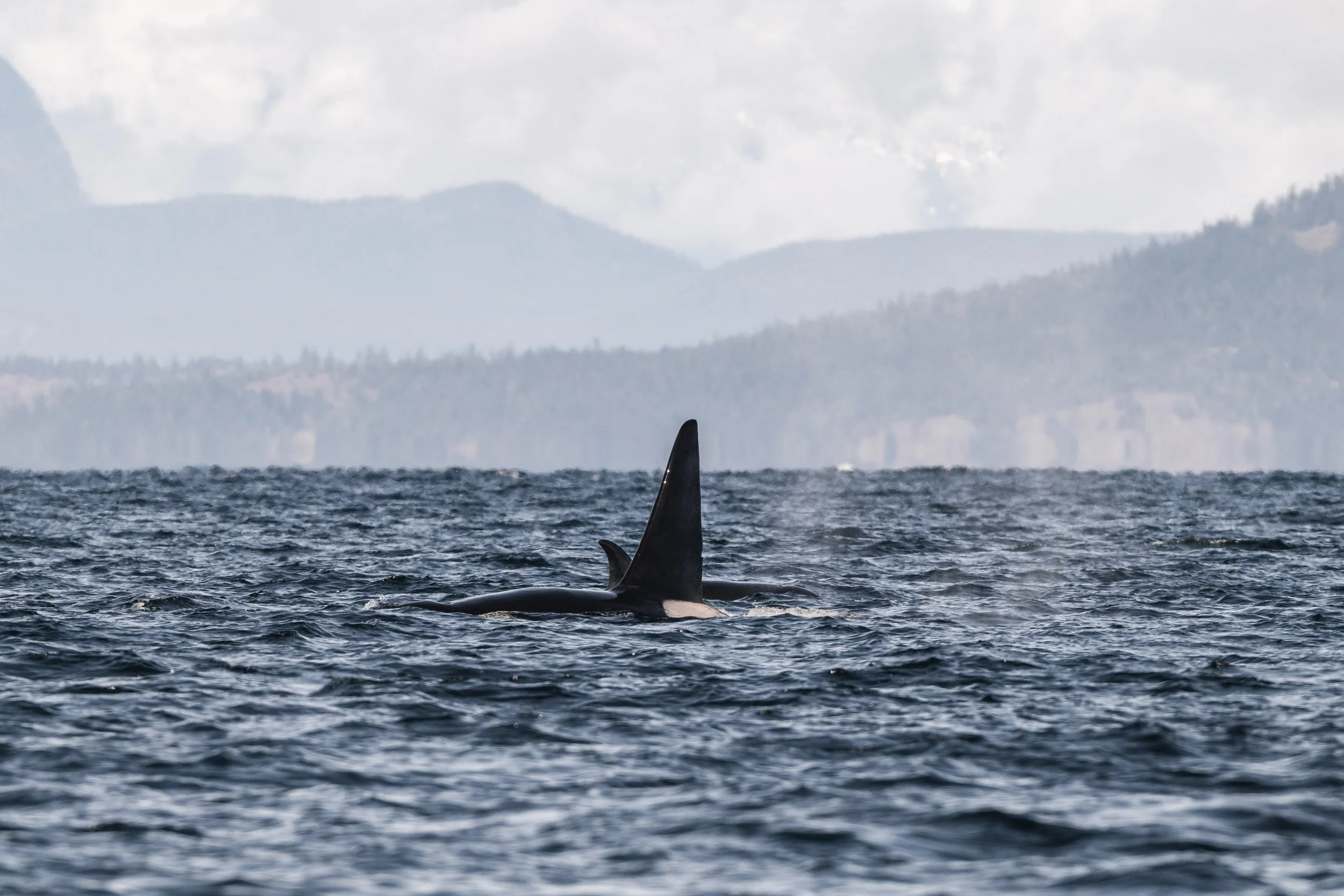
T049A1 Noah with his towering dorsal in front of T049A5 Nebula.
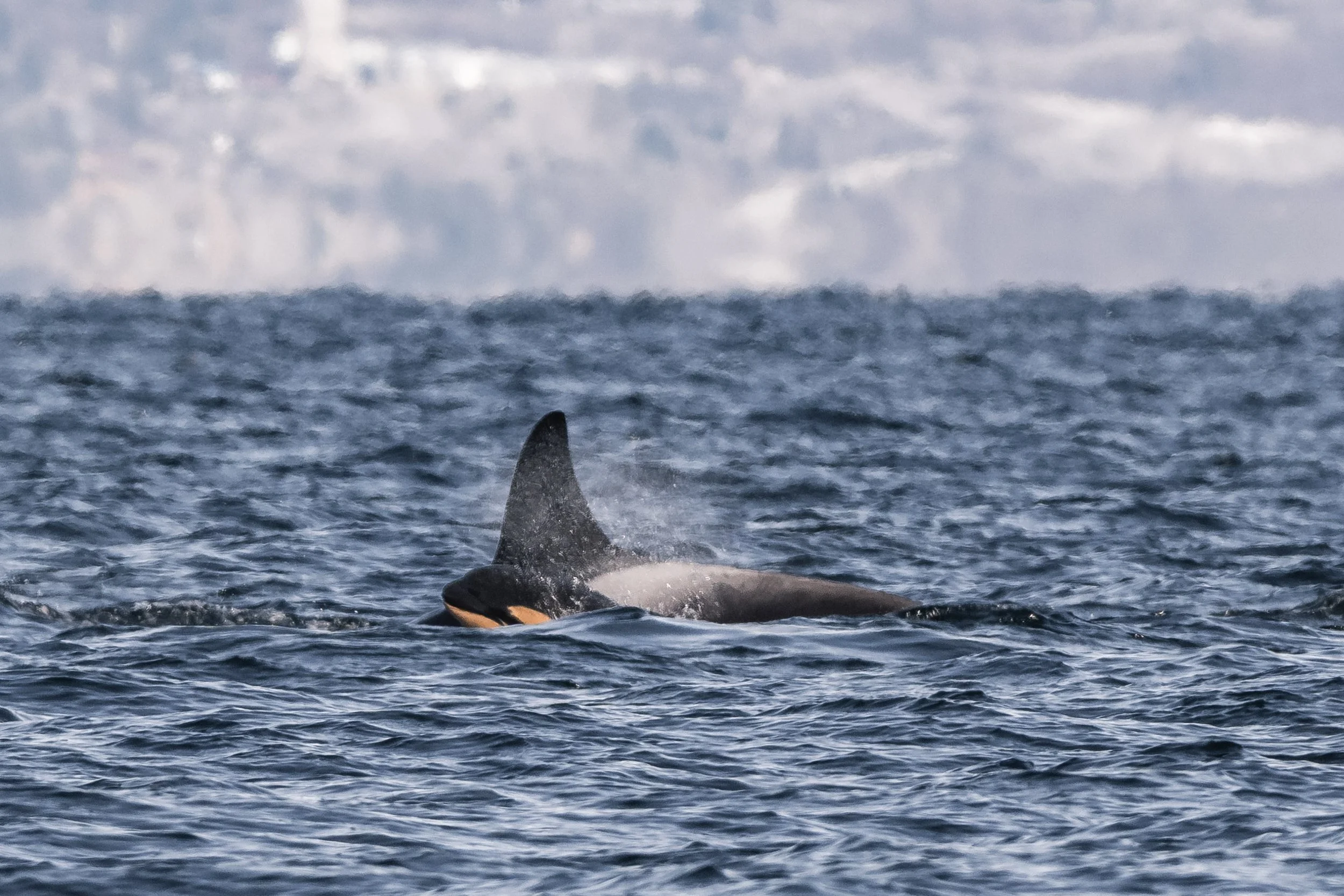
T049A Nan with T049A7 surfacing beside her. Look how orange our newborn is!
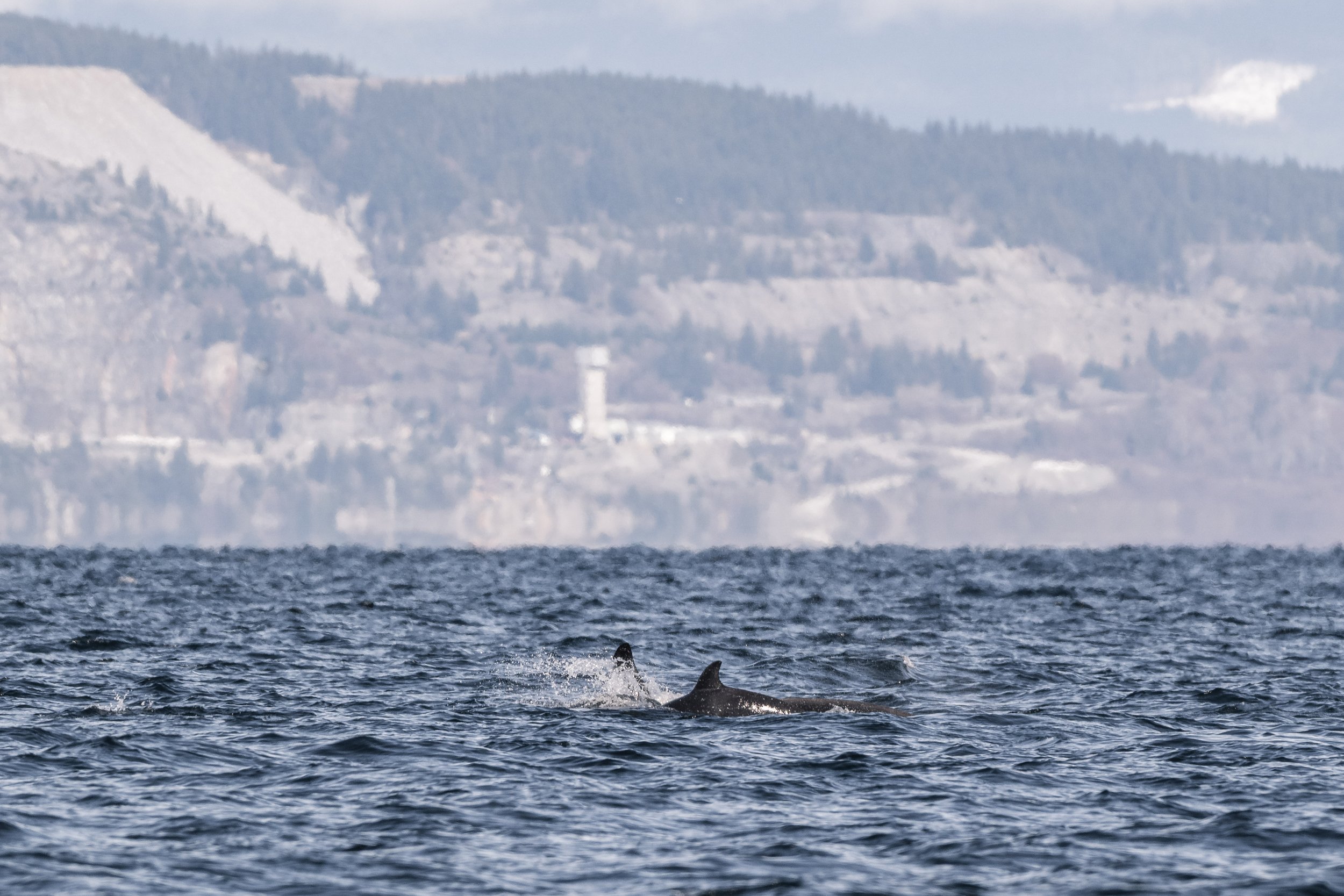
A tiny whale in a big ocean!
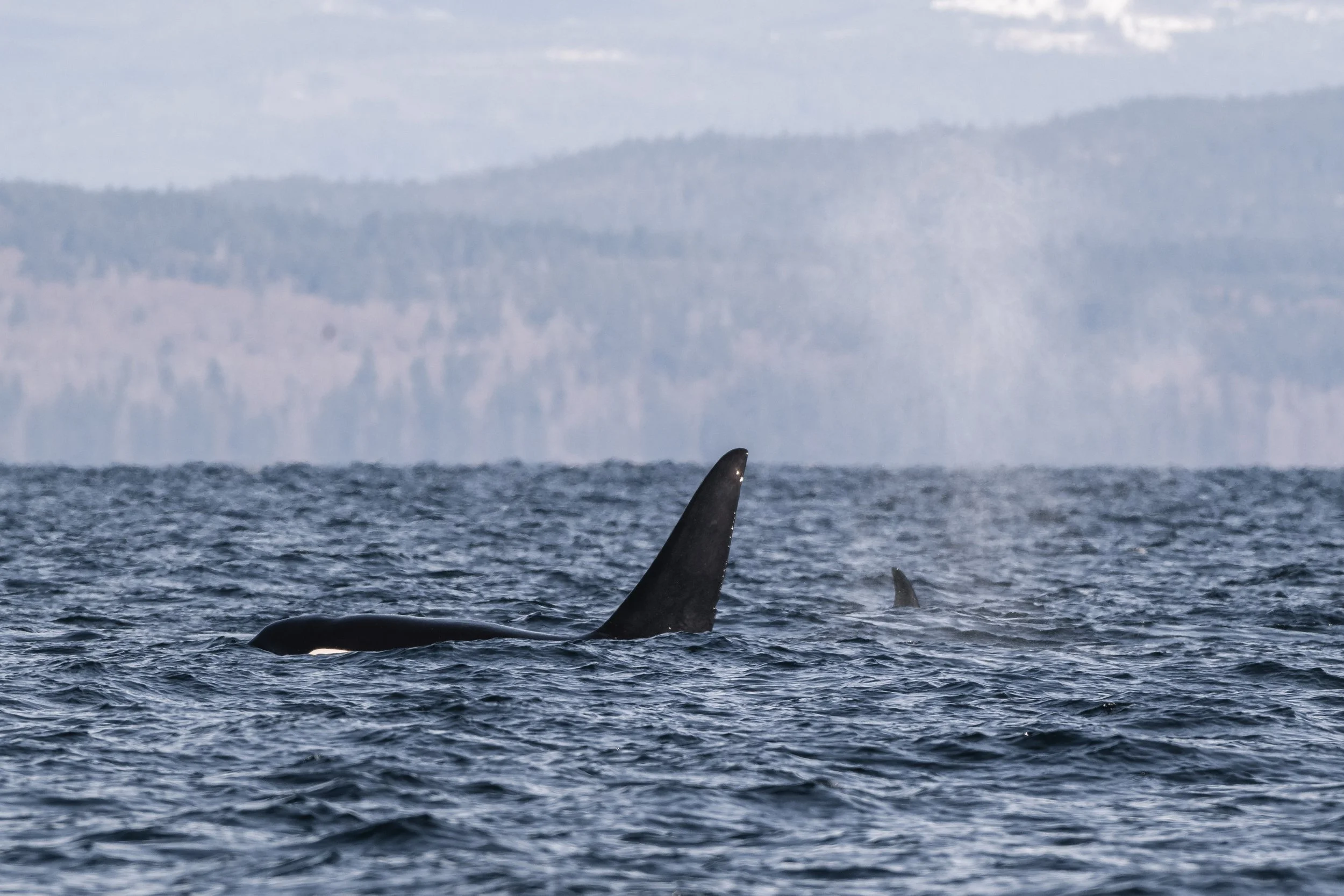
T049A1 Noah with a little eye patch visable.
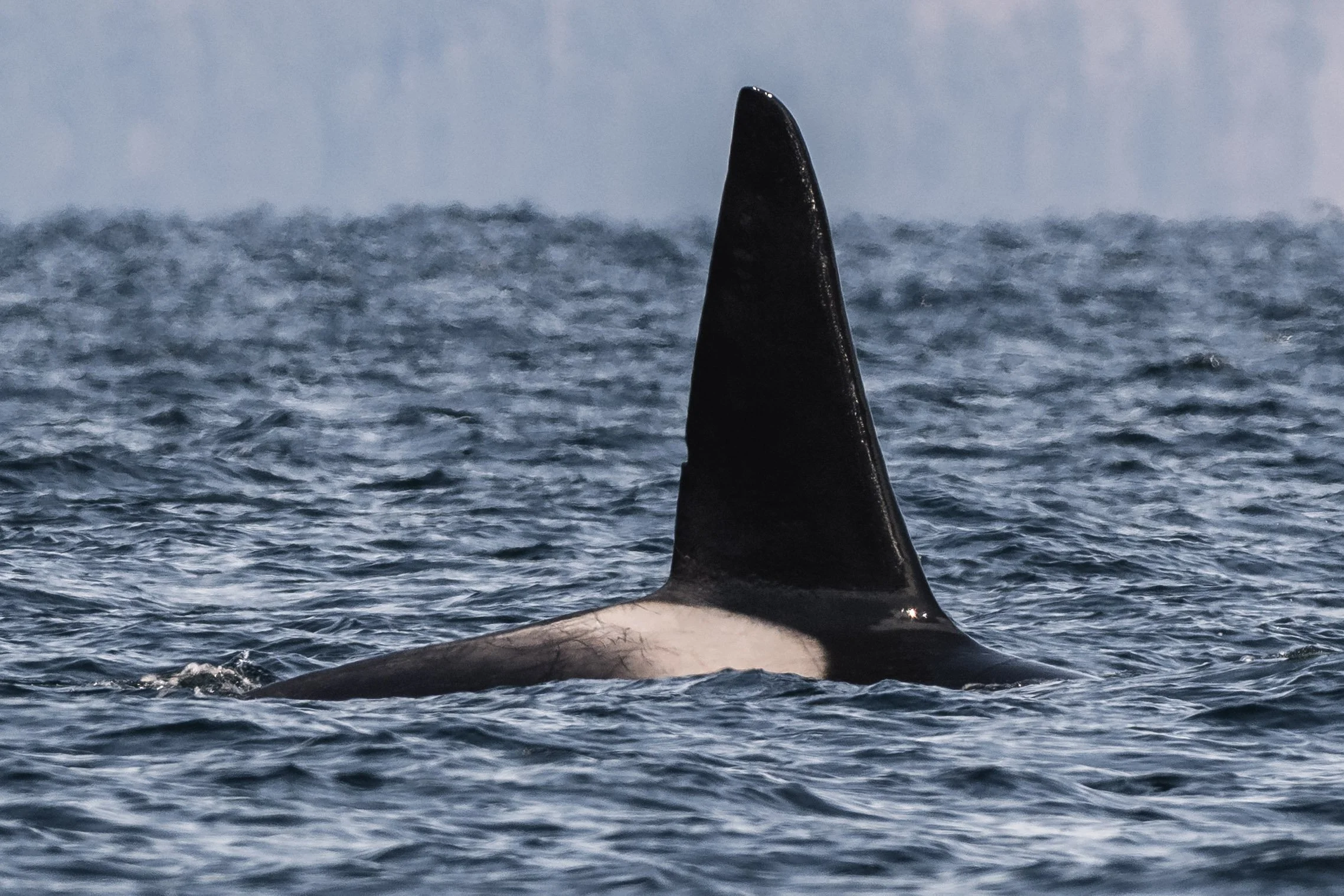
A good look at the scars on T049A1 Noah’s saddle patch.
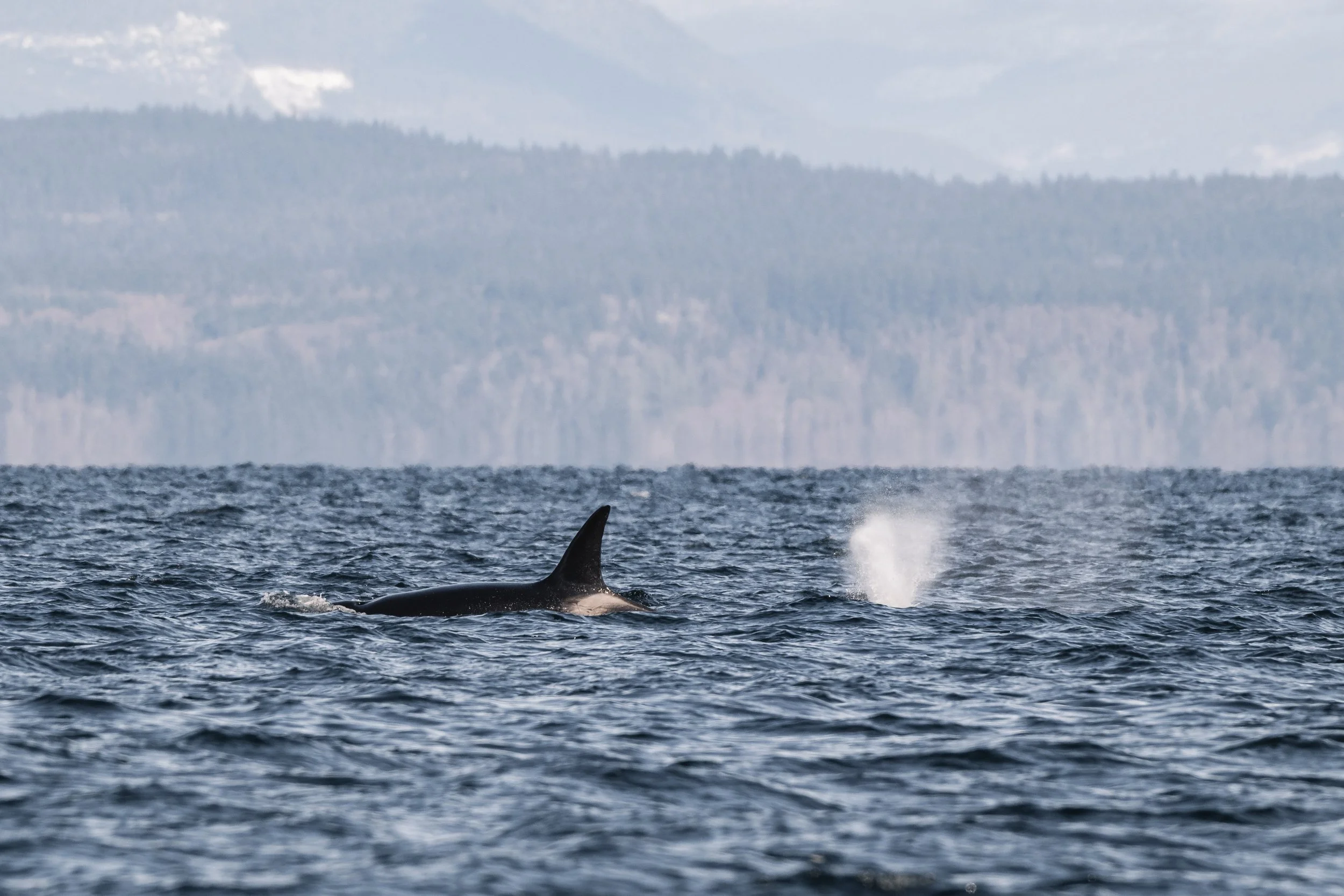
T050 Boulder as another exhales behind her.
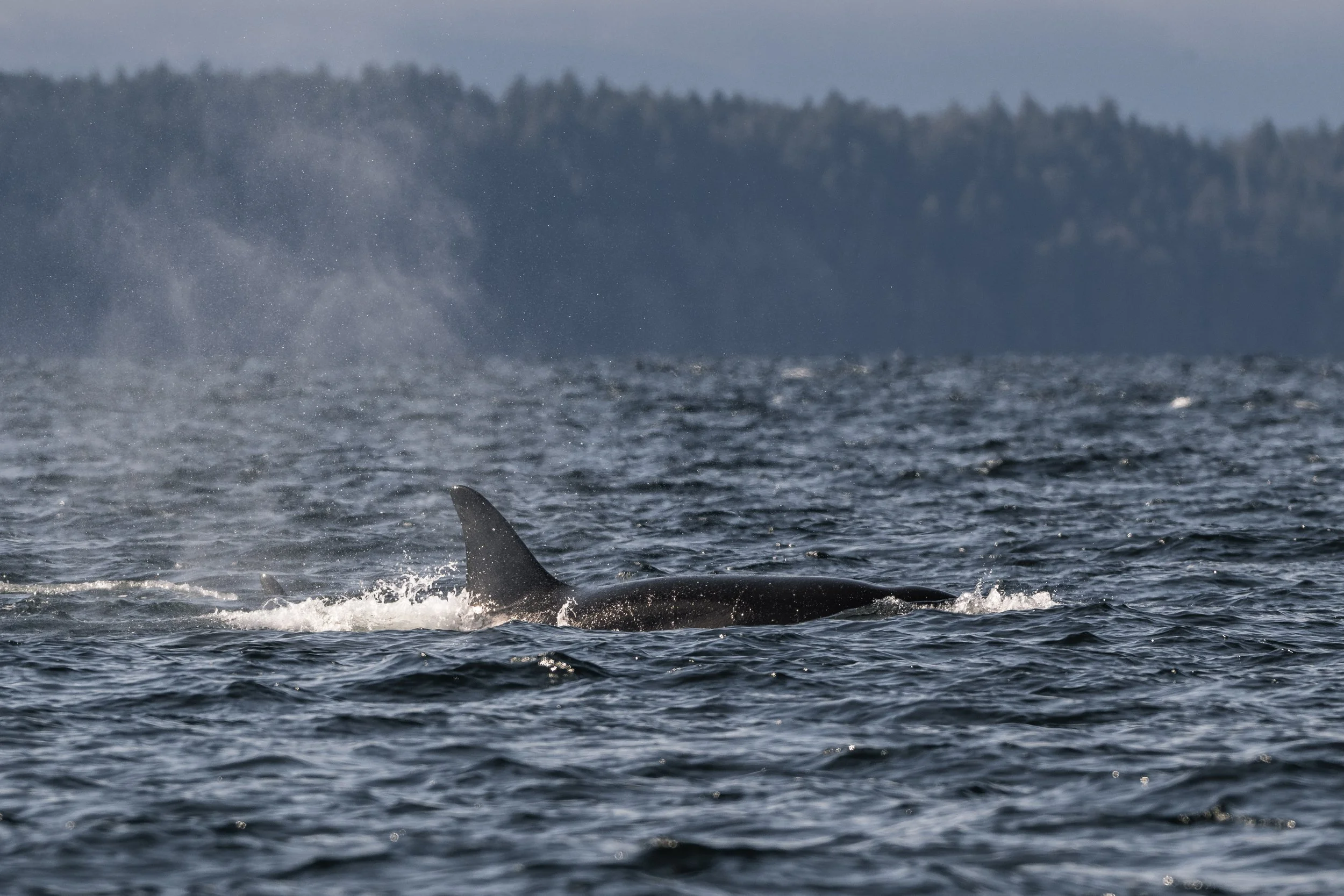
T049A Nan bursting through the waves, can you spot who’s behind her?
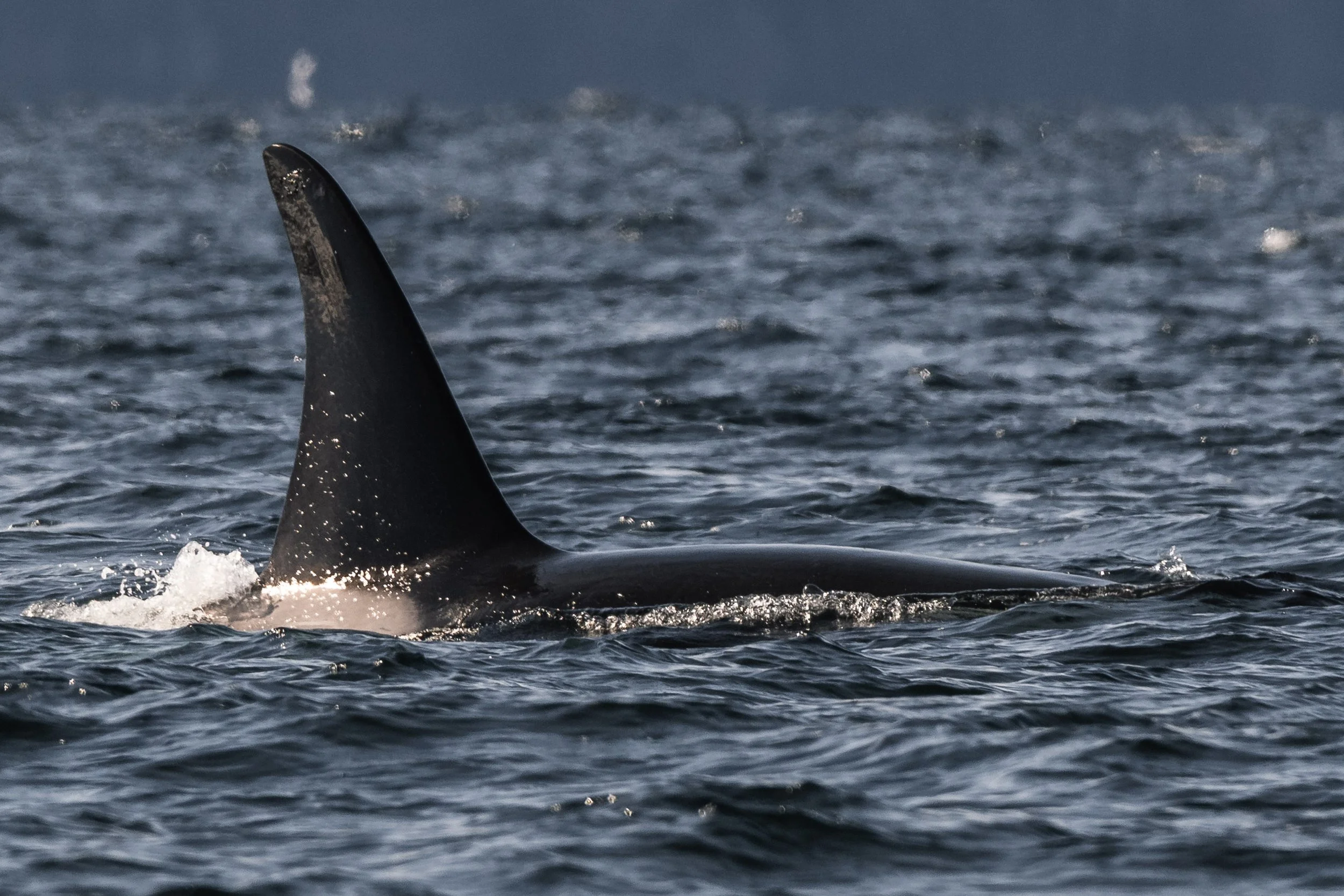
T049A3 Nat, who will one day have a dorsal as tall as his brother T049A1 Noah.
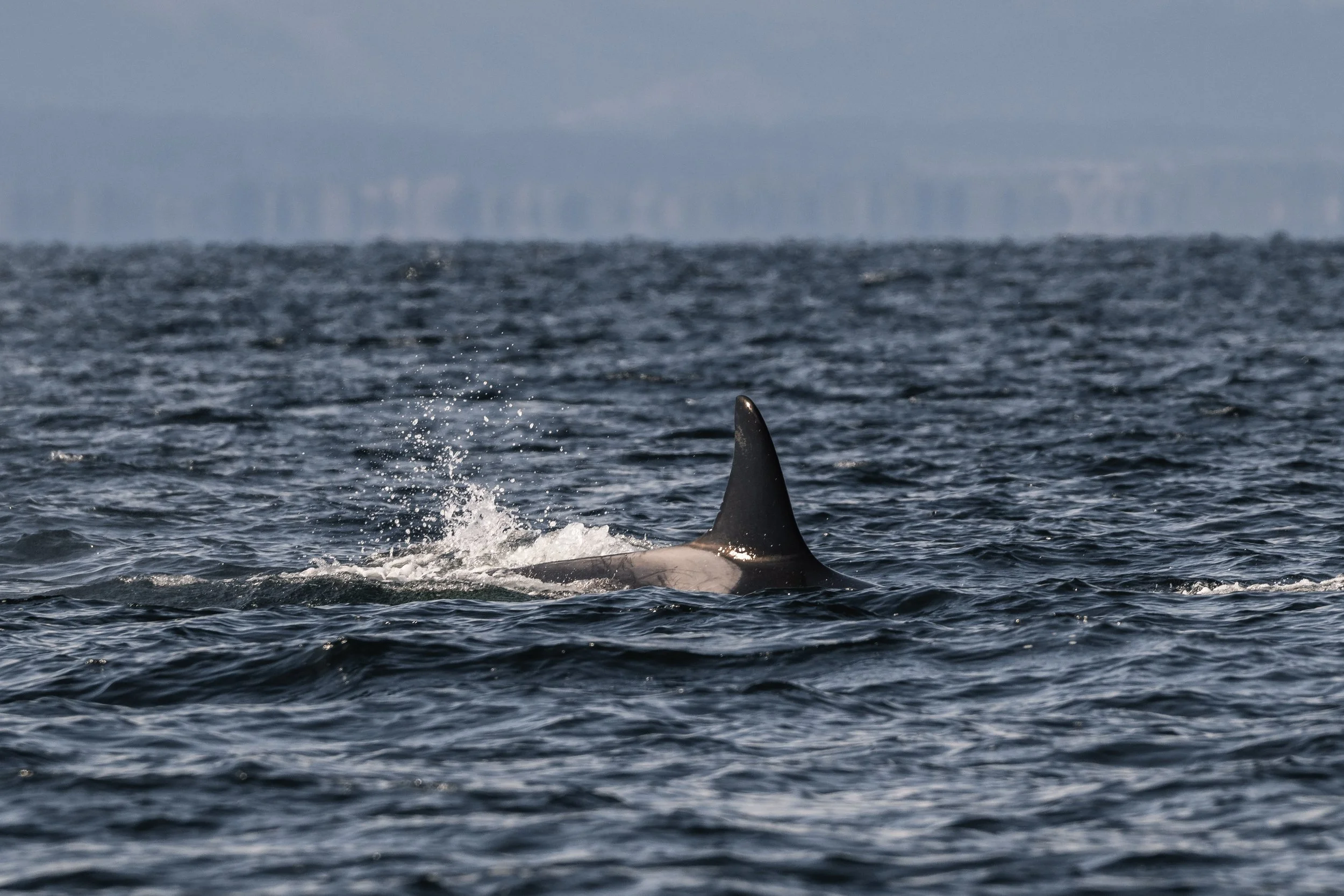
T049A Nan, can you see the scars on her saddle patch?
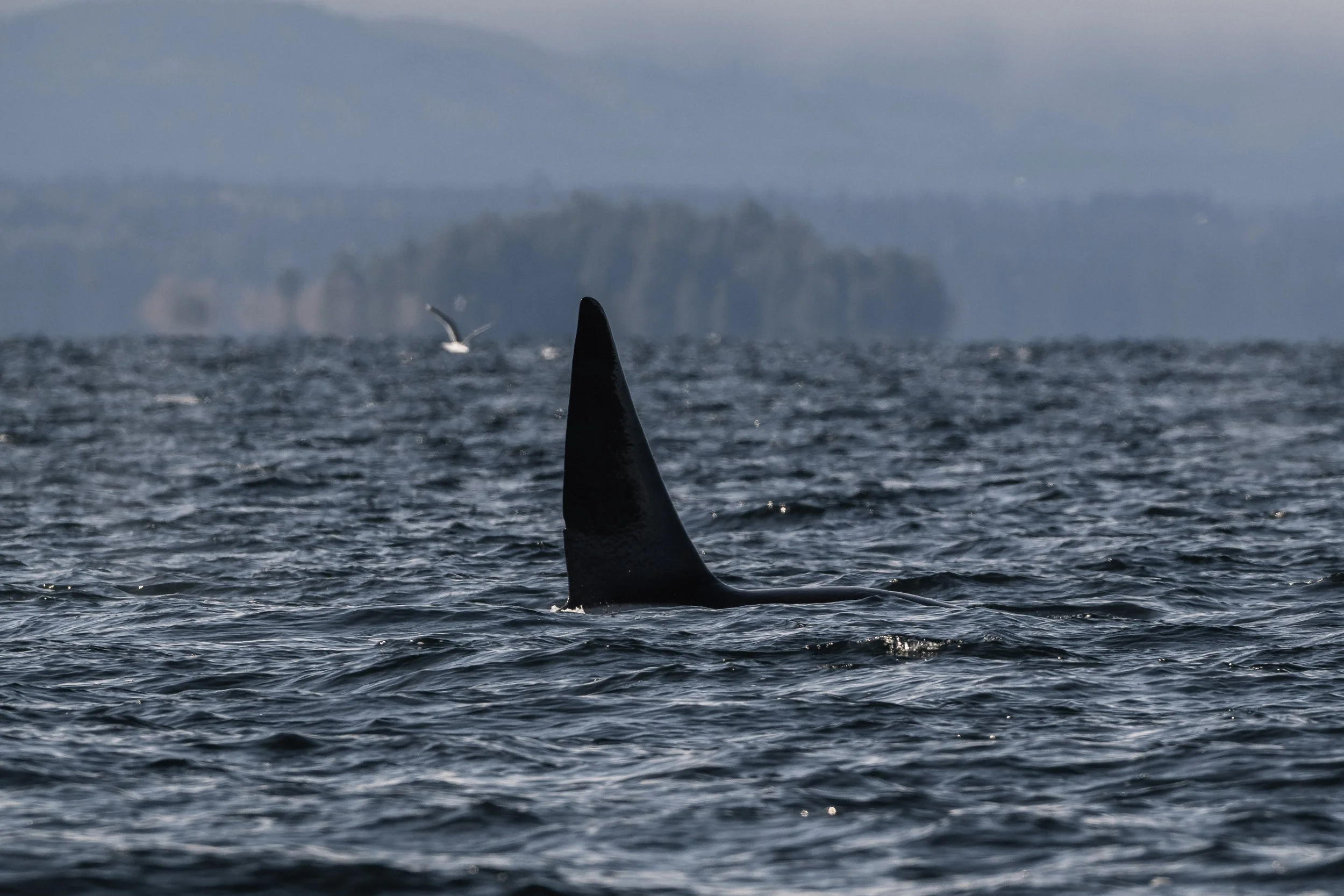
T049A1 Noah with a gull in tow.
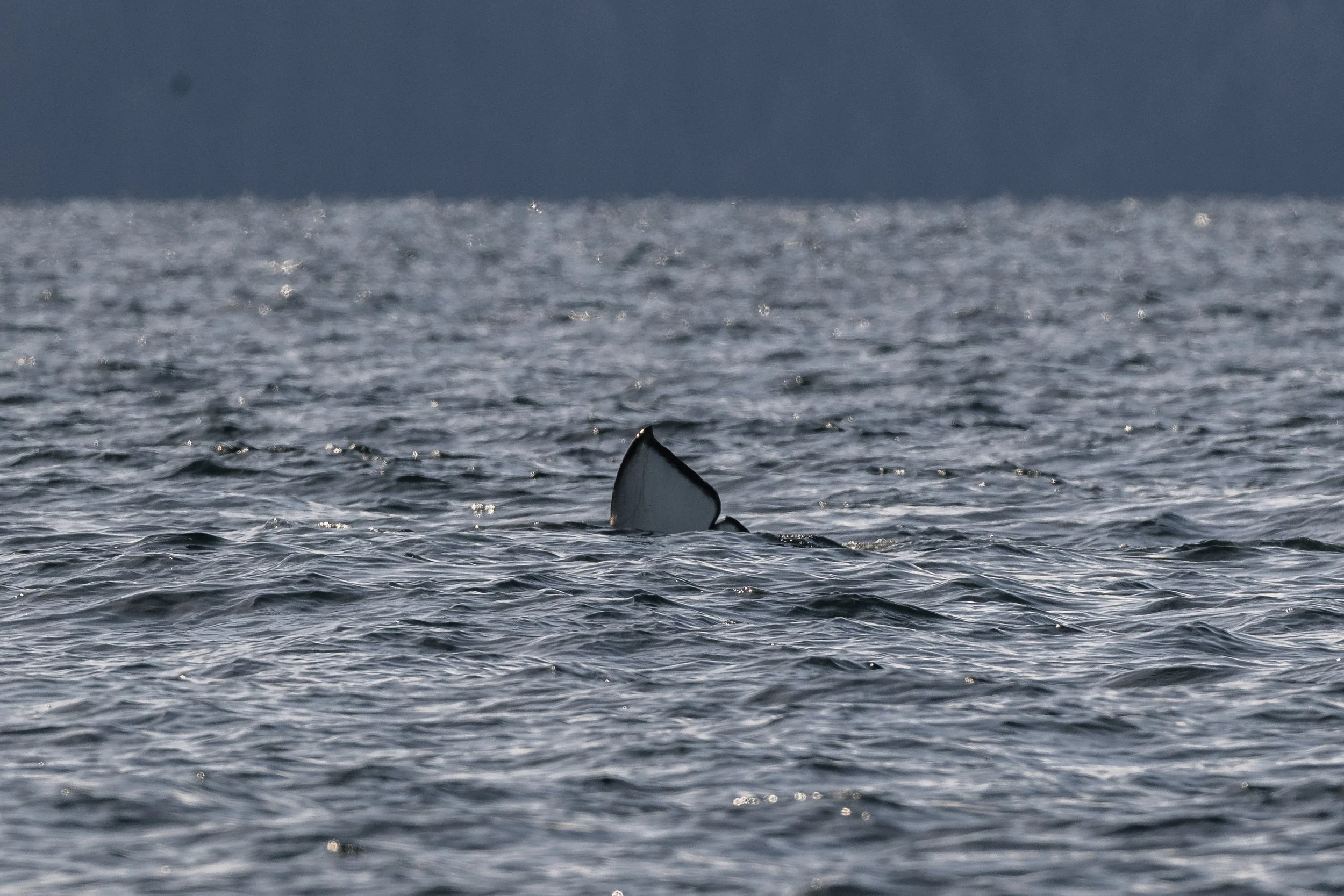
The corner of T049A Nan’s tail.
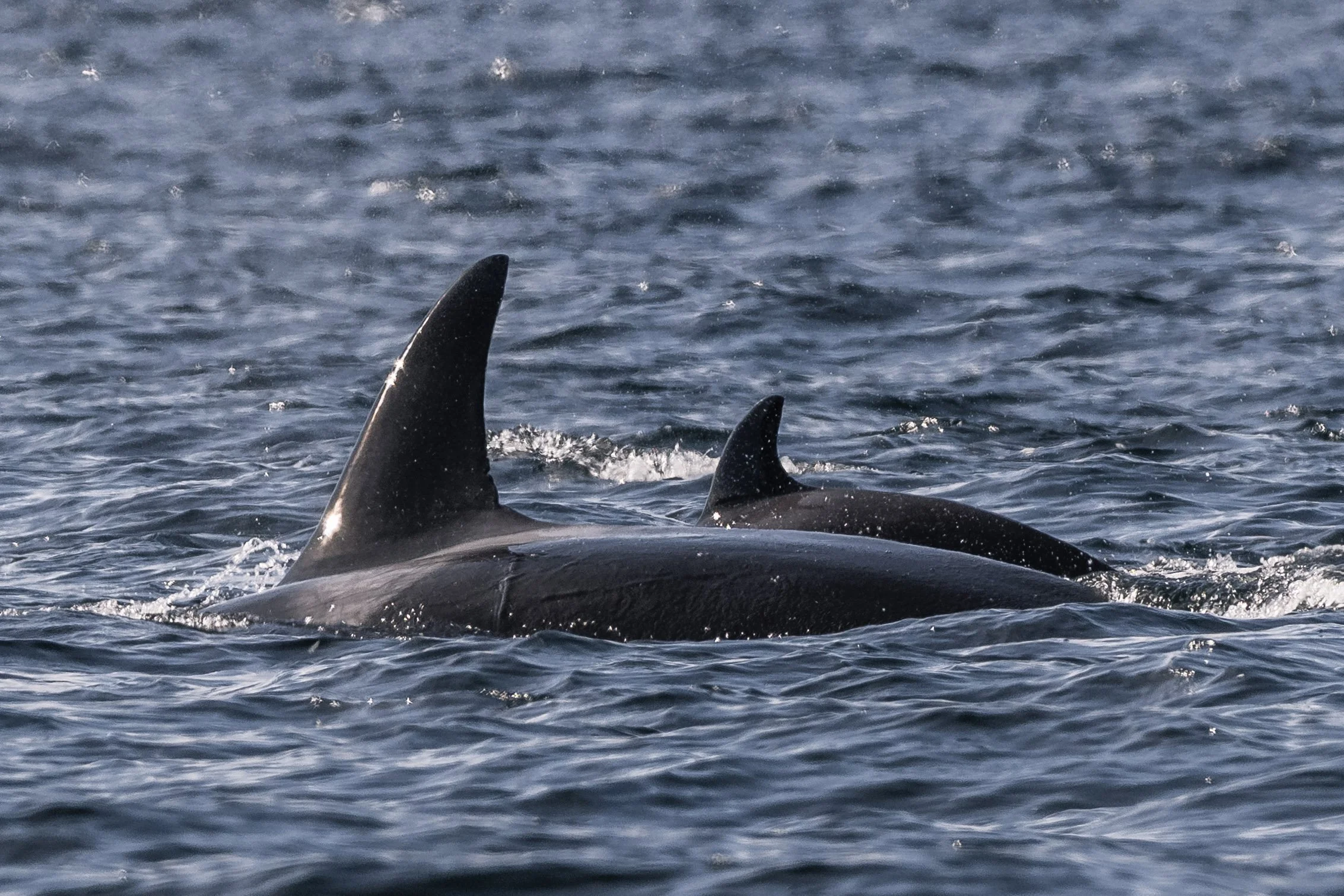
T049A Nan followed by her new calf T049A7.
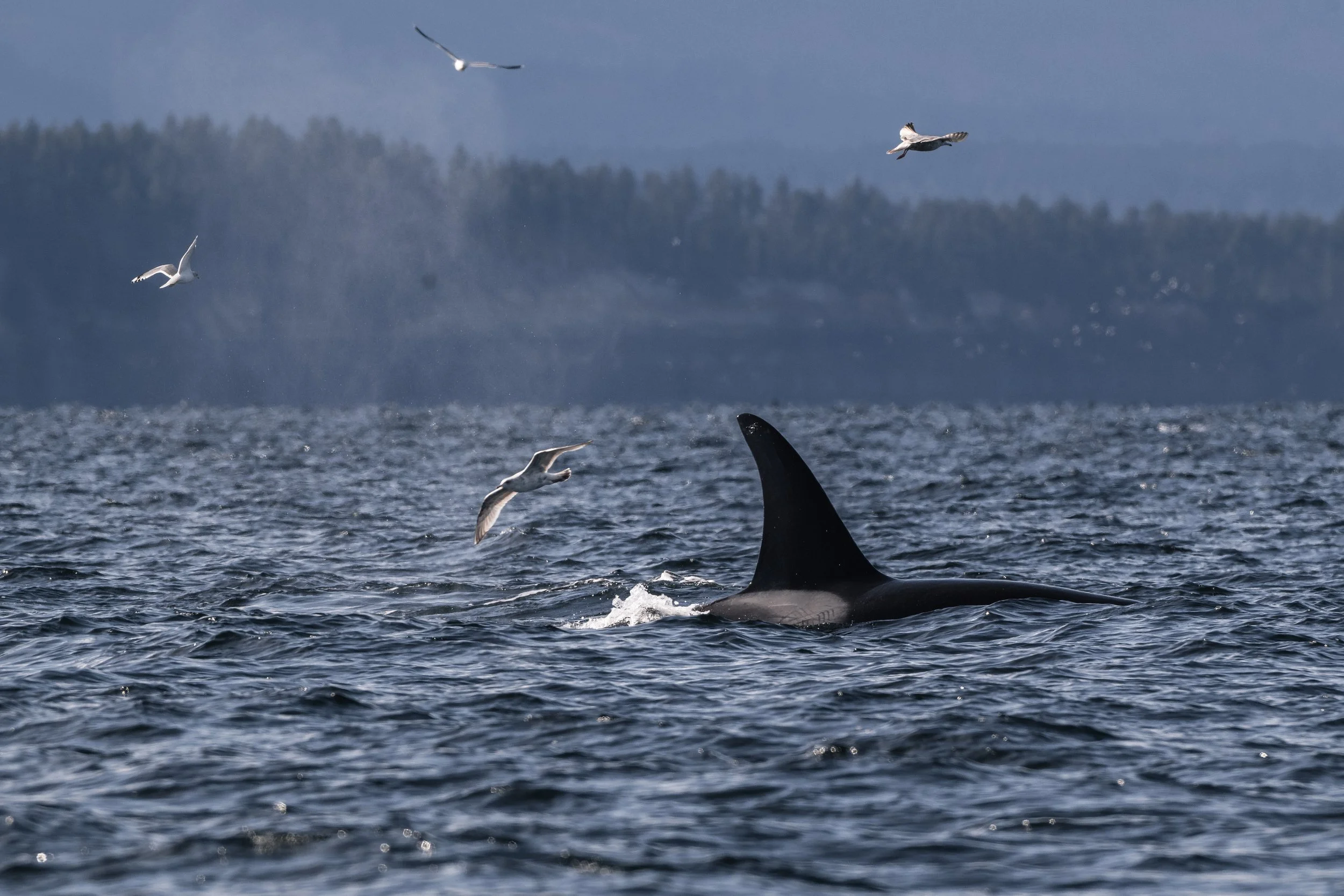
T049A3 Nat with the gulls moving in on his meal.
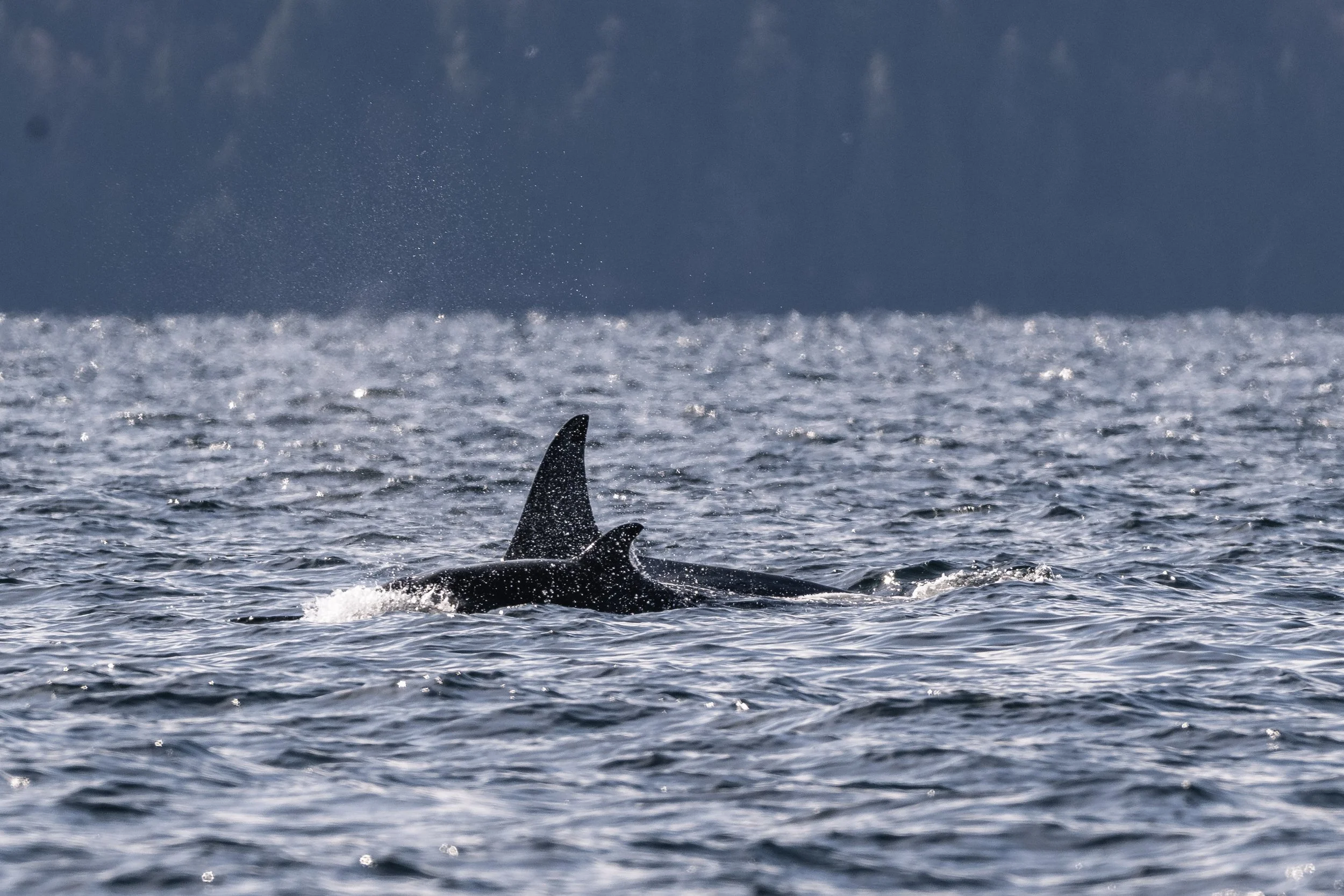
T049A7 making a splash with T049A Nan at their side.
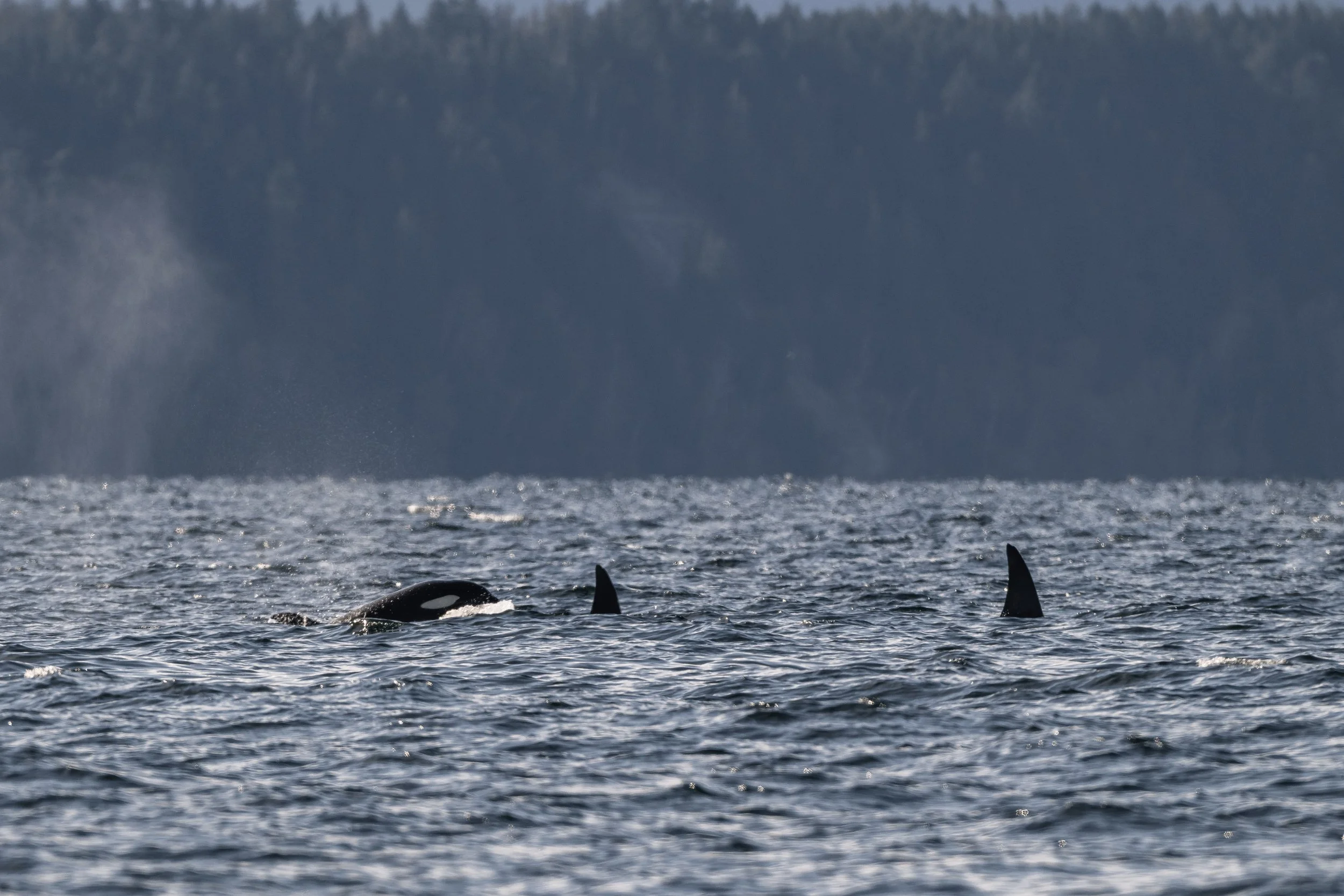
T050 Boulder in the lead with T050B Sita and T050B3 following.