
March 15, 2026 - A wet and wild West Coast adventure.
With a mix of anticipation and curiosity, we cast off the dock aboard Cascadia, our open vessel, bracing for a forecast that promised wind and rain. Bundled into our flotation suits, we prepared for a classic early-season adventure on the Salish Sea. The initial plan was to seek shelter among the Southern Gulf Islands, where calmer waters often provide a comfortable route on blustery days. But as is so often the case out here, the wildlife had its own agenda. A vague report had come in of activity just north of Nanaimo, near the shores of Lantzville. Curious and hopeful, we adjusted course, and what we found just around the corner from home was nothing short of extraordinary.
This time of year marks the arrival of Pacific herring, a small but incredibly significant fish that plays a massive role in the marine ecosystem. A keystone species, herring are foundational to the food web here on the coast. Each spring, they return to nearshore waters to spawn, releasing clouds of eggs that cling to eelgrass, kelp, and other submerged vegetation. This event transforms the ocean into a nutrient-rich hub of activity. From microscopic plankton to top predators, countless species depend on this annual pulse of life.
As we moved through the area, it quickly became clear just how abundant this food source was. Beneath the surface, dense schools of herring, known as bait balls, form a defensive formation against predators. Above and around them, the scene was alive with motion. Gulls wheeled overhead, diving repeatedly into the water, while a bald eagle circled and swooped with precision. At the surface, harbour seals and sea lions surged through the schools, each taking advantage of the seasonal feast.
And then, cutting cleanly through the water, we saw it, the unmistakable black dorsal fin of a transient orca. The orca present at the buffet were:
T036 Flapjack ♀ (1970)
T036B Tattertip ♀ (1998)
T036B1 Bhotia ♀ (2009)
T036B1A Maple ♀ (2025)
T036B2 Greenfelder ♀ (2013)
T036B4 Auk ♂ (2024)
As we approached slowly and respectfully from the side, it became evident that this was far more than a simple travel encounter. The whales were highly active, displaying a range of behaviours suggesting a hunt. Rapid directional changes, powerful tail slaps, and curious spy-hops all suggested coordinated effort and communication beneath the surface.
At one point, we observed what appeared to be prey sharing, a fascinating social behaviour among transient orcas. Even more remarkable was a behaviour often referred to as a “moonwalk,” where an orca swims backward with prey held in its mouth, allowing it to tear off smaller, more manageable pieces. It’s a rare and captivating glimpse into the complexity of their feeding strategies.
While much of the action remained hidden below the surface, careful observation revealed clues to the hunt’s success. Our naturalist, Vanessa, drew attention to the birds gathering closely around the whales. Among them, bald eagles made daring dives toward the water, likely taking advantage of scraps left behind, a strong indication that the hunt had been successful.
After roughly 30 minutes of activity, the energy began to settle. One of the whales, Tattertip, rose in a slow, deliberate spy-hop, lifting her head above the surface. With her rounded belly clearly visible, it seemed she had done quite well. Moments like these offer a rare and intimate connection to the lives of these animals, reminding us of both their power and their precision.
Following their meal, the pod transitioned into a slower, more relaxed travel pattern, heading southwest. We watched them gradually fade into the distance as the wind began to build and the drops of rain returned, perfect timing. It seemed we had indeed found the calm before the storm.
Before heading back, we made a few final stops along the shoreline, where yet another spectacle awaited. Rafts of sea lions crowded the rocks and waters, their numbers staggering. Vanessa noted it was the largest aggregation she had ever seen in this area, a testament once again to the richness of the herring spawn and its far-reaching impact.
As the rain intensified and the wind picked up, we turned back toward the dock, reflecting on a day that had far exceeded expectations. What began as a cautious plan to avoid the weather became an unforgettable reminder of how dynamic and interconnected this ecosystem truly is.
Days like this, so close to home, highlight the importance of every piece of the puzzle, from the tiny herring to the apex predators, and reinforce just how lucky we are to witness it all firsthand.
Enjoy the photos below taken by Vanessa Vereschahen.
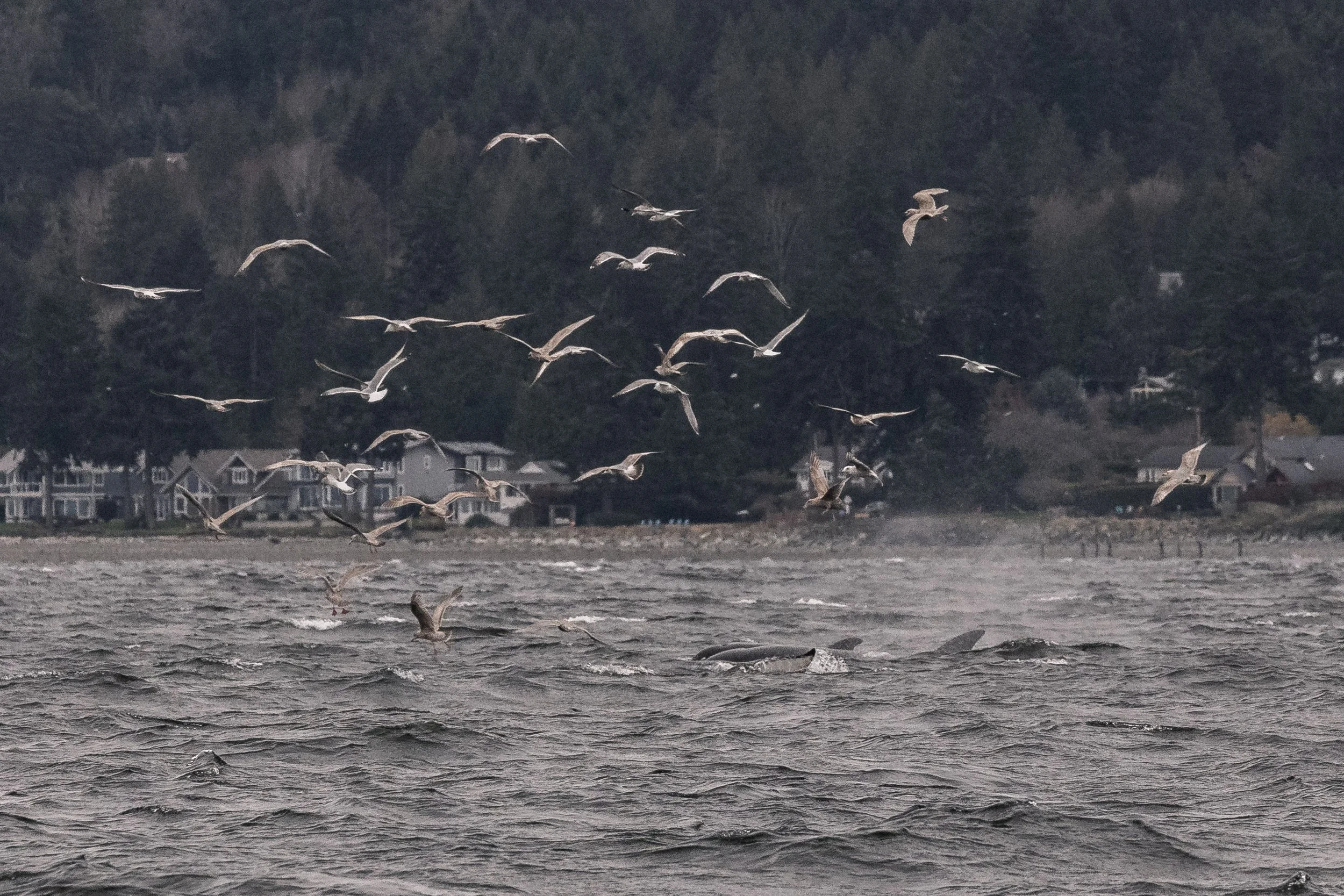
Can you spot the corner of the tail coming up among the dorsals?
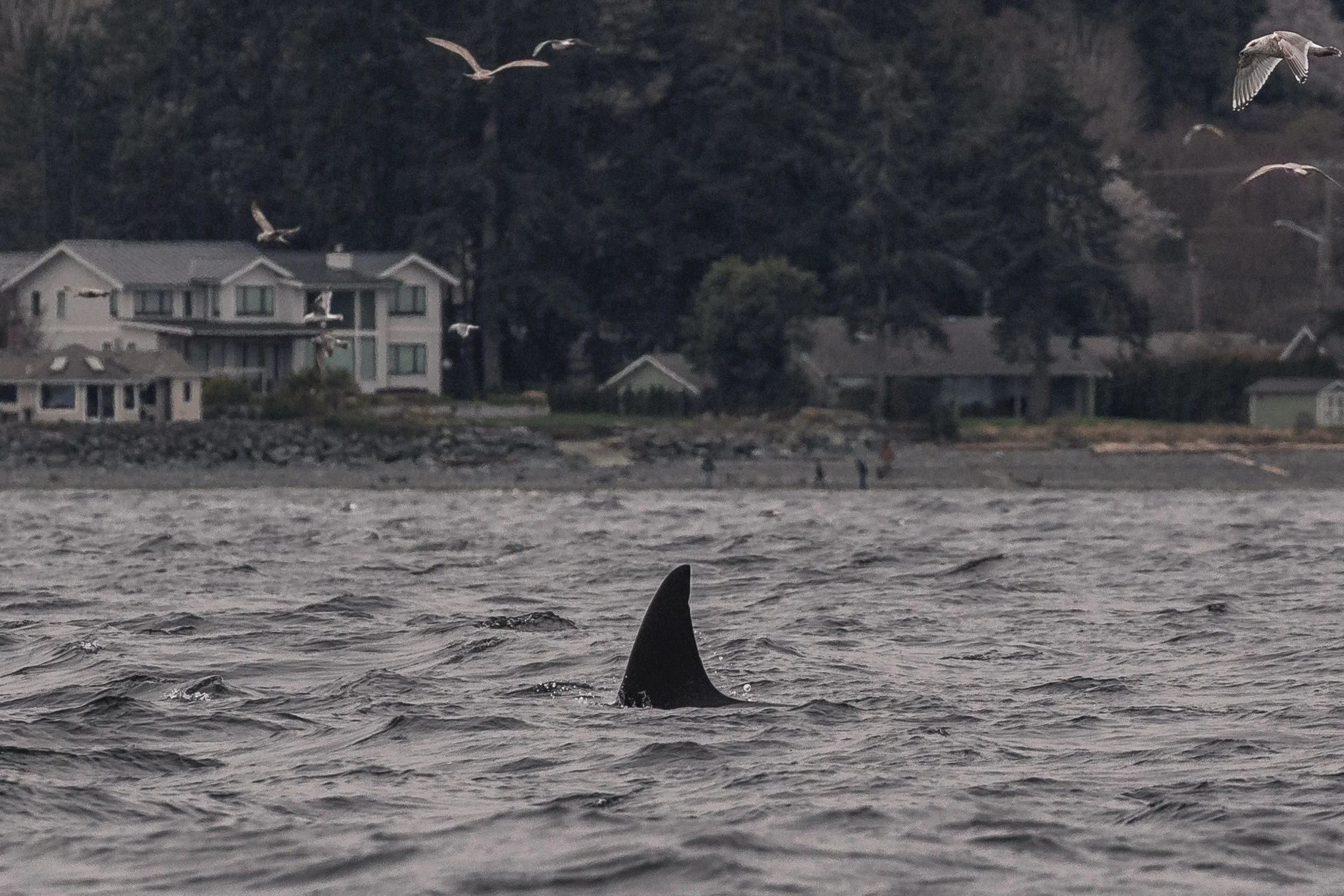
T036 Flapjack surfacing.
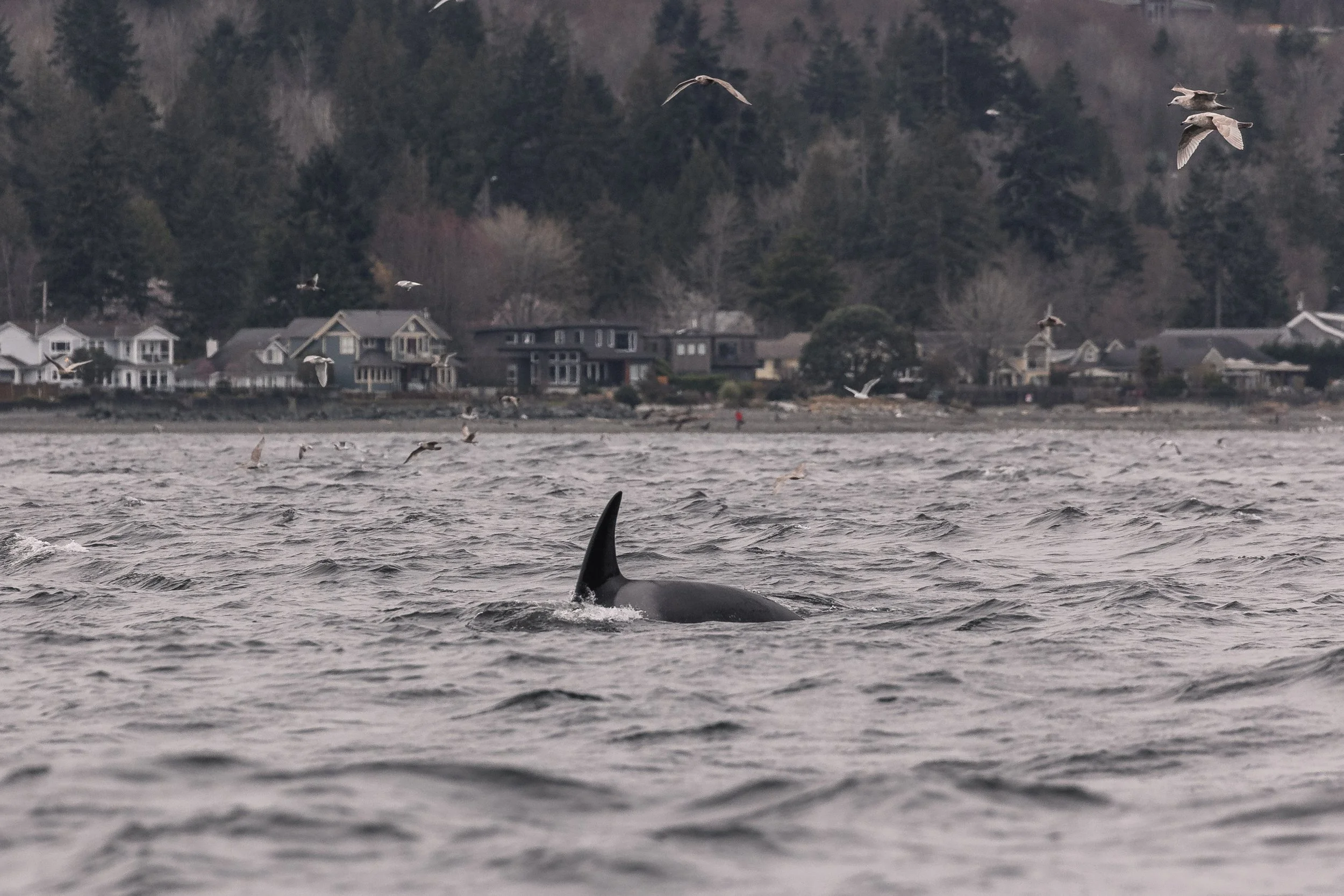
T036B2 Greenfelder picking up speed.
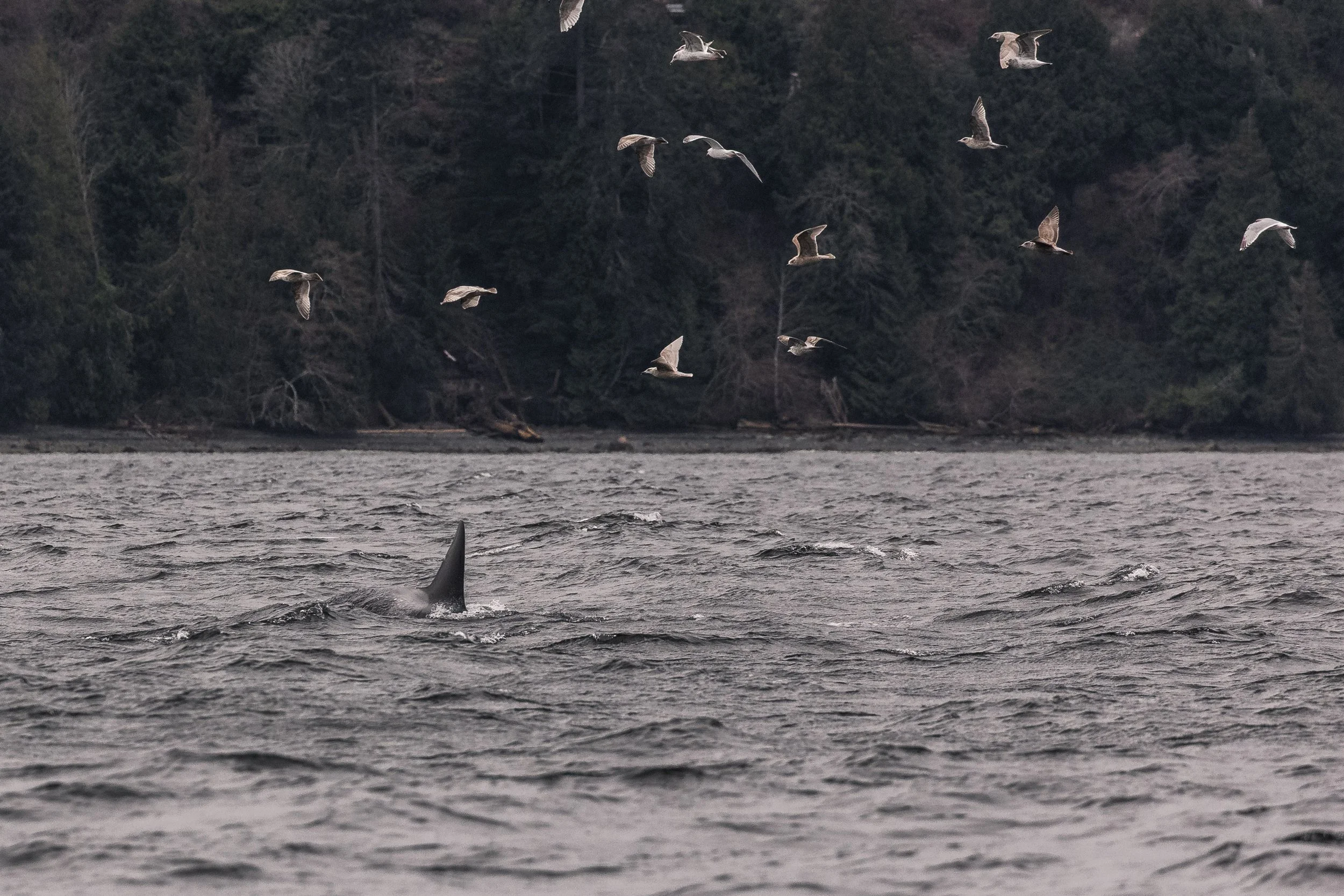
T036B1 Bhotia getting in on the meal.
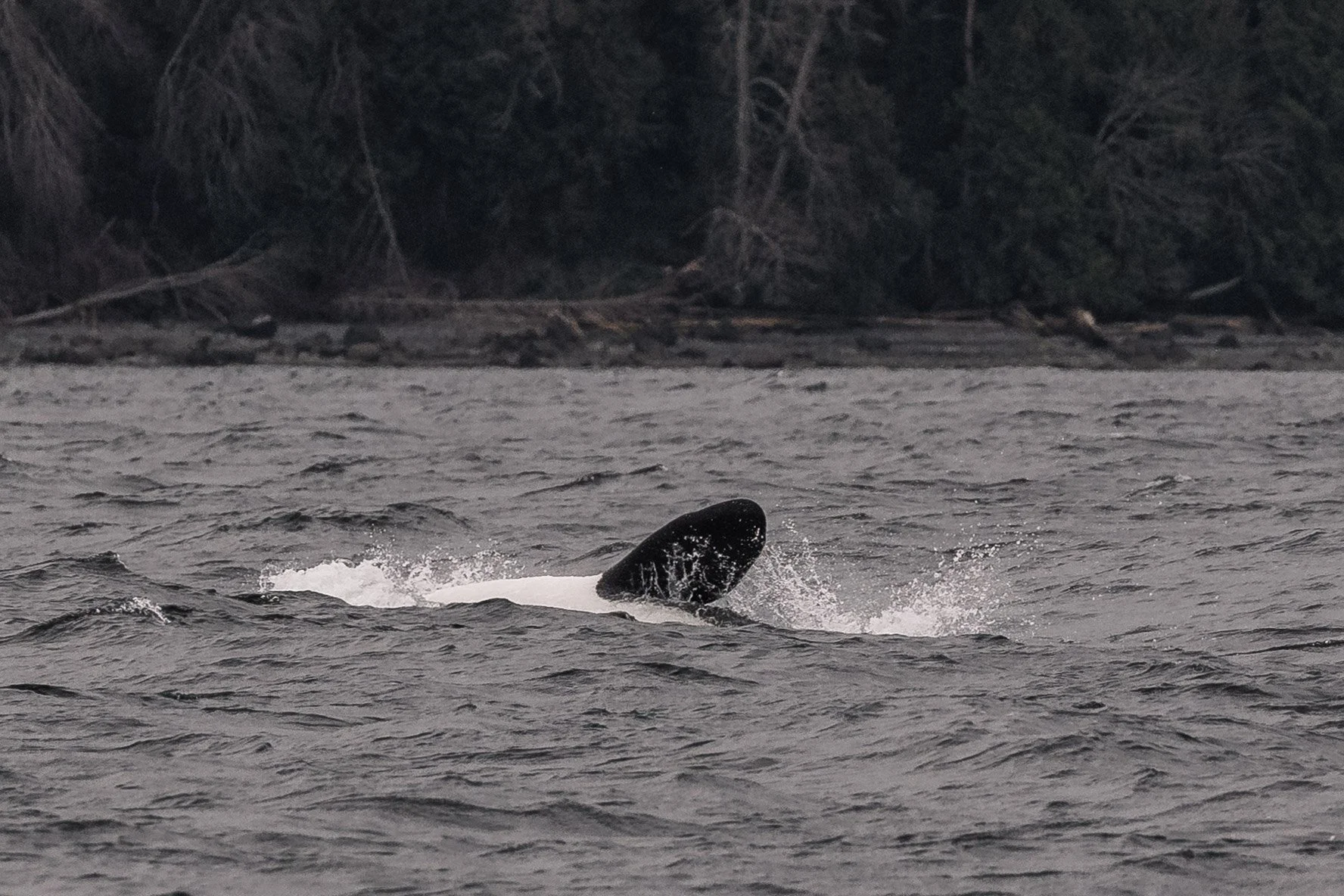
An excited pectoral slap.
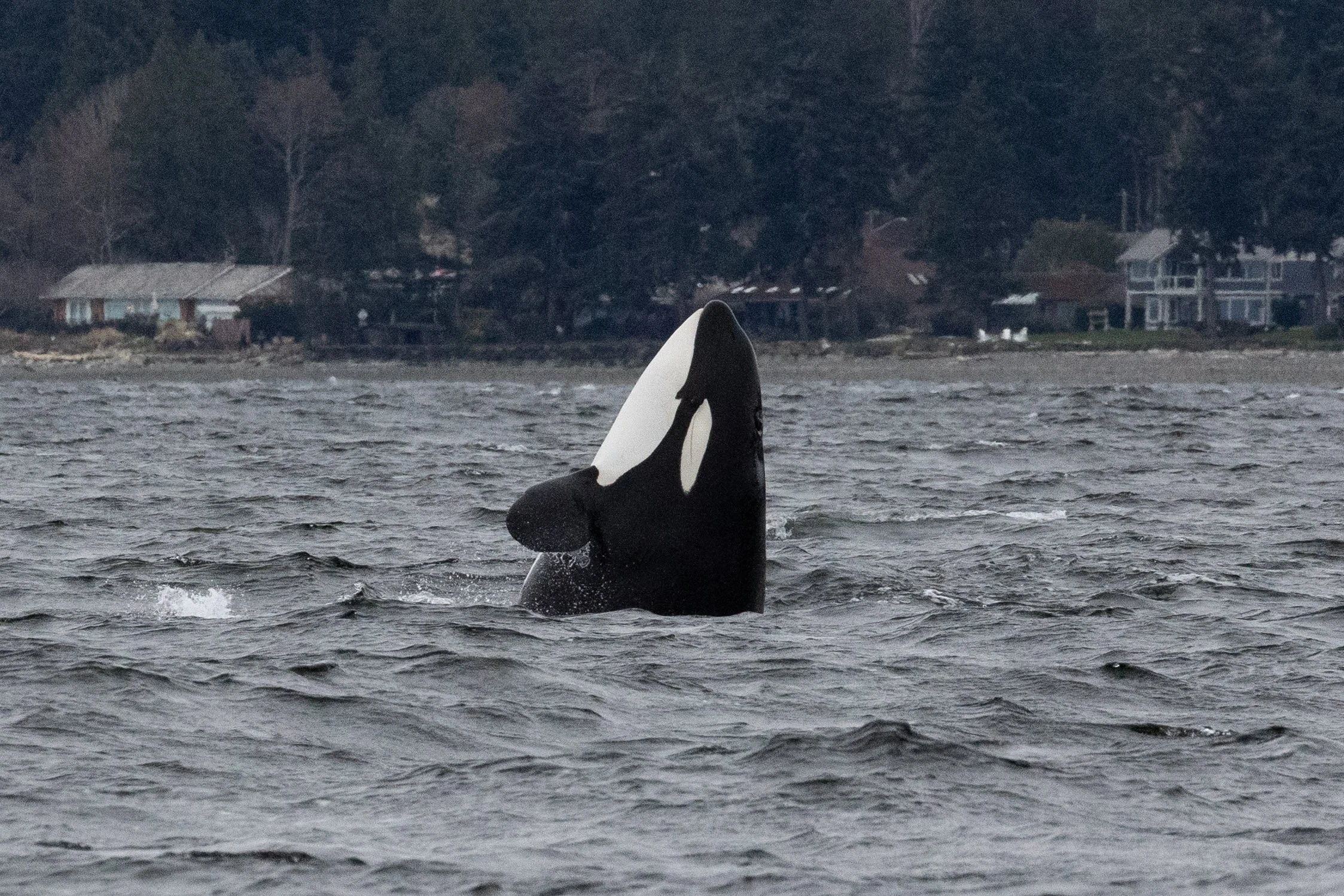
T036B Tattertip spy-hopping, can you notice her round belly?
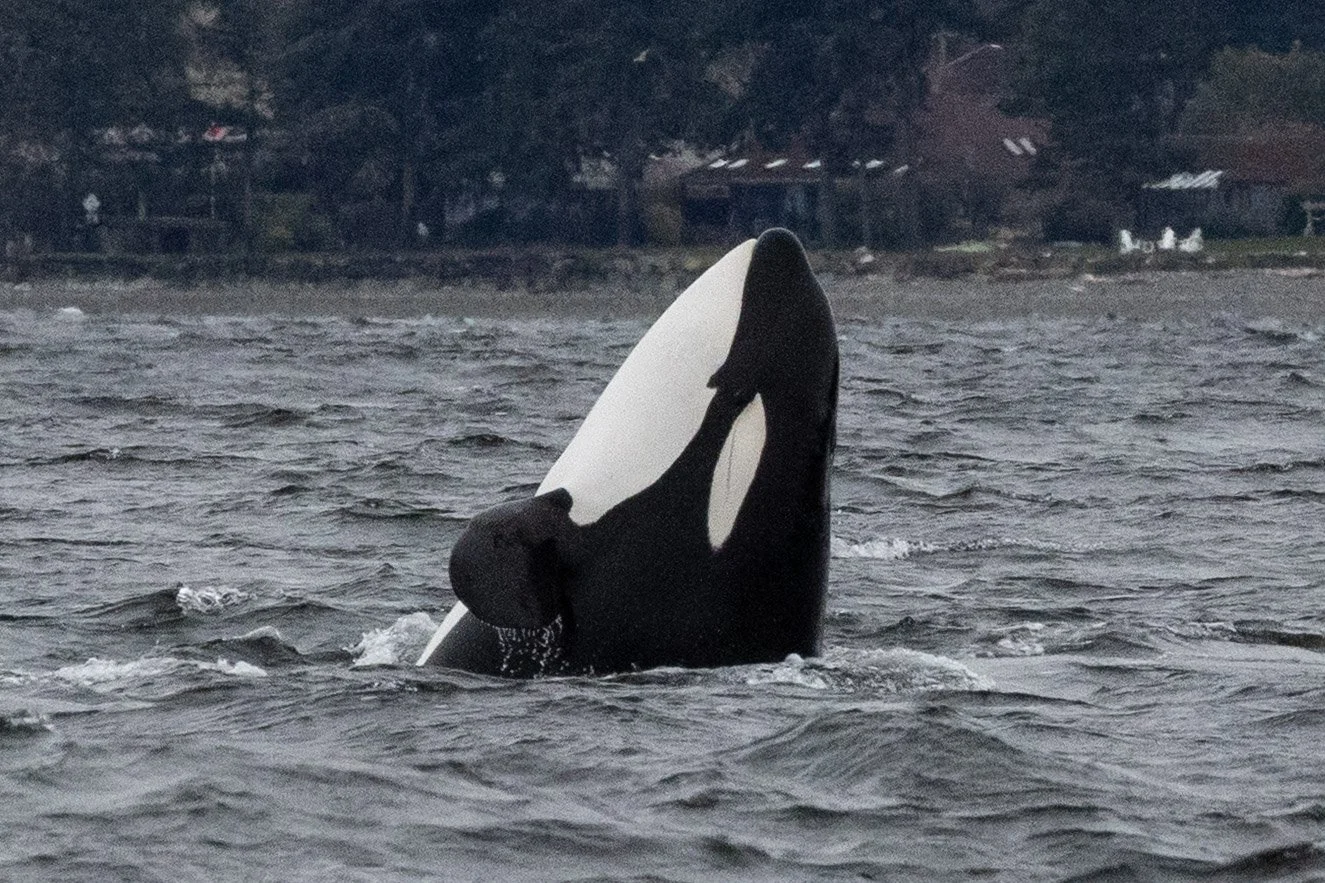
A closer look as she slides back below the waves.
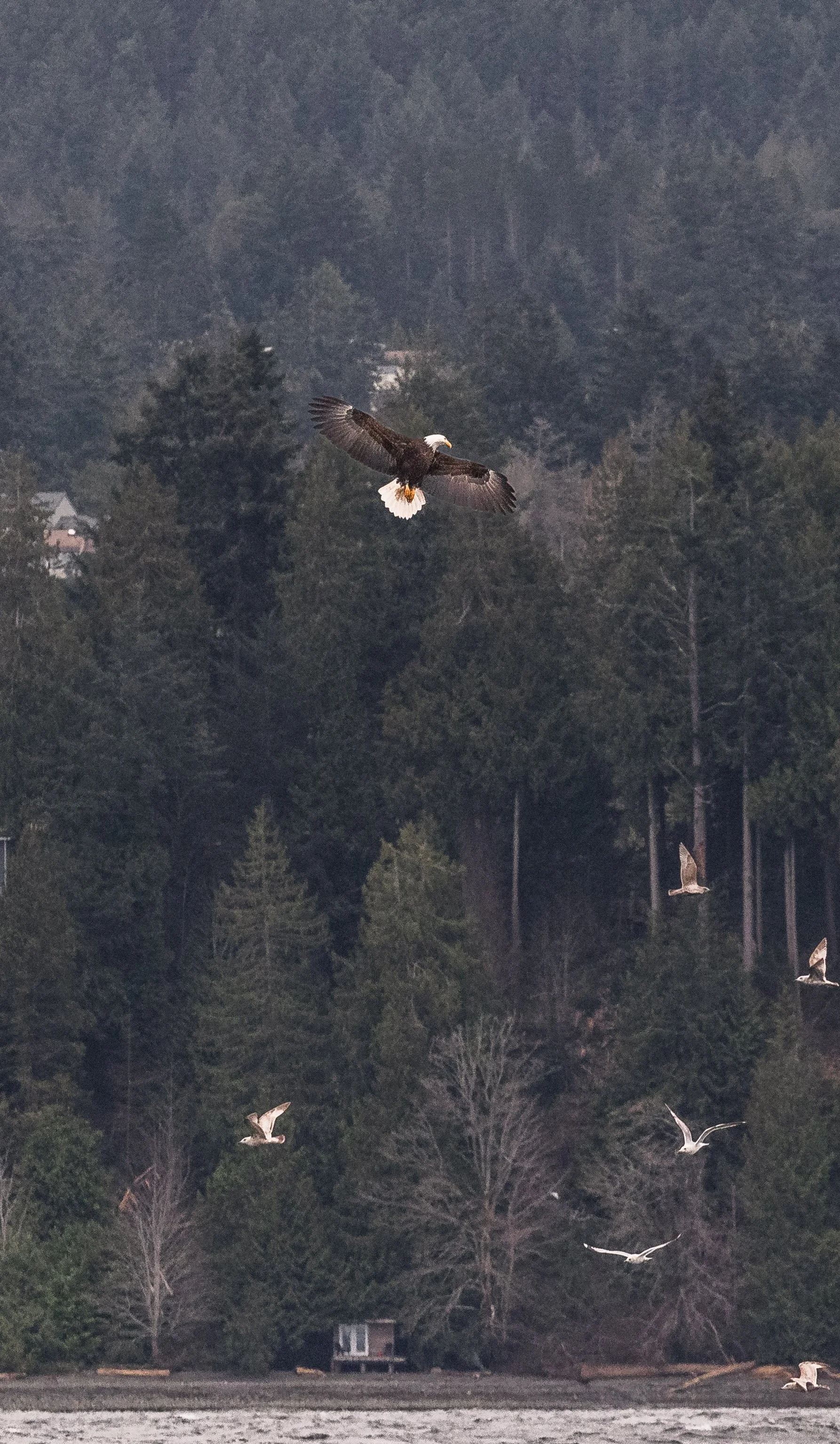
A bald eagle stopping by for a snack.
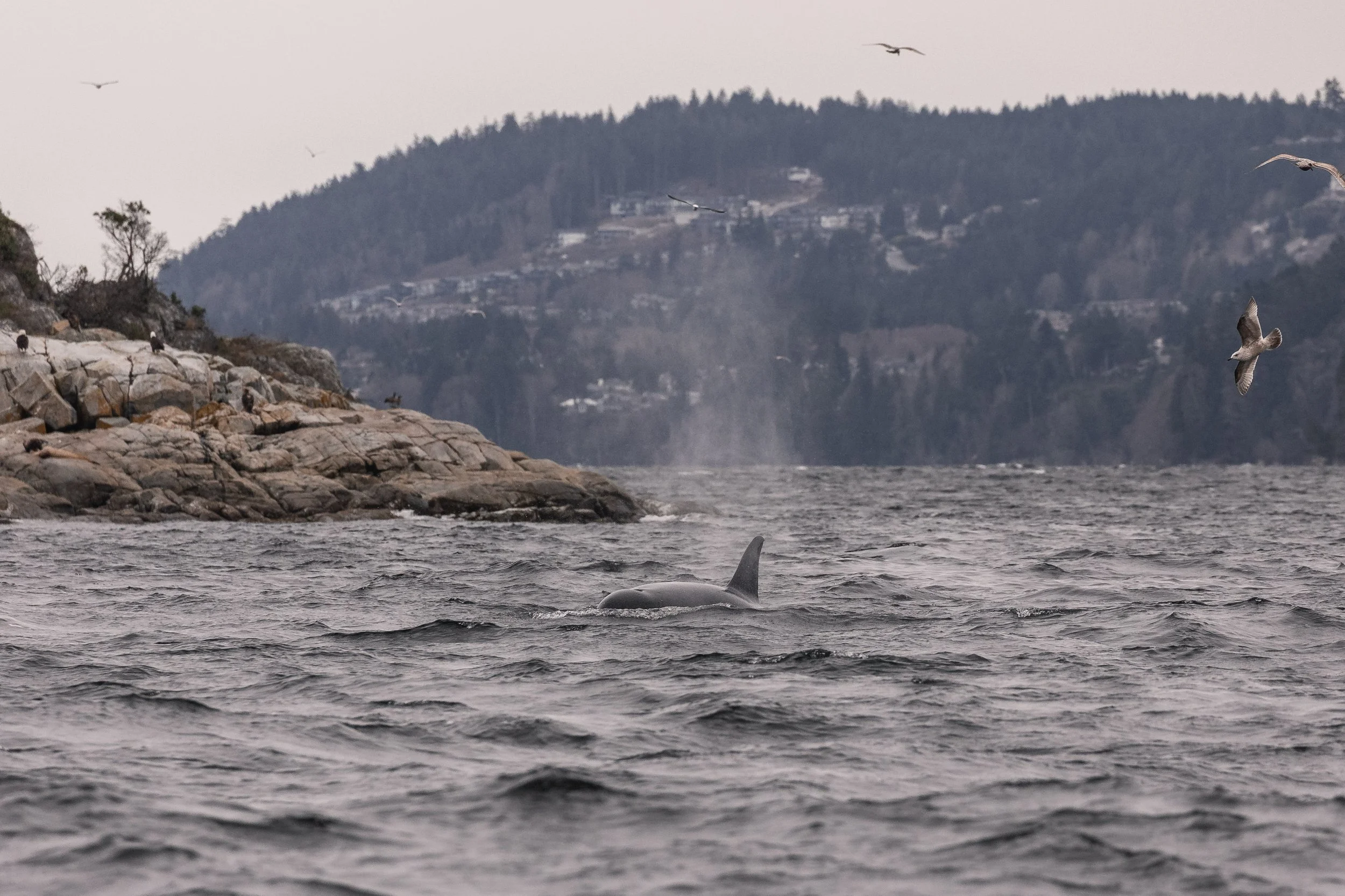
T036B Tattertip surfacing. Can you spot the eagles on the rocks?
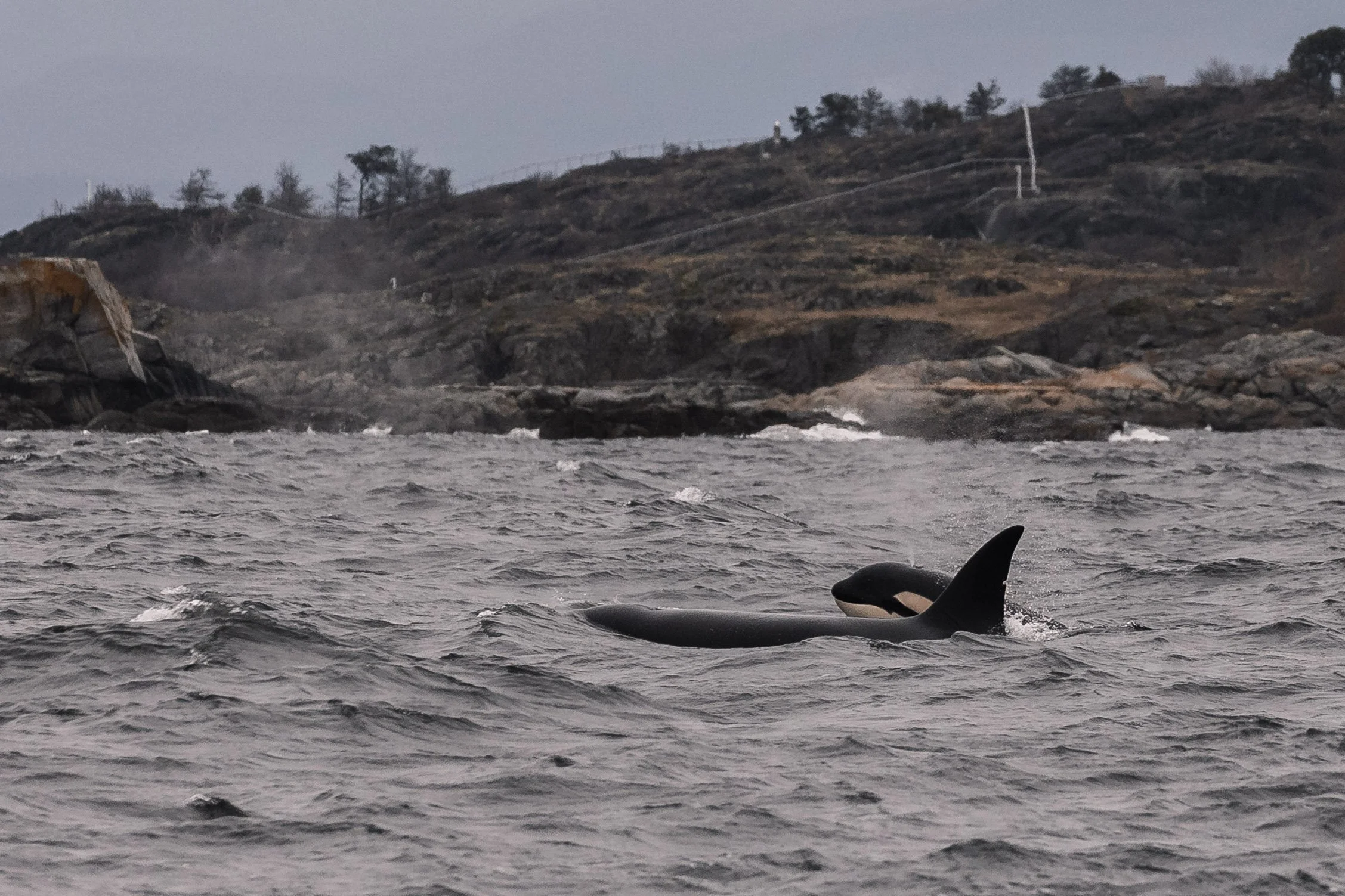
T036B1 Bhotia with T036B1A Maple poping up beside her.
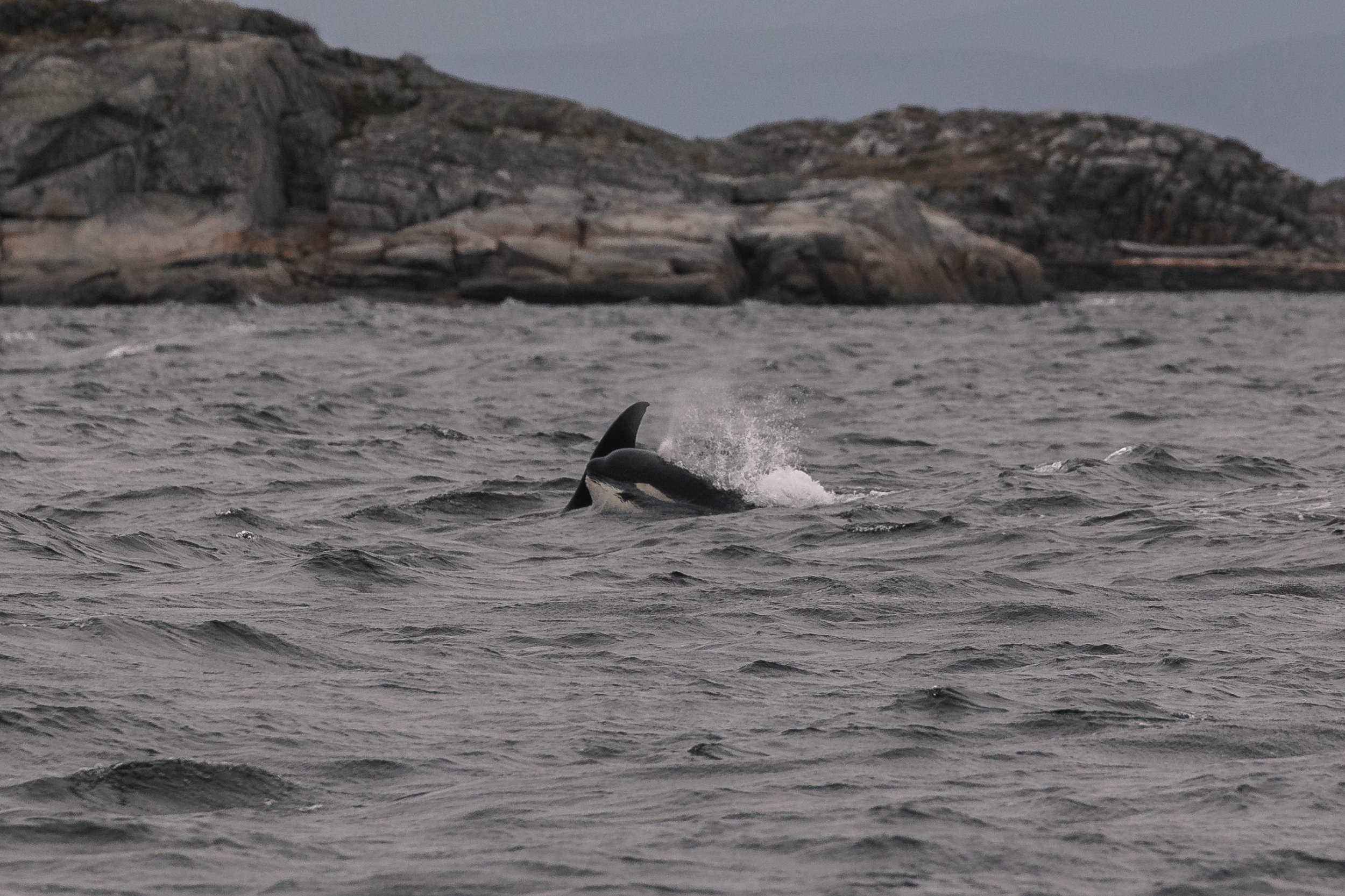
T036B4 Auk just breaking the surface beside mom, T036B Tattertip.
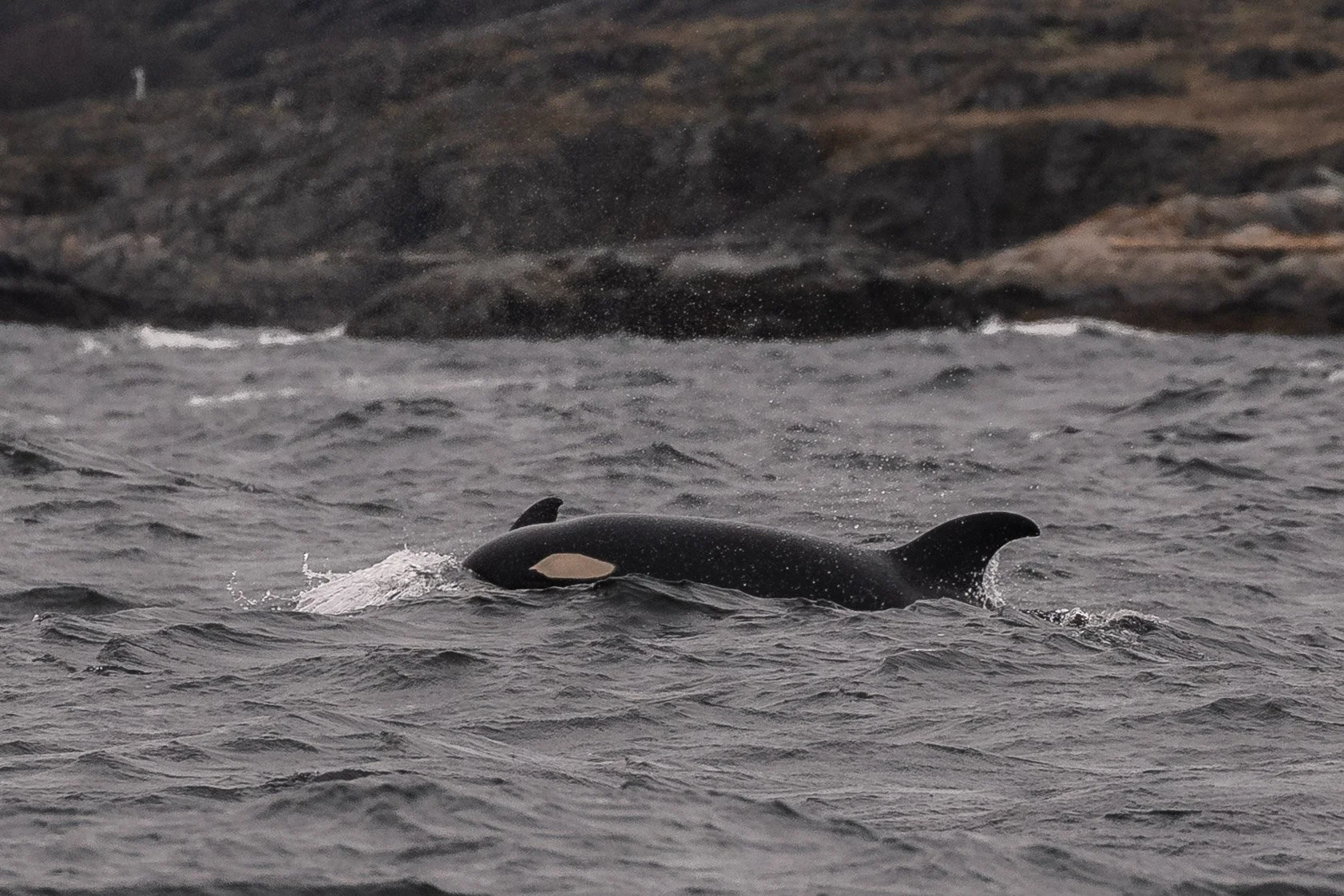
T036B4 Auk powering through the chop.
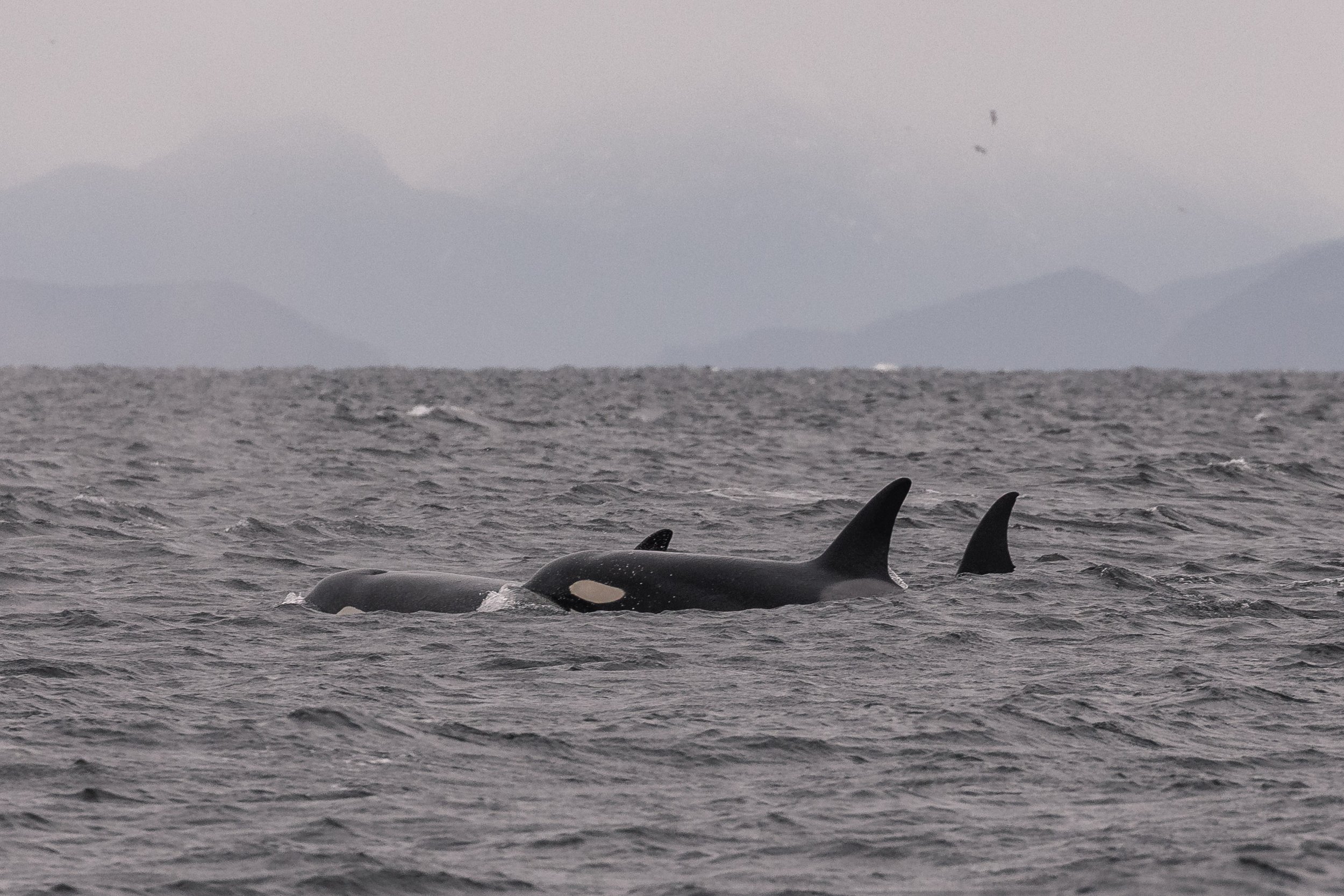
T036B1 Bhotia in the lead with T036B2 Greenfelder and T036B Tattertip in the back.
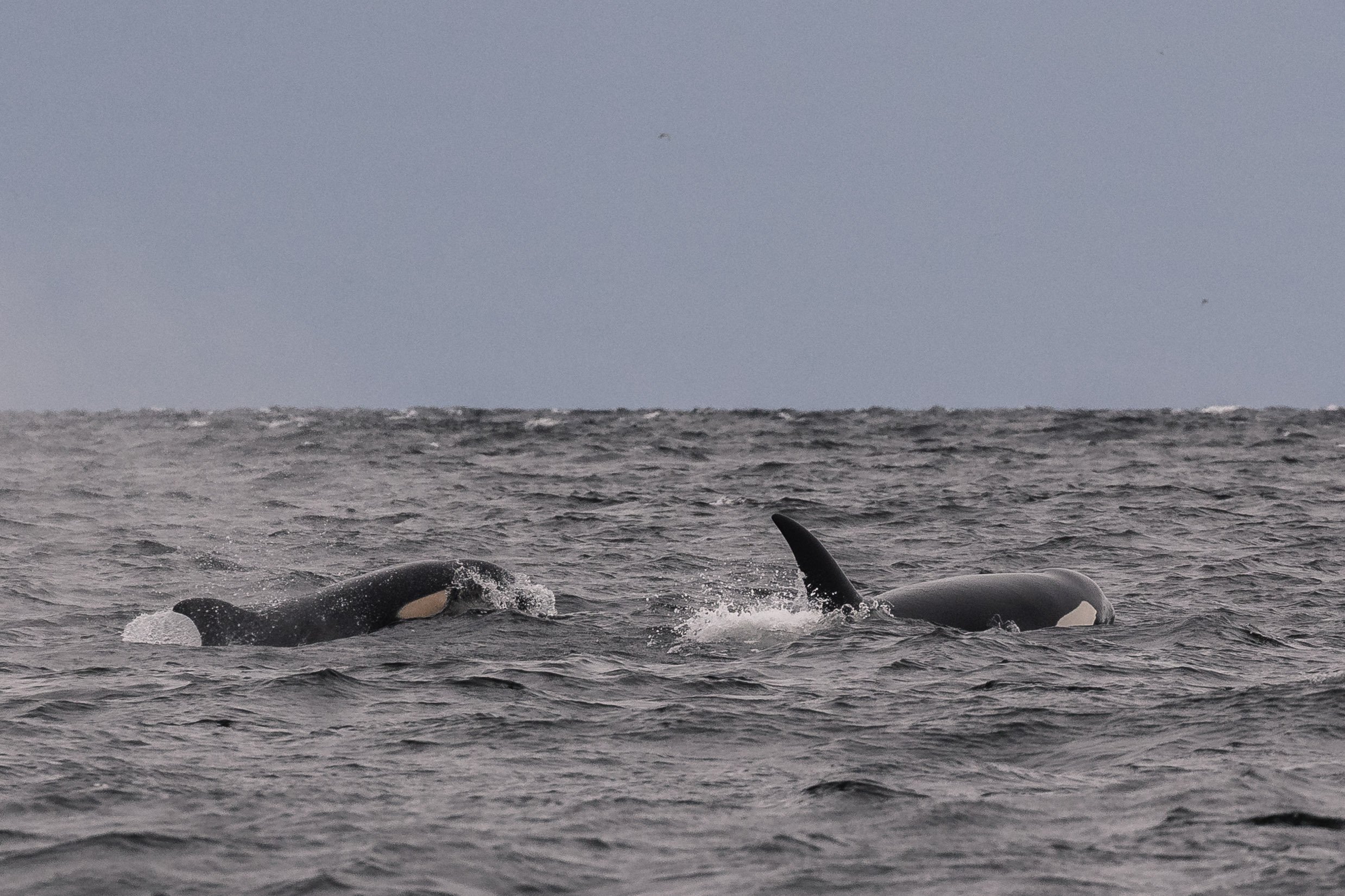
T036B1 Bhotia with T036B1A Maple.
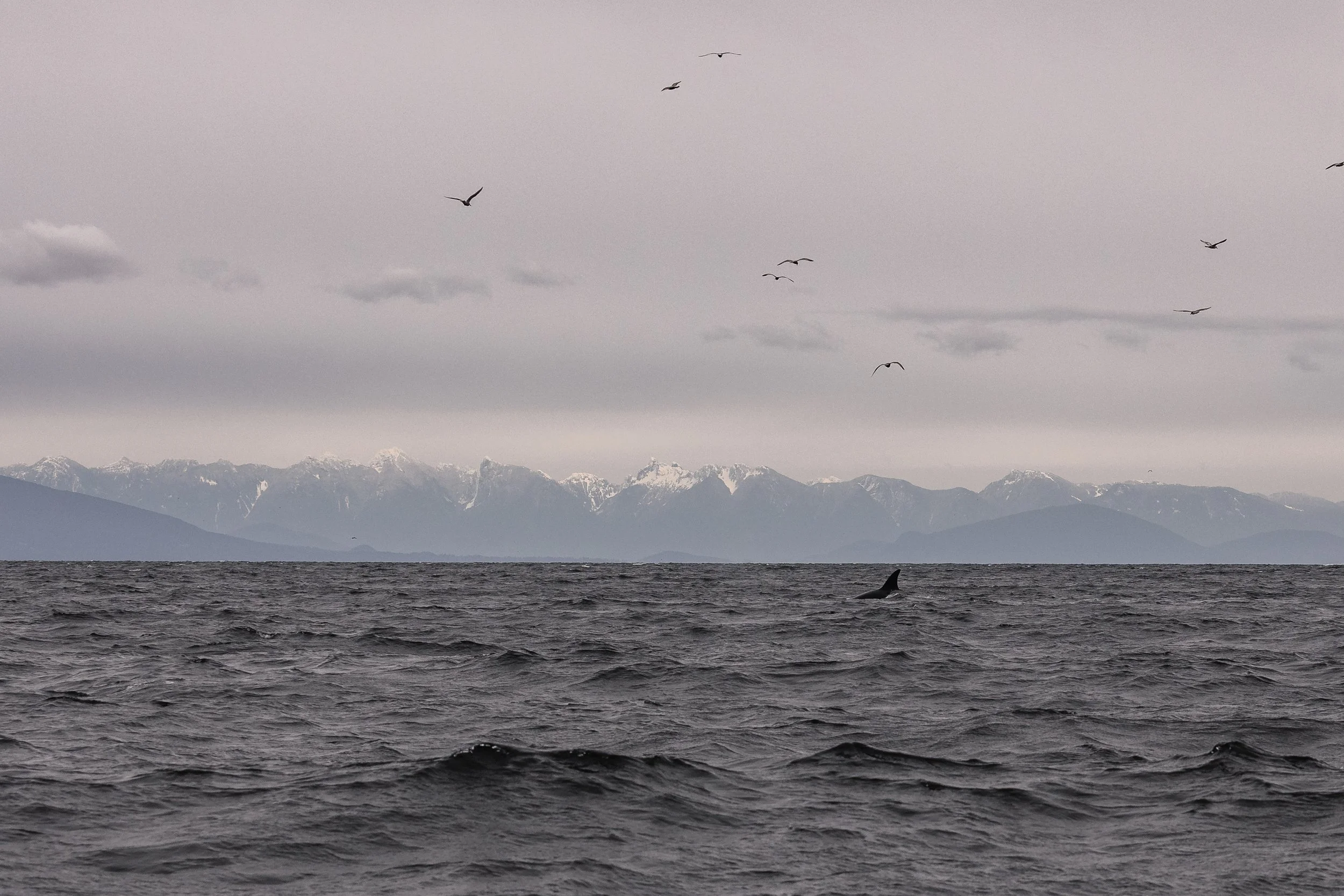
T036B2 Greenfelder surfaces in the distance with the mountains on the horizon.
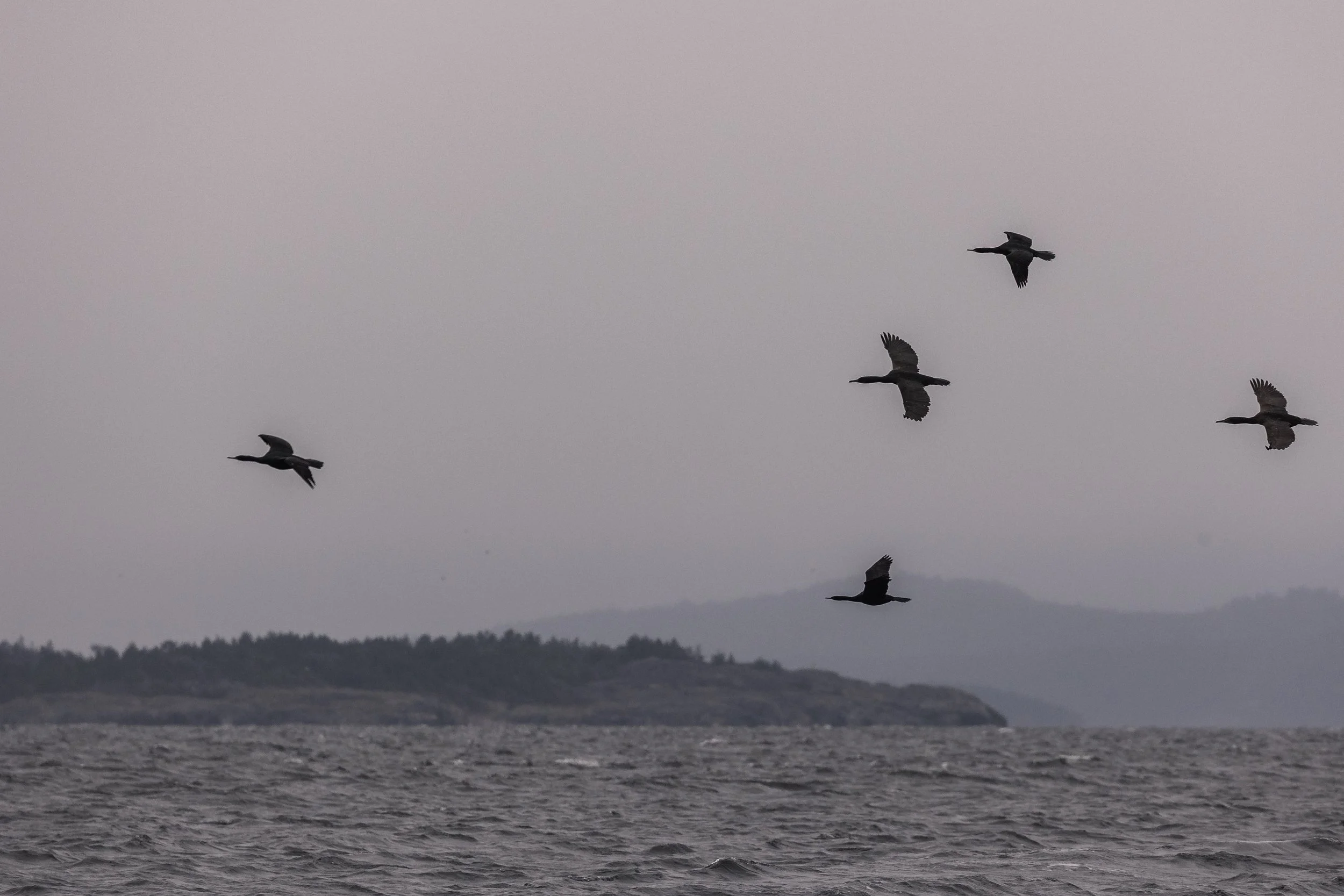
Cormorants joining the feast.
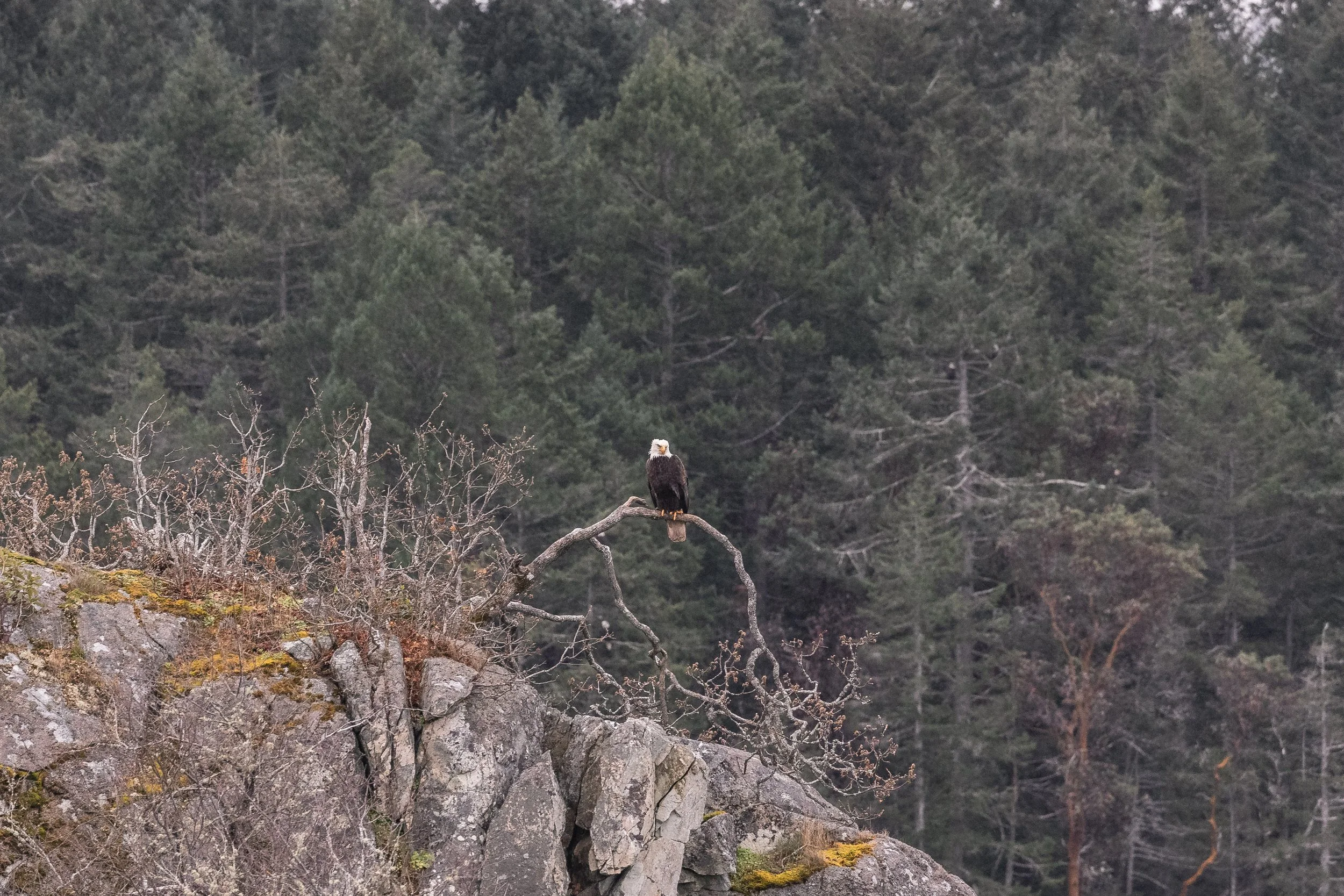
A bald eagle perched.
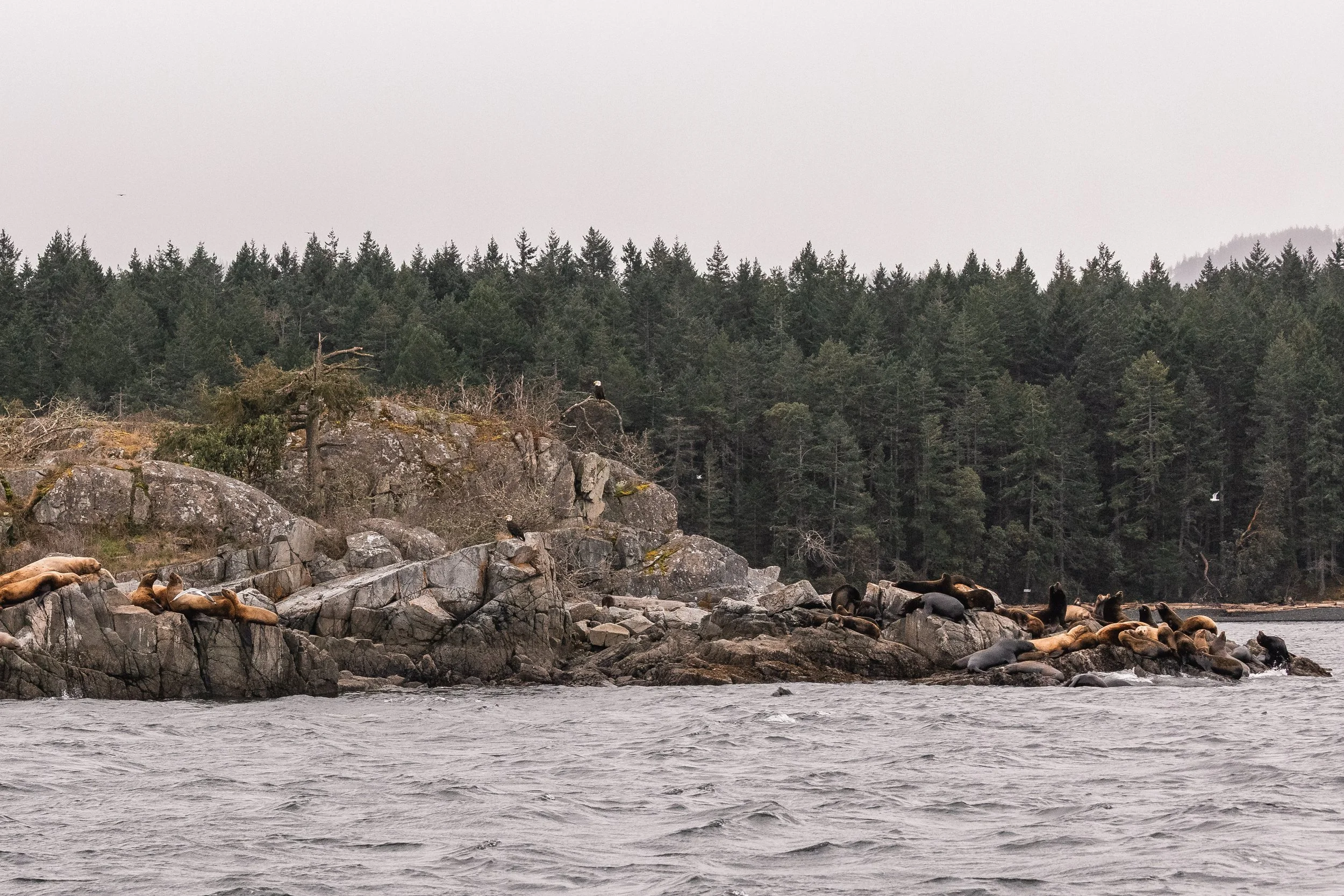
A mix of gulls, eagles, California and Steller Sea Lions.
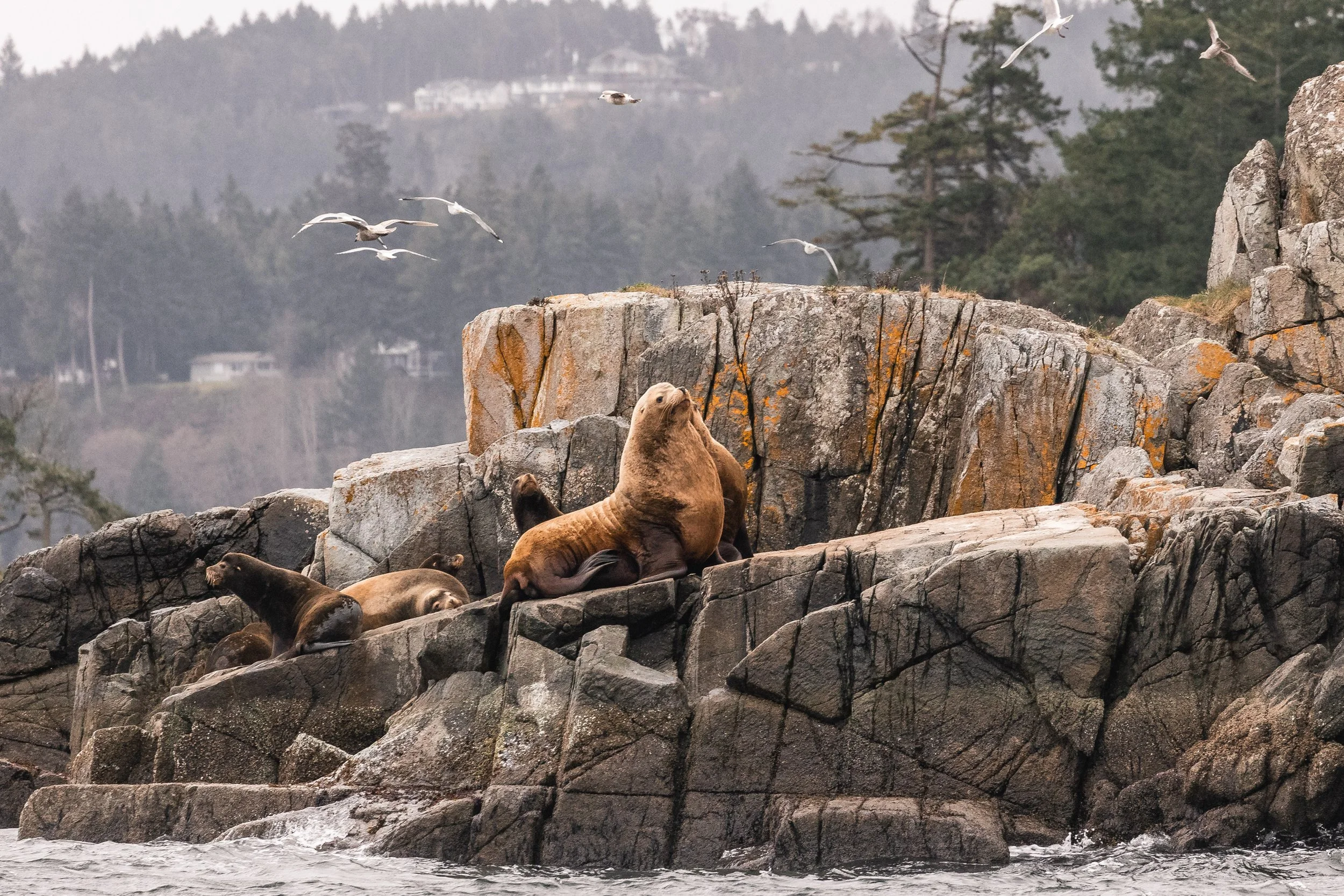
A large male Steller Sea Lion posing.
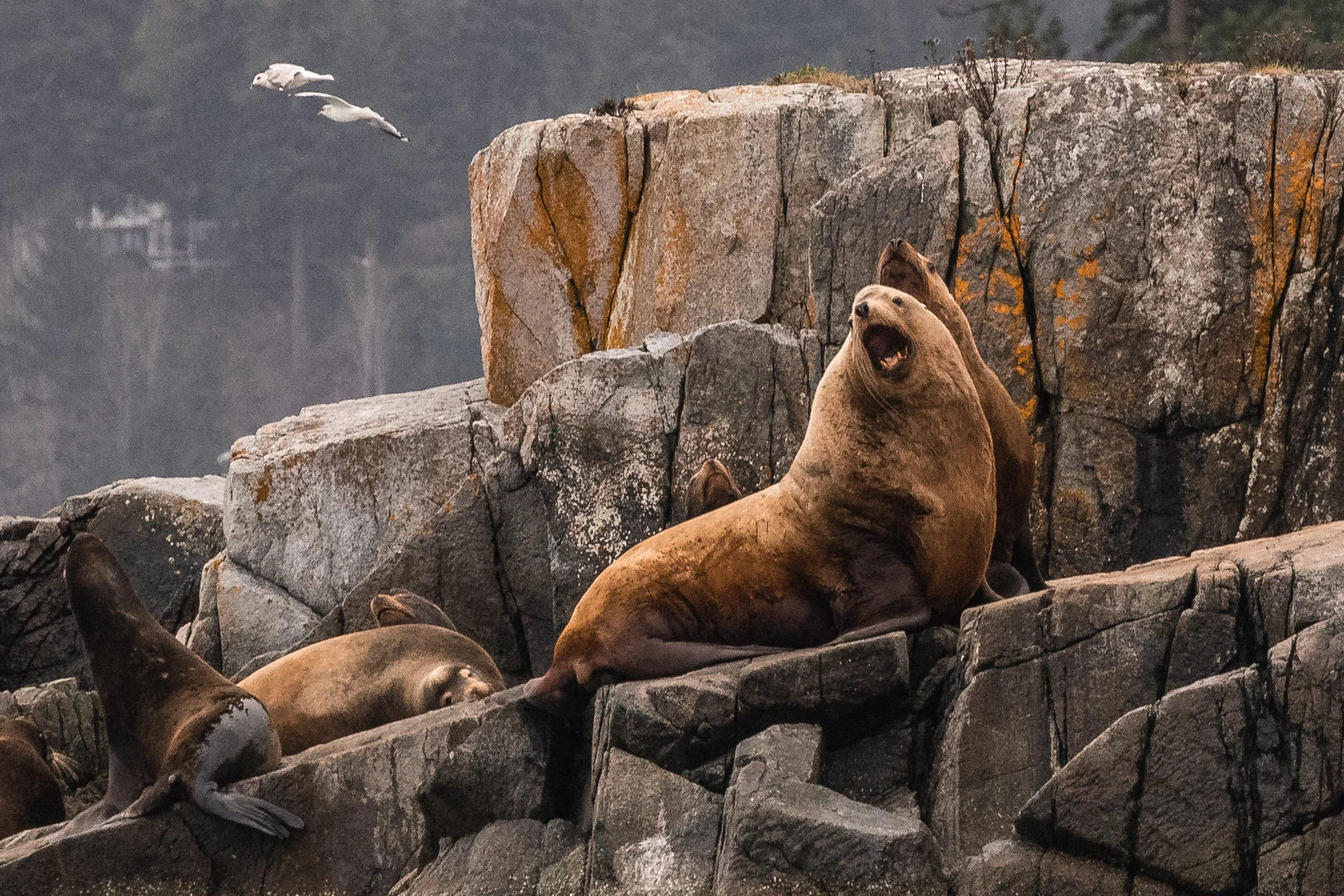
Making noise as the California Sea Lions attempt to nap behing him.
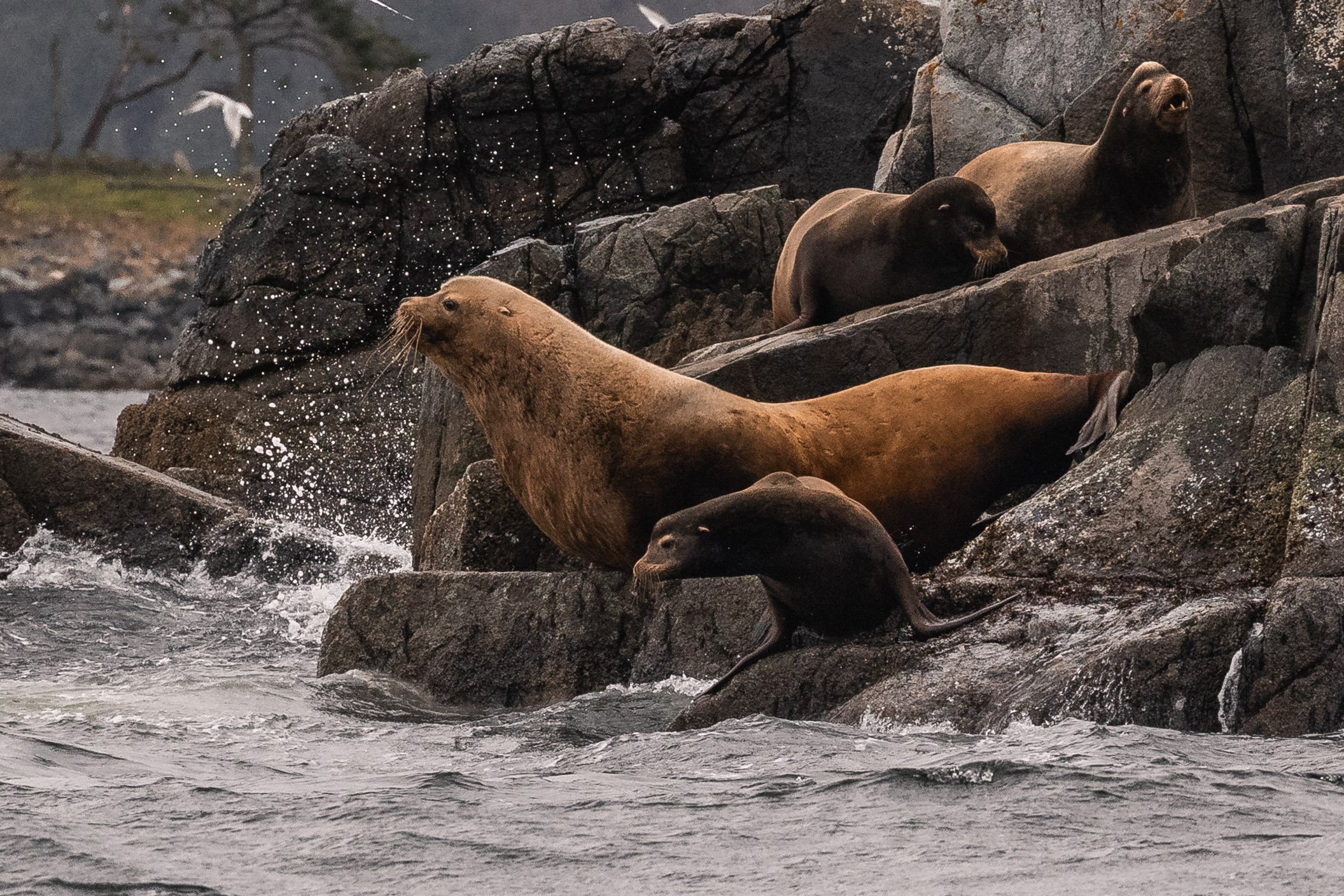
Check out the size difference between the two species.
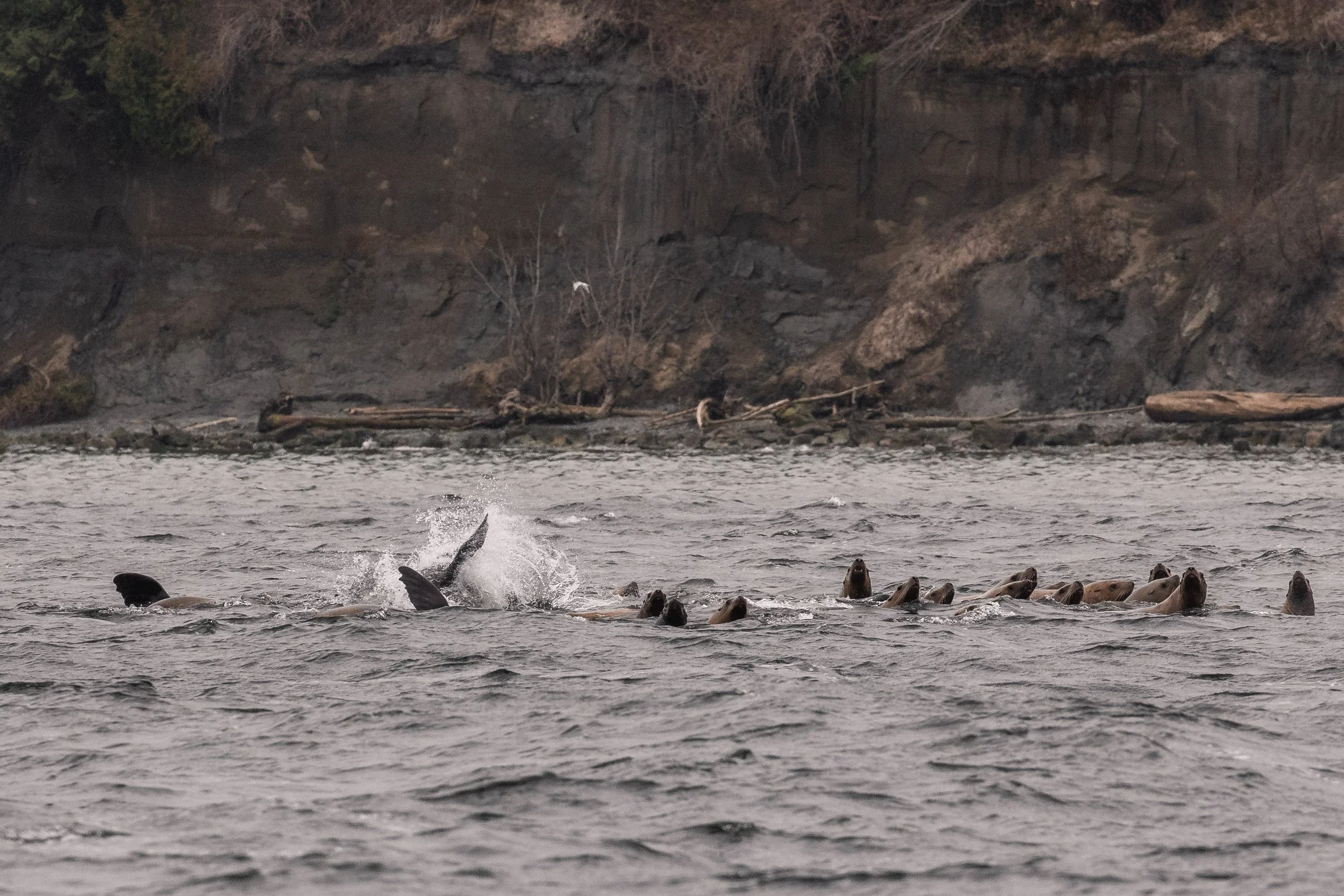
A mighty raft of sea lions.
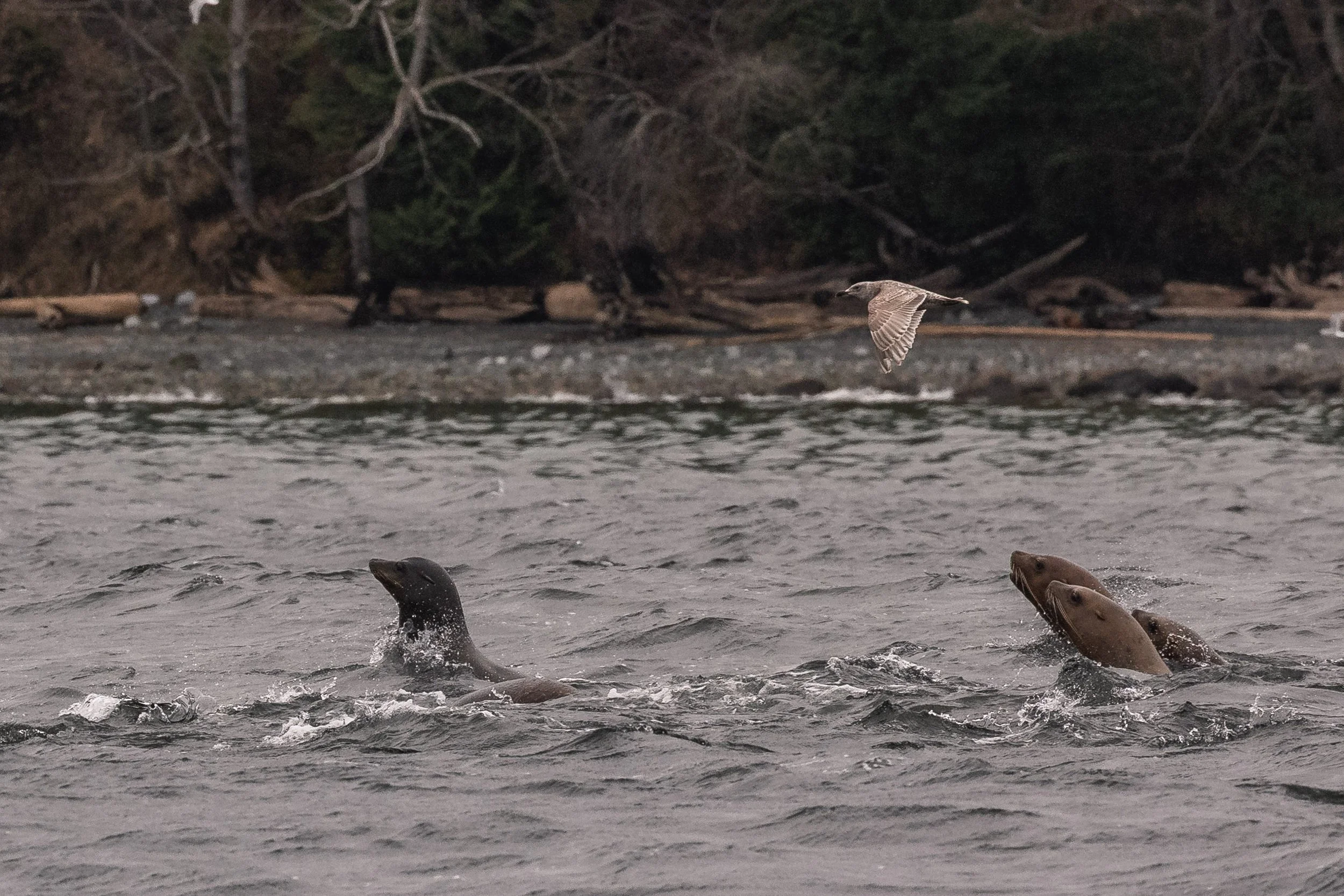
Everyone is fishing today!
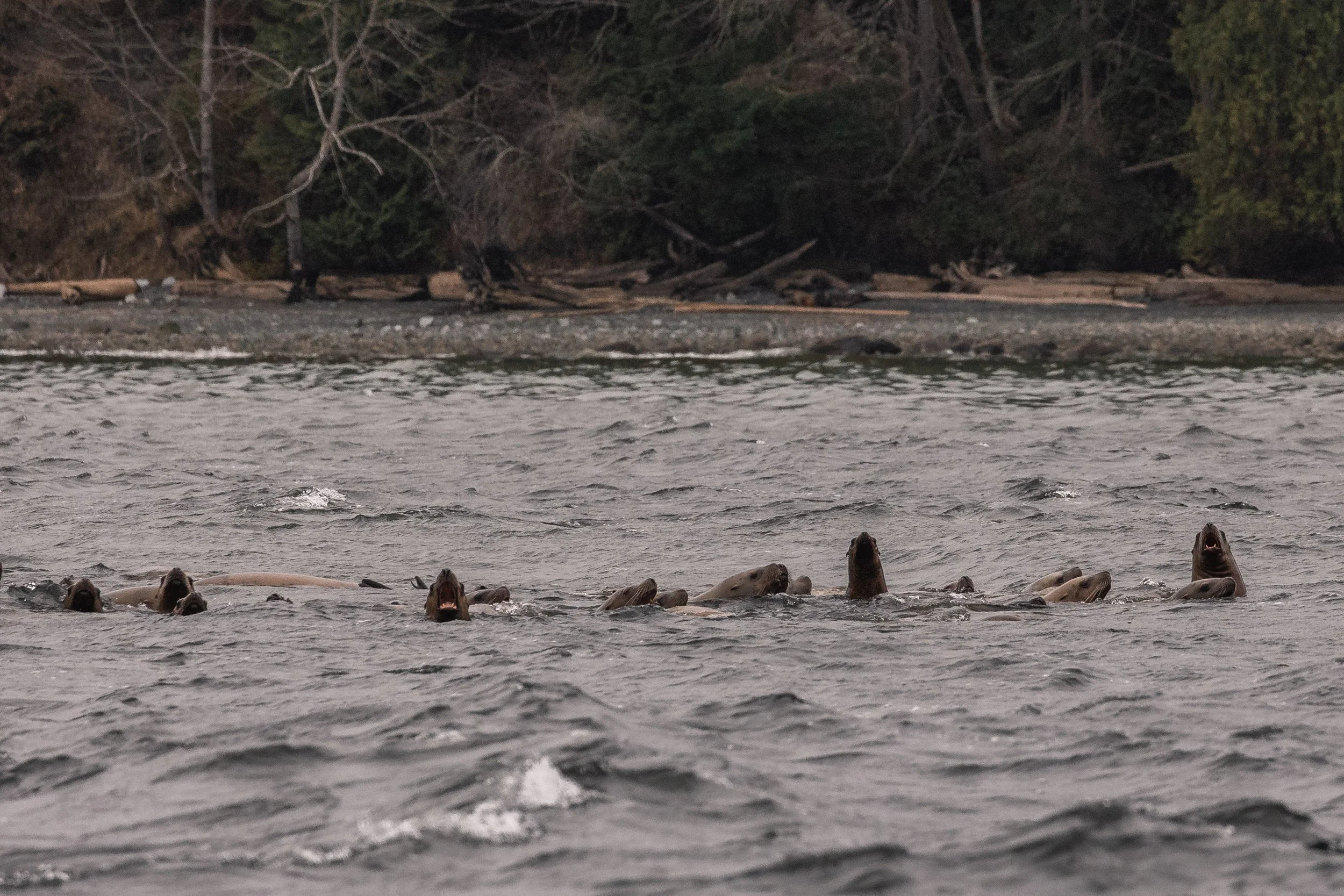
Stellers watching us back!