
March 18, 2026 - Surf's up with the T049As
It was a classic West Coast spring morning in Nanaimo. Wind moved steadily through the trees along the shoreline, and dark clouds sat low on the horizon, hinting at incoming rain. Despite the conditions, guests arrived at the dock prepared and in good spirits, boarding Kula, our semi-covered vessel, ready for the day ahead.
Following a safety briefing and an introduction to the species and behaviours we might encounter, we departed the harbour and entered the Strait of Georgia. As with any day on the water, the plan was flexible. Locating whales relies on a combination of experience, environmental awareness, and, at times, shared sighting information.
On this trip, we had an early advantage.
A report from shore indicated a pod of orca within range. While we often locate whales independently, these reports can help guide initial direction. Captain Joseph adjusted course northbound, and we began scanning the water as we moved through moderate wind and swell.
Before long, a call came from onboard: whales had been sighted!
Marine Naturalist Aly Kohlman quickly began documenting the encounter. Armed with a telephoto lens and her familiarity with individual orca, she quickly confirmed the group as the T049As.
This particular pod has drawn recent attention. During earlier sightings, the matriarch, T049A Nan, had been absent, an unusual occurrence given the typically tight structure of this particular family. However, subsequent encounters resolved that concern. Nan was later observed travelling with a new calf, an encouraging development and an important contribution to the population.
At the time of our encounter, the T049As consisted of:
T049A Nan ♀ (1986)
T049A3 Nat ♂ (2011)
T049A4 Neptune ♂ (2014)
T049A5 Nebula ♀ (2017)
T049A6 Charlie II ♂ (2022)
T049A7 (2026)
Two additional members, T049A1 Noah and T049A2 Jude, remain part of the lineage but are more frequently observed travelling separately.
As we observed the group, the environmental conditions began to influence their behaviour. With wind-driven waves building across the Strait, several members of the pod, including Nan, Neptune, Charlie, and the calf, used the swell to their advantage. Positioning themselves along the wave faces, they moved with the water's energy, at times appearing to surf along the crests.
This behaviour provided a unique opportunity for observation. The lift of the waves increased visibility, allowing clearer comparisons of body size and dorsal fin shape between individuals. It also offered intermittent views of their ventral (underside) coloration.
The distinct black-and-white pattern of orca is an example of countershading, a form of camouflage. Their dark dorsal surface blends with the deeper ocean when viewed from above, while their lighter underside reduces contrast when seen from below against the surface light. Under certain conditions, particularly when the animals are angled within waves, this lighter pigmentation can reflect through the water, creating a faint turquoise appearance.
After our time with the T049As, we left the group to continue their journey and headed south toward Nanaimo.
En route, we encountered another notable aggregation along the rocky shoreline of Maude Island.
A large group of Steller sea lions was hauled out on the rocks. The site was active, with a range of behaviours on display: from resting individuals to dominant males engaging in physical interactions. The scale of these haul-outs provides valuable insight into the species’ social dynamics, particularly during non-breeding periods.
While documenting the group, Aly captured images that revealed an additional concern. One individual in the background appeared to have a fishing line entangled around its body. This observation was reported to Fisheries and Oceans Canada, contributing to ongoing monitoring efforts and potential intervention.
Encounters like this highlight the broader role of our time spent on the water. Beyond observation, it allows for documentation and reporting that can directly support wildlife management and conservation efforts.
We returned to the Nanaimo harbour later that day under unchanged skies, concluding a very special trip. From the presence of a new orca calf in the T049As to the identification of a distressed sea lion, the day reflected both the resilience and the vulnerability of the marine environment.
Photographs from this encounter, taken by Marine Naturalist Aly Kohlman, are available below.
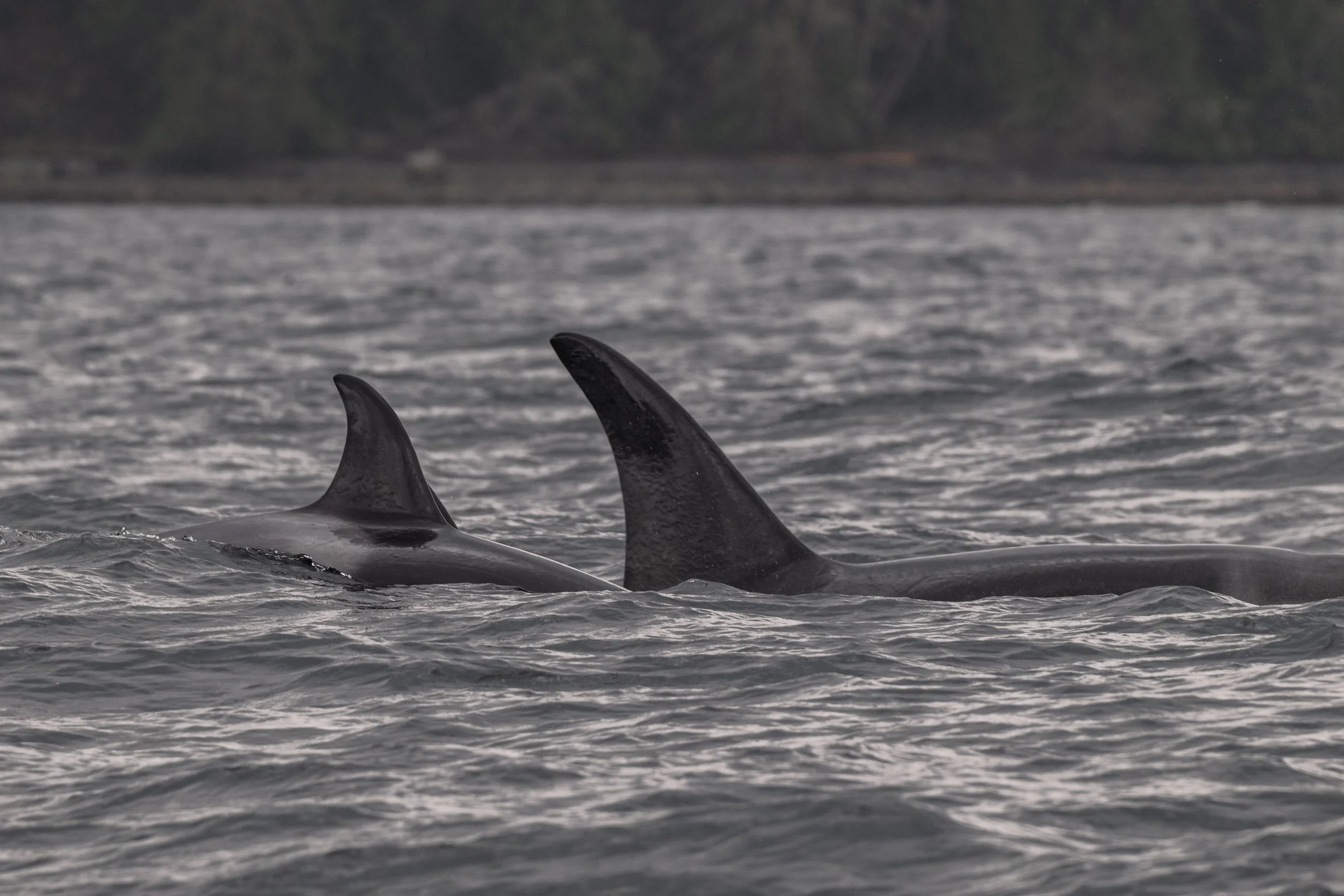
T049A5 Nebula and T049A3 Nat surfacing together.
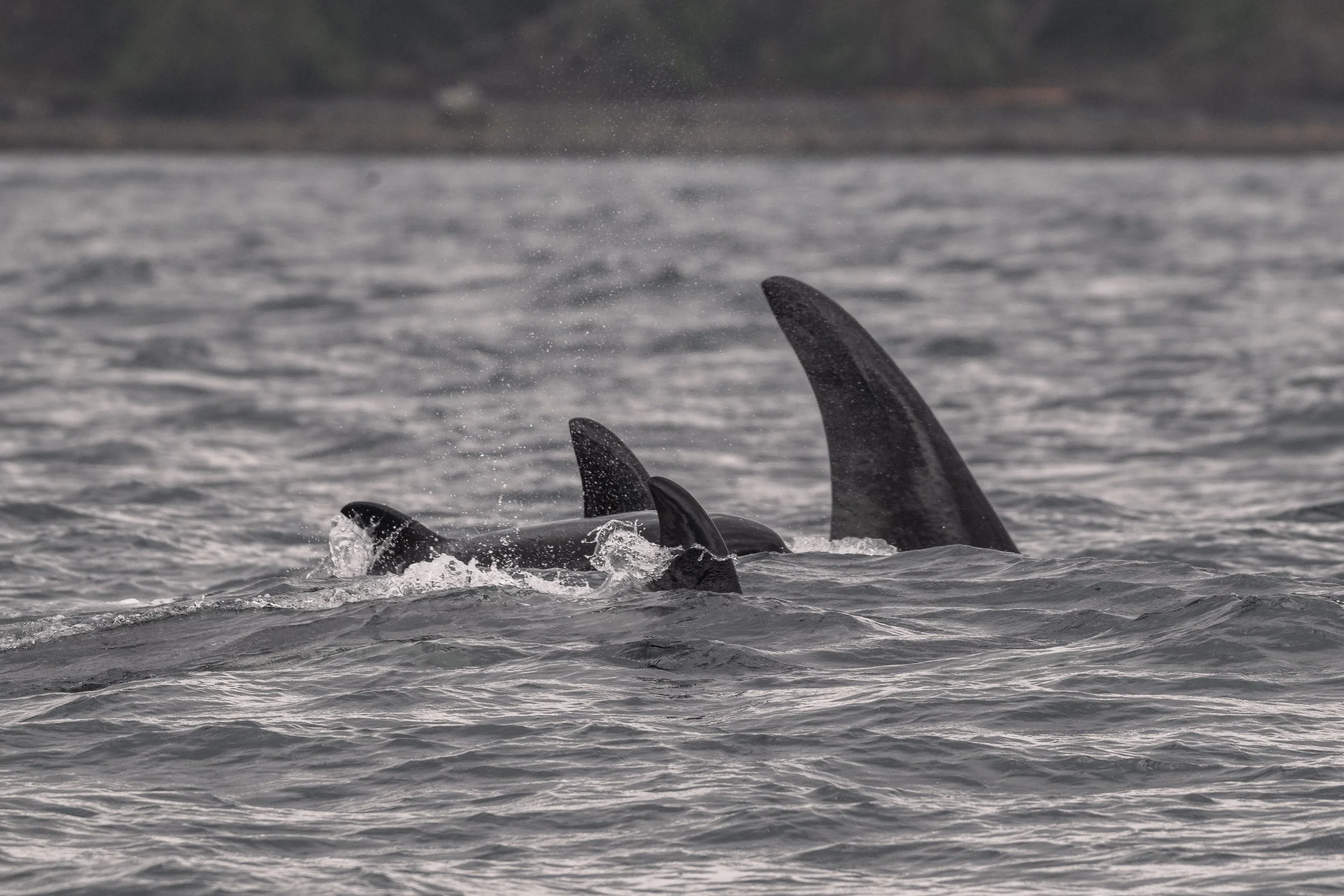
The Baby, T049A7 surfacing amongst their family.
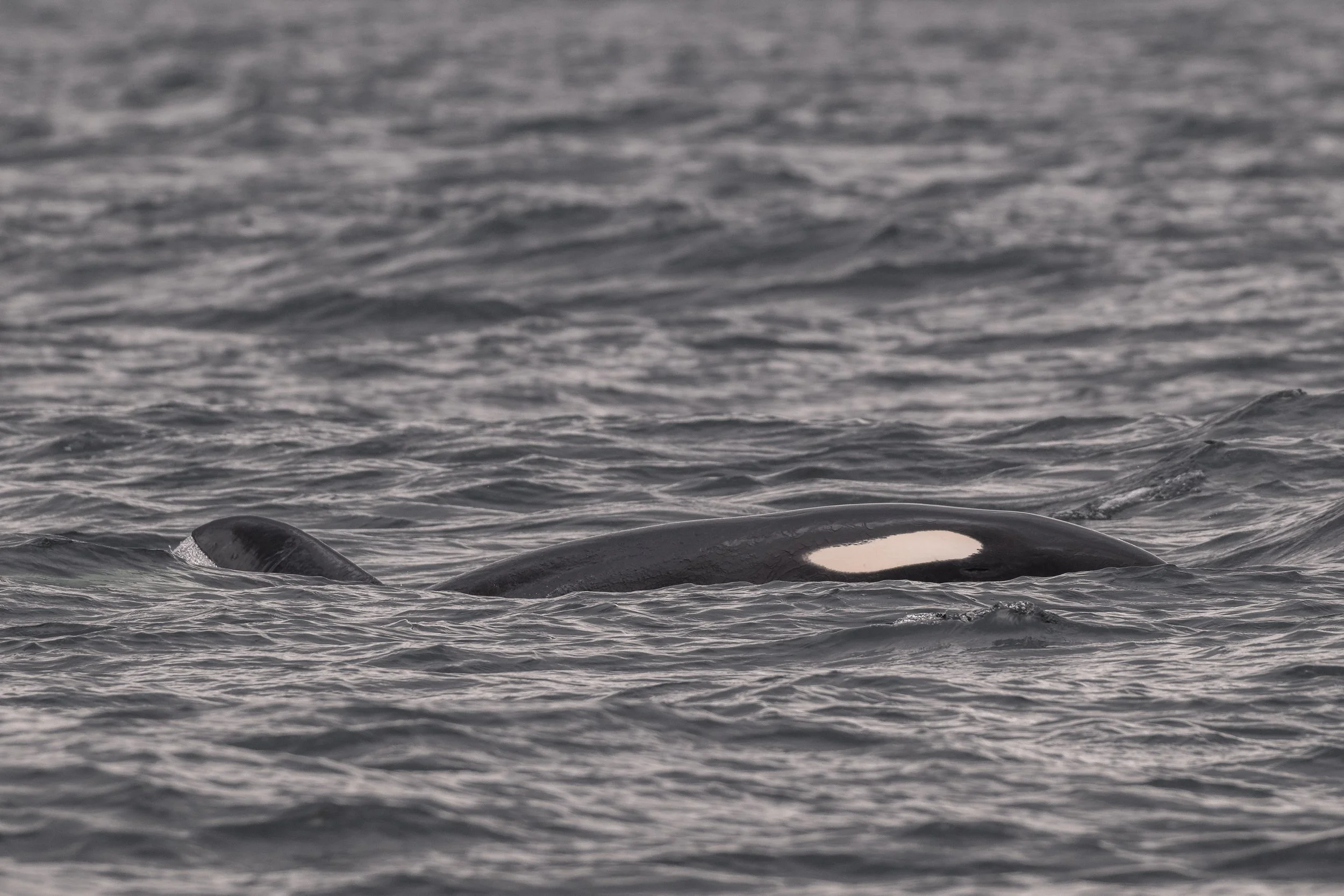
T049A4 Neptune rolling on his side, showing off his eye patch.
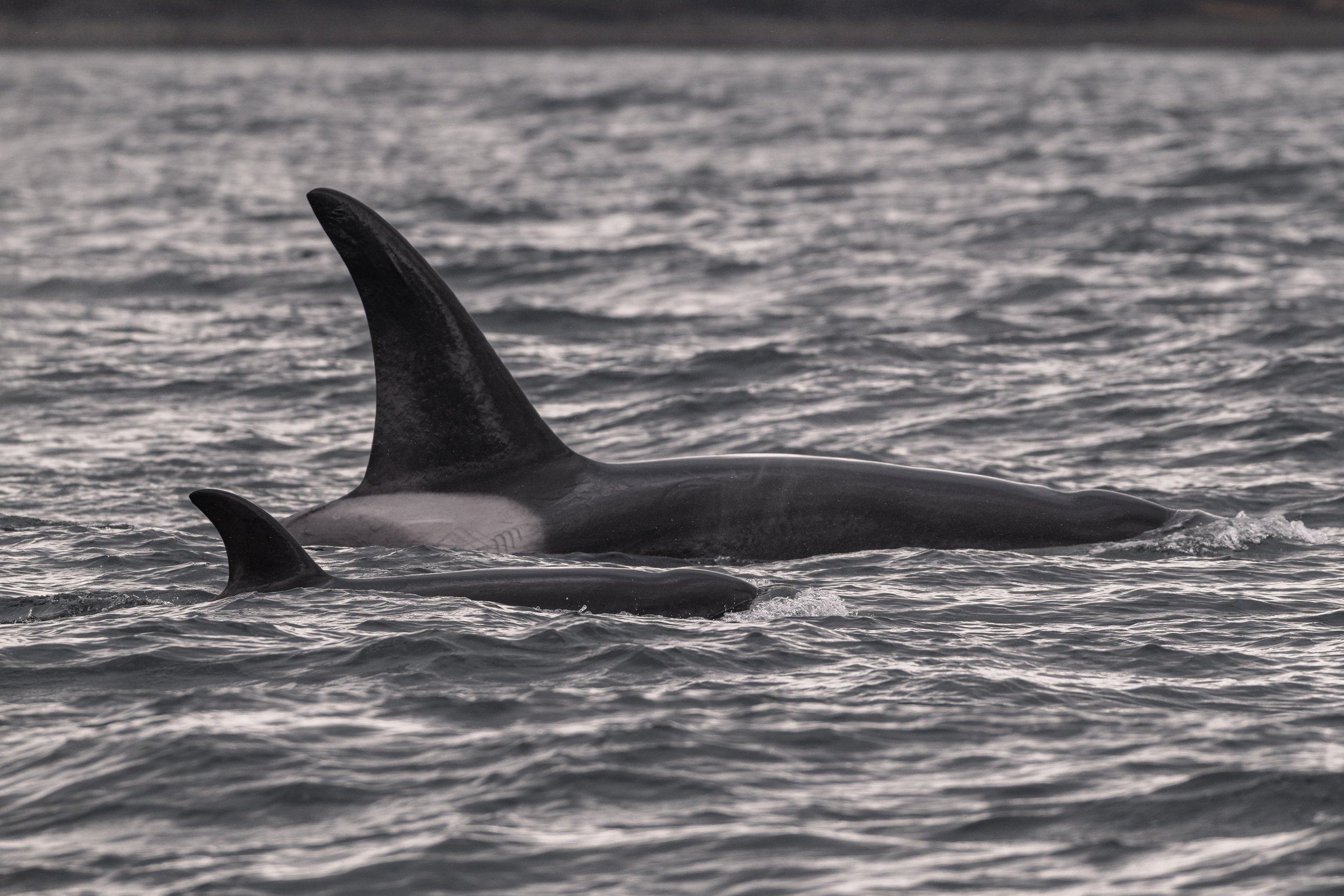
T049A6 Charlie II surfacing beside big brother, T049A3 Nat.
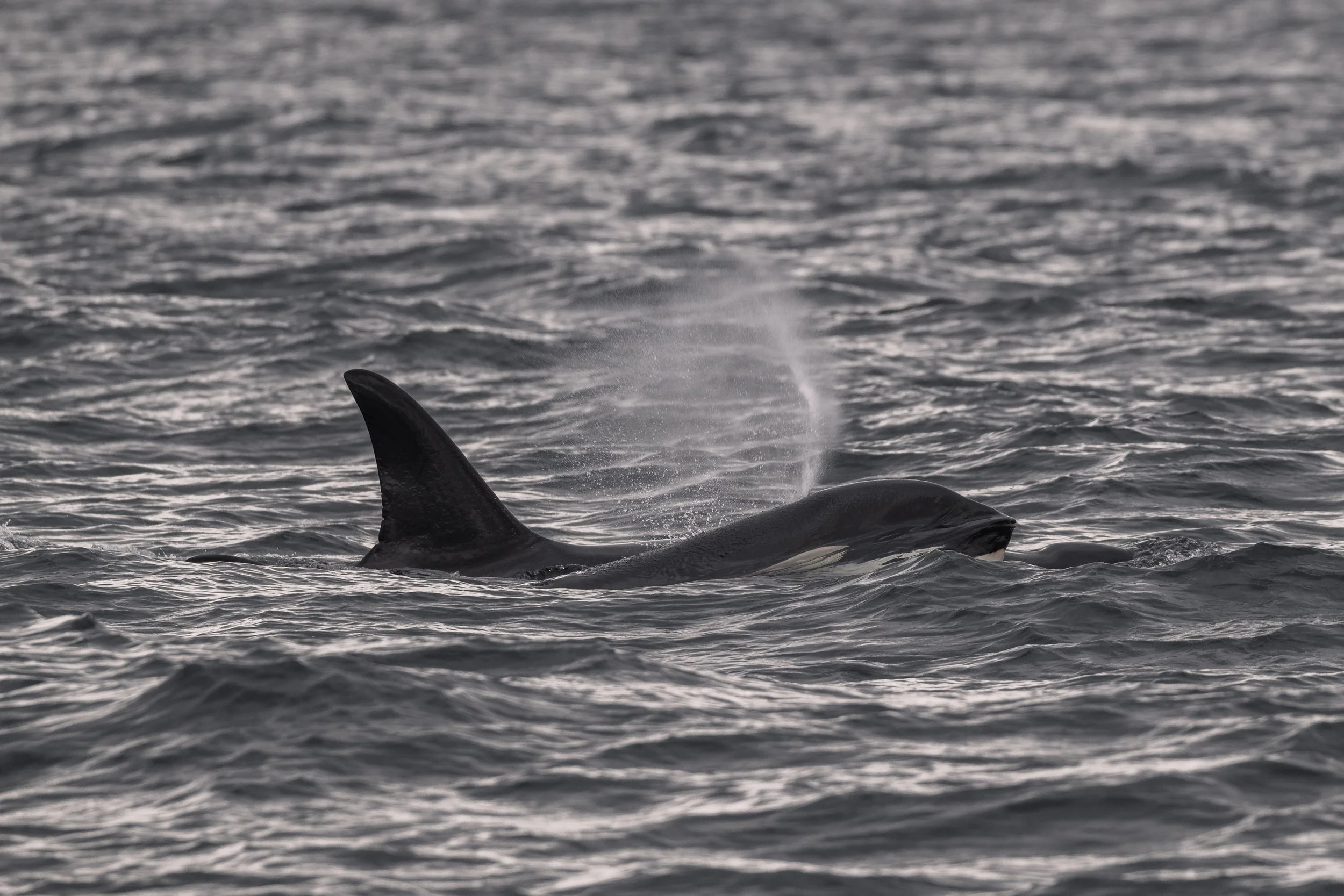
T049A Nan surfacing with one of her kids breaking the water in front.
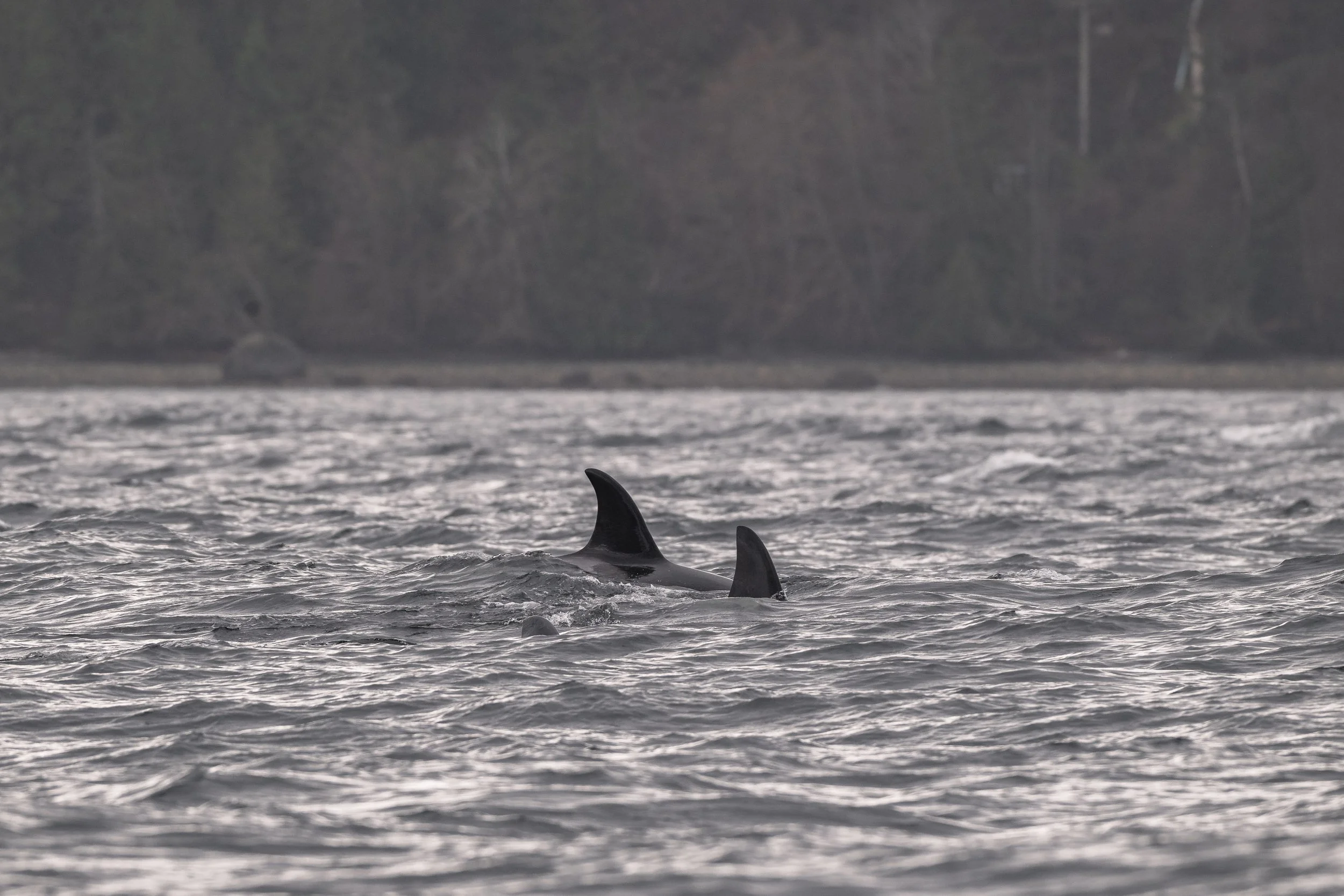
T049A5 Nebula surfacing behind T049A4 Neptune.
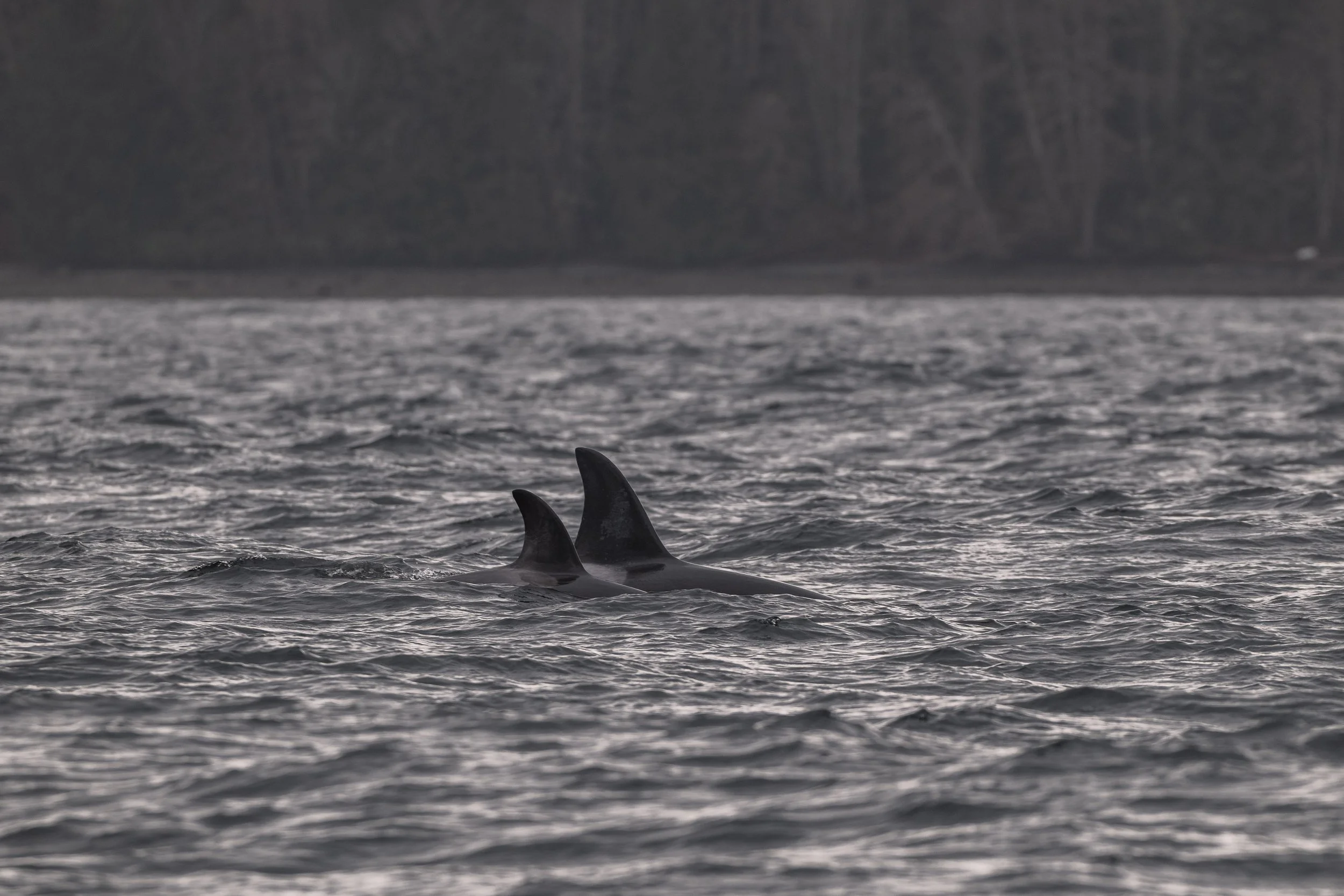
T049A6 Charlie II and T049A4 Neptune surfacing together.
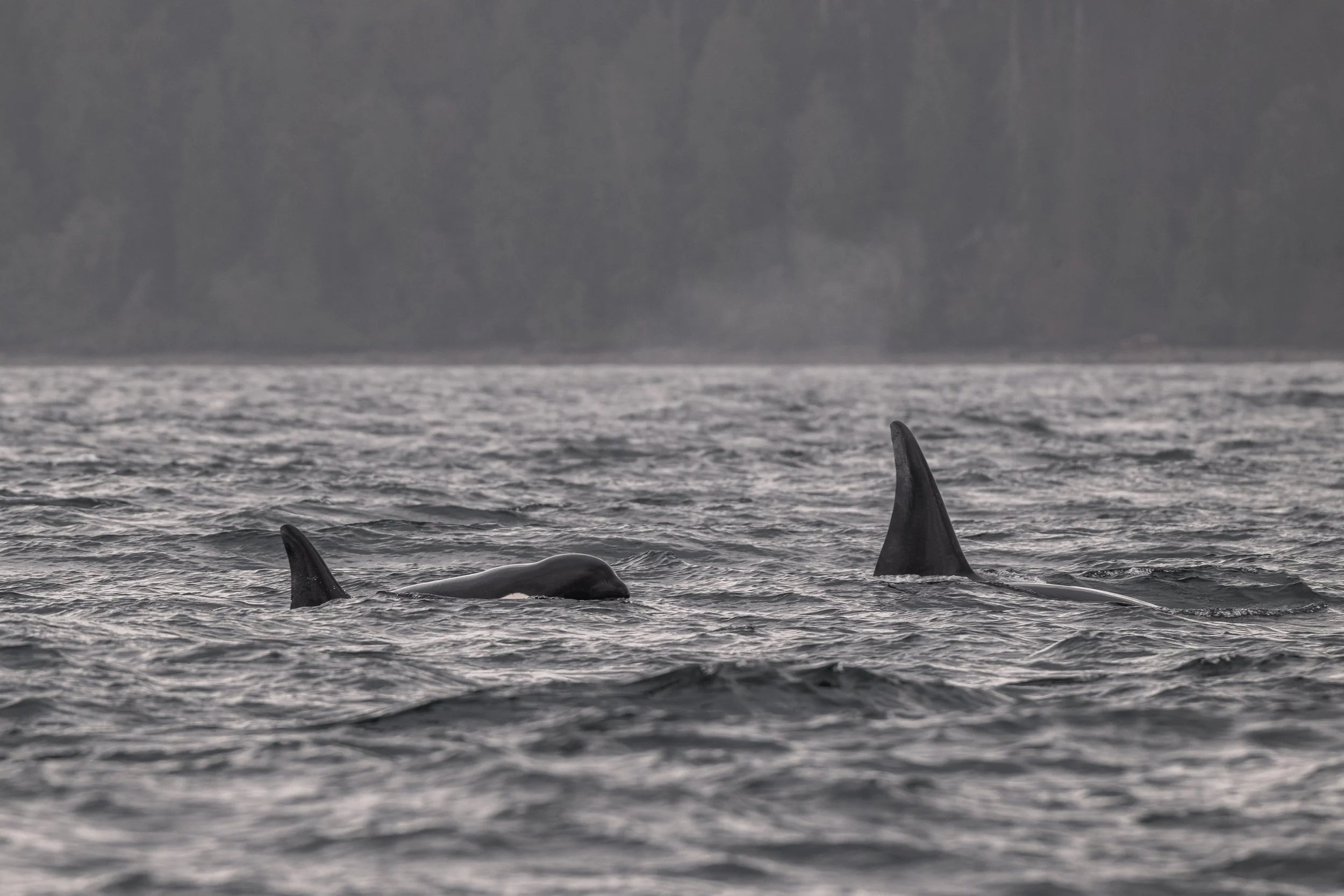
T049A Nan surfacing beside the tall fin of T049A3 Nat.
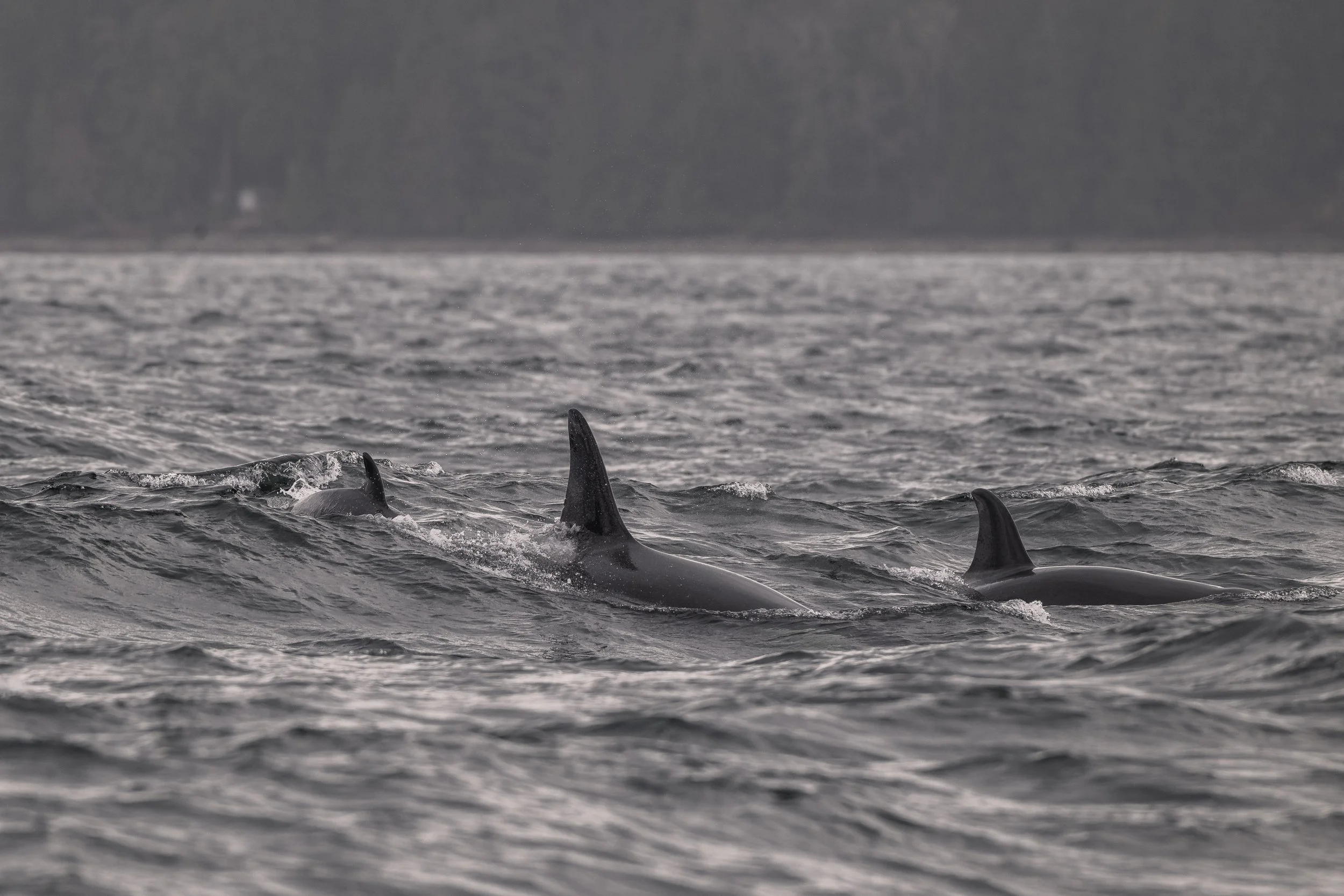
Surf’s up! T049A7, T049A Nan, and T049A5 Nebula riding the wave together!
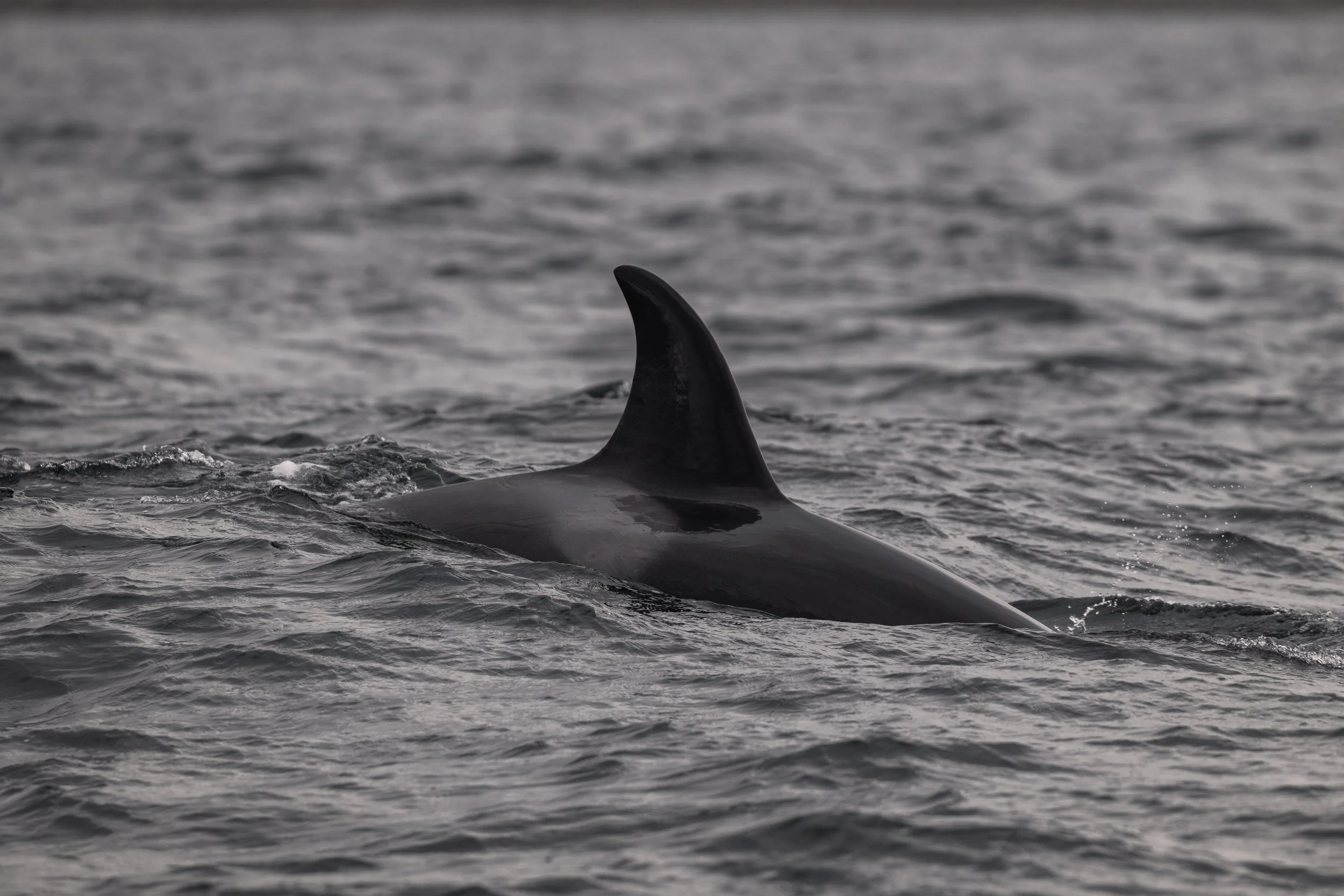
A great look at T049A5 Nebula.
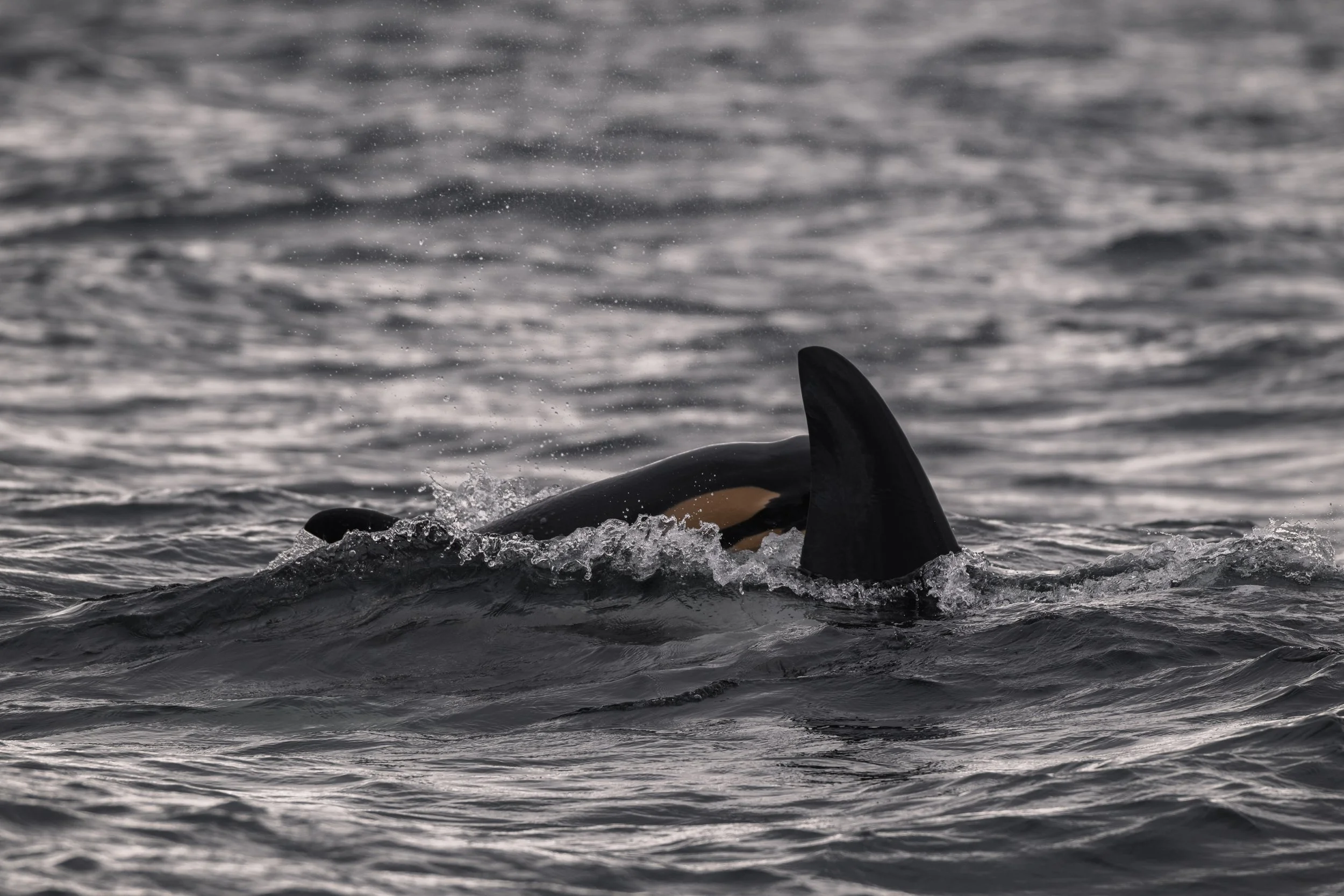
T049A7 peeking through the waves beside mom, T049A Nan.
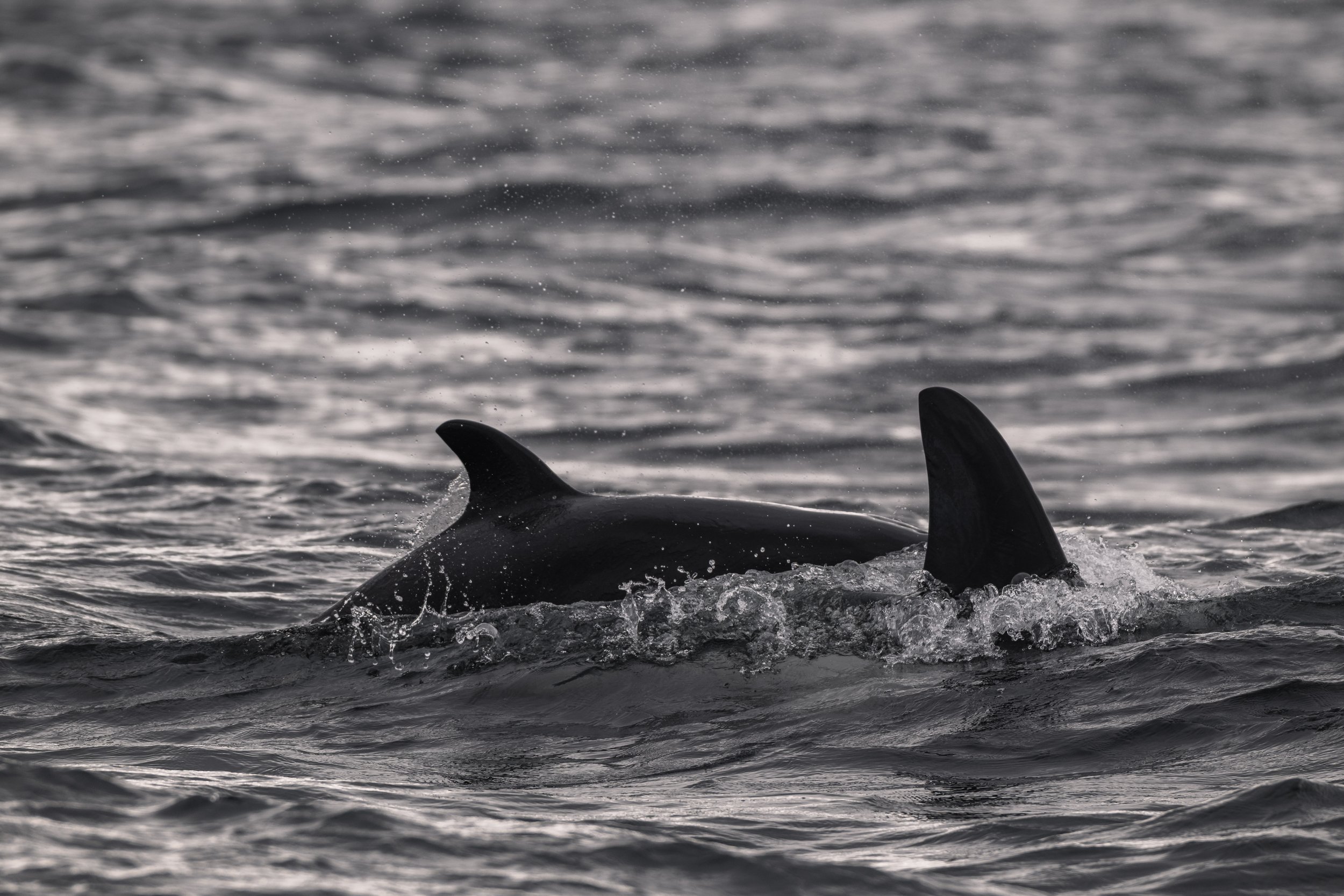
Look how tiny T049A7 is!
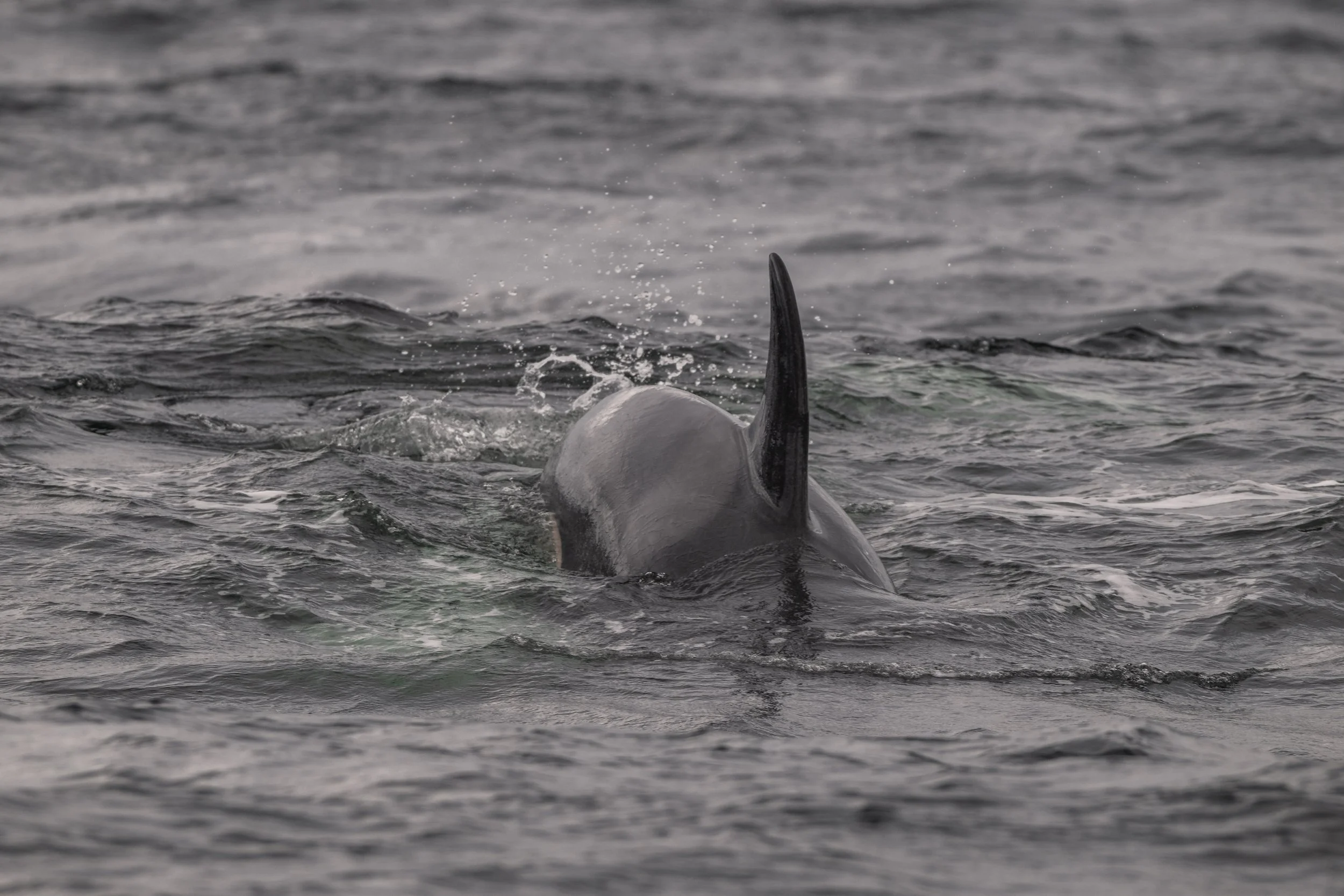
T049A5 Nebula riding the wave. Can you spot the white bits of her family through the water beside her?
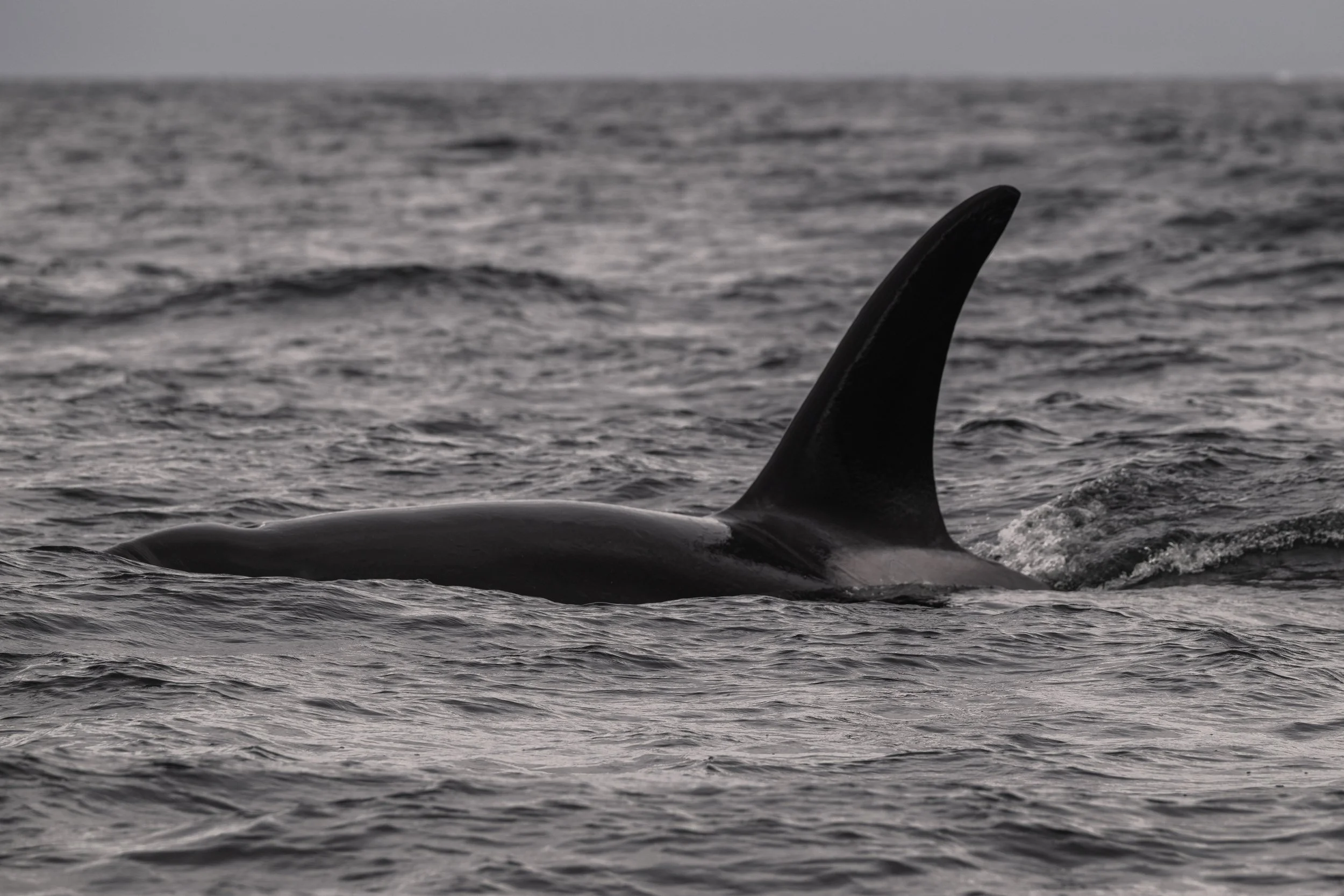
T049A3 Nat show off his big dorsal fin.
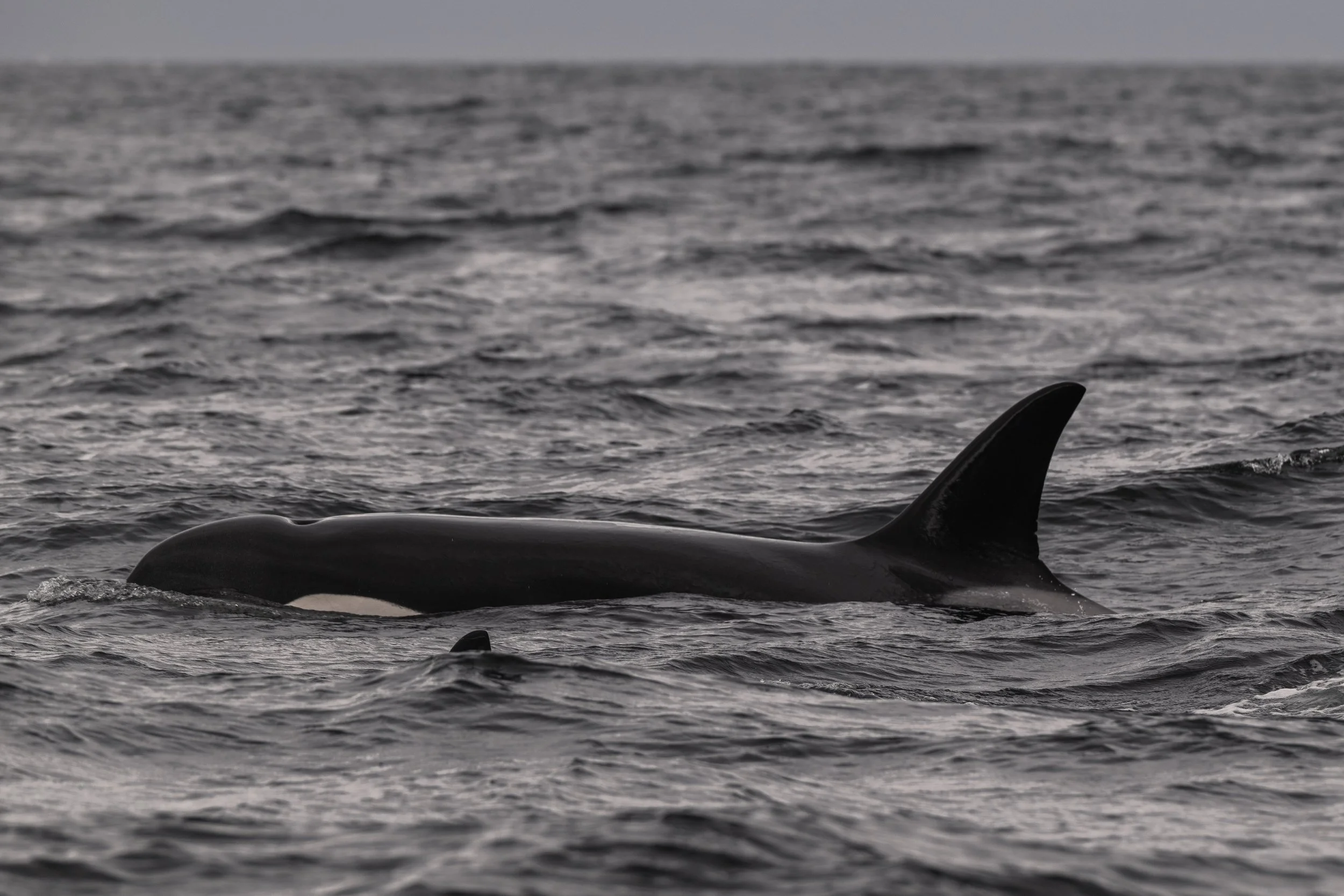
A great look at matriarch, T049A Nan.
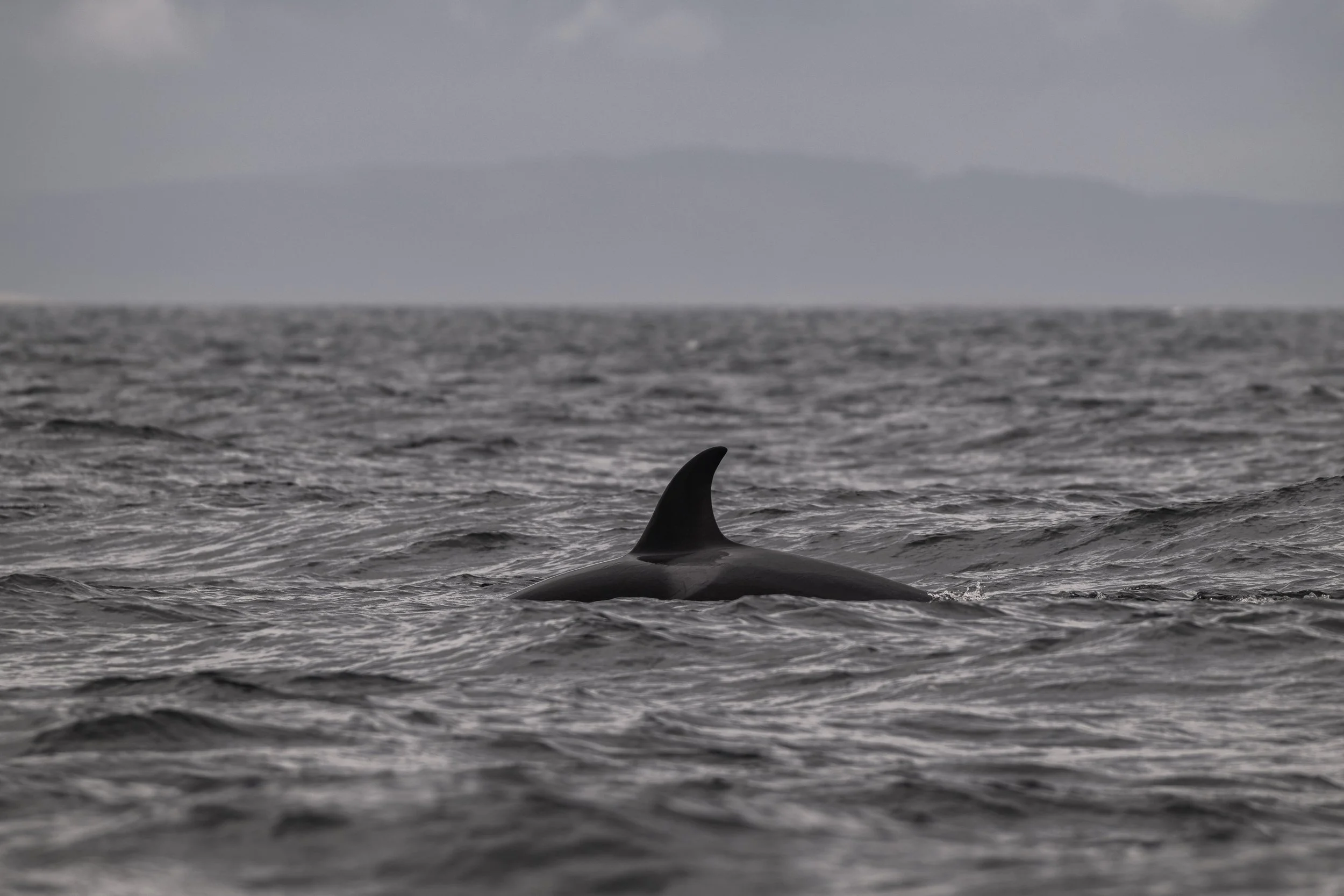
T049A5 Nebula surfacing.
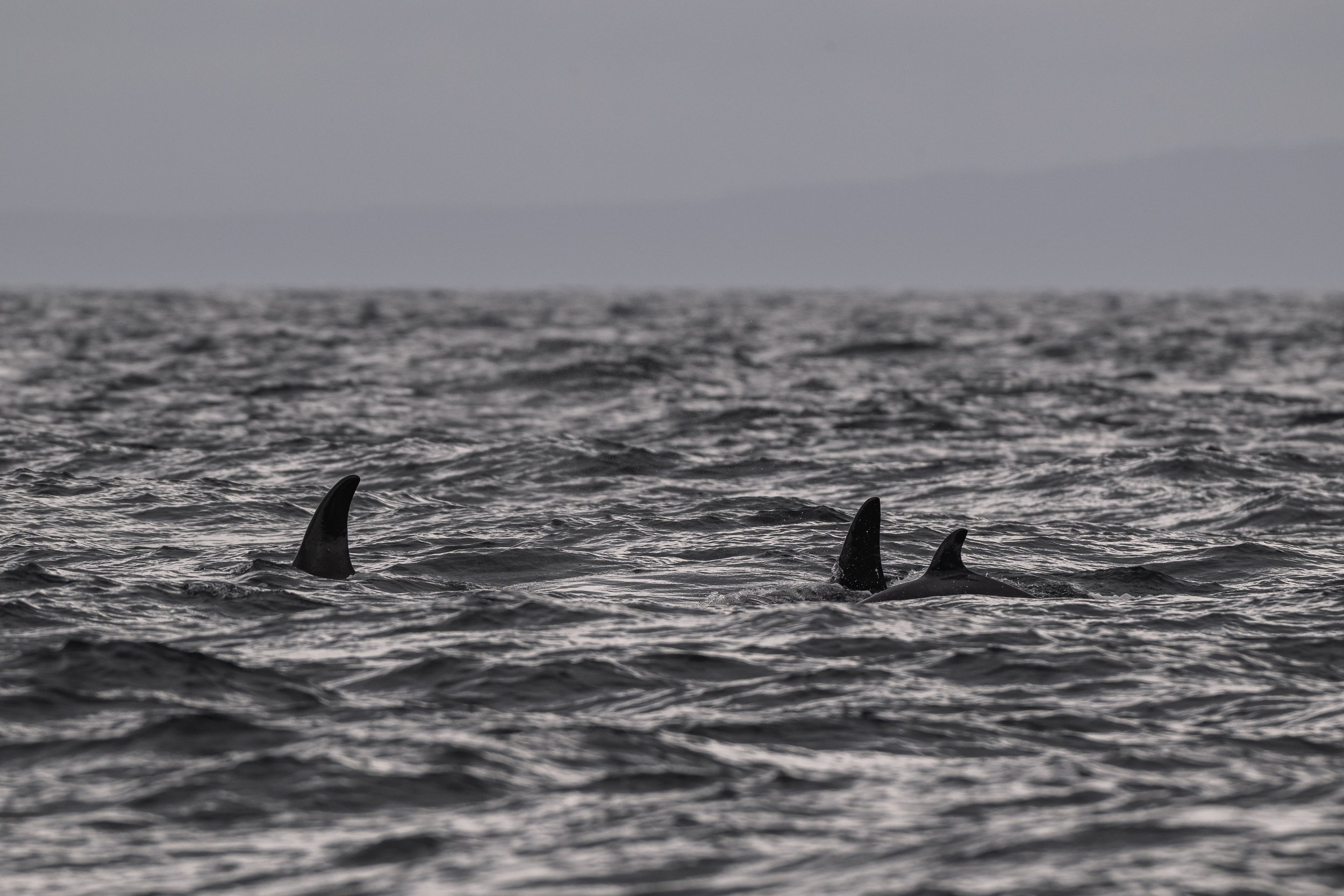
A final look at the family as they leave us behind.
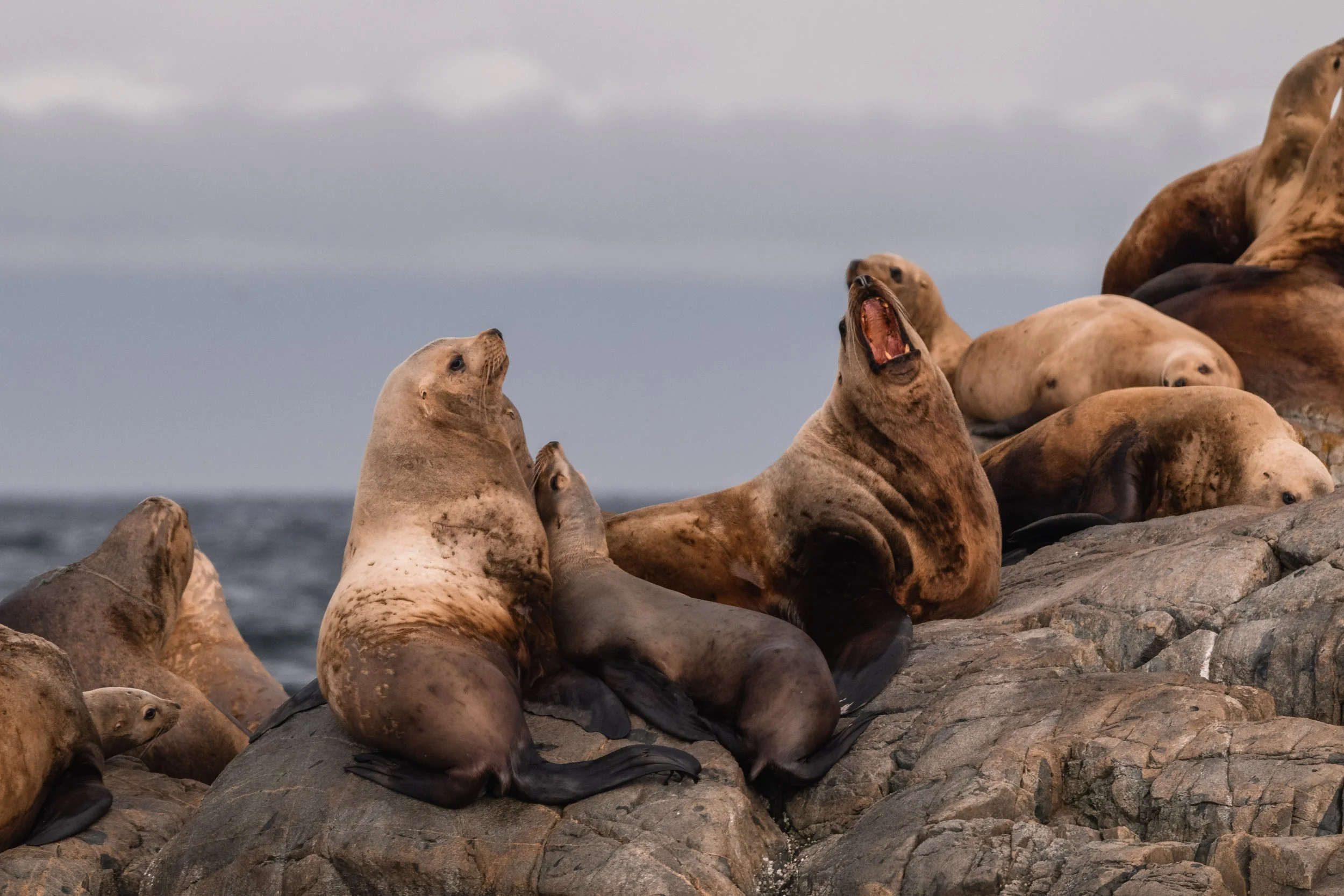
All sorts of activity from the Steller Sea Lions! Can you spot the entanglement in th background?
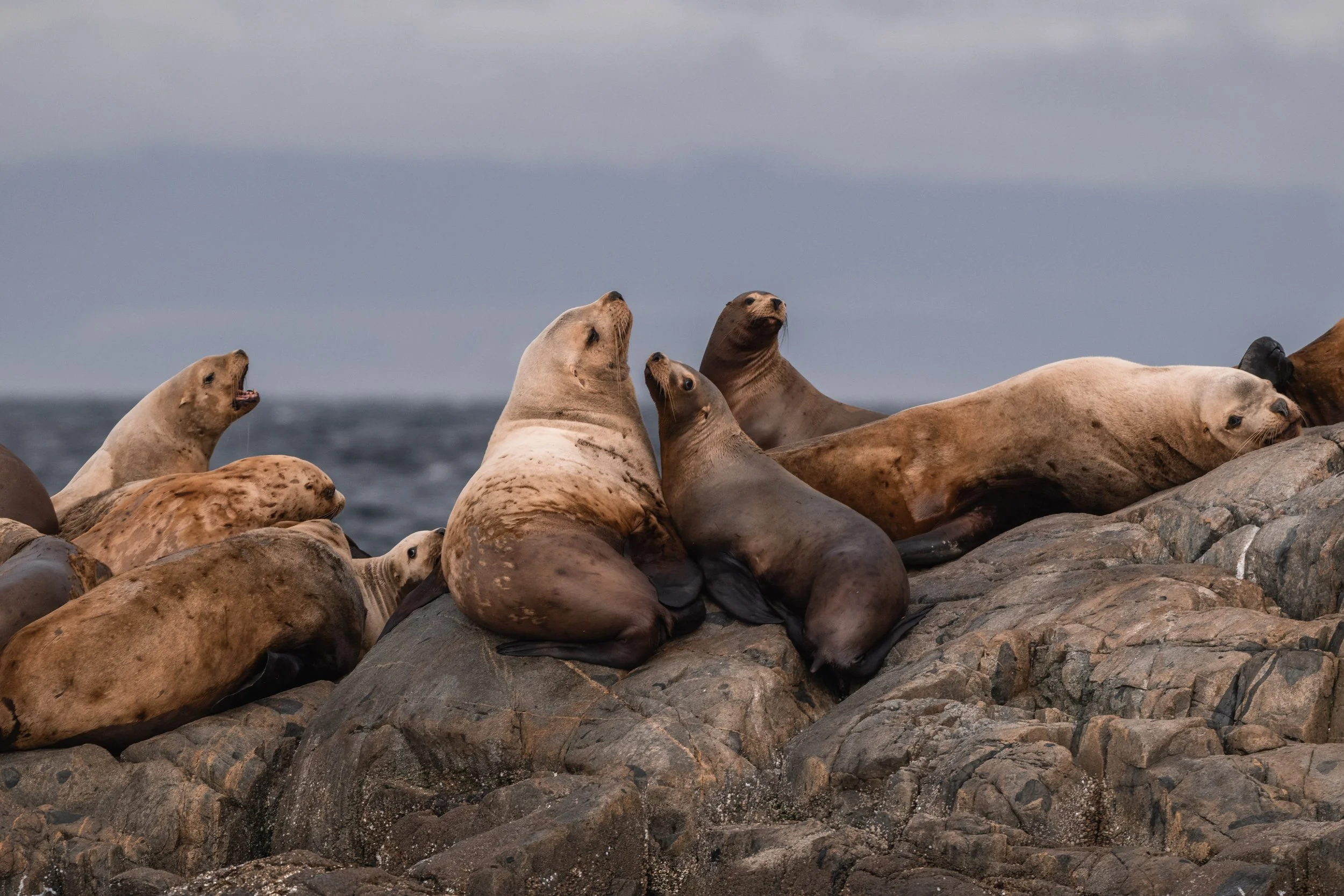
Stellers Sea Lions on the rocks.
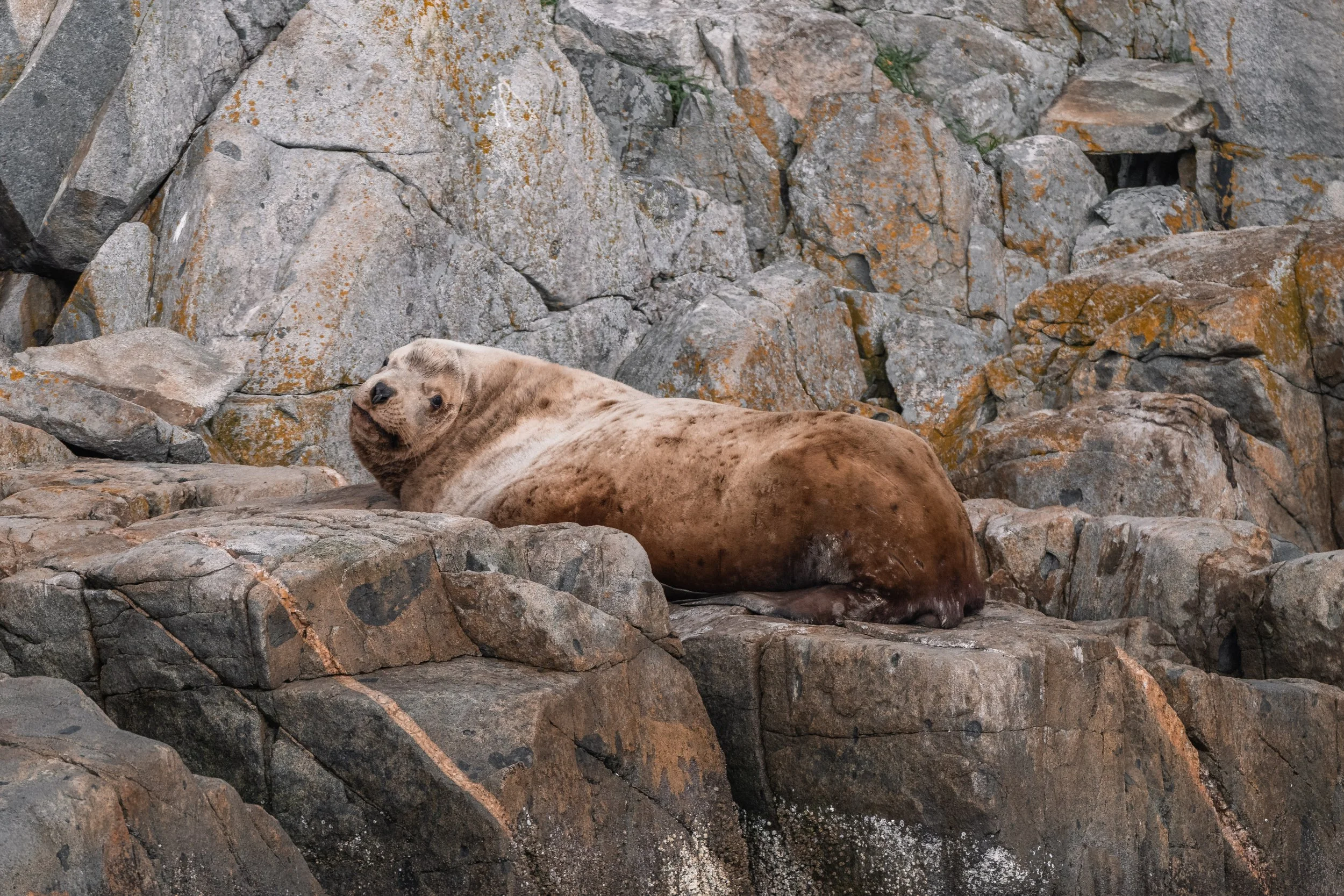
This large male was off by himself.
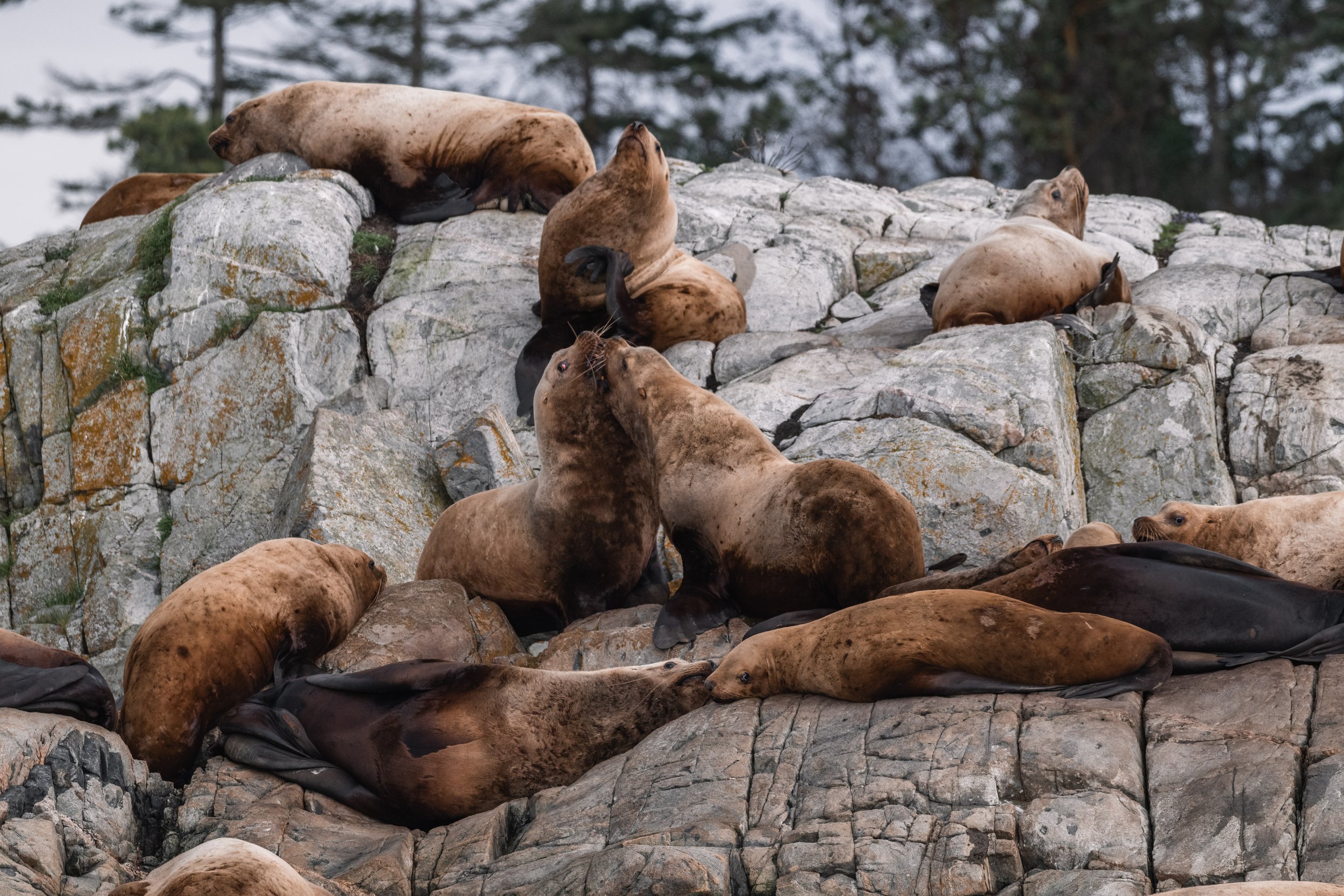
Fighting amongst the male stellers.
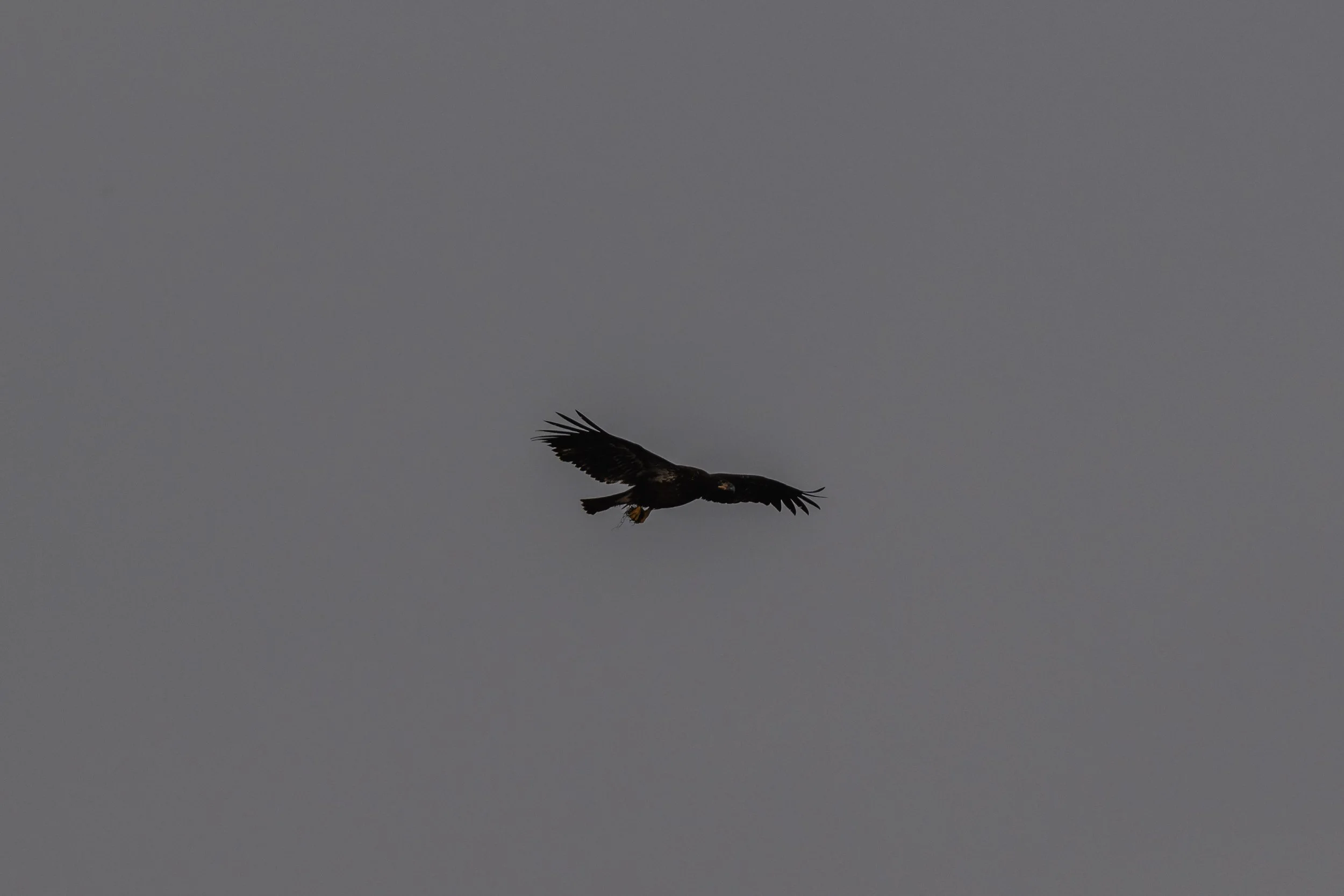
This young eagle carried some kelp by, perhaps building a nest?
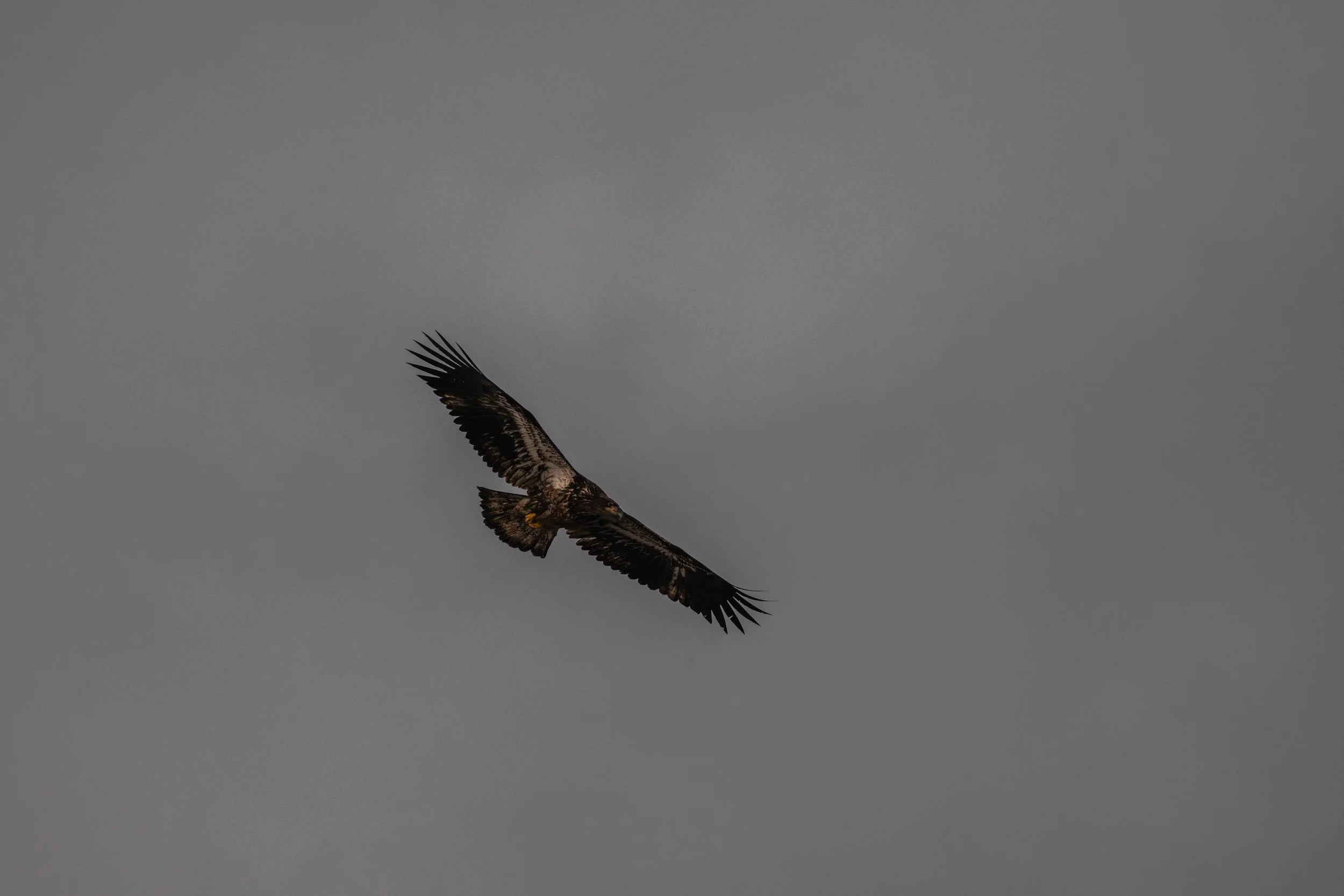
Another Bald Eagle soaring by.
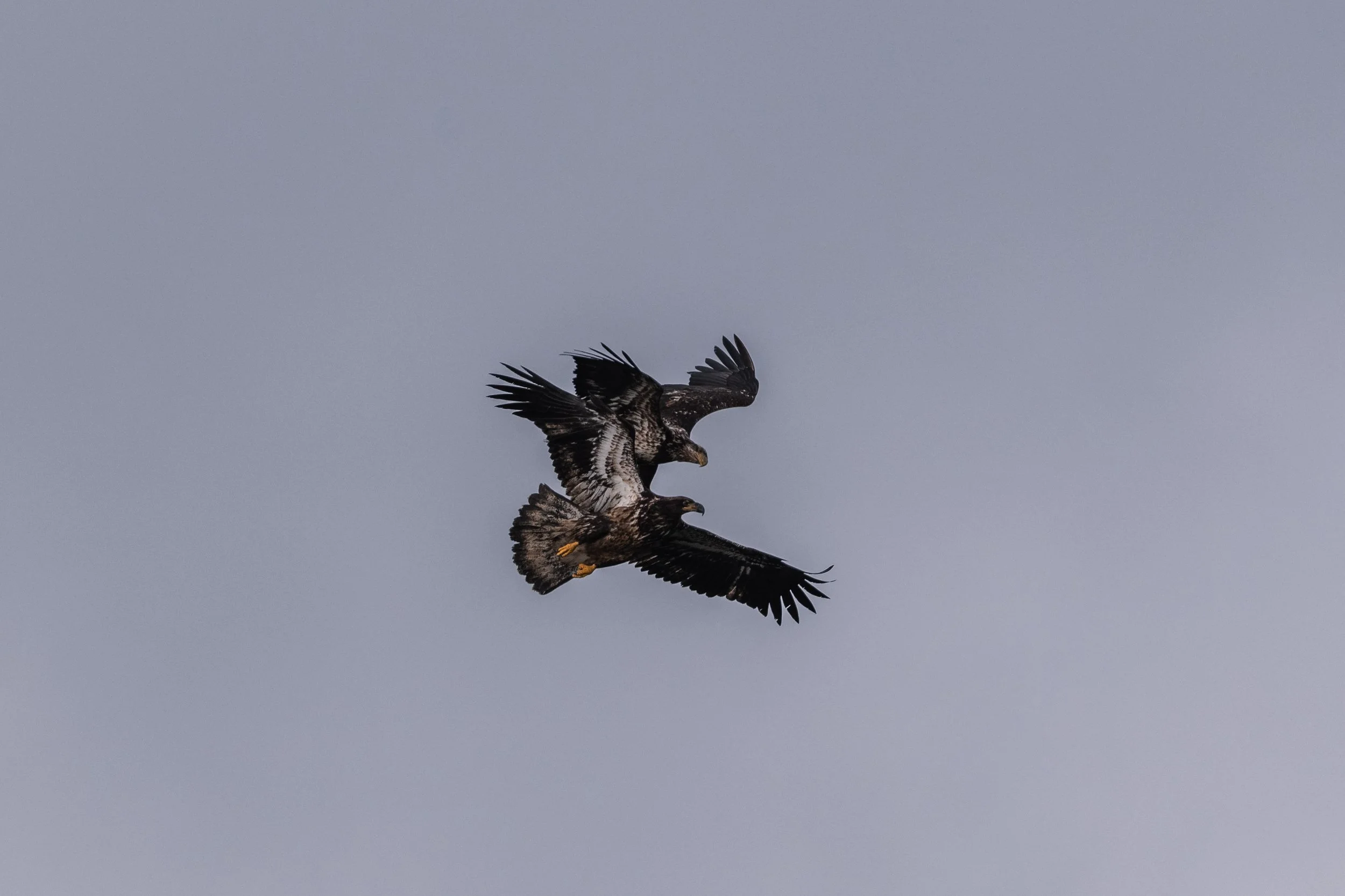
Fighting among the Bald Eagles!
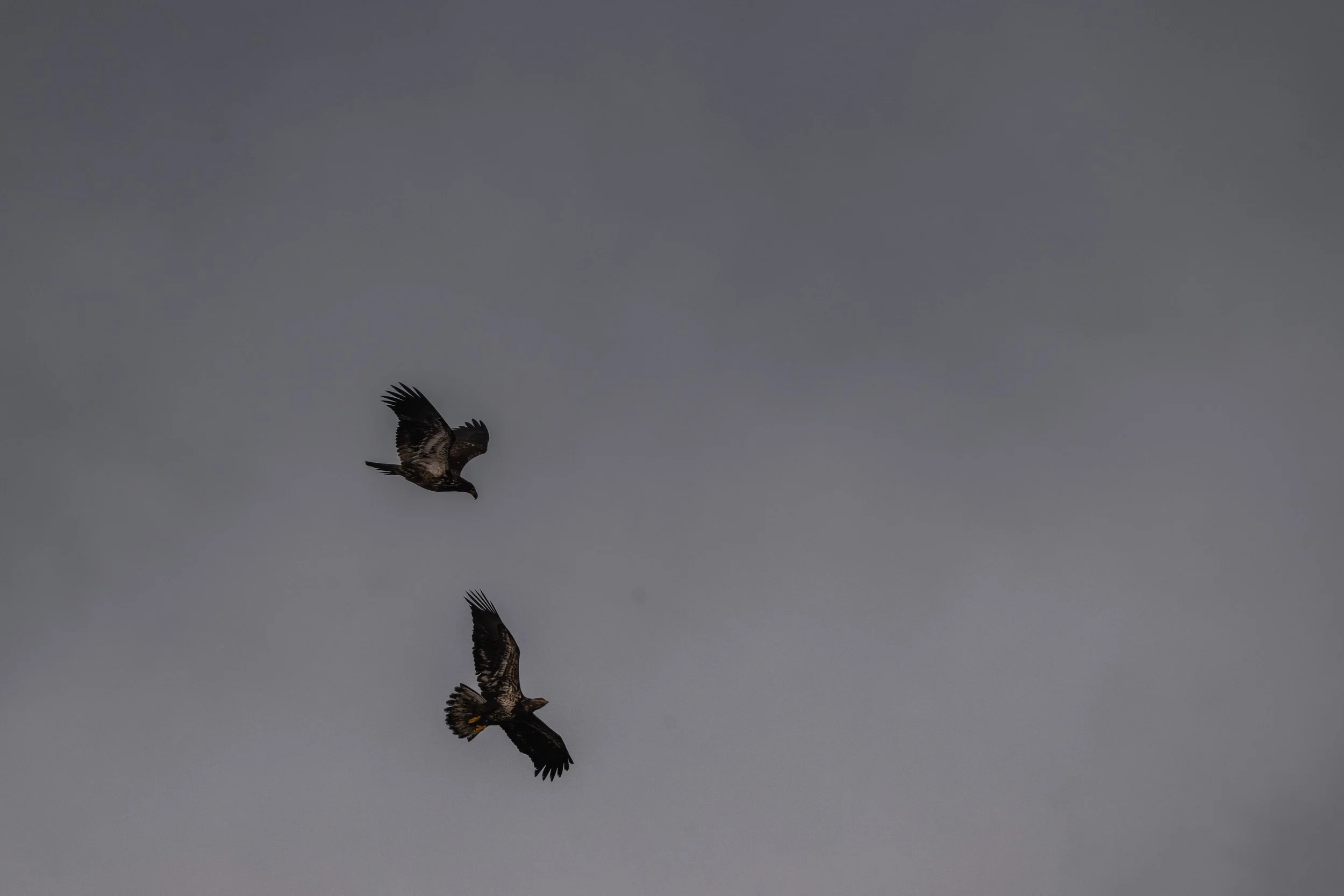
Iconic Bald Eagles on a moody sky.