
March 20, 2026 - Searching the Salish Sea
Some wind, rolling waves, and a generous dose of sunshine marked the first day of spring as we pushed off the dock aboard Kula, our semi-covered vessel. With a narrow weather window before the winds were forecast to build once more, we set our course into the Strait of Georgia, following a vague but promising report of a possible humpback whale sighting near north Nanaimo.
As we cleared the harbour and began scanning the water, our attention was quickly drawn to a concentration of bird activity along the shoreline. Gulls wheeled overhead, diving and calling, always a strong indication that life is stirring below the surface. At this time of year, the Salish Sea begins to awaken. Increasing daylight and sunshine fuel phytoplankton blooms, the microscopic foundation of the marine food web. These blooms, in turn, support zooplankton and small schooling fish such as Pacific herring, which gather in large numbers to spawn in the shallows.
This seasonal abundance sets off a chain reaction. Birds arrive first, followed by harbour seals and sea lions, all capitalizing on the rich feeding opportunities. And not far behind them, we hope, are the giants of our coast, the humpback whales.
Each spring, humpbacks return to the productive waters of the Pacific Northwest after a long migration from their tropical breeding grounds, as far south as Hawaii or Mexico. During their time in these warmer regions, humpbacks feed very little, if at all, relying instead on fat reserves built up during the previous feeding season. By the time they arrive back in our colder, nutrient-rich waters, they may have lost up to a third of their body weight. Their priority now is clear: feed, and feed efficiently, to rebuild those reserves before making the journey south once again in the fall.
Despite the promising signs of life, our initial search did not yield a whale sighting. With the wind beginning to rise and sea conditions building, we decided to seek shelter among the Gulf Islands. Before doing so, we paused at Entrance Island, and what a stop it proved to be.
Perched along the rocky outcrops were numerous bald eagles, a sight that, historically, would have been far less common. Once severely affected by pesticides such as DDT, bald eagle populations declined dramatically throughout the mid-20th century. Thanks to environmental protections and conservation efforts, their numbers have rebounded in what is now considered one of the great wildlife recovery stories of the Pacific Northwest. Today, seeing multiple eagles gathered in one location is not unusual, but it remains no less impressive.
Sharing the rocks were our ever-vocal Steller Sea Lions, draped across the shoreline and basking in the sun. These marine mammals regularly alternate between foraging in cold, offshore waters and hauling out onto land to rest and thermoregulate. Their size, presence, and unmistakable calls added to the energy of the scene.
Returning to search mode, we rounded Gabriola Island and made our way toward Dodd Narrows, a narrow, well-known tidal passage. Renowned for its strong currents, Dodd Narrows can present a dynamic transit. After a brief but lively passage through the swirling water, we emerged once again into calmer conditions.
Continuing south, we navigated through the maze of islands that define this region, eventually reaching the waters near Crofton. With eyes scanning the horizon, Captain Joseph and Naturalist Vanessa remained focused on spotting the telltale signs of whales, such as blows, fins, splashes, or even the subtle slick on the calm water that can indicate recent activity. Despite a thorough search pattern, the whales remained elusive.
We adjusted course once more, crossing to the far side of Salt Spring Island and extending our search southward before ultimately turning our bow back north. Along the way, we made a stop at Norway Island, a well-known haul-out site for one of our most abundant marine mammals, the harbour seal. Unlike their sea lion relatives, harbour seals are year-round residents of these waters and do not undertake long-distance migrations. Their familiarity with the coastline and consistent presence make them a cornerstone of the local ecosystem.
Our final wildlife stop brought us to the striking Gabriola Bluffs, where cormorants have begun returning to nest. These seabirds construct their nests along the cliff faces, and over time, their guano accumulates, both strengthening the nesting sites and creating the bright white cliffs that stand out so vividly in the sunlight. It is a stark, natural reminder of how even the smallest contributors play a role in shaping the landscape.
After covering approximately 110 nautical miles, we made our way back to the dock, reflecting on a full day on the water. While we did not encounter whales on this particular journey, this is, in many ways, one of the most meaningful aspects of what we do. The whales we search for are entirely wild, free to travel, feed, and behave as they choose, without restriction or predictability.
Do we hope their paths align with ours each day? Absolutely. But it is this very unpredictability that makes each encounter so special when it does happen.
All of our guests were given vouchers to join us again and continue their search for these remarkable animals.
Photos below taken by Vanessa Vereschahen.
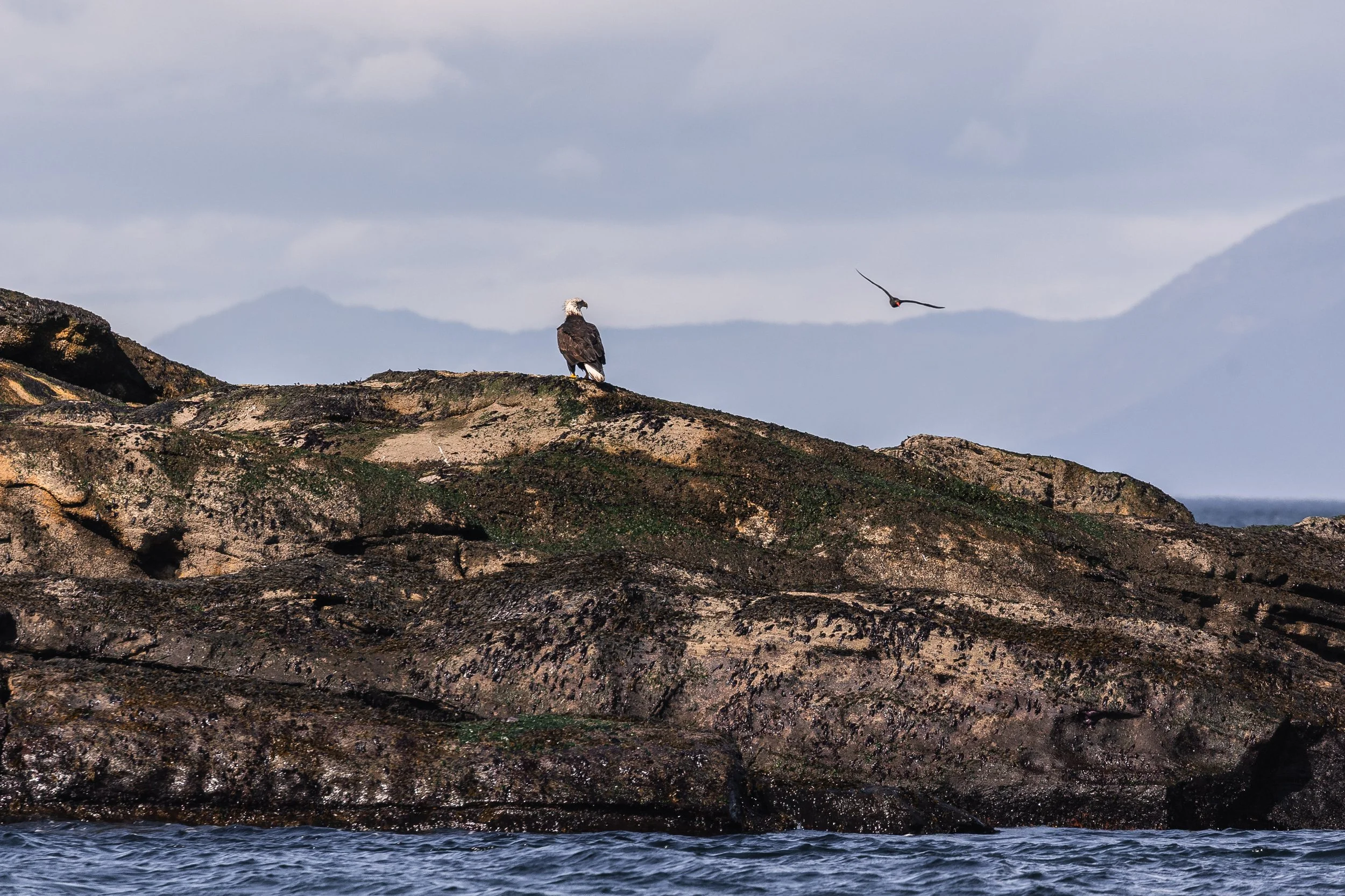
An oyster catcher soaring past the bald eagle.
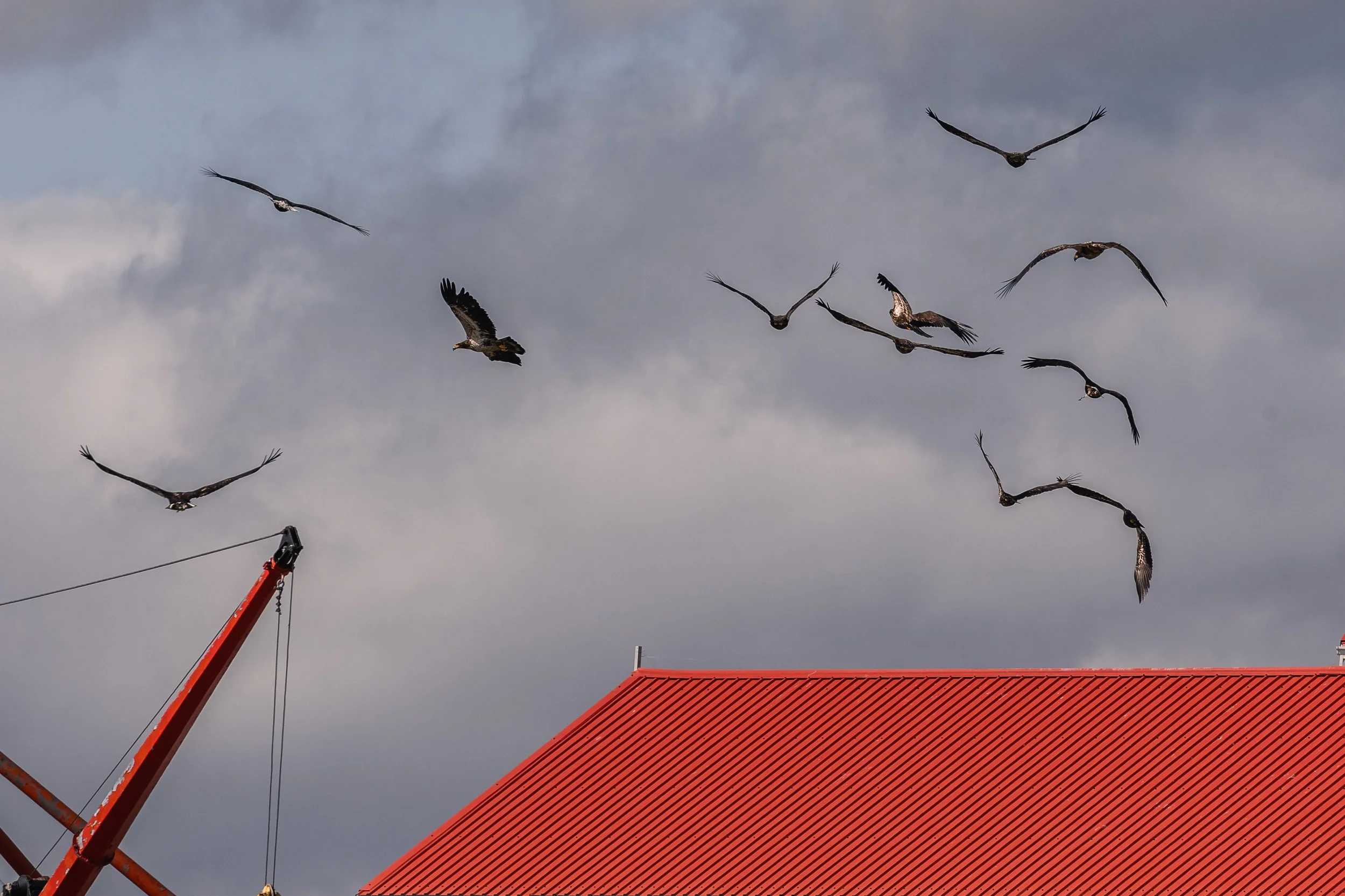
How many eagles can you spot over Entrance Island?
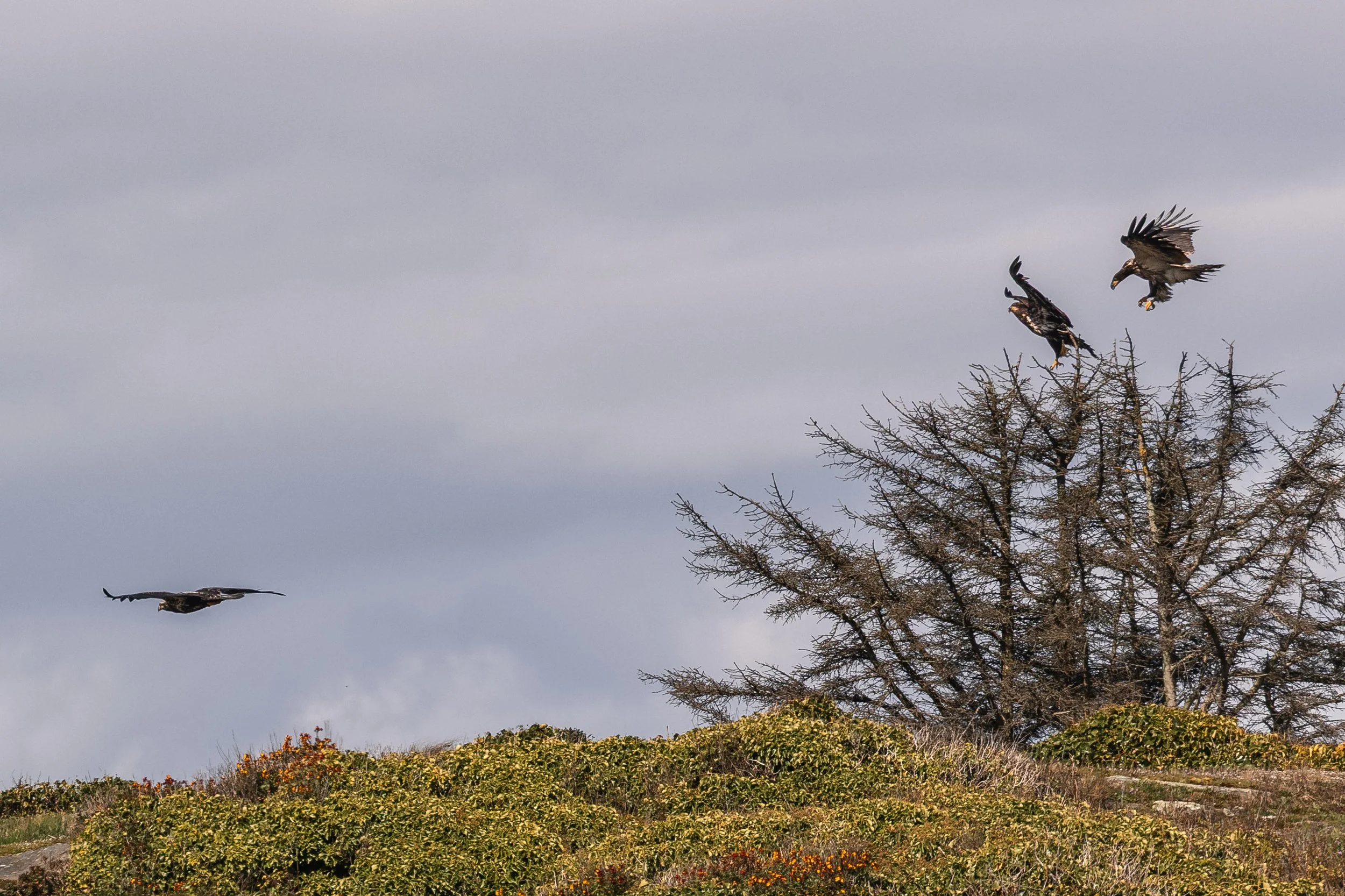
Three juvenile eagles.
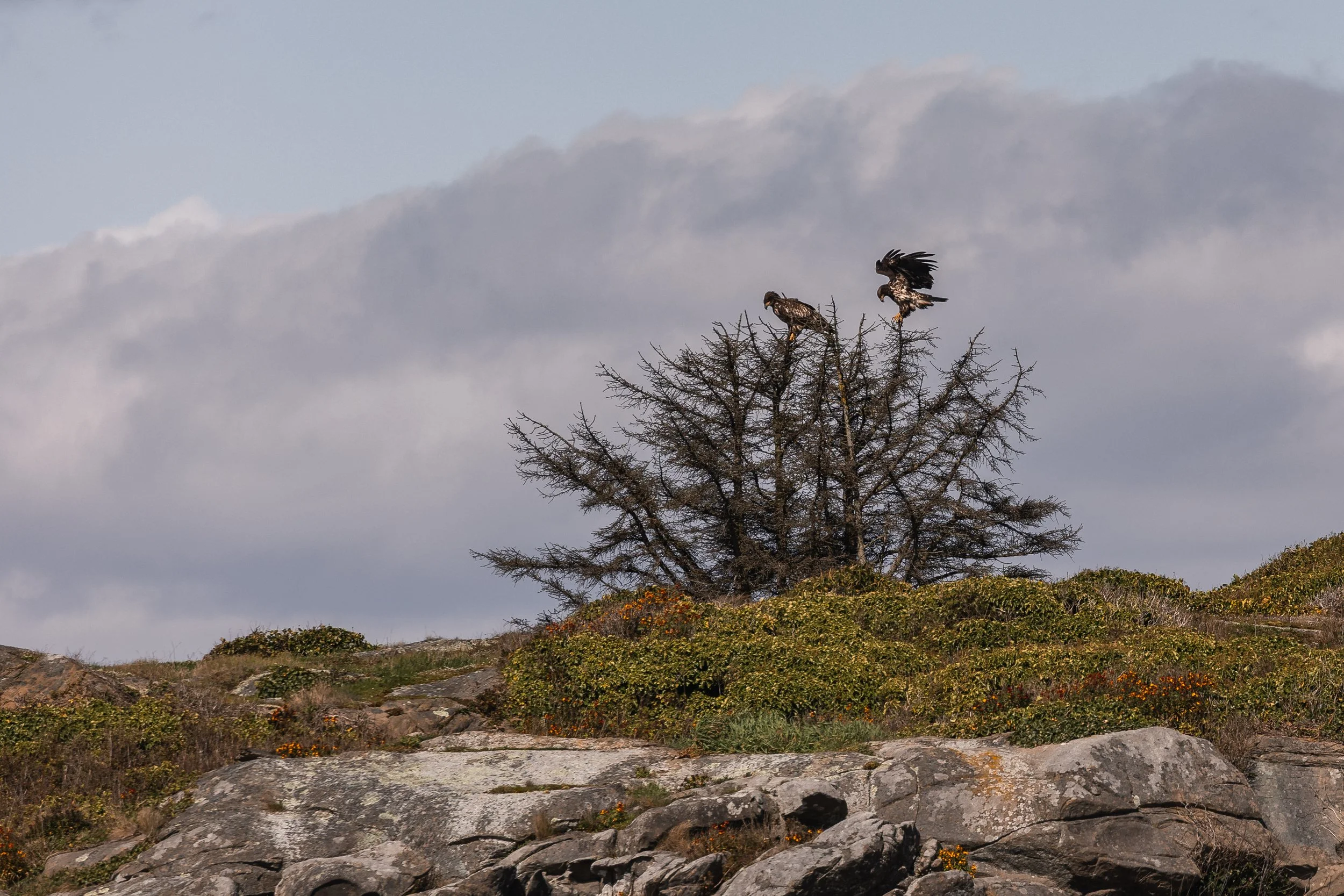
Coming in for a landing.
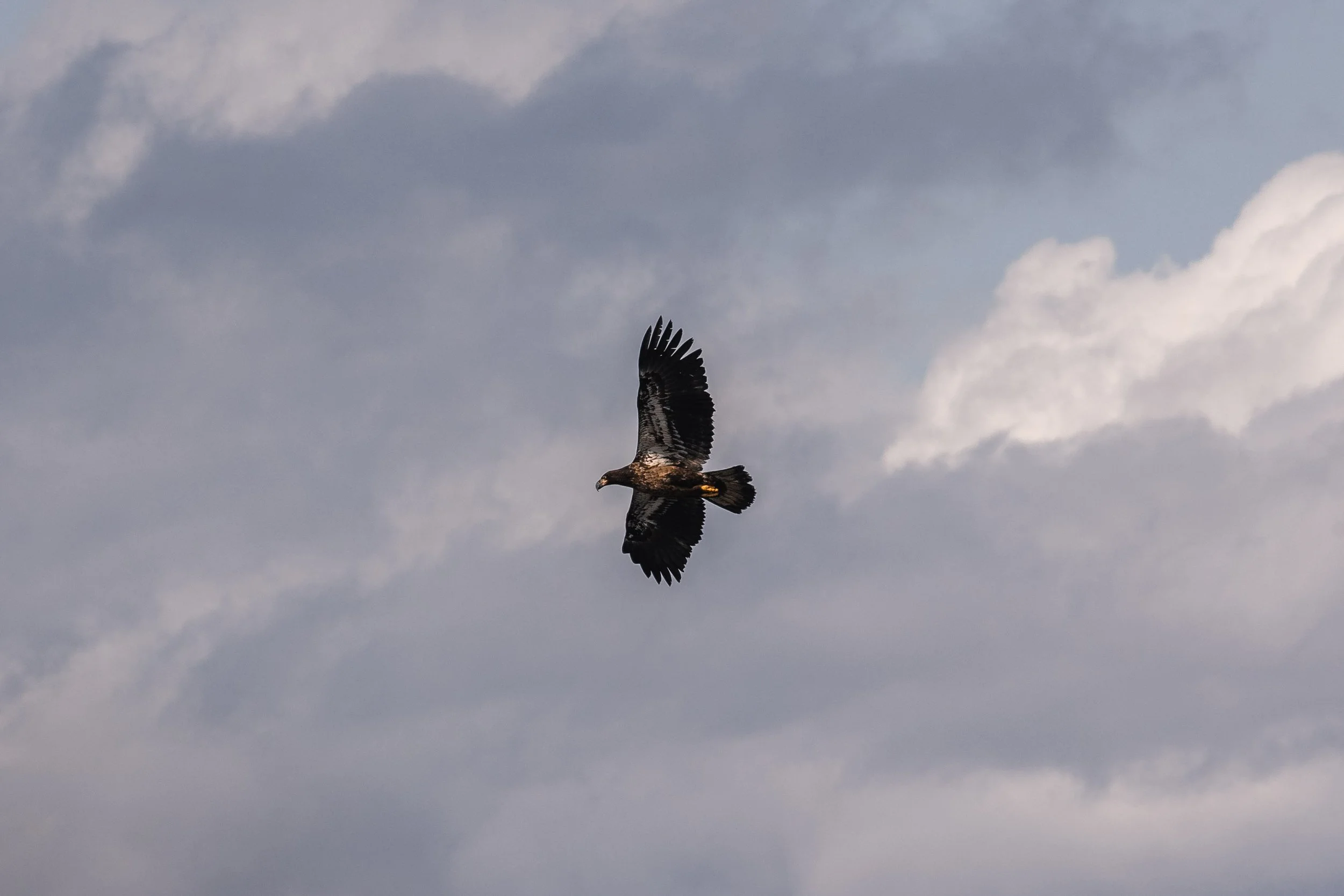
We know this bald eagle is young as it will not develop their signature white heads and tails until around 5 years old.
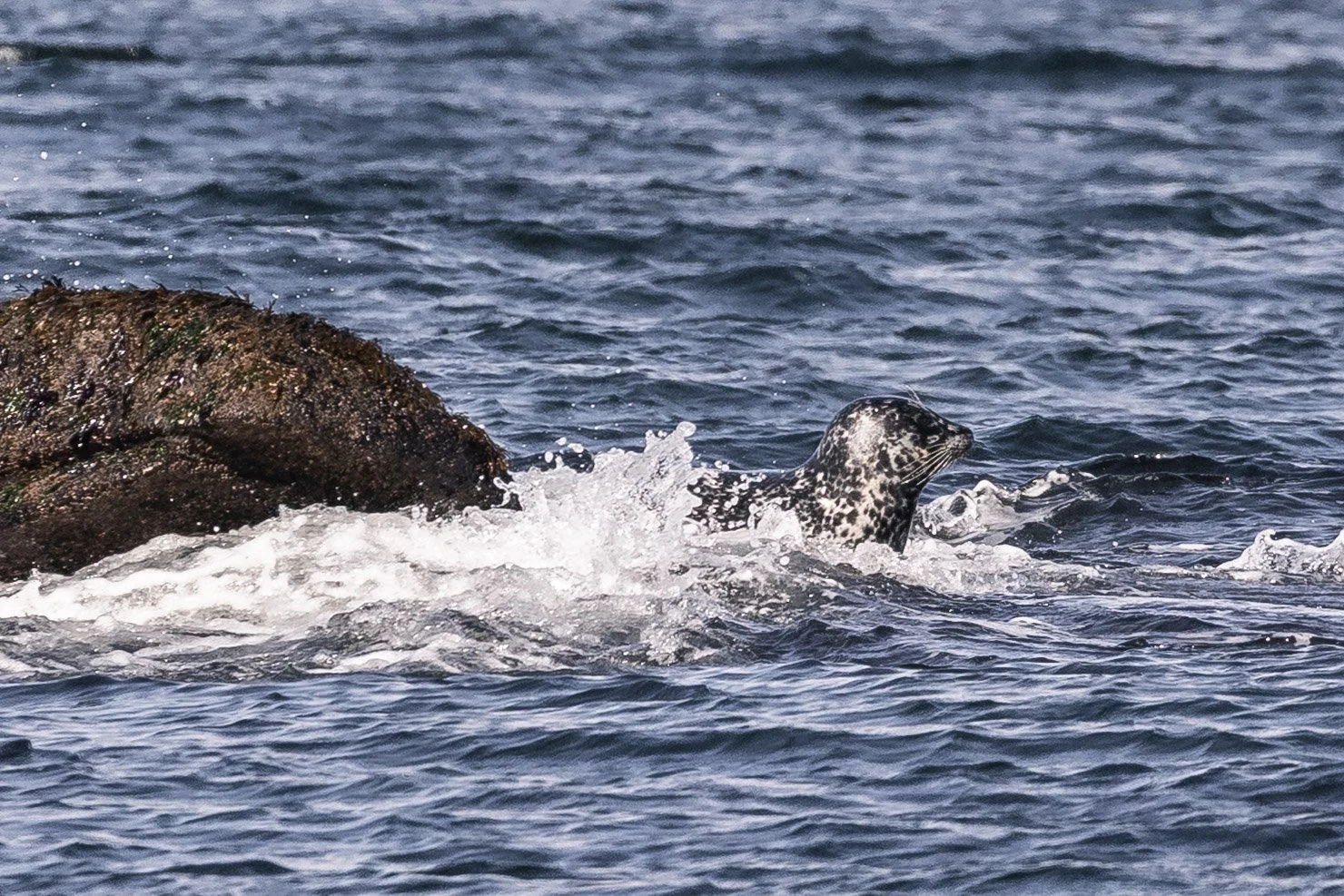
A lone harbour seal contemplating a swim at Entrance Island.
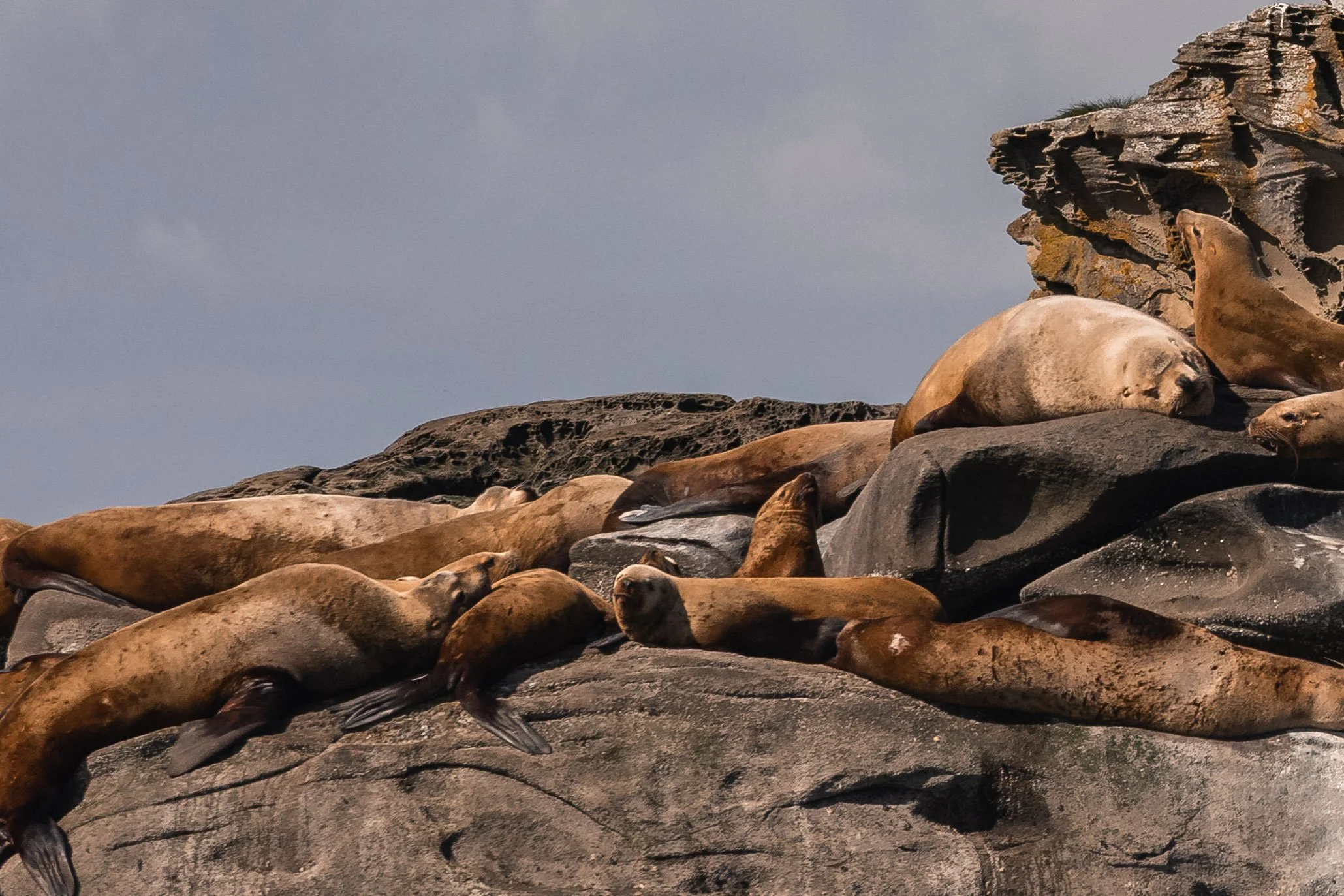
Steller Sea Lions sunning on the rocks.
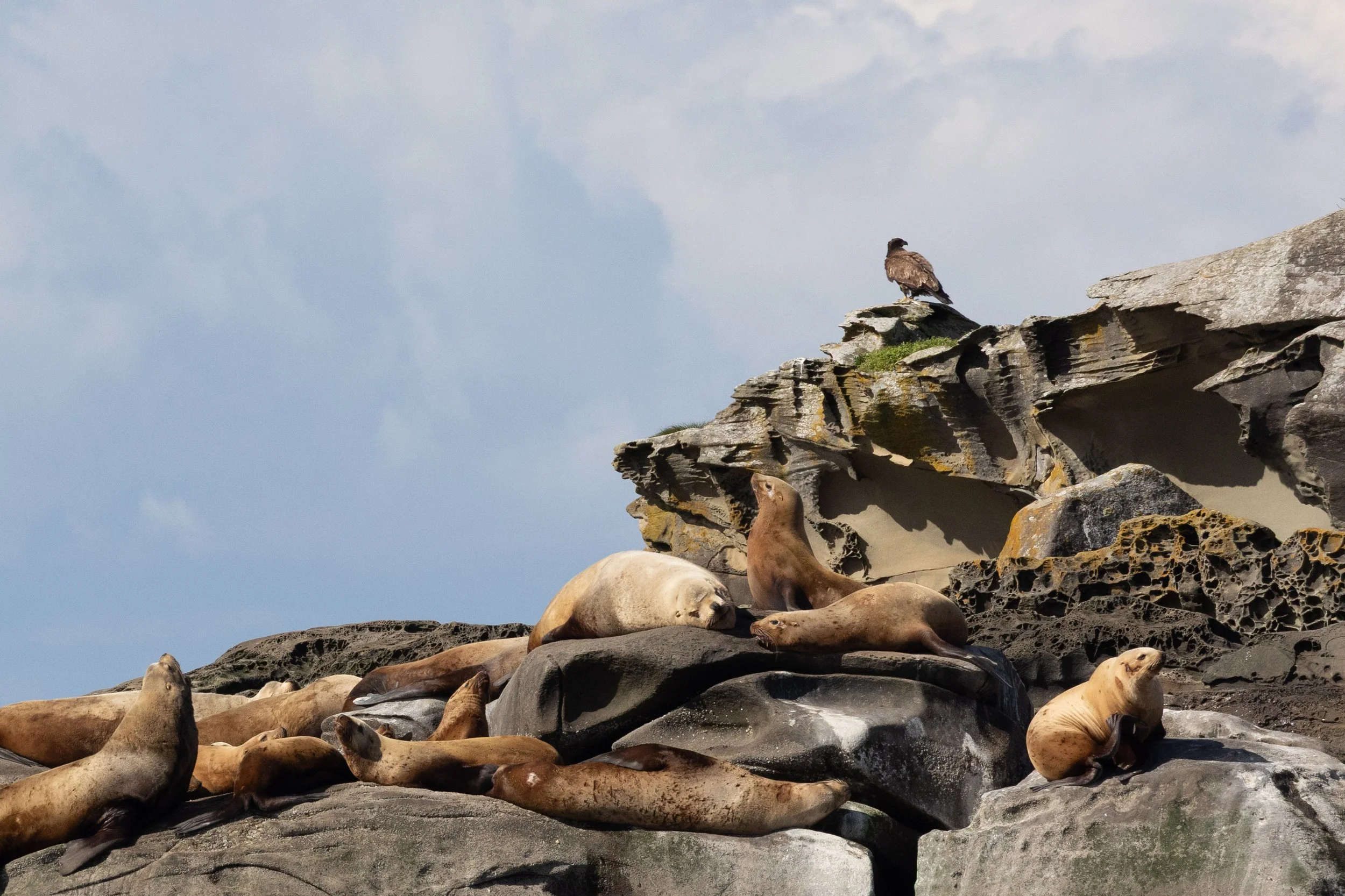
Can you spot the eagle who has joined them?
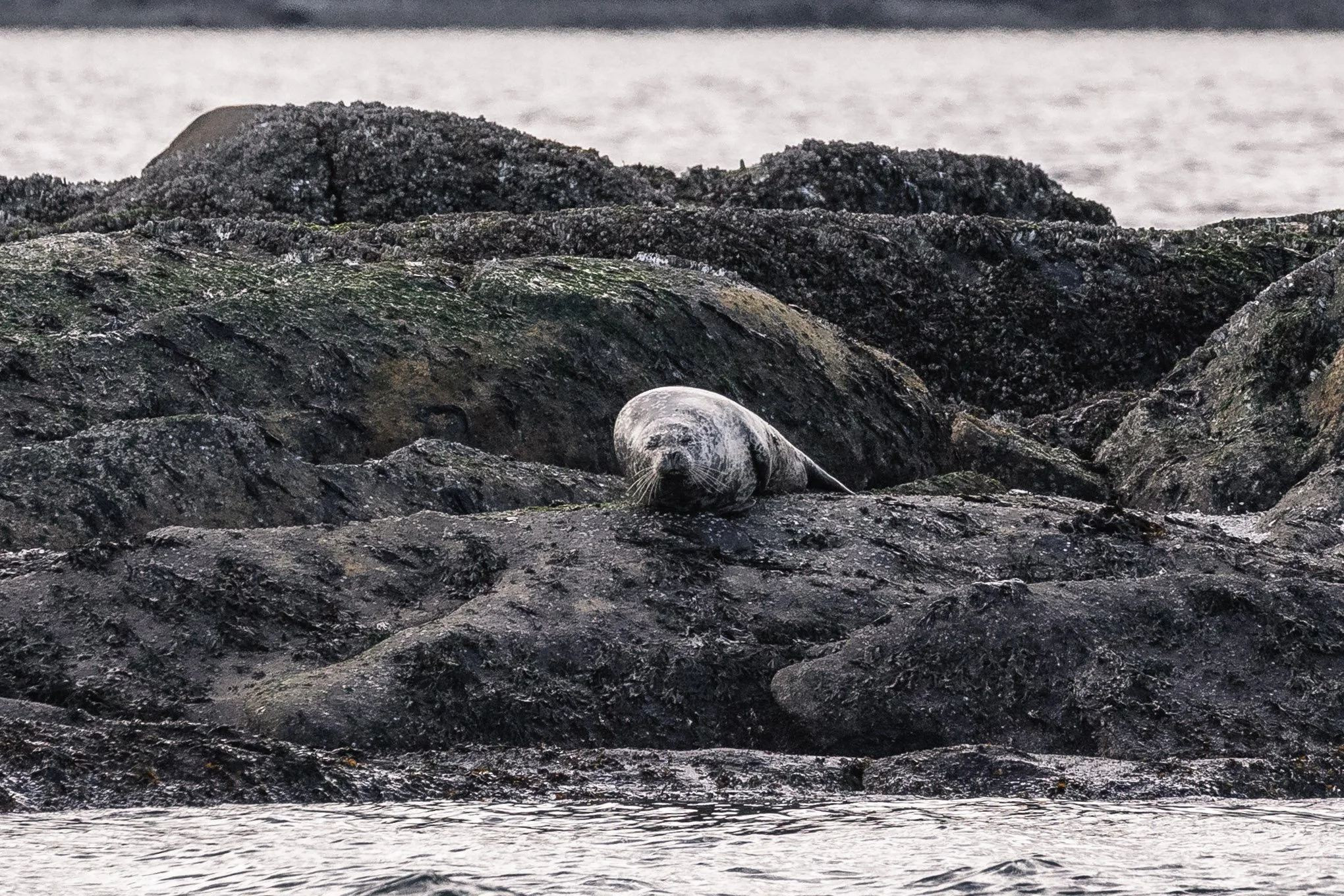
A harbour seal blending into the shore.
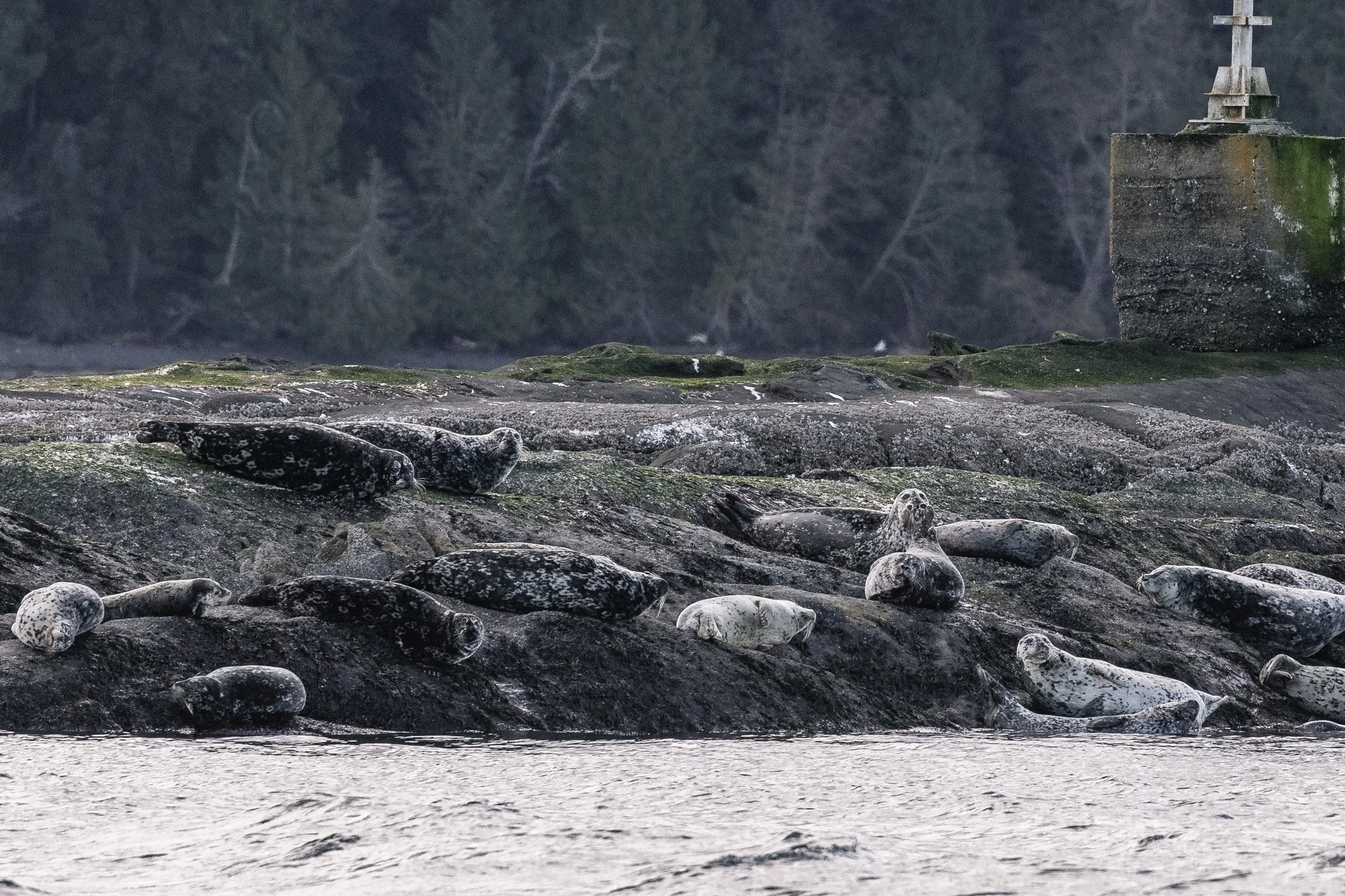
How many harbour seals do you see?
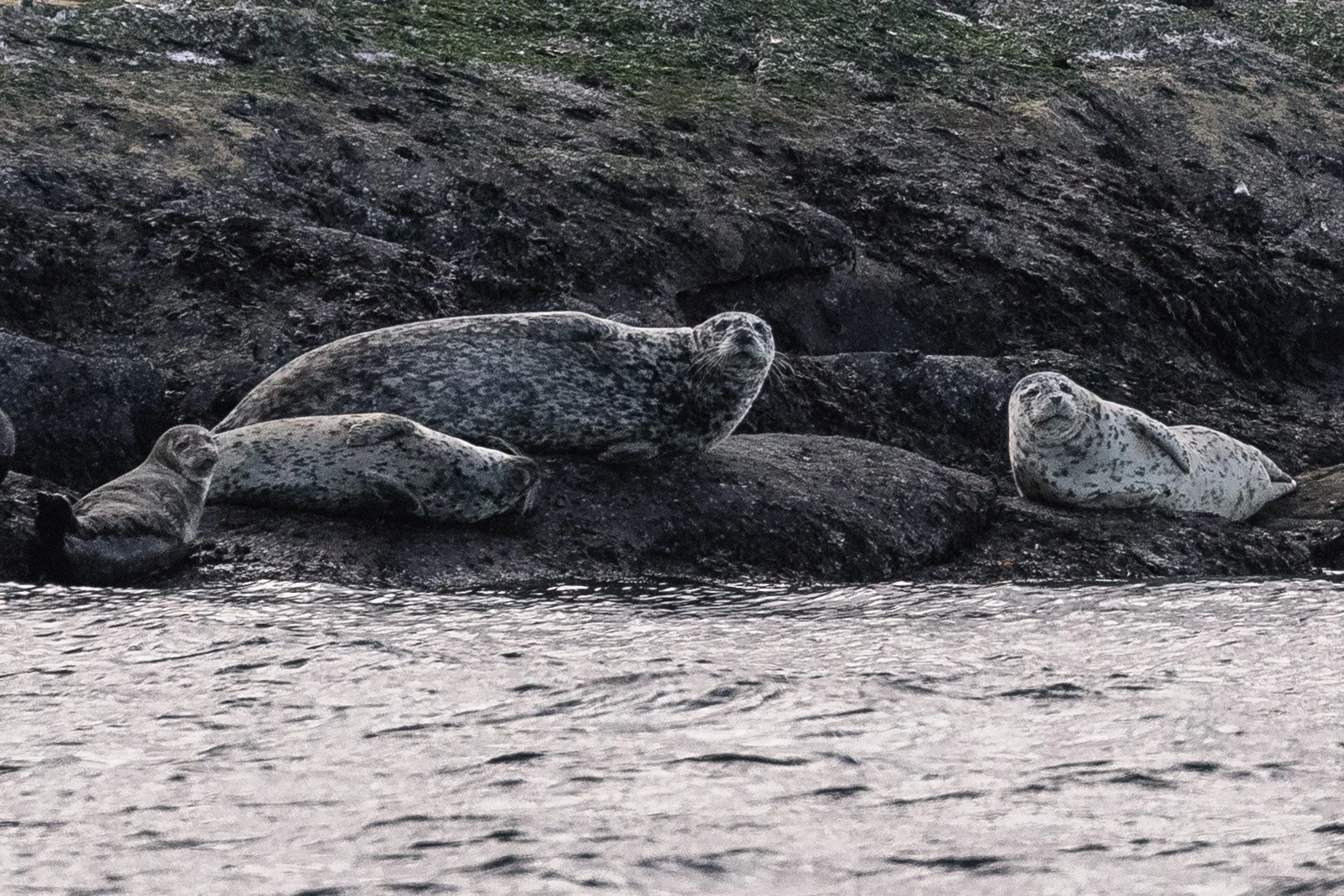
Lounging around.
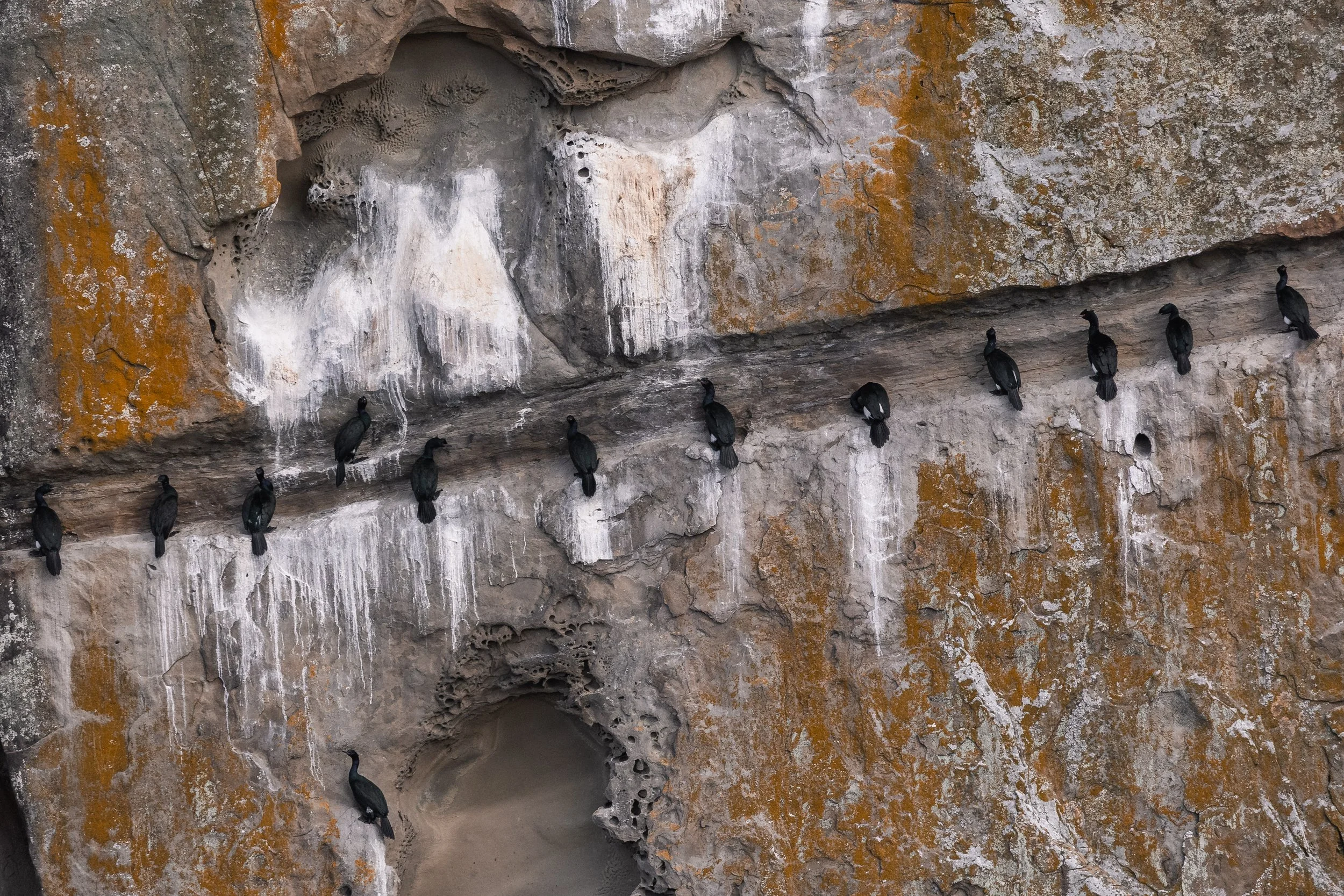
Cormorants lined up at the Gabriola Bluffs.
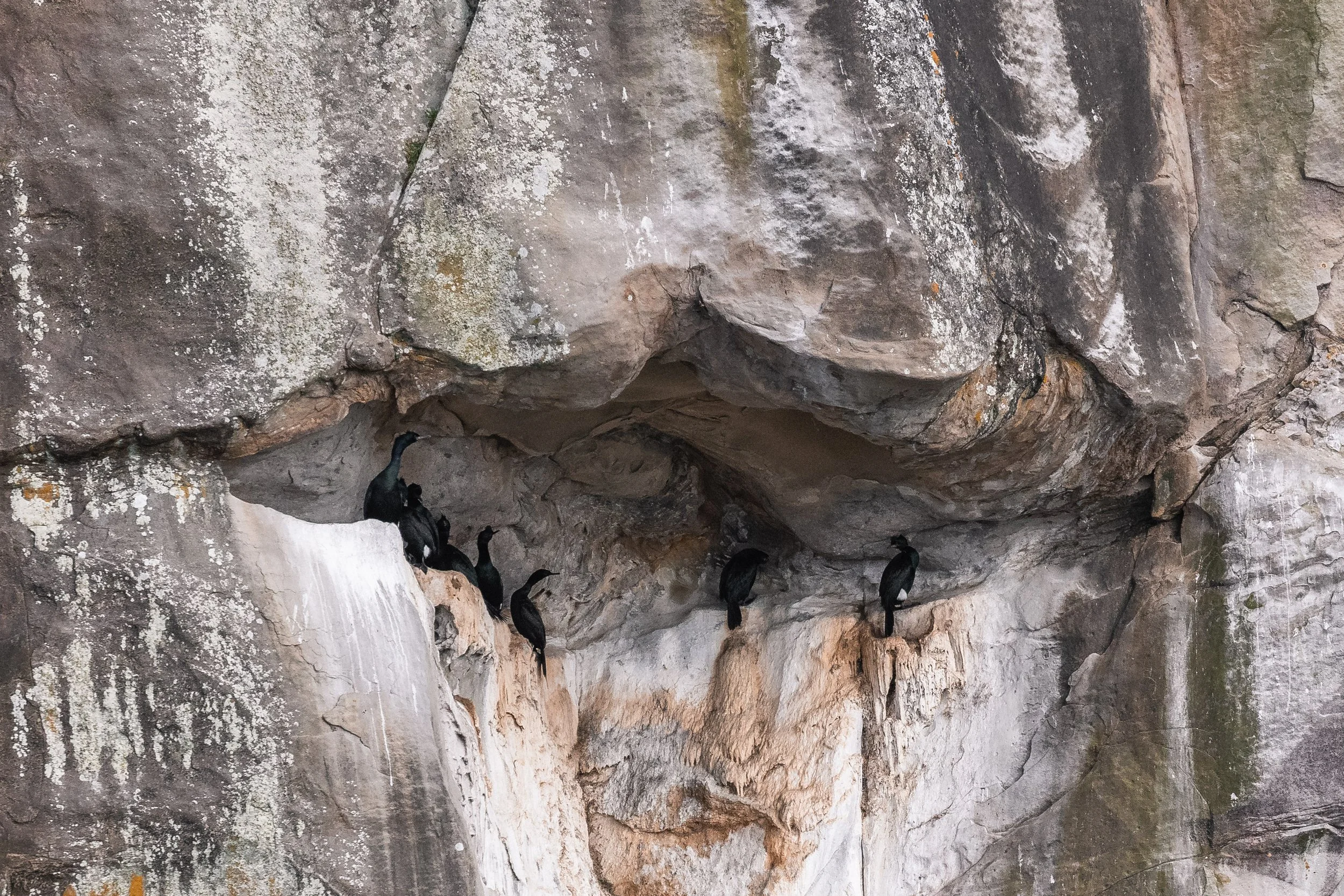
Cormorants perched together in one of their “penthouse apartments” at the Bluffs.