
March 21, 2026 - First Humpback of the Spring!
After bundling up in our anti-exposure suits, Naturalist Val guided our guests down to the docks, where they would board Keta, one of our open Zodiac vessels. Excitement buzzed through the crew as they departed, eager to see where the day would take them.
Once underway, Keta and crew began zipping along the coast, turning north towards Pipers Lagoon. A young humpback whale had been spotted here over the previous few days, and we were eager to peek and see if it was still out and about. All eyes on board began scanning the waters, searching for blows, fins, or tails.
Our searching soon proved fruitful, as we soon spotted a small back cutting through the waters, followed closely by a large tail arching high up into the air. It was a humpback whale, and a young one at that! After capturing a photo of the underside of its fluke, Val began a very important job - identifying which whale they were with. Humpback whales are primarily identified by the pattern on the ventral (underside) of the fluke, consisting of various scratches, notches, dots and pigmentation. With this combination of factors, each humpback’s fluke pattern is as unique to them as a fingerprint is to us.
Identifying individual humpbacks typically involves comparing this pattern with the patterns of individuals previously catalogued in the area. As this was a very small individual, the first whales it was compared to were the known calves from 2025, who would now be in their first year of travelling away from their mother. Unfortunately, this was unsuccessful, prompting us to continue the search. After a bit of peeking through the catalogues, the photo of the tail was uploaded to Happywhale, a large website database with a built-in ID algorithm. Once uploaded, we discovered that this little whale had barely any info on them! So little that they did not have any officially recognized numbers yet and were known solely by their Happywhale number: HW-MN0445366! With only one previous sighting last November in Hawaii, little is currently known about this individual.
As we observed our mysterious whale, it continued travelling close to shore, fluking occasionally as it went. It is possible that they were busy feeding, diving deep to capture prey before returning to the surface. The Herring Spawn, an eventful occasion that brings all sorts of wildlife to the area, was in full force along Nanaimo’s coastline, so it is likely they were taking advantage of the moment to feast on the retreating fish!
After spending our afternoon with the young humpback, we said our goodbyes and continued onwards. The day was far from over, though, with our next destination taking us to the other side of the Strait of Georgia to an area known as the White Islets.
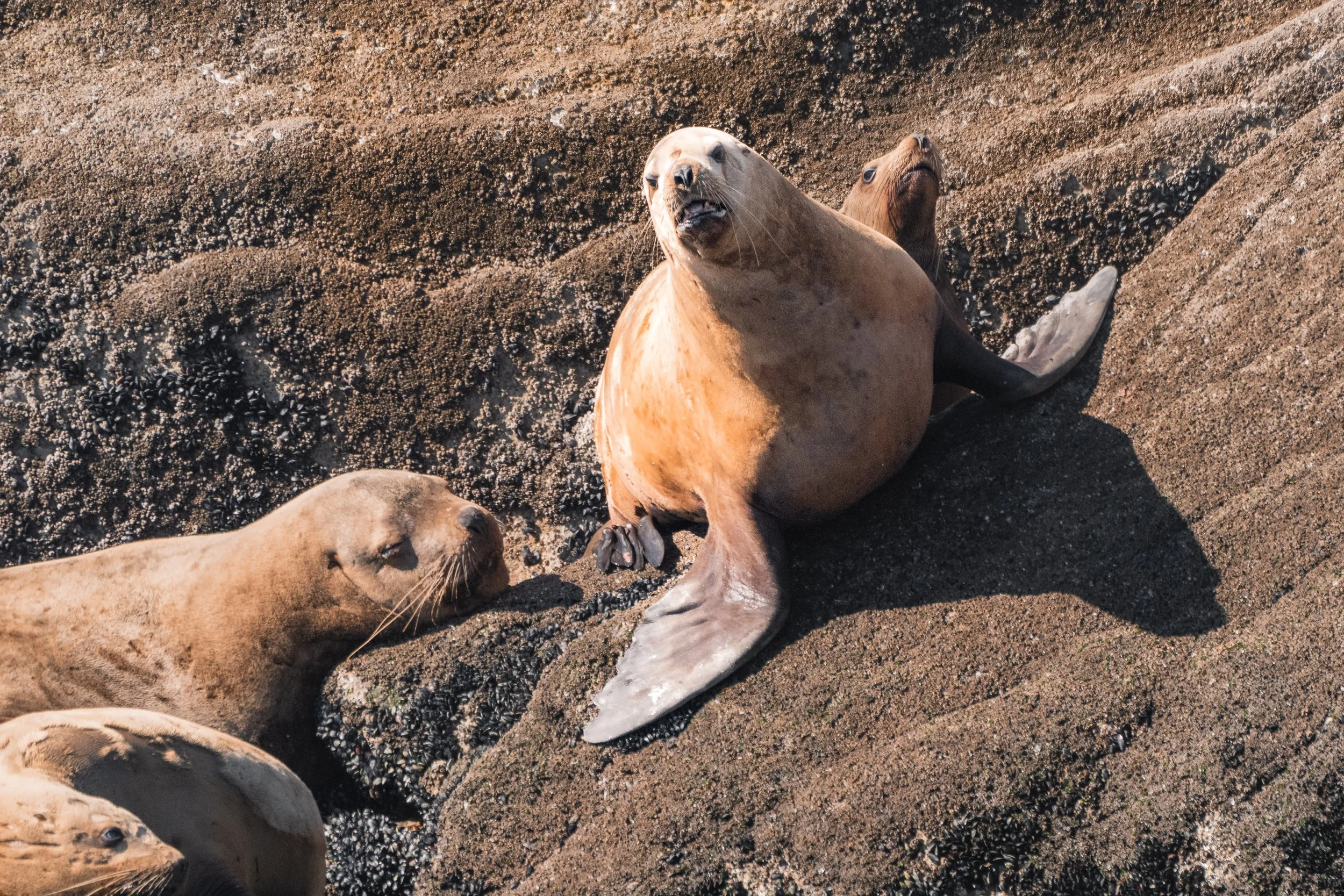
Perched high up on the white-speckled boulders, Steller Sea Lions of all shapes and sizes roared, bellowed, grumbled and growled. These rocks are a favourite haulout for our pinnipeds. Haulouts provide valuable safe spaces for them to get up and out of the water, allowing them to rest and recover rather than constantly fighting the sea's currents. Aside from the sea lions, their smaller cousin species could also be seen nestled into the crevices. A handful of Harbour Seals basked in the sunshine atop kelp-covered stones. These small pinnipeds can be found in our waters year-round, and are sometimes observed snoozing away on our beaches!
While it is always exciting to see seals and sea lions, they weren’t the only reason we had travelled over to the Sunshine Coast. Rumour had it that a lone orca male had been patrolling the waters near the mouth of Howe Sound, potentially eagerly searching for a meal. We, equally eager, peeked about, hoping to catch a view of this mystery whale. However, after a bit of searching, we conceded that we were unable to locate him and began making our way back towards the Vancouver Island side of the Strait.
Once back across, Captain Rodrigo brought Keta and her crew into the Southern Gulf Islands. These waterways are full of stunning landscapes, calm waters, and sometimes even wildlife! After crossing through Gabriola Pass and Ruxton Pass, we turned north, towards one of the most famous waterways in our area. Dodd Narrows, a small passage separating the island from Mudge Island, is a fan-favourite place to see while out and exploring the waters. Carefully making our way through, we entered into Northumberland Channel. Cruising along the coastline, we stopped by the Harmac pulpmill. This may seem like a bit of an odd spot to visit, but the log booms situated around the waters of the mill are one of the favourite haulouts for our other type of sea lion – the California Sea Lion! Much smaller than the Stellers, these sea lions were busy sleeping the afternoon away. After snapping a few photos of the slumbering mammals, we continued on to home port, just a few minutes away, wrapping up an amazing day of adventuring around the Salish Sea and seeing many of its inhabitants in their own environment!
Please enjoy today’s photos taken by Marine Naturalist Val Watson and Naturalist-in-Training Evan Hessels!
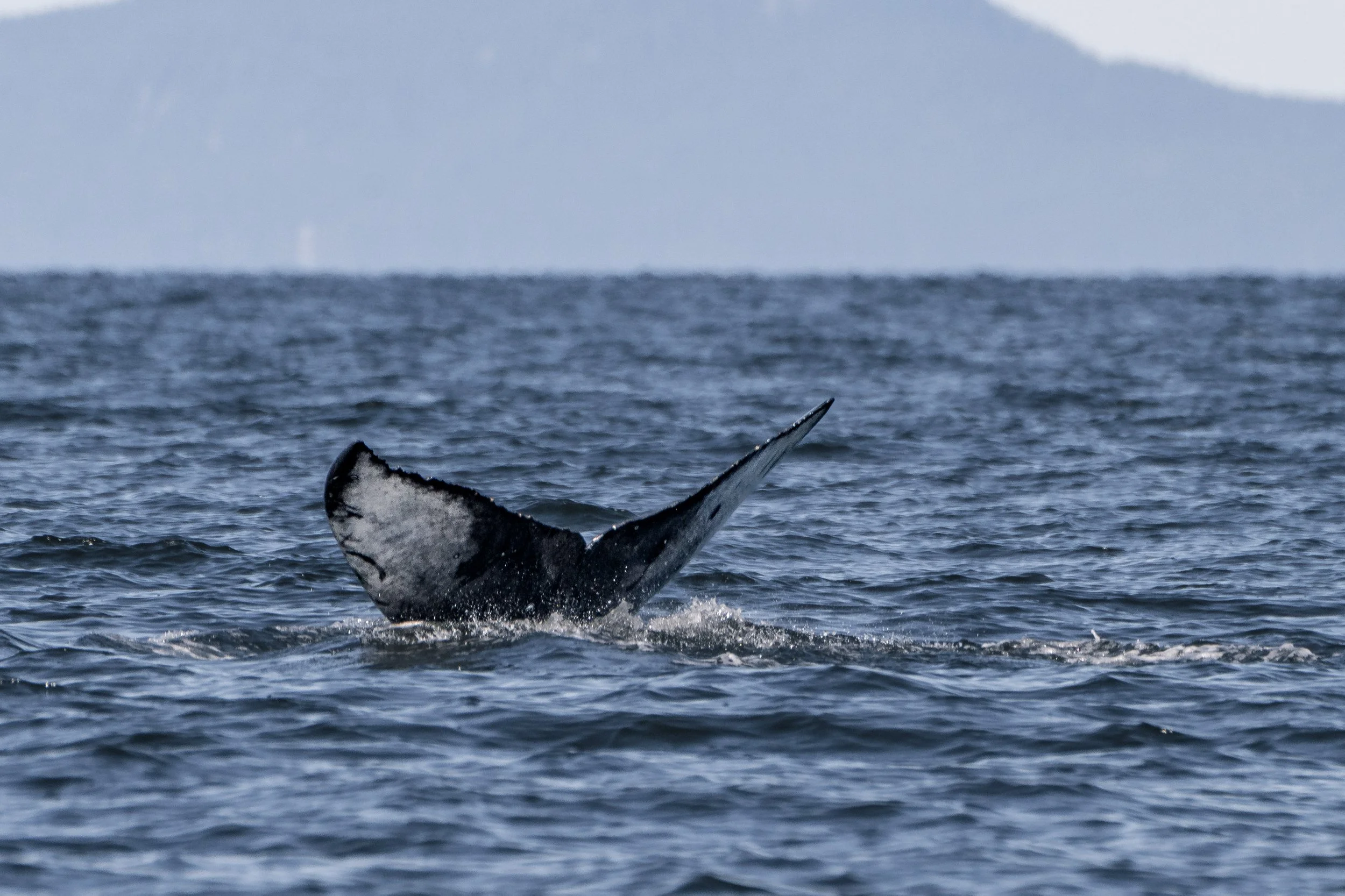
Little HW-MN0445366’s fluke. Photo by Val Watson.
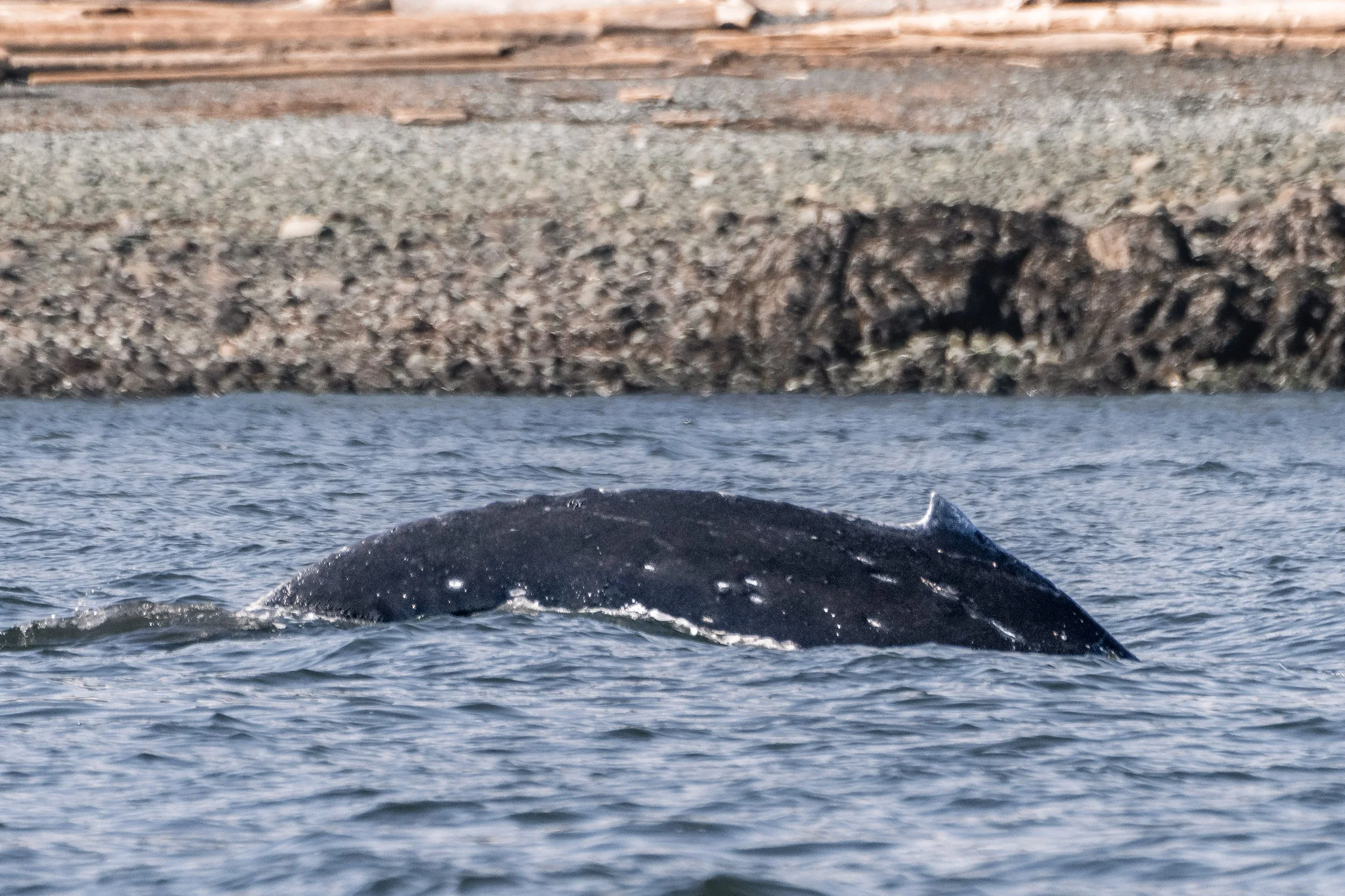
HW-MN0445366 going for a dive. Photo by Val Watson.
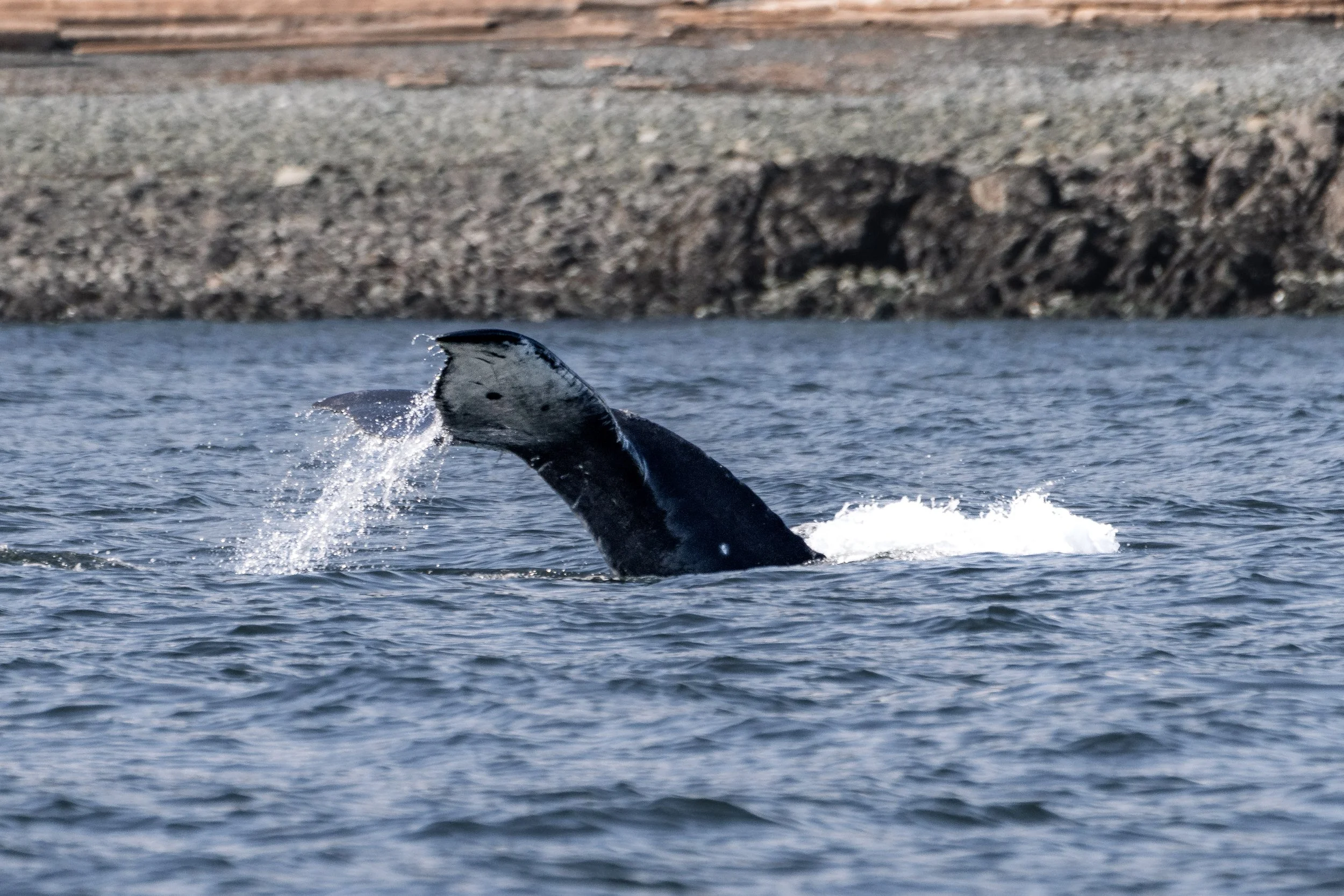
Flukes up! Photo by Val Watson.
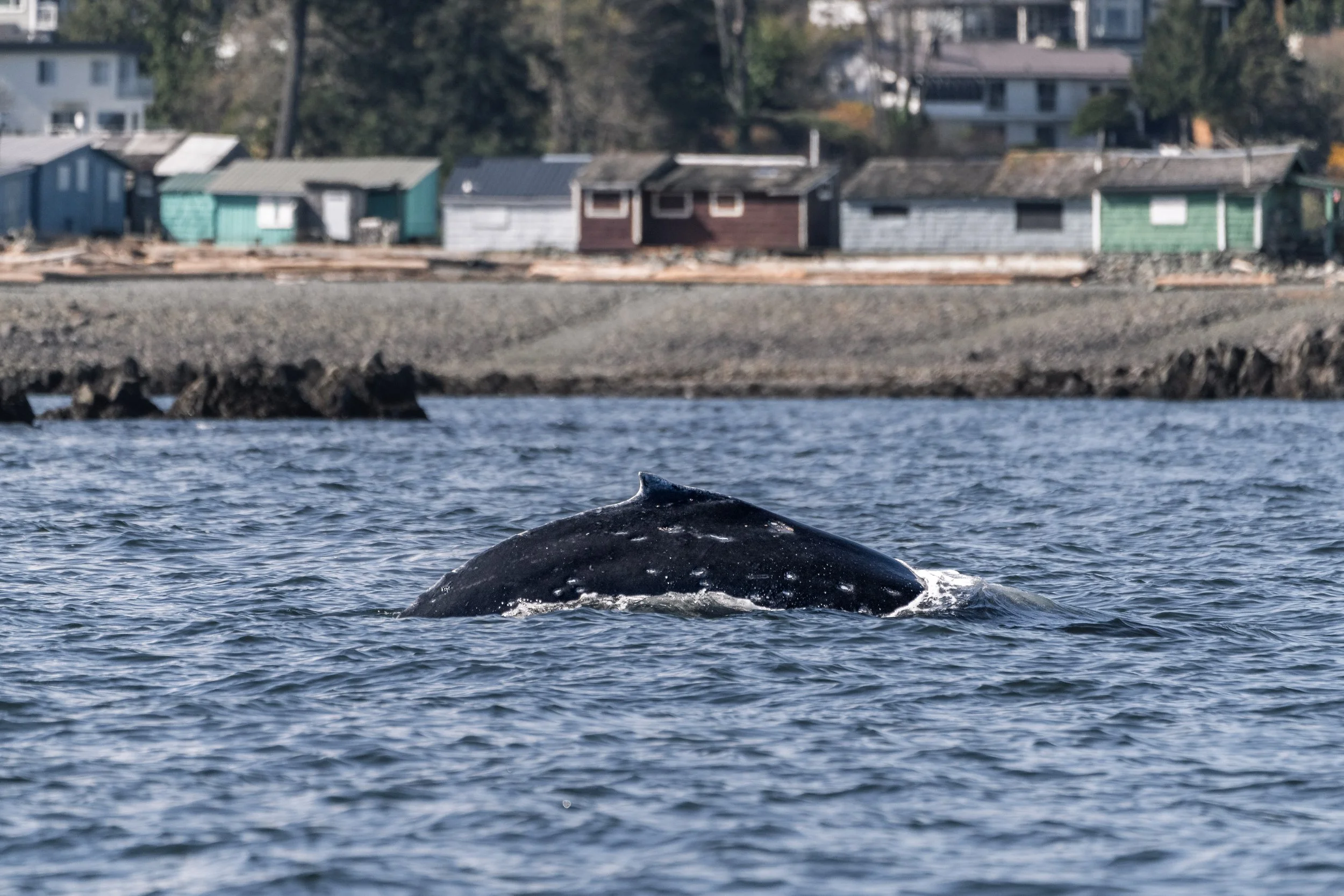
A dichotomic moment - a huge wild animal living its own wild life, while human society watches nearby. Photo by Val Watson.
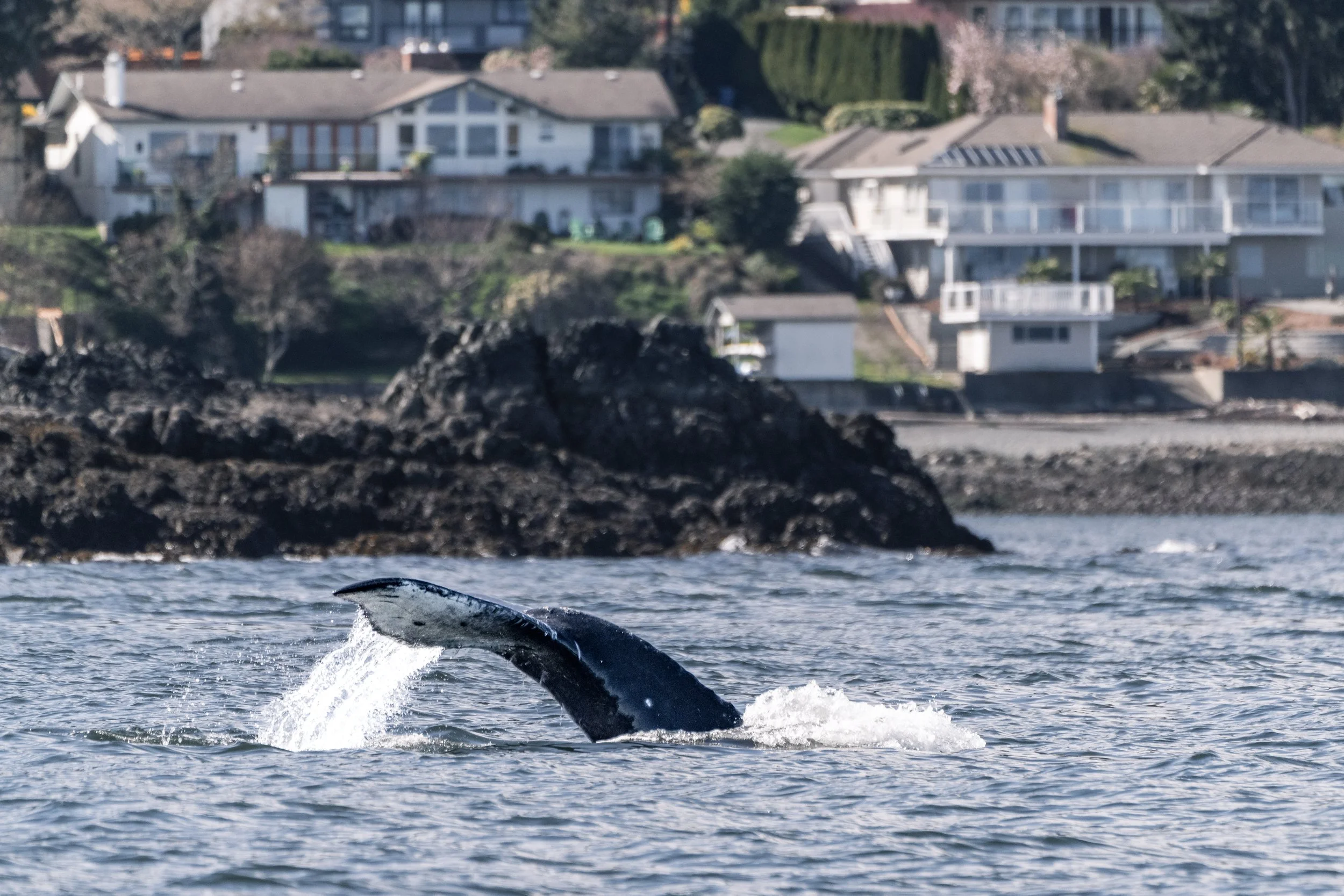
Going for a dive. Photo by Val Watson.
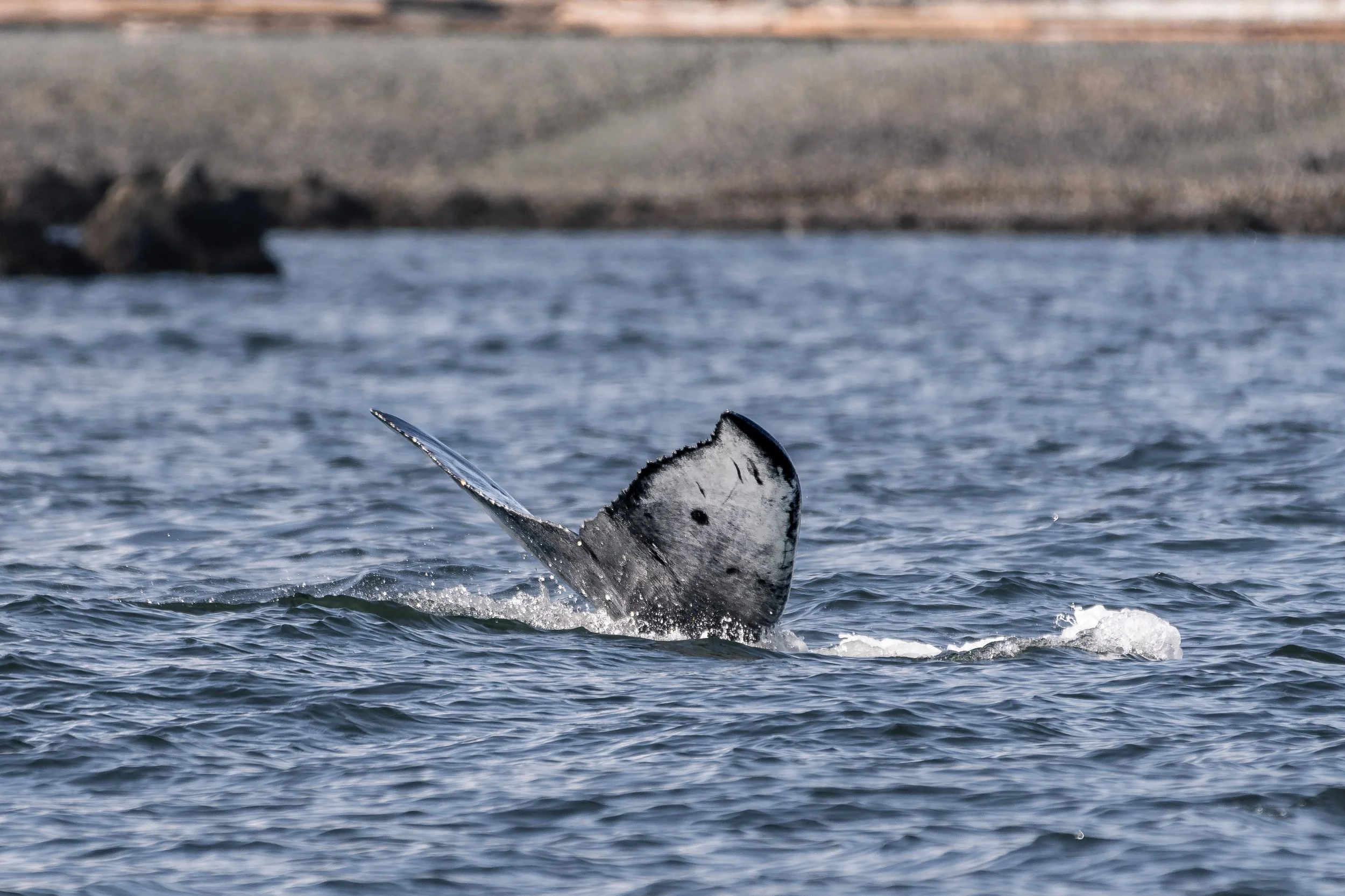
HW-MN0445366 diving, with some of their distinct fluke markings visible. Photo by Evan Hessels.
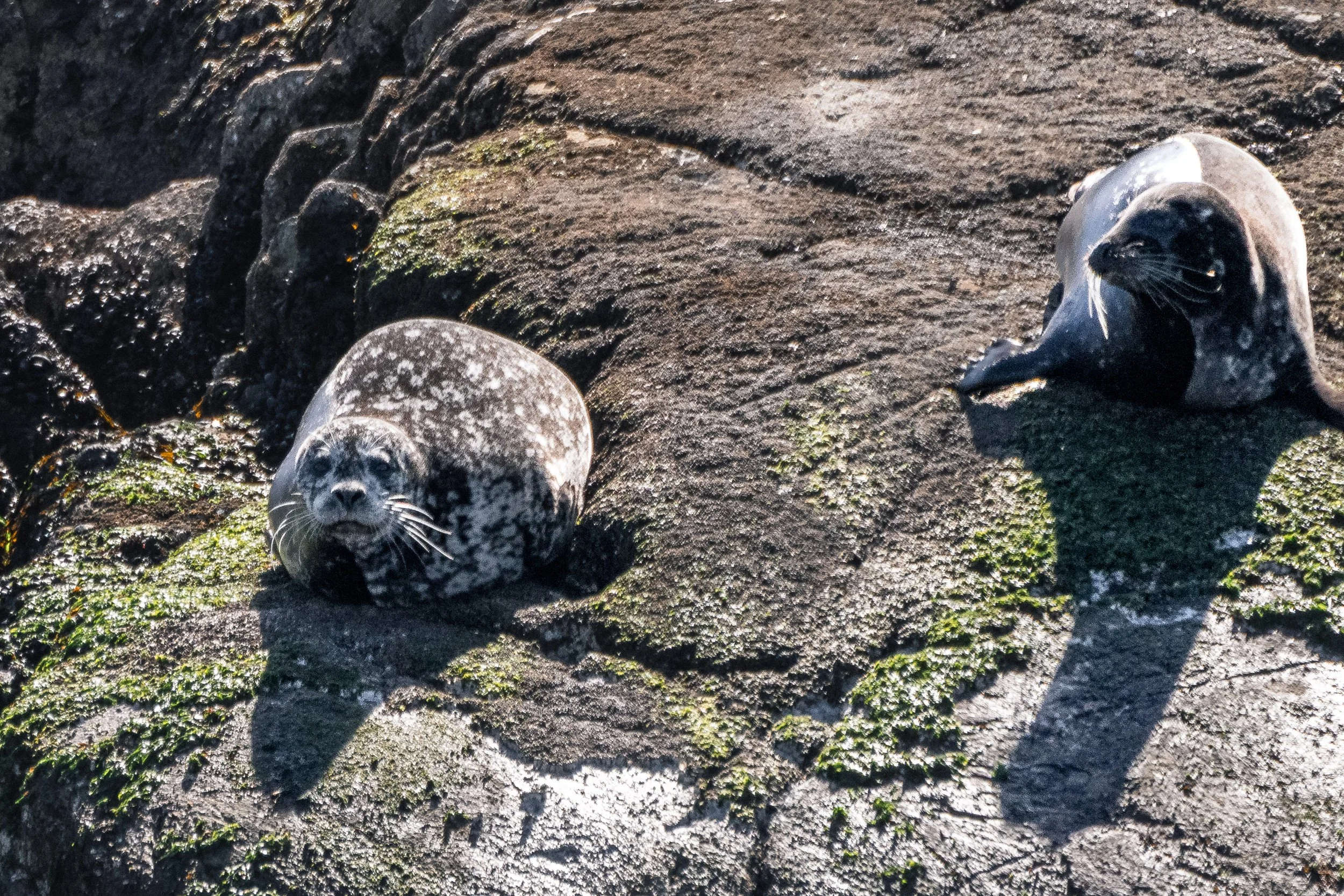
Harbour Seals hauled out at the White Islets. Photo by Val Watson.
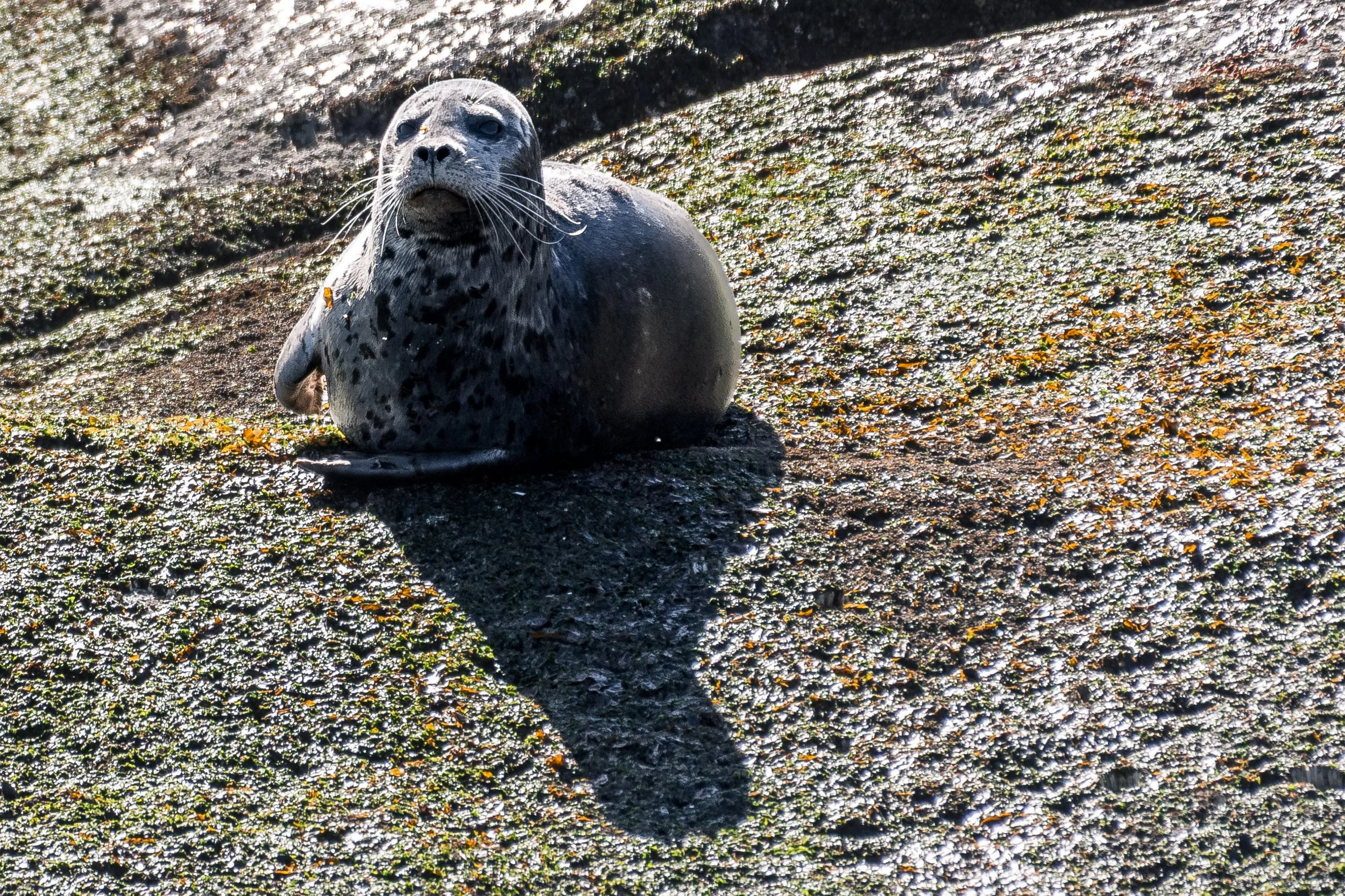
Someone has a bit of a grumpy face! Photo by Evan Hessels.
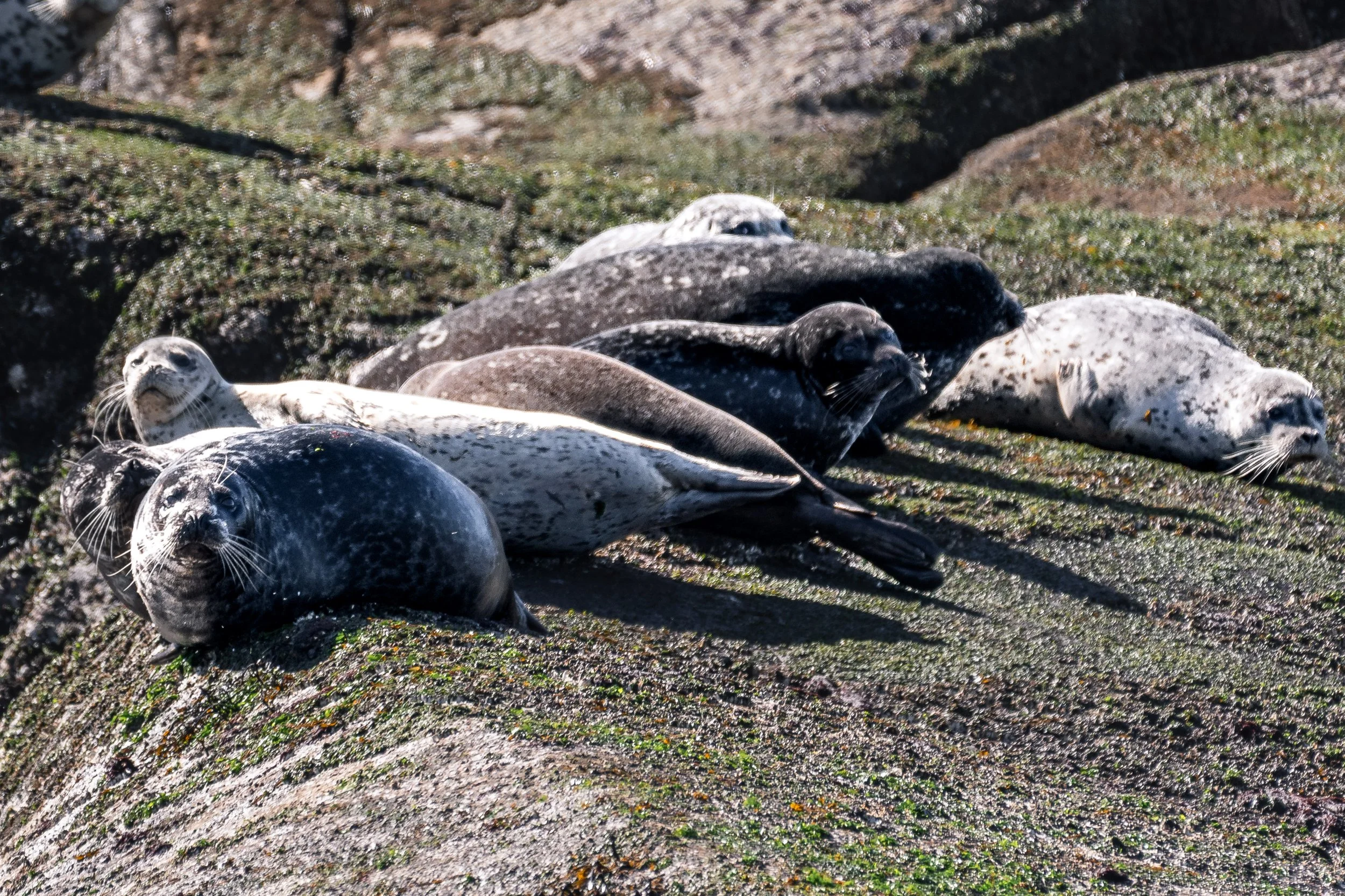
Harbour Seals have a variety of coat patterns, from very light to very dark. Photo by Evan Hessels.
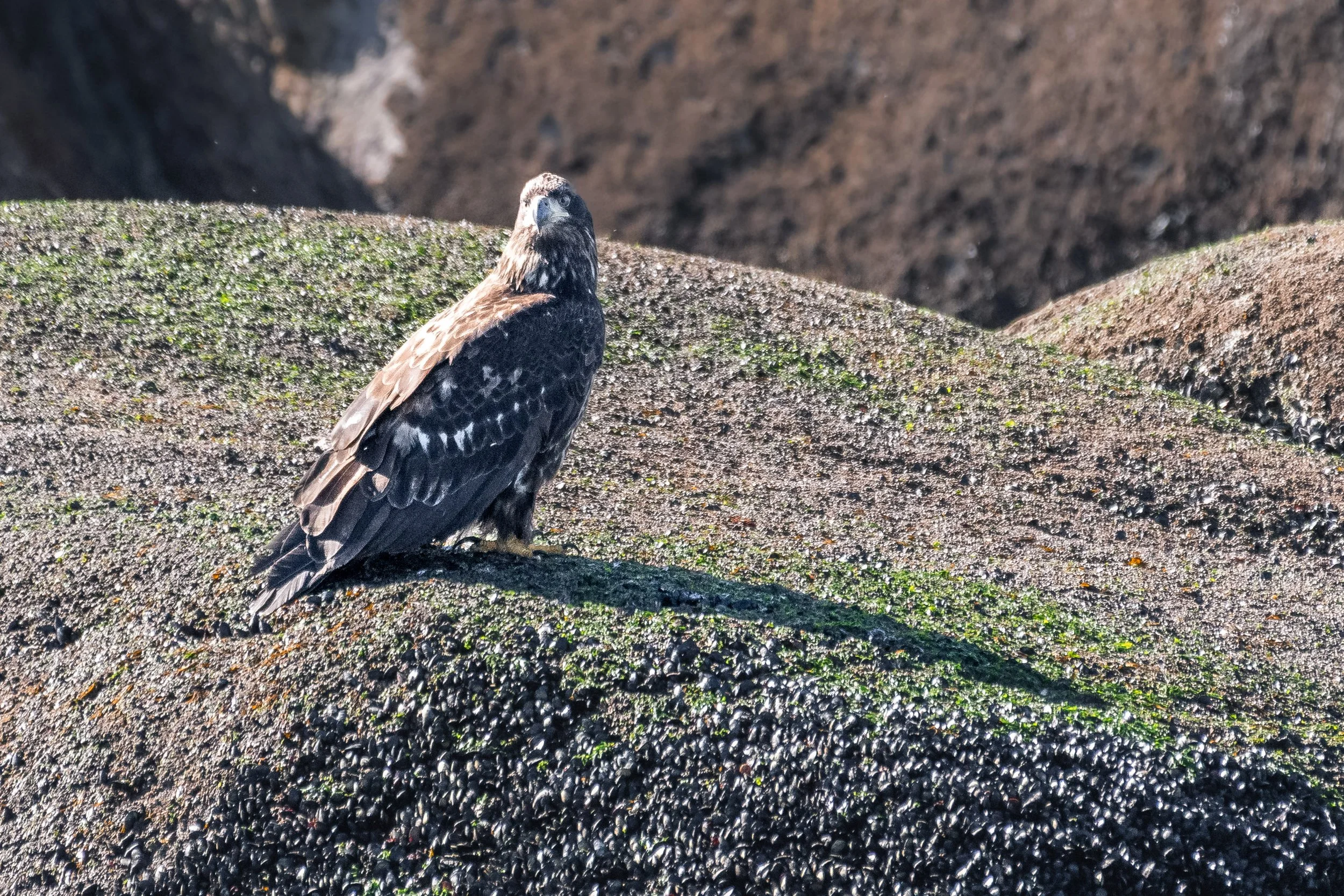
Young Bald Eagles do not sport the classic white head and tail until they are around 4-5 years old. Photo by Evan Hessels.
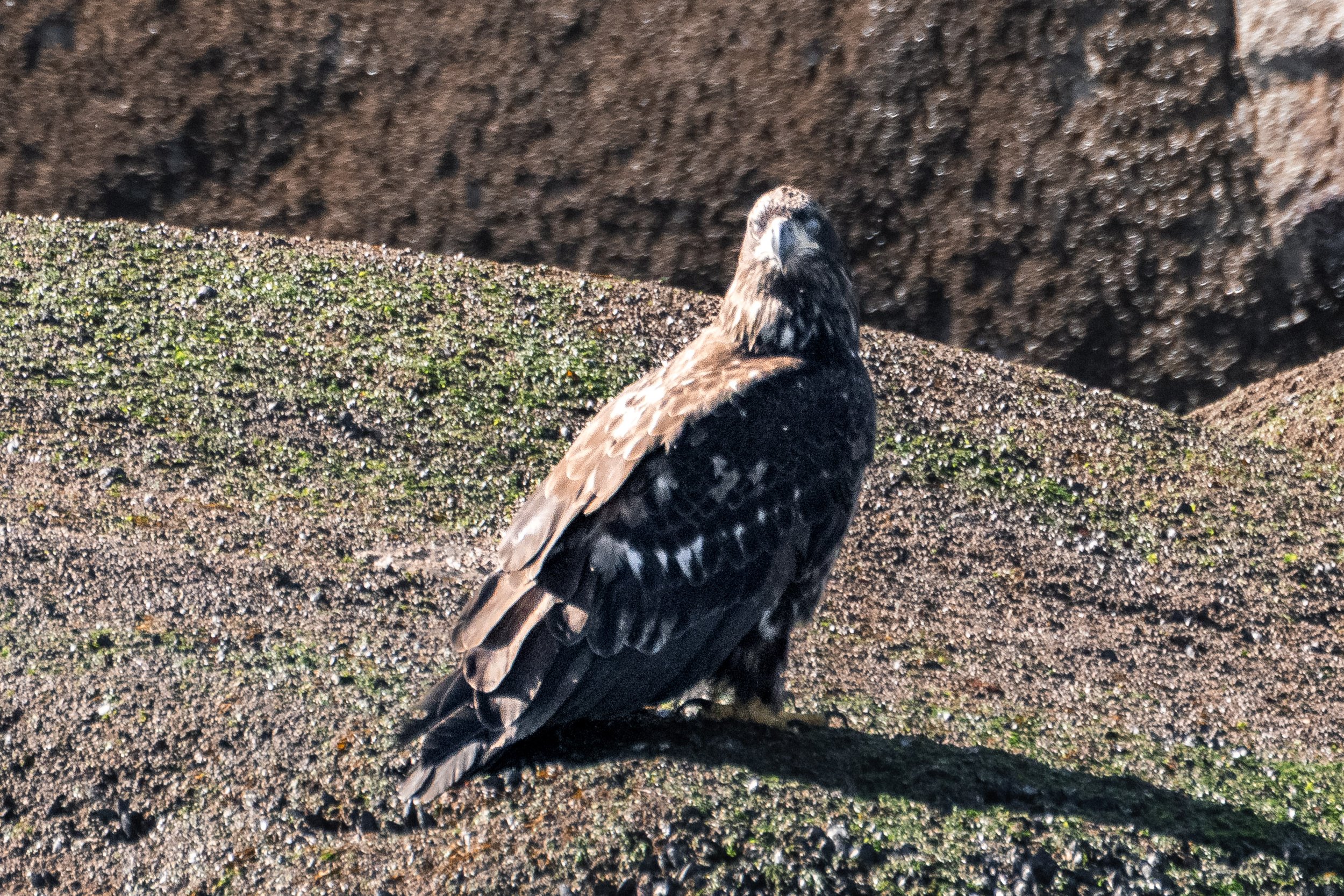
You can see the nictitating membrane on this eagle’s eyes in this photo, giving it an almost ‘zombie like’ appearance. Photo by Val Watson.
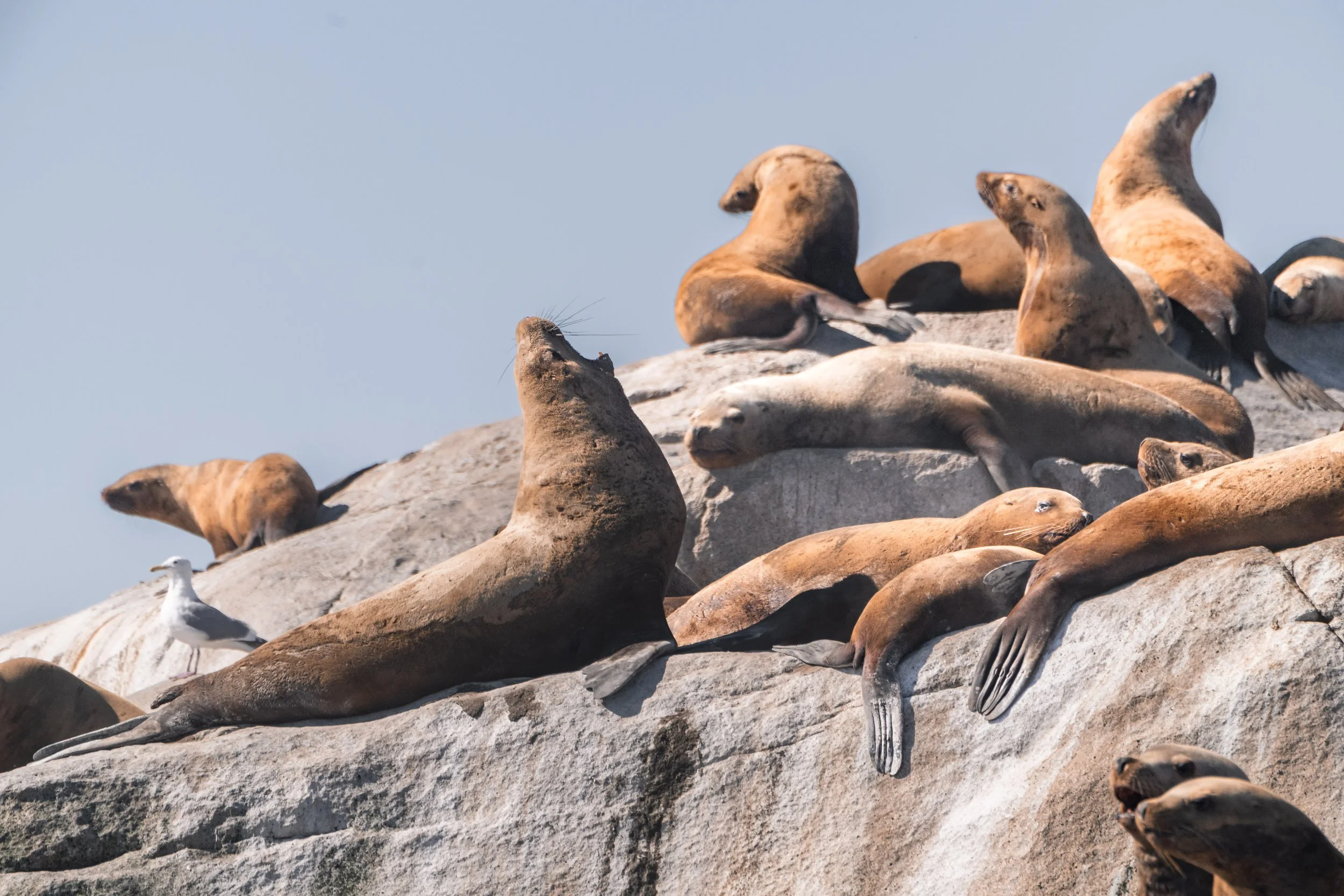
It is never a quiet moment at the sea lion haulouts! Photo by Val Watson.
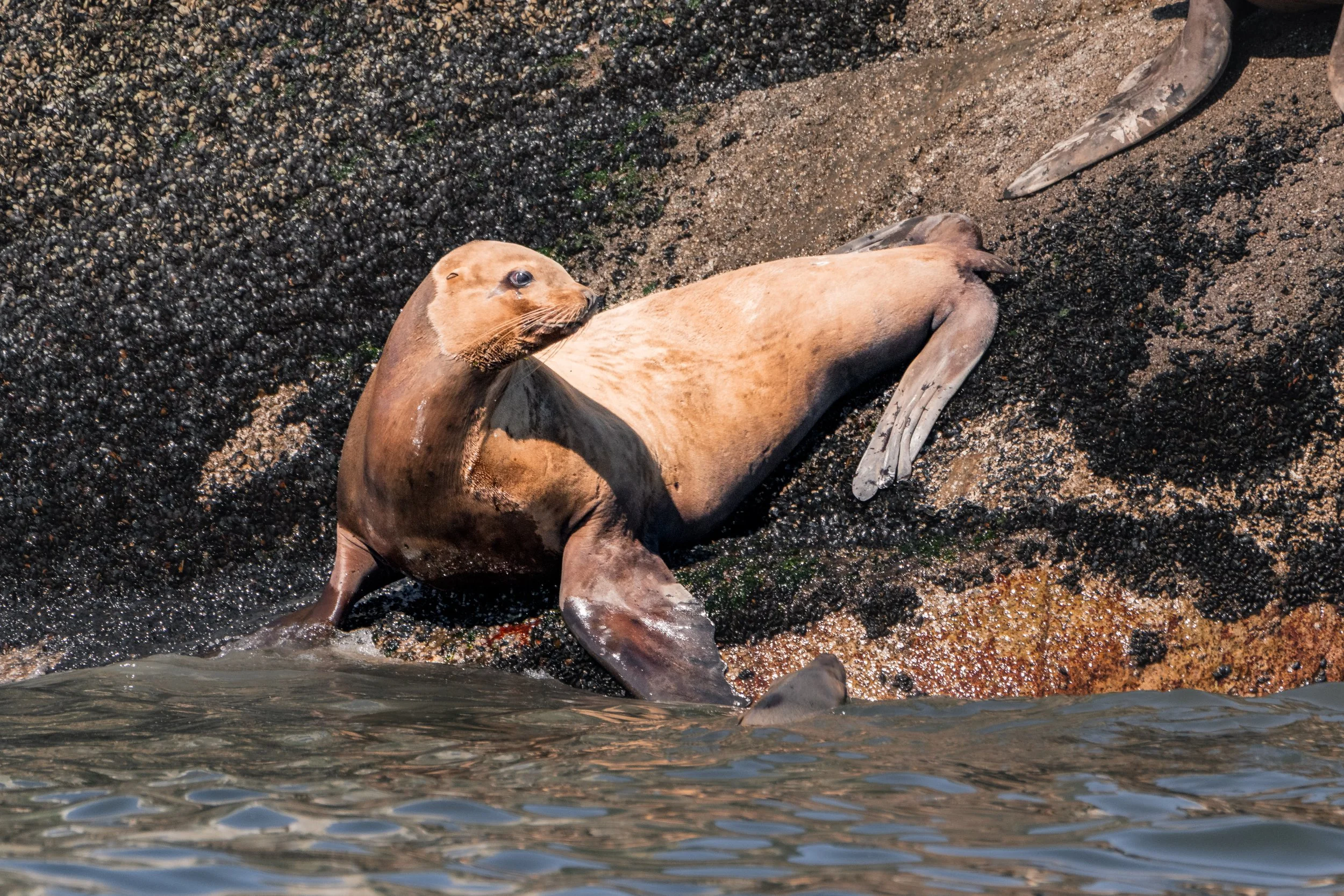
Strolling down the rocks. Photo by Val Watson.
It isn’t always ‘sunshine and rainbows’ at the haulouts - injuries can happen as well. Photo by Val Watson.
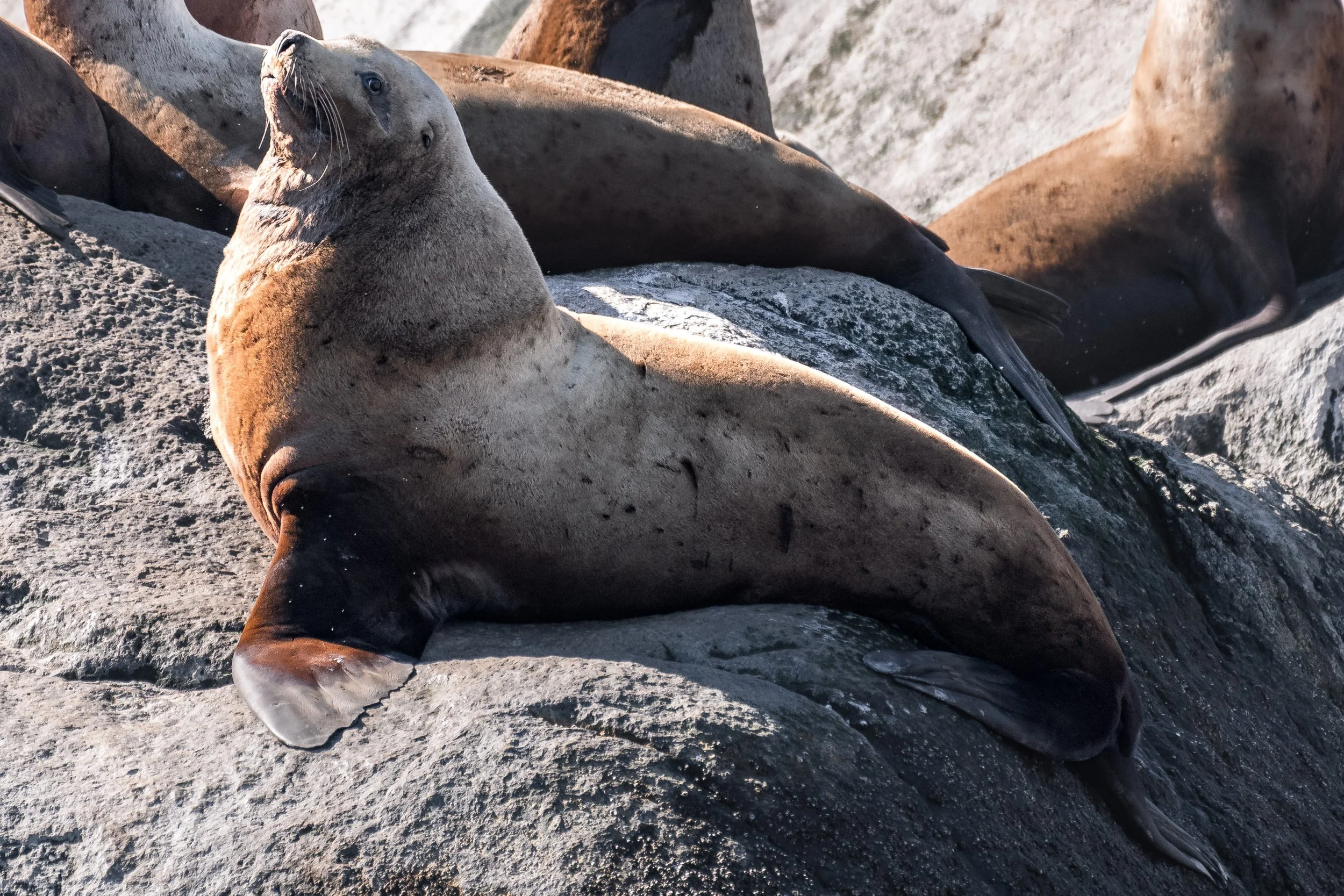
A Steller Sea Lion looking magestic at the White Islets. Photo by Evan Hessels.
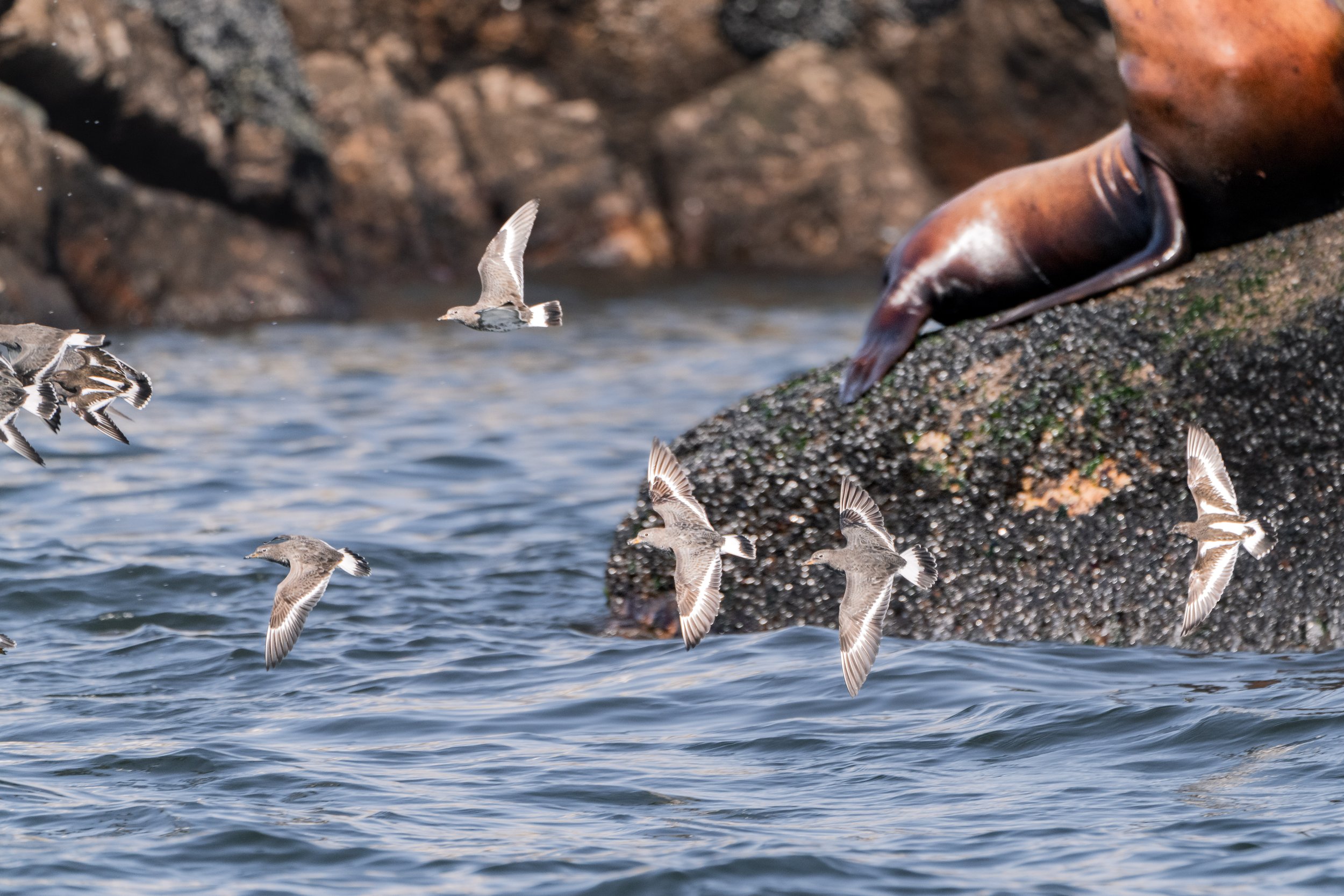
A flock of Surfbirds flying by. Photo by Val Watson.
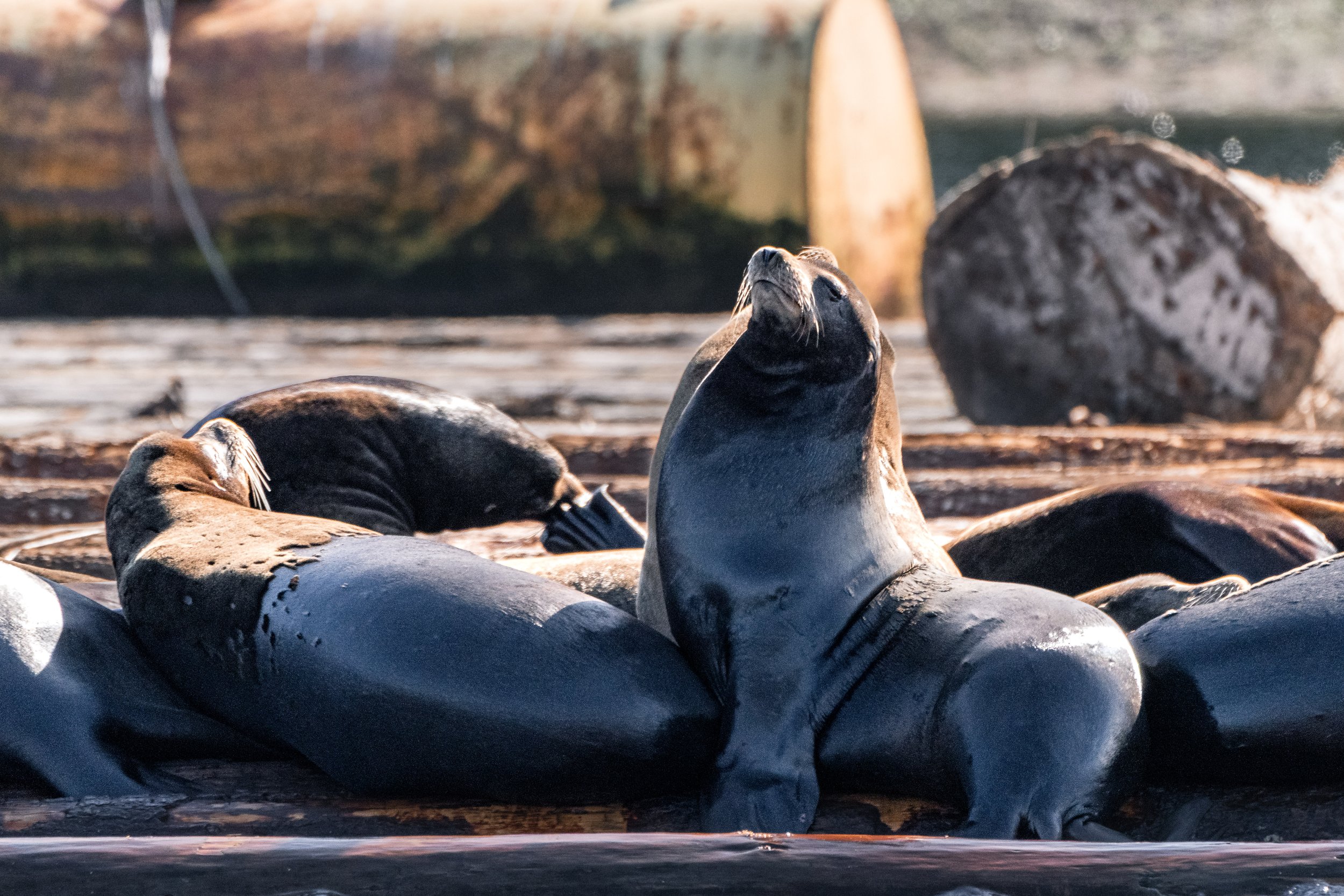
Groggy California Sea Lions on the log booms. Photo by Val Watson.