
March 29, 2026 - Lunchtime with the T046B1s and T065Bs, and an afternoon visit with others too
The morning carried a cool bite, but it did little to deter the excitement building on the dock. Guests and crew moved with purpose, pulling on anti-exposure suits, tightening gloves, and adjusting goggles as they prepared for the elements. Bundled against the chill, everyone stepped aboard Cascadia with a shared sense of anticipation, ready to see what the day might bring.
With early shore reports placing orca near Neck Point, it did not take long to find them. Just twenty minutes after departing Nanaimo, the ocean ahead came alive. A tall dorsal fin cut cleanly through the surface, surrounded by several smaller fins moving with urgency. The group was travelling quickly, their direction and behaviour focused. It soon became clear why.
A Steller Sea Lion was in the water ahead, surfacing briefly before disappearing again. The orca moved with remarkable coordination, taking turns to corral and pursue it. Quick surfacings, powerful tail slaps, and bursts of movement marked the encounter. It is never easy to witness a hunt, but it is a vital part of life in the ocean. For Transient orca, survival depends on these moments. Each movement we observed was part of a learned strategy, refined over generations.
Amid the intensity, another challenge emerged. Identifying the whales required patience and timing, as their quick movements made clear views of their dorsal fins and saddle patches difficult to obtain. We could see several smaller dorsal fins among the group, suggesting multiple juveniles and likely more than one family travelling together. As photos were captured and carefully compared with the catalogue, the picture came together. We were travelling alongside the T046B1s and the T065Bs, a combined group of eight individuals:
T046B1 Tread ♀ (2003)
T046B1A Tsakani ♀ (2015)
T046B1C Tide ♂ (2022)
T046B1D Tashi (2025)
T065B Chunk ♀ (1993)
T065B1 Birdsall ♂ (2011)
T065B2 Nettle ♂ (2019)
T065B3 Rook ♂ (2023)
The towering dorsal fin that first caught our attention belonged to T065B1 Birdsall, a fifteen-year-old male who is beginning to mature. His fin is starting to thicken and straighten as he grows, slowly developing into the tall, iconic shape seen in mature adult males. Around him, younger whales moved with energy and curiosity. One-year-old T046B1D, three-year-old T065B3 Rook, and four-year-old T046B1C Tide were seen weaving between the adults. Though still too young to fully participate in the hunt, these early experiences are essential. This is how they learn: by observing, following, and gradually understanding the complexities of hunting large, powerful prey.
As the encounter came to a close and the whales moved on, Captain Rodrigo turned Cascadia southward. The pace shifted as we travelled along Gabriola Island’s coastline, the intensity of the hunt giving way to a quieter stretch of exploration. Passing through the Flat Top Islands, the landscape opened up until a low, rocky outcrop came into view at the edge of Valdez Island.
Here, at a place affectionately known as Stinky Rocks, a different kind of gathering awaited. Steller Sea Lions sprawled across the rocks, their large bodies piled together as they grumbled, growled, and shifted in place. The air carried their presence long before we arrived - both audibly and aromatically. Nearby, a pair of Bald Eagles lingered, keeping watch and occasionally moving in to scavenge. It was a scene full of sound and texture, a reminder that even in stillness, there is constant activity along these shores. NOTE: Due to the nature of the trip’s Bald Eagle photos, we have included them at the end of the blog (gore warning).
Continuing onward, we entered Gabriola Pass and made our way into the Southern Gulf Islands. The rhythm of the trip settled once again into scanning and watching, when suddenly, more blows appeared ahead near the mouth of Dodd Narrows. Another group of orca was travelling through the channel.
Naturalist Vanessa began documenting the encounter, capturing images and noting distinct fin features as we paralleled their movement. With some careful comparison, the group was identified as the T086A1s and the T124A4s travelling together:
T086A1 Nahanni ♀ (~2001)
T086A1B Denali (2023)
T124A4 Sabio ♀ (2010)
T124A4A Strix ♀ (2021)
T124A1A Sabine (2024)
These matriarchs tell a story of change within a typically tight-knit social structure. Both T086A1 Nahanni and T124A4 Sabio once travelled closely with their mothers and siblings but have since begun to branch out, sometimes moving independently or joining with other females, as seen today. Nahanni travels with a single calf, while Sabio has two younger whales alongside her, one of which carries a unique history.
T124A1A Sabine was originally believed to be the calf of Sabio’s sister, T124A1 Bonapartes. Early observations showed the calf struggling while at Bonapartes’ side, appearing underweight and vulnerable. Over time, the calf began travelling closely with Sabio instead, and its condition improved dramatically. While the full story remains unknown, what we see today is a healthy young whale moving confidently within their pod.
With our second group of orca moving steadily on, we began the journey back across the Northumberland Channel. The skyline of Nanaimo slowly came back into view, marking the end of a day shaped by powerful moments and layered experiences.
Thirteen individual whales, two separate encounters, and a glimpse into both the intensity and the nuance of life in the Salish Sea. For those on board, it was more than just what we saw. It was the feeling of being present in those moments, witnessing the balance of survival, learning, and connection that defines this ecosystem.
Please enjoy today’s fantastic photos taken by Marine Naturalist Vanessa Vereschahen.
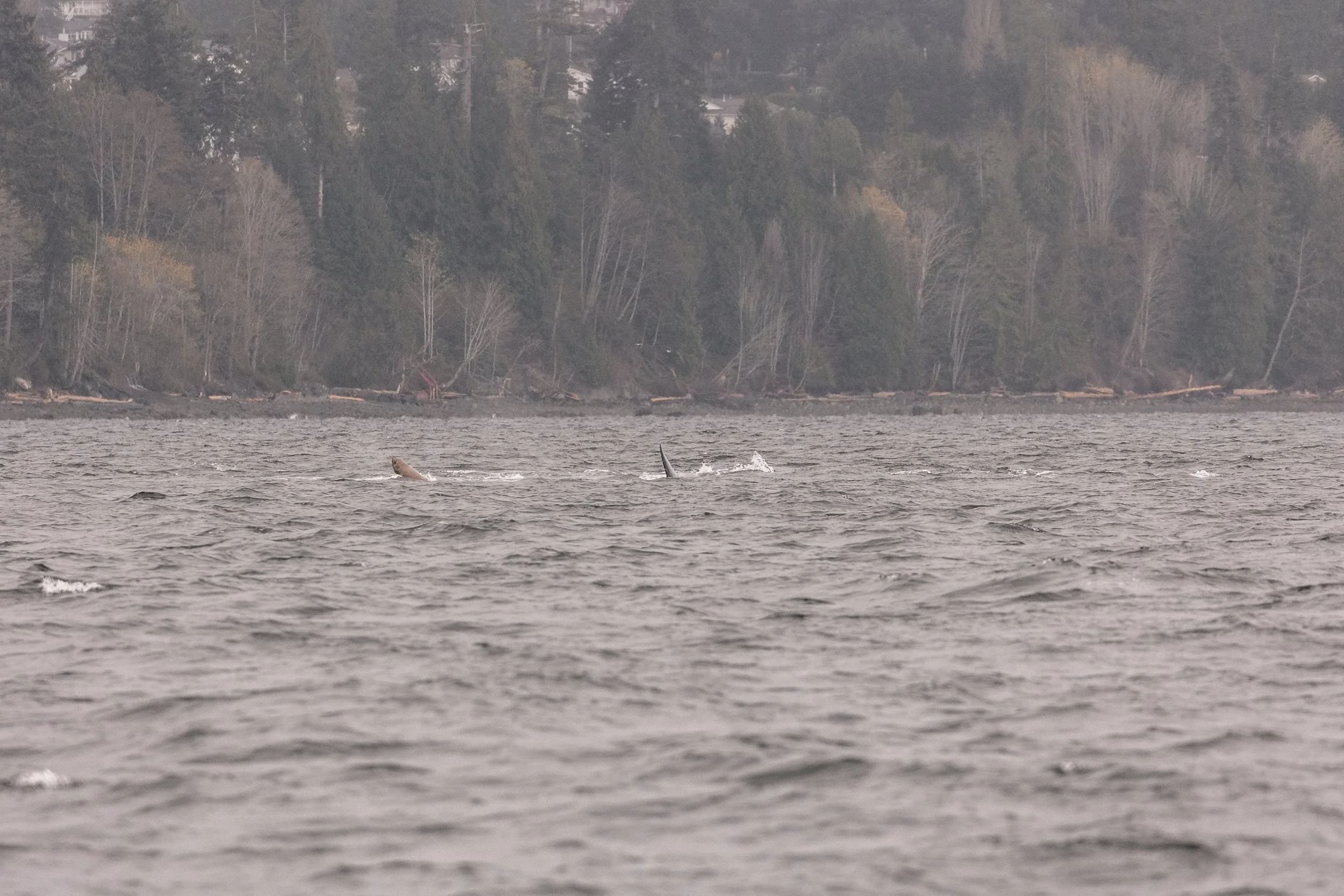
Hunting for lunch.
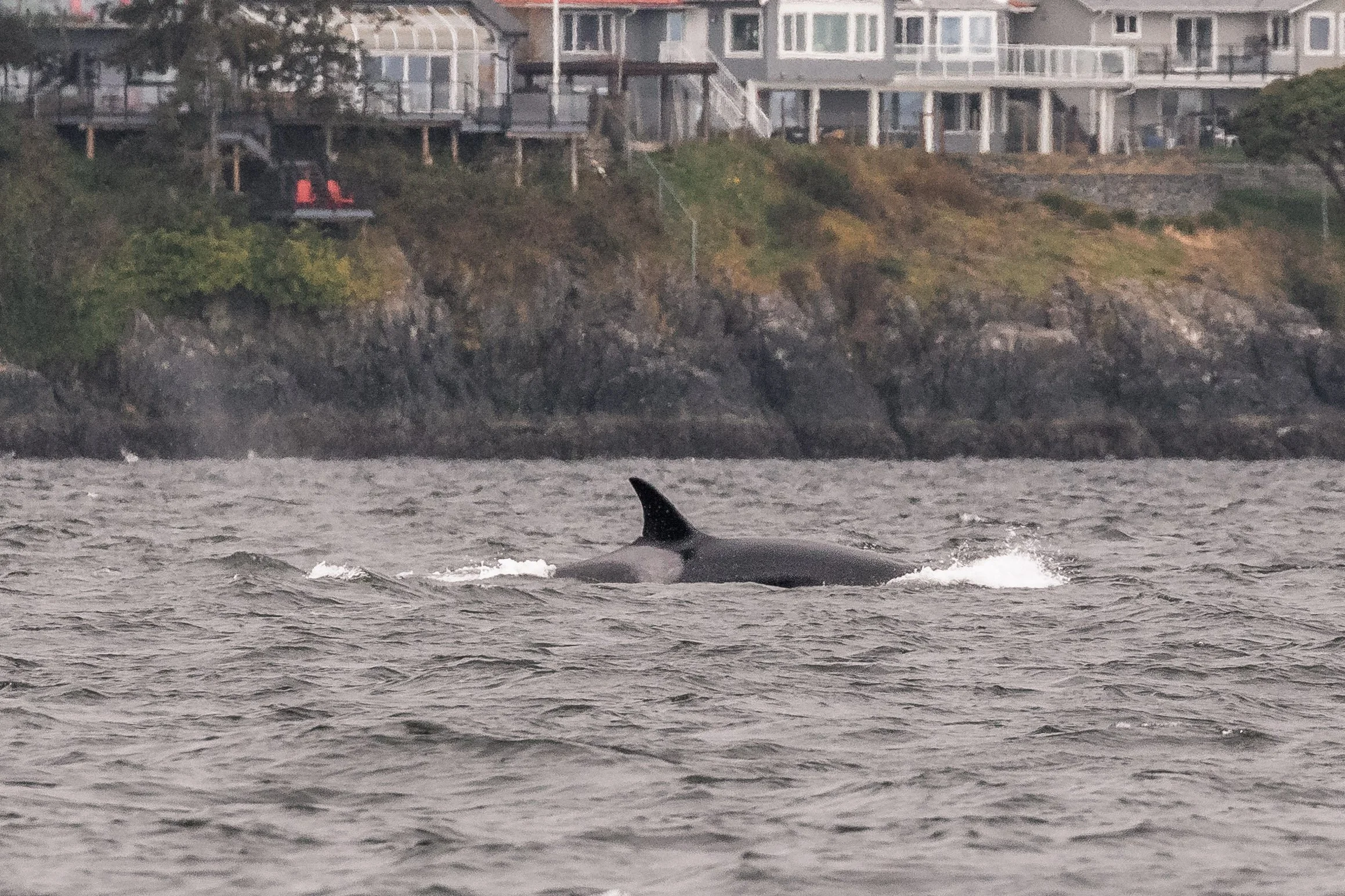
Matriarch T065B Chunk.
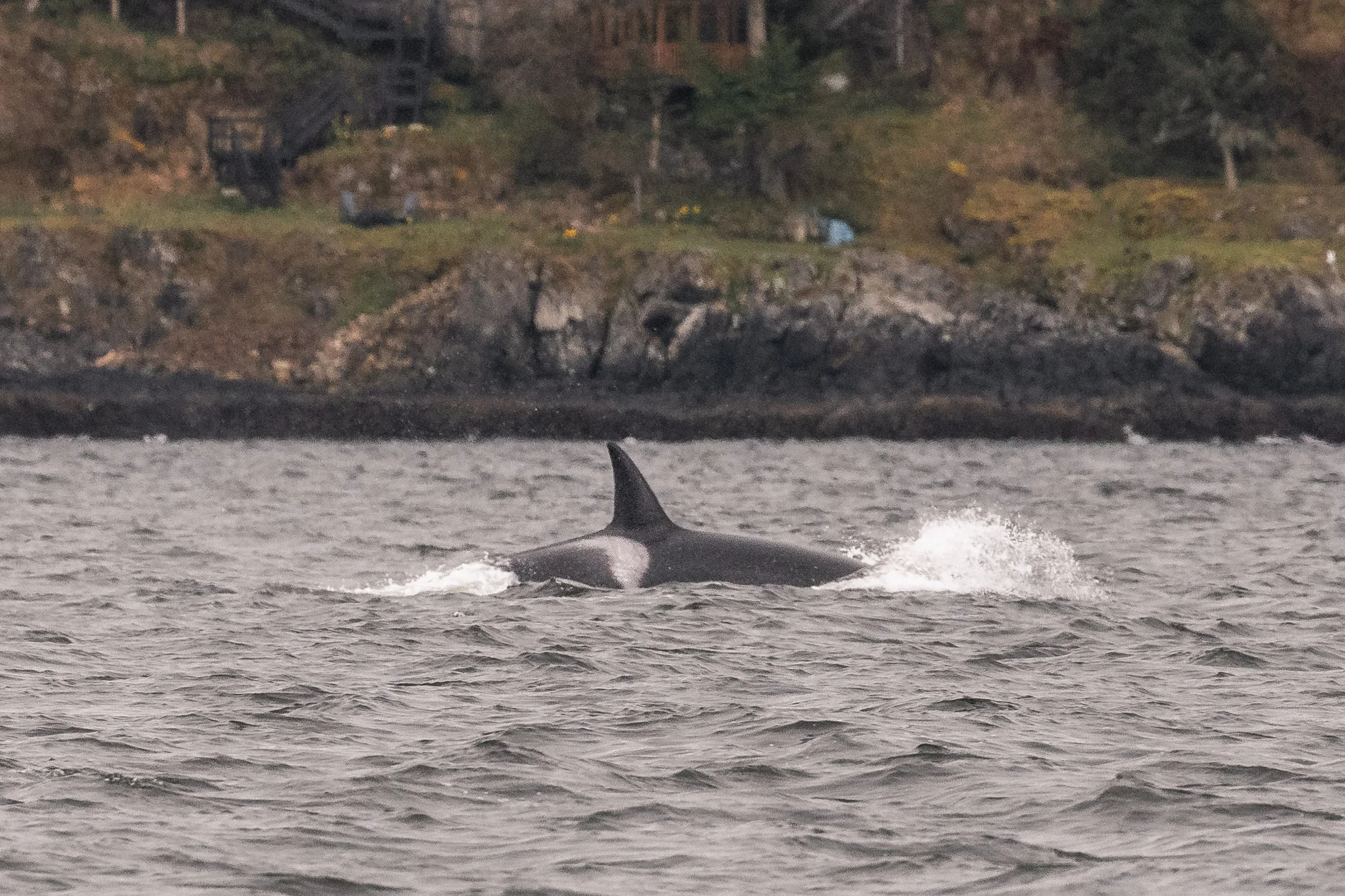
Matriarch T046B1 Tread.
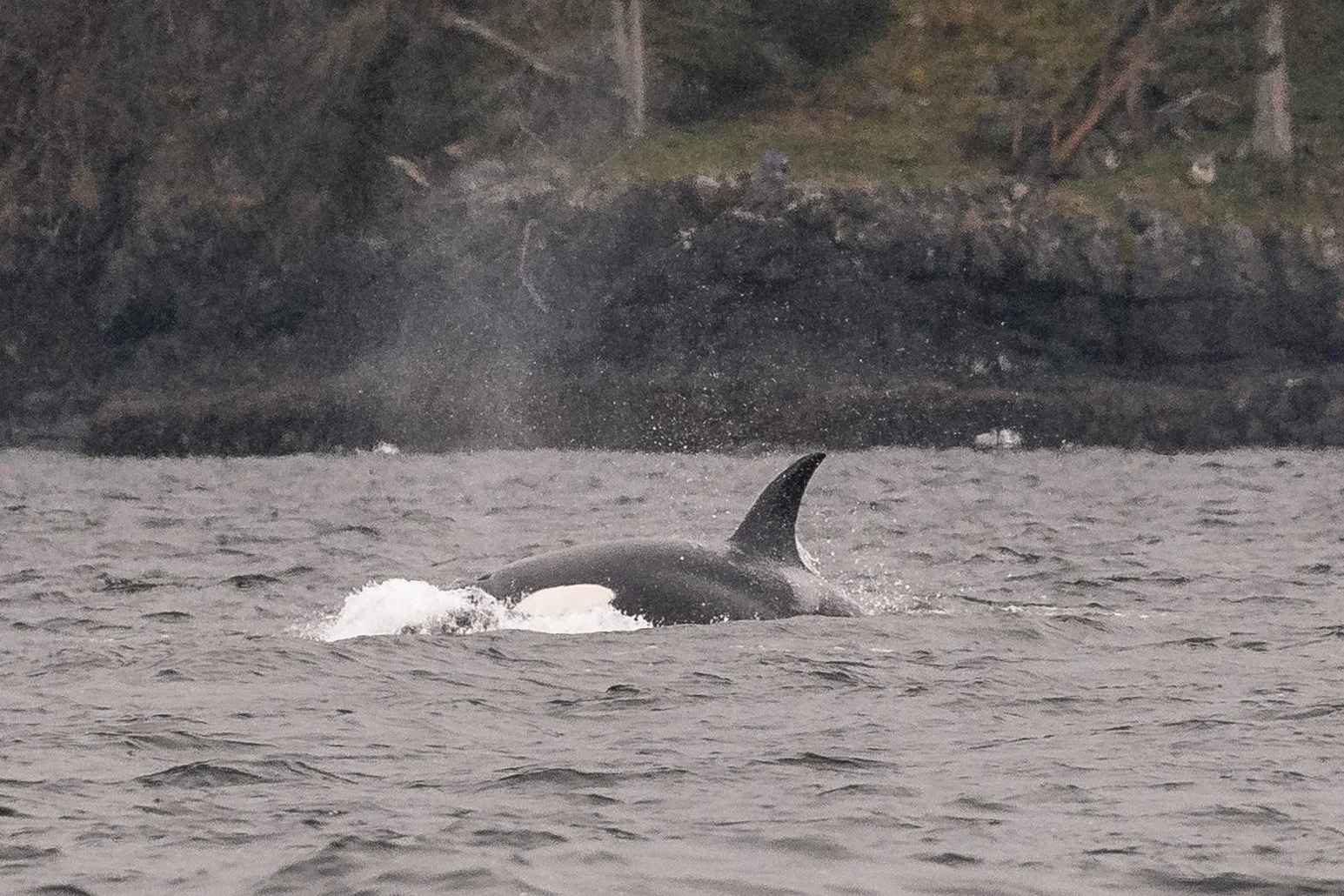
T046B1A Tsakani making waves during the hunt.
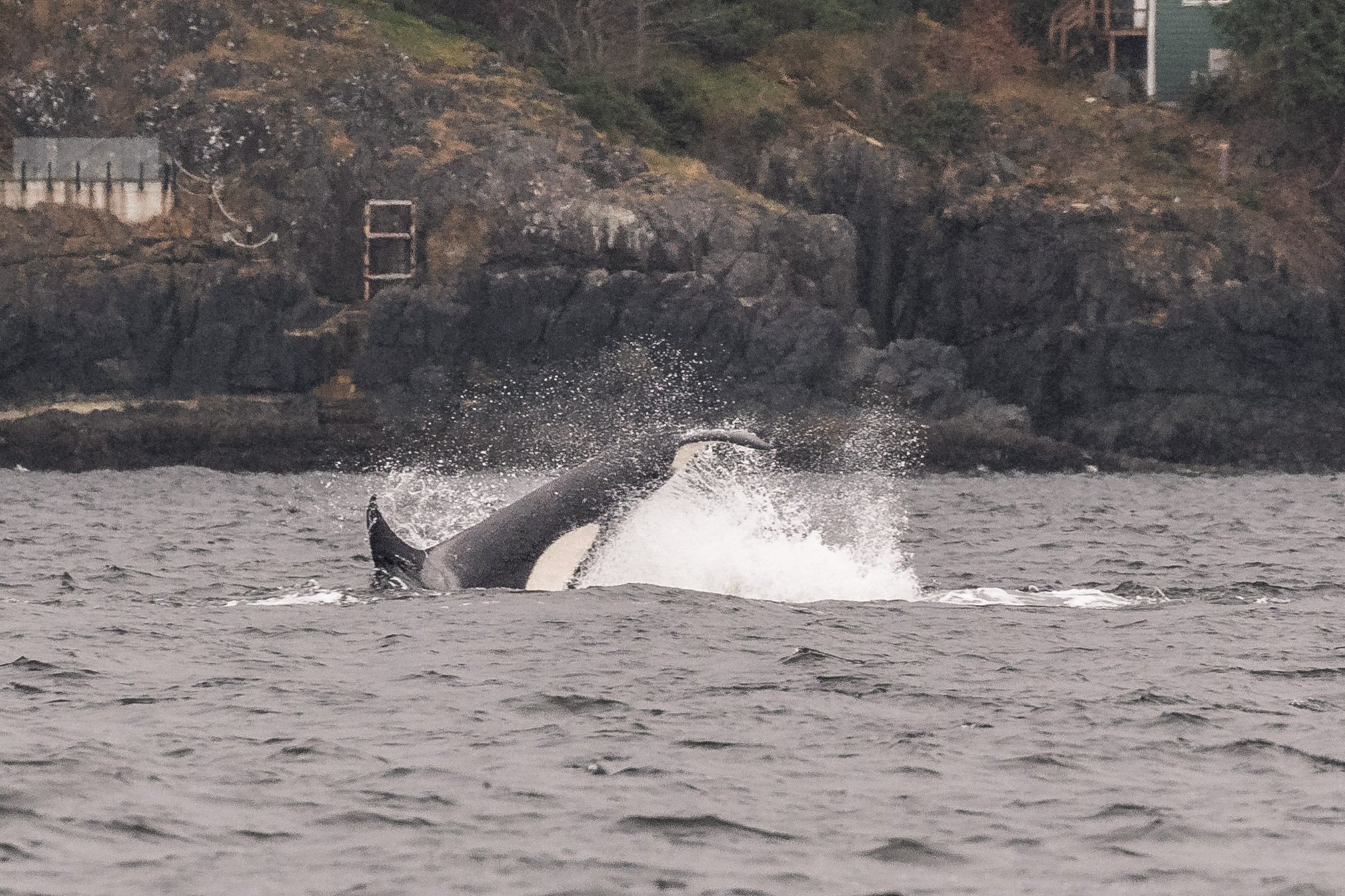
Hunt time!
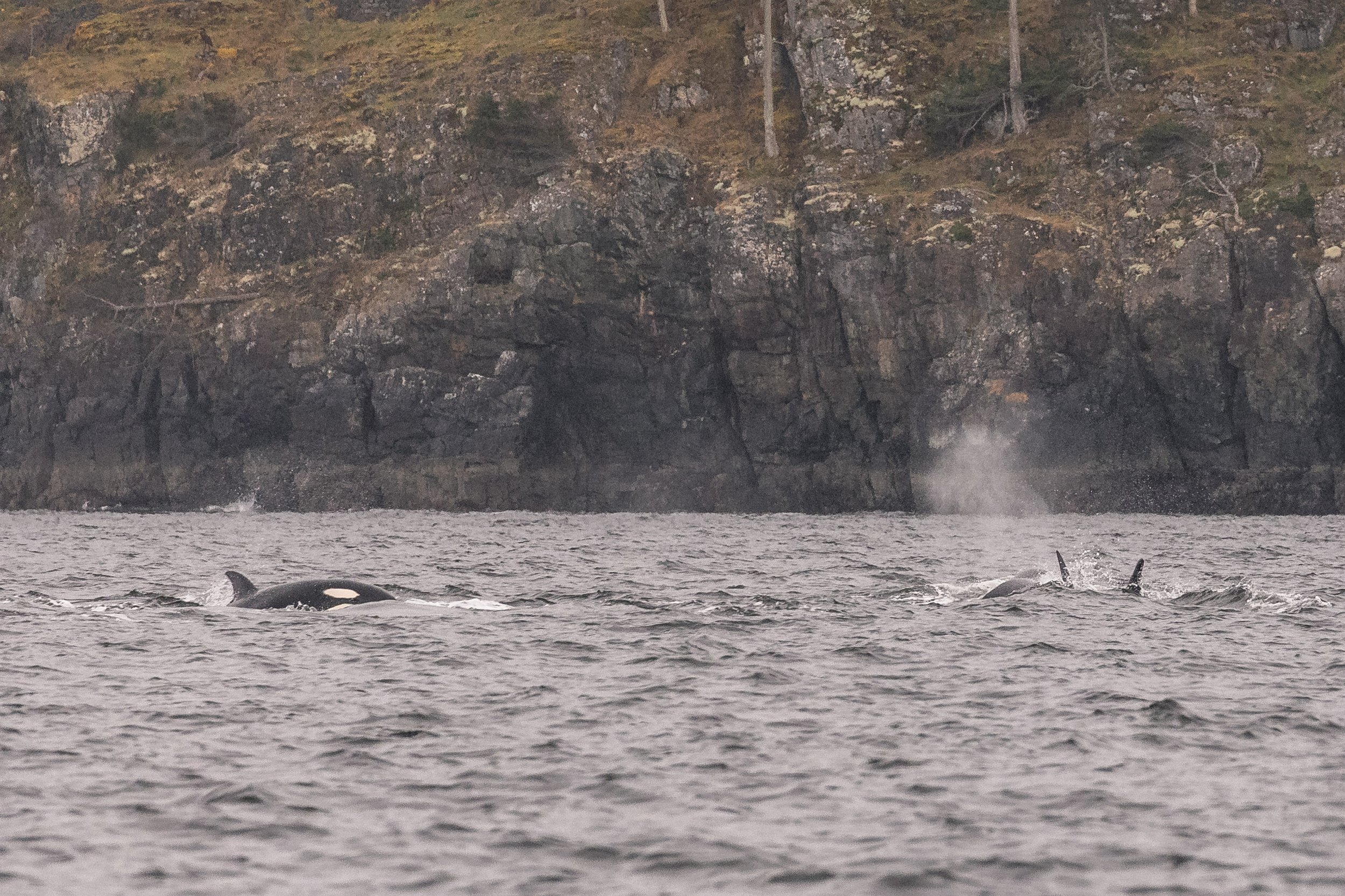
T046B1C Tide racing over to help with the hunt.
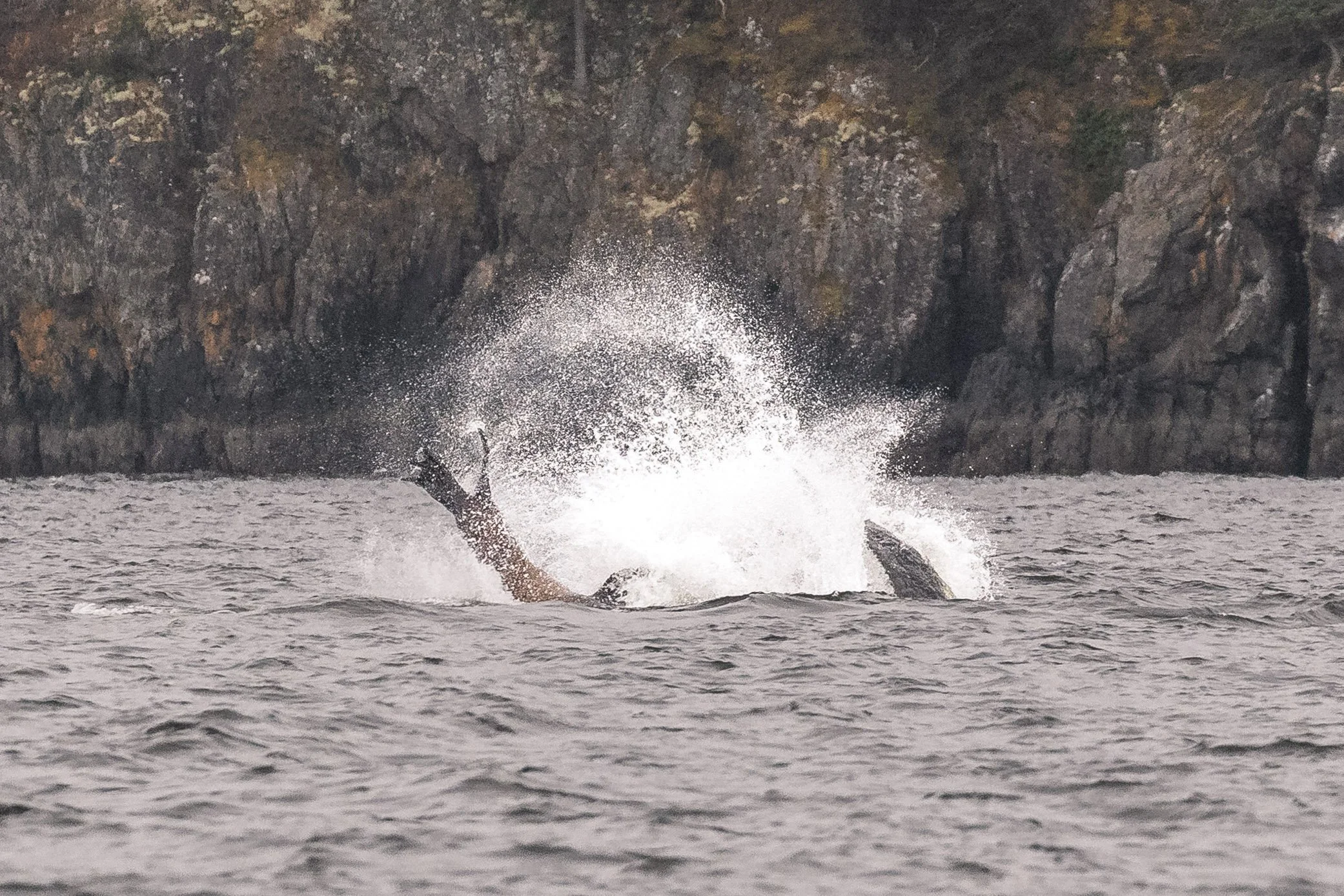
Ramming is a common technique used for hunting - here you can see the sea lion’s rear flippers out of the water.
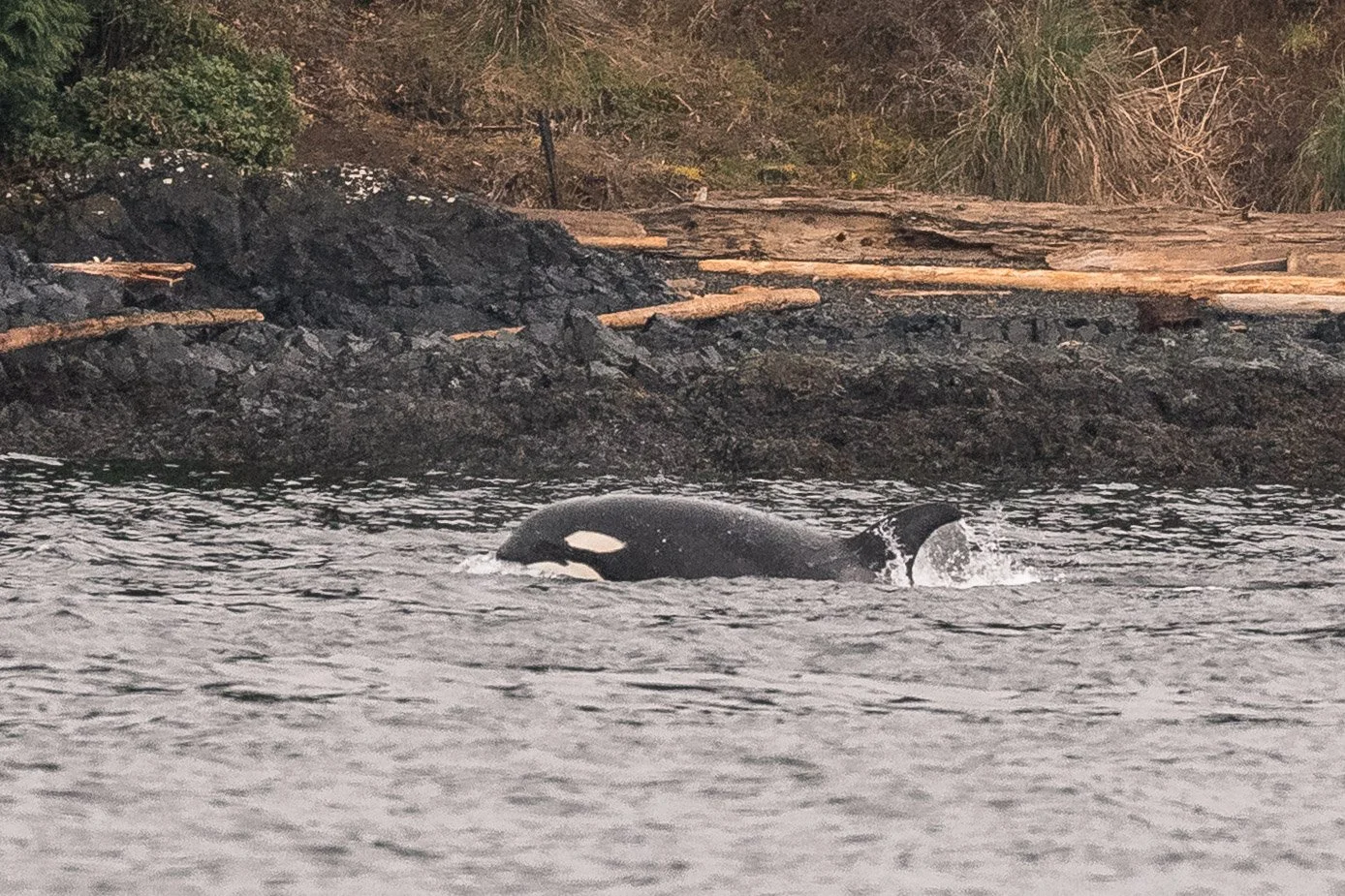
T065B3 Rook zooming by.
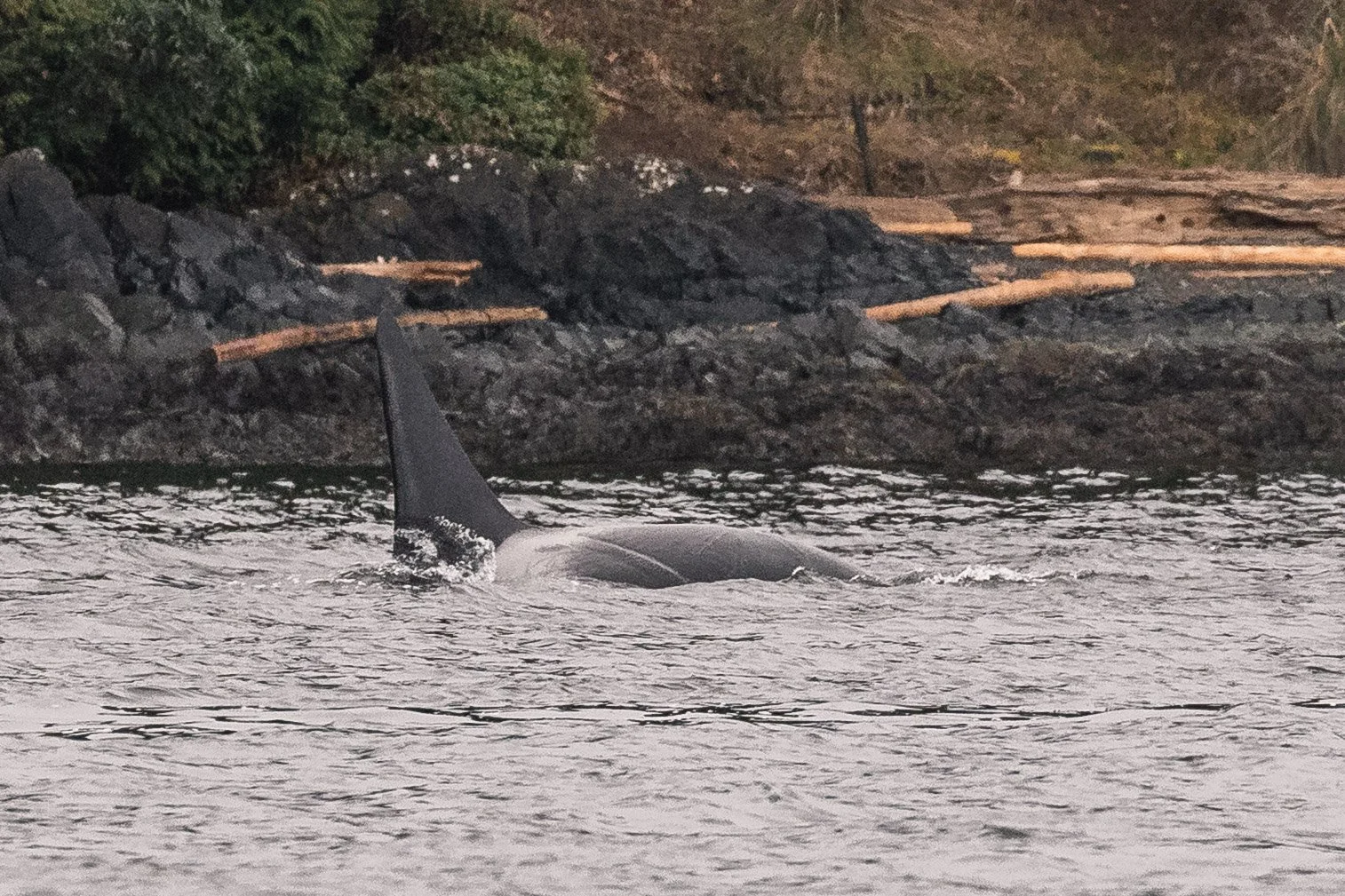
T065B1 Birdsall sports a serious scar on his left side now.
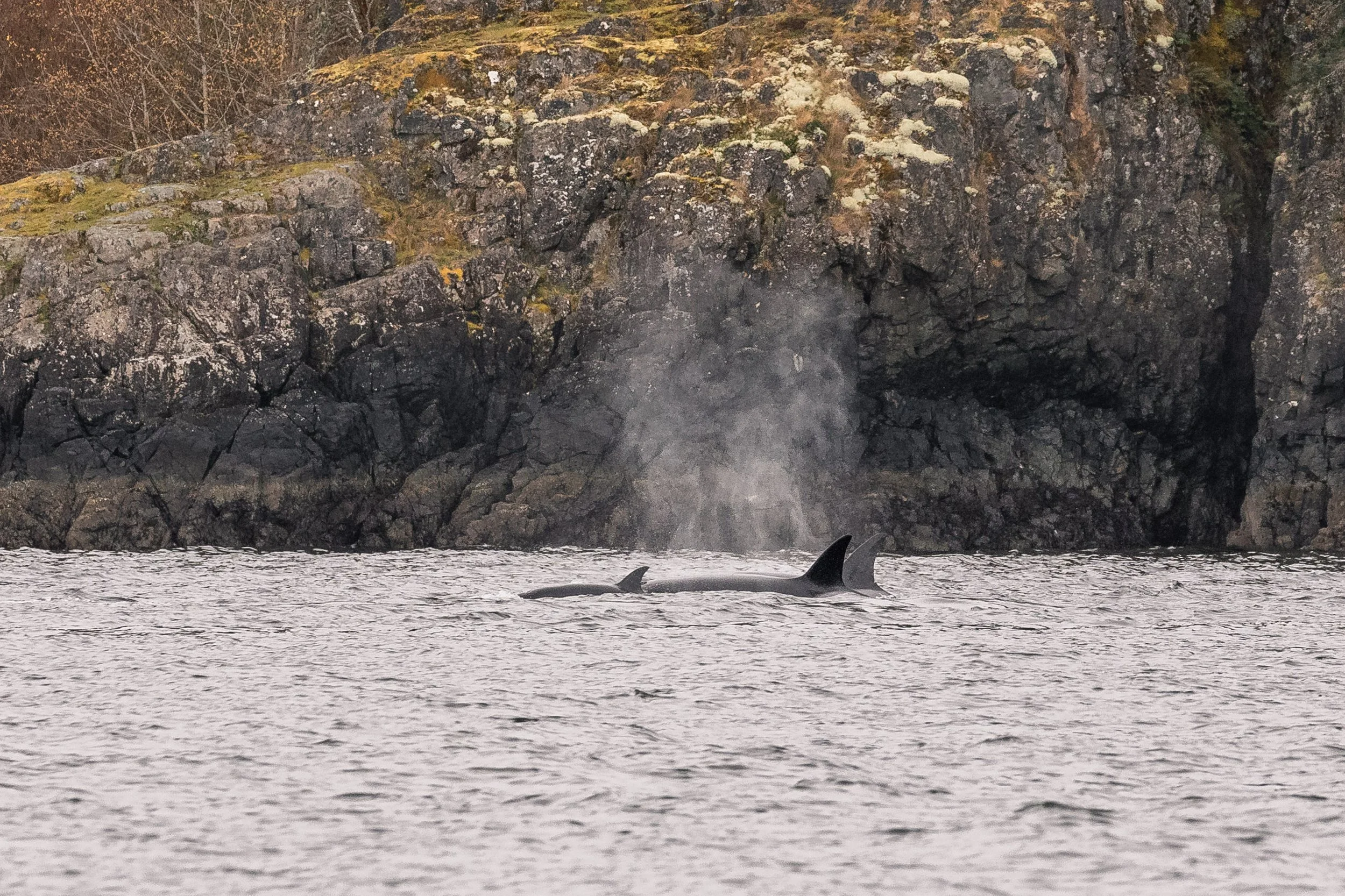
Matriarchs T046B1 Tread and T065B Chunk side-by-side, with little T046B1D ahead of them.
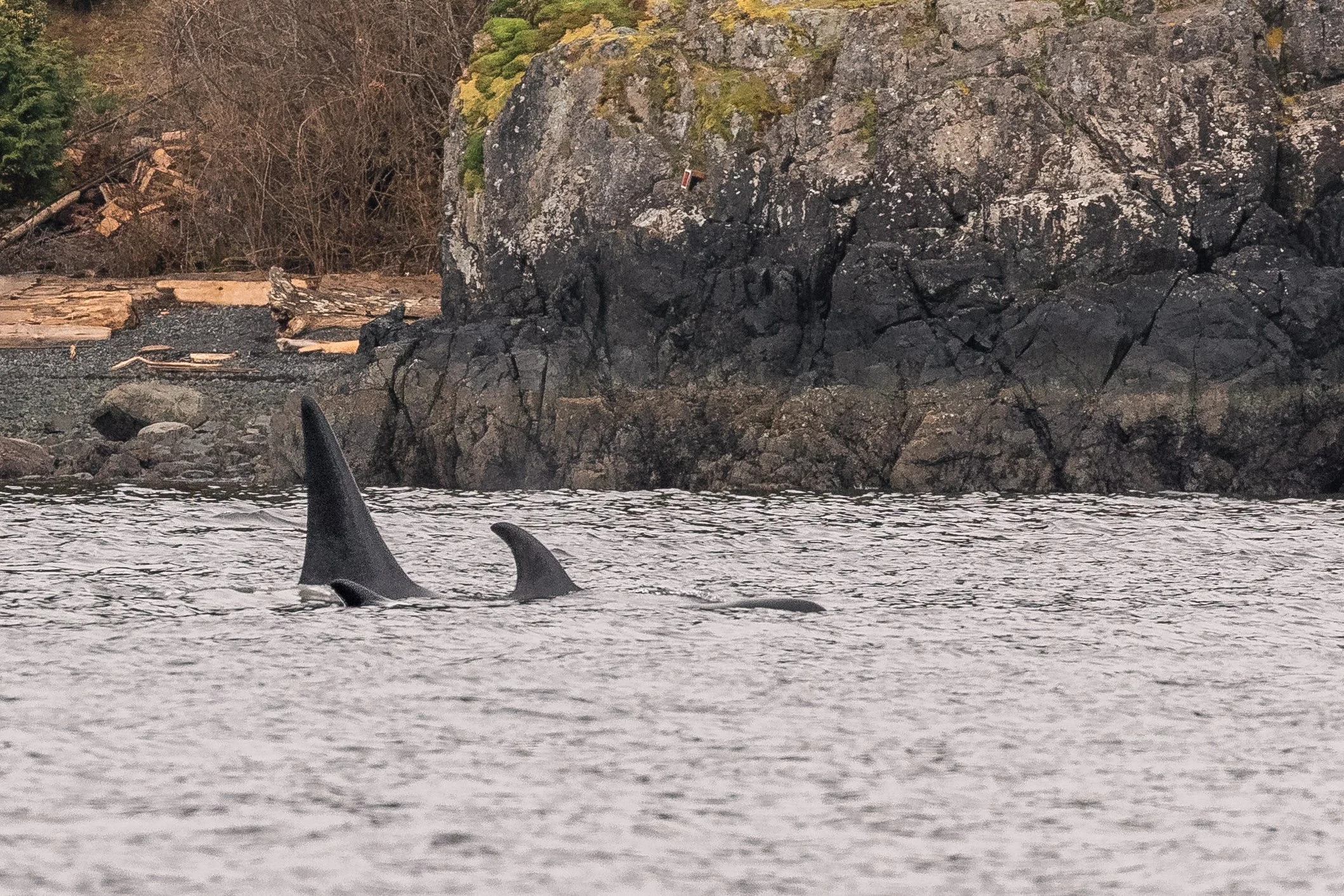
T065B1 Birdsall beside his little brother T065B3 Rook.
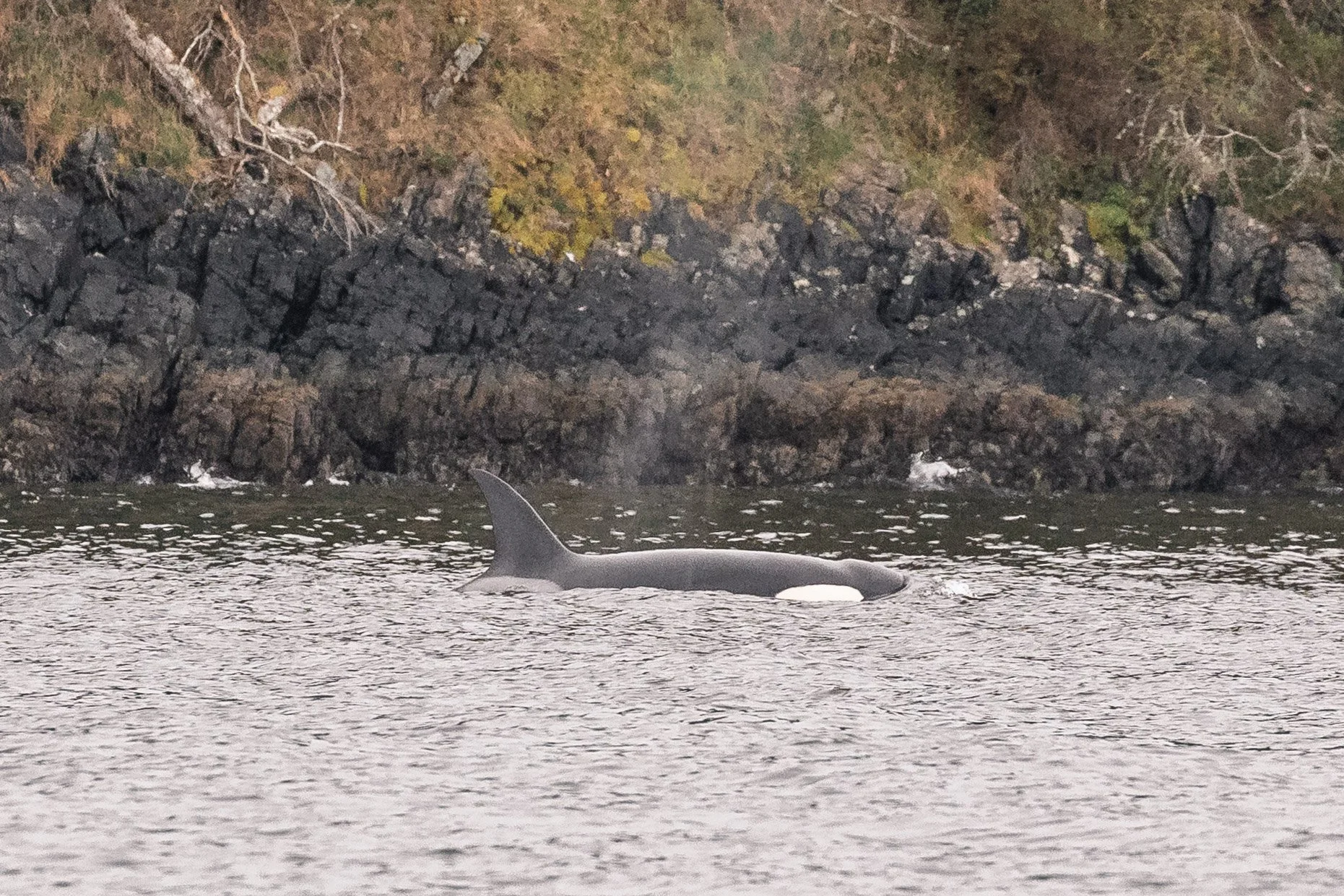
T046B1 Tsakani travelling along.
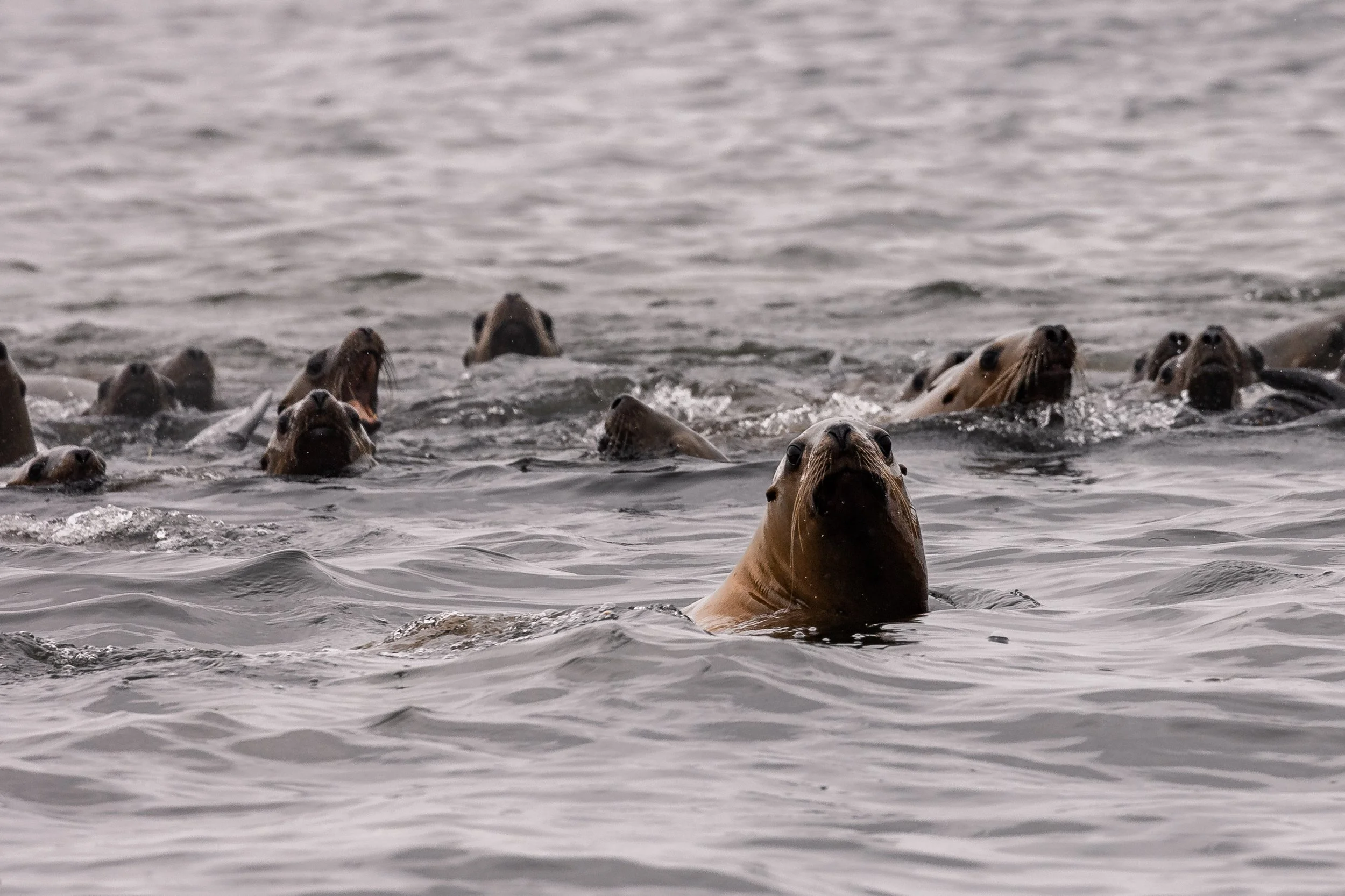
A raft of sea lions curiously watching us.
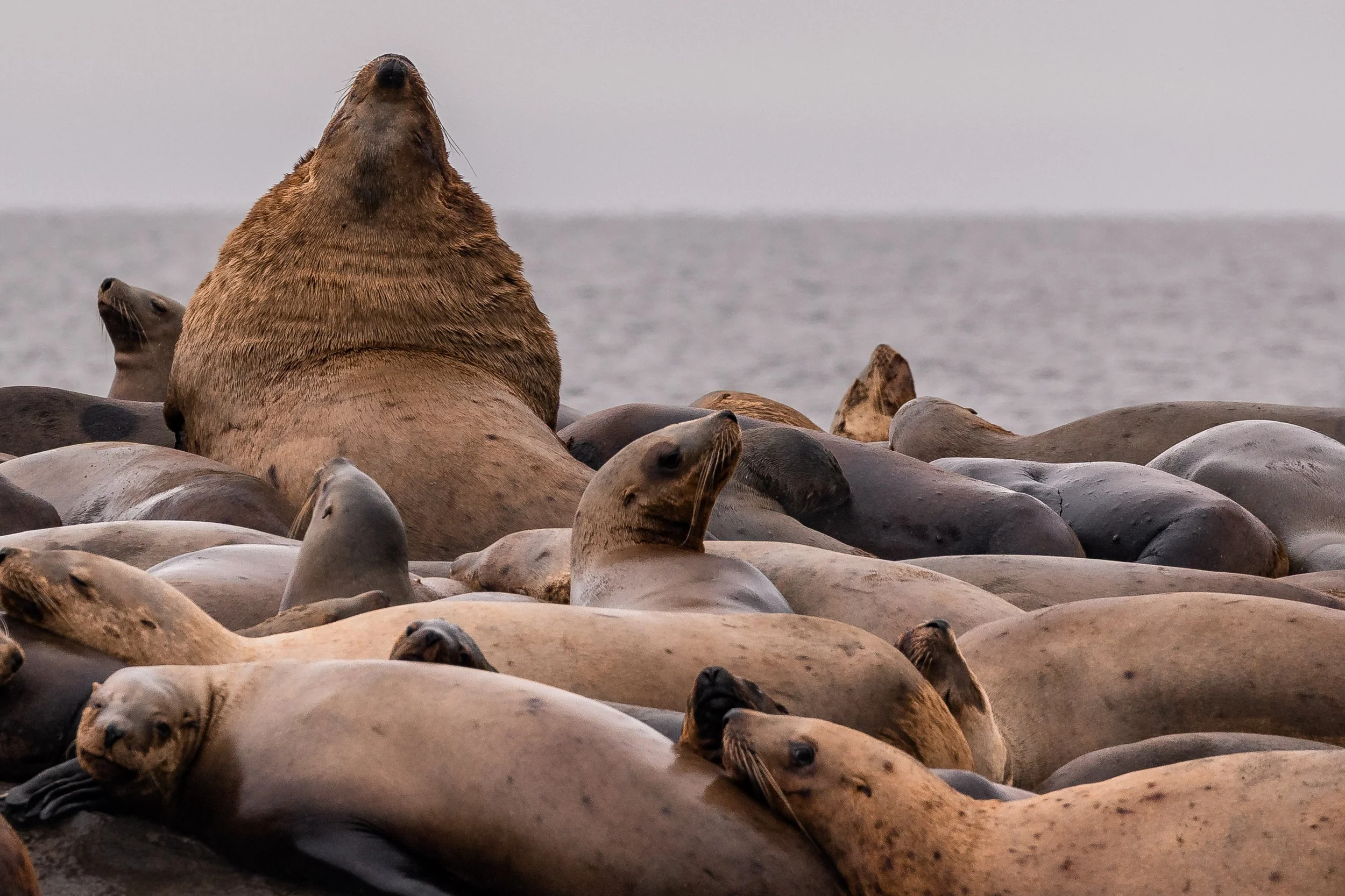
A male Steller Sea Lion doing some impressive yoga moves.
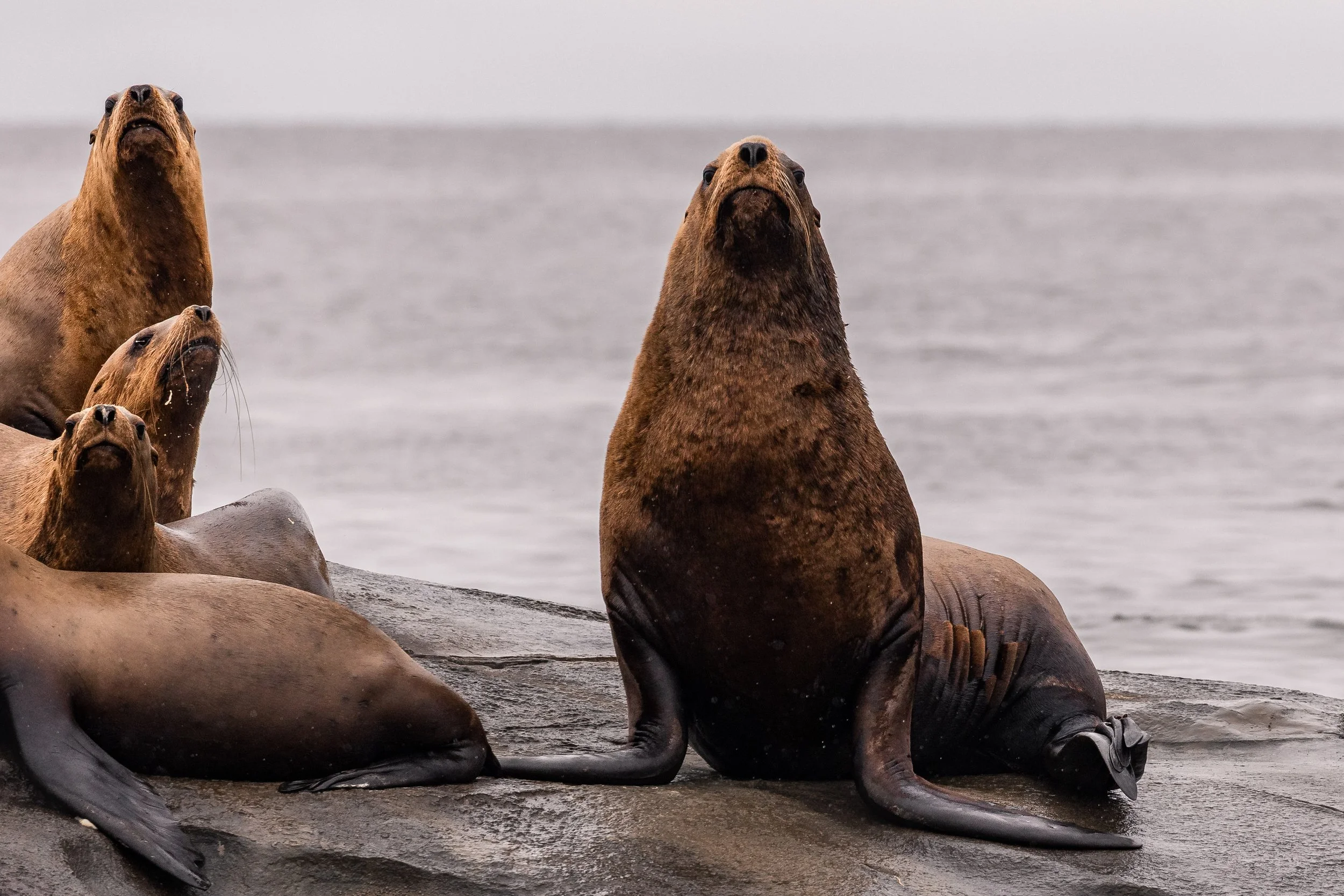
Resting on the rocks.
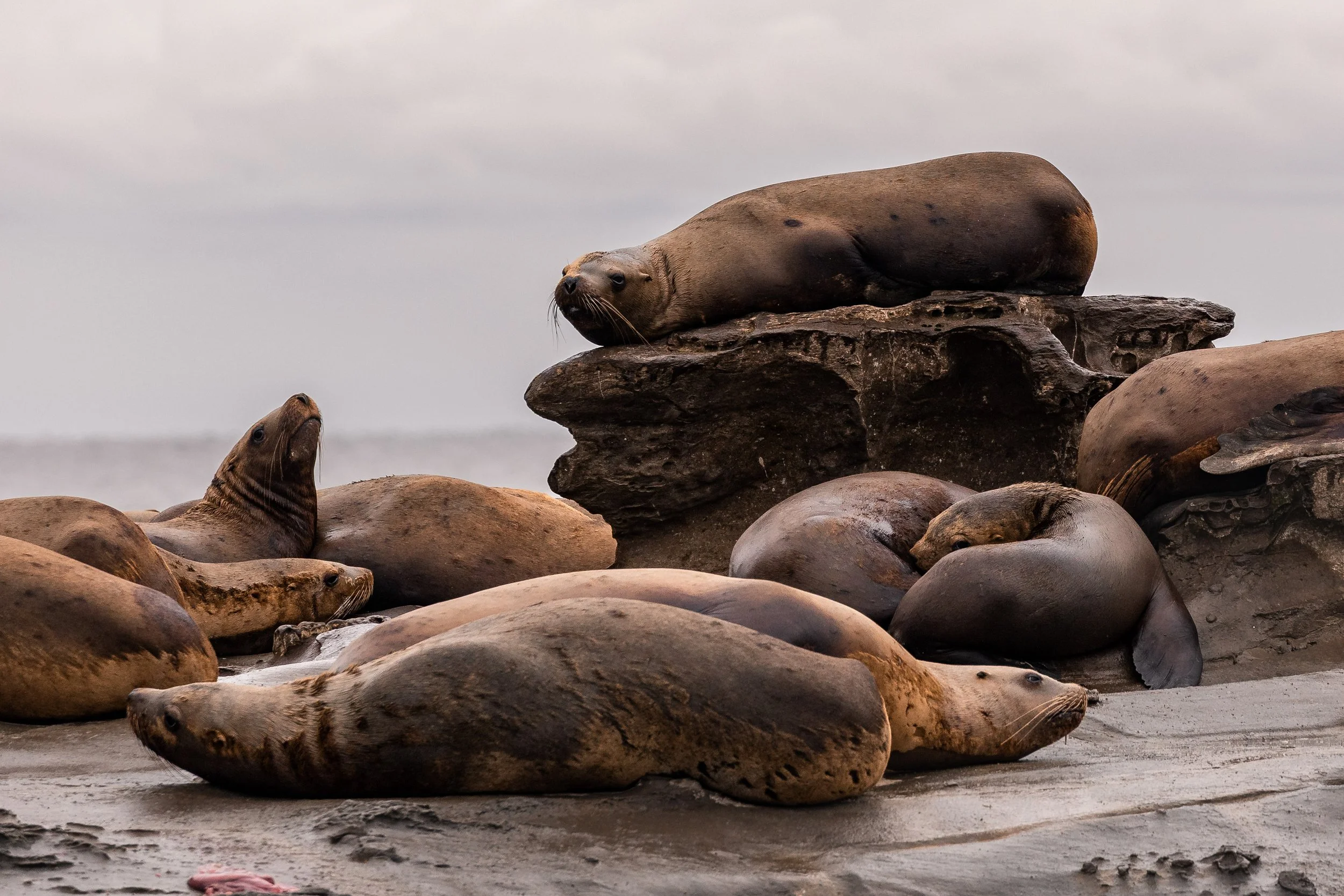
Time for a nap!
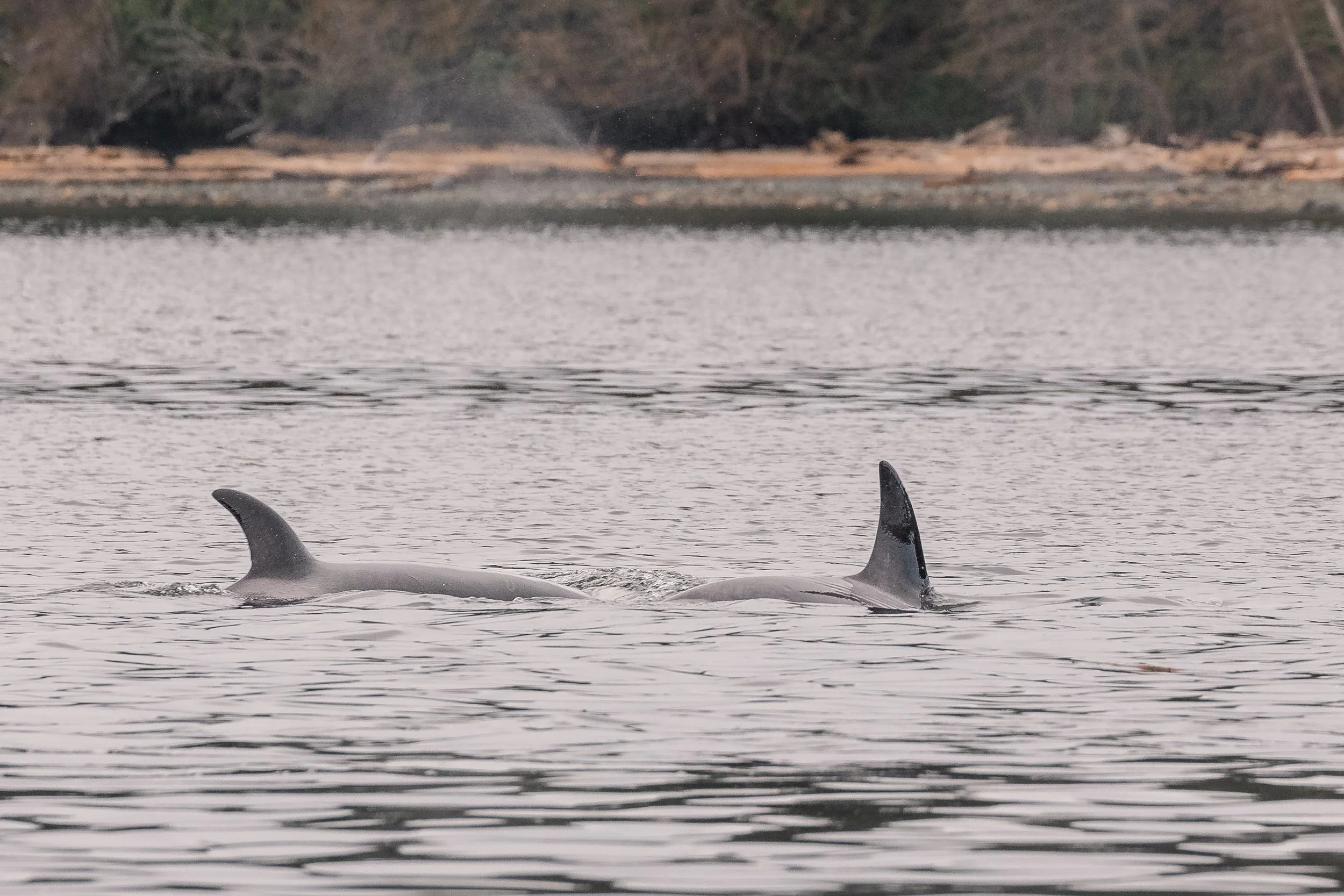
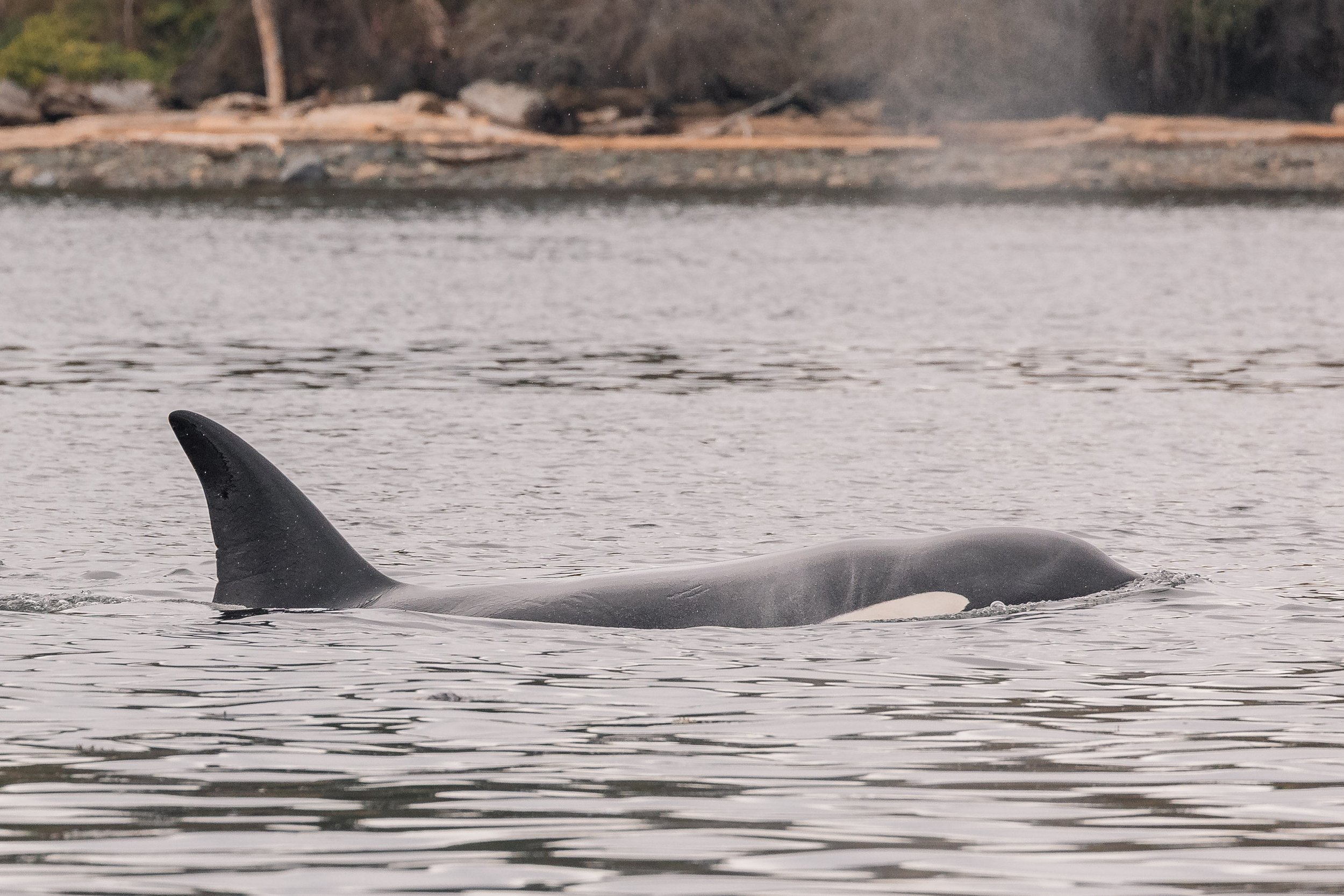
T124A4 Sabio with her distinct double-notched dorsal fin.
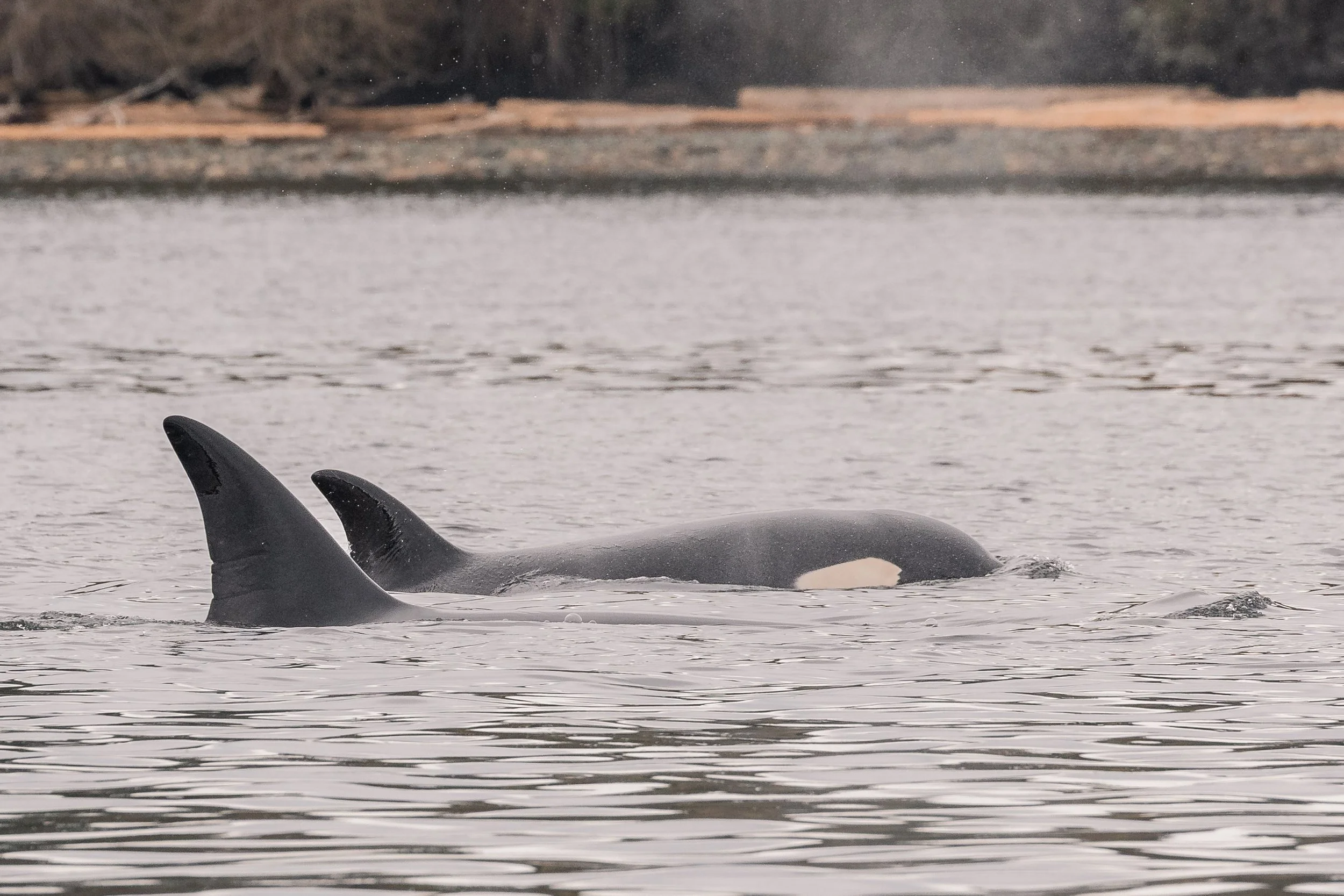
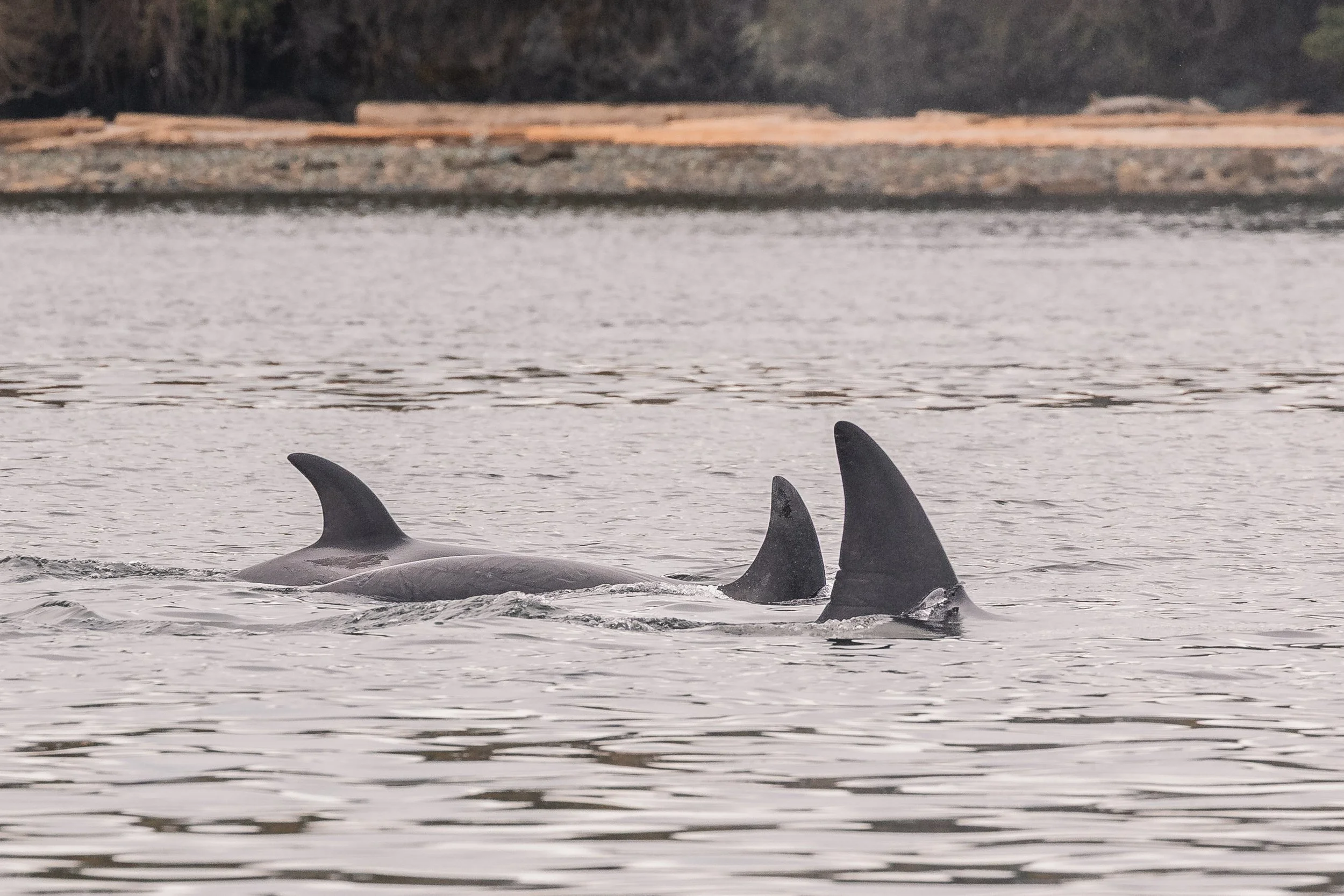
T124A4 Sabio in the lead, with T124A4A Strix at her side, and T086A1B Denali behind them.
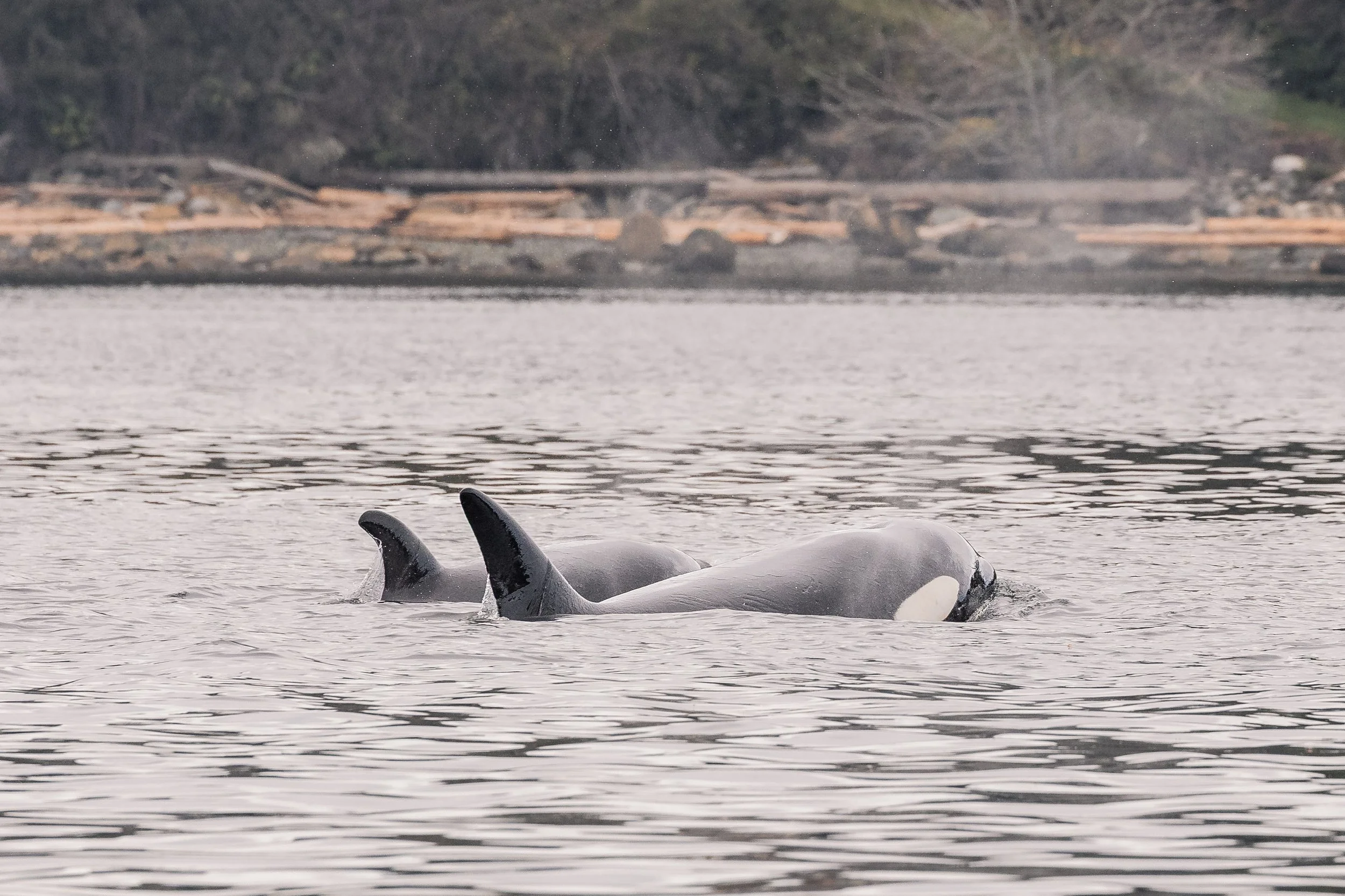
T124A4 Sabio with her T124A1A Sabine close beside her.
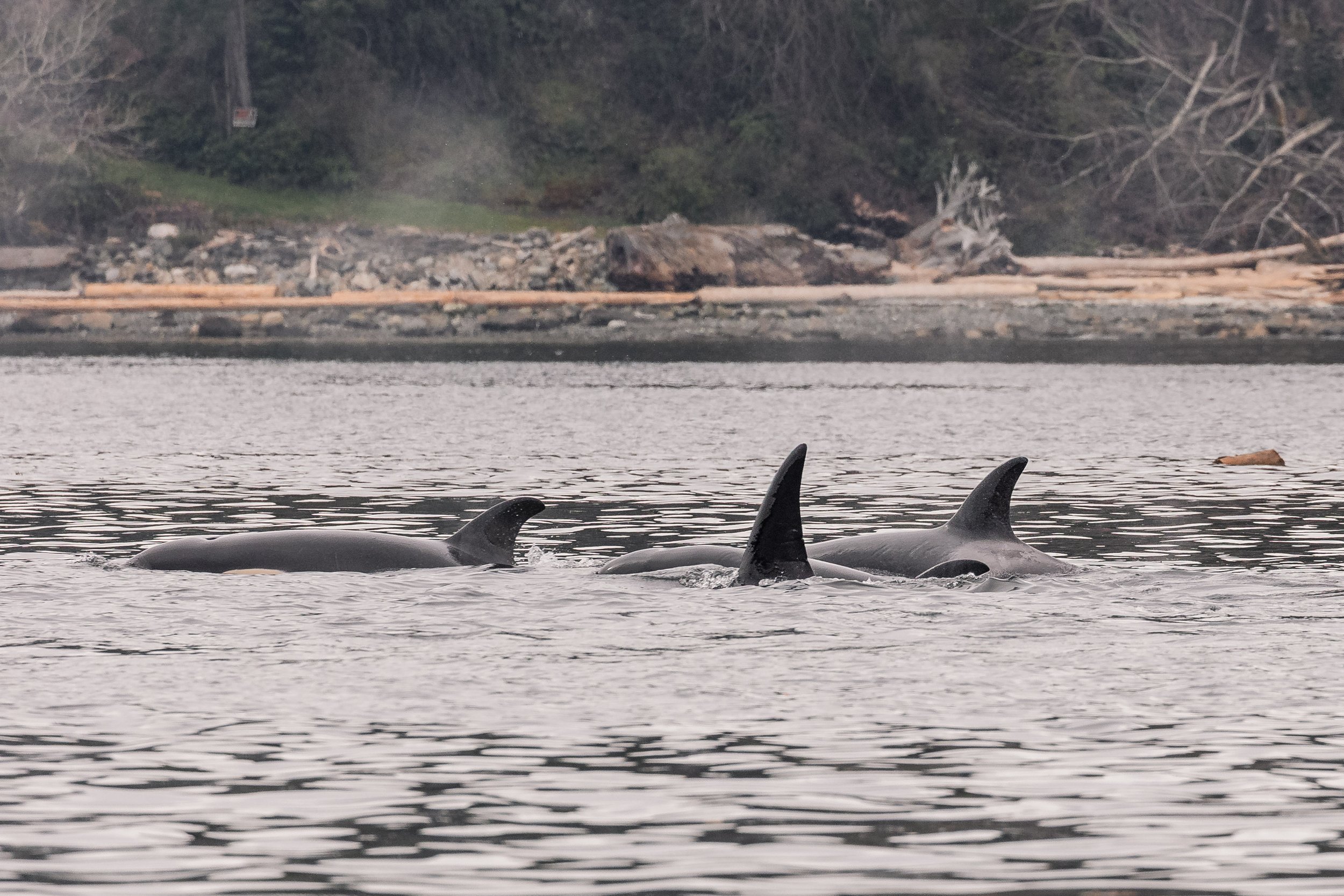
T124A1A Sabine in front of T124A4 Sabio, T124A4A Strix, and T086A1B Denali.
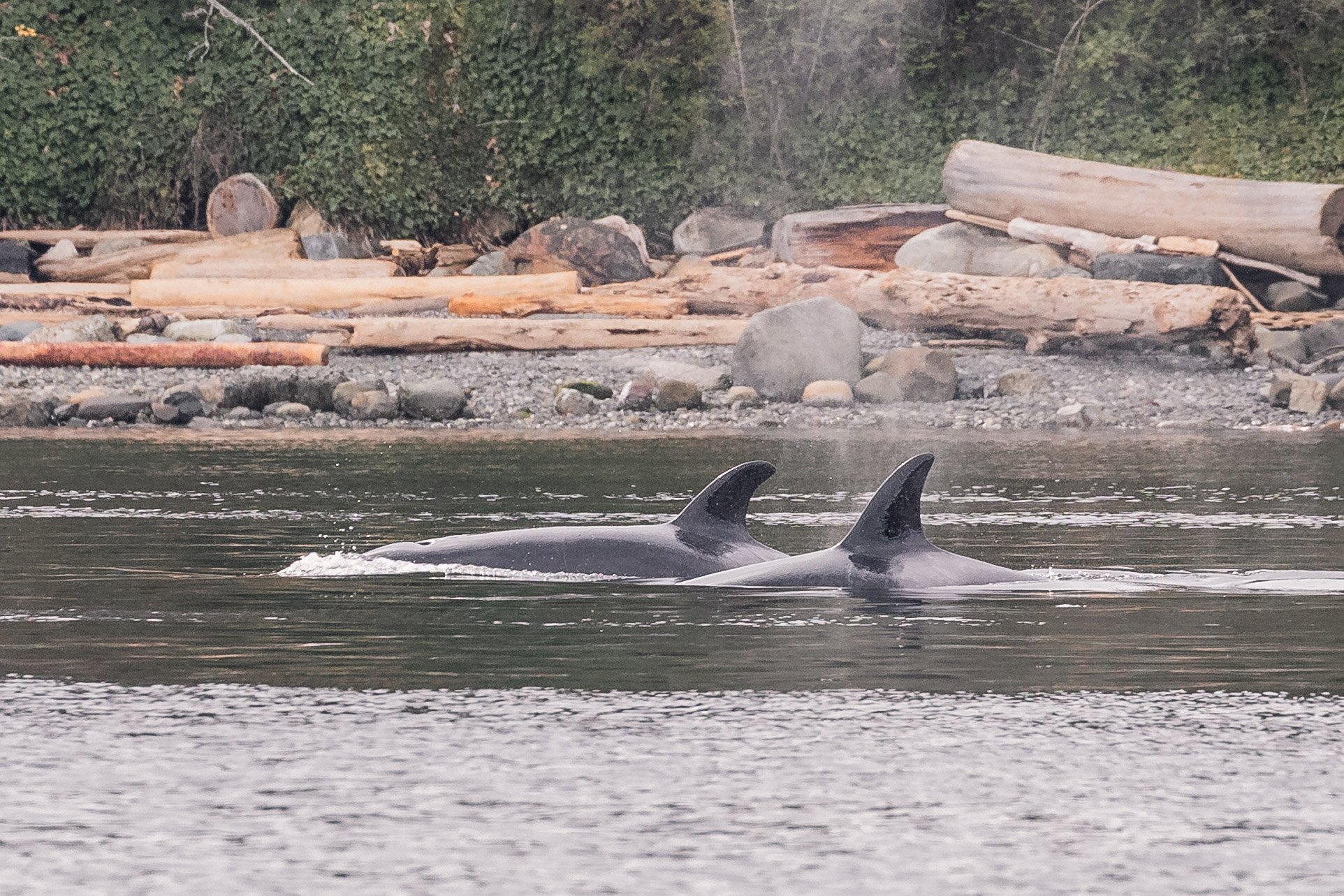
T124A1A Sabine and T124A4A Strix - travelling together as siblings, though potentially through adoption.
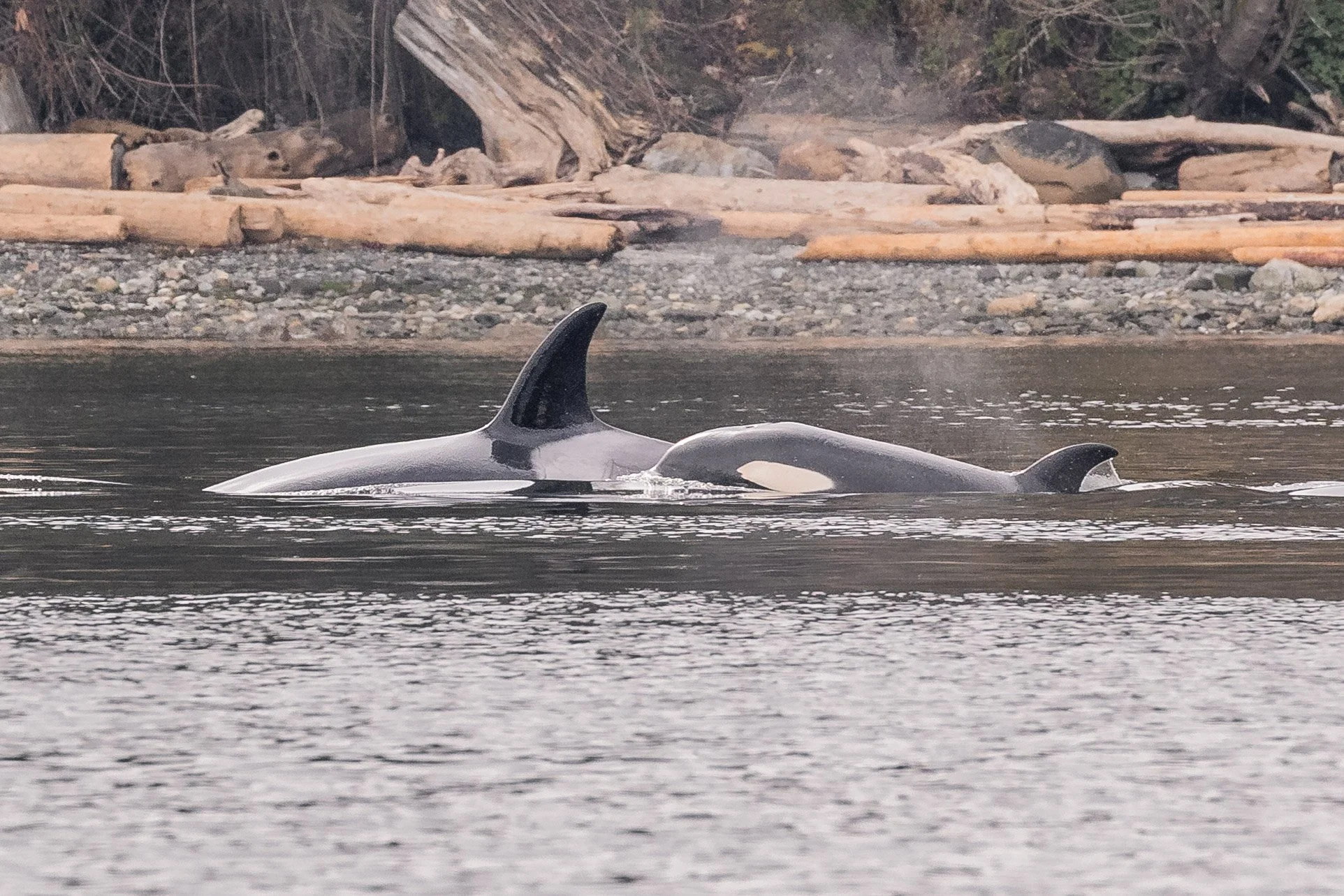
T086A1 Nahanni with her calf T086A1B Denali.
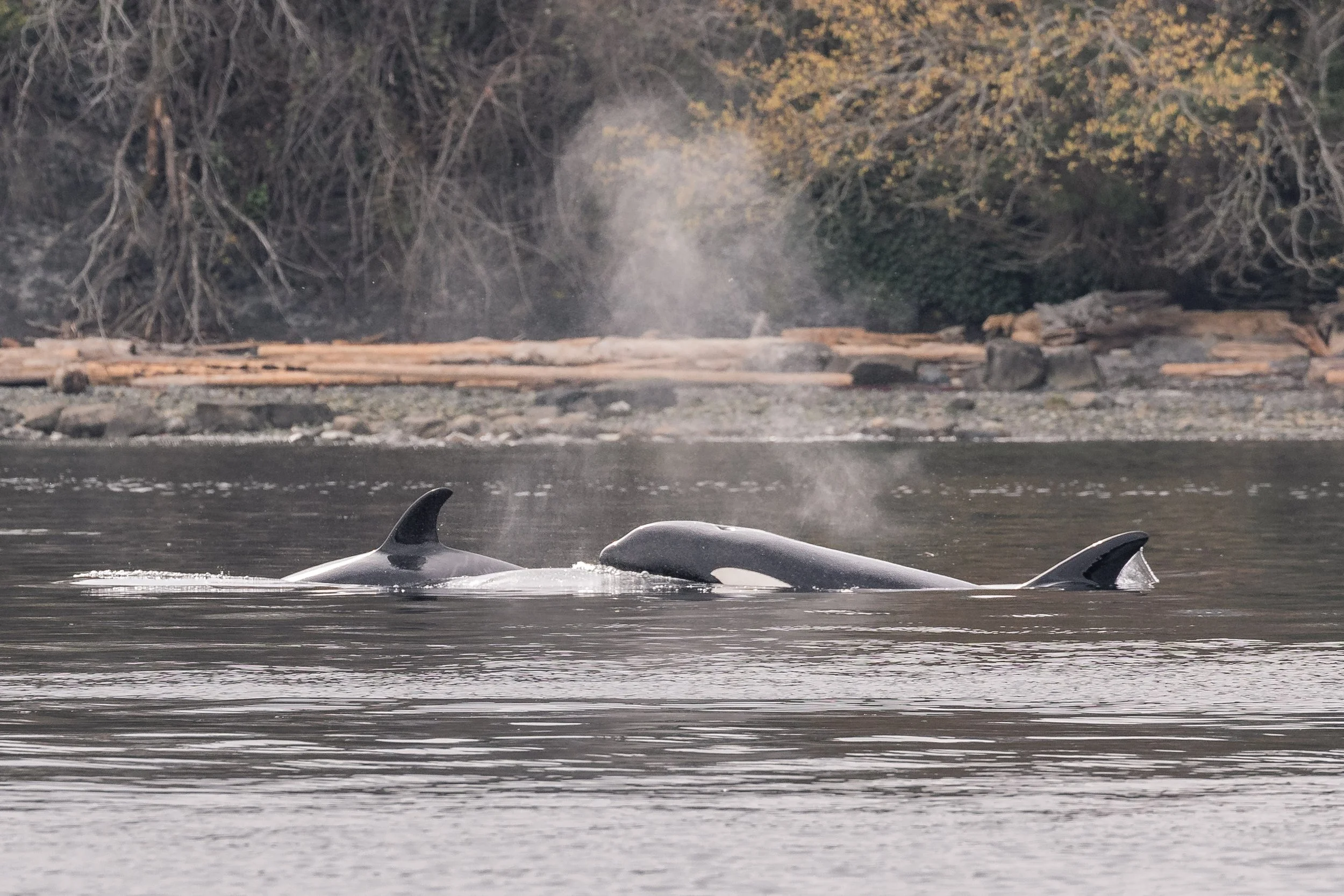
T086A1B Denali racing ahead of T124A4 Sabio.
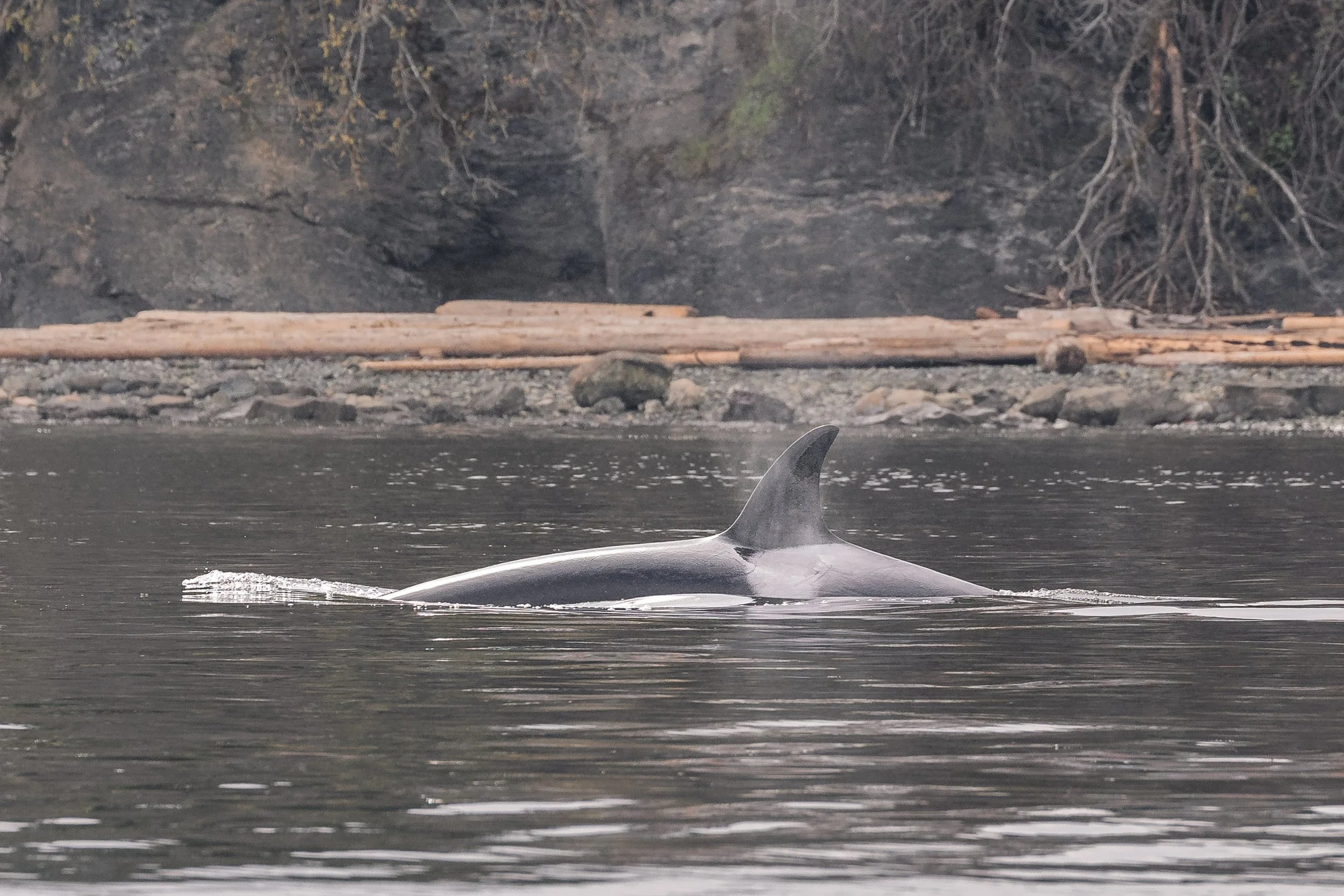
T086A1 Nahanni.
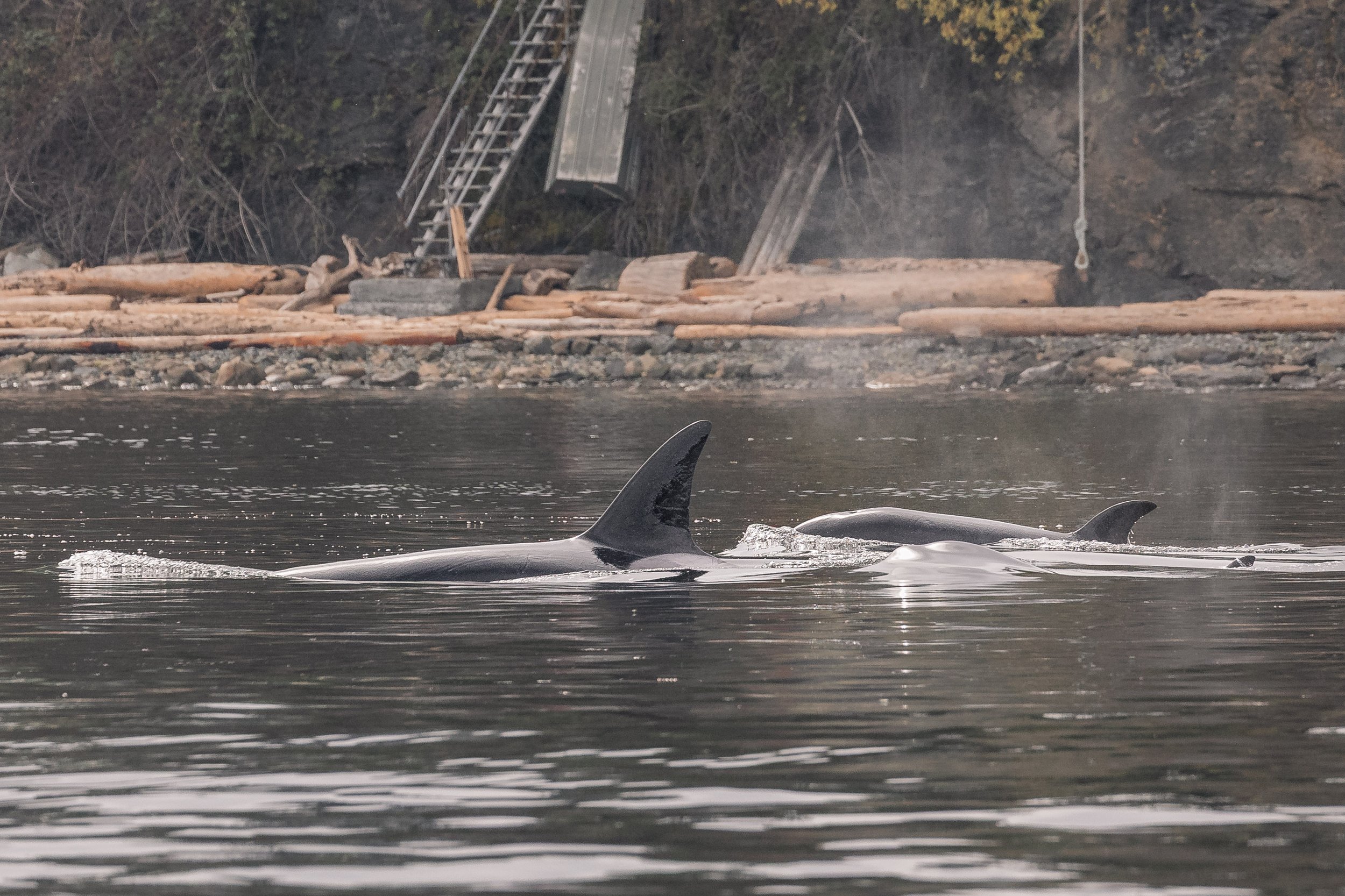
T124A4 Sabio with T086A1B Denali behind her.
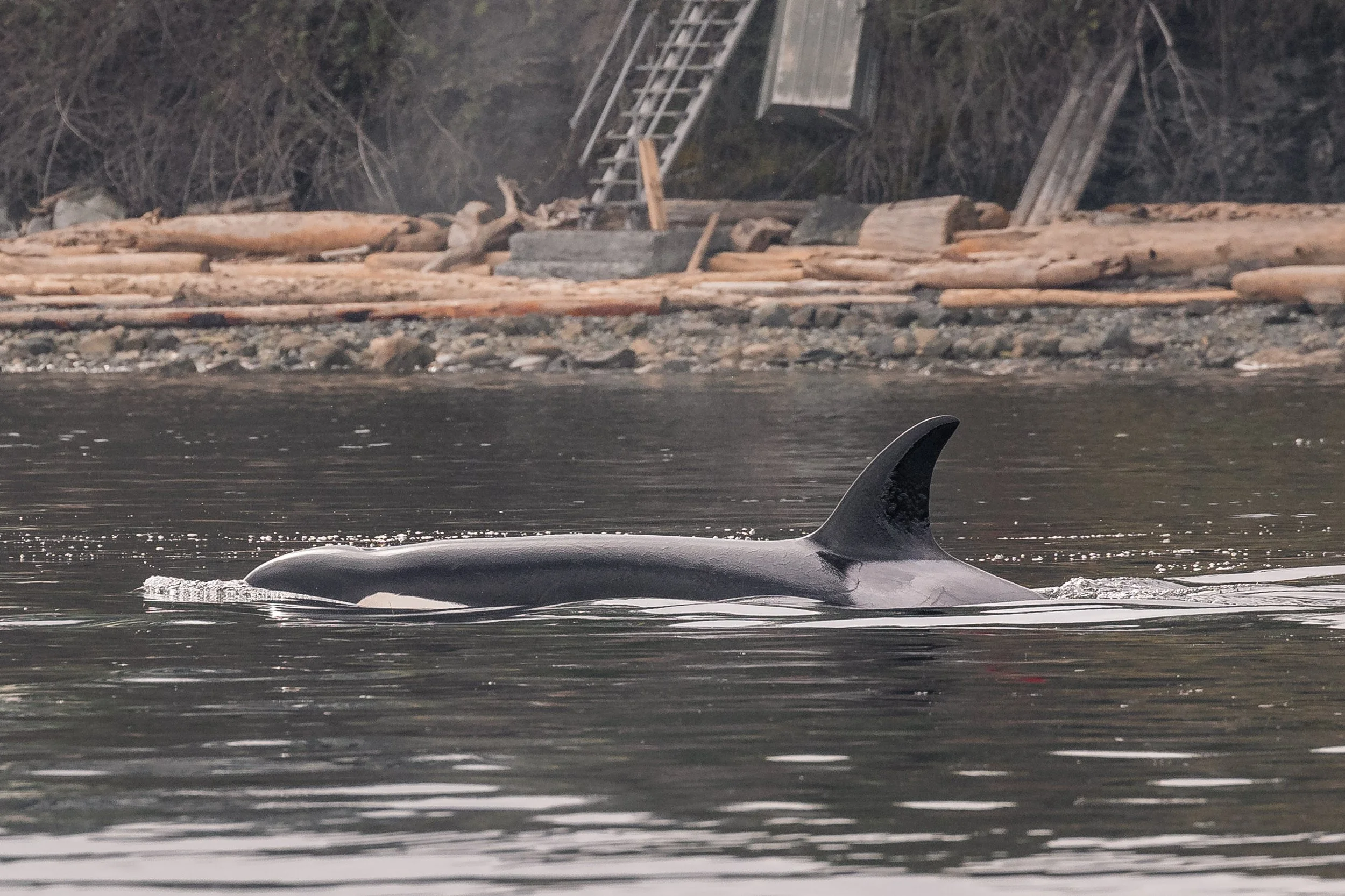
T086A1 Nahanni travelling solo.
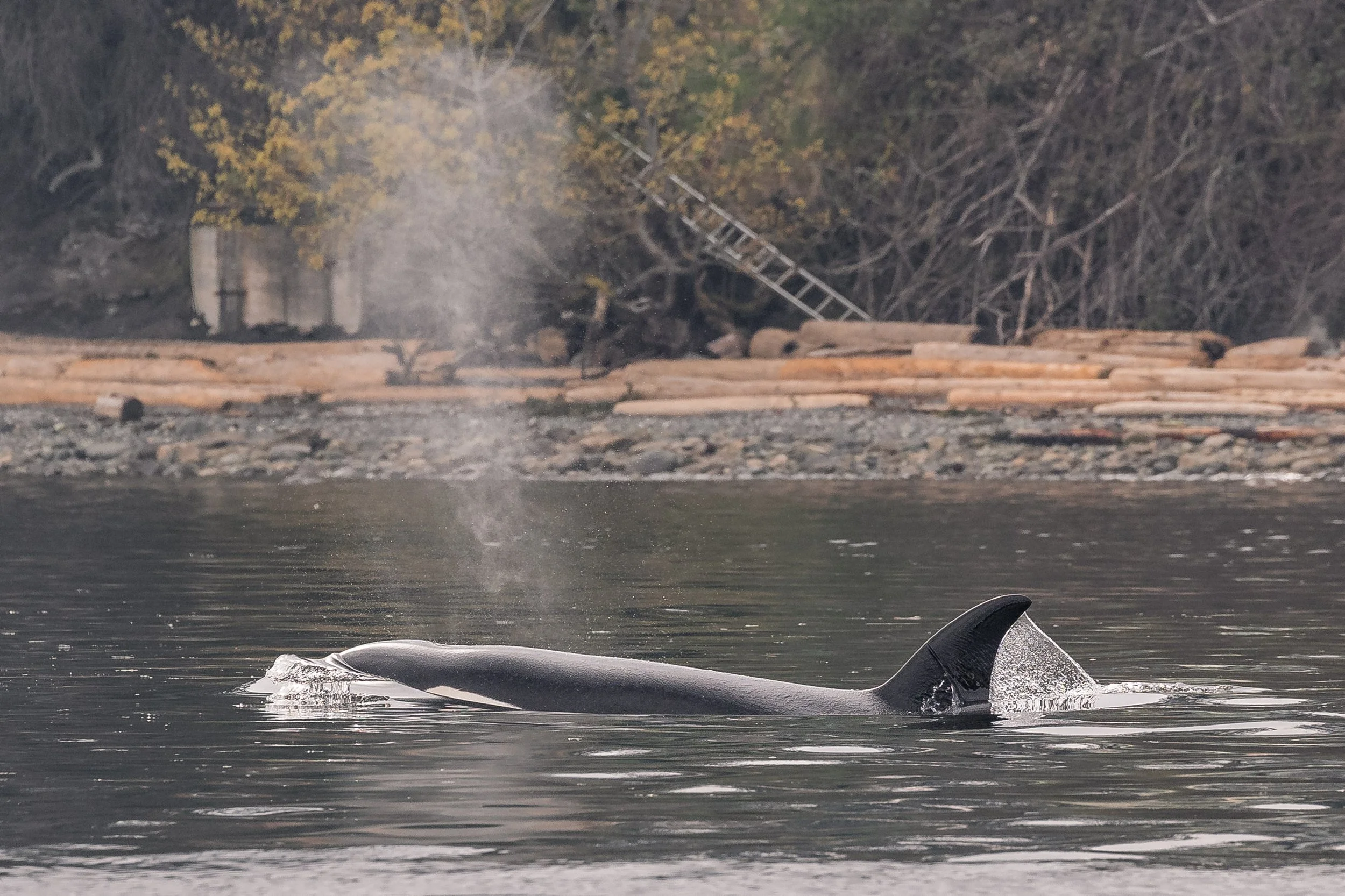
A beautiful backlit blow from T086A1 Nahanni.
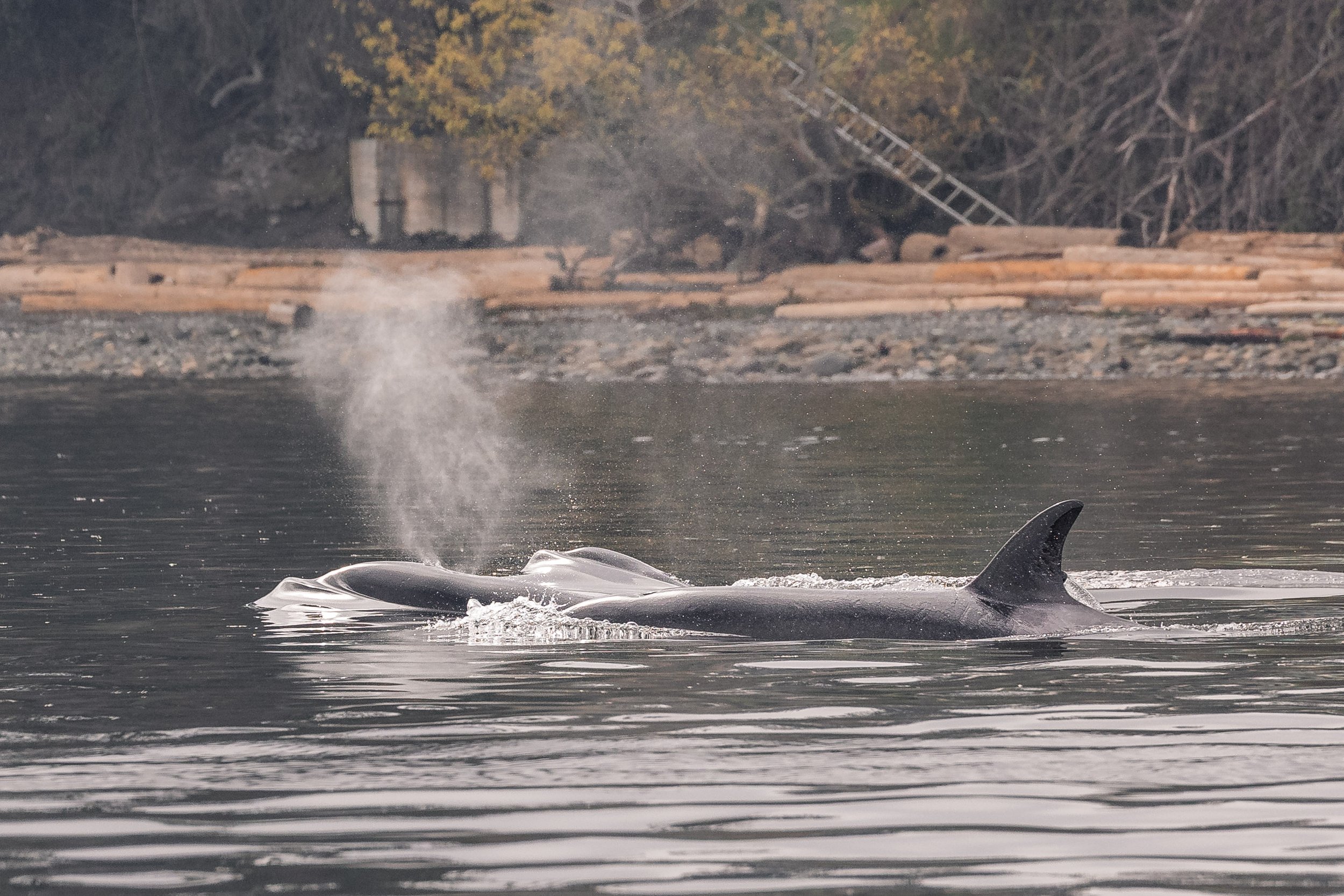
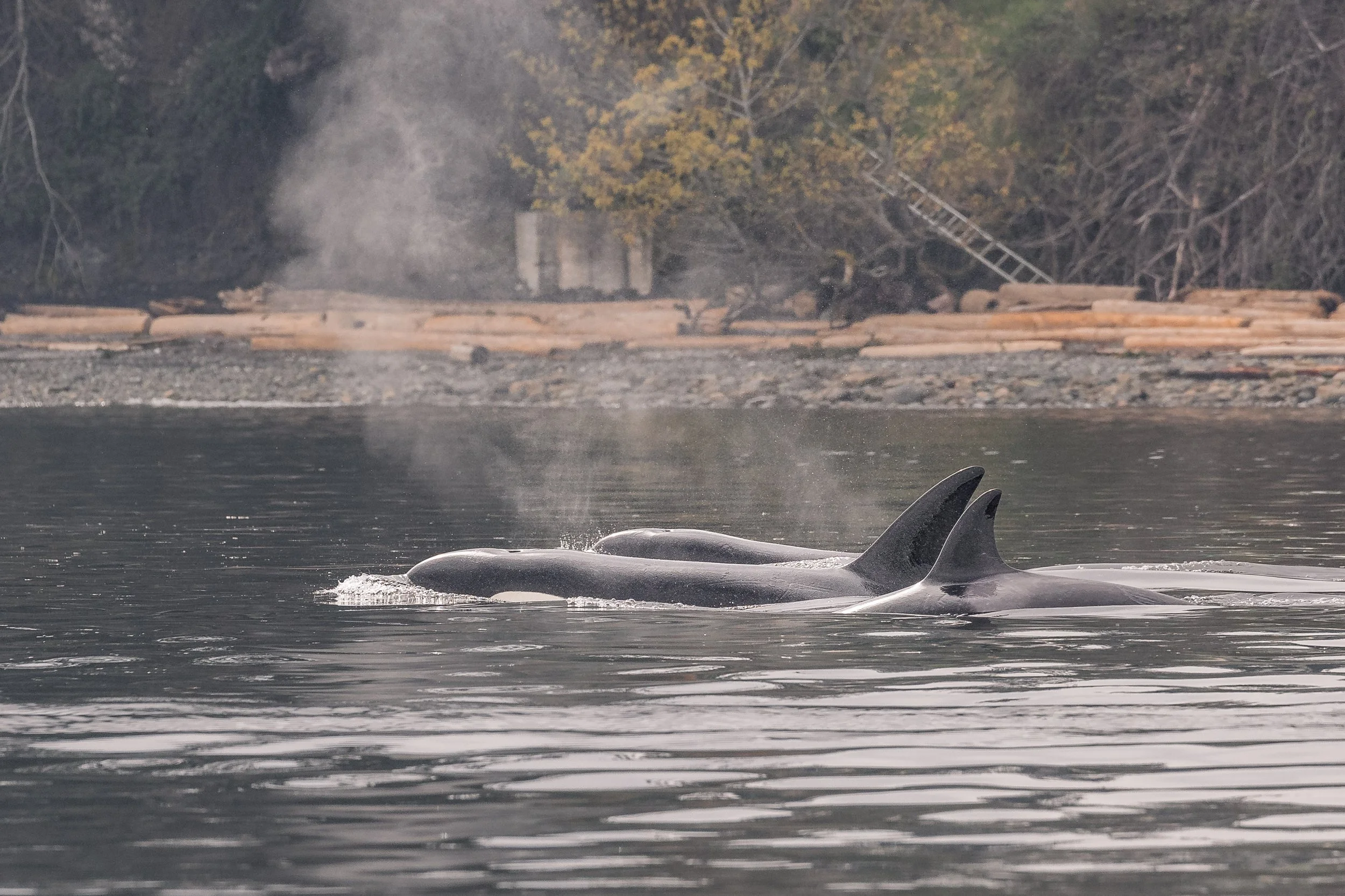
T124A4 Sabio with T124A4A Strix at her side.
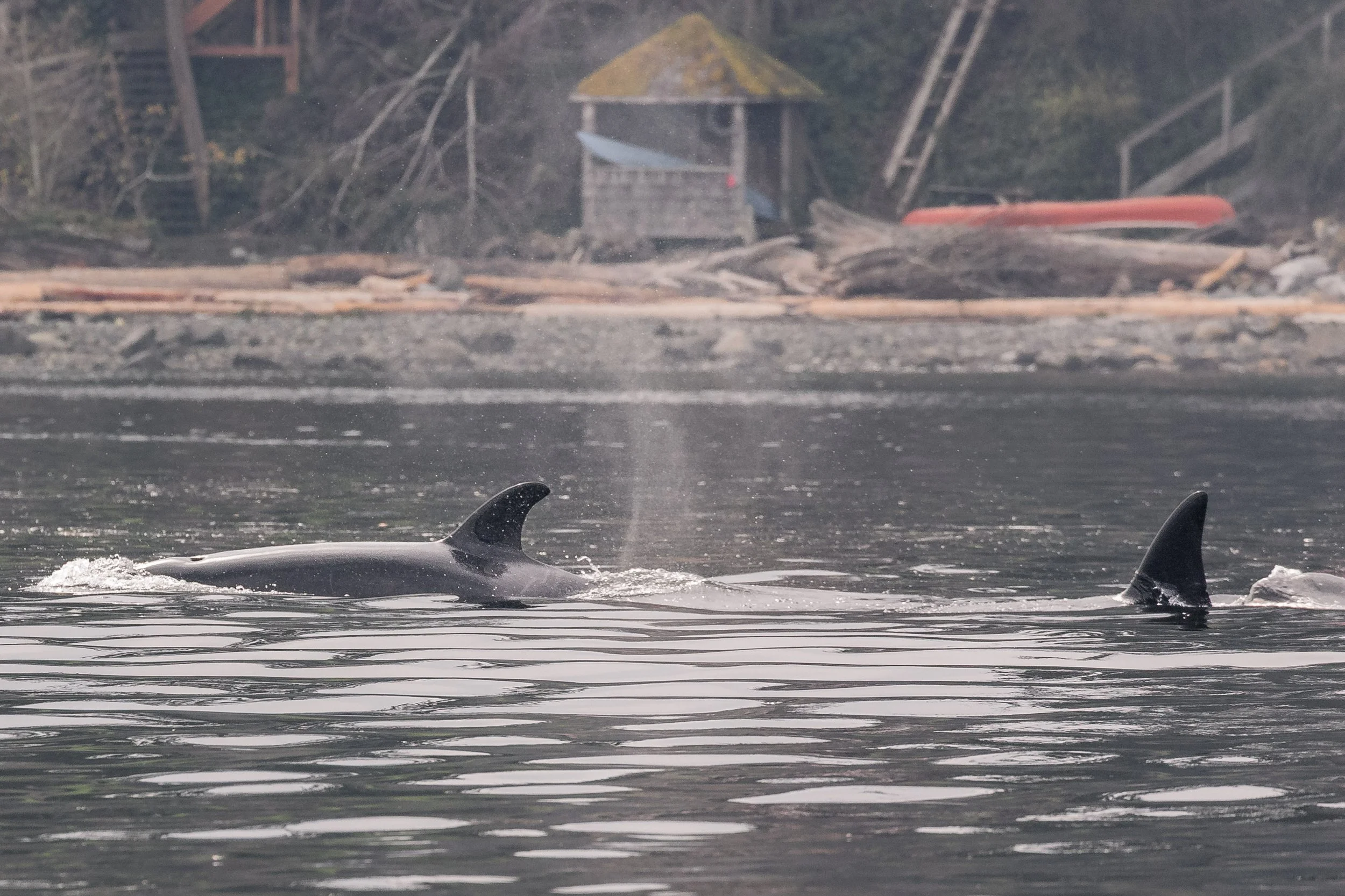
T086A1B Denali with T124A4 Sabio behind them.
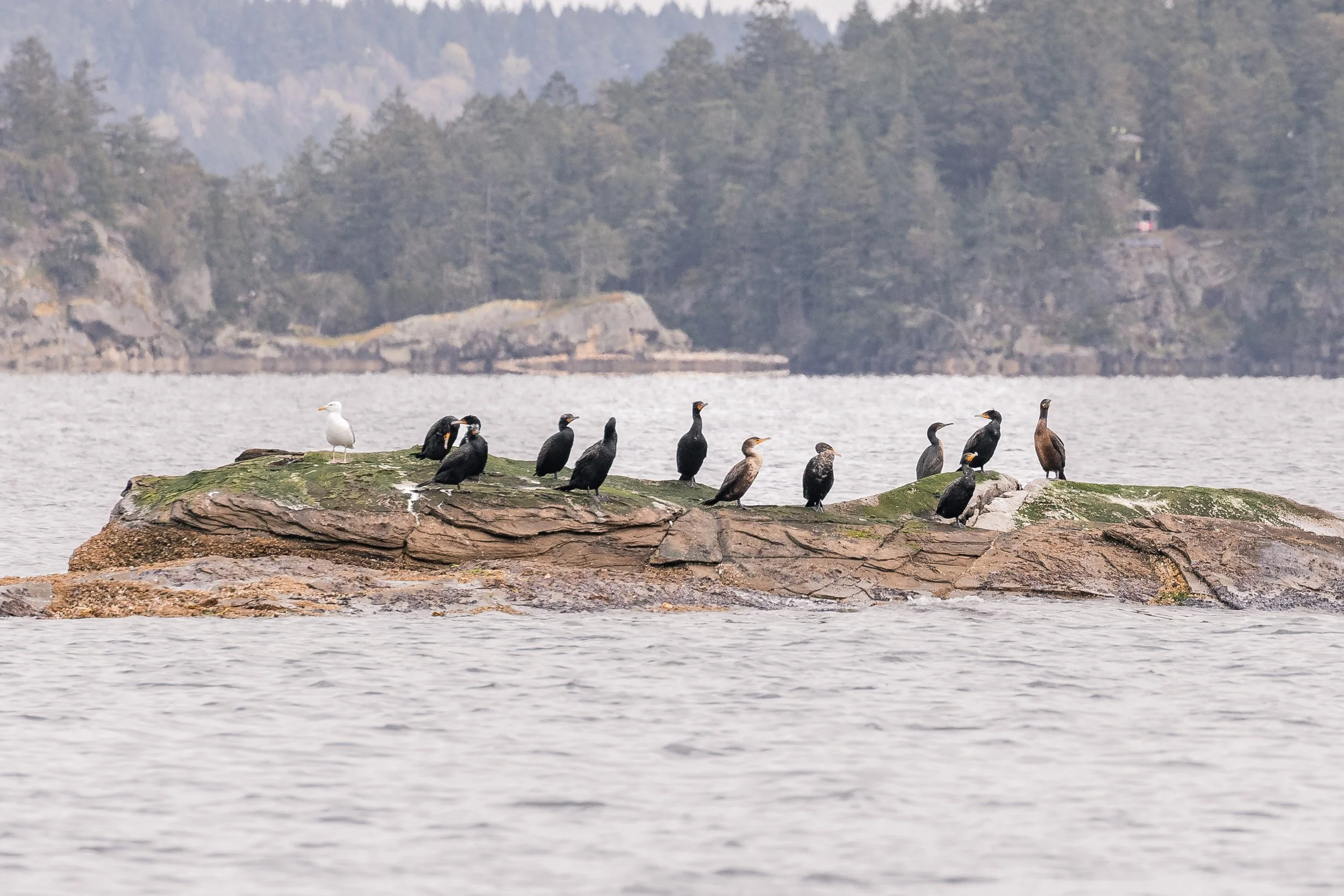
Cormorants resting on a rock.
- Gore Warning -
Viewer discretion is advised. Contains images of Bald Eagles scavenging.
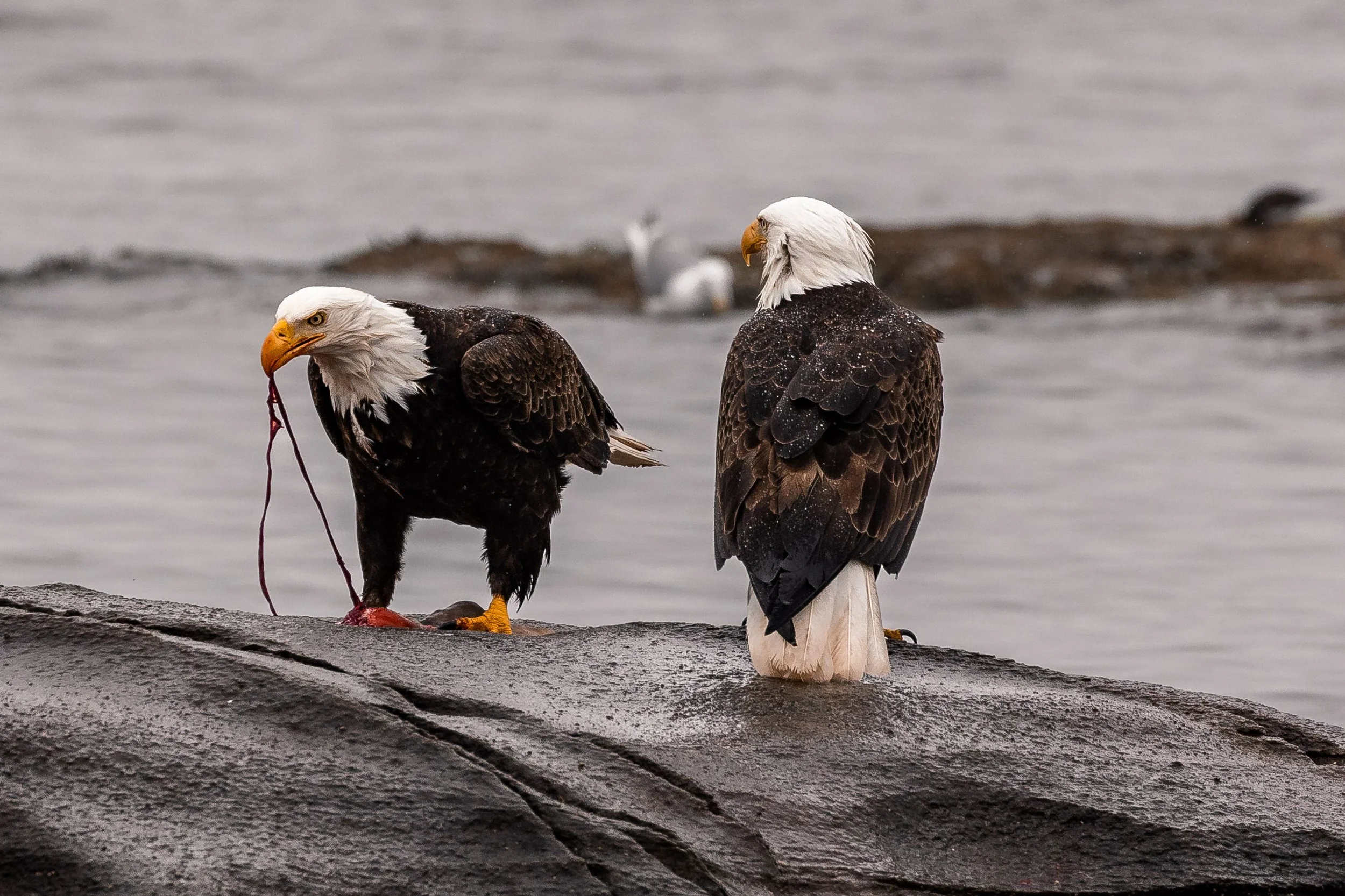
Bald Eagles feeding.
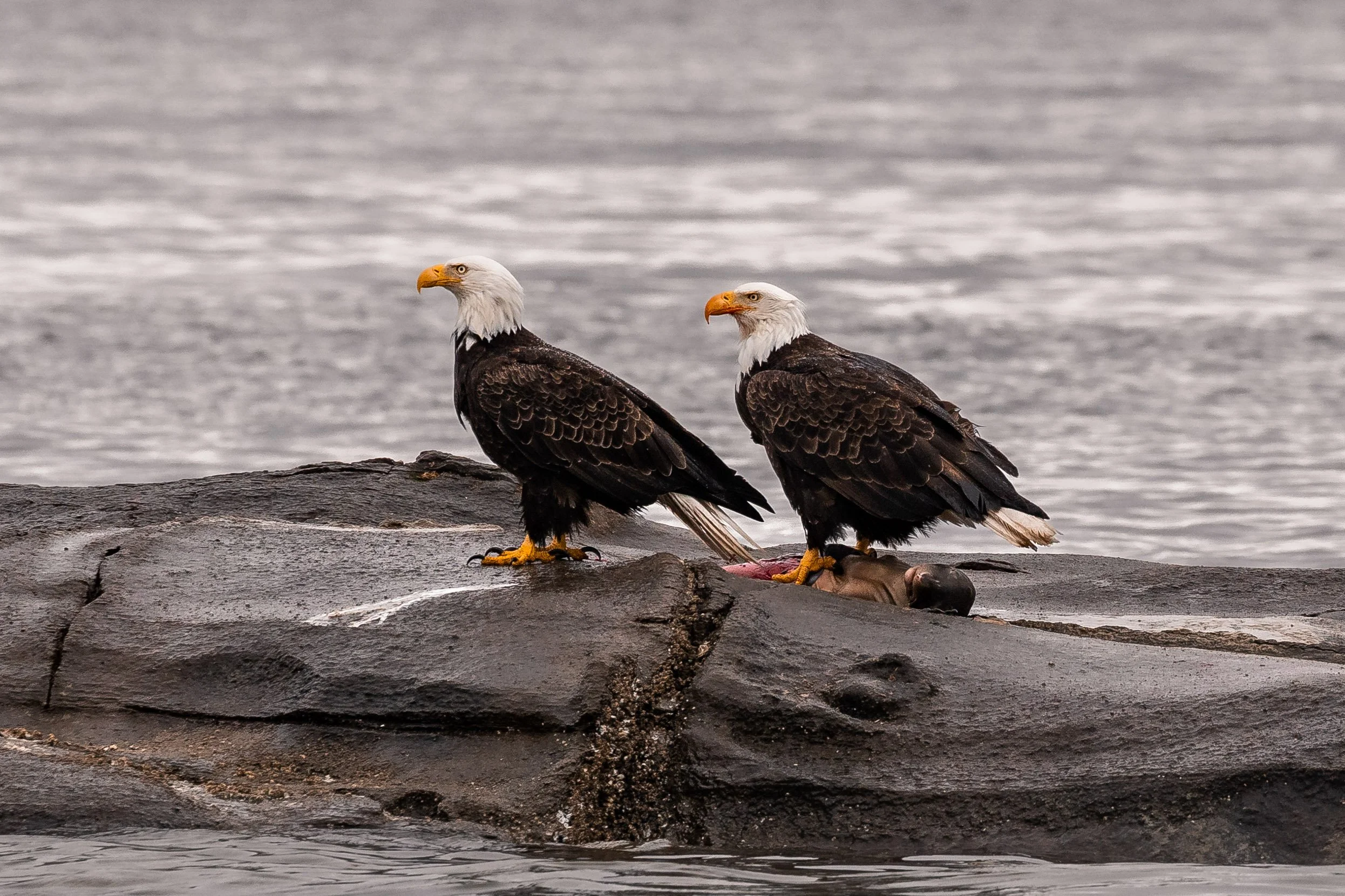
A pair of Bald Eagles guarding their meal - a deceased pup.