
April 13, 2026 - Double Species Day inside the Southern Gulf Islands
Another beautiful day was in store for us as two of our vessels, Kula and Cascadia, departed Nanaimo and began their search for whales. Both boats made their way through the Northumberland Channel and into Dodd Narrows, always a memorable way to start a trip.
Dodd Narrows is a unique area, shaped by powerful currents that surge through during changing tides. As we approached, we saw these currents in action, churning the water below as our vessels moved smoothly through the narrow passage. Looking toward shore, we could also see how these conditions support a thriving intertidal community. Dense beds of California mussels, ochre sea stars, and other species were on full display during the low tide. These animals are especially abundant here, as the moving water brings a constant supply of oxygen, an essential ingredient for life in this environment.
We didn’t linger for long, though, as the search for whales called us onward.
From there, the vessels split up, each taking a different side of the channel to maximize the area covered as we continued south. Along the way, the rugged coastline provided a stunning backdrop. Steep, rocky shores framed our journey, and it was against this landscape that we finally spotted distant blows on the horizon. Whales had been found.
Both vessels made their discoveries at nearly the same time, though each encountered a different species. Let’s begin with Cascadia.
While transiting through Trincomali Channel, just south of Porlier Pass, a tall, bushy blow appeared in the distance, quickly drawing the attention of everyone on board. It was a humpback whale. Captain Rob slowed the vessel for a careful approach, while Marine Naturalist Vanessa readied her camera. These photos are not only wonderful keepsakes but also valuable tools for identification.
For humpback whales, we often rely on the underside of the tail, or fluke, which can span up to 20 feet and features unique patterns of pigmentation, scars, and notches. In this case, however, the dorsal fin provided the key. Its distinctive shape and markings allowed us to identify this individual as Slits (BCY0946), a well-known female in the area.
Slits has likely just returned from her migration to tropical breeding grounds, a journey of roughly 6,000 kilometres. During that time, she would have eaten very little, relying instead on energy stored in her fat reserves. Upon returning to British Columbia, feeding becomes her top priority. Humpbacks can spend up to 18 to 20 hours a day foraging, rebuilding those reserves for the seasons ahead.
They feed by diving below the surface in search of schooling fish or krill. Each mouthful can contain up to 20,000 litres of water, which is filtered through baleen plates to trap their prey. Over the course of a day, a humpback may consume as much as 3,000 pounds of food.
During our encounter, Slits spent much of her time at depth, with dives lasting about 13-15 minutes. Her repeated circling of the area suggested she had found a reliable food source, always a great sign.
While Cascadia observed Slits, the semi-covered boat had a different encounter, this time with orca.
Instead of a blow, it was the distinctive dorsal fins that first caught Marine Naturalist Val’s attention. She quickly alerted Captain Tino, and the team moved into position for a closer look. Identification followed a familiar process: photographs were taken and reviewed for unique markings.
With orca, we often focus on the dorsal fin and saddle patch. Notches and nicks can be especially helpful, and in this case, one prominent notch stood out immediately. From this, Val recognized the group as the T086As.
At first, only four individuals were seen, though records indicated there should be five. Rather than jump to conclusions, we waited to confirm back at the office using the photos. Unfortunately, we can now confirm that Tyndall’s 2024 calf has passed away. The group present today included:
T086A Eider ♀ (1988)
T086A3 Tyndall ♀ (2011)
T086A4 Akia ♀ (2016)
T086A5 Siku ♂ (2024)
While it is always difficult to hear of a loss, calf mortality is a natural part of orca life. Survival rates can vary, but calves often face significant challenges in their first year. First-time mothers, in particular, may have a steeper learning curve, especially without additional support. With Eider caring for her own calf at the same time, Tyndall may have had fewer opportunities for guidance. While we can’t know the exact cause, these factors can play a role.
During our time with them, the whales travelled closely together, moving along the shoreline of Salt Spring Island before crossing to Galiano Island and later back toward Wallace Island. This zigzagging pattern is often associated with foraging, as their primary prey, harbour seals, are typically found near shore.
For much of the encounter, there was no visible hunting success. Toward the end, however, the open boat witnessed a brief hunt. Most of the action took place beneath the surface, but the sudden gathering of gulls gave it away. These birds often take advantage of feeding events, picking up scraps left behind.
When orca hunt, the entire pod shares in the meal, tearing prey into smaller pieces. This process creates opportunities for scavengers, and the gulls benefit greatly. Each orca may require around 150 pounds of food per day, so successful hunts are essential.
After spending time with both species, the search continued for other wildlife. Before long, we arrived at one of our favourite locations, Canoe Islets, known for its Steller Sea Lion population. This lively rocky outcrop, just outside Porlier Pass, did not disappoint. Alongside the sea lions, we observed hundreds of migrating Bonaparte’s gulls feeding in the fast-moving water.
From there, it was time to begin the journey home. With calm seas and clear skies, the return to Nanaimo was smooth and comfortable. We felt fortunate to have experienced such a wide range of wildlife throughout the day.
Throughout the trip, Marine Naturalists Val Watson and Vanessa Vereschahen captured an incredible collection of photos, available below.
BCY0946 Slits
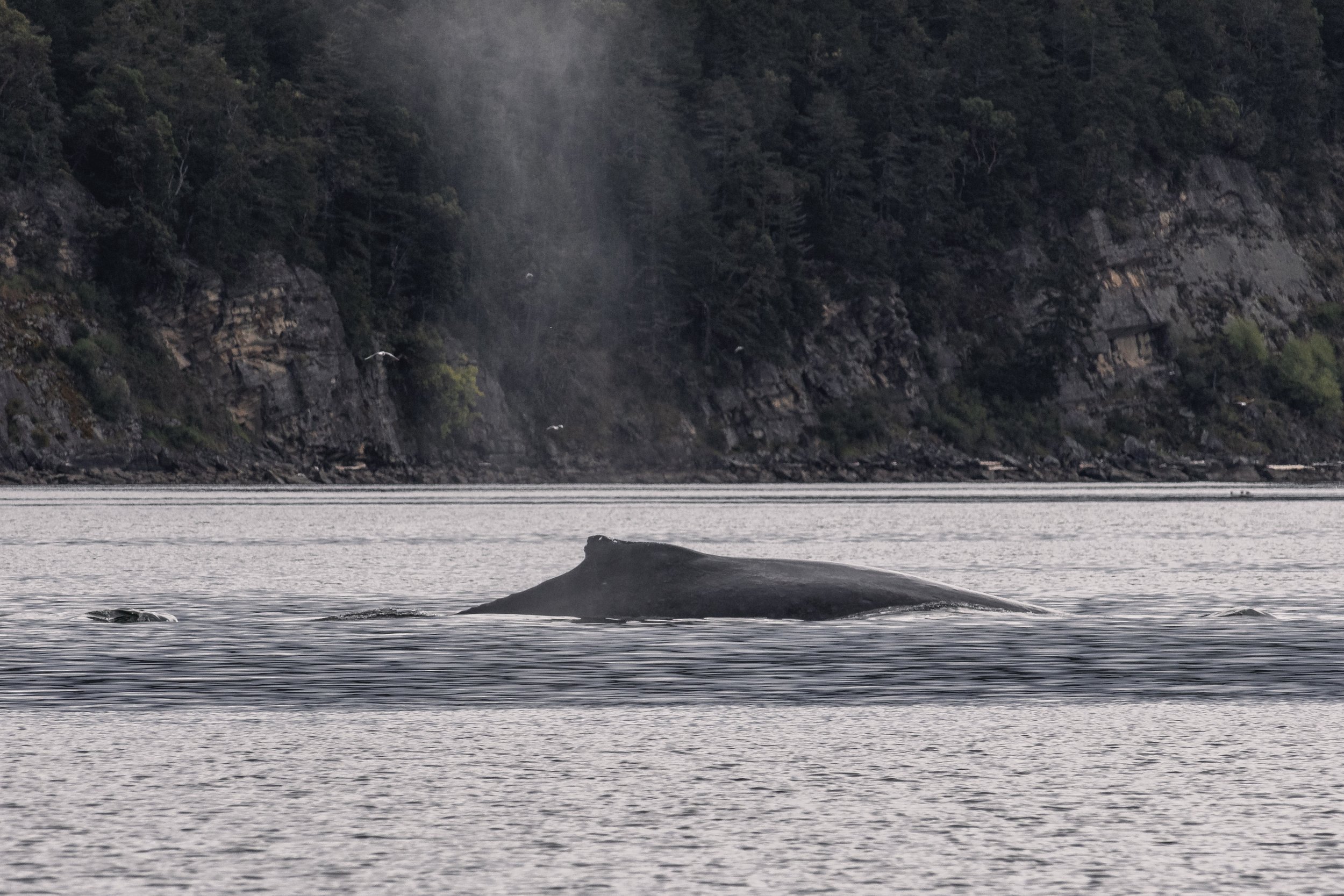
A great look at Slits’ unique dorsal fin! Photo by Vanessa Vereschahen.
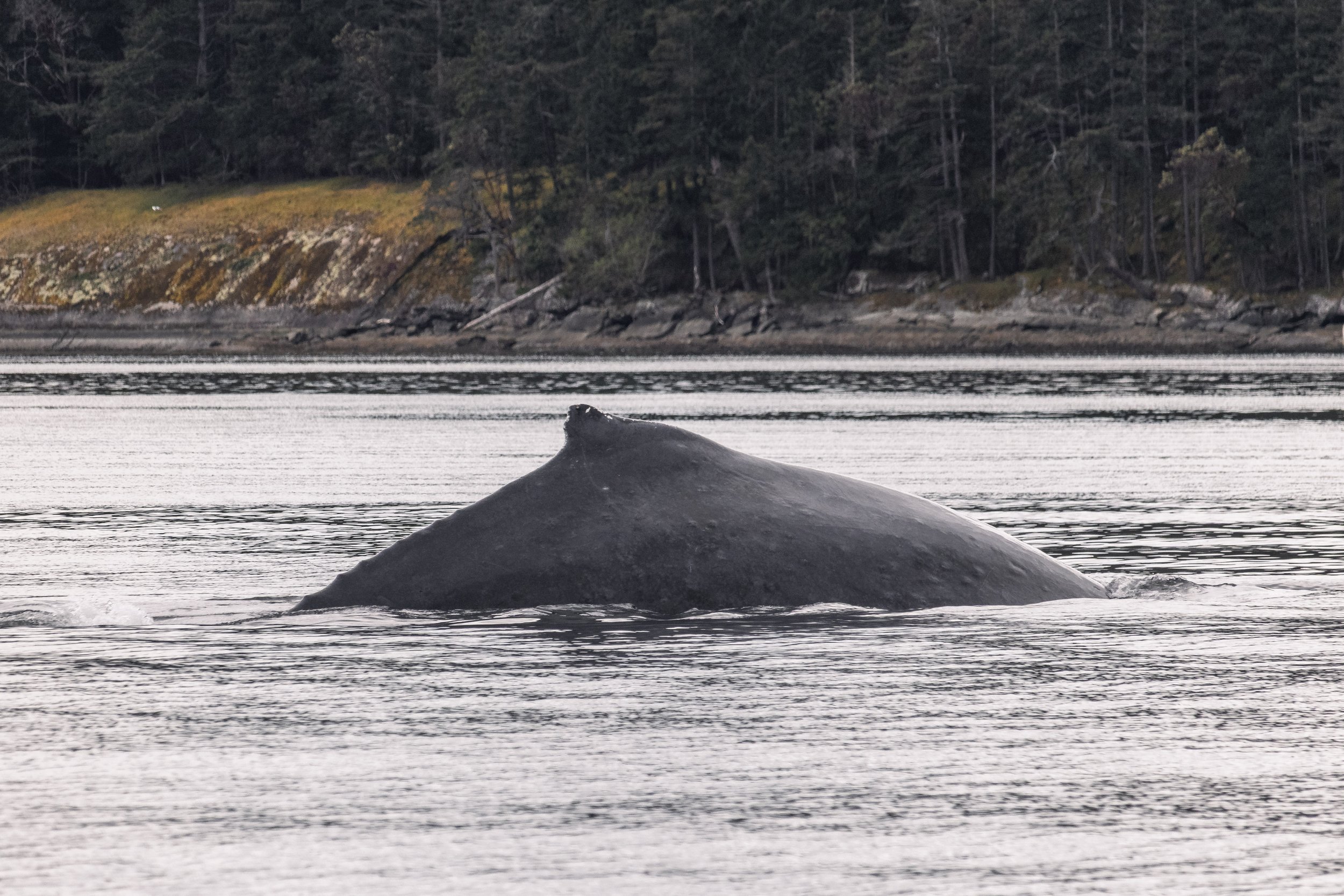
We thought the one scar looked a little like a fish, what do you think? Photo by Vanessa Vereschahen.
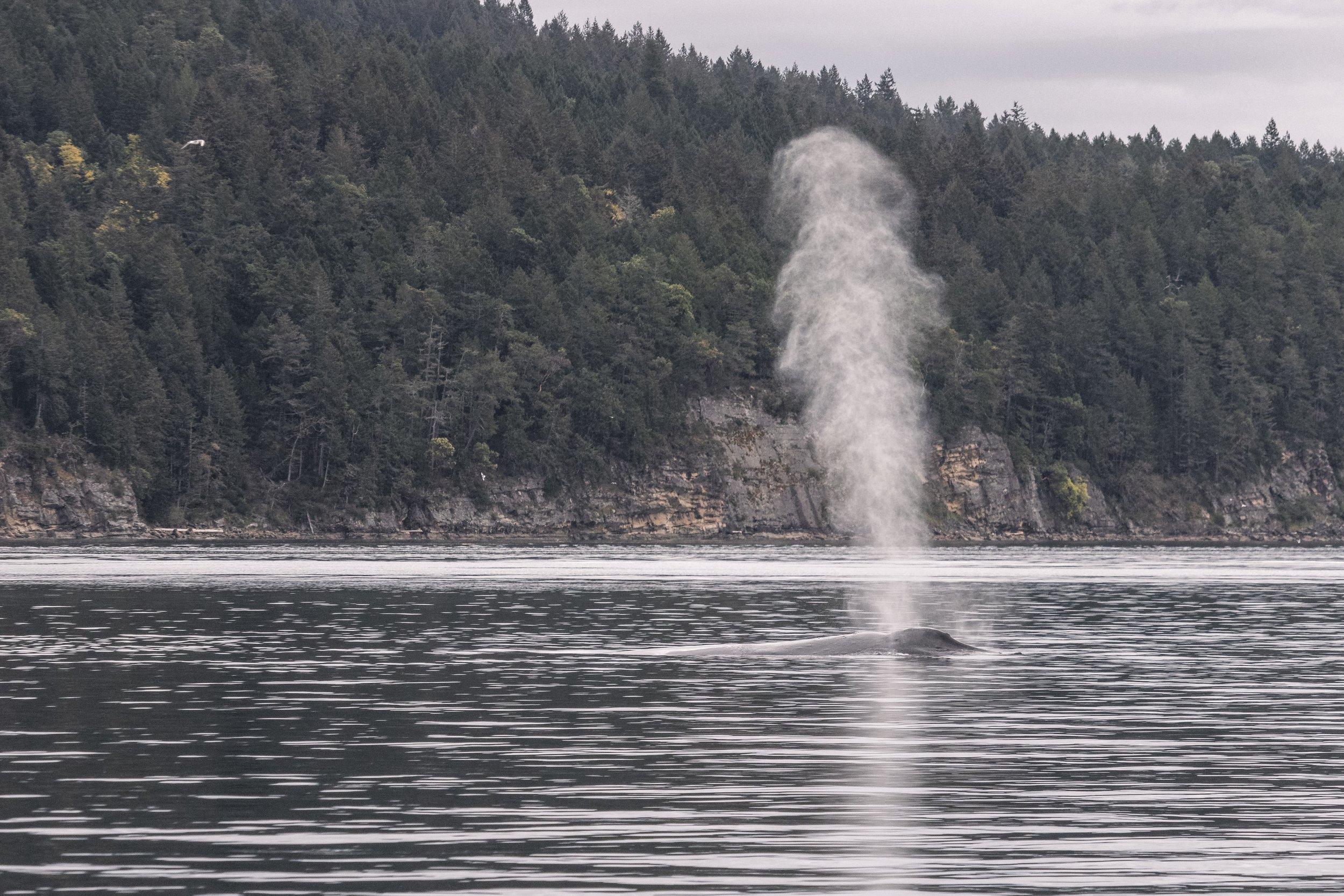
A big blow as Slits surfaces. Photo by Vanessa Vereschahen.
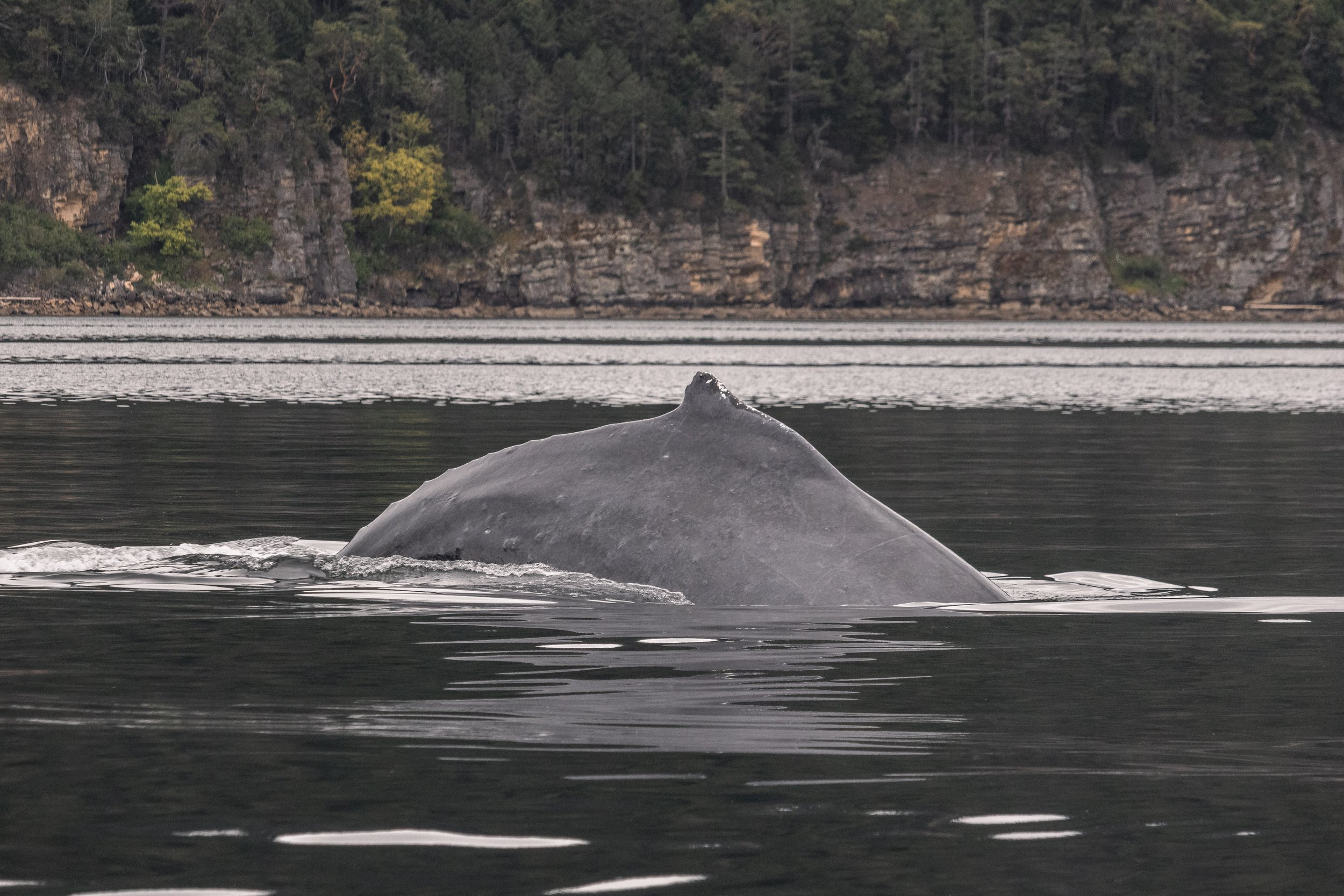
Slits going down for a dive. Photo by Vanessa Vereschahen.
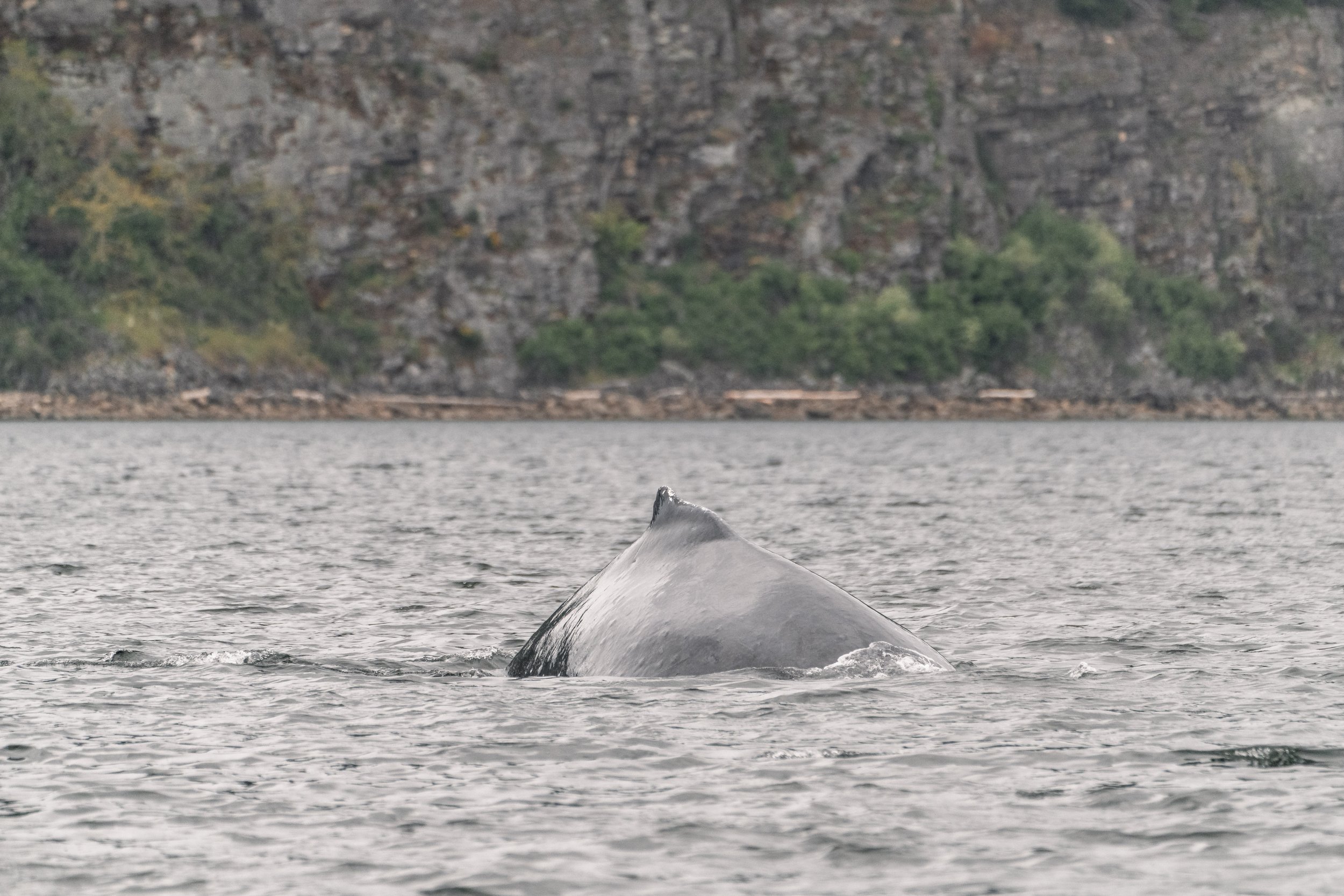
Slits diving with Galiano Island in the background. Photo by Val Watson.
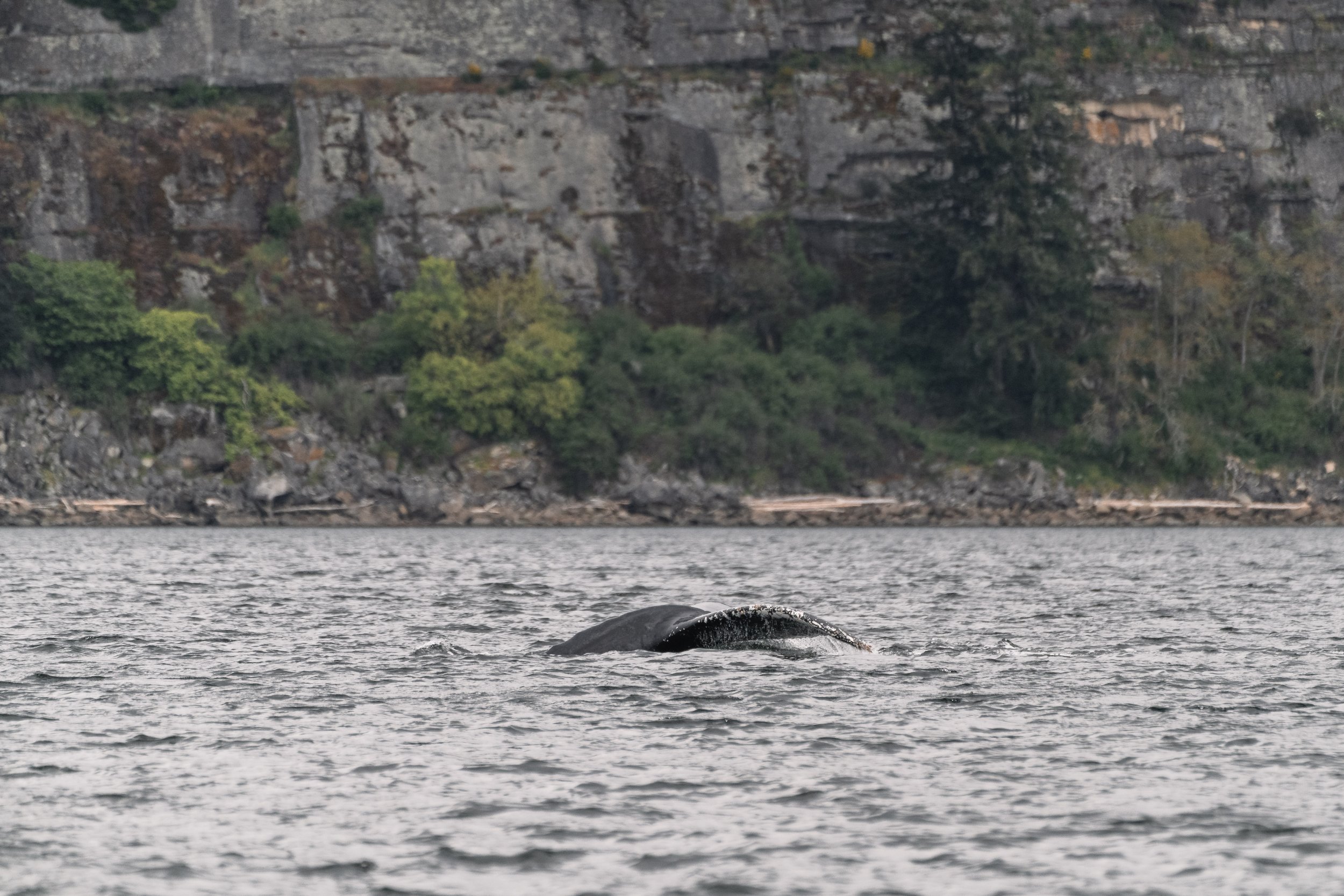
Slits lifting her tail as she goes for a feeding dive. Photo by Val Watson.
The T086As
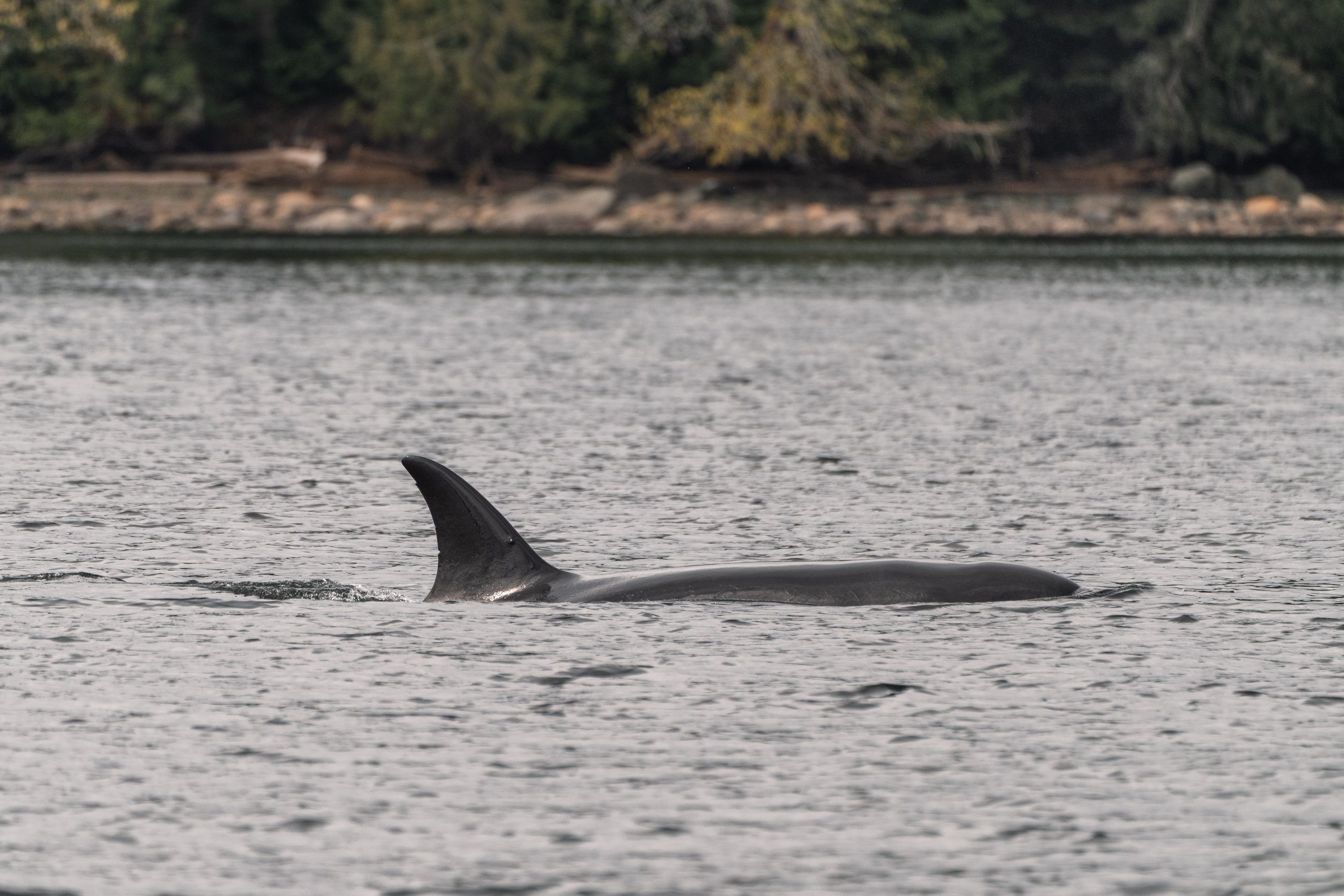
T086A Eider surfacing in the calm water. Photo by Val Watson.
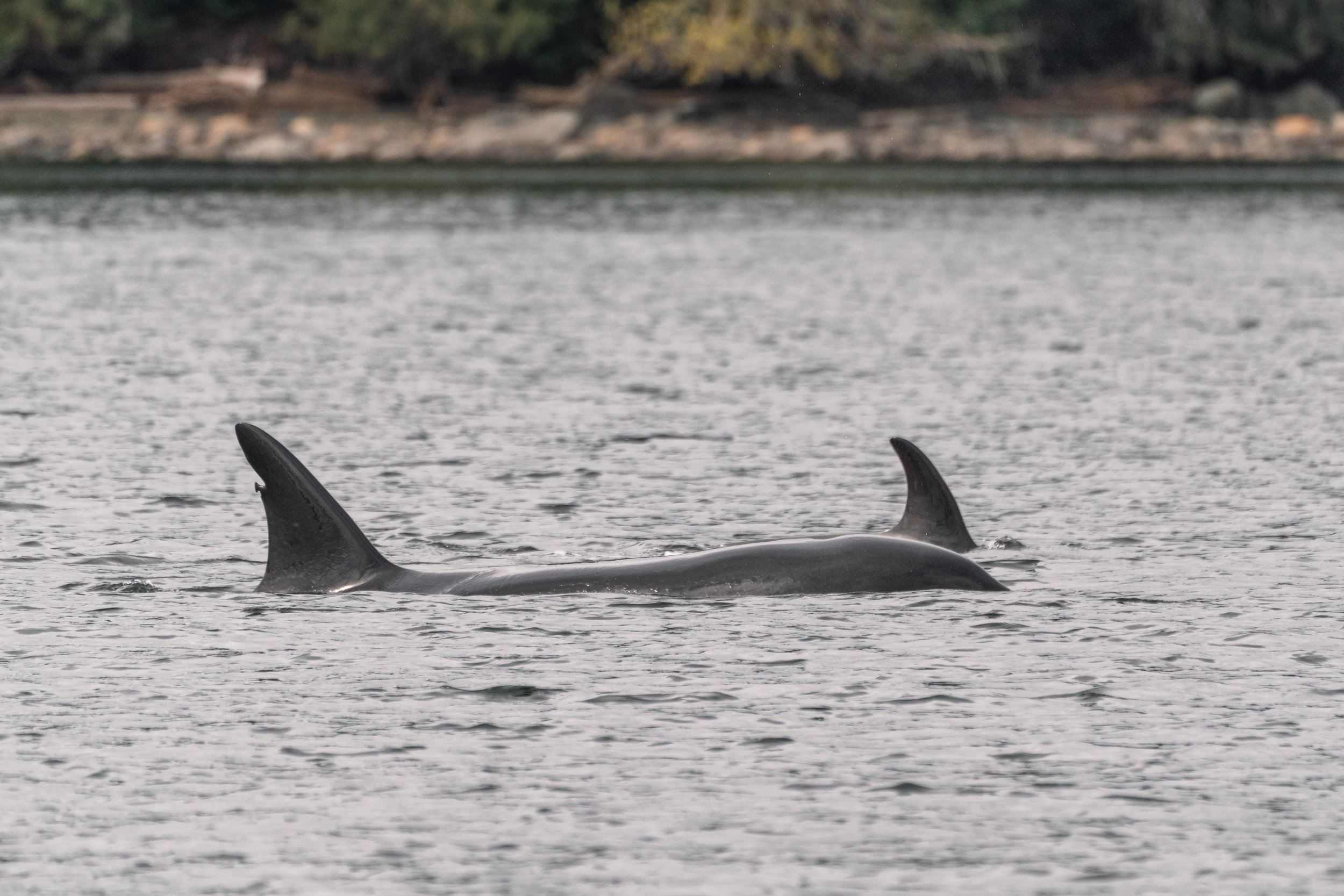
T086A3 Tyndall surfacing with younger brother T086A5 Siku just in front. Photo by Val Watson.
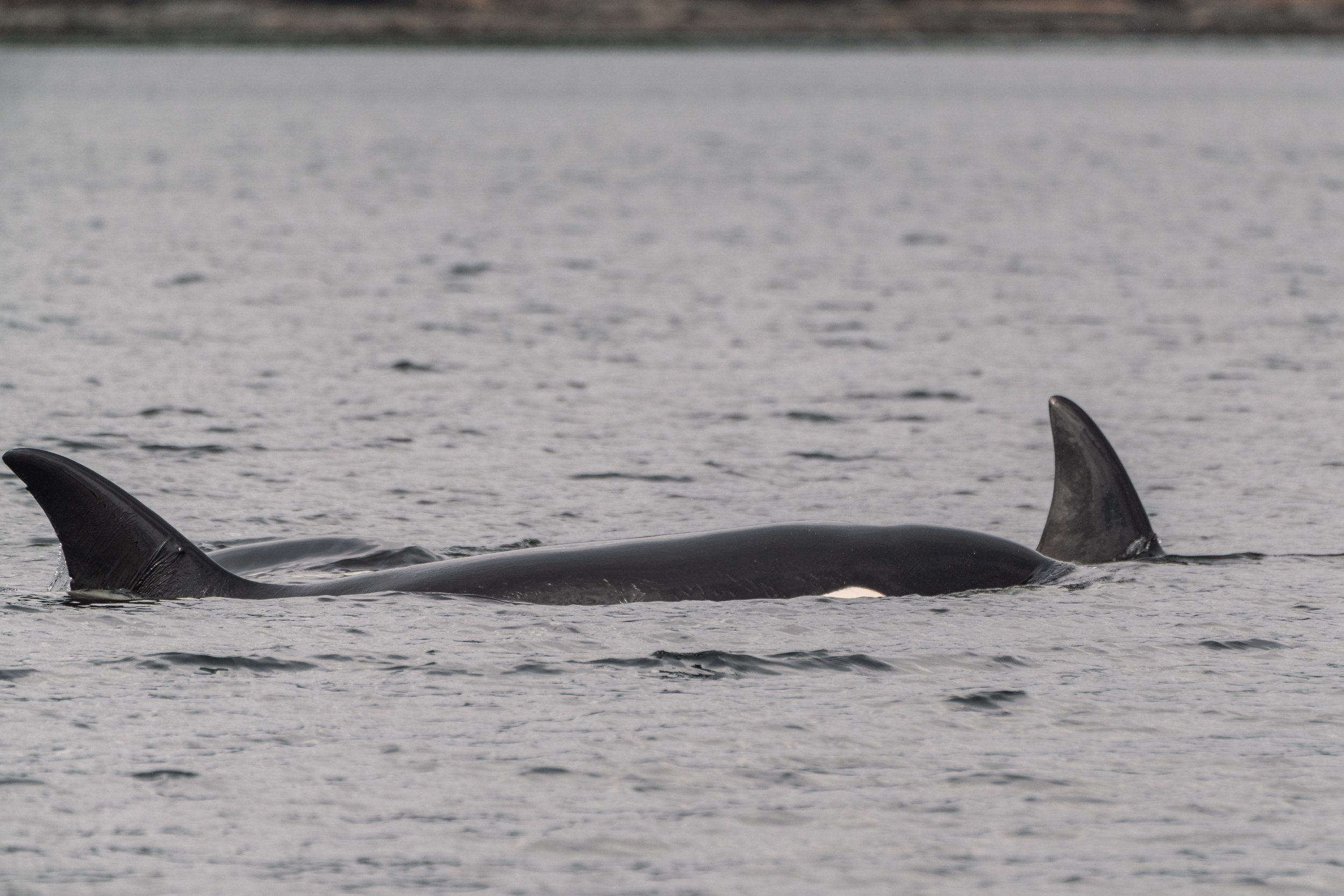
T086A Eider surfacing with her 4th born, T086A4 Akia just ahead of her. Photo by Val Watson.
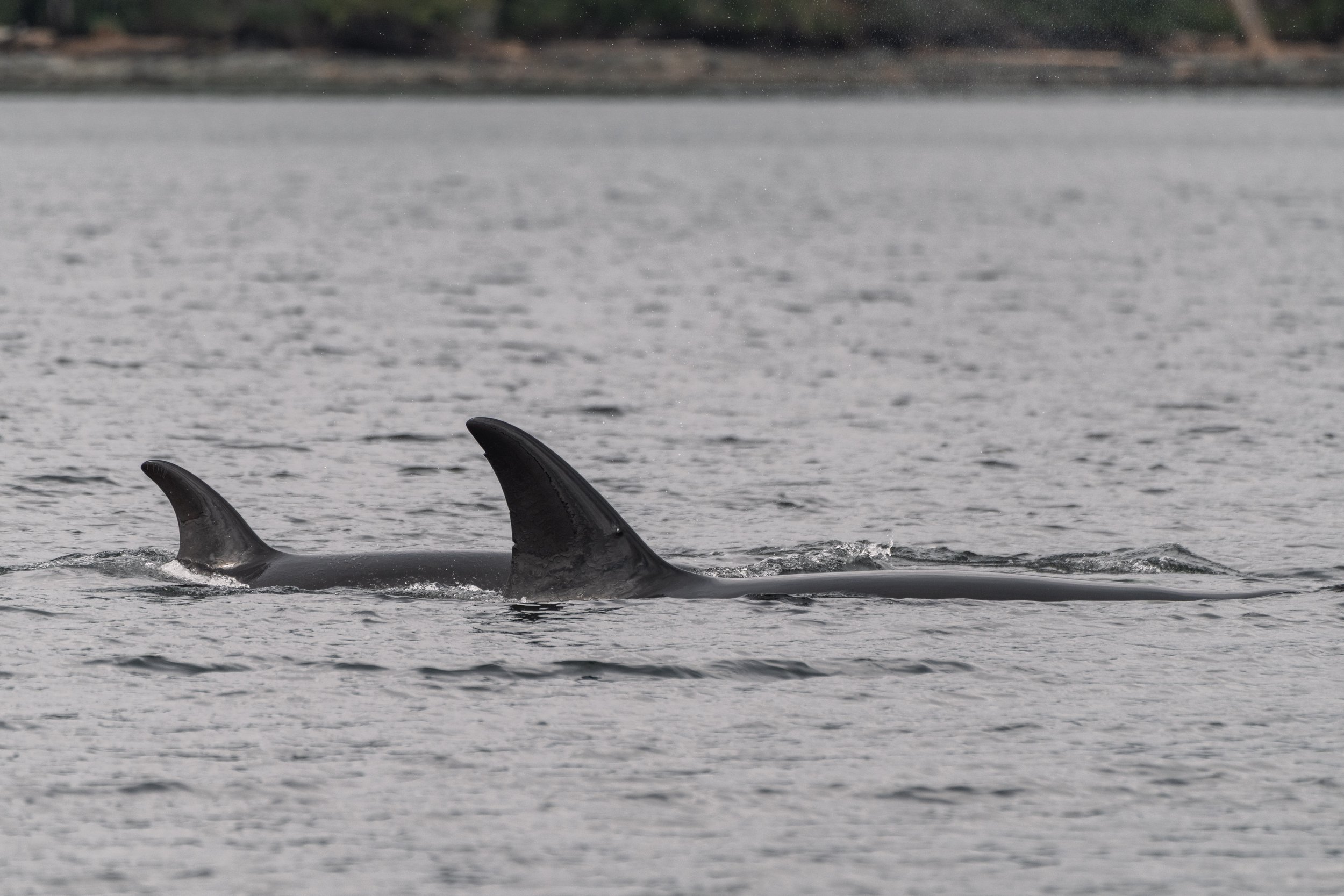
T086A Eider surfacing with T086A5, her youngest, just behind. Photo by Val Watson.
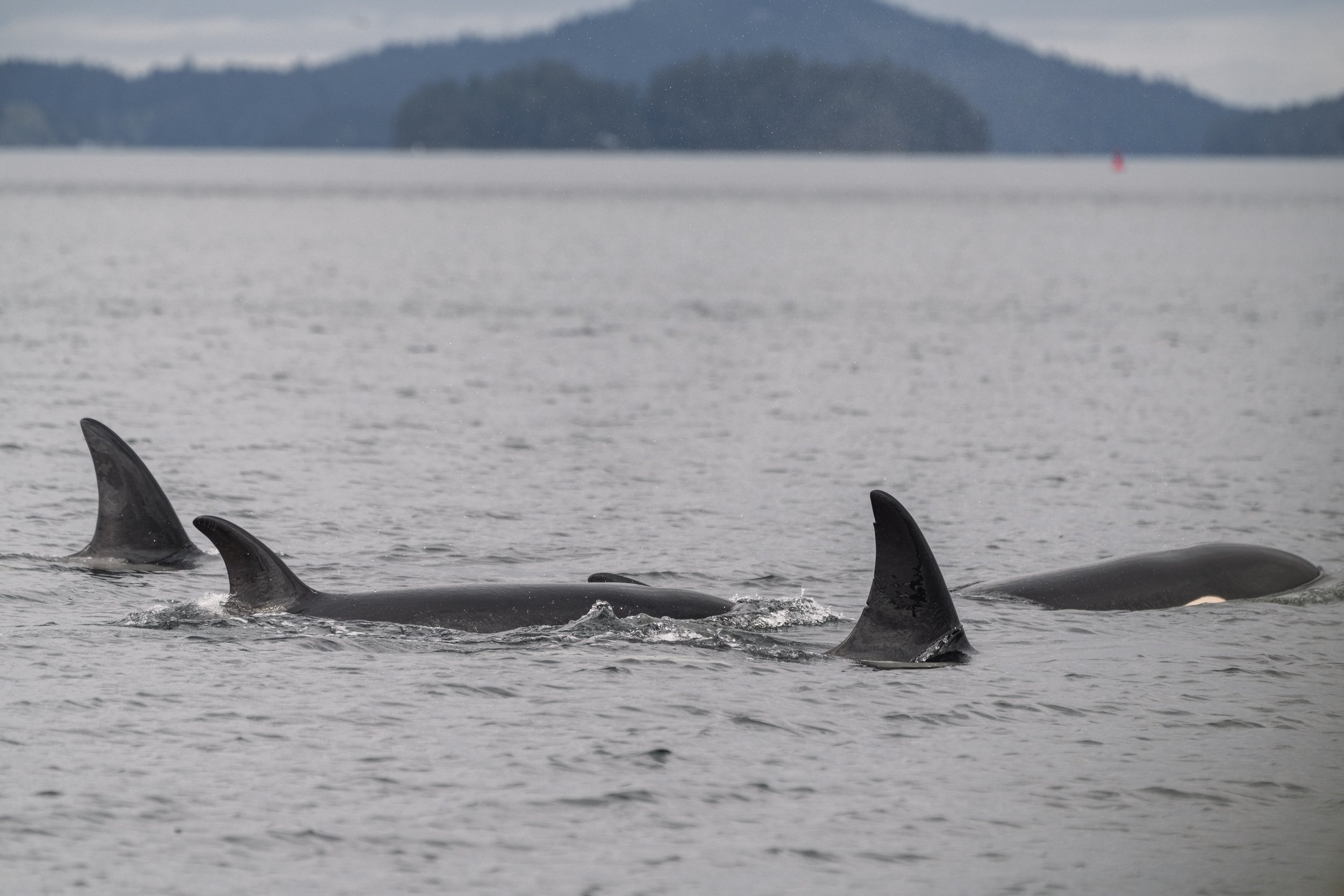
The whole family! from left to right: T086A4 Akia, T086A5 Siku, T086A Eider, and T086A3 Tyndall. Photo by Val Watson.
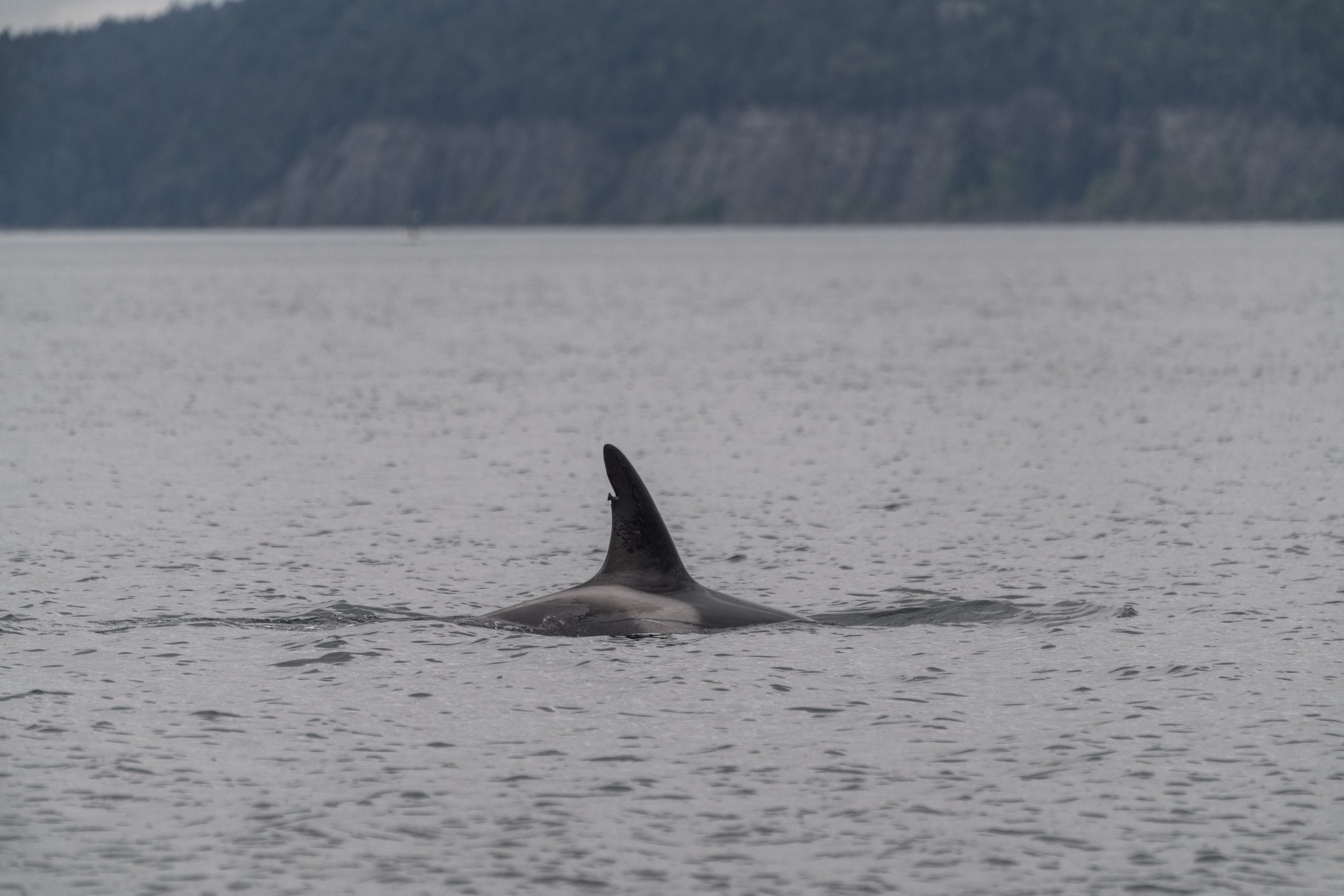
T086A3 Tyndall is the most recognizable in the group with the large notch in her dorsal fin. Photo by Val Watson.
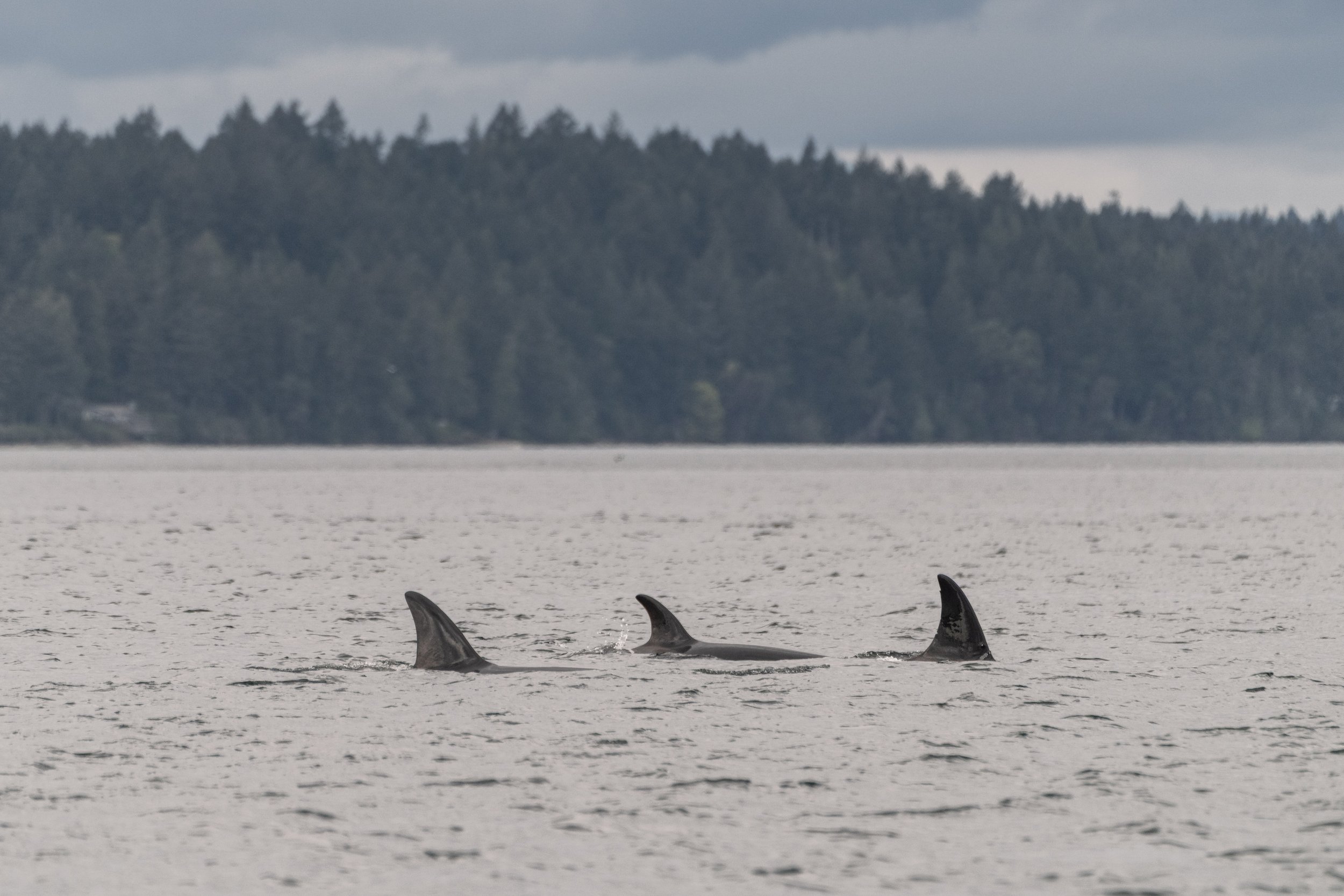
T086A Eider (right) surfacing with two of her kids: T086A5 Siku (middle) and T086A4 Akia (left). Photo by Val Watson.
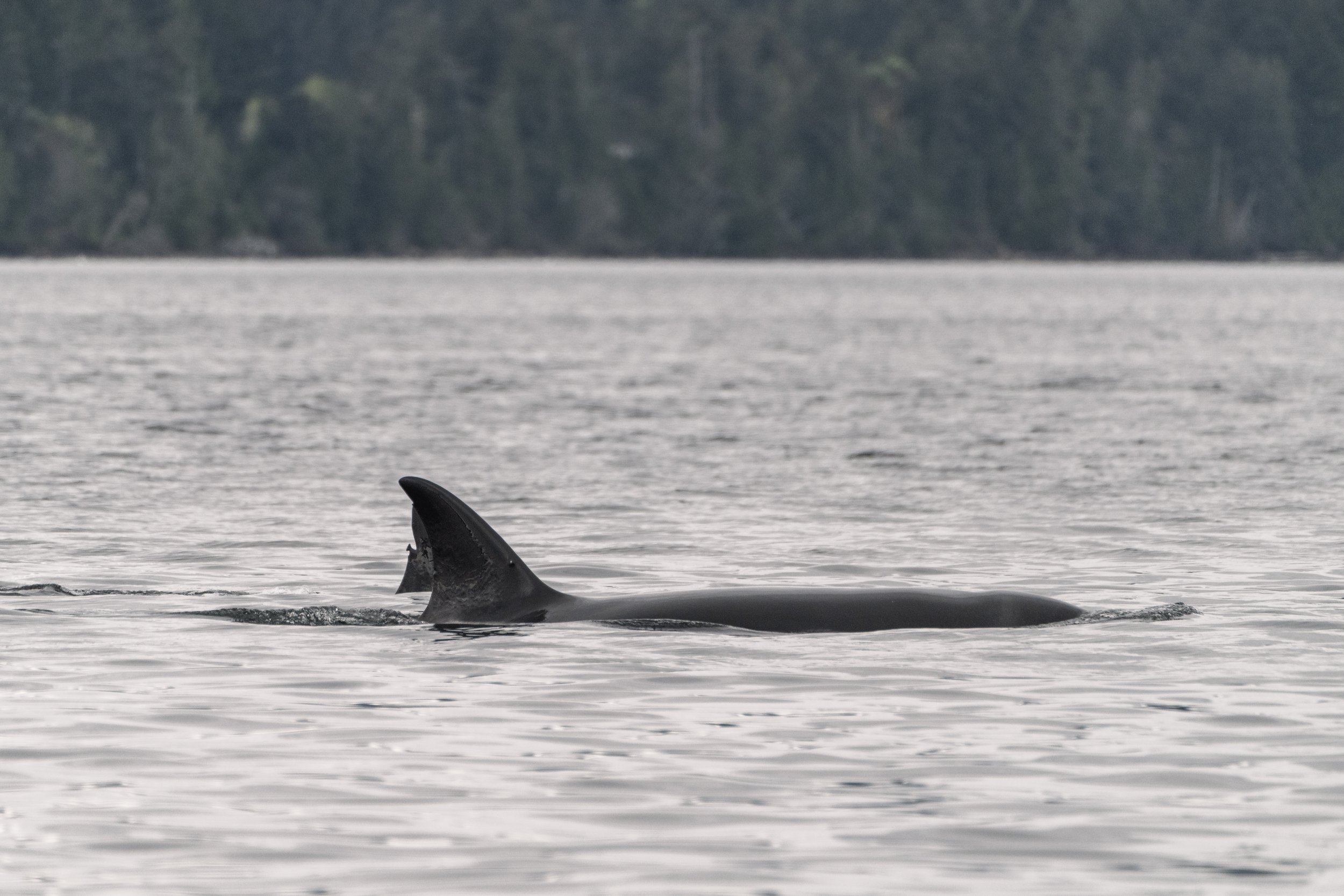
T086A Eider surfacing in the calm water with the tip of T086A3 Tyndall’s dorsal fin behind. Photo by Val Watson.
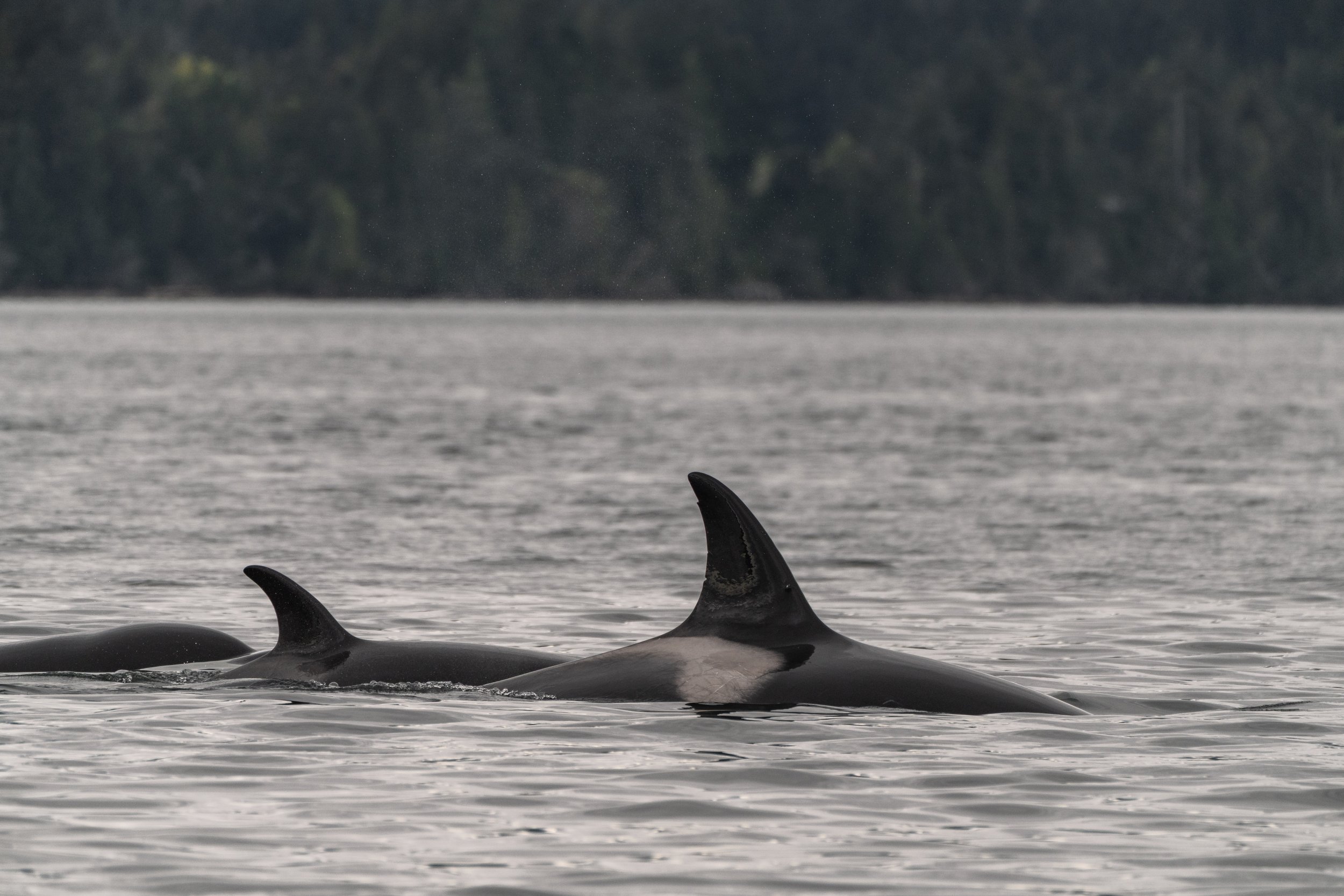
A great look at T086A Eider’s saddle patch as she surfaces alongside T086A5 Siku and T086A4 Akia. Photo by Val Watson.
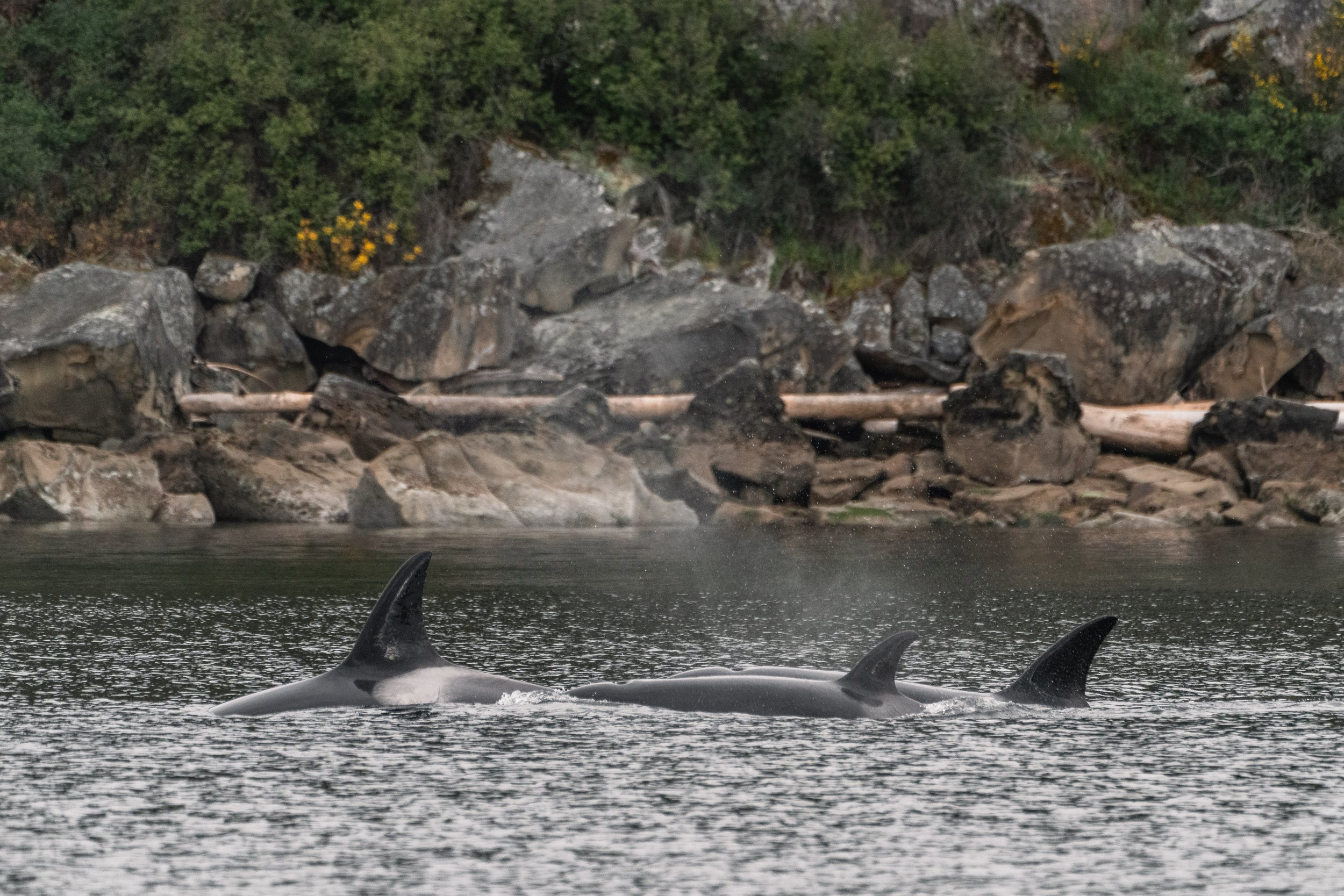
A look at the other side of T086A Eider’s saddle patch as she surfaces ahead of T086A5 Siku and T086A4 Akia. Photo by Val Watson.
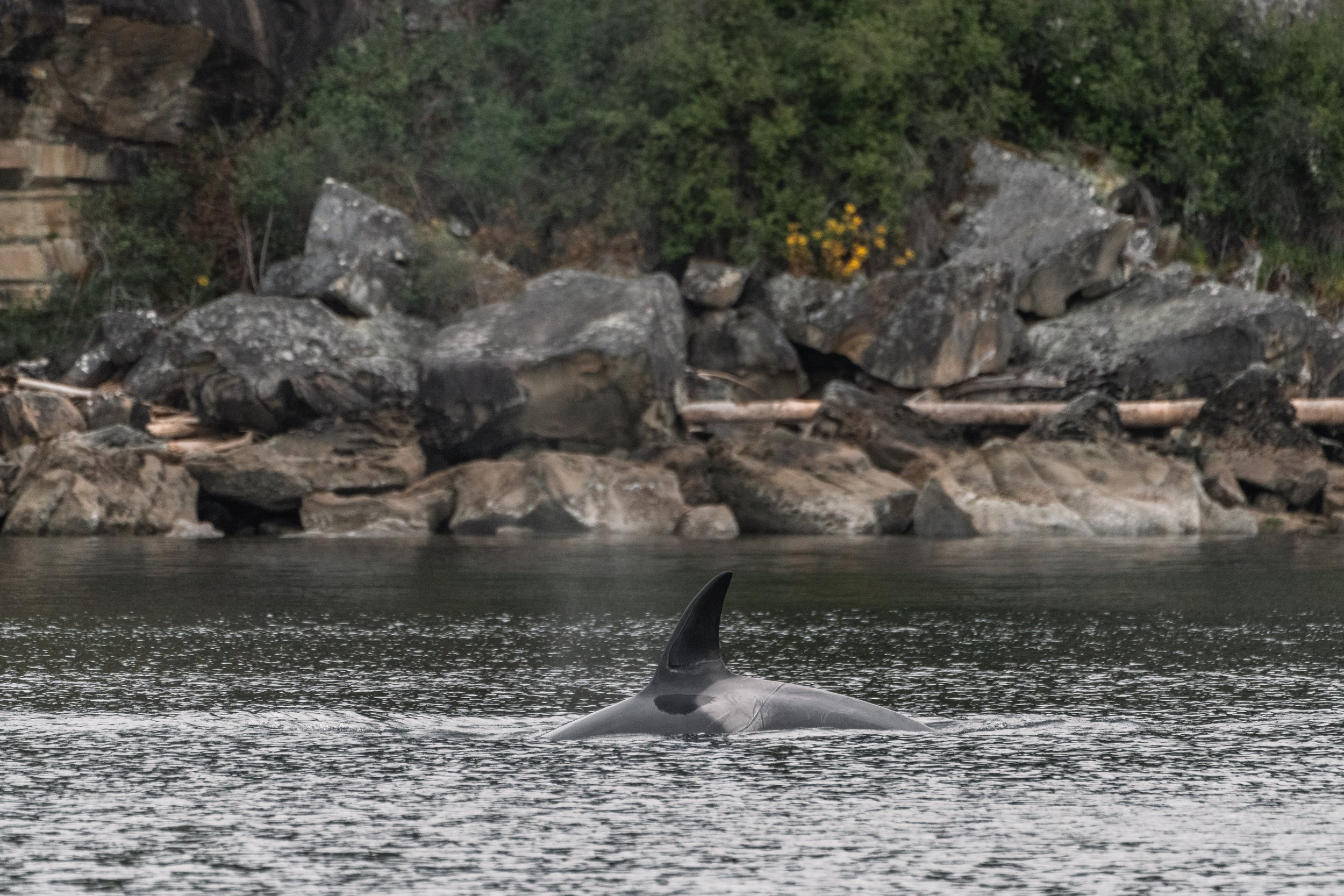
Look at the deep scaring on T086A4 Akia’s saddle patch. Photo by Val Watson.
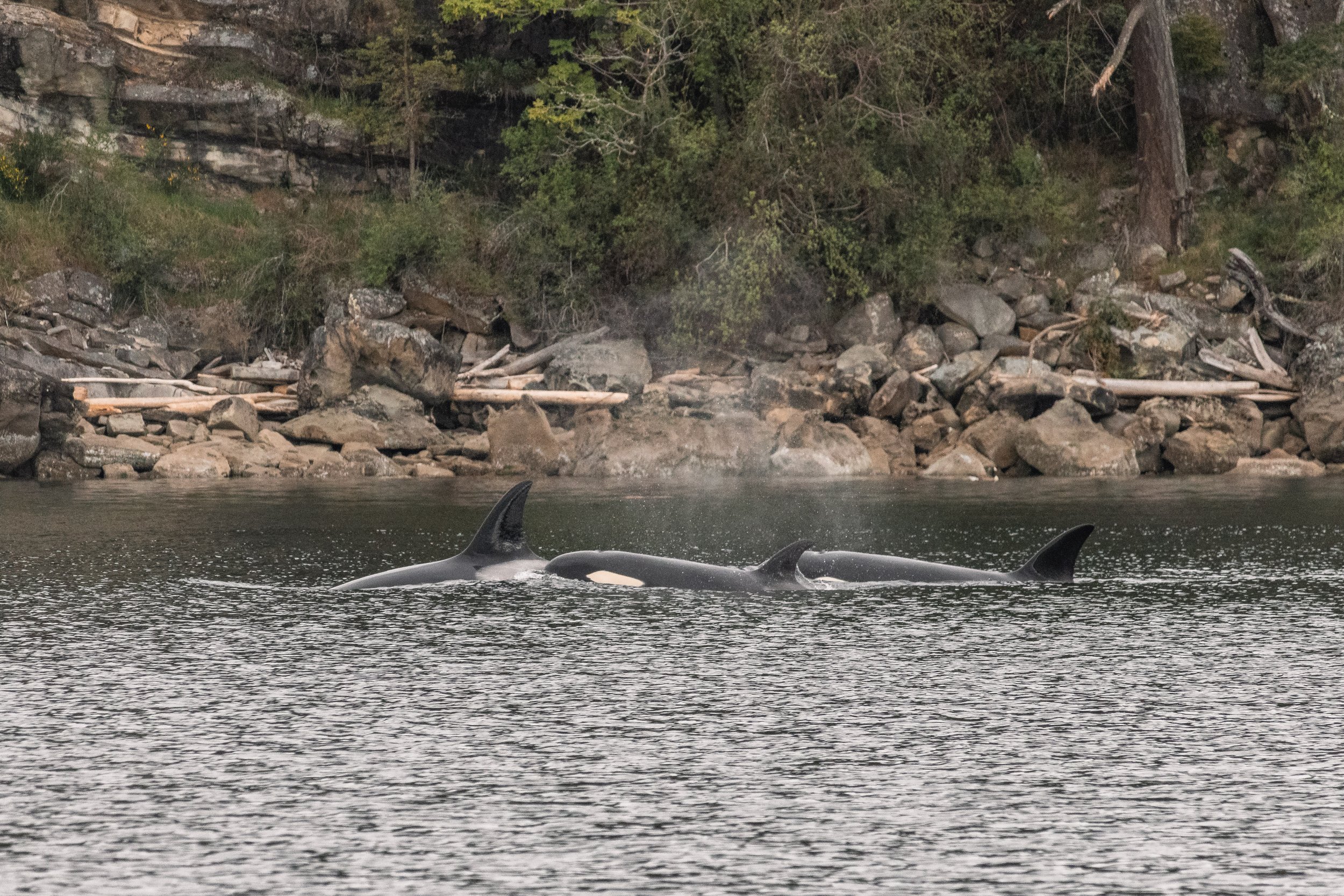
T086A5 Siku showing off their eye patch as they surface between T086A Eider (left) and T086A4 Akia (right). Photo by Vanessa Vereschahen.
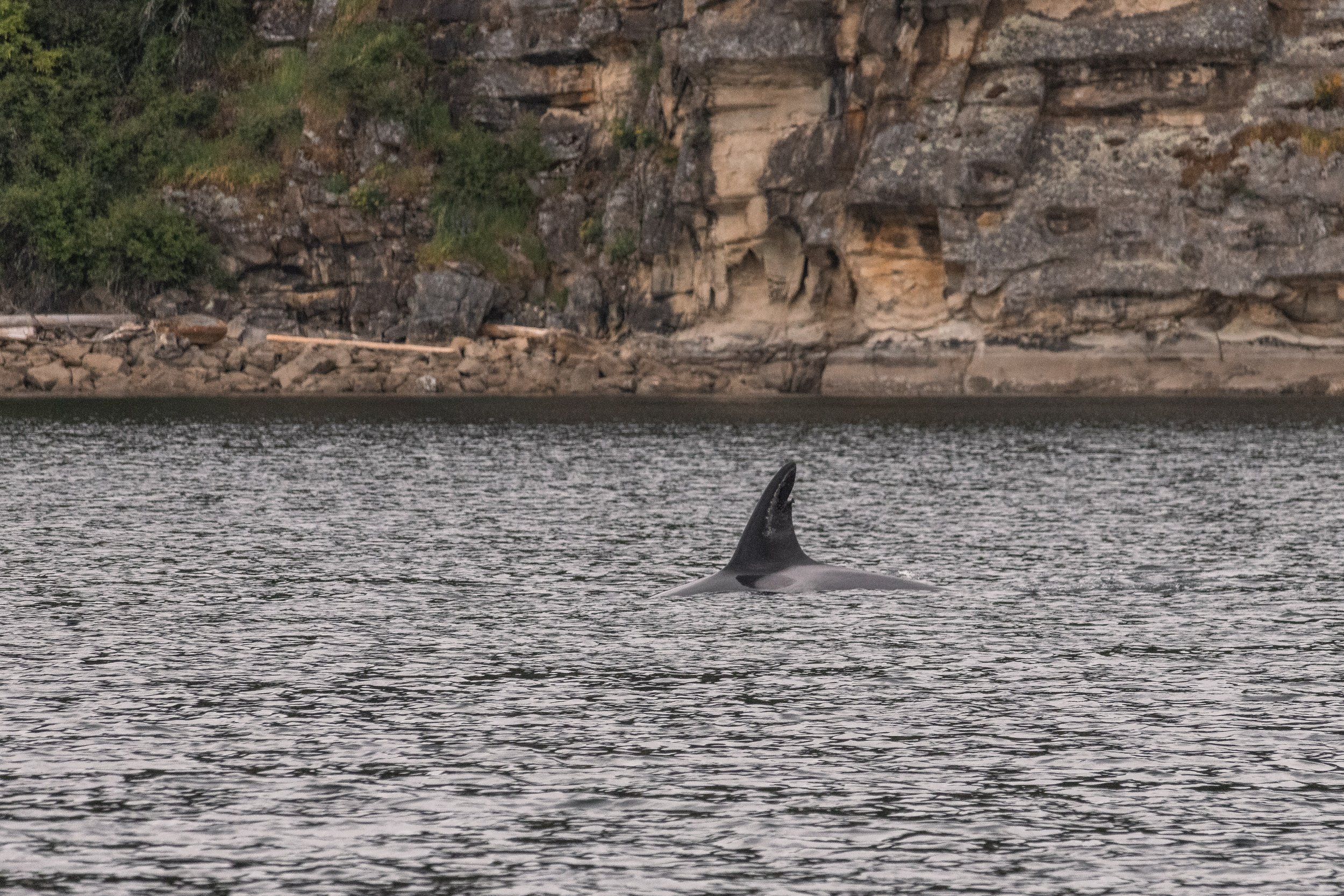
Another look at T086A3 Tyndall’s very distinct dorsal fin. Photo by Vanessa Vereschahen.
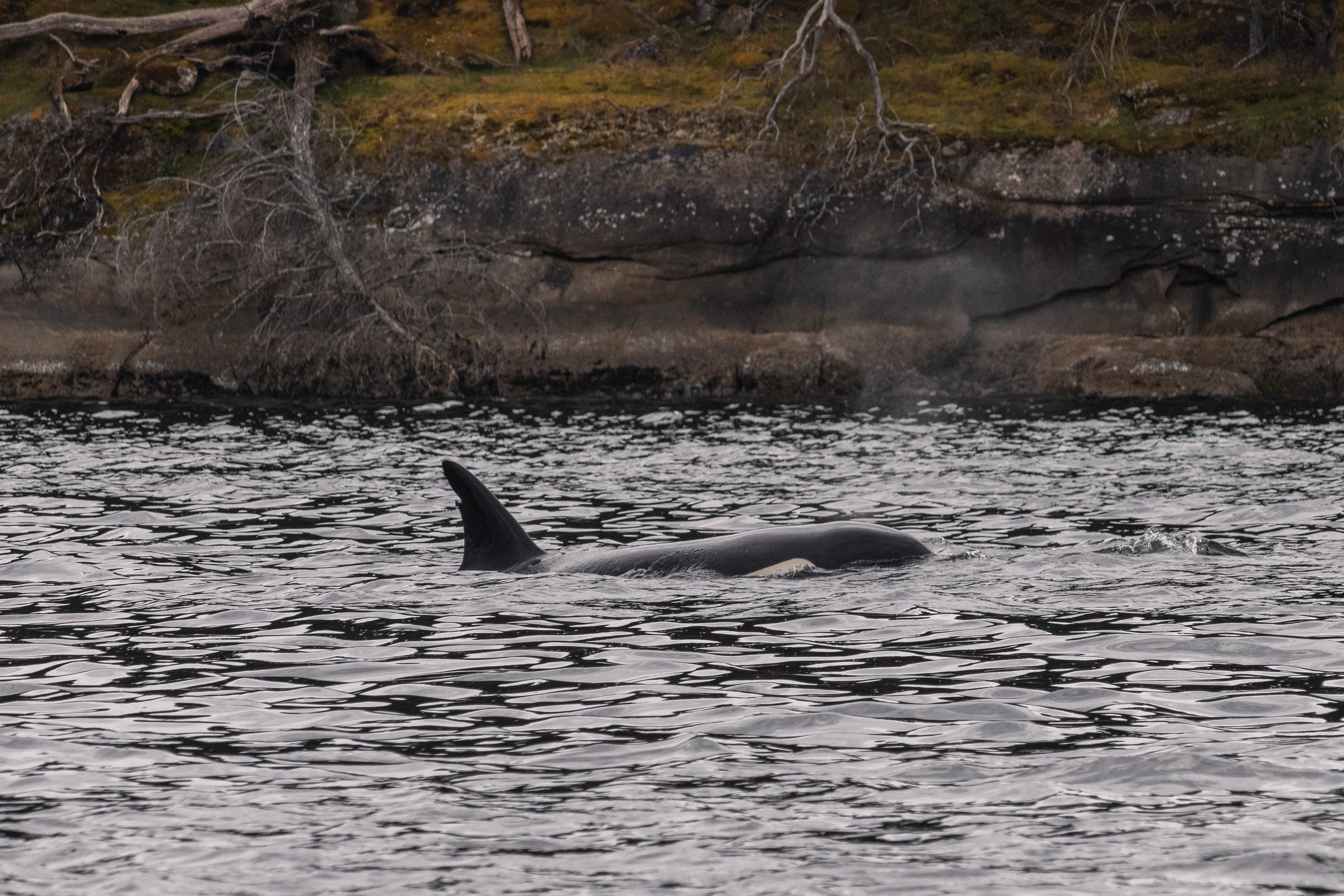
T086A3 Tyndall surfacing in the little bit of waves. Photo by Vanessa Vereschahen.
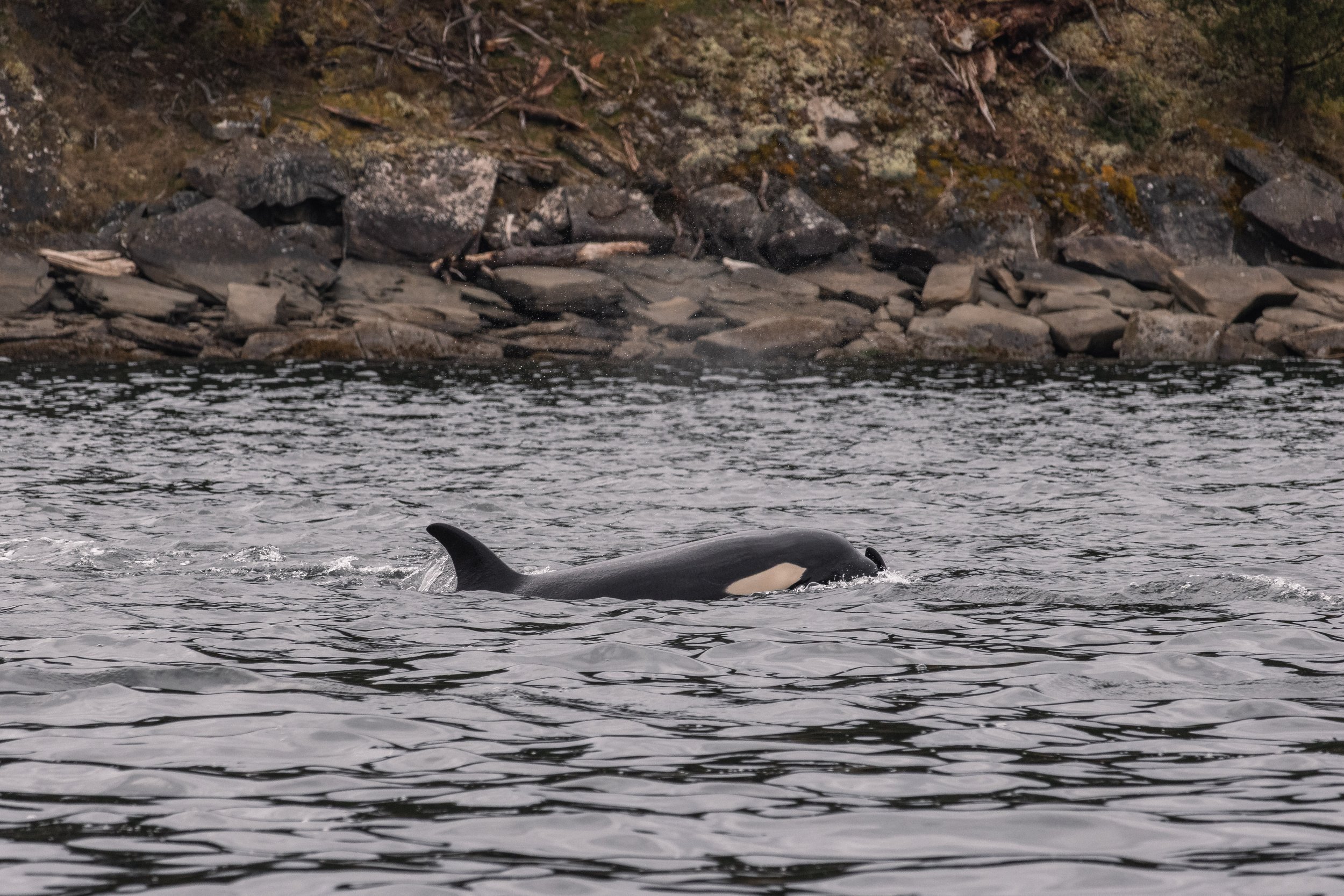
A great look at T086A5 Siku as he peeks above the surface. Photo by Vanessa Vereschahen.
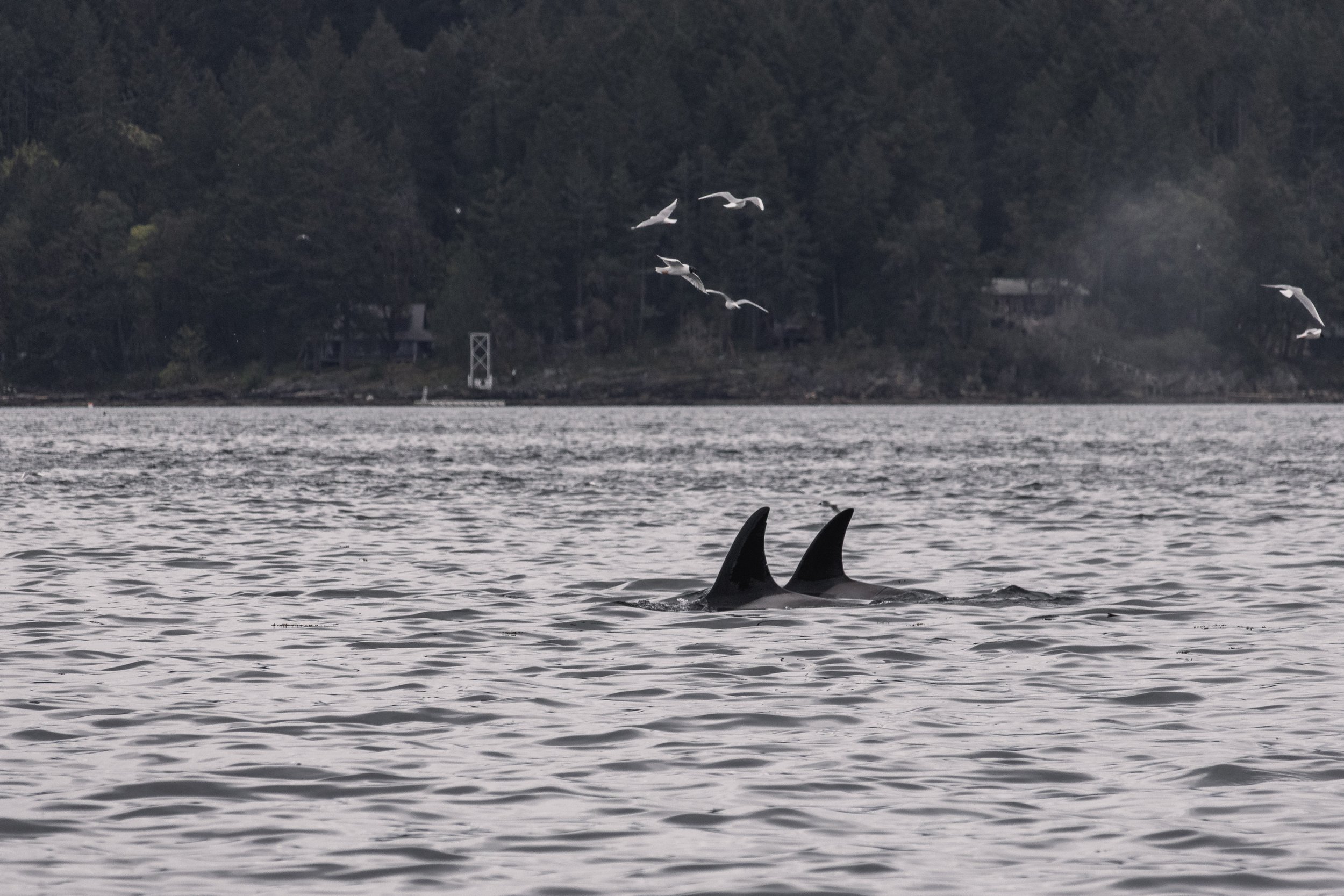
T086A Eider surfacing alongside T086A4 Akia as the gulls fly overhead during the hunt. Photo by Vanessa Vereschahen.
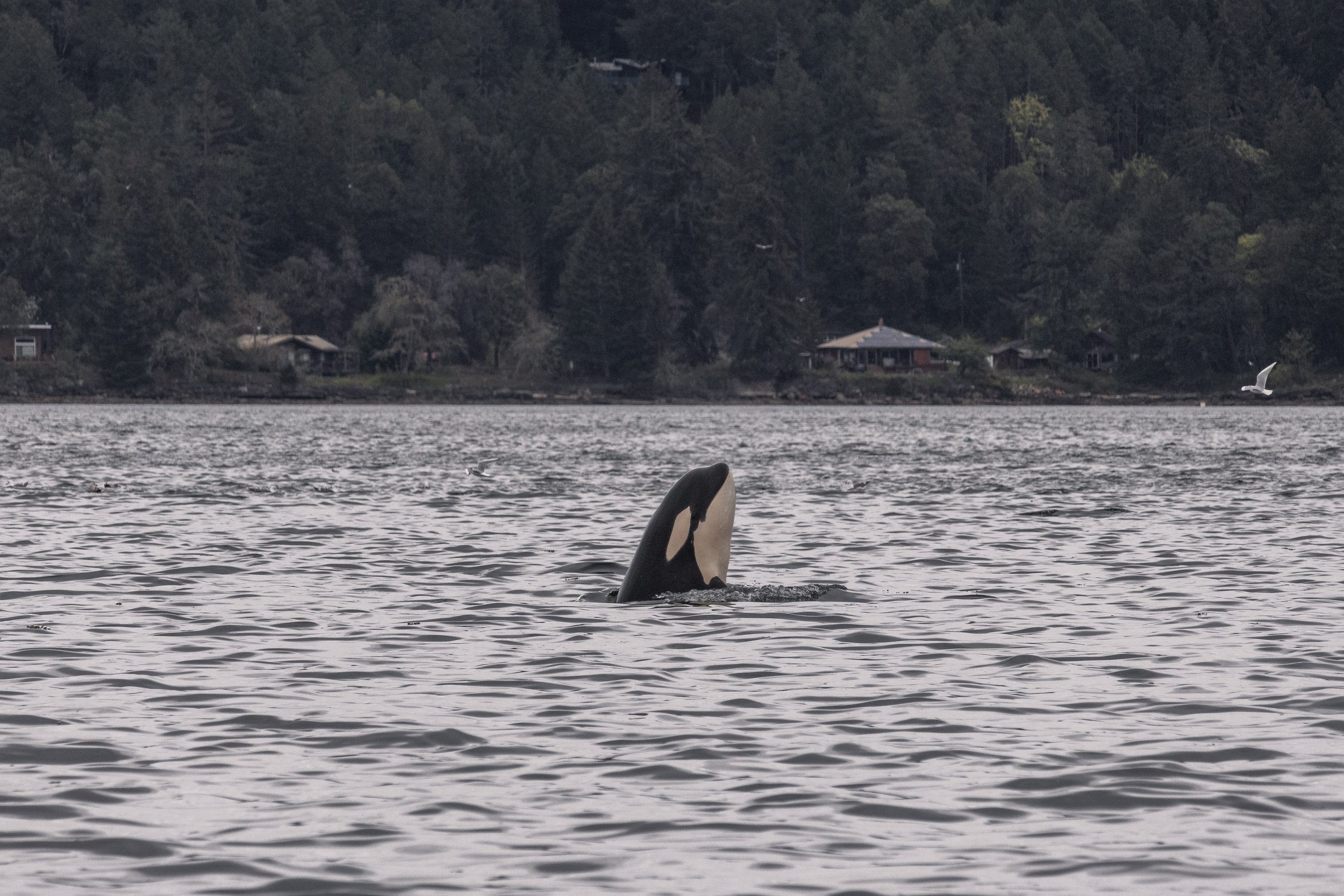
T086A5 Siku checking out his surroundings with a spy hop during the hunt! Photo by Vanessa Vereschahen.
Other Wildlife
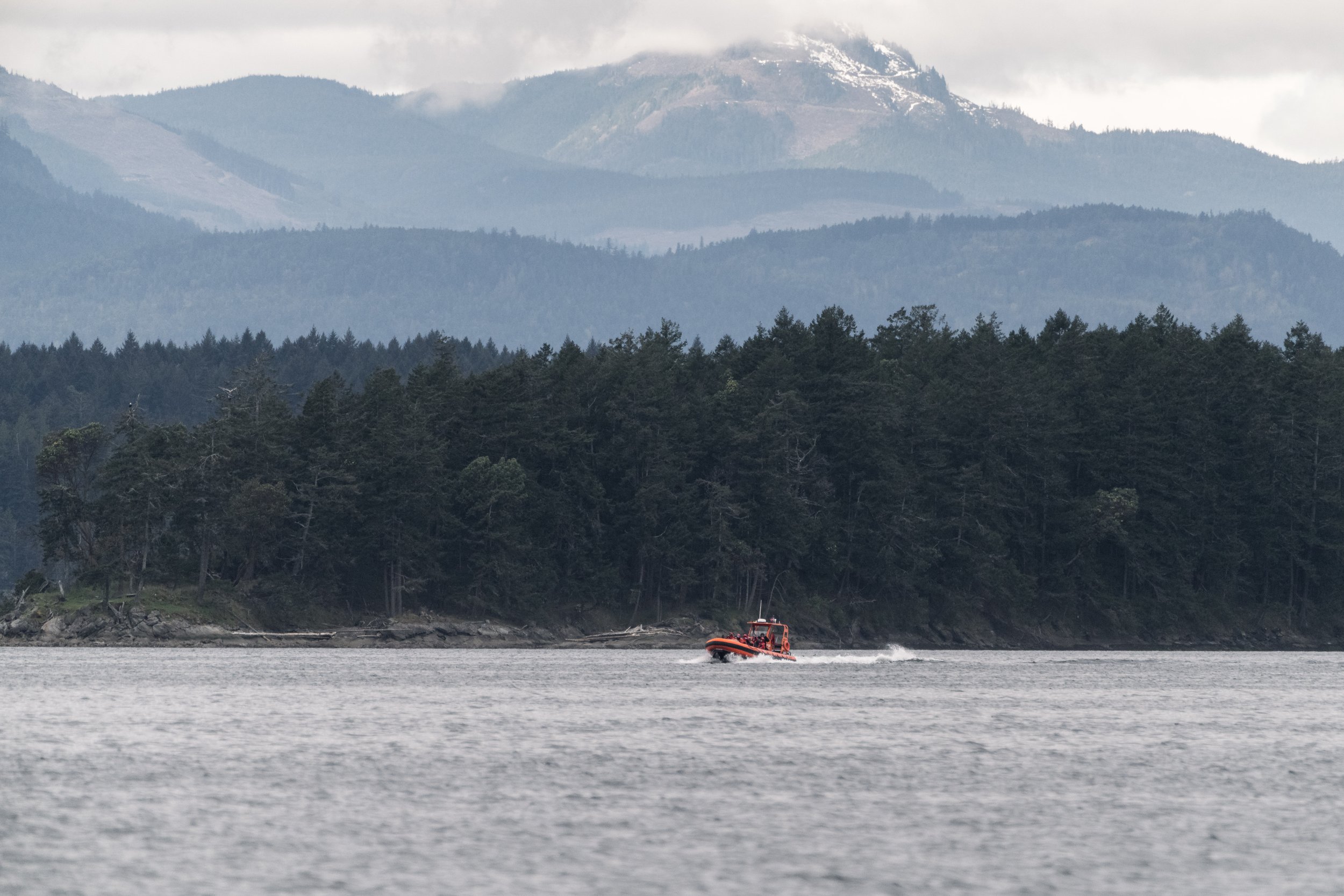
The open boat travelling through the Southern Gulf Islands. Photo by Val Watson.
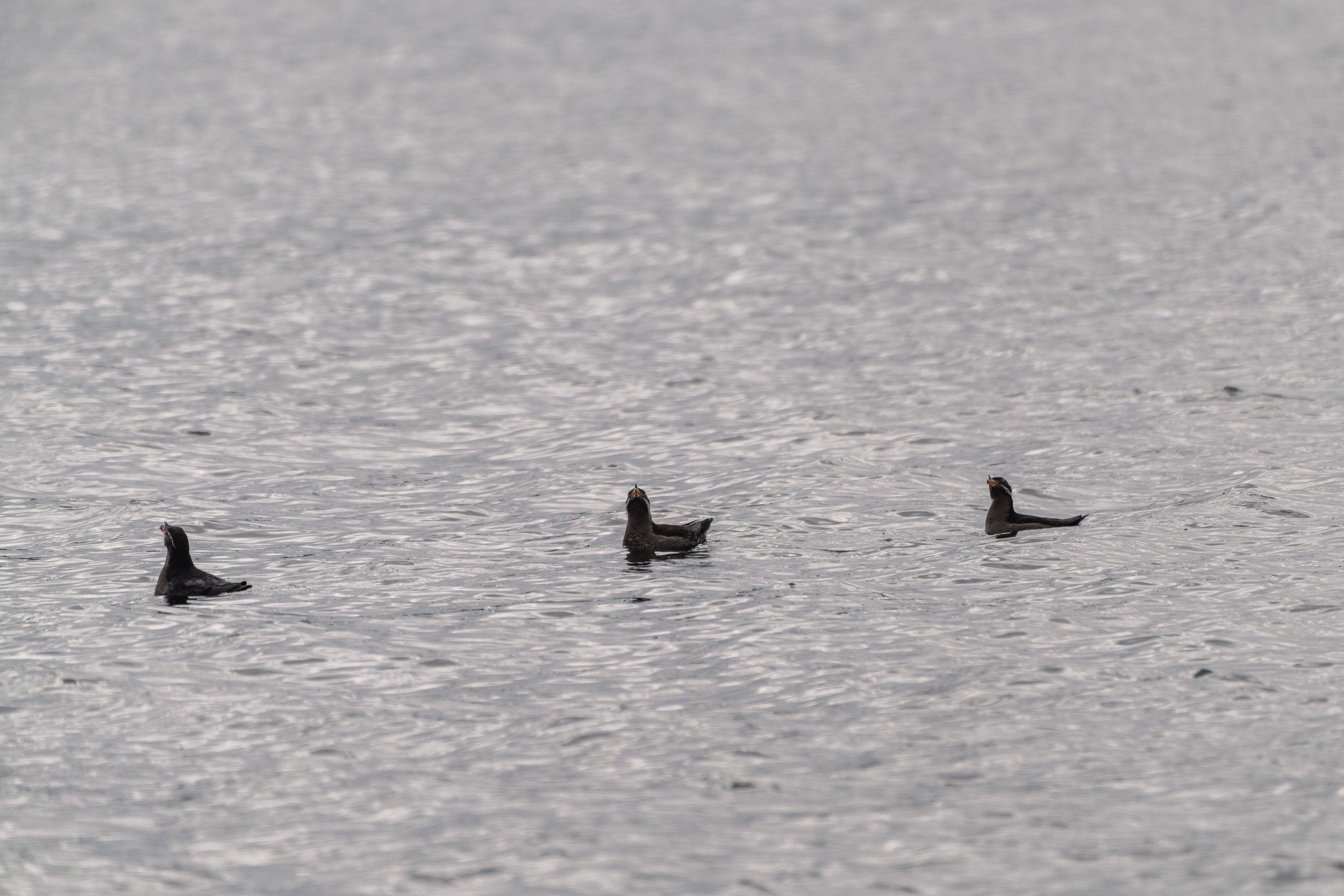
Some Rhinocerous Auklets watching us while we floated by with the whales. Photo by Val Watson.
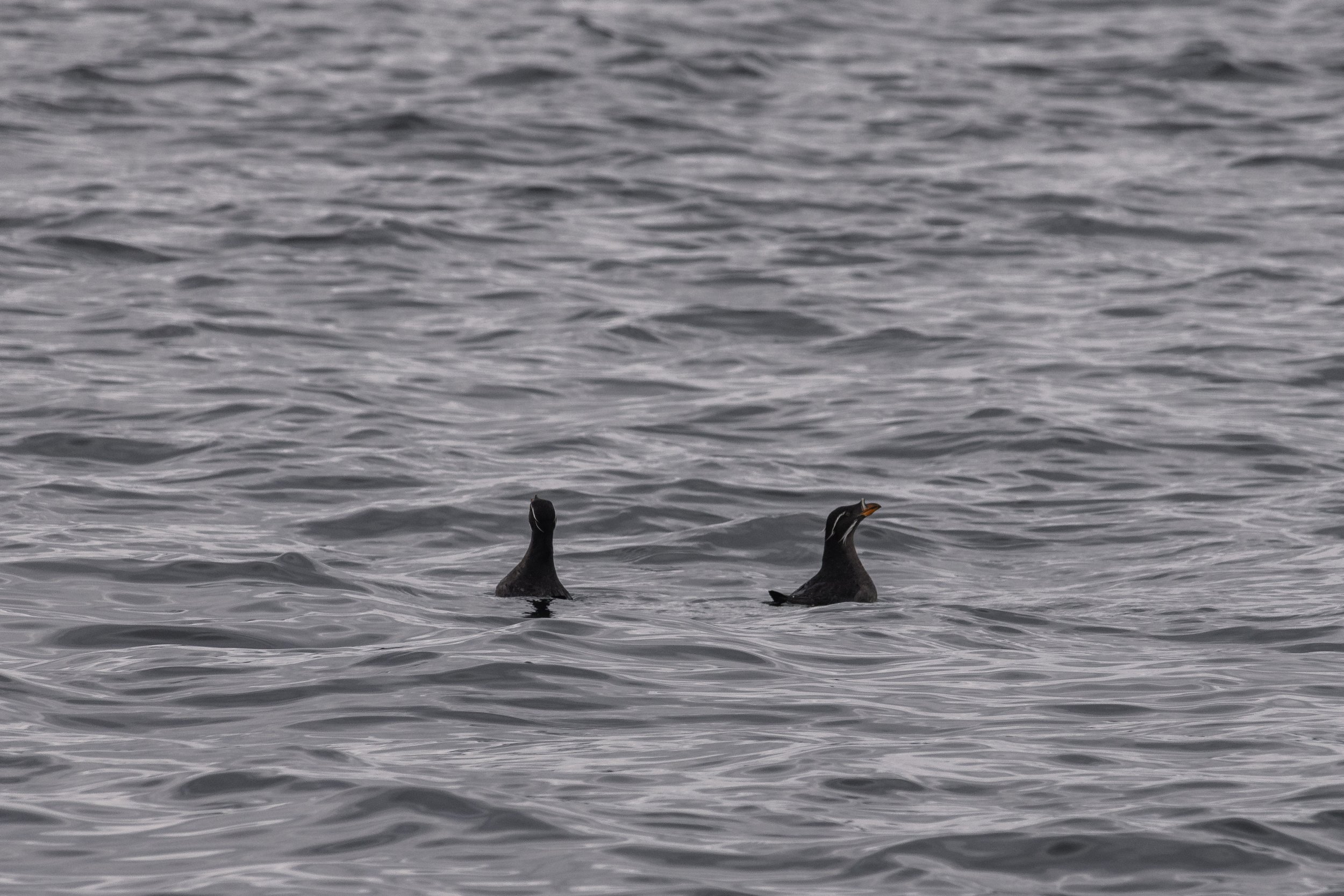
Another pair of Rhinocerous Auklets showing off their unique plumage. Photo by Vanessa Vereschahen.
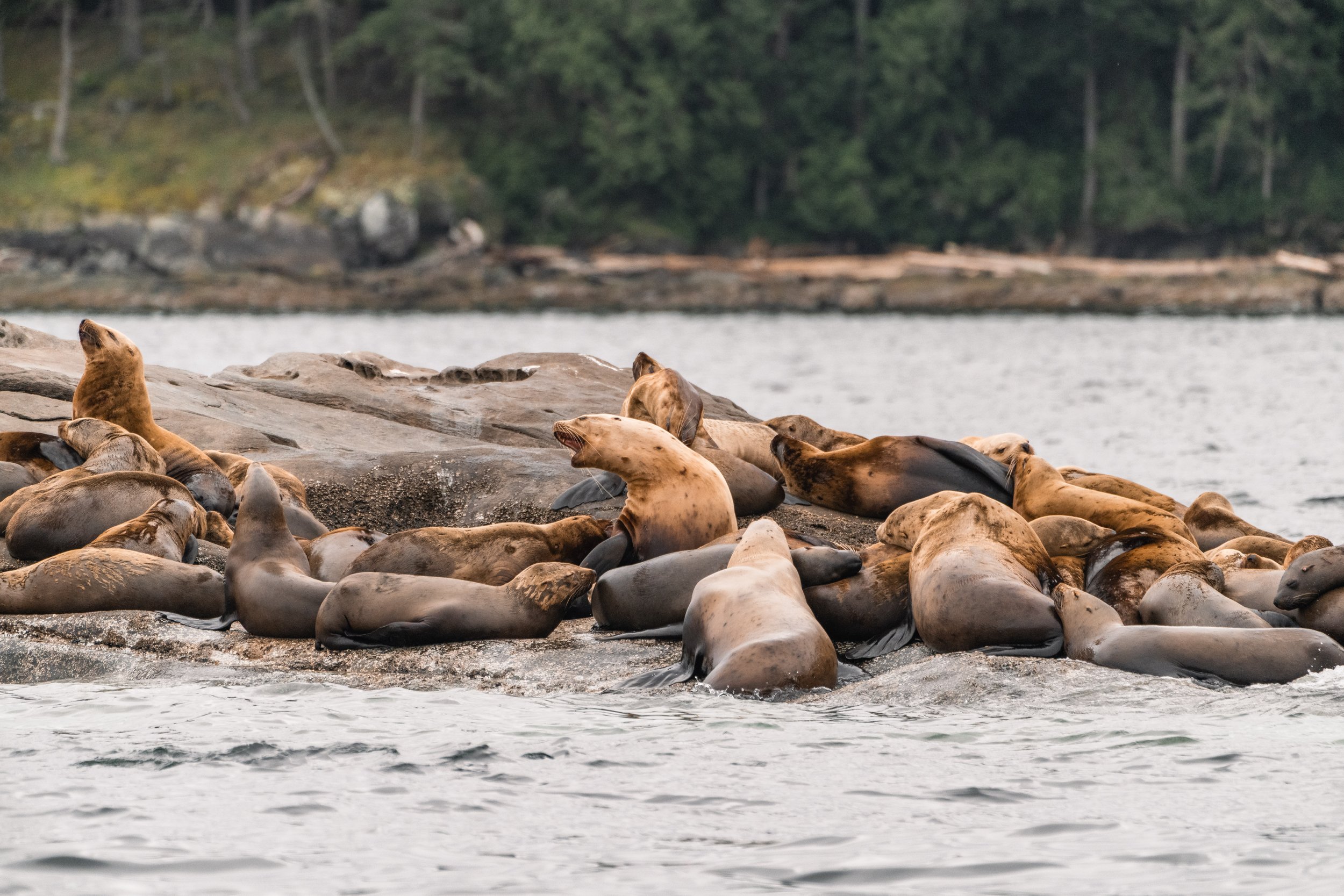
Stellers Sea Lions fighting on the rocky shore of Canoe Islet. Photo by Val Watson.
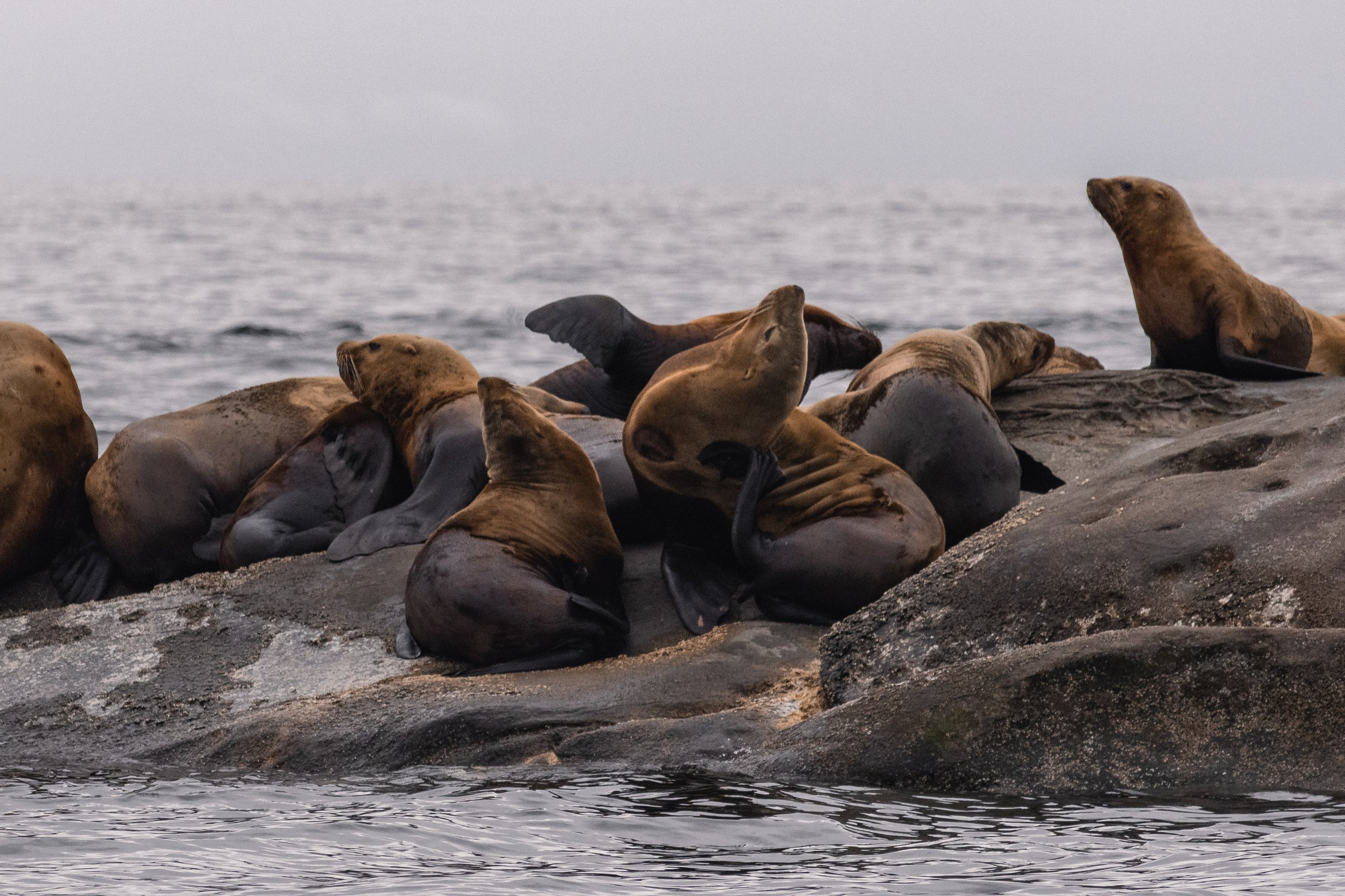
A calmer bunch of Steller Sea Lions at Canoe. Photo by Vanessa Vereschahen.
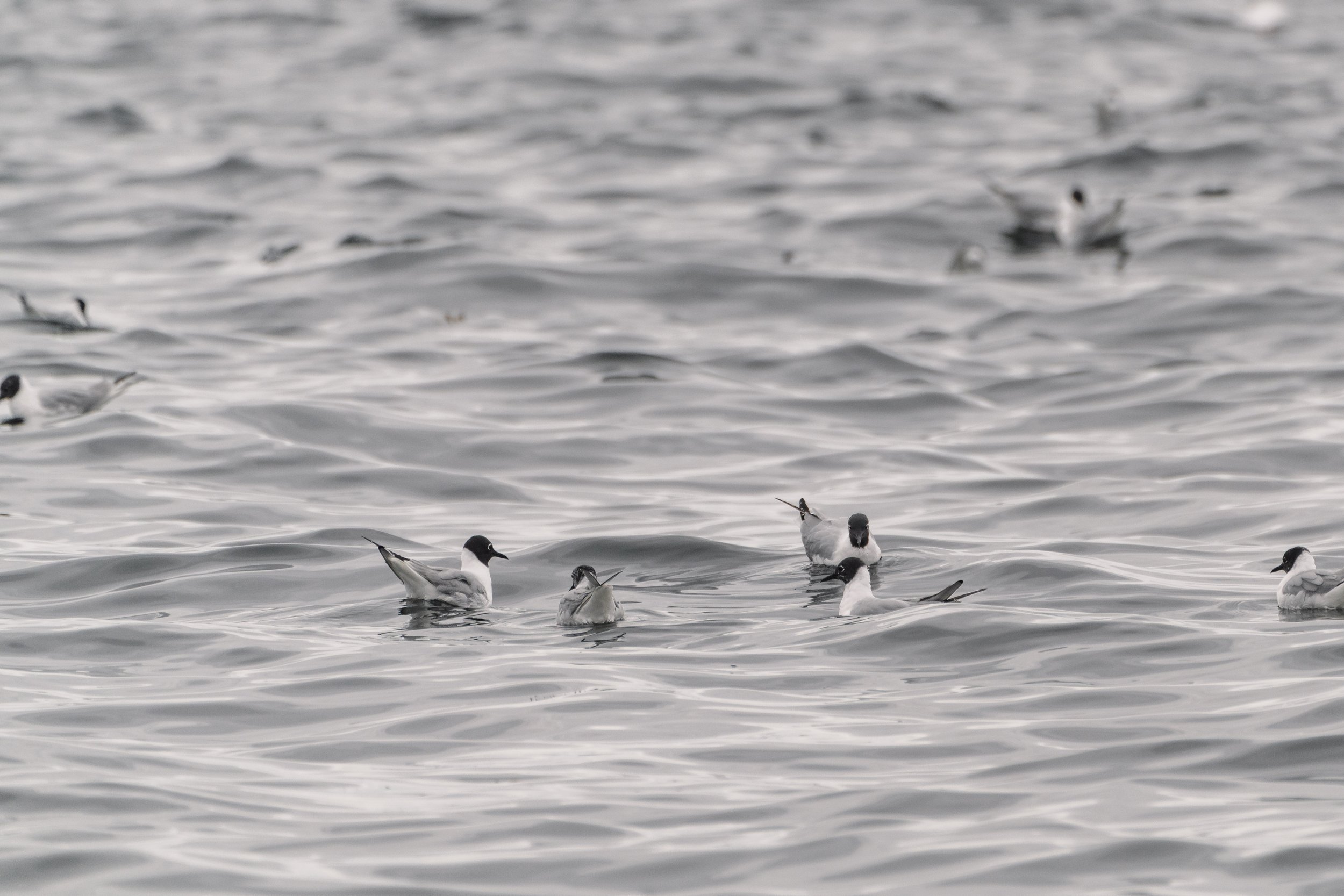
Some Bonepartes Gulls feeding in the water stirred up in Porlier Pass. Photo by Val Watson.
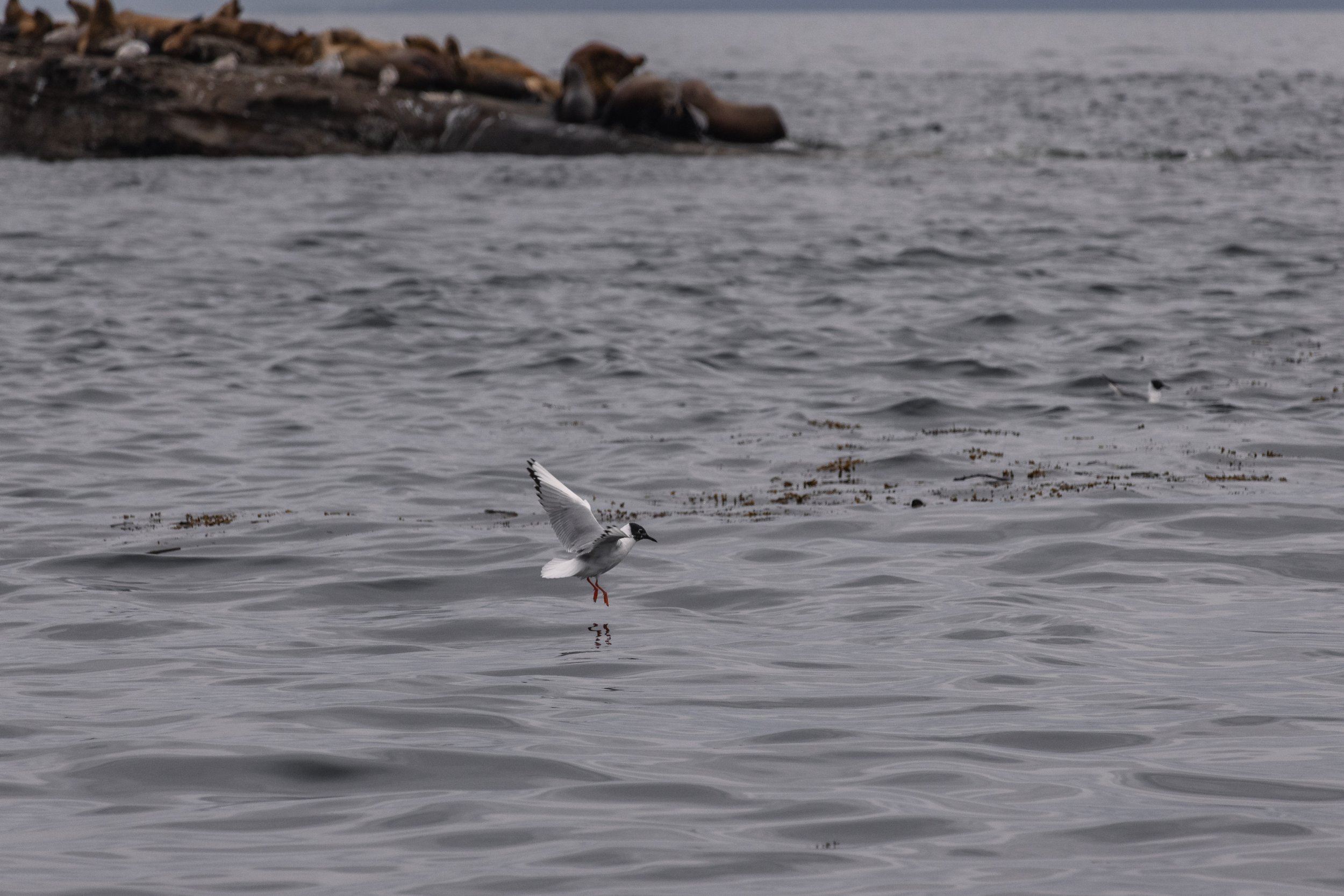
A Bonepartes Gull coming in for a landing. Photo by Vanessa Vereschahen.
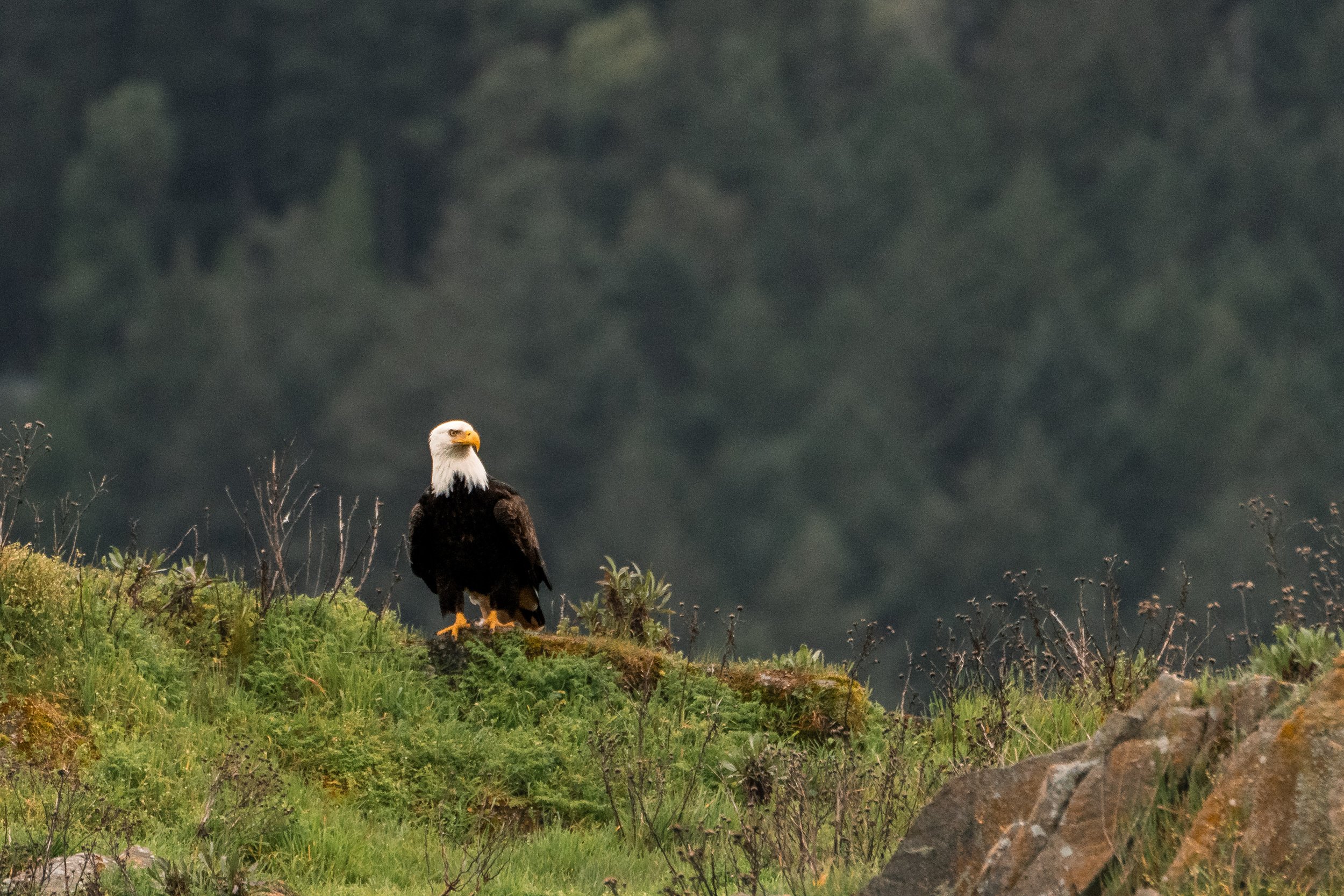
A Bald Eagle striking a pose at the Rose Islets. Photo by Val Watson.
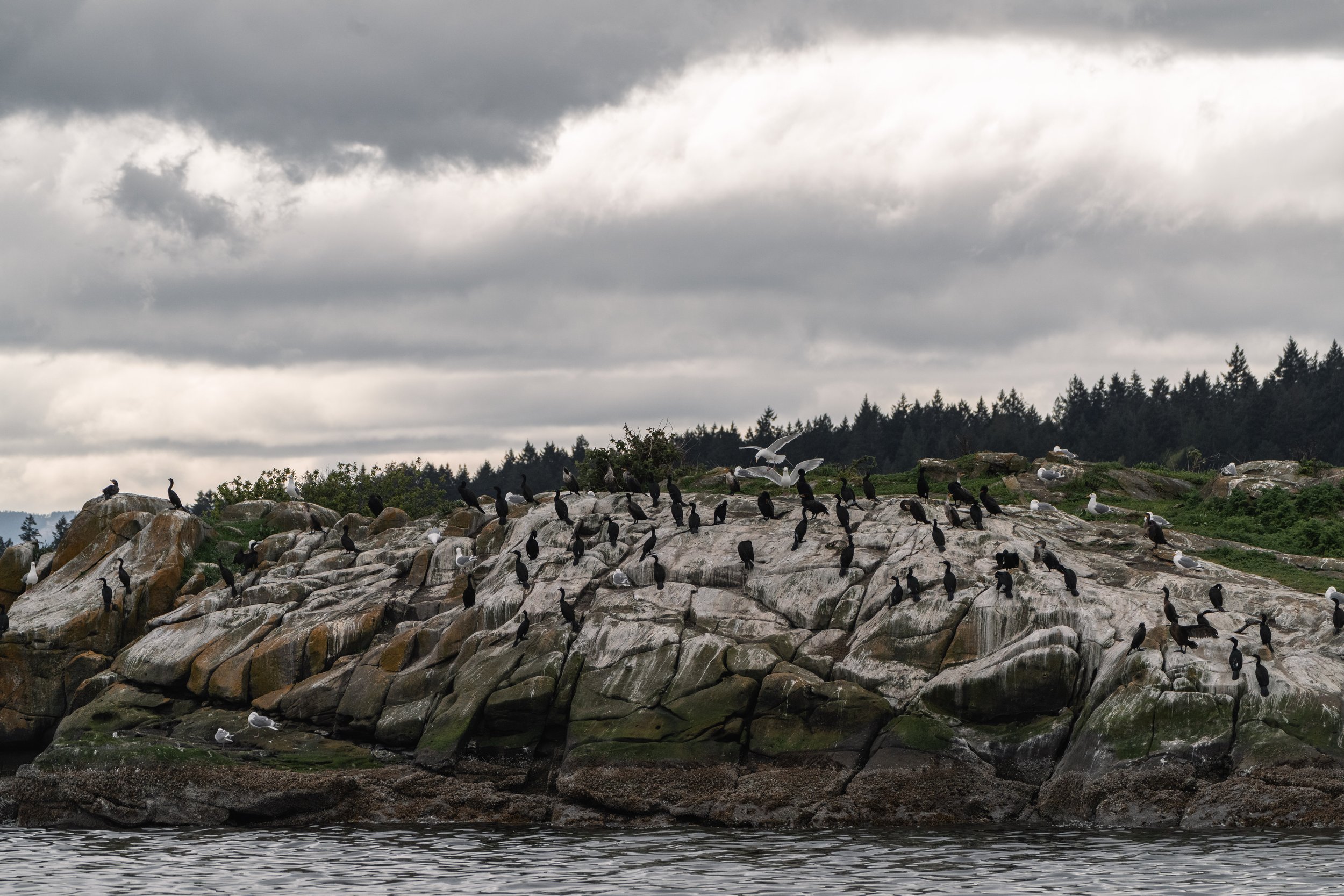
A great look at a small Cormorant Colony. Photo by Val Watson.