
April 15, 2026 - Orca in Howe Sound
In true West Coast fashion, the day brought a mix of sun and passing rain. Today we boarded Kula and headed out, eager to start our adventure.
As we departed, our search began. Turning toward the mainland of British Columbia, we scanned the water carefully, encouraged by recent sightings in the area. The landscape shifted as we travelled, and soon the towering mountains surrounding Howe Sound came into view. This fjord, just north of Vancouver, welcomed us with its brilliant green waters as we moved deeper inside.
Not long after entering, the moment arrived. Four dorsal fins surfaced ahead of us, moving steadily along the shoreline. Their fins were short and curved, rising and falling at the surface as they travelled. Captain Rodrigo positioned Kula parallel to the whale and shores while Naturalist Aly began photographing the group, an essential (and exciting) step to every whale encounter.
Photos help us identify not only the ecotype of orca we are with, but also the individuals we are viewing. Two of these orca had very unique dorsal fin notches – one sported two notches, one near the top and one near the base, while the other had a very large notch near the tip of their fin, with a triangular piece of fin sticking off the back. With this information, we concluded that this was the T086As, a matriline of Transient orca:
T086A Eider ♀ (1988)
T086A3 Tyndall ♀ (2011)
T086A4 Akia ♀ (2016)
T086A5 Siku ♂ (2024)
The T086As have been frequenting our waters in recent weeks, moving between the Southern Gulf Islands and Howe Sound. Their presence in these more sheltered areas suggests they may prefer hunting nearshore rather than the open waters of the Strait. T086A Eider’s eldest calf, T086A1 Nahanni, has been following a similar route in our waters lately, though she (Nahanni) and her calf have been travelling with the T124A4s instead of with her natal matriline.
During our encounter, their focus appeared to be on travel. Transient orca can cover over 100 kilometres in a single day, making steady movement a common part of their routine. Eider and her calves were likely on their way toward another haulout, where they could search for their next opportunity to hunt.
Soon, our time with the T086As was up, and we began to depart. We took one last look at the beautiful mountains cascading around us before we left Howe Sound behind, once again crossing the waters of the Strait of Georgia back towards Nanaimo.
Back on this side of the Strait, our attention shifted to a different kind of wildlife. At Entrance Island, a rocky outcrop marked by its red-and-white lighthouse, a lively gathering awaited us.
Dozens of Steller sea lions covered the shoreline, their calls echoing across the water. Among them was a massive adult male, resting and towering over the others. As the largest species of sea lion in the world, adult males can reach over 1000 kilograms, and seeing one yourself offers a clear sense of their size and presence.
Haulouts like Entrance Island are essential rest spots for pinnipeds. By coming ashore, they can conserve body heat and maintain their energy reserves. Even during our hot summer months, our waters remain frigid, making these areas an important part of their daily lives.
At the opposite end of the island, another quieter pinniped species was resting. Here, Harbour seals rested along the rocks, scattered in small groups as they stretched and dozed near the water’s edge. In the midst of them, a flash of white stood out. A mature Bald Eagle moved through the shallows, pausing occasionally to pick at food along the shoreline. It lifted its head now and then, its beak showing remnants of its feast before once more continuing its search.
Afterwards, we departed Entrance Island and made our way back. Rounding Gabriola Island, the Nanaimo skyline came back into view, signalling the end of our journey. We navigated through the harbour and returned to the dock, wrapping up another memorable day on the water.
Thank you to Marine Naturalist Aly Kohlman for today’s photos. Please enjoy them below!
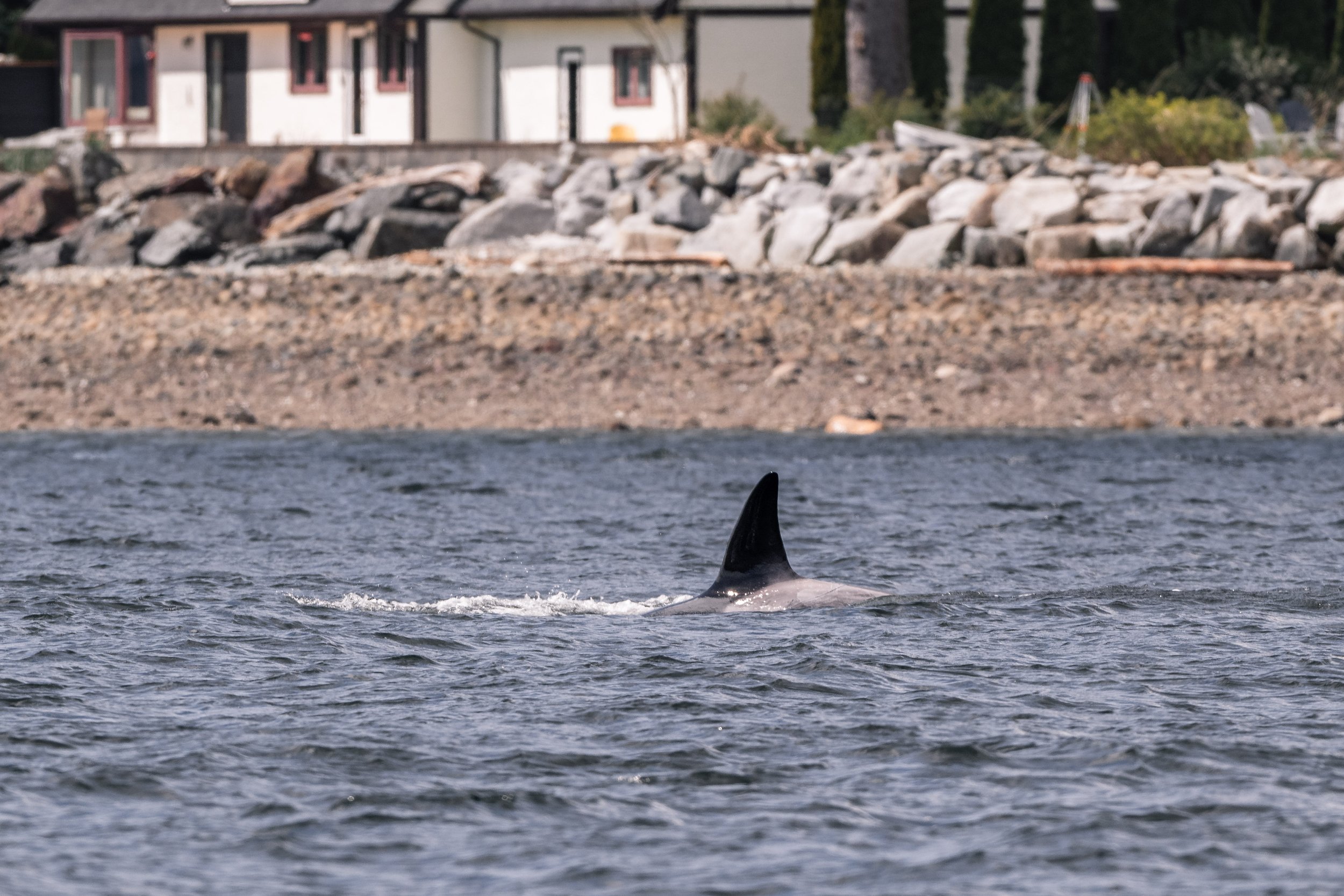
T086A4 Akia travelling along.
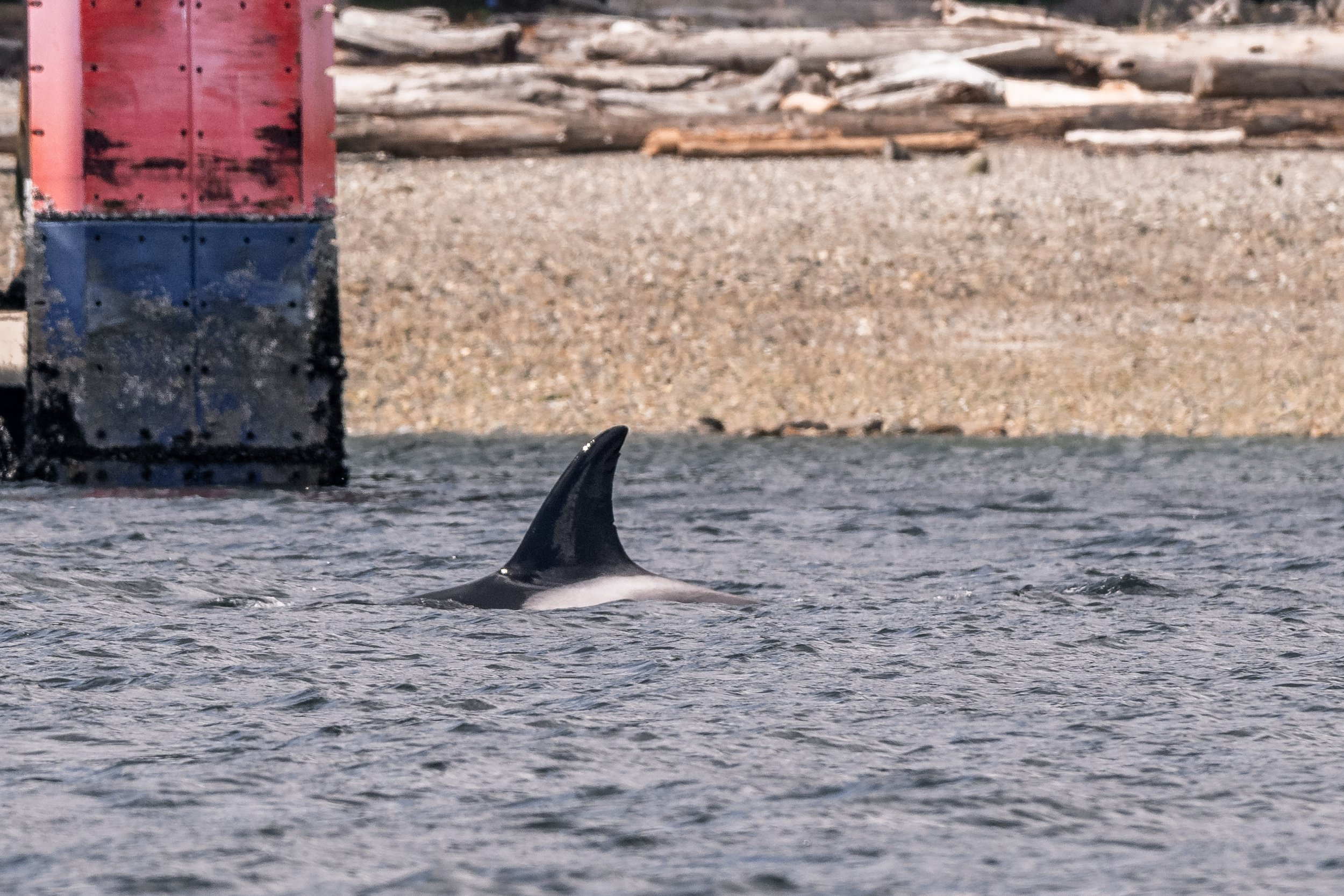
T086A Eider with her distinct double-notched dorsal.
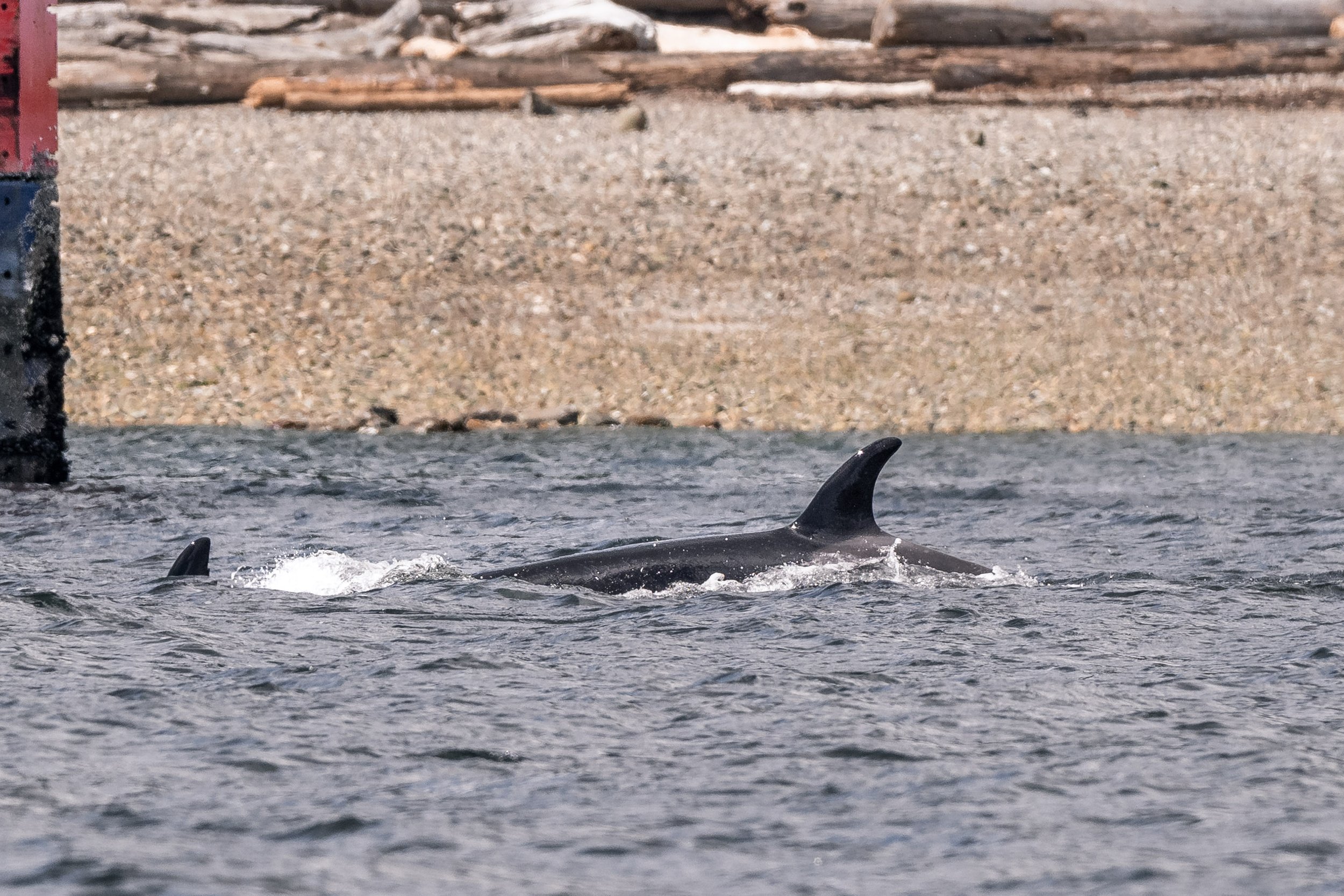
T086A5 Siku following close behind his mother T086A Eider.
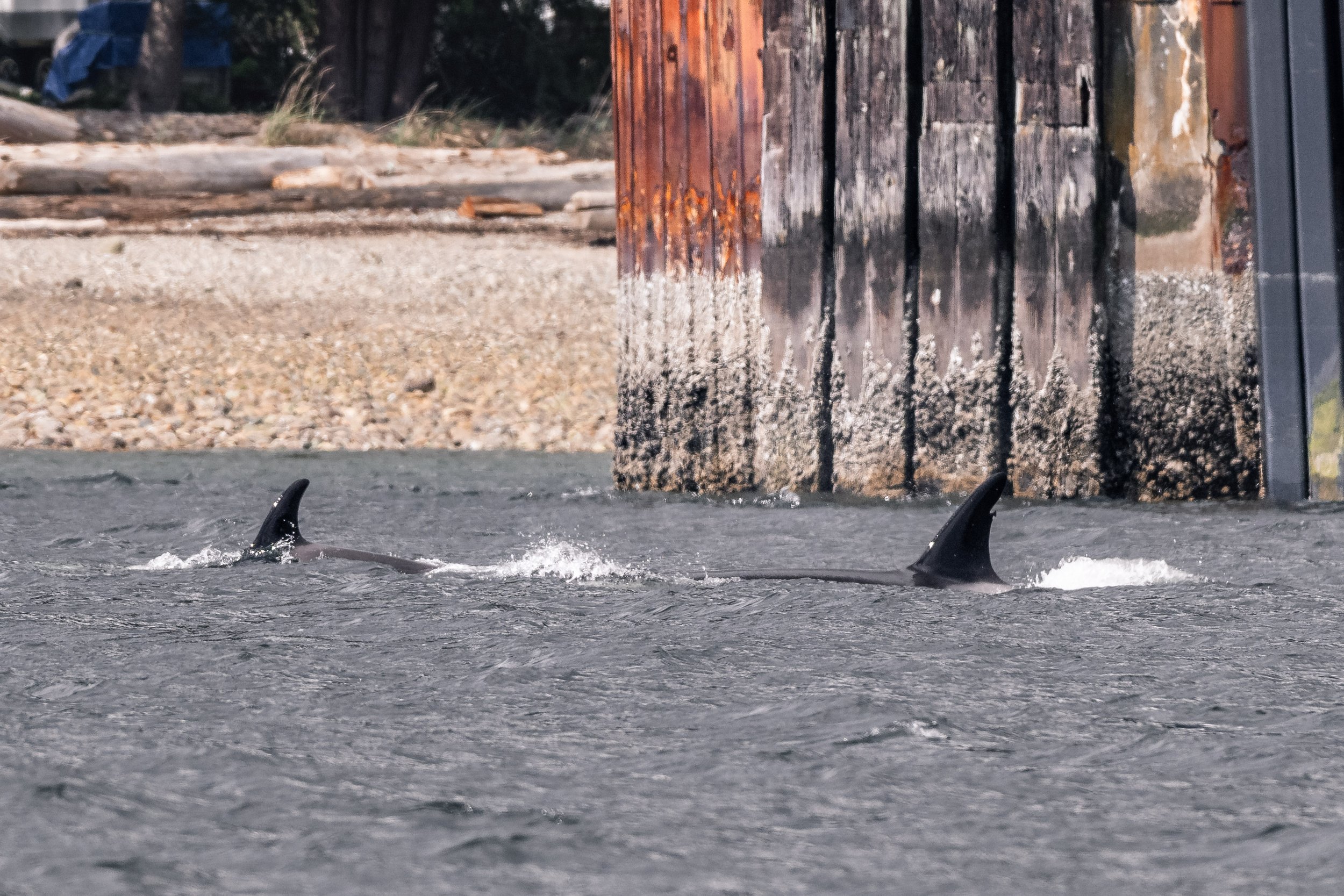
T086A5 Siku travelling in front of his sister T086A3 Tyndall.
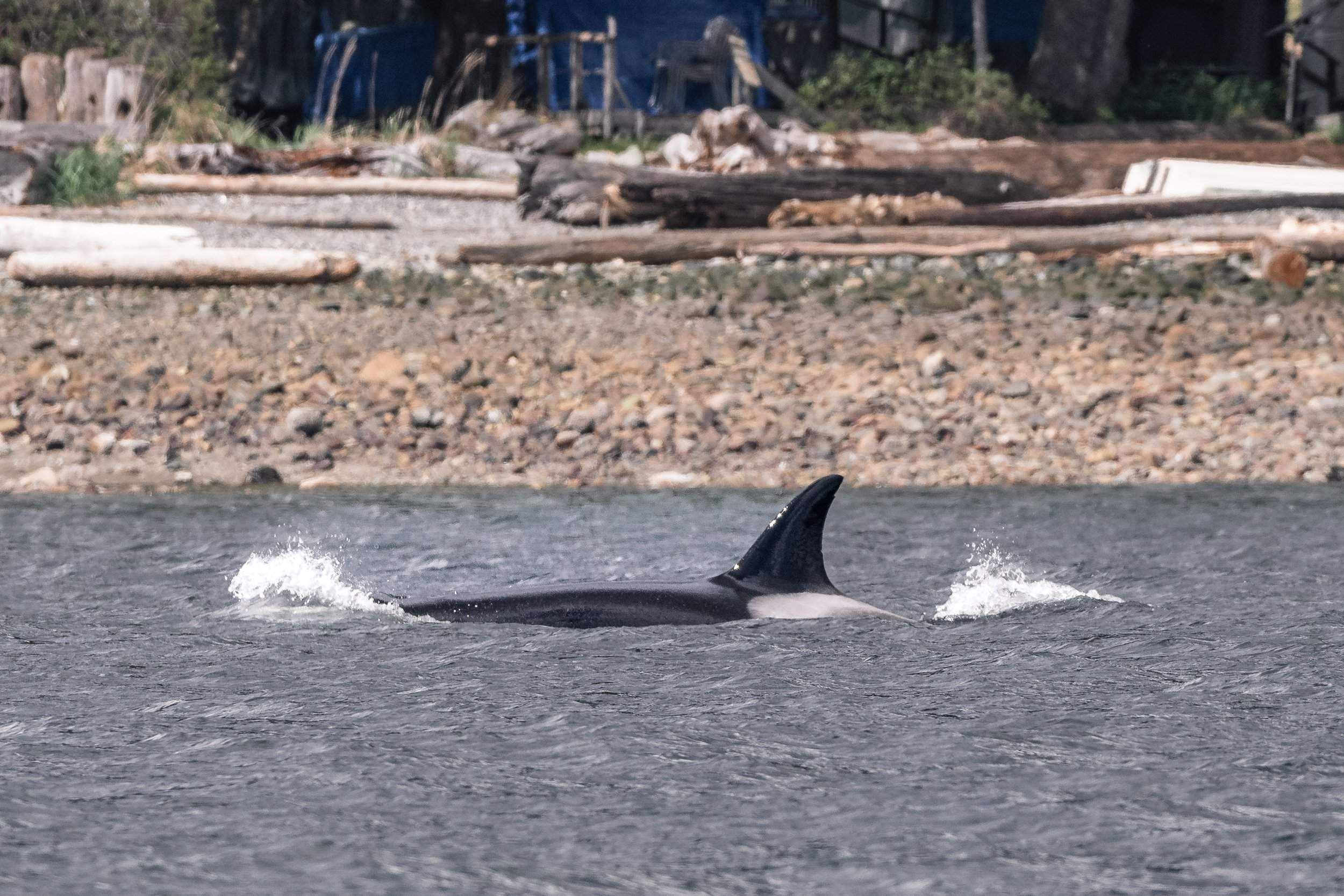
T086A Eider surfacing in the surf.
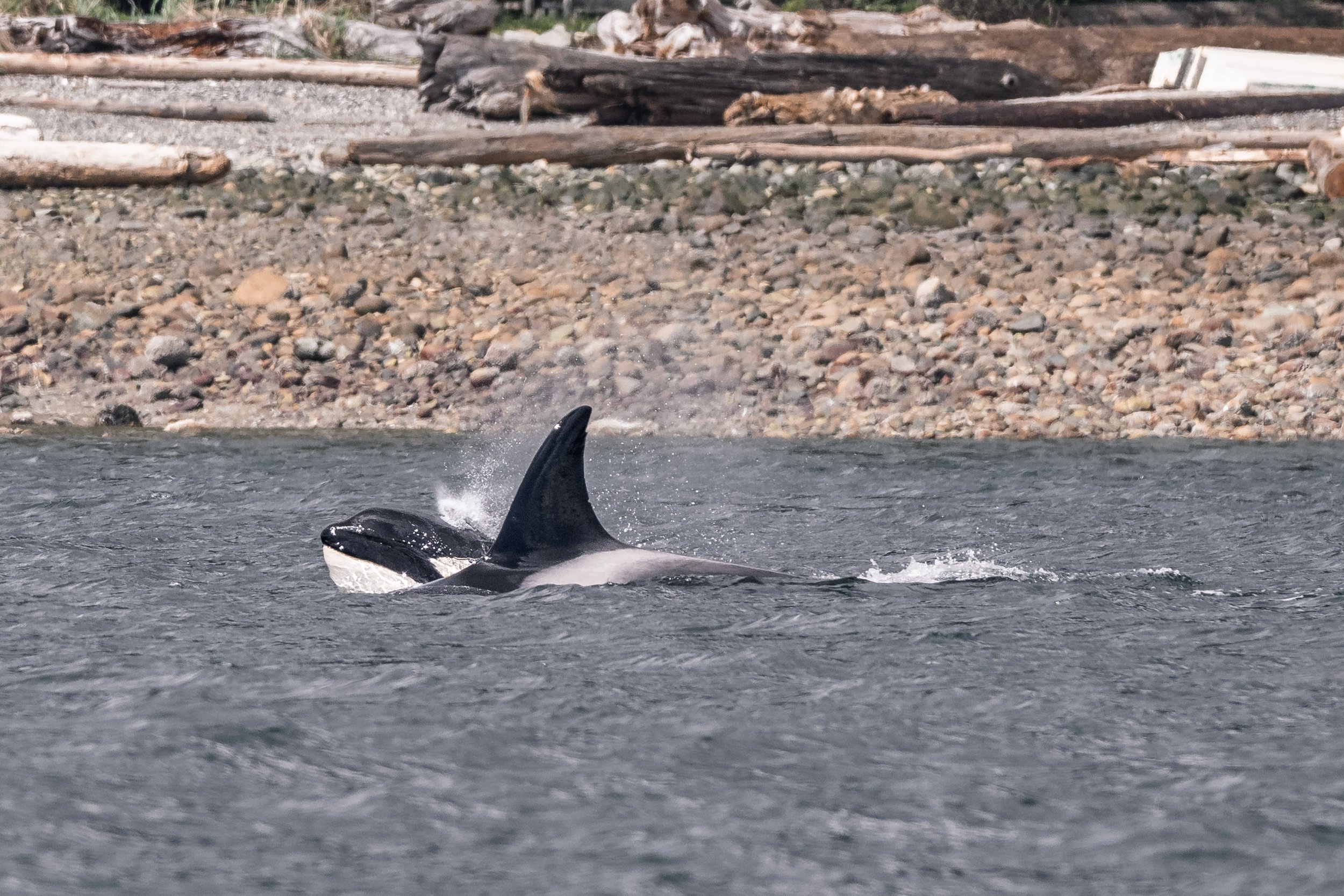
T086A Eider travelling with T086A5 Siku’s face popping out of the waters beside her.
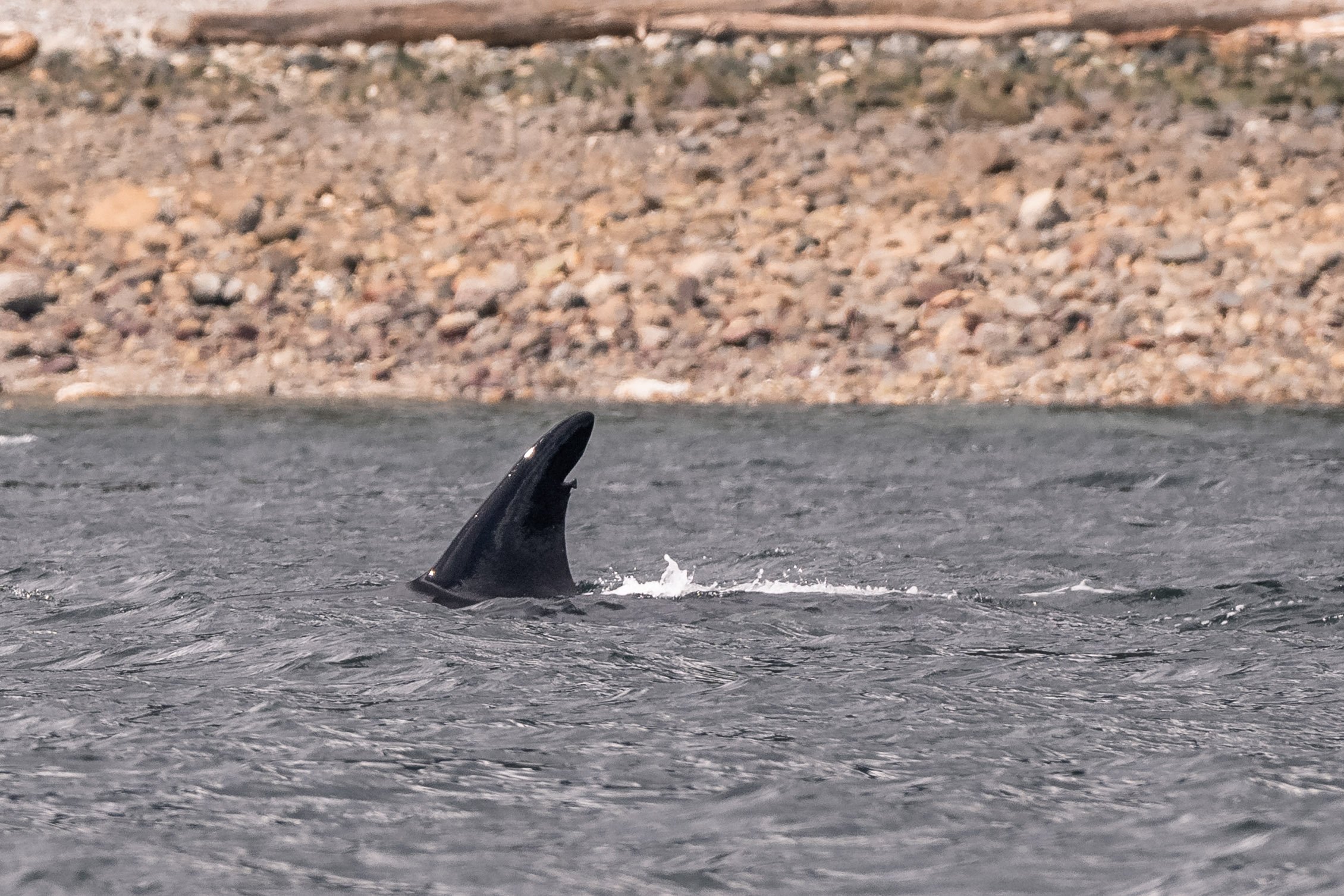
T086A3 Tyndall beginning to dive.
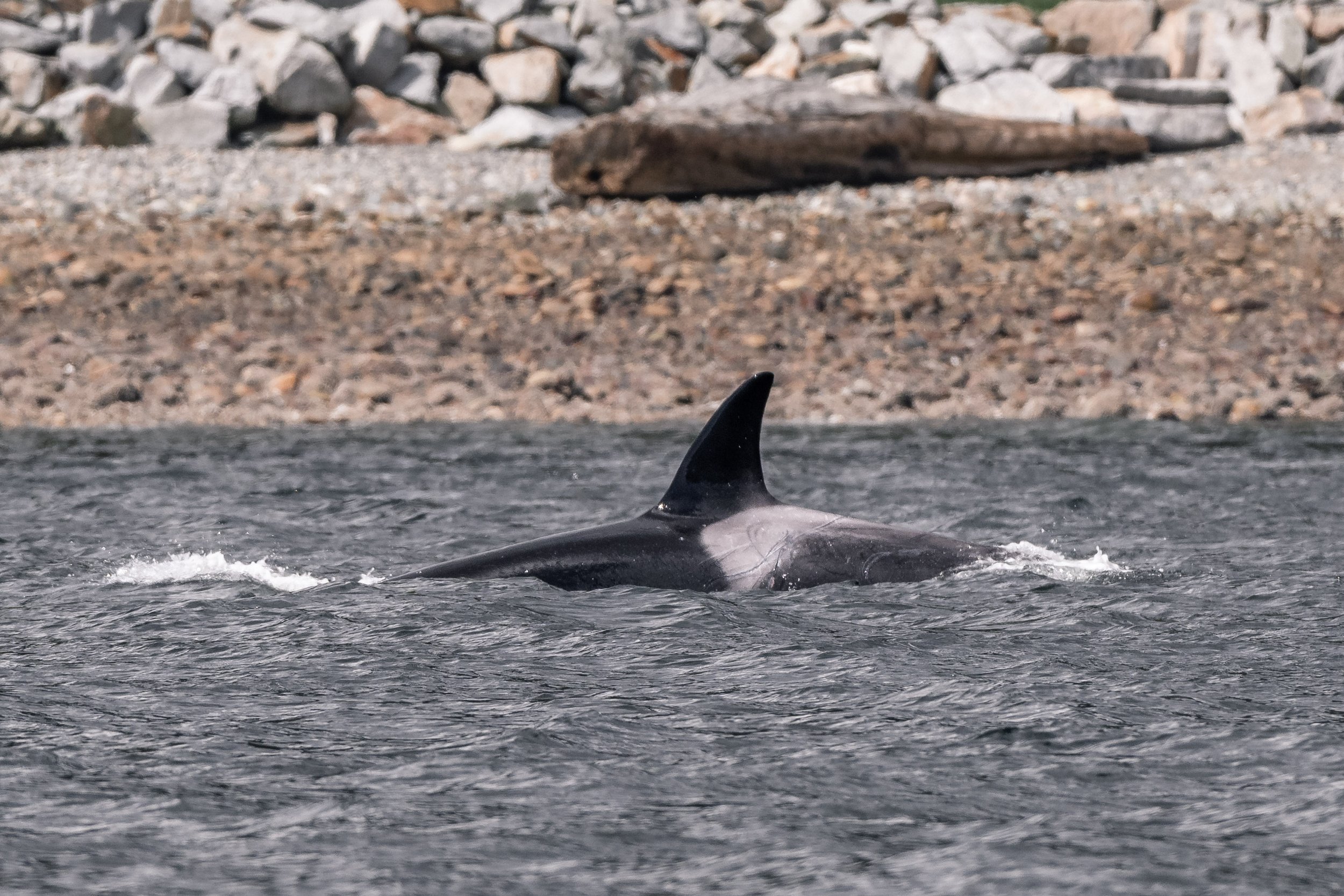
T086A4 Akia has some very deep and distinct scarring on her saddlepatch now.
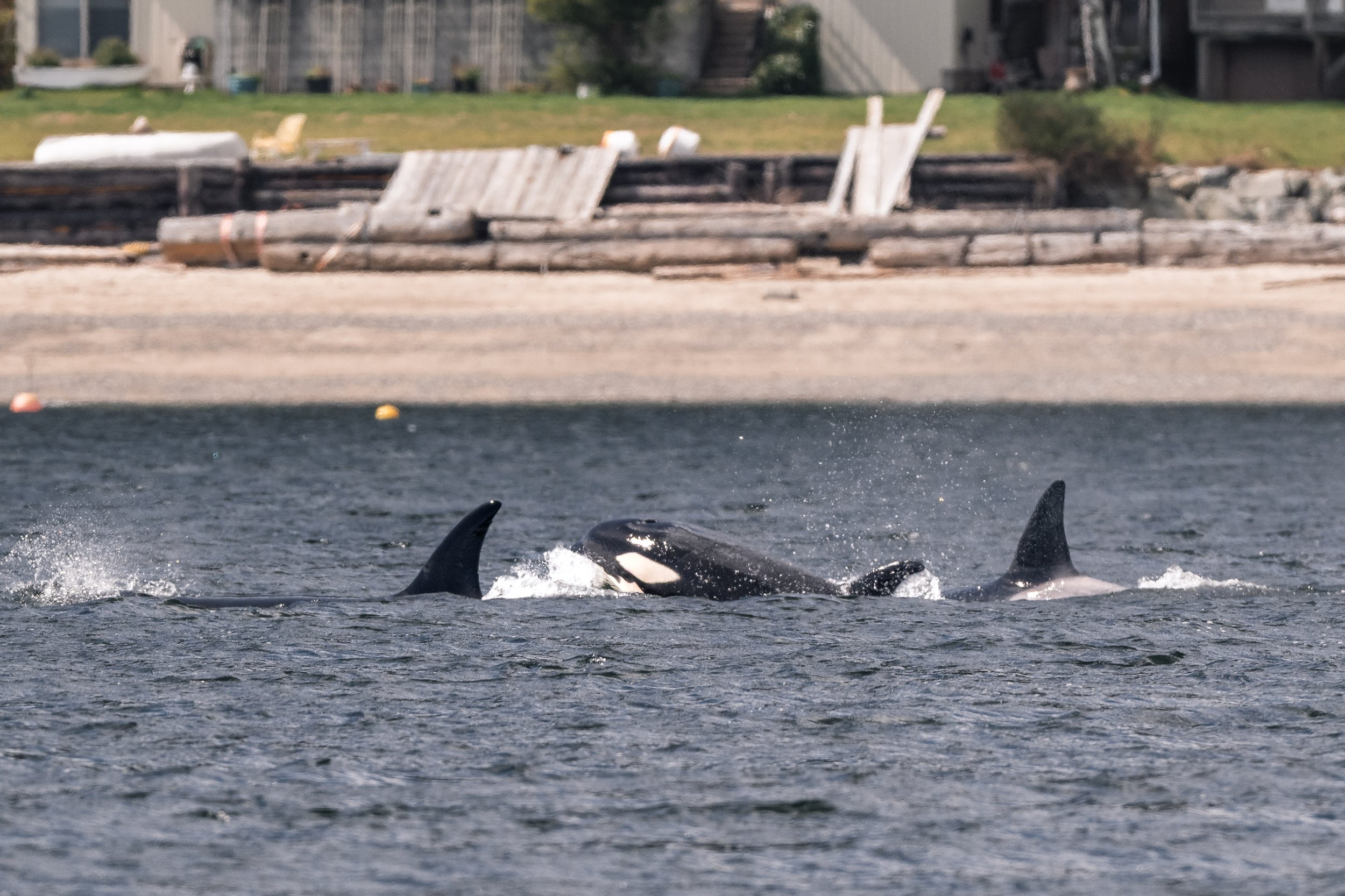
T086A Eider in the lead, with T086A5 Siku beside her (eyepatch visible), and T086A4 Akia behind them.
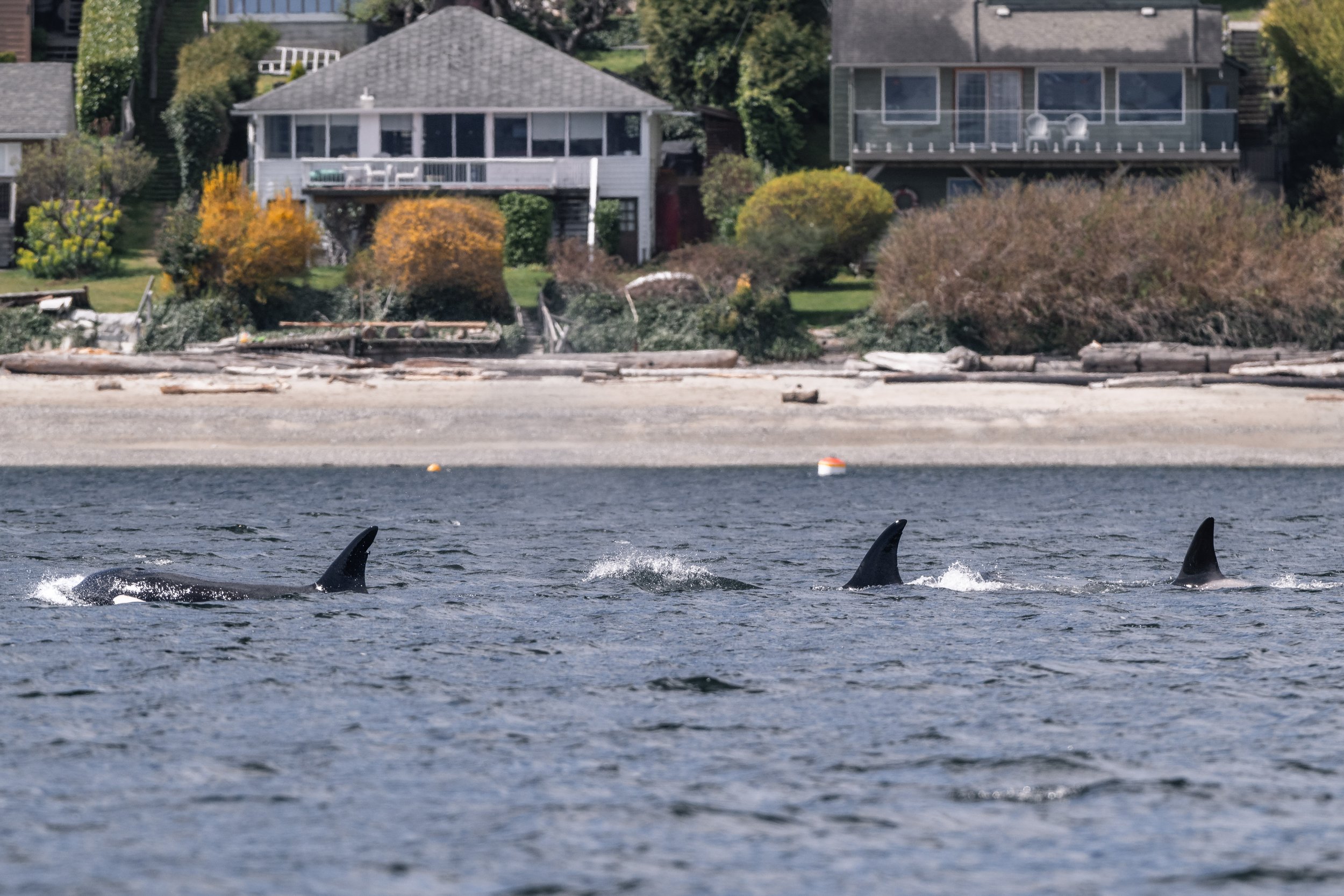
T086A3 Tyndall, T086A Eider, and T086A4 Akia.
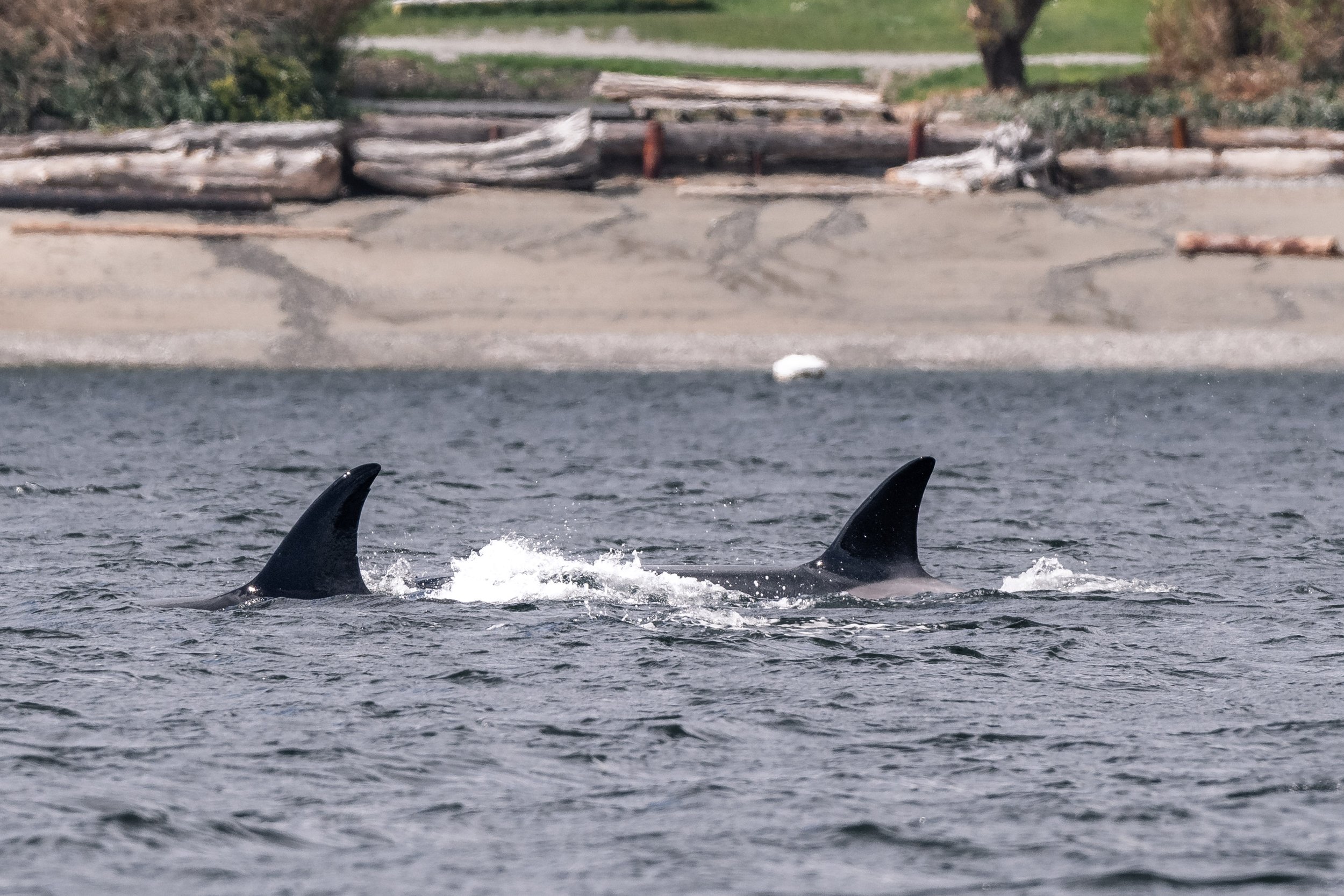
T086A Eider and her middle child T086A4 Akia.
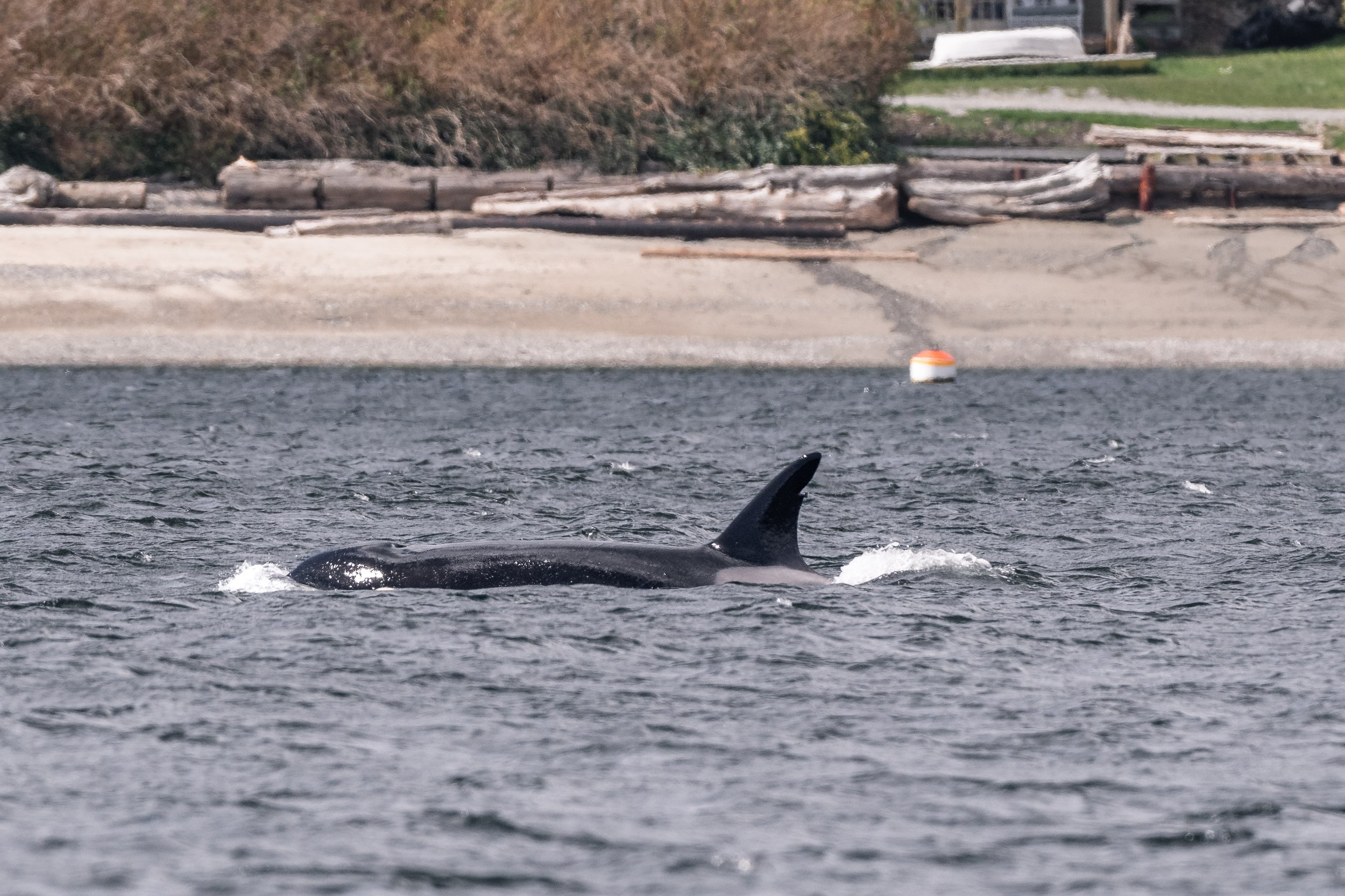
T086A3 Tyndall zipping along the shoreline.
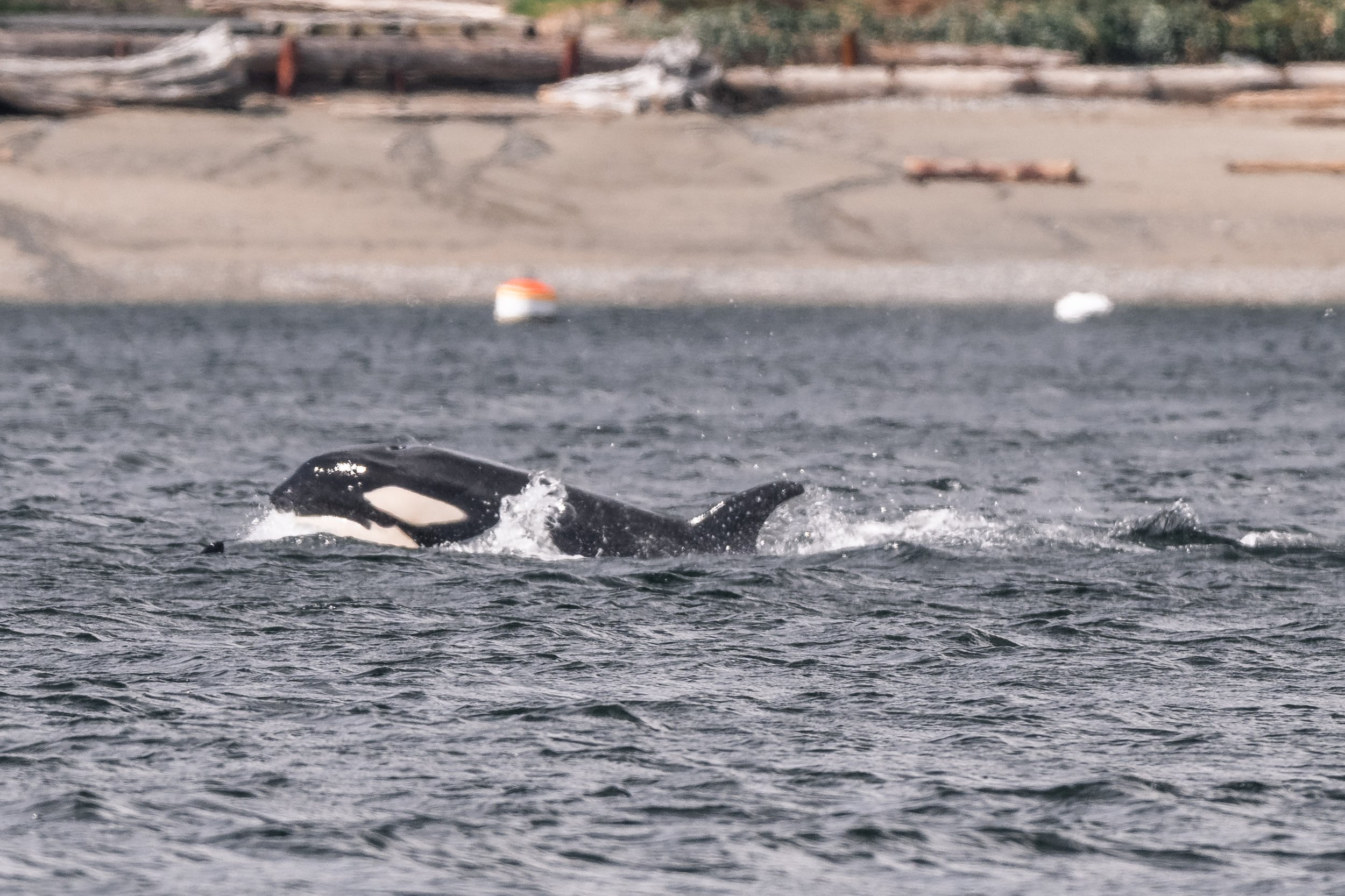
T086A5 Siku with his face above the surface.
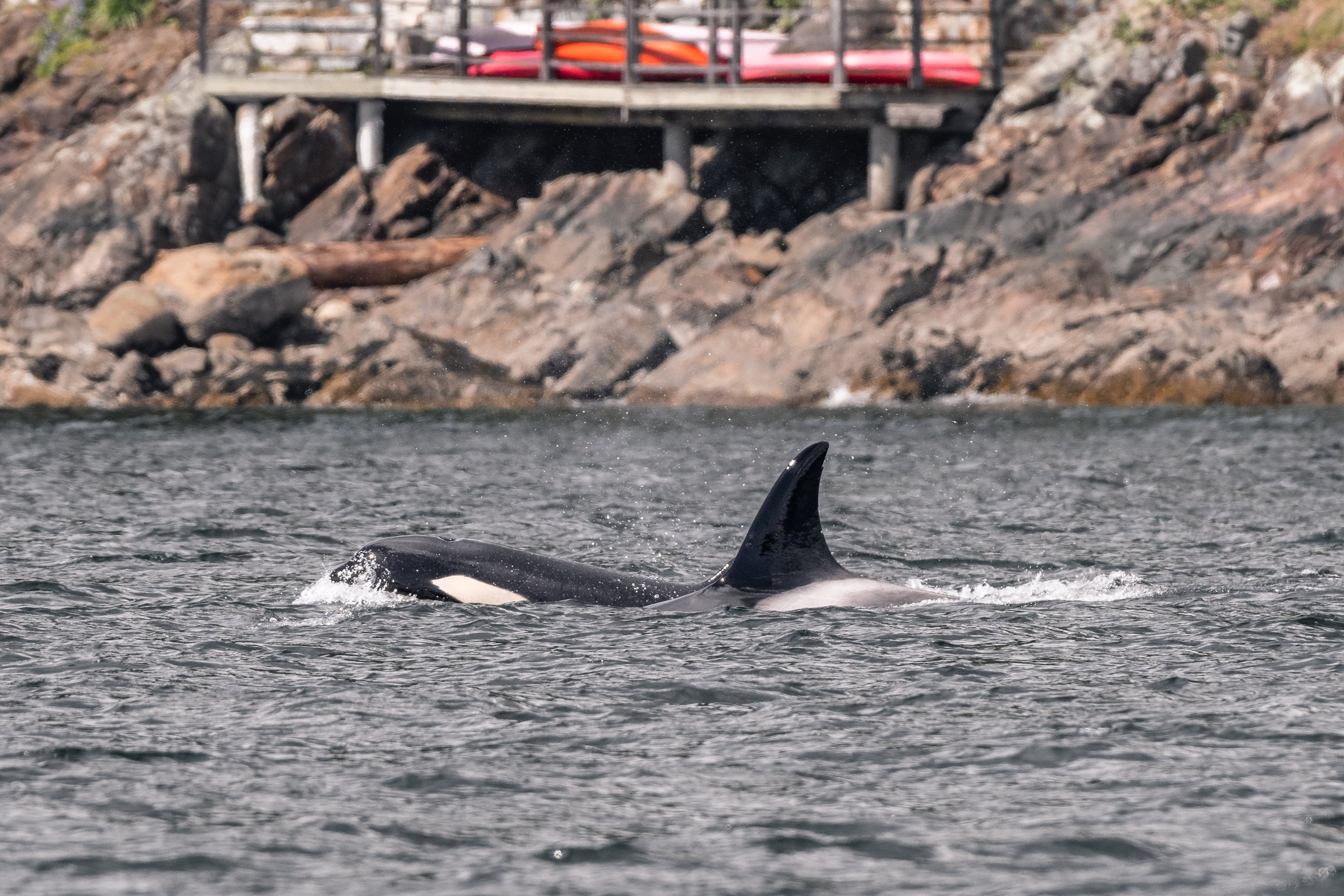
T086A5 Siku travelling closely with his mother T086A Eider.
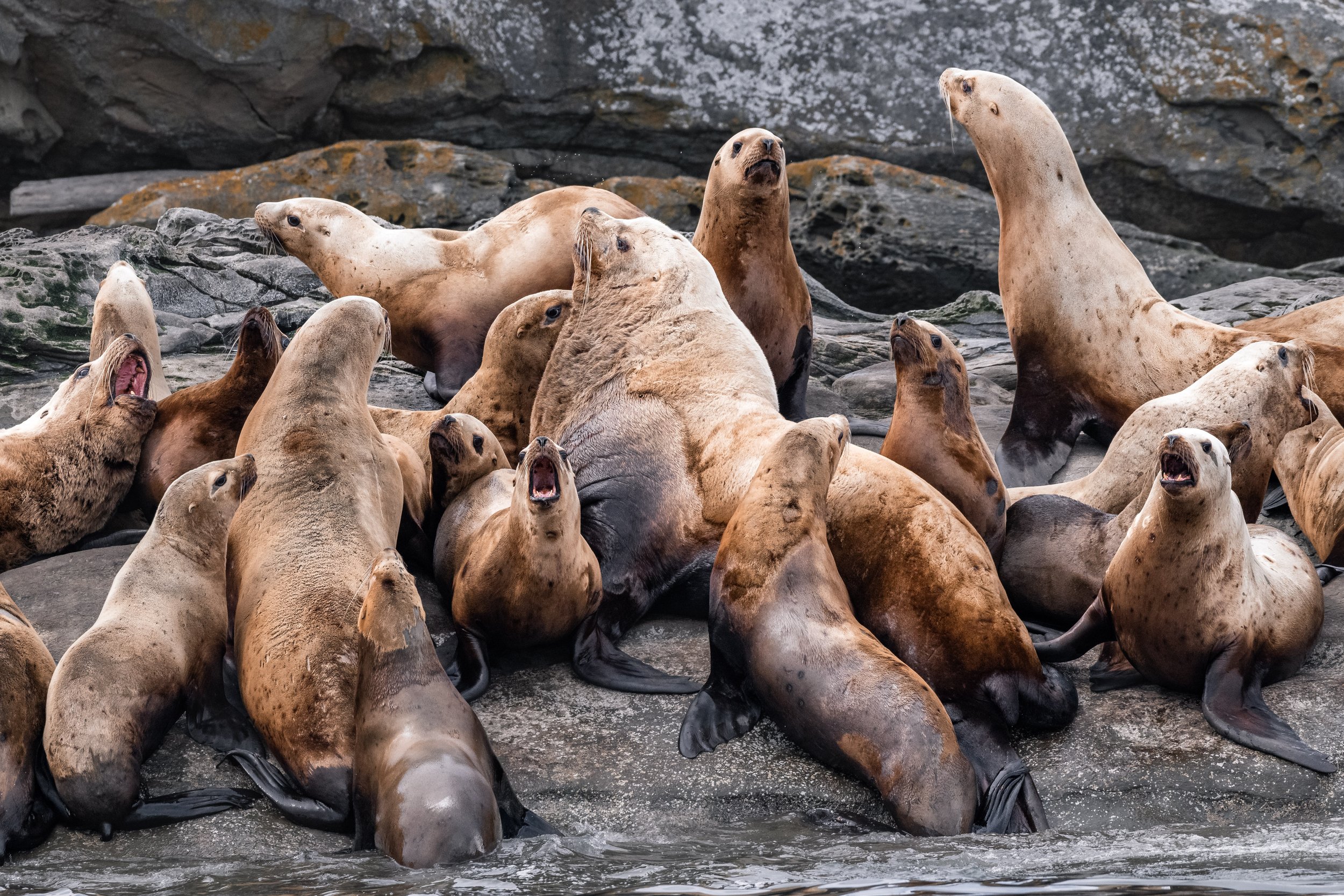
Entrance Island was full of Steller Sea Lions, including a very large adult male!
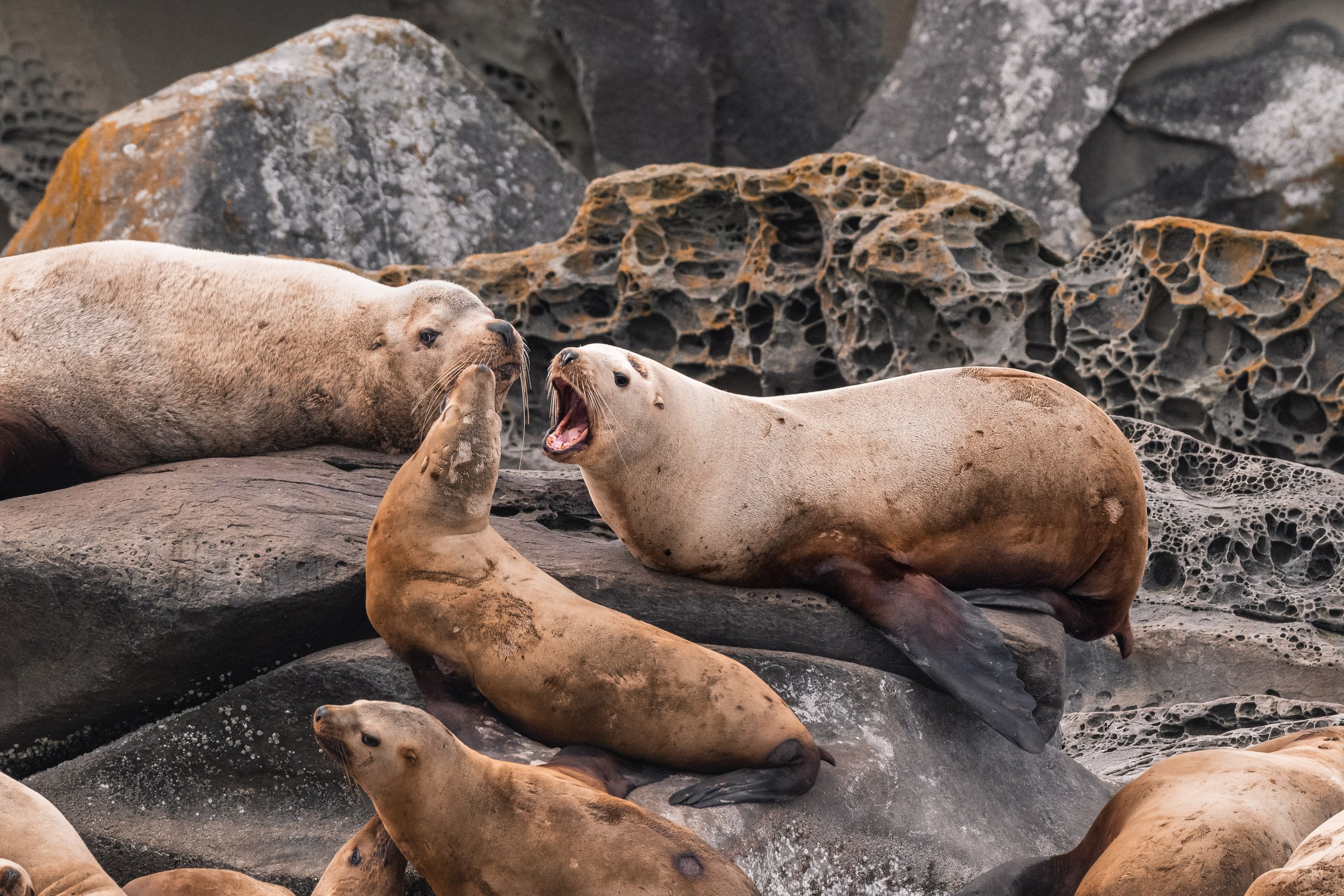
There’s very little peace and quiet amongst the sea lions!
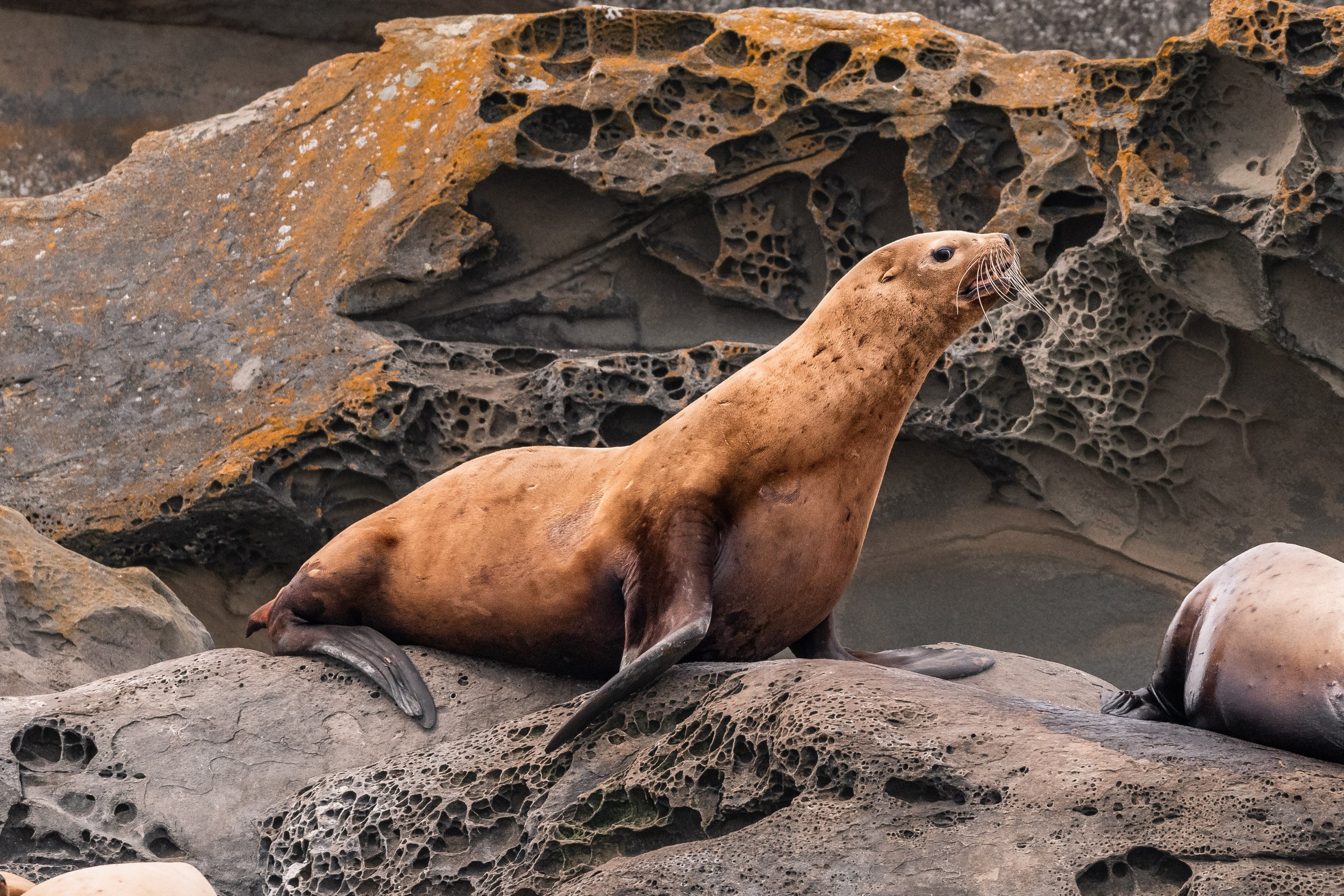
Getting side-eyed by one of the sea lions.
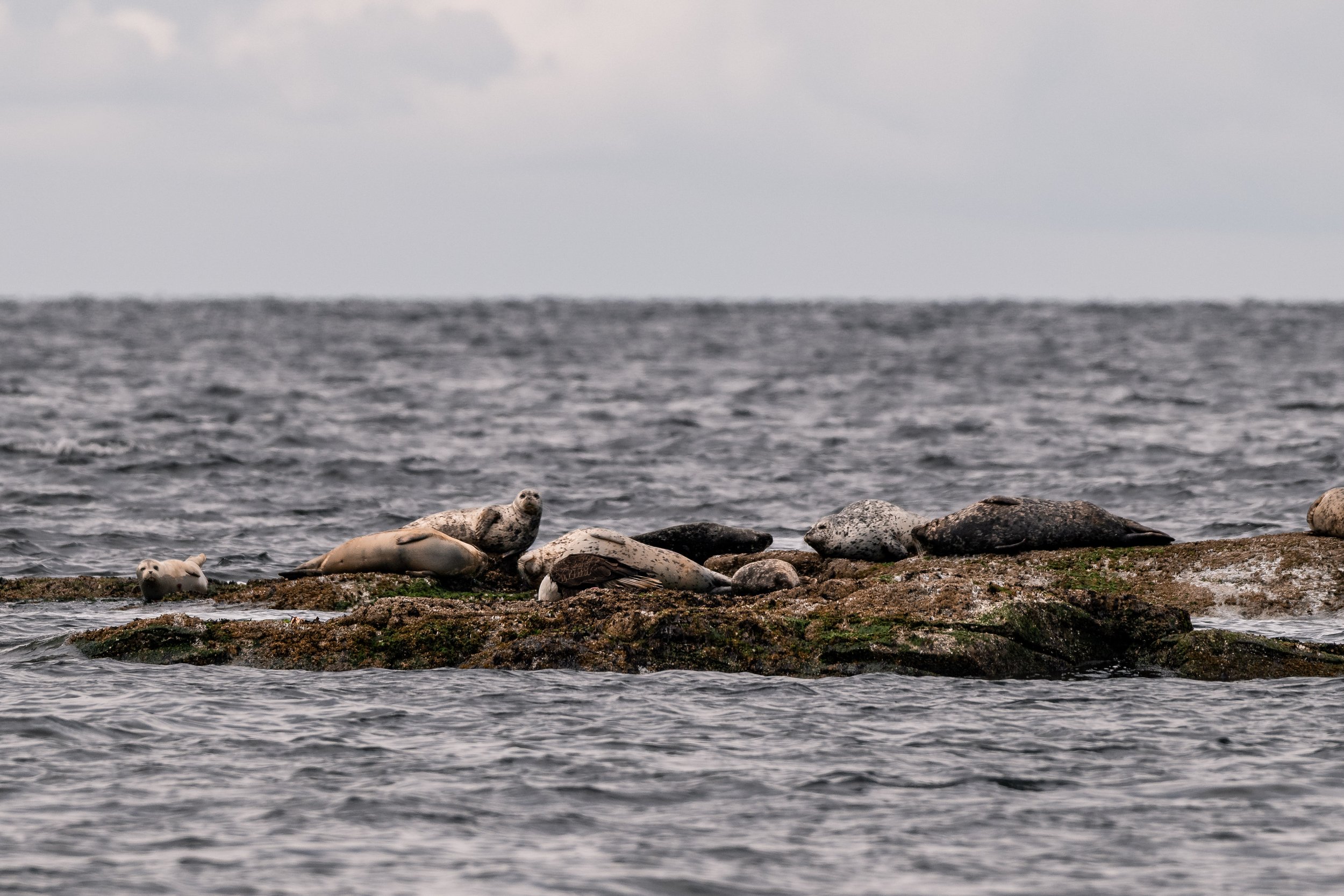
Harbour Seals hauled out at the tip of the island, with a Bald Eagle eating amongst them.
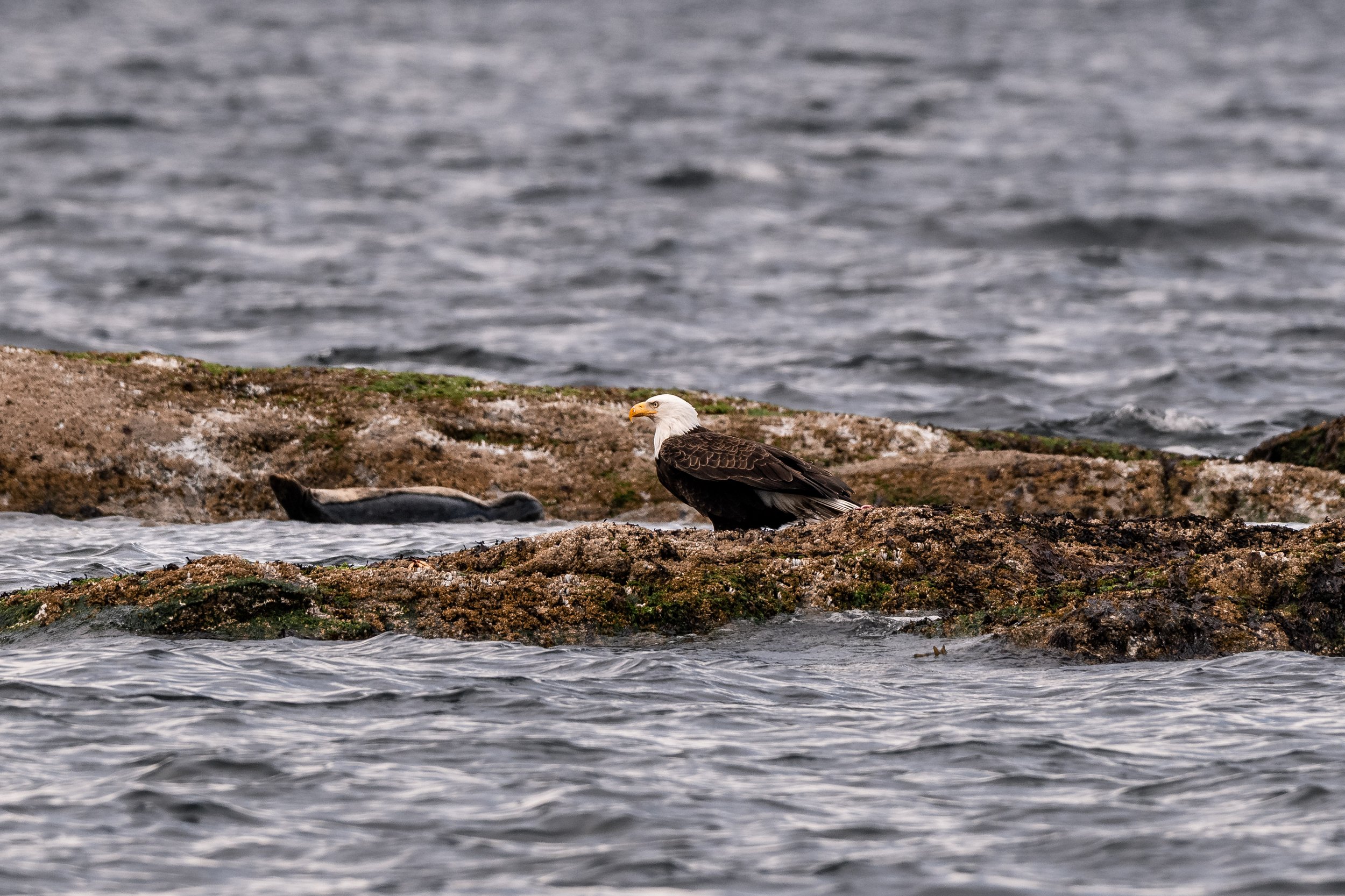
Majestic and proud, the Bald Eagle stands up and surveys around it.
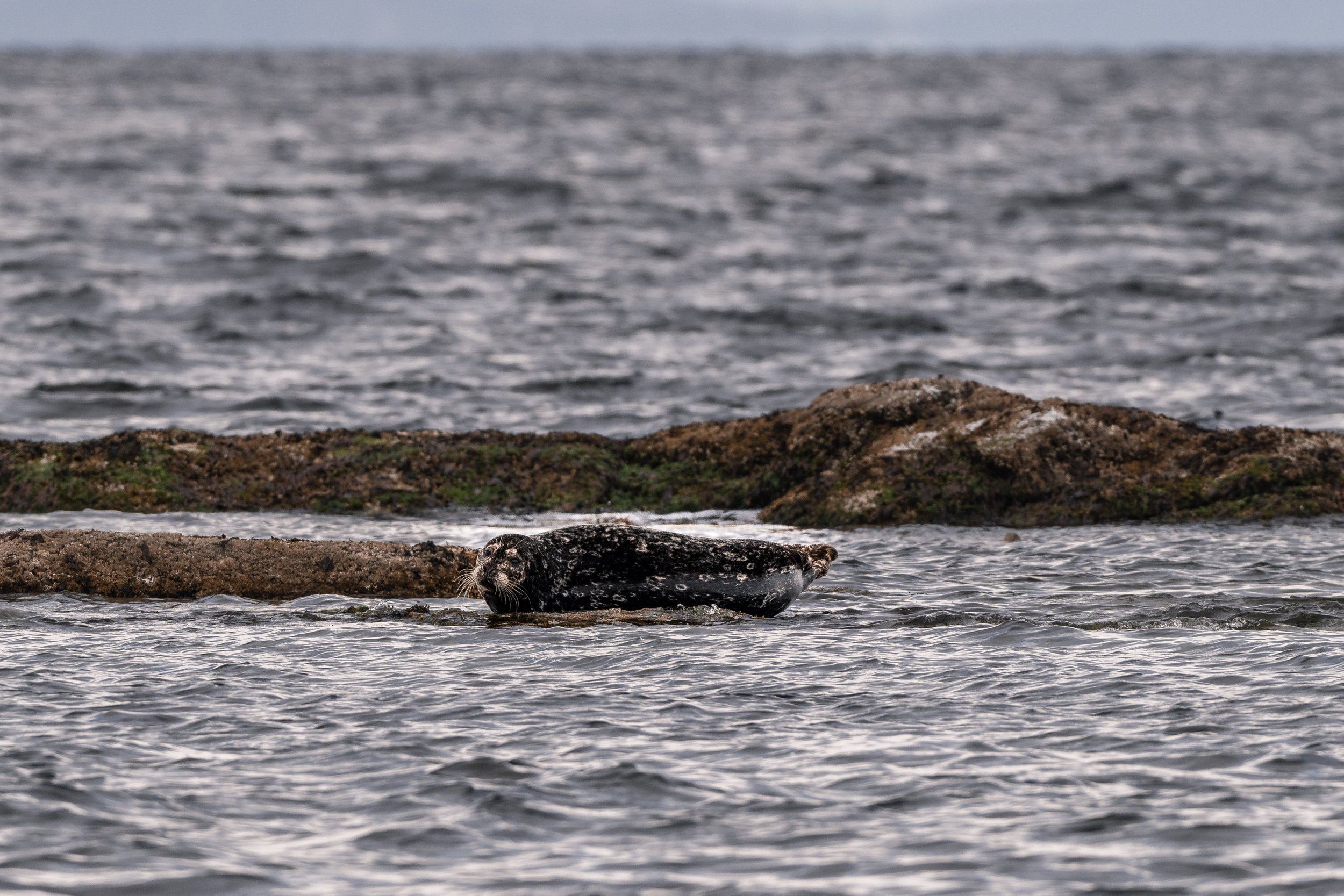
A solo seal sitting in the surf.
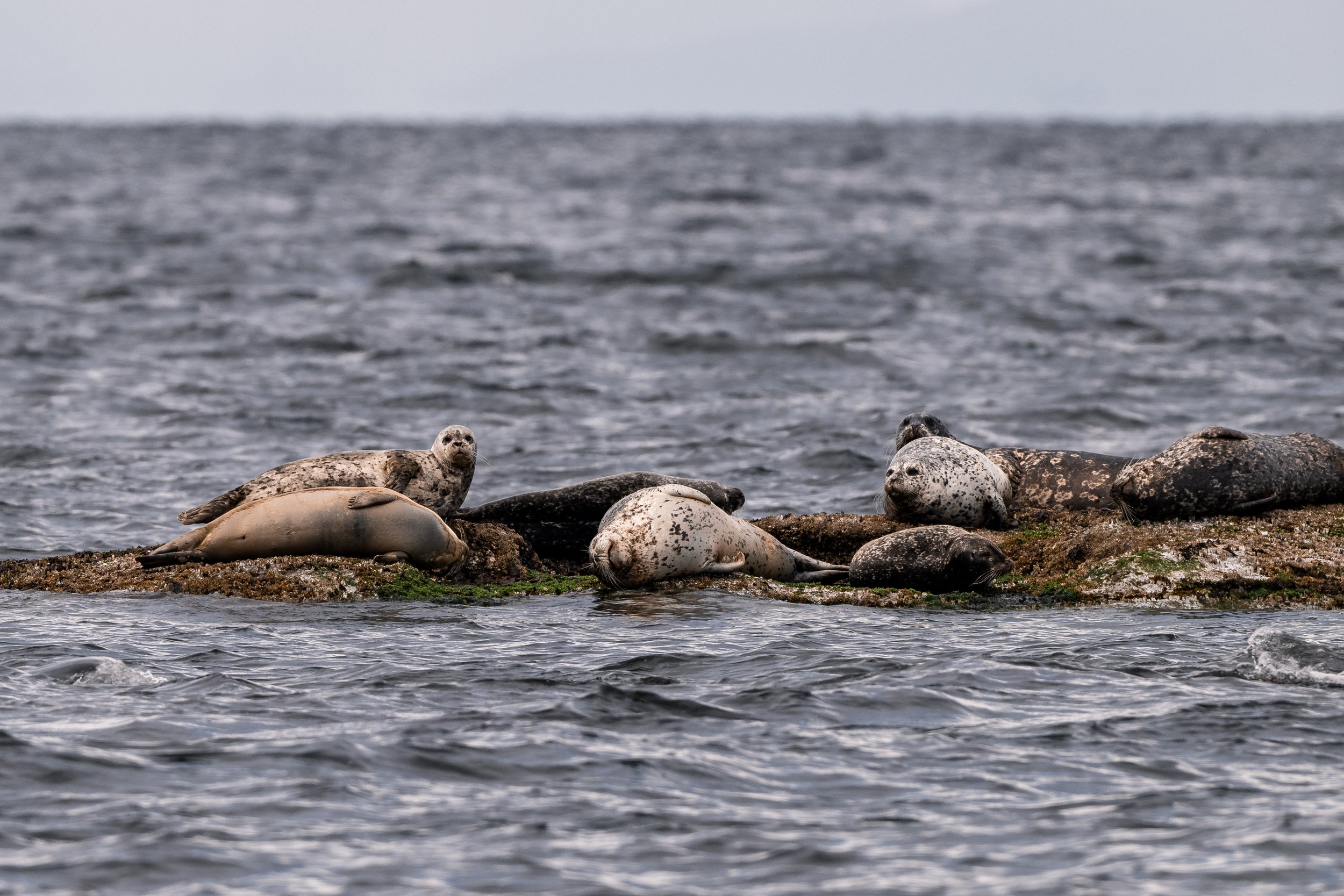
Nap time!