
April 16, 2026 - Feeling like Spring, Spending Time Alongside Orca and Humpback.
It was a beautiful spring day here on the west coast as we set off from the dock. The sun was shining alongside the crisp ocean air as we began our journey out of the Nanaimo Harbour, and our passengers got acquainted with our vessel for the day, Kula.
We began our search by heading south through the Northumberland Channel before making our way toward Dodds Narrows. Dodds Narrows is a narrow waterway between Mudge Island and Vancouver Island, well known for its fast-moving tidal currents, and a popular viewing point at the end of the Cable Bay Trail. As we approached, the water itself told a story, rippling, swirling, and shifting, with currents that can reach speeds of up to 9 knots here. These powerful tidal exchanges act like a natural mixing system, pulling nutrient-rich waters from the depths up toward the surface. This process fuels plankton blooms, which in turn support entire food webs, from small schooling fish all the way up to the whales we were searching for. It’s one of the many reasons the Salish Sea is such a biologically rich and productive ecosystem.
Continuing south, we wove our way through the stunning southern Gulf Islands, taking in the rugged shorelines, forested bluffs, and quiet coves that make this region so iconic. It wasn’t long before a shout from the deck broke the calm, a blow! Off in the distance near Wallace Island, a tall, bushy plume rose above the horizon. Instantly, the energy on board shifted. Cameras were raised, and Aly reached for the zoom lens to get a closer look at who had returned to our waters.
As we carefully approached, the whale surfaced again, offering us a better look. Identification is a key part of our work, and every sighting contributes to long-term research and understanding. For humpback whales, we rely heavily on the unique patterns on the underside of their tail flukes, as well as the shape and markings of their dorsal fins. No two humpbacks are the same; each tail is like a fingerprint. By photographing these features and comparing them with established catalogues, we can not only determine who we are looking at but also track their movements and histories over time. This humpback was Slits (BCY0946).
Humpback whales return to these waters each year because of the incredible feeding opportunities. After spending the winter months in tropical breeding grounds, where they fast almost entirely, they arrive back in the nutrient-rich waters of the Salish Sea to replenish. An adult humpback can lose a significant portion of its body weight during migration and breeding, so feeding here is critical. Slits was likely taking full advantage of the abundant prey, working to rebuild the energy reserves needed for the months ahead.
After spending some time observing this gentle giant, we left Slits to continue her travels and shifted back into search mode. A report had come in from closer to home, and curiosity got the better of us, what could it be? We turned north, scanning the water as we went.
Along the way, we stopped to visit some familiar faces. Hauled out on the rocky shoreline were harbour seals, a common and beloved resident of these waters. Present year-round, they are well adapted to life in the Salish Sea and can often be seen resting between foraging trips. Not long after, we encountered their much larger cousins, the Steller Sea Lions. Their deep, resonant vocalizations carried across the water before we even saw them. Unlike harbour seals, Stellers are seasonal visitors here. They travel south to feed in the winter and spring, taking advantage of the rich marine environment, before returning north to their breeding rookeries.
With our time among the pinnipeds complete, it was time to refocus. We scanned the horizon, hoping to spot the unmistakable black fins of orca. Fingers crossed, we followed up on the earlier report, and soon enough, there they were. Cutting cleanly through the water, dorsal fins rose and fell in a steady rhythm. Cameras were up again, and the telephoto lens was back in action.
Identifying orca involves a different set of features compared to humpbacks. We look closely at the shape and size of the dorsal fin, the distinct saddle patch behind it, and even the eye patches, which vary between individuals. By comparing these markings to our catalogues, we can determine exactly which whales we are seeing.
It didn’t take long for Aly to recognize this particular group. We were in the presence of the T086As, accompanied by T071B1 and T071B2.
T071B1 Zengo ♀ (2013)
T071B2 Tasli/Nemo ♂ (2018)
T086A Eider ♀ (1988)
T086A3 Tyndall ♀ (2011)
T086A4 Akia ♀ (2016)
T086A5 Siku ♂ (2024)
These transient, or Bigg’s killer whales, are well-known in the area and are highly skilled marine mammal hunters. These whales travel extensively in search of prey.
Orca are incredibly mobile animals, capable of travelling over 100 kilometres in a single day. Their constant movement is driven by the need to find food, an adult orca can require upwards of 300 pounds of food per day. This energetic demand shapes their behaviour, keeping them on the move as they patrol their vast territories.
We spent some time travelling alongside the group, observing their coordinated movements and the strong social bonds that define their family units. As always, our approach was respectful and regulated, ensuring minimal disturbance while allowing for meaningful observation.
Eventually, it was time for us to turn back toward Nanaimo. As we made our way home, the sun still shining over the water, it was clear that the day had delivered everything the Salish Sea is known for: dynamic ecosystems, diverse wildlife, and unforgettable encounters.
Please enjoy the photos below taken by Marine Naturalist Aly Kohlman!
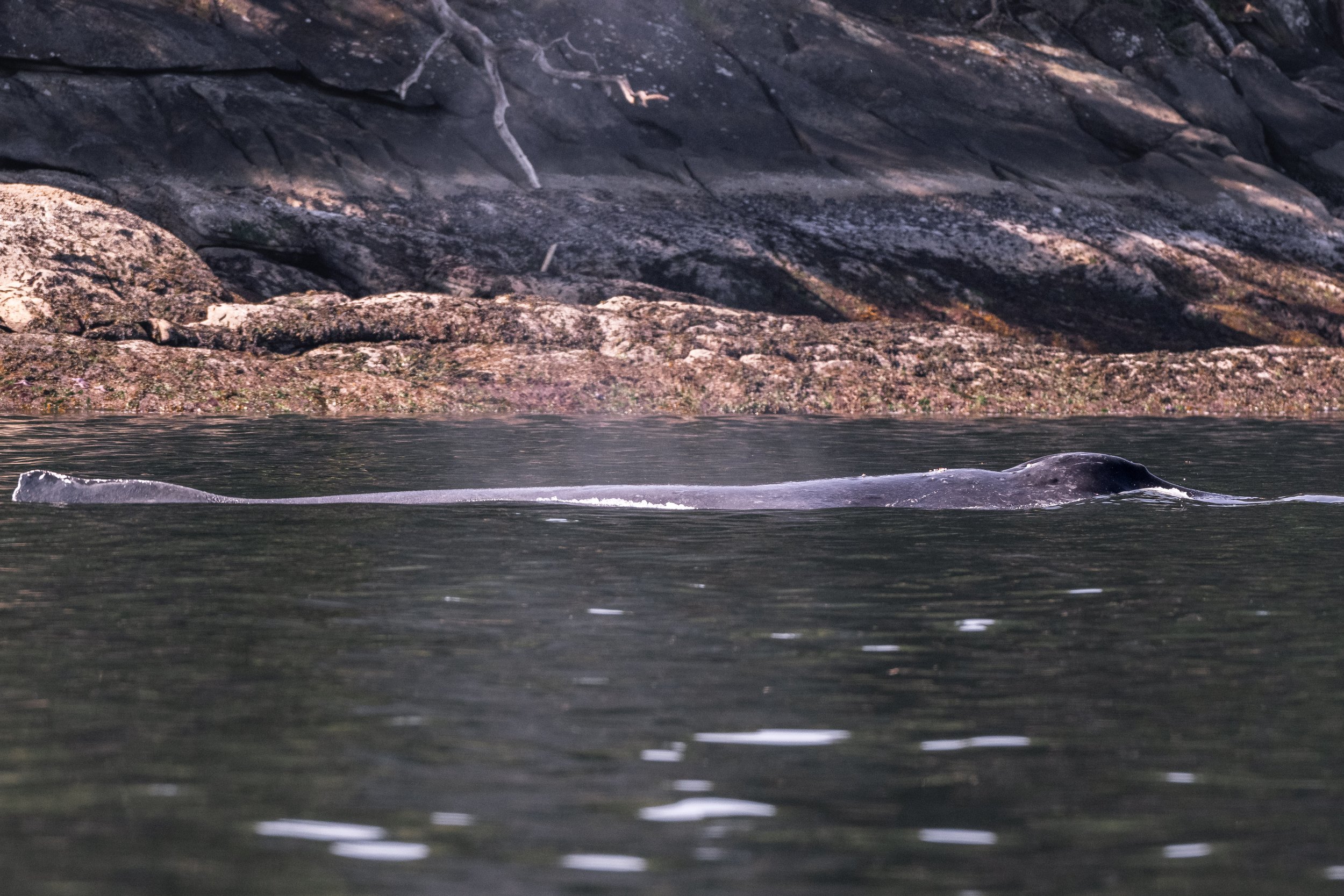
BCY0946 Slits surfacing to give a view of her blowhole on the right and the tip of her dorsal fin on the left.
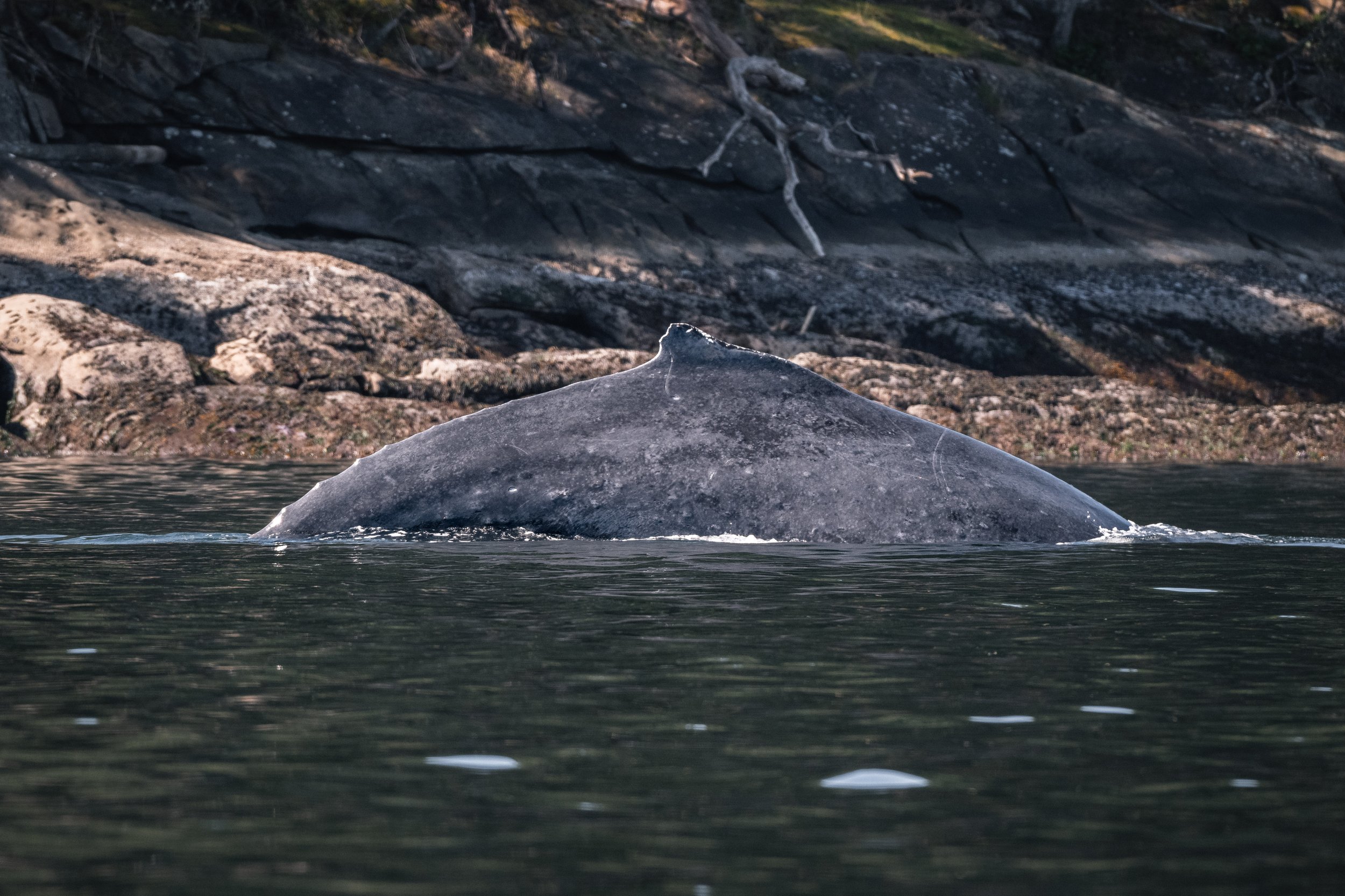
A good view of Slits small dorsal fin as she lifts out of the water preparing to dive.
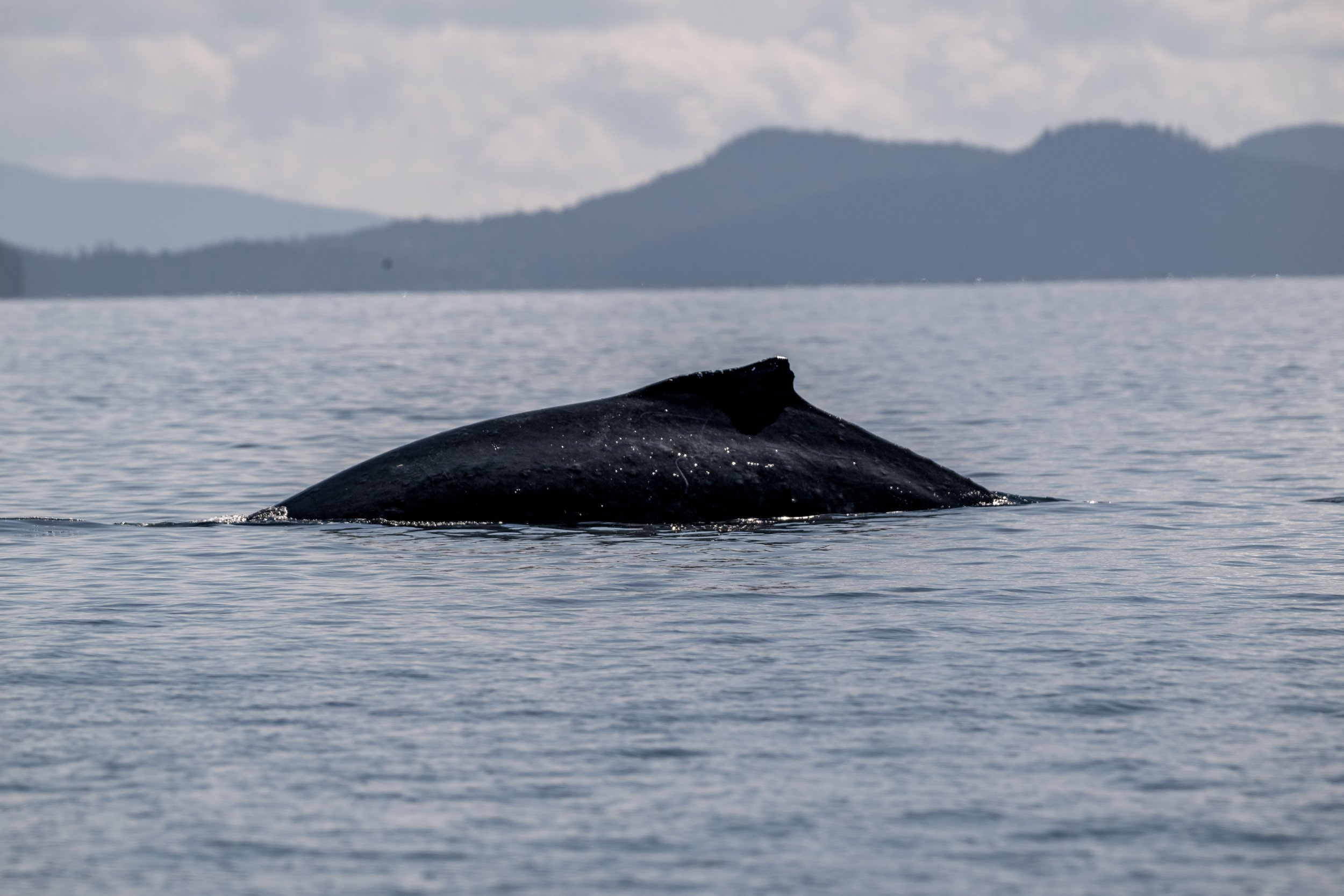
The other side of Slits dorsal fin.
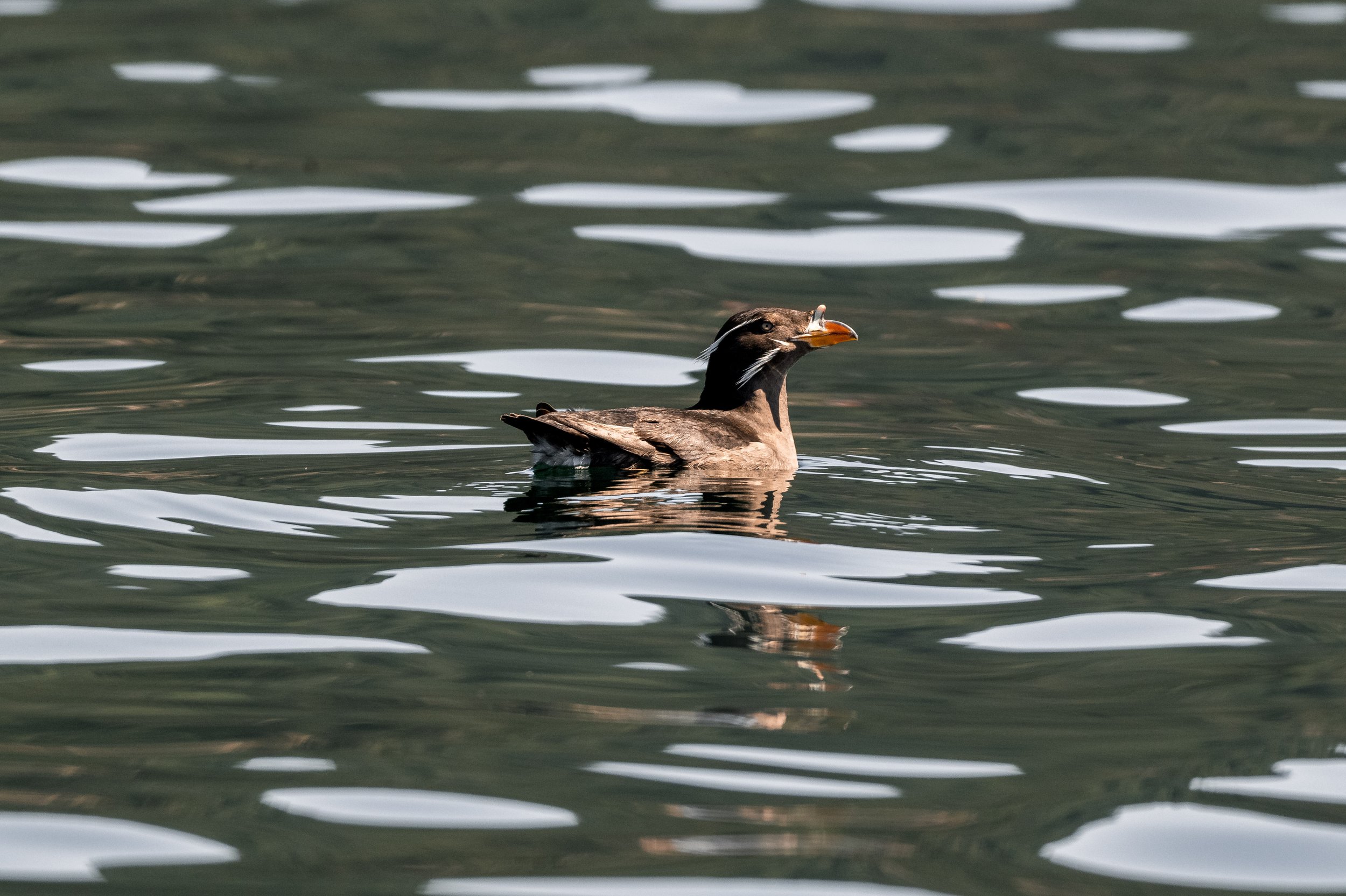
A rhinoceros auklet showing off their stunning breeding plumage and their namesake “horn”
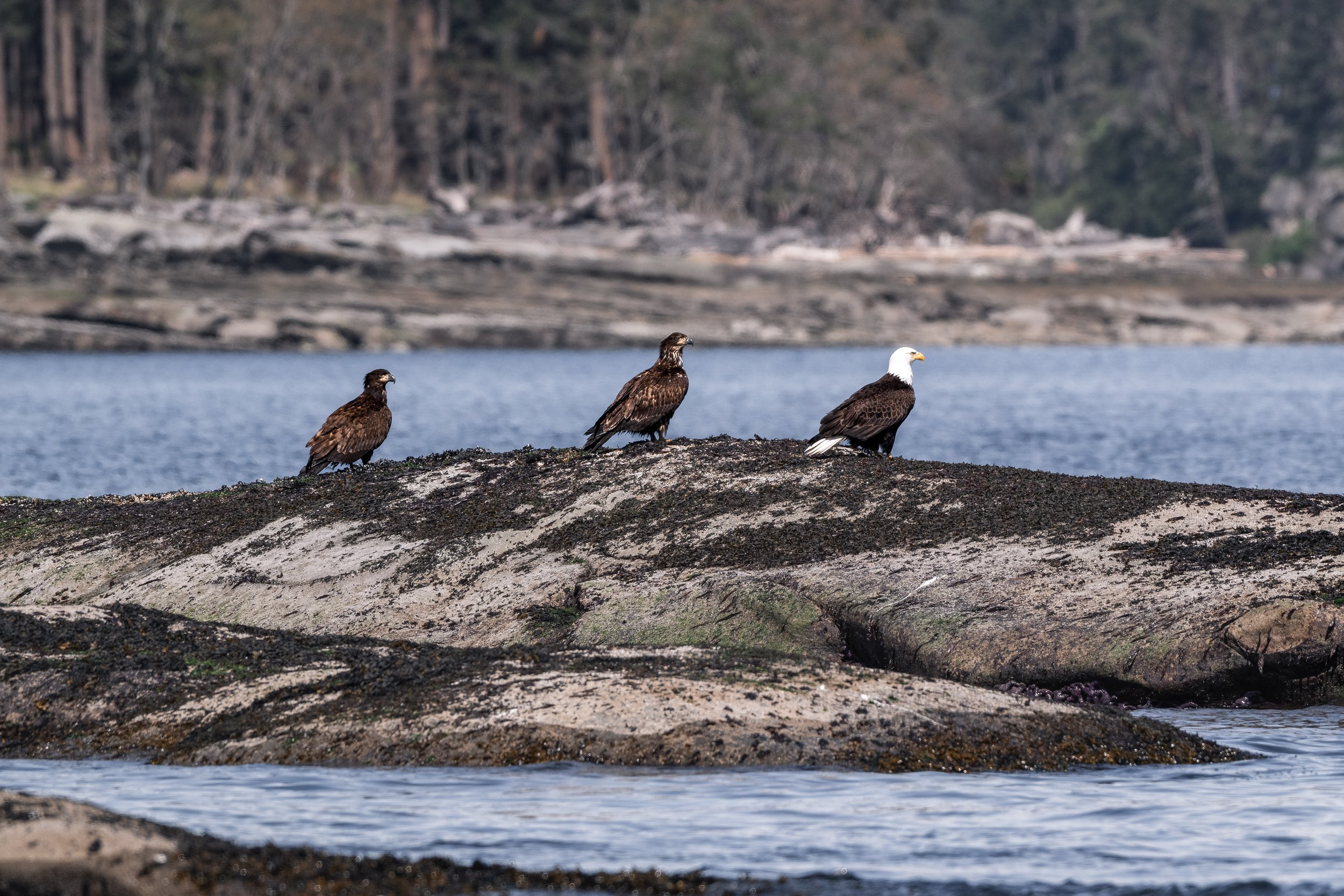
Two juvenil bald eagles of the left and an adult bald eagle showing off their differences in plumage.
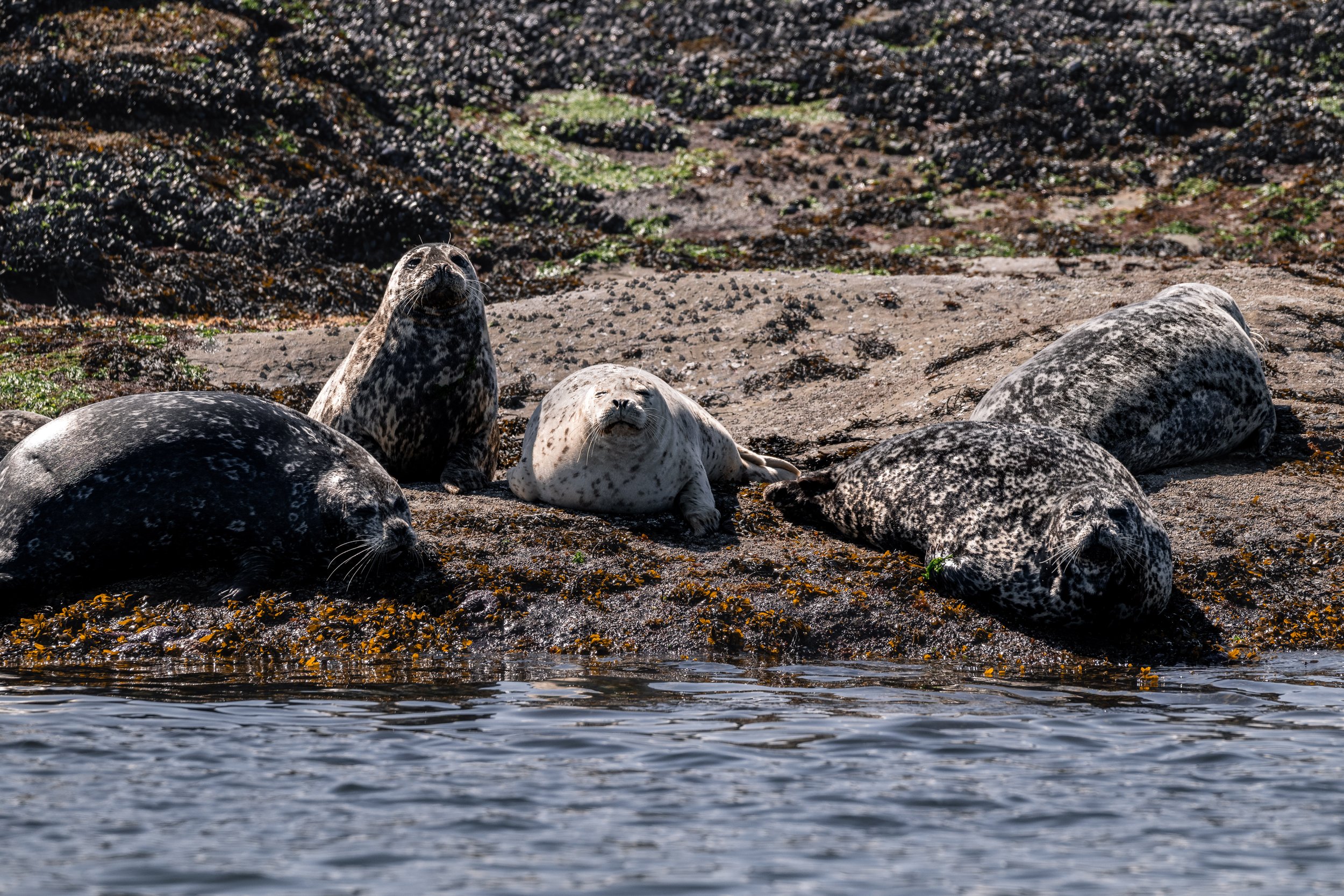
Harbour seals lazily checking out the boat as we pass bay.
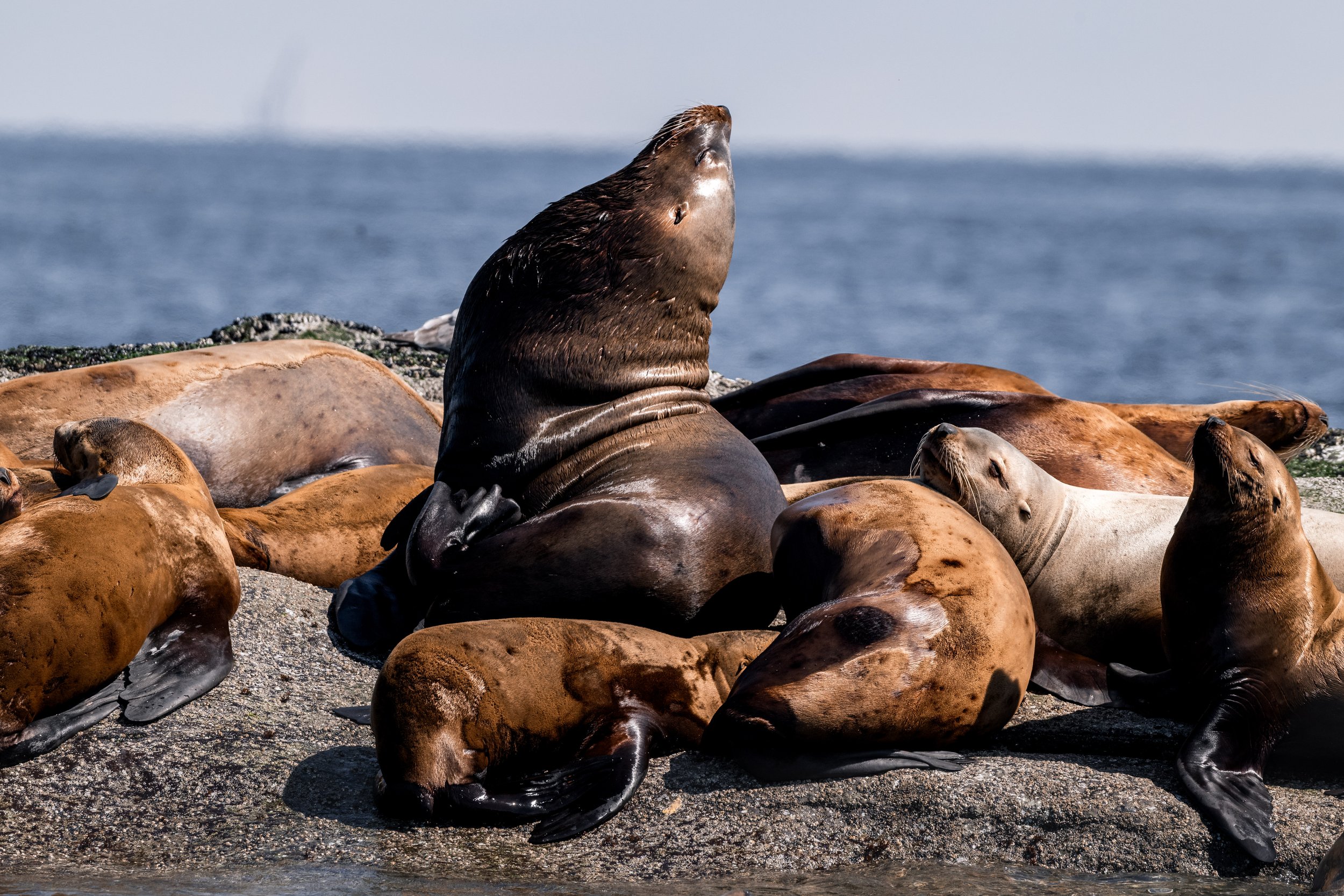
A large male steller sea lion showing off his large body amongst the younger individuals.
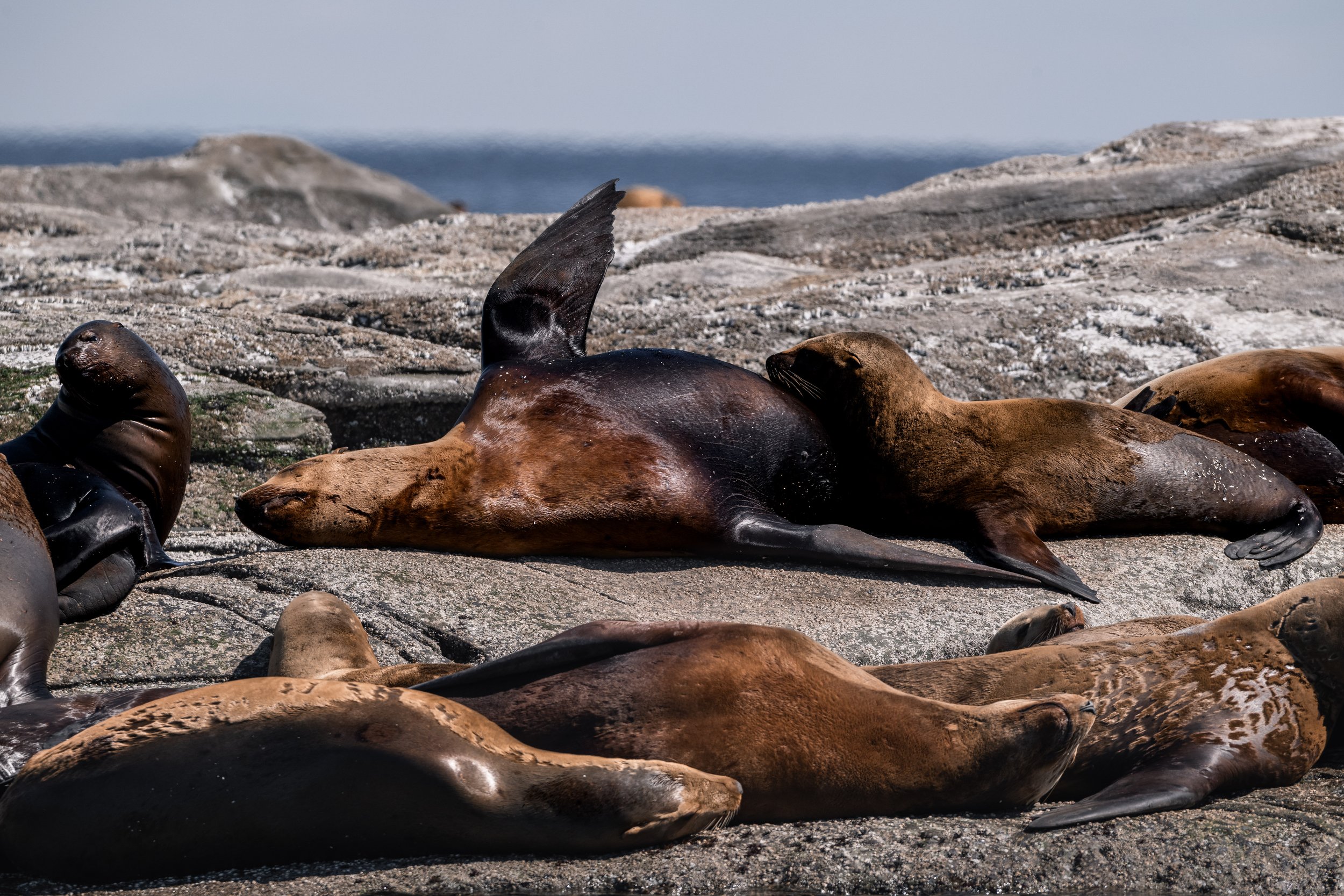
Steller sea lions stretching out and relaxing in the sun.
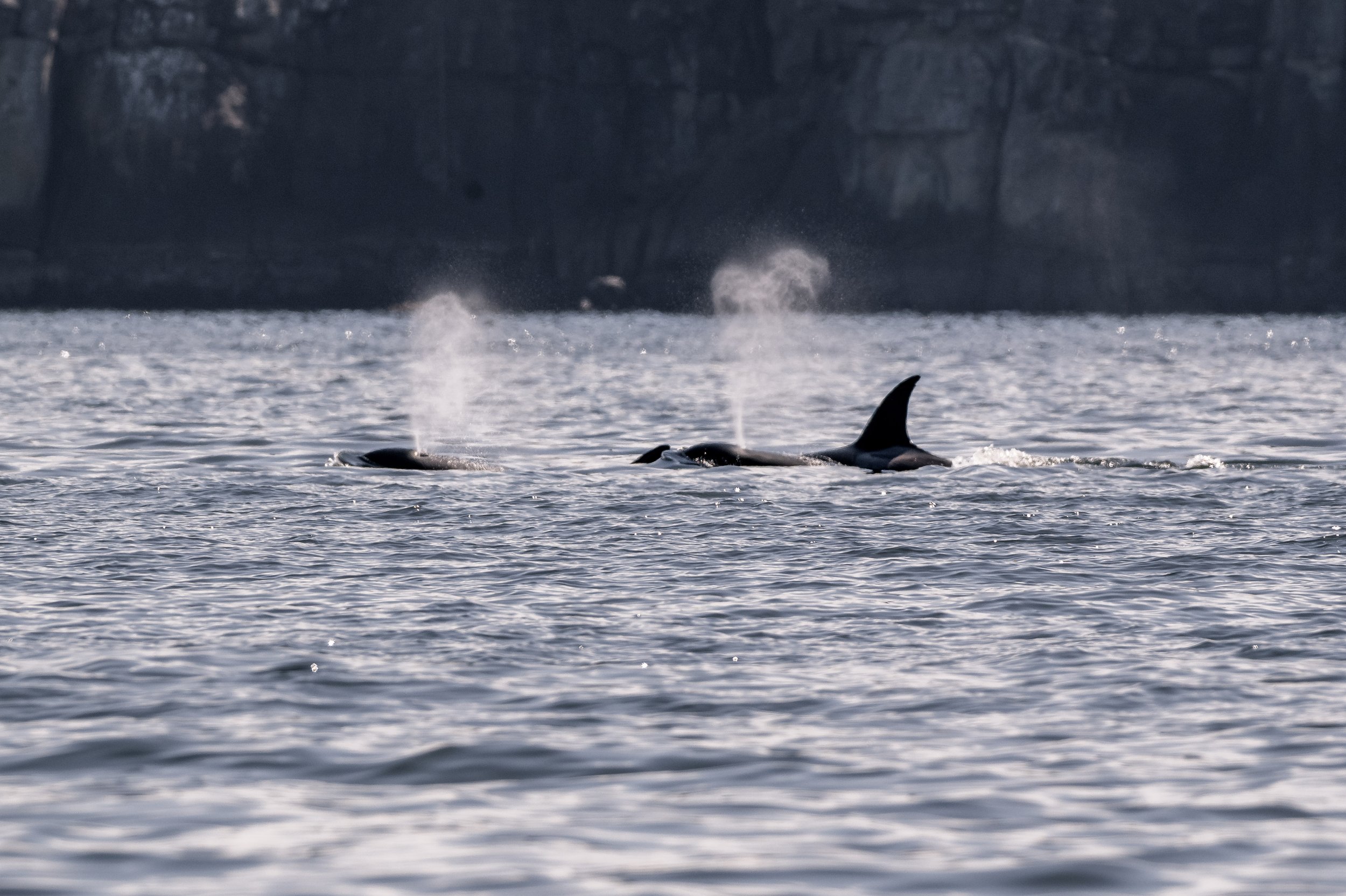
From left to right T086A3 Tyndall and T086A4 Akia giving synchronised blows with T071B1 Zengo behind them.
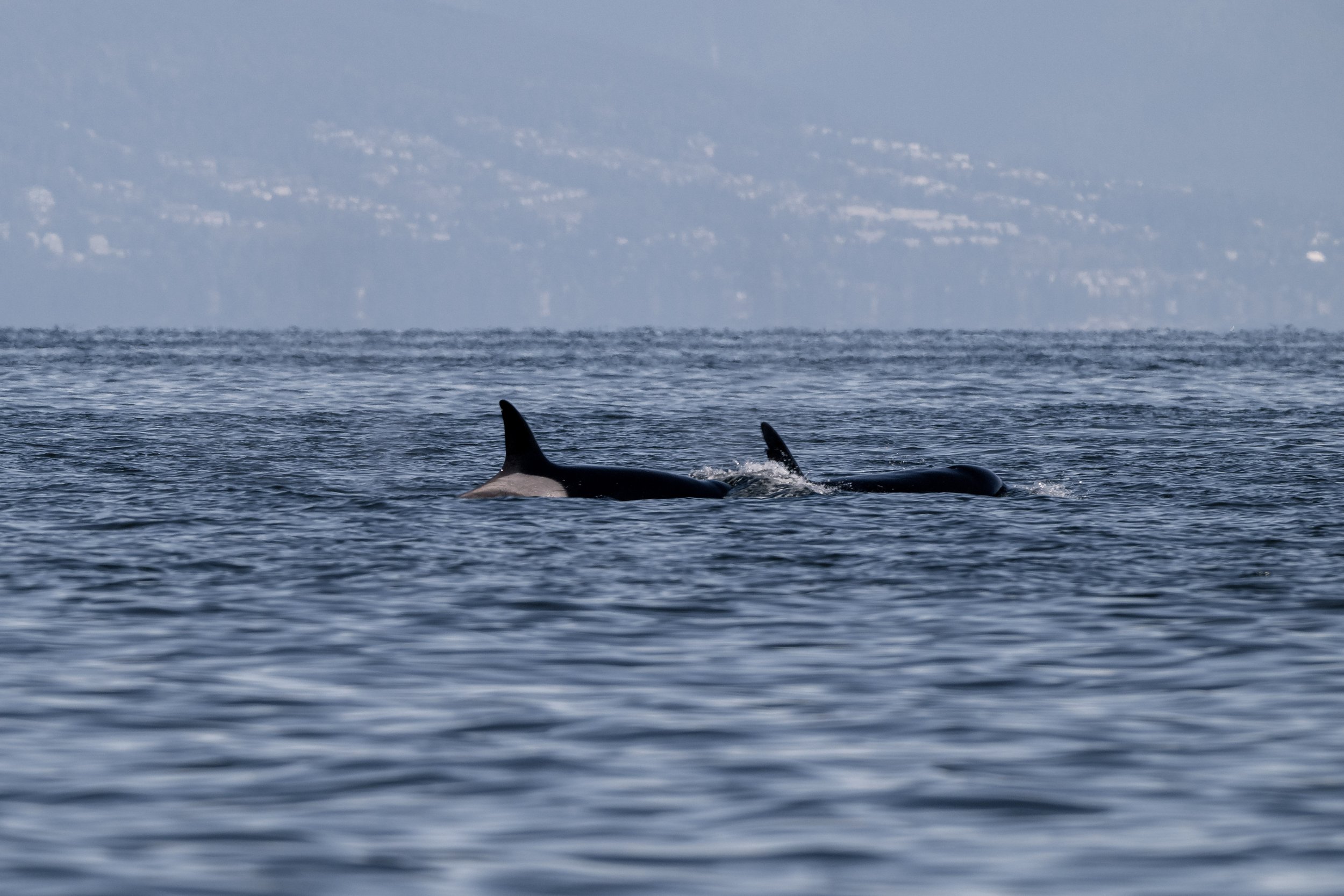
T071B1 Zengo following behind T086A3 Tyndall
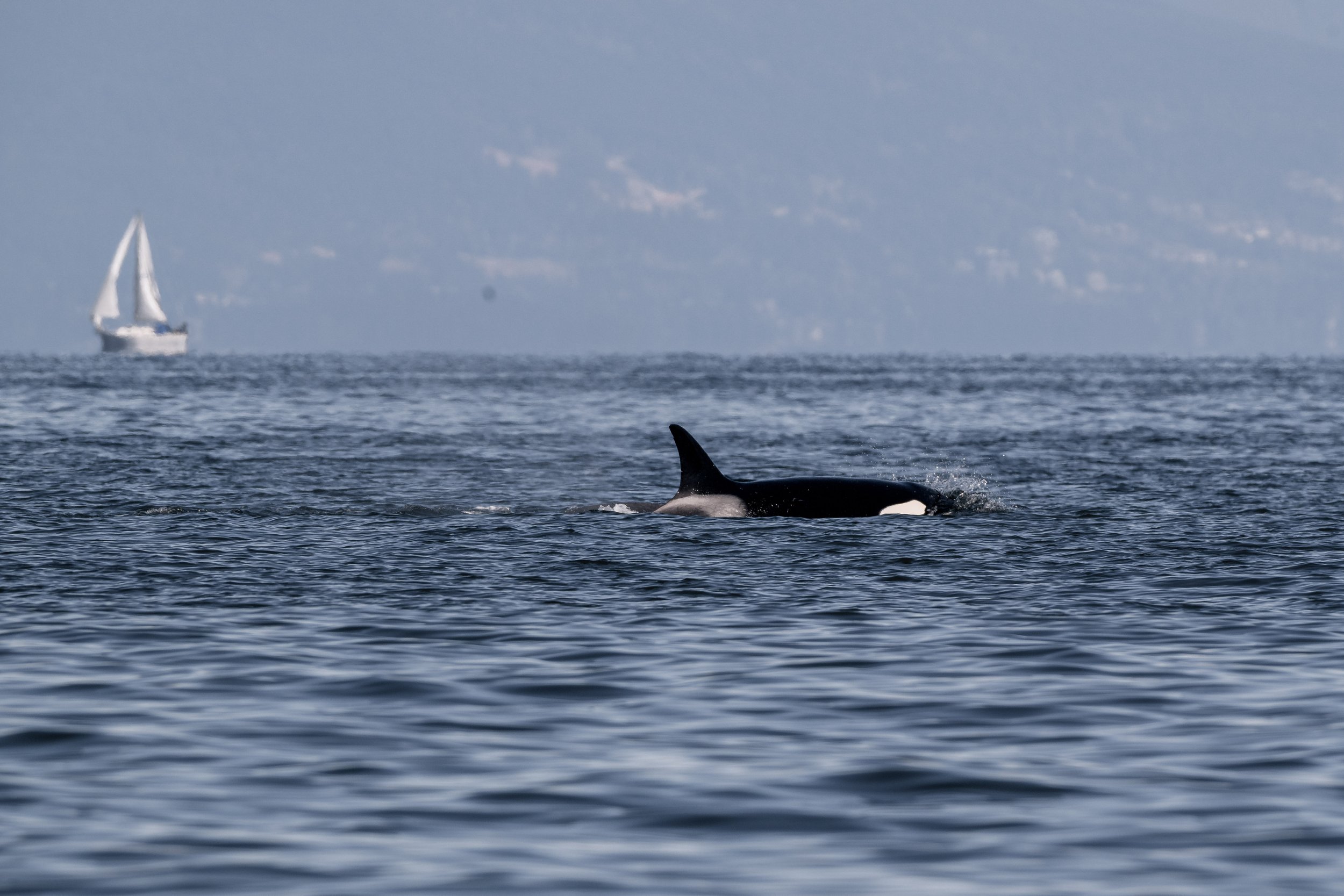
The matriarch of this pod T086A Eider showing off a little bit of her eyespot.
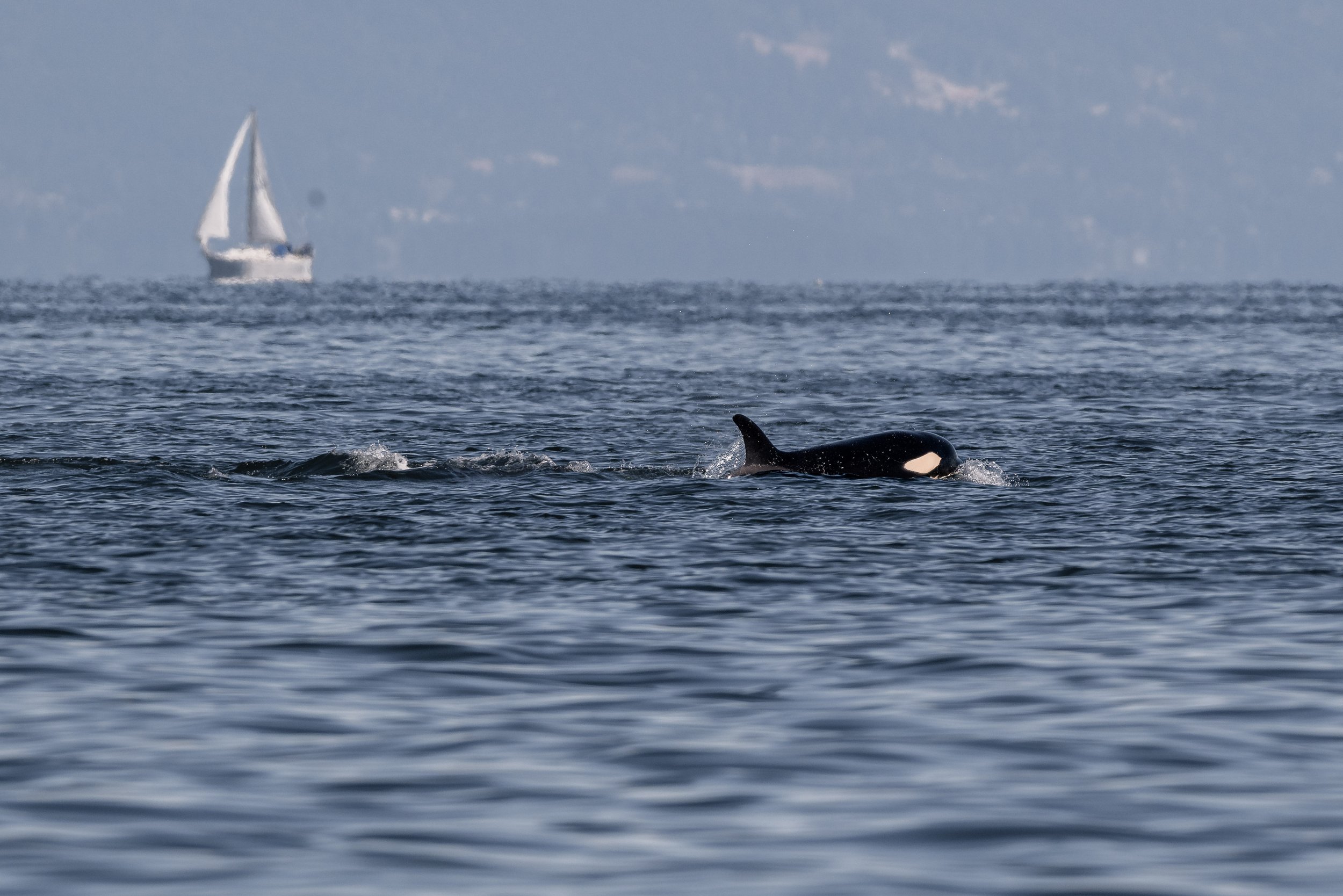
The youngest orca in this pod T086A5 Siku giving a clear view his eyespot.
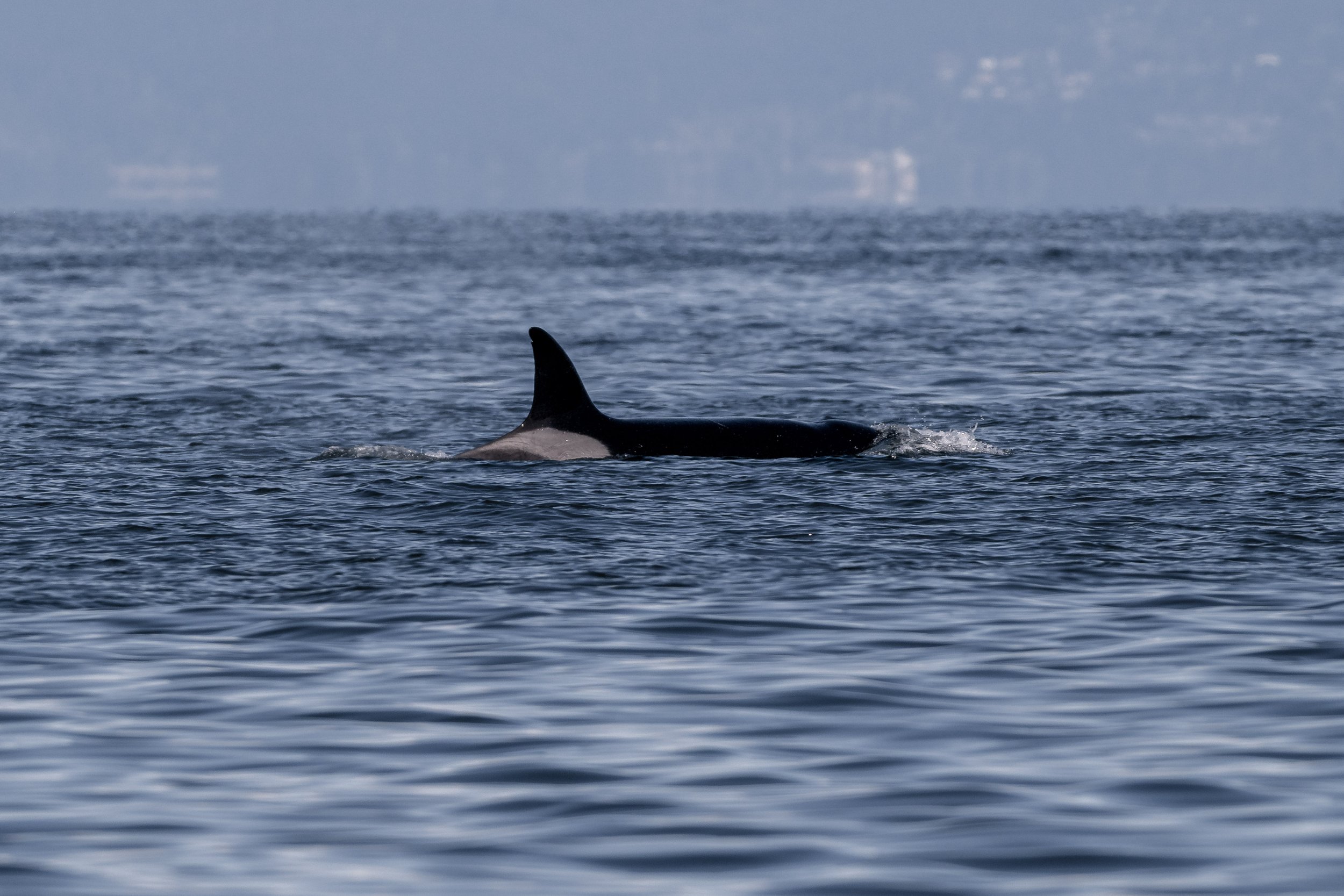
T071B1 Zengo showing a clear view of his saddlepatch.
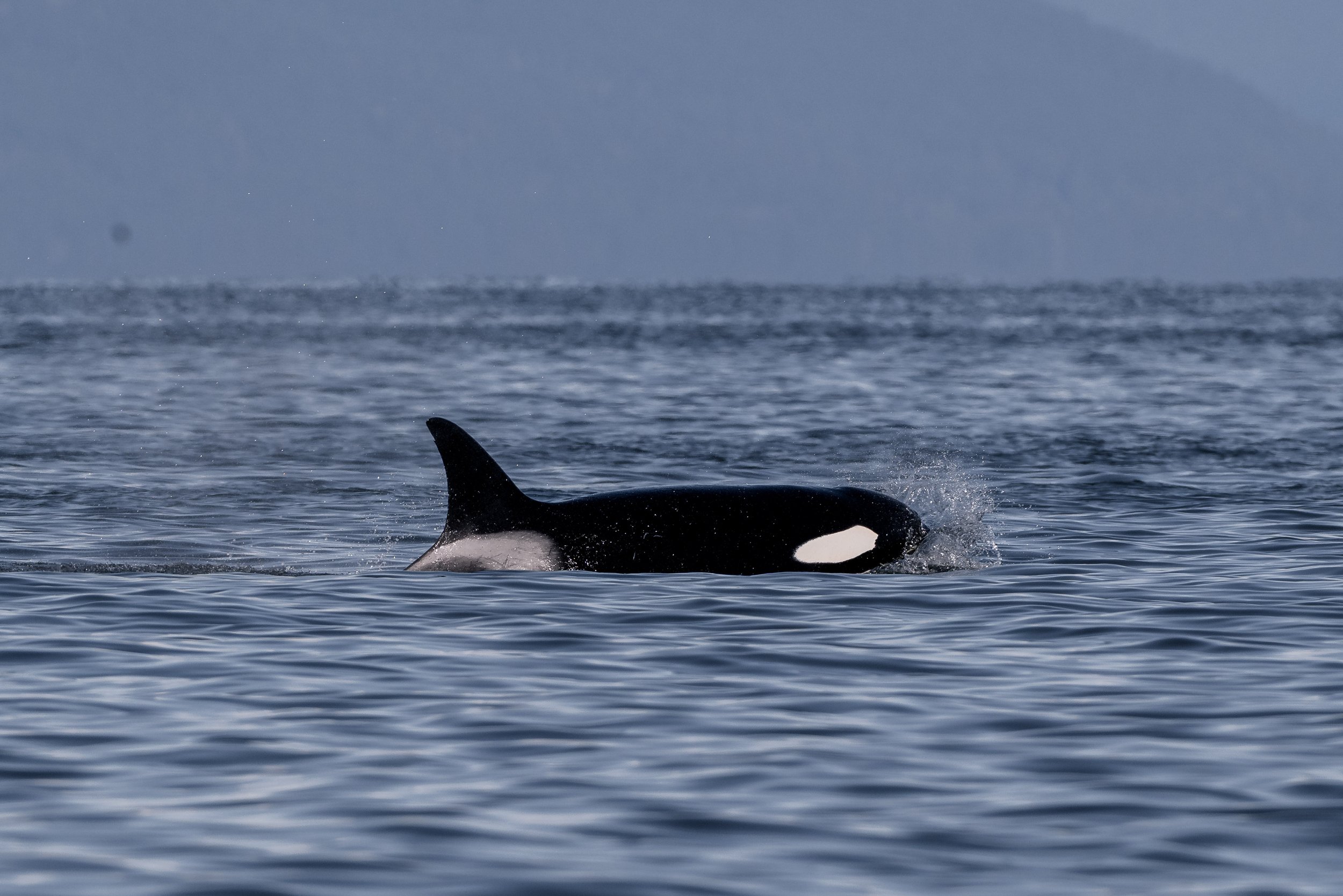
A clearer view of T086A Eider’s eyespot and saddlepatch as she surfaces a bit further out of the water.
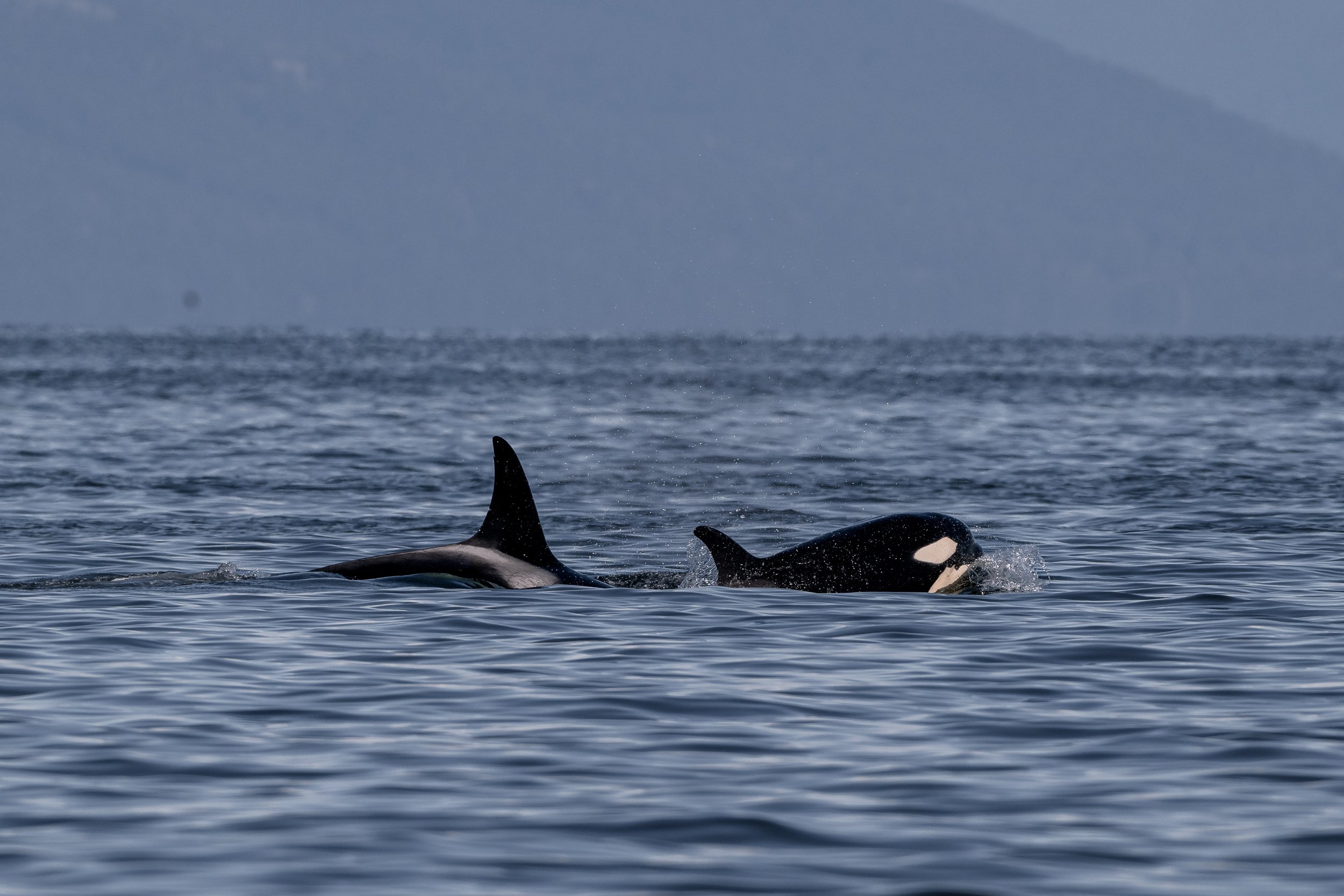
T086A Eider following behind T086A5 as he surfaces higher out of the water showing a bit of his countershaded underside.
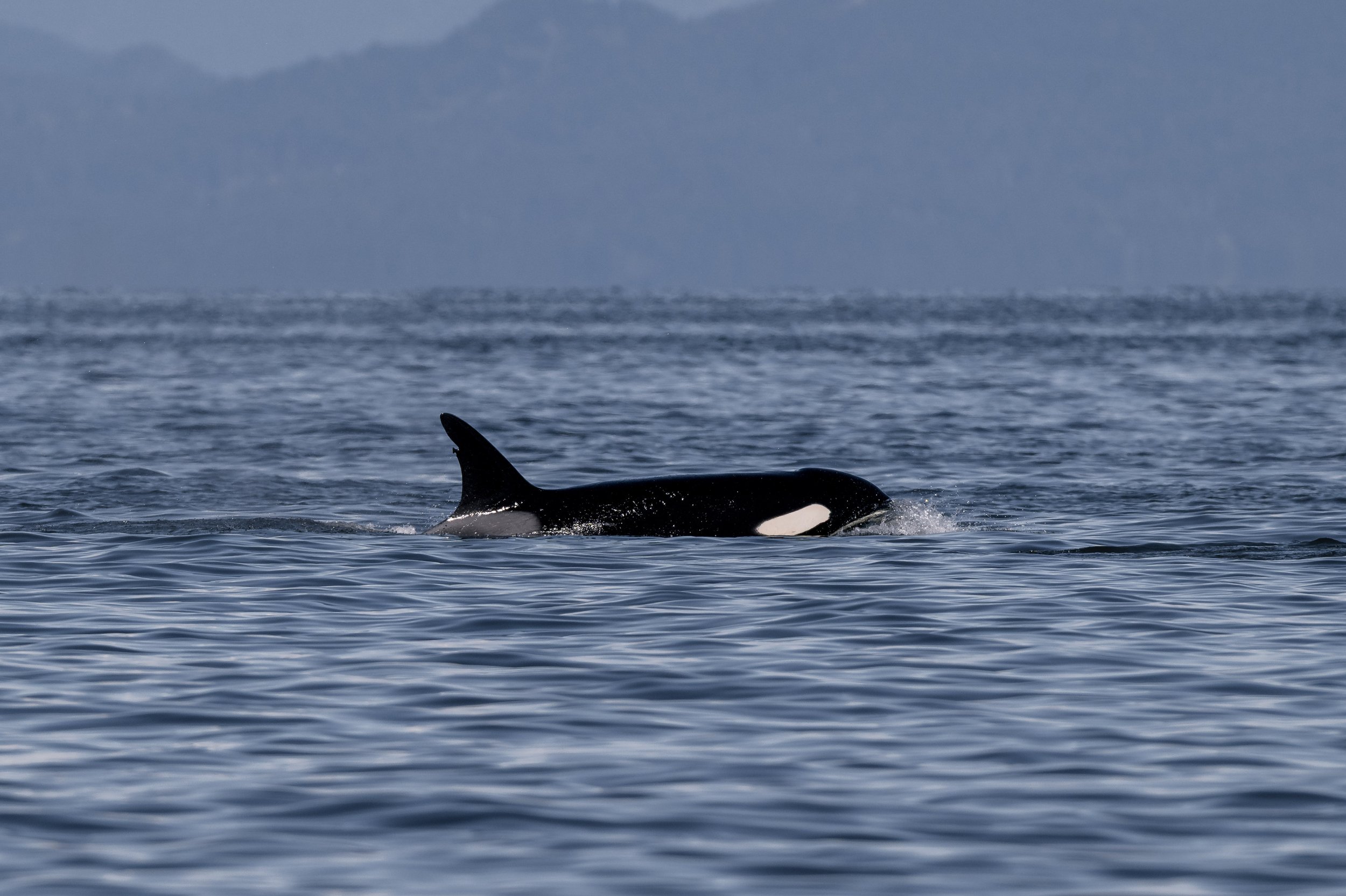
A clear look at T086A3 Tyndalls distinct notched dorsal fin and eyepatch.
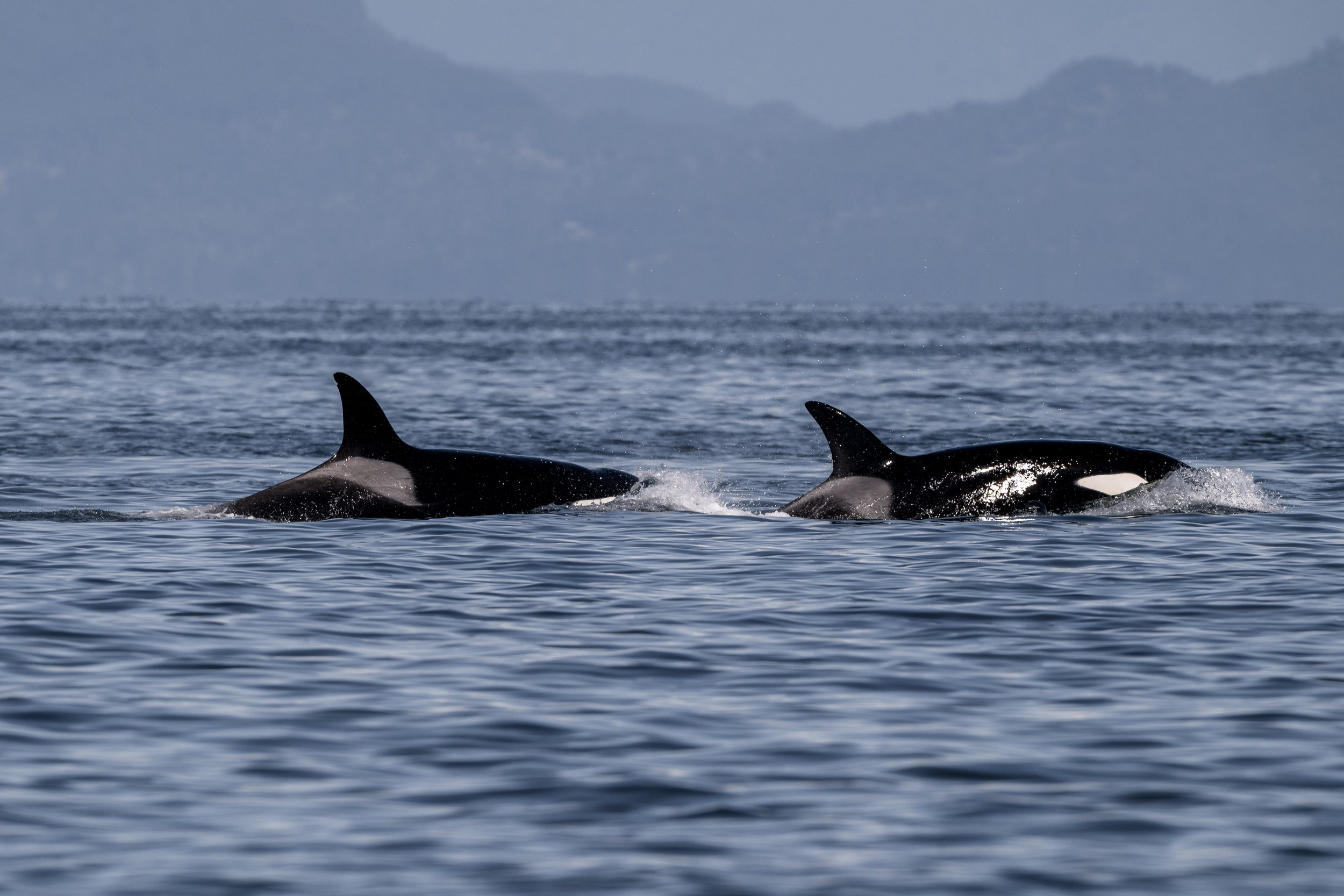
T071B1 Zengo following behind T086A4 Akia
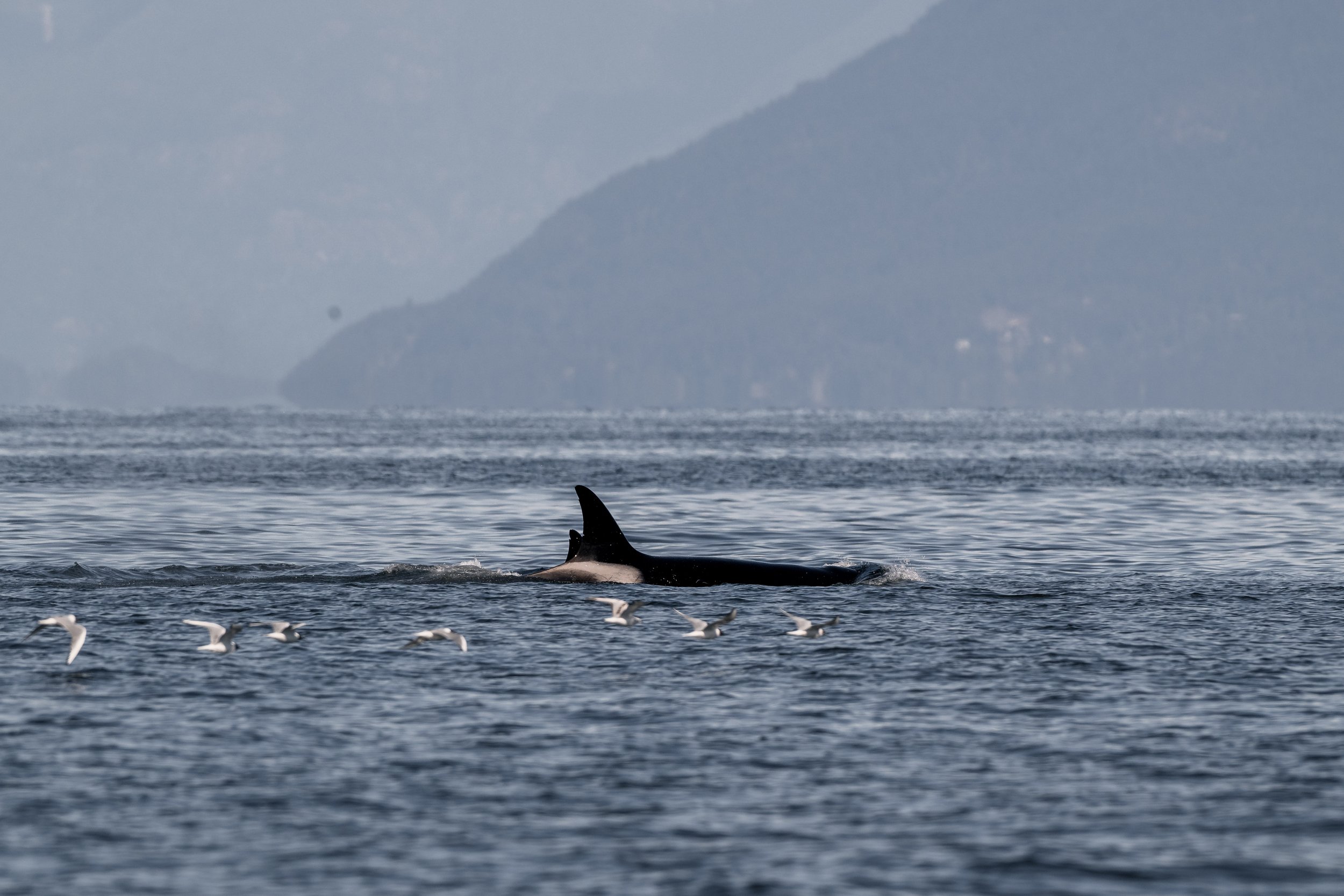
A look at the differences in dorsal fin notches between T086A Eider in front and T071B1 Zengo behind as a flock of bonapartes gulls fly by.
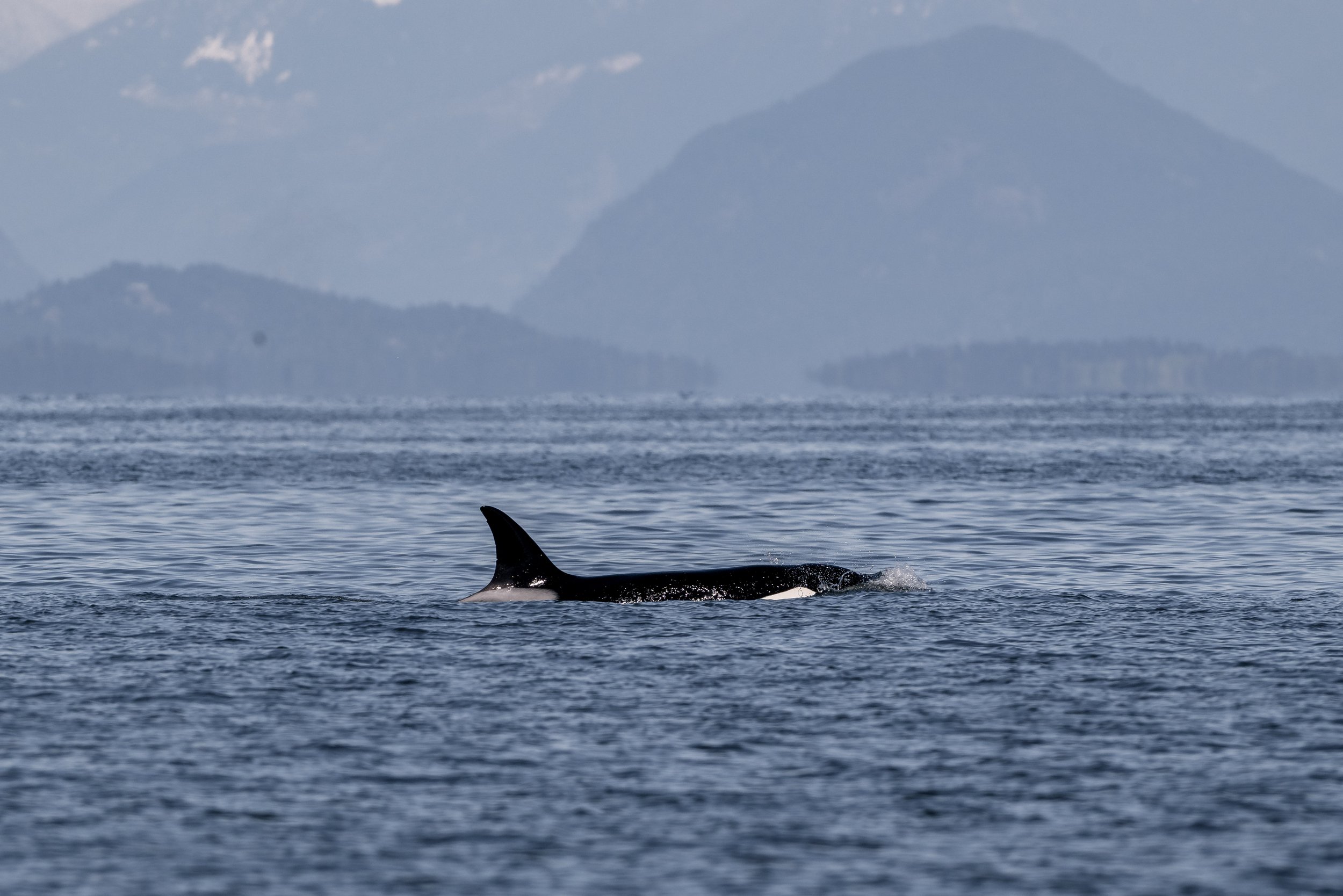
T086A Eider surfacing with a partial view of her eyepatch and dorsal patch.
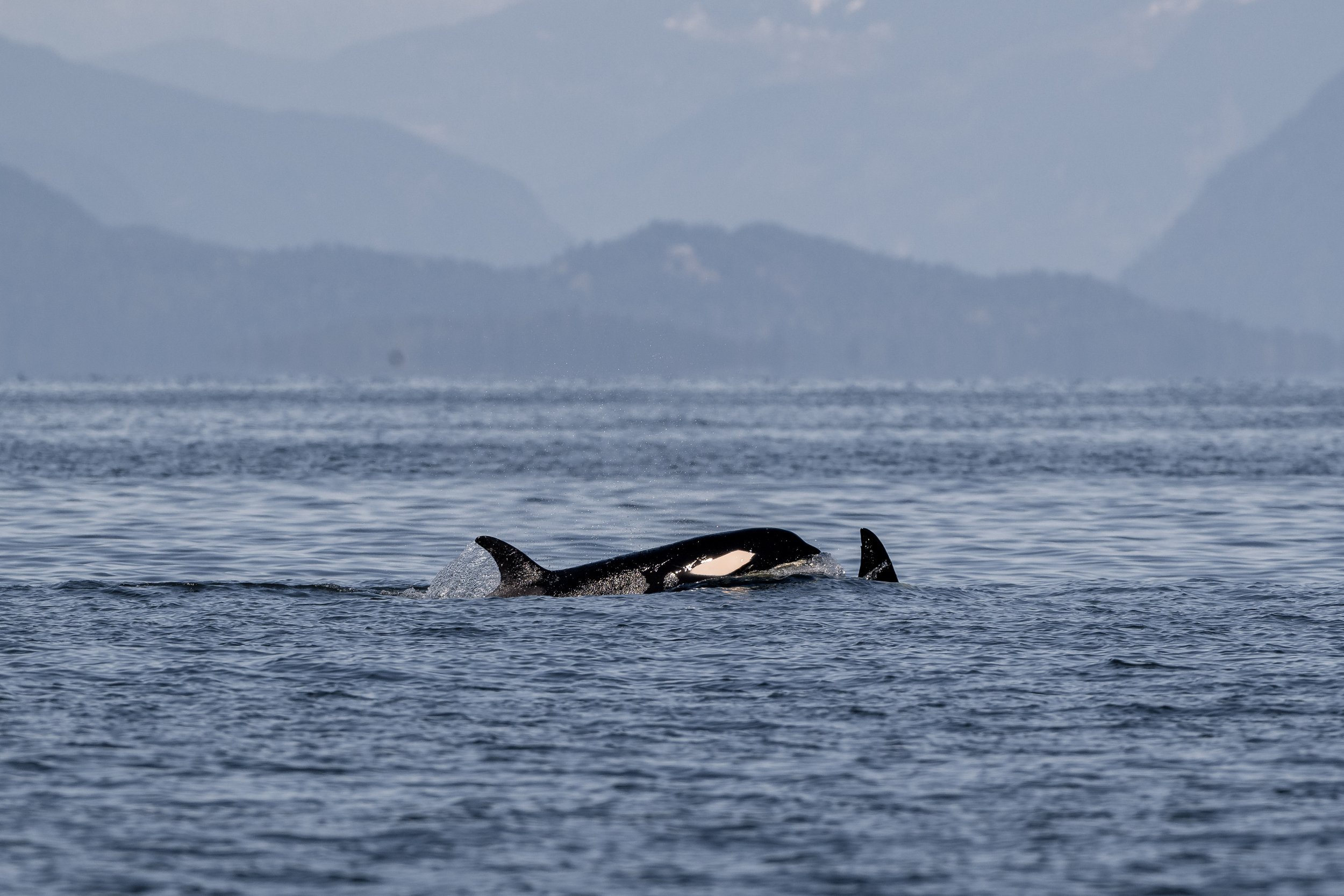
T086A5 Siku giving a good look at her eyepatch as she surfaces.
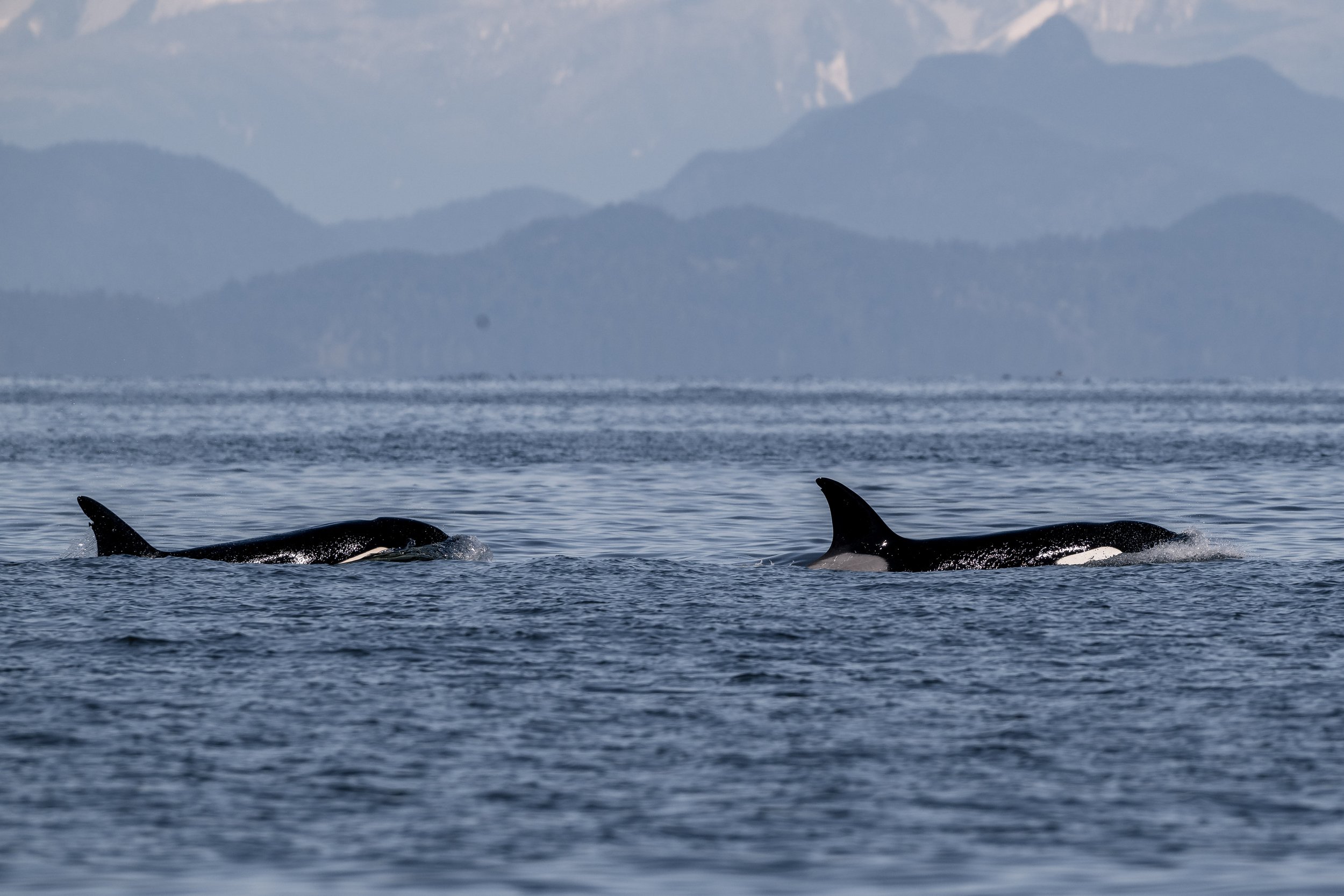
T086A3 Tyndall following behind T071B1 Zengo.
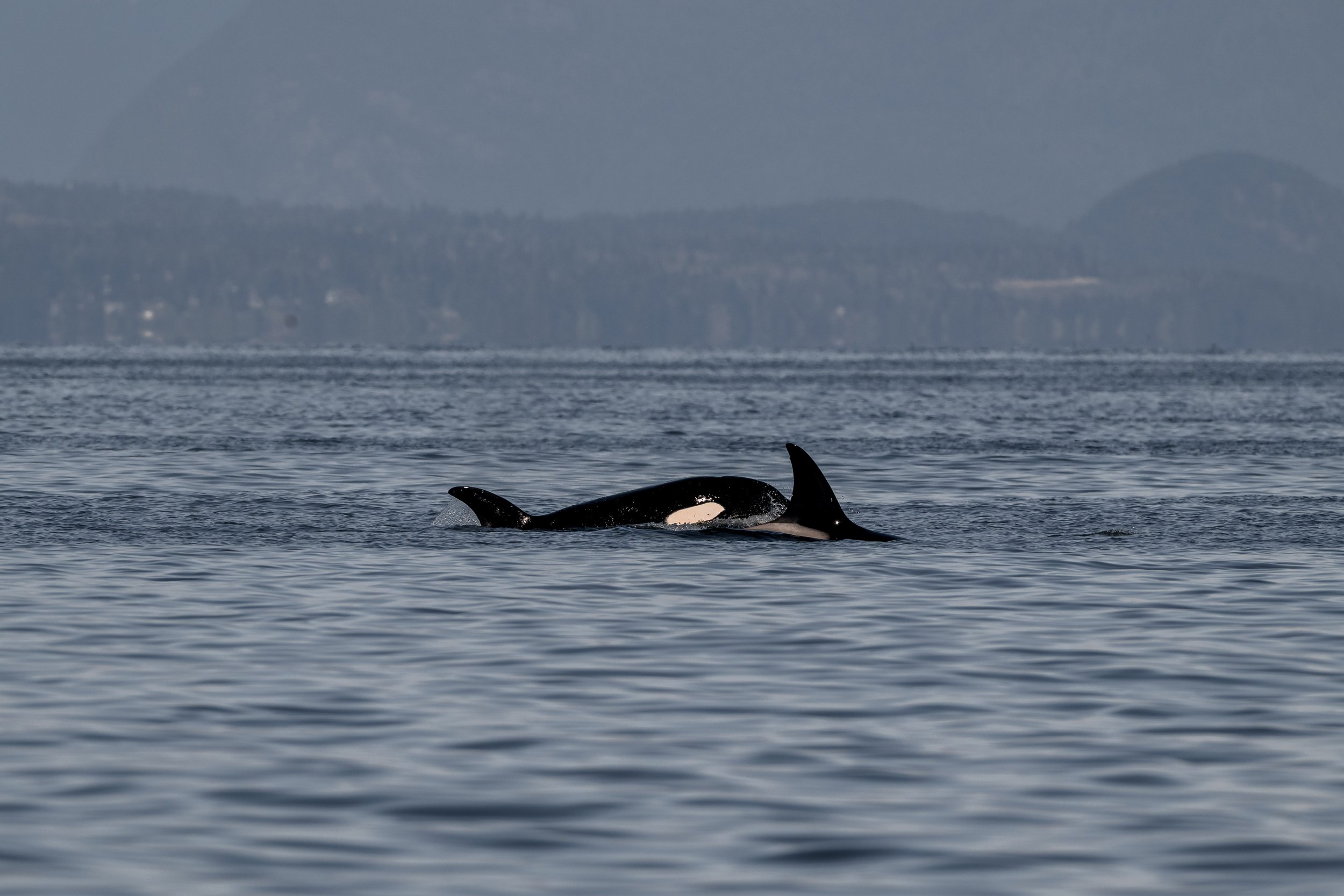
T071B2 Tasli surfacing just beind T086A Eider.
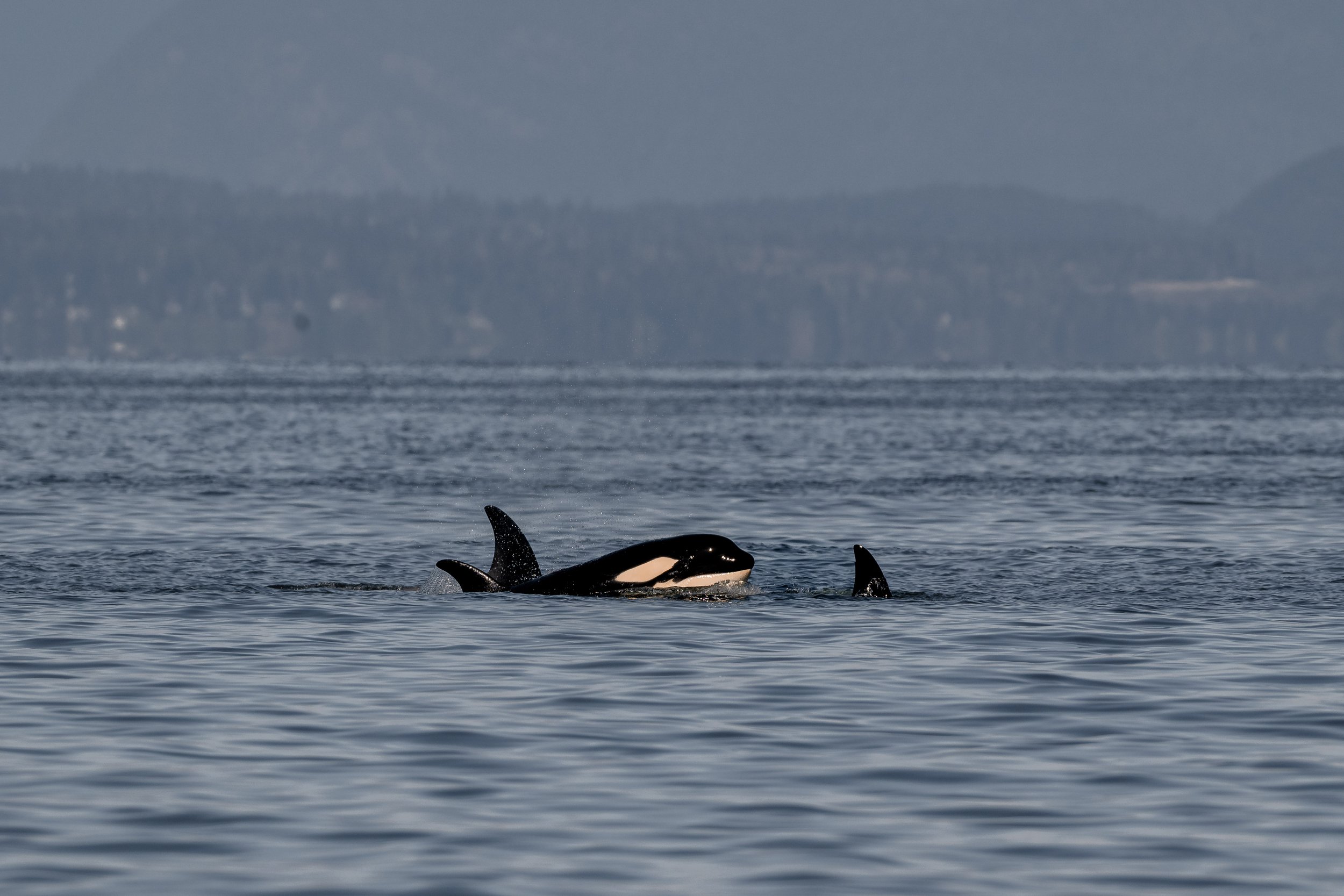
T086A5 Siku showing off a hint of his white underside.
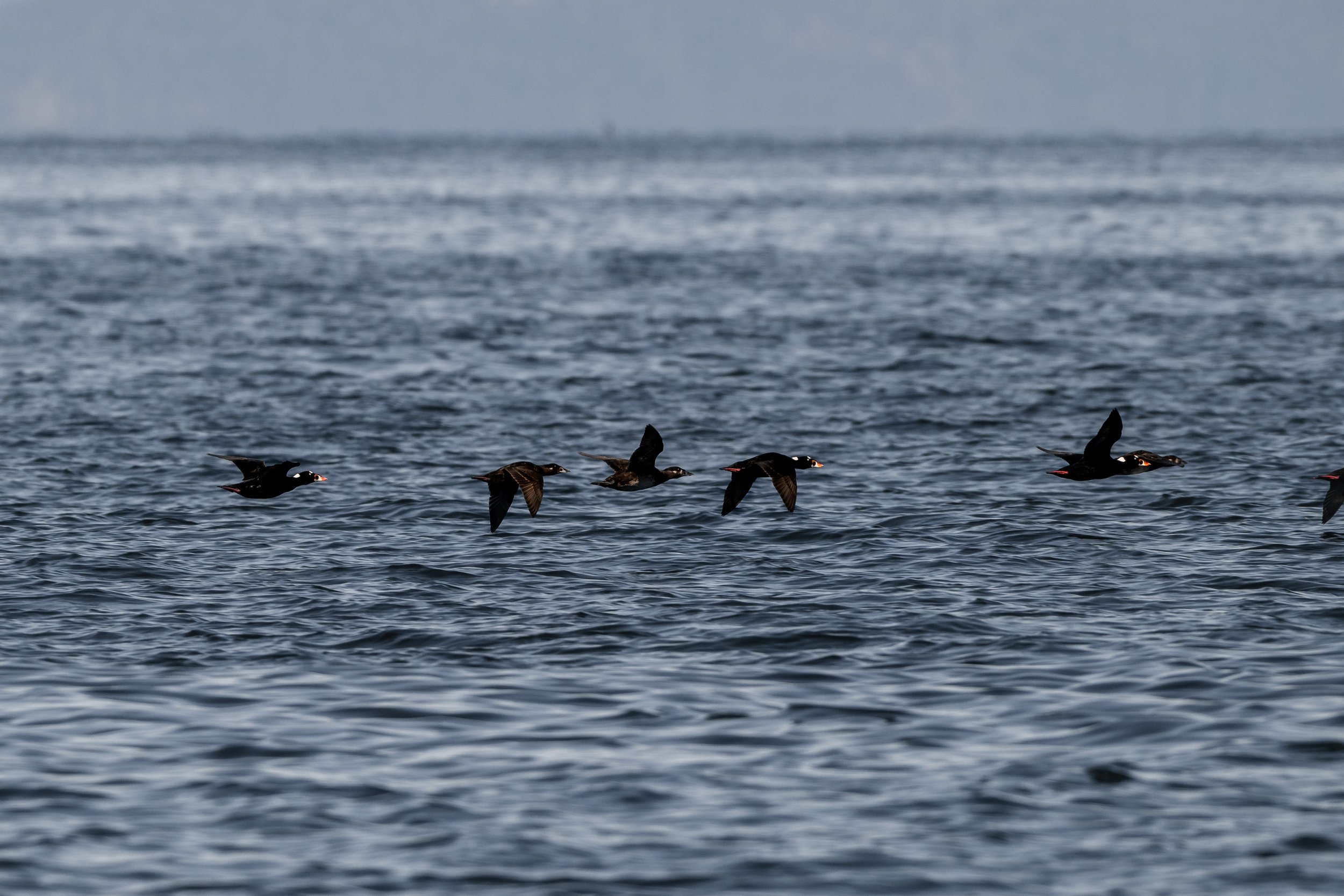
A flock of surf scoters flying by.
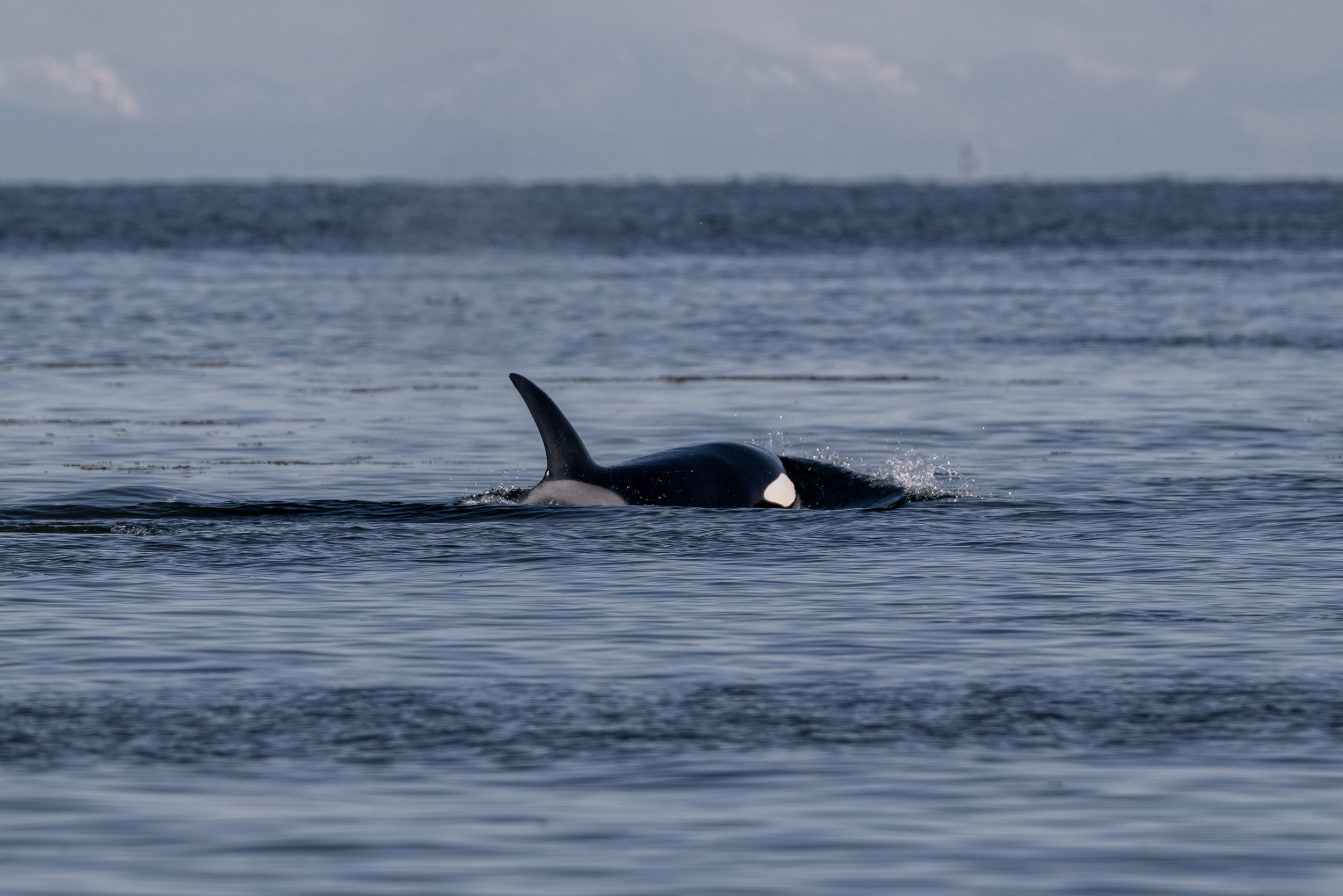
T086A4 Akia swimming away from the boat giving a rear view of her saddlepatch.
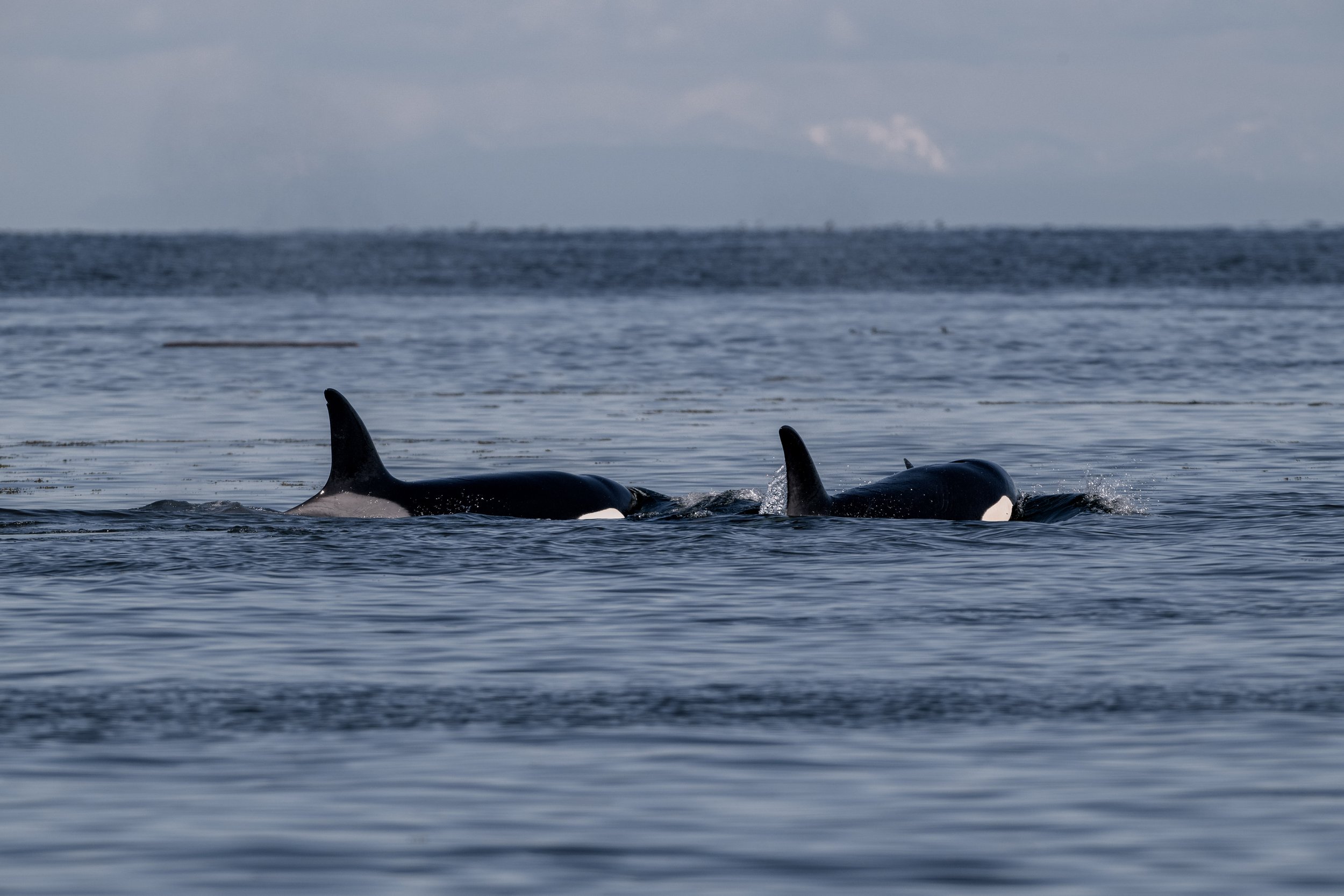
T071B1 Zengo on the left and T086A4 Akia swimming away side by side.
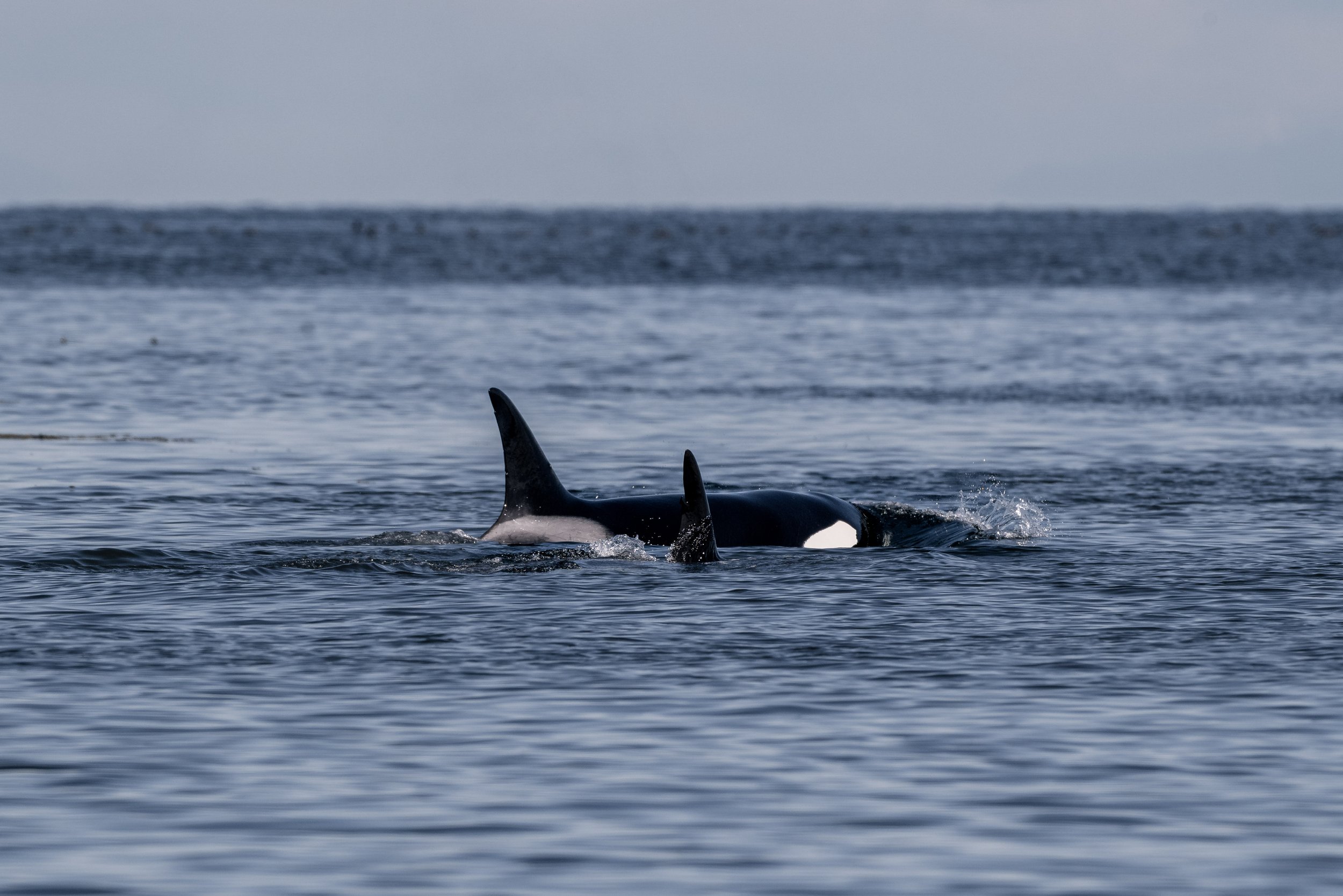
T086A Eider and the tip of T086A3 Tyndalls fin as they swim away
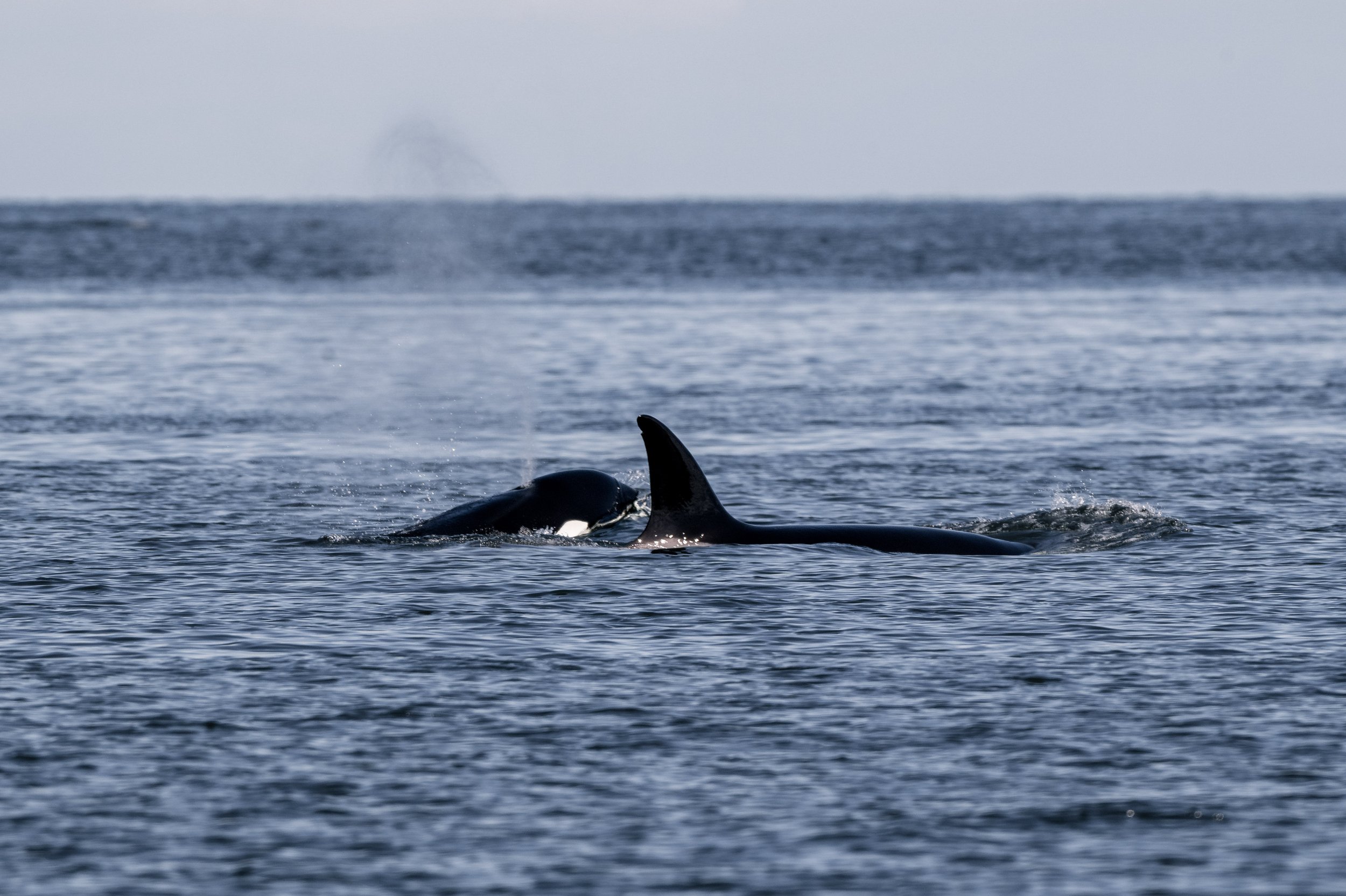
T086A Eider giving a blow as she surfaces behind T071B1 Zengo.
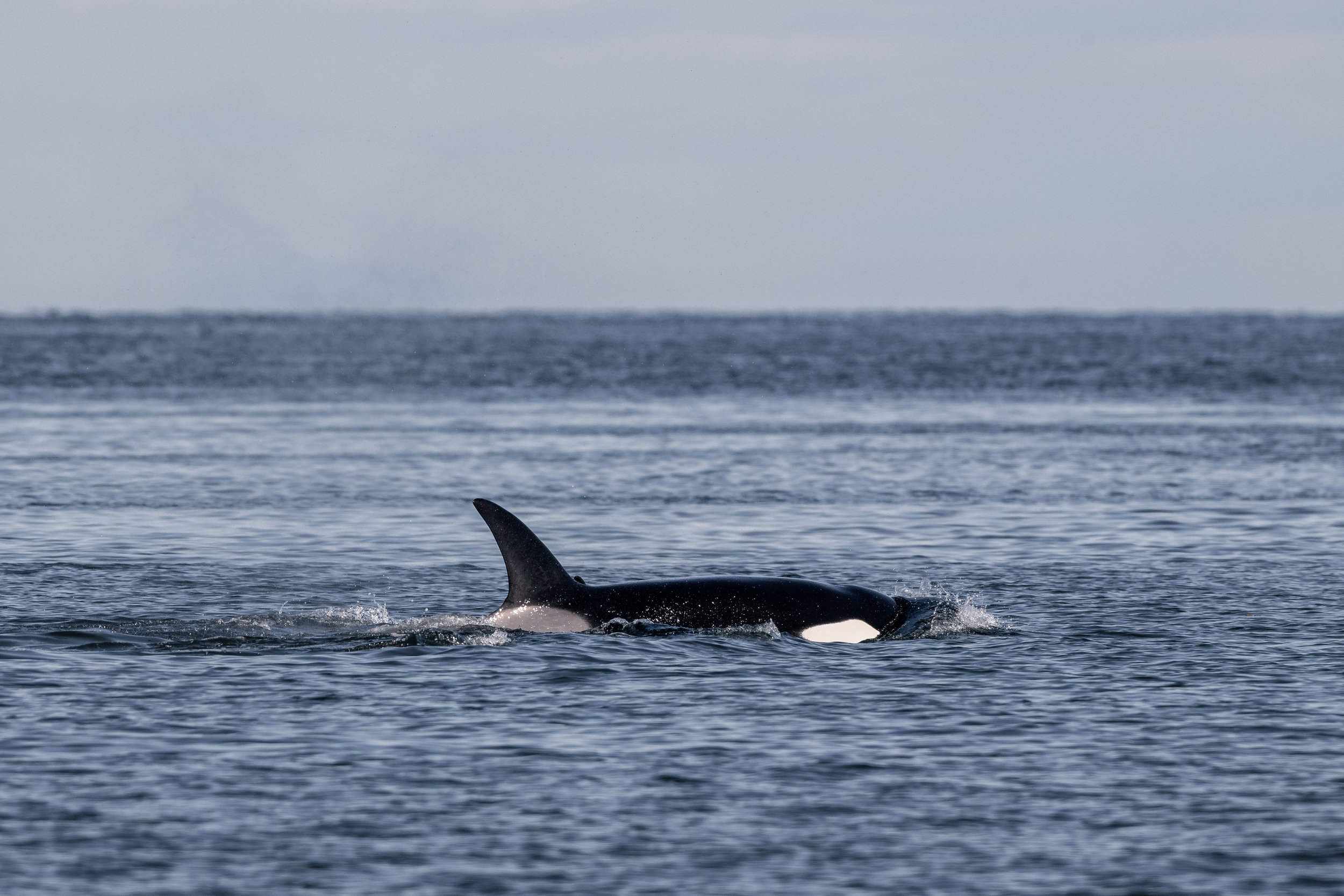
T086A4 Akia giving one last look before out vessel departed.