
April 17, 2026 - The T123s exploring the Seas.
It was a beautiful spring day on the West Coast, the kind that puts a little extra energy in your step as we made our way down the dock. The sun was shining, and anticipation buzzed among our guests as we boarded Kula, our semi-covered vessel, ready for another day exploring the Salish Sea. With lines cast off and eyes already scanning the water, we pushed away from the dock and into the Strait of Georgia.
Out here, finding whales is both an art and a science. There’s no flashing beacon or GPS pin guiding us, just careful observation and experience. We scan constantly for the telltale signs: the misty exhale of a blow catching the sunlight, the flash of a dorsal fin slicing through the surface, or the sudden splash of movement in otherwise calm waters. Even the birds lend a helping wing, large congregations feeding at the surface can indicate bait balls below, sometimes attracting larger marine mammals into the area. Every set of eyes on board becomes part of the search, and it’s often our guests who help spot that first clue.
One of the most remarkable parts of what we do is that these whales are not tagged, chipped, or actively tracked. At one time, researchers used invasive tagging methods, devices that resembled large staples, with metal prongs several inches long. These were attached to dorsal fins or embedded in blubber to collect data. While they provided insight, they also came with serious consequences. Infections were documented, and in some cases, those complications proved fatal. Understandably, those methods were phased out.
Today, research has shifted toward non-invasive techniques. Through photo identification, shared sighting networks, and collaborative databases, we’re able to track and study individual whales in ways that prioritize their well-being. It may not offer the same precision as a tracking device, but it ensures that the animals we care so deeply about remain safe. Every encounter becomes part of a larger puzzle, pieced together by researchers, naturalists, and everyday observers alike.
Before long, Aly had her telephoto lens trained on a distant fin. With a few quick shots and a practiced eye, identification came quickly. With a tall dorsal fin and a distinct notch, there was no mistaking him. Stanley, a mature male from the T123s, had made his appearance along with his pod.
T123 Sidney ♀ (~1985)
T123A Stanley ♂ (2000)
T123C Lucky ♀ (2012)
T123D Darcy ♀ (2018)
The T123s are a well-known transient (Bigg’s) orca family here in the Pacific Northwest. Leading the group is their matriarch, Sidney, one of the largest documented females in the region at approximately 23 feet in length. Female orcas typically range from 20 to 23 feet, while males can reach impressive lengths of up to 27 feet, about the same size as one of our zodiac-style vessels. Stanley, with his towering dorsal fin, is a striking example of that size and power.
This family is known not only for their presence but for their resilience. Years ago, Sidney and Stanley were stranded, beached with the tide out. For hours, concern grew as locals and researchers monitored the situation, knowing the immense risks. When a whale beaches, the effects are severe, their massive body weight, normally supported by water, presses down on internal organs. This can restrict circulation, impact breathing, and quickly become life-threatening.
In this case, there was an added layer of concern; Sidney was pregnant at the time with a calf who would later be known as Lucky. Against the odds, after approximately 11 hours, the tide returned and lifted them free. Both whales survived, and Sidney went on to successfully carry her calf. It remains one of those rare and powerful reminders of both the vulnerability and resilience of these animals.
We spent time travelling alongside the T123s, observing their movements and behaviours, before eventually continuing on to see what else the day had in store.
Bird life was abundant. Bonaparte’s gulls dotted the water and sky, actively feeding. These elegant gulls are smaller than many of the species we see here and are known for their graceful flight and seasonal migrations. Unlike many gulls, Bonaparte’s gulls often catch insects and small prey directly from the water’s surface, sometimes even hovering delicately before picking their next meal.
Along the shoreline and perched high above, bald eagles kept watch. True symbols of the Pacific Northwest, these birds are as impressive as they are efficient. With wingspans reaching over six feet, they are powerful hunters, but also opportunistic feeders, often scavenging when the opportunity arises. Here on the coast, salmon runs play a vital role in supporting eagle populations, providing a seasonal abundance of food.
We made our way to the log booms, where California Sea Lions were hauled out in groups, draped across the logs in various states of relaxation. These marine mammals are highly social and incredibly vocal, often communicating with a range of barks and calls. Adult males, in particular, can be identified by their larger size and prominent sagittal crest, a raised bump on the top of their heads that develops with age.
Our final stop brought us to the towering cliffs of the Gabriola Bluffs. These dramatic rock formations are more than just a scenic landmark; they serve as an important nesting habitat for seabirds like cormorants. Cormorants are exceptional divers, using their powerful legs to propel themselves underwater (sometimes over 100 feet) in pursuit of fish. Unlike many waterbirds, their feathers are not fully waterproof, which is why they are often seen perched with their wings outstretched, drying in the sun after a dive.
As the day drew to a close, we made our way back toward the harbour, reflecting on a journey filled with familiar fins, rich wildlife, and meaningful encounters. Each trip reminds us that while the ocean is vast and ever-changing, it is also deeply interconnected, and every sighting, every story, helps us better understand and protect the incredible life within it.
Photos below taken by Marine Naturalist Aly Kohlman.
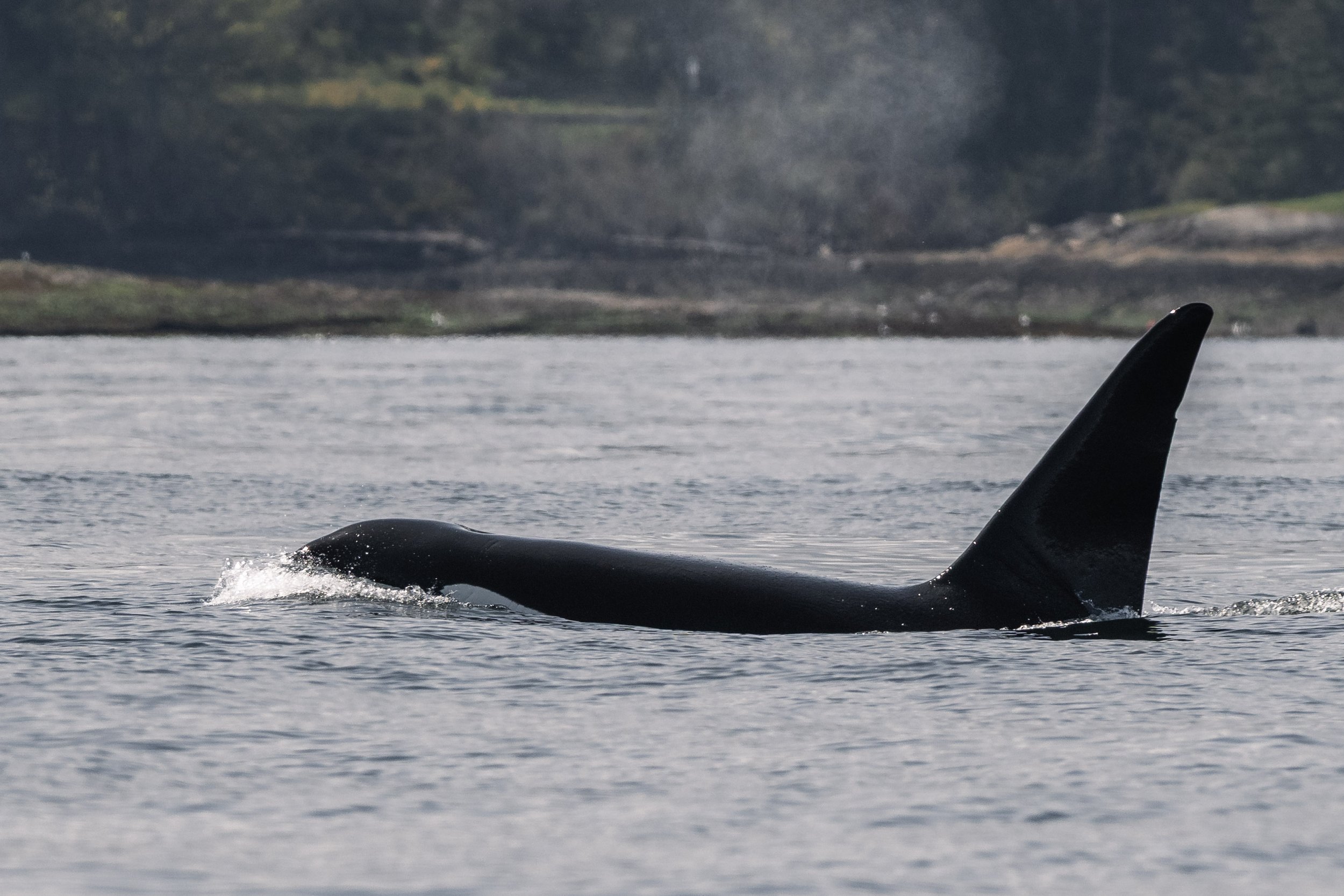
T123A Stanley surfacing.
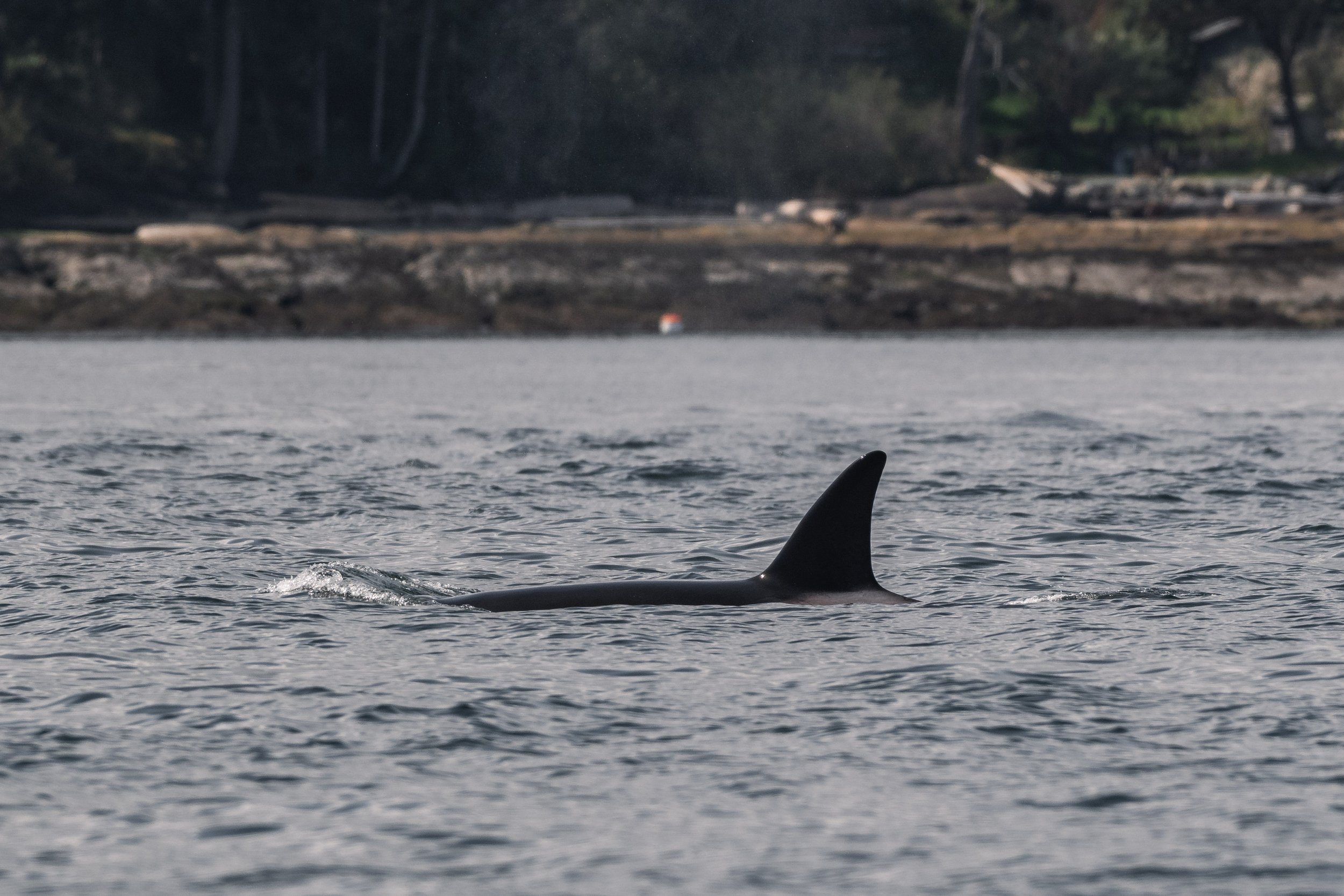
T123C Lucky.
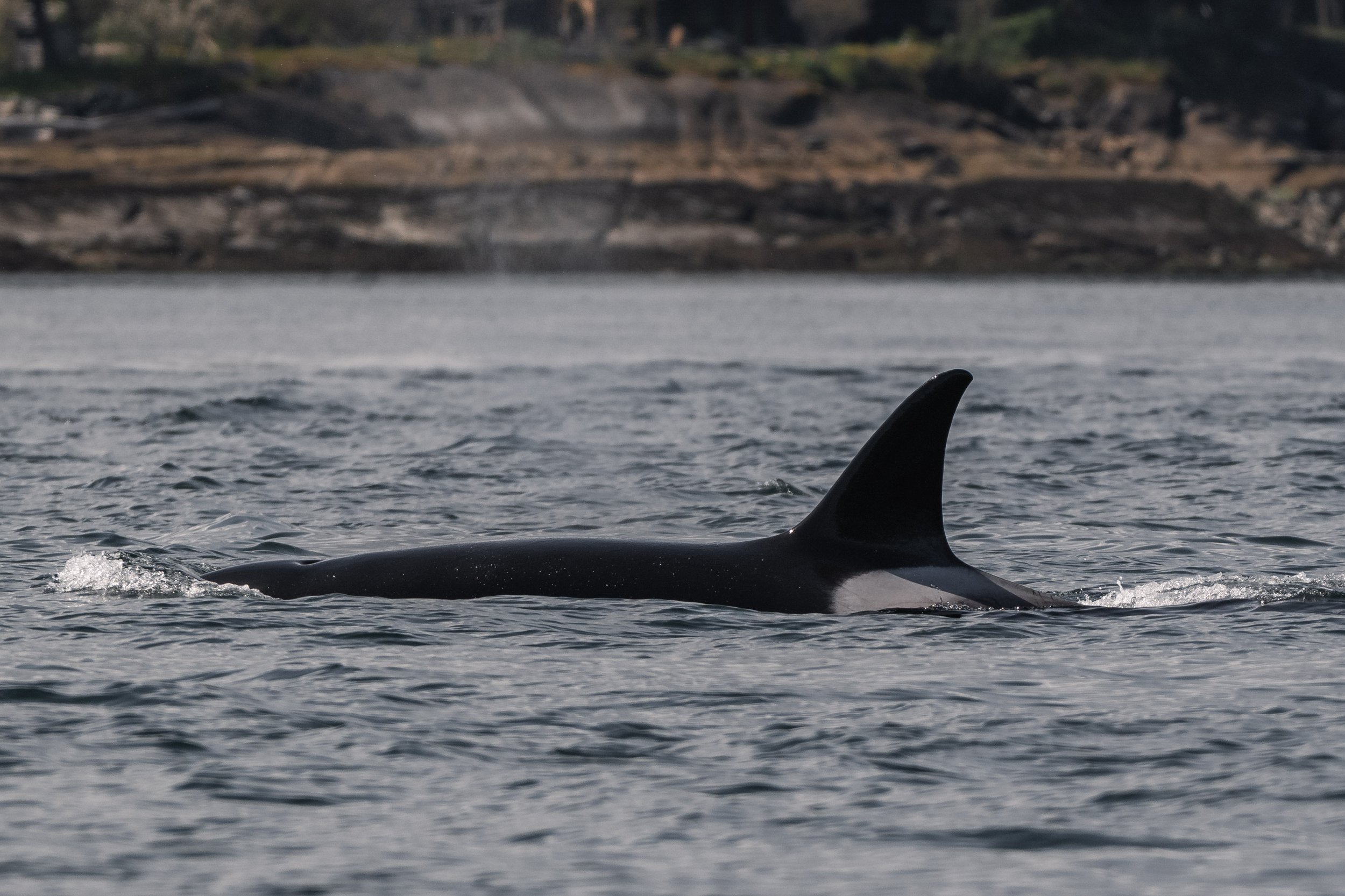
T123 Sidney our matriarch.
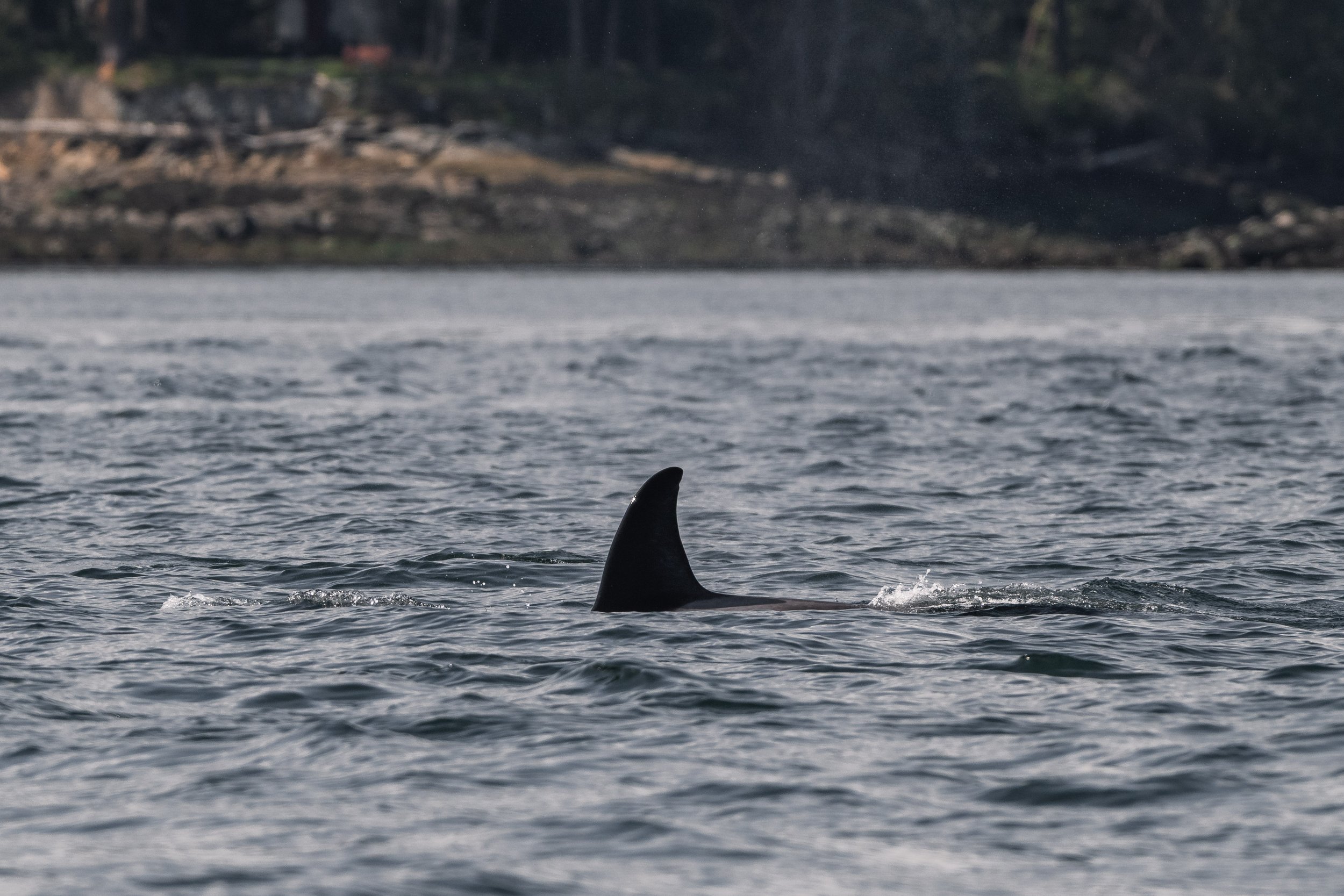
T123D Darcy.
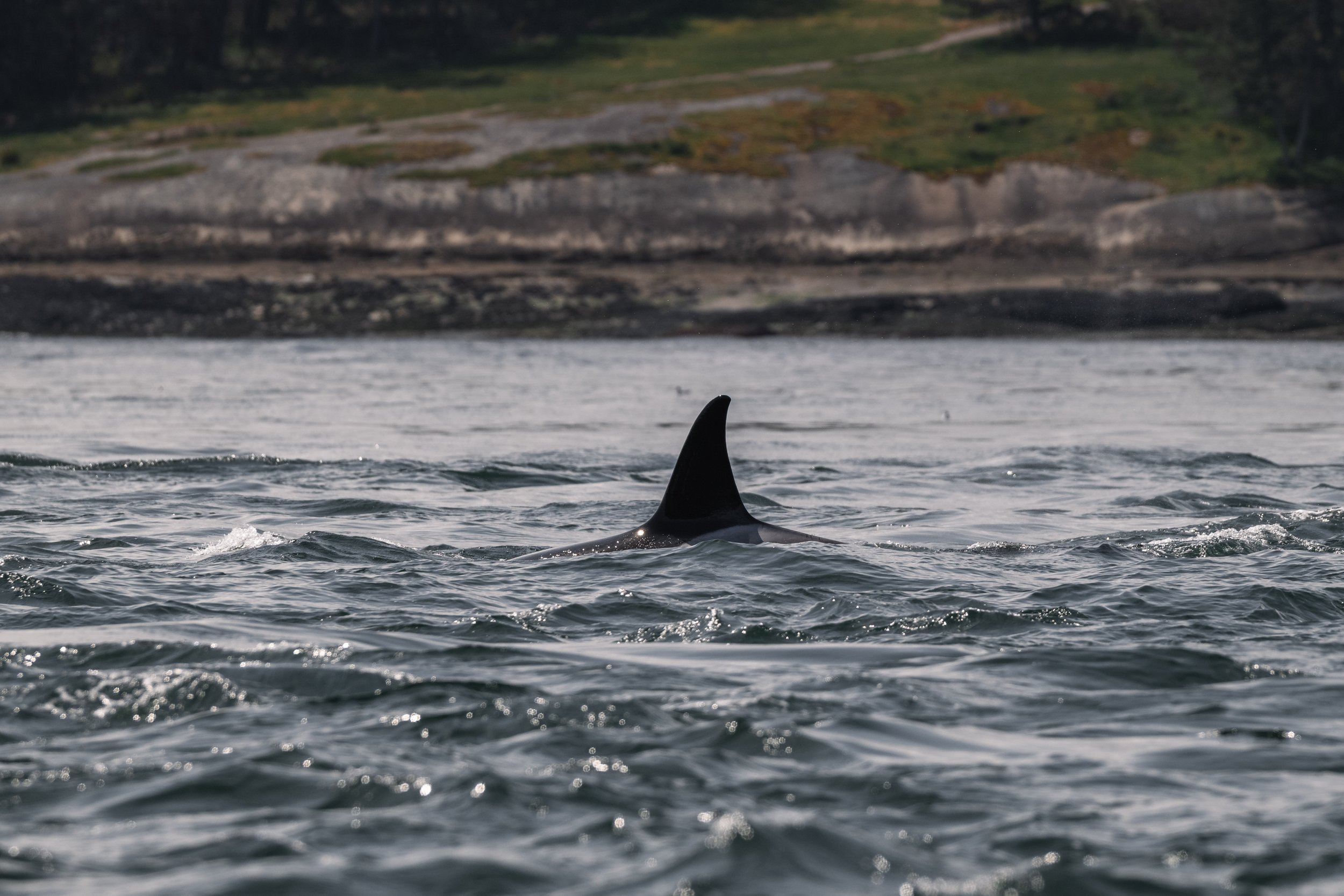
T123 Sidney in the rushing current.
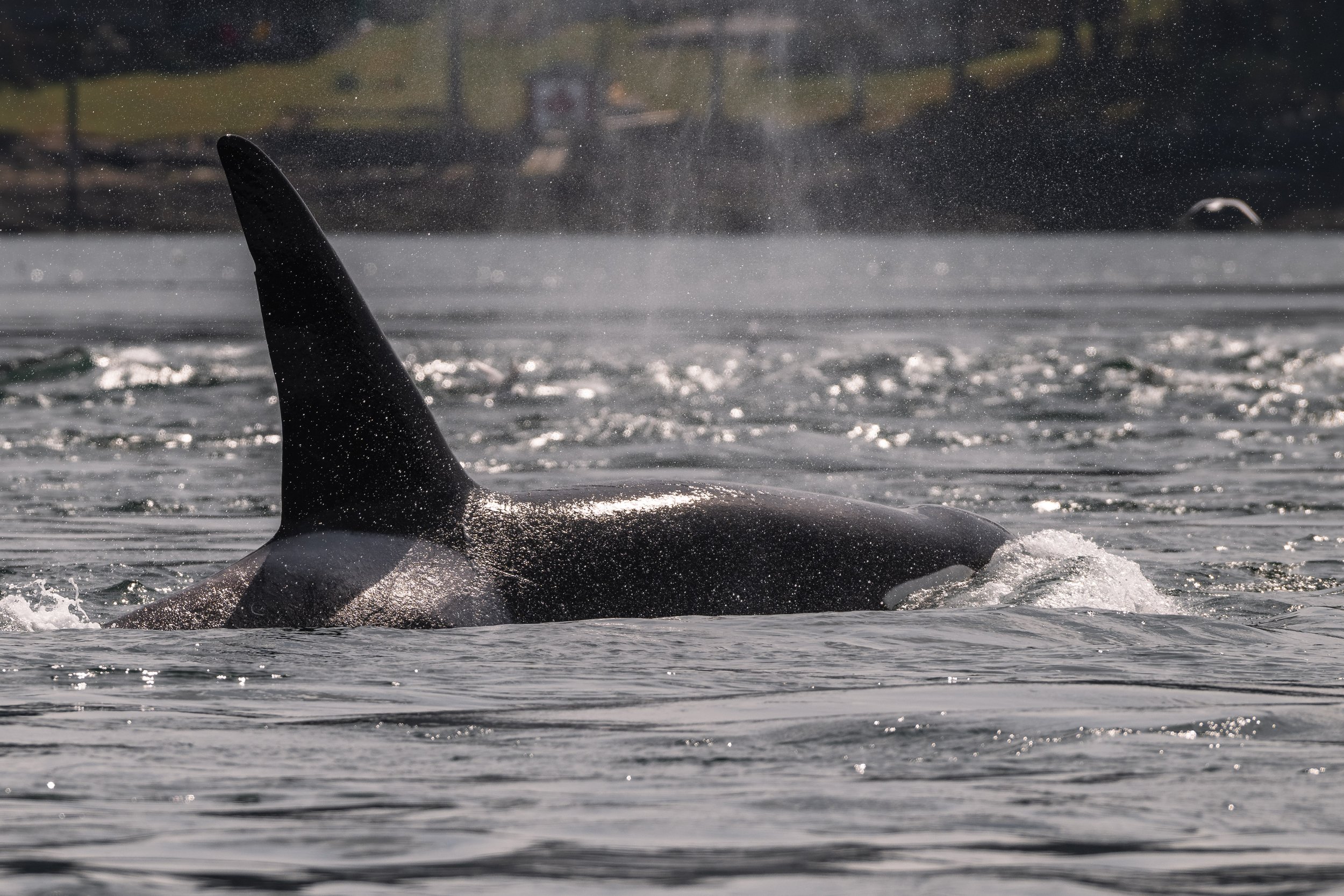
T123A Stanley.
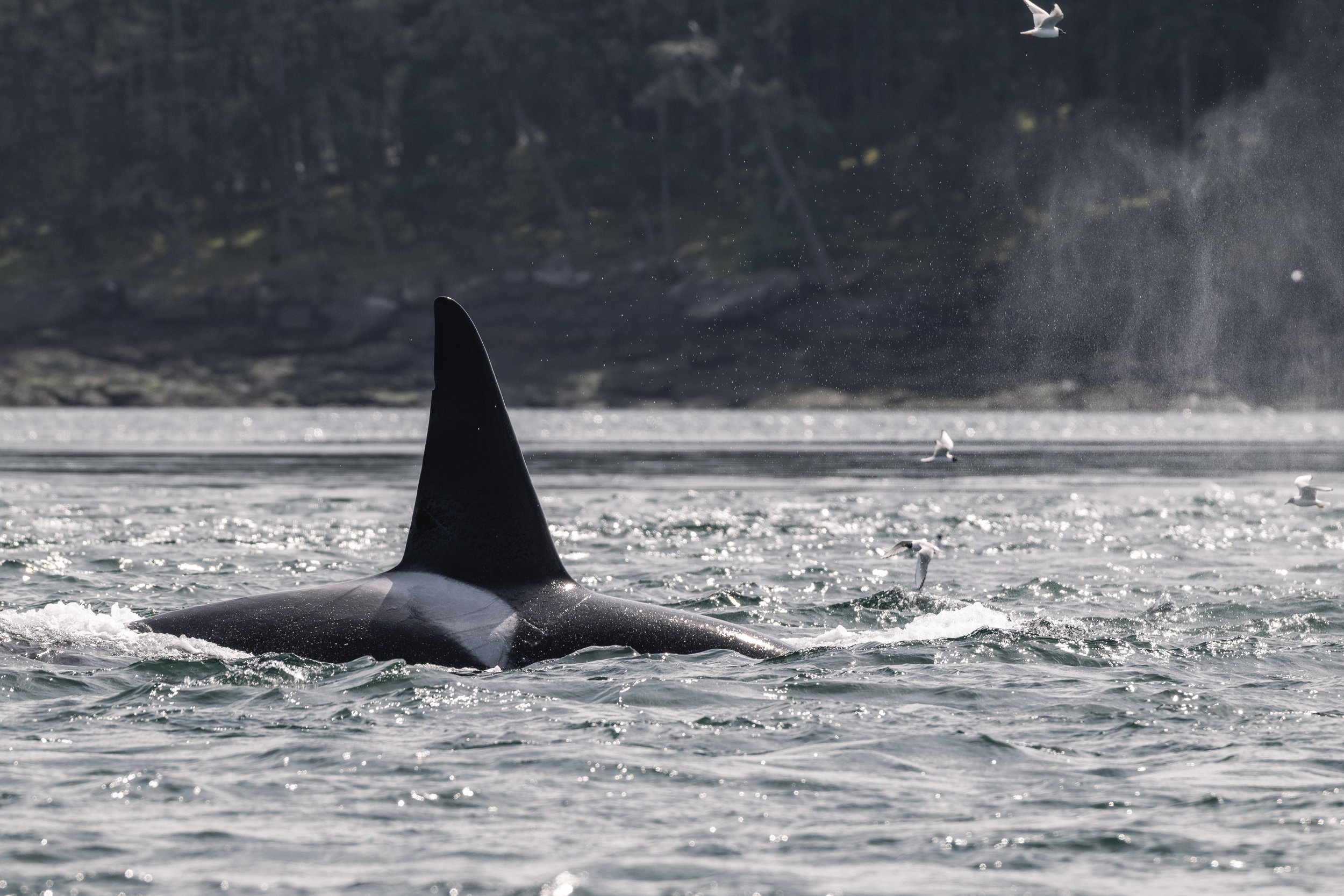
T123A Stanley surfacing as gulls soar past.
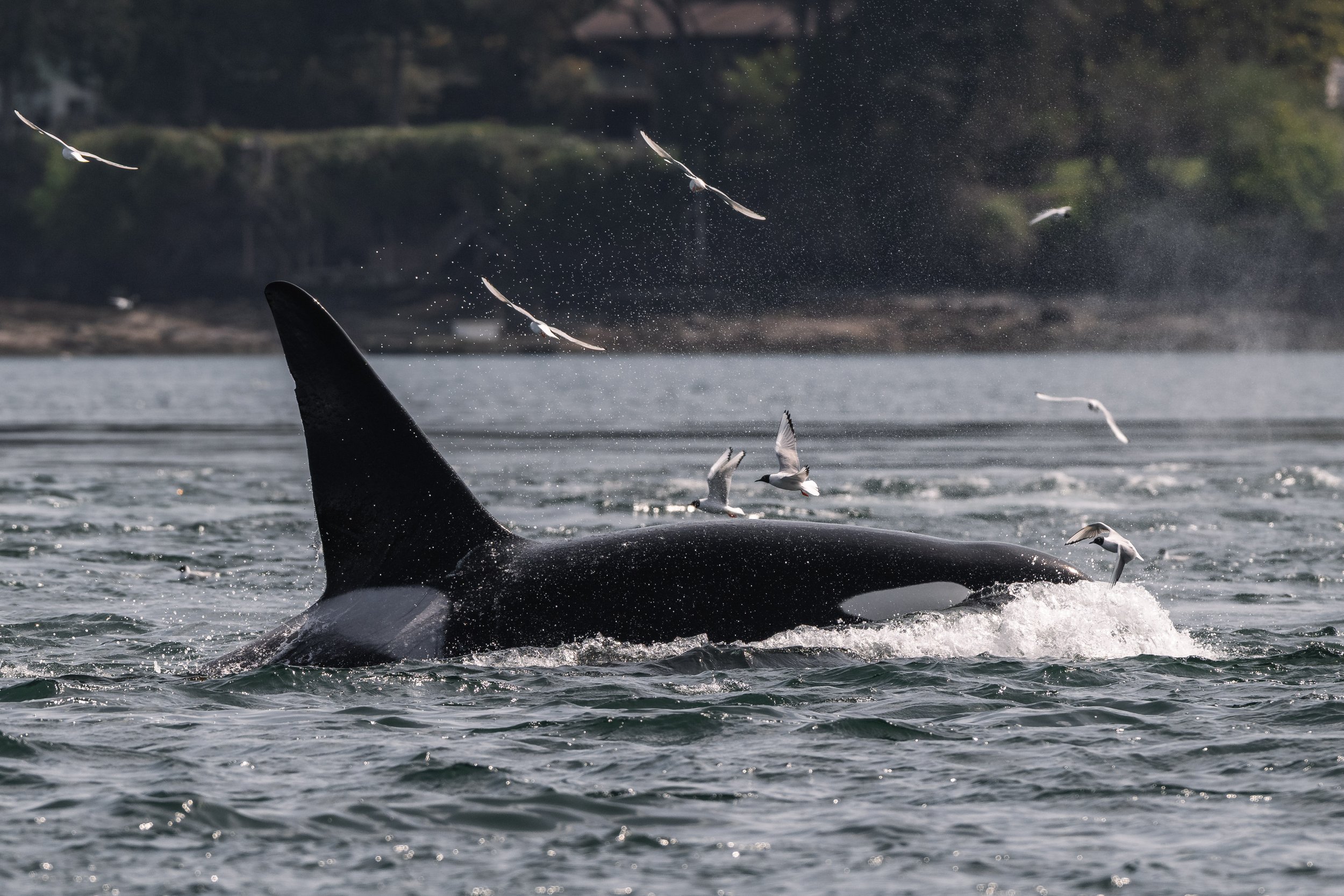
A good look at T123A Stanley’s eye patch.
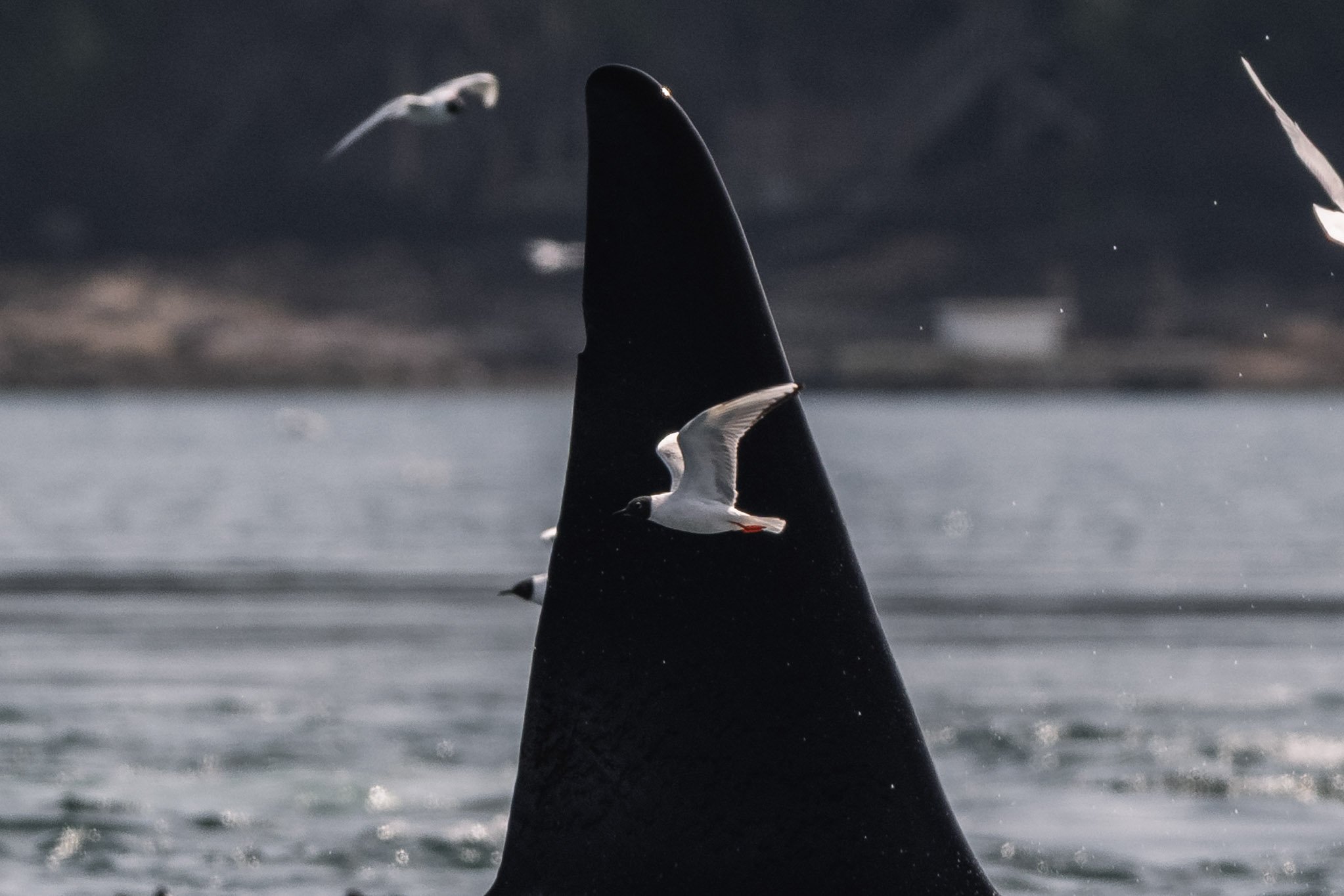
A Bonaparte’s Gull passing in front of T123A Stanley’s dorsal. That gull is around a foot long!
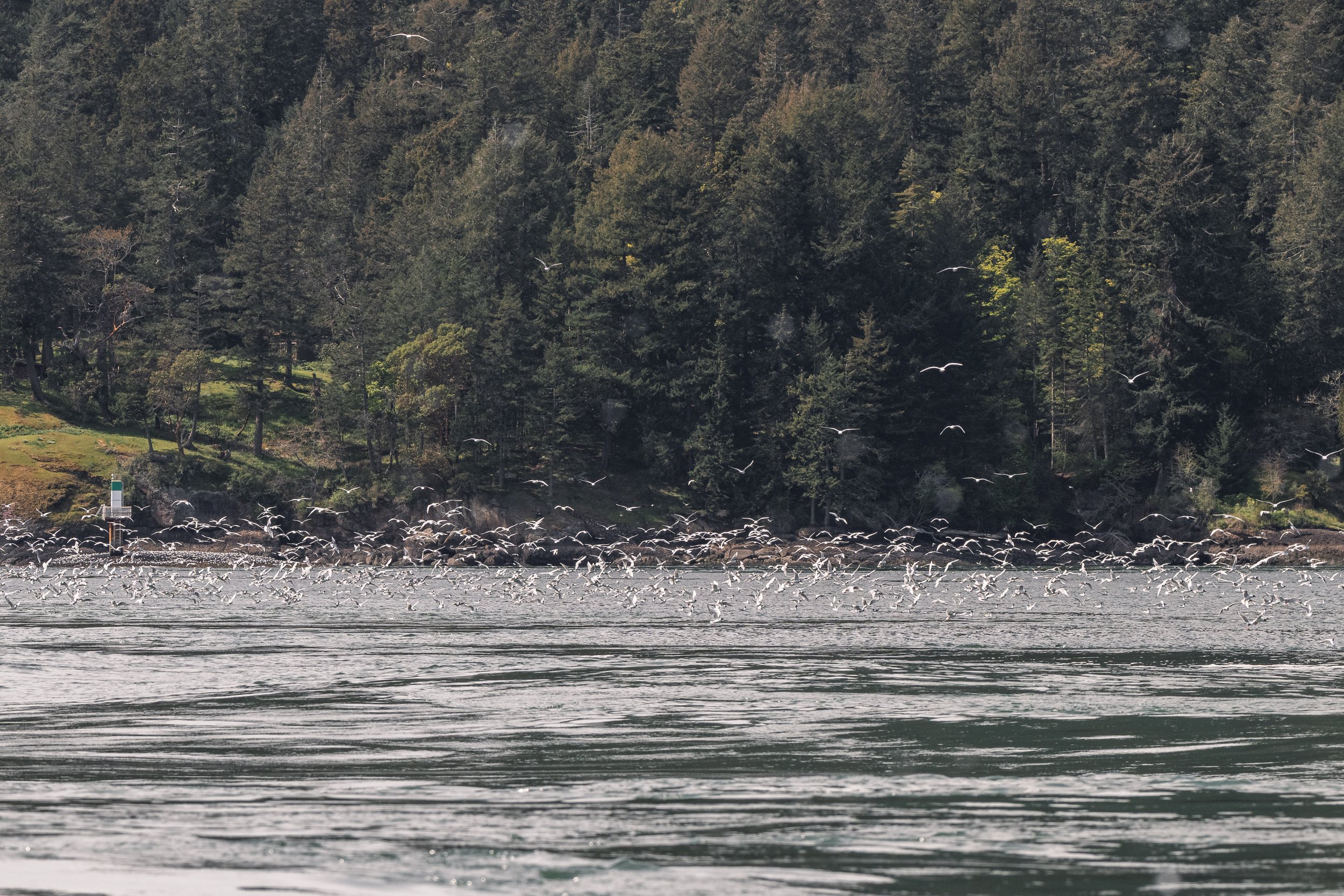
Bonaparte’s Gulls in the pass.
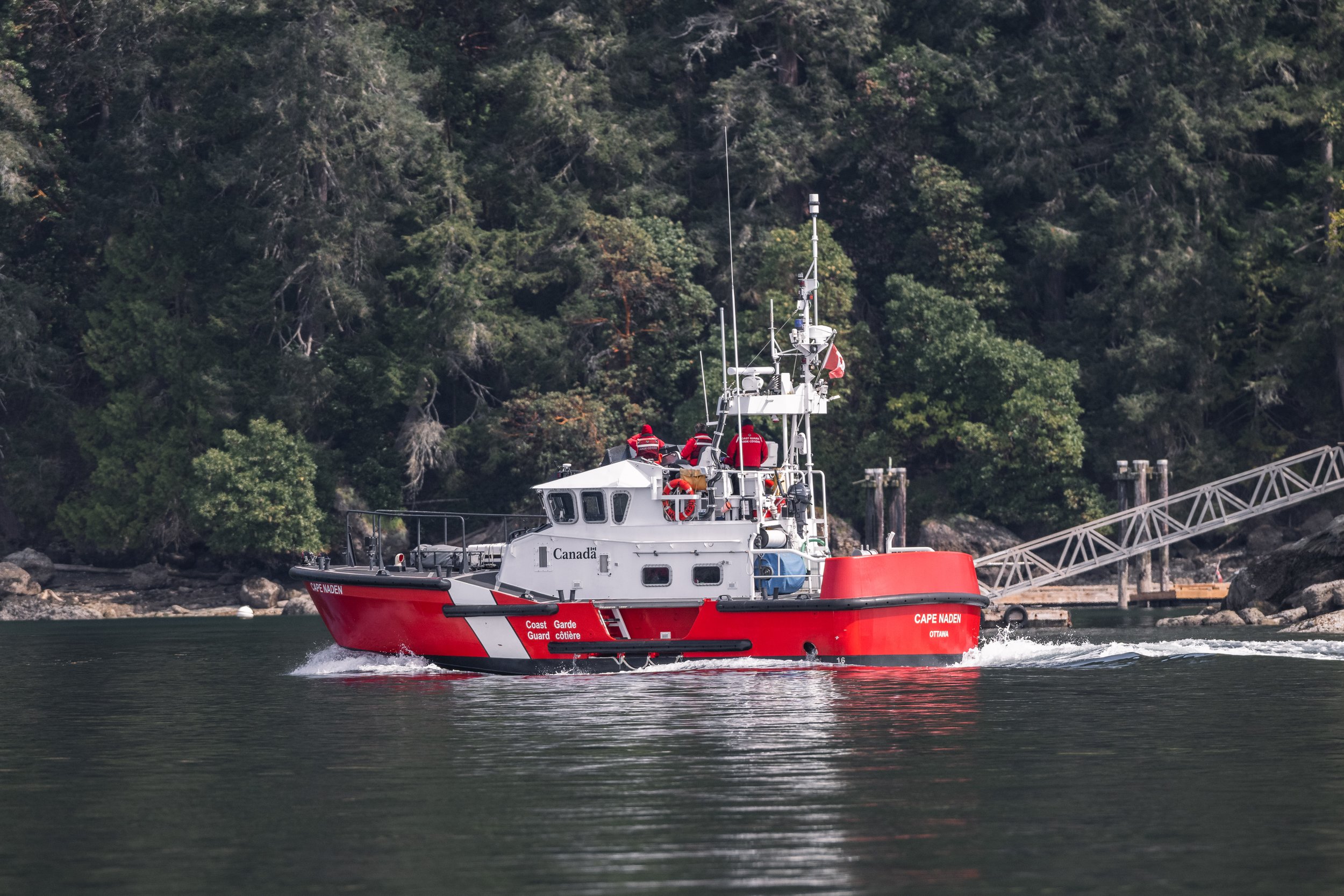
The bright red stands out on this Coast Guard vessel.
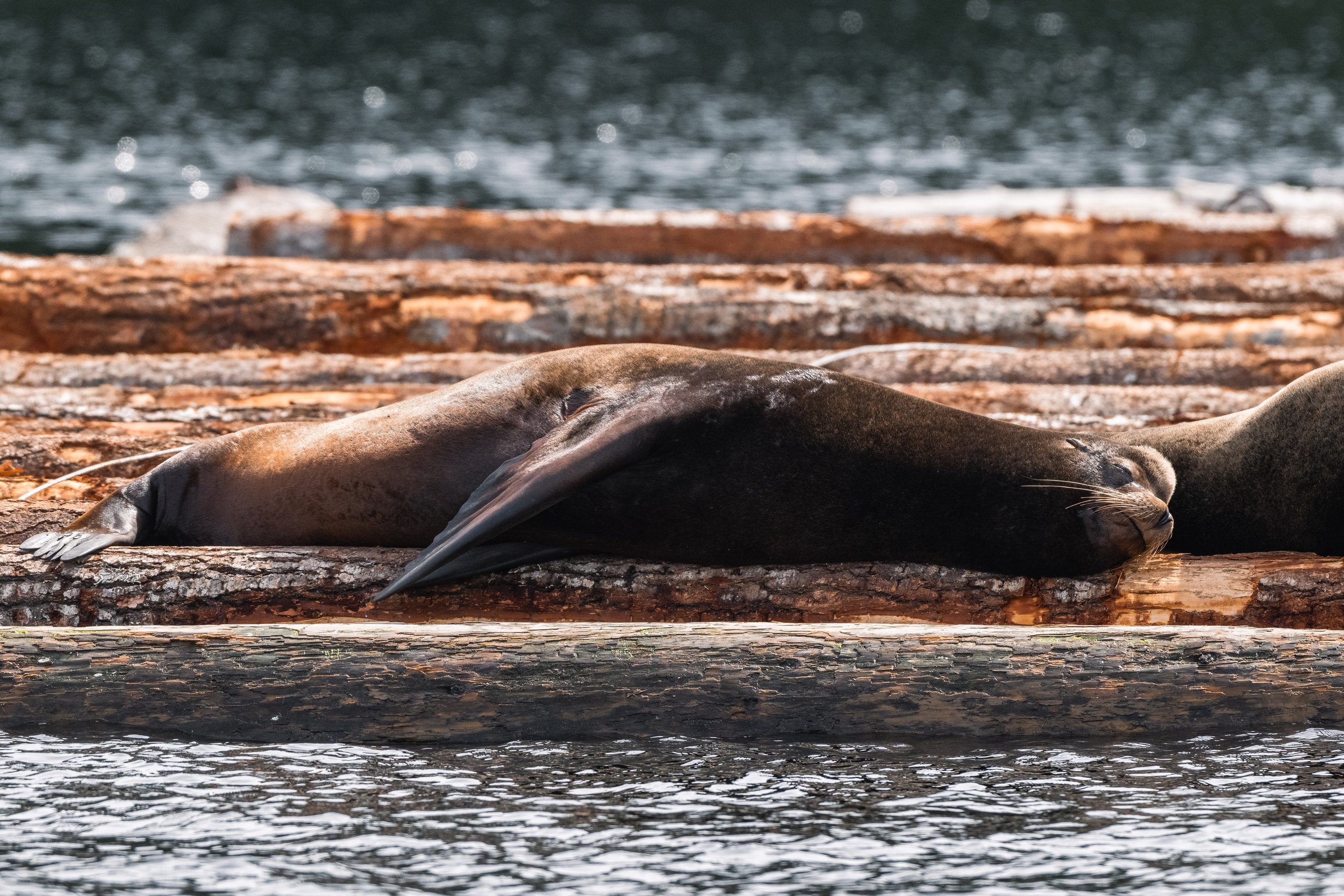
A male California Sea Lion having a sun snooze.
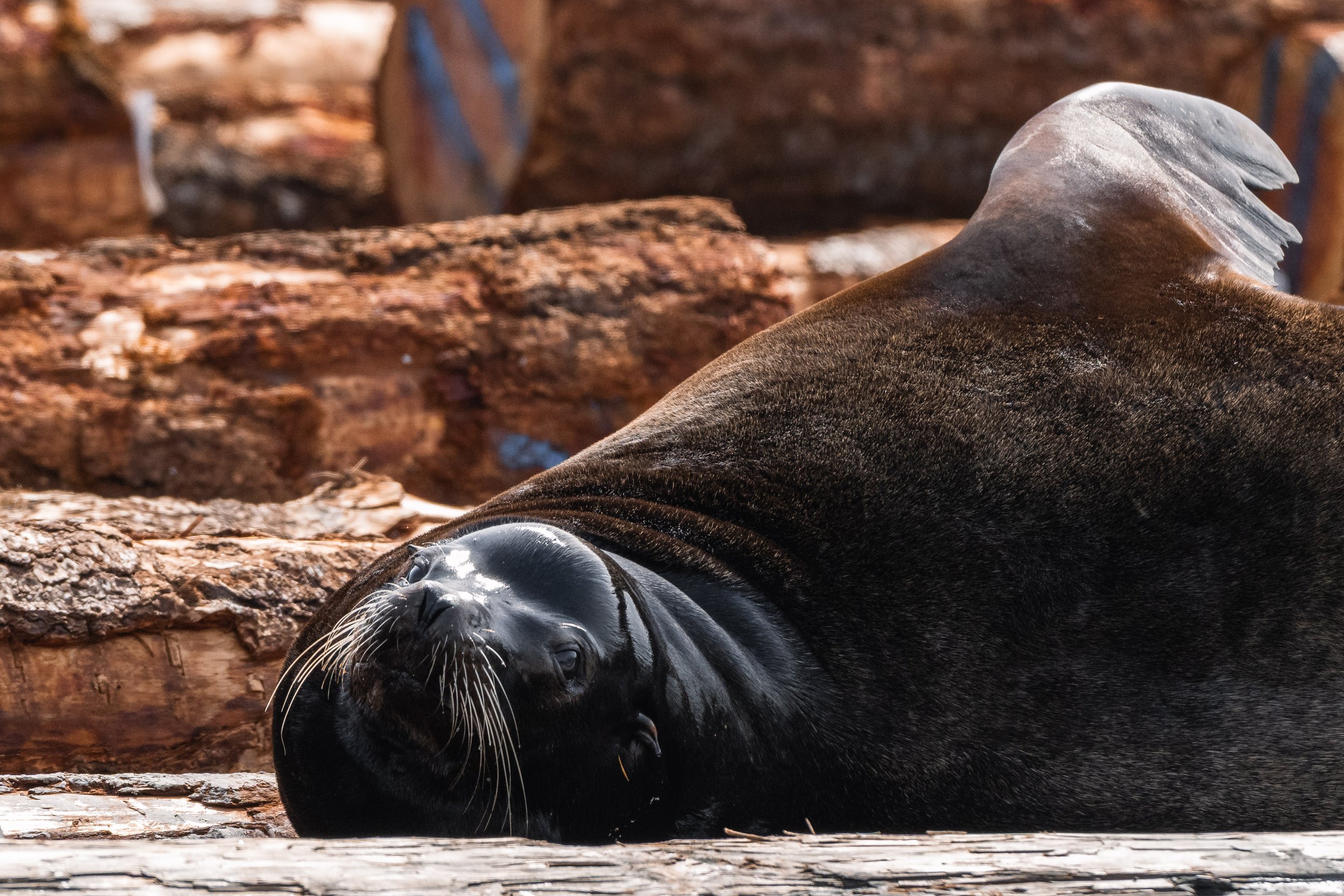
Watching us back.
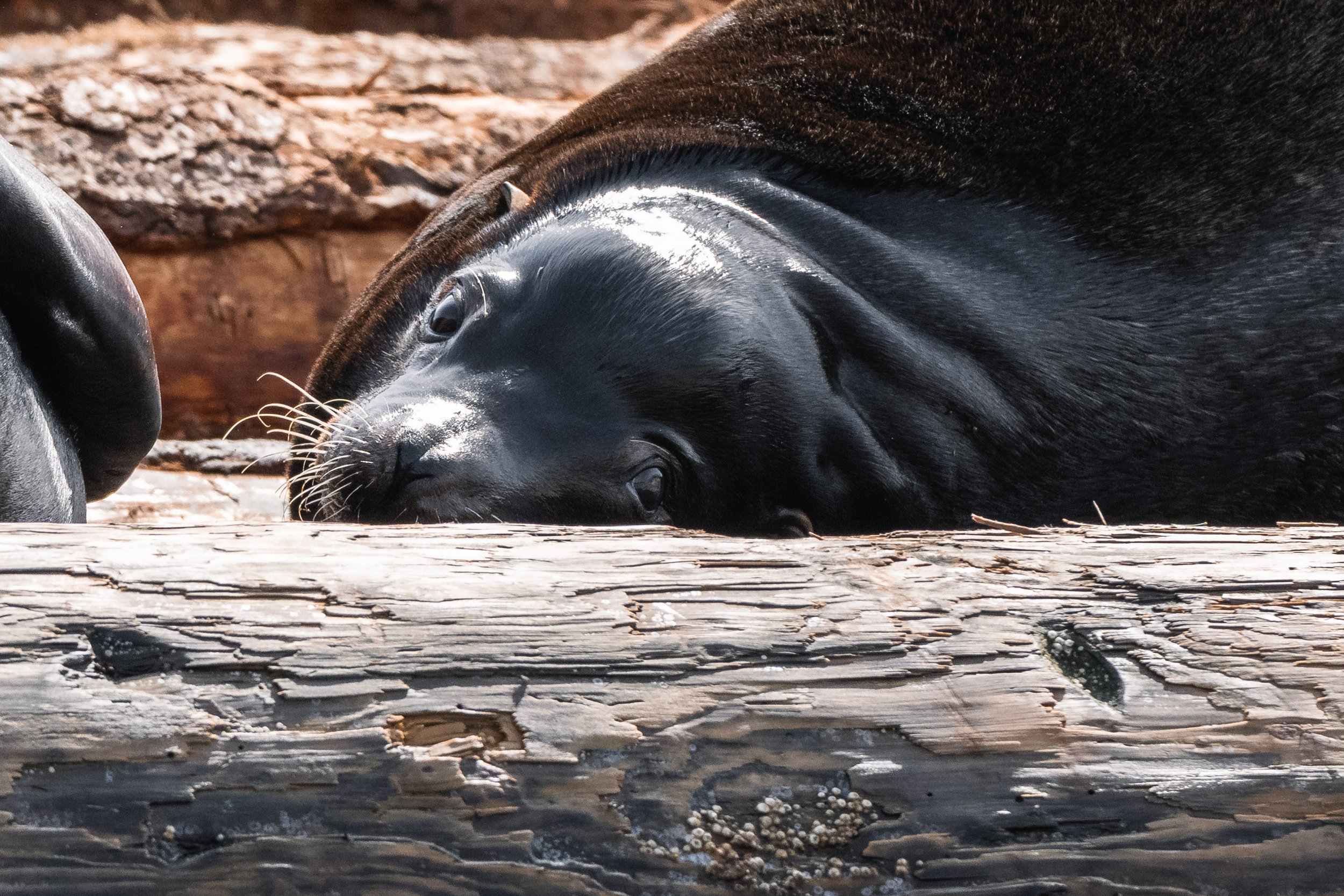
This California Sea Lion looks content on his log pillow.
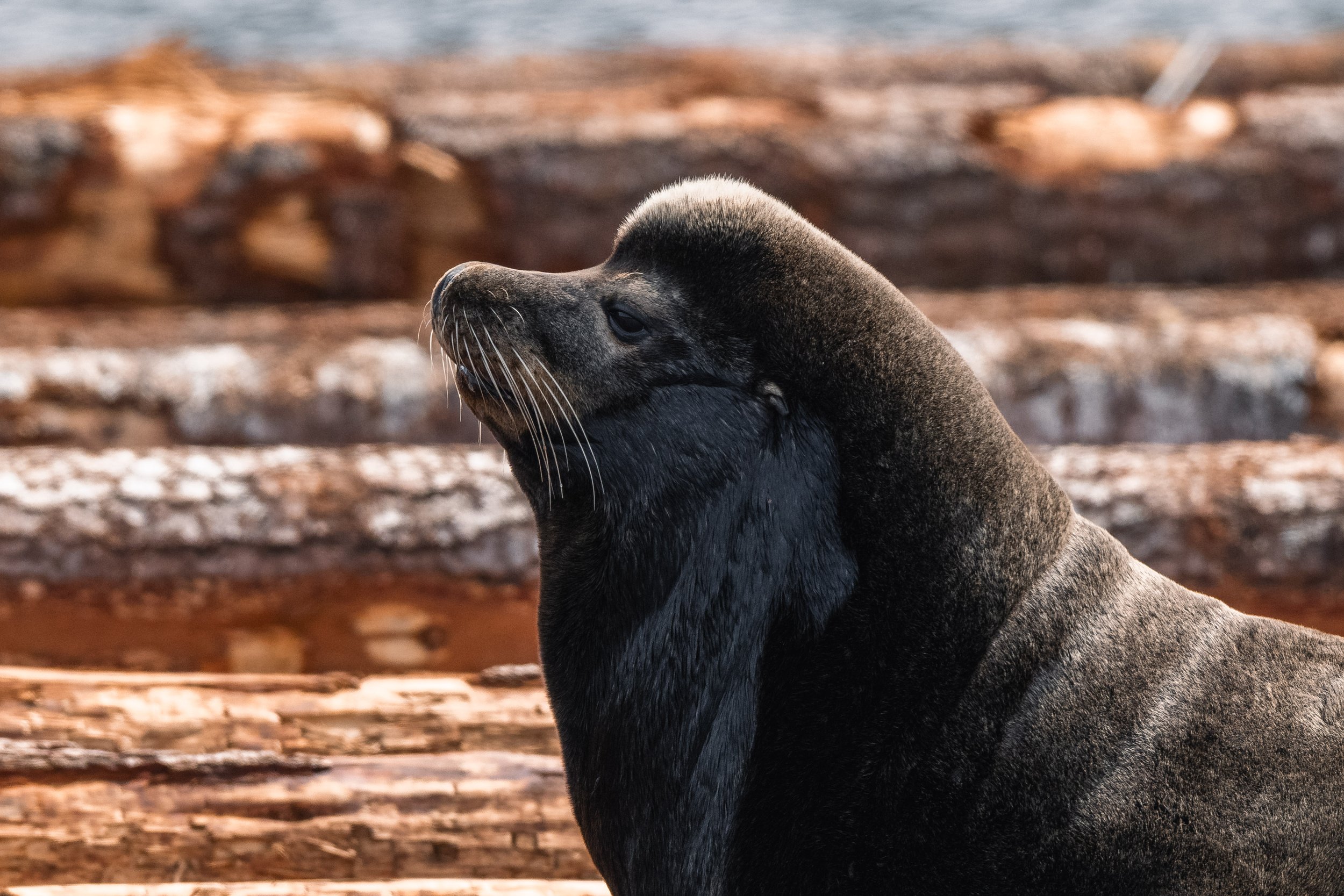
A fuzzy crest on this mature males forehead.
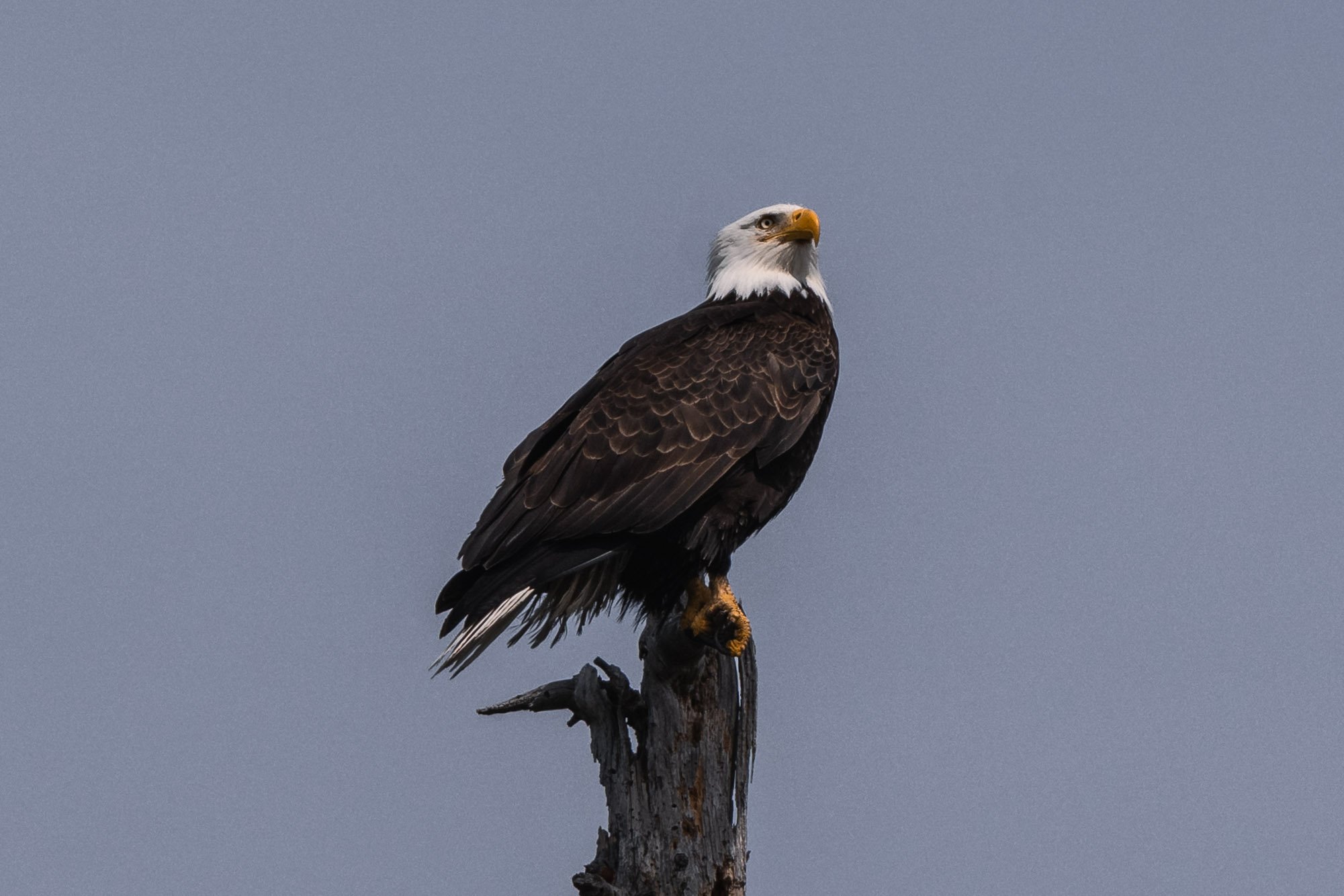
A bald eagle perched high in the trees.
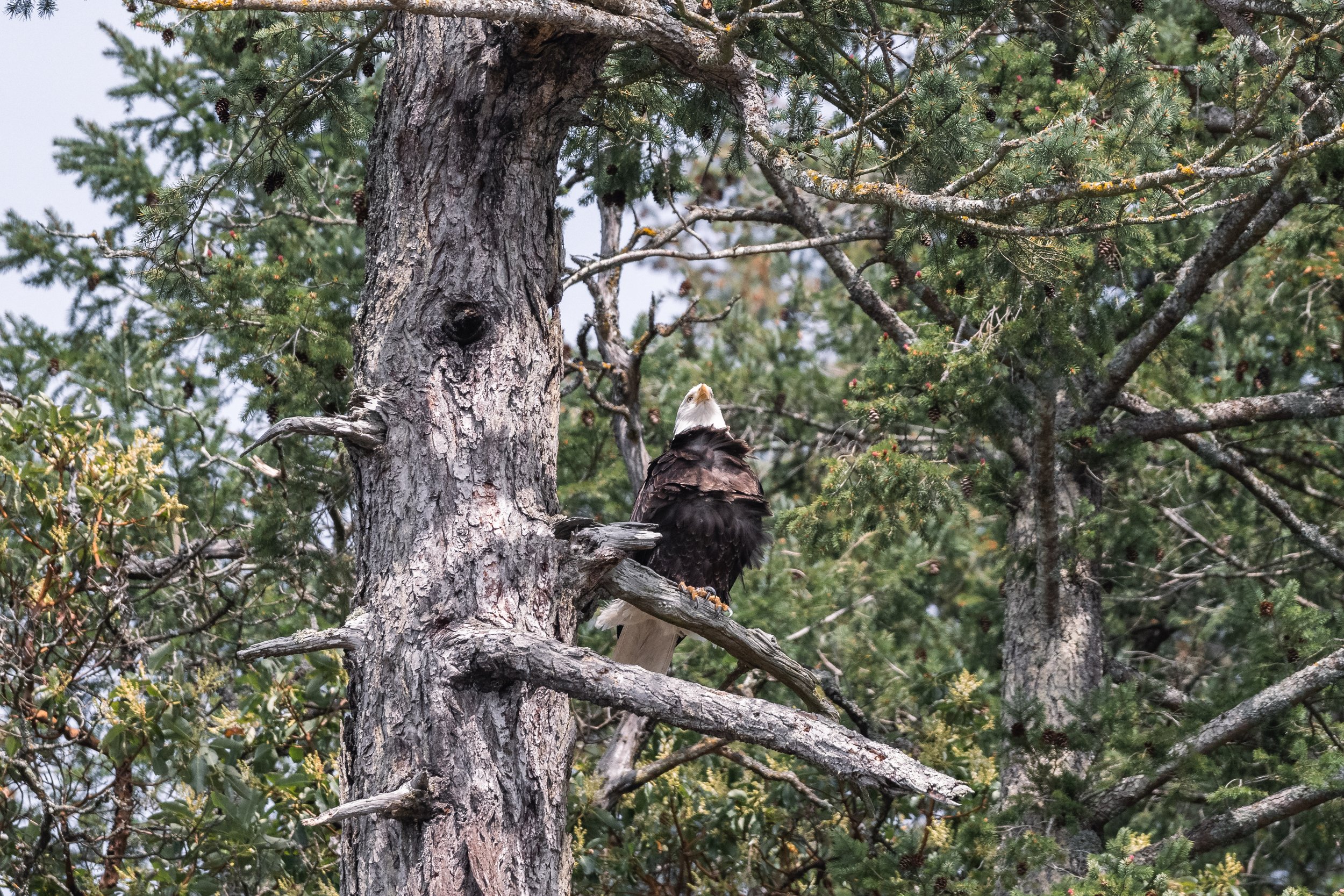
A little ruffled.
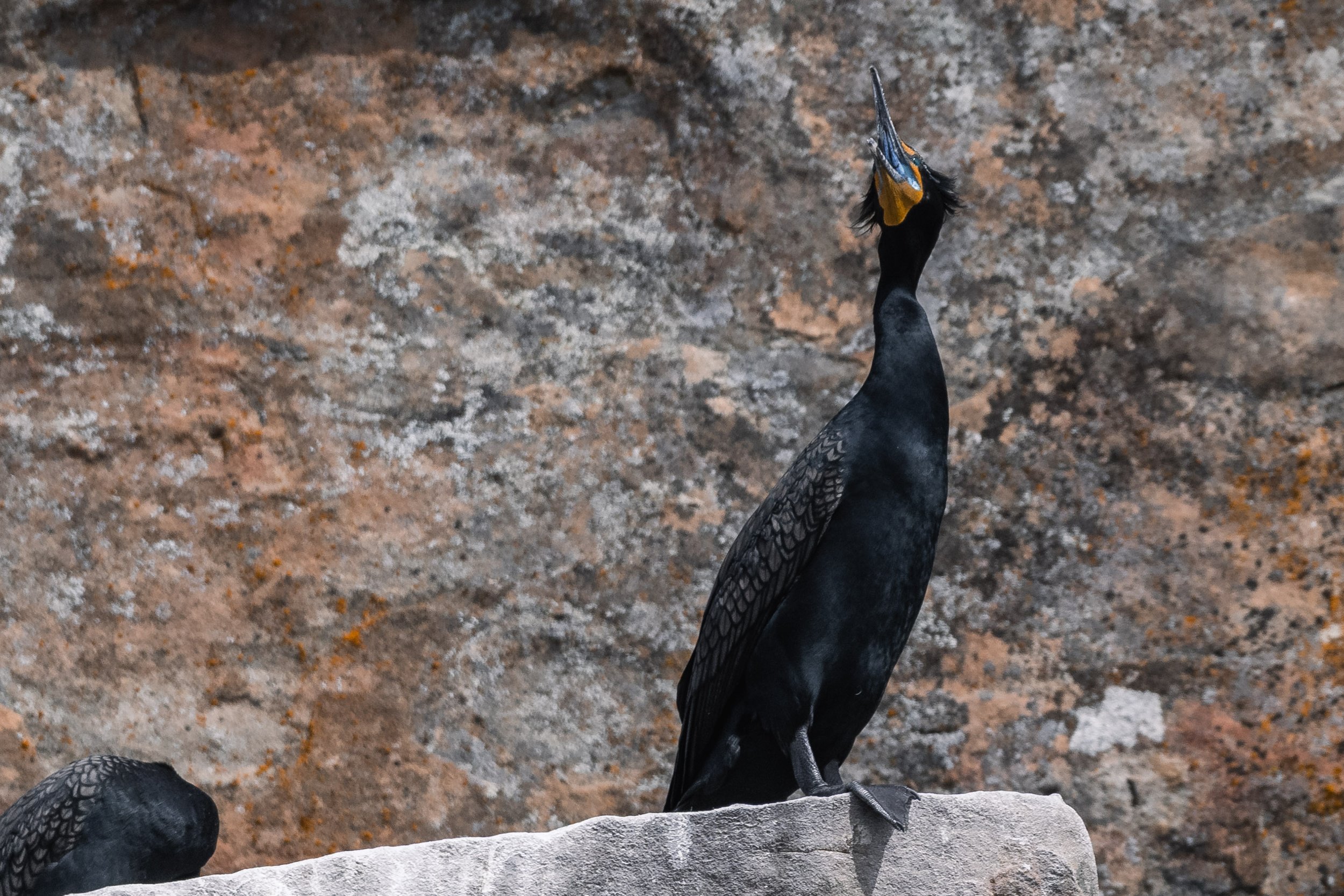
Can you spot the blue inside the beak of this cormorant?
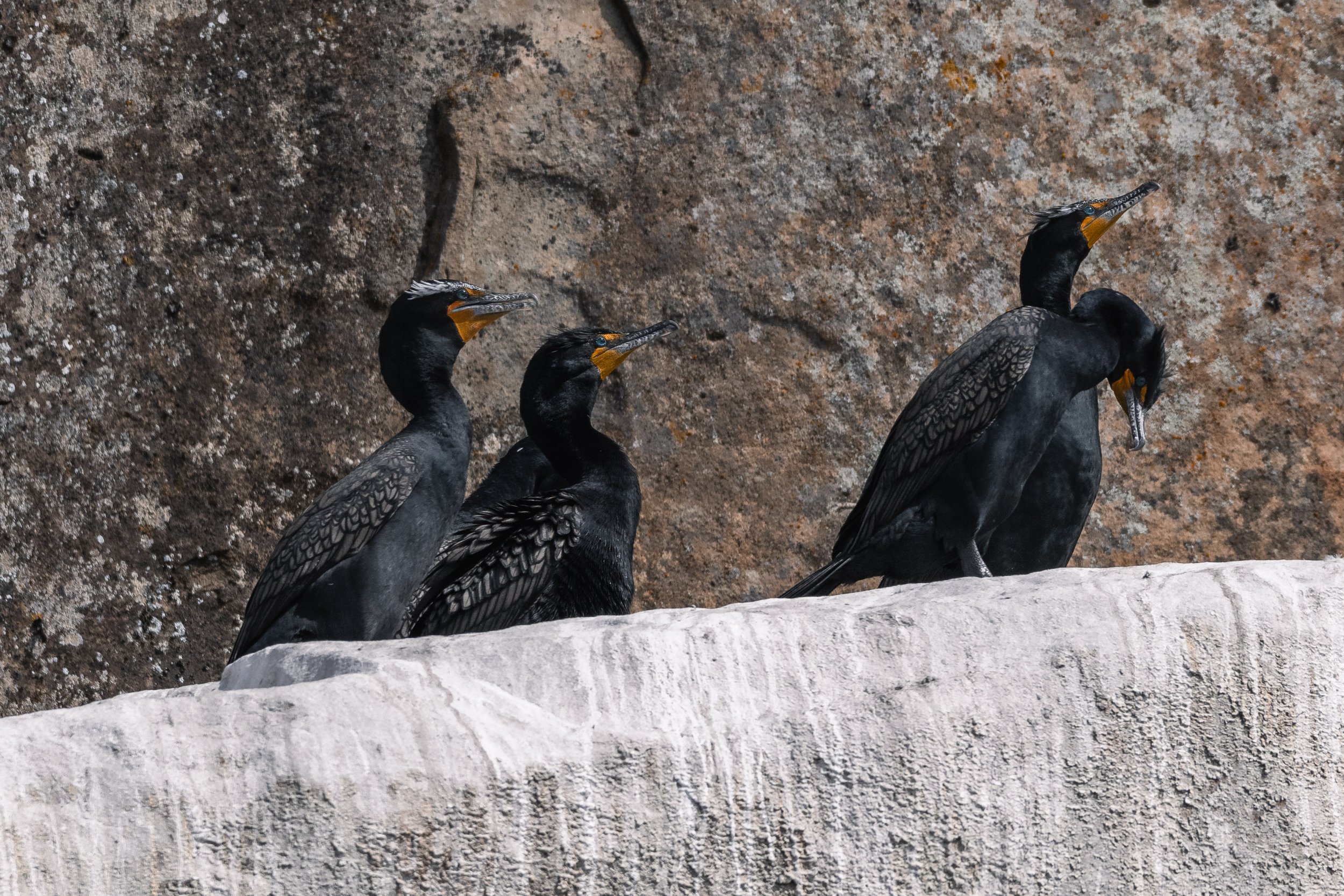
Cormorants enjoying the sun at the Gabriola Bluffs.