
April 18, 2026 - Orca in the north, Orca in the south
Another day, another adventure! With that in mind, we boarded and settled in as anticipation built for what lay ahead. Once everyone was comfortable, Naturalist Evan outlined the plan for the day. With several early morning reports to consider, we had options. We chose to begin by heading north, focusing our search along the waters off North Nanaimo.
Kula eased out of the harbour and rounded the corner, beginning our journey northbound. We passed familiar landmarks along the way, including Departure Bay, the Five Finger Islands, and Pipers Lagoon, before continuing up toward Lantzville, with Nanoose Bay stretching out in the distance. It was here that we spotted them: four dorsal fins appeared ahead, one tall and prominent, with three smaller fins travelling nearby.
Cameras came up as we began watching, and after a few photos, we deduced who we were with. This was the T065Bs:
T065B Chunk ♀ (1993)
T065B1 Birdsall ♂ (2011)
T065B2 Nettle ♂ (2019)
T065B3 Rook ♂ (2023)
This group is led by matriarch T065B Chunk, travelling alongside her three calves: T065B1 Birdsall, the large male, T065B2 Nettle, and T065B3 Rook. In recent weeks, this family has often been seen alongside other pods, making this encounter particularly special as they were travelling on their own.
The group travelled steadily but with a noticeable zigzag pattern, shifting direction as they moved along the shoreline. This behaviour often indicates they are planning to hunt, as Transient orca check haulout sites and scan the water for prey. With growing calves in the group, the need for food is constant. An adult orca requires a significant number of calories each day, and for a family like the T065Bs, that translates into multiple successful hunts each day. Watching them move with intention offered a glimpse into the ongoing effort that shapes much of their daily lives.
After some time, we left the T065Bs to continue on their way and turned back south. The shoreline guided us once more past Nanaimo and toward Dodd Narrows, a famous waterway outside the harbour. Passing through, we entered the Southern Gulf Islands, where another report had drawn our attention.
The search resumed, with eyes scanning across the channels and between the forested islands. Turning through Ruxton Pass and into Pylades Channel, we moved carefully through the area. Not long after, more dorsal fins surfaced ahead, rising and falling together. This time, the group was larger, with whales of varying sizes travelling in close proximity.
Evan began photographing the group, and as the images were reviewed, it became clear that some of these individuals were less familiar to us - some, complete strangers! After comparing notches and scratches, we confirmed that we were observing the T049As, joined by T117A, T117B, T117B1, and T172. For our team, this encounter carried an added layer of excitement. T117A and T172 were new to us, while the T117Bs are only occasionally seen in our area:
T049A Nan ♀ (1986)
T0491 Noah ♂ (2001)
T049A3 Nat ♂ (2011)
T049A4 Neptune ♂ (2014)
T049A5 Nebula ♀ (2017)
T049A6 Charlie II ♂ (2022)
T049A7 Nimbus (2026)
T117A Nighthawk ♂ (1992)
T117B Nyx ♀ (2005)
T117B1 Noctis (2023)
T172 Katmai ♀ (1989)
This gathering of multiple matrilines, often referred to as a T-party, brought together multiple Transient orca families in a shared space. Younger whales moved between individuals, weaving through the adults in what appeared to be a mix of play and social interaction. These moments are critical to the social development of the calves, plus are excellent mating opportunities for the mature individuals.
Eventually, the group continued on, and we began our return toward Nanaimo. However, the day still held a few more moments to take in. After crossing back through Dodd Narrows, we slowed near the log booms by Harmac, where sea lions rested in clusters. Their calls carried across the water as they shifted and settled, taking advantage of a haulout that sits close to the productive feeding grounds that are Dodd Narrows.
From there, we made one final stop along the cliffs of Gabriola Island. As we approached, small dark shapes became visible against the rock. These were cormorants, gathered at a nesting site along the cliffside. Double-crested and Pelagic Cormorants share these spaces, raising their young and diving into the waters below in search of fish.
With one last look, we turned back toward Nanaimo. The harbour came into view, marking the end of a day that carried us through the waters surrounding Nanaimo and into multiple amazing encounters.
Photos taken by Marine Naturalist Evan Hessels.
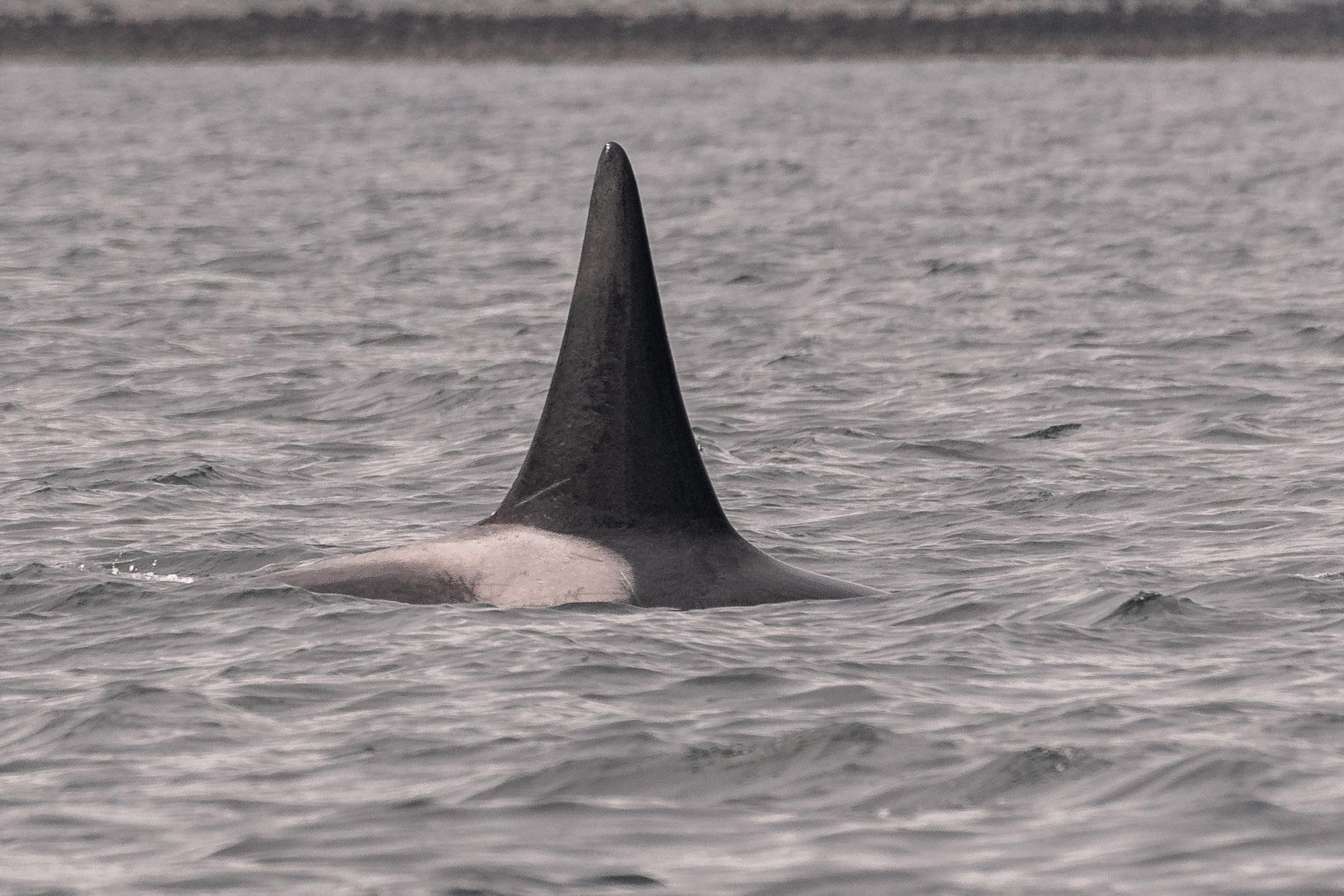
T065B1 Birdsall travelling.
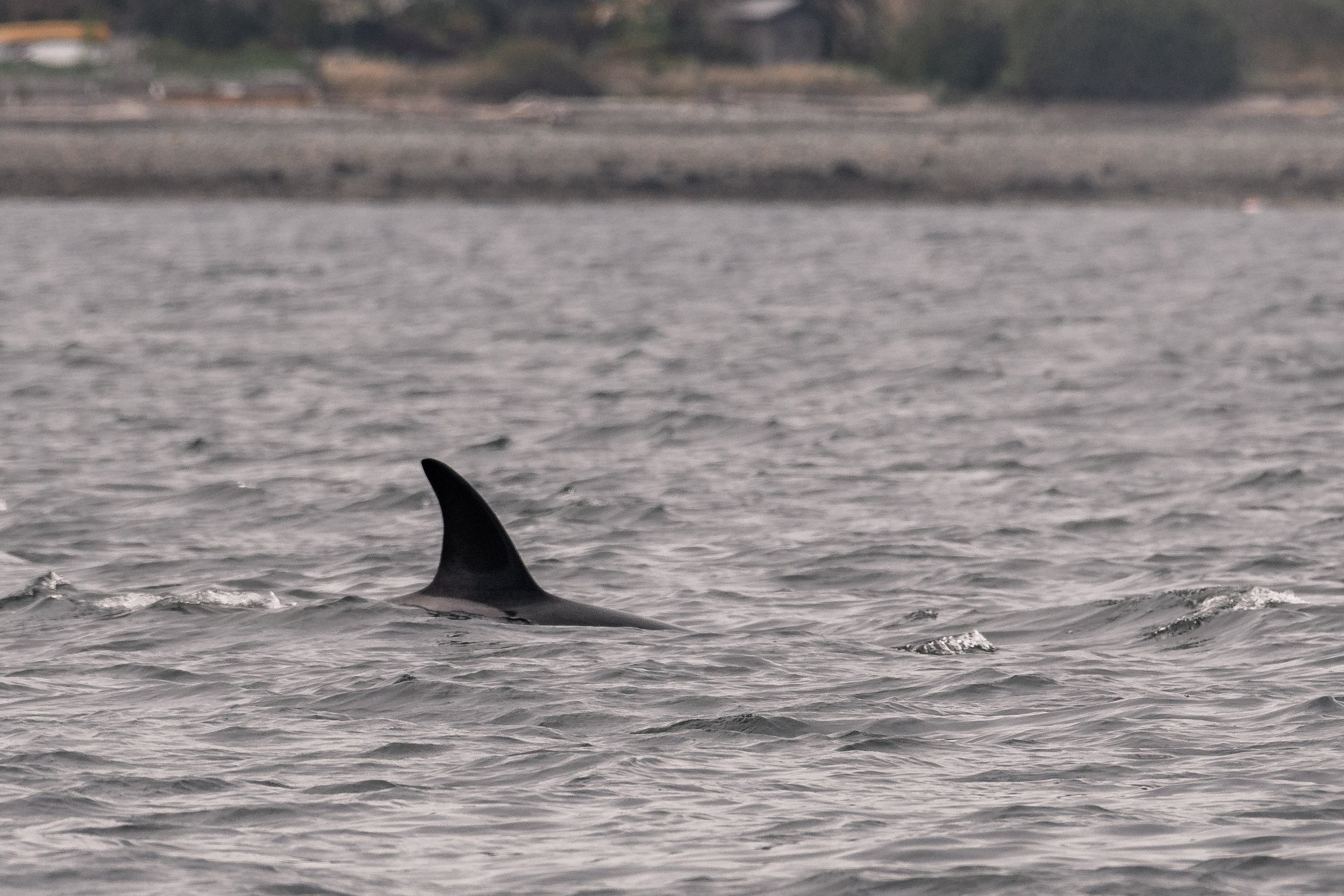
T065B2 Nettle.
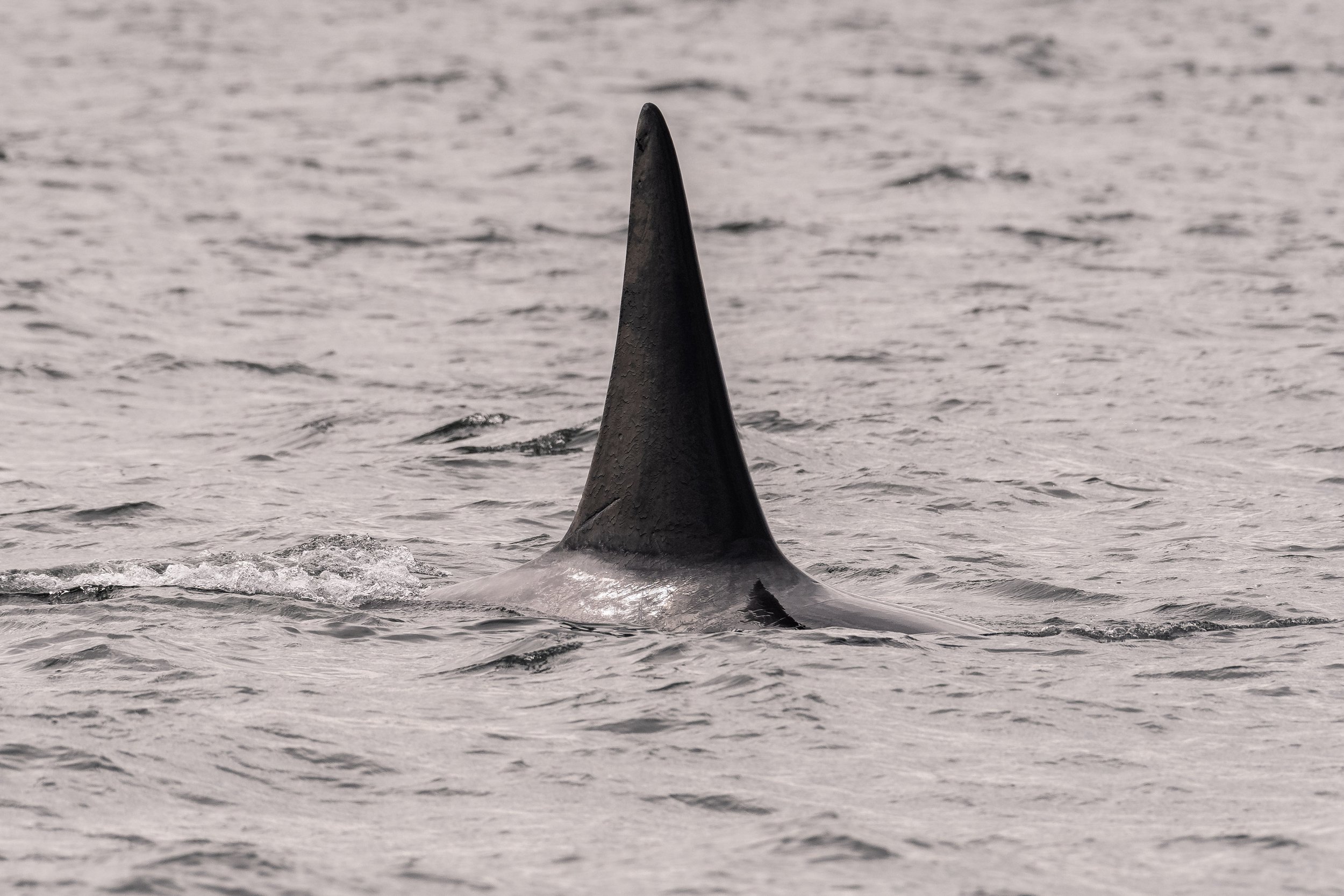
T065B1 Birdsall is getting so big!
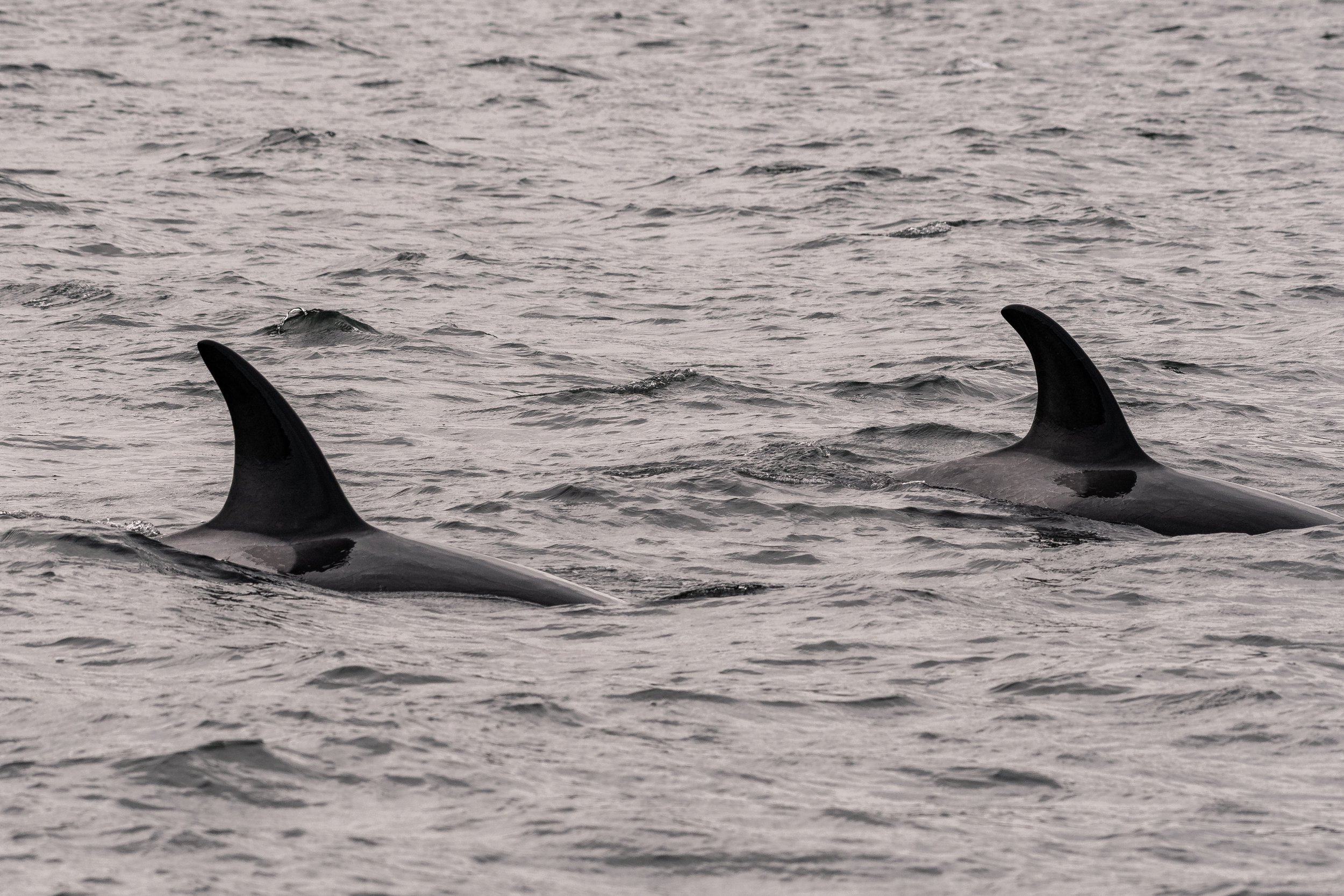
T065B2 Nettle and T065B3 Rook side-by-side.
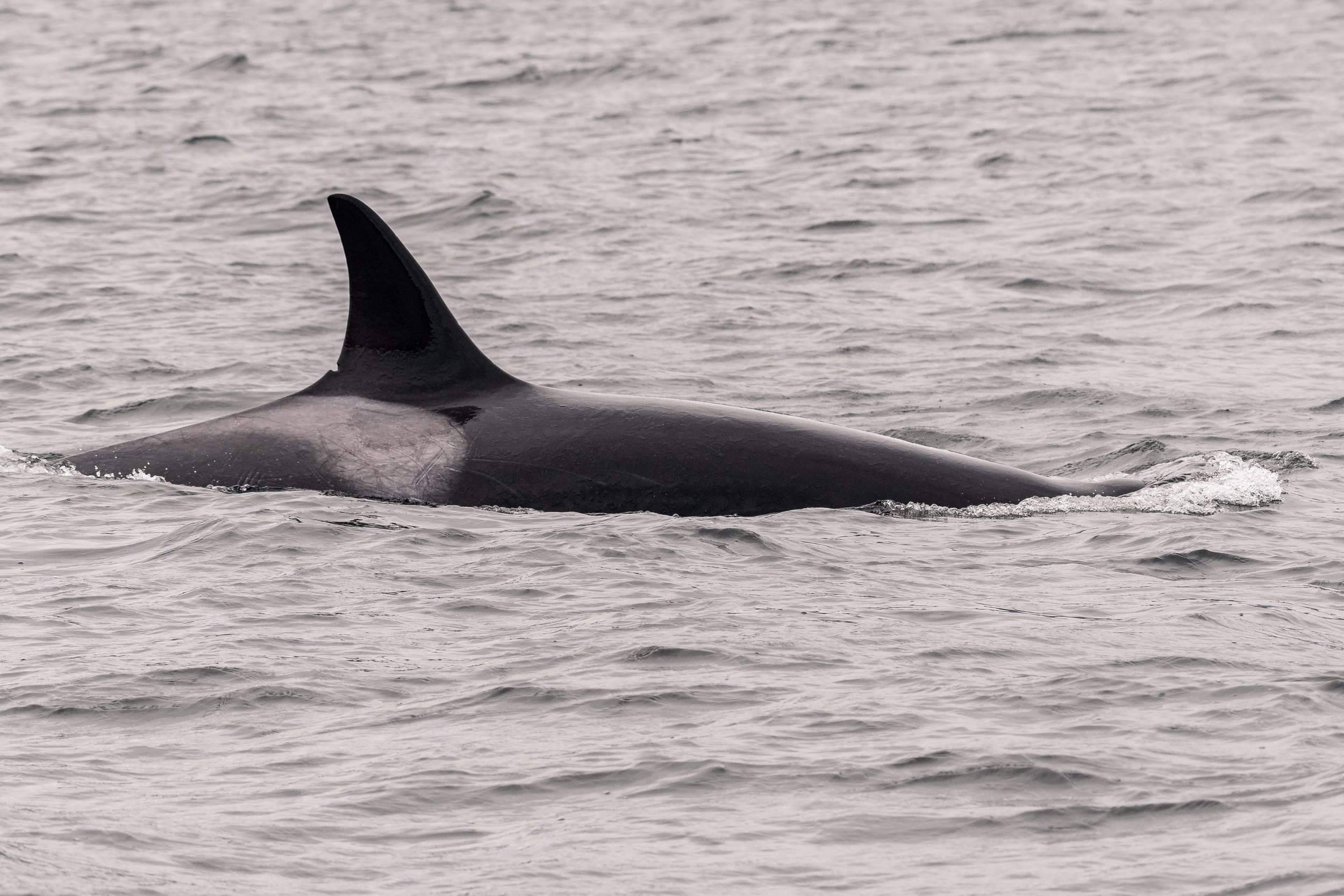
Matriarch T065B Chunk with her distinct dorsal fin visible.
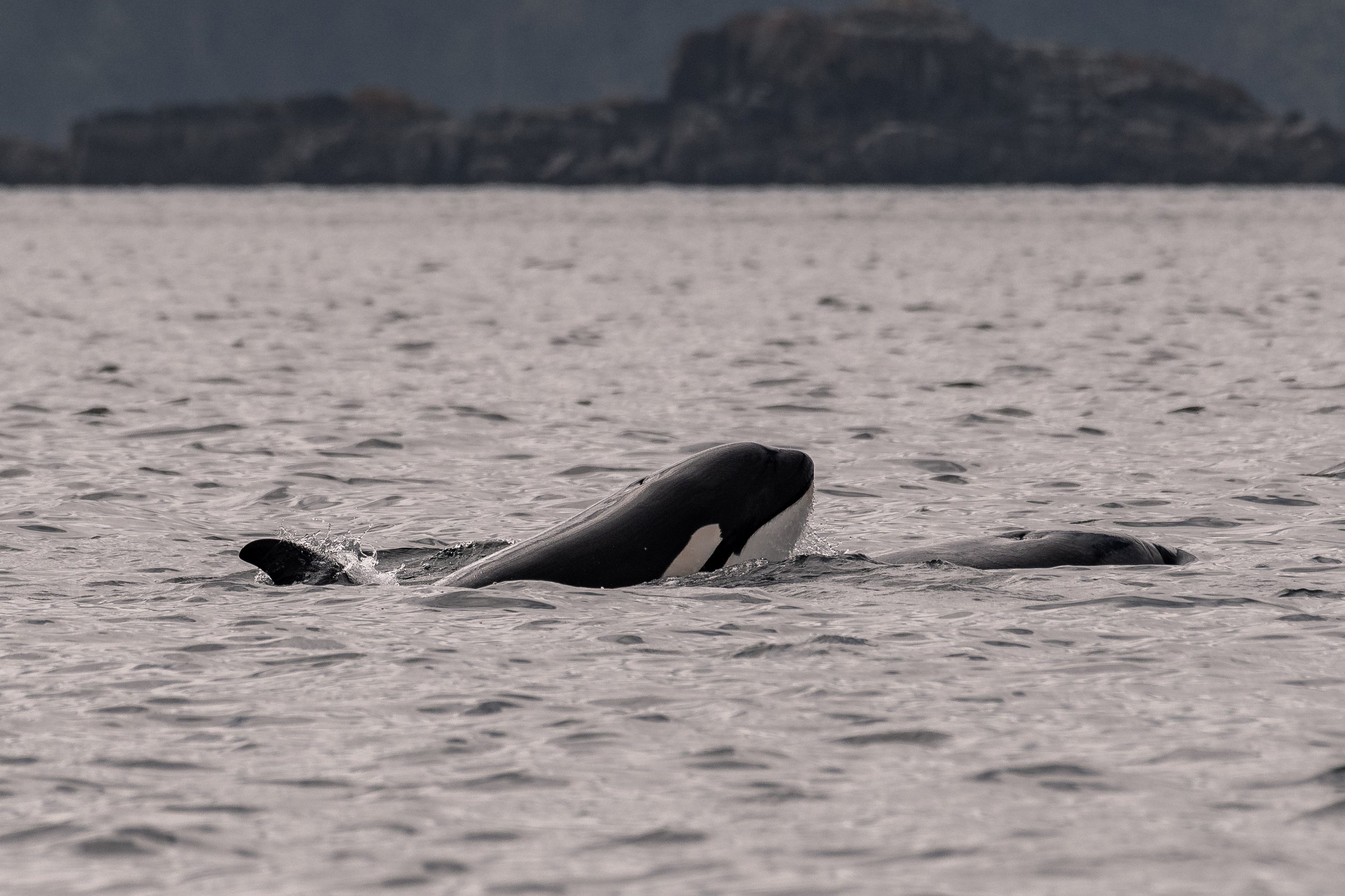
T065B3 Rook with her eyepatch visible!
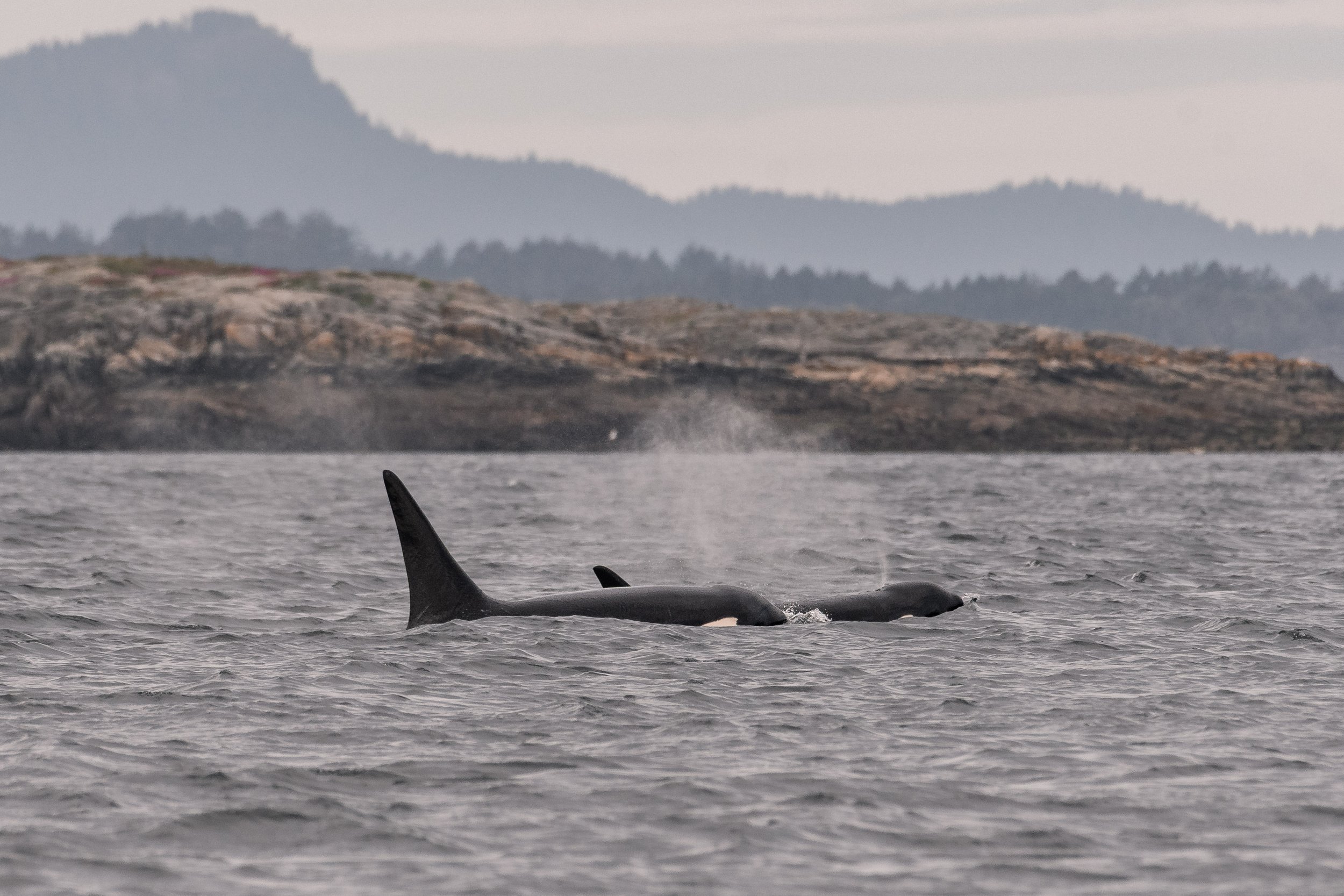
T065B1 Birdsall travelling with his mother T065B Chunk.
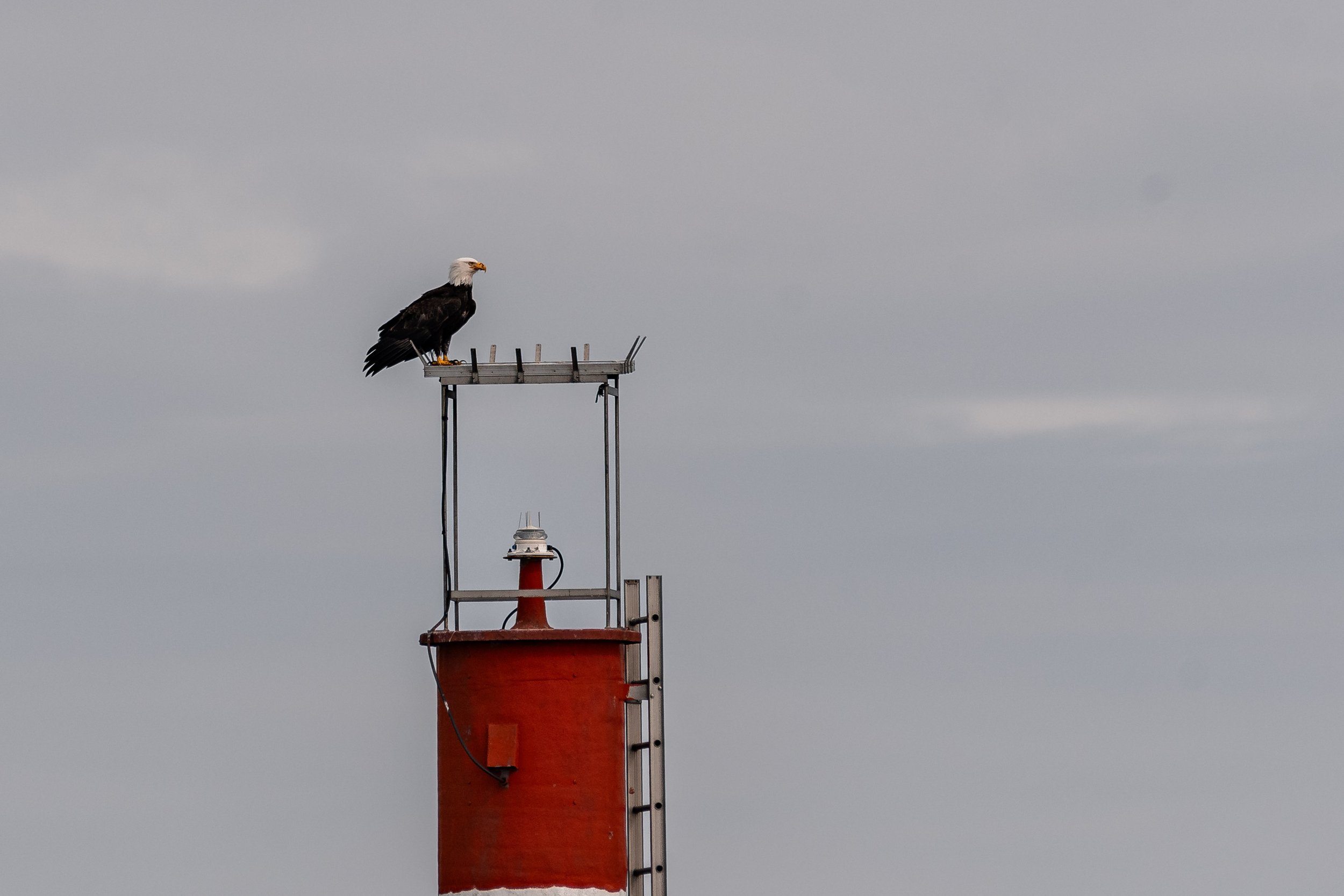
A Bald Eagle watching the waters below.
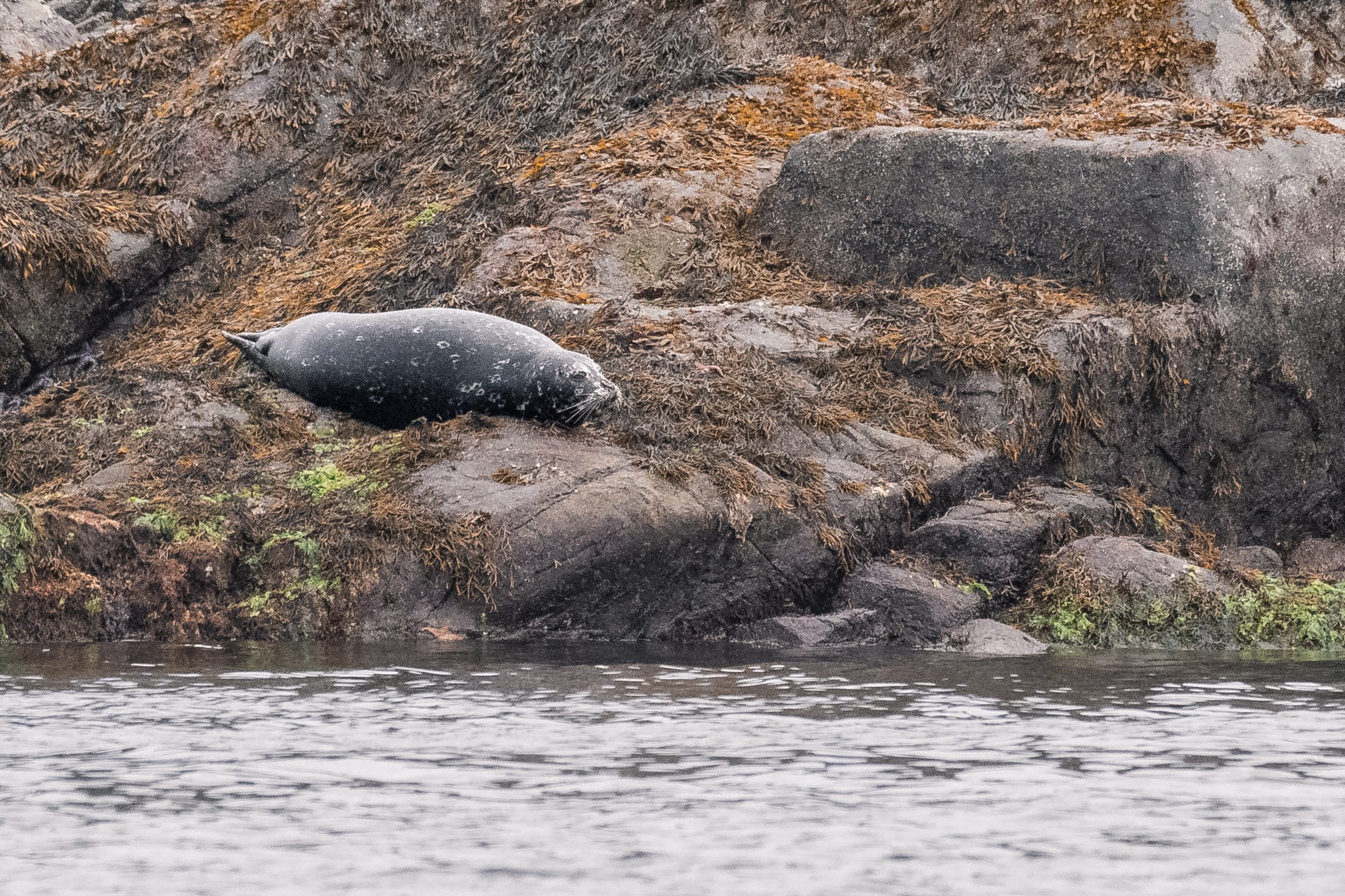
A sleepy Harbour Seal hauled out.
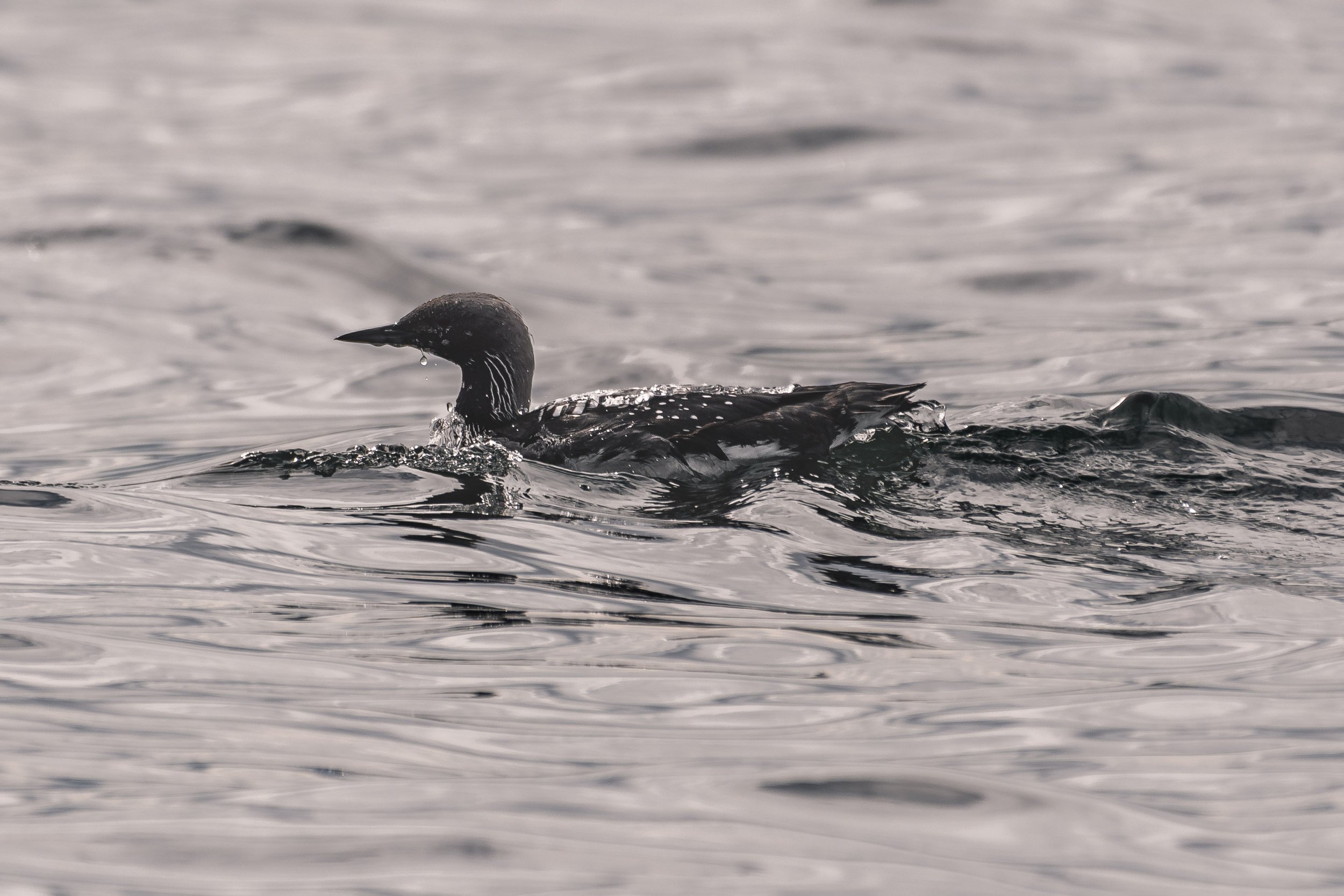
A very soggy Pacific Loon.
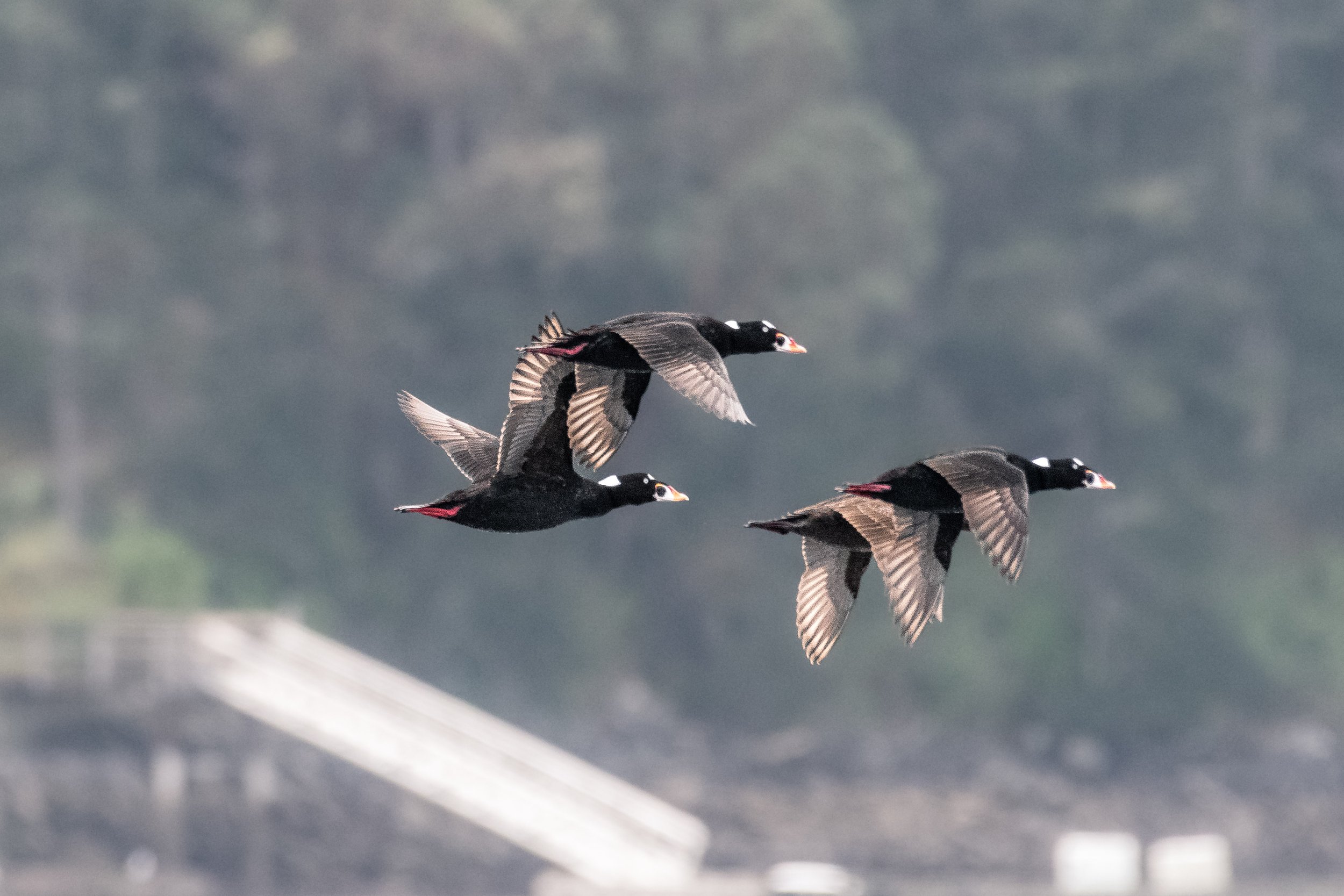
Surf Scoters scooting by.
T049A4 Neptune ahead of T117B Nyx.
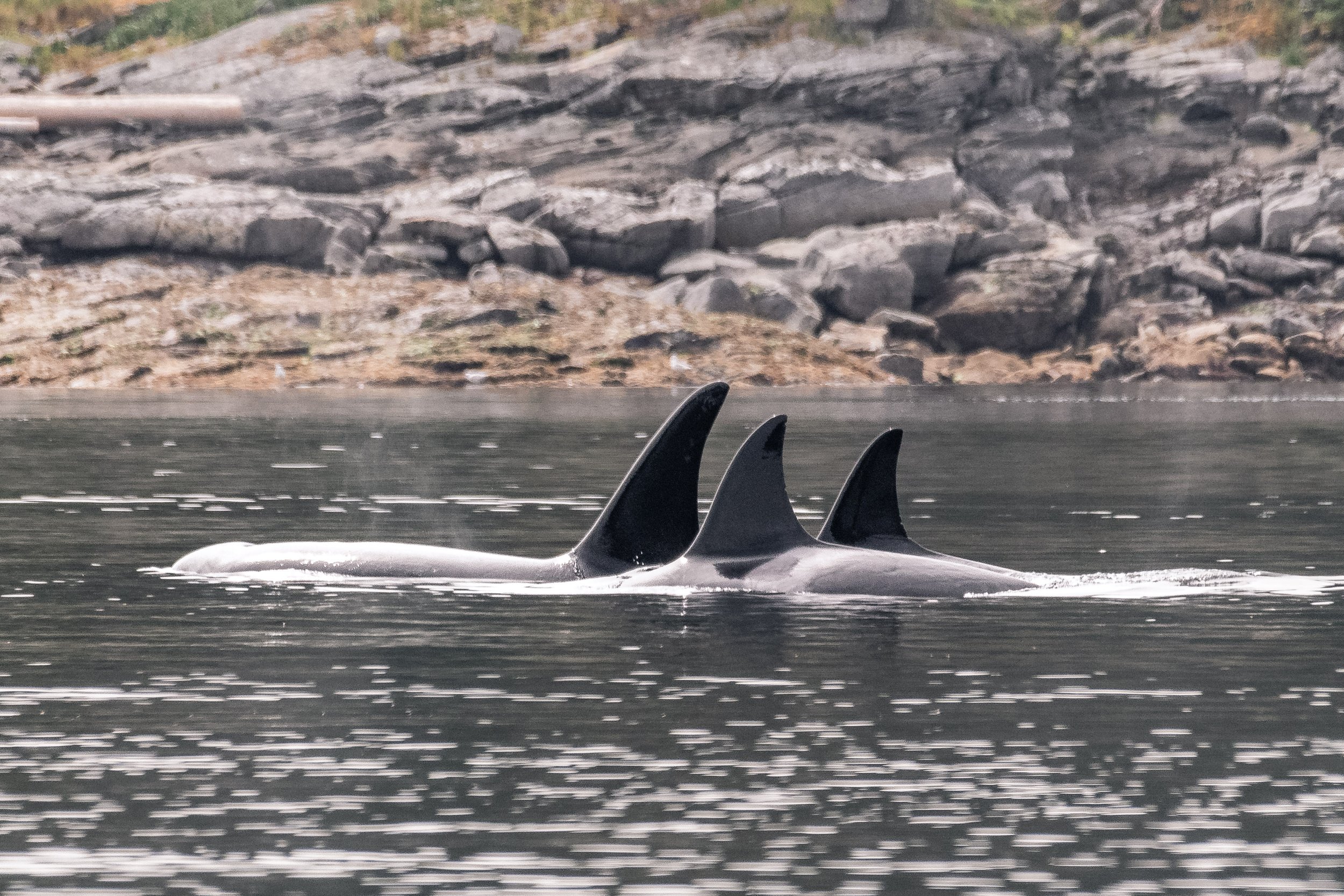
T049A3 Nat, T117B Nyx, and T049A Nan.
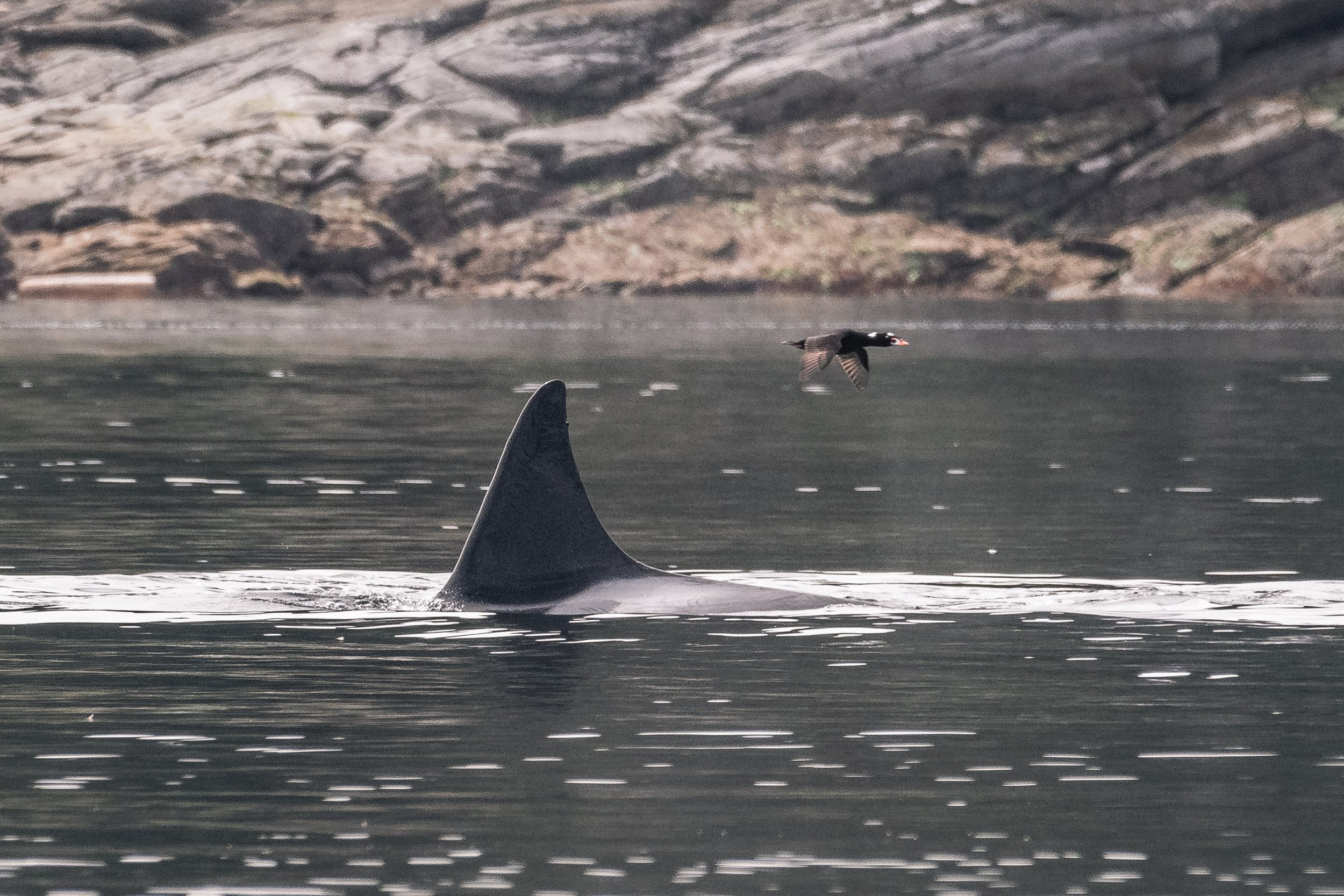
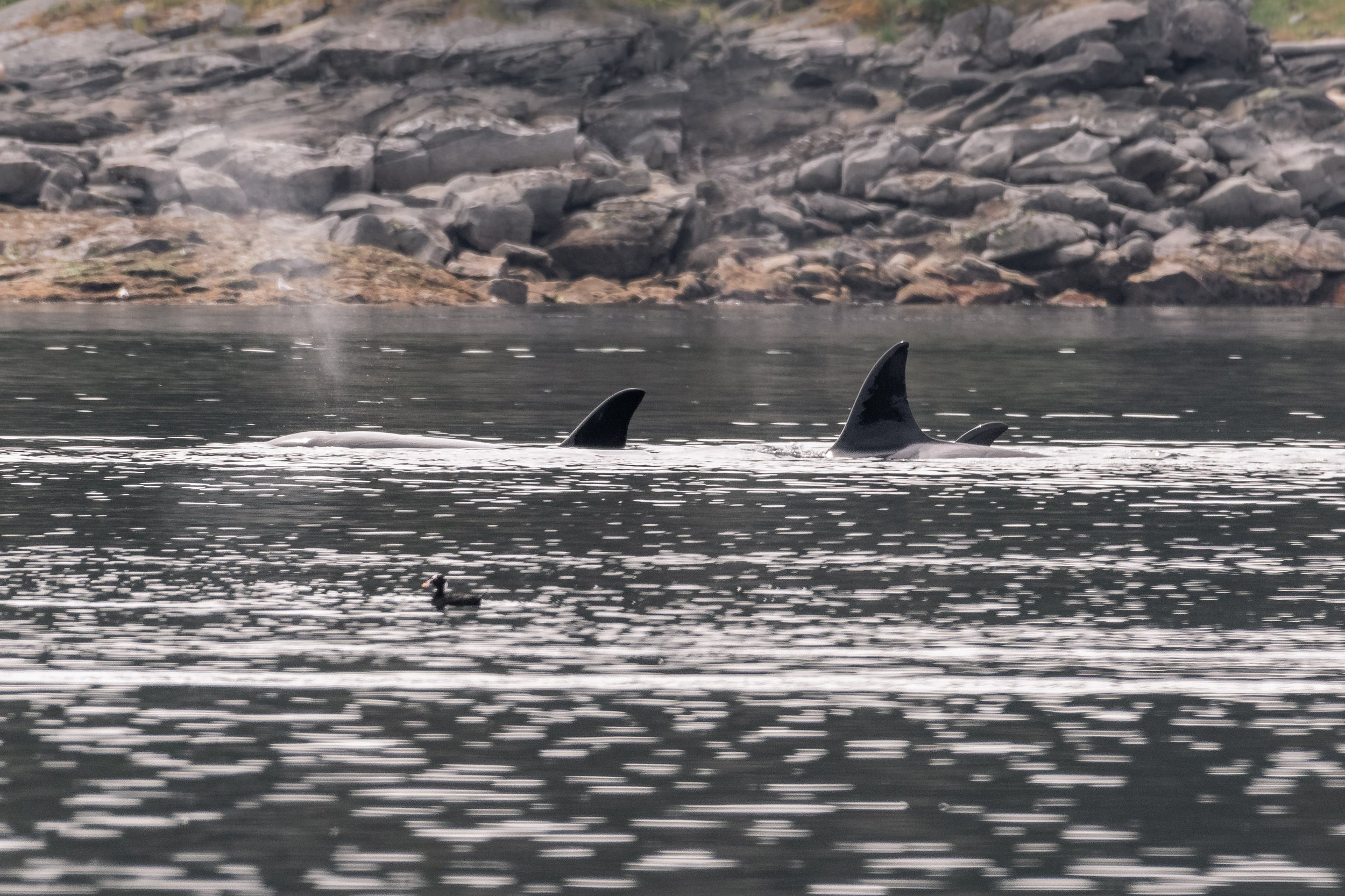
T172 Katmai with a Surf Scoter behind her.
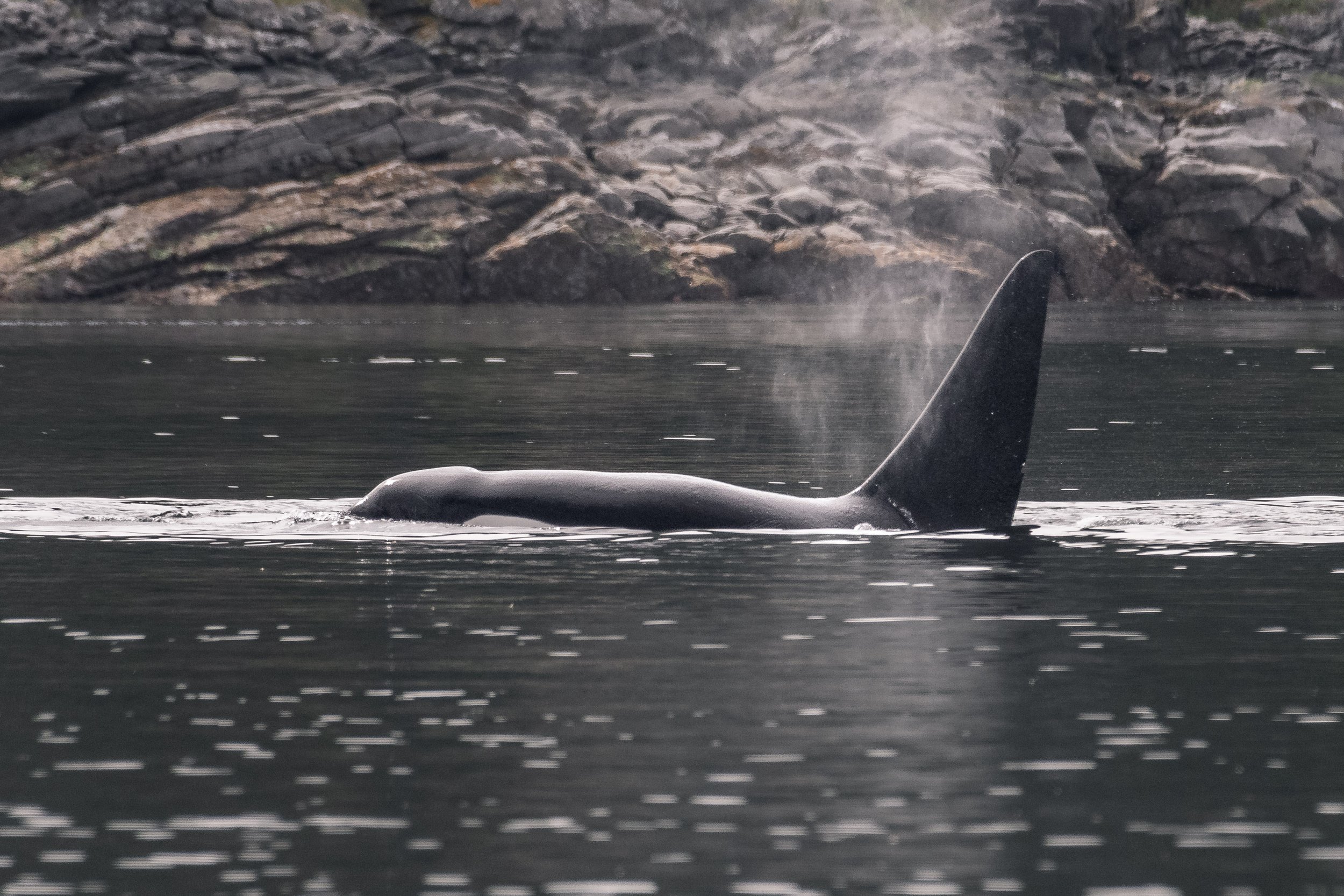
T049A1 Noah.
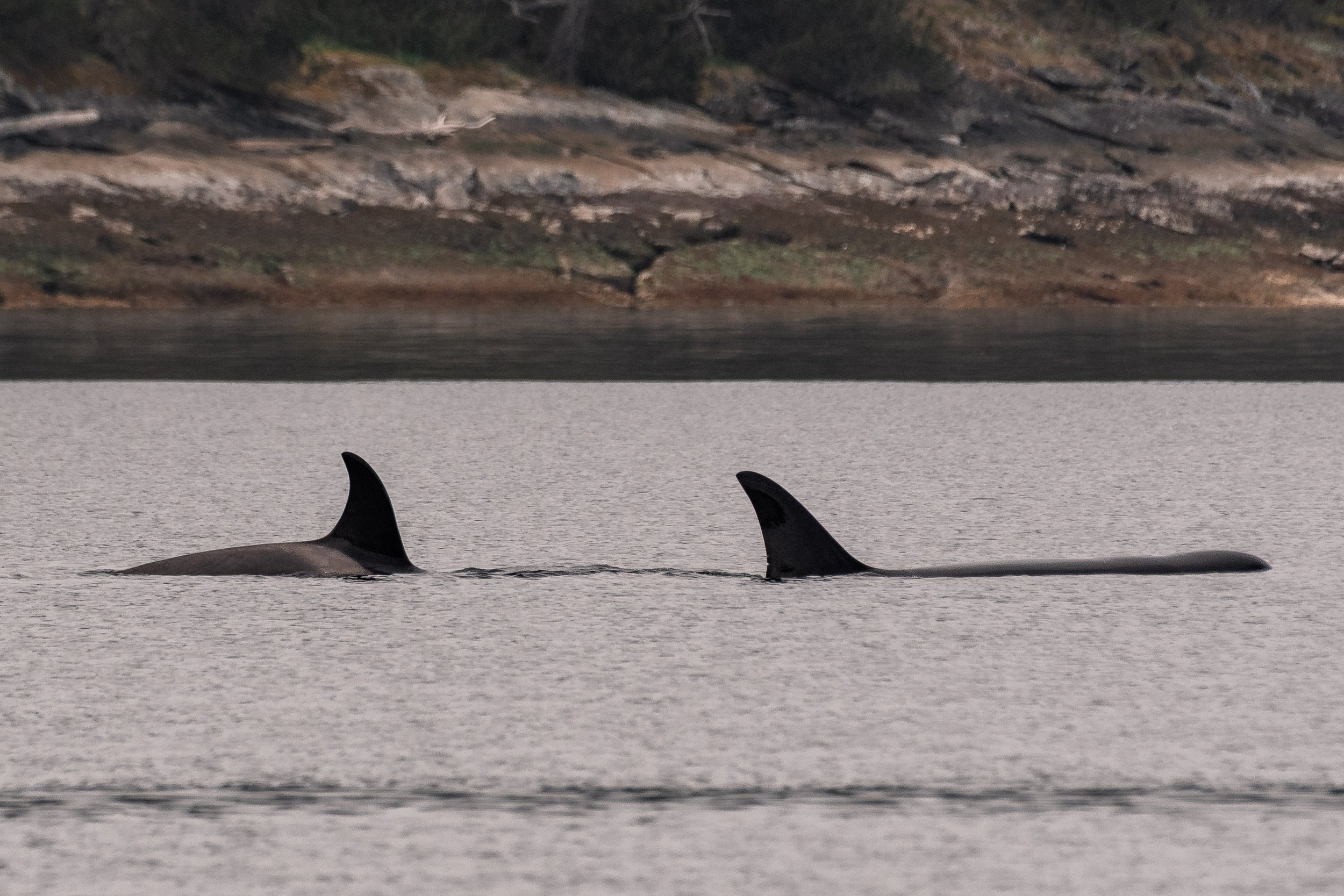
T049A Nan and one of her calves, T049A5 Nebula.
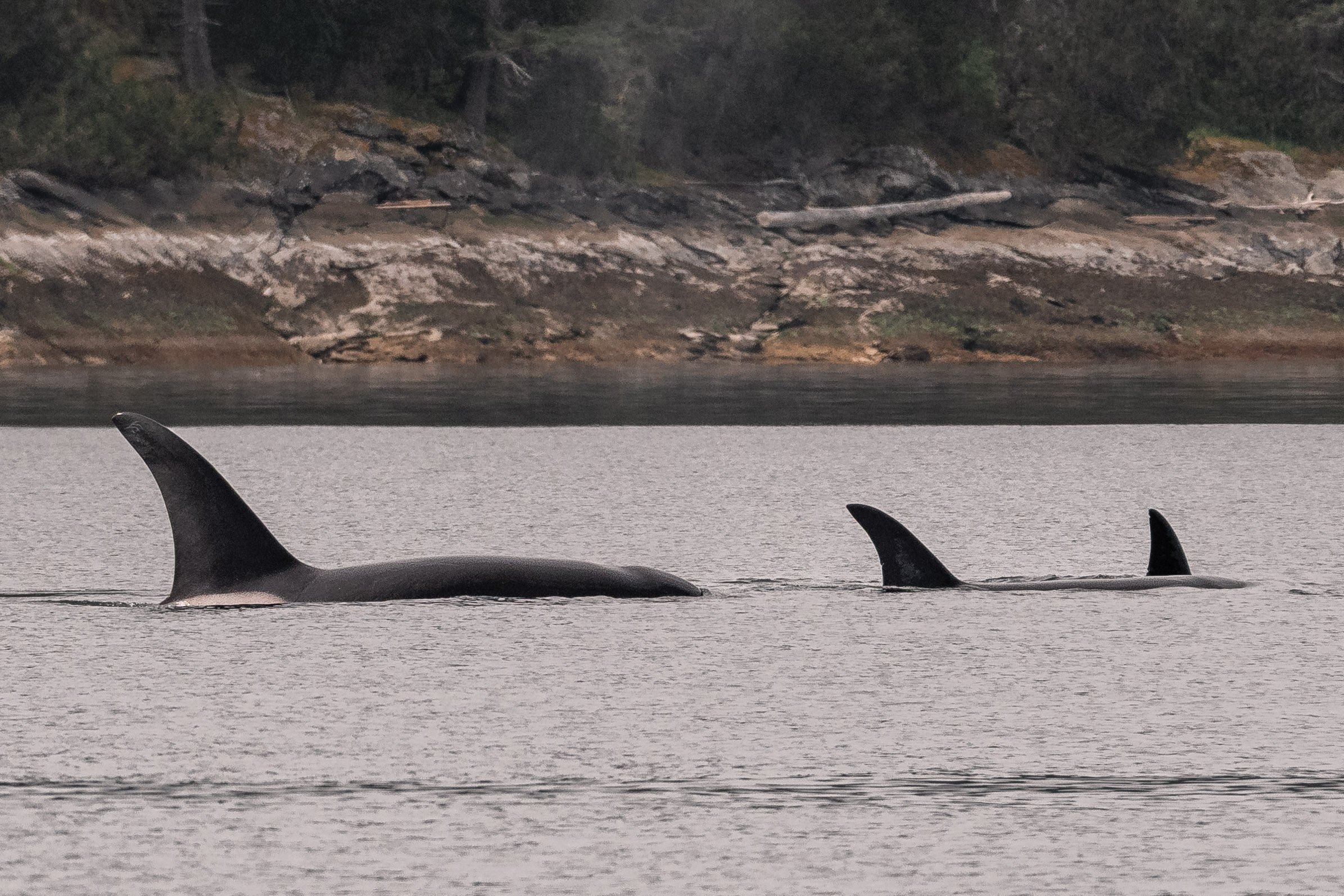
T049A3 Nat, T049A4 Neptune, and T117B Nyx.
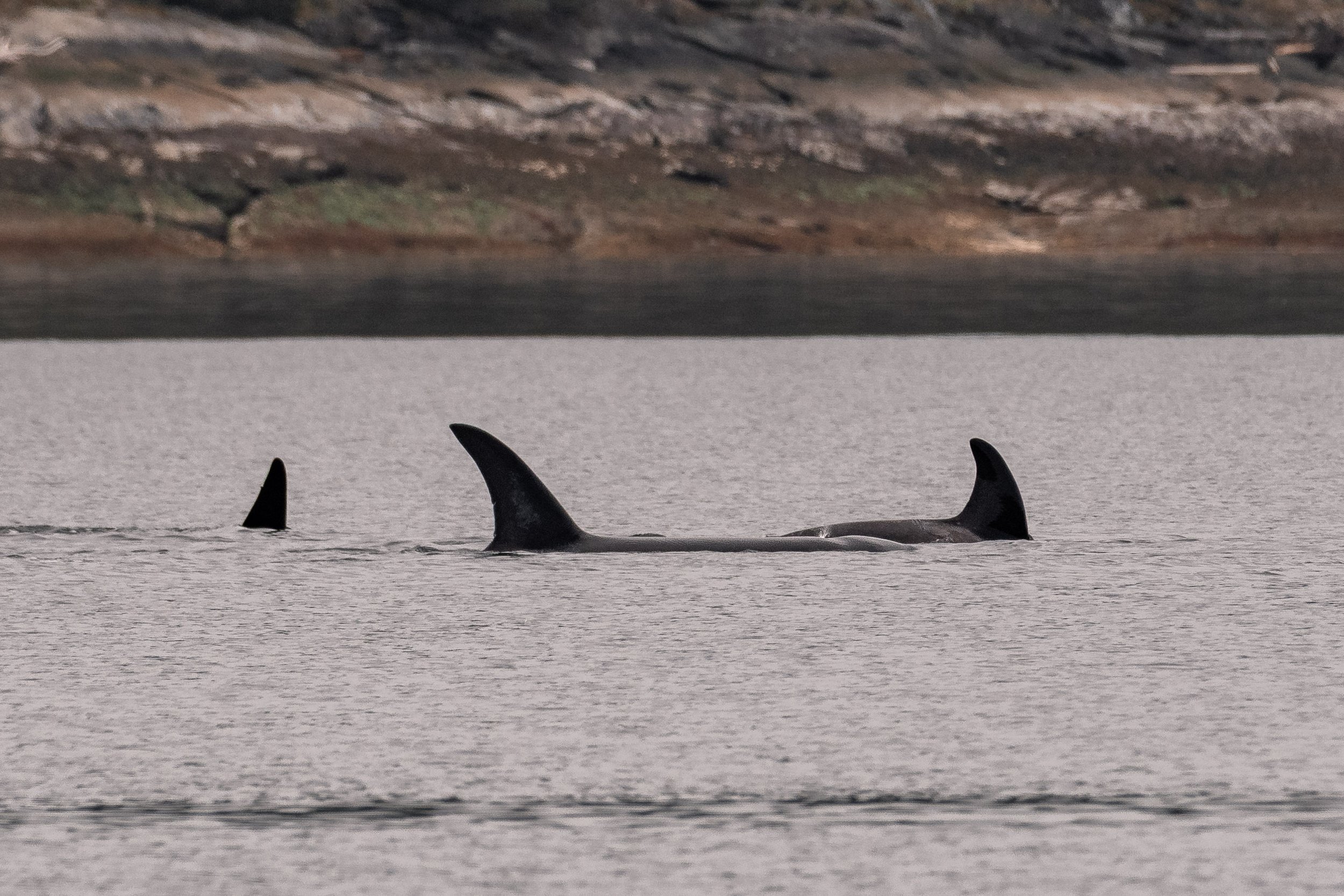
T117B Nyx, T049A4 Neptune, and T049A6 Charlie II.
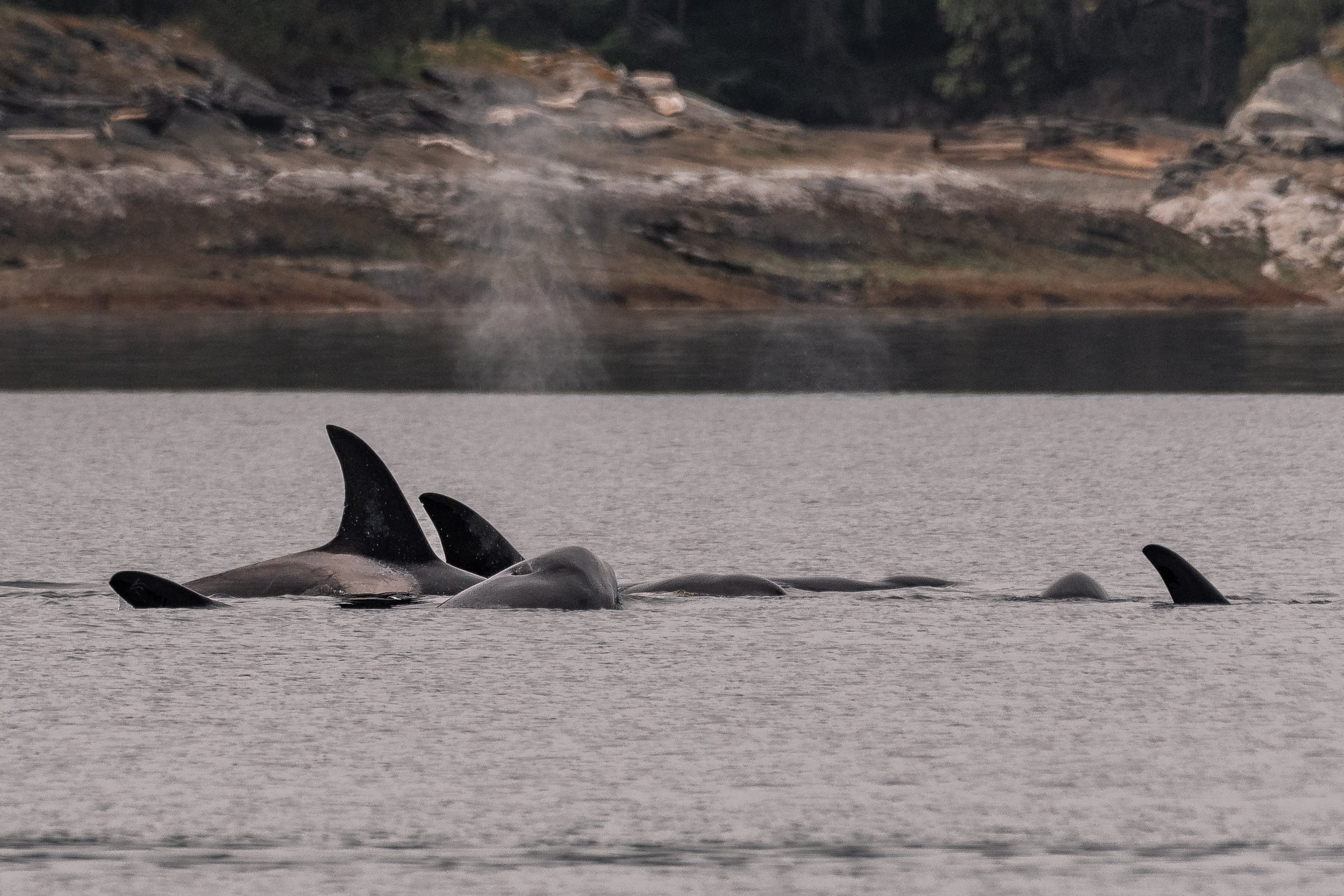
All piled together! T049A4 Neptune and T117B Nyx’s dorsal fins are visible.
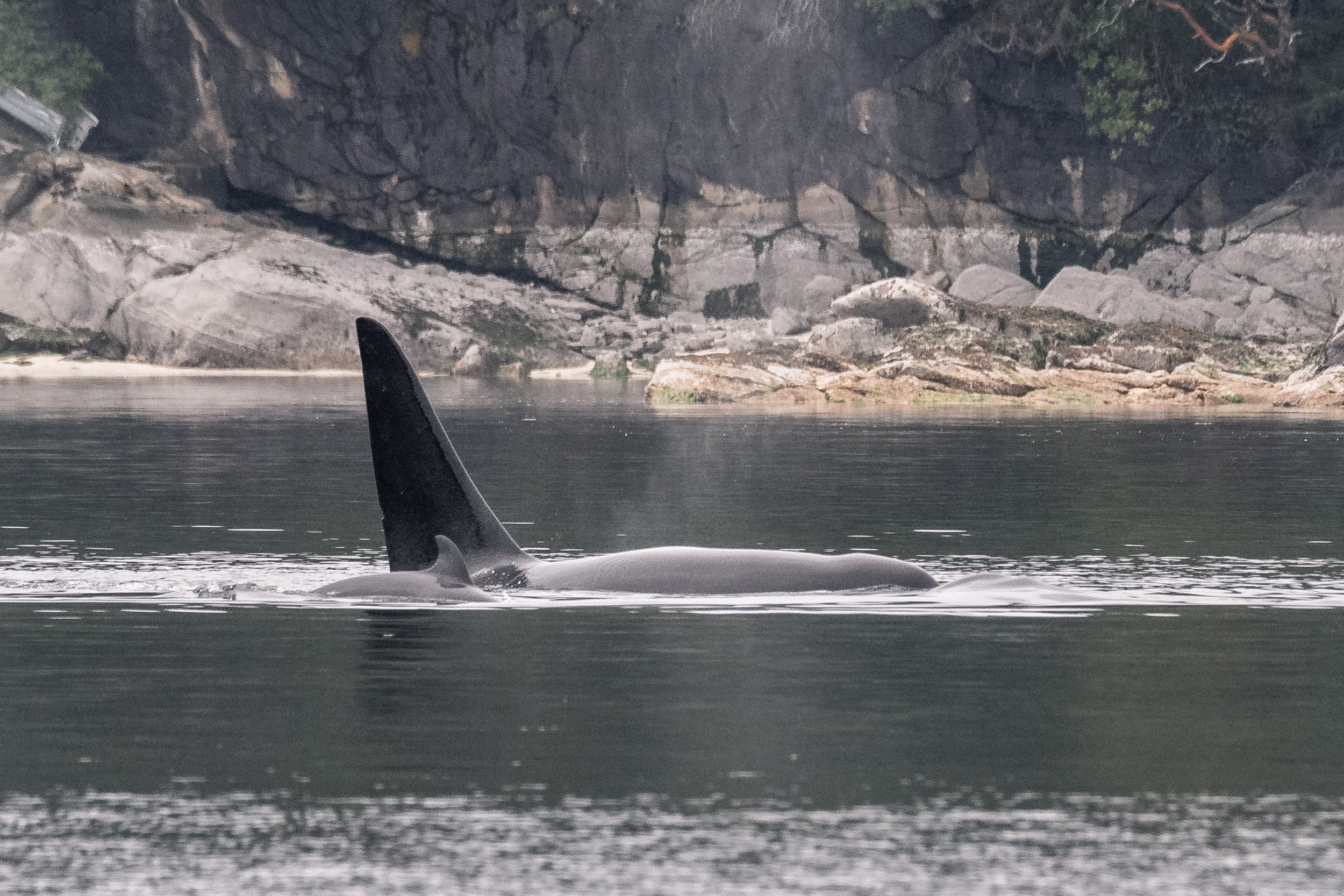
The oldest and the youngest - T049A1 Noah beside his tiny new sibling T049A7 Nimbus.
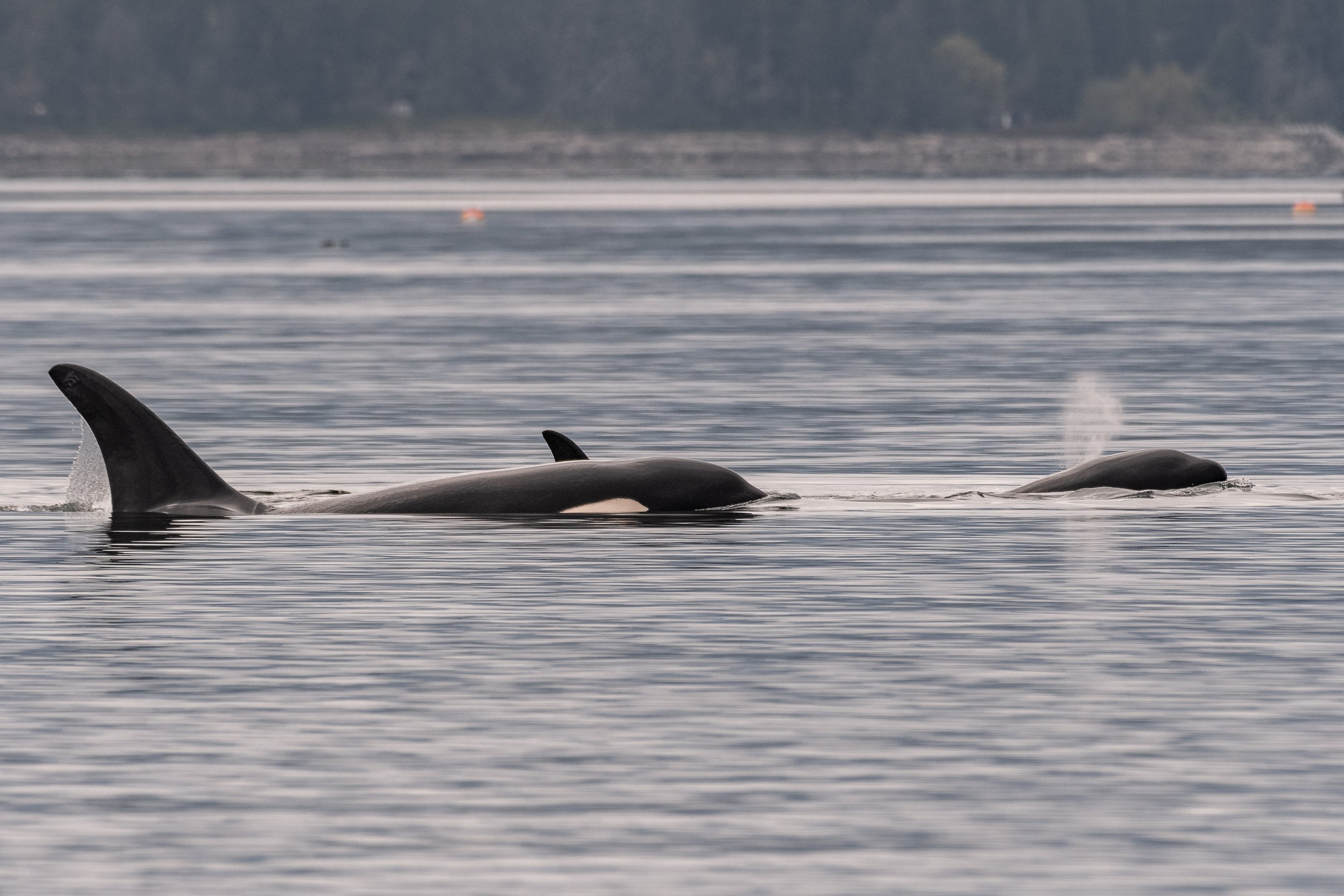
T049A3 Nat with another beside him, surfacing in flat calm waters, with a blow visible.
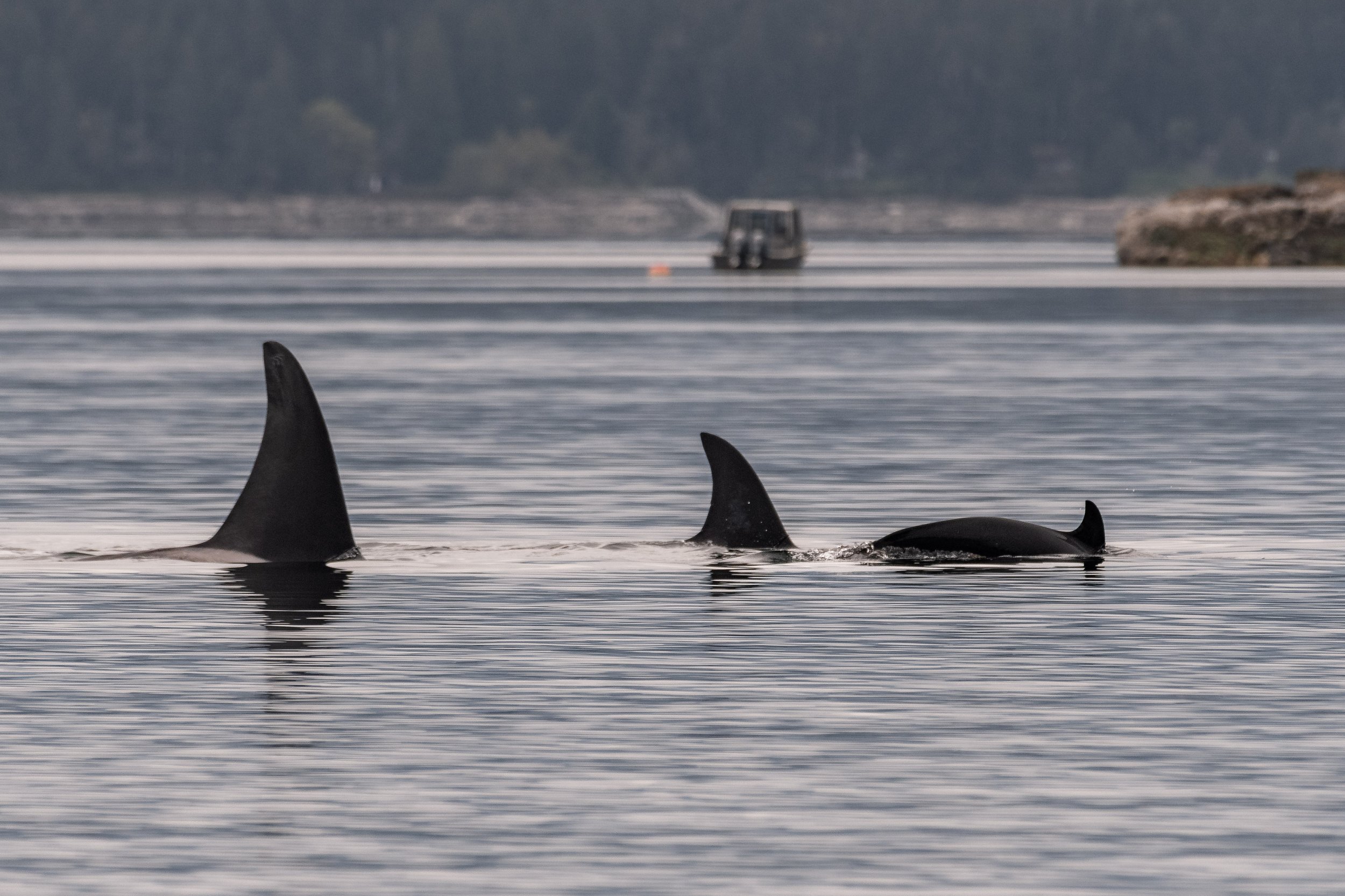
T049A3 Nat, T049A4 Neptune, and T049A7 Nimbus.
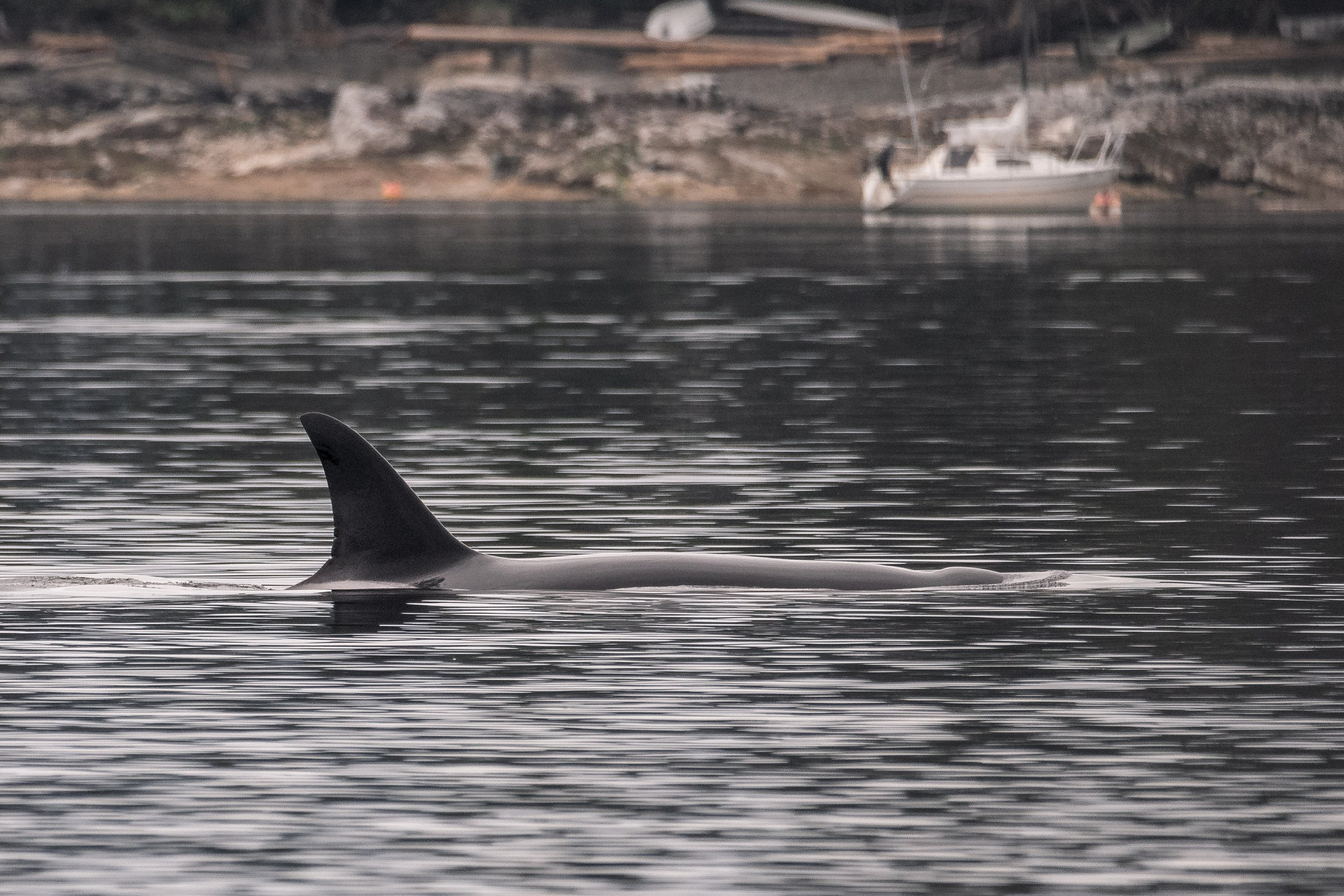
Matirach T049A Nan cruising along.
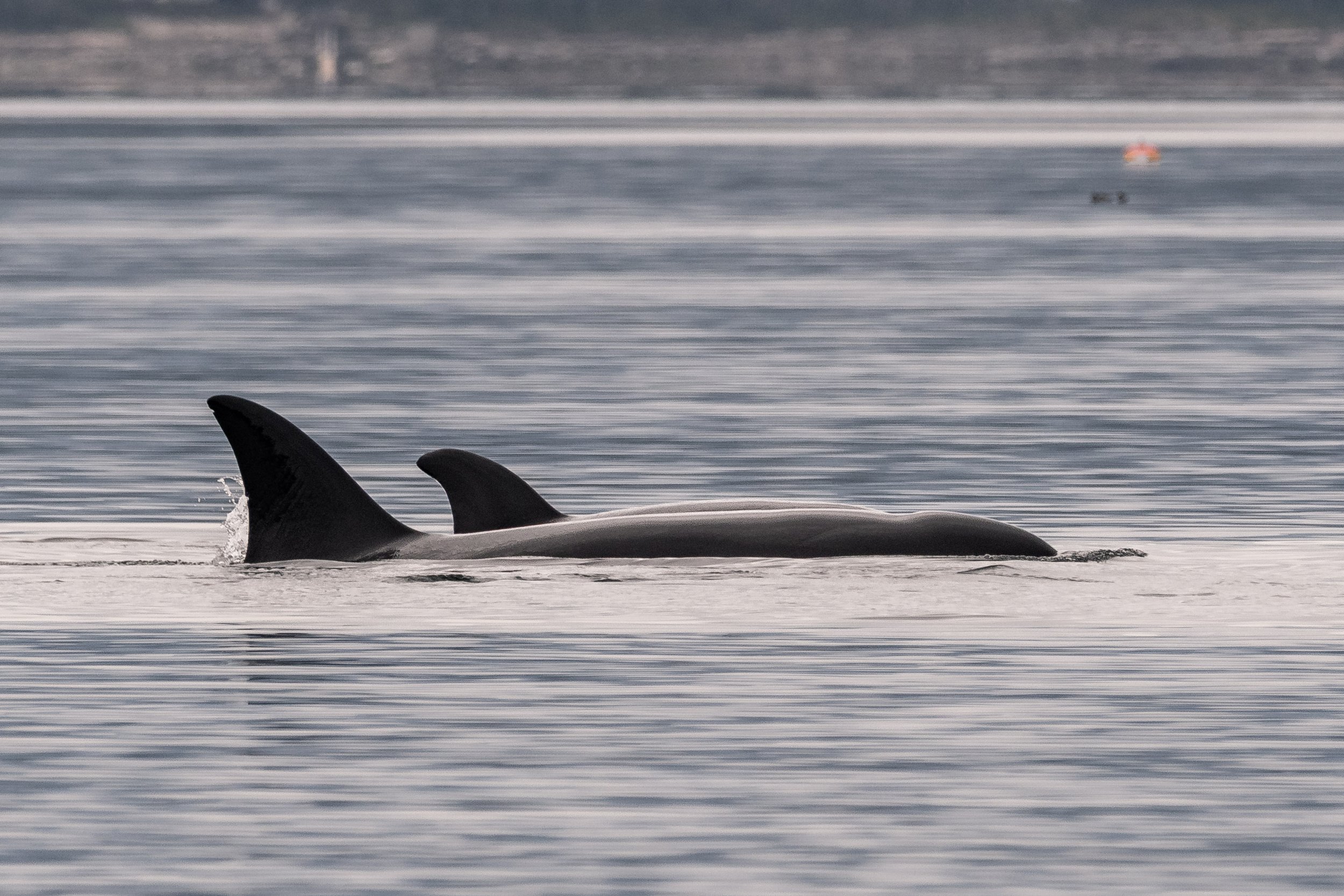
T117B Nyx with her calf T117B1 Noctis.
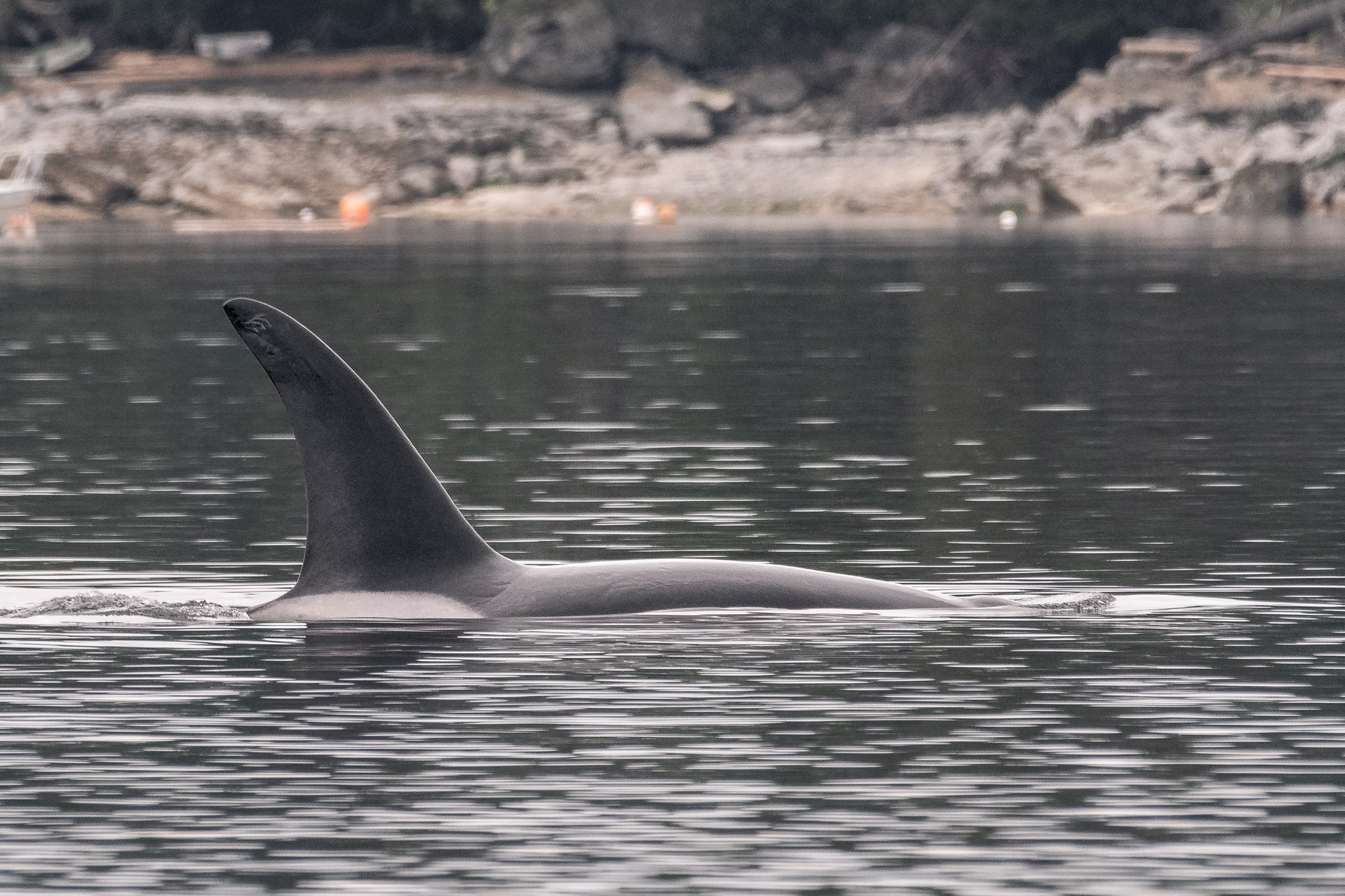
T049A3 Nat sporting many scratches.
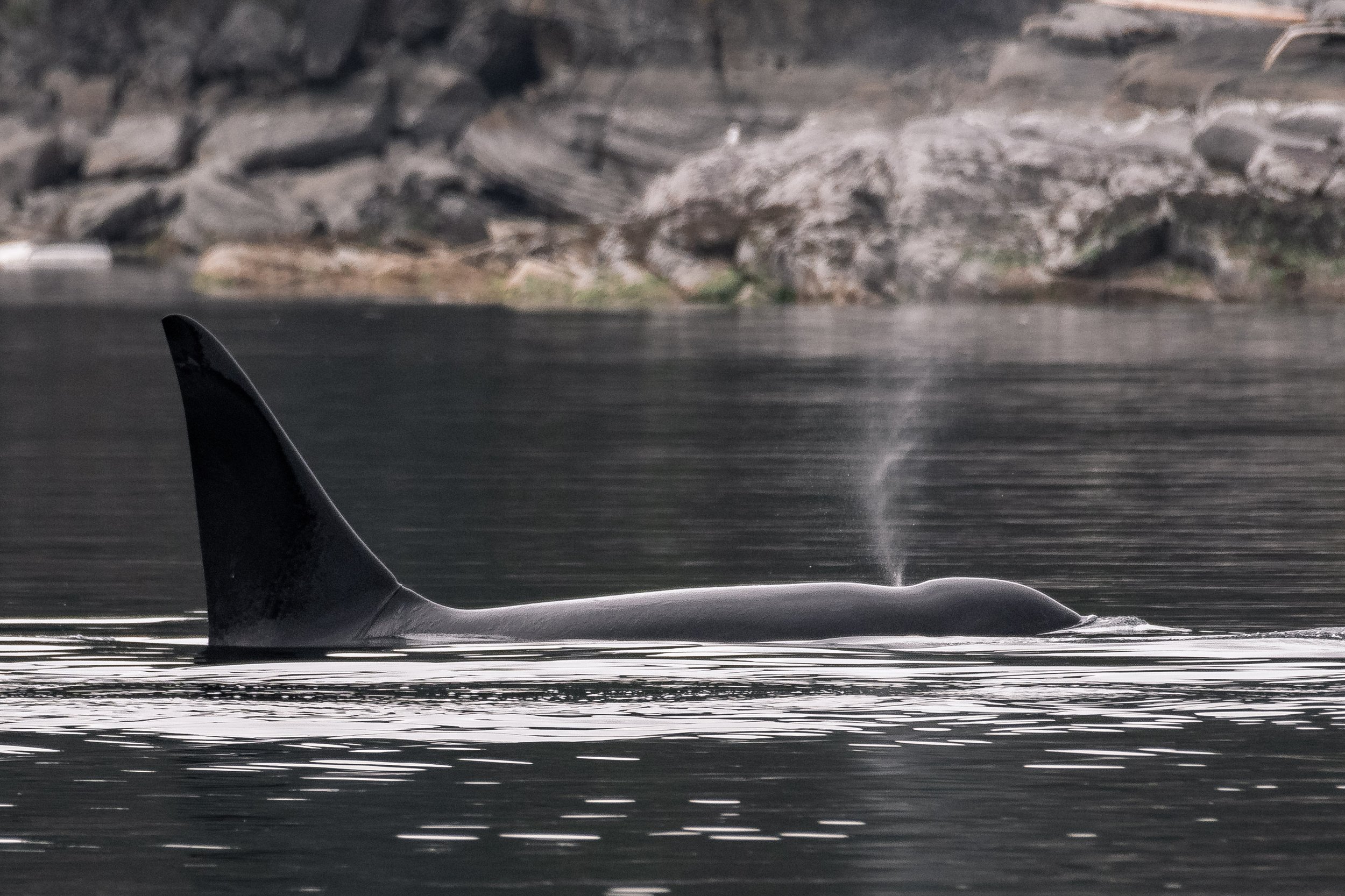
T117A Nighthawk has a very distinct notch out of the front edge of his dorsal fin, a very odd and unique placement.
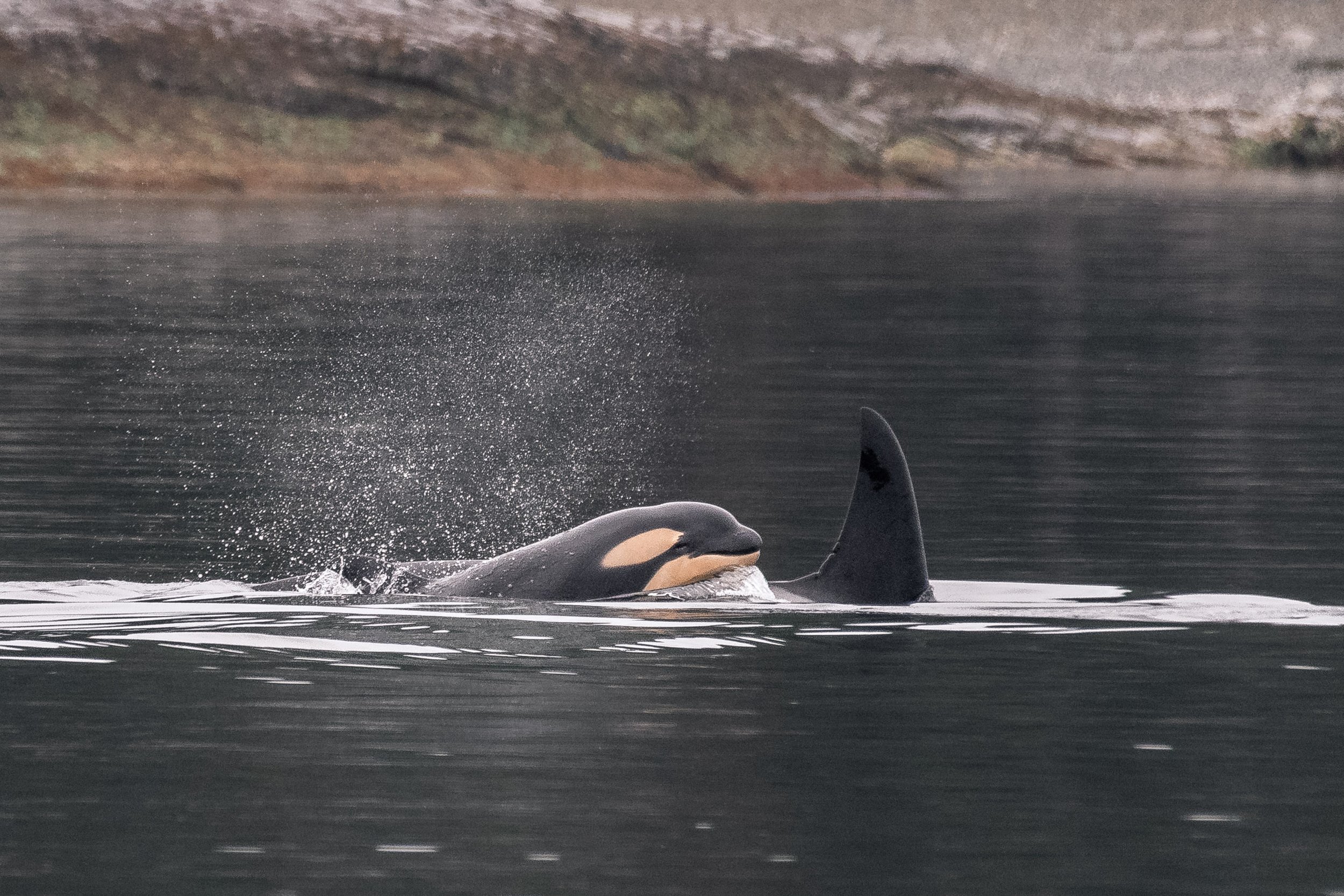
Tiny (and orange) T049A7 Nimbus beside their mother T049A Nan.
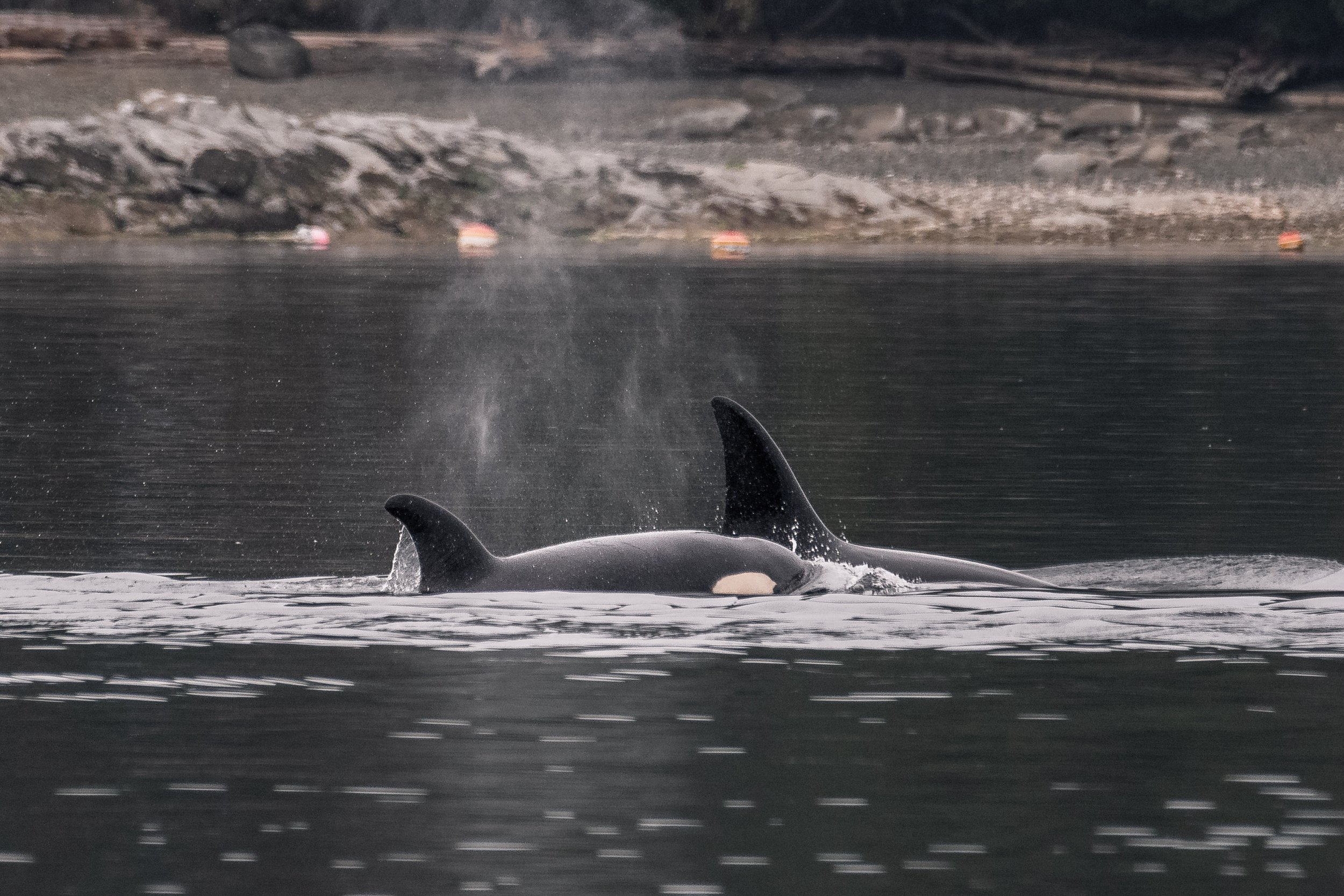
Not at tiny, but still young, T117B1 Noctis with their mother T117B Nyx.
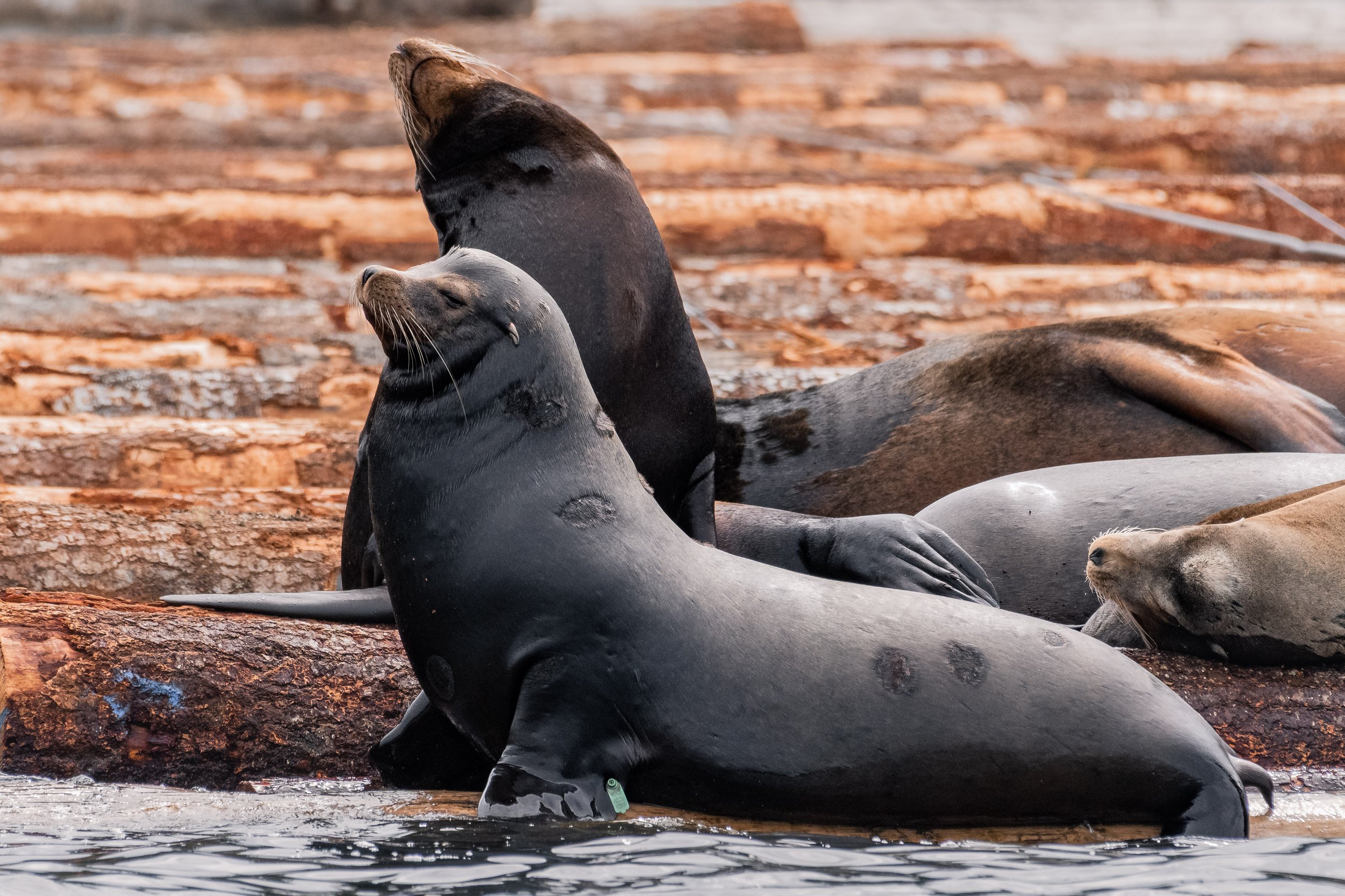
A California Sea Lion resting on the log booms. A small green flipper tag is visible.
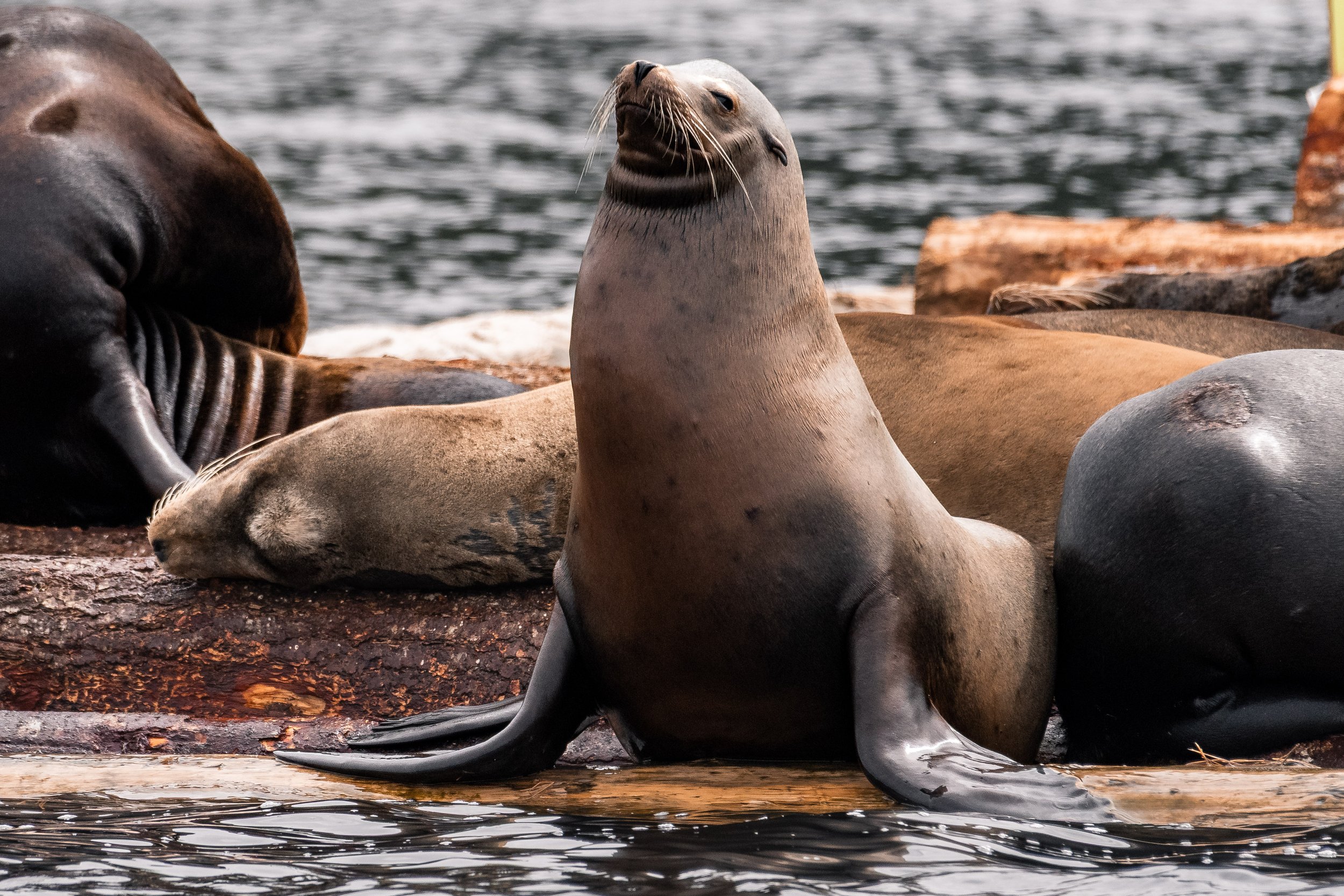
The log booms provide a great floating haul out for our sea lions.
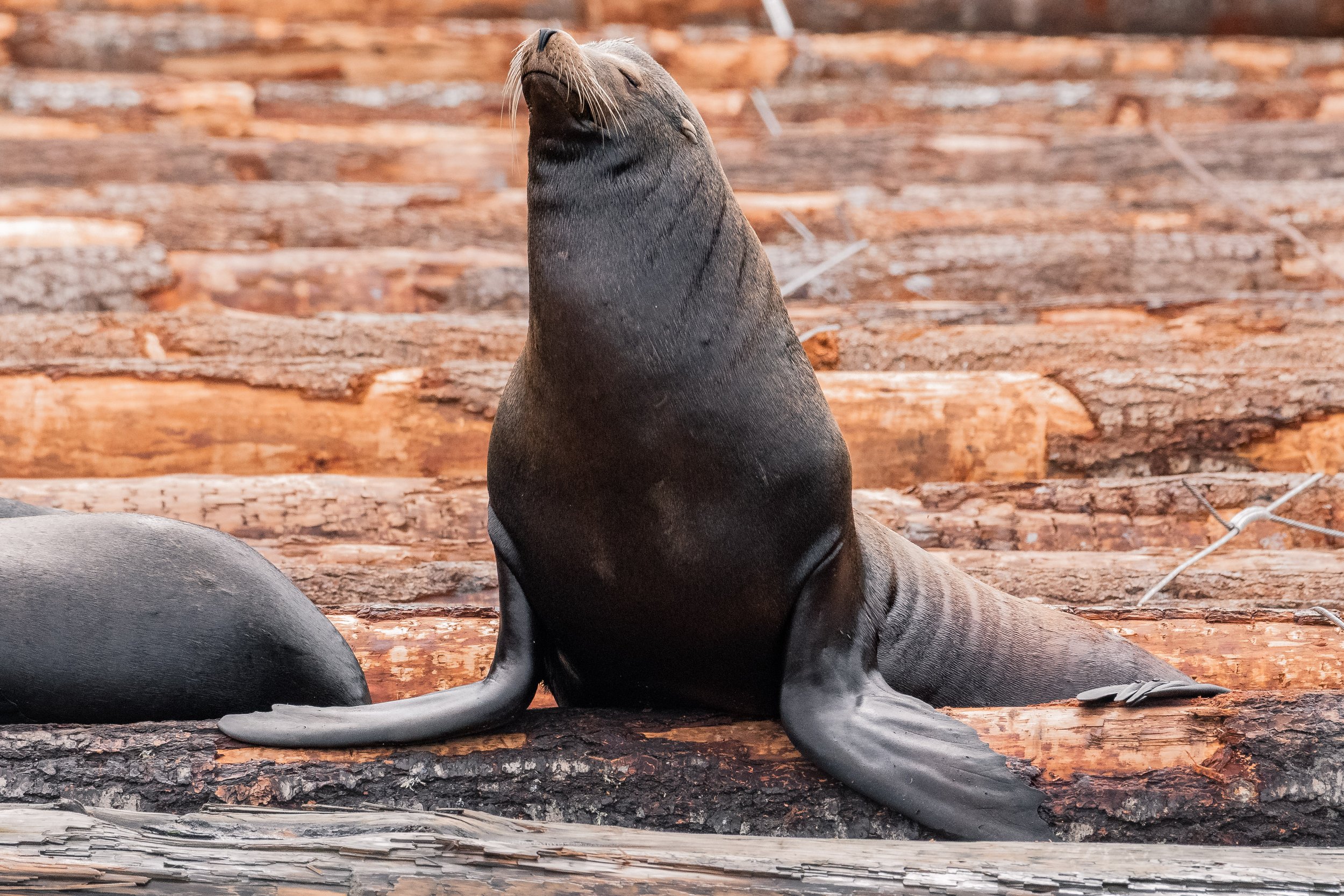
A California Sea Lion soaking in the sunshine.
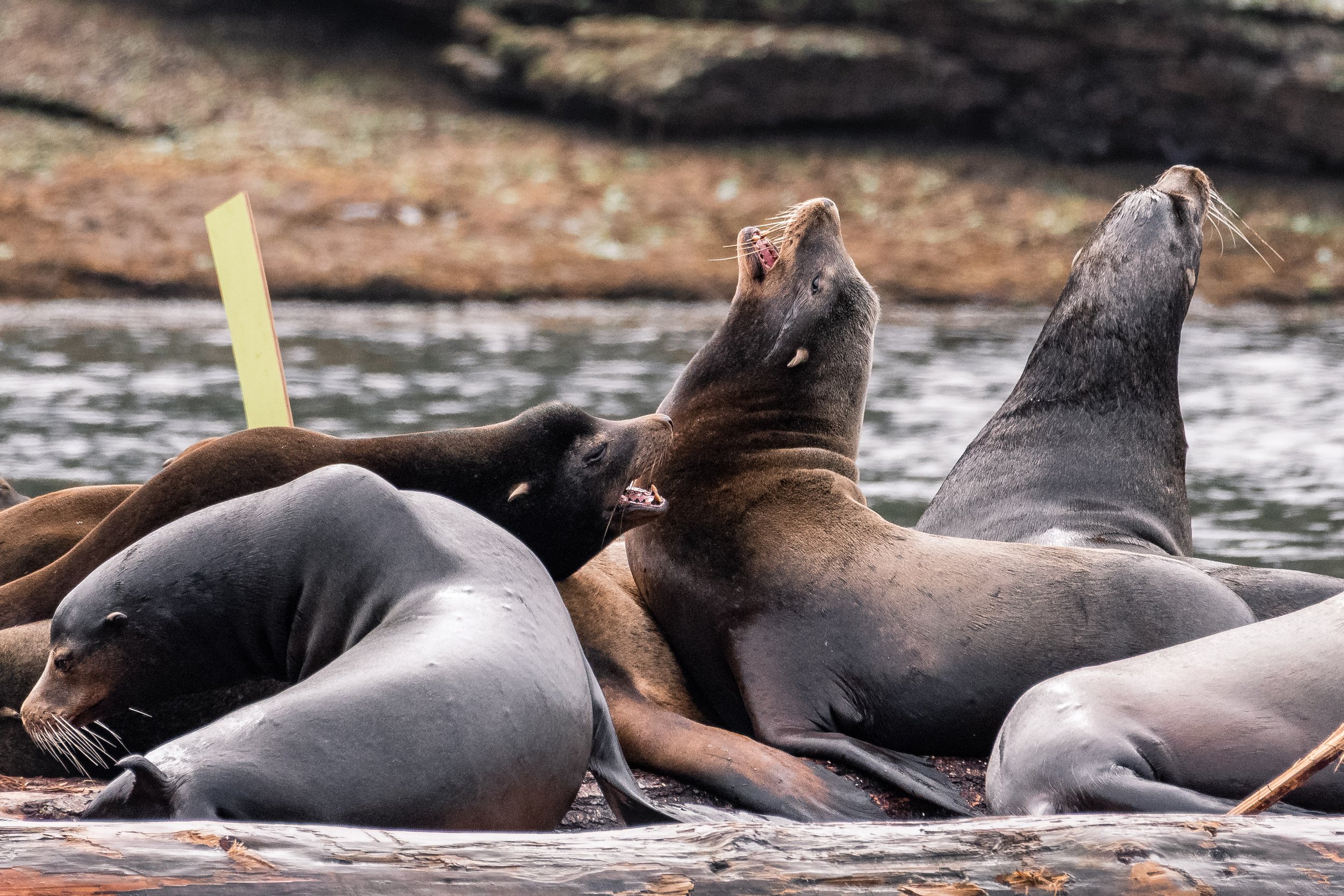
Bickering is common amongst the sea lions.
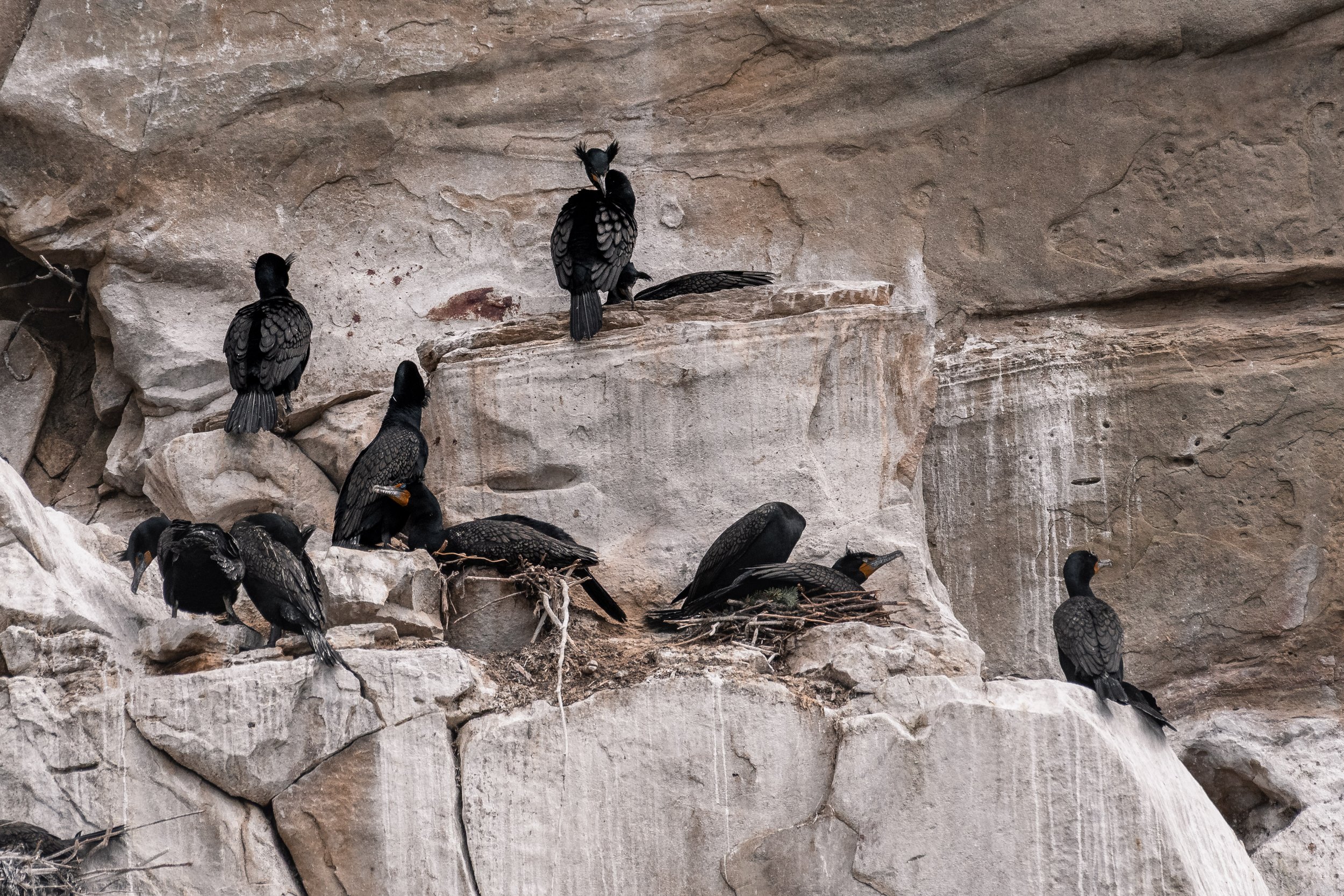
Cormorants tucked into the cliffside.