
April 19, 2026 - Visiting the T124Ds and T071Bs off Galiano Island
The sun was shining, and it was a promisingly beautiful day as our guests and crew boarded Kula and set off. While we have been spending a lot of time up north recently, today’s trip was going to be a bit different. After going over what to look for while out on the water, Naturalist Vanessa discussed today’s routing. The plan was to head south, travelling through the Southern Gulf Islands, before popping out into the Strait of Georgia to peek around at an early morning report near Galiano Island.
Passing through Northumberland Channel, we crossed beautiful Dodd Narrows and continued our trek southbound. We entered Trincomali Channel, making our way steadily along until we reached Porlier Pass. From here, we crossed out and into the open waters of the Strait of Georgia, or the large body of water that separates the mainland of British Columbia from Vancouver Island and the Southern Gulf Islands. Turning south, Captain Laura took us steadily along Galiano’s shoreline. Soon after, we spotted what we were looking for – a handful of small black fins were travelling along northward.
As we got into position, Vanessa began the important job of identifying the individuals we were seeing. After snapping a few photos and comparing them to our ID guides, we discovered that we were travelling with the T124Ds, who were being accompanied by T071B Hood, and a teeny tiny calf:
T071B Hood ♀ (2000)
T071B4 (2026)
T124D Field ♀ (1996)
T124D1 Salish II (2014)
T124D3 Lupine ♀ (2022)
T124D4 Dune (2024)
This little calf has caused quite a bit of drama lately. Being so new, and with all our sightings involving the duo travelling with the T124Ds, there is a small chance this little one could instead be T124D Field’s newest calf. While the calf’s official designation still has not been announced, with most of its sightings being close to T071B Hood, it is currently presumed that Hood is their mother.
Calf positioning is very important, especially when they are very young. When born, orca calves spend most of their first month travelling in a position known as the echelon position. Tucked at their mother’s side slightly behind their dorsal fin, the little calf will ride along in their mother’s slipstream, reducing the amount of effort and energy they must burn to keep up. This is critical as calves are born with thin blubber layers, meaning they rely on moving to keep themselves warm in our cold waters. As the calf grows, their blubber thickness increases, and they rely less and less on their mother’s slipstream to help coax them along to keep up with the other pod members.
While observing them today, the group of 6 were zigzagging along, likely chasing their next meal. Hunts are a bit different than you would envision them to be, because most of the action happens below the surface of the water. While we did not see what they were chasing, nor if they were successful, shortly after many of the pod members began tail slapping away. Tail slapping and other behaviours on the surface after a hunt often indicate that they succeeded, where the individuals are celebrating after the meal.
Once the celebrations were done, the T124Ds and T071Bs continued travelling along, and soon after we did the same. Once more we headed out, aiming back towards Porlier Pass once more. Before entering the pass though, we made a quick stop to a small rocky island outside the pass.
This area, known as the Canoe Islets, is an Ecological Reserve where many sea lions, cormorants, and gulls take refuge. We were here to take a peek at the Steller Sea Lions resting on the shores, happily sleeping the day away. These giant pinnipeds are often found on these small rocky islands, as they are perfect haulouts for them to rest on and to warm up on outside of our chilly ocean waters.
After snapping a few photos of the sea lions, we continued on once more, back through Porlier Pass and back up through Dodd Narrows. Captain Laura steered us back towards Vancouver Island and over to Harmac, a pulp mill on the outskirts of Nanaimo. Here a different type of sea lions could be spotted snoozing away.
California Sea Lions are quite a bit smaller than Steller Sea Lions but are still equally impressive. Their breeding grounds are located down in California, and they will be leaving our waters to make that great migration soon. In the meantime, though, they are relaxing and enjoying their days feasting on our plentiful fish, making sure to pack on the pounds before they start their long trip back south.
We were nearly back to the harbour, but there was one last stop to make first. Crossing Northumberland Channel, we drifted beside the beautiful Gabriola Island cliffside, where many tiny black birds could be spotted nesting and diving into the waters below. These birds, known as Cormorants, spend their nesting season on this island. While we are not seeing chicks yet, we are eager to see the little ones hatch and to watch them grow up.
After visiting the cormorants, it was time for us to say goodbye, and head on off once more. After a few more minutes at sea, we made our way back into the Nanaimo Harbour, we felt amazed at the amount of different animals we had been able to see over the span of a few short hours.
Over the course of the trip, Marine Naturalist Vanessa Vereschahen took many photos documenting these moments – please enjoy them below!
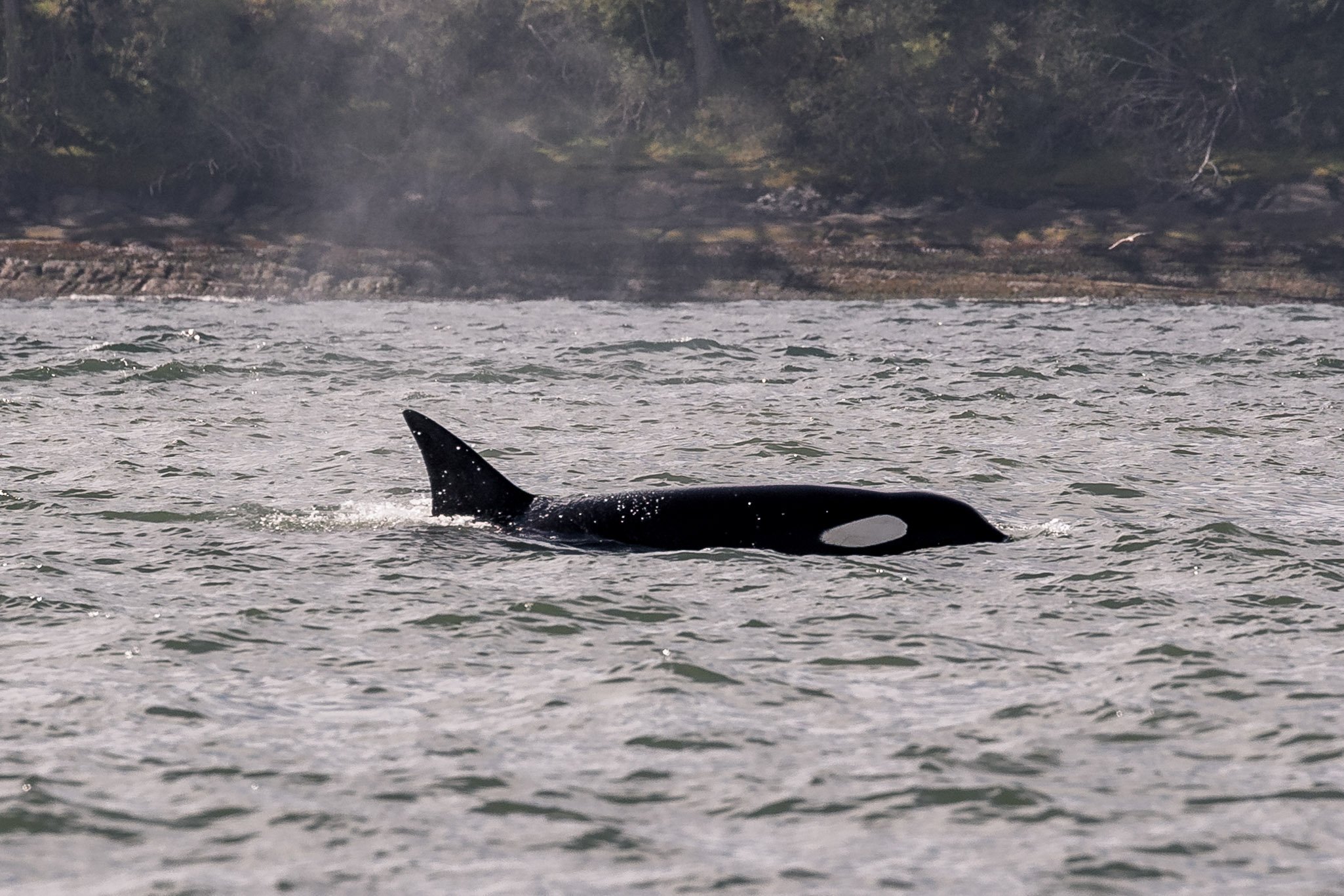
T124D Field travelling.
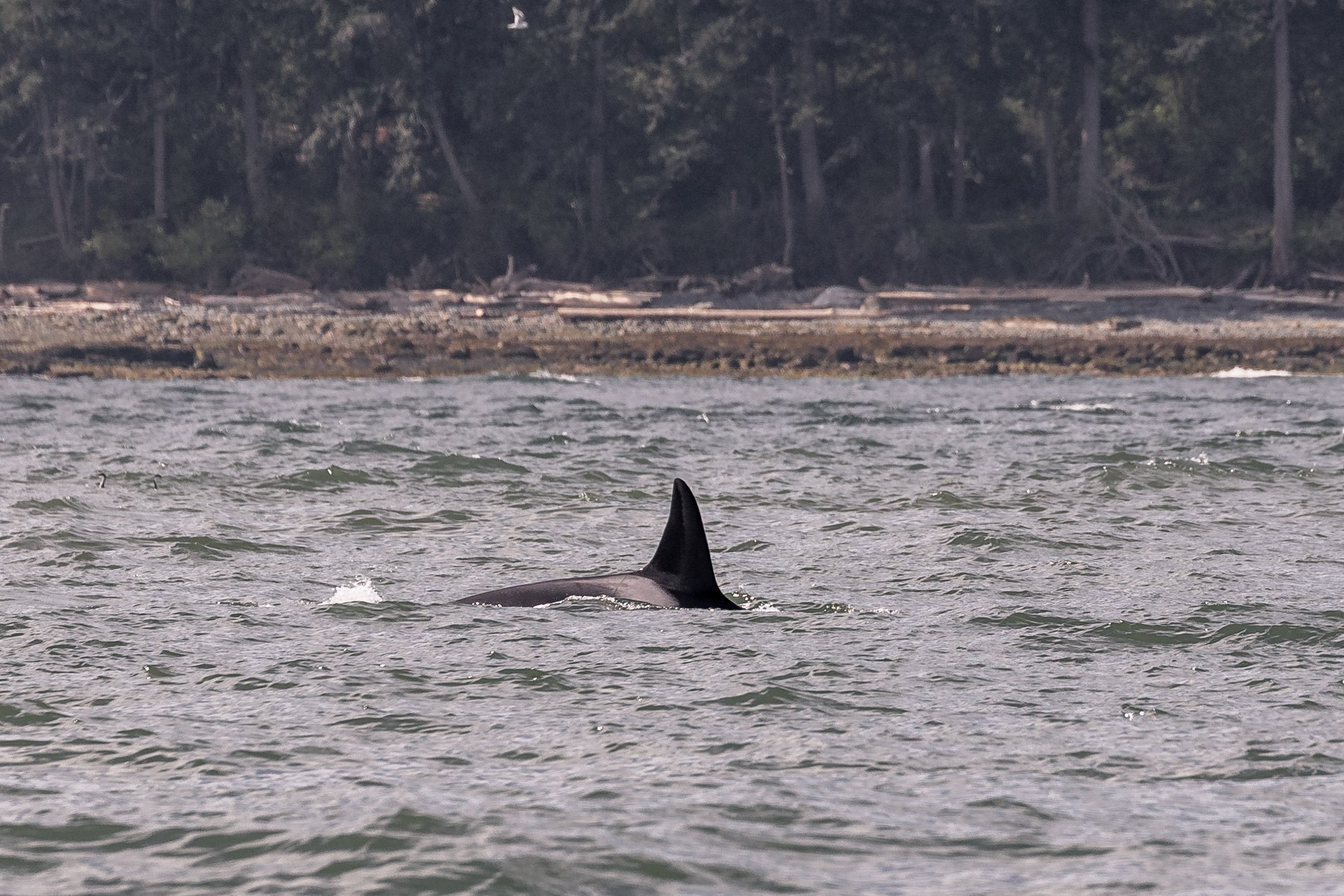
T071B Hood diving.
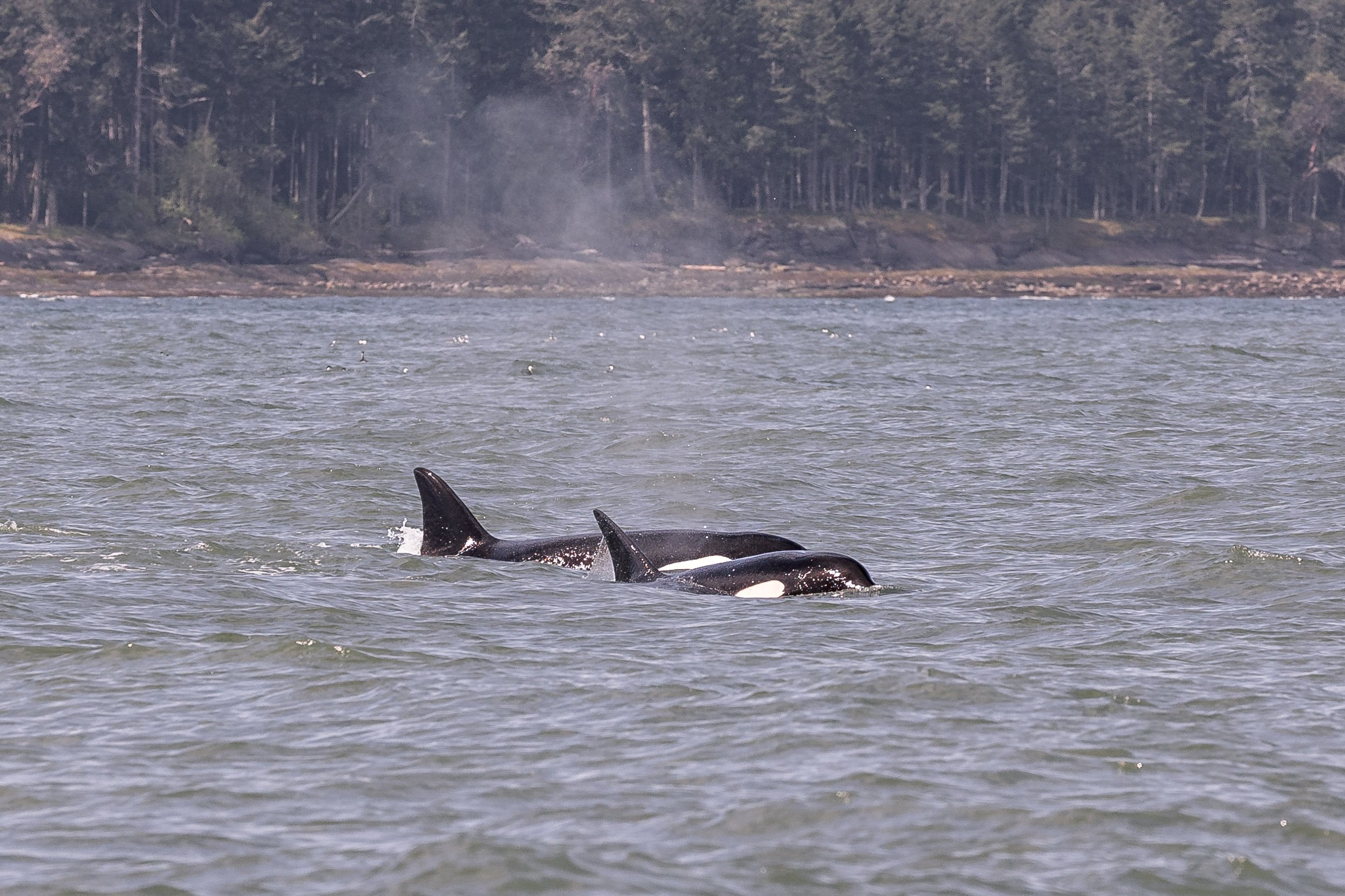
T071B Hood and T124D1 Salish II.
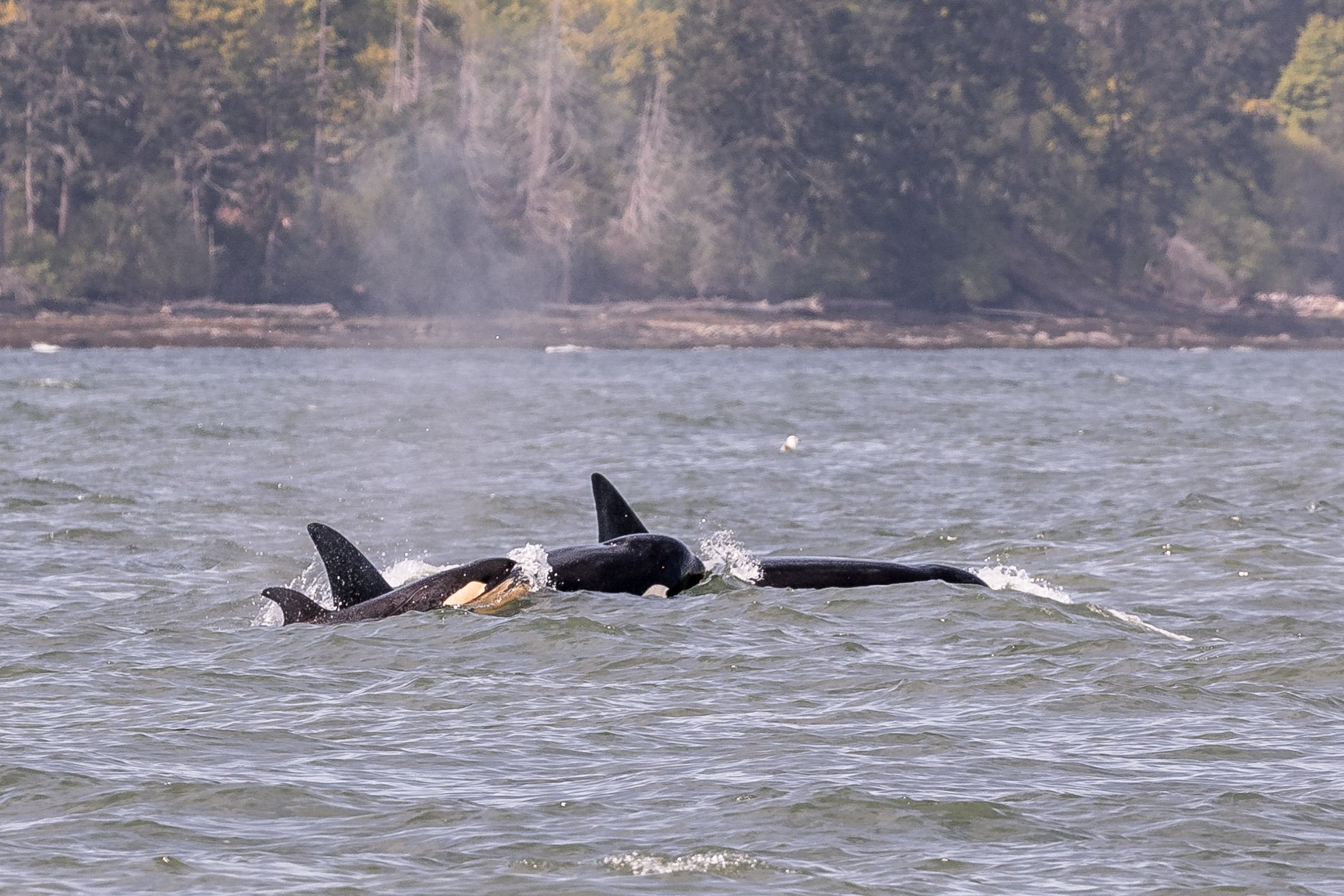
(presumed) T071B4, T071B Hood, and T124D Field.
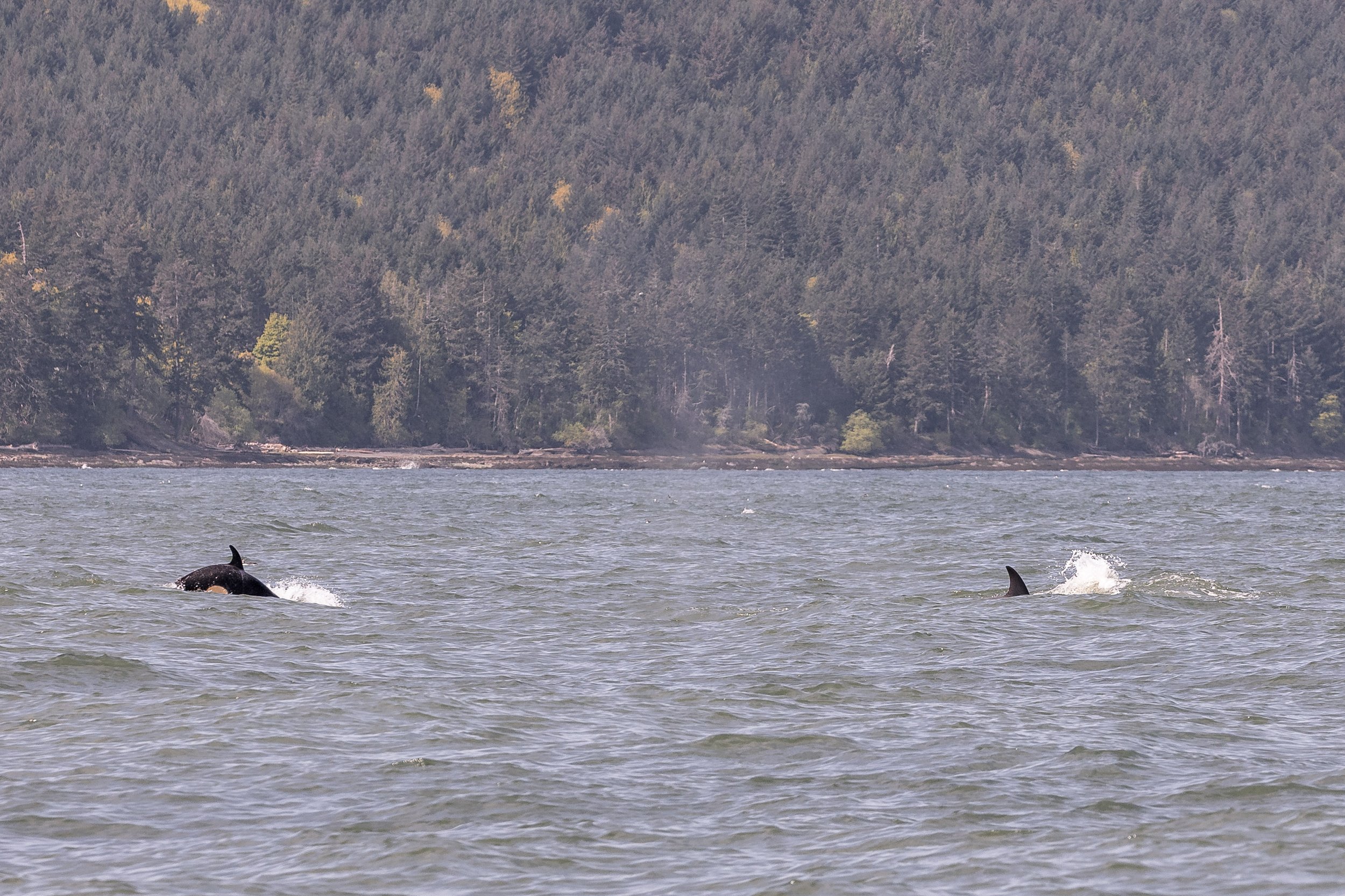
T071B4 chasing after T124D4 Dune.
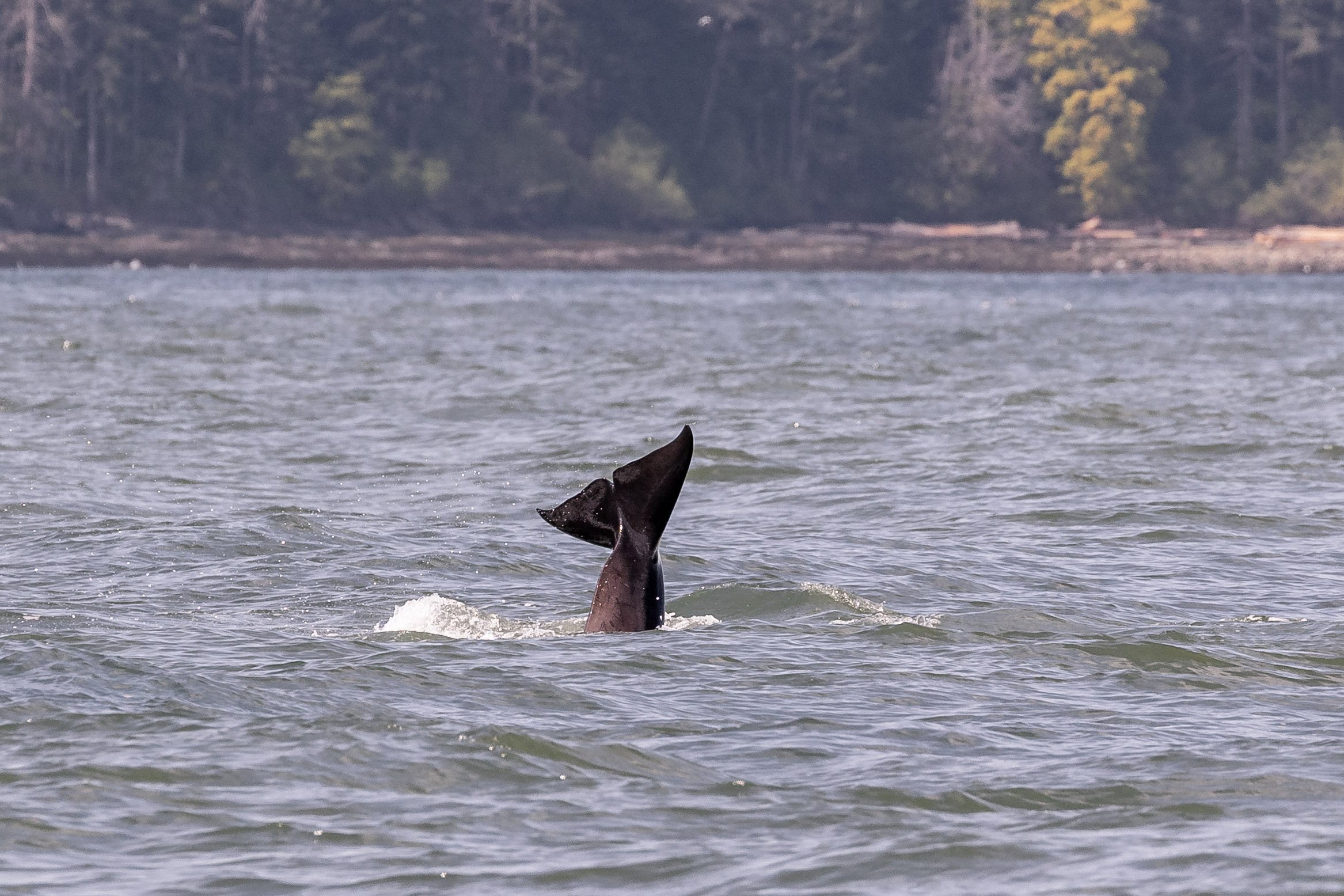
Flukes up!
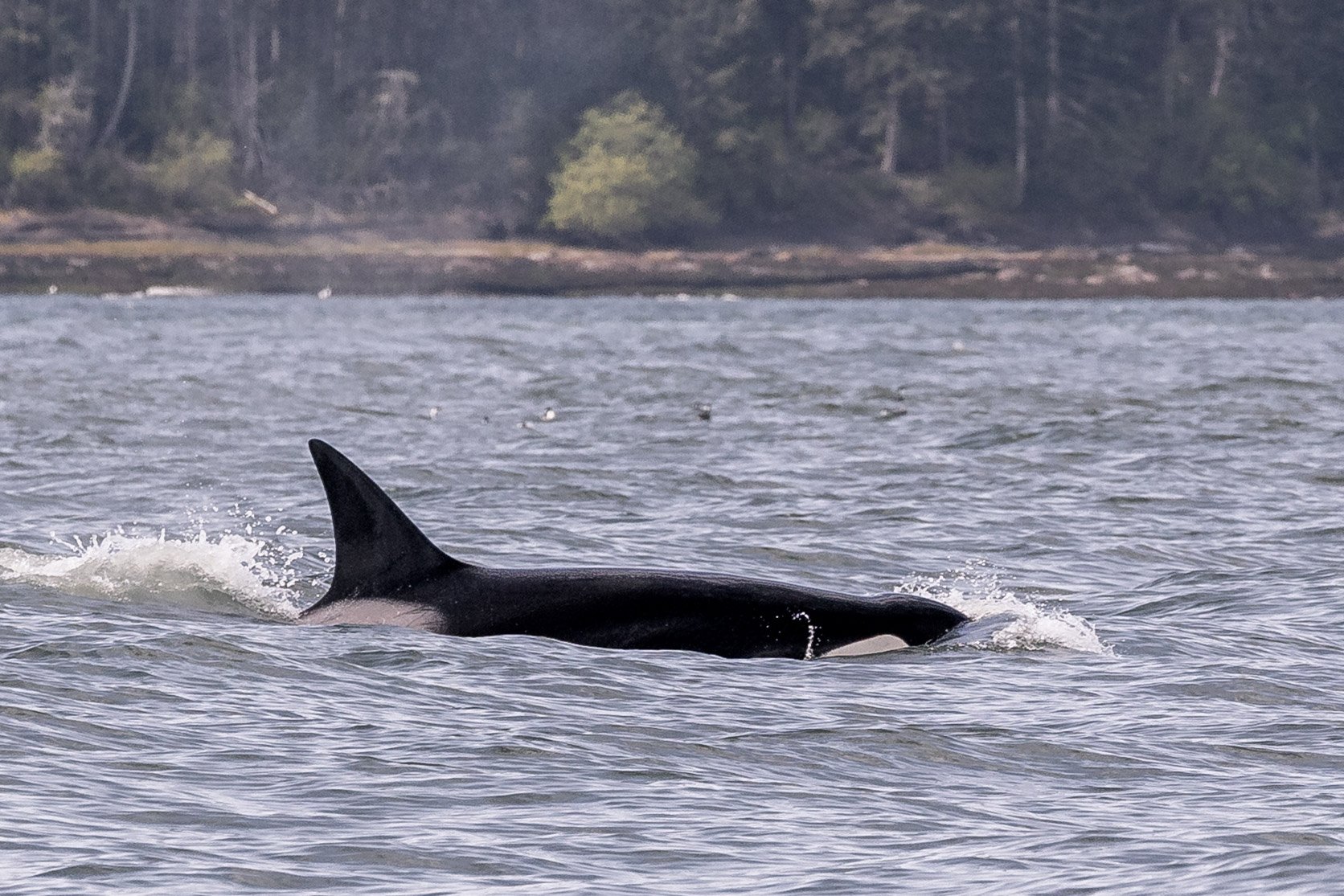
T124D Field with her uniquely scratched saddlepatch.
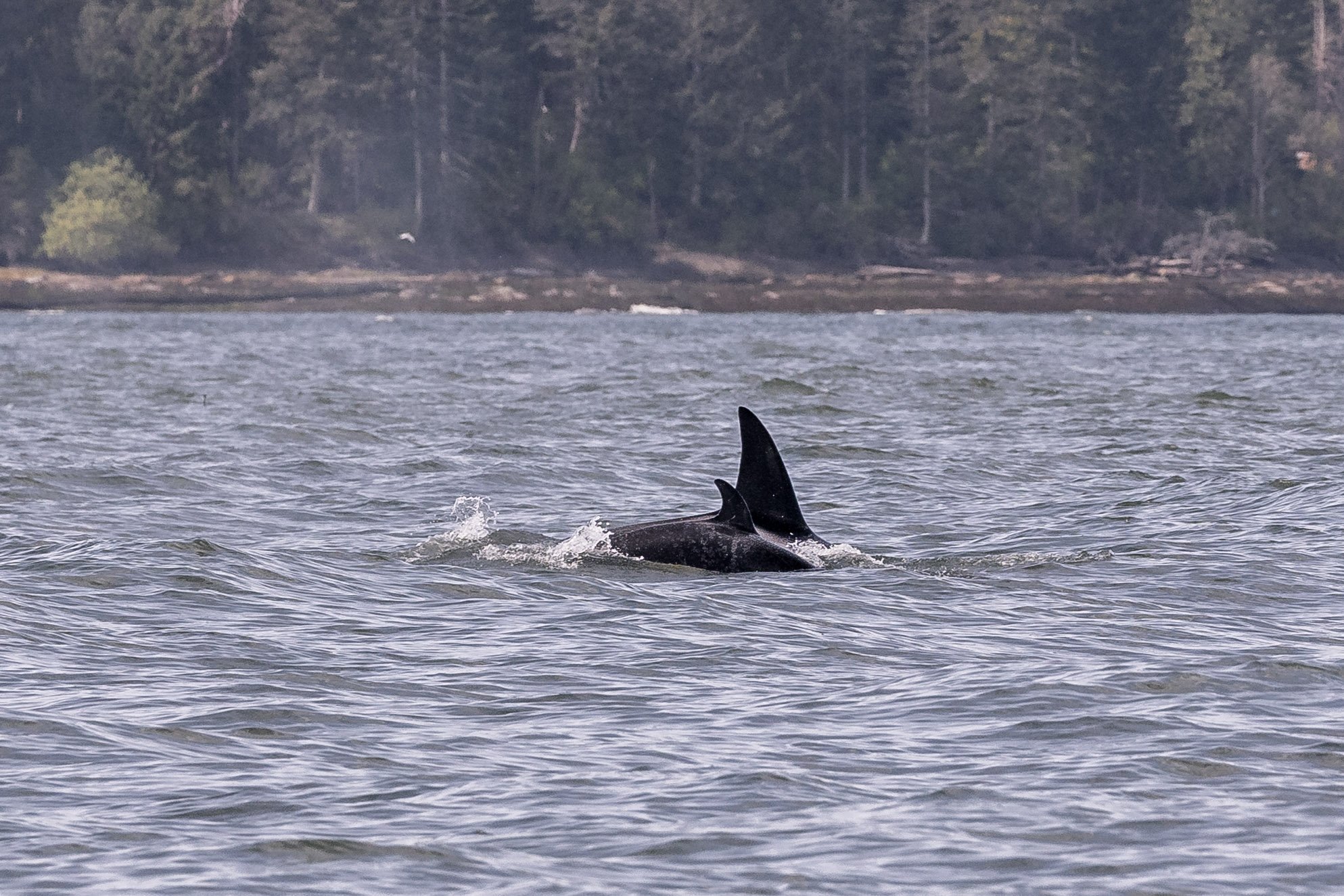
(presumed) T071B4 and T071B Hood travelling together.
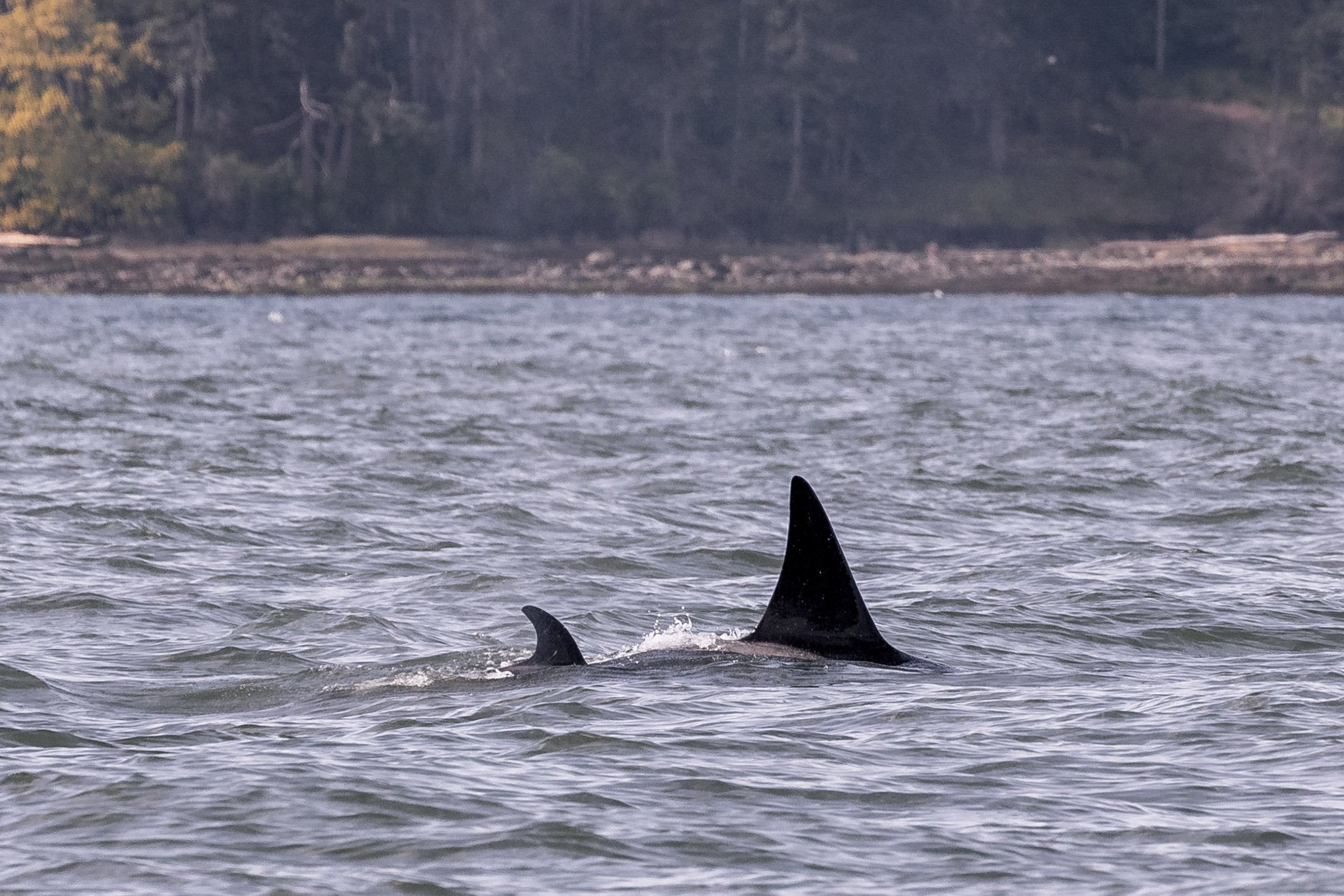
T071B Hood and (presumed) tiny calf T071B4.
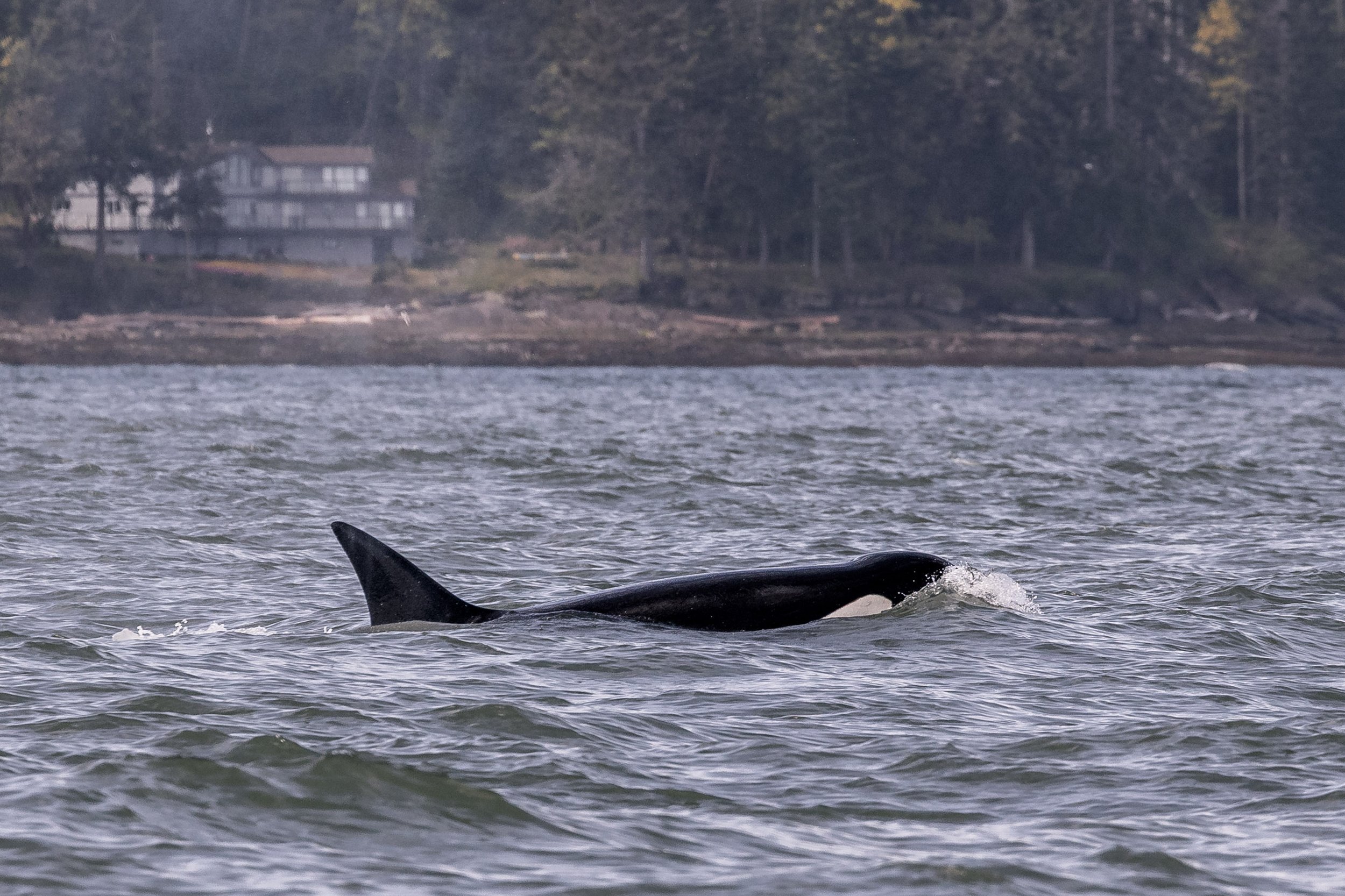
T124D Field travelling along.
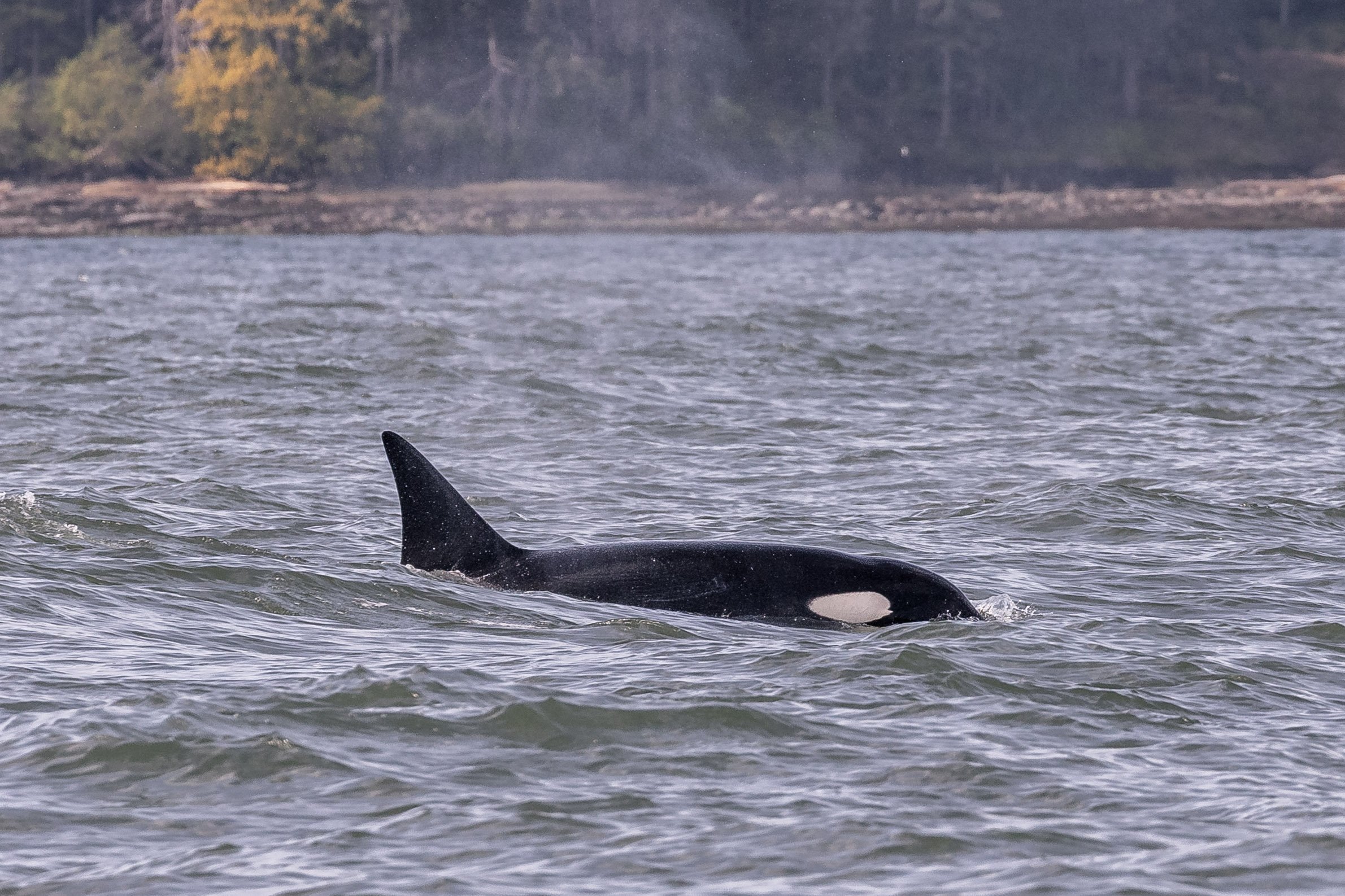
T124D1 Salish II with their unique eyepatch visible above the water.
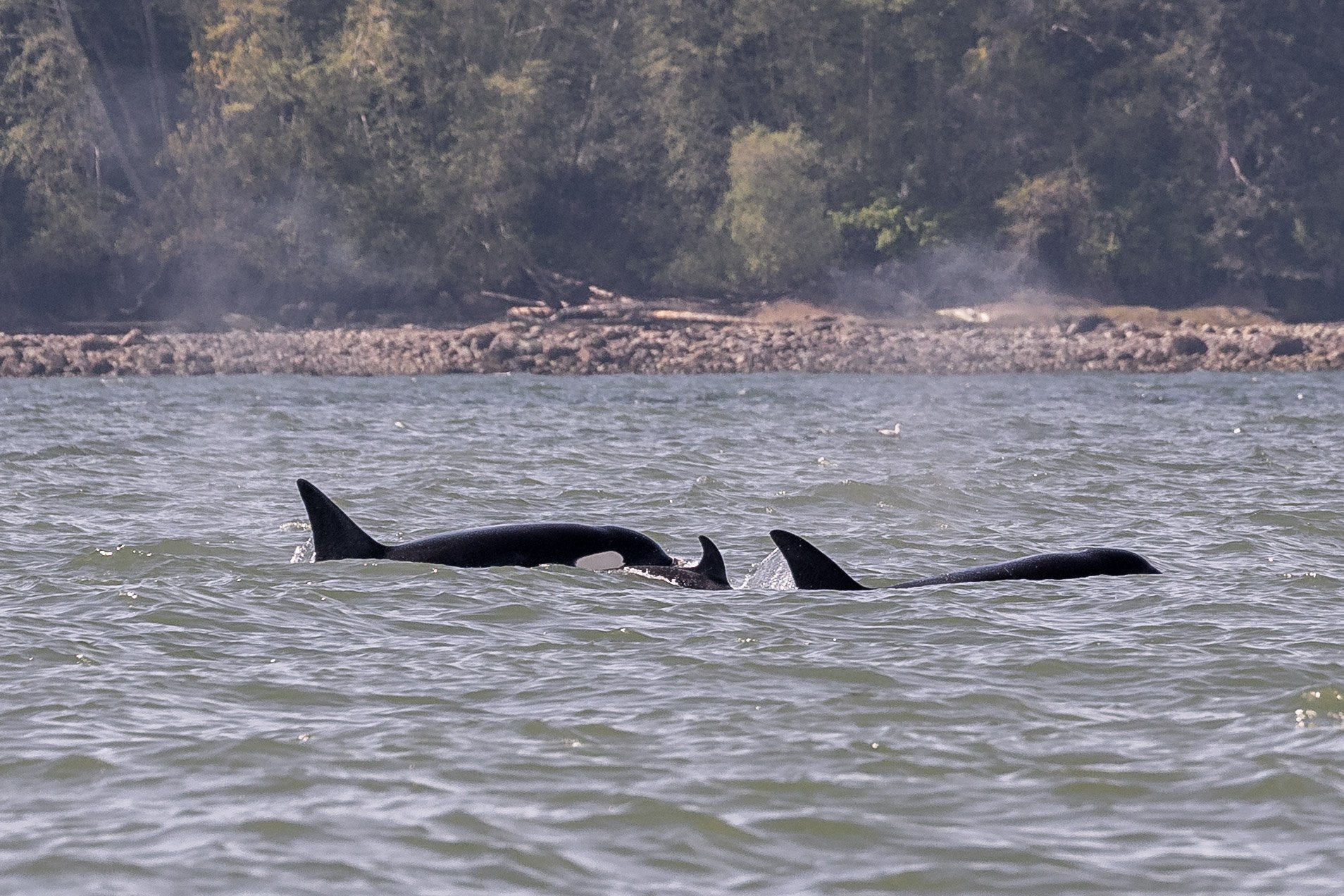
T124D1 Salish II with T071B4 tucked between them and T071B Hood.
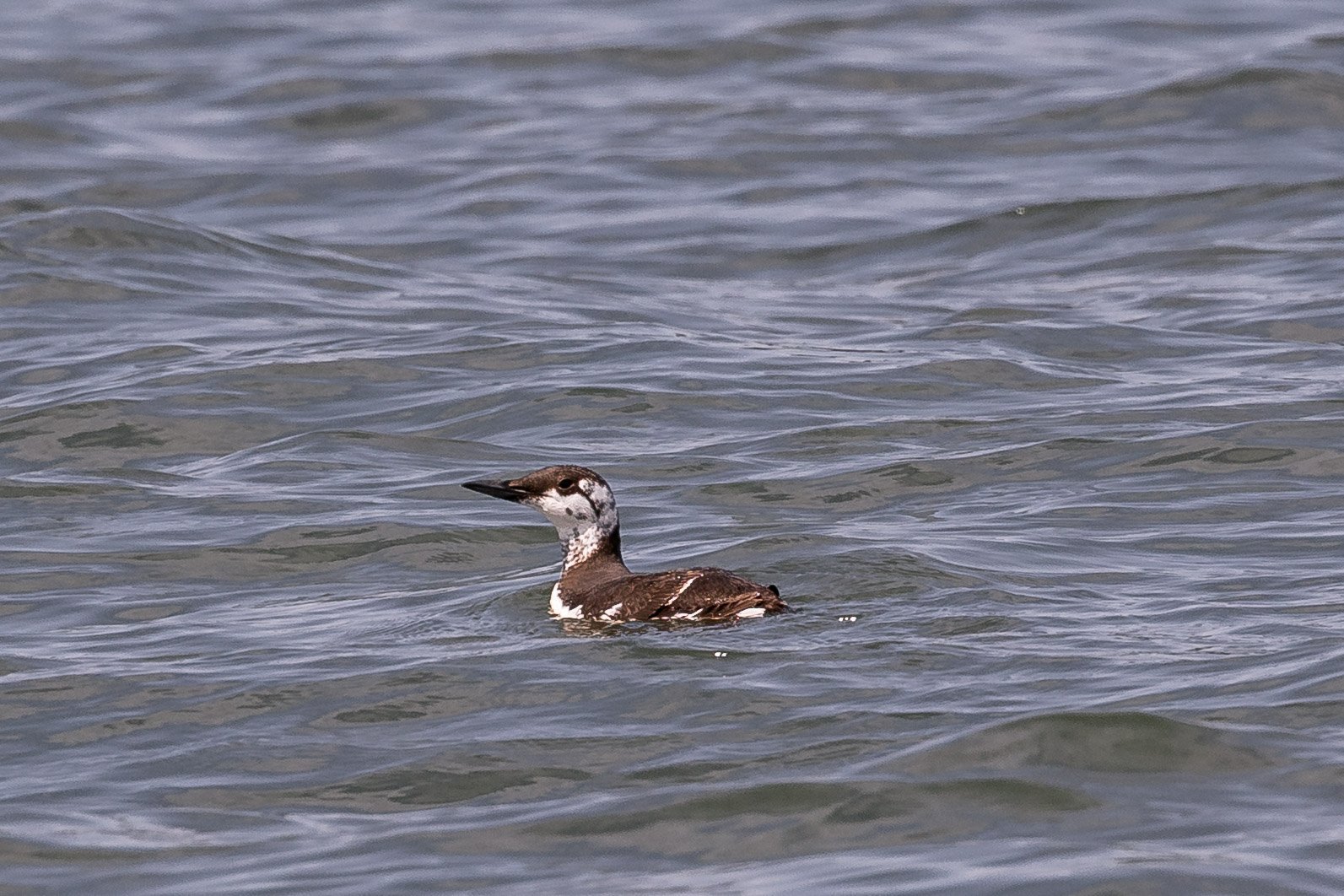
A Common Murre in non-breeding plummage.
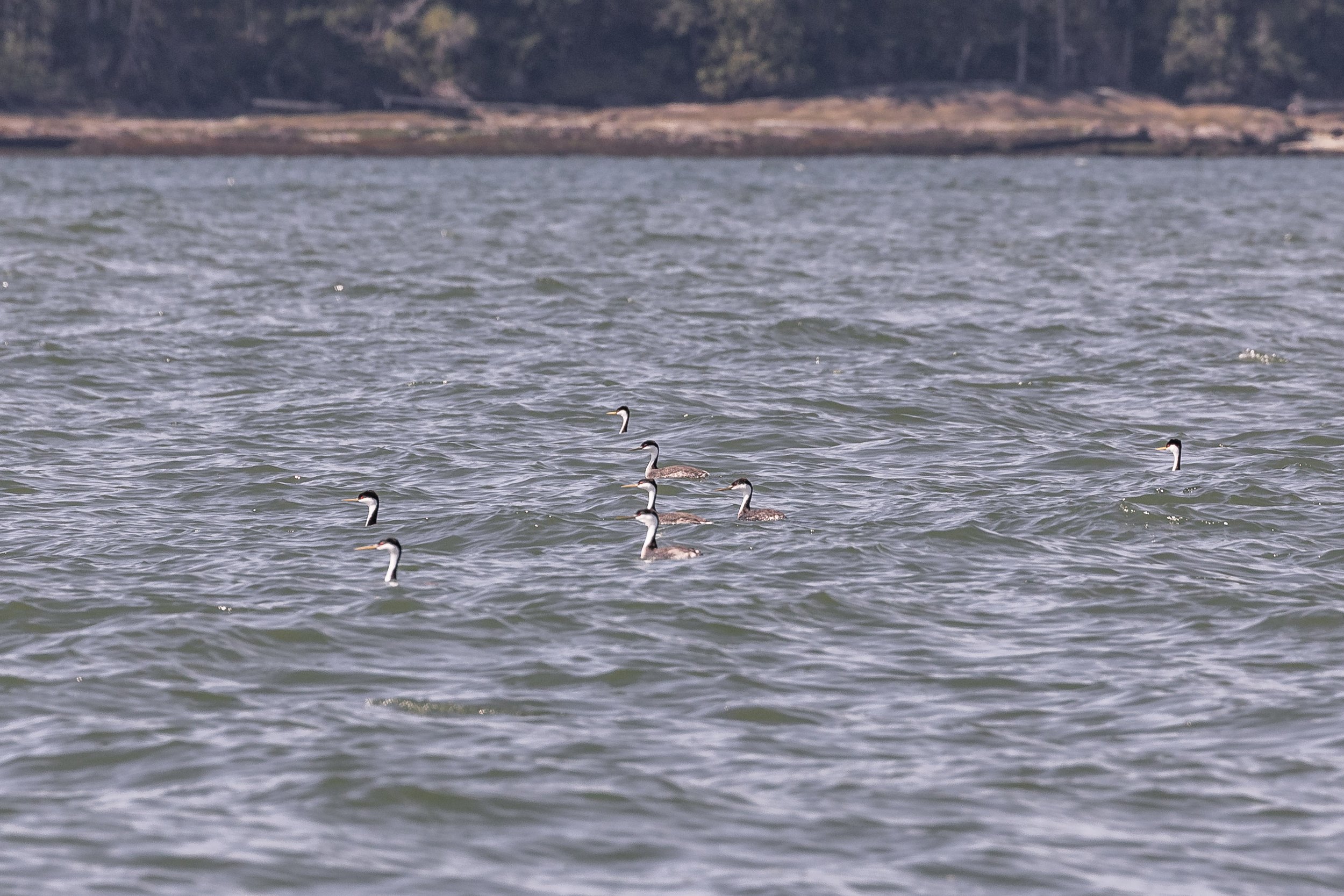
A flock of Western Grebes.
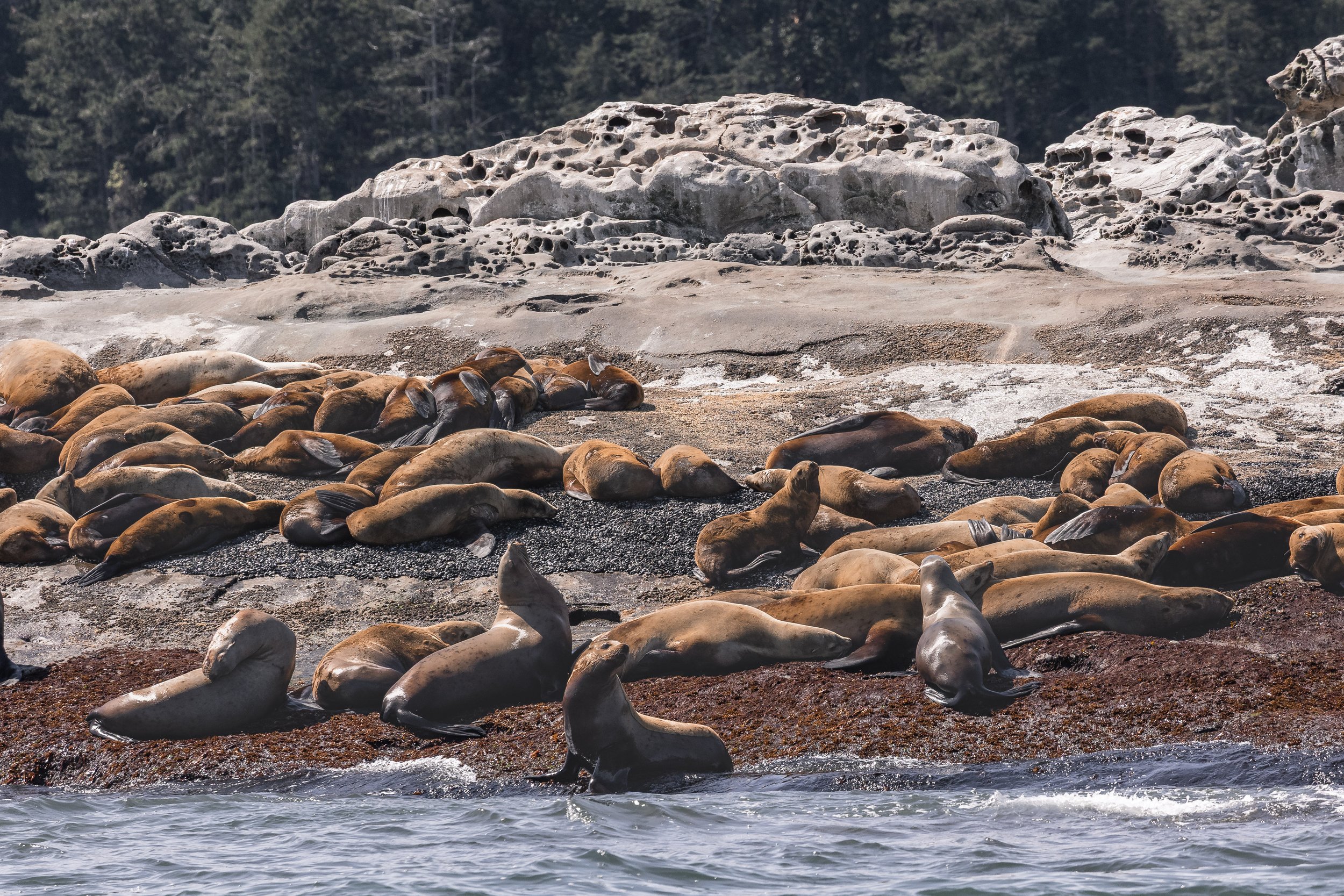
Steller Sea Lions hauled out at the Canoe Islelets.
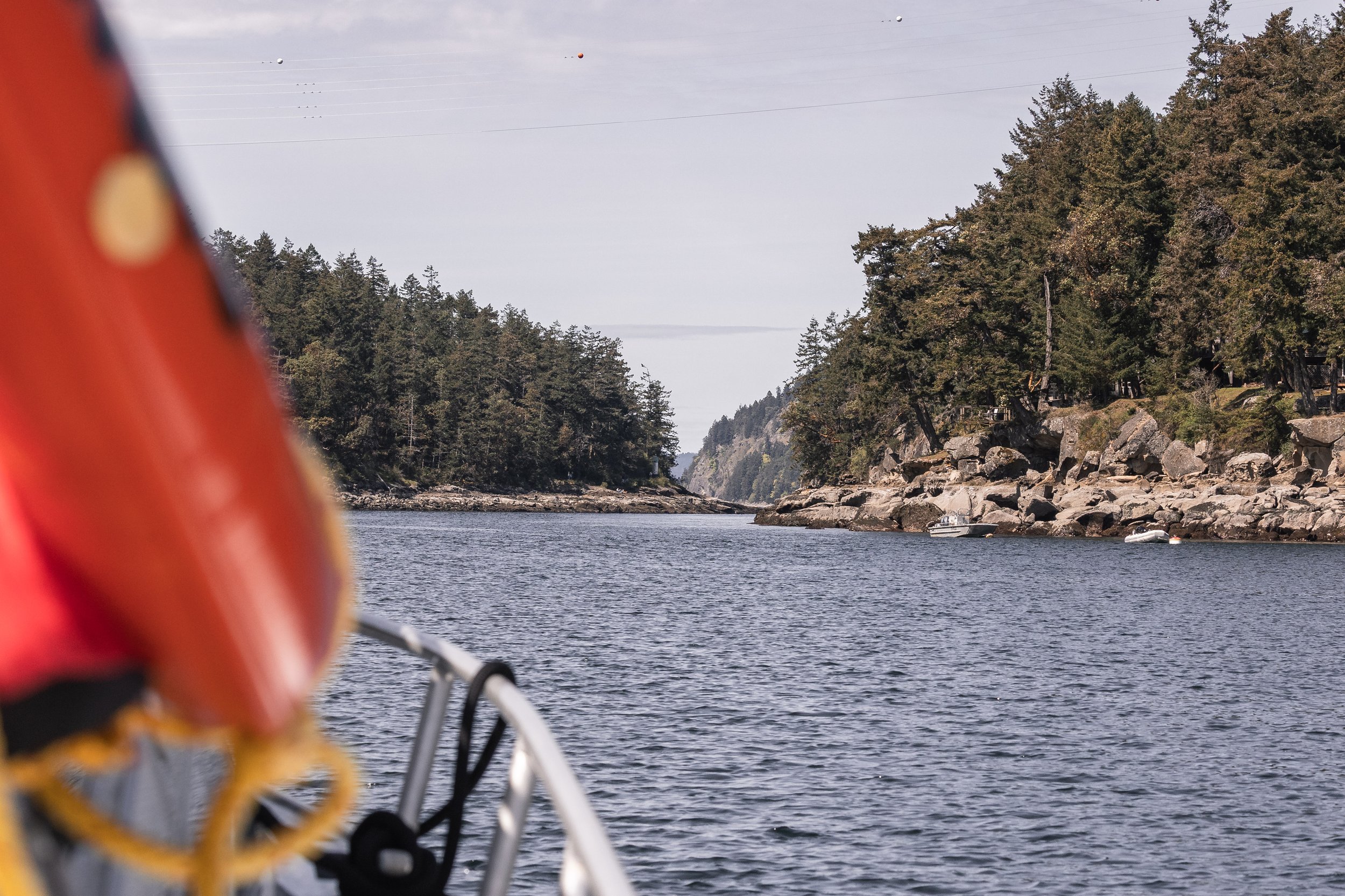
Kula looking at Dodd Narrows.
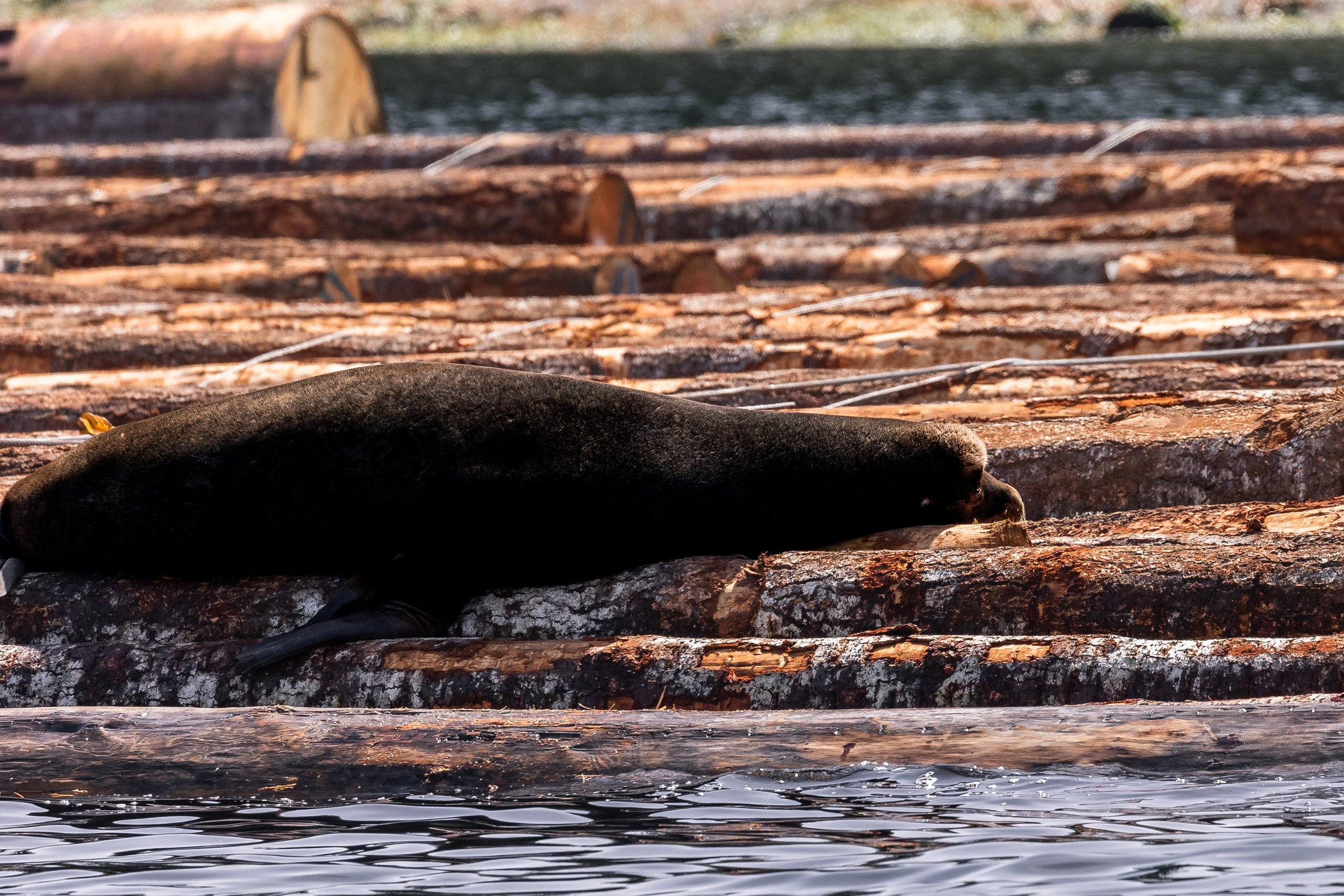
A sleepy California Sealion on the log booms.
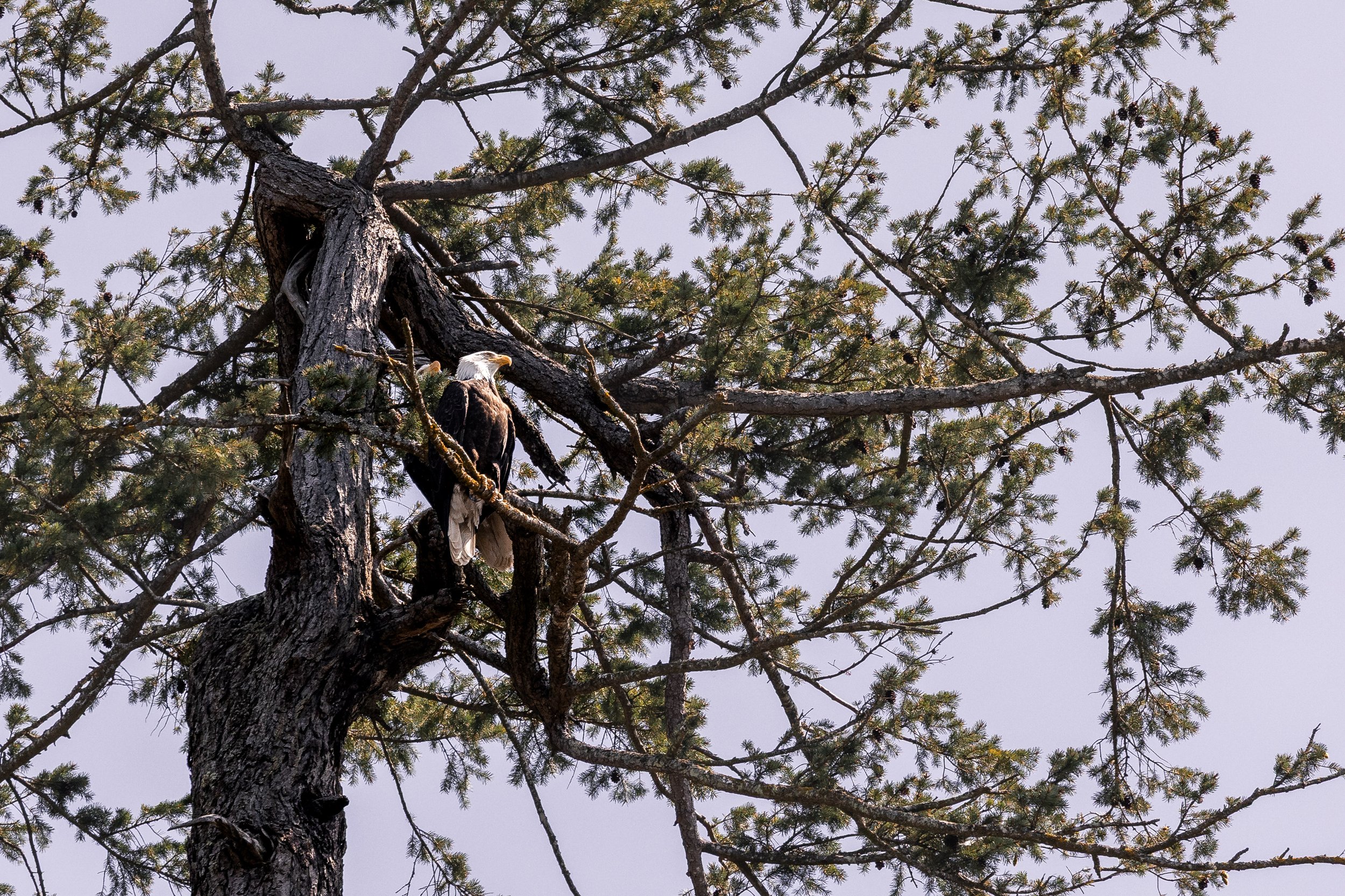
Not one but TWO Bald Eagles perched together high in a tree.
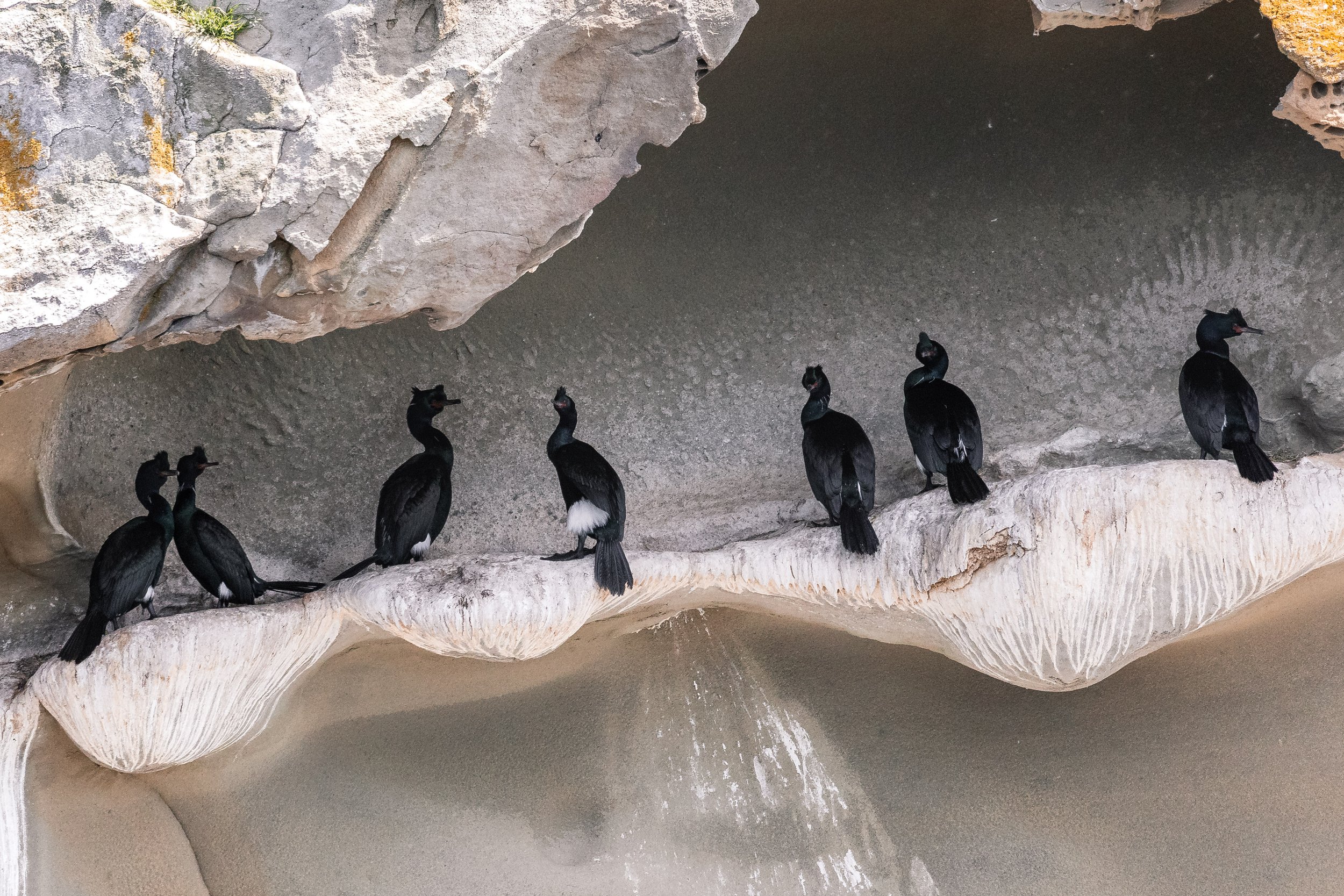
Pelagic cormorants with their white ‘pantaloons’ visible, standing at the cliffside.
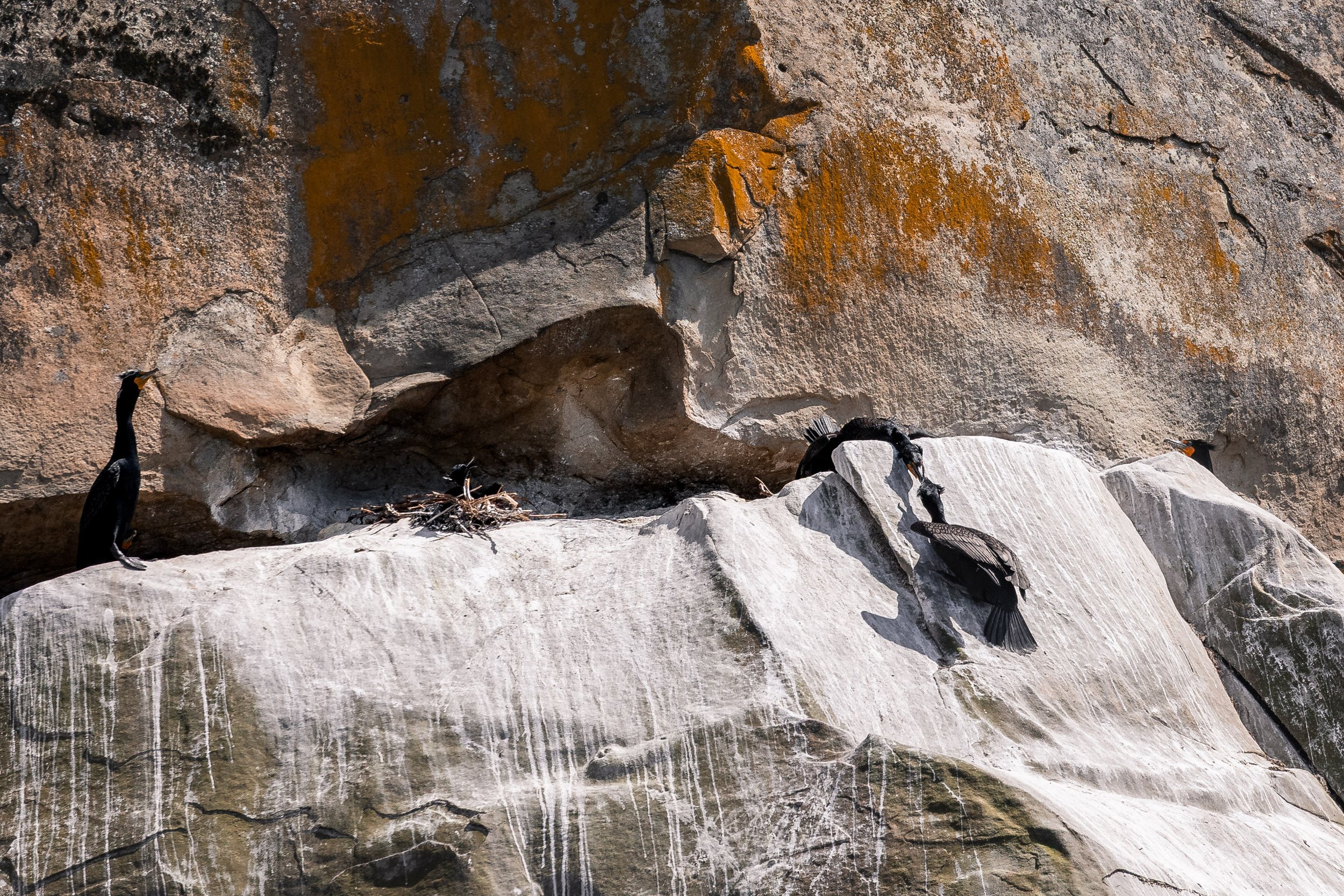
Double-crested cormorants sharing a snack.