
April 20, 2026 - Some Uncommon Orca near Qualicum Beach
The sun was shining overhead and both guests and crew were excited to start their adventure as they piled into the sem-covered vessel, Kula, to begin the tour for the day. Most of the time, we have no idea where the whales might be when we start our search, since all of the animals in our area are free of any long term trackers or tags. With orca and humpback whales, the two most commonly seen species on our tours, covernig up to 100 miles every day when travelling it can be tricky to know where these travels might have taken them. But luckily for us, there is a great network that helps us locate the whales for the day, from on shore to on the water observers, sometimes we can get a clue if a pod if spotted before our tour leaves.
That was the case today, when we got told of a group of whales travelling in Northwest Bay, only about 40 minutes north of Nanaimo. Shore-bsed reports like this can sometimes be tricky, since there is an infinate number of directions for them to choose from after leaving a bay such as this, but we figured it was worth a chance searching there anyways. These efforts paid off, since after travelling along the coastline, doing some zigging and zagging to cover more ground as we searched, the distinct black dorsal fins of the whales caught Captain Josephs eye. We had found the whales!
Excitement radiated throughout the boat at the sight of the orca, but there was still important work to be done by the crew. Captains Joseph expertly navigated the vessel into position with the whales, keeping the regulated 200m distance from them and travelling parallel with their direction. While Joseph was manouvering the boat, Marine Naturalist Val was putting up our “Whale in Area” flag and grabbing her camera. One of the most important things to do when we find orca is to figure out who we are looking at. With two distinct ecotypes in our waters and one being critically endangered, we have to make sure that we only watch the healthy, growing population of Biggs (Transient) Orca. Snapping a few photos quickly confirmed that these were indeed Transients. Looking at dorsal fin shape, notches, and scarring on the saddle patch and comparing these features against the catalogue is how we know these whales individually. Today these features matched up to a group of whales that aren’t very common in our range:
T117A Nighthawk ♂ (1992)
T117B Nyx ♀ (2005)
T117B1 Noctis (2023)
T172 Katmai ♀ (1989)
Two of these whales, the T117Bs, have been spotted a few times during our tours, but the other two, T117A and T172, have only been seen once before, and it was only a couple of days before this encounter, on our April 18 tour. The range for our population of Transient Orca is huge, spanning from Southern Alaska down to Northern California, so it’s not surprising to get uncommon visitors like this, but it doesn’t make it any less exciting when it happens! Past sightings maps paint a picture of how often we would have expected to see them before, but as you can see, there is a significant lack of sightings for these individuals inside the Strait of Georgia before. Now, there may be some observational bias in play here, it’s possible that these individuals might have been passing through the area without being detected, but it’s interesting nonetheless.
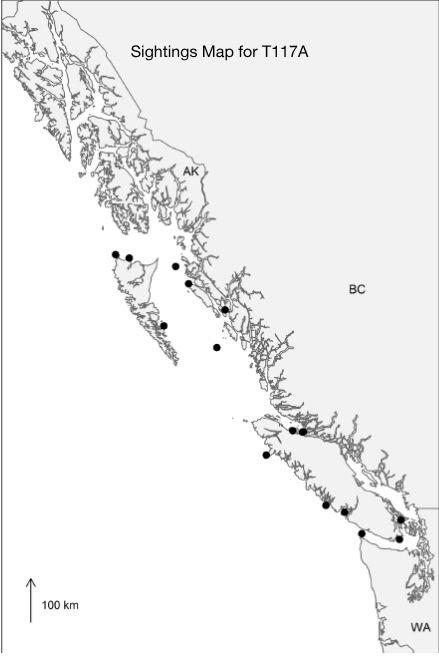
Photo-identification Catalogue, Population Status, and Distribution of Bigg’s Killer Whales known from Coastal Waters of British Columbia, Canada. Towers, Et al. 2019.
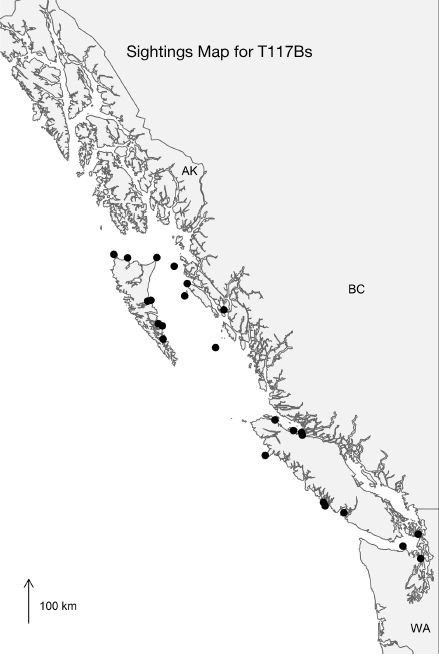
Photo-identification Catalogue, Population Status, and Distribution of Bigg’s Killer Whales known from Coastal Waters of British Columbia, Canada. Towers, Et al. 2019.
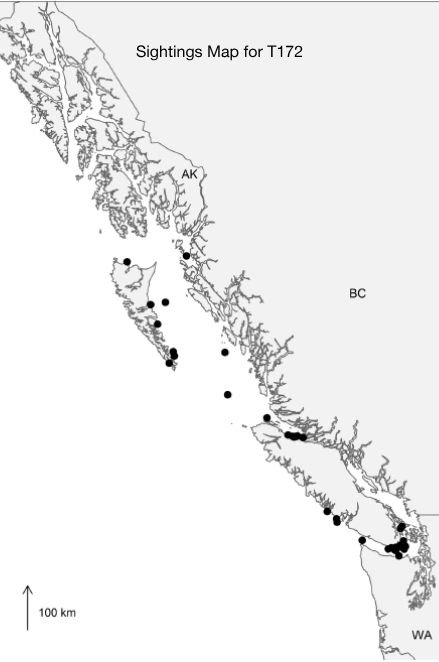
Photo-identification Catalogue, Population Status, and Distribution of Bigg’s Killer Whales known from Coastal Waters of British Columbia, Canada. Towers, Et al. 2019.
Watching these huge animals moving through these calm waters so gracefully was an amazing sight. When we first found them, they were spread out into groups of two, with Nighthawk and Katmai travelling together and Nyx and Noctis together, likely spreading out to look for prey. They eventually came back together, and we got to see all four of them swimming side-by-side for the second half of our time with them. Seeing the size difference between Noctis and Nigthawk was pretty special. Adult males get to be a fair amount larger than the females of the species, getting to lengths of 8 meters and weighing nearly 15 tonnes. Females max out around 6 meters in length, and only get to about 10 tonnes. This size difference isn’t what usually sets apart the males from the females, though, as the more obvious difference is their dorsal fin! A male, after having gon through puberty, will have an elongation of their dorsal fin compared to the others, and that fin may reach heights of 6 feet. Females will keep a smaller fin their whole lives, having a maximum height of closer to 3-4 feet. Having the wide range of sizes and shapes, and so many unqiue notches, mde this group very interesting to watch as they travelled northwest, following the shoreline of Vancouver Island.
Eventually, it came time for us to leave these uncommon visitors to their travels, and we started the long journey home. Glassy calm conditions gave way to some waves, but we didn’t let that stop us from finding more wildlife! Closer to Nanaimo, we stopped at Snake Island to view a group of Harbour Seals that were hauled out on the rocky shores. These small marine mammals are the main food source for the Transient Orca we had seen before and also act as important hunters themselves, catching a wide variety of Fish and Cephalopod species. These animals do a great job of blending into their environment, with variations in their fur colour and surface speckles to help them avoid detection. Hauling out on the rocks like this helps keep them safe from ocean predators and supports their thermoregulation. Even though they have fur and blubber to protect them from the cold water, they still need to spend nearly half their day on the rocks to maintain a proper temperature.
After seeing the Harbour Seals, we headed over to Entrance Island, where there was a large colony of Steller Sea Lions lounging on the rocks. Comparing these huge pinnipeds to their smaller cousins before really helps understand why an orca would want to hunt a harbour seal rather than a Steller Sea Lion. These animals are not only massive, but they are also quite aggressive. Fights were constantly breaking out on the rocks while we watched, and there even seemed to be some fighting in the water as well. Although entertaining, it didn’t stop one “eagle-eyed” guest from spotting something else perched at the top of one of the towers on Entrance Island, a Bald Eagle! This Bald Eagle was spending time cleaning its feathers, or preening.
From Entrance Island, we followed the north shore of Gabriola Island until we reached the Gabriola Bluffs, our final stop for the day. These towering sandstone cliffs are home to a colony of Cormorants who nest in the cracks and crevices here during the summer. The cliffs show evidence of these nesters, painted white with the bird guano. Although slightly gross to think about, it’s very important for the local ecosystem since it’s introducing a lot of nutrients into the water at the base of the cliffs. We watched as birds flew in and out of the cliffs, likely getting ready to pick the best places to set up new nests or to make repairs to their old ones. At the top of the cliffs was another bird that used Gabriola Island as their nesting site: Bald Eagles. Although these birds are nesting on the cliffs themselves, it’s good to be close by since the smaller sea birds can provide a great meal for them. They weren’t looking for a snack today, though, so we just got to watch them relaxing in the trees.
From here, it was a short journey home, allowing us time to reflect on all the amazing wildlife we had witnessed throughout today's trip. All of the best photos captured by Marine Naturalist Val Watson are included for you to enjoy below!
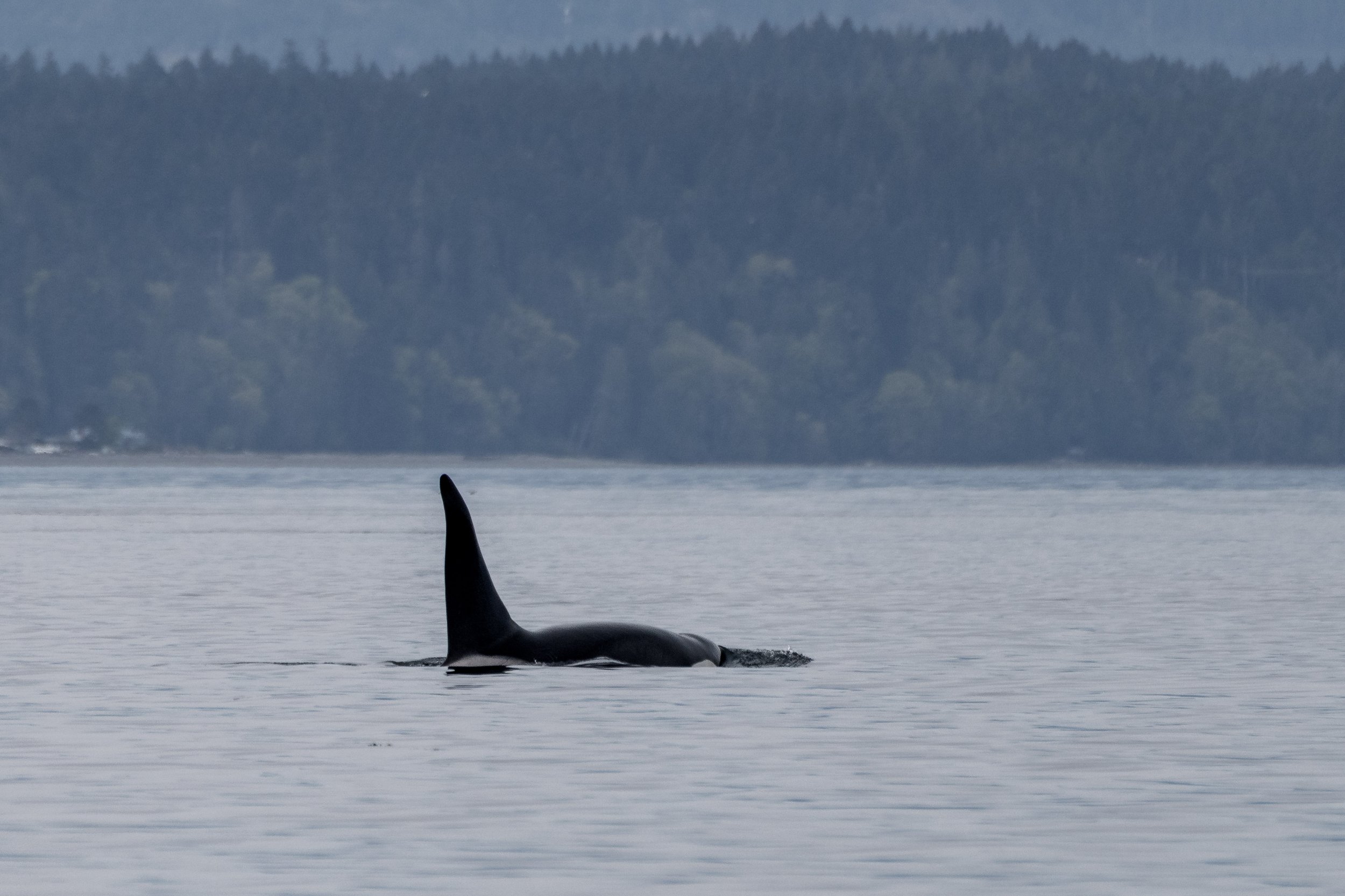
T117A Nighthawk surfacing in the calm water.
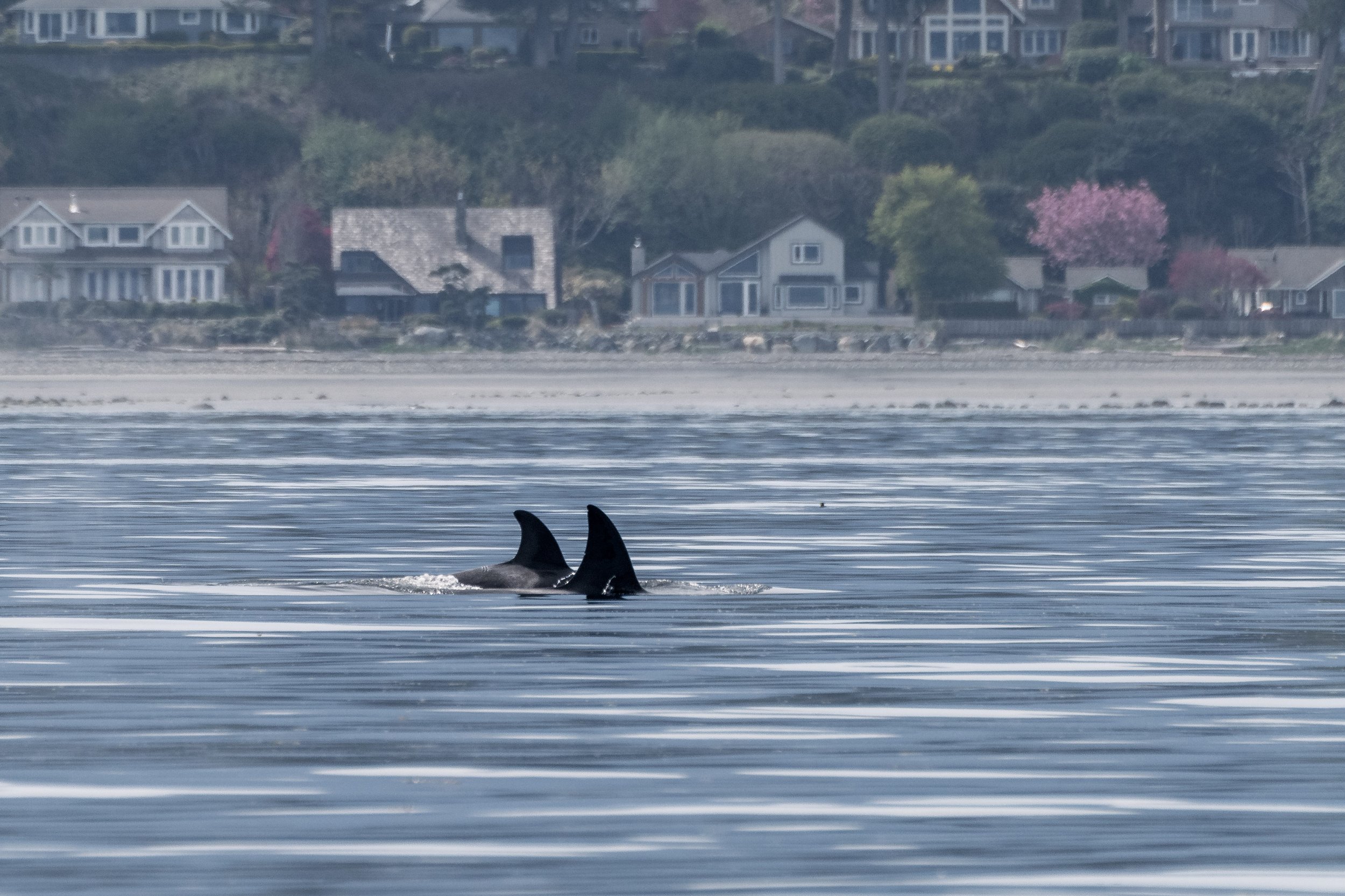
T117B Nyx surfacing just in front of her calf, T117B1 Noctis.
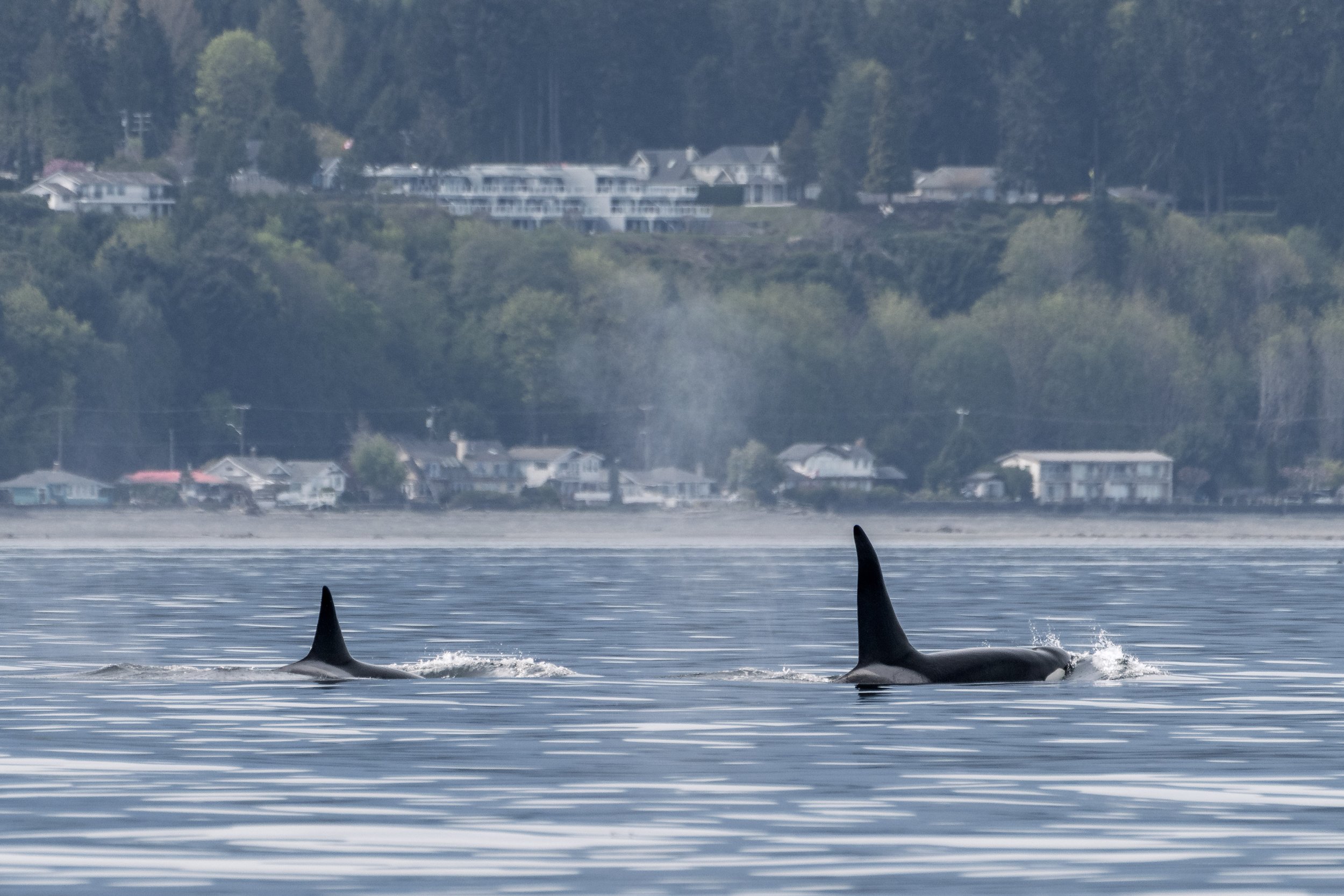
T172 Katmai surfacing on the left beside T117A Nighthawk.
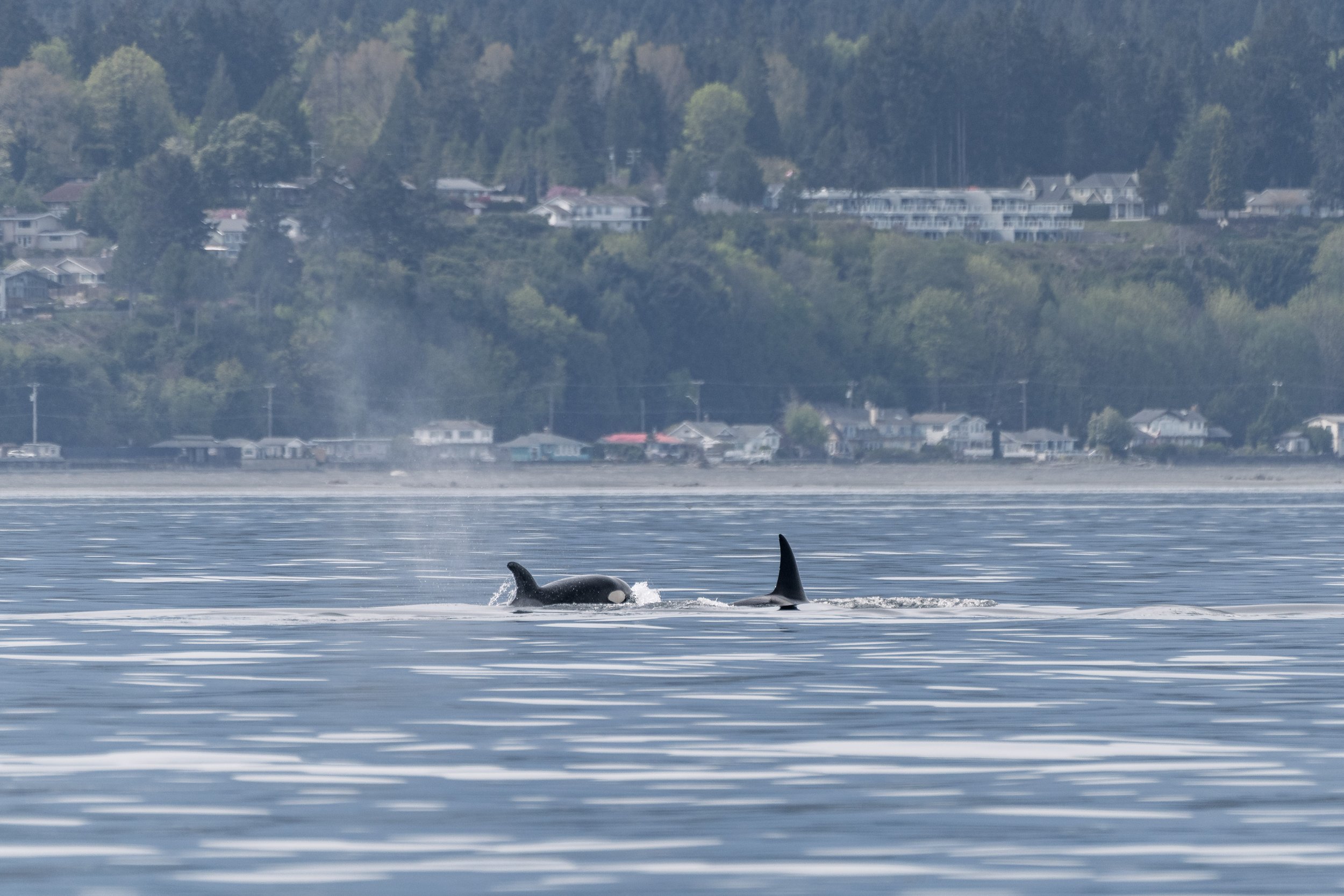
A great look at T177B1 Noctis’ eye patch as they surface next to mom, T177B Nyx.
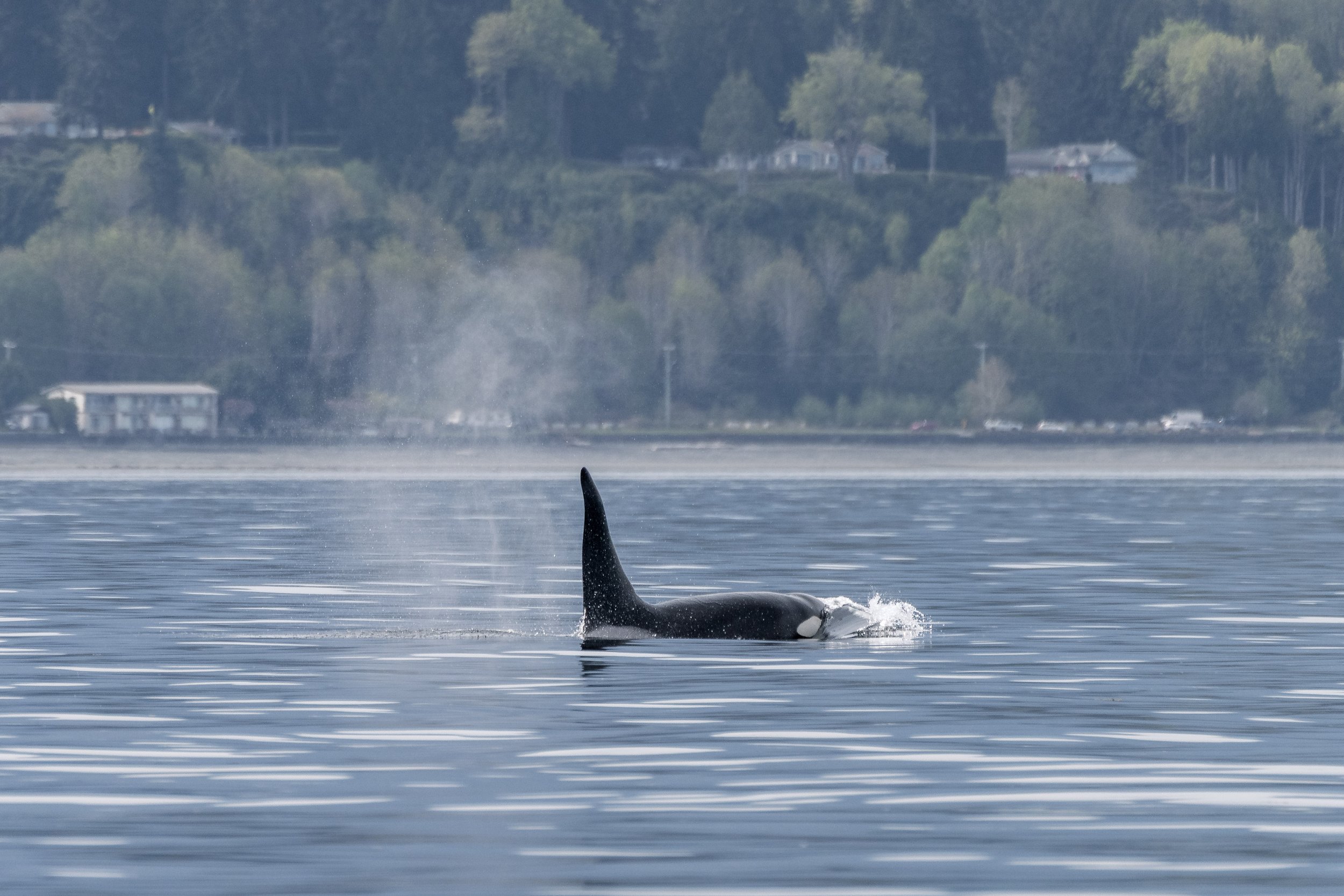
You can see the unique “lightning bold” shape at the top of T117A Nighthawk’s dorsal fin.
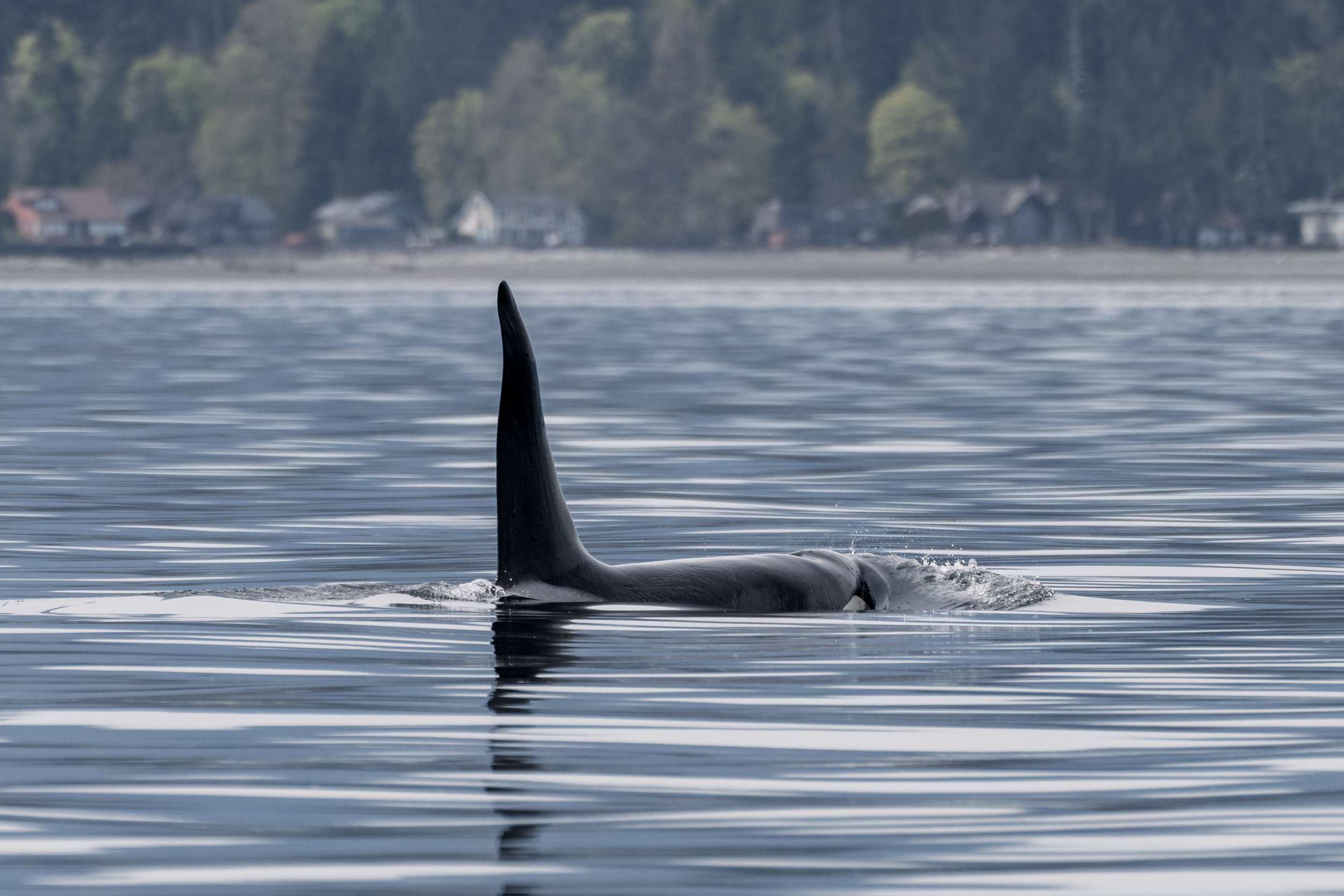
T117A Nighthawk creating a wave in the calm water.
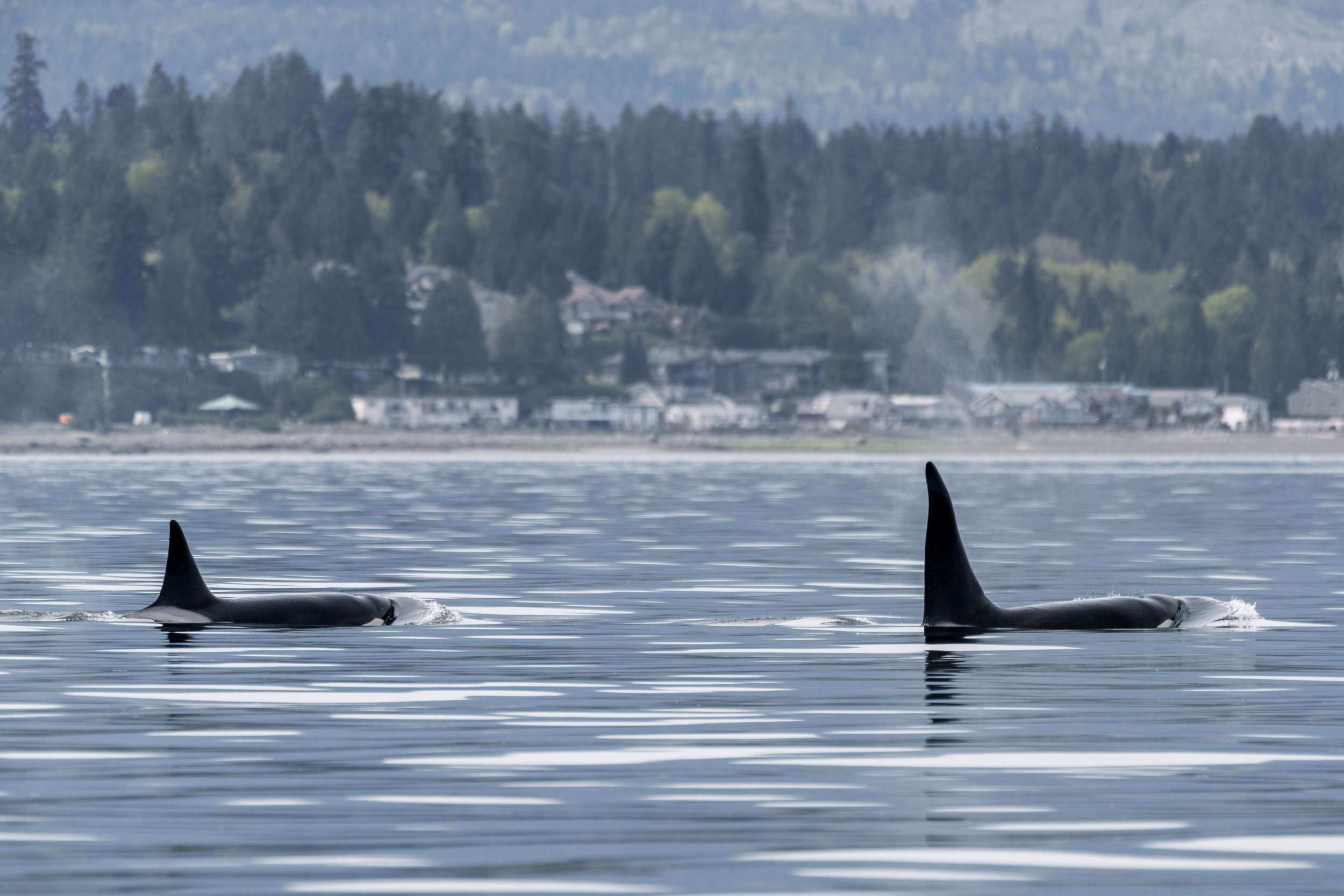
You can see T172 Katmai and T117A Nighthawk’s reflections as they surface in the calm waters.
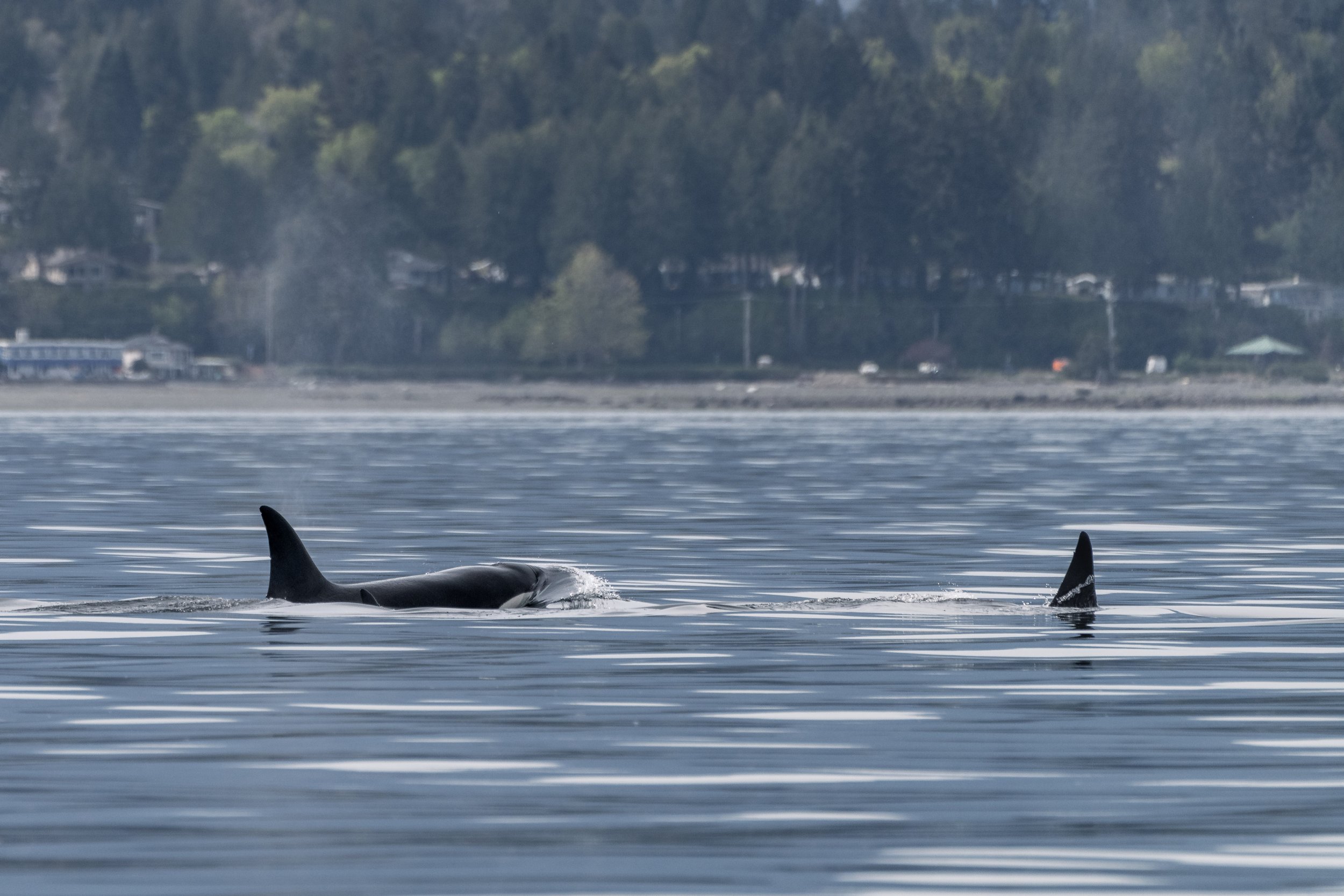
T117B Nyx surfacing with her calf close beside (can you see the tip of their dorsal fin?) and T172 Katmai to their right.
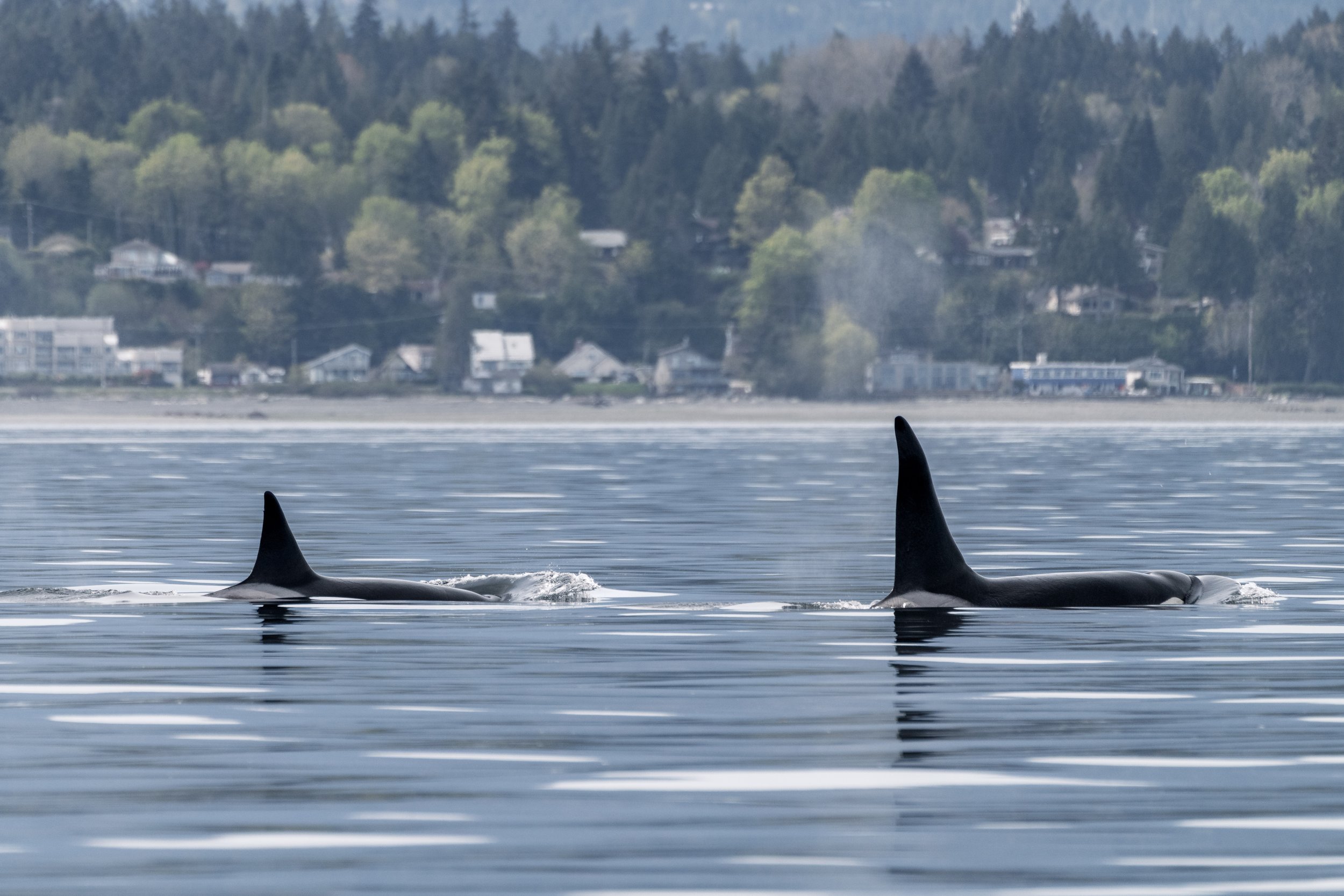
Another great look at T172 Katmai and T117A Nighthawk. Can you spot the unqiue scarring on their saddle patches?
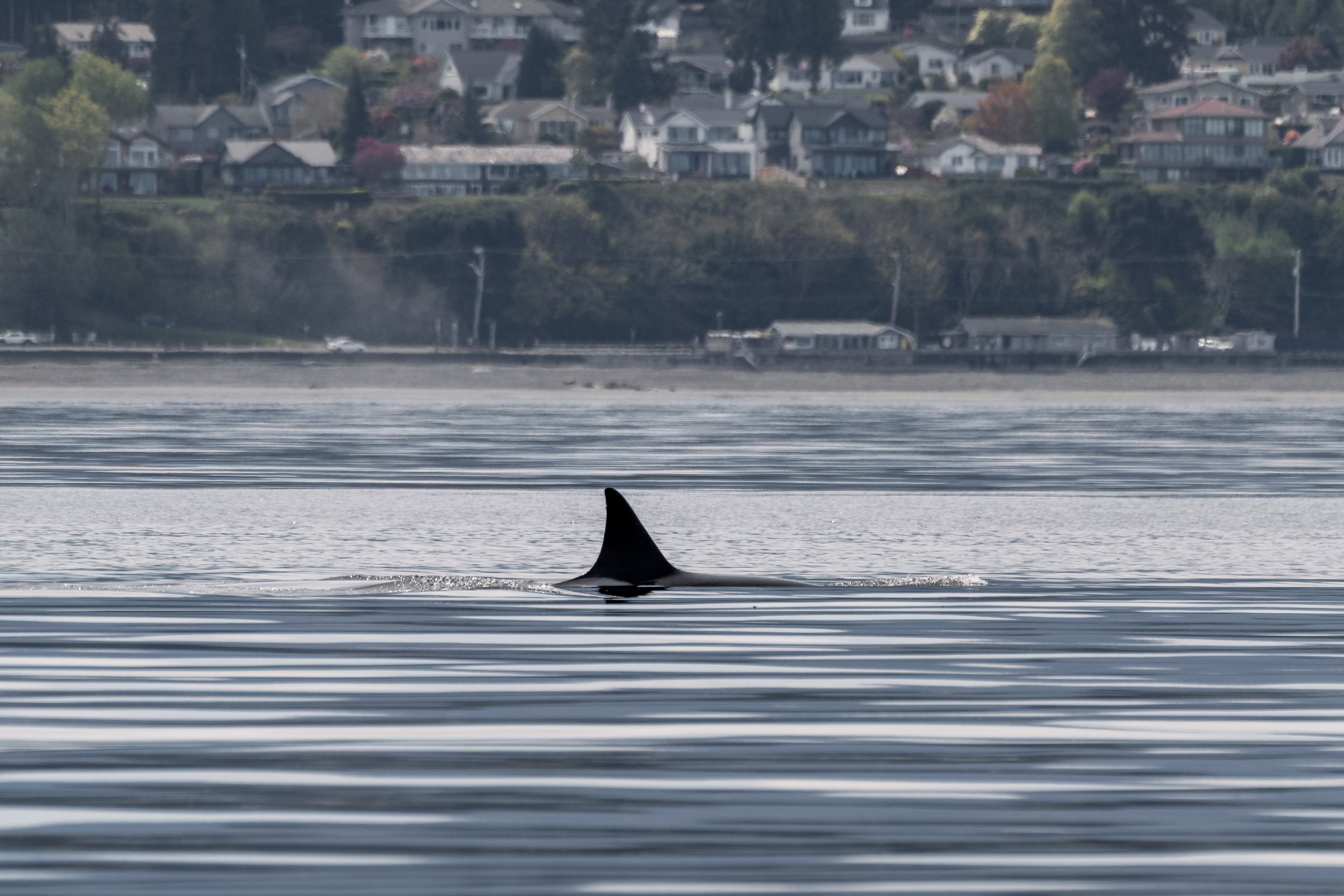
T172 Katmai showing off her unique notch.
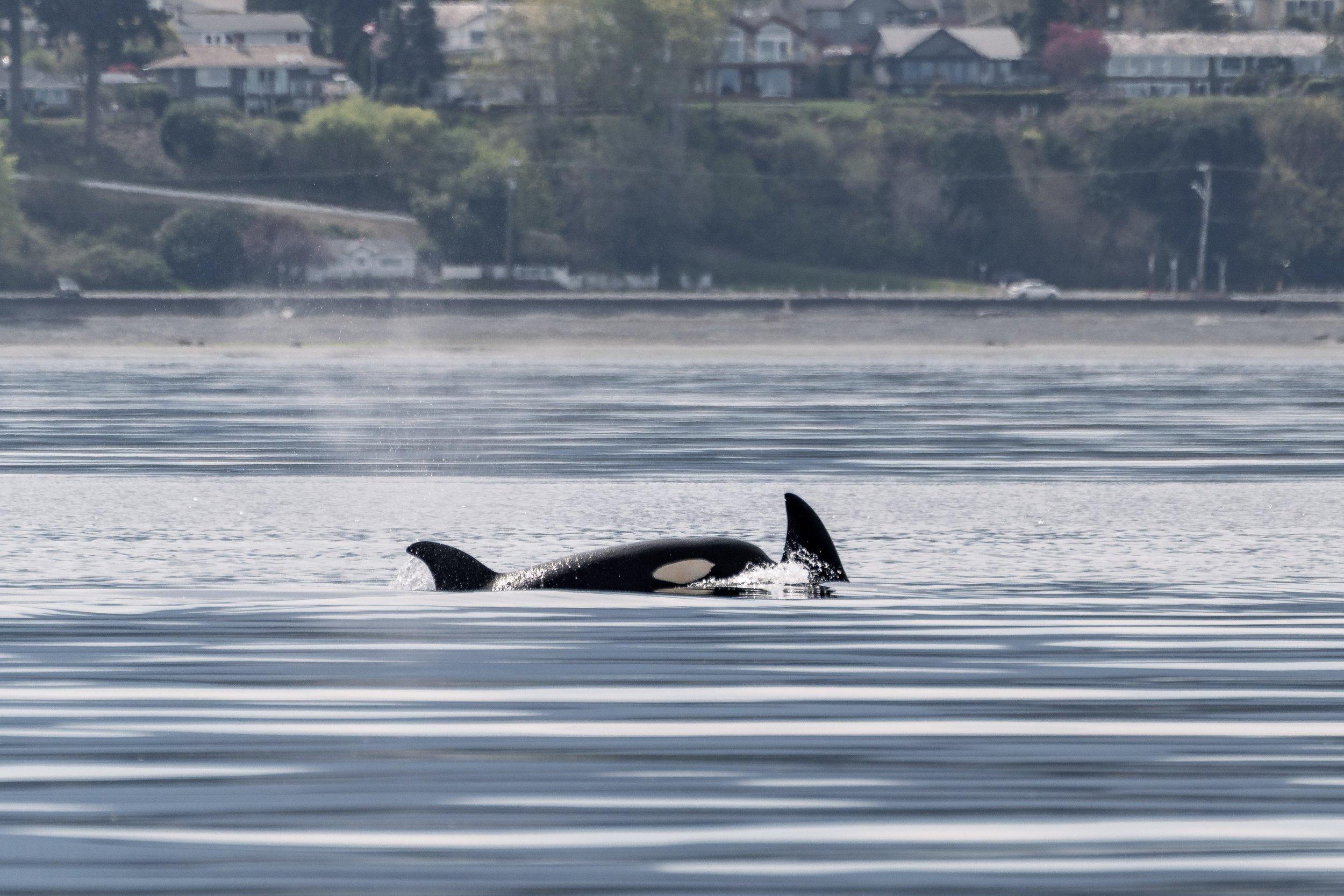
T117B1 Noctis quickly surfacing beside mom, T117B Nyx.
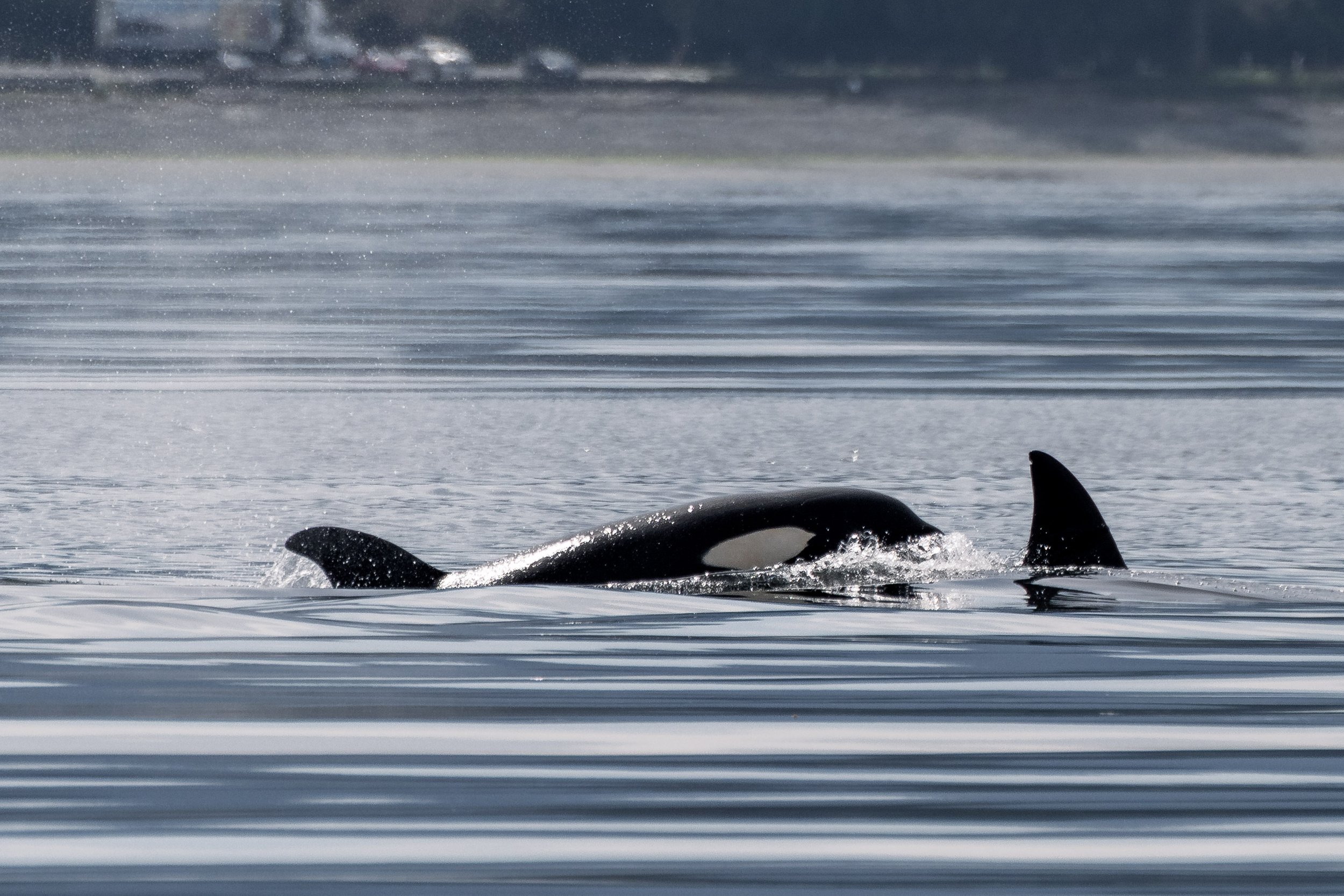
A great look at T117B1 Nyx’s eye patch as they surface.
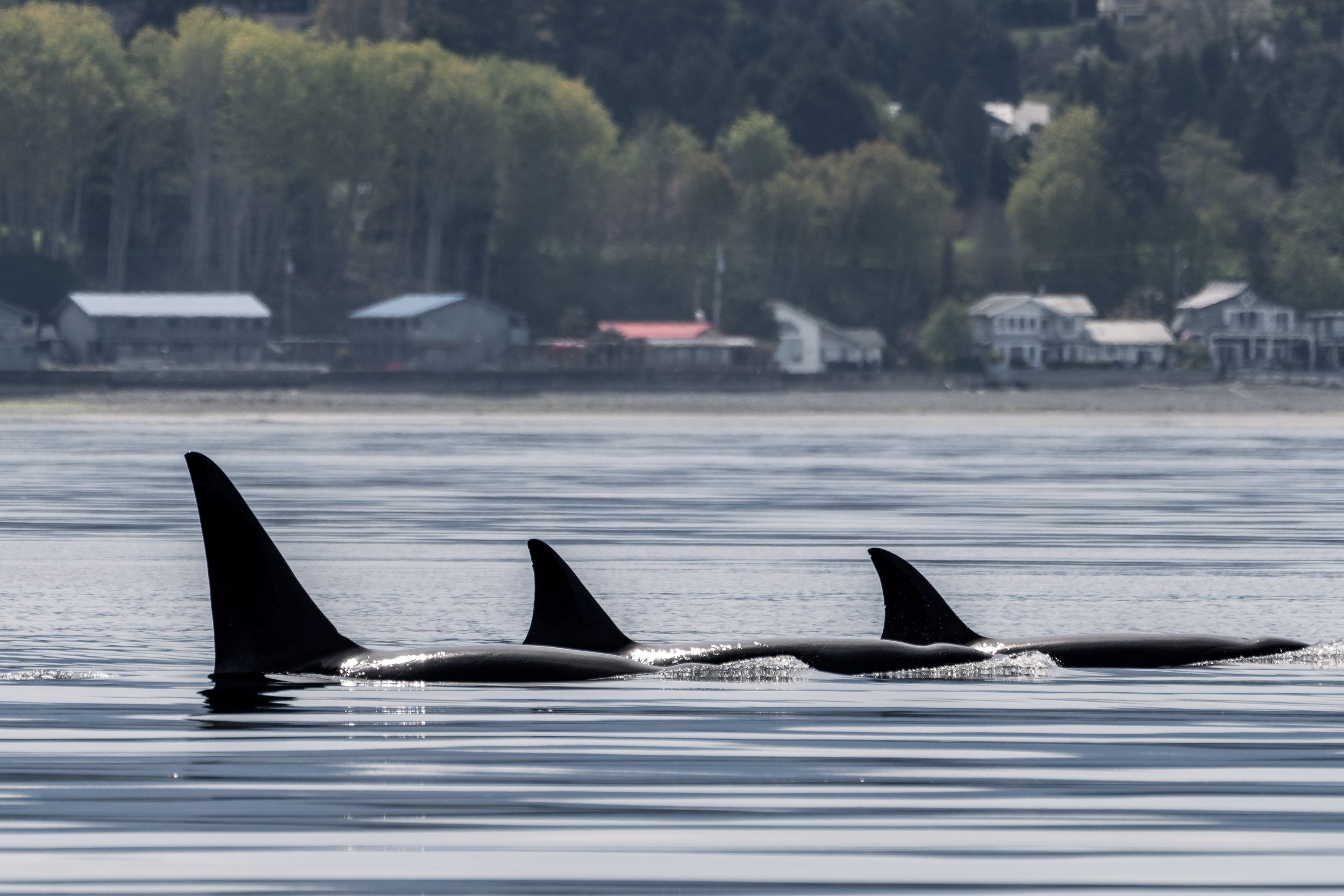
All the adults surfacing next to each other: T119A Nighthawk on the left, T172 Katmai in the middle, and T117B Nyx on the right.
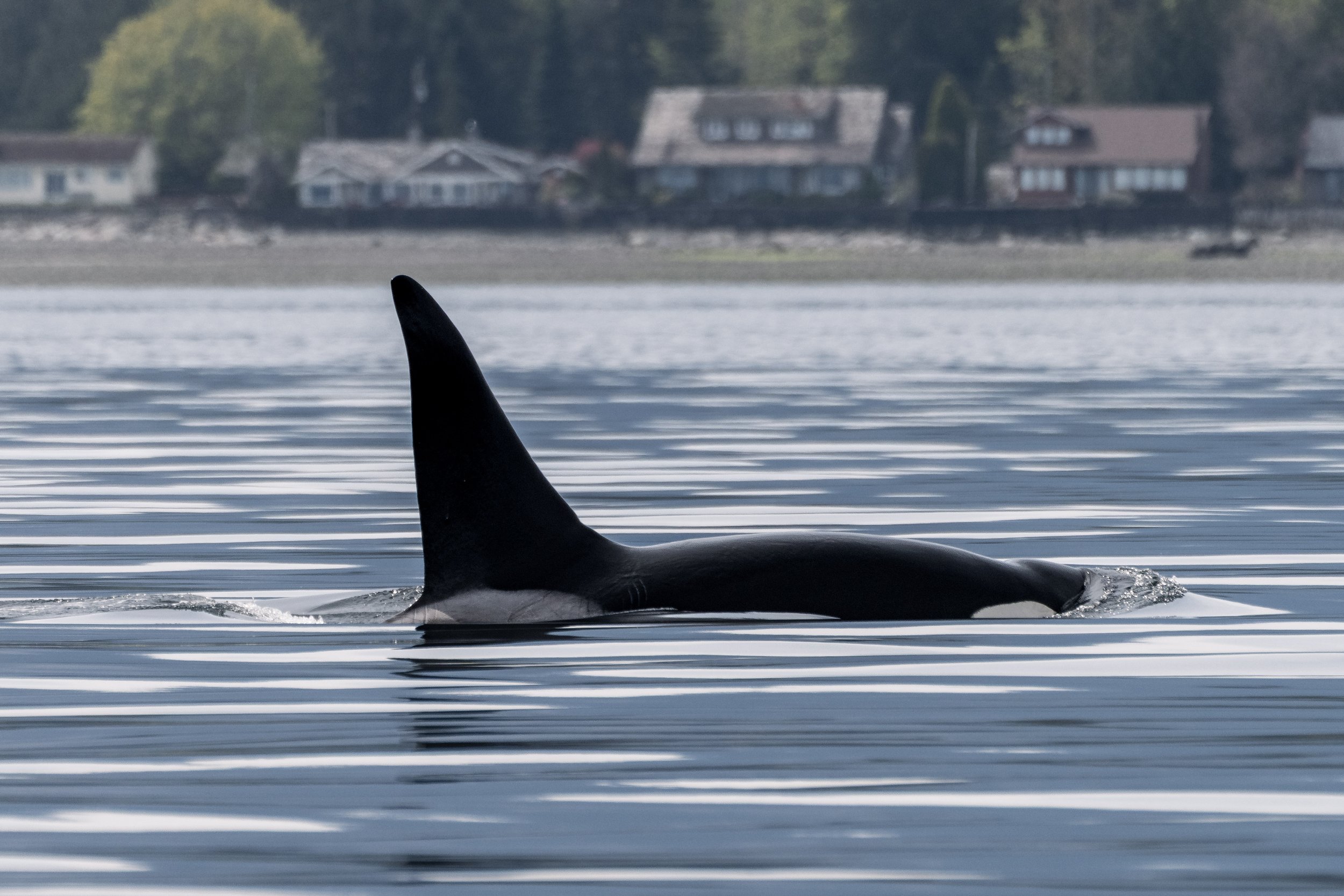
You can see even more detail in T117A scars in this photo.
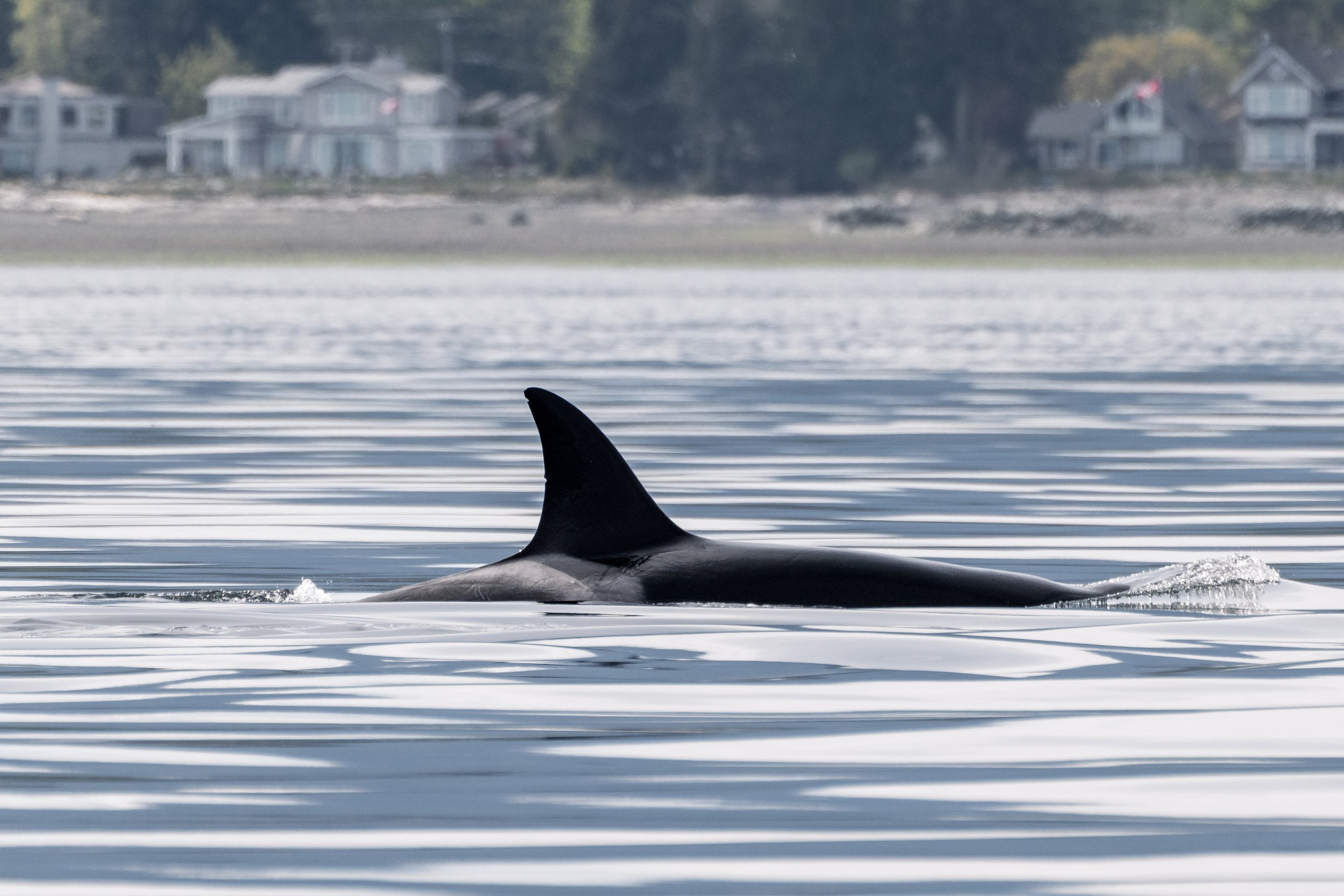
T117B Nyx showing off her scarred up saddle patch as she surfaces.
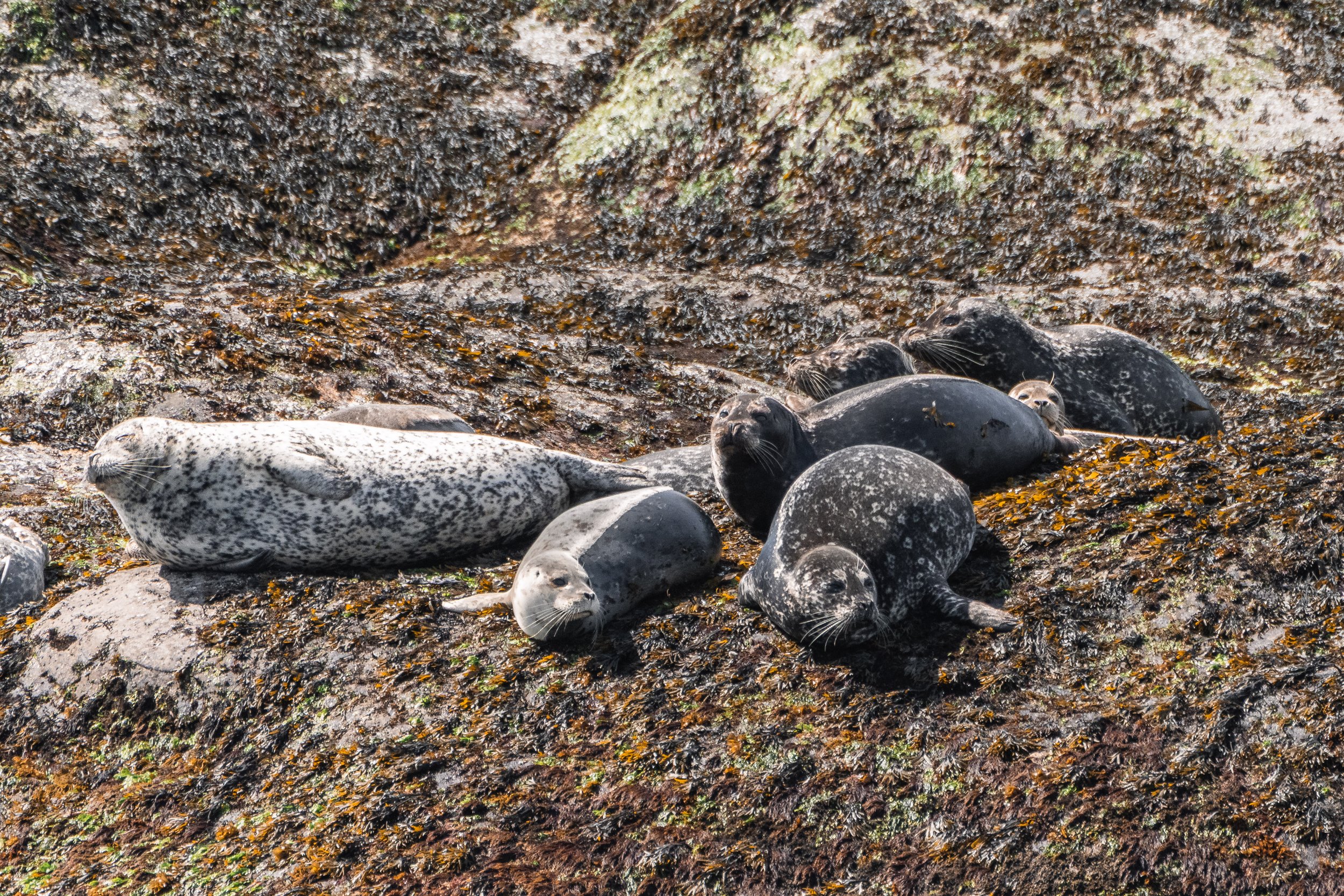
A very cute gathering of Harbour Seals on Snake Island.
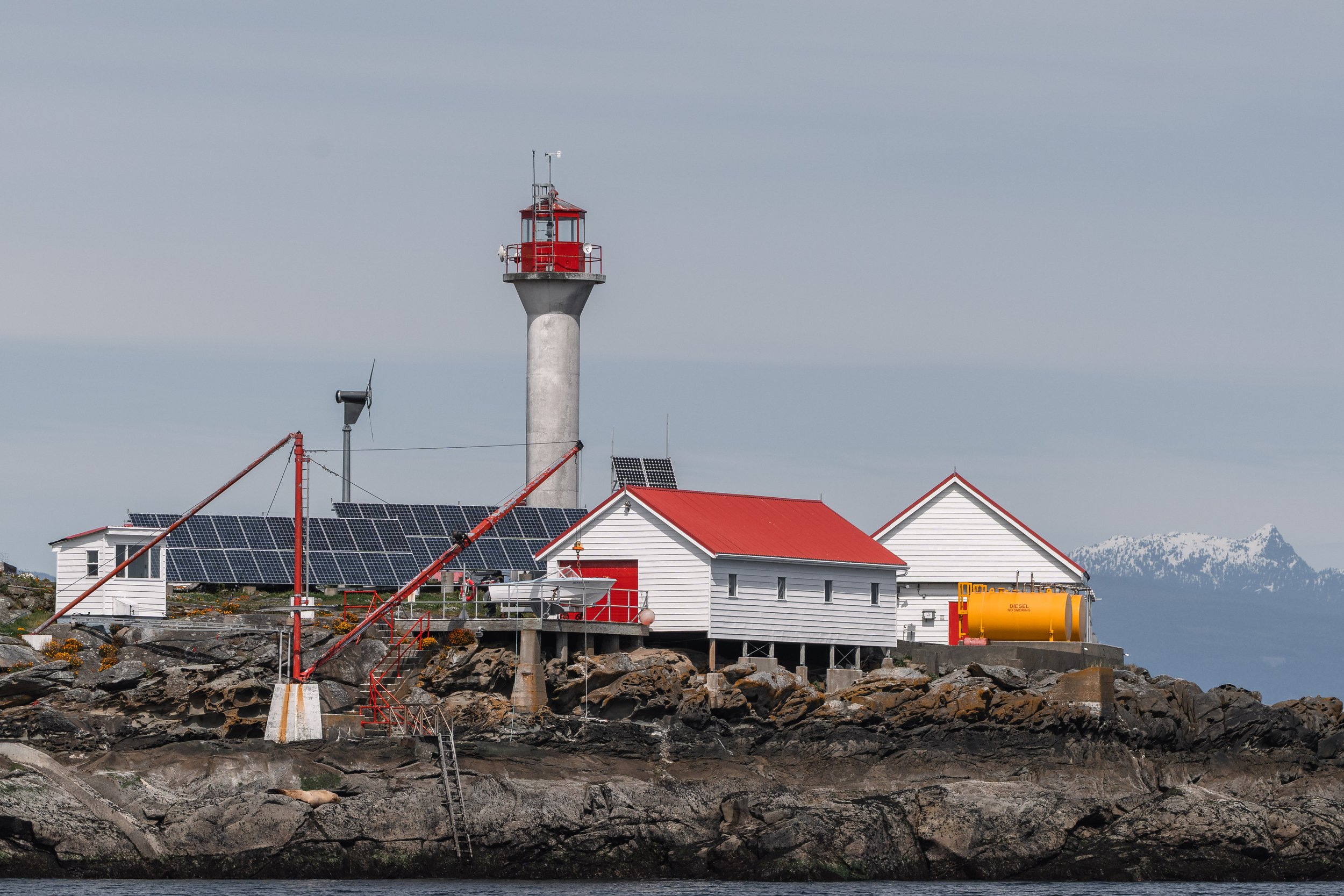
The Entrance Island Lighthouse.
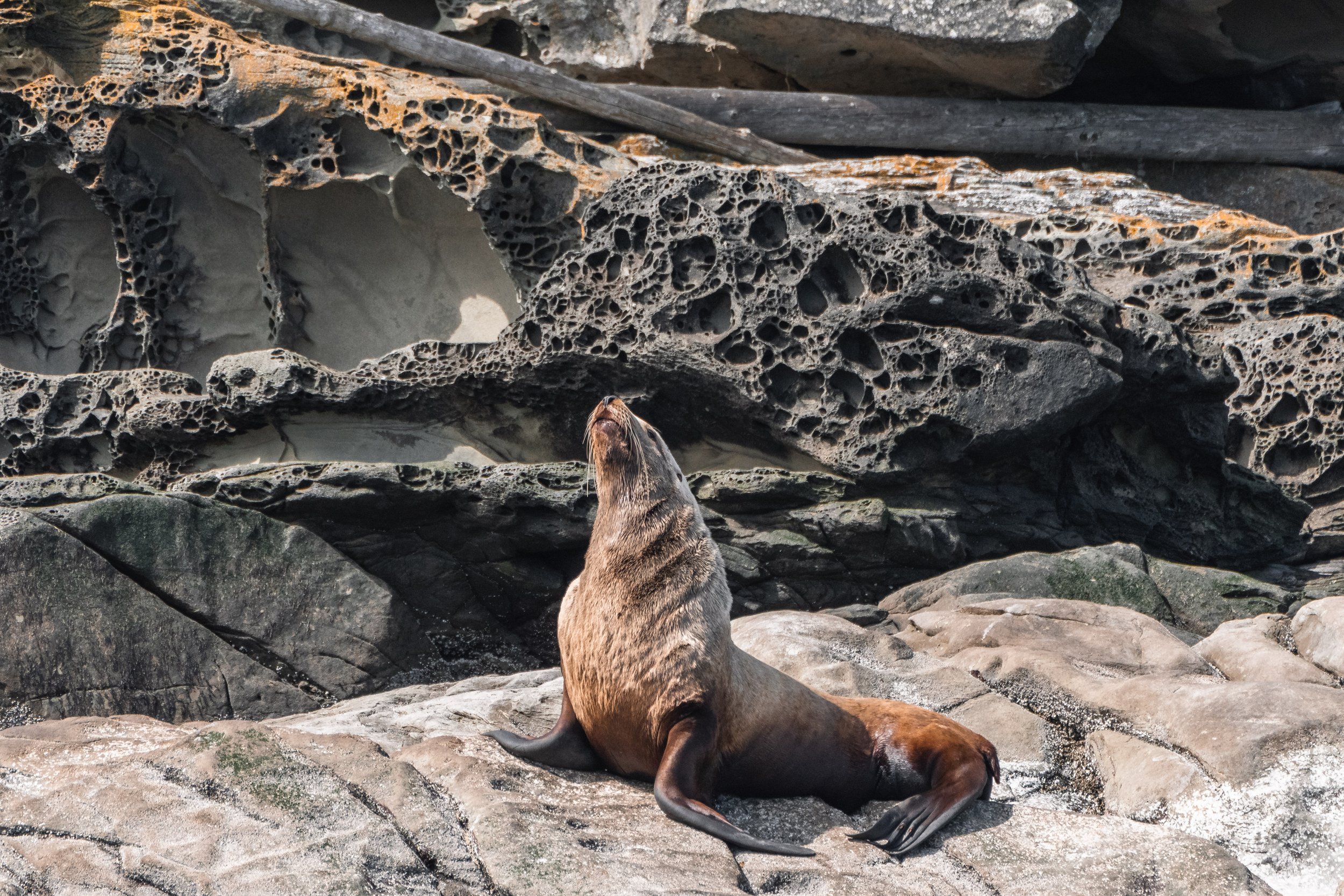
A skinny Steller Sea Lion on the rocks.
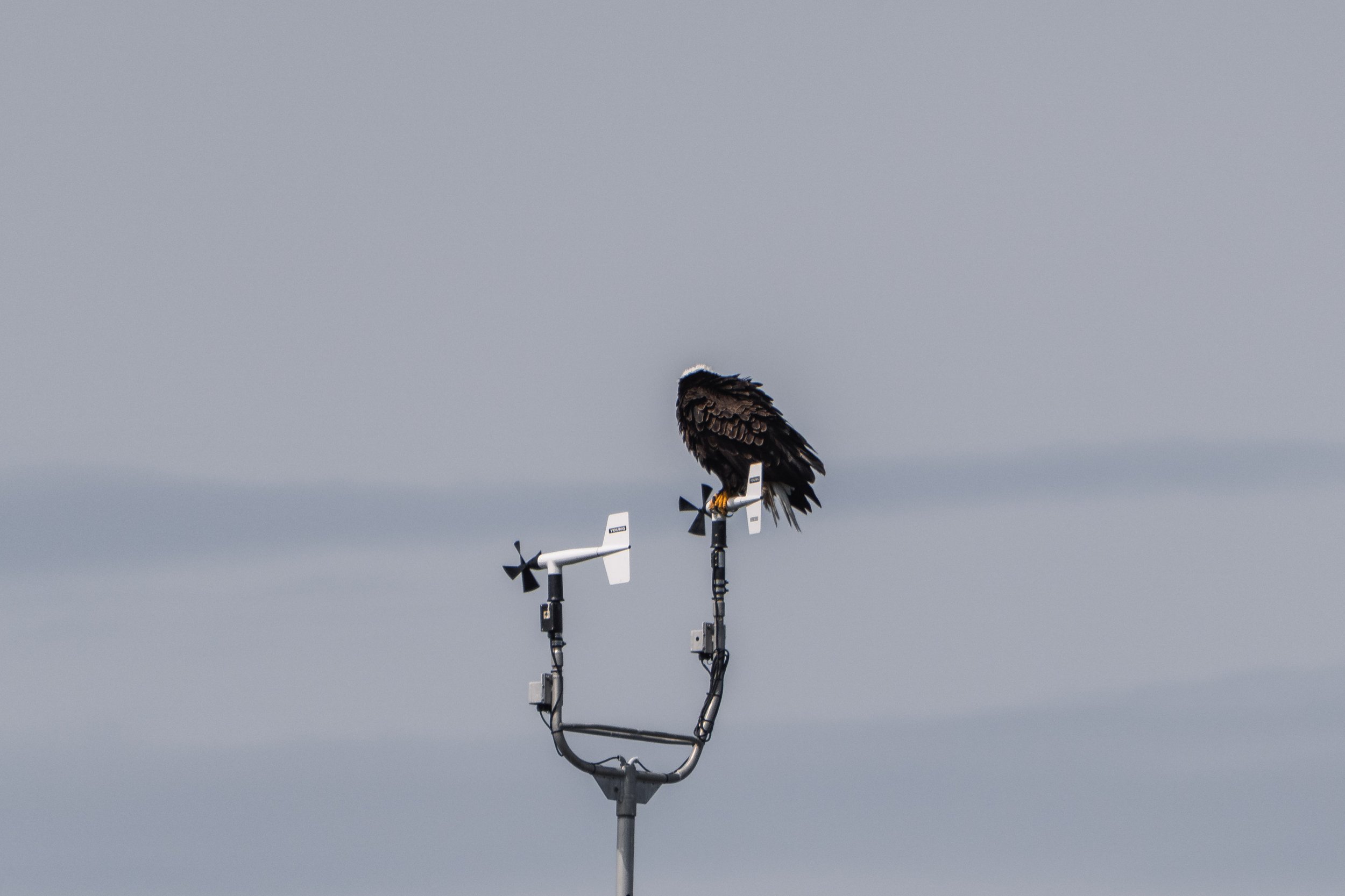
A Bald Eagle preening on Entrance Island Weather station.
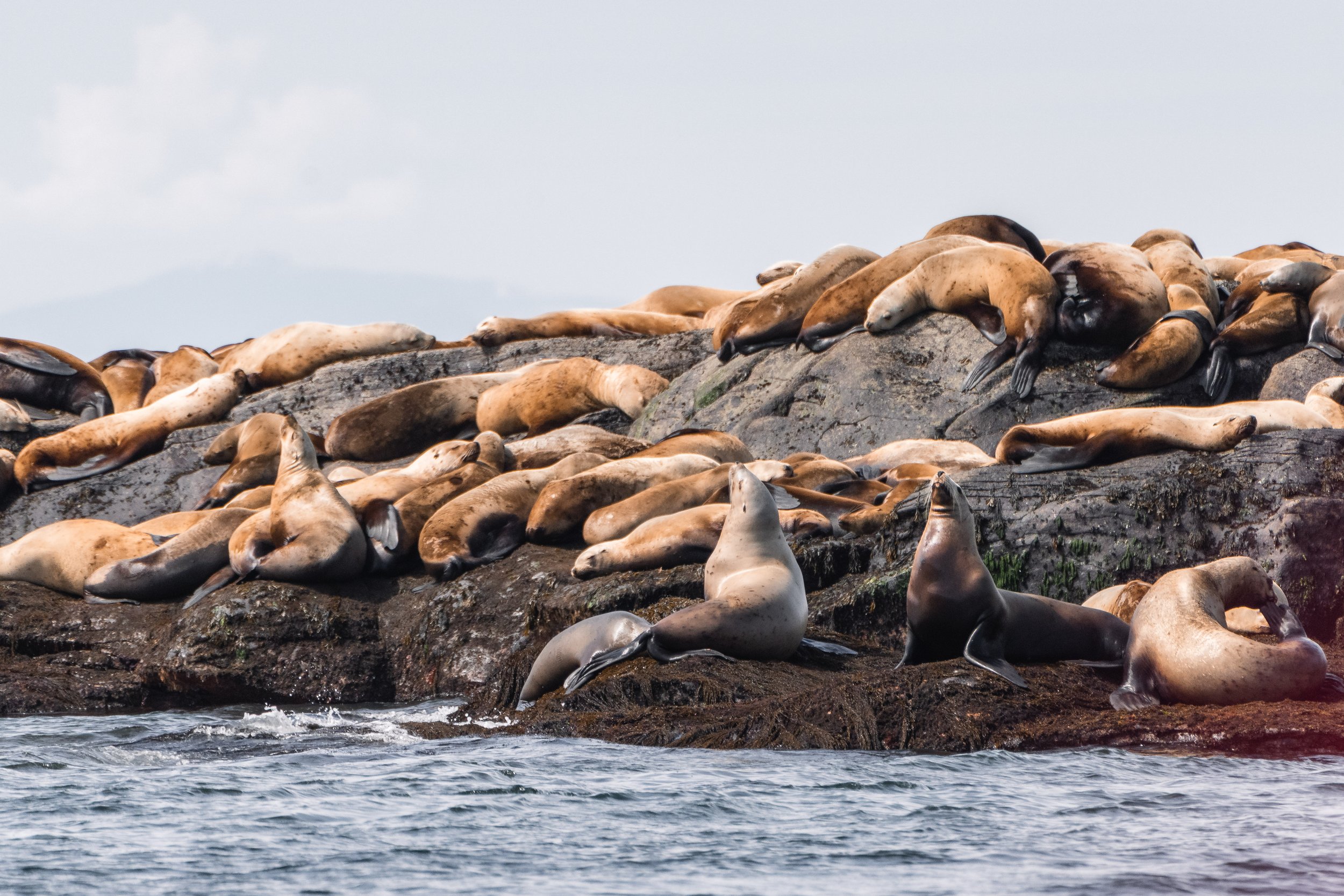
A Large Colony of Steller Sea Lions at Entrance Island.
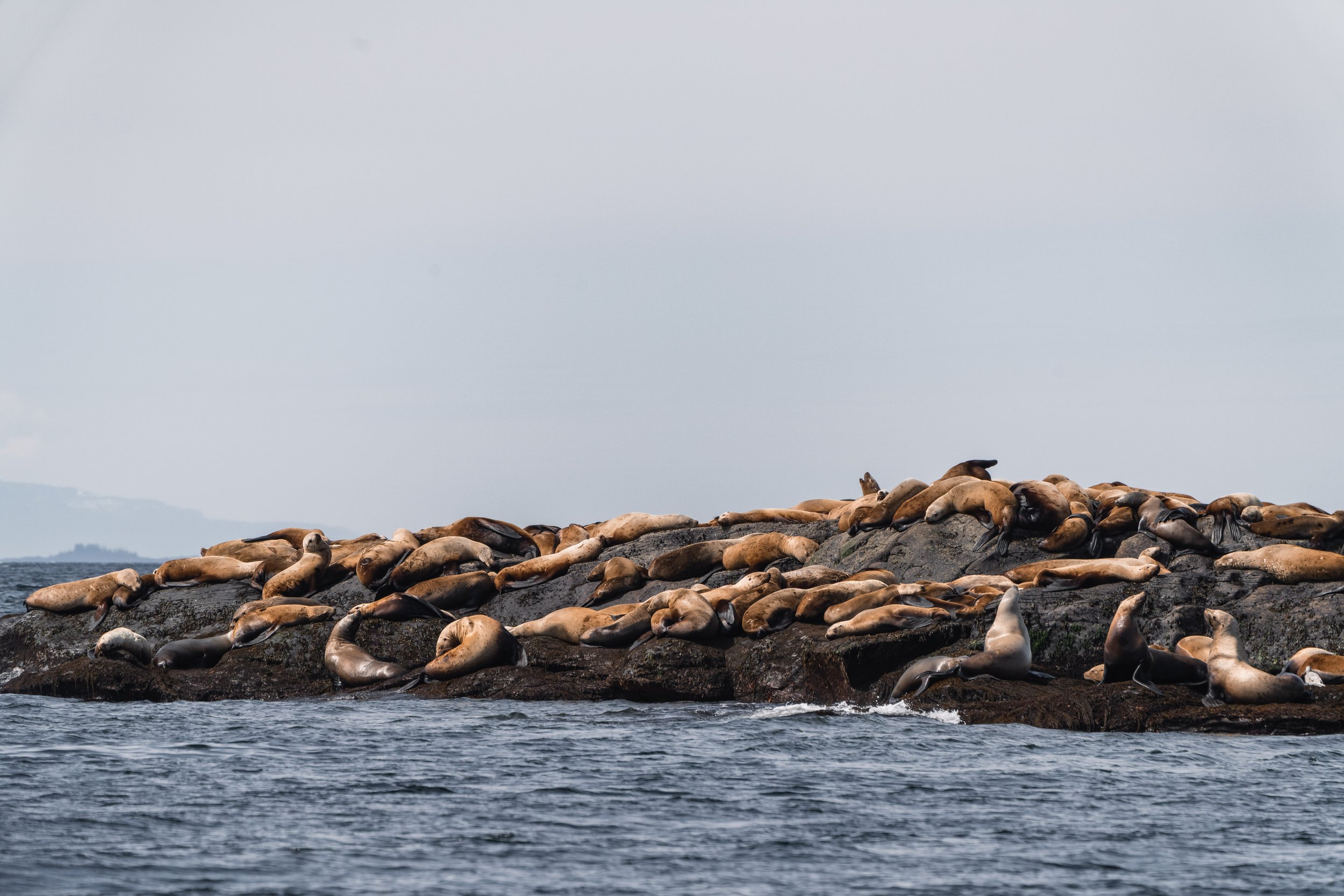
You can see all the size variation in the Steller Sea Lions in this photo!
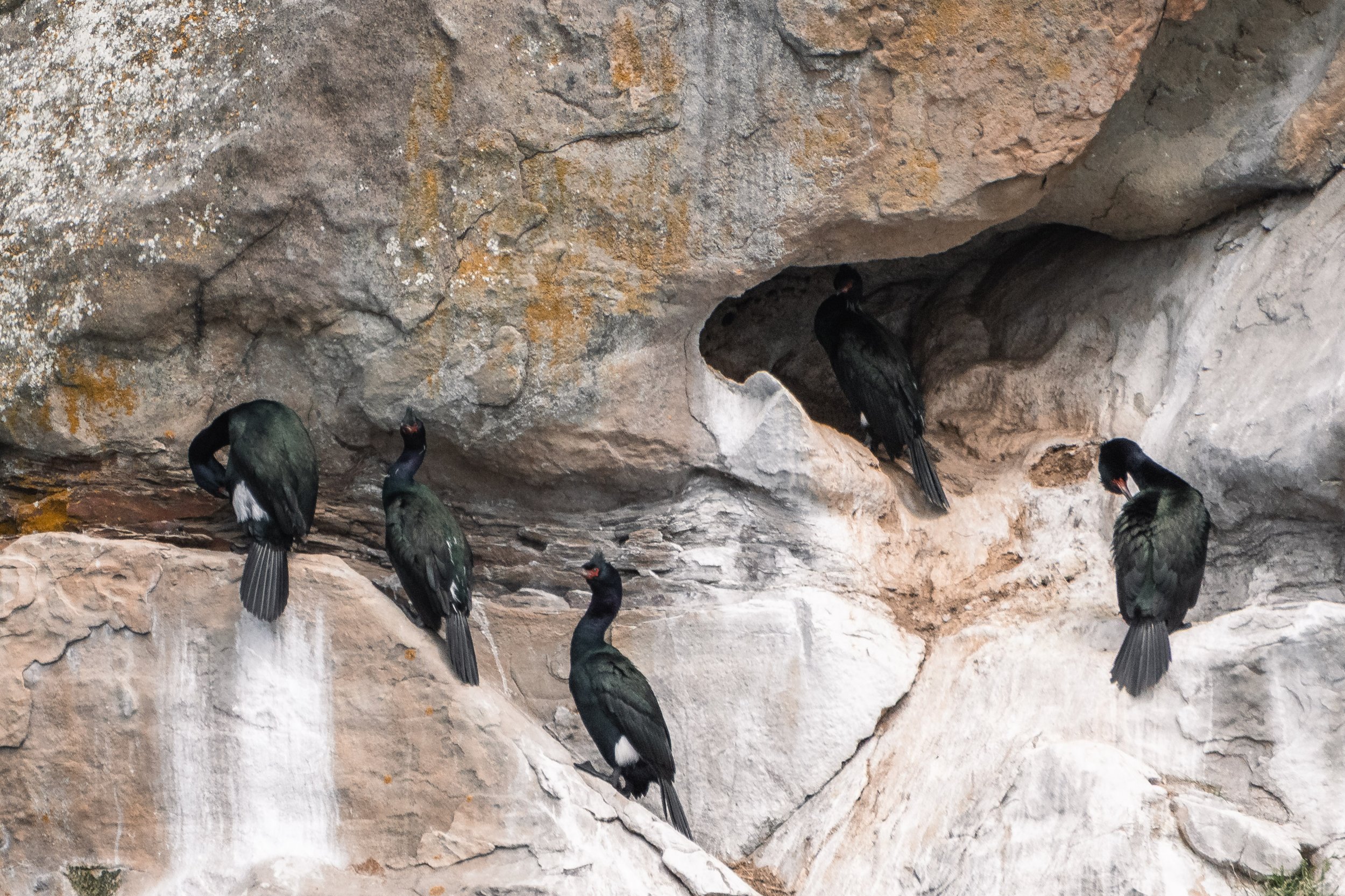
Pelagic Cormorants on the Gabriola Bluffs.