
April 21, 2026 - Anvil and Graze spending time in the Strait of Georgia
It was gearing up to be another great day on the water, the wind was calm, and the weather was moody, a perfect combination for a west coast wildlife experience. We started the day by searching the Southern Gulf Islands south of Nanaimo. We weaved our way through the narrow passageways like Dodd Narrows, Ruxton Pass, and Gabriola Pass until we found ourselves in the more open waters of the Strait of Georgia. We planned to search these waters, but first, we had a stop to make.
Not too far from Gabriola Pass is Stinky Rock, a great place to see the Steller Sea Lions. This colony can be found on these rocks year-round now, but it is most abundant at this time of year. As the year progresses, we will see more and more adults leaving the waters of BC and moving to their breeding grounds, typically Oregon, for the sea lions here. Seeing the massive adults while they are spending their winter here, bulking up to prepare for their breeding season, is great. The adult males are the most impressive to look at and typically the ones who catch our guests' attention first. That was the case today, with impressed murmurs running throughout the boat as these giant animals came into view. The males, with their large fatty necks, can weigh up to 2,800 pounds. Females are slightly smaller, weighing only 800 pounds. There is always something to catch your eye when spending time with a colony of sea lions, with fights breaking out amongst the group, keeping the energy up.
We couldn’t stay with them too long, since the search for whales had to continue. We stayed in the Strait, looping down south along the shoreline of Valdes Island, before heading north, towards Howe Sound. Along the way, the Marine Naturalist onboard, Evan, gave an excited shout: he had spotted a blow!
As we got closer, it became clear that it was a humpback whale that we were looking at. Naturalist Evan grabbed his camera and quickly started snapping photos, as did our ride-along crew member, Cheyenne. Comparing photos, they noticed that the dorsal fins look different. Soon after this conclusion, the two whales surfaced at the same time, confirming our suspicions: we had a pair of humpback whales here!
Comparing those dorsal fins to the local Humpback Whale Catalogue, we were able to figure out that these were two female humpback whales travelling together: Anvil (BCZ0410) and Graze (BCY0523). These two would have just returned from their breeding and calfing grounds. Usually, this would be Hawaii for both whales, but last year, Anvil switched it up a bit and headed to Mexico instead. Doing this is unusual for humpback whales, as they usually have very high site fidelity at both their breeding and feeding grounds. This is just a fancy way of saying they return to the same area after their migrations in both directions. We can confirm that our observations back this up, as we have seen Anvil and Graze every year since we opened our doors back in 2018. Why humpback whales have such high fidelity remains relatively unknown, but it likely relates to their specialized feeding strategies and the availability of food in specific areas around Vancouver Island and elsewhere in the feeding grounds.
No matter what brought them here, we were happy to see them. Most of the time we spent with them, they were feeding in the area, diving beneath the surface in chase of krill and small schooling fish, before returning to the surface to filter through their spoils. All of this food must have given these ladies a burst of energy, as we saw them doing a couple of headstands in the water while we were watching! The amount of power and muscle to get a 35-tonne animal upside down with their tail hanging out of the water is staggering, so we all felt very lucky to have witnessed it (although we weren’t fast enough to catch it in any of the photos)!
Finally, after our time with Anvil and Graze was up, we headed back towards Nanaimo, very happy to have seen all the wildlife and whales we did. Please enjoy all the photos captured throughout the tour by Marine Naturalist Evan Hessels below.
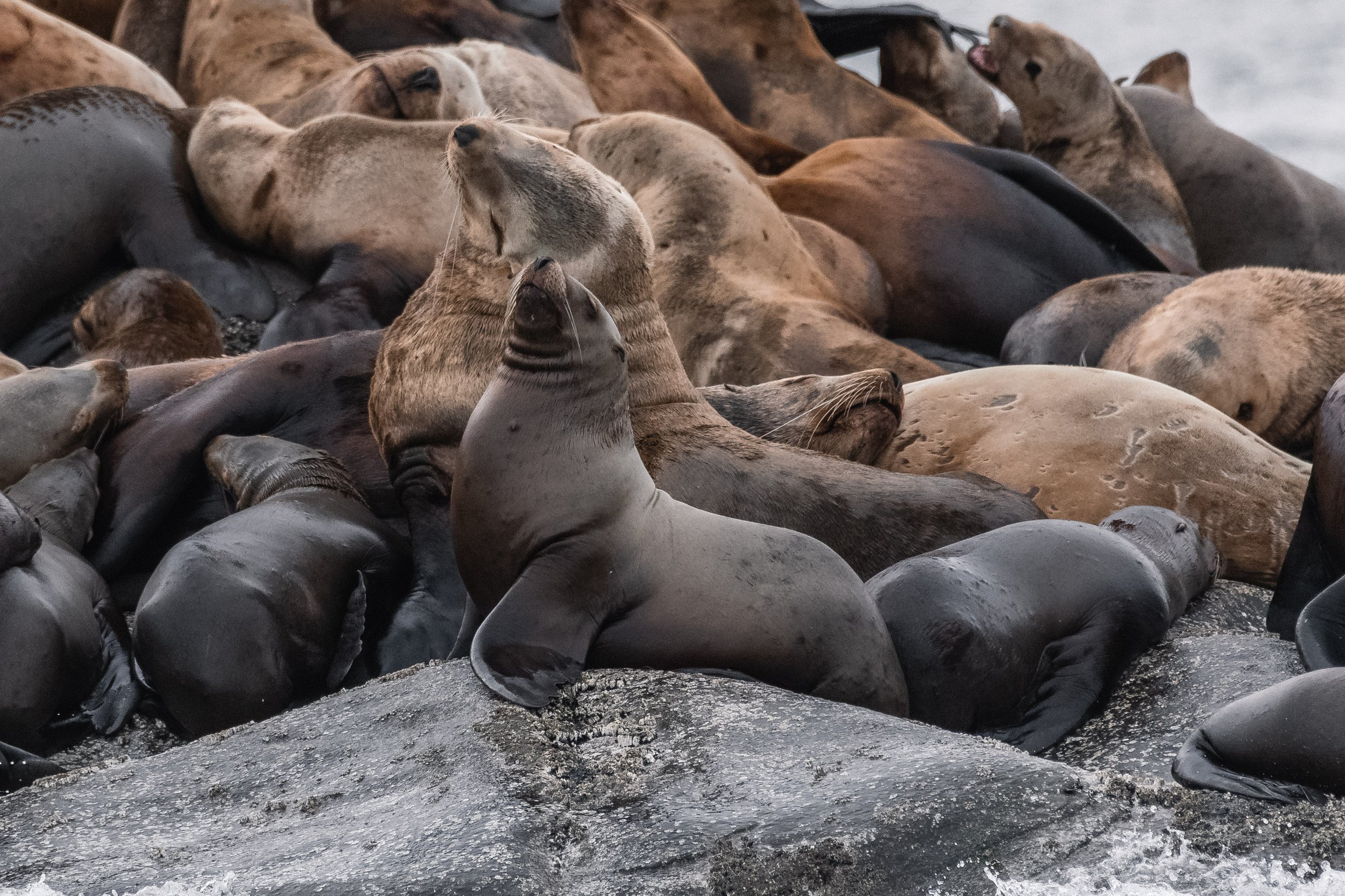
A Steller Sea Lion posing on the rocks.
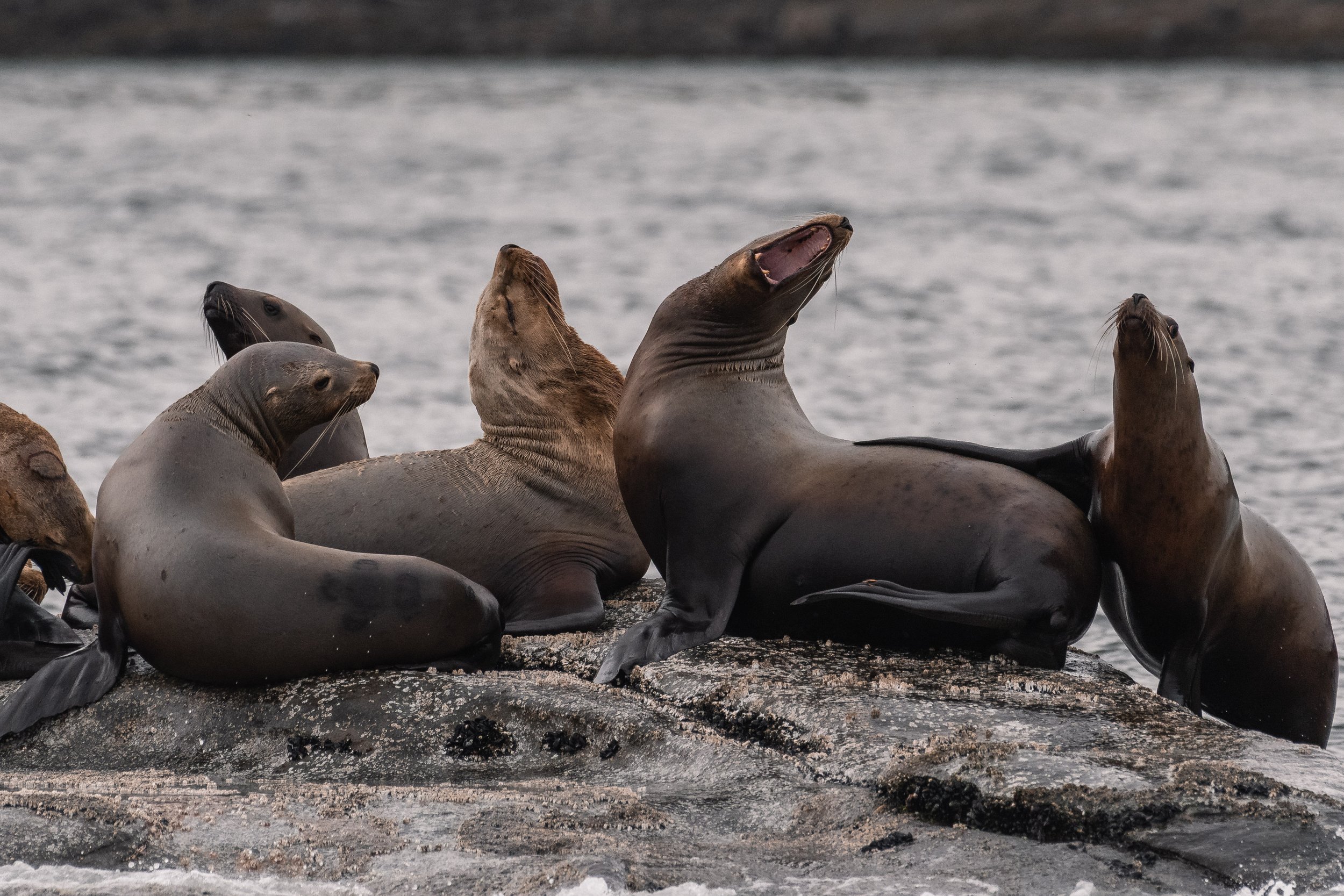
A fight breaks out on Stinky Rocks.
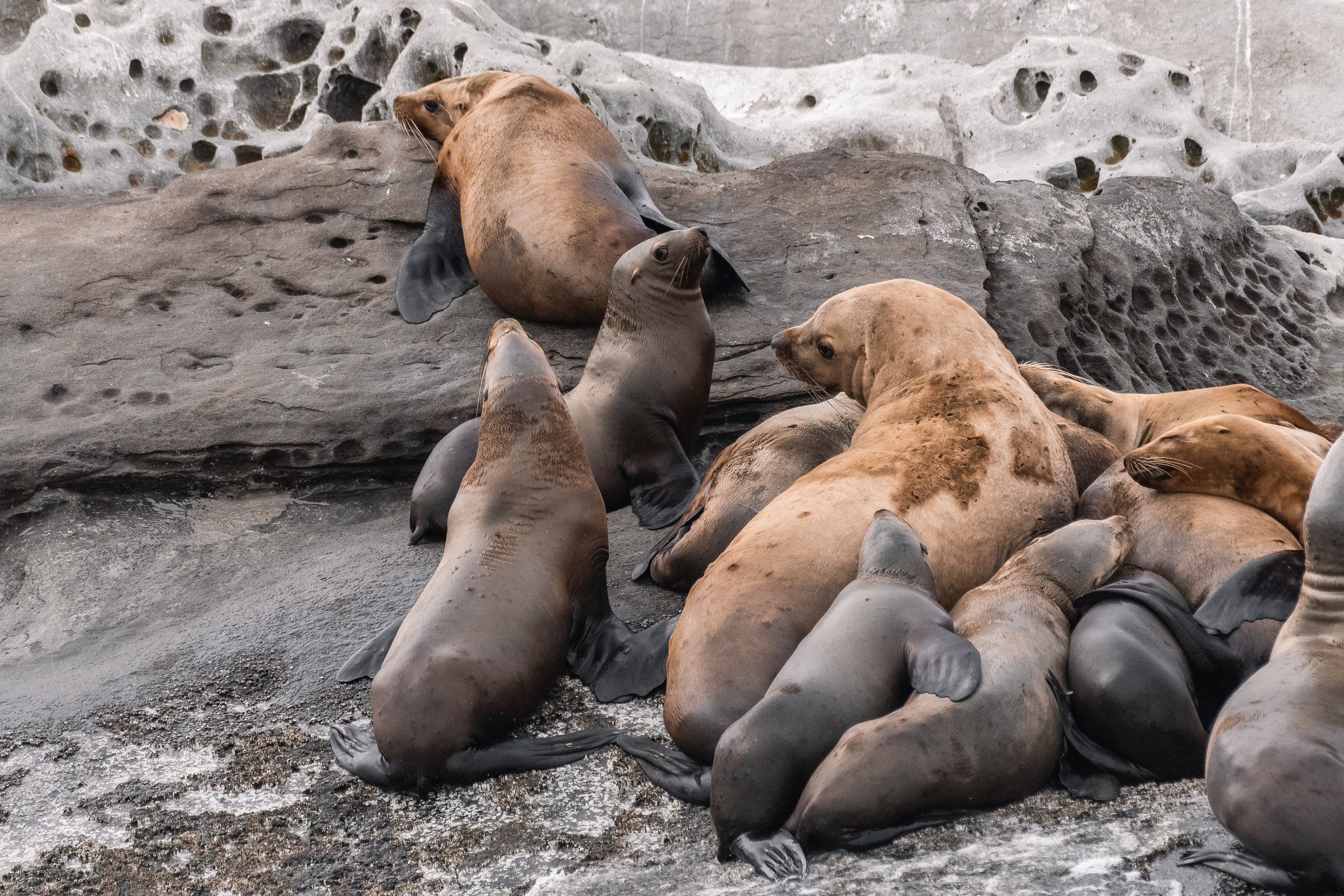
You can see the size difference between the youngsters and the adults very well in this photo.
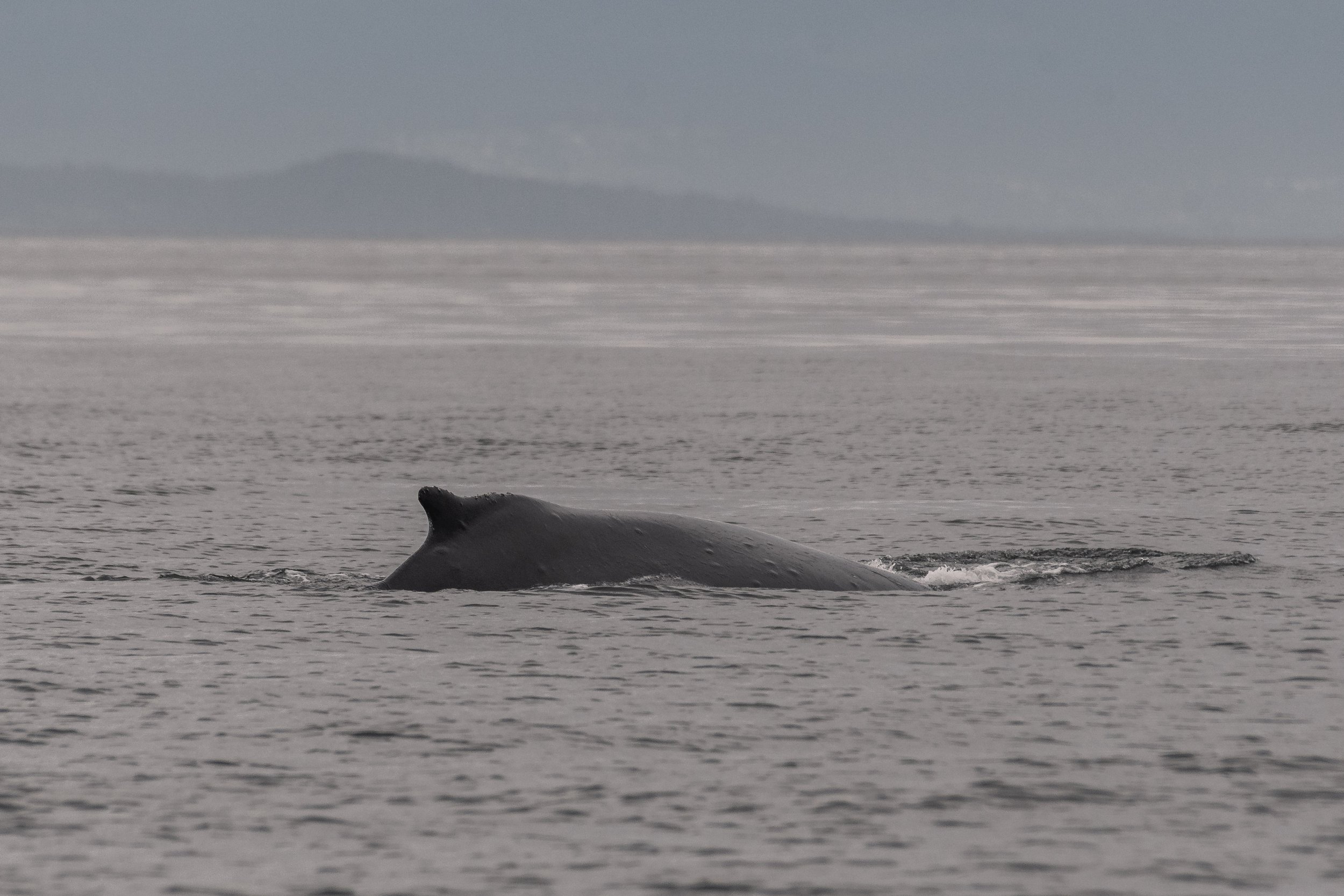
Anvil surfacing in the moody weather.
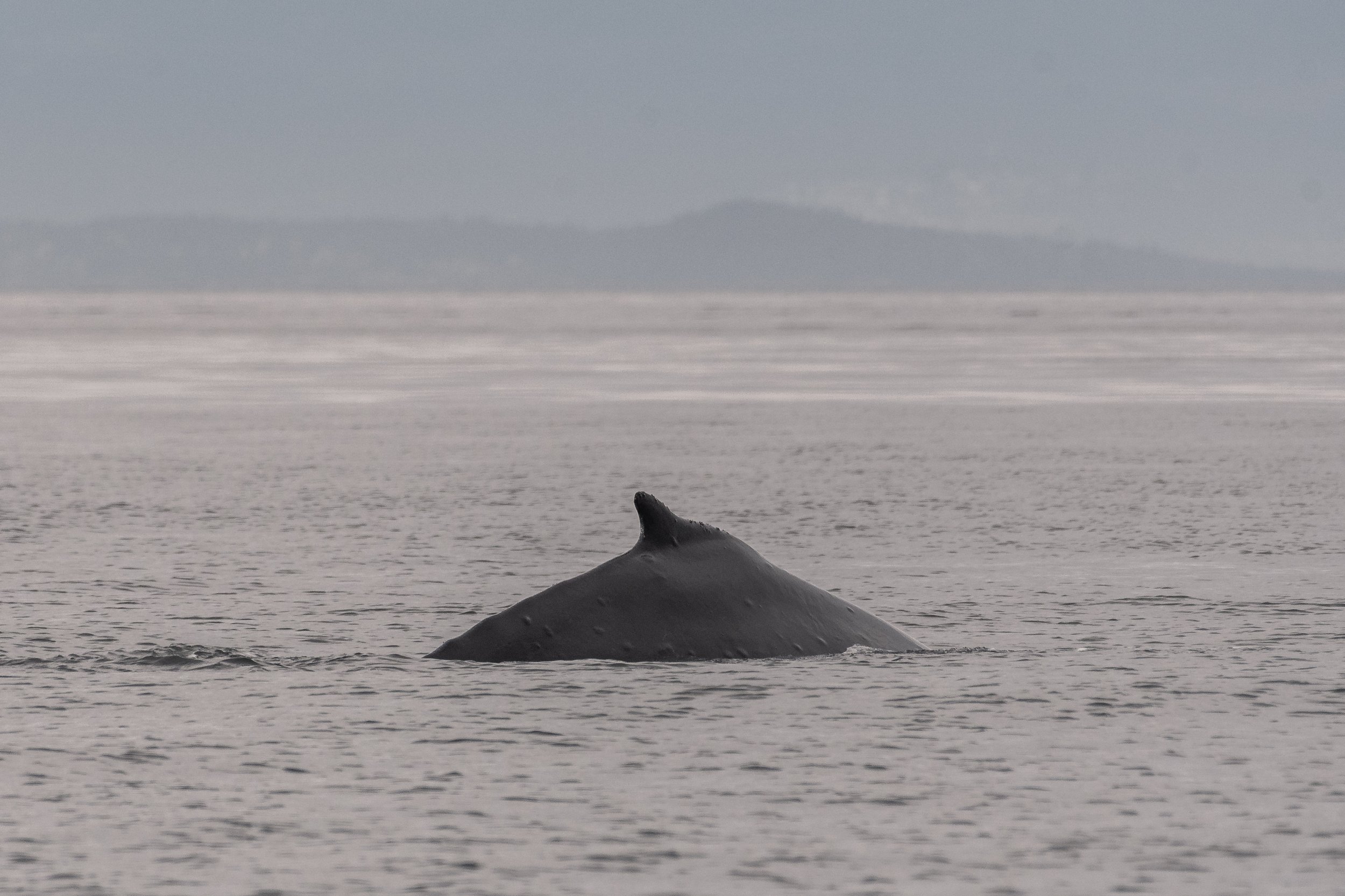
Anvil giving a slight arch to prepare for a dive.
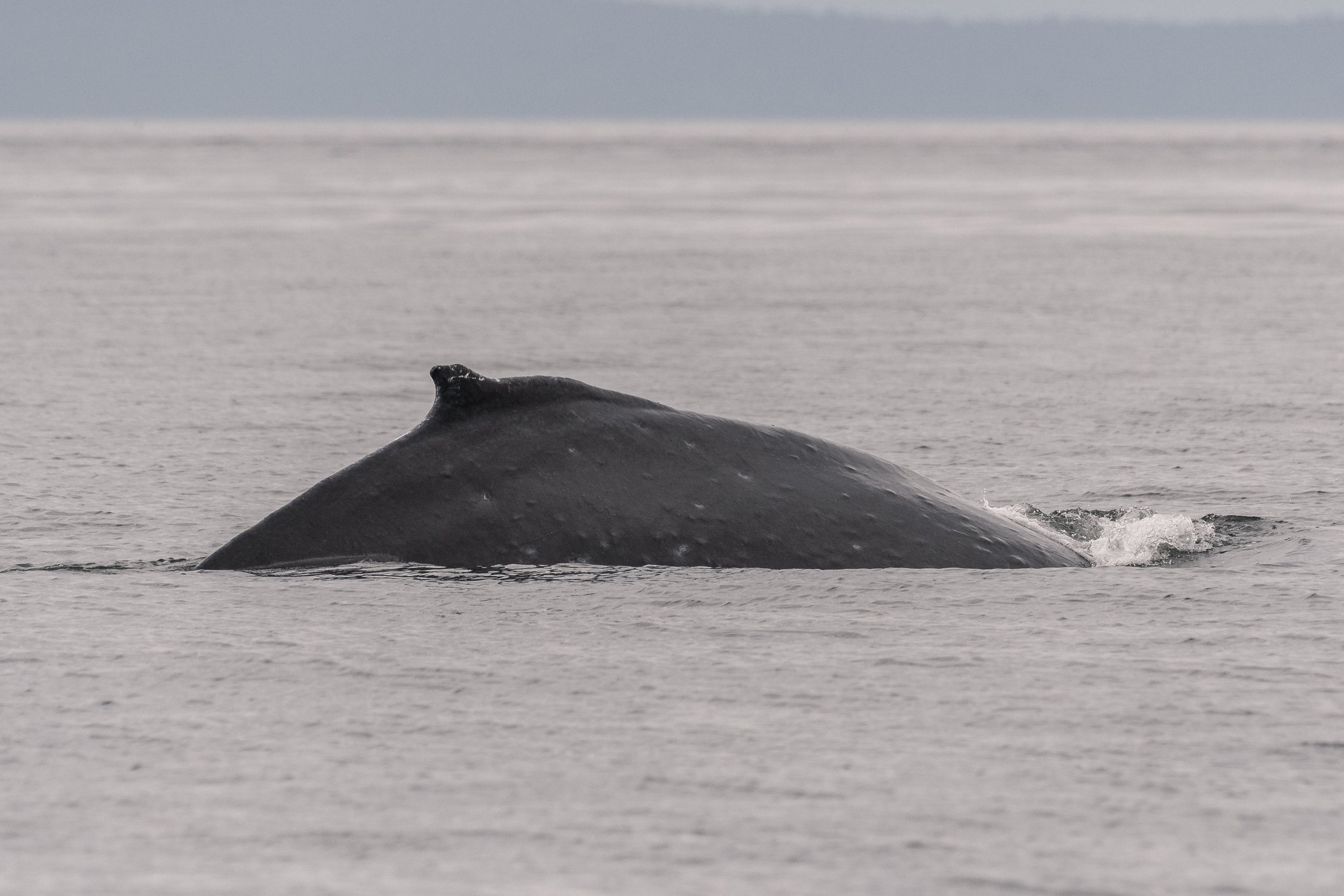
Graze has a very distinct dorsal fin, with a square shape and unique scarring.
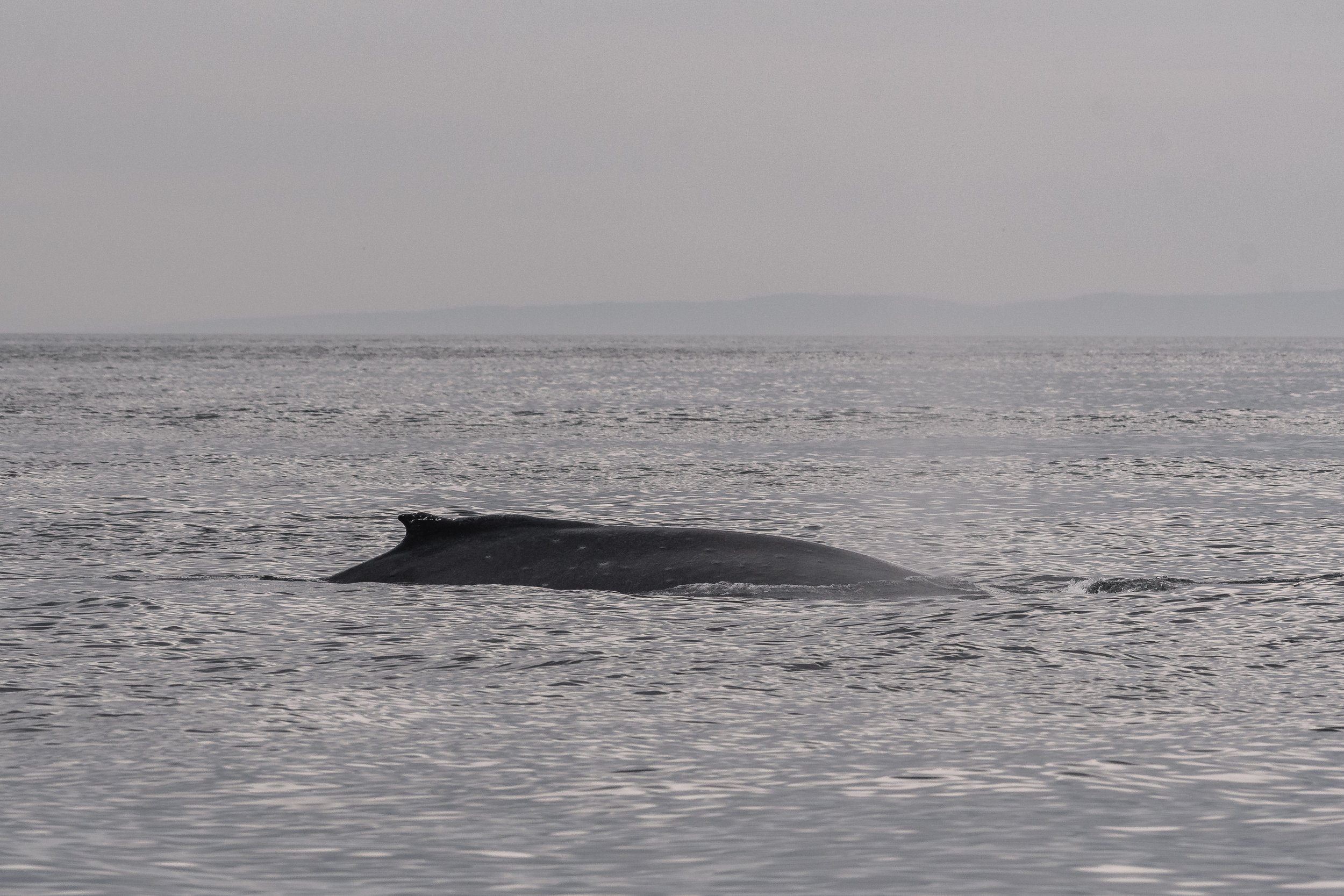
Graze surfacing in a little bit of waves.
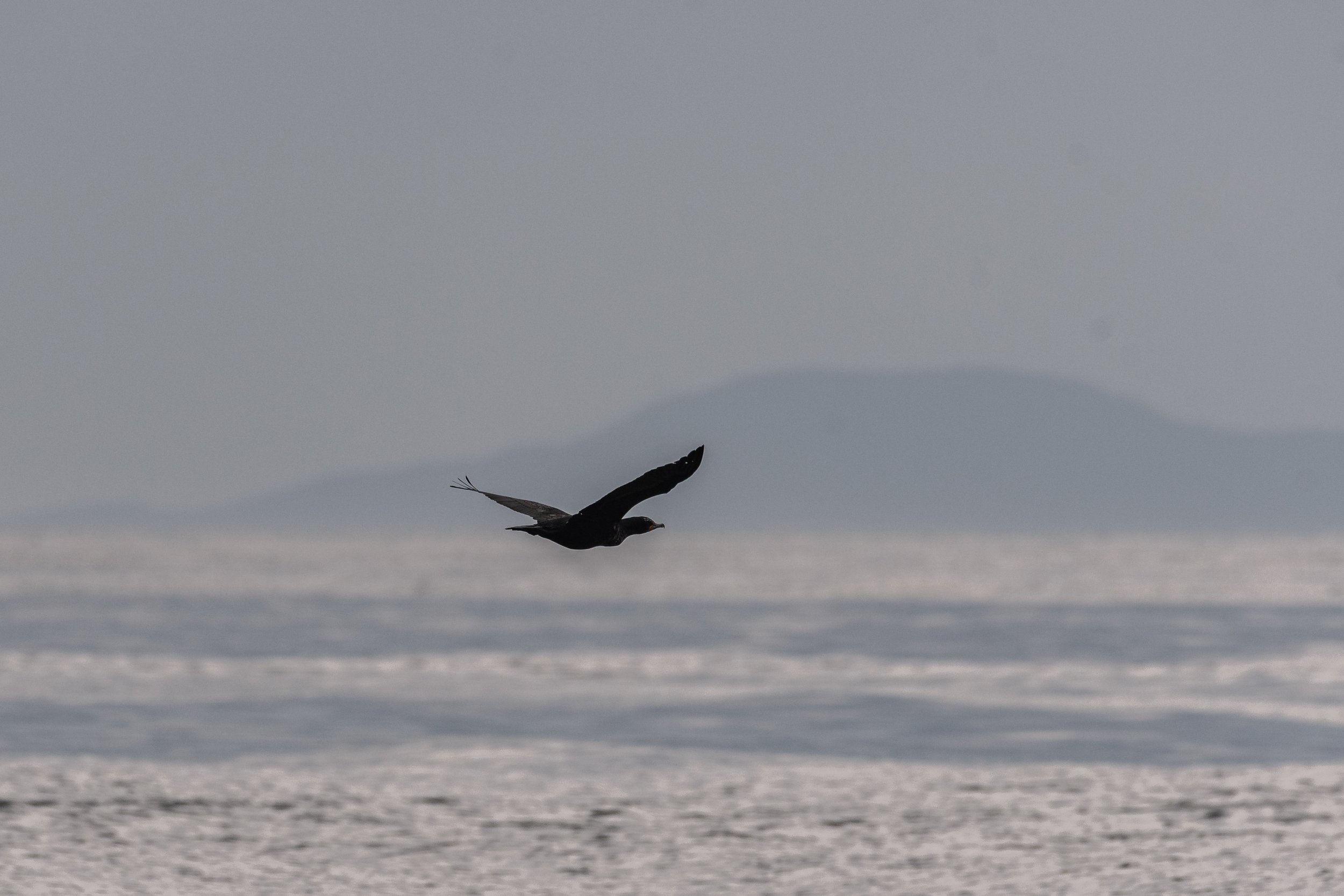
A cormorant flying by.
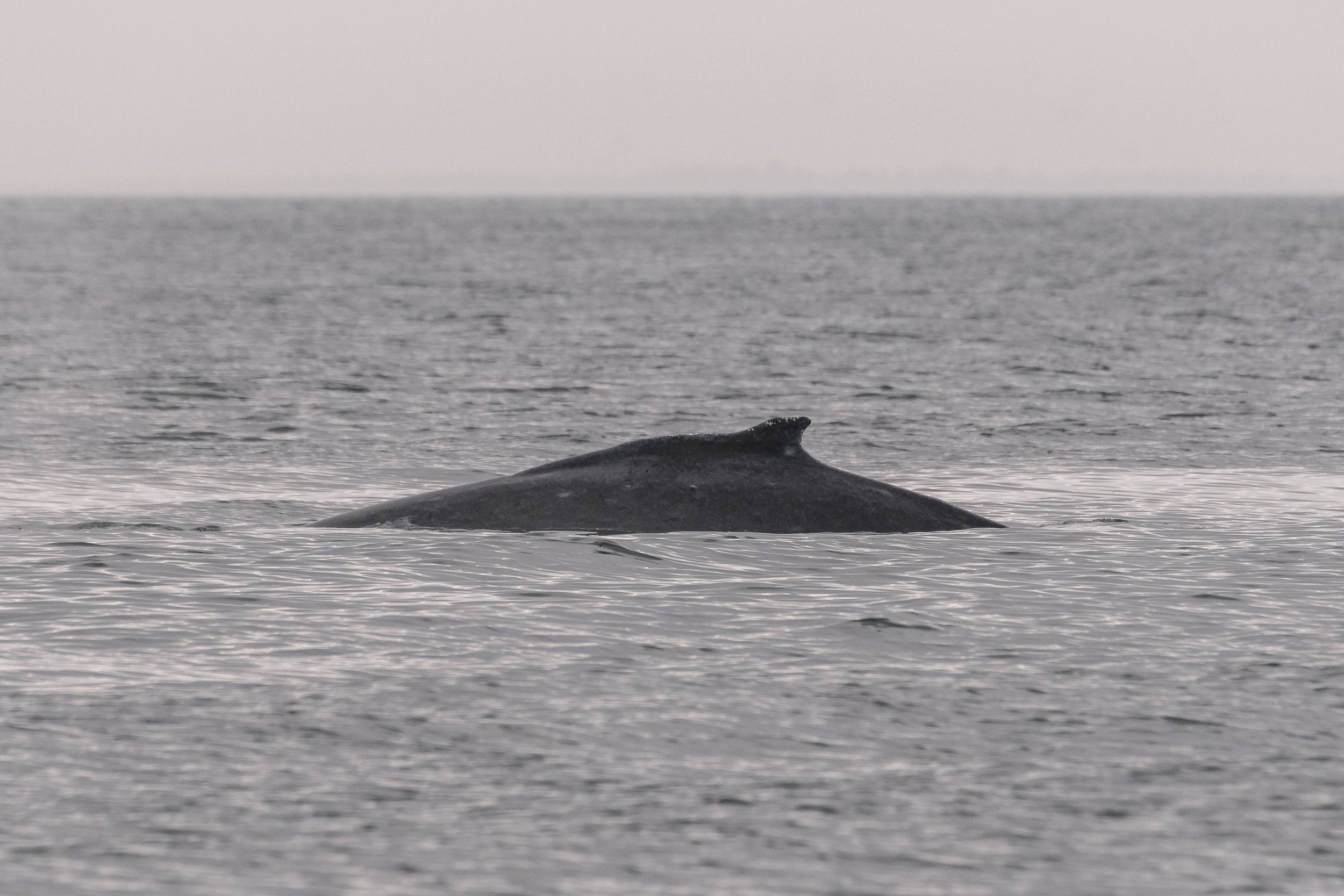
Graze surfacing calmly in the water.
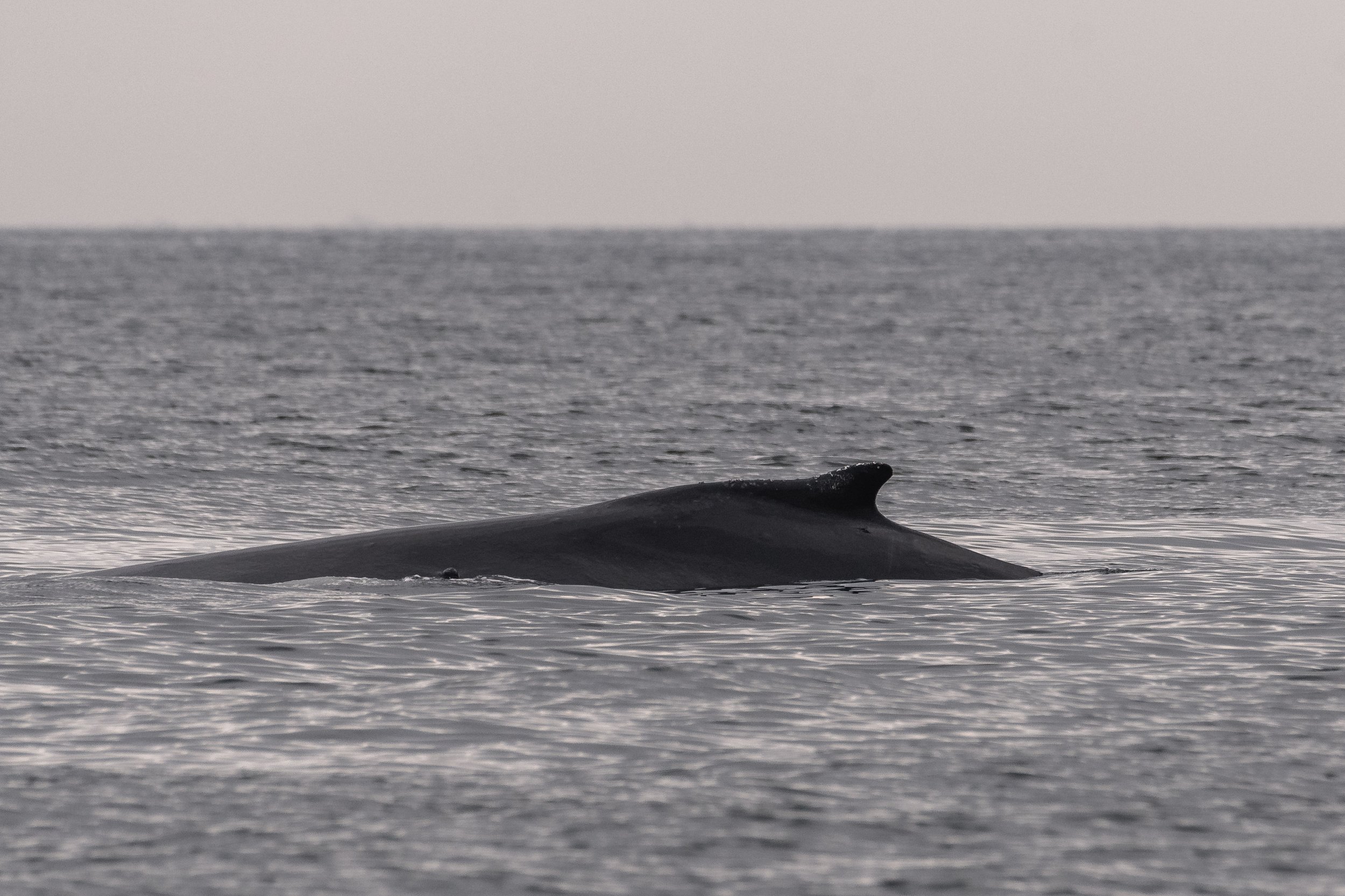
If you look close to the water line, you can see a bump from where Anvil had previously had a sat tag attached.
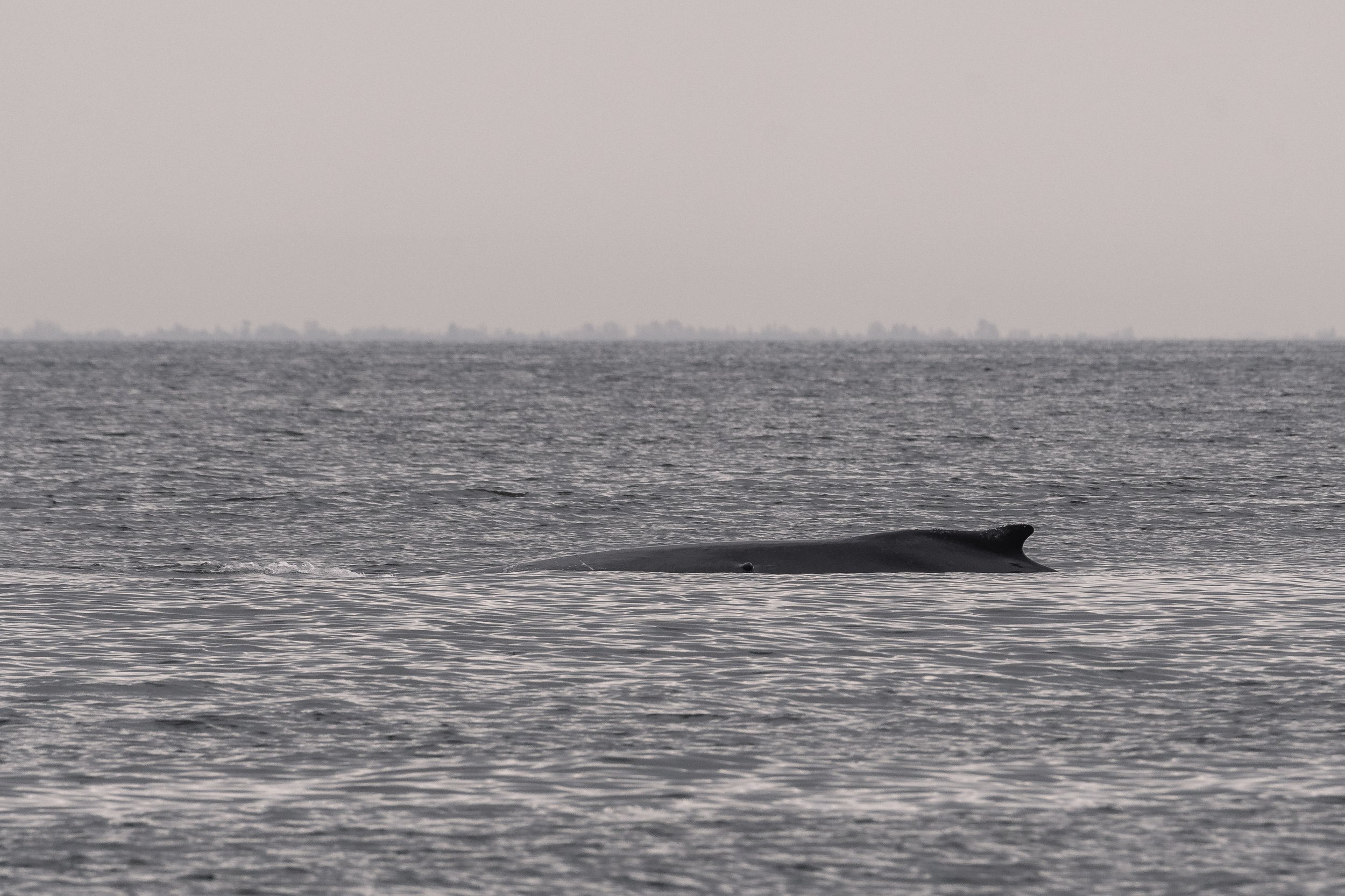
You can see Anvil’s sat tag scar even better here.
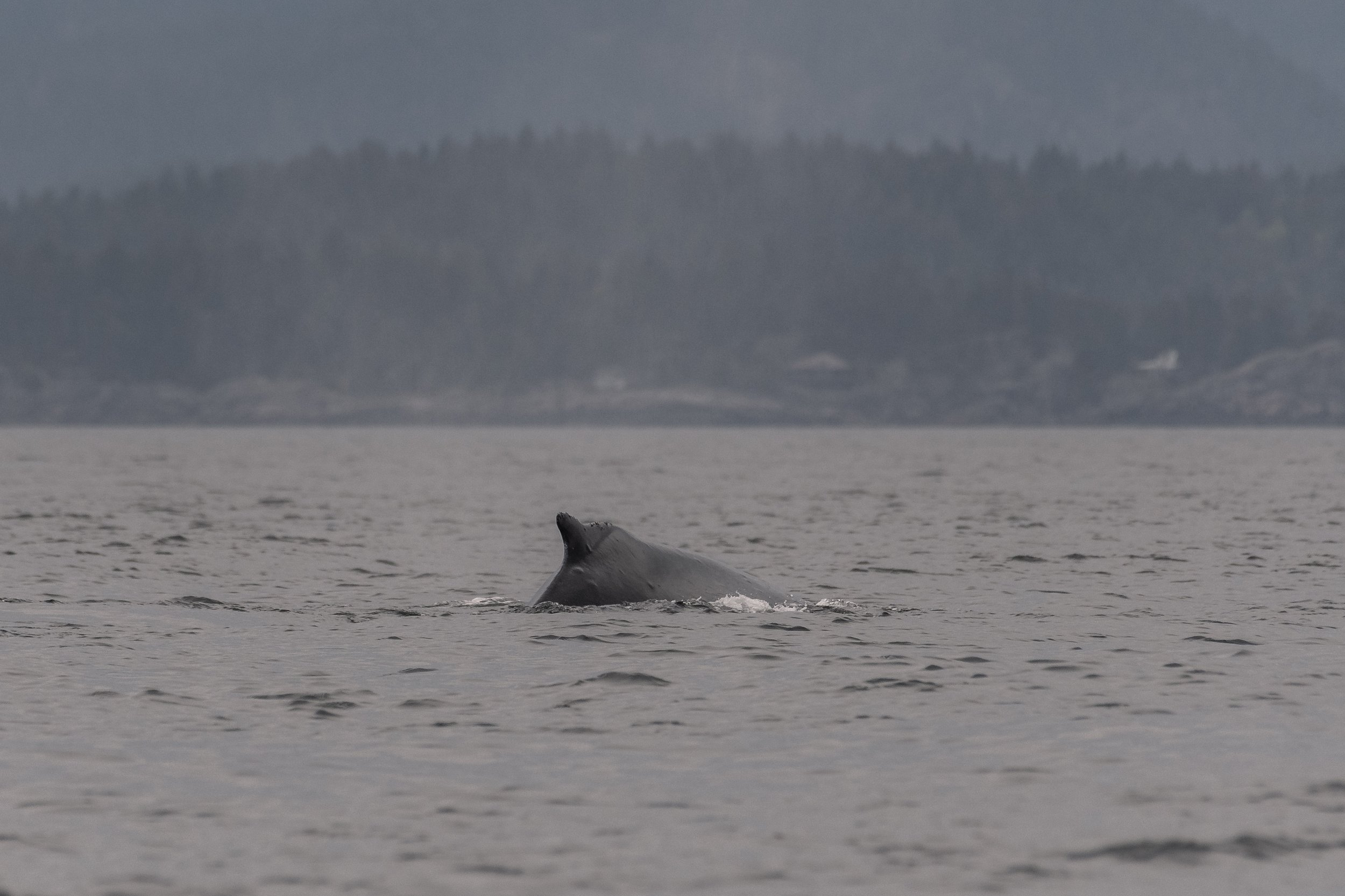
Anvil surfacing with Bowen Island in the background.
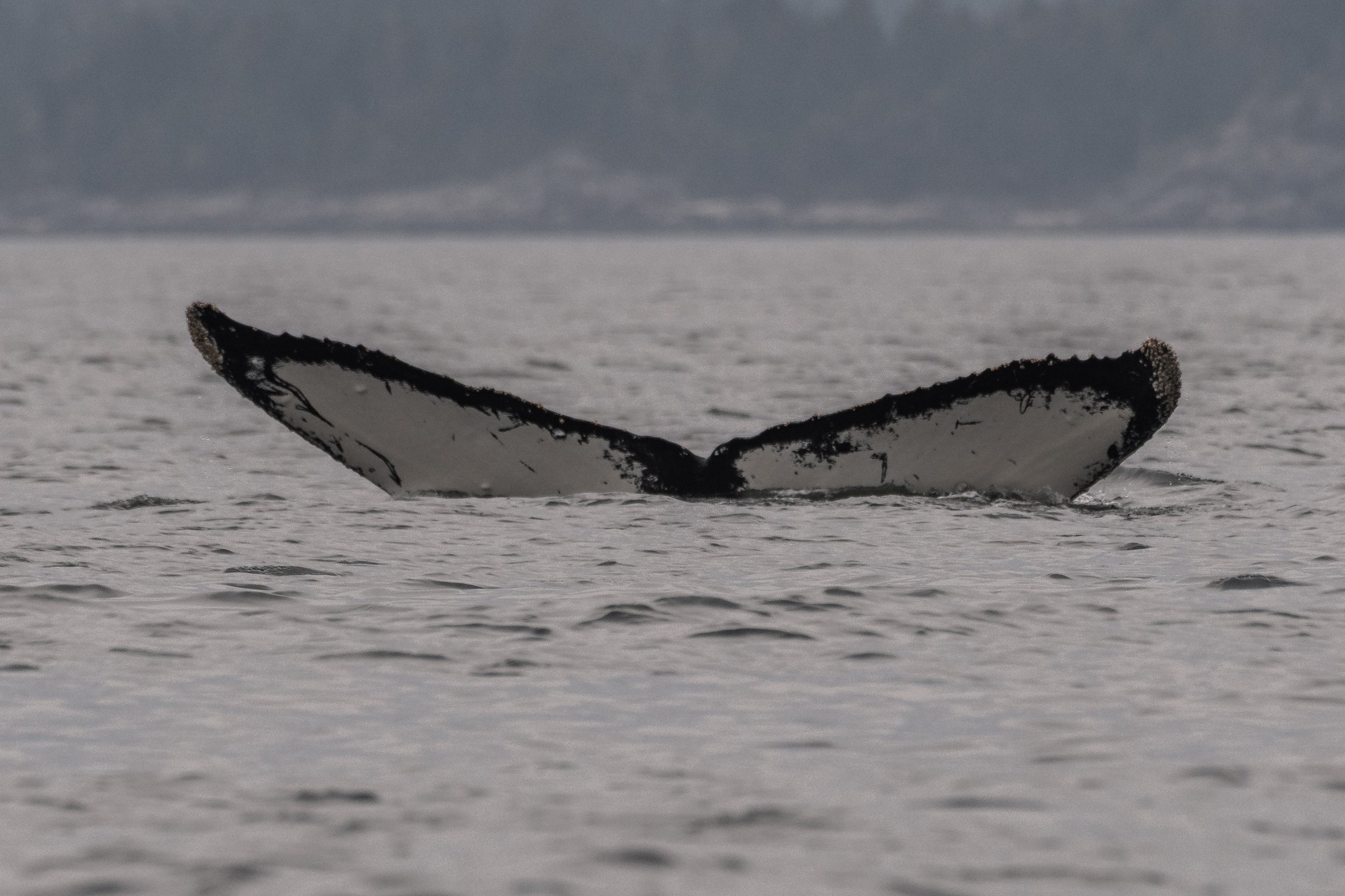
The beautiful white underside of Anvil’s tail.
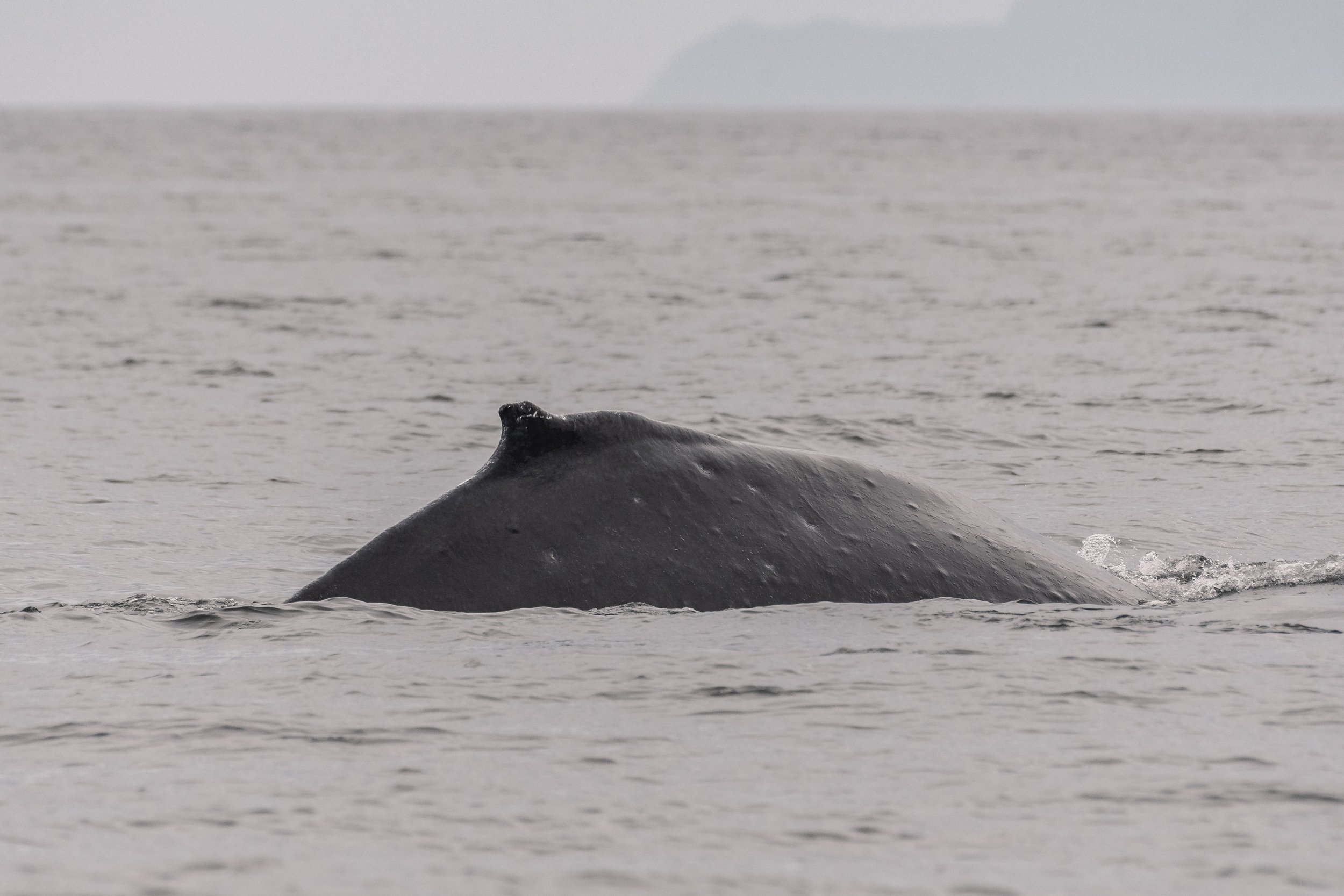
Graze surfacing in the gloomy weather.
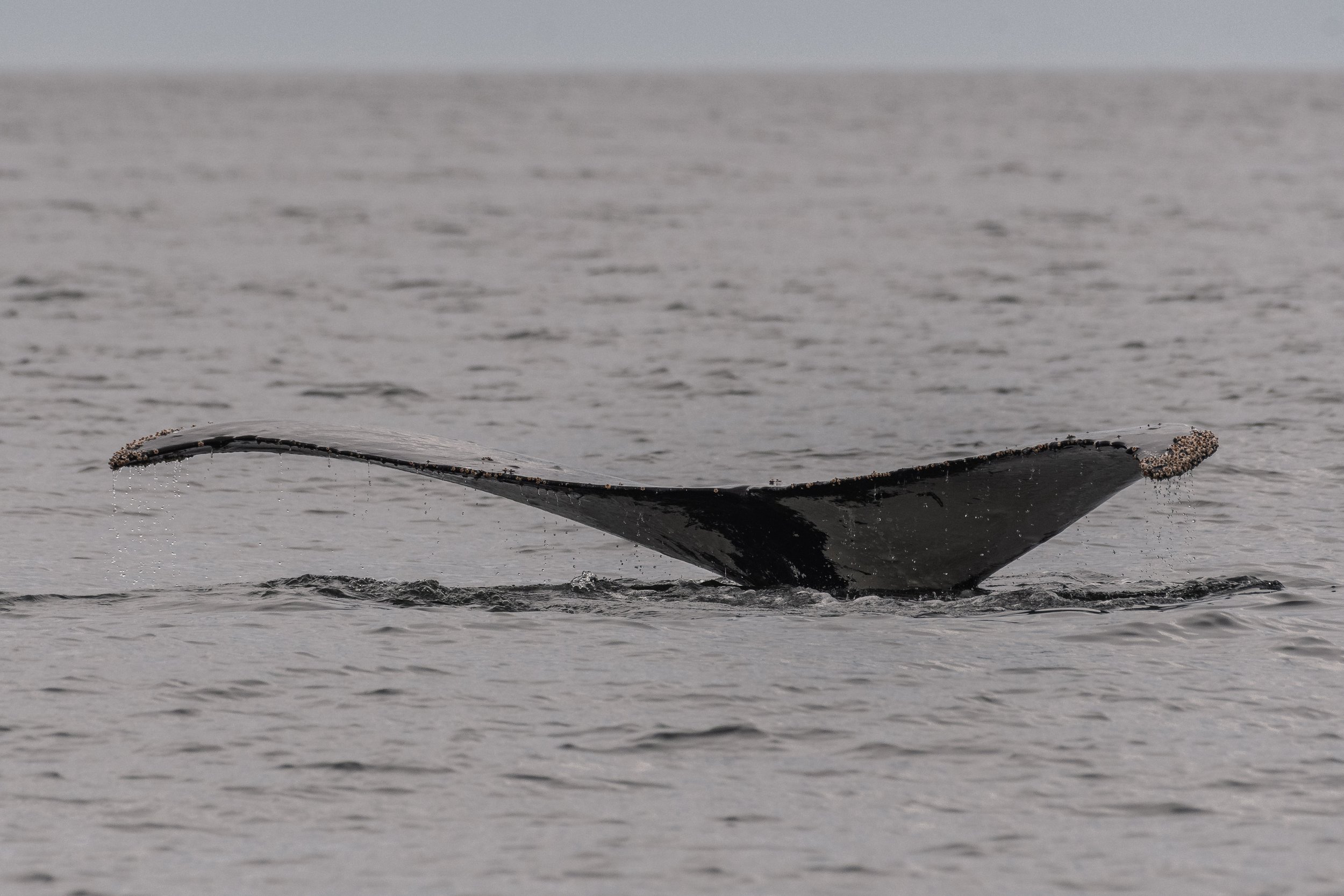
Anvil going for a dive.
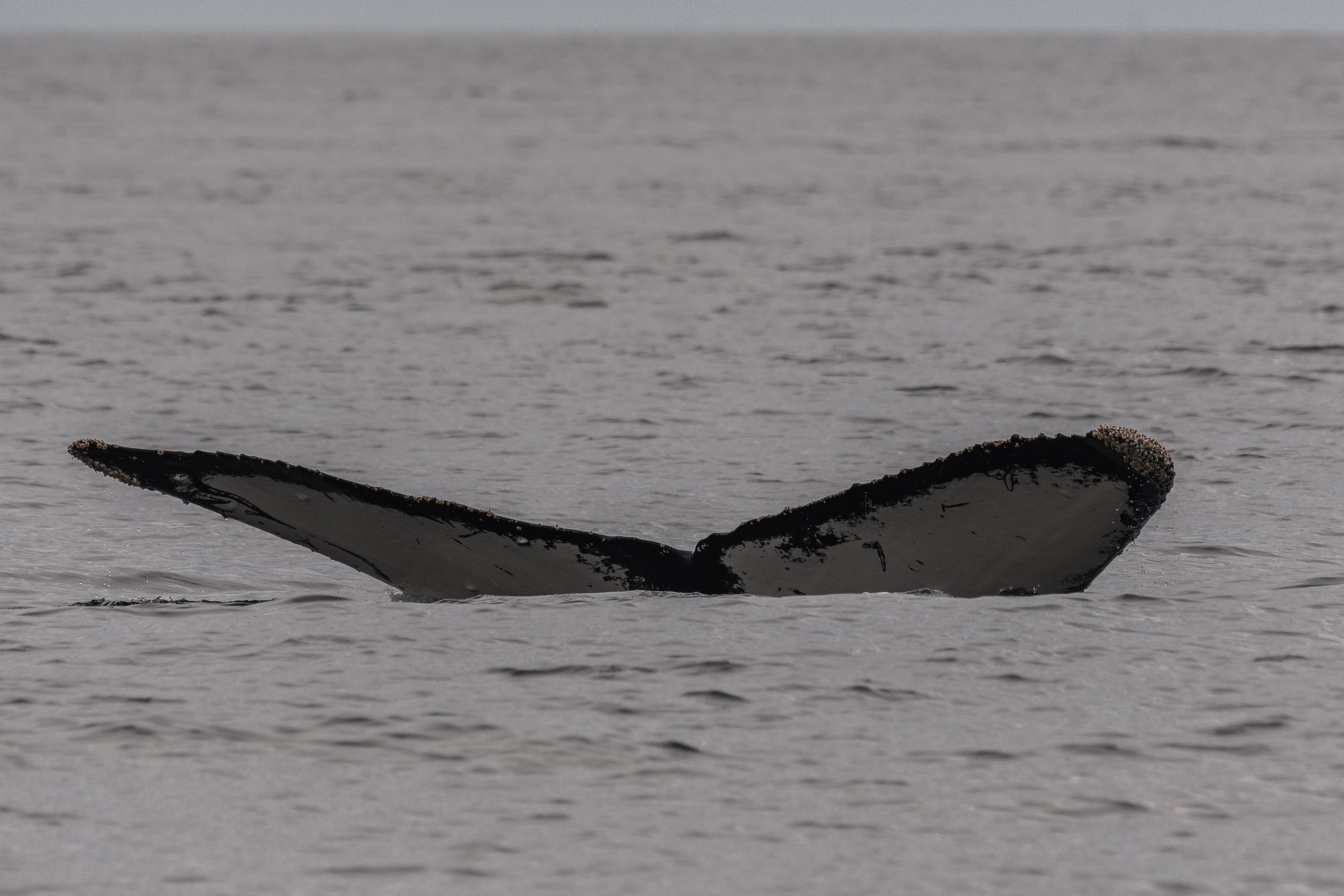
A great look at the unique scarring on Anvil’s tail flukes.
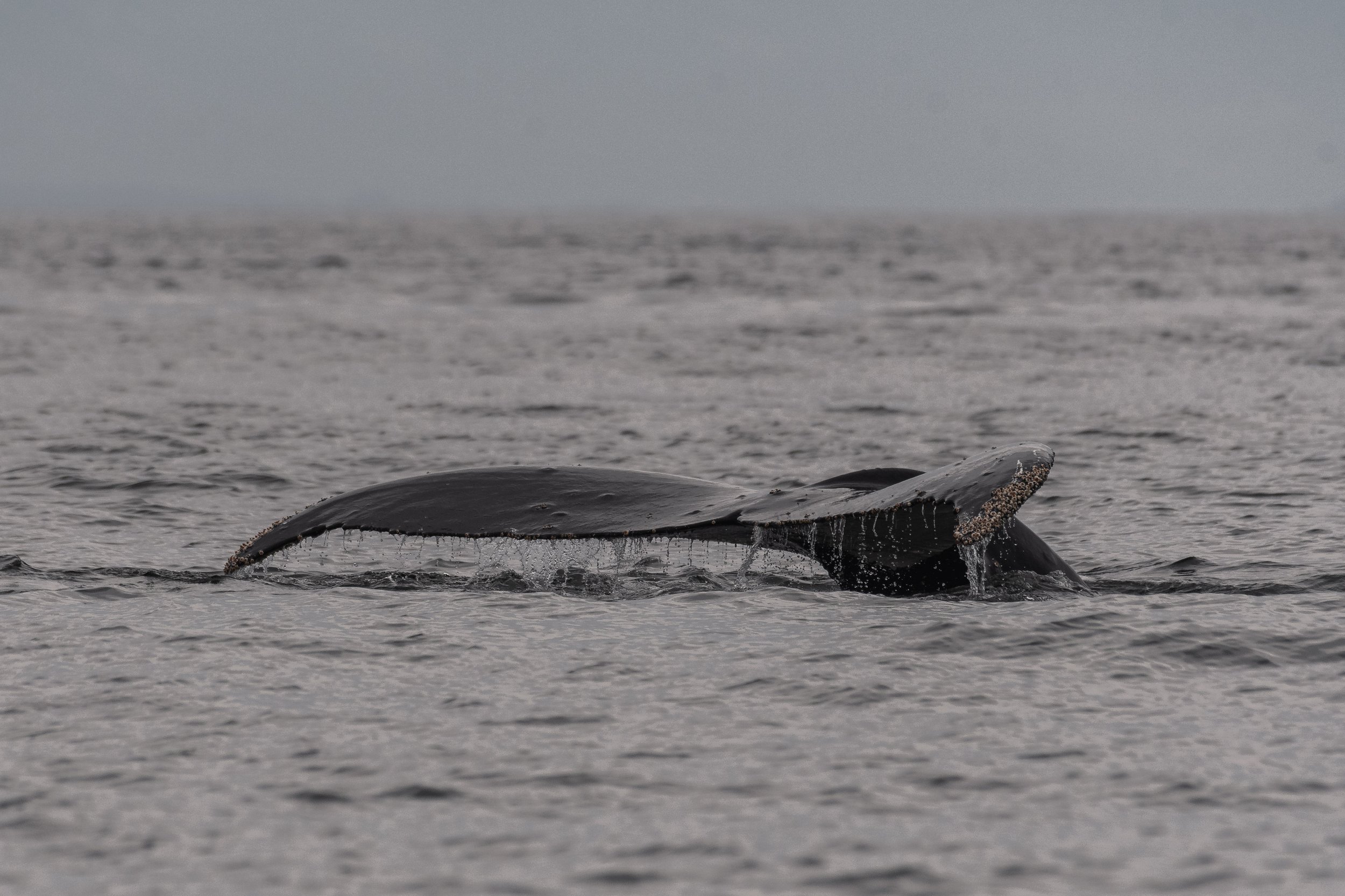
A lovely fluke waterfallf from Anvil.
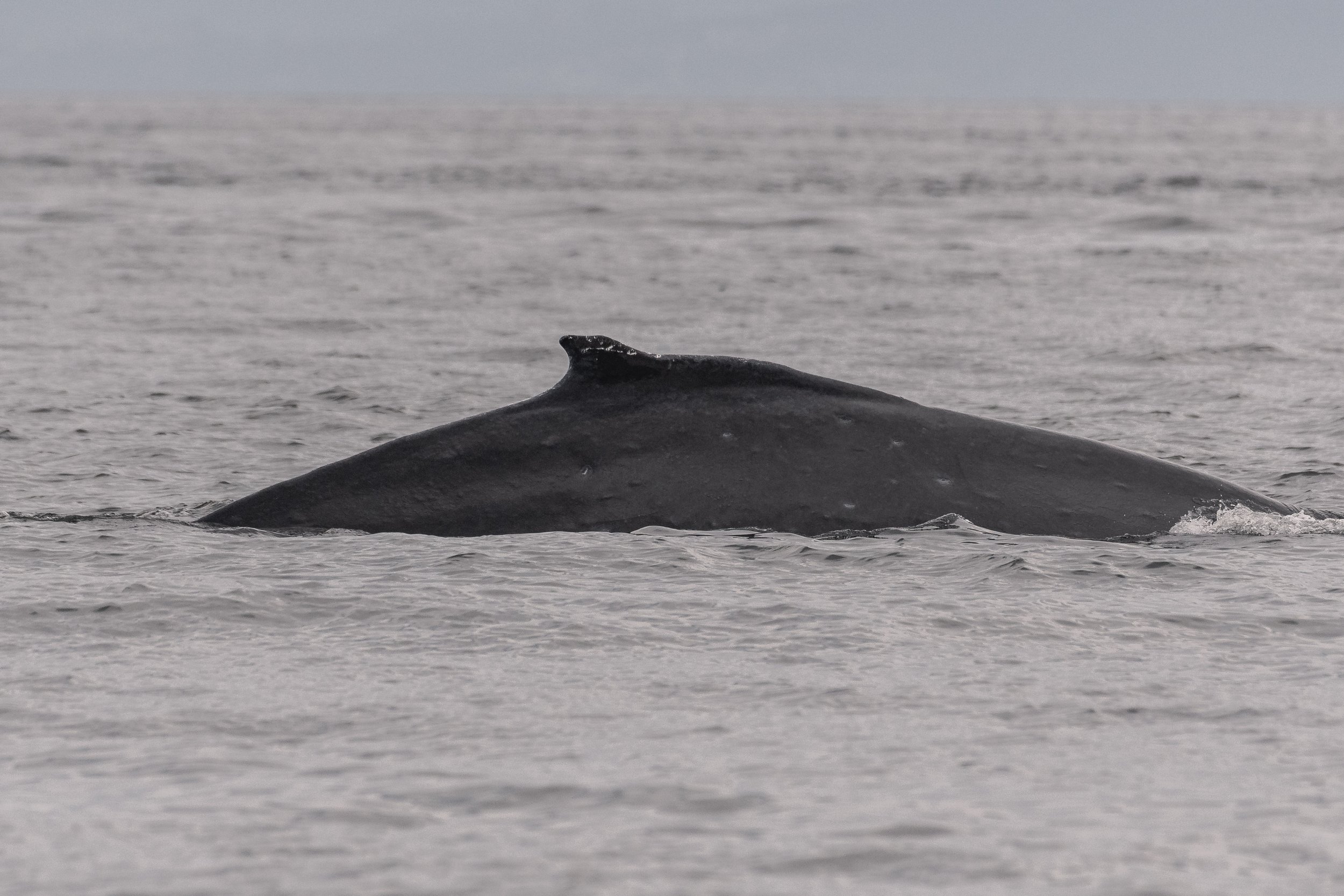
A great look at the scarring on Graze’s dorsal fin.