
April 22, 2026 - T049A2 Jude and T051 Roswell together in Haro Strait
It was shaping up to be another great day on the water. The clouds overhead created a moody atmosphere, and an excited energy buzzed through the boat.
We left Nanaimo aboard our semi-covered vessel, Kula, and began our search by heading south. The Southern Gulf Islands are an excellent area to look for whales, especially Transient (Bigg’s) Orca, which make up the majority of our sightings at this time of year. As mammal-eating orcas, they are often found in these waters where seals and sea lions frequently haul out along rocky shorelines, making for reliable hunting grounds.
With that in mind, we kept our eyes peeled as we passed through Dodd Narrows, into Stuart Channel, and continued our search. From there, we made our way into Trincomali Channel, following the shoreline of Galiano Island as we headed south. Partway through the trip, we received word from another vessel that a pair of orca had been spotted further south. We adjusted course and continued in that direction, now with a clear destination in mind. Although it’s always possible to encounter wildlife along the way, nothing surfaced during this stretch, so we eventually arrived in Haro Strait.
There, we found two bull (male) orca travelling together. One dorsal fin stood out immediately thanks to a distinctive hook at the top, making him easy to recognize. The second individual required a closer look in the catalogue for confirmation. These two have been travelling together for a little while now: Jude and Roswell (also known as Loner).
T049A2 Jude ♂ (2007)
T051 Roswell/Loner ♂ (~1981)
They have quite a history together and are especially well known for a remarkable event in Barnes Lake, an ocean-fed lake located on Prince of Wales Island in southern Alaska. During a high tide event in 2023, the pair swam through a narrow tidal passage into the lake. When the tide receded, they became trapped inside for approximately six weeks. Multiple agencies, including NOAA and Orca Conservancy, were involved in their monitoring and eventual release, and both organizations have documented the event in detail.
Since then, the two have been recorded together on only a couple of occasions: once in Alaska in 2024 and now here in the Salish Sea. It’s always remarkable to witness the long-term associations that form among orca. They are highly social and intelligent animals, and the bonds they maintain are often long-lasting. Watching Jude and Roswell/Loner travel together again naturally led us to wonder what their reunion might mean to them after such a challenging experience.
Today, they appeared to be foraging, spread out along the shoreline as they moved slowly through the area, likely in search of seals or sea lions. While we didn’t observe any successful hunts during our time with them, it was still fascinating to watch their behaviour.
Eventually, it was time to leave the pair to continue on their journey. As we departed, they began heading south, back toward Victoria.
On our way home, we made a couple of additional stops. The first was a small rocky outcrop covered in harbour seals. These small marine mammals are a key prey species for transient orca, making up an estimated 80% of their diet locally. This is largely due to their abundance in the Salish Sea, where an estimated 50,000 harbour seals can be found, as well as their relatively small size and vulnerability compared to other potential prey. Despite that, they are incredibly agile in the water, something we observed firsthand as a few moved through the surrounding currents.
Our final stop of the day was near the Harmac Pulp Mill. In this area, large bundles of logs are stored along the shoreline before being transported for processing or shipment. Sea lions often use these log booms as haul-out sites, benefiting from their proximity to productive feeding areas and from the way the logs shift with the tides, which ensures resting spots are always available.
Today, California sea lions were making the most of the brief break in the weather, basking in the sun that had finally broken through the clouds and resting in small groups to warm up after the cool morning.
From there, we made our way back to port, concluding a long but rewarding day on the water. Seeing Jude and Roswell/Loner together again was a real highlight, offering a chance to reflect on their incredible shared history and the resilience of these animals. Their story is a powerful reminder of the complex social bonds that exist within orca populations.
Please enjoy the photos taken throughout the tour by Marine Naturalist Evan Hessels below.
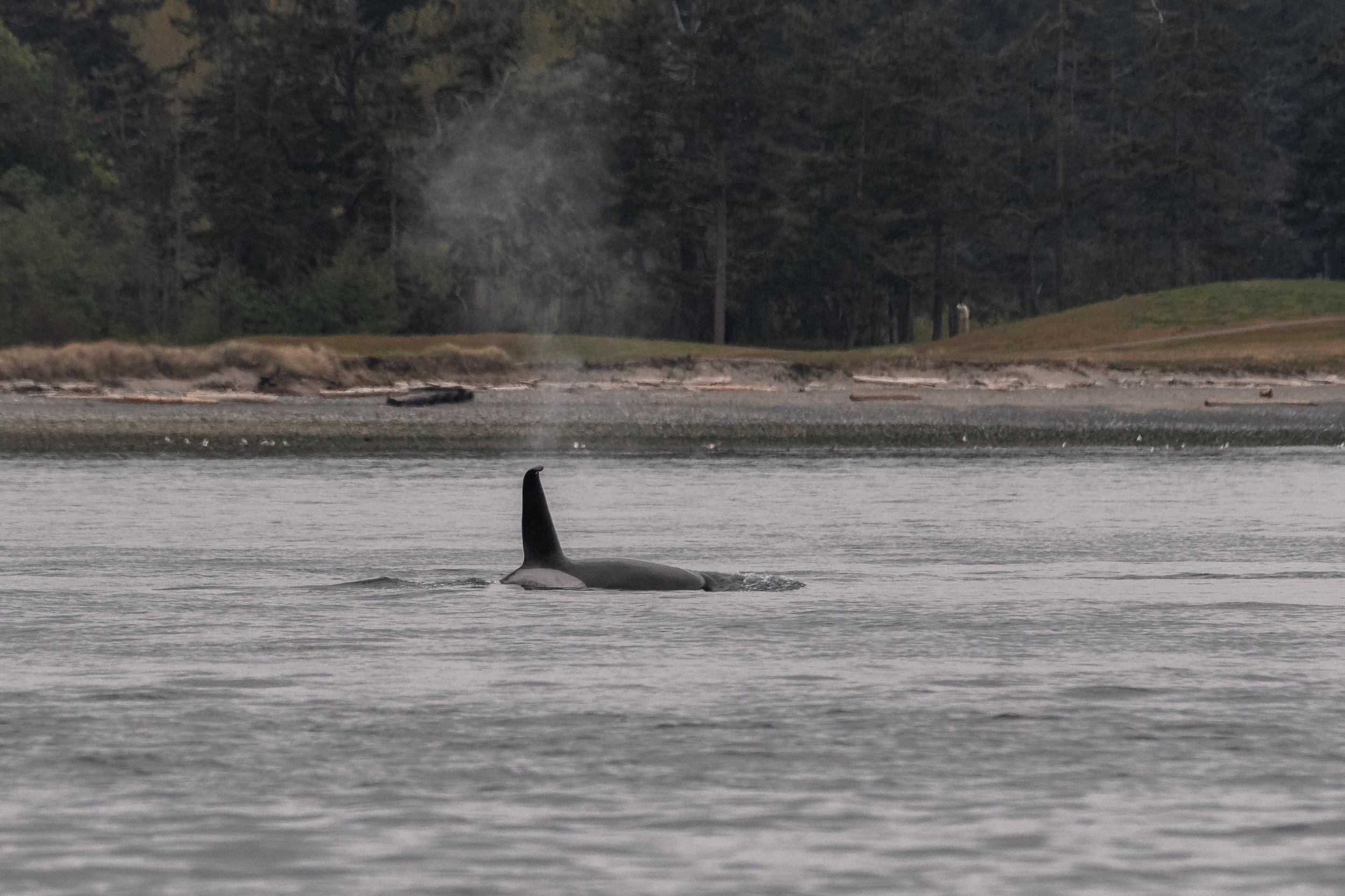
T049A2 Jude surfacing close to the Sidney Island shoreline.
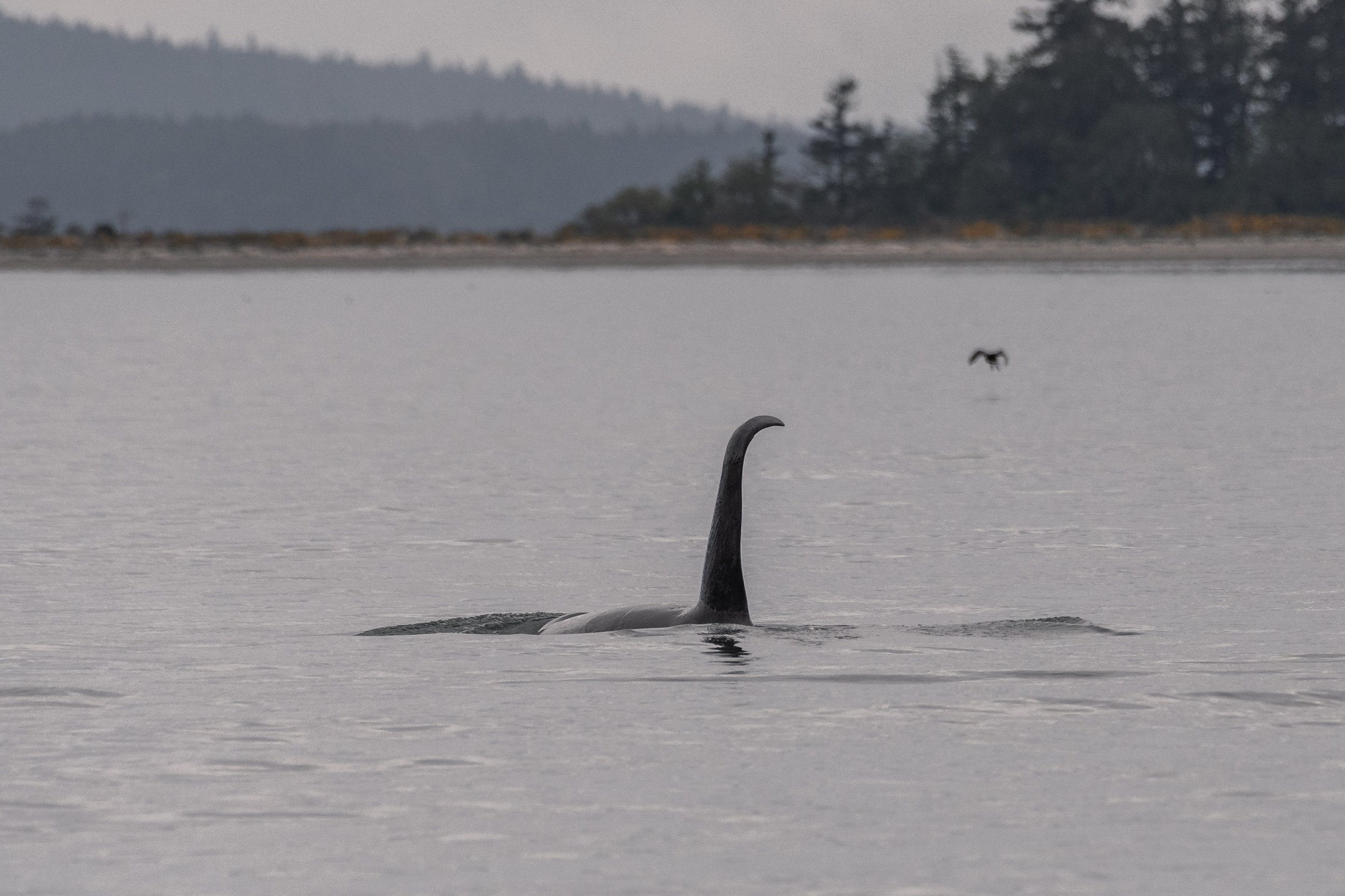
You can see the extreme hook to the top of T049A2 Jude’s dorsal fin.
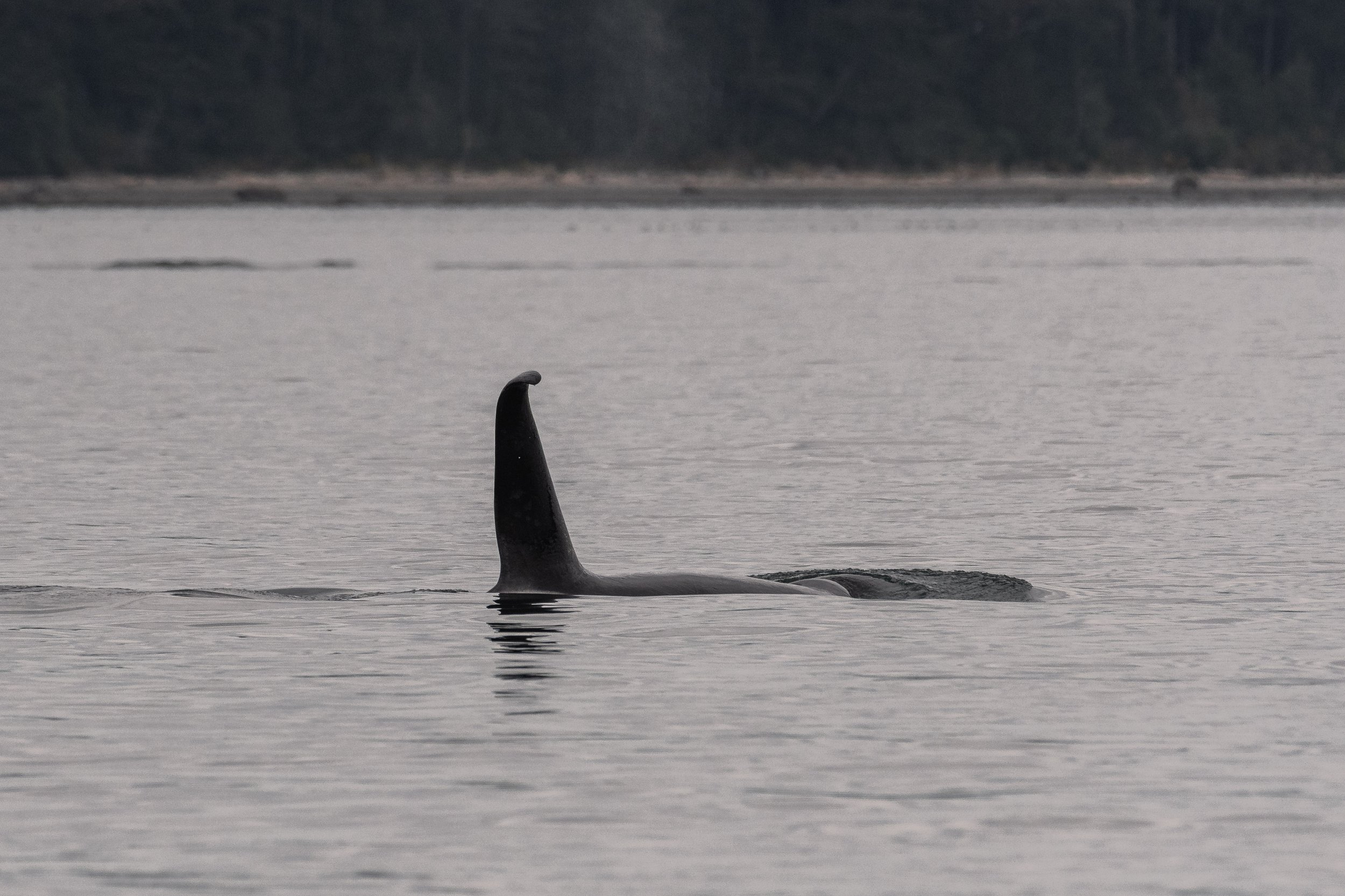
T049A2 Jude surfacing in the calm water.
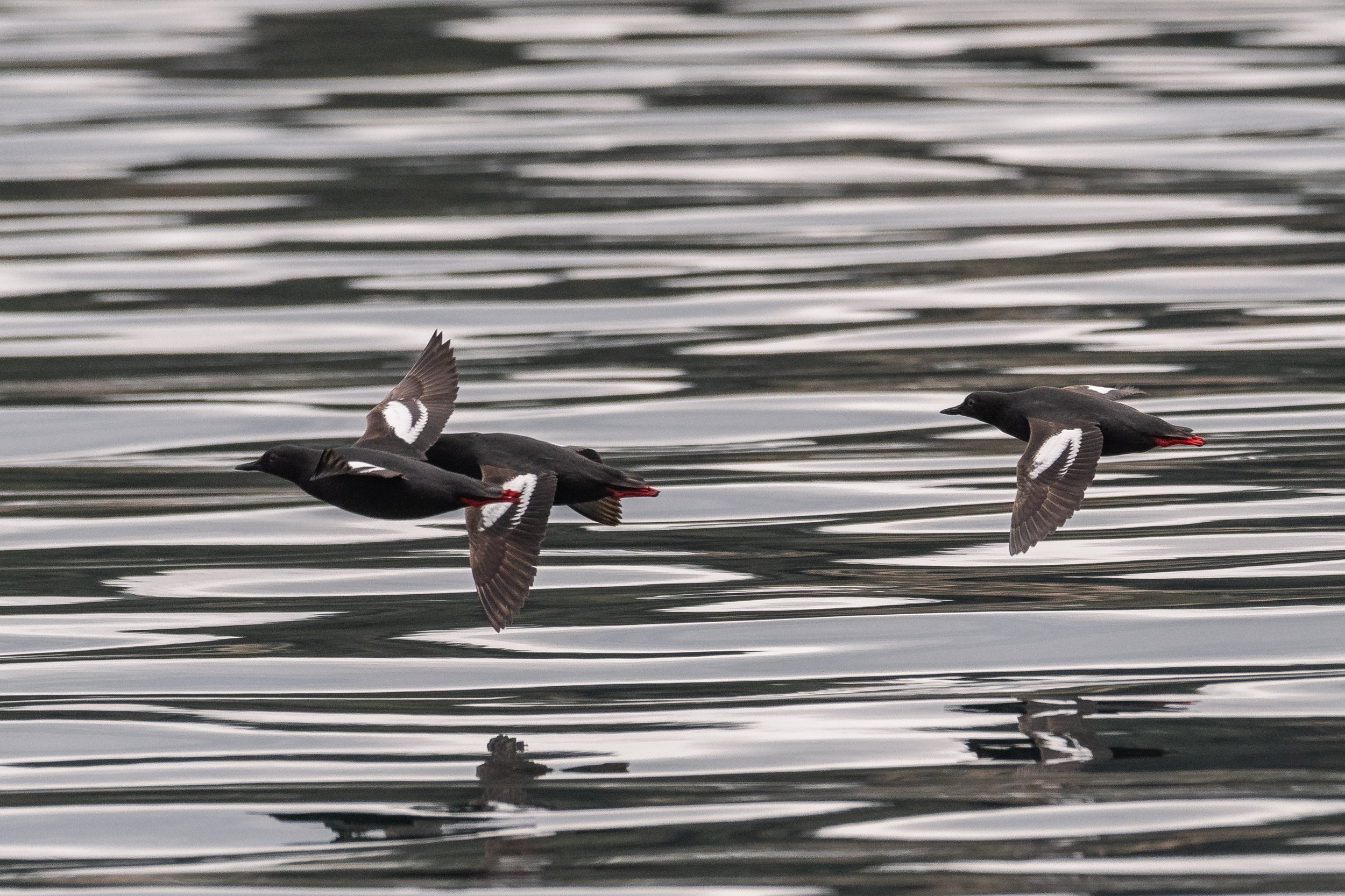
A flock of Pigeon Guillemot flying by.
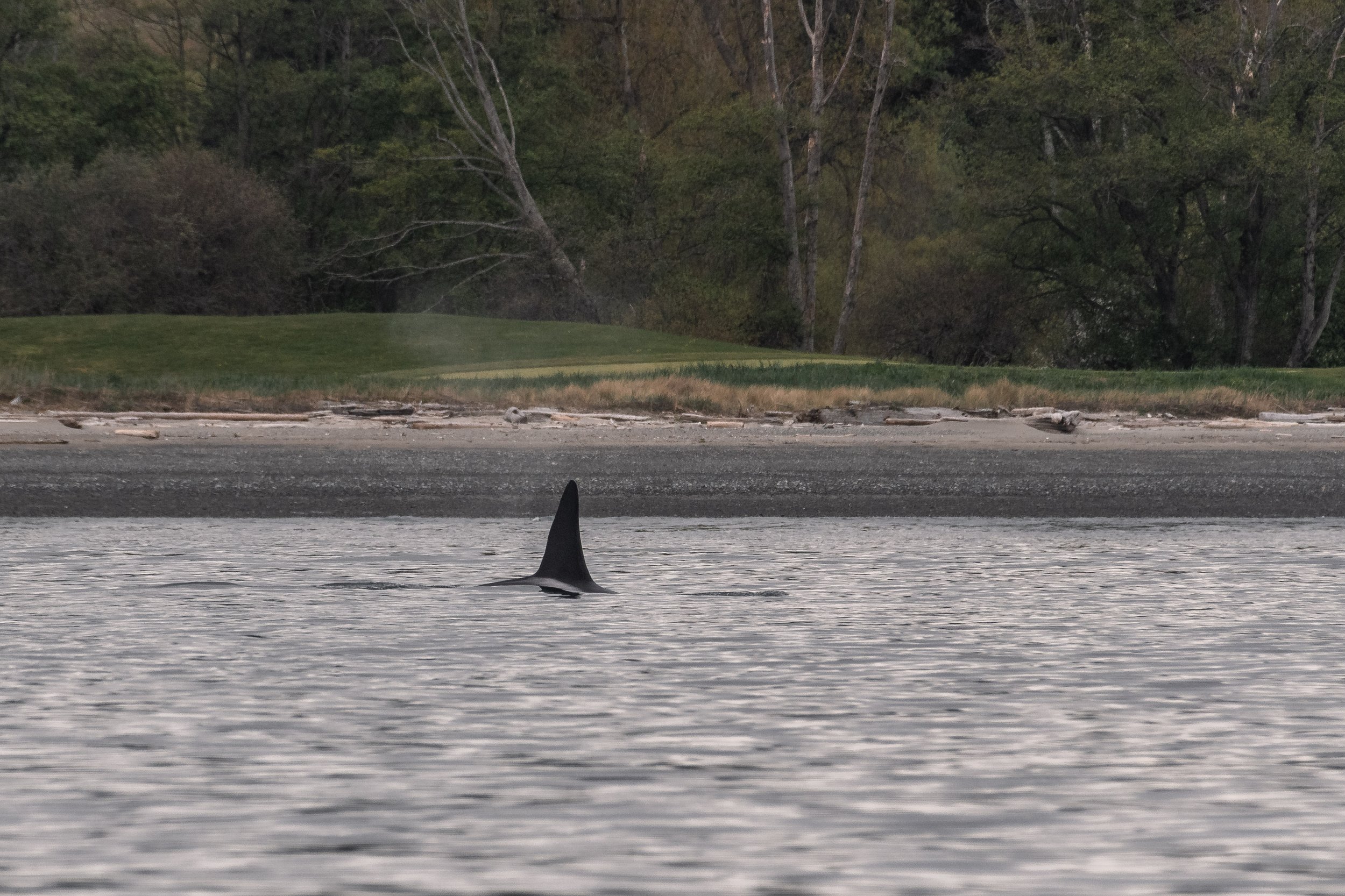
T051 Roswell/Loner surfacing along the shoreline.
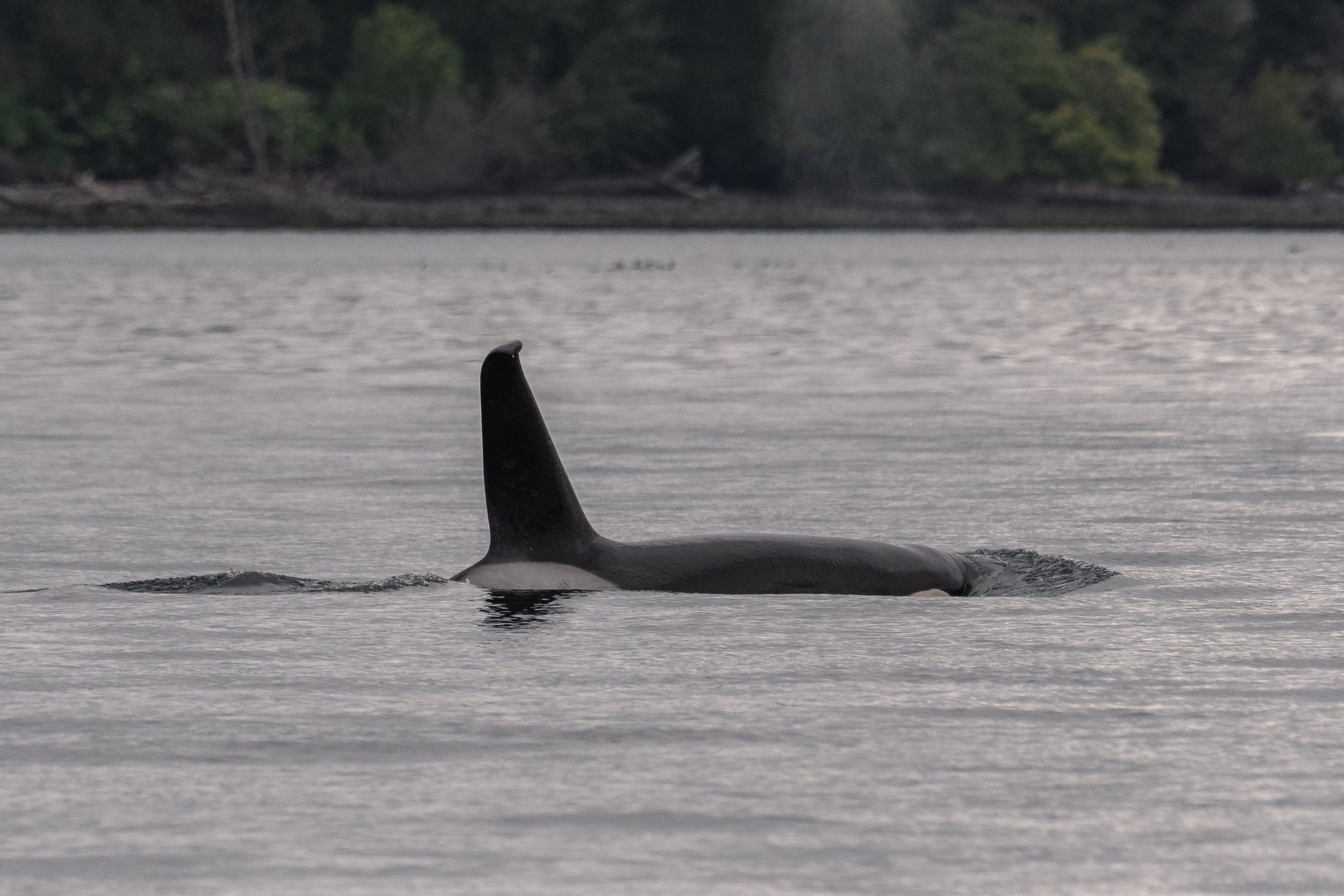
You can spot some of the scarring on T049A2 Jude’s saddle patch.
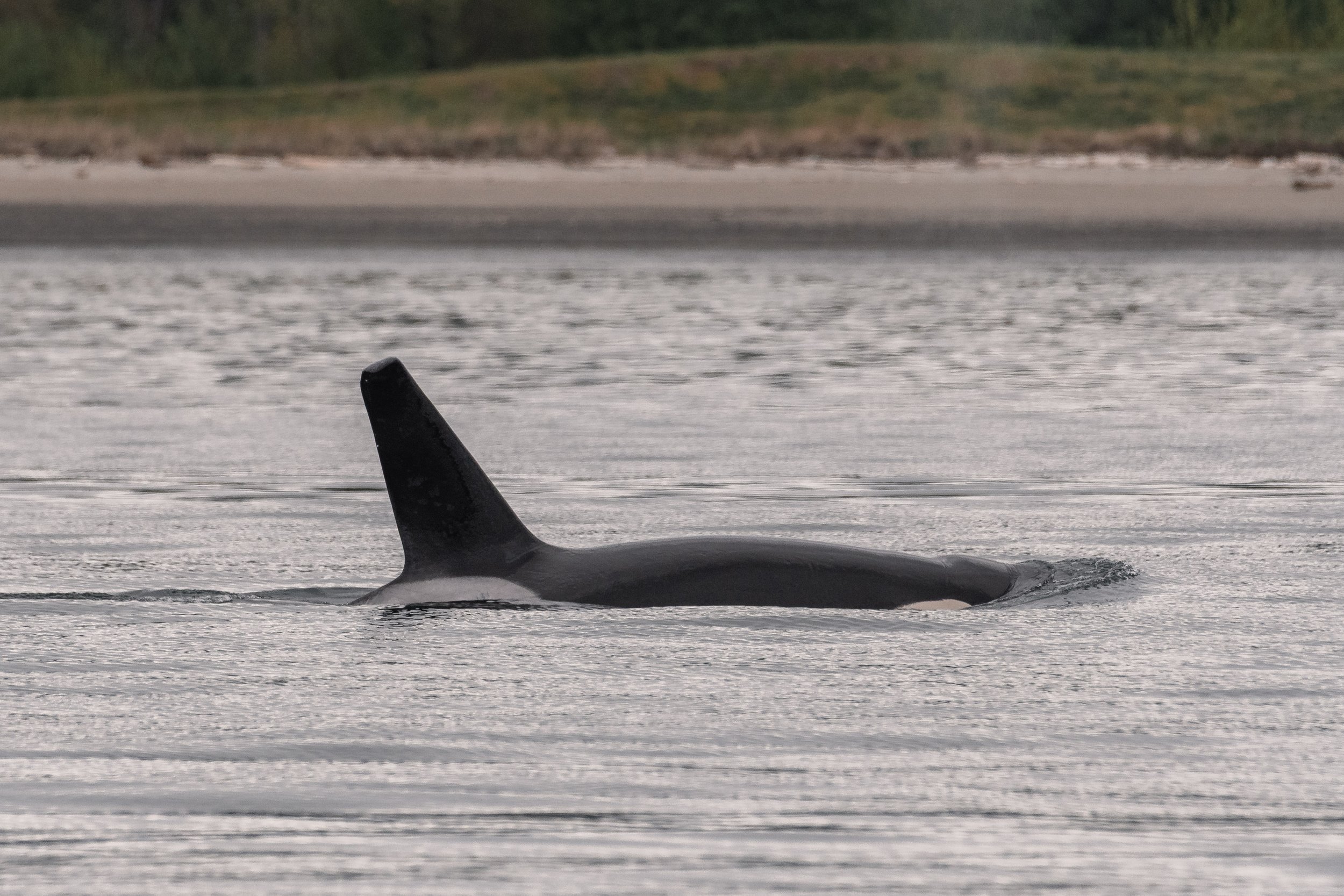
A great look at T049A2 Jude as he surfaces.
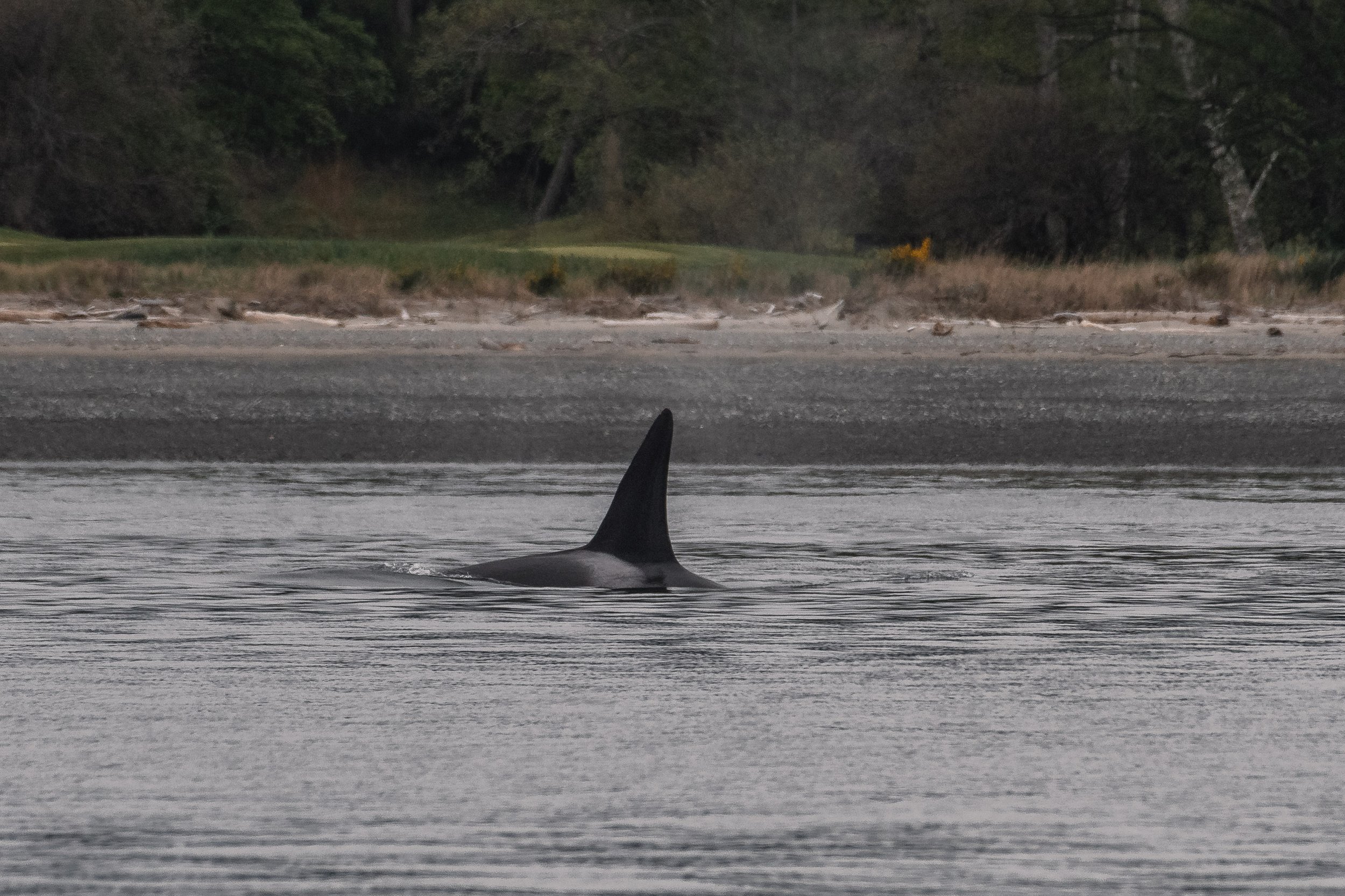
You can see all the scarring on T051 Roswell/Loner’s saddle patch from this photo.
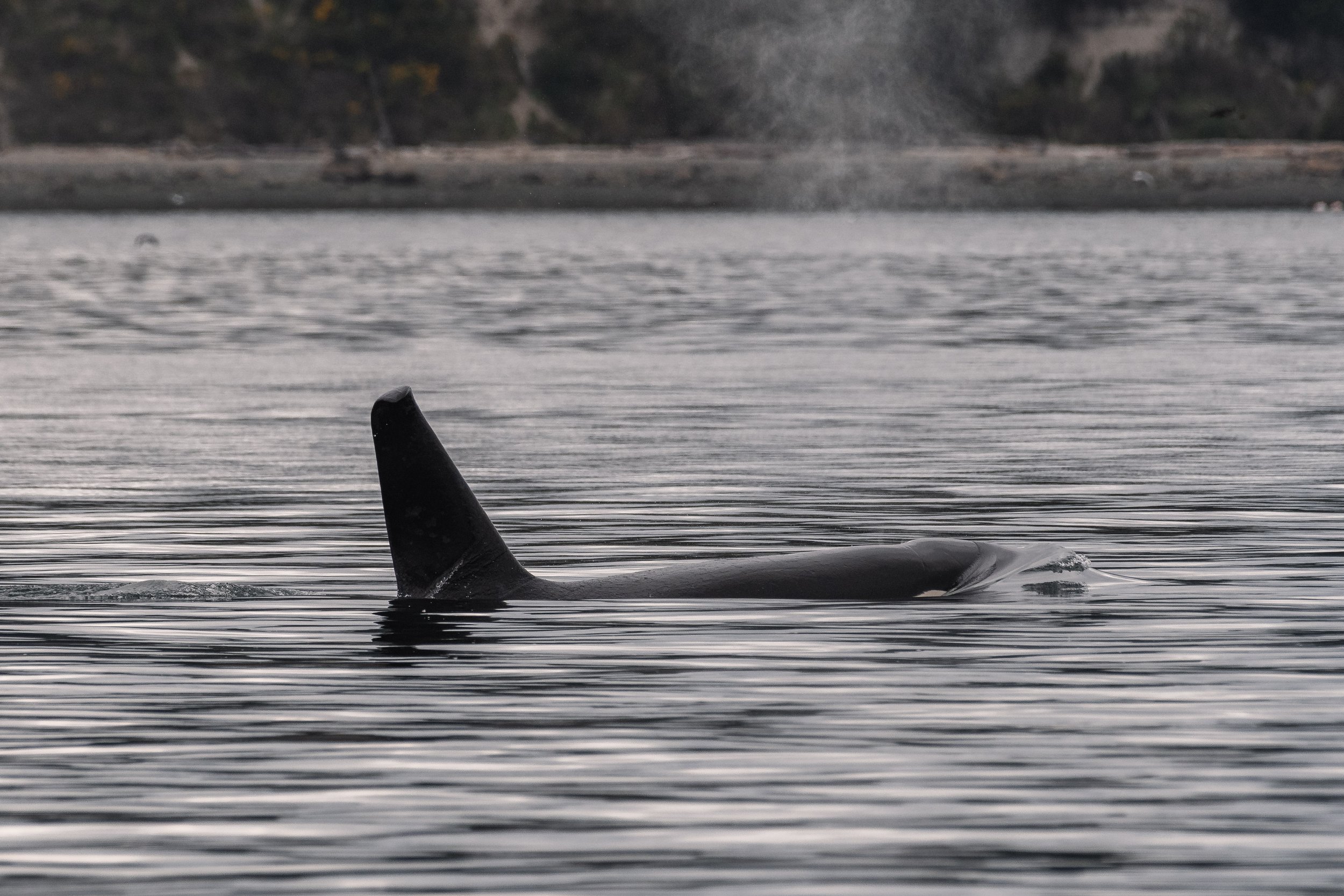
T049A2 Jude creating a wave as he surfaces in the calm water.
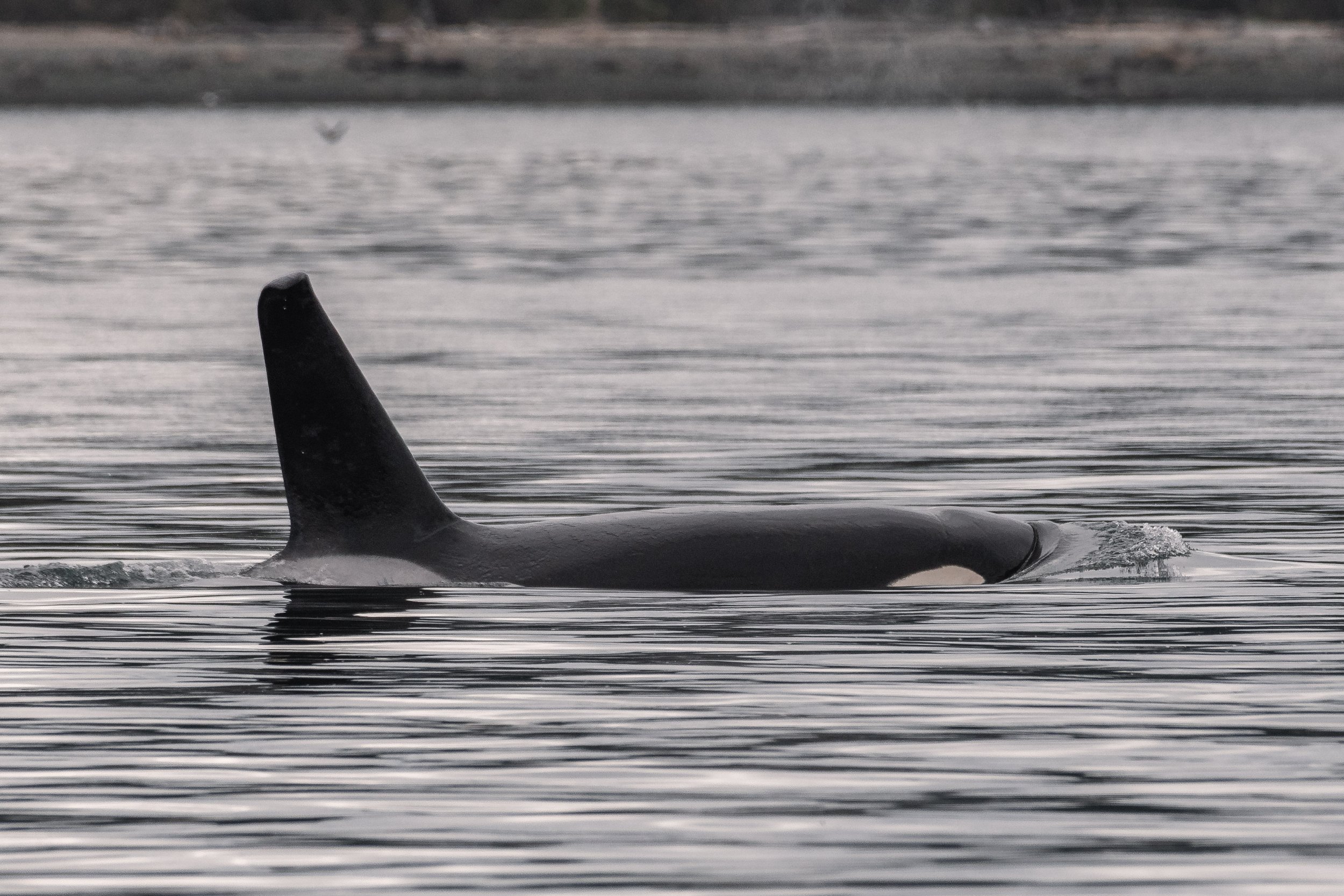
You can see T049A2 Jude’s eye patch outside of the water here.
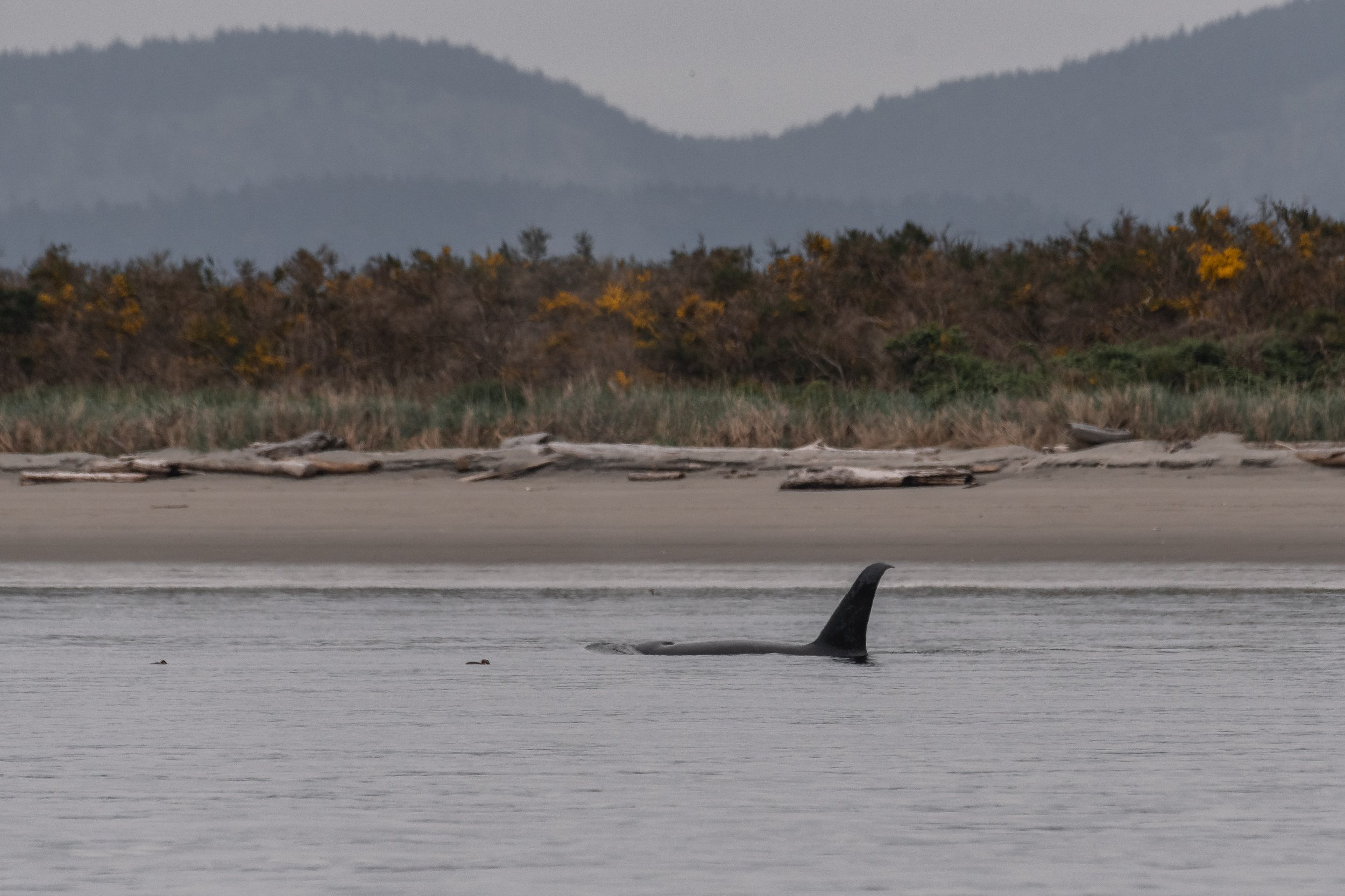
T049A2 Jude along the Sidney Shoreline, with a bunch of flowering broom in the background.
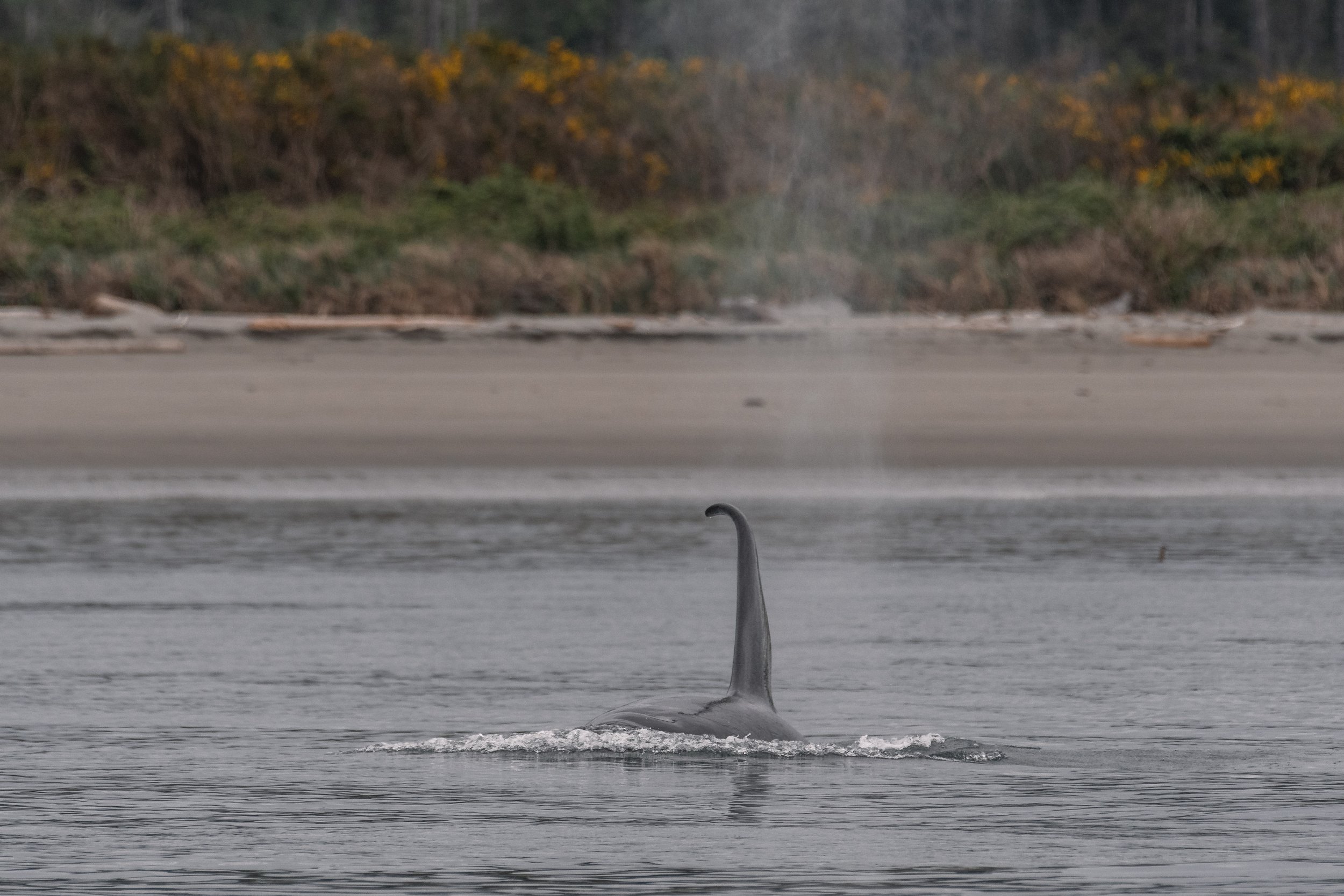
A head-on look at T049A2 shows his unique hooked dorsal fin.
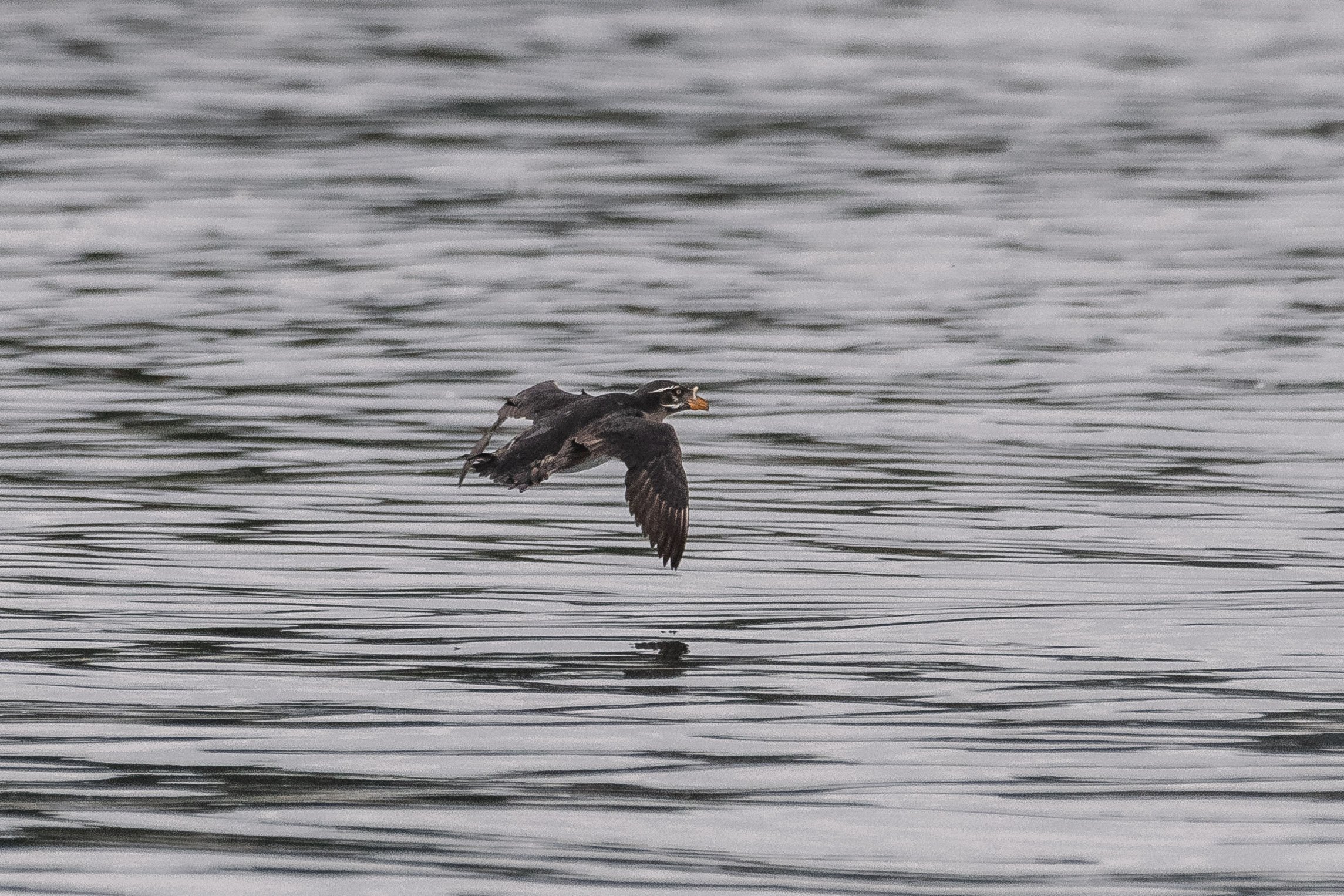
A Rhinocerous Auklet flying by.
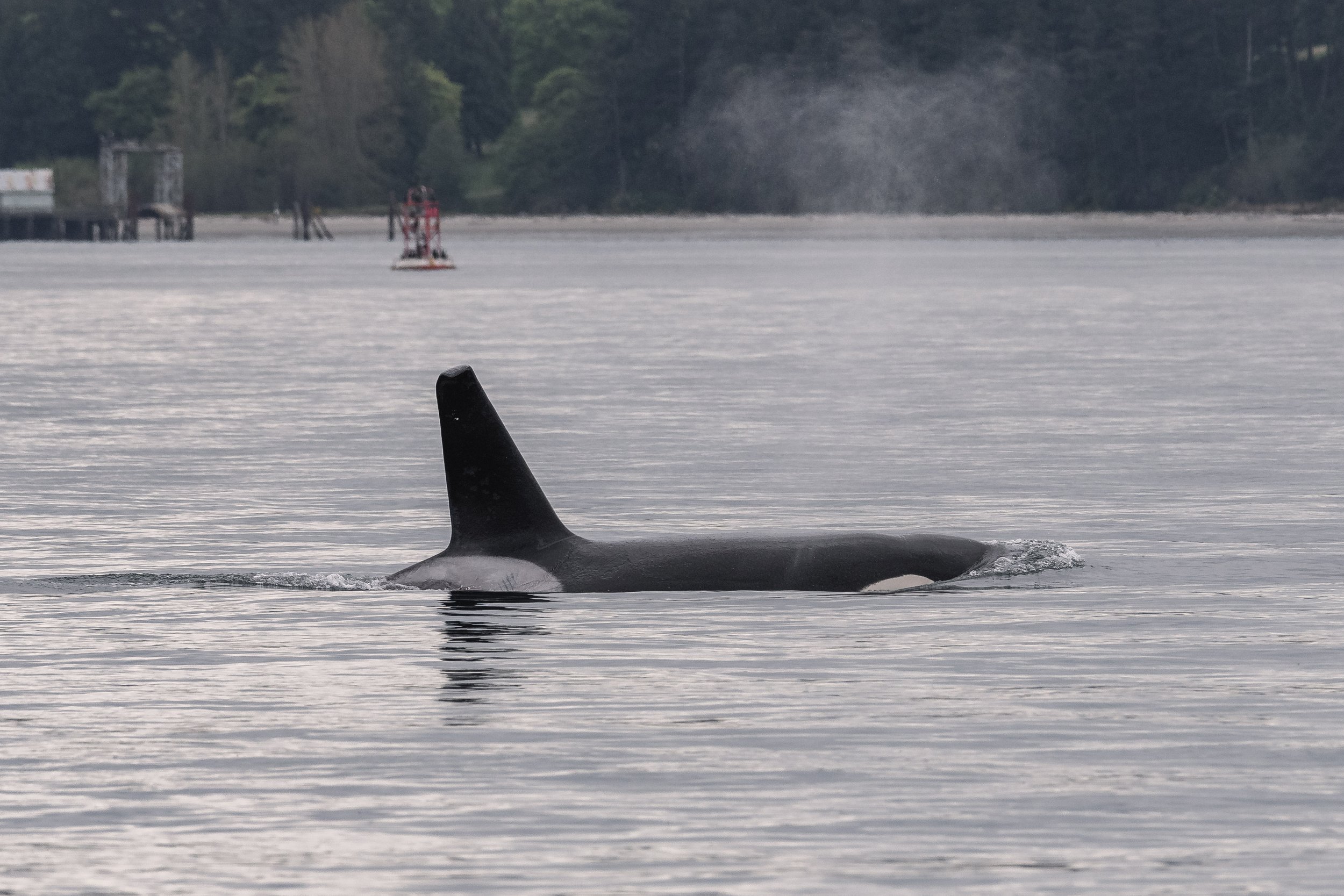
A lovely surface from T049A2 Jude.
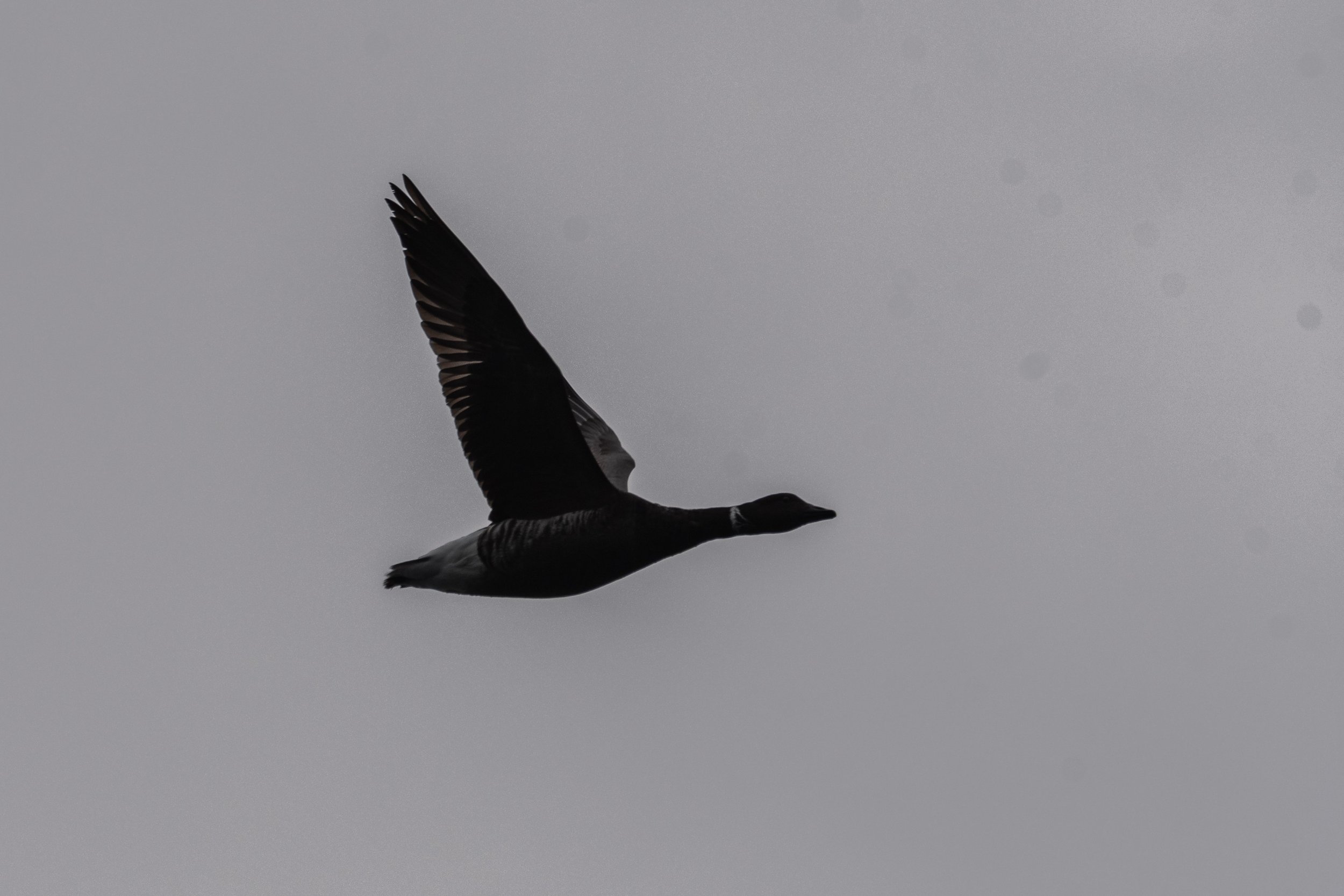
A Brant Goose flying overhead.
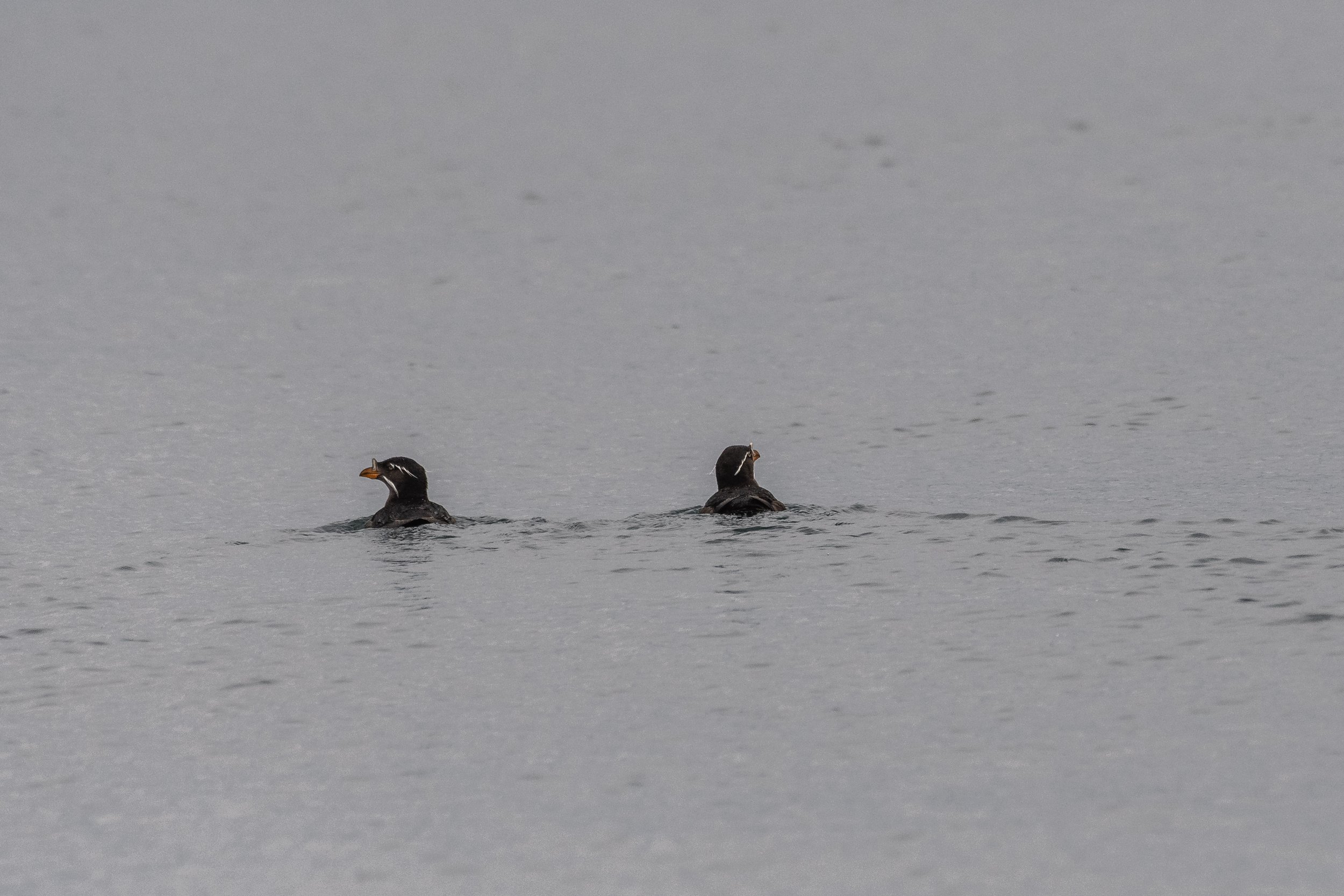
A pair of Rhinocerous Auklets floating by.
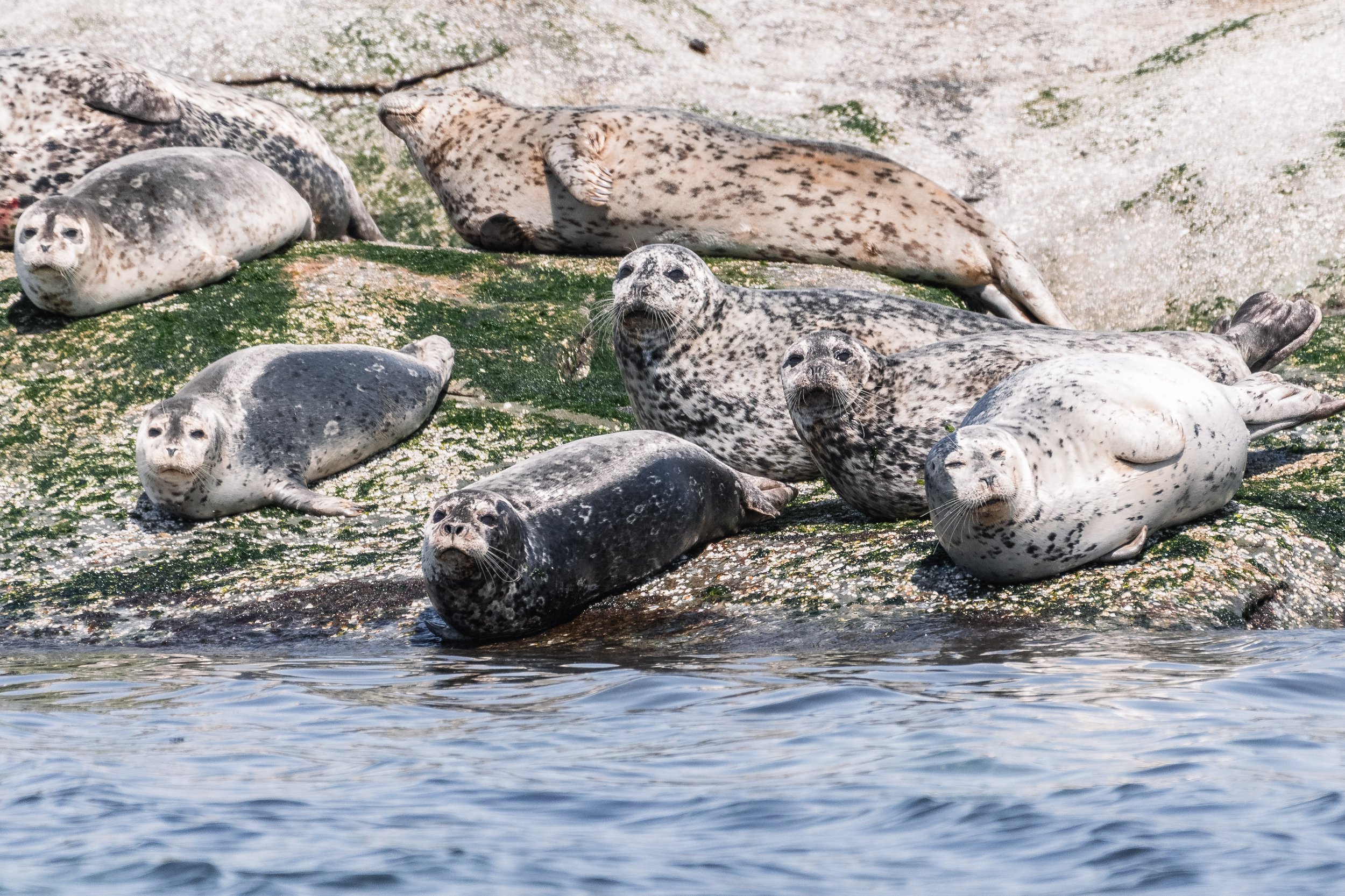
An adorable group of Harbour Seals on the rocks.
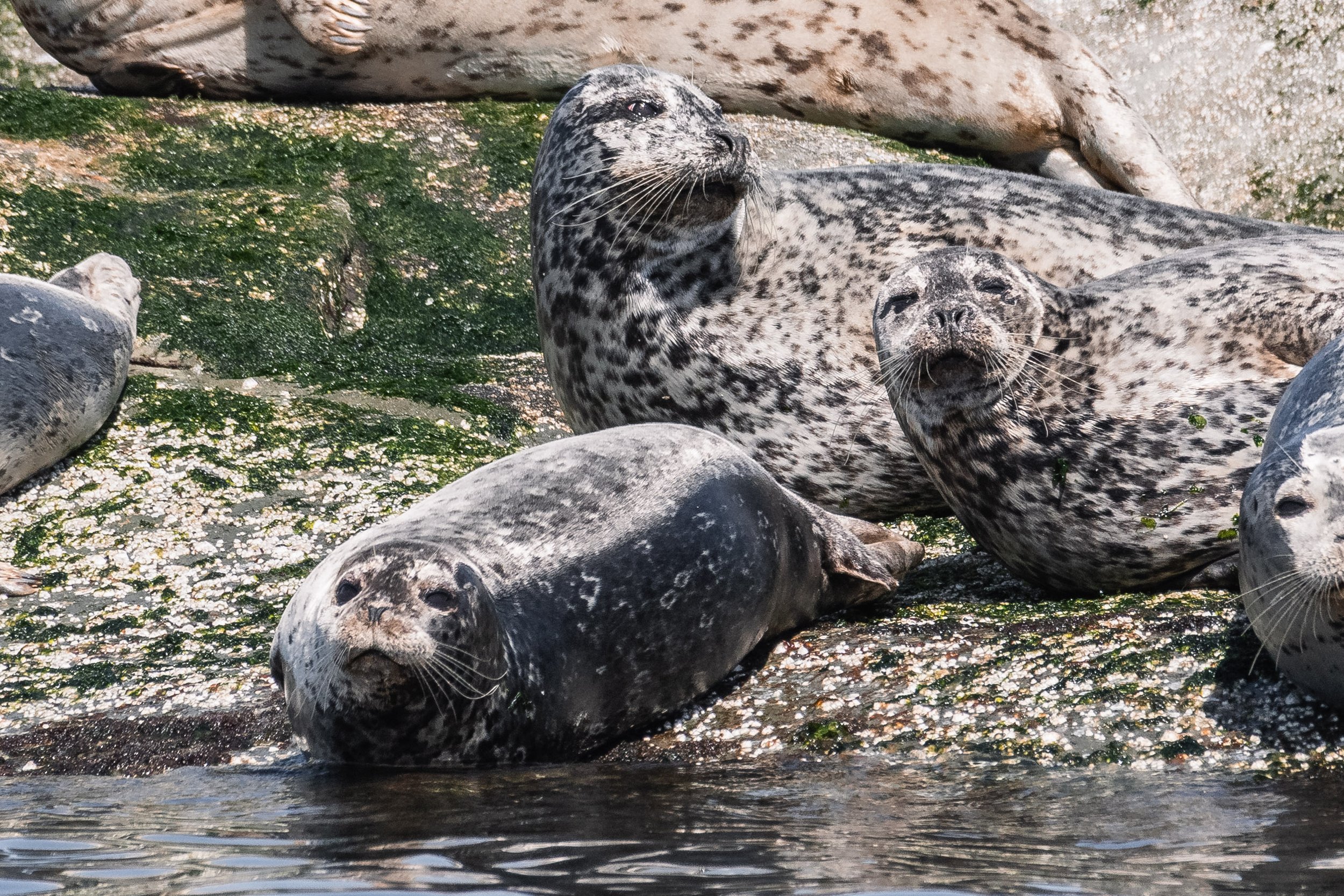
A nice look at the Harbour Seal haul out.
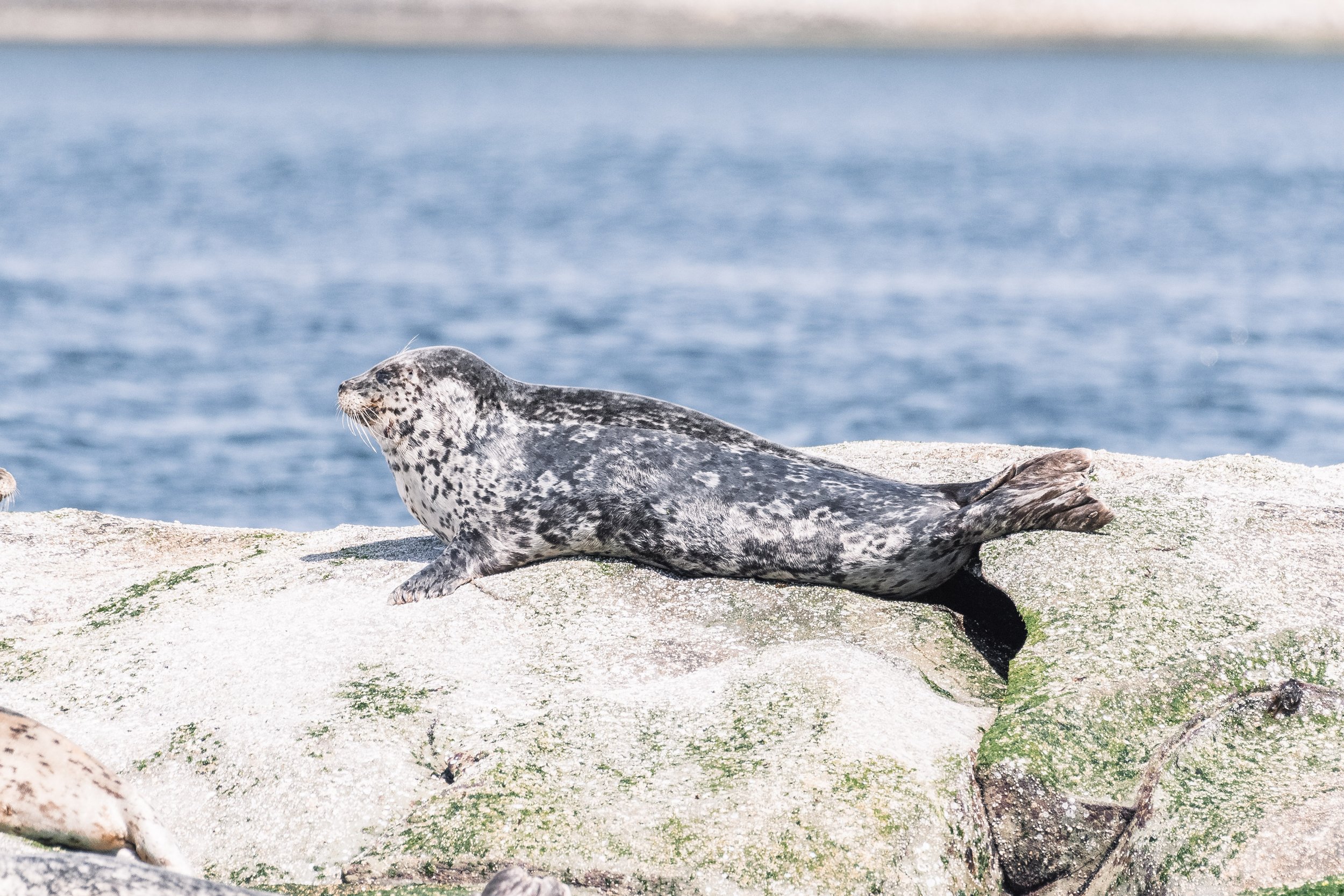
This Harbour Seal is about into Banana Pose!
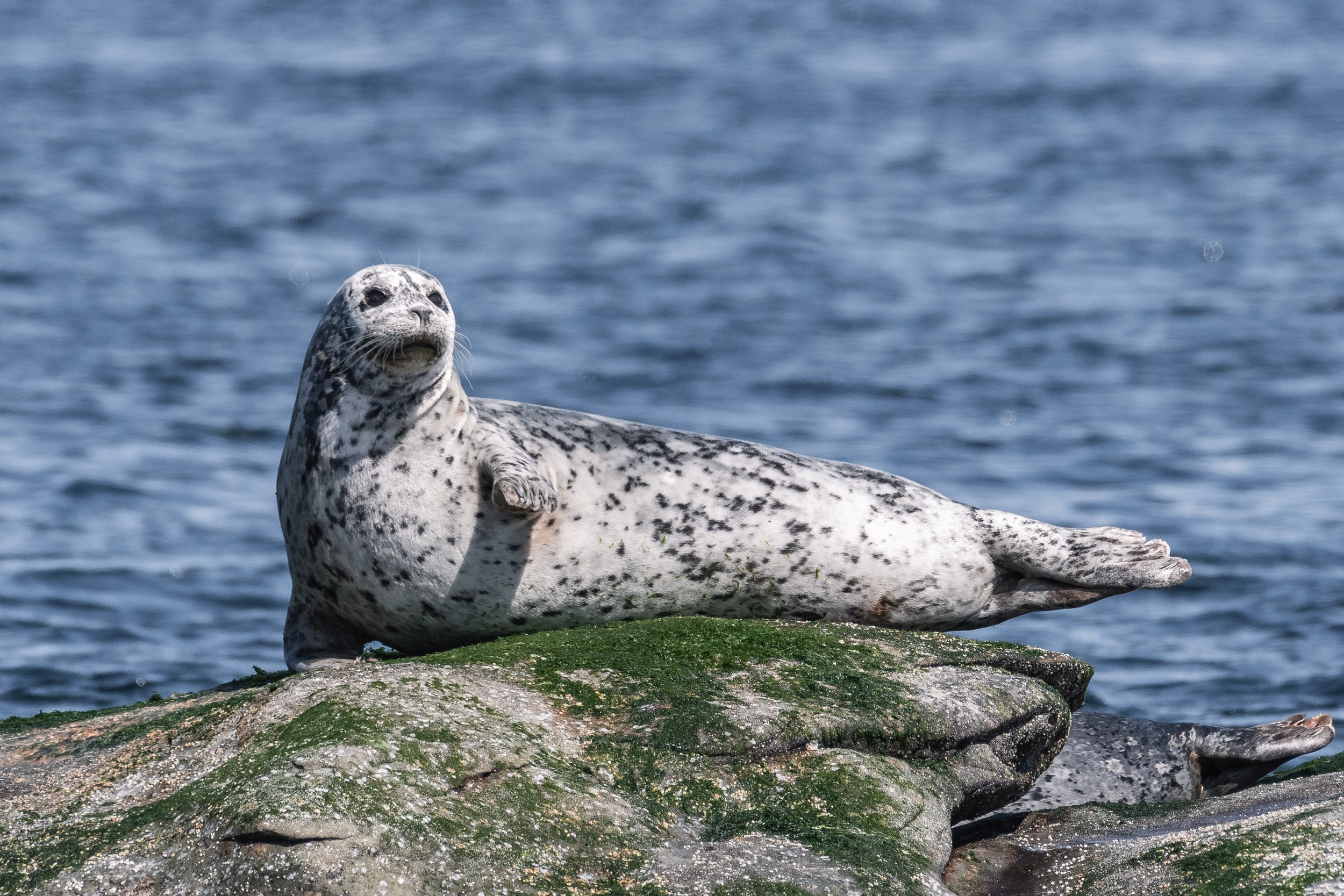
A great look at a lighter coloured Harbour Seal.
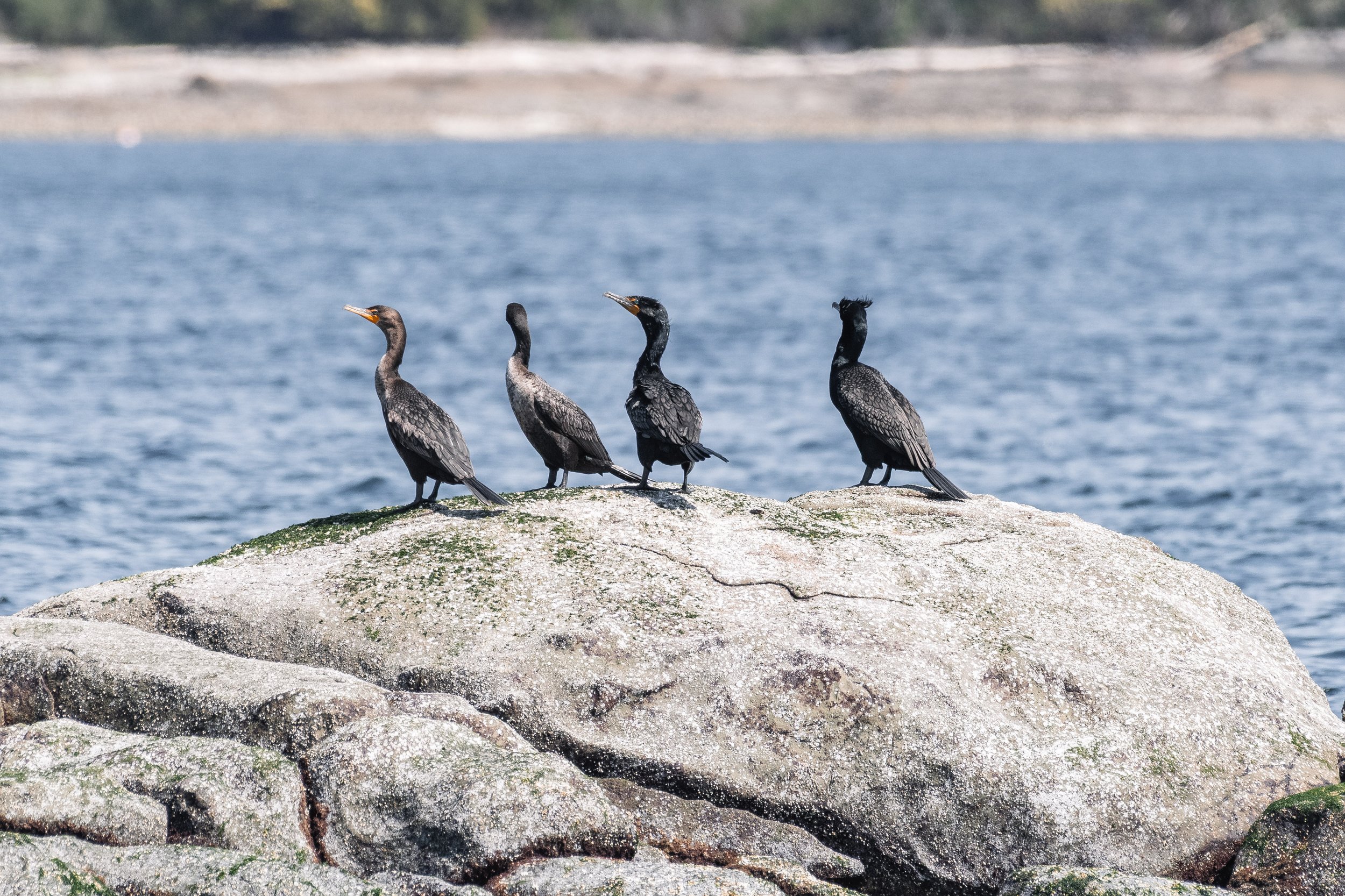
Some cormorants spending time on the rocks.
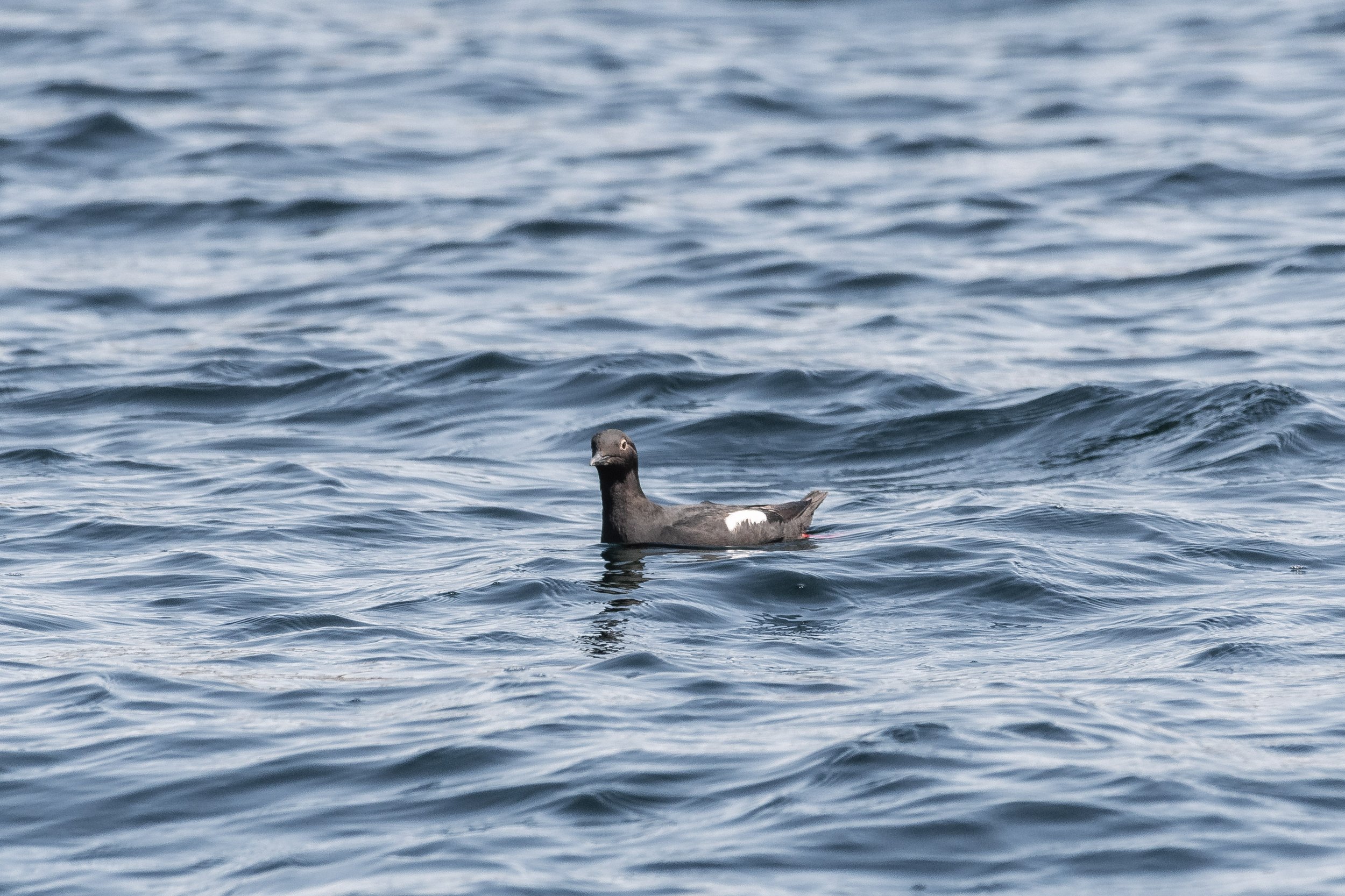
A Pigeon Guillemot floating by.
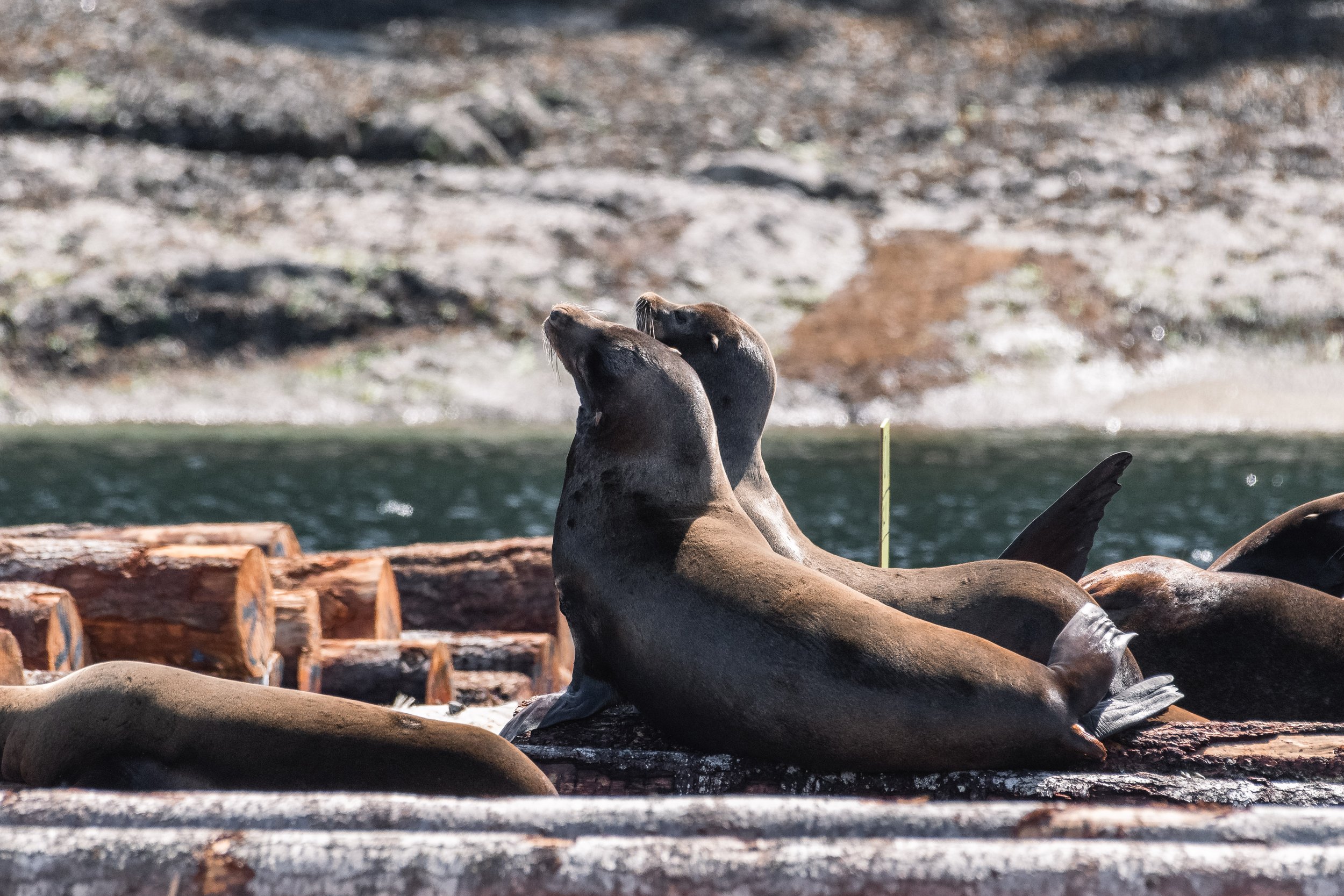
California Sea Lion on the log booms near Harmac.