
April 28, 2026 - Spending time with the T046Bs in Satellite Channel
We slipped quietly away from the harbour aboard Kula, our semi-covered vessel, under calm conditions that made for excellent visibility across the Salish Sea. With engines humming at a steady pace, we set a southerly course toward Dodd Narrows, a tidal passage known for its strong currents and rich marine productivity. From there, we entered Stuart Channel, weaving deliberately through a mosaic of islands and channel, prime habitat to find all matter of sea life thanks to the currents concentrating nutrients.
Our search effort was focused, with all sets of eyes onboard scanning for visual cues such as blows, dorsal fins, and surface disturbances. As we approached Sansum Narrows, we received reports of a pod sighted earlier in the vicinity. Increased attention was given to the surrounding waters, and it wasn’t long before another vessel located the animals just south of the narrows in Satellite Channel.
Upon approach, we documented key identifying features using the extra reac provided by the large camera’s onboard. Focusing on dorsal fin shape, nicks, and saddle patch pigmentation we confirmed the group as the T046Bs, a matriline within the Bigg's killer whale population. This group consisted of nine individuals:
T046B Raksha ♀ (1988)
T046B2 Akela ♀ (2008)
T046B2B Takaya ♀ (2023)
T046B3 Sedna ♀ (2011)
T046B3A Munro (2025)
T046B4 Quiver ♀ (2013)
T046B6 Sol ♀ (2019)
T046B7 Tala (2023)
T046B8 Pi (2026)
Initial behaviour suggested the whales were finishing up a foraging event, as we saw many directional changes and some gulls overhead scavenging for scraps. Shortly after, their behaviour shifted to directional travel, characterized by synchronized surfacing patterns and a consistent heading as they entered Saanich Inlet. This shift highlights the distinct behavioural phases often observed in transient orcas: alternating between stealthy hunting and efficient travel.
The T046B matriline offers a particularly compelling opportunity for observation, not only due to its larger group size but also because of its well-documented lineage. At the centre of this family history is T046 Wake, mother of Raksha. Estimated to be approximately 57 years old at the time of her passing in 2023, Wake was readily identifiable in the field by the distinct notches along her dorsal fin.
What makes her history especially notable is her early life experience. In 1976, Wake was among a small group of Bigg's killer whale individuals captured during a period when wild orcas were still being taken for the aquarium industry. Although these whales were initially destined for captivity, they were ultimately released; an outcome that proved ecologically significant. Wake went on to establish a highly successful matriline, with at least 30 known descendants documented to date. This represents a meaningful proportion (~8%) of the local transient population, underscoring the long-term population impacts that a single reproductive female can have.
Given that paternity is not typically tracked, the full extent of her genetic contribution is likely even greater. The encounter with her descendants today provides a powerful example of resilience and highlights the importance of conservation measures that protect these animals across generations.
After concluding our encounter, we continued along the southern shoreline of Salt Spring Island and entered Trincomali Channel. It was here that we observed a lone humpback whale. The whale surfaced once before diving and did not reappear during our time waiting. This behaviour is consistent with foraging, as humpbacks often perform longer, deeper dives when targeting prey such as krill or schooling fish. Having recently returned from their long-distance migration, often exceeding 6,000 km, these whales are in a critical feeding phase, replenishing depleted energy reserves.
With no further sightings from the humpback, we continued toward Canoe Islets, where a large group of Steller Sea Lions was observed both hauled out and rafting in the surrounding waters. These pinnipeds utilize rocky islets for resting and thermoregulation, often forming large social groups.
From there, we transited through Porlier Pass, re-entering Stuart Channel and eventually returning through Dodd Narrows. Our final stop brought us alongside the log booms at the Harmac pulp mill, where a number of California Sea Lions were observed hauled out.
It was a great tour with a lot of wildlife spotted. Throughout the tour Marine Naturalist Evan Hessels and ride-along crew Val Watson captured some great photos, which are included below for you to enjoy!
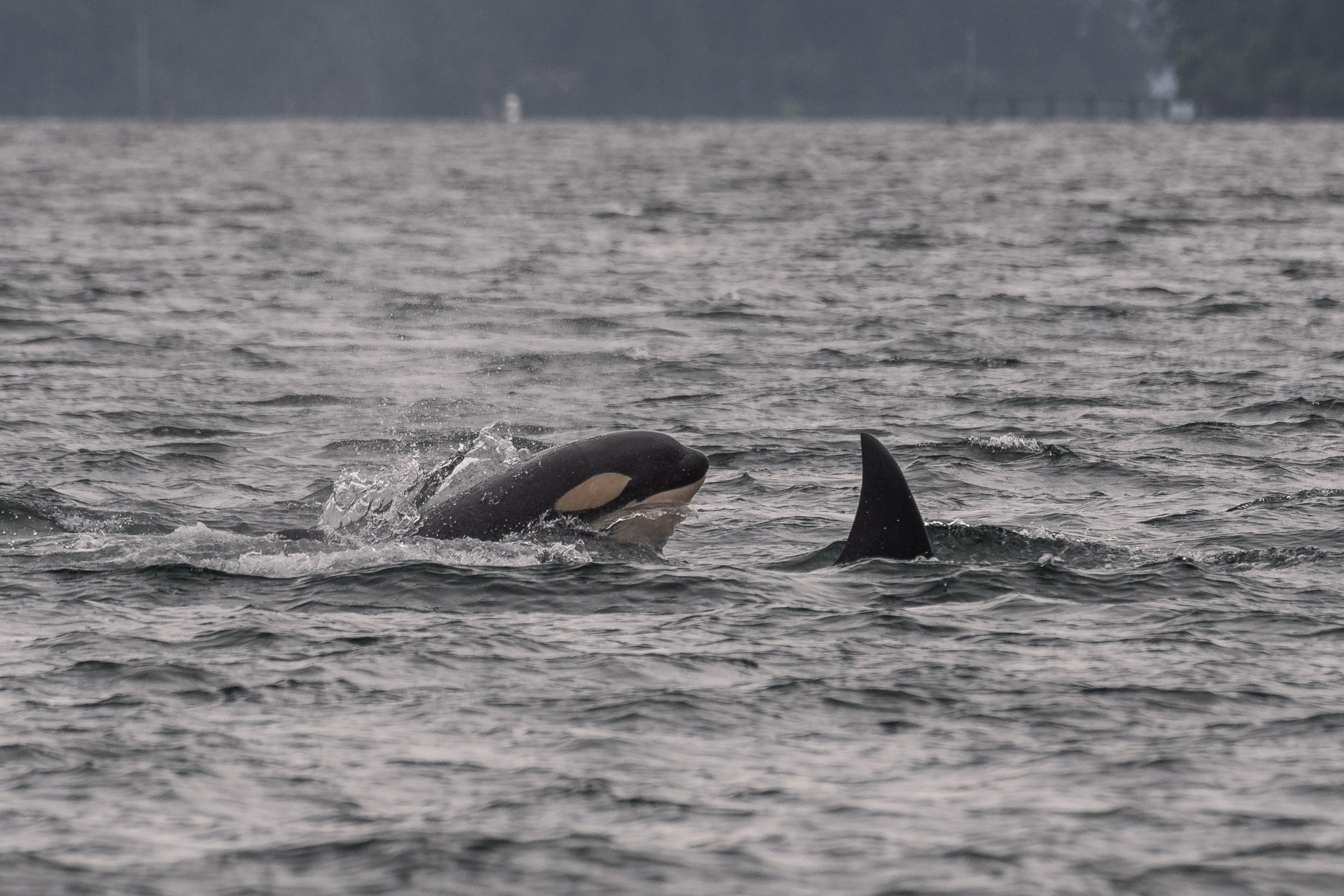
T046B3A Munro looking so cute as they break through the waves while travelling beside mom, T046B3 Sedna. Photo by Evan Hessels.
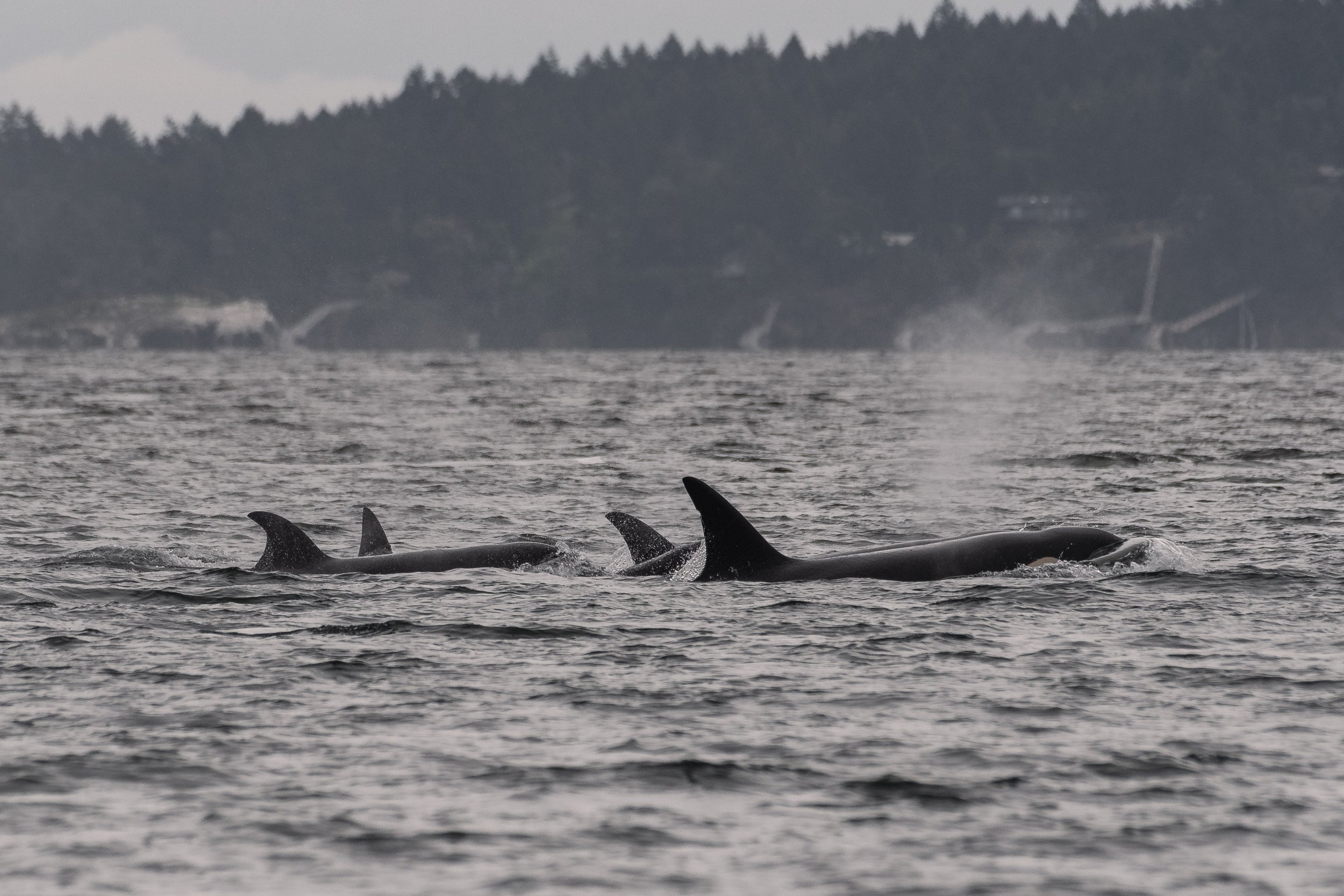
T046B Family Photo with T046B6 Sol, T046 Raksha, and T046B2 Akela. Photo by Evan Hessels.
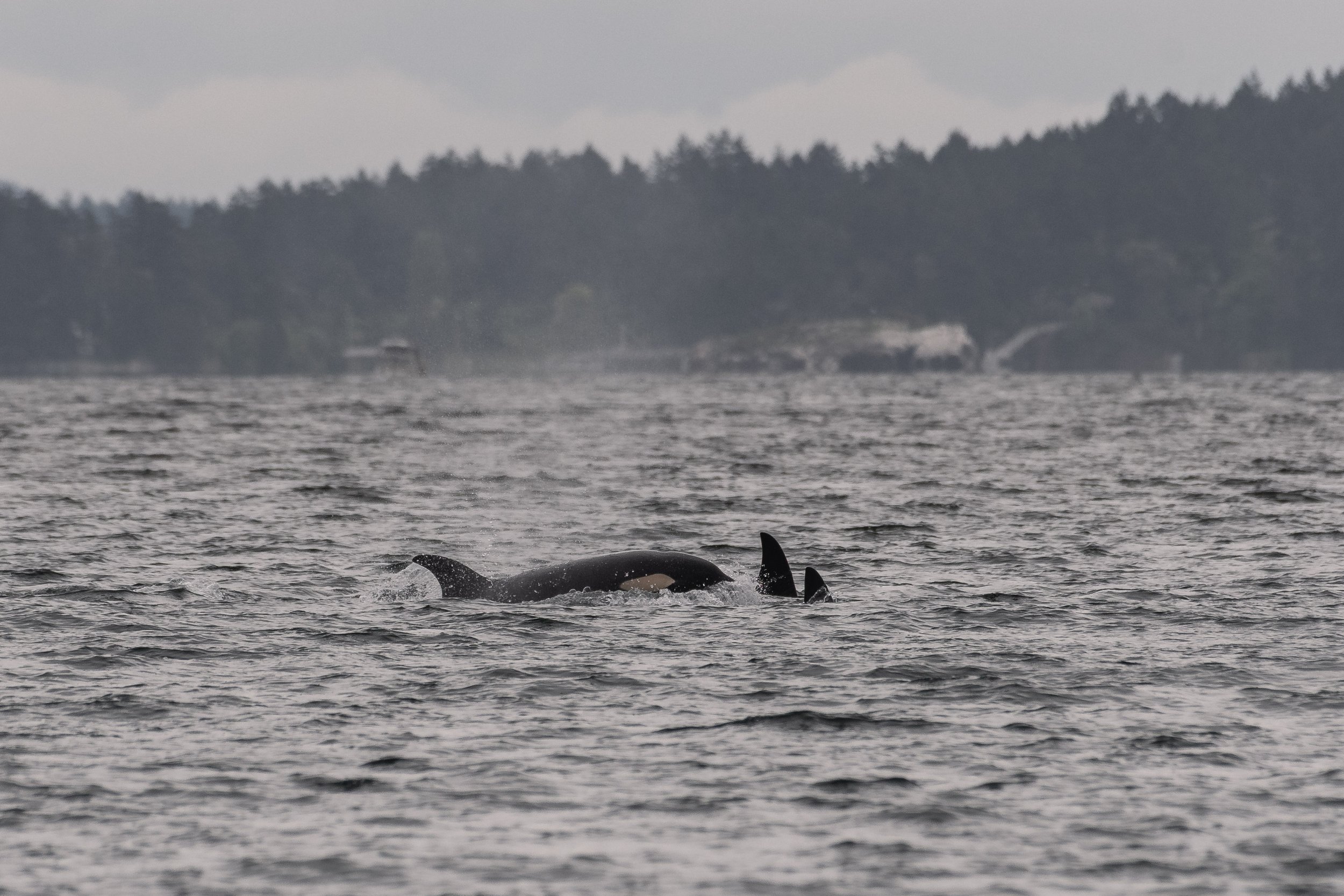
T046B2B Takaya surfacing in the waves. Photo by Evan Hessels.
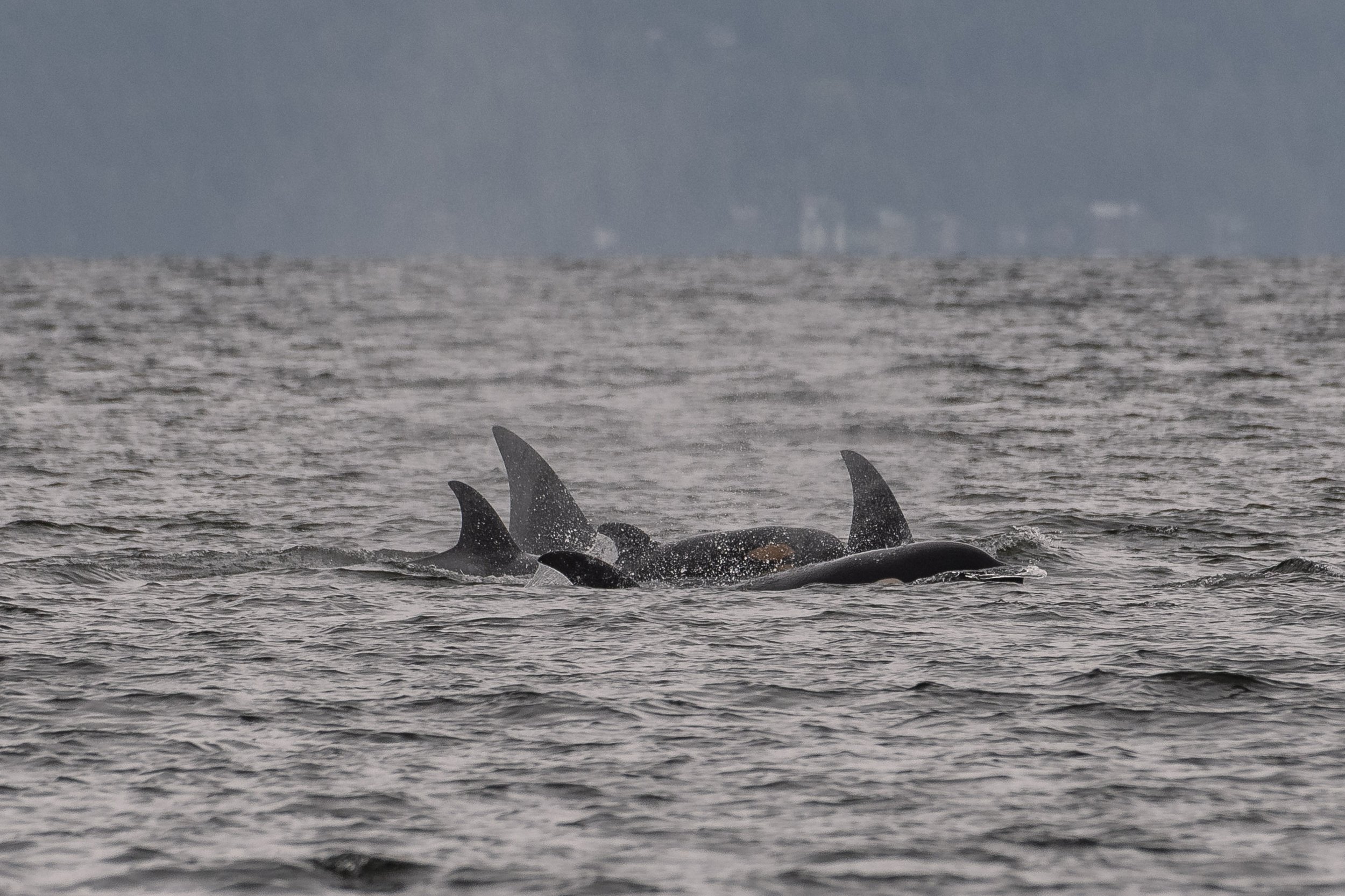
T046B6 Sol, T046B4 Quiver, T046 Raksha, and T046B7 Tala surfacing with the brand new baby, T046B8 Pi in the middle! Photo by Evan Hessels.
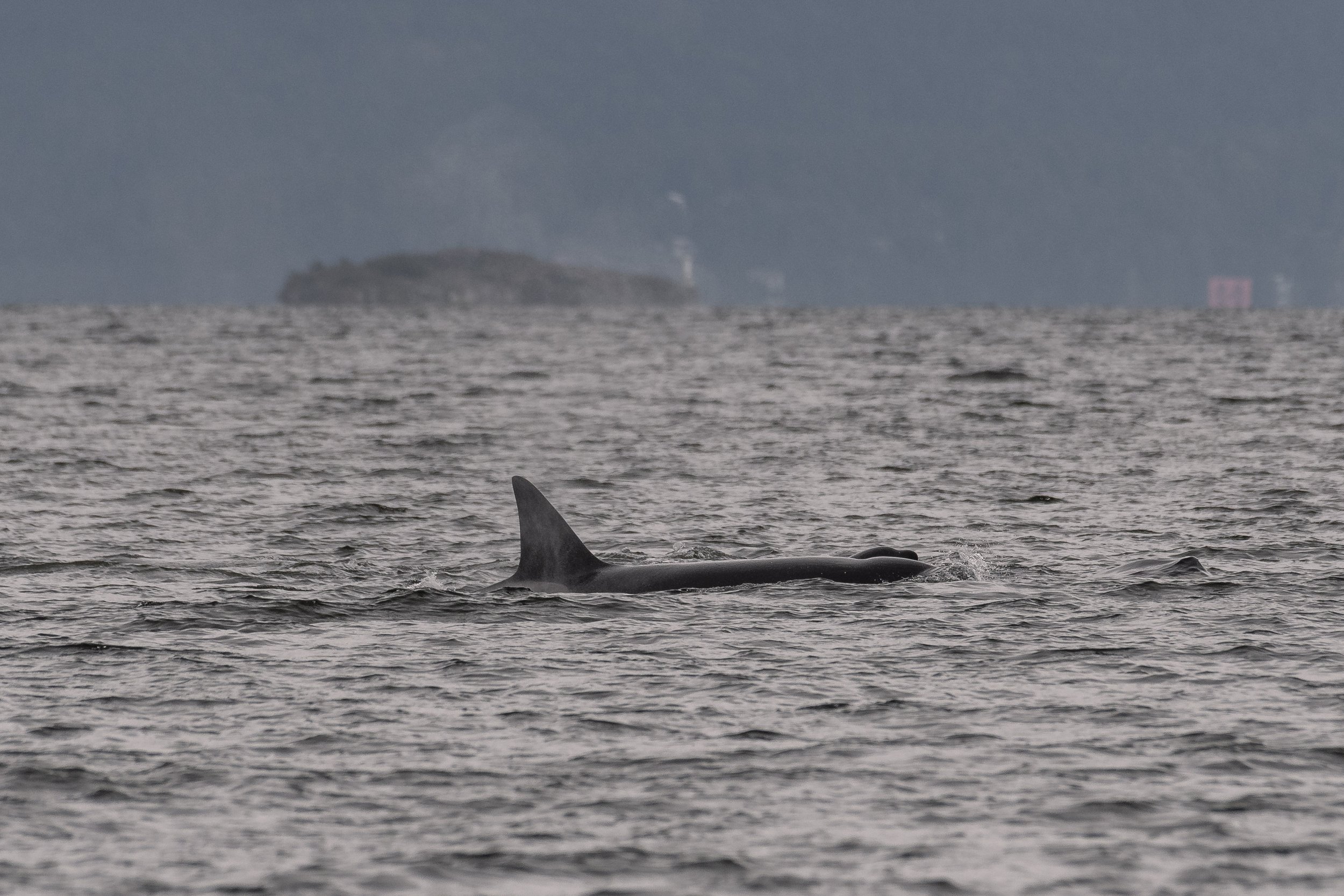
T046B3 Sedna surfacing. Photo by Evan Hessels.
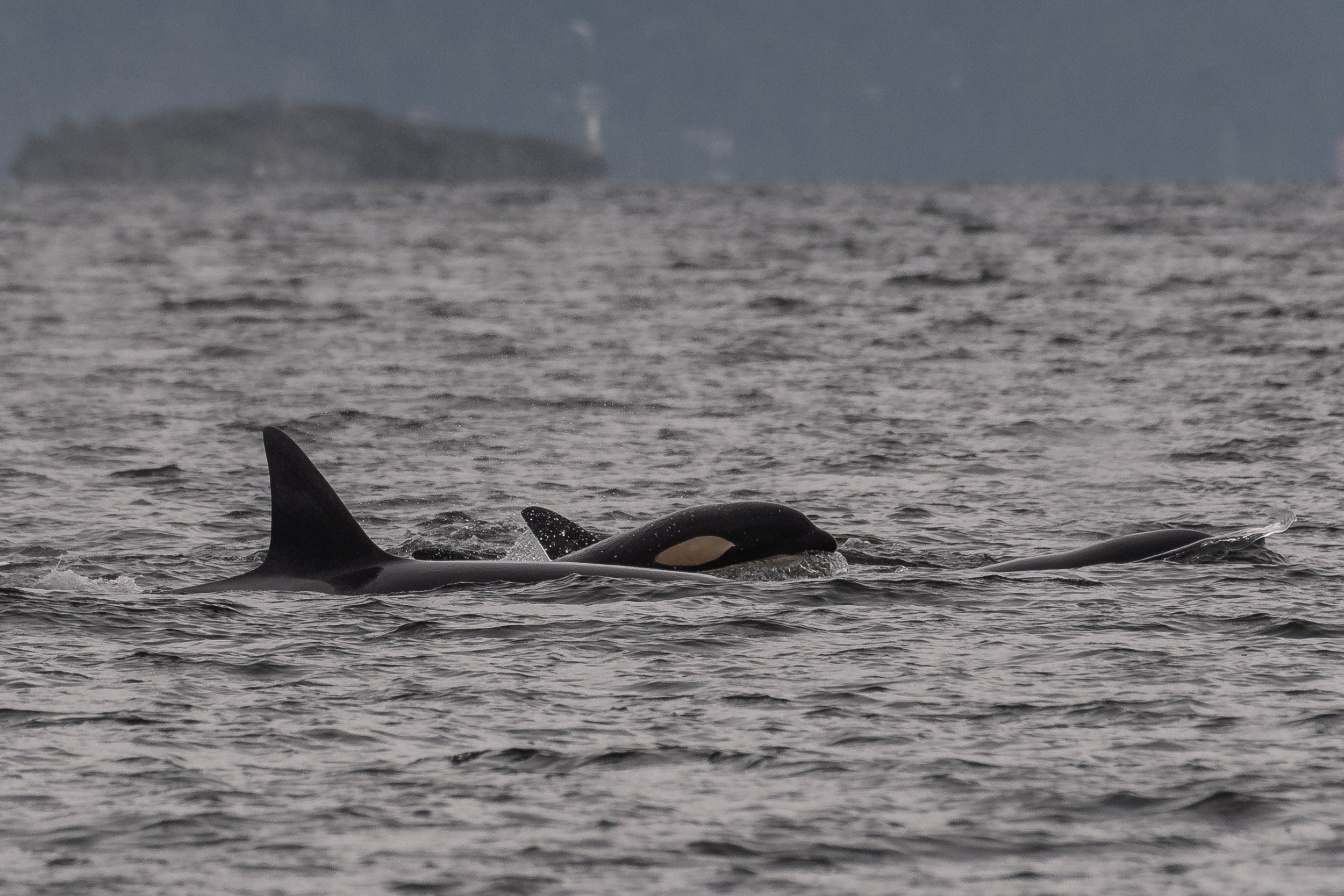
T046B3A Munro surfacing beside mom, T046B3 Sedna. Photo by Evan Hessels.
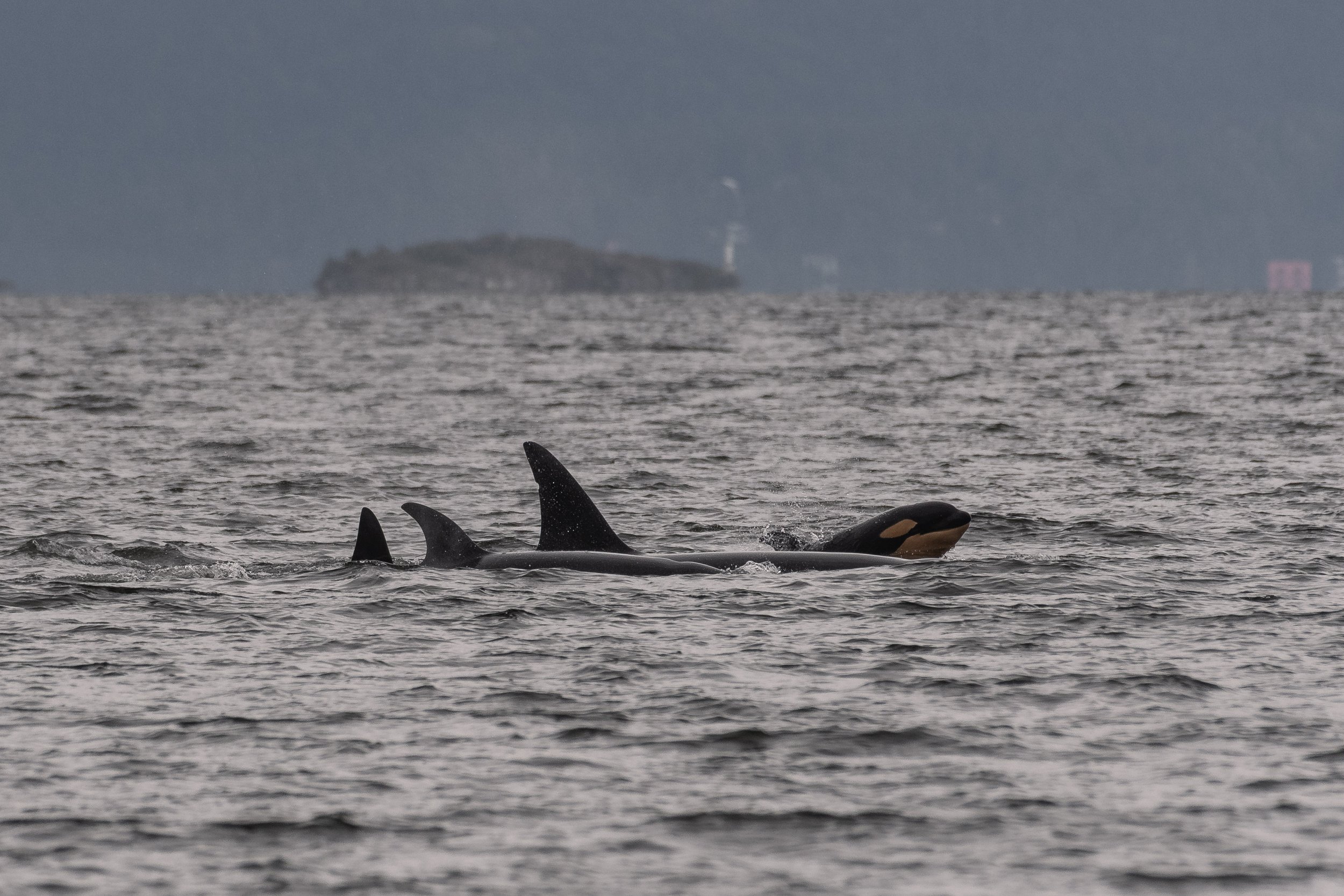
T046B2 Akela flanked by her daughter T046B2B and her newest sibiling, T046B8 Pi. Photo by Evan Hessels.
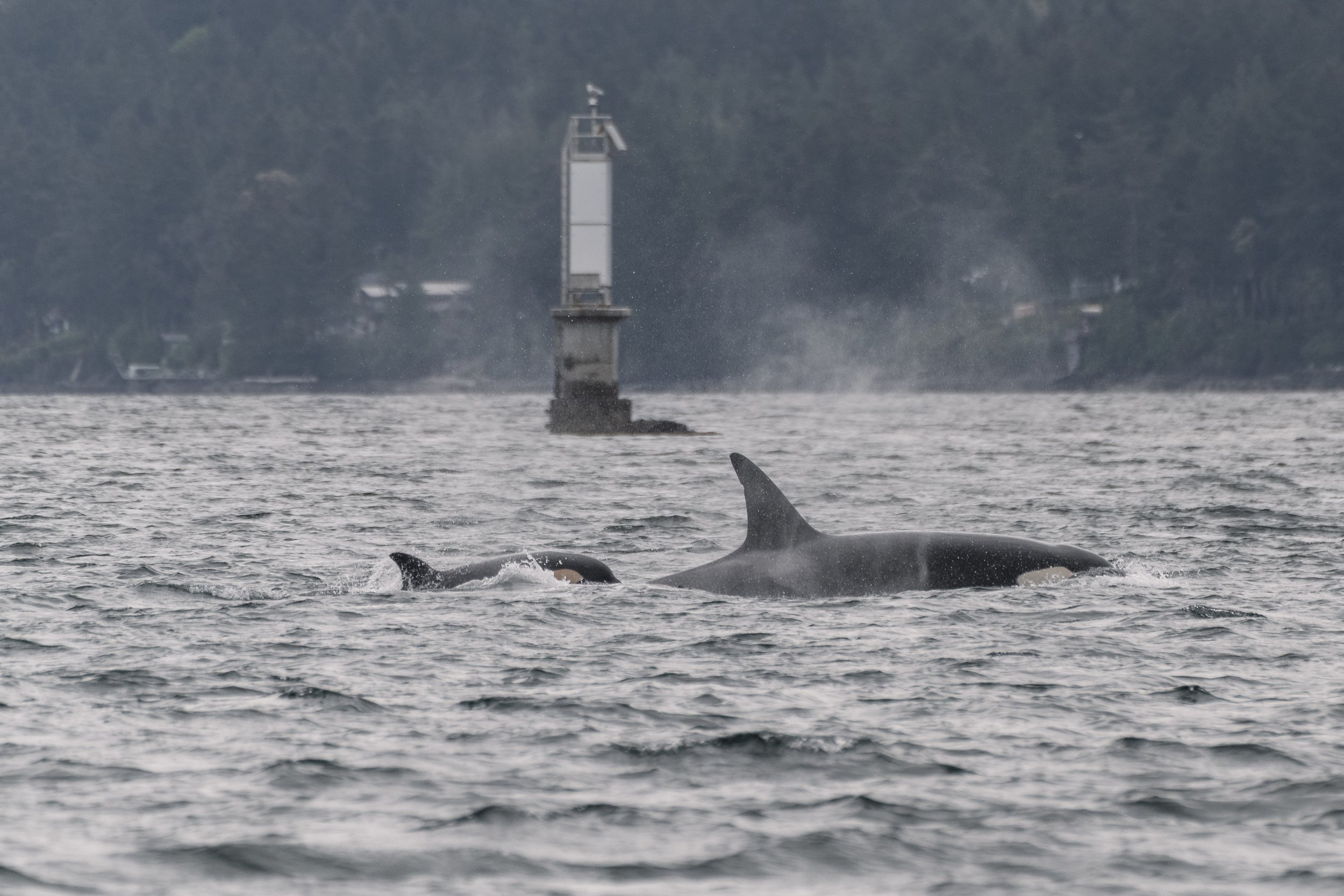
T046B2 Akela surfacing with one of the youngsters behind her. Photo by Val Watson.
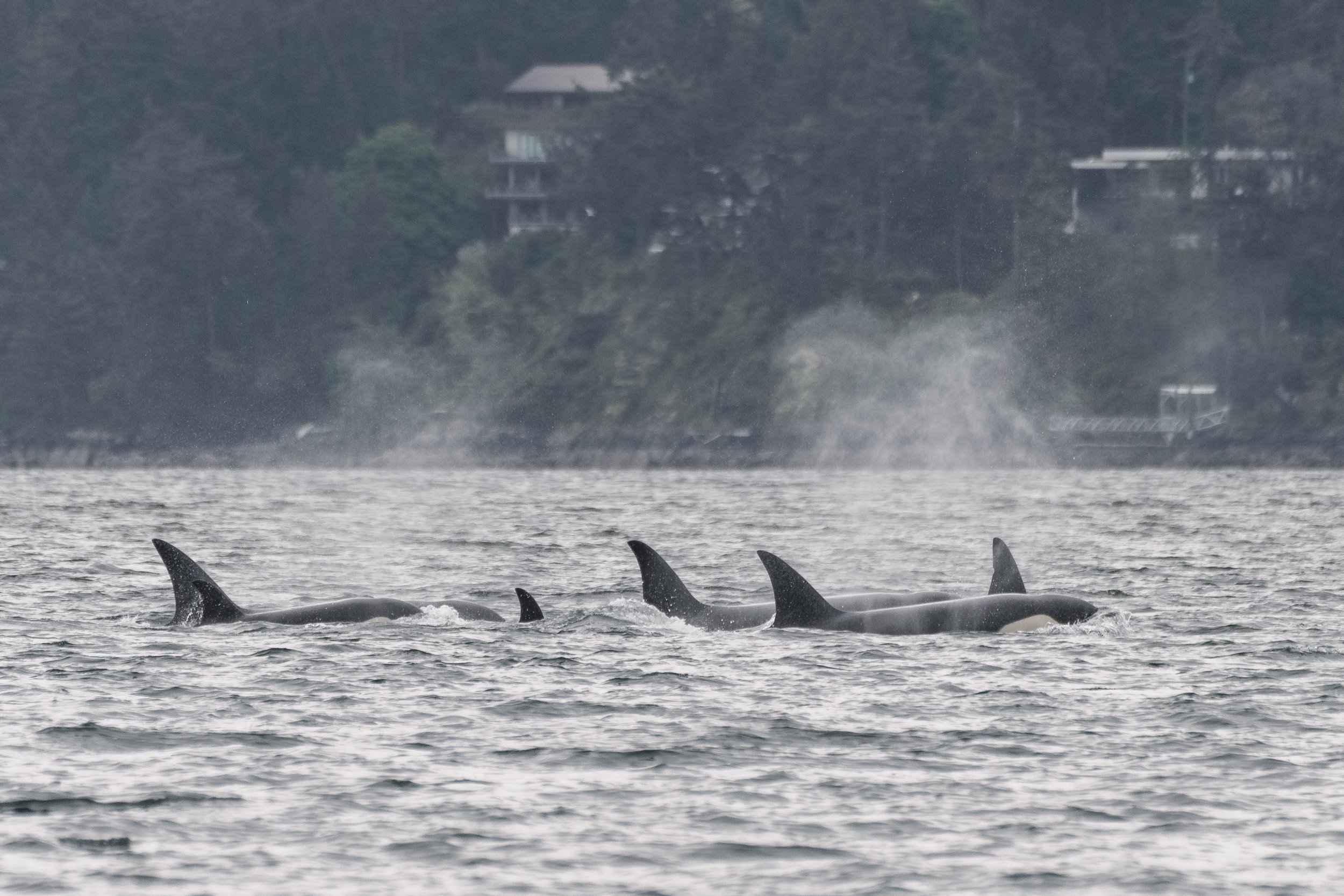
T046B4 Quiver, T046B7 Tala, T046B6 Sol, T046B Raksha, T046B3 Sedna, and T046B2 Akela all surfacin together. Photo by Val Watson.
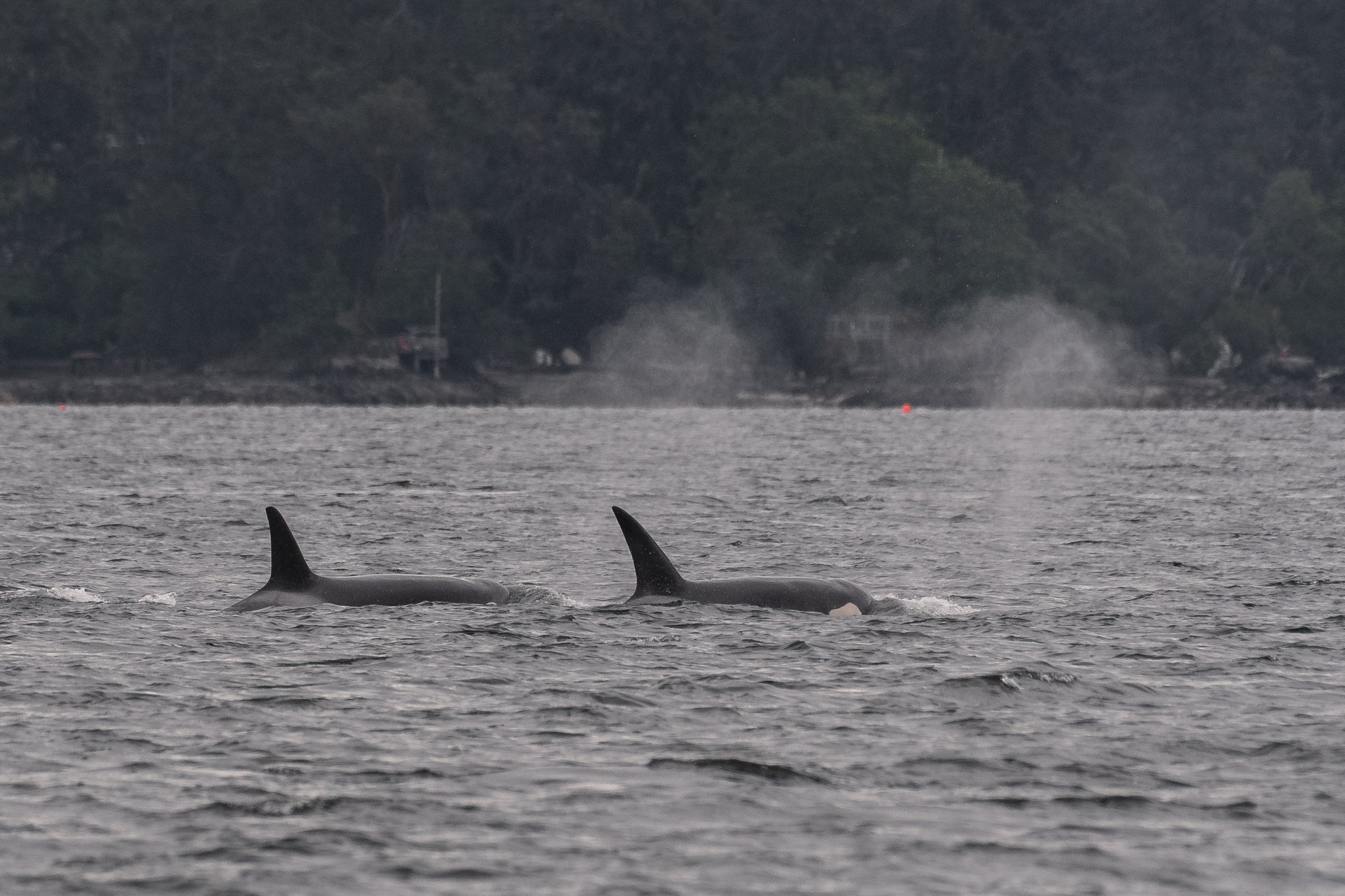
T046B Raksha surfacing beside her son, T046B4 Quiver. Photo by Evan Hessels.
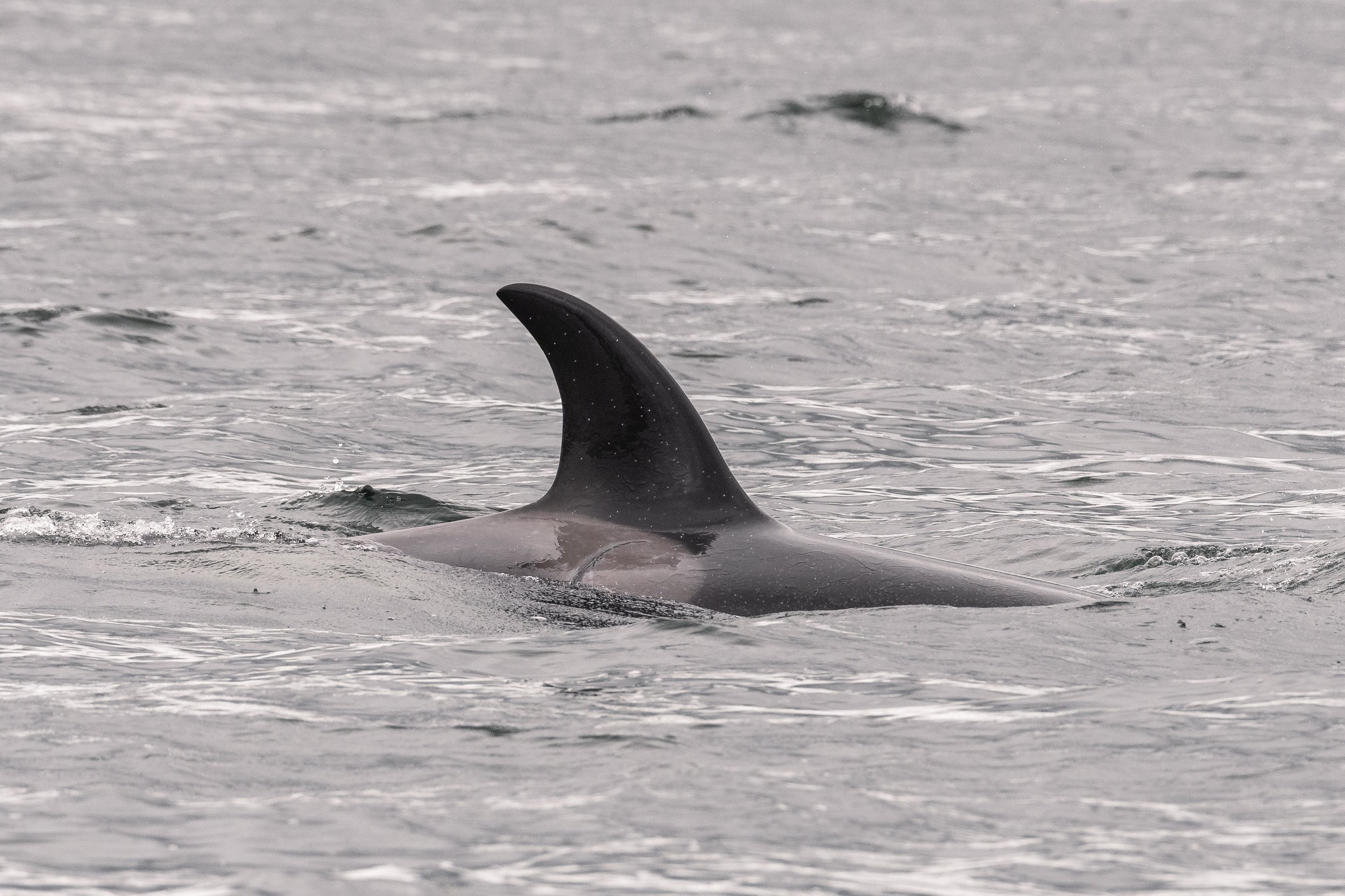
T046B6 Sol with a new scar. Photo by Evan Hessels.
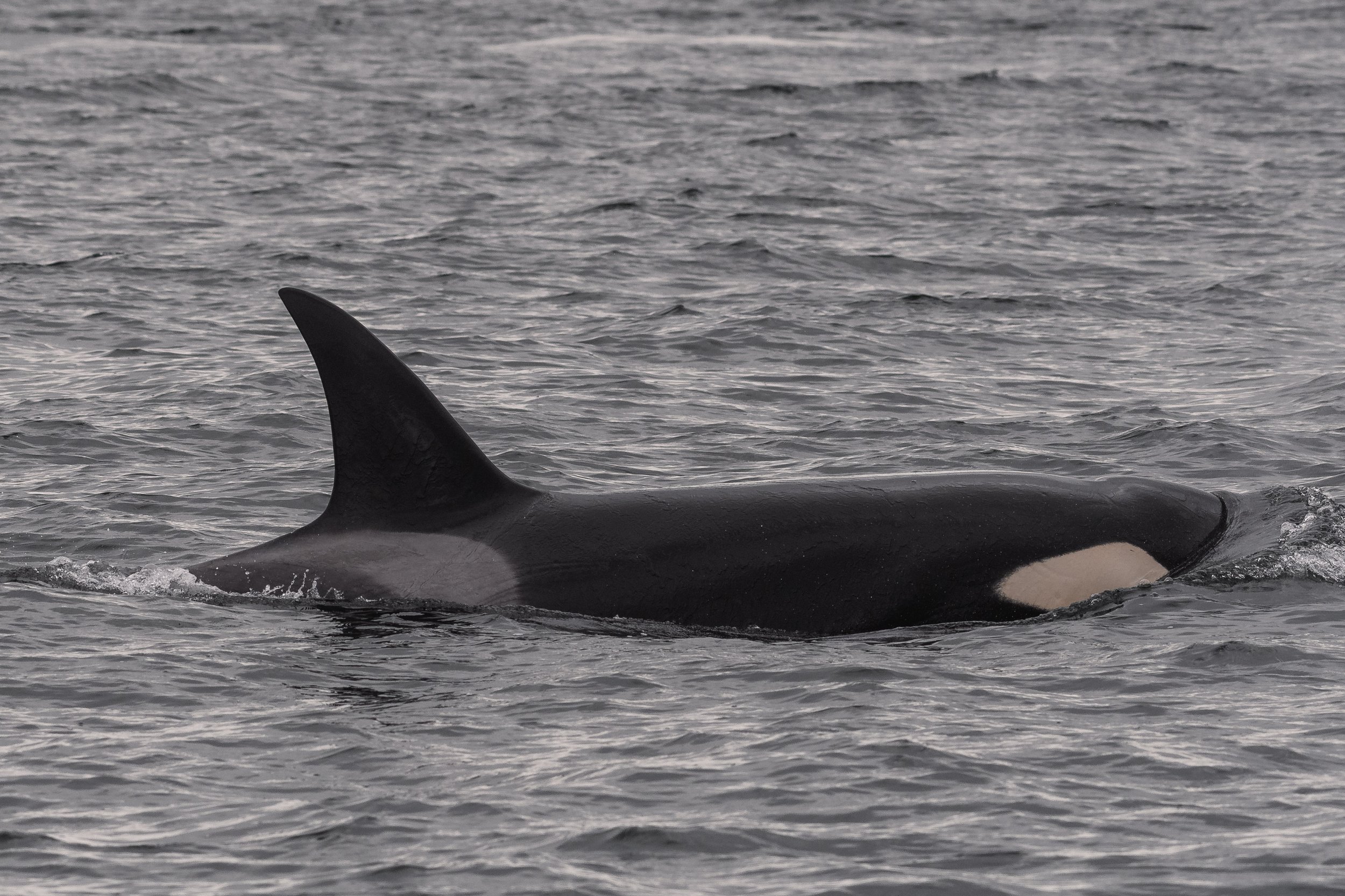
T046B3 Sedna showing off her eye patch and scarred saddle patch. Photo by Evan Hessels.
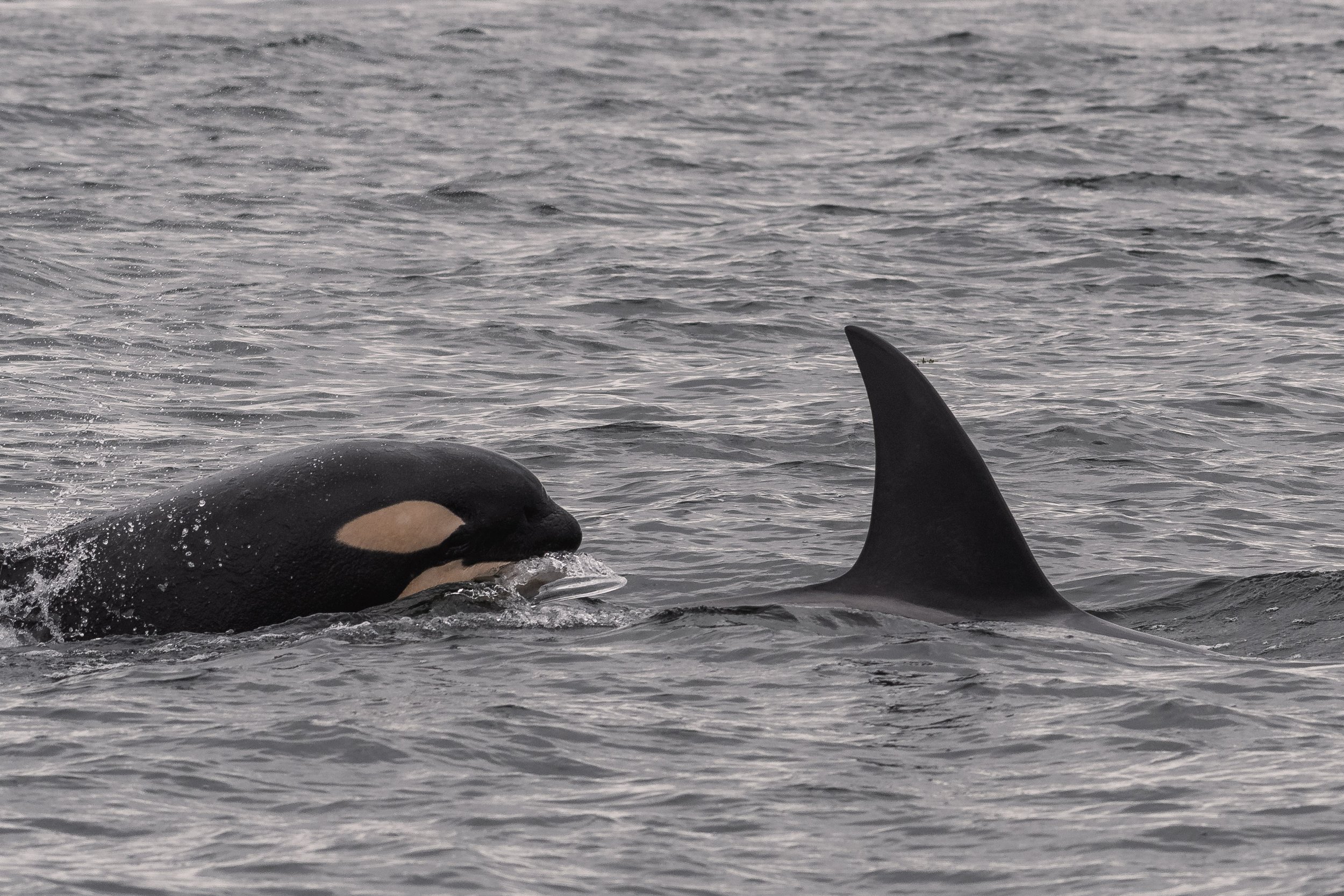
A great look at T046B3A Munro as they surface behin mom, T046B3 Sedna. Photo by Evan Hessels.
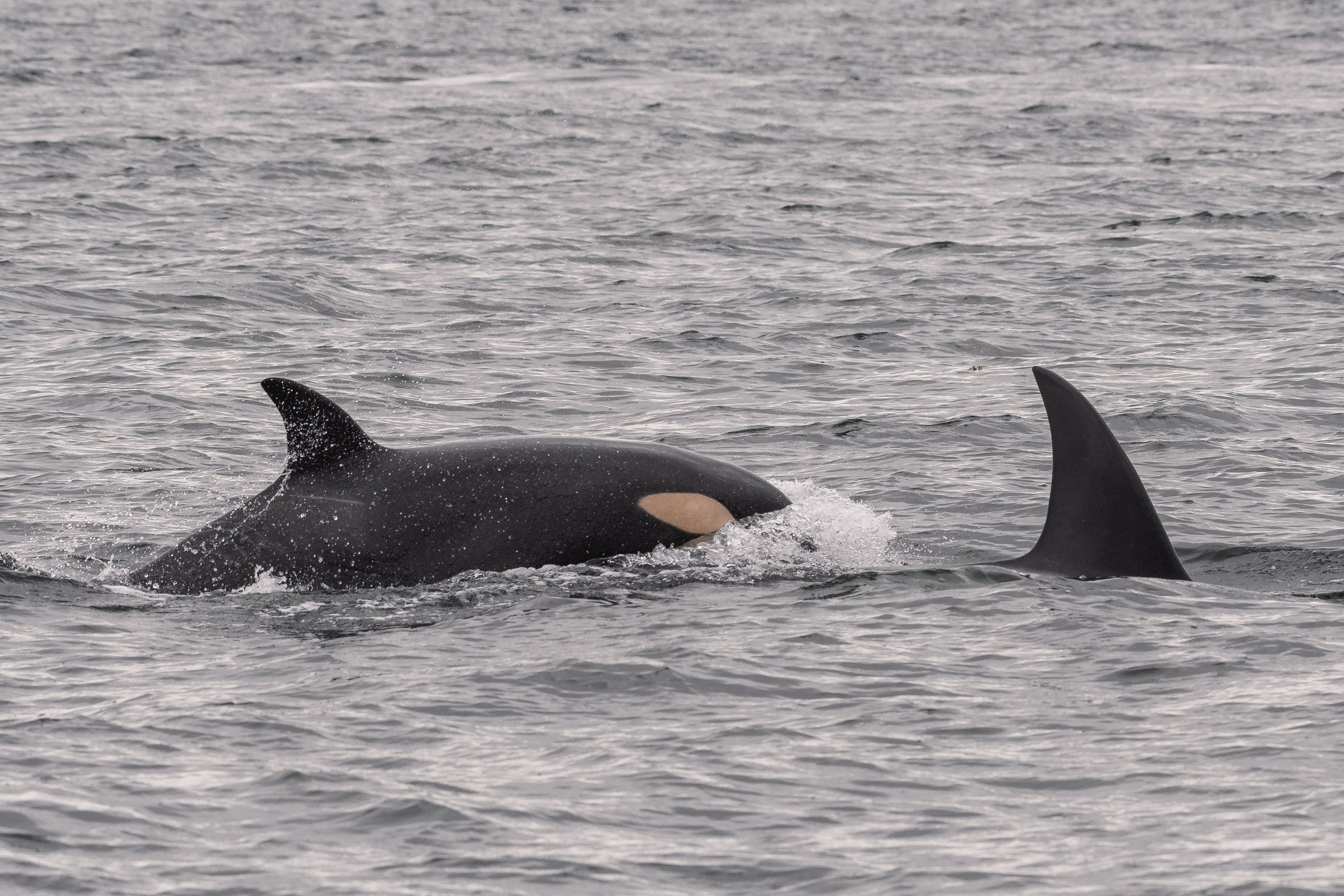
T046B3A Munro pushing through the waves. Photo by Evan Hessels.
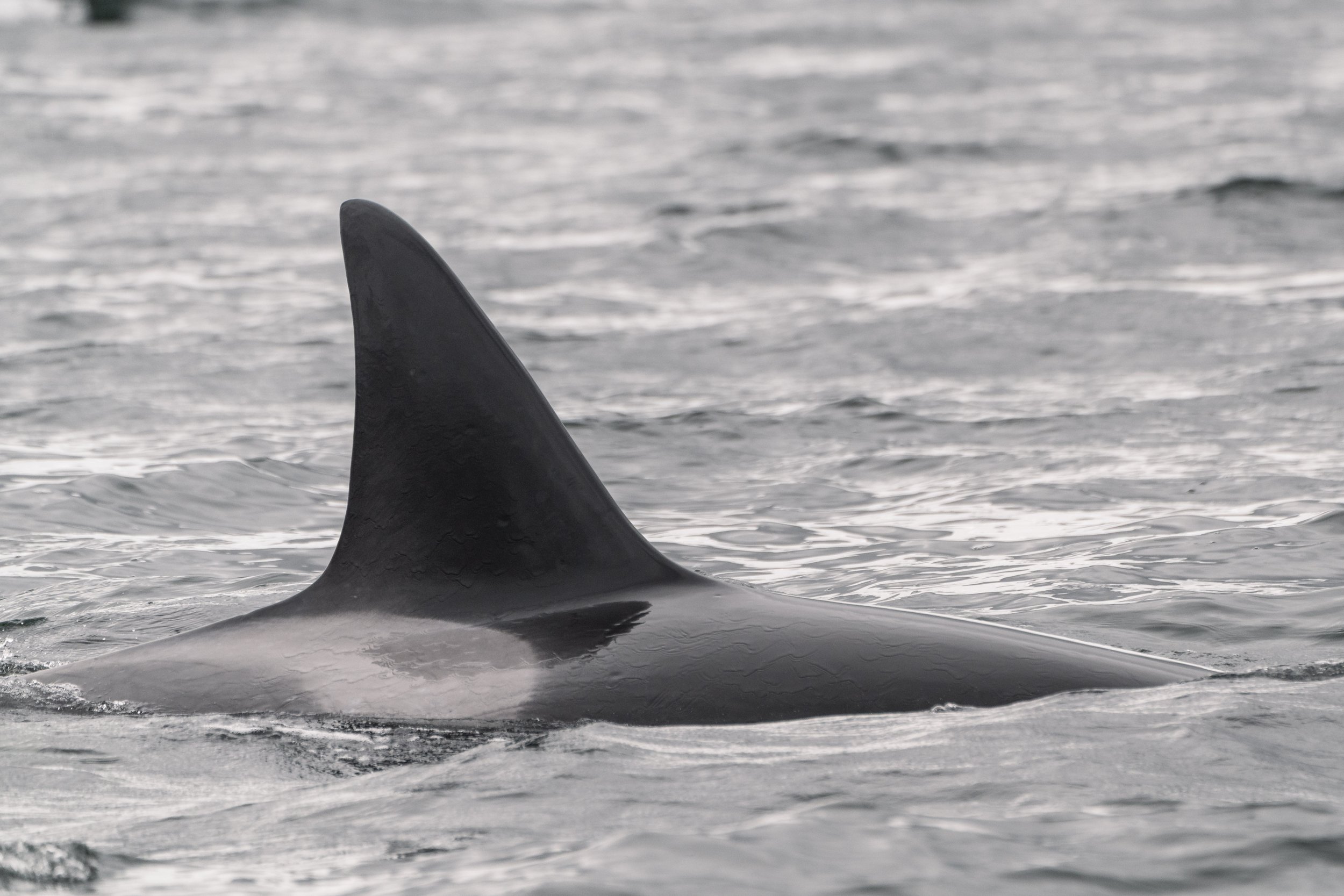
A great look at T046B3 Sedna’s saddle patch. Photo by Val Watson.
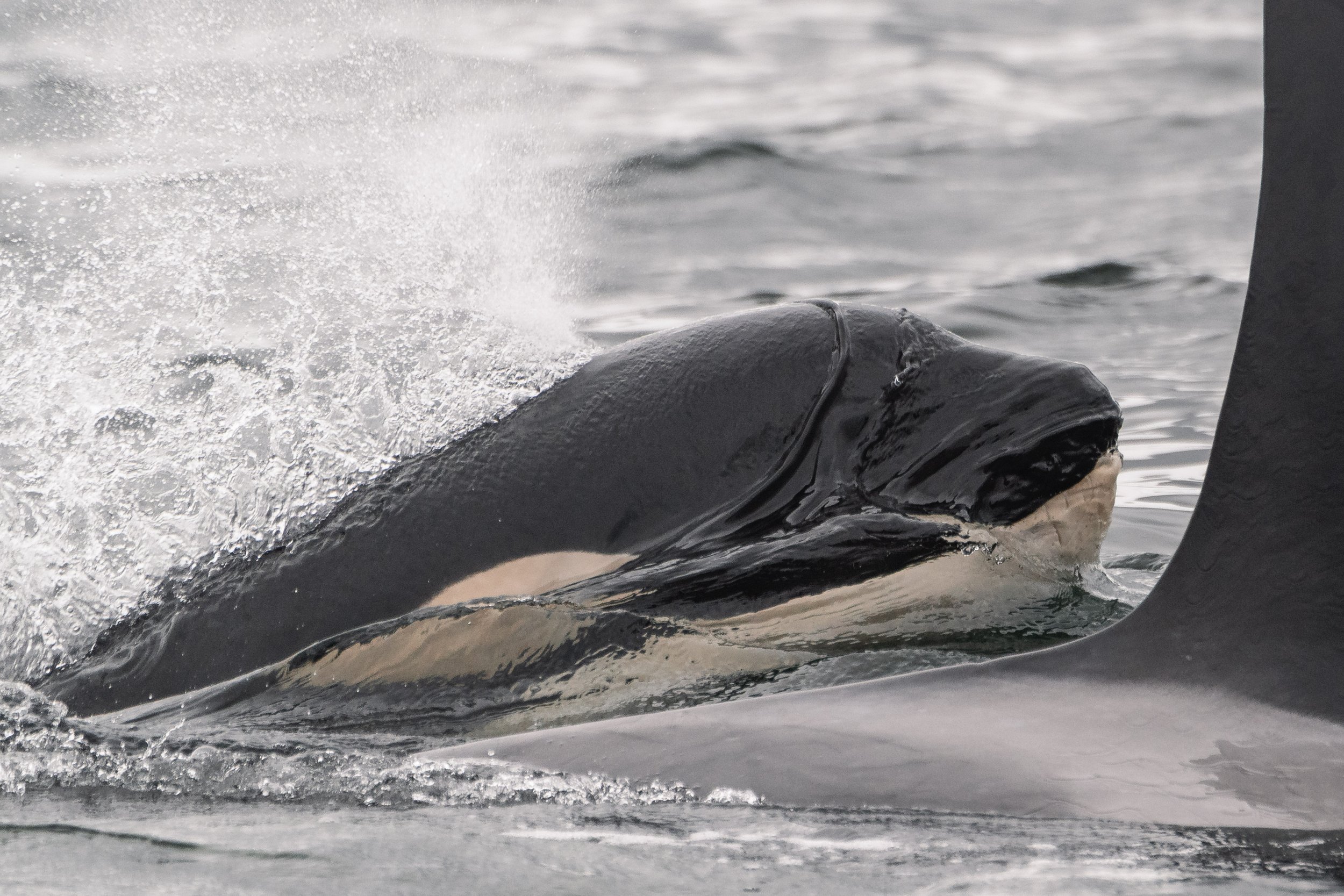
A very cool look at the water flowing over T046B3A Munro’s face as they surface. Photo by Val Watson.
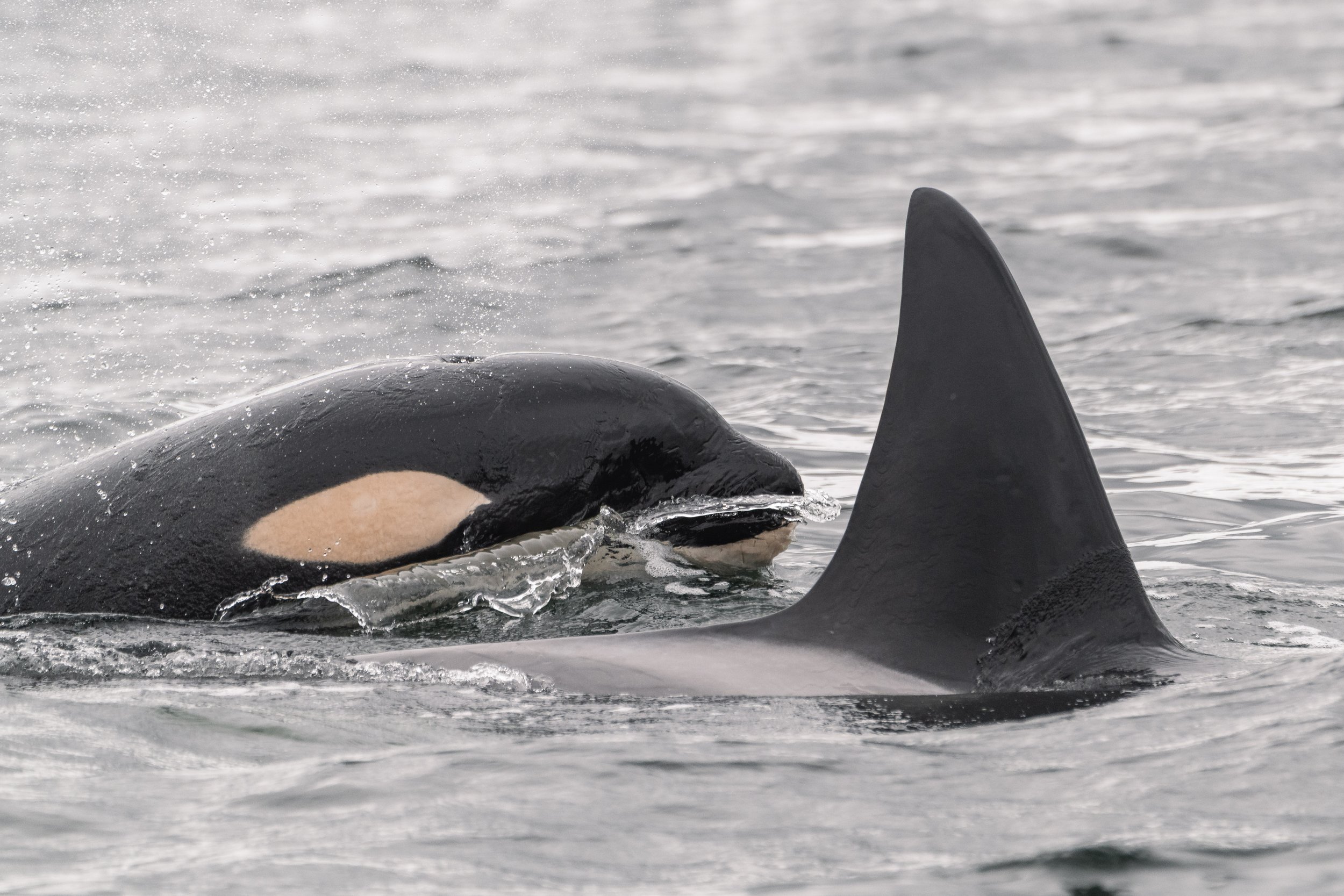
T046B3A Munro surfacing beside mom, T046B3 Sedna. Photo by Val Watson.
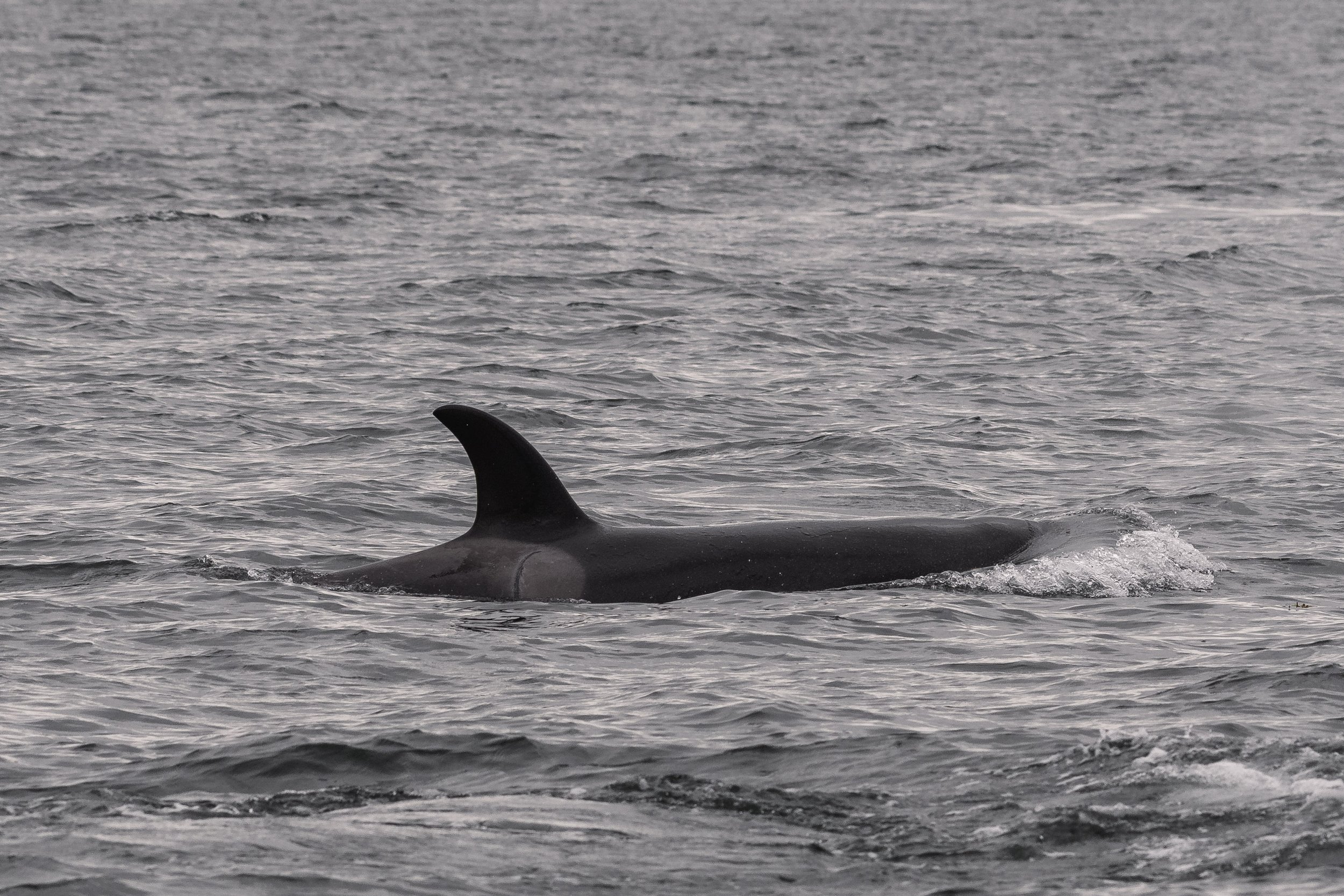
T046B6 Sol. Photo by Evan Hessels.
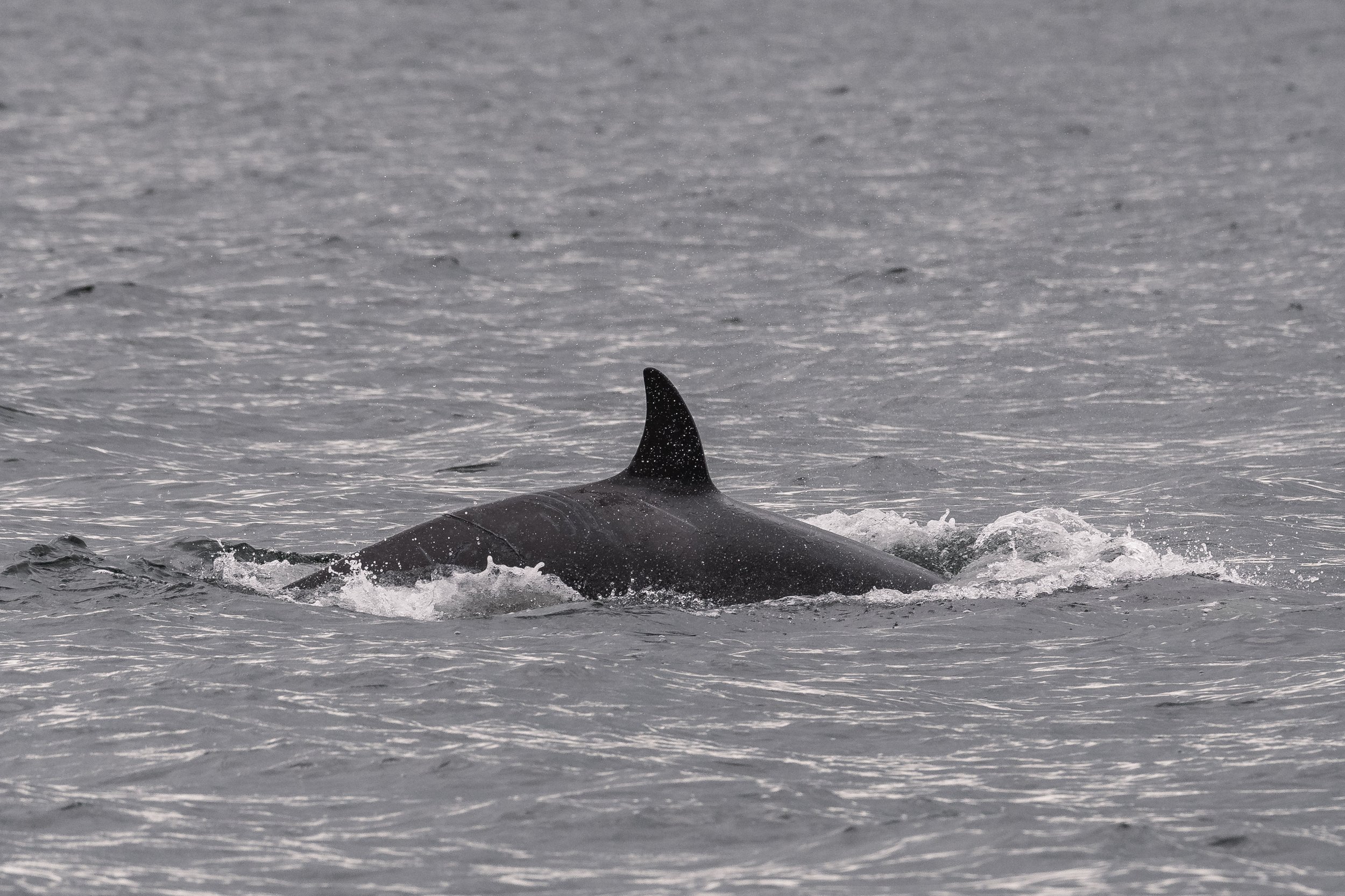
A great look at all the scarring on T046B3A Munro’s dorsal surface. Photo by Evan Hessels.
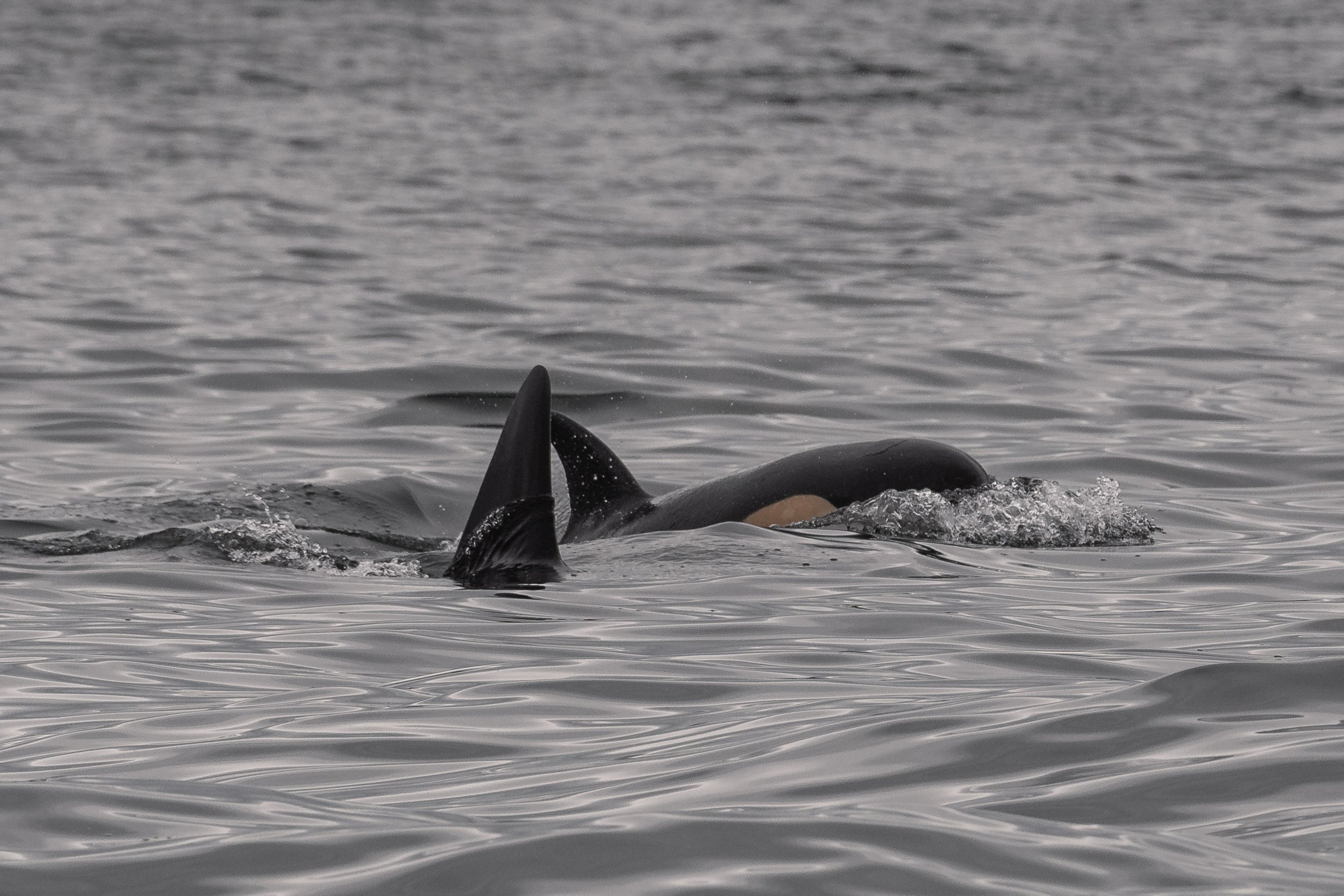
T046B3A Munro surfacing beside mom, T046B3 Sedna. Photo by Evan Hessels.
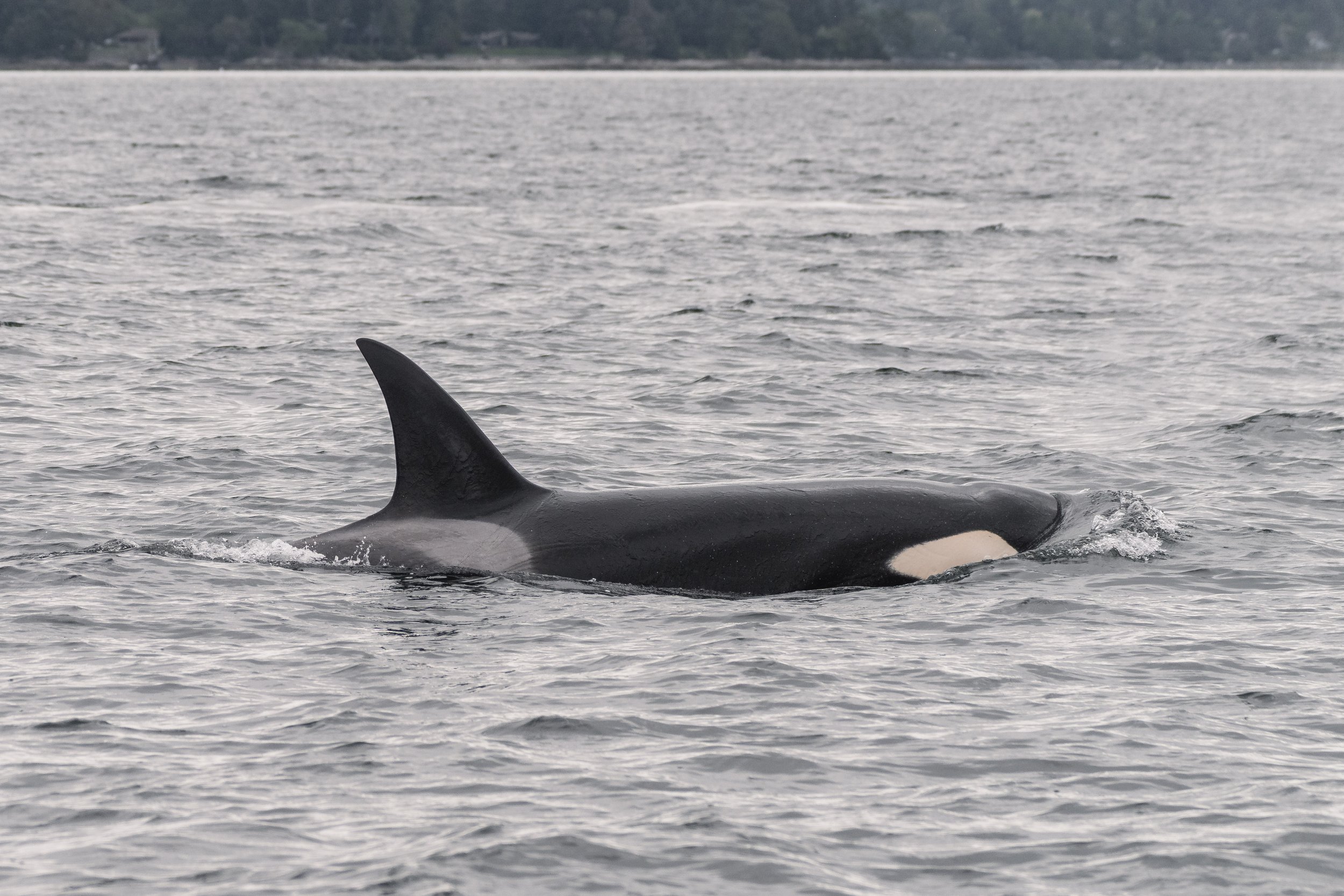
Can you spot the freckle in T046B3 Sedna’s eye patch? Photo by Val Watson.
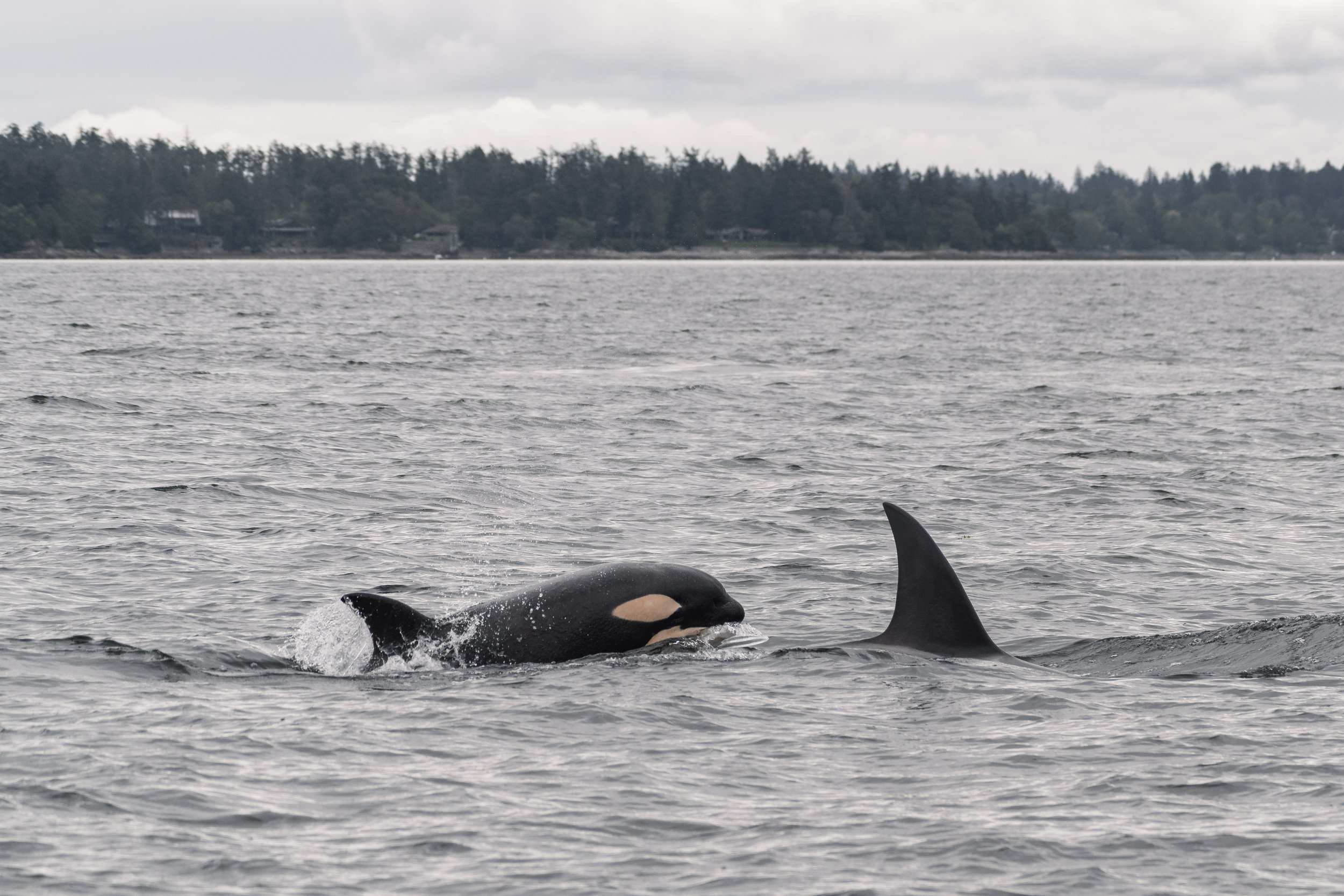
T046B3A Munro surfacing beside mom, T046B3 Sedna. Photo by Val Watson.
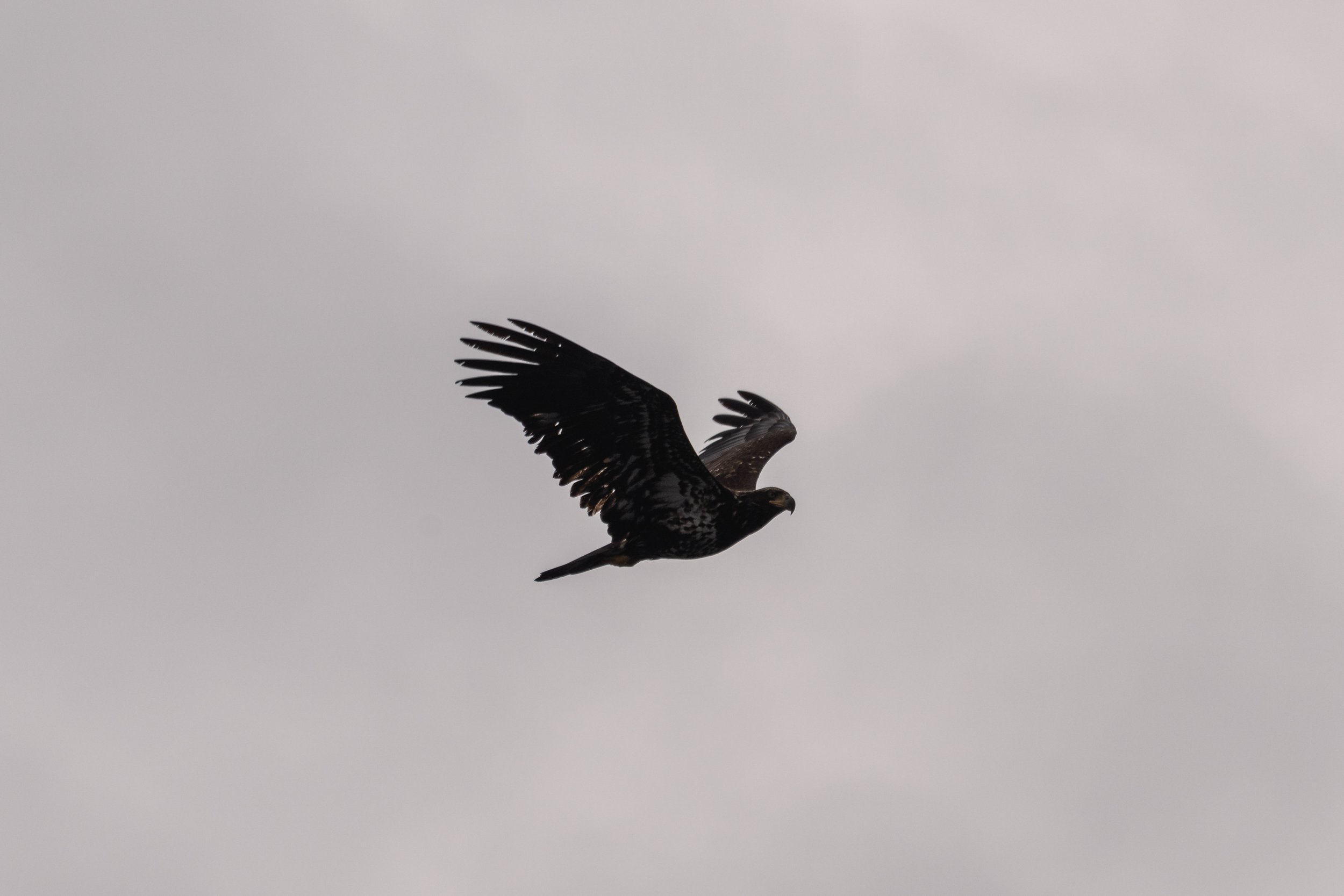
A juvinile Bald Eagle flying overhead. Photo by Val Watson.
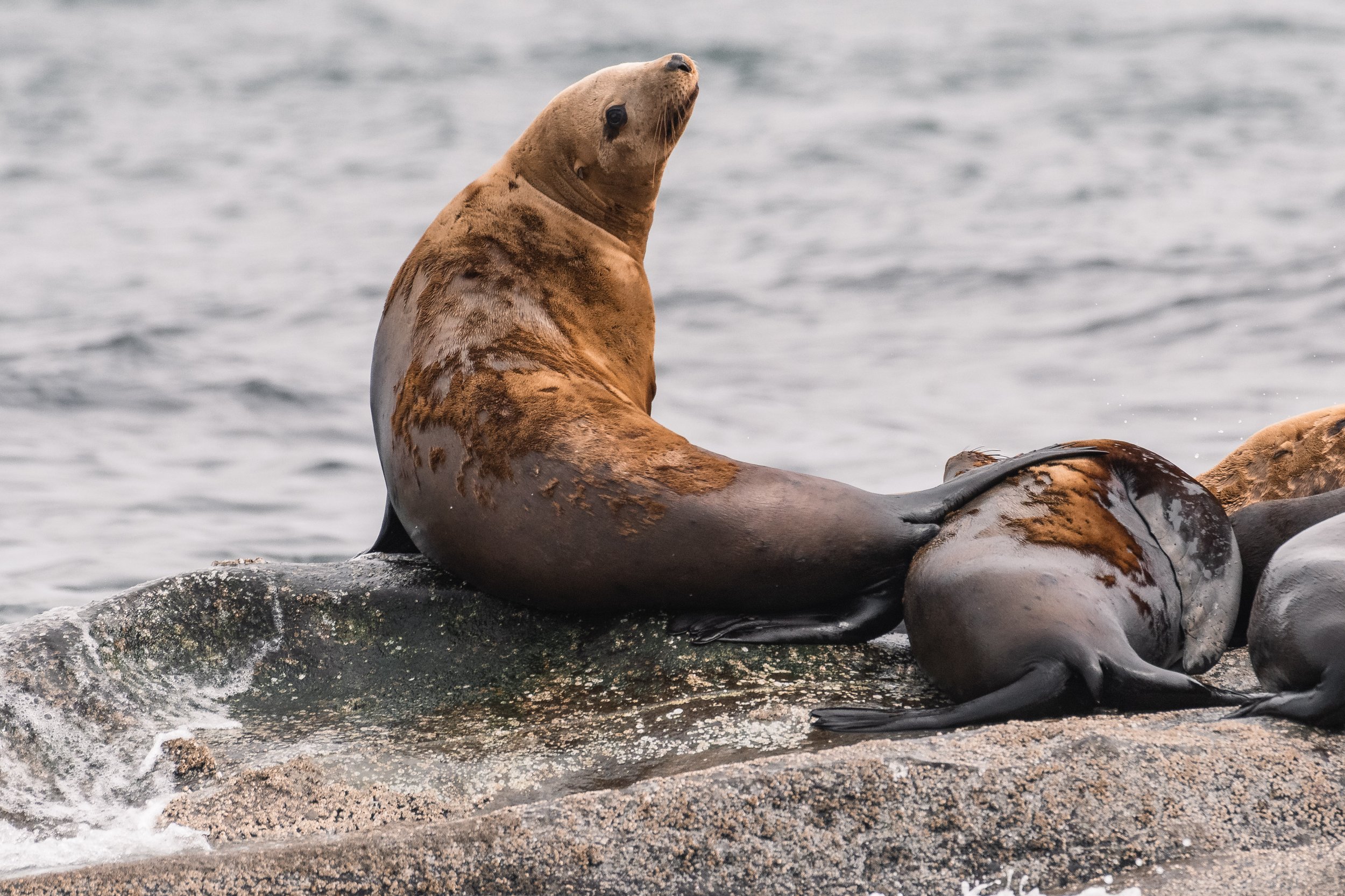
Steller Sea Lions cuddling on the rocks at Canoe Islet. Photo by Evan Hessels.
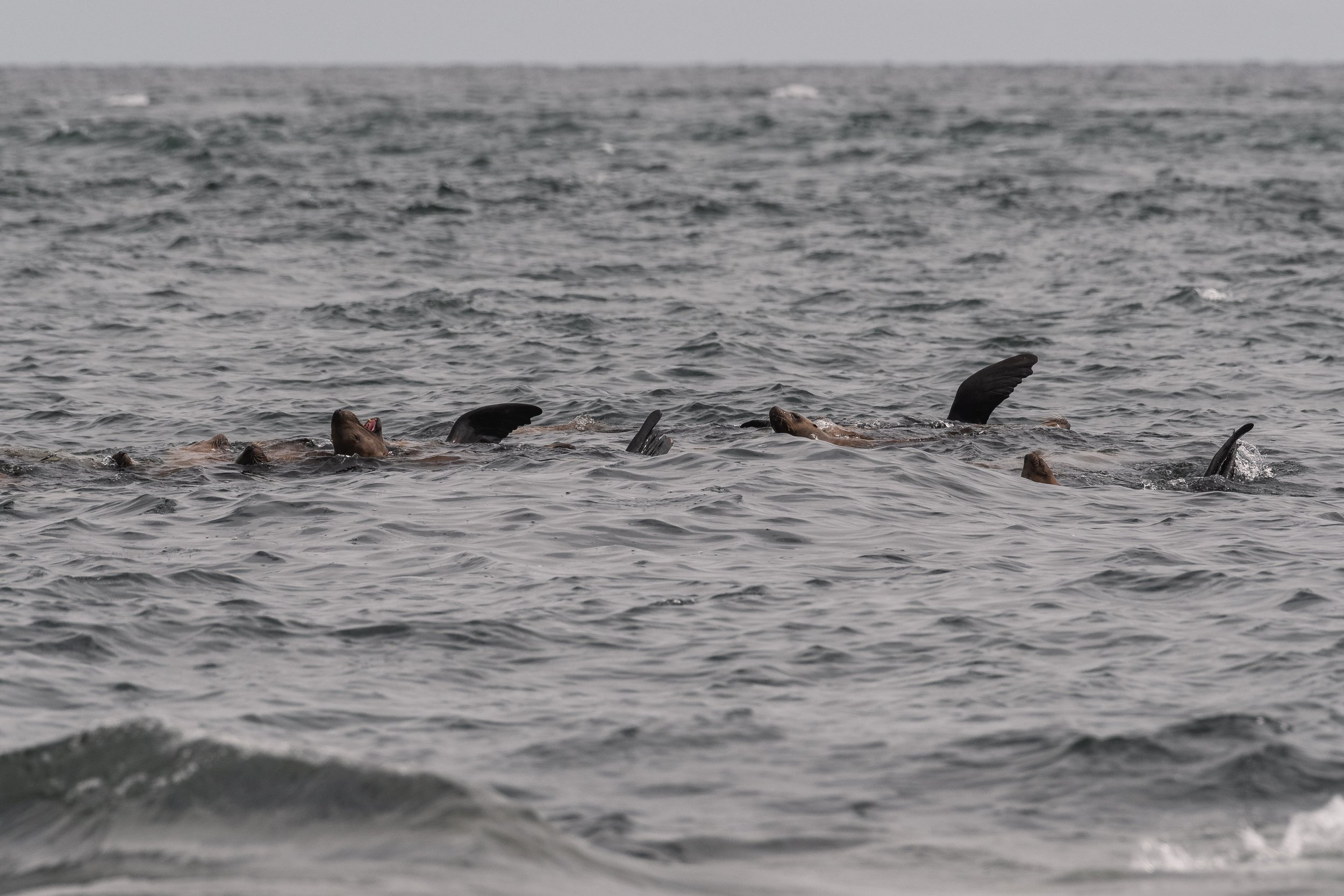
Sea Lions rafting in the water close by. Photo by Evan Hessels.
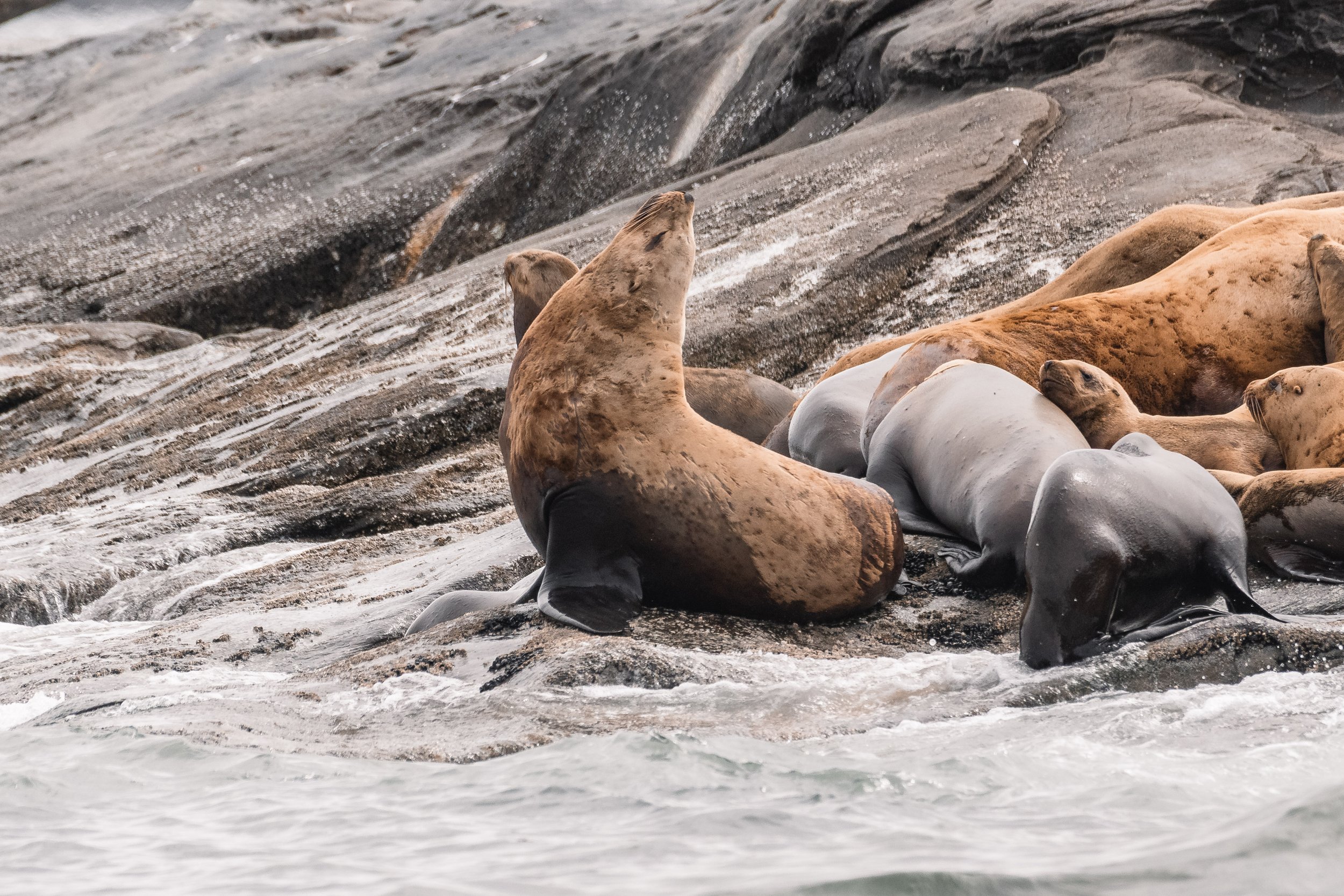
One of the Steller Sea Lions striking a pose on the rocks. Photo by Evan Hessels.
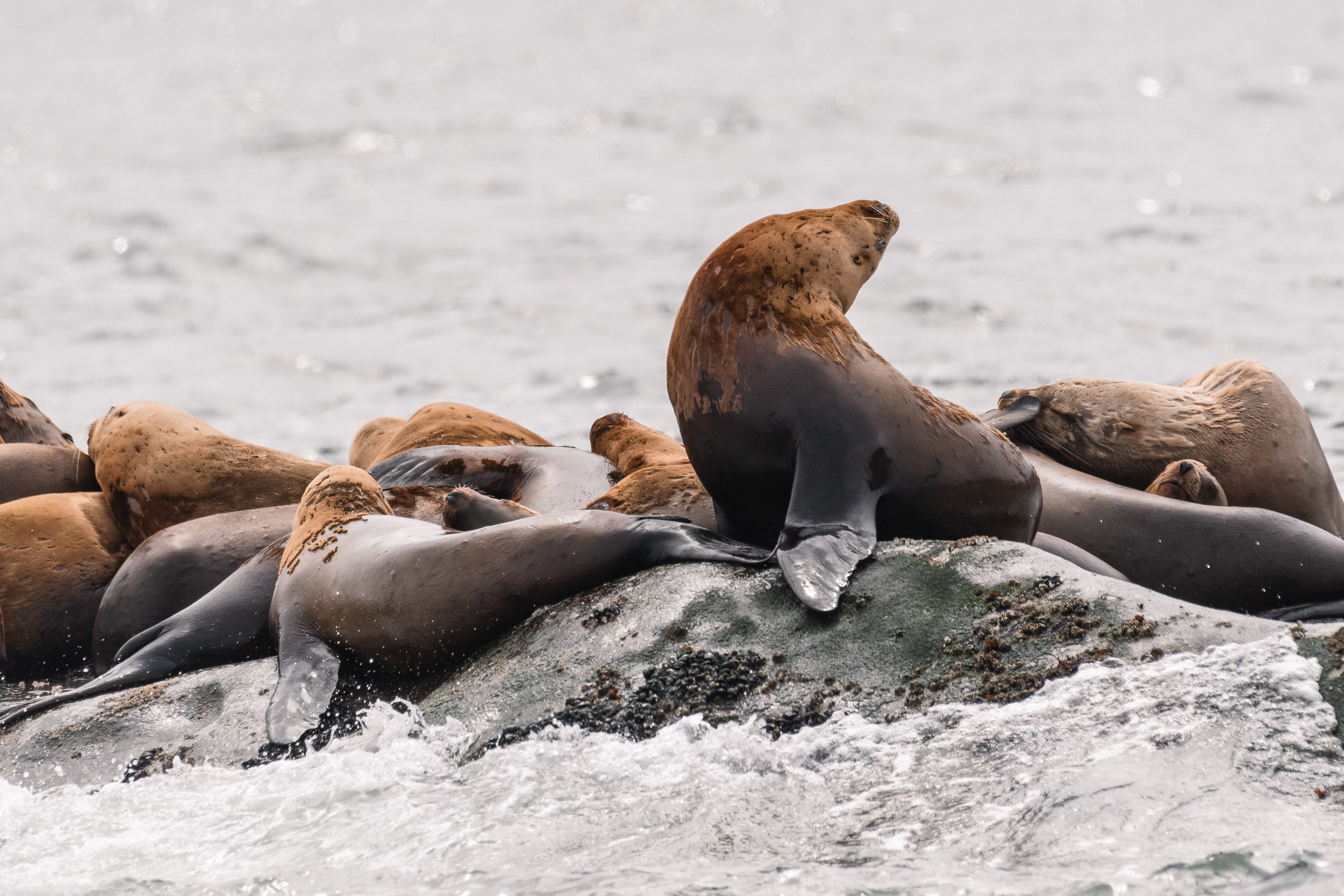
The Steller Sea Lions conserve heat by piling up like this. Photo by Evan Hessels.
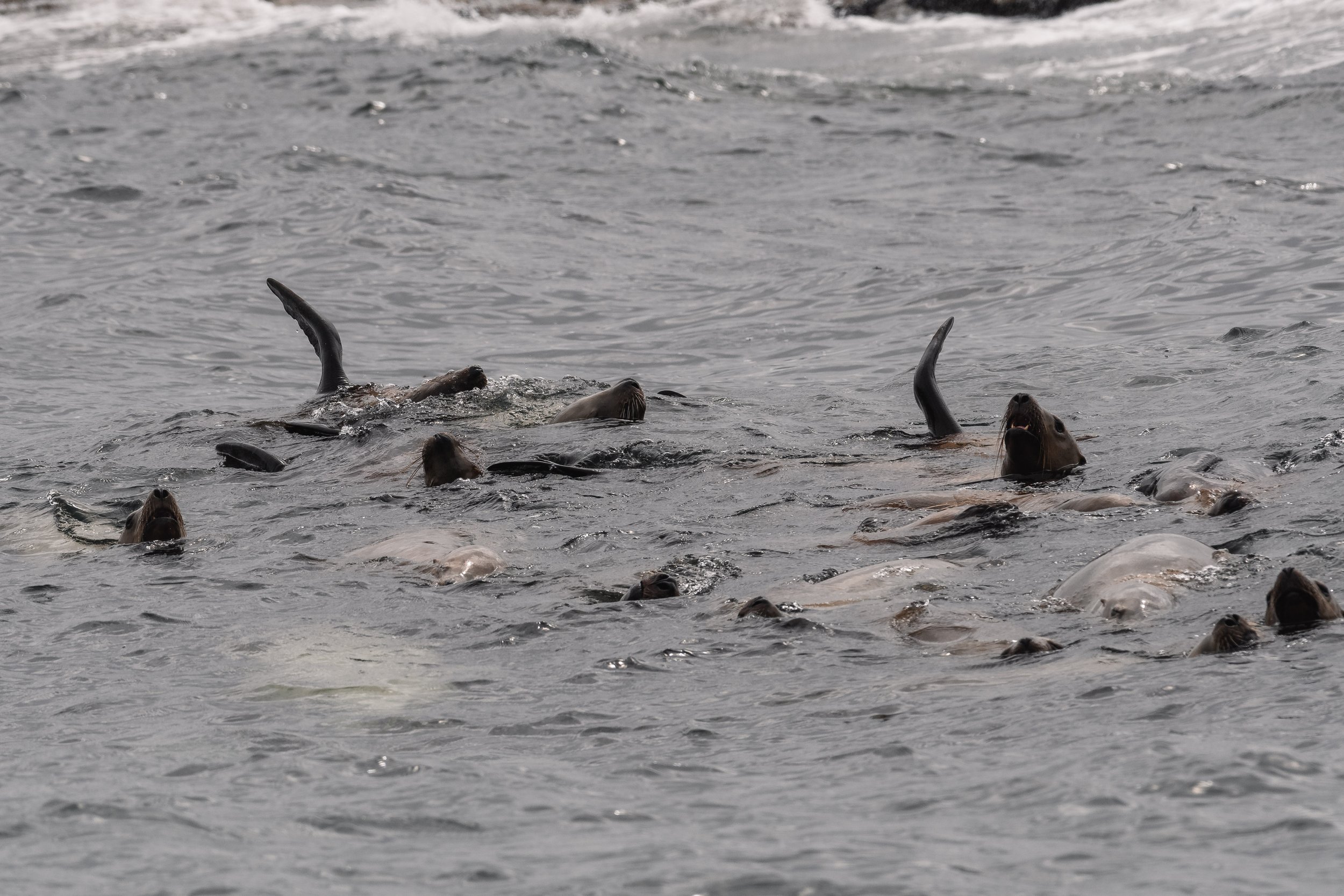
Another look at the rafting sea lions. Photo by Evan Hessels.
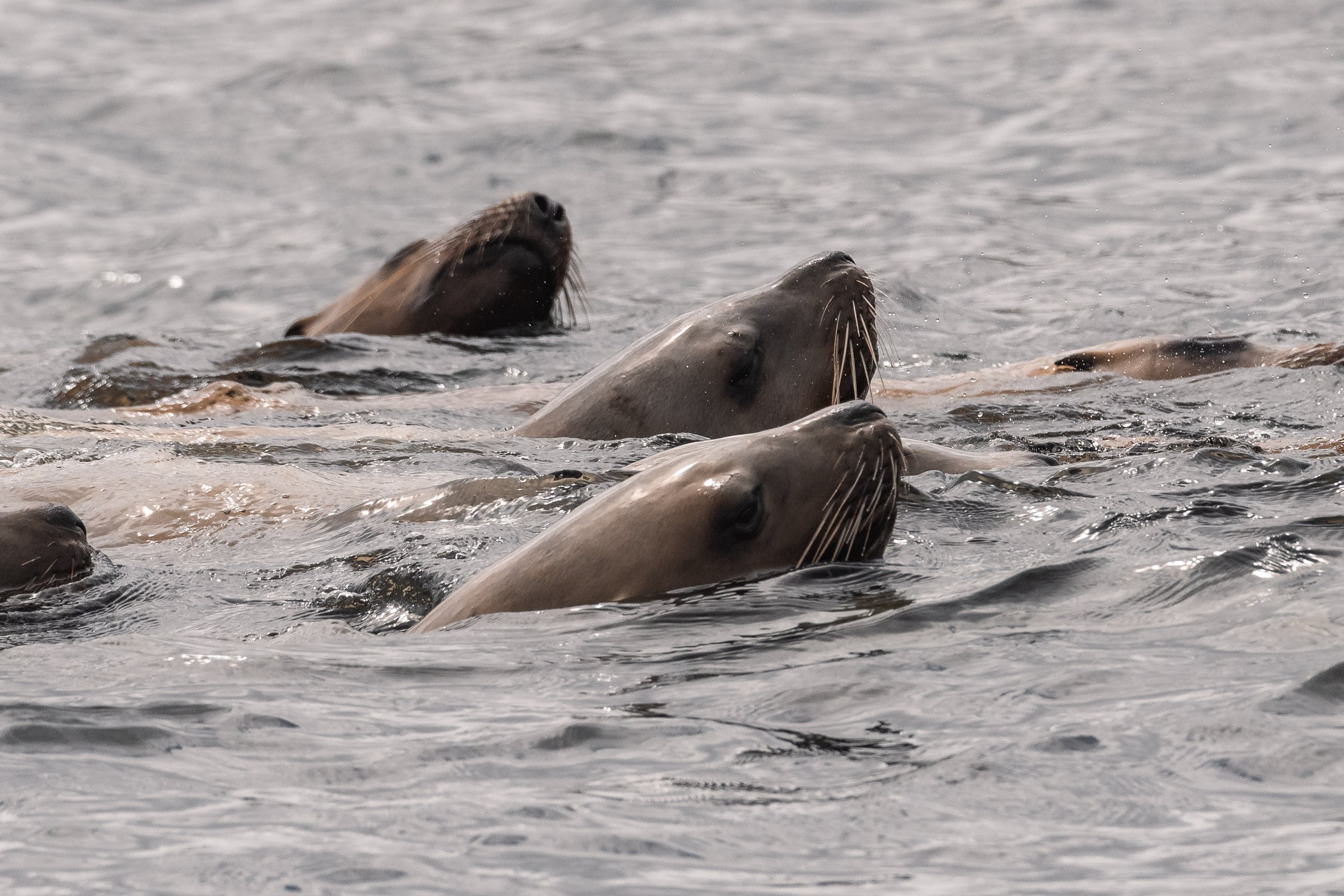
Just look how long the whiskers are on these Steller Sea Lions. Photo by Evan Hessels.
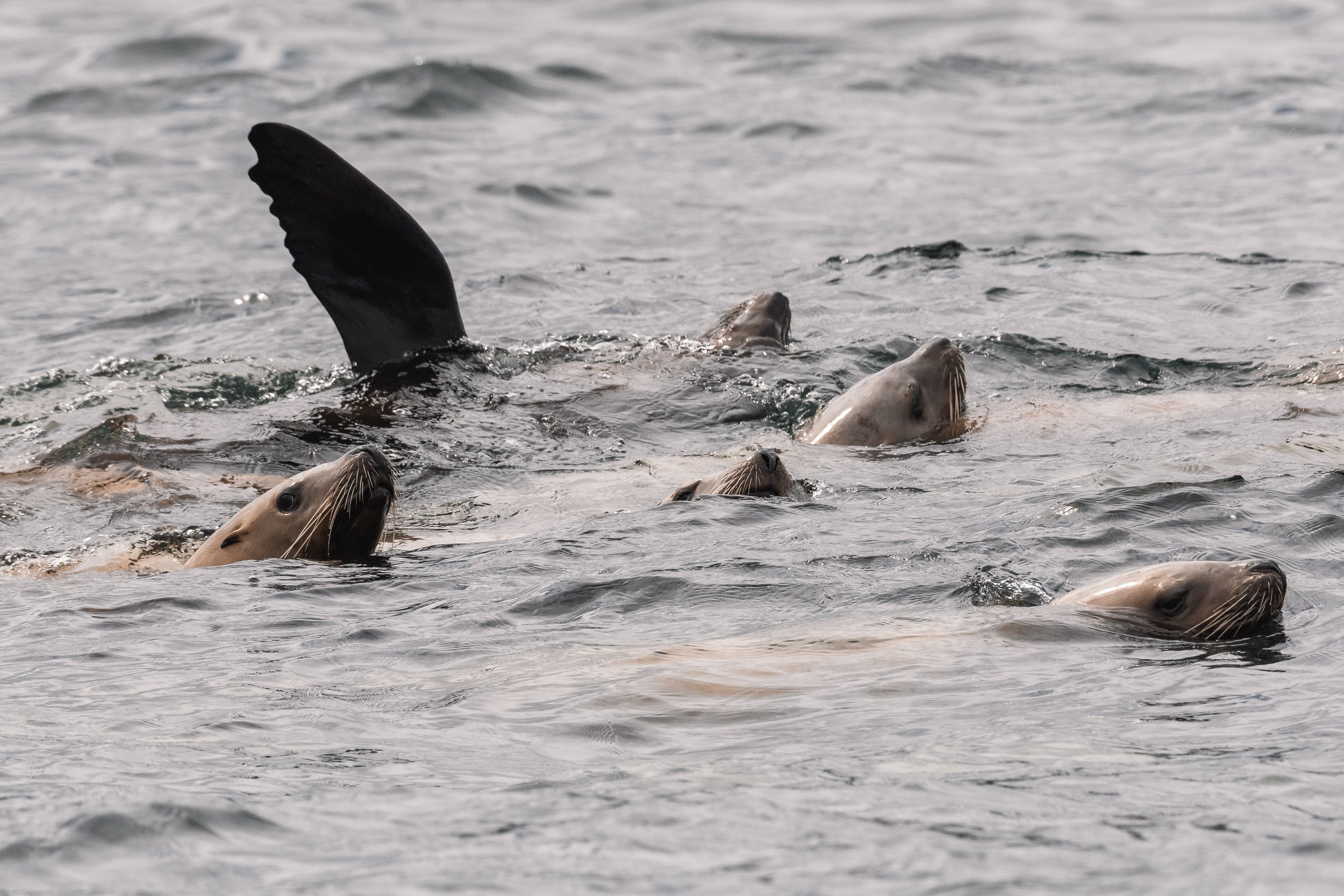
The curious sea lions watch us from the water. Photo by Evan Hessels.
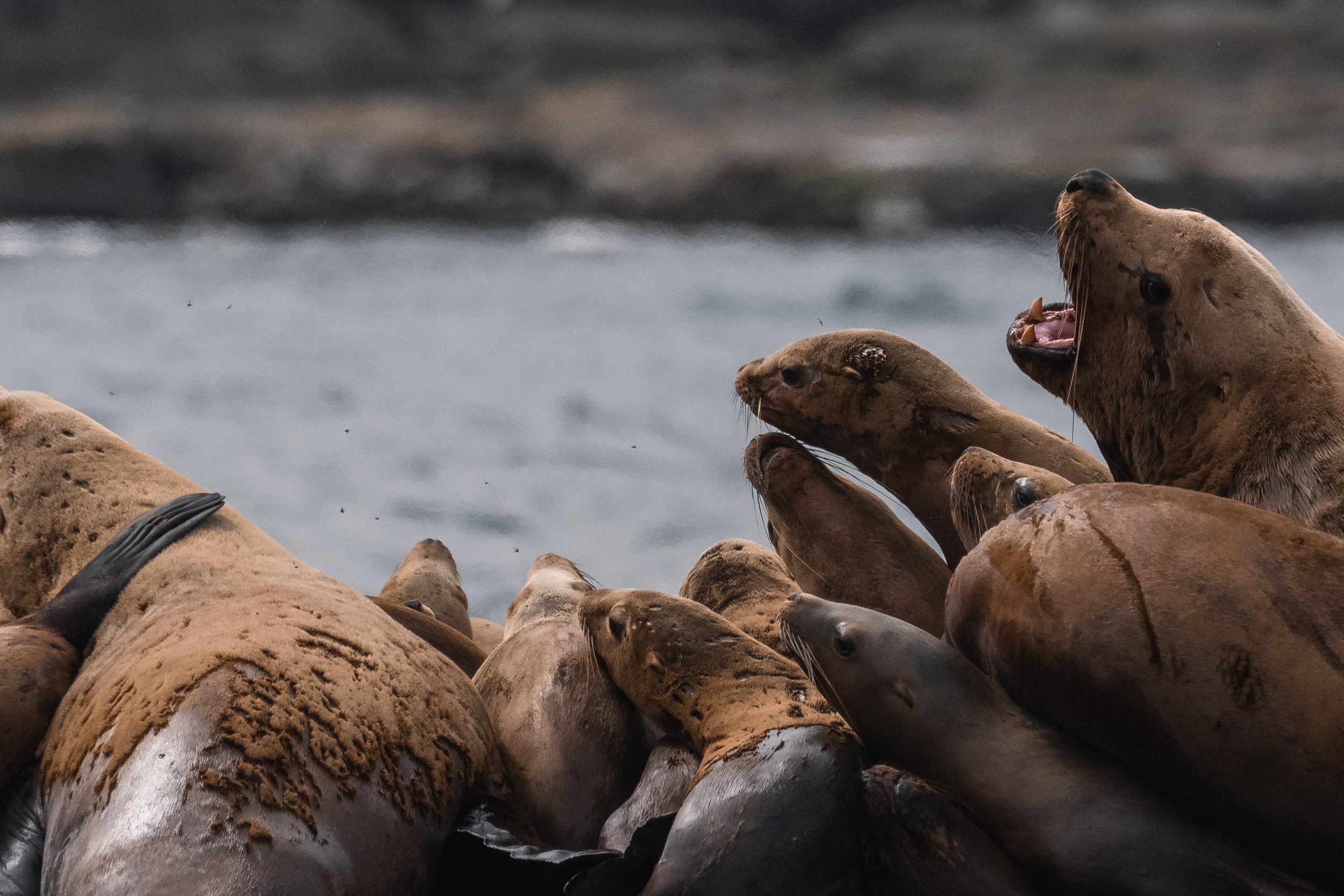
Look at all the files gathered around the sea lion haul out! Gross! Photo by Evan Hessels.
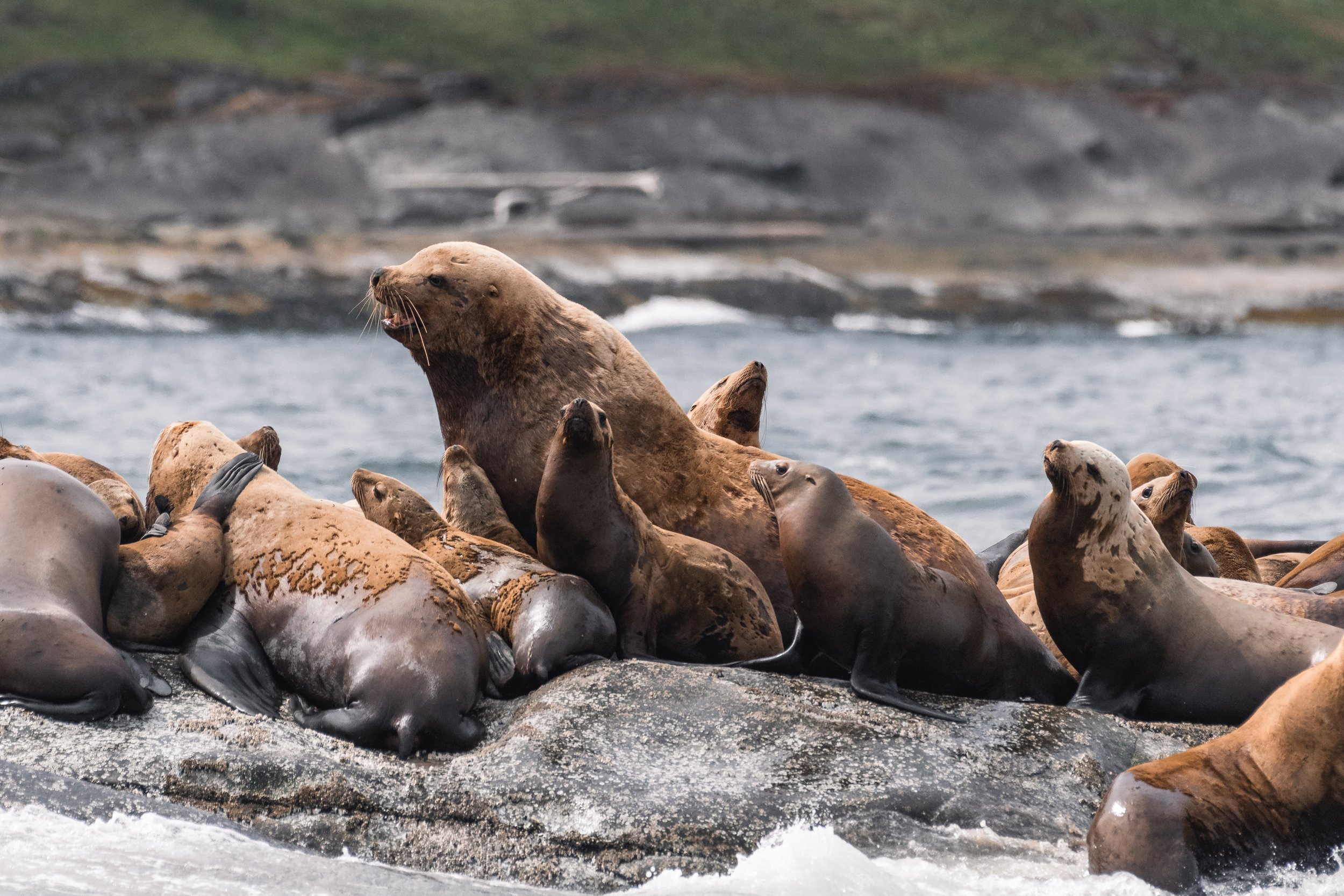
A large male Steller Sea Lion at the haul out. Photo by Evan Hessels.
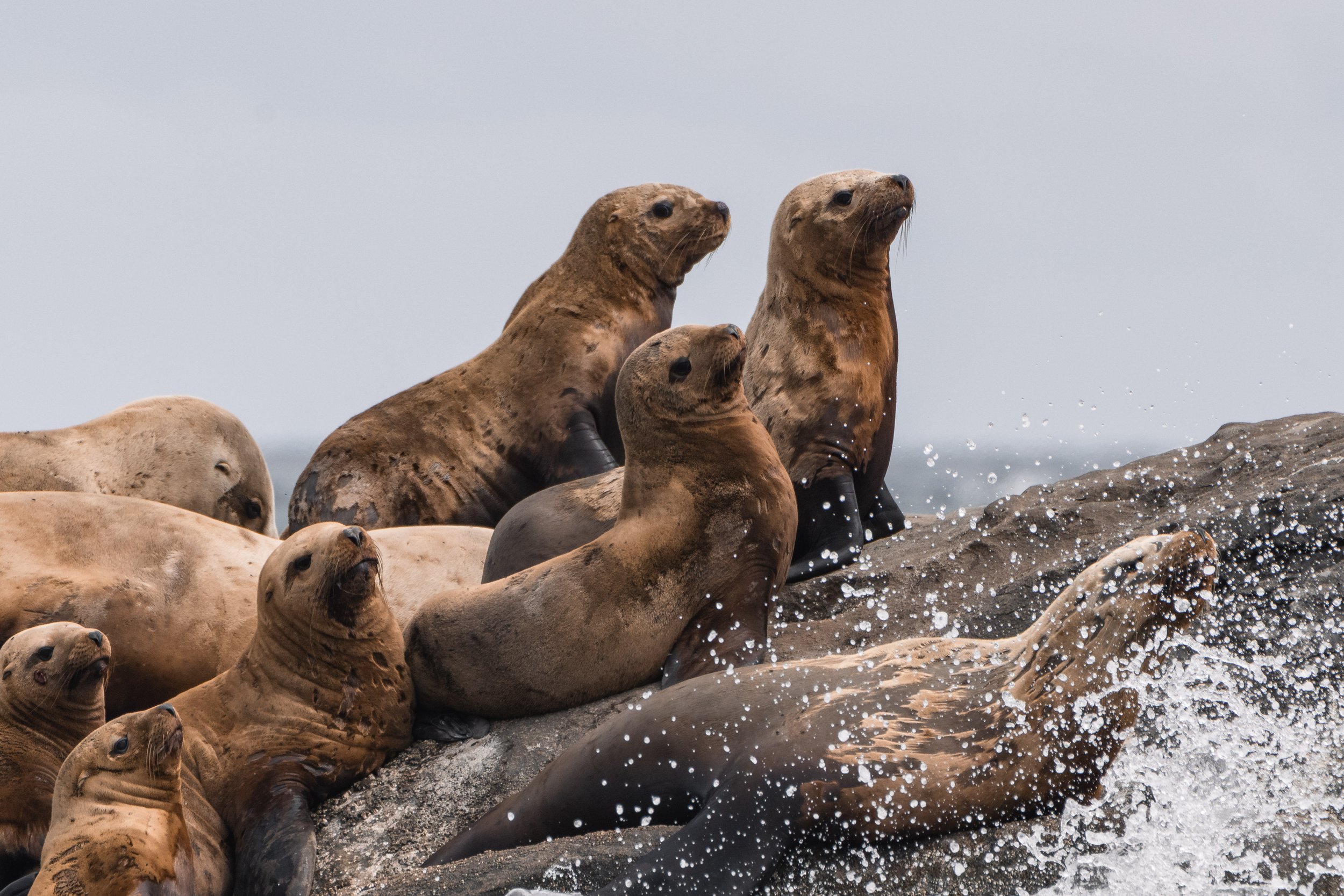
Some Steller Sea Lions having their “little mermaid” moment. Photo by Val Watson.
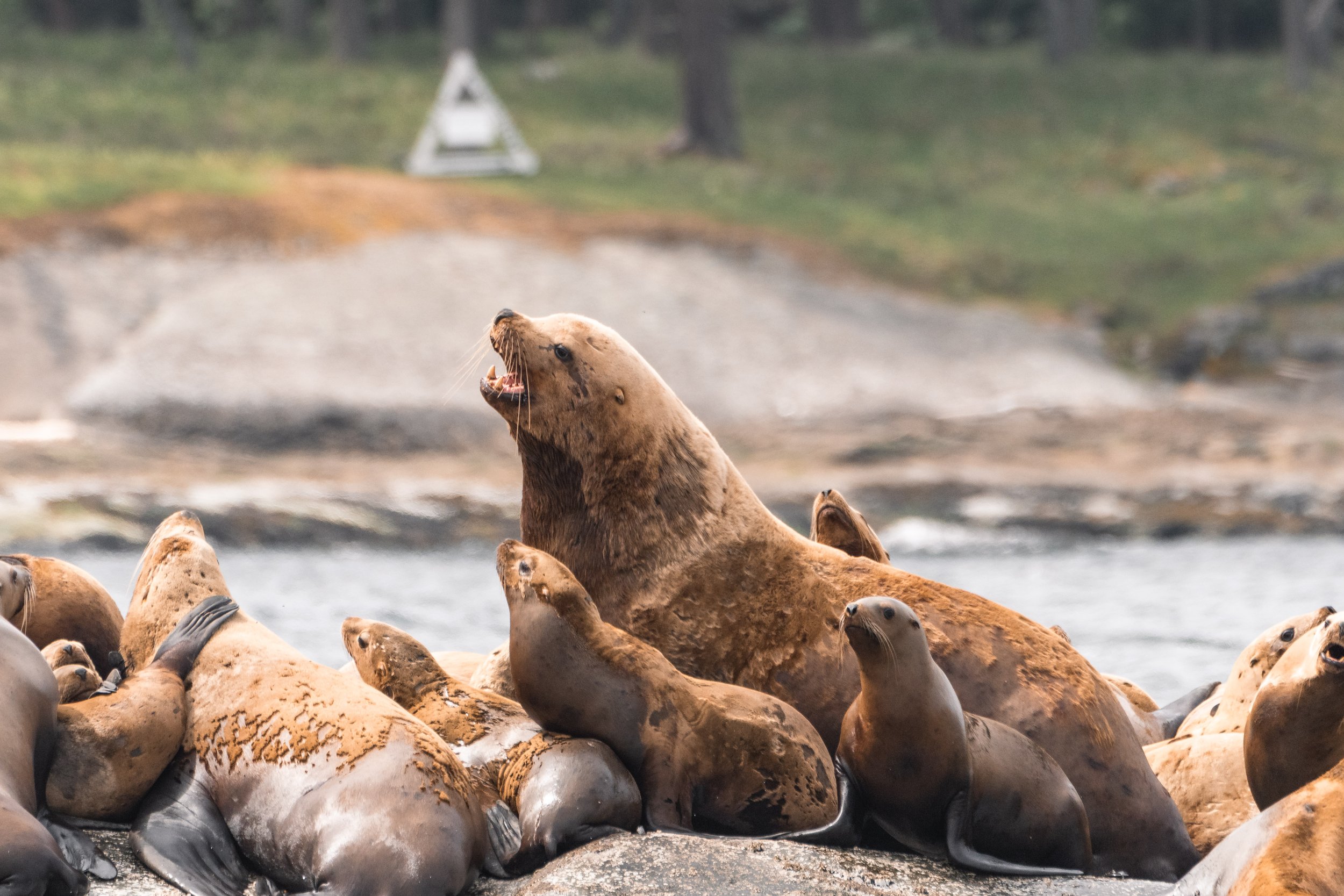
Look at the size differnce between the male and female Steller Sea Lions. Photo by Val Watson.
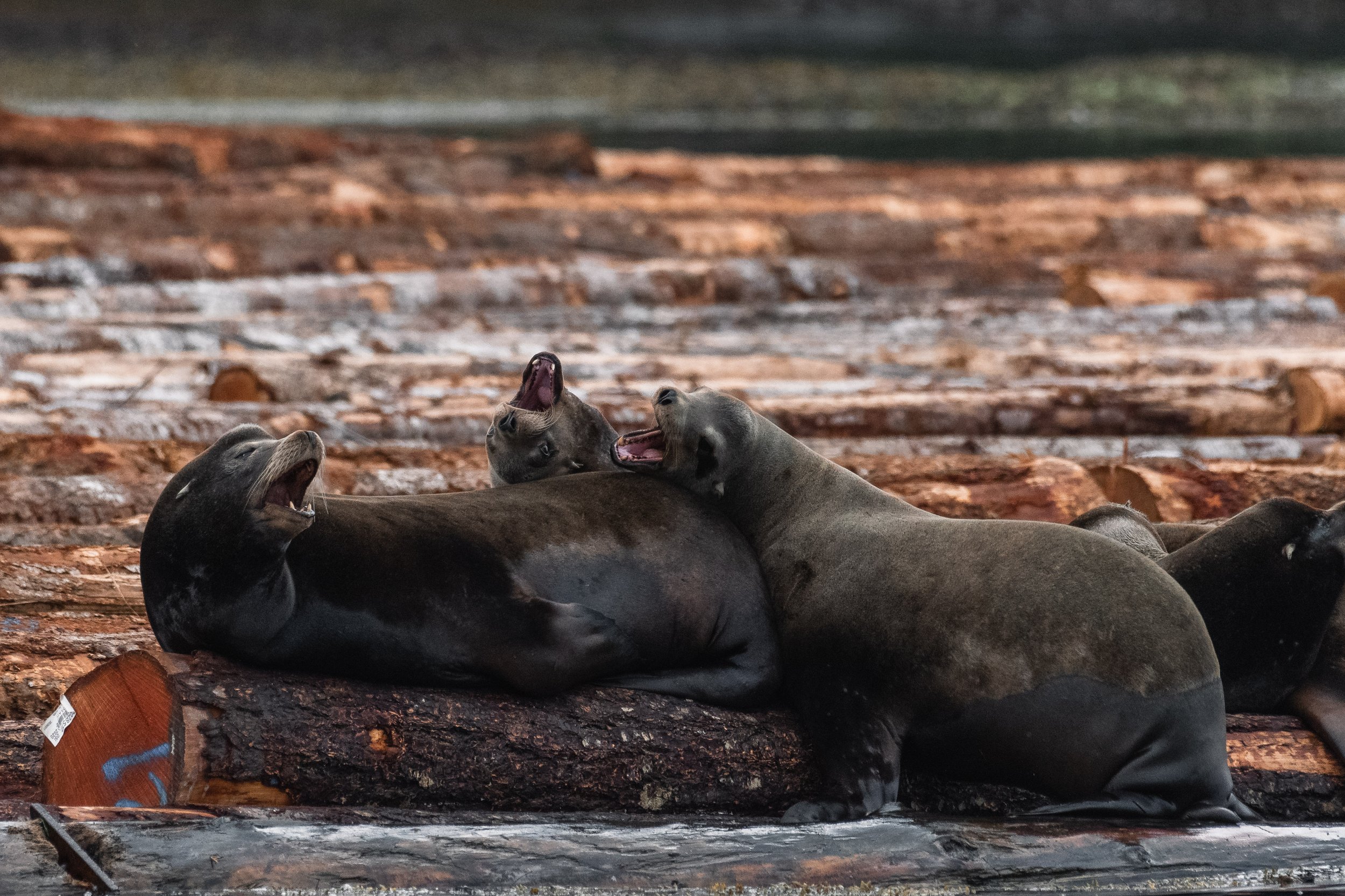
California Sea Lions fighting/cuddling on the log booms. Photo by Evan Hessels.