
April 27, 2026 - The T046Bs in Stuart Channel
It was gearing up to be another great day spent on the Salish Sea, the sun was shining overhead as the guests and crew got fitted for their anti-exposure suits and headed down to the dock. After getting comfortable and learning all about what they would be looking for on the tour, we were ready to get going.
After a short loop out into the Strait of Georgia, we headed into the more protected waters of the Southern Gulf Islands, keeping our eyes peeled along the way. The rocky shoreline was teeming with life as we passed through the narrow passageways. The dark mussel beds made the purple and pink sea stars stand out even more as we passed through Dodd Narrows. Heading into Stuart Channel, we felt the waves calm right down thanks to the islands blocking the wind. Travelling through the calm waters, we weaved through Stuart, passing through Ruxton Passage into Pylades Channel, and then looped back into Stuart Island near Yellowpoint to continue searching. There was a lot to see along the way, with small seabirds spotting the waters and large freight-carrying ships anchored along the way.
Eventually, the Marine Naturalist Val Watson excitedly pointed on the horizon as something caught her eye: there were blows in the distance! We had found ourselves a pod of orca! Captain Joseph expertly navigated us closer as we pulled out our camera to figure out which pod we had today. Part of the pod was quickly recognized, but at the time, we thought there were an extra two whales there than usual. Well, this turned out to be technically true; it was just a member of the pod that sometimes travels away from the rest of the group, T046B3 Sedna and her calf, having joined up again for this little family reunion. That means that the following 9 whales were present:
T046B Raksha ♀ (1988)
T046B2 Akela ♀ (2008)
T046B2B Takaya ♀ (2023)
T046B3 Sedna ♀ (2011)
T046B3A Munro (2025)
T046B4 Quiver ♀ (2013)
T046B6 Sol ♀ (2019)
T046B7 Tala (2023)
T046B8 Pi (2026)
When we first came across this group, they were spread out over most of Stuart Channel, with T046B2 Akela and her calf travelling closest to us, but after not too long, they all gathered up for what seemed to be a quick hunt before they travelled together and spread out again by the end of our time with them.
Seeing a group spread out like this is quite common, especially with a group of this size. 9 transient orca travelling together is a pretty large group, considering that the average pod size is more like 3 - 4 individuals. Having a large group has some benefits, such as increased socialization and the ability to take down larger prey items, but there are downsides as well. One of the main drawbacks is how noticeable the pod becomes. You can imagine that with this large a group, you are increasing your chance of being seen. In terms of our ability to find them, we are very happy with a large group, but since Harbour Seals and Sea Lions have eyesight similar to ours, the easier it is for us to spot them, the easier it is for their prey to spot them as well.
Transient orca hunt intelligent prey, other marine mammals, so they have to rely on stealth. If your prey knows you are coming, they will be harder to catch, so the key is to sneak up on them! Spreading out helps with that; three whales are much less easy to spot than all 9 surfacing together. Plus, it helps them cover more ground! Even though these whales were likely around a mile apart, they still would be able to hear each other. The other difficult part of being in a large pod is when food sharing happens. Orcas will work together to hunt, and then all the individuals who helped will share in the food. Since all the whales will help, all the whales get a part of the meal, and a 300-pound seal divided amongst 8 whales doesn’t leave much for each member of the pod. Luckily, T046B8 will still be only drinking mom’s milk, so they don’t need to share quite yet! By the time they’re 6 months to a year old, that will change, and they will also be sharing food.
To avoid these issues with having too large a pod, females will disperse from their matriarchal pod and go off on their own with their own offspring. This is what is happening with T046B3 Sedna, who is often spotted travelling away from the rest of this pod since she had her calf. Since our boats didn’t observe her with the pod yesterday, we didn’t realize she had rejoined, which explains why we counted two extra whales than expected while on the water!
After the great views with the T046Bs, it was time for us to continue on our way and leave them to their travels as well. We headed north from the whales until we reached the northern tip of Thetis Island. Here, there was a small haulout of Harbour Seals, barely hanging on to the last of the rocks left by the rising tides. The tide eventually claimed those rocks, and only the shiny heads remained floating in the water. Seeing them in the water was a great reminder of how agile these animals are once they’re in the water, but seeing them gallumph into the water is even more amusing.
We left the swimming seals and continued towards Nanaimo, making a quick stop in Northumberland Channel near the Harmac Pulp Mill, where there is a bunch of log booms floating in the water with California Sea Lions spending their time there. In addition to the large pinnipeds, there were also a few juvenile Bald Eagles here as well! For both, having a resting place close to such rich feeding grounds is great! Dodd Narrows mixes this channel so well that we have high biodiversity here, thanks to the increased oxygen. The sea lions also benefit from having these logs nearby since they need to spend nearly half their time out of the water on an average day to maintain their body temperature. It’s great for us, since seeing their huge, 800-pound bodies out of the water really puts their size into perspective. Soon enough, we left them as well and returned to the harbour, very happy with all the wildlife that we had spotted. But the wildlife wasn’t done with us yet, as when we were tying up to the dock, two river otters ran down the dock into our view. It looked like a male-female pair, and the photos show that she is VERY big. We hope that the local family of River Otters in the Harbour will grow once again, and we will hopefully see some baby otters in the next month or so!
Please enjoy all the photos captured by Marine Naturalist Val Watson, available below!
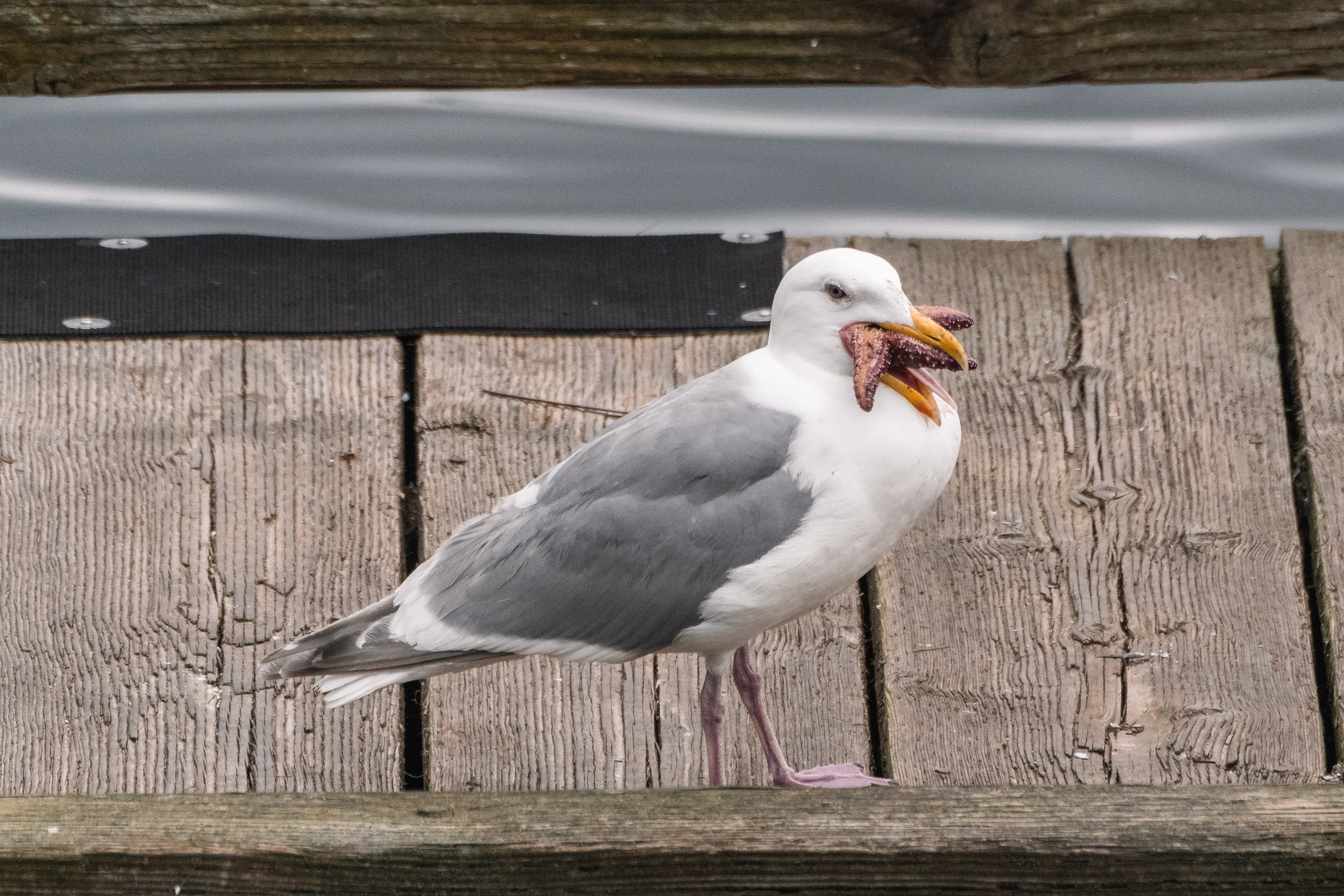
A gull trying to eat a Ochre Star on the dock before the tour.
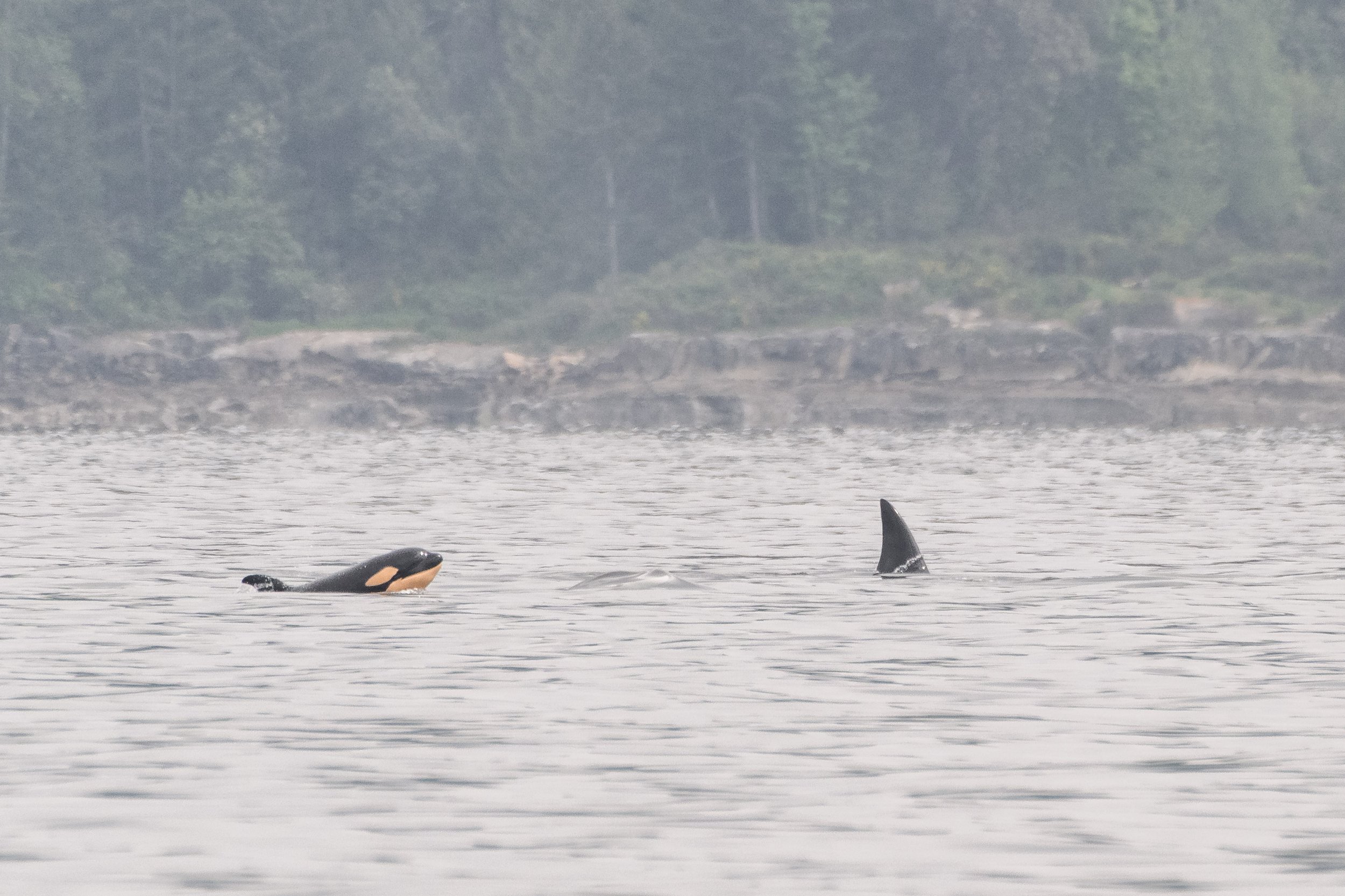
T046B8 showing off their face beside their mom, T046B Raksha.
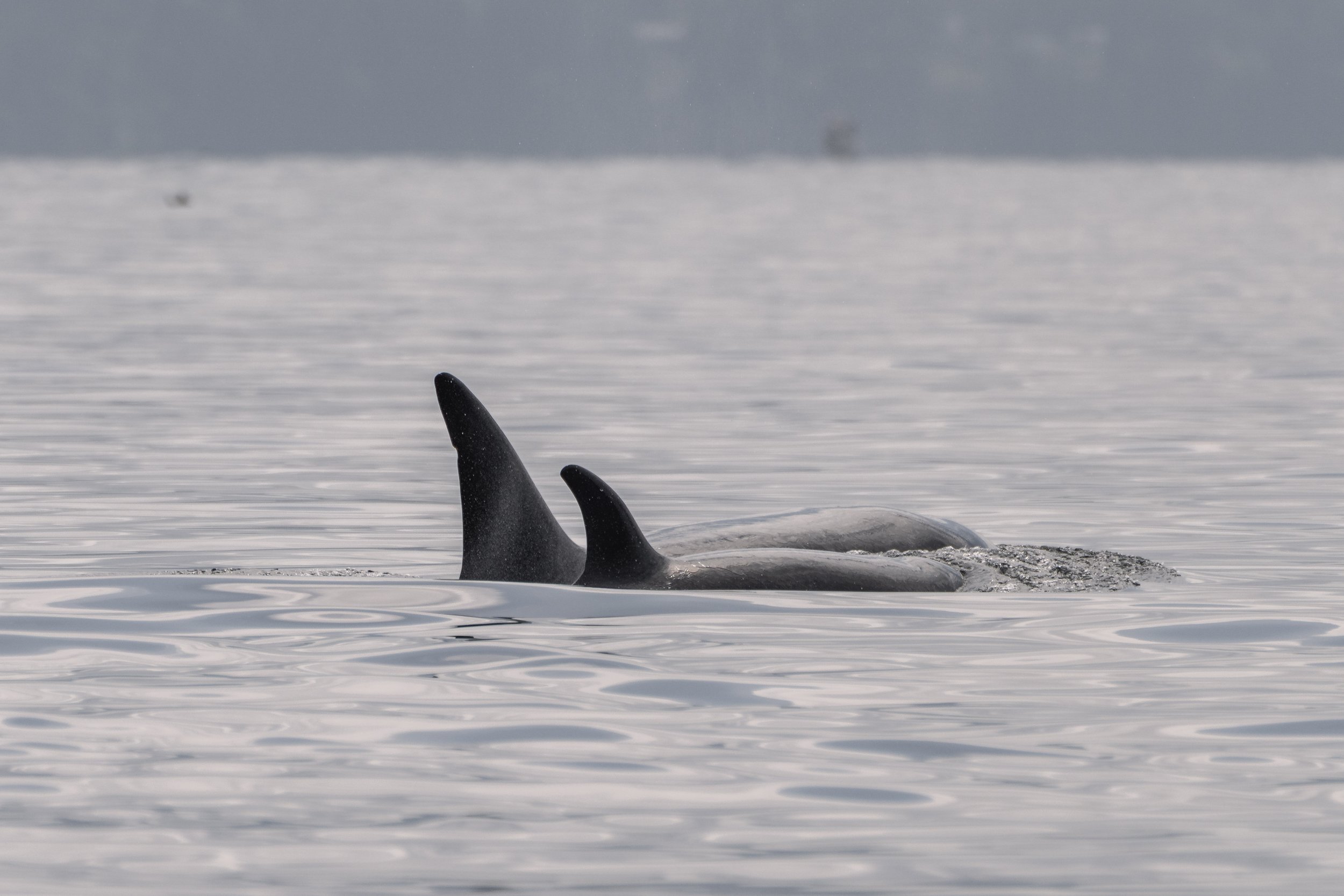
T046B2 Akela surfacing beside T046B2B Takaya.
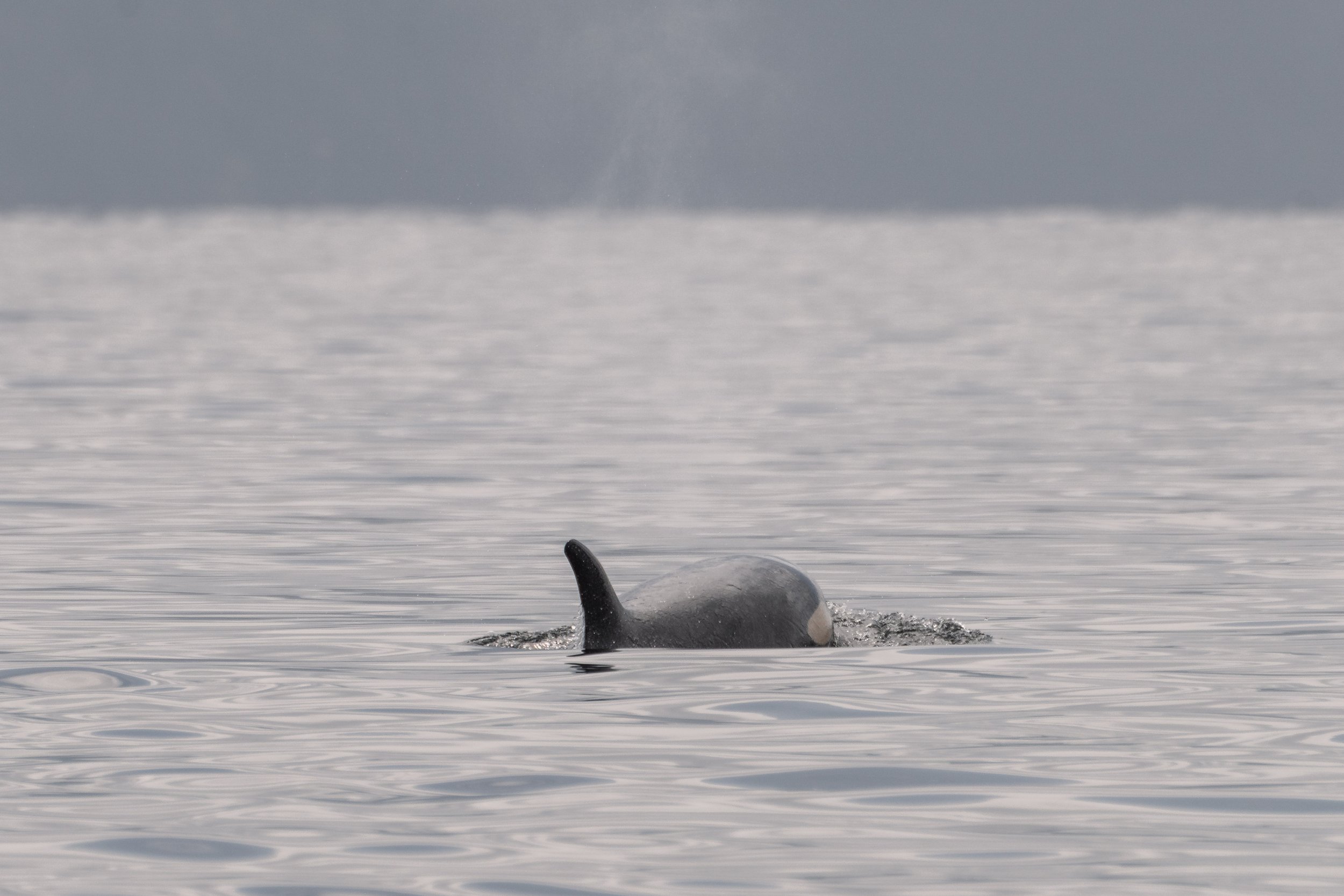
T046B2B surfacing in the calm water.
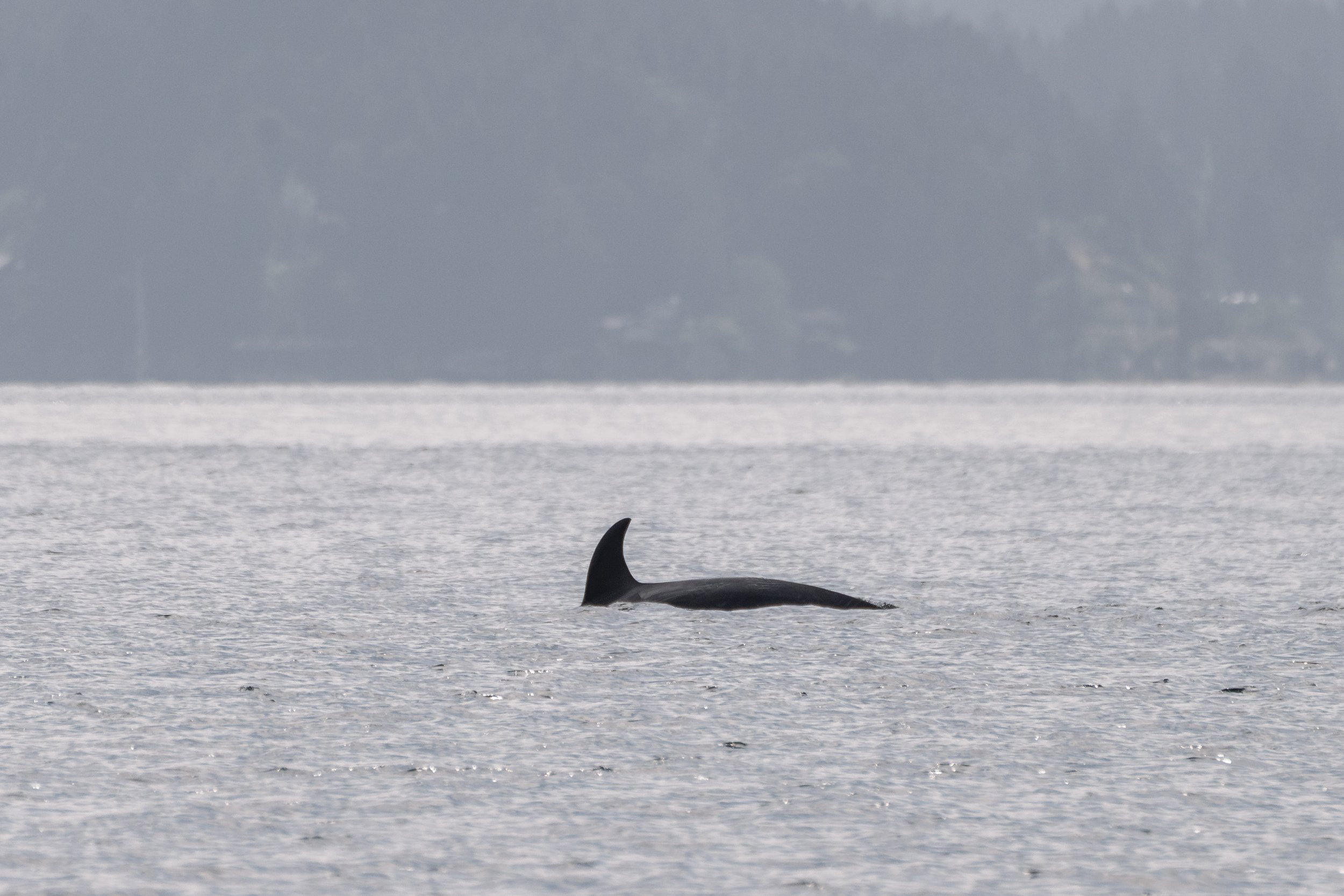
T046B6 Sol doing a quick surface.
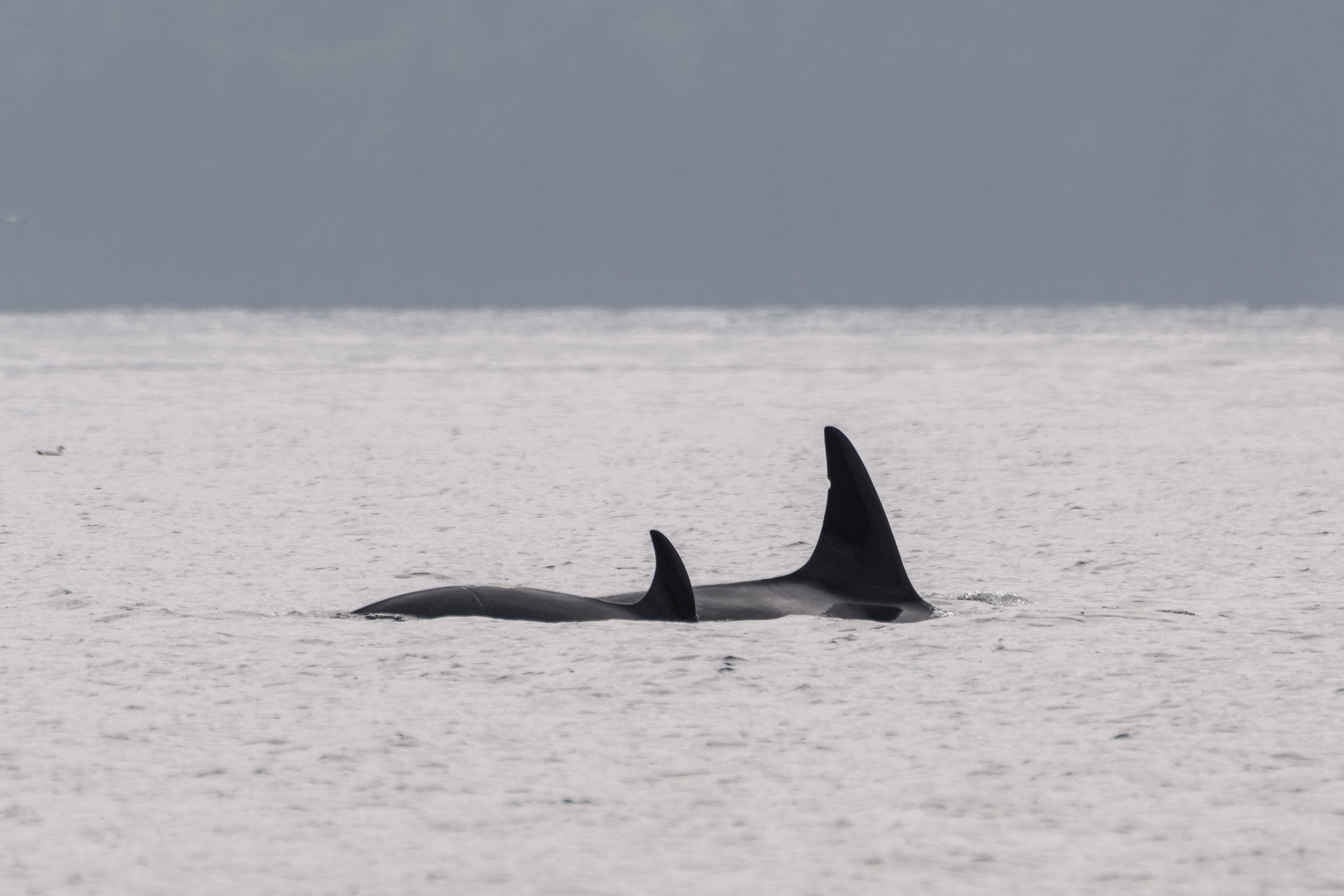
T046B2 Akela surfacing beside her calf T046B2B Takaya.
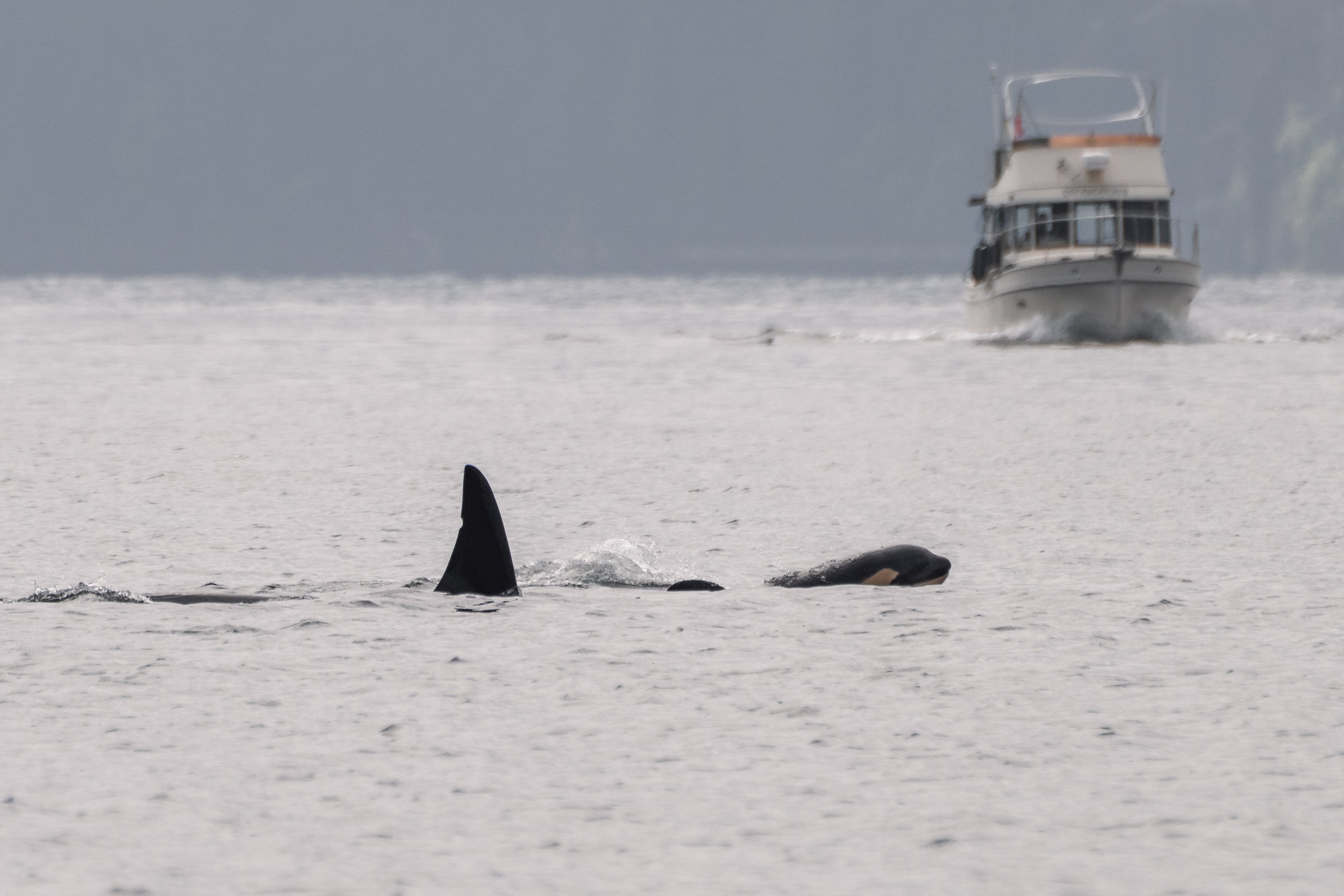
The new baby peeking over the wave just ahead of T046B2 Akela.
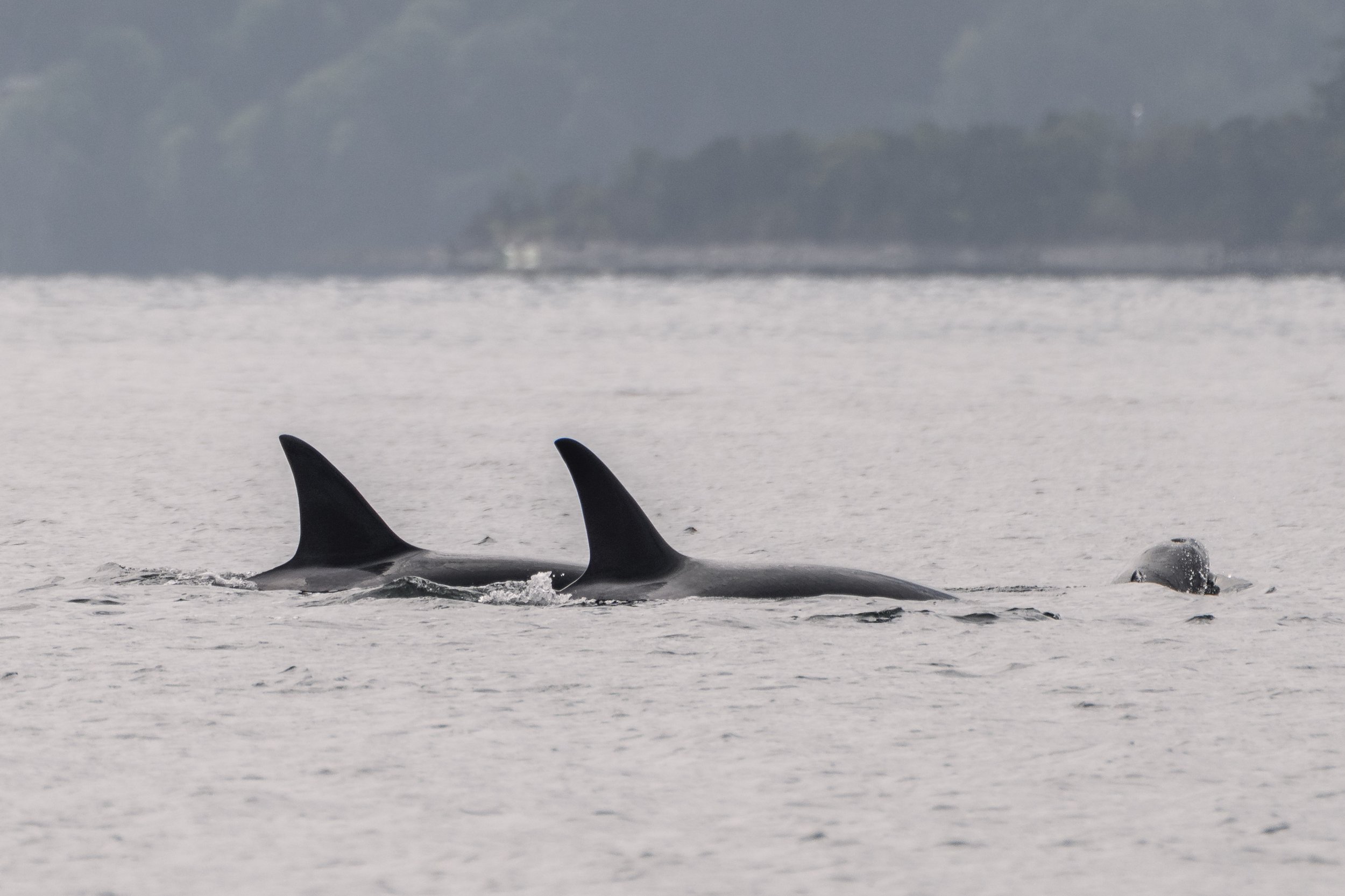
T046B4 Quiver surfacing just behind of T046B Raksha.
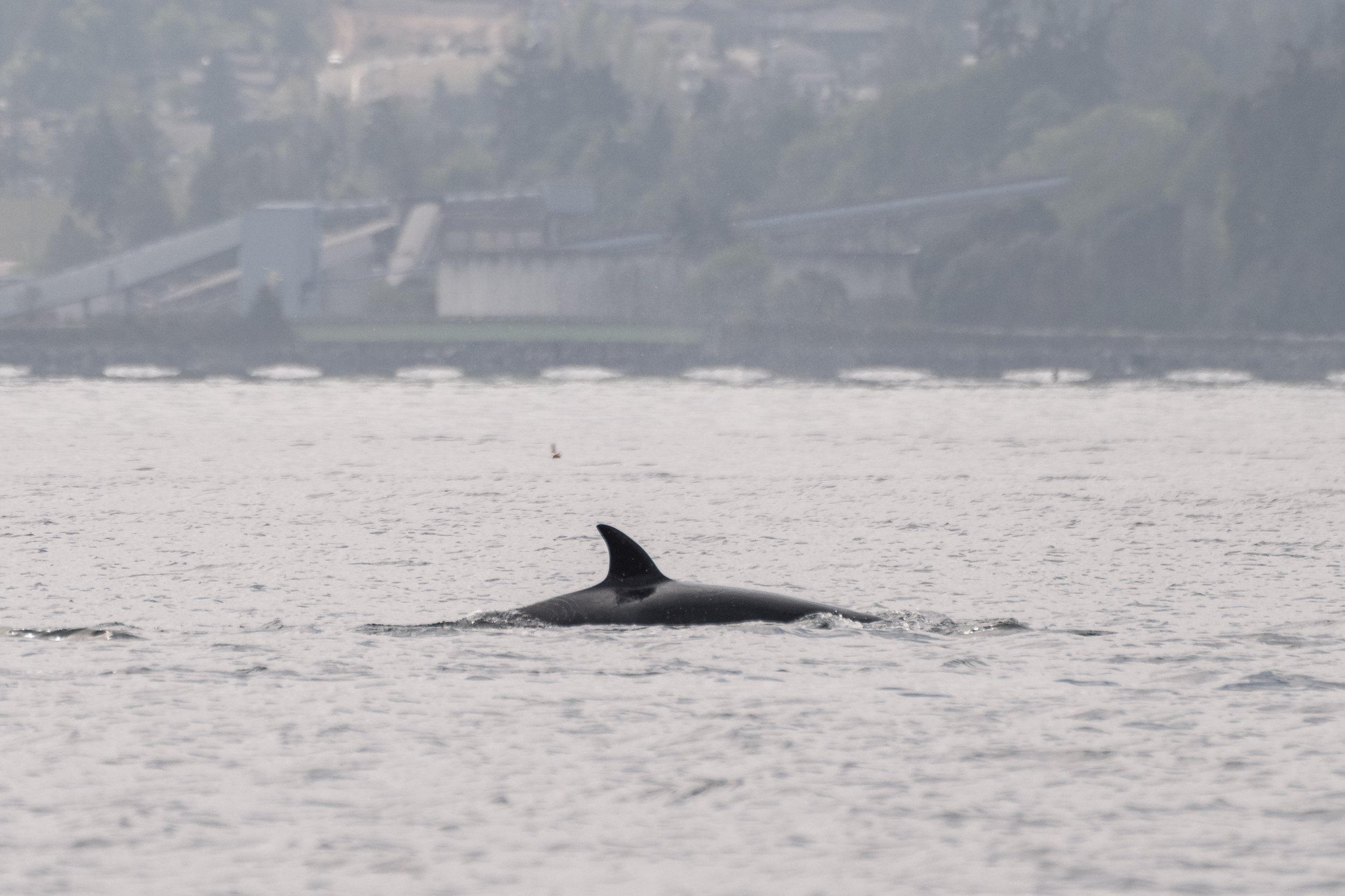
T046B3A Munro surfacing with the Crofton Mill in the background.
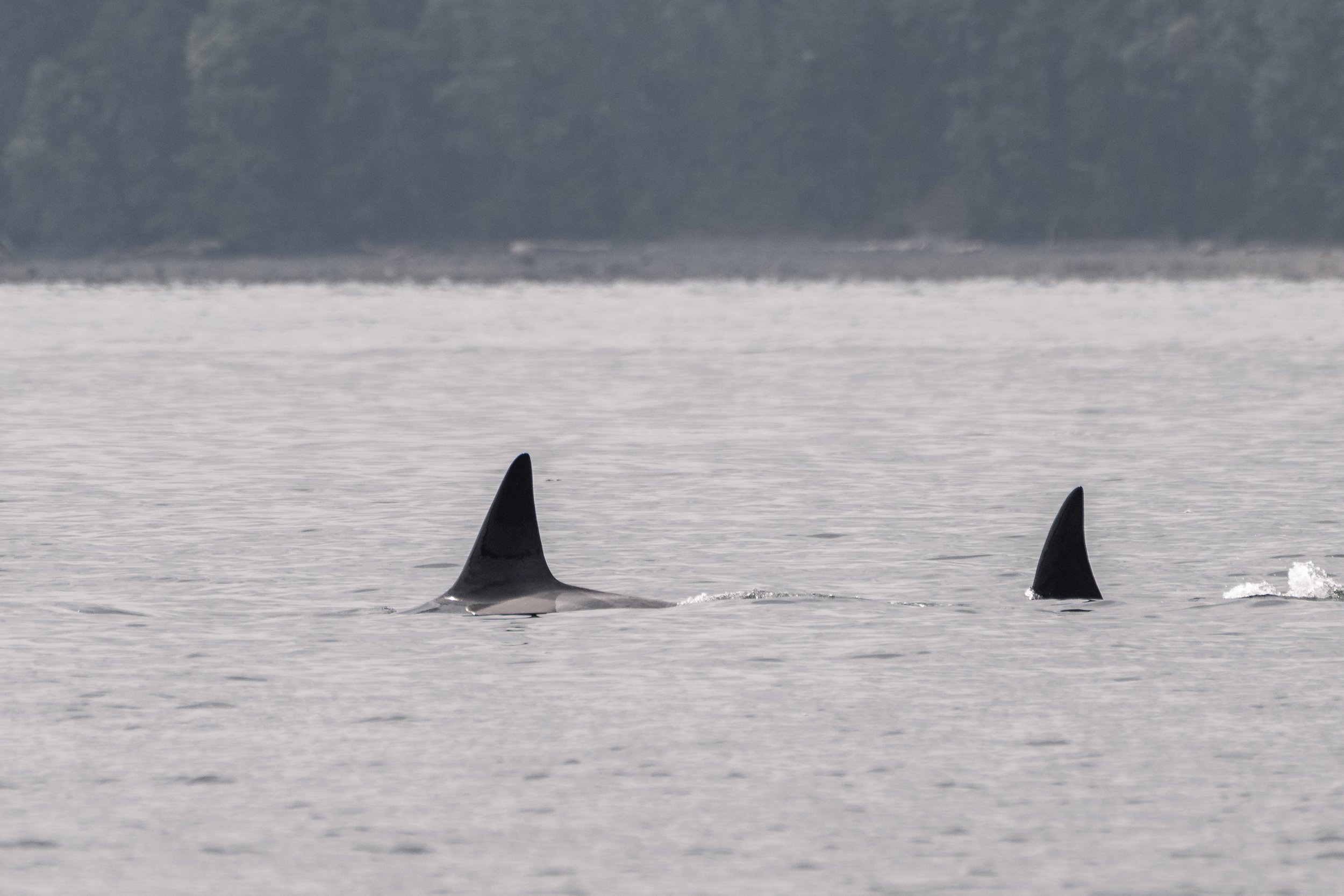
T046B3 Sedna surfacing in front of T046B4 Quiver.
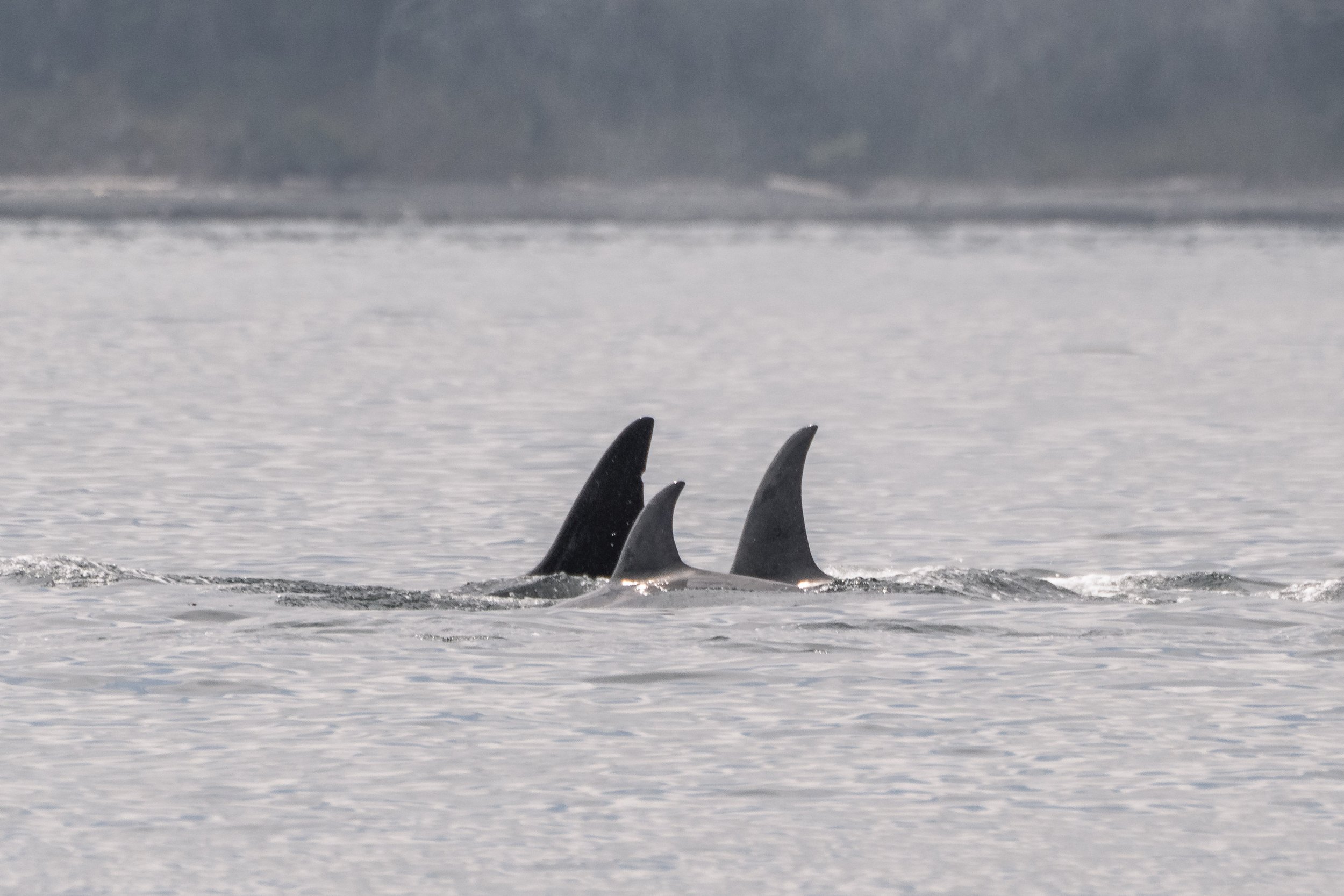
T046B2 Akela surfacing with T046B2B Takaya and T046B Raksha.
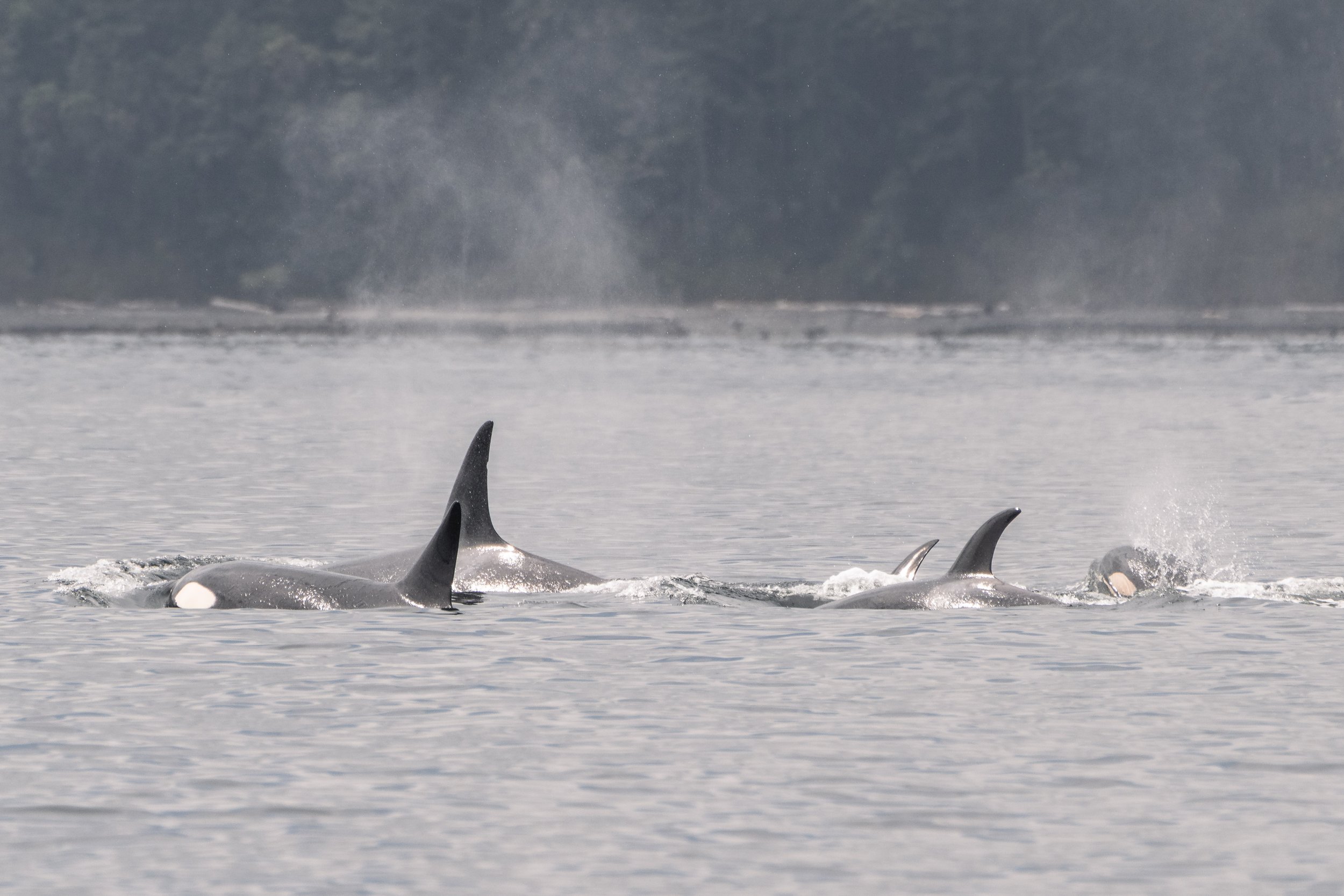
Family photo with most of the T046Bs.
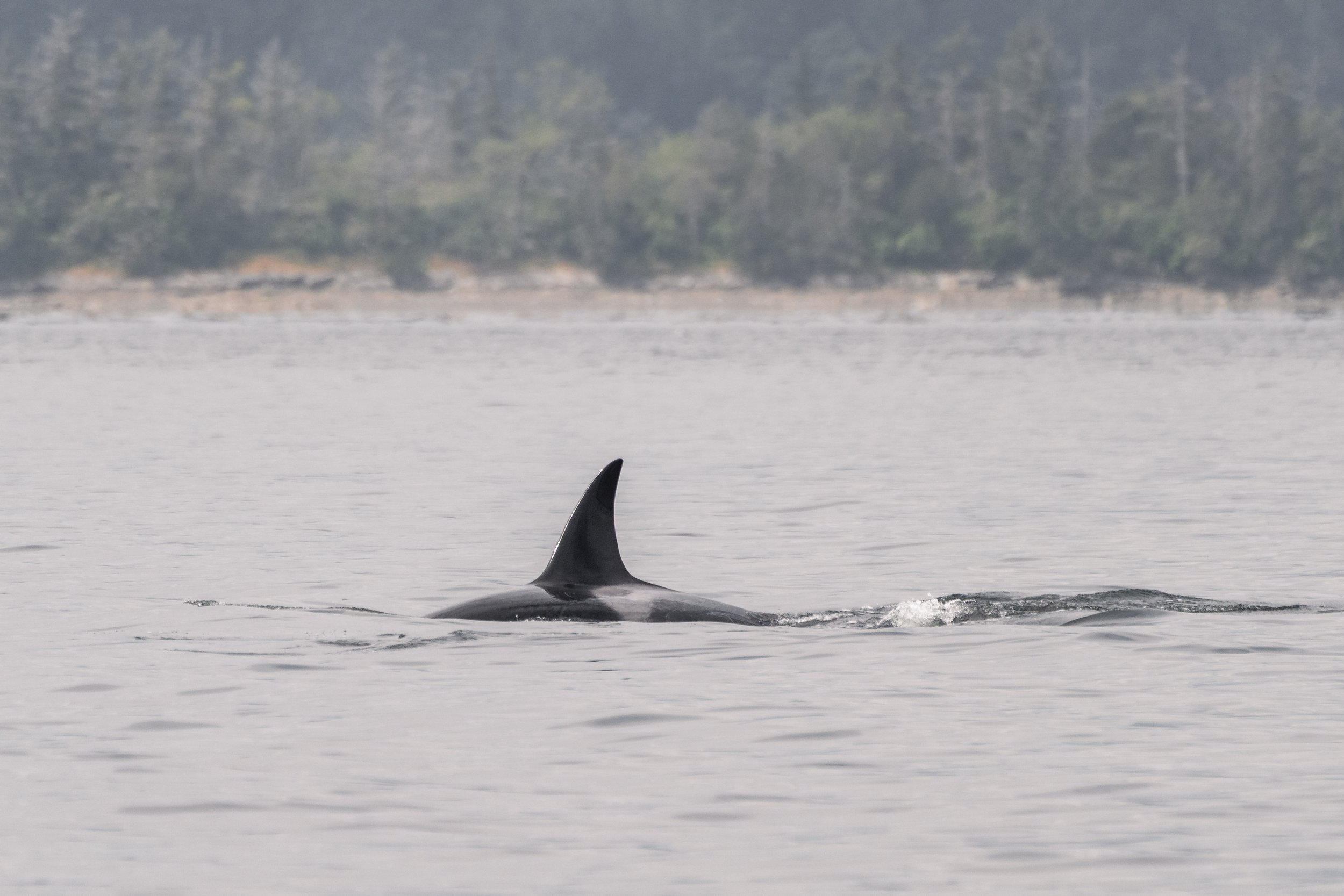
T046B3 Sedna surfacing in the calm water.
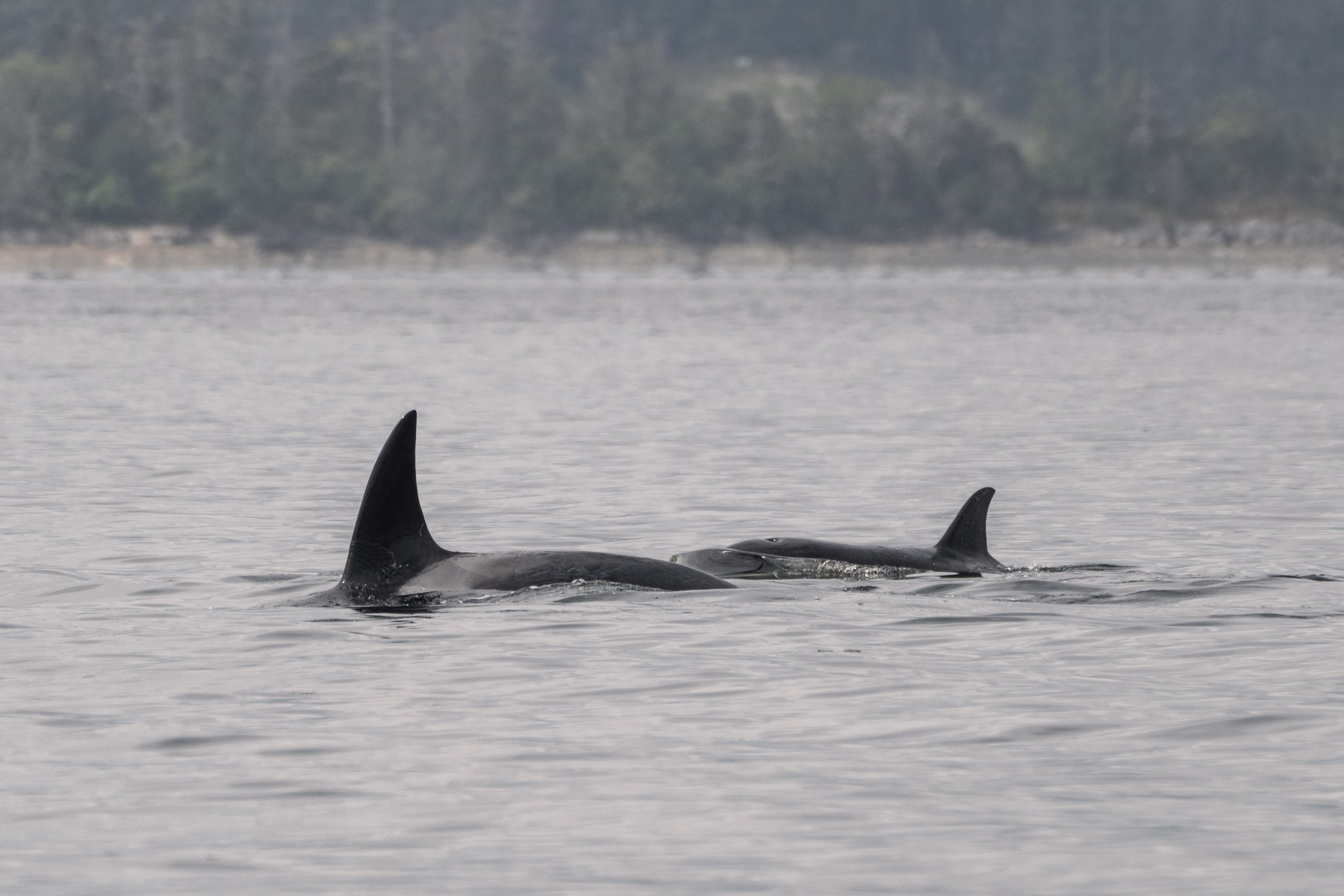
T046B4 Quiver surfacing beside younger sibiling T46B7 Tala.
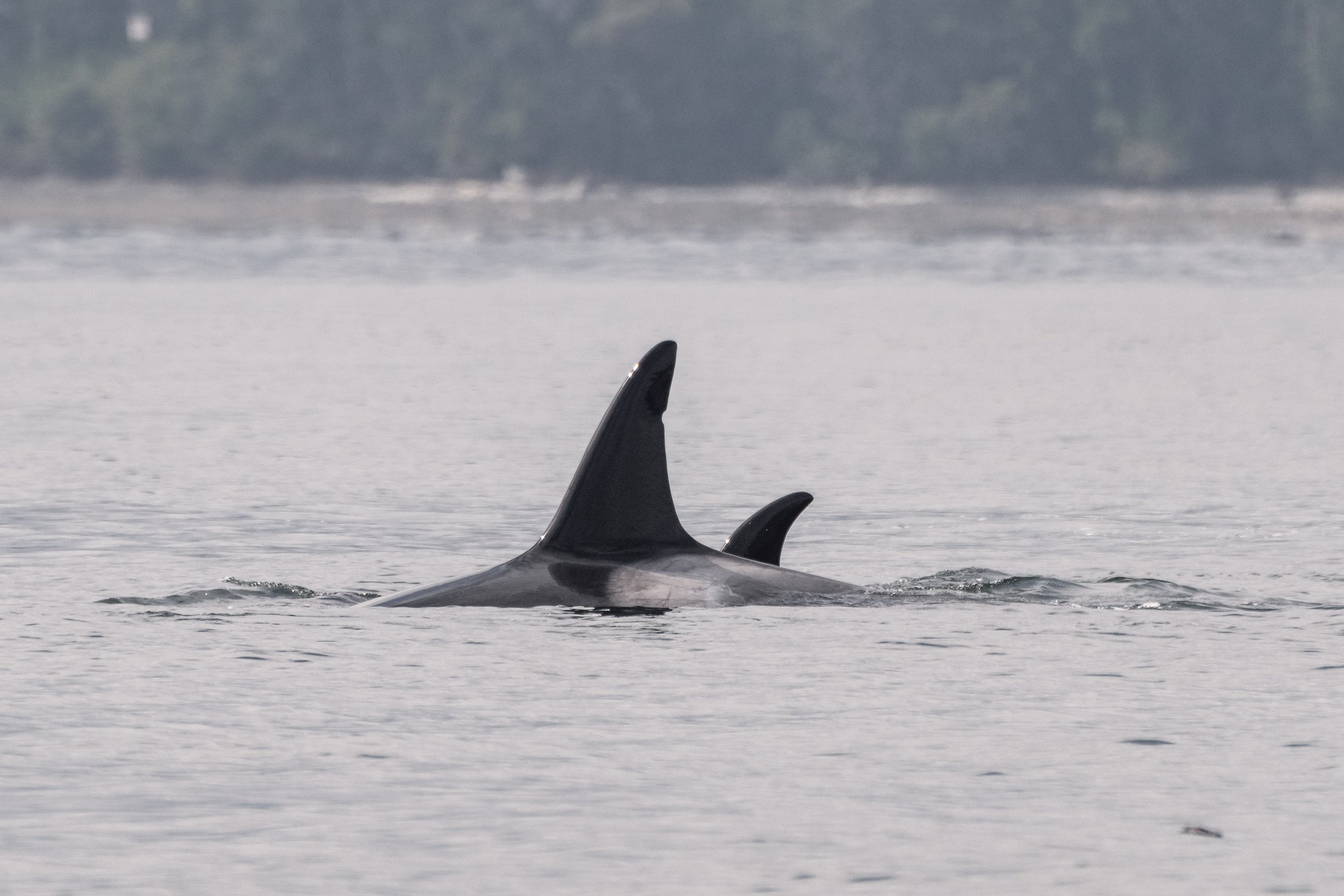
T046B2 Akela surfacing beside T046B6 Sol.
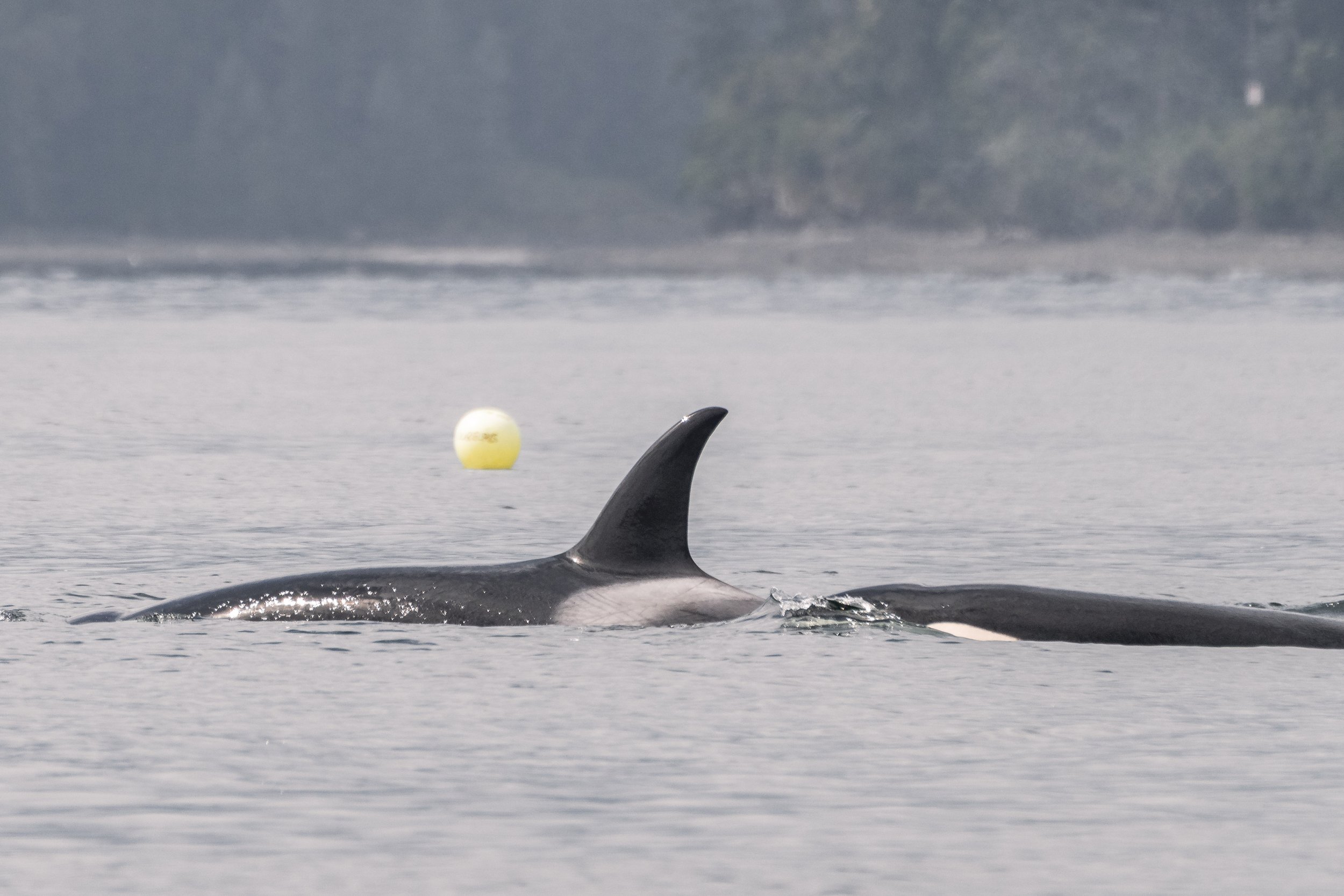
See the rake marks on T046B Raksha’s saddle patch?
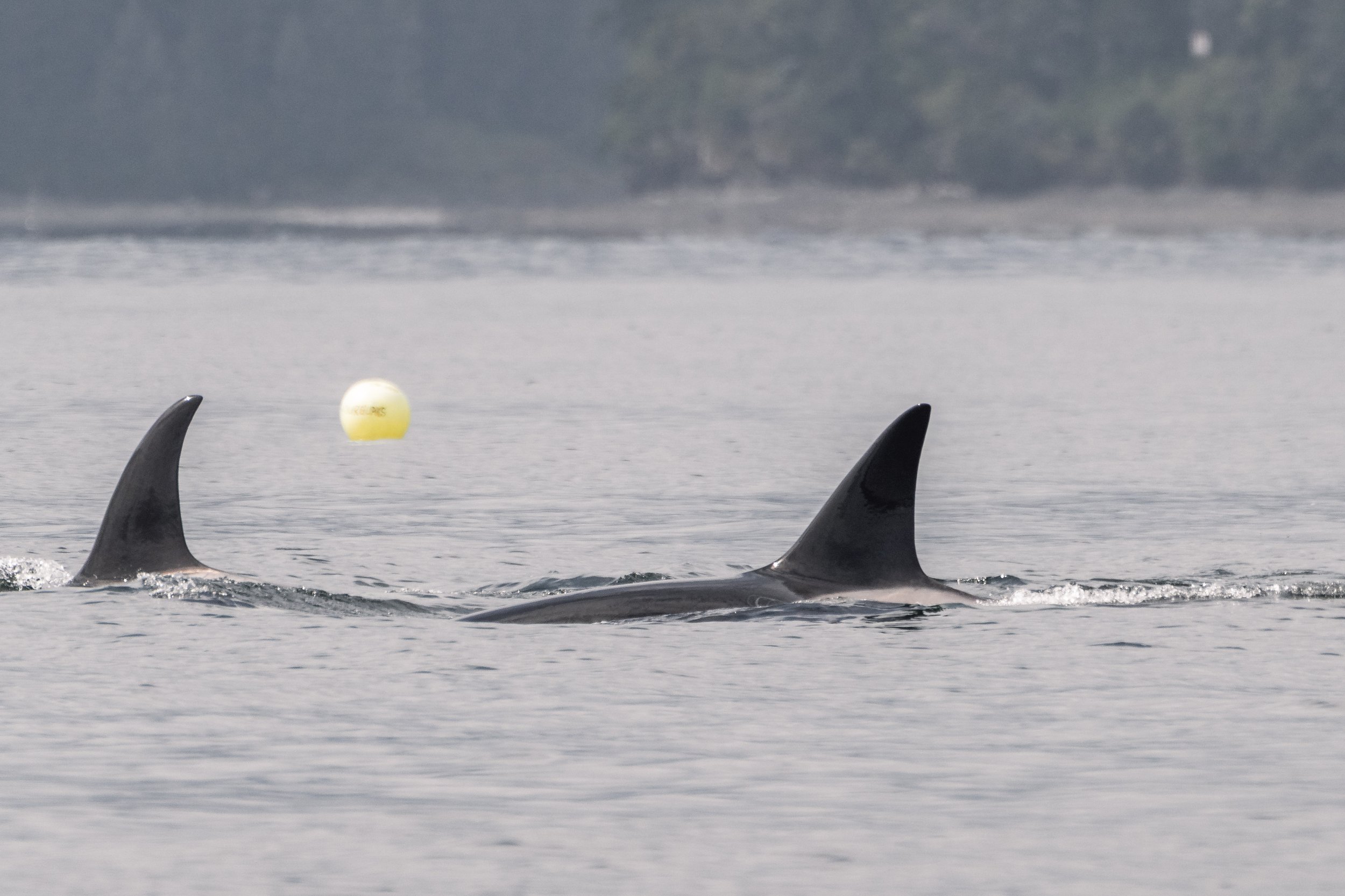
T046B Raksha diving ahead of her daughter, T046B3 Sedna.
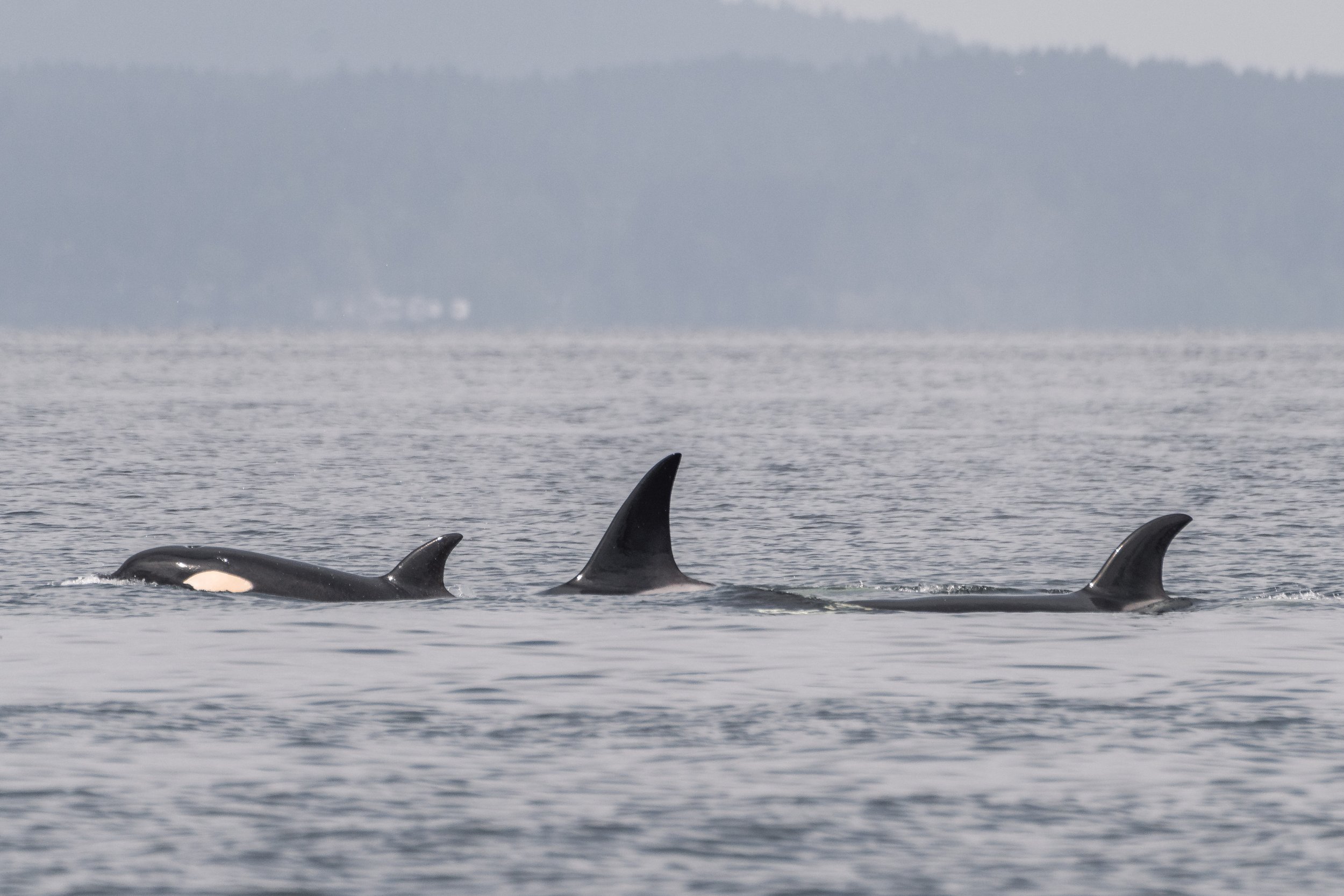
T046B3A Munro leading the way for T046B3 Sedna and T046B6 Sol.
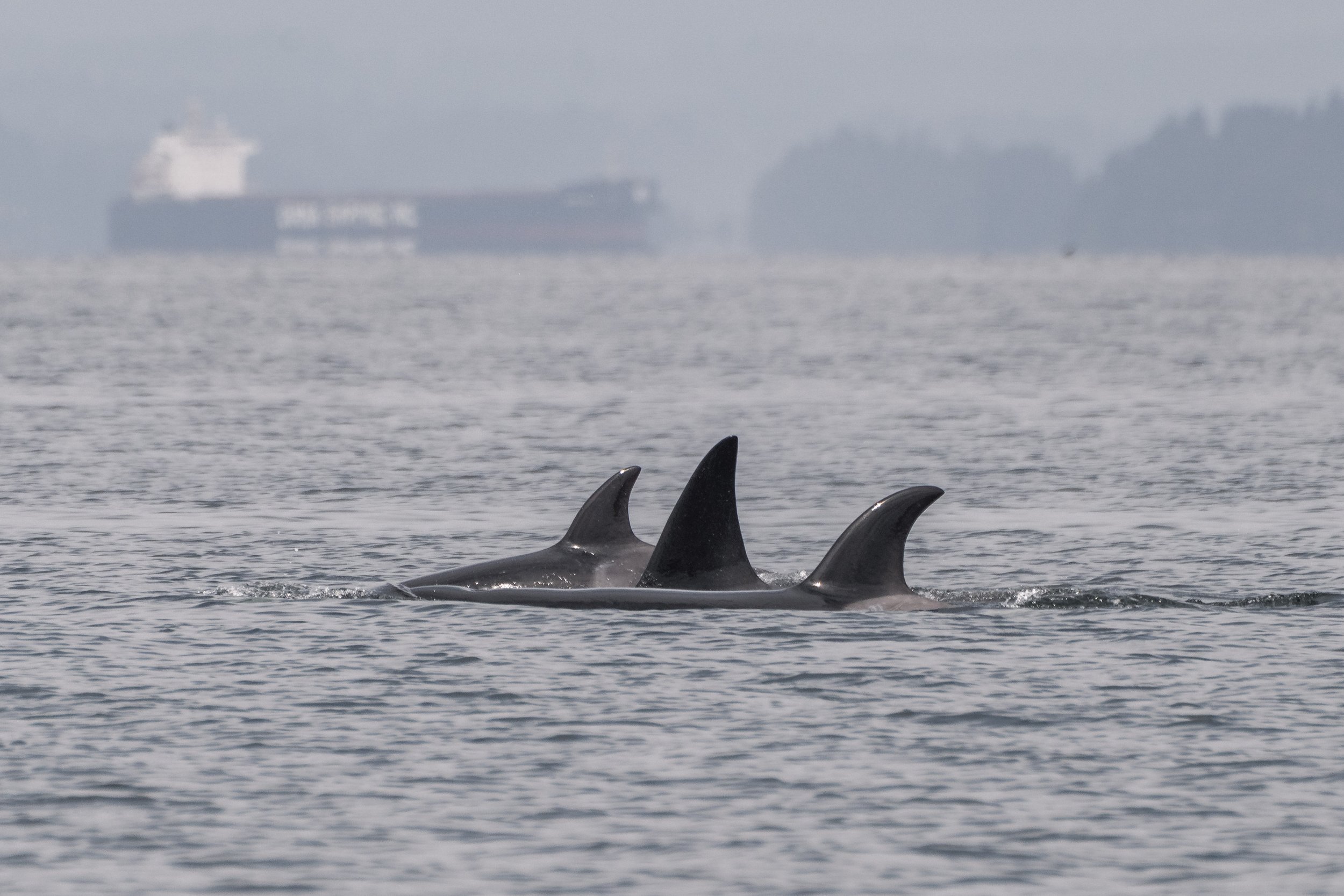
T046B3A Munro, T046B3 Senda, and T046B6 Sol all surfacing together.
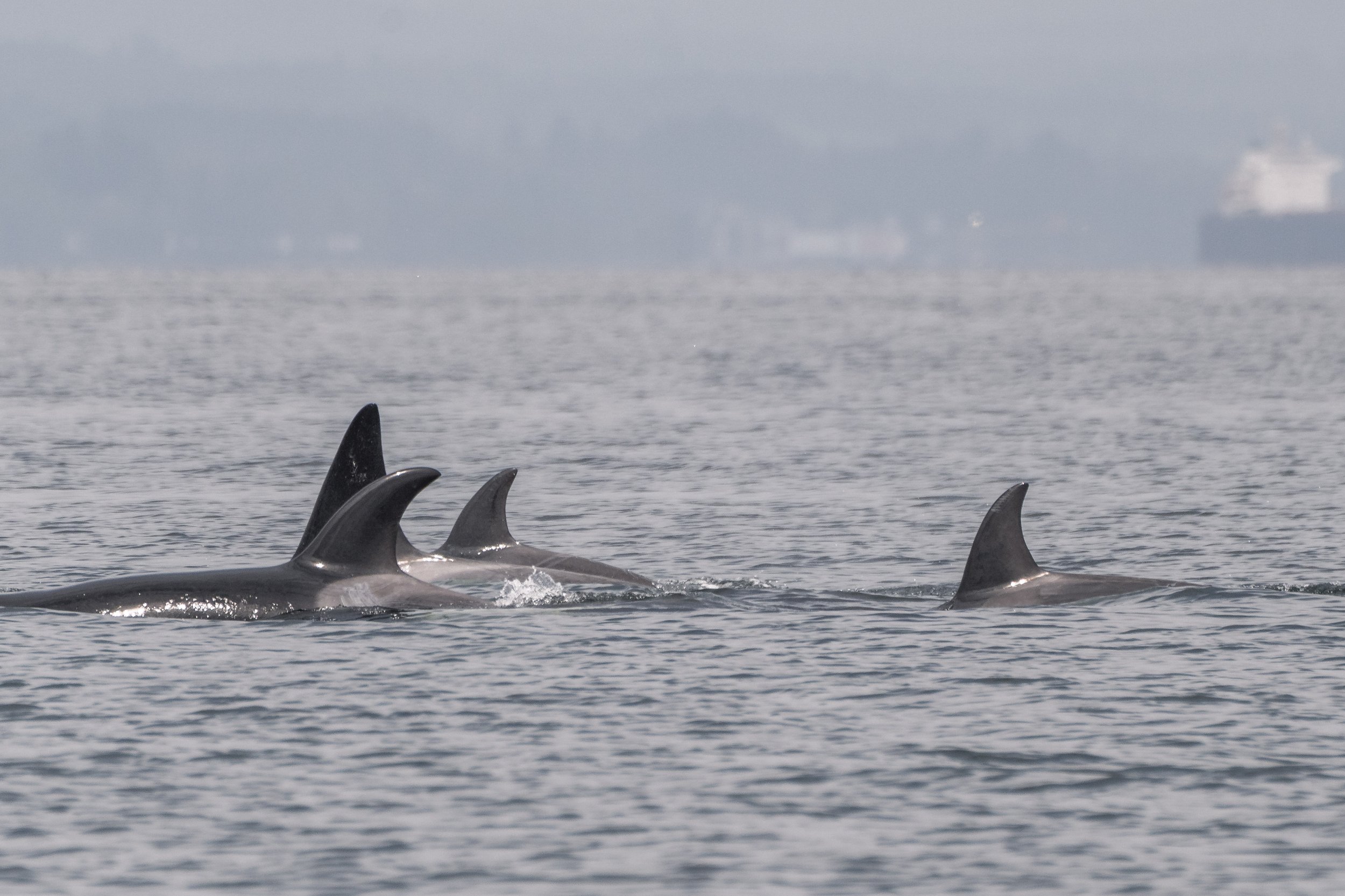
T046B3 Sedna in the front flanked by T046B6 Sol and T046B3A, with T046B7 Tala trailing behind.
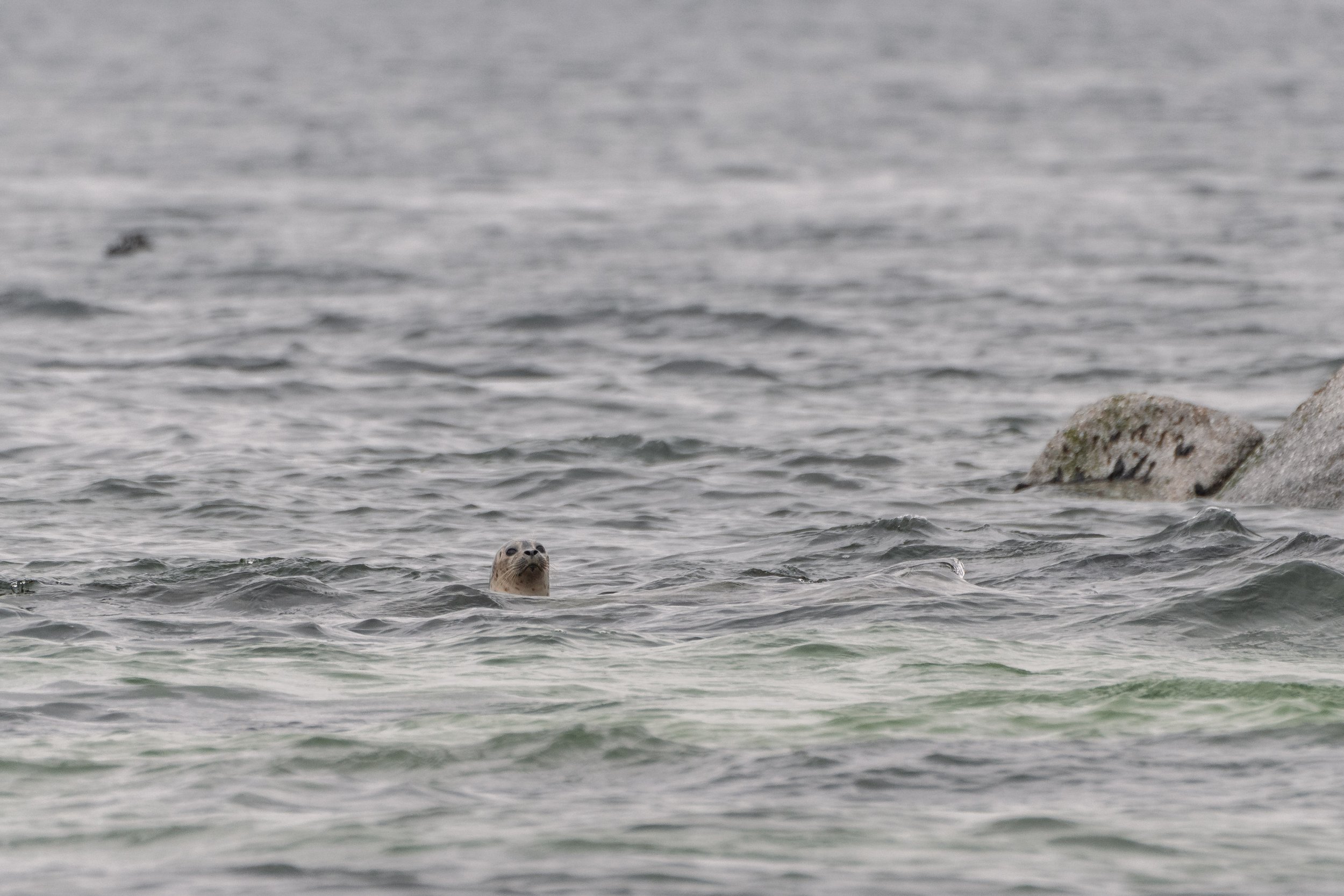
A Harbour Seal watching us from the water.
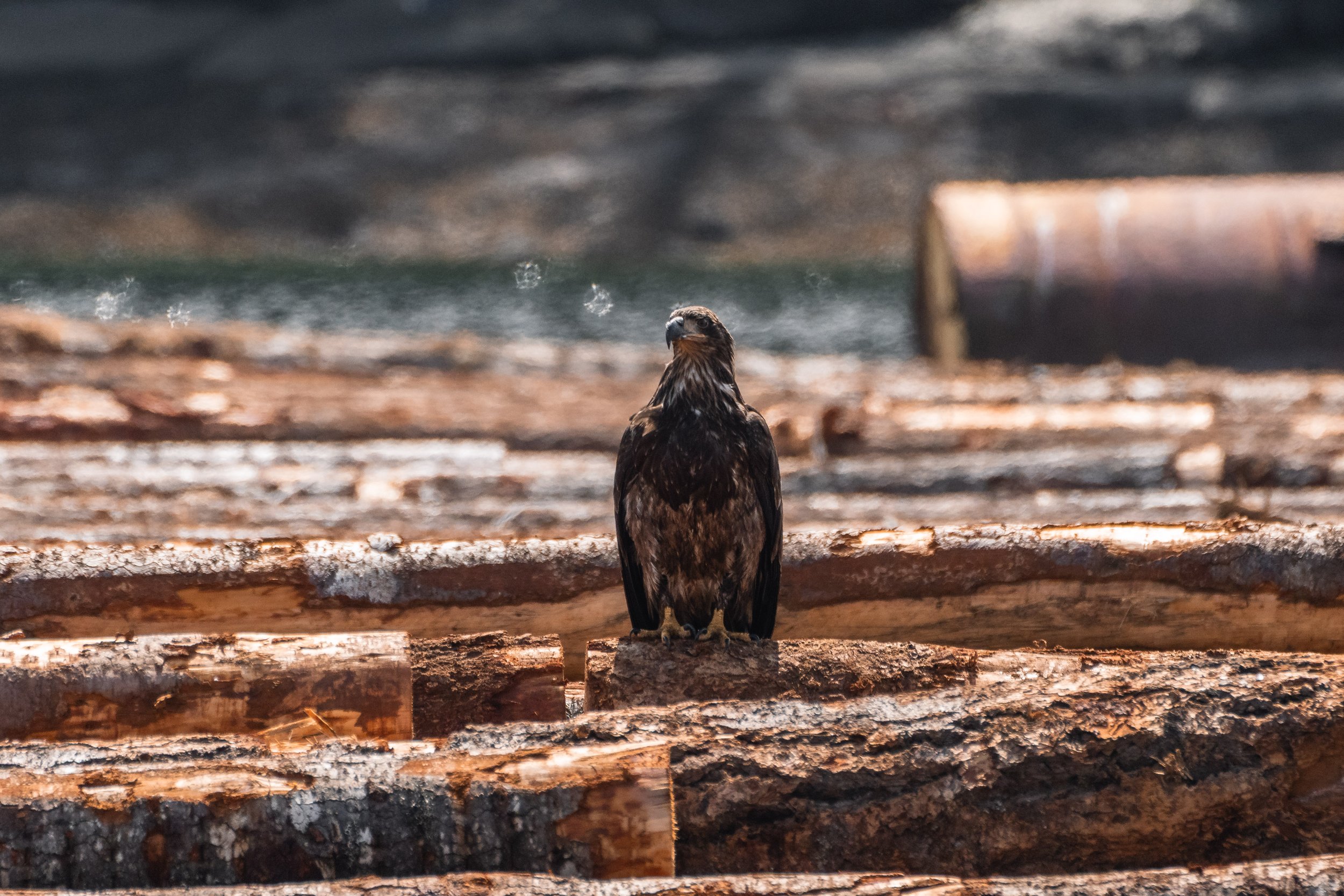
A young Bald Eagle on the log booms near Harmac.
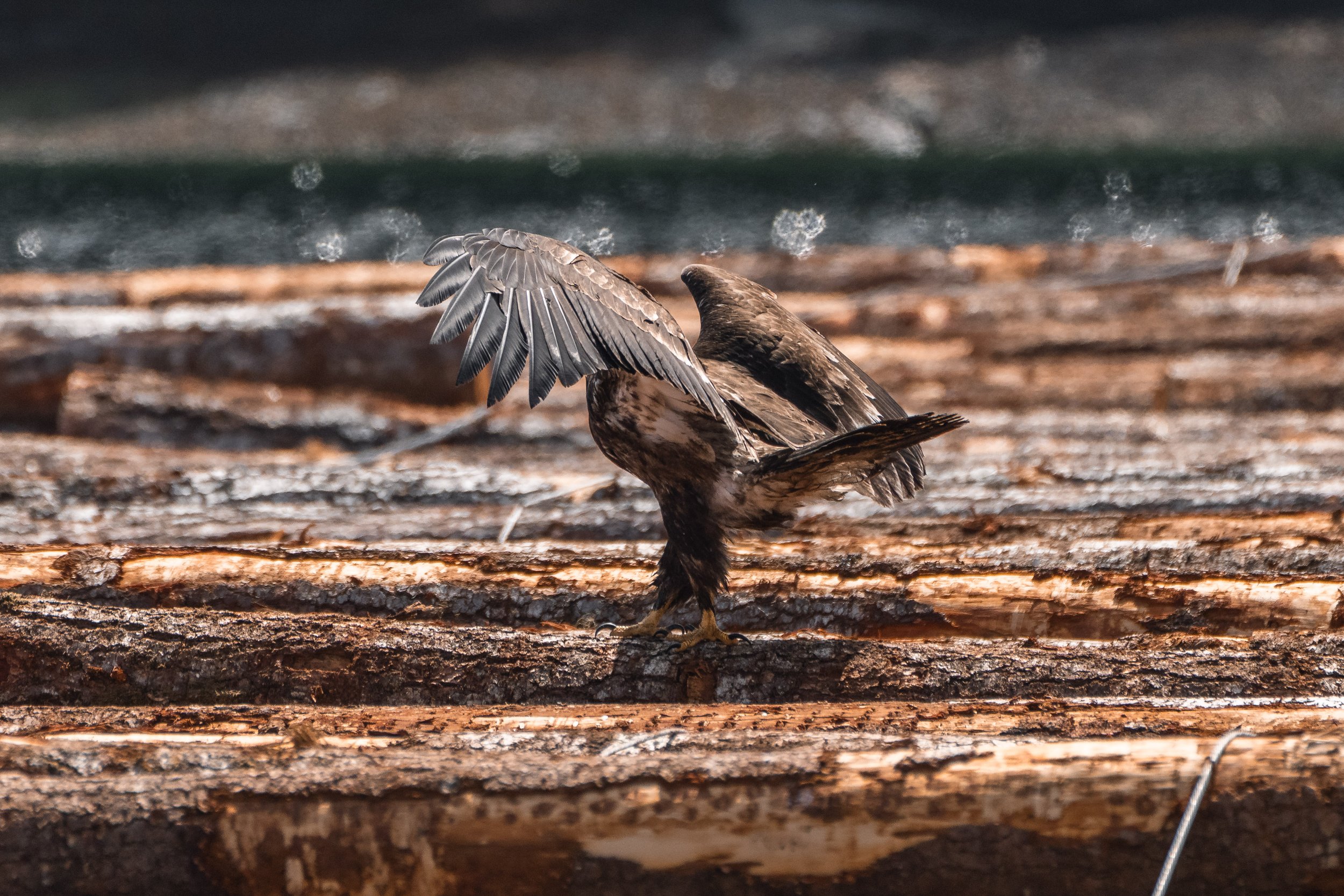
The Bald Eagle stretching it’s wings.
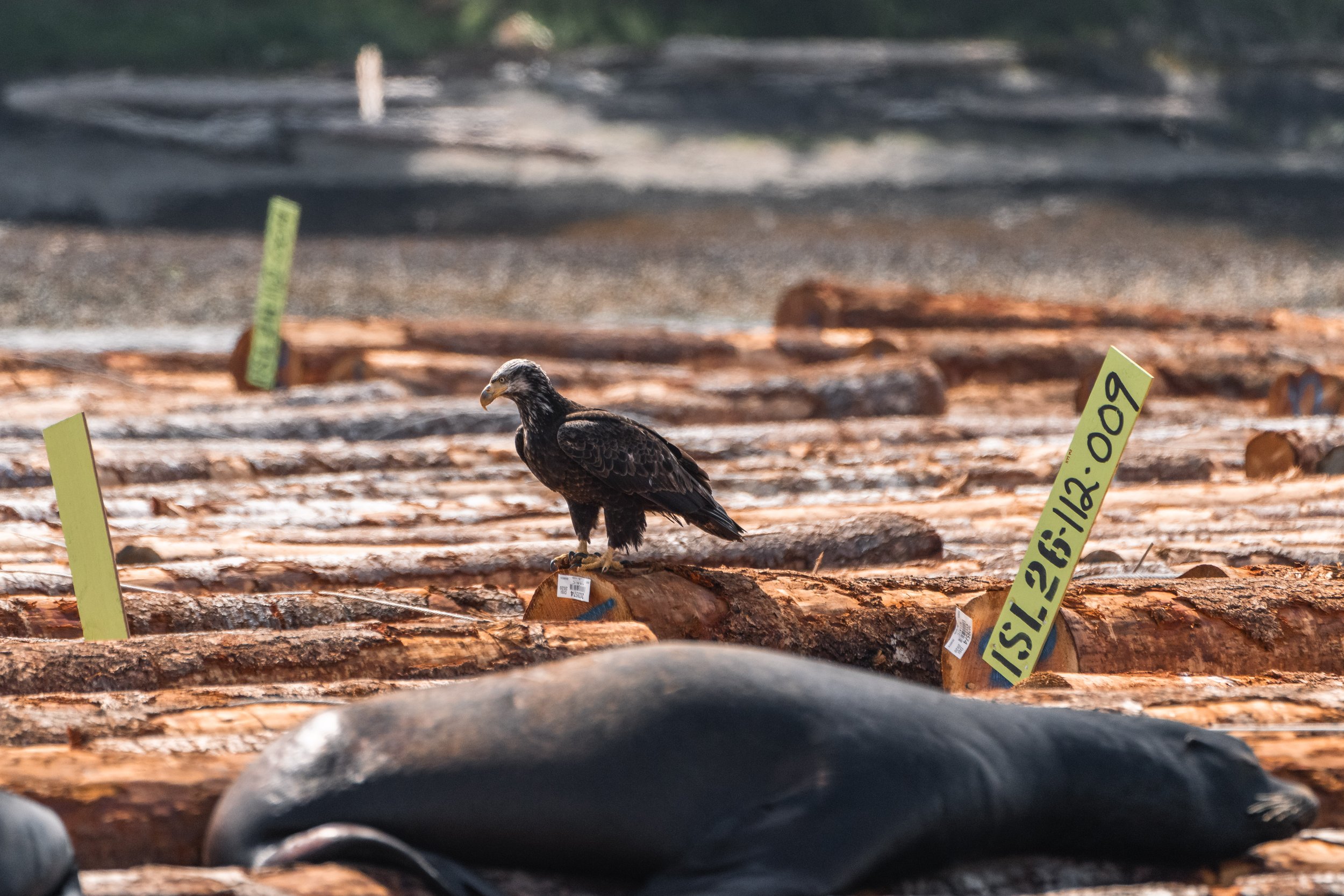
A young Bald Eagle, likely 3 to 4 years old.
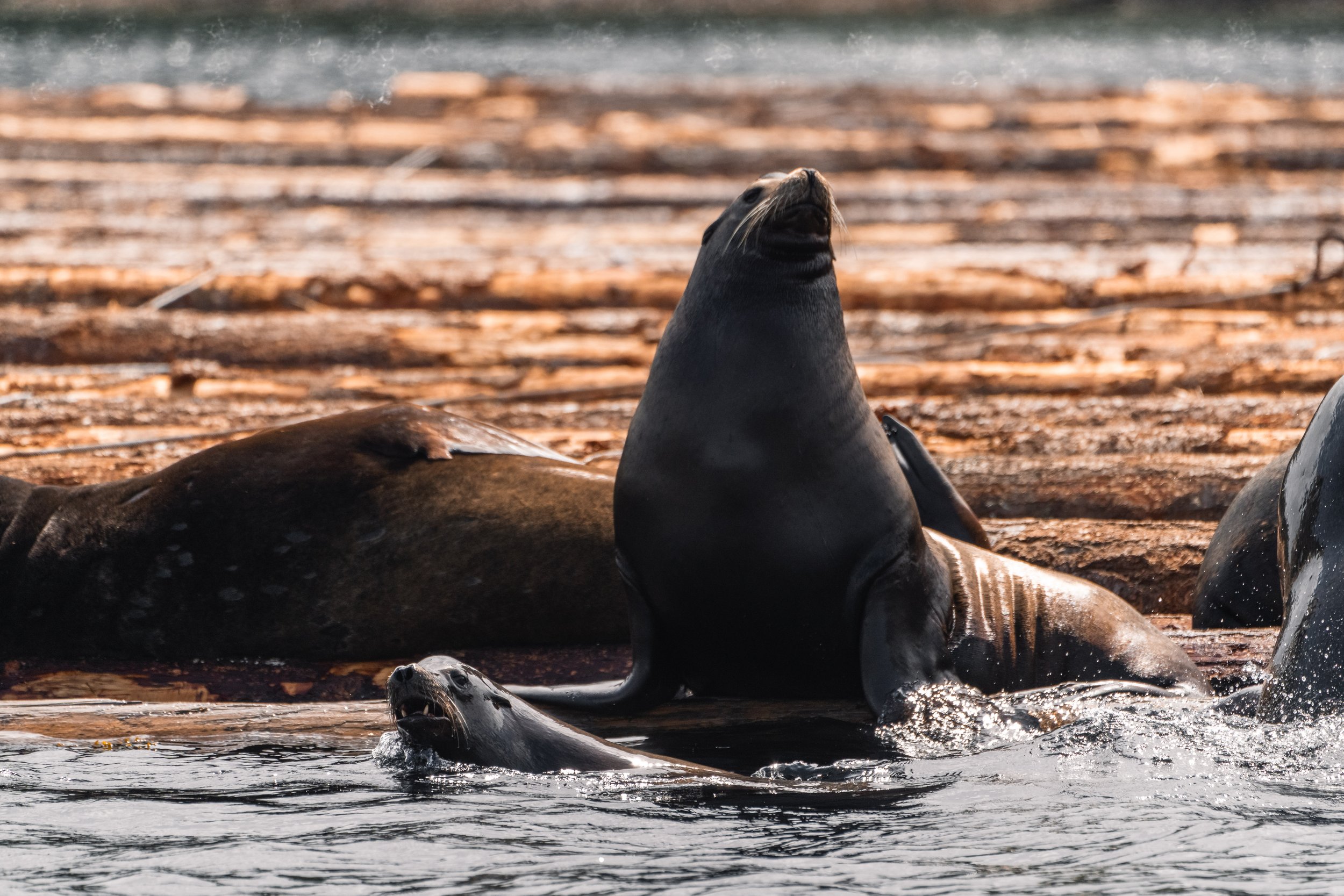
A California Sea Lion swimming by while others spend time on the logs.
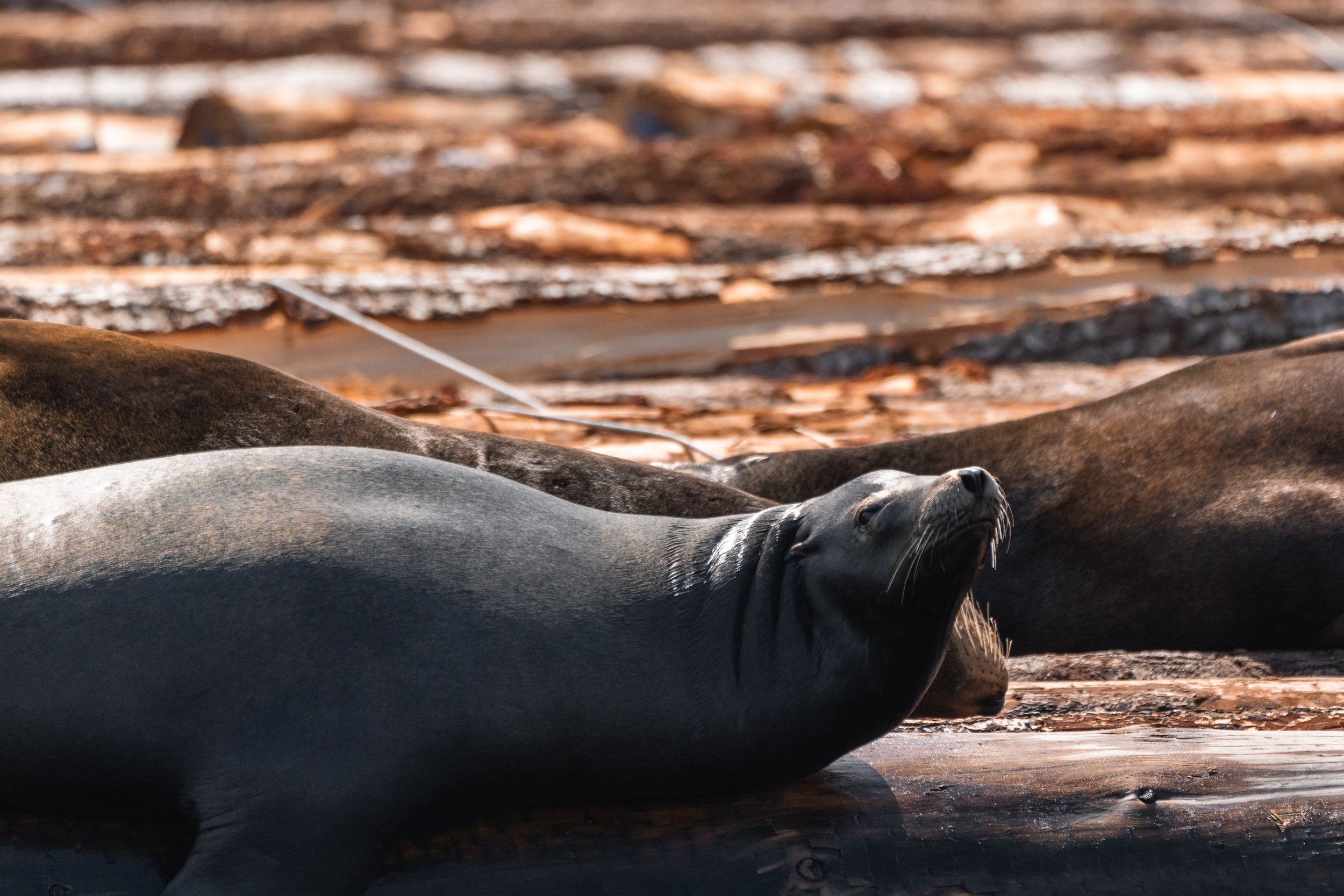
A relaxing California Sea Lion on the log booms.
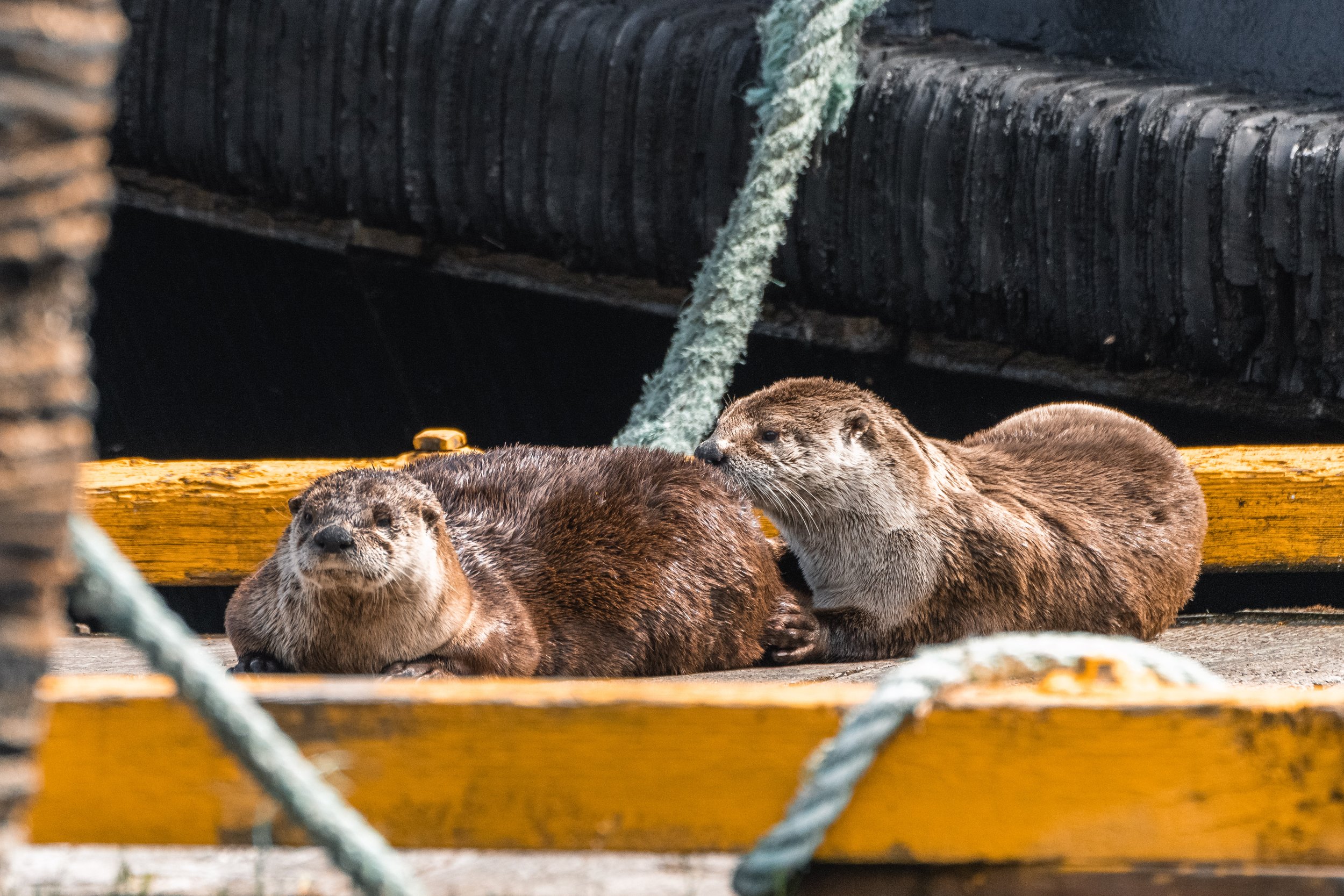
A pair of River Otters on the docks as we return.
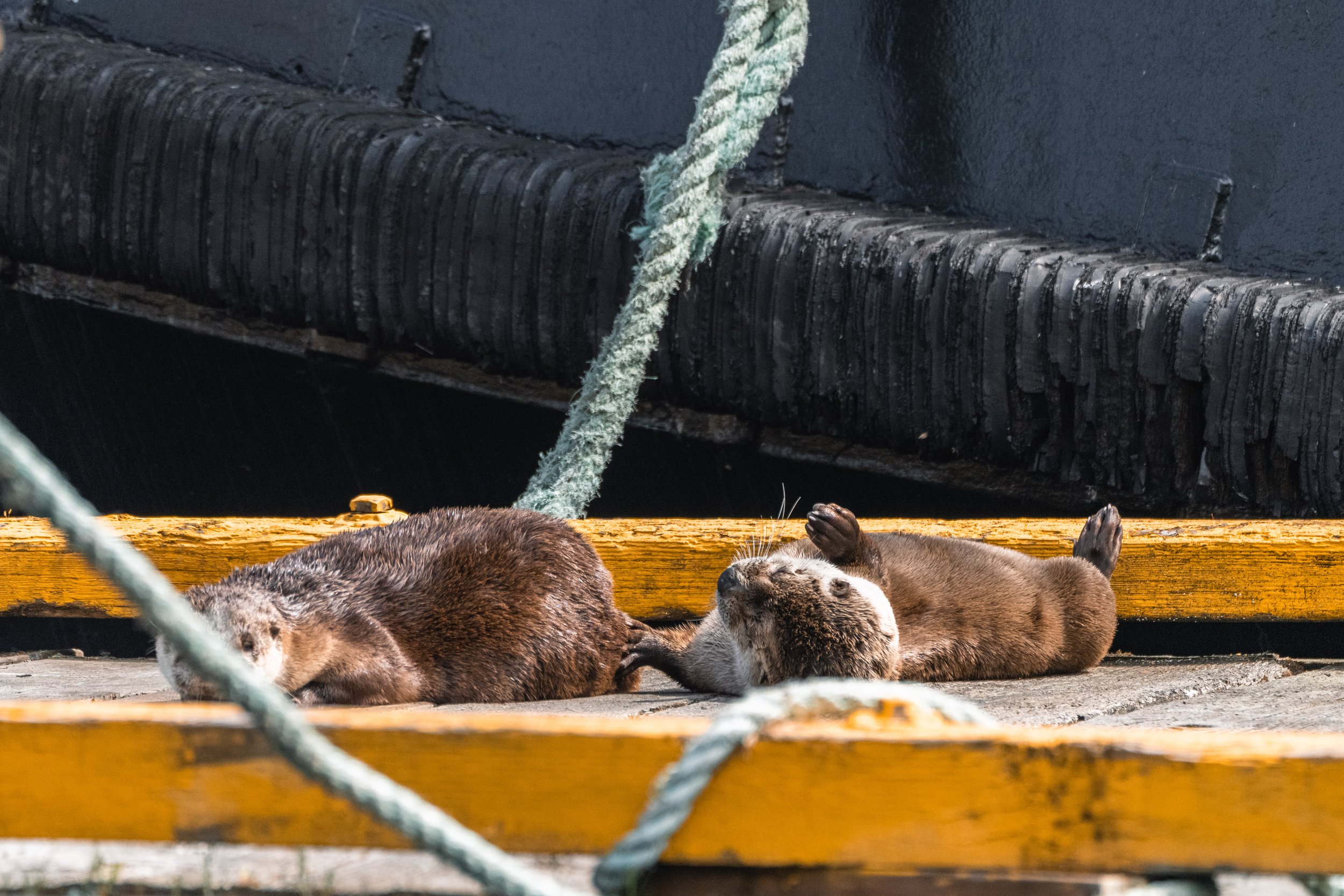
Rolling around on the dock. We think the female on the left might be pregnant.