
April 2, 2026 - Spring time with Seals and Sea Lions!
The sun was peaking through the clouds overhead as we left Nanaimo, feeling cozy on the semi-covered vessel. To start our adventure, Captain Joseph pointed Kula into the Strait, masterfully maneuvering her over the small waves that were present. Lucky for us, we couldn’t have asked for much better weather for the tour today as we hardly felt these slight bumps.
We followed the curve of Gabriola Island, keeping our eye out for any wildlife as we headed east. The Strait of Georgia is a great place to start our search, thanks to its high productivity. Rivers feed into the rich waters, introducing many nutrients that the ocean would otherwise lack. In addition to the rivers, we also have a higher-than-average amount of mixing in our waters, thanks to all the small islands we were searching through. The narrow passages between these islands have water moving quickly, causing whirlpools, upwelling, and strong currents. This mixing introduces a ton of oxygen into the water, which microscopic animals like plankton use to grow.
This plankton is what forms the strong base of our food chain in the Pacific Northwest, drawing in all kinds of wildlife. The first sign of this wildlife we saw during the tour was the small Harbour Seals that spend a fair portion of their lives hauled out on the islands' rocky shorelines. Today, they caught our eye as they were in a large group in Active Pass, using a small islet as their resting place. Harbour Seals spend their entire lives in the waters around Vancouver Island, being born, growing up, and eventually reproducing themselves here. They are such homebodies, in fact, that they don’t stray further than 15 miles from their given haul-out. The other pinnipeds, like Sea Lions that we would see later, will migrate away from here, heading south to California or to haul-out sites off Oregon, some going north as far as Alaska, depending on the species.
The Harbour Seals are arguably the cutest to look at, with their round faces and large, dark eyes. These features aren’t to look good for us, though; they are important for their aquatic lifestyle. The roundness helps reduce their surface-area-to-volume ratio, keeping them warmer as they swim through our cold waters. The large eyes help them in our waters as well, allowing more light through as they dive deep in search of fish and cephalopods. The darkness partially comes from an oil they secrete, which helps them see even better!
It was great to see some of these adaptations in action, with seals expertly swimming by our boat while we watched the rest in the pass.
From here, we headed into the smaller channels of the Southern Gulf Islands, heading north in the Trincomali Channel to continue our search. Although no whales appeared during this search, we heard a commotion in the distance and investigated it as we approached Porlier Pass. It was here that we saw Steller Sea Lions enjoying themselves in the current. The large pinnipeds were throwing themselves out of the water in a movement known as porpoising, allowing them to move faster as they chase down their prey. Each time the group burst through the surface, there was a chorus of excited exclamations from our vessel, amazed at the grace of these nearly 2,500-pound animals. As we continued through the pass, we saw them relaxing as well, with a large group hauled out on Canoe Islet.
Although it looked like these sea lions were just having fun, they were likely using teamwork to catch more fish, as the currents in the pass create a high-productivity zone that draws in more wildlife.
Although the sea lions kept us entertained for a while, we left to continue our search, once again heading north. We continued following Trincomali Channel until it turned into Pylades. Enjoying the beautiful scenery of the Southern Gulf Islands, we continued scanning the water. Although whales remained elusive on this particular trip, the day was anything but empty. With snow-capped mountains, dramatic currents, and thriving pinniped haul-outs, there was no shortage of West Coast wildlife to enjoy. Guests received complimentary return vouchers, giving everyone another opportunity to join us in search of whales.
Enjoy the photos below taken by Aly Kohlman.
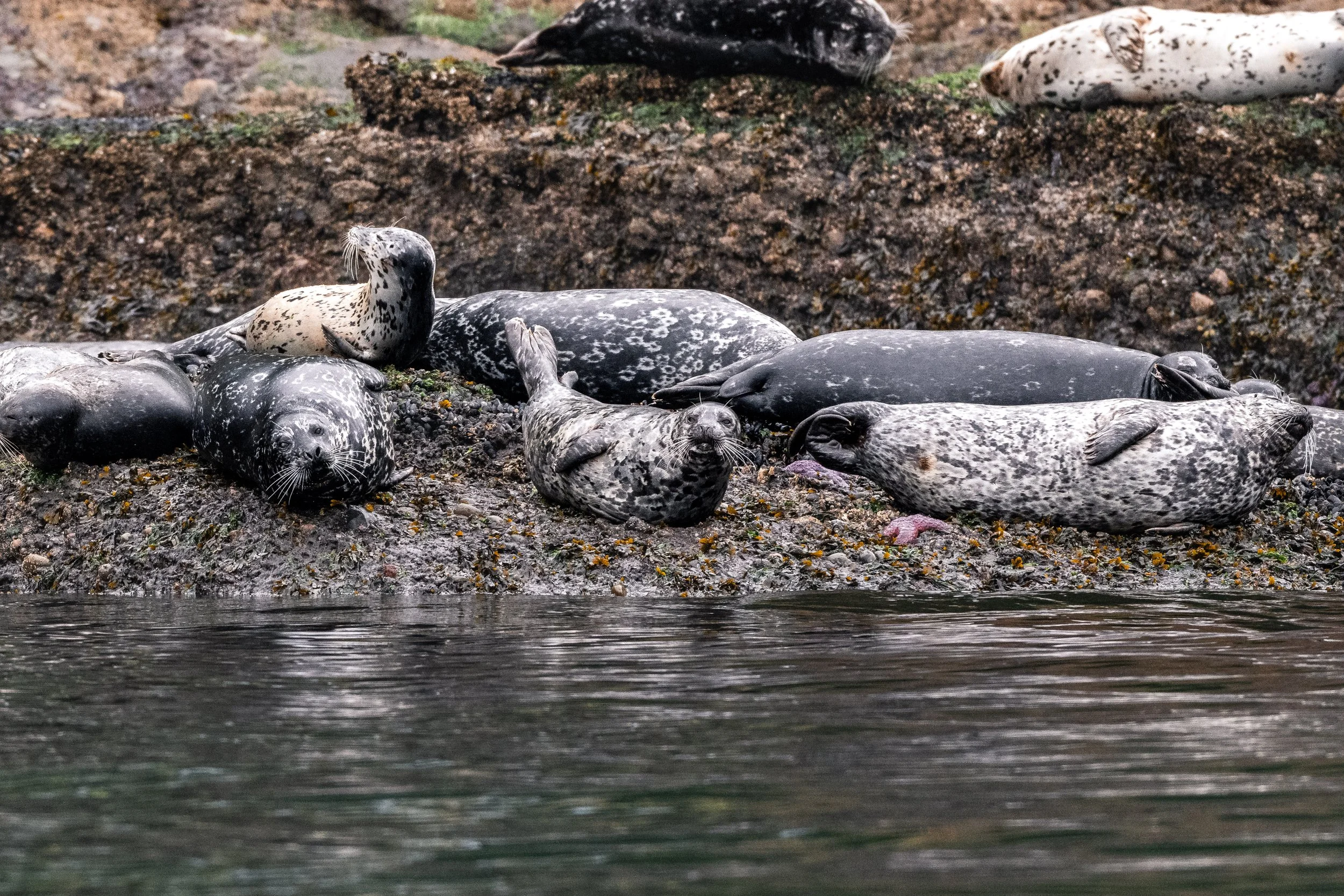
Harbour seals observing the boat as we pass by.
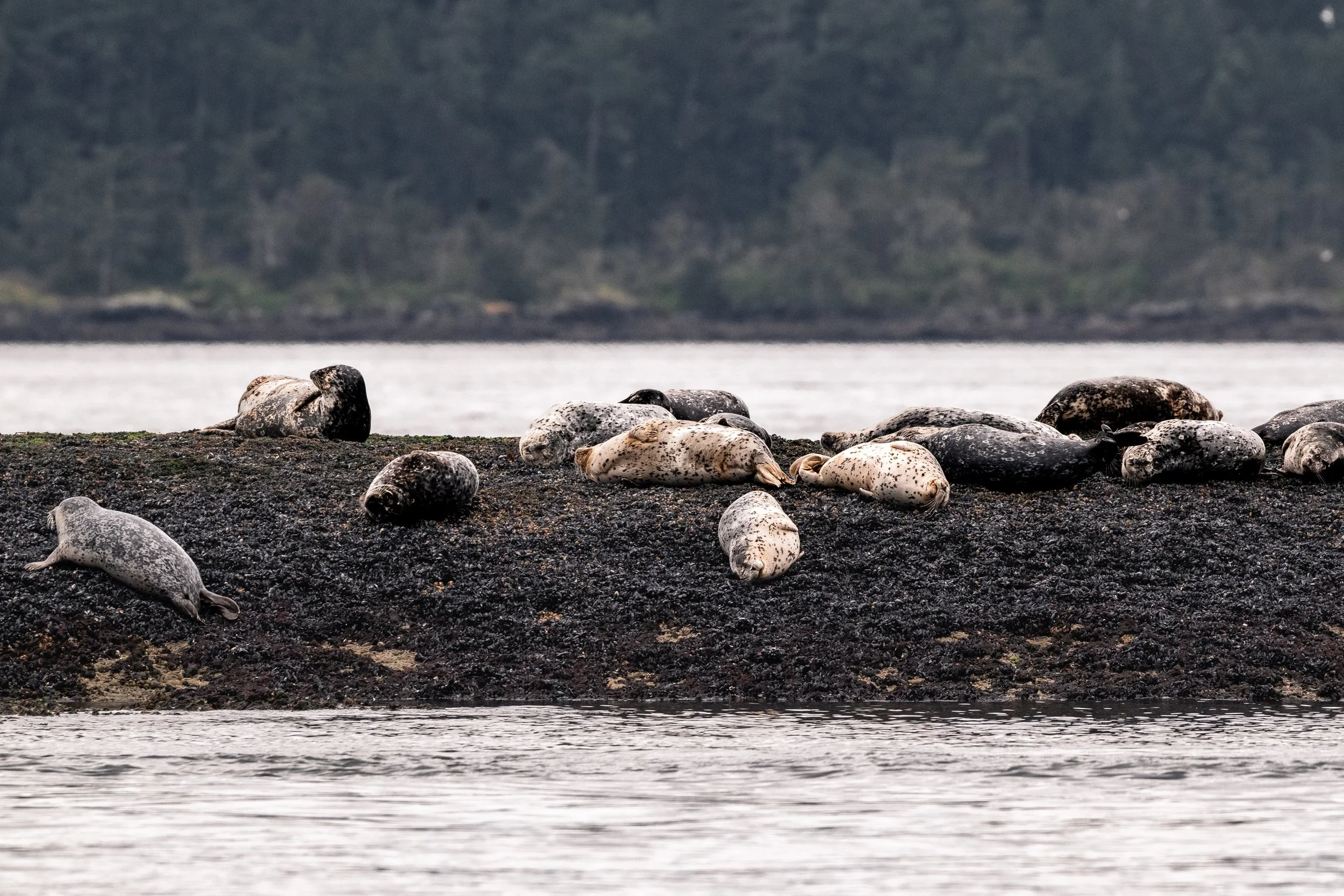
A haulout of harbour seals relaxing on a bed of kelp.
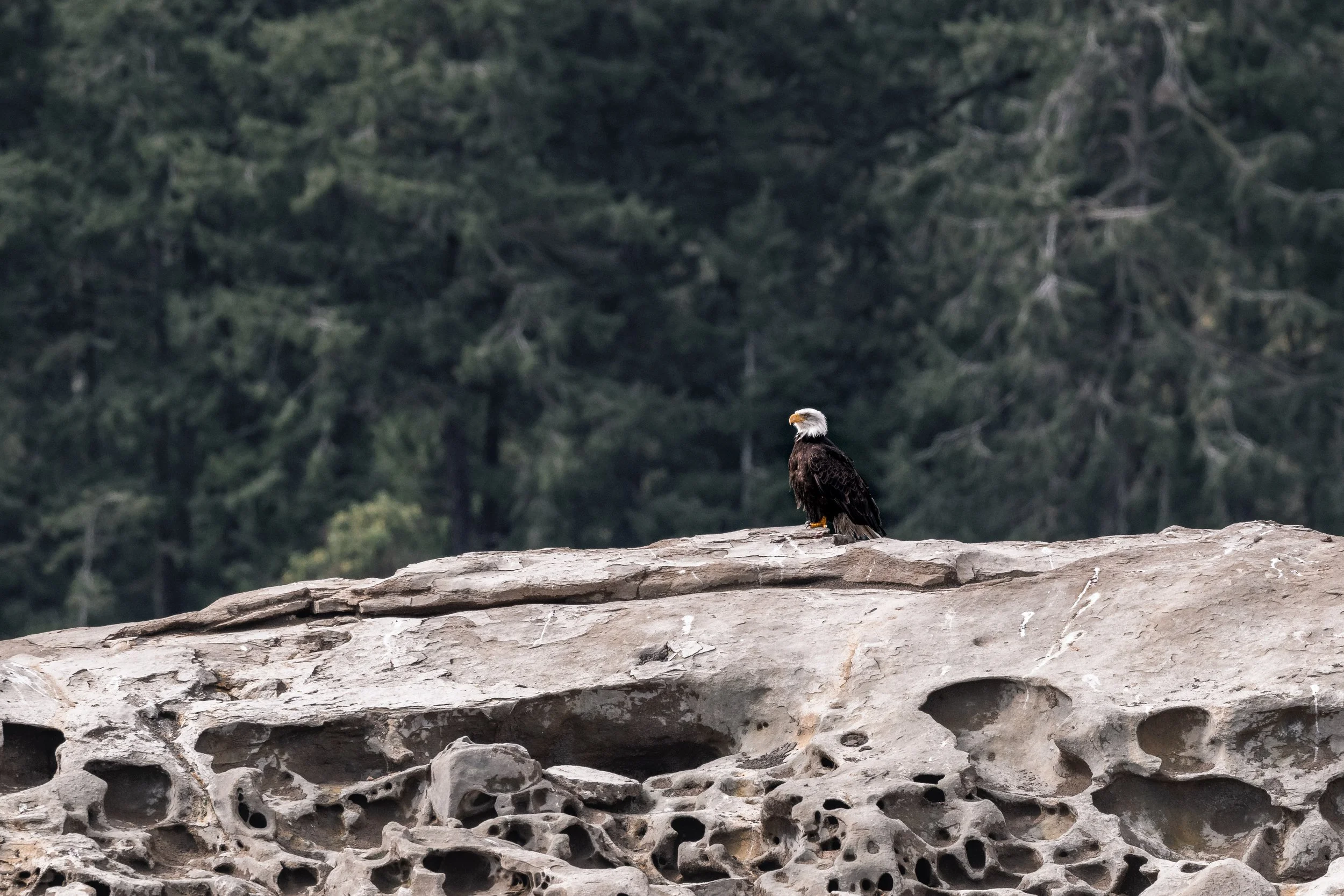
An adult bald eagle overlooking Canoe Island.
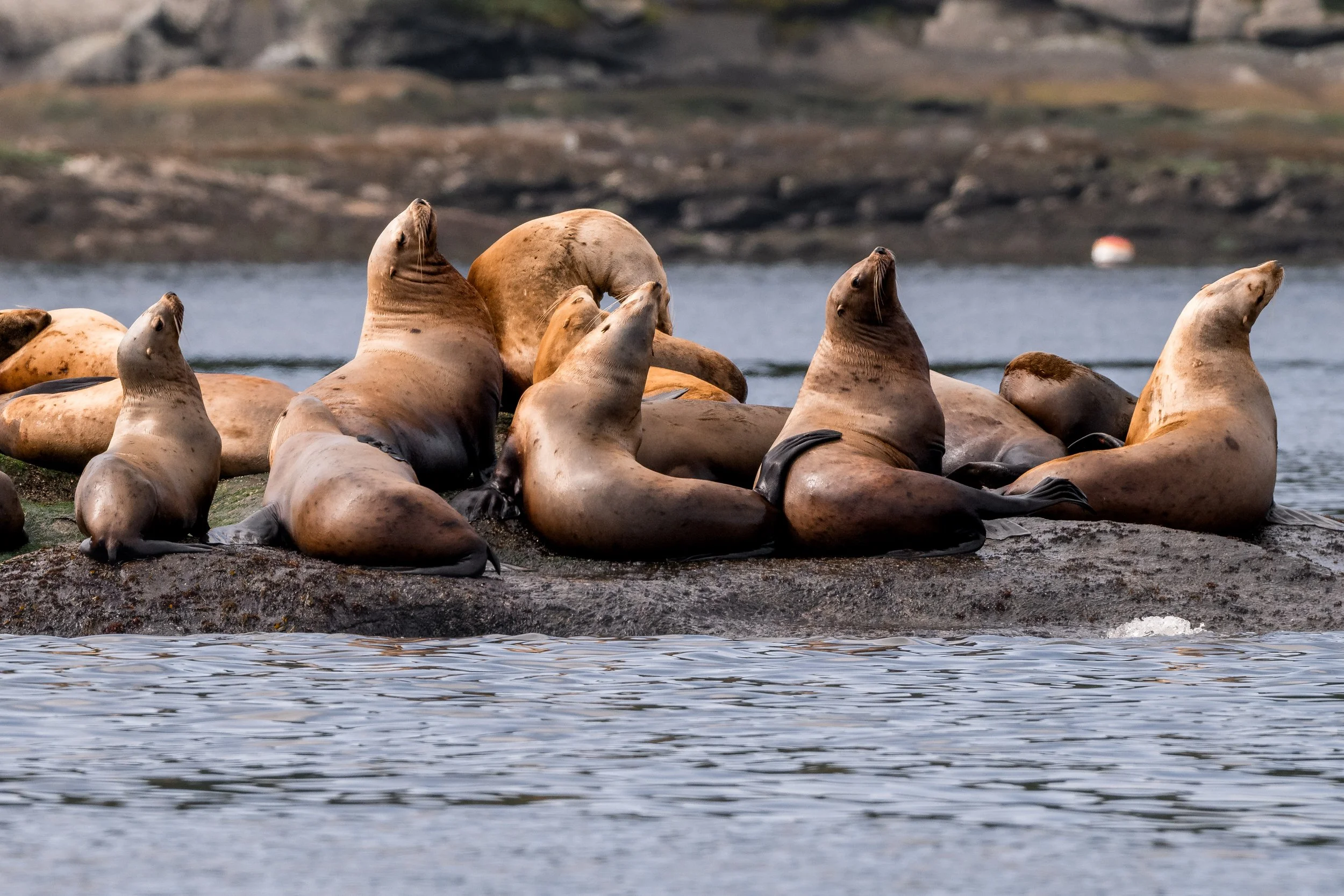
A group of curious Steller Sea Lions looking over their shoulders.
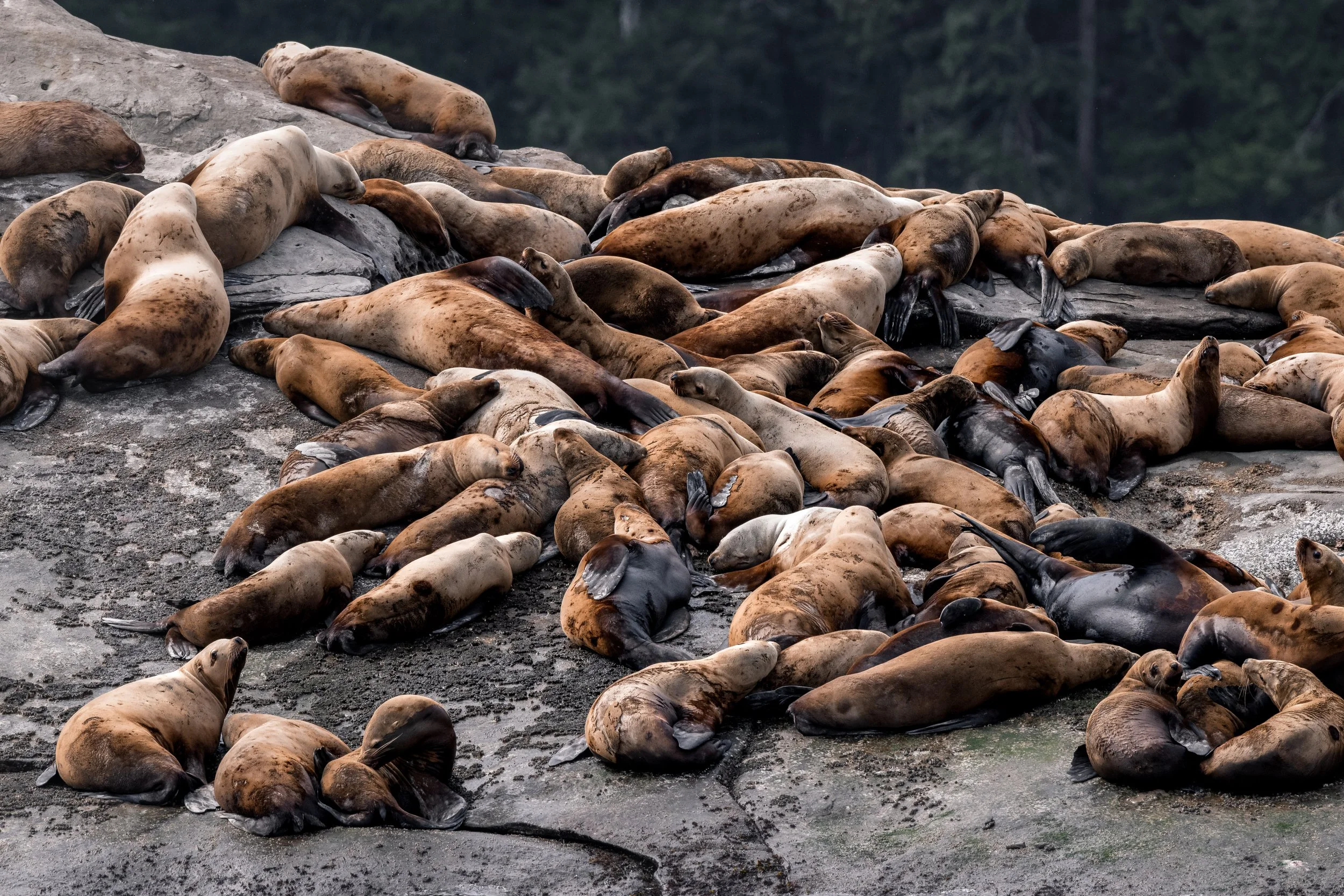
A haulout of Steller Sea Lions lounging as sun begins to creep out of the clouds.
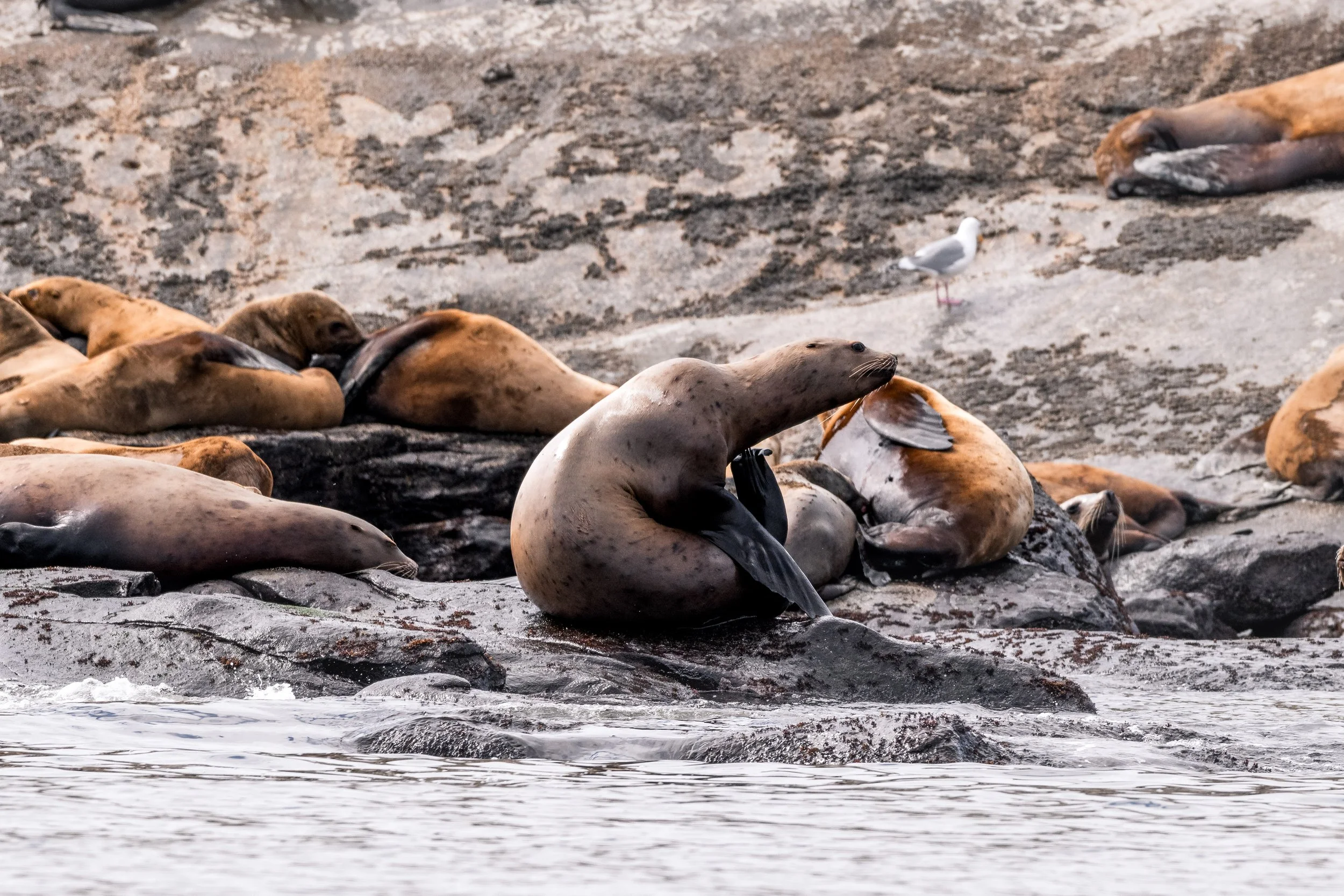
A Steller Sea Lion getting that itch.
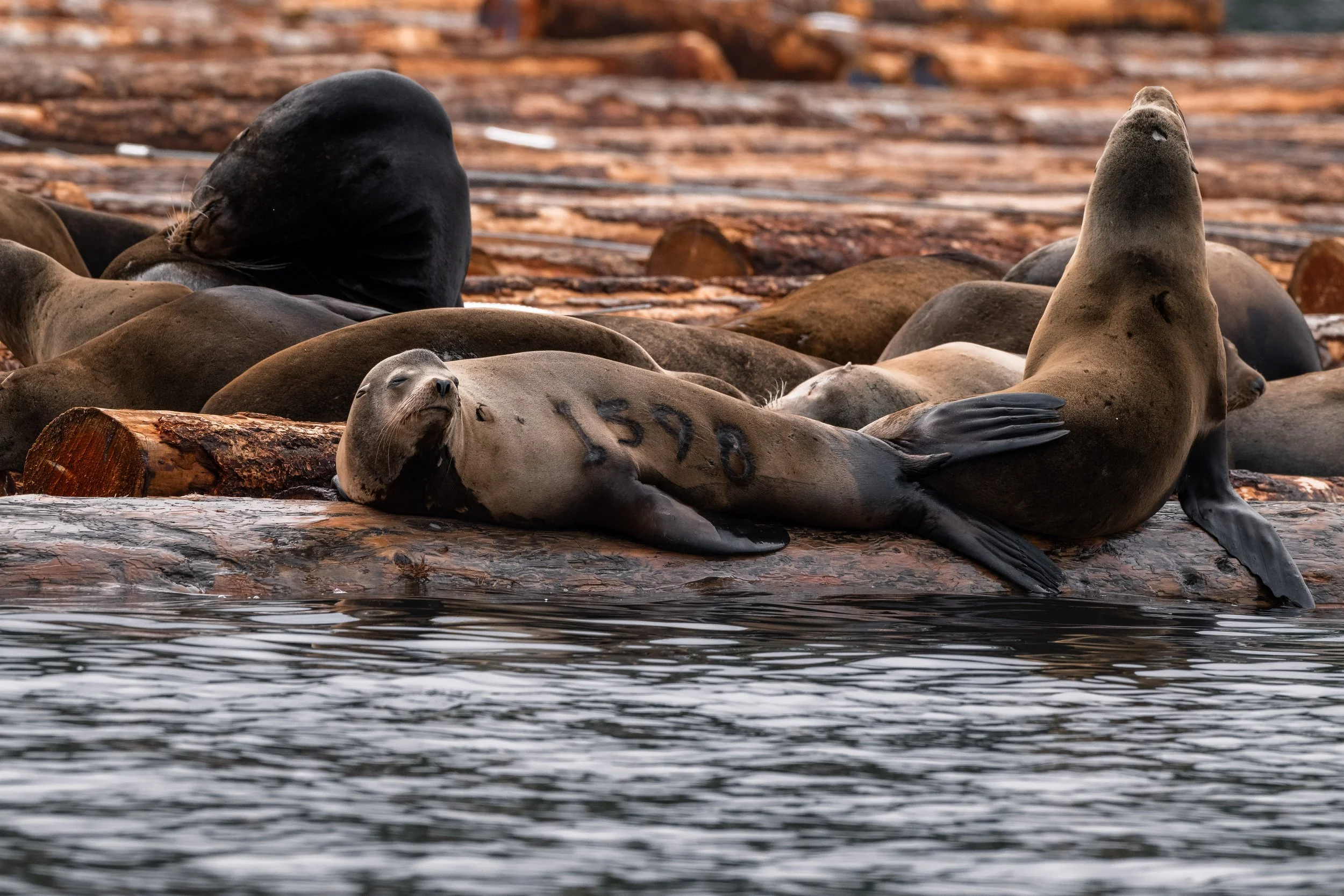
A branded California Sea Lion lounging.
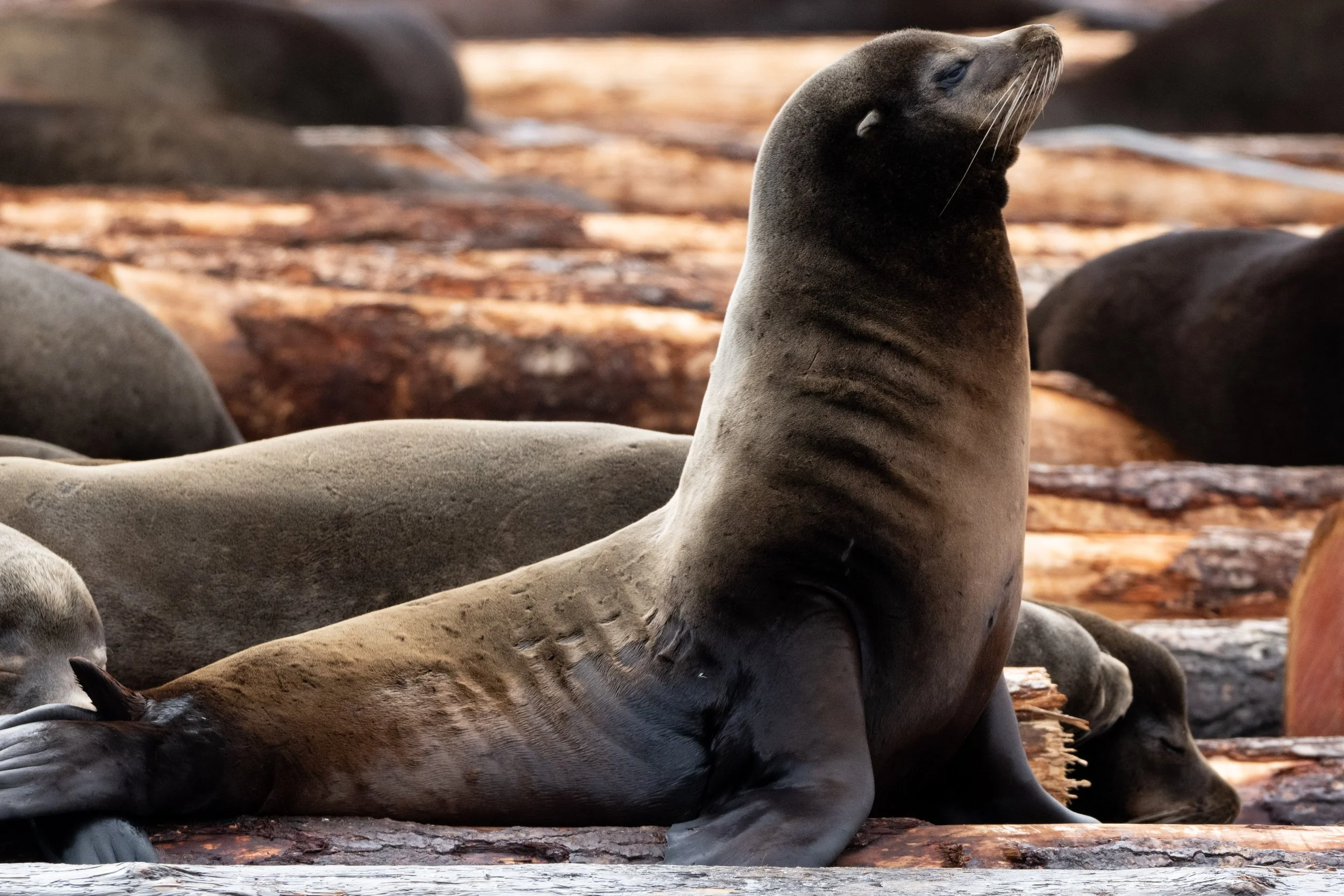
A closer look at a posing California Sea Lion.